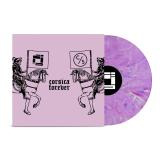
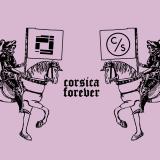
As Corsica draws to a close, this is our homage to a space that has been our home for 18 precious years. A space that has nurtured us and allowed us to evolve - to find our own way of raving. The Rupture way. The Corsica way.
We wanted to celebrate 18 precious years with a release that truly embodies the spirit of Rupture at Corsica Studios. The music on this EP has mashed up the dance, time and time again!
Double O wrote ‘Corsica Jungle’ with the intention of capturing those peak 5am emotional Corsica vibes. Love and respect to dBridge & Skeptical for contributing to a project so close to our hearts with tracks that represent our sound so perfectly: dubwise, killer breaks and peak dancefloor energy! The EP closes with a spoken word poem from Mantra.
Viva la rave!
Corsica Forever!
Suche:l ow project
As Corsica draws to a close, this is our homage to a space that has been our home for 18 precious years. A space that has nurtured us and allowed us to evolve - to find our own way of raving. The Rupture way. The Corsica way.
We wanted to celebrate 18 precious years with a release that truly embodies the spirit of Rupture at Corsica Studios. The music on this EP has mashed up the dance, time and time again!
Double O wrote ‘Corsica Jungle’ with the intention of capturing those peak 5am emotional Corsica vibes. Love and respect to dBridge & Skeptical for contributing to a project so close to our hearts with tracks that represent our sound so perfectly: dubwise, killer breaks and peak dancefloor energy! The EP closes with a spoken word poem from Mantra.
Viva la rave!
Corsica Forever!
“Tako” means “octopus”, “kite”, and even “bunion” in Japanese. Bald men or men with shaven heads, as well as red-faced, staggering drunks, are also referred to as “tako”. It’s a word that appears in a lot of slang and sayings. Taco is also the name of an 80s music and performance collective whose performances were like nothing before or since. The Japanese band Taco, formed at the beginning of the 80s, is a loose group/collective of varying members that belongs to the post-punk alternative music movement. The network of members were all friends and acquaintances of Harumi Yamazaki, ex-member of Gaseneta and Taco’s central member.
Taco can be described as a band of guerrillas who, over the years, continued to connect, collect, interrupt, and scatter while sending out into the world music and sounds that can best be described as transient. Taco also performed without Harumi, and so it is as though the band is an anonymous group of mercenaries. Taco’s first album was released in 1983 and had a huge impact on Japan’s underground music scene as an anomalous and collaborative album involving various participating artists (the stars of Japan’s underground music scene!) and Harumi, who provided the lyrics. Although each track represents a reverberating conglomeration of sounds created by this transient local network, common to all the tracks are Harumi’s expressive lyrics. This has the effect of transforming all the tracks into a single powerful force which, in turn, spawns an “incident” which spreads like a giant ripple. However, because of another incident in which the records were recalled due to the scandal caused by some of the lyrics, only a limited number of people actually own a copy of the album. Taco’s second album (a 12” EP), released in 1984, features a live recording of a performance that was held at the end of 1982. Taco is a band of indeterminate members which only ever played one-off performances, but this is an album that reveals a unit whose performance was unusually musically coherent. This is an album which effectively conveys the power of Taco’s astounding and legendary live performances, as well as Harumi’s inflammatory, sensational, and masochistic presence on stage. Her mutterings and screams, which practically ignore the detached beat, confront the audience like an overwhelming groundswell.
The following is a description of Taco by one of its members following one of its live performances: “Taco’s like a project where the indeterminate participants fan each other’s heightened emotions of wanting to wreak personal revenge and retribution. It’s an ecosystem of tangible and intangible mouldy slime which accumulates in order for emotions to be acted out, both indoors in the studio, or outdoors on stage. That’s why the avenger can often end up being the victim.”
Nameless, March 1985
Since debuting his Black Eyes project on Lost Control 2097 back in 2022, Matthew Jesus has developed his own trademark take on deep house - a suitably aquatic and psychedelic affair that he calls 'Hydro-Trip'. Elements of that sound can be heard on his Selections label debut, alongside nods to Motor City deep house and more soulful flavours. For proof, check gorgeous and tactile opener 'Honeyfish' and the even more soulful warmth of 'Motor City Surfin', which doffs a cap to the likes of Alton Miller and Rick Wade. 'Seaweed Tongue' is a more drowsy, jazzy and immersive deep house workout with more sampled vocalisations, while 'Trippin' In Waves' pairs rubbery drums and P-funk bass and plenty of spacey electronics. Haf S reworks the latter via his 'JEEPMIX', a dreamy, hypnotic and spaced-out sunrise-ready delight.
"From The Kitchen To Your Ears" is the debut Various Artists release from Home Kitchen Records, a project rooted in the same spirit as cooking: raw ingredients, patience, instinct, and creativity. Like a dish made with care, each track has been shaped and refined to deliver its own sonic identity.
This VA brings together a special selection of artists, including a track from the label’s founder Z-ID, alongside Briki, Ghazi, Ahmet Mecnun, Shkedul & Salma, all connected through a shared passion for music. Each contribution brings its own flavor, forming a diverse yet cohesive journey from the studio to your ears
Geoglyph is the new duo project by Alohn and Khey Mysterio, a convergence of two deeply singular practices into a single subterranean signal. Their debut album arrives as the eighth reference on Organic Signs, not as a collection of tracks but as a carved artifact: six inscriptions pressed into vinyl, mapping a sonic territory where time, rhythm and texture are no longer linear, but layered like geological memory.
Through Geoglyph, Alohn and Khey Mysterio convey a message from below, or beyond. A pulse engraved from forgotten times in the basement of reality, reactivated by abyssal basses, vibrating layers and fractured textures. Exhumed from the subterranean strata where psychedelic dub, mineral techno and fractal dubstep fuse into raw energy, their music becomes a point of contact: every beat, every silence, every oscillation acting as a coordinate toward another perception. What unfolds is not simply sound design, but an invocation, rhythms as sigils, timbre as gnosis, signals that seem to arrive already charged with intention.
Across the album, Alohn’s guitar notes fall like cascades through the mix, dissolving at times into controlled feedback and crystallizing into melodic fragments that hover between tension and release. These organic gestures are interwoven with Khey Mysterio’s dense low-end architectures and rhythmic frameworks, creating a constantly shifting terrain: from weightless transmissions and ritualistic voices to moments of overwhelming propulsion where the music suddenly breaks open with tectonic force. The record moves fluidly between meditative suspension and explosive motion, never settling into a single state for long.
A strong undercurrent of what has come to be known as “druidstep” runs through the album, a term coined within the 95 Open Tabs universe to describe a form of dubstep untethered from genre convention, rooted instead in bass as ritual, in groove as invocation. Here it meets dub-techno pulse, psychedelic echoes and high-velocity 4×4 pressure, drawing subtle influence from underground bass cultures without ever becoming referential. The result is a body of work that feels both ancient and forward-leaning, cyclical rather than linear: a living geoglyph that reveals different meanings depending on how (and where) it is read.
As the final movement accelerates into its closing phase, the album releases its energy outward, with frequencies stretched toward their limits, leaving behind the trace of a completed ceremony. In this sense, Geoglyph’s debut stands as a defining moment within the Organic Signs continuum: a record that unfolds rather than explains, offering an experience to be entered, absorbed, and carried. With this release, the label continues to explore new sonic spaces, evolving and expanding while giving deeper meaning to its own essence. A message from beneath the surface, waiting for those willing to tune in.
Más de este género
Reframed is Vitess’ third album, released on his own label Retro Futura, and marks a new turning point in his artistic journey. Unlike his previous albums — the first fully exploring the Retro aesthetic, the second embodying the Futura — Reframed brings these two worlds together within a single, coherent yet eclectic body of work. The album opens with sounds inspired by 90s progressive music and gradually moves toward more futuristic textures. This album format gives Vitess complete freedom: the freedom to build a full, living musical experience, introducing for the first time a strong instrumental dimension — most notably through the use of live drums — and allowing each track to interact with others, transform, or mirror one another, while maintaining a clear narrative thread that guides the listener throughout.
The title Reframed directly reflects this approach. The album is built around tracks conceived as Recto / Verso, offering a form of double listening experience. On the one hand, electronic, club-oriented and progressive versions, designed for energy and dancefloor movement; on the other hand, more introspective, pop and instrumental counterparts, created for listening and storytelling. Starting from the same musical foundation — a vocal sample, a percussion element, or a melody — Vitess develops two distinct interpretations of the same track, generating contrasting yet deeply connected sonic worlds. This method, central to his creative process, highlights his ability to explore a single detail in depth and let a micro-element lead him toward radically different sonic dimensions, while ensuring coherence and a strong identity across the album.
For Reframed, Vitess also collaborates for the first time with other artists: Stupid Flash, ATOEM, and Lucile, selected for their ability to enrich his universe and push it toward new aesthetics. These collaborations recreate a sense of collective energy reminiscent of his early days playing in bands, while remaining true to the essence of the Vitess project: a primarily solitary approach rooted in exploration, experimentation, and embracing the unexpected paths each idea can take.
- A1: Passage I (Small, Soft Feet Running Across Wooden Floors In The Morning)
- A2: Passage Ii (Listening To Lullabies While Holding Hands)
- A3: Passage Iii (Slow Days Of Togetherness)
- A4: Passage Iv (Watching You Quietly Eat An Apple In The Shade)
- B1: Passage V (Sounds From Your Rituals Playing In The Garden Near The Old Tree Which Has Witnessed Your Childhood)
- B2: Passage Vi (While You Slept, The Thought Of Not Yet Knowing How To Braid Your Hair Brought Quiet Tears)
- B3: Passage Vii (When You Learned To Stand In Your Own Light)
- B4: Passage Viii (Fifteen Years Passed And A Full Circle Moment Surrounded Us, Where The Ocean Meets The Mountains)
Passages in Time, the third album from Kasper Bjørke Quartet, traces the contours of a blend of spiritual jazz reverence and the calming grandeur of '80s ambient. Inspired by Christopher Nolan's observation that "time is the most fundamental part of our human experience," the compositions are approached as fragments of time and memory. Meditations on the elusive nature of time form the heart of the work, merging freeform jazz improvisations with cyclical synthesizer patterns that mirror its quiet undulations.
Dreamy synths intertwine with guitar, harp, trumpet, flugelhorn, saxophone, and flute, creating a spacious environment for contemplation. The music invites reflection on the choices that shape our lives and the lives of those closest to us, and on the quiet weight of our priorities within the brief span we call life on this planet. Each passage unfolds as a fleeting moment suspended in time. The subtitles hint at fragments from someone's diary, tender observations of love, parenthood, and connection. Together, the passages form a musical memoir of sorts, where memory and emotion are gently woven into the compositions.
Passages in Time does not impose structure or meaning, it reflects them, offering an open space as the instruments drift in and out of focus, tracing time's subtle rhythms and inviting the listener to infuse their own memories and meaning into these passages.
The album also marks a transformation for the Quartet project itself. Langstrakt (Claus Noreen), part of the original ensemble, continues to operate the synthesizers alongside Bjørke, while the wider constellation of contributing musicians has evolved. Strings and piano give way to flute and saxophone by Oilly Wallace, guitars by Danish ambient composer Anna Roemer, trumpet and flugelhorn by Malthe Kaptain, and cascading orchestral harp by Katie Buckley, principal harpist with the Icelandic Symphony Orchestra.
The cover painting is by American artist Marcus Leslie Singleton, courtesy of V1 Gallery, and reflects the meditative and timeless atmosphere of the music.
Passages in Time is released on Bjørke's own imprint, Sensitive Records, following the two previous Quartet albums released on Kompakt Records: The Fifty Eleven Project (2018), a debut that introduced Bjørke's ambient and neoclassical explorations, and Mother (2022), which expanded the ensemble's sound with emotive choir compositions and guest appearance by Sofie Birch (Unsound / Stroom). Together, these three albums trace a journey of artistic growth, from introspective experimentation to a fully realized, contemplative expression of time, memory, and human connection.
Shrouded in mystery when it first appeared, Tiger & Woods’ debut album quickly took on a life of its own. With little more than whispers surrounding the project, the music spoke loud enough: a set of extended disco constructions carefully tuned, remixed, over-dubbed, sliced and diced by the elusive duo of Larry Tiger and David Woods. What began as a cult phenomenon soon caused a stir across dance floors and record bags worldwide.
Now, for the first time ever, that legendary debut finally arrives on vinyl. Through the Green captures Tiger & Woods at the moment their distinctive language of groove first took shape. Rooted in the spirit of disco edits but already stretching beyond the format, the album blends loop-driven funk, house-leaning propulsion and the unmistakable bounce that would soon become their signature.
It’s the sound of two producers refining a craft that would later blossom on albums like On The Green Again, where their approach expanded into a wider palette of boogie, electronica, Italo and uptempo house. But here is where the story begins.
Before world tours, live sets and the creation of their own T&W Records imprint, there were these tracks: hypnotic, playful and engineered with a dancer’s instinct for tension and release. Each cut unfolds like a perfectly extended club moment, full of warmth, swing and that unmistakable Tiger & Woods sense of fun and function.
Years after its original digital release, Through the Green remains a cornerstone of modern disco-house culture. Pressed to wax at last, it finally receives the physical format it always deserved: grooves built for the turntable, the dance floor and the crate.
The mystery might be gone. The magic, however, remains very much intact.
- A1: Intuition, Nimbus (5:34)
- A2: Alignment, Orbits (7:46)
- B1: Impatience, Magma (11:15)
- B2: Persistence, Buds (8:27)
Caterina Barbieri & Bendik Giske's At Source resounds music as wellspring, that which is essential and unknowable, and yet utterly primary. It finds two acclaimed composer-musicians building a world together in self-contained collaboration between analogue synthesis and an extended approach to the saxophone that conjures its own universe of sound. It is at once intimate and cosmic, drawing on the challenges and possibilities of their artistic exchange, tearing down technique to access all the expansive possibilities of their sonic meeting point.
At Source is a document of the world of sound to be conjured when two artists strive for something together, discovering the expansions and limitations of performance by bodies and machines. It is not an exercise in assimilation, but in productive exchange and creative confrontation. It does not draw on outside energies or influences, but grapples with what there is to find in their respective playing. "It also reflects how natural the collaboration was," says Barbieri, "a meeting at the source which was spontaneous, graceful and natural".
Barbieri and Giske first met and were enthralled by one another's performances at Kunsthaus Glarus in 2019, a meeting that spurred conversations on the power of transitions as a compositional force. Giske later contributed a rework of Fantas for Fantas Variations (Editions Mego, 2021), an ambitious undertaking to rescore Barbieri’s work for his saxophone and voice, a challenge Giske had started undertaking two years prior as an ongoing practice of transcription. “The request came as a proof of aligned ideas”, says Giske.
Their new collaborative project then started during an artistic residency in Milan’s ICA in 2021, by invitation of swiss artist and curator Jan Vorisek, as the world was emerging from lockdown. This meeting, and the preceding closure of sites for cultural exchange, made their work together 'feel like springtime' says Barbieri. Giske, who was on the brink of releasing his sophomore album, Cracks, then joined Barbieri's light-years tour, which functioned as an inaugural incarnation of her newborn label and platform through a series of multi-artist curated shows with appearances of Lyra Pramuk, Nkisi, MFO, among other artists.
Through the tour, they continued to develop material live, and this release, laid down in the studio, is true to that ever-evolving process of creation, where live feedback stays essential to the vitality of this collaborative effort. The tracks are each named with two evocative words that contain the two poles of their sound. Theirs is both abstract and cosmic, in the synth as machine undermined by Barbieri's naturalistic playing, and in Giske's continuous exploration of the symbiosis between his instrument, voice, and body. These binaries, of body and machine, posed various challenges, notably in how the stepped patterns Barbieri uses were near-impossible to translate for Giske's body to perform, and other times where mathematical resolutions were needed to sync their playing. Explains Giske: "It forced me to go to the core of what I am and what I have to offer”. Barbieri says that it "explores the liminality between the machine and the human, and the vulnerability in this process".
At Source is testament to two divergent practices finding a whole cosmos in which to convene; music is crystalised and made utterly enveloping through the focused and critical work of two musicians working at their peak. The versions here are, temptingly, "just one of many versions" of this abundant source material Giske explains. Like the best collaborations, At Source is more than the sum of its parts – bringing more to the feast than the simple combination of two musicians, promising versions upon versions of the exquisite material captured here.
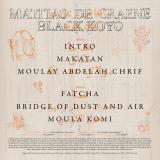
With Black Koyo, Mattias De Craene enters a sound world at once intimate and vast. Born from journeys in Morocco and Brussels, the project traces the rhythms, chants, and spirits of the Gnawa tradition, revealing a quiet resonance that echoes De Craene's own search for depth and presence. Guibri, qraqueb, call-and-response chants, saxophone, loops, and electronics come together in a trance-induced dialogue - ritualistic, elemental, and dreamlike - creating a space where listening becomes immersion, tradition meets imagination, and music unfolds as a shared act of reflection and wonder.
About Mattias De Craene
Mattias De Craene's artistic path is marked by rare coherence. As a central voice in Nordmann and MDC III, he developed a physical, rock-inflected jazz language driven by propulsion, volume, and trance-like collective energy. Over time, a period of personal rupture - burnout, tinnitus, depression - shifted his focus inward. The saxophone became a breathing, textural presence, and in his solo work, he weaves saxophone, electronics, loops, and minimal forms into a cinematic, hushed world where repetition, resonance, and silence slow perception. Rooted in ambient and introspection, his music prizes attention over impact, precision over excess - a quiet intensity recognized with a nomination as Musician for the Music Industry Awards (MIA's).
About Black Koyo
Black Koyo is a Brussels-based ensemble and one of the most compelling voices of the Gnawa tradition outside Morocco. Led by maalem Hicham Bilali, the group brings guibri, qrraqueb, and call-and-response chants to life with trance-like intensity and ritual precision. Their music is both rooted and contemporary, weaving earthbound rhythms and vocal invocations into ecstatic, immersive soundscapes, creating a space where ancestral resonance meets present-day imagination.
About Jan Bang
Jan Bang is a pioneering Norwegian producer and musician, celebrated for his mastery of live sampling and his ability to merge electronics with improvisation, rhythm, and texture in real time. He mixed the album and occasionally joins live performances, bringing his signature approach to sound as co-founder of the influential Punkt Festivaland collaborator with artists such as Jon Hassell, David Sylvian, Arve Henriksen, and ECM Records' roster. As a performer and sound architect, Bang creates immersive, trance-like sonic textures where silence and sound carry equal weight. Within Mattias De Craene ftBlack Koyo, his live sampling becomes an organic instrument, weaving saxophone, electronics, and Gnawa rhythms into hypnotic, physically charged soundscapes.
Line-up & credits
Mattias De Craene - sax, electronics | Hicham Bilali - guibri, vocals, qraqueb |Ismael Akhraz - vocals, qraqueb | Marwan Abantor - vocals, qraqueb
All tracks are original gnawa traditionals played by Black Koyo and arranged by Mattias De Craene.
Album produced & recorded by Mattias De Craene in Essaouira, Morocco and hometown Ghent, Belgium 2025.
Text by Hicham Bilali.
Mixed by Jan Bang at Punkt Studio
Mastered by Lieven Van Pee
Artwork by Marina Sviridova
Design by Benoit Van Geel
Manufactured and distributed by N.E.W.S.
Executive production by W.E.R.F. records
Supported by Flemish Government, Jazzlab, nona, HA Concerts, Aubergine artist Management,
KAAP, La Bestia (Wout Van Putten) & mdcmu.sic vzw.
2026 (c) W.E.R.F. records
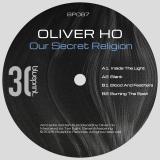
Continuing Blueprint's 30th anniversary celebrations, James Ruskin welcomes the return of Oliver Ho, whose relationship with the label is deep-rooted.
Oliver Ho has spent the last 30 years devoting his life to creating some of the most intense and compelling electronic music out there. Debuting his signature raw sound in 1996 on Blueprint Records, he cemented himself in the underground of the '90s UK techno scene. With a plethora of aliases, he has navigated his way through many different genres. From the frenetic tribal sounds of his own Meta imprint, the off the wall house music made as Birdland and Raudive, the grinding industrial of Broken English Club and the heavily textured ambient of his Slow White Fall and Zov Zov projects. While pushing and pulling at the fringes of electronic music, at the very centre has always been the beating heart of hypnotic techno, an art form that is both brutal and bewitching; techno as ritual magic. Oliver's live shows and DJ sets showcase this expression of music as shamanic experience, metallic and relentless, pure and direct.
An integral figure in shaping Blueprint's early sound, Oliver Ho returned in 2016 for their 20th anniversary with the "Burning Heretics EP", which was followed by a remastered reissue of 1999's "Awakening The Sentient". So it's fitting that he's now back for this latest milestone with a new EP, "Our Secret Religion" dropping in May.
Art Bound launches its label with Ghost Signal Theory, a split EP by Brazilian producer Artürst and Georgian producer Toke, exploring a dark, progressive and electro-oriented sound where each track develops its own atmosphere while contributing to the overall flow and cohesion of the project.
Side A features Artürst with two tracks blending progressive grooves with layered textures and subtle acid-infused elements, delivering a hypnotic drive built for peak-time sets.
Side B is a three-tracker exploring Toke’s take on the Tbilisi underground, moving through high-energy electro and trance-infused passages, before closing with a deeper broken rhythm that shifts the pace and brings the journey into a more contemplative space, offering a final moment of suspension.
- 1: Rebel Outlaw
- 2: Black Gold
- 3: Last Of The Sellouts
- 4: Rock & Roll Man
- 5: Charge Of The Love Brigade
- 6: Beneath The Underground
- 7: If You Feel Like Rockin
- 8: One Of The Greats
- 9: Fire In Malibu
- 10: Beneath The Underground Part
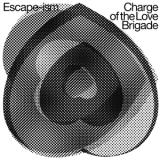
Brandnew album by Ian Svenonius (Nation of Ulysses, Make Up, Chain & the Gang, XYZ) latest project, his best yet, packed with super hits and provocative songs! ESCAPE-ISM - the found-sound-dream-drama - are back in action and out in front! And this time, they're leading a "Charge of the Love Brigade." Their fifth record, and fourth "sound" record - (the third one was "A Protest Against Sound"- an entirely silent LP) - "Charge of the Love Brigade" is revolutionary in its own right. Besides being packed with tunes with super-hits such as e.g. "Black Gold", "Last Of The Sellouts", "The Rebel Outlaw", & "Fire in Malibu", the new album proposes a reformation of the traditional notes and scales, an entirely new sound alphabet! "The violent overthrow of musical conventions will lead to the reintegration of humanity into the natural order, the reordering of life itself into a cosmic congruity. This means the convention of time itself will be ended." Play "Charge of the Love Brigade" and listen as ESCAPE-ISM go "over the top" against the note-letters of accepted musicality in a world premiere of a new upside-down antiscale! An album which furthers Svenonious' mission of upending and vandalizing indie-rock, garage and electronic norms and repurposing them in the context of a found-sound fever dream!
Fresh off heavy-hitting releases on SlothBoogie and Refuge, Glasgow's very own Tiptoes finally makes his way to Footjob. Renowned for his uncompromising MPC-driven workflow, the Scotsman delivers a four-track EP that stays true to his reputation: raw, sample-heavy house bangers built for pure dancefloor energy. With Shuffle Service, Tiptoes serves up a masterclass in groove. Whether it's dusty breaks or filter-heavy workouts, every cut is engineered to keep the feet moving.
- A1: Outro
- A2: Les Monstres
- A3: La Fenêtre
- A4: Être Une Fille
- A5: Sidequest Feat. Asfar Shamsi
- B1: Avec Ça
- B2: Bonhomme De Neige
- B3: Vivant
- B4: Les Rois
- C1: Cowgirl Feat. Tuerie
- C2: Eh Le Reuf
- C3: Kodak Blue
- C4: Vol De Nuit Feat. Jazzy Bazz
- D1: L'école Primaire Feat. Chilly Gonzales
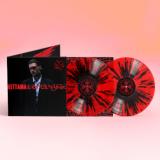
New album by french rapper Sheldon, including featurings with Chilly Gonzales, Jazzy Bazz, Tuerie, Asfar Shamsi...
Monsters are never where we expect them to be. They take shape in silences, in vague fears, in the baggage we carry without always understanding it. Sometimes, we also encounter them along the course of a life. On this new album, Sheldon chooses to dance with them, to tame them with wit, grace, and a sense of peace.
Following a powerful return with Grünt 75, an iconic format to which the 75e Session collective brought particularly ambitious visual staging, Sheldon unveils a fourth album that unfolds across fourteen tracks like a chiaroscuro landscape, revealing the full depth of his emotional and musical range. Through intimate narratives, the record explores identity (Être une fille), family and fatherhood (La Fenêtre and Les Monstres, the title track), as well as friendship (Eh le reuf). These are themes that run through all of us, approached here with writing that is vivid, demanding, and deeply sensitive.
Driven by a strong narrative arc, the album features songs like Être une fille, which challenges and questions us. On it, Sheldon reflects on his relationship to gender, his doubts and discomfort with the codes of masculinity, and the idea that he has sometimes imagined himself elsewhere. Tracks like La Fenêtre and Avec ça illuminate the album like moments of communion, sincere, warm, and unifying, carried by a childlike lightness that makes tomorrow disappear.
True to his open minded and ever curious artistic approach, Sheldon draws from a wide range of musical genres while keeping rap as the album’s guiding thread, giving each song its own singular identity and contributing to the balance of the whole. To shape the project, Sheldon surrounded himself with a new generation of musicians and beatmakers whose influences span rap, indie rock, pop, and experimental music. Among them are Johnny Ola, who has notably composed for Zamdane, Jazzy Bazz, and Edge, Rodolphe Babignan, Carbonne’s flamenco guitarist, and Jeune Oji, an artist signed to Friends of Friends Music. Together, they bring melodic and acoustic richness, as well as a collective generosity that deepens the album’s intimacy.
This new album also opens the door to new collaborations.
On L’école primaire, Chilly Gonzales joins Sheldon for an unconventional piano and vocals piece, driven by cinematic, deeply intimate storytelling. Using his primary school as a point of reference, Sheldon retraces his path from childhood to adulthood, somewhere between nostalgia and serenity.
On Cowgirl, Tuerie joins Sheldon for a soft, melodic ballad with an 80s tint, capturing the weightlessness of a sunlit summer.
On Sidequest, Sheldon reunites with Asfar Shamsi, who had already appeared on his Grünt. Over a delicate cloud trap production, the two artists open up about everyday pain, finding in introspection a way to put things into perspective.
Finally, Vol de nuit brings Jazzy Bazz and Sheldon together for an intimate exchange over an ethereal, mysterious production, as both artists look back on their journeys with calm and clarity.
Conceived alongside Sheldon’s closest circle, the project celebrates family, friendship, and love as its founding pillars. Sheldon chooses to step away from the images, allowing his story to be embodied instead through the faces and gestures of those around him. This approach runs through all of the project’s visuals. Rejecting the excess of spectacular image making, he chose instead to hand a camera to his loved ones so they could offer their own vision of a song from the album. By opening a small window onto his intimacy, and that of the people closest to him, Sheldon finds a way to say a great deal with very little, turning deeply personal trajectories into something universal.
Like the music videos, the album cover is rooted in a deliberately simple approach, where the fantasy of childhood disrupts reality. Designed by Tenzin, the graphic designer behind Sheldon’s recent projects, Ptite Sœur, and also work for Jul, it is based on an archival photograph taken during a traditional carnival in Tenzin’s native village. With no staging involved, the image captures children in costume mid parade, caught in a spontaneous burst of movement, embodying the free innocence of childhood.
Les Monstres marks a new chapter in Sheldon’s journey. Like a rainbow after the storm, this fourth album reveals new colours in the artist’s discography, as he delivers a record that is both demanding and accessible, intimate and open, one in which music becomes a love letter to friendship and to love itself. Set for release on April 24, 2026, the album will be followed by a tour culminating at La Cigale in Paris on December 3, 2026.
- A1: Archangel (Feat. Sølv)
- A2: Split In Two Minds (Feat. Seantommy)
- A3: Yosemite (Feat. Interplanetary Criminal)
- A4: Take Me
- B1: Fade Away (It’s A Feeling)
- B2: Man With A Second Face
- B3: If U Want My Heart (Feat. Dj Heartstring)
- B4: Do Not Go Gentle
- C1: 11Th Of January
- C2: Air Maxes (Feat. Shady Nasty & Fred Again..)
- C3: Gotta Have It
- D4: I Believe (Feat. Prospa)
- D1: It Gets Better
- D2: Air Maxes (Kettama Mix)
- D3: Sort It Out (Feat. Clouds)
One of electronic music’s most sought-after names, producer and DJ KETTAMA today announces the release of his long-awaited debut album, Archangel, out 3rd of October. The announcement arrives in tandem with new single “Sort It Out” featuring Clouds, and a landmark moment in his career: his biggest ever London headline show, taking over Brixton Academy on Saturday, October 4th, followed by an expansive tour across Europe, North America, and Australia.
A decade in the making, Archangel is the definitive statement from KETTAMA (Evan Cambell), the Galway-born, London-based artist. The 15-track project is a powerful blend of hard-house energy, trance-inflected euphoria, hip-hop sample-based attitude, and unmistakable emotional depth—sonic signatures that have placed KETTAMA at the cutting edge of contemporary dance music.
The album showcases a curated roster of collaborators who reflect KETTAMA’s reach and relevance across today’s underground and mainstream scenes, including Interplanetary Criminal, Fred again.., Clouds, Prospa, DJ HEARTSTRING, Shady Nasty, SØLV and seantommy. Their contributions amplify the project's scope, offering a multi-sided view into KETTAMA’s musical universe.
Among its early singles, the Interplanetary Criminal collaboration “Yosemite” is a high-velocity anthem marrying speed-garage grit with ecstatic rave melodies, while his track “Air Maxes” with Fred again.. And Shady Nasty blends introspective vocal sampling with wide-eyed club emotion. On “If U Want My Heart” with DJ HEARTSTRING featuring KLP, the ensemble channels high-energy trance, breakbeats, and vocal euphoria into a soaring anthem that fuses emotional intensity with peak-time club energy. Meanwhile, his collaboration with Clouds, released today, “Sort It Out” dives headfirst into industrial-techno territory, conjuring a dark, cathartic energy destined for warehouse euphoria. And reigning as one of the undeniable anthems of the summer so far, “It Get’s Better (Forever Mix)” delivers euphoric waves of uplifting synths and relentless rhythm, bringing an irresistible surge of energy that’s become synonymous with this summer’s club moments.
Archangel has already found a home on the world’s biggest stages and radio airwaves, with early support from key tastemakers including Jack Saunders, Danny Howard, Sarah Story, and Tim Sweeney. Simultaneously, a grassroots groundswell continues to bloom across social platforms—where viral snippets and show footage capture the visceral reaction of a fast-growing, global fanbase.
This year, KETTAMA has elevated his status to a full-blown festival phenomenon, performing at major stages including Coachella, Glastonbury, Creamfields, Portola, Seismic, and ARC Festival, to name a few. In June, he played to 20,000 people in Belfast for a b2b with Chris Stussy—one of the UK’s largest DJ events in recent memory—and is currently mid-way through a 16-week Ibiza residency at Amnesia, playing every Monday night throughout summer. Full list of upcoming live dates can be found below.
Perhaps the clearest signal of his surging popularity is the jaw-dropping response to his upcoming Boiler Room live set, with over 15,000 fans signing up to attend— the set’s release is now highly anticipated as a time capsule moment in a breakout year for the artist.
KETTAMA’s rise to prominence has been anything but conventional. Eschewing the traditional gatekeepers of the industry, KETTAMA cultivated an underground following through the likes of SoundCloud and TikTok, where raw uploads, bootlegs, and viral edits generated a tidal wave of grassroots momentum. Over the years, these platforms became launching pads for a fiercely loyal global community, drawn to his unfiltered energy and boundary-pushing sound. This subversive path to recognition has made him not just a fixture of the scene but a symbol of how new-generation artists can forge success on their own terms.
From his humble roots in the Irish underground to the world stage KETTAMA is now pushing the limits of what a next-gen DJ-producer can achieve. With Archangel, he fuses the sound of his native ‘G-Town’ with a futuristic vision that’s unapologetically global—marking a creative milestone that cements his place among electronic music’s most compelling voices.
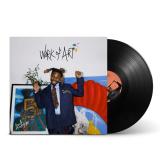
Work of Art is not merely a sophomore album; it is a victory lap run with the precision of a master artist. Following the stratospheric global ascent of his debut, Mr. Money with the Vibe, Asake faced the kind of pressure that usually demands a pivot. Instead, he treated that intensity like clay, sculpting a project that feels at once more expansive in scale and more intimate in spirit. Released in 2023, the album serves as a definitive statement on Asake’s sonic identity, deepening his signature fusion of Amapiano, Fuji-inspired percussion, and Afrobeats while moving with a newfound sense of deliberate poise.
If his debut was a high-octane sprint to introduce his sound to the world, Work of Art is a confident stroll through his own creative museum. Anchored once again by the masterful production of Magicsticks, the album serves as the perfect architectural space for Asake’s erratic, infectious flows. The record feels richly textured—brimming with pulsating log drums, soulful samples, and the specific, ecstatic chaos of Lagos nightlife. Asake successfully bridges the gap between traditional Yoruba heritage and the deep, percussive basslines of South African Amapiano, resulting in a sound that feels simultaneously ancestral and futuristic.
The project thrives on a unique duality: it is introspective, yet undeniably club-ready. Tracks like "Amapiano," featuring Olamide, provide the anthemic energy his fans crave, while cuts like "Basquiat" showcase a lyrical swagger that frames his life as high art set to a relentless four-on-the-floor beat. By leaning into his "Mr. Money" persona with added vulnerability and a clearer focus on the craftsmanship of his vocal delivery, Asake avoids the dreaded sophomore slump entirely. He proves that he isn't just making pop songs; he is curating a moment. Ultimately, Work of Art captures the feeling of an artist standing at the peak of his powers, looking out at the landscape he has helped reshape, and confirming that, indeed, he belongs there. It is not about reinventing the wheel—it’s about proving that the wheel he built is a masterpiece.
Naarm/Melbourne producer Mistr Dean delivers the first release on the city’s newest label, Lower Power, a nine-track double LP rooted in Dub influences.
The project is at its core, a journey that progresses through ambient and house adjacent soundscapes, to methodically constructed grooves. Phase Shift, Solanin, Automagic and Send Dub all exemplify the consistency and range of the record, and Dean’s clear ability to build clean tracks from the ground up.
While it has a clear cohesive identity, Phase Shift leans into a diversity of sound and feel, suitable at points, for the bar, club, couch or frankly, any function you feel.
IN2POL rounds out the record with a remix of the title track that brings its own distinct weight to the LP’s sound and, to no one’s surprise, it truly is a weapon.
Credits:
Mixed by Mistr Dean
Mastered by Brendan Zacharias at Cirius Audio
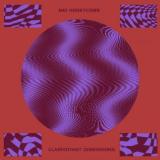
Clairvoyant Dimensions is the first album by Mei Honeycomb, a new duo of Jordan Czamanski, renowned as a member of the acclaimed Juju & Jordash and the Magic Mountain High project, with solo work released as Jordan GCZ, and legendary saxophonist Jeff Hollie, known mostly for his work with Frank Zappa and Ike Willis. An explorative ambient album, Clairvoyant Dimensions is an exercise in distance and contemplation, and the exhilarating feeling of insight, however fleeting, like staring at the midnight flicker of an old VCR. Czamanski's music has a trademark tenderness and soft-spokenness, an ability to maximize minimalist musical elements and bring them to an open-ended conclusion. Jeff Hollie provides interpretative sax lines on all tracks, slipping into the scene like a shadow, silent and unexpected, touching upon emotional registers almost explicit, yet confounding.
As musical signifiers keep turning around themselves, they set up a mood of euphoria, one that suggests understanding. Never explicitly spaced-out, there is continuous reference to cosmoses both inward and far away. Ambient music in modern form. Jordan Czamanski uses his experience in producing off-the-charts club music to come up with five tracks that at times are standstills, and at times dwell in forward momentum. Jeff Hollie provides both comprehension and beautiful confusion. As grainy images switch into focus, Clairvoyant Dimensions is a beautiful and contemplative trip that suggests its own reality in delicate ways. One of the five tracks, the gorgeous live-recorded Painted Desert Pastel, features composer, performer, and researcher Ilya Ziblat Shay on double bass and electronics.
Screen-printed cover designed by Johan Kauth.
Mastering by Rashad Becker