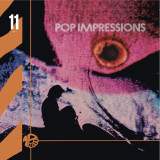
Alex Andrikopolous AKA Lex (Athens) released his brilliant debut album Waving in 2022 on Leng and he now returns with an EP combining fine remixes of tracks from Waving alongside two new previously unheard cuts.
The remixes are undeniably special. Fittingly, the EP begins with the first of these, a sensationally sun-soaked revision of one of Andrikopolous’s most Balearic moments – previous single ‘Punta Allen’ – by former Nuphonic fusionists and FAR label founders Faze Action. The Lee brothers’ take is one of those sunset-friendly workouts that wraps glistening guitar licks, steel pan style motifs, Lex’s gorgeous lead lines, hazy electric piano solos and life-affirming keyboard riffs around rolling nu-disco beats and a new rubbery bassline courtesy of Robin Lee himself. It has the feel of a pool-side anthem in the making.
Just as potent is the typically quirky and hard-to-pigeonhole revision of ‘Prezend’ by Manchester maverick Ruf Dug. Here he offers up a genuinely revolutionary rework, re-imaging the track as a sparse-but-colourful fusion of vintage acid house bass, saucer-eyed piano riffs, dubbed-out synth sounds, jacking lo-fi drum machine beats and squelchy TB-303 tweaks. While fresh and undeniably contemporary, the remix has an alluringly nostalgic, retro-futurist vibe.
Clustered around these two top-notch revisions is a pair of previously unreleased Lex originals. He joins forces with regular collaborator Locke once more on ‘Libre De Amor’, an infectious chunk of, low-slung dub disco marked out by weighty bass, jammed-out electric piano motifs, spacey pads, intergalactic effects and mazy synth solos. Dotted with additional percussion hits and echoing female vocal snippets, it’s one of the pair’s most potent dancefloor workouts of recent times.
To round off a rock-solid EP, the Athens-based veteran blurs the boundaries between stripped-back, late-80s house nostalgia and nu-disco. ‘Super Awake’ boasts cowbell-sporting Chicago house beats and acid house inspired bass, on to which he’s layered all manner of colourful synth sounds, jangly piano stabs and spacey electronics. Throw in some typically immersive chords and progressively more psychedelic TB-303 motifs, and you have a genuinely triumphant conclusion to a formidably floor-focused EP.
Поиск:l t j sound machine
Все
Step into a time machine and groove back to the electrifying era of the mid-80s, where undiscovered US tracks found their sonic sanctuary on Morgan Kahn’s groundbreaking Street Wave record label. The reverberations of this musical revolution rippled from the gritty streets of NYC, transcending borders to captivate the entire globe. Picture it: 808s pulsating, synthesisers painting the airwaves with vibrant hues of rhythm and nostalgia. In the heyday of the eighties, rap wasn’t just a genre – it was a movement, a cultural force with a message that resonated through the beats and break moves. The lyrical poets of the time wove tales of real-life struggles and triumphs, creating a tapestry of sound that still echoes with relevance today.
Fast forward to the present, and the spirit of the 80s lives on in a classic track that encapsulates the magic of that unforgettable era. The torchbearers of timeless tunes, High Fashion Music, recognised the gem that was waiting to be polished. Enter Ben Liebrand, a musical maestro tasked with breathing new life into this iconic piece. Liebrand, has conjured three versions of this classic anthem. First up, the Nu-Disco funk-boogie rub, a groove so infectious it’ll have you hitting the dance floor in a heartbeat. Then, there’s the percussive-led Funk Mix – a rhythm-driven journey that takes the original to new heights. And for the pièce de résistance, the outrageously good nu vintage Electro Mix, a sonic masterpiece that bridges the gap between the past and the present with unmatched finesse.
Join us on this sonic voyage, fast forward into the future, as we celebrate the resurgence of an 80s cult classic, transformed by the wizardry of Ben Liebrand.
Warehouse Find!
Red D is back for a follow up to his brilliant Chez EP which dropped last year and this time he's going for the jugular! The man responsible for
some of the finest house music of the last decade as FCL (with San Soda) and FCL vs VFB (with Motor City Drum Ensemble) knows a thing or two about
what makes the dancefloor lose its s**t, with tracks such as Let's Go Seven, It's You and Can We Try all testament to this.
When he's not DJing at the likes of Panorama Bar or hosting his own stage at Tomorrowland, Red D can be found running his own mighty fine We Play House label from his Ghent HQ.
Moan The Mania opens this release in suitably back to the raw fashion! A minimal drum machine groove and clipped bassline lay the foundations of this tribute to all things jacking with a sprinkling of porno groans to help you on your way. This is sleazy machine funk at it's very best. Next up we have a remix from Eli Escobar, the native New Yorker who has recently been making major waves following the release of his LP Happiness on Classic.
As someone who has remixed the likes of Lana Del Rey, Kim Ann Foxman, Honey Dijon and Holy Ghost we knew he'd be the man to take Red D's baton and run with it.
Keeping the overall vibe of the original intact
Eli cranks the energy further with additional in your face percussion parts and a couple of perfectly placed build ups. Flipping over we have Chase The Cat which takes a similarly stripped-back and minimal approach as Moan The Mania but goes heavier on the 707 beats. Finally we have Dusk Or Dawn closing the release with a deeper mood.
Simple FM synth stabs and glassy chimes provide a tender and naive-sounding counterpoint to the basic beats.
Red D proving once again that limiting your tools and not over-complicating things can often have so much more impact when it comes to house music.
Entering the world of MOOON is like entering a time machine. The young Brabant power trio, consisting of brothers Tom and Gijs de Jong and their cousin Timo van Lierop, takes the listener to the Golden Age of pop music: the heyday of psychedelia in the 60s and 70s.
Following up their recently released LP "III", here comes a brand-new 7" by MOOON. Featuring a mono-version of "Hurtin' My Heart", taken from their latest album "III" and on the B-side an unreleased song from the same session; "How I Learned (To Say Goodbye)".
"Hurtin' My Heart" is a fuzz & Farfisa driven tune, that everybody on the dancefloor will dig. "How I Learned (To Say Goodbye)" is a jangly 3 part harmony pop song but with a high energy twist!
This is a 7" that both sounds and looks 60's-stylish (with flap outer sleeve) and every DJ will need in their box!
Vanishing Twin is songwriter, singer and multi-instrumentalist Cathy Lucas, drummer Valentina Magaletti, bassist Susumu Mukai, synth/guitar player Phil MFU and visual artist/film maker Elliott Arndt on flute and percussion; and on this album they have made their first artistic statement for the ages.
Some of its great power comes from liberation. The album was produced by Lucas in a number of non-standard, non-studio settings. 'KRK (At Home In Strange Places)' summons up the spirit of Sun Ra's Lanquidity and Broadcast And The Focus Group Investigate Witch Cults Of The Radio was simply recorded on an iPhone during a live set which crackled with psychic connectivity on the Croatian island of Krk.
The magical Morricone-esque lounge of 'You Are Not an Island', the blissed-out Jean-Claude Vannier style arrangement of 'Invisible World' and burbling sci fi funk ode to a 1972 cult French animation, 'Plane`te Sauvage', were all recorded in nighttime sessions in an abandoned mill in Sudbury. The only two outsiders to work on the recording were '6th member' and engineer Syd Kemp and trusted friend Malcolm Catto, band leader of the spiritual jazz/future funk outfit The Heliocentrics, who mixed seven of the tracks (with Lucas taking care of the other three).
Vanishing Twin formed in 2015 - their first LP, Choose Your Own Adventure, which came out on Soundway in 2016; followed by the darker, more abstract, mostly instrumental Dream By Numbers EP in 2017. The band explored their more experimental tendencies on the Magic And Machines tape released by Blank Editions in 2018, an improvised session recorded in the dead of night, offering a glimpse into their practice of deep listening, near band telepathy, and ritually improvised sound making. These sessions formed the basis of The Age Of Immunology.
Presenting 'Swinging Flavors #12,' the latest sonic exploration by Tokyo-based sound craftsman, T5UMUT5UMU. In the pulsating track "Bolt," he deftly blends elements of techno, breakbeat, and jungle, offering an intergalactic journey through the diverse universe of bass music. Released under Beat Machine Records'
Swinging Flavors series, this digital and 7" vinyl release invites listeners to embark on a cosmic adventure.
T5UMUT5UMU, a genre-defying producer, skillfully navigates the space between tracks united not by traditional genre labels but by vibe and style. With techno, breakbeat, and jungle as his guiding stars, his music draws inspiration from Eastern cultures, seamlessly woven into UK-style club tracks. Fusing elements like HARD DRUM, dark breakbeats, grime, and DnB, T5UMUT5UMU creates compositions that transcend boundaries, captivating audiences globally.
The remix of "Bolt" by Mani Festo mirrors the rapid and diverse stylings found in his towering catalog. Mani Festo, caught in the tension between futurism and tradition, is a champion for the transformative power of club music. As part of the Club Glow
collective, his dynamic sound ranges from breakbeat science to electro machine funk, elevating 'Swinging Flavors #12' to new heights. The remix, akin to a warp-speed journey, propels the original track into uncharted territories, delivering an electrifying experience anchored by heavyweight rhythm craft.
Together, T5UMUT5UMU and Mani Festo invite you to lose yourself in the cosmic magic of 'Swinging Flavors #12,' a release that transcends musical boundaries, celebrating the joy of exploration within the vastness of bass-infused soundscapes.
Razor-sharp production of the highest order from two of the masters of the early 80™s Rio de Janeiro boogie sound, Robson Jorge and Lincoln Olivetti. Both were highly acclaimed music producers of the time, starting around the mid-70™s. Over the course of his career Olivetti worked with artists including Rita Lee, Erasmo Carlos, Don Beto, Marcos Valle, Tim Maia, Gilberto Gil, Gal Costa, Sandra Sa, Painel de Controle and many more. The album takes in mid-tempo, AOR, boogie and even latin all way through the tempo™s to ultra-quick Prince style disco-funk workouts. Includes several standout tracks ˜Aleluia™ and ™Ginga™ being our two favourites. Synths, horns, claps, drum machines, guitars, keys and vocal harmonies combine effortlessly.
Red Vinyl[26,26 €]
Deluxe edition Tan and Black Marble Vinyl[28,36 €]
Cassette[14,50 €]
It's been a decade since John Carpenter recorded the material that would become Lost Themes, his debut album of non-film music and the opening salvo in one of Hollywood's great second acts. Those vibrant, synth-driven songs, made in collaboration with his son Cody Carpenter and godson Daniel Davies, kickstarted a musical renaissance for the pioneering composer and director. In the years since, Carpenter, Carpenter, and Davies have released close to a dozen musical projects, including a growing library of studio albums and the scores for David Gordon Green's trilogy of Halloween reboots. With Lost Themes IV: Noir, they've struck gold again, this time mining the rich history of the film noir genre for inspiration. Since the first Lost Themes, John has referred to these compositions as "soundtracks for the movies in your mind." On the fourth installment in the series, those movies are noirs. Like the film genre they were influenced by, what makes these songs "noirish" is sometimes slippery and hard to define, and not merely reducible to a collection of tropes. The scores for the great American noir pictures were largely orchestral, while the Carpenters and Davies work off a sturdy synth-and-guitar backbone. The noir quality, then, is something you understand instinctively when you hear it, as in connected in an emotional way. The trio's free-flowing chemistry means Lost Themes IV: Noir runs like a well-oiled machine_the 1951 Jaguar XK120 Roadster from Kiss Me Deadly, perhaps, or the 1958 Plymouth Fury from John's own Christine. It's a chemistry that's helped power one of the most productive stretches of John's creative life, and Noir proves that it's nowhere near done yielding brilliant results.
Black Vinyl[24,79 €]
Deluxe edition Tan and Black Marble Vinyl[28,36 €]
Cassette[14,50 €]
It's been a decade since John Carpenter recorded the material that would become Lost Themes, his debut album of non-film music and the opening salvo in one of Hollywood's great second acts. Those vibrant, synth-driven songs, made in collaboration with his son Cody Carpenter and godson Daniel Davies, kickstarted a musical renaissance for the pioneering composer and director. In the years since, Carpenter, Carpenter, and Davies have released close to a dozen musical projects, including a growing library of studio albums and the scores for David Gordon Green's trilogy of Halloween reboots. With Lost Themes IV: Noir, they've struck gold again, this time mining the rich history of the film noir genre for inspiration. Since the first Lost Themes, John has referred to these compositions as "soundtracks for the movies in your mind." On the fourth installment in the series, those movies are noirs. Like the film genre they were influenced by, what makes these songs "noirish" is sometimes slippery and hard to define, and not merely reducible to a collection of tropes. The scores for the great American noir pictures were largely orchestral, while the Carpenters and Davies work off a sturdy synth-and-guitar backbone. The noir quality, then, is something you understand instinctively when you hear it, as in connected in an emotional way. The trio's free-flowing chemistry means Lost Themes IV: Noir runs like a well-oiled machine_the 1951 Jaguar XK120 Roadster from Kiss Me Deadly, perhaps, or the 1958 Plymouth Fury from John's own Christine. It's a chemistry that's helped power one of the most productive stretches of John's creative life, and Noir proves that it's nowhere near done yielding brilliant results.
Chris Whitley was an artist with his feet planted in two very different worlds. On one side was a guitarist/ songwriter who grew up with the Delta and Chicago blues of Robert Johnson, Muddy Waters and Howlin’ Wolf, with some Bob Dylan thrown in. But at the same time, he was hanging out with NYC Lower East Side avant-gardeists like Arto Lindsey and Michael Beinhorn during his early ‘80s formative years. And it is precisely that tension between tradition and experimentation that makes his music so interesting and unique among “roots rock” artists. That tension is palpable on 1995’s Din of Ecstasy, his second record; Whitley abandons the acoustic blues-rock of his Living with the Law debut in favor of an album, that at first listen, owes a lot to the early-‘90s grunge movement. But Din of Ecstasy is hardly a johnny-come-lately to that sound; those are some truly weird tunings and chords being played by Whitley. It’s almost like he’s reinventing grunge in his own fashion, soaking it in blues and seasoning it with dissonance and feedback. Add some dark, druggy lyrics to the mix and Din of Ecstasy takes its place as one of the decade’s most adventurous albums, a cult classic way overdue for a vinyl release. Limited edition “clear smoke” vinyl, nestled inside a printed inner sleeve. Don’t sleep on this one
Nach zwei von der Kritik hochgelobten Alben, zahlreichen Mini-LPs, EPs und Singles kehrt das Londoner Trio Girls In Synthesis mit seinem neuen Statement, dem dritten Album "Sublimation", zurück. Wenn du dachtest, du kennst GIS bereits, dann irrst Du Dich diesmal vielleicht.GIS gehen weiter und haben eine düstere und intensive, aber dennoch melodische Sammlung von Tracks erschaffen, ihre Interpretation einer kantigen Pop-Platte. Der Opener 'Lights Out' besteht aus zwei Teilen; der erste ist ein Barrett-eskes Gesangs- und Gitarren-Lamento über Schlafmangel, das über eine von 'Faust Tapes' beeinflusste Freeform-Noise-Sektion in einen stampfenden, hochintensiven Showdown übergeht. In Songs wie "Deceit", "We Are Here" und "Picking Things Out Of The Air" zeigt sich die Gruppe von ihrer melodischsten Seite, indem sie einige der chaotischen Noise-Elemente ihres charakteristischen Sounds auf ein Minimum reduziert und leidenschaftliche, schwebende Vocals und Keyboard-Melodien in den Vordergrund stellt. Ihr Markenzeichen, das treibende Schlagzeug und der Bass, ist besonders bei den Stücken "I Judge Myself" und "Corrupting Memories" zu hören, wird aber durch intensive, vom frühen Gothic beeinflusste Keyboardlinien ergänzt, die Einflüsse aus den späten 1970ern/frühen 1980ern mit der zeitgenössischen GIS-Intensität in Einklang bringen. Die langsam sich steigernden Tracks 'I Was Never There' und 'The Prefix' bauen mit spärlichen Arrangements und kreisenden, spiralförmigen Outros Spannung und Atmosphäre auf, während die Band im abschließenden 'A Damning Lesson' zu ihrer intensiven, knüppelnden Soundwand zurückkehrt, nur um sie in eine verschwommene, hallende Drum-Machine zu schicken, die an die frühen Arbeiten von Cabaret Voltaire erinnert. Nächstes Kapitel, nächstes Level für GIS!
Longtime music activists Rawmance and Asymmetrical from Rome have joined forces to create new music under the name 'La Nuit Je Mens'. Their debut work, titled 'Les Nuits Magnétiques', features two
of their songs on a hand-stamped 7" vinyl. Utilizing a bass guitar, analog synthesizers and vintage drum machines, their music is infused with French vocals, lending it a cinematic touch and a sense of depth.
While strongly inspired by the sound of the 80s, this record establishes its own unique identity, offering something new and refreshing.
- 01: Make A Wish
- 02: Hollow Inside (Original Cassette Version)
- 03: Faded (Original Cassette Version)
- 04: Not Like I Was Doing Anything (Original Cassette Version)
- 05: Disappointed
- 06: I Wanted None Of This
- 07: Fire Damage
- 08: Halo
- 09: Aurora
- 10: It Might Never Happen
- 11: Nothing's Ever Quite That Simple
- 12: Brighter Star
- 13: The Phoebe I Know (Original Cassette Version)
- 14: Little And Small
- 15: Sleepyhead
- 16: Dust From A Memory
- 17: A 50S Ballad
- 18:
- 19: A Few Words
- 20:
- 21: From My Window
- 01: Third Floor Fire Escape View (Original Cassette Version)
- 02: You Left A Note On The Table (Original Cassette Version)
- 03: Short Sighted (Original Cassette Version)
- 06: Icecream
- 07: Saviours For The Hurrying Man
- 08: Ferry No. 6
- 09: Nothing New (Original Cassette Version)
- 10: Climb My Stairs (Original Cassette Version)
- 11: Autumn (Original Cassette Version)
- 12: I Really Don't Know (Original Cassette Version)
- 13: Sunday 14. Memphis 54
- 15: Walk On By
- 16: Georgie
- 04: I Hate Myself More Than You Do
- 05: Talking To Trees
The Cat's Miaow return to World Of Echo with Skipping Stones: The Cassette Years '92-'93, their second compilation for the imprint, and the fourth in a loosely defined series of reissues associated with the group (also including The Shapiros' Gone By Fall: The Collected Works of The Shapiros and Hydroplane's Selected Songs 1997-2003). It's a smart selection of songs by one of Australia's finest independent pop music groups, whose initial run, across the nineties, was as mysterious as it was bewitching. A generous double album featuring thirty-five songs drawn from The Cat's Miaow's history, Skipping Stones lets listeners in on a bunch more secrets. The four cassettes that Skipping Stones draws from - Little Baby Sour Puss, Pet Sounds (both 1992), From My Window, and How Did Everything Get So Fucked Up (both 1993) - were released or assisted by Toytown, a Melbourne cassette label of rare taste, savvy and intelligence. Diving into that two-year period, Skipping Stones is full of surprises, rich with unexpected and inspired detours, while reminding everyone just how clear and distinct The Cat's Miaow's music was from the very start. Looking in from the outside, they always felt like a group that knew just what they were doing, but intuitive as they are, they weren't forcing anything: these songs always sound exactly what they need to be, rough edges, playful moments and all. The Cat's Miaow may have been bedroom dreamers, but their songs were richly informed, with the sweetest of girl-pop moves sashaying into walls of tremolo-d and distorted guitar, jangling six strings tangling with melodic bass that's pure Peter Hook/Naomi Yang, while the gentle trickle of a drum machine or the earthy twitch of brushes on drum skins provided the spine for Kerrie's and Bart's lovely, unforced singing. This double LP on World Of Echo feels like the very core of the thing - some of the most heartbreakingly beautiful, effortlessly lush and deeply moving pop music you're likely to hear. RIYL: Hydroplane, The Cannanes, Magnetic Fields, Belle and Sebastian, Jesus and Mary Chain
Pieces of debris washed up on a coastline shrouded in mist. Gratification comes from an eternal search for solace. Locked away at the top of a lighthouse somewhere on an unnamed isle, Grady Steele broadcasts to those within the beacon’s reach. A soundsystem built of driftwood and salvaged car stereos is pieced together with precision and laboriously dragged to the top of the obelisk. A timeless fugue state spent playing arpeggios on a Spanish guitar, the PA system ebbing out phasing loops across benevolent waters. Layering, occasionally faulting, stopping, recording, starting again. The phosphorescent glow atop the obelisk is ever-present.
Perhaps the first release on Archaic Vaults to feature (at least prominent) use of the guitar, these six compositions feel sketch-like and yet burned into the retina, like that of a passing car’s headlights leaving an impressionistic imprint of the source material. To mention this is Grady Steele’s debut release is not to imply he is new to working with sound, having been the proprietor of one of London’s most important soundsystems for the last decade. An obsession with fidelity can be heard and and at times deliberately perverted amongst the body of work. The warm and melancholic tones of the Spanish guitar evident in almost all songs are juxtaposed with various collaged material, including what sounds like hastily captured iPhone recordings and drum machines neglected at the back of the studio, dragged out for one or two stubborn, lurching takes and then once more committed to storage. The 90s voice-imitator pads glowing with undulance are reminiscent of John T. Gast’s early studio takes, and the synergy and precision in guitar layering could lend a clue as to what Fuck Buttons would have sounded like had they sold off their studio equipment for a couple of wooden 12-stringers. Stare long enough at those Windows 95 screensaver-esque rolling hills, and one might witness some miniscule movement in the growth.
Music composed and arranged by Grady Steele Painting by Antoine Larrera Mastered by Owen Pratt Design by Severin Black
Limited edition Cream and Black swirl PICTURE DISC is for Indie stores only.
Vanishing Twin is songwriter, singer and multi-instrumentalist Cathy Lucas, drummer Valentina Magaletti, bassist Susumu Mukai, synth/guitar player Phil MFU and visual artist/film maker Elliott Arndt on flute and percussion; and on this album they have made their first artistic statement for the ages.
Some of its great power comes from liberation. The album was produced by Lucas in a number of non-standard, non-studio settings. 'KRK (At Home In Strange Places)' summons up the spirit of Sun Ra's Lanquidity and Broadcast And The Focus Group Investigate Witch Cults Of The Radio was simply recorded on an iPhone during a live set which crackled with psychic connectivity on the Croatian island of Krk.
The magical Morricone-esque lounge of 'You Are Not an Island', the blissed-out Jean-Claude Vannier style arrangement of 'Invisible World' and burbling sci fi funk ode to a 1972 cult French animation, 'Plane`te Sauvage', were all recorded in nighttime sessions in an abandoned mill in Sudbury. The only two outsiders to work on the recording were '6th member' and engineer Syd Kemp and trusted friend Malcolm Catto, band leader of the spiritual jazz/future funk outfit The Heliocentrics, who mixed seven of the tracks (with Lucas taking care of the other three).
Vanishing Twin formed in 2015 - their first LP, Choose Your Own Adventure, which came out on Soundway in 2016; followed by the darker, more abstract, mostly instrumental Dream By Numbers EP in 2017. The band explored their more experimental tendencies on the Magic And Machines tape released by Blank Editions in 2018, an improvised session recorded in the dead of night, offering a glimpse into their practice of deep listening, near band telepathy, and ritually improvised sound making. These sessions formed the basis of The Age Of Immunology.
Speed Dealer Moms, the combustible live electronics duo comprising John Frusciante (Red Hot Chili Peppers) and Aaron Funk (Venetian Snares) is over a decade into their idiosyncratic run. On "Birth Control Pill," the duo's third release, the parameters of the chaotic and elegant project come into focus.
If there are virtuosos patching modular synthesizers and slicing up breakbeats, then they were in the room when these two tracks were recorded. The epic title cut is perhaps the most "functional" track the duo has ever recorded. This is ruffneck dnb business, but it's also the Speed Dealer Moms, so there is the requisite descent into chaos. The track's precise melodies are unceremoniously dunked into Funk's signature, ripping breakcore, the drums picking up speed until the crash test dummies hit the wall—a thrilling, extratone breakdown.
More madness lurks on the B-side, "Benakis," which seemingly nods to the visionary Greek composer. With its unconventional time signature and intricate melodies, this song cycles through breakcore and hard techno before eventually giving the listener a reprieve with a dreamy, beatless outro.
Speed Dealer Moms drive their own, crooked road built on friendship and a telepathic musical connection—the collaboration and encouragement of Funk ushered Frusciante into the dense world of hardcore machine funk. The results of these sessions don't sound quite like anything else, they are electronic records made in fearless pursuit of the new. Funk and Frusciante follow ideas to an illogical endpoint, and this hurtling approach has now resulted in the best and most concise Speed Dealer Moms record yet.