
out of Stock
Order now and we will order the item for you at our supplier.
7,98 €
Last In: 8 years ago
Order now and we will order the item for you at our supplier.

Order now and we will order the item for you at our supplier.

With his sophomore album Ghost People appearing on 2011's end of the year charts for the likes of Mixmag (#6), Clash Magazine (#9), DJ Magazine (#9), Data Transmission (Album of the Year), Martyn returns to Brainfeeder to release a follow-up 12' this March.
The 12' leads with "Hello Darkness", previously unreleased and exclusive to the release, Martyn shuffles through a rhythmic bassline and feeling of, indeed, darkness from the very first beat. In typical Martyn fashion, the track skips its way through genre conventions, landing in a flux between 2-step, driving techno and old rave (the latter specifically heard in his ethereal and scaling upper melodies). "Hello Darkness" could lend itself to the rawest, grittiest warehouse, yet simultaneously breeds a subtle feeling of elation and release, and keeps the listener guessing with a variety of quirky sound collages.
It also features a remix of "Bauplan", Night Slugs bosses L-Vis 1990 and Bok Bok bringing the most sinister corners of London into their remix, with a heavy grime lean and a pervading feeling of tension. Erratic samples (sounds of a tweeting bird one moment, the cocking of a gun the next) appear in-between a snap beat, metallic stabs and an apocalyptic build-up of percussion and synths. Pulsing in and out of a highly volatile atmosphere, almost as if the track is alive and breathing, this "Bauplan" almost feels like an unrelated beast until Martyn's melody lines start to unfold halfway through the track.
To finish there is an exclusive remix of "We Are You In The Future", a favourite from the Ghost People LP amongst critics and DJs across the board. Techno's notorious man in the red mask - Redshape - steps up to create a deep and dark Detroit interpretation of Martyn's freewheeling, sci-fi-enhanced joyride. Laced with ominous vocal samples ('It may be an accidental side effect of the drug'), the future takes on a slightly more dystopian feel with Redshape's melancholic strings, unpredictable percussion builds and a lingering, creeping reinterpretation of the track's original melodies. A definitive nod to the epic work of Derrick May and Carl Craig, with a hint of Kenny Larkin's intricate builds.
"By the time the imitators catch up, he'll be light years ahead." DJ Mag
Order now and we will order the item for you at our supplier.
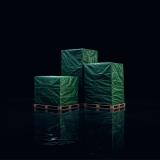
Depeche Mode, Yazoo, Erasure's Vince Clarke, Blancmange's Neil Arthur and the electronic producer-writer-synth-nerd Benge have joined forces to form the new project Doublespeak. Set to be released on May 29th, their self-titled debut album revisits eleven of their favourite songs from the past four decades, each reimagined and renewed in the timeless space of gleaming analogue electronica.
The 'Doublespeak' album is divided between songs from the postpunk netherworld brought blinking into the light (Fad Gadget, The Sound, Young Marble Giants), pop radio monsters ushered back down a dark stairway into the club (ABBA, David Essex, The Carpenters) and buried treasures from the 1990s onwards (The Magnetic Fields, Ed Dowie and Laptop).
Collectively, the album amounts to a shadow autobiography of the three collaborators' continuing musical education. Doublespeak is the great human songbook, synthesised.
Empathic vocals, bold arrangements and glowing analogue electronics turn familiar and forgotten songs into a personal, forward-looking electronic statement.
expected to be published on 16.06.2026
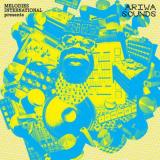
In 1979, Neil Fraser (artistically known as Mad Professor) founded Ariwa Sounds, the longest-serving and one of the most influential independently owned Reggae studios and record labels in the UK. From humble beginnings set up in the front room of Neil's home in South London recording on 4-track and homemade equipment, Ariwa would go on to record and release over 300 albums including works from some of the most impactful and storied artists of their time in the genres of Reggae, Dub, and Lovers Rock
Whilst our previous release in collaboration with Ariwa captured the label's early sound, a shared performance with Neil in Osaka and regular visits to his South London studio inspired us to assemble this 15-track compilation, showcasing the label's output across 45 years. Our release emphasizes some of the label's greatest vocalists: Johnny Clarke, Sandra Cross, Kofi, U Roy, Sister Nancy, Queen Omega, Aisha, Garnett Cross, Abel Miller, Horace Andy and more — presenting the Motown and Stax influences in the Lovers Rock, but also provides a glimpse into the dubbier and more experimental side of the label, showcasing Ariwa's commitment to quality but also their personality, philosophy and their humour. Love songs, break-up songs, socially engaged songs, dub experimentations — this compilation is not a "best of" Ariwa but a diverse and honest celebration of the label through the lens of Melodies International.
The compilation will be out in July in vinyl 2xLP, CD, digital formats, mastered from the original tapes by Frank Merritt (the Carvery), pressed at Optimal, artwork created by Jason Evans with design and assembly contributions from Nevil Bernard and Will Sweeney, animated teaser by Nevil Bernard and Melozine designed by Mafalda Meireles.
expected to be published on 19.06.2026

The mysterious Witness of Venus takes command of the Zazù spacecraft and continues his cosmic exploration. With Lost & Found, he drifts into a dreamlike sound world inspired by a specific sound of the trance and techno of the 1990s — the one that evokes wonder without excess.
As the label’s second release, Lost & Found is a gentle tribute to a timeless spirit of dance music, where the dancefloor becomes a place not only to move, but to dream.
On Stock and ready to ship

ALERT: BIG 90s ITALIAN RAVE COMP - a lot of very in demand tunes on here.
Navigators
Franco Falsini and the Interactive Test Universe
There are musicians who follow their time.
And then there are those who seem to move along a different trajectory—like navigators crossing sonic eras without ever truly belonging to any one of them. The story of Franco Falsini belongs to the latter. It is a story that begins long before raves, before techno, before the word “electronic” had even become a recognizable musical genre. A story that moves across continents, technologies, and sonic visions, eventually arriving at a small creative laboratory born in Italy in the early 1990s: Interactive Test. This compilation is a fragment of that universe. But as often happens with the hidden histories of music, understanding it requires going back. Far back.
The Beginning: Machines, Tape and Space
In the late 1960s Franco Falsini leaves Italy and moves to the United States. It is not merely a geographical journey—it is also a journey into a new idea of music. At the time, synthesizers are only just emerging from research laboratories. Multitrack tape recorders allow musicians to build entire sonic worlds on their own. Technology is still far from standardized: every studio is almost an experimental workshop. In Virginia, Falsini builds one of his own. Among cables, oscillators, electric guitars and reels of magnetic tape, a kind of music begins to take shape that resembles nothing else being made at the time. It is not simply rock, and it is not yet truly electronic. It moves somewhere in the space between the two. Out of these explorations emerges Sensations' Fix, the project through which Falsini releases a series of albums during the 1970s. Records that seem to come from a parallel dimension: cosmic landscapes, electronically treated guitars, synthesizers drifting like satellites. Many years later those albums would be rediscovered as visionary works. But at the time they were simply the result of relentless curiosity. A curiosity that would never fade.
The City That Never Sleeps
In the 1980s Falsini’s trajectory leads him to New York. The city is a sonic organism in constant transformation. In its clubs and recording studios something entirely new is beginning to take shape: music built from drum machines, sequencers, and samplers, created for the body before the living room. It is the dawn of modern dance culture. Falsini works as a sound engineer, producer and experimenter. From close range he observes electronic music transforming into a global language. Machines become more accessible, computers begin entering studios, and rhythm takes on an increasingly central role. Yet even in this phase Falsini does not simply follow what is happening. He absorbs. Observes. Reimagines. When he eventually returns to Italy, he brings back not only technical experience but also a clear vision: the conviction that electronic music is an open space, a territory still waiting to be explored.
Tuscany, Early 1990s
At the beginning of the 1990s something is happening in Italy as well. In clubs, abandoned industrial warehouses and clandestine parties, a new scene is beginning to form. It is rave culture: a spontaneous movement bringing together DJs, producers and listeners in a collective experience driven by rhythm, technology, and creative freedom. It is within this context that Franco Falsini, together with his brother Riccardo, creates Interactive Test.
The name almost sounds like a scientific experiment. In many ways, it is. Interactive Test does not emerge as a traditional record label. It begins as a laboratory—a place where ideas, sounds and musical identities can be tested and explored. Around the Falsini studio in Tuscany a small constellation of artists and DJs begins to gather, helping to shape the sound of Italy’s emerging electronic scene. Among them are Andrea Giuditta, Francesco Farfa, Gabry Fasano, Roby Mastelloni, Roby J and many others. Each brings a different musical sensibility. But they all share the same intuition: electronic music is not a genre. It is a language.
The Laboratory of Identities
One of the most fascinating aspects of the Interactive Test universe is its constant play with identity. Franco Falsini releases music under several different names: Open Space, Youth Wave, Agent Fylfoyt, Man Myth Magic. These are not simply pseudonyms.
They are different sonic perspectives, as if each project were a window opening onto a parallel musical universe. Open Space, for example, explores more atmospheric and visionary territories. Youth Wave moves between electronic groove and club-oriented rhythms. Other projects experiment with digital psychedelia or hypnotic techno textures. Interactive Test becomes something more than a label. it becomes an ecosystem.
Domestic Machines, Infinite Worlds
Looking back today at the technology used in those productions, one might almost smile. Many tracks were created on Amiga computers, MIDI sequencers and analog synthesizers wired together in home studios—tools that appear modest when compared to today’s digital possibilities.
Yet precisely these limitations became a creative force. Every sound had to be built, shaped and reinvented. Sequences developed slowly, almost like living organisms. The tracks did not always follow traditional dance music structures; often they felt like genuine sonic journeys. Music built from space.
A Hidden Constellation
Many of the records released by Interactive Test in the 1990s remained for years almost invisible objects, circulating quietly among DJs, collectors, and devoted listeners. Yet it is precisely this underground existence that helped preserve them. Listening again today, one perceives something rare: the feeling of music that does not fully belong to its own time. Music suspended between different eras. Perhaps because it comes from a vision that both precedes and transcends trends.
Continuing the Journey
Looking at Franco Falsini’s entire path—from the electronic psychedelia of Sensations’ Fix to the rave culture of the 1990s—a surprisingly coherent line emerges.
A line defined by exploration.
Each project, each pseudonym, each record appears as a new route within the same great sonic voyage.
Interactive Test was one of its stations.
A laboratory.
A community.
A creative platform.
This compilation gathers some of its traces.
Not as a simple archive of the past, but as a map of a musical territory that continues to expand even today.
Like all true sonic explorations.
expected to be published on 26.06.2026

Featuring rare- and first-on-vinyl tracks from beloved producers such as 2000 And One, Stasis, and CiM. Remastered by DMX Krew and with an accompanying online essay by Oli Warwick.
Across eight carefully selected slices of starry-eyed machine soul, Cold Blow presents an exquisite tour through backroom techno and downtempo electro. With a focus on thematic flow and an immersive listening experience, the London-based label explores works from leading lights of the 1990s and previously unreleased cuts that celebrate the human heart that can be discovered in synthetic sound practices. The development of techno in the 1990s saw the music evolve in different directions across the world. From the expressive blueprint laid out by the Detroit pioneers, a wide range of tempos and energies emerged. Techno's evocative synthesis and intricate drum machine programming was especially potent for deeper explorations away from the dancefloor. Documents Of A Different Reality casts back to when technology was steering quantum leaps in communication and creativity and the future was shot through with naive optimism. It was also a time when the media and industry hadn't caught up with the music to box it into distinct categories. As such, there's a sense of creative freedom that informs the older tracks on the album, from 2000 And One and Sandy Huner's sparkling example of early Dutch techno to London-based LA Synthesis' detailed take on braindance and the majestic night sky vision of cult legend Stasis. There's also space for rare, late 90s machine funk from Icelandic outlier Thor alongside Connective Zone's charmingly fractured bleep dream and a more contemporary offering from Barcelona-based duo Permutation. Meanwhile Mind Control and CiM both capture the spirit of stylistic fusion with twitchier rhythms that take influence from hardcore and jungle as much as techno. With an atmospheric through-line of melancholic pads and harmonious leads, this small but perfectly formed collection naturally follows on from previous, equally thought-out compilations on Cold Blow, and adds a distinct perspective on the history and continuing legacy of pioneering early ambient techno.
expected to be published on 26.06.2026

„A Toda Cuba Le Gusta“ (1997) ist das Debütalbum der Afro-Cuban All Stars, einem Projekt unter der
Leitung von Juan de Marcos González, das die goldene Ära der kubanischen Musik feiert. Aufgenommen
wurde es 1996 in den EGREM Studios in Havanna, denselben Studios, in denen auch „Buena Vista Social
Club“ entstand. Das Album vereint legendäre Veteranen wie Rubén González und Raúl Planas mit jüngeren
Musikern zu einer mitreißenden Darbietung von Son, Danzón, Rumba und Mambo.
Die Platte sprüht vor Energie und wurde live aufgenommen, um die Atmosphäre eines Havannaer Tanzsaals
einzufangen. Sie erntete internationale Anerkennung und wurde für einen Grammy in der Kategorie „Best
Tropical Latin Performance“ nominiert. Als Hommage an Kubas musikalisches Erbe und zugleich als Auslöser für dessen weltweite Wiederbelebung gilt „A Toda Cuba Le Gusta“ als Meilenstein der kubanischen
Musikrenaissance der 1990er Jahre.
Zur Feier des anhaltenden Erfolgs des Albums veröffentlicht WorldCircuitRecords eine spezielle SplatterVinyl-Edition von ATodaCubaLeGusta, die an den 30. Jahrestag der Aufnahmen von 1996 erinnert. Diese
limitierte Sammleredition besticht durch ein auffälliges Vinyl-Design in den Farben der kubanischen Flagge
und eine Jubiläumsverpackung und bietet langjährigen Fans wie neuen Hörern gleichermaßen ein hochwertiges Format, um dieses Meilenstein-Album erneut zu entdecken.
expected to be published on 26.06.2026

2026 Repress
Originally released on the cult V4 Visions label in 1991 & 1994, Ashaye’s 'Dreaming' and 'What’s This World Coming To' showcased the sound of Steet Soul, a genre that emerged in the 1990s, blending elements of soul, R&B, and hip-hop, that could be heard playing across London’s pirate radio stations. As the popularity of UK soul has grown in the last 5 years, DJ’s and tastemakers have put 'Dreaming' and 'What’s This World Coming To' into heavy rotation which has only increased demand & price for the original vinyl considerably. At present this demand is so high that it’s not even possible to purchase 'Dreaming' on the second hand market, while copies for 'What’s This World Coming To' are changing hands for £50+. On this fully licenced, RSD release, two of Ashaye’s biggest tracks are together on one 12 inch for the first time! Don’t sleep on this double header of premium UK street soul on South Street International's debut foray into vinyl!
On Stock and ready to ship
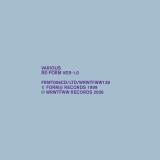
WRWTFWW Records is thrilled to announce their 5th archival release taken from cult Tokyo label FORM@ RECORDS' catalogue, this time with the first-ever vinyl edition of Re-Form Ver-1.0. The remarkable, yet not widely known, 1999 remix compilation is now available as a limited edition 45rpm cut double LP housed in a heavyweight sleeve, as well as in digital format.
Originally only available on CD in extremely limited quantities, Re-Form Ver-1.0 resurfaces as a fascinating document of FORM@ RECORDS' late-1990s creative peak. Re-imagining key pieces from the label's catalogue, the remix collection offers a rare glimpse into Tokyo's electronic underground, where techno, house, ambient, and IDM breathe freely through FORM@'s soulful and exploratory vision.
Highlights include two remixes of Missing Project's adored gem "Poisson D'Avril" (including its well known ethereal ambient Galaxy Dub which appeared on Music From Memory's Virtual Dreams II) as well as the otherworldly Fossil (aka the legend Virgo) Mix of Penance's "Cure & Soul". Throughout, the compilation balances dancefloor sensibility with introspective listening, embodying the warm human approach to machine music FORM@ RECORDS excels in.
Another essential time capsule from a crucial era of underground music, Re-Form Ver-1.0 echoes the spirit of Warp's Artificial Intelligence era, alongside the forward-thinking energy of Ken Ishii, Carl Craig, The Black Dog, and Ian O'Brien, while keeping its feet and individuality firmly rooted in local context - the magic recipe for creating a universal, timeless language of electronic expression.
Re-Form Ver-1.0 follows the vinyl edition of Virgo's Landform Code (1998) and Remnants (1999), as well as the FORM@ compilations Art Form I (1997) and Art Form 2 (1998), further expanding WRWTFWW's archival series dedicated to uncovering hidden gems of late '90s Japanese electronic music.
On Stock and ready to ship

Nate Krafft (Nathaniel Killins IV) is a visionary Detroit producer whose 1990s work were released under his own name and aliases such as Super Nova and Naquil and have since become highly collectible. He later re-emerged as Nate Nubia, continuing to experiment techno infused with machine soul and cosmic imagination.
In 1995, he dropped two cult 12"s on his own Infra label: Man ?? Machine and Crimson Arsenal, blending Detroit techno with electro edges and sci-fi atmospheres exploringuncharted territories. These sought-after EPs, which sounded futuristic long before their time, are brought together for the first time as one limited edition red vinyl 2x12".
Please also consider his Planetary Invazion EP, under his Super Nova alias, reissued in 2018 on the same label.
On Stock and ready to ship
H- side is etched
The American cable-television industry exploded in the 1980s, pushing broadcasts of diverse programming and emissions of low-laying cultures into homes. Community stations piggybacked on the digital developments of the time, extending their existence through telephony and broadcast a iliates. For those growing up in this time, in locations such as New York City, the localized communications beamed into their homes exposed them to an impressionable array of disparate sounds and visions.
Move into the 1990s and New York was filled to the brim of emergent cultures drawing from this ebullition of communication. From Rammellzee’s shapeshifting to the late Judy Russell and Frank and Karen Mendez’s Nu Groove imprint fusing reggae, poetry and house, nascent ideas emanated from the city walls, from within stores such as Sonic Groove store and on VHS releases such as Stakker’s The Evil Acid Baron Show, a legendary technicolor psychedelic trip along the wildest frontiers of acid house. As scenes expanded and identities developed, such individuals weather the events of the visceral now, expressing themselves right into an unpredictable future.
Function’s long career has seen him uncover a vast range of sonic identities, a mainstay through house, techno and industrial with collaborations with the likes of Regis, Damon Wild alongside his highly influential Infrastructure imprint. With influences deeply tied to pop art, rave and gay scenes, and early memories of block-parties emitting Kraftwerk and Strafe, he found himself seeking out the undercover illegal nights of the 90s on a quest of sexual unearthing, mixing the ever-yearning escapology mission of disco with the influential DJ sets of Jeff Mills.
For his new album Existenz, he marks a clear step away from the corporeal techno of his recent releases. Pivoting around themes of religion, sexuality, trauma and healing, it is a work expansive and celebratory, a clear liberation from a deeply internalized past. Formed from a collection of recordings made in a period from late 2016 to mid 2019, Existenz takes the form of a creative outburst in reaction to a number of traumas - recent, childhood and throughout Function’s life. Life partner Stefanie Parnow assisted the production process in its entirety, providing inspiration, spiritual healing and featuring vocal contributions.
Cosmic synths soar and swoop in ‘Pleasure Discipline’ through towering stacks of rhythm that stutter and creak to a halt before rebooting, a firm robotic response to human intervention. ‘Zahlensender’ reflects a spatial tetris of urban life, as digitalization set within an XYZ matrix confronts the sprawling city. Constant arpeggiated meditations echo synaptic transmissions, e ecting a dissolution of boundaries. ’The Approach’ recalls the unification of the self, a state of delirium non-subjective and smooth, as all connections and functions give way to simple intensities of feeling, crossing the threshold into spirituality. ’Golden Dawn’, featuring Stefanie Parnow, marks a further elevation of dubbed-out euphoria, as once more positive rays emerge. His ode to the effortless short-trip urban navigation 'Kurzstrecke' finds Function in motion, upfront and bold, snapshots of conversation and flickers of light. 'Ertrinken' finds metallic bass jabs swamping snipped synthetic voices, with hidden stores of emotion set as a nod to the history of vocoders as a tool for encrypted military communication. House icon Robert Owens features on 'Growth Cycle' and 'Be', entrenching a celebratory atmosphere over Function's clubwise leanings. Closing track 'Downtown 161' reflects the unmistakeable filtered and squashed interjections of television, and sampled dance vocals - a sound for the curious, dreamers and dancers.
With Existenz, Function reveals an essential body of work, spread over 4LP - thought experiments on the role of identity and spirituality after a lifetime of upheaval and trauma. Leading up until the release date, Function will undertake an album promo tour with select dates - A/V shows at Berlin Atonal and Rural festival in Japan, and three dates as part of his Bassiani residency.
expected to be published on 03.07.2026
With Sunrise and the Life We Live, John Beltran returns to his ambient techno roots, the sound that garnered him global appeal in the 1990s.
Through ten tracks, the album journeys through lush, aerated textures and beatless expanse. Hypnotic grooves deepen and bloom in a flow of shapes and colors, creating a sound that is both meditative and full of life.
Thirty years after the release of his seminal Ten Days of Blue, Beltran's musicianship, vision and desire to produce remain at a fever pitch. With Sunrise and the Life We Live his gift of extracting emotion from the universe and turning it into
a unique musical experience puts him in a class of his own.
expected to be published on 10.07.2026

There are records that do not so much belong to an era as they pass through it, leaving traces rather than statements, circulating in the margins where function outweighs discourse. World Cup, written at the end of the 1990s by Kiko, emerged in precisely that way — as a techno track whose presence was felt less through promotion than through repetition, carried from booth to booth, absorbed into the working vocabulary of DJs who recognized in it something immediate and self-evident. Its architecture is minimal yet insistent, driven by tension and release, a form of clarity that resists ornament and instead privileges duration, pressure, and movement.
When it resurfaced in 2006, it did not return as a revision but as a continuation, reaffirming its role within the ecology of the dancefloor. The same internal logic remained intact, allowing it to re-enter circulation without friction, as though it had simply been waiting to be picked up again. In both instances, the track operates less as a fixed object than as a tool — something to be used, extended, and recontextualized in real time.
Bringing together these two versions alongside Tainted Life, the release traces a subtle but telling trajectory. If World Cupdefines a certain techno functionalism, Tainted Life reveals another dimension: a proto-Italo sensibility that gestures toward what would later coalesce as electroclash, not through stylistic declaration but through texture, tone, and attitude. Long absent from digital circulation and largely confined to obscurity, it appears here not as a rediscovery, but as a piece whose relevance has simply remained latent.
Nothing has been added, nothing has been altered beyond what was necessary to restore presence. The recordings are allowed to exist in their own continuity, detached from the temporal markers that might otherwise confine them.
The artwork, conceived by H5, extends this approach into the visual field. Its restraint is not aesthetic minimalism for its own sake, but a form of structural clarity, where composition and absence articulate a space in which the record can be encountered without interference, as if resurfacing from a parallel timeline that never fully closed.
expected to be published on 30.07.2026

WRWTFWW Records releases THE GENTLE PEOPLE - The Peel Sessions, available on vinyl for the first time ever, in conjunction with the worldwide expanded reissue of the group's Soundtracks for Living. Lounge/Chill Out music reborn !
This is an exclusive 4-song EP recorded in 1997 on BBC's Peel Sessions, as The Gentle People were doing the rounds for the release of their legendary debut album. These live versions have never seen the light of day before - a must have for all the gentle fans !
When The Gentle People first glided into the mid-90s on clouds of strings, sugar and sine waves, they sounded like visitors from another, more glamorous planet. Signed to Richard D. James and Grant Wilson-Claridge's cult label Rephlex, this multinational "E-Z-Core" lounge unit took the aesthetics of 50s/60s easy listening and exotica and gently smuggled them into 1990s club culture.
Imagine KLF's Chill Out or Space growing up on French 60/70s pop, bossa nova, soundtracks, vocal harmony groups, library music and easy listening then slipping out for a late-night date with dub, ambient techno and bubble-bath pop. That's The Gentle People : music that can score cocktail hour, 4am taxi rides, and daydreams in headphones with the same effortless grace.
The Gentle People weren't just a curiosity on a weird label; they became unlikely icons of a whole loungecore moment, gracing TV, compilations and magazine spreads, and proving that tenderness could be as futuristic as any drum machine.
On Stock and ready to ship

Assemble Music welcomes XDB for his first appearance on the label. Born and based in Germany with Greek roots, XDB (Kosta Athanassiadis) has been deeply involved in electronic music since the early 1990s. Known for his broad musical vision and refusal to be boxed into a single style, XDB has built a reputation through both his carefully curated DJ sets and hardware-driven productions. His sound draws from raw Detroit traditions, dub techno and deep house, favouring analog textures and stripped-back machine funk. On this three-track EP, XDB explores the darker edges of house and techno, blending classic Detroit influences with raw analog production to deliver a focused and uncompromising statement. With releases on respected imprints such as Sistrum, Ferox and Dial Records, this debut on Assemble Music feels perfectly placed and essential.
On Stock and ready to ship

Incl. Remixes by Red Axes, Roman Flügel & Abe Duque
What does it mean to exist in sound?
It does not begin with a beat, but with a choice. With the moment when someone decides not merely to inhabit the space, but to shape it – and in doing so, makes themselves visible.
Roman Flügel stands as a constant in the background. Not as an authority, but as a collective consciousness. Since the 1990s, he has moved through club music like a seeker, never content with the first answer. House, techno, experimentation – these are not genres, but states of being. His remix thinks, hesitates, opens, strikes like a surging acid wave, warping reality and demanding true presence.
New York taught him that club music is never neutral. It is body, friction, attitude. Abe Duque’s remix carries a strangely enchanting relentlessness, a resistance to smoothness – as if the dancefloor were a place where freedom is not claimed, but fought for.
Red Axes do not enter this space; they conjure it. Their sound is raw, repetitive, circular, as if deliberately refusing linearity. House, dub, and acid elements become material for a movement that is more trance than structure. Their remix does not ask where it is going; it asks why one should ever stand still.
And then there is Tim Paris. Not at the center, but as a narrator. As someone who knows that the voice is an attitude. “That Boy” is not a pose, but a mirror, ironic, direct, vulnerable. Paris moves between new wave house and club, always aware that identity is never fixed, but formed in the moment.
This remix record is not a gathering of names. It is a situation, four perspectives on the same question:
What does it mean to exist in sound?
Yet sound alone does not tell the full story: like music, the visual is a space to be shaped, felt, and deciphered. The cover of Tim Paris feat. Foremost Poets – That Boy, created by Konstantin Fürchtegott Kipfmüller, a visual artist at the Hochschule für Gestaltung in Offenbach under Heiner Blum, embodies this principle. Drawing inspiration from the urban environment, Kipfmüller transforms traces of decay, weather, and time into abstract narratives that, like the music of Tim Paris, Roman Flügel, Abe Duque and Red Axes, unfold meaning layer by layer. The result is no mere adornment, but a mirror of the sonic landscape: every line, every surface an echo of the question of what it means to exist – fully, in the moment, in sound.
On Stock and ready to ship

Another DINTE tape curated by cult WFMU show and blogger Bodega Pop; Gary Sullivan's long-running project rooted in a passion for digging for music in bodegas and cell-phone stores across NYC's boroughs. This edition focuses in on late 1990s and early 00s hip-hop & rnb from across Southeastern Asia.
"While on a work trip to Chicago in the mid-2000s, I was craving a bowl of pho. A bit of sleuthing led me to hop on the red line "L" up to Argyle Street, ground zero of Chicago's Little Saigon. In the 1960s, Chicago restaurateur Jimmy Wong invested in property on Argyle Street with a vision to build the city's new Chinatown, a kind of mall with pagodas, trees, and reflecting pools. In 1971, the Hip Sing Association, a labor/criminal organization, established itself in the area, and along with Wong, they bought up 80% of the buildings on a three-block stretch of the street. Wong reportedly broke both hips in an accident, leaving his dream to wither; in 1979, Charlie Soo of the Asian American Small Business Association brought it back to life.
Soo expanded the area into a vibrant mix of Chinese, Vietnamese, and other Southeast Asian businesses, pushing for renovations, including an Argyle station facelift and the Taste of Argyle festival. At the time I exited the station and crossed the street to get a better look at a shop with a poster for A Vertical Ray of the Sun in the window, the area was home to some 37,000 Vietnamese residents.
Opening the door, I was gobsmacked by a cavernous Southeast Asian media store, bigger than any I'd been to in Dallas, Montreal, New York, or Seattle. I spent some time at the bins, pulling out collections by some of my then-favorite singers — Giao Linh, Khánh Ly, Phương Dung — before approaching the register to ask the young woman behind the counter if the they carried any Vietnamese rap. It was a longshot, I knew, but if such a thing existed on physical media and anyone carried it, it would be this place.
'Have you heard Vietnamese rap?' she replied, her tone of voice and facial expression betraying a comically exaggerated level of distaste. I admitted my ignorance but assured her that I had long cultivated a high threshold for cheesy pop music of all kinds and genuinely tended to like hip hop from around the world.
She rolled her eyes and pointed to an area I had missed. I walked toward a far corner of the store and knelt over a small box on the floor sparsely populated with CDs, VCDs, and cassettes. I pulled out half a dozen Vietnamese hip hop compilations and a strange-looking CD with a cavalcade of odd typefaces in a queasy multitude of colors: THAILAND RAP HIT, it boasted, with 泰國 "燒香" 勁歌金曲 below it. The information on the back provided an address in Kuala Lumpur and the titles in Thai and English translation. The first track included three simplified Chinese characters after the English-language version of the title, "The Chinese Association": 自己人.
WTF was going on here? Walking back to the register, I waved the CD, asking "What's up with this one?" She gave me a look. I placed it on the counter so she could bask in the cover's full glory. She shrugged. "I'm guessing it's Thai rap?" She looked disappointed in me when I said I'd take it.
It turned out to be a Malaysian pressing of half-Chinese Thai hip hop artist Joey Boy's third album, Fun Fun Fun from 1996, and it completely changed my sense what the genre could sound like. The rapper's self-assured, effortless, silly-but-cool rapid-fire delivery weaved in and out of the most bizarre, antic beats I'd ever heard. The six Vietnamese hip hop CDs were a mixed bag, mostly "serious" sounding mimicry of US rapping over predictable production, but the highs were very high. When I got home and listened to it all, I made a point to find as much hip hop from this part of the world as I could.
The tracks collected here provide a limited but potent reflection of the two-decade ascendency
and ultimate world-takeover of hip hop, as it displaced rock and its endless variants for millions of listeners. This not a fair and balanced overview of regional production: I've only included tracks from Cambodia, Indonesia, Myanmar, Philippines, Thailand, and Vietnam. Nor is this a biggest or most important artists collection; instead, I've tried to recapture the pure visceral thrill of that first time I heard Joey Boy, choosing bangers that sound like nothing else, from nowhere else."
—Gary Sullivan
On Stock and ready to ship

Produce, arranged and mixed by Visnadi at 77 Studio, Mestre – Venice
X-Static are: Paolo Visnadi, Massimo Artusi, Riccardo Stecca and Cristina Dori (vocals)
A1 Additional Production & Remix by Alex Neri and Marco Baroni For Bass Productions
B1 & B2 Remix & Additional production by Gianni Bini at House of Glass Studio for HOG Productions
℗ ©2025 Undiscovered Recordings Ltd.
"I'm Standing" is a popular 1990s dance and house song by Italian band X-Static, produced by Visnadi. Originally released in 1994, the single was a huge success, spawning multiple remixes and versions, including the "Heavy Organ Mix" and the "Kamasutra Remix" by Alex Neri and Marco Baroni. This vinyl reissue features these two remastered mixes, along with two "2025" versions produced by Gianni Bini for HOG Productions.
On Stock and ready to ship

“From Birmingham and centred around the extraordinary songwriting talent of James and Patrick Roberts – initially as The Sea Urchins and since 1993 as Delta – they’ve only just got round to releasing their debut album, Slippin’ Out. It is a work of some beauty”. 9/10 NME ALBUM OF THE MONTH, 2000
“It’s classicist for sure, shot through with the influence of The Beatles, Byrds and Buffalo Springfield. In James’ downright beautiful closing ballad ‘I Want You’ one can also discern the school of ambitious English balladry that peaked in about 1968: The Casuals, Love Affair, Barry Ryan. The impression of accomplished old-schoolery is only furthered by the dizzying string arrangements penned by Louis Clark Jnr, son and namesake of the one-time orchestral chief of Electric Light Orchestra” – Mojo lead review, 2000
Having ended the 90s with the spirited ‘Laughing Mostly’ compilation of singles and demos (Guardian Album Of The Week) Delta finally released their debut studio album of twelve songs in the summer of 2000 on the Dishy Recordings label. Accepting that this might be their sole studio album the band threw everything at these recordings allowing it to exist in its own sphere, unbothered by their contemporary generation and disregarding the idea of even releasing a single.
Recorded at DEP International there was a notable difference to the scruffier, looser charm of their 1990s recordings, a tighter focus developed by having the experienced Lenny Franchi mixing the LP with them. Lenny had been working with a number of Island artists including My Bloody Valentine and Tricky so knew his way around a desk. There was also the question of budget (a few months passed between recording and mixing whilst funds were raised) so every day counted. Ultimately though you can hear the joy in the recordings, even amongst the melancholy and angst. As James recently recalled in an interview in Shindig! Magazine: “It was such a big deal for us. It’s one of my fondest memories doing that record. Everyone was happy. If there’s anything that I’d stand by, I think it would be that”
Louis Clark Jr joined the band towards the end of the ‘90s and brought a classically-trained element to the recordings particularly with his string arrangements. For ‘Cuckoo’, ‘I Want You’ and the prophetic ‘We Come Back’ Louis brought in eight players from the Birmingham Conservatoire; the baroque style is partly why the record often receives comparisons to Love’s ‘Forever Changes’.
On release ‘Slippin’ Out’ was a big favourite with writers at the NME, Mojo and The Guardian again and before long the band were signed to Mercury/Universal for their second studio album ‘Hard Light’, a far more expensive and expansive love affair. It was a temporary palatial home where things quietly fell apart again, but that’s another chapter.
“If long-term memory is nothing more than selective editing and only pop’s most weighty visceral works are built to last then it’s quite possible that in 50 years the Britpop era will be best recollected for the two bands it ostracised. Earlier this year we met Shack and thought their story of mercurial brilliance indicated the biggest music biz oversight of the 90s. We were wrong because we hadn’t met Delta yet. This is richer and more engrossing than anything by Shack”
On Stock and ready to ship

Mit Selenites, Selenites! präsentiert Jimi Tenor das erste Album seiner neuen Band - ein Meilenstein in der Karriere des finnischen Multiinstrumentalisten, der 2025 seinen 60. Geburtstag feierte. Tenor, bekannt für seine genreübergreifenden Visionen, vereint hier Afrobeat, Electronica, Spiritual Jazz und experimentelle Klangwelten zu einem kraftvollen, organischen Sound. Seit den 1990er Jahren prägt Tenor die internationale Musikszene mit Veröffentlichungen auf Labels wie Sähko und Warp Records. Seine Zusammenarbeit mit Künstlern wie Tony Allen, dem UMO Helsinki Jazz Orchestra und Florence Adooni zeigt seine Offenheit für musikalische Kulturen und seine Fähigkeit, scheinbar Gegensätzliches zu verbinden. Die JIMI TENOR BAND entstand in Helsinki und besteht aus fünf virtuosen Musiker:innen, die ihre Stücke live erprobt und verinnerlicht haben. Die Aufnahmen spiegeln diese Energie wider: Direkt, roh und voller Spielfreude. Die Songs wirken wie Live-Mitschnitte - spontan, intensiv und nahbar. Mit Selenites, Selenites! gelingt Tenor ein Album, das nicht nur musikalisch überzeugt, sondern auch seine Rolle als stilprägender Künstler unterstreicht.
On Stock and ready to ship

There was nothing in contemporary music like Chris Isaak’s Heart Shaped World when it hit shelves in June 1989. More than three decades later, the singer-songwriter’s third album still sounds unique — and claims a backstory nearly as fascinating as the retro-leaning material and standout performances that propelled it to sales of more than 2.5 million copies. Home to the Top 10 smash “Wicked Game,” the set remains a masterful mood piece that invites you to pour a late-night drink, sit in a dimmed room, and relish Isaak’s elegant albeit raw ruminations on love, relationships, and questionable decisions.
Sourced from the original master tapes, pressed at Fidelity Record Pressing, strictly limited to 3,000 numbered copies, and featuring the bonus track “Diddley Daddy,” Mobile Fidelity's UltraDisc One-Step 180g 45RPM 2LP box set of Heart Shaped World unearths the staggering inner details, saturated tones, and brilliant atmospherics of the crisp production. It brings you up close and personal with Isaak’s spectacular singing — impeccably controlled, tense, brooding, steamy, smoldering, haunted — situated amidst stripped-down backdrops that allow every note to fully bloom and decay.
While Isaak’s ever-steady baritone remains the anchor, the contributions of his trusty backing band, the aptly named Silvertone, come across with just as much cool, command, and realism. The indispensable playing of guitarist James Calvin Wilsey particularly emerges with superb clarity and dimensionality. The character of his 1965 Fender Stratocaster, shivering twang of his spring-coiled fills, and his signature use of reverb, delay, and vibrato seamlessly match Isaak's patient deliveries and the band’s unhurried rhythms. Experienced on UD1S with ultra-black backgrounds and a nearly invisible noise floor, Heart Shaped World is in every regard a demonstration disc.
The premium packaging of this UD1S pressing befits its elevated status. Housed in a deluxe slipcase, it features foil-stamped jackets and faithful-to-the-original graphics. Aurally and visually, this reissue is for discerning listeners who desire to immerse themselves in everything involved with the album, not the least of which is the cover art depicting a lost-in-thought Isaak staring ahead and sitting in what appears to be an efficiency apartment. The image epitomizes the record’s lonesome temperaments and pensive themes.
Of course, if not for director David Lynch hand-picking two cuts from Heart Shaped World for his 1990 film Wild at Heart, the record would’ve probably suffered the same fate as Isaak’s prior efforts and gone unnoticed by the mainstream. Despite receiving raves from outlets such as NME, Chicago Tribune, and Rolling Stone upon its original release, the album stalled in the lower quadrants of the Billboard charts and, after a few weeks, dropped off.
Cue the ear of Lee Chesnut. Then the music director for a large Atlanta radio station, Chesnut heard the instrumental version of “Wicked Game” on Lynch’s soundtrack and started airing the album rendition at all hours of the day. Aided by a sensual video featuring Isaak and supermodel Helena Christensen, the song found its way into the public consciousness by early ‘91 and helped make Isaak a most unlikely mainstream star in an era where his techniques had little to nothing in common with popular tastes.
Despite its vintage vibes and shared DNA with legends such as Roy Orbison, Chet Baker, and Glen Campbell, Heart Shaped World transcends nostalgia, rockabilly, and throwback tropes. For all the melodrama and sadness at hand, Isaak’s gorgeously transparent singing dives deep underneath emotional surfaces. He mines subtleties that indicate his feelings go beyond heartbreak and anguish, and occasionally suggest frustration, menace, and anger. You can hear it in his quivering falsetto, and the slow and methodical ways he allows delicate whispers to break into shadowy phrasing that crosses over to the darker sides of romance and desire.
That approach bolsters the title track, which suggests calm yet moves on ominous currents — its simmering pace and snare-drum snappiness foreshadowing Isaak raising the volume and urgency during the coda. The southwestern-tinged “Wrong to Love You” plays with similar concepts of hesitation, unease, and discord, Isaak careful never to fully erupt and give anything away. His poised deliveries offer a master class in the art of insinuation and hurt on “Nothing’s Changed,” sent up with a wordless backing chorus and crackling guitar lines straight out of a Memphis blues joint.
Heart Shaped World further boosts its merit via its abundant stylistic variations, from the upbeat country-and-western trot of “I’m Not Waiting” and Spanish acoustic shimmer of the jazz-based ballad “Blue Spanish Sky” to the swinging horn-accompanied grooves of “Don’t Make Me Love You” and desert smokiness of the understated “Kings of the Highway.” On the latter, Isaak comes across as resigned and absolute. His singing and pain worm their way into your soul, and echo akin to the way the music prepares to strike when you least expect.
“Trouble going 'round,” Isaak croons right as the album begins. “Trouble going down.” Damn straight.
This item has not yet been released. You can pre-order the product now.
“The high priest of country cool” - Rolling Stone
“I like him very much. He’s very special. He’s singing with a voice I never heard before” - Townes Van Zandt
“A conscious, soulful brother” - Horace Andy
“He’s a brother to me - one of the best singer/songwriters I’ve ever met” - Adrian Sherwood
“Unearthed mine of gems from inner Wales - a songbook of ideas - that's Jeb!” - Gilles Peterson
Jeb Loy Nichols is a bonafide Country (Got) Soul legend. The Music Maker presents 21 incredibly deep, grooving and soulful songs from the cream of Jeb's catalogue; from its earliest days to his latest unreleased gems via countless rare and unbelievably good lost-classics. This 2LP set is presented in a gatefold sleeve complete with freshly commissioned artwork courtesy of Jeb himself.
In collecting these uncut, under-heard gems, we hope to do justice to Jeb's jaw-dropping artistic brilliance. A man who, in working with Adrian Sherwood, Dennis Bovell, Dan Penn, Larry Jon Wilson and countless other legendary characters, has crafted some of the most deeply affecting folk, country, soul, funk, blues, dub, reggae, gospel, rap and electronic music, ever heard.
The first music Jeb really felt a connection with was southern soul: "I used to listen to the radio at night and fell in love with Bobby Womack and Al Green, The Staple Singers and Joe Simon – that whole Nashville/Memphis/Muscle Shoals thing.” But Jeb was so much more than a soul boy, Indeed, he "went to bluegrass festivals with my dad and come home and listened to jazz records with my mother.” And, when he was fifteen, he heard his first punk record: "God Save The Queen" by The Sex Pistols. “That and The Ramones completely changed me.” In 1979 he got a scholarship to go to art school in New York: “A great time. Punk was over but hip-hop was starting and I got into that in an obsessive way.”
His first recording, in 1980, was an unreleased rap song called "I’m A Country Boy". If that isn't an insight enough into Jeb's kaleidoscopic path through music, in 1981 he visited friends in London and found himself living in a squat with Adrian Sherwood, Ari Up (from the Slits), and Neneh Cherry. “Adrian put me to work immediately, moving boxes of records all across London. It was Adrian that was and is my biggest influence – in his complete disregard for genre purity.” So, presumably you're getting the picture? A veritable musical magpie with a voracious appetite and unimpeachable taste.
"Mine has always been a meandering career. I've done what I've done, and made the music I've made, due to chance meetings. I'm not particularly ambitious; it's more important to me that I work with friends and like-minded people. I've been a big fan of Be With for years. Everything they release is essential. When they asked about rereleasing "Countrymusicdisco45" I was both pleased and flattered. We began talking about how we'd do it; two years and twenty-one tracks later, here we are. I've always thought of the music I make as Country Music. Music conceived in the country, written in the country, recorded in the country. I left London and moved back to the country so I could live among the trees, the grasses, the animals, those things that don't go to war and get greedy. This compilation is the story of that life. Hand made, lo-fi, ramshackle, stripped down, real deal music. Heartworn and funky. Music made in the kitchen, not in the studio. As the great Skip Mcdonald said, Perfect ain't perfect. It's great to see all these tracks gathered together. It feels like a family reunion. Some older members of the tribe, some newer arrivals."
Opener "countrymusicdisco45" is a song Jeb wrote about how his crew lives, tucked up blissfully in the hills: "House parties full of country folk dancing to disco, reggae, soul, country, hip-hop. All night. I recorded it at home under the influence of Stevie Wonder." It's one of the funkiest records you'll ever hear. "Sometimes Shooting Stars" was recorded in Nashville and mixed by the legendary Dennis Bovell. It's deep, dubby, majestic. A thing of fragile, melodic beauty. The party ramps back up again with the undeniable groove of "Short Cut Home" before the profoundly moving "Disappointment" arrives. One of many songs he's recorded with good buddy Benedic Lamdin (aka Nostalgia 77): "We were going for a Leon Thomas meets Richard Brautigan meets Alice Coltrane kind of thing". We think they nailed it. "Days Are Mighty", like a lot of the tracks on this collection, "started life as a demo, an attempt to get something down while it was fresh. No frills, nothing fancy, just feel." And what feels!
The irrepressibly funky "Don't Dance With Me Tonight" is a deeply moving, slow-mo organ-drenched head-nod-funky country-ballad. Next up, the breezy "You Got It Wrong" was recorded in Wales with some of Jeb's good friends and neighbours, The Westwood All Stars, featuring Clovis Phillips and Will Barnes. Skanking fiddle-flecked gem "Ring The Bells" was the first thing Jeb recorded when he moved to Wales. A combination of all his loves; country, reggae, soul. It's followed by "Let's Make It Up", a truly sumptuous string-drenched emotional groover. "When Did You Stop Loving Me" is another Nashville track, written and recorded during a time Jeb was spending a lot of time with the Muscle Shoals crew, Donnie Fritts, Spooner Oldham, George Soule and Dan Penn: "It shows, I'm sure, their influence." Oh, you bet it does!
The swaggering country-funk of "Just Beginning" should grace many groove-focused DJs' sets whilst "Wintering Of The Year", again made with Clovis, is pastoral, campfire soul. The glacial, gorgeous "Let It Rain" is from an unreleased record Jeb made with the great British jazz bass player Andy Hamill and "We Tell Each Other Who We Are" is freaky country-soul made by a man with a love for strutting, wonky hip-hop stylings. Rounding out the side, "Trip To You" is pure, uncut amphetamine-propelled drum-machine soul.
The spare, beautiful "Dirt" is from an EP Jeb made with Julian Moore in his house in South London: "All first takes, straight to tape." Swoon! "Heaven Right Here" was a very minor league hit in America: "It was produced by the brilliant and much missed Wayne Nunes. It was started in the countryside of Missouri, finished in the countryside of Wales, and recorded in the countryside of Sussex." Double swoon! "If Later Ever Comes" is electronica meets J.J. Cale business whilst "Remember The Season" is truly wonderful and breezy guitar soul. "A Little Love" was made with Wayne Nunes as well, after a night of listening to Studio One and Northern Soul. Bouncy dub closer "Weary Traveller" was written by Bill Monroe, the hero of Jeb's youth: "Monroe's music was heavily influenced by black southern churches; I've tried to keep some of that feral feel." This was the final recording by Jeb's 1990s Country-Dub band, Fellow Travellers.
The name of this compilation comes from a time when Jeb lived in Peckham, south London and he used to DJ and sometimes perform at a local bar: "The owner of the bar, a Jamaican named Count Percy, once asked me what I called my music. I told him I wasn't sure, I guess just pop music. He thought about it for a minute and then said, 'no, more like mom and pop music'. Rather than call me a country singer or a folk singer he always referred to me as The Music Maker."
With the long overdue deluxe overview of his beloved music, we hope to finally shine a light on the unheralded genius of Jeb Loy Nichols. RIYL Larry Jon Wilson, Townes Van Zandt, Bobby Charles, country got soul artists, dub, deep soul, disco, dancing, heartbreak. This deluxe collection, spellbinding from beginning to end, should hopefully go some way to ensuring Jeb reaches an ever bigger, ever more appreciative crowd of followers. Mastering for this special double vinyl edition was overseen by Be With regular Simon Francis and it was cut by the esteemed Cicely Balston at Abbey Road Studios to be pressed in the Netherlands by Record Industry. The artwork has been lovingly put together by The Music Maker, himself, Jeb Loy Nichols. "Be With is the perfect home for this mongrel music. I am forever in their debt." The pleasure is all ours, Jeb.
On Stock and ready to ship
Early support from Timo Maas, Paco Osuna, Ilario Alicante, Just Her, Adriatique, and more. Igor Vicente joins forces with Dka for the ‘Ecstatic’ EP this November, released via Belgian imprint Move Recordings, including a remix from Gregor Tresher.
Move Recordings is a Belgian electronic music label founded and helmed by veteran DJ/producer End-Jy (Jérôme Naujoks), known for his roots in the 1990s techno scene of Tournai and major collaborations with acts like Marco Bailey. Now reborn in 2025, the label returns with more powerful electronic music for the modern-day discerning listener. This time, it welcomes fellow Belgian DJ and producer Igor Vicente, renowned for his genre-blending style and releases on labels such as Mobilee, Hot Creations, and Visionquest, once again in collaboration with fellow Belgian DkA, who’s racked up releases on labels like Get Physical, Constant State, and Mau5trap Recordings—a striking sign of his ability to explore a variety of genres and styles.
The original version of ‘Ecstatic’ leads, featuring subtly blooming atmospherics, a nuanced synth hook, oscillating percussion, and raw drums, all building towards a climatic breakdown and a powerful drop in the latter stages. Gregor Tresher reshapes the original with his signature twist, extracting fragments of the track and fusing them with elongated bass grooves, heavily shuffled, crunchy drums, and intricately intertwined melodious elements.
‘Planets’ opens the B-side, a nine-minute excursion through squelchy acid bass notes, cinematic pads, robust drums, and chuggy arpeggio synth lines. The ‘Ecstatic (Dub Mix)’ then concludes the EP, shifting focus solely onto the raw groove and hypnotic melody of the original composition, as the name suggests.
On Stock and ready to ship

Bringing together the elder statesman of the Zulu guitar Madala Kunene and internationally acclaimed Sibusile Xaba, kwaNTU pulls two generations of South African guitar mastery into a single point of focus. Under-represented on recordings outside of South Africa, Madala Kunene (b. 1951), the ‘King of the Zulu Guitar’, is revered as the greatest living master of the Zulu guitar tradition. Sibusile Xaba, whose collaboration with Mushroom Hour Half Hour reaches back to his first recording in 2017 (Open Letter To Adoniah/Unlearning), has garnered international acclaim for his unique voice and virtuoso guitar stylings, which bring together multiple South African guitar lineages in an original, spiritualised fusion. Collaborating with Mushroom Hour and New Soil for kwaNTU, the two players come together to weave a filigree sonic fabric which reaches down to the heartwood of Zulu guitar music but moves resolutely outward, building on the past to create a deeply rooted statement about present conditions and future travels. kwaNTU – which can be roughly translated ‘the place of the life-spirit’ – is also conclave of teacher and student, as Xaba has been taught by Kunene for the last decade. Meditative, rich and sonically sui generis, kwaNTU finds these two musicians linking up within the inimitable space of sound and spirit that they share through Kunene’s teaching.
The great masters of South African music have not all had equal exposure. For many years the generation of musicians who were exiled during apartheid took centre stage, as the regime made it very difficult for those at home to be heard. More recently, a new cohort of important voices, especially in jazz, has broken through to international consciousness. But for the generation of musicians in between – those who shone like beacons in the most difficult final years of apartheid and immediately afterward – international recognition has been slow in coming.
Madala Kunene, ‘the King of the Zulu Guitar’, is among this number. A revered figure for current generations of South African musicians, Kunene began his recording career in 1990, at the bitter end of apartheid, with a now classic self-titled LP for David Marks’ storied Third Ear imprint. Born in 1951 in Cato Manor, near Durban, he had determined to be a musician from early childhood, and by the time he first entered a recording studio he had already had a long career as a popular performer. His virtuoso absorption and transformation of the venerable Zulu maskanda guitar tradition and his richly spiritualised approach to music immediately marked him out as someone special, and in the years that followed, Kunene cemented his position as one of South Africa’s musical elders. He is without doubt the grand master of the Zulu guitar tradition, but his sound and sensibility ranges far beyond it into varied sonic terrain, and he has collaborated with a wide range of musicians both at home and abroad. Now in his mid-seventies, he remains a shining light for those that are making music in contemporary South Africa.
‘He is really an amazing person,’ says the guitarist Sibusile Xaba, who has been mentored by Kunene for over a decade, and now invites a collaboration with him on kwaNTU. ‘As a mentor, he's really powerful in showing us the way. For us to have this opportunity to make music together and have a project together is really a blessing to me.’
Xaba himself grew up in Newcastle, KwaZulu-Natal, where his mother had been in a band and his father sang in a church choir, and from early childhood Xaba played homemade tin guitars. He only later realised that music was his calling. ‘I just loved music. I was fortunate. My parents loved music. And when it was time for me to leave home and go to study outside Newcastle, I knew that music was what I wanted to do. There was no second option. It was just music.’ Moving to Pretoria to study music formally, Xaba committed himself to his craft, developing a unique style that draws on both US jazz masters such as Wes Montgomery and Jim Hall, and the rich and varied heritage of the South African guitar, from inspirational jazz players such as Allen Kwela and Enoch Mthalane, to the music of the Malombo groups and Dr. Philip Tabane (Xaba has previously collaborated with Dr. Tabane’s late son, Thabang), and the Zulu guitar tradition embodied by Kunene.
‘I was really in love with the jazz guitar, I really admired it, and I was digging a lot in that direction,’ says Xaba, recalling his first encounter with Kunene’s music, over a decade ago. ‘And then one day on my timeline, Kunene popped up, and I was like – “What's this sound?” I was so connected to it. It really touched me deep. I started checking out his records, and then I found out he's from the same region as I am, which is Zululand.’ After Kunene played a show at the Afrikan Freedom Station in Johannesburg, Xaba make contact with him, and visited him at home in Durban. They struck up a friendship, and Xaba became the elder’s student, as Kunene began to pass on his knowledge and his inimitable way of playing.
kwaNTU is a tribute to this relationship and the deep learning that has defined it. The album was recorded in Zululand in the town of Utrecht, at a cultural centre called Kwantu Village, which gives its name to the album. ‘It's such a broad word,’ Xaba says, ‘but the elders teach us that Ntu is basically an energy, almost chi, an energy, a force that all living beings have within them. It's a living energy, so kwaNTU is like, almost the place of this energy.’ The two men sequestered themselves for five days of jamming, improvising and planning, and then the session was recorded in one take over a single night, with Gontse Makhene joining on percussion and backing vocals and Fakazile on vocals. Other voices and overdubs were later added in the studio in Johannesburg.
The result is a rich and meditative recording that finds two generations in a deeply engaged dialogue. Teaching and passing on his knowledge, the elder Kunene has brought Xaba into a space of sound and knowledge that they now share; Xaba’s own practice of deep communion with nature and his dedication to his musical craft make him the perfect interlocutor for Kunene. The result is an album that foregrounds the two musicians engaged at the highest levels of responsive listening, sympathetic unity, and collaborative concentration. Bringing an elder statesman of South African music to an international listening audience for the first time in decades by pairing him with one of South Africa’s most important new voices, kwaNTU is a meeting of generations and a powerful demonstration of musical lineage and continuity.
‘Before music, there is sound,’ Xaba observes, speaking of Kunene’s unique approach to music. ‘And sound is like a common compartment…it's not restricted to particular people or particular geographic places, you know what I mean? It's sound. Everybody can hear it. So when he constructs that sound into music, I think everybody resonates with the energy behind his construction of sound into song. Here at home, we really love him for preserving our history through the guitar, through his stories as well the music, the songs that he writes. We really, really admire him.’
On Stock and ready to ship
Seefeel - eine der visionärsten und experimentierfreudigsten Elektronik-Bands der frühen 1990er - formte in London einen Klang, der Brücken schlug zwischen Shoegaze und elektronischer Musik. Mit ihren schimmernden Soundlandschaften, hypnotischen Minimal-Rhythmen und einer einzigartigen Ambient-Sensibilität schufen sie einen völlig neuen Kosmos. Die neu erweiterte Ausgabe von Pure, Impure vereint drei ikonische EPs der Band zu einem faszinierenden Gesamtwerk. In den legendären Abbey Road Studios von Geoff Pesche neu gemastert, umfasst die 11 Tracks starke Sammlung zudem ein frisch interpretiertes Artwork. Erhältlich als Doppel-LP oder CD, erscheint diese Edition als wahres Sammlerstück. Die enthaltenen EPs - More Like Space, Plainsong und Time to Find Me - präsentieren nicht nur Mixe von Aphex Twin, sondern auch ein bislang unveröffentlichtes Demo des Stücks "Moodswing". Bereits 1993 markierte Pure, Impure, erschienen auf Too Pure, einen Wendepunkt in der Entwicklung von Seefeel: reduzierter, intensiver, hypnotischer als das Debüt Quique. Die Tracks entfalten sich in endlos kreisenden Loops, sanften melodischen Verschiebungen und einem atemberaubenden Zusammenspiel von organischen Gitarrentexturen und maschineller Präzision. Sie spiegeln die wachsende Faszination der Band für Dub, Ambient Techno und Post-Rock wider. Mit Pure, Impure legten Seefeel den Grundstein für ihre weitere Reise - ein Werk von zeitloser Schönheit, das sich jeder Genregrenze entzieht und bis heute als Schlüsselstück ihres Ouvres erstrahlt.
On Stock and ready to ship

DJ Support: Melvo, Dr Packer, Kevin Yost, Birdee, DJ Meme, DJ Meme, Saison, Derrick McKenzie.
Next up on Sultra Records is a standout double A-side release from label head Michael Gray and Italian soulful house stalwart Antonello Ferrari.
This package delivers two quality soulful house cuts, each receiving fresh remix treatment.
On the A-side, "Season High" gets a pair of reworks — first from rising talent Charlie Price, followed by a groove-laden interpretation from Risk Assessment, the alias of seasoned UK DJ/producer Glyne Braithwaite.
Flipping over, "Music of Life" by Antonello Ferrari takes center stage. A respected DJ/producer since 1990 and head of Sunflowermusic Records, Ferrari’s past work includes releases on D-Vision, UMM Italy, and current contributions to labels like Z Records, King Street Sounds, Quantize Recordings, and Purple Music.
Michael Gray steps in with a slick remix of "Music of Life", and the package wraps up in style with the string laden and emotive Love Family Tribute Mix.
A must-have for fans of quality soulful and vocal house.
On Stock and ready to ship
Efficient Space honours trailblazing Australian imprint Volition Records with Volition Cuts Vol. 1. Evolving from Andrew Penhallow’s time at GAP Records, which smuggled Cabaret Voltaire, The Fall and the Factory catalogue into the region, Volition shifted focus to homegrown talent over imported sounds. Echoing its precursor’s blend of indie friction and electronic curiosity, the label wired itself into the pulse of club and rave culture, linking city scenes and amplifying them for the mainstream. With retina-scorching design, uncompromising packaging and top-tier remixes, Volition consistently bent the major label machine to its will.
No Volition retrospective would be complete without Sisters Underground’s intergenerational anthem ‘In the Neighbourhood’. Otara teenagers Brenda Makamoeafi and Hassanah Iroegbu brought their Pasifika perspective to Proud (An Urban-Pacific Streetsoul Compilation), a commercial success that platformed NZ rap and R&B with a clarity that outshone its overseas counterparts. The quiet architect of Volition’s sound, producer prodigy Robert Racic flipped the classic as a hip-house dub before his untimely passing in 1996.
Its A-side companion comes from Brisbane synth-pop unit Boxcar, who signed to Volition after frontman Dave Smith handed a cassette to Tom Ellard of Severed Heads during a school newspaper interview. That unlikely handoff led to their 1990 debut Vertigo. Here, their ritual-laced, body-jacking industrial is retooled by Miami freestyle maverick Tony Garcia.
Further cherry-picking from the VOLT vaults, Sexing The Cherry unleash a bleep-addled meltdown from Brisbane’s Edwin Morrow and Cherryn Lomas. ‘This Is A Dream’ was recorded exclusively for High (A Dance Compilation), the first all-Australian V/A to top the ARIA charts, propelling the local movement into national consciousness.
Closing the sampler, Sydney’s Single Gun Theory joined Volition as they moved from post-punk abstraction and electronic collage toward downtempo, sample-based mysticism. Their 1994 ambient-pop reverie ‘Fall’ is reimagined by Stuart Crichton and Apollo 440’s Norman Fisher-Jones as full-throttle Goa trance, a final surge that channels the label’s relentless push into new terrain.
Volition Cuts Vol. 1 is dedicated to the loving memory of Volition’s visionary founder Andrew Penhallow, and key contributors Robert Racic and Edwin Morrow.1
On Stock and ready to ship

At the start of the 1980’s X-Plode’s dad had a second-hand colour TV business in Bolton, Lancashire where he would buy, sell, repair and trade TVs. He would come back home with all kinds of things he had traded for a TV but the most memorable, to a 10 year old kid at that time, were the keyboards. He use to watch his dad play songs from the 1960’s on these keyboards and when his dad had gone out, Lee X-Plode would sneak on them and start messing about, experimenting with the drum programs and fiddling with the buttons, trying out ideas. He had to move fast though because these keyboards didn’t stay in the house for long as his dad would trade them again for something else; one time that was an old analogue echo chamber, which Lee also messed about with when his dad was out. That echo chamber was a revelation to Lee and opened up the possibilities of what was possible with sound. So by the time Lee was 16, he decided he wanted his own keyboard and started saving. When his 17th birthday came around he had saved up £200 and visited his local Argos where he bought himself a Yamaha PSS 680, an FM synthesizer with memory banks and a basic drum machine incorporated. ‘It was shit quality like, but I didn’t mind. I just wanted it for the programmable drum machine, the synth and the memory banks that came with it” Lee recalls. The year was 1987 and by this time in Lee’s life he was into reggae and hip hop, the latter he first embraced in 1983 by the way of breakdancing and listening to electro, so all he wanted to do when he got his gear was make reggae and electro sounding beats. Recalling his youth and the fun he had with the echo chamber, the next edition to his home set up was to acquire one of those, which he did via a mate of his. But by the time he got his minimal set up sorted in 1988, his musical tastes had changed. House music had landed here in UK and this was Lee’s new passion, so from that point on wards he started experimenting, trying to nail a decent house groove. ‘I wanted 808 sounds, but I didn’t know what one was!’ Lee explains.
Around late 1990 or early 1991, Lee started to improve upon his set up, purchasing an Atari STE, a Cheetah MS6 , a 6 voice polyphonic/multi-timbre analogue rack mounted synth that linked up to his Yamaha – “It wasn’t a great bit of kit, I kept getting electric shocks from it. Eventually it just blew up!” Lee had acquired a cracked copy of Cubase on floppy disk from his local computer game shop but struggled with it. “It was so complicated to understand and took me ages to get used to it. I was stoned a lot back then and I just couldn’t concentrate on anything for long” Lee laughs, continuing “I also picked up a 4 channel sampler/sequencer which plugged into the side of the Atari and that’s when I first started sampling, I think this would have been late 1991. I had the Simon Harris ‘Breaks, Beats and Scratches’ vinyl that he put out on Music for Life which were a godsend back then. I was also sampling a lot from cassette tapes, especially reggae. I would also record the Stu Allan show on Key 103FM, one of the main stations broadcasting out of Manchester. He would do a 3 hour show with hip hop and house, and then hardcore house came along. Eventually he dropped the hip hop altogether and it was just house and hardcore. I recorded the shows onto cassette most weeks and started to learn more about how house and hardcore was put together by listening to those shows.”
On Stock and ready to ship

Over three years in the making, Needle Mythology Records is delighted to announce a super deluxe, expanded remastered reissue of The Lilac Time’s 1991 masterpiece, Astronauts. Released as a triple vinyl, triple CD or single vinyl, only 1000 copies of each format will be produced, there will be no further pressings. Both the 3LP and 3CD editions will come with an extensive 11,000 word oral history of Astronauts and liner notes by Needle Mythology co-founder and longtime Stephen Duffy fan, Pete Paphides.
All three albums including a 2024 remaster, a collection of works in progress entitled‘Softened By Rain The Making Of Astronauts’ and a live compilation ‘Any Road Up The Lilac Time Live 1990/91’ have been mastered for vinyl by Miles Showell at Abbey Roadand will be housed in a triple gatefold sleeve with a colour inner sleeve and new artwork for each disc, which has been especially created by designer Mike Storey. The main sleeve for Astronauts itself will replicate the original artwork but with the four distinctive “blobs” rendered in a red “foil” texture. In addition to these three disc sets, 1000 single vinyl remastered copies of Astronauts will also be made available, in a cherry red vinyl edition to match the outer sleeve.
With the shoegaze and baggy movements at their zenith, The Lilac Time’s fourth album was released at a moment when the left-field music zeitgeist was shaped by the nascent shoegaze, baggy and grunge movements. Whilst Astronauts conformed to none of those trends, neither was it the record Stephen had in his head when he finally finished working on it. We’ll never know how that record would have sounded, but it’s hard to imagine a better version of the album he did end up making. The songwriter who brought ‘A Taste of Honey’ and ‘Hats Off, Here Comes The Girl’ into the world envisaged the sort of choruses that would jump from the single speaker of your favourite transistor and lodge themselves into the collective memory bank.
But while he really was writing some of his most beautiful melodies, Astronauts is a family of songs that demands to be kept together in the sundazed cloud of inspiration that created it. It constitutes a partial retreat from the outwardfacing utopianism of its predecessors, choosing instead to dwell on the journey taken to get to this point. That this is an audibly different band to the pastoral expeditionaries of the group’s previous releases is almost entirely down to the departure of Nick Duffy and the arrival of Sagat Guirey. Suddenly, accordions, banjos and mandolins are out; jazz guitar is in. Sagat’s filigree work on the outro of ‘A Taste for Honey’ acts as a sublime parting shot to a lyric which acts as a wiser, wistful companion piece to Stephen’s 1985 solo hit ‘Kiss Me’, something tantamount to the camera retreating to reveal the years elapsed between the time depicted and the present day. The distance between the carefree youth of pop stardom and the first intimations of mortality can be measured between the first and second verses of the quietly devastating ‘Madresfield’; from the depiction of the deserted cricket pavilion obscured by fresh snowfall to the sudden shift in perspective from subject to protagonist: ‘No one ever told me/That killing time is harmful/For time cannot recover/What soon the ground will offer.’ For all of that, however, the resulting album didn’t correspond to the vision its creator had for it. At a loss as to what to do with it, Stephen surrendered Astronauts to Creation with no plans to promote or draw attention to it. The consciousness shift of which Stephen had hoped The Lilac Time might be a precursor hadn’t happened. Or, rather, it had – but it had happened elsewhere, in the Haçienda and Shoom and in Ibiza. Not on the hills of Herefordshire. In a nod to that sea change, Stephen handed over one song, ‘Dreaming’ to Hypnotone, who
On Stock and ready to ship
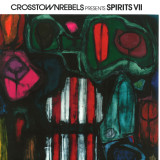
Damian Lazarus uncovers ‘SPIRITS VII’, the seventh chapter of Crosstown Rebels’ visionary annual compilation series. The eight-track package sees the Crosstown Rebels founder curate another stellar lineup of emerging and established talent for the latest instalment of the ongoing highly acclaimed series.
Since its debut in 2017, Damian Lazarus’ SPIRITS series has become a definitive platform for rising stars and established talent pushing cutting-edge sounds, consistently setting the tone for the year ahead. With the release of ‘SPIRITS VII’ this February, Crosstown Rebels continues its tradition of curating groundbreaking talent, delivering an impressive collection of tracks from both new and returning names. Building on the momentum of previous volumes, the eight-tracker offers an expertly crafted selection of deep grooves, hypnotic rhythms, and forward-thinking productions - providing a glimpse into the future of house and techno while staying true to the genre’s roots.
Opening the release, US-based duo Lisbona Sisters present ‘OK GURL’, a trippy and warping track with their original vocals that sets an otherworldly tone. Next, Netherlands-based SHARE follows releases on Mobilee and Abracadabra with ‘Oh Please…’, an acid-led cut with hooky vocals from Def Eff that leave a lasting impression. Next, Bonafique, part of the Maccabi House family, infuse ‘Desperadio’ with signature Middle Eastern influences and organic, rhythmic drums, while Dino Lenny delivers ‘I Have Sampled Father’, a playful yet off-kilter cut loaded with a kaleidoscope of diverse elements balanced by captivating grooves.
The journey continues with Upercent’s ‘Where Are You’, a dynamic composition characterised by soaring synths, sharp drums, and heavy bass licks. Collaborating on ‘Le Tourbillon’, Timo Maas & Inámo craft a hypnotic blend of grooves and sweeping melodies, perfect for late-hour moments. Recorded in his Ibiza studio, John Monkman energises the collection with ‘Colours’, a track brimming with intricate synth work, standout vocals, and dynamic sound design, before Enamour closes with ‘Jackpot’, a dreamy and hazy masterpiece featuring colourful sonics and enchanting soundscapes.
With its distinct ability to uncover hidden gems and elevate them to global recognition, Crosstown Rebels remains a leading force, and this latest edition of SPIRITS proves precisely why it remains at the forefront of the global electronic scene as one of its most vital imprints.
On Stock and ready to ship

Dublin City, 1998. Prepare to be transported back in time to the vivid streets of Dublin. A city in social, economic and artistic transition.Set against an evocative sonic backdrop of jungle, drum and bass and breakbeat, SK83 weaves an elaborate narrative that captures the essence of adolescent life in Dublin in the late 1990’s.Delve into a captivating sonic journey that explores the bevy of emotions and events that colour a teenagers journey to adulthood - from love and loss, first-time experiences, the pitfalls of peer pressure and the unmistakable pull of the city's intoxicating rave culture.''My ambition for SK83 was to create an immersive musical and visual universe that brings the listener on a journey that captures the essence of adolescence. I wanted to reflect and re - live my own teenage experiences, and bring to life what is a shared universal experience for us all - but in this instance is told thru the lens of a young man in Dublin in the late 1990’s.'' — MathMan
Released Summer 2024
On Stock and ready to ship

As the tenth candle flickers atop the torta alla panna, Archeo Recordings play the Uno reverse card, breaking with tradition to give us a gift in celebration of its birthday: the first in a series of exquisite EPs on which the label's favourite contemporaries pay homage to past masters. Each re-polished gem is plucked either directly from the beatific back catalogue of the fine Florentine label or is at least Archeo-adjacent, perhaps a sign of future wonders to come. Like a musical version of Janus, who can be found at the heart of Bertoldo di Giovanni's frieze in the Medici villa, Archeo Recordings will continue to look forwards and backwards to provide sublime sounds for us all.
Pepe Maina officially joined the Archeo family in 2019 with the much-needed reissue of his 1979 masterpiece Scerizza (AR015), but his astounding music has been a constant companion to label head Manu for much longer. An inter-dimensional, multi-instrumental maverick, Maina weaves the frayed edges of prog rock, new age, organic jazz and global minimalism into a shimmering tapestry all of his own. The results are spread across fifty years and almost as many albums, largely self-released and always absolutely untarnished by commercial concerns.
Based in a small village in the hills of Brianza, just north of Milan, Maina translates the beauty of his surroundings into transformative tone poems, and the folkloric fusion of "The Infinite", originally released on his 2014 CD Tales From The Hill, is the perfect example of his practice. It opens with a recitation of Giacomo Leopardi's 1825s poem "L'Infinito" by famed Italian actor Vittorio Gassman. A leading figure in the romantic movement, Leopardi explores the idea of time and space within the natural world, and the peace that comes with an appreciation of the immensity of eternity. Manu, longtime digger and now a burgeoning producer, expands upon the original with tribal percussion, chirping electronics and a spheric bassline, folding Maina's elegant strings and gossamer pads into a new arrangement suited for a slow dance under the stars.
Unless you had a well-trained ear tuned to Italy's avant-jazz scene, chances are your first encounter with innovative flautist Roberto Aglieri came via the 2017 Archeo reissue of hisalmost untraceable LP Ragapadani (AR011). It's a true testament to Manu's digging credentials that he snatched this masterpiece out of the esoteric atmosphere and brought it attention it so richly deserved. A delicate union of digital synthesis and versatile flute - be it soft and silvery or
brilliant and clear - the 1987 album was a shapeshifting masterpiece, replaying scenes from Virgil, Verdi, Visconti and Pasolini with a neon glow. Quintessentially Italian, but uncanny and previously unimagined - Penthouse and Portico perhaps. Powered by a percolating prototechno sequence, cascading keys, hallucinogenic vocal snippets and a variety of tonal timbres from Roberto's reed, "Danza N. 1" long deserved the praise reserved for Jean-Luc Ponty's pinnacle, so many thanks to Manu for our collective introduction. The tall task of reinterpreting this particular paragon falls to Perugian polymath Daniele Tomassini AKA Feel Fly, whose peerless skills as both producer and musician have delighted DJs and dancers alike. Hot on the heels of his diverse and definitive remixes of Tony Esposito for AR027, Daniele delivers a radical rework of "Danza N. 1" perfect for both day rave sunshine and full moon party alike. Enhanced by snapping breaks and a rattling kick, the bassline gurgle emerges as a progressive powerhouse, laying the foundation for the trilling flute and circular keys to cast a psychedelic spell. As the slow-Goa revival picks up pace, this one is way ahead of the pack.
Archeo take us all the way back to the start of its story here - well almost. Though it bore the stamp AR001 (2015), this Radio Band reissue actually hit shelves months after Tony Esposito's "Je-Na' / Pagaia"; a false start perhaps but a true classic all the same. Radio Band were a group of DJs from Florence who all sailed the airways of Radio Fantasy in 1984 and whose one and only release was this super groovy slice of Italo-boogie. Following the example of Milanese DJs Band of Jocks but far surpassing their formulaic funk fizzle, Radio Band employed an intergalactic bassline, cosmic keys and that undeniably Italian style of rapping to deliver a sophisticated party-starter which even found its way to disco deity Ron Hardy. Back to the here and now, and if you've found yourself pumping an ecstatic fist to a supercharged Italian epic of late, chances are its from the mind of the mysterious Radiomarc. Operating on the ascendent Popcorn Groove imprint, this shadowy figure steers his country's lost classics into peaktime territories, finding a sweet spot between late Italo-disco, early Italo-house and contemporary cool. Pushing the tempo with a club-ready 4/4, setting the sequencer to stun and supplementing the original melodies with a series of synth riffs, the mystery producer send this one into orbit. Radio Band - Radio Rap - Radiomarc, the circle is complete.
Few have done more to develop cross-cultural musical exchange than Futuro Antico. A collaborative venture from musician, archeologist and ethnomusicologist Walter Maioli, keyboardist and tonal theoretician Riccardo Sinigaglia and multi-disciplinary artist and composer Gabin Dabiré, Futuro Antico formed in Milan in 1979, combining ancient international folkloric traditions with otherworldly electronics. The result is an arresting melange of Mediterranean, African and Asian instrumentation, mimicked by esoteric synth tones and hypnotic minimalism, which the group perfected on their acclaimed 1990 LP Dai Primitivi All'Elettronica. The meditative and transportive "Pan Tuning" belongs to their largely overlooked 2005 CD only release Intonazioni Archetipe, and has been amongst Manu's most loved tracks from the first moment he heard it. Who else is better placed to reshape this evocative opus into an immersive, transcendental dance floor journey than label favourites Mushrooms Project? The duo sows the original elements into a sprawling fifteen minute fusion of séance and science, at times propulsive with a ritualist rhythm of tuned percussion and crunching drum machine at others drifting off into ethereal ambience. Mushrooms Project continue to push the boundaries of the Afro-cosmic style, and this remix marks a new zenith.
On Stock and ready to ship

For the next edition under the number twenty-two we have Peruvian mastermind Rufo, coming up to steer the spaceship into the right direction as he always does. Currently based in Barcelona being the resident of the legendary project Mad Radio that is expanding rapidly with the clear vision of electronic underground music. Therefore, our artist has learnt and studied the ancient methods of best of the best. The extend play is called chronicles of past millennium and explores the sound of the past with a modern twist on it. It’s sounds splendidly fresh now and with full confidence could be said it will sound fresh in all the upcoming future millenniums. The record features a vast range of sounds which shows the maestro is very versatile at the executing stunning audio puzzle pieces that are ready to blast the dancefloors of big clubs, illegal raves or the afterparties all over the globe.
On Stock and ready to ship

After touring the globe showcasing their A/V moshpit-inducing live show, they are revealing their new musical creations to an unsuspecting public. Never Sleep are proud to present a landmark moment in the Japanese hardcore new rave scene. The blinding lights of DEATH RAVE point to an untraveled journey, a sci-fi fusion of black metal, gabber, cyberpunk, performance art and techno. It’s their first for the Berlin label (founded by Gabber Eleganza) following 2021’s EP Principle of Light Speed Variance. Full description VMO aka Violent Magic Orchestra break through the darkness and herald a spectacular mould-melting sound on their forthcoming album DEATH RAVE. After touring the globe showcasing their A/V moshpit-inducing live show, they are revealing their new musical creations to an unsuspecting public. Never Sleep are proud to present a landmark moment in the Japanese hardcore new rave scene. The blinding lights of DEATH RAVE point to an untraveled journey, a sci-fi fusion of black metal, gabber, cyberpunk, performance art and techno. It’s their first for the Berlin label (founded by Gabber Eleganza) following 2021’s EP Principle of Light Speed Variance. Ahead of the release VMO have brought their digital harcore to festivals around the globe, including Roadburn Festival, BANG FACE Weekender, Brutal Assault extreme music festival, Le Guess Who?, CTM Berlin and Dark Mofo. Their performance is the ultimate extreme visual music project in which techno, black metal, and industrial unite to create a ritual from the near future, 2099. All visual art and stage setting is provided by non-touring member, artist and programmer Kezzardrix (who has been visual director for millennium parade and BABYMETAL previously).The power consumption of a VMO show is equivalent to 56 guitar amplifiers, 5000W, a mind-expanding supreme noise and light experience. The band members all go by the names of classic black metal bands rendered in the Japanese katakana script; “ダークスローン”; “メイヘム”, and “エンペラー”. Their new LP is the first to feature lead vocalist ザスター. The record features guest vocals from extreme metal icon Attila Csihar, known for singing with Mayhem and Sunn O))). Other featured artists include Dylan Walker, singer of Full of Hell, punk-techno artist Infinity Division (aka Ash Luk), Icelandic darkwavers Kælan Mikla and Ican Harem of Gabber Modus Operandi. The result is a leap forward from their 2016 debut, where they have found a singularity where death metal meets Kraftwerk, or Rephlex goes black. Dressed in corpse paint and other hell-raising looks, onstage they are like “Shinigami (death gods) from the Death Note manga”. Singles Venom, Supergaze and Martello Mosh Pit featuring Gabber Eleganza have been released in the lead up to the record and have been shocking techno dance floors too with their hi-NRG-symphonic doom-gaze. They have shared their video for Planet Helvetech (here), created by Berlin-based Patrick Defasten. Helvetech combines the Norwegian word for hell (hevlete) with techno and is a reference to the infamous black metal shop founded by Mayhem’s Euronymous. It’s a song that imagines time travel from 2099 on the planet Helvetech (where VMO comes from) to 1990s Oslo. In 2023, they performed at the CTM festival in Berlin, as well as at Berghain, receiving rave reviews. At Sydney’s leading multi-sensory SOFT CENTER festival they drove the crowd into a frenzy on the 17 metre X 30 metre jumbo screen. They have also collaborated with artists, performing at the two day installation by the trailblazing Tianzhuo Chen - The Shepherd - at the Kyoto International Performing Arts Festival in 2021 here. At Sónar 2023, VMO provided the music for Taiwanese visual artist Yuen Hsieh’s work about virtual life after death DIGITAL AFTERLIFE AGENCY here. VMO will tour the world again for the new record, with appearances at ROSKILDE and media art and music fest Sónar 2024 announced so far and the DEATH RAVE experience getting bigger and bigger.
On Stock and ready to ship

The final volume of this mammoth collection of music from Bristolian electronic music pioneer Krust is finally upon us, and like the previous parts of this collection it boasts an assemblage of music of different energies, vibes and feelings. The music contained within spans decades yet somehow refuses to be locked to one 'era' or 'style'. This is what makes this release unmissable for the hardcore fan, newcomer or completist.
'Irrational Numbers' is a meticulously curated collection of five parts, available on both vinyl and digital formats. The compilation is a treasure trove of hand-picked records and archival gems from Krust's extensive discography, thoughtfully remastered and presented anew for both devoted fans and newcomers.
'Irrational Numbers' features a dizzying array of self-released 12" cuts, exclusive unreleased VIPs and dub-plates, alongside epic major label widescreen classics. It's an unmissable journey through the sonic output of one of the UK's most distinctive and forward-looking producers.
Featured on part 5 are some groundbreaking entries into Krust's massive back catalogue. The live bass driven jazz inflected 'Second Movement' from his acclaimed 'Coded Language' LP jostles alongside the speaker smashing machine funk of 'Break Ya Neck' as well as a couple of more recent productions including the sleek and sinister 'The Portal', which is undeniably the man at his best, in full electronic stealth mode.
For longtime Krust enthusiasts, this project serves as a fond reminder of the boundless creativity and originality that flourished during the early 1990s and beyond. For those new to his work, it presents an enthralling introduction to innovative electronic music that has comfortably set the tone for generations to come. Get ready to experience the evolution of sound and immerse yourself in the visionary artistry of Krust.
On Stock and ready to ship

Korean artist and musician Jin Won Lee (이진원), otherwise known as Gazaebal, began his career in New York. Working as a sound engineer, alongside such illustrious artists as the Wu-Tang Clan and Janet Jackson, led him to develop a keen ear for dexterous audio design, melodic flair and catchy rhythm. But his true interest lay in uncovering the unique textures and synthetic qualities of electronic music. From the late 1990s to the early 2000s, Gazaebal focused on developing himself as a producer, synergising a uniquely potent take on club music, releasing three albums and appearing on numerous collaborations.
An established figure in the realm of contemporary art, Jin Won Lee is well-known for his hybrid, highly technological practice. In 2008, together with Jang Jaeho, he formed The Tacit Group, a collective for computer-coded art. Presenting works that manipulate audio and visuals in real-time through programming, the group has performed at the FAMS Choice selection, Lincoln Center in New York, at the Seoul branch of the Museum of Contemporary Art and the Sejong Center for the Performing Arts, among many others. As a solo practitioner, he initiated in 2023, a project that examines sound as abstracted vibration. brings together Jin Won Lee’s decades long investigations into sonic experimentation and the physicality of noise.
Outside the avant-garde, Gazaebal has enjoyed mainstream success, collaborating with Big Hit Productions founder and BTS songwriter Mr. "Hitman" Bang on remixes and arrangements for K-POP albums. They also formed the two-man group Banana Girl, with Gazaebal focusing on composition while Bang handled vocals, achieving a big hit with their 2000s track ‘Butt.’
Another crucial figure in Gazaebal’s life is his wife Nine who operates as his agent and business partner. Initially released in 1999 on Nine’s independent imprint dmstrax, the titular track ‘Talk’ first appeared on techno@kr, a compilation CD of Korean electronica. Together, they co-founded G Records, which was partly absorbed into Bighit Entertainment in 2005. Appearing as the inaugural record on Bighit, the original version of 'And So On' – featuring Bang’s vocal production – was not available for re-release due to licensing difficulties. But thankfully the multitrack was well preserved. Utilising these components, Nawon Ha (AKA Korean-but-Amsterdam-based artist Naone) re-imagines the song for Betonska Records.
A combination of un- and self-released material, Talk is an album that firmly belongs to the millennium while sounding utterly outside of space and time. A cosmic trance trip that draws on rock’s steely drive, wiggy acid basslines and warbling dub, the record is presented as a mix-friendly mini-album, with the 6 tracks ideally tailored to DJ-level quality and loudness. As much suited to the psychedelic rave scene of yesteryear as they are to present-day dancefloors, Gazaebal’s productions are defined by his idiosyncrasies. Melding the sheen of tight production and pop sensibilities with a flagrant DIY spirit, his music assuages the high-commercialism of the 2000s, resulting in a style that’s as definitely punchy as it is precise
On Stock and ready to ship

Remastered by Mischa Janisch 2LP
Das österreichische Musikduo Kruder & Dorfmeister, bestehend aus Peter Kruder und Richard Dorfmeister, startete in den 1990er Jahren eine Weltkarriere. Das Duo ist bekannt für seine Downtempo-Remixe von Hip-Hop-, Pop- und Drum-and-Bass-Songs. Ihr erfolgreiches Mix-Album "The K&D Sessions" (1998) wurde in Clubs von Ibiza bis New York rauf und runter gespielt und gilt als Klassiker des Genres. Im Laufe der Zeit wurden die beiden Musiker mit Remix-Arbeiten von Künstlern wie Madonna, Depeche Mode und Roni Size beauftragt. Danach gingen Kruder & Dorfmeister getrennte Wege und waren mit Soloprojekten erfolgreich. Mitten in der Pandemie 2020 veröffentlichten sie ein weiteres gemeinsames Album. Es trägt den Titel "1995" - eine Anspielung auf die Glanzzeit von Kruder & Dorfmeister. Im Oktober 2023 wird nun erstmals eine remasterte "Conversions - A K&D Selection" auf Doppel-Vinyl erscheinen. Ein nahezu historisches Musikdokument eines der erfolgreichsten österreichischen Musikduos
On Stock and ready to ship
Welcome to the unmissable second part of this momentous collection, collecting the output of a true outlier in UK creative culture, an artist that has helped change the landscape of electronic music, KRUST.
Introducing 'Irrational Numbers,' a meticulously curated collection of five parts, available on both vinyl and digital formats. This compilation is a treasure trove of hand-picked records and archival gems from Krust's extensive discography, thoughtfully remastered and presented anew for both devoted fans and newcomers.
'Irrational Numbers' features a dizzying array of self-released 12" cuts, exclusive unreleased VIPs and dub-plates, alongside epic major label widescreen classics. It's an unmissable journey through the sonic output of one of the UK's most distinctive and forward-looking producers.
This 2nd volume of seminal and forward thinking music from the legendary Bristol producer and DJ boasts a plethora of unmissable cuts; the staccato and clipped jazz funk of 'Blaze Dis One', the widescreen epic futurism of 'True Stories' and the all-time classic anthem 'Warhead' all feature, proving what a formidable and original force Krust is.
For longtime Krust enthusiasts, this project serves as a fond reminder of the boundless creativity and originality that flourished during the early 1990s and beyond. For those new to his work, it presents an enthralling introduction to innovative electronic music that has comfortably set the tone for generations to come. Get ready to experience the evolution of sound and immerse yourself in the visionary artistry of Krust.
On Stock and ready to ship

Welcome to the music of a true outlier in UK creative culture, an artist that has helped change the landscape of electronic music, KRUST.
Introducing 'Irrational Numbers,' a meticulously curated collection of five parts, available on both vinyl and digital formats. This compilation is a treasure trove of hand-picked records and archival gems from Krust's extensive discography, thoughtfully remastered and presented anew for both devoted fans and newcomers.
'Irrational Numbers' features a dizzying array of self-released 12" cuts, exclusive unreleased VIPs and dub-plates, alongside epic major label widescreen classics. It's an unmissable journey through the sonic output of one of the UK's most distinctive and forward-looking producers.
For longtime Krust enthusiasts, this project serves as a fond reminder of the boundless creativity and originality that flourished during the early 1990s and beyond. For those new to his work, it presents an enthralling introduction to innovative electronic music that has comfortably set the tone for generations to come. Get ready to experience the evolution of sound and immerse yourself in the visionary artistry of Krust.
On Stock and ready to ship

A lost MPB gem from rural Finland! We Jazz presents the first ever reissue of this rare 1990 local release by Brazilian duo Rosanna & Zelia. 7" EP with inside out 3mm spine sleeve. RIYL: Gilberto Gil, Joyce, Musica Popular Brasileira, bossa nova, bossa jazz
Liner notes by Mikko Mattlar:
"Rosanna & Zélia were a Brazilian duo of singers and musicians Rosanna Guimarães Tavares and Zélia Nogueira da Fonseca. They moved from Minas Gerais, Brazil to Europe in 1988, released five albums in Germany between 1993–2004 and featured vocals on an Ian Pooley house track Coração Tambor before Rosanna died of cancer in 2006. Zélia still continues her career in Germany, touring actively and releasing new music.
The duo's journey from Brazil to Germany also included two brief visits to Finland. In the years 1989–1990, they spent time in the small town of Seinäjoki in Ostrobothnia. Rosanna & Zélia performed Brazilian music in Finnish clubs and festivals and recorded a 7" EP for local label Maumau Music. The record was distributed mostly in the Seinäjoki area, but the three songs are well-performed and authentic Brazilian MPB, so the largely unknown record now gets its first reissue for a wider audience on We Jazz Records.
But how did two Brazilian women find their way to a small Finnish town to record an EP? The main reason for this was music journalist and promoter Risto Vuorinen, who was on a holiday in Albufeira, Portugal, where a friend of his lived. The streets were almost empty that evening, but Vuorinen and his friend heard fine guitar playing and singing from a bar. There were Rosanna and Zélia performing on a small stage, and the two Finnish men happened to be the only customers. When the artists ended their performance, Vuorinen's friend, who spoke Portuguese, went to talk to them. Rosanna and Zélia told him they had recently come from Brazil and are trying to gain ground in Europe with their music.
Because Rosanna and Zélia didn't know where they would head next, and because Vuorinen liked their music, he thought of bringing the duo to his hometown, Seinäjoki. They immediately liked the idea, and in the autumn of 1989 they arrived in Finland. The national Finnish jazz festival was held in Seinäjoki, and Vuorinen thought Rosanna & Zélia's Brazilian music would fit right in. They performed at the festival and in November 1989, also made recordings in a local studio with backing musicians from Seinäjoki.
Music enthusiast Pertti Hakala had a record shop and label Maumau Music in Seinäjoki releasing music from local artists. He released a three-track EP from the sessions. with two tracks written by Rosanna & Zelia themselves and their cover version of Extra (Brazilian Reggae), written and originally performed by Gilberto Gil in 1983. A small pressing was made for the Finnish market, and Hakala also sent a box of records to Brazil, but for some reason it was sent back.
After their first visit to Finland, Rosanna & Zélia headed back to central Europe, but Vuorinen decided to organize more performances for them for the next summer. Maybe he also wanted to show them the beautiful Finnish summer, as Rosanna and Zélia had so far seen the country only during the darkest autumn. The duo came back to Finland for the summer of 1990 and performed at the Womad world music festival organized as a part of local Provinssirock. They also played in Nummirock and Puistoblues, both respected music festivals, and performed on TV in Helsinki.
Rosanna and Zélia lived in a small apartment in Seinäjoki and played two to three gigs per week all summer. Because there were only two of them, even small pubs could afford to book them, and in 1990 the economic situation in Finland was good. It was before a major economic depression hit the country. The duo travelled by bus or train, and because they were an acoustic duo, they could easily carry their instruments in public transport. Vuorinen got excellent feedback from organizers. Rosanna and Zélia were good performers, but also really nice people.
With the income from their summer gigs, Rosanna and Zélia could buy a PA mixer and other musical equipment. When the summer 1990 turned to autumn, they continued their journey from Seinäjoki to Germany where they settled down."
On Stock and ready to ship

SAISEI founder Junki Inoue continues his vital archival work uncovering the riches of Japan’s distinctive electronic music scene and bringing them to new audiences around the world. The Sounds Of Transonic compiles six tracks recorded in Tokyo between 1991 and 1995 and released by the pioneering Transonic label, founded in 1994 by Kazunao Nagata and active until 2004.
Transonic’s catalogue is a glittering roll call of the scene’s major players, whose inventive and genre-blending work established forward-thinking house and techno in Japan in a way that would shape the country’s electronic sound for years to come. Transonic was instrumental in giving exposure to the work of these artists with its emblematic series of CD compilations, released over a short couple of years in the mid 90s. Beginning with 970-1450km/h, Feedback and Range, the series also included The Roots Of Transonic, featuring music from parent label Trigger. Alongside these compilations came much sought-after solo albums each packaged with striking cover art that makes the discs a visual treat for collectors to this day.
The Sounds Of Transonic brings together six tracks from the catalogue into one breath-taking package. The influence of hi-tech jazz and machine funk from Detroit is undeniable in ‘Dream Trance’ (Mind Design) and ‘Blasting Soul’ (Interferon), while ‘Under The Ground’ (Palomatic) and ‘Chelsea’ (Suzukiski) are permeated by the artificial intelligence and trip hop emanating from the UK at the time. The compilation is bookended by two tracks by Nagata himself (as Organization): ‘Space Ball’, a Model 500-worthy chase through the cosmos, and ‘Call’, an eerie echo of Kraftwerk’s telephone, transmitting expectantly out into the void and, finally, receiving its celestial answer.
With The Sounds Of Transonic these formative pieces of music will now be available internationally and, for the first time, on vinyl.
SAISEI is a Japanese word which translates to ‘reproduction’ and ‘to play’ (as in playing records). Japanese culture is widely known for its traditional nature just as much as it is for being forward into the future and this label’s concept does justice to exactly that. Having started digging for records as early as 16 years old, Inoue delved into productions from 1990s Japan to uncover these native gems. SAISEI’s core concept is to recapture and reintroduce unique pieces of Japanese electronic music onto vinyl, to an audience it never reached before as most of this music was only released in Japan.
On Stock and ready to ship

Unlock the allure of The Hot Spot through its unforgettable soundtrack, a captivating collection that brings the film's sultry ambiance to life.
Set against the backdrop of a small Texas town, The Hot Spot follows Harry Madox, a charming drifter with a dark past. As he arrives in town, he becomes embroiled in a web of seduction and deceit, navigating his way through a love triangle involving the sultry waitress, Gloria, and the alluring femme fatale, Dolly. Tensions rise and passions ignite, leading to a thrilling climax where desire and danger intertwine. Directed by the visionary Dennis Hopper, the film is a masterclass in mood and atmosphere, capturing the essence of 1990s neo-noir.
The Hot Spot has garnered acclaim for its stylish cinematography and gripping narrative, but it's the music that truly sets it apart. It's an amalgamation of swampy blues, jazz and rock — all mixed and recorded in a sparse, bloomy and eerie sort of way.
Critics hailed the soundtrack as "an electrifying fusion of jazz and blues that perfectly complements the film's seductive undertones." The blend of sultry melodies and haunting instrumentals creates an immersive experience that resonates long after the credits roll.
This recording is just so damn fine, so airy and warm. And the musicians aboard on this Dennis Hopper film are a who's who, including Miles Davis, John Lee Hooker, Taj Mahal, Roy Rodgers, Earl Palmer and Tim Drummond. This has long been a highly sought-after and collectible record among audiophiles. This soundtrack is essential for any music lover or film buff, capturing the very essence of the film's seductive spirit.
This item has not yet been released. You can pre-order the product now.

Limited Green / Blue coloured vinyl[26,85 €]
Multi-coloured vinyl LP or CD. For fans of Nektar, Van Der Graaf Generator and Progressive Rock! Formed in Germany in 1969, Nektar favoured extended compositions and concept albums over the constraints of pop. They were among the progenitors of the progressive rock movement of the 1970s as well as the jam-band scene that arose in the late 1990s. Their sound travelled well to the States, where they enjoyed Top 40 success with "A Tab in the Ocean" (1972) and "Remember the Future" (1973). Nearly 20 albums and a half-century later, the band's artistic and personal charisma has earned them masses of devoted fans. Now Nektar is broadening their horizons with the first in the "Mission To Mars" trilogy. Their first to feature new drummer Jay Dittamo, alongside longtime members Ryche Chlanda (guitars),Kendall Scott(keyboards), and original members Derek "Mo" Moore(bass) and Mick Brockett (visual environment).From the rocking title track "Mission To Mars" to the beautiful "I'll Let You In", Nektar covers all of the prog rock bases while venturing into some new melodic territories. Track listing: Mission To Mars; Long Lost Sunday; One Day Hi One Day Lo; I'll Let You In
This item has not yet been released. You can pre-order the product now.

Hailing from New Orleans, Louisiana, Soilent Green emerged in the early 1990s as a formidable force in the extreme metal scene, blending sludge, grindcore, and death metal into a uniquely savage sound. The band quickly gained recognition for their ferocious intensity and uncompromising approach, pioneering a fusion of genres that profoundly influenced the development of extreme metal. With a history spanning over two decades, the band has faced more than its share of adversity and struggles. Yet they continue to push forward. Driven by passion, perseverance and an unrelenting will to dominate. On stage, Soilent Green is known for their electrifying performances, harnessing raw energy and aggression to create unforgettable shows. Each performance is a visceral experience, featuring blistering riffs, thunderous drums, and guttural vocals that resonate deeply with audiences. Whether headlining festivals or playing intimate gigs, Soilent Green leaves an indelible mark, forging a connection with fans that cements their legacy as one of extreme metal’s most revered bands.
expected to be published on 05.06.2026
"I got to know visual artist, musician, and producer Guido Erfen and sound engineer, acoustic artist, and percussionist Michael Springer as part of a group of five by the name of SHM1. The members of the group organised concerts at Rhenania, a disused grain silo, where I performed with The Absurd in 1988 and 1989. The band was also featured on one of Erfen's tape releases. Erfen and Springer met when they were still at the same secondary school and soon became close friends and musical allies. With the other members of SHM they built an independent network for creating and distributing music beyond the mainstream in Cologne. Rent at Rhenania was incredibly low, allowing a recording studio to be established there.
The first traces of the Ukrainian Underground arrived at Erfen's door via a cassette tape with three bands from Kharkiv and Kyiv, the package including a long essay which detailed the rock scene in the two cities by Sergey Myasoyedow. In 1986, Myasoyedow, together with Sasha Panchenko, had founded the “Novaya Scena“ rock club in Kharkiv, presenting bands inspired by punk, the avant-garde, dadaism, and even medieval melodies. If Erfen hadn't been part of the independent mail-art scene, he wouldn't have had the chance to discover this unorthodox music. It was the summer of 1990, shortly before the Soviet Union collapsed and Ukraine became an independent state the following year.
In 1991, singer and keyboard player Soloveyka from Kharkiv arrived in Cologne and gave Erfen half a dozen cassettes with underground bands from Ukraine and a handful with bands from the Soviet Union. Intrigued by the original music of many of the acts, he visited Ukraine twice, made friends there, compiled a tape with his favourite tracks and finally succeeded in convincing Hamburg label boss Alfred Hilsberg to present underground music from Ukraine on the CD “Novaya Scena“ via his label What's So Funny About (the original home of Einstürzende Neubauten).
The album compiled 20 tracks recorded between 1986 and 1992 by 14 bands out of Kharkiv and Kyiv– music beyond the usual Perestroika records, often with jarring dissonances over grooves that fans of Captain Beefheart or The Fall would certainly enjoy.
On the other hand, there are tracks featuring flute and trumpet that seem inspired by folk, classical music, and punk. Ghostly chamber prog miniatures by Cukor Belaya Smert (lit. Sugar White Death) from Kyiv featuring, among others, the classically trained pianist and singer Svitlana Nianio (née Ochrimenko) and guitarist, visual artist, and spokesman Yewgeny "Yenia" Taran. Nianio sang in her native Ukrainian, as did two more of the bands. Today, this seems more relevant than ever, more culturally and historically significant from a Ukrainian point of view than it was even in 1993. Young Ukrainians were amazed at that time that rock music sung in their native tongue could work!
It is in the aftermath of the “Novaya Scena“ album that the music on this LP was created. About a year after the release of the CD in August 1993, Nianio and Taran came to Cologne to work on music for the dance production "Transilvania Smile" by the dance theatre ensemble Pentamonia2.
The seeds for the Traces of Ukrainian Underground in Cologne were sown. Starting in 1994, a series of informal recording sessions took place at Michael Springer’s Phanton Studio and at SHM studio in Rhenania. Together, these sessions formed the basis of the four different incarnations of the Ukraine-Cologne connection heard on STROOMS’s compilation.
Order now and we will order the item for you at our supplier.

Plastico makes a striking entrance with a release that commands attention.
Jojo Hofmockel acts as the bridge between the electro sounds of the mid-1990s and the early minimal wave of the 2000s. The result is a strong, highly personal release, showcasing clear artistic vision and fresh, distinctive creative ideas. The tracks, composed between 2004 and 2006, carry a sound unmistakably rooted in the early years of the century.

Resonant Duality is an album built around Kyouzon, the Japanese idea of coexistence, where duality and togetherness are always present. The tracks move between light and dark, soft and loud, tension and release, but always come back to a feeling of sharing the same space. So Takahashi, originally from Yokohama, Japan, is a multidisciplinary artist who studied visual communication in New York. Since the late 1990s, he has been active as a composer and performer within electronic music, noted for his minimalistic melodies, sample manipulation, and unique sense of composition. Having released nine releases since 1999, he has lived and worked in Oslo, Norway in recent years, where "Resonant Reality" marks his tenth release. Charles Lynch, born in Tours, France, began his musical journey with classical piano at an early age before expanding his studies to art, visual communication, and design in Paris. Under the artist name A Saner Lynch, he has released two classical music albums, blending his background in classical performance with a contemporary artistic sensibility. The two musicians met in Oslo, Norway, a decade ago. Their shared interests in both classical and electronic music led them to collaborate, merging their distinct backgrounds and creative visions. Together, they compose music that reflects their combined influences, bridging the worlds of classical tradition and electronic innovation.
expected to be published on 08.05.2026

Double 12" release
The Story — From the Streets of Rome to the Male Productions Label
In the early 1990s, Rome lived in a kind of suspended moment. The city was still tied to its historic clubs, yet in the outskirts—inside abandoned warehouses, quarries along the coastline, and the wooded parks north of the capital—something new was beginning to stir. A nocturnal, constantly shifting movement fuelled by a hunger for freedom and a sonic curiosity that reached far beyond the mainstream.
Moving through this ferment was Francesco “Chicco” Furlotti. First an organizer of unconventional parties and underground nights, he soon became one of the driving forces behind Rome’s itinerant rave scene. Furlotti sensed that a wave of change was about to sweep across the city. It wasn’t just about parties: it was the rise of a culture, a new way of thinking about music, community, and belonging.
It was within those nights—later held with official permits, properly built sound systems, and an ever-growing crowd—that Furlotti recognized the existence of a distinctly Roman sound, and the need to capture it, preserve it, and give it tangible form.
So, in 1991, he decided to take a bolder step: to found an independent record label—small, determined, and far removed from the commercial logic that dominated at the time.
That was the birth of Male Productions.
Male was not a label like any other: it was a workshop, a gathering point, a creative hub where DJs, producers, friends, and wanderers converged. Within that environment, an artistic core took shape—Stefano Di Carlo, Leo Young, and Mauro Tannino, along with other collaborators orbiting around Furlotti. From their synergy emerged a project whose very name declared its mission:
The True Underground Sound of Rome.
The collective did not simply aim to release music; it sought to tell a story of Rome through sounds that defied categorization: house, techno, ambient, electronic mysticism, psychedelic visions… a unique blend, instantly recognizable, emotional, and experimental. The sessions unfolded using essential yet razor-sharp gear: Roland drum machines, analogue synthesizers, Akai samplers, stripped-down mixers. Few tools, endless imagination.
The first result of this work was the 12” Secret Doctrine, released in 1991 in an extremely limited run—around 500 promotional copies, according to accounts. The record captured something that until then had floated only in the air of Roman raves: enveloping atmospheres, deep rhythms, melodies built to make the mind travel far beyond the dancefloor. A sound that did not imitate what was happening in Detroit, London, or Berlin, but absorbed those influences and re-sculpted them with a distinctly Roman sensibility.
Yet, precisely because it was independent and detached from commercial circuits, Male’s output remained sparse: few EPs, few copies, irregular distribution. Over time, those records became rare artifacts—almost mythical objects within the Italian electronic scene. The legacy of Male Productions seemed destined to survive only in the memories of those early years, in the stories told after raves, and in the private archives of a handful of collectors.
Many years later, thanks to the almost accidental rediscovery of a few original copies of the first two releases issued by Male Productions, it became possible to undertake a meticulous process of recovery and restoration of the audio etched into those grooves, with the aim of preserving as fully as possible the quality and character of that unrepeatable sound.
We are therefore able today to present — at last in a complete and faithful form — the first two mixes created for Male Productions, now released on a double vinyl that brings back into the present the exact moment when it all began: the nomadic nights of the raves, Furlotti’s vision, the creativity of Di Carlo, Young and Tannino, and the sonic identity of a Rome in the midst of transformation.
This is not merely a reissue.
It is a historical document.
A fragment of a culture that changed the city.
The authentic sound of the Roman underground, finally returned to the world.
Order now and we will order the item for you at our supplier.
Mystic Force was a progressive power metal band from Baltimore, Maryland. After releasing several demo tapes, they signed a contract with the German label Rising Sun Productions. This resulted in two albums, “The Eternal Quest” (1993) and “A Step Beyond” (1995). Their third album, “Man Vs. Machine,” followed in 2001 on Siegen Records. After Mystic Force broke up, drummer Chris Lembach and guitarist Rich Davis formed the group Shift and recorded two albums with them. Rich then started his own solo project (for which he played all the instruments and sang), before looking for suitable fellow musicians again and releasing the CD “Inside The Upside Down” in 2024. Mystic Force was originally formed in 1984 by guitarists Rich Davis and Marc Rouchard together with bassist Keith Menser. After numerous line-up changes in the early days, they finally found suitable bandmates in Chris Lembach (drums) and Bobby Hicks (vocals). In 1987, Mystic Force released their first 4-song demo, followed by “Blind Vision” a year later. After selling large quantities of self-produced cassettes (the first 4-track demo is said to have sold over 5,000 copies), it was time for their first vinyl release. In 1990, the album “Take Command” was released on the English label C.M.F.T. Records, which included the first demo and four brand new tracks: “Take Command,” “Awakened By The Dawn,” “Immortal Souls,” and “Silent But Deadly.” Later that year, the 12“ single ”Shipwrecked With The Wicked“/”Eternal Quest" was released in a limited and numbered edition by the band's own company, Pro-duction. The widespread distribution of Mystic Force's material (also via underground distributors such as Oliver Jung's “Demolition”) led to an increasing number of labels taking an interest in the band. Ultimately, the choice fell on Rising Sun Productions, who released the debut album “The Eternal Quest” in 1993, featuring tracks such as “Shipwrecked With The Wicked,” “Another World,” and “Answers Of The Mystery”—a forgotten gem of progressive power metal somewhere between Fates Warning and Hades.
expected to be published on 24.04.2026

WRWTFWW Records is proud to present THE GENTLE PEOPLE - Soundtracks for Living (Expanded Edition), ?the ultimate Lounge/Chill Out classic from 1997, reborn! Available as a limited edition white vinyl 3LP in heavyweight 3-panel gatefold sleeve.
When The Gentle People first glided into the mid-90s on clouds of strings, sugar and sine waves, they sounded like visitors from another, more glamorous planet. Signed to Richard D. James and Grant Wilson-Claridge's cult label Rephlex, this multinational "E-Z-Core" lounge unit took the aesthetics of 50s/60s easy listening and exotica and gently smuggled them into 1990s club culture.
Soundtracks for Living was their defining statement: an album that "takes the lounge scene and runs away with it entirely… blissful and heavenly," as one contemporary review put it. Imagine KLF's Chill Out or Space growing up on French 60/70s pop, bossa nova, soundtracks, vocal harmony groups, library music and easy listening then slipping out for a late-night date with dub, ambient techno and bubble-bath pop. That's Soundtracks for Living: a record that can score cocktail hour, 4am taxi rides, and daydreams in headphones with the same effortless grace.
The Gentle People - Dougee Dimensional, Laurie LeMans, Valentine Carnelian and Honeymink - began in early-90s Brixton, throwing dress-up theme parties before taking their audio-visual universe into the studio. For them, music was "a way of life": soothing to the ear, rich in pop hooks, and pitched somewhere between the playfully idiotic and the hyper-intelligent. Their debut on Rephlex was the single "Journey", later blessed with a shimmering Aphex Twin remix that pushed their sugar-coated sound even further into outer space.
This Expanded Edition of Soundtracks for Living finally gives this glambient lounge-pop milestone the treatment it has always deserved. Spread lovingly across 3LP, it features new mastering from the original sources, allowing every harp glissando, string swell and analog squiggle to float in high-fidelity widescreen. The core album is complemented by a bonus 12" of unreleased and rare material, offering a deeper dive into the Gentle world: alternate takes, lost interludes, and secret soundtrack cues for lives not yet lived.
Crucially, "Journey" appears here in its original version, Gentle Instrumental and the cult Aphex Twin remix, reuniting band and labelmate in one place and underlining the quietly radical nature of the project: this was lounge music that could sit next to braindance, acid and IDM and still steal the scene.
Pressed on limited edition white vinyl, Soundtrack for Living (Expanded Edition) invites long-time fans and new listeners alike to step back into The Gentle People's universe - a place of fondue parties, bubble chairs, star-lit elevators and endlessly rewinding sunsets, where "the pathway to the stars" is never quite out of reach.
In an era that often reduces the 90s to big-room bangers and grunge guitars, Soundtracks for Living remains a quietly subversive reminder that the decade was also about imagination, camp, softness and utopian possibility. As later writers have noted, The Gentle People weren't just a curiosity on a weird label; they became unlikely icons of a whole loungecore moment, gracing TV, compilations and magazine spreads, and proving that tenderness could be as futuristic as any drum machine.
In conjunction with this release, WRWTFWW has also unearthed The Gentle People's Peel Sessions, a 4-track EP from their 1997 BBC on-air performance, available on vinyl for the first time ever !
Order now and we will order the item for you at our supplier.
“Black Jacket” is a love letter between two bands separated by continents but united by mutual admiration. Contriva, of Berlin, and Chessie of Washington, DC, first came together in 2001 when sharing a stage, sparking a deep connection over their respective takes on textural, emotive, and mostly instrumental music that merges post-rock, ambient, and experimental elements into unique visions. Fast forward two decades and many trips to their respective studios and we now have “Black Jacket”, a double LP of musical alchemy that builds upon the expressionistic, idiosyncratic sounds of these two groups. A new classic that proves far greater than the sum of its parts.
Begun in the mid 1990's, Washington DC's Chessie is Stephen Gardner (also of noisy shoegaze pioneers, Lorelei) and Ben Bailes, whose various LP's for Slumberland's Dropbeat imprint and Plug Research pair abstract electronics and melancholy post-rock in search of the sounds and feelings of railways and train travel.
Berlin's Contriva, (Monika Enterprises, Lok Musik, and Morr Music) features Masha Qrella (known for her solo works for Morr Music), Max Punktezahl (also of Munich indie legends the Notwist and Berlin's Jersey and Saroos), Hannes Lehmann and Rike Schuberty. For over a decade beginning in the mid-1990's, Contriva crafted compelling instrumentals, grafting experimental textures onto beautiful and complex indie songs.
Together, the six of them have created “Black Jacket.”
Order now and we will order the item for you at our supplier.

Delsin is pleased to announce an extensive compilation series combing through the catalogue of landmark Dutch techno label Djax-Up-Beats. The series, curated by Rush Hour co-founder Christiaan Macdonald, launches with a look at the label's legacy in the development of acid music through the 90s. In total, this first entry in the Djax-Up-Beats 1990-2005 series comprises 20 tracks, presented as a main triple-vinyl album plus two additional 12" EPs. The compilation also features all-new illustrations from Alan Oldham, the Detroit-rooted visual artist who gave Djax-Up-Beats a distinctive visual identity from very early on, and design by Lost Communication. Each volume of the series also features liner notes from music journalist Oli Warwick. Crucially, every track featured on the series has been carefully mastered by Johanz Westerman, bringing the best out of tracks that often had very little post-production treatment before they were originally pressed to wax. Volume 1 - The Acid Trip focuses on an area the label is best known for - acid house and techno. After the pioneering breakthroughs Chicago-based producers made with the Roland TB-303 in the late 1980s, acid music creation was starting to become more widespread when Djax-Up started in late 1990. The rebellious, rave-ready sound was an instant draw for label founder Miss Djax, and so her label ended up reflecting the development of acid as it spread from the Chicago roots across the world. Volume 1 - The Acid Trip looks at the diverse approaches to acid taken by artists on Djax-Up. Tracks on the compilation include an early outing from Ludovic 'St Germain' Navarre and Bjorn Torske's Ismistik alias, as well as Dutch pioneers such as Edge Of Motion, Spasms, Random XS and Acid Junkies, and Chicago heavyweights Mike Dearborn and Gene Hunt. With five more, equally extensive, volumes to come in this series, Djax-Up-Beats 1990-2005 is a thorough exploration of a true totem of techno culture - a renegade label that operated on its own terms and carried surprises and slammers in equal measure.
Order now and we will order the item for you at our supplier.

Here comes the first appearance on vinyl of Elf Bagatellen, a 1990 FMP classic from the legendary Schlippenbach Trio where the group achieved fever-dream beauty through self-imposed temporal limitations. The trio deliberately shaped the music, opting for more concise pieces rather than concert-length performances that had become standard practice. Those durational limitations clearly inspired them, bringing a jewel-like, compositional flow to many of the works, although even when the trio seems to be playing a tune in a piece like "Analogue: Scaled" the performance moves so rapidly into the next event any such notion is banished. And yet some of Schlippenbach's older themes resurface in abstracted ways, whether it's Pakistani Pomade's "Sun-Luck Night-Rain" appearing as quicksilver line in "Sun-Luck: Revisited" or Globe Unity's "The Forge" sneaking into "The Forge: Rebellowed." The concision of shorter pieces, including several solo works, arrive as a kind of fever dream in the usual context of free jazz. Schlippenbach Trio soon snapped back into its working methodology on its follow up album, Physics, in 1993, which further elevates the singularity of Elf Bagatellen. The album captured a different side of the trio and helped inform the modern classical tilt in European improvised music. Cien Fuegos is delighted to reissue this undeniable classic, making it available on vinyl for the first time ever, freshly remastered by Martin Siewert. Evan Parker - soprano & tenor saxophone - Alexander von Schlippenbach - piano - Paul Lovens - selected drums and cymbals This album was released as a cd on FMP 1990, remastering for vinyl by Martin Siewert 2025
expected to be published on 27.03.2026

Igor Tamerlan is a stranger in his own land. Born in 1954 the Hague and spent most formative years in Paris, Igor suddenly had the urge to relocate to Bali in 1986. “I want to settle in Indonesia and marry a local girl,” he told his sister shortly before flying out.
His next journey would be as audacious as his time in the Fifth Republic. Born from a prominent Indonesian expatriate family in Paris with ties to Indonesia’s first prime minister Sutan Sjahrir, Igor earned a degree in architecture at Ecole nationale supe´rieure d’architecture de Paris-La Villette.
He could have been a brilliant architect or a political scientist (he was accepted to Sciences Po), but his passion for music distracted him from his academic works. He was after all named after Russian composer Igor Stravinsky.
During his brief stint at Sciences Po, Igor spent most of times hanging out at recording studios and rub shoulders with the likes of singer-songwriter Jean-Jacques Goldman and Michel Polnaref. He had a brief encounter with The Rolling Stones at the Cha^teau de Thoiry studio in the early 1970s.
But Igor’s musical education and his occidental eyes appeared to be ill-suited for Indonesia. His first record, titled Langkah Pertama (First Step) on the mainstream label Musica was met with a shrug and was a commercial dud. An experimental record blending the influence of Spanish motifs, Francophile production and a whiff of hip hop and ska was seen by critics as being too alien. His sarcasm-laden lyrics and his biting critique of excessive materialism among the upper tier of Indonesia’s nouveau riche in the album was met with confusion from the audience. He was just too far ahead of his time.
He left the label Musica – or may had been dropped – soon after Langkah Pertama and decided to go independent. He then relocated to Bali and set up a state-of-the-art recording studio in Sanur, across the street from Southeast Asia’s first boutique hotel where luminaries like Mick Jagger, David Bowie, Sting, Yoko Ono and Ringo Starr stayed for their holiday.
From the studio, Igor recording everything from the sounds waterfalls, geckos, minibuses to motorized rickshaw and mix them with hip hop, jazz, electronica, dub and Balinese gamelan. A visionary, Igor was the first musician to use MIDI, which started to be available globally in the early 1980s.
On paper, songs like “Bali Vanilli” should not work, a mish mash of disparate elements mentioned above, sung in three languages, Balinese, English and Bahasa Indonesia while tackling the subject of overtourism. The song was also the first to introduce rap to an unsuspecting audience. But for some strange reason “Bali Vanilli” became a sensation and overnight Igor became household name. And in 1987, long before overtourism was an issue, Igor broached the subject to a national audience in Indonesia on the possible destruction of nature and culture from tourism.
Ever an iconoclast, Igor decided to step out of the limelight following the success of “Bali Vanilli” and in early 1990s he relocated to Indonesia’s cultural capital, Yogyakarta. Here, he worked on some more experimental music while juggling as music video director. He passed away in 2018 at the age of 64.
The 10 songs in this compilation, Bali Vanilli: Experimental Pop from Paradise Island (1987-1991), are some of Igor’s best works, music that would have gone into obscurity had it not been for the diligent work of film director Alfred Pasifico Ginting, who managed to track down some of the master tapes while researching on a documentary on the musician.
These recordings have never before been released outside of Indonesia. Igor would have been proud with this reissue project.
expected to be published on 20.03.2026
Black Vinyl[26,68 €]
Multi-coloured vinyl LP or CD. For fans of Nektar, Van Der Graaf Generator and Progressive Rock! Formed in Germany in 1969, Nektar favoured extended compositions and concept albums over the constraints of pop. They were among the progenitors of the progressive rock movement of the 1970s as well as the jam-band scene that arose in the late 1990s. Their sound travelled well to the States, where they enjoyed Top 40 success with "A Tab in the Ocean" (1972) and "Remember the Future" (1973). Nearly 20 albums and a half-century later, the band's artistic and personal charisma has earned them masses of devoted fans. Now Nektar is broadening their horizons with the first in the "Mission To Mars" trilogy. Their first to feature new drummer Jay Dittamo, alongside longtime members Ryche Chlanda (guitars),Kendall Scott(keyboards), and original members Derek "Mo" Moore(bass) and Mick Brockett (visual environment).From the rocking title track "Mission To Mars" to the beautiful "I'll Let You In", Nektar covers all of the prog rock bases while venturing into some new melodic territories. Track listing: Mission To Mars; Long Lost Sunday; One Day Hi One Day Lo; I'll Let You In
expected to be published on 20.03.2026
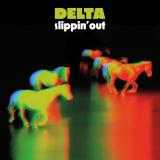
“From Birmingham and centred around the extraordinary songwriting talent of James and Patrick Roberts – initially as The Sea Urchins and since 1993 as Delta – they’ve only just got round to releasing their debut album, Slippin’ Out. It is a work of some beauty”. 9/10 NME ALBUM OF THE MONTH, 2000
“It’s classicist for sure, shot through with the influence of The Beatles, Byrds and Buffalo Springfield. In James’ downright beautiful closing ballad ‘I Want You’ one can also discern the school of ambitious English balladry that peaked in about 1968: The Casuals, Love Affair, Barry Ryan. The impression of accomplished old-schoolery is only furthered by the dizzying string arrangements penned by Louis Clark Jnr, son and namesake of the one-time orchestral chief of Electric Light Orchestra” – Mojo lead review, 2000
Having ended the 90s with the spirited ‘Laughing Mostly’ compilation of singles and demos (Guardian Album Of The Week) Delta finally released their debut studio album of twelve songs in the summer of 2000 on the Dishy Recordings label. Accepting that this might be their sole studio album the band threw everything at these recordings allowing it to exist in its own sphere, unbothered by their contemporary generation and disregarding the idea of even releasing a single.
Recorded at DEP International there was a notable difference to the scruffier, looser charm of their 1990s recordings, a tighter focus developed by having the experienced Lenny Franchi mixing the LP with them. Lenny had been working with a number of Island artists including My Bloody Valentine and Tricky so knew his way around a desk. There was also the question of budget (a few months passed between recording and mixing whilst funds were raised) so every day counted. Ultimately though you can hear the joy in the recordings, even amongst the melancholy and angst. As James recently recalled in an interview in Shindig! Magazine: “It was such a big deal for us. It’s one of my fondest memories doing that record. Everyone was happy. If there’s anything that I’d stand by, I think it would be that”
Louis Clark Jr joined the band towards the end of the ‘90s and brought a classically-trained element to the recordings particularly with his string arrangements. For ‘Cuckoo’, ‘I Want You’ and the prophetic ‘We Come Back’ Louis brought in eight players from the Birmingham Conservatoire; the baroque style is partly why the record often receives comparisons to Love’s ‘Forever Changes’.
On release ‘Slippin’ Out’ was a big favourite with writers at the NME, Mojo and The Guardian again and before long the band were signed to Mercury/Universal for their second studio album ‘Hard Light’, a far more expensive and expansive love affair. It was a temporary palatial home where things quietly fell apart again, but that’s another chapter.
“If long-term memory is nothing more than selective editing and only pop’s most weighty visceral works are built to last then it’s quite possible that in 50 years the Britpop era will be best recollected for the two bands it ostracised. Earlier this year we met Shack and thought their story of mercurial brilliance indicated the biggest music biz oversight of the 90s. We were wrong because we hadn’t met Delta yet. This is richer and more engrossing than anything by Shack”
expected to be published on 27.02.2026

WRWTFWW Records is thrilled to unveil the limited edition vinyl reissue of Natural Sonic, the groundbreaking 1990 environmental percussion album by Japanese composer and performer Yoshiaki Ochi. Long a hidden gem of the kanky? ongaku movement, Natural Sonic finally returns in its full analog glory, housed in a heavyweight sleeve with obi and carefully remastered from the original archives of Wacoal Art Center / Spiral's visionary NEWSIC label.
Originally released only in Japan at the dawn of the 1990s, Natural Sonic is a mesmerizing exploration of earthly sound and rhythm - a sonic tapestry woven from wood, water, and stone, and skin. Ochi, who at the time was the in-house composer and performer for world-renowned designer Issey Miyake, created a series of elemental pieces that blur the line between avant-garde percussion, ritual music, and environmental sound art. The result is both deeply physical and profoundly meditative - an album that breathes with nature itself.
Echoing the organic minimalism of Midori Takada's Through the Looking Glass and the ecological grandeur of Geinoh Yamashirogumi's Ecophony Gaia, Ochi's compositions open portals into primal landscapes, evoking forests, rivers, and stones in flux. Part of NEWSIC's celebrated experimental catalog - alongside Yoshio Ojima's Une Collection des Chaînons, Motohiko Hamase's #Notes of Forestry, and Satsuki Shibano's Rendez-Vous - Natural Sonic now finds new life for contemporary listeners seeking sound that feels both timeless and vital.
A singular album of resonance and restraint, Natural Sonic is a treasure from the golden age of Japanese environmental music, finally available again over three decades later.
Order now and we will order the item for you at our supplier.

BLACK VINYL[23,49 €]
Mit Selenites, Selenites! präsentiert Jimi Tenor das erste Album seiner neuen Band - ein Meilenstein in der Karriere des finnischen Multiinstrumentalisten, der 2025 seinen 60. Geburtstag feierte. Tenor, bekannt für seine genreübergreifenden Visionen, vereint hier Afrobeat, Electronica, Spiritual Jazz und experimentelle Klangwelten zu einem kraftvollen, organischen Sound. Seit den 1990er Jahren prägt Tenor die internationale Musikszene mit Veröffentlichungen auf Labels wie Sähko und Warp Records. Seine Zusammenarbeit mit Künstlern wie Tony Allen, dem UMO Helsinki Jazz Orchestra und Florence Adooni zeigt seine Offenheit für musikalische Kulturen und seine Fähigkeit, scheinbar Gegensätzliches zu verbinden. Die JIMI TENOR BAND entstand in Helsinki und besteht aus fünf virtuosen Musiker:innen, die ihre Stücke live erprobt und verinnerlicht haben. Die Aufnahmen spiegeln diese Energie wider: Direkt, roh und voller Spielfreude. Die Songs wirken wie Live-Mitschnitte - spontan, intensiv und nahbar. Mit Selenites, Selenites! gelingt Tenor ein Album, das nicht nur musikalisch überzeugt, sondern auch seine Rolle als stilprägender Künstler unterstreicht.
Order now and we will order the item for you at our supplier.

Some things are just too good to be hidden from view. That's certainly the case with Things To Think About, the first album from Dutch electronic music legend Steve Rachmad's lesser-known Sterac Electronics project.
.
Rachmad first rose to prominence in the late 1990s, spearheading a surge in Dutch techno that was heavily inspired by the futurist intent and machine soul of Detroit. Since then, he has continued to successfully explore a wide range of dancefloor-centric electronic styles under a dizzying array of aliases.
It's a while, though, since the public has been treated to a heavy dose of Sterac Electronics material. He first established the alias at the turn of the millennium, primarily as an outlet for hardware-driven electro music shot through with funk and soul.
A handful of highly regarded 12' singles were released on Music Man and Interpersonal XP, before Rachmad began focusing on other projects. When inspiration struck, he returned to the project, jamming out tracks using a mighty collection of vintage synthesizers and drum machines.
Recently, Rachmad and Tom Trago decided to revisit the Sterac Electronics archive, discovering a killer collection of cuts created at different points over the course of the last 15 years.
Now 9 of those spellbinding hardware jams have been gathered together for the first time on Things To Think About, a warm, rich and evocative collection of electro-fuelled workouts that giddily pay tribute to the music of Rachmad's youth.
From the thrusting, synth-driven machine funk of Original Pattern' and mutant electrofunk revivalism of Game Changers', to the baggy West Coast boogie of Metratron' and intergalactic hustle of Archetype' (which sounds like Cybotron covering the 1988 version of The KLF's What Time Is Love'), Things To Think About is an lesson in the emotion-rich, mood enhancing possibilities of spontaneous hardware jams.
The highlights don't stop there, either. Check, for example, the crystalline synthesizer melodies, body popping drum hits and spacey chords of Tuning Into Frequencies' and the breezy humidity of opener Altruistic Endeavor'.
Like the rest of the tracks on the album, they feel timeless, as if they could have been made at any point during the last three decades. From Steve Rachmad, we wouldn't expect anything less.
Things To Think About will be released as a limited-edition double album, preceded by a 12' single featuring another previously unheard gem from the vaults.
Order now and we will order the item for you at our supplier.
Formed in 1993 & hailing from Monaco, Godkiller was the vision of multiinstrumentalist & sole founding member, Duke Satanael, who between 1996 & 2000 released an EP & 2 studio albums under the Godkiller name, commencing with the black metal cult classic debut 'The Rebirth Of The Middle Ages'. Though initially more a death metal inspired act in the formative years, Godkiller quickly developed into a project fully engulfed in the spirit of 1990s black metal, bringing to mind acts like Emperor & Satyricon for the implementation of such strong atmospherics, though on later releases Godkiller incorporated more industrial & electronic elements into the compositions as part of its creative evolution. 'Deliverance' was Godkiller's second studio album & final release before the project was laid to rest & ventured into a more electronic & industrially metallic direction for what could be considered a more contemporary & expressive take on Godkiller's established brand of darkness.
expected to be published on 05.12.2025

Limitierte Sub Pop Loser Edition auf rotem Vinyl. Die Maxi-Single 12", mit "Eternity's Pillars" auf der A-Seite und den zwei Stücken "Raise the Chalice" und "Reverential" auf der B-Seite, ist das erste Werk von sunn O))) für Sub Pop. Es besteht aus drei brandneuen Tracks, die vom legendären Duo Stephen O'Malley und Greg Anderson geschrieben und eingespielt und von Sunn O))) und Brad Wood gemeinsam produziert wurden. Brad Wood hat das Material 2025 in den Bear Creek Studios in Woodinville und Sea Grass in Los Angeles aufgenommen. Die Tracks auf dieser Maxi-12"-Platte sind die ersten offiziellen Studioaufnahmen von Sunn O))), auf denen nur das ursprüngliche Kern-Duo mit stark gesättigten E-Gitarren und Synthesizern zu hören ist. Sunn O))) hat jedem Schritt und Aspekt der Aufnahme, jedem Ton und jeder Sättigungsstufe, jeder Verstärkungsstufe und jedem Lautsprecher, jedem Arrangement und jeder Harmonie extreme Aufmerksamkeit und Sorgfalt gewidmet. Der Wald im Pazifischen Nordwesten ist das Leitbild. ,Eternity's Pillars" ist nach der Fernsehsendung aus der Mitte der 1980er Jahre benannt, die von der Jazz-Visionärin und spirituellen Guruin Alice Coltrane Turiyasangitananda kreiert und moderiert wurde und sich auf ihren unerschütterlichen Glauben an die Fähigkeit der Musik konzentriert, spirituelle Transzendenz zu erreichen. ,Raise the Chalice" ist nach einem Schlachtruf benannt, den die Hardcore Legende des Nordwestens, Ron Guardipee, Mitte der 1990er Jahre oft ausstieß. ,Reverential" zollt denen, die vor uns mit den schwersten Lasten kamen, Respekt und lobt sie lautstark, wobei Musik und Kunst als Materialien für einen Antiphon dienen. Das Cover zeigt das Duo in den Wäldern nordöstlich von Seattle, aufgenommen durch die Linse von Charles Peterson, der für seine ikonischen Fotos der Musikszene von Seattle und klassische Albumcover von Soundgarden, Mudhoney und anderen bekannt ist.
expected to be published on 28.11.2025

For his last solo record ‘Through a Room’, Bill Nace shifted his usual saturated guitar sound and added tapes, hurdy gurdy, doughnut pipe, bird calls and the mysterious Japanese taishōgoto. Setting up for the final night of his three day residency at OTO with only the taishōgoto soundchecked, Nace hoped that Parker would arrive with his small soprano as its opposite. “I’ve been interested in state change, you know, playing until there’s a shift in time.” Known for his development of multiphonics to produce a constantly shifting pattern, Evan Parker has evolved an instantly recognizable sound - his work the soprano most distinct. Happily, it was the soprano Evan brought with him and as soon as the two start to play they entwine - taking off in a double helix of keys and reed primed for endless reconfiguration. Space warps under the velocity of playing, the pitch rising unrelentingly. It felt like unending lift off in the room, sheer energy until the last note makes remember your feet have been on the floor the whole time. Total time bending shredding.
–
"They had never played together before. They had never even met each other before this springtime 2024 concert at London’s Café Oto.
Evan Parker, circular breathing maestro of the saxophone, a legend in the universe that is Free Improvisation since the late 1960s and Bill Nace, one of the most intriguing experimental “noise” guitarists of the 1990s/2000s underground scene.
For those of us who have been enamored by the live and documented work of both these gents, this Café Oto duo was a must-hear event. It could have gone anywhere musically and that would have been totally fine. Particularly with Evan having a history of being thrown into a variety of challenging collaborations throughout his career, employing the learned elegance of trust in his own sensitivity to listening, responding, leading, following, sparring, intertwining, dialoguing, creating in the instant and, essentially, dignifying the non-hierarchical grace of chance.
The aesthetics of socialist consideration in Evan Parker’s playing, in his community of expanded and personal technique, for a younger player such as Bill Nace, strikes an exemplary model. This notion of respect would be entirely the reason Nace, when offered a residency at the most critical “new music” room in England, would request to play in duo with Parker.
Bill Nace came to prominence mostly during the apex of experimental music activity in and around Western Massachusetts in the early days of the aughts, with a focus on visual art and free improvisation guitar action. He could be found in the daytime hours, his head hanging down over a notepad, penning fine-tuned illustrations and abstract line drawings, while in the evenings he’d be attending any number of basement noise gigs, many of which he’d be participating in. His guitar style came across as being informed as much as by the physicality of his writing utensils in friction to the page as it was to his hearing and redefining of radical recordings ranging anywhere from the Black Unity Group to Black Flag.
Utilizing various metal files and other small cylindrical objects Bill would allow his guitar and amplifier to be in tandem with the improvisatory movements of his body as the instrument balanced, intentionally and, at times, precariously, upon his lap. The performances came across thrilling and daring and they would be mostly in the context of venues nothing more than a low-ceilinged damp and dank New England basement, a clutch of people hanging onto rusty pipes or sitting up on dilapidated washer/dryer machines, the shards of Bill’s “file guitar” sounds ringing out like the most alive music on Earth.
By the time Bill reached Café Oto in early 2024 he had relocated to Philadelphia all the while releasing a succession of collaborative LPs on his Open Mouth label to present his developing progression of solo and collaborative work. He also would find himself considerably engaged with playing the electric taishōgoto, a keyboard-activated string instrument from Japan which can exist as a one, two, four, five, or six string oblong sound object. Bill’s approach to the taishōgoto would not be too unlike his approach to the traditional electric guitar, though no outboard implements such as files, sticks, and rocks are utilized. The similarity would lie wholly with Bill’s full immersion of high velocity action-playing where, with the taishōgoto, an electric drone beauty occurs. The flurry of sonics and resultant harmonics emanating from the amplifier (which Bill opts to dial into with borderline loud-as fuck volume settings) furthers the meta-mantra properties of the instrument in an astounding display of drone dynamism.
This sound world of Bill’s two-stringed taishōgoto on this Café Oto night worked beautifully with Evan Parker’s improvisatory saxophone conceptions. The duology achieved instant lift off at ground zero only to find it’s eventual finale as if it were organically ordained. Time seemingly morphed from its ancient human construct of control, rendered inconsequential to the torrential transcendence of the room wildly activated by the magic resonance of the multi-directional pan-spatial sonance of the music as if it were some beatific blessing. It was one of those nights where art as a liberating force of spirit gifted the listeners with an offering of exaltation and joy. It was entirely mystical and mind blowing. A night of Total Music."
Thurston Moore, London, 2025
expected to be published on 21.11.2025

The Heinz Beauvaix project dates back to the mid-1990’s when Niels Rønne and Flemming Kaspersen played in Danish ambient act Swimwear Catalogue. On an ever growing number of DAT tapes they recorded semi-improvised synth/sampler/sequencer jams that mixed influences from ambient, electro and industrial. Later they began working with more detailed studio productions.
The seven tracks on “Vision Man” combine complex synth pads, interweaving monophonic synth lines, discrete drum rhythms, and strange voice samples. The sound is experimental and melodic at the same time. Influences range from early industrial to IDM, techno and synth pop. Rønne and Kaspersen originally met through a shared obsession with Canadian industrial giants Skinny Puppy. And if there is one seminal album that has influenced the Heinz Beauvaix sound, it is the obscure Skinny Puppy side project Doubting Thomas and their solitary album “The Infidel”, released in 1990.
Others have mentioned influences from bands such as Coil, Severed Heads, Bill Leeb and Rhys Fulber’s Delerium and Future Sound Of London.
“Vision Man” is old school synthesizer music with tunes you can hum.
Order now and we will order the item for you at our supplier.

Mit Communication veröffentlicht Karl Bartos sein visionäres Soloalbum aus dem Jahr 2003 erneut - und trifft damit den Nerv der Zeit. Als prägendes Mitglied von Kraftwerk war Bartos maßgeblich an Klassikern wie "The Model", "The Robots" und "Numbers" beteiligt. Nach seinem Ausstieg 1990 setzte er mit Communication seine musikalische Reise fort - nun mit einem kritischen Blick auf die digitale Medienwelt. Das Album ist eine klanglich präzise und inhaltlich scharfsinnige Auseinandersetzung mit Themen wie Bildüberflutung, Identitätskonstruktion und der Fragmentierung von Realität. Was damals wie ein Blick in die Zukunft wirkte, ist heute aktueller denn je: Smartphones, soziale Medien und algorithmische Manipulation bestimmen unseren Alltag. Bartos gelingt es, elektronische Popmusik mit gesellschaftlicher Reflexion zu verbinden - ein seltenes Zusammenspiel von Klangfreude und Medienkritik. Die Neuauflage auf Bureau B ist keine nostalgische Rückschau, sondern ein Statement zur Gegenwart. "Wir leben in einer Zeit massiver Verhaltensmanipulation", sagt Bartos. "Kybernetik, künstliche Intelligenz - das ist eine große Herausforderung für die Menschheit."
Order now and we will order the item for you at our supplier.

Boxset[190,71 €]
„Amorica” ist das dritte Album der aus Atlanta stammenden und von den Brüdern Chris und Rich Robinson
gegründeten Rockband The Black Crowes. Nach zwei erfolgreichen Alben, „Shake Your Money Maker”
(1990) und „The Southern Harmony and Musical Companion” (1992), standen die Brüder 1993 vor der
Herausforderung, an diese Erfolge anzuknüpfen. Obwohl Chris und Rich ihre persönlichen Probleme haben,
gibt es eine
Verbindung, die sie zusammenhält und zu Amorica führt. Das Amorica-Boxset und das einstündige Gespräch
mit Chris und Rich reflektieren, wie diese Verbindung auf die Probe gestellt wurde, als sie versuchten, Tall
(das verworfene Album vor Amorica) aufzunehmen, sich neu zu formieren und die richtige Energie zu finden,
um „Amorica” aufzunehmen. Sie erzählen auch von der legendären „Mushroom Party”, die am Ende der
Amorica-Sessions stattfand und sowohl die Visuals als auch das Albumcover beeinflusste.
Amorica erscheint am 14.11.2025 als limitierte CD- und Vinyl-Box und 2LP
expected to be published on 14.11.2025

Black Vinyl[34,03 €]
„Amorica” ist das dritte Album der aus Atlanta stammenden und von den Brüdern Chris und Rich Robinson
gegründeten Rockband The Black Crowes. Nach zwei erfolgreichen Alben, „Shake Your Money Maker”
(1990) und „The Southern Harmony and Musical Companion” (1992), standen die Brüder 1993 vor der
Herausforderung, an diese Erfolge anzuknüpfen. Obwohl Chris und Rich ihre persönlichen Probleme haben,
gibt es eine
Verbindung, die sie zusammenhält und zu Amorica führt. Das Amorica-Boxset und das einstündige Gespräch
mit Chris und Rich reflektieren, wie diese Verbindung auf die Probe gestellt wurde, als sie versuchten, Tall
(das verworfene Album vor Amorica) aufzunehmen, sich neu zu formieren und die richtige Energie zu finden,
um „Amorica” aufzunehmen. Sie erzählen auch von der legendären „Mushroom Party”, die am Ende der
Amorica-Sessions stattfand und sowohl die Visuals als auch das Albumcover beeinflusste.
Amorica erscheint am 14.11.2025 als limitierte CD- und Vinyl-Box und 2LP
expected to be published on 14.11.2025

Skylax Records proudly presents the first release in our brand-new archival reissue project: the SKYLAX COLLECTOR'S SERIES. This collection is dedicated to unearthing rare and forgotten underground gems, pressed back to vinyl with love and respect for the original sound. We kick off this essential series with a deep cut from one of the UK’s most respected techno pioneers: AUBREY – WAREHOUSE, originally released in 1997 on his cult imprint Textures (catalogue: TEX2). This classic slab of wax features five tracks that masterfully blend deep house grooves with raw UK techno energy: A1. Warehouse / A2. Rift Zone / B1. Shot / B2. Insult My Friend / B3. Space Lead. Aubrey, real name Allen Saei, started his journey into music in 1990 under the alias Panic, with his first release Voices Of Energy on Sheffield’s Ozone Recordings, later licensed by Buzz in Belgium. That same year, he launched his first label Solid Groove Records, which went on to drop over 30 vinyl releases in 13 years, with tracks licensed and supported by heavyweights such as Derrick May, Carl Cox, Adam X, Pete Tong and Terry Francis. Aubrey also ran four additional underground labels: Textures, Dark, DOT and Cheap Knob Gags. A true lifer, he became a hip hop DJ at age 13, discovered acid house at 16 after hearing Mr. Fingers’ Washing Machine, and released his first vinyl at 17. By 18, he had a residency at Central Park in Portsmouth (a key spot that hosted the likes of Luke Slater, Carl Cox, Frankie Bones, Joey Beltram, Grooverider…), and quickly became a fixture in the UK rave circuit, playing regularly at London institutions such as The Astoria, Turnmills, The Gardening Club, The Pirate Club, and legendary events like Energy and Raindance. He also worked behind the counter at import store Razzles, one of the most important dance music shops in the South of England, before joining Luke Slater at Jelly Jam Records. In 1991, he created Solid Groove to push his unique production vision—a journey that continues today through releases on legendary techno labels such as Metroplex and Ostgut Ton. Still fully active and devoted to music—DJing, mastering, remixing, and working in record stores—Aubrey remains a cornerstone of the underground. This reissue has been carefully remastered from the original tapes, pressed with the utmost attention to quality. A vital release for collectors, DJs, and all lovers of true UK techno and deep house. Strictly limited. No repress. Just music.

"Released in 1994, “Dellamorte Dellamore” (known internationally as Cemetery Man) is one of the most fascinating and unconventional films of 1990s Italian cinema. Directed by Michele Soavi and based on the novel by Tiziano Sclavi (the creator of Dylan Dog), the film blends horror, dark comedy, and surreal poetry into a story suspended between life and death, love and madness.
The protagonist is Rupert Everett, as Francesco Dellamorte, the caretaker of a cemetery where the dead return to life. Beside him, a mysterious woman (played by Anna Falchi) embodies the obsessive nature of love and the cyclical pattern of desire and loss. Soavi crafts a visionary, melancholic, and ironic film in which death becomes a metaphor for existence itself.
Giving voice to this suspended universe is Manuel De Sica, who composed one of his most evocative and underrated scores. The soundtrack for Dellamorte Dellamore is an alluring blend of gothic romanticism, mystery, and lyrical melancholy, perfectly attuned to the film’s tone."
expected to be published on 07.11.2025

"Originally released in 1990 on the legendary Australian label Extreme, The Annihilating Angel stands as one of Paul Schütze’s most visionary and cinematic works — a dark ambient masterpiece rooted in mystery, decay, and metaphysical beauty. Blending slow-burning soundscapes, processed field recordings, and abstract industrial textures, this album explores the sonic equivalent of sacred ruins and distant, imagined geographies.
Now officially reissued by Everland Music, this long out-of-print classic returns on vinyl with restored audio and updated packaging. The new brilliant remaster was handled by Miroslav Piškulić, a radio sound maestro renowned for his subtle approach to psychedelic electronic music. The result received praise from Paul Schütze himself — who called it the most faithful reproduction of his original vision to date."
expected to be published on 24.10.2025

Vinyl AudiophilAls Pavlov's Dog im vergangenen Jahr die Veröffentlichung des karriereübergreifenden Boxsets Essential Recordings 1974 - 2018 feierten, arbeitete die Band bereits hart an einem neuen Album mit Originalmaterial. Dieses Album, genannt Wonderlust, ist 2025 erschienen. Und das ein halbes Jahrhundert, nachdem ihre Debüt-LP Pampered Menial und der darauf enthaltene Hit „Julia“ Pavlov's Dog kurzzeitig zu den Lieblingen der Progressive-Rock-Szene der 1970er Jahre machte. Das neue Album ist ein äußerst kreatives Werk mit Songs, die auf intelligentem Songwriting, erstklassiger Musikalität und einem untrüglichen Gespür für das Dramatische aufbauen, das den Sound der Band über all die Jahre geprägt hat.
Pavlov‘s Dog wurde Anfang der 1970er Jahre in St. Louis, Missouri, gegründet und erlangte mit seiner einzigartigen Mischung aus Rock, Klassik und Folk Kultstatus. Ihr damaliger Erfolg war jedoch nur von kurzer Dauer: Bereits 1977 löste sich die Originalbesetzung auf. Leadsänger, Gitarrist und Hauptkomponist David Surkamp machte weiter und schloss sich 1990 mit seinem Gründungsmitglied Doug Rayburn zusammen, um das Album Lost in America aufzunehmen. Doch das zweite Kapitel in der Karriere von Pavlov Dog kam erst nach der Jahrtausendwende so richtig in Schwung, als eine talentierte Gruppe von Musikern der nächsten Generation das Erbe weiterführte. Unter der Leitung von Surkamp hat sich die Band in den letzten Jahren weiterentwickelt. Eine neue Welle des Interesses an Prog-Rock ermöglicht es ihr, regelmäßig zu touren. Die aktuelle Besetzung hat die ursprüngliche Version von Pavlov's Dog in puncto Langlebigkeit inzwischen weit übertroffen: Sängerin Sara Surkamp, Geigerin Abbie Steiling, Bassist Rick Steiling und Keyboarder Mark Maher bilden zusammen mit dem Gründer David Surkamp seit sieben Jahren den Kern der Band.
Bereits auf dem gefeierten Album Prodigal Dreamer aus dem Jahr 2018 vertreten, beweist dieses erfahrene Team von Musikern – mit Unterstützung von u.a. Schlagzeuger Steve Bunck und Gitarristen Phil Ring – nun auf Wonderlust einmal mehr sein Können. Schon beim ersten Hören sind die große Tiefe, Reife und Vision der elf Tracks spürbar. Einige Songs, wie der Opener „Anyway There's Snow“, bei dem Abbie Steilings wunderschöne Geige im Vordergrund steht, glänzen durch große Dramatik. Das von Streichern durchtränkte „Another Blood Moon“ ist ein weiteres Beispiel der für Pavlov’s Dog typischen, musikalischen Melancholie. Auf einem Album voller eindringlicher Gesangsperformances erreicht Surkamp hier wohl seinen Höhepunkt.
Dennoch sollte man nicht vergessen, dass Pavlov's Dog in erster Linie eine Rockband ist. Stücke wie das treibende „Mona“ und das knallharte „Collingwood Hotel“ treffen ins Schwarze. „Jet Black Cadillac“ klingt wie der Titel einer klassischen Rock'n'Roll-Nummer, doch der Song beginnt wehmütig. (Seien wir ehrlich: Pavlov's Dog klingt fast immer zumindest ein bisschen wehmütig.) Doch sobald der titelgebende Cadillac im Refrain auftaucht, erhebt sich der Song und das Traumauto fungiert als Mittel zur Flucht vor dem Blues. Hinzu kommen der freche Charme von „Solid Water, Liquid Sky“ und die Hardrock-Anleihen von „Can't Stop The Hurt“.
Besonders langjährige Fans, die mehr von dem wollen, was typischerweise „Prog“ ausmacht, können sich über die zweite Hälfte des Albums freuen. Auf dem von Abbie Steiling geschriebenen, instrumentalen Prunkstück „Calling Sigfried“ entfesselt die Band kurzerhand ihre gesamte musikalische Brillanz. Das Album schließt mit einem Trio von Songs, die Surkamp gemeinsam mit seinem früheren Songwriting-Partner, dem inzwischen verstorbenen Doug Rayburn, geschrieben hat. Von diesen verströmt vor allem „Canadian Rain” die abenteuerlichen Vibes des Progressive Rock der 1970er-Jahre mit zahlreichen Tempowechseln und einem elektrischen Slap-Bass-Solo wie aus heiterem Himmel.
Auf Wonderlust klingen Pavlov's Dog wie die Veteranen, die sie sind; diese Musiker sind schon lange genug dabei, um zu wissen, was sie tun. Doch gleichzeitig beweisen sie, dass ihre kreative Quelle immer noch sprudelt. Das langersehnte Wonderlust ist ein Album voller geschickt eingespielter, vollständig realisierter Rockmusik, bei dem Surkamp zeigt, dass er stimmlich keineswegs nachgelassen hat und, dass ein alter Hund doch ein paar neue Tricks lernen kann.
Gute Musik wie diese wird nie aus der Mode kommen.
expected to be published on 03.10.2025

Pandemic, war, inflation, apocalyptic scenarios about climate change and artificial intelligence, all connected with widespread bonkers conspiracy narratives and growing fascist sentiments – in this crisis environment we re-emerge with a new issue.
What may appear like a ‘normal’ datacide issue – which it is indeed – is however also a part of a broader strategy. We’ve been busy expanding activities into the field of videos, documentaries and interviews. The very first signs of this are visible on our Noise & Politics YouTube channel.
There will be much more.
Datacide nineteen is now at the printers and will be available for the first time at the Hekate event at Forte Prenestino in Rome on October 6/7.
Subscribers, depending where they are based, will receive their copies soon after.
General distribution will commence later in October, our aim is to have the issue available in all the most important radical bookstores around Europe by early November. If you are interested to resell datacide in your area, please get in touch!
We will also have a table at the Radical Bookfair in London on November 4th, presenting the new magazine along with older issues.
With this issue we pick up the story where we left it with the last one. We’re unfolding a countercultural panorama, this time beginning in the mid-20th century with Howard Slater exploring the beginnings of the Electronic Disturbance Zone, multiple reflections of 1948 via the 1990s, sonic adumbrations of new social relations.
Christoph Fringeli then introduces us to a document from 1967 where situationist ideas popped up in the Extra-Parliamentary Opposition in West Berlin, in a text called Vietnam, the Third World and the Self-Deception of the Left, which contains a détournement of the Address to Revolutionaries of Algeria and of all Countries published by the Situationist International the previous year.
From 1967 we move on to 1978 with Ian Trowell, in an excerpt from his forthcoming book ‘Throbbing Gristle – An Endless Discontent’, tracking the movements of Throbbing Gristle as they play their first gig up north at the aptly named Wakefield Industrial Training College. Uncanny overlaps of the timelines of TG’s operation and The Yorkshire Ripper’s killing spree reveal themselves.
The time window from the 90s to the present day is illuminated by Nihil Fist, as we’re printing the interview previously published in video form on our YouTube channel.
This issue then moves into ficticious territory with stories and poetry by Joke Lanz, Dan Hekate, Howard Slater and Riccardo Balli. Book and record reviews follow, as do the charts and a short report of our wider activities since the last issue.
Please pre-order your copy now (6 euro incl. Shipping in Europe, 8 euro elsewhere) or, even better, take out a subscription (standard subscription for only 23 euros for 4 issues (Europe) or 3 issues (rest of the world) – or our super-subscription which includes also records, t-shirts, books and digital items.
Or just make a donation if you can’t be bothered with print, but want to support our work.
expected to be published on 30.09.2025

múm are returning with a new album on Morr Music. »History of Silence« is the first full body of work by the Icelandic collective since 2013's »Smilewound« and their seventh studio album to date—recorded, deconstructed, put back together again, refined and finished over the course of two years. Vibrantly oscillating around a carefully curated palette of electronic and analogue sounds, the eight new tracks reflect the group's continuous strive to explore sonic spaces through subtle yet gripping songwriting.
For a long time now, múm have been exploring the idea of distance in their music. In the beginning, this was born purely out of necessity. Founded in Iceland in the late 1990s, the members soon began embarking on journeys across the world—collectively while touring, but also individually, exploring new places to live and create. Settling in, moving on, catching up: The concept of distance soon became an integral part of the collective's process. »History of Silence« leans into this idea, with space and time becoming indispensable pillars of the arrangements. While being coherent and structured, they echo their origins from different seasons, cities, and spaces—neatly stitched together with unparalleled craftsmanship. They breathe an overall airy and intimate atmosphere, yet resonate with the structural heft of time.
On »History of Silence« time manifests in unexpected, liberating, and mesmerizing ways. It does not move reliably forward; it drifts, takes twists and turns, even disappears completely. Electronic textures blur into acoustic sounds, voices flicker and dissolve, melodies stumble and repeat. The arrangements often feel like they’re wandering, gently resisting direction. »Our Love is Distorting,« for instance, begins with a subtle piano motif, playing hide and seek with feedback noises, digital artefacts, and lush—yet very quiet—string arrangements, before gradually forming into a distinctive song. It's a perfect illustration of múm's general approach on this album. »Mild at Heart« turns this idea upside-down, flowing freely from start to finish with moments of silence sprinkled in—serving to emphasize the musical elements. The music on »History of Silence« moves like weather: unexpected, intimate, quietly detailed. Contrasted with vivid phrases, rhythmic shifts, and small hooks, the album offers a new angle of compositional clarity and vision.
Work on »History of Silence« began at Sudestudio in southern Italy. Additional recordings were made in Reykjavík, Berlin, Athens, Helsinki, New York, and Prague. The strings were recorded by Sinfonia Nord at the Hof concert hall, Akureyri, arranged and conducted by Ingi Garðar Erlendsson, who has worked with the band for many years. The orchestral elements don’t dominate the record—instead, they surface gently, adding depth and resonance to the songs without disturbing the songs' fragility.
Contrary to what the album title suggests, »History of Silence« is a collection of bold and colorful songs, no matter how muted they might sound at times. They tickle like a feather drifting through the wind, ending up in unexpected places, stimulating long-forgotten thoughts and feelings, intimate moments of introspection. The songs move through the echoes those moments leave behind: the emotional traces of things unsaid, the weight of stillness. Offering closeness by means of distance and much-needed support.
expected to be published on 19.09.2025

múm are returning with a new album on Morr Music. »History of Silence« is the first full body of work by the Icelandic collective since 2013's »Smilewound« and their seventh studio album to date—recorded, deconstructed, put back together again, refined and finished over the course of two years. Vibrantly oscillating around a carefully curated palette of electronic and analogue sounds, the eight new tracks reflect the group's continuous strive to explore sonic spaces through subtle yet gripping songwriting.
For a long time now, múm have been exploring the idea of distance in their music. In the beginning, this was born purely out of necessity. Founded in Iceland in the late 1990s, the members soon began embarking on journeys across the world—collectively while touring, but also individually, exploring new places to live and create. Settling in, moving on, catching up: The concept of distance soon became an integral part of the collective's process. »History of Silence« leans into this idea, with space and time becoming indispensable pillars of the arrangements. While being coherent and structured, they echo their origins from different seasons, cities, and spaces—neatly stitched together with unparalleled craftsmanship. They breathe an overall airy and intimate atmosphere, yet resonate with the structural heft of time.
On »History of Silence« time manifests in unexpected, liberating, and mesmerizing ways. It does not move reliably forward; it drifts, takes twists and turns, even disappears completely. Electronic textures blur into acoustic sounds, voices flicker and dissolve, melodies stumble and repeat. The arrangements often feel like they’re wandering, gently resisting direction. »Our Love is Distorting,« for instance, begins with a subtle piano motif, playing hide and seek with feedback noises, digital artefacts, and lush—yet very quiet—string arrangements, before gradually forming into a distinctive song. It's a perfect illustration of múm's general approach on this album. »Mild at Heart« turns this idea upside-down, flowing freely from start to finish with moments of silence sprinkled in—serving to emphasize the musical elements. The music on »History of Silence« moves like weather: unexpected, intimate, quietly detailed. Contrasted with vivid phrases, rhythmic shifts, and small hooks, the album offers a new angle of compositional clarity and vision.
Work on »History of Silence« began at Sudestudio in southern Italy. Additional recordings were made in Reykjavík, Berlin, Athens, Helsinki, New York, and Prague. The strings were recorded by Sinfonia Nord at the Hof concert hall, Akureyri, arranged and conducted by Ingi Garðar Erlendsson, who has worked with the band for many years. The orchestral elements don’t dominate the record—instead, they surface gently, adding depth and resonance to the songs without disturbing the songs' fragility.
Contrary to what the album title suggests, »History of Silence« is a collection of bold and colorful songs, no matter how muted they might sound at times. They tickle like a feather drifting through the wind, ending up in unexpected places, stimulating long-forgotten thoughts and feelings, intimate moments of introspection. The songs move through the echoes those moments leave behind: the emotional traces of things unsaid, the weight of stillness. Offering closeness by means of distance and much-needed support.
expected to be published on 19.09.2025

múm are returning with a new album on Morr Music. »History of Silence« is the first full body of work by the Icelandic collective since 2013's »Smilewound« and their seventh studio album to date—recorded, deconstructed, put back together again, refined and finished over the course of two years. Vibrantly oscillating around a carefully curated palette of electronic and analogue sounds, the eight new tracks reflect the group's continuous strive to explore sonic spaces through subtle yet gripping songwriting.
For a long time now, múm have been exploring the idea of distance in their music. In the beginning, this was born purely out of necessity. Founded in Iceland in the late 1990s, the members soon began embarking on journeys across the world—collectively while touring, but also individually, exploring new places to live and create. Settling in, moving on, catching up: The concept of distance soon became an integral part of the collective's process. »History of Silence« leans into this idea, with space and time becoming indispensable pillars of the arrangements. While being coherent and structured, they echo their origins from different seasons, cities, and spaces—neatly stitched together with unparalleled craftsmanship. They breathe an overall airy and intimate atmosphere, yet resonate with the structural heft of time.
On »History of Silence« time manifests in unexpected, liberating, and mesmerizing ways. It does not move reliably forward; it drifts, takes twists and turns, even disappears completely. Electronic textures blur into acoustic sounds, voices flicker and dissolve, melodies stumble and repeat. The arrangements often feel like they’re wandering, gently resisting direction. »Our Love is Distorting,« for instance, begins with a subtle piano motif, playing hide and seek with feedback noises, digital artefacts, and lush—yet very quiet—string arrangements, before gradually forming into a distinctive song. It's a perfect illustration of múm's general approach on this album. »Mild at Heart« turns this idea upside-down, flowing freely from start to finish with moments of silence sprinkled in—serving to emphasize the musical elements. The music on »History of Silence« moves like weather: unexpected, intimate, quietly detailed. Contrasted with vivid phrases, rhythmic shifts, and small hooks, the album offers a new angle of compositional clarity and vision.
Work on »History of Silence« began at Sudestudio in southern Italy. Additional recordings were made in Reykjavík, Berlin, Athens, Helsinki, New York, and Prague. The strings were recorded by Sinfonia Nord at the Hof concert hall, Akureyri, arranged and conducted by Ingi Garðar Erlendsson, who has worked with the band for many years. The orchestral elements don’t dominate the record—instead, they surface gently, adding depth and resonance to the songs without disturbing the songs' fragility.
Contrary to what the album title suggests, »History of Silence« is a collection of bold and colorful songs, no matter how muted they might sound at times. They tickle like a feather drifting through the wind, ending up in unexpected places, stimulating long-forgotten thoughts and feelings, intimate moments of introspection. The songs move through the echoes those moments leave behind: the emotional traces of things unsaid, the weight of stillness. Offering closeness by means of distance and much-needed support.
expected to be published on 19.09.2025
2025 Repress
In 2022, Daniele “Shield” Contrini of Rebirth Records proposed Paraíso to the great man himself, a compilation honouring Alfredo’s legacy. After Alfredo’s passing in December 2024, the project was final; with artists rallying to honour his vision and memory.
Before becoming a global clubbing hotspot, Ibiza embodied freedom—a place where sunrises blurred into sunsets and music became a way of life. In the 1950s and '60s, the island drew artists, hippies, and outsiders seeking escape and creative liberty.
In 1976, Alfredo Fiorito, fleeing political repression in Argentina, arrived in Ibiza and stayed. A former music journalist, he soon began DJing at Amnesia, a farmhouse-turned-club where time bent and boundaries dissolved. With eclectic, genre-defying sets, Alfredo blended reggae, flamenco, soul, rock, and early house, crafting a hypnotic energy that captivated a generation.
British DJs like Trevor Fung, Paul Oakenfold and Danny Rampling brought this “Balearic Beat” back home. But Balearic wasn’t a style it was a mindset. As DJ Leo Mas said, it was “a state of mind,” where rhythm, spirit, and psychedelia merged.
Other clubs like KU, Es Paradis, Pacha, and Lola’s amplified the movement. Visual artists such as Yves Uro gave it a striking identity, and DJs like César de Melero, DJ Pippi, and Jon Sa Trinxa carried the sound into a new era. José Padilla’s sunset sessions at Café del Mar birthed chill-out music as breath, not just beat.
But the 1990s brought change. Laws requiring roofs on clubs altered the open-air magic. Commercialisation followed; freedom became luxury, and many pioneers left.
Still, the Balearic spirit lives—raw and untamed. It pulses in hidden parties, intimate venues like Pikes and Hostal La Torre, and sacred places like Benirrás and Las Dalias.
Featuring 16 tracks of classic and true Balearic sound; alongside House & proto-House tracks that Mr Fiorito spun, the album also includes an unreleased Alfredo track and stands as a tribute to the man, the music, and the enduring spirit of true Ibiza.

Sticking a dirty thumb in the eye of fate, our third collaboration sees this marrow deep family malarky turn official as Pace Yourself teams up with YS’s own imprint ERF REC for a split release. As if our status as minor celebrities and footnotes of the underground could level off no further: the unification no one asked for is here. Sticking it to the man, handing your arse to ya on plate; cauterising infected suburban minds world over.
Burn is the second YS album and written as a direct follow-up album to Brutal Flowers. If their first album was an exercise in the incremental, a construction of poise and patience, Burn, should be taken way the fuck at it’s word: it quite literally finds catharsis in twisted reverse. Birthed out the malignant kick found in deconstruction and chaos. Evil twin, psychotic younger sibling, call it what the hell you like. It might take you a moment to get the lay of the land in this darkly mutated world. Like a bug eye’d native first confronted with a zippo, the hit is radical and instant: a new way for the world to go up in smoke.
Splice the Seattle slacker scene with the spliffhead soundsystem culture of the 90s Bristol trip-hop scene, then cross-breed that with the DIY optimism and glee in creation found in the cut-and-paste worlds of skate, graffiti and hiphop, now run that through the skitzo basement mind of John.T. Gast and you’re close to the kind of scorched earth and spiked suburbia that birthed Burn.
Dunno quite what YS have been ingesting of late but this massively twisted LP touches on a host of gloriously fucked totemic underground sources while not sounding much like any of them. It has the ballsy swagger and hard flipping of the script as Massive Attack’s seminal Blue Lines. Indeed, the eponymous album tracks sound similar - the opener ‘Burn’ is like a hard nosed jammed out redux of ‘Blue Lines’. Getting into a kind of slow-spinning overdubbed maximal euphoria ending with mumbled downer vocals, struggling to conceal their tongues in their cheeks there’s an air of paranoia and proto-conspiracy theory. It’ll leave you scratching your head, feeling like you’ve stepped into a New World Order governed by a cacophony of drop outs, dope fiends and apocalyptic stoners. A cracked out world somewhere between Richard Linklater’s movie Slacker (1990) and Marc Singer’s Dark Days (2001).
The rest of the album parts like a tongue on a wine glass: Smith and Mighty, Bandulu, ambient Luke Slater records, Wah Wah Wino, Nurse with Wound, Land of the Loops, Placid Angels, Adrian Sherwood, Urban Tribe and DJ Shadow can all be heard in momentary splatters - but Burn like other works by YS, is its own ritual beast. ‘Moth’, a track which has been knocking about the underground deejai circuit for many moons, is a real raw chopped and screwed slice of stoner erotica that reeks of obsession and unrequited desire. Elsewhere, on tracks like ‘Switch’, ‘Trying’ and ‘Drift’ the throughline from Brutal Flowers can be heard. Underneath the driving heavy gravity the trademark emotional intimacies of YS linger: eternal recurrence, ghosts of static and shortwave, worn memories of the playful and painful sort. The brief moments where flashes of orchestral ambience get out from underneath the swagger are so pure, personal and unguarded that for a moment they leave you completely lonesome. In the album’s closer ‘End’, you can hear the fleeting promise and DIY possibilities of an analogue world and embers of ash that flutter in its wake: where it seemed, for a brief moment, that collective of DJs, engineers, rappers, graffiti artists and skate crews were emerging from the streets, giving the middle fingers to the system, before just as quickly disappearing back to the doldrums of obscurity. ‘End’ is a bittersweet ode to early soundsystem culture, MCs and pirate radio - an out of step time where for a moment the underdogs and weirdos seemed to be kicking on the door of something bigger.
A veritable teenage doof suite dosed with desire, claustrophobia and deviance. Burn is a good old howl at the moon: lonely, raw, and out for blood; basement style exegesis at its best. A thump to the gut, a stud through your blood. A dubbed-to-death classic straight out of the annals of nowhere. A perfect post card from oblivion. A bleak, bold and personally ferocious vision of tomorrow and tomorrow and tomorrow.
This is everything that record collectors skip dates for. Fuck the scene and keep that shit underground. That’s what it is all about. Know what I mean, if you do? You’re in…
Order now and we will order the item for you at our supplier.

An incredible journey through the dark and seductive soundtracks of the Italian nights, this compilation takes you deep into the after-hours soul of Rimini, Riccione, and Milan between the late 1980s and the early 1990s — a period of wild experimentation, underground parties, and sonic exploration. Eight rare and visionary tracks, all produced in the Belpaese, reflect a sound that was too ahead of its time to be fully appreciated back then, yet feels incredibly fresh and relevant today, as if they were made for the dancefloors of now.
In the middle of this evocative collection, a blasting remix by Milord stands out — a peak-time weapon that has already destroyed dozens of dancefloors with its hypnotic energy and raw power. Also featured is the stunning debut of Luca Sorrentini, who breathes new life into an obscure Italo-Arabic track originally composed by Ray Ridha
Credits.

expected to be published on 15.08.2025

Dana Schechter: Lap Steel Guitar, Bass, Electronics. - Paul Wallfisch: Piano, Organ, SOMA Pipe, Guitaret. Music from the Vienna Volkstheater production of Wolfram Lotz's play "Die Politiker" directed by Kay Voges; performed live in the theatre, spring 2022. These 2 beautiful exiles travel limbic landscapes and underwater dreams with a map that disintegrates instantly when viewed. Their fractured sounds dissolve and reconfigure endlessly in our cochlea and infest our imaginations with spiked armies of ultra-vivid, sentient and carnivorous coral predators, atavistically intent on devouring the sweet meat hiding deep in the center of the amygdala. Michael Gira (SWANS). Wallfisch has played in bands like Firewater and Little Annie, while Schechter has logged time with American Music Club, Angels of Light and her own Insect Ark, among others; both spent time touring and recording with SWANS. They've been friends since meeting in New York in the 1990s. Years later they forged a stronger connection as bandmates in Botanica. They renewed their artistic partnership in 2021, when Paul invited Dana to Vienna to develop the music for a theatrical spectacle called Die Politiker written by Kleist prize winner Wolfram Lotz. The music from the production provides the foundation for the duo's first album, The Heart of A Whale. Across its six intense tracks one can detect a subtle homage to storied Berlin musical traditions, as the pair puts a raw, often brutal veneer on songs steeped in Weimar cabaret (a la Tom Waits) but updated with a visceral mixture of noise, post-punk, and industrial elements. Performed on a panoply of instruments from bass, organ and lap steel to SOMA Synths, Guitaret, a variety of electronics and a grand piano hammered with a shoe, the music reflects the New York- Berlin nexus they've both been part of for decades. Echoes of Swans, Einstürzende Neubauten and The Birthday Party, but also hints of Throbbing Gristle, Eno and even William Basinski and Michael Gordon. The music can't be contained by any single tradition, with a decidedly experimental bent that ruptures the fixed rhythm of rock for something more theatrical and emotionally harrowing.
expected to be published on 18.07.2025

Full of Hell Coagulated Bliss bio Full of Hell burst forth with incredible force from the small, dagger-shaped city of Ocean City, Maryland, 15 years ago. Over five full-lengths, five collaborative full-lengths, and countless splits, EPs, singles, and noise compilations, they’ve evolved at extraordinary speed, their music becoming more complicated and technical without ever slowing down or losing its soul. Everything on a Full of Hell album feels like a blur: smears of guitar, harsh noise shaken like gravel in a bag, singer Dylan Walker’s snarl and bite carrying him into outer space or into the core of the earth. They’re coiled, interlocking, impossible to penetrate, and they move with alarming speed. They have now reached terminal velocity. Having created their own context, they’re now able to walk around within it, to survey its terrain, to visit far corners and see who’s nearby. Coagulated Bliss sounds like Full of Hell, but it’s nothing like any Full of Hell record that’s come before it.
expected to be published on 11.07.2025

Corbin (FKA Spooky Black) makes captivating, honest, and raw music that harkens back to the days when the singer-songwriter’s artistic vision prioritized vulnerability over image. The St. Paul, Minnesota native came to prominence during the rise of the SoundCloud gold rush, helping to influence the new generation of Gen Z songwriters. Songs such as the haunting portrait of addiction “Diazepam”, and his battle with insecurity and instability in relationships “ICE BOY”, showed off his ability to connect with the plight of modern adolescence. But it was the internet-breaking, classic ballad of yearning “Without You”, that inspired a generation of disaffected and abandoned adolescents, serving as a soundtrack to make the alienated feel a little less alone. He’s attracted some of the biggest names in music, featuring on songs with Chief Keef, Trippie Redd, and The Kid Laroi, among others. With his latest record, Crisis Kid, Corbin dials back the angst in favor of an intimate vocal style that sounds like he’s reading his diary from a candlelit cabin. A more polished and refined version of Corbin resurfaces as he contemplates collective suffering, generational trauma, and the quest to find hope during the bleakest timeline, offering a voice for the voiceless.
Order now and we will order the item for you at our supplier.

Obwohl ANTROPOMORPHIA für "Devoid of Light" insgesamt zweieinhalb Jahre im Studio verbrachten haben, verloren sie dabei nie ihre Vision aus den Augen: Nämlich eine Vielzahl von harten musikalischen Texturen, einschließlich fanatischer Aggression, misanthropischer und nihilistischer Texte mit dunklen Emotionen wie Wut, Verzweiflung und Schmerz zu dunklen und bedrückenden Klanglandschaften zu kombinieren. ANTROPOMORPHIA wurden 1990 im niederländischen Tilburg aus der Gruft gehoben. Als Pioniere ihres Genres wurden sie schnell zu einem Fundament der Death Metal Szene in den Niederlanden. Trotz gelegentlicher Unterbrechungen konnten ANTROPOMORPHIA ihren Status als Underground-Ikonen mit einer Reihe gefeierter Veröffentlichungen kontinuierlich festigen. Ihre kompromisslose Herangehensweise und der sich ständig erweiternde Malstrom musikalischer Texturen brachte einen stetig wachsenden Einfluss von Black Metal Elementen in die musikalische und visuelle DNA der Niederländer. Jetzt kehren ANTROPOMORPHIA mit "Devoid of Light" zurück und zeigen der Welt, dass sie immer noch danach dürsten, die Grenzen der Death Metal Szene zu überschreiten. Dreht die Regler auf 10 und lasst dieses monströse Album von der Leine!
expected to be published on 30.05.2025

If this LP exists it is thanks to the vision, energies, work and perseverance of Thomas M. Lopez, aka Meatball Fulton. He is the president and one of the founding members of the ZBS Foundation (ZBS stands for Zero Bullshit), where the audio dramas written by Lopez himself were born. Dramatic programs with stories that blended noir, comedy and science-fiction genres such as Ruby The Galactic Gumshoe or Jack Flanders were produced to critic and public acclaim. It was in Ruby The Galactic Gumshoe that the Android Sisters, who would later have their own spin-off series, first appeared. The characters represent two robotic siblings that Tom Lopez created under big influence from Do Androids Dream of Electric Sheep?, the Philip K. Dick novel that was taken to cinema by Ridley Scott in Blade Runner. The Androids were performed by actresses Ruth Maleczech and Valeria Wasilewski.
The big success of these “cosmic and comic” sci-fi series, as they are described in the ZBS Foundations website, led to the releasing of cassette tapes, CDs, USBs and podcasting of the stories. Along with these, several music albums were also released in different formats. One of them is Songs Of Electric Despair, the first of two released by the Android Sisters. The songs contained are written by Tom Lopez and his long time collaborator experimental musician Tim Clark.
The Android Sisters Songs Of Electronic Despair LP was originally released as a ZBS Foundation cassette and also as a vinyl LP on Vanguard in 1984. It featured 11 compositions (two bonus tracks not on the original LP have been added to the Wah Wah reissue) on which the experimental synthesizer music of Tim Clark finds a perfect counterpoint in the deliciously surrealistic, cosmic social satire of Tom Lopez’s texts, magically performed by the robotic, yet sensual voices of the Android Sisters as performed by Maleczech and Wasilewski. Clark composed and performed the backing tracks on the Synclavier II synthesizer.
The Wah Wah reissue comes with two bonus tracks not on the original 1984 LP, respects the beautiful original album artwork and enhances it with a 4 pages full colour insert with notes and lyrics of the songs.
BARBARELLA MEETS PHILLIP K. DICK!
RIYL : SYNTH POP CYBERPUNK with DEVO’s sense of humor, LOGIC SYSTEM, FRANK CHICKENS or even some 1990s things to come such as LIKE A TIM or ARPANET.
expected to be published on 27.05.2025

If this LP exists it is thanks to the vision, energies, work and perseverance of Thomas M. Lopez, aka Meatball Fulton. He is the president and one of the founding members of the ZBS Foundation (ZBS stands for Zero Bullshit), where the audio dramas written by Lopez himself were born. Dramatic programs with stories that blended noir, comedy and science-fiction genres such as Ruby The Galactic Gumshoe or Jack Flanders were produced to critic and public acclaim. It was in Ruby The Galactic Gumshoe that the Android Sisters, who would later have their own spin-off series, first appeared. The characters represent two robotic siblings that Tom Lopez created under big influence from Do Androids Dream of Electric Sheep?, the Philip K. Dick novel that was taken to cinema by Ridley Scott in Blade Runner. The Androids were performed by actresses Ruth Maleczech and Valeria Wasilewski.
The big success of these “cosmic and comic” sci-fi series, as they are described in the ZBS Foundations website, led to the releasing of cassette tapes, CDs, USBs and podcasting of the stories. Along with these, several music albums were also released in different formats. One of them is Songs Of Electric Despair, the first of two released by the Android Sisters. The songs contained are written by Tom Lopez and his long time collaborator experimental musician Tim Clark.
The Android Sisters Songs Of Electronic Despair LP was originally released as a ZBS Foundation cassette and also as a vinyl LP on Vanguard in 1984. It featured 11 compositions (two bonus tracks not on the original LP have been added to the Wah Wah reissue) on which the experimental synthesizer music of Tim Clark finds a perfect counterpoint in the deliciously surrealistic, cosmic social satire of Tom Lopez’s texts, magically performed by the robotic, yet sensual voices of the Android Sisters as performed by Maleczech and Wasilewski. Clark composed and performed the backing tracks on the Synclavier II synthesizer.
The Wah Wah reissue comes with two bonus tracks not on the original 1984 LP, respects the beautiful original album artwork and enhances it with a 4 pages full colour insert with notes and lyrics of the songs.
BARBARELLA MEETS PHILLIP K. DICK!
RIYL : SYNTH POP CYBERPUNK with DEVO’s sense of humor, LOGIC SYSTEM, FRANK CHICKENS or even some 1990s things to come such as LIKE A TIM or ARPANET.
expected to be published on 27.05.2025
Mit einem Dutzend wilder und gefeierter Alben seit Daemon Qui Fecit Terram (1996) praesentiert Hate mit dem dreizehnten Album Bellum Regiis ein noch kuehneres und aggressiveres Klangbild als je zuvor. Die neun Songs von Bellum Regiis zeigen, wie Saenger und Gitarrist ATF Sinner, Gitarrist Domin, Schlagzeuger Nar-Sil und Bassist Tiermes einen modernen Sound mit unheimlicher Atmosphaere und Tiefe formen. Produziert wurde das Album von David Castillo (Candlemass, Carcass, Dark Tranquility, Katatonia) in den Grondahl Studios in Stockholm. Textlich ist Bellum Regiis ein persoenlicheres, mehr auf die Menschheit fokussiertes Album als Rugia. Die Songs, so Gruendungsmitglied Sinner, sind eine aktuelle klangliche und visuelle Auseinandersetzung mit dem "Kampf um Macht und allem, was damit einhergeht."Hate, gegruendet 1990 in Warschau, wird als "Inbegriff von Konstanz" gefeiert und als "glatte und praezise Death-Metal-Maschine" gelobt. Seit dem 2017er Album Tremendum hat sich die Band thematisch auf die Natur und ihre Mysterien konzentriert. Wie Sinner erklaert: "Egal ob die Natur in uns, um uns herum oder aus der Ferne betrachtet - die daraus gewonnenen Perspektiven und ihre Verbindung zu verschiedenen uebergeordneten Themen haben jedes Album gepraegt." So behandelte etwa Auric Gates of Veles (2019) den Tod - insbesondere die slawische Sichtweise darauf. Sechs Jahre spaeter widmet sich Bellum Regiis der Menschheit selbst und der Frage, warum wir als Wesen so tief durch Konzepte wie Macht, Reichtum, Ruhm und Glauben motiviert sind. Das zentrale Thema ist der Kampf um Macht und alles, was damit verbunden ist.Daher auch der Albumtitel Bellum Regiis, was uebersetzt "Krieg der Koenige" oder "Koeniglicher Krieg" bedeutet. Sinner stellt sich die grossen Fragen rund um Macht - macht uns deren Erreichung abartig oder sind wir es von Natur aus? Der Titelsong bildet das Leitmotiv des Albums. "Als Song besitzt Bellum Regiis sowohl eine tiefe Melancholie als auch eine gewisse Erhabenheit", sagt Sinner. "Der Gesang von Eliza Sacharczuk (eine bekannte Saengerin und Gesangslehrerin, die ein ganzheitliches Kunstzentrum in Bialystok leitet) verleiht dem Lied ein starkes Zeitgefuehl. Ob das nun Nostalgie, Rueckblick, Reue oder Vorbereitung auf die Zukunft ist, liegt im Auge des Betrachters. Diese Kriege, diese Kaempfe gibt es seit Anbeginn unserer Existenz", erklaert der Frontmann. "Ob sie sinnlos sind oder nicht, sie sind Narben auf unserer eigenen Natur."Verkaufsargumente/Treiber (Karriere-Highlights/Fakten/Marketing-Infos):- HATE ist seit mehr als 25 Jahren eine feste Groesse im slawischen Black/Death Metal- Bellum Regiis wurde von David Castillo (Candlemass, Carcass, Dark Tranquility, Katatonia) in den Grondahl Studios in Stockholm produziert- HATE haben mehrfach durch Europa, Nordamerika, Asien und Australien getourt und auf zahlreichen Metal-Festivals weltweit gespielt- Nordamerika-Tour im Fruehjahr 2025 bestaetigt - als direkter Support von Belphegor; weitere US-Tour fuer 2026 geplant- Europatour mit Venom Inc. fuer 2025 bestaetigt; zusaetzliche Europatour in Planung fuer 2026- Tour durch Lateinamerika fuer Oktober 2025 bestaetigt- Hochwertiges Musikvideo zur ersten Single "Iphigenia" verfuegbar- Erhaeltlich auf allen digitalen Plattformen
expected to be published on 02.05.2025

Neuauflage des 2001er "Translations"-Samplers der visionären The Future Sound Of London, auf dem sie ihren bahnbrechenden Überklassiker "Papua New Guinea" auf einen mitreissenden Trip durch exotische Welten und Paralleluniversen nehmen. Knapp 10 Jahre nach dessen Original-Veröffentlichung 1992 kombinieren FSOL ihr Frühwerk mit ihren neu entwickelten Inkarnationen. Die Vielfältigkeit des 1990er Techno/Electronica-Genres auf einem Klassikeralbum.
Order now and we will order the item for you at our supplier.

expected to be published on 25.04.2025

In a music scene full of seemingly endless subgenres and transient trends, In Flames are an example of what it means to steadfastly stay true to your vision. Since forming in Gothenburg, Sweden, in 1990 the legendary melodic metal act have toured the planet countless times and influenced many of today's biggest metal acts without ever ceasing to push their own signature sound forward
expected to be published on 11.04.2025

Audio alchemist Damian Lazarus continues to redefine the boundaries of electronic music with his fifth studio album, ‘Magickal’.
Renowned for his unparalleled ability to craft transformative sonic journeys, Damian Lazarus is a master of rhythm, melody, and vibration—a true pioneer among his generation’s visionary artists. Damian’s broad depth of experience encompasses a variety of disciplines: tastemaker, selector, label owner, A&R and a Grammy-nominated artist in his own right - each informed by his unique ear for sound. He is chief wizard of the hugely influential and culture-defining Crosstown Rebels label, a globally renowned DJ with a penchant for exotic outdoor locations and a highly regarded recording artist with four albums and a plethora of solo cuts, collaborations and remixes in his sprawling discography.
With his fifth album, ‘Magickal’, Damian steps into his next evolutionary phase, combining his newly found sobriety with a more mature outlook while still pushing boundaries and creating unforgettable moments. At the root of it all is the magical power of togetherness and human connection that only music can facilitate. Driven by this core ethos, Damian continues on his mission to share his heartfelt music, taking the dance floor into unexplored realms of experience, facilitating moments of transcendence, bliss and pure, unadulterated magic.
Damian Lazarus, the avant-garde architect of spiritually nourishing sounds, is joined by a stellar lineup of collaborators on his latest excursion. It’s imaginative and mystical, rhythmically captivating and daring in its own way, as is typical of Damian’s approach. Taking consideration of his past, the album references his previous work to create a tapestry of compositions that tap into the energy of key moments from his discography. Drawing on his existing catalogue creates cohesive through lines and thematically serves as a continuation of previous stories. November’s single, ‘Sunrise Generation’, for instance, works as a companion to ‘Vermillion’, which was recorded by Damian with his band The Ancient Moons and vocalist Moses Sumney back in 2015. ‘Sunrise Generation’, featuring the beautiful vocals of Fink, was Damian’s first major release since his Grammy-nominated 2021 collaboration ‘Don’t Be Afraid’ with Diplo and Jungle, and continues to take inspiration from global gatherings at solstice and those moments of collective awe at sunrise.
Indeed, the album’s themes of mental elevation and psychedelic sonic journeys are evident throughout. Damian channels this energy through tracks like the soulful ‘So Low’, featuring the incredible Zoe Kypri, and the luminous ‘Searchin’, with Jem Cooke, whose collaboration with Damian dates back to ‘Flourish’ (2020) and lead single ‘Into The Sun’. Uplifting is the operative word here, as Damian aims straight for our hearts and inner selves, stripping away the layers to take us on a trip inwards, and out into the ether all at once. There’s a clear nod to Damian’s appreciation of amapiano when he teams up with Ghanaian interdisciplinary healer Jojo Abot on ‘Warrior Dance’. Old friend and inspirer Mathew Jonson brings his virtuoso touch to ‘Are You Dreaming?’, while TEED and A-Trak form an awesome alliance for ‘Falling Down’ with its heartrending vocals. ‘Alive’ features the Bloom Twins, and also additional production from acclaimed producer Mark Ralph, who incidentally worked on Damian’s debut album ‘Smoke The Monster Out’ in 2009 and forms another throughline to the past. ‘Alive’ blends pop sensibilities and song structure with Damian’s inimitable sound - and could become one of Damian’s biggest moments to date. ‘La Hija De Juan Simon’ delves into the Latin energy synonymous with vibrancy and self-expression as Damian teams up with acclaimed Spanish flamenco-influenced duo Mëstiza. On a solo tip, he rolls out with the eight-minute-plus soulful funk flex ‘Why Don’t U’.
In a suitably aligned instance of serendipity, the arrival of ‘Magickal’ comes at a pivotal period in Damian’s life, just as it has been with previous album concepts. Albums made and released during big shifts in his life speak to the correlation between growth, personal evolution, creativity, catharsis and sharing that process musically. The last album ‘Flourish’, for instance, was recorded and released in the space of a few months during the first summer of the global pandemic. As a result, there’s a kind of vulnerability in the music, a subtle story that’s being told with emotional touchpoints that will be relevant to anyone listening. The universal human experience and spectrum of emotions are things almost everyone can relate to. With the enhanced clarity of his sobriety, Damian’s compositions embody the uplifting nature of simply being alive, connected and unified in our love for music and one another.
Day Zero, Damian’s iconic annual festival, is intrinsically linked to ‘Magickal’. It’s the setting for his imagination when producing the music, it’s the launchpad for each year’s kaleidoscopic adventures around the world, and this year’s edition will be the backdrop to the release of ‘Magickal’. As the pinnacle of Damian’s annual experiences, Day Zero marks a vital milestone for his artistry, an extension of his inner realm, carefully curated and created for his global family of lovers and dancers to revel in the awe-inspiring beauty of Mother Nature. Central to the ethos of Day Zero is its sustainability practices and deep consideration for the locality within which it is held. Connections with local elders embolden its depth, cultivating a strongly aligned purpose with the ritual, customs and energy of the land and its people.
‘Magickal’ will be released in the same week as Day Zero, tying the two projects together in a neat dovetail. 12 years since it started, Day Zero continues to play a significant role in the music Damian makes, curates and plays. For him, it’s the epitome of his vision: a stunning natural setting, the very best party people from around the world, an unparalleled lineup of friends and family, high production values, eco-centric policies and music from another dimension. With these interdimensional transmissions, Damian channels his inner alchemist, which, in turn, permeates into the vibrational framework of ‘Magickal’.
Never one to adhere to convention, Damian has opted for a disruptive album release. ‘Magickal’ is to be kept under wraps and then announced and released on Crosstown Rebels on 8th January 2025, bypassing the modern trend of prolonged single drops and ‘tombstone’ album releases. ‘Magickal’ is the embodiment of Damian and his intentional, against-the-grain approach and reinforces the album as a complete artistic statement, offering listeners the full cohesive experience from the very beginning. This is a return to the album as the pinnacle moment and not the afterthought. Singles, edits and remixes will follow the ‘Magickal album’ release, and, of course, there will be a world tour to promote the album (including Glastonbury and Coachella) and a chance to present the album in exciting, innovative and unique ways.
Forever dreaming, a sincere student of magic, new and old, social sorcerer, lover of nature and master of musical wizardry, Damian Lazarus is a potent force. With ‘Magickal’, he reaffirms his place as one of electronic music’s most influential figures, taking listeners on a profound journey into sound, spirit, and connection.
Order now and we will order the item for you at our supplier.

Entering its 26th year of activity, the morphing, Los Angeles based experimental outfit, Sissy Spacek, joins Shelter Press with Entrance, among the project's most captivating outings to date. Encountering the duo of John Wiese and Charlie Mumma joined in various configurations by an incredible cast of collaborators - Tim Barnes, Marco Fusinato, Aaron Hemphill, Brad Laner, Katsura Mouri, Ralf Wehowsky, and C Spencer Yeh - collectively transformed into a series a deeply intimate and delicate gestures of musique concrète, Entrance radically repositions the possibilities presented by group improvisation outside of time and place. Founded at the end of the last millennium, the Los Angeles based project, Sissy Spacek, initially emerged from the knotted, fiery context 1990s American noise and grindcore, producing sheets of visceral sonority that quickly set the scene on its head. Going through numerous evolutions, before eventually settling as a duo of John Wiese and Charlie Mumma - joined by a rotating and often recurring cast collaborators - over the last 25 years the band has continuously entered states of evolution that have defied the expectations of its own context, seeding the sonic extremes noise with subtle and sophisticated approaches to free improvisation and musique concrète. Fiercely positioning its efforts within the outer reaches of contemporary experimental music, while resisting the constraints of a singular sound or proximity, Wiese regards Sissy Spacek as being primarily centred around the practice of musique concrète and the pursuit of extremes. From its earliest releases - collage treatments of material gathered from the band's full throttle practice sessions - the project's conceptual framework has continuously evolved within a deeply engaged process of experimentation, not only reworking tactical approaches, but also definitions and perception regarding the location and action of their work. In recent years, this has led to an increasingly varied and diverse output. Percolating within, is a thread marked by a striking sense of delicacy and intimacy, driving forward while doubling as an unexpected challenge, in real time, to perceptions connected to the band's past. Entrance is the most recent of these. Embarking upon the four compositions that comprise the finalized four sides of Entrance, Wiese and Mumma enlisted longstanding collaborators, Tim Barnes, Marco Fusinato, Aaron Hemphill, Brad Laner, Katsura Mouri, and C Spencer Yeh, as well as new initiate, Ralf Wehowsky (of the seminal German electronic noise collective P16.D4), requesting a contribution of sounds from each, determined by a general set guidelines that dictated certain qualities the given sonorities, while allowing for the expression of each player's distinct creative voice. The sets of resulting recordings were then chopped, harvested, manipulated, and reassembled as the four tape compositions that make up the album - Web Of Unfolding Appearance, Figure Of Reflected Light, Trancher And The Inheritors, True Dimension (From The Opaque - Spike) - each blurring the lines of authorship and clear creative proximity in remarkable ways. Where historical gestures of musique concrète tend to draw upon non-instrumental sound sources - regarding its sonorous material as raw elements, unburdened by inherent meaning or association, to be transformed and imbued with musicality - Sissy Spacek turns this position on its head. Entrance comprises works of musique concrète that not only draw upon instrumental sound sources, with all their possible meanings or associations, but also individual characters and personalities of their players, crediting each resulting piece to its respective configuration of contributors. As such, Entrance is an effort of sound collage defined by a rare sense of intimacy and humanity: four pieces that often take on the resemblance of group improvisation, but have, in fact, been assembled outside of time and place. Bent under the ever-present hand of Wiese's tape treatments and manipulation, each of the album's four compositions unfurl startling states of sonic abstraction and percolating texture, marked by a striking sense of hard-shifting structure, that culminate as tense, driven manifestations of ambient music: scrapes, squeals, rattles feedback, rolling drums, bouncing tones, whispers, bent electronics, electric artefacts, and seemingly everything else under the sun, configured into immersive, sublime mediations in sound from the most improbable events.
expected to be published on 04.04.2025

Clear Vinyl[35,08 €]
Dreiundfünfzig Jahre, nachdem er mit dem Debütalbum von Roxy Music seine Visitenkarte abgab, ist Ferrys neuestes Projekt eine ebenso
unerwartete Veröffentlichung.
Einerseits ist Loose Talk sein erstes Album mit neuer Musik seit Avonmore von 2014. Andererseits ähnelt wenig hier, von den Klängen und Formen
dieser Musik bis hin zu ihrer Verwendung, irgendeinem früheren Bryan Ferry-Album. Dann wiederum - und das ist die dritte Seite - ist es auch ein
Stück, das tief in seinem Werk des letzten halben Jahrhunderts verwurzelt ist.
„Ein Gespräch zwischen zwei Künstlern“, so beschreibt Amelia Barratt, eine der beteiligten Künstlerinnen, Loose Talk. „Wir haben gemeinsam etwas
geschaffen, das keiner von uns allein schaffen könnte“, fügt Bryans Ferry, ihr Gesprächspartner in diesem kreativen Austausch, hinzu. „Und für mich
scheint sich dadurch ein ganz neues Kapitel meiner Arbeit aufgetan zu haben“.
expected to be published on 28.03.2025

Black Vinyl[35,08 €]
Dreiundfünfzig Jahre, nachdem er mit dem Debütalbum von Roxy Music seine Visitenkarte abgab, ist Ferrys neuestes Projekt eine ebenso
unerwartete Veröffentlichung.
Einerseits ist Loose Talk sein erstes Album mit neuer Musik seit Avonmore von 2014. Andererseits ähnelt wenig hier, von den Klängen und Formen
dieser Musik bis hin zu ihrer Verwendung, irgendeinem früheren Bryan Ferry-Album. Dann wiederum - und das ist die dritte Seite - ist es auch ein
Stück, das tief in seinem Werk des letzten halben Jahrhunderts verwurzelt ist.
„Ein Gespräch zwischen zwei Künstlern“, so beschreibt Amelia Barratt, eine der beteiligten Künstlerinnen, Loose Talk. „Wir haben gemeinsam etwas
geschaffen, das keiner von uns allein schaffen könnte“, fügt Bryans Ferry, ihr Gesprächspartner in diesem kreativen Austausch, hinzu. „Und für mich
scheint sich dadurch ein ganz neues Kapitel meiner Arbeit aufgetan zu haben“.
expected to be published on 28.03.2025

»Re:Polyism« is a track-by-track reinterpretation of Friedrich »Fritz« Brückner’s 2022 debut solo album as Modus Pitch, »Polyism,« through artists affiliated with Altin Village & Mine and/or former collaborators of the prolific Leipzig-based musician and producer. Each track from »Polyism« has been remixed or reworked by different artists such as Modeselektor, Angel Bat Dawid, Maya Shenfield or Mouse on Mars member and HJirok producer Andi Toma, but the album—mastered by Tim Roth a.k.a. Sin Maldita and released as a strictly limited vinyl LP with reimagined artwork by Carmen Orschinski—follows the original record’s tracklist. This makes »Re:Polyism« a veritable musical prism, refracting the creativity inherent to Brückner’s genre-transcending original works through other people’s artistic lenses to create an even more colourful end result.
First off are the Gebrüder Teichmann with their take on opener »Drive,« carefully adding more depth and uncanny sounds to the jazzy, drum-focused piece. Unsurprisingly, Modeselektor go a lot further with their remix »Rainbow,« turning the two-minute track into a dubstep-adjacent banger with infectious synth work that is twice as long and comes with a mind-melting breakdown. With their take on »Hilltop Jacuzzi,« Peaking Lights turn the blissful original into a piece that calls to mind experiments at the intersection of dub, ambient, and industrial music in the mid-1990s. Cloud Management radically transform the eerie »Compound Eye Dialogue« into a rhythmically charged mid-tempo post-krautrock epic, while the Seekers International’s »Jelly Roll Dub« of »Gelée Royale« uses the original’s lush textures to turn up the intensity even further.
On the flipside, Andi Thoma gives the intricate synth pop/breakcore fusion of »Suspender« a similarly dubwise treatment before venturing into gqom territory, pulling it out of the leftfield and straight onto the dancefloor—peak-time use only. Maya Shenfeld then brings her trademark modular synth work to »Outer Veil,« accentuating the focus on Hendrik Otremba’s uncanny spoken word performance even further. This sets the mood perfectly for vocal experimentalist Agnese Menguzzato working her singular magic. Under her hands and with her voice, the multi-layered ambient soundscapes of »Lava Fans« become even larger-than-life-like than before. When Angel Bat Dawid takes the menacing drones of »Iridescent Path« as a template for a trap-inspired beat over which she lets loose on the clarinet, that serves as both the ultimate counterpoint and perfect coda to »Re:Polyism.«
These nine reinterpretations of the highly diverse source material underline Brückner’s singular approach to music-making while also emphasising their makers’ idiosyncratic talents. This makes »Re:Polyism« more than simply a remix album—it’s a polylogue between visionary minds.
expected to be published on 28.03.2025

Toy Tonics Music Berlin presents "Para Mytho Disco". The 2nd "Kapote" album of label founder and creative director Mathias Modica.
Keyboarder, DJ, producer, music nerd, graphic designer, multi-instrumentalist, sub-culture impressario and artist (formerly known as Munk of Gomma records.)
Kapote & Toy Tonics
In the last years Kapote was in the spotlight mainly for building the Toy Tonics label with his friends. Developing a platform for new positive quality dance music with a human touch. Toy Tonics is the opposite of the dark, druggy Techno and Trance sounds of the last years.
The warm inclusive music of Toy Tonics represents a new vibe that a young generation of diverse, stylish and culturally intersted generation of dancers loves now. Kapote's Toy Tonics became the key label for that vibe. (In 2024 Toy Tonics made 150 Toy Tonics events in 18 countries. With more than 150.000 people dancing. 90 millions streams on their music.)
Toy Tonics is more than a music label: It's a audio - visual universe. A community, almost a movement.
Based on a new positive attitude and aesthetic diversity. Mixing musicianship with DJ culture, analogue music with electronic, ideas from the past with sounds from now. To create something new. Connecting dance music with graphic design, art and underground fashion.
Kapote and his gang release vinyl, posters, shirts, art fanzines and make exhibitions and partys.
Toy Tonics started in Berlin as a underground niche project. But now became the key label of the new house, wild style disco and organic dance music scene.
Probably one of Berlin's biggest electronic music phenomena along with Keinemusik and Live from Earth.
It went fast: 2020 Kapote's crew started to make small parties in Berlin's off spaces. The "Toy Tonics Jams". The parties became "talk of the town", and Berlin clubs like Griesmühle and Panorama Bar invited the crew. Then international clubs and festival called. Toy Tonics were invited to SONAR (playing the mainstage with Kaytranada and DJ Tennis), KALA festival, Montreux Jazz festival.
Now TT has a residency at Panorama Bar Berlin and sold out events in Europe leading clubs like Phonox in London, Rex Club in Paris, Tunnel in Milan.
Toy Tonics now is the reference brand of a new generation of music loving dancers. Similar to Gomma records, Kapote's former label (2003 - 2015) that was one of the key labels of the "indie dance" scene of the Y2K years (along with DFA and Output Records).
Kapote created a multi-cultural movement with graphic designers, photographers, illustrators from the Berlin scene.
They publish the Toy Tonics Pocket Poster magazine, posters and design shirts. They organize the Toy Tonics Pop Up Galleries mixing music and art. In underground venues in Berlin and in new gallery spaces and museums around Europe.
Toy Tonics has been invited by Palais de Tokio museum in Paris, Triennale Museum Berlin, Design week Milano to create events.
The new Kapote album
The 12 tracks have a very own style. Based on dance music, but going much further. "Para Mytho Disco' is a futuristic mix of sounds. It's far away from the dark monotone techno and trance music from Kapote's hometown Berlin. Instead, he creates warm friendly atmospheres full of sonic colours and little musical surprises.
Kapote's knowlege of music history and his backround as a jazz piano student and son of classic music composer is clearly inside this music. Before turning into a DJ and electronic music producer he has been playing in bands since he was 13 years old.
The album is full of emotional chord progressions played by Kapote on various keyboards. Sometimes reminding music from the past, without being retro at all. The basslines and melodies are inspired by jazz fusion from the 1970ies. And he programmed syncopated grooves that come from afro-american dance music. There are influences from Japanese electronic music (Yellow Magic Orchestra), from 1980s Synthwave and from 1990s electronica (like Squarepusher and Luke Vibert).
Kapote plays keys, bass, flutes and percussions, he plays synth solos and sings on a few tracks. The complexity of the arrangements makes this music never boring. Lot of melodies and solos that catch the listener. Colourful soundscapes that make you want to listen or dance to this album more, and discover details also after you heard it several times.
Kapote background
Before starting Toy Tonics, Kapote used to run a label called Gomma. He produced four albums under the name Munk and music for other artists.
He produced music with Peaches, Franz Ferdinand founder Nick McCarthy, with New York street art legend The Rammellzee, Italian actress Asia Argento, the first three albums of WhoMadeWho and worked with LCD Soundsystem (listen to "Kick out the chairs", the Munk song with James Murphy )
In those "Gomma days" Kapote aka Munk was also one of the main DJs for VICE magazine parties and made music for art projects and fashion brands (Margiela, Prada, Colette).
In 2015 he stopped Munk and Gomma and started Toy Tonics. He found young producers and helped to develop their sound (Coeo, Cody Currie, Gee Lane, Barbara Boeing, Sam Ruffillo). Later he founded the sublabel Kryptox to release music by Berlin based bands that make new forms of jazz or neo classical sounds.
Under the name Kapote Mathias didnt release much:
Only his Kapote debut album "What it is" (2019) and an EP called "Electric Slide" (2022) and a collabo EP with Italian producer Sam Ruffillo ("Robot Salsa").
An although his Munk and Kapote music was an underground phenomena his music has always been a favourite of many great people from the scene.
Supported by DJs like Harvey, Chromeo, Moodymann, Jennifer Cardini, Gerd Janson, MYD, Andrew Weatherall to Blessed Madonna, Justice and Laurent Garnier… to name just a few.
Order now and we will order the item for you at our supplier.

Formed in Oakland just before the pandemic's onset in late 2019, SPY has built on the foundation of bands like Bad Brains and Poison Idea rather than following the current wave of metallic hardcore. They’re set to unleash their latest EP, Seen Enough, on Closed Casket Activities, out February 21. No song on Seen Enough ever overstays its welcome, instead embodying what makes hardcore frenetic. Burning through six songs in under ten minutes, every track is a testament to the energy the band has built up through relentless touring. SPY worked with Jack Shirley at Oakland's Atomic Garden to record the EP. Shirley captured their essence by recording live to tape, eschewing the modern practice of individual tracking in favor of a more immediate, visceral approach that better represents their explosive live show. That in-room chemistry is immediately apparent – songs like "Stay In Your Lane" maintain the texture and grit you'd get at a show in between every huge riff. Seen Enough doesn't hide what it's about: society's continued descent with diminishing hope for course correction. From the jump, SPY has followed in the lineage of Bay Area punks like Dead Kennedys and Ceremony in both attitude and awareness. Their latest offering maintains the critical edge of their earlier material while expanding their lyrical scope, delivering a streamlined punch that hits hard through its runtime. By staying true to themselves, SPY has carved out their own niche in the modern hardcore landscape. After touring with legends and contemporaries alike including Gel, Full of Hell, Ceremony, Municipal Waste, Sunami and playing basically every fest worth caring about including Sound and Fury, Outbreak, Sick New World and LDB, 2025 is set to be a monstrous year for SPY.
expected to be published on 21.03.2025

Hailing from Tokyo, Satoshi Tomiie emerged in the New York scene after Frankie Knuckles discovered him and his debut record, 'Tears' in 1989, was co-produced with Knuckles and featured Robert Owens. It is a dance music classic and as part of Def Mix Productions with David Morales, Satoshi crafted iconic 1990s remixes for artists like Madonna, Mariah Carey, and Inner City. Here collaborating with Ibiza's Tuccillo, Satoshi created 'Delta Dubs', a live, one-take dub house project recorded on a Soundcraft Delta desk. This tribute to dub's pioneers reimagines the essence of dub with a futuristic twist that lands courtesy of 20/20 Vision.
Order now and we will order the item for you at our supplier.

All songs recorded and mixed by Pat Lilley at Nexus Recording Studio in Waukesha
Wisconsin between 1998-1999. Songs 1,2, and 4 originally appeared on Parallel
Chlorophyll Regions (Highwater Records 005) 1998. Song 3 originally appeared on
Akarso/Seven Days of Samsara Split 7" (Ricky Schroeder Fan Club 001) 2000. Songs
5-8 originally appeared on Akarso/Faraquet Split CD (404 Records 002) 1999.
Milwaukee's underground scene of the late 1990s harbored many hidden gems, and
Akarso is certainly one of its finest. Blending elements of post-hardcore, math rock,
screamo, and noise rock, the trio quickly made a name for themselves during their
short yet intense existence. Their chaotic and intricate sound earned them a loyal
following within math and post-hardcore circles, and they toured extensively, leaving
behind a legacy that would influence the Midwest's underground music scene for
years to come. With Leave Quietly: 1997-1999, Akarso's complete recorded catalog has
been unearthed, giving listeners a chance to experience the raw energy and innovative
sound of a band that was well ahead of its time. Released through Expert Work
Records, this LP collects Akarso's recorded output from their brief but impactful run.
Featuring Nathan Lilley on vocals and guitar (who would later gain notoriety with Call
Me Lightning), Joe Wong on drums (now a prolific composer for TV and film and host
of The Trap Set ), and Greg Roteik on bass (of Key of Evil fame), the trio's musical
chemistry is undeniable. Their dynamic interplay and knack for combining dissonance
with technical precision is immediately apparent, and this collection serves as both a
time capsule and sheer example of their musical skills.
The songs feel unpolished in the best possible way, full of jagged guitar riffs, off-kilter
rhythms, and aggressive vocals. It's easy to hear why Akarso garnered attention
during their brief career: their music demanded attention. Tracks from the collection
highlight their ability to balance complex structures with visceral energy, reflecting
their post-hardcore roots while pushing into more experimental territory. At the heart
of Akarso's sound is their seamless blending of math rock's technical precision with
the ferocity of post-hardcore and noise rock. The intricate guitar work of Nathan Lilley,
coupled with the driving rhythms of Joe Wong and the powerful basslines of Greg
Roteik, creates a tense and unpredictable musical experience. Time signatures shift
without warning, dissonant riffs collide with frenetic drumming, and Lilley's vocals
pierce through the chaos with a cathartic and desperate intensity.
It's a challenging, chaotic, and emotionally charged album that captures the intensity
of Akarso's live performances and the raw energy of their songwriting. More than two
decades later, Akarso's music remains as vital and relevant as ever, and this collection
that their legacy will continue to inspire future generations of musici
expected to be published on 14.03.2025

* 12” orange vinyl, 3mm spine sleeve, inner black bag, 180Gsm
* Following on from the success of the 'Ram Reloaded' repress vinyl series, we are pleased to announce our next project in collaboration with Ram Records. As part of Ram Records’ 30th anniversary, we have put together a series of new remixes and VIP’s of some of the labels biggest releases from the early 90’s.
* The Touch (Ant Miles Remix)
Being one half of Origin Unknown alongside Andy C, Ant Miles located the original floppy Akai sample disks from way back in 1993 and was able to load them up into his Akai sampler. He went on a mission to not only recreate the sound and vibe of the original A side of RAMM004, but to then go on to enhance and tweak all the elements, including various elements from the 'Part 2 mix' that came out later in 1993.
* The Touch (Ruff and Ruffer Remix)
Two DJs also from Hornchurch in Essex, have already lined up their debut 12" which will be released later this year on Out Of Romford Records. From the strength of this forthcoming Hardcore tear out 12" they were invited to submit a remix of 'The Touch'. Being long-time fans of the Ram and Liftin Spirit labels, they took the samples and went in with a passion to create a twisted up and slammin’ remix which so far has blown everyone away with its energy and overall technique. These two brothers are ones to watch out for in 2024.
* Valley of the Shadows (New Decade Remix)
New Decade (Out Of Romford Records) follow up their run of outstanding remixes; 'Cold Fresh Air' and 'The Big Bang' this time visiting the anthemic 'Valley of the Shadows' a.k.a. Long Dark Tunnel. Encapturing the sound and vibe of the 1993 original, New Decade have taken it further, enhancing and twisting the hypnotic atmospheres, yet keeping the original rolling feel of the drums and basslines whilst also including the occasional nod to the remixes that appeared throughout the 1990’s. The initial reception of this remix has been exceptional and has completely stunned and transfixed the masses, being commented on by many as perhaps the best of the four remixes that have landed over its 31 years.
* Valley of the Shadows (Awake '96 Mix)
This was the second remix to appear three years after the original in 1996 and has been carefully remastered with today’s technology for this final Ram Reloaded 2024 12" release. Andy C & Ant Miles took the original and slightly sped up the tune utilising subtle tweaks and enhancements with the added vocal 'Awake in Another Dimension'. This mix featured prominently on Kiss FM and Radio 1 back in the day.
Order now and we will order the item for you at our supplier.

Recorded in 1997, Mountain Top features the commanding vocals of Tony Roots, backed by the legendary Firehouse Crew and produced by the visionary Fada Waz (Clifton Carnegie). This record’s release was driven by the people, evidenced and encouraged by the countless wheel-ups and sing-alongs during King Original’s international tour dates over the last three years whenever this seminal recording was dropped in the set.
Tony Roots, known for his cultural and spiritual themes, delivers a powerful vocal performance, reminding us that life’s most important journey is overcoming obstacles to find ‘Jah Love on the Mountain Top.’ This message is as relevant in today’s fast-paced, easy-come-easy-go consumer culture as it was when recorded three decades ago.
The Firehouse Crew renowned for their work with iconic acts like Luciano and Sizzla—shine brightly on this riddim, with the MPC drum machine-centered sound of 90s Jamaican roots reggae. An up-tempo 4/4 steppers beat layered with rich analogue textures and soulful instrumentation defines this timeless recording.
The first of many collaborations between Studio 55, Before Zero Records, and Footsie, the King Original legacy continues into the future, honouring the enduring contributions of Fada Waz and his collaborators.
Clifton Carnegie aka Ras Wazair aka Fada Waz - Clifton Carnegie, known as Ras Wazair, founded King Original Sound System in 1973, establishing it as East London’s foremost reggae sound. Operating under his Studio 55 moniker, he collaborated with legends like Johnny Osbourne, Barry Brown, Michael Prophet, Cornell Campbell, and Frankie Paul through imprints such as Original Sounds, Studio 55, and Original International. A mentor to many of the UK’s top sound systems and a key figure in London’s RasTafari community, Ras Wazair’s connections with prominent Jamaican artists, bands, and producers like Fattis Burrell ensured that Jamaican music remained an influential force in the UK sound system scene.
King Original
Founded in 1973 by Fada Waz, King Original Sound System shaped East London’s reggae scene for over two decades. Fada Waz and his son Footsie—a UK Grime pioneer who in later years expanded the legacy through his KO LP series and sold-out King Original mixed-genre events at London’s top venues—worked together until Footsie assumed full control following Fada Waz’s passing in 2021. Having worked with artists such as Dizzee Rascal, Arctic Monkeys, The Prodigy, D-Double E, Wiley, and Skepta, Footsie’s dedication to King Original has reinvigorated the legacy that underpins all UK bass music—the reggae sound system. Joining Footsie is his brother, Wazair’s last born Ras D also Jah Model, and long-time collaborator Sir Spyro, producer of two UK number-one hits with Stormzy and son of UK reggae stalwart Nerious Joseph. Armed with cutting-edge QSS sound system technology, King Original continues to set trends, shaping the future of UK bass music.
Tony Roots
Hailing from Manchester, Jamaica, in the 1980s, Tony Roots emerged alongside iconic figures like Garnet Silk and Tony Rebel. While his peers remained in Jamaica, Tony moved to the UK, where he went on to release ten albums and numerous singles, including hits like Grow Your Natty Dread Locks and Hola Zion. A steadfast champion of Rastafari, Tony has collaborated with legends such as the Firehouse Crew, earning worldwide respect and a devoted following within both the reggae community and the UK sound system scene.
The Firehouse Crew
Formed in 1986, The Firehouse Crew became a cornerstone of the 1990s roots-reggae revival. Initially associated with King Tubby’s Firehouse label before establishing their own, the band rose to prominence through collaborations with producer Philip “Fattis” Burrell at Xterminator Records. Their contributions to timeless albums like Luciano’s Where There is Life highlight their extraordinary musicianship. Over the years, The Firehouse Crew has backed iconic artists such as Sizzla, Buju Banton, and Beres Hammond, cementing their legacy as masters of roots reggae.
Order now and we will order the item for you at our supplier.
Ocean Moon - alias of producer Jon Tye (MLO).
In addition to running the long-standing label Lo Recordings, Tye has recorded under various names and been involved in numerous projects over the past three decades. Keen fans of the label may also notice that this isn't Tye's first collaboration with MFM; his work during the 1990's as part of UK ambient group MLO captured our attention years ago, leading to the release of their retrospective album 'Oumuamua' in 2021.
Releasing archival work alongside new material from an artist has been a fundamental aspect of Music From Memory's identity since we began the label, and is something that continues to bring us immense joy. With Jon continuing to produce work under a wide range of names to this day, the short step to releasing this new work was organic and natural. Working under the name Ocean Moon Jon carries echoes of his work with MLO into the modern day, weaving an ambient electronic music that radiates gentle positivity.
The title 'Ways To The Deep Meadow' is inspired by the poem 'Universal Solar Calendar' written by poet, mystic, shaman, and visionary Angus Maclise. Maclise began as the percussionist in an early iteration of La Monte Young's Theatre Of Eternal Music and later played with the Velvet Underground before moving to Nepal, where he wrote and published an impressive collection of poetry and music.
Side one of the album was created at a time when Tye had been exploring ideas around artificial intelligence, delving into books such as 'The Physics Of Immortality' by Frank J. Tippler, 'Novacene' by James Lovelock, and '12 Bytes' by Jeanette Winterson, seeking an alternative to the prevalent, negative views of AI. He was also inspired by the Buddhist perspective of AI as an integral part of consciousness evolution, as evidenced by the creation of a Buddhist robot that preaches in the Kodaiji Temple in Kyoto.
Side two consists of two long-form pieces, one composed for Janine Rook's 'Made In Dreams' exhibition and the other for Vix Hill Ryder's 'Wild Edges' film. For 'Made In Dreams', text from the exhibition catalogue was processed via the Holly Herndon Holly + app to create an environment that is simultaneously otherworldly and warm.
As with much of Jon's work, this music seeks to nurture an optimistic outlook in the listener, something he achieves here with subtlety and a truly delicate touch. The immersive ambient music of 'Ways To The Deep Meadow' reaches out to the listener like gentle trails of light, offering it's spells,invocations and enchantments to all who choose to listen.
'Ways To The Deep Meadow' will be released on 31st January 2025 on LP as well as digitally. Sleeve art and design by Michael Willis.
Order now and we will order the item for you at our supplier.

While 1995's Washing Machine LP moniker was a thinly-veiled jab at the corporate aesthetic ("no, you cannot turn Sonic Youth into a household appliance brand", the band even considered changing its name to Washing Machine but settled on the album title instead), their major label relationship was indeed a curious buzzpoint of talk on the street after their intake to DGC in 1990. It wouldn't be fair to say that this state of existence propelled the band to reinforce its independent mindset by releasing a series of opaque-looking, French-language-dipping, highbrow-looking releases on their own that focused on the more abstract improv/compositional side of the band; in all truths they had been heavily steeped in self-releasing spillover material prior to that. But after a pressure pot of the early 90's indoctrination into a new operational mode for the band and its visibility, and the forces around it attempting to shape their direction, it seemed like a good time to create a strong show of radical concept.
The Anagrama EP became the first in a series of the SYR label's Perspective Musicales releases seemingly cementing Sonic Youth's connectivity to an increasing public awareness in experimental composers of the 20th century (French or otherwise). The irony was that many of those original avant composers being rediscovered by the indie audience (Partch, Neuhaus, Reich, Messaien) often found themselves on major labels anyway! So, perhaps this reverse approach was a necessary concept/comment given the music biz climate of the 90's. Regardless of how apples and oranges fell in Xenakian probability/theory, it was clear that both Sonic Youth's stature in progressive music, aided by now unlimited taperoll time thanks to a home base studio downtown established after their Lollapalooza stint, gave the band plenty of trailblazing time for their self examination of untraveled avenues.
"Anagrama" unfolds into nine minutes of delicate textures, starting with thick drone segueing into moments reminiscent of the post-crescendo flutter/comedown of "Marquee Moon's" trail-out; Thurston, Lee and Kim's guitars all circling round each other taking delicate pokes and stabs before drifting into some post-rock rhythmic moves tapered with delicate percussive guidance from Steve Shelley. "Improvisation Ajoutée" reaches further out into dissolve with whirring oscillations, guitars hissing and clanking radiator-style in a short blast format that continues into "Tremens" and a spooked-out landscape of gelatinous notes snaking up slowly. The sparseness of attack is colorful, textures emit and linger, silent spots shine, all flanked by tasteful drumming that provides the thread to all the abstraction. Shelley's approach here is interestingly sideways to any kind of usual rock action, it's tempered, mutant and metronomic simultaneously. The finale track "Mieux: De Corrosion" is a real pedal-palatte showcase. Here, Plutonian guitar wash flanges upwards to buoy a myriad of colorful eruptions of amp-spuzz, chopped up tone blasts and general confusion. Out of the blue, some metallic one-note choogle kicks in and threatens to explode into some Judas Priestly motion, before it all sputters into aural glass showers, clang, and finally a ferocious wave of more flange hiss that crashes down on a dime.
This initial foray into SY's Perspectives Musicales series continued onward with releases featuring other co-conspirators, peaking with the ambitious 2CD Goodbye 20th Century that finally connects the band into full-on interpretations of other composers' pieces (as well as displaying their own new ones). The whole series is not so much an outlet for another "side" of the band, but a run that went hand in hand building new approaches of songcraft onto their own, more overground direction which included Jim O'Rourke (who hopped on during SYR3), adding additional density to A Thousand Leaves and other LPs of his era. Fans of the '86 Spinhead Sessions as well as the recently-exhumed later jams of In/Out/In will take in the sounds of SYR1 with glee.
Order now and we will order the item for you at our supplier.

Vinyl reissue of 2021 cassette release: Tokyo visionist Soshi Takeda’s second album took shape across eight months of the winter and spring, inspired by an iconic mid-80’s photography book of Chinese landscapes. Scenes of lantern-lit fishing boats on misty mountain lakes seeded a mood of hidden paradise, with ancient waterways snaking secret paths into the past.
Recorded at his home studio using hardware synths and samplers from the 1990’s, the six songs of Floating Mountains (plus digital-only bonus track, “Deep Breath,” from the 2nd Life Silk compilation) evoke shrouded vistas of liquid skies and shining lakes, like some Li River twist on Balearic half-light house. Shades of cosmic drift and crystalline electronica ebb and flow within the nocturnal pulse, pagodas and pearls reflecting the waning moon: “I hope you can feel the cool and exotic atmosphere.”
Order now and we will order the item for you at our supplier.

"May Our Chambers Be Full" ist das erste aufgezeichnete Dokument der Zusammenarbeit zwischen Emma Ruth Rundle und dem experimentellen Doom Metal Sextett Thou. Roadburn Festival-Organisator Walter Hoeijmakers wusste von der gemeinsamen Liebe für das Schaffen der jeweils anderen und führte beide zusammen. Während ihre Musik recht unterschiedlich erscheint, haben sowohl Emma Ruth Rundle als auch Thou ihre jeweiligen Karrieren damit verbracht, an den äußeren Rändern der Heavy-Metal-Szene zu lauern, wobei beide mehr dem DIY-Punk und seinem spirituellen Nachfolger, Grunge, nahestehen. "May Our Chambers Be Full" bewegt sich sowohl musikalisch als auch thematisch auf einer ähnlichen, sehr feinen Linie. Während das Solo-Material von Emma Ruth Rundle eine Mischung aus Post-Rock und Folk ist und Thou typischerweise für ihre heruntergekommene, doomige Schlammschlacke bekannt sind, hat die Verbindung der beiden eine Platte geschaffen, die mehr in die Richtung des Seattle-Grunge-Sounds und dem davon beeinflussten Alternative Rock aus den 1990er Jahren geht, wobei die Kernidentitäten der KünstlerInnen weitgehend erhalten geblieben sind. Ebenso ist der lyrische Inhalt des Albums eine Mischung aus mentalem Trauma, existenziellen Krisen und der ekstatischen Tradition der expressionistischen Tanzbewegung. "Excessive sorrow laughs. Excessive joy weeps." Melodisch, melancholisch, schwer, viszeral. Für Fans von: Alice in Chains, The Cranberries, Eyehategod, Nirvana, Crowbar
expected to be published on 13.12.2024

1lp[28,15 €]
Over three years in the making, Needle Mythology Records is delighted to announce a super deluxe, expanded remastered reissue of The Lilac Time’s 1991 masterpiece, Astronauts. Released as a triple vinyl, triple CD or single vinyl, only 1000 copies of each format will be produced, there will be no further pressings. Both the 3LP and 3CD editions will come with an extensive 11,000 word oral history of Astronauts and liner notes by Needle Mythology co-founder and longtime Stephen Duffy fan, Pete Paphides.
All three albums including a 2024 remaster, a collection of works in progress entitled‘Softened By Rain The Making Of Astronauts’ and a live compilation ‘Any Road Up The Lilac Time Live 1990/91’ have been mastered for vinyl by Miles Showell at Abbey Roadand will be housed in a triple gatefold sleeve with a colour inner sleeve and new artwork for each disc, which has been especially created by designer Mike Storey. The main sleeve for Astronauts itself will replicate the original artwork but with the four distinctive “blobs” rendered in a red “foil” texture. In addition to these three disc sets, 1000 single vinyl remastered copies of Astronauts will also be made available, in a cherry red vinyl edition to match the outer sleeve.
With the shoegaze and baggy movements at their zenith, The Lilac Time’s fourth album was released at a moment when the left-field music zeitgeist was shaped by the nascent shoegaze, baggy and grunge movements. Whilst Astronauts conformed to none of those trends, neither was it the record Stephen had in his head when he finally finished working on it. We’ll never know how that record would have sounded, but it’s hard to imagine a better version of the album he did end up making. The songwriter who brought ‘A Taste of Honey’ and ‘Hats Off, Here Comes The Girl’ into the world envisaged the sort of choruses that would jump from the single speaker of your favourite transistor and lodge themselves into the collective memory bank.
But while he really was writing some of his most beautiful melodies, Astronauts is a family of songs that demands to be kept together in the sundazed cloud of inspiration that created it. It constitutes a partial retreat from the outwardfacing utopianism of its predecessors, choosing instead to dwell on the journey taken to get to this point. That this is an audibly different band to the pastoral expeditionaries of the group’s previous releases is almost entirely down to the departure of Nick Duffy and the arrival of Sagat Guirey. Suddenly, accordions, banjos and mandolins are out; jazz guitar is in. Sagat’s filigree work on the outro of ‘A Taste for Honey’ acts as a sublime parting shot to a lyric which acts as a wiser, wistful companion piece to Stephen’s 1985 solo hit ‘Kiss Me’, something tantamount to the camera retreating to reveal the years elapsed between the time depicted and the present day. The distance between the carefree youth of pop stardom and the first intimations of mortality can be measured between the first and second verses of the quietly devastating ‘Madresfield’; from the depiction of the deserted cricket pavilion obscured by fresh snowfall to the sudden shift in perspective from subject to protagonist: ‘No one ever told me/That killing time is harmful/For time cannot recover/What soon the ground will offer.’ For all of that, however, the resulting album didn’t correspond to the vision its creator had for it. At a loss as to what to do with it, Stephen surrendered Astronauts to Creation with no plans to promote or draw attention to it. The consciousness shift of which Stephen had hoped The Lilac Time might be a precursor hadn’t happened. Or, rather, it had – but it had happened elsewhere, in the Haçienda and Shoom and in Ibiza. Not on the hills of Herefordshire. In a nod to that sea change, Stephen handed over one song, ‘Dreaming’ to Hypnotone, who
expected to be published on 29.11.2024

The Invisible Road: Original Recordings, 1985–1990 compiles an unheard, previously unreleased body of recordings by Sussan Deyhim and Richard Horowitz, dissidents from diametric backgrounds who met during the heady days of Downtown New York in the 1980s. This collection reveals the creative and life partners’ radical shared vision of avant-garde pop in all of its boundary pushing freedom, combining Deyhim’s singular approach to vocalization, Horowitz’s invention of new musical languages, and touchstones of traditional music from around the world, creating a new music that ultimately retains a voice entirely its own. Despite their difference in backgrounds and respective journeys, at the time of their meeting in the early 1980s in New York City, Sussan Deyhim and Richard Horowitz were both products of the search for freedom and understanding (and resultant awakenings) that swept the globe and helped culturally define the late 1960s and 70s. Deyhim, born and raised in Tehran, spent her teens dancing with Iran’s Pars National Ballet company, performing weekly on Iranian national television, and travelling her home country studying with master folk musicians and dancers, before relocating to Belgium and joining Maurice Béjart’s prestigious Béjart Ballet of the 20th Century. Horowitz, born and raised in Buffalo, New York, had spent much of the decade before abroad, first departing for Paris under the shadows of the Vietnam War, where he studied piano, Eastern philosophy, and became entrenched the city’s free jazz scene, playing with the likes of Steve Lacy, Anthony Braxton, and Alan Silva, before embarking south to Morocco where his friendship with Paul Bowles helped cultivate a deep passion for the country’s musical traditions and a shift in his musical practice.
The pair met by chance sometime in 1981 at Noise New York, a small studio on West 34th Street founded by the musician and recording engineer, Frank Eaton, as a utopian creative laboratory that beckoned artists and bands like Arthur Russell, Christian Marclay, Liquid Liquid and Butthole Surfers into its orbit. Both artists had recently relocated to the city, Horowitz having recently released his debut album, Oblique Sequences (Solo Nai Improvisations), on the legendary Paris based imprint Shandar, and fallen in with members of New York avant-garde like La Monte Young, Jon Hassell, David Byrne, and Brian Eno, and Deyhim having begun to more actively incorporate singing into her practice, notably recording a vocal score for choreography she was doing at La MaMa Experimental Theatre.
Initially bonding over a cassette tape of field recordings made by Paul Bowles that had been given to mutual friend and writer Brian Cullman (seeking answers for Ornette Coleman’s question “what is the sound of sound”), their earliest collaboration was documented on Horowitz’s 1981 album, Eros In Arabia, with Deyhim contributing vocals to the track “Queen Of Saba.” Over the coming years, their deep connection would routinely gravitate them into the studio, culminating in the body of recordings that would appear on their 1986 album for Crammed Discs, Desert Equations: Azax Attra. Unknown to nearly all but the artists, laying in wait over the decades on numerous multi-track and stereo reels, DAT tapes, and reference cassettes, were a vast array of recordings made by Deyhim and Horowitz bookending Desert Equations. The 13 pieces represented on The Invisible Road: Original Recordings, 1985–1990 were recorded largely between Noise New York and Daylight Studio in Brussels, during a period that Deyhim describes the partnership between herself and Horowitz’s as seeking a music “free of any specific cultural reference, with a personal musical signature,” blossoming into a body of sonority that embraced the energy of contemporary boundary pushing pop and the avant garde, filtered through their mutual love and study of various musical traditions from across the globe and deep engagement with the ideas and tactics of experimental music.
Undeniably rooted in Horowitz’s study of the North Africa ney and the music of the Berber and Gnawa cultures during his time in Morocco, Deyhim’s deep engagement with the folk traditions of Iran, and the couple’s immersion in the interconnected Downtown underground music scenes, each piece on The Invisible Road offers its own vision creative and cultural hybridity. Deyhim sings in both English and Farsi, as well as a composite tongue that she developed by drawing upon numerous indigenous vocal techniques from around the world, intuitively responding to Horowitz’s simultaneous sound syntax forming and combining a wide range synthetic and acoustic instrumentation, and experimental tape techniques, within a visionary series of free-standing expressions.
Order now and we will order the item for you at our supplier.

Emerging from the UK’s vibrant electronic music scene of the early 1990’s, DEFSET has gained recognition for his unique ability to merge elements of dub, ambient, techno, and experimental music, whilst drawing on the acid house, hardcore and jungle of his early career, crafting immersive soundscapes that resonate with listeners on both an emotional and intellectual level.
Following on from his debut album in 2021, DEFSET has spent time developing his sound and on sophomore album ‘Ok, Accept, Continue’ there is more of an organic tone. Blending trip-hop, Gambian kora music and sound system culture through collaborations from MC Spyda and Jally Kebba Susso, DEFSET adds a layer of humanity to the album and attempts to embody the human experience of loss and recovery and it’s accompanying feelings of sadness, anger, and self-medication, as a form of creative expression from grief’s intensity.
DEFSET is the musical moniker of Leo Neelands, a multi-talented artist known for his work in both electronic music and the visual effects industry. With a background in creating stunning visual effects for major Blockbuster films, Neelands brings a cinematic flair to his music, crafting immersive soundscapes that blend atmospheric electronic and techno influences. In addition to his work in music, DEFSET’S background as a VFX Supervisor has allowed him to infuse his music with a distinctive, visual storytelling quality, making him a compelling force in the electronic music landscape.
expected to be published on 15.11.2024

Vision of Disorder is the first album by American hardcore/metalcore band Vision of Disorder, released on October 22, 1996.
The album showcases a band with a solid sense of songwriting, good melodic riffs, and a lot of variety in tempos and textures. Likewise, the social consciousness of the lyrics is handled in a Rage Against the Machine-reminiscent fashion. Raw, naked anger about everything wrong with American society in the 1990s. Listeners looking for just those qualities will love this album. Elements” and “Excess” are some of the highlights on the album.
Vision of Disorder is now available on black vinyl and contains an insert.
expected to be published on 08.11.2024

Studio 1/11 – Schwarz
Beside GAS, Studio 1 is probably the most known project within Wolfgang Voigt’s oeuvre. The series, comprising ten vinyl-releases and one CD-compilation, was brought into being in 1995 and is - until today - known as one of the most important conceptual precursors of Minimal Techno.
The formally strict but highly memorable series of ten maxis without individual titles, whose covers only distinguish themselves by the chosen colour gained international attention, even far beyond the techno discourse.
In the context of the latest mammoth project »EARQUAKE – Wolfgang Voigt 1991-1999«, a comprehensive digital new-, respectively initial release of Voigt’s almost entire musical work of the 1990s, there are also some so far unpublished pieces going to be released on vinyl. So is the maxi-single »Studio 1/11 – Schwarz« from 1997, which - in respect of its sound and vision - assimilates seamlessly in the so far known series. A collector’s item.
Studio 1 ist neben GAS das wohl bekanntestes Projekt im Gesamtwerk von Wolfgang Voigt. Die 10 Vinyl-Veröffentlichungen und eine CD-Compilation umfassende Reihe wurde im Jahr 1995 ins Leben gerufen und gilt bis Heute als einer der wichtigsten konzeptionellen Vorläufer des späteren Minimal Techno.
Die formal strenge Serie aus 10 Maxis ohne individuelle Titel, deren Cover sich nur durch die gewählte Farbe unterschieden, erlangte - nicht nur durch den hohen Wiedererkennungswert - internationale Aufmerksamkeit, die weit über den Techno-Diskurs hinaus ging. Im Kontext des aktuellen Mammut-Projektes »EARQUAKE – Wolfgang Voigt 1991-1999«, einer umfassenden digitalen Neu- bzw. Erstveröffentlichung von Voigts nahezu gesamten musikalischen Schaffen der 90er Jahre, werden auch einige bisher unveröffentlichte Stücke auf Vinyl erscheinen. So auch die drei Stücke umfassende Maxi »Studio 1/11 – Schwarz« aus dem Jahr 1997, die sich in Sachen „Sound & Vision“ nahtlos in die bislang bekannte Reihe einfügt. Ein Sammlerstück.
Order now and we will order the item for you at our supplier.

For the past two decades, Dr Roman Belavkin (Solar X) has been deeply involved in AI research and mathematics at British universities. His albums from the 1990s are a testament to an era defined by the early internet-bulletin boards, FTP sites and mailing lists. In keeping with this, Solar X's music sounds surprisingly futuristic, a romantic artifact of a time eagerly anticipating tomorrow.
Following the re-issue of Solar-X's "Xrated" in 2019, GALAXIID is releasing his debut "Outre X Mer". All tracks are from the original DAT tapes and have been remastered for this release. "Pozdno Utrom", "Dileg" and "Solar X" were originally released on the "Outre X Mer EP" on Defective Records in 1995. Other tracks are out on vinyl and digital platforms for the first time.
"I was homebound for two years between 1992 and 1994, and the only way I could escape was through computer networks and writing," Belavkin recalls. Before the nasty car accident he was a member of the USSR/Russia national wushu team. Confined to his home, Belavkin started creating tracks based on ideas from his school days in the late 1980s, when he first recorded melodies on cassette tapes. This time, however, he fused those sounds with Soviet analogue synthesizers and PC sound cards. He shared these tracks via email with friends in different countries, becoming part of the "Analogue Heaven" mailing list, a community of enthusiasts united by their passion for analogue synthesis dating back to the 1960s.
During his initial pursuit of a PhD in Computer Science, Roman wanted to explore the intersection of what electronic music could offer humanity, the potential for AI to experience emotions, and whether emotions enhance or hinder intellect. These themes resonate in the music of Solar X. The album embodies ambient techno with intricate rhythms and ear caressing melodies, choppy percussion and blissful synths, making it both tranquil and danceable. Like a shimmering spaceship navigating between anxious dreams and visions, it transports the listener to a naively hopeful era yet to come.
Order now and we will order the item for you at our supplier.

Hear the brutal anguish and aural suffering! LG Records has gathered out-of-print and unreleased recordings by two of San Diego’s more infamous and obscure punk bands from the very early 1990’s onto one blistering split LP. Often remembered merely as side-projects of Heroin and End of the Line, Sloog (aka Slug) and Brain Tourniquet were standalone outfits that were beloved locally but barely made any impact outside of the local San Diego scene. Sloog were heavy, tortuous, and disturbing. Fronted by mysterious and odiferous local character “Justinman”, Sloog sounded like they could have been the lovechild of Savage Republic and United Mutation. Brain Tourniquet were a younger thrash band who were noticeably inspired by contemporaries like Born Against and Crossed Out. Primitive and sublime, members went on to bigger things, but this was the not-so-humble beginning. The first release for each band was the 1991 Slug/Brain Tourniquet split cassette, released as Gravity Records #0. Copies of this tape were sold at local shows and during Brain Tourniquet’s west coast tour with Heroin. Sloog would record multiple demos in 1990 and 1991, and in the end they recorded what became their only vinyl release, 1992’s Pigs 7”. The material on this LP was pulled together from all of these recordings. Punish yourself with the Slug / Brain Tourniquet / Sloog vinyl LP out now on LG Records. Caution: this record may emit visible stink-lines into the air of your household. Open a window while enjoying the soothing sounds of Slow Death, circa 1991. 180-gram black vinyl only, 500 pressed, 28 pt tip-on jackets with printed inner sleeve.
expected to be published on 16.08.2024

Since its founding back in 2014, Blume has carved a unique place in cultural landscape, issuing free-standing works, spanning the historical and contemporary, that represent singular gestures of creativity within the field of experimental sound. Joining their broad efforts in building networks of context and understanding that already includes the works by Werner Durand, Sarah Hennies, Bruce Nauman, John Butcher, Jocy de Oliveira, Mary Jane Leach, Valentina Magaletti, Alvin Curran, Julius Eastman, Alvin Lucier, and shortly after returning with the first ever vinyl release to attend to James Tenney’s legendary “Postal Pieces”, the label is now offering a brand new, ambitious work by the American composer Ben Vida, entitled “Vocal Trio”, conceived, performed, and recorded in Bremen, Germany, during the Spring of 2022. A truly stunning work of compositional conceptualism, combining the ideas of systems based synthesis with real-time vocal collaboration - issued in a highly limited vinyl edition of 200 copies mastered by Stephan Mathieu, featuring specially commissioned liner notes by Bradford Bailey and a leporello insert offering the piece visual score - it’s a landmark in contemporary experimental practice and arguably the most forward-thinking and exciting piece by one of the most exciting American artists working today.
Ben Vida first emerged during the mid 1990s within a loose constellation of experimental musicians, centred around a performance series of improvised workshops at the Myopic Bookstore in Chicago, alongside Jim O'Rourke, Kevin Drumm, Chad Taylor, and the other future members of Town and Country - Jim Dorling, Joshua Abrams, and Liz Payne - the band within which he would gain widespread recognition over the following years. Like many other members of that scene, Vida remains a restless product of a fleeting context - Chicago during the 1990s and early 2000s - continuously undermining concrete notions of idiom and signifier within a practice that witnessed him rendering bristling abstractions within Pillow, glacial melodies with Town and Country, the art-rock mayhem of Bird Show Band, and the angular, driving indie rock of Joan of Arc, before becoming immersed in a practice of systems based synthesis, beginning in the 2010s, that guided much of his first decade of output as a solo performer and composer.
As early as 2013, he began to incorporate acoustic sound sources - specifically the human voice - into his work. It was this shift, evolving and refining itself over the last decade, that underscores radically the leap in his practice represented by “Vocal Trio”, a work that encounters Vida composing for the human voice with the ideas that allow for synthesis - transferring the underlying concepts and structures of both subtractive and additive synthesis to the acoustic realm - without using a synthesiser.
During the Spring of 2022 Vida was in Bremen, Germany, collaborating on a dance piece with the choreographer Fay Driscoll, when the production fell into delays. Finding himself with time on his hands, a space at his disposal, and the company of two dancers - Amy Gernux and Lotte Rudhart - who were also singers, the idea for the piece - to utilising the larynx as audio paths (multi-harmonic or harmonically pure) while conceptualising each person’s mouth as a filter to sculpt the timbre and resonance of a given tone - began to take shape in his mind. Considering how typographical scores might be developed into a non-linguistic social framework, Vida drafted a single page of text - what became the score for “Vocal Trio” - accompanied by a set of harmonic suggestion and loose parameters, seeking a core meaning from each word's phonic make-up by each of the three singers (Vida, Gernux and Rudhart) singing as slowly as possible.
At the core of the pulsing vocal drones - intoxicating, harmonically rich long-tones - that make up the duration abstraction of “Vocal Trio”, is Vida’s regard for music as a social space. It is an experiment that seeks liberation through the act of collective music making, by challenging the terms through which the act of composing is perceived and then relinquishing control. The piece’s rehearsals were simply the three performers hanging out, allowing their knowing each other and natural dynamics to contribute to its form as the score, before recording during a single afternoon at the end of a number of days sharing company and space.
Creatively visionary and groundbreaking on numerous terms, as well as being intoxicatingly beautiful and remarkably listenable, Ben Vida’s “Vocal Trio” represents a striking step forward for one of the most ambitious and outstanding sonic artists working in the United States today. Issued by Blume in a highly limited vinyl edition of 200 copies mastered by Stephan Mathieu, featuring specially commissioned liner notes by Bradford Bailey and a leporello insert offering the piece visual score, this is hands down one of the most important contemporary records we’re likely to encounter in 2024.
Order now and we will order the item for you at our supplier.

Clear red vinyl[21,81 €]
Seeing the BellRays live is a revelation of what the rock music should be: an aggressive and soulful guitar-driven music that you feel in your guts. The BellRays have been channelling the true spirit of rock and soul since 1990, with this being their fourth blood-letting release. As expected this record oozes a genuine passion, combining the best of a 60s soul review with the fury of garage rock's greatest. Just imagine a young Tina Turner fronting the MC5 and you'll be getting close. But make no mistake, front woman Lisa Kekaula is no mainstream soul singer. Although her warm traditional R&B vocal stylings are big, lush and beautiful, her ferocity is uncompromising. When her rock growl rumbles the floor, you best pay attention, there are no options available. This is a band preaching the continuation of the rock'n'roll tradition in all its purity, anger and visceral power. The BellRays are on a self-professed mission to save rock music from itself and they need a witness.
expected to be published on 26.07.2024

Black Vinyl[20,97 €]
Seeing the BellRays live is a revelation of what the rock music should be: an aggressive and soulful guitar-driven music that you feel in your guts. The BellRays have been channelling the true spirit of rock and soul since 1990, with this being their fourth blood-letting release. As expected this record oozes a genuine passion, combining the best of a 60s soul review with the fury of garage rock's greatest. Just imagine a young Tina Turner fronting the MC5 and you'll be getting close. But make no mistake, front woman Lisa Kekaula is no mainstream soul singer. Although her warm traditional R&B vocal stylings are big, lush and beautiful, her ferocity is uncompromising. When her rock growl rumbles the floor, you best pay attention, there are no options available. This is a band preaching the continuation of the rock'n'roll tradition in all its purity, anger and visceral power. The BellRays are on a self-professed mission to save rock music from itself and they need a witness.
expected to be published on 26.07.2024

At the latest with the release of the albums "Zauberberg" and "Königsforst", in the mid-1990s, one associates GAS, Wolfgang Voigt's very own artistic cross-linking of the spirit of Romanticism and the forest as an artistic fantasy projection surface, with intoxicatingly blurred boundaries of post-ambient infatuation and the impenetrable thicket of abstract atonality. The distant, iconic straight bass drum marching through highly condensed, abstract sounds taken from classical music by the sampler or modulated accordingly, and the enraptured gaze through pop art glasses into the hypnotic thicket of an imaginary forest, manifested over the years this unique connection of audio and visual, which to understand fully, then as now, would be neither possible nor desirable.
Quite the opposite. The album GAS - DER LANGE MARSCH once again invites us to follow the deep sounding bass drum, to give in to its irresistible pull into a psychedelic world of 1000 promises. In the process, the journey leads us past stations of memories sounding from afar, from "Zauberberg" to "Königsforst" and "Pop", from "Oktember" to "Narkopop" and "Rausch", back and forth, now and forever.
Way. Destination. Loop. - Forest loop.
No beginning. No end.
Spätestens mit der Veröffentlichung der Alben „Zauberberg“ und „Königsforst“, Mitte der 1990er Jahre verbindet man mit GAS, Wolfgang Voigts ganz eigene künstlerische Vernetzung mit dem Geist der Romantik und dem Wald als künstlerische Fantasie-Projektionsfläche, rauschhaft verschwimmender Grenzen von post-ambienter Betörung und dem undurchdringlichen Dickicht abstrakter Atonalität. Die entfernt, durch stark verdichtete, abstrakte, der Klassik durch den Sampler entnommene oder entsprechend modulierte Klänge marschierende, ikonische gerade Bassdrum, der entrückte Blick durch die Pop-Art Brille hinein in das hypnotische Dickicht eines imaginären Waldes, manifestierten über die Jahre diese einzigartige Verbindung von Audio und Visuellem, die ganz verstehen zu können, damals wie heute, weder möglich noch wünschenswert wäre.
Ganz im Gegenteil. Das Album GAS - DER LANGE MARSCH lädt uns einmal mehr ein, der tief tönenden Bassdrum zu folgen, ihrem unwiderstehlichen Sog hinein in eine psychedelische Welt der 1000 Verheißungen nachzugeben. Dabei führt die Reise vorbei an aus der Ferne klingende Stationen der Erinnerungen von “Zauberberg” bis “Königsforst” und “Pop”, von “Oktember” bis “Narkopop” und “Rausch”, vor und zurück, in alle Ewigkeit.
Weg. Ziel. Loop. - Waldloop.
Kein Anfang. Kein Ende.
Order now and we will order the item for you at our supplier.

Released in 1999 on Taylor Deupree’s 12k label, »optimal.lp« was the debut album by Dan Abrams under his Shuttle358 moniker. For its 25th anniversary, Keplar presents it on vinyl for the first time with three previously unreleased tracks—the digital version also includes a alternative version of »Tank«—as well as a new artwork recreated by Daniel Castrejón and a remaster by Andreas LUPO Lubich based on the original pre-masters that were been restored and cleaned up for the reissue project by Abrams. »optimal.lp« was inspired by the rich tradition of ambient music and the rhythmic complexity of 1990s electronica while also sharing many traits with the then-emerging clicks’n’cuts movement, making it a true sui generis piece of work—both informed by tradition and visionary, idiosyncratic and seminal for many artists after him.
Abrams developed an interest in ambient music when he was still a child, scouring through cassette tapes of environmental sounds, new age music, and world percussion. Discovering Brian Eno’s »Thursday Afternoon« as a young teenager marked a turning point for him. »It gave me the idea that ambient music could be an intentional creative act, that tone itself is a legitimate form of expression,« he says today. During the 1990s, he increasingly immersed himself in the electronica scene and the output of labels such as Instinct, where Deupree worked as an Art Director and released his first records as Human Mesh Dance. Abrams found a home on 12k after sending Deupree a demo tape that would later evolve into »optimal.lp,« released as the label’s fifth catalogue number.
Abrams was still in college when he started experimenting with a sound module, his laptop and a mixer as well as a MIDI card and a small controller. »Each note was composed in MIDI and played back when I was ready to record,« he explains his working process at the time. »The tracks could be replayed, but the sound interactions with glitches and noise would be a little different each time. I decided to base the concept of the album on these interactions.« Each piece started with a single sound or tone that, as Abrams puts it, already contained the entire composition: »I let these interactions guide me, and tried to complement them as I added sounds. It’s a conversation of sorts with the medium.«
While refining this technique that he would go on to use on every album until 2004’s »Chessa,« reissued by Keplar in 2021, he also used the first-ever Native Instrument product, the Generator soft synth, to write the record’s title track—possibly making it the first album on which it was being used. »optimal.lp« is marked by this curious interplay of cutting-edge technology, the limitations with which every college student with a small budget is faced, and boundless creativity. »I’ve talked with other artists about how we feel about our early work,« Abrams says today. »We all agreed that there were elements that remain a part of us in a timeless way, despite our techniques—or lack thereof—at the time. ›optimal.lp‹ has a lot of things that will always be with me, that are me. I think I left some clues in there for my future self.«
This sense of timelessness remains tangible after a quarter of a century after the album’s original CD release and is even being expanded upon by the vinyl reissue, which is complemented by three pieces that were made while Abrams was working on the album. The digital release even features an entirely new take on the original album’s final piece, »Tank.« While Abrams let one of the masters go through his customised reverb unit when preparing the reissue, he started recording the results of this accidental dialogue between past and present. It’s a fitting tribute to an album whose delicate circular rhythms, rich textures, and ethereal melodies are precisely so exhilarating because their interplay seems to suspend the passing of time altogether.
Order now and we will order the item for you at our supplier.
repress !
Network’s 30th Anniversary celebrations continue with the re-issue of the debut release from the iconic label. The launch of the logo with Neal Howard “Indulge” in 1990 caused a sensation, with the track being instantly acclaimed as a Classic, and Network noted as a new label to watch.
“Indulge” hails from Chicago, but sounds like its’ DNA is Techno City Detroit.
A futuristic call to dance from Windy City mystery man Neal Howard, whose previous releases “The Gathering” and “To Be Or Not To Be” had already reached cult status. Those gems, and “Indulge” were recorded by Chicago label Phuture Sound. Plans were being laid for the transformation the Kool Kat label - the UK outlet for Kevin Saunderson, Derrick May and Juan Atkins - into Network, but the dilemma was finding something “really really special” for the first release. That search for the perfect beat ended when Network’s Neil Rushton on a visit to Chicago heard the just mixed “Indulge” on a cassette played by Phuture Sound boss Terry Baldwin, who after prolonged negotiations agreed to cancel a USA release so the new UK label could have an exclusive.
The label design for this release is a replica of the original DJ Promo 12” that introduced Network to the World with exactly the same tracks; Terry Baldwin’s much loved Club House and Deep House mixes of “Indulge”, coupled with “To Be Or Not To Be” remixes by Chicago’s Bad Boy Bill and Detroit’s Derrick May. network - it is what it was...
Order now and we will order the item for you at our supplier.

About 10 years ago I tried to contact Dutch artist and scientist Felix Hess, when he was still alive, but never got a reply. Years later, in 2022, I was talking to Frans de Waard, who told me he was administering the sound archive of the late Hess together with Mark Poysden. Together we started working on an album to celebrate his life and many accomplishments. It includes selections from all the highly collectible Frogs releases from the 80's and 90's, while the artwork is sourced from his Zenga collection, unifying his two greatest passions.
While in Australia conducting research for his PhD thesis on the aerodynamics and motion of returning boomerangs in 1975, Felix Hess heard frog choruses for the first time. The hills, close to Adelaide, generating amazing natural rhythms and waves of spatial sounds. He started traveling to the outback to record similar frog choruses, camping in quit places to enjoy these wonderful nightly concerts.
Mystified by how the waves and rhythms of frog choruses could emerge without a conductor or a score and by the physics of this method of communication, he started to research the phenomenon in 1982 by designing and building small electronic sound creatures that could respond to each other in a similar way. These creatures and his various other installations earned him international acclaim.
During the 1990s, Hess was invited to Japan many times to present his work and he became interested in Zen Buddhism. One summer evening in 2001 he visited a museum in Berlin and saw actual Zen art for the first time. Overwhelmed by the extraordinary power radiating from this and similar artworks he became addicted to Zenga and gradually built up one of the world's most representative collections of hanging Zen scrolls. A collection he named Kaeru-An (Frog Hut) to honor his original teachers, the frogs
expected to be published on 07.06.2024

rush2theUnknown is a project born in pandemic-era provincial New Zealand, developed in the hills of Izu Peninsula, Japan, but forged in the fire of potent teenage memories — the flames of the future sounds of jungle and drum 'n' bass that exploded onto dance floors across the urban centres of New Zealand in the mid 90's. Two old friends, both who played pivotal roles in the development of New Zealand's own jungle and drum 'n' bass scenes in the 1990s, estranged for decades, reunited amidst the isolation and chaos of covid. They began an experiment, attempting to recapture the feeling of having their heads overwhelmed by sounds they couldn't quite comprehend as adolescents — in particular, channeling the energy, spirit, and vibe of 1995 to 1997, where the ever-mutating evolution of jungle intersected with the dawning of drum 'n' bass to create a utopian future vision, before the latter genre changed course and moved increasingly darker.
By weaving in the influences that these two long-lost friends had accumulated over the decades, most notably from ambient, kankyõ ongaku, new age, minimalism, and some of the deepest research into the history of Japanese video game music ever conducted, the pair attempt to discover new terrain from an specific era of dance music that was never fully explored.
Order now and we will order the item for you at our supplier.
