Suche:la 1919

Styles
Alle
  • 1
Christine Aufderharr and City of Prague PO - Aurora's Sunrise LP 2x12"

WRWTFWW Records is proud to announce a super limited vinyl release of Christine Aufderhaar and City of Prague Philharmonic Orchestra's original soundtrack for the critically acclaimed, multiple award-winning 2022 animated-documentary film Aurora's Sunrise. The release comes as a 45rpm double LP in a heavyweight sleeve with inside out print.
Aurora's Sunrise is directed by Inna Sahakyan, and tells the extraordinary true story of Aurora Mardiganian, a survivor of the Armenian genocide who later became an actress in the United States. The film combines animated storytelling, archival footage, interviews, and rediscovered scenes from the 1919 silent film, and one of Hollywood's first blockbusters, Auction of Souls, in which Aurora starred. Aurora's Sunrise was Armenia's official submission for the 95th Academy Awards for best international feature film. It has won over 20 international prizes.
The composer, Christine Aufderhaar, is an accomplished German composer based in Berlin and Los Angeles, with over 20 years of experience and more than 50 films to her name. Her background spans classical, jazz, film scoring, and contemporary orchestral work, and she has been the recipient of numerous awards for her work.
The soundtrack performed by the City of Prague Philharmonic Orchestra is deeply emotional, blending intimate melodies and majestic orchestral work, and weaving together themes of memory, survival, loss, and hope. A perfect fit for collectors of film scores, contemporary classical music, and limited vinyl releases.

Auf Lager

Bei uns am Lager und sofort versandfertig

27,31
Iivana Mišukka & Arja Kastinen - Iivana Mišukka LP

Death Is Not The End present a further volume of Arja Kastinen's eerie amalgamations of 110 year old wax cylinders with her own meticulously transcribed takes, this time focussing in on Armas Otto Väisänen's field recordings of kantele player Iivana Mišukka (b. 1861 d.1919).

"Ivana Mišukka (1861–1919) was one of the Karelian kantele players recorded by the folk music researcher Armas Otto Väisänen on wax cylinders in 1916 and 1917. In the early 20th century, the remote areas of Border Karelia were undergoing the final phase of a transformation in musical culture, with the ancient runo song tradition giving way to newer forms of music. This transition is reflected in Mišukka's repertoire and choice of instrument. The ancient small kantele, hollowed out of a single piece of wood, was already rare at the turn of the century. Mišukka's kantele was a new type of instrument with 26 strings, constructed of several parts, but he played it using the traditional plucking technique. Like other Border Karelian kantele players, his repertoire consisted of music rooted in runosong culture, as well as newer dances and songs from the east and west. Most of the recorded material falls into the latter category.

Ivan Bogdanov Mišukka was born out of wedlock in Suursara village, Suistamo, on 1 May 1861. He began playing the kantele at the age of five or six, quickly mastering the instrument. In adulthood, he was considered one of the area's best master players. Mišukka was landless for most of his life and lived in different parts of the Suistamo parish. His first wife, Tekla Markintytär, died in 1897 at the age of 40, and his second wife, Jevdokia Filipintytär Jeminen, died in 1907 at the age of 50. Seven children were born from the first marriage, two of whom died young. The third wife, Maria Ignatintytär Gurnan (Kuurnanen), was a well-known master of lamentations. Together with Maria, Iivana Mišukka worked as a tenant farmer in the village of Suursara. Mišukka suffered from rheumatism, which prevented him from participating in physical work like Maria. This was apparently partly the reason why Iivana Mišukka went to earn extra money by playing the kantele on gig trips. He often had other traditional artists from Suistamo as his travelling companions, such as the runosingers Konstantin Kuokka and Iivana Onoila. Iivana Mišukka died in Leppäsyrjä village, Suistamo, on 18 May 1919 at the age of 58, and his kantele was donated to Teppana Jänis.

Mišukka only used 14 of the 26 strings on his kantele, playing the same tunes either a fourth higher or lower. He tuned his kantele to the major scale using fifths, except for a low seventh scale degree on the upper strings, but not below the fundamental. Since he did not use the seventh note of the scale on the upper strings at all, he could use the major scale both lower and a fourth higher with this tuning. According to Mišukka, the sound of higher, or 'finer', strings is 'more beautiful', while that of lower ones is 'greater'. Among runosingers, the size of the thirds varied, ranging from major to minor to neutral. A similar phenomenon can be observed in kantele tunings, where the third, sixth and seventh scale degrees vary in a comparable way.

During a meeting, Väisänen suggested that Mišukka play the smaller kantele belonging to Konstantin Kuokka. The idea was to bring it closer to the horn to improve the recording quality. However, the kantele was completely out of tune, and now Mišukka tuned it to the Lydian scale (track 18).

Using the old plucking technique, Mišukka placed his right middle finger on the fundamental tone, his right index finger on the second scale degree, his left middle finger on the third scale degree and his left index finger on the fourth scale degree, and his right thumb on the fifth. The thumb also played the notes above the fifth note of the scale. As Mišukka remarked to Väisänen: 'Peigaloll' tuloo enemb ruadoa' (the thumb has to do more work). However, he did not use the seventh note of the scale on the upper strings at all. Below the fundamental note, he played the seventh and sixth notes of the scale with his right middle finger of and the fifth note of the scale with his right ring finger. This fifth scale degree below the fundamental is almost always used as a drone. Sometimes, when the melody required it, Mišukka, like other players, also varied the fingering. He would also occasionally strike the same string with the side of his fingernail after plucking it.

The wax cylinder recordings of Karelian kantele players are kept in the archives of the Finnish Literature Society in Helsinki, Finland. Copies were made of them onto reel-to-reel tapes in both the 1960s and 1980s. The 1960s copies are mono and the 1980s copies are stereo. However, not all kantele recordings from these decades have survived.

The sound of the kantele is difficult to hear in wax cylinder recordings due to its low volume, and it occasionally becomes completely obscured by noise. During the copying process, the cylinder sometimes rotates unevenly, resulting in breaks or jumps in the music. Additionally, the rotation speed of the cylinder in the copies does not correspond to the performance speed of the original music, which alters the pitch. However, since Väisänen's precise notes are available in the archive, it is possible to deduce the melodies, their speed, and the tuning level of the kantele in the recordings. Of the copies of the original recordings from the 1960s and 1980s, I have selected the one that best met the requirements of this publication and adjusted the speed of the recording to align with Väisänen's notes. To enhance the listening experience, I have replayed the songs, which now partly overlap the old recordings on this release."

— Arja Kastinen

vorbestellen27.03.2026

erscheint voraussichtlich am 27.03.2026

22,65
Iivana Mišukka & Arja Kastinen - Iivana Mišukka (Tape)
  • 01: Maanitus &Amp; Tšiižik
  • 02: Markka
  • 03: Melkutus
  • 04: Letška
  • 05: Kuuen Parin Hoirola
  • 06: Brišatka
  • 07: Tšiižik
  • 08: Kirkonkellot
  • 09: Kirkonkellot Korkea
  • 10: Hoirola, 3 Parin
  • 11: Lippa
  • 12: Kyngäkiža
  • 13: Ristakondra
  • 14: Vanha Polkka
  • 15: Viistoista
  • 16: Vanha Valssi
  • 17: Kiberä
  • 18: Maanitus Kuokan Kanteleella
  • 19: Tuuti Lasta Nukkumahe
auch erhältlich

Vinyl[22,65 €]


Death Is Not The End present a further volume of Arja Kastinen's eerie amalgamations of 110 year old wax cylinders with her own meticulously transcribed takes, this time focussing in on Armas Otto Väisänen's field recordings of kantele player Iivana Mišukka (b. 1861 d.1919).

"Ivana Mišukka (1861–1919) was one of the Karelian kantele players recorded by the folk music researcher Armas Otto Väisänen on wax cylinders in 1916 and 1917. In the early 20th century, the remote areas of Border Karelia were undergoing the final phase of a transformation in musical culture, with the ancient runo song tradition giving way to newer forms of music. This transition is reflected in Mišukka's repertoire and choice of instrument. The ancient small kantele, hollowed out of a single piece of wood, was already rare at the turn of the century. Mišukka's kantele was a new type of instrument with 26 strings, constructed of several parts, but he played it using the traditional plucking technique. Like other Border Karelian kantele players, his repertoire consisted of music rooted in runosong culture, as well as newer dances and songs from the east and west. Most of the recorded material falls into the latter category.

Ivan Bogdanov Mišukka was born out of wedlock in Suursara village, Suistamo, on 1 May 1861. He began playing the kantele at the age of five or six, quickly mastering the instrument. In adulthood, he was considered one of the area's best master players. Mišukka was landless for most of his life and lived in different parts of the Suistamo parish. His first wife, Tekla Markintytär, died in 1897 at the age of 40, and his second wife, Jevdokia Filipintytär Jeminen, died in 1907 at the age of 50. Seven children were born from the first marriage, two of whom died young. The third wife, Maria Ignatintytär Gurnan (Kuurnanen), was a well-known master of lamentations. Together with Maria, Iivana Mišukka worked as a tenant farmer in the village of Suursara. Mišukka suffered from rheumatism, which prevented him from participating in physical work like Maria. This was apparently partly the reason why Iivana Mišukka went to earn extra money by playing the kantele on gig trips. He often had other traditional artists from Suistamo as his travelling companions, such as the runosingers Konstantin Kuokka and Iivana Onoila. Iivana Mišukka died in Leppäsyrjä village, Suistamo, on 18 May 1919 at the age of 58, and his kantele was donated to Teppana Jänis.

Mišukka only used 14 of the 26 strings on his kantele, playing the same tunes either a fourth higher or lower. He tuned his kantele to the major scale using fifths, except for a low seventh scale degree on the upper strings, but not below the fundamental. Since he did not use the seventh note of the scale on the upper strings at all, he could use the major scale both lower and a fourth higher with this tuning. According to Mišukka, the sound of higher, or 'finer', strings is 'more beautiful', while that of lower ones is 'greater'. Among runosingers, the size of the thirds varied, ranging from major to minor to neutral. A similar phenomenon can be observed in kantele tunings, where the third, sixth and seventh scale degrees vary in a comparable way.

During a meeting, Väisänen suggested that Mišukka play the smaller kantele belonging to Konstantin Kuokka. The idea was to bring it closer to the horn to improve the recording quality. However, the kantele was completely out of tune, and now Mišukka tuned it to the Lydian scale (track 18).

Using the old plucking technique, Mišukka placed his right middle finger on the fundamental tone, his right index finger on the second scale degree, his left middle finger on the third scale degree and his left index finger on the fourth scale degree, and his right thumb on the fifth. The thumb also played the notes above the fifth note of the scale. As Mišukka remarked to Väisänen: 'Peigaloll' tuloo enemb ruadoa' (the thumb has to do more work). However, he did not use the seventh note of the scale on the upper strings at all. Below the fundamental note, he played the seventh and sixth notes of the scale with his right middle finger of and the fifth note of the scale with his right ring finger. This fifth scale degree below the fundamental is almost always used as a drone. Sometimes, when the melody required it, Mišukka, like other players, also varied the fingering. He would also occasionally strike the same string with the side of his fingernail after plucking it.

The wax cylinder recordings of Karelian kantele players are kept in the archives of the Finnish Literature Society in Helsinki, Finland. Copies were made of them onto reel-to-reel tapes in both the 1960s and 1980s. The 1960s copies are mono and the 1980s copies are stereo. However, not all kantele recordings from these decades have survived.

The sound of the kantele is difficult to hear in wax cylinder recordings due to its low volume, and it occasionally becomes completely obscured by noise. During the copying process, the cylinder sometimes rotates unevenly, resulting in breaks or jumps in the music. Additionally, the rotation speed of the cylinder in the copies does not correspond to the performance speed of the original music, which alters the pitch. However, since Väisänen's precise notes are available in the archive, it is possible to deduce the melodies, their speed, and the tuning level of the kantele in the recordings. Of the copies of the original recordings from the 1960s and 1980s, I have selected the one that best met the requirements of this publication and adjusted the speed of the recording to align with Väisänen's notes. To enhance the listening experience, I have replayed the songs, which now partly overlap the old recordings on this release."

— Arja Kastinen
vorbestellen27.03.2026

erscheint voraussichtlich am 27.03.2026

16,39
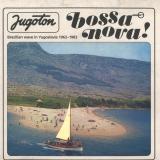
Various - Jugoton Bossa Nova  2x12"

Various

Jugoton Bossa Nova 2x12"

2x12inchEVERLAND-YU009LP
Everland
20.01.2026
 
20

Rich musical history of Yugoslavia reveals a long-lasting love for the music of Latin America.
Entwined in Afro-Cuban rhythms, ballrooms were shakin', swayin' and swingin', gathering musicians who were heavily into jazz bands and orchestras, most notably in Ljubljana, Zagreb, and Belgrade. Jazz could be heard on the streets of Split way back in 1919 when dancing became a symbol of freedom. Radio was the most loved household item, newest sheet music was in demand and collecting records was hip like today. In the aftermath of Second World War, jazz went underground but little by little, things changed and Ella, Satchmo, Dizzy and Miles came to visit, among others. Music festivals shaped the music for entertainment and variety of popular styles showed influences from all over the world. In the early sixties, one particular rhythm crashed on the coast of the Adriatic Sea: the rhythm of bossa nova!

In the whirlwind of various musical styles, Latin American music still played important part of the scene in the early sixties Yugoslavia. Beguine, tango, rhumba, samba, calypso, mambo and cha-cha-cha all found their place on the festivals inspired by famous Sanremo, festival of Italian popular song that largely shaped the musical taste of Europe. It was the era of instrumental rock, R & B and rock'n'roll - sounds of "imperialist America" now played freely on imported and hand-made electric guitars. While dancing halls had been turning into concert venues, bossa nova has come! Eydie Gorme with Blame It on the Bossa Nova and Paul Anka with Eso Besso (That Kiss!) tried to make us learn some new dance moves but it was Joao Gilberto's gentle singing and his new way of playing samba songs, along with Tom Jobim's modern dissonant harmonies and poetry of Vinicius de Moraes that created the magic. When American alto saxophonist and flautist Bud Shank visited Zagreb and Ljubljana in 1963 (with Boško Petrović in his quintet) "it was the first time we heard bossa nova!" remembers Stjepan Braco Fučkar. Jugoton, the biggest record company in Yugoslavia, released 4-track EP Bossa Nova by Bogdan Dimitrijević and his ensemble that same year! While not being fully accepted or understood completely, the archives of Jugoton reveal to us various interpretations of this new trend from their vast catalogue.

nicht am Lager

Bestelle jetzt und wir bestellen den Artikel für dich beim Lieferanten.

38,61

Last In: vor 3 Monaten
DEMIAN - S/T LP

DEMIAN

S/T LP

12inchEZRDR210LP
Riding Easy
31.10.2025

"The Bad Seeds and Zakary Thaks were mid ‘60s Texas garage rock bands formed in the wake of the British Invasion, influenced by The Rolling Stones, Kinks, Yardbirds and others, becoming top local live attractions at a time when the 13th Floor Elevators and Moving Sidewalks were leading the way into psychedelia. In late 1966 Rod Prince on guitar and Roy Cox on bass from Bad Seeds joined up with David Fore from Zakary Thaks on drums to create a new band out of San Antonio featuring two lead guitarists. Todd Potter filled out the quartet on second guitar and they chose the name Bubble Puppy, taken from Aldous Huxley’s 1932 dystopian novel Brave New World. Huxley was an early advocate of LSD, appropriately. In 1969 Bubble Puppy scored a top 20 hit single with “Hot Smoke & Sasafrass” which led to their LP “A Gathering Of Promises”. International Artists, the legendary Texas label that previously had unleashed mind expanding classics by the Elevators, Red Crayola, Golden Dawn and others was a perfect fit. After the LP and additional 45s didn’t repeat the success of “Hot Smoke & Sasafrass” the band hooked up with Nick St. Nicholas of Steppenwolf as their new manager and moved to Los Angeles. A new band name was in order, Nick St. Nicholas chose Demian, title of the 1919 novel by Herman Hesse. His books were popular with the counterculture at the time and had provided Steppenwolf with their new name after they changed it from the Sparrow and hit it big. Demian recorded the LP live in the studio at the Record Plant in one midnight to six session. They had their arrangements fully realized, allowing them to combine live show energy and economy with to-the-point delivery suitable for repeated listening. No doubt they were aiming for pop hit success, using proto hard rock skills in a radio friendly way without compromising the heavy guitar moves. The vocals have echoes of the earlier Bubble Puppy style in spots but are more melodic with vibrant harmonies reminiscent of Moby Grape, Buffalo Springfield, James Gang… at times flashing on Steve Stills/Richie Furay westcoast without being too sweet about it. It works terrifically when the radio friendly voices top off killer hard guitar ensemble action. Early hard rock that is too bluesy flashy can get tiresome with repeat listening, especially if overdosing on guitar solos with the band relegated to the background… Demian keep it interesting with inventive song structures allowing all four players to integrate constantly into an ever changing but focused whole. This LP is a grower, despite the basic two guitars, bass and drums lineup and no frills production you reach a lot of different places during the ride. Demian is deadly hard rock, a perfectly organized vibe straddling live energy and crafted itinerary, amongst the first obscure major label killers that commanded premium $$ with collectors even way back in the late ‘70s. It gets you there every time, even half a century later!"

vorbestellen31.10.2025

erscheint voraussichtlich am 31.10.2025

39,92
Gershon Kingsley - Music To Moog By
  • Hey, Hey
  • Scarborough Fair
  • For Alisse Beethoven
  • Sheila
  • Pop Corn
  • Twinkle, Twinkle
  • Nowhere Man
  • Sunset Sound
  • Trumansburg Whistle
  • Paperback Rider

Bob Moog’s invention of the analog Moog synthesizer ignited an explosion of creativity across the music spectrum. On the classical side, there was Isao Tomita and Wendy Carlos; on the more avant-garde side, such artists as Mort Garson and Craig Leon used the new technology to explore the limits of sound production while rockers like Keith Emerson incorporated the technology into their music. And, of course, there was also a silly pop side to the synth mania, or “moogsploitation” as some wags put it; albums by The Moog Machine, The Happy Moog, and other similarly-entitled acts provide good examples of that. But the one man straddling all these camps was Gershon Kingsley. Kingsley studied with John Cage before making a pair of groundbreaking albums with fellow electronic music pioneer Jean-Jacques Perry (their “Baroque Hoedown” was the theme for the Main Street Electrical Parade attractions in Walt Disney theme parks). Kingsley then embarked on a solo career and scored an instant hit with this album, 1968’s Music to Moog By, and its signature track, “Pop Corn.” “Popcorn” (one word) became an international smash for Hot Butter four years later, but Music to Moog By also caught consumer ears with its blend of originals, classical, and especially versions of Beatles tunes (though you will have to excuse the egregious misspelling of “Paperback Writer” as “Paperback Rider”)! Ever in pursuit of pop music’s most eccentric manifestations, we at Real Gone are proud to reissue Music to Moog By for the first time in the U.S., complete with the 8-page “The Book of Moog” that was inside some original copies. Strawberry with black swirl pressing limited to 900 copies!

vorbestellen09.05.2025

erscheint voraussichtlich am 09.05.2025

46,01
Satsuki Shibano - Wave Notation 3: Erik Satie 1984 LP 2x12"
 
22

WRWTFWW Records is delighted to announce the first official worldwide reissue of Satsuki Shibano’s Wave Notation 3: Erik Satie 1984, the final album from the sound-defining Wave Notation environmental music series curated by Satoshi Ashikawa. Originally released in 1984 on the Sound Process label, Wave Notation 3 followed Ashikawa’s own Still Way (1982) and Hiroshi Yoshimura's Music For Nine Postcards (1982).

The highly sought-after album, sourced from the original master tape, is available as a double LP (housed in a luxurious heavyweight sleeve) for the first time ever. Digipack CD and digital formats are also available. This exclusive reissue, including English and Japanese liner notes by the artist, was supervised by Japanese ambient legend Yoshio Ojima.

Wave Notation 3 is a splendid tribute to seminal French composer and pianist Erik Satie, himself one of the main influences behind kankyo ongaku / environmental music (alongside Brian Eno, John Cage to name a few). The alphabetically-sequenced album features 26 pieces showcasing Shibano's unique piano interpretation of Satie’s works.

The artist explains: « For this album, I sequenced the compositions in alphabetical order of each title, irrespective of the period of each composition or style. By doing this, I attempted to effectively create ‘Music as an environment’ and at the same time, allow the listener to genuinely experience Satie’s music. »

Satsuko Shibano’s minimalistic approach to ambient classical is simply perfect and offers a beautiful and tranquil listening experience, furniture music with extra comfort and soothing simplicity, relaxing to the mind and to the soul. This Wave Notation deserves a spot among the pillars of Japanese environmental music, next to Midori Takada’s Through The Looking Glass, Hiroshi Yoshimura’s Green, and Satoshi Ashikawa’s Still Way.

nicht am Lager

Bestelle jetzt und wir bestellen den Artikel für dich beim Lieferanten.

28,36

Last In: vor 15 Monaten
LARRY MULLINS - CAMISSONIA

Larry Mullins

CAMISSONIA

12inchHTLP18
Hit Thing
13.09.2024

Larry Mullins, langjähriger Mitarbeiter von Nick Cave and the Bad Seeds, Iggy Pop and The Stooges, Swans & The Residents, hat mit "Camissonia" ein einzigartiges und persönliches Soloalbum aus minimalen elektronischen Sci-Fi-Vignetten geschaffen, das lose auf den Schriften und dem Leben des deutschen Schriftstellers und Botanikers Adelbert von Chamisso basiert. Das Album ist nach der von Chamisso benannten Pflanzenart benannt, die von seinem Kollegen, dem Botaniker Johann Friedrich Eschscholtz, erstmals beschrieben wurde. Es ist größtenteils ein instrumentaler Soundtrack, der mehrere bemerkenswerte Ereignisse aus Chamissos Buch "Peter Schlemihls wundersame Geschichte (Der Mann, der seinen Schatten verkaufte, 1814)" sowie seine tatsächliche Überseereise an Bord von Otto von Kotzebues Schiff, der "Rurik", während der Jahre 1815-1818, als Botaniker, musikalisch illustriert. Das Artwork zum Album besteht überwiegend aus drei Holzschnitten, die zwischen 1915 und 1919 von Ernst Ludwig Kirchner geschaffen wurden. Kirchner hegte Anfang des 20. Jahrhunderts, also ca. 100 Jahre nach der Veröffentlichung von Chamissos Buch, eine ähnliche Faszination für das Werk wie Larry Mullins weitere 100 Jahre nach Erstellung von Kirchners expressionistischem Meisterwerkes - dem "Peter Schlemihl-Zyklus". Diesmal erweitert "Camissonia" das Chamisso-Erbe als Interpretation in Musik. Camissonia wurde 2020 während der Lockdown-Periode in Wien, Österreich, aufgenommen, die das belebte Zentrum Wiens in einen Zustand einer evakuierten Sci-Fi-Dystopie versetzte. Während Mullins als Musiker im Burgtheater arbeitete, fand er seine Sammlung von Instrumenten plötzlich für die kommenden Monate im Orchestergraben eingeschlossen. Er hatte jedoch eine kleine Auswahl an Elektronik in seiner Wohnung und hatte auch die Möglichkeit, sie aufzunehmen. Außerdem hatte er einen Stapel Bücher zum Lesen, und ganz oben lag - "Der Mann, der seinen Schatten verkaufte". "Die Bilder dieser Geschichte verließen meinen Geist weder bei Tag noch bei Nacht. Ich begann, Chamissos echtes Leben zu erforschen und fand ein wildes Abenteuer rund um die Welt auf einem Schiff! Eine parallele nächtliche Obsession mit den Sci-Fi-Filmen von Rainer Werner Fassbinder verschmolz schließlich zu einem bizarren Moment der Klarheit. Ich richtete mein karges Equipment ein, um zu sehen, welche Klänge ich erzeugen konnte, um die Bilder in meinem Kopf zu interpretieren. Ich entdeckte, dass die mir auferlegten Einschränkungen eine eigene Atmosphäre schufen, und so entstand jeden Tag ein neues Musikstück. Nach meiner Rückkehr nach Berlin wollte ich das Projekt so schnell wie möglich abschließen und keine weiteren Instrumente hinzufügen, um die seltsame Qualität zu bewahren. Ich lud zwei Sängerinnen ein, die ich in Berlin kannte, um bei zwei Stücken einen Chor zu singen, und ich fügte bei einem weiteren Stück selber einen Chor hinzu. Dann schloss ich die Tür und warf den Schlüssel weg."

vorbestellen13.09.2024

erscheint voraussichtlich am 13.09.2024

23,49
Edward Ka-Spel - Tales from the Trenches LP

Mostly known for his work as founder, vocalist and main songwriter for The Legendary Pink Dots, Edward Ka- Spel has long forged an equally prolific career as a solo artist given to sometimes exploring similar sonic realms as his group but clearly working at such a pace the need to channel ideas and songs in this capacity must be enforced. And just as well too, because Edward Ka-Spel is one of those rare and exceptional artists whose high workrate doesn’t betray a keen sense of quality control. Long known as somebody unafraid to venture wherever he pleases, his work has for a few decades now long traversed the more outward-bound or so-called ‘fringe’ areas of electronic music, psychedelia, hypnotic rock, kosmische sounds and the avant-garde. Heartily sewn into all of this is Edward’s fantastic grasp of spinning a twilight tale or spiralling deep into the mind’s recesses to craft a song from comparatively nimble melodies and words of Kafka-esque proportions. It’s a strikingly rich blend that’s always deserved far more attention than the cult audience it thankfully at least has.'Tales from the Trenches' is the second release by Edward for Lumberton Trading Company. Following on from the abstract-flavoured ‘Permission to Leave the Temple’ 10” released at the start of 2023, this LP collects eight tracks of a personal nature mostly pinned into place by some refined electro rhythms, molten cosmic textures, plaintive strings, introspective keys and a late night hue that sways effortlessly between the beautiful, haunted and even, a couple of times, a steam-pumped and sweat-ravaged dancefloor. Limited to 500 only, 'Tales from the Trenches' delivers exactly as the title indicates. Everything may at first feel ominous or sombre in tone, but there’s also a glimmer of hope laid bare in all its sun-drenched glory poking between the cracks.

vorbestellen27.11.2023

erscheint voraussichtlich am 27.11.2023

24,79
Ron Trent - Rawax Aira Series Vol. 2
 
2
auch erhältlich

Volume 3[8,61 €]


This new project is directed by Miho in collaboration with Robert Drewek, the owner of respected label RAWAX.
It is a special edition 'RAWAX - AIRA EP vinyl series".

Concept and mission will always be, to connect and invite great musicians who produce and create "essence of the real music',
not following the trend but let the music speak itself with groove, melody, vibe, energy and soul....

Roland has made evolution in dance music all over the world in 80's, Music needed those machines, and machines needed those creators of music.

AIRA are not rehashing of the legendary original TR or TB, But respecting those great machines from the past, AIRA continues to evolve toward into the future simultaneously, newly developed, new generations tools to keep the music alive and to bring more possibilities for the future.

We seeks out this exciting movement of dance music history, as the music lover who has actual experience the flow of this evolution, and connections between musicians and machines to make their musical pieces on this project to inspire listeners and to challenge the genres they represent by each series.

nicht am Lager

Bestelle jetzt und wir bestellen den Artikel für dich beim Lieferanten.

11,72

Last In: vor 15 Tagen
More Eaze - Strawberry Session

Strawberries ripen in the spring. Or so they used to, in a more reliable world, one that seems to be rapidly receding in our collective rearview mirror. Presently, “spring” is a troubled concept — fraught with anxiety. Our seasons, if they are seasons at all, are paradoxical. Crops fail, or they ripen prematurely, all at once, and into a burst of rot. Impossibly, somehow, the supermarket shelves stay stocked (mostly, for now at least), and there are buckets of strawberries on every corner. But, of course, their nature is suspect. And they don’t taste like they used to. Or maybe that’s just ruinous nostalgia. But somewhere along the way we certainly lost something. Everybody knows.

Strawberry Season (Leaving Records, November 9 2022) responds tenderly to this sorry state of affairs, not with false comfort — nor escapism. Rather, the album conveys, often wordlessly, that there remains an abundance of sweetness amidst our increasing unease. While much of twentieth century American popular and folk music may have dwelt on the beauty and plenitude of the prairie, More Eaze applies a similar Romantic focus to the small bursts of fecundity that now hide in plain sight. Blending found sound, generative music, a knack for elegant, classically-informed melodic arrangement, and a sort of Liz-Fraser-by-way-of-hyperpop approach to vocals, Strawberry Season offers unique solace — providing an occasion for the kind of deep listening that our overstimulated and undernourished spirits require if there is to be any hope at all (and of course there must be hope).

More Eaze (serving as composer, songwriter, multi-instrumentalist, producer, and sound artist) guides us incrementally to this locus of attentiveness. Strawberry Season begins with the softly sweeping gentle pets. Early intimations of Velvet Underground give way, indeed, to a string arrangement that John Cale might have saved for Paris 1919. The second track, Suped, features a kaleidoscopic swirl of grocery checkout scanners that eventually coalesce and release with the subtle strumming of a harp. On known, in the midst of a nearly elegiac outflow of feeling, a shower starts to run. Someone steps inside, pulling the curtain back, sending the plastic rings clattering. Moments later, the unmistakable sound of the showerer blowing their nose — an inclusion that is at once light-hearted and jarringly, movingly intimate.

Strawberry Season’s second to last song, low resolution at santikos, serves as a sustained meditation on all that has come before it. Building slowly throughout its nine minutes, teetering, at times, on the edge of danceability, it dissipates suddenly, and Strawberry Season concludes with the rustling of clothes, snippets of distant conversation, creaking floorboards, an exhale and a sniff. There is a feeling of having arrived, of temporary reprieve in the face of uncertainty. A hint of a season yet to come, or one that is perhaps only now accessible in dreams.

vorbestellen17.03.2023

erscheint voraussichtlich am 17.03.2023

20,80
Kuolemanlaakso - Kuolleiden laulu

EP, black vinyl Death doom metal group Kuolemanlaakso's most recent album Kuusumu, released to much critical acclaim in March 2022, will be followed up by a limited three song EP Kuolleiden laulu in December. Both the album and the EP were recorded in the same studio session in 2021, both share lyrical themes and cover art based on art by Evelyn De Morgan (1855-1919). "We knew already when entering the studio that we're going to record more than an album, as we had plenty of material to work on. When all ten songs were done, it felt natural to compile the album of the heavier epic songs and put the more unusual and catchy tracks on the EP. These three songs have contagious hooks and clean vocals", comments guitarist-songwriter Laakso. The title track on the EP is the band's most radio friendly track to date with a smoother production and an infectious chorus plus guest female vocals by Lotta Ruutiainen, who also performed on the album. The slow and menacing second track "Juuret jalkojeni alla" is a more complex composition, whereas the EP closing number "Rautasiivet" pays a visit to the same melancholic but catchy territory that Kent and Katatonia also inhabit. "The three songs on Kuolleiden laulu differ from one another considerably, and they present new sides to the band. Lyrically all three songs are fictional stories based on the 10-year volcanic winter that begun in 535 and has been described by historical scholars as 'the worst time to be alive'", comments Laakso. Aleksi Munter (ex-Swallow The Sun and Insomnium) plays keyboards on the EP, and it was produced, recorded, mixed and mastered by V.Santura (Triptykon), the man responsible for producing everything Kuolemanlaakso has released thus far.

vorbestellen20.01.2023

erscheint voraussichtlich am 20.01.2023

22,65
John Cale - Mercy LP (2x12")

John Cale

Mercy LP (2x12")

2x12inchDS122LP
Domino Records
20.01.2023

For nearly 60 years, John Cale has been reimagining how his music is made, sounds, and even works. MERCY, Cale’s first full album in a decade, moves through true dark-night-of-the-soul electronic torment toward vulnerable love songs and hopeful considerations for the future with the help of some of music’s most curious young minds. Cale has always searched for new ways to explore old ideas of alienation, hurt, and joy; MERCY is the latest transfixing find of this unsatisfied mind.

John Cale announces MERCY, his first new album of original songs in a decade, out January 20th via Double Six / Domino. For nearly 60 years, or at least since he was a young Welshman who moved to New York and formed The Velvet Underground, Cale has been reinventing his music with dazzling and inspiring regularity. There was the bewitching chamber folk of Paris 1919 followed instantly by the gnarled rock of Fear, the provocative and spare song cycle Music for a New Society followed more than 30 years later by mighty and unabashed electronic updates. Once again, here is Cale, reimagining how his music is made, sounds, and even works. His engrossing 12-track MERCY moves through true dark-night-of-the-soul electronics toward vulnerable love songs and hopeful considerations for the future.

On MERCY, Cale enlists some of music’s most curious young minds: Animal Collective, Sylvan Esso, Laurel Halo, Tei Shi, Actress. They’re only some of the astounding cast here, brilliant musicians who climb inside Cale’s consummate vision of the world and help him redecorate there. Cale turned 80 in March, and he’s watched as many peers have passed away, particularly during the last decade. MERCY is the continuation of a long career’s work with wonder. Cale has always searched for new ways to explore old ideas of alienation, hurt, and joy; MERCY is the latest transfixing find of this unsatisfied mind.


The writings and recordings that shaped MERCY piled up for years, as Cale watched society totter at the brink of dystopia. Trump and Brexit, Covid and climate change, civil rights and right-wing extremism—Cale let the bad news of the day filter into his lines, whether that meant contemplating the sovereignty and legal status of sea ice melting near the poles or the unhinged arming of Americans. Lessons from a life (still being) richly lived floated to the fore, too, nodded to on the previously released “NIGHT CRAWLING.” If we’re always regretting our past, aren’t we conscripting ourselves to permanent disappointment?

During “STORY OF BLOOD,” after the piano prelude gives way to a frame-rattling beat and synthesizers that feel like sunshine splashed across a snowfield, the voices of Cale and Weyes Blood’s Natalie Mering slide past one another, two phantoms trying to find a partner amid the modern din. “Swing your soul,” they both sing in aspiration. In the final verse, Cale remembers this existence is not just about himself. “I’m going back to get them, my friends in the morning. Bring them with me into the light.” The accompanying video by Emmy-winning director Jethro Waters is a mix of disturbing and serene featuring both Cale and Weyes Blood. Its deep tones and religious images emphasize the track’s dark, spiritual mood.

Cale elaborates: “I’d been listening to Weyes Blood’s latest record and remembered Natalie’s puritanical vocals. I thought if I could get her to come and sing with me on the ‘Swing your soul’ section, and a few other harmonies, it would be beautiful. What I got from her was something else! Once I understood the versatility in her voice, it was as if I’d written the song with her in mind all along. Her range and fearless approach to tonality was an unexpected surprise. There’s even a little passage in there where she’s a dead-ringer for Nico.”

vorbestellen20.01.2023

erscheint voraussichtlich am 20.01.2023

27,35
Various - The Wonderful Sounds of Quality Record Pressings (3x12")
 
27

Celebrate the technical expertise of the world's finest LP pressing plant — Quality Record Pressings — with the finest LP sampler ever assembled!

The Wonderful Sounds Of Quality Record Pressings includes music hand-picked by Acoustic Sounds CEO Chad Kassem and classical music tracks chosen by the team at Reference Recordings.

Every song meets the criteria of excellent performance, perfect recording and flawless mastering. What better way to celebrate such a monumental anniversary for one of the absolute leading brands in analog high fidelity than with this to-die-for LP sampler? Contains most genres of music — blues, jazz, classical, R&B and female vocal. From now on, you'll only need to carry one demo record around with you.

Vinyl expert Michael Fremer, of Analogue Planet and Stereophile, gives you a track-by-track tour of the history and production of the songs on this special album.

What separates our world-renowned Quality Record Pressings LPs from other manufacturers? Since Acoustic Sounds CEO Chad Kassem launched QRP in 2011, the focus has been on producing consistently virtually silent vinyl playing surfaces, as well as reproducing details that were hallmarks of vintage labels — the "deep groove" label of Blue Note LPs, for example.

The craft of pressing fine vinyl is perfected in such details. Such as plating lacquers within 24 hours of their arrival at the plant. Cut grooves are prone to change with temperature fluxuations, high humidity and time. The sooner that lacquers are plated, the better the fidelity of the final pressing. Other keys include using a proprietary silver spray formulation, made fresh daily. And incorporating computer microprocessors on our presses to precisely control press functions with absolute precision. And an imbedded temperature sensor in the dye cycles the press with just as much control. The result — more consistency in each LP, high fidelity and reduced distortion. The ultimate sonic advantage.

vorbestellen30.12.2022

erscheint voraussichtlich am 30.12.2022

147,02
Triptides - Azur LP

'Azur' is the fourth album from California's best kept secret, Triptdes - a marvellous pop band from
Bloomington, Indiana and now relocated in LA. Their shiny and hazy songs are perfect anthems for a
nascent summer. This ten-song collecton explores the full spectrum of sensatons you can go through
on a hot day - from laziness to happiness, 'Azur' is a trip to California without actually having to move
an inch. Sit down and relax, take a fresh soda and enjoy the sun.
'Sublime psychedelic 60s dream-pop with true warmth and vibrancy. Too damn good to be a mere
pastche.' - Norman Records - 9/10

vorbestellen22.07.2022

erscheint voraussichtlich am 22.07.2022

17,61
DIE WÄNDE - DIE WÄNDE

Die Wände

DIE WÄNDE

12inchGRLP1059
Glitterhouse
15.04.2022

Die Wände. Das sind Carsten von Postel, Jann Petersen und Mathias Wolff. 2013 während des gemeinsamen Studiums an der Universität der Künste Berlin gegründet, veröffentlicht das Trio bereits im Oktober 2015 ihre erste gleichnamige EP, tourt zusammen mit Molde und spielt auf Festivals wie u.a. dem Jenseits von Millionen, c/o pop, Alinae Lumr und dem Incubate in den Niederlanden. Der Musikexpress kürt sie zu einem der besten Newcomer auf dem c/o pop Festival 2016. Im gleichen Jahr veröffentlichen sie eine gemeinsame Split-EP mit der Berliner Band Pigeon. Im Frühjahr 2019 erscheint endlich ihr Debütalbum "Im Flausch" bei Späti Palace. Es folgen ausgedehnte Touren und Festivalshows im In- und Ausland, während die Band parallel bereits an neuem Material arbeitet. Im Spätsommer 2021 geht es für die Band ins Studio Tutti nach Leipzig, um gemeinsam mit Alexander Günther (u.a. Mellie, Adrie, Molde, Go Lamborghini Go) ein neues Album zu produzieren und aufzunehmen.

vorbestellen15.04.2022

erscheint voraussichtlich am 15.04.2022

20,55
DIE WÄNDE - DIE WÄNDE

Die Wände

DIE WÄNDE

12inchGRLP1059
Glitterhouse
15.04.2022

Die Wände. Das sind Carsten von Postel, Jann Petersen und Mathias Wolff. 2013 während des gemeinsamen Studiums an der Universität der Künste Berlin gegründet, veröffentlicht das Trio bereits im Oktober 2015 ihre erste gleichnamige EP, tourt zusammen mit Molde und spielt auf Festivals wie u.a. dem Jenseits von Millionen, c/o pop, Alinae Lumr und dem Incubate in den Niederlanden. Der Musikexpress kürt sie zu einem der besten Newcomer auf dem c/o pop Festival 2016. Im gleichen Jahr veröffentlichen sie eine gemeinsame Split-EP mit der Berliner Band Pigeon. Im Frühjahr 2019 erscheint endlich ihr Debütalbum "Im Flausch" bei Späti Palace. Es folgen ausgedehnte Touren und Festivalshows im In- und Ausland, während die Band parallel bereits an neuem Material arbeitet. Im Spätsommer 2021 geht es für die Band ins Studio Tutti nach Leipzig, um gemeinsam mit Alexander Günther (u.a. Mellie, Adrie, Molde, Go Lamborghini Go) ein neues Album zu produzieren und aufzunehmen.

vorbestellen15.04.2022

erscheint voraussichtlich am 15.04.2022

20,55
Ernie Wilkins - On The Roll LP

1987 LP Ernie Wilkins and his 'Almost Big Band' led by tenor saxophonist, composer and arranger Wilkins and featuring pianist Kenny Drew, drummer Ed Thigpen and trombonist/vocalist Richard Boone Ernie Wilkins (1919 - 1999) made phenomenal contribution to the big band music in the last five decades by composing and arranging for such major big bands as those led by Earl Hines, Count Basie, Dizzy Gillespie, Tommy Dorsey, Harry James and Clark Terry.
Wilkins moved to Copenhagen in 1979 and in 1980 launched his own Almost Big Band which consists of top musicians from Europe and USA.

"Under leadership of Ernie Wilkins music never becomes a mere parade of soloists. He builds up a piece and gives it a form of unity...Listeners will keep finding fresh surprises." - Albrekt von Konow, Orkester Journalen

vorbestellen01.04.2022

erscheint voraussichtlich am 01.04.2022

34,24
ART BLAKEY & HIS JAZZ MESSENGERS - CHIPPIN' IN

- North American version on CLEAR vinyl (2XLP) - Limited DOUBLE 180g Vinyl Edition (500 copies) with obi strip - Rare Dutch studio recordings, one of Art's last sessions before he passed away - Comes with insert/liner notes // Art Blakey (1919-1990) actually needs little introduction, the American Jazz drummer and bandleader made a name for himself in the 1940s & 1950s playing with contemporaries such as Miles Davis, Dizzy Gillespie and Charlie Parker. He is often considered to have been Thelonious Monk's most empathetic drummer (he played on both Monk's first recording session in 1947 and his final one in 1971). In the decades that followed Blakey recorded for all THE labels that mattered in the field of jazz (Columbia, Blue Note, Atlantic, RCA, Impulse!, Riverside, Prestige, Verve, etc.). His collaborations were numerous and include working with equally legendary artists such as Sonny Rollins, Max Roach, Chet Baker, John Coltrane_.and countless others.Art Blakey was a major figure and a pioneer for modern jazz, he assumed an aggressive swing drumming style early on in his career and is known as one of the inventors of the modern bebop style of drumming. His signature polyrhythmic style was amazing, exuding power and originality, creating a dark cymbal sound punctuated by frequent loud snare and bass drum accents in triplets or cross-rhythms. A loud and domineering drummer_but Blakey also listened and responded to the others in the band. He was an original, an important drummer you'd hear_and would recognize immediately.Art Blakey was inducted into the Downbeat Jazz Hall of Fame (1981), the Modern Drummer Hall of Fame (1991), the Grammy Hall of Fame (1998 and 2001) and was awarded the Grammy Lifetime Achievement Award posthumously in 2005. He was sampled and remixed by renowned acts such as Raekwon, Black Eyed Peas, A Tribe Called Quest, Digable Planets, Buscemi, KRS-One and Madlib.In the mid-1950s he and Horace Silver formed `The Jazz Messengers': a group that Blakey would perform and record with for the next 35 years. Originally formed as a collective of contemporaries_but over the years the band became known as an incubator for young talent that included artists such as Freddie Hubbard, Wayne Shorter, Cedar Walton, Chuck Mangione, John Hicks_and MANY others. Art Blakey went on to record dozens of albums with a constantly changing group of Jazz Messengers. Blakey's final performances were in July 1990. He died on October 16 of lung cancer. The legacy of Art Blakey and his band is not only the music they produced, but also the opportunities they provided for several generations of jazz musicians.Released on the legendary Dutch jazz label Timeless Records and one of his final recordings_on the album we are presenting you today (Chippin' In) you'll find ten sublime tracks recorded at Rudy van Gelder's Recording Studio in February 1990. Art Blakey passed away just 8 months after these tracks were cut and you can't hear any signs of him slowing down at all. For these specific recordings, The Jazz Messengers were expanded from its usual quintet or sextet into a septet and they showcase their energetic signature sound with remarkable style, musical knowledge, a dash of good humor and camaraderie you'd expect from a world class band who have entertained, thrilled and amazed for almost five decades. The line-up on these fantastic sessions includes non-other than Essiet Okon, Geoff Keezer, Dale Barlow, Javon Jackson, Frank Lacy, Steve Davis and Brian Lynch_impressive to say the least!Chippin' In sounds as successful, young and vibrant as ever! Expect supercharged hard bop with striking notes, no-holds-barred musicianship, high swinging solos, screaming choruses and plenty of solid virtuosity to spare. This electrifying set of tracks contains both originals and several eclectic versions of standards_making this release a bonafide hit and a must have for any self-respecting jazz fan or collector.

vorbestellen30.07.2021

erscheint voraussichtlich am 30.07.2021

35,76
KJETIL MULELID - PIANO

Kjetil Mulelid

PIANO

12inchRLP3220
Rune Grammofon
19.03.2021

Still only 29 years old when composing and recording this album, Kjetil Mulelid is one of the brightest talents in Norwegian jazz, and these days that really says something. In Kjetil's childhood home they had a subscription for a "Classical Masterpieces" CD collection. One that especially caught his attention, and would be played repeatedly, included the most melodic piano music of Beethoven, Chopin and Debussy. At the same time his elder brother introduced him to "old" rock like Led Zeppelin and Queen, winning him over and getting him interested in the guitar rather than the piano. When he later applied to music education in high school with electric guitar as his main instrument, the teachers asked if he played other instruments. He duly played a song on the piano, and heard nothing more of it. Months later, thinking he was enrolled as a guitarist, he was (to his horror) introduced to the class as a pianist. While he loved listening to classical piano music, playing it he felt tied up in the "rules" and the sheet music. It was simply more fun to play rock music on electric guitar_ surely a familiar story! Later a classically trained piano teacher played him some gospel and boogie woogie and introduced him to some simple pentatonic hooks on a C major blues. He hadn't really touched the piano in a very long time, but the same night he started experimenting and improvising around what she had shown him, and from that moment he was all into the piano and would dig further into improvisation and jazz. And the rest is history, as they say. Kjetil was sceptical when we first suggested a solo piano record back in early 2018, but the idéa slowly grew on him and when the pandemic exploded and other plans had to be scrapped, he suddenly had the time as well as the means to do it. So the bulk of the album was written in a hectic lockdown period and recorded on a steaming hot June day in the legendary Athletic Sound studio on their unique and characteristic Bösendorfer grand piano from 1919. Of the piano Kjetil says the sound is one of a kind, very clear and not typically "perfect" like most new ones. We can only wholeheartedly agree, it sounds great and is also very well recorded and mixed, giving the impression that you sit next to him, and not in a concert hall. In turn joyful, playful and elegant, the album fully shows Kjetil's harmonic and melodic mastery and the influence from those early introductions to the classical masters. Whether staying with the tune or taking off on improvised flights, there is an ease and assurance in his playing that betrays his young age.Kjetil has a bachelor degree in jazz performance from NTNU in Trondheim, has played in most European countries, Japan and USA, released two acclaimed albums with his trio on Rune Grammofon, and is also a member of Wako.

vorbestellen19.03.2021

erscheint voraussichtlich am 19.03.2021

25,17
Mike Cooper - White Shadows In The South Seas LP 2x12"

White Shadows In The South Seas is the title of a book written in 1919 by Frederick O'Brien as part of a trilogy he wrote based on his experiences living in the Pacific islands in the early part of the 20th century. His book was taken as the starting point for a film to be directed, initially, by Robert Flaherty (famous at the time for his groundbreaking documentary / fiction film Nanook Of The North) with W.S.Van Dyke as his support. The film, ultimately, apart from the title, had little to do with O'Brien's book and Flaherty left the film after a few months leaving Van Dyke to finish it.

I purchased O'Brien's book, along with many others, from Basement Books, a secondhand bookstore in Melbourne/Australia. Part of my 'Islomania' and on going fascination with all things Pacific. When I discovered there was a 1929 silent film based on the book I sought it out and started to present it as part of my 'Live Music/Silent films' repertoire. Tabu by Frederick Murnau, which coincidently also had Flaherty as co-director originally, was the first film I ever wrote / improvised a score for and presented as a live film/music performance. My repertoire extends to over 23 films now.

My eclectic and diverse musical and artistic interests extend into 'Hawaiian', 'Exotica', 'Ambient' and 'Electronic' Music. I have produced several volumes of so called 'Electronic, Ambient, Exotica' on CD and Vinyl, including Kiribati, Globe Notes, Rayon Hula ( on Vinyl, CD and digital format ) and most recently, New Globe Note on Vinyl and White Shadows In The South Seas on CD.
White Shadows In The South Seas features some of the music presented in my live screenings of the 1929 silent film.

The film is the story of Dr. Matthew Lloyd, an alcoholic doctor who is disgusted by the exploitation by white people of the natives on a Polynesian island. The natives dive for pearls, however, numerous accidents occur and one diver dies. In anger, Dr. Lloyd punches Sebastian, the employer. As revenge and to prevent further interruption of his activities, he tricks Dr. Lloyd onto a ship with a diseased crew (thinking they are ill) and his men rough him up and send the ship off into a storm. Dr. Lloyd survives and is washed ashore on an island where none of the natives have ever seen a white man before. Lloyd is rescued and ultimately falls in love with the chief's daughter, who is Taboo, hence Lloyd is prevented from pursuing his love for her. An incident occurs and a young boy is thought to have drowned but Lloyd is able to revive him, earning him points and permission with the chief's daughter. Lloyd begins to realise that the local islanders have no sense of the value of the black pearls which grow in abundance around their island and he starts to dive for them and collect them. One morning the white man Sebastian unexpectedly turns up on a scooner and starts to offer the islanders trade for their pearls. Llloyd tries to interrupt the encounter and is shot and dies. His wife and the islanders morn for his dead body and, symbolically, the passing of a way of life.

Mike Cooper plays - Electric and acoustic lap steel guitars / electronics / Zoom Sampletrack / Kaos Pad / Casio SK1 / Korg Drum Machine / Self Made Instruments.

It also features field recordings made on Pulau Ubin by Mike Cooper during a month as Artist In Residence for The Artist Village / Singapore.

I would like to acknowledge and thank Lawrence English (Room40 Records) for his assistance and encouragement with the original recordings and the CD version of White Shadows In The South Seas.

All music written and played by Mike Cooper PRS/MCPS - except Po Mahina (trad. Arr. Cooper) and Hilo Hanakahi (trad. Arr. Cooper)

Recorded and Mixed at the Steelworks in Rome 2012/2013.

A White Shadow In The South Seas
In February 2014 'A White Shadow In The South Seas' was the title of an audio-visual installation I made at the Teatro In Scatola in Rome, Italy, presented as part of a series of sound installations titled 'Visitazioni' produced by Proposte Sonore.

The essay below, as well as our collection of Hawaiian shirts, Exotica and Hawaiian vinyl records, was an inspiration for this installation.

'..the transformation and reconstitution of the souvenir commodity as an indigenous ethnic art form and a scarce relic of Hawai'i's romanticized past...' from - Clothing and Textile Reasearch Journal - From Kitsch to Chic by Marcia A. Morgado.

And....
Michael Thompson's Rubbish Theory (1979)
' ...a critical aspect of Western culture is the pre-disposition to see objects in terms of two overt categories: the transient and the durable. Objects identified as transient have finite life spans and lose value over time, whereas those identified as durable have infinite lives and over time increae in value....category assignments are arbitrary, but once assigned a category membership determines relative value. Fashion apparel-by defenition-is assigned to the transient category; paintings commonly are designated durables....how is it that transient objects.. ( e.g. Hawaiian shirts and vinyl records ) ..sometimes become durables.

Objects assigned to the rubbish category are largely invisible, have no value and, ideally, no life span. Fashion for example, no longer worn and relegated to the back of the wardrobe has fallen into the covert rubbish category. But rubbish can be rescued and transformed. Thompson says ' What I believe happens is a transient object gradually declining in value and in expected life span may slide across into rubbish. Here it exists in a timeless and valueless limbo where it has a chance to be re-discovered and be successfully transformed to a durable. Such transferes are radical: objects gradually slide from transcience to rubbish, but the transformation from rubbish to durable involves an all-or-nothing leap across two boundaries, that separating the worthless from the valuable and that between the covert and the overt. Things drift into obscurity but they leap into prominence.

The delightful consequence of this hypothesis is that in order to study the social control of value we must study rubbish.

The rubbish-to-durable transformation is accompanied by the development of highly specialized knowledge derived from the discovery of subtle variations and complex details that went unnoticed in the objects transient stage. The discoveries initiate renewed interest in the object and its market value begins to climb. As prices soar beyond the reach of ordinary people, the object becomes available only in high priced collectors' markets. Furthermore, as market values rise, the aesthetic value of the object undergoes a reassessment as well, and it becomes increasingly apparent that the objects intrinsic beauty has been overlooked. Ultimately the object is re -assigned as a durable and becomes recognized as a timeless classic.

Exotica, Ambience and Pacificism - A dialogue with Mike Cooper & Professor Philip Hayward Deputy Pro Vice Chancellor of Research Southern Cross University, Lismore, Australia.

nicht am Lager

Bestelle jetzt und wir bestellen den Artikel für dich beim Lieferanten.

20,71

Last In: vor 10 Jahren
Finiflex - TA TA OO HA

Finiflex

TA TA OO HA

12inchFLEX005
Finiflex Records
16.05.2018

* Pioneers of the electronic music scene, Music Producer and Finiflex Studio Owner, John Vick and DJ, Davie Miller are working together on a new project . . . . FINIFLEX

* TA TA OO HA was the first single to be released from the much anticipated forthcoming album SUILVEN, slated for release in May 2018.

* FINIFLEX have been playing the new material live since the end of 2016 with gigs in Edinburgh (Neu Reekie), Glasgow (Let's Go Way Back) Skye (Non Stop Easter Weekender) Barcelona (Kosmopolis), Dundee (Carnival 56) and the TA TA OO HA Single Launch Party (TRANSMISSION) in Glasgow.
The show itself is an immersive experience featuring lights, live projections and video graphics, basically a super slick production rammed with back to back bangers.

* These new releases may by the first in 20 years but in reality it's not been such a long period of silence. The almost a secret FINIFLEX Studio Complex (FINIFLEX HQ) based in Leith, Edinburgh has continued to work away with some of the best in the genre including the likes of Justin Robertson, Lord Of The Isles, DJ Rolando, Andrew Weatherall, Sparks, Billy McKenzie, Jon Pleased Wimmin, Paul Oakenfold, Dave Ball (Soft Cell) to name a few.
It's a given that their past assures their pedigree within the electronic music arena but with the release of TA TA TA OO HA . . . . . FINIFLEX brought it all rushing into the future. . . . . .

nicht am Lager

Bestelle jetzt und wir bestellen den Artikel für dich beim Lieferanten.

11,05

Last In: vor 7 Jahren
Emika - Drei Remixes Ep

Emika

Drei Remixes Ep

12inchEMK1202
Emika Records
27.07.2015

Prolific electronica polymath Emika found acclaim once again this year with new studio album 'DREI', an opus that picked up Ibiza Spotlight's 'Album Of The Week' accolade and was called a fascinating album' by Rolling Stone. With six new remixes on this EP, further life has been breathed into her latest LP - with stunning results.
UK techno legends The Black Dog provide a foreboding rework of Battles, all brooding pads, electro glitchery and stomping breakbeats.
Kamikaze Space Programme's version is more dramatic still, returning the favour after Emika appeared on his own 'Choke' recently.
CNCPT (Brenda, Natch Records) kicks off the remixes of What's The Cure with an industrious slab of dubbed-out, reverb-heavy techno, doing away with Emika's vocals entirely and instead making use of her sound design expertise with subtle finesse.
Mysterious German Clone and Bunker affiliates The Exaltics tap into their electro roots on their rework with a thick, rubbery bassline working its way under a simple, atmospheric arrangement that allows Emika's honeyed delivery to take centre stage.
Borai (Tasteful Nudes) teams up with Emika herself to provide a stripped-back, heavily-swung, stomping take on the track, boiling it down to its melodic and textural essence.
Eomac rounds off the package with his stunning string-laden instrumental interpretation.

nicht am Lager

Bestelle jetzt und wir bestellen den Artikel für dich beim Lieferanten.

7,94

Last In: vor 7 Jahren
Amazones De Guinee/ Moussa Doumbia - Samba / Samba

Amazones de Guinee - SambaPure vibes to start our series. Live and direct, high energy African funk with a powerful vocal, recorded live in Paris in 1983.Hailing from Guinea they were the countries first all female group, formed by members of Guinean army nonetheless. Their lead percussionist Kade Diallo was killed in a car crash just days after returning from a tour of France in the early 80's. The group did not record again until 2008, but they continue to tour now, with a new generation of fans.Taken from the sought after 1983 album 'Au Coeur De Paris', previously unreleased on 7'.Moussa Doumbia - SambaMalia born Moussa Doumbia and was a prolific saxophonist, composer and arranger, who lived in Abidjan, Ivory Coast.He fused African and Funk rhythms in his own unique style, comparable to the likes of Fela Kuti, Orchestre Poly Rythmo de Cotonou and Ebo Taylor. Moussa's voice is strongly reminiscent of the almighty James Brown. Similarly to Fela and The Shrine, Moussa played at 'Boule Noire', a club in the cosmopolitan area of his town, Treichville. Every night they would play their own styles for hours to rich businessmen and locals.'Samba' is taken from his 1980 LP 'Lassissi Presente Moussa Doumbia' released on Sacodis. Extremely hard to find.

nicht am Lager

Bestelle jetzt und wir bestellen den Artikel für dich beim Lieferanten.

13,40

Last In: vor 3 Jahren
  • 1
Artikel pro Seite:
N/ABPM
Vinyl