"This is the time that we, who have benefitted from the Last Poets shouldbe able to say, 'it's the Last Poets. It's them we should be honouring, because we did not honour them for so many years_"
KRS One wasn't just addressing the hip hop fraternity when he uttered
those words by way of introducing the video for Invocation - a poem
written thirty years ago, around the time of the Last Poets' last significant comeback. He was speaking to everyone who's been affected by the word, sound and power issuing from the most revolutionary poetry ever witnessed, and that the Last Poets had introduced to the world outside of Harlem at the dawn of the seventies.
In 2018 the two remaining Last Poets, Abiodun Oyewole and Umar Bin
Hassan, embarked on another memorable return with an album -
Understand What Black Is - that earned favourable comparison with theirseminal works of the past, whilst showcasing their undimmed passion andlyrical brilliance in an entirely new setting - that of reggae music. Trackslike Rain Of Terror ("America is a terrorist") and How Many Bullets demonstrated that they'd lost none of their fire or anger, and their essential raison d'etre remained the same.
"The Last Poets' mission was to pull the people out of the rubble o f their lives," wrote their biographer Kim Green. "They knew, deep down that poetry could save the people - that if black people could see and hear themselves and their struggles through the spoken word, they would be moved to change."
Several years later and the follow-up is now with us. The project started when Tony Allen, the Nigerian master drummer whose unique polyrhythms had driven much of Fela Kuti's best work, dropped by Prince Fatty's Brighton studio and laid down a selection of drum patterns to die for. That was back in 2019, but then the pandemic struck. Once it had passed, the label booked a studio in Brooklyn, where the two Poets voiced four tracks apiece and breathed fresh energy, fire and outrage into some of the most enduring landmarks of their career. Abiodun, who was one of the original Last Poets who'd gathered in East Harlem's Mount Morris Park to celebrate Malcolm X's birthday in May 1968, chose four poems that first appeared on the group's 1970 debut album, called simply The Last Poets. He'd written When The Revolution Comes aged twenty, whilst living in Jamaica, Queens. "We were getting ready for a revolution," he told Green. "There wasn't any question about whether there was going to be one or not. The truth was many of us still saw ourselves as "niggers" and slaves. This was a mindset that had to change if there was ever to be Black Power." He and writer Amiri Baraka were deep in conversation one day when Baraka became distracted by a pretty girl walking by. "You're a gash man," Abiodun told him. The poem inspired by that incident, Gash Man, is revisited on the new album, and exposes the heartless nature of sexual acts shorn of intimacy or affection. "Instead of the vagina being the entrance to heaven," he says, "it too often becomes a gash, an injury, a wound_" Two Little Boys meanwhile, was inspired after seeing two young boys aged around 11 or 12 "stuffing chicken and cornbread down their tasteless mouths, trying to revive shrinking lungs and a wasted mind." They'd walked into Sylvia's soul food restaurant in Harlem, ordered big meals, then bolted them down and run out the door. No one chased after them, knowing that they probably hadn't eaten in days. Fifty years later and children are still going hungry in major cities across America and elsewhere. Abiodun's poem hasn't lost any relevance at all, and neither has New York, New York, The Big Apple. "Although this was written in 1968, New York hasn't changed a bit," he admits, except "today, people just mistake her sickness for fashion." Umar is originally from Akron, Ohio, but had arrived in Harlem in early 1969 after seeing Abiodun and the other Last Poets at a Black Arts Festival in Cleveland. That's where he first witnessed what Amiri Baraka once called "the rhythmic animation of word, poem, image as word- music" - a creative force that redefined the concept of performance poetry and stripped it bare until it became a howl of rage, hurt and anger, saved from destruction by mockery and love for humanity. When Umar's father, who was a musician, was jailed for armed robbery he took to the streets from an early age where he shined shoes and raised whatever money he could to help feed his eight brothers and sisters. By the time he saw the Last Poets he'd joined the Black United Front and was ready to join the struggle. Once in Harlem, Abiodun asked him what he'd learnt in the few weeks since he'd got there. "Niggers are scared of revolution," Umar replied. "Write it down" urged Abiodun. That poem still gives off searing heat more than fifty years later. In Umar's own words, "it became a prayer, a call to arms, a spiritual pond to bathe and cleanse in because niggers are not just vile and disgusting and shiftless. Niggers are human beings lost in someone else's system of values and morals." And there you have it. It's not just race or religion that hold us back, but an economic system that keeps millions in poverty and living in fear - a system born from political choice and that's now become so entrenched, so bloated on its own success that it's put mankind in mortal danger. It was many black people's acceptance of the status quo that inspired Just Because, which like Niggers Are Scared Of Revolution, was included on that seminal first album. Along with their revolutionary rhetoric, it was the Last Poets' use of the "n word" that proved so shocking, but it would be wrong to suggest that they reclaimed it, since it never belonged to black people in the first place. There's never any hiding place when it comes to the Last Poets. They use words like weapons, and that force all who listen to decide who they are and where they stand. Umar's two remaining tracks find him revisiting poems first unleashed on the Poets' second album This Is Madness! Abiodun had left for North Carolina by then where he became more deeply enmeshed in revolutionary activities and spent almost four years in jail for armed robbery after attempting to seize funds related to the Klu Klux Klan. Meanwhile, the 21 year old Umar was squatting in Brooklyn and had developed close ties with the Dar-ul Islam Movement. A longing for purity and time-honoured spiritual values underpins Related to What, whilst This Is Madness is a call for freedom "by any means necessary," and that paints a feverish landscape peopled by prominent black leaders but that quickly descends into chaos. "All my dreams have been turned into psychedelic nightmares," he wails, over a groove now powered by Tony Allen's ferocious drumming. Those sessions lasted just two days, and we can only imagine the atmosphere in that room as the hip hop godfathers exchanged the conga drums of Harlem for the explosive sounds of authentic Afrobeat. Once they'd finished, the recordings and momentum returned to Prince Fatty's studio, since relocated from Brighton to SE London. This was stage three of the project, and who better to fill out the rhythm tracks than two key musicians from Seun Anikulapo Kuti's band Egypt 80? Enter guitarist Akinola Adio Oyebola and bassist Kunle Justice, who upon hearing Allen's trademark grooves exclaimed, "oh, the Father_ we are home!" Such joy and enthusiasm resulted in the perfect fusion of Nigerian Afrobeat and revolutionary poetry, but the vision for the album wasn't yet complete. He wanted to create a new kind of soundscape - one that reunited the Poets with the progressive jazz movement they'd once shared with musicians like Sun Ra and Pharoah Sanders. It was at that point they recruited exciting jazz talents based in the UK like Joe Armon Jones from Mercury Prize winners Ezra Collective, also widely acclaimed producer/remixer and keyboard player Kaidi Tatham, who's been likened to Herbie Hancock, and British jazz legend Courtney Pine, whose genius on the saxophone and influence on the UK's now vibrant jazz scene is beyond question. The instrumental tracks on Africanism are in many ways as revelatory and exciting as the Last Poets' own. It's important to remember that the kaleidoscope of styles and influences we're presented with here aren't the result of sampling but were played "live" by musicians responding to sounds made by other musicians. That's where the magic comes from, aided by Prince Fatty's peerless mixing which allows us to hear everything with such clarity. Music fans today have grown accustomed to listening to all kinds of different genres. Their tastes have never been so broad or all- encompassing, and so the music on this new Last Poets' album is as groundbreaking as their lyrics, and perfectly suited to the era that we're now living in. John Masouri
Buscar:la dreams
- Prologue
- Your Band Needs Your Voice
- Gretchen's Song (Featuring Hunter Schaefer)
- The New House
- Gretchen Theme
- Bike Chase
- Hospital 1
- Crashed
- Hospital 2
- Investigations
- The Lovers Nest
- Confrontation
- The Answering Machine
- The Villa
- The Pool
- Confirmation Of Dreams And Good Intentions
- Insights
- Panic
- Shelves
- Lamento
- Sisters
- Away From This Place
Mutant, in partnership with NEON, are proud to present the premiere physical release of the original soundtrack to Cuckoo.
Tillman Singer’s follow-up to Luz is an incredibly intense and unique thriller set in the Bavarian alps, blending elements of horror and science fiction.
Composer Simon Waskow returns to score Singer’s sophomore feature, adding a distinct voice to the film. His music becomes a supporting character to the action on screen, transitioning from the intimate and delicate to neck snappingly loud and direct as needed. This is a truly masterful score that deserves to be played as loud as possible.
This limited edition soundtrack features “Gretchen’s Song” with vocals by the film’s star Hunter Schaefer.
Pressed on 140g blue vinyl, and housed in a gatefold sleeve.
- 1: Kitaro Rides A Boat
- 2: Daily Hotel
- 3: Slowly Walking
- 4: Piggyback
- 5: Castle Ruins
- 6: In The Can
- 7: Came To Sell Water Meter By Measure
- 8: Eiji Mitooka’s Arrangements
- 9: Cheap Flat
- 10: Year One And Public
Kumio Kurachi is a Japanese singer-songwriter who has been active since the 1980's.
This is his 11th solo album and only the second to be released outside of Japan following ‘Sound of Turning Earth’ (2018) on bison. Though his songs are written and performed primarily on guitar, “Open Today” is a return to Kurachi’s full, multi-instrumental recording style - featuring drums, bass, strings, keys and Kurachi’s rich, distinctive vocals in multiple voicings. Incredibly, all instrumental performances and arrangements were performed and recorded by Kurachi himself - marking a brilliant return to the fully fleshed out visionary world we fell in love with on Supermarket Chitose (Enban, 2006). The super fine detail and dense landscapes of ‘Open Today’ should come as no surprise really - Kurachi is an illustrator by trade and it bleeds right through to his music. Even to the non-native speaker Kurachi’s vocals hold centre stage - at times enormous and thundering over urgent guitar and toms, then switching to softly spoken words amongst keys. Frequently Kurachi multiplies, whether multitracking himself or summoning voices for the characters he writes from sightings on train platforms or supermarkets. His lyrics - translated to English for both formats - are more like poetry, and though written about the mundane they quickly become surreal, bringing the quality of dreams into the everyday. The hours spent on buses, trains or walking home towards a cheap flat - familiar to us all - are catalysts for microcosms of detail.
Again, we shouldn’t be surprised - Kurachi is well known in Japan for winning the national championship of NHK's "Poetry Boxing" in 2002, which also might explain his amazing Discogs photo. Poet, illustrator, multi-instrumentalist - Kurachi is thought of by many as a genius. He’s worked with Jim O’Rourke, Tori Kudo, Eiko Ishibashi and Taku Unami (who did the mastering on this LP). There are lines to be drawn between Kurachi and Kazuki Tomokawa or Kan Mikami, but also Francis Plagne and Fairport Convention.
Ultimately though there is nothing else like it - it’s a brand of strange songcraft that’s totally captivating.
- A1: Is Chicago, Is Not Chicago
- A2: Sugar Free Jazz
- A3: Casiotone Nation - Live
- A4: Blueeyed Devil
- A5: Bus To Beelzebub
- B1: True Dreams Of Wichita
- B2: Screenwriter’s Blues
- B3: Moon Sammy
- B4: Supra Genius
- C1: City Of Motors
- C2: Uh, Zoom Zip
- C3: Down To This
- C4: Mr. Bitterness
- C5: Janine
- D1: Buddha Rhubarb Butter
- D2: Murder Of Lawyers
- D3: Amy Fisher
- D4: Rachel
- D5: Screenwriter’s Blues (Mood Swing Mix)
Black Vinyl[34,24 €]
“this is the one I want at my final farewell, couldn’t find a better way of saying my final goodbye”
“italian music for the soul. life affirming”
“one of the greatest house tunes ever. bliss”
These are just some of the laudatory comments about ALONE on YouTube.
Recorded by the near mythical Don Carlos (Carlo Troja) in 1991 in the middle of Italian house fever it was instantly acclaimed as a classic.
Its’ dreamscape appeal has proved timeless and the enduring demand makes it perfect for ANORAX (#eatsleepcollect) to release on limited edition 10” single.
The original masters have been supplied by IRMA Records to ensure top notch sound quality as befits such an iconic gem.
Italian House Music for the Body & The Soul
After dominating 2023 with two joint albums from two of hip-hop’s biggest producers in The Alchemist (The Great Escape) & Cardo (The Night Shift), Larry June is back with his first full length offering of 2024, Doing It For Me. Going back to his roots of what made him the type of man he is today and the formula that initially brought him success, the album contains no features and focuses on Larry doing things his way, for himself. From enlightening listeners on how to move like a boss and live a healthy lifestyle, to flashing what his hard work has brought, fans are sure to be able to soak up some game on how to improve their own situations. The 15-track album features production from Jake One, DJ Khalil, Harry Fraud, Cardo, Cookin’ Soul, Teeko & more. Singles include "Imported Couches," "Meet Me In Napa," "Dreams," & "Like A Mack." If there’s one thing we know about Uncle Larry thus far, it’s consistency. Listen to Doing It For Me and prepare to watch your habits improve. Picture Disc vinyl, housed in a gatefold jacket, and includes a 12x12 Insert and obi strip.
Lithuanian DJ and producer Somniac One returns to her own imprint Somniverse with a techno 4-tracker designed to keep you up at night.
This EP showcases her signature blend of dark and intense techno, highlighting the creative freedom that comes with running her own label. With carefully crafted synth lines, dramatic pads, and hard-hitting drums, the record draws from a wide range of influences, including classic hard trance, UK rave, speedcore, and even actual techno! Perfect for a sweaty night out or a tearful night in.
Almost exactly a year since since ‘Felt Cute’ debuted on Kalahari and Blu:sh is back in the building. But this time around, it’s with a record evoking the muggy closeness of a dancefloor suspended somewhere between peak-time elation and wide-eyed vision quest.
Tweaking the blueprint to rapturous ends, the latest offering from this Blu:sh project propels itself forward with a muscle-bound groove. Six robust, deadly club trax replicate the breathy seduction of its predecessor, but this time, with added velocity.
Pinky Promise is full frontal and deadly while channelled through the same explorative prism characterising Benoit’s best work. Probably the toughest material the prolific shapeshifter has put out to date.
Nods to Eurocentric styles shine through with particular emphasis on the sexy and trance-inducing. It goes straight out the traps with a big dose of fractal fuel and stays murkily psychedelic to the very end.
High Hopes - New album from the Mole.
High Hopes is 17 songs across 40 minutes on one slice of wax that, as advertised, sounds nothing like last month’s Ep, High Dreams. Here, rather than the long form dance form, is a continuation of the beat tape pacing from the last album, a collection of moments posing as ideas posing as a narrative stuffed with oddities and surprises that reward the close listen.
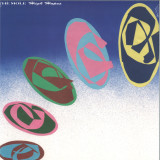
What’s heard on High Hopes is the Mole’s exploration of a love letter, from one person to a family, from the northern Pacific to the southern Atlantic, from a boy to a painted bird. Vancouver Island to Manantiales. The songs range from ambient sound bath and hip hop sludge, up to micro boogie and almost House before tumbling back down and forth again. Bubbling synths, MPCs swung out, samples chopped and chewed, bass and violins from Rick and Sophie, field recordings of birds and frogs and beaches, friends and family and fiestas. Did we mention the love ?! This album has got it all! Original collages from Antonio Carrau envelope this wax: jacket, sleeve and cookie. Antonio’s work is typified by playful combinations and bold statements about living in a embrace of analog and digital health. His co lages marry the corporeal world with an updated, digitalized age of reproduction, inducing feelings of gratitude for the simple everyday scenes we sometimes lose touch with when we forget to slow down. Good living, like breathing, requires inhaling as well as exhaling.
We can’t always produce content, make art, we must also pause, and listen. And enjoy. The Mole is joined by friends and colleagues on several songs included on High Hopes. Rick May plays bass on both Que Rico and album stand out GoinF4er. Sophie Trudeau (Godspeed You Black Emperor) plays and arranges violins on GoinF4er and Danuel Tate (Cobblestone Jazz) and Julz Chaz (Wagon Repair) both play Vibes and Emaxx throughout the album. Working with these incredible talents not only enriched this album, but fulfilled a long standing goal of the Mole’s; to work again with the musicians from whom he learned so much. People who helped inform the shape of Mole to come.
The Mole who was As High As The Sky. The Mole has been ‘recognized’ by the ‘global underground’ since his critically celebrated premiere album, As High As The Sky, but his earlier Eps (Wagon Repair, Philpot, Musique Risquee) got the attention of Top DJs, clubs, and festivals around the world first. His sound remains unique, fresh and deep: enjoying plays in a wide variety of spaces and places.
High Hopes is the Mole’s 5th solo album and his 2nd album for Circus Company (The River Widens) who have also proudly released two eps of Mole magic (Little Sunshine, High Dreams).
*Isn’t that too much time for one record? Short answer - No. Long answer - depends on the material. Due to the many quiet passages in the album, the groove spacing can be modulated and the needle can slow it’s progress towards the center/end resulting in longer sides with continued high gain and low distortion.
High Hopes - New album from the Mole.
High Hopes is 17 songs across 40 minutes on one slice of wax that, as advertised, sounds nothing like last month’s Ep, High Dreams. Here, rather than the long form dance form, is a continuation of the beat tape pacing from the last album, a collection of moments posing as ideas posing as a narrative stuffed with oddities and surprises that reward the close listen.
What’s heard on High Hopes is the Mole’s exploration of a love letter, from one person to a family, from the northern Pacific to the southern Atlantic, from a boy to a painted bird. Vancouver Island to Manantiales. The songs range from ambient sound bath and hip hop sludge, up to micro boogie and almost House before tumbling back down and forth again. Bubbling synths, MPCs swung out, samples chopped and chewed, bass and violins from Rick and Sophie, field recordings of birds and frogs and beaches, friends and family and fiestas. Did we mention the love ?! This album has got it all! Original collages from Antonio Carrau envelope this wax: jacket, sleeve and cookie. Antonio’s work is typified by playful combinations and bold statements about living in a embrace of analog and digital health. His co lages marry the corporeal world with an updated, digitalized age of reproduction, inducing feelings of gratitude for the simple everyday scenes we sometimes lose touch with when we forget to slow down. Good living, like breathing, requires inhaling as well as exhaling.
We can’t always produce content, make art, we must also pause, and listen. And enjoy. The Mole is joined by friends and colleagues on several songs included on High Hopes. Rick May plays bass on both Que Rico and album stand out GoinF4er. Sophie Trudeau (Godspeed You Black Emperor) plays and arranges violins on GoinF4er and Danuel Tate (Cobblestone Jazz) and Julz Chaz (Wagon Repair) both play Vibes and Emaxx throughout the album. Working with these incredible talents not only enriched this album, but fulfilled a long standing goal of the Mole’s; to work again with the musicians from whom he learned so much. People who helped inform the shape of Mole to come.
The Mole who was As High As The Sky. The Mole has been ‘recognized’ by the ‘global underground’ since his critically celebrated premiere album, As High As The Sky, but his earlier Eps (Wagon Repair, Philpot, Musique Risquee) got the attention of Top DJs, clubs, and festivals around the world first. His sound remains unique, fresh and deep: enjoying plays in a wide variety of spaces and places.
High Hopes is the Mole’s 5th solo album and his 2nd album for Circus Company (The River Widens) who have also proudly released two eps of Mole magic (Little Sunshine, High Dreams).
*Isn’t that too much time for one record? Short answer - No. Long answer - depends on the material. Due to the many quiet passages in the album, the groove spacing can be modulated and the needle can slow it’s progress towards the center/end resulting in longer sides with continued high gain and low distortion.
LAVENDER, das Debütalbum der Alternative-R&B-Musikerin MULAY, ist ein zutiefst persönliches Projekt. In zwölf kunstvoll intimen Songs verarbeitet sie eine intensive, schmerzhafte Erfahrung mit toxischer Liebe. Aber LAVENDER ist viel mehr als ein klassisches Heartbreak-Album. Es ist ein Plädoyer dafür, an Verletzungen und Enttäuschungen zu wachsen. Ein Leuchtfeuer im Sturm dunkler Zeiten, das von Heilung, Selbstentdeckung und Empowerment erzählt. Stärke durch Verletzlichkeit – das ist das Mantra dieser Platte.
Mit LAVENDER setzt die in Berlin lebende Singer-Songwriterin, Produzentin und Künstlerin den Weg fort, den sie mit zwei EPs begonnen hat: ANTRACYTE (2021) und IVORY (2022) ergänzten sich konzeptionell zu einem interdisziplinären Gesamtkunstwerk aus Sound, Gesang, Visuals und Performance, bei dem ambivalente Gefühle, Licht und Dunkelheit, zusammengedacht werden. Entstanden sind die Songs zwischen Paris, London und Berlin – zusammen mit alten (Llucid, Novaa), aber vor allem mit neuen Kreativpartnern wie den französischen Produzenten/Multiinstrumentalisten Elie Zylberman und Jules Minck. Auf der Suche nach ihrer kompromisslosen Wahrheit bewegt MULAY sich fließend zwischen innovativem Songwriting und ambitionierten Produktionen, die weite, kaleidoskopartige Soundräume voll von souligem R&B, Hip Hop und Electronica aufmachen. MULAY verwandelt Schmerz und Wut in fiebrig aufgeladene, ansteckende Soundscapes, in denen Downtempo-Momente und schnellere, tanzbare Beats sirupartig zu einem emotionalen Rausch zusammenfließen.
- Mixing The Colors
- Louie Louie
- I Wanna Be Your Dog
- Pablo Picasso
- Loose
- Gloria
- Social Life
- Highway Song
- Beside You (Sputnik Tv 1993, Barcelona)
- Nightclubbing
- Miss Argentina (Acoustic)
- Planet Of Dogs (Monologue)
- Butt Town
- Foolish Dreams (Otherwise Unreleased Song)
- Beggar (Otherwise Unreleased Song)
- The Wind (Otherwise Unreleased Song)
- Starry Night
- Brick By Brick
- I Am (Otherwise Unreleased Song)
- Think Alone (Otherwise Unreleased Song)
- La Blues (Studio Demo La, 1990)
- Down On The Street
- I Won't Crap Out
- Loose
- Butt Town
- 1969: (Paris Megastore 1990, Electric Solo)
- I Wanna Be Your Dog
- Brick By Brick
The first time on vinyl for this double-album, capturing Iggy without any band in various environments, mostly acoustic and also electric, but - just as rock"n"roll as ever! Stripped down versions of I Wanna Be Your Dog, Louie Louie, Nightclubbing, Jonathan Richmond"s Pablo Picasso with just 4-strings on his guitar and many other favourites as they"ve rarely been heard - and five otherwise unreleased songs. The 2LP set comprises a solo acoustic show from Barcelona, an acoustic studio session, a solo electric gig from Paris, plus more solo tracks from elsewhere. Skydog Records" first Iggy release was in 1976 with the riotous "last ever Stooges show", Metallic KO; this is its alternative hidden gem. Iggy Pop continues to tour the world as well as presenting radio shows.
- Who's Gonna Take The Garbage Out (Feat. Iris Dement)
- Storms Never Last (Feat. Lee Ann Womack)
- Falling In Love Again (Feat. Alison Krauss)
- Color Of The Blues (Feat. Susan Tedeschi)
- I'm Tellin' You (Feat. Holly Williams)
- Remember Me (Feat. Kathy Mattea)
- Look At Us (Feat. Morgane Stapleton)
- Dim Lights, Thick Smoke, And Loud, Loud Music (Feat. Amanda Shires)
- Fifteen Years Ago (Feat. Lee Ann Womack)
- Cold, Cold Heart (Feat. Miranda Lambert)
- Dreaming My Dreams With You (Feat. Kathy Mattea)
- Mental Cruelty (Feat. Kacey Musgraves)
- Mr. & Mrs. Used To Be (Feat. Iris Dement)
- My Happiness (Feat. Fiona Prine)
- Just Waitin
- Once Upon A Time
- Come To Me
- Premonition
- Herr Knock
- Ellen's Dream
- Incantation
- Goodbye
- The Inn / Moroi
- Shrine
- A Carriage Awaits
- Come By The Fire
- Destiny
- The Castle
- Covenant
- The Crypt
- Lost
- Hysterical Spell
- Devourance
- The Monastery
- Solomonar
- Increase Thy Thunders
- The Professor
- Dreams Grow Darker
- Possession
- An Arrival
- A Return
- Grünewald
- Despair In My Coming
- A Curious Mark
- Orlok's Shadow
- The Vampyr
- The First Night
- Death, All Around Us
- I Know Him
- The Second Night
- These Nightmares Exist
- A Priestess Of Isis
- Last Goodbye
- Never Sleep Again
- The Third Night
- The Prince Of Rats
- Daybreak
- Liliacs
Oxblood Vinyl[30,04 €]
Robin Carolan's latest soundtrack for Robert Eggers' highly anticipated Nosferatu is a haunting, gothic-infused and meticulously crafted work that draws from a vast palette of sounds, instruments, and inspirations. Following their successful collaboration on The Northman, Carolan reunites with Eggers to bring the legendary tale of Nosferatu to life, infusing the film with a score that is as complex and nuanced as the story itself. With Daniel Pioro, one of Britain's most exciting young classical musicians, at the helm as the orchestra leader and first chair for a vast majority of the recording, the soundtrack features a vast orchestration, including 60 string players, a full choir, various horns and woodwinds, a harpist, and two percussionists. Despite the grandeur of the orchestration, one of the most challenging pieces was the music box used at the film's beginning. Carolan and Eggers struggled to perfect its sound, a process marked by their meticulous attention to detail, which Carolan describes as almost telepathic. Set in the 1800s, Nosferatu allowed Carolan to incorporate contemporary instrumentation, though he made a deliberate effort to ensure the score didn't sound overly modern. Letty Stott, who also worked on The Northman, contributed ancient horns and pipes, enhancing the soundtrack's eerie atmosphere. Additionally, percussionist Paul Clarvis custom-built a toaca-like instrument for added authenticity. Carolan's inspirations for the soundtrack were as eclectic as they were profound. He frequently drew upon the works of Bartok and Coil, while films like The Innocents, Angels and Insects, and Eyes Wide Shut provided cinematic inspiration. Additionally, he explored the more obscure side of Hammer Horror soundtracks and found a deep connection to the music of the Ukrainian film The Eve of Ivan Kupalo, which helped shape the score's otherworldly tone. Carolan intentionally moved beyond the typical horror score, focusing on capturing the tale's melancholy and tragic elements while weaving in a sense of warped romanticism. The result is a soundtrack that not only complements the film but also stands on its own as a testament to Carolan's artistry and the enduring power of collaboration.
- A1: Once Upon A Time
- A2: Come To Me
- A3: Premonition
- A4: Herr Knock
- A5: Ellen's Dream
- A6: Incantation
- A7: Goodbye
- A8: The Inn/Moroi
- A9: Shrine
- A10: A Carriage Awaits
- A11: Come By The Fire
- A12: Destiny
- A13: The Castle
- B1: Covenant
- B2: The Crypt
- B3: Lost
- B4: Hysterical Spell
- B5: Devourance
- B6: The Monastery
- B7: Solomonar
- B8: Increase Thy Thunders
- B9: The Professor
- B10: Dreams Grow Darker
- C1: Possession
- C2: An Arrival
- C3: A Return
- C4: Grunewald
- C5: Despair In My Coming
- C6: A Curious Mark
- C7: Orlok's Shadow
- C8: The Vampyr
- C9: The First Night
- C10: Death, All Around Us
- C11: I Know Him
- D1: The Second Night
- D2: These Nightmares Exist
- D3: A Priestess Of Isis
- D4: Last Goodbye
- D5: Never Sleep Again
- D6: The Third Night
- D7: The Prince Of Rats
- D8: Daybreak
- D9: Liliacs
Black Vinyl[28,78 €]
Robin Carolan's latest soundtrack for Robert Eggers' highly anticipated Nosferatu is a haunting, gothic-infused and meticulously crafted work that draws from a vast palette of sounds, instruments, and inspirations. Following their successful collaboration on The Northman, Carolan reunites with Eggers to bring the legendary tale of Nosferatu to life, infusing the film with a score that is as complex and nuanced as the story itself. With Daniel Pioro, one of Britain's most exciting young classical musicians, at the helm as the orchestra leader and first chair for a vast majority of the recording, the soundtrack features a vast orchestration, including 60 string players, a full choir, various horns and woodwinds, a harpist, and two percussionists. Despite the grandeur of the orchestration, one of the most challenging pieces was the music box used at the film's beginning. Carolan and Eggers struggled to perfect its sound, a process marked by their meticulous attention to detail, which Carolan describes as almost telepathic. Set in the 1800s, Nosferatu allowed Carolan to incorporate contemporary instrumentation, though he made a deliberate effort to ensure the score didn't sound overly modern. Letty Stott, who also worked on The Northman, contributed ancient horns and pipes, enhancing the soundtrack's eerie atmosphere. Additionally, percussionist Paul Clarvis custom-built a toaca-like instrument for added authenticity. Carolan's inspirations for the soundtrack were as eclectic as they were profound. He frequently drew upon the works of Bartok and Coil, while films like The Innocents, Angels and Insects, and Eyes Wide Shut provided cinematic inspiration. Additionally, he explored the more obscure side of Hammer Horror soundtracks and found a deep connection to the music of the Ukrainian film The Eve of Ivan Kupalo, which helped shape the score's otherworldly tone. Carolan intentionally moved beyond the typical horror score, focusing on capturing the tale's melancholy and tragic elements while weaving in a sense of warped romanticism. The result is a soundtrack that not only complements the film but also stands on its own as a testament to Carolan's artistry and the enduring power of collaboration.
Ten years ago SofaBurn was fortunate enough to release Jeremy Pinnell's first record 'OH/KY,' launching a career and relationship that has exceeded any of our wildest dreams.
We couldn't be more excited to announce now that for the first time ever 'OH/KY' will be released as a standalone LP, re-mastered for vinyl from the original mixes by Mike Montgomery at Candyland Recording Studio
PART 1[12,19 €]
Known for his pivotal role in the Acid Techno sub-genre revival through his label, Involve Records, Regal's latest work revisits the genre's essence while infusing it with a fresh, modern twist. Under his ACIDBOY alias, his latest album, 'The Final Chapter', is a nostalgic and forward-looking expression of an artist who has grown and adapted but remains true to his core musical identity. This eleven-track project blends the high-energy sounds that first defined his career with the depth and maturity gained over years of evolution whilst also honouring an unforgettable era of one of electronic music's boldest and most expressive sub-genres and artists.
'The Final Chapter' is an album that goes against the current flow, bringing to light the sound of the sub-genres of Techno from the last 35 years. It's a clever balance between past and present, the old and new Regal aka ACIDBOY, emphasising his introverted artistic side, a lover of music and production as well as a story intended for a patient and cultured listener. The album defies superficial musical trends, offering a profound sonic experience that invites listeners on a deeper journey, far removed from the quick-hit tracks designed for social media.
The name of this album and Regal's previous EP 'The Last Summer' certainly leaves room for interpretation as these might sound like signs of a farewell to the music scene.
The Peace Chant compilation series is a Temple, a reliquary of sacred harmonious statements made by enlightened artists throughout time. With Tramp Records' latest offerings, "Peace Chant, Raw Deep and Spiritual Jazz volumes 5 & 6, deeper, darker, and even more remote chambers of this already exalted temple are brought to light. The team at Tramp, with their torch of love and with reverence for those builders who came before, have returned from their quest with musical treasures unfathomable. Indeed, some of these tracks sound as if they may have literally been plucked from the ancient hands of some towering golden idol. But this quest was no looting effort, no. The Gods, as well as the artists and their families were fairly compensated through Tramp Records' rigorous and historically conscious licensing efforts.
Volume 6 ululates with a rich flute and Fender Rhodes-rich microtonal fusion called "Cataracts" by Musica Orbis that even comes with some sparkling Afro-harping moments ala Dorothy Ashby; a 5/4 dreamscape conjured by the Fredric Rabold Crew called "Januschka" with enraptured wailing soprano; and a very interesting and likely heretofore unheard version of a tune that, in Dizzy's words, "... has withstood the vicissitudes of the contingent world and rocketed in an odyssey into the realm of the metaphysical...", A Night in Tunisia, with rich vocals and scatting.
Sich selbst als "Antichrist Superstar" bezeichnend, wurde Marilyn Manson zum kontroversesten Star in den 90s bis heute. Seine schockierenden Auftritte, beherrscht von Fetisch und Satanismus, hievten ihn an die Spitze der globalen Charts und bescherten ihm ausverkaufte Tourneen. Diese
Picture-LP enthält einen offiziellen Radio-Livemitschnitt von 1997, aufgenommen in Buenos Aires, Argentinien.
On his latest full-length, Low End Activist swerves towards weightless grime and suspended hardcore miniatures to tell a very personal story. The UK-rooted producer continues his habit of zeroing in on a distinct approach for each release, leaving a logical breadcrumb trail of soundsystem science in his wake as he channels decades of bass absorption into 14 atmospheric cuts that prize patience and precision over obvious club functionality.
Municipal Dreams plays out as a semi-autobiographical tour through the Blackbird Leys estate that the Activist grew up on. It’s a lived reflection on inequality and the ripple effect it has in working class communities, using the sonic palette to set the mood and scattering pointed samples throughout to spell out the story.
In sampling the exhaust of a stolen Subaru Impreza, ‘TWOC’ looks back to the recreational car theft which was standard entertainment for the kids in his community. There’s an underlying idea that this ‘council estate sport’ wouldn’t have been so prevalent if there were public services and opportunities presented to the scores of disaffected youth looking for somewhere to direct their energy and frustration.
In ‘Just A Number (Institutionalised)’ LEA alludes to the shattered juvenile detention system, growing up seeing friends and family members locked up at ease with little to no support on being released back into society, just meant that the same cycles of behaviour would play out over and over.
‘Violence’ samples from a short film shot by the drama division of the Blackbird Leys Youth Club to evoke the physical threat which formed a background hum to life on the estate. The industrial mechanics of the local car factory, which served an integral role as a workplace for many in the community, gets sampled in ‘They Only Come Out At Night’ while the ‘Everyone I look up to are either junkies or criminals’ sample in ‘Broke’ looks to a lack of positive role models.
Municipal Dreams isn’t a one-note indictment of life on the estate, ‘Innocence’ captures the simplicity of a child at birth before their environment has time to shape them. The Hope interludes cut through the grim honesty of the longer tracks while a subtle thread of wry humour finds its way into some of the talking heads cutting through the signature LEA murk.
But honesty is the operative word here, and the message feels all the more meaningful at a time when the UK’s social divisions are laid bare in the wake of a devastating stretch of austerity. Returning to Blackbird Leys to shoot images for the photo-zine and album cover, the Activist found the local community centre being demolished. The local pub stands derelict, its faded Welcome sign a grimly ironic portent of the options facing children of the estate in the wider world.
Funnelling his memories, hopes and fears into a singular twist on the bass weight tradition, LEA captures evocative scenes that land somewhere between kitchen sink realism and rave futurism.