After his international debut #1 in 2018, the north Ghanaian Kologo (a two stringed proto-banjo) master Guy One is back with his brand new band, consisting of Kumasi's finest young talents, plus Florence Adooni and Tenni Akagam as his choir voices.
So La Ma La has a straight forward Highlife rhythm which melts together with some funky articulated afrobeat-a-like bass line. To Kale Na'nabala is instead in the traditional Kete rhythm, a bouncy poly-rhythm in 12/8. But both songs are mostly defined through Guy One's Kologo lines and his soulful interpretation of the typical north-ghanaian vocal style.
Suche:la ma
'Madrid Fue Una Ciudad Mundial' compiles four of the most important Spanish electronic projects from the 80's. A compilation released in cooperation with a show organised in Madrid last May, 18th where Aviador Dro, Flash Cero, Azul y Negro and Esplendor Geométrico played together for the very first time.Aviador Dro offers two unpublished early recordings from 1981. Flash Cero includes an unreleased song recorded back in 1987. Azul y Negro collaborates with a demo version of their cult classic 'La Torre de Madrid' from 1981. And Esplendor Geométrico give us a couple of live tracks recorded in 1989 for the first time available on vinyl
Der Begriff „lebende Legende“ trifft auf Martha Argerich zu, deren schillernde Mischung aus Virtuosität, Einfühlungsvermögen, Eklektizismus, Großzügigkeit und Geheimnis sie zu einer Pianistin von unvergleichlicher Faszination macht. Die in Argentinien geborene und in Wien ausgebildete Pianistin, die 1965 den Chopin-Wettbewerb gewann, ist zu einer manchmal schwer fassbaren Figur geworden, deren Auftritte und Aufnahmen mit Spannung erwartet werden. Nun erscheinen einige ihrer legendären Ravel-Aufnahmen auf LP.
New Interplanetary Melodies, continues its space journey, among the most interesting musical galaxies of the Italian electronic music scene. For this new release, Simona Faraone, relies on the skilful hands of producers and musicians Marco Antonio Spaventi and Enrico Demuro, who return to work together after the experience of The Great Walk to give us this dense musical experience in the imaginary soundtrack form of a retro-futuristic sci-fi movie that embraces the ever more topical theme of survivalism.
40 years after the original release, Nanga Boko Records is very proud to
present you the official reissue of De Bonaberi A Douala, the first album from
the Cameroonian musician Nkotti François and his band The Black Styls.
Limited edition, high quality remastered sound, includes a very detailed
biography in both English and French languages with exclusive pictures for a
better comprehension of the work of the musician, and a voucher to download
the album in a HQ digital format.
Approved by the artist himself, 100 % legit, all 8 tracks are under exclusive
license of Nanga Boko Records.
- A1: Vous Et Nous
- A2: Patriarcat
- A3: Mon Enfance
- A4: Vent D'automne
- A5: Le Serveur Du Dôme
- A6: Je Suis Venu Te Voir
- A7: Rien Que Changer
- A8: Le Ciel Est Doux
- B1: Les Épis
- B2: Le Repas Des Dromadaires
- B3: Vous Et Nous
- B4: L'amour Parfait
- B5: Un Soleil
- B6: Dans Ma Rue
- B7: L'orage Est Fini
- B8: Gamme
- C1: Le Brin D'herbe
- C2: La Harpe Jaune
- C3: Je T'aimerai
- C4: Diabolo
- C5: Cher
- C6: Ce N'est Pas Un Ennemi
- C7: Encaustique
- C8: Petit Sapin
- D1: Mon Lit
- D2: Je T'aimerai
- D3: La Déchirure
- D4: Le Petit Cheval Bleu
- D5: Personne
- D6: Les Roses Sont Farouches
- D7: Le Bouc
- D8: Dessin
- D9: Les Muzdus
Art is a matter of different phases and influence. The artists' core reaches out like heat waves. And very rarely do these artists' core merge like Brigitte Fontaine and Arseki Belkacem have. Their Saravah Era lasted ten years (1969 to 1979), ten years of "folle sagesse" (crazy wisdom), above all genres and song limitation.
"Le plaisir secret que donne une chanson, dessin à la craie sur le mur de tes sons" (the personal delight within song, a chalk drawing on your wall of sounds) whispers Areski, right after Brigitte's voice on the penultimate song of the double album "Vous et nous". Released in 1977, this free flowing record contains 33 songs, it's their 6th album after "Comme à la radio", "Brigitte 4", "Je ne connais pas cet homme", "L'incendie" and "Le bonheur", and it continues to spread the wide and generous spectrum of the couple fully blossoming talent. Electronic experiments, North African trance, refined acoustics and medieval drones gracefully blend with the acid and candid tongues of the singers, surprising us each step along the way. The making of this record was also full of twists and turns. It started out as a solo effort by Areski at Jean-Pierre Chambard's studio. Little by little, as Areski was filling tapes with poems and improvised skits, Brigitte would sneak into the studio at nightfall, adding her voice here and there, her whispers then became screams, giving fuel to the fire in a total blaze, a surreal blaze. The solitary work ("je") thrived to become us ("nous") and you ("vous") ...
Benjamin Barouh, June 2018
- A1: Lokonon André & Les Volcans - Mi Kple Dogbekpo
- A2: Picoby Band D'abomey - Mi Ma Kpe Dji
- A3: Gabo Brown & Orchestre Poly-Rythmo - It's A Vanity
- A4: El Rego Et Ses Commandos - Se Na Min
- B1: Napo De Mi Amor Et Ses Black Devil´s - Leki Santchi
- B2: Orchestre Poly-Rythmo - Gbeti Madjro
- B3: Roger Damawuzan - Wait For Me
- B4: Ouinsou Corneille & Black Santiagos - Vinon So Minsou
- B5: Orchestre Super Jheevs Des Paillotes - Ye Nan Lon An
- C1: Tidjani Kone & Orchestre Poly-Rythmo - Djanfa Magni
- C2: Discafric Band - Houiou Djin Nan Zon Aklumon
- C3: Le Super Borgou De Parakou - Congolaise Benin Ye
- D1: Vincent Ahehehinnou - Ou C'est Lui Ou C'est Moi
- D2: Les Volcans De La Capital - Oya Ka Jojo
The Analog Africa label delves into the amazing history of music from 1970s Benin and Togo.
This compilation highlights forgotten raw and psychedelic Afro sounds, and the well-researched liner notes tell fascinating stories to accompany the mind-blowing music. The essence of Analog Africa is clear, searching in dusty warehouses for forgotten music to keep the sound alive!
- A1: Emad Youssef - Al Bareedo Ana (The One I Love)
- A2: Abdel El Aziz Al Mubarak - Ma Kunta Aarif Yarait (I Wish I Had Known)
- B1: Kamal Tarbas - Min Ozzalna Seebak Seeb (Forget Those That Divide Us)
- B2: Madjzoub Ounsa - Arraid Arraid Ya Ahal (Love, Love Family)
- B3: Khojali Osman - Malo Law Safeetna Inta (What If You Resolve What's Between Us)
- C1: Zaidan Ibrahim - Ma Hammak Azabna (You Don't Care About My Suffering) (Live)
- C2: Saied Khalifa - Igd Allooli (The Pearl Necklace)
- C3: Taj Makki - Ma Aarfeen Nagool Shino! (We Don't Know What To Say!)
- D1: Hanan Bulu Bulu - Alamy Wa Shagiya (My Pain And Suffering) (Live)
- D2: Abdelmoniem Ekhaldi - Droob A Shoag (Paths To Love)
- D3: Samira Dunia - Galbi La Tahwa Tani (My Heart, Don't Fall In Love Again)
- E1: Mohammed Wardi - Al Sourah (The Photo)
- E2: Abdullah Abdelkader - Al Zaman Zamanak (It's Your Time)
- F1: Mustafa Modawi & Ibrahim El Hassan - Al Wilaid Al Daif (The Youth Who Came As A Guest)
- F2: Ibrahim El Kashif - Elhabeeb Wain (Where Is My Sweetheart)
- F3: Mohammed Wardi - Al Mursal (The Messenger)
In Sudan, the political and cultural are inseparable. In 1989, a coup brought a hardline religious government to power. Music was violently condemned. Many musicians and artists were persecuted, tortured, forced to flee into exile — and even murdered, ending one of the most beloved music eras in all of Africa and largely denying Sudan's gifted instrumentalists, singers, and poets, from strutting their creative heritage on the global stage.
What came before in a special era that protected and promoted the arts was one of the richest music scenes anywhere in the world. Although Sudanese styles are endlessly diverse, this compilation celebrates the golden sound of the capital, Khartoum. Each chapter of the cosmopolitan city's tumultuous musical story is covered through 16 tracks: from the hypnotic violin and accordion-driven orchestral music of the 1970s that captured the ears and hearts of Africa and the Arabic-speaking world, to the synthesizer and drum machine music of the 1980s, and the music produced in exile in the 1990s. The deep kicks of tum tum and Nubian rhythms keep the sound infectious.
Sudan of old had music everywhere: roving sound systems and ubiquitous bands and orchestras kept Khartoum's sharply dressed youth on their feet. Live music was integral to cultural life, producing a catalog of concert recordings. In small arenas and large outdoor venues, musical royalty of the day built Khartoum's reputation as ground zero for innovation and technique that inspired a continent.
Musicians in Ethiopia and Somalia frequently point to Sudan's biggest golden era stars as idols. Mention Mohammed Wardi — a legendary Sudanese singer and activist akin to Fela Kuti in stature and impact in his music and politics — and they often look to the heavens. A popular story is of one man from Mali who walked for three months across the Sahel to Sudan because the father of the woman he wanted to marry would only allow it if he got him a signed cassette from Wardi himself. Saied Khalifa is said to be the one of the few singers to make Ethiopian emperor Haile Selassie smile.
Such is the stature of Sudanese singers and the reputation of Sudanese music, particularly in the "Sudanic Belt," a cultural zone that stretches from Djibouti all the way west to Mauritania, covering much of the Sahara and the Sahel, lands where Sudanese artists are household names and Sudanese poems are regularly used as lyrics until today to produce the latest hits. Sudanese cassettes often sold more in Cameroon and Nigeria than at home.
But years of anti-music sentiment have made recordings in Sudan difficult to source. Ostinato's team traveled to Ethiopia, Somalia, Djibouti, and Egypt in search of the timeless cultural artifacts that hold the story of one of Africa's most mesmerizing cultures. That these cassette tape and vinyl recordings were mainly found in Sudan's neighbors is a testament to Sudanese music's widespread appeal.
With our Sudanese partner and co-compiler Tamador Sheikh Eldin Gibreel, a once famous poet and actress in '70s Khartoum, Ostinato's fifth album, following our Grammy-nominated "Sweet As Broken Dates," revives the enchanting harmonies, haunting melodies, and relentless rhythms of Sudan's brightest years, fully restored, remastered and packaged luxuriously in a triple LP gatefold and double CD bookcase to match the regal repute of Sudanese music.
A 20,000-word liner note booklet gives voice to the singers silenced by an oppressive regime.
Take a sail down the Blue and White Nile as they pass through Khartoum, carrying with them an ancient history and a never-ending stream of poems and songs. It takes two Niles to sing a melody.
- A1: Drum Introduction
- A2: U Ma Ngi Hamba Nawe Thuli U Bizwa I Peacock (When I Walk With Thuli, They Call Her Peacock)
- A3: Thembalami (My Trustworthy)
- A4: Sesi U Hi Komba Mihlolo (My Sister, She Is A Miracle)
- A5: Mandela U Humile Jele (Mandela Is Released From Jail)
- A6: Koko Ribulelele (Please Open The Door For Us)
- A7: Tanda Tula Se Yi Cincile (Tanda Tula Is Change)
- A8: Musadi Ye Muvutsi (A Beautiful Woman)
- A9: Tamanini (Hello, Hello)
- A10: Drum Interlude
- A11: Nwamaxalana A Nga Al Ntumbuluko (Nwamaxalana Refuses The Nature)
- A12: A Kuri Na Xinyenyana (There Was A Bird In The Garden) Dolphin
- A1: Mukutsuri Hosi Ya Mina (You Are My Saviour) Eric
- B2: Yehova Xikwembu Xanga (God Is My King) Eric
- B3: Rirandzu Ra Yesu (Love Of Jesus) Pretty
- B4: U Nga Rili Nwana Sesi (Please Don't Cry My Baby Sister) Chris
- B5: Lo Machine Wa Khuluma (Talking Machine) Chris
- B6: Ngiri Ngiri Wo Ngirimele Kaya (I'm Walking Home) Chris
- B7: La La Go Nna (Rest With Me) Clenny
- B8: Joko Ya Kgaho Yi Bobebe (God's Belief Makes My Heart Free) Clenny
- B9: Tatana Hi Vana Va Wena (Father, We Are Your Children) Chris
- B10: Xisaka Xa Tuva Manguvalawa (The Nest Of A Bird) Magie
- B11: Tanda Tula Se Yi Cincile (Tanda Tula Has Changed) Jenette
- B12: Modimo A Li Teng A Kgo Na Matata (When God Is Around There Is No Problem) Harry
- B13: Keya Morata U Wa Ntata (I Love God And He Loves Me) Stars
- B14: Wa La Matsidiso (Matsidiso Is Crying)
- B15: Madume Dume Dume (Hello Everyone)
Recently, Superpitcher was invited to go on a safari in South Africa. He bought a custom made safari hat at his favorite milliner in Cologne (Ju¨rgen Eifler) and set off with big eyes and a pair of binoculars. It was wild and wonderful and he saw many exotic (and big!) animals, even a leopard in a tree that told him the secret of the universe. He forgot what the leopard said because his mind was still playing and replaying the sound of what he heard on the first night of his arrival - the hypnotic and moving sound of the voices of Africa, the voices of the wonderful Tanda Tula staff choir. There, the choir members work during the day at the camp and at night entertain the guests with their captivating voices and energetic dancing. So impressed was he with their songs and beautiful Shangaan language that he decided to record a CD for them to sell in the shop at their camp and now this precious recording is also available through Hippie Dance / Bush Recordings on vinyl and CD for you in whatever wherever camp you are. The LP of the Tanda Tula Choir comes with a very pretty poster.
Ekambi Brillant was born in the village of Dibombari in Cameroon in 1948. In 1962 he attended school in Yaounde and learned his musical craft. In 1971 he heads off to the big city lights of Douala. Here he finds himself in a French TV, music competition hosted at "Le Domino" nightclub. It is here where he brushes shoulders with other Cameroonian music legends such Manu Dibango and Francis Bebey.
The music contest win gives him the break he needs and in 1972 and with the support of fellow troubadour JK Mandengue he finds himself with a record deal with Phonogram and his first hits in France.
Its in 1975 where we pick up this merry tale. Because it is in 1975 when things start to get a bit funky. Which is just how we like it here at Africa Seven. In partnership with French producer, guitarist and all around hero, Slim Pezin he creates the "Africa Oumba" album. He goes on in the two subsequent years to record the Soul Castle and Djambo's Djambo's albums also with Slim.
Our compilation focuses on the funkier end of Ekambi's music drawn mainly from the 1975 to 1978 period. Things open up with our theme tune "Africa Africa" (of course). It's tribal twisted psych funk is the perfect start to any album. We then move to "Aboki" possibly Ekambi's finest dance floor filler. Next it's the choppy disco strings and slap bass of "Nyambe" and the swirling African swing of "N'Kondo" and the pulsing chop-funk "Ekila".
The flip side starts off with "Soul Castle" an ordinary day tale for our hero. "Massoma" and its funk boogie get things bopping next up before "Machine Ma Bwindea" gives us some punchy brass and low slung funk grooves. "Mother Africa" shows us the songwriting power of Ekambi while also managing to have one of the funkiest flange basslines we have heard in a good while. Things close off with swing-time of "Lambo Lena".
Ekambi Brillant would go on to become one of the big name legends of Cameroonian music with nearly 20 albums to his name. He has contributed to the emergence of several Cameroonian artists such as Marthe Zambo, Valery Lobe, Aladji Toure and Africans. He now spends his time in Cameroon and Washington DC. Ekambi, we salute you sir.
- A1: Interview - Salut Des Salauds
- A2: Philippe Krootchey - Qu'est Ce Qu'il A (D'plus Que Moi Ce Négro-Là)
- A3: Gérard Vincent - Gérard Vincent Pas Gérard Vincent
- A4: Style - Playboy En Détresse
- B1: Pierre-Edouard - A Mon Age Déjà Fatigué
- B2: Casino - Pât Impérial
- B3: Bianca - La Fourmi
- B4: Trigo & Friends - La Dégaine
- B5: Hugues Hamilton - Je M'laisse Aller
- C1: Pascal Davoz - Cinéma
- C2: Anisette - Scratch Au Standard
- C3: Pilou - Ça Va
- C4: Henriette Coulouvrat - Miam Miam Goody
- D1: New Paradise - Easy Life
- D2: Gérard Vincent - Tas Qu'à Fermer Ta Gueule
- D3: Ich - Ma Vie Dans Un Bocal
- D4: Attaché Case - Les Crabes
- D5: Yannick Chevalier - Ecoute Le Son Du Soleilv
This is France in the Mitterrand years: fashions fleet as fast as governments. In the early eighties, the happy-go-lucky gather the nectar of each and every new release.
Believing in a bright future for videotex, and loosened up by the sexy talks broadcasted on the budding pirate radios, the new generation dreams of dance floors and holiday clubs. French Boogie, which preserves the spirit of these years of boodle and bunkum, is the ideal soundtrack to their dreams.
What the web now refers to as French Boogie is some synthetic funk reflecting the spirit of those days when nothing was impossible, or so it seemed. Its syncopated flow heralded the dawning of French rap. Often considered as some kind of post-disco, inspired as much by black music as by new wave, this carefree pop music with bawdy lyrics indulged in simple pleasures: holidays, swank and sun were recurrent themes. Totally in tune with its time, it incidentally glorified luxury, success, and a certain consumerism embodied, for instance, in Bernard Tapie.
In popular clubs such as La Main Bleue in Montreuil, or L'Echappatoire in Clichy-sous-Bois - where Micky Milan could be seen behind the decks - an enthusiastic audience discovered this new sonic wave, influenced as much by French pop as by Sugar Hill Gang or Kurtis Blow. The artists who first launched the movement engaged in it wholeheartedly, but as often the case with new music trends in France, humour and casualness quickly became a decoy to impose a new style. This explosive mixture, in which startling and typically Frenchy French lyrics go along New-York-style tunes, is sometimes reminiscent of the kinky comedies directed by Max Pécas or Claude Zidi. On this prolific scene, partly originating from the Jewish community, everybody was looking for success, trying to hit the jackpot with what was to hand. Famous media personalities, one-hit wonders or John Does in quest of fame, all had a go at French Boogie - more or less successfully. Apart from « Vacances j'oublie tout » by Elégance, « Un fait divers et rien de plus » by Le Club, or « Chacun fait ce qui lui plaît » by Chagrin d'amour (produced by Patrick Bruel), very few songs became hits: the story of funk in France is that of a half-baked robbery.
In this myriad of new musicians, the very young François Feldman and Phil Barney pioneered a fresh and hybrid style. Other well-known artists like Gérard Blanc from Martin Circus (Attaché Case), Richard de Bordeaux (Ich), or Jean-Pierre Massiera (Anisette, Pirate Scratch Band, Mandrake, Scratch Man...) added an eccentric touch to this sound-wave, making it often entertaining, and sometimes showy.
Capture d'écran 2015-10-26 à 12.55.43Singers like Agathe (the author of 'La Fourmi' and of the hit song 'Je ne veux pas rentrer chez moi seule') were far more than just window dressing. They even tried to give an ironic and subversive twist to this rather harmless genre. The very vindictive rebel Gérard Vincent shared in this spirit, but as a whole, French Boogie became associated with nonchalance and sauciness. Thus, Stéphane Collaro, Gérard Jugnot, Alain Gillot Pétré and other TV clowns would clumsily contribute to this French variation on funky sounds. In a few but intense years, French Boogie gave all the tips to party with style.
If some hits made it possible for the happy few to get a real house under truly exotic palm trees, the wave actually ebbed away very quickly, leaving quite a few musicians stranded on the shore. Whether they were sincerely motivated, or simply opportunistic, they had failed. In 1984, French Boogie was already breathless, and got merged with other genres: on the one hand, rap and breakdance adapted its flow to a more urban world, especially with Sydney's show, H.I.P.H.O.P, and Dee Nasty's broadcasts on Radio Nova; on the other, italo, new beat and house began to rule over dance floors, even more strongly asserting the will to develop music for clubs.
Squeezed in between the age of disco and that of modern electronic music, French Boogie was a transitional phase, but it remains an amazingly refreshing testimony to the intermingling of pop and underground cultures. The genre was hastily categorized as anecdotal in spite of its pioneering synthetic groove and matchless bass lines. An attentive ear will discover the poetry of the ephemeral beyond the eccentricities of the genre, as well as a certain unexpected avant-gardism. At the origin of major music trends, always cheerful and catchy, French Boogie is what you need to party.
- A1: La-Di-Da-Di – Main Vocal Version
- A2: The Show – Main Vocal Version
- B1: La-Di-Da-Di – Street Version, Recorded Live At Lincoln Projects In 1984
- B2: The Show – Previously Unreleased Demo Version, Recorded In 1984
Limited Edition of 1,000 Hand-Numbered Units on Ruby Red Vinyl. Includes never heard before audio and lyrics printed on heavy board inner sleeves!
40 years later - and still no one does it like this. We’re celebrating the unstoppable legacy of one of hip-hop’s most iconic collaborations: Doug E. Fresh and Mc Ricky D (now globally known as Slick Rick) “La Di Da Di" along with the pop dance tune "The Show."
From its very first breath, this track reshaped sound, style, and storytelling — a cultural moment that became a timeless movement. Decades on, its influence is everywhere: sampled, quoted, reimagined — but never duplicated. “La Di Da Di”and “The Show” didn’t just belong to an era — they created one.
To mark this monumental anniversary, the Hip-Hop legends decided to drop a limited 12” 40th Anniversary Edition. The release features the original versions of “La Di Da Di” and “The Show” - plus a rare demo of "The Show" as well as an unreleased street version of "La-Di-Da-Di" recorded live from The Lincoln Projects in Harlem NY) that take you deeper into the sound that started it all with the Get Fresh Crew.
- A1: Les Masques - Il Faut Tenir (1969)
- A2: Isabelle Aubret - Casa Forte (1971)
- A3: Christianne Legrand - Hlm Et Ciné Roman (1972)
- A4: Jean Constantin - Pas Tant D'chichi Ponpon (1972)
- A5: Billy Nencioli & Baden Powell - Si Rien Ne Va (1969)
- B1-: Marpessa Dawn - Le Petit Cuica (1963)
- B2: Jean-Pierre Sabar - Vai Vai (1974)
- B3: Sophia Loren - De Jour En Jour (1963)
- B4: Isabelle - Jusqu’à La Tombée Du Jour (1969)
- B5: Sylvia Fels - Corto Maltesse (1974)
- C1: Frank Gérard - Comme Une Samba (1972)
- C2: Ann Sorel - La Poupée Des Favellas (1971)
- C3: Charles Level - Un Enfant Café Au Lait (1971)
- C4: Andrea Parisy - Les Mains Qui Font Du Bien (1970)
- C5: Audrey Arno - Quand Jean-Paul Rentrera (1969)
- C6: Aldo Frank - T’as Vu Ce Printemps (1970)
- D1: Christianne Legrand - Cent Mille Poissons Dans Ton Filet (1972)
- D2: Clarinha - Lemenja (1970)
- D3: Hit Parade Des Enfants - Aquarela (1976)
- D4: Jean-Pierre Lang - Tendresse (1965)
- D5: Magalie Noël - Une Énorme Samba (1970)
- D6: Françoise Legrand - La Lune
Ever since the late 1950s bossa-nova revolution, Brazil’s influence on French music has been undeniable. Pierre Barouh, Georges Moustaki and a vast array of lesser known artists, all made the Musica Popular Brasileira (MPB) an axis of promotion at the service of a cool and metaphysical, modern and mixed Brazilian lifestyle. Some were seduced by the poetic languors of the bossa, some were looking for fun, and others just loved the American hybridization of jazz-bossa, jazz-samba.
What is bossa nova? One of its creators, Joao Gilberto said: "Its style, cadence, everything is samba. At the very start, we didn't call it bossa nova, we sang a little samba made up of a single note - Samba de uma nota so .... The discussion around the origins of bossa nova is therefore useless”. It is nevertheless useful to remember that these magnificent Brazilian songs, which the guitarist describes as samba, were shifted and balanced around improbable chords. "I like things that lean, the in-betweens that limp with grace," said Pierre Barrouh, quoting Jean Cocteau.
With emotion, arrangements for violin and supple guitar licks, bossa nova rapidly changed. A transformation that can be heard in the Tchic, tchic, French Bossa Nova 1963-1974 compilation, the result of a cultural reappropriation, which traveled through the United States and supplemented itself in France.
A musical revolution that has remained significant, bossa nova was born in Rio. From 1956 to 1961, Brazil lived through its golden years. In five years, the country had invented its modernist style. Elected president in 1956, Juscelino Kubitschek de Oliveira, an elegant man with a broad forehead, brandished a promising slogan: "Fifty years of progress in five years". He quickly got to work. Not worried about increasing debt, he launched the project for a new federal capital, Brasilia, designed by the communist architect Oscar Niemeyer. Volkswagen opened state-of-the-art factories and created the “fusquinha”, the Beetle. In Rio, the Vespa made its first appearance. The Arpoador Surf Club crew run into the “girl” from Ipanema, Helô Pinheiro - the tanned garota ("chick"), between a flower and mermaid, who at 17 walked by the Veloso bar, where the fiery author and composer, Tom Jobim and Vinicius de Moraes, were getting drunk on whiskey. From then on, bossa symbolized cool.
In 1958, Joao Gilberto recorded Chega de Saudade, which the directors of Philips denied, calling it "music for fagots". The marketing director, who believed in it, secretly pressed 3000 78-inch vinyls and distributed them at schools around Rio, creating a tidal wave.
American jazzmen then took over. In particular, trumpeter Dizzy Gillespie and guitarist Charlie Byrd. In November 1962, the Brazilian Ministry of Foreign Affairs funded a "Bossa-Nova" concert at Carnegie Hall in New York, inviting the genre’s pioneers. Unprepared, the show soon turned to disaster. But the troupe was invited to the White House by Jackie Kennedy. The first lady loved "the new beat" and in particular Maria Ninguem, a song by Carlos Lyra, later covered by Brigitte Bardot.
In Brazil, the 1964 military coup quickly ended this euphoria. The destructive atmosphere that ensued pushed many Brazilian musicians to leave, if not to exile. Thus, Tom Jobim, Sergio Mendes and Joao Gilberto arrived to the United States. In New York, Joao Gilberto met saxophonist Stan Getz. At the time, he was married to the Bahianese Astrud Weinert Gilberto, who had a German father. She had never sung before, but she knew how to speak English. Getz therefore asked her to replace her husband on The Girl From Ipanema. The Getz/Gilberto record with Tom Jobim on piano, was released in March 1964. Phil Ramone, the "pope of pop" was in charge of sound.
Bossa nova arrived in Paris through the classic “guitar-voice” channel (Pierre Barouh, Baden Powell, Moustaki…) But France loved jazz and Paris had already welcomed its American contributors. All these good people were to pass through Saint-Germain-des-Prés. The cabaret l'Escale became the Mecca of Latin American sound where one could find Pierre Barrouh and his friends, such as the Camara Trio, samba-jazz aces, whose only record was published by the Saravah label. With a band strangely called Les Masques (a band that included Nicole Croisille and Pierre Vassiliu, among others), the Camara Trio recorded an interesting Brazilian Sound, including the track Il faut tenir which is present on this tasty compilation of rarities.
Other enlightened musicians can also be found on the compilation, such as Jean-Pierre Sabar (songwriter for Hardy, Auffray, Leforestier ...) and the French pop rock organist Balthazar. In 1975, Sabar recorded Aurinkoinen Musiikkimatka on a Finnish label, which featured the crazy Vai, Vai, included on this record. We are now following the footsteps of Brazilian electronic musicians such as Sergio Mendes, Eumir Deodato or Marcos Valle who created funk and disco sounds on their keyboards and synthesizers. A style that influenced Véronique Sanson when she wrote Jusqu’à la Tombée de la nuit in 1969 for Isabelle de Funès, the niece of Louis and a great friend of Michel Berger - Sanson did end up singing this track on her 1992 Sans Regret record.
The pinnacle of exoticism and travel, Sylvia Fels’ Corto Maltese includes bongos, sea mist and ocean sounds. The title was taken from Jacky Chalard’s concept album written in 1974, Je suis vivant, mais j’ai peur (I am alive, but I am scared), based on Gilbert Deflez’s science fiction novel.
However, bossa nova extended the scope of popularity. "In the 1970s, I was a fan of Sergio Mendes, Getz / Gilberto. I fell in love with this music that I knew because I had been an orchestral singer, " explained Isabelle Aubret, who in 1971 delivered a composite record of covers by the very funky Jorge Ben, Orfeu Negro, Tom Jobim, Vinicius de Morais and Jean Ferrat. "I recorded this album for Meys Records in Paris, far from Brazil, with wonderful musicians, François Raubert, Roland Vincent, Alain Goraguer...". The latter wrote the arrangements for Casa Forte, a very percussive title borrowed from Edu Lobo, one of the initiators of the bossa who spent time in California. "Jazz and bossa came together and produced very rhythmic music. I love singing, it allows me to dream, to have fun, to feel a high on stage, and these songs brought me joy, made me swing, my singing felt like a dance.”
The world tours of French singers and their desire for the tropics, often brought them to Rio with its hills, forests, caipirinhas and tanned bodies. There are surprises though, like this Iemenja (Iemenja is the goddess of the sea in the Afro-Brazilian candomblé religion). Not unlike the composer and musician Jean-Pierre Lang, based in Sao Paulo, Claire Chevalier taught Brazil to Brazil. In 1970, the singer and painter published a 45-inch vinyl, Mon mari et mes amants (My husband and my lovers), under the improbable pseudonym of Clarinha (little Claire). She was then living in Rio, with her husband, Joël Leibovitz, who founded a band called Azimuth, and who owned a record label specialized in "sambas enredos" songs for samba school parades.
For its B side, she asked Pierre Perret to come up with lyrics for a song composed by Carlos Imperial: "Oh goddess of the sea, o goddess Iemenja, I bring a white rose to adorn your long hair ..." . "Perret came to see us, and we had fun, remembers Joël Leibovitz. We wrote Lemenja for fun, we recorded it at the Havaí studio, behind the Central do Brasil the central station. Erlon Chaves, the arranger who worked with Elis Regina, joined us" adding his share of Afro-Brazilian percussions and funky brass to the mix.
There is a common misunderstanding in Franco-Brazilian history: that bossa, admittedly hedonistic, is perceived as funny, even though the poets who wrote the texts are often philosophizing on the human condition. Its French interpreters pull it towards a carnival inspired universe, far removed from its fundamental essence. Thus, Jean Constantin covered the famous Samba da minha terra, an ode to the art of samba written by the classic Bahian composer Dorival Caymmi, renaming it with the enticing title of Pas tant de tchi tchi pompon: "On your pier there is no tchi tchi / when you arch your back, you know everything is alright ”(lyrics by Gérard Calvi). This expedited bossa aims for the absurd, but retains a certain elegance.
Indeed, Jean Constantin was not an idiot, the rather large man had a huge mustache and liked fantasy, (Les pantoufles à papa, Le pacha, inspired by cha-cha-cha-cha, salsa and jazz) but he was also the lyricist of Mon manège à moi interpreted by Edith Piaf, the composer of Mon Truc en plume by Zizi Jeanmaire and the soundtrack of François Truffaut’s 400 Blows. Le Poulpe, published in 1970, from which this bossa is extract, was arranged by Jean-Claude Vannier, an accomplice of Serge Gainsbourg’s Melody Nelson. In short: "There is enough of samba / By looking at the parasol / Because my poor cabeza / Is going to die in the sun".
Even the American actress Marpessa Down, who was at the heart of the bossa nova revolution with her role as Euridyce in Marcel Camus’ film Orfeu Negro, winner of the 1959 Cannes Palme d'or, fed the clichée with Je voudrais parler au petit cuica - "Tell me how you manage to always make people want to dance / It's true, I must admit that I cannot resist your magic" - in consequence, once can hear the cuica, a little drum inherited from the Bantu.
But bossa nova had many angles. Societal, of course, pushing actresses who were symbols of women's liberation like Brigitte Bardot, Jeanne Moreau, or Sophia Loren to engage in the exercise of accelerated bossa. In February of 1963, Sophia Loren made a record in French in Rome, Je ne t'aime plus, featuring the song De jour en jour, a bossa written by two Italians, Armando Trovajoli and Tino Fornai, which was released a little later by Barclay. Bossa accompanied the 1960s, a decade of moral liberation. Ann Sorel, who interpreted La Poupée des favellas, caused a sensation with L’amour à plusieurs, a provocative song written by Frédéric Bottom and Jean-Claude Vannier. As for the actress Andrea Parisy, she displayed her bourgeois cheekiness in Marcel Carné's Les Tricheurs before interpreting Les mains qui font du bien. And Magalie Noël, the friend of Boris Vian, who sung Johnny fais-moi mal, was hired to sing Une énorme Samba, composed by Alain Goraguer (arranger to Gainsbourg, Bobby Lapointe and Jean Ferrat) with lyrics by Frédéric Botton.
But in the end, of what wood is bossa nova made of? The answer is given by Christianne Legrand, daughter of Raymond the conductor, and sister to Michel the composer: "With me, with jà" - jà means "immediately" in Portuguese. In 1972, the singer, an expert in vocal jazz and a member of the Double Six, published Le Brésil de Christianne Legrand. Two songs included on the Tchic Tchic compilation that demonstrate how bossa, jazz, funk, rock, etc. work like a swiss army knife: the music is used to denounce broken systems, or miracles, HLM et ciné roman, Cent mille poissons dans ton filet, two songs from the O Cafona soundtrack, a successful telenovela broadcast, at the time in black and white, on TV Globo. The first was adapted in French by the fighter and friend of the Legrand tribe, Agnès Varda. The second is content with a play on words, jostling them into a summer fun.
Véronique Mortaigne
- 1: I Don't Know Right From Wrong
- 2: Black
- 3: Spymaster
- 4: Let Me Sleep
- 5: Kindness Invites Abuse
- 6: Acid Test
- 7: I Don't Wanna Die In Mt Sleep Tonight
- 8: Army Now
- 9: Color Scheme
- 10: Leave Me Alone
- 11: Blood
- 1: Better Off Dead
- 2: Kill Me Now
- 3: Figure It Out
- 4: Truth
- 5: Whirlpool
- 6: The Road
- 7: Tko
- 8: Whites Of Their Eyes
- 9: Skintite
- 10: Not Today
- 11: After Dinner Crimes
- 12: Computer Love
La Peste war Bostons erste echte Punkband und hat die Lücke zwischen der einflussreichen Proto-Punk-Szene der Stadt in den 1970er Jahren und dem College-Rock und Hardcore-Punk der 1980er und 1990er Jahre gefüllt. Diese Sammlung will die ganze Geschichte von La Peste erzählen und zeigt die unveröffentlichten Studio- und Loft-Aufnahmen der Band zusammen mit den beiden offiziell veröffentlichten Tracks. Diese Tracks stammen aus der Studio-Session, aus der die 7"-Single ,Better Off Dead" (die einzige offizielle Aufnahme der Band) hervorging, aus ihrer Session mit Ric Ocasek von The Cars aus dem Jahr 1978, aus einer Session in den Electro Acoustic Studios aus dem Jahr 1978 und aus 4-Spur-Loft-Aufnahmen, die 1977 von den Bostoner Punks Billy Dafodil und Dave Cola gemacht wurden. ,Wenn du dir ,I Don't Know Right From Wrong" anhörst, wage ich zu behaupten, dass du nicht mehr aufhören kannst, sobald du angefangen hast - stell dir vor, diese Songs wären verfügbar gewesen, als La Peste sie aufgenommen hat. Stell dir vor, die atomaren Songs dieses Trios hätten aus den Plattenläden und Autoradios in ganz Boston, an der gesamten Ostküste und in ganz Amerika gedröhnt. Ich habe kaum Zweifel, dass genau das passiert wäre, wenn diese Musik Ende der 70er Jahre auf Platte erschienen wäre. Stattdessen müssen wir uns damit begnügen, sie jetzt zu hören - und wow, was für ein Trostpreis! Alles auf diesem Album kommt aus den Lautsprechern geflogen, macht Spaß, ist intensiv und so voller kaum zu bändigender Energie, dass man sich fühlt, als hätte man sich gerade Koffein gespritzt. Johnny Angels Beschreibung von La Peste als ,Black Sabbath meets Wire" trifft jetzt voll ins Schwarze: große, fette, dreckige Riffs zu einem umwerfenden Beat. Zwischen Peter Daytons feuriger Gitarre und seinen kehligen Schreien, Mark Andreassons tiefem Bass und Roger Tripps kraftvollen Drums gibt es in ,I Don't Know Right From Wrong" so viel Klanggewalt, dass der Typ in der Maxell-Werbung dagegen wie eingeschlafen wirkt" - Marc Masters
- Non, Je Ne Regrette Rien
- La Foule
- L'accordeoniste
- La Goualante Du Pauvre Jean
- Les Trois Cloches
- Un Etranger
- Les Mots D'amour
- Sous Le Ciel De Paris
- Hymne A L'amour
- La Vie En Rose
- Milord
- Mon Dieu
- Bravo Pour Le Clown!
- C'est L'amour
- Cri Du Coeur
- Je Hais Les Dimanches
- Le Chevalier De Paris
- Padam, Padam
This 18- track selection spans Edith Piaf' s career from the years 1946 to 1961. It includes all of her big hits, such as 'La Vie en rose', 'Non, je ne regrette rien', 'Hymne a l'amour', 'Milord', 'La Foule', 'L'Accordeoniste', and 'Padam Padam', among many others. Regarded as France's national chanteuse, singer songwrite, and actress Edith Piaf (1915-1963), also became one of the country's greatest international stars. Her music was often autobiographical with her songs reflecting her own personal life. Piaf's specialties were the chanson and torch ballads, particularly those of love, loss, and sorrow.
[q] Le Chevalier De Paris [aka Les Pommiers Doux]
Emotional Response presents the first of 2 EPs by Laura Sparrow aka LNS, the Calgary raised, Berlin based producer and DJ with 8 acid-tinged cuts that are equally expansive and inspiring, personal and inventive.
After her debut Malinge Range (cassette) on fellow native Canadian 1080p label in 2016, LNS moved to Berlin and has released a steady stream of 12”s, exploring ambient, dub, electro and techno. Initially appearing on Vancouver émigré’s Jayda G’s (alongside Fett Burger) Freakout Cult label before settling at DJ Sotofett’s cult WANIA label and more recently on the legendary and ‘original’ German techno label, Tresor.
A love of the Roland TR-303, alongside deep diving into breakbeat creation, manipulation, mutation and production, plus some intrepid mixing and post-production assistance, development and support with DJ Sofofett, have led to a collection of some of her favourite music to date.
LNS-ID 1 and LNS ID 2 are the result. Recorded during a burst of creativity through dedication, new studio equipment and learning techniques, as well the necessity of artistic expression in the moment.
Two sets of four tracks based on the acid tradition in the more restless corners of 90s and early 00s Braindance. Acid lines drive the melodies, while drums move between sliced break fragments and the familiar sounds of the Rolant TR-606 and TR-808.
Pads drift in with a warm glow or at times, quiet ghostly tension. The results are music that leans towards atmosphere and memory, something almost nostalgic that was built for those of us who still chase the more expressive edges of acid.
- A1: Life Spark
- A2: (Mind Apple Intro)
- A3: Affinity (Cloud Four Four Mix)
- A4: Opening A Portal
- A5: Miracle Mile (Feat. Bikôkô)
- B1: Triton
- B2: Photographs That Don;T Exist
- B3: Throw The Ember Feat. Juga-Naut
- B4: We Move Feat. Ell Murphy
- C1: Big World Feat. Lou Hayter
- C2: Waterfall Reverse
- C3: Sickly, Sweetly, Summer Movie
- D1: Scattergun
- D2: Home Feat. Merry Lamb Lamb
- D3: Fruit Rots, Water Floats Downstream
- D4: Ascension.png
DJ Support: Paul Woolford, Machinedrum, Kettama, LDLDN, Sinistarr, A.Fruit, Machine Woman, Octo Octa, Paco Osuna, Bradley Zero, Tzusing, Lefto, Synkro, John Tejada, 12x12 and many more
BBC6Music - Gilles Peterson
NTS - LDLDN
BBC6Music - SHERELLE - DJ Mix and Interview
NTS - Ross Allen
Enter the kaleidoscopic world of Lone - returning to Greco-Roman for his first album in five years, ‘Hyperphantasia’
An artist who has been soundtracking dancefloors since the early 2000s, Lonemade his production debut in 2008 with “Lemurian”, a hip-hop inspired release before moving into the vibrant future-facing soundscapes we have come to know. His back catalogue ranges through house, rave, ambient and electronica, and on ‘Hyperphantasia’, Cutler sets himself the challenge to bring all of those influences together for one body of work that he describes ‘like an album in my mind’. Referring back to the album title, the definition of hyperphantasia is a condition characterized by exceptionally vivid and detailed mental imagery and for this album he tested himself to see how close he could get the music to sound exactly like what he was hearing in his imagination.
On Hyperphantasia, Lone deepens his relationship with vocals. Having previously relied on vocal samples or more abstract live vocal treatments, this latest album marks a shift toward richer, more pop-leaning sensibilities. Cutler makes a clear lyrical statement, enlisting a diverse and carefully chosen cast of collaborators: London-based artists and fellow Greco-Roman affiliates Ell Murphy and Lou Hayter, Barcelona’s breakthrough singer Bikôkô, cult Nottingham rapper Juga-Naut, and Hong Kong-born, London-based musician Merry Lamb Lamb. Together, they contribute to what stands as a career-defining project.
The end result is a cinematic experience exploding full of colour. You are introduced to the album with an old school rave anthem ‘Life Spark’ and an interlude welcoming you into this musical world. Like chapters in a novel, the album ebbs and flows beautifully between stripped-back melodies ‘Opening A Portal’, ‘Photographs That Don’t Exist’, ‘Sickly, Sweetly, Summer Movie’ and ‘Fruit Rots, Water Floats Downstream’, bubbling feel-good house ‘Affinity (Cloud Four Four Mix)’, ‘Triton’ and ‘ Wemove’, the rap-influenced ‘Throw The Ember’ and epic future-pop tracks ‘Miracle Mile’, ‘Big World’, ‘Scattergun’ and ‘Home’. The album ends with a full circle moment, back to the early hardcore and jungle rave scene, on ‘Ascenscion.png’.
- 1: Talk To The Lord
- 2: Paint The Rain
- 3: The Gallows
- 4: Shine Your Light On Me
- 5: Your Love Is My Shelter
- 6: I Will Praise You
- 7: I'm Going Home
- 8: He Will Lift You Up Higher
- 9: Sweet Mary
- 10: Home At Last
- 11: You Make My World Go Round
- 12: Last Farewell
Release week Focus Track: Paint the Rain RELEASE TIMELINE 12/10 - TMR signs Natalie Bergman Announcement with video on Youtube: I Will Praise You (Live) 01/27 - Announce w/ PreSave/PreOrder IG1: Talk to the Lord + (music video) 02/24 - IG2: Shine Your Light On Me + (music video) 03/24 - IG3: I Will Praise You (album version) 04/21 - IG4: I’m Going Home Potential Video Asset - Live set of all the IG tracks released 05/05 - IG5 and Official Music Video: Paint the Rain 05/07 - STREET DATE w/ Focus Track: Paint the Rain Mercy is Natalie Bergman's debut, a self-produced solo album recorded in the strangest of times, during a personal period of profound sadness and reinvention. It's startling, and often beautiful — a rush to the edge of the cliff, with an unflinching look below Recorded at her brother's home studio in Los Angeles, CA, Bergman has already had a lengthy, successful career as one half of the brother-sister duo Wild Belle, but this is the first time she wrote and played all the material. This record absolutely pulses with redemptive power; it is replenishing and original, and deeply cathartic. And before we go any further, you should know that this is kind of a gospel record. It should also be said -- Natalie made this record because she absolutely had to. The music of Mercy began to germinate a few months after she lost her father in a wrong-way, head-on collision. He and her step-mother were killed by a drunk driver. Shortly after, Natalie visited a monastery in the southwestern desert, and there she began to embark on this album. "The first song I wrote on Mercy was 'Home At Last,'" she says. "It is the best song I have ever written. I sing a lot about home on this record. Believing in that place has been my greatest consolation. I had an urgency and desperation to know that my father was there. His sudden death was a whirling chaos that assaulted my mind. This album provided me with my only hope for coming back to life myself. Gospel music brings hope. It is the good news; it’s exemplary. It can bring you truth. It can keep you alive. These songs have kind of written themselves, and they rely on me to sing them.” Natalie Bergman made one of the first great albums of 2021.
Dub-Stuy continues its one-riddim series with Punchliner riddim, an original production crafted by DJ Madd, returning on beatmaking duty since his 2021 relick of the classic Answer Riddim. Driven by syncopated rhythms and a rolling bassline, this new addition to the series provides the perfect backdrop for three standout cuts from an international cast of vocalists.
The late Nazamba offers "Thief," a powerful social commentary in the tradition of dub poets like Linton Kwesi Johnson. UK-based Ras Demo showcases his versatility with "Lyrical Designer," while Spanish vocalist Lasai unleashes rub-a-dub energy on "The Punchliner." An instrumental version is also included.
Delsin is pleased to announce an extensive compilation series combing through the catalogue of landmark Dutch techno label Djax-Up-Beats. The series, curated by Rush Hour co-founder Christiaan Macdonald, launches with a look at the label's legacy in the development of acid music through the 90s. In total, this first entry in the Djax-Up-Beats 1990-2005 series comprises 20 tracks, presented as a main triple-vinyl album plus two additional 12" EPs. This second additional EP brings two fourteen (!) minutes long journies by Acid Junkies feat. The Doctor and by Purple Plejade, an early outing by Thomas P. Heckmann and Holger Wick. Crucially, every track featured on the series has been carefully mastered by Johanz Westerman, bringing the best out of tracks that often had very little post-production treatment before they were originally pressed to wax. With five more, equally extensive, volumes to come in this series, Djax-Up-Beats 1990-2005 is a thorough exploration of a true totem of techno culture - a renegade label that operated on its own terms and carried surprises and slammers in equal measure.
KITCHEN. LABEL is proud to present AGATE, the latest album by Japanese artist MEITEI, marking a deepening of the world he first shaped through his Kofū trilogy released between 2020 - 2023.
Named after the mineral agate, a stone formed through slow accumulation, pressure, and time, the album reflects MEITEI’s patient approach to sound. AGATE brings together extended and newly rearranged works from across the Kofū cycle alongside new compositions and passages, refining material developed through years of performance and sustained practice.
The album presents seven tracks:
HAŌ (Previously unreleased track)
SHIN-OIRAN (Remodeled from Oiran I, Kofū 2020)
SHIN-SADAYAKKO (Remodeled from Sadayakko, Kofū 2020)
SHIN-WAROSOKU (Remodeled from Wa-rōsoku, Kofū III 2023)
KYŪGEKI (Remodeled from Shinobi and Akira Kurosawa, Kofū II 2021)
SHIN-OIRAN II (Remodeled from Oiran II, Kofū 2020)
SHIN-EDOGAWARANPO (Remodeled from Edogawa Ranpo, Kofū III 2023)
Across these works, MEITEI expands the musical vocabulary first introduced in Kofū, a sound he once described as “lost Japanese mood.” While Kofū drew from fragments of folklore, theatre, ghost stories, and forgotten urban memory, it was never an act of historical reconstruction. Rather, it reflected a sensibility of the past observed from the present. With AGATE, this worldview is clarified as Shinpu, a process of discovery in which historical awareness becomes a foundation for contemporary creation rather than a constraint.
During five years of Kofū tours across Japan, Europe, and Asia, MEITEI performed this material in a wide range of spaces, from underground live houses and listening rooms to culturally significant sites. These environments influenced pacing, dynamics, and structure, shaping how the material evolved over time. AGATE is therefore not only a studio album, but the result of material refined through repeated performance.
If the Kofū albums were windows into forgotten eras, AGATE explores what lies beneath, sediment and strata formed through time and pressure. MEITEI’s approach to sound mirrors the nature of agate itself. Grains become texture. Texture becomes narrative. Voices drift through decaying layers of sound, while ancient instruments are used in non-traditional ways, forming distinctive percussive rhythms and melodies that appear and vanish without fixed resolution.
The album’s visual materials were developed under MEITEI’s direction through physical art-making processes. The cover artwork originates from a letterpress print created by Kamisoe, a Karakami atelier in Nishijin, Kyoto, using Kyo-karakami paper. The original artwork, produced through traditional woodblock techniques on handmade washi, was subsequently reproduced on print for the album edition. Kamisoe continues to reinterpret this historical Kyoto craft with a contemporary sensibility.
The title calligraphy was created by Bio Xie, whom MEITEI personally invited to participate in the project. During his performances abroad, MEITEI encountered in Taiwan a lingering atmosphere reminiscent of “Shitsunihon” — a sense of old Japanese memory that quietly endures beyond time. He was deeply drawn to Bio Xie’s distinctive use of Chinese characters, which resonated with this experience, and asked him to contribute to the visual expression of AGATE.
In parallel, MEITEI continues to reinterpret Japanese sensibility through his concept of “Shitsunihon,” presenting it as a contemporary musical language. The refined Kyoto motifs envisioned by Kamisoe and the distinctive calligraphic expression by Bio Xie intersect with MEITEI’s singular artistic direction, weaving together a newly articulated worldview.
The accompanying visual imagery, including the liner photographs, was created by photographer Hiroshi Okamoto, who was also responsible for the visual direction of MEITEI’s previous work, “Sen'nyū.” It draws from MEITEI’s lived experiences of winter seas, solitary cliffs, and breaking waves. These scenes symbolize the inner conflicts of the ten years he spent living in Hiroshima, and his confrontation with solitude and the sounds he creates.
AGATE will be released on 17 April 2025 via KITCHEN. LABEL on 180g vinyl, CD, and digital formats. The album is mastered by Kelly Hibbert, known for his work with Flying Lotus, Madlib, and J Dilla.
With AGATE, MEITEI returns to the material of Kofū with greater focus and discipline, continuing an ongoing process of working forward with inherited material.
“The Repertoire” LP, the debut album from LA based artist Cousin Feo (Death At The Derby) officially comes to vinyl May 10th. The project was originally released in September of last year & is the first installment on his own indie imprint, Alumni Records. The album is entirely produced by the beat making French assassin Keor Meteor & furthermore establishes their connection from Mid City 2 Marseille.
Truly a unique body of work, this personal piece plays like a graphic novel in the form of rhyme, a short film on wax with cinematic word play & story telling fit for a classic film. A 27 minute audio experience, each joint layered into the next, thus creating a collage of moments & life experiences lived by him & his loved ones. It’s like mixing the heralded French film “La Haine” with scenes from “Training Day” & “The Professional” & setting it all in South Central LA.
More known & recognized for his famed footy themed projects like “Provoleta” & “Choripán” & creating “Death At The Derby”, Cousin Feo laces us with a more traditional sounding rap album, stepping outside the 20 yard box & showcasing the skill set extends beyond his niche artistry and sound. Tap in.
Limited edition of 400 hand-numbered copies.
- A1: Midcity 2 Marseille
- A2: Normandie Beach
- A3: Monaco Money
- A4: Guillotine Dreams X Bourgeoise Pigs
- A5: Vermont Veuve
- B1: Paper Mache Players
- B2: Louie Xvi
- B3: Rifles In The Eiffel
- B4: Napoleon Nights
- B5: Champagne Corks
Grey Vinyl[27,69 €]
“The Repertoire” LP, the debut album from LA based artist Cousin Feo (Death At The Derby) officially comes to vinyl May 10th. The project was originally released in September of last year & is the first installment on his own indie imprint, Alumni Records. The album is entirely produced by the beat making French assassin Keor Meteor & furthermore establishes their connection from Mid City 2 Marseille.
Truly a unique body of work, this personal piece plays like a graphic novel in the form of rhyme, a short film on wax with cinematic word play & story telling fit for a classic film. A 27 minute audio experience, each joint layered into the next, thus creating a collage of moments & life experiences lived by him & his loved ones. It’s like mixing the heralded French film “La Haine” with scenes from “Training Day” & “The Professional” & setting it all in South Central LA.
More known & recognized for his famed footy themed projects like “Provoleta” & “Choripán” & creating “Death At The Derby”, Cousin Feo laces us with a more traditional sounding rap album, stepping outside the 20 yard box & showcasing the skill set extends beyond his niche artistry and sound. Tap in.
Limited edition of 400 hand-numbered copies.
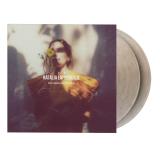
Un Canto por México, Vol. 2 is Natalia Lafourcade's second album dedicated to the reconstruction of the Centro de Docementación del Son Jarocho, a cultural building that was damaged after the 2017 Puebla earthquake. The album features unique new interpretations of her earlier songs, as well as collaborations with artists such as Caetano Veloso and Silvana Estrada. This album really showcases the enduring strength of her songs, which remain powerful in any form.
The album was very positively received by fans and critics. It even got nominated for multiple Latin Grammy Awards (Album of the Year, Best Engineered Album) and Grammy Awards (Best Regional Mexican Music Album).
Un Canto por México, Vol. 2 is available as a limited edition of 2000 individually numbered copies on smokey marble vinyl, packaged in a gatefold sleeve, with printed inner sleeves.
"Life & Death has been a bucketlist label for me since day one. I've always been inspired by the way DJ Tennis approaches music and the whole philosophy around the label. What always stood out to me is the variety in the releases. One record can be deep and emotional, the next one raw and club-focused, but it still feels like it belongs to the same world. That balance is something I am always chasing in my music. Next to this: in a world that is focussed more and more on short term wins and commercial performance, i really can tell that Tennis still values the art and process of making music the most, which is something i really appreciate"

I remember hearing him play at Circoloco in Ibiza and later in the Loft in Amsterdam and thinking: 'fuck, I should've send him the tune I made last week.' When I came back home, I immediately put together a pack of tracks to send to him. Two were released as part of the Fabric release, and 4 of them are on this EP.
For me, this release is a next step in my career, and I'm happy and proud to be part of a label that is both legendary and super relevant in 2026."
Delusions Of Grandeur proudly welcomes back 6th Borough Project, the Scottish duo known for their deep-rooted devotion to dusty MPC jams, late-night disco refractions, and the raw, low-slung house grooves that have made them underground staples for over a decade.
Made up of veteran producers Craig Smith and Graeme Clark (a.k.a. The Revenge), 6th Borough Project have carved out a signature sound: soulful but tough, analog yet futuristic, always tapping into the spirit of warehouse sessions and dimly-lit basements. Their new EP entitled The Deal distills everything we love about 6BP - chunky drums, hypnotic groove science, and a certain smoky, nocturnal magic - across four expertly sculpted cuts. Leading the charge, The Deal is a stripped-back, rolling deep house burner powered by crunchy disco-infused beats and a captivating forward momentum. A hooky sax stab weaves in and out of the mix, keeping the groove bubbling and teasing dancers deeper into the zone.
A proper late-night tool with bags of attitude. Driving and percussive from the first bar, The Hertz rides a simple but deadly classic disco groove pushed along by punchy synth stabs and swirling dub-soaked chords. A perfectly-placed vocal sample sprinkles just the right amount of flavour on top, sealing this one as a certified dancefloor shaker. Flip over for Let Me Know which strips things back to the bare essentials: a bold square-wave bass motif, clipped disco drums, rasping open hats, and chopped vox flickering like neon. Dubby, twisted, and packed with raw kinetic energy, this is peaktime ammunition for those who like their grooves dirty and unrefined. Rounding off the EP, For Life is a mutant discoid teaser made for warming up the room or resetting the vibe. A single-note bassline pulses beneath syncopated stabs, creating a hypnotic tension that steadily draws dancers closer to the speakers. Subtle, deep, and effortless in it’s intention.
- 1: Complicado
- 2: No Quiero Llegar A Viejo
- 3: El Adivino
- 4: Mi Imposible
- 5: Ven Debajo De Mi Bote
- 6: A Través De Las Lgrimas
- 7: Psicosis
- 8: Vino Dulce
- 9: Conexin
- 10: Llmame
- 11: Algo De Ttere
- 12: Toad
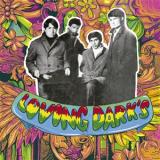
Los Amantes Oscuros" brings together for the first time on vinyl the recordings made between 1968 and 1969 by pioneers of Bolivian garage rock, Loving Darks, originally released on their three EPs. A selection packed with proto-punk covers of hits by the Stones, Cream, Tony Hatch, and more-often surpassing the originals in attitude and power. Their original records are highly sought after and are virtually impossible to find in any condition_ If we had to choose the Latin American country where the rawest and wildest garage and beat records of the '60s were recorded, Bolivia would be one of the clearest contenders. For some strange reason-surely related to the country's extreme conditions, its high altitude, and the influence of huayno-Bolivian recordings are truly unique and fascinating. A multitude of bands sprang up under the influence of groups-mainly British-that dominated the international charts. From the ashes of two of Bolivia's most important seminal bands, Los Black Byrds and The Turtles, two new groups fundamental to the history of Bolivian rock would be born: the mythical Climax and the legendary Loving Darks. "Los Amantes Oscuros" brings together for the first time on vinyl the recordings this band made between 1968 and 1969, originally released across three EPs on the local Lyra label. Their repertoire is packed with covers such as 'El Adivino,' a sped-up reinterpretation of 'Fortune Teller,' or even 'Algo de títere,' a reworking of 'Jumpin' Jack Flash.' They also adapt the classic 'Call Me' by Tony Hatch and 'Toad' by Cream, from whom they borrow the cover of one of their most iconic albums for the artwork of their EP "Complicado." In fact, 'Complicado'-a proto-punk version of the Rolling Stones' 'Complicated' and their signature track-is a perfect example of how a Bolivian band could outdo the British giants in attitude and power. Their importance lies in having paved the way for new sounds, styles, and aesthetics within a still-emerging scene. This compilation is a joint release with the Peruvian label Rey Record and includes an insert with notes on the band's history. First time vinyl reissue.
- 1: It Is What It Isn't
- 2: Varied Superstitions
- 3: Living Backwards
- 4: Precious Little
- 5: Sorry Wounds
- 6: Jolly Melancholy
- 7: Faze
- 8: No I Shouldn't
- 9: Some People Will Believe
- 10: Your Clothes, Sir
- 11: In This Town
- 12: Pretending
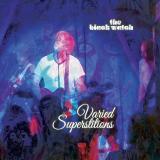
It is with some degree of surpriseand delight that we were contacted by John Andrew Fredrick, the founder and omnipresent member of Santa Barbara’s the black watch to see if Blue Matter would be interested in putting out their newest album. Of course we were. One listen was more than enough to convince us that it would fit perfectly on to the label. Perhaps a little more indie than other albums we’ve released, but sowhat? ‘Varied Superstitions’ is an intriguing collision of Cure-style indie and trippy psych which had us buzzing right away. the black watch (lower case intentional) wasformed in 1987 by John Andrew Fredrick in Santa Barbara, California, and he has been (and still is) it’s guiding light. They have released 25 albums over the last 38 years and show no sign of ageing. With a fantastic band behind him, John has presented us with a wonderful batch of songs ranging from mesmeric psych to indie/punk. In late 2025 John paid a brief visit to the UK to see friends and also to do a couple of live acoustic performances. The Bevis Frond was lucky enough to share the bill with John at London’s Betsey Trotwood for a wonderful evening of acoustic revelry. Not only is he a hugely talented musician/songsmith, but a thoroughly decent fellow. It’s a true privilege to be able to put out ‘Varied Superstitions’ on our label.
NOSUCHKEY makes a bold debut on the Art of Memory label with a deadly four track EP of masterfully reduced but stylish and evocative minimal techno. NOSUCHKEY is actually a side project from Nico Purman. He served up the first two releases on the label and this new alias is focused on straight forward techno. Over more than a decade Purman has established himself on Vakant, Crosstown Rebels and Curle, and now heads in an exciting new direction designed to make a huge impact on the floor. Opener 'Stages' is post minimal techno with a focus on mind melting melodic riffs that ripple over the rooted drums. It is sci-fi in style with a hint of Detroit greats like Jeff Mills and really takes you into the future. The excellent 'FMFMFM' is another fluid bit of deep techno that is wired up with languid synths constantly wrapping and warping round the drums. Keeping up the pressure is 'Lunch', with a stripped back but impactful techno style built on rubbery kicks and with modulated synth lines constantly shapeshifting throughout the mix. Direct but dynamic, it is excellently timeless techno that leads on to closer 'ACD RDFN'. There is urgency, paranoia and cyber tension in this one that really keeps you locked as it journeys deep into a blackened yet cinematic cosmic abyss. NOSUCHKEY is a false address, a lack of a word, a character or sign that makes a whole code unable to find its final path: The Specified Key does not exist.
- 1: River Jordan
- 2: Mary Long Tongue
- 3: 21 Girls Salute
- 4: Fulllment
- 5: In Dis Time
- 6: Lets Do Right
- 7: The Day Had Just Begun
- 8: Lets Clean It Up
- 9: John Tom
- 10: Mercy
Barrington Levy's 3rd LP for Jah Life, another killer selection from the fruitful works of the Wright/Lawes/Levy axis. From the golden era of the Radics at Channel 1, mixed by Scientist at Tubby's, 10 tracks, great all the way thru. Finally available again, this was only repressed once before in the late 1990's, other than its original release in the early '80s. Featuring iconic cover art by the late NYC legend Jamaal Pete and pressed from the original mothers, identical to the original press.
New pressing on black vinyl (500 units). Following the recently released and highly praised Trees 50th Anniversary box set on Earth Recordings, Trees reissue their debut album ‘The Garden of Jane Delawney’as a standalone release. It’s now over fifty years since Trees’ formation, a band who helped define ‘Acid Folk’, creating a sub-category in the lexicon of record dealers and music critics alike. “When we are talking about psych folk or acid folk, we are really talking about music like this by Trees” Stuart Maconie, BBC6 Music. Trees first album, ‘The Garden of Jane Delawney’ (1970) snuggles nicely into contemporary nu-folkies’ idea of the genre, and shares some of the pastoral-whimsy that characterised The Incredible String Band or Donovan, offset by some stunning interpretations of traditional material and Bias’ own songs. The record includes readings of ‘Lady Margaret’, ‘Glasgerion’, the old standard ‘She Moved Thro’ The Fair’, and the extended fade of the group’s own ‘Road’, presage the explosive instrumental duelling that would come to characterise the follow up album, ‘On The Shore’. // “The music’s arcane power remains intact” Mojo. // “A fantastic band” Record Collector. // “Spectacular” Uncut. // “Sublime” Shindig. // Timeless” Prog. // “It’s these two original albums that stand as pinnacles of form” The Wire. // Track listing: A1. Nothing Special A2. The Great Silkie A3. The Garden of Jane Delawney A4. Lady Margaret B1. Glasgerion B2. She Moved Thro' The Fair B3. Road B4. Epitaph B5. Snail's Lament
Don’t rolls into its 25th year of releasing records with this insane 5 track 12” “Swagger Portraits” from one of the most interesting Techno producers out there. L/F/D/M
This is his second outing on the label and as always the message is raucous and confrontational Techno and Acid that penetrates right to the core of what Don’t is all about
To put it simply, he’s an ‘ideas man’ and his tracks are always different, always exciting and always a nice contrast/middle finger up, to the sanitised sample pack culture that seems to be rife in Techno at the moment.
Also included is an edit of ‘We Know’ by label boss Jerome Hill.
- Identified Patient – The Female Medical College Of Pennsylvania (Marcel Dettmann Pitched High Version)
- Tocotronic – Bis Uns Das Licht Vertreibt (Marcel Dettman Version 2 Remix)
- Cristian Vogel – Untitled (Marcel Dettmann Cut)
- John Bender – Victims Of Victimless Crimes (Marcel Dettmann Cut)
- Clark – Dirty Pixie (Marcel Dettmann Edit)
- Junior Boys – Work (Marcel Dettmann Remix)
- Mutant Beat Dance - The Human Factor Ft. Naughty Wood (Marcel Dettmann Edit)
- Experimental Products – Who Is Kip Jones (Marcel Dettmann Cut)
- Marcel Dettmann – Water Feat. Ryan Elliott (My Own Shadow Remix)
- Severed Heads – We Come To Bless The House (Marcel Dettmann Edit)
- Albert Kuningas - Astraaliprojektio (Marcel Dettmann Edit)
- K.alexi Shelby – Season Of The Real (Marcel Dettmann Edit)
- Ian North – Sex Lust You (Marcel Dettmann Edit)
- Ford Proco – Expansión Naranja (Feat. Coil) (Marcel Dettmann Edit)
- Nitzer Ebb – Shame (Marcel Dettmann Edit)
- Frank Duval – Ogon (Marcel Dettmann Edit)
- Yello – Limbo (Marcel Dettman Version 2 Remix)
- Conrad Schnitzler – Das Tier (Marcel Dettmann Edit)
LP 3x12"[28,99 €]
A DJ, producer and significant figure in contemporary electronic music, Marcel Dettmann steps forward to contribute to Running Back’s ongoing Mastermix series. Whereas previous editions of Mastermix have taken an ear to the sound of lapsed, legendary clubs such as Wild Pitch and Front, Dettmann’s curation deftly captures the man himself in ongoing perpetual motion, raiding the vault for his own precision-tooled edits, long-employed on dancefloors to devastating effect. Alongside a continuous mix, this release arrives as a 3LP gatefold, and as a limited edition cassette.
Closely associated with Berlin’s techno landscape, Dettmann was born and raised in the former GDR, then later immersed in the bleary-eyed counter cultural landscape of post-unification Berlin. Initially oriented by post-punk, industrial and new-wave music, Dettmann has been DJing since 1993, always expanding and perfecting his repertoire. He later began working behind the counter at the city’s tastemaking rave boutique Hard Wax, and a decade after he first dropped a needle, became (and remains) resident at notable local nightspot Berghain/Panorama Bar, where his instincts have helped sculpt the signature sound of both main dancefloors.
Of course, you’re probably not asking, “Who is Marcel Dettmann?” More importantly, you might want to know; just what treats has he gifted us here? The trip begins with a simple pitch-shift skywards, transforming Identified Patient’s creeping ‘The Female Medical College of Pennsylvania’ into a peak-time freakout, before an alternate take on Toctronic’s ‘Bis uns das Licht vertreibt’ emerges from the vaults for the first time. Dating from 1995, and one of Dettmann’s all-time favourites, Cristian Vogel’s ‘Untitled’ clambers back into the box with respectable cuts, while John Bender’s ‘Victims of A Victimless Crime’ kicks off the flip sporting a new arrangement, transporting us back to the foundations of a confident, stripped-back sound.
A few subtle edits to Clark’s perilously funky ‘Dirty Pixie’ takes us to Dettmann’s remix of Junior Boys. Produced in 2010, it transposes the Canadian duo’s sophisticated pop with our curator in his minimal prime, and has since become an irresistible prize for high-minded diggers. The same can be said for Experimental Products’ explosive proto-electro anthem ‘Who Is Kip Jones?’, empowered from pricey Discogs purgatory with just the slightest of tweaks. It’s deservedly sandwiched between the guiding influences of Chicago and Detroit in the form of Mutant Beat Dance’s raw ‘The Human Factor’ and a shimmering new version of previous solo production ‘Water’, featuring close friend and Ostgut Ton ally, Ryan Elliot.
The second half of the Mastermix seamlessly connects the mechanical past and digital present of EBM and industrial in the dance, with Dettmann’s instincts as a guiding hand. Severed Heads’ iconic ‘We Have Come To Bless This House’ emerges with mere nips and tucks, while Nitzer Ebb’s ‘Shame’ is significantly reimagined as a highwire act of rhythm and tension, setting up a sensual second take on a 2017 remix of ‘Limbo’ from Swiss synth heroes, Yello.
Core musical memories are shaken and stirred with a context-shifting take on Frank Duval’s emotional classic ‘Ogon’, while Ian North’s ‘Sex Lust You’ and Ford Proco’s notable Coil collaboration ‘Expansion Naranja’ effectively throb with only minor adjustments, respectfully imagined as “shadow versions”. Meanwhile, a simple breakbeat lifts Albert Kuningas’s ‘Astraalprojektio’ in the direction of wide-eyed dancefloors, while a fresh take on K-Alexi Shelby’s ‘Season of The Real’ inexplicably emerges somehow even funkier than before.
The conclusion of the compilation leads back to Das Tier from the prolific experimentalist Conrad Schnitzler, whose swirling synths and hypnotic vocals are duly tightened by Dettmann, but only as he puts it, “in conversation with the original.” Concluding three discs and thirty years of commitment to the dancefloor, this Mastermix not only offers us the opportunity to eavesdrop on this endless exchange, but to gain some sought-after material for our own record collections.
- 01: We Are The Biobots
- 02: Skratching Terminators (Feat. Dj D-Styles &Amp; Prime Cuts)
- 03: Coffeecuts (Feat. Dj Ben, Krootki &Amp; Pan Jaras)
- 04: Electrode (Feat. Dj Flip Flop &Amp; Prolifix)
- 05: Priority (Feat. Dj Tigerstyle &Amp; Dj Iq)
- 06: Supersonics (Feat. Dj Melo-D)
- 07: Jam Of A Borg (Feat. Daniel Drumz)
- 08: Cybots Patrol (Feat. Pan Jaras, Miyajima &Amp; Ken One)
- 09: Digital Human
- 10: 8 Bit Overheat (Feat. Mr Krime)
There are two versions of the vinyl edition: classic 140g black record or limited (Universe Edition) 140g black + 7" black vinyl with two bonus tracks.
WE ARE THE BIOBOTS is an album by Michal Baj (DJ Eprom), who has ties to Silesia. It will be released on 21th January 2026, by the legendary Polish label JuNouMi Records (est. 2002). WE ARE THE BIOBOTS is an album that not only talks about technological progress, but also touches on the digitization of human consciousness in the 21st century. Although it discusses the dangers of AI development, no artificial intelligence was used in its creation.
The album features legendary hip hop DJs, including the art of scratching. The album will feature the most outstanding DJs from Poland, England, the USA, and Japan. Thanks to this, the album has a chance to gain a broader, international context. Eprom's professional experience to date has allowed him to bring together such a wide range of artists and bring them together on the album, including:
DJ D-Styles – a legend of scratching from the USA. A pioneer of the genre. Member of groups such as The Beat Junkies and Invisibl Skratch Piklz, creator of many scratching techniques still used today.
DJ Prime Cuts – founder of the legendary Scratch Perverts from London, multiple world champion and creator of unique scratching techniques.
DJ Flip Flop, Prolifix – representatives of the DJ community from the US coast.
DJ Tigerstyle – a leading representative of the DJ community in England, multiple world champion in scratching.
DJ IQ – the most successful scratching champion in the world.
DJ Miyajima – the unrivaled master and creator of the Japanese school of scratching.
DJ Melo-d – co-founder of The Beat Junkies collective, multiple DJ champion hosting a legendary show on Radio HOT 97 in the US.
DJ Ben, Krootki – co-founders of the Modulators group from Poland, World Champions in scratching.
Daniel Drumz – Polish DJ and music producer known worldwide.
Mr Krime – pioneer of DJing and turntablism in Poland.
Michal Baj is a multi-talented musician, artist, and music producer born in Jastrzebie-Zdroj, as well as the owner of the analog Eprom Sounds Studio, where tracks based on mixing and mastering are produced and gain worldwide recognition.
The inspiration for the album is Eprom's connection to Silesia. His work at the KWK Borynia mine, surrounded by heavy equipment and mining technology, became a direct inspiration for creating a musical story about people, machines, as well as the directions of technological development and the impact they have on society.
The album is released by JuNouMi Records, a label specializing in vinyl records, founded in 2002. Your wax supplier.
- Anhedonia
- Idiot
- Suffering (Mike's Way)
- Spiders
- The Knives
- Everything In My Life Is Perfect
- Candy / Squeeze
- Living Death
- Keeping Her Keys
- Hypnotic Poison
- Kindnesses
- Not Born To Run
- Come And See The Clown
Cassette[14,08 €]
Distant Clouds Grey Vinyl. Das siebte Album von Teen Suicide ist das erste richtige Album der Band seit ,honeybee table at the butterfly feast", das durch Songs wie ,you were my star" wieder Aufmerksamkeit bekam, der auf TikTok richtig abging. Teen Suicide wurde 2010 als Nebenprojekt von Sam Ray gegründet und hat sich nach und nach weiterentwickelt, während es ein leidenschaftliches Projekt blieb. Seit 2017 gehört Kitty Ray zur Band, und 2022 wurde die Band mit dem Beitritt des Schlagzeugers Niko Wood offiziell zu einem Vollzeitprojekt. Gemeinsam begann das Trio mit dem Schreiben und Aufnehmen ihres kommenden Albums ,Nude descending staircase headless". Das Album stellt eine Reihe von Premieren für die Band dar: ihre erste Platte, die in einem professionellen Studio aufgenommen wurde, ihre erste Veröffentlichung, die als Vollzeitband geschrieben und aufgenommen wurde, und ihre erste seit 2012, auf der durchgehend ein festes Schlagzeuger zu hören ist. Es markiert auch den Beginn eines vollständig gemeinsamen Schreibprozesses zwischen Sam und Kitty Ray, die 2016 geheiratet haben und von Grund auf an der gesamten Platte mitgearbeitet haben, wobei sie sich sowohl das Songwriting als auch den Gesang aufteilten. Von Sam Ray als ,bisheriger Höhepunkt der Karriere" der Band beschrieben, erkundet Nude descending staircase headless das endlose Streben nach Erfüllung durch Kreativität und verknüpft Motive von Tod und Wiedergeburt mit Themen wie der Freude trotz großer Verluste. Das Album sieht das Selbst nicht als isoliertes Objekt, sondern als einen einzelnen Strang in einem größeren, miteinander verbundenen Netz. Zu den herausragenden Tracks gehören ,Idiot", das sich an direktem, wörtlichem Storytelling orientiert, und ,Spiders", bei dem Kitty Ray den Gesang übernimmt und eine düstere feministische Unterströmung in die übergeordnete Erzählung des Albums einbringt. Musikalisch lässt sich die Band von Künstlern wie Nirvana, Radiohead, Shellac und Helmet inspirieren und greift die Intensität und Experimentierfreudigkeit des Heavy Rock der späten 80er und 90er Jahre auf. Ihre jüngsten Tourneen mit DELTA SLEEP unterstreichen einmal mehr, dass Teen Suicide zunehmend Einflüsse aus Math Rock und Metal in ihren sich weiterentwickelnden Sound einfließen lässt.