Following a masterful release from SWOY, Sounds of Sirius Music presents their first Various Artist Compilation SOSNZ007 – “Harmony of the Spheres”. Wrapping up 2023 with top notch underground music, joins the musical dots between talented and free-spirited artists working across the globe.
In this edition we have close friends and supportive artists from Sounds Of Sirius, including none other than Mihai Pol (Romania), rising Chilean talent Nibaaldo (Chile), brotherly duo Clay and Heath Ostrer aka Last Pines (UK) and Sevillian talent Alvaro Lamet aka Enzo Leep (Spain).
Harmony of the spheres is a philosophical concept highlighting proportions of the celestial bodies and their movements– the Sun, Moon and planets – as a form of music. These comic mathematical relationships express qualities or "tones" of energy which manifest in numbers, visual angles, shapes and sounds.
Early Support: Mihai Pol, userUNKNWN, Silat Beksi and Herman Saiz.
Поиск:lam
Все
Hailing from Mexico City, Louie Fesco is as cool as his name states, he is never lame. Louie can make a Tiesto t-shirt cool, just by cutting off the sleeves and wearing it. Mr. Cool has graced many top labels over the last decade and made these labels even cooler, his outing on CV
Could be one of his best and coolest, #truestorybro.
On this crispy 12 inch he delivers a masterclass on party rocking grooves, proper basslines and drummy hooks (not to be confused with dummy hookers).
So to speak- a perfect weapon in your vinyl arsenal (not “Vinyl Arsenal” the amateur football team made up of various aging UK Djs).
On the remix duty, we get some heavy hitters from the ever mysterious Gathaspar. We heard he gets his inspiration from tiny elves that are only found in Munich catacombs. When asked about these tiny elves on Instagram, he leaves you on “seen”. His OP vinyl series are instant hits and collectors items among bearded vinyl nerds, and people who use a lot of bedroom hand lotion. These remixes are monsters- I know, I tested them myself in raves to people and they responded by dancing.
In short, if you are a Dj who likes nasty records to rock parties, this is a must, and if you’re a creepy Discogs shark, this is sure to go up in value.
Why do we even write these write ups?
I’m not sure, and if you are still reading this instead of listening to the 12 inch, I don’t know what else to say to you.
I guess I’ll give you the “ your good enough, your smart enough, and god darn it- people like you” words to get you thru the day.
Sincerely, Jay-the writeup guy.
I Talk To Water, the fifth album for Kompakt by Danish producer Kölsch, is the artist’s most personal statement yet. While all the trademarks that make his music so popular and powerful are still present – lush, melodic techno; swooping, trance-like figures; sensuous, shivery texturology – I Talk To Water is also a deep and intimate rapprochement with family and history, a beautiful, finely detailed document of loss and memory, and a tracing of the long, unbroken thread of grief that runs through our lives once we’ve lost those we loved.
The emotional core of I Talk To Water, then, is a cache of recordings by Kölsch’s father, Patrick Reilly, who passed away in 2003 from brain cancer. With time rendered elastic by the pandemic and its associated lockdowns, its sudden, alienating shifts in everyday living, Kölsch found himself reflecting on his father’s passing and ongoing spiritual presence, thinking about how best to memorialise such a significant figure in his own life. Those recordings opened a gateway, of sorts, for Kölsch to move through – a way to bring past and present together and entwine them in a sensitive, poetic manner.
Kölsch’s father was a musician – “touring in the sixties and seventies, in the Middle East especially, he was doing the whole hippy trail, playing guitar, and wrote some songs over the years,” he recalls. “But all in all, he decided to focus on family rather than pursue a musical career.” Reilly kept playing and writing music over the years, though Kölsch hadn’t listened to the material for some time: “I’d never had the guts to listen to it, because I just felt too fragile listening to his voice. It’s such a tough thing to go through.”
During the pandemic, though, Kölsch listened through the fragmented body of work that his father had produced over the years. “I decided I’m gonna finally release my dad’s music twenty years after his passing,” he reflects. “This whole album is about the process of loss, and for me it’s been one of my main driving forces in my musical life, the whole emotional aspect of whatever I’ve done has been based in that feeling that he’s not there anymore.”
Recordings of Reilly appear on three songs across I Talk To Water. His guitars drift pensively across “Grape”, offering a lush thread of melody that Kölsch wraps with clicking, driftwood rhythms and droning, melancholy bass. “Tell Me” is a lovely three-minute art song, a sadly beautiful reflection, minimally adorned with gentle keys and a muted pulse. And on the closing “It Ends Where It Began”, Kölsch lets his father’s acoustic guitar take centre stage for a lament that’s unexpectedly folksy, a guitar soli dream, which Reilly originally recorded in 1996. “He actually recorded it for my first album that never came out,” Kölsch reveals, “and I had it sitting around forever. That is purely him.”
These three imagined collaborations between father and son are poised and delicate. But their relationship also marks the gorgeous music Kölsch has made across the rest of I Talk To Water, from the itchy yet lush “Pet Sound” (titled in tribute to one of Reilly’s favourite albums), the flickering synths and yearning vocal samples that slide through “Khenpo”, the ecstatic shuddering that marks “Only Get Better”, or “Implant”’s slow-motion pans and subtle reveals.
There’s also the title song, where Kölsch is joined by guest Perry Farrell (Jane’s Addiction, Porno For Pyros), singing a mantra for internal reflection: “I talk to water / Searching for myself / Looking for answers / Oceans of you.” Farrell’s appearance brings another timbre, another spirit to the album, aligning neatly with his recent interest in electronic music. “He was completely taken by this idea of talking to water,” Kölsch says, thinking about the ways we collectively lean towards the natural world as a comfort and a listener, a guide through mourning, a way to map out the terrain of the heart. This mapping is something that Kölsch has proven remarkably adept at through the years; dance music for both body and mind, but also both for the here-and-now, and for the hereafter.
“I Talk To Water”, das fünfte Album des dänischen Produzenten Kölsch für Kompakt, ist zweifellos das persönlichste Statement des Künstlers bislang. Während alle Markenzeichen, die seine Musik so beliebt und kraftvoll machen, immer noch präsent sind – üppige, melodische Techno-Tracks; schwebende, tranceartige Elemente; sinnliche, fiebrige Texturen – ist “I Talk To Water” auch eine tiefe und intime Annäherung an Familie und Geschichte. Es ist ein wunderschönes, fein ausgearbeitetes Dokument des Verlusts und der Erinnerung, und es verfolgt den langen, ungebrochenen Faden der Trauer, der durch unser Leben läuft, sobald wir diejenigen verloren haben, die wir liebten.
Der emotionale Kern von “I Talk To Water” besteht aus Aufnahmen von Kölschs Vater, Patrick Reilly, der 2003 an Hirnkrebs verstarb. Durch die Pandemie und ihre damit verbundenen Lockdowns, die plötzlichen, entfremdenden Veränderungen im Alltag, fand Kölsch sich in Gedanken an den Tod seines Vaters und seine fortwährende spirituelle Präsenz wieder. Er überlegte, wie er eine so bedeutende Figur in seinem eigenen Leben am besten verewigen könnte. Diese Aufnahmen öffneten ihm sozusagen ein Portal, um Vergangenheit und Gegenwart miteinander zu verbinden und sie auf sensible und poetische Weise zu verweben.
Kölschs Vater war Musiker – “er tourte in den sechziger und siebziger Jahren, vor allem im Nahen Osten, auf dem Hippie Trail, spielte Gitarre und schrieb im Laufe der Jahre einige Songs”, erinnert sich Kölsch. “Aber alles in allem entschied er sich, sich auf die Familie zu konzentrieren, anstatt eine musikalische Karriere zu verfolgen.” Reilly spielte und schrieb jedoch im Laufe der Jahre weiterhin Musik, obwohl Kölsch das Material lange Zeit nicht angehört hatte: “Ich hatte nie den Mut, es anzuhören, weil ich mich einfach zu zerbrechlich fühlte, seine Stimme anzuhören. Es ist so schwer, das durchzustehen.”
Während der Pandemie hörte sich Kölsch jedoch durch das fragmentierte Werk, das sein Vater im Laufe der Jahre produziert hatte. “Ich beschloss, die Musik meines Vaters zwanzig Jahre nach seinem Tod endlich zu veröffentlichen”, reflektiert er. “Dieses ganze Album handelt von dem Verlustprozess, welcher für mich generell eine der Hauptantriebskräfte in meinem musikalischen Leben ist. Der ganze emotionale Aspekt von dem, was ich getan habe, basierte auf dem Gefühl, dass er nicht mehr da ist.”
Auf “I Talk To Water” sind Aufnahmen von Reilly in drei Songs zu hören. Seine Gitarren ziehen nachdenklich durch “Grape”, bieten einen üppigen Melodiefaden, den Kölsch mit klickenden, treibenden Rhythmen und dröhnendem, melancholischem Bass umwickelt. “Tell Me” ist ein schönes dreiminütiges Kunstlied, eine traurig-schöne Reflexion, minimal geschmückt mit sanften Tasten und einem gedämpften Puls. Und auf dem Abschlusstrack “It Ends Where It Began” lässt Kölsch die akustische Gitarre seines Vaters im Mittelpunkt stehen, ein überraschend folkiger Klagegesang, den Reilly ursprünglich 1996 aufgenommen hatte. “Er hat es tatsächlich für mein erstes Album aufgenommen, das nie veröffentlicht wurde”, enthüllt Kölsch, “und ich hatte es ewig liegen.”
Diese drei erdachten Kollaborationen zwischen Vater und Sohn sind ausgewogen und zart. Aber ihre Beziehung prägt auch die wunderschöne Musik, die Kölsch im Rest von “I Talk To Water” geschaffen hat, angefangen bei dem nervösen, aber üppigen “Pet Sound” (benannt als Hommage an eines von Reillys Lieblingsalben), den flimmernden Synthesizern und sehnsüchtigen Vocal-Samples in “Khenpo”, den ekstatischen Erschütterungen in “Only Get Better” oder den langsamen Schwenks und subtilen Enthüllungen in “Implant”.
Es gibt auch den Titelsong, in dem Kölsch von Gast Perry Farrell (Jane’s Addiction, Porno For Pyros) begleitet wird, der ein Mantra für die innere Reflexion singt: “I talk to water / Searching for myself / Looking for answers / Oceans of you.” Farrells Auftritt bringt eine weitere Klangfarbe, einen weiteren Geist in das Album, der gut zu seinem jüngsten Interesse an elektronischer Musik passt. “Er war völlig fasziniert von der Idee, mit Wasser zu sprechen”, sagt Kölsch und denkt darüber nach, wie wir kollektiv zur Natur als Trost, Zuhörer, Führer durch die Trauer neigen, um die Gelände des Herzens zu kartieren. Diese Kartierung ist etwas, in dem Kölsch im Laufe der Jahre erstaunlich geschickt war; Tanzmusik für Körper und Geist, sowohl für das Hier und Jetzt, als auch für das Leben danach.

The 1973 album “El Violento” was the fifth full-length salsa LP led by Julio Ernesto Estrada Rincón, aka Fruko, and the second credited to Fruko Y Sus Tesos. Though it did not contain hits like ‘A la memoria del muerto’ or ‘El Preso’, it’s a collector’s item today in places like the US, Europe and Japan, perhaps precisely because it is obscure yet full to the brim with unrelentingly hard and heavy salsa bangers that never let up from start to finish (hence the title, which translates as “The Violent One”). A mix of originals and interesting covers, the LP is “all killer and no filler”, purposely designed to set the dance floor ablaze. It features Fruko’s two main vocalists that took over from the first pair of Humberto “Huango” Muriel and “Píper Pimienta” Díaz, namely the beloved duo of Álvaro “Joe” Arroyo and Wilson “Saoko” Manyoma. Los Tesos were a talented “wild bunch” who listened to their fearless leader, with Fruko holding down the bottom end on electric bass, Hernán Gutiérrez in the piano chair, the Villegas brothers on hand percussion (Jesús tickling the bongos and Fernando slapping the congas), augmented by Rafael Benítez on timbales and an ace horn section of Freddy Ferrer and Gonzálo Gómez (trombones) and Jorge Gaviria and Salvador Pasos (trumpets). The super aggressive sound comes directly from the South Bronx playbook of Willie Colón. The snarling trombones and soaring trumpet are somewhat sweetened by a nice little Puerto Rican cuatro guitar solo. Sonically lightening the mood somewhat, ‘Nadando’ (‘Swimming’) is a bouncy tune in the ‘Mercy’ genre (basically a hybrid of pop, funky soul, cumbia and salsa, in the style of Nelson y Sus Estrellas), gleefully sung by Joe Arroyo. The beats are complex and ever changing, with a little bit of mozambique, conga, bomba, jala jala and of course salsa thrown in for good measure. The side closes out with a brilliant, uptempo salsa reworking of the venerable ranchera chestnut, ‘Tú, sólo tú’. Side two explodes with the frenetic descarga jam session ‘Salsa na’ ma’—which is exactly that: nothing more than the hottest “sauce” to make the dancers go crazy. Fruko’s tune is dedicated to the Latin community in New York that listens to salsa from everywhere and dances to it so fervently on the weekend. The relentless percussion propels the listener along at breakneck speed as if hurtling down the Bronx Expressway, demonstrating that Fruko y Sus Tesos have mastered the ‘violent’ form of urban salsa that was having its transnational moment in the early 1970s. While “El Violento” may not be as well known as some Fruko records, it certainly deserves a new look and should be assessed on its own merits as a very powerful, confident entry in the historical evolution of Colombian salsa dura.Sleeve
Mysterious and very rare from a private press label with only one known release on its catalogue, (up until now it wasn't even sure what the release year was). Spanish guitar, classic Balearic Italo house beats, drama on the vocals, all boxes are checked for a good time on an outdoor sunny dancefloor on some Mediterranean island.
Seeing the credits makes it clear that this was a joint operation of well seasoned Italian music specialists at the time. Although it's all about the "D.J. Never Sleep" version, all original versions in different languages are featured in this re-issue along with an additional new DJ tool style bonus beats. Very odd ball project that has been well hidden for a long time, brought back to record bags at an affordable price.
- A1: Flug 8 - Puerto Rico (The Velvet Circle Mix)
- A2: The Black Frame - Sacrosanct (Mount Obsidian Remix)
- A3: The Novotones - Liberty Bell
- A4: Sascha Funke - Mathias Rust
- A5: La Finca - What Clouds Say
- B1: Paulor - The Last Coke In The Desert
- B2: Mount Obsidian - Fade Feat Charlotte Jestaedt
- B3: The Velvet Circle - Our Tribe
- B4: Seb Martel Feat Las Ondas Marteles - Dark Mambo (Joerg Burger Mix)
- B5: Mount Obsidian - Marole Feat Charlotte Jestaedt
Kompakt unveils the third volume of Jörg Burger’s Velvet Desert Music compilation series, dedicated to music that hits the sweet spot between the cinematic, the (pop) ambient, and the psychedelic. With Velvet Desert Music Vol. 3, Burger and his friends wander afar, taking trips away from, or adjacent to, the dancefloor that’s acted so long as the crucible for the Kompakt aesthetic. Like its predecessors, it’s a gorgeous, lambent collection of late-night mood music.
Because it’s such a broad church, Velvet Desert Music admits all kinds of new experiences, as well, with Burger looking for music that "leads out of the desert into the velvet universe". Indeed, of all the volumes in the series, this third instalment feels closest to an album made by a true collective. The roster has changed, with new contributors Flug 8 and Seb Martel, both with his trio Las Ondas Marteles and with Chocolate Genius and Zsela as La Finca, joining regulars The Novotones, Mount Obsidian, The Golden Bug, Paulor and Sascha Funke.
Burger himself reappears, too, alongside Fritz Ackermann (of The Novotones), Max Würden and Thore Pfeiffer, in The Velvet Circle. Their contributions are pure lush life electronica: “Our Tribe” hitches a ride with a low-slung groove, flickering psychedelic reels of acoustic guitar traipsing across moody bass and taffeta layers of drone; their opening remix of Flug 8’s “Puerto Rico” gently introduces the album with softly tangling electronic tones, while guitars, drenched in reverb, pirouette in the background. A Mount Obsidian remix of “Sacrosanct” by Burger’s The Black Frame -project is a swirling treat for the ears.
La Finca’s electronics and voice miniature, “What Clouds Say”, is a masterclass in poetic restraint; Martel’s “Dark Mambo”, remixed by Burger, is one of the collection’s big surprises, for it indeed does what the title says, a drifting, surrealist take on the mambo form, full of pensive chords, rich with unrequited longing, a breathy saxophone whispering under the song’s sly rhythmic carriage.
Elsewhere, The Novotones chime in with a slyly propulsive, Krautrock-esque charmer, “Liberty Bell”, and the guitar-led tone-drift of “Valley of Oblivion”; Paulor’s “The Last Coke in the Desert” is a chiming, lilting dreamscape; Mount Obsidian are joined by vocalist Charlotte Jestaedt for two modern takes on early-hours art song, “Marole” and “Fade”; Sascha Funke’s “Mathias Rust” is a lavish dancefloor dream, vocal samples drifting through the song as it slowly envelops the listener in its opulent radiance.
This is just a taste of the rich pleasures of Velvet Desert Music Vol. 3, a triumph of a compilation that takes the psychedelic visions of its predecessors and looks for the desert within, a dusty kiss, a road-movie hallucination flickering on the listener’s eyelids, a cinematic projection from deep inside the mind.
'After a first album as a duo released on Okraina Records: "Le Corps Défendant", Delphine Dora and Mocke invite us to join them again in listening to a new album. We slip into it as if in a dream, the music carries us away with its floating images.
Heard before on a handful of disturbingly beautiful solo albums and in collaborations such as Midget!, Arlt, Chevalrex, Mohamed Lamouri, Mocke (Dominique Dépret's nom de plume) is a subtle and inventive guitarist, who draws melancholic arpeggios, with a beautiful languor, that walk the line between tensions and tears. Delphine Dora has been heard with Roxane Métayer, Sophie Cooper, Andrew Chalk, Jackie McDowell, Helena Espvall, Valentina Magaletti ... meeting in a moment of improvisation, a solitary sincopated voice blooming between the black and white keys of her piano, tuning betwist these keys, or at other times in the gap of the right note. Here improvisation feeds on melody, or is it the other way round?
Recorded in an old church in the village of Mauzun in the Puy-de-Dôme, by Cyril Harrison, "L'invisible est multiforme" is an invitation to join them, to let these abstract songs erase our obsessive thoughts of the day, to open ourselves to the vibrant poetry of the air and the evening, to finally forget ourselves. Each note played by these four intertwined hands is like a slight break in the fabric of time, sliding one over the other, reminding us of mortality and its beauty. Ritornellas flow out of mechanical clocks, fragile, taking care not to hurt the silence. Both seek to dig and open up new paths to enrich their duet, to open up imaginary landscapes. Sometimes the guitar cuts through the fabric of an organ, fractures the song, just as the rain erases a landscape, redrawing it. But very quickly, both of them continue to follow this new path, improvising what will serve as a framework, a perspective, a language. There is a kind of praise for slowness in this "invisible", a desire to hold back the song, not to let it slip away, to let the listener's ear enter its course, to share the last note, its illumination. Each of these thirteen short sound pieces merge into a common colour, a vibration close to the different tonalities, which inter-penetrate, like a cubist painting. Words cannot take away the mystery of this record, words can only fail to describe the music, you must hear it.'
- Michel Henritzi
The latest by New York-based producer Lamin Fofana further refines his cinematic dialect of fractured soundscapes, displaced rhythms, and tectonic unease. Unsettling scores aptly describes itself: grainy, bristling, and bruised, rippling with dread disguised as grandeur. The collection emerged from an extended reworking of his 2016 composition, “A Symbol of the Withdrawn God,” mining deeper into the piece’s “unvoiced fragments, shards, and utterances.” Other tracks were inspired by recent readings on climate emergency and its “specific implications for Black life, from hurricanes in the Caribbean to mudslides in West Africa.”
Fofana has spoken of his music as part of a “legacy of resistance,” spanning the roots of Detroit techno to the outer reaches of contemporary sound art as championed by his labels, Sci-Fi & Fantasy and Black Studies. His work here vividly embodies that spirit, seven hyper-textural transmissions of rumbling lament, shifting sands, and restless innovation, tracing jagged silhouettes of indeterminate futures: “The instability is worldwide.”
Repress.
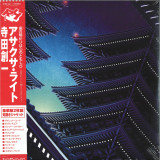
Back in 2015, Japanese DIY house pioneer Soichi Terada stepped back into the limelight courtesy of Rush Hour's 'Sounds From The Far East', a Hunee curated retrospective of material first released on his own Far East Recording label in the 1990s and early 2000s. Buoyed by the positive response and renewed interest in his work, Terada went back into studio to record his first new album of house music for over 25 years, Asakusa Light.
Developed over 18 months, Terada tried to recreate the mental and physical processes that led to the creation of his acclaimed earlier work. Those familiar with Terada’s celebrated, dancefloor-focused sound of the 1990s – a vibrant, atmospheric, and emotive take on deep house powered by the twin attractions of groove and melody – will find much to enjoy on Asakusa Light.
“I tried to recall my feelings 30 years ago, but when I tried it, I found it super difficult,” he explains. “I didn’t even know what I thought about myself five years ago, and the mental metabolic cycle seems to be faster than I thought. I tried different methods, including digging up my old MIDI data and composing by remembering old experiences. With the help of Rush Hour, I found some of the light from my heart that I had 30 years ago. I nicknamed the light I found in my heart, ‘Asakusa Light’.”
Produced using the very same synthesizers and drum machines that powered his 1990s work, the album is a joyous, colourful and life-affirming collection of timeless house music that not only recalls Terada’s own impeccable back catalogue, but also that of similarly celebrated contemporaries such as the Burrell Brothers or Ben Cenac (Dream 2 Science, Sha-Lor).
Terada, who has spent much of the last two decades writing video game music, has always had a gift for combining warm, undulating synthesizer basslines and perfectly programmed machine drums with stirring chords, smile-inducing melodies and mellow musical flourishes. It’s this immersive, sun-kissed and tuneful trademark style that takes centre stage on Asakusa Light, an album for the ages.
The set begins with the alien-sounding chords, soft-touch percussion and dawn-friendly warmth of ‘Silent Chord’ and ends on a high via the bouncing string stabs, starlight chords and thickset grooves of ‘Blinker’; in between, you’ll find a deluge of effortlessly feelgood music that’s the aural equivalent of a dopamine rush at sunrise.
There are subtle variations aplenty throughout the album – see the 8-bit lead lines and pulsing electronic textures of ‘Takusambient’, the vintage Tony Humphries flex of ‘Diving Into Minds’ and the effortlessly funky ‘Marimbau’ – but it’s the uniquely atmospheric, vivid and tactile nature of Terada’s loved-up sound that resonates. After well over 30 years in house music, the light in his heart is shining brighter than ever.
KEY GLOCK is a protégé of Young Dolph & who rose to fame in 2017 with his mixtape “Glock Season.” The artist signed to Young Dolph’s label in 2017 and their collaborative album, “Dum and Dummer,” reached #8 on the Billboard 200. As a lead artist, Key Glock has since had one certified platinum single (“Russian Cream”) and 4 certified gold singles (“Since6ix,” “Gang Shit No Lame Shit,” “Mr. Glock,” & “Ambition for Cash”). His debut studio album, “Yellow Tape,” peaked at #14 on the Billboard 200, while the follow-up, “Yellow Tape 2,” rose to #7 on the same chart. A 5-track EP, “”PRE5L,” was released in November 2022 & included the hit track, “Jigsaw.” He is the cousin by marriage of Young Dolph, who sadly passed in November 2021. In a since-deleted IG post, Key Glock called Young Dolph “my lefthand man, my brother, my cousin, and my mentor.”
Following on from the successes of their first two LPs, "Kalba" and "Small Small", Isaac Birituro & The Rail Abandon return with the "Kontonbili EP". A collection of seven tracks that trace the traditional West African roots of their sound whilst adding their unique touch, largely courtesy of Isaac's xylophone, Sonny Johns' folky embellishments and the vocal prowess of powerful Ghanaian songstress Wiyaala.
The lead single "Hado Deeli" roughly translates to "My Rival" and is a vibrant discussion between two rivals, one of whom is always making a fuss about anything and everything, even when things are all good! "Gargar", with its collaboration of xylophone, whistles, Wiyaala's effervescent vocals and relentless groove represents, quite literally, the band's "joining together" for this EP. In contrast, "I Know" sees Sonny Johns takes over lead vocal duties to lament the breakdown of a relationship accompanied by muted horns and Wiyaala's soothing backing vocals. "Nimmbalia" continues in a mellow and reassuring tone before emerging as one of the most uplifting and simultaneously fierce cuts on the EP! The traditional version of "Bawa" - the original take of which can be found on last year's "Small Small" LP - strips things back a little, before culminating in a battle of xylophone, whistles and choir. "Yeri Villa" has a wonderfully laid back, sun drenched feel with some truly beautiful vocal refrains, and finally - only available on the digital version - comes the deeply percussive and trance inducing "Darpeny", rounding off a rather stunning EP from this cross continental outfit.
All tracks feature Ghanaian singer, song-writer, model and actor, Wiyaala. With a strong fanbase in Africa and beyond, "the lioness" made her mark on Wah Wah 45s and BBC 6 Music last year when she featured on the A-listed "Senye", described as "perfection" by Annie Mac and "pure joy!" by Tash LC.
e 05: Bawa (Traditional) feat. Wiyaala
Die Australier VOYAGER legen mit ihrem brandneuen Album "Fearless in Love" ihren bisher epischsten Electro-Progressive-Pop-Metal vor.
Das Album ist eine berauschende Mischung aus 80er Jahre Synthpop und modernem Progressive Metal und bietet ihr bisher mitreißendstes und hymnischstes Werk.
Mit den Eurovision-Favoriten "Promise" und "Dreamer", dem pulsierenden "Prince of Fire", dem beschwingten "Submarine" und vielem mehr ist "Fearless in Love" Prog-Metal auf höchstem Niveau, der alle Genregrenzen und Erwartungen sprengt!
- A1: Bappi Lahiri & Asha Bhosle - Deewana Dil Sangeet Ka
- A2: Amit Kumar - Hero
- A3: Zingadi To Zingadi Hai (Outro)
- A4: Asha Bhosle - Meri Ankhon Mein Zara Jhanko To
- B1: Urban Flesh Market (Instrumental)
- B2: Amit Kumar, Mahendra Kapoor, Chorus - Becho Becho
- B3: Birth Of Shiva (Music)
- B4: Kishore Kumar - Dekho Idhar Jano Jigar
- C1: Suresh Wadkar - Aye Zindagi Gale Lagaa Le
- C2: Kishore Kumar & Asha Bhosle - Baahon Me Leke Mujhe
- C3: Rural Flesh Market (Instrumental)
- C4: Sharon Prabhakar & Bappi Lahiri - Mere Jaisi Mehbooba
- D1: Suresh Wadkar & Sadhana Sargam - Aage Bhi Dushman
- D2: Asha Bhosle & Chorus - Prem Ashram
- D3: Asha Bhosle, Behrose Chatterjee, Vinod Sehgal - Dil Gadbad Jhala
- D4: Instrumental Music
Bollywood rarities handpicked and remastered on a double LP release with laminate gatefold and multi-layered flower petal foldout. Featuring rare, overlooked or not-previously-on-vinyl music from Bappi Lahiri, R. D. Burman, Ilaiyaraaja, Kalyanji-Anandji, Anand Milind, Raamlaxman and Kirti Anuraag released between 1982 and 1986. Mastered for and cut to vinyl by multi Grammy-nominated Frank Merritt at his mastering studio The Carvery.
Naya Beat is incredibly proud to present the first in our series of ‘Awaaz’ (‘sound’ in Hindi) archival projects focused on uncovering the sounds of 1980s Bollywood Original Soundtrack Recordings (OSTs). Series 1 focuses exclusively on the musical output of CBS Gramophone Records & Tapes (India) Ltd. Active during India’s peak disco era – a time when synthesisers and drum machines became a mainstay in Indian popular music – CBS India became a home for established composers to be experimental, up-and-coming composers to get their start, B-movie soundtracks, and straight-to-VHS releases.
Expertly curated by Naya Beat co-founders Turbotito and Ragz, who were given unprecedented access to the original label archives, this compilation is not just a collection of four-to-the-floor Bollywood disco (although there are plenty of those). ‘Awaaz’ is designed to take listeners on a musical journey that includes everything from leftfield electronic and mood music to outrageous proto house.
Be it classic and hard to find cuts like Ilaiyaraaja's "Aye Zindagi Gale Lagaa Le" and “Mere Jaisi Mehbooba” (Bappi Lahiri’s Hindi remake of Herbie Hancock's “Rockit”), or the instrumental mood music of Kirti Anuraag’s VHS movie soundtracks, to the proto house of Raamlaxman’s “Dil Gadbad Jhala” and Kalyanji-Anandji’s “Aage Bhi Dushman,” or the synth and guitar drenched breakdance madness of R. D. Burman’s “Dekho Idhar Jano Jigar,” the music on this compilation captures the output of a label that was unique as it was unconventional.
An homage to the genre, every detail in this stunning release has been lovingly crafted. From the laminate cover to the absolutely incredible foldout, to the cut-out and collage design, to the font type and layout, there are countless authentic details and nods to classic Bollywood releases of the era. As much of the album has been made in India as is possible. The sleeves have been handmade in New Delhi. The liner notes have been compiled by music archivist Nishant Mittal (aka Digging In India).
Richard Lamb’s second and (presumably) final release under this moniker is a bit of a special one. Lamb starts off with ‘Salt Lick’. A track with beautiful, lush, sunny sounds that lure you into an unexpected world of electro, heavy bass and more dance orientated tracks like ‘A Life In Harmony’.
Following up his first EP ‘Automatic Tango’ on his own Montreal based Temple imprint, there’s still hints of early Moog greasiness but overall it’s a more decisive production compared to the previous one. Intricately layered percussion mixed together with dreamy pads take you on a journey to a hidden Utopia where tight arrangements and tribal-esque rhythms dictate the pace. Once more we are shown how versatile Lamb’s productions are and how he juggles genres freely, ranging from dub to electronica, experimental, idm and techno.
The second side of this EP features two remixes by non other than Norwegian DJ and producer DJ Sotofett. A heavyweight in the electronic music scene who needs little introduction takes on the EP’s title track ‘A Life In Harmony’ and turns it into two electro-acid pieces ready to tear up any dance floor, or anything else for that matter. Surrender to the acid and indulge in these masterful tracks.
Over three years after the release of his latest record, Belgian singer-songwriter Bram Vanparys finally returns with breathtaking new music. His songwriting has often drawn comparisons to the music of Bob Dylan and Neil Young, but the new record 'Silent Days' reveals that Vanparys has been on a journey into new musical territory.
After 'Wild Flowers' (2015), which he recorded in Los Angeles with Ray LaMontagne's former live band, Bram Vanparys kept his guitars locked away in their cases for months. Too many questions had been bothering him and soon he found himself struggling with his musical direction and his artistic integrity. Partly so because he felt that his almost archaic approach on songwriting was pushing him down a dead end street and partly because his interest in rich and complex arrangements started to grow stronger. In 2016 he bought an old trailer and went living in the countryside to work on his new sound. A harsh winter and a tragic breakup with his wife set the mood for a new set of songs and soon Vanparys started recording again.
'Silent Days' comprises both classic songwriting reminiscent of the old masters such as Leonard Cohen and Bob Dylan and on the other hand dark, complex arrangements that refer to late Talk Talk and even Radiohead. Guitars were played with kitchen knives and the heavily manipulated acoustic sounds reveal that Vanparys might have been listening to Kurt Vile. Bram's lyrics are deeply honest, touching, but never sentimental and his once so angelic voice now sounds hoarse and mature.
The Bony King of Nowhere is the pseudonym of Belgian singer-songwriter Bram Vanparys. He released his debut album 'Alas my love' to critical acclaim in 2009, which was followed by his second and most celebrated album 'Eleonore' in 2011. In the aftermath of 'Eleonore' he was asked to write the film score for the movie 'Les Géants', for which he was awarded by Les Magritte du Cinéma for best original soundtrack.
L
- A1: Axe Para O Bara (Feat Mestre Antonio Carlos De Xango)
- A2: Cade Ze (Feat Rosangela Macedo)
- A3: Labuta (Feat Russo Passapusso & Roberto Barreto)
- A4: Amor (E Revolucao) (E Revolucao)
- A5: Recado De Vovo (Feat Rosangela Macedo)
- B1: Ilu De Oya (Feat Alexandre Garnize)
- B2: Sapateado De Catita (Feat Felipe Cordeiro)
- B3: Na Contencao De Jah (Feat Jeru Banto)
- B4: Congo Rei (Feat Jota 3)
- B5: Recanto Ii (Feat Isaar)
- C1: Axe Para O Bara (Feat Mestre Antonio Carlos De Xango & Lucas Dan - Berra Boi Remix)
- C2: Cade Ze (Feat Rosangela Macedo - Nirso Remix)
- C3: Amor (E Revolucao) (E Revolucao)
- C4: Labuta (Feat Russo Passapusso & Roberto Barreto - Lucio K Remix)
- D1: Ilu De Oya (Feat Alexandre Garnize - Dengue Dengue Dengue Congobow Remix)
- D2: Recado De Vovo (Feat Rosangela Macedo - Psilosamples Remix)
- D3: Na Contencao De Jah (Feat Jeru Banto - Buguinha Adubada Remix)
- D4: Congo Rei (Feat Jota 3 - Victor Rice Remix)
- D5: Recanto Ii (Feat Isaar, Chico Correa & Roberto Barreto - Lucas Dan Remix)
"Speaker-bangin' before all else" (XLR8R) with "some of the smartest ears in the game" (Chicago Reader), "few can make a room explode like Maga Bo" (Flavorpill). A purveyor of "international sonic weaponry and rhythm knowledge" (Rough Trade), the Rio de Janeiro-based DJ/producer is a veteran pioneer of global bass music, with 20+ years of dedicated experience searching out unheralded music bumping from speaker-boxes in the world's grittiest corners, from Addis Ababa to Zanzibar.
Simultaneously, Amor (É Revolução), the new album from Maga Bo, is statement of hope through change, a call to arms, a lament, a proclamation of resistance, a shout of resilience, an exuberant yell and a deep therapeutic groove all at once. The result of a multi-decade search for rhythmic common denominators with an Afro-Brazilian-centric focus. It joins raw, natural, acoustic timbres and textures with the grit, weight and power of modern electronic production. It is where heavy dub bass pulsations sync with rhythms coaxed from drums heated over an open flame and ancestral voices rise and fall in call and response.
Recorded in Rio de Janeiro, Salvador, Recife, Arcoverde and Porto Alegre, the album counts amongst many illustrious talents from the Brazlian music scene, long time collaborators, Russo Passapusso and Roberto Barreto of Baianasystem, the legendary singer, BNegão and São Paulo based, Rosângela Macedo. Grupo Bongar and Samba de Coco Raízes de Arcoverde provide backing percussion and vocals. It also brings newer collaborators, from Recife, the amazing voice of Isaar, the fabulous guitarist, Felipe Cordeiro, as well as long-time friends, ex-Digitaldubs, Jeru Banto and Jota 3, the Mestre of Tambors de Olokun, Alexandre Garnizé, on percussion, fellow nomadic electronic roots explorer, Teleseen and the rock solid percussionist from Salvador, Icaro Sá.
Exciting news for music lovers! We are thrilled to unveil the highly anticipated release of a brand new vinyl by the talented Colombian artist, Lamediscos. This rising star in the Latin American electronic music scene has crafted a unique sound that seamlessly blends vintage synths, funky acid basslines, and broken rhythms, resulting in tracks that are infectious and groovy. Drawing inspiration from classic disco, breaks, and house music, Lamediscos has caught the attention of well-known artists like VTSS who praise his ability to create captivating melodies and irresistible beats.
But that's not all! This vinyl also includes two remixes one by the legendary Eddy C, a Canadian DJ and producer who has been pushing the boundaries of dance music for over three decades. Known for his unparalleled skill in remixing, Eddy C has reimagined Lamediscos' original track, infusing it with his unique style and taking it to a whole new level.
For the second remix for this special release, we also have one by label boss Lega, who gives us his own interpretation of the track, showcasing his production prowess and adding yet another layer of musical depth to the vinyl.
Stay Raw!
- A1: K Est Un Sociologue
- A2: Chemin De La Croix De La Rivière
- A3: Tsource
- A4: Myope
- A5: Cracovie
- A6: Le Dormeur
- A7: Danse Des Idoles Sans Tête
- B1: Court Dialogue Avec Une Porte
- B2: Chemin Des Planètes
- B3: Autour Du Cro
- B4: Le Dernier Coco Du Village
- B5: Lacets Des Écharmeaux
- B6: Dzar Bleu
- B7: La Colline D'en Face
Two years after his acclaimed ‘Darkos LP’, Jonquera is back to Charlieu’s surrounding vales for his second album on Bamboo Shows.
Through ‘La Croix des Cros’, the French Musician delivers a loner-folk eclogue about the fantasized inner demons of a country dweller. Just like clay, audio recordings here are a malleable substance, slowly reworked over a year, following a sinuous production process where all mishaps are welcomed as breaches to step into.
Far from the spaghetti western myth of the reckless bounty hunter, riding his faithful horse in the great outdoors to spill blood; this 14-track album is the grieving lament of a wistful cowboy, longing for a simple patch of peace where one’s free to cultivate the earth and noodle on the guitar.
Heldon’s cosmic space-rock, Badalamenti’s Twin-Peaksesque foggy jazz or Morricone’s glorious soundtracks, so many references to portray another fertile imprint by Jonquera, available from February 13, 2023 on a 12” vinyl.
Over the years veteran producer Mark Ambrose wrote some of the most unique, energetic house / techno tracks. Those found their place in sets of many leading underground djs, Ricardo Villalobos, Sonja Moonear and Marcel Dettmann to name a few. The Journey is an essential and timeless compilation that collect his most rare and hard to find classics. Must have!!
Reissue of this cult 1972 album which featured on the infamous Nurse With Wound List.
During the long, dark hangover of the Summer of Love, the classically-trained Essex prodigy approached CBS Records with demo recordings. A forward-thinking A&R executive must have seen a potential revenue stream in Don Bradshaw-Leather's avant-classical noise. The artist was given an advance to record an album. He used the funds to create a large studio in Sussex with many instruments including an actual church organ. Here, on his own, without the use of any electronic sequencing, he recorded "Distance Between Us" using simply multitrack tape, layering each part of the composition. Upon hearing the product of their financial investment - four side-long tracks of blurry organ drones, frantic piano tinkling, and ritualistic percussion - CBS got cold feet.
The album was self-released on Bradshaw-Leather's own Distance imprint; a vanity label established for the sole purpose of releasing the album. The sleeve art is full of mysteries, from the misspelling of "Bradshaw" ("Bradsham"), to the coal-blackened visage of the bohemian madman on the cover (DBL himself?), to the rear photo collage depicting the same madman accosting a nude woman. The music isn't any less mysterious; shapeless symphonies of smeared-out Mellotron, tribal drums, and wordless vocals. Don Bradshaw-Leather passed away in the 90's.
Presented in a matt-laminate gatefold digisleeve.