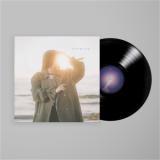
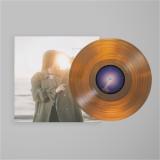
Burnin Music bossman Pegasvs returns with his first new material in several years, and it's a classy collection that's been worth waiting for. '(No) Peace' begins the journey: a languid slice of ambient / downtempo beauty with hypnotic spoken word vocals from MA.MOYO which eases you into the EP in meditative fashion. 'Take It' ushers us more towards the dancefloor with some mellow synth-funk stylings and punchy raps from The S.O.S. weaving in and out of Twyla's effortlessly yearning vocals. 'Traffic Jam' is a sumptuous patchwork of deep house motifs, where Rhodes chords, funky guitar flecks and plump bass tones interplay beautifully, and 'La Nuit' rounds off in stripped-back Detroit house style—all murky chord stabs, throbbing low end and classic drum beats.
Suche:lang de
2024 Repress
Siberian born and since 2010, a proud resident of Naples where her musical journey began, Anfisa Letyago has brought to the next generation of techno DJ/producers a sincerity and passion few others can. Of which she is successfully channeling to an incredible growing fanbase. From her releases on Drumcode, Rekids and her newly minted imprint N:S:DA, Kompakt are ecstatic to welcome her to our long running SPEICHER series.
“Keep Flight” is bare and punishing. Taking cues from the greats – think early Hood, Broom or Surgeon – Anfisa takes us down a relentless wormhole fortified by a pulsing vocal and EBM synth. In contrast, the flip side “Rhythm Tension” is a more slowed down, acid squelched affair where Anfisa’s vocals keep the vibe fully in check for those feel good moments everyone is currently needing in a DJ set.
Anfisa Letyago stammt ursprünglich aus Sibirien und ist seit 2010 stolze Einwohnerin von Neapel, wo sie auch ihre musikalische Reise begonnen hat. Sie hat der nächsten Generation von Techno-DJs und -Produzenten eine Aufrichtigkeit und Leidenschaft vermittelt, die nur wenige andere haben. Diese Leidenschaft hat sie erfolgreich an ihre stetig wachsende Fanbase weitergegeben. Nach Veröffentlichungen auf Drumcode, Rekids und ihrem neu gegründeten Imprint N:S:DA freuen wir uns sehr, Anfisa als Gast in unserer langjährigen KOMPAKT Extra/SPEICHER-Reihe begrüßen zu dürfen. "Keep Flight" ist so einfach wie gnadenlos. Erinnerungen werden wach an einige der ganz Großen - an den frühen Hood, Broom oder Surgeon. Anfisa führt uns in ein unerbittliches Wurmloch, dessen Sog durch eindringliche Vocals und EBM-artige Synthies noch verstärkt wird. Im Gegensatz dazu ist die Rückseite "Rhythm Tension" ein entschleunigter Acid-Mahlstrom, bei der Anfisas Gesang für genau die Wohlfühlmomente sorgt, die wir alle derzeit in einem DJ-Set brauchen.
- A1: Terry Bones - Dreaming (Dj Kalpa Mix)
- A2: Triple Concept - Tonetwister (Talla 2Xlc Remix Extend Version)
- A3: Talla 2Xlc - No Fate (Extended Mix)
- B1: Paul Van Dyk Feat Plumb - I Don‘t Deserve You (John O‘callaghan Remix)
- B2: Chakra - Love Shines Through (Alex M O.r.p. Extended Remix)
- B3: Lange & Sarah Howells - Out Of The Sky (Aly & Fila Remix)
- C1: Crw - I Feel Love (Dj Jamx & De Leon Remix)
- C2: Talla 2Xlc - Uprising (Club Mix)
- C3: Traveller - Bright Sign (Talla 2Xlc Remix)
- D1: Lost Witness - 7 Colours (Moguai Vocal Mix)
- D2: Markus Schulz & Talla 2Xlc - Mainhattan (Extended Mix)
- D3: Tony-H - Zoo Future (Dumonde Remix)
Vol. 1[18,91 €]
After the success of the 1st vinyl edition of Techno Club 25 years anniversary, Talla 2XLC and his ZYX team proudly present the 2nd vinyl edition including 12 trance classics in their full extended DJ friendly glory. Imagine on the same colored vinyl (gold and black) outstanding productions and remixes by Talla 2XLC, Terry Bones, DJ Kalpa, Paul van Dyk feat Plumb, John O’Callaghan, Chakra, Alex M.O.R.P.H., Lange & Sarah Howells, Aly & Fila, CRW, DJ Jamx & De Leon aka Dumonde, Markus Schulz and Tony-H. Finally has arrived the ultimate vinyl set of 12 eternal trance classics selected with love by Talla 2XLC and his Techno Club team. Add in your basket and purchase now this very limited edition colored vinyl set!
The final volume of this mammoth collection of music from Bristolian electronic music pioneer Krust is finally upon us, and like the previous parts of this collection it boasts an assemblage of music of different energies, vibes and feelings. The music contained within spans decades yet somehow refuses to be locked to one 'era' or 'style'. This is what makes this release unmissable for the hardcore fan, newcomer or completist.
'Irrational Numbers' is a meticulously curated collection of five parts, available on both vinyl and digital formats. The compilation is a treasure trove of hand-picked records and archival gems from Krust's extensive discography, thoughtfully remastered and presented anew for both devoted fans and newcomers.
'Irrational Numbers' features a dizzying array of self-released 12" cuts, exclusive unreleased VIPs and dub-plates, alongside epic major label widescreen classics. It's an unmissable journey through the sonic output of one of the UK's most distinctive and forward-looking producers.
Featured on part 5 are some groundbreaking entries into Krust's massive back catalogue. The live bass driven jazz inflected 'Second Movement' from his acclaimed 'Coded Language' LP jostles alongside the speaker smashing machine funk of 'Break Ya Neck' as well as a couple of more recent productions including the sleek and sinister 'The Portal', which is undeniably the man at his best, in full electronic stealth mode.
For longtime Krust enthusiasts, this project serves as a fond reminder of the boundless creativity and originality that flourished during the early 1990s and beyond. For those new to his work, it presents an enthralling introduction to innovative electronic music that has comfortably set the tone for generations to come. Get ready to experience the evolution of sound and immerse yourself in the visionary artistry of Krust.
Montenegrin born in Istanbul, precocious pianist growing up in an embassy, brilliant musician. Prolific composer speaking eight languages, he arranged music for jazz, pop music, adopting multiple identities.
For one label, he is Andy Loore; for another, Emiliano Orti. For others, he is called Alan Blackwell or Johnny Montevideo, but behind all these aliases, there is only one man: Janko Nilovic.
Exploring the shelves of musical production, venturing into the less-illuminated corners of library music, Janko Nilovic's name lights up dozens of shelves on which his soundtracks, his records for Editions Neuilly or Sforzando, but above all his twenty albums for Editions Montparnasse, are stored. A considerable and imposing work, rich in orchestrations of keyboards, strings and brass instruments, themes, atmospheres and melodies. A repertoire in which the cinema, television and advertising have come to find their delight ...
Subjected to the sharp blades of samplers, reduced to a few effective seconds, joined with rhythmic beats, some of his tracks have infiltrated hip hop for a long time , leading the most curious to go back to the source to get the complete albums from which the precious loops had been taken.
Almost unknown to the general public, Janko Nilovic is a master for the initiated, whether they are at his side in the studio or comfortably seated in their armchair savouring the final result on their turntable. His discretion combined with his long years of silence on the record could lead one to believe that he had cleverly arranged his disappearance from the radar to make Janko Nilovic a mystery that has never been completely solved.
Until this message from The Soul Surfers.
A few miles away, in their studio fired up by analog funk, the Muscovites had been put back on the Nilovic track by multi-instrumentalist Shawn Lee. A few passionate discussions later, and the desire for a joint album was already lighting up the amps, making the bass strings shiver and the drum skins tighten.
Initiated by the coming and going of scores, the collaboration finally continued in studio for a real exchange, instantly bouncing off proposals, developing ideas in a live group dynamic that distance would have made impossible.
To feel the vibrations accumulated for decades at the CBE studio (like Chatelain Bisson Estardy), a mythical place founded in 1966, in which many albums, especially library, were immortalized. A place where consoles, equipment and instruments were kept as they were, accumulating in their wiring, meters and speakers, endless hours of experimentation and recording.
A place that Janko knew well and where an old acquaintance was waiting for him. A Hammond organ with a Leslie booth whose keys he had already flattered in the past and behind which an improvisation and a single take were enough to complete the eponymous title.
Together, Janko Nilovic and The Soul Surfers have built Maze Of Sounds, a musical labyrinth paved by the master's keyboards where the soul-funk groove of the fiery Russians is the listener's thread, his point of reference in this maze of atmospheres and emotions, at once cinematic, nostalgic, dancing, dreamlike and contemplative.
An album where, however, nothing is compartmentalized. Where, blown by the whirlwind strung by a violin quintet, the barriers move preparing the entrance of a Slavic choir, letting a screaming guitar come and go alongside the crystalline liveliness of the Fender Rhodes, organize some rhythmic aerations at the disposal of the samplers.
A fusion between the cleverly blackened scores, between the science of precisely written arrangements and the soul-funk feel of The Soul Surfers. An album such as Janko Nilovic has been dreaming of making for years.
born in canadian Newfoundland, aadja was drawn to music early. growing up in nature made a profound impact, the surrounding woods, rugged landscapes and nearby ocean inspiring her innate music language. she picked up a guitar at age five, and went on to play clarinet, piano, flute and baritone saxophone, as well as receiving classical vocal training.
isolation of the early 20's meant chaos for some, but for the canadian dj and producer this period in time presented itself as a gift. it became an environment to control and create, a time to dive into the fire of pyrocbs and emerge stronger and unfettered.
''pyrocbs'', the follow up of her excellent ''thought dealer'' record, features 11 compositions orchestrated by the prophet 6, and spiced with hilary's unique vocals. a bold, minimalist approach weaving a romantic dialogue between sounds.
like the eye of a storm, ''pyrocbs'' is what aadja defines as finding stillness amidst chaos.
We’re kicking off the new year in style with a fantastic new double header by RAXON. This Egypt-born, barcelonese powerhouse has left his scent marks all over the place in recent years. He has developed an instantly recognizable sound and that’s no small feat in these times shaped by so much formulaic dullness. “Your Fault” sees our Catalan hot shot in an exuberant disco mood. Mind bending chord progressions foiled with Raxon’s trademark vocal stutters guarantee for wonderfully twisted hands in the air moments. With “Beskar” we’re entering Star Wars nerd territory. Jedipedia says, Beskar is a uniquely resistant iron that develops a wide range of properties—and colors—in the hands of skilled metalsmiths. Alright. Musically speaking, we’re dealing with a stealthy, funky as hell trance-not-trance juggernaut. 2024 is off to a good start:)
Wir beginnen das neue Speicher-Jahr stilvoll mit einem fantastischen neuen Doppelwhopper von RAXON. Dieses in Ägypten geborene Kraftpaket aus Barcelona hat in den letzten Jahren überall seine Duftmarken hinterlassen. Er hat einen Sound entwickelt, den man sofort wiedererkennt, und das ist keine kleine Leistung in diesen Zeiten, die von so viel formelhafter Langweiligkeit geprägt sind. “Your Fault” zeigt unseren katalanischen Draufgänger in ausgelassener Disco-Stimmung. Verrückte Akkordprogressionen, gepaart mit Raxons Markenzeichen, der Stotterstimme, sorgen für wunderbar verdrehte Hands in the air Momente. Mit “Beskar” betreten wir Star Wars Nerd-Territorium. Laut Jedipedia ist Beskar ein besonders widerstandsfähiges Eisen, das in den Händen geschickter Schmiede eine breite Palette von Eigenschaften – und Farben – entwickelt. Nun gut. Musikalisch gesehen haben wir es mit einer verstohlenen, verdammt funkigen Trance-Not-Trance-Rakete zu tun. 2024 hat einen guten Start hingelegt : )
Red Vinyl
Time has come for Futurepast to release a long format album: Alarm Phase Red - catalogue number FPLP01 - will be the first full-length work from Futurepast founder Davy Vandegaer, appearing here under a new name: Brainwashed Today.
Rooted in a conceptual approach of electronic music, this double LP ranges from industrial ambient to experimental techno. Like an antidote to a twisted reality of controlled screens and mental isolation, Alarm Phase Red uses the raw language of electricity
to reach the core of the machine and sabotage it, reverse its effects by mirroring them. Fighting fire with fire, deflecting the pressure and strain of a world driven by fear and anger, the music of Brainwashed Today acts like a cathartic escape from technological enslavement.
With the purchase of the vinyl comes a batch of three digital bonus tracks pursuing further the sound research of the album.
There are two versions of the vinyl - classic black and triple-color limited Indie Shop edition.
Both have special insert inside with the bands bio and photos.
Generacja JAZZ is a project showing a fragment of the new wave of Polish jazz, treading its own path, creating, touring and jamming across Europe. Borders don't exist - especially musical - the new generation is engaging with nightclubs, festivals and playlists. The time has now come to show its broader perspective. We created a project which involves a handful of groups that have already racked up debut albums and festival wins, as they set out on their musical odyssey. The groups also have other things in common, like their passion, originality and, for the needs of the project, age - all the artists during the recording of this album were under 30 years old. This is the new generation - the Jazz Generation.
For the Jazz Generation record we invited five bands who had already released debut albums: Immortal Onion, Klawo, Rejoin, Twoosty Mayonez and USO 9001. We also reserved two spots on the compilation for the winners of our open call competition, whereby on the basis of the jury's choice (jury: Monika Borzym, Paulina Przybysz, Envee, Wojtek Mazolewski i Marcin Groh Grośkiewicz) we met the winning bands: Kosmos and quietet.
The sleeve artist is Kornelia Nowak, who won our open call for young designers and graphic artists. Here once again we could rely on the opinion of a prestigious jury comprised of: Beata Śliwińska Barrakuz, Bovska, Maciej Animisiewasz Grochot, Grzegorz Forin Piwnicki i Marcin Groh Grośkiewicz.
Generacja JAZZ LP is also a start of the new imprint - U JAZZ ME, which will be focused on jazz from Poland.
And here are the bands from the album:
1. Immortal Onion - A band from the Tri-City playing a broad spectrum of instrumental music.
Band members: Wojtek Warmijak (percussion), Tomir Śpiołek (piano, synths), Ziemowit Klimek (Upright Bass, synths).
The band Immortal Onion has already established itself as one of the most interesting projects of the new wave of Polish jazz, and is consistently being labelled as such abroad. After two well received albums ("Ocelot of Salvation" (2017) and"XD Experience Design" (2020) U Know Me Records) they released their third album "Screens" in 2022, which was recorded with the well known Tri-City composer and saxophonist - Michał Jan Ciesielski.
The inspiration behind the band's formation were such artists as: Esbjörn Svensson, Hiromi Uehara, Tigran Hamasyan and Tosin Abasi.
The group's guiding principle from the very beginning was the fusion of often disparate musical styles, which bore "post instrumental aggressive gay pop". Despite the stylistic discrepancies, between which they swim, the group has forged its own identifiable language, characterised by complicated rhythmical structures, energetic riffs and trance beats with lyrical melodies.
The trio has performed its original material at many venues and festivals around Europe and Asia.
2. Klawo - seven adventurous adventurers from Gdańsk, who were brought together by their love for music, halvah and throwing Frisbee. Their self-named début album, released in 2022 on the local label Coastline Northern Cuts, is an amalgam of the inspirations of each of the team members and played backwards contains tips on how to reach the Kashubian pyramids. After a win at the international competition Jazz in the Park, held in Cluj-Napoca in Romania, the band began work on their second album. Meanwhile, they were also travelling the length and breadth of Poland on a mission to infect people with the idea of Baltic Funk.
3. Kosmos is a Łódż based jazz quintet. It was formed in 2020 by Pianist Stanisław Szmigero, Saxophonist Iwo Tylman and Trumpeter Jan Ostalski. However, it wasn't until 2022 that Kosmos found its true form when Kamil Gużniczak (Upright bass) and Kacper Kuta (Percussion) joined the line-up.
Their compositions are influenced by Polish yass bands, electronic music and hip-hop. Kosmos music is a mix of lyricism, space, intensity and elements of experiment.
The band members are all eccentric characters possessing different means of musical expression - looking at them, one could even argue they are a group of oddballs. Despite this, for reasons unbeknownst to themselves, the members of Kosmos complement each other on stage and form a unified artistic vision of the world around them.
Kosmos officially released their début single "Ja" in June 2023. They regularly play concerts across Poland and recently were selected as distinguished artists at JAZZiNSPIRACJE (JAZZiNSPIRATION) - a competition held during the 13th Lublin Jazz Festival.
4. Quietet (formed at the beginning of 2023) is the result of meetings between five talented musicians with a deep passion for musical creation. Its sound is a unique blend of Jazz and classical music with a hint of hard rock. The band is inspired by the Scandinavian approach to making music, which brings a characteristic atmosphere and melodies to their work. Their music captivates listeners with its originality, refined improvisations and flawless technique. Both classical and modern musical trends feed their inspiration when creating passionate and emotional compositions.
Their works are full of sound experimentation, which equally surprise and expose new musical horizons. Through their compositions, "Quietet" aims to share their emotions evoked during performances, creating a musical journey that affects and inspires.
5. Connecting jazz with electronic music in fresh interpretations, six young musicians make up the group Rejoin. The group re-formed in 2020 after a four-year break, playing their debut concert at Lotos Jazz Festival Bielska Zadymka Jazzowa. The musicians in Rejoin have performed alongside such artists as: Urszula Dudziak, Krystyna Prońko, Marcin Masecki, Szczyl, Kuba Więcek and Paulina Przybysz.
Most of the members of Rejoin are students from the Katowice Music Academy, where they also develop their own projects. Rejoin was a recipient of the Fabryki Norblin Music Masterclass Foundation scholarship.
6. Twoosty Mayonez is something your grandad would listen to with his younger sister. The non-standard approach to jazz alongside a pursuit of strange sounds, culminated in the conceptual album entitled "Carmin". The material was created by Bartosz Wolerta (percussion) and Dominik Kaniewski (bass guitar/synths). "Triceradiplodocus" tells the story of a mechanical dinosaur that lives on the yet undiscovered planet Carmin.
Repress 2024
Servus everybody!
Why "the hell" didn't anyone think of this before? It was so obvious: When the same music goes the same way, the truth always lies on the turntable.
KOMPAKT presents the long-awaited "two-tracker", cold-pressed and remixed. The Voigt brothers meet Helmut Geier and vice versa, or: Kölsch meets Löwenbräu, because we stand by you, star of the south.
So let's welcome the megahit "W.I.R." by Wassermann from 2000 in a brand new DJ Hell remix, and a remix by Voigt & Voigt of DJ Hell's "Anything Anytime" anthem from 2017. Two classics that go down like liquid gold. It comes from the heart.
Ja, Servus mitanand!
Warum ist da eigentlich niemand vorher d’rauf gekommen, es lag doch immer auf der Hand: Wenn gleiche Musik denselben Weg geht, liegt die Wahrheit immer auf dem Plattenteller.
KOMPAKT präsentiert Euch den lang erwarteten Zweiteiler, kalt gepresst und geremixt. Die Voigt-Brüder treffen auf Helmut Geier und vice versa, oder: Kölsch trifft auf Löwenbräu, denn mer stonn zo Dir, Stern des Südens.
Begrüßen wir also den Megahit "W.I.R." von Wassermann aus dem Jahr 2000 im neuen DJ Hell-Remix und den Remix von Voigt & Voigt zu Hells "Anything Anytime"-Hymne aus dem Jahr 2017. Zwei Klassiker, die runtergehen wie flüssiges Gold. Et kütt vun Hätze, oder wie der Bajuware sagt: ’S kimmd vo Herzn.
Kelvin Krash – Musiker, visueller Designer, Produzent, multidisziplinärer Allround-Mastermind – veröffentlicht sein Debütalbum HARSH über die eigene Plattform Krashed. Selbst geschrieben, über einen Zeitraum von fünf Jahren produziert und gemischt, ist es ein ehrgeiziges, persönliches Werk, auf dem Krash' Synthesizer-getriebene Produktion mit roh-emotionalem Songwriting kollidiert. BLUE WHEELS und BRUISED heben Krash' eigene elektronisch bearbeitete Vocals hervor, hinzu kommen Gastauftritte von langjährigen Kollaborateuren wie A$AP Rocky (GET A GRIP) und Coucou Chloe (THIEF INDIE NACHT). In den letzten Jahren hat sich Kelvin Krash als führender Produzent im zeitgenössischen Rap etabliert, der mit A$AP Rocky, Skepta, Giggs, Jeshi, A$AP Twelvvy, Lancey Foux und Kasien zusammenarbeitet. Ltd. Auflage auf transparent-blauem Vinyl.
- A1: Alice Smith - Love Endeavor (Maurice Fulton Remix)
- A2: Rick Wilhite - Ruby Nights (Gilb'r Solo Flight Remix)
- B1: The Detroit Experiment - Think Twice
- B2: Zomby - Tarantula
- C1: Langenberg - Times (Manuel Tur's Ground Glass Reflex)
- C2: Carl Craig - Sandstorms ( 2011 Version)
- D1: Lil Silva - Seasons
- D2: Dj Spen Presents Dj Technic - Gabryelle (D-Malice Re-Fix)
- D3: Kingdom - Stalker Ha
- E1: Mala - Lean Forward
- E2: Martyn - Vancouver
- F1: Joy Orbison - Hyph Mngo
- F2: Pearson Sound - Stifle
- G1: Baron Zen - Burn Rubber (Dâm-Funk Remix)
- G2: Wajeed - Tron
- G3: Flying Lotus - Melt!
- G4: 00Genesis - No Shoes Trampoline
- G5: Dorian Concept - The Fucking Formula
- H1: Azymuth - Morning (Manha)
- H2: K. Frimpong & His Cubano Fiestas - Kyenkyen Bi Adi M'awu
WAREHOUSE FIND
Deviation Classics celebrates the legacy of the legendary London club night and record label created by Benji B and Judah in 2007. Famously "one of London's most aurally audacious nights”, Benji B’s Deviation is a name synonymous with music and at the forefront of London’s culture scene and within music internationally.
The collector’s box will include four 12” vinyl including 20 carefully selected tracks, many of which have previously been unavailable on vinyl or hard to find and all capturing those key moments from the past 13 years. The compilation will also be accompanied by an exclusive mix curated by founder Benji B marking the end of this chapter for Deviation, the mix will be available to purchase on CD and streamed or downloaded on Bandcamp and all major digital platforms.
Spanning all genres of music, the compilation comprises tracks from Moodymann, James Blake, Joy Orbison and Flying Lotus and many more from across Deviation’s impressive roster of guests. Though several of the tracks went on to become hits, all of them became part of Deviation’s regular playlist and are now considered to be part of the Deviation DNA - a club night that has its own sound, its own hits and its own classics. The tracks highlight how the best club residencies can hone and shape their own identity, where reactions from the dance floor can influence which tracks make it into the resident sets to become future classics, and how a single tune can conjure the nostalgia of an era, venue, place and time.
Including regular staples from Benji B’s resident sets, the DJ comments: “This album showcases the tunes that got the biggest reactions month after month, drawn from my sets at Deviation over the years. They would not only be my choice, but also the choice of the Deviation regulars. Not all of these were necessarily big tunes outside of the club night – some would go on to be, but some could be 12-inch B-sides, album cuts or unreleased dubplates that went off when dropped for the very first time, and then became our own classics: all certified Deviation anthems in their own way”
Debut album of heavy Colombian salsa by the obscure and short-lived El Clan Antillano. Founded in 1975 by singer Jacky Carazo and radio personality / composer Mike Char and backed by a studio orchestra comprised mostly of Fruko Y Sus Tesos band members. The record has been remastered from the original tapes, with an additional three bonus cuts taken from two rare 45 singles, including the sought after track ‘Alma’. First time reissue. 180g Vinyl.
El Clan Antillano was an obscure, short-lived salsa group started in 1975 by singer Jacky “El Caballo” Carazo, originally from Cartagena, and radio host / song composer Mike Char, from Barranquilla. The band was active only until 1977, with a mere two albums to its name. Carazo and Char, “los amigos costeños” (friends from the Caribbean coastal area) created El Clan Antillano as a fresh start after the previous group Carazo had been the lead singer for, El
Afrocombo, had become inactive.
Char primary passion was music, especially songwriting. One of his skills in this area was adapting foreign songs, often in a different language, rhythm, arrangement or genre, and refashioning the tune in an uptempo Caribbean dance mode as a salsa or cumbia. This formula, as well as his own original compositions, soon brought him success not only with costeño friends like Carazo and Vicentini, but also with Medellín’s Fruko, allowing him to make a name for himself with record labels in that city. It was at this juncture, in 1975, that El Clan Antillano was born. This is their first album and was recorded with local studio musicians. It’s been said that most on the first album were from Fruko Y Sus Tesos (the voice of Joe Arroyo can be heard on coro) as well as others involved with various groups like La Protesta (de Colombia) and Juan Piña’s La Revelación.
The album kicks off with ‘Donde ‘sta? Donde ‘sta?’, a medley of costeño lyrical phrases quoting various popular porros. Gradually changing the vibe, this is followed by Enrique Aguilar’s ‘El baile del
ratón’, a humorous cumbia that changes into a salsa halfway through. As if El Clan Antillano were not entirely confident about featuring purely salsa from the start, the same cumbia/salsa hybrid formula is used in the third piece, a faithfully rendered version of Eddie Palmieri’s ‘Mi cumbia’.
‘Estás equivocada’ rocks hard like the best Venezuelan salsa of the time. ‘Esta mañana’ is a cover version of an obscure bolero from Curaçao’s Erwin Castaneer with Super Combo Castaneer. ‘En la oscuridad’ is an interesting mashup of Puerto Rican bomba and New York style pachanga. ‘El despertar’ is a sunny sounding pop song reinvented as a Nelson y sus Estrellas style salsa/cumbia hybrid with a fantastic ‘montuno’ section.
Up next is a hard salsa jam in the ‘pregón’ (street vendor’s cry) genre, written by Fruko Y Sus Tesos percussionist Álvaro Velásquez (composer of ‘El preso’). The original album track list closes out with a fantastic rendition of Puerto Rican singer/composer Bobby Capó’s classic ‘El negro bembón’ that the world first leaned to love through Cortijo y Su Combo. Three bonus tracks have been added to the album as it was originally very short. Interestingly, there were four songs from two 45 singles cut by the band that were never included on either long play. While the ephemeral El Clan Antillano may not be as well known as the groups it’s related to, namely El Afrocombo and Fruko Y Sus Tesos, it certainly deserves credit as a worthy participant in the historical evolution of salsa colombiana.
Zenit is a jazz ensemble from Krems in Lower Austria, founded in 1976 by Hannes Treiber and Willi Langer. Their music was celebrated locally, but to reduce them to their local fame would be a shame: After all, their first two LPs, Stimmungswechsel (Change of Moods) and Früchte (Fruits), quickly gained them a much wider audience of discerning listeners. Arguably, however, Zenit's third and final LP Straight Ahead is the most special of their records. It initially came out in 1986 on the producer's label Spray Records, and is today one of the hardest-to-find Austrian jazz records. Its centrepiece is the infectious slow-motion disco piece 'Waiting,' with vocals by American jazz singer Linda Sharrock. Effortlessly bringing together pop, soul and new age vibes, this is a record that is as unique as it is difficult to date. Does it sound like from the 80s We're not sure. To our minds at least, it could also be from the future.
On 'Models', Lee Gamble liberates sonic spectres to inform a suite of illusory anthems, subliming vulnerable, half-remembered fragments of dream pop, Soundcloud rap and trance in the process. Sung by cybernetic voices in an almost wordless language, his widescreen memories reverberate across the last few decades of pop history, smudging Elizabeth Frazer's surreal poetry into disembodied diva cries and Lil Uzi Vert's abstract, AutoTuned mumbles. Extracting haunted fragments of synthetic corrupted chatter and indecipherable non-words to sculpt dreamy pop simulacrums, Gamble takes the concept of the pop producer to its logical extreme; examining how intonation and language is engineered to monopolise our attention, his magical inversion of pop playing like a bewitching symphony of earworms.
trip9love...??? ist das dritte Album von Tirzah, produziert von ihrer langjährigen Kollaborateurin Mica Levi.
Wir kennen Tirzah bereits als eine Frau nicht vieler Worte und so nimmt es nicht wunder, dass ihr drittes Album "trip9love...???" am 05.09.23 in die Welt geworfen wurde. Zumindest digital. Ab 17.11. wird es dann auch auf CD und LP erhältlich sein. Geschrieben und aufgenommen wurde das Album von Tirzah und Mica Levi bei den beiden zu Hause und in verschiedenen Ecken von Südost-London und Kent. Nach mehreren Aufnahmesessions, die sich über etwa ein Jahr erstreckten, hatte die Musik plötzlich einen Sound, dem sie folgen wollten. Die Tracks wurden mit Piano-Loops auf einem Beat aufgebaut, mit Verzerrung versehen und mit romantischen Gesangslinien unterlegt. Die Gedichte drehen sich um Themen der Liebe, sowohl der realen als auch der imaginären. Die Welt, in der die Platte spielt, ist eine entspannte Club-Fantasie. Die Geschwindigkeit, die Verbindung und die Gleichartigkeit aller instrumentalen Elemente haben dazu geführt, dass sich die Platte wie ein einziger Song anfühlt, ein Tagebucheintrag eines Moments oder eine Faszination für einen bestimmten Sound, den sie für wichtig hielten. Die Art der Veröffentlichung von trip9love...??? spiegelt die Art und Weise wider, wie sie entstanden ist.
trip9love...??? ist das dritte Album von Tirzah, produziert von ihrer langjährigen Kollaborateurin Mica Levi.
Wir kennen Tirzah bereits als eine Frau nicht vieler Worte und so nimmt es nicht wunder, dass ihr drittes Album "trip9love...???" am 05.09.23 in die Welt geworfen wurde. Zumindest digital. Ab 17.11. wird es dann auch auf CD und LP erhältlich sein. Geschrieben und aufgenommen wurde das Album von Tirzah und Mica Levi bei den beiden zu Hause und in verschiedenen Ecken von Südost-London und Kent. Nach mehreren Aufnahmesessions, die sich über etwa ein Jahr erstreckten, hatte die Musik plötzlich einen Sound, dem sie folgen wollten. Die Tracks wurden mit Piano-Loops auf einem Beat aufgebaut, mit Verzerrung versehen und mit romantischen Gesangslinien unterlegt. Die Gedichte drehen sich um Themen der Liebe, sowohl der realen als auch der imaginären. Die Welt, in der die Platte spielt, ist eine entspannte Club-Fantasie. Die Geschwindigkeit, die Verbindung und die Gleichartigkeit aller instrumentalen Elemente haben dazu geführt, dass sich die Platte wie ein einziger Song anfühlt, ein Tagebucheintrag eines Moments oder eine Faszination für einen bestimmten Sound, den sie für wichtig hielten. Die Art der Veröffentlichung von trip9love...??? spiegelt die Art und Weise wider, wie sie entstanden ist.
SULPHUR AEONs neuestes Werk ist gesegnet mit Kontrasten, klanglicher Ebbe und Flut. Ein Taifun kantiger Riffs und wilder Blastbeats, raffinierte Melodieschichten, dichte Atmosphäre und triumphal gesungene Refrains reißen dich mit. Ätherische Akustikgitarren, subtile Synthesizer, einen Hauch von Gothic ('The Yearning Abyss Devours Us'), satte Leads, E-Bow-Parts, heftige Aggression ('Arcane Cambrian Sorcery'), monumentale Schwere, die in hypnotische Gesangsmuster übergeht ('Seven Crowns And Seven Seals'), und ein großes Finale ('Beneath The Ziqqurrats') - "Seven Crowns And Seven Seals" überschreitet Genres; es wütet und zerstört, lullt dich im nächsten Moment in gefährlich täuschende Ruhe, nur um dich unwiderbringlich in den dunklen Strudel des Ozeans zu reißen. SULPHUR AEON meistern ihren durchdringenden Cinematic Death Metal der Extraklasse, gehen über sich hinaus und klingen dabei doch unverkennbar kohärent - perfekt eingefangen und verfeinert von den langjährigen Mitarbeitern Simon Werner und Michael Zech (Secrets Of The Moon, Bølzer etc.), während das Mastering von V. Santura (Triptykon, Dark Fortress) übernommen wurde. Was das Artwork betrifft, so haben SULPHUR AEON diesmal mit der Tradition gebrochen, wieder mit Ola Larsson zu arbeiten, und sich mit dem Italiener Paolo Girardi zusammengetan, um eine Lovecraft'sche Apokalypse darzustellen, die der Opulenz und Dynamik des Albums einen raueren Stil entgegensetzt.
2020. Full On Lockdown: Musician LaurenceMasonputs together this off the wall idea meshing together two of his biggest musical heroes, Dave Greenfield of the tough 1970's proto-punk band The Stranglers with the oh so cool 1960's jazz of Dave Brubeck. He puts up his demo on Youtube not really expecting much in the way of feedback. And gets ONE MILLION hits. And hundreds of requests for a release. Jazz Room Records Head Honcho Paul Murphy says "Do you wanna record that and release it?"."Affirmative!" The result is this grooving Soulful and Funky Jazz version of "Golden Brown". We're rush releasing this as when announced we were swamped with requests asking when it will be available.
On the "B" side is a languid and super cool version of "Walking On The Moon", originally by 80's Supergroup The Police.
Each copy of the Take Vibe E.P. will contain a Cut Out and Keep Fully Customizable Front Cover Sticker Sheet
This is just a taster for what we're confident will be a must have album to be readied for 2021 release.
I Talk To Water, the fifth album for Kompakt by Danish producer Kölsch, is the artist’s most personal statement yet. While all the trademarks that make his music so popular and powerful are still present – lush, melodic techno; swooping, trance-like figures; sensuous, shivery texturology – I Talk To Water is also a deep and intimate rapprochement with family and history, a beautiful, finely detailed document of loss and memory, and a tracing of the long, unbroken thread of grief that runs through our lives once we’ve lost those we loved.
The emotional core of I Talk To Water, then, is a cache of recordings by Kölsch’s father, Patrick Reilly, who passed away in 2003 from brain cancer. With time rendered elastic by the pandemic and its associated lockdowns, its sudden, alienating shifts in everyday living, Kölsch found himself reflecting on his father’s passing and ongoing spiritual presence, thinking about how best to memorialise such a significant figure in his own life. Those recordings opened a gateway, of sorts, for Kölsch to move through – a way to bring past and present together and entwine them in a sensitive, poetic manner.
Kölsch’s father was a musician – “touring in the sixties and seventies, in the Middle East especially, he was doing the whole hippy trail, playing guitar, and wrote some songs over the years,” he recalls. “But all in all, he decided to focus on family rather than pursue a musical career.” Reilly kept playing and writing music over the years, though Kölsch hadn’t listened to the material for some time: “I’d never had the guts to listen to it, because I just felt too fragile listening to his voice. It’s such a tough thing to go through.”
During the pandemic, though, Kölsch listened through the fragmented body of work that his father had produced over the years. “I decided I’m gonna finally release my dad’s music twenty years after his passing,” he reflects. “This whole album is about the process of loss, and for me it’s been one of my main driving forces in my musical life, the whole emotional aspect of whatever I’ve done has been based in that feeling that he’s not there anymore.”
Recordings of Reilly appear on three songs across I Talk To Water. His guitars drift pensively across “Grape”, offering a lush thread of melody that Kölsch wraps with clicking, driftwood rhythms and droning, melancholy bass. “Tell Me” is a lovely three-minute art song, a sadly beautiful reflection, minimally adorned with gentle keys and a muted pulse. And on the closing “It Ends Where It Began”, Kölsch lets his father’s acoustic guitar take centre stage for a lament that’s unexpectedly folksy, a guitar soli dream, which Reilly originally recorded in 1996. “He actually recorded it for my first album that never came out,” Kölsch reveals, “and I had it sitting around forever. That is purely him.”
These three imagined collaborations between father and son are poised and delicate. But their relationship also marks the gorgeous music Kölsch has made across the rest of I Talk To Water, from the itchy yet lush “Pet Sound” (titled in tribute to one of Reilly’s favourite albums), the flickering synths and yearning vocal samples that slide through “Khenpo”, the ecstatic shuddering that marks “Only Get Better”, or “Implant”’s slow-motion pans and subtle reveals.
There’s also the title song, where Kölsch is joined by guest Perry Farrell (Jane’s Addiction, Porno For Pyros), singing a mantra for internal reflection: “I talk to water / Searching for myself / Looking for answers / Oceans of you.” Farrell’s appearance brings another timbre, another spirit to the album, aligning neatly with his recent interest in electronic music. “He was completely taken by this idea of talking to water,” Kölsch says, thinking about the ways we collectively lean towards the natural world as a comfort and a listener, a guide through mourning, a way to map out the terrain of the heart. This mapping is something that Kölsch has proven remarkably adept at through the years; dance music for both body and mind, but also both for the here-and-now, and for the hereafter.
“I Talk To Water”, das fünfte Album des dänischen Produzenten Kölsch für Kompakt, ist zweifellos das persönlichste Statement des Künstlers bislang. Während alle Markenzeichen, die seine Musik so beliebt und kraftvoll machen, immer noch präsent sind – üppige, melodische Techno-Tracks; schwebende, tranceartige Elemente; sinnliche, fiebrige Texturen – ist “I Talk To Water” auch eine tiefe und intime Annäherung an Familie und Geschichte. Es ist ein wunderschönes, fein ausgearbeitetes Dokument des Verlusts und der Erinnerung, und es verfolgt den langen, ungebrochenen Faden der Trauer, der durch unser Leben läuft, sobald wir diejenigen verloren haben, die wir liebten.
Der emotionale Kern von “I Talk To Water” besteht aus Aufnahmen von Kölschs Vater, Patrick Reilly, der 2003 an Hirnkrebs verstarb. Durch die Pandemie und ihre damit verbundenen Lockdowns, die plötzlichen, entfremdenden Veränderungen im Alltag, fand Kölsch sich in Gedanken an den Tod seines Vaters und seine fortwährende spirituelle Präsenz wieder. Er überlegte, wie er eine so bedeutende Figur in seinem eigenen Leben am besten verewigen könnte. Diese Aufnahmen öffneten ihm sozusagen ein Portal, um Vergangenheit und Gegenwart miteinander zu verbinden und sie auf sensible und poetische Weise zu verweben.
Kölschs Vater war Musiker – “er tourte in den sechziger und siebziger Jahren, vor allem im Nahen Osten, auf dem Hippie Trail, spielte Gitarre und schrieb im Laufe der Jahre einige Songs”, erinnert sich Kölsch. “Aber alles in allem entschied er sich, sich auf die Familie zu konzentrieren, anstatt eine musikalische Karriere zu verfolgen.” Reilly spielte und schrieb jedoch im Laufe der Jahre weiterhin Musik, obwohl Kölsch das Material lange Zeit nicht angehört hatte: “Ich hatte nie den Mut, es anzuhören, weil ich mich einfach zu zerbrechlich fühlte, seine Stimme anzuhören. Es ist so schwer, das durchzustehen.”
Während der Pandemie hörte sich Kölsch jedoch durch das fragmentierte Werk, das sein Vater im Laufe der Jahre produziert hatte. “Ich beschloss, die Musik meines Vaters zwanzig Jahre nach seinem Tod endlich zu veröffentlichen”, reflektiert er. “Dieses ganze Album handelt von dem Verlustprozess, welcher für mich generell eine der Hauptantriebskräfte in meinem musikalischen Leben ist. Der ganze emotionale Aspekt von dem, was ich getan habe, basierte auf dem Gefühl, dass er nicht mehr da ist.”
Auf “I Talk To Water” sind Aufnahmen von Reilly in drei Songs zu hören. Seine Gitarren ziehen nachdenklich durch “Grape”, bieten einen üppigen Melodiefaden, den Kölsch mit klickenden, treibenden Rhythmen und dröhnendem, melancholischem Bass umwickelt. “Tell Me” ist ein schönes dreiminütiges Kunstlied, eine traurig-schöne Reflexion, minimal geschmückt mit sanften Tasten und einem gedämpften Puls. Und auf dem Abschlusstrack “It Ends Where It Began” lässt Kölsch die akustische Gitarre seines Vaters im Mittelpunkt stehen, ein überraschend folkiger Klagegesang, den Reilly ursprünglich 1996 aufgenommen hatte. “Er hat es tatsächlich für mein erstes Album aufgenommen, das nie veröffentlicht wurde”, enthüllt Kölsch, “und ich hatte es ewig liegen.”
Diese drei erdachten Kollaborationen zwischen Vater und Sohn sind ausgewogen und zart. Aber ihre Beziehung prägt auch die wunderschöne Musik, die Kölsch im Rest von “I Talk To Water” geschaffen hat, angefangen bei dem nervösen, aber üppigen “Pet Sound” (benannt als Hommage an eines von Reillys Lieblingsalben), den flimmernden Synthesizern und sehnsüchtigen Vocal-Samples in “Khenpo”, den ekstatischen Erschütterungen in “Only Get Better” oder den langsamen Schwenks und subtilen Enthüllungen in “Implant”.
Es gibt auch den Titelsong, in dem Kölsch von Gast Perry Farrell (Jane’s Addiction, Porno For Pyros) begleitet wird, der ein Mantra für die innere Reflexion singt: “I talk to water / Searching for myself / Looking for answers / Oceans of you.” Farrells Auftritt bringt eine weitere Klangfarbe, einen weiteren Geist in das Album, der gut zu seinem jüngsten Interesse an elektronischer Musik passt. “Er war völlig fasziniert von der Idee, mit Wasser zu sprechen”, sagt Kölsch und denkt darüber nach, wie wir kollektiv zur Natur als Trost, Zuhörer, Führer durch die Trauer neigen, um die Gelände des Herzens zu kartieren. Diese Kartierung ist etwas, in dem Kölsch im Laufe der Jahre erstaunlich geschickt war; Tanzmusik für Körper und Geist, sowohl für das Hier und Jetzt, als auch für das Leben danach.
Berlin based Philipp Otterbach debuts on Offen with "Correct Me If I Am Incorrectly You". TIP!
Post-music phantasmagoria for the world in which the past became more unpredictable than the future.
Remember Cowboy Bob, Salaryman and Gary Floyd in that opium den in Fischeln?
Deconstructed entertainment for hopeless romantics and testament to Otterbach's unique artistic language.
Supersound vinyl LP, full cover inside out print.
Sept duos pour guitar acoustique et piano préparé is the second duo recording from Stephen O'Malley and Anthony Pateras. Their first together, Rêve Noir (2018), took an electro-acoustic scalpel to a 2011 duo concert for electric guitar and piano, using Revox and digital treatments to twist and smear gig documentation into ghostly echoes and fractured drones. Here, in contrast, the music is entirely acoustic and presented as it was performed, without overdubs. Both players’ choices of instruments are notable: this is O'Malley’s most extensive recording on steel string acoustic guitar (playing an instrument whose previous owners include Marissa Nadler and Glenn Jones) and Pateras return to the prepared piano, which he has rarely employed in recent years, after spending much of the first decade of the 21st century exploring its possibilities.
Recorded during O'Malley’s residency at La Becque on Lake Geneva in the summer of 2021, from the first moments of the opening ‘déjà revé’ the music immediately establishes the distinctive landscape of chiming tones and hovering clouds of resonance explored throughout its one-hour running time. Pateras’ preparations create tolling bell-like tones alive with complex overtones, alongside which O'Malley’s open strings and natural harmonics add a sparkling clarity. While Pateras’ music often uses a densely chromatic harmonic language, these duos are remarkable for their modal simplicity. However, the interaction between the pure intervals of O'Malley’s just-intoned strings and the unstable harmonies created by the piano preparations suspends the music in an oneiric state of hazy ambiguity. Without obvious reference to tempo or meter, the music floats in what the composer Ernstalbrecht Stiebler has called a ‘bottomless sound space’, the temporal placement of events determined by bodily rhythms and the performers’ own listening to (and enjoyment of) the sounds being made.
Heard one way, this music can seem striking in its consistency, almost environmental. Attending more carefully, the listener hears the pitch sets and tunings changing throughout the album’s length. Each piece has its own character, subtly distinguished from the others through mood, pacing, and timbre. On ‘déjà voulu’, for instance, O'Malley makes prominent use of slide, the woozy, bending pitches weaving through a series of lush arpeggiated chords from the piano. ‘Déjà senti’, on the other hand, is particularly spare, the gestures spaced out to the extent that they often float in isolation against the background of fading resonance. Much of ‘déjà su’ is built around a slowly pulsing single prepared piano tone, creating an almost ominous tension, whereas the sparkling guitar harmonics and arpeggios of the closing ‘déjà raconté’ have a gently triumphal air. While the music’s calm, rippling surface is immediately entrancing, these seven duos – in the tradition of the best improvised music – also reward close listening, which reveals sonic details and focuses the listener’s attention on how the music unfolds spontaneously from decision to decision, from gesture to gesture.
Recorded during a period when O'Malley and Pateras were grieving the loss of recently departed friends and collaborators, these seven duos possess a reflective, at times almost mournful quality. More importantly, though, they are imbued with other qualities that can arise from personal loss: a clarity that allows one to clear away the inessential, to begin again, to renew one’s faith in friendship and music.
Massimiliano Pagliara pays tribute to Manuel Göttsching in his first solo EP on his very own Funnuvojere Records, ‘All the VCOs You Can Eat’.
As a devoted fan of Göttsching’s groundbreaking work, Pagliara draws inspiration from his musical hero, crafting a mesmerizing EP that encapsulates the spirit and innovation of Göttsching’s influential sound. The release comprises three different interpretations of the same track, each imbued with exceptional artistry and technical knowledge.
The ceaselessly rolling piano chords in A1 Modulator Mix and B1 Traveler Dub are clear reminders of Göttsching’s E2E4 famous hypnotic refrain. The slight tonal variations, the stretched-out acid line and the uplifting drums conspire to create a sense of transcendence and euphoria. The infectious drums have their own space in B2 The Lonely Drums. This mix has an irresistible groove that will make all dance floors bounce.
The artwork captures the essence of Pagliara’s music through a vibrant and emotive visual language, reminiscent of the pioneers of abstract expressionism. The geometrical forms and patterns mirror the intricate melodies and pulsating beats of this future classic EP.
'After a first album as a duo released on Okraina Records: "Le Corps Défendant", Delphine Dora and Mocke invite us to join them again in listening to a new album. We slip into it as if in a dream, the music carries us away with its floating images.
Heard before on a handful of disturbingly beautiful solo albums and in collaborations such as Midget!, Arlt, Chevalrex, Mohamed Lamouri, Mocke (Dominique Dépret's nom de plume) is a subtle and inventive guitarist, who draws melancholic arpeggios, with a beautiful languor, that walk the line between tensions and tears. Delphine Dora has been heard with Roxane Métayer, Sophie Cooper, Andrew Chalk, Jackie McDowell, Helena Espvall, Valentina Magaletti ... meeting in a moment of improvisation, a solitary sincopated voice blooming between the black and white keys of her piano, tuning betwist these keys, or at other times in the gap of the right note. Here improvisation feeds on melody, or is it the other way round?
Recorded in an old church in the village of Mauzun in the Puy-de-Dôme, by Cyril Harrison, "L'invisible est multiforme" is an invitation to join them, to let these abstract songs erase our obsessive thoughts of the day, to open ourselves to the vibrant poetry of the air and the evening, to finally forget ourselves. Each note played by these four intertwined hands is like a slight break in the fabric of time, sliding one over the other, reminding us of mortality and its beauty. Ritornellas flow out of mechanical clocks, fragile, taking care not to hurt the silence. Both seek to dig and open up new paths to enrich their duet, to open up imaginary landscapes. Sometimes the guitar cuts through the fabric of an organ, fractures the song, just as the rain erases a landscape, redrawing it. But very quickly, both of them continue to follow this new path, improvising what will serve as a framework, a perspective, a language. There is a kind of praise for slowness in this "invisible", a desire to hold back the song, not to let it slip away, to let the listener's ear enter its course, to share the last note, its illumination. Each of these thirteen short sound pieces merge into a common colour, a vibration close to the different tonalities, which inter-penetrate, like a cubist painting. Words cannot take away the mystery of this record, words can only fail to describe the music, you must hear it.'
- Michel Henritzi
Kenn-Eerik is an Estonian versatile sound artist and musician working in Tallinn. His passion for music began in early childhood when he witnessed accordion playing as a six-year-old boy. Encouraged by this musical experience, he learned various instruments over the years, engaged in choir singing, and participated in the activities of several bands. Even today, he is part of a band called Käsi which was created with friends from teenage times.
Kenn-Eerik became interested in electronic music during high school when he composed the first songs – inspired by dubstep and dub. Wanting to cultivate his technical music skills, he went to study sound technology at the Viljandi Academy of Culture. Along with his studies in Viljandi, he acquired his first drum machines and synthesizers, which, in addition to his personal creative activities, were also used to compose music for dance performances.
While his first DJ sets consisted mainly of dubstep, with minor detours into the areas of techno and house, by now this relationship has become the opposite – techno and house beats have become more concrete and present, but the influences of dub and dubstep are still there.
Over the years, Kenn-Eerik has played in several Tallinn clubs such as Ulme, Ups, Asum, Uni, Hall, etc. His live debut took place at the festival Kuru Plirr (2015). In addition to DJ and live sets, cooperation with several theaters operating in Estonia has deepened over time, where he has composed soundscapes based on original music.
Kenn-Eerik’s music can be characterized as a search for a certain state. His sound language is centered on organically flowing synth lines and minimalistic rhythms, which combine the deeper areas of techno, house, ambient and experimental music. Kenn-Eerik does not directly set genre restrictions for himself, nor does he limit himself in the choice of choosing instruments – anything that inspires and drives will be used, starting from analog synthesizers and ending with recorded sewer pipe sounds.
What comprises a dream?
An astral plane of our own making where thoughts, love, and desires of the inner mind abound with irreverence - ripe with connection & perspective beyond constraints of time, set, and setting.
Azu Tiwaline exists within the wonders of these interstitial worlds, diving deeper towards inner sanctums of mystic imagination, sublime intrigue, & profound understanding on her second full length LP “The Fifth Dream”.
Released again through her beloved partnership with I.O.T Records, “The Fifth Dream” finds Azu painting an expansive vision towards unified multitudes, mercurial realities, & abundant inner sanctums.
Where her first album “Draw Me a Silence” was a loving ode to her family & upbringing in the form of an elegant diptych, “The Fifth Dream" is the enactment of actualizing her roots into new routes, taking her multifaceted identity into new means of communication towards herself, the world, & the cosmic unknowns that surround her.
Throughout The Fifth Dream’s 54-minute runtime, we hear all elements of the uniquely transcendental sound that Azu is beloved for worldwide. “Antennae Opening”, “Blowing Flow”, & “Amen Dub” embody her talents for tectonic, dubwise soundscapes that channel the innately maternal elements of bassweight into bold & abstracted pulsations, indebted to the most psychedelic & body activating ends of dubstep.
Still attuned to the spatial awareness of dub sonics but giving way to the hypnotic syncopation & synaptic frequencies of techno, “Reptilian Waves”, “Long Hypnosis”, & “Mei Long” bring forth her spectacular expertise for entheogenic rave rhythms - guiding us warmly towards trance-inducing hyper states of dance & delight. Fluctuating between an adventurous velocity and enveloping stasis, the expansive abyssal planes of “Golden Dawn”, “Night in Palm Tree”, & “Canope Imaginaire” conjures a wondrously invigorating rhythmic enlightenment & celestial comprehension - simultaneously moving us forward, inwards, & outwards through Azu’s uniquely omnidirectional & kaleidoscopic musical visions.
Adorned with sampled field recordings of her deeply inspiring home in the desert of El Djerid in South Tunisia, Azu opens a portal into the synergistic inner sanctums of being, self, and the world around us that’s essential to her work as an artist - from the macro levels of humanity’s naturally intimate connection to the Earth we share, down to each of our own micro levels of culture, ancestry, and belonging. All of this is alchemized through a combination of timeless Saharan knowledge & modern cybernetic tools, creating new dimensions of bewitching, euphonious sonic energy. This is music that gives back as much as the listener wants to give themselves unto it - detailed and layered, orbiting a steady core as ethereal swirls and intonations of the natural world embrace us warmly within a spellbinding journey.
8 of the album’s 9 tracks feature a deep level of collaboration from innovative Franco-Iranian percussionist Cinna Peyghamy. Cinna’s use of Tombak, the principle drum of Iranian music throughout time, is beautifully sonorous - channeling the passion of centuries of Southwest Asian rhythm & expression into his own personalized flourishes, with Azu adding her own electrifying frequencies & undiluted artistic freedom to their shared interplay. This profoundly communicative diasporic essence is transmuted between Azu & Cinna, their expression, & the listener. Both are music lovers, intimately connected to their respected Iranian and Tunisian cultures - concurrently acknowledging the wisdom of their resonant pasts, while proudly bringing the sounds of their heritage into the present & future.
“The Fifth Dream” embodies a cosmic anodyne for those feeling caught in between life’s abyssal inbetweens, whilst aiming for a consonant awareness of where our home truly lies in the swells of life’s spiritual maelstrom. This dream belongs at once to none & to many, that of a common language unified in concentric depth - finding beauty in all aspects of our world, and ultimately, within oneself.
- A1: Moskwa Tv - Generator 7/8 (Kalinan-Mix)
- A2: Mcl - New York (Razormaid Mix)
- A3: Bigod 20 - Body To Body (An Afternoon Of Aggression)
- A4: Two Of China - Telk Mee (Wild Version)
- B1: Hypnopedia - Hypnopedia (The Hypnotic Mix)
- B2: Westbam - Cold Stomper
- B3: Aircrash Bureau - Machine
- B4: Pluuto - Isn‘t It Crazy (Agsnoek Mix)
Wir setzen unsere Compilation-Serie “80s Techno Tracks” für alle Schallplattenliebhaber als Vinylausgabe fort.
Der Technosound der 1980er Jahre hat weiterhin viele Fans, die sich hier auf weitere Kultsongs aus den damals angesagten Clubs freuen dürfen.
Auf dieser Vinyl gibt es 8 handverlesene Techno-Klassiker in extra langen Versionen. MCL, Hypnopedia , Aircrash Bureau dürfen auf dieser Zusammenstellung nicht fehlen.
For all record lovers, we continue our compilation series „80s Techno Tracks“ in form of a vinyl edition.
1980s techno sound has more fans than ever, and they can look forward to a variety of cult tracks straight out of the hottest clubs of the glittering decade.
This vinyl features 8 expertly handpicked techno classics in
extra-long versions.
Get down to tracks by MCL, Hypnopedia , Aircrash Bureau and more!
microCastle’s third offering of 2023 welcomes Ditian back to the label for his first artist EP. Splitting time between Buenos Aires, Berlin and Barcelona, the Argentinean artist has carved out a unique place in the electronic underground over the last half decade. With an immediately recognizable sonic signature, Ditian channels languages of varied musical landscapes, churning them into his own complex rollercoaster of intricate electronica. A sound that is equally at home on rebellious dance floors around the world or in the sweet spot of a late-night leftfield listening session. A short but meticulous discography reflects Ditian's choosy nature; with Exit Strategy, Innervisions and TAU serving as the primary landing spots for his musical output. Having remixed Ivory’s ‘Arpstairs’ for his microCastle debut last summer, a project which was followed by a contribution to Dixon and Ame’s Secret Weapons 15 collection to begin the year, Ditian now returns to the label with a four-track showcase entitled ‘Serpenta’.
The crushing title track crashes in and sets any preconceived ideas of Ditian’s music alight, forecasting jet force propulsions and wild signal bending synths. As somewhat of a departure from his previous experiments, Ditian’s clustered pungi mutations provide an enduring main theme, while a wonderfully warped break is sure to cast a paranoid spell over the dancefloor.
‘Venena’ follows in fine style and further hammers down Ditian’s elusive vision. Dizzying, rapid-fire sequences of rhythm, granular textures and heavily manipulated synths travel to the very edges, while maelstroms of drums and contorted basslines highlight a high-octane second act.
‘Inertia’ lands at the collection’s midway point and does so in remarkably twisted fashion, stepping decisively on the gas and steering into shadowy transgressions. Never one to shy away from darkness or pushing boundaries, Ditian’s metallic storyboarding rises and falls across act one, consciously withholding energy, as grooves pulse and effects orbit, creating tension that eventually gets resolved as clusters burst open and oscillate in kaleidoscopic fashion.
Ditian’s creative attitude reveals itself further on collection closer ‘Influenza’. Presenting some of his most club-adjacent rhythms yet, it’s a clever coax of billowing tones and scrappy melodica which get wrapped up in a concordant fog, eventually getting washed away; because after all, the oceanic drones are all the better when they’re magnified to full size.
Cover art: Mauricio Seidel
This new released is dedicated to fans of minimal house and rominimal. Mihai Popoviciu, Christian Burkhardt, Octave and Nicolas Duvoisin are worthy representatives of these musical currents. On the A side, Christian Burkhardt brings with "Buto" a jazzy, happy orientation mixing funny keyboard, catchy bass and repetitive sound whereas "The Message" by Octave is a romantic and hypnotic ballad that will enchant you with its languorous atmosphere. On the other side, Nicolas Duvoisin's "Kempin" is a trippy dancefloor track as it has the secret of production. And finally, enter the acidulous mood of Mihai Popoviciu's "Fast Forward" with its rhythm always calibrated and like no other.
La MegaCobla: an experienced traditional Catalan cobla wind quartet, born after an improvisation workshop with ZA! two years ago. Pep Moliner, Jordi Casas, Xavi Molina and Xavi Torrent are four of the most reputable and innovative cobla musicians, experts in hacking tradition and using their folk instruments in any modern musical genre.
Tarta Relena, young a capella trans-folk duet that have shook up theire scene. With their use of polyphony and voice FX, Helena Ros and Marta Torrella are digging in the deepest Mediterranean folk repertoire and placing it in the XXIst century with aesthetic renewal.
ZA!: Papadupau & Spazzfrica Ehd are European benchmarks of the underground Do-It-Yourself music community. Their uniquely intense shows, as well as their collective/collaborative work (wokshops, benefit shows, Do-it-Together cooperation) have allowed them to tour the whole world, from Tokyo to Maputo, from Tasmania to Sao Paulo, from New York to Saint Petersburg. Under the premise that avant-garde art is not incompatible with collective horizontal creation, ZA! mix cult, underground and popular music without asking permission.
These three elements come together with the purpose of portraying their own vision of Mediterranean music, filtered by distortion (so current in cognitive, social and identity terms) and psychedelia (so inevitable in an increasingly accelerated and saturated reality). A retro-futuristic journey from folk to free exploring the shores of the Mediterranean, claiming its power as a living core, never as a deadly border.
The TransMegaCobla fuses traditional Mediterranean culture -from bulería to kopanitsa, from gnaoua to sardana- with contemporary culture to create a fictional but deeply human and festive universe. Resurrecting the Phoenician language, the octet seeks common roots to fuse and remake them with contemporary molds such as rock, punk, free jazz and conducted improvisation. A timeless orchestra ready to invent, with real elements, a science-fiction Mediterranean in a parallel reality.
Manda Moor steps out on Mood Child for the first time as the label co-founder links with mysterious talent Trangaz for four fresh productions on their collaborative ‘Peligro’ EP.
Ever since dropping her debut release in 2020, Danish-Filipino talent Manda Moor has been on an impressive upwards curve and one that doesn’t seem to be slowing anytime soon.
Having dropped back-to-back releases on Jamie Jones and Lee Foss’ iconic Hot Creations imprint, the hotly-tipped DJ/producer and label founder heads to her Mood Child label for the first time. Founded and created alongside Sirus Hood, the label serves as an artistic platform, a community-focused label, and an events series that delivers quality music via digital and physical formats, plus NFTs, unique experiences, and more. An ‘invitation to a journey that blends feelings, emotions and desires’, with takeovers at Hï Ibiza, Café Mambo, Lovefest, Fabrik and more, the first release saw Sirus partner with fellow Frenchman Malikk, and now the second arrives in perfect time for the peak summer months as Manda combines with Boogeyman and Pakate signee Trangaz.
New York City born-and-raised, he draws lines between primitive and futuristic sounds and rhythms influenced by world travel and different cultures, and the two reunite for their four-track ‘Peligro’ EP.
Crafted together in Ibiza, the EP showcases sonics capturing the island’s unique magic. Lead cut ‘El Peligro (Ibiza Mix)’ is a production made after a special day at the coves and hidden treasures of Atlantis, under full moonlight near Talamanca, with the rolling organic drums grooves, playful vocal murmurs and vibrant melodies journeying deep into the night.
Next, ‘Tagalog’ keeps the energy bubbling with another percussive workout sprinkled with vocal interjections and spoken words in the native Filipino language it is named after, while B1 ‘Chatita’ is a slinking production as wonky stabs meet and snaking low-end grooves. Closing the EP, the pair deliver the most stripped-back track with ‘Buena Vibra’ as a killer groove guides vocal chants to wrap things up in fine fashion.
Manda Moor & Trangaz ‘Peligro’ EP drops via Mood Child in July 2023.
Nach einem Jahrzehnt der Abwesenheit erwachen The Mars Volta aus ihrer langjährigen Auszeit mit einem gleichnamigen Album, das ihr Selbst-verständnis radikal reformiert.
The Mars Volta wurden 2001 von Gitarrist/Komponist Omar Rodríguez-López und Sänger/Texter Cedric Bixler-Zavala gegründet und gingen aus der Punk-Rock-Band At The Drive-In aus El Paso hervor. Mit dem Ziel, "unsere Wurzeln und unsere Toten zu ehren", schufen The Mars Volta Musik, die die lateinamerikanischen Klänge, mit denen Rodríguez-López aufwuchs, mit dem Punk und Underground-Lärm, in den er und Bixler-Zavala jahrelang eingetaucht waren, und den futuristischen Visionen, die sie verfolgten, fusionierte.
Die folgenden Alben waren einzigartige Meisterwerke, deren Songs von atemberaubender Komplexität und zugleich von kraftvoller emotionaler Unmittelbarkeit geprägt waren.
Nachdem die Gruppe verstummt war, hielt eine Vielzahl von Fans (darunter Kanye West) die Trommel für ihre Rückkehr aufrecht. Das neue Album schüttelt einige der langjährigen Traditionen von The Mars Volta ab: Nur zwei Stücke sind länger als vier Minuten, und der
schwindelerregende, abrasive Prog-Stil der früheren Alben ist nicht vertreten. Stattdessen pulsiert "The Mars Volta" mit subtiler Brillanz, karibische Rhythmen untermauern die ausgefeilte, turbulente Songkunst.
Das ist The Mars Volta in ihrer reifsten, prägnantesten
und konzentriertesten Form.
The life of the solo electronic artist is equal parts privilege and loneliness. You hurtle across the sky to spend a few hours in a dark club, behind the decks or on stage at the microphone. A brief grasp at transcendence, then the lights are on. Afterwards, you chat with friends you made last month, last year, or an hour ago. Back on the train, the plane. A couple weeks of this, then home. Repeat. It was against this backdrop that Ana Roxanne and DJ Python (Brian Piñeyro) struck up a singular friendship and collaboration, culminating in the shared musical language of their new project, Natural Wonder Beauty Concept. Brian and Ana met in New York City in the winter of 2020. They’d respectively put out critically acclaimed albums but due to extenuating global circumstances, the real-world implications of those records were yet to be seen. Ana’s debut LP, Because of a Flower, released in fall 2020, trades in both ethereality and directness, stretching timeless pop and R&B forms into shimmering ambient magic. When the Bay Area-born, Mills-trained artist sings, on record or live, time slows down and we enter a languorous yet ecstatic present. The second album from Queens-based deep reggaeton innovator DJ Python, Mas Amable, also subverts easy temporality. Released in spring 2020, Mas Amable floats in liminal space—not quite a dance record, a downtempo record, nor an ambient record—unfurling at a wistful pace, naturally suited for a strange period when each day felt the same yet wildly different.
On June 16th momentum continues apace for Alex Paterson’s Orbscure records, with the new album by Chocolate Hills – his duo project with Paul Conboy. Purveying world class melodic ambience and plenty beyond, colours in this high-fidelity-headphone-wonderland range from languid chill, kitsch exotica, library music, space age pop, ye olde folk and even drum and bass – all seasoned with (in)appropriately random plunderphonics from Paterson’s infinite goodie bag. Loosely based around a nautical journey to the Bermuda triangle and back, this is a fantastic voyage, but seas remain calm – more ‘Life Aquatic’ than ‘Moby Dick’. Tracks gently bob and float on bass which is roomy and buoyant like the hull of a ship, whilst luxuriously fluffy clouds meander overhead, before their vessel dives deep below to marvel at aquatic delights, guided by sonar. Paul Conboy’s approach as a member of cult analogue tinkerers Metamono – who use no computers, only old pre-digital gear – has carried over into his new joint venture. Both groups write, record and perform at same time, then later edit for release. For ‘Yarns from the Chocolate Triangle’ Paul set himself and Alex up with assorted gear, including a record deck, synths and drum machines, then the pair recorded the raw version of the album on the fly. These long live jams where then then discreetly augmented, embellished and edited, with a nip and tuck in Logic. As well as releases as A.P.E. on Dorado and Far Out recordings, TV and film scores plus his ongoing membership in Metamono, Conboy recorded three albums as part of Bomb The Bass, with whom he also toured Australia jointly with The Orb. On a boat trip over to Bali, Paul made Paterson pancakes, and their friendship was sealed. Having stayed in contact, many years later the duo began an exploration of ideas with their 2019 debut ‘A Pail Of Air’ on Painted World records (who’ve also released records by Nik Turner from Hawkwind, Youth, Roger Eno and Jaz Coleman). So far the duo have performed a low key gig at Paterson’s unofficial lair The Book And Record Bar, plus a bigger stage at the Roundhouse, alongside Leftfield, GAS, Ulrich Schnauss and System 7. Clearly making a lasting impression on Alex, the duo’s name was first referenced on The Orb’s own ‘Chocolate Hills Of Bohol’ remix of their single ‘Assassin’ in 1992, which was the same year Alex got blown away when visiting the prehistoric geological formations and enchanting jungles of the Bohol province in the Philippines.
Seit über dreieinhalb Jahrzehnten hat ihre unterm Strich verrückte Methode des Thrash einige der charakteristischsten Momente in der Welt des Metal hervorgebracht. Jetzt, in der zweiten Hälfte ihrer Karriere, zeigt sich die ganze Erfahrung mit SCORCHED, da es irgendwie reifer, raffinierter klingt und mit Andeutungen von mehr als nur Thrash Metal verschönert wird. „Es ist keine Aggression um der Aggression willen“, erklärt Sänger Bobby „Blitz“ Ellsworth, „es gibt viele verschiedene Elemente auf der Platte. Für mich ist es mehr Heavy Metal und weniger eine reine Thrash-Platte. Da ist verdammt viel Melodie drauf.“
OVERKILL erweitern ihren Aktionsradius, aber lasst euch nicht täuschen, die Band wird die dreckigen, massiven Gossen-Thrasher bleiben, die wir alle kennen und lieben. "Wir sind, was wir sind, und wir wissen, was wir sind, schon seit einer verdammt langen Zeit. An diesem Punkt unserer Karriere in der Lage zu sein, identifizierbar zu bleiben und trotzdem etwas zu machen, das anders ist, ist verdammt aufregend für die Band", schließt Blitz.
Back in 2011 when I was tentatively looking for a second release for my fledging record label Clay Pipe Music, I stumbled upon a mysterious MySpace page by a group called ‘Tyneham House’, the page was decorated with artwork by Rena Gardiner (who was unknown to me at that time) and the music was an otherworldly mix of field recordings, Mellotron and acoustic guitar. It turned out that Tyneham was promised to Glen Johnson’s Second Language label, so I offered to do the artwork, and in January 2012 the two labels co-released it on tape and CD in a cardboard box with a handmade booklet of my illustrations.
In 2016 Clay Pipe reissued it on 10” vinyl, in an edition of just 300, which has since become sort after. The new 2023 pressing is on blue and transparent marbled vinyl, with a reverse board cover and inner sleeve, and the booklet of illustrations has been given a complete redesign. Frances Castle 2023
The pastoral, wistful yet ineffably disquieting music of Tyneham House is made by artists who wish to remain anonymous here, save for their eponymous title. The musicians are happy, however, to let it be known that these recordings have been around for some years (many of them complied from old cassettes) and that they take inspiration from the 1960s/’70s/’80s work of the Children’s Film Foundation – a body who really ought to have made a film about this mysterious West Country curio. At least now we have its endlessly poignant soundtrack.
The small village of Tyneham, on the beautiful Isle of Purbeck, in Dorset, was once a thriving little community – that is until the British Government requisitioned it for training manoeuvres and other ‘strategic purposes’ in the run up to WWII. This was supposed to be a temporary measure, but the area remained in military possession long after hostilities had ceased, causing distress among former inhabitants, many of whom were farmed out to prefabs in nearby Wareham and Swanage.
Tyneham was characterised by its red telephone box, a tiny parade of shops – Post Office Row – and a grand country pile which stood about half a mile away from the village: Tyneham House. The army removed the building’s oak panelling and ornate decorative details and promptly set about using it for target practice. So great was the shame expressed locally about the damage inflicted upon one of Dorset’s grandest houses that the powers that be decided to grow a copse around the remains of the structure to give the impression that it was no longer there. Despite this, a substantial part of the structure remains intact, including its Saxon hall.
Land access around Tyneham was opened up in the 1970s, but admission to the house remains strictly verboten. Those who’ve been found around the premises, especially anyone wielding a camera, have felt the full weight of military trespass law. Tyneham today is regarded as a nature reserve by some – as a national embarrassment by others. It’s still a political hot potato, in Dorset at least.
"We entered the shadowy mouth of a new space, descending into a realm that precedes the underworld, the arcane, far from our time. We met beasts that gave us lessons about their language which we started learning without grammar."
'The animal world is a constant in the work of Milan improvisational duo Rosso Polare. If Cani Lenti was guided by the diaphanous birdsong integrated into their sparkling mix of folklore, ambiences and occasional humming, on Bocca D’ombra the themes go darker, textures are harder to pin down and the animal presence takes on new connotations.
Instead of an anonymous, patchworked outdoors we enter a cavernous space that invokes the collective unconscious with bestial and funereal undertones, as the animals take on the role of the psychopomps, ancient guides through the shadow realm.
The album is influenced by Timothy Morton’s Dark Ecology, a thinker who sees the constant exchange between the human and natural world as an ongoing dialogue, the two influencing each other, in a series of reverberating loops. This looping is also reflected in their compositions, where improvisations with traditional instruments like electric and acoustic guitars, monophonic synths, horns or flutes meet natural noise-making tools like branches, rocks or nuts that amount to lugubrious, often dissonant textures. Bocca D’ombra is built on a series of whispers, breaths, panting and rustling, creating a feeling of closeness sometimes verging on the claustrophobic, ingeniously set against sounds evoking space – fireworks crackling, crows echoing, church bells reverberating, indistinct cries from a children’s playground.
Distance and repetition are deeply ingrained in their own understanding of sound and their surroundings, becoming the building blocks of their practice. Just like Gregory Bateson in the ‘70s, the duo believes in a more romantic approach to ecology, seeking a porous border between self and environment, human and animal, internal monologue and external ambient hum.
If earlier releases were noisier and denser, Bocca D’ombra is tight and focused - every sound and melody is given room to breathe and develop on its own, enhancing the haunting, otherworldly aspect of the music. The result is heady, intoxicating mix which sublimates chaos into sparkling compositions of contemporary animism.'
The Belgian vibraphonist Guy Cabay has played with Toots Thielemans, Philip Caherine or Raoul Faisant. Composer, arranger, musicologist and singer, he also wrote and recorded two extraordinary albums in Liege Walloon. Tricatel is happy to make them available at last, 46 years after their publication.
"Gravity kills us. Perhaps that is the meaning of Adam's Fall. We are condemned to be Newton's apple, not the balloon carried away by the wind. But it happens nevertheless that, by the grace of music in particular, we escape gravity, that time escapes time, that another breath inflates our lungs, so much lighter than the one that usually suffocates us.
We don't take light music seriously, and that's good. Only serious music deserves to be treated so badly. Guy Cabay's music flows from a purer source and speaks to us in a more tender voice. One can obviously describe it as one labels export product. Origin: Belgium. Ingredients: jazz, bossa nova, tropicalism, song - proportions may vary. Calorific value: none.
Non-perishable product. But this would say as much about what this music really is as if, in. order to evoke what the foggy blue of a Norman sky inspires, one were to take note of the variations in the percentage of humidity in the atmosphere at Etretat and make a learned presentation on the laws of refraction.
Guy Cabay did pass through Brazil and still lives there a little, a Brazil that is not the one ofcartographers or travel agencies, a Brazil that is as real as the Far West in which Fenimore Cooper's child readers lived, as blurred and limpid as a dream. It is not the Amazon thatflows through this Brazil, but the Ourthe, a tributary of the Meuse, which makes it morefamiliar, stranger and even more poetic.
To let oneself be bathed in this melancholichappiness, to let oneself be carried by this river is sweet, as sweet as the fluid consonants of the Walloon language, this 'd' which becomes 'dj' in his mouth, as in Portuguese, by the way. To know how to create melodies that hold on a note like Jobim's samba, like a fildeferist above a waterfall of chords, is not given to everyone. It is a gift. Knowing how to lace others on dozens of points, as on Tot a-fet rote cou d'zeur cou d'zos, a poignant encounter between Randy Newman and Robert Wyatt, is another. These are not the only ones that the fairies offered to Guy Cabay and that, by an almost miracle, he offers us again today. Hearts up."
Bertrand Burgalat
Debut album by Akane, a new bedroom solo project by Tenerife's Carolina Machado - best known for her role as drummer and singer in space rock psychedelic outfit Gaf y La Estrella de la Muerte.
Cooked and slowly matured over the last couple of years, Carolina opens up her heart to present an intimate collec-tion of dreamy avant pop songs under the banner title Night-Time Birds.
With various nods to David Lynch’s dreamlike imagery and weird americana landscapes, Carolina gracefully merges her own local sensibilities to re-imagine a panoramic, fictional soundtrack to an unmade road movie, creating a per-sonal musical language made up of vintage pop songs, lush ambient soundscapes and West Coast lo-fi electronica. Her pursue of sonic exploration through modular synthesis techniques pushes her sound further out into a wider realm as she blends exotic alien-like melodies with her trademark soothing, shoe-gaze style voice. An album that seems to be floating gracefully and frozen in time…
The album’s seven tracks were recorded live during her performance in a disused gas tank at the Keroxen festival in 2022 and counts with the special collaboration of her bandmate in Gaf César Chinarro on guitar. No doubt, Night-Time Birds is not the last we’ll hear from Carol demonstrating once again the varied and eclectic creative energy currently flowing from the Canary archipelago shows no sign of slowing down.
Erstes Soloalbum des Queenryche Sängers Todd La Torre. Die durch die Pandemie verschobene Queenryche Tour bot Todd La Torre die Gelegenheit,das lang geplante Soloalbum zu verwirklichen. Todd tat sich mit seinem langjährigen Freund Craig Blackwell zusammen. Wie bei Queensrÿche's The Verdict spielte La Torre Schlagzeug und übernahm die Vocals, Blackwell spielte Gitarre, Bass und Keyboards. La Torre und Blackwell produzierten das Album selbst, zogen jedoch Queensrÿche- Produzent Zeuss hinzu. Gastauftritte von Jordan Ziff (Age Of Evil, Metalhead, Ratt) und Al Nunn. Insgesamt zeigt sich der Solo-Output vielseitig, ohne die progressive Basis von Queensryche zu vernachlässigen. Die Grundlagen sind allerdings mehr im klassischen Metal verortet und werden mit verschiedenen Einflüssen kombiniert. . Der Opener "Dogmata" oder "Vanguards Of The Dawn Wall" kommen mit mächtig Speed um die Ecke und mixen Heavy mit Speed und Thrash. "Pretender" erhält einen leichten epischen Touch und La Torre bewegt sich stimmlich in überraschende Höhen. Metallisch klassisch wird es mit "Hellbound And Down", dem starken "Vexed" und "Rejoice In The Suffering". Der progressive Part kommt bei "Darkened Majesty", "Apology" oder "Critical Cynic" zum Tragen. Die Balladenfreunde hören in "Crossroad To Insanity" rein.Zum Schluss gibt es mächtig dunkle Töne zu entdecken - "One By One . Craig Blackwells Gitarrenspiel setzt den Gesang von La Torre musikalisch perfekt in Szene. Todd findet sogar Vocals, die noch nie zuvor von ihm gehört wurden, wie auf dem Titeltrack und dem bestechenden "Vanguards of the Dawn Wall" zu hören ist. 2021 nur in den USA veröffentlicht, macht ROAR dieses Juwel nun endlich auch in Europa erhältlich, zusätzlich in 2 luxuriösen Vinyl Versionen. "Rejoice The Sufffering"ist ein herausragendes Opus von einem spät berufenen Sänger, der völlig losgelöst beweist, wie man eine wuchtig-moderne und vitale Metal Scheibe schreibt, arrangiert und produziert Für alle Queensryche Fans und Liebhaber des klassischen Metal.
Alexander Skancke is making his debut on raum...musik with three techno-tinged tracks that perfectly display his immense talent and remarkable versatility in music production.
Over the past years, the Berlin-based, exquisitely friendly Norwegian face behind the desk of Bikini Waxx Records has gathered an extensive body of work brimming with quality.
The "Moon and the Sun" EP shows Alexander in total control of a hypnosis-inducing, slightly delirious dark room where Techno is the language of choice. Its title track 'Moon and the Sun' fills the entire A-side of the record with menacing vocal echoes on top of constant, bass-heavy locomotive grooves that are simultaneously dark and deeply shamanic. B-side's 'No Snakes Please' brings forward crisp, robust percussion arrangements and chugging basslines combined with euphoric (yet understated) vocal samples.
'LSD' finishes the EP with a deeper take on the sonic language explored thus far by adding spatial textures and a discrete bassline work to the mix while filling the space with razor-sharp drum arrangements for added excitement — Three different arrangements of varying aesthetics that are, ultimately, Alexander's very own vision of Techno.
Originally released in the mid 80's on UK cassette label Bite Back!, this nearly lost gem finds new life 30 years later on Cocktail D'Amore Music. Steve has cobbled together a superbly melancholic electronic concept album. Wistful melodies often evoke sentiments of a lost childhood and hazy English mornings.
Each song within remains untitled allowing full perceptive freedom as to what they all communicate, a language for the feelings that have no name.
Untitled A1 - A6 leads one along intimate soundscapes of pattering drums and tinkering piano, a sense of closeness and trust develops with the introduction of each new idea much like the beginning of a bed time story. Untitled B1 - B3 then begin to breathe more openly awash in angelic colours before abruptly turning downward on B4, a wall of booming drums and atmospheres from the furthest reaches of the galaxy before the last trio of songs settles gently back on Earth.
Repress!
New material from the enegmatic Mr Langestraat. TIP!
"One afternoon a couple of years ago, an excited Ronald Langestraat could barely contain himself. “I’ve started dancing!” he exclaimed. “I never did it before - I’d always admired it in the past, but just wasn’t able to move like that!” But then, at the ripe old age of 81, Ronald was gripped by the urge to respond to the rhythm and express himself in this physical way.
For a man who’s dedicated his life to music, in particular Jazz with a funky Latin inflection, it feels like an especially sage realization - like the treasure at the end of a long quest, or the princess after the end-game boss. The prize is freedom, and the shapes we make on the dance floor are mirrored in that piano solo over the stanzas - a caravan that trips from smokey basement clubs all the way to Shiva’s Tandava on the edge of the universe.
The music on this album is inspired by this revelation. Although these songs were written many moons ago, their interpretation is modern, full of renewed energy, with young, yet well-worn players. While it slots neatly into the daily music practice that Ronald adheres to, it’s a new chapter in a story that is still being written - and an invitation to get in touch with your dancing self and try out some new moves."
Mouche (real name Tim Karmouche) returns to Australian label Research Records with another full-length of imaginary soundtracks, instrumentals and sun-kissed digital jazz. Active on the Melbourne scene in projects such as Crepes/The Murlocs/Swazi Gold/Dreamin' Wild, Tim's first album Live From The Bubble arrived back in 2020 as an ode to his aptly named studio space - The Bubble.
Lake Songs builds on those same atmospheres, showcasing the inward-looking craft of his one-man band. Cicada field recordings and light keys open proceedings, reflecting the warmer side of 80s new age, though before long we're introduced to a variety of stylistic shifts incorporating elements of cosmic funk, lounge and library-style compositions. There are traces of Steve Hiett, Max Groove or even the recently re-discovered Ronald Langestraat, though the strength of Mouche's talent for harmony shines through on its own level.
Shifting between moods yet reflecting an overarching sense of positivity, listening through the ten tracks gives off a real sense of place, though time is somewhat irrelevant. The warm climate and sandy beaches of Australia seem eternally embodied in 'Juice' or 'Crystal Water'. Perhaps where Live From The Bubble was dedicated to the very studio that birthed it, Lake Songs is dedicated to the vast land that surrounds it.
Repress!
KNTXT signs hotly-tipped techno artist Indira Paganotto for a new EP that showcases her unique sound across four compelling tracks.
Indira's father was a DJ in the iconic Goa scene in India in the 90s, so she grew up surrounded by colourful, emotive techno and psytrance. She has brought that to her own DJ sets and productions ever since she moved to Madrid to pursue her career. Now Indira is coming out with her best EP to date.
“I got to know Indira Paganotto when we opened up for demo submissions earlier this year,'' says KNTXT label boss Charlotte de Witte. “She immediately caught my attention with her unique take on psy/techno music. It feels very good to have her on board and I'm curious to see what the future holds for her.”
Indira adds, "I understand music as a state of trance where each track develops a journey and a story. Himalaya EP is the reflection of everything I learned since my childhood until today, the heritage and passion for Psytrance, the experiences in India, the connection with nature, as well as the feeling of freedom and strength like the gallop of a horse, the synths of Goa music, the love and the truth, which is what fills my life. Thank you Charlotte for understanding my language in such a true way. Ours is a real connection in such a sincere mental embrace, and I am proud to be part of your KNTXT family and to be able to show everyone who I am."
The EP ́s opening track, 'Takeshi', is a slick techno roller that is rippled with psychedelic melodies and bright acid lines. They bleep and squeak up top to create a hypnotic effect as the drums march on. 'Sultans Of Mountains' contains intense psychedelic synths waning about the mix. The drums are stripped back and urgent, and crashing hits and smart filters bring real tension as this one unfolds in an arresting fashion. On the other hand, 'Himalaya' has a deep and sleek techno atmosphere where astral pads and heavenly vocal coos make for a cinematic sound that will cast a real spell on the crowd. Last, but certainly not least we have the edgy and heavily textured 'Cobra' with its unrelenting drums, slapping hits and futuristic, psytrance-tinged melodies all designed to mess with your mind.
This is an EP packed with fresh techno, straight from the breakout star Indira Paganotto.
The Kyoto-based musician Yusaku Arai is known for his production work in the avant-garde scenes of Japanese hip-hop and R&B. On this solo album, though, he offers more lengthy, piano-centric meditations that use the techniques of musique concrète.
Arai’s compositions on the A-side emerged out of a reflection on the corporeal and interwoven relationship between his own body and things he encountered in the world—the ocean, a flower petal, a plastic sheet, a hand. His intent is to represent a process in which colors gently well up in inside of an object, pass through its entirety—and eventually permeate into the body itself. The B-side consists mostly of a long composition, which is about an unavoidable surplus that crops up in communication, whether of gestures or of language. This narrative work describes humans as beings torn between enthusiasm and emptiness.
The album’s artwork is by photographer Azusa Yamaguchi and designer Hejiro Yagi. Mastering by Sean McCann of Recital. An 18x24 inch poster is included.
Unforgettable moments of beauty and peace. Eternal Reality is an electronic listening experience to the inner self while it was created in a state of deep consciousness. "Be Free" has got the pulse of endless time and describes the feeling of wellbeing and balance in a temporary world. It can be seen as a listening meditation and a call to take a break.
"Behind The Scenes" describes moments of escaping from daily routines and small moments of silence between tasks and before next rush hour.
„Shape“ is a global thought about the beginning of life and existence. All material things on earth have got a shape made by man or nature.
„Kotodama“ describes the beauty of words and languages. Information interchange for progress.
This product was created using vintage synthesizers for maximum fun!
Nigeria is known as ‘The Giant of Africa’. It’s the most populated country in Africa with more then 250 ethnic groups and many different languages and dialects that gives to the country a rich diversity. This diversity also affects music which plays an important role in every aspect of social life. We, at DTW’s stable are happy to announce the reissue of “Narg Funk Machine” an explosive nigerian “black beat” disco originally released on Coconut in 1979. If you are looking for something weird here you’ve found it. Basically these four tracks are well represents the tangle of richness of nigerian music in this period, They are a melting pot of styles and sounds , where afrobeat, funk, highlife, juju, and psych rock are mixed all together in a cozy and captivating sound. Ready to bring some warmth and hypnotic sound to the dancefloor around the world.
AMAS_JAHRE
das album JAHRE ist ein musikalischer abriss der letzten 15 jahre zweier freunde und weggefährten. alle persönlichen höhen und tiefen sind auch hier musikalisch zu finden und sollen durch einen typischen abend unserer generation führen.
es beginnt mit dem prolog, der alle ängste und hoffnungen auf einer einsamen straße zum gemeinsamen sein skizziert. was erwartet einen, wird man sich wieder mit seinem besten freund streiten, oder liebt man sich mit einer fremden auf dem klo? all das läuft langsam die straße hinunter…
die abenddämmerung beschreibt das zusammenkommen mit deinen liebsten und freunden und die erste euphorie auf das was kommen mag. man sitzt gemeinsam beim essen oder im wohnzimmer, redet über alte geschichten oder neue liebschaften, alles schwingt und swingt im richtigen groove der zeit.
in aufbruch kommt die ganze nervosität und vorfreude auf das gemeinsame ausgehen zum ausdruck. alle werden hibbelig und springen umher, einer zieht sich etwas durch die nase, die andere tanzt auf dem sofa und schreit ihre liebe in die nacht. wenn endlich alle fertig sind kann man dann auch mal aufbrechen.
getanze beschreibt den moment des betretens einer musikalischen szenerie und tanzerei, die alle sofort mitreist und befreit. der geruch im club ist stark und leicht süßlich von rauch und schweiß, alles bewegt sich, alles fließt, man wird einfach geführt und lässt sich gehen.
mit begierde kommt der sexualisierte augenblick, verstärkt durch alkohol und drogen jeglicher fasson, über uns alle - man möchte alles begehren und besitzen, man liebt alles, fickt alles und beweint alles und jeden, bis man wieder klar wird und den ursprünglich pfad zu seiner gemeinschaft findet.
ricardo zerlegt kurz vor dem ende des abends nochmal völlig wild und ekstatisch das gehör, den raum und die zeit. alles biegt sich wie in einem schwarzen loch, überall ist gravitation und klang, alles zerschmilzt zu einem brei aus liebe, angst, geborgenheit und wahnsinn.
das morgengrauen ist der moment des erwachens, sowohl der sorgen und des grauens der folgen dieser nacht, aber auch der geborgenheit der freundschaften die einen umgeben. man schwankt freudig und zitternd nach hause, manch einer alleine, andere wollen noch weiter in ihren armen liegen, ob aus furcht oder liebe ist eigentlich egal, hauptsache man spürt!
am ende soll der epilog heilen, er zeigt uns wie gut und selten unsere fast schon schizophrene lebensweise war und immer noch ist :).
It all started with waiting music for the city of Ghent information telephone line.
City composer Fulco Ottervanger (Cruise Lento) envisioned a music in which waiting time would serve as an invitation to stillness and presence. Long-term friend and producer Lieven Van Pée (Vectrex) turned out to be the ideal companion.
However, the music was never used, yet it had not missed its magical effect. The two gentlemen were now determined to make a full ambient album in which silence would play a leading role, both intuitive as well as elaborated down to the smallest unit of time... An additional approach was to make music to lull their newborn sons to sleep. With melodies simple, sounds sweet and silences deep.
Inspiration came from Haruomi Hosono's 1984 obscure classic Watering a flower, Eric Satie's Vexations and how could it be otherwise, John Cage's 3'44. What these progressive yet universal compositions have in common is a refinement of repetition and both a soothing and stimulating character.
As a listener you can't help but dive into the silence and experience an certain sweetness. The ideal record to rest to, to wake up to and enter a wider field.
„There are imaginary signs or signals that make your arm twitch mutely.
In such cases, you may have to interpret the meaning of such a "message".
If you ignore it, it's almost certain that nothing will happen, but you may also miss the chance to change your life because you passed a potential turning point and didn't notice.”
There were once many worlds on this Earth. Each had its own land, language, population, borders and history. There were people and societies.
They already looked alike, but they didn't realise it.
When the borders disappeared, the looked at each other, but by this time suddenly, the languages and the histories also disappeared.
The present worlds do not have any Earthly home, they have moved to the kingdom come of the collective subliminal sociostasis.
There they are still living for a while, exactly so long as humans have human form and the time for transhuman cultures arrives.
To fumble about in this gap of time bubble, that has been opened for a short time between the collapse and the vanishing of the borders of cultures: this is the science of Ishin-denshin burdened with Heisenberg’s paradox.
Don’t forget: never before and never after.
Revolver, die die Band 2020 auf ihr Cover setzten, bemerkten, dass AUGUST BURNS RED "den Schmerz so gut annehmen". Eine Wahrheit, die nie offensichtlicher war als auf "Death Below", ihrem atemberaubenden neunten Studioalbum. Aufgenommen mit den langjährigen Produzenten Carson Slovak und Grant McFarland.
KAU is an instrumental project based in Brussels consisting of André Breidlid (drums), Matteo Genovese (bass) & Jan Janzen (keys). Representing various European backgrounds, their coming-together is in the spirit of the city they grew up in.
Taking inspiration from jazz, they create a head-bobbing atmosphere using bassy beats and catchy melodies. By implementing acoustic instruments, the trio stays true to an organic and rich sound, granting themselves the liberty for improvisation & spontaneous happenings. Influenced by artists like BADBADNOTGOOD & Christian Scott, their music is contemporary, powerful, and audacious.
The EP "III" is the collaboration between the three core members of the band and Maxime Dereux, talented French saxophonist already guested on "II". Having built strong musical ties over the course of the last years, the idea to make more music together arose naturally without a shadow of a doubt.
The result is a 4 track EP with a high concentration of powerful riffs and sharp themes. The title song 'Mad Max' perfectly represents madness incarnated. On "Moonwalker" they go to new places with ever-changing melodies and sax lines. 4 minutes of holding on to your seat in anticipation of the next measure.
This EP also features Brussels born and bred rapper "Jay MNG" who has made a name for himself around many concert halls & festivals in Belgium. Having collaborated notably with Commander Spoon and Kuna Maze, the polylinguistic rhymes of Jay MNG left a mark on this emerging music scene. Enraged, banging in whatever language that may be, Dutch, French or English, he manages to make a massive impact on the atmosphere of the tracks and add his own flavour.
Angelo is an LP, named after a car, featuring nine songs Brijean have crafted and carried with them through a period of profound change, loss, and relocation. It finds percussionist/singer Brijean Murphy and multi-instrumentalist/producer Doug Stuart processing the impossible the only way they know how: through rhythm and movement. The months surrounding the acclaimed release of Feelings, their full-length Ghostly International debut in 2021 which celebrated tender self-reflection and new possibilities, rang bittersweet with the absence of touring and the sudden passing of Murphy’s father and both of Stuart’s parents. In a haze of heartache, the duo left the
Bay Area to be near family, resetting in four cities in under two years. Their to-go rig became their traveling studio and these tracks, along with Angelo, became their few constants. Whereas Feelings formed over collaborative jams with friends, Angelo’s sessions presented Murphy and Stuart a chance to record at their most intimate, “to get us out of our grief and into our bodies,” says Murphy. They explored new moods and styles, reaching for effervescent dance tempos and technicolor backdrops, vibrant hues in contrast to their more somber human experiences. Angelo beams with positivity and creative renewal — a resourceful, collective answer to “what happens now?”
Angelo the car is a 1981 Toyota Celica they got off Craigslist during their first stint in Los Angeles, where Murphy and Stuart have since settled. “Such a bro-y, ‘80s dude car, it’s been super fun to drive around in a new town,” Murphy says. “He’s older than us, he’s a classic, he’s got a story.” It is a spiritual vehicle with a cinematic appeal, first dropping them off in an alleyway for the scene-setting intro, “Which Way To The Club.” The question is quickly resolved by “Take A Trip” as a cruising bassline mingles with crowd sounds, hand-claps, cuíca hiccups, whip-cracks, even a horse neigh. Brijean have found some club on this cross-dimensional trip — the kind of
imagined space or chamber within one’s self capable of “shifting a fraction of who you are,” says Murphy. They wrote the track with the simple intention to be “as free as we could be,” adds Stuart, likening the flip on the B section to a realm unlocked: ”What if the world changed completely? You open the door to a new room.”
Next is “Shy Guy,” a motivational anthem for the wallflowers among us. Murphy sets up the daydream: “We are in junior high, we’re on the dance floor, what’s going down, who is dancing, who is not, how are we gonna make them dance?” The narrator, the MC, hypes up the room as conga-driven rhythms bounce between languid synth and guitar lines. “Show me how to move...I feel something...I know you feel it too,” Murphy sings sweetly, calling back to the opening lines of Feelings, and this time the audience chants it back. It is easy to picture Brijean performing this one — something they only got to do a handful of times until more recently, opening shows for Khruangbin and Washed Out, an experience they found informative. Murphy explains, “It was inspiring to be out there and let loose more. To see how people can expand their expression on stage gave me more liberty with how I viewed my musicianship. My role for so long was to be a backup percussionist, so why would I ever leave the drums, you know? But then after playing all these runs, you see these artists and realize you can, you have permission.”
“Angelo” and “Ooo La La” deliver the danciest stretch in Brijean’s catalog to date. The title track adopts a deep house pulse replete with strings, hi-hats, and kicks. The latter opts for a funkier groove that foregoes verses in favor of warbled hums and extended breakdowns. What follows is perhaps the duo’s dreamiest run, a comedown initiated with the honey-hued interlude “Colors” drifting into “Where Do We Go?”, a tropicália reverie where Murphy contemplates the passage of time and space.
It all culminates in “Caldwell’s Way,” a fond farewell to their Bay Area community — “a part of my life that I knew couldn’t come back,” says Murphy. Above shimmering organ sounds, lush strings, and the birdcall of their former neighborhood, she wistfully articulates the uncertainty of moving on by remembering the characters dear to them. There’s the wisdom of their neighbor, Santos, who refused payment when helping them move out: “I’d rather have 100 friends than 100 dollars.” And the song’s namesake, Benjamin Caldwell Brown, a friend and club night cohort for many years. “I’m only miles away, maybe I’m just feeling lonely,” the line resigns to warm nostalgia, and “Nostalgia” runs the closing credits to this healing and transportive collection.
Through a musical collaboration between Italian musician Samuele Strufaldi and the villagers of Gohouo-Zagna in the Ivory Coast, a new album called Davorio released on Música Macondo Records, will raise money for a new community library and space in the village.
Davorio is the joint efforts of Samuele Strufaldi, and the Guéré musicians of Gohouo-Zagna, located in the Ivory Coast’s Guemon region. The record is a cross-cultural-conversation that tells the villagers’ stories through a modern musical language; one that blends together Guéré music, jazz, and electronica. More than just a record, Davorio is a story about the villagers of Gohouo-Zagna, with their lives, traditions, and cultures animated across the album’s 16-tracks. The profits from the vinyl and digital music streams of the project and the money raised from a Go Fund Me fundraising page, will be used to help construct a library for the villagers, that will provide them with the infrastructure to help further their culture and storytelling for years to come.
- A1: Evol - The Dark Dreamquest (Intro)
- A2: Corvus Neblus - Forever I Shalt Dwell In Ravenloft
- A3: Asmorod - Fiat Abyssus (Second Chapter)
- A4: Vindalv - Swærþ Stimma (Excerpt)
- B1: Apeiron - Pan's Journey To The Cosmic Void
- B2: Secret Stairways - Lammas Tide
- C1: Dolch - Tumulus
- C2: Endoki Forest - Ii
- C3: Lunar Womb - Night Towers
- C4: Maelifell - La Dame Du Lac
- D1: Kadotus 609 - The Summoning Through Crimson
- D2: Neptune Towers - To Cold Void Desolation
In the early 1990s, a handful of black metal artists were enticed by the possibility of conjuring new fantastical worlds from the deep isolation of their home setups. Rather than the dense metal sound of their existing projects, this new direction would be centred around intimate synth soundscapes: forlorn organs and otherworldly MIDI theatrics.
The music on ASCEND is predominantly from self-produced, self-distributed releases, typically manufactured in small numbers. Though some artists producing this style of music, most notably Mortiis and Burzum, gained wider recognition outside underground circles, it is only in recent years that the sound and its influence has really been appreciated. This is particularly the case with the late Matthew Davis and his recently reappraised Secret Stairways project, whose song ‘Lammas Tide’ (from the 1997 Enchantment of the Ring album) appears on ASCEND. A simple home recording on a Yamaha KX-W392 manages to be both elegant and tortured, ambiguously devotional and recalling latter years Popol Vuh.
This battle between dark and light is a constant thread through ASCEND, with simple minimal synth lines that can be both delicate and menacing. Compilation opener ‘The Dark Dreamquest’ from Italian black metal group Evol is loaded with occult warning, and Finnish act Kadotus 609’s ‘The Summoning Through Crimson’ is languid, twisted and dark. In spite of the darkness, several pieces of the music on ASCEND have formal similarities with the sometimes saccharine new age music that rose to prominence in that era: but to a rougher, darker ends. The closing song from Darkthrone icon (and past NTS radio host) Fenriz, under his Neptune Towers pseudonym, pulls us further out, with ‘To Cold Void Desolation’ — an astral synth project, akin to ’70s kosmische muzik masters Harmonia.
The gentler side can often amplify an uncannily sinister edge, heard in German act Dolch’s ‘Tumulus’, where orc marching horns contrast against delicate rompler harps and softly whispered chanting. It hammers home a deep loneliness and detachment constant throughout ASCEND, made possible by these unusual contrasts, both unsettling and otherworldly.
- A1: Ivory
- A2: Talk
- A3: No Good Reason
- A4: Invincible (Feat. Daniel Caesar)
- A5: Endlessly Interlude
- A6: Killing Me
- A7: Go Away
- A8: Waiting On You
- B1: Petrified
- B2: Personally
- B3: En El Olvido
- B4: Tamagotchi
- B5: Can't Get Over You
- B6: Evergreen (You Didn't Deserve Me At All)
- B7: Bad Life (Feat. Kali Uchis)
- B8: Mr. Neighbor
Omar Apollo veröffentlicht offiziell sein mit Spannung erwartetes Debütalbum IVORY.
IVORY bringt Omar Apollos Songwriting auf die nächste Stufe - es überwindet Genregrenzen und Sprachbarrieren, während es eine noch größere musikalische Vielfalt des aufstrebenden Superstars zeigt.
Das neue Album enthält die zuvor veröffentlichten Singles "Tamagotchi", produziert von Pharrell Williams und Chad Hugo, "Killing Me", das mit einem Fernsehauftritt in der Tonight Show mit Jimmy Fallon debütierte, und "Invincible" mit Daniel Caesar.
Darüber hinaus enthält das Album die von Teo Halm produzierte gemeinsame Single "Bad Life" mit Kali Uchis und "Go Away", das von Omar selbst zusammen mit Carter Lang und Chromeo produziert wurde.
In nur wenigen Jahren entwickelte sich der in Indiana aufgewachsene, mexikanisch-amerikanische Singer-Songwriter vom Teenager-Strummer zu einem der heißesten R&B-Künstler seiner Generation.
You Can Can is an echoed affirmation, an album which traces song forms around silence, field recordings, and degraded analog memories. This is folk music transmogrified and mutated, as if recorded and reconstructed in Pierre Schaffer’s GRM studio.
Not your typical Mariposa folk duo, the group is comprised of Toronto avant-music scene stalwarts, vocalist Felicity Williams (Bernice, Bahamas) and bricolage artist and synthesist Andrew Zukerman (Fleshtone Aura, Badge Epoch). The album feels like a somnambulant conversation, fragmented and half-remembered with Williams’ vocals traveling through a landscape of field recordings and Zukerman’s saturated concrète topographies. It is an electro-acoustic assemblage, both analog and digital, comprised of air, electricity, minerals, wood, and water. Although the album nods towards traditional forms of folk and musique concrète (if at this point it can be called a traditional form), it is outwardly and inwardly contemporary; non-linear, citational, opaque, and sui generis. In a way it feels like a sonic index of the narrative experiments found on the infamous Language school-related publisher The Figures, in the work of Lyn Hejinian, Clark Coolidge, and Lydia Davis. In the musical continuum, the album picks up where Linda Perhacs left off in the early 70’s—explored by Gastr Del Sol in the ‘90s—a convergence of rural acoustic idioms and urban avant-electronics. This is country music for the discerning cosmopolitan citizen of the 21st Century.
RIYL: Luc Ferrari, Brannten Schnüre, William Basinski, Oval, Eric Chenaux, Emmanuelle Parrenin About Everything In Time and Failure Figures, Felicity Williams says:
Everything In Time is indebted to the language of Brazilian author Clarice Lispector (as translated by Alison Entrekin). Drawing on insights from psychoanalysis, we trace the roots of melancholy to render them available to consciousness; words from the ghostly realm of the transpersonal filter through dreams and shine a beam of light onto a lone trillium in a forest at night. Other influences include the experience of not knowing, of being subject to a gestation outside of one’s control. This is an ode to the power of naming to obliterate, to set free.
Failure Figures is a meditation on the radical contingency of reality and the vicissitudes of the will. With Slavoj Zizek as my guide (think: “Hegel for dummies” - I’m the dummy in this scenario), I wander through the valley of the shadow of death, and take heart. The last verse refers to an experience I had recording at a studio in Brussels. I was singing in French, with which I have some fluency, and the producer was complaining to the artist whose song it was that my delivery was not convincing. Thinking I was out of ear shot, he said in French, “c’est comme elle n'est pas là”; I was pronouncing the words correctly, but I failed to express anything. So what or whom is responsible for conveying meaning, if not the form of the word itself? And if the connection between meaning and form is broken, how do we fix it?
Gratitude to Thom Gill (guitar) and Daniel Fortin (bass) who joined us on the recording of Failure Figures. Thanks as well to my old roommate Christopher Willes, who unwittingly left behind his hand bells deep in the hall closet. We unearthed them by accident, and the bells became an important sound element. Thanks to other past roomies Robin Dann and Claire Harvie, whose childhood piano and guitar respectively still reside with us, and were used in the recording. Field recordings were made in Toronto, Canada and Celestún, Mexico in 2020.
We've been writing new material as a trio since the first lockdown in the spring of 2020.
An organic and electro-acoustic impulse that translates both mine and Eliete's need of self-archiving,
re-inventing and auto-cannibalising Tetine's past, present and
future in order to explore other aural
landscapes and modes of composing intuitively, while at the same time, re-experiencing moments of our
trajectory as a hybrid organism.
Music For Breathing was born as a respiratory, meditative, and improvisatory piece of DIY
tropical-mutant-punk "chamber music" written for cello, voice, piano, organ and electronics.
The work responds to the suspended acts of breathing and vertigos experienced in contemporary polluted
environments in political, social and philosophical transitions, whilst investigating the
secret ontologies of inanimate objects and architectures, as well
as the echoes and ethics of modes of operating things.
Recorded during the intense period of heatwaves that hit London between July and August 2022, in
a small studio set up in our flat's kitchen - so that we could capture the acoustic instrumentation
(in particular, for the recording of cellos) without much
noise interference from the street -
this vinyl version of the album comprises of 5 distinct yet complementary reflective movements.
Musically and lyrically, it explores the atmospherics and syntaxes of time and space, voice, rhythm,
as well as themes such as hearing loss, menopause, pollution and respiration. It builds an expanded suite of unexpected
electro-acoustic textures through repetition, minimalistic motives, simple melodies, chromatic
developments, free counterpoint and atonalism. Conceived as an ode to the poetics of slowness,
the sounds you hear give continuity to the music we composed for the performance-film
The Ether - Prelude No.1 over the first lockdown in 2020 as it simultaneously explores the warmth,
melodiousness and power of the cello in conjunction with electronics.
Music For Breathing evokes this transitory moment: a place and time where language runs out,
communication and information lose their functions, sound and meaning do not correspond. Facts do not correspond to contexts. Spaced Out in Paradise. The last degree of the structure, the
loss of memory. The lost voice.
The album also features our 12-year-old daughter Yoko Afi on cello and vocals. It reflects
a period of free sound experimentation influenced both by romantic composers of the late
19th / early 20th centuries and contemporary electronic music. The pieces you hear were composed, arranged, and recorded
with the joy and melancholy of "those who do not know". In other words, "with the arrogance
of a second childhood" as Derek Jarman once put it. 'Agile and candid as a child'(1).
1) Manifesto da Poesia Pau-Brasil, Oswald de Andrade, Correio da Manhã, 18 de Março de 1924.
Empress Enigma:
The contradictory language of speech, rhythm and melody generate this musical paradox.
Drivetrain (Detroit, USA)
It Can Never Be The Same (Parts 1 & 2)
Deep and moody, Part 1 is driven by a captivating bass groove with lush, silky pads constructing a mesmerizing wall of sonic euphoria. The vocal hook echoes the commentary with one simple phrase.
The stripped down Part 2 replaces the drums with hand percussion while Drivetrain shows off his bass guitar chops charismatically with an emotional solo throughout.
Rennie Foster (Vancouver, CAN)
Guiding Light
A ghostly banger, poised in atmospheric essence. Shifting layers of sound harmonize to the unyielding bass line as Alejandra Garcia sprinkles vocal seasoning on top.
I Haven't Forgotten
Built on the foundation of a rock-solid bass progression, the ambience of melodic strings and piano blend an audio sedative accompanied by an airy vocal presence and bits of acid integration.
- A1: Mlo - Birds & Flutes
- A2: Pulusha - Isolation (Part Two)
- A3: Space Time Continuum - Fluresence
- B1: David Moufang - Sergio Leone's Wet Dream
- B2: La Synthesis - Frozen Tundra (Dub)
- C1: Richard H Kirk - Oneski
- C2: A Positive Life - The Calling (Loved'ub Mix)
- D1: Sideral - Mare Nostrum
- D2: Primitive Painter - Levitation
- D3: Sun Electric - Love 2 Love
- E1: Lfo - Helen
- E2: Dubtribe Sound System - Sunshine's Theme (Sunshine Remix)
- E3: Human Mesh Dance - 8 (Infinit) (Infinit)
- F1: Link - Arcadian (Global Communication Remix)
- F2: The Arc - Orphic Mysteries
- F3: Bedouin Ascent - Joyriding Iii
Music From Memory is delighted to be turning 50 with a special release: MFM050 - V/A - Virtual Dreams: Ambient Explorations In The House & Techno Age, 1993-1997 (3xLP/2xCD). The first in a series of compilations, alongside more in depth artist-focused releases, Virtual Dreams will delve into music produced during the 1990’s that redefined the boundaries of ‘Ambient’. This was music that explored the possibilities of Ambient music within a new setting, created often by House & Techno music producers for a world beyond dance floors but made very much with the pre and post-clubbing listener in mind.
When House and Techno exploded out of America in the mid 1980s a whole generation was redefined not only musically but also culturally and chemically speaking. Peaking, quite literally, with a second ‘Summer of Love’ in 1988, millions of young people across the world would experience the life-changing ups of a brave new world but with it of course came the downs; enter the concept of a ‘Chill-out’ room. Whilst early Chill-out rooms lacked a specific sound and were often soundtracked by music such as reggae and soul, slowly young Techno and House producers themselves would become increasingly interested in developing a futuristic ‘Ambient’ soundtrack to a world beyond the thud of the main room.
‘Ambient’ in this new age now though had sharper teeth than in Brian Eno's key text for ‘Music for Airports’, instead here the sounds were the mode of transport rather than the backdrop. While the melodies were pretty, the soundscape steered away from the pastoral, dreaming of outer-space and technology as opening up exciting new dimensions. Much like in the first Summer Of Love; the musicians were again exploring psychedelic, mind-altering and transcendental possibilities of music. And also much as in the first Summer Of Love, a psychedelic visual language would accompany the music. Though now the tracks could be accompanied by music videos, utilising early CGI techniques, they would look almost entirely to the future: envisioning technology, nature and humanity intertwined in a new Utopian future. Virtual Dreams of a better world.
From Ambient and early Chill-out classics, to lesser known one-off projects, as well as Ambient deviations by some of House and Techno’s leading producers, Volume One of Virtual Dreams features tracks by Bedouin Ascent, LA Synthesis, LFO, Marc Hollander, Mark Pritchard & Kirsty Hawkshaw, Richard H. Kirk and more.
To celebrate our 50th release the first 1000 copies include a holographic 'Virtual Dreams' sticker plus a special insert poster with artwork by Victoria Pacheco and design by Steele Bonus.
2024 Repress
Egypt-born Barcelona resident Ahmed Raxon has proven himself to be one of the most consistent DJ producers of his generation. His ability to make big room techno FUNKY and highly entertaining has landed him releases on some of techno's finest powerhouses like Cocoon, Drumcode or Ellum. His new double header for Speicher again ticks all the right boxes. "Slipmode" is a robotic workout with that trademark irresistible Raxon drive. "Nu Waze" is more of a cheeky affair, combining an arab quarter tone hook with an ultra funky back beat that would make "Phunk Phenomena"-era Armand Van Helden proud.
Der in Ägypten geborene und in Barcelona lebende Ahmed Raxon hat sich längst als einer der konsistentesten DJ Producer seiner Generation bewiesen. Die höchst unterhaltsame Art und Weise, wie er Big Room Techno FUNKY macht, hat ihm unlängst zu Releases in den feinsten Technoschmieden wie Cocoon, Drumcode oder Ellum verholfen. Seine neue Doppel A-Seite für Speicher hat wieder alles, wofür man ihn lieben gelernt hat. "Slipmode" ist ein typischer Raxon Stomper: robotisch, prägnant, sexy. "Nu Waze" kommt deutlich frecher daher... Ein arabischer Viertelton-Hook paart sich mit einem superfunkigen Backbeat, der Armand Van Helden in seiner "Phunk Phenomena" Phase alle Ehre machen würde.
Very limited numbers of this old LP have surfaced from 2001!! Rising from the tragic demise of Heavenly, Marine Research are a revelation in pop music, swinging with rich, aquatic clarity. Sounds from the Gulf Stream is a much more languid approach than anything previously attempted by Amelia and co., warmly oscillating between Ursella Andress in Dr. No and Carroll Baker in Baby Doll. Diving bell deep to coral sands, breathtakingly lush reef to seashore with pail in hand. 1. Parallel Horizontal 2. You And A Girl 3. Hopefulness to Hopelessness 4. Queen B 5. Chucking Out Time 6. Glamour Gap 7. At The Lost And Found 8. Venn Diagram 9. End Of The Affair 10. Y.Y.U.B.
Dies Lexic is a duo by Inês Tartaruga Água and Xavier Paes. Part of Favela Discos collective and label, they explore the channelling potentialities of sound, wandering between spectrums, ethereal soundscapes and zones of sonic subduction through means of DIY electro-acoustic instruments, amplified objects, electronics and composition processes based on repetition, language, chaosmosis and error.
Lexicon Hall, the long overdue debut album by the Portuguese duo of intrepid sound explorers, is a sort of digital ayahuasca, an intense psychedelic journey guided by drums and harshly bowed strings, channelling voices from other planes and fusing them with Dies Lexic’s very own distinctive voice. If you close your eyes hard enough you can probably see Tony Conrad waving hello in the middle of a dark jungle that is inhabited by tribes of our ancestors.
Artists bio:
Inês Tartaruga Água is a multidisciplinary artist, focused on the issues of deep ecology and radical regeneration, sound explorer and practitioner of DIY philosophy as well as collaborative and participatory practices in public space. Participates in collective exhibitions since 2013, highlighting the “XIII International Biennial of Artistic Ceramics” (Aveiro, 2017), “Убежище / Suoja / Shelter Festival - Laboratory” (Helsinki, 2019), «48 часов Новосибирск» (Siberia, 2019), or “Soundscapes” (Bahrain, 2019), and has her first individual artistic residency “Méhtēr: Matter, Form and Transformation” at Júlio Dinis Museum in Ovar (2018). Recently, Água has debuted sound pieces in Casa de Serralves (Porto, 2021) and in Casa das Conchas (Spain, 2021).
Xavier Paes is a transdisciplinary artist based in Porto. He divides his practice between visual arts, sound, performance, gleaning improvisation and multi-instrumentalism, focusing on ideas such as acoustic phenomena, repetition, resonant and sympathetic bodies, echo and ecology. He has presented his work at institutions, galleries, festivals, kiosks, raves and after-parties, highlighting places such as Serralves Museum, Oliva Arts Center, Porto Municipal Gallery, Stichting Centrum (The Hague), OCCII and Vondelbunker (Amsterdam), La Pointe Lafayette and L'international (Paris), STUK (Louven), Overtoon (Brussels) and Villa Arson (Nice).
- A1: Intro
- A2: A Moment Apart
- A3: Higher Ground (Feat Naomi Wild)
- A4: Boy
- A5: Line Of Sight (Feat Wynne & Mansionair)
- B1: Late Night
- B2: Across The Room (Feat Leon Bridges)
- B3: Meridian
- B4: Everything At Your Feet (Feat The Chamanas)
- C1: Just A Memory (Feat Regina Spektor)
- C2: Divide (Feat Kelsey Bulkin)
- C3: Thin Floors & Tall Ceilings
- C4: La Ciudad
- D1: Falls (Feat Sasha Sloan)
- D2: Show Me
- D3: Corners Of The Earth (Feat Ry X)
Das Grammy-nominierte Produzentenduo ODESZA (Harrison Mills und Clayton Knight) gelten zurecht als eine der populärsten Gruppen im Bereich der elektronischen Musik und haben den Ruf, ihre Fans auf ihren regelmäßig ausverkauften Live-Konzerten besonders glücklich zu machen. Anfang September 2017 veröffentlichen sie ihr neues, 16 Stücke langes Album "A Moment Apart" welches über das Ninja Tune-Sublabel Counter Records erscheint. Anschließend präsentieren sie ihrem Publikum das neue Material auf einer ausgedehnten Welttournee.
"A Moment Apart" präsentiert sich gereift, ein Sound, der insbesondere auf Atmosphäre setzt, auf funkelnde Synth-Lines - und auf Gefühle wie Nostalgie, Zuversicht und Hoffnung. Die namhaften Gäste auf dem Album sind u.a. Leon Bridges, Regina Sektor und Ry X.
Since his Beat Diary debut (a 12xLP box set comprising 365 beats recorded daily over the course of a year), Julian Sartorius has immersed himself in unique and ambitious projects - trekking the path not travelled to arrive at rhythmic life forms through found objects and prepared instruments. Equally as mighty are his two other escapades, the most recent being Locked Grooves - 112 beats cut as endless loops on vinyl spanning 56 dense 1.8 second compositions per side. Preceding that is his auditory hike into the mountains (Hidden Tracks: Basel - Genève), wading through and playing the landscapes around him like a lithophone.
While Julian’s previous releases focus on innovative and conceptual approaches to realizing an album, his new venture on Marionette (titled Mux) is a culmination of all his efforts thus far to mimic a synthesizer and drum machine. This seemingly impossible feat challenges Julian to experiment and develop a musical language that bridges the gap between organic timbres and electronic music. When listening to Mux, one might simply forget that the seemingly electronic sounds are only constructed organically via hand movements. The common thread in all his works thus far is that the drums are treated as resonant bodies - free to flow and form rhythm and harmony in spacetime.
This is Julian’s second outing for the label, the first being (the long out of print) Sulla Pelle with Valentina Magaletti in 2019. Other collaborations include prolific artists such as Matthew Herbert, Sylvie Courvoisier, Gyda Valtysdottir, Dimlite, Shahzad Ismaily and Dan Carey (Speedy Wunderground).
Home is a powerful concept with an abstract definition. This solo album takes those subjective ideas and unifies them under one roof. Evolving from Jerve’s #dailypiano posts in 2019, ‘The Soundtrack of My Home’ relays thoughts and improvisations that trace his journey from childhood home to adult and now, father. Nurturing a mood or feeling, each song begets a sonorous story of someone close to him, expressed through the language of piano playing.
Jerve makes use of his hands as a human step sequencer, often programming two or more motifs of varying lengths in a polymetric fashion. These melodic patterns and arpeggios evolve at varying rates but grow around clear progressions with standard 8-bar forms.
The first track - ‘Kjetil’ enters with an earnest, gentle and endearing character - like a young river near its source. As with such a river, it will grow to varied sizes throughout the album but must begin as a humble expression from the source. The following titles sketch his interpretations of the people that have made up his home.
There is a theme across the album that unites the songs, so much so that differentiating tracks can at times be difficult. Though, Jerve punctuates this overarching mood with a few distinct structures, as found in tracks ‘Karoline’ (wife), ‘Espen’ (brother) and ‘Sven’ (father). ‘Turid’ (daughter) and ‘Jon Eirik’ (brother) seem less directive and welcome more intrigue, reminiscent of a curious child wandering through the dappled light of a forest.
‘Iben’ (daughter) and ‘Eivor’ (daughter) have a hypnotic, three-pointed melodic structure that leaves the listener suspended; transfixed - while ‘Sussi’ (cat) carries unique momentum and suitably feline autonomy. ‘Mette’ (mother) has a mood of ascending, like that of a child's upward gaze at their maternal carer. Utterly nuanced in structure, Jerve leaves ample space for subjective interpretation and allows the listener to weave their own life into the tones.
As expected from the founder of Dugnad rec - this album signifies a deeply personal sentiment. Sometimes we are forced to confront the music and other times, we are left to wonder. Here, we find a balance and unity that allows little thoughts and worries to drift away, bringing us warmly to rest in the present. The LP edition's bonus track features producer/performer extraordinaire Stian Balducci, drawing a line to the next chapter of piano-based music from Dugnad rec: TOKYO TAPES: PIANO RECYCLE.
2022 Repress
Dear Friends,
25 years of KOMPAKT is no reason to get hysterical. Then again, it's a nice occasion to have a laid back look at the situation in electronic music today. Minimal techno in all it's varieties is now established as the worlds best dance music, as you may know. So far, so good. What's next Nothing. Dance on!
I've gain two essential insights with the passage of time. First off, that music which over the years only knew 'faster, better, stronger' and 'forwards ever - backwards never' can constantly repeat, quote and loop itself without killing itself. A music that suspends the meaning of time and eventually can set a parallel, better universe of fantasy against the twisted grimaces of reality. Again and again.
And secondly, that getting older living in/with this music is a quite relative term to which ideally a serenity of age can ring a bell. This shows that 25 years after 1993 so many protagonists, enthusiasts, DJs, musicians, relentlessly rave fighters - with all personal advancement - are still there and still celebrate, play or produce this/theirs music; and compete themselves and their music just with that.
Two such heroes of the neat and tidy bass drum culture are with no doubt T.RAUMSCHMIERE aka MARCO HAAS and REINHARD VOIGT. From day one, those two figureheads have given live-techno the glam of stage-diving rock 'n' roll, long before vodka and beer prevailed as alternative lube for ecstatic dancefloors.
Even better they both now raise the glass at the longest techno-bar in the world named KOMPAKT EXTRA/SPEICHER. With DREI MILLIONEN KO¨LSCH, Reinhard Voigt continues to establish his savvy 'way into sound', which he's pursued for a few years now on his many releases. He's turning genre cliche´s into a very personal take with his defiant mix of the deepness of a lonesome cowboy and his implicit faith in the dancefloor and gives the music a very personal touch of ennnoblement of the faith in itself. Technos dignity shall be inviolable.
For me, AUGEN ZU by T.RAUMSCHMIERE is one of the most beautiful masterpieces of bass-heavy 'Umta Umta' techno. A few strikingly brilliant vocal lines from the master himself, put through the machines and combined with a relentlessly sequencer that says it all. This cheers my heart and we will always need such tracks to remind us of ourselves. And to forget about ourselves. Smash hits of unreason! Or the prettiest declaration of love to a music which gets its magical moments from what's happening between the bass drum-beats. But only by this when the bassdrum remains linear and will do so forever. Both Marco Haas and Reinhard Voigt know that. Because after techno comes always techno.
Wolfgang Voigt - May, 2018 Wolfgang Voigt - May, 2018
25 Jahre KOMPAKT sind kein Grund sich aufzuregen. Aber dennoch ein schöner Anlass, einen gelassenen Blick auf die Lage der elektronischen Musik zu werfen. Denn der globale Minimal-Techno, in seinen unterschiedlichen Spielarten, hat sich bekanntlich längst als beste Tanzmusik der Welt etabliert. Recht so. Was nun Gar nichts. Weitertanzen.
Zwei essentielle Erkenntnisse haben sich bei mir im Laufe der Zeit durchgesetzt: Erstens - dass eine Musik, die über Jahre nur ein »Höher, Schneller, Weiter« oder ein »Forwards Ever - Backwards Never« kannte, sich ständig wiederholen, selbst zitieren und loopen kann, ohne daran zu ersticken. Die Bedeutung von Zeit und Vergänglichkeit im besten Sinne außer Kraft setzen und der hässlichen Fratze der Realität eine parallele, bessere Welt der Fantasie entgegensetzen kann. Immer wieder.
Und zweitens: dass »Altern in/mit dieser Musik« ein sehr relativer Begriff ist, dem bestenfalls Altersgelassenheit etwas sagt, Alter. Das zeigt sich immer wieder im schönsten Sinne, wenn 25 Jahre nach 1993 so viele Akteure, Enthusiasten, DJs, Musikanten, unkaputtbare Kampfraver, bei aller persönlichen Weiterentwicklung, immer noch da sind und immer noch diese/ihre Musik abfeiern, auflegen oder eben produzieren und sich und ihr Tun auch nur daran messen lassen müssen.
Zwei solche Recken der gepflegten Bassdrumkultur sind zweifelsohne T.RAUMSCHMIERE aka MARCO HAAS und REINHARD VOIGT. Zwei Rampensäue der ersten Stunde, die Live-Techno den Glam des Rock'n'Roll Stagedivings gegeben haben, lange bevor Vodka und Bier sich als alternative Gleitmittel eines ektatischen Dancefloors in der Breite durchgesetzt hatten.
Umso schöner, dass sich eben diese Beiden mal wieder an der längsten Techno-Theke der Welt, genannt KOMPAKT EXTRA/SPEICHER über die beiden Seiten einer Schallplatte hinweg musikalisch zuprosten. Mit dem Track DREI MILLIONEN KÖLSCH setzt REINHARD VOIGT seinen smarten »way into sound« fort, den er schon seit ein paar Jahren auf diversen Veröffentlichungen konsequent verfolgt. Mit einer trotzigen Mischung aus lonesome cowboyhafter Deepness und dem unbedingten Bekenntnis zum Dancefloor schafft er es, den Klischees des Techno eine sehr persönliche Note der Veredelung des Glaubens an sich selbst zu geben. Die Würde des Techno ist unantastbar.
Der Track AUGEN ZU von T.RAUMSCHMIERE ist für mich eines der schönsten Meisterstücke in der Tradition des oktavbassgeschwängerten Umta-Umta Techno. Einige wenige markant brilliante Textzeilen, vom Meister selbst in deutscher Sprache durch die Maschinen geschickt, gepaart mit einem Sequenzer der keine Gefangenen macht, lassen keine Fragen offen. Da geht mir Herz und Rucksack auf. Solche Tracks werden wir immer brauchen, um uns an uns selbst zu erinnern. Um uns immer wieder selbst zu vergessen. Smash-Hits der Unvernunft! Oder die schönste Liebeserklärung an eine Musik, die ihre magischsten Momente immer aus dem gezogen hat, was zwischen den Bassdrumschlägen passiert. Das funktioniert aber nur, wenn die Bassdrum gerade ist und es für immer bleibt. Und Marco Haas und Reinhard Voigt wissen das. Denn nach Techno kommt immer noch Techno.
Wolfgang Voigt, Mai 2018
Over the past few years an increasing number of bands hailing from the former USSR have been appearing on the screens and the phones of the so-called Western world’s underground music enthusiasts.
With most of them being pretty obscure and only a very few ones having established a worldwide following (Motorama, Molčat Doma) the Sovietwave tag has worked usefully enough as a tool to identify a wide range of bands each one with a different sound and yet something in common. Whether it be the harsh weather or just the distance creating an exotic effect, there is some icy-cold touch with these bands that immediately makes you know they’re from Russia, regardless of the language they perform.
This goes for Blind Seagull too.
The trio from Kaliningrad, a small russian enclave on the Baltic Sea between Poland and Lithuania, has been around since quite a few years now, releasing tapes and limited edition vinyls on labels like Detriti, Sierpen and Pine Hill.
Finally taking up the challenge of writing a longer full-length (previous albums were seven or eight track long at best), the trio led by Denis Zarubin has created twelve new songs that shine a light on the impressive skills of this young combo to deliver very classic and yet extremely fresh and modern cold post-punk gems.
Keeping it short and sweet, their two-three minutes long compositions cut right to the chase of the darkwave soul: stomping drum machines, frozen guitar arpeggios, tense bass riffs. The formula is occasionally rocked by the intervention of laser synths, noise raids and gothic chorale, while the industrial pièce of the title-track and the IDM-tinged collaboration with experimental giants Xiu Xiu ‘Fear’ will show how this band stands out and how their upcoming, new album is the best proof of this.
- A1: Yaw - Where Will You Be
- A2: Flying Lotus Feat. Andreya Triana - Tea Leaf Dancers**
- A3: Les Sins - Grind**
- B1: Noir & Haze - Around (Solomun Vox)**
- B2: Julien Dyne Feat. Mara Tk - Stained Glass Fresh Frozen
- B3: Jitwam - Keepyourbusinesstoyourself
- C1: Dopehead - Guttah Guttah
- C2: Talc - Robot's Return (Modern Sleepover Part 2)**
- C3: Peter Digital Orchestra - Jeux De Langues**
- C4: Jai Paul - Btstu**
- D1: Beady Belle - When My Anger Starts To Cry**
- D2: Daniel Bortz - Cuz You're The One**
- D3: Joeski Feat. Jesánte - How Do I Go On**
- E1: Nightmares On Wax - Les Nuits
- E2: Slf & Merkin - Tag Team Triangle**
- E3: Lady Alma - It's House Music ** Moodymann Edit
- F1: Tirogo - Disco Maniac
- F2: Kings Of Tomorrow Feat. April - Fall For You (Sandy Rivera's Classic Mix)**
- F3: Soulful Session, Lynn Lockamy - Hostile Takeover
NO.2 on the groove charts!
Following a year that saw the 50th entry in the long-running series released to wide acclaim, DJ-Kicks returns in 2016 another landmark edition. Iconic Detroit DJ and producer Moodymann is at the helm for his first ever multi-artist DJ mix compilation. Born Kenny Dixon Jr., Moodymann is a one-of-a-kind electronic music icon, hailing from, and wholly synonymous with the Motor City. He is an outspoken, impossibly charismatic artist who has been putting a distinctive and soulful stamp on house and techno since the early 90s. Melting together jazz, funk, soul, blues and rock in captivating ways, he is responsible for some of electronic music's most definitive tracks, EPs and LPs on labels like Planet E, Peacefrog and his own KDJ and Mahogani Music imprints. As able to serve up the sweetest and most sensual sounds as he is the darkest and most depraved grooves, his own unique voice and stream of conscious musings infuse expertly sought-out samples for music that is decisively alive and authentic.
Across 75 minutes and 30 tracks, Moodymann does not disappoint: despite being a notorious vinyl fetishist, Dixon's aim is to present music of quality, not to one-up fellow collectors. Rather than serving up ridiculously rare or hard-to-find records, he instead focuses on creating a libidinous, blues-drenched mood that takes in heart-breaking soul, gorgeous hip-hop and love-fuelled house. In addition to cuts from his own creative circle, the mix features 11 exclusive Moodymann edits. Like everything Kenny Dixon Jr. touches, DJ-Kicks showcases the taste, skill, and soul of a dance music original.
Black Vinyl
Time has come for Futurepast to release a long format album: Alarm Phase Red - catalogue number FPLP01 - will be the first full-length work from Futurepast founder Davy Vandegaer, appearing here under a new name: Brainwashed Today.
Rooted in a conceptual approach of electronic music, this double LP ranges from industrial ambient to experimental techno. Like an antidote to a twisted reality of controlled screens and mental isolation, Alarm Phase Red uses the raw language of electricity
to reach the core of the machine and sabotage it, reverse its effects by mirroring them. Fighting fire with fire, deflecting the pressure and strain of a world driven by fear and anger, the music of Brainwashed Today acts like a cathartic escape from technological enslavement.
With the purchase of the vinyl comes a batch of three digital bonus tracks pursuing further the sound research of the album.
Sampled by Dr.Dre and Jay-Z, cult combo CALIBRO 35 release the new studio album "DECADE" and celebrate 10 years.
Italian super cult combo CALIBRO 35 release their 6th much awaited studio album "DECADE" on February the 9th 2018. "DECADE" marks 10 years of Calibro 35's releases and it's the very first album recorded by Calibro with an orchestral-inspired enlarged line-up that features horns, strings and percussions. Mixed and recorded by CALIBRO's usual suspect and Grammy Award winner Tommaso Colliva, on the album all the influences collected by the band during their last ten years' journey like music, collaborations, movies, gigs, books find their space. "DECADE" is CALIBRO 35's "time capsule" and is as rare and complex as a timeless work.
Musically CALIBRO 35's inner influences like Ennio Morricone, listen for instance to the epic journey of the album's end credits "Travelers", Luis Bacalov and David Axelrod are still there but are now mixed with elements from afrobeat or cosmic jazz. "Psycheground" sounds like Tony Allen involved in writing a score for a vintage Hollywood production while Sun Ra lurks on "Modo". Everything is mixed up with new influences from modern musical languages. References to Jaga Jazzist, Budos Band or Alternative Jazz and Alternative Hip Hop new acts such as Makaya McCraven, Yussef Kamaal, Oddisee can all be found on the album. In tracks such as "Modulor "you realize that Decade is certainly not a point of arrival and expresses the ambition of the band to look further and evolve. All classic Calibro's vintage instruments such as clavinet, eco, analog synths, fuzz guitars are now supported by new ones such as Dan Bau, Balafon and Waterphone ("Polymeri") in the band's new wall of sound. Thanks to the enlarged line-up and the orchestrated parts involved, which pushed the band to experiment new methods of composition, Calibro 35 on "DECADE" sound strong, full and tight as never before.
Active since 2008 CALIBRO 35 enjoys a worldwide reputation as one of the coolest independent band around. During their ten years career, they have been sampled by Dr. Dre on his Compton album, Jay-Z Love Child & Damon Albarn, they shared stages worldwide with the likes of Roy Ayers, Muse, Sun Ra Arkestra, Sharon Jones, Thundercat, Headhunters and as unique musicians they've collaborated with, amongst others PJ Harvey, Mike Patton, John Parish and Stewart Copeland and Nic Cester (The Jet). Described by Rolling Stone magazine's as "the most fascinating, retro-maniac and genuine thing, that happened to Italy in the last years", Calibro 35 now count on a number of aficionados worldwide which includes VIP's fans such as Dj Food (Ninja Tune), Mr Scruff and Huey Morgan (Fun Lovin' Criminals) among others.
"Dreams are painful experiences; they are not real, but they are true," says Metoronori, whose very own ‘Evenings’ will finally see the day of light on vinyl thanks to Spanish reissue label Glossy Mistakes.
The label’s first release of 2022, by Japanese musician Metoronori, whose electronic sounds have previously appeared on Orange Milk Records and Virgin Babylon Records, will mark the start of a busy year for Glossy Mistakes. After appearing for the second year in a row on the prestigious ‘Best reissues of the year’ list for The Vinyl Factory, the label continues its own discovery path with what is meant to be one of its most cherished releases to date.
‘Evenings’ is a unique and nocturnal collection of songs. The 13-track record came from an unstable few years for the artist, during which she found solace in the night-time atmosphere of the various Tokyo wards that became her home. A voiced ode to dreams.
With her musical alias as a fun play on words meaning 'metro rider', ‘Evenings’ is a seamless and insular night-time journey from Metoronori, real name Hikari Okuyama. The journey though isn't charting train tunnels and rail tracks, but various dreamscapes, as underpinned by electronics and hints of free jazz.
While musical influences are too broad to pin down for such a singular sound, ‘Evenings’ comes with visual inspiration from esteemed directors such as Michelangelo Antonioni, Kiyoshi Kurosawa and Fritz Lang. Surrealism and noir bleed through the sounds, making for the visual texture of an out-of-context movie scene, much like part of a dream.
Dream pop sounds merge with ambient pads, soft vocals and oniric instrumentals throughout the whole piece, on a rollercoaster of emotions and feelings. An album to enjoy from start to finish, paying attention to detail as every sound on the records sums up to the overall meaning of the concept.
Kerri Chandler’s Kaoz Theory kicks off 2022 with Mr. ID’s Language Of Jazz EP, featuring two remixes from the label boss himself alongside two original cuts.
2021 saw Kerri Chandler’s Kaoz Theory continue to move from strength to strength, unveiling material from the likes of Dutch rising star Chris Stussy and of course Kerri himself, here we see the imprint wrap things up with a new addition to the roster, Casablanca, Morocco-based artist Mr. ID.
Up first on the release is ‘Track ID1’, a collaboration between Mr. ID and Youssef Grirane featuring Rita Mdn. It’s a unique six-minute journey through jazzy pianos and organ licks, intricate organic percussion and mesmeric, textural atmospheres. Kerri gives it the remix treatment in style extracting all of the jazziness of the original and retwisting things with the classic Chandler authentic house feel. Next, Chandler employs his revered 623 alias for the ‘623 Again Mix’ version which strips things back to low-slung drums, bumpy stabs and emotive piano lines.
The flip side houses ‘Track ID1’ in all its original glory before ‘Track ID2’ closes out proceedings seeing Mr. ID join forces with Younes Akhraz, rhythmically shifting to a jazzy 4/4 drum groove while wandering keys and warm subs fuel the mystical vibe.
DJ Feedback:
Sasha – Tasty
Laurent Garnier – Love the whole EP
Jimpster – Jazzed up piano house heaven! Love It!
Lea Lisa – Lovely remix by Kerri
Mr. V – Kerri delivers the goods once again!!!
Anja Schneider – Great. Love It.
Archie Hamilton – Nice
Andrew Treagust - Man that's some crazy production – really like it!
Mike W - absolutely classic release. how on earth could you go wrong? the world needs more piano!
Fish Go Deep - All tracks sounding great here. ID1 is a lovely warm groove and Kerri's remixes inject a little dancefloor bump to proceedings.
Daniel Troberg – incredible music
Kiki Navarro – excellent single, loving all the mixes special ID1 and the Kerri Chandler Main Remix
Ben Lovett – Remix mastery from Chandler – wonderful meeting of piano and drum – fire.
Sergio – Excellent example of classic house with personality
Hector Samper – Amazing EP!!!
In the early 21st century, a shadowy figure rose from the dust that settled atop forgotten record collections throughout Africa, leaving behind
a trail of clues in what seemed like a wild good chase, but in October 2013, Luaka Bop will unmask a phantom: the great William Onyeabor.
'...anyone out there making music at the moment will be quite excited by this...' Damon Albarn
'...a synth-slathered prog-funk killer...' - Pitchfork
"talk to @LuakaBop about details of the William Onyeabor comp they are working on today... gonna blow minds!!!!!!!!!' - Four Tet
Promotional Assets
Covers & Remixes by Devendra Banhart, Man Tear (DFA) & Hess Is More, Caribou, Dam-Funk, Justin Strauss, Scientist, Optimo, Prince Language, Illum Sphere, James Holden, Peaking Lights, etc.
Art collaborations with John Akomfrah, Njideka Akunyili, Harrison Haynes, Dave Muller, Odili Donald Odita, Xavier Simmons and music videos by Brian Baderman, Mike Sumner & Kindess. Partnership with Moog, Boiler Room, DubLab, Beats in Space & East Village Radio. Events at Moog Fest, Pop Montreal, Le Comptoir General
If there was ever a dance oddity it’s the bizarrely named single ‘Prisencólinensináinciúsol’, released in late 1972 by Italian entertainment icon Adriano Celentano, first appearing as a 45 on his own Clan label. A cult favourite if there ever was one, GW Edits kicks off their label with a sumptuous edit sewing the A and B side of the record into an 11-minute masterpiece named ‘Adriano Italiano’.
Renamed ‘The Language Of Love (Prisencol…)’ for the UK market, the original failed to make any impression on the UK chart instead becoming a cult DJ treasure. The fact that it was regularly reissued over the next few years illustrates its enduring appeal.
The novelty of its title and zany nonsensical lyrics may have caught the attention, but what sealed the deal was that groove! On top of that, Celentano’s vocal (as well as that of his wife Claudia Mori, who injected the short female section) that mimics the way English sounded to non-English speakers, comes across nowadays as proto-rap, receiving kudos as such in more recent times. The track is most certainly an anomaly, having no bearing whatsoever on hip-hop culture, yet somehow unconsciously envisaging it.
The flip side of the record was appropriately called ‘Disc Jockey’, also featured that infectious rolling groove complete with offbeat hat. It wasn’t as DJ friendly though, the drums not dropping for the first minute, whilst it also featured a more traditional sounding song in Celentano’s native tongue instead of the rhythmic rap gobbledygook of ‘Prisencólinensináinciúsol’.
Here the two are sewn together for a full-length ‘Adriano Italiano’, running at just over 11 minutes, with the addition of a further two-minute instrumental version. The full-length appears on vinyl for the first time and, along with the original ‘Adriano Italiano’, launches the GW Edits series, bringing this eccentric favourite to a new generation of DJs in time for its 50th anniversary next year.
Irish producer and DJ Mano Le Tough announces his new record, At The Moment, out August 20th on DJ Koze’s Pampa Records, and presents the first single, “No Road Without A Turn.” After more than a decade of releases and touring, Mano has spent the past year at home in Zurich, rearing his young family and focusing on the positives of 14 months without performing, amid the uncertainty of the pandemic. In the face of horror, Mano channelled inspiration. With At The Moment, the follow-up to 2015’s Trails, those struggles have produced a record which balances the ambivalence of the current moment, with wistful streaks of unguarded optimism.
At The Moment shows Mano’s modes of expression evolving too. The synths and rhythms common to earlier works are now complemented with less familiar sounds and influences. Jangling guitars and sun-bleached chords envelop his own tender, plaintive vocals in a dappled wash of summery pop. Another track grounds overlapping melodies and sci-fi soundtrack pads with hip hop beats, creating a hypnotic slice of slinky retro-futurism. Where there is reflection, there is also a sense of being unafraid.
“I’ve always liked that Mallarmé quote, ‘poetry is the language of crisis,’” says Mano. “It’s hard to make good music about everything being amazing. Everything is going great – who wants to listen to that? Anything I’ve done - anything which I thought had any kind of artistic merit, has been through struggles I’ve had in my life”.
GRVSTRT Records delivers their first release as a beautiful selection of minimal house with a touch of Romanian sound.
This 3-tracker unveils the talents of Jonas Lang & Krons on A1 with a groovy minimal track, the Canadian Paul Quzz on A2 with a more punchy minimal house tune and completed by the Romanian Dragomir on the B-side with a haunting bass-line and charming vocals and winds.
The release comes as a 180g and vinyl-only record.
The artwork, which in parts features mollusc shells illustrations generated mathematically combining nature and technology, sympathises to the music - simply minimalistic and dreamful.
Das Belfaster Duo Bicep veröffentlicht sein heiß ersehntes zweites Album, „Isles“, auf Ninja Tune!
Zwei Jahre in Arbeit, erweitert „Isles“ die kunstvolle Energie des 2017 erschienenen selbstbetitelten Debütalbums von BICEP und vertieft gleichzeitig die Klänge, Erfahrungen und Emotionen, die ihr Leben und ihre Arbeit beeinflusst haben. Sie beschreiben „Isles“ als „eine Momentaufnahme“ ihrer Arbeit in dieser Zeit, wobei die Stücke so konzipiert sind, dass sie sich in ihren verschiedenen Durchläufen von der Aufnahme bis zur Live-Show und darüber hinaus entwickeln.
Der weltweit beliebte Sound von Bicep entstand, als ihr eigener rasanter Aufstieg im Musikbusiness begann. Nach dem Start ihres legendären FeelMyBicep-Blogs im Jahr 2008 entwickelte sich ihre simple Website, die stets neue Italo-, House- und Disco-Juwelen aus der Musikgeschichte präsentierte, zu einem durchschlagenden Erfolg, der regelmäßig über 100.000 Besucher pro Monat verzeichnete. Nachdem der Blog ein Plattenlabel und eine Clubnacht hervorgebracht hatte, wurde das Duo mit begehrten DJ-Sets, die die musikalische Vielfalt ihres Blogs widerspiegelten, auf die internationale Bühne gehoben. Nach den Erfolgen mit Produktionen für Throne of Blood und Aus Music wurden Bicep 2017 bei Ninja Tune unter Vertrag genommen, wo sie im darauffolgenden Jahr ihr umjubeltes, selbstbetiteltes Debütalbum veröffentlichten, das einen Top-20-Einstieg in die britischen Charts erreichte und in der Groove schaffte, was in der langen Geschichte des Magazins noch kein Release bewerkstelligen konnte: sowohl die Kategorie „Album des Jahres“ als auch mit „Glue“ die Kategorie „Track des Jahres“ zu gewinnen. Titel wie „Opal“ - und der bald folgende Four Tet-Remix - sowie die eben erwähnte Lead-Single "Glue" mit dem von Joe Wilson entwickelten Video wurden 2017 zu Meilensteinen der elektronischen Musik, wobei letzteres vom DJ Mag ebenfalls zum „Track of the Year“ gekürt wurde.
It’s 2020, the year Pop Ambient turns twenty-one years old, a spritely young adult waltzing out of its teenage joys and tears. Pop Ambient has always stood for a certain classicism and elegance, a kind of beatless music that’s diaphanous and hazy, gossamer and glittering. It’s a music that’s no less inviting for its slow pace and becalmed nature, with a different kind of tension bubbling under the surface. For twenty-one years, KOMPAKT co-founder Wolfgang Voigt has curated a series of peerless compilations that repeatedly find refreshing answers to a simple question – What happens when the dancefloor is empty, and everyone’s home to drift away?
As with many other Pop Ambient compilations, Pop Ambient 2021 offers a welcome platform to contributions from both old friends and new faces. It opens with the gorgeous, slo-mo drift of “Of A Vessel”, from new Kompakt signings Blank Gloss. Sending their music out into the world from their home in Sacramento, this duo makes music that’s featherlight and luscious, the muted chime of a guitar over here, the steady hum of a halatial drone over there; everything in its right place, and nothing overdone. The poise is all. Neozaïre (Tobias Sawitzki aka Noorden) and Seventh World (Juho Hietala aka Blamstrain) are our other two new voices, the latter closing (the CD version of) Pop Ambient 2021 with a long, lambent dreamsong, Neozaïre offering us two gaseous, morphing driftworks, “Vor den Toren Europas” and “In Verschwenderischer Fülle” (CD only), etched across with bell-like arpeggios.
Pop Ambient has always felt like a field for play for the KOMPAKT cognoscenti, and 2021 is no different, with Joachim Spieth collaborating with Pepo Galán on the sidereal visions of “Libration”, while Leandro Fresco teams up with Thore Pfeiffer on the lovely “Abejorro”. Pfeiffer also contributes two lovely solo miniatures of abstract longing. Yui Onodera calls in again, long distance, for their fourth Pop Ambient running, with the refracted, glinting lightscapes of “Cromo 5” and “Monochrome”, while there are also star turns from Max Würden, both solo and in Reich & Würden (with Luis Reichard), and Morgen Wurde, who drops by with the ‘ethereal drama’ of “Mittsommer”.
Pop Ambient gets the balance right: visions and soundscapes, long-distance communications and intimate asides, sweetness and light, drama and dreaming, all wrapped up in floral abstractions – a most beautiful distraction.
Wir schreiben das Jahr 2020, das Jahr, in dem Pop Ambient einundzwanzig Jahre alt wird – das entspricht etwa einem lebenshungrigen jungen Erwachsenen, der gerade aus den letzten Teenager-Freuden und Leiden herausgewachsen ist. Pop Ambient steht seit jeher für eine gewisse Klassik und Eleganz, beatfreie Musik, die, transparent und leicht verschwommen, zart und glitzernd leuchtet. Musik, die trotz ihrer Langsamkeit und ihrer sanften Natur unter Spannung steht, weil hier immer etwas unter der scheinbar ruhigen Oberfläche brodelt.
Einundzwanzig Jahre lang hat KOMPAKT-Mitbegründer Wolfgang Voigt diese einzigartige Compilation-Reihe kuratiert, die immer wieder neue Antworten auf eine einfache Frage findet: Wie füllt man die Leere nach dem Club?
Wie viele andere Pop Ambient-Compilations bietet auch Pop Ambient 2021 eine Plattform für die musikalischen Beiträge von alten Freunden und einigen neuen Gesichtern. Es beginnt mit dem wunderbaren Slo-Mo-Drift von "Of A Vessel" von Blank Gloss, einem neuen Kompakt Signing. Das Duo stammt aus Sacramento in Kalifornien und sendet von dort seine überaus leichte und sinnliche Musik in die Welt hinaus – ein zartes Zupfen an einer Gitarresaite hier, das gleichmäßige Dröhnen eines prunkvollen Soundscapes hier; alles ist hier am richtigen Platz und passiert ohne übertriebene Betonung. Gelassenheit ist alles. Neozaïre und Seventh World sind zwei weitere Neuzugänge. Hinter Seventh World steckt der finnische Produzent Juho Hietala aka Blamstrain, der (die CD Version von) Pop Ambient 2021 mit einem epischen, flackernden Traum names “Light The Waves Before Dawn“ beschließt, während Neozaïre, ein Seitenprojekt von Tobias Sawitzki aka Noorden, zwei gasförmige, sich immer wieder morphende und abdriftende Tracks abliefert: "In Verschwenderischer Fülle" (CD only) mit seinen glockenartigen Arpeggios und “Vor Den Toren Europas“.
Pop Ambient fühlte sich immer schon an wie ein Experimentierfeld für eingefleischte KOMPAKT-Künstler, und auch 2021 ist das nicht anders: zum Beispiel Joachim Spieth’s Kooperation mit Pepo Galán ("Libration") oder Leandro Fresco, der mit Thore Pfeiffer das liebevolle "Abejorro" produzierte. Pfeiffer steuert mit “Grape“ und “Center“ zwei weitere Solo-Miniaturen voller abstrakter Sehnsucht bei. Der japanische Klangkünstler Yui Onodera meldet sich mit den gebrochen-glitzernden Lichtlandschaften von "Cromo 5" und "Monochrome" bereits zum vierten Mal auf Pop Ambient zu Wort, während Max Würden sowohl solo, als auch als Teil von Reich & Würden (mit Luis Reichard) ebenso wie Morgen Wurde schon zu den Stars dieser Compilation gehört.
2025 Repress
On his fourth album proper, Now Here No Where, Danish producer Kölsch (aka Rune Reilly Kölsch) is charting new terrain. Fans of his ‘years trilogy’ – 1977, 1983 and 1989, released on Kompakt over the past decade – were privy to a kind of sonic diary, an autobiography, tracking the artist’s early years through three albums of superior, meticulously rendered techno. Calling in collaborators where needed – most notably, the strings of Gregor Schwellenbach – there was still something deeply personal going down, not quite hermetic, but internally focused; the albums proved not only Kölsch’s mastery of his chosen form, but also his capacity to make techno personal, individual, and to trace histories of the self through music. But on Now Here No Where, Kölsch finds his feet firmly planted in the present. Reflecting on his new album, he notes, “It is fascinating to write about memories and feelings that have had years to manifest and develop, but how would I approach current emotions?” It’s a good question: our past coheres through the narratives we build around memories, but the moment we’re in, the newness of the now-ness, is harder to navigate; this story is as yet untold. For Kölsch, this makes Nowhere Now Here “an album about life in the year 2020. A time defined by confusion, misinformation and environmental challenges. It is an emotional interpretation of personal and mental challenges, observations and personal growth.” Kölsch does this with music that effortlessly balances emotional heft with the dancefloor’s brimming desires. It’s a space that Kölsch has navigated for a while now – one of techno’s breakthrough acts, an in-demand DJ across the globe and a prolific and restlessly creative producer, he’s also Kompakt’s biggest-selling act – but Now Here No Where ratchets up the lushness, making for a delirious drift across twelve tracks that are at once perfectly poised and deeply trippy. “Great Escape” is an elegant swoon, an opener that pivots on a sigh and a prayer; then “Shoulder Of Giants” bustles into view, subliminal clatter and an aching violin line giving way to a riff that glows with fluorescence and iridescence. “Remind You” combines an odd ECM jazziness with notes from a twenty-first century torch song; “Sleeper Must Awaken” mines huge buzzing synths and lets them float, in and out of sync, with reduced, ticking beats; “Traumfabrik” (dream factory – there’s a giveaway) is oddly lush, the tones malleable and plastic, morphing across a glitching undertow. There are sad, emotional washes of strings throughout the penultimate “While Waiting For Something To Care About”, while “Romtech User Manual”’s patterns twist and shape in the light. Throughout, Kölsch never keeps his eye off the dancefloor, and you can tell this is his still his home. “The amount of energy and joy I experience every time I perform, has a profound effect on me. It has inspired me so much of late and has become an integral part of my musicality.” “The way we join in expressing our hope for the future every weekend has given me so much,” Kölsch concludes. The club as a temporary autonomous zone, as a space both of freedom and of politics; somehow, that’s all here, Now Here No Where. “Most of all, it is an album about hope.”
Auf seinem vierten Album “Now Here No Where” betritt der dänische Produzent Kölsch (alias Rune Reilly Kölsch) neues Terrain. Seine Trilogie mit den Jahreszahlen 1977, 1983 und 1989, die in den letzten zehn Jahren bei Kompakt erschienen war, hatte seine Fans durch eine Art akustisches Tagebuch, eine Autobiografie geführt, die die frühen Jahre des Künstlers über die Länge von drei großartig produzierten Techno-Alben nachgezeichnet hatte. Wo es nötig war, wurden Kollaborateure hinzugezogen - allen voran für die Streicher, arrangiert von Gregor Schwellenbach -, dennoch zeichnete die Musik immer auch etwas zutiefst Persönliches aus, etwas nicht Hermetisches, auf eine bestimmte Art immer auch nach Innen fokussiert. Die Alben bewiesen nicht nur, wie sehr Kölsch die von ihm gewählte äußere Form beherrscht, sondern auch seine Fähigkeit, Techno zu etwas Persönlichem und Individuellem zu machen und der eigene Geschichte durch Musik näher zu kommen.
Auf “Now Here No Where” steht Kölsch nun mit beiden Beinen fest auf dem Boden der Gegenwart. Mit Blick auf sein neues Album stellt er fest: "Es ist faszinierend, über Erinnerungen und Gefühle zu schreiben, die Zeit hatten, sich zu manifestieren und zu entwickeln, aber wie nähere ich mich meinen aktuellen Emotionen?”. Eine gute Frage: Unsere Vergangenheit wird im Innersten zusammengehalten durch Geschichten, die aus Erinnerungen entstehen, aber der Moment, in dem wir uns befinden, die Neuheit des Neuen, ist schwieriger zu beschreiben; die Geschichte ist noch nicht erzählt. Für Kölsch ist “No Here Now Where” daher "ein Album über das Leben im Jahr 2020. Eine Zeit, die von Verwirrung, Desinformation und ökologischen Herausforderungen geprägt ist. Es geht dabei um die emotionale Interpretation von persönlichen und mentalen Herausforderungen, von Beobachtungen und der eigenen, individuellen Weiterentwicklung".
Kölsch tut dies mit Musik, die mühelos kleine Gefühlsausbrüche mit den großen Sehnsüchten der Tanzfläche in Einklang bringt. Es ist dieser Zwischenraum, in dem sich Kölsch schon seit einiger Zeit bewegt, als weltweit gefragter und gefeierter Live Act, DJ und so unermüdlicher wie kreativer Produzent (nicht umsonst ist Kölsch der “biggest-selling-artist” bei Kompakt), doch “Now Here No Where” treibt all das noch weiter auf die Spitze: ein enormer Sog entsteht, der uns über zwölf Tracks hinweg gefangen hält wie ein perfekt ausbalancierter Trip. Der Opener "Great Escape" ist pure Eleganz, ein Track, der irgendwo zwischen Seufzer und Gebet hin und her schwankt; dann drängt "Shoulder Of Giants" ins Blickfeld, ein unterschwelliges Geklapper, eine wehende Geige, schließlich ein schillernder Riff, der in der Dunkelheit zu leuchten und zu glühen scheint.
"Remind You" kombiniert seltsamen ECM-Jazz mit einem sentimentalen Liebeslied des 21. Jahrhunderts; "Sleeper Must Awaken" schürft im Bergwerk riesiger Synthesizer, mal im Takt, mal aus dem Takt ticken die minimalen Beats; "Traumfabrik" ist ungewöhnlich “lush”, die einzelnen Töne, geschmeidig und modelliert, zerfließen in einem glitzernden Abgrund. Das vorletzte Stück "While Waiting For Something To Care About" wird von traurigen, emotionalen Strings untermalt, während sich die Strukturen von "Romtech User Manual" im Licht drehen und immer wieder neu formieren. Die ganze Zeit über behält Kölsch die Tanzfläche im Auge, und man merkt ihm an, dass sie immer noch sein Zuhause ist: "Die Menge an Energie und Freude, die ich bei jedem Auftritt erlebe, hat eine tiefe Wirkung auf mich. Sie hat mich gerade in letzter Zeit stark inspiriert und ist zu einem integralen Bestandteil meiner Musik geworden.”
"Die Art und Weise, wie wir an jedem Wochenende gemeinsam unsere Hoffnung auf eine bessere Zukunft zum Ausdruck bringen, hat mir viel gegeben", so Kölsch abschließend. Die Vision des Clubs als eine temporäre autonome Zone, als ein Raum von großer Freiheit aber auch von politischen Ideen, das ist irgendwie alles hier drin, Now Here No Where. "Es ist vor allem ein Album über Hoffnung."
Caiphus Semenya, AKA Mr Letta Mbulu, is a South African legend and Streams Today… Rivers Tomorrow, his second solo LP, is perfect. A ten out-of ten album if ever we heard one. It’s also incredibly rare, especially in good condition, so Be With is delighted to present this reissue.
Now a revered composer, musician, and arranger, Caiphus left apartheid South Africa in the 60s for self-imposed exile in Southern California together with his wife, Letta Mbulu. Settling in Los Angeles he started working with the likes of Hugh Masekela and Miriam Makeba and other exiled and semi-exiled South african artists, as well as, of course, his wife Letta.
Caiphus also found himself working with and composing for a broad range of jazz and pop artists, including Lou Rawls, Nina Simone and Cannonball Adderley. His facility with both jazz and African forms served him well. His LA stay also the beginning of an ongoing collaboration with Quincy Jones, the fruits of which can be tasted in Caiphus’s African compositions for the scores to Roots and Spielberg’s adaptation of The Color Purple.
Originally released in 1984, Streams Today… Rivers Tomorrow is not just a musical masterpiece, it is also the soundtrack to the life of many South Africans - both then and now. Fusing the US-heavy sounds of boogie, disco and funk with Afrobeat and traditional African elements, it’s truly a spectacular listen. Jabu Nkosi handles keyboards on the album, with synths by Caiphus and Craig Harris. Sipho Gumede is on bass and Condry Ziqubu is on guitars.
The Afro-Cuban grooves of “Mamase” open the record. Continuing where Listen To The Wind left off, this is another horn-heavy call-and-response ode to a positive life. Life as an invitation to party, to take part, to “get involved”. But only if you’re willing to let in the transcendent power of music. “There’s gonna be a Mardi Gras, there’s gonna be a carnival; there’s gonna be a jamboree, there’s gonna be a bacchanal”. Who can resist that? Vibrations everywhere.
It’s followed by the joy of “Aida”. Gleeful, dayglow keys and synths *just* on the right side of mid-80s sleaze are accompanied by a killer bassline, slick, skipping drums and proud horns. Infectious funk.
The tempo is taken down a few notches for the powerful “Nomalanga” and the lamentations of a heartbroken man who must leave his wife Nomalanga and their children to join the fight against apartheid. It’s an emotional song, no question, but it doesn’t bring you down. The uplifting music and optimistic vocal delivery from Caiphus and his backing singers in the second half offer hope.
Breezy drums and contemplative keys act as a backdrop for the stunning backing vocal harmonies in the intro of “Moshanyana”. This gives way to stuttering beats, a bassline to die for and Caiphus giving it his all, over guitars, marimba and synth strings. Another slo-mo winner.
Side two opens with “Dial Your Number”, an uptempo English-language boogie-funk workout, complete with mid-song cutaway to a random telephone call. Whether or not this propels the song into “key track” status, we’ll let you decide.
What’s not up for debate is the brilliance of “Matswale”. This was a hit in South Africa in the mid-80s and you can still hear why. It might just be our favourite Caiphus hit. Wow. This is some damn fine breezy, beautiful, emotional pop. The restrained playing, the guitar licks and the gentle keys are out of this world. The beats? Thundering, direct and slick. The singing? It’ll give you goosebumps. As for the sentiment? This is Caiphus singing to his in-laws about their daughter’s adultery, begging them to intervene and help him save his marriage. Not your typical pop single story-telling!
The ferocious “Ndi-Kulindile” closes the set with a nod to the coming sound of the States. The hard-edged, electro-influenced drum patterns and bouncing, elastic bassline are something of a departure from the album’s predominant sound, yet one wonderful constant, Caiphus’s exceptional delivery and his sparring with his backing vocalists, is satisfyingly present and warmly deployed.
With Simon Francis handling the mastering of this Be With edition, you know it sounds as fantastic as ever. The stunning sleeve has been restored, with its painting of a dream-like cosmic vista, as a lone figure takes in a scene that’s part distant planet, part urban sprawl. One listen and you’ll be transported.
Caiphus Semenya, AKA Mr Letta Mbulu, is a South African legend and Streams Today… Rivers Tomorrow, his second solo LP, is perfect. A ten out-of ten album if ever we heard one. It’s also incredibly rare, especially in good condition, so Be With is delighted to present this reissue.
Originally released in 1984, Streams Today… Rivers Tomorrow is not just a musical masterpiece, it is also the soundtrack to the life of many South Africans - both then and now. Fusing the US-heavy sounds of boogie, disco and funk with Afrobeat and traditional African elements, it’s truly a spectacular listen. Jabu Nkosi handles keyboards on the album, with synths by Caiphus and Craig Harris. Sipho Gumede is on bass and Condry Ziqubu is on guitars.
One listen and you’ll be transported.
André Hommen präsentiert sein erstes Album 'More Than This' auf seinem kompromisslosen Label These Eyes. Das neun Tracks umfassende Album, das im Juli dieses Jahres veröffentlicht wird, ist eine melodische Reise, welche die vielfältigen Facetten seines Klangkosmos aufzeigt.
These Eyes wurde 2017 in Köln mit dem klaren Ziel gegründet, elektronische Underground-Musik begleitet von einer Vision für einzigartiges Design zu veröffentlichen. Mit einem Backkatalog ausgewählter EPs von Künstlern wie Marc Romboy, Jonathan Kaspar und Clavis ist 'More Than This' das erste Album des Labels und zugleich ein Debüt des Labelinhabers selbst.
"Eins" beginnt mit glühendem Ambient, Glockenschläge und funkelnde Tasten werden hinzugefügt, um einen üppigen Groove zu erzeugen. Wie ein verschwommener Traum eines unbekannten Paradieses, warme, gefühlvolle Akkorde und Gesang - der Klang klingt wie Wellen, die auf "Pantone" langsam an das Ufer gespült werden. Bei 'Mirror' wird verzerrter weiblicher Gesang zum Mittelpunkt der Melodie, in einem treibenden Techno-Track, der für das Warehouse gemacht wurde. Die funky Bassline von "Current Issue" bewegt sich, ein tieferer Vibe wird enthüllt, während die Harmonie Spannung und Charme aufbaut.
Unheimliche Perkussion verbindet sich mit teuflischem Klavier auf dem eindringlichen 'Arythm'. Unscharfe, kratzende Elektronik und die Energie der 808 lassen dich während 'Waste Your Youth' in einem schwindelerregenden Zustand zurück. „Emphase" ist ein spannungsgeladener nächtlicher Ritt durch den Wald. „Cohesive" beginnt mit nichts anderem als einem komplizierten Drumpattern und ist André in seiner hypnotischen Bestform, der wartet, bis man vollständig in seinen Bann gezogen ist, bevor er eine hypnotisierende Schleife hinzufügt. Der Titeltrack 'More Than This' besticht durch Synths, die in dieser schwebenden Downtempo-Nummer flimmern und fliessen.
German cult band "Bohren & der Club of Gore" release their eigth studio album via 'PIAS Recordings'. The band have built a loyal international fanbase on the back of their trademark ‘Doom Jazz’ sound and count musical icons such as Mike Patton and Stephen O’Malley among their fans. Strictly instrumental, this band and their sound have the healing power to survive these hectic modern times. For fans of Melanie de Biasio, Sunn O)))' and the soundtracks of David Lynch. The band played two sold out shows in London’s Round Chapel recently and will tour the UK again in 2020.
'PIASD5045LP' pressed & designed on 2x12" Gatefold Coloured Vinyl.
Lapalux kehrt für sein viertes Album zu Flying Lotus' Brainfeeder-Label zurück! Während es beim Vorgängeralbum „Ruinism“ 2017 um klangliche Wrackteile und Dekonstruktionen ging, ging Howard mit „Amnioverse“ einen anderen Weg, indem er jeden Track um einen Ausschnitt gesprochenen Wortes von „Freund*innen, Liebhaber*innen und Ex-Partner*innen“ konstruierte und die Musik darum baute.
Die erste Inspiration für das Album kam von einem Foto von James Turrells „Twilight Epiphany Skyspace“ Installation in Texas. „Ich habe es mir drei Jahre lang jeden Tag angesehen, während ich diese Platte gemacht habe.“, erklärt Howard, „die Leute sitzen in einem Wartezimmer, das in einem violetten Farbton beleuchtet ist, und schauen durch ein rechteckiges Loch in der Decke in den dunklen Nachthimmel.
Das Bild hat so viel Tiefe und bedeutet mir so viel … es scheint, als wären wir alle in diesem Wartezimmer und warten darauf, irgendwo zu sein oder irgendwo hinzugehen. Das ist es, was ich versucht habe, mit dieser Platte abzubilden.“
“Cryptic, twilight emissions from Villalobos and Loderbauer; their synthetic compound of electronics and ouroboros jazz has walked from ECM and Perlon over to Mana.
Developing a sound that tends to drift along as otherworldly atmospheres and strange fusion, Vilod evade easy categorisation, even compared to Villalobos’ already experimental and genre-twisting solo minimal offerings. He and Loderbauer pull away the backbone inherent to the structure of that dance music, and The Clouds Know refines a deft and subtle musical noir built on ambient cues, sparks and claps of electricity, brushed drums, black voids and subterranean bass swoops. There's a twinkle in the eye and moments of deadpan levity, but the overall mood here is sober and introspective. Emotions run deep.
Through studio mastery and an enigmatic language the album forms a fascinating sonic and sensory work with few compromises. With erratic rhythms notably submerged—techno remains as an irregular pulse in the belly of the beast—fields of crisp, uncanny detail expand greatly. Humid environments appear, dense with the chatter of synthesised insects and the gentle rain of drums and whispering cymbals, enchanting the listener in focus or sublimating into layers of ambience depending on your disposition - and the quality of your stereo field.”
2022 Repress
In future times, culture historians will refer to Gabor Schablitzki aka Robag Wruhme as a creator of a singular techno sound, a rock in the murky sea of arbitrary musical dullness that befell mankind in the early 21st century.
Furthermore, a lesser known quality of Schablitzki will be praised and explored: He was a relentless wordsmith, a deeply passionate inventor of elegant idioms that enriched German language. Take ‘Freggelswuff’ or ‘Wemmel’ as shining examples.
It’s within this context that a certain cultural artefact released on a Cologne based record label called KOMPAKT (which towards the end of the 21st century made a hardly publicised turn to manufacturing CO2-neutral wall plug systems) that went by the sonorous title ‘Topinambur’ has to be mentioned. Legend has it that Schablitzki claimed to have created the word ‘Topinambur’, unknowingly that local farmers have been marketing a root tuber under the same name since it got imported from America in 1610 AD. The following tenacious copyright lawsuit between Schablitzki and a large agricultural consortium lasted for many years. It isn’t considered as a highpoint in Schablitzki’s turbulent life but it still serves a staircase wit that is passed on from generation to generation amongst Black Forest moonshiners.
Kulturhistoriker künftiger Generationen werden Gabor Schablitzki alias Robag Wruhme als Schöpfer eines singulären Techno-Sounds preisen, als einen Fels in der Brandung der im frühen 21. Jahrhundert vorherrschenden Beliebigkeit. Als DJ und Produzent war ein Meister des deepen Abrisses, werden sie weiterhin formulieren, obschon es weitere 136 Jahre dauern wird, bis die subkulturelle Bedeutung des Wortes 'Abriss' zweifelsfrei geklärt werden konnte.
Es wird aber auch eine weitere einzigartige Qualität Gabor Schablitzkis hervorgehoben werden: Er war ein unermüdlicher Wortschöpfer, der die deutsche Sprache um elegante Idiome wie Freggelswuff oder Wemmel bereicherte. In diesem Zusammenhang findet meist eine Veröffentlichung des Kölner Labels KOMPAKT (welches im ausklingenden 21. Jahrhundert einen wenig bemerkenswerten Wandel zum Hersteller von CO2-neutralen Dämmstoffdübeln vollzog) Erwähnung. Diese Veröffentlichung erschien unter dem klangvollen Namen "Topinambur" und die Legende besagt, dass Schablitzki behauptete auch hier der Nachwelt eine neue Wortschöpfung hinterlassen zu haben, nicht wissend, dass europäische Landwirte bereits seit 1610 A.D. unter diesem Namen ein aus Amerika importiertes Knollengewächs vermarkteten. Der sich daran anschliessende Copyright-Streit zwischen Schablitzki und einem mächtigen Agrarkonzern, zählte nicht zu den rühmlichen Episoden seines bewegten Lebens, sorgt aber seit Generationen als Treppenwitz unter Schwarzwälder Schnapsbrennern für viel Geschmunzel.
Infinity is the new release by Melbourne-based Leo James, and the second Patience production. Leo scratches a longstanding itch and delivers two sidelong excursions that inhabit a similar sonic space but spin off in opposite directions on the continuum.
Desert Nightflower hums with vitality in a seemingly lifeless landscape. Impressionistically tracing the lifecycle of a flower’s bloom in the desert night – from the searing afternoon sun through dusk’s chill, the midnight blossoming and symbiotic relationship with travelling bats, through the blue hour comedown to first light – Leo employs vibrant, buzzing electronics, plaintive strings and levitating clarinet to illustrate beauty’s brief conquest of nature’s harshest environment, with vividly evocative and deftly moving results.
After Desert Nighflower floats completely off the grid, an ever-present kickdrum drives Infinity’s near 20-minute trip into timelessness. Sharing Side A’s subliminal synthesised hum and free-form clarinet, Infinity moves fast and firm down a dub techno dirt road towards the end of time. As elements drop in and out of the mix, Infinity builds momentum to a pulsing, cathartic peak of poignant piano, ethereal keys and lucid clarinet expressions.
As an avid nature enthusiast, spatial awareness looms large in Leo’s work. His solo releases on Berceuse Heroique, Neubau and his own label Body Language have been inspired incarnations of techno, EBM, industrial and wave.
Patience is a new outlet for exploring further beyond the break than usual. Inspired by the music perpetually on rotation at HQ – with E2-E4 representing the format’s high tide mark – each release will be one artist’s deep dive down one inspirational wormhole spread across two sides of vinyl, or two side-long sojourns making full use of a round 12” piece of plastic. Set and forget, zone out to tune in.
Since 2019 the collective of Parisian partygoers, Pardonnez-Nous, have decided to launch their own label. Just like their parties, their goal is to shine a light on dancing music.
Constantly looking for new tracks to enlighten the dancefloors, their outings are in line with the vision of deejaying defended by its founders. Finding forgotten pieces that are the geneses of dance music and mixing them with more contemporary sounds. Re-editions, edits, remixes or original productions the label doesn’t just stick to one style but aspires to represent all the music of partying!
Mexico, Peru, Surinam, and of course Sweden: in 1986, musicians from around the world responded to the Swedish composer, arranger and multi-instrumentalist Torbjörn Langborn’s invitation. His idea was to bring together the two groups he played with: a jazz quintet, and his salsa ensemble.
The cocktail was explosive: after several days recording at the Humlan studio in Stockholm, Torbjörn Langborn & the Feel Life Orchestra produced an eponymous album, combining, in Langborn’s words, “disco and funk with congas and Batá percussions.” The B side was a three-part gem nearly seven minutes long titled “Feel Life”, where he gives free rein to his talent as a jazz pianist. Thirty years later, we asked the famous remixer Dimitri from Paris to express is talent to produce a new version of this classic music track. "Pardonnez-nous", here it is.
Layton Giordani steps up for his first solo EP of 2018. In terms of pedigrees, it doesn't get finer than Layton Giordani.
The Brooklyn-born DJ/producer followed up his lauded debut album of 2017, with a collaboration with Danny Tenaglia to close out the year and marked the summer of 2018 with a three-way collaboration with Adam Beyer and Green Velvet, 'Space Date'.
The period has been a big one for Layton personally, also. From humble beginnings in his native NYC as an Output resident, to being thrust into the bustle of the European club and festival circuit, he's enjoyed a stint living in Amsterdam, growing and developing over this time. All these experiences have had a fundamental influence on him and his music.
The four-track EP 'Phase II' represents a new chapter for this exciting talent. Beginning with 'New York to Amsterdam', a track that draws inspiration from the Yves Deruyter's classic 'Back To Earth', Layton's work packs a memorable punch as tough acidic undertones and brain scrambling synth effects undulate raising the intensity, making it a perfect opener for Adam Beyer when he played Berghain earlier this year. Following this, 'Enter the Stratosphere' is steely electro-tinged techno paired with atmospheric licks of melody, awhile maintaining the artist's trademark low-end chug. On the B side, 'Body Language' follows, a track written when Layton was scrubbed out of touring for a month courtesy of a shattered elbow from a skating accident. Not wasting the downtime, he's crafted a cut that's sleek, sexy and smart, with a seductive vocal and rousing melodic riff that runs throughout. Closing out the EP, 'Black Mirror', stays true to its dystopic name, a stomping rave cut that pummels dancefloors with a menacing lead synth that's purpose built for the cold months ahead. A classy conclusion to an EP from one of techno's brightest talents.
Die "collapse Ep" Ist Aphex Twins Erste Neue Arbeit Seit Der "cheetah Ep" Aus 2016. Das Klangbild Aus Hyper-editierter Electronica, Durchsetzt Mit Seinem Typischen Acid-sound, Spuren Von Footwork Und Schwerem Bassbrummen Zeigt Den Zwilling Von Seiner Modernsten Seite Seit Seinem Meisterwerk "syro" (oder Vielleicht Auch Seit "druqs"). Parallel Mit Der Offiziellen Ankündigung Erschien Auch Ein Atemberaubender Videoclip Seines Langjährigen Kollaborateurs Weirdcore Zum Opener "t69 Collapse". Die Collapse Ep" Erscheint Als Cd, Standard-12" Und Limited Edition 12" Im Deluxe-packaging.
Efficient Space is honoured to share the little-heard recordings of three Yolngu songmen from Northeast Arnhem Land - Bobby Bunnungurr, Jimmy Djamunba and Peter Milaynga (d. 2007) - working in collaboration with Victorian musician Peter Mumme. Yolngu are the indigenous peoples of Arnhem Land in Northern Territory, Australia; their clans are the Marangu and Malabirr, the languages Djinang and Gannalbingu. Their songs are of instruction, story and ceremony.
A connection first initiated by Yolngu actor David Gulpilil, Waak Waak Djungi's mid-90s recordings were preceded by years of respectful sharing of culture. Mumme explains that 'the aim was to produce something that is new, not in the sense of a breakthrough, but what emerges from the combining of existing ideas'. What developed was sonically unique - sprawling vocal/electronic soundscapes and field recordings that reimagine the traditional songs of black crows and white cockatoos, sharing, creation spirits and of leaving and returning home to country. Spacious and patiently durational, the songs resound in a big land with a big story to tell.
On the 1997 Waak Waak Djungi album Crow Fire Music, these interpretations were assembled with traditional recordings and additional material from Sebastian Jörgensen and Sally Grice. Falling short of generating public interest, it became well known in the Yolngu homeland. Nearly two decades later, a CD copy filed away in the 3RRR FM library would prompt a three year investigation to meet the people behind the music.
Waak Waak ga Min Min (Black Crow, White Cockatoo) combines the previously unreleased Gandi Bawong with five contemporary versions from the original album, with a new cover painting by Bobby Bunnungurr. Tracing 1997 back to many millennia ago, this is a captivating window into the richness of Aboriginal culture and collaboration.
MJ Lallo sings to trees and distant planets. She plays drum machines, synthesizers and processes her voice to sound like percussion, space ships, trumpets, birds and words from an unknown language. Tip!
.
For almost 40 years she worked in post-production music and SFX, founding her own company MJ Productions in 1983. Although she wrote, performed and recorded music for films constantly over the years, she only released one Hi-NRG 12' under a pseudonym, a small-run cassette in the late 80s and a CD in the early 2000s. Séance Centre is committed to exploring Lallo's unique and fascinating body of work with this maxi 12' and a 2LP compilation planned for spring 2018.
The Star Child 12' focuses on Lallo's love of movement in body and mind. Star Child Going Home is a late-night FM boogie transmission, a soaring wordless ode to an interstellar visitor departing. The song conveys a complex synthetic love beyond the realm of language, using voice, Juno 106 and deft LinnDrum programming. Aquarius Blue moves languidly, a sun-soaked Californian cosmic cruiser. Lallo's voice plays in the waves of synth and motion of drum machine, like sun-rays across the sea at magic hour. Filling the entire B-side of the 12' is Deep Dreams, an epic entrancing meditation for synth, drums and voice. A journey and transference of the mind from verbal consciousness to pre-lingual dream-state. Remastered and pressed loud at 45rpm.
(en) Good things take time - ideally, including a great deal of oomph. At least when it concerns new tracks from within Monkey Maffia's inner circle. It has been four whole years since we received the momentary last piece of the 'Monkey Maffia Music Club', 12 inches full of funky nasty beasts dedicated to the best dancefloors of this world. In the meantime, a remix was released here and a track was presented there, but now we may once again enjoy a full load of Monkey Maffia. And on top of that the now 75th release of Freude am Tanzen!
Monkey Maffia is personally providing the soundtrack for this ceremonial occasion. His tracks continually supply tremendous amounts of oomph to parties as well as loads of gravity and funk. After all, as an experienced DJ he simply knows what an awesome night looks like - a straight bass drum fractured while simultaneously amplified with infinitely warm synths. On one track, bass and percussion are throwing all our worries overboard, on the next one pads and vocals are shimmering to the bet. Whatever may happen, it can be said with utmost certainty that it will never become boring on either secular flat earth.
A1 - Bad Or Good
A total brain and leg screw, that spins and spins and spins. Any DJ willing to test how much funk a dancefloor can bear up to the third decimal place, will be perfectly served with this track as proof.
A2 - Fake Heroes
Short reminder, but detailed clattering minimal with soul does still exist. At first, 'Fake Heroes' frostily shines through aerial heights; however, then submerges all the more into unforeseen depths.
B1 - MiniMi
Somehow jazzy, but was meant as house. Similarly hypnotic, equally free. Common thread is the bass drum, along which anything is possible. File under: secret weapon for truly late hours and DJs with guts.
B2 - Schörless
This is a track that sends Larry Heard on an Orient trip and thereby extends over a much longer period than its brief four-and-a-half-minute length. For all those who are still serious about 'deep' in house.
(de) Gut Ding will Weile haben - und reichlich Wumms am besten gleich noch mit dazu. Zumindest dann, wenn es sich mal wieder um neue Tracks aus dem engsten Kreis der Monkey Maffia handelt. Ganze vier Jahre ist es inzwischen her, dass uns von dort aus der vorerst letzte Teil des - Monkey Maffia Music Club' erreichte, eine 12-Inch voll funky-garstiger Biester für die besten Dancefloors dieser Welt. Zwischendurch erschien ein Remix hier und ein Track dort, doch nun gibt's endlich wieder Monkey Maffia satt. Und das nunmehr 75. Release auf Freude Am Tanzen gleich noch mit dazu!
Der Soundtrack zu diesem feierlichen Anlass kommt von Monkey Maffia höchstselbst. Stichwort Wumms: den bringen seine Tracks stets genauso mit zur Party wie massig Tiefe und Funk. Denn als routinierter DJ weiß der Mann einfach, was eine lange Nacht alles braucht - hier wird die gerade Bassdrum gebrochen, dort mit endlos warmen Synths unterfüttert. In einem Track klappern uns Bass und Percussion die Sorgen aus dem Leib, im nächsten flirren die Pads und Vocals sehnsüchtig um die Wette. Was auch immer passiert, langweilig wird's auf dieser wie jener weltlichen Erdscheibe mit Sicherheit nicht.
A1 - Bad Or Good
Totale Hirn- und Beinschraube, die dreht und dreht und dreht. Wer als DJ testen will, wieviel Funk bis auf die dritte Kommastelle genau so ein Dancefloor eigentlich aushält, ist mit diesem Track als Messgerät bestens bedient.
A2 - Fake Heroes
Kleiner Reminder, aber kleinteilig-klappernder Minimal mit Seele, das gibt's noch immer. - Fake Heroes' schimmert zunächst kalt durch die luftigen Höhen, taucht dann aber umso weiter vor in ungeahnte Tiefen.
B1 - MiniMi
Irgendwie Jazz, aber als House gedacht. Ähnlich hypnothisch, genauso frei. Als roter Faden dient die Bassdrum, entlang dieser geht aber eigentlich alles. File under: Secret Weapon für die ganz späten Stunden und DJs mit Mumm.
B2 - Schörless
Ein Track der Larry Heard auf Orient-Reise schickt und dabei viel weiter trägt als seine knapp viereinhalb Minuten Spielzeit. Für alle, die das - Deep' im House noch ernst meinen.
(en) Following their much acclaimed surprise debut, VERMONT's sophomore longplayer presented "another set that rewards deep listening" (AllMusic) and "a mix of simplicity and richness" whose result is "a feeling of spaciousness and a thrilling sense of weightlessness" (XLR8R). Stripping away even more percussion than on its predecessor, "II" saw Marcus Worgull and Danilo Plessow zooming in on ambience, texture and sonic cohesiveness, allowing "each electronic voice to come into focus" (Pitchfork). Now, "II REMIXES" puts the beat back into the mix, thanks to iconic artists DIXON, I:CUBE and WASSERMANN who each develop their own irresistible groove out of the immersive source material. As one of the album's most highlighted cuts, DSCHUNA gets the royal treatment by Innervisions head and internationally revered selector DIXON who proves his strong command of the dance floor with a hypnotic ride that surrounds the soaring sounds of the original with tribal- esque vocals. The instrumental version drops the chants, but retains the enchantment, all elegant rhythm and gorgeous strings. Versatile's I:CUBE, legendary producer and DJ in its own right, brings a distinctly Parisian touch to the spectral SKORBUT, whose sci-fi-imbued widescreen aura gets reimagined as laser-gun-wielding space funk machine. Meanwhile, Wolfgang Voigt aka WASSERMANN condenses PARADIGMA's roaming synths into pulsating trance swells on his stomping KRAUTRAMATRIK MIX.
(de) Nach einem hochgelobten überraschungsdebüt präsentierte VERMONTs zweiter Langspieler "ein weiteres Set fürs Tiefenho¨ren" (AllMusic) und "eine Mischung von Einfachheit und Reichtum" deren Ergebnis "ein aufregendes Gefühl von Weitläufigkeit und Schwerelosigkeit" (XLR8R) ist. Auf "II" verzichten Marcus Worgull und Danil Plessow nahezu gänzlich auf Perkussion und konzentrieren sich auf Ambiente, Textur und klanglichen Zusammenhalt, erlauben so "jeder elektronischen Stimme, in den Fokus zu rücken" (Pitchfork). Nun bringen die "II REMIXES" den Beat zurück ins Spiel, dank des Kult-Trios DIXON, I:CUBE und WASSERMANN, von denen jeder einen ganz eigenen Groove im Klangbad des Quellmaterials findet. Als eines der aufsehenerregendsten Stücke des Albums erfährt DSCHUNA fürstliche Behandlung seitens des Innervisions-Chefs und international gefeierten DJs DIXON der den Dancefloor mit einem hypnotischen Trip im Griff hält und die aufsteigenden Flächen des Originals mit tribal-esken Vocals verziert. Die Instrumental- Version lässt die Stammesgesänge weg, behält aber den Zauber, durch und durch eleganter Schub und prachtvolle Streicher. Versatiles I:CUBE, legendärer franzo¨sischer Produzent und DJ von ganz besonderem Format, entwickelt eine ausgeprägt "parisische" Note für das leicht gespenstische SKORBUT, dessen Science-Fiction-getränkte Weitwinkel-Aura als Laserpistolen- schwingende Spacefunk-Maschine neu imaginiert wird. Derweil kondensiert Wolfgang Voigt auf seinem antrittsstarken KRAUTRAMATRIK MIX die umherstreifenden Synthesizer von PARADIGMA zu pulsierenden Trance-Schüben.
2x12" Special Edition[43,07 €]
Palto Flats & WRWTFWW Records are ecstatic to announce the highly-anticipated reissue of Japanese percussionist Midori Takada's sought after and timeless ambient / minimal album "Through The Looking Glass", originally released in 1983 by RCA Japan.
Considered a Holy Grail of Japanese music by many, "Through The Looking Glass" is Midori Takada's first solo endeavor, a captivating four-song suite capturing her deep quests into traditional African and Asian percussive language and exploring contemplative ambient sounds with an admirably precise use of marimba. The result is alternatively ethereal and vibrant, always precise and mesmerizing, and makes for an atmospheric masterpiece and an unparalleled sonic and spiritual experience.
The fully licensed reissue is available as a single 33rpm LP and a limited 45rpm DLP, both cut directly from the original studio reels (AAA), at Emil Berliner (formerly the in-house recording department of renowned classical record label Deutsche Grammophon) for the 45rpm DLP, and at the equally famous Frankfurter SST Studio for the LP. It is also available in CD format for the first time. All versions come with extensive liner notes.
Having been a fan of Reelow for, well, as long as we care to remember, we are really proud to present you his new outstanding EP on Cellaa Music. Now residing on Ibiza, Reelow has enjoyed yet another successful year. With the talent taking a back seat, its the music hogging the spotlight and rightly so. Two new Tracks and two massive Remixes that look to the past whilst sitting firmly in the present.
- Leave Me Alone' riding on massive percussion and a tough house beat, with this tough Drums and drunken, wubby Sounds it is running right through its core. Plenty of sonic details flesh out the languorous but slightly groove and you'd imagine this Track is to be the sort of many Artits will love.
- Your Crowd' is again about little tiny details and how they evolve with time. This one take you on a voyage of natural rhythms and big Drums. Developing from harmonic FX Sounds and a infectious groove, the track is full of surprises as it twists and turns into different sounds that come and go to take it further than the dancefloor.
The first of the remixes comes from the in form, Massimo Cassini. He team up with a hypnotic rework of - Leave Me Alone' that demonstrates just why he is one to keep a close eye on as he gears up on the production front. Massimo is delivering a muscular house bomb, carefully placed FXs and a nice and catchy line to make this a dancefloor mover.
Next we have Cellaa Music Co Founder Martin Heyder providing a soulful tech house surrogate to the original of - Your Crowd'. His remix has a deeper houseier twist with a smooth 303 pad sound and a concrete percussive arrangement to convey a fantastic production.
We'll meet you on the Dance Floor!!!
Was Mitte der Neunziger, initiiert vom Veranstalter-Duo Sperling & Mauss, in Jena als Partyreihe unter dem Namen - Freude am Tanzen' begann, hat sich längst zur bekanntesten Plattform für elektronische Musik an der Saale mit bislang über sechzig Veröffentlichungen, eigenem Schwesterlabel (Musik Krause) und angeschlossener Booking-Agentur gemausert. Mit 16 Jahren auf dem noch immer jungen Buckel ist Freude am Tanzen heute auf dem besten Weg von der Adoleszenz ins Erwachsenendasein, doch dass dabei trotz gefestigter Strukturen zum Glück noch lange keine Langeweile Einzug halten muss, beweist nun die Jubiläums Compilation SIX10 Jahre Freude am Tanzen.
Als Compilation-Reihe im Jahre 2001 gegründet um ein paar lose Fäden unserer Stammkünstler zu verknüpfen, hat sich SPEICHER inzwischen zu einem Garanten für fortgeschrittene Tanzklänge aus aller Welt weiterentwickelt, der es KOMPAKT erlaubt Musiker aus allen Bereichen des elektronischen Spektrums einzuladen und zu fördern. Für SPEICHER 73 haben sich Hollands Synth-Epiker QUINCE sowie der in Berlin lebende Techno- und Modekünstler TOM PETERS hinters Mischpult begeben, um in zwei meisterhaft auskomponierten Tracks der Suche nach dem Horizont zu frönen.
Weltweit von DJs zum Einsatz gebracht, sind QUINCE's Techno-Etüden ein bekannter Klang im elektronischen Kosmos, dank starker Releases auf respektierten Labels wie etwa DELSIN oder MUSIC MAN RECORDS. Seine Produktionen beeindrucken generell mit ihrer profunden Kenntnis der großen Skylines, doch irrt der holländische Meister hier ein wenig ab von seinem Kurs durch 4/4-Welten und verliert sich stattdessen in den weitläufigen Kellerkorridoren des wolhltemperierten Schaffelbeats. LOST baumelt fast acht Minuten lang von der Klippe und gibt sich ganz als kubistisches Märchen vom einsamen Helden im dunklen Wald: in Erwartung einer zu errettenden Prinzessin bahnte der sich einen abenteuerlichen Weg durchs Unterholz und berichtet nun von unermeßlichen Schätzen und Momenten großen Glücks. Schon massiv gut, wenn sich die eigene, jahrelange Live-Erfahrung so anstandslos in perfekte DJ-Munition ummünzen last.
Zwei Stunden nördlich von Berlin liegt Kartlows kleiner Ortsteil Unnode, wo der ansonsten eher umtriebig veranlagte TOM PETERS wohlverdiente Ruhe in den Alltag eines DJs, Produzenten und angehenden Modezaren einkehren last. Hier, in inspirierender Nähe zur Ostsee, entwirft er die Skizzen für die meisten Tracks; so auch für TAKE YOUR CHANCE, dessen Silhouette sich deutlich geprägt sieht von der Weite der lokalen Natur. Toms Produktionen weisen alle Anzeichen transzendentaler Melancholie auf, verfehlen jedoch nie das urbane Momentum: sein Beitrag für SPEICHER 73 präsentiert eine simple, doch weitläufige Melodie, deren Haar vom Beat elegant zurückgebunden wurde, Futter für die Beine und die Seele. Ganz wie die handgedruckten Botschaften seiner eigenen Modeserie SAVE FASHION, vermag nämlich auch Toms Musik auf dem dünnen Seil zwischen dem Einfachen und dem Mehrdeutigen zu balancieren... dream on, dreamer.
Musik Krause, the label with that special funk and the wide view releases the fourth album in their 10-year history. The circle is complete. In 2002 they started with Metaboman. Now there is the album. As a part of the record-spinning Krause Duo he's known a number of escapades having to do with the 'bash' or rather party culture. Inventively they go about things on a winding path. The have a developed a completely singular metaphoric like a Krauzy schroud and trashno effect. Even if on this long player there is a good deal of gravitation and disengaged handbrake, the beloved notorious krause-vibe swings in every beat, as Metaboman forges the iron. He wants to go further and let himself be taken away, and above all with the musicians he has won over with his live-project to massage the masses from the stage. Krause Duo remains. The album comes in this regard as a gesture providing the direction. Solo here is the conductor, the arranger and the composer in one. Various artists is the keyword, good ol' Metaboman. On all ten songs our friendly neighborhood sonic meister sets the notes and vibes between the skillful, grooving rhythms. In this way there is a bonafied club album in the room that understands rhythm-feeling. Music that in the club context brings an attribute that stands far above the plain acoustic shock and scream. Party But of course, yet still both feet in the game with not a little insubordination, depth, plumes of smoke and indulgence. Metaboman has always had his own vision, which plays out and mirrors his own authentic uniqueness. He doesn't find sounds. He finds shapes and forms and that is the progressive aspect, not the new sounds but rather the new forms. He 's not merely about the subteranean bassdrum, but rather telling his own story. He gives his pieces space and depth. The music itself is positioned somewhere within a sonic cosmos. The listener can functionally hear the record in a club. A freak and his freaks invite you and in your heart you know long before it is apparent that you belong. You can clearly hear that this dude and his folks want me to be there! This album encompasses the moment and keeps it safe for posterity. This music is the language of Metaboman and it is the understood. inkl. digital download code
Zum vierzigsten Musik Krause-release gibt es eine ganz besondere Überraschung. Eine 10-inch mit einer tages- und nachtseite erwartet die kulturgeimpften clubgänger.
Eine ungewöhnliche Liaison aus dem Krause duo und der indie-
band orph sorgt für ein außerordentliches hörvergnügen. Kürzlich veröffentlichten orph ihr Album Poems for Kui, welches mit großer sicherheit als eine der entdeckungen des Jahres weitererzählt werden darf. Das Krause duo nahm sich eines älteren songs der band an und schuf zwei spleenige nummern.
Eine zum Abgehen mit den beinen und eine zum Kopfnicken und in sich gehen. Wenn zwei scheinbar gegensätzliche musikalische Ausdrucksweisen aufeinander treffen, besteht die chance eines au-
ßergewöhnlichen ergebnisses.
Wenn dabei die kulturelle obsession beider auch noch artgemäß daherkommt, ist es wie in der gehobenen Gastronomie. Zwei scheinbar divergierende zutaten fusionieren zu einer Geschmacksexplosion.
Immer wieder stoßen sich die Klangelektronen ab, so lange bis die Aufladung so stark ist, dass es zu einer reaktion kommt, die alle teilchen fusioniert. die A- und b-seite bilden dabei Minus- und Pluspol.
Ein seit langem zum Islam konvertierter, äußerst bekannter Songdichter verlautete eins "Morning has broken" und zementierte mit diesem Schmuckstück seinen Platz in allen Notenbüchern für Gitarrenlehrlinge. Was hat dies mit
Daniel Stefanik und FAT 39 zu tun~ Ganz einfach, seine drei Freudigen Tanzlinge sind wie geschaffen, um endlich die Nacht hinter sich zu lassen und den beginnenden Rausch des Morgens in euphorische Inbrunst zu tränken.
Dies ist ja für Viele die Primetime der Herzensangelegenheiten und das Hirn macht Luftsprünge auf beiden Seiten der Kanzel.
KNEECAP return to bend genre, language, and rules. The most talked about artists in the world are turning the page. A new chapter, new sounds, new manifestos.
A blistering album that revels in darkness while bursting through the void with illuminated revery. This is FENIAN.
Produced by Dan Carey (Fontaines D.C., Kae Tempest, Wet Leg), FENIAN upends expectations with an expansive sonic palate, traversing acid house, trip-hop, dubstep, and more - Masters of rave and rap theatre, FENIAN represents Kneecap’s most sophisticated exploration of language and sounds.
More darkness. More confrontation. More craic. More energy. More solidarity. More absolute bangers. And more fuel for the unrelenting engine that powers this unstoppable force. For their remarkable second album, Kneecap have come out fighting.
Throughout, the sirens and alarms ring, and the chorus’s blast. Revolutionary and rebellious, confrontational and impossibly catchy, inescapably intelligent and brilliantly rendered, FENIAN doesn’t just represent the next phase in Kneecap’s trajectory but stands as a remarkable record that thrills as much as it surprises. The mayhem of their breakout year is a memory now. But Kneecap are neither dwelling on that nor merely persevering through it. In FENIAN they excel, reaching a new peak that is undeniable in its mastery.
Pressure makes diamonds, and FENIAN glistens with Kneecap’s uncut gems.
Schatterau’s third album, »Wir gingen durch leere Stunden« (We went through empty hours), sees the German duo blossoms with beauty and sophistication through a broad creative language.
This opus, presented in the form of vivid auditory tableaux vivants, explores the topography of memory as a landscape in constant motion – full of loops, feedbacks, and mirage-like distortions. Sounds climbing like vines over old walls, concealing details only to reveal new ones. Some pieces feel like fragments of a dream whose origin has vanished, others like displaced echoes of a day long gone.
Memories create paths that only become visible in retrospect – detours that somehow always lead back to oneself. Each track draws the listener into a different recollection, as if opening an old door. Inside, time behaves strangely: it jumps, stretches, and repeats.
»Wir gingen durch leere Stunden« ultimately presents Schatterau at their most experimental, complex and measured extremes, channelling ambiguous human emotional resonance ranging from melancholy to pure ecstasy.
An’archives presents 'sensitive', a new album, and the first solo vinyl release, by Japanese keyboardist and synth player, Mitsuhisa Sakaguchi. A deftly assembled suite of glistening electronic tonalities, 'sensitive' is the latest in a lengthy run of excellent, idiosyncratic albums by Sakaguchi. A low-key yet productive artist, Sakaguchi has released banks of solo titles via his own Bandcamp page, and is also an in-demand improvisor for electronics: see, for example, recent collaborations with Yoshiki Ichihara ('TO(R)RI INFRANTA', 'Ftarri', 2025), Tatsuhisa Yamamoto ('non equal mad', self-released, 2020), and the - trio with Yamamoto and Uchihashi Kazuhisa ('self-titled', Modern Obscure, 2023).
'sensitive' is a startling album for many reasons, not least its rich attention to detail. Sakaguchi’s ear is sensitized to the complexity of electronic sonority, something he’s developed through decades of performance and improvisation, though he’s not limited to that language. “I mainly use multiple synthesizers and process the sounds with effects,” he clarifies, detailing his approach to his music. “I also use a lot of acoustic sounds such as field recordings and percussion; sometimes I also use sounds such as prepared piano.”
Indeed, you can hear this see-sawing balance between the electronic and acoustic written across 'sensitive' – see the activated cymbals that twist and stutter through the first half of “metatoxic”, which are soon replaced by a similar stream of burbling synth-flow. The opening “sensitive rot” folds field recordings into Sakaguchi’s electronic kit to such a degree that the differing forms dissolve into each other; on “green shrine”, the field recordings are more present, yet still poetically framed, taken as they are “from the mountains of my hometown, Yawata City, Kyoto,” Sakaguchi explains.
The tender balance achieved by Sakaguchi as he moves between practices, tonalities and temporalities helps manifest the guiding conceptual force behind 'sensitive', where Sakaguchi explores a cleansing reverie. “What I wanted to portray with this album was to create an album of sounds that shattered and reassembled my current ‘sense’ and ‘toxins’,” he nods, “along with the ‘nature’ around me. Electronic sounds, our bodies, the environment around us, and nature all blend.”
From there, Sakaguchi attempts a transformation, or transmutation – an alchemical process of exchange. “I am attempting to explore whether it might be possible for the sounds to come closer to each other,” he concludes, “or perhaps even to interchange places.” On the five pieces that comprise 'sensitive', you can hear this fusing and exchange. Inhabiting similar spaces as the music of Nuno Canavarro, Asmus Tietchens, Omit, and other like-minded visionaries, 'sensitive' traverses curious, quixotic terrain between electronic composition, electro-acoustics, and improvisation.
Shokolokobangoshay was a collaboration between three members of Pogo Ltd. The three of us felt we were crazier than the other members of Pogo Ltd. and decided to work together on the Kosmik 3 album. Robo was worked in the graphics department of NTA Benin. He was an amazing artist, a crazy guy, he was extremely creative, he invented a musical notation language that only he understood. He was amazing, he took me to his place in Asaba and showed me his compositions, he must have had over 500 songs.
Emman Osagie was my floor manager when I was a producer at NTA (Nigerian Television Authority) Benin. We were all on the same wavelength. He was a member of Severe 7, and heavily involved in the Bini music scene working with Ehi Duncan and others. we really enjoyed making Shokolobangoshay, it’s a river of influences, a bit of this, a bit of that, but it is really our thing. The musical ideas we were playing with at the time.
Emmanuel Ogosi. 3rd March 2026.
This record is why I went into reissuing records with Odion. The feeling to sharing records that went under the radar when they were initially released, with a greater audience. Shokolokobangoshay is uniquely Nigerian in a very personal way, it makes references to the societal and political ills that plague us in Africa. It’s title, Shokolokobangoshay, references a play song, kids in Lagos and western Nigerian sing when they play in the streets. Most Nigerians can relate. The music references afro beat, country music, reggae without falling firmly on any side. This is one for the ages. Amazing production, I personally love this record for the free spirit, creativity and excellent song selection. We had to licence it, we just had to. Limited repress only 500 copies.
It is also excellently produced. Big up to all involved, from the Vinyl Rip (James Law, Fidgit Studio, South Africa), to the master production by DJ Simbad (Cape Town, SA) and the cover restoration by Angelo Mitchell (SA). I am so happy to be doing it with the boys in the motherland. Peace and appreciation to all. Special dedication to Mother Tongue for creating a great pressing. Please file under Afro.
Blessings,
Temitope Kogbe, Odion Livingstone
- A1: Coming Back For More (Feat Brae Leni)
- A2: Spilt My Wine (Feat Valentina Russo)
- A3: For Love (Feat Omar)
- A4: What's It Gonna Be? (Feat Andre Espeut)
- A5: Give It All Up For You (Feat Brae Leni)
- B1: Get Right Out Of Town
- B2: Brighter Day (Feat Andre Espeut)
- B3: Amongst The Stars
- B4: Groove Man
- B5: Broken Record Outro (Feat Andre Espeut)
Produzent, Multiinstrumentalist und Lazy Robot-Labelbetreiber Tom Funk veröffentlicht sein funkiges und souliges Debütalbum - mit 10 Tracks von P-Funk und Neo-Soul bis zu Einflüssen von Marvin Gaye, James Brown und Lonnie Liston Smith. Mit gefeierten Gästen, darunter die britische Soul-Legende Omar Lye-Fook, David Mrakpor (Blue Lab Beats), Keyboard-Virtuose Matt Cooper, der Londoner Sänger Andre Espeut und die langjährigen Lazy-Robot-Partner Valentina Russo und Brae Leni aus Arkansas.
Kritikerstimmen:
- "Ein absolut großartiges Album." – Colin Curtis
- "Unglaublich!" – Reuben James, Jazz FM
- "Was für ein wunderschönes Stück Musik!" - Nick Hosier, Stomp Radio
Between elegant and dark electronic beats and cosmic ambient breaths, seven tracks enveloped in the voice of a multi-talented artist, dedicated to deconstructing the song form and breaking down language to create an esoteric sonic world where the archaic, contemporary, and futuristic entwine like the gravitational dance of two galaxies about to merge. Born in 1992 in Gallura, with a jazz background that allows for absolute compositional freedom, Daniela Pes is a unique personality in today"s scene. Her distinctive features include the use of voice as an instrument and textual exploration: in Spira, the Sardinian artist sings in a language that does not (yet) exist. Ancient Gallurese words, fragments of Italian terms, entirely invented words form the organic molecules of an unprecedented language where verses are free from metrics, and words are not conveyors of a concept but pure sound, like beads of an articulated phonetic rosary, inaccessible rationally but intoxicating emotionally. Spira is an album of visionary music interpreting the sonic dramaturgy as utopia.
- 1: The 975
- 2: Happiness
- 3: Looking For Somebody (To Love)
- 4: Part Of The Band
- 5: Oh Caroline
- 6: I’m In Love With You
- 7: All I Need To Hear
- 8: Wintering
- 9: Human Too
- 10: About You
- 11: When We Are Together
'The 1975 return new album, ‘Being Funny In A Foreign Language’, which will be released on 14th October via Dirty Hit.
The band’s fifth studio album was written by Matthew Healy & George Daniel and recorded at Real World Studios in Wiltshire, United Kingdom and Electric Lady Studios in New York.
Formed in Manchester in 2002, The 1975 have established themselves as one of the defining bands of their generation with their distinctive aesthetic, ardent fanbase and unique sonic approach.
The band’s previous album, 2020’s ‘Notes On A Conditional Form’, became their fourth consecutive No. 1 album in the UK. The band were named NME’s ‘Band of the Decade’ in 2020 after being crowned ‘Best Group’ at the BRIT Awards in both 2017 & 2019. Their third studio album, ‘A Brief Inquiry Into Online Relationships’, also won ‘Mastercard British Album of the Year’ at the 2019 ceremony.
- 1: Riddles
- 2: The Game Needed Me
- 3: Absinthe Party At The Fly Honey Warehouse
- 4: Diamond Lightning
- 5: Hooray
- 6: The Storm
- 7: When We Escape
- 8: Summer Angel
- 9: Empty Party Rooms
- 10: Dayglow Vista Rd
Im Winter 2008/2009 veröffentlichten MINUS THE BEAR eine EP namens "Acoustics", die neu aufgenommene Akustikversionen von Lieblingssongs aus der fruchtbaren Karriere des Quintetts versammelte und mit einem brandneuen Track angereichert wurde. Seinerzeit limitiert auf 5000 Vinyle ist ,Acoustic" schon lange ausverkauft. Mit ,Acoustics 2" folgt nun der zweite Teil der Akustik Serie und kommt als komplette LP mit acht neu aufgenommenen und neu interpretierten Tracks und mit sage und schreibe zwei neuen Songs: ,The Storm" und ,Riddles". ,Acoustic 2" wird langjährige Fans erfreuen und der anerkannten Rockband neue Zugänge in der Fangemeinde bescheren.
- 1: Stray Dogs (With Iron & Wine)
- 2: Dark Circles (With Fenne Lily)
- 3: Rollercoaster
- 4: Things Change, Even Now
- 5: The Ocean (With Uwade)
- 6: Big Sky (With Ken Pomeroy)
- 7: Charlie, Short For Charlotte
- 8: When I Look At You
- 9: Your Voice (With Ken Pomeroy)
- 10: Swimming Pool
- 11: Home Movies
Hrishikesh Hirway, Musiker, Komponist und Podcast-Ersteller, bekannt für seinen preisgekrönten Podcast und die Netflix-Serie ,Song Exploder" sowie Kompositionen für Film und Fernsehen, darunter ,Companion", Save The Date, Our Nixon und Everything Sucks!, begann sein eigenes Musikprojekt unter dem Namen One AM Radio und änderte seinen Namen mit der Veröffentlichung von To Call My Own EP im Jahr 2022. Produziert vom Grammy-Gewinner Philip Weinrobe (Big Thief, Adrienne Lenker, Theo Katzman, Cass McCombs), In the Last Hour of Light ist eine Erinnerung daran, loszulassen - von Menschen, von Erinnerungen, vom Wunsch, die Zeit davon abzuhalten, zu schnell zu vergehen. Die Songs entstanden nach dem Tod von Hrishikeshs Mutter, als die Jahre sie immer weiter in die Vergangenheit drängten; in den Momenten, in denen er in seinem Krankenhauszimmer darauf wartete, dass sich sein Vater erholte; in dem Traum von einer Tochter, die er nie haben wird. Es gibt auch Liebeslieder - aber es ist die Art von Liebe, die die Patina eines langen gemeinsamen Lebens trägt, in dem man ebenso viel Zeit hinter sich hat wie vor sich. Die Band von Hrishikesh bestand aus Shahzad Ismaily (Feist, Arooj Aftab), Ken Pomeroy, Mike Haldeman (Moses Sumney, Dawn Richards) und Joshua Crumbly. Zur Besetzung von Hrishikeshs Band gehörten Shahzad Ismaily (Feist, Arooj Aftab), Ken Pomeroy, Mike Haldeman (Moses Sumney, Dawn Richards), Joshua Crumbly (Leon Bridges, Kamasi Washington), Oliver Hill (Kevin Morby, Broken Bells, Vagabon), Sean Mullins (Sam Evian) und Cole Kamen-Green (Beyoncé, Taylor Swift); mit Gastauftritten von Iron & Wine, Fenne Lily, Ken Pomeroy und Uwade Hart (St. Vincent), Zosha Warpeha (L'Rain) und Dustin O'Halloran.
- A1: Fucked Up 3
- A2: Loto
- A3: Dlvrai
- A4: Fais Avec
- B1: V&V
- B2: Tim€
- B3: Biz
- B4: Sourcils Froncés
- C1: Un Zder, Un Thé
- C2: Wow
- C3: Xs
- C4: L'occasion
- D1: Jeune N****
- D2: J'aime Bien!
- D3: Ce Soir J'achèterai Un Flash
- D4: La Plaie
Von den Medien (Les Inrocks, Konbini, Yard…) als einer der vielversprechendsten Newcomer des französischen Rap beschrieben, machte sich Josman mit seinen Mixtapes „Matrix“ (2016) und „000$“ (2017) einem breiten Publikum bekannt. Als Rapper, der sich in allen Stilen zu Hause fühlt, legt Josman großen Wert auf seine Melodien und den Einsatz seiner Stimme, untermalt von den Produktionen seines langjährigen Partners Eazy Dew. Weit davon entfernt, sich anzupassen, bahnt sich Josman seinen Weg in einem originellen Universum. Mit seinem ästhetischen Geschmack und seiner Lässigkeit verkörpert er den Storyteller, der authentisch bleibt.
- 1: Kill It, Kill It, Kill It
- 2: Hello Honey
- 3: Runs To Blue
- 4: I Got An Itch
- 5: Colored Lights
- 6: I'll Write You Love Songs Until I Die
- 7: Take It Easy On Me
- 8: Runnin' For It
- 9: I Ain't Gonna Cry
- 10: I Get Lonesome Singin' These Songs
Das vierte Album von Big Harp, "Runs To Blue", kommt mit Songs über Fernweh und Verlust, Liebe zu den eigenen Kindern und zum Partner, der Akzeptanz des Älterwerdens und der gleichzeitigen Wehmut darüber, dass wir nie wieder so sein können wie früher, genau zum richtigen Zeitpunkt. Es ist, als würde man Stefanie Drootin und Chris Senseney eines Abends zu Hause besuchen und ihnen zuhören, wie sie lachend und weinend Geschichten aus ihrer Vergangenheit erzählen und Hoffnungen für die Zukunft schmieden. Nur Akustikgitarre, Bass und zwei Stimmen, die sich blind verstehen: "Runs To Blue" ist das schlichteste Album von Big Harp. Gleichzeitig ist es aber das emotional komplexeste – zwei lange verbundene Leben, verdichtet zu zehn offenen und berührenden Songs. Eine Momentaufnahme im Leben eines Paares, dessen Beziehung mit Musik begann und ihr bis heute treu bleibt. Es klingt nach Folkmusik, weil es genau das ist: eine ehrliche Sammlung von Erlebnissen, vertont mit schlichten Melodien, die man mitsingen und immer bei sich tragen kann – kleine Erinnerungen an die Vergangenheit, die den Weg ins Unbekannte weisen.
"Big Harp war schon immer eine der besten und am meisten unterschätzten Bands unter meinen vielen talentierten Freunden aus dem Umfeld von Saddle Creek. Ihre Musik verbindet authentische Americana mit dem rebellischen Punk-Ethos, mit dem wir alle aufgewachsen sind. Chris und Stef sind für mich Helden." – Conor Oberst
- 1: The Package
- 2: Reality Cheque
- 3: Two Revolutions
- 4: Texas Relation
- 5: Greener Pastures
- 6: For Heads
- 7: Lodestar
- 8: Koresh Me Down
- 9: Out Of My Bag
- 10: Strawberry Hero
Manchmal hörst du eine Band, die sich gleichzeitig neu und vertraut anfühlt, und das lässt dich innehalten. TV Star ist so eine Band. In den letzten Jahren hat die fünfköpfige Band aus Seattle-Tacoma, Washington, still und leise an ihrer Stärke gearbeitet - EP für EP, Show für Show -, bis ihr lang erwartetes Debütalbum ,Music For Heads" rauskam und klar machte: Sie haben sich zu etwas Besonderem entwickelt. Eine Mischung aus jangly-psych, Garage-Grit und Soft-Focus-Tiefe; diese Songs leuchten von innen heraus mit einer beeindruckenden Originalität. In einer Zeit, in der so viel Musik in algorithmischer Gleichförmigkeit verschwindet, klingt TV Star trotzig menschlich. Auf den zehn Tracks der LP schärft die Band ihre Instinkte, die sie über die Jahre verfeinert hat - sie kombiniert zeitlose Pop-Sensibilität, psychedelisch angehauchten Jangle in der Tradition von The Brian Jonestown Massacre, punkige Rhythmussektionen und Vocals, die mit der Wärme von Mojave 3 dahinschweben, um etwas ganz Eigenes zu schaffen. Mit Music For Heads greifen sie nicht nur auf die Musik der Vergangenheit zurück, sondern treiben eine neue Welle voran. Die Band wurde 2020 aus der gemeinsamen Bewunderung für den Psych-Rock der 90er Jahre, klassischen Shoegaze und Alt-Country-Underdogs gegründet. Der Startschuss fiel, als jemand die Kassette ,Electriclarryland" der Butthole Surfers aus dem Jahr 1996 von der Wand nahm und auf den Track ,TV Star" zeigte. Was folgte, war weniger die Gründung einer Band als vielmehr die Entstehung eines kleinen Ökosystems. Ashlyn Nagel (Gesang, Keyboard), Bryan Coats (Gitarre), Che Hise-Gattone (Gitarre), Mark Palm (Bass) und Tucker Devault (Schlagzeug) brachten ihre eigenen Instinkte, Eigenheiten und musikalischen Hintergründe mit ein, bis die Songs schließlich nach allen gleichzeitig klangen. Aufgenommen in einer Reihe gemütlicher Studios im Nordwesten - The Unknown in Anacortes und ein paar Verstecken in Seattle - ist ihr Debütalbum ,Music For Heads" eine Mischung aus klirrender Gitarrenmusik, psychedelischem Pop und authentischem Indie-Rock, ohne sich ganz auf einen Stil festzulegen.
Artist and multi-instrumentalist Flaer looks to the landscape to explore pastoral melancholy on debut release, Preludes. It is released in a second edition black vinyl, with an alternate cover artwork.
Ensconced in his family home in rural Leicestershire in the early months of 2020, painter and musician Realf Heygate (b. 1994) picked up his childhood cello for the first time in several years and began to play. Setting himself parameters to only record onto 4-track tape with acoustic instruments – cello, piano and acoustic guitar – he assembled a suite of instrumental compositions that form the basis of Preludes, his debut album as Flaer and the inaugural release on Odda Recordings.
Channelling the tension and unease between the pastoral idyll of the English countryside and the darkness which lurks beneath the surface, the mini-album draws inspiration from the analogue aesthetic of 1970s folk horror films, weaving field recordings of birdsong, church bells and the natural environment into chimerical melodies that reflect on Heygate’s childhood experiences of rural England.
“It was really important not to isolate the sound from its environment,” he explains, describing the compositional and recording process as “site-specific”. Developed over a series of intuitive musical enquiries, the mini-album’s uncanny quality emerges from combining raw demo takes with overdubs of almost orchestral grandeur.
Heygate points to the final track as indicative of the work as a whole: “‘Follow’ really is the mantra for the release and embodies the practical approach I was taking to music making: not to force the music but see where it takes you.”
As a painter, Heygate’s practice takes artefacts through sequences of reproduction that embrace the fluctuating materiality of the copy. Since obtaining a degree in Fine Art from Central Saint Martins in 2017, he has exhibited solo at Peter von Kant and Springseason galleries in London, and has participated in group shows at Saatchi Gallery, Cob Gallery and Senesi Contemporanea.
Describing his artistic practice as one of self-erasure, music instead provides Heygate with a more personal and autobiographical outlet. Where the two worlds combine is on Preludes’ striking artwork, which features paintings of 13th century stone carvings from the font of the church in the town where he grew up.
Speaking to a time where people were connected to the land in a more profound way, each symbol is assigned to a track on the album, which Heygate likens to giving them a title.
“To add that one juxtaposition might open a whole new interpretation or language that might be hard to find otherwise,” he explains.“Over time it might reveal itself to you, which is why I'm excited about it being released. To throw them out there and see what comes of it.”
- 1: My Falling Sinks
- 2: Empyrean Flare
- 3: Tesselation
- 4: To Whoever Shall Inherit The Earth
- 5: Smoking Mother
- 6: Att Böja Själarna
- 7: This Will Be My Last Piece For Organ
- 8: Fault Lines
Die XKatedral Anthology Series III ist die dritte Ausgabe einer Reihe von Archivveröffentlichungen, die Musik von Komponisten zeigen, die sich mit langsam sich entwickelnder harmonischer und klanglicher Musik beschäftigen. Die hier vorgestellten Stücke konzentrieren sich auf die Verwendung von synthetischen und akustischen Klängen sowie auf algorithmische Komposition als Werkzeuge für präzises Arbeiten im Bereich der spektralen Erforschung. Dieses Doppel-Vinyl-Set erscheint anlässlich des zehnjährigen Jubiläums des Labels und enthält Werke aus den Jahren 2014 bis 2025. Es wird zusammen mit Neuauflagen der XKatedral Anthology Series I-II veröffentlicht. "My Falling Sinks" von Kali Malone ist eine sparsame, absteigende Melodie für justierte Orgel, Cello und Akustikgitarre mit Lucy Railton und Stephen OüfMalley. Das Stück ist eine kompositorische Skizze in septimaler reiner Stimmung, die 2021 während eines Aufenthalts in La Becque auf einer experimentellen Stimmorgel in La Temple de La Tour-de-Peilz entstanden ist. ,Empyrean Flare" von Maria W Horn wurde 2022 für ,The Dawn Chorus" der Choreografin Stina Nyberg komponiert. Dieses Stück nutzt die von Arvo Pärt entwickelte Tintinnabuli-Technik, um vier Supersaw-Oszillatoren in langsamen diatonischen Arpeggios zu animieren, die um eine Moll-Tonika-Dreiklang kreisen, und destabilisiert das harmonische Gerüst durch Glissandi und verstärkt die Summe seiner Teile durch analoge Bandsättigung. ,Tessellation" von David Granstrom wurde im Sommer 2017 mit generativen Synthesemethoden komponiert. Die musikalische Periodizität und harmonische Bewegung, die in dem Stück zu hören sind, entstehen durch feste synthetisierte Bandschleifen, die einen Raum zwischen gegensätzlichen Welten erkunden. "To Whoever Shall Inherit the Earth" ist das erste Solostück von Jessica Ekomane und entstand laut der Komponistin fast zufällig. Das Werk wurde vor einem Jahrzehnt spät in der Nacht aufgenommen und fängt einen flüchtigen, zerbrechlichen und unwiederholbaren Moment ein, der genau so festgehalten wurde, wie er sich ereignet hat. Smoking Mother von Stephen OüfMalley wurde für Gisele Vienneüfs Der Teich / LüfEtang von Robert Walser geschaffen. Es wurde 2018 während eines Aufenthalts im SMEM-Synthesearchiv in Freiburg komponiert und im August 2020 bei EMS produziert. Das Stück greift auf Werke von Zia Mohuiddin Dagar, Krzysztof Penderecki und Popol Vuh zurück und erkundet gleichzeitig die Wurzeln des Minimalismus. ,Att boja sjalarna" von Mats Erlandsson wurde 2018 komponiert und ist Teil von ,On Eternity", einer Sammlung von vier Texten und vier zehnminütigen Kassettenloops, die 2021 von Irrlicht Forlag als limitierte Box-Set-Edition veröffentlicht wurde. Dieses Werk enthält Darbietungen von Gaianeh Pilossian und Sara Fors, jeweils auf der Violine und mit Gesang. This will be my last piece for organ wurde 2025 von Theodor Kentros komponiert und nutzt Gruppen von Cluster-Oszillatoren durch resonante Rückkopplung, um die schwankenden Frequenzen zu synthetisieren, die beim Verstimmen einer Orgel im physischen Raum zu hören sind. "Fault Lines" wurde von Daniel M Karlsson mit generativen Methoden komponiert, wobei ein deterministischer und endlicher Output für diese Veröffentlichung festgelegt wurde. Dieses Stück enthält Gesangsdarbietungen von Sara Fors, Ansis B.ti. und Art.rs C.ukurs.
Gute Neuigkeiten für Good Riddance-Fans! Nach sehr limitierter Verfügbarkeit der Erstauflage (schwarzes Vinyl) gibt es noch eine Nachpressung. Die zweitauflage kommt als Apple Red Vinyl. Die aus Santa Cruz, Kalifornien, stammende Band ist eine feste Größe in der Punkszene und bekannt dafür, die Lücke zwischen rasantem Skate-Punk und der rohen Intensität des Hardcore zu schließen. Sie werden für ihre ,intellektuelle Aggression" gefeiert, einen einzigartigen Sound, der rasante Drum-Geschwindigkeiten und scharfe Gitarrenriffs mit überraschend eingängigen Melodien verbindet. Für neue Hörer repräsentiert die Band den Goldstandard des Genres und beweist, dass Punk unglaublich schnell und aggressiv sein kann, während er gleichzeitig musikalisch ausgefeilt und technisch präzise bleibt. Über ihre klangliche Strahlkraft hinaus dient die Band als wichtige Einführung in die aktivistischen Wurzeln des Punkrocks. Unter der Leitung von Sänger Russ Rankin tauchen ihre Texte tief in Themen wie soziale Gerechtigkeit, Tierrechte und politische Kritik ein und bieten eine viel tiefgründigere Perspektive als typischer Alternative Rock. Durch die Auseinandersetzung mit klassischen Alben wie "A Comprehensive Guide to Moderne Rebellion" können Fans genau hören, wie Punk als kraftvolle Stimme für Marginalisierte und als engagierte Plattform für die Infragestellung des Status quo dient. Die Relevanz der Band ist nach wie vor ungebrochen, seit 2015 ungebrochen zurück, das letzte Album kam 2019, 2024 veröffentlichten sie "No More System to Believe In", eine melodische Punk-Hymne, die moderne Desillusionierung in einen kraftvollen Aufruf zum Handeln kanalisiert. Nach einem strapaziösen Tourplan für 2025, bei dem sie neben ausverkauften Clubkonzerten in Europa und Nordamerika auch auf großen Festivals wie dem Hellfest und der Warped Tour Orlando auftraten, zeigen sie keine Anzeichen einer Verlangsamung. Im Jahr 2026 wird Good Riddance diese globale Dynamik mit umfangreichen Auftritten auf Festivals in der EU und insbesondere in Deutschland fortsetzen. Aufgenommen mit Bill Stevenson (Descendents) im The Blasting Room.
“‘Round About Midnight At The Cafe Bohemia” von Kenny Dorham ist ein Blue-Note-Klassiker. Jetzt
erscheint der Konzertmitschnitt erstmals als Deluxe-LP in voller Länge auf Vinyl – in audiophiler Qualität!
Als Gründungsmitglied der Jazz Messengers war der Trompeter im November 1955 dabei, als Schlagzeuger
Art Blakey mit der Band im Café Bohemia bahnbrechende Live-Aufnahmen für Blue Note machte. Nur
sechs Monate später kehrte Dorham mit seinem eigenen Sextett in den berühmten New Yorker Jazzclub
zurück, um dort sein erstes eigenes Live-Album für das Label einzuspielen. Von dem über zweistündigen
Auftritt veröffentlichte Blue Note 1956 nur ein Album mit sechs Stücken. Elf weitere Titel erschienen erst
1984 auf zwei separaten LPs in Japan, die kompletten Aufnahmen gab es bislang nur auf einer im Jahr
2002 erschienenen vergriffenen Doppel-CD.
Jetzt erfüllt sich für Blue-Note-Fans ein Herzenswunsch: die Aufnahmen kommen erstmals komplett auf
Vinyl heraus - im Rahmen der audiophilen Blue Note Tone Poet Serie auf drei 180g-LPs im Deluxe-Tipon-Trifold-Sleeve, abgerundet durch ein großformatiges Booklet mit bisher unveröffentlichten Fotos von
Francis Wolff sowie einem ausführlichen Essay und einer Track-by-Track-Analyse von Syd Schwartz.
Parallel erscheint das komplette Konzert auch als remastertes 2-CD-Set in Jewelbox mit Booklet.
- 1: Nuvole I
- 2: Nuvole Ii
- 3: Nuvole Iii
- 4: Nuvole Iv
- 5: Nuvole Ix
- 6: Nuvole V
- 7: Nuvole Vi
- 8: Nuvole Vii
- 9: Nuvole Viii
- 10: Nuvole X
In Gianfranco Rosi’s portrait of Naples, Sotto le Nuvole, the ground shakes periodically. Between Mount Vesuvius and the Tyrrhenian Sea, the fumaroles of the Phlegraean Fields hiss volcanic gas and steam. Below the sleeping volcano, modern day Naples emerges in black and white and fills with voices, with lives. From the traces of history and the concerns of the present, Rosi documents a city immersed in its continuous past, with Daniel Blumberg’s minimal soundscape hovering in a sonic space between liquid and air.
Tasked with creating a soundscape that would suspend space within Rosi’s film, Blumberg called upon the extended technique of saxophonists Seymour Wright and John Butcher to create a gossamer fabric of traces and sounds abstracted from their instruments. Having transitioned from theoretical physics to the saxophone, John Butcher has always deeply considered space in the context of his playing. His concerns are with flow, density and how the saxophone is situated in the living world. Zeroing in on the core sonic properties of the mechanical and acoustic components of the saxophone, Seymour Wright has integrated its every breath, reed vibration, keypad clatter and hissed microtone of his alto into his own, unique improvisational language. In his work with these two seminal players, Blumberg makes his most concentrated soundtrack to date - reinforcing the film's sense of overlapping time and space, and pushing at the limits of experimentation.
Initially recorded in Daniel’s flat in London, Butcher and Wright centre themselves around long, consistent tones, so soft that it seems breath is being gently pulled from the saxophone's bell by an invisible hand. Blumberg himself adds haunting bass harmonica, and recordings of Wright’s launeddas - a traditional and ancient triple pipe polyphonic reed instrument from Sardinia, Italy. Blumberg then travelled to the volcanic region of Baia, next to Pompeii. Once a flourishing classical Roman city loved by Nero, Baia slowly sank under hydrothermal pressure, leaving the city in a kind of geological purgatory. Using specialised geophones and hydrophones, Blumberg took those initial recordings and amplified them underwater, sending them calling out across the ruins of Baia’s mosaics, Nymphaeum statues and villas.
“It was important to me that the music was whispered in the same landscape that Gianfranco has worked for the past three years, so that you can hear the volcanic air gulping, the lapping of the waves, the steam and bubbles popping against John and Seymour’s saxophone breaths – an echo from a suspended time.”
What emerges is deeply melancholic, tender, subtle and right at the edges of audio technology. Submerged in an aquarian mausoleum, the mysterious vibrations of the saxophone and its bell become an echo of an echo, wading from the future into the past. ‘Sotto le Nuvole’ is less a soundtrack than a process of aeration - a sonic puncture in the material of the film which allows its central message to breathe, and a remarkable experiment at the limits of the saxophone’s possibility.
- A1: Kofán – El Bejuco Umbilical
- A2: Ensamble Juyungo – Chimborazo
- A3: Llaquiclla – Agua Larga
- A4: Asunción Quiñonez – Bambuco La Katanga
- A5: Juan Luis Restrepo – A Saravino
- B1: Juan Cayambe – Negra Muele Caña
- B2: Rosa Huila – Andarele
- B3: Ensamble Juyungo – Amanece
- B4: Caynamanda Cunangaman – Candela Y Ron
- B5: Llaquiclla – Ceremonia Matrimonial
- C1: Ensamble Juyungo – Patagoré
- C2: Papá Roncón – Sanjuanito Chachi
- C3: Ensamble Juyungo – Llacta Pura
- C4: Llaquiclla – Ritual Emberá
- C5: Osvaldo Lindberg Valencia – Torbellino
- D1: Raúl García Zárate – Kasilla Shungulla
- D2: Ensamble Juyungo – Tren Con Ritmo De Caramba
- D3: Ensamble Juyungo – Caramba Con Ritmo De Tren
- D4: Llaquiclla – El Viaje Del Yagé
- D5: Ensamble Juyungo – Toquesito
- D6: Llaquiclla – Galapago
- D7: Llaquiclla – Carambalante
‘Since the 16th century, the Ecuadorian province of Esmeraldas has been home to a unique Afro-Indigenous culture originating in the integration of the Indigenous Chachi and Nigua peoples with African Maroon communities. Juyungo documents significant Esmeraldan artists and bands playing the Afro-Ecuadorian folklore of the province, as well as including some older field recordings. Based mostly on the marimba, whose origins lie partly in the African balafon, partly in Indigenous percussion instruments, the music is laced with call and response chants, ambient insect and bird noise, the filigree finger-styles of the Andean guitar tradition and the panpipes of the mountains. This is resonant insider roots music at its headiest — the mystic revelation of Esmeraldas, gully deep and lustral.’
- Francis Gooding, The Wire.
The fifth in our series of LPs compiling classic music from Ecuador. Customary Honest Jons runnings: a beautiful gatefold sleeve; superior pressing, with vivid, intimate sound; full-size, sixteen-page booklet, in colour throughout, with detailed, fascinating, bi-lingual notes, and stunning photographs.
The music is transfixing, magical; not like anything else. From start to finish, this album is continuously, profoundly immersive; a kind of journeying, trippy meditation about slavery and cultural resistance, identity and mix, places and spaces, futures and pasts. It’s inscrutable to net-surfing, algorithms, Shuffle. But for a taste try the insurgent marimba roller Agua Largo, jet-propelled by Rosa Huila’s rapturous blend of African spiritualist and Christian chant. ‘Healing music,’ Zakia called it on Gilles Peterson’s BBC show recently. And the ravishing pasillo Kasilla Shungulla — ‘calm your heart’ in the Quichua language — a duet between the Peruvian master-guitarist Raúl García Zárate and viola da gamba by Juan Luis Restrepo from Medellin, recorded in a baroque church in Buzbanza, Colombia.
- Zu Kurz
- Das War Ich
- Partybrille Feat. Marlo Grosshardt
- Insamkeitsgefahr
- Froh, Dass Es Dich Gibt
- Herzlich Willkommen Im Club
- Feierabend
- Alles Wird Gut
- Du Erkennst Mich
- Non, Je Ne Regrette Rien
- Anheizen (Skit) Mit Thesukone
- Brich Das Eis
Mit ihrem nun schon siebten Studioalbum im Gepäck zerlegen die beiden selbsternannten Weltverbesserer quer durch die Republik eine Venue nach der anderen - begleitet vom stetig wachsenden Schmierlappen Kommando: Liedfett sind längst kein Geheimtipp mehr, sondern ein kollektiver Zustand aus Euphorie, Haltung und Lebensfreude. Mit ihrem neuen, selbstbetitelten Album "liedfett" klingen Liedfett so nah, so direkt und so ungeschönt wie selten zuvor. Zwischen Aufbruch und Überforderung, zwischen breitem Grinsen und ehrlicher Selbstbefragung bündeln sie Songs wie "Alles wird gut", "Zu kurz", "Einsamkeitsgefahr", "Das war ich" und "Partybrille" mit sechs neuen Tracks zu einem Album, das mitten ins Jetzt und vor allem jedes Herz trifft: Es geht ums Stolpern durchs Leben, ums Weitermachen trotz Zweifel, ums Lautsein, wenn es nötig ist - und ums Verletzlichsein, wenn es sein muss. Haltung zeigen, ohne den Zeigefinger zu heben. Egal ob auf der Bühne oder am Lagerfeuer. Überall. Musikalisch bleiben Liedfett ihrem druckvollen Mix aus deutschem Pop, Punk-Energie und kompromisslosem Live-Charakter treu. "liedfett" ist kein Rückblick und kein Konzeptalbum, sondern eine Momentaufnahme: ehrlich, verbindend, voller Wucht und Wärme. Wer versucht, das Phänomen Liedfett nur über Zahlen oder Worte zu begreifen, wird scheitern. Erst live entfaltet sich das ganze Bild - und erst dann versteht man wirklich, warum so viele einstimmen, wenn es heißt: Kommt ihr mit?
- Everyone Around
- Me Dancing
- Cellular Reverse
- Alive Inside
- Moon Not Mine
- Rotten
- Rotten Outro
- Good Friend
- Phenomenon
- Ambient Peace
- Phone Screen
- Guitar Duo
- E-Motion
SUNSHINE VINYL[22,27 €]
Jeder Künstler muss seine eigene Stimme finden. Gia Margaret fand sich selbst erst, als sie ihre Stimme verlor. Aufgrund einer Stimmbandverletzung, die sie jahrelang am Singen hinderte, entwickelte sie andere musikalische Ausdrucksformen und meisterte die Grammatik einer komplexen, heimeligen Form der Ambient-Musik, die von Ernest Hood begründet und von The Books perfektioniert wurde. Angeführt von sanften Klaviermelodien, die wie Atem auf Glas hauchen, jetzt, da ihre physische Stimme geheilt und ihre künstlerische Stimme geschliffen ist, schließt sich der Kreis mit Singing, ihrem ersten Gesangsalbum seit There's Always Glimmer aus dem Jahr 2018. Die Musik auf Singing zeugt von derselben Sensibilität für Details, die sie in ihrer Stille entwickelt hat. ,Es gab eine Zeit, in der ich wirklich nicht wusste, ob ich jemals wieder singen würde. Als ich dann geheilt war, stand ich unter großem innerem Druck, stark zurückzukommen", sagt Margaret. ,Ich wusste nicht mehr, wer ich war. Es fühlte sich an, als würde ich neu anfangen und mich wieder mit diesen sehr alten, alten Teilen meiner selbst verbinden." Dieses Gefühl der Vermischung von Entfremdung und Wiederentdeckung ist auf dem gesamten Album spürbar. Im Opener ,Everyone Around Me Dancing" beobachtet sie eine Party von den Seitenlinien aus und ist sich bewusst, wie ihr Körper sie von gemeinschaftlicher Freude abhält, ihr aber gleichzeitig neue Wege der Selbsterkenntnis eröffnet. Ausgeschlossen von der Szene ist sie ,näher am Boden, am Planeten". In ,Alive Inside" ist sie so weit entfernt von der Quelle, dass sie zu jedem betet, der sie hören könnte (,ein Gott, ein verstorbener Freund, ein Geist"). Wenn ihre Stimme anschwillt, scheint sie in einem Netz aus Verzerrungen gefangen zu sein; es ist, als würde sie in ihrem Streben die Grenzen des Sagbaren ausloten. Der Entstehungsprozess von ,Singing" war ein Prozess des Lernens, jedem dieser Gefühle zu vertrauen. Das Album wurde teilweise in London mit Guy Sigsworth von Frou Frou aufgenommen, der Margaret dabei half, die Vielzahl ihrer Ideen für ,Good Friend" zu vereinen, einem Highlight des Albums, das unter anderem gregorianische Gesänge von ILA und Turntable-Scratches enthält . David Bazan und Amy Millan sind ebenfalls zu hören, ebenso wie Kurt Vile und Sean Carey, während Margarets langjähriger Kollaborateur Doug Saltzman einen Großteil des Albums spielt und co-produziert. Deb Talan, ehemals Mitglied von The Weepies, steuert ihre Stimme, ihr Klavier und ihre Gitarre zum abschließenden und definitiven Statement des Albums ,E-Motion" bei. Gia Margaret singt stets. Jede Note dieses Albums singt ein warmes Requiem für ihr vergangenes Ich; jede Ebene singt ihr zukünftiges Ich ins Leben. Auf dem gesamten Album wendet sie die Lektionen der Sprachlosigkeit an - die quasi-rationalen Wege, auf denen wir kommunizieren, ohne zu kommunizieren, die Art und Weise, wie formlose Klänge wie ein Skalpell zum Kern der Dinge vordringen können - auf ihre eigene künstlerische Stimme.
XKatedral Anthology I is the first in a series of archival releases dedicated to presenting music by XKatedral affiliated composers working within the realm of slowly evolving harmonic and timbral music. This double-vinyl set contains an array of pieces dating from 2010 - 2020. Four of the works included here were originally released on cassette tape early on in the label's history, while the two remaining pieces are presented by the label for the first time.
"The works Ir Himinn, Grooenn by Kristoffer Svensson, Disquiet (Heart) by Marta Forsberg and Lamé by Isak Edberg were first released on the compilation XKatedral Volume II in 2016. Svenssons piece from 2014 combines justly tuned gamelan percussion and prepared piano intricately interwoven in a way that obscures the boundaries between the two instrument groups. Forsberg and Edbergs pieces both use a monolithic form to explore the timbral and harmonic spaces provided by the Düben Baroque organ situated in Tyska Kyrkan in the oldest part of Stockholm. While similar in terms of instrumentation the two works differ formally - Edbergs Lamé composed in 2010 uses the registers of the organ to articulate a seamless spectral transformation while Forsbergs Disquiet (Heart) from 2014 deals in blocks of sound with a varying degree of opacity, saturation and intensity.
Glory for two electric guitars by Caterina Barbieri and Kali Malone was composed and recorded in Tempo Reale in Florence, Italy, and was originally released on the cassette compilation XKatedral Volume III in 2016. This music takes the form of an ever-evolving hypnotic pattern shared by the two instruments articulated through an additive and subtractive canon. Dissolving Ceremony, composed in 2012 by Edberg/Erlandsson/Lisinski, was first presented publicly on the self-released record Stratum. The music contained in that release was formed from a collection of gamelan percussion instruments augmented by two sets of live-electronic instruments tuned to the harmonic framework formed by the partials of the metal percussion. Originally positioned in the center of the record running order between two long monolithic process-based pieces, Dissolving Ceremony now stands on its own as a memory of a time and methodology from the not so distant past.
The newest piece in this set is Shipwrecks by Daniel M Karlsson. While this work is a recent one Karlsson should be considered one of the forerunners of the musical expression contained within this record set. Active within new music for two decades his strongly articulated musical ideas and constantly evolving craftsmanship has resulted in an enormous body of work, and has served as an inspiration for many of his fellow composers. This piece is a celebration of transposition and its immense capacity for timbral transformation using a vast array of instruments performed, recorded and electronically treated by the composer to form a liquid uncanny topography where a deeply personal harmonic language constantly shifts, slides and shivers."
XKatedral Anthology Series II (An Anthology Of Slowly Evolving Timbral Music), featuring exclusive music from Kali Malone, Jessica Ekomane, Mats Erlandsson, Theodor Kentros, Wilma Hultén, and Maria W Horn.
"XKatedral Anthology II is the second instalment in a series of archival releases dedicated to presenting music by composers affiliated with XKatedral working within the realm of slowly evolving harmonic and timbral music. This double-vinyl set contains an array of pieces dating from 2018 - 2020. This collection of pieces focuses on the use of synthetic sound and algorithmic composition languages as tools for precise work within the realm of spectral exploration. In addition to this, the electronic instrumentation in many of the pieces is augmented by acoustic instruments.
The first piece on side A is Kali Malone’s Music for Low Quartet. This piece is an adaptation of the composition “Rose Wreath Crown” originally released on The Sacrificial Code in 2019. In this iteration, the music is scored for two double basses played by Vilhelm Bromander and Zach Rowden, and sine tone electronics performed by Malone herself. The recording of this piece was made at EMS in 2019.
Closing side A is Jessica Ekomane’s ‘First Light’. This computer music piece focuses exclusively on digital sound, layering razor sharp synthetic textures into an otherworldly dynamic weave. The music heard here is a reworked version of a piece originally commissioned by Semibreve in 2020.
Side B contains the work ‘Hands Melt In The Sun’ by Mats Erlandsson. This composition is built from electronically processed tuned zithers and synthetically generated tones arranged in a series of chordal inversions over a sustained fundamental tone. This music, written as a love-letter to the localized drone tradition of Stockholm in the years 2008-2012, was composed and recorded in seven days while in residence at Ställbergs Gruva in Bergslagen, in the summer of 2018.
Opening the second half of the collection is Rough Draft v.7 by Theodor Kentros. Kentros’ compositional practice usually combines acoustic and electronic source material and in this piece he molds the sound of the Buchla 200 and a collection of recorded wind instruments into a molten mass of sound. In its original form, this music was presented as a multichannel immersive work and even in the current stereo configuration it retains some of that enveloping sense of depth.
The second piece on side B, Inertia, is by Wilma Hultén, who makes her debut on record here. An exclusively synthetic piece, Inertia utilizes internal digital feedback in a sealed synthetic system to manifest a harmonic field that swells and abates throughout the length of the piece, interspersed by small gestural elements.
Closing Anthology II is Maria W Horn's work ‘Dies Irae’ for female vocal quartet, pitched glass and synthesis. ‘Dies Irae’ uses a modified form of traditional tonal harmonic language to invoke an uncanny and restless middle ground between the classical western polyphonic vocal tradition and contemporary electronic music. The version heard here is a live recording from Eric Ericssonhallen in Stockholm on May 30th 2020. Performing the piece here are the vocalists Katarina Henryson, Lisa Holmgren, Vilma Ogenblad and Paula Wegmann, as well as Maria herself on glass and electronics."
,In the Grace Of Your Love" kam ursprünglich 2011 raus und war ein Neustart für The Rapture und eine willkommene Rückkehr zu DFA, dem Label, das ihnen zu ihrem sofort erfolgreichen Debüt ,Echoes" verholfen hatte. Der Schwung und Erfolg dieser Jahre führte zu einer Achterbahnfahrt mit einem großen Label, die sie wieder da landete, wo sie angefangen hatten - mit Narben, aber jetzt frei, die Grenzen der Erwartungen zu sprengen. Begleitet wurden sie dabei vom verstorbenen, großartigen Philippe Zdar, einer Hälfte des französischen Dance-Duos Cassius und Produzent von Künstlern wie Phoenix und den Beastie Boys. Zdars Begeisterung und technisches Können sind schon in den ersten 30 Sekunden des Albums zu hören: ,Sail Away" ist The Rapture in voller Pracht und Strahlkraft, ein fünfminütiger Ausatem mit Disco-Drums. Natürlich gibt es auch jede Menge Futter für die Dance-Kids - ,How Deep Is Your Love" rockt immer noch die Tanzflächen der New Yorker Bars, ,Miss You" ist ein unwiderstehlicher kleiner Streich in Moll -, aber insgesamt herrscht das Gefühl vor, dass man langsamer wird, Bilanz zieht und an den richtigen statt an den falschen Orten nach Sinn und Liebe sucht. Daher auch das Finale: ,It Takes Time To Be a Man", ein charmant ehrlicher, von Klavierklängen untermalter Song über Verantwortung übernehmen und anderen helfen. Er klingt wie nichts anderes im Repertoire von The Rapture und rundet es dennoch perfekt ab. Der Abspann läuft, die Zeit vergeht, Platten bedeuten immer noch alles.
- 1: Macaia
- 2: Piazza Centrale
- 3: Il Lungoriva Di Genova
- 4: Amar
- 57:
- 6: Congelati
- 7: Seia
Preceded by Piazza Centrale and the subsequent Seia the album of the singer-songwriter, producer, and multi-instrumentalist, new promise of the Italian music scene, moves along the traces of memories to tell a timeless story, using a very personal language in which singer-songwriter music, pop, and electronic experimentation naturally coexist. Hypnotic and magnetic, her music is a subtle, elusive seduction, an emotion that delicately insinuates itself into the mind, an invitation to get lost in its beauty. A passion that touches the deepest chords of the soul, without the overwhelming rush of the senses, but with the intensity of a pure and profound feeling. Gaia Banfi was born in Milan, has been living in Bologna for years, but in her album, it is Genoa that resonates, the place of her childhood, which here becomes an imaginary setting for a symbolic dimension in which everyone can recognize themselves, through seven tracks in which all those melancholies that swell as we grow up, the lacks, the turbulent and dark loves, the unrequited ones, but also the vitality, the discovery, the absence of judgment, and finally the awareness, the inner conquests, the clemency, and the love for oneself, take voice.
- 1: Overture
- 2: The Storyteller
- 3: Talk To Me
- 4: Fighting Dragons
- 5: High School Reunion
- 6: The Broken Crown
Endlich ist es da, das lang erwartete zweite Album von GREEN DESERT TREE. Mit dem ersten Album "Progressive Worlds" hatte Green Desert Tree bereits 2019 bleibende Spuren in der Progwelt hinterlassen. Die Berliner Band um Mastermind Tim Sund (u.a. Keyboarder bei der Krautrock Legende Agitation Free) hatte bewiesen, dass sich aktueller Neoprog aus Deutschland in Sachen musikalischer Qualität und Originalität nicht hinter der internationalen Konkurrenz verstecken muss. Die Fachwelt hatte einen neuen Stern am Proghimmel wahrgenommen. Doch genau in dem Augenblick, als GDT im Begriff war die internationalen Festivalbühnen zu betreten, wurde der Band ein Strich durch die Rechnung gemacht: Corona. Diese unfreiwillige Unterbrechung aller Aktivitäten brachte dann auch ein paar personelle Veränderungen mit sich, so dass der bisherige Bassist Sascha Giebel zum Frontsänger avancierte und der italienische Bassist Francesco Beccaro neu zur Band hinzustieß. Das neue Album FIGHTING DRAGONS knüpft genau da an, wofür schon das Debüt so gefeiert wurde und besticht mit verpielt proggigen Keyboardintros, vertrackten Melodien, harten Gitarren, fantasievollem Storytelling, Satzgesang, symphonischer Größe, mikroskopischer Detailverliebtheit, klassisch anmutenden Passagen im Rockgewand und mitunter sehr druckvollen Parts. So handelt es sich bei den Songs des neuen Albums um eine Sammlung von Geschichten, die vom "Storyteller" erzählt werden. Dabei geht es zum Beispiel um eine Frau, die um ihren Bräutigam trauert, der am Vorabend der Hochzeit plötzlich spurlos verschwindet. Ein anderer Song handelt von einem computerspielsüchtigen Jugendlichen, der glaubt ein Ritter zu sein, der sein Königreich vor gefährlichen Drachen schützen muss. Was all diese Musik von GDT vereint, ist eine Qualität von Storytelling, die beispielsweise an Bands wie die frühen Genesis, Yes und Saga sowie an aktuelle Künstler wie Neal Morse und Steven Wilson erinnert, vereint mit einem Riesenspektrum an musikalischen Einflüssen und großer instrumentaler Virtuosität. Green Desert Tree wird nun zur Veröffentlichung des zweiten Albums "Fighting Dragons" endlich nachholen, was hätte schon längst passieren sollen, und zwar die deutschen Bühnen erobern und sich den Progfans in die Herzen spielen.
- 1: Auf Die Strasse
- 2: Dieses Eine Mal
- 3: Ein Stück Geschichte
- 4: Immer
- 5: Keine Zeit
- 6: Auf Den Neuen
- 7: Scheibenwelt
- 8: Maskenball
- 9: Tanz Mit Mir
- 10: In Meinem Glas
- 11: Freunde, Tränen & Whiskey
DIE BERNAUER STREETPUNKER MONA RELOADED LÄUTEN MIT "KEINE ZEIT" ZUR LETZTEN RUNDE BZW. GEBEN EINE ZUGABE: AUCH WENN'S TEILWEISE MIT MEINE FRESSE WEIERGEHT - BEI SO EINER HAMMERSCHEIBE FÄLLT DER ABSCHIED DOPPELT SCHWER! NACH GEFÜHLTEN SIEBEN LEBEN VOLLER HERZBLUT, SCHWEISS UND REICHLICH TRÄNEN ZIEHEN DIE FÜNF JUNGS AUS DEM LAGER DER BERNAU PUNKROCK LEAGUE IHREN IMAGINÄREN HUT. DIE 2008 AUSGERUFENE EWIGE JUGEND WICH, EIN JAHRZEHNT SPÄTER, EINER WAHNSINNIGEN KATERSTIMMUNG UND VERABSCHIEDET SICH 2025 ENDGÜLTIG MIT EINEM LETZTEN, DAFÜR UM SO LAUTEREN LEBENSZEICHEN. ALS FINALEN RAUSSCHMEISSER WERDEN 11 (FAST) NEUE ABSACKER ÜBER LIEBE, LEID UND TRINKGELAGE SERVIERT. AUFGENOMMEN, ZWISCHEN 2021-2022, IN BANDTYPISCHER DO-IT-YOURSELF MANIER SAMT DAZUGEHÖRIGER VERSPÄTUNG, WIRFT DIE MANNSCHAFT NOCH EINMAL ALLES IN DIE WAAGSCHALE WAS DIE HAUSEIGENE WAFFENSCHMIEDE ZU BIETEN HAT. MIT "KEINE ZEIT" MACHEN MONA RELOADED ALLEN FREUNDINNEN, ANHÄNGERN UND WEGGEFÄHRTEN, VOR ALLEM ABER SICH SELBST, EIN WÜRDIGES ABSCHIEDSGESCHENK VOLLER SPIELFREUDE, OHRWÜRMERN UND EINER FLATRATE AN GRATISDRINKS. ALS LANGJÄHRIGES HAUS- UND HOFLABEL HABEN ES SICH SUNNY BASTARDS NICHT NEHMEN LASSEN DAS FINDELKIND, TROTZ AUFLÖSUNG DER BAND ENDE 2023, DOCH NOCH AUF DIE STRASSE ZU BRINGEN. FÜR FANS VON OXO 86, GUMBLES, MEINE FRESSE, BARNEY ARMY...
Bright morning. To noon and into afternoon. To dusk and the inky night.
A major new exhibition of Mammo’s music spread across a triple disc, twelve track album. Call it a compendium or summary, a network of sparking neurons and painted landscapes in techno.
It folds in all the aspects of his other identities (self-)released over the last few years into an ultimate package ~ Heaven Smile, A∞x, CoA-A, E35, Puddlerunner; really any other project Fabiano has assumed an identity under. It all finds its way into the code and format of Lateral in some way or another.
Here the ground is given for the listener to hear just how much range and individual language there is in the music he’s been making. Fully immersive, inventive and detailed while also elegant and light of touch. It’s quite a package from one of the most talented techno producers right now, gesturing towards different genres and novel ideas in beautiful and intuitive fashion.
Break the pack down for your preferred disc of the day if you like. It’s designed with that modularity in mind. Disc one sparkles with vitality and a buoyancy. The middle disc has more drive and harder bites that you may want to amplify and split out to slot in a DJ bag. Sides five and six move into deeper, dreamier and more emotional techno in twilight. Each one is a little distinct and has its own orbit.
But give it your full attention on the turntable platter too. A listen from beginning to end. There’s lovely dynamics and interplays in the narrative, and its a remarkable new body of work to let your time dilate to.
Mastered and cut by Rashad Becker.
Art by Mammo.Works.
2025 European press. Originally pressed in limited copies on a Thai LP (2023) - Comes with download code.
‘Araya Lam’ marks the third album from The Paradise Bangkok Molam International Band. Following their releases ‘21st Century Molam’ and ‘Planet Lam’, the band delves even deeper into the roots of Isan music, collaborating with traditional musicians on vocals as well as instruments like the Pong-Lang, Pi, and Sor. Each element adds a fresh dimension to the band’s distinctive reinterpretation of Molam.
The album also sees the band expanding their sonic horizons — nodding to New York post-punk on ‘Zud Rang Ma’, and drawing inspiration from the musical traditions across the Indian Ocean on ‘Psych Lam Kor’.
By looking back to their roots while continuing to push boundaries, ‘Araya Lam’ represents the next chapter in the ever-evolving journey of The Paradise Bangkok Molam International Band.
For its third release, Honey Trap turns toward the instinctual. Ritmo Animal is a record driven by body memory, where rhythm becomes language and movement becomes communion. Vancouver- and Colombian-rooted duo Dosis weave club music with lived histories, drawing from punk ethics, soundsystem culture, and a deep commitment to collaboration.
Formed by Daniel Rincon and Zachary Treble, Dosis operates in the space between structure and looseness, where grooves feel hand-built and edges remain intentionally rough. Across five tracks, Ritmo Animal resists clean categorization. House mutates into dub-soaked psychedelia, vocals surface and dissolve, and percussion swings between discipline and abandon.
The A-side opens with “I Want To Be Your Dog”, a low-slung, hypnotic burner featuring Alien D, setting the tone through repetition and restraint. The title track, “Ritmo Animal,” anchors the record in motion, with saxophone lines from Dave Biddle threading through percussive momentum and grounding the track in something tactile and human.
On the flip, “Malibu” offers a softer pull, with Hannah Acton’s vocals drifting through warm, unhurried rhythm. “Humo,” featuring Hashman Deejay, leans deeper into smoke and sway, while closer “Sancocho” stretches time entirely, favoring communal simmer over destination.
Ritmo Animal is music made for shared space. It is not concerned with polish or purity, but with connection, between scenes, cities, and bodies on a floor. Another chapter in Honey Trap’s ongoing exploration of intimacy, pleasure, and rhythm as refuge.
- A1: Tout Est Bizarre (Feat Agnès Hélène)
- A2: Abanije (Feat Nayel Hóxò)
- A3: Soy Dos (Feat Agnès Hélène)
- A4: Viv Li (Feat Olivya)
- A5: Laissez Passer (Feat Agnès Hélène)
- B1: Ta Logbe Jongo (Feat Nayel Hóxò)
- B2: Soulshine (Feat Nayel Hóxò)
- B3: En Synchro (Feat Agnès Hélène)
- B4: Aïshododo (Feat Nayel Hóxò)
- B5: L’or & Le Sang (Feat Agnès Hélène)
Ayô Dele — which means "joy comes to me" in Yoruba — is neither a slogan nor a promised miracle. It is a breath of fresh air. That of an album born in the interstices, where the word find their way between shadow and light, between the disorder of the worldand the impulse to be .
At the heart of the project, Julien Gervaix and Damien Tesson, multi-instrumentalist beatmakers, share a groove language that is both dense and airy, where every detail breathes and finds its place.
With background in Afrobeat, Dub, Funk, Soul, Roots Reggae, and Electronic Music, they treat the studio to be their playground. Their music is a hybrid groove that speaks to the body: round or bouncing basslines, brass oscillating between melodic warmth and funk energy, textured guitars, arpeggios, enveloping Rhodes, clavinet that slides, presses, and embraces. Everything comes together with precision and flexibility, in an inventive and warm composition. The meeting of their experiences and sensibilities gives rise to open, generous music, made for dancing and vibration.
With Ayô Dele , Ireke is embarking on a new chapter: the duo is refining its style,allowing the voices to breathe. The groove remains the driving force but opens up to intimacy. This intimacy is carried by two unique female voices: Nayel Hoxo, a Beninese-Nigerian singer/rapper, and Agnès Hélène, who has already made a name for herself on Tropikadelic with "Petit a Petit". They don't sing side-by-side; they coexist, respond to each other, and sometimes intersect. But each follows her own path: Nayel, with the power of her words in Yoruba, offers songs of elevation, healing, and resistance — a light born in the cracks Agnès explores these cracks themselves: what wavers within us, what reinvents itself in bonds, glances, and gestures.
For one track, Olivya (Dowdelin) joins this dialogue in Martinican Creole. Her sunny soul sketches the contours of gentle resistance and celebrates rediscovered light.
Ayô Dele embodies a quiet yet radical determination: to smooth nothing over, to let plurality, contradictory emotions, and mixed heritage live. An album that moves forward through vibrations, that speaks of emancipation without slogans, love without clichés, anger without uproar.
Two women, two inner worlds: a sensitive complicity, a shared breath. Music that seeks not effect, but echo, weaving a living soundscape between reinvented traditions and contemporary textures. An alchemy faithful to the spirit of Underdog Records, where music unites and brings people together. Ayô Dele : "joy comes to me." A lucid joy, crossed by shadows, patiently regained. Music that welcomes, releases, gives, and in doing so, makes us feel good.
In a saturated world, Ayô Dele chooses nuance: transmission without emphasis, joy without naivety. An album that vibrates more than it demonstrates, that connects more than it imposes, and which, in its quiet clarity, resonates with a deep desire to be fully alive.
- 1: Cement
- 2: Dive Into My Sun
- 3: Numb Yourself
- 4: Heaviside
- 5: My Favorite Color
- 6: Weave Me (Into Yr Sin)
- 7: Stain
- 8: Ten
- 9: Yellow Love
- 10: Ring Of Chain
- 1: Nail In Your Hand
- 2: Heaviside (Wisp Version)
- 3: Cement (Demo)
- 4: Dive Into My Sun (Demo)
- 5: Numb Yourself (Demo)
- 6: Heaviside (Demo)
- 7: My Favorite Color (Demo)
- 8: Yellow Love (Demo)
- 9: Ring Of Chain (Demo)
Swirl-Vinyl. Diese 10-Jahre-Jubiläumsausgabe erscheint in einer neuen Gatefold-Hülle mit aktualisierten Fotos, Texten und Liner Notes. Disc eins enthält das Originalalbum in voller Länge, und die brandneue zweite Disc bietet die seltene B-Seite ,Nail In Your Hand", eine überarbeitete Version von ,Heaviside" mit der Künstlerin Wisp am Gesang sowie sieben bisher unveröffentlichte Demo-Versionen von Songs aus dem zweiten Album von Citizen. Vor zehn Jahren veröffentlichten Citizen ,Everybody Is Going to Heaven" - ein Album, das einen mutigen Wendepunkt in ihrer Karriere markierte. Nach dem Durchbruchserfolg von ,Youth" hätte die Band einfach ihren bisherigen Kurs beibehalten können. Stattdessen setzten sie noch stärker auf dunklere Texturen, schwerere Stimmungen und einen furchtlosen Sinn für Experimente. Das 2015 veröffentlichte ,Everybody Is Going to Heaven" erweiterte den Sound von Citizen über ihre Emo- und Post-Hardcore-Wurzeln hinaus und verwebte Elemente aus Grunge und Alternative Rock. Tracks wie ,Cement" und ,Stain" fingen eine rohe, unruhige Energie ein, die sich mit Sterblichkeit, Depression und Identität mit einer Ehrlichkeit auseinandersetzte, die bis heute nachhallt. Es war kein Album, das zum einfachen Hören gemacht war - es war auf Dauer angelegt. Jetzt, ein Jahrzehnt später, steht ,Everybody Is Going to Heaven" als entscheidender Moment in der Entwicklung von Citizen - ein Album, das sowohl die Band als auch ihr Publikum herausforderte und dazu beitrug, die furchtlosen, Genre-übergreifenden Künstler zu formen, zu denen sie geworden sind. Auch beim 10-jährigen Jubiläum bleibt Citizen eine Band, die sich ganz dem Wachstum verschrieben hat und sich weigert, sich auf einen einzigen Sound oder eine bestimmte Ära festlegen zu lassen. ,Everybody Is Going to Heaven" hat nicht nur markiert, wo sie standen; es hat den Weg für alles geebnet, was danach kam.
- A1: Piano Terra (Intro) – 01:02
- A2: Ricordati Di Me – 01:29
- A3: Sono In Un Van – 03:11
- A4: Onda Feat. Lauryyn – 03:07
- A5: Attesa (Skit) – 01:19
- A6: 10 Days Feat. Sup Nasa – 02:47
- A7: Avevo Un Sogno – 03:18
- B1: Ideal – 02:15
- B2: No Answer (Skit) – 00:58
- B3: La Noche En Que Te Fuiste – 03:29
- B4: Della Morte E Della Grazia – 02:28
- B5: Ikyk – 04:10
- B6: Calma – 02:22
- B7: Ultimo Piano (Outro) – 00:53
"PRONTO" is the debut album by ARYA, an Italian-Venezuelan artist who grew up in Milan. ARYA arrives with this first full-length album after the EPs
Peace of Mind (2021) and Punto Zero (2023), collaborations (Mahmood, Venerus, Ghemon, Dardust, Calibro35, and many others), and an intense live
activity, which have made her one of the most interesting voices on the Italian neo-soul/R&B scene.
Born from a personal journey of therapy and awareness, "PRONTO" takes shape as a concept album, transforming the emotional investigation into a
coherent and layered musical narrative. The title captures the meaning of the project: "Pronto" is a word that crosses all the languages present on the
album—Italian, English, and Spanish—taking on different meanings ("subito," "presto"), and is also the first word uttered in the intro. A term that introduces the listener to a space of availability, anticipation, and presence.
The entire album was produced by Claudio La Rocca (Sup Nasa), a key figure in building the project's sonic identity. Giuseppe Seccia, Matteo D'Ignazi,
Martina Tedesco, Tiziano Codoro, Stefano De Vivo, and Giulia Gentile also contributed to the album, recording the instrumental parts and contributing
to the arrangements and production of some tracks.
With "PRONTO," ARYA takes the listener on a journey through different levels of her emotional history, until the elevator starts moving again and leaves room for a new possibility of balance.
ARYA (AryaDelgado) is an Italian-Venezuelan artist born in Milan in 1994. Daughter of salsa singer Orlando Watussi, she grew up surrounded by music
and quickly developed a sensibility that blends Latin roots, nu-soul, and contemporary R&B, with a strong focus on the emotional and narrative dimensions of her writing. In 2021, she released her debut EP, Peace of Mind, followed in 2023 by Punto Zero. These releases attracted press attention
and led to collaborations with artists such as Mahmood, Venerus, Ghemon, Dardust, and Calibro35. Over the years, she has consolidated an increasingly recognizable presence, alternating songwriting, solo production, and an intense live schedule in Italy and abroad. In 2024, she accompanied Mahmood on tour and released the single, "Si Potesse Tornare." In 2025, La Noche En Que Te Fuiste and Onda were released, songs that marked the
beginning of a new artistic chapter and anticipated the release of “PRONTO,” her debut album, released in February 2026. An intimate and layered
work, which focuses on vulnerability as a language and confirms ARYA as one of the most personal and aware voices of the new Italian soul scene.
- A1: Les Masques - Il Faut Tenir (1969)
- A2: Isabelle Aubret - Casa Forte (1971)
- A3: Christianne Legrand - Hlm Et Ciné Roman (1972)
- A4: Jean Constantin - Pas Tant D'chichi Ponpon (1972)
- A5: Billy Nencioli & Baden Powell - Si Rien Ne Va (1969)
- B1-: Marpessa Dawn - Le Petit Cuica (1963)
- B2: Jean-Pierre Sabar - Vai Vai (1974)
- B3: Sophia Loren - De Jour En Jour (1963)
- B4: Isabelle - Jusqu’à La Tombée Du Jour (1969)
- B5: Sylvia Fels - Corto Maltesse (1974)
- C1: Frank Gérard - Comme Une Samba (1972)
- C2: Ann Sorel - La Poupée Des Favellas (1971)
- C3: Charles Level - Un Enfant Café Au Lait (1971)
- C4: Andrea Parisy - Les Mains Qui Font Du Bien (1970)
- C5: Audrey Arno - Quand Jean-Paul Rentrera (1969)
- C6: Aldo Frank - T’as Vu Ce Printemps (1970)
- D1: Christianne Legrand - Cent Mille Poissons Dans Ton Filet (1972)
- D2: Clarinha - Lemenja (1970)
- D3: Hit Parade Des Enfants - Aquarela (1976)
- D4: Jean-Pierre Lang - Tendresse (1965)
- D5: Magalie Noël - Une Énorme Samba (1970)
- D6: Françoise Legrand - La Lune
Ever since the late 1950s bossa-nova revolution, Brazil’s influence on French music has been undeniable. Pierre Barouh, Georges Moustaki and a vast array of lesser known artists, all made the Musica Popular Brasileira (MPB) an axis of promotion at the service of a cool and metaphysical, modern and mixed Brazilian lifestyle. Some were seduced by the poetic languors of the bossa, some were looking for fun, and others just loved the American hybridization of jazz-bossa, jazz-samba.
What is bossa nova? One of its creators, Joao Gilberto said: "Its style, cadence, everything is samba. At the very start, we didn't call it bossa nova, we sang a little samba made up of a single note - Samba de uma nota so .... The discussion around the origins of bossa nova is therefore useless”. It is nevertheless useful to remember that these magnificent Brazilian songs, which the guitarist describes as samba, were shifted and balanced around improbable chords. "I like things that lean, the in-betweens that limp with grace," said Pierre Barrouh, quoting Jean Cocteau.
With emotion, arrangements for violin and supple guitar licks, bossa nova rapidly changed. A transformation that can be heard in the Tchic, tchic, French Bossa Nova 1963-1974 compilation, the result of a cultural reappropriation, which traveled through the United States and supplemented itself in France.
A musical revolution that has remained significant, bossa nova was born in Rio. From 1956 to 1961, Brazil lived through its golden years. In five years, the country had invented its modernist style. Elected president in 1956, Juscelino Kubitschek de Oliveira, an elegant man with a broad forehead, brandished a promising slogan: "Fifty years of progress in five years". He quickly got to work. Not worried about increasing debt, he launched the project for a new federal capital, Brasilia, designed by the communist architect Oscar Niemeyer. Volkswagen opened state-of-the-art factories and created the “fusquinha”, the Beetle. In Rio, the Vespa made its first appearance. The Arpoador Surf Club crew run into the “girl” from Ipanema, Helô Pinheiro - the tanned garota ("chick"), between a flower and mermaid, who at 17 walked by the Veloso bar, where the fiery author and composer, Tom Jobim and Vinicius de Moraes, were getting drunk on whiskey. From then on, bossa symbolized cool.
In 1958, Joao Gilberto recorded Chega de Saudade, which the directors of Philips denied, calling it "music for fagots". The marketing director, who believed in it, secretly pressed 3000 78-inch vinyls and distributed them at schools around Rio, creating a tidal wave.
American jazzmen then took over. In particular, trumpeter Dizzy Gillespie and guitarist Charlie Byrd. In November 1962, the Brazilian Ministry of Foreign Affairs funded a "Bossa-Nova" concert at Carnegie Hall in New York, inviting the genre’s pioneers. Unprepared, the show soon turned to disaster. But the troupe was invited to the White House by Jackie Kennedy. The first lady loved "the new beat" and in particular Maria Ninguem, a song by Carlos Lyra, later covered by Brigitte Bardot.
In Brazil, the 1964 military coup quickly ended this euphoria. The destructive atmosphere that ensued pushed many Brazilian musicians to leave, if not to exile. Thus, Tom Jobim, Sergio Mendes and Joao Gilberto arrived to the United States. In New York, Joao Gilberto met saxophonist Stan Getz. At the time, he was married to the Bahianese Astrud Weinert Gilberto, who had a German father. She had never sung before, but she knew how to speak English. Getz therefore asked her to replace her husband on The Girl From Ipanema. The Getz/Gilberto record with Tom Jobim on piano, was released in March 1964. Phil Ramone, the "pope of pop" was in charge of sound.
Bossa nova arrived in Paris through the classic “guitar-voice” channel (Pierre Barouh, Baden Powell, Moustaki…) But France loved jazz and Paris had already welcomed its American contributors. All these good people were to pass through Saint-Germain-des-Prés. The cabaret l'Escale became the Mecca of Latin American sound where one could find Pierre Barrouh and his friends, such as the Camara Trio, samba-jazz aces, whose only record was published by the Saravah label. With a band strangely called Les Masques (a band that included Nicole Croisille and Pierre Vassiliu, among others), the Camara Trio recorded an interesting Brazilian Sound, including the track Il faut tenir which is present on this tasty compilation of rarities.
Other enlightened musicians can also be found on the compilation, such as Jean-Pierre Sabar (songwriter for Hardy, Auffray, Leforestier ...) and the French pop rock organist Balthazar. In 1975, Sabar recorded Aurinkoinen Musiikkimatka on a Finnish label, which featured the crazy Vai, Vai, included on this record. We are now following the footsteps of Brazilian electronic musicians such as Sergio Mendes, Eumir Deodato or Marcos Valle who created funk and disco sounds on their keyboards and synthesizers. A style that influenced Véronique Sanson when she wrote Jusqu’à la Tombée de la nuit in 1969 for Isabelle de Funès, the niece of Louis and a great friend of Michel Berger - Sanson did end up singing this track on her 1992 Sans Regret record.
The pinnacle of exoticism and travel, Sylvia Fels’ Corto Maltese includes bongos, sea mist and ocean sounds. The title was taken from Jacky Chalard’s concept album written in 1974, Je suis vivant, mais j’ai peur (I am alive, but I am scared), based on Gilbert Deflez’s science fiction novel.
However, bossa nova extended the scope of popularity. "In the 1970s, I was a fan of Sergio Mendes, Getz / Gilberto. I fell in love with this music that I knew because I had been an orchestral singer, " explained Isabelle Aubret, who in 1971 delivered a composite record of covers by the very funky Jorge Ben, Orfeu Negro, Tom Jobim, Vinicius de Morais and Jean Ferrat. "I recorded this album for Meys Records in Paris, far from Brazil, with wonderful musicians, François Raubert, Roland Vincent, Alain Goraguer...". The latter wrote the arrangements for Casa Forte, a very percussive title borrowed from Edu Lobo, one of the initiators of the bossa who spent time in California. "Jazz and bossa came together and produced very rhythmic music. I love singing, it allows me to dream, to have fun, to feel a high on stage, and these songs brought me joy, made me swing, my singing felt like a dance.”
The world tours of French singers and their desire for the tropics, often brought them to Rio with its hills, forests, caipirinhas and tanned bodies. There are surprises though, like this Iemenja (Iemenja is the goddess of the sea in the Afro-Brazilian candomblé religion). Not unlike the composer and musician Jean-Pierre Lang, based in Sao Paulo, Claire Chevalier taught Brazil to Brazil. In 1970, the singer and painter published a 45-inch vinyl, Mon mari et mes amants (My husband and my lovers), under the improbable pseudonym of Clarinha (little Claire). She was then living in Rio, with her husband, Joël Leibovitz, who founded a band called Azimuth, and who owned a record label specialized in "sambas enredos" songs for samba school parades.
For its B side, she asked Pierre Perret to come up with lyrics for a song composed by Carlos Imperial: "Oh goddess of the sea, o goddess Iemenja, I bring a white rose to adorn your long hair ..." . "Perret came to see us, and we had fun, remembers Joël Leibovitz. We wrote Lemenja for fun, we recorded it at the Havaí studio, behind the Central do Brasil the central station. Erlon Chaves, the arranger who worked with Elis Regina, joined us" adding his share of Afro-Brazilian percussions and funky brass to the mix.
There is a common misunderstanding in Franco-Brazilian history: that bossa, admittedly hedonistic, is perceived as funny, even though the poets who wrote the texts are often philosophizing on the human condition. Its French interpreters pull it towards a carnival inspired universe, far removed from its fundamental essence. Thus, Jean Constantin covered the famous Samba da minha terra, an ode to the art of samba written by the classic Bahian composer Dorival Caymmi, renaming it with the enticing title of Pas tant de tchi tchi pompon: "On your pier there is no tchi tchi / when you arch your back, you know everything is alright ”(lyrics by Gérard Calvi). This expedited bossa aims for the absurd, but retains a certain elegance.
Indeed, Jean Constantin was not an idiot, the rather large man had a huge mustache and liked fantasy, (Les pantoufles à papa, Le pacha, inspired by cha-cha-cha-cha, salsa and jazz) but he was also the lyricist of Mon manège à moi interpreted by Edith Piaf, the composer of Mon Truc en plume by Zizi Jeanmaire and the soundtrack of François Truffaut’s 400 Blows. Le Poulpe, published in 1970, from which this bossa is extract, was arranged by Jean-Claude Vannier, an accomplice of Serge Gainsbourg’s Melody Nelson. In short: "There is enough of samba / By looking at the parasol / Because my poor cabeza / Is going to die in the sun".
Even the American actress Marpessa Down, who was at the heart of the bossa nova revolution with her role as Euridyce in Marcel Camus’ film Orfeu Negro, winner of the 1959 Cannes Palme d'or, fed the clichée with Je voudrais parler au petit cuica - "Tell me how you manage to always make people want to dance / It's true, I must admit that I cannot resist your magic" - in consequence, once can hear the cuica, a little drum inherited from the Bantu.
But bossa nova had many angles. Societal, of course, pushing actresses who were symbols of women's liberation like Brigitte Bardot, Jeanne Moreau, or Sophia Loren to engage in the exercise of accelerated bossa. In February of 1963, Sophia Loren made a record in French in Rome, Je ne t'aime plus, featuring the song De jour en jour, a bossa written by two Italians, Armando Trovajoli and Tino Fornai, which was released a little later by Barclay. Bossa accompanied the 1960s, a decade of moral liberation. Ann Sorel, who interpreted La Poupée des favellas, caused a sensation with L’amour à plusieurs, a provocative song written by Frédéric Bottom and Jean-Claude Vannier. As for the actress Andrea Parisy, she displayed her bourgeois cheekiness in Marcel Carné's Les Tricheurs before interpreting Les mains qui font du bien. And Magalie Noël, the friend of Boris Vian, who sung Johnny fais-moi mal, was hired to sing Une énorme Samba, composed by Alain Goraguer (arranger to Gainsbourg, Bobby Lapointe and Jean Ferrat) with lyrics by Frédéric Botton.
But in the end, of what wood is bossa nova made of? The answer is given by Christianne Legrand, daughter of Raymond the conductor, and sister to Michel the composer: "With me, with jà" - jà means "immediately" in Portuguese. In 1972, the singer, an expert in vocal jazz and a member of the Double Six, published Le Brésil de Christianne Legrand. Two songs included on the Tchic Tchic compilation that demonstrate how bossa, jazz, funk, rock, etc. work like a swiss army knife: the music is used to denounce broken systems, or miracles, HLM et ciné roman, Cent mille poissons dans ton filet, two songs from the O Cafona soundtrack, a successful telenovela broadcast, at the time in black and white, on TV Globo. The first was adapted in French by the fighter and friend of the Legrand tribe, Agnès Varda. The second is content with a play on words, jostling them into a summer fun.
Véronique Mortaigne
From Wisdom Teeth’s recent compilation nagoyaka na kaze / 和やかな風 (quiet wind)—which cast a spotlight on the Japanese city of Nagoya—emerges “2++”, a new label launched by abentis, who curated the compilation alongside Facta and K-LONE as a central figure in the scene. Conceived as a series introducing facets of Nagoya’s underground electronic music to the world on vinyl, its inaugural release is abentis’ debut album, Dim Grow.
Across the album, intricately designed electronic mallet sounds—created using Ableton Live’s physical-modeling synthesizer—take center stage. Fresh and percussive like marimba or kalimba, yet simultaneously carrying an otherworldly, unreal quality, these tones form the core of the record’s sonic identity. In moments of near-silence, a crystalline resonance poised between glass and metal shimmers with subtle shifts in temperature, giving the album its distinctive texture.
While resonating with the sonic sensibilities of fellow Wisdom Teeth affiliates such as K-LONE, Tristan Arp, and Salamanda, abentis’ uniquely strange palette can be traced back to one of his strongest influences: Haruomi Hosono. In particular, Hosono’s mid-’70s tropical-infused solo albums — Tropical Dandy (1975), Bon Voyage Co. (1976), and Paraiso (1978) — serve as a key reference point. Symbolically reflected in Hosono’s marimba and vocal performance at a 1976 live show in Yokohama Chinatown, the marimba functioned as a central instrument for constructing imagined exotic landscapes inspired by Martin Denny and Hawaiian music.
For abentis—who worked at a local jazz bar before becoming active as a hip-hop beatmaker—the language of “tension chords,” a harmonic vocabulary rooted in jazz and R&B that hovers ambiguously between brightness and darkness, forms a consistent grammar throughout Dim Grow.
Behind the album’s core theme of “mallets + tension chords” lies a broad musical lineage: the harmonic sensibility of Claude Debussy, who anticipated the tensions of jazz; the proto-minimalist spirit of Erik Satie; the marimba-centered structures of Steve Reich; their continuation in Japan through Mkwaju Ensemble (with Midori Takada and production by Joe Hisaishi); and the subsequent branches into post-rock, electronica, and ambient music.
Growing up in Nagoya—an industrial city where creative independence is deeply valued—and being rooted in punk and hip-hop counterculture scenes naturally fostered abentis’ affinity with these predecessors. His practice between genres, combined with an encounter with the highly cross-pollinated musical perspective cultivated around Wisdom Teeth, provided the framework through which his own musical language crystallized. Dim Grow stands as the natural culmination of that journey.
- A1: No Problem
- A2: Dangerous Bees
- A3: Pas Contente Feat Roger Damawuzan
- A4: Meva
- A5: Happiness
- B1: Ata Calling
- B2: Wrong Road
- B3: No Way To Go
- B4: Djin Ku Djin
- B5: Think Positive
Repress of the 1 st album of the fresh Afro funk sensation ! Recorded on analog equipment in Lyon in 2014 !
Peter Solo is a singer and composer born in Aného-Glidji, Togo, the birthplace of the Guin tribe and a major site of the Voodoo culture. He was raised with this tradition’s values of respect for all forms of life and the environment. With his new band, Vaudou Game, Peter Solo claims, and spreads this spiritual and musical heritage. Chants are at the heart of the Voodoo practice, but for times immemorial, harmonic instruments have never accompanied them. No balafon, no kora - only the “skins” support the singers. However, in 2012, Peter, along with his band based in Lyon, France, decided to explore and codify the musical scales that are found in sacred or profane songs of Beninese and Togolese Voodoo so they can be played easily on modern instruments. Peter composed the album Apiafo, using the two main musical scales of this tradition. The first musical scale on Apiafo leans towards raw Funk with a sound similar to the famous 70’s bands, L’Orchestre Poly Rythmo De Cotonou and El Rego. Funk, is the skeletal structure of this record, and provided the opportunity for Peter to invite his uncle, Roger Damawuzan - the famous pioneer of the 70s Soul scene - on two tracks. Their collaboration on “Pas Contente” is a highlight on this 100% analog album. Apiafo was entirely recorded, mixed and mastered with old tapes and vintage instruments. The second scale, which had never before been transposed for instruments, evokes deeper feelings and a sacred ambiance. The moving song Ata, an invocation to a supreme divinity is another highlight of this record. Even if some can recognize similarities between this scale and Ethiopian scales, they are in fact different. Peter, the only African band member, introduced the other musicians to the universal values of Voodoo and he taught them his native language. On the recording of Apiafo and during their live performances, the musicians all sing and answer Peter in the Mina language. The strive for authenticity, the analog sound and vintage looks don’t mean that Vaudou Game is looking backwards. This is Togolese funk, born in the post-colonial era but that never before explored its ancient roots so deeply and proudly.
Antoine RAJON
- 1: Through Darkened Glass
- 2: Very Heavy Greening
- 3: Wet Skull
- 4: The Magus
- 5: Exodus
- 6: Music For Mandrax
- 7: Return To Earth
- 8: The Middle Way
A magus is a wizard…a sorcerer. Magus, the band, is certainly interested in such things (who isn’t), but the name is especially apt due to the band’s approach to alchemy, the blending of rock, gothic, proto metal, and psychedelic styles to create a sound that is, ultimately, unique. Part of that uniqueness comes from the instrumentation. While guitar is often a dominant instrument of the rock oeuvre, the Fender Rhodes generally plays a supportive role. Not so here, where Jessica Weeks’ deft use of the keyboard dovetails with Greg Weeks’ more standard six-string approach. Not standard is the band’s sound. Doomy yet inspirational, dour yet vibrant, the duo’s tunes map sinister realms whose subjects span metaphysical creatures to enigmatic portals. You know, the typical stuff that rubs elbows with a magus.
Formed in late 2024, Magus sprung from a desire by both artists to experiment with darker, heavier sounds. Long enamored of artists like Flower Travelling Band,, Black Sabbath, and Deep Purple, the duo delved deeply into trance like riffs and euphoric solos to create the backbone of what has become their debut album, Music for Mandrax. This thirteenth Language of Stone offering features grounded, metronomic grooves, organic, lugubrious synth lines, and tandem vocals (supplied by both Weekses) that, in total, weave a heavy, trancelike spell sure to entice fans of bands as disparate as Sabbath is to Pink Floyd. Recorded at Weeks’ Hexham Head studio (to analog tape, of course), the band enlisted long-time counterparts Jesse Sparhawk (bass) and Ben McConnell (drums) to round out their sound and lock down the grooves that propel the album.
Mixed by Brian McTear and Amy Morrisey at Miner Street in Philadelphia, the band’s fully realized vision came to fruition, which left only the album art to contemplate. The band, wishing to further the gothic aesthetic of their sound, enlisted fashion designer and artist extraordinaire Hogan McLaughlin (Game of Thrones) to create the starkly beautiful line drawings of the front and back covers. The duo travelled to Salem, MA to complete the package with Courtney Brooke Hall, who shot the moody and evocative photographs that grace the gatefold release’s inner panels.
- 1: El Vaticano Va A Arder
- 2: Matar Jipis En Las Cies
- 3: Las Tetas De Mi Novia
At the genesis of one of the most essential bands in Spanish pop-rock of the 1980s, this rarity presents early versions of what would later become some of the most chanted songs in Siniestro Total's repertoire: 'Matar jipis en las Cíes' and 'Las tetas de mi novia,' along with Germán Coppini's original composition 'El Vaticano va a arder.' With limited resources but plenty of energy and humor, a three-song demo was recorded in August 1981, now available here on vinyl for the first time. The songs came first, and only later did the band take a name-initially Mari Cruz Soriano y los que afinan su piano, and shortly after, Siniestro Total. 'Matar jipis en las Cíes' is an original composition by the band's founding members Alberto Torrado, Julián Hernández, and Miguel Costas, while 'Las tetas de mi novia' is a loose version of the song 'I'm a Rocket' by the Dutch band Gruppo Sportivo. 'El Vaticano va a arder' was contributed by Germán Coppini, the mysterious fourth member of this singular lineup, inspired by 'Religion,' the anti-religious rant included on Public Image Limited's debut album. This single is an essential document for both Siniestro Total fans and Spanish-language punk enthusiasts. First-ever vinyl edition.
- 1: Taking You On
- 2: Dangerous Ways
- 32: Much 2 Do
- 4: I Don't Wanna Be A Whore
- 5: Shaking Out The Days
- 6: Pain Pills Never Expire
- 7: Mean Mr.mustard
- 8: Water Valley Throwdown
- 9: River
- 10: Hell & Back
Wenn du es weißt, dann weißt du es. Die Shows von Dash Rip Rock sind ein ausgelassener Spaß - eine explosive Mischung aus Respektlosigkeit, Verzerrung und rohem Gitarrensound. Dieses legendäre Trio aus der Louisiana Music Hall of Fame und langjährige Indie-Größen verbinden Roots Rock, Garage Rock, Country-Punk und Southern Swagger und werden von der New York Times für ihre ,Flüssigkeit in der amerikanischen Roots-Musik mit einer kräftigen Dosis Punkrock-Spirit" und von SPIN als ,unbestreitbar die größte Rockband des Südens" gelobt. Mit über siebzehn Underground-Klassikern, einer treuen, genreübergreifenden Fangemeinde aus Rock, Americana und Punk und einem Radiohit aus den 1990er Jahren mit ihrer ironischen Hymne ,Let's Go Smoke Some Pot" liefert Dash Rip Rock weiterhin mitreißende Live-Shows. Gründer, Leadgitarrist, Sänger und Songwriter Bill Davis wird oft als Pionier des Country-Punk, Cowpunk und Alt-Country bezeichnet - Genres, die Rock, Outlaw Country und Punk-Attitüde miteinander verbinden. Die Austin Chronicle lobt Davis als ,das Gehirn hinter Dashs Muskeln, einen Bar-Poeten mit einem ausgeprägten Sinn für Humor und einem unverschämten Talent für gute Riffs". Mit ,A Song in Everyone" kehrt Dash Rip Rock mit einer brandneuen LP zurück, die in Mississippi mit Matt Patton von den Drive-By Truckers aufgenommen wurde.
- Amaliah - No Way Out
- Call Super - I Love Like Your Men
- Chaos In The Cbd - Orange Blank
- Charlie Dark - Foundation And History
- Dreamcastmoe - In And Out
- Isaac Carter - Take U There
- Joe Armon-Jones Maxwell Owin - Se Discoteque
- Kink Feat. Rachel Row - Its Already Here
- Manami - Scramble Clip
- Marcellus Pittman - #Eastsidechampions
- Mr. Redley Transatlantic Era
- Nat Wendell - Tell Me
- Niks - Lilac Skies
- Suze Ijó - Up There
- Yu Su - Flourish
GALA announce Ten Years of GALA – a compilation marking a decade of independent culture
Ten Years of GALA is both an archive and a horizon: a reflection on where GALA has come from, and a signal of what lies ahead.
Founded in 2016 as a one-day gathering in South London, GALA has grown into a global point of reference for dancers, artists and collectives drawn together by a shared commitment to independence, collaboration and underground music culture. Rather than charting success through scale alone, the festival has consistently prioritised integrity, community and musical curiosity – values that underpin this release.
Spanning fifteen tracks, Ten Years of GALA unfolds as a considered journey. It opens with an intimate spoken contribution from Charlie Dark, grounding the compilation firmly in GALA’s home of Peckham before gradually expanding outward into fuller, club-focused terrain. From there, the record moves between moods and tempos, tracing a path from reflective moments into the physical language of the dancefloor.
The compilation brings together longtime friends of the festival alongside newer voices drawn into its orbit in recent years. Each artist contributes a distinct perspective, but collectively the tracks form a coherent portrait – not of a single sound, but of a shared ethos shaped over ten years of gatherings, collaborations and days spent dancing together.
Rather than a retrospective in the conventional sense, Ten Years of GALA functions as a living document. It captures fragments of past editions, scenes and relationships, while remaining firmly oriented toward the future. These are not museum pieces, but records designed to be played, shared and folded back into the spaces from which they came.
Together, the compilation holds a piece of GALA’s first decade – not as a closed chapter, but as a foundation for what comes next.
- 1: The Promise
- 2: Longing
- 3: In The Wake Of Blue
- 4: Flux
- 5: Vapor
- 6: When Birds Flock
- 7: The Endless Thread
- 8: The Quiet Edge
- 9: Shadows In Bloom
April Records proudly presents the new album from Danish trombonist and composer Lis Wessberg. Her most personal album to date, In The Wake of Blue is a song-driven work exploring transience, love, and transformation. Expanding her writing while remaining rooted in her distinctive instrumental voice, Wessberg creates an intimate musical landscape where lyric, melody, and texture carry equal weight. Wessberg has established herself as a leading voice on the European jazz scene through her band Yellow Map and a series of acclaimed releases on April Records. Her previous album, Twain Walking (2024), marked her first step into English-language songwriting and earned a Danish Music Award nomination in 2025 for the track Behind the Walls. In The Wake of Blue develops this direction further. The album draws on images from nature - sea, tides, clouds, mist, and birds - used as emotional anchors rather than abstractions. These elements frame songs that move from uncertainty and loss toward openness, connection, and renewal. The title reflects this arc: "blue" as melancholy, depth, and memory, and what emerges in its wake. Vocalist Veronika Rud is central to the album"s sound, bringing vulnerability and clarity to the songs. Rather than a traditional singer-led project, the music unfolds as a dialogue between voice and trombone, with Wessberg"s warm, airy tone mirroring and extending each song"s emotional core. At times the two move in close unison; elsewhere, they diverge and reconnect. The core ensemble - Steen Rasmussen (piano and keys), Lennart Ginman (bass), and Jeppe Gram (drums) - provides a responsive, understated foundation, while string quartet Live Strings appear on two tracks, expanding the ensemble"s depth and resonce. In The Wake of Blue offers a quietly assured statement from an artist continuing to refine a voice that speaks as clearly through brass as it does through words.
- 1: Bitches Blues
- 2: Kompet Blir
- 3: For A Moment I Thought I Could Hear You
- 4: Limite
- 5: Dynamax
- 6: Recollection Of Sorrow
Clear Vinyl[25,00 €]
"Weejuns is all about interplay,"erklärt Gitarristin Mollestad. ,Bitches Blues besteht aus sechs Instrumentalstücken oder Musikabschnitten mit einer extremen Bandbreite an Dynamik. Einige basieren auf kräftigen Beats, während andere Stücke weitaus lyrischer und rubato sind. Die Bandbreite reicht von riffbasierten rockigen Stücken über lautes Chaos bis hin zu melancholischen Balladen und sogar völlig freien Improvisationen." Mit einem kultivierten und dennoch erfrischend instinktiven Ansatz, Instrumente und Einflüsse miteinander zu verflechten, wechselt Bitches Blues (ein ironischer Verweis auf Miles Davis' Album Bitches Brew) unvorhersehbar zwischen langsamen und sanften, klar gegliederten Songs mit disziplinierten Akkordfolgen und explosiven Ausbrüchen kathartischer und komplexer Strukturen. Weejuns (eine Slang-Abkürzung für ,Norwegians") stellten sich 2023 mit einem selbstbetitelten Doppel-Live-Album vor. Ursprünglich von Mollestad für das Kongsberg Jazz Festival zusammengestellt, wo sie mit dem renommierten Musicians Prize ausgezeichnet wurde, hat sich die Chemie innerhalb von Weejuns als dauerhaft und verlockend erwiesen, auch als Gegenpol zum bisher härtesten Album des Hedvig Mollestad Trios, Bees in the Bonnet aus dem Jahr 2025. Mollestad hat mit ihrem gleichnamigen Trio acht gefeierte Alben veröffentlicht. Das Markenzeichen ihrer 15-jährigen Karriere ist die Verschmelzung von ernsthaftem Können mit einem offensichtlichen Fokus darauf, Spaß am Klang zu finden. Als Tochter eines Jazzmusikers vertiefte sie sich in dessen Plattensammlung und studierte klassische Werke von Miles Davis, Charlie Parker, Joe Pass und Jim Hall, bevor sie in ihren 20ern Riff-gewaltige Titanen wie Led Zeppelin, Black Sabbath und Mahavishnu Orchestra entdeckte. Dies führte zur Gründung des Hedvig Mollestad Trios, dessen unermüdlicher Aufnahme- und Tourneeplan seit Anfang der 2010er Jahre der Gitarristin eine Reihe von Auszeichnungen einbrachte, darunter zwei norwegische Grammys (Spellemannprisen) und die Ernennung durch das DownBeat-Magazin zu einer der 25 Künstlerinnen, die ,den Jazz für Jahrzehnte prägen könnten". Ståle Storlokken (Bass, Synths) ist Gründer und langjähriges Mitglied von Supersilent und Elephant9, seit Mitte der 90er Jahre die ,rechte Hand" von Terje Rypdal und hat mit Motorpsycho auf Platte und auf der Bühne sowie mit unzähligen anderen zusammengearbeitet. Ole Mofjell (Drums) ist das jüngste Mitglied und spielt bei Krokofant, Signe Emmeluths Amoeba und seinem eigenen Free-Jazz-Trio 3 Days Of Maceration.
Niagara return to Discrepant with Buxtehude, a new work bending the legacy of Dietrich Buxtehude into their own fractured, electro-organic language.
Rather than a tribute, Buxtehude feels like an abstract dialogue with the Baroque composer’s sense of structure and flow—reimagined through Niagara’s raw synth work, off-grid rhythms and subtly warped melodic cycles. The trio let the music grow from the inside out: patterns expand and contract, harmonies tilt slightly off their axis, and small details accumulate until each piece reveals its own internal gravity.
There’s a clarity to Buxtehude that feels carved rather than composed. Tracks move with a quiet insistence, like mechanical organisms finding coherence through repetition and drift. Melodic fragments surface briefly, disappear, then return transformed, lending the album a strange balance between austerity and warmth.
With Buxtehude, Niagara continue to refine their unmistakable approach—playful yet rigorous, minimal yet full of life— remaining entirely their own.
- Eastern Wizard - Chant Of The Blue Wolf
- Maziri - Mi Silencio
- Idin Gorji / Mahdis Soltani - Sarv
- Nato (Fr) - Lonely
- Tamer Elderini - Mawlay
- Majnoon - Mektep
- Christos Fourkis - Aegean Myst
- Glender - Canto De Xisto
- Berk Ocal - Artsunkneri Gisher
- A X L - Awaly
- Marsey / Chris Bell - Reload
- Marco Tegui - Huayna Cocha
- The Saint - Mozanda
- Pablo Denuit - Timon
- Safar / Hind Ennaira - Janguariye
- Ravin / D-Compost - Champagne After Midnight
Mit Buddha-Bar XXVIII öffnet sich erneut das Tor zu einer Welt voller Eleganz, Sinnlichkeit und globaler Klangfarben. Die legendäre Compilation-Reihe, die längst zu einem internationalen Lifestyle-Phänomen geworden ist, präsentiert mit diesem Kapitel erneut einen Mix, der die Balance zwischen elektronischer Finesse, weltumspannenden Melodien und tiefen Chill- und House-Vibes meisterhaft hält. DJ Ravin, seit Jahren prägende Sound-Signatur des Buddha-Bar-Universums, führt Hörer:innen mit sicherer Hand durch eine Reise voller Atmosphäre und subtiler Spannung. Jeder Track reiht sich wie ein Mosaikstein in ein großes Ganzes ein - perfekt geeignet für entspannte Abende, stilvolle Lounges oder Momente der Entschleunigung. "Buddha-Bar XXVIII" steht exemplarisch für die besondere Kunst dieser Serie: Musik als Erlebnis, als Raum, als Stimmung. Eine Einladung, abzuschalten, einzutauchen und die Welt für einen Augenblick in warmen Farben zu hören.
- All These Years
- Just To Make You Laugh
- Bipolar Crack
- About Nothing
- Echoes
- You
- Something Good
- Black Swans
- In Your Grace
- Pillar Of Davidson
- Afterlife
- Black Swans
Robert Pettersson, die kraftvolle Stimme hinter zwei der größten schwedischen Rockbands, Takida und Stiftelsen, tritt nun mit seinem ersten Soloalbum ins Rampenlicht. Bekannt für seine rohe Emotion und seinen unverwechselbaren Sound, hat Robert mehr als zwei Jahrzehnte damit verbracht, Charts anzuführen, Arenen auszuverkaufen und den modernen schwedischen Rock zu prägen. Sein Solodebüt zeigt eine persönlichere Seite und verbindet tiefgehende Texte mit elektronischen Klangwelten. Produziert wurde das Album von Roberts langjährigem Songwriting-Partner Chris Rehn. So habt ihr Robert Pettersson noch nie gehört - intim, mutig und unverkennbar authentisch.
Belgian minimalist, Dutch-language new wave/synth pop, since 1981! The historic album ‘Jonge Helden’ (1981) brought them instant eternal fame, the single ‘Lekker Westers’ (1983) a Belpop classic & the line-up changed wildly with icons such as Luc Van Acker (Revolting Cocks), Dani Klein (Vaya Con Dios), Willy Willy (The Scabs) or Andrew Chi Claes (Stuff) ...
However, MARCEL VANTHILT (lyrics & music) continues to rock the anarcho-Dadaist-electro-super-tronica scene to this day. Side note: Vanthilt often strayed into TV land (BRT, VPRO, MTV-EUROPE, BBC) and is now a DJ at Radio WILLY with the alternative ‘De M-Show’.
AA! is once again performing frequently in the best clubs (Depot, Casino, Macca) and on major stages (Pukkelpop, Villa Pace, Paulus Oostende). This will also be the case in 2026! This is due to the fresh and spicy new album ‘AA!PKPP’ in collaboration with PARKAPARAPLU.
PARKAPARAPLU: New dark wave duo from Antwerp. With ...
> EMMA ROTSAERT, singer and actress. She plays the lead role in the Ensor-nominated TV drama series ‘How To Kill Your Sister’ (2025). And comes from the same absurd planet as Vanthilt.
> GEERT VANBEVER, veteran of Wizards Of Ooze, Rudy Trouvé Septet, Dead Man Ray, Tuff Guac, among others... worked with Hugh Cornwell (The Stranglers) and Budgie (The Banshees), among others. Together, Emma & Geert also have a Sisters Of Mercy tribute band: Body Electric.
- 1: Hurricane Girl
- 2: Just Say No!
- 3: Everybody Talks
- 4: Mountain Sized
- 5: The Great Plains
- 6: English Tea
- 7: Ropeburn
- 8: La
- 9: Daisy Chain Reaction
- 10: Summer Rolls
Im April 2026 bringt Eaves Wilder ihr heiß erwartetes Debütalbum ,Little Miss Sunshine" raus. Die Platte ist ein krasser Entwicklungssprung für die Singer-Songwriterin aus Nord-London, die 2020 mit 16 Jahren mit ihrem selbst aufgenommenen Lockdown-Release ,Won't You Be Happy" zum ersten Mal auf sich aufmerksam gemacht hat. Eaves begann mit der Arbeit an ,Little Miss Sunshine" nach einer Phase des Nachdenkens, in der sie sich fragte, ob sie der Musik in ihrem Kopf letztlich gerecht werden könnte. Wer sich mit dem Album beschäftigt, entdeckt zehn Songs, die sich an den Zyklen der Natur orientieren, um die emotionalen Stimmungen zu erklären und zu feiern, die uns zu Menschen machen. ,Als ich am Boden war", erinnert sich Eaves, die an einer Stelle sogar lacht, als sie sich daran erinnert, wie sie beschloss, die Musik ganz aufzugeben, um in ein Kloster einzutreten: ,Ich wollte einfach nur unmenschlich, gefühllos und unbewegt sein. Wie ein Berg oder ein Baum. Oder der Himmel. Das sind alles Dinge, die einen Zweck haben, aber ich wusste nicht, was mein Zweck war. Und so musste ich es herausfinden, Song für Song." Auf Little Miss Sunshine wird diese Geschichte in spannenden Episoden erzählt, angefangen mit den ersten Sekunden des Albums und der Lead-Single Hurricane Girl, einer sensationellen Synergie aus durchscheinenden Shoegaze-Harmonien und elementaren Rockgitarren, inspiriert durch Dokumentarfilme über Sturmjäger, wobei die Metapher verwendet wird, um ein Licht auf Freunde zu werfen, die gezwungen waren, stürmische Beziehungen zu suchen. ,Ich habe das Gefühl, dass dies mein Pearl-Jam-Song ist", erklärt sie. ,Das erste Mal, als ich Pearl Jam hörte, war ich auf einem riesigen Berg in Wales. In derselben Woche hörte ich auch zum ersten Mal Jagged Little Pill von Alanis Morissette." Von hier aus, bis hin zu seinem schmerzlich bewegenden Requiem an die Kindheit Summer Rolls fungiert jeder Song auf Little Miss Sunshine als leuchtender Koordinatenpunkt in einem Bogen der Selbstfindung. Da ist der hochfliegende Klangrausch Everybody Talks, mit seinem ansteigenden Crescendo aus aufdringlichen Stimmen, der auf beiden Seiten des Atlantiks große Unterstützung im Radio fand. Für Mountain Sized bezog sie sich auf Lily Allens Single The Fear aus dem Jahr 2009 - ,weil da diese eine Frau ist, die ganz beiläufig all die schlimmsten Dinge über sich selbst aufzählt, Dinge, die man sich eigentlich nicht trauen würde zuzugeben". In Eaves' Song wird diese aufkommende Angst jedoch durch einen panoramischen Refrain ausgelöscht, in dem sie die Grenzen ihrer realen Welt durchbricht, um zu verkünden: ,But in my mind/But in my mind/I am taller than the highest mountain sides." In dem schmerzlich melodiösen ,The Great Plains" hinterfragt Eaves ihre frühesten Erinnerungen, in denen sie ihre ältere Schwester Dora vergötterte. ,Sie war so zurückhaltend und wie eine Meerjungfrau", erinnert sich Eaves, ,und ich wurde von meinen Emotionen beherrscht - und je mehr ich versuchte, das nicht zu sein, desto mehr wurde mir klar, dass ich niemals wie sie sein könnte." In dem Song findet Eaves eine Art Selbstakzeptanz, indem sie auf die Natur schaut, um zu erfahren, dass es okay ist, so zu sein, wie sie ist: "As I erupt into a blaze / It's ok the sky will do the same/Let no-one bat an eye when / Every year I'll hibernate till May / Because no-one blames the clouds for rain / So take me as I am, tears down my face." Als die Sessions an Fahrt gewannen, fand Eaves Inspiration in zeitgenössischen Veröffentlichungen. Beispiele dafür waren Wolf Alice (,die einzige Band, die die Balance gefunden hat, die ich immer suche - die Kombination aus schweren Gitarren und hohen, ätherischen Vocals"), Mannequin Pussy (,sie gaben mir etwas von dem, was ich in der Ära von Riot Grrrl vermisst habe, als L7 und Babes In Toyland auf Tour waren") und CMATs ,geradlinig brillantes Songwriting". Weitere Highlights auf einem Album, das von ihnen geprägt ist, sind Daisy Chain Reaction, dessen glitzernder Power-Pop-Glanz einen Text über die Kultur des Wettbewerbs rund um Essstörungen verbirgt, und der unangenehme, mechanisierte Angriff von Just Say No, ein Song, der auf den brutalen Wahrheiten basiert, die Eaves und ihre Freundinnen in ihren Auseinandersetzungen mit missbräuchlichen Männern gesammelt haben. Zwei Jahre lang hat Eaves unermüdlich daran gearbeitet, jeden einzelnen Vers, Refrain, Pre-Chorus und Middle Eight auf Little Miss Sunshine zu verfeinern, bevor sie mit dem Co-Produzenten des Albums, Andy Savours (My Bloody Valentine, The Killers, The Horrors), ins Studio ging. Dies ist ein Album, auf dem jedes einzelne Detail seinen Platz verdient hat und das Zeugnis ablegt von der einzigartigen musikalischen Vision seiner Schöpferin.
- A1: Borinquen
- A2: Con Quien Andas
- A3: Latin Blues
- A4: Ya No Te Quiero
- B1: Negrita Mia
- B2: Telegrama
- B3: M & M
- B4: Sassie
Ghetto Records was Latin music legend Joe Bataan’s way to get over on The Man and out of the ’hood, a bold move by an artist looking for independence and creative control in an industry that had exploited his talents and treated him like chattel.
As Bataan puts it today, “Ghetto Records was part of my journey, a stepping stone to everything else that I’ve done. I learned enough that it enabled me to get out of the box with my thinking, it showed me how to deal with adversity.” Like many dreams and schemes born of the street, this one was audacious, perhaps even reckless to a fault.
Hatched from desperation yet full of hope Ghetto Records came crashing down shortly after its inception. The seven albums in its discography languished out of print - until now.
The recordings on Volume II were captured in Copenhagen, Denmark on January 18, 2020. Guided as much by human instinct as by musical intention, the ensemble moved through the evening with a shared sensitivity…listening, responding, and trusting the moment as it unfolded. Though Morten McCoy admits to having felt quite ill that evening, nothing in the music suggests restraint. Instead, what remains is a vivid, playful exchange, where McCoy and Johannes Wamberg carry both Part I and Part II as a flowing conversation, speaking through sound rather than words.
Part I begins abruptly, almost throwing the listener back in time to the exact moment the improvisation was born. Jonathan Bremer steps to the forefront, providing a solid, melodic bassline as Kristoffer and Eliel, perfectly in sync, lay down a steady foundation for whichever voice chooses to rise above the rhythm.
This is also one of the few I Am An Instrument recordings to feature two guitarists. Johannes Wamberg leads the way, shaping the harmonic direction, while Steven Jess Borth II adds subtle rhythmic textures through muted palm work, deepening the groove without ever stepping into the foreground.
Part II unfolds with Morten McCoy on his Moog One, delivering a beautiful, expansive solo. Using a carefully chosen patch, the sound pulses through the rhythm, moving with the groove rather than above it, riding the beat like a wave through the ocean.
Shaped by trust, presence, and collective improvisation, Volume II captures a group deeply attuned to one another, allowing intuition and momentum to guide the unfolding form.
——
Volume III was recorded in Copenhagen on March 5, 2020. Little did anyone know that only days later, the world would be placed on pause for years. Captured just before that moment of global stillness, this session carries a heightened sense of presence, a final gathering before silence reshaped everything. Recorded in a space more commonly associated with a club atmosphere, the music draws on a different kind of energy and immediacy. With Eliel Lazo unable to attend, the group invited Victor Dybbroe of Girls In Airports to join on percussion, subtly reshaping the ensemble while preserving its core spirit. Part I opens with Steven Jess Borth II calling out on tenor saxophone, answered by Morten McCoy on Wurlitzer electric piano. The piece gradually unfolds into a meditative groove, patient and expansive, carrying the listener through an eight-minute journey of layered rhythm and restraint.
Part II begins with Jonathan Bremer on stand up bass, slowly joined by the rest of the ensemble as each voice enters with intention. Midway through, an unexpected vocal melody from Borth emerges, drenched in reverb and delay, later reappearing as a melodic line on the tenor saxophone.
Part III is led by Morten McCoy on Wurlitzer electric piano. His signature melodic language sets the direction, guiding the ensemble while leaving ample space for the music to breathe and evolve through collective improvisation. Reprise returns to the closing moments of Part II, its title reflecting its origin. The familiar groove reappears, transformed into a distinctly Jamaican-influenced rhythm, over which Borth delivers a final tenor saxophone solo, bringing the conversation to rest.
Any questions about any of these products feel free to get in touch and we'll help you out!
[a] a1. Part I [Vol.2]
[b] a2. Part II [Vol.2]
[c] a3. Part I [Vol.3]
[d] b1. Part II [Vol.3]
[e] b2. Part III [Vol.3]
[f] b3. Reprise [Vol.3]
- 1: Reflections Of Love
- 2: All In The Game
Black Vinyl[8,61 €]
Wanda Felicia ist wieder bei Timmion Records mit ,Reflections Of Love" b/w ,All In The Game", einer gefühlvollen und echt menschlichen Doppel-A-Seite, die zwei sich ergänzende Facetten ihrer Kunst zeigt. Diese Veröffentlichung, die aus ihrem Debütalbum "Now Is The Time" stammt, rückt Wandas ausdrucksstarke Stimme und emotionale Klarheit in den Mittelpunkt, unterstützt von der unverkennbaren analogen Wärme von Cold Diamond & Mink. Auf der A-Seite sorgt ,Reflections Of Love" mit einem entspannten Funk-Unterton für mehr Tempo. Wandas Stimme schwebt selbstbewusst über dem Beat und vermittelt eine Reflexion über die Liebe, die ebenso tanzbar wie herzlich ist. Wenn sie ,you really got me now" singt, ist der Zuhörer bereits ganz bei ihr. Die B-Seite, ,All In The Game", verlangsamt das Tempo zu einer kraftvollen Beat-Ballade, in der Geduld und Ausdauer im Mittelpunkt stehen. Unterstützt von einem langsam brennenden Groove liefert Wanda eine Performance voller Entschlossenheit und stiller Stärke und erinnert uns daran, dass Liebe - wie das Leben - sich nach ihren eigenen Regeln entfaltet. Zusammen bilden diese beiden Songs eine wunderschön ausgewogene Platte, die Wanda Felicia von ihrer überzeugendsten Seite zeigt und ihren Platz als eine der faszinierendsten Stimmen von Timmion bestätigt.
- 1: Reflections Of Love
- 2: All In The Game
TRANSPARENT PINK Vinyl[10,04 €]
Wanda Felicia ist wieder bei Timmion Records mit ,Reflections Of Love" b/w ,All In The Game", einer gefühlvollen und echt menschlichen Doppel-A-Seite, die zwei sich ergänzende Facetten ihrer Kunst zeigt. Diese Veröffentlichung, die aus ihrem Debütalbum "Now Is The Time" stammt, rückt Wandas ausdrucksstarke Stimme und emotionale Klarheit in den Mittelpunkt, unterstützt von der unverkennbaren analogen Wärme von Cold Diamond & Mink. Auf der A-Seite sorgt ,Reflections Of Love" mit einem entspannten Funk-Unterton für mehr Tempo. Wandas Stimme schwebt selbstbewusst über dem Beat und vermittelt eine Reflexion über die Liebe, die ebenso tanzbar wie herzlich ist. Wenn sie ,you really got me now" singt, ist der Zuhörer bereits ganz bei ihr. Die B-Seite, ,All In The Game", verlangsamt das Tempo zu einer kraftvollen Beat-Ballade, in der Geduld und Ausdauer im Mittelpunkt stehen. Unterstützt von einem langsam brennenden Groove liefert Wanda eine Performance voller Entschlossenheit und stiller Stärke und erinnert uns daran, dass Liebe - wie das Leben - sich nach ihren eigenen Regeln entfaltet. Zusammen bilden diese beiden Songs eine wunderschön ausgewogene Platte, die Wanda Felicia von ihrer überzeugendsten Seite zeigt und ihren Platz als eine der faszinierendsten Stimmen von Timmion bestätigt.
- 1: Journey To The East
- 2: Pars Fortuna = Part Of Fortune
- 3: The Look Of Love
- 4: Song Plum
- 5: Arc 294°
- 6: Lady Friend
- 7: Antares
Welcome to the mind-expanding 1968 jazz recording of Bill Plummer and The Cosmic Brotherhood—where Eastern and psychedelic influences meld together to produce one of the trippiest jazz albums on Impulse Records. This LP is a much-sought-after sonic travelogue, with the pop-psych spoken-word sitar freakout of “Journey To The East” to Bill Plummer’s swinging, rapid fire/cool jazz compositions, to his covers that go straight to the heart of any 60’s genre-crossing jazz fans. Featuring an incredible who's who of the high-caliber talent bubbling over in the Los Angeles music scene at the time: Carol Kaye (legendary bass player of The Wrecking Crew), Maurice Miller (drummer in The Jazz Corps), Dennis Budimir (guitarist with Chico Hamilton Quintet, Ravi Shankar & Frank Zappa), Mike Lang (Piano with Flamin’ Groovies & Hal Blaine), Tom Scott (Saxophone with Gabor Szabo & Thelonious Monk), Ray Neopolitan (Bass for The Doors & Leonard Cohen), Milt Holland (Percussionist with The Wrecking Crew &
Captain Beefheart), Bill Goodwin (Drums for Mose Allison & Tom Waits).
Housed in a beautiful gatefold sleeve with iconic liner notes by Frank Kofsky, who comes out swinging hard in favor of the album, while shaking the dust off any jazz snobs left in the '60s who still were not ready to embrace the future of jazz. Produced by Bob Thiele who produced everyone from John
Coltrane, Art Blakey to Charles Mingus, this sonic rarity is yet another impressive vinyl reissue from the folks at Jackpot Records.
Shrunken Elvis ist ein Trio aus Nashville, bestehend aus Spencer Cullum, Sean Thompson und Rich Ruth - drei erfahrenen Musikern, die ihre Liebe zu genreübergreifender Instrumentalmusik verbindet. Die Gruppe entstand aus langen Autofahrten durch Europa, Winter-Jam-Sessions und dem gemeinsamen Bestreben, Musik eher aus dem Bauch heraus als aus Ambitionen heraus zu machen. Cullum, ein in East London geborener Pedal-Steel-Gitarrist, spielte bereits mit Angel Olsen, Lambchop, Miranda Lambert und Billy Strings gespielt und zwei Solo-Folk-Psych-LPs bei Full Time Hobby veröffentlicht. Thompson kam mit Gnarwhal und Promised Land Sound in der DIY-Szene von Nashville groß heraus und tourte später mit Margo Price und Skyway Man. Ruth schafft unter dem Namen Rich Ruth (Third Man Records) immersive Soloarbeiten, die spirituellen Jazz, Ambient und Post-Rock miteinander verbinden. Ihre Anfänge gehen auf eine Europatournee im Jahr 2022 zurück, die sie im Rahmen von Cullums Soloalbum unternahmen. Mit einem kompakten Setup aus Gitarren, Pedal Steel und Synthesizern in einem VW Passat zusammengepfercht, begannen sie unterwegs zu komponieren - und entwickelten eine gemeinsame musikalische Sprache, die sie in ihre Wintersessions in Nashville mitnahmen. Sie nahmen in einem Studio in einem Schuppen um einen Heizstrahler herum auf und fingen den Geist dieser Reisen mit Spontaneität und Vertrauen ein. Ihr Debütalbum zielt nicht darauf ab, individuelle Fähigkeiten in den Vordergrund zu stellen, sondern die Instrumente zu etwas völlig Neuem verschmelzen zu lassen. Mit der Einstellung ,keine Ziele, nur Ideen" schufen sie Musik, die sich ungezwungen, explorativ und lebendig anfühlt. Verwurzelt in den Traditionen von Kosmischer Musik, Jazz-Fusion, Elektronik und Ambient, lässt sich Shrunken Elvis von Alice Coltrane, Michael Rother, Pat Metheny, Ashra und KLF inspirieren lassen - zusammen mit visuellen Einflüssen wie ECM-Albumcovern und den Filmen von Kurosawa und Bergman. Gemischt von Jake Davis (William Tyler) und mit Artwork von Max Kinghorn-Mills (Hollow Hand) ist ihr Debüt ein leise drängendes, zutiefst kollaboratives Album - Musik, die ohne Erwartungen entstanden ist, aber voller Absicht.
Artist and multi-instrumentalist Flaer embraces the search for quiet miracles on first full-length LP Translations.
In 2023, Realf Heygate - who makes music as Flaer - released his debut mini-album Preludes, composed on his mother’s piano and his childhood cello.Returning to ODDA for his debut full-length album, Heygate is now looking in another direction. A record that embraces transition and movement, Translations is in many ways more internal, less rooted to a single place and reflective of the process of laying new foundations in Cornwall.
Like Preludes, Translations is coloured with found sounds and field recordings, from the starlings which can be heard singing through the open window of his studio, to the brittle recordings of his mother, who was a linguist, learning Spanish on a set of language tapes. In both cases, Heygate embraced the translations and memories inherent to the sounds.
“When I digitised my mother’s tapes, they warped and stuttered in a very similar way to the starling’s song,” he explains. “They had this uncanny rhythm and pulse that I couldn’t quite decode, but was saying something." These decayed transmissions hint at loss, resisting clarity in favour of the ineffable.
Translations is also a record of ambiguities and in-betweens, suggested by the double meaning of the album’s opening track ‘Entre’. At once intricate and expansive, threaded with birdsong and acoustic guitar motifs, this and ‘Starling Descends’ (a reference to Vaughan Williams’ ‘The Lark Ascending’) act as a bridge away from the pastoral themes of Preludes towards a more assertive sound. At times intimate in its textured instrumentation and at others more overtly grand in orchestration, reflecting awider palette of influences.
“Flaer began in many ways when I picked up my mother’s instruments, seeking a form of reconnection. Where words evaded me, they became the tools through which I found a language for grief – and above all, for love.”
Recorded between 2023 and 2025 – what Heygate calls “A gradual process of sowing and harvesting ideas rather than a single intense creative period” - each track follows a rhythm similar to the small maquettes and sculptures he has been working on in his visual practice, whereby structures and melodies form intuitively in moments that are as rare as they are fleeting.
“It's that feeling of searching that I really enjoy,” Heygate continues. “I never know what the destination of the composition is going to be, and I never really find what it is."
Translations is released on limited edition off-white vinyl LP (500 copies worldwide) with one of five signed and numbered handmade risograph prints. It's also available as standard black vinyl LP and digitally.