Ezra Collective's Here Because Of Hope is the most ambitious and personal record of their career - conceived as a body of work split into three spiritual and geographical movements, the album traces the movement of Black people across continents and decades, from the music of Africa to the rhythms of the Caribbean, and home to the streets of London. Formed in the youth clubs of London, Mercury Prize and BRIT Award-winners Femi Koleoso, TJ Koleoso, Joe Armon-Jones, James Mollison and Ife Ogunjobi have now spent over a decade making jazz joyful, urgent and undeniable. On Here Because Of Hope, they push that vision further than ever, asking a simple but profound question: why does so much Black music born out of pain sound so joyful? Their answer is hope: the belief, carried across generations and oceans, that something better is possible. Anchored by collaborations with Pa Salieu, Lila Iké, Leona Lewis, and reaching across the full breadth of the global African diaspora (including America, where those same African and Caribbean roots gave birth to jazz itself) Here Because Of Hope is a record of remarkable warmth, ambition and humanity, and the sound of Britain's most vital band at the peak of their powers.
out of Stock
Last delivered 38 days ago available to reorder, subject to availability
2026 Repress
12" - Fully Authorised Reissue on Original Release Label!
Canadian deep house don Nick Holder's Fruit Loops EP is next to get the remaster and reissue treatment from Definitive Recordings. This label, now overseen by Get Physical Music, first released the EP back in 1995 when Toronto-based Holder had already become one of house music's most tasteful operators. He went on to release over 125 EPs and singles under countless aliases, in various groups, and on his labels DNH Records and Treehouse Records, as well as !K7 Records and NRK. His style spans house, disco loops and minimal Chicago grooves and is always high on immersive atmosphere. Opener 'Dance Dance Dance' brings together all those aspects of the Holder sound with its funky guitar riffs looping beneath raw drums and disco basslines. Classic Chic samples burst out of the mix to bring an air of celebration and party, and it makes for an irresistibly feel-good sound. 'Keep on Running' is a steamy and sweaty house jam with loopy drums and bass and more smartly chosen samples, this time from Roy Ayers, that bring the funk and never let up. It has long been a go-to anthem for house DJs, and the realness and rawness of the emotions in Holder's work also shine through with the filtered synths and jazzy keys of 'The Message of Love', which is complete with bumpy and irresistible drums. Last of all is the unfettered party spirit and diva vocals of the brilliantly lo-fi funk-house pumper that is 'Clap Ya Hands'. This EP hasn't aged one bit and remains a definitive piece of early Deep House history.
out of Stock
Last delivered 35 days ago available to reorder, subject to availability
Mikkel Rev returns to A Strangely Isolated Place with Evocation, his third full-length album shaped deep within the forests of Norway.
Since Mikkel’s debut, The Art of Levitation first arrived on ASIP in 2023, Mikkel has been quietly building his own corner of the label’s catalog. Last year's Journey Beyond expanded that vision further, revealing an artist increasingly comfortable balancing the emotional pull of early trance with a more reflective, ambient-leaning approach. While his work elsewhere naturally gravitates towards the dance floor through his own collective, Ute Recordings and other club-focused outlets, his ASIP releases have always evolved differently. Beginning with a larger body of material that’s gradually shaped together, each album seeks to find a narrative without a dancefloor in place; one that moves naturally between momentum and stillness, carrying something of the spirit found in those early-'90s records that drifted effortlessly between peak-time energy and the quiet hours in room two.
Long-form compositions like "Step Inside" and "MRI" favor gradual development over immediate impact, while "Dream Sand" introduces shimmering rhythms that subtly shift the album's momentum and pace. The piano-led "The Infinite" offers a definitive nod to the enduring emotional pull of classic trance before "Sanitorium" closes the record with one of Mikkel's most restrained and affecting pieces to date.
Evocation continues Mikkel Rev's remarkable run on ASIP, extending a catalog where echoes of trance's formative years find new expression through the communal energy and natural surroundings of the Nordic forest gatherings that have become an integral part of his world.
Ventral Is Golden returns on artwork duties, with Lupo handling the mastering and cut. Released on August 28th as a gatefold double LP on dusty purple smoke and digital.
out of Stock
Last delivered 41 days ago available to reorder, subject to availability
Comes with liner notes and interview on the back of the sleeve.
Dennis & Christy Soares are a husband-and-wife duo whose prolific output - over 100 albums and nearly 2,000 songs recorded across CD, cassette, vinyl, and streaming - stands as one of the most quietly remarkable self-made catalogs in contemporary music. Based for two decades on the Big Island of Hawai'i before recently relocating to Centralia, Washington, the pair have been making music together since meeting at San Joaquin Delta College in 1986, channeling a DIY spirit rooted in sincerity, spirituality, and an unshakeable belief in the power of a song. Their work spans platforms most listeners have never heard of, distributed through sheer determination and an infectious enthusiasm for reaching new ears.
Free At Last is an 11-track anthology compiled by AGS founder Roger Bong, representing less than 1% of Dennis & Christy's total recorded output. Drawing from more than 600 songs considered over the course of 12 years, the collection makes no claim to being definitive - instead, it offers what Bong calls "simply an invitation": a way in for new listeners, and a distillation of the warmth and pure intention that runs through everything this duo creates. From their earliest recordings to the present day, Dennis & Christy have never stopped making music on their own terms. Free At Last is an introduction long in the making, and very much overdue.
Few bands have defined the sound of American melodic rock quite like Night Ranger. From the thunderous riffs of “Don’t Tell Me You Love Me” to the soaring anthem of “Sister Christian,” this new Best Of collection captures the very essence of their decades-long career — now reimagined for 2026. Featuring the classic hits alongside fan favorites and standout tracks from their most recent albums, this compilation spans the full spectrum of Night Ranger’s signature sound: anthemic choruses, blazing guitar solos, and unforgettable melodies. Highlights include the power-pop perfection of “(You Can Still) Rock in America,” the heartfelt balladry of “When You Close Your Eyes,” and the cinematic sweep of “Four in the Morning.” But “Best of the last 20 years… and Some Hits” is not just a look back. It also celebrates the band’s creative output over the last 20 years, spotlighting tracks like “Time of Our Lives,” “High Road,” “No Time to Lose,” “Somehow Someway,” and “Truth,” proving that Night Ranger’s energy, songwriting, and musicianship have only grown stronger with time. These songs show that the band continues to innovate while staying true to the melodic rock roots that made them legendary.
The current lineup — Jack Blades (bass and vocals), Kelly Keagy (drums and vocals), Brad Gillis (guitars), Eric Levy (keyboards), and Keri Kelli (guitars) — delivers every track with the energy and precision that have kept Night Ranger at the forefront of rock for more than four decades. This edition also features two bonus tracks that make this compilation truly special: a fresh studio take on “Wasted Time” recorded at Sweetwater Studios, accompanied by an exclusive music video, and a festive live performance of “Feliz Navidad” that showcases the band’s playful side. Perfectly timed ahead of their summer 2026 tour, this Best Of serves as both a definitive introduction for new fans and a must-have collection for longtime followers. Whether revisiting the classics or discovering the new 2026 renditions and recent masterpieces, Night Ranger – Best of the last 20 years… and Some Hits is a celebration of enduring melodies, electrifying performances, and the unforgettable spirit of one of rock’s most iconic bands.
In Walter Benjamin’s seminal essay “Art in the Age of Mechanical Reproduction”, he posits that the aura of art objects is destroyed by the ability to photographically reproduce them. When you had to make a pilgrimage to a work it remained elusive, charged, ever distant; but when you can easily see a reproduction, such aura dissipates. What Benjamin did not anticipate is that in the age of AI and the frictionless fount of digital content, we have imbued mechanical and analog means of media production with aura. Film cameras from the last 100 years are in high demand (the point and shoot Olympus Mju I featured in Wim Wenders film Perfect Days still sells for $200), vinyl sales continue to grow year by year, 35mm and 70mm film screenings have become aura-drenched events people travel across country for, and as to the world of vintage and analog synthesizers, when a friend asked for the price on the Yamaha CS-80 synth used on Toto’s “Africa”, the answer was a cool $60,000.
Despite the ability to simulate almost any synthesizer on a computer, the original physical units retain their mystique. Perhaps this lies in the physical process, many of these synths are temperamental and difficult to fully utilize, and the effort and ingenuity can be felt in ways that will always be absent from easy digital simulacra. Perhaps there is an aura in their imperfection, as Brian Eno wrote: “Whatever you now find weird, ugly, uncomfortable and nasty about a new medium will surely become its signature. CD distortion, the jitteriness of digital video, the crap sound of 8-bit - all of these will be cherished and emulated as soon as they can be avoided.” Some may call this nostalgia, but such sonic imperfections are the sounds of humans interacting with the physical world, and it is understandable to feel a pang of emotion and attachment in a time of exponential alienation.
Marche 22 was recorded over a week at the Museo Del Synth Marchigiano in Macerata, Italy. The museum is filled with rare and obscure synths (especially CRB, GEM & Elka) as well as salvaged materials from a nearby shuttered Farfisa organ factory, including MARS, an unfinished realtime audio processing application developed by IRIS - similar to the now well known MAX/MSP. Kyle Dixon and Michael Stein play a suite of pieces that encompasses the last sixty years of synthesizer music—there are nods to Cluster, Tangerine Dream, Jean Michel Jarre, and Morton Subotnick. Dixon and Stein are like jazz masters playing the American songbook with their own riffs and quotations. What shines through in these varied works that are sometimes rhythmic, sometimes melancholic, and sometimes both, is a soul, a spirit, an emotion vibrating through the tones like the charge of coming rain or the thrum of a distant train on the tracks. - Neil Fauerso
Anderson .Paak returns with K-POPS! (Music from and Inspired by K-POPS! Motion Picture), a bold cross-cultural soundtrack accompanying his Netflix directorial debut. Featuring an all-star lineup including G-DRAGON, aespa, JID, DEAN, NMIXX, and members of SEVENTEEN, ATEEZ, and i-dle, the 17-track project blends K-pop, R&B, hip-hop, and soul into a vibrant celebration of music and storytelling. More than a soundtrack, K-POPS! captures the spirit of collaboration, connection, and global creativity at the heart of the film.
out of Stock
Last delivered 49 days ago available to reorder, subject to availability
With her new album Trespasser, Grace Potter introduces a beautifully unruly cast of characters who step into forbidden spaces with absolute abandon. As the spiritual sequel to 2023’s Mother Road, the four-time Grammy nominee’s seventh studio LP continues the kaleidoscopic storyline shaped by her many road trips from her Topanga Canyon home to her part-time residence in her native Vermont (a journey she’s made eight times in the last five years, usually on her own). But while Mother Road was born from a desperate need for solace in the midst of emotional freefall, Trespasser reveals an artist firmly anchored in her singular vision.
The latest chapter in a career marked by endless transformation and elite recognition—including sharing stages with rock & roll icons like the Rolling Stones & Robert Plant and earning praise from legends like Bob Dylan and Bonnie Raitt—Trespasser ultimately lights the way toward a more unbound and expansive means of moving through the world. Produced by her husband and frequent collaborator Eric Valentine (Queens of the Stone Age, Weezer, Slash) and recorded in a cross-country journey beginning at her home in Topanga with Benmont Tench, continuing in Nashville with Mother Road session players (members of Cage the Elephant, Kings of Leon, and Train), and completed in Vermont with members of her longtime live band, the album echoes its origins with a wayward sound that spans from stripped-bare soul to cosmic country to hellraising rock & roll—all while orbiting Potter’s force- of-nature voice and lavishly imagined storytelling. “We’ve always been taught that the trespassers are the bad guys, but to me it’s not about reckless rebellion,” says Potter. “It’s about exploring, physically and mentally and emotionally, and being willing to step outside the narratives we’ve accepted. Because in my experience, the places we’re told not to go are exactly the ones that show us who we really are.”
With her new album Trespasser, Grace Potter introduces a beautifully unruly cast of characters who step into forbidden spaces with absolute abandon. As the spiritual sequel to 2023’s Mother Road, the four-time Grammy nominee’s seventh studio LP continues the kaleidoscopic storyline shaped by her many road trips from her Topanga Canyon home to her part-time residence in her native Vermont (a journey she’s made eight times in the last five years, usually on her own).
But while Mother Road was born from a desperate need for solace in the midst of emotional freefall, Trespasser reveals an artist firmly anchored in her singular vision. The latest chapter in a career marked by endless transformation and elite recognition—including sharing stages with rock & roll icons like the Rolling Stones & Robert Plant and earning praise from legends like Bob Dylan and Bonnie Raitt—Trespasser ultimately lights the way toward a more unbound and expansive means of moving through the world. Produced by her husband and frequent collaborator Eric Valentine (Queens of the Stone Age, Weezer, Slash) and recorded in a cross-country journey beginning at her home in Topanga with Benmont Tench, continuing in Nashville with Mother Road session players (members of Cage the Elephant, Kings of Leon, and Train), and completed in Vermont with members of her longtime live band, the album echoes its origins with a wayward sound that spans from stripped-bare soul to cosmic country to hellraising rock & roll—all while orbiting Potter’s force- of-nature voice and lavishly imagined storytelling. “We’ve always been taught that the trespassers are the bad guys, but to me it’s not about reckless rebellion,” says Potter. “It’s about exploring, physically and mentally and emotionally, and being willing to step outside the narratives we’ve accepted. Because in my experience, the places we’re told not to go are exactly the ones that show us who we really are.”
Completes the vinyl collection of Los Mockers, alongside the reissue of their original 1966 LP, this two handful of tracks, previously unreleased or out of print, traces the journey of five teenagers who, clinging to rock & roll, became legends. Blending the raw energy of 1960s rock & roll with rhythm & blues roots and later-day musical maturity, Los Mockers left a lasting mark on the Río de la Plata scene f rom their explosive beginnings to their 21st-century comeback. REWIND brings together rare recordings spanning nearly sixty years: from mid-1960s demos and singles to reunion sessions recorded between 2006 and 2012, i ncluding deleted material and an unreleased live track. Side A captures the band's early fire, opening with a 1965 demo of "I Just Want to Make Love to You," recorded under their original name, Los Encadenados, at Radio Ariel in Montevideo. It also includes their first original singles, "I Wanna Go" and "My Baby," plus the unreleased "Girl You Won't Succeed" and a fast, distinctly Uruguayan take on "Paint It Black." Side B focuses on the reunion era recordings made in Valencia, Spain, where the band revisited their legacy with renewed strength and craftsmanship. Tracks like " Need Some Time," "40 Years Ago," and "The Chain" show a seasoned group still driven by authentic rock & roll spirit, while "25 Watts" pays tribute to filmmaker Juan Pablo Rebella. The album closes with a powerful 2012 live version of "Tell Me Something New."
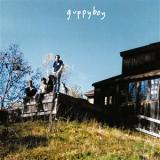
A deluxe double LP reissue of a rare 1997 indie cult classic, expanded with bonus material and featuring the formative recordings of musicians who would later create The Essex Green and The Sixth Great Lake. Originally released in 1997, Jeffersonville is a hidden gem of late-'90s American indie rock, blending heartfelt songwriting, melodic guitars, and the raw charm of the DIY underground. Formed in Burlington, Vermont, Guppyboy served as an early creative home for musicians who would later go on to form The Sixth Great Lake and The Essex Green, making this album an important chapter in the story of American independent music. This deluxe double LP edition presents Jeffersonville in its most complete form to date, featuring previously unreleased and non-album tracks not included on the original release. Expanding on the original album while preserving its intimate, homespun spirit, this definitive edition shines a new light on a long-overlooked cult favorite. With its blend of indie rock, power pop, and timeless melodic songwriting, Jeffersonville offers strong appeal to fans of the Elephant 6 universe and the wider American indie underground, while providing lasting catalogue value for retailers and collectors alike.
“Windborne” originally released in 2018 was the debut album from young Norwegian power-trio Kanaan. With components
from jazz, fusion and post-rock they have created six extended pieces of blazing freeform psychedelia. While the band is rooted in the same spirit that gave birth to Mahavishnu Orchestra and The Eleventh House in the 1970s, there's a distinctive modern flavour to Kanaan's sonic endeavors. Their Scandinavian genealogy is apparent as well - their intricate song structures seems to be branching off the same stem as Motorpsycho, Papir and Jaga Jazzist. And no doubt the young band has the chops to carry on the pedigree! Opening track ”A. Hausenbecken” feels like a sudden blast of refreshing nordic air, with it's rolling guitar leads and growling Fender Rhodes. But Kanaan aren't afraid to get deep and heavy – the B-side dives into straight-up Sabbath territory, with ”Act Upon The Mundane World” and ”The Groke”, before ending the album with the abstract, free-flowing title track ”Windborne”. From the first note to the last the band keeps high levels of energy and creativity, and although freeform, they never sacrifice focus or direction. Ask Vatn Strøm - guitars
Ingvald André Vassbø – drums Eskild Myrvoll – bass Rhodes on "A. Hausenbecken" by Vegard Lien Bjerkan.
Ready for the summer!!!!!
This highly anticipated double EP by Skatman is yet another weapon from the Time Passages arsenal.
Aziz Haddad, better known as Skatman, is one of the most promising figures in the contemporary electronic music scene. Known for his genre-fluid approach and distinctive artistic vision, he continues to blur the lines between house, techno, and deeper cinematic influences. His ability to craft immersive sonic journeys has earned him a respected place within the international underground circuit, making each new release a testament to his evolving creativity and unmistakable sound.
Featuring eight tracks, this double EP showcases the full spectrum of Skatman’s sonic universe. Some of the cuts may already sound familiar to attentive dancefloors, having been championed by Binh at several of last summer’s most celebrated festivals and events. Balancing hypnotic grooves, intricate rhythms, and atmospheric depth, the record is built to leave a lasting mark on both intimate club settings and open-air dancefloors alike.
out of Stock
Last delivered 20 days ago available to reorder, subject to availability
following the success of his previous release matter, swedish newcomer martinou returns with his second single on mule musiq.
expanding on the sound of his last record, martinou delivers a more refined and expansive take on dreamy deep house.
the lead track, a1 “through you,” is a driving, balearic-tinged piece of dreamy deep house, highlighted by the synth work that can truly be called one of his signature strengths.
a2 “unfold” and b2 “continuum” are melodic breakbeat cuts that update the spirit of 90s ambient techno for the present day.
on b1 “multitudes,” martinou moves into after-hours house territory, deeper and more introspective, yet still carrying a strong sense of openness.
a dreamlike four-track release that marks the full bloom of martinou’s talent.
don’t miss it!
out of Stock
Last delivered 44 days ago available to reorder, subject to availability
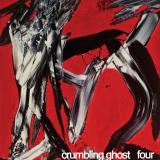
Within the broad church of metal and its many offshoots – rock, doom, stoner and all the rest – it remains a minor thrill to stumble across a group who seem to exist at a slight tangent to everything else. Crumbling Ghost is one such anomaly. Crumbling Ghost are not newcomers. They've been operating for some time, releasing records sporadically, Four' is in fact their fourth release. Along the way they've accumulated a fervent coterie of followers, not to mention the occasional nod of approval from tastemakers such as Stuart Maconie, Stewart Lee and Tom Ravenscroft. And though they've appeared at Roadburn, shared stages with Hawkwind and even Damo Suzuki, they remain (possibly by design) curiously under the radar.
The group's core idea is deceptively simple: traditional folk material refracted through the haze and heft of heavy, fuzzy stoner rock with a chunk of psyche and a smattering of doom. But crucially, this is done without the costumery and theatrical tics that often accompany such collisions. No mock pagan pageantry, no graveyard cosplay, no cartoon Satanism.
What Crumbling Ghost latch onto is not folk as a museum piece, but as a lived experience, the dramas rooted in the culture, stories, and daily lives of ordinary people, the folklore, the tales of love and death, murder and adultery, freedom and oppression. Singer Katie Harnett says. "Doting mothers, possessive, violent partners, vulnerable women, seasonal workers and Royal scandals this album is our representation of the trials and tribulations of human existence and universal experiences that still feel relevant today.
Guitarist John adds. "Themes of murder, betrayal, loss, jealousy, and love are found across the record. In particular, the songs of Martin Carthy have been a particular source of inspiration".
The result is a set of murder ballads, supernatural reckonings and cautionary tales, all wrapped in slabs of heavy, thumping fuzz and atmospheric sonics. Harnett's voice sits at the centre: unmistakably folk rooted, but shorn of prettification, melodic yet capable of real bite.
The album opener 'Bows Of London' is a murder ballad of sisterly hatred and grim sibling rivalry, centred on a haunted fiddle fashioned from a dead sister's bones. The loping relentless, hypnotic backing chillingly and perfectly accompanies the narrative. Of course, the story doesn't end well. 'Bill Norrie' follows, a hooky melody propelled by an insistent bassline and a haunting psych tinged haze punctured with sheets of noise.. The story of young Bill Norrie who sends a token to a married woman, whose jealous husband beheads him, without knowing he was his wife's son from an earlier affair. An instrumental palate cleanser arrives in the shape of 'Valtz Efter Tor Lohne' a Norwegian traditional the band jokingly describe as a "banger".
Then we have 'Lovely Joan' which offers a rare note of sly triumph: a quick witted woman outmanoeuvres a predatory nobleman, escaping with his ring and his horse. Muscular riffs give this tale of empowerment a welcome sense of teeth. 'Gower Wassail' is a traditional Welsh folk tune that captures the raucous spirit of communal ritual, noise making and drink fuelled hope for a good harvest. Captured perfectly here by CG complete with wah wah guitar and a drunken groove catching the song's celebratory chaos. Then we have a little gem in 'Last Of All Sleep' , an original band composition and a genuine highlight: a heavy lidded, shoegaze tinged folk reverie, equal parts distortion and delicacy. It's a drop-dead gorgeous shoegaze-tastic psychedelic grunge mini epic. The album closer 'The Unquiet Grave' is a very apt place to finish. It's about a young man whose constant grief at the death of his true love disturbs her eternal sleep so she cannot rest. Even though the playout on this track, complete with a demonic repeated riff and feedback feels suitably bleak, even this song allows a glimmer of release ... we think.
And there we have it, 7 songs, 7 worlds, all honed to perfection by producer Wayne Adams (Green Lung/Big Lad) that will reward every repeated listen.
Folk and metal/heavy rock do have a connection of course, just look at Green Lung and their 'folk horror' infused musical universe, but Crumbling Ghost are a very different beast.
'Four' amply and beautifully demonstrates that when it comes to 'folk horror' there's nothing quite as horrible as folk ... Here, the horror such as it is, and it must be said, the moments of light, comes not from theatrics, but from the songs themselves – which, after all, is where it's always lived.
Crumbling Ghost are John Mosley – Guitar / Donny Hopkins – Guitar / Ruth O’Loughlin – Bass / Katie Harnett – Vocals / Matthew Atkins- Drums.
Recorded April 17 and 18, 1993, at the Union Grove Baptist Church, Ozark, Alabama.
The Wiregrass Singers' Dewey Williams began learning the shape-note tradition in his childhood. He studied under Judge Jackson, who authored the landmark 1934 hymnbook The Colored Sacred Harp. In 1971, Williams formally organized The Wiregrass Sacred Harp Singers to preserve the music full-time. This unified troupe began touring nationally and leading workshops, which ultimately launched them onto stages at the Smithsonian and Newport folk festivals up until Williams' passing in 1995 when the group disbanded. The African-American Sacred Harp tradition in the Wiregrass region has steeply declined since the start of the 21st century, due to an aging generation of singers, and today it is largely sustained through archival preservation and occasional multi-book singing meetups.
This raw recording, made at the Union Grove Baptist Church, Ozark in mid-April 1993 finds the group singing from B. F. White’s The Sacred Harp (1844), which together with his brother-in-law William Walker’s Southern Harmony (1835) formed the musical backbone of generations of Southern music and Southern musical styles.
"On almost any Sunday between the months of March and October, the season most conducive to travel and outdoor dinner-on-the- grounds, Sacred Harp devotés join with fellow songsters at the County Line Church in Slocomb, or the Mount Sinai Church in Henry County, or the Union Grove Baptist Church in Dale County, or at any one of a dozen or so churches in the southeast Alabama counties of Barbour, Coffee, Dale, Geneva, Houston and Pike, to form the square and sing fa-sol-la. Approximately fifteen African-American Sacred Harp singings occur annually in the Wiregrass region of southeast Alabama. A singing tradition characteristically associated with white culture in the Deep South, southeast Alabama has enjoyed a vibrant African-American Sacred Harp tradition for well over a century.
On a day of a typical African-American Sacred Harp Singing, the participants arrive casually in the late morning, seat themselves in the square according to voice part, and begin to sing. A dinner break occurs in the early afternoon, and the singers enjoy a covered-dish "dinner-on-the-grounds" (or in the church basement) prepared by the women. The most intense and emotional singing typically occurs after the dinner break. Each singer takes a turn leading the song of his choice. He walks to the middle of the square, calls out the song's page number and waits for the designated tuner to key the song. Singers are discouraged by the other singers from repeating a song that has already been sung, or "used." This proscription is often dispensed with, however, if the singer is particularly young, particularly old, or if the song has special significance to the individual song leader (perhaps the favorite song of a recently deceased relative).
Every singer is given an opportunity to lead a song. Often, older or more infirm singers will request younger singers to lead their songs for them. The motions of the song leaders are highly stylistic and often emotional. Young children are taught in singing school to mark time with their right arm while holding the book in their left. Typically, a singer will stand in place at the center of the square while leading the singing of the notes. When he begins to lead the lyrics portion of the song, he will often begin to "walk time," rhythmically pacing from one side of the square to the other, being careful never to turn his back on the tenor section. This "walking time" is unique to the African-American tradition. As a singer grows more confident he develops his own distinctive leading style. During fuguing songs in particular, he may gesture to each section of the square as its part joins in. Skilled song leaders often elicit applause or other emotional responses from the group. Occasionally a singer may fall into a state of spiritual ecstasy and "get happy." The episode might include a personal testimonial followed by a repeat of the last verse or refrain from the previous song. The singings break up around 5 P.M."
—Henry Willett, 1997 credits
For more than two decades, SOJA have elated audiences with their fresh yet timeless take on roots reggae, a sound born from their shared passion for making music that transports and inspires. On 'Without Surrender' -their first new album since the Grammy Award winning 'Beauty in the Silence' (2021) - the band deepens that communal spirit by collaborating with artists from all corners of the world, including The Elovaters, Brazilian Superstar Di Ferrero, Kolohe Kai, 311's Nick Hexum and more.
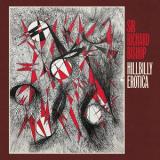
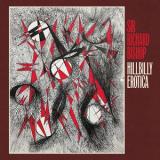
Sir Richard Bishop returns for a new sponítaneous six-string meshing of people"s music, recollections and psychic intentions. Are y"all ready for some Hillbilly Erotica? Migration from last album"s Ragas to this new Erotica is another chapter in Bishop"s progress, drifting via songs into the further frontiers of his pappy"s hometown sounds, trancing over and out in their hand-me-down clothes. As with the ragas, the "rotica"s hung round the neck of John Fahey"s infamous dubbing of certain tradiítional American folk sounds as "American Primitive." A perfectly good thought, but Sir Richard picks his own axe and chose a separate path. Rushing through gutters & picking pickled brains in the saucy head waters of the down-low & literal American primitive, his hillbilly music is a mash of brined cultural inheritance, mini-ragas and moonshine-drunk savagery breaking out on the frets. As a conception for Sir Rick"s acoustic guitar music, it"s a dynamite means and frame, centering his improvisations in a place overflown with pagan desire and unbound in deliverance. Here he flies up and down the neck, his manner less pristine, yet more exquisite, a flailing, flowing-on-the-river medley through stubborn whitewater turbulence, post-grass and folk"s classical gas. Anybody who takes a snort of this here Hillbilly Erotica will find a frankly spellbinding richness of intent and execution in their ear-mouths. And may thereafter find brain and blightness. It"s fine!
Sir Richard Bishop returns for a new sponítaneous six-string meshing of people"s music, recollections and psychic intentions. Are y"all ready for some Hillbilly Erotica? Migration from last album"s Ragas to this new Erotica is another chapter in Bishop"s progress, drifting via songs into the further frontiers of his pappy"s hometown sounds, trancing over and out in their hand-me-down clothes. As with the ragas, the "rotica"s hung round the neck of John Fahey"s infamous dubbing of certain tradiítional American folk sounds as "American Primitive." A perfectly good thought, but Sir Richard picks his own axe and chose a separate path. Rushing through gutters & picking pickled brains in the saucy head waters of the down-low & literal American primitive, his hillbilly music is a mash of brined cultural inheritance, mini-ragas and moonshine-drunk savagery breaking out on the frets. As a conception for Sir Rick"s acoustic guitar music, it"s a dynamite means and frame, centering his improvisations in a place overflown with pagan desire and unbound in deliverance. Here he flies up and down the neck, his manner less pristine, yet more exquisite, a flailing, flowing-on-the-river medley through stubborn whitewater turbulence, post-grass and folk"s classical gas. Anybody who takes a snort of this here Hillbilly Erotica will find a frankly spellbinding richness of intent and execution in their ear-mouths. And may thereafter find brain and blightness. It"s fine!
Ancient Infinity Orchestra return with their third album, It’s Always About Liberation, a new record that deepens the vision of their acclaimed recent work while moving into darker, more searching emotional territory.
Conceived as a partner to It’s Always About Love, this new body of work shares its predecessor’s generosity and spiritual openness, but carries a different charge. Where the previous album focused on healing and warmth, It’s Always About Liberation is largely animated by struggle, perseverance and the desire for transformation while still offering a path to betterment. It is music made in full awareness of a fractured world, yet unwilling to surrender to it.
Like It’s Always About Love the album title draws inspiration from words spoken by Moor Mother during their 2024 We Out Here festival performance that deeply affected bandleader Ozzy Moysey: “It’s always about love / It’s always about liberation.” Those twin ideas became a framework for the two albums Ancient Infinity Orchestra were creating. If one album explored love as repair, this one explores liberation as movement, continually striving toward freedom, clarity and deeper connection.
The 16-member ensemble is led by double bassist and composer Ozzy, with a distinctive line-up that explains their sound better than any artificial genre divisions: two double basses, harp, saxophones, clarinets, violin, viola, cello, oboe, flutes, mandolin, congas, piano, drum kit, with bells, shakers and other percussion instruments scattered on the floor of live sets and recording sessions, ready for members to use whenever the spirit takes them.
This orchestration, and the overlap between membership and friendship, gives Ancient Infinity Orchestra a sound that is at once expansive and intimate, earthy, and cosmic, constantly shifting yet grounded in shared intention. The attention to intention and the inviting sonic world connects the music to artists ranging from Alabaster dePlume to Gondwana label boss Matthew Halsall.
Gradually, the Orchestra became a grounding force in the emerging jazz scene in Leeds, bringing together individuals from different musical backgrounds co-founding the Café Oto-inspired Limpet Club or co-hosting the monthly Sonic Plunge (‘a platform for adventurous experimentation’) and co-founding the Leeds Improvisers Orchestra. Additionally, the ensemble acted as a bridge between musicians in Brighton and Leeds, after Ozzy spent a stint back on the south coast between 2020 and 2022.
Their debut, River of Light, was a vibrant celebration of togetherness recorded in three days and released on Gondwana in 2023. A Maida Vale session for Jamie Cullum’s BBC Radio 2 show brought them to a broader audience, as did bookings at North Sea Jazz Festival and Gretchen, Berlin. Since then, Ancient Infinity Orchestra has become a by-word for music that could be framed as ‘spiritual jazz’. Whilst Ozzy avoids the phrase when describing his music, he’s crystal clear that his heroes are associated with those words – citing Art Ensemble of Chicago, Pharoah Saunders, Coltrane (Alice and John), and Don Cherry as major influences.
Across trance-like meditations, rising grooves, moments of grief and collective uplift, It’s Always About Liberation speaks to the battle within the mind as much as the inequalities of the wider world. It acknowledges the darkness but lets connection and creativity have the last word Ancient Infinity Orchestra is a gathering of voices, traditions, and energies converging into something timeless. Their music is a journey inward and outward, always reaching toward the universal.
out of Stock
Last delivered 77 days ago available to reorder, subject to availability
K' Alexi Shelby is a prominent figure in electronic music with a career spanning decades. The cultivation of his massive music catalogue has overflowed into albums and the three labels he heads. It's also led to legendary collaborations with artists like The Pet Shop Boys, Robert Owens, Kenny Dixon, Roy Davis Jr., Joe Smooth, Steve Silke Hurley, Tyree Cooper, Ron Trent, Glenn Underground, Larry Heard, DJ Pierre, Carl Craig, Felix da Housecat, Marshall Jefferson and more. He makes a welcome return to COD3 QR with the jazzy house of opening track, "House Music de Chicago".
Voltaire has built his career through passion and a perfectionist approach to music, creating a richly emotional eclecticism, with inspiration from the pioneers of Detroit to the glorious electro decades of the 2000s and 2010s. Today he's a COD3 QR regular and released his debut album, "Echoes" on the label last year. He leans into the realms of house with a deep techy edge, for new track "Some House".
Finder is the alias of Radial (Jeroen Liebregts), originally from The Netherlands but today residing in Spain. He started mixing records around '98 and in 2002 teamed up with Bas Mooy to started the now legendary label, Audio Assault. He's also released on Token, Perc Trax, Mote-Evolver, Numb, Drumcode, Planet Rhythm, Mord, Will & Ink and MDR, alongside his label, Radial Records. As Finder he goes in a new direction with "Team Dream".
Benny Rodrigues a.k.a. ROD's other moniker, The Lost Souldancer has already seen him drop "No More Voices" and "Life and Death" for the label. In his own words, Benny says: "The Lost Souldancer is about coping with the loss of what once was. Finding comfort in the invisible rather than what can be seen. Disconnect to connect in order to be loved rather than liked." He returns with another emotional journey on "Magnolia".
Producer and manager of Slates Records, Squal G is a French artist who has been passionate about electronic music since the '90s. Initially a DJ, he soon turned to machines and computers. This enabled him to progress with his production and remixes. He never tries to stick to a single style, which, depending on his inspiration, can lead him to be more or less hard, while remaining in the spirit of techno. A popular COD3 QR regular, he's back with the intense techno of "Crackle".
French producer, DJ and live artist, Electric Rescue is world renowned. His productions have been signed on labels like Cocoon, Virgo, Arts, F Communications, COD3 QR, Soma, Sci + Tec, Boys Noize and his own Skrypto¨m. Ahead of his forthcoming artist album (to be released on COD3 QR in October) he closes the vinyl with the electro-tech and wonderfully wonky machine funk of "Internet Was an Illusion".
out of Stock
Last delivered 22 days ago available to reorder, subject to availability
Following the genre-redefining revelations of A Love Supreme in 1965, John Coltrane began a dramatic shift toward spiritual free jazz, abandoning familiar forms in favor of a more abstract sonic palette and bold questions he'd spend the rest of his life and career pursuing. Meditations, released by Impulse! in 1966, continues that emotional throughline while retaining, for the last time in full, the classic quartet that propelled Trane to greatness: pianist McCoy Tyner, bassist Jimmy Garrison and drummer Elvin Jones. (They're further augmented by Pharoah Sanders on tenor sax and additional drummer Rashied Ali.) Meditations pushes Coltrane’s spiritual jazz into heightened realms of energy and abstraction — a powerful document of transformation, intensity, and devotion in Coltrane’s recorded legacy.
DYING VICTIMS PRODUCTIONS is proud to present JORDSJØ’s highly anticipated new album, Pestkrønikene, on CD and vinyl LP formats. JORDSJØ released their first tape in 2015. With the fourth tape, 2017’s Jord, the band got a wider audience outside their native Norway and subsequently released full-lengths on such labels as Karisma, Pancromatic, and Apollon. The band works as a duo in the studio, but for the last eight years, they have played live as a quintet. JORDSJØ are led by multi-instrumentalist Håkon Oftung, who has been a part of Oslo’s psychedelic, progressive, and heavy rock undergrounds for many years, and has played in Black Magic, Tusmørke, The Chronicles of Father Robin, Wobbler, Zenon, and labelmates FLIGHT to mention but a few. He’s joined by longtime companion and childhood friend Kristian Frøland, who plays drums and percussion, and also produced and mixed Pestkrønikene. Pestkrønikene is a part of JORDSJØ’s 10-year anniversary, and their ninth release overall. The record started out as a compilation of studio outtakes from 2020-2025, but then took on a form of its own, with the songs linked together thematically. Lyrically, those themes reflect war, upheaval, the fall of kings and the rise of a new dawn, and cults and sects. Sonically, Pestkrønikene encapsulates the JORDSJØ experience as well as extends beyond it. Mythical and magickal, the album honors the band’s background in hard rock and heavy metal, and combines this with their own analog and organic blend of progressive / psychedelic folk rock.
Evolution can be ugly and beautiful, painful and euphoric. An Undying Love For A Burning World is the first new release from Neurosis in a decade, and a potent statement of intent and rebirth - one that marks the first new steps of resolve and resilience.
An Undying Love For A Burning World is an epic album of colossal hypnotism - beautiful, fearsome and utterly compelling in a way that only Neurosis can be. Aaron Turner (Sumac, Isis) joins the band on vocals and guitar, a name whose legacy is intertwined with the band’s own and a true kindred spirit.
“From the moment I first heard Neurosis over 30 years ago, I felt this was the music my heart and mind had been seeking but not yet heard. Now after many years travelling along various musical paths of my own, the singular sound and spirit embodied by Neurosis continues to speak to the depths of my being. It is an honor and a true pleasure to have been welcomed so warmly into a band that not only shaped my perspective on the limitless possibilities of music - but has lived and exemplified the necessity of upholding creative integrity and camaraderie above all else.” - AARON TURNER
Neurosis have never been afraid of change, and here they embrace endless regeneration, surrendering to the emotional exorcism through heaviness and distortion that their music incites. Just as the universe tends towards balance, Neurosis’cacophony of noise, rhythm and dissonance always resolves towards moments of beauty. The addition of Turner's powerful vocals and wildly creative and unhinged approach to guitar proves to be a vital force as Neurosis find themselves again at the mercy of evolution and expression.
On every song in the band’s history, Neurosis shifts restlessly between tension and relief, invoking a feeling both feral and transcendent in listeners. The band describe their songwriting process as an inescapable impulse to create with each other - a need rather than a choice. Indeed, the band insist that their return is “not a reunion - we never broke up.”
The album was recorded by Scott Evans (Kowloon Walled City, Sumac, and Great Falls) at Studio Litho in Seattle during three weekends this winter, and mixed in three days just six weeks before release at Evan's Antisleep Audio in Oakland.
Neurosis will play their first show in seven years on the traditional lands of the Blackfeet Nation in Montana as part of Fire in the Mountains festival by special invitation of Firekeeper Alliance, a non-profit dedicated to reducing youth suicide in Indian Country.
FITM, is a unique festival known for bringing epic music to epic landscapes with the intent of reconnecting and immersing oneself with the natural world, and strengthening our ancestral roots as human beings - an aim which aligns directly with Neurosis’ deep-rooted power.
out of Stock
Last delivered 85 days ago available to reorder, subject to availability
"Beyond HEAVY METAL": the deluxe edition is a special 2LP zoetrope vinyl featuring live recordings from arena shows in the UK, US, and Japan, along with “from me to u (feat. Poppy)” Major Lazer Remix and “from me to u (feat. Poppy)” Jordan Fish Remix
Having celebrated its 15th anniversary last year, BABYMETAL presents a new style of heavy metal album created in collaboration with a new generation of friends encountered across the globe. A powerful statement of who the band is today, this album pushes toward what lies "beyond HEAVY METAL" and aims to change the course of history.
Available to own on special edition zoetrope vinyl. Limited quantities, available while stocks last!
Equal parts grit and glamour ITVLO finds Boys Noize channeling the spirit of latenight machine music through an unmistakably Italo-tinted lens. Tough enough for the peak-time push yet melodic enough to leave a lasting imprint long after the
out of Stock
Last delivered 45 days ago available to reorder, subject to availability
CROWD welcomes Gina Demarchi with 'Other Side', a driving 4-track EP that adds a new voice to the label's growing roster. Born and raised in Buenos Aires, Gina Demarchi has spent the last nine years refining her signature hypnotic blend of tribal-infused grooves, rolling percussion and emotionally charged energy, showcasing a sound rooted in 2000s techno and dubbed chords. As a resident at the event series Fungi and founder of her own label Seduction, she has built a strong reputation through performances all across South America, Europe, Australia, Asia and beyond. Opening track 'Never Enough' immediately sets the tone. Powered by a tom-driven bassline, huge open hats and uplifting chord melodies, it moves with a propulsive forward energy that plants the listener firmly on the dancefloor from the first bar. Next up on the A-side is 'I'm In Love', where endlessly echoing warm chords churn above a pulsing low end while marching claps and driving percussion lock the track into pure peak-time territory, serving as a reliable anchor for any uncompromising techno set. The title track 'Other Side' leans deeper and groovier, combining a gliding bassline with swinging chord stabs and crisp percussion that give full focus to the track's powerful low-end movement. Sitting somewhere between hypnotic and relentless, it is perhaps the clearest expression of what makes Gina Demarchi's sound so compelling. Closing cut 'Lonely' strips things back but lands with maximum impact: fast-paced chord repetitions, tight closed hats and sub-heavy drums generate a sense of momentum, creating a track that feels explosive and intense without relying on excessive speed. With 'Other Side', Gina Demarchi delivers a high-impact debut that reflects both the raw spirit of her unmistakable sound and the identity of the CROWD universe. The 11th release of the label is another statement from a label that has consistently refused to follow trends, instead carving out a singular identity rooted in raw energy. Join us for a high energy release party on July 5th 2026 al Le Sucre in Lyon!
out of Stock
Last delivered 80 days ago available to reorder, subject to availability
The perfect challenge for Saved My Life aka Siggatunez (Gooey) and Constantin Sankathi (The Healing Company). As a studio team, the two have spent the last decade transforming Italo disco, Brazilian samba, and French chanson into highly distinctive edits and remixes that stay etched in your memory.
For Crystal Grooves 803, the pair have refreshed Sharon Stoned's heartbreak anthem "Down" into an almost unbelievable track, a hybrid of garage and trance, anchored by Senpolya’s vocals, which capture the mood of the original with intense yet subtle precision: "Your favourite shirt I'll wear it everywhere." "Beauty & Thug" showcases another core strength of Saved My Life: reduce to the max. An R&B bootleg from the early 2000s is stripped of its slightly-too-mainstream choruses and rebuilt with string overdubs and studio craft into an hypnotic late-night jam. Soulful vocals always hit hardest when you least expect them: "So burgundy, the window to his soul." True to the spirit of SML's own imprint Downtown Romeo Records, the record comes complete with a sticker and an 8-page booklet including all lyrics. This release is dedicated to all people believing that music is more than just music: substance and meaning.
out of Stock
Last delivered 71 days ago available to reorder, subject to availability
HARTHBALL are an avant/noise/rock wrecking ball of a band from Nanaimo, Canada. Rooted in total improvisation, free expression, and a deeply psychedelic sensibility, EarthBall operate on pure instinct.
They hurtle onwards in a combustion of spontaneous composition, shooting from the hip, as they fall out of the sky ablaze. The group encompasses Isabel Ford (vocals, bass), John Brennan (drums, percussion), Jeremy Van Wyke (vocals, guitar, trumpet), Kellan Maclaughlin (guitar, talkbox), and Liam Murphy (saxophone). Each member brings a rich and varied musical history, with past and present projects including Shearing Pinx, Plan Your Future, Kamikaze Nurse, Eschatons, and Psychedelic Dirt. Collectively and individually, they have collaborated with artists such as Deerhoof, Raven Chacon, Chris Corsano, and William Hooker, deepening the band’s exploratory reach and collective language.
Since forming in 2021, EarthBall have released six cassettes and three fervently received LPs on Upset The Rhythm, including November’s widely acclaimed Outside Over There. Their latest release, Actual Earth Music - Volume 3 & 4, follows the first instalment in the series and captures two mind-quaking highlights from last winter’s European tour. This is EarthBall plunging to full fathom five, transforming into something rich and strange - channeling the fleeting moment as it fractures, erupts, and dissolves into the unknown.
Side A captures a thumping performance at Cave12 in Geneva. Frazzled from a white-knuckle alpine descent, the group settles into a hypnotic sprawl, stretching time and form across a colossal 53-minute set (with the first 22 minutes presented on the LP; the full performance appears on the CD edition). The Cave12 recording is a study in tension and release; ruminative, volatile, and barely contained. Drums stumble and surge, saxophone howls cut through the air, and Ford and Van Wyke’s voices briefly pull together the circle twice, before the tumult lapses into a spinning maelstrom.
Side B meanwhile presents a scorched excerpt from EarthBall’s crushing performance at Le Guess Who? Festival. As Van Wyke reflects: “Having the most excellent Dwarfs of East Agouza play before us only heightened our intention to bring the noise. Listening back, the thing that strikes me most is how we truly were operating in the ever-elusive but always sought-after ‘group mind’. Ninety-degree changes are super tight. Izzy and I are finishing each other’s sentences. Liam’s horn is cradling our outer and inner space. Kellan’s talk box rains down like the voice of a reawakened spirit, and all this havoc is safely stowed in the rumbling ox-cart of John’s solid drumming”.
Actual Earth Music - Volume 3 & 4 marks another ascent in EarthBall’s ever-expanding, totemic discography, an ecstatic storm of raw immediacy and unfiltered expression.
For nearly four decades, The Bouncing Souls have remained a cornerstone of punk rock, influencing generations while continuing to grow a loyal, cross-generational fanbase. Their
new album Born To Be captures the band's enduring spirit, exploring themes of connection, resilience, and community in the face of modern challenges. Created collaboratively by all
four members and produced by Will Yip, the record reflects a band still creatively energized and deeply invested in their craft. More than nostalgia, The Bouncing Souls continue to create
music that brings people together and reinforces their lasting cultural impact.
Bosconi Records returns with Tangled Waves Vol. 2, the second chapter of the series—this time expanding the concept into a four-artist VA, diving deep into progressive house and neo-trance territories while keeping that unmistakable timeless, old-school spirit alive.
Like shifting currents moving in parallel, Tangled Waves Vol. 2 brings together different voices, each following their own path while converging in the same flow—crafted for longevity, built for the dancefloor.
The EP opens with Fly High by DJ Glc, founder of Digging Deeper records and already known to the label through his contribution to the Home Cooked Beats compilation. Here he delivers an epic italo-infused progressive cut, driven by a classic rolling bassline and lifted by a futuristic arpeggio that bridges past and present. Hypnotic, warm, and undeniably effective—pure late-night material.
Next up is Strange Gift by rising artist Little Sea, founder of Sea Horse Records. A high-energy progressive groover with a clear nod to ‘90s classics, the track blends a punchy forward-moving bassline with bright melodic flashes and a sensual female vocal in the breakdown—making it a proper peaktime weapon with emotional depth.
On the flip side, Matteo Guarnieri (aka Rare Happiness) makes his Bosconi debut following a standout release on Kulture Galerie. His track Roller Disco Truck merges old and new with ease—leaning into a tech house framework with a distinct groove, textured stabs, and a subtle arpeggio that adds a psychedelic edge. A playful yet driving cut with strong character.
Closing the EP is Stargazing by Andrea Mera, also debuting on the label. A soft, mesmerizing progressive journey, the track unfolds with lush pads, a fluid atmosphere, and a gently evolving energy. With its warm 303 touches and emotional depth, it feels like a timeless closing moment—introspective, romantic, and built for those final hours on the floor.
With Tangled Waves Vol. 2, Bosconi introduces a new wave of artists while staying true to its roots—delivering four carefully crafted cuts that balance nostalgia and forward motion. Another essential addition for the bag, made to last.
out of Stock
Last delivered 13 days ago available to reorder, subject to availability
The Mexican band The Survival created a blend of blues and acid rock influenced by the U.S. West Coast movement and British blues, captured on this 1971 album-the only one they recorded. They are often described as a combination of Country Joe and the Fish, Quicksilver Messenger Service, Moby Grape, and Ten Years After. One of the rarest records ever released in Mexico, it stands as a significant testament to the "onda chicana," a historical moment when Mexican youth took up instruments to express their reality. The group formed in August 1970 and recorded a single album, "La onda de The Survival" (1971), which combined laid-back blues with distortion. One distinctive feature was that lead vocals were handled by drummer Andrés Lusher-an unusual choice that gave the band a unique sonic identity. The album captured the spirit of the time, portraying generational shifts, repression of youth, fraternity, pacifism, and the influence of drugs. Despite their brief existence, The Survival and their sole album remain a significant testament to the "onda chicana", a lasting mark on the history of Mexican rock. Includes an insert with liner notes.
For nearly four decades, since its founding during the mid 1980s, the Belgian imprint, Sub Rosa, has continuously plumbed the depths of numerous, radical creative histories, assembling a catalog of releases that has almost no equivalent, while remaining nearly impossible to nail down. That said, for most of its run, Sub Rosa has been primarily recognized for its rigorous explorations of the lesser explored shadows of experimental sound practice (sound-art, sound-poetry, early electronic and electroacoustic music, free-improvisation, etc.), delivering a remarkable body of artifacts that have collectively helped to rewrite history in their wake. While it's always been impossible to anticipate where the label might take us next, threading their catalog are plenty of releases that throw further wrenches in the cogs, expanding our understanding of what they pursue, as in the case of a handful of titles, appearing as early as the 1980s, dedicated to ethnographic field-recordings from various parts of the world. Among the most striking and celebrated of these was 2017's Ethiopian Urban And Tribal Music: Mindanoo Mistiru / Gold From Wax, comprising an astounding body of recordings made by Ragnar Johnson and Ralph Harrisson in Ethiopia during 1971, reissuing material originally released by Lyrichord the following year. Now, Sub Rosa returns to the incredible work embarked upon by the pair and captured on that same trip with Ethiopian Musics 1971, comprising the recordings originally released by Ocora shortly after their completion, expanded in this edition to include an entire disc of never before released music. Widely regarded as some of the most important field-recordings ever made of indigenous Ethiopian folk music (as captivating and intoxicating as they are revelatory: providing insights into the roots of the country's singular traditions of popular music and jazz that have come to be celebrated the world over), this incredible collection is issued by Sub Rosa in a beautifully produced 2LP edition, complemented by a four page insert providing detailed descriptions of each song, as well as notes by the ethnomusicologists and recordists, as well as a 2CD edition, with a twelve page booklet. Insanely good and absolutely essential for any fan of field-recording, ethnomusicology, the music of Ethiopia, or the label's mission at large. Once again, Sub Rosa has defied our expectations and delivered a remarkably important intervention in the history of recorded sound.
Located in the Horn of Africa region of East Africa, few cultures are distinctly singular, while being so diverse (containing 80 distinct ethnic groups who speak 70 languages and 200 dialects) as that of Ethiopia. The home to some of the oldest surviving sects of Judaism, Christianity, and Islam (each contributing important aspects of its collective cultural body), particularly the country's culinary and musical traditions have become celebrated the world over, and (generally speaking) feel entirely independent of those of its neighbors. Given this, it's unsurprising that, during the summer of 1971, the young ethnographer, Ragnar Johnson, accompanied by Ralph Harrisson, traveled to Ethiopia to begin his brief career as a field recording ethnomusicologist, capturing material on reels of magnetic tape that would be subsequently released across three LPs for Lyrichord and Ocora, respectively, coming to form a cornerstone of documentation and study of the country's many indigenous musical traditions, as well as providing wide, global access to them for the first time. While Johnson's recording career was relatively brief, ending toward the end of the decade when he began to focus more on teaching in UK universities, with a focus on the anthropology of art and social anthropology, his impact on the field was lasting. Between 1971 and 1979, in addition to those he made in Ethiopia, he made hugely significant recordings in Yemen (also issued by Lyrichord before being reissued by Sub Rosa) and Papua New Guinea, which were originally released by David Toop's Quartz Publications to wide celebration, before being revisited by Ideologic Organ in 2023.
While it's worth noting that commercial releases of ethnomusicological recordings by labels like Folkways, Lyrichord, and Ocora were still in their relatively early days when he entered the field, Johnson's recordings quickly stood apart for their vivid qualities and clarity of space, allowing them to stand the test of time. As he later stated: "I used a Uher Report L stereo tape recorder, BASF quarter inch tapes at a recording speed of seven and a half inches per second with two directional microphones mounted to record an isosceles triangle of stereo sound," he reveals. "The location of the microphones and musicians was critical. The musicians were fully informed of all aspects of the recording process."
Johnson's recordings are extremely vivid, there is a clear sense of space and the cries of the flutes exist across the entire stereo field. It's a reflection of Johnson's skill as a field recordist that his recordings continue to be reissued over forty years later. "I used a Uher Report L stereo tape recorder, BASF quarter inch tapes at a recording speed of seven and a half inches per second with two directional microphones mounted to record an isosceles triangle of stereo sound," he reveals. "The location of the microphones and musicians was critical. The musicians were fully informed of all aspects of the recording process… I used to enjoy being in the moment and hearing something wonderful despite the stress of the vigilance required to ensure that the recordings were accomplished according to plan. The responsibility is to record and document the music as effectively as possible so that it has been preserved for posterity. It is better to actually record music than to sit in a seminar room debating the ethics of recording music." It is this very ethos and sense of clarity that can be encountered across the length of Ethiopian Musics 1971.
For the sake of clarity, the two LPs of material that comprise Ethiopian Musics 1971 should be regarded as a single body of recordings alongside those made in Ethiopia by Ragnar Johnson and Ralph Harrisson during the summer of 1971 (previously issued by Lyrichord and reissued by Sub Rosa), and as two that have, until now, remained historically distinct. The first LP gathers that material released by Ocora during the early 1970s on Musiques Ethiopiennes, while the second comprises (as far as we can tell) twelve never before issued recordings, expanding the journey and making this the definitive edition of the release with its incredible total of 23 recordings of songs, allowing it ever greater scope to achieve the recordists' modus operandi of capturing the broadest and most diverse cross section of Ethiopia's many musical cultures, ranging from different forms of urban music captured in Addis Ababa, documenting largely orally transmitted idioms within which lyrical content is given greater emphasis than the instrumental components (played on masenko fiddles, craar and bagana lyres, washint flutes and kabaro drums), to folk idioms hailing from the Danakil desert and the border regions with Sudan and Kenya. There are songs sung and played in bars, divination chants, laments, dances, Christian songs, and Amharic sung poetry, to only begin to scratch the surface.
Ethiopian Musics 1971 is one of those rare albums where each musical moment is pure, intoxicating gold, while also being greater through the sum of its parts. There are the many songs, forming a rich tapestry of remarkable range across the respective two LPs/CDs (moments that wondrously flirt with sonic abstraction; hypnotic rhythms; pulsing chant; melodies that, in structural arrangement and tonal combination, help us reframe how such a thing might be understood, and a great deal more), each imbued with a remarkable directness and emotive sensibility, and there is the stunning quality of these recordings themselves, transporting each sound to our ears as though we intimately share its creator's space, while being imbued with the pure heart and remarkable spirit with which they were made. As we said before, it's little wonder, once heard, why these recordings and this music feels as fresh and relevant (enduring more than 50 years) today as when they were made. Once again, Sub Rosa has raised the bar with this essential addition to the incredible work that Ragnar Johnson and Ralph Harrisson did back in Ethiopia during 1971, radically expanding our access to the sounds that they captured with these stunning, beautifully produced 2LP and 2CD editions. Absolutely engrossing from the first sounding to the last, this one can't be missed.
After the stunning re-release of Eminesence in March, Vince Watson recruits 3 of Deep House’s legendary artists to give their interpretations on this modern classic. First up is Cee ElAssaad with a spiritual journey into the finest house music around, endless solo’s and the type of track you will hear in Claussell, Trent of Vega’s sets. After this. the magician Atjazz with his typical chunky bass and dubby vibes, the perfect dub version of this piano track. Last but not least the delightful skills of Osunlade with the Yoruba Soul Mix, a tasty jazzier affair that’s perfect for the more downtempo laid back moments…and that ending…whoosh!
out of Stock
Last delivered 45 days ago available to reorder, subject to availability
DYING VICTIMS PRODUCTIONS is proud to present Heavy Metal Heroes, a special split EP between Peru’s HYENA and Japan’s RISINGFALL, on CD and 12” vinyl formats. Heavy metal is living a global explosion, driven by underground bands that keep alive the legacy of those Heavy Metal Heroes who created eternal anthems. This titular mini-album brings together two bands separated by a great distance but united in an undying thirst for true metal. From Cajamarca, Peru’s HYENA return after touring worldwide in support of their DYING VICTIMS debut album, About Rock and Roll. Carrying forward the spirit that defined their first record, the Peruvians deliver two brand-new tracks as the first strike from their forthcoming second album. Raw and bloodthirsty, the band bring their turn-of-the-‘80s style to a boil here, more anthemic and charismatic than ever. From Tokyo, Japan’s RISINGFALL continue their ascent with new material following 2022’s DYING VICTIMS debut album Rise or Fall and last year’s self-released EP Dungeon’s Call. After their performance at Germany’s Keep It True Rising Festival, the band has established itself among today’s true torchbearers of heavy metal. Their two brand-new tracks here bring a dazzling display of old-metal values filtered through that uniquely Eastern lens. Heavy Metal Heroes stands as a statement of real underground heavy metal: forged in tradition, carried across continents, and kept alive by those who remain faithful to its sound and spirit. In support of the release, HYENA and RISINGFALL will join forces for a co-headlining triple strike of shows in Tokyo in June
Melodies everywhere. Hidden ones, obvious ones, the kind that stick around long after the magic is gone. The Fulmars, Hagen’s lo-fi experimental indie outsiders, return with 13 haunting songs on their first proper full-length album. It’s filled with warm lo-fi guitar hooks, carried by Teacherface’s stripped-back Roland drum machine pulse and Fabian Dietz’s soft, delicate vocals. Modern castaways’ music, truly seeing the light, somewhere between the hazy spirit of The Velvet Underground, the playful weirdness of early Throw That Beat In The Garbagecan!, the tender shadows of Dead Moon, and the hypnotic austerity of Party of One. There is a lot of tragedy, all covered in positive agility. Hypnotic simple charmers compellingly recorded by the illusionists behind the delicate Hüüpnootsche Platen Un Kassetten cassette label. If you listen in a row, you will fall into a calm flow, time is on the go, and you so, in The Fulmars circle, disappearing in melodies, those hidden, obvious, glorious. You will fall for the voice, their “rollie” grooves carry you out there, browsing on irresistible humble guitar vibes. Be ready to watch the blue birds fly, it’s a real streetside surprise, for your pleasure, please don’t call it leisure.
This new album compiles several songs made in the years following Black To Comm's classic "Alphabet 1968" album. Originally released on the seminal Type label in 2009 (and to be reissued on Cellule 75 this year) "Alphabet 1968" combined the sound of vintage shellac and vinyl loops with broken electronics and field recordings, the press release mentioning disparate influences "ranging from Moondog to Basic Channel by way of Bernard Herrmann". In a beautiful one-page review in The Wire magazine (later reprinted in his book Ghosts Of My Life) Mark Fisher compared Richter's music to JF Sebastian’s miniature automata in Blade Runner ("with their bizarre mixture of the clockwork and the computerised, the antique and the ultramodern, the playful and the sinister"), ETA Hoffmann's inventor-magicians and Auguste Villiers de l'Isle-Adam's 1886 tale of Thomas Edison's (fictitious) construction of an artificial human.
Now titled "Coh Bâle" (inspired by a strange dream) these recordings were supposed to become a follow-up to said album but for reasons unknown it never materialized and the album seemed forever lost. At the time Richter started to dive deeper into several strains of (so-called) world music aka the folk music of Southeast Asia and Eastern Europe as well as liturgical and medieval music, the Kraut-Electronica of Harmonia and several certain Mediterranean experimentalists from the 1980's who started to merge their mostly electronic and field recording based compositions with traditional musics from all over the world by way of new sampling technology.
Many of the songs for the album were recorded while travelling and at various residencies around Europe: a detuned piano in a Thessaloniki basement (Richter played at a children's birthday party there), vintage synthesizers in the GRM studios in Paris, decaying acoustic instruments found in an old Black Forest mansion, childrens' voices at a workshop in Karlsruhe's ZKM Institute; then mixed on headphones in the ICE trains running between these places and his hometown Hamburg.
"Coh Bâle" is taking inspirations from old Nonesuch Explorer and Ocora LP's, Crammed Records, 80s Mediterranean Ambient (Nuno Canavarro, Roberto Musci) combined with the DIY spirit of Deux Filles and Flaming Tunes and the playfulness of Asa Chang & Junray. The songs are both mysterious and transparent, intricate and frugal, vibrant and patient. One of the album's unexpected climaxes is a gorgeous (artificial) berimbau version of the Welsh traditional "Iechyd o Gylch".
No two songs feature the same instrumentation and many acoustic sources (pianos, flutes, wood percussion, viola, tablas, autoharp) were disassembled and later coalesced into new configurations or used as virtual instruments; later combined with samples, field recordings, electronics and (on a few tracks) autotuned vocals reminding of recent works by the likes of Claire Rousay or More Eaze.
We had to wait for a worldwide pandemic for Richter to dig deep into the vaults and finally bring these recordings to light. This is the 2nd release from his archives after the "Diode, Triode" LP which presented Musique Concrète/Acousmatic recordings made at INA/GRM and ZKM. Another massive Double-CD (MM∞XX Vol. 1 & 2) was released last year featuring collaborations with 33 artists such as Andrew Pekler, Richard Youngs, Eric Chenaux, Maja Ratkje, Radwan Ghazi Moumneh of Jerusalem In my Heart, GRM boss François Bonnet (Kassel Jaeger), Felix Kubin, Timo van Luijk (In Camera, Af Ursin), Luke Fowler and many others, showing Richter's versatility and his willingness to reinvent himself for every new release.
Marc Richter is widely known under his Black To Comm moniker, having released (at least) 12 albums under this alias in the last 20 years. He is currently signed to the Thrill Jockey label. Richter composes soundtracks for film and has worked with visual artists such as Mike Kelley and Ho Tzu Nyen. He also records as Jemh Circs and Mouchoir Étanche for his own Cellule 75 label (named in tribute to the late Luc Ferrari).
out of Stock
Last delivered 3 months ago available to reorder, subject to availability
At the dawn of European techno, before the genre had fully taken shape, a small number of records hinted at what was to come—stripped-down, machine-driven and forward-looking. One of those records was “Die Zukunft” by Scope, a project formed by André Fischer (Recall IV) and Holger Wick (Konzept).
Originally released in 1989 on the now cult Suck Me Plasma label—founded by Talla 2XLC—"Die Zukunft” holds a special place in history as the label’s first release, marking a key moment in the transition from EBM and New Beat into early techno.
Scope’s sound captures this transitional phase with remarkable clarity. Built on minimal drum machine patterns, cold synthetic basslines and sparse melodic fragments, their music sits somewhere between late-80s electronic body music and the emerging techno aesthetic. Driven more by repetition and tension than by traditional song structures, the tracks create a hypnotic, forward-moving energy that reflects the experimental spirit of the time.
This reissue of “Die Zukunft”, limited to 500 copies on black vinyl and 200 copies on purple vinyl, brings together all original tracks from the first pressing alongside the iconic Cybotron Mix, offering a complete snapshot of Scope’s output at a pivotal moment in electronic music history.
At the dawn of European techno, before the genre had fully taken shape, a small number of records hinted at what was to come—stripped-down, machine-driven and forward-looking. One of those records was “Die Zukunft” by Scope, a project formed by André Fischer (Recall IV) and Holger Wick (Konzept).
Originally released in 1989 on the now cult Suck Me Plasma label—founded by Talla 2XLC—"Die Zukunft” holds a special place in history as the label’s first release, marking a key moment in the transition from EBM and New Beat into early techno.
Scope’s sound captures this transitional phase with remarkable clarity. Built on minimal drum machine patterns, cold synthetic basslines and sparse melodic fragments, their music sits somewhere between late-80s electronic body music and the emerging techno aesthetic. Driven more by repetition and tension than by traditional song structures, the tracks create a hypnotic, forward-moving energy that reflects the experimental spirit of the time.
This reissue of “Die Zukunft”, limited to 500 copies on black vinyl and 200 copies on purple vinyl, brings together all original tracks from the first pressing alongside the iconic Cybotron Mix, offering a complete snapshot of Scope’s output at a pivotal moment in electronic music history.
out of Stock
Last delivered 43 days ago available to reorder, subject to availability
Stanz Amor delivers a five-track EP that blends crunchy sound design, tribal influences and driving grooves into a cohesive statement of energy, movement and atmosphere. Hailing from Blackpool UK, Stanz Amor emerged in 2023 with a distinctly old-school approach, channeling groove, rhythm and intensity into a modern context, which he showcases on his Backspin Records debut EP 'Mercurial'. ??Opening with 'Kong', the EP sets the tone with an old school spirit reimagined through a contemporary lens. Loopy structures, banging percussion and textured, gritty elements create a hypnotic flow designed for peak-time moments. 'Mercurial' raises the intensity, propelled by fast-paced hi-hats and shimmering rides that injectconstant motion, while a rolling low end gives the track serious weight. A striking Latin vocal lingers throughout, leaving a lasting impression long after the track fades. On the B-side 'Count' shifts the energy into a groove led by rolling bongos, underpinned by a heavy sub and catchy, repeating vocals that lock into a tight, circular rhythm. 'Yawhoo' follows with a punchy kick, rumbling foundation and driving percussion, elevated by a cheeky vocal and a whistle straight out of the 90s rave era, adding a playful, nostalgic edge. The closing track is a remix of 'Count' by Steve Redhead, who reinterprets the original with forceful yet hypnotic percussion and finely detailed vocal work. A Belgian techno mainstay since the early 2000s, Redhead is known for his uncompromising, groove-driven sound and lasting influence within the underground. ??With this release, Stanz Amor delivers a focused and effective collection built on groove, repetition and dancefloor functionality. Released on Regal's Backspin Records, a label rooted in the underground and dedicated to honoring techno's origins while pushing its future, the project balances nostalgia with modern clarity, designed to resonate in clubs and leave a lasting impact.










![Various - [QR]V.205.DTON.26](https://www.deejay.de/images/l/7/1/1248271.jpg)