Finnish visionary composer, multi-instrumentalist and singer Jimi Tenor joins forces with the bold "Critical Ass" flash mob project from Switzerland to deliver the soundtrack for a truly global happening. The "Critical Ass" crew handpicked Love Is the Language from Jimi's rich catalogue, as the language of love is the metaphysical sun, which gives us the energy to continue the cosmic project called humanity from generation to generation.
The Critical Ass Version begins as a fresh reimagining of the original Love Is the Language, enriched with cinematic horn arrangements and a playful spirit. As it unfolds, the track transforms into a dystopian soundscape, driven by thundering synths and an insistent, forward-pushing beat.
The Koti Koti Version delivers a funky house treatment with clear nods to the '90s, guaranteed to set the dance floor ablaze.
Last but not least, the Original Version stands as a timeless gem of beauty, with the potential to become a true anthem of love.
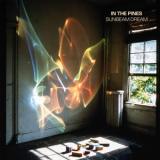
Die Psych-Rocker aus Cincinnati kehren mit ihrem vierten Album zurück und drehen die texturierten Synthesizer und spacigen Melodien voll auf, um ihr bisher shoegaze-lastigstes Album zu schaffen. Das zentrale Nervensystem von In The Pines befindet sich in The Lodge - einem alten Freimaurertempel, der als Mehrzweckraum gegenüber von Cincinnati in Dayton, Kentucky, umfunktioniert wurde. Die Band bewohnt eine Ecke des Kellers in diesem weitläufigen Labyrinth, wo sie Foleytronics betreibt - einen kleinen Laden für Vintage-Profi-Audio-Reparaturen und einer der wenigen Läden weltweit, der Vintage-Digitaleffekte reparieren kann. Ein natürliches Nebenprodukt dieses Ladens ist das Studio in Bandmitglied Peter Foleys Keller, ein Raum voller verschiedener Vintage-Effekte, Bandmaschinen und Synthesizer, in dem sie Sunbeam Dream vollständig aufgenommen und produziert haben. Alle Aufnahmegeräte, die für ,Sunbeam Dream" verwendet wurden, wurden vor dem sicheren Tod gerettet, repariert und von der Band selbst wieder funktionsfähig gemacht, die sich der Grenzen dieser Geräte bewusst war (und diese gerne ausnutzen wollte). Ähnlich wie beim Konzept von Oulipo in der Poesie und Mathematik entstehen Kreativität und Problemlösungsfähigkeiten aus einem klaren Verständnis und ständiger Überprüfung der Grenzen. Der Aufnahmeprozess ermöglichte es In the Pines zum ersten Mal, sich mit den kleinsten Details zu beschäftigen - ganze Tage wurden damit verbracht, den richtigen Akustikgitarrensound zu finden, nur um schließlich auf ein Stück Klebeband zu kommen, das über die Saiten geklebt wurde; Stunden, die in anderen Studios als Luxus gelten würden, wurden damit verbracht, verschiedene Beckenkombinationen für einen Refrain oder eine Bridge auszuprobieren. Genau wie bei ihrer Reparaturwerkstatt schuf die Band einen Aufnahmeraum, in dem Hyperfokus und Liebe zum Detail nicht nur erlaubt, sondern ausdrücklich erwünscht sind. Das Ergebnis dieser obsessiven Kontrolle ist das bislang ausgereifteste Werk von In The Pines. Sunbeam Dream hebt den Shoegaze-beeinflussten Psych-Rock der Band auf ein neues Niveau. Mit einer stärkeren Betonung der Synthesizer, die sich von einem strukturellen Element zu einem Hauptcharakter im Sound der Band entwickeln (dank eines wiederbelebten Mellotrons von 1971), reiht sich die Band in die Tradition großartiger und kraftvoller Alben wie ,A Northern Soul" von The Verve oder dem selbstbetitelten Album von The Charlatans (UK), bei denen die Produktion der beiden Bands ihrer kreativen Vision zu entsprechen schien. Mit ,Sunbeam Dream" fühlt sich alles heller und klarer an, während es gleichzeitig auf wunderbare Weise in einem Zwielichtschleier schwebt, der jedes Element umgibt.
In Guadeloupe, many people think that jazz and ka music are like a ring and a finger. To some extent, the same could be said about so called Latin music and the music played in the French West Indies.
Both aesthetics were born in the Caribbean and bear so many connections that they can easily be considered cousins. In constant dialogue, there are lots of examples of their fruitful alliance and have been for a while. The English country dance that used to be practiced in European lounges came to be called kadrille in Martinique and contradanza in Cuba. They both featured additional percussion instruments inherited from the transatlantic deportation. Drawing from shared feelings about the same traumatized identity – later to be creolized – it would be hard not to assume that they were meant to inspire each other. The golden age of the orchestras that graced the Pigalle nights during the interwar period further proves the point. As soon as the 1930s, Havana-born Don Barreto naturally mixed danzón and biguine music in a combo based at Melody's Bar. In the following decade, Félix Valvert, a conductor who was born and raised in Basse-Terre in Guadelupe, also worked wonders in Montparnasse with La Coupole, which was an orchestra made up of eclectic musicians. Afro- Caribbean performers of various origins were often hired on rhythm and brass sections in jazz bands, which used to enliven the typical French balls of the capital. In the 1930s and onwards, Rico’s Creole Band was one of them.
Martinican violinist-clarinettist Ernest Léardée, who would become the king of biguine music as well as the main figure of French Uncle Ben's TV commercials (a dark stigma of post-colonial stereotypes), had musicians from the whole Caribbean sphere play at his Bal Blomet – and they all enchanted "ces Zazous-là" (according the words of Léardée's biguine-calypso piece). In les Antilles (French for French West Indies), music history started to speed up in the 1950s, when trade expanded and radio stations grew bigger. The Guadelupean and Martiniquais youth tuned in their old galena radio sets to South American and Caribbean music. As for the women traders, les pacotilleuses, they bought and sold goods across different islands (the "passing of items through various hands" was thought to be most pleasurable) and brought back countless sounds in their luggage. Such was the case of Madame Balthazar, who once returned from Puerto Rico with the first 45rpm and 33rpm to ever enter Martinique.
Out of this adventure was created the famous Martinican label La Maison des Merengues, a music business she opened and undertook with her husband and which proved to be a major landmark. At the end of the 1950s, in Puerto Rico, Marius Cultier competed in the Piano International Contest playing a version of Monk's Round 'Midnight. He won the first prize and this distinction foreshadowed everything that was to come. Cultier, the heretic Monk of jazz, was quickly praised for writing superb melodies, always tinged with a twist that conferred a unique sound to his music. It didn't take long for the gifted self-taught musician to get to play with Los Cubanos, making a name for himself thanks to his impressive maestria on merengues.
The rest is history. Besides, in the late 1950s, Frantz Charles-Denis, born into the upper middle class in Saint-Pierre and better known by his first name Francisco, went back home after working at La Cabane Cubaine – a club located rue Fontaine where he had caught the Latin fever. Francisco's music was therefore heavily marked by his Cuban cousins' influence, which gave the combos he led a specific style and also led to renewal. Things were swinging hard in La Savane, located in the main square in Fort-de-France. He set up the Shango club close by and tested out the biguine lélé there, a new music formula spiced up with Latin rhythms. Soon afterwards, fate had him fly to Puerto Rico and Venezuela.
As for percussionist Henri Guédon (percussions were only a part of his many talents), he was born in Fort-de-France in May 22nd 1944, the day marking the celebration of the abolition of slavery. As an old man, he could remember that in " his father's Teppaz, a lot of hectic 6/8 music was constantly playing...". In the opening lines of his Lettre à Dizzy, a small illustrated collection of writings published by Del Arco, he highlighted the huge impact that cubop had on him as a teenage boy, around 1960. He eventually turned out to be the lider maximo in La Contesta, a big band steeped in Latin jazz. He was also the one who originated the word zouk to describe music which brought the sound of the New York barrio to Paris. It was the culmination of a journey that started in Sainte-Marie: "a mythical place for bélé, the equivalent of Cuban guaguancó". In the early 1960s, the tertiary economy developed to the detriment of agriculture. Yet rural life was where roots music emerged in Martinique and in Guadeloupe.
Record companies played a major part in the process of Latin versions sweeping across the islands – before reaching everywhere else. Producer Célini, boss of the great Aux Ondes label, and Marcel Mavounzy, both the head of Émeraude records - a firm which was founded in 1953 - as well as the brother of famous saxophonist Robert Mavounzy, were big names to bear in mind. Although there were many of them - all of whom are featured on this record - Henri Debs was definitely the major figure in the recording adventure. He proved to be so influential that he even got compared to Berry Gordy. In the mid 1950s, when he acquired his first Teppaz, he worked on his first compositions: a bolero and a chachacha. Then, he became the one man who made people discover Caribbean music, from calypso to merengue. He was among the first ones to rush out to San Juan, Puerto Rico, to buy records and distribute them through a store run by one of his brothers in Fort-de-France. He had members of the Fania All Star come and perform there, which he was madly proud about. He was also the first one to pay attention to Haitian music, such as compas direct and various other rhythms which would soon flood the market. As a result, many of the combos hitting his legendary studio would end up boosted by widespread "Afro-Latin" rhythms. However, he never denied his identity: gwo ka drums were given a major role, although they were instruments which had long been banned from the "official" music spheres. The present selection bears witness to such a creative swarming. Here are fourteen tracks of untimely yet unprecedented cross-fertilization: all types of music rooted in the Creole archipelago have found their way, whatsoever, to the tracklisting. Whether originating from the city or being more rural, they all go back to what Edouard Glissant, in an interview about the place of West Indian music in the Afro-American scope, called "the trace of singing, the one which got erased by slavery." "It is so in jazz, but also in reggae, calypso, biguine, salsa... This trace also manifests through the drums, whether Guadelupean, Dominican, Jamaican or Cuban... None of them being quite the same. They all point to the idea of a trace, seeking it out and connecting to each other through it. This is the hallmark of the African diaspora: its ability to create something new, in relation to itself, out of a trace. It may be the memory of a rhythm, the crafting of a drum, a means of expression which doesn't resort to an old language but to the modalities of it." The opening track features one of the emblematic orchestras of this aesthetic identity, criscrossing many music types from the archipelago. The 1974 Ray Barretto guajira – Ray Barretto was a major New York drummer influenced by Charlie Parker and Chano Pozzo – is magnificently performed by Malavoi, a legendary Fayolais group (i.e from Fort-de-France). Additionally, the compilation ends on a piece by Los Martiniqueños de Francisco. It symbolically closes the circle as it is a genuine potomitan of Martinique culture which also functions as a tireless campaigner for Afro-Caribbean music. Practicing the danmyé rounds (a kind of capoeiria) to the rhythm of the bèlè drum, it delivers a terrific Caterete, a kind of champeta of Afro- Colombian obedience which was originally composed by Colombian Fabián Ramón Veloz Fernández for the group Wgenda Kenya. The icing on the cake is Brazilian Marku Ribas, who found refuge in Martinique in the early 1970s, bringing his singing to the last trance-inducing track. These two "versions" convey the whole tone of a selection composed of rarities and classics of the tropicalized genre, swarming with tonic accents and convoluted rhythms. It is the sort of cocktail that the West Indians never failed to spice up with their own ingredients. For instance, the Los Caraïbes cover of Dónde, a famous Cuban theme composed by producer Ernesto Duarte Brito, has a typical violin and features renowned Martinique singer Joby Valente and his piquant voice.
The track used to be – or so we think – their only existing 45rpm. The meaningful Amor en chachachá by L'Ensemble Tropicana, a band which included Haitian musicians among whom was composer and leader Michel Desgrotte, also recalls how Latin music was pervasive in the tropics in the mid-1960s. They were the ones keeping people dancing at Le Cocoteraie in Guadelupe and La Bananeraie in Martinique. Around the same time, another "foreign" band, Congolese Freddy Mars N'Kounkou's Ryco Jazz, achieved some success on both islands by covering Latin jazz classics – such as their adaptation of Wachi Wara, a "soul sauce" by Dizzy Gillespie and Chano Pozo whose interweaving of strings and percussions can have anyone hit the dancefloor. How can you resist Dap Pinian indeed, a powerful guaguancó by Eugene Balthazar, performed by the Tropicana Orchestra and published by the Martinique-founded La Maison des Merengues? It also acts as a symbol of the maelstrom at work. Going by the name Paco et L'orchestre Cachunga, Roger Jaffory used to play guaguancó too: his Fania-inspired Oye mi consejo is one example of his style. Baila!!!!! Dancing was also one of the Kings' focus points. Oriza is a Puerto Rican bomba and a "classic" originally composed by Nuevayorquino trumpeter Ernie Agosto, which reserves major space for brasses, giving it a special sheen.
Emerging from the New York barrios crucible was also La Perfecta, a Martinique group originating from Trinidad, whose name directly references the totemic Eddie Palmieri figure as well as his own band, also called La Perfecta. Here they borrow Toumbadora from Colombian producer and composer Efraín Lancheros and interpret it by emphasizing percussions, which set fire to the track even more than the wind instruments. The same goes for Martinique's Super Jaguars, who use Tatalibaba – a composition by Cuban guitarist Florencio "Picolo" Santana which was made famous by Celia Cruz & La Sonora Matencera – as a pretext for sending their cadences into a frenzy. In a more typically salsa vein, the Super Combo, a famous Guadelupean orchestra from Pointe-Noire that was formed around the Desplan family and had Roger Plonquitte and Elie Bianay on board, adapt Serana, a theme by Roberto Angleró Pepín, a Puerto Rican composer, singer and musician also known for his song Soy Boricua. Here again, their vision comes close to surpassing the original. In the 1970s, L'Ensemble Abricot provided a handful of tracks of different syles, hence reaching the pinnacle of the art of achieving variety and giving pleasure. They played boleros, biguines, compas direct, guaguancó and even a good old boogaloo - the type they wanted to keep close to their hearts for ever, "pour toujours", as they sang along together in one of their songs. Léon Bertide's Martinican ensemble excelled at the boogaloo which had been composed by Puerto Rican saxophonist Hector Santos for the legendary El Gran Combo.
Three years later, in 1972, Henri Guédon, with the help of Paul Rosine on the vibraphone, tackled the Bilongo made famous by Eddie Palmieri. Such a classic!!!!! And so were the Aiglons, the band from Guadelupe: choosing to execute Pensando en tí, a composition by Dominican Aniceto Batista, on a cooler tempo than the original, they noticeably used a wonderfully (un)tuned keyboard in place of the accordion. On the high-value collectible single – the first one released by Les Aiglons under the Duli Disc label – there is a sticker classifying the track under the generic name "Afro". Now that is what we call a symbol. Jacques Denis
out of Stock
Last delivered 7 months ago available to reorder, subject to availability
World Of Echo announces the reissue of two remastered albums by Japanese guitarist and songwriter Naoki Zushi, 1988’s Paradise, and 2005’s III. Two classics of Japanese psychedelia, both Paradise and III were originally released on Org Records, the imprint of Shinji Shibayama of acid-folk group Nagisa Ni Te, with whom Zushi has guested on second guitar for decades. Both intimate and expansive, rich with revelatory songwriting and blasted, sky-scouring guitar, these reissues return these albums to print for the first time since the 2000s. It’s the first time III has been officially released on vinyl, with an extra, previously unreleased track, “Under The June Moonlight.”
Recorded in Kyoto’s Townhouse Studios in mid 1987 and released in limited-to-500 vinyl pressing in 1988, Paradise emerged from a scene in Kansai, Japan that was embracing the idiosyncracies of 1970s singer-songwriters, the soaring solos of early seventies psychedelia, and the DIY impulse of 1980s post-punk. While Zushi’s musical history stretched back to the early eighties – he was a founding member of Jojo Hiroshige’s noise outfit Hijokaidan – he found his feet with groups like Hallelujahs, whose dream-pop collection Niku O Kuraite Chikai Wo Tateyo was recently reissued by Black Editions, and Idiot O’Clock.
Paradise appeared two years after that Hallelujahs album and share much the same membership – Zushi’s backing band on several of the songs includes Shibayama on drums and Ken-Ichi Takayama (aka Idiot) on electric guitar, though just as often, Zushi plays all the instruments himself. The coordinates here are wide-reaching – you can hear the volume and intensity of Neil Young & Crazy Horse (on “Hallelujah: Left Side” and “Paradise: Midday”), the slow-motion magic of Galaxie 500, the idiosyncratic spirit of The Only Ones, all mixed up with tender guitar miniatures and stumbling garage-psych-pop moves.
Seven years later, after the transitional album Phenomenal Luciferin, Zushi released III. Perhaps his masterpiece, it’s already been bootlegged on vinyl, but this reissue is the real deal. The album was recorded at Studio Nemu over seven years, and sees Zushi backed by Shibayama (bass) and Masako Takeda (drums), his erstwhile bandmates in Nagisa Ni Te. By this stage, Zushi had started to really stretch out, and many of the songs on III swoon languorously, taking their sweet time to say what they need to say. It’s rich with lovely, melancholy songs, in a similar realm to bandmates Nagisa Ni Te, of course, but you can also hear traces of everything from Syd Barrett’s The Madcap Laughs, through seventies private press loner folk, to the slow-burn meanderings of the likes of early Low or Damon & Naomi.
When interviewed by Shibayama in the mid-nineties, Zushi said of Paradise, “it was a sort of collection of songs that had meant something to me up to that point… it was my paradise. I wanted to create paradise.” That’s something Zushi achieves on both of these albums – visionary Japanese psychedelia, en route to paradise. - Jon Dale
Gastr del Sol"s second album returns at last to the vinyl format - its first physical manifestation in well over a decade. Once again, a drop of the needle may ignite any number of queries, summed simply in one: What IS this music? Such is the potent energy of Crookt, Crackt, or Fly, retaining its otherworldly qualities some 32 years and countless musical movements since. Crookt, Crackt, or Fly expands upon The Serpentine Similar"s minimalist stance in unexpected ways, imposing further austerity in the soundscape but for an unpredictable expansive quantity periodically overflowing, waves of blood sluicing through the elevator doors. This is partially due to a change within the group dynamic: the departure of bassist Ken "Bundy" Brown and the arrival of a new partner for guitarist and singer David Grubbs - guitarist and sound fuckerer Jim O"Rourke. O"Rourke"s initial work with Gastr involved editing and recomposing recordings of the Grubbs-Brown-&-sometimes-John-McEntire lineup, producing an utterly outré collage of cut-ups and other types of tape processing. This became the "20 Songs Less" single, after which he was invited to play with the group. It was a time of flux; Brown recalls playing a Gastr show at the Metro around this time featuring himself, John McEntire, Grubbs and O"Rourke - and one of the pieces played was a Tortoise song! Throughout these shifts, Gastr del Sol"s music was never less than fully considered and composed, even in moments redolent with the suggestion of the random and the non-sequitur. Grubbs and O"Rourke made no attempt to replicate Serpentine"s arrangement of thick, scaly drones and hypnotic song-visions in their own partnership, finding Crookt, Crackt,"s sound instead in spiny, gamelan-like interactions between their (mostly acoustic) guitars, played precisely in and out of formation with bright, fleet-fingered abandon. O"Rourke"s fondness for field recordings and his capacity for tape manipulation intersected with Grubbs" sensibilities, edifying his evolving song style: written with increased sharpness and sly surreal humor, sung closer to silence. Halfway into "Work from Smoke", the sudden collapse of the sound-walls around us signals Crookt, Crackt"s major departure. From the thicket of guitars, a swell of drones and free-jazz squeals, made up of bass clarinet, vibraphone and organ, pulls the listener into an entirely other acoustic space. "Every Five Miles" derails in similarly tactile fashion: a guitar duet boils up thunderously, then fragments and spirals apart. As a free electric guitar part crops up, improbably holding the center, the acoustic space around it continues to disintegrate in ambient stereo. A wedding of folk music idioms to classical, improvised and modern compositional modes (including Gastr"s own formative post-punk mode), Crookt, Crackt, or Fly is a song-based reality steadily giving way to its alternative alchemies playing out within.
'it’s his loosest, dreamiest dispatch yet, an enveloping and atmospheric collection that constantly comes together and breaks apart.'
Maxo releases his new album Mars Is Electric. Earlier this week, Maxo released a third haunting video, directed by Vincent Haycock, from the visual world of ‘Mars’ for the title track. Maxo previewed the album with the release of singles “Human?” and “Donahoo’s Chicken” this spring, which arrived with equally raw, inventive, and unnerving music videos.
Mars Is Electric is Maxo’s first official release since he dropped two critically acclaimed albums in 2023 with Even God Has A Sense of Humor and Debbie’s Son. His fifth full-length album finds the Southern Californian artist self-aware and mature. Having lived the last decade of his musical life intentionally creating specific bodies of work rooted in imagery, observation, and capturing moments, Maxo spent this previous year freely creating without a specific plan, relieved from all obligations and restrictions.
“This is the first time that I really didn’t care, I didn’t approach things so seriously,” the artist shrugs off, meaning that without expectations or specific goals, his creativity flourished. This opening finds the artist having conversations he’s been avoiding, having lived silently in the pain of those topics for the past few years. Exploring uncomfortable themes about personal life, relationships, and family fractures, life before and after the loss of innocence, and an abundance of existential spirals.
The exploration was not only thematic but also musical in nature. During the creation process, Maxo was immersed in a wide array of music from past to present - France Joli, $amaad, Steve Spacek, Cherelle, DJ Quik, Lisha G - influences that seeped their way into these songs. The album opens in a loose, dreamlike state—experimental and searching, mirroring the emotional fog of someone looking for something real to hold onto. But as it progresses, so does Maxo’s energy as he fiercely rides and weaves on songs with a contagious confidence, producing some of his most kinetic and lyrically impressive music to date.
As the work and vision coalesced into a body of work, Maxo found that he was unlocking a creative language with his collaborators that felt wholly new - a new understanding of why and how he was making art for this world. What emerged from this year-long process was a new musical journey and a future where Maxo refuses to be another bad example of what could be, refusing to mind the blueprint set down. Maxo is the sole voice on the album featuring production by lastnamedavid, Quelle Chris, Baird, Groove, and more.
Listen to Mars Is Electric above, see full album details below, and stay tuned for more from Maxo very soon.
Ranil is undoubtedly the most unconventional figure among the greats of Amazonian cumbia, earning a well-deserved place alongside iconic bands like Los Mirlos, Los Wembler's, and Juaneco y su Combo. This compilation offers a glimpse into the vast musical output Ranil created in the late 1970s and early 1980s. Psychedelia, rock fusion, cumbia, salsa, mambo, Amazonian folk_ you'll find all these flavors blended into the vibrant, jungle-rich sound Ranil crafted. DESCRIPTION Ranil is undoubtedly the most unconventional figure among the greats of Amazonian cumbia, earning a well-deserved place alongside all the better-known iconic bands. He worked as a teacher, criollo guitarist, radio host, TV entrepreneur, and politician, but gained lasting fame as the founder of Ranil y Su Conjunto Tropical in the 1970s. By 1968, around the same time Los Destellos were making waves in Lima, groups like Los Wembler's de Iquitos and Juaneco y su Combo began electrifying cumbia in Iquitos. This new genre, dubbed Amazonian cumbia, exploded nationwide in 1973, thanks to hits by Juaneco y su Combo, Los Mirlos, and Los Wembler's. The success these bands achieved spawned dozens of other groups from the Amazon. Ranil, always a visionary, recognized the movement's potential and joined forces through his first single recorded on the Dinsa label in 1974. Unhappy with the contractual terms, he went on to found Producciones Llerena, the label on which he would release the rest of his discography. Over the years, Ranil y su Conjunto Tropical featured guitarists like Límber Zumba and Luis Nigro, while Ranil remained the lead vocalist and bassist for group. Zumba and Nigro had already played with other regional bands and written songs for groups like Los Destellos and Los Mirlos. This compilation offers a glimpse into the vast musical output Ranil created in the late 1970s and early 1980s, bringing together 14 tracks from the band's 10 LPs. These records have always been hard to come by as, despite being recorded in Lima, they were distributed by Ranil from Iquitos. Psychedelia, rock fusion, cumbia, salsa, mambo, Amazonian folk_ you'll find all these flavors blended into the vibrant, jungle-rich sound Ranil crafted.
out of Stock
Last delivered 13 months ago available to reorder, subject to availability
Minor Slip ist das Felte-Debüt von Shaki Tavi, dem Hauptprojekt des aus Oklahoma stammenden und in LA lebenden DIY-Aktivisten Leon Manson und einer Gruppe von Freunden und Mitstreitern. Durch die schichtweisen Böen von verwaschenen Gitarren und übersteuerten Drums tauchen trügerisch schöne Pop-Hooks auf, die durch Mansons verwitterten, harmonischen Bariton und sein Händchen für einfallsreiche Strukturen beleuchtet werden. Als er die Ursprünge des Albums auf eine Phase des Burnouts und der Desillusionierung zurückführt, erinnert er sich: "Ich fing an, mich einfach mit ein paar minimalen Effekten und Geräten hinzusetzen, Riffs zu spielen und mich zu fragen, `Was, wenn es Spaß machen könnte? Was, wenn es für mich sein könnte?'" Das Ergebnis ist kraftvoll, verletzlich, eingängig und ungewöhnlich authentisch, eine Eruption kreativer Kraft des Kindes von Rockmusikern, dessen Leidenschaft und Antrieb als Außenseiter in einer Kleinstadt entstanden, und gestärkt inmitten der Künstlichkeit und der Selbstverteidigungsrealität von LA. Die Leadsingle "Breaker" kombiniert einen Midtempo-Breakbeat mit prismatischen Gitarren und entspanntem Gesang in einer Kreuzung von Genres, die Mansons Jahre in verschiedenen Bands und Szenen zu einer aufrichtigen, kompromisslosen Vision verdichtet. Auf "Foam" schweben Schädelrassel-Riffs und eine heulende Gitarrenhook über Big Beat-Drums und beschwören gleichermaßen arenagroße Erhabenheit und schrilles Schwanken herauf. Die Fülle und der Ehrgeiz in Mansons Arrangements entwickelten sich im Laufe von einigen Jahren des Schreibens, Überarbeitens, und Aufnehmens. Er erinnert sich: "Nach einigen überraschenden Rückmeldungen auf ein paar Bedroom-Demos holte ich meine Bandkollegen ins Studio, um ausgefeiltere Versionen zu machen; diese zweite Phase beinhaltete eine vertraute Art von existenziellem Abdriften und Zweifeln, aber die Lösung war die gleiche wie immer: es einfach halten, Sachen machen, die ich mag, und von dort aus gehen." Trotz seiner einzigartigen Vision ist Manson der Gemeinschaft sehr verbunden; er hat jahrelang bei der kreativen Non-Profit-Organisation Non Plus Ultra in LA gearbeitet, und obwohl er das enorme Ausmaß der Kunstszene an der Westküste anerkennt, merkt er an: "Das Gute an dieser Stadt ist, dass die kreative Energie unübertroffen ist, wenn man in der Lage ist, die Segel zu setzen und sie zu nutzen." Manson fasst die emotionale Investition in seine Arbeit wie folgt zusammen: "Diese Platte fühlte sich manchmal wie eine Last, manchmal wie eine Rettungsinsel an; es war ein Prozess, in dem man alles, was passiert, willkommen heißt, auch wenn es kleine Ausrutscher gibt."
Motown’s L.A.-based Mowest label lasted less than two years, but managed in that short time to release some of the most adventurous music the company ever put out. And probably the most intrepid—and nowadays, adored—Mowest release of them all was the 1992 self-titled release from Odyssey. This one-off brought elite West Coast sessionmen like Wrecking Crew mainstay Don Peake, one-time Chicago member Donnie Dacus, and arranger/orchestrator extraordinaire Gene Page together with a bunch of West Coast hippie rockers (as Peake says, “We were invited to lunch, introduced to some nice people and told we were going to form a band”).
The happy result was a record that has appeared on more deejay turntables than you can count, a one-of-a-kind blend of funky Motown bottom with a spacy sensibility and sound that fits right in next to, say, the latest Khruangbin album on your psychedelic chill playlist even as it activates your 5th Dimension sunshine pop endorphins. The single “Our Lives Are Shaped by What We Love” is probably the pick to click, but the whole album is a total vibe. We’re reissuing Odyssey for the first time ever in the U.S. (the Japanese have long been all over this album) in blue-green “ocean spray” vinyl, complete with original album art including the lyric insert. Remastered for the format by Mike Milchner at Sonic Vision, and pressed at Gotta Groove Records for superior sound. A must!
Visionary producer and one half of pioneering electronic duo The Chemical Brothers, Tom Rowlands returns to Phantasy with ‘We Are Nothing / All Night’, the first solo dancefloor material since his last appearance on Erol Alkan’s storied London label in 2013 with ‘Through Me / Nothing But Pleasure’.
Once again, Rowlands delivers a double A-side single in order to commit two progressive new productions to wax. Heavily road-tested across the world in Chemical Brothers DJ sets, the sprawling arrangement of ‘We Are Nothing’ trips through a decades-long obsession and subversion of house music and psychedelia alike. Imaginatively sampling Canadian outsider artist Bill Bissett, Rowlands uses the poet’s existential phrasing as the foundation for a rising slalom of acid catharsis, peppered with snatches of soul, analogue freakouts, and all-encompassing groove.
‘All Night’, meanwhile, finds a different, perhaps unexpected rhythm. Here, Rowlands’ unmatched studio instincts deviate in a different direction entirely, employing a searing tempo to embrace the analogue experimentation at the heart of his work, as well as an appreciation for electronic music’s willingness to barrel ever-forward; the result is a worthy head spinner from both label and artist alike.
Tom Rowlands will play a rare solo DJ set at Glastonbury's Stonebridge Bar on Friday 27th June, as part of Bugged Out's 30th Anniversary celebrations.
out of Stock
Last delivered 13 months ago available to reorder, subject to availability
RE:WARM Records are very pleased to announce their next release 'Rituals', a new compilation series from the curator and DJ, Josh Mason-Quinn, aka Somewhere Soul.
For Volume 1 Josh takes us on a journey through the various shades of his ritualistic listening habits across twenty-four hours. From rising first thing in the morning, radiating positive energy throughout the day, retreating into the evening before finally releasing your inhibitions on the dancefloor.
The compilation spans four sides of vinyl and is presented in a double gatefold sleeve. The release will also be available on CD and digital formats.
The album is a celebration of new and emerging talent from the underground Jazz, Soul, World and House Music spheres, sitting neatly alongside artists already carving their way into the collective conscience of those who have been curious enough to dig deep.
The record is due for release on 25th July 2025 with the pre-order available 23rd April 2025 via the Warm Agency Bandcamp and selected record stores.
out of Stock
Last delivered 13 months ago available to reorder, subject to availability
A true royal rebel without a cause joins the Step Ball Chain chosen family. Berlin psy-con Yazzus presents a sexy sweatfest; a four track original EP featuring DJ Fuckoff of tech-trodden club stompers that will shake and break you. Operating in a lane of her own, she draws on her UK roots with bass laden bounce and never forgets to add that sapphic touch crucial to SBC. “Rebel Royale” is keeping techno freaky, cheeky and ahead of the curve.
Quintessentially out of control, elements of tension and release are toyed with throughout all the tracks, the building and driving addictive synth work in Venom & Vision; Serpent’s Rising sending even the most sane into a spiral. Basslines come thick and heavy, chunky by nature and particularly prevalent in Delicately Mad and My Lipgloss My Rules, they are the backbone of the record. Don’t get it twisted, this isn’t some run of the mill techno; the modular bleeps and freakouts, FX and vocals are wired and inspired; the glue showcasing Yazzus’s fully sick technical abilities. Last but not least, she entails the help of friend DJ Fuckoff; haunted slippery vocals are a match made in heaven for the percussive psy workout Erotica.
out of Stock
Last delivered 5 months ago available to reorder, subject to availability
Murry Hammond (old 97s)’s 2025 release Trail Songs of the Deep is his greatest achievement, the perfect distillation of his grand vision, and conclusive evidence of his centrality to the last half-century of American music.
Pelican has always been a band that's not just from Chicago, but distinctly of Chicago. Formed in 2000 by guitarists Trevor Shelley de Brauw and Laurent Schroeder-Lebec alongside brothers Bryan and Larry Herweg on bass and drums respectively, Pelican's foundation was built upon the rule-free, genre-agnostic scene synonymous with the Fireside Bowl. "The `90s in Chicago was a free-for-all. Everyone was just coming from a place of pure creativity," says Shelley de Brauw. With Schroeder-Lebec returning to the band following Dallas Thomas' departure in 2022, this reunified version of Pelican allowed the band to tap back into the spirit of their formative era and build something distinctly new with Flickering Resonance. While longtime Pelican fans will recognize the album as an update to the band's ethos_one that's been constantly evolving since their very first EP_their new partnership with Run For Cover Records emphasizes something that's always been implicit to the Pelican formula. These songs take as much inspiration from titanic `90s post-hardcore, space-rock, and emo as they do traditional metal, showing that though Godflesh and Goatsnake records occupied the shelves of Pelican's songwriters, so too did Quicksand, Christie Front Drive, and Hum. "A lot of people didn't hear it at first," says Schroeder-Lebec. "I was like, well, I guess the metal world is where we fit. But now, we're more willing to acknowledge all the suits we're wearing."On Flickering Resonance, Pelican doesn't attempt to reinvent itself as much as emphasize the elements that were so often overlooked. Though Pelican's thick sonic backbone remains intact, the songs on Flickering Resonance show a more humanistic side of the band. Tracks like "Evergreen" and "Indelible" tease Pelican's doom-metal roots, but these songs feel equally, ebullient and truthful, playing like Texas Is The Reason songs transmuted into a post-rock landscape. Recorded with longtime musical compatriot Sanford Parker, who recorded their first EP, Pelican begins this new chapter of their career with an album that's neither full reinvention nor back-to-roots revivalism. After so much time apart, and with so much life having been lived between the original Pelican lineup's last recording sessions together, the band approached it with renewed vigor and a more communal spirit."There was more room for openness and critique with the understanding that we're all trying to craft the best song possible and that every suggestion is valid until it's proven invalid," says Shelley de Brauw. That process allowed everyone to embrace the material with a shared vision. "We didn't move forward unless we all wanted to move forward, and that felt like real community building," says Schroeder-Lebec of this unified approach. "I went from seeing it as my art and my craft to our craft that we were shaping together."In doing so, Pelican allowed themselves to look at their music less as a means of hard-earned catharsis and more as an appreciation for the glimmers of joy that occur even in the bleakest landscapes. Songs like "Cascading Crescent" and "Indelible" don't languish in what's been lost, these tracks see the band embracing what remains in their hands instead of lamenting what's slipped through their fingers. It's a concept that's mirrored in the artwork of Christian Degn that graces the cover of Flickering Resonance. It's a piece built off the concept of flame meditation, and how the smallest flames can often bring about the biggest transformations. A song like "Flickering Stillness" exemplifies this feeling through its sonic expanse, putting the band's sonic density and hyper-focused clarity on display, but with an emphasis on the profound human connections that have kept Pelican going all these years. "When Laurent left and we were able to carry it through, there became a real sense of gratitude for the fact we still have this artistic outlet and a community of people who want to be a part of it" That feeling of deep, grounded appreciation isn't just one that's within the band members, it's expressed in every track on Flickering Resonance. Because at the very core of Pelican, are four individuals who have grown both separately and together, and always will.Like a distant light faintly glowing in the darkest night, Flickering Resonance is a reminder of all that has passed us by, but also all that is still to come.
It happens everytime. As soon as we get the news that Lewis Fautzi, label owner, will release with us, his own imprint, the excitement is hard to describe. First of all, his vision makes him one of the most exciting artists in the scene and last but not least, he's always able to surprise us. Leading us through his own landscapes and rythms, Lewis creates a world which is very much of his, with a motion and a pace that are remarkable and hard not to notice. This release he's been preparing for a while is another masterpiece that will echo in our minds for a long time. Through beatless pads or fierceful kicks, the precise cutting edge of his creations are a delight to our ears and makes us all embark in a journey with no limits or boundaries.
out of Stock
Last delivered 8 months ago available to reorder, subject to availability
Seven years after their last release (Helltown, 2018), Electric Citizen returns with their fourth album, EC4-a powerful statement of renewal and raw energy. Written by Ross Dolan with contributions from the full band, the album was meticulously crafted over several years and recorded with Mike Montgomery and John Hoffman at Candyland Studio in Dayton, KY. The album was mixed by Collin Dupuis (Lana Del Rey, The Black Keys) in Detroit and mastered by JJ Golden at Golden Mastering in California. The album art was created by Neil Krug (Lana Del Rey, Tame Impala, Weyes Blood), who the band worked with for their first album, Sateen. Now signed to Heavy Psych Sounds, the band is ready to unleash their most potent work yet-a fusion of hypnotic grooves, searing guitars, and Laura Dolan's mesmerizing vocals. EC4 is both a homecoming and a rebirth. Electric Citizen is back!
Solid red vinyl, limited to 350 copies. Seven years after their last release (Helltown, 2018), Electric Citizen returns with their fourth album, EC4-a powerful statement of renewal and raw energy. Written by Ross Dolan with contributions from the full band, the album was meticulously crafted over several years and recorded with Mike Montgomery and John Hoffman at Candyland Studio in Dayton, KY. The album was mixed by Collin Dupuis (Lana Del Rey, The Black Keys) in Detroit and mastered by JJ Golden at Golden Mastering in California. The album art was created by Neil Krug (Lana Del Rey, Tame Impala, Weyes Blood), who the band worked with for their first album, Sateen. Now signed to Heavy Psych Sounds, the band is ready to unleash their most potent work yet-a fusion of hypnotic grooves, searing guitars, and Laura Dolan's mesmerizing vocals. EC4 is both a homecoming and a rebirth. Electric Citizen is back!
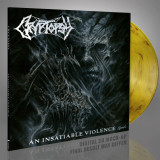
Ein Mensch verbringt den ganzen Tag damit, eine Maschine zu bauen, nur damit sie ihn die ganze Nacht hindurch quält. Als ob das nicht schon verdreht genug wäre, gefällt es ihnen auch noch. Es gefällt ihnen sogar so gut, dass sie am Morgen verjüngt aufwachen und eifrig an der Maschine feilen, bis sie in ihrem Kopf perfekt läuft.
Dies ist die nächtliche Vision, die Cryptopsy zu ihrem neunten Album Nightmare inspiriert hat. "Hüte dich vor dem Scheinwerferlicht", warnt Sänger Matt McGachy, bevor "Dead Eyes Replete" mit einem schmerzerfüllten Breakdown vor deinen Augen aufblitzt. An Insatiable Violence spiegelt unsere toxische Beziehung zu den sozialen Medien wider, aber obwohl es unheimlich vorausschauend ist, ist das Album von den vielen Mutationen beeinflusst, die die Hall of Fame-Diskografie der Band geprägt haben. Inspiriert von einem Mukbang, der furchtbar schief gegangen ist, ist der gefräßige Opener "The Nimis Adoration" ein Sammelsurium an Blasts, Christian Donaldsons Fishhook-Riffs und einer kräftigen Portion Groove, der die Boxen zum Beben bringt.
Cryptopsy wissen, dass nicht jede brutale Technical-Death-Metal-Band lange genug durchhält, um nach 30 Jahren einen kanadischen Grammy zu gewinnen. Das Cover von "An Insatiable Violence" wurde von dem verstorbenen, großartigen Martin Lacroix gestaltet, der mit unheiligem Vergnügen über die frischen, fetthaltigen Tiefen von McGachys falschem Akkordschrei grölen würde. Ein anderer ehemaliger Sänger kehrt auf "Embrace the Nihility" zurück, um alle flüsternden Zweifel an seiner Vormachtstellung zu zerstören. Doch obwohl Cryptopsy bereits auf ihrem zweiten Studiowerk die Krone der abscheulichsten Death-Metal-Band für sich beansprucht haben, gehen sie immer noch an die Grenzen des Extremen.
Die Leadsingle des Albums rumpelt und knirscht zu Olivier Pinards schaurigen Bassschlägen - und doch erhebt "Until There's Nothing Left" im Kern den Anspruch, Cryptopsys größter Ohrwurm zu sein. Selbst Flo Mounier - der buchstäblich das Buch des extremen Metal-Drummings geschrieben hat - hat neue Techniken verfeinert, um die Blasphemie von An Insatiable Violence frisch zu halten. Zum Abschluss kommt "Malicious Needs" im Schneckentempo daher, bevor es wie eine Fledermaus in eine schwarze Rauchwolke aufsteigt.
Verbeugt euch vor der neuen Abscheulichkeit der Könige des extremen Metal.
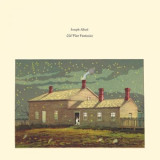
The songwriter Joseph Allred is always prolific, but breaks up their string of solo releases for one of the most orchestrated offerings since the excellent Branches And Trees. Allred’s often monastic guitar works are fleshed out here on Old Time Fantasias, turning them towards ensemble visions of country, Americana, and Appalachia. Album opener, “The Groundhog,” features the distinctive piano of Hans Chew, with bass from Daniel Kimbro and brass from Mikey Allred. Elsewhere the new album features Kelby Clark, Courtney Werner (Magic Tuber String Band), Evan Morgan (Magic Tuber String Band), Lydian Bramblia, and Jack Bird in the mix. “I started recording this album in Spring ‘23, thinking I might be making a mostly solo acoustic album with a couple of duets thrown in for good measure. I met Hans Chew at a Nashville show a few months earlier and sent him a few tracks to see if he wanted to add anything to them. Before long the ‘solo acoustic album’ had given way to what’s probably the most involved and densely orchestrated album I’ve made to date. “I enjoyed following some threads of influence that aren’t as easily discernible in my solo playing—I hear some classic country and psychedelic flourishes, baroque pop glockenspiel and horns, percussion ideas that may be cribbed from Danny Elfman and Tom Waits albums, nods to post-rock-filtered western guitar twang, and a little Cocteau Twins dreaminess. “All in all this was a satisfying record to make. I’m especially grateful to the collaborators for adding their touches and making it a less solipsistic affair than it would have been otherwise. The political climate has changed so much over the last two years that I find it hard to imagine I could make a record with this kind of fantastic mood if I started now. I hope that it can maybe re-enchant those of us who are felling disillusioned.” —Joseph Allred
"JPEGMAFIA, a trailblazing force in experimental hip hop, releases his latest solo project, I LAY DOWN MY LIFE FOR YOU. This album, his first since 2021, is a complex and innovative work that showcases his meticulous production skills. Featuring collaborations with Denzel Curry, Vince Staples, and Buzzy Lee, the album explores themes like capitalism, conscription, and propaganda through some of JPEGMAFIA’s most anarchic raps to date. The release is accompanied by an extensive global tour, reinforcing his status as one of the genre’s most incendiary talents. Since his last solo release, JPEGMAFIA has continued to push boundaries in the music industry, most notably with his 2023 collaboration with Danny Brown on Scaring the Hoes, which garnered critical acclaim and chart success. With I Lay Down My Life for You, JPEGMAFIA cements his reputation as a visionary artist, delivering a powerful commentary on the world through his unique lens. The album’s release is set to make a significant impact, both in stores and on stages worldwide."
I must admit to being a sucker for two-guitar bands. Ok, Hendrix pulled off a trio. But I don’t care what anybody says: The Yardbirds were a better band than anything that came out of them (Ok, maybe not Zep. But Cream?).
Maybe the reason I go back so far in my references is that, within the two-guitar band format, original new roles are difficult and rare. There’s the classic (socially problematic and often boring) “rhythm/lead” solution. There’s the JB’s or Nile Rodgers’ chicken pickin’ vs comping solution (which avoids chordal clashes by relegating one of the guitars to the role of single-note percussion instrument). There’s Ornette’s Prime Time division between Bern Nix’s rolled-off “jazz” tone and Charles Ellerbee’s trebly wah. Almost everything else is a variation on one of these.
In Ches Smith’s record Clone Row, each piece is built around a different concept for guitar interaction. The delightful and gifted weirdness of Mary Halvorson’s playing is counterpointed, contrasted, unisoned with, played off, juxtaposed (that is to say, enters every relationship possible) with Liberty Ellman’s equally amazing sound palette, chops, and imagination. This definitely ain’t your father’s guitar band.
The overall vibe of the record—despite Halvorson’s occasional noise outbursts or Ellman’s distorted guitar lines (see Mixed Fridge) is neither punk/funk, nor Zorn-ish metal—and certainly not the looser parameters of Ornette’s improvised harmolodics. Smith’s vibraphone playing, Halvorson’s guitar tone (whammy pedal squiggles aside), the brilliant electronics, and (most of all) the compositions themselves are somehow strangely West Coast cool. It’s as if I’m hearing a Jim Hall concert in which one of us did a lot of mushrooms, or (dare I write this?) some post-punk post-Dave Brubeck post-trip-hop experiment with classical form.
This recording is, most of all, about Ches as composer. He’s picked up a lot on his long, strange trip of the last few decades. The Haitian funkiness of his work with We All Break is audible—but deeply buried, encoded in the polyrhythms (check out Heart Breakthrough). His long-running side musician collaborations with John Zorn and Tim Berne are also evident but sublimated here into something new.
Not that improvising is absent. Check out the compelling collective statements in Sustained Nightmare and Ready Beat. Check out the brilliant interplay and bass soloing on Abrade With Me (a Weather Report for the age of extreme weather?) Nick Dunston is my favorite bassist of the new generation, and he plays brilliantly throughout. And Ches’ drumming here has all the groove, energy, and incredible range that have kept him in demand from Saturday night Vodou services to jazz and new music recording sessions (…the thinking man’s rock barbarian?).
The sus chords in Abrade With Me do build, for a moment, towards a fusion type of climax...but just at the moment I was gritting my teeth in anticipated defense against some horrible synth solo, the drums drop out, and we’re transported to the ambient lounge at the rave, and we suddenly understand we’re in the hands of a composer with the power to transport us just about anywhere.
So, this is a composer’s record most of all; a composer’s record performed by musicians who happen to be great improvisers. Ches Smith builds here on his reputation as a gifted new voice with an important vision, while showcasing some of the most creative musicians of our time.
When you’re running a label, a demo occasionally comes across your desk that makes you reconsider everything you thought your label was all about. For Balmat, such was the case with this stunning album from Stephen Vitiello, Brendan Canty, and Hahn Rowe. It sounds like nothing we’ve released so far—and that very otherness opened up a whole new world of possibilities for us.
Fans of ambient, experimental electronic music, and sound art will be familiar with Vitiello, a New York native, long based in Virginia, who has collaborated with a cross-generational list of greats: Taylor Deupree, Steve Roden, Lawrence English, Tetsu Inoue, Nam June Paik, Ryuichi Sakamoto, Pauline Oliveros, and many more. On labels like 12k, Room40, and Sub Rosa, he has explored a wide range of minimalism, microsound, lowercase, ambient, improv, and other styles. But this album is something different. It may begin in ambient-adjacent territory, but it quickly veers off, and it just keeps zigzagging, taking on elements of krautrock, post-punk, dub, and the groove-heavy interplay of groups like Natural Information Society and 75 Dollar Bill.
This stylistic turn is thanks in large part to Vitiello’s choice of collaborators. “We’re coming from three different schools,” Vitiello says: “sound art, art rock, and punk rock.”
Active since the early 1980s, Rowe—a violinist, guitarist, and producer/engineer—has played with, or manned the boards for, a frankly jaw-dropping list of musicians: Herbie Hancock, Gil Scott-Heron, the Last Poets, Roy Ayers, John Zorn, Glenn Branca, Swans, Live Skull, Brian Eno, David Byrne, Anohni, R.E.M., Yoko Ono, and many more. But he might be most closely associated with Hugo Largo, a one-of-a-kind New York quartet—two basses, vocals, and Rowe’s violin—that in the late 1980s helped lay the groundwork for what would eventually become known as post-rock.
Canty, of course, is the legendary drummer of Fugazi, the visionary DC post-hardcore group, as well as Rites of Spring before them, and, currently, the Messthetics, a Dischord-signed instrumental trio with guitarist Anthony Pirog and Fugazi bassist Joe Lally.
Vitiello’s trio first collaborated on First, a 17-minute piece released on the Longform Editions label in 2023. Second picks up where the freeform drift of First left off, channeling the trio’s exploratory energies into more intentionally structured tracks and—in a real first for Balmat—some almost shockingly muscular grooves. “Sometimes my projects are more conceptually driven,” Vitiello says, “but I think this was more musically geared. I just wanted to open up the references and bring in an incredible drummer, bring in some melodies, and I’m sort of the center.” But his collaborators, he stresses, are “vastly creative in making anything I might suggest better.”
Like its predecessor, Second took shape in phases, shifting between improvisation and collage. Vitiello laid down the skeleton of the music at home, sketching out initial ideas on Rhodes keyboard and acoustic and electric guitar; he then fed the parts through samplers and his modular system, recording 10- or 20-minute jams. Once he had edited them into more structured forms, he hit the studio with Canty, who added not just drums but also bass and piano; finally, Vitiello took the results of those sessions to Rowe, who played violin, viola, electric bass, and 12-string acoustic and bowed electric guitar, and assisted in some of the final structuring and mixdown.
A few more surprises along the way: Reanimator’s Don Godwin, the studio engineer where Vitiello recorded with Canty, contributed what he calls “resonant dustpan”; and none other than Animal Collective’s Geologist, who just happened to be in the studio that day, sits in on hurdy gurdy on “Mrphgtrs1,” the album’s gorgeous, stunningly atmospheric drone closer. “I love these chance encounters,” Vitiello says. “Somebody I admire, a group I admire—that was an unexpected gift.”
An unexpected gift is a great way of describing Second as a whole: three veteran musicians venturing outside their usual zones and finding a new collaborative language together. The results can’t be neatly slotted into any given genre; they belong not to any given category, but to the spirit of conversation itself.
out of Stock
Last delivered 16 months ago available to reorder, subject to availability
Phonica Records welcomes Nuage back to its main label for release number 40: the 'Only You EP'.
The Armenia-based, Anjunadeep and 20:20 Vision affiliated producer has been busier than ever since his last Phonica outing (2022's 'Pink Television') with yet another 5 EPs and a 12th (!) LP under his belt in the meantime.
Needless to say, he's an extremely experienced producer, able to turn his hand to a multitude of styles, with this 'Only You' 12" showcasing another four tracks of his signature atmospheric melodic House.
out of Stock
Last delivered 84 days ago available to reorder, subject to availability
Born from a desire to explore her background in film composing to create a music film, Hannah Holland’s upcoming album 'Last Exit On Bethnal’ is set for release via PRAH Recordings on 18th July. Together with director Lydia Garnett, the multi-faceted London producer shaped ideas born out of images the pair weren’t finding in film, inspired by queer icon filmmakers like Kenneth Anger and Derek Jarman. “We wanted to craft something unapologetically for dykes: a poetic, surreal exploration of dyke power and sexuality set in a fantasy underworld,” explains Holland. Once the film was shot, she channelled its stunning imagery and the energy of the cast into making the record. Seductive and bass-driven, its nine tracks merge sleazy guitars with 707 machine drums, beautiful evolving arps, and surreal moments of Lynchian dreaminess and Aphex Twin-inspired atmospherics. "It was a really amazing collaborative experience and coming together of a community to make something totally unique….and hot!” she continues. The first single ‘Biker’ features a filthy synth hook atop Hannah’s signature bass-guitar, perfectly capturing the raw and sexy energy of the album and its visual centrepiece. You can listen to it here. The film will be screened at a one-off club night at London’s ICA on 11th April in association with Culture Divided, Somesuch and Bala Project.
Hannah Holland has played a pivotal role in London’s alternative and queer London club scene since the mid-noughties. Rooted deeply in London’s fertile musical community, musical exploration and the transcendent potential of dancefloor have always been her biggest inspiration. Her recent delve into experimental theatre, film and TV scores has proved a future further artistic voyage to explore her creative vision. Holland first arrived on dancefloors sharing electro-tinged techno, with equal inspiration taken from the sounds of DnB and jungle heard at legendary parties such as Metalheadz, which she had frequented in her early teens. Having already been “borrowing” (and perhaps never since returning) Kraftwerk, Grace Jones and Talking Heads records from her parents, the influence of this metropolitan musical soup ensured that Holland emerged on the decks with a unique musical character and diverse taste, hallmarks of her sound that she has not lost since. This has been reinforced with trusted residencies at iconic parties such as Trailer Trash, Adonis, Glastonbury’s NYC Downlow, or undertaking far-reaching marathon sets at Berlin’s Panorama Bar. In 2006 Hannah started Batty Bass with vocalist Mama. Immediately a roadblock party and then a record label with releases from Josh Caffe and The Carry Nation sitting in its discography, Batty Bass explores the disparate strains of electro, acid, techno and house. Hannah also released her own music on the label including the ever-anthemic Paris’ Acid Ball.
A steady stream of releases have followed on Shall Not Fade, Super Rhythm Trax, Crosstown Rebels, Classic, Nervous, as well as remixes for Blessed Madonna ft. Kylie Minogue, Planningtorock, The Knife and Goldfrapp among others. Hannah also finds the time to play bass in several bands including Black Gold Buffalo whose debut album she also co-wrote. Her much-anticipated debut album, Tectonic, came out on PRAH Recordings in 2021, with a second on the way. Hannah’s latest venture into the world of film scores have included queer icon Bruce LaBruce’s ‘The Visitor,’ Channel 4 series Adult Material and award-winning indie feature Electrician.
Hannah Holland continues to push the boundaries of electronic and live music, telling stories and carving her own path in the deeper frequencies.
Reissue of both EPs on one single vinyl: "Ruiner." on side A, "Clean." on side B. * Gatefold: cover of "Ruiner" is on the front, cover of "Clean" is on the back. Since their inception in 2010, Whores. has laid waste to both presumption and audial functioning. Beginning with 2011's Ruiner EP, Whores.brought a welcomed new vision to the often-tired "extreme music" scene. Two years later saw the release of the Clean. EP, a six-track musical display of visceral rancor and songwriting brilliance. Highly anticipated by critics and fans alike. For Whores.,the cavalcade of anticipation provides no pressure or expectation as Lembach states: "We don't just want to fill in the blanks." The only pressure here is to maintain authenticity, and to that end, Whores. are the quintessential example of genuine malice. "You have to bring a sense of realness to the music, otherwise it's fake, and it sounds fake. You have to be honest about it, and it's about getting to the really ugly stuff inside of you, and that's what we do." Classic black vinyl, pn: split cover that is the main product image here is just a mockup (original front showing the Ruiner.cover art)
FABRICLIVE’s new incarnation as an artist-focussed label continues, with a stunning two-track 12” by the Hong Kong-born, Netherlands-based rising star Kiana Li, aka gyrofield.
Rooted in drum & bass but distinctly the sound of now, this single sparkles with freshness, and stands-out with an exquisite verve for detail and craft. Balmy and comforting, atmospheric and melodic, the cloudsurfing breakbeats and celestial propulsion of ‘Akin’ is pure friendly pressure, whilst on ‘Mother’ big vocals, low-end precision and techno swathes soar even higher.
“'Akin' and 'Mother' remind me of my earliest days writing dance music. These are two free-spirited, transportive pieces that feel like spreading my wings and letting the air take me. Brought skyward in the hand of fate, nurturing yet weathered by my very own ideals. We all wish for better days. And toil to heal.” gyrofield
gyrofield has released music on prominent labels including Critical, Overview and Noisia's Vision. Last year she released the album A Faint Glow of Bravery on Metalheadz, and the EP These Heavens for XL’s prestigious house bag series, which has previously showcased music by Blawan, Joy Orbison and Overmono.
gyrofield is a regular on NTS and an in-demand DJ, whilst radio/club support has come from Mary Anne Hobbs, Objekt, Special Request and DJ Flight. Press fans include Rolling Stone, Crack, The Quietus, The Fader, DJ Mag and Resident Advisor.
“Scintillating - a sonic portrait of heaven that takes drum & bass and imbues it with the divine” Resident Advisor
“An artist whose journey and sound are quite unlike those of anyone else” The FADER
“Her vivid productions are a breath of fresh air in the scene” DJ Mag
“Merging the atmospheric and experimental with the melodic and emotional” Crack
“Packed with shapeshifting sounds that examine the universe and beauty of nature. Fusing atmospheric and spaced-out sounds with danceable sonics” Dummy
"She will never sit comfortably in any one genre or play to expectations or rely on any standard production formulae” UKF
Back with a bang for 2025, FABRICLIVE re-enters the fabric Records fold, which also incorporates Houndstooth and fabric Originals.
out of Stock
Last delivered 15 months ago available to reorder, subject to availability
Listen to This.” As the original working title for Bitches Brew, the instruction and invitation remains to this day as the best way to approach a record that shattered conventions, altered music history, and, 55 years later, still sounds far ahead of its time. The template for jazz fusion, Bitches Brew is rightly ranked by virtually every significant outlet among the 100 greatest albums ever made. Sewn together with vibrant colors, voodoo textures, and ethereal moods, the 1970 landmark emerges with supreme detail and nonpareil feeling on Mobile Fidelity’s UltraDisc One-Step 180g 33RPM 2LP vinyl set.
Sourced from the original master tapes, strictly limited to 5,000 numbered copies, and pressed at Fidelity Record Pressing in California, this definitive-sounding 55th anniversary reissue enhances every element of a double album that established new possibilities for studio recording techniques. You’ll hear wide and deep soundstages, separation between instruments, and an extremely broad dynamic range. If ever a jazz album can be said to have gone to outer space and back, this is it.
Sourced from the original master tapes, strictly limited to 5,000 numbered copies, and pressed at Fidelity Record Pressing in California, this definitive-sounding 55th anniversary reissue enhances every element of a double album that established new possibilities for studio recording techniques. You’ll hear wide and deep soundstages, separation between instruments, and an extremely broad dynamic range. If ever a jazz album can be said to have gone to outer space and back, this is it.
Davis conceived Bitches Brew by having the musicians stand in a semi-circle. There, he pointed at them with vague directions for tempo, solos, and cues. The collective improvisation and interplay spawned a galaxy of melodies and grooves that were later spliced together by producer Ted Macero. Benefitting from the ultra-low noise floor and superb groove definition of this pressing, these distinct creations take shape with utmost realism. Compositions stretch across jet-black backgrounds and paint canvases laden with millions of colors and shades. Juxtaposed percussion, loose jams, and melodic segues explode with impressionistic verve.
Bitches Brew also boasts visionary artwork. By design, the lavish packaging and gorgeous presentation of the UD1S Bitches Brew set call attention to such matters. Housed in a deluxe slipcase, it features special foil-stamped jackets and faithful-to-the-original graphics that illuminate the splendor of the recording. It is made for discerning listeners who desire to fully immerse themselves in everything surrounding the album, from the images to the tones. And this is one effort where every last detail matters.
Gathering a Hall of Fame-worthy lineup of musicians and tweaking it according to his desires, Davis follows through on his idea to “put together the greatest rock and roll band you ever heard.” Central to his proposition is the presence of two (and sometimes three) drummers and two bassists, a tactical move that makes rhythms a central focus. Akin to the futuristic album cover art, the drum-driven suites head toward distant universes and uncharted territories. At once hypnotizing and grooving, they chart maverick adventures via quixotic rock, funk, and R&B elements.
A without-a-net experiment involving interchangeable double-quintet lineups, Bitches Brew explores the previously unimaginable with electrified instruments — Fender Rhodes piano, processed trumpet, dissonant guitars, and bass among them — and an emphasis on feeling over composition. Mesmerizing and soothing, jarring and smooth, overt and subtle: The music seemingly covers an entire map of emotions and sensations, and like no record before, ties together the groundbreaking creativity of the multiple disciplines that were changing popular culture at the end of the 1960s and dawn of a new decade.
Conceptually, Davis described Bitches Brew as “a novel without words” and “an incredible journey of pain, joy, sorrow, hate, passion, and love.” The vast psychedelic expanses of warped echoes, liquid reverb, and tape loops confirm such ambitious contrasts of light and dark, fear and hope. Yet the most absolute characteristic of the watershed effort lies in how it resists definitive interpretation and encourages free thought — the very principles Davis used to conceive Bitches Brew.
More About Mobile Fidelity UltraDisc One-Step and Why It Is Superior
Mobile Fidelity Sound Lab’s UltraDisc One-Step (UD1S) technique bypasses generational losses inherent to the traditional three-step plating process by removing two steps: the production of father and mother plates, which are created to yield numerous stampers from each lacquer that is cut. For UD1S plating, stampers (also called “converts”) are made directly from the lacquers. Since each lacquer yields only one stamper, multiple lacquers need to be cut. Mobile Fidelity's UD1S process produces a final LP with the lowest-possible noise floor. The removal of two steps of the plating process also reveals musical details and dynamics that would otherwise be lost due to the standard multi-step process. With UD1S, every aspect of vinyl production is optimized to produce the best-sounding vinyl album available today.
We are excited to announce the release of the highly anticipated 7-inch single from the rising singer-songwriter Mei Watanabe, created in collaboration with Shinichi Osawa (MONDO GROSSO). This special release marks the debut of the track on vinyl, and it includes the previously unreleased Shinichi Osawa DJ edit on the B-side, making it a must-have for collectors and music lovers alike.
This new single, which reflects Mei Watanabe's exploration of questions about the uncertain world we live in today, was created through over six months of sessions between Watanabe and Osawa. Inspired by Osawa's artistry and music, the track features lyrics penned by Watanabe herself, showcasing her unique vision and voice.
Since its digital release last October, the song has been featured as a Power Play on FM NORTH WAVE and CROSS FM, among many others, and has been receiving significant airplay, generating excitement and buzz across the airwaves.
Samurai Music returns to the evocative sound world of Ancestral Voices for an album that splits the difference between cinematic sound design and deadly restraint at 170 BPM. Nemeton continues Liam Blackburn's exploration of ancient Celtic mysticism through snaking rhythms and snarling sound design, conjuring a high-definition sonic image of sacred groves and the druids practicing amongst them.
Blackburn's Ancestral Voices project tracks back to 2015, when he debuted on Samurai Horo with the Night Of Visions album. In stark contrast to his celebrated 140 work as Indigo, this project leaned on the inspiration of pagan spirituality to charge his vivid, advanced production style with a rich and mysterious atmosphere. While he's channelled this approach into a variety of tempos and styles, on his 2016 EP Old Earth Voodoo on Samurai Music he applied the concept to a drum & bass framework, which he returns to on Nemeton with rigorous focus.
Far from a straightforward collection of breakbeat tracks, Blackburn uses negative space and pointillist production to carve out an immersive, tense sound world around the 170 grid. He takes a widescreen approach to percussion, running from pin-prick synthesised one-shots to tumbling, organic drums you'd more readily associate with a Hans Zimmer score. Scene-building is the foremost mission across Nemeton, casting otherworldly forces in sweeps of low-end friction and dramatic melodic blooms amidst tangible real-world field recordings of flora and fauna.
Casting the mind back some 2000 years is an exercise in imagination as much as research, and Blackburn ably summons dark fantasy as he delves ever deeper into Welsh mythology with a studious zeal and avid fascination. It's that drive that makes Nemeton burst forth and take shape so powerfully, bristling with kinetic energy and a barely-concealed, strangely seductive menace that leaves a lasting impression long after the last snatch of bass has bared its teeth.
out of Stock
Last delivered 9 months ago available to reorder, subject to availability
An Introduction To Syd Barrett, is a reissue of the 2010 collection that brought together for the first time the tracks of Pink Floyd and Syd Barrett on one compilation.
David Gilmour, who originally worked on Syd Barrett's two solo albums, as co-producer of The Madcap Laughs and as producer of Barrett, was the executive producer for the album. Damon Iddins and Andy Jackson at Astoria Studios remixed five tracks including ‘Octopus’, ‘She Took A Long Cool Look’, ‘Dominoes’ and ‘Here I Go’, with David Gilmour adding bass guitar to the last track. Pink Floyd's ‘Matilda Mother’ also received a fresh 2010 Mix.
The album features the original 24-page booklet and graphics plus all lyrics, and was designed including the cover art by long time Pink Floyd associate the late Storm Thorgerson and his estimable studio.
Born in Cambridge in 1946, Roger Keith 'Syd' Barrett was the primary songwriter, guitarist and original lead vocalist in the first incarnation of Pink Floyd. He formed the band in the mid-1960s with drummer Nick Mason, bassist Roger Waters and keyboard-player Richard Wright. With their groundbreaking, semi-improvised sets at the legendary UFO Club in London's Tottenham Court Road, they became the prime movers of British psychedelia.
Barrett wrote the warped pop vignettes ‘Arnold Layne’ and ‘See Emily Play’, the group's two hit singles from 1967, as well as 'Apples And Oranges', and the lion's share of the material – the dreamy ‘Matilda Mother’, ‘Chapter 24’ and the whimsical ‘Bike’ – on their debut album The Piper At The Gates Of Dawn. Recorded at EMI's famed Abbey Road Studios while the Beatles were making Sgt Pepper's Lonely Hearts Club Band, Pink Floyd's first album has proved an enduring classic, referenced by everyone from David Bowie to Spiritualized via The Damned.
Barrett contributed ‘Jugband Blues’ to A Saucerful Of Secrets, the band's follow-up, but his behaviour became increasingly erratic and he left in April 1968, a few months after the addition to the group of his Cambridge friend David Gilmour on guitar and vocals.
Syd Barrett's first solo album, The Madcap Laughs, was a long time coming but made the Top 40 on its release in January 1970. Barrett followed in November that year, and contains tracks such as ‘Baby Lemonade’ and ‘Gigolo Aunt’ that provided the names for two cult US groups in the 80s and 90s.
Over the last four decades, Syd Barrett has become the ultimate rock enigma. In 1975, he paid an eerie visit to his former band mates at Abbey Road while they were recording ‘Shine On You Crazy Diamond’, the centrepiece of the Wish You Were Here album he had inspired. He never entered a studio again. In 2001, he was the subject of a BBC Omnibus documentary.
He died in July 2006 but his legacy lives on in the music of R.E.M., Robyn Hitchcock, Julian Cope, Spiritualized, Blur and countless other groups. Earlier this year, Faber and Faber published Syd Barrett: A Very Irregular Head, an exhaustive biography by long-time fan Rob Chapman.
An Introduction To Syd Barrett provides a handy overview of this visionary talent, this madcap genius whose star shone brightly yet burnt out all too quickly.
out of Stock
Last delivered 17 months ago available to reorder, subject to availability
Madteo is one of the great eccentric visionaries of Electronic Music and his new album Misto Atmosferico E Ad Azione Diretta on Unsure once more happens to be a mind-bending piece of art. Misto Atmosferico E Ad Azione Diretta shifts between focused gritty grooves and the long freeform associative adventures that you haven't heard before, never static, sometimes overwhelming, always on edge.
The opener Cans People is an archaic rave monster, To Know Those Who is non-linear dub techno, Nocturnal Palates expands the Filter House universe and Rave Nite Itz All Right hits you hard and strange (yet subtle, in a way). The last two tracks then let loose; Madteo manipulates time, space and sounds to create the psychedelic secrets of Luglio Ottantotto. And Emo G (Sticky Wicket) explores the outskirts not only of House or Techno or whatever but music in general, a 15-min-trip through the low frequencies, the rumble, the dark hearts and the enchantment. Breathtaking. Bring The Voodoo Down.
out of Stock
Last delivered 17 months ago available to reorder, subject to availability
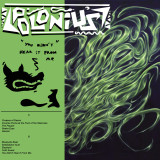
Full page feature in Wire Magazine (March 2025, Issue 493) 'the freak audio series continues with the lysergic You Didn't Hear It From Me which combines dubbed out sampledelia and metallic beats with ghostly saxophone soaked in an acid bath'
Polonius AKA Egyptian-French artist Seif Gaber, whose works spans a decade of “science fiction archeomiragical time travel" explorations and is an important piece of the healthy electronic/far out mosaic in Milan.
With a considerable number of releases under his name, both self released and through such likeminded labels as Ikuisuus, Goaty Tapes or Sun Araw's Sun Ark, Polonius grand vision encompasses a myriad of languages culled from kosmische travelings, exotica's dreamlands, soundtrack psychedelia, spiritual jazz escape routes and transmuted beat science to convey them into a sonic fiction where all these trails intertwine in a cosmological soundscape filled with wonder and speculation.
Building on last year's more beat-centric excursions of his self-titled vinyl debut on Stoned to Death, Polonius' first entry into the Discrepant extended family via Souk finds him dwelling deeper into rhythmic mystic extrapolations through a series of hallucinatory tracks. Conveying jungle's kinetic energy, dubwise meditations on bass weight, collapsing beats, globetrotting percussion accents and synth-driven night drives, 'You Didn't Hear It From Me' finds Polonius with a strong sense of purpose and direction, reconvening bits and pieces from the netherworld into a more urban scenario, not quite any we can stand or dance on. Just dream of.
Edinburgh-based three-piece funk band High Fade are set to release their debut album 'Life’s Too Fast'.
Capturing the raw, on-stage energy that has been the driving force behind High Fade’s meteoric rise was never going to be easy, but that’s exactly what Harry, Oli and Calvin set out to do with a clear creative vision to record their album live at the iconic RAK Studios in London.
'We recorded in RAK Studios, with the desk built for the Rolling Stones in ‘76, with the same cigarette burns still on the faders. It instantly had a vibe of raw energy and liveliness to it that matched the way we wanted to record - live.' – Calvin
The result? 'Life’s Too Fast' – a blistering 10-track debut from one of the UK’s most exciting bands that manages to deliver the same tight, groove-laden funk rock that has put the group on the radars of Jack Black, Cypress Hill and Rage Against the Machine’s Brad Wilk, has seen them tour with The Cat Empire, and tick off iconic venues including Glastonbury, Jazz Cafe, and Boomtown Festival.
'We decided to record the album live rather than through the normal single track overdubbed method – we felt this would help to fully convey the band’s power, sound and energy across to the listener! More like we’re playing a gig and having it recorded – it was a tough process, but we went about it in the best way for both us and the audience, to ensure they’re getting the most authentic High Fade sound and experience possible.' – Oli
Having spent much of the last three years on the road seeing to a punishing tour schedule, 'Life’s Too Fast' is a chance for the band to stop and take stock, to reflect on their whirlwind success, and create an artistic milestone that demonstrates who High Fade are today. 'It’s the most accurate representation of what High Fade is, what we sound like, and who we are' explains Harry. Telling a clear story that matches their own experiences over the last few years, the album is a snapshot taken by a band who are accelerating towards real success and recognition.
'I’m glad we finally have a body of work that we’re proud of and feels like a collection of songs that nicely represents where we are right now. It’s organised chaos and shows that we like to play, but can also write a catchy tune.' – Calvin
Launching into proceedings with the effortlessly uplifting 'Take Me To The Floor', every track is a demonstration of the band’s technical prowess and broad sonic palette. A forward-facing selection of completely original material, the album also gave the band the opportunity to re-imagine fan-favourite 'Sharpen Up' as a stripped-back cut that reflects the band’s current lineup.
'Honestly, I kinda feel like I could explode with excitement about getting it out for everyone in the world to hear because it has been a long time in the making! A culmination of what all the singles have been working towards! I guess the album represents us and the direction we’re taking the music, it represents us as a trio and the gel that is High Fade.' – Oli
out of Stock
Last delivered 13 months ago available to reorder, subject to availability
Japanese bamboo flute maestro and goat (JP) cohort Rai Tateishi makes an impressive debut statement with his holistic attempts to transcend the limits of ancient instruments to reveal gently delirious insights.
‘Presence’ is a triumph of improvised, elemental musicality that distills aspects of myriad folk traditions in pursuit of the artist’s own truth. For 40 minutes of singularly weird, locked-in performance, Rai Tateishi diverges his formative training in the shinobue (a bamboo flute) to applications for its elder sibling, the shakuhachi, and its distant relatives in the khene mouth organ of Northeastern Thailand and Laos, and even the Irish flute, with remarkable results returned from each.
Piece to piece, Tateishi adapts a spectra of unusual and extended instrumental experiments to articulate uniquely animist sound arrangements, with judicious use of a ring modulator and delay effects only subtly altering his sound in real-time, gelling the harmonics and smoothing off its contours. Some 15 years of studies and accreted knowledge of histories, timelines, and spirits are deftly tattered in the air and rebound in precisely complex ribbons that become all the more impressive by virtue of its in-the-moment recording.
Presented with no overdubs, the six works were recorded by label head and KAKUHAN/goat lynchpin Koshiro Hino across three days of adventurous improvisation capturing the breadth of Tateishi’s vision in a mix of succinct flights of fancy and one durational wonder where he really cuts loose. An opening piece of rapid percussive fingering and rasping sets the tone for increasingly intricate explorations of the shinobue, and bluesy cadence of a reedy Thai khene - antecedent of the shō - whipped into headier harmonic overtones, whilst his 5th piece for Irish flute best recalls Ka Baird or Michael O’Shea’s lysergic impishness, and a 13 minute closing piece most boldly fucks with folk and jazz traditions, in-depth and with the genre short-circuiting audacity of Rahsaan Roland Kirk.
Landing in the wake of prism-shaking works by Will Guthrie & Mark Fell, goat (jp) and Kakuhan; Tateishi’s ‘Presence’ more than lives up to NAKID’s impressive levels, unflinchingly operating by its wits with a verve and dare-to-differ moxie that gets at it from the first hit to the last, harnessing the kind of skill and ingenuity that’s distinctive but still strikingly minimal and overwhelmingly physical. It's a remarkable achievement.
Audio alchemist Damian Lazarus continues to redefine the boundaries of electronic music with his fifth studio album, ‘Magickal’.
Renowned for his unparalleled ability to craft transformative sonic journeys, Damian Lazarus is a master of rhythm, melody, and vibration—a true pioneer among his generation’s visionary artists. Damian’s broad depth of experience encompasses a variety of disciplines: tastemaker, selector, label owner, A&R and a Grammy-nominated artist in his own right - each informed by his unique ear for sound. He is chief wizard of the hugely influential and culture-defining Crosstown Rebels label, a globally renowned DJ with a penchant for exotic outdoor locations and a highly regarded recording artist with four albums and a plethora of solo cuts, collaborations and remixes in his sprawling discography.
With his fifth album, ‘Magickal’, Damian steps into his next evolutionary phase, combining his newly found sobriety with a more mature outlook while still pushing boundaries and creating unforgettable moments. At the root of it all is the magical power of togetherness and human connection that only music can facilitate. Driven by this core ethos, Damian continues on his mission to share his heartfelt music, taking the dance floor into unexplored realms of experience, facilitating moments of transcendence, bliss and pure, unadulterated magic.
Damian Lazarus, the avant-garde architect of spiritually nourishing sounds, is joined by a stellar lineup of collaborators on his latest excursion. It’s imaginative and mystical, rhythmically captivating and daring in its own way, as is typical of Damian’s approach. Taking consideration of his past, the album references his previous work to create a tapestry of compositions that tap into the energy of key moments from his discography. Drawing on his existing catalogue creates cohesive through lines and thematically serves as a continuation of previous stories. November’s single, ‘Sunrise Generation’, for instance, works as a companion to ‘Vermillion’, which was recorded by Damian with his band The Ancient Moons and vocalist Moses Sumney back in 2015. ‘Sunrise Generation’, featuring the beautiful vocals of Fink, was Damian’s first major release since his Grammy-nominated 2021 collaboration ‘Don’t Be Afraid’ with Diplo and Jungle, and continues to take inspiration from global gatherings at solstice and those moments of collective awe at sunrise.
Indeed, the album’s themes of mental elevation and psychedelic sonic journeys are evident throughout. Damian channels this energy through tracks like the soulful ‘So Low’, featuring the incredible Zoe Kypri, and the luminous ‘Searchin’, with Jem Cooke, whose collaboration with Damian dates back to ‘Flourish’ (2020) and lead single ‘Into The Sun’. Uplifting is the operative word here, as Damian aims straight for our hearts and inner selves, stripping away the layers to take us on a trip inwards, and out into the ether all at once. There’s a clear nod to Damian’s appreciation of amapiano when he teams up with Ghanaian interdisciplinary healer Jojo Abot on ‘Warrior Dance’. Old friend and inspirer Mathew Jonson brings his virtuoso touch to ‘Are You Dreaming?’, while TEED and A-Trak form an awesome alliance for ‘Falling Down’ with its heartrending vocals. ‘Alive’ features the Bloom Twins, and also additional production from acclaimed producer Mark Ralph, who incidentally worked on Damian’s debut album ‘Smoke The Monster Out’ in 2009 and forms another throughline to the past. ‘Alive’ blends pop sensibilities and song structure with Damian’s inimitable sound - and could become one of Damian’s biggest moments to date. ‘La Hija De Juan Simon’ delves into the Latin energy synonymous with vibrancy and self-expression as Damian teams up with acclaimed Spanish flamenco-influenced duo Mëstiza. On a solo tip, he rolls out with the eight-minute-plus soulful funk flex ‘Why Don’t U’.
In a suitably aligned instance of serendipity, the arrival of ‘Magickal’ comes at a pivotal period in Damian’s life, just as it has been with previous album concepts. Albums made and released during big shifts in his life speak to the correlation between growth, personal evolution, creativity, catharsis and sharing that process musically. The last album ‘Flourish’, for instance, was recorded and released in the space of a few months during the first summer of the global pandemic. As a result, there’s a kind of vulnerability in the music, a subtle story that’s being told with emotional touchpoints that will be relevant to anyone listening. The universal human experience and spectrum of emotions are things almost everyone can relate to. With the enhanced clarity of his sobriety, Damian’s compositions embody the uplifting nature of simply being alive, connected and unified in our love for music and one another.
Day Zero, Damian’s iconic annual festival, is intrinsically linked to ‘Magickal’. It’s the setting for his imagination when producing the music, it’s the launchpad for each year’s kaleidoscopic adventures around the world, and this year’s edition will be the backdrop to the release of ‘Magickal’. As the pinnacle of Damian’s annual experiences, Day Zero marks a vital milestone for his artistry, an extension of his inner realm, carefully curated and created for his global family of lovers and dancers to revel in the awe-inspiring beauty of Mother Nature. Central to the ethos of Day Zero is its sustainability practices and deep consideration for the locality within which it is held. Connections with local elders embolden its depth, cultivating a strongly aligned purpose with the ritual, customs and energy of the land and its people.
‘Magickal’ will be released in the same week as Day Zero, tying the two projects together in a neat dovetail. 12 years since it started, Day Zero continues to play a significant role in the music Damian makes, curates and plays. For him, it’s the epitome of his vision: a stunning natural setting, the very best party people from around the world, an unparalleled lineup of friends and family, high production values, eco-centric policies and music from another dimension. With these interdimensional transmissions, Damian channels his inner alchemist, which, in turn, permeates into the vibrational framework of ‘Magickal’.
Never one to adhere to convention, Damian has opted for a disruptive album release. ‘Magickal’ is to be kept under wraps and then announced and released on Crosstown Rebels on 8th January 2025, bypassing the modern trend of prolonged single drops and ‘tombstone’ album releases. ‘Magickal’ is the embodiment of Damian and his intentional, against-the-grain approach and reinforces the album as a complete artistic statement, offering listeners the full cohesive experience from the very beginning. This is a return to the album as the pinnacle moment and not the afterthought. Singles, edits and remixes will follow the ‘Magickal album’ release, and, of course, there will be a world tour to promote the album (including Glastonbury and Coachella) and a chance to present the album in exciting, innovative and unique ways.
Forever dreaming, a sincere student of magic, new and old, social sorcerer, lover of nature and master of musical wizardry, Damian Lazarus is a potent force. With ‘Magickal’, he reaffirms his place as one of electronic music’s most influential figures, taking listeners on a profound journey into sound, spirit, and connection.
out of Stock
Last delivered 6 months ago available to reorder, subject to availability
*180g virgin leaded vinyl in a deluxe textured heavy gatefold cover, with paste-on artwork and special anti-static innersleeve.* Note: The pressing is absolute on point!!!!
Vincent Gallo and Harper Simon with a beautifully recorded suite of songs and instrumentals.
" More than two decades since he blew minds with a suite of brilliant releases on Warp, Vincent Gallo returns to the world of music at long last in Butterfly, his duo with Harper Simon, with the project’s full-length debut, “The Music of Butterfly”. A gesture of gentle, DIY / bedroom left-field pop, falling within the rough territory for which Gallo became renowned during the late '90s and early 2000s, while interweaving fascinating flirtations with minimalism and experimentalism, it’s a truly captivating piece of work that’s hard to get off the turntable after the first needle drop.
In the arts, the lines between genius and madness, as well as fact and fiction, often blur. Such, it seems, has always been the life of the artist, filmmaker, actor, musician, and composer Vincent Gallo. A cult figure and a member of various creative undergrounds for the better part of half a century, Gallo has courted controversy, ruffled feathers, and made some of the most singular statements to flirt at the outer edges of popular culture that can be called to mind. Arguably most well known for his work in film, during the late '90s and early 2000s - notably with his soundtrack for “Buffalo 66” and a suite of releases on Warp - Gallo became something of a sensation in the world of independent music for a visionary, incredibly unique and sensitive approach to sonority. For a time, the world was abuzz, waiting on bated breath for more, and yet time passed. Bar a few fragments, appearing here and there, almost nothing has been heard from Gallo, within the world of music, for more than 20 years. That is, until now, with the release of “The Music of Butterfly”, the debut full-length of Butterfly, his duo with Harper Simon: beautifully produced and issued by Family Friend Records - Gallo’s own label, founded in 1981 - in a deluxe edition that simply left us speechless: 180g vinyl in textured heavy gatefold cover with paste-on artwork and thick anti-static innersleeve. More or less picking up from where we last encountered him, spinning captivating melodies and gentle song-craft within the quieter temperaments of DIY, left-field pop, once again, and at long last, Vincent Gallo, encountered in an incredibly successful collaboration with Harper Simon as Butterfly, reminds us that he’s as much a force within the realm of music as he is within film. Not to be missed. This one isn’t going to sit around for long.
Vincent Gallo’s biography reads like the stuff of blaring beauty: a figure of moderate fame in his own right, who has remained at the centre of cultural ferment as the decades have rolled by. Born in 1961, in Buffalo, New York, as the story goes he ran away to New York City at the age of 16 and fell into the brewing counterculture of the Downtown scene, William Burroughs and John Giorno, in addition to the cream of his own peers, and began making paintings, music, and experimenting with film. In addition to being a member of the now legendary band Gray, with the artist, Jean-Michel Basquiat, and the filmmaker, Michael Holman, Gallo appeared in the cult 1981 film “Downtown 81”, before slowly beginning a career as an actor and catching the eye of Claire Denis, who brought his talents into the broader cultural gaze. Catapulted into the public by his own subsequent career as a filmmaker with “Buffalo '66” (1998) and “The Brown Bunny” (2003), both of which were marked by controversy and praise, Gallo further captivated the public with a partially brilliant, if not relatively brief, flurry of activity in the realms of music.
While Gallo had already been making music for roughly two decades at the time of his release of the “Brown Bunny” soundtrack, and the four release issued by Warp in rapid succession between 2001 and 2002 - “When”, “Honey Bunny”, “So Sad”, and “Recordings of Music for Film” - the almost fanatical fandom reached a fever pitch at the moment, allowing him, for some, to be regarded as much, if not more, as a musical artist than an actor and filmmaker. Anyway you cut it, in a few short years, he proved himself to be a polymath of rare talent. Somewhere along the way, while both were working as members of Yoko Ono's Plastic One Band, Gallo met the New York based, highly regarded singer-songwriter, guitarist, and producer, Harper Simon, who also happens to be the son of Paul Simon. The pair fell into an incredibly fruitful duo collaboration, which came to be called Butterfly, and “The Music of Butterfly” being their debut full-length release.
Written, performed, and recorded by Vincent Gallo and Harper Simon in New York City between the winter of 2018 and the spring of 2019, the ten tracks comprising “The Music of Butterfly” are cumulatively a gesture of gentle, DIY / bedroom left-field pop, falling within the rough territory for which Gallo became renowned during the late '90s and early 2000s, making one feel like barely a moment had passed since we’d encountered his graceful hand at song-craft. Stripped back and raw, while retaining a sense of warmth and intimacy, across the length of “The Music of Butterfly” the duo of Gallo and Simon weave something completely captivating at the juncture of minimalism, experimentalism, and pop: meandering moments of texture and tone, slowly forming toward flirtations of melody that flower into song and back again. Somehow playful and light, while also remarkably emotive and personal, it’s almost as though each of these tracks crystallised out the air, unlabored and exactly as they should be without a note or beat more.
An engrossing immersion into both Gallo and Simon’s remarkably accomplished minds, having followed the path toward one another after radically different experiences and careers, “The Music of Butterfly” is one of those records that’ll be hard to get off the turntable after that first needle drop, and rarely leave the listening pile for some time to come. Issued by Family Friend Records in a beautiful deluxe edition that is unmatched even among the most stunning recent productions we can call to mind - 180g vinyl in textured heavy gatefold cover with paste-on artwork and thick anti-static innersleeve - it’s lovely to have Gallo back in the musical mix after so many years. "
Bethesda Game Studios und Laced Records haben sich zusammengetan, um die Musik von 'Starfield' auf Deluxe-Vinyl zu bringen.
In allen Titeln der Bethesda Game Studios ist die Musik ein wesentlicher Bestandteil der Reise des Spielers und ein ständiger Begleiter während seines Abenteuers. Die langjährige Zusammenarbeit zwischen dem Komponisten Inon Zur und dem Studio begann bereits 2008 mit der Veröffentlichung von Fallout 3. Die Musik zu 'Starfield' sollte sowohl die Weite des Weltraums als auch die Neugier der Menschen auf das Unbekannte zum Ausdruck bringen. So verwob Zur traditionelle und nicht-traditionelle orchestrale und elektronische Klänge zu einem Klangteppich aus Organischem und Synthetischem.
Während der Entwicklung hat das Team ein eklektisches Spektrum an Referenzpunkten durchlaufen: Es begann bei den Sci-Fi-Grundsäulen von John Williams und Jerry Goldsmith, durchquerte einen klassischen Nebel von Debussy, Ravel und Prokofiev, flog an Vangelis' überragendem Synthesizerwerk vorbei und warf einen Blick auf die experimentellen Arbeiten der Einstürzenden Neubauten und von John Cage.
In den Orchesterstücken von Starfield, die vom Budapester Filmorchester eingespielt wurden, beschwören verschiedene Instrumentalgruppen oft imaginäre Aspekte des Weltraums herauf. Schnelle, sich wiederholende Sequenzen in den Holzbläsern stellen Partikel dar. Streicher, die wellenförmige Akkorde spielen, imitieren lange Wellen interstellarer Energie. Die Blechbläser werden zum Leuchtfeuer der Melodie, das über die Galaxie hinaus strahlt. In ähnlicher Weise erhalten die eher elektronischen Cues ein Gefühl von Erhabenheit durch schwere Synthesizerflächen, die kryptische, sich wiederholende Muster und ungewöhnliche perkussive Schläge untermauern.
Aeralie Brighton (DEATHLOOP, Ori-Serie) ist auf dem Soundtrack als Sängerin zu hören.
Bethesda Game Studios und Laced Records haben sich zusammengetan, um die Musik von 'Starfield' auf Deluxe-Vinyl zu bringen.
In allen Titeln der Bethesda Game Studios ist die Musik ein wesentlicher Bestandteil der Reise des Spielers und ein ständiger Begleiter während seines Abenteuers. Die langjährige Zusammenarbeit zwischen dem Komponisten Inon Zur und dem Studio begann bereits 2008 mit der Veröffentlichung von Fallout 3. Die Musik zu 'Starfield' sollte sowohl die Weite des Weltraums als auch die Neugier der Menschen auf das Unbekannte zum Ausdruck bringen. So verwob Zur traditionelle und nicht-traditionelle orchestrale und elektronische Klänge zu einem Klangteppich aus Organischem und Synthetischem.
Während der Entwicklung hat das Team ein eklektisches Spektrum an Referenzpunkten durchlaufen: Es begann bei den Sci-Fi-Grundsäulen von John Williams und Jerry Goldsmith, durchquerte einen klassischen Nebel von Debussy, Ravel und Prokofiev, flog an Vangelis' überragendem Synthesizerwerk vorbei und warf einen Blick auf die experimentellen Arbeiten der Einstürzenden Neubauten und von John Cage.
In den Orchesterstücken von Starfield, die vom Budapester Filmorchester eingespielt wurden, beschwören verschiedene Instrumentalgruppen oft imaginäre Aspekte des Weltraums herauf. Schnelle, sich wiederholende Sequenzen in den Holzbläsern stellen Partikel dar. Streicher, die wellenförmige Akkorde spielen, imitieren lange Wellen interstellarer Energie. Die Blechbläser werden zum Leuchtfeuer der Melodie, das über die Galaxie hinaus strahlt. In ähnlicher Weise erhalten die eher elektronischen Cues ein Gefühl von Erhabenheit durch schwere Synthesizerflächen, die kryptische, sich wiederholende Muster und ungewöhnliche perkussive Schläge untermauern.
Aeralie Brighton (DEATHLOOP, Ori-Serie) ist auf dem Soundtrack als Sängerin zu hören.
1-800 FANTASY is the third studio album from producer, artist, and visionary, BLK ODYSSY. In what represents somewhat of a sonic shift for BLK ODYSSY - from the dark, brooding blend of R&B & G-Funk to a brighter, warmer and more upbeat Alternative leaning sound - the concept album tells a coming of age story of a teenage boy in the 90s navigating the unfamiliarities of love and lust. The 13-track album includes the previously released singles, “WANT YOU,” “XXX (feat. Wiz Khalifa),” “STANK ROSE (feat. Joey Bada$$),” & “CHANGES” - as well the song, “PHASE,” which was premiered via COLORS. This latest project marks a pivotal moment in BLK’s career, cementing his role as a forward-thinking artist who continues to push the boundaries of R&B and beyond. “Between exploring a new level of storytelling and also a new world of production and songwriting, this record has been a new chapter for me as an artist.” BLK ODYSSY says about the new album. Pressed on Baby Blue Galaxy vinyl, includes double sided insert.
out of Stock
Last delivered 18 months ago available to reorder, subject to availability