Two jewels in the crown of the soulful electronic music scene in NYC unite for a spellbinding EP on Rhythm Section International. ”Full Circle” is a brand new body of work from Musclecars & Toribio.
To call this 12” simply epic would almost be doing it a disservice. The breadth of musicality and execution of ideas contained across 3 compositions is nothing short of miraculous. I use the word composition intentionally: these are not merely tracks - these are 3 movements making up a concerto - with a dub thrown in for good measure!
The record kicks off with a soulful house behemoth, “ That’s My Story” featuring NJ legend Roland Clark on vocals giving sweet sweet testimony. In many ways, this track feels like a coming together of the trios influences. The lyrics contextualise it, giving it this intimate, confessional feel. The latin drums shuffling amidst the 909 kick drive it forward and the organ swimming freely amongst it all takes us to church. It’s a timeless track - paying homage to the various New York traditions laid down by Louis Vega, Timmy Regisford, Joaquin Claussell , Ron Trent et al - all heroes and collaborators of the composers who - with this effort - have surely now earned their place in the pantheon of American Soul Music.
‘
Be Honest’ maintains the confessional tone with the lyrics but takes things right back down in terms of tempo. Is it a love song, an ultimatum or a cry for help? Whichever way you interpret it, this track is Toribio’s time to shine as a lead vocalist and he hits all the notes, leaving not a dry eye in the house. This is a delicate tour de force, delivered with such raw emotion and vulnerability it allows the instrumentation takes a back seat - just a gentle groove, swelling strings and some unresolved chords are all that’s required to transform us to the main character of this story. We’re left hanging, and it’s oh so relatable.
Agua De Florida serves as an uplifting, fast paced finale to the concerto and this one’s all about the trumpet - masterfully performed by Melbourne born, London based virtuoso Audrey Powne. If Herb Alpert was making house music - I imagine this is what it would sound like. Throbbing bass and noodling synths join the melee and crank the joy up to 11. If the EP is a story arc over 3 tracks, then we’re definitely not left hanging with this one. All is resolved, things are moving onwards and upwards and the circle is complete.
Cerca:latin thing
- 1: Odisea
- 2: The World
- 3: Shape Of Things To Come
- 4: Cielos
- 5: Doves (Ft. Hikari)
- 6: Sobre Las Ruinas
- 7: Outskirts
- 1: Just Us
- 2: Joven Pobre Y Sabio
- 3: Monte Calvario
- 4: Secret Admirer
- 5: Things That Burst" (Ft. Hitomitoi)
Odisea is the new album, actually the real debut from Los Retros, out in April on Stones Throw. It draws inspiration from 1980s Japanese City Pop, and marks a new creative chapter from Mauri Tapia shaped by growth, reflection, and renewed purpose. It's been a journey since Tapia first captured hearts with the lo-fi magic of "Someone To Spend Time With", recorded at the age of 17 on a humble four-track in his parents' living room. Now 25, the Oxnard native has stepped into an entirely new season of life - he married his high school sweetheart, became a father to two daughters, and embraced spiritual faith. Earlier this year, he revisited his start with Early Days (2016-2019), a compilation of unreleased music from Mauri's teen years. "Jazz fusion has become my favorite genre and greatest inspiration of all time," Mauri says. "I made this album for the version of me that first fell in love with music. It's my full-circle moment - a sonic hat tip to my beginnings - as well as a nod to the forefathers of jazz fusion and city pop for leaving us with great music." Through it all, he's kept the same DIY spirit, writing and recording every note himself, only now in a home studio of his own. On Odisea, Tapia blends neon-lit City Pop with the melodic sensibility of Latin American soft rock. Mauri's deep love for 70s and 80s jazz fusion records anchors the album, yet Tapia filters those influences through a modern lens. Odisea features two Japanese vocalists, - Hikari and HITOMITOI. Also check out Los Retros new compilation "Early Days" released simultaneously. RIYL soul, bedroom pop, indie, modern jazz, downtempo, soft rock, Mac DeMarco, Thee Sacred Souls, Skinshape, Men I Trust
- A1: Les Masques - Il Faut Tenir (1969)
- A2: Isabelle Aubret - Casa Forte (1971)
- A3: Christianne Legrand - Hlm Et Ciné Roman (1972)
- A4: Jean Constantin - Pas Tant D'chichi Ponpon (1972)
- A5: Billy Nencioli & Baden Powell - Si Rien Ne Va (1969)
- B1-: Marpessa Dawn - Le Petit Cuica (1963)
- B2: Jean-Pierre Sabar - Vai Vai (1974)
- B3: Sophia Loren - De Jour En Jour (1963)
- B4: Isabelle - Jusqu’à La Tombée Du Jour (1969)
- B5: Sylvia Fels - Corto Maltesse (1974)
- C1: Frank Gérard - Comme Une Samba (1972)
- C2: Ann Sorel - La Poupée Des Favellas (1971)
- C3: Charles Level - Un Enfant Café Au Lait (1971)
- C4: Andrea Parisy - Les Mains Qui Font Du Bien (1970)
- C5: Audrey Arno - Quand Jean-Paul Rentrera (1969)
- C6: Aldo Frank - T’as Vu Ce Printemps (1970)
- D1: Christianne Legrand - Cent Mille Poissons Dans Ton Filet (1972)
- D2: Clarinha - Lemenja (1970)
- D3: Hit Parade Des Enfants - Aquarela (1976)
- D4: Jean-Pierre Lang - Tendresse (1965)
- D5: Magalie Noël - Une Énorme Samba (1970)
- D6: Françoise Legrand - La Lune
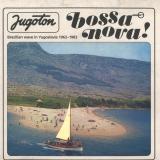
Ever since the late 1950s bossa-nova revolution, Brazil’s influence on French music has been undeniable. Pierre Barouh, Georges Moustaki and a vast array of lesser known artists, all made the Musica Popular Brasileira (MPB) an axis of promotion at the service of a cool and metaphysical, modern and mixed Brazilian lifestyle. Some were seduced by the poetic languors of the bossa, some were looking for fun, and others just loved the American hybridization of jazz-bossa, jazz-samba.
What is bossa nova? One of its creators, Joao Gilberto said: "Its style, cadence, everything is samba. At the very start, we didn't call it bossa nova, we sang a little samba made up of a single note - Samba de uma nota so .... The discussion around the origins of bossa nova is therefore useless”. It is nevertheless useful to remember that these magnificent Brazilian songs, which the guitarist describes as samba, were shifted and balanced around improbable chords. "I like things that lean, the in-betweens that limp with grace," said Pierre Barrouh, quoting Jean Cocteau.
With emotion, arrangements for violin and supple guitar licks, bossa nova rapidly changed. A transformation that can be heard in the Tchic, tchic, French Bossa Nova 1963-1974 compilation, the result of a cultural reappropriation, which traveled through the United States and supplemented itself in France.
A musical revolution that has remained significant, bossa nova was born in Rio. From 1956 to 1961, Brazil lived through its golden years. In five years, the country had invented its modernist style. Elected president in 1956, Juscelino Kubitschek de Oliveira, an elegant man with a broad forehead, brandished a promising slogan: "Fifty years of progress in five years". He quickly got to work. Not worried about increasing debt, he launched the project for a new federal capital, Brasilia, designed by the communist architect Oscar Niemeyer. Volkswagen opened state-of-the-art factories and created the “fusquinha”, the Beetle. In Rio, the Vespa made its first appearance. The Arpoador Surf Club crew run into the “girl” from Ipanema, Helô Pinheiro - the tanned garota ("chick"), between a flower and mermaid, who at 17 walked by the Veloso bar, where the fiery author and composer, Tom Jobim and Vinicius de Moraes, were getting drunk on whiskey. From then on, bossa symbolized cool.
In 1958, Joao Gilberto recorded Chega de Saudade, which the directors of Philips denied, calling it "music for fagots". The marketing director, who believed in it, secretly pressed 3000 78-inch vinyls and distributed them at schools around Rio, creating a tidal wave.
American jazzmen then took over. In particular, trumpeter Dizzy Gillespie and guitarist Charlie Byrd. In November 1962, the Brazilian Ministry of Foreign Affairs funded a "Bossa-Nova" concert at Carnegie Hall in New York, inviting the genre’s pioneers. Unprepared, the show soon turned to disaster. But the troupe was invited to the White House by Jackie Kennedy. The first lady loved "the new beat" and in particular Maria Ninguem, a song by Carlos Lyra, later covered by Brigitte Bardot.
In Brazil, the 1964 military coup quickly ended this euphoria. The destructive atmosphere that ensued pushed many Brazilian musicians to leave, if not to exile. Thus, Tom Jobim, Sergio Mendes and Joao Gilberto arrived to the United States. In New York, Joao Gilberto met saxophonist Stan Getz. At the time, he was married to the Bahianese Astrud Weinert Gilberto, who had a German father. She had never sung before, but she knew how to speak English. Getz therefore asked her to replace her husband on The Girl From Ipanema. The Getz/Gilberto record with Tom Jobim on piano, was released in March 1964. Phil Ramone, the "pope of pop" was in charge of sound.
Bossa nova arrived in Paris through the classic “guitar-voice” channel (Pierre Barouh, Baden Powell, Moustaki…) But France loved jazz and Paris had already welcomed its American contributors. All these good people were to pass through Saint-Germain-des-Prés. The cabaret l'Escale became the Mecca of Latin American sound where one could find Pierre Barrouh and his friends, such as the Camara Trio, samba-jazz aces, whose only record was published by the Saravah label. With a band strangely called Les Masques (a band that included Nicole Croisille and Pierre Vassiliu, among others), the Camara Trio recorded an interesting Brazilian Sound, including the track Il faut tenir which is present on this tasty compilation of rarities.
Other enlightened musicians can also be found on the compilation, such as Jean-Pierre Sabar (songwriter for Hardy, Auffray, Leforestier ...) and the French pop rock organist Balthazar. In 1975, Sabar recorded Aurinkoinen Musiikkimatka on a Finnish label, which featured the crazy Vai, Vai, included on this record. We are now following the footsteps of Brazilian electronic musicians such as Sergio Mendes, Eumir Deodato or Marcos Valle who created funk and disco sounds on their keyboards and synthesizers. A style that influenced Véronique Sanson when she wrote Jusqu’à la Tombée de la nuit in 1969 for Isabelle de Funès, the niece of Louis and a great friend of Michel Berger - Sanson did end up singing this track on her 1992 Sans Regret record.
The pinnacle of exoticism and travel, Sylvia Fels’ Corto Maltese includes bongos, sea mist and ocean sounds. The title was taken from Jacky Chalard’s concept album written in 1974, Je suis vivant, mais j’ai peur (I am alive, but I am scared), based on Gilbert Deflez’s science fiction novel.
However, bossa nova extended the scope of popularity. "In the 1970s, I was a fan of Sergio Mendes, Getz / Gilberto. I fell in love with this music that I knew because I had been an orchestral singer, " explained Isabelle Aubret, who in 1971 delivered a composite record of covers by the very funky Jorge Ben, Orfeu Negro, Tom Jobim, Vinicius de Morais and Jean Ferrat. "I recorded this album for Meys Records in Paris, far from Brazil, with wonderful musicians, François Raubert, Roland Vincent, Alain Goraguer...". The latter wrote the arrangements for Casa Forte, a very percussive title borrowed from Edu Lobo, one of the initiators of the bossa who spent time in California. "Jazz and bossa came together and produced very rhythmic music. I love singing, it allows me to dream, to have fun, to feel a high on stage, and these songs brought me joy, made me swing, my singing felt like a dance.”
The world tours of French singers and their desire for the tropics, often brought them to Rio with its hills, forests, caipirinhas and tanned bodies. There are surprises though, like this Iemenja (Iemenja is the goddess of the sea in the Afro-Brazilian candomblé religion). Not unlike the composer and musician Jean-Pierre Lang, based in Sao Paulo, Claire Chevalier taught Brazil to Brazil. In 1970, the singer and painter published a 45-inch vinyl, Mon mari et mes amants (My husband and my lovers), under the improbable pseudonym of Clarinha (little Claire). She was then living in Rio, with her husband, Joël Leibovitz, who founded a band called Azimuth, and who owned a record label specialized in "sambas enredos" songs for samba school parades.
For its B side, she asked Pierre Perret to come up with lyrics for a song composed by Carlos Imperial: "Oh goddess of the sea, o goddess Iemenja, I bring a white rose to adorn your long hair ..." . "Perret came to see us, and we had fun, remembers Joël Leibovitz. We wrote Lemenja for fun, we recorded it at the Havaí studio, behind the Central do Brasil the central station. Erlon Chaves, the arranger who worked with Elis Regina, joined us" adding his share of Afro-Brazilian percussions and funky brass to the mix.
There is a common misunderstanding in Franco-Brazilian history: that bossa, admittedly hedonistic, is perceived as funny, even though the poets who wrote the texts are often philosophizing on the human condition. Its French interpreters pull it towards a carnival inspired universe, far removed from its fundamental essence. Thus, Jean Constantin covered the famous Samba da minha terra, an ode to the art of samba written by the classic Bahian composer Dorival Caymmi, renaming it with the enticing title of Pas tant de tchi tchi pompon: "On your pier there is no tchi tchi / when you arch your back, you know everything is alright ”(lyrics by Gérard Calvi). This expedited bossa aims for the absurd, but retains a certain elegance.
Indeed, Jean Constantin was not an idiot, the rather large man had a huge mustache and liked fantasy, (Les pantoufles à papa, Le pacha, inspired by cha-cha-cha-cha, salsa and jazz) but he was also the lyricist of Mon manège à moi interpreted by Edith Piaf, the composer of Mon Truc en plume by Zizi Jeanmaire and the soundtrack of François Truffaut’s 400 Blows. Le Poulpe, published in 1970, from which this bossa is extract, was arranged by Jean-Claude Vannier, an accomplice of Serge Gainsbourg’s Melody Nelson. In short: "There is enough of samba / By looking at the parasol / Because my poor cabeza / Is going to die in the sun".
Even the American actress Marpessa Down, who was at the heart of the bossa nova revolution with her role as Euridyce in Marcel Camus’ film Orfeu Negro, winner of the 1959 Cannes Palme d'or, fed the clichée with Je voudrais parler au petit cuica - "Tell me how you manage to always make people want to dance / It's true, I must admit that I cannot resist your magic" - in consequence, once can hear the cuica, a little drum inherited from the Bantu.
But bossa nova had many angles. Societal, of course, pushing actresses who were symbols of women's liberation like Brigitte Bardot, Jeanne Moreau, or Sophia Loren to engage in the exercise of accelerated bossa. In February of 1963, Sophia Loren made a record in French in Rome, Je ne t'aime plus, featuring the song De jour en jour, a bossa written by two Italians, Armando Trovajoli and Tino Fornai, which was released a little later by Barclay. Bossa accompanied the 1960s, a decade of moral liberation. Ann Sorel, who interpreted La Poupée des favellas, caused a sensation with L’amour à plusieurs, a provocative song written by Frédéric Bottom and Jean-Claude Vannier. As for the actress Andrea Parisy, she displayed her bourgeois cheekiness in Marcel Carné's Les Tricheurs before interpreting Les mains qui font du bien. And Magalie Noël, the friend of Boris Vian, who sung Johnny fais-moi mal, was hired to sing Une énorme Samba, composed by Alain Goraguer (arranger to Gainsbourg, Bobby Lapointe and Jean Ferrat) with lyrics by Frédéric Botton.
But in the end, of what wood is bossa nova made of? The answer is given by Christianne Legrand, daughter of Raymond the conductor, and sister to Michel the composer: "With me, with jà" - jà means "immediately" in Portuguese. In 1972, the singer, an expert in vocal jazz and a member of the Double Six, published Le Brésil de Christianne Legrand. Two songs included on the Tchic Tchic compilation that demonstrate how bossa, jazz, funk, rock, etc. work like a swiss army knife: the music is used to denounce broken systems, or miracles, HLM et ciné roman, Cent mille poissons dans ton filet, two songs from the O Cafona soundtrack, a successful telenovela broadcast, at the time in black and white, on TV Globo. The first was adapted in French by the fighter and friend of the Legrand tribe, Agnès Varda. The second is content with a play on words, jostling them into a summer fun.
Véronique Mortaigne
- A1: Mark Levine - Ixtlán (Shoshana)
- A2: Frank Strazzeri - After The Rain
- A3: Hadley Caliman - The Latin Thing
- B1: Hadley Caliman - The Latin Thing
- B2: Albert Dailey - Mimosa
- B3: Don Menza - Mz. Liz
- C1: Gary Bartz - Ju Ju Man
- C2: George Muribus - Brazilian Tapestry
- C3: Henry Franklin - Tribal Dance
- D1: Pat Britt - Starrsong
- D2: Gary Bartz - My Funny Valentine
- D3: Flip Nuñez - See You Later
2 x LP Vinyl in Gatefold Sleeve with Insert
Compiled by Rainer Trüby & Miche, this collection dives deep into the soulful, spiritual, and jazz sound of LA’s Catalyst Records. A PANORAMA special for RSD 2026, The Catalyst Files celebrates the label’s rich history and deep catalog that has been championed by so many DJs including Gilles Peterson and Patrick Forge over the years. Packaged as a 2xLP with gatefold in homage to the original Catalyst releases, liner notes from Andrew Jervis, an insert and an OBI strip. This is an essential for RSD 2026. 2xLP 180g Heavyweight Vinyl, Gatefold Sleeve, Insert, Liner notes from Andrew Jervis.
Gap Mangione's monumentally influential Diana In The Autumn Wind. AKA BEWITH200LP. And, without question, Be With's White Whale.
They said it could never be done. And with good reason.
We've spent the past 12 years trying to license this legendary 1968 recording from Gap and, after much work, it's finally here. Remarkably, this is the first ever vinyl reissue of Gap Mangione's Diana In The Autumn Wind, produced with the full and extensive participation of Gap. An exceedingly rare album, it's been coveted by funk, soul, jazz and hip-hop sample fiends for decades.
It's unarguably *the* most sought after album for J Dilla / Madlib sample collectors. It has also been brilliantly sampled by A Tribe Called Quest, Large Professor, Ghostface Killah, Kendrick Lamar and Talib Kweli.
But this record is so much more than a sample-spotters curio. It's solid gold throughout. Bursting with killer funky-jazz grooves and tracks adorned with warm electric piano, the release is notable for featuring some extremely significant players at the very outset of their careers; Tony Levin, at 21, whose superb playing on both acoustic and electric bass was the harmonic mainstay of the trio and Steve Gadd, at 23, one of the greatest drummers of his generation.
With acceptable copies of this holy grail changing hands for $400, to call this reissue "much-needed" underplays just how vital it is. Gap's story is told in his words alongside rare photos across a sumptuously designed 2-page insert and, to augment this deluxe edition further, its all wrapped up in a beautiful, no-expense-spared luxury tip-on sleeve, as per the original hens-teeth release. And, while we're talking packaging, just take a look at that cover - a work of art in and of itself.
The tracks are short but complex, with that extraordinary rhythm section backing the beautiful piano, organ and electric piano work of Gap. It's like the best ever library funk breaks record you never heard - but all your favourite golden age rap producers were all over it, long ago. It's a stunning blend of the vibrant, driving music of the Gap Mangione Trio coupled with the sensitive composition and superb orchestration of Gap's legendary brother, Chuck Mangione, who helmed an amalgam of seemingly disparate elements – rock, big band jazz, solo improvisation and "classical" music - into a spectacularly cohesive whole that has aged wonderfully well. As Gap himself notes in the liners, "with this group I was able to explore and add new and exciting elements from rock, Brazilian and then-current pop music."
Opener "Boy With Toys" triumphantly swaggers out the gate, all big band horns, flutes and dextrous organ work. The synthesis of everything going on is nothing short of stunning. When one wise YouTube commentator called this tune "old school superhero music", Gap agreed. Rap luminaries did, too, amongst them Talib Kweli, who rapped over DJ Scratch's chopped up intro for "Shock Body" on his Quality album back in 2002.
You've barely recovered from that incredibly affecting opener when you get hit over the head with the exquisite title-track. And now you see how two of the greatest beats of all time emerged from one single track produced nearly 50 years earlier. Unforgettably utilised by Dilla for Slum Village's heartbreakingly good "Fall In Love" and then Madlib for his "Official" beat for Dilla to rap over, on the Jaylib record. Regardless of the records it went on to spawn, this is just a staggering tune in its own right. Be beguiled by the flutes and the flutter tonguing, the counter-melody from the trombones, the soprano sax solo. All of it. Simply beautiful.
The questing organ and horn workout "Long Hair Soulful" deserves a lot more attention, overshadowed somewhat by the opening two monsters but no less fantastic. It swings, it grooves and Gadd and Levin truly cook. Up next, Gap's wonderfully percussive, mellifluously piano-heavy cover of "Yesterday" by some fellas called The Beatles. It's a subtly arresting gem. "The XIth Commandment" is damn fine, with thick, gorgeous electric piano and snappy drum work underpinning chaotic soundtracky horns. To close out the side, "St. Thomas" showcases the "fourth" member of the Gap Mangione Trio, conga drummer Dhui Mandingo. Having performed with the Trio since 1965, Dhui‘s African-based and jazz-latin-influenced style amazed listeners and its way to hear why.
Opening the B-Side, standard "You're Nobody Till Somebody Loves You" breezes along in the late-night jazz club fashion before things get super deep with the outstanding and - up to now - un-sampled "Pond With Swans". It's simply heavenly, and how its moody, melancholic intro has yet to be pilfered is anybody's guess. It oscillates between gentle, sombre movements and bombastic grooves, equally hypnotic and joyous. The rendition of "You Are My Sunshine" is yet another showcase for Gap's virtuoso playing and Gadd's mastery of the pocket. Indeed Gadd's drumming on "Free Again" is nothing short of neck-SNAPPING! Ghostface took it for not one but two "Iron's Theme" tracks across his seminal Supreme Clientele. It's got that Galt MacDermot "Coffee Cold" feel. Suuuuuper cool. The frantic "Dream On Little Dreamer" hurtles along and must've surely had the whole room absolutely swinging from the chandeliers back in Rochester in the late 60s. The album closes with the magnificent Graduate Medley, featuring memorable renditions of "Scarborough Fair", "The Sounds of Silence" and "Mrs. Robinson". The warm electric piano lines of the former were sampled by The Ummah (Dilla again!) for Tribe's "Pad & Pen" from their reappraised final album, The Love Movement, as well as by Large Professor on his much-loved "The LP (For My People)".
Under the watchful eye - and extremely attentive ears - of Gap Mangione himself, the audio for Diana In The Autumn Wind has been carefully remastered by Be With regular Simon Francis, with a few much needed tweaks here and there, according to the artist's wishes. At the prestigious Abbey Road Studios, Cicely Balston's expert skills have made sure nothing is lost in the cut whilst the records have been pressed to the highest possible standard at the always stellar Record Industry in Holland. The artwork restoration has taken place here at Be With HQ and has that drop-dead gorgeous cover artwork popping like new. Buy on sight!
Elations Recordings presents "Terra Ignota", the long-awaited new full length album from elusive Melbourne-based fusion ensemble Krakatau. "Terra Ignota" marks a return and an epochal shift for the group, a deep exploration of possible sonic spaces and a portent of things to come.
In the years since 2016's cosmic jazz funk-prog-spiritual 12" "Tharsis Montes/Apogean Tide" Krakatau have worked on refining their craft as instrumentalists and writers, expanding further into the world of jazz and fusing influences from world folk musics, contemporary jazz and the European post-minimalist music of the 1980s and early 90s. "Terra Ignota", literally translated as "Unknown Land", takes its name from the cartographer's notation for uncharted territory, the blank spaces on maps where knowledge gives way to imagination and speculation, gesturing towards the group's studio explorations and search for new sonic worlds in the years spent developing the record.
The results are a diverse yet unified combination of sounds and influences across five tracks that see Krakatau drawing closer to the independent underground "world" jazz scene of the 1980s than anything contemporary. The album opens with the digi-minimalism and fourth world atmospherics of title track "Terra ignota", a percussion heavy latin fusion sound in "Birds of Passage", and melancholic ambient saxophone and synthesiser duo "In Memory". Three-part epic "Cosmetic Surgery" journeys through a long, complex post-minimalist arrangement into latin fusion and contemporary jazz, followed by the contemplative ECM-styled acoustic quartet closer "Trial in Absentia".
The album features significant contributions from saxophonist Rob Vincs, former Victorian College of the Arts head of Jazz and Improvisation and a collaborator with Australian musician Brian Brown; layered percussion and wordless vocals from Brazilian percussionist and esteemed songwriter Alcides Neto; and a guest performance from trumpet player Reuben Lewis on the title track.
Bliss Point is proud to welcome the Bogotá born, New York based Matük to the label with Sendero, a collection dripping with life, with lust, with joy in the face of it all.
Birthed from weekend-long studio sessions in the heat of New York summer, Sendero is luscious and visceral party music, crackling with the spontaneous possibility that runs through city streets as temperatures peak, asses throw and emotions run high.
Hailing from Colombia and deeply immersed in the New York underground, Matük’s influences collide into an ecstatic tapestry on Sendero, blending the rich traditions of Afro-Caribbean musics with experimental and club sonics, long the sounds of joy as defiance from deep within the imperial core.
Many paths cross on Sendero. “Ricotta” features vocals from BRAVA, the Basque DJ and MC whose raw, infectious spirit has injected new energy into the international bass and footwork scene. She is joined by Argentinian-Colombian artist FEDRA on synth and vocals, transforming voice notes the trio sung into their phones over a long weekend of dancing into a party anthem of their own. “Lio”, the EP opener, pairs Mexico’s Renn Loop with Matük himself, trading sultry, heated frustrations over latinx futurist production. Things slow down on “De; Dioses y Pantallas”, a yearning, introspective plea to the night sky, before returning to the party with the bouncing, acid-fueled remix of “Ricotta” from Mexico City’s Soos.
Sendero is a snapshot of a scene in motion, a document of serendipity and collaboration, music made in the long tradition of enjoyment as a revolutionary act.
repressed !
Francois Kevorkian is a name that should need no introduction. With over 40 years in the game FK has occupied numerous roles in his long and storied career - drummer, DJ, A&R man, remixer and producer - his skills know no boundaries. Having DJ-ed during the nascent days of club culture in NYC alongside Walter Gibbons, Larry Levan and more, Kevorkian has been there from day one. Years spent in the seminal clubs of the day sharpened his ears and his prowess behind the mixing desk saw him become the A&R man at the legendary Prelude records in the early 80's, this in turn led to him working with everyone from The Eurythmics, Depeche Mode, Erasure, D-Train, Yazoo, The Smiths, Kraftwerk and many many more. A true NYC original and legend, Kevorkian is still active today and the respect he commands amongst his peers has never waned, his adventurous extended DJ sets, seminal mixes and remixes and his open ears and open mind have ensured that he will go down in history as a musical pioneer.
Rewind to 1995. Kevorkian's 'Wave Music' imprint has come into existence with a handful of releases. No-one could imagine that his self-produced 'FK EP' - the next release on the label - would be a stone cold classic. Easily one of the most consistent, exciting and solid EP's to come out of NYC during this golden era of dance music. Across 4 tracks we are taken on a sound journey through a world that is undoubtedly informed by FK's time as an engineer, DJ and most importantly, a music lover.
EP opener 'Hypnodelic' brings us into this world, a deep, driving cut that fuses the dubbed out vocals of Freddie Turner against FK's keyboards and immaculate drum programming, oozing cosmic electronic soul, this track was destined to be a future classic. 'Mindspeak' also boasts some tough drums and with a respectful nod to Chicago is an incredibly mixed and arranged peak-time cut that will drive your dancefloor into deep space again and again. 'Edge Of Time' welcomes us to the flipside of the EP, wild Latin percussions, tablas and old school horn stabs drive this monstrous cut, not to mention cavernous dub FX and that huge bassline that just doesn't let up. Essential. 'Moov' rounds things out on a more subdued, stripped back vibe. Reversed percussions and spaced-out synth chords lace this beautifully understated and warm track, one that builds into a crescendo of melodies and hypnotic rhythms and the perfect way to close what has been a truly special musical journey.
This essential reissue of the 'FK EP' has been fully licensed, sanctioned and remastered in conjunction with FK from the original master sources by Optimum Mastering, Bristol UK, repressed onto high quality vinyl and packaged as the 1995 release was. A truly classic record indeed, available again for 2018. Welcome back Wave Music!
Chicago producer Ellery Cowles lands on Apnea Records with three tracks that draw from the city's foundational rhythms while reaching for something more devotional. Walking by Faith isn't chasing nostalgia--it's after deeper ground. "Fall of Jericho" kicks things off with syncopated Chicago swing colliding with latin percussion and acid basslines that curl and bite in equal measure. "Fly" builds around a looped vocal fragment, letting raw drum patterns stretch and breathe as the track slowly reveals itself. Closer "Crying of Yahweh" is the most patient of the three--seven minutes of hypnotic techno coiling around latin rhythms, carrying a quiet spiritual weight that lingers long after it fades. Cowles moves between reference points with ease--Chicago house, devotional threads, latin heat--but never forces the connection. The music feels like it's been lived in rather than simply constructed, generous with its time and intentional with its space. Out now on Apnea Records.
The Éthiopiques series returns! Essential archive recordings from an extremely fruitful period in Ethiopian music.
Before “Swinging Addis” took over the world, there was Moussié Nerses Nalbandian — the Armenian-born composer who shaped modern Ethiopian music. Mentor, arranger, and pioneer, he laid the foundations of Ethio-jazz.
This Éthiopiques volume revives his forgotten legacy, recorded live by Either/ Orchestra First issue ever with new exclusive photos and in depth liner 8-page insert.
“Ethiopian jazzmen are the best musicians that we have seen so far in Africa.
They really are promising handlers of jazz instruments.”
Wilbur De Paris
(1959, after a concert in Addis Ababa)
አዲስ፡ዘመን። *Addis zèmèn* **A new era.**
The time is the mid-1950s and early 1960s, just before "Swinging Addis" bloomed – or rather boomed – onto the scene. Brass instruments are still dominant, but the advent of the electric guitar, and the very first electronic organs, are just around the corner. Rock’n'Roll, R’n’B, Soul and the Twist have not yet barged their way in. Addis Ababa is steeped in the big band atmosphere of the post-war era, with Glenn Miller's *In the* *Mood* as its world-wide theme song, neck and neck with the Latin craze that was in vogue at the same period. Life has become enjoyable once again, with the return of peace after the terrible Italian Fascist invasion of Ethiopia (1935-1941). The redeployment of modern music is part and parcel of the postwar reconstruction. *Addis zèmèn* – a new era – is the watchword of the postwar period, just as it was all across war-torn Europe.
The generation who were the young parents of baby boomers** were the first to enjoy this musical renaissance, before the baby boomers themselves took over and forever super-charged the soundtrack of the final days of imperial reign. Music is Ethiopia's most popular art form, and very often serves as the best barometer for the upsurge of energy that is critical for reconstruction. Whether it be jazz in Saint-Germain-des-Prés or the *zazous* who revolutionised both jazz and French *chanson* after the *Libération*, be it Madrid's post-Franco Movida, or Dada, the Surrealists and *les années folles* that followed World War I, the periods just after mourning and hardship always give rise to brighter and more tuneful tomorrows. Addis Ababa, as the country's capital, and the epicentre of change, was no exception to this vital rule.
**Two generations of Nalbandian musicians**
Nersès Nalbandian belonged to a family of Armenian exiles, who had moved to Ethiopia in the mid-1920s. The uncle Kevork arrived along with the fabled "*Arba Lidjotch*", the** "*40 Kids*", young Armenian orphans and musicians that the Ras Tafari had recruited when he visited Jerusalem in 1924, intending to turn their brass band into the official imperial band. If Kevork Nalbandian was the one who first opened the way of modernism, pushing innovation so far as to invent musical theatre, it was his nephew Nersès who would go on to become, from the 1940s and until his death in 1977, a pivotal figure of modern Ethiopian music and of the heights it. Going all the way back to the 1950s. Nothing less. And it is Nersès who is largely to thank for the brassy colours that so greatly contributed to the international renown of Ethiopian groove. While the younger generations today venture timidly into the genealogy of their country's modern music, often losing their way amidst a distinctly xenophobic historiographical complacency, many survivors of the imperial period are still around to bear witness and pay tribute to the essential role that "Moussié Nersès" played in the rise of Abyssinia's musical modernity.
Given the year of his birth (15 March 1915), no one knows for sure if Nersès Nalbandian was born in Aintab, today Gaziantep (Turkiye/former Ottoman Empire) or on the other side of the border in Alep, Syria... What is certain is that his family, like the entire Armenian community, was amongst the victims of the genocide perpetrated by the Turks. Alep, the place of safety – today in ruins.
Before Nersès then, there was uncle Kevork (1887-1963). For a quarter of a century, he was a whirlwind of activity in music teaching and theatrical innovation. *Guèbrè Mariam le Gondaré* (የጎንደሬ ገብረ ማርያም አጥቶ ማግኘት, 1926 EC=1934) is his most famous creation. This play included "ten Ethiopian songs" — a totally innovative approach. According to his autobiographical notes, preserved by the Nalbandian family, Kevork indicates that he composed some 50 such pieces over the course of his career. This shows just how much he understood, very early on, the critical importance of song as Ethiopia's crowning artistic form. Indeed, for Ethiopian listeners, the most important thing is the lyrics, with all their multifarious mischief, far more than a strong melody, sophisticated arrangements or even an exceptional voice. (This is also why Ethiopians by and large, and beginning with the artists and producers themselves, believed for a long time — and wrongly — that their music could not possibly be exported, and could never win over audiences abroad, who did not speak the country's languages).
Last but not least, one of Kevork's major contributions remains composing Ethiopia's first national anthem – with lyrics by Yoftahé Negussié.
Nersès Nalbandian moved to Ethiopia at the end of the 1930s, at the behest of his ground-breaking uncle. Proficient in many instruments (pretty much everything but the drums), conductor, choir director, composer, arranger, adapter, creator, piano tuner, purveyor of rented pianos,... he was above all an energetic and influential teacher. From 1946 onwards, thanks to Kevork's connexion, Nersès was appointed musical director of the Addis Ababa Municipality Band. In just a few years, Nersès transformed it into the first truly modern ensemble, thanks to the quality of his teaching, his choice of repertoire, and the sophistication of his arrangements. It was this group that would go on to become the orchestra of the Haile Selassie Theatre shortly after its inauguration in 1955, which was a major celebration of the Emperor's jubilee, marking the 25th anniversary of his on-again-off-again reign.
At some point or other in his long career, Nersès Nalbandian had a hand in the creation of just about every institutional band (Municipality Band, Police Orchestra, Imperial Bodyguard Band, Army Band, Yared Music School…), but it was with the Haile Selassie Theatre – today the National Theatre – that his abilities were most on display, up until his death in 1977. To this must be added the development of choral singing in Ethiopia, hitherto unknown, and a sort of secret garden dedicated to the memory of Armenian sacred music, and brought together in two thick, unpublished volumes. Shortly before his death (November 13, 1977), he was appointed to lead the impressive Ethiopian delegation at Festac in Lagos, Nigeria (January-February 1977).
His status as a stateless foreigner regularly excluded him from the most senior positions, in spite of the respect he commanded (and commands to this day) from the musicians of his era. Naturally gifted and largely self-taught, Nerses was tirelessly curious about new musical developments, drawing inspiration from the very first imported records, and especially from listening intensely to the musical programmes broadcast over short-wave radio – BBC *First*. A prolific composer and arranger, he was constantly mindful of formalising and integrating Ethiopian parameters (specific “musical modes”, pentatonic scale, and the dominance of ternary rhythms) into his “modernisation” of the musical culture, rather than trying to over-westernise it. It even seems very probable that *Moussié* Nerses made a decisive contribution to the development of tighter music-teaching methods, in order to revitalise musical education during this period of prodigious cultural ferment. Flying in the face of all the historiographical and musicological evidence, it is taken as sacrosanct dogma that the four musical modes or chords officially recognised today, the *qǝñǝt* or *qiñit* (ቅኝት), are every bit as millennial as Ethiopia itself. It would appear however that some streamlining of these chords actually took place in around 1960. It was only from this time onward that music teaching was structured around these four fundamental musical modes and chords: *Ambassel*, *Bati*, *Tezeta* and *Antchi Hoyé*. A historical and musical “details” that is, apparently, difficult to swallow, especially if that should honour a *foreigner*. Modern Ethiopian music has Nersès to thank for many of its standards and, to this day, it is not unusual for the National Radio to broadcast thunderous oldies that bear unmistakable traces of his outrageously groovy touch.
Esteemed soul man of Panama Mr. Ralph Weeks has in recent years been enjoying a much overdue retrospective of his remarkable six decades-long musical journey with the help of Names You Can Trust. Now onto their fifth record release together since 2019, the label has covered both Weeks' original holy grail material as well as re-cuts and reimagining of some of his rarefied and unreleased songs.
One of Mr. Weeks' two iconic 45 releases on Panamanian label Sally Ruth was a funky soul side called "Let Me Do My Thing," originally recorded in 1971 as Weeks' answer to Charles Wright's big tune "Express Yourself," which had just hit the airwaves in 1970. Weeks' musical response would help define his legacy. He was gonna express himself, he was gonna Do His Thing. This golden age ultimatum recorded with the Dynamic Exciters of Panama as the backing band was a simple, straight ahead number with a defining message that would be carried on throughout Weeks' independent career. The funkified air and creative freedom of the original tune is a prime example of the crossover Combos Nationales sound that flourished in the prolific Panama recording industry of the era, and in the ensuing decades Weeks' tune would live on as a cherished rare groove for souleros, funk fans, and bootleggers alike.
Fast forward to 2023, when Ralph Weeks and Names You Can Trust prepared for a Bay Area appearance at the wonderful Latinos Con Soul weekender put on by San Francisco's Discodelic record shop, the groundwork was laid in the studio for a revival, a reawakening of Weeks' funky fan favorite. A spectacular ensemble of NYCT's All-Star artists and alumni was convened in the studio, including Caito Sánchez on drums, Victor Axelrod (Daptone Records) on clavinet and Sam Day Harmet (La Banda Chuska) on guitar. Anant Pradhan (The Skatalites), Eric Biondo (The Budos Band) and Alex Asher (Los Cumpleaños) occupied the brass section, and Ralph Weeks even lent his still formidable chops on electric bass and keyboards, a little OG flare to back up his silky voice with a deft musical touch. What came out of the sessions was a chance for NYCT to pay homage to Weeks' iconic original, without replacing it, and build a brand new version from the ground up with the maestro and composer himself!
The third installment in Lance Ferguson's acclaimed Rare Groove Spectrum series builds on the success of Vol. 1 & 2, offering a fresh set of reimagined classics. From '70s Australian jazz-funk and Latin-fusion to big band soul and golden-era funk, Ferguson blends crate-digger sensibilities with modern studio craft.
Standout cuts include bold reworks of Idris Muhammad, Billie Eilish, Jungle, Billy Brooks and more, with the focus track "Losalamitoslatinfunklovesong" delivering a Gene Harris reinterpretation infused with Bossa Nova and Brasil '66 flair. Showcasing Ferguson's mastery as a multi-instrumentalist and arranger, the album brims with rich, cinematic productions throughout.
Selling Points
Known for projects The Bamboos, Menagerie, Lanu — widely regarded as one of Australia's most versatile producers.
Previously released 45 full-length albums and 100+ singles/remixes across labels including Atlantic, Universal, Sony, BMG, Tru Thoughts, and Ubiquity.
7× ARIA Award & 5× APRA Music Award nominations.
Co-writer/producer of the global hit "This Girl" by Kungs vs Cookin' On 3 Burners
#1 in 10+ countries
1.27 billion Spotify streams & 545M YouTube views
Multi-Platinum & Diamond certifications worldwide.
Collaborations with Aloe Blacc, Roy Ayers, Alice Russell, Durand Jones, Quantic, Joey Dosik and more.
Music featured in 200+ compilations and major syncs, including CSI NYC, Grey's Anatomy, Homeland, Suits, and House of Cards.
Flash Atkins has pulled together a crack team of musicians for Sanza Mibale Ya Bo Pemi.
It is a tribute to the golden age of Afro-Disco, when the sounds of 70's New York found their way to the continent and fused with local musical styles and rhythms.
Felix Ngindu sings in his native Lingala language from the DRC over a locked bass, congas, keys, percussion, rhythm guitar and a brass section from Haggis Horn's Atholl Ransome and Malcolm Strachan.
Funk, disco, soul and jazz all blend for a peak time jam.
The Flash Dub strips things back to the rhythm section for heads down, dubby action and a tracky take that still packs a dance floor punch.
The incomparable Bosq steps up for remix duties and knocks it out of the park. Layered drums and percussion give things a more Latin swing before the beats break, piano enters the fray, and it's a tropical-funk party-starter all the way. The dub does the beat thing, rocking a hard groove for the dancers.
Hands in the air? F**ck yeah!
LTD Edition in individually sprayed sleeves !
Having carved out a place in the contemporary club scene with releases on Glitterbox/Defected, Boogie Angst & Lovemonk Records amongst others, Madrid's Casbah 73 recently shed his skin and is now ready to introduce The Jade, a live ensemble that prioritises emotion, excitement and the art of the song. Led by Oli Stewart (Casbah 73), the project brings together a remarkable group of players. At its core, this is about people: musicians in dialogue, shaping rhythms and melody, singing songs from the heart, that shared pulse based on a timeless musical vocabulary.
Opening with the exuberant 'Let The Light In', this is sizzling hi-jazz and sunny soul, shot through with a dose of funky Afro-Latin rhythms for good measure. Josh Hoyer leads the charge, delivering a powerhouse vocal performance, while Nia Martin and Deborah Ayo bring that gospel glow. As, indeed, they continue to do so throughout, especially on the deep, soulful standout 'When Love Left' or the shimmering, street soul meets Brit-funk feel of 'Change!' Experience the spontaneity and playful nature of tracks like 'Si No Me Quieres Esperar' (with Cuban maestro Ale Gutiérrez on vocals) infused with funky Latin and Brazilian rhythms, as well as sparkling, alien disco dub in the form of 'Space Lines'. There's no-holds, hands-in-the-air, fluid disco club grooves on 'What It Takes' and driving, riotous soul-jazz on 'Being Seen'. Just when you think you've got it figured out, the band change it up and stretch out with beautiful jazz-funk instrumentals like 'At The Queensboro' or lush sonic gem 'On That Strange', a track that feels like a long, blissful afternoon fading into evening, with things left unspoken in the air and mystery in its kinky grooves.
The Jade's sound is post-pout, studs up, raw soul, free from modern dancefloor tyranny.It's intimate disco, dead-selfie freedom, Afro-Latin jazz-dance and Iberian funk all rolled into one, rooted in emotion and shot through with a healthy dose of funky bad ass groovism. Genres that blend and bleed into each other following one simple idea: songs and the expressive power of live instrumentation.
- A1: Leningrad Jazz Ensemble - Aria
- A2: Sh Jazz Quintet - Delilah
- A3: Josef Blaha Trio - Inter Mezzo Forte
- A4: Csaba Deseo Ensemble - Beyond The Csitári Mountains
- A5: Manfred Ludwig-Sextett - Skandinavia
- B1: Anatoly Vapirov - Mystery
- B2: Zbigniew Namyslowski - Piatawka
- B3: Andrzej Trzaskowski Quintet - Synopsis (Expression I)
- C1: Tomsits Quartet - Dhrupad
- C2: Nicolai Gromin Quartet - Corrida
- C3: Valery Kolesnikov, Vyacheslav Novikov, Vladimir Molotkov & Alexander Christidis - Rainbow
- D1: Tone Jansa - Goa
- D2: S+Hq - My Girl (And Other Things)
- D3: Pege Jazz Workshop - Hungarian Folk Song
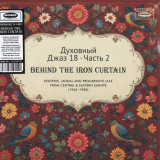
One of the most politically charged terms of the 20th century, the Iron Curtain was a metaphor for political and cultural division. In a post-war telegram Winston Churchill referred to the fault line that ran through Europe between East and West as "an Iron Curtain is drawn down upon their front. We do not know what is going on behind".
In this two-part album, as far as jazz is concerned, we will showcase, describe and celebrate exactly what was 'going on behind'. We see that music is the power supreme, with the ability to transcend all barriers, be they physical, political or metaphorical.
Our liner notes illustrate the complex and contradictory history of Soviet jazz, and the tracks we've chosen cover the key period of the early 1960s to the 1980s. It was during these dark years of the Cold War that the Soviet Union and its satellite states produced a number of outstanding artists playing in a variety of styles. The impact of modernism, from hard bop and Latin to modal and cool jazz, had found its way through cracks in the curtain. The deeply-felt ancestral strains of traditional European folk music were combined with the exciting new and progressive sounds of the West, and a radical, intoxicating brew was created that no amount of guns, tanks or polonium tea could overcome.
We chronicle the triumph of jazz at a time of extreme geopolitical conflict. What went on behind the Iron Curtain in these countries was once mysterious and unknown to the West, but the perseverance of their artists provided sound and light amid the secretive, dark days of the communist-capitalist standoff. There was no end of life-affirming spiritual jazz behind the Iron Curtain.
"Whether it's by improvisation in the African-American jazz tradition, or by a village kobza player standing on top of a damn hill - he feels connected to the stars."
Recut, the elusive DJ and producer whose roots trace back to Southern Italy but whose sound resonates globally, is back with a scorching new release titled "Narcotic Tango". This four-track EP, out on vinyl only, is a deep dive into the raw energy of Acid House and Chicago's underground, delivering an unforgettable experience for both DJs and dancefloors alike.
Opening with "Narcotic Tango", Recut lays down a track with intense rhythmic drive. The throbbing bassline and shimmering hi-hats combine with a tantalizing arpeggio that elevates the track to a hypnotic level. It’s a club banger with an irresistible groove, and once you’ve heard it, you won’t forget it. Next up, "Acid Street" transports listeners into a world of deep, dark synthetic atmospheres. The pounding drum machine and the rumbling analog bassline carry the track forward like an unstoppable force, while the overall vibe conjures a sense of gritty dancefloor energy that never lets up. "Jack On Acid" brings the heat with an unapologetically raw Chicago-inspired sound.
With a deep, looping acid groove and a steady, driving rhythm, it channels the essence of the Windy City’s storied dance music tradition, offering pure, unfiltered Acid House energy. Finally, "Feel The Heat" kicks things into overdrive with its infectious blend of New York house and Latin-infused vibes. This track is all about dancing until the break of dawn, breaking boundaries with its smooth yet aggressive energy and contagious rhythm. Recut’s unmistakable style shines through, blending the wild, experimental spirit of Acid House with the raw, soulful energy of Chicago House. Whether you're a vinyl collector, a club DJ, or simply a lover of pure dancefloor joy, this EP is an essential addition to your collection. A seasoned DJ and producer with a passion for underground sounds, Recut has been carving his name in the electronic music scene for years. With his eclectic mix of influences and cutting-edge production skills, he continues to push boundaries and captivate audiences worldwide.
- A1: Sunrise (Featuring Deadbundy & Chemical Codex)
- A2: Night Funk
- A3: Moment Of Joy
- A4: Chill On A Lotus
- B1: Jazz Addict, Pt 2
- B2: Howling 2 You
- B3: Walker
- B4: Eeels
- B5: Early Morning
- C1: Gaff
- C2: Jazz Addict, Pt 3
- C3: Jazz Addict, Pt 4
- C4: Cogburn
- D1: Jubilee (Featuring Q-Tik)
- D2: Natalie (Featuring Deadbundy & Chemical Codex)
- D3: Rooftop
- D4: Afiona
After forming a friendship with Japanese hip-hop talent DJ Motive, Hell Yeah is releasing his previously CD-only album Sunset Sunrise. After initially being released as a promo to support the 7 inch lead single 'Sunrise,' it now comes on 2 x 12 inch for the first time with fresh mastering by Justin Drake. DJ Motive hails from Gifu, a small and charming city 30 minutes from Nagoya. From there he has built up a cult following for his blend of Latin, jazz and hip-hop beats over a number of albums and EPs in the last 20 years. He is also the producer behind the DeadBundy outfit that was previously remixed by countryman Calm on this label's Calm Reworks EP back in 2020. Thanks to a link from Calm, Hell Yeah founder Marco first hooked up with Motive in the pre-Covid days, twice playing his Alffo event in Gifu and hanging out to chat music. One of the many things that came up was a CD of Sunset Sunrise which has remained on firm rotation on Marco's stereo ever since and is a worldly trip into sample-heavy sounds, indie rock, hip-hop and jazz. Opener 'Sunrise' ft. Deadbundy & Chemical Codex opens with drums that lap like gentle waves on a beach as thoughtful strings and filtered vocals add to the sense of bliss. From there, DJ Motive lays down lazy broken beats and twinkling melodies that take your head above the clouds amongst lush pads and nostalgic samples. 'Chill On A Lotus' sounds like a damaged old tape as vocals, chords and strings all get smudged and smeared into a heavenly ambient soundscape, and there are plenty of loose mixes of dusty drums and jazzy keys, 'Howling 2 You' is a fusion of jazz drums and Balearic energy that slowly sweeps you off your feet and 'Walker' has squelch synth bass and heat damaged keys.
This escapist trip carries on through more broken beats and yacht rock, inquisitive jazz interludes and sunset grooves that all come with a heavy sense of inward reflection. The fragments of vocal are like half-remembered dreams, and the hooks remind of a forgotten lover while the louche beats move things forward with subtle optimism. Sunset Sunrise takes you through a full day in the life of DJ Motive and it makes for a vibrant collage of sound that reveals something new with every listen.
Fom the Sleevenotes by Paul Murphy: Jazz Room Records:
"I took a trip to the If Music Store, 2nd Floor, above the paint shop and that got me hooked on the sound of COPA SALVO.
"You NEED this!" said Jean-Claude. "They're an amazing and unique Jazzy Combo from Japan!" But at the time I was stuck in some dead end Gulag job getting things together for the launch of a record label idea I'd been working on and the bobs were just not in abundance. Especially in the part of the wallet marked "Japanese Vinyl Import Department". But he gave it a spin and I was pretty much hooked from that day on.
Things soon looked up though and the next sighting of COPA SALVO was on the BBE Records release: A Journey Into Deep Jazz Vol. 3 (Compiled by that very same Jean-Claude!) which featured COPA SALVO - Hasta La Victria Siempre, a pounding piano driven homage to Fidel which incidentally is one of the featured numbers of the album that is soon to be released on Jazz Room Records.
I kept looking for more COPA SALVO as I was really intrigued by the sound they produced and, over a period of time I managed to obtain nearly all of their sparse catalogue. Once Jazz Room Records had started to get established and the release of the Colin Curtis Presents: indigo jam unit compilation had been a success I thought "Time for COPA SALVO to make their Jazz Room debut!"
This Jazz Room Records Compilation will feature their unique and highly original compositions which are an energetic meltdown of Funk, J-Jazz, Afro-Cuban, Boogaloo and range from the Heavy Latin Jazz Vibes of Bolivia 67 to the Kung Fu '70's sound of Tong King Rock with a journey that takes in an Eastern Folktale and a Jump Up Life along the way."
Vocal/Guiro : Tadahiro Masuda
Piano : Eri Konishi
Bass : Hironori Kobayashi
Percussion : Yo Sato
Percussion : Pyon Nakajima
Timbales/Drum : Peach Iwasaki
Moodena’s London-based imprint Tropical Disco’s latest offering is a shimmering journey into the heart of the underground, blending nu-disco, classic house, and contemporary electronic funk in a way that feels both nostalgic and totally fresh. Featuring four standout tracks from Vagabundo Club Social, Scruscru, Da Lukas, and Fun Kool feat. vocals from Bcleo and Anna Dee Tee, — the EP is a testament to the evolving sound of the dancefloor, where groove meets grit, and melody flirts with sultry rhythm. This release channels the spirit of sweaty basement parties, neon-soaked nights, and a collective desire to get lost in the music.
Opening the record is Colombian duo Vagabundo Club Social, presenting Latin-soaked funk colliding with shimmering brass instrumentation, creating a deep, rolling pulse that invites movement from the first beat. 'Zumba Z' is a track that feels right at home in a DJ’s warm-up set or closing down an all-nighter, with a hypnotic flow and vocals that seep into your bones.
Scruscru’s story pushes things deeper into late-night, cosmic territory. 'Konyaalti' is a lush, sun-drenched production, utilising sublime sax, Scruscru delivers a cut that's both playful and distinctly driving.
Da Lukas adds a sophisticated touch, remixing Rosario Cristofaro, and taking you on a slick ride that leans into Italo-disco influences. Swooning synths and crisp percussion form the backbone while gliding melodies create a sense of elevation. It’s elegant yet laced with energy, ideal for a peak-time set where the vibe is euphoric but refined.
Rounding off the release is veteran DJ and producer Gerardo Cinquegrana, whose playful Fun Kool moniker belies the serious funk he delivers in his production. German-born, and now Italy-based, Fun Kool’s sharp, syncopated rhythms and sexy vocal lines from Anna Dee Tee bring an irresistible groove to the forefront, with the kind of bassline that takes over your entire body and mind.
Altogether, 'Tropical Disco Volume 28' encompasses a record that’s both familiar and exploratory—rooted in the timeless grooves of disco and house but pushing forward into new musical territory and picking up sonics from different continents along the way. Whether you’re looking for late-night celestial cosmosis, sophisticated Italo-inspired dubs, or straight-up, no-nonsense funk, this release has something for every dance floor.
DJ Support: Louie Vega, Ralf Gum, Jihad Muhammad, Zepherin Saint, Mr. V, Doug Gomez DjPope, DJ Beloved & Brutha Basil to name a few.
Sean McCabe’s Good Vibrations Music label opens the vault doors for a peek inside some of its closely guarded & much-loved releases courtesy of this special limited edition 12 inch. Featuring 4 new to vinyl releases & including a raft of luminary names from across the soulful spectrum this is sure to be a be a hot fave with long standing fans of the label.
Glenn Underground’s Jazz-Funk fuelled rework of 'This Place' kicks things off and needs no introduction… heavily supported & much loved through the soulful circles & beyond with the likes of Louie Vega, Dave Lee, Jimpster, Jamie 3:26 & Fred Everything (to name a few!) all loudly banging the drum – people have been clamouring for this to be on vinyl. You spoke, we listened!
Up next is 'Modulate', a collaborative force of the highest order between Sean & long-time friend Black Sonix. Expertly fuzzying the lines across Deep, Soulful & House is somewhat of a speciality for the duo respectively and there’s bags of all 3 intertwined throughout alongside a hefty sprinkling of sun-kissed, Latino-inspired pianos.
'Still Standing Here' kicks things off on the B-side and begin in March 2022 as vocalist Madeeha recorded an accapella vocal idea in a phone voice message, quietly singing into her phone to avoid waking the neighbours. She sent the idea to drum & bass producer from Bristol, DJ Mixjah, who then approached friend Sean McCabe with the idea. Together they produced a hypnotic afro-tinged soulful backing track to fit with the voice message, with an intention to re-record it in a studio environment. Sean and Mixjah soon realised that the music they had created blended perfectly with the sincerity, intimacy & rawness of Madeeha's heartfelt performance in the original voice message and decided to stick with it. A firm fave for Atjazz, Crackazat , DJ Spen & Emmaculate.
Wrapping things up is 'You Don’t Know', a slick & energetic dancefloor bubbler from London based producer/DJ ‘David Bailey’ and Canadian soulful songstress ‘MissFly’. David Bailey is a firm favourite amongst the London house music community. He’s produced standout releases on labels such as Idris Elba's 7wallace, Makin Moves, Good Vibrations Music, Rhemi Music & Unquantize. MissFly is known for her soulful serenades and ability to write songs 'on the fly' in the studio. She has carved out an impressive discography on soulful house nuggets such as '1972,' 'Wanna Love You' and 'Thankful'
“We kick the label off with our inaugural release from label head Drum Dance; an eclectic four-tracker opening with ‘Zani!’, an outernational cosmic head-nodder meets Chicago footwork influenced ode to the great Zani Diabaté. Low-slung Latin flavoured boogie number ‘Body Heat’ switches up the tempo but keeps those limbs moving with its percussive four-to-the-floor beat, steamy disco vocals and jazzy keys. 80s jazz Balearic goes to Kingston for a bass-heavy dub makeover on ‘Venus Dub 2’.
Signing things off is ‘Adan On Dòt Soley’, a personal dedication to the beautiful country of Gwadloup. A common farewell in the local tongue, it translates poetically as “until another sun”. The track begins with off-kilter spaced-out synths and emerges into a dubby percussive jam featuring the gorgeous keys of Andy Wileman. Field recordings capturing glimpses of birds singing, waves lapping and the sound of gwo ka on the beach close things out, until another sun.”
Full sleeve artwork printed on reverse board
Mastered and cut by Beau Thomas at Ten Eight Seven Mastering
Pressed and printed by The Vinyl Factory
" In 2022, Guts brought together his musical family for his ‘Estrellas’ album. An ambitious project that brought together musicians from: Franc, Cuba and various African countries. For a journey that was as rich artistically as it was humanly. The list of superlatives was almost endless, "Formidable", "incredible", "unforgettable" and "magical" all thrown into the pot, during these magical moments in the Dakar studio. From the seventeen tracks heard on the original album, three have been entrusted to the expert and inventive hands of four producers, who have come up with new interpretations bringing Africa and the Caribbean together for a modern dancefloor.
‘Por Que Ou Ka Fe Sa’ (Poirier Remix)
From his studio in Montreal, Canadian Poirier has opted for a strong groove and relentless bass drum to keep out intruders, putting vocalists David Walters and Brenda Navarrete in a rhythmic cocoon. Accompanied in a slightly moody bassline that adds some driving muscle to the track. The hooky guitar line eventually gives way to the saxophone that emerges from the mix to parade around the front line. The original electric piano is replaced by a synth pad that loops and spins driving the track to its conclusion.
‘Por Que Ou Ka Fe Sa’ (David Walters Remix)
Before recording this track, David Walters and Brenda Navarette didn't even know each other. So in the magic of the moment that brought them together is a genuine and sincere artistic bond. It is no longer Guts but David who is at the musical helm, and before they too can savour the connection between the two artists, the dancers will have to pass through an overheated corridor where a Caribbean rhythm resonates with percussion. Digital and woodwind swirl and clash until the vocal encounter with the artists. It's a moment of respite that's as suspended as it is life-saving, because the exit is also via the famous corridor.
‘San Lazaro’ (Bosq Remix)
On Bosq’s mix, he’s opted to maintain things focused on the dancefloor, keeping the percussion persistent for the unleashed bodies of the dancers to smile. It's once again the walking bass line rises to the forefront of the groove, softening the shocks of the relentless kick drum. Roberto Valdes's timeless piano has disappeared, while guitars float and add to the atmosphere. The track is no longer awash in cigar smoke. Under Akemis's powerful vocals the low ceiling has disappeared, and the open roof is more a brass-lit spectacle. That doesn't make things any less overheated though, this one is sweaty until the end.
‘Medewui’ (Captain Planet Remix)
Captain Planet brings the dancer’s attention to the Afrobeat flavored jam that rocked the original, highlighting the Pat Kalla & Assane Mboup duet. Despite the track remaining mid tempo, laying back is no longer the order of the day as this mix really develops. The drums are more present jolting along with the organ in the first half. Once all the storytellers have taken their microphones, the rhythmic beats are doubled and the track is carried towards a frenzy of Afro-Latin dancing. Fired up by the brass and percussion, it’s this almost switch up that takes hold of the second part of the tune, with some righteous authority and relentless piano and trumpet."
The Knife’s Olof Dreijer introduces Colombian - Swedish percussionist and DJ Diva Cruz with a new collaborative EP on Dekmantel Records. The 'Brujas' EP follows the debut of their exciting hybrid live show at Sonár Istanbul and ahead of upcoming performances at Sónar Barcelona, Dekmantel, and Øya Festival. Together, opposing patriarchy, racism, colonialism, capitalism, and immigrant challenges, they joined forces in Olof's studio, resulting in the creation of the ‘Brujas’ EP, where Diva debuts her voice. The 'Brujas' single and the entire EP, meaning "Witches" seeks to inspire us to find that powerful ancient energy within ourselves.
"I dream to empower everyone who feels outside the box with my lyrics. It is so sad to see children singing and dancing to music made by male artists whose lyrics degrade women, and on top of that, they win prestigious awards while doing so. I dream for a better world and especially Latin America, which needs to change the macho perspective and work together for a better world for everyone," says Diva Cruz.
As a percussionist Diva brings a combination of fierce live percussion together with a rhythmic blend of tunes from all over the world during her energetic DJ-sets. She has also been the lead percussionist for both Fever Ray and Robyn on their world tours.
Olof quote: I’m very excited about sharing this music with the world especially since it’s been a few years in the making. I’m very grateful to work with Diva. She has shown me a new world of music and I feel like I keep evolving and learning new things all the time, especially with our new live show when playing percussion together.
This riotous, psychedelic Latin funk anthem, taken from Martín Buscaglia's 2006 classic album "El evangelio según mi jardinero", sees its very much requested first time on a 7". To celebrate this, and thinking about the AA side, we decided to ask Bosq for a remix.
When we approached him, he said "This track is wild, I love it!" and he started to make his thing. When he finished it, he told us, "I resisted the temptation to bump it up closer to 120 bpm – the world needs more midtempo dancefloor treats!". We couldn't agree more on the midtempo bit, but especially we couldn't be more chuffed with the remix. Bosq has added his magic and a tad of cumbia feel as well and the result is way more than a treat, it's an everyone-smiling-on-the-dancefloor kind of track.
Repress!
Next up on Toolroom’s 4-track vinyl sampler series is a tasty collab from label founder, Mark Knight who teams up with rapidly rising talent Crusy for a staunch collaboration ‘Daddy Shhh’. A fiery club heavy cut, focusing on Toolroom’s founder’s speciality of Tribal Tech House, ‘Daddy Shhh’ is a record made for the dance floor specifically. Mixing high energy grooves, Latin percussion and rolling tech bass line that’ll keep you moving until the early hours.
Next up, we’re welcoming UK selector and producer Huxley who drops brand new single, ‘All I Need’. An artist not bound by conventional genres, Huxley’s sound shifts and melds into whatever fits the record, and that is certainly true when listening to ‘All I Need’. Coming through with a lush, Deep House synth vibe and an earworm vocal that melts into the mix before launching into Classic UK House style bass stabs means only one thing, a straight up belter.
Up next is another heater from Liverpudlian DJ and producer ESSEL who returns to the label with ‘Lennon’. An artist well versed in the art of hit-making; ESSEL has been a firm fixture of the Toolroom family over the past few years. A darker take on her typical vibe, ‘Lennon’ is a record that skirts the edge of her sound, tipping over into clubland and we have to say, it’s absolutely class. If there’s ever a glass ceiling above then ESSEL is sure to smash straight through it, she certainly is an exciting new prospect and without doubt one to watch.
Last but not least, we see the return of powerhouse DJ and production duo Leftwing : Kody who team up with fast-rising producer James Hurr on their debut outing ‘Music Is the Medication’. Reggae vocalist I Jah also features, bringing some Ragga styled heat to the record. ‘Music Is The Medication’ is a sublime record, mixing a tough, Tech House focused vibe with UKG styled breaks and a straight to the point Ragga vocal overlayed for maximum delivery means only one thing, a certified banger.
2024 edition of the single that marked the return of Joe Bataan in 2004. A dancefloor favourite by the King of Latin Soul!
Back in 2004, Vampisoul was extremely honoured to play a role in the return to recording of the legendary Joe Bataan, which fully materialized in the lauded 2005 album "Call My Name", written and produced by Daniel Collás. But first came out the preview 45 'Chick-A-Boom' / 'Cycles Of You', which quickly became a DJ favourite and guaranteed dancefloor filler, long out of print until now. Let's hear Collás explain how it all happened:
"This whole project grew out of a song called 'Cycles of You', which I had written around 2000-2001 with the guitarist and bassist of my band at the time, Easy. The chord progression and vocal melody really reminded me of Bataan, and it occurred to me that it wouldn't be impossible to get him into the studio to do a guest vocal if we ever recorded it. I had met Bataan a few years before at a small, family-reunion style show at the Nuyorican Poets Cafe in my neighborhood, where he not only still sounded great, but was also gracious and easy to talk to.
"By the time we got around to recording with Easy, the band was about to break up but we still had the studio booked. We all agreed that we didn't want to continue as a band, but at the same time, it would be a shame to never record what we had been working on. Around this time Bataan was playing out again, so I went to the show to see him and find out if he'd be interested in doing some vocals with us. He was agreeable, so we decided to turn it into a Joe Bataan session and do 'Cycles of You'. The funny thing is, 'Chick A Boom', a live favourite with Easy, was hastily added so we could have a B-side, but it ended up chosen to be the A-side of the single."
Mood Child unleashes Sirus Hood and Trangaz’s ‘Ghetto Corazon’ EP, a blazing fusion of African, Latino, and Asian influences.
Label father Sirus Hood and Mood Child favourite Trangaz join forces to craft two original bangers, ‘Ghetto Corazon’ and ‘Boothy’, while Manda Moor, Mood Child's mother, spices things up with two different versions of remixes of the second track.
‘Ghetto Corazon’ is one of those tracks that ignites the dancefloor and highlights a DJ set. It’s primal, unique, tribal, and groovy. It has a Techno vibe with its high BPM and killer kick drum that has the power to tremble any dancefloor.
We can sense the Latin roots with the Spanish vocal singing "mi corazon" and the African flair with its broken swing percussion pattern.
‘Boothy’ is a playful acid-led tune enhanced by a unique hi-hat game, with vocals from Trangaz himself talking about the DJ booth adventures. The vocal depicts situations that are bound to happen in any club.
Manda Moor delivers two different remixes of ‘Boothy’: a ‘Punchy’ and a ‘Spicy’ remix. Her ‘Punchy’ rendition is vinyl only and adds a dirty punch to the original, while her ‘Spicy’ version has all the essence of the ‘Manda Moor groove’ - an addictive drum pattern with her unique style that is recognised right away. She is known for her picante sound, adding the perfect spice to this EP.
This release showcases the best of the heat from three minds with different roots. An irresistible melting pot, with early supports from all stars like the king Carl Cox and The Martinez Brothers.
Sirus Hood & Trangaz ‘Ghetto Corazon’ EP drops via Mood Child on 22nd March 2024.
Issued on his crescive Afroterraneo imprint, Kiko Navarro reunites with longtime collaborator and friend, Latin-Grammy award winning vocalist Buika, for new single ‘El Silencio’.
First meeting back in 1997 on their native island of Mallorca, Navarro and Buika most recently worked together for the heart-rending Latin House song ‘Lo Siento’, one of the highlights of Navarro’s 2017 album ‘Everything Happens For a Reason’, as well the 2006’s ‘Soñando Contigo’ on Pacha Recordings, which remains an enduring classic.
Originally written in 2010 but never released at that time, ‘El Silencio’ comes complete with a brand new club version, for which Buika has recorded fresh vocals. When the pair returned to the studio in September 2023, it was as if they’d never been apart. “It was like the time didn’t really pass” says Kiko. “We have this connection that doesn’t go anywhere. We know each other so well, and we know what we want. Working with her has brought me many good things, and I’m so excited to share the new music we’ve made together with the World.”
‘El Silencio’ (‘The Silence’) is a slinky, mid tempo groover with subtle jazz-funk touches, accompanying a universal song about love. “It’s about a couple who have loved each other through hard times, and a desire to be together still. There’s a message of hope here, saying ‘let’s try’. No drama, no anger, just love” says Kiko.
Issued on his crescive Afroterraneo imprint, Kiko Navarro reunites with longtime collaborator and friend, Latin-Grammy award winning vocalist Buika, for new single ‘El Silencio’.
First meeting back in 1997 on their native island of Mallorca, Navarro and Buika most recently worked together for the heart-rending Latin House song ‘Lo Siento’, one of the highlights of Navarro’s 2017 album ‘Everything Happens For a Reason’, as well the 2006’s ‘Soñando Contigo’ on Pacha Recordings, which remains an enduring classic.
Originally written in 2010 but never released at that time, ‘El Silencio’ comes complete with a brand new club version, for which Buika has recorded fresh vocals. When the pair returned to the studio in September 2023, it was as if they’d never been apart. “It was like the time didn’t really pass” says Kiko. “We have this connection that doesn’t go anywhere. We know each other so well, and we know what we want. Working with her has brought me many good things, and I’m so excited to share the new music we’ve made together with the World.”
‘El Silencio’ (‘The Silence’) is a slinky, mid tempo groover with subtle jazz-funk touches, accompanying a universal song about love. “It’s about a couple who have loved each other through hard times, and a desire to be together still. There’s a message of hope here, saying ‘let’s try’. No drama, no anger, just love” says Kiko.
Fate is a funny old thing. One day in 2011, DJ/producer Tom Trago found himself sharing a train journey with Steven Van Lummel, a DIY musician, artist and co-founder of PIP, an underground nightclub and cultural hub in The Hague. Over the course of a rambling, open-ended conversation, the idea of making music together came up; a few weeks later, Trago travelled to van Lummel’s place – a former industrial unit that was now home to a rotating cast of artists and musicians – and didn’t leave for a month.
Cossetted away from the outside world in van Lummel’s loft, with multi-instrumentalists Janneke Nijhuijs and Wieger Hoogendorp joining them to create a musical four-piece, MEGA WEGA was born. Over the course of four weeks, the quartet embarked on an almost continuous creative session punctuated only by impromptu parties and mixing sessions. Life-long bonds were made and over 70 tracks recorded before the mundanity of day-to-day life came calling.
For one reason or another, the project never saw the light of day, with tracks sat gathering dust on hard drives for the best part of a decade. During the madness and loneliness of the COVID-19 pandemic, Trago rediscovered the tracks. Delighted by what he heard, a collective decision was made to add finishing touches and release the resultant album on van Lummel’s PIP Records imprint. Further instruments and vocals were added over two days at Hoogendorp’s studio, before mutual friend Tom Ruig got on board to mix the album.
So, what can you expect from Haunted, Mega Wega’s debut album? First and foremost, it’s the sound of pure creative expression – the distillation of a freewheeling, no-holds-barred, spontaneous musical journey variously inspired by the do-it-yourself ethos of musical counterculture, shared inspirations and influences, epic jam sessions, distant stars (Wega, sometimes known as Fidis or ‘the harp star’, is one of the brightest in the night sky), imaginary journeys across dusty deserts, and the comradeship of four new friends.
Enchanting and alluring, it’s an album that gleefully denies lazy categorization and ploughs its own eclectic, atmospheric musical furrow in vivid sonic detail. It’s a collective exploration of heady musical eclecticism unified by saucer-eyed vocals, low-slung bass, loose-limbed beats, sweaty percussion workouts and hazy electric piano motifs.
Haunted begins with the woozy and hallucinatory slow-burn soundscape of ‘Get Things Done’ – an effects laden shuffle akin to lying flat on your back tripping under an intense desert sun – and ends with the creepy, mind-mangling post-punk funk of ‘Brain Carpaccio’; in between, you’ll find spaced-out, low-tempo lo-fi soul (‘Move Around’, ‘Haunted’), tactile synth-powered boogie revivalism (‘Make Me Work’), deep and off-kilter opioid jazz (‘Copenhagen’), intoxicating psychedelia (‘Last Night on Earth’), piano-laden dream-pop epics (‘Shake Or Fall’), and Latin-infused, percussion-powered hedonism (‘Chopping Heads’).
Born out of spontaneous collaboration and immersive, almost endless recording sessions, Haunted is an album shot through with imagination and boundless energy, captured for posterity by four friends and collaborators at the top of their game.
As a complete artist, Luna Maria Cedron gently and melancholy brings together the influences and facets of her existence. Behind her alias, Fiesta En El Vacio, the artist summons a number of Latin musicalities that make her career: Castilian flamenco, popular ballads from Venezuela meet the new generations of urban music: reggaeton rythms and sharp electronics. The uncompromising texts leave no alternative: this record claims the emancipation of women, the fight against this order of things that no longer suits anyone. Fiesta En El Vacio is a cry from the heart for and an encouragement to hope.
Crackazat & Heist present: “Senses”. A stunning mini album that sees the artist deliver a heartwarming perspective on contemporary electronic music
On “Senses”, we see the pure talent of Crackazat come to life like never before. We’ve all danced to “Alfa” or his most recent hit on Heist “Demucha” and have heard his venture into the more poppy side of things with his 2022 album ‘Evergreen’ on Freerange. “Senses” however, is on another level. Crackazat takes you on a sonic journey exploring his musical personality with live keys, vocals, bass and production all coming from his studio in Uppsala, Sweden. The
jazzy horns that are featured throughout are recorded by Adeev and Ezra Potash, better known as the Potash twins. The duo took a sidestep from their recordings with John Legend, Robert Glasper and even Diplo to dive into this project with Crackazat and help him deliver arguably his best work to date.
The 6-track album starts off with the low-slung groove of ‘I need to know’. The whole atmosphere is warm, dreamy and seems to be written to lift your spirits, no matter where you are in life. Plucked strings, arpeggios and long horn notes give this song its energy, which is subtly supported by lo-fi drums and sparse bass licks.
“Do you think about me”, keeps the energy tight with a lovely drum groove and a sparse bass section. From the first note of the track, you get the feeling like the energy could change any moment. Halfway through this is exactly what happens, when uplifting keys and a buzzing lead take control of the track. The string arrangement is subtle enough to never overshadow the other instrumentation, but simply adds a beautiful layer to a track that’s already filled with
emotion. It’s all smiles when the energy of this track is set loose!
If “Do you think about me” is Crackazat in pop mode, “Freddie’s Groove” is Crackazat in full-on jazz mode. The nod to Freddie Hubbard is clear, and Crackazat cleverly takes ideas from both the jazz legend and his legendary French sampler, Pepe Bradock for this track. The horns are deep and moody, the groove is jazz-house at its best and Crackazat’s soft vocals have the perfect amount of fragility to fit the groove. The changeover into a stabby synth section
halfway through the track is a subtle reminder from the skilled producer that – even with all these musical elements – he can direct you to the front of the dancefloor with the twist of a note.
“Phantom” sees Crackazat move into a shuffling Latin-dance vibe. Here, the song reaches its full potential through the horn section, so it’s only fitting that this is the feature track for the Potash Twins. The Latin rhythms are lush, the key progression is on point and the energy on this track just keeps on going with layers and layers of horns, powerful vocal chops, and subtle but effective percussion changeovers.
“Endless life” is a track that feels like it’s building up momentum with every repetition. Whether it’s the broken beat groove, the offbeat keys or the sparse horn hits, chord hits or leads, there’s a certain energy in this track that takes a hold of you and simply doesn’t let go.
The outro “When we last met” is built around vibey drunk keys and a downtempo hip-hop groove. There’s a hint of old school D’angelo in this track and you can clearly hear the artist feels at ease with the path he’s taking the listener on. It’s a perfect ending to a record that showcases the beautiful world that Crackazat has crafted through his compositions and one thing is for sure: This is an album we will all keep coming back to for a long time to come.
Yours Sincerely,
Maarten & Lars
Italian DJ and producer Francis De Simone debuts on Lee Foss and Jamie Jones' label Hot Creations with London Bass. Having built a solid back catalogue in recent years, his first Hot Creations release embodies the dynamic sound of the Palermo-born artist, channelling chunky tech house and disco-flavoured melodies.
De Simone explains his creative thinking behind the EP. "These tracks fully express my devotion to music. I ranged a lot, trying to remember an 80's sound up to a more raw and synthetic groove with Latin vocals to embrace the different ethnic groups." Reflecting his thoughts to a tee, the title track rumbles with a massive bassline and chopped-up vocals that add an instant burst of energy. Things get weird on Saludos A Todos, as thumping kickdrums collide with a trippy melody and even trippier vocals, creating a wavey atmosphere. The ideal club curveball. On Off White, De Simone delivers a pacey number packed with burbling beats and clicky percussion, complemented by dreamy vocals. The hint is in the name on closing track, This Is Undergound. A big room delight, De Simone drops a stripped-back banger, where the lyrics do the talking in tandem with a driving bassline. An excellent addition to the Hot Creations discography.
Based in Palermo, Italy, Francis De Simone stems from a family of musicians. Having played the drums from age two, the versatile artist can make anything from rock, pop and jazz, but these days, De Simone pens electronic music. His father worked as a bouncer for various local discos and exposed De Simone to dance music from a young age, later inspiring him to produce house and techno with an uplifting tint. Releases on Glasgow Underground, LW Recordings and REALM Records have helped shape the profile of this flourishing artist, with plenty more to come further down the line.
In May 2020 Cocoon Recordings released the third album of Harald Björk. With the club scene on Covid-hold , tours canceled and all of our favorite DJ’s locked up at home… not the optimal conditions to release an album on a nr.1 world wide club empire as Cocoon. How ever we decided not to let a virus kill our beloved culture, as Mr. Sven Väth put it „I would like to share with you the album of Harald Björk… which has soothed me and I hope will also give you a soundtrack for these uneasy days“. It felt right to release it.
The release was shrinked from a thought of vinyl box to a digital release with future plans on vinyl. However covid decided to stay and time went. The queue at the vinyl factories didn’t make the process easier… But at one point the dream factory of Kranglan Broadcast decided, enough! , the world has to keep on dreaming. And what is a better way to embrace dreams then to release a vinyl full of of dreamers, groundbreaking in their corners of the electronic umberella. Dreamers doing their thing not even looking at the norm or what’s the recent hype.
Aditional info:
Houndtooth finest Throwing Snow who Harald met in New York 2013 during their term at RBMA brings a bassdriven rollercoaster with the arpeggios from Spektrum bouncing like rubberballs through an impressive broken drum work. The remix came delivered with a text saying „I like my drums slamming“ and so do we.
Ada takes the eteric pads of Waldmeister and place them in a auditive dreamstate, an emotional hybrid of space and vacuum. Large feelings, yet so close. It builds, stretches and builds until we are shown the enlighted truth in the end of the tunnel. Harald is a long time fan and colector of Adas music which he got to know through the lovely label of Areal and has continued to love through the Pampa era. First remix from Ada on Kranglan was the epic remake of Sabor Latino, Sabor de Ada! We are delighted to have her art on the label once again.
The pandemic 2020 took away the most fun of beeing in the club scene, sharing stages with brilliant interesting dreamers showing and exchanging visions performing music. Under these strange conditions Molø and Harald ended up sharing a physical stage at the stream festival United We Stream. One thing led to the other and Harald took a deep dive in to Molø‘s great melodic techno universe. Some times you find gold in your own hometown. Molø’s take on Waldmeister build on the mellow arpeggio from the original track and brings them to a perfect chilled out afterhours. Imagine watching the sunrise to this beauty.
Swedes are a people of high integracy but as loyal citizens we allways attend formal events by the state. Skudge and Harald met at the Swedish National Radio price anouncement, both nominated for „electronic act of the year 2011“. It was an akward event with radio interviews and canapés, not very techno, the signum of Skudge. How ever Skudge won it all leaving both Avicii and Swedish House Mafia empty handed. Landberg, the swing king of Skudge is the kind of person that will tell you why the TR-909 has to be master clock to get the right groove in a techno performance, if you ask… which you do ??! If you’re looking for techno with groove look no further, Skudge is king! In his take on Walking Path he display the power of minimalistic dirty grooves, a 909 and a 303 what else do we need?
The 12“ vinyl comes with a fresh re-master of album single Medan Du Sov and an unreleased bonus track, Drifting, a balearic sundazed love story.
Kenny Summit revisits Lectroluv’s ‘Dream Drums’ for a brand-new remix package, welcoming fresh interpretations from Joeski, Roberto Rodriguez, Eric Kupper, Lenny RX and Summit himself.
Originally released by Lectroluv, aka Frederick Jorgio, in 1993 and championed by Junior Vasquez before becoming a worldwide anthem across dancefloors across the globe, ‘Dream Drums’ holds a place for many as one of the truly iconic house records from the early 90s. Now almost 30 years on, Good For You boss Kenny Summit presents a carefully curated remix package as he revisits and pays homage to the seminal record. Welcoming fresh interpretations from Freerange regular Roberto Rodriguez, NYC house legend Joeski, Plastik People Recordings boss Marc Cotterell, and his own take alongside longstanding Brooklyn rave staple Lenny RX and Grammy-nominated and multi-platinum-selling recording artist Eric Kupper, the expansive package arrives via his sub-label Afternoon Delight.
Opening the package, Roberto Rodriguez’s take builds on the original’s iconic vocals and slick drums through sweeping melodies and airy pads to offer a hazy, paired-back interpretation of the production. Next up, Joeski’s remix lays the focus on percussion as he introduces Latin and Afro influences for a euphoric peak-time production set to get crowds moving, while Marc Cotterell delivers a signature blend of garage-led organ chords and two-step arrangements for a vibrant, sun-soaked cut. To close, the trio of Eric Kupper, Lenny RX and Kenny Summit join forces for a special ‘NYC Never Sleeps’ remix, introducing a killer lead line and warping synths to shape things up in style.
Early DJ Support:
Solomun, Claptone and Black Coffee
With this seventh instalment of retweaked heat, Perro Bueno Edits once again prove that less is more when you know exactly what you're doing. Both refixes strike a sweet spot between respectful crate-digger sensibility and dancefloor punch while updating Afro-funk classics without sanding off their soul. 'TFOM' puffs out its chest with big, bold, playful horns leading the charge as Latin vocals bring some sunshine and funky bass keeps things moving. 'SMPP' slows the tempo, which means more room to luxuriate between the dumpy kicks and appreciate the sharp horns and organic percussion before some raw vocals bring a Brownian funk edge.
- A1: Intro (0 52)
- A2: This Thing Called Life (4 56)
- A3: Won't Let You Down (Feat K Zia & The Swag) (4 27)
- A4: I've Been Waiting (4 23)
- A5: Brighter The Days (3 45)
- B1: There's Much Love In The World (4 56)
- B2: Lovey Dovey (Feat Eric Roberson & Raheem Devaughn) (5 36)
- B3: Research (Feat Honey Larochelle) (3 52)
- B4: On My Own (Feat Paul Weller) (4 06)
- C1: Omar & Don-E - "Out Of Sight" (Interlude) (0 37)
- C2: Can We Go Out? (3 46)
- C3: It's Gonna Be Alright (Feat Scratch Professer) (3 49)
- C4: We Can Go Anywhere (Feat Giggs) (4 43)
- C5: Latin Salsa (3 55)
- D1: Holding On To Life (Feat Ledisi) (4 49)
- D2: Much 2 Much (3 23)
- D3: 1234 (Feat Jeru The Damaja) (3 46)
- D4: Love Is Like (Feat India Arie) (3 38)
Malena Zavala is an Argentinian-born, London-based artist, producer, and filmmaker, known for crafting ethereal, genre-blending music that navigates the space between her Latin heritage and her British upbringing. With the forthcoming album If This Life Could Start Again set for release on 30 January 2026 on Paraná Records, Zavala presents her most intimate, cohesive, and accomplished work to date, marking a significant evolution in her artistic journey.
With her new album, Malena creates an atmospheric dream pop world, weaving singer-songwriter intimacy with synth pop, Argentine folk, indiepop, rock and experimental music, threaded together by her blissful vocals and dreamy guitar work. Gorgeously warm and vivid, If This Life Could Start Again charts the journey from pain to acceptance, mapping out the non-linear nature of healing through a sonic landscape. Each song embodies a distinct emotion within that journey, from grief and chaos to feeling lost, seeking refuge, finding confidence, and finally acceptance and letting go. Drawing on her Argentinian roots, Malena uses the Andes mountains as both a visual and thematic anchor – the difficult climb towards higher ground becomes a metaphor for healing, whilst being lost at rock bottom reflects the darkest moments of the journey.
Completely composed and performed by Malena herself, the album was recorded in Girona’s L’Empordà countryside in Spain with producer Luke Smith. As a professional producer and audio engineer, this was Malena’s first time relinquishing production control – an intimate creative shift that allowed their shared vision to shape the album’s rich, enveloping sound.
However, Zavala’s career to date has been a testament to self-sufficient artistry. Her critically acclaimed debut, Aliso (2018), was written, recorded, and produced alone in her parents’ garage, which honed her dreamy bedroom pop sound. The album, praised by The Guardian for its “gently warped and beguilingly melancholy guitar pop,” ****, immediately catapulted her from DIY beginnings to prestigious stages, supporting acts like Lord Huron at London’s Roundhouse and Men I Trust at Village Underground and subsequently continuing on their UK/EU tours. Later with standout performances at Latitude, Green Man, and All Points East. Her consistent radio support from key influencers including BBC Radio 6 Music, BBC Radio 1's Huw Stephens, and Steve Lamacq has solidified her presence on the airwaves.
Her second album, La Yarará (2020), saw Zavala delve deeper into her roots, exploring Latin traditions like Cumbia and Bolero. This exploration of identity continues powerfully on the new album, but with a newfound lyrical depth and sonic confidence. The new album, If This Life Could Start Again, is a raw and transformative eight-track journey that maps the emotional landscape of healing. Written after a period of personal upheaval, the album traverses themes of grief, hereditary trauma, and self-discovery. The record’s narrative is structured like a mountain ascent. A challenging climb through varied emotional terrain, posing the central question: “Will you join the journey?” Sonically, this journey mirrors the non-linear path to acceptance, evolving from acoustic folk and synth-pop to funk-infused rhythms and rock anthems.
As a formidable live performer, Zavala has built a robust touring profile across the UK and Europe. She will embark on an extensive tour in February and March 2026 to support the album, with dates spanning major cities from London and Glasgow to Berlin, Paris, and Barcelona.
With If This Life Could Start Again, Malena Zavala fully realizes her artistic vision as a self-taught producer to an autonomous artist commanding her career through Paraná Records whilst reflecting the vast landscapes of her heritage and affirming her place as a compelling and evolving voice in contemporary music.
This debut 12" is a real statement of intent from The Aries Project, aka the ongoing creative collaboration of Collin Suttles and moe.BPM. The sound is rooted in house music's classical values of inviting groove, heartfelt warmth and a sense of patience, but all shot through with a modern and cosmically minded confidence. The Jules.NYC dub of 'You Need A Rock' is pure peak-time persuasion, all forward momentum and locked-in swing, while 'Someone Who Dances' keeps things closer to the body, riding a supple rhythm with soulful ease. Flip it over and 'Keep Me' (Lucky.Moe dub) strips the palette back to let deep chords and spacious keys stretch out hypnotically. 'When I See You' with Toni's Son closes on a celebratory note and Latin disco energy in a deep house framework.
2026 Repress
Dam Swindle's new 'Backyard Galaxy' EP is an ode to house music and the classic Swindle sound.
It's only been a few months since Dam Swindle released their highly acclaimed album "Open" and already the boys are back on Heist with a new release that takes you right back to the dancefloor. Where they've spent the better part of the last 3 years writing their album with all its sonic explorations and collabs, this new EP sees the duo return to their roots of club-ready house music. The 'Backyard Galaxy' EP comes with 4 high-energy house tracks made in their Amsterdam studio that have been road-tested all summer.
EP opener "Feel it much?" has all the ingredients of a classic Swindle heater, with warm pads, rich organic percussion and tons of soul. There's a simple and effective vocal running throughout the track that blends nicely with the classic house elements and electronic textures that are layered throughout the track. There's an effortless flow to this track and it comes as no surprise that it has been a highlight in their sets this summer.
The EP title track 'Backyard Galaxy' is an up-tempo Latin-themed jam with a hint of old school techno. The synth stabs hit you just right and the modulated vocal chops are a lovely boost for the build ups and add a touch of swing to a track that already has a tight groove. Add to that a huge breakdown and drum roll and you've got yourself a track that'll light up any dancefloor.
On the flip, we're moving into garage territory with the shuffling vibes of 'Rhythm Baby'. The current popularity of the genre is not missed on Dam Swindle, but when you look closely, you'll see this track is full of elements that the duo have built their legacy on. The vocal chops, transposed key samples and swing are all on point and work just as well below, as above 130 bpm if speed is your thing.
The EP closes with the NY-style house cut 'What you give', which reminds us of Dam Swindle's remix of Cinthie's Heist hit 'Won't U take me' with its lush organs and moody keys. It's perhaps the most classic house track they've made in a long time and you can hear they had a great time recording this. It's playful, vibey and catchy. Just the way we like it.
Dam Swindle might have delivered one of the standout cross-over albums of 2025, but on this EP the message is clear: Once a househead, always a househead.
As always, enjoy the music and play it loud!
Much love,
Heist HQ
- A1: Arsen Dedić - Onaj Dan
- A2: Zdenka Vučković - Bosonoga
- A3: Bogdan Dimitrijević - O Barquinho
- A4: Nino Robić - Jedna Nota (Samba De Uma Nota Só)
- A5: Milan Bačić - Hō-Bá-Lá-Lá
- B1: Beti Jurković - Ljuljačka
- B2: Elda Viler - Senca Tvojega Nasmeha (The Shadow Of Your Smile)
- B3: Arsen Dedić - Često Te Sretnem
- B4: Bogdan Dimitrijević - Hershey Bar
- B5: Zdenka Vučković - Izgubljeno (Desafinado)
- C1: Drago Diklić - Moja Draga
- C2: Krunoslav Kićo Slabinac - Tko Si Ti
- C3: Plesni Orkestar Rtz - Plava Krizantema
- C4: Gabi Novak I Radojka Šverko - Za Mene Je Sreća (Samba Da Rosa)
- C5: Dubrovački Trubaduri - Ljuven Zov
- D1: Vikica Brešer - Sunčano Ljeto
- D2: Drago Diklić - Nitko Na Svijetu
- D3: Višnja Korbar - Subotnje Veče
- D4: Arsen Dedić - Večeras
- D5: Jimmy Stanić & Glenn Rich Orchestra - The Girl From Ipanema
Rich musical history of Yugoslavia reveals a long-lasting love for the music of Latin America.
Entwined in Afro-Cuban rhythms, ballrooms were shakin', swayin' and swingin', gathering musicians who were heavily into jazz bands and orchestras, most notably in Ljubljana, Zagreb, and Belgrade. Jazz could be heard on the streets of Split way back in 1919 when dancing became a symbol of freedom. Radio was the most loved household item, newest sheet music was in demand and collecting records was hip like today. In the aftermath of Second World War, jazz went underground but little by little, things changed and Ella, Satchmo, Dizzy and Miles came to visit, among others. Music festivals shaped the music for entertainment and variety of popular styles showed influences from all over the world. In the early sixties, one particular rhythm crashed on the coast of the Adriatic Sea: the rhythm of bossa nova!
In the whirlwind of various musical styles, Latin American music still played important part of the scene in the early sixties Yugoslavia. Beguine, tango, rhumba, samba, calypso, mambo and cha-cha-cha all found their place on the festivals inspired by famous Sanremo, festival of Italian popular song that largely shaped the musical taste of Europe. It was the era of instrumental rock, R & B and rock'n'roll - sounds of "imperialist America" now played freely on imported and hand-made electric guitars. While dancing halls had been turning into concert venues, bossa nova has come! Eydie Gorme with Blame It on the Bossa Nova and Paul Anka with Eso Besso (That Kiss!) tried to make us learn some new dance moves but it was Joao Gilberto's gentle singing and his new way of playing samba songs, along with Tom Jobim's modern dissonant harmonies and poetry of Vinicius de Moraes that created the magic. When American alto saxophonist and flautist Bud Shank visited Zagreb and Ljubljana in 1963 (with Boško Petrović in his quintet) "it was the first time we heard bossa nova!" remembers Stjepan Braco Fučkar. Jugoton, the biggest record company in Yugoslavia, released 4-track EP Bossa Nova by Bogdan Dimitrijević and his ensemble that same year! While not being fully accepted or understood completely, the archives of Jugoton reveal to us various interpretations of this new trend from their vast catalogue.
Swan Song
The vinyl LP at the heart of this éthiopiques 31 tracks 2 to 11 was one of the very last vinyl records ever released in Ethiopia. But above all it represents, we felt, the absolute masterpiece of the Ethiopian Groove – the Swan Song of Swinging Addis. The album leaves a clear idea for posterity of the level of sophistication and mastery that modern Ethiopian music had achieved, before being crushed under the Stalino-military heel of the Derg – as the bloody revolution that was unfolding came to be called.
Ethiopia1976.
The Revolution that broke out in February 1974 rolled on in a ruthless march. The whole of Ethiopian society was utterly stunned. The bouquets of flowers handed joyfully to the first tanks of the coup d'état were to wilt very rapidly. From September 1976 to February 1978, 18 months of Red Terror (the name given by the junta itself) spilled blood throughout the country. This fratricidal conflict took its heaviest toll among students and youth. The shift from feudalism to a cruel and primitive Stalinism left the country's citizens deeply traumatised, and snuffed out any pretence of activism, whatever the sector of society. This ice age was to last for seventeen long years.
ሙሉቀን፡መለሰ Mulukèn Mellèssè Muluqän Mälläsä
It was three tracks by Muluken that served as the opener for éthiopiques-1 more than 25 years ago. Seven more tracks appeared on éthiopiques-3 and 13, all accompanied by The Equators, which was soon to become the Dahlak Band.
The first track, Hédètch alu, also the very first piece that Muluken ever recorded, left audiences both unsettled and amazed. Reflecting the singer's extremely young age (he was just 17 at the time), this angelic voice mystified many, who thought they were in fact listening to a feminine voice. He was not yet 22 when he released his last vinyl record in 1976 with Kaifa Records (KF 39LP), one of the very last to be issued in Ethiopia, before the cassette tape became the dominant medium for music distribution – and before the new revolutionary regime put a stop to all independent musical life, via an unspeakable barrage of prohibitions and other persecutions.
Mulu qèn, literally, “A well filled day”. This tender maternal intention wasn't enough to ward off the cruelty of fate. His mother's premature death drove Muluken to leave his native Godjam, in northeast Ethiopia, to live with an uncle in Addis Ababa. Born Muluken Tamer, he took his uncle's last name – Mèllèssè.
The spelling Muluken appeared in his administrative records. Transcription of Amharic to the Latin alphabet, both in Ethiopia and for scholars, gives rise to controversies and quibbles that can never be neatly settled. French allows for a closer approximation of the original pronunciation, thanks to its battery of accent marks, confusing as they may be to anglophones.
Between rather accommodating administrative record-keepers and the various versions that pop up in interviews given by the artist, Muluken's year of birth oscillates between 1953 and 1955…
1954? One thing is certain: the artist's talent made itself known very early indeed, because he got his start in 1966-67, at the age of 13 or 14. Photos from the period attest to his extreme youth. It's a strange sort of initiation for a very young teenager to become a sensation in the heart of Addis's nightlife at the time, Woubé Bèrèha – the Wilds of Woubé. And what's more, in the club of the Queen of the Night, the Godjamé Assègèdètch Alamrèw herself, the very same that was portrayed by Sebhat Guèbrè-Egziabhér in his novel-memoir Les Nuits d’Addis Abeba2… The legendary female club owner who is remembered to this day by the capital's ageing boomers.
Muluken first tried his hand at the drums, before he grabbed the microphone. He emigrated briefly to the Zula Club, across the street from the old Addis Post Office, one of the ground-breaking bars of the burgeoning musical scene, before joining the Second Police Band in 1968, for around three years. He spent a few months with the short-lived Blue Nile Band founded by saxophonist Besrat Tammènè. As the musical scene grew increasingly successful, and pulled slowly but decisively away from its institutional ties, Muluken released his first 45rpm single in February 1972 (Amha Records AE 440). It was included in two LP Ethiopian Hit Parade compilation albums in September of the same year. All in all, Muluken released eight two-track 45s and the same number of original cassette tapes between February 1972 and 1984, the year that he departed for permanent exile in the USA. After converting to Pentecostalism in 1980, Muluken gradually abandoned all secular musical activity. In 1985, at the end of a concert in Philadelphia, he decided to quit concerts and recording for good. Mèlakè Gèbré, the historic bass player from the Walias band who was playing with him that night, recalls that everything appeared so irredeemably diabolical in Muluken's eyes, that it was to be the end of his contribution to Ethiopian Groove.
The end of the story, the beginning of a legend.
Dahlak Band, forgotten by History
Aside from his personal history and vocal talents, it must be remembered that Muluken Mèllèssè was one of the biggest names in the musical innovations that marked the end of the imperial period. These éthiopiques aim to convince those who are just discovering this hidden gem... As for Ethiopians themselves, they are to this day captivated by this singular and atypical figure in the Abyssinian pop landscape – even though he withdrew from public life some 40 years ago. Incorrigible devotees of poetic twists, of more or less hidden meanings, Ethiopians appreciate above all the care Muluken took in choosing his lyrics and the writers who penned them, such as Feqerte Haylou, Alemtsehay Wodajo and, here, Shewalul Mengistu (1944-1977). Love songs, written by women, a far cry from the conventional drivel that pleases sappy sentimentalists.
Muluken is equally acclaimed for his perfectionism when it came to music, the opposite of the overly casual approach that is all too common. He remained a faithful partner of musicians who came from a lineage that borrowed from several inventive and pioneering bands (Venus, Equators, Dahlak). Amongst them were certain artists who began their musical lives with Nersès Nalbandian at the Haile Sellassie Theatre and who come of age in around 1973 – at just the wrong time, you might say. Among them were the pillars Shimèlis Bèyènè (trumpet), Dawit Yifru (keyboards) and Tilayé Gèbrè (sax & flute). Most notably Tilayé Gèbrè, certainly one of the most important musicians, composers and arrangers of his generation, of the end of the imperial era, and of the early years of the Derg.
It was only in 1981 that a miraculous opportunity arose for Tilayé to escape the Stalinist paradise of the dictator Menguistou Haylè-Maryam. Once again it was Amha Eshèté (1946-2021) who provided a solution. The spirited and courageous producer, who had been in exile in Washington since 1975, succeeded, thanks to his incredible perseverence, in bringing the Walias Band to the USA. It was, in fact an extended Walias Band comprising ten musicians3, six of whom chose to slip away after a few concerts and the recording of an LP (The Best of Walias, WRS 100). Tilayé Gèbrè was one of these. He has been living in the USA ever since. There he joined the then-nascent Ethiopian diaspora, which lived largely unto itself, and was making only very modest headway in the American musical market. It seems unfair that Tilayé Gèbrè and the Dahlak Band were not able to benefit earlier from the public recognition that they do deserve.
A similar draining away of the top-rate talents would lead to the reorganization of the major groups of the “Derg Time”. The remaining artists spread themselves around between Ibex Band (renamed Roha Band), Ethio Star Band and a remodeled Walias Band. That spelled the end of the Dahlak Band.
With this record, produced by the essential Ali Abdella Kaifa a.k.a. Ali Tango, we can appreciate everything that the Derg not only destroyed, but also prevented from flourishing. This gem of Ethiopian-style afrobeat came out in 1976 (and, by way of a parenthesis, before the FESTAC 1977 in Lagos, which was attended by an impressive delegation of Ethiopian musicians — although Fela was already personna non grata in his own country). Despite everything that might distinguish this ethio-groove from Fela’s music – no colonial axe to grind, no question of political confrontation with the authorities, no claims to negritude or Africanism for the Ethiopian musicians, and less extrovertion! –, this LP fits beautifully into the saga of intense and electrified soul of the new “African” groove that Fela and Manu Dibango embodied so well from that point onwards.
In restoring this record to its place in the afrobeat epic, it can be seen that, if nothing else, the timeline bestows a legitimate pedigree and a historical primacy to works that had no international impact when they were originally released.
Warning! Masterpiece!
Freedom, Rhythm and Sound showcases the stunning graphic works of independently published jazz record cover designs in the 1960s, 70s, 80s and beyond, from radical jazz musicians such as Sun Ra, John Coltrane, Pharoah Sanders, The Art Ensemble of Chicago and others. This second Freedom, Rhythm and Sound book is a new ‘chapter’, featuring hundreds more unique, rare and beautiful jazz record cover designs.
This book documents the continued development in jazz as African-American artists set out on new journeys to enlightenment, heading out into Europe at the end of the 1960s. The artwork of these (often self-produced) record cover designs during this era reflected their radical agenda, spiritual awareness and singular search for musical and personal freedoms. From raw, DIY aesthetics to lyrical and poetic illustrations, sometimes containing futuristic worlds and ancient landscapes, the designs are always bold, strikingly graphic, and most importantly capture the spirit of the music, giving them a unique beauty. The book also includes sections on African-American poets and writers, Civil Rights and Black Power Movement leaders (Martin Luther King, Malcolm X) and early musical pioneers (Yusef Lateef, Max Roach, Art Blakey and others), all of which helped influence and shape the world of radical and spiritual jazz from the 1960s and onwards to its rebirth today. Since the 1980s, Gilles Peterson has been a pivotal figure in the club scene, renowned for his genre-defying approach to music with jazz at its core. As one of the UK’s most iconic DJs, he has spent over 40 years shaping music trends as a radio presenter, club DJ, producer, and festival curator.
He hosts a flagship show on BBC Radio 6 Music and, in 2016, launched Worldwide FM. He is founder of the Worldwide Festival in the South of France and We Out Here festival in the UK. He runs the label Brownswood Recordings, dedicated to discovering and promoting new talent and bringing fresh voices to the global stage. Stuart Baker founded Soul Jazz Records in 1992. For more than 30 years the record company has released over 500 records covering a genre-defying array of non-mainstream musical worlds – Jazz, Reggae, Punk, Latin, Brazilian, Disco, African, Gospel, Acid House and more.
In 2017, part of Stuart Baker’s jazz record collection (much of which appears in Freedom, Rhythm and Sound) was featured and displayed as part of the Soul of a Nation: Art in the Age of Black Power exhibition at Tate Modern in London, and subsequently at The Broad in Los Angeles (2019) and Brooklyn Museum (2019). Soul Jazz Books launched in 2007, a similarly diverse and critically acclaimed publishing house with graphic art, culture and photography titles that include ‘Voguing and The House Ballroom Scene of New York’, ‘Dancehall – The Rise of Jamaican Dancehall Culture’, ‘Yo! The Early Days of Hip-Hop’, ‘Freedom, Rhythm and Sound – Revolutionary Jazz Cover Art 1965-83’, ‘Punk 45 – The Singles Cover Art of Punk 1976-80’ and others. Reviews of the first Freedom, Rhythm and Sound: “A remarkable book” The New Yorker “If there can be such a thing as a revolutionary coffee table book, Freedom Rhythm & Sound is it―a chance to wallow in the Afrocentric visual language of the non-mainstream black jazz vinyl of this extraordinary fertile and creative period.” Eye “Like the uncompromising music they represent, all the covers broadcast a sense of bold, brazen ideology” Pitchfork “A definitive account of a complex passage of cultural upheaval.” The Independent “For decades, no one was sure how to refer to this extraordinary music.
Calling it ‘fire music’ does justice to its incandescent spirit, still burning from the pages of a book that preserves the memory of a special time.” The Guardian “These sleeves are the original independent legacy to America’s premier art form – Jazz. In terms of African-American cultural expression they are part of a long line of thought that was charged in the 1960s by John Coltrane, Martin Luther King, Ornette Coleman, Malcolm X and others” The Wire “A hefty compendium of radical jazz cover art” Mojo
The word "amateur" originates from the Latin word "amator," meaning "lover" or "admirer". This Latin term is derived from "amare," which means "to love". The French adopted "amateur" from Latin, and the English then borrowed it from French, initially retaining the sense of someone who loves or is devoted to something. Over time, the English usage of "amateur" also developed a meaning related to a lack of professional skill or experience. How did a word derived from love become a slur? Is love really so defenseless? They say love conquers all, but in reality isn’t love quite ridiculous? It has no intention, no motive, no agenda. How could it possibly prevail? It can’t be bought or sold, or so they say.Its mere existence can't be proven or even measured. What an impossible thing. Trying and failing, time and time again, no wonder cynicism always seems to win. I see “amateurism” as a delighted, even foolish, protest. Protest against everything. Of what’s expected of someone, or expected of someone to desire or strive for. To be elite, to be expert, to be professional, to be a master, to excel and succeed. Where’s the joy in that? I just want to have fun. I want to want. I want to love. And keep doing it, forever. I want to have fun, even when it’s tiring and sometimes even heaven is boring as hell. I want to be bad. I want to do my own thing. “I vant to be alone”. I want to be someone so dedicated to their passion that it starts to seem like there’s something wrong with them. All the way. We can take it all the way, and never get it back. ” - Molly Nilsson Amateur is the 12th studio album by Molly Nilsson. Deep in the teeth of a career that threatens to tip into something resembling a “legacy,” Molly Nilsson celebrates with an album recorded instinctively, quickly and bursting with so many moments of emotional brilliance and clarity it may be her greatest yet. Hers has been a career spent reaching out, perennially powerful in her earnestness, a warrior ridiculously defenceless and armed with a glittering sincerity. Shearing herself of the machinations of the music industry, recording at home, writing direct to the heart. Amateur is a jubilee for losers. A treatise in 13 songs, Amateur states clearly that we should live our life with eternal curiosity, offers us an open hand of comradeship out of the rat race. The songs on the album are both some of the most personal of Nilsson’s career and the most anthemic. First single How Much Is The World asks us to re-evaluate value in the face of a Neo-liberal system squeezing the life out of our loves. Pulsing opener Die Cry Lie satirises the commercialisation of emotion in the form of a shout-along diss-track. With a pounding rhythm track held down by gorgeous chord changes, heartbreaker Valhalla carries the torch for the main themes of the album: never growing up, making mistakes with kindness, moving on. When the drums crash in on the line “It’s going to get better now, you’ll see, going to be much better off without me” there is a world of feeling swirling about in the vocal delivery. One reading of the track might be that it’s a break up song but the subtext is classic Molly Nilsson: by living truthfully, making mistakes, we’re active agents against the myriad oppressions of the world. All The Way takes the theme for a run into the eternal sunset. It’s a manifesto for living fully. “Take it all the way, and never get it back” - it’s the process that’s the important point. The journey not the destination. Big Life, follows on like a part 2: An ode not only to Molly Nilsson’s career of endless gigs, endless connections with people, it’s a massive ode for following your dreams, doing it yourself. Closer The Bitter End is a powerful anthem for friendship, another definition of love infused in Nilsson’s work, A beautifully poignant ode to comradeship til the end, it seems to be the songwriter approaching aging, approaching life’s inevitability with the same vigour and earnestness, the same love of life she enjoyed at the onset of her career. There are moments on Amateur shrouded in reverb, slightly out of focus, forcing the listener to step deeper into the Mollyverse.. Nilsson’s open-armed beseeching to the world permeates every beat, every chord. These are songs exploding with life: the chunky, aggressive bassline on the punker Get A Life can’t hide its massive, catchy chorus. The sweeping Swedish Nightmare might be a tongue-in-cheek self-reference, but at its heart it’s a song about the duality of living life large, what is a dream, what is a nightmare? Molly Nilsson says you can’t have one without the other, and why would you want to? Here’s to making mistakes.
Italian producer, musician, DJ, and groove architect Sam Ruffillo drops his long-awaited debut album Tipo Così on Toy Tonics – a sun-drenched, genre-blurring statement that blends classic house with Mediterranean flair, romantic funk, and tongue-in-cheek Italo vibes. Over 11 expertly crafted tracks, Ruffillo delivers a dancefloor-ready, emotionally rich LP that connects deep musicality with irresistible rhythm and light-hearted elegance.
After three acclaimed EPs and collaborations with revered artists such as Barbara Boeing, Kapote, and Fimiani, Ruffillo has firmly cemented himself as a core artist on the Berlin-based label. Known for his unmistakable signature sound — a warm mix of vintage disco, 90s house, and Italian vocals — Sam’s music has garnered widespread DJ support from tastemakers like Gerd Janson, Palms Trax, Seth Troxler, and DJ Tennis, while becoming a staple on Italian airwaves. His infectious summer anthems like Danza Organica and Perfetta Così have soundtracked countless club nights and festivals, creating a loyal following that eagerly awaited this full-length debut.
Tipo Così is the natural culmination of a musical journey that’s both playful and profound — a travel diary written in grooves, synth stabs, and melodies that feel like postcards from a parallel Mediterranean universe. The album expands and deepens Ruffillo’s world into a fully immersive experience: lush emotional chords meet tight syncopated grooves, vintage synth textures collide with irresistibly catchy pop refrains, and the boundary between sincerity and playful irony is exquisitely blurred.
Entirely written, produced, and recorded in Italy, in his beloved hometown of Bologna, the album finds Ruffillo at the helm on keys, drum machines, and production, supported by a talented cast of musicians contributing live bass, guitar, and other organic elements — further enriching his trademark fusion of electronic grooves and natural instrumentation. There’s a tactile warmth in these tracks, a hands-on feel that adds soul and depth to every beat.
This album also marks Ruffillo’s heartfelt return to singing in Italian, with standout tracks like House Tipo Così, Mi Fa Volare, Ancora, and Dentro Di Me, where romantic naïveté meets pulsing club energy in a way that feels both timeless and refreshingly new. The vocal performances add an intimate, human touch to the music, reinforcing the personal stories woven into each song. There’s poetry in the casual, a bittersweet elegance in the way the lyrics float over groove-heavy production.
Having toured extensively across Europe, Australia, Indonesia, New Zealand, and Mexico — with sets at iconic venues like Panorama Bar and festivals such as Sónar Barcelona — Ruffillo has fine-tuned much of this album in front of live audiences. The real-world testing ground infused the record with a dynamic energy and immediacy that only comes from genuine crowd interaction. These songs weren’t just made in the studio — they were lived on dancefloors around the world.
Tipo Così is not just a collection of tracks. It’s a philosophy — playful, stylish and unmistakably personal. A modern club album bursting with heartfelt emotion and sophistication. Music for dancers with taste; for lovers of beauty, rhythm, and the little imperfections that make things feel real.
But what exactly is Tipo Così? More than just a phrase, it’s a way of being. It’s about embracing elegance without effort, mixing irony with sincerity, and letting nostalgia slip into the room without taking over the party. It’s Sam Ruffillo’s signature language: relaxed, confident, meticulous yet never rigid — where a chord progression can say as much as a lyric, and every beat carries intention.
The album’s visual identity complements this vision perfectly. The artwork and promotional materials lovingly reference Italian design from the ’80s and ’90s, combining bold graphic elements with playful pop culture nods. This aesthetic mirrors Ruffillo’s music — a fusion of vintage warmth and contemporary freshness, delivered with authenticity and charm.
Sam Ruffillo belongs to a new generation of European artists who are reshaping electronic music by blending past and present, analog and digital, groove and emotion — without nostalgia or pose. His artistic universe is coherent, vibrant, and alive; a rich tapestry of sound, images, and stories that coexist with lightness, precision, and a distinctive voice.
Reflecting on his artistic journey, Sam describes music as a vital, deeply human impulse — a tribal connection to rhythm and body that has driven him since he was a teenager. His creative process balances meticulous planning with room for spontaneity, usually sparked by clear melodic ideas that evolve naturally. Collaborations with close friends, especially vocalists like Ninfa, add warmth and authenticity, exemplified in tracks like “House Tipo Così.” For Sam, music is honest self-expression — crafted for listeners who crave memorable melodies and rhythms imbued with genuine feeling.
While technical perfection is tempting, Sam prioritizes emotion, knowing that what truly resonates is the soul behind the sounds. His long-standing partnership with Toy Tonics has been key in nurturing his vision, offering a blend of creative freedom and professional support. Looking ahead, Sam Ruffillo is excited to broaden his live performances, and release new projects that continue to blend electronic grooves with organic, heartfelt sounds — maintaining the delicate balance between playful irony and sincere emotion that defines Tipo Così.
Kurzversion:
Italian DJ, producer and musician Sam Ruffillo drops his debut album Tipo Così on Toy Tonics - a sunny blend of house, funk, Italo and pop, full of groove and emotion. Written and recorded in Bologna with live instruments and Italian vocals, it’s a playful, elegant journey shaped on dancefloors worldwide. A stylish, sincere club album where nostalgia, irony and rhythm meet in perfect harmony.
- Mi Fa Volare
Road-tested across continents and now finally released, “Mi Fa Volare” channels 90s uplifting euphoria with big breakbeats, lush chords, and Italian vocals built to stick. Somewhere between balearic bliss and piano house nostalgia, it’s a feel-good club weapon made for peak-time moments - already sung back by crowds after just one listen.
- Ancora
“Ancora” is a vibrant hi-NRG track inspired by 80s Italo disco, sung entirely in Italian. It blends driving rhythms with dreamy melodies, capturing the radiant spirit of the decade. This fresh yet nostalgic song delivers euphoric vibes and timeless energy, making it a perfect fit for both dancefloors and reflective listening moments worldwide.
- Dentro Di Me
“Dentro Di Me” channels ‘90s sensuality through a fast-paced, UK house-inspired lens. Entirely in Italian, it’s a bold and contemporary dance track where hypnotic vocals meet high-energy grooves. Blending nostalgic textures with forward-thinking production, the result is a seductive and euphoric trip - equal parts emotional and club-ready.
- Amigo
“Amigo” blends Latin groove, acoustic guitar-driven rhythm, and Mediterranean flair into a warm, magnetic, cross-cultural dance anthem. Sung in Spanish and Italian, it celebrates connection, inclusivity, and the joy of moving together - whether stranger or friend. With its unstoppable rhythm and vibrant energy, it’s a feel-good track with a unifying spirit.
- Ma Sei Fuori
“Ma Sei Fuori” is a tongue-in-cheek dancefloor bomb blending raw house energy with catchy vocal phrases and a nod to classic French touch. Driven by hypnotic vocal lines and a playful attitude, it doesn’t take itself too seriously - while still proving serious club impact. Built for late-night moments, it’s bold, bouncy, and impossible to ignore.
“New York’s Harlem River Drive is a dividing line, a highway where the rich zip past the poor,” says singer Jimmy Norman. Eddie Palmieri’s Latin-funk band of the same name tackled these hard truths, playing prisons and speaking to the common man. Ultimately, Norman and Palmieri made a powerful socio-political statement that continues to resonate to this day." Pablo Yglesias/Wax Poetics. When initially released in 1971, many critics panned Eddie Palmieri’s album Harlem River Drive. Those critics were wrong. Regardless of critical opinion, the release was not the crossover success Palmieri and Roulette Records had hoped for, at least in the immediate. Over the years the release has developed a following among listeners, DJs, and aficionados of rare-grooves. The record may have been recorded towards the end of the Latin soul era, yet it features that genre's wonderful mix of Puerto Rican soul, Spanish Harlem Latin, and New York funk. Palmieri worked with an incredibly talented crew of Latin and R&B session musicians to create this quintessential New York vibe, a synthesis of funk and Afro-Cuban sounds. Contributors include Victor Venegas from Mongo Santamaria’s band, Palmieri’s brother Charlie, an accomplished musician in his own right, Bruce Fowler who went on to join Frank Zappa’s band, Dick Meza who went on to great things with Tito Puente, Ray Barretto and Celia Cruz, as well as Andy Gonzalez who’s pedigree includes recordings with Barretto, Johnny Pacheco, Willie Colon and even Chico O’Farrill. Also appearing Randy Brecker and one of the all-time greatest of the greats Bernard Purdy. An over-arching theme of Harlem River Drive is the thought that, as Palmieri puts it “The U.S. is richest country, all this immense wealth, side by side with the most intense poverty, racial prejudice; how is that possible?” A question that’s perhaps more even more relevant today than it was in 1971. A question that can be further explored with Get On Down’s reissue of this seminal recording.
A new label is born. With artists based both in Barcelona and São Paulo, CAMPANA Records' first release showcases the personalities of two of its members with a split EP. On the A side, Villaça brings two techno-trance tracks made in 2023 for his live act, and after two years of testing these tracks all around Latin and North America, he arranged these high-energy pieces for this release!
And on the other side, we have the always evolving, fresh, and intelligent dark grooves from Trajano - two tracks made with care that showcase his unique vision for dance floors. Above all, this release is about resilience, friendship, and dedication from two Brazilian artists who have a deep love for making people dance with underground music.
JUST. LIFE. is FDC's second endeavour after their 2022 debut 'Some Kind Of Wisdom'. The A-side draws inspiration from everyday life. Things that are often overlooked. Birds whistling. Just being somewhere spending time together. Whereas the first 4 tracks open up a can of playful jazz the B-side explores more heavy conceptualizations. Birth and love for a child & the passing of a friend. Life and death. The cyclicity of it all.
Fruit Distro Collective is a project by long-time friends Boris van der Hoff & Tristan Coco. Raised on boombap beats, schooled through Jazz composition and inspired by Afro & Latin styles. Pour some reel-to-reel tape sauce over it et voilá.
- A1: Super Strut - Apostles
- A2: Escucha Mi Funk - The Hightower Set
- A3: Testify - Mains Ignition
- A4: Russian Roulette - Night Trains Featuring Afrika Bambaataa
- B1: From The Ghetto (Modern Tone Family Mix) - Dread Filmstone
- B2: Delancey Street .. The Theme - The Ballastic Brothers
- B3: Trans Euro X-Press (Ballistic Step) - X-Press 2
- B4: Farside - Jaziac Sunflowers
Back in the early 1990s as Acid Jazz began a period of extraordinary commercial success where acts like the Brand New Heavies and Jamiroquai sold millions of records, and US groups such as A Tribe Called Quest, The Roots and Digable Planets were actively influenced by what was being played in London, the whole scene was being fuelled by a small number of clubs, led by Gilles Peterson’s Sunday afternoons at Dingwalls but taking in nights in Leeds, Bari, Munich, Tokyo, Stockholm and New York. In those clubs funky jazz, latin boogaloo and 70s soul soundracks competed for time on the dance floor with import records from New York, and the latest sounds coming out of bedrooms and makeshift basement studios that created contemporary sounds out of the past.
Acid Jazz’s Eddie Piller and Dean Rudland have put together this compilation of the sort of sounds that we were playing at the time. They are releases on Acid Jazz and other label’s that surrounded the scene and they were mainly made by people we knew from either around the club scene, behind the counters of our favourite record shops, or from trips to New York or Europe. They range from The Ballistic Brother anthem ‘Blacker’ to the jazz house of A-Zel - a Roger Sanchez mix that still sounds fresh today. We have the Humble Soul’s instrumental version of ‘Beads Things And Flowers’ which at the time was only available as a DJ special on Acetate. There is the presence of A Man Called Adam before they went to Ibiza, and the early Mo’ Wax (before they went Trip Hop) single by Marden Hill ‘Come On’.
These records could fill a dance floor in seconds and we feel that they are today largely forgotten, as they were non-album, underground club records. It’s time to celebrate them!
- A1: Malavoi - Te Traigo Guajira
- A2: Los Caraibes - Donde
- A3: Tropicana - Amor En Chachacha
- A4: Ryco Jazz - Wachi Wara
- A5: Eugene Balthazar - Dap Pignan
- A6: Roger Jaffort - Oye Mi Consejo
- A7: Les Kings - Oriza
- B1: Les Supers Jaguars - Tatalibaba
- B2: Super Combo De Pointe A Pitre - Serrana
- B3: L'ensemble Abricot - Se Quedo Boogaloo
- B4: Henri Guedon - Bilonga
- B5: Les Aiglons - Pensando En Ti
- B6: Los Martiniquenos - Caterate
In Guadeloupe, many people think that jazz and ka music are like a ring and a finger. To some extent, the same could be said about so called Latin music and the music played in the French West Indies.
Both aesthetics were born in the Caribbean and bear so many connections that they can easily be considered cousins. In constant dialogue, there are lots of examples of their fruitful alliance and have been for a while. The English country dance that used to be practiced in European lounges came to be called kadrille in Martinique and contradanza in Cuba. They both featured additional percussion instruments inherited from the transatlantic deportation. Drawing from shared feelings about the same traumatized identity – later to be creolized – it would be hard not to assume that they were meant to inspire each other. The golden age of the orchestras that graced the Pigalle nights during the interwar period further proves the point. As soon as the 1930s, Havana-born Don Barreto naturally mixed danzón and biguine music in a combo based at Melody's Bar. In the following decade, Félix Valvert, a conductor who was born and raised in Basse-Terre in Guadelupe, also worked wonders in Montparnasse with La Coupole, which was an orchestra made up of eclectic musicians. Afro- Caribbean performers of various origins were often hired on rhythm and brass sections in jazz bands, which used to enliven the typical French balls of the capital. In the 1930s and onwards, Rico’s Creole Band was one of them.
Martinican violinist-clarinettist Ernest Léardée, who would become the king of biguine music as well as the main figure of French Uncle Ben's TV commercials (a dark stigma of post-colonial stereotypes), had musicians from the whole Caribbean sphere play at his Bal Blomet – and they all enchanted "ces Zazous-là" (according the words of Léardée's biguine-calypso piece). In les Antilles (French for French West Indies), music history started to speed up in the 1950s, when trade expanded and radio stations grew bigger. The Guadelupean and Martiniquais youth tuned in their old galena radio sets to South American and Caribbean music. As for the women traders, les pacotilleuses, they bought and sold goods across different islands (the "passing of items through various hands" was thought to be most pleasurable) and brought back countless sounds in their luggage. Such was the case of Madame Balthazar, who once returned from Puerto Rico with the first 45rpm and 33rpm to ever enter Martinique.
Out of this adventure was created the famous Martinican label La Maison des Merengues, a music business she opened and undertook with her husband and which proved to be a major landmark. At the end of the 1950s, in Puerto Rico, Marius Cultier competed in the Piano International Contest playing a version of Monk's Round 'Midnight. He won the first prize and this distinction foreshadowed everything that was to come. Cultier, the heretic Monk of jazz, was quickly praised for writing superb melodies, always tinged with a twist that conferred a unique sound to his music. It didn't take long for the gifted self-taught musician to get to play with Los Cubanos, making a name for himself thanks to his impressive maestria on merengues.
The rest is history. Besides, in the late 1950s, Frantz Charles-Denis, born into the upper middle class in Saint-Pierre and better known by his first name Francisco, went back home after working at La Cabane Cubaine – a club located rue Fontaine where he had caught the Latin fever. Francisco's music was therefore heavily marked by his Cuban cousins' influence, which gave the combos he led a specific style and also led to renewal. Things were swinging hard in La Savane, located in the main square in Fort-de-France. He set up the Shango club close by and tested out the biguine lélé there, a new music formula spiced up with Latin rhythms. Soon afterwards, fate had him fly to Puerto Rico and Venezuela.
As for percussionist Henri Guédon (percussions were only a part of his many talents), he was born in Fort-de-France in May 22nd 1944, the day marking the celebration of the abolition of slavery. As an old man, he could remember that in " his father's Teppaz, a lot of hectic 6/8 music was constantly playing...". In the opening lines of his Lettre à Dizzy, a small illustrated collection of writings published by Del Arco, he highlighted the huge impact that cubop had on him as a teenage boy, around 1960. He eventually turned out to be the lider maximo in La Contesta, a big band steeped in Latin jazz. He was also the one who originated the word zouk to describe music which brought the sound of the New York barrio to Paris. It was the culmination of a journey that started in Sainte-Marie: "a mythical place for bélé, the equivalent of Cuban guaguancó". In the early 1960s, the tertiary economy developed to the detriment of agriculture. Yet rural life was where roots music emerged in Martinique and in Guadeloupe.
Record companies played a major part in the process of Latin versions sweeping across the islands – before reaching everywhere else. Producer Célini, boss of the great Aux Ondes label, and Marcel Mavounzy, both the head of Émeraude records - a firm which was founded in 1953 - as well as the brother of famous saxophonist Robert Mavounzy, were big names to bear in mind. Although there were many of them - all of whom are featured on this record - Henri Debs was definitely the major figure in the recording adventure. He proved to be so influential that he even got compared to Berry Gordy. In the mid 1950s, when he acquired his first Teppaz, he worked on his first compositions: a bolero and a chachacha. Then, he became the one man who made people discover Caribbean music, from calypso to merengue. He was among the first ones to rush out to San Juan, Puerto Rico, to buy records and distribute them through a store run by one of his brothers in Fort-de-France. He had members of the Fania All Star come and perform there, which he was madly proud about. He was also the first one to pay attention to Haitian music, such as compas direct and various other rhythms which would soon flood the market. As a result, many of the combos hitting his legendary studio would end up boosted by widespread "Afro-Latin" rhythms. However, he never denied his identity: gwo ka drums were given a major role, although they were instruments which had long been banned from the "official" music spheres. The present selection bears witness to such a creative swarming. Here are fourteen tracks of untimely yet unprecedented cross-fertilization: all types of music rooted in the Creole archipelago have found their way, whatsoever, to the tracklisting. Whether originating from the city or being more rural, they all go back to what Edouard Glissant, in an interview about the place of West Indian music in the Afro-American scope, called "the trace of singing, the one which got erased by slavery." "It is so in jazz, but also in reggae, calypso, biguine, salsa... This trace also manifests through the drums, whether Guadelupean, Dominican, Jamaican or Cuban... None of them being quite the same. They all point to the idea of a trace, seeking it out and connecting to each other through it. This is the hallmark of the African diaspora: its ability to create something new, in relation to itself, out of a trace. It may be the memory of a rhythm, the crafting of a drum, a means of expression which doesn't resort to an old language but to the modalities of it." The opening track features one of the emblematic orchestras of this aesthetic identity, criscrossing many music types from the archipelago. The 1974 Ray Barretto guajira – Ray Barretto was a major New York drummer influenced by Charlie Parker and Chano Pozzo – is magnificently performed by Malavoi, a legendary Fayolais group (i.e from Fort-de-France). Additionally, the compilation ends on a piece by Los Martiniqueños de Francisco. It symbolically closes the circle as it is a genuine potomitan of Martinique culture which also functions as a tireless campaigner for Afro-Caribbean music. Practicing the danmyé rounds (a kind of capoeiria) to the rhythm of the bèlè drum, it delivers a terrific Caterete, a kind of champeta of Afro- Colombian obedience which was originally composed by Colombian Fabián Ramón Veloz Fernández for the group Wgenda Kenya. The icing on the cake is Brazilian Marku Ribas, who found refuge in Martinique in the early 1970s, bringing his singing to the last trance-inducing track. These two "versions" convey the whole tone of a selection composed of rarities and classics of the tropicalized genre, swarming with tonic accents and convoluted rhythms. It is the sort of cocktail that the West Indians never failed to spice up with their own ingredients. For instance, the Los Caraïbes cover of Dónde, a famous Cuban theme composed by producer Ernesto Duarte Brito, has a typical violin and features renowned Martinique singer Joby Valente and his piquant voice.
The track used to be – or so we think – their only existing 45rpm. The meaningful Amor en chachachá by L'Ensemble Tropicana, a band which included Haitian musicians among whom was composer and leader Michel Desgrotte, also recalls how Latin music was pervasive in the tropics in the mid-1960s. They were the ones keeping people dancing at Le Cocoteraie in Guadelupe and La Bananeraie in Martinique. Around the same time, another "foreign" band, Congolese Freddy Mars N'Kounkou's Ryco Jazz, achieved some success on both islands by covering Latin jazz classics – such as their adaptation of Wachi Wara, a "soul sauce" by Dizzy Gillespie and Chano Pozo whose interweaving of strings and percussions can have anyone hit the dancefloor. How can you resist Dap Pinian indeed, a powerful guaguancó by Eugene Balthazar, performed by the Tropicana Orchestra and published by the Martinique-founded La Maison des Merengues? It also acts as a symbol of the maelstrom at work. Going by the name Paco et L'orchestre Cachunga, Roger Jaffory used to play guaguancó too: his Fania-inspired Oye mi consejo is one example of his style. Baila!!!!! Dancing was also one of the Kings' focus points. Oriza is a Puerto Rican bomba and a "classic" originally composed by Nuevayorquino trumpeter Ernie Agosto, which reserves major space for brasses, giving it a special sheen.
Emerging from the New York barrios crucible was also La Perfecta, a Martinique group originating from Trinidad, whose name directly references the totemic Eddie Palmieri figure as well as his own band, also called La Perfecta. Here they borrow Toumbadora from Colombian producer and composer Efraín Lancheros and interpret it by emphasizing percussions, which set fire to the track even more than the wind instruments. The same goes for Martinique's Super Jaguars, who use Tatalibaba – a composition by Cuban guitarist Florencio "Picolo" Santana which was made famous by Celia Cruz & La Sonora Matencera – as a pretext for sending their cadences into a frenzy. In a more typically salsa vein, the Super Combo, a famous Guadelupean orchestra from Pointe-Noire that was formed around the Desplan family and had Roger Plonquitte and Elie Bianay on board, adapt Serana, a theme by Roberto Angleró Pepín, a Puerto Rican composer, singer and musician also known for his song Soy Boricua. Here again, their vision comes close to surpassing the original. In the 1970s, L'Ensemble Abricot provided a handful of tracks of different syles, hence reaching the pinnacle of the art of achieving variety and giving pleasure. They played boleros, biguines, compas direct, guaguancó and even a good old boogaloo - the type they wanted to keep close to their hearts for ever, "pour toujours", as they sang along together in one of their songs. Léon Bertide's Martinican ensemble excelled at the boogaloo which had been composed by Puerto Rican saxophonist Hector Santos for the legendary El Gran Combo.
Three years later, in 1972, Henri Guédon, with the help of Paul Rosine on the vibraphone, tackled the Bilongo made famous by Eddie Palmieri. Such a classic!!!!! And so were the Aiglons, the band from Guadelupe: choosing to execute Pensando en tí, a composition by Dominican Aniceto Batista, on a cooler tempo than the original, they noticeably used a wonderfully (un)tuned keyboard in place of the accordion. On the high-value collectible single – the first one released by Les Aiglons under the Duli Disc label – there is a sticker classifying the track under the generic name "Afro". Now that is what we call a symbol. Jacques Denis
Tony Lavrutz & Scruscru join forces for this latest fiery 45 rpm on Scruniversal. First up, they also call on Mr. And-7 to get involved on 'La Malanga 25', a sunny funk jam with raw horns that bring a Mexican twist to the percussive drums and lively pianos. Marelua steps up for the flip side, 'Paragunde 45', which slows things down and burns warm and bright with Portuguese vocals and plenty of gorgeous acoustic guitar trills. Both of these are primed and ready to inject Latin flavour into any set the moment the sun comes out, so are likely to fly off the shelves.
The faultless Funkyjaws music rolls out another irresistible disco dazzler in its Discolifting series with Enigmatic producer Black Truffle at the helm. He debuted in 2023 and has landed on labels like Gamm and this one before now, always making a mark in the process. 'Ti Voglio' starts with some fiery Latin vocals and big strings straight from a Philly disco classic. 'Venus' has a fat low end and stepping groove with plenty of lavish instrumental flair, and 'To Be The One' is a filter-heavy, funky-disco cruiser for good times only. 'Cassandra' slows things down with some steamy sexual energy from the horns and rich chord stabs, sure to get any dance floor heated right up.
2025 Repress
Loose Grooves & Bastard Blues is Tommy Guerrero's sublime debut. Of this beloved masterpiece, the legendary skater himself says: "my 1st album. It was never meant to be released. I was just recording for the fun of it.. still my fave. Oh so naive..." And you know what? It's definitely Be With's fave too. An astonishingly great record. A chill, blissful, deeply moving album, it was rightly garlanded as an instant classic.
A laidback, fusionistic ride replete with loopy drum tracks underpinning Tommy's trademark reflective guitar stylings, Loose Grooves & Bastard Blues remains powerfully evergreen. Originally released in 1997, there's elements of jazz, trip hop, rock and downtempo groove. All shot through with a heavy dose of soul. Thirteen tracks of lo-fi (mostly) instrumental freshness fused with Cuban, Latin and blues, it's a must for fans of Money Mark, J Dilla, RJD2, DJ Shadow and Pete Rock. As ever with Tommy's records, the title sums up the music contained within most aptly. And writing about his songs, his vibes, is one of the trickier things to do, it has to be said. It's just all gorgeous!
A total vibe throughout, to blast Loose Grooves & Bastard Blues is a majestic experience, one that suits a start-to-finish listen and renders the picking out of highlights totally redundant. Featuring nagging, deeply melodic guitar lines - both electric and acoustic - over simple rhythms with such sumptuous elegance, the hypnotic playing against unrushed percussion releases a crystal clear stream of healing frequencies. It's ust divine. This album laid the blueprint from which Tommy Guerrero would subsequently explore further on A Little Bit of Somethin' and Soul Food Taquiera.
Meticulously remastered and cut by both Simon Francis and Cicely Balston respectively, it has been pressed to the highest possibly quality at Record Industry in Holland. The original and iconic sleeve, designed by Natas Kaupas, has been restored here at Be With HQ as the finishing touch to this long overdue re-issue.
Peach Discs’ first EP of 2025 comes from DJ, producer, curator and all-round doer of great things James Priestley aka Secretsundaze.
The Mordisco EP accumulates inspiration from James' past and present, whether it be echoes of his time as a drum & bass DJ in the late 90s on "Closer," the UK Bass-referencing percussive drive of "Treat That Doll" or the title track's vocal contributions from partner Paula Juana, the result is a personal and true record that always retains the laser-focused dancefloor energy that James is so good at dishing up.
Lead single "Mordisco" serves to highlight both the UK x Colombia connection found in James' relationship to Paula, as well as his love for Latin American music in general. Paula's sultry vocals wrap themselves around tumbling drum fills, arcing synths and an insistent rhodes riff, creating something unclassifiably groovy, riding the line between house and techno while never settling into either. Sansibar takes the baton and runs further into propulsive, progged-out, dubbed-out territory on his remix – the first officially released remix on Peach Discs.
James founded Secretsundaze as a party series in 2002, and since then it's established itself as one of the most reliable names in electronic music, encompassing a record label, festival (Multi Multi), live band (Spirit of Sundaze Ensemble) and production outfit. The four tracks that make up this EP fit neatly into the lineage that James has cultivated over the past 23 years – paying tribute to history while not being beholden to it. Mordisco continues the deep, rhythmically ambiguous approach to house music that Secretsundaze championed since the first EP for Phonica Records in 2018, and continued with stand-out releases for Mule Muziq, Live At Robert Johnson and more recently Warning.
As long-time fans and affiliates of Secretsundaze (Shanti released her Alma EP on the label back in 2015), we're thrilled to be working together again and releasing this record into the world.
Carwyn Ellis & Rio 18 release their new album "Fontana Rosa". Possibly the world's only musical group to fuse Latin music of all kinds with the Welsh language, this time Rio 18 draw inspiration from slightly different musical corners, including Chicano Soul, Nuyorican pop, and Salsoul disco plus Latin sounds filtered through the cultural spectrum of the USA.
Most significantly though, the album was among the last ever to be recorded by the acclaimed producer Liam Watson at his legendary studio and shrine to all things analogue, Toerag Studios - a huge inspiration and influence on Rio 18's Carwyn Ellis. The "Fontana Rosa" sessions saw Ellis draw together an all-star band at the fabled studio which is perhaps best known through its place in the White Stripes history.
Talking about the story and gestation of the album, Carwyn said:
"I was in Mexico City with Baldo Verdú when I heard that Toerag Studios in London was going to close. It came as a shock - Toerag and Liam Watson, its owner and resident producer had been a massive influence on me. Liam, along with Edwyn Collins, had taught me much of what I know about recording, had hired me as an instrumentalist on countless sessions and had helped me to get started when I began my own solo career. And over the years, I'd still go in to record with Liam whenever the opportunity arose. When I heard that Liam was shutting up shop, I took it upon myself to try and ensure he went out with a musical bang. I rounded up the best band I could get: the aforementioned Venezuelan percussion wiz and singer, Baldo Verdú: American drummer, multi-instrumentalist and producer Shawn Lee: the Isle of Wight's finest drum and percussion master, producer and composer Rupert Brown (whom I'd originally met at Toerag many moons ago): Elan Rhys, one of Wales's finest voices and long term collaborator with Rio 18, as well as being one third of the wonderful folk group, Plu: and Kassin - my Brazilian brother from Rio de Janeiro, bassist and producer with artists such as Jorge Ben, Caetano Veloso, Gilberto Gil and a multitude of others, including Carwyn Ellis & Rio 18.
So this was my dream team, assembled to make beautiful music one more time at Toerag (I have to add at this point that Shawn and Rupert hit it off so well at our sessions that they booked their own session shortly afterwards! Look out for the brilliant Shawn Lee's Toerag Orchestra 'Percussion Discussion' album). Toerag, if you're not familiar with the place, made its name as London's foremost analogue studio for some 30 years, recording directly to tape which in essence means musicians playing live, together in a room until they get it right. And the sound? Oh the SOUND!! And this is all Liam Watson's doing, his sonic aesthetic - a real master engineer. The studio is perhaps best known as the place where the White Stripes recorded their monster hit album 'Elephant' but for me it's where I got to record with James Hunter, Lay Low (from Iceland), Quruli (from Japan), Fabienne Delsol (from France) and made many lasting friendships, learnt a great deal about popular music, as well as making a bunch of my own best recordings with Colorama.
Over the course of five days we laid down as much music as we could. We had some visitors too: guitar slinger Little Barrie (Primal Scream, The The and Liam Gallagher among other things, but also my dear bandmate in Edwyn Collins's band): sax and flute maestro Jim Hunt (Amy Winehouse, Primal Scream, Duffy and very many others): and Diego Laverde Rojas, the Colombian Latin harp virtuoso.
This time the music had a slightly different edge - although we still maintained our Brazilian/Welsh connection on 'Deffro'r Dydd' (written with and sung by Elan Rhys), our Cumbia vibe and some Merengue ('Mariposa' and 'Te Adoro', sung by Baldo Verdú) and even a traditional Afro-Venezuelan tune ('La Quichimba', again sung by Baldo) - the main influence for me this time was Latin music as recorded in the USA, both new and old. 'No More Secrets' is a straight up slice of Salsoul disco, while 'Hei Ti' is a punky funky but of Nu Yorican pop somewhere between ESG and the Beastie Boys. But one of my main influences in the last couple of years has been the current wave of Chicano Soul coming from California, particularly via the Penrose and Big Crown labels. I was turned on to this music when I was in Japan in early 2023 - Takashi-san at Pleased To Meet Me Records in Nara played me the Altons' 'Float' and I was hooked!
And that music has a similar aesthetic to Toerag: music recorded live to tape by excellent engineers, performed by fine musicians and singers. So our songs 'Impossible', 'Heartbreaker' and 'Lovesick' are very much in this vein. And that just leaves the title track, 'Fontana Rosa'."
Chicago label Future Rootz is a collective of mix media DJs who all play and rework global roots, tropical bass, world electronic and Latin house. Who better to do that than Detroit's Dez Andres, a deep-diving DJ, house head and producer with Cuban roots. He goes first here with 'El Trombone', which has a signature low-end thump with sunny Latin vocals, joyous horns and florid melodies. He then slows things down with one of his trademark remixes of AfroQbano's 'El Bucanero', which has noodling bass and poolside charm.
Danny Ward’s 30-year career has been far from predictable. While best known for the musical eclecticism of his Dubble D project, the dance floor-focused nous of his work as Moodymanc and as a member of the groundbreaking 20:20 Soundsystem, Ward’s bulging CV also includes stints drumming for artists as diverse as Fila Brazillia, Rae & Christian, and The Pharcyde, to Jazz luminaries Mat Halsall and Nat Birchall, alongside countless collaborations (Flora Purim and Nightmares on Wax to name but a couple) and numerous evenings spent adding live percussion to DJ sets at iconic Leeds club night Back To Basics.
Now the long-serving Manchester musician and producer has a new project to share via NuNorthern Soul: Balaphonic. Inspired by a mixture of lockdown-era studio experiments, online collaborations, his long-held love for Afro-Cuban and Afro-Brazilian rhythms and a desire to do things differently, Resolution Revolutions is a gorgeously sonically detailed and immersive album that takes Ward’s musical output to a whole new level.
Like many musicians, Ward used the forced lockdowns of the global COVID-19 pandemic to retreat to his basement studio and make music. Focusing on utilising all of the acoustic and electronic tools at his disposal – not least his beloved percussion instruments – Ward took the opportunity not only to draw on a wide range of musical influences and ideas, but also rhythms, grooves and time signatures. As well as composing new tracks from scratch, he also revisited older compositions with fresh eyes and ears.
The results are simply stunning. Ward sets his stall out via the exotic, slow-burn Balearic warmth of ‘Sunflowers in Dub (Deep Summer Mix)’, where echoing whistles, harmonica motifs, sitar sounds, and cascading piano motifs rise above dub-wise bass and seductive, soft-focus beats. The heady, eyes closed vibe continues on the sunrise-ready awakening of ‘Disorganics (All Strings Mix)’, a samba-soaked summer shuffle rich in sparkling acoustic guitars and infectious Latin percussion, and the fretless bass-sporting Afro-Cuban yearning of ‘Six Fingers’.
As Resolution Revolutions progresses, Ward’s deep love of club-adjacent and dancefloor-focused rhythms subtly comes to the fore. There’s ‘Udders’, a hybrid – and hypnotising – fusion of chopped-up South American percussion, marimba-style melodic motifs, looped bass and spacey electronics, and Ocean Waves Brasil collaboration ‘Oxum’, a mid-tempo Afro-Brazilian deep house number wrapped in deliciously dreamy chords and gentle acid lines.
Similarly impressive and inspired is closing cut ‘Bloco Manco’, where Ward peppers a delay-laden Latin beat and a deep, weighty, dancehall style bassline in waves of echoing hand percussion and restless timbales patterns. Stripped-back, raw and seriously sub-heavy, it provides a jaw-dropping conclusion to one of Ward’s most perfectly formed albums yet.
a A1: Sunflowers In Dub Deep Summer Mix
[b] A2: Disorganics [All Strings Mix]
- A1: It's Your Thing
- A2: Lost Times
- A3: Can't Get Next To You
- A4: The House That Jack Built
- A5: Look A Py Py
- B1: Bossa Blue
- B2: Spacing Out
- B3: Where Are We
- B4: Latin Lips
Spacing Out is an instrumental masterpiece only ever issued in Bermuda at the turn of 1970. A mix of the band's out-there original compositions and extravagant covers of The Meters, The Temptations, Aretha Franklin and The Isley Brothers, it established this band as one of the greatest instrumental bands of any genre, and helped kickstart the retro-soul/funk scenes that birthed the likes of Daptone and Big Crown Records. It's certainly a lodestar for Now-Again Records. This reissue was done with the license and participation of the entire Invaders band, with their story told in great detail in an oversized booklet penned by Jefferson "Chairman" Mao, complete with rare photos of this rarely seen ensemble. From the proverbial stank face-inducing opening bars of reverb-drenched drums and congas that announce Spacing Out, you're thrust into something visceral and fleeting: a pocket universe in which technical excess, chemistry between players, and the uninhibited energy of youth align in a kind of glorious imperfection. Spacing Out is one of the greatest instrumental albums of its or any period in that unmistakably raw - as in honest - way only a crew of largely self-taught young uns could catch a groove
- A1: Searchin' Ft. Jem Cooke
- A2: Falling Down - Totally Enormous Estinct Dinosaurs & A-Trak
- B1: Y Don't U
- C1: Alive Ft. Bloom Twins
- C2: R U Dreaming? Ft. Mathew Jonson
- D1: So Low Ft. Zoe Kypri
- D2: La Hija De Juan Simon Ft. Mëstiza
- E1: Warrior Dance Ft. Jojo Abot
- F1: Sunrise Generation Ft. Fink
- F2: Force Ft. Jojo Abot
Audio alchemist Damian Lazarus continues to redefine the boundaries of electronic music with his fifth studio album, ‘Magickal’.
Renowned for his unparalleled ability to craft transformative sonic journeys, Damian Lazarus is a master of rhythm, melody, and vibration—a true pioneer among his generation’s visionary artists. Damian’s broad depth of experience encompasses a variety of disciplines: tastemaker, selector, label owner, A&R and a Grammy-nominated artist in his own right - each informed by his unique ear for sound. He is chief wizard of the hugely influential and culture-defining Crosstown Rebels label, a globally renowned DJ with a penchant for exotic outdoor locations and a highly regarded recording artist with four albums and a plethora of solo cuts, collaborations and remixes in his sprawling discography.
With his fifth album, ‘Magickal’, Damian steps into his next evolutionary phase, combining his newly found sobriety with a more mature outlook while still pushing boundaries and creating unforgettable moments. At the root of it all is the magical power of togetherness and human connection that only music can facilitate. Driven by this core ethos, Damian continues on his mission to share his heartfelt music, taking the dance floor into unexplored realms of experience, facilitating moments of transcendence, bliss and pure, unadulterated magic.
Damian Lazarus, the avant-garde architect of spiritually nourishing sounds, is joined by a stellar lineup of collaborators on his latest excursion. It’s imaginative and mystical, rhythmically captivating and daring in its own way, as is typical of Damian’s approach. Taking consideration of his past, the album references his previous work to create a tapestry of compositions that tap into the energy of key moments from his discography. Drawing on his existing catalogue creates cohesive through lines and thematically serves as a continuation of previous stories. November’s single, ‘Sunrise Generation’, for instance, works as a companion to ‘Vermillion’, which was recorded by Damian with his band The Ancient Moons and vocalist Moses Sumney back in 2015. ‘Sunrise Generation’, featuring the beautiful vocals of Fink, was Damian’s first major release since his Grammy-nominated 2021 collaboration ‘Don’t Be Afraid’ with Diplo and Jungle, and continues to take inspiration from global gatherings at solstice and those moments of collective awe at sunrise.
Indeed, the album’s themes of mental elevation and psychedelic sonic journeys are evident throughout. Damian channels this energy through tracks like the soulful ‘So Low’, featuring the incredible Zoe Kypri, and the luminous ‘Searchin’, with Jem Cooke, whose collaboration with Damian dates back to ‘Flourish’ (2020) and lead single ‘Into The Sun’. Uplifting is the operative word here, as Damian aims straight for our hearts and inner selves, stripping away the layers to take us on a trip inwards, and out into the ether all at once. There’s a clear nod to Damian’s appreciation of amapiano when he teams up with Ghanaian interdisciplinary healer Jojo Abot on ‘Warrior Dance’. Old friend and inspirer Mathew Jonson brings his virtuoso touch to ‘Are You Dreaming?’, while TEED and A-Trak form an awesome alliance for ‘Falling Down’ with its heartrending vocals. ‘Alive’ features the Bloom Twins, and also additional production from acclaimed producer Mark Ralph, who incidentally worked on Damian’s debut album ‘Smoke The Monster Out’ in 2009 and forms another throughline to the past. ‘Alive’ blends pop sensibilities and song structure with Damian’s inimitable sound - and could become one of Damian’s biggest moments to date. ‘La Hija De Juan Simon’ delves into the Latin energy synonymous with vibrancy and self-expression as Damian teams up with acclaimed Spanish flamenco-influenced duo Mëstiza. On a solo tip, he rolls out with the eight-minute-plus soulful funk flex ‘Why Don’t U’.
In a suitably aligned instance of serendipity, the arrival of ‘Magickal’ comes at a pivotal period in Damian’s life, just as it has been with previous album concepts. Albums made and released during big shifts in his life speak to the correlation between growth, personal evolution, creativity, catharsis and sharing that process musically. The last album ‘Flourish’, for instance, was recorded and released in the space of a few months during the first summer of the global pandemic. As a result, there’s a kind of vulnerability in the music, a subtle story that’s being told with emotional touchpoints that will be relevant to anyone listening. The universal human experience and spectrum of emotions are things almost everyone can relate to. With the enhanced clarity of his sobriety, Damian’s compositions embody the uplifting nature of simply being alive, connected and unified in our love for music and one another.
Day Zero, Damian’s iconic annual festival, is intrinsically linked to ‘Magickal’. It’s the setting for his imagination when producing the music, it’s the launchpad for each year’s kaleidoscopic adventures around the world, and this year’s edition will be the backdrop to the release of ‘Magickal’. As the pinnacle of Damian’s annual experiences, Day Zero marks a vital milestone for his artistry, an extension of his inner realm, carefully curated and created for his global family of lovers and dancers to revel in the awe-inspiring beauty of Mother Nature. Central to the ethos of Day Zero is its sustainability practices and deep consideration for the locality within which it is held. Connections with local elders embolden its depth, cultivating a strongly aligned purpose with the ritual, customs and energy of the land and its people.
‘Magickal’ will be released in the same week as Day Zero, tying the two projects together in a neat dovetail. 12 years since it started, Day Zero continues to play a significant role in the music Damian makes, curates and plays. For him, it’s the epitome of his vision: a stunning natural setting, the very best party people from around the world, an unparalleled lineup of friends and family, high production values, eco-centric policies and music from another dimension. With these interdimensional transmissions, Damian channels his inner alchemist, which, in turn, permeates into the vibrational framework of ‘Magickal’.
Never one to adhere to convention, Damian has opted for a disruptive album release. ‘Magickal’ is to be kept under wraps and then announced and released on Crosstown Rebels on 8th January 2025, bypassing the modern trend of prolonged single drops and ‘tombstone’ album releases. ‘Magickal’ is the embodiment of Damian and his intentional, against-the-grain approach and reinforces the album as a complete artistic statement, offering listeners the full cohesive experience from the very beginning. This is a return to the album as the pinnacle moment and not the afterthought. Singles, edits and remixes will follow the ‘Magickal album’ release, and, of course, there will be a world tour to promote the album (including Glastonbury and Coachella) and a chance to present the album in exciting, innovative and unique ways.
Forever dreaming, a sincere student of magic, new and old, social sorcerer, lover of nature and master of musical wizardry, Damian Lazarus is a potent force. With ‘Magickal’, he reaffirms his place as one of electronic music’s most influential figures, taking listeners on a profound journey into sound, spirit, and connection.
Finally, it's here: the new Kettel! And we certainly know we're on the Kettel estate: the delicate melodies, complex orchestrations, and the crisp sound design offer familiar musicality. The new Kettel hasn't skimped on ideas and details, and each track opens a courtyard that rewards surrender and attention--we want to linger there. One thing is clear from Dubio: if you thought you'd heard all of Kettel by now, you're mistaken. In the new Kettel, doubt (dubio in Latin) and dissonance have also become part of the beauty--and in doing so, it breathes more character and liveliness than ever.
Over the last ten years, Brazil’s Millos Kaiser has cultivated a reputation as a top-ranking selector passionate about bringing his home country’s underappreciated music to the world. After starting as a punk and indie musician in Niterói, Rio de Janeiro, he turned his hand to DJing in the late 2000s and relocated to Sāo Paulo. There, he spent the 2010s rocking city squares, warehouse parties and street parties with DJ Trepanado in the Selvagem duo before cofounding the celebrated Selva Discos label in 2017.
Since 2019, Millos’s focus has shifted to his solo DJ career and ventures as an edit maker, reissue compilation curator, audiophile bar co-owner, and now producer. Planet Trip Records has been very good friends with Millos for a long time and is very pleased to present his first original release, the Te Quero Perto (I Want You Close) EP, available in vinyl and digital formats.
Assembled like a DJ-friendly 12” for late 20th-century nightclub specialists, Te Quero Perto kicks off with Millos’ original ‘club mix’ and an accompanying ‘instrumental’ version (digital.only). Driven by an uptempo machine beat straight out of the mid-'80s, rave pianos, 303 acid bass, and an explosive Brazilian pop vocal sung by Juju Bonjour, it’s an absolute belter of a tune and a masterclass in in-period styling.
Elsewhere on the EP, Millos’s European friends Lipelis & Orion Agassi turn in an equally belting Latin Freestyle remix in vocal, dub and instrumental mixes (instrumental is digital only). Rounding things out, fellow Rio de Janeiro producer Paco Cabana throws the tune into a cocktail shaker before pouring a sunkissed, percussion-heavy reimagining for us to sip on. Front to back, it’s an all-killer, no-filler debut from a generational talent.
- A1: Commands – Hey It's Love
- A2: Little Jr. Jesse & The Tear Drops – Give Your Love To Me
- A3: Tonettes – I Gotta Know
- A4: Doc & Sal – Can't Get You Offa My Mind
- A5: Commands – I've Got Love For My Baby
- A6: Willie Cooper & The Webs – You Don't Love Nobody
- A7: Little Jr. Jesse & The Tear Drops – Ain't No Big Thing
- B1: Commands – No Time For You
- B2: Webs – Little Girl Blue
- B3: Tonettes – My Heart Can Feel The Pain
- B4: Doc & Sal – Cry & Wonder Why
- B5: Commands – Don't Be Afraid To Love Me
- B6: Willie Cooper & The Webs – I Can't Take No More
- B7: Don & The Doves – Together
- C1: Webs – Don't Ever Hurt Me
- C2: Commands – Must Be Alright
- C3: Bobby Blackmon & The Soul Express – She's Gotta Have Soul
- C4: Doc & Sal – Laughing To Keep From Crying
- C5: Webs – Try Loving Me
- C6: Commands – Too Late To Cry
- C7: Doc & Sal – My Dream
- D1: Little Jr. Jesse & The Tear Drops – If You Don't Love Me
- D2: Webs – Can't Let You Go
- D3: Commands – A Way To Love Me
- D4: Little Jr. Jesse & The Tear Drops – It Keeps Rainin
- D5: Don & The Doves – I Need You
- D6: Bobby Blackmon & The Soul Express – You'll Find Another
- D7: Commands – Around The Go-Go
Whipped up in the dust of Rene & Rene’s Tejano tornado “Angelito,” the Dynamic label was just one among San Antonio record and real estate mogul Abe Epstein’s enterprises. Dynamic’s flagship outfit, the Commands, marched “No Time For You” up to the middle of the charts in 1966 with performance chops honed jet-sharp by the demanding Air Force Base circuit. That take off paved a runway for 20 more soulful Dynamic singles over an impressive 30-month campaign. Epstein’s open-door policy brought a diverse cross-section of Texas talent into convergence within his General McMullan Drive studio, as whites, blacks, and Latinos alike suited up for service in whichever new group the call of duty called for. Epstein’s Alamo City melting pot is ladled out here in 21 (28 on the 2LP) of Dynamic’s most intriguing dishes by the Tonettes, Little Jr. Jesse & the Tear Drops, Don & the Doves, Willie Cooper & the Webs, Bobby Blackmon & His Soul Express, and Doc & Sal. Lone Star pic sleeves, full-color dancehall photography, and rich ephemera plant a new flag for soul in soil that’s seen its share of hoisted banners.
Founded by Robbie Redway and psychedelic researchers Mathieu Seynaeve and WaiFung Tsang, UK-based 'United Freedom Collective' has grown into a network of artists including Jordan Stephens, Falle Nioke, Eliza Shaddad, Labdi, William Rees and Facesoul. Originally conceived around psychedelic therapy sessions, online yoga and breathwork channels, the musical scope has expanded on each of the four EPs released on Maribou State's 'Dama Dama' label, and here continues with their debut on Multi Culti. This time Robbie takes the lead on production and sole vocal duties on all five tracks, presenting a range of influences and style. Lead single 'Between Memories' blends tropes of ecstatic dance with uplifting vocal piano house, somehow making flutes fit in with Detroit strings to epic, hands-in-the-air effect.' Title track ‘Bright Patterns’ bridges the gap between Jungle, Jai Paul, and Jamiroquai, a fusion of funky filtered disco-house and electroclash with side-chained pop vocal hooks. ’El Yo’ smooths things out, a dope, laid back groove with a measured reflection on psychedelic healing and the perils of spiritual bypassing. ‘Higher Drums’ warms things back up for the dancefloor with trumpet, afro-latin percussion, and flute flourishes. Finally, ‘Moonshine’ is a soaring, Amapiano-inflected post-desert-house ballad. Influenced, in their words, 'by birds, trees, Buddhism, yoga, headless way meditations, Jungian analysis, Zen Taoism, Chinese plant medicines, indigeneity, Amazonian and psychedelic cultures, icaros and world healing traditions,' the music is eclectic, ranging from afro-inspired jazz to Chinese folk, psych-rock to dub and dance music, an ambitious and inclusive range, collabs that extend well beyond the borders of western musical traditions. Their sound was described by Clash Magazine as an 'aural mosaic that glitters with colour and potential,' and while the sheen of the production and precision of the arrangements might seem a departure from Multi Culti's left-field endeavours, the psychedelic idealism and global connectivity make it a natural fit with the open-ended ethos of the label. Having already had radio support from KEXP, BBC6 Music (Laverne, Ravenscroft, Charles, Nemone, Letts), Jazz FM and Worldwide FM (Gilles Peterson), with a live show that sold out Dalston Curve Garde and The Waiting Room as well as supporting Maribou State for their recent comeback show at Islington Assembly Hall in London the collective's future is looking exceptionally bright.
- Don't Be Afraid To Love Me
- I Can't Take It No More
- Together
- Don't Ever Hurt Me
- Must Be Alright
- She's Gotta Have Soul
- Laughing To Keep From Crying
- Try Loving Me
- Too Late To Cry
- My Dream
- If You Don't Love Me
- Can't Let You Go
- A Way To Love Me
- It Keeps Rainin
- I Need You
- You'll Find Another
- Around The Go-Go
- Hey It's Love
- Give Your Love To Me
- I Gotta Know
- Can't Get You Offa My Mind
- I've Got Love For My Baby
- You Don't Love Nobody
- Ain't No Big Thing
- No Time For You
- Little Girl Blue
- My Heart Can Feel The Pain
- Cry & Wonder Why
Whipped up in the dust of Rene & Rene's Tejano tornado "Angelito," the Dynamic label was just one among San Antonio record and real estate mogul Abe Epstein's enterprises. Dynamic's flagship outfit, the Commands, marched "No Time For You" up to the middle of the charts in 1966 with performance chops honed jet-sharp by the demanding Air Force Base circuit. That takeoff paved a runway for 20 more soulful Dynamic singles over an impressive 30-month campaign. Epstein's open-door policy brought a diverse cross-section of Texas talent into convergence within his General McMullan Drive studio, as whites, blacks, and Latinos alike suited up for service in whichever new group the call of duty called for. Epstein's Alamo City melting pot is ladled out here in 21 (28 on the 2LP) of Dynamic's most intriguing dishes by the Tonettes, Little Jr. Jesse & the Tear Drops, Don & the Doves, Willie Cooper & the Webs, Bobby Blackmon & His Soul Express, and Doc & Sal. Lone Star pic sleeves, full-color dancehall photography, and rich ephemera plant a new flag for soul in soil that's seen its share of hoisted banners.
On October 15th & 16th 2020, drummed Daniel Villarreal was joined by guitarist Jeff Parker and bassist Anna Butterss for two afternoons of recording in the backyard of Chicali Outpost in Los Angeles. For all three musicians, it was the first ensemble recording session they"d done in-person since the pandemic locked the world down just seven months prior. Some choice moments from the sessions made it onto Villarreal"s critically-acclaimed 2022 album Panamá 77, bust most of the music remained unreleased. Lados B is a deep dive into the high-level spontaneous music made by Villarreal, Parker and Butterss across those two days in 2020. Villarreal is heard leading the group through various rhythmic modes and structures for improvisation - flow as informed by the Latin soul of Fania Records as it is by the otherworldly trance of Brain Records - while Parker and Butterss draw on their extensive experience playing free together (as heard on Parker"s recently-released Mondays at the Enfield Tennis Academy, and the LA side of Makaya McCraven"s 2018 LP Universal Beings) to build harmonic buoys for their spontaneous melodicism. The result is a beautifully vivid illustration of context, creativity, and collective composition from a particularly rich moment in history.
The original track came back in February and proved an immediate hit. Next to the original, versions from the likes of DJ Spen & Gary Hudgins also helped make this a breakout tune in the first quarter of 2021. Now comes the turn of Kenny Dope, one half of Masters at Work, the most seminal house duo of all time. Kenny Dope is an obsessive record collector, studio wizard and all-round musical encyclopedia whose influence on the scene cannot be overstated. He has been involved with numerous projects, from The Bucketheads to running his Dopewax label and never fails to impress.
This new remix from the Brooklynite is a glorious one baked in the sun's warming rays. It's built on a loose, Latin-tinged beat with big chords, expressive xylophone stylings and plenty of irresistible syncopation. The buttery smooth vocals bring the soul up top and help make this a timeless tune that will unite all dance floors. An instrumental mix is also included that strips things back, shows off the track's effortless musicianship, and draws out the beats for extra dance floor impact.
These two vital versions are the sort of life-affirming, and feel-good house sounds the world is desperate to hear right now.
Soul Quest are proud to present the latest release from Berlin based DJ and producer Jean-Jez, who continues on with a musical journey with flourishing roots and a bright, bright future.
Jean-Jez has made waves in Berlin’s underground for a good while now, with his Kedi Bounce parties (whom he co-founded) quickly becoming a celebratory cornerstone of community and culture. His DJing style and production approach act as a core expressional loop, with Jean-Jez embracing a multitude of styles and sounds with both. Bridging the gap between house, Jazz, Hip-Hop, Afro-Latin and beyond, Jean-Jez is all about nurturing the collective joy found within music - either through his own tunes or deep in the mix at a Kat Nip party.
‘Soul Notion’ wears its heart on its sleeve, and embodies the core musical principles to which Jean-Jez holds so very dear. ‘Did you want to dance!’ kicks things off with a deep melodic embrace, before spreading outwards with brassy frills, evocative simmering drumming patterns and vocal samples which kick the inner consciousness into another gear.
‘Take me to the moon’ contains an up and front piano lead, with uptempo drums providing a twist and flair to proceedings. Some inspired vocals add further to the atmosphere, one of airiness and emotional escapism.
‘What is it tell me’ stirs into life with a wide scope through the low ends, but Jean-Jez cooks up a storm with some wondrous jazz guitar that weaves one final spell to get lost deep within.
To wrap things up, Jean-Jez enlists his own collective: Kedi Bounce to put an Acid twist on ‘Did You Want To Dance’ to close the ep in style. This mix is exclusive to the vinyl mix and won’t be released digitally.
Jean-Jez looks to celebrate and resonate through his music, and this EP is a full demonstration of his abilities to bring things together. Seamlessly blending some of his favourite styles, this record contains all the feels to be wished for, and an experience that leaves plenty of room for return visits, this EP has you covered.
- On Old Broadway
- Toma Guajira
- Look To Me
- You Put A Hurt In My Heart
- Rhythm And Soul
- Mojo Shingaling
- Barbara With The Kooky Eyes
- Tell Her I Love Her
- Let Me Do My Thing
In 1969, producer and boogaloo godfather Bobby Marin conceived this undeservedly obscure funky, psychedelic Latin soul gem. Released on Ralph Lew’s short-lived Dorado label and engineered by Jon Fausty, Bobby was backed by a top-notch studio band that included Ricardo Marrero, Joey Pastrana, Bernard Purdie, Louie Ramirez, Orlando Marin and Ozzie Torrens. Includes liner notes by genre expert Pablo Yglesias telling the story behind the music. 180g vinyl. Generally, when discussing the first wave of Latin soul and boogaloo, it’s the bands and their leaders, the singers and the songs that get all the recognition. But what of the producers, composers, and arrangers? One of the top old-school New York Latin music producers, Bobby Marin, was behind the scenes for some of the best independently produced boogaloo and salsa of the ‘60s and ‘70s. “Saboreando - Pot Full Of Soul”, is the album Bobby created in 1969 for his friend Ralph Lew’s newly launched Dorado label. Fifty-five years later, Bobby confirms that he commemorated his humble Barrio beginnings playing stickball on West 107th Street and singing doo-wop while some kids played percussion on junkyard drums, by christening the band The 107th Street Stickball Team. The 107th Street Stickball Team was basically the same pool of friends as Ricardo Marrero’s group (Bernard Purdie on drums, Mike Viñas on guitar, Ricardo Marrero on vibes), with the addition of Louie Ramirez playing piano and organ, Orlando Marin, Joey Pastrana and Ozzie Torrens on percussion, Mike Viñas handling the electric bass, and Butch Johnson and Danny Agosto on lead vocals for a few numbers. At that time, soul music was seen by the present Latin generation, indeed the youth market in general, as something that was different, that broke with tradition. The record, with Bobby singing several of the best tunes including ‘Mojo Shingaling’ and ‘Rhythm and Soul’, highlights an affinity or connection between African American and Cuban music in a convincing blend that was emblematic of the scene and allowed the young generation to feel they had a fresh kind of music all their own. No wonder the LP notes boast The 107th Stickball Team is “a bunch of groovy youngsters.” We are now happy to make this undeservedly obscure funky, psychedelic Latin soul gem available again!
Joe Jackson zollt mit The Duke dem legendären Jazz-Komponisten und Pianisten Duke Ellington Tribut. Erstmals 2012 erschienen, handelt es sich um ein Tribute-Album, auf dem Jackson Ellingtons Werke auf kreative Weise neu interpretiert. Anstatt die Stücke eins zu eins nachzuspielen, kombiniert Jackson Jazz, Pop, Latin und sogar elektronische Elemente, um Ellingtons Musik modern und einzigartig zu gestalten.
Zu den bekanntesten Stücken auf dem Album gehören „Mood Indigo“ und „It Don’t Mean a Thing (If It Ain’t Got That Swing)“. Unterstützt wird Jackson von prominenten Gastmusikern wie Iggy Pop, Steve Vai und dem Jazz-Trompeter Christian Scott. Nun zum Record Store Day nun erstmals auf farbigem (orangenem) 180g Vinyl erhältlich, streng limitiert und nummeriert.
Eurorack tweaker, 8-bit master, king of carnival madness, Dutch producer Solo moderna is back with his female alter ego singer Krage, for some 80s flavored, chiptune infused, electro-latin bangers. Unofficial Electo-Funk anthems? Sweaty remakes from outta space? who knows.. the only unquestionable thing here is that loads of fun await the crowd when dropping this tasty 7” on the turntable. Certainly not your average tropical music, though.
This double sider stands as a foretaste for the album release in May 2024, that will unite this pair in a perfect fusion of Afro-Latin rhythms and modern synth pop.
Continuing our quest to get all of the classic early AMT albums released on vinyl, we turn to 2006’s ‘Starless And Bible Black Sabbath’, and with the help of Makoto Kawabata’s studio wizardry, we’ve made it possible.
This latest instalment in the ‘Acid Mothers Temple Vinyl Archives - First Time On Vinyl’ series (as with the three previous SOLD OUT releases in the series) have all been meticulously put together with the help of Makoto Kawabata with the original CD artwork recreated for these vinyl editions from archive photos stored in the vaults at the Acid Mothers Temple in Osaka, Japan and the original audio remastered by James Plotkin.
Here’s what "Brainwashed" had to say upon it’s original CD only release back in 2006 …
“The title track is the meat of the beast, beginning with a minute of booms and gongs reminiscent of a thunderstorm before launching into some slow, heavy Sabbath-esque riffs. Squealing guitar and synth effects accompany the vocals of bassist Tabata Mitsuru, whose voice captures some of the sound and feeling of Ozzy's more than it does the melody. The pace is slower than most AMT fare, but things speed up considerably around the eight and a half minute mark. The group convincingly imitates the Sabbath guitar sound here and the rhythm section is particularly tight, giving listeners something on which to hang their ears or even providing them with a chance to gasp for air during Makoto's guitar explorations. Around the sixteen minute mark, everything comes to a wailing halt before the band returns to the dirge-like tempo that started the song. This pattern continues for the duration of the piece, until a couple of minutes before the ending, when the group makes a smooth transition to acoustic guitar and processed vocals to cool down.
Clocking in at nearly thirty-five minutes, the length alone may tax some listeners. However, the second track, "Woman From A Hell, "provides relief, which with a running time of six minutes is uncommon in the Acid Mothers canon for its brevity. This one condenses many of the ideas of the title track, and accomplishes much of the same evocation of Sabbath, but with the vocals in a more prominent role. The disc comes full circle, ending with thunderstorm sounds much like theones which started the album. Though the title track could have been shortened and perhaps an additional track included, this album remain some of the group's more accessible releases in some time and should please fans old and new alike.
According to the group's website, Makoto is reviving the Melting Paraiso U.F.O. line-up after a year of recording and touring with the Cosmic Inferno. This is a shame of sorts, since the Cosmic Inferno infused a much-needed vitality to the group that it had lacked since the departure of vocalist Cotton Casino. Yet the reformed Melting Paraiso U.F.O. has the potential to be even better since, if anything, Makoto seems to be the Mother of Reinvention.”
Acid Mothers Temple & The Cosmic Inferno are: Tabata Mitsuru - Bass, Vocal, Maratab - Hiroshi Higashi - Synthesizer, Dancin' King - Shimura Koji - Drums, Latino Cool - Okano Futoshi - Drums, God Speed - Makoto Kawabata - Guitars, Speed Guru
- Mi China
- Close Your Eyes
- Mambo At The M
- Contigo
- Bonita
- The Lady Is A Tramp
- Black Orchid
- Happiness Is A Thing Called Joe
- I've Waited So Long
- Out Of Nowhere
- Guajira At The Blackhawk
First time 7” reissue of this mega-rare Bobby Marin produced Latin funk gem.
‘Together People (Pamoja Watu)’ sounds like a cross between James Brown’s ‘It’s A New Day’ and Manu Dibango’s ‘Soul Makossa’, while 'It's Your Thing' is a heavy Latin funk instrumental version of the Isley Brothers classic, featuring screaming Hammond organ. Both are DJ favorites and the original 45 fetches large sums, if you can find a copy.
DESCRIPTION
Generally, when discussing the first wave of Latin soul and boogaloo, it’s the bands and their leaders, the singers and the songs that get all the recognition. But what of the producers, composers, and arrangers?
One of the top old-school New York Latin music producers, Bobby Marin, was behind the scenes for some of the best independently produced boogaloo and salsa of the ‘60s and ‘70s. One of his best and most obscure productions was credited to Los Africanos, a studio project featuring Chico Mendoza and New Jersey-based band Ocho.
‘Together People (Pamoja Watu)’ sounds like a cross between James Brown’s ‘It’s A New Day’ and Manu Dibango’s ‘Soul Makossa’ and was originally released in 1974 on Tito Rodriguez’s label TR Records. On the B side, 'It's Your Thing' is a heavy Latin funk instrumental version of the Isley Brothers classic, featuring screaming Hammond organ.
Both are DJ favorites and the original 45 fetches large sums, if you can find a copy. First time 7” reissue.
"Swingin'" is the key word for this great 1962 recording session with the marvelous Dexter Gordon's tenor saxophone, leading an all-star quartet including Sonny Clark - piano - Butch Warren - bass - and Billy Higgins - drums.
The album opens with the infectious, Afro-Cuban groove of "Soy Califa', featuring the unique Billie Higgins beat, and develops through some Hi-Class renditions of romantic standards such as 'Don't Explain' and 'You Stepped out of a Dream', plus the dynamic Latin rhythm of Butch Warren's 'Backbone'.
Dutch-Surinamese multi-instrumentalist Ronald Snijders announces the release of new album Penta via Night Dreamer. A jazz heavyweight who draws Latin, Brazilian and Surinamese influences into dialogue with the electric sound of Weather Report, Snijders released four albums between 1977 and 1983 that have become holy grails of deep, forward-thinking fusion.
Many happy returns to Detroit's Rocksteady Disco, an undeniably consistent label that has reached the ripe old age of ten years old. To celebrate, they're releasing a series of anniversary EPs containing fresh jams from the label's roster of artists. Mainstays Sol Power All Stars get things going with off-kilter Afro-house scorcher 'Solsibisa' - all heavy horns, hot-stepping drum machine beats, squelchy synth-bass and heady vocal snippets - before Eddie Logix combines lightly pitched-down First Choice vocal samples with Balearic guitar bursts and plenty of deep house nous on '2nd Choice (It's Still Not Over)'. Over on the reverse, Blair French gets summery on the Latin-tinged deep house joy of 'Whispers of You', while Topher Horn reaches for dense drums (acoustic and electronic), sparse melodic motifs and heavy bass on 'Gratiot Dub'.
Just under a year after their acclaimed self-titled debut, dreampop duo deary release a brand new six-track EP – Aurelia – via Sonic Cathedral on November 1. It includes the singles ‘The Moth’, ‘Selene’ and ‘The Drift’ and features Slowdive drummer Simon Scott playing on three songs. It will be available on three different vinyl variants, a CD with three bonus tracks and digitally. It’s a stunning record, which displays a new-found maturity in terms of production as well as musically and lyrically. The band – singer Rebecca ‘Dottie’ Cockram and guitarist/producer Ben Easton – have had to grow up in public since the release of their debut single at the start of 2023, supporting legends such as Slowdive and Cranes and TikTok sensations like Wisp along the way. An aurelian is a rare old term for a lepidopterist – someone who studies and collects moths – derived from the Latin aurelia, meaning chrysalis. The perfect title for an EP which is based around the theme of metamorphosis and change. “It leans on the natural world, the human body, the earth and sky as well as human emotion,” says Ben of how the EP represents physical and metaphysical growth. “Change can be daunting but equally exciting, which is something we’ve come to learn.” “While writing the EP, I found a letter I had written to myself when I was 22,” adds Dottie. “I was fresh out of university and had moved back in with my parents as Covid was in full force. I was uninspired and lost and reaching out to my future self for some hope. It was a physical representation of what can happen in a few years; how much can change and how you never know what’s coming next. “I found it interesting that – at the age of 26 – here I was looking back to my younger self for hope or just some comfort in the fact that things will and do move on. It was important to me to bring both of these versions of myself into the new songs.” “Personally, I had noticed a change in myself; a new level of social anxiety, a strange disassociation to things that once brought me joy as well as negative repetitions in my daily life,” reveals Ben. “I began the year sober which allowed me to finish the writing process as a letter of care to my own mental health. There are motifs throughout the EP – for example the riffs in ‘The Moth’ and ‘The Drift’ being reminiscent of each other – which are like musical reflections of these repeated cycles.” It’s musically where the change deary have undergone is most obvious. ‘The Moth’ mixes howling guitars atop a strident breakbeat making it more Curve than Cocteaus; ‘Selene’ is a slow-building wall of noise; ‘The Drift’ combines a perfect pop melody with an incredible sense of urgency. These three singles are balanced by the brief but beautiful ‘Where You Are’ which leads into the Portishead-style trip-hop of ‘Dream Of Me’. The title track has been a staple of their live sets for about a year as ‘Can’t Sleep Tonight’, but its mix of The Cure circa Disintegration and Mezzanine Massive Attack has grown and evolved so much that they renamed it ‘Aurelia’ as the embodiment of the change they have been through. “We’ve allowed deary to naturally grow over the past year, we didn’t want to force it to take a certain shape or sound,” explains Dottie of the duo’s slow and steady approach. “A lot of the last EP was written by sending ideas back and forth over WhatsApp, but this time we were able to sit in the same room and I think that really shows. We know each other a lot better now as we have experienced this journey together and that benefits the writing process as we are more open with each other and can be vulnerable.” “Aurelia definitely feels a lot more collaborative, more personal and more fully realised than the first EP,” concludes Ben. “It feels like a real document of what has been a very important time in both of our lives. Ironically, the band has changed and matured even more since the recording, so we’re both excited to document the next stage
SYML—Welsh for “simple”—makes music that taps into the instincts that drive us to places of sanctuary, whether that be a place or a person. Born and raised in Seattle, Brian Fennell studied piano and became a self-taught producer, programmer, and guitarist. This May marked the fifth anniversary of his self-titled debut album, which included the platinum-selling song “Where’s My Love” and the Gold Record fan favorite, “Girl,” and one year since his sophomore album, The Day My Father Died, which was recorded and produced with fellow Seattle-native Phil Ek (Band of Horses, Father John Misty, Fleet Foxes) and features Elbow’s Guy Garvey, Lucius, Sara Watkins of Nickel Creek, and Charlotte Lawrence. In the last year, he was also featured on Lana Del Rey’s song, “Paris, TX,” from her Grammy-nominated album Did You Know That There’s A Tunnel Under Ocean Blvd, and realized several other notable collaborations including UK-electronic artist George Fitzgerald, Latin Grammy-nominated Colombian artist Elsa Y Elmar. In February 2024, he launched his imprint, FIN. Recordings, a new venture in collaboration with his label, Nettwerk Music Group, and management team, Good Harbor Music. Says Fennell about Infinity, “Sometimes, songs are wandering souls with no home, and it’s not until enough of them are written that the home is realized. I have a proud obsession with all things apocalyptic and the doom and wonder of an ever-expanding universe. This group of songs is an ode to the absurdity of human existence and my fondness for it. My inspirations were very cinematic ranging from big blaring soundscapes to more gentle, dusty settings like Ennio Morricone was so gifted in painting. I am fascinated by what humans are capable of, especially the stories we tell ourselves to explain our world and the space around it. Importantly, I am thankful for the creative space to make art without rules or expectation.
Latin funk at its finest. A kingpin player of Miami’s Cuban music scene, Ray Fernandez, brought together his ‘court’ for this sensational Afro-Cuban funk triumph. Largely a family affair, the album features his wife, two sons and a range of other talented musicians including Rickey Washington on saxophone, father of the contemporary jazz maestro Kamasi Washington. Originally released in 1973 on Manuel J. Mato’s iconic and collectible Sound Triangle Records, Ray & His Court is a dose of Miami heat fuelled by a Cuban fire, taking in salsa, soul, funk, calypso and Afro-Cuban rhythms.
A kaleidoscopic album that draws influence from a range of different genres and scenes blended together in true Ray Fernandez style. Side A, showcases an array of traditional Latin workouts including the addictive enticing opener 'La Señorita Lola' and the pulsating 'Lo Sabia' with its punchy horns and Ray’s wonderful, quirky bubbling organ groove. The tantalising ‘Venimos Acabando’ and bouncing organ stabs of ‘El Alacran’ are two further tickets to get a dancefloor vibing.
The B-side then steps things up, slipping a hit of heavy-weight Miami funk into the mix. Take the DJ favourite ‘Cookie Crumbs’ with its fiery bassline, tripped-out voiceovers and breakbeat drums. Or the amazing, memorable and truly unique funk instrumental ‘Soul Freedom’ with some mighty fine bass clarinet work courtesy of Gary Gottfried. Also featured is a seductive organ-led Cuban funk rework of Bobby Hebb's 'Sunny' (are there any bad versions of this song?), with a sumptuous female vocal that combine to serve up a seductive take us this much-loved classic.
'Ray And His Court' is a brilliant blend of Afro-Cuban gems and Miami funk heat from an influential group on Miami’s Latin music scene. A majestic and magnetic classic where every track is a surefire winner.
- A1: Mytron & Balam - Cabasa Loca (Poland/Argentina)
- A2: Caveman & The Machine - Grasslands Dance (Scotland/Germany)
- B1: Natural Numbers Feat U Brown - Wicked Can't Run (Us/Jamaica)
- B2: Thomass Jackson - Numeris Vienas (Argentina/Mexico)
- B3: Changa Boys Feat Ndiaxo Dal Jaam - Jaar Jaar Dub (Germany/Brasil/Senegal)
Following on from last years's "Mondo Organico" compilation, the latest Invisible Inc compilation EP "Mondo Ritmo" sets its sights firmly on rhythm and percussion.
Featuring a global array of artists hailing from Argentina to Senegal and everywhere in between, the influences and styles featured include latin, afro, dub, dancehall, experimental, acid and more.
Proven and tested dancefloor bombs are Mytron & Balam's opening track "Cabasa Loca" which label boss GK Machine has been spinning at his Wrong Party nights and elsewhere for the last 6 months or so...and the house/dancehall hybrid floor filler "Wicked Can't Run" by LA producer Tom Chasteen (Exist Dance/Dub Club) featuring legendary Jamaican DJ and toaster U Brown, and mixed by equally legendary producer/keyboardist David Harrow who first came to our attention through his regular keyboard contributions to all things On-U Sound related in the 1980s.
The rest of the tracks may not be peak time bangers but they are sure to please the more esoteric and adventurous dancefloors out there...it's an honour to have on board Calypso Records head honcho Thomass Jackson, Thomash (Voodoohop) and GATS (Suçuarana / Curuba) who together as Changa Boys bring in Senegalese drummer Ndiaxo dal Jaam, and last but not least a certain Machine with assistance on percussion from the mysterious Congo Caveman.
- Movin' Much Too Fast
- A Groovy Thing Going
- Hey Mr. Skyjacker
- What I Feel
- Take A Ride
- Work Your Show
- Neath The Heat Of The Summer Sun
- Barbara With The Kooky Eyes
- Mojo Shingaling
- Rhythm And Soul
- Lucy's Spanish Harlem
- Love It Up
- Jumpin' Around
- Takin' Over
- Hey, Mama
- We Belong Together
- Come Live With Me
- Got This Happy Feeling
- Do It
- Pamoja Watu (Together People)
- It's Your Thing
- Undress My Mind
- Isco Kid
- Gimme, Take It
Those in the know are well aware of Bobby Marin's work, and the fact that he was behind the scenes for some of the best boogaloo and salsa of the '60s and '70s. Yet, until now, no one has explicitly put Bobby's name in the headline and given him his due on the cover of a properly credited Latin soul compilation. This compilation comprises twenty four essential boogaloo, Latin funk, rock and afro disco gems, each one bearing the mark of quality: "A Bobby Marin Production", including songs by Ricardo Marrero, the Ghetto Brothers, Ocho, Louie Ramírez_ A freshly curated overview of his fascinatingly complex back catalog in these genres. Since the late 1980s there have been numerous Latin soul and boogaloo compilations, and certainly much has been written about the history of the music too and an an excellent documentary (We Like It Like That, by Mathew Ramírez Warren) have brought the music to a broader audience. Generally, when discussing the "first wave" of Latin soul and boogaloo, it's the bands and their leaders, the singers and the songs that get all the recognition. But what of the producers, composers, and arrangers behind the music? Over the years, one of the best old-school New York Latin music producers, Bobby Marin, has occasionally been given some well-deserved credit and popped up sporadically in articles or liner notes (Wax Poetics, Fania, Gladys Palmera). However, to the casual public, he is not a household name, even among some fans of boogaloo. There are even some contemporary Latin soul compilations that contain mostly material licensed, produced and / or written by Bobby (or his brother, Richard), and a tip of the hat must go to Bobby's friend Dean Rudland for all his work in this area, as well as to Rocafort Records for digging up the long-lost Nitty Gritty Sextet album. Yet, until now, no one has explicitly put Bobby's name in the headline and given him his due on the cover of a properly credited Latin soul compilation. This collection aims to change that and give the man his Latin soul "props" for the first time on a freshly curated overview of his fascinatingly complex back catalog in this genre.
Amputechture Beneath the technical flash, the fury, the fearless creative brinkmanship of the first two Mars Volta albums lay a potent seam of the blues, an existential vexation that powered every twist and turn of Omar and Cedric’s imaginations. That mournful vibe would come to the surface of the group’s third full-length Amputechture, a simmering/blistering set that was unquestionably the group’s darkest yet. There was no overarching theme here, no interlinking concept binding the songs together, though Cedric concedes that, lyrically, the album was influenced “by a lot of stuff I was going through, a really bad break-up and a lot of other crazy stuff, and trying to put that feeling into the record.” But Amputechture – its name another of the late Jeremy Michael Ward’s invented words – was no downbeat bummer. Opener Vicarious Atonement might’ve been a deliciously gloomy, slow-burning thing, capturing Cedric in delirious duet with Omar’s swooning guitar lines, accompanied by squalling saxophone by Adrian Terrazas-Gonzales and dream-frequency fuckery by the group’s new sonic manipulator, former At The Drive- In member Paul Hinojos. But second track Tetragrammaton swiftly set pulses racing, an epic-in-miniature and containing more ideas within its 16 minutes than most bands manage over an entire career, its proggy, complex guitar figures tessellating in infinite configurations and converging as if conforming to mathematical formulae from another reality. The raw material Amputechture was hewn from started life on the road. Omar now travelled with his own mobile recording studio – a little Neve ten-channel tape recorder and an array of microphones – and was able to work on new ideas on tourbuses, in hotel rooms and during soundcheck (and, occasionally, after the show was done). After touring for Frances The Mute was complete, Omar relocated to Amsterdam, staying with his photographer friend Danielle Van Ark and her partner, Nils Post. It’s here that he demoed Amputechture, flying in engineer Jon DeBaun, drummer Jon Theodore and his brother, Chino, to work on these raw sketches. He later returned to Los Angeles, where the album was finally recorded. Omar ceded guitar duties to his dear friend and kindred spirit John Frusciante, instead assuming the role of musical director. “I wanted to hear the sound of the band,” he says. “I thought, I’ll be able to sit at the console, feel the air of the speakers moving, the unified sound of everything, and not feel distant from it. It was fun, but it was also challenging.” Part of Omar’s new method was to teach the musicians their parts only moments before the tapes rolled. “To keep things fresh, and to keep everyone on edge,” he says, before chuckling. “No, not on edge – on their toes. Amputechture would prove The Mars Volta’s most diverse set yet, drawing into the group’s tornado of influences moments of fiery jazz spirituality and esoteric folk introspection, finding space for passages of devastating subtlety and also their most fierce and full-on moments to date. The aforementioned Vicarious Atonement found its meditative mood echoed by Asilos Magdalena, an intimate, acoustic piece that invoked traditional Latin folk music, as Cedric sang in Spanish a sorrowful tale of a lost soul’s quest for sanctuary within a Magdalen Asylum, a refuge set up by the Catholic church for “fallen women”. The shadowy, sinister closer El Ciervo Vulnerado, meanwhile, tapped into the darker side of spiritual jazz to further explore the album’s themes of redemption and religious myth and magick. Elsewhere, the interplay between guitar and clarinet on Viscera Eyes created complex, unsettling counter-melodies, while the coiling, ornate Meccamputechture – Cedric’s wild fusion of sacred texts, occultism and dystopian science fiction – proved a great showcase for Ikey Owens’ swarming, infernal organ runs, in concert with Frusciante’s arcane guitar-play. But it was Day Of The Baphomets that would prove Amputechture’s most ambitious and most defining epic. Cedric’s lyrics tore into the hypocrisy of religious cant and myths of sin and punishment. “I wanted to make a song that was like the movie The Believers, where this cabal stole kids and did some occult shit with them,” he explains. “But I wanted it to be like, ‘What if the people you hire to do jobs you don’t wanna do rise up one day and then pull some shit like that?’ Like it was the guerrilla warfare, them taking over – wouldn’t that be some fucked up shit? And the music just lent itself to that – the big intro, the bass solo, and all of the ruckus that occurs.” That ruckus was some of the most thrilling Mars Volta music yet, as Omar directed his musicians to rumble through fiery modes of wild tribal groove, ransack-the-palaces riot- rock and supreme progressive experimentalism. Amputechture, then, is the sound of The Mars Volta in imperial mode: fearless, insatiable, unstoppable.
- A1: L'intro
- A2: System System (Ft Lass)
- A3: Love And Death (Ft Joao Selva)
- B1: Trouble Travel (Ft Nai-Jah)
- B2: Anna Est Partie (Ft Pat Kalla & Ayuune Sule)
- B3: Too Young To Die (Ft Olivya)
- C1: Mtae Rock
- C2: Sane Kunda (Ft Lass)
- C3: Jolie Sarah (Ft Pat Kalla)
- C4: Les Temps Ont Changé (Ft Fouley Badiaga)
- D1: Faché (Ft Pat Kalla)
- D2: Tu Nous Fatigues (Ft Fouley Badiaga)
- D3: C'est La Danse
- D4: Life
For almost 10 years and with 3 albums on the clock, Voilaaa has established itself with a unique style, reviving African rhythms and atmospheres in the colors of Disco dancefloors and Funky arrangements, all often accompanied by lyrics and vocals tinged with humor and commitment.
As a result, the Afro-Tropical adventure launched by producer Bruno “Patchworks” Hovart today leaves behind a host of hits (“On te l’avait dit”, “Spies Are Watching Me”, “Ben Bene La”, …), as well as trips around the globe and as many gigs and festivals, but also and above all numerous and lasting collaborations with singers like Lass, Pat Kalla, Sir Jean, Ayuune Sule, Rama Traore, or Fouley Badiaga, the latter which also marks its great return on two tracks of the album.
With C'est tout, Voilaaa returns to us without revisiting this unstoppable recipe, while seasoning things with a more Latin and Caribbean inspiration, brought back in Bruno Hovart's suitcases after several stays in South America in recent years. Introduced last spring with the release of a first maxi single, this new opus once again delivers hit after hit.
As on the already famous “Faché” alongside Pat Kalla, which displays all the classic assets of Voilaaa’s sound: punchy Afrobeat horns, woozy chords and crunchy clavinet licks rising above a low-slung, hypnotic, dub disco-meets-Afro-boogie groove. The rest of the album is not to be outdone with a total of 14 wild tracks entirely composed by an unstoppable Bruno Hovart.
Two exceptions confirm the rule, a beautiful interpretation of the song "Love and Death" by Ebo Taylor, where Voilaaa's Afro skills perfectly melt with Angolan and Brazilian vapors, beamed by Joao Selva's lovely vocals; as well as a magical cover of “Too Young to Die”, transporting Jamiroquai to the crossroads of Africa and the Antilles, carried by the superb vocal performance of singer Olivya (Dowdelin) for a first collaboration.
Well, Voilaaa is back as its best, “that’s all” (C’est tout).
To launch Mr Bongo’s new Cuban Classic Series, we are thrilled to present this sought-after, psychedelic-funk masterpiece. A fusion of traditional Latin and Afro-Cuban rhythms meets disco, jazz, and funk, with hints of 70s soundtrack productions, this much-loved cult album featuring nine predominantly instrumental tracks is a real treasure that deserves a much wider appreciation. One look at the trippy artwork and you know it is going to be special.
Originally released in 1977 on Areito Records, a sub-label of the state-owned label Egrem, it has become one of the rarest (even in Cuba) and most in-demand albums to come from the label. It is the sole album from Grupo Los Yoyi and was composed, orchestrated, and produced by the mysterious, Jorge Soler Leó.
After Castro ring-fenced Cuba with an embargo on, among other things, Western music, the ‘Yoyi’ album had a sound more left of centre than what was normally allowed to be recorded there at the time. It subtly and covertly flirts with disco, jazz-funk, and electronic sounds coming from the US and Europe. It is probably best known for the space funk, bubbly club cut 'Paco La Calle’. A track that was edited in 2008 by the fantastic DJ / producer, Nick the Record, and one that is guaranteed to set a discerning dancefloor alight. However, ‘Yoyi’ is far from a one-track album. Other highlights include, 'Banana’, with its call and response trombone and horn section, squelchy keys, pulsating breaks and percussion, and a loose, floating vocal arrangement. 'Tu No Me Puedes Conquistar' is a beautiful, bouncing plodder with a variety of instruments interchanging as the track progresses. 'Ruta 30' takes things in a straighter Latin direction, which we are accustomed to from Cuba at that time, yet it is still full of personality, treats and vigour. Take our word for it, this album is strong throughout.
This is one of our favourites and most beloved albums to come out of Cuba and is the perfect flagship for our Cuban Classics Series. Look out for plenty more to come real soon.
- A1: Intro/Love (Feat Coco Maria)
- A2: Casa Loca (Feat Baldo Verdú)
- A3: The Cheeky One (Feat Coco Maria)
- A4: Cachetón
- A5: Sabrohito (Feat Coco Maria)
- A6: Gwely & Môr (Feat Elan Rhys)
- A7: Vamonos! (Feat Coco Maria)
- A8: El Cañon (Feat Baldo Verdú)
- A9: The Mountains Of The Mind (Feat Coco Maria)
- A10: Padre Tiempo (Feat Luzmira Zerpa)
- B1: El Konto (Feat Coco Maria)
- B2: Esa Tristeza (Feat Nina Miranda &Amp; Little Barrie)
- B3: Bom Dia! (Feat Coco Maria)
- B4: Oh Minha Querida (Feat +2`S)
- B5: A Secret Rendez-Vous (Feat Coco Maria)
- B6: Sempre Amor (Feat Elan Rhys)
- B7: For All The Side Chicos & Chicas (Feat Coco Maria)
- B8: Maybe Man (Feat Silvia Machete)
- B9: Hay Esperanza (Feat Coco Maria)
- B10: She`s In L A. (Feat. Young Gun Silver Fox)
- B11: Todo Chévere (Feat Baldo Verdú, Coco Maria & Don Leisure)
By it's very nature "Radio Chevére", the new album by Rio 18 and their host of guests cannot be categorized simply: at once both a Latin mixtape and a radio show, it's also an internationalist love letter, an offering to the goddess of Tropical Music and all that it encompasses. Ambitious, yes. Foolhardy, possibly. But sincere, committed and FUNKY? Definitely.
With the voice of guest DJ Coco Maria as our guide, "Radio Chévere" takes us on a journey through myriad musical styles and stories. Stopping off at Uruguay, Brazil, Venezuela, Colombia, Mexico, California, New York and countless other sonic destinations via Samba, Salsa, Funk, Cumbia, Joropo, Disco, Psychedelic and Electronic stylings, "Radio Chévere" is also a musical metaphor for migration - a journey from one continent, one life to another.
This album features songs in no less than four languages (Spanish, Portuguese, Welsh and English) and includes collaborations with Brazilian legends the +2's (Moreno Veloso, Kassin and Domenico Lancellotti) on the tender samba ballad, "Oh Minha Querida", transatlantic Yacht Rock gods Young Gun Silver Fox ("She's In LA"), "Sao Paulo's finest" Silvia Machete on the sweaty funk "Maybe Man" and Venezuelan Llanera and Joropo queen Luzmira Zerpa sings "Padre Tiempo", set to an incessant Afro-Venezuelan pulse. Why this torrent of eclectica now? Having recorded three albums in Welsh, predominantly inspired by Brazilian music, Rio 18 founder, Carwyn Ellis had a hard time following 2021's "Yn Rio": "We'd made a concept album with an orchestra. How do you follow that?" he says. "So I retreated to my laboratory, learned as much new music as I could, started learning Spanish too, and ended up writing tunes in a bunch of languages and styles, all of which reflected things I've learned or experienced over the last couple of years."
Since the group's inception in 2018, on the suggestion of Chrissie Hynde when he toured South America as a member of the Pretenders, Carwyn has been on a voyage of musical discovery through the styles of that continent. And in those five years he learnt a lot! But in a radical new move, Carwyn has stepped back from the mic, preferring to focus on writing and producing, handing over the vocal duties to band members Baldo Verdu (Venezuela) and Elan Rhys (Wales) plus a host of collaborators. "They can sing and express what I'm feeling so much better than I can, and both Elan and Baldo bring an authenticity and strength to our songs that surprise and elevate me. Collaborating with so many other inspiring artists on this album has helped us to grow and assimilate more styles - we're halfway through our next album already."
Rio 18 is an internationalist collective with Celtic and Latin roots and love at their core. With eye popping carnivalesque cover art by the brilliant Colombian graphic artist, Yoda, "Radio Chévere" is both timely and timeless.
- A1: Sam Ruffillo & Fimiani - Mediterranea (Party Mix Extended)
- A2: Tommiboy Feat Dm Disco Band - La Sfinge
- B1: M¥Ss Keta & Kapote - Italomania Intermezzo
- B2: Severino & Giacomo Moras Ft M¥Ss Keta - Maledetto
- B3: Stump Valley Feat Femmina - Non Dire Di No (Extended Version)
- C1: Munk & Kapote - La Musica (Hot Dj Version)
- C2: Fimiani & Angeleri - Sessospaghetti (Extended Version)
- C3: Kapote - Sono Tropical (Extended Version)
- D1: Giovanni Damico - Tropica (Feat Martina)
- D2: Lele Sacchi Feat Elasi - Malamore (Extended Version)
- D3: Daniel Monaco Band - Milly
Toy Tonics ITALOMANIA Vol. 2 is a compilation dedicated to NEW ITALIAN DISCO. (Not Italo Disco.)
13 young contemporary Italian producers made new organic disco, indie dance, avant pop and house tracks with Italian vocals.
Everything on this compilation has been produced in 2023. Fresh dance music by Italian indie electronic star Myss Keta together with DJ Severino (of Horse Meat Disco) and newcomers Sam Ruffillo, Fimiani, Magou, Tommiboy, Daniel Monaco, Giovanni Damico. And new music by artists Stump Valley (from Dekmantel), Munk (Gomma records), Rodion (Slow Motion Records) and DJ legend Lele Sacchi,
The ITALOMANIA compilation was initiated by Toy Tonics boss Kapote. The idea is to show the status of Italian Disco of today. It’s like a „manifesto“!
Kapote invited the most relevant Italian producers to make new tracks with Italian vocals and show different styles of modern Italian disco, dance and house music.
with Italian vocals. All tracks compiled by Kapote aka Mathias Modica aka Munk. Italo-German producer, DJ, keyboarder and head of Toy Tonics and Gomma records.
Italian Disco is not Italo Disco.
While the last years the slightly trashy pop music of the 1980’s called Italo Disco (with English lyrics) had a big revival. But now also the attention for more quality and organic dance music with Italian language is rising. This compilation is about this Italian Disco,
It’s a fact that not just in Italy but also in France and Germany there are now artists singing in Italian or using Italian words and names - even if they are not Italian.
Let’s not forget: The world’s culture of party, dancing, showbizness and pop music would be unimaginable without the heritage and creativity that Italians contributed.
Italy is not just the country of good food, beautiful beaches and high fashion, but it’s also the original country of dance music. Since almost 3000 years, since the ancient roman times the Italians have been making (dance) music culture, creating popular culture and being the maestros in organizing parties.
Also the disco wave of the 1970ies and the Pop music of the 1980ies has been co-created by Italians (and Italo-americans in New York).
The ITALOMANIA artists & tracklist:
M¥SS KETA
The most famous artist on the compilation is singer M¥SS KETA. The Italian press calls her "the Italian Lady Gaga“. M¥SS KETA is an edgy performer that reached the top of the charts with indie pop songs, but is also well rooted in the Milan art, fashion and LGTB scene.
To create a song for Italomania she teamed up with DJ Severino. The Italian part of London’s Horse Meat Disco DJ collective. Probably the world leading queer DJ team. (M¥SS KETA recently was invited to perform Berghain in Berlin).
Sam Ruffillo
Sam Ruffilo has contributed a new (party) version of his song Mediterranea. A organic disco track with lyrics in Neapolitan dialect. Sam Ruffillo is an upcoming Italian DJ and producer and one of the lead artists of Toy Tonics (along with Coeo, Kapote and Cody Currie). He had a few underground hits combining leftfield disco and Lofi House with Italian vocals creating a new genre that is finding lot of fans right now. One of his songs (Chiamami Subito) made it into the rotation of big Italian radio station M20. On Instrgam you can see his DJ sets where hundreds of Italians sing his songs at Toy Tonics parties.
Munk
Toy Tonics head honcho Kapote reworked the Munk song ‚La Musica‘ for this compilation. Munk is the former producer name of Mathias Modica aka Kapote. The creative mind behind Toy Tonics and Gomma records. ‚La Musica‘ is an Italo house song that he originally released 2010 when he was doing his former label Gomma records. Now there is this new version of this catchy dance song with the Italian hookline that became almost iconic when first released.
It made sense to include a new version of this track on ITALOMANIA because its a blueprint of italian disco and sounds so fresh again now.
Giovanni Damico
The south Italian DJ, producer made „Tropica“. The song is a tribute to the music of the Italian discos of south Italy of the 1980ies. A Balearic session that can be great at a beach in the afternoon, but also for dancing in the early morning. Damico is part of the new Italian disco scene releasing his dance tracks on international labels like Lumberjacks in hell and White Rabbit records since 2013.
Kapote
His new song „Sono tropical“ is an ironic Latin pop song based on a classic salsa piano riff and a strong Latin soul bassline. It reminds the big tunes from the 1970ies New York Salsa Scene (Tito Puente, Willie Colon, Fania All Stars). The vocals performed by Kapote are a mix of Italian and Spanish. The girl’s voice is also performed by Kapote. But transferred into a female voice by an AI. All instruments played by Kapote who before starting to get into the DJ and label business used to to study jazz piano. Before starting Toy Tonics Kapote he released 3 albums under his former name Munk and produced records with big names from the electronic music scene like James Murphy of LCD Soundsystem, Peaches, The Rammellzee and three albums of Danish band WhoMadeWho. Mathias/ Kapote also worked with artists like Franz Ferdinand, The Rapture and Asia Argento.
Lele Sacchi
Lele Sacchi is an Italian DJ legend and host of Italy's most important DJ radio show on RAI national radio. He has been djing all around the world playing from Circoloco Ibiza to Avalon LA. He has Besides being on Italian national radio he has been doing shows on NTS Radio or guest on BBC Six. He produced for labels like Soul Clap, !K7, Internasjonal, Nervous, Snatch, Crosstown Rebels, Poker Flat and his own Stolen Goods imprint.
Sacchi teamed up with young vocalist Elasi, a new talent from Milano that is making waves in Italy for a few songs she released in a indie disco style. Their song is an interpretation of late 70’s cult slow disco pop classic ‘Malamore’ by the underdog Enzo Carella. A mix of slow house and playful pop with a slight touch of acid!
Tommiboy
Tommiboy made a nasty, disco rock song called Sfinge. Only 26 years old he is one of the most hyped up Italian disco diggers and collectors. Originally from Rimini, the capital of discos, he is the son of a father who was a regular dancer in Rimini’s clubs of the 1980is and fed his son with all things disco.
Tommiboy started to do parties and compilations under the name Disco Stupenda three years ago. By now he and his parties are a big thing in Italy and has fans all around the country. He also is DJ for fashion brands like Gucci and he is the guy who re-introduced 1980s stars like Pino D’Angio.
Fimiani aka BPlan
The DJ und producer from Napoli is part of the new, vibrant disco scene from Napoli. (NuGenea, Mystik Jungle, Manny Whodamanny )
His collabo with italian 1980ies crooner Angeleri called SessoSpaghetti is a remake of a song originally released in 1983, but never became famous when it came out. The drums on the song are played by Napoli legend Tullio De Piscopo and the guitar by Lucio Battisti guitar player Massimo Luca.
The new version is a ironic summer disco with sexy vocals and Italian fun rapping about beach life, beautiful girls and sex on the beach. Fimiani also does edits of rare italo disco under the name of BPlan
Daniel Monaco
Daniel Monaco is a multi-talented artist, producer, and bass player DJ, bandleader and producer from Napoli - but has been living for many years in Amsterdam where he hosted show on Red Light Radio released on Labels of the likes of Rush Hour and Bordello a Parigi. Is one of the key figures of the scene due to unique fusion of Italo Disco, Proto House, Obscure Disco, and a captivating tropical touch. His latest EPs came out on Slow Rush Hour records and Periodica Records contributed the song ‚Milly‘ for Italomania. Played with a 5 person band.
Stump Valley
The two DJs, producers and vinyl collector are experts in all things Italo Disco and Balearic music. Before joining Toy Tonics they released an album on Dekmantel records. One of the guys (Brain de Palma) is the favorite DJ of Peggy Gou. He is regularly opening the shows of Peggy as a warm up DJ and releases his solo records on Peggy's label Gudu records. For this compilation they made Non dire di no. An old school piano house track with catchy vocals in the finest tradition of the piano house style that Italians invented in the early 1990ies.
Big Crown Records is proud to present Dave Guy’s debut album Ruby. Having lent his talents both on stage and in the studio to artists like Amy Winehouse, Lizzo, Pharrell, and Sharon Jones to currently playing every night on The Tonight Show as a member of The Roots, Dave steps out on his own with a jazz record that is both unique and modern. Ruby mixes his musical influences with the energies of the city that raised him, capturing different moods and inviting the listener into the world as Dave Guy sees and feels it. Recorded in Queens at The Legendary Diamond Mine, the album is produced by Homer Steinweiss and Nick Movshon and features musical contributions from Leon Michels, Marco Benevento, Claire Cottrill, and more.
Ruby instantly sits with the classics as an album that is fully realized and not simply a collection of songs. Lead single “7th Heaven” opens the album with an anthemic energy as Dave’s horn lines soar over thundering drums, ethereal vocals, and dancing piano. Keeping the energy high, “Footwork” is a Latin inspired number that is sure to soundtrack many a dance floor from SoHo to Harlem. The synth intro of “Pinky Ring” cleanses your palate for the mood shift when the track drops. Deep bass tones underline the impeccable drumming and
Dave effortlessly finds the pocket wasting no notes as the verses and choruses trade off. The record leans into spiritual jazz vibes on “Diamond Encore” with a dark and deep almost “Axelrodish” rhythm track then picks the energy back up with the stomper “Still Standing”. “Dave Wants You” has a bop all its own with an unorthodox drum pattern that Dave anchors with his trumpet hits. The otherworldly arrangement of “Drony Boy” puts the production on a pedestal. The first intro almost serves as an intermission on the album while the second
intro sets up the neck snapping track that is about to drop. A menacing guitar signals the builds and the whole thing is juxtaposed by Dave’s beautiful trumpet riffs. “Quesodillas” & “Green Door” begin the autumn of the album with their mellow & intimate energy and “Ruby’s Rubies”, the album’s closer is the perfect ending to the journey.
Comes with insert and download coupon.
Imagine a Latin remake of Back to the Future. The mad scientist is Arsenio Rodriguez (the godfather of salsa) and the young student who travels through time with him is Eblis Alvarez (Meridian Brothers). This album can only be described as the perfect soundtrack for that movie that never was.
After the massive buzz generated by his first solo album, Mentallogenic, Alex Figueira got back in the studio to work in a more collective fashion this time, carefully assembling the second album of his largest project to date, Conjunto Papa Upa; a team of 6 musicians, spanning 3 generations of some of the best talent in the Latin and avant-garde scenes.
In an era where tropical music is dominated by purely electronic and rhythmically uniform sounds, the ten songs encompassed in “Fruta Madura” (“Ripe Fruit”) wander through the most diverse tempos, rhythms, and motifs effortlessly. A real breath of fresh air that gracefully incorporates soul, funk, jazz, psychedelia, and electronics into a solid tropical, irresistibly polyrhythmic foundation, without ever succumbing to the many genre clichés.
The distinctive production and catchy songwriting of Figueira shine in a very distinctive light on this second full-length. Living up to his reputation (Miles Cleret, founder of Soundway Records, called him “one of the scene's truly authentic and eccentric producers”), he takes the opportunity to show he’s not afraid to keep walking his own path.
Taking the band for a wild ride through the traditions of Africa, America, and the Caribbean; contrasting them with a ridiculously wide plethora of vintage, contemporary, and futuristic sounds, and pivoting on the exuberant musicality displayed by his musicians; the result leaves no doubt: this album is destined to be considered a future classic of the exciting tropical psychedelic music of the 21st century.
Addressing the most diverse themes in this new collection of songs, things take on a much more mature tone, as the title clearly suggests.
The opening track “El segundo es más sabroso” (“The second one is tastier”) sets the tone in the most assertive way imaginable, with the band boldly declaring, through multiple metaphorical references (laid upon a crazy mix of Dominican merengue, Detroit techno, classic and free jazz, dub, and electro), that the bar will be set higher with this second album.
The remaining compositions touch upon the most diverse subjects, with a fair dose of humor, sarcasm, and postmodern “magic realism”. “El Algoritmo” (The Algorithm) is a parranda-cumbia hybrid (for lack of a specific term) about the omnipresence of technology in our lives. The sophisticated Latin soul of the titling track “Fruta Madura” makes a case for the beauty of the maturity process. Some key philosophical teachings of Marcus Aurelius (the role of causality, the impositions of “the logos” and the importance of self-control) get a twisted cumbia treatment on “Reos del Deseo” (Prisoners of Desire). “No le pongas Coca-Cola” (“Don’t put Coca Cola in it”) shows us the most satirical side of the band, accusing those who mix Coca Cola with Rum of committing "sacrilege", on a powerful base of Dem Bow (the grandfather of Reggaeton), intertwined with touches of soul, salsa, and Cuban comparsa.
"Háblame Claro" (“Talk to me clearly”) is a story of heartbreak that evokes in its first part the spirit of the erotic salsa of the 80s (a subgenre deeply despised by purists), and after an unexpected samba interlude, leads to the hardest salsa of the 70s (a subgenre adored by purists), to end up in the surprising form of pure Afro-Cuban ceremonial music.
“Tu mamá tenía razón” ("Your Mom Was Right") is an attempt to exalt the spirit of the Latin American soap opera in the key of “acid bachata”, to recount a real-life case, witnessed by the band on countless occasions: the partying woman who arrives at the show accompanied by her bitter husband, who obviously does not like to dance. A very cheeky song to talk about the very serious and pertinent topic of female empowerment.
“La misma vaina” (“The same thing”) with its indescribable blend of bantú, candomblé, and Mozambique rhythms with abstract synthesizers, is an ode to adventure in favor of the aversion to taking risks and seeking predictability.
“Amigas picadas” (“Salty friends”) is another humorous song recounting another real-life case witnessed by the band on countless occasions: a love encounter sabotaged by the girlfriend's friends, who all happen to fancy the same guy. A jazzy take on the ancient Dominican rhythm of pambiche (grandfather of merengue), with generous psychedelic touches, resembling the classy late 60s releases of Guadeloupe's legendary producer / label owner Henri Debs.
“Vinimos a hablar” (“We came to talk”) takes sarcasm to the highest level, to ridicule the absurdity (also experienced by the band firsthand) seen in live music venues where people pay a ticket to go and have conversations that could be carried out much better on any bar, where no band is playing. The music alternates between a delicate melody with loose, sparse percussion and a full-on, pumping Angolan semba, with a techno kick drum included; bringing things to an apotheotic grooving finale, where the peculiar swing of Venezuelan calypso from the Callao region is thrown on top of all the precedent elements; closing the album in the most uplifting, “end of the carnival parade” feel.
The artwork is a delicate and impactful oil painting by Colombian artist Kevin Simón Mancera, who has collaborated many times with the label before (“Maracas, tambourines and other hellish things” tape and the Lola’s Dice LP).
What the experts are saying:
“Alex (Figueira) dove into this work with a brutal cohesion between lyrics and synths. Timbre poetry, sound poetry (you name it). And that, superimposed on his always impeccable percussive base, confirms the title of “avant-garde visionary of our beautiful Latin music”".
EBLIS ALVAREZ (MERIDIAN BROTHERS)
“Papa Upa's infectious quirkiness is a balm against boredom. A mature album, but without an expiration date”.
GLADYS PALMERA
“Here there is a lot of strength, drum, cadence and psychedelia, lost dance rhythms, united in an intercontinental Latin/African/and Caribbean journey, a unique winning combination that we could consider the new “Ritmo Figueira”.
DISCODELIC
Conjunto Papa Upa are:
Alex Figueira - Timbales, percussion, vocals.
Gerardo Rosales - Congas, percussion, vocals.
Ramón Mendeville - Bongos, percussion, vocals.
Randy Winterdal - Bass.
Andrew Moreno - Guitar.
Nico Chientarolli - Organ, piano, synths.
All songs written by Alex Figueira.
Arranged and performed by Conjunto Papa Upa.
Recorded, produced, mixed and mastered by Alex Figueira at Heat Too Hot, Amsterdam.
Que Viva La Música just turned 50 and features Barretto at his peak of the “Hard Salsa” era. The album contains the track “Cocinando” from the famed documentary Our Latin Thing which alone makes the record worth the price of admission. Other key tracks include “La Pelota” and “Que Viva La Música”. Recorded in 1972, the recording features his original Salsa band including Adalberto Santiago and Orestes Vilato before their storied breakup. Now available remastered for the first time in decades on 180g LP with 12" classic tip-on single-pocket jacket.
- A1: Dennis Coffey And The Detroit Guitar Band - Scorpio
- A2: The Jimmy Castor Bunch - It's Just Begun
- A3: B T. Express - Energy Level
- A4: James Brown - Get On The Good Foot
- A5: Afrika Bambaataa & The Soul Sonic Force - Planet Rock
- B1: Manu Dibango - Soul Makossa
- B2: Esther Williams - Last Night Changed It All
- B3: The Mohawks - The Champ
- B4: Herman Kelly & Life - Dance To The Drummer’s Beat
- B5: Spanky Wilson - Sunshine Of Your Love
- C1: James Brown - Give It Up Or Turnit A Loose
- C2: Candido - Soulwanco
- C3: Arthur Baker - Breaker's Revenge
- C4: Manu Dibango - The Panther
- D1: Abaco Dream - Life And Death In G & A
- D2: The Jackson 5 - Dancing Machine
- D3: Mongo Santamaria - Cloud Nine
- D4: Edwin Starr - I Just Wanna Do My Thing
- D5: Badder Than Evil - Hot Wheels
Compiled by legendary producer Arthur Baker, ‘Breakers Revenge’ is a near-definitive collection of original Funk, Soul, Latin, Disco and Electro classic tracks from 1970-1984. These tracks, a combination of classics and obscurities, have all since become legendary to Breakdancers everywhere.
First played at South Bronx block parties, community halls and park jams in the 1970s and 80s, spun endlessly by the first three major hip-hop DJs – Kool Herc, Grandmaster Flash and Afrika Bambaataa – and found in the record crates of any DJ of note ever since. Seminal funk and soul tracks such as Dennis Coffey’s ‘Scorpio’, The Jimmy Castor Bunch’s ‘It’s Just Begun’, James Brown’s ‘Get on the Good Foot’, The Mohawks’ ‘Champ’ sit side-by-side here with the ground-breaking, classic electro of Afrika Bambaataa’s ‘Planet Rock’, and Arthur Baker’s own definitive ‘Breaker’s Revenge.’ Breakdancing has come a long way from its New York roots to its respected position as an art form today where, for the first time ever, it is to be featured in the Olympics held in Paris this August 2024.
The ‘breakbeat’ remains at the very heart of hip-hop, the mercurial funk, soul and disco tracks, always 100% guaranteed to get B-Boys, B-Girls and Breakdancers moving at any block party, with the percussive breakdown of each track the pinnacle soundtrack to any dance/battle between Breakdancers of any note. Similarly these tracks have been sampled many 1000s of times over by every hip-hop artist and producer of note. KRS-ONE, Marley Marl, Kanye West, Jay-Z, Public Enemy, Eric B, The Fugees, Outkast, Mos Def, Main Source, Jungle Brothers, LL Cool J, De La Soul and, well, everyone!
Compiler Arthur Baker played a pivotal role in hip-hop history when in 1982 he produced Afrika Bambaataa’s seminal ‘Planet Rock’ (as featured here), introducing electronic instruments into hip-hop for the first time ever and in the process created electro. After ‘Planet Rock’, Arthur Baker went on to remix or produce every major artist of note – from New Order to the Rolling Stones, Al Green to the Pet Shop Boys
With two critically acclaimed albums and a swathe of award-winning production turns under their belt, Ana Frango Elétrico present their most confident and accomplished work to date: Me Chama De Gato Que Eu Sou Sua / Call Me They That I’m Yours. Gesturing to a tradition of Brazilian boogie music, but bouncing with modern pop ebullience, the album sees the Rio artist evolve from a captivating upstart into a surefooted scene leader in full stride.
At just 25, the prolific artist and producer has already garnered worldwide admirers. Ana’s sophomore Little Electric Chicken Heart was nominated at the 2020 Latin Grammys. Since then, standalone singles have received the WME ‘Best Music Producer’ Award, recognising Ana’s deep passion for music production – a passion which has led to collaborations with nascent Brazilian stars Dora Morelenbaum, Illy and Sophia Chablau. Most recently, Ana was hailed for their co-production of Bala Desejo’s 2022 Latin Grammy-winning album Sim Sim Sim.
The new album finds Ana at their most assured and full voiced. Album opener “Electric Fish”, with funky bass and shimmering backing vocals, sets a buoyant tone. “Boy of Stranger Things” is its bombastic counterpart. It’s the grooviest Ana has ever sounded. And the most brazen. Lyrically, where Ana was once oblique on personal matters, they are now forthright – lucidly exploring their gender identity, citing accessible cultural references, and often singing in English.
“I started this album in 2021 with the intention of showing, in means of sound, understandings and feelings about queer love, subjectively exposing myself,” the non-binary artist states – before qualifying that though “feeling was its driving force, the album is really about musical production.”
“There’s so many references to different decades,” Ana explains. “Seventies drums with eighties processing … Going back, getting beyond … Testing the limits of organic sounds”. Characteristically playful, on Me Chama, Ana takes vivid and rewarding detours through funk-inflected R&B (“Dela”) and art pop (“Dr. Sabe Tudo”). “Nuvem Vermelha” is a cinematic chanson with lush strings that recalls Arthur Verocai. Then, “Coisa Maluca” loafs with the indie insouciance of Canadian slacker Mac Demarco. Later, “Let's Go Before Again”, is a full-on drum machine workout evocative of Stereolab.
avigating vibrant influences of Latin-jazz, Tropicália and joyful grooves; multi-instrumentalist, songwriter, singer and producer Inês Loubet presents her utterly gorgeous debut album ‘Senga’. The album covers Inês’ experiences over the past five years, originating in Portugal, travelling through Brazil, before finding home in London.
Previously, Inês co-wrote and performed on Caravela’s album 'Orla' on None More Records, which was praised by the likes of Gilles Peterson and The Line of Best Fit. Her music has been played on Jazz FM, BBC 6 Music, BBC Radio 3, NTS and Soho Radio. A relentless live performer, she’s played alongside Brazilian legends Gilberto Gil & João Bosco, graced the stage of The Royal Albert Hall, Union Chapel, and O2 Shepherds Bush, around UK and international tours.
The album explores a range of profound themes including nature, travel, grief, unconditional love, separation, family dynamics, and the nuanced experience of womanhood in contemporary society. Dedications to the music, philosophy and revolutionary history of samba (‘Sambo Mesmo Sem’), everyday observations of joy (‘Guri’), and motivating generational change for the better (‘Sab Sabim’); glide across romantic harmonies and the Brazilian rhythms at the melodic heart of the album.
“I started writing whilst living in Salvador da Bahia, Brazil, in February 2020”, says Inês. “I was shy and hadn't written fully composed tracks before then. During lockdown I received support from The Arts Council’s DYCP, started making demos, gained confidence and started playing them live”. In October 2022 Inês was presented with the Drake YoLanda award and went to Giant Wafer studio in Wales for three days, before recording the final vocals at her home studio and mixing and mastering in Porto, Portugal.
Inês is joined on the album by a band of close friends. Percussionist and long-time collaborator Jansen Santana from Salvador da Bahia brings the soul of the drums, the tambor. “I always have the Bahia drums present in my mind when I write a new composition. I studied Latin percussion at University and then lived in Salvador absorbing all that heritage and knowledge”. Playing four different stringed instruments on the album, Greg Sanders is a long-time friend and collaborator from London “I met him in a samba band in 2015 and he was the first person I ever showed my songs to and played with”. The band is completed by Ruta Sipola on flute, Jake Burgess on tenor sax, Peu Meurray who recorded a lot of the percussion and lead vocals, and bassist Julio de Castro from Sao Paulo. “I was blown away by his bass playing, his swing and creativity, his ton of experience and professionalism but also his voice - he's an amazing singer and I believe that adds a lot to the magic”.
Inês concludes, “Last year, I had a show in London and I asked everyone in the audience to write down what they felt when they listened to the music. These are some of the things they wrote: wholesome, refreshing, lifted, moving, joyful, happy, nostalgic, warmth, force, goosebumps, emotional, togetherness, transported, rooted”. ‘Senga’ captures all of these feelings and more in a memorable first impression from a highly talented musician.
- A1: Conway Kasey - Gassed
- A2: Ron Trent - Star Strut
- B1: Vick Lavender - Daylight
- B2: Dj Punch - Make My Body Shake
- C1: Timmy Registford - Tuna (Instrumental)
- C2: Vick Lavender - Mjs Revenge
- C3: Joe Claussell - A Deeper Grace (Lp Version Edit)
- D1: Jovonn - Latin Deep
- D2: Dj Punch - Afro Traxx
- D3: Mark Francis - Love U More
- D4: Conway Kasey - A Comino Espiritual
BANGER MAKE MY BODY SHAKE MAKE THE SPEAKERS SHAKE
It was two and a half years ago when a conversation took place between Sal Carmona and Dj Producer Jovonn Armstrong; talks of which planted a seed in Sal Carmona's ear, which years later would manifest what was once a dream into a reality. No stranger, nor a newcomer in the world of dance music, Sal's experience in the club scene goes way back to the days when his sisters, to whom he credits for helping shape the person he is today, took him to Dave Mancuso's The Loft. An experience that he recalls being nothing short of magical. It was a spiritual encounter that immediately took over thus steering him towards the direction of clubs such as The Paradise Garage, Bentley's, Underground, Red Parrot, Latin Quarters, Roseland, Studio 54, just to name a few. Years later, Sal decided to take on the role, of which he became quite successful at, of promoting his own events in New York City; throwing regular parties at venues such as Park Circle & USA roller skating rinks, Red Parrot, The Palladium, The Copacabana and many others, soon becoming one of the premier go to promoters in NYC. Taking a long and well-deserved hiatus from the club scene, in 2012 Sal decided to make his return back to what he loves. It was around this time that he began thinking what it would be like to venture into creating his very own record label. Envisioning his first release being a bona fide House Music Album, one that would include some of his favorite producers. Not one to let dreams drift into the ether, while recollecting on that conversation with Jovan way back, Sal set out to make that vision manifest into a reality and thus emerged this dope compilation titled Banger "Make My Body Shake" "Make the Speakers Shake"
A great idea which brings together an interesting mix that includes highly sought out and respected veteran producers in the scene, such as Timmy Regisford, Ron Trent, Dj Jovonn, and Joe Claussell. Alongside with up and coming DJ producers who are garnering their own adulation of fans, in the likes of Vick Lavender, Mark Francis, Conway Kasey, and DJ Punch. With valuable directional contributions from friend Joe Claussell, this, to say the least, has become far more than just a seriously dope compilation that consists of a unique coming together of serious dance music. More than the aforementioned, Sal Carmona has manifested a dream into a game changing music scripture that is one of a kind, especially in this day and age where it seems where things are thrown together hoping for something to stick. On the contrary, this is well planned and thought out dopeness at A higher level consisting of all new house music that hasn't been brought together like this in a very long time and probably not for a while afterwards.
Afro-Cuban star Daymé Arocena has announced her new album 'Al-Kemi' which will be released on February 23 via Brownswood Recordings. It is her first album since 'Sonocardiogram' in 2019.
Dayme's new single "American Boy" accompanies her album announcement. No other song on the album embodies Arocena’s artistic liberation like “American Boy” - an exhilarating, futuristic slice of progressive pop. “I wrote it ten years ago, but thought it was too much of a pop song,” Dayme reflects. “In an indirect way, the music industry had shown me that I wasn’t welcome in that world. There isn’t a Black woman like me who enjoys the kind of success usually reserved for Rosalía or KAROL G. The image of music genres like salsa or bachata has been painfully distorted throughout the years. You are supposed to clone and fuse yourself in order to conceal your Black or indigenous side. They told me I didn’t fit in that world, but I’m going to prove them wrong.”
When Daymé decided to switch gears and record her fourth studio album in Puerto Rico with the iconic producer Eduardo Cabra (Calle 13), she never imagined that she would end up moving there.
“From the moment I stepped foot on the island, I realized that I never wanted to leave,” says the 31 year-old Cuban singer/songwriter with a hearty laugh. “At the time, I had spent three years away from Cuba, living in Canada with my husband. I called and asked him to come over to Puerto Rico, and to please bring all my stuff. It wasn’t a conscious decision on my part. It was simply love at first sight.”
Relying on instinct and intuition is how Daymé has managed her career since she burst on the international scene with 'Nueva Era,' her prodigious debut album, in 2015. Now, she has fully reinvented her sound with 'Al-Kemi,' a revolutionary – and transformative – fusion of neo soul singing, Afro-Caribbean beats and slick new millennium pop.
The album is titled 'Al-Kemi' with the Yoruba word for alchemy. "It means the cosmovision of transformation," she explains. "It is mixing all the elements to achieve an unbeatable result, full of shine and light, like gold springing from the skin."
From the cosmopolitan smoothness of lead single “Suave y Pegao” – an effortless fusion of jazz, bossa nova and urbano stylings with reggaeton star Rafa Pabön on guest vocals – to the smoldering neo-soul of “A Fuego Lento,” with Dominican singer Vicente García, Daymé’s latest album relies on sacred formats of the past but rearranges them in a conscious quest to redraw the very definition of what Latin pop is supposed to sound like.
“It was definitely a team effort,” she reflects from her new home in San Juan. “Flexibility may well be my biggest virtue. I’m always open to every possible suggestion when it comes to making things better. My piano player, Jorge Luis "Yoyi" Lagarza, and I worked on the demos with the rest of my band. Then with Eduardo Cabra’s direction, we enlisted musicians from all over the Caribbean – Cuba, Puerto Rico, the Dominican Republic. Everybody added their energy and coloring.”
It was Daymé’s piano player who originally suggested she contact Eduardo Cabra known for combining commercial aptitude with a refined sense of craftsmanship. Not only did Cabra accept the singer’s offer, but he also invited her to stay at his home during the four months when they recorded 'Al-Kemi' in his Puerto Rico studio.
“I had no idea that he was familiar with my music,” she enthuses. “Eduardo has been in the industry for a long time, and he comes from a world that is more global and commercial than mine. He was the ideal candidate for this project, but I initially didn’t know if he would understand the social, psychological and personal complexities of the message that I wanted to express.”
“Daymé is one of the most talented musicians that I’ve ever worked with,” says Cabra. “Working together was a joy, because she knew exactly the kind of fusion that she was going for: a cross between her Afro-Cuban roots – which clearly are strong on this album – with the more contemporary vein of analogue synths, samples and a bit of electronica. We wanted both worlds to communicate, to be both respectful and disrespectful to the ancestral colors. I feel comfortable with both, and even Calle 13 walked the two paths. This is also the album where Daymé opened up to the Caribbean at large. Her understanding of harmony and her performance skills are out of this world.”
Born in Havana in 1992, Daymé grew up immersed in Afro-Cuban folk, but also listening to cassette tapes of Sade Adu, her father’s favorite singer. She was identified as a prodigious
talent at only 8 years old and soon started studying music. After studying at the prestigious Amadeo Roldán conservatory, she became co-founder and band member of the Cuban-Canadian jazz collective Maqueque in 2017. With the collective, she launched several international tours and earned a GRAMMY nomination.
“In Cuba, the emphasis on technique is exacerbated,” Daymé explains. "At the same time, opportunities are scarce on the island. A career in music provides a potential for escape, which is why the competitiveness is off the charts.”
Label mainstays Fouk just dropped the perfect dancefloor Bomb with ‘Mirage’ paired with a high-octane Elisa Bee remix
We all know Dutch duo Fouk from their soulful, bouncy take on house music. They’re also responsible for some of Heist’s biggest tracks like Kill Frenzy or their Lil Louis inspired 2021 release ‘Blue Steel’. On their new EP, the talented duo shows us a fresh side of their sound: the main-room hands-in-the-air-going-wild side. To top things off, Italian producer Elisa Bee made time in her busy schedule of DJ’ing and releasing for artists like Ben Sims on his Hardgroove imprint and Unknown to the Unknown to deliver a killer remix of the title track.
Fouk’s return to Heist after 3 years is a welcome one and with ‘Mirage’, they might just have given us their biggest house track in their decade spanning career. The track is built around a stuttering synth loop and a seductive female vocal chanting ‘What made you wanna…” The real star here is the bassline, which propels the track into a seriously infectious groove. Add some lush strings and moody changeovers and you’ve got yourself a full-blown dancefloor weapon. Mirage has been a staple in Dam Swindle’s sets for the past months and has been one of their set highlights ever since.
“Coffee” is one for the classic Fouk fans. It’s got lovely Rhodes, a joyous combination of whoo’s, snare-rolls and synth hits grooving on top of an infectious orchestral background loop. “Tapioca” is a hybrid latin-electronic groove that builds on punchy synths, live percussion and drunk keys to balance the energy of the track.
Elisa Bee’s remix of ‘Mirage’ is an intense percussive workout that builds on a breakbeat loop and a rave-bassline. The tempo is turned up a notch or 2 and that stutter synth and vocal of the original make this remix a wild warehouse affair.
Closing track of the EP is ‘Abalone’; A lovely bleep-house affair that still has a bit of that warehouse vibe. It’s got the perfect amount of distortion the drums while keeping things dreamy with some face-melting pads throughout the track.
As always, enjoy the music and play it loud!
Lars & Maarten
Big Crown Records is proud to present Brainstory’s sophomore full-length album Sounds Good.
Based in L.A. but hailing from the Inland Empire's own Rialto, California, two-thirds of Brainstory, Kevin and Tony Martin are brothers by blood, while Eric Hagstrom is a brother through their music and long term friendship. Since they started the band they have constantly faced situations that forced them to rise to the occasion. They got signed to Big Crown Records, they stepped up their game. COVID happened, they learned to record themselves. They started touring a ton sharing the stage with the likes of Lady Wray and they got their live show super tight. All of this time spent grinding and growing has certainly paid off. The path to take their art to the next level is clearer than ever, and once again, they are here for it. If there is one thing that is abundantly clear on Sounds Good, it’s that Brainstory has leveled up.
Part of this evolution is undoubtedly attributed to having access to and working constantly in their own studio in Long Beach. Another major factor is that their brotherhood has expanded. "I've been playing music with my brother all my life and now with Eric for a long time," Tony tells us. "Leon, though, is like another brother I've just met."
Leon Michels, Big Crown's co-owner, produced this record and applied his unmistakable golden touch in crucial ways. The other member of the extended Brainstory brotherhood whose contributions were essential to the album, is studio engineer legend Jens Jungkurth who controls the tones and textures of the music. "That's what you're hearing, our connection, the fun moments, the little details," Kevin describes. "This record isn't half what it is without them—and it made us want to match that effort," and match that effort they did. Album opener "Nobody But You" is an uplifting, dance oor burner, that shows off a new side of Brainstory's range. Drummer Eric Hagstrom’s crushing back beat lays the foundation for an inspirational feel good banger that manages to take the uncomfortable truth that “nobody will save you but you” and turn it into pure blissful motivation. "Peach Optimo" is a laid back half time tune that blends the bounce of Down South Hip-Hop with California G funk and Jazz. They once again show off their B said ballad talents with "Gift Of Life" but this time taking the genre to a new place with lyrics about existentialism and a track that is drop dead gorgeous, haunting, and profound all at once. "NyNy" is an homage to Kev and Tony's recently deceased grandfather while "Too Yung" is a show stopping, deeply personal, stripped down number about being introduced to
alcohol at a young age. They put another hit on the boards with "Hanging On," a Latin / Psychedelic Soul inspired banger featuring Claire Cottrill on background vocals while "XFaded” addresses the all too common vicious cycle of smoking and drinking too much over a trippy shufe.
"It's been four years since our last full length record, and with everything that's happened since, it's like we've been catching up to ourselves." That's one way to describe change: catching up to oneself. Each member of Brainstory has gone through shifts, both personally and musically, and all of that threads through Sounds Good. It's easy to say that the music industry can be short on lasting, genuine relationships. However, for Brainstory, from day one it's been about standing by each other, for each other. Their friendship started the group. Track listing:
With two critically acclaimed albums and a swathe of award-winning production turns under their belt, Ana Frango Elétrico present their most confident and accomplished work to date: Me Chama De Gato Que Eu Sou Sua / Call Me They That I’m Yours. Gesturing to a tradition of Brazilian boogie music, but bouncing with modern pop ebullience, the album sees the Rio artist evolve from a captivating upstart into a surefooted scene leader in full stride.
At just 25, the prolific artist and producer has already garnered worldwide admirers. Ana’s sophomore Little Electric Chicken Heart was nominated at the 2020 Latin Grammys. Since then, standalone singles have received the WME ‘Best Music Producer’ Award, recognising Ana’s deep passion for music production – a passion which has led to collaborations with nascent Brazilian stars Dora Morelenbaum, Illy and Sophia Chablau. Most recently, Ana was hailed for their co-production of Bala Desejo’s 2022 Latin Grammy-winning album Sim Sim Sim.
The new album finds Ana at their most assured and full voiced. Album opener “Electric Fish”, with funky bass and shimmering backing vocals, sets a buoyant tone. “Boy of Stranger Things” is its bombastic counterpart. It’s the grooviest Ana has ever sounded. And the most brazen. Lyrically, where Ana was once oblique on personal matters, they are now forthright – lucidly exploring their gender identity, citing accessible cultural references, and often singing in English.
“I started this album in 2021 with the intention of showing, in means of sound, understandings and feelings about queer love, subjectively exposing myself,” the non-binary artist states – before qualifying that though “feeling was its driving force, the album is really about musical production.”
“There’s so many references to different decades,” Ana explains. “Seventies drums with eighties processing … Going back, getting beyond … Testing the limits of organic sounds”. Characteristically playful, on Me Chama, Ana takes vivid and rewarding detours through funk-inflected R&B (“Dela”) and art pop (“Dr. Sabe Tudo”). “Nuvem Vermelha” is a cinematic chanson with lush strings that recalls Arthur Verocai. Then, “Coisa Maluca” loafs with the indie insouciance of Canadian slacker Mac Demarco. Later, “Let's Go Before Again”, is a full-on drum machine workout evocative of Stereolab.
“Even if people don't find my own references here, they'll find theirs,” observes Ana. “Maybe that’s this record’s biggest goal.”
Early Life Forms is a new quartet fronted by Belgian guitarist and sound wizard Vitja Pauwels, and on the 26th January, they are set to release their self-titled debut album via W.E.R.F. Records; a stunning, one-off live show recorded with American guitarist Marc Ribot (Robert Plant, Tom Waits, Wilson Pickett, Marianne Faithfull, The Black Keys, John Zorn).
Having already earned his spurs as a sideman with artists including Naïma Joris, Bombataz and Lara Rosseel, rising Belgian star Pauwels released his debut album 'Day at Half Speed' in 2019, which explored the possibilities of acoustic guitar and live electronics. This experiment became a new artistic path for Pauwels and showcased his musical versatility, with second album 'Drift By, Sink In', released to critical acclaim in 2022.
The same year, Pauwels was invited as special guest by the BRAND! Festival, Mechelen, to showcase new material and he came up with the idea of putting together his 'dream' live band which included his hero Marc Ribot, one of world's most accomplished and acclaimed guitar players. Reaching out to him via videos and early demos for this new recording project, Ribot liked what he heard and agreed to perform with Pauwels and his new project Early Life Forms in what would be the band's first ever live show.
Joined by Frederik Leroux (baritone guitar), Laurens Dierickx (Hammond organ) and Casper Van De Velde (drums), during the lead up to the festival, Pauwels wrote a number of songs he felt would work for the live show, with the only agreement being that there would be no rehearsals ahead of the performance, only a brief soundcheck beforehand with Ribot. The music was stripped down to its essentials - compelling melodies, themes, and clear forms but with the possibility to change direction at any given moment. "The music was played and heard for the first time, and it felt like a birth of something that needed to be alive. We felt connected in the right state of mind - relaxed and focused - and it all happened in a rush of shared energy. No ego's or fear, only connection and the music", states Pauwels.
Drawing on latin, jazz, cuban, and rock with a touch of exoticism and cinematic explorations, 'Early Life Forms' cites Ry Cooder, Henry Mancini, Los Lobos, Ennio Morricone and of course Ribot, as heavy influences. There is something existential, primary, something epic and at the same time youthfully uncomplicated, which is strongly associated with the music. From the mischievous and imaginative 'My Little Renaissance' to the adventurous and hypnotic 'Latin Dancer', 'Early Life Forms' is overflowing with sharp twists and turns, with Ribot's heavily rhythmic, distorted guitar amplifying the cinematic feel to the sound. The on-stage relationship between each member of the band and Ribot is childishly uncomplicated, something primary but always epic. The music is left to the moment and the magic of their first encounter with their hero Ribot. "Marc's commitment in the music was better than I could have hoped for. What he played was with 200% intention, putting the rest of us in a state of hyperfocus. Given the fact that it was a one-time thing and a recording, we took risks without 'overplaying' or overthinking it. Right before the gig, we felt an urge to play, Marc said, "Let's rock!!" and we hit the stage", says Pauwels.
Repress!
Listeners familiar with Kaitlyn Aurelia Smith's previous album Euclid (an album that prompted Dazed to call her "...one of the most pioneering musicians in the world.") will no doubt notice her heavier use of vocals on her new album EARS. On all but one song, her gently ecstatic swells of vocals emerge to soar over a dense jungle of synths and woodwinds. After initially composing on a Buchla analog synth, she wrote arrangements for a woodwind quintet, added vocals, and further refined the pieces with granular synthesis techniques she developed in her sound design work (she contributed sound design to Panda Bear's "Boys Latin" video, and handled sound design and original compositions for Brasilia co-written by and starring Reggie Watts).
Kinetic arpeggios of synths pulse, often buoying her graceful vocal mantras, while woodwinds breathe and flutter, emulating the wildlife Smith observed while growing up on the West Coast (she even studied recordings of slowed down bird calls prior to composing these pieces). Though some of her gestures echo the musical tropes used by early minimalist composers, the world she creates on EARS is uniquely hypnotic and full of life, not unlike Miyzaki's film Nausicaä, which she cites as an inspiration.
EARS is a masterful articulation of Smith's vision, which she achieved in part by spending time preparing her mind prior to composing the album.
- City Gate
- Rumble
- Side Walk
- Cool Weasel Boogie
- Got A Match?
- Elektric City
- No Zone
- King Cockroach
- India Town
- All Love
- Silver Temple
- Light Years
- Second Sight
- Flamingo
- Prism
- Time Track
- Starlight
- Your Eyes
- The Dragon
- View From The Outside
- Smokescreen
- Hymn Of The Heart
- Kaleidoscope
- Home Universe
- Passage
- Beauty
- Cascade Part 1
- Cascade Part 2
- Trance Dance
- Eye Of The Beholder
- Ezinda
- Amnesia
- Inside Out
- Make A Wish Part 1
- Make A Wish Part 2
- Stretch It Part 1
- Streeth It Part 2P
- Kicker
- Child's Play
- Tale Of Daring Chapter 1
- Chapter 2
- Chapter 3
- Chapter 4
- Beneath The Mask
- Little Things That Count
- One Of Us Is Over 40
- A Wave Goodbye
- Lifescape
- Jammin E. Cricket
- Charged Particles
- Eternal Child
- Free Step
- 99: Flavors
- Illusions
- Forgotten Past
Led by the legendary pianist and composer Chick Corea - the venerated 27-time Grammy winner and National Endowment for the Arts Jazz Master - The Elektric Band stormed onto the jazz scene in the mid-1980s, making an immediate and lasting impact on the genre. With their electrifying performances and innovative blend of jazz fusion, the group produced a series of albums that set the bar for excellence in contemporary jazz. Featuring a core lineup of virtuosic musicians - John Patitucci on bass, Dave Weckl on drums, Eric Marienthal on saxophone and Frank Gambale on guitar - the group created a dynamic and electrifying sound that came to define the jazz fusion style. Their collective musicianship was on full display on each album, as they seamlessly blended complex compositions with captivating improvisations. With each outing, the band explored new sonic territories, incorporating elements of funk, Latin and Afro music, and pop sensibilities. Their 5-album studio discography is a masterful tapestry of multi-layered music, showcasing their creativity, innovation, and musicianship. A restlessly creative, eternally youthful and uncommonly generous spirit, Armando Anthony “Chick” Corea left behind an incredibly rich legacy of recorded music when he passed away on February 9, 2021. The music of the Elektric Band continues to inspire and influence musicians to this day, cementing their legacy as one of the most important and iconic jazz fusion bands of all time
Clear Vinyl - Repress!
Trumpeter Don Cherry, an Ornette Coleman soulmate and a world musician decades ago, became one of jazz's many early losses 10 years back. But saxophonist Pharoah Sanders, who joins him on this fizzing 1966 set, has since ascended to cult status, and he is still around to admire . In the 1960s, he knew no melodic fear at all, in which respect he was aptly partnered with Cherry. This is a quartet set, strongly influenced by the melodic approach of Coleman, but with a fierce abstraction of tone quite different from Coleman's playful lyricism.
Moreover, the rhythm team of Ed Blackwell on drums and Henry Grimes on bass provides a scintillating underpinning for the music that is worth listening to all on its own. Sanders' mix of Coltrane's yearning long notes, Ayler's ghostly, fluttering wail, Coleman's fast, bumpy phrasing and his own manic bagpipe screams certainly separates the faint-hearted from the stayers on the opening Awake Nu. But the conversation between Sanders and Cherry is light, lyrical and engaging on The Thing, and the saxophonist even gets into a stubborn, Sonny Rollins-like repeating Latin vamp on There Is the Bomb. An unflinchingly quirky classic. (THE GUARDIAN)
‘Demos/sketches/interludes from the hinterland between records. Drum machines and single take vocal sketches tied together with downtime synth experiments and recordings of local disappearing areas.’ True as it is, Jabu’s strap-line is a somewhat understated take on what also proved to be a transformative experience for them. The follow-up record to their 2020 sophomore LP ‘Sweet Company’ (and the ensuing ‘Versions’), ‘Boiling Wells’ weaves a smudged, group -mind spell. Originally released earlier this year without fanfare as a digital-only release, it now receives the proper release attention it deserves, issued in a neatly packaged vinyl edition of 300 copies. Dreamlike, woozy, raw and in dub, the album documents a blossoming process, and encapsulates a fragment in time - holed up in the country, soaking up the atmosphere in collective isolation, creatively embracing the limitations of a small recording set-up, and finding a new way to work as a band. “My mum had gone away so we’d decided to take the mixing desk and a couple of drum machines out to her house and set it up in the front room. We did it a couple of times to get the bulk of the tunes on 'Boiling Wells' done, one in summer and one boozy one around Christmas. I think we all immediately enjoyed working that way, sat around all together, more of an immediate thing. Jas started to play a lot more guitar, her and Al would write lyrics on the fly or be programming a drum beat in or something. We were all switching around and getting ideas down really quickly, not worrying too much if they were good or not. The music was limited by the stuff we had there, I didn’t bring a big desk so we only had six channels or so, and everything was basically just recorded in as a stereo take so we were more or less stuck with it after we’d laid it down - which was nice too. I don’t think we would’ve changed them anyway; it was the sound of the room and of us doing it together in the moment that was really important.” There has always been a collaborative heart to Jabu, though its nature has shifted and morphed over time. In their earliest incarnation, in after-school jams, Alex Rendall would rap over Amos Childs’ beats, but by the time they began releasing music in 2012, Al had found his singing voice – a sweet, soulful counterpoint to Amos’ increasingly dub-wise, experimental backing. Both are founder members of Bristol’s Young Echo, a collective of friends and musicians first operating loosely together on radio shows, artistic collaborations and events, and later on, running a record label. As expansive as their original remit was, Young Echo has steadily evolved since featuring in The Wire’s 2013 cover feature on Bristol’s new school of post-dubstep bass music. Of late, Seb (aka Vessel) has been working with violinist Rakhi Singh on string arrangements for Jabu, and the upcoming residency at Bermondsey’s MOT will showcase relative newcomers Birthmark and Intel Mercenary alongside the regular crew. Jabu’s debut album proper, ‘Sleep Heavy’, arrived in 2017 courtesy of Blackest Ever Black. A sublime, focused meditation on grief and loss written largely by Amos and Al, it marked the debut of Jasmine Butt (aka Guest), adding a further layer of vocal texture to their palette. ‘Sweet Company’, their first album written as a trio (released via their own do you have peace? label), drifted into lighter, more ethereal introspection. Featuring guest appearances by Sunun and Daniela Dyson, remixes by Equiknoxx’s Time Cow and Young Echo ‘s Ossia teased out the inherent pop and dub sensibilities respectively. Recent times have also seen remixes by kindred spirits Seekers International and Jay Glass Dubs, and a collaboration with the renowned T.S. Eliot Prize-winning dub Poet and musician Roger Robinson on a pair of plaintive, aching 7” singles. Jabu’s broad raft of inspirations can be experienced first -hand on their monthly NTS Radio show ‘Music 4 Lovers’, co -hosted by long-time friend and soul afficionado Andy Payback. A celebration of the endless tapestry of interrelated musical connections, it runs parallel to Jabu’s own reinterpretation of their influences. For ‘Boiling Wells’, Amos remembers a diet of “A.R. Kane, Cocteau Twins, DJ Screw, Southern/Memphis rap mixtapes, early 90’s jungle, Karen Dalton, Sybille Baier, Vashti Bunyan, Svitlana Nianio, a lot of soul, Armand Hammer & Alchemist, Grouper, Bobby Caldwell. Jazz was a constant, Japanese, Polish, Latin, American…”. And from those diverse strands, something new and singular has formed, to line up alongside them. ‘Boiling Wells (Demos ‘19-’22)’ is released by UK newcomer Six of Swords in a limited vinyl edition of 300 copies, pressed on black vinyl housed in full colour 270 gsm matt varnish sleeve and black paper inner, with full download coupon
Vecchio's Afro-Rock is one big horn-heavy, bass-blasting, Latin groove funk-rock party. Only now, you're all invited because this, ladies and gentleman, is officially...a grail no more. With copies currently starting at 400 Euros for an original, this beautifully presented reissue, part of Be With's fresh campaign with Music De Wolfe, is well overdue. A magnificent and somewhat obscure library set that's just a total, cohesive joy from start to finish, this here is the soundtrack to all your smokin' summer BBQs and communal cookouts.
Afro-Rock is the debut album by Argentine keyboardist Luis Vecchio. Recorded for the sound library label De Wolfe, the album is frequently mentioned in hushed reverence among the beat digger DJ collecting crowd. It features fiery brass charts, funky bass lines, fluttering flute, choppy organ and additional hand tribal percussion. The band let loose too and jam hard; yet there's a certain thread of solidity that runs throughout, the tracks just belong together, not disparate sound and rhythm experiments like some library records; this is just straight up, no messin', consistent funk-rock FIRE! Hips will sway, heads will nod to the steady vibes. It's insanely good.
The humid, building funk of the appropriately titled "Megaton" is a dramatic explosion of swirling, dazzling organ lines, ferocious beats and heavy horns throughout. It just don't stop. The tempo slows slightly for the deep and deeply addictive "Renegade". It's all heavy jazz horn refrains, always triumphant, coupled with devastating percussive breakdowns and killer guitar riffing. It's an insistent organ-led juggernaut. The frenetic "Facade", up next, is no less driving, horns high up in the mix over rattling percussion and brilliant organs lines. Just sensational. The bright "Chabati" is another glorious extension of the optimistic Vecchio sound, the organs wilder than ever before. The moody "Green Hell" is a real highlight and closes out the A-Side with some outrageously funky refrains - be it horns, organ or guitars - and is complimented by gorgeous flute work that galvanises the piece, elevating it to downright heavenly status.
Knowing full well that he's on to a surefire thing, Vecchio opens the flipside in much the same vein. Indeed, "Boss" is yet another uptempo highlight, a sensual orgy of proud horns, hand percussion and melodic flute playing over driving organ and guitars. It's followed by "Nsambei", which is rightly adored for its briefly open drum break, fantastically propulsive percussion breakdowns throughout and the jazzy, loose organ and guitar shreds. The bright "Waboco" ups the tempo and the pressure, hanging on one hell of a guitar hook and infectious horn refrain. Perhaps foreseeing how this album would come to be viewed, the aptly-titled "Cult" is possibly the finest song on the record. Which is saying something, because this record is insanely good. Riding a steady, confident organ groove straight out the gate, the kinda melancholic flute line over the top serves as a beautiful counterpoint which the horns often come in and imitate/riff off. Goddamn this is so so good, it needs to be played everywhere. The overwhelmingly mighty 7-minute jam "Ngoma-ku" rounds out this quite staggering record brilliantly in its heavy, mid-tempo blues with countless extended solos.
The audio for Afro Rock has been meticulously remastered by Be With regular Simon Francis, ensuring this release sounds better than ever. Cicely Balston's expert skills have made sure nothing is lost in the cut whilst the records have been pressed to the highest possible standard at Record Industry in Holland. The original, iconic sleeve has been restored here at Be With HQ as the finishing touch to this long overdue re-issue.
In the 1950s and 60s, the blues was the dominant form of Black vernacular music throughout Texas and the surrounding areas In segregated neighborhoods, community members gathered in saloons, dancehalls, and each other's homes to hear their neighbors sing their stories of sorrow, heartbreak, jubilation, and triumph. Robert "Mack" McCormick, an academically untrained but fanatical devotee of the blues, stepped into this world and became one of its most devout advocates and documentarians. By photographing Black and Latino Texans and their neighborhoods, as well as recording and interviewing musicians, many of whom never stepped foot into a proper recording studio, McCormick endeared and eventually embedded himself into these communities. By the time he died in 2015, McCormick had amassed a collection of 590 reels of sound recordings and 165 boxes of manuscripts, original interviews and research notes, thousands of photographs and negatives, playbills, and posters. Because McCormick never published or released most of these materials, his collection became a thing of legend and intense speculation among scholars, blues aficionados, and musicians alike. 'Playing for the Man at the Door..' is the first compilation of music drawn from this fabled collection, which indelibly documents a pivotal moment in African American history. It features never- before- heard performances not only from musicians who became icons in their own right, including Lightnin' Hopkins and Mance Lipscomb, but also, crucially, performers whose names may be unfamiliar to even the most devoted blues fans and scholars. Newly mastered recordings and accompanying photographs bring to life many of these forgotten figures: offering insight into their lives and illuminating in new, enlightening ways their joys and anguish, deep social connections, distinctive voices, and cultural networks. The collection spans gospel, ragtime, country blues dirges, the unclassifiable music of George "Bongo Joe" Coleman, and more, showing that no community, no matter how tight knit, is monolithic. Accompanying the music is a 128- page book, which contains breathtaking photographs by McCormick and his associates, as well as contextual essays by producers Jeff Place and John Troutman on McCormick's life, and by musicians Mark Puryear and Dom Flemons on some of the marginalized communities throughout "Greater Texas" to which McCormick devoted his life's work.
- A1: Ray Barretto Y Su Charanga Moderna – El Watusi
- A2: Willie Bobo – Bobo! Do That Thing
- A3: Willie Bobo – Be’s That Way
- A4: The Joe Cuba Sextet – El Pito (I’ll Never Go Back To Georgia)
- A5: The Joe Cuba Sextet – Bang! Bang!
- A6: Candido – Madrid
- A7: Ray Barretto – Babalu
- B1: Eddie Palmieri And Cal Tjader – Come An’ Get It (Boogaloo)
- B2: Tito Puente Y Su Orquestra – Fat Mama
- B3: The Joe Cuba Sextet – Oh Yeah!
- B4: The Joe Cuba Sextet – Sock It To Me
- B5: Tito Puente/La Lupe – Steak-O-Lean
- B6: Tito Puente’s Orchestra – Tp’s Shing-A-Ling
- B7: The Joe Cuba Sextet – Hey Joe, Hey Joe (Hey Girl, Hey Girl)
- C1: The Joe Cuba Sextet – Psychedelic Baby
- C2: Eddie Palmieri & His Orchestra – The African Twist
- C3: La Lupe – Fever
- C4: The Modern Sound Of Al Escobar – Tighten Up
- C5: The Modern Sound Of Al Escobar – The Horse
- C6: Celia Cruz/Tito Puente – Aquarius/Let The Sun Shine In
- D1: Gilberto Sextet – Yes I Will (Part 1)
- D2: Tito Puente & His Orchestra – Hit The Bongo
- D3: Tito Puente & His Orchestra – Oye Como Va
- D4: Jimmy Sabater – Times Are Changin’
- D5: The Joe Cuba Sextet – Do You Feel It?
- D6: Joe Panama And Company – My People
The first Latin soul collection featuring a mix of chart-topping hits and deeper cuts from the crown jewel of the mambo era Tico Records, celebrating the iconic imprint’s 75th Anniversary. The 2-LP set includes 26 tracks from trailblazers Tito Puente, Ray Barretto, Joe Cuba, Celia Cruz, Eddie Palmieri, La Lupe, Willie Bobo and more. New liner notes by DJ Dean Rudland that tell the story of the New York City label that launched the careers of some of the most revered names in Latin music.
Mr. K’s series of edits on Most Excellent Unlimited is nothing if not eclectic, and utilitarian — as befits a veteran DJ of Danny Krivit’s stature. For our latest, Krivit pulls two disparate gems out of his bag of tricks and fits them neatly on a single 7-inch piece of vinyl.
In 1972 Ralph Bakshi’s landmark underground animated film Fritz the Cat was released, featuring a soundtrack performed by an all-star cast of San Francisco area musicians associated with the Berkeley-based Fantasy label. Perhaps Fantasy’s biggest artist was the vibes player Cal Tjader, who debuted in 1955 and was still going strong when songs were gathered for the movie’s soundtrack nearly twenty years later. Rather than simply using one of his older, already-recorded tunes, Tjader laid down a completely new version of his earlier hit record “Mamblues.” This time however, he swapped his standard latin percussion accompaniment for a can’t-miss rhythm section of Bernard Purdie, Chuck Rainey, and Arthur Adams. The result was a searing funk workout that took the latin jazz classic to new heights. Mr. K subtly warms this one up by adding a hint of reverb and bringing the tempo down a notch, pushing things from frenetic to funky, and firmly into friendly mixing territory for the DJs.
For our flip side, we turn to an unsung jewel amongst Philadelphia’s many contributions to disco music. Executive Suite released a series of singles in ’74 and ’75 that were recorded at the famed Sigma Sound Studios and had ties to a number of better known disco luminaries, among them the holy trinity of Baker-Harris-Young and, on “You Believed In Me,” the mighty Patrick Adams. Along with his longtime associate Stan Lucas, Adams garnished the vocal quartet’s composition with a driving arrangement and epic, soaring strings. The combined effect produced a vibrant, uplifting club cut that echoes the positive spirit of Curtis Mayfield’s “Move On Up” while being altogether its own thing. For our latest release Mr. K focuses solely on Adams’s instrumental section, returning repeatedly to that addictive string riff and creating a propulsive rhythm track that just doesn’t quit. And we don’t want it to!
As always, these connoisseur’s choice cuts have been remastered and pressed to Most Excellent Unlimited’s standards, and are primed and ready on 7-inch for DJs and home listeners alike.
The ever-playful and seriously skilled mash-up and edit maestro The Reflex has been out in a class of one for many years. Few in his field managed to cook up the sort of delicious disco brilliance that he manages and this new 12" on the fledgling Discolidays isn't going to change that perception. 'Overture' (The Reflex Revision) is a glorious fusion of instrumental disco and withering sci-fi designs next to a catchy as hell vocal. On the flip, things head south with Latin melodies and percussion and glorious flute lines bring the joy to 'O Ba Ba' (The Reflex Revision).
On October 15th & 16th 2020, drummed Daniel Villarreal was joined by guitarist Jeff Parker and bassist Anna Butterss for two afternoons of recording in the backyard of Chicali Outpost in Los Angeles. For all three musicians, it was the first ensemble recording session they"d done in-person since the pandemic locked the world down just seven months prior. Some choice moments from the sessions made it onto Villarreal"s critically-acclaimed 2022 album Panamá 77, bust most of the music remained unreleased. Lados B is a deep dive into the high-level spontaneous music made by Villarreal, Parker and Butterss across those two days in 2020. Villarreal is heard leading the group through various rhythmic modes and structures for improvisation - flow as informed by the Latin soul of Fania Records as it is by the otherworldly trance of Brain Records - while Parker and Butterss draw on their extensive experience playing free together (as heard on Parker"s recently-released Mondays at the Enfield Tennis Academy, and the LA side of Makaya McCraven"s 2018 LP Universal Beings) to build harmonic buoys for their spontaneous melodicism. The result is a beautifully vivid illustration of context, creativity, and collective composition from a particularly rich moment in history.
Hard-hitting latin-tinged super-group Grupo Magnético formed from backgrounds in funk, hip-hop & soul, united by a love of Eddie Palmieri, Tito Puente, Ray Barretto, Fania and classic New York salsa. They have worked with legendary musicians from Cuba, Venezuela and America & over time the group, led by Toby "El León" Shippey, developed their own set and sound.
These two tracks have been lifted from the Athens Of The North album Positivo from 2018 and feature 'Vulcano V El Gato' (Medley) with 'Somos Latinos' on flipside. Already supported by DJ Koco, Patrick Forge, Colin Curtis Gilles Peterson, Kevin Beadle ,DJ Amir, Mr Thing, Dom Servini, Coco Maria, Cosmo Sofi, Rainer Truby, Miche, Skeme Richards, Elsewhere Sonido, DJ Gilla and more ! Limited to 300 hand numbered copies ! No repress.
"Wow. Sounds like '74 downtown NY Fania Records... Absolutely brilliant. " - Gilles Peterson
On its’ release in November 2022, Daniel Stenger’s debut mini-album as Flashbaxx, Take Care My Friend, won plenty of plaudits for its’ enticing blend of jazz-funk instrumentation, audible warmth, effortless musicality, and memorable, sun-soaked songs. Now the set returns in remixed and reworked form, with a sextet of artists taking it in turns to put a new spin on the German producer’s carefully crafted and immaculately executed tracks.
The six-cut vinyl version boasts two revisions that have already made waves on digital download: a genuinely life-affirming hip-hop-soul take on ‘Strangers’ courtesy of East Midlands’ maestro Atjazz, where Katherine Kempf’s smouldering lead vocals rise above head-nodding beats, woozy electric piano chords, yearning horn arrangements and smooth bass guitar, and a sublime Moods mix of ‘Love Boat’ that re-frames the track as a languid, groove-fired shuffle through Balearic jazz-funk territory.
The other four reworks, which are exclusive to this EP, are similarly inspired. Chris Pookah collaboration ‘City Lights’ is given the remix treatment not once, but twice. First NuNorthern Soul regulars Mike Salta and Mortale re-imagine the track as a gently breezy, dusk-ready blend of bouncy, samba-influenced grooves and colourful Balearic nu-disco, before BJ Smith – the first artist to release music on Phil Cooper’s imprint way back in 2012 – takes the track into semi-acoustic, blue-eyed-soul-meets-Balearic jazz-funk territory. Gentle, tactile, and vibrant, it’s a stunning, soul-stirring revision.
To round off the EP, two producers renowned for creating atmospheric, sunrise-ready soundscapes deliver their versions of Stenger’s kaleidoscopic, musically rich aural visions. Marshall Watson handles ‘Alright’, smothering a languid, slow-motion drum machine beat in jazzy double bass, delay-laden electric piano motifs, lazy jazz guitars, rising synth strings and the dreamiest of pads.
Then, to round things off in considerable style, Tambores En Benirras reworks title track ‘Take Care My Friend’, teasing out the track’s inherent musical colour and warmth whilst adding his own distinctive spin. Pleasingly hard to pigeonhole, his remix makes extensive use of deep, dubby bass, Latin-style percussion, leisurely beats, blossoming synth sounds and all manner of effects-laden instrumental flourishes – including guitar solos that recall some of Dave Gilmour’s most laidback, eyes-closed moments. It provides a genuinely brilliant conclusion to an effortlessly impressive set of remixes.
One of the inventors of the modern bebop style of drumming, Blakey is known as a powerful musician and a vital groover; his brand of bluesy, funky hard bop was and continues to be profoundly influential on mainstream jazz.
For more than 30 years his band, Art Blakey & The Jazz Messengers included many young musicians who went on to become prominent names in jazz. Recorded in 1956, Art Blakey's Drum Suite is a wonderful hybrid of African, Latin, and hard bop rhythms that prefigures the concept of Afro-beat by at least a decade. The sheer energy, not to mention its very special and fresh-sounding intimacy, make it especially astounding.
Even more amazing is that the three parts of the suite -- Blakey's "The Sacrifice," Ray Bryant's "Cubano Chant," and Oscar Pettiford's "Oscalypso" -- were recorded straight through live, and were only intended to be a pre-take run-through. As is obvious here, Blakey and company nailed the whole thing right out of the box.
Groundbreaking for its time, and still sounding vital, powerful, and visionary, the Drum Suite album is somewhat of a lost masterpiece that deserves a fresh audience.
"Art Blakey's first release for Columbia Records is essentially two records. Side one is a percussion ensemble playing what would, ten years later, be called Afro-Cuban drumming. Side two is the mid-fifties version of the Jazz Messengers featuring Jackie McLean on saxophone. Side one features Blakey, Jo Jones and Charles Wright on drums, Candido and Sabu on bongos, and Oscar Pettiford and bass and cello. The group plays three compositions, one by Blakey, one by Pettiford and one by Ray Bryant, fusing African, Cuban, and calypso percussion into a well-integrated suite.
"The group recorded a run through and it was so perfectly executed that they used the practice run for the release, unedited except to add some Swahili chants by the percussionists during a few passages. One cannot help but think of Olantunji's Drums of Passion, another Afro drumming landmark, here. Blakey's drum suite was recorded at Columbia's 30th Street studios in New York in 1957 and is in mono. The almost stereoscopic image is truly remarkable. Mastered by Kevin Gray and pressed at RTI, Drum Suite is a valuable record of one of the most important figures in jazz history. Recording: 9/10. Music 9/10." - Dennis Davis, Hifi+
"...The three-part suite was laid down in one take with no arrangements, and begins with a few tympani thwacks followed by an African chant. Soon the ensemble kicks in and the group takes off an a sweaty Afro-Cuban-bop journey that will leave you breathless, as the thing crackles with terrific energy. Side Two is more conventional hard bop, but given this group's mastery of if not invention of the style, these tracks are extremely satisfying. Kevin Gray's remastering is detailed and immediate, with plenty of bit and air, if not the widest dynamic range. For anyone interested in percussion of this genre, this is not to be missed." - Wayne Garcia, The Absolute Sound
- A1: Conjunto Universal - Alla Tu
- A2: Paul Serrano - Latin Soul Boogaloo
- A3: Pijuan Y Su Sexteto - Do Your Shing-A-Ling
- A4: Paul Ortiz - Mi Negra Va A Gozar
- A5: Latin Blues Band - (I'll Be A) Happy Man
- B1: Orquesta Olivieri - A Swingin' Combination
- B2: Tony Middleton & Bobby Matos - Return To Spanish Harlem
- B3: The Real Thing - One Way Ticket
- B4: Frankie Nieves - Symphony Sid In Acapulco
- B5: Sounds Tropicana - Brass Boogaloo
- B6: Moon People - Hippy Skippy Moon Strut
- B7: Orquesta Olivieri - There's No Other Girl
VOL 2[28,15 €]
- Latin Blues Band - Take A Trip
- Orquesta Olivieri - African Guajira
- Frankie Nieves - The Four Corners
- Pijuan Y Su Sexteto - Shake It Don't Break It
- Milton Zapata - Sweet Soul Music
- Dave Cortez* With The Moon People - Fishin' With Sid
- The Moon People - Indian Soul
- The Real Thing - Heavy Together
- Willie (Baby) Rodriguez - Hot Buns
- Tony Middleton - Spanish Maiden
- Joe Pappy & His Combo - Oye Tomasito
VOL 1[28,15 €]
El Nido: a welcoming embrace in uncertain times. The world changed forever in the second quarter of 2020. The life we were used to ceased to be, as we were overcome by constant fear, distrust in all that surrounded us and a fatalist attitude towards the world we lived in. With the pandemic came lockdown, mandatory isolation for months, empty streets, face masks, hand sanitizer, the fear of going out, an absurd roll call of Covid fatalities, the daily tension of not knowing when it would all end and the urge to "get back to normal," something that certainly never happened. Out of that pandemic saturation and that urge for "normality" came El Nido ("The Nest"), the third album by Italy-based Colombian producer Montoya, who describes this record as "becoming virgins of destiny again, facing up to that fatalist world and creating that longing for tranquility. Savoring that moment prior to the pandemic, that instant when the most important thing wasn't the immediate reality or the global situation." Montoya sees El Nido as that quiet place that you think of when you close your eyes; it is a beach or a mountain, a sunrise or a sunset, a wave in the sea refreshing your body, or an almost-whispering wind that immediately silences everything around you. On his previous records, Iwa in 2015 and Otún in 2019, his work as a producer prevailed, feeding the growing wave of Latin American electronica, fusing IDM and techno with indigenous root music, Andean folklore and rhythms from the tropical Caribbean coast and ancestral Pacific in terms of instrumentation. But on El Nido Montoya splits the balance, offering us five merely instrumental tracks and six collaborations with Latin American artists, including Colombians Nidia Góngora on "Soñé," Montañera on "Sierra" and Pedrina on "Nubecita." It also features Mexican artist Pahua on "Flor del Mar," the Peruvian Lara Nuh on "El Faro" and the Franco-Venezuelan La Chica on "Palosanto." Starting from the name itself ("The Nest"), an evocation of home, El Nido is also a Filipino municipality on the island of Palawan, a place that turned out to be Montoya's last live experience before the pandemic. That place with crystal clear seas and white sand became the scene and starting point for this work, reflecting on the abstraction of a chaotic world and proposing blurred destinations with each song, like places that exist within memories when we close our eyes, letting us inhabit them, for a couple of minutes at least. On the other hand, it's a record that approaches love; as a yearning and a refuge, as a guide and an anchor, but also as a rhetorical figure that makes us vibrate and elevates us, while at the same time keeping us grounded and letting us settle in the place that we can use as our shelter.
What can't be said about Funki Porcini. From doing Film scores to the surreal live performances with his recent 'Laserium' tour.
An Incredible album of weird & wonderful ridiculousness. An exclusive first time on vinyl, collection of Funki's Famous Fat ones. A fusion of downtempo to eclectic jazz cuts & horns with b-boy latin funk breaks with elements of blissfull strings & melodies throughout.
Funki Porcini delivers his most Incredible vinyl, buffed & ready to play. The most joy you will have with a 12" since 'Lets See What Carmen Can Do'.
- 1: Helplessly - Moment Of Truth
- 2: After You've Had Your Fling - The Intrepids
- 3: Welcome To The Club - Blue Magic
- 4: I Can't Move No Mountains - Margie Joseph
- 5: Supernatural Thing Part 1 - Ben E King
- 6: Mellow Me - Faith, Hope & Charity
- 7: Georgia's After Hours - Richard "Popcorn" Wylie
- 8: Date With The Rain - Eddie Kendricks
- 9: Just As Long As We're Together - Gloria Scott
- 10: Wendy Is Gone - Ronnie Mcneir
- 11: Got To Get You Back - Sons Of Robin Stone
- 12: Night Of The Wolf (Tema Del Lupo) - Ivano Fossati
- 13: Good Things Don't Last Forever – Ecstasy, Passion & Pain
- 14: Tell Me What You Want - Jimmy Ruffin
- 15: Keep It Up - Betty Everett
- 16: Free & Easy - Satyr
- 17: Each Morning I Wake Up - Major Harris
- 18: It's The Same Old Story - Act I
- 19: You Can't Hide Love - Creative Source
- 20: The Whole Damn World Is Going Crazy – John Gary Williams
- 21: If That's The Way You Feel - White Heat
- 22: Wake Up Everybody - Harold Melvin And The Bluenotes
Before there was Saturday Night Fever there was underground disco. DJs across America went out and found the music to play; dancers went out and found the clubs. At this point, in the early seventies, the disco was the venue and not a genre of music.
By the time Nik Cohn’s short story Tribal Rites of the New Saturday Night was published by New York magazine in June 1976, disco was the biggest genre of music on the charts and was about to get bigger still, becoming an all-enveloping cultural phenomenon. Cohn sold the film rights to Robert Stigwood, and his classic club yarn became Saturday Night Fever.
“Tribal Rites Of The New Saturday Night” is the soundtrack to Cohn’s story, where disco began; a 1975 score for the underground clubs of Brooklyn and Queens that played R&B, soul and Latin beats to people who lived for the weekend.
Bob Stanley has put this collection together, sourcing what was actually played in Brooklyn discos in 1974 and 1975. Only a few specific records were mentioned in Cohn’s feature, but two of them – Ben E King’s ‘Supernatural Thing Part 1’ and Harold Melvin’s ‘Wake Up Everybody’ - were cosmically great and both are included here, alongside underground favourites like Moment Of Truth’s Four Tops-like ‘Helplessly’ and Gloria Scott’s Barry White-produced modern soul classic ‘Just As Long As We’re Together’. Ivano Fossati’s incredible ‘Night Of The Wolf’ has fans in northern soul, disco and prog circles.
Without Cohn’s original story, it’s quite possible that disco would have remained an underground phenomenon – “Tribal Rites Of The New Saturday Night” paints a scene in full flower. Saturday Night Fever would eventually, if unintentionally, wreck the underground nature of this scene, and clubs like Studio 54 would destroy the democracy of the party, but for two or three years the scene was largely undocumented and magical. This album is the sound of disco before it was captured.
Berlin's VOODOOCUTS (RESENSE, WONDERWHEEL) transforms classic soul and boogaloo cuts into club ready monsters on this short run, vinyl only 45. On the A side we kick things off with “BREAKING DOG”. The drums don’t wait, with heavy breaks
right off the bat. Then comes the instant classic, hands in the air, sing along vocals. By the time the bassline drops, everybody in spot is grooving. On the flip, breaks meet Latin soul with “VOODOO’S BOOGALOO”. The dancefloor stomper is elevated with funky drums and cut into all killer no filler. Known for his many cuts on RESENSE, MATASUNA, ROCAFORT, WONDERWHEEL, ADEEN, and FRIDAY’S FUNKY, VOODOOCUTS is at the top of his game.
Ibiza legend and all round well respected industry man Chris Coco is back with more of his seaside sounds. This time his Mediterranean magic is cast over 'La Guitarra' which as the title hints has Flamenco style acoustics with tropical house drums and heartfelt synths. There is a pair backed and delicious dub also, and then modern disco don Rune Lindbaek comes through with a mesmeric take that is laidback and lush in its design. Last of all is Daniel Braca with a Deep In Brooklyn remix thing brings some fine Latin house styles.
Based in Berlin Max Newton & Matalo! have delivered percussion heavy funk and gritty Nuyorican rhythms on both GAMM and Take Away Records.
Their new release on Omena LTD continues on the same path and adds deep house and breezy latin flavours.
U-Bahn at Midnight sets things off sounding like a classic MCDE house jam with ringing melodies and sharp horns.
Walkin' On uses that classic Freddie Hubbard sample we all love and makes it even more classy.
On the flip Pao de Acucar vs Vesuvius is a 110% feel-good and summery TUNE, and finally Brooklyn Survivor ends things on a jazzier note with its deliciously deep, Disco-House groove.
A mighty fine way to close the Omena LTD series.
- A1: Damian Lazarus X Jem Cooke - Into The Sun (Major League Djz Remix)
- A2: Jamie Jones - Paradise 2011 (Art Department Remix)
- B1: Pier Bucci - Hey Consuelo (Dennis Cruz Remix)
- B2: Audiojack X Jem Cooke - Feels Good (Michael Mayer Remix)
- C1: Made By Pete X Zoe Kypri - Horizons (Black Coffee Remix)
- C2: Adam Ten & Yamagucci - The K Dance
- D1: Maceo Plex - Together (2011 Mix)
- D2: Guti & Dubshape - Every Cow Has A Bird (Tibi Dabo Remix)
Damian Lazarus celebrates 20 Years of his world-renowned Crosstown Rebels imprint with a special album project of unreleased cuts and fresh remixes, featuring material from Black Coffee, Maceo Plex, Art Department, Dennis Cruz and many more.
Undeniably one of the most influential record labels within underground dance music, releasing material from Laurent Garnier, Krust and Mathew Jonson to Rósìn Murphy, Deniz Kurtel, Francesca Lombardo and Jennifer Cardini while playing a pivotal part in the careers of artists like Maceo Plex, Jamie Jones, Art Department and Seth Troxler, Crosstown Rebels stands today as a hub and platform for flourishing projects across the electronic spectrum, including via sub-label Rebellion and across a long list of showcases across the globe. More than just your everyday label, the Crosstown Rebels legacy has grown alongside its founder in equal measure, with head honcho Damian Lazarus continually showcasing, championing and spotlighting artists from across the globe who share his radiant, experimental vision for house music and beyond. Ringing in a major milestone in style, 2023 will see the biggest twelve months to date as Lazarus and Crosstown mark the 20th Anniversary of the label with a series of projects set to be unveiled in the lead-up to summer, with ‘CR20 The Album’ set for release on 12th May 2023.
“20 years ago, I dreamed a dream of creating a family of like-minded, crazy individuals from all corners of the planet - releasing music to the world and making people dance. That dream was Crosstown Rebels, and this year we are 20. Over these years, I have forged beautiful friendships, discovered very talented artists and tried my best to help, advise and support some of the most colourful characters in dance music. Crosstown Rebels is more than a record label, it is family.
So 2023 will mark the label’s 20th Anniversary. This is an opportunity for the Crosstown Rebels family, a global community of artists, DJs and creatives, and the label’s myriad of followers to celebrate this momentous milestone. There will be parties and events around the world. A killer compilation of exclusives and special remixes, a beautiful coffee table book, a short film, and a special launch event are planned to bring together the sights and sounds of the label’s unique and influential history. There’s lots to share, announce and reminisce. 20 years young.” - Damian Lazarus.
Comprised of six stellar, high-profile remixes of releases from the label’s catalogue, alongside two previously unreleased original gems, the eight-track package is a rich and exemplary showcase of the far-reaching corners of the Crosstown Rebels sound and also its globally connected family of artists and close friends.
Opening the package, Lazarus’ own 2020 collaboration ‘Into The Sun’ with regular Crosstown vocalist Jem Cooke is given a cosmic rework by Johannesburg’s Major League DJz, while Jamie Jones’ slick ‘Paradise 2011’ is stripped back and given a new lease of life by the hypnotic and heady sounds of Art Department. Opening the B-Side, Dennis Cruz brings his percussive Latin-infused signature sound palette to Chilean musician and producer Pier Bucci’s ‘Hay Consuelo’, before Audiojack’s ‘Feel Good’, another standout collaboration alongside Cooke, is taken into synth-led territories as Michael Mayer reaches for an evolving bed of captivating tones.
The second half of the project brings more excellently remixed material, both new and old, with GRAMMY-winning DJ/producer Black Coffee turning his hand to the label’s first release of 2023 in Made By Pete and Zoe Kypri’s emotive ‘Horizon Red’, unveiling reworked melodies and sparkling keys as he delivers an interpretation of a track which has featured as a staple in his sets. Next, the project welcomes Adam Ten & Yamagucci’s playful yet off-kilter and wonky ‘The K Dance’ which unveils itself as a production perfect for those late night hours and early afters, before Ellum boss Maceo Plex’s ‘Together (2011 Mix)’ brings another lost production to the mix with a driving and zipping ride through sugary synths and soaring leads. To close, Tibi Dabo turns his attention to Guti & Dubshape’s absorbing ‘Every Cow Has A Bird’, delivering a nimble minimal-led trip through lush pads and crisp percussion to round things out in style.
Alongside the album, the 20 Year celebrations will also welcome a 192-page hardback book, ’20 Years Of Magic, Madness and Music’, with words from renowned journalist and key underground music player Joe Muggs, and a feature-length documentary directed by acclaimed director David Terranova.
Crosstown has become known globally for throwing some of the world’s best parties, from the wondrous cultural journey of Day Zero Tulum to longstanding Music Week marathon Get Lost Miami. This ethos of creating magical dancefloor moments spills into the label’s 20 year celebration with its worldwide Get Lost tour, launched with Get Lost Miami, and followed by Bali, Tokyo, Ibiza, Dubai, Istanbul, Rome, Paris, London, Berlin and more, plus a special to-be-announced London showcase.
Balearic believers rejoice! Japanese tropical-fusioneers Coastlines are back with the worldwide vinyl release of Coastlines 2. The follow-up to their classic debut, this is the sound of Coastlines's global influences. If the dedication to intricate sonic details is particularly Japanese, the overarching feel captures the sprawling grandeur of the international balearic community. As they put it, Coastlines 2 presents "a more precise and beautifully polished magic hour." If that isn't Balearic, we don't know what is.
Takumi Kaneko and Masanori Ikeda don’t radically alter their sumptuous template with this second LP; and we wouldn't want them to. Yet with a more focused flow from first track to last, both Coastlines and Be With feel this is an even stronger album than their first. One thing that hasn't changed is the use of instrumentals instead of words to express their themes; namely, "the emotional expression of being soaked."
Opener "Tenderly" is appropriately titled, a gentle Latin shuffle easing you back into the Coastlines sound. An organ-heavy synthy exotica that's in step with Lovelock's contemporaneous "Washington Park". Their über-horizontal take on Hawkshaw & Bennett's "Mile High Swinger" (from Synthesiser And Percussion, reissued by Be With!) evokes cocktails-by-the-pool as the sun slowly sets. The blunted deep jazz-funk swing of "Alicia" is a rearranged reimagining of the Gabor Szabo song from his classic Jazz Raga LP. This here sounds like an outtake from The Chronic.
As the sun goes down, "Combustione Lenta" soundtracks the relaxing slow burn of an idyllic bonfire on an isolated beach. Displaying a beautiful new side of Coastlines, we're treated to Moments In Love vibes and melancholic guitar arcs. The piano-laden early morning wonder of "Night Cruise" started life as a completely different song, but the duo found a particularly good loop from the initial sketch and reconstructed it into this sophisticated 80s instrumental soul groove. "Waves And Rays" is all undulating acid waves and lighthouse light. A chopped and screwed steel drum G-Funk with soaring synths and nods toward the squelchy machine soul of Mtume and Jam & Lewis. Yes, *that* good.
The bouncy futureboogie cosmic chug of "Sky Island" represents the beginning of the sunrise, casting images of 80s Japanese fusion and definitely one to play out early doors to get the crowd stepping. "Area Code 868" is the strutting staccato sound of Joe Sample waking up in the Caribbean to craft his piano funk drenched in sunshine. Accordingly, the tentative, naive melodies of "Sand Steps" represent that vivid feeling first thing in the morning, as you step on to the sandy beach in the sunshine and take a deep breath. The world is yours.
The emotional, organ-piano-steel drum-driven "Song For My Mother" is a slo-mo show of sincere gratitude to all the great mothers. "Yasmin's Theme" is Coastlines's Brazilian homage, recalling for them that early summer feeling. It's propelled laconically by the carnival beat of batucada`s big bass surdo drum and complimented by sweeps of warm keys and radiant vocal harmonies. Blissful beatless closer "Asafuji" conjures a scene from a wonderful morning spent with the people of Shizuoka, the symbolic mountain of Japan, Mt Fuji and its inhabitants. It sounds like Dâm-FunK jamming with Sabres Of Paradise.
Coastlines 2 was painstakingly crafted, across the pandemic, at Masanori's rented place in Tokyo and then brought back to his home studio and worked on slowly and repeatedly. With limited time to see each other, the duo became more united in their "consciousness with natural progress."
Mastered by Simon Francis and cut by Cicely Balston at Air Studios, this magnificent double LP has been pressed by the good people at Record Industry.
Daje Funk Records is back with Vol. 4 of the legendary ‘Slam Dunk’ series of EPs, this time featuring Souldynamic - Musta - Les Inferno - Groovemasta !!!
On the A-side, the supremely talented Souldynamic kicks things off with ‘Tales From Q.J.’ - a delicious chunk of late summer grooves bathing in sun-drenched keys and strings. The rolling bassline acts as the hook, and what follows is a gloriously constructed melodic masterpiece sprinkled with heavenly vocals. Fall in love with this, you will.
A2 sees Italian maestro Musta crack open the deep reggae vibes with ’Soup’. You’ll find it hard to resist this bubbling broth of twisted, rhythmic precision bass, ‘one drop’ beats and tight, short skanking guitar riffs. With ‘Soup’, Musta demonstrates his complete understanding of this genre. Darkened room or bar sun terrace - you decide.
On the B-side, label co-owner Les Inferno spices things up several notches with the aptly titled ‘Hot Burn’. And boy, does this track sizzle. A hustling rhythm that takes over your dance nodes from the get go, Les Inferno lovingly sprinkles Latino and Afro vibes all over this searingly hot dish. It’s furious, intense and relentless - and the brass breakdown acts as the tabasco sauce. Drink water. Plenty of water.
Closing Vol. 4 out on B2 is Groovemasta with ‘That Funk’. A track that treats its funky beats and chunky bass like royalty, this 118bpm monster wastes no time in demanding ‘Gimme that funk’. And you’re gonna hand it over. The swirling, gyrating sexiness of ‘That Funk’ can’t be understated - impossible not to lose yourself in this guaranteed dance floor time bomb.
Slam Dunk Vol. 4 seriously raises the bar for this already excellent series, and has to be in any self-respecting vinyl junky’s record box. Grab it while you can!
It's hard not to see the hype around BRUIT= as the next big thing in post-rock. While their 2018 EP Monolith provided a promising indication of their son- ic ambition, it was their debut LP The Machine is Burning and Now Everyone Knows It Could Happen Again which really set off the trig- ger. Receiving rave reviews around the globe and selling out the first vinyl pressing of 3.000 copies within less than a year, BRUIT= have no need to prove themselves beyond what they have already achieved so far. Consisting of three musical meditations, Apologie du Temps Perdu Eng. apology for time wasted sees BRUIT= cut down on their massive sound in favour of a more subtle contem- plation. In contrast with their recent streaming single «Parasite (The Boycott Manifesto)» with its direct message for Spotify CEO Daniel Ek and his listeners, the band have seemingly forgone their activist agenda paring back the grand thematic gestures and poignant spoken-word excerpts. Instead, BRUIT= let the music do the talking, reaching an activism which is more visceral, but all the more personal. "This ambient EP is conceived as a comma between our first album and the next one," explains bass player & violinist Cle'ment Libes about the purpose of this record. "It is an invitation to lose time, a parenthesis in the frantic race of our society." Existing somewhere between the grand genius of soundtrack composers like Hans Zim- mer and Ramin Djawadi, and the experimental prowess of fringe pop artists like Radio- head and Darkside, Apologie du Temps Perdu reveals the hidden power of film scores. We all know that moment in which we cease to be conscious of the musical accompani- ment and we become truly absorbed in the story. The music becomes part of scenery, and in this moment we lose track of time. Talking of his own work Ramin Djawadi (Game of Thrones, Westworld) notes: "If you were to turn the picture off, there is a story there and a connection to the characters and the plots." In the same way, through the sweeping strings of «La Sagesse de Nos Ai"eux», the ethereal tape loops of «Re^veur Lucide» and the undu- lating synths of «Les Temps Perdus», worlds are created to get lost in, and we experience the full power of music with our eyes and ears open. RIYL Hans Zimmer, Nils Frahm, Godspeed You! Black Emperor, Balmorhea, Max Richter, Olafur Arnalds, A Silver Mount Zion, Boards Of Canada
- A1: Marie Knight And Sister Rosetta Tharpe - Calvary
- A2: The Dundees - Evil One
- A3: The Heartbreakers - Wanda
- A4: Helene Polite - Love For Sale
- A5: Oscar Pettiford - Oscalypse
- A6: Bixie Crawford - Go Away Blues
- B1: Preston Love - Ali Baba's Boogie
- B2: Mamie Ree - I Wake Up Early In The Morning
- B3: Monchito - Caldonia
- B4: Betty Mattson - What Is This Thing Called Love
- B5: Effie Smith & Johnny Criner - Mambo Blues
- B6: Titus Turner - Big Mary's
- C1: The Blasts - Canaveral Rock
- C2: The Royals - I Want You To Be My Baby
- C3: Eunice Davis - My Beat Is 125Th St
- C4: Frank Butler - Girl Of My Dreams
- C5: Mr Bo - Heartache & Troubles
- C6: Otis Smith - You're So Good Looking
- D1: The Dukes Of Rhythm - Buddah's Boogie
- D2: Innocentay - Voodoo Shango
- D3: Lawrence Stone - Dark Of Night
- D4: Lawrence Peel And The Filatones - Song Of Sadar
- D5: Kiki Williams - When Love Is New
Ten years after our initial survey of Afro-Latin accented rhythm & blues from the mid-century, Jazzman proudly presents a fourth installment, packed with as many musical surprises as the first. With music plucked from an era spanning the late 1940s into the early 60s, Jukebox Mambo IV highlights yet again the unparalleled musical creativity of the post war era, and shows how the infusion of afro-latin rhythms was key to these revolutions.
Lovingly and painstakingly researched and curated, the album boasts 23 tracks, many previously uncompiled, touching on jazz, blues, doo wop, calypso, rock & roll, gospel and more. Featuring individual track notes for every song along with some never seen before photographs of the artists, Jukebox Mambo Vol IV maintains the same high production values of each previous volume, and indeed the wider Jazzman catalogue.
Steve Moore's Lovelock is back with Washington Park, a gorgeous suite of instrumental lounge music that can only be described as synth exotica. A real departure for Steve, this is a more mellow, soothing sound and can be regarded as Lovelock's response to these dystopian times.
New York-based multi-instrumentalist/producer/film composer Steve Moore is probably best known for his synthesizer and bass guitar work as Zombi, together with Anthony Paterra. Yet his Lovelock alias has been quietly blowing minds and warming hearts for a decade plus now. His latest effort, Washington Park, was not initially meant to be a Lovelock album. But Steve was posting little snippets of his work on Instagram and people started asking him: "is this new Lovelock?" It was at this point that Steve had an epiphany, of sorts. "It occurred to me that Lovelock can be whatever I want it to be. So yeah, maybe this new lounge/exotica record is, in fact, Lovelock."
Washington Park creeped out in a very low-key, early lockdown fashion and there wasn't much of a reaction. Says Steve, "I just self-released it and all my usual suspects were down with it, but it didn't really make it outside of my own circle." Yet many of the Balearic heads in Europe were indeed on it and Be With were most certainly listening. So, when we struck a deal to do the vinyl version of Burning Feeling, we couldn't resist asking about Washington Park.
Gentle opener "It Means Love" grooves along in the laconic style, conjuring carousel innocence and complimented by dreamy, spiritual sax and syrupy synth strings over a digi-soul beats. Title-track "Washington Park" glides smoothly in much the same vein, almost like a slightly more acidic, squelchier version of the preceding track with more insistent organ. Swoon. Closing out Side A, steady ambient gem "We'll See" is all gorgeous, soft pads with plaintive guitar and organ giving way to soaring digital strings over that metronomic drum machine soul.
Flip for the eerily brilliant "Seduction", a track which starts like a minimalist slice of Tommy Guerrero-esque guitar and drum machine soul but soon takes on a more menacing bent as Steve leans into his long-held predilection for horror by creating a slow-mo haunted house jam. The tempo (and temperature) rises with "Center Square", a Latin rhythm section and a sensual sax rubbing up against hot and heavy organ and string action. Steamy! To round things off, the ominous creeping groove of "Rhythm 77" feels like exotica-in-excelsis.
Washington Park was recorded over the first few months of the pandemic, during the spring of 2020, against the backdrop of his kids being out of school which meant daily walks and bike rides through Washington Park in Albany. It was during these moments of family activity and gentle movements, trying to make sense of the chaos engulfing his world, that Steve formed the ideas that led to this album. To make it manifest, he used all his old Roland beat boxes (CR-78, Rhythm 77 and Rhythm 330, Rhythm Arranger) plus a Chamberlin Rhythmate for all the percussion. Basslines were usually performed with his Moog Source or Minitaur and for pads and brass he used his Sequential Prophet 600 and Roland Juno 60. Strings came via a variety of old stringers - Korg Polysix, Elka Rhapsody, Crumar Orchestrator and Solina String Ensemble - and he also used his Fender Strat and Yamaha Custom saxophone.
Steve is a huge fan of exotica and that's clearly where this album is coming from. The likes of Martin Denny, Les Baxter and Henry Mancini can all be discerned here. As Steve explained, "I spent a lot of time listening to that stuff in the 90s and I figured it was time to let those influences show." You're going to be glad he did.
Mastering for the Washington Park vinyl edition was overseen by Be With regular Simon Francis before being cut by Cicely Blaston of Alchemy Mastering at AIR Studios and pressed in the Netherlands by Record Industry.
- A1: Bright & Shiny Things
- A2: Ulidhani Minajali Manze
- A3: Blink Twice For Yes
- A4: Mama Cuishe
- B1: Cherry Red Paint Job
- B2: Go On
- B3: Every Pool Of Stagnant Water
- B4: Stand Back Little Timmy
- C1: All Sprawled Out In The City
- C2: Flickers On The Fourth Floor
- C3: The Infamous Gatwick Meltdown Of 2016
- C4: I Belong Elsewhere
- D1: Sundown Sundown
- D2: Fetch The Poison
- D3: Blood Red Cheese Wire
Alt-rap dissident Jam Baxter announces his newest solo venture, Fetch the Poison. Conceived during a state-wide alcohol ban in Mexico, the album is Baxter’s first to be composed in complete sobriety — though his hallucinatory style of storytelling and cast of monstrous characters make a welcome return. Lyrics on Fetch the Poison meld Baxter’s Latin American experience with visions of a grisly alternate dimension: sun, sea and glittering vistas are sullied by hollow-eyed addicts, shady bar tenders and duplicitous lovers. Amongst deft bars, the rapper includes a number of spoken word pieces that echo the prose in his now sold out book Off-Piste. The album also features Blah Records' Nah Eeto & Black Josh, as well as DJ Sammy B-Side and Jehst, alongside Brazil’s NOG, Black Alien and Xamã. Baxter reunites with frequent collaborator Chemo on production — now under the moniker Forest DLG — for much of the album, with appearances from Jack Danz, Dr Zygote, Wundrop (CMPMD) and Midlands' electronic stalwart Lenkemz. Despite its diverse credits, tracks are connected by icy, spaced-out electronics with beats twisted through tape distortion and anchored by chest- rattling bass. Baxter began writing the album in Mexico just before the pandemic began while holed up in the city of San Cristobal De Las Casas, Chiapas, as the world shut down. “All the streets were eerily empty and it was amazing. I had the city to myself,” he says. “Then suddenly there was a state- wide alcohol ban and I could no longer casually sip tequila as I went about my business. I didn’t really have a choice but to write” With no alcohol to fuel him, and San Cristobal largely silent, the rapper says he was surprised to find himself in a deeply creative — and prolific – state. “I took to it amazingly well, and I wrote this whole album in three months of clear-headed bliss in the same apartment. I would sit and write all day, and occasionally walk up a mountain when I got stuck ... or go and feed the stray dogs at the church on top of the hill. It was weirdly the most fun I’d had in years.” Fetch the Poison is Baxter’s seventh solo album.
Cornetist Don Cherry first rose to prominence as part of the revolutionary Ornette Coleman Quartet that turned the jazz world on its ear in 1959 when it arrived at the Five Spot Café in NYC. Though Cherry co-led the album The Avant-Garde with John Coltrane in 1961, it wasn’t until he signed with Blue Note in 1965 that he began his career as a leader with a run of fiery albums including Complete Communion, Symphony for Improvisers, and 1966’s Where Is Brooklyn? This last session was a highly interactive quartet date that featured Pharoah Sanders on tenor saxophone and piccolo, Henry Grimes on bass, and Ed Blackwell on drums. This Blue Note Classic Vinyl Edition is all-analog, mastered by Kevin Gray from the original master tapes, and pressed on 180g vinyl at Optimal. from Coleman's playful lyricism.
Moreover, the rhythm team of Ed Blackwell on drums and Henry Grimes on bass provides a scintillating underpinning for the music that is worth listening to all on its own. Sanders' mix of Coltrane's yearning long notes, Ayler's ghostly, fluttering wail, Coleman's fast, bumpy phrasing and his own manic bagpipe screams certainly separates the faint-hearted from the stayers on the opening Awake Nu. But the conversation between Sanders and Cherry is light, lyrical and engaging on The Thing, and the saxophonist even gets into a stubborn, Sonny Rollins-like repeating Latin vamp on There Is the Bomb. An unflinchingly quirky classic. (THE GUARDIAN)
Back in the early days of GAMM we used to release Hip Hop reworks of classic golden era favourites.
After tons and tons of Disco, Jazz, House and Latin reworks we thought it was time to bring it back to the streets of the American east coast with a three part 7" inch series produced (not edited) by the mighty Lee Gomez aka Wipe The Needle.
The beats are all brand new production but you'll probably recognise the vocals.
Over the 3 releases you'll hear shades of inspiration from classic producers like Pete Rock, DJ Premier, Dilla and DITC.
It almost sounds as if these are the original productions. No joke...it's that strong!!
After the success of their full-length LP earlier this year, Night Owls are back for more and ready to take the bar even higher! This first 45 from a new string of recording sessions features two heavy hitters in the funk/soul community; N'Dea Davenport from London's famed The Brand New Heavies and SoCal's own Trish Toledo (Now-Again Records, Silent Giant, Mango Hill).
Side A is the classic soul body mover "Cramp Your Style" (All the People) featuring N'Dea Davenport, which Hip-Hop heads will recognize as the foundation for Boogie Down Productions' "Still #1" and Cypress Hill's "Real Estate." Davenport's soulful delivery elevates Night Owls' flip, echoing the famous Studio One riddim "Greedy G" by Brentford Road All Stars and the quirks of the original. Side B follows up with Motown classic "Your Old Standby" by Mary Wells and features Latina Soul phenom Trish Toledo. Adding a little more bounce and groove to the original, Night Owls’ flip sets the backdrop for Toledo to shine brightly and deliver a vocal performance that perfectly echoes Mary Wells in her youth.
Both sides are must-haves, be it spinning at a party or slowing things down slightly while cruising around the neighborhood, just in time for the holiday season. Produced by Dan Ubick and Night Owls. Recorded and Mixed by Dan Ubick for DanUbe Productions at The Lions Den in Topanga, CA.
Rui Fradinho has been DJing and record collecting since the age of 15, having played drums and keyboards on several different projects and starting his electronic music production journey in 2001, when he made his first ever original track – A Bright Future (release number 1 on the label).
Lover of music of all sorts, Rui’s musical base stems across different genres, including House, Drum N Bass, Hip Hop, Footwork, Bass Music, having more recently nurtured a deeper devoted passion for all things Jazz, Fusion and Broken Beat / Nu Jazz.
There are undeniable major influences from Jazz, Soul, Funk, Latin, African, Brazilian and Global music on his productions and Rui has released remixes for several artists on several labels such as Str4ta for Colin Curtis Presents, Nimbus Sextet for Acid Jazz, Luiz Gabriel Lopes for Da Lata Music, Momenta for Lazy Robot Records, Various artists for MJDC – Modern Jazz Dance Classics, David Borsu for Broadcite, Makala for Orrua Diskak and Ray Lugo for Ammonite Records.
Highlights of his DJ career include a 6 year residency at Sociedade Anonima club in Portugal, then Bicaense Café and Lux Club in Lisboa. Earlier in 2017, he did a stint on London’s Back2BackFM, playing at Dalston’s Club Makossa, the BBE Store in East London, closing the Chill Out Gardens stage in Portugal’s Boom Festival 2018, DJ’ed at Gilles Paterson’s first edition of We Out Here festival, currently guests at Birmingham’s Bruk Up Broken Beat night and opened the Portuguese festival LisbOn - Jardim Sonoro in 2022.
Dopeness Galore / Records We Release
"A newfound father's attempt to pass wisdom on to his children."
- Spring 2019 -
"As my girlfriend’s pregnancy was steadily treading along, I settled into my home studio in the attic of our new house. In our previous apartment I had a tiny room which could hardly fit my recording gear, let alone my drums which were still sitting at my parents’ house eating dust. Now that we’d moved into a bigger place, I had confiscated a part of the top floor to build my studio. This time I had just enough space to fit my drum set together with other percussion instruments, Fender Rhodes and synths. This sparked a whole new world of creative opportunities.
At the same time I also started to think about what kind of wisdom I would want to pass on to my children. I started writing down my thoughts. Little anecdotes, ponderings and things to think about as a human being.
These two events took place in parallel and once I actually started jotting down my first compositional ideas I saw the concept right there in front of me bright as day.
This LP has been written and recorded as inspiration to think about things and to keep re-thinking again and again to strengthen the knowledge of self.
Fruit Distro Collective is heavily inspired by Jazz composition, Hiphop drum sounds and the percussive elements of Afrobeat and Afro latin styles. "
Back in stock !
First Word Records is very proud to present a brand new full-length album from Kaidi Tatham. 'It's A World Before You'.
Following on from two EPs released on First Word last year ('Changing Times' and 'Hard Times'), Kaidi has delivered us thirteen tracks that deftly illustrate his various talents as a multi-instrumentalist.
Kaidi is probably best known for his work with Bugz In The Attic, though his musical contributions over the years have also included Amy Winehouse, Slum Village, Mulatu Astatke, Soul II Soul, Moonchild, Leroy Burgess, Amp Fiddler, Chris Dave, Macy Gray, King Britt, DJ Spinna, Mr Scruff and IG Culture to name but a few! In recent times, he's worked with DJ Jazzy Jeff on a variety of projects, including his most recent album 'M3', touring Europe for Jeff and Will Smith's reunion shows, and on the PLAYlist album 'Chasing Goosebumps', with Glenn Lewis, Stro Elliot (The Roots), Masego, Maimouna Youssef, Rich Medina, Daniel Crawford and more.
All this in addition to heating up dances around Europe with his inimitable DJ sets, and working heavily with First Word label-mate, Eric Lau (who also mixed this album) on a variety of projects, and adding releases to his already impressive catalogue on 2000 Black, Eglo and Theo Parrish's Sound Signature, with regular compadre, Dego (who features on the album's title track).
This album personifies Kaidi's diverse palette of sounds - bar Eric & Dego's features, every piece of music is played by himself. Largely flowing on a broken beat rhythm section, Kaidi effortlessly incorporates washes of afro, latin and funk throughout. From the harmonics of 'Your Dream Don't Mean A Thing', to the breakneck funk of 'Outta Audah', each and every riddim exudes energy. But this isn't simply a bruk record. The album is laced together with downtempo beats and future jazz interludes throughout, and some sweet synth boogie is never very far away, especially on the weighty vibes of 'It's About Who You Know'. To top it all off, there's two delightful nuggets of hip hop soul - Mancunian label-mates, Children of Zeus, feature on the neo-soul vibes of 'Out Here On My Own', and there's a feature from Amir Townes, better known as Uhmeer - an upcoming MC from Philadelphia, and son of one Jazzy Jeff Townes - who rides a sub-heavy, piano-led slice of boom bap, voicing an assortment of characters to tell the tale of 'Cupid'.
'It's A World Before You' is set to cause serious damage to sound-systems over the Summer, and show and prove once again the skills of one of the UK's best unsung musical talents, Kaidi Tatham.
'Debes Llorar' is the second of two super limited 7"s being dropped by Dez Andres on the fledgling Future Rootz label this month. Like the other one, this 45 pulls out plenty of the Cuban influences Dez is known for. A-side 'Debes Llorar' is all life-affirming chords that fans of his classic 'New 4 U' will recognise, but stitched over ticking and raw drum beats with a Latin shuffle and Spanish vocals. 'Aqui Estamos' takes things down a notch with a more sunset sound, hip-hop flecked deep house beats and seductive vocal sounds next to gorgeous little acoustic guitar riffs.
Eddie Piller & Dean Rudland present Acid Jazz (Not Jazz)
Back in the early 1990s as Acid Jazz began a period of extraordinary commercial success where acts like the Brand New Heavies and Jamiroquai sold millions of records, and US groups such as A Tribe Called Quest, The Roots and Digable Planets were actively influenced by what was being played in London, the whole scene was being fuelled by a small number of clubs, led by Gilles Peterson’s Sunday afternoons at Dingwalls but taking in nights in Leeds, Bari, Munich, Tokyo, Stockholm and New York. In those clubs funky jazz, latin boogaloo and 70s soul soundracks competed for time on the dance floor with import records from New York, and the latest sounds coming out of bedrooms and makeshift basement studios that created contemporary sounds out of the past.
Acid Jazz’s Eddie Piller and Dean Rudland have put together this compilation of the sort of sounds that we were playing at the time. They are releases on Acid Jazz and other label’s that surrounded the scene and they were mainly made by people we knew from either around the club scene, behind the counters of our favourite record shops, or from trips to New York or Europe. They range from The Ballistic Brother anthem ‘Blacker’ to the jazz house of A-Zel - a Roger Sanchez mix that still sounds fresh today. We have the Humble Soul’s instrumental version of ‘Beads Things And Flowers’ which at the time was only available as a DJ special on Acetate. There is the presence of A Man Called Adam before they went to Ibiza, and the early Mo’ Wax (before they went Trip Hop) single by Marden Hill ‘Come On’.
These records could fill a dance floor in seconds and we feel that they are today largely forgotten, as they were non-album, underground club records. It’s time to celebrate them!
Black & Opaque Silver vinyl. ZZK Records Presents Uji's TIMEBEING. A prehistoric tribe dances around the fire. Young revelers lose themselves on a packed dancefloor. Explorers fly a rocket toward another galaxy. In the TIMEBEING universe, these things are all connected. From the earliest days of humanity, people have strived to expand their reality beyond the limitations of the here and now and have used technology to make it happen. Their methods and machines may have changed across the centuries, but the drive remains constant, vibrating through history and occupying a space where time loses all meaning. "The art of making music is the art of manipulating time," says Uji. "I have had experiences where time shifts dramatically; sometimes it slows down to a halt, while moments seemingly become infinite. This is where the magic happens. This is when the fabric of what we call reality begins to show its seams." An Argentinian electronic producer and ethnomusicologist, Uji has been navigating those seams for more than two decades, initially as one half of the pioneering duo Lulacruza, but more recently with his own solo work. TIMEBEING continues that lineage, but also elevates it, taking shape as a interdisciplinary multimedia journey that includes a new album, an accompanying short film, an immersive live show and the birth of a new decentralized community of like-minded artists, creators, seekers, and dreamers. Mesmerizing and deeply psychedelic, the TIMEBEING LP certainly reflects the rich sound palette of Latin America and its intersection with various strains of electronic music but Uji taps into traditions both musical and spiritual that can't be hemmed in by borders and boundaries. Transcendence is the goal, and the album moves through fantastical spaces that may or may not exist: a metallic jungle, a Balkan spaceship, a cloud that morphs into a tumultuous whirlpool. All the while, Uji criss-crosses history, consulting elders and futurists alike as he throws open the doors of perception and pens a new mythology about what it means to be human. Some of that mythology takes shape in the TIMEBEING film. Written by Uji himself, the eight-part opus has been brought to life by Jazmin Calcarami, who makes her directorial debut following years of working as an experimental make-up artist with the likes of Björk and Cirque de Soleil. On stage, the transportive TIMEBEING live show is set to premiere at the Artlab Cultural Center in Buenos Aires, where it will be debuted as a part of a weekly residency this spring. More than just a concert, it's a dazzling theatrical experience, complete with dancers, costume changes, arresting visuals and even an on-stage "ship" (shaped like mollusk) where Uji himself will perform. "What we see on the surface, is only that the surface," says Uji. "There is so much more. Music is the bridge and the possibilities are limitless." Track listing: 1. Mito 2. Oropo 3. Truenatruena 4. QuemaQuema (feat. Nyaruach) 5. Kinto 6. Lunay (feat. Zola Dubnikova) 7. Flechas 8. Sirios (feat. Kristine Barrett)
Wganda Kenya was ahead of its time, anticipating current contemporary Afro-Latin-funk trends in a prescient way that has inspired a legion of fans across the globe. As part of that legacy, "Africa 5.000" (1975) has a legendary reputation as one of Discos Fuentes' best hard-to-find Afro Caribbean funk records and is a highly prized collector's piece. This LP features several classic dance floor gems as well as some lesser-known nuggets and a non-album bonus cut, plus informative notes. "Africa 5.000" (1975) has a legendary reputation as one of Colombia's best hard-to-find Afro-funk records and is a highly prized collector's piece today. The epic 'La torta' ('The Cake') kicks things off with a lively Colombian interpretation of Haitian compas. The tune is still remembered as a big picó (amplified sound system) hit at the verbenas (outdoor dance parties). 'Fiebre de lepra' ('Leprosy Fever') was also released as a 45 single and is certainly one of Wganda Kenya's wilder tracks. Funky wah-wah guitar, makossa style bass, manic organ, and feverishly insane vocals (from Wilson "Saoko" Manyoma and Joe Arroyo) indicate that Fruko and his pals were having a ball goofing around in the studio. If for no other reason, "Africa 5.000" is sought after for being the album containing Fruko and Javier García's outrageously funky and off-kilter 'Tifit hayed', which has become a tropical dance floor favorite in recent years. Again the "kitchen sink" approach is employed, including massive Latin bass lines, tasty Farfisa organ stabs, a bluesy, jazzy piano solo, and plenty of humorous vocal sound effects (including animal noises and lip burbling). However, it's the stomping break beats and cowbell counterpoint that has kept dance floors busy. Side B leaps out of the speakers with the heavy, strutting 'El caterete', which was the flip side to the 'Fiebre de lepra' single and is based on the 1970 song 'Cateretê' by Brazilian singer/songwriter Marku Ribas. Like its sibling Fuentes studio band Afrosound, Wganda Kenya was ahead of its time, anticipating current contemporary Afro-Latin-funk trends in a prescient way that has inspired a legion of fans across the globe, and this reissue of "Africa 5.000" will only serve to further cement the band's growing reputation amongst today's diggers of tropical psychedelia. First time reissue.
Opaque pink vinyl LP. For fans of: Tirzah, Caroline Polachek, Erika de Casier, Oklou, Smerz. Between the ages of 2 and 18, Cora Gilroy-Ware lived in a haunted place. On the outside, this small edge of Connecticut coastline was a quintessential New England town. Yet beneath its quaint surface was a netherworld that got steadily darker over the course of those sixteen years. From a serious drug problem to environmental pollution leading to deadly illnesses, frequent suicides and an above average number of fatal accidents, something about this place was cursed. Amid this world Cora was an outsider, someone who preferred pop and RnB to the music of her peers, who mostly subscribed to the dregs of a Deadhead culture that was more nihilistic than utopian. Still, she found herself on weekends drinking in the woods with the rest of them, playing along until it was time to leave. Christmas breaks and summer months were spent across the Atlantic in a completely antithetical environment. In London, the city of her birth, Cora spent her teen years taking the bus home at dawn after raves under the railroad arches, or riding the tube to her cousin’s house in Camden. For a long time, Cora’s life was composed of these two strands—ghostly East Coast suburbia and inner-city London—which she was forced to fold in and out of one another like a two-strand French braid. She quickly learned to adapt and be whoever the particular moment demanded. Her outsider status was intensified by the fact that, being of mixed Afro-Caribbean and European descent, her family didn’t look like the others in Connecticut. In the 2000s, this meant Cora had to contend with a deeply ingrained kind of folk-racism, both conscious and unconsciously expressed. Nobody talked about these things back then, and she internalized a lot of shame. The ability to shape-shift became integral to Cora’s artistic practice. Her survival mechanism at school was to carve out her own worlds through visual art and dance. Music was less of a creative outlet than a way of life, something like a form of religion for her family, who all played instruments and saw music as the form to which all art aspires. She studied violin and learned enough guitar chords to write her first songs. Cora always wanted to be a performer, but, having moved around constantly, craved stability and independence. Eager to make her own way in the world, she began to write about painting and sculpture, which eventually led to time spent working in Naples, Italy and a day job teaching the History of Art at university level. It wasn’t until 2018 that Cora first shared her first songs with the wider world. Having collaborated and played live with Jam City (Jack Latham, who has co-produced each of her releases), she finally embarked on a solo career, which for her felt inevitable, only a matter of time. Following four acclaimed EPs—Toxic Femininity (2018), Lashes in a Landfill (2019), Dreamcatcher (2020) and Maiden No More (2021), this year will see the release of her debut album The Golden Ass. For her artist name she chose, “Fauness”: a play on the Latin faunus, a woodland god with the body of a man and the horns, ears, and legs of a goat. The feminine equivalent—fauness—is a modern invention, made up by rococo sculptors in 18th century France. Cora was drawn to this pseudonym because of its temporal layers and amalgamation of beauty and beast, which, for her, captures something of her complex personal story. an utterly individual voice in underground pop music" - The FADER // "a sparkling sweet pop ride" – NYLON // “It is hard to write a perfect pop song. It’s even harder to make it look as easy as London artist Fauness” - GUARDIAN GUIDE // Tracks 01. Lonely 02. Mystery 03. Peaches 04. Hours 05. Siena 06. Grape & Grain 07. Laura 08. High 09. Cinnamon 10. Girl In The Moon
A prehistoric tribe dances around the fire. Young revelers lose themselves on a packed dancefloor. Explorers fly a rocket toward another galaxy. In the TIMEBEING universe, these things are all connected. From the earliest days of humanity, people have strived to expand their reality beyond the limitations of the here and now_and have used technology to make it happen. Their methods and machines may have changed across the centuries, but the drive remains constant, vibrating through history and occupying a space where time loses all meaning. "The art of making music is the art of manipulating time," says Uji. "I have had experiences where time shifts dramatically; sometimes it slows down to a halt, while moments seemingly become infinite. This is where the magic happens. This is when the fabric of what we call reality begins to show its seams." An Argentintian electronic producer and ethnomusicologist, Uji has been navigating those seams for more than two decades, initially as one half of the pioneering duo Lulacruza, but more recently with his own solo work. TIMEBEING continues that lineage, but also elevates it, taking shape as a interdisciplinary multimedia journey that includes a new album, an accompanying short film, an immersive live show and the birth of a new decentralized community of like-minded artists, creators, seekers, and dreamers. Mesmerizing and deeply psychedelic, the TIMEBEING LP certainly reflects the rich sound palette of Latin America_and its intersection with various strains of electronic music_but Uji taps into traditions_both musical and spiritual_that can't be hemmed in by borders and boundaries. Transcendence is the goal, and the album moves through fantastical spaces that may or may not exist: a metallic jungle, a Balkan spaceship, a cloud that morphs into a tumultuous whirlpool. All the while, Uji criss-crosses history, consulting elders and futurists alike as he throws open the doors of perception and pens a new mythology about what it means to be human. FOR FANS OF: Floating Points, Four Tet, Oneohtrix Point Never, Actress, Nicola Cruz, Dengue Dengue Dengue, Nicolas Jaar, Mount Kimbie, Mucho Indio.
Upstairs, a band from Frankfurt, Germany was active from 1977 to 1983. Though considering themselves mainly a rock group, the band incorporated elements of funk, jazz rock and disco into their music. On their rare and privately released debut album "It's Hard To Get In The Showbiz" from 1980 they created something that could be called Germany's definite answer to AOR, yet still with an edgy and unique krautrock flavor.
The album starts with "Wontcha Try," a track where core songwriter, guitarist and lead singer Helmer Sauer is telling the story about being dismissed from his job: "They tried to tell me in a fucking gentle way, that the time had come to kick me…". Sauer serves more personal, hard-edged lyrics on the album as well. On "Happy Hooker," for example, he tells the story of a working girl in the red light milieu: "The job is as hard that you really can never imagine, she serves for the money, degradin' herself in a way - if you'd know how she's feelin' you wouldn't laugh at all". An empathetic view on the subject of prostitution rarely heard at that time.
But aside from the profound lyrics and songwriting, the album has a lot to offer on the groovy side of things. With catchy bass lines, rhythm guitar, Fender Rhodes, Moog synthesizer, Clavinet and swift crisp drumming "It's Hard To Get In The Showbiz" is one of the best examples of late 70s flavored funky rock from Germany. Additional to the aforementioned "Wontcha Try" another DJ delight should be "Make Your Steps On Better Lines" which showcases a superb synth line and disco funk flavors. We also get the slick mellow latinesque AOR grooves of "Get On A Plane" as well as the now-classic "You're Just Yourself", which marks the most soulful track of the LP. As followers of our label are already well aware, "You're Just Yourself" was featured on the compilation, "Boogie On The Mainline - A Collection Of Rare Disco, Funk And Boogie From Germany 1980-1987" from 2018.
The band mainly performed locally and never really had ambitions to release their music on a bigger label. Too bad that Upstairs only released this one album. Of course, the highly sought-after original pressing is almost impossible to find nowadays. Therefore, we are proud to finally make this record available again after 40 years for a reasonable, regular LP price. Only 300 copies of the carefully re-mastered repress have been produced, and included is a printed lyrics insert identical to the original.
“I think it’s a mistake to equate ‘perfection’ with flawlessness. To be human is to be perfectly flawed,” Johanna Warren observes while describing the joys of analog recording. Her new LP Lessons for Mutants was tracked live with a band to two inch tape—a revelatory new way of working for Warren. “Tape forces you to commit to a performance, eccentricities and all. The little glitches and anomalies that we’re tempted to ‘correct’ are often what make a thing magical.”
Lessons for Mutants is the prolific songwriter’s sixth solo LP and her second for Wax Nine/Carpark Records. The album’s running theme of metamorphosis (the title of the closing track, “Involvulus,” is Latin for “caterpillar”) reflects major changes in Warren’s personal life: after a decade of relentless touring, as the world was closing its borders, the American multi-instrumentalist unexpectedly found herself quarantining in rural Wales, where she’s now permanently homesteading.
Though tracking for the new album began in New York in 2018 in tandem with the sessions for 2020’s Chaotic Good, the majority of Lessons for Mutants was recorded in the UK surrounded by sheep, cows and a forager’s paradise of wild edible plants—a far cry from the urban jungle of LA that Warren had most recently called home. The body of work that emerged from this dramatic about-face is Warren’s most dynamic to date, shapeshifting seamlessly from searing punk screams to sparkly psych-folk soundscapes, from the bootleg ambivalence of Dylan’s Basement Tapes to cosmic stoner grooves reminiscent of Black Sabbath’s acoustic moments.
“Sometimes I can relate to myself/ I disassociate more than I’d like to, but what can you do?” Warren croons in “Tooth for a Tooth,” a wistful piano ballad that conjures the grainy romance of some smoke-filled 1940s jazz club. This kind of to-the-bone lyrical honesty has always been one of Warren’s strong suits, but these latest reflections are especially unflinching. Being forced to stop touring brought no shortage of self-examination for Warren, who quickly came to view her history on the road as an addiction from which she’s been detoxing. This sentiment dances through opening track “I’d Be Orange,” a drum-driven indie rock number replete with Beatles-esque male backing vocals: “Thirst for power, hunger for fame/ Always was a junkie for pain,” Warren confesses. This exploration of masochistic ambition and artistic martyrdom overflows into grunge anthem “Piscean Lover”: “It’s alright, we’re not ok/ We burn out not to fade away.”
“There’s this unspoken rule in modern music—modern life, really—that everything needs to be Auto-Tuned and ‘on the grid,’” Warren concludes. “This record is an act of resistance against that. There’s beauty and power in our aberrations, if we can embrace them.”
Super limited edition pressed on heavyweight 180g vinyl housed in a picture sleeve and clear plastic outer sleeve – never to be repressed. Only 175 units.
Tokyo-based DJ, producer and sound artist Yuu Udagawa inaugurates the freshly launched Cyphon Recordings with her debut EP, ‘Forever’.
Growing up on a cocktail of everything from rock, hip-hop and Latin jazz to techno and house, Yuu’s immersive musical output draws inspiration from this diverse pool of influences to create ‘uplifting and healing’ music for the mind and body. There’s an elegance and sophistication to her productions, which stems from her desire to make music guided by the Golden Mean philosophy of finding a middle ground between two extremes: excess and deficiency.
Active as a DJ since the millennium, which saw her playing at clubs, festivals and fashion shows across the country, she soon turned her attention to music production and has since self-released a handful of singles and contributed audio commissions for Sony Playstation3, museums, theatres and apparel brands. Yuu’s meditative pallet of sounds instantly grabbed Cyphon’s third ear which led to the tracks that make up ‘Forever’: a collection of analog slo-mo electronica and leftfield minimal house that strike a perfect balance between warmth and depth.
The release opens with the titular track: a deep, emotive electro cut punctuated by a twinkling synthline and blissful vocals. ‘Mojito’ continues the EP’s voyage into the deep, matching softly spoken word with jazz-tinged chords and meandering melodies, before ’Hug Close’ strips things back, guided by a crunchy minimal groove, warm, resolute keys and reflective synths.
The B-Side steers things on a soulful course. The dark, enveloping atmosphere of ‘Illuminated Night' is lifted by bright synth stabs and harmonic R&B-flavoured vocals. These influences continue on closer ‘Stay With Us’. Slowing down the pace, the track is a wash of shimmering funk-inspired chords and shuffling rhythms, laced once again with effortless, soaring vocal tones.
DJ Feedback:
Joyce Muniz - Nice one!
Andrew Wowk - "Mojito" is awesome - such a nice groove (followed up)
Geordie Elliot-kerr - Some really interesting stuff in here. Digging the whole thing.
Simon Caldwell - Cool and different.
Paul Beller - super star release.
Fred Peterkin - Dope...
Alex Barck - Sounds fresh to me
Ruben Mandolini – Nice
Gabriel Izarraraz - great music will play for sure
Kristijan Molnar - Very nice!
Chris Loxton - superb
Danton Eeprom - Really love the production and original vibe of this record. bring it on!
Raymundo Rodriguez - cool release
A multi-layered kaleidoscopic musical ride that will take you to places no other soundtrack has ever taken you before. Uplifting latin funk, melancholic chanson, dark synth drone, biguine punk, acid techno and a few absolutely indescribable hybrids, the songs created by Figueira to back the images of the film where he also plays the main character, are very impactful and cover an impressive array of influences and musical languages, put together in exquisite cinematic fashion.
After 5 highly acclaimed singles under his own name, the unpredictable, “out there” song writing and production style of Figueira is displayed here from a new perspective. Composing expressively for specific moments of the film, he has allowed yet new elements arise in his already extensive palette of sounds.
Relying once again exclusively on himself to get the job done, he has assembled a collection of songs that portrait many different emotions. Happiness, awe, fear, paranoia, helplessness, disappointment, excitement… are all evoked, reflecting all key twists and turns of the short-film directed by Mateo Fava and Dave Postma.
Limited cassette release (99 copies) with exclusive dialogue excerpts from the film (not included in the digital version). Hand-numbered, beautiful risographed foldable inlay, drawn by Kevin Mancera.
Joseph Thomas Escovedo, better known as Coke Escovedo, was an American percussionist who played in several genres, including jazz fusion, R&B, and soul. Escovedo played with great names such as Cal Tjader and was a member of Santana and Azteca.
In 1976 he released his second solo studio album Comin’At Ya!, which counts 11 Latin rooted tracks and was produced by the synthesizer pioneer Patrick Gleeson, who also did several successful soundtracks and worked with greats such as Herbie Hancock. The album features vocals by Courtial singer Errol Knowles and also a guest performance by tenor saxophonist Joe Henderson. The album became highly influential and was sampled many times, including by Eric B. & Rakim, MF Doom and Moby amongst others.
This mega-rare 1969 album pays tribute to the Bronx and Brooklyn neighborhoods where young Latinos had invented the boogaloo a few years earlier. This record highlights the quality of Peruvian boogaloo and the talent of musicians such as pianist Otto de Rojas and percussionist Coco Lagos. First time reissue. In the mid-sixties, when young Latino musicians in New York fused Afro-Cuban rhythms with rock, soul and jazz, they had no idea that their boogaloo bang bang would reverberate just as strong and loud in a distant South American country. From 1955, La Sonora Macedo, took Cuban music to every corner of Peru, backed the leading musicians of the Peruvian tropical universe, such as Ñiko Estrada, Joe di Roma, the double bass player Pepe Hernández, and the trumpet players Tito Chicoma and Charlie Palomares. All diehard fans of Cuban music, always alert to any new artist arriving from the island. In the early sixties, light rock, doo-wop, ballads, Italian songs and bossa nova paraded across Lima's stages, making performances by Cuban bands, previously so frequent, a thing of the past. Moreover, the unanimous success of the Beatles from 1964 onwards, gave the impression that music from the English-speaking world would dominate the rest of the decade. But this was not the case. In large part because of Manuel Guerrero's good relations with U.S Latino labels, such as Alegre Records, which released the initial recordings by Johnny Pacheco and Charlie Palmieri, allowing listeners in Lima to follow the development of the salsa movement almost from the beginning. MAG was undoubtedly the best representative of these new sounds. In 1969, the LP "Acabo con Lima, huyo pa' Nueva York" was released on this label, a project which brought together three figures from Lima's show business world: Manuel Antonio Guerrero, owner and founder of MAG, who wasn't shy of joining in on the chorus and percussion during recordings, Pablo Villanueva "Melcochita", a multifaceted artist from a talented musical family from the popular district of La Victoria, was responsible for the vocals and percussion on the album. And the third Lima show business figure in this project was the musician, singer and comedian Alberto Montroy Laostervened, who gained fame in the sixties while still in his twenties for his imitation of Cantinflas, the Mexican actor. Alberto bore a devilish resemblance to Cantinflas, not only in his gestures but also physically. Under the name of Pepe Moreno "Karamanduka" he also went on to record songs abroad such as "El boogaloo de Cantinflitas". "Acabo con Lima, huyo pa' Nueva York" was immediately re-released in other countries, highlighting the quality of Peruvian boogaloo and talent of musicians such as pianist Otto de Rojas and percussionist Coco Lagos, who feature prominently on the album. Songs such as 'Vuela mi descarga', 'Peruvian boogaloo' and 'Peruvian guajira', pay tribute to the Bronx and Brooklyn, neighborhoods where young Latinos had invented the boogaloo a few years earlier.
One Tribe label-owner AMÉMÉ makes his debut production appearance on Crosstown Rebels next month with the three-track Drum Beat. The EP includes a remix by longstanding US house veteran Joeski, marking a major career achievement for the Benin-born talent.
The Latin influence is experienced right from the word go on Loca, as Saharan-esque elements build alongside resonant hats and playful, Spanish-like vocals. Tribal percussion drifts in and out alongside, whilst whirring key solos feature subtly throughout. Drum Beat comes next, manifesting as a welcome slice of contemporary Afro-house that’s packed full of raw instrumentals and authentic lyrical samples, before Joeski’s remix brings things to an up-tempo, club-ready close.
Specialising in Afro-leaning electronic music, AMÉMÉ has marked himself as one of the continent’s breakthrough talents in recent years. Head of One Tribe, his productions have been supported by the pioneering figure of Black Coffee since 2019, whilst his appearances on Watergate Records, Blond:Ish’s Abracadabra imprint and the mighty MoBlack Records have been equally well-received, firmly establishing his presence as one of modern dance music’s rising stars.
Joeski’s trajectory can be traced back to 1991, when he burst onto the NYC house scene as a founding member of The Chocolate Factory DJ collective. Since then, the US veteran has garnered a worldwide following thanks to his Maya label, which was first incepted in 2001, as well his keen ear for production that has seen him release on Crosstown Rebels, Relief and a myriad of other heavyweight imprints in recent years.
Auf 'Third' hebt Jitwam seine Fähigkeiten als Beatmaker und Produzent auf ein neues Niveau, verschmilzt Live-Musik mit Samples und Edits, garniert sie mit Features von Melanie Charles und Akhtari und weckt Erinnerungen an die Suche nach Frieden im Chaos des täglichen Lebens. Inspiriert von seiner Zeit in NYC kombiniert Jitwam mit trunkener Unbekümmertheit Einflüsse aus Latin, Soul, Punk und einer Menge Disco zu einem einzigartigen, reichhaltigen Sound. Die 10 ansteckenden Songs aus moduliertem Gesang und traditioneller Instrumentierung vermengen sich mit dem Schwung von Soul-House und Jazz. Entsprechend erhält Jitwam Support von Gilles Peterson, Moodymann und Matthewdavid.
Legendary American musician Brian Jackson announces his first solo album in over 20 years,
‘This Is Brian Jackson’, produced by Phenomenal Handclap Band founder Daniel Collás and
released on BBE Music.
Brian Jackson earned mythic status among music fans thanks to his pioneering work with Gil
Scott-Heron in the 70’s, where his flute and electric piano performances on ‘Pieces of a Man’
and ‘Winter In America’ virtually defined the sound of an era. From the 80s onwards he went
on to record with Kool & The Gang, Will Downing (whose debut album he produced), Roy
Ayers and Gwen Guthrie among many others, and while many veteran musicians tend to
stick with the sounds they know best at some point in their careers, Jackson remains an
unusually adventurous, vital and broad-minded artist to this day.
When the Phenomenal Handclap Band’s Daniel Collás first met Brian Jackson at a
performance in New York, right off the bat he said “I think I could produce you”. “I wasn’t
sure why he thought that,” says Jackson “but I considered it a challenge to find out. Turns
out that he was right.”
Early on in their friendship, Brian mentioned that he’d embarked on a solo project right
around the time he recorded ‘Bridges’ with Gil Scott-Heron in 1976. There were even some
unfinished demos, but the album had never materialised. Daniel leapt on the idea, asking
“what would a Brian Jackson album sound like if the 21st century Brian were to complete
that 1976 album today?” Completed in a series of twice weekly sessions over 11 months in
Daniel’s Williamsburg studio, ‘This Is Brian Jackson’ provides the answer.
“We sketched out musical ideas, drank way too much coffee, consumed way too many
tacos and sampled perhaps a few too many exotic whiskeys while talking about things that
were important to both of us personally. The lyrics for the songs are a result of those
conversations” says Jackson.
Contributors to the album range from Jackson’s guitarist, bassist and longtime friend Binky
Brice (Billy Ocean, Evelyn Champagne King, Roy Ayers), Collás’s occasional writing partner
Morgan Phalen, Latin Grammy-winning flautist Domenica Fossati, drummers Moussa Fadera
and Caito Sanchez, and Phenomenal Handclap Bandmates Juliet Swango and Monika
Heidemann.
And the music? Vintage, soul-stirring Brian Jackson, with the great man’s warm vocals,
distinctive flute and lyrical keys taking centre stage. The songwriting feels timeless, the
arrangement effortless, the production human and analogue. From golden-era soul-funk
opener ‘All Talk’, through soaring Afrobeat-inspired dreamscape ‘Mami Wata’ to compact
groover ‘Little Orphan Boy’ which closes the album, ‘This Is Brian Jackson’ is simply some of
the veteran artist’s best work yet, subtly and lovingly framed by Daniel Collás.
"The letter X marks the spot, crosses over, literally with a cross. It’s the former, the ex-. The ex-lover known simply as “an ex”. Ex- is the latin prefix meaning “out”. Exterior, an exit. Extraordinary. Excellent. It’s exciting. Generation X. X-files. X is the unknown. X is Extreme“
Extreme is Molly Nilsson’s tenth studio album. Recorded in 2019 and throughout the 2020 global pandemic at home in Berlin, Extreme is a departure for Nilsson, an explosion of angry love. It’s an album of anthems for the jilted generation, soaked with joy and offering solace, bristling with distorted, Metal guitars and planet-sized choruses that bring light to the dark centre of the galaxy. It’s an album of the times, by the times and for the people. It’s a record about power. About how to fight it, how to take it and how to share it.
Absolute Power explodes with massive guitars, double kick beats and the instantly iconic line “It’s me versus the black hole at the centre of the galaxy.” Nilsson’s performance itself portrays absolute power in its confidence but the song is a call-to-arms, an entreaty to grasp the here and now, to take the power back. It’s Nilsson pacing the ring and we’re instantly in her corner. Earth Girls takes familiar Molly Nilsson themes - female empowerment and subverting the patriarchy - but casually throws in one of the choruses of her career. “Women have no place in this world” she sings, but it’s the world that isn’t good enough. Stadium-sized but still warmly hazy, Earth Girls has its fists in the air, glorifying in harmony, almost ecstatic in its feeling good. Nilsson’s Springsteen-level conviction and righteousness bleeds through the speaker cones, the cognitive dissonance between the song’s cadences and angry lyrics redolent of Bruce in his prime. Female empowerment isn’t always an angry energy on Extreme, however. On Fearless Like A Child, Nilsson’s anthem to the female body and women’s sovereignty of it, she croons over a mid-80s blue-eyed Soul groove. It sets a nocturnal scene as the narrator surveys her past and her surroundings. Before we’re fully submerged in a dreamlike, Steve McQueen-era Prefab Sprout poem to learning from your mistakes the song erupts into one of those lines only Molly Nilsson can get away with: “I love my womb, come inside I feel so alive” she fervently sings. Against the backdrop of ever-encroaching, conservative rulings on women’s reproductive rights in places like Texas, it’s simultaneously angry and full of love.

Every song on Extreme is a gleaming gem in a pouch of jewels. On Kids Today, Nilsson is the voice of wisdom, archly commenting on the eternal struggle between youth and authority. Wisdom infuses Sweet Smell Of Success with a transcendent love that forgives the narrator’s shortcomings and celebrates the moment, it’s a letter to the author from the author that asks “what is success” and concludes that this is it, this song, this moment. It’s a rare moment of simple reflection that is generous in its insight to Nilsson’s inner life. “Success” is a tool of power and we don’t need it… We need power tools and there are moments on Extreme where it feels like Nilsson is showing us how to find them. It's an open conversation through out Extreme. She’s a warm, comforting presence through out the album and specially on these songs of encouragement, songs perhaps sang to a younger Molly Nilsson or, really, to whomever needs to hear them. “They’ll praise your efforts, they’ll call you slurs a rebel, a master, an amateur / Merely with your own existence, you already offer your resistance.” On Avoid Heaven she’s even more direct, pleading with us to avoid concepts of purity and to embrace the glorious, ebullient, emotional mess we’re often in as a method of upending the power structures who need things to be perfect.
They Will Pay brings back the big, distorted power chords in the form of a agit-punk, pop slammer. Of course, when Molly Nilsson does punk pop we get the catchiest chorus this side of The Bangles or The Nerves. It’s rendered in an off the cuff, throwaway manner that is just perfect in its roughness. However, it’s on Pompeii that Nilsson delivers the album’s epic, emotional heartbreaker. Like 1995 on Nilsson’s album Zenith, or Days Of Dust on Twenty Twenty, the lyrics of Pompeii are heavy with a transcendent sadness, an aching poetry that cuts to the truth of the heart like the best Leonard Cohen lines, though here delivered with an uplifting, life-affirming love. It contains the most personal moments of Extreme, a song lit by the dying embers of romance. Yet it’s here where the alchemy at the base of all Nilsson’s best work is found. Turning small nuggets of personal truth into big, generous universal moments that invite everyone to cry, to love and to fight the power. In an album of jewels, it might be the shining star.
Molly Nilsson’s biggest, boldest and most vital album to date, Extreme is about power. Against the love of power and for the power of love.
Following the sublime smash debut "X17", LA-based label Elbow Grease head conductor Dave Aju continues on his righteous piece-by-piece journey toward a multi-genre multiverse, where deep musical roots come together in kaleidoscopic expression, and unfakeable funk reigns supreme.
"Spacio Tempo" picks up where we last left off, though with a notable drop in bpm as the title implies, with a rolling 4/4 textural tapestry that combines pulsating layers of soulful synth work, effervescent live percussion, and heavenly strings into a dense yet open-as-the-night-sky extended gem yet again. Just as the machine patterns of near-equator rhythms bubble over and begin to lock into a hypnotic groove, a bold left turn into a dank latin jazz noir vibraphone solo and SH-101 duet tango ensues, before landing us safely back at home base - right on time, at its own spacial pace.
As per the Elbow Grease release recipe so far, the B1 cut offers DJs a more driving flex, this time in the form of the "Acido Tempo Mix": a raw 303-driven take on the original which will undoubtedly stomp its way fiercely thru many bass bins in sweaty basements and warehouses worldwide. Finally the B2 blessing "Domingo Dub" closes things out, removing all but the highest vibes as an ambient drifting and uplifting take on the main theme, where the faintest of vocal tones, space echoes, and light percussive touches leave us elated in a West Coast, with subtle splashes from the D, sunset dream. Another solid single turned three-tracker sure-shot from EG.
- A1: Pawkarmayta - Qaaq
- A2: Qoqeqa - Xi
- A3: Sebuky - A Que No Me Lleva El Alcatraz
- A4: Mangle - Cacerola
- A5: Cruzloma - Brisas (Feat Humazapas)
- A6: Selvagia - Flores (Feat Corina Lawrence)
- A7: La Color - El Baucha (Yoyoyo Remix)
- A8: Akilin - Guaca Amarilla (Feat Bomani)
- A9: Maga Bo - Cade Ze (Feat Rosangela Macedo)
- A10: Galo Vermelho - Domingo Cura
- A11: Tremor - Subibaja
Born out of an underground Buenos Aires party and first launched in 2008, ZZK Records has spent more than a decade at the forefront of Latin American music, carving out space for artists putting a futuristic (and often electronic) spin on classic rhythms and folklore traditions. Along the way, the label spread across the globe and helped launch a few stars-Nicola Cruz, Chancha Vía Circuito, La Yegros and Son Rompe Pera among them-but ZZK's search for new artists, sounds and perspectives is never complete. ZZK Sound Vol. 4 brings together a fresh crop of talent from across Latin America, along with a pair of choice selections from veteran acts Maga Bo (Brazil) and Tremor (Argentina). Compiled by ZZK co-founder DJ Nim-the label's original A&R (and Chancha Vía Circuito's older brother), he'd actually taken a five-year hiatus from the project prior to 2020-the compilation's origins can be traced back to the early days of the pandemic. As the world went into lockdown, he put out a call for submissions, and within three months, he'd received more than 1000 tracks. Nim literally listened to them all, whittling the pile down to his 11 favorites, and after hearing his selections, Grant C. Dull-another ZZK co-founder, who runs the label's day-to-day operations-couldn't believe his ears. Nim had done it again. There were no notes, and no changes to the tracklist. ZZK Sound Vol. 4 was quickly put into production. At this point, few music fans need to be sold on the appeal of Latin music, but ZZK, which has been operating in this sphere long before the genre became the "next big thing," is dedicated to the idea that the potency of these sounds extends well beyond the pop charts. Hopping between continents and recontextualizing rhythmic lineages that date back centuries, ZZK Sound Vol. 4 is both an arresting snapshot of Latin America's electronic avant garde and a thrilling preview of its next wave.
A new 6-track mini album from a musician with a long list of credits including South African trumpet legend Hugh Masekela, afrobeat co-creator Tony Allen and Ethiopian jazz originator Mulatu Astatke as well as many Brit-jazz and international roots artists. "It's Time" blends spiritual Afro-jazz groove with free improv, spoken poetry and other-worldly atmosphere, with lyrics and titles hinting at unorthodox takes on reality and the times we live in.
Phil Dawson is a top London guitarist who has worked and schooled himself extensively in many different African, Latin and Brazilian music traditions together with styles that more typically cross the radar of someone with a similar British background: roots reggae, punk rock, blues, soul, R'n'B, jazz and funk. As a sideman, he's played with a host of living legends of Afro-fusion music including South African jazz trumpet giant Hugh Masekela, Nigerian afrobeat co-creator Tony Allen, Ethiojazz pioneer Mulatu Astatke, the Algerian "king of rai" Khaled, and London based Ghanaian afro-rock dons Osibisa. Heavy company for sure.
Now he's releasing a new mini 6 track album of original compositions under his own name and band - Phil Dawson ٤-tet - and he's joined by a stellar cast of London's finest players who include Rowland Sutherland (flutes - Airto Moreira, David Murray, Carla Bley), Khadijatou Doyneh (spoken word - The Heliocentrics, Danny Keane), Gaspar Sena (drums - Alfa Mist, Maria Chiara Argiro), Marius Rodrigues (drums - Oriole, Hermeto Hermeto Hermeto), Lekan Babalola (percussion - Cassandra Wilson, Ali Farka Toure) and Matheus Nova (bass - Antonio Forcione, Ed Motta, Jazzinho). Phil himself features on guitars, Fender Rhodes and piano.
'This is great' - Gilles Peterson, BBC Radio 6 (on 'It's Time)
'Beautiful' - Kassin (producer Caetano Veloso, Sonzeira etc) (on 'It's
Time')
'Rapid-fire guitar work with variety and energy' – The Guardian, UK
'A great guitarist' – Tony Allen
'An absolute killer - irresistible' - Snowboy (on 'Gnostic Hilife')
'Phil Dawson and his (quintet) are really smoking at the mo. No wonder the London jazz young guns are ripping it up with bands
like this leading the way. Miss them at your peril' – Russ Jones (Future World Funk)
Jazzwise Review
The British guitarist Phil Dawson is a fixture of a plethora of Brit-jazz bands and international roots outfits; his nuanced stylings have graced the work of A-listers from Ethio-jazz guru Mulatu Astatke to such late African greats as Tony Allen and Hugh Masekela. Like any an in-demand session player worth his chops Dawson also fronts his own trio/quartet/quintet, all of which allow him to stretch out and do his own thing, which – with his quintet - he does to pleasing effect here.
Buoyed by flute, bass and percussion, It's Time is a six-track brew combining free improv and spoken word with Afro-spiritual groove and a far-out esotericism befitting these strangest of times. Opener 'It's Time (Radio Edit)' is a psychedelic romp through a beneficent cosmos where ringing chords and woodwind trills underpin Khaditjatou Doyneh's pathos-laden musings on love and the universe and one of three variations on a theme. Over three minutes longer at 9:34, 'It's Time (aka Ougama)' is a freewheeling instrumental made dazzling by Dawson's silver-fingered guitar work; Doyneh resumes her pronouncing on the more dissonant but equally mind expanding 'It's Time (Fully Spoken)'. Then there's 'Gnostic Hilife', whose three interpretations each juxtapose the structures of this West African lingua franca in ways tight, spacious and inventive
Black vinyl with download. Bio Ritmo is recognized around the world as one of the most intriguing and influential indie “salsa dura” orchestras of the last three decades. Their music is rooted in Afro-Caribbean rhythms mixed with retro big-band jazz, a little funk, and all things 1970s. The 10-piece powerhouse began in 1991 as an experimental percussion ensemble that grew out of the diverse local music scene of Richmond, VA, which also gave birth to GWAR, Honor Role, Sparklehorse, and Lamb of God, among many others. Bio Ritmo has received global acclaim, with critics heralding them as “Latin music visionaries” and “one of the most innovative salsa bands of the 21st century.” To commemorate the group’s 30-year anniversary, Merge and Electric Cowbell Records are reissuing Bio Ritmo’s 7-inch single “Piragüero” b/w “Asia Minor,” originally released on Merge in 1996. A-side “Piragüero” is an original track that features the soaring, soulful vocals of Rei Alvarez. The flipside is a mambo classic from the ’50s popularized by the great Cuban bandleader Machito, whom Bio Ritmo regarded as a major influence in its conception. This record is a snapshot of the raw essence of Bio Ritmo in its early years that laid the foundation for the band’s evolution and endurance.
Lance Ferguson is back for a killer follow-up 7" to his second volume of classic re-works and re-imaginings, Rare Groove Spectrum Vol. 2 - released on Freestyle in late January on LP, CD and digital formats.
We just couldn't resist putting this take on Pucho & His Latin Soul Brothers cover of Gladys Knight's Got Myself a Good Man on a 45. Keeping true to the source, yet somehow simultaneously sounding like no-one else, this version is 100% guaranteed to put a spring in the step of any crowd as the sun starts gradually to come out from hiding. Aside from the faithfully executed and expertly recorded drum-track, which sits pretty higher up in the mix than it's precursor, the star of this particular show comes midway through when Lance's lilting and sun-kissed guitar solo comes gliding in. If you can't move to this, even just a little bit, then you might actually be lacking a pulse. Backing things up is the undeniable latin-funk strut of Mandrill's Mango Meat. Given an instrumental work-out here with Remco Keijer's Flute and Daniel Mougerman's keys putting in work over a heavy-as-lead rhythm section, those delectable salsa-inflicted horns upping the spice levels.
Lance's work across the Rare Groove Spectrum series can often be looked on as something akin to a "live re-edit" on the originals, at times switching up sections or extending the groove. These two choice cuts however are a masterclass in subtly teasing out some of the original elements on the tracks that really make them work on a dance-floor, and bringing those to the fore while retaining 100% respect for the OG arrangements.
After just over a year-long hiatus from the Earthly Tapes series – the 3rd Chapter is finally upon us. Offering more mind-altering tracks to the series, we welcome 6 new members to the Earthly Measures familia!
We kick things off with ‘Comets (part I & II)’, the first release by ORSO, the new musical project from Jean Dasso AKA Yeahman, stepping into club and drum music. Alongside faster rhythms, with influences of UK Break music, African dances and traditional instruments, we’re taken through a two-chapter journey led by modular melodic loops, old traditional voices samples and ORSO’s own recordings.
Up next is a trip to Argentina as we welcome Balam to the EM family, join him as he takes you on a daydream across the Latin-American rainforest where synthesizers and nature collide to create the perfect mix, guided by a voice from the deep jungle. ‘Ensueño’ is a dance-floor tool fitting for both the start and end of the night.
Japanese native Mamazu steps up the tempo for the third track ‘Tombi’. Transporting us to a hypnotic and hedonistic state as delightful aerophones sound with the exotic chant, delivering the feeling of a dry breeze from the unseen frontier. Another dance floor ripper!
The B-side starts with ‘Voces’, a track inspired by the music that Chilean artist DJ Raff’s mum listened to when he was a teenager making beats in his bedroom. He used to take her records and tapes to sample and make boom-bap beats. Voces is influenced by both Spanish and Chilean 70’s music, although deconstructed to make an amazingly catchy melody. .
Ditti takes us through an ever-twisting groove as we swim upstream, spot a wave and take off... welcome to ‘Poly Party’. The soundtrack to a carnivalesque funked out ballad on a Polynesian beach shifting between the rhythms of a guitar & riding the surf, cutting synths & dripping flows.
We wrap things up with ‘Small Town Rebellion’, a story told by Scottish producer Kusht – this downtempo chugger reflects the story of a young man in a dead-end town with no future. He needs to break his fate and carve his own path by revolting and manifesting his own destiny.
The start of the new "Live At Fabrik Hamburg" series on Jazzline in
cooperation with the legendary venue and NDR Kultur - is this previously
unreleased concert from jazz greats Freddie Hubbard and McCoy Tyner
from 1986
It will be released as a double CD in a three-part digipak and as a triple LP in a
triple gatefold cover that includes detailed Liner notes by Michael Laages. In the
Altonaer Fabrik in 1986, the master trumpeter Freddie Hubbard was a guest in the
trio of one of the most important pianists of contemporary jazz: McCoy Tyner,
whose extremely powerful attack always added percussive power of the most
energetic kind to his virtuoso playing.
McCoy Tyner died in March 2020, the recording from 1986 (he was 58 years old
at the time) show him at the height of the unmistakable jazz expression that
defined him. His piano and the enormous radiance of the Hubbard trumpet (born
in the same year as Tyner in 1938, but died in 2008) are the outstanding
protagonists. But the recording also features bassist Avery Sharpe, born in 1954
and with excellent acoustic and electrical credentials, as well as Louis Hayes, still
today the most indestructible of all modern drummers at well over 80 years of
age. Together they refine the nine titles of this two- hour concert on this truly
remarkable evening of music!
Formed in Oakland in the early 1970s, the Sons and Daughters of Lite recorded Let The Sun Shine In, their only LP, which has now achieved holy grail status among collectors. Let The Sun Shine In is a spiritual recording filled with soul, funk, jazz, and African percussion. The musical collective described themselves as a mix of African rhythms, Latin flavors, and Far Eastern textures. This album was virtually unknown to DJs and collectors until Michael McFadin's discovery in the late 80s. He then scoured the bay area and bought up multiple copies for his record store The Groove Merchant on Haight Street in San Francisco, many of which were bought from flea markets and the dollar bins of other shops. The outrageously funky title track became a jazz dance classic, courtesy of heavy radio and club play by top UK DJ and tastemaker Gilles Peterson.
'Agua de Jamaica' is the first collaborative project between producer,
multi-instrumentalist, composer and arranger Sly5thAve and pianist and composer Roberto Verástegui
Recorded during lockdown in Mexico, the LP is built from a passionate and comprehensive understanding of Jazz, a love of Hip Hop and Mexico City's evervibrant artistic culture, Latin flavours, and the African roots from which these sounds grew. At the heart of 'Agua de Jamaica' is the title track; the moment Sly5thAve and Roberto realised they had something to pursue. The pair originally met whilst
studying Jazz in Texas and began piecing together the release on Sly5thAve's first visit to Mexico, over a drink of Agua de Jamaica. Thought of by both Sly5thAve and Roberto as the fullest collaboration on the release, "Agua de Jamaica" considers the constant artistic and cultural exchange between the US and Mexico, despite the politically differences. It draws the listener in with looping Hip Hop groove intertwined with hypnotic vocals from local artist Silvana Estrada.
Having moved to Mexico City at the beginning of 2020, Sly5thAve stayed with Roberto and his wife Yuki during the first Covid-19 lockdown. This time allowed for the pair to build on their ideas and explorations of different sounds and places centred around Jazz. Continuing in the Jazz traditions, 'Agua de Jamaica' is littered with signature Sly5thAve interludes, weaved together like a symphony
using album outtakes; "it's my favourite thing about making a record – making a complete piece from start to finish".
Live radio broadcast recording of their 1991concert from the legendary Quartier Latin Club during The Berlin Independence Days.
This 300 limited edition vinyl only release with double sided A3 poster captures BOB at the peak of their powers.
Includes tracks from their Indie top 10 album ‘Leave The Straight Life Behind’ , Singles, and the previously unreleased ‘You Can Stop That For A Start’.
When BOB hit the stage at the legendary Quartier Latin club during the Berlin Independence Days on October 21 1991, they were talking loud and saying something.
BOB had been touring relentlessly for five years. All over the UK and Europe. Headlining their own shows and supporting some of the biggest names in indie rock, but this gig was something else. It couldn’t have happened in any other place, or, at any other time.
In Berlin, the wall had come down two years previous.Things were changing. There was a freedom of movement, unknown for many decades. You could grasp the spirit of creativity.
In London, the underground indie scene of the mid to late 80’s was being replaced by the corporate music marketing machine they called Britpop.
On this recording we capture a milestone moment of this time.
REPRESS!
'Simbarerê' is a straight classic in our opinion - a chorus line that will stick with you all day. Psychedelic-latin-Brazilian-funk fusion, heavy on drums, bass, lead guitar and horns. Taken from the duo's 1972 LP 'Cada Segundo'.
'Kabaluere' is taken from the 'Mudei de Ideia' LP that we recently reissued, as sampled by Marcelo D2's hit 'Qual E!'. More psychedelic Brazilian funk, heavier on the drums, guitars and freaky backing vocals. The contrasting chorus line warms things up and brings the killer hook.