“Egypt’s “official” popular music throughout much of the 20th Century was a complex form of art song steeped in tradition, well-loved by the middle and upper classes, and even accommodating to certain non-Arabic influences. It was highly structured by professional musicians working an established industry centered in the capitol, Cairo. However, far from the bustling cosmopolitan center of Cairo, north and northwest, in towns like Tanta and Alexandria and extending across the Saharan Desert to the Libyan border, dozens of fully marginalized artists were developing a raw, hybrid shaabi/al-musiqa al-shabiya style of music, supported by smaller upstart, independent labels, including the short-lived but deeply resonant Bourini Records. Launched in the late 1960s in Benghazi, Libya, Astuanat al-Bourini اسطوانات البوريني (Bourini Records) published some 40 to 50 titles from 1968 to 1975. Bourini released 7-inch 45 RPM singles by 15 artists, all but one of them Egyptian, igniting brief careers for Alexandrian singer Sheikh Amin Abdel Qader and the blind Bedouin legend Abu Bakr Abdel Aziz (aka Abu Abab). The tracks compiled here comprise a full range of styles covered by the label, while highlighting some of its most gobsmacking moments, from Basis Rahouma’s beastly transformation into a growling and barking man-lion by the end of “Yana Alla Nafsa Masouda,” to Reem Kamal’s hopeful-if-bitter handclapping party pivot “Baed Al Yas Yjini,” which descends into an almost Velvet Underground outro-groove of nihilistic dissonance. All the tracks on this compilation were laid down in stark divergence from the mainstream Egyptian popular music topography of heightened emotions buoyed by lush arrangements. The contrast is most evident in Mahmoud al-Sandidi’s “Ana Mish Hafwatak,” wherein his voice weaves heavily but deftly through a constant accordion drone, and Abu Abab’s “Al Bint al Libya,” a sparse, slow-burning lament with minimal percussion, violin, and Abab’s nephew Hamed Abdel Muna'im Mursi on lyre. Whereas the Egyptian mainstream was aspirational, attempting to reflect Egyptian culture at its most refined, the performances captured by Bourini were manifestations of everyday life lived by the mostly otherwise ignored masses. More than half century old, this music has lost none of its urgency, presence, or relevance. We hear these artists as if they’d just joined us in our living room, and not on a stage decades ago surrounded by tens of thousands of long-forgotten acolytes.
Kneading dough is tricky – you should know how it’s supposed to feel. If you try too hard you could make it worse. It’s a beautiful practice – creation with a gentle touch, to work at something so it can be left alone. “If it’s too drawn out it’s awful. It’s easy to give too much.” Dance in the mirror. Contemplate your veiny hands. Who do they remind you of?
You begin by mixing flour and water. “What happens when your people die? Why’d they move the rock to the other side of Ulster Park?” Eliza Niemi asks two seemingly unrelated questions in a rising melody with guitar accompaniment, like fingers playing spider up to the nape of your neck. Gentle pressure. Strands of gluten form to bind the mix. A new question lingers in the binding. When she admits “but I don’t know how to tell if I’m feeling it or not,” that question surfaces through the text. It is reiterated throughout the album. When I’m working with dough I think the same thing to myself.
On Progress Bakery, her second album as a solo artist, Eliza knows to leave some questions alone – to let juxtaposition and tension be the proof. It doesn’t have to be hard. The feelings and revelations they provoke rise in the heat. The smell is sweet. Crispy on the outside and soft all the way through. She playfully slip-slides through words and sounds and images, delighting in surprise, skimming ideas like stones cast across clear water, touching down briefly with uncommon grace.
The question provoked between those opening lines resurfaces in the strands between songs – “Do U FM” is fully formed and beautifully layered, while “Novelist Sad Face” is a short, acapella rendering of gentle curiosity. What is holding these ideas together? Some songs demand more, seem to carry a whole load – eventually the skipping stone will halt to sink and resume its idle duty – while others drift in and out of focus, the way thoughts and dreams become interwoven before the mind is sunk into true sleep.
Music and words don’t always have to interact. Where she decides to keep them apart gives a new contour to where and how she puts them together. The kind of thing you’re supposed to take for granted with songs and their singers comes alive in Eliza’s hands – the little miracle of mixing, kneading, stretching, and stopping.
So often on Progress Bakery, Eliza teases out truth and meaning by asking questions. “Do I wanna be crying?” “Do you want me good or do you want me bad?” “Do I need an eye test?” “I’m writing songs in my head while you’re going over stuff with me — is that cruel??” In “Pocky” Eliza ends with a question that feels to me like the actual biography, succinct and revealing:
I don’t wanna be made to see
I just wanna ask “what’s that?”
Grace that ought to be rare, but in its care and precision is offered humbly, with great generosity, and without announcing itself. Eliza’s simple, miraculous music is given further form and shape by a group of collaborators – invaluable guest musicians Jeremy Ray, Evan Cartwright, Steven McPhail, Kenny Boothby, Ed Squires, Carolina Chauffe, Dorothea Paas, Louie Short, and Avalon Tassonyi. Together with Louie Short, who recorded, mixed, and produced the album along with Jeremy Ray and Lukas Cheung, Eliza has cultivated a richness in sound and texture that prods and provokes the ticklish ear. Barely audible guitar tinkering, a brief lo-fi field recording of trumpets, the harmonic clicking of a looped synthesizer, a flourish of reeds, a child’s conversation, each uncanny sound perfectly placed, rippling out under a soft breeze.
Lay in bed alone at night and ask aloud to the stillness,
“What were you doing at the Albuquerque Airport?
What were you doing there??”
And hear your question answered by a dream of swelling, undulating cellos. Try to grasp at the melody and structure. It’s not an answer (if there could be one), but it moves deeper, closer to the weird layer of fleeting moments and disconnected images, barely perceptible at its core. Wait for the dream reel to click into place.
Eliza took me for a ride in Nicole (her beloved Dodge Grand Caravan) and told me she’d been thinking of the album as an embodiment of transition – and I think every transition, known or unknown, carries the weight of new meaning, skittering off the surface tension of life as you know it, creating ripples, sometimes bouncing off and sometimes breaking through. There is a trick you can use to tell if a dough is glutinous enough. You’re supposed to stretch it out as thin as you can without breaking it and hold it up to the light. If you can see through, even if it renders the world murky and uncertain, you should leave it alone. I love this trick. It’s one that Eliza seems to know intuitively: work gently and ask questions and don’t always expect answers, and when you can, take a glimpse at something new, and then leave.
Kneading dough is tricky – you should know how it’s supposed to feel. If you try too hard you could make it worse. It’s a beautiful practice – creation with a gentle touch, to work at something so it can be left alone. “If it’s too drawn out it’s awful. It’s easy to give too much.” Dance in the mirror. Contemplate your veiny hands. Who do they remind you of?
You begin by mixing flour and water. “What happens when your people die? Why’d they move the rock to the other side of Ulster Park?” Eliza Niemi asks two seemingly unrelated questions in a rising melody with guitar accompaniment, like fingers playing spider up to the nape of your neck. Gentle pressure. Strands of gluten form to bind the mix. A new question lingers in the binding. When she admits “but I don’t know how to tell if I’m feeling it or not,” that question surfaces through the text. It is reiterated throughout the album. When I’m working with dough I think the same thing to myself.
On Progress Bakery, her second album as a solo artist, Eliza knows to leave some questions alone – to let juxtaposition and tension be the proof. It doesn’t have to be hard. The feelings and revelations they provoke rise in the heat. The smell is sweet. Crispy on the outside and soft all the way through. She playfully slip-slides through words and sounds and images, delighting in surprise, skimming ideas like stones cast across clear water, touching down briefly with uncommon grace.
The question provoked between those opening lines resurfaces in the strands between songs – “Do U FM” is fully formed and beautifully layered, while “Novelist Sad Face” is a short, acapella rendering of gentle curiosity. What is holding these ideas together? Some songs demand more, seem to carry a whole load – eventually the skipping stone will halt to sink and resume its idle duty – while others drift in and out of focus, the way thoughts and dreams become interwoven before the mind is sunk into true sleep.
Music and words don’t always have to interact. Where she decides to keep them apart gives a new contour to where and how she puts them together. The kind of thing you’re supposed to take for granted with songs and their singers comes alive in Eliza’s hands – the little miracle of mixing, kneading, stretching, and stopping.
So often on Progress Bakery, Eliza teases out truth and meaning by asking questions. “Do I wanna be crying?” “Do you want me good or do you want me bad?” “Do I need an eye test?” “I’m writing songs in my head while you’re going over stuff with me — is that cruel??” In “Pocky” Eliza ends with a question that feels to me like the actual biography, succinct and revealing:
I don’t wanna be made to see
I just wanna ask “what’s that?”
Grace that ought to be rare, but in its care and precision is offered humbly, with great generosity, and without announcing itself. Eliza’s simple, miraculous music is given further form and shape by a group of collaborators – invaluable guest musicians Jeremy Ray, Evan Cartwright, Steven McPhail, Kenny Boothby, Ed Squires, Carolina Chauffe, Dorothea Paas, Louie Short, and Avalon Tassonyi. Together with Louie Short, who recorded, mixed, and produced the album along with Jeremy Ray and Lukas Cheung, Eliza has cultivated a richness in sound and texture that prods and provokes the ticklish ear. Barely audible guitar tinkering, a brief lo-fi field recording of trumpets, the harmonic clicking of a looped synthesizer, a flourish of reeds, a child’s conversation, each uncanny sound perfectly placed, rippling out under a soft breeze.
Lay in bed alone at night and ask aloud to the stillness,
“What were you doing at the Albuquerque Airport?
What were you doing there??”
And hear your question answered by a dream of swelling, undulating cellos. Try to grasp at the melody and structure. It’s not an answer (if there could be one), but it moves deeper, closer to the weird layer of fleeting moments and disconnected images, barely perceptible at its core. Wait for the dream reel to click into place.
Eliza took me for a ride in Nicole (her beloved Dodge Grand Caravan) and told me she’d been thinking of the album as an embodiment of transition – and I think every transition, known or unknown, carries the weight of new meaning, skittering off the surface tension of life as you know it, creating ripples, sometimes bouncing off and sometimes breaking through. There is a trick you can use to tell if a dough is glutinous enough. You’re supposed to stretch it out as thin as you can without breaking it and hold it up to the light. If you can see through, even if it renders the world murky and uncertain, you should leave it alone. I love this trick. It’s one that Eliza seems to know intuitively: work gently and ask questions and don’t always expect answers, and when you can, take a glimpse at something new, and then leave.
Flying Vipers record murky dubwise reggae on a Tascam 8-track in their basement bunker. Their love of Jamaican and UK 70's roots and dub is their north star, but eclectic crates of records and a couple decades worth of punk shows bleed through on tape. Twin brothers Marc & John Beaudette on drums and bass telekinetically lock-in with Zack Brines' layers of vintage organs and electric pianos in concise melodic meditations. "With ‘Off World’, their first full-length album featuring vocalist Kellee Webb, the Boston area band uses this foundation to explore the fight or flight of contemporary survival." While largely original compositions, three covers encapsulate the lyrical and musical themes found throughout the LP; an alienation anthem from Northwest punk pioneers Wipers; the theme from the cult classic animated film La Planete Sauvage, featuring the acclaimed jazz harpist Brandee Younger; and quite possibly the first dubwise Sun Ra tribute. Their own singles like "Believers & Deceivers" and "Jackals" confront the grim reality of modern culture, wondering if life in America, and/or Earth, is worth fighting for or leaving behind. Through it all the drum and bass is there, to help you hold your ground and to guide your escape into sonic space.
"Daft Punk brought me here, he brought me Daft Punk"
Just knowing that this slice of hyper-rare disco dynamite was crafted by Thomas Bangalter's dad should be enough for you to buy this on sight, if only to understand a little bit more about Thomas and Daft Punk's background. But this is so much more than a Daft Punk family curio.
Born Bangalter in 1947, Daniel Vangarde is a French songwriter and producer. In 1975, Vangarde founded his label, Zagora Records, who we have worked closely with on this lovingly curated reissue. For years, Vangarde wrote and produced songs that remained underground, under several pseudonyms and for various artists. Dubbed "the secret father of French disco" this here groove-fulled firecracker - using his Who’s Who moniker - is for disco-funk, library music and cosmic beat lovers.
The intense, evocative opener "Palace Palace" positively throbs with raw energy and sounds, honestly, like something off Daft Punk's Discovery. The title refers to the fashionable Parisian club Le Palace, essentially the Parisian Studio 54. "I’d been to a nightclub in New York, a big ring where people were roller skating with a whistle. The atmosphere was great. The music was all disco. I made this song when I came back. A vocoder transformed my voice. Back then, it wasn’t used much." The track rides a killer groove and is deceptively complex, with layers of fantastic percussion and ace synth work going on all over it. Listed to on repeat, it's brilliance is simply undeniable.
The louche, slo-mo heater "Hypno Dance" is, in Be With's opinion, *the* deadly dancefloor track. A svelte slice of ace space disco again geared towards the roller skating dance mania of the day. So deep, so disco, so instrumental. An unreal track and, as the title hints at, totally hypnotic. The side closes with the somewhat throwaway "Popeden" - it's a jaunty number that you're probably best skipping, in all honesty. Have we ever steered you wrong?
The B-Side opens with the frankly enormous "Roll Jacky Roll" is another thrilling, high class roller-rink jam with beautiful melodies that's adored the world over. The wonky, abstract "Ad Libitum 80" is a super dope, swirling, staccato electro-funk bounce which sounds light years ahead of its time. This might be the real lowkey sleeper gem on this record. CHECK! This remarkable LP rounds out with the huge "Dancin' Machine". It's got sleek drums that emit an absolutely ace swagger and elements of Italo synth funk feels. A relaxed, slow rhythm throughout ensures you can't help but get your funk on when this crashes soundsystems. We'll leave the final word on this to Daniel: "It amuses me to think that my son Thomas was influenced by "Dancin’ Machine" for "Around The World", he says. Both songs being based on an hypnotic repetitive refrain. Both songs being, of course, timeless pieces of Euro genius.
Who's Who really is a fantastic late-70s-early 80s roller disco-funk essential. The audio has been carefully remastered by Be With regular Simon Francis, ensuring it sounds better than ever. Cicely Balston's expert skills have made sure nothing is lost in the cut whilst the records have been pressed to the highest possible standard at Record Industry in Holland.
When it came to the sleeve for this we were presented with an unusual problem: we usually have to rely on an original sleeve as the starting point for the restoration, but instead we were able to scan the original 35mm transparency of the front cover photo. The problem is that with a modern scanner the results were far sharper than when they made the original sleeve. We’ve played around with the exposure and the colour grading but we’re sorry to say that our version of the front cover still ended up looking too good! Don’t hate us.
out of Stock
Last delivered 18 months ago available to reorder, subject to availability
Kneading dough is tricky – you should know how it’s supposed to feel. If you try too hard you could make it worse. It’s a beautiful practice – creation with a gentle touch, to work at something so it can be left alone. “If it’s too drawn out it’s awful. It’s easy to give too much.” Dance in the mirror. Contemplate your veiny hands. Who do they remind you of?
You begin by mixing flour and water. “What happens when your people die? Why’d they move the rock to the other side of Ulster Park?” Eliza Niemi asks two seemingly unrelated questions in a rising melody with guitar accompaniment, like fingers playing spider up to the nape of your neck. Gentle pressure. Strands of gluten form to bind the mix. A new question lingers in the binding. When she admits “but I don’t know how to tell if I’m feeling it or not,” that question surfaces through the text. It is reiterated throughout the album. When I’m working with dough I think the same thing to myself.
On Progress Bakery, her second album as a solo artist, Eliza knows to leave some questions alone – to let juxtaposition and tension be the proof. It doesn’t have to be hard. The feelings and revelations they provoke rise in the heat. The smell is sweet. Crispy on the outside and soft all the way through. She playfully slip-slides through words and sounds and images, delighting in surprise, skimming ideas like stones cast across clear water, touching down briefly with uncommon grace.
The question provoked between those opening lines resurfaces in the strands between songs – “Do U FM” is fully formed and beautifully layered, while “Novelist Sad Face” is a short, acapella rendering of gentle curiosity. What is holding these ideas together? Some songs demand more, seem to carry a whole load – eventually the skipping stone will halt to sink and resume its idle duty – while others drift in and out of focus, the way thoughts and dreams become interwoven before the mind is sunk into true sleep.
Music and words don’t always have to interact. Where she decides to keep them apart gives a new contour to where and how she puts them together. The kind of thing you’re supposed to take for granted with songs and their singers comes alive in Eliza’s hands – the little miracle of mixing, kneading, stretching, and stopping.
So often on Progress Bakery, Eliza teases out truth and meaning by asking questions. “Do I wanna be crying?” “Do you want me good or do you want me bad?” “Do I need an eye test?” “I’m writing songs in my head while you’re going over stuff with me — is that cruel??” In “Pocky” Eliza ends with a question that feels to me like the actual biography, succinct and revealing:
I don’t wanna be made to see
I just wanna ask “what’s that?”
Grace that ought to be rare, but in its care and precision is offered humbly, with great generosity, and without announcing itself. Eliza’s simple, miraculous music is given further form and shape by a group of collaborators – invaluable guest musicians Jeremy Ray, Evan Cartwright, Steven McPhail, Kenny Boothby, Ed Squires, Carolina Chauffe, Dorothea Paas, Louie Short, and Avalon Tassonyi. Together with Louie Short, who recorded, mixed, and produced the album along with Jeremy Ray and Lukas Cheung, Eliza has cultivated a richness in sound and texture that prods and provokes the ticklish ear. Barely audible guitar tinkering, a brief lo-fi field recording of trumpets, the harmonic clicking of a looped synthesizer, a flourish of reeds, a child’s conversation, each uncanny sound perfectly placed, rippling out under a soft breeze.
Lay in bed alone at night and ask aloud to the stillness,
“What were you doing at the Albuquerque Airport?
What were you doing there??”
And hear your question answered by a dream of swelling, undulating cellos. Try to grasp at the melody and structure. It’s not an answer (if there could be one), but it moves deeper, closer to the weird layer of fleeting moments and disconnected images, barely perceptible at its core. Wait for the dream reel to click into place.
Eliza took me for a ride in Nicole (her beloved Dodge Grand Caravan) and told me she’d been thinking of the album as an embodiment of transition – and I think every transition, known or unknown, carries the weight of new meaning, skittering off the surface tension of life as you know it, creating ripples, sometimes bouncing off and sometimes breaking through. There is a trick you can use to tell if a dough is glutinous enough. You’re supposed to stretch it out as thin as you can without breaking it and hold it up to the light. If you can see through, even if it renders the world murky and uncertain, you should leave it alone. I love this trick. It’s one that Eliza seems to know intuitively: work gently and ask questions and don’t always expect answers, and when you can, take a glimpse at something new, and then leave.
A MASSIVE speaker-smashing release, decades overdue. It's been bootlegged - shamefully so, many times over the years - but finally we present the first ever officially licensed reissue of this truly special Afro-disco-not-disco LP from 1979. A favourite of Harvey, Antal, Young Marco and, er, every great DJ to ever play deep records ever, basically. It's not hard to see - or, indeed, *feel* why.
Gem after gem of relentless, irresistibly funky gold, it's an incredibly revelatory album with endlessly complex drum patterns and basslines to dive into, throughout. Truly, this is uniquely FIRE music, unlike anything else you've ever heard, based on Gwo ka music from the gorgeous islands of Guadeloupe and Martinique. A thrilling synthesis of primal, hypnotic drums - the most tribal of percussive elements high in the mix throughout - with the loping synth pyrotechnics of, amongst a whole host of other greats, Wally Badarou and bass power of disco funk don Sauveur Mallia (Arpadys, Spatial & Co.)
Originally released on the seminal French label Barclay, you'd be hard pressed to even find an original copy in nice condition anywhere, let alone for a reasonable price, so it's high time an officially licensed, remastered reissue came around. It's just the latest in a long line of Be With reissues where the music sounds like the - drop-dead dazzling - cover. This here is a true drum attack. BUY ON SIGHT!
Tumblack was a short-lived project, produced and arranged by electronic wizard Yves Hayat and it can certainly be regarded as one of the first examples of Zouk, mixing powerful disco-funk arrangements with Gwo ka, traditional music from Guadeloupe. Gwo ka is an Antillean Creole term for "big drum". You can say that again! It refers to both a family of hand drums and the music played with them, which is a major part of Guadeloupean folk music.Whilst the first side is credited to the exceptional Tumblack band, the flip is given over to "Tumblack & Friends". These weren't just any old friends. Oh no, they were the absolute cream of the French scene (think Arpadys, Voyage, Le Club, Giant, CCPP, Synthesis, Swing Family) such as Sauveur Mallia, Wally Badarou, Marc Chantereau on percussion, Slim Pezin on guitar and Jean-Paul Batailley and Pierre Alain-Dahan handling drum duties.
The urgent, frantic "Fracas" gets things moving straight away with a cavalcade of drums and percussive funk before giving way to the stratospheric "Invocation", one of the album's many, many highlights. It's effectively one long heavenly drum break, a really hard, raw, tribal drum workout without a whole lot else going on - and all the better for it! One to make you sweat, no question. Up next, "Jubilé" is announced with a bellowing accapella voice, chanting the titular name before the heaviest of kicks smashes out your system and lulls you into an absolute state of bliss for nearly 6 minutes. Whoooooosh! Rounding out the sensational A-Side, "Vaudou" is a scratchy, funky patterned drum workout which - yep, yet again - absolutely slays your neck muscles, making them snap and contract in extraordinary fashion. TURN IT UP!
Ushering in the B-Side, the brief, fidgety, African chant-funk of "Parlement" segues seamlessly, beautifully into "Waka", an overwhelmingly rich gem of percussive funk. You do not want this to end, once it hits its stride. For maximum heavenly drum pleasure, you'd need to go a long way than the moment "Waka" feels like it's fading out before it kick-drum-blend into the mighty "Caraïba (Intro)". It's just staggeringly good. It's a minute-long layered drum prelude to the gigantic track which follows. Indeed, "Caraïba" is arguably the best loved and most well-known cut off the LP. And with good reason...featuring that Mallia bass, warm Rhodes and clavs, synth magic, memorably alto sax lines and, of course, tribal chanting.
Another mighty super-ahead-of-its-time classic, the bouncing bass heavy synth funk of "Chunga Funk" deploys Mallia and Wally Badarou (on Mini Moog) exceptionally well. I mean, come on, that bassline is just ridiculous. Try not to move to this one. This extraordinary record closes out with the more traditional Gwo ka sounds of "Bateau La Passé", the tribal chorus making the hairs on the back of your neck stand up.
Tumblack really is a gorgeous late-70s disco-not-disco essential. It's an absolute MONSTER that will completely blow you away; and, yes, it's as compelling and trance-inducing as the cover. The audio for Tumblack has been carefully remastered by Be With regular Simon Francis, ensuring it sounds better than ever. Cicely Balston's expert skills have made sure nothing is lost in the cut whilst the records have been pressed to the highest possible standard at Record Industry in Holland. The cover of Tumblack is so iconic and we sought special permission from original artist Hélène Majera to recreate this at Be With HQ. It absolutely zings off the print and serves as the perfect finishing touch to this long overdue re-issue.
out of Stock
Last delivered 13 months ago available to reorder, subject to availability
The single release from Jimi Tenor's second thematic album on Timmion Records offers two very different moods. "Summer of Synesthesia" takes us back to those dreamy summer days, a natural overpour of sensations mixing together, sounds becoming colors before turning into flavors. Synthesizers grow into delicate layers over Cold Diamond & Mink's rhythm, and when your heart can hardly bear the beauty of it all, Tenor's soft lyric places the cherry on top. "Tsicroxe" on the flipside couldn't be more different, kicking into gear with a demonic organ arpeggio that sounds like you've just been dropped into a Dario Argento scene. Even though the familiar funk from Cold Diamond & Mink eases the dread a bit, when Tenor busts in with the eerie flute solo, the ritual closes in on its conclusion.
The contents of the backwards vocal bits at the end shall be saved for your turntable so make sure to rewind that track, selector! Also Available From Jimi Tenor & Cold Diamond & Mink: Is There Love In Outer Space? 7", Gaia Sunset 7", Is There Love In Outer Space? LP / CD. The single takes listeners on a sonic journey: “Summer of Synesthesia” flows with warm, dreamlike beauty, while “Tsicroxe” dives into intense, mysterious depths, showcasing Tenor’s dynamic range. Blending synth layers with Cold Diamond & Mink’s classic funk rhythms, both tracks bring elements of 70s soundtrack-style tension and ethereal soul, appealing to fans of both cosmic grooves and suspenseful soundscapes. Tenor’s layered synthesizers, haunting flute, and even backward vocal elements add a captivating texture, making “Summer of Synesthesia” b/w “Tsicroxe” a must-have for fans of genre-blending, atmospheric music.
out of Stock
Last delivered 3 months ago available to reorder, subject to availability
After forming a friendship with Japanese hip-hop talent DJ Motive, Hell Yeah is releasing his previously CD-only album Sunset Sunrise. After initially being released as a promo to support the 7 inch lead single 'Sunrise,' it now comes on 2 x 12 inch for the first time with fresh mastering by Justin Drake. DJ Motive hails from Gifu, a small and charming city 30 minutes from Nagoya. From there he has built up a cult following for his blend of Latin, jazz and hip-hop beats over a number of albums and EPs in the last 20 years. He is also the producer behind the DeadBundy outfit that was previously remixed by countryman Calm on this label's Calm Reworks EP back in 2020. Thanks to a link from Calm, Hell Yeah founder Marco first hooked up with Motive in the pre-Covid days, twice playing his Alffo event in Gifu and hanging out to chat music. One of the many things that came up was a CD of Sunset Sunrise which has remained on firm rotation on Marco's stereo ever since and is a worldly trip into sample-heavy sounds, indie rock, hip-hop and jazz. Opener 'Sunrise' ft. Deadbundy & Chemical Codex opens with drums that lap like gentle waves on a beach as thoughtful strings and filtered vocals add to the sense of bliss. From there, DJ Motive lays down lazy broken beats and twinkling melodies that take your head above the clouds amongst lush pads and nostalgic samples. 'Chill On A Lotus' sounds like a damaged old tape as vocals, chords and strings all get smudged and smeared into a heavenly ambient soundscape, and there are plenty of loose mixes of dusty drums and jazzy keys, 'Howling 2 You' is a fusion of jazz drums and Balearic energy that slowly sweeps you off your feet and 'Walker' has squelch synth bass and heat damaged keys.
This escapist trip carries on through more broken beats and yacht rock, inquisitive jazz interludes and sunset grooves that all come with a heavy sense of inward reflection. The fragments of vocal are like half-remembered dreams, and the hooks remind of a forgotten lover while the louche beats move things forward with subtle optimism. Sunset Sunrise takes you through a full day in the life of DJ Motive and it makes for a vibrant collage of sound that reveals something new with every listen.
out of Stock
Last delivered 3 months ago available to reorder, subject to availability
The single release from Jimi Tenor's second thematic album on Timmion Records offers two very different moods. "Summer of Synesthesia" takes us back to those dreamy summer days, a natural overpour of sensations mixing together, sounds becoming colors before turning into flavors. Synthesizers grow into delicate layers over Cold Diamond & Mink's rhythm, and when your heart can hardly bear the beauty of it all, Tenor's soft lyric places the cherry on top. "Tsicroxe" on the flipside couldn't be more different, kicking into gear with a demonic organ arpeggio that sounds like you've just been dropped into a Dario Argento scene. Even though the familiar funk from Cold Diamond & Mink eases the dread a bit, when Tenor busts in with the eerie flute solo, the ritual closes in on its conclusion.
The contents of the backwards vocal bits at the end shall be saved for your turntable so make sure to rewind that track, selector! Also Available From Jimi Tenor & Cold Diamond & Mink: Is There Love In Outer Space? 7", Gaia Sunset 7", Is There Love In Outer Space? LP / CD. The single takes listeners on a sonic journey: “Summer of Synesthesia” flows with warm, dreamlike beauty, while “Tsicroxe” dives into intense, mysterious depths, showcasing Tenor’s dynamic range. Blending synth layers with Cold Diamond & Mink’s classic funk rhythms, both tracks bring elements of 70s soundtrack-style tension and ethereal soul, appealing to fans of both cosmic grooves and suspenseful soundscapes. Tenor’s layered synthesizers, haunting flute, and even backward vocal elements add a captivating texture, making “Summer of Synesthesia” b/w “Tsicroxe” a must-have for fans of genre-blending, atmospheric music.
Loyle Carner will release his highly anticipated sophomore record, 'Not Waving, But Drowning' on 19 April via AMF Records.
'Not Waving, But Drowning' follows Loyle's BRIT (Best Male, Best Newcomer) and Mercury Prize nominated, top 20 debut 'Yesterday's Gone'. The bedrock of honest and raw sentimentality that you heard on 'Yesterday's Gone' left an inextinguishable mark on music in general and UK Hip Hop in particular, standing out as an ageless, bulletproof debut.
'Not Waving, But Drowning', Loyle's new album, gives yet more evidence - as if it were needed - of his razor-sharp flow and his unique storytelling ability. Yes, he can rap, but he allies that with the sensitivity of a poet, the observational skills of a novelist, and warmth of your best friend. The album opens with 'Dear Jean', a letter to his mother in which he's telling her that he has found the love of his life, 'a woman from the skies', and he's moving out.
It goes without saying that Loyle's music is hard to categorise, but what is even more impressive is that for someone who grew up listening to Mos Def, Biggie Smalls, Roots Manuva, and Wu Tang Clan, he doesn't sound like any of them. Although he might from time to time give lyrical nods to them, he's no imitator.
Loyle loves cooking. There are two tracks on this album named after chefs. The British-Israeli chef Yotam Ottolenghi, and the now deceased Italian chef Antonio Carluccio. 'Ottolenghi' the first single from the album was featured on the BBC Radio 1 B-list, BBC 6 Music A-list and has already been streamed over 5 million times.
Loyle refers to real life for everything, the title of 'Yesterday's Gone' came from a song of his step father, the title of his new album 'Not Waving, But Drowning' comes from a poem by his grandfather, which in turn came from a Stevie Smith poem. What you hear on the track 'Krispy' is real. He is pouring his heart out to his best friend Rebel Kleff after their relationship went downhill, he invites him on the track to say his piece but he doesn't turn up, so we get a flugel solo instead.
Loyle also has his own personal black consciousness movement. When he refers to his 'fathers' in the track 'Looking Back' he really is referring to two fathers. His biological father, a black man who he knows, but knows very little of, and his step father, a poet and musician who happens to be a white man but died a sudden unexpected death from epilepsy (SUDEP). With no real emotional ties to his biological father, but a deep connection with a deceased step-father, where does a young child turn He succinctly captures many of the great, unspoken, cultural and historical paradoxes of multicultural Britain on 'Looking Back'.
An album like this is hard to find. It is for those who like their Hip Hop to have soul, and their soul to have spirit. This is because it works on so many levels, but it is reflecting the personality of its creator. There are a host of collaborators here, Jorja Smith, Rebel Kleff, Kiko Bun, Kwes, Jordan Rakei, Sampha, Tom Misch and more, but none are overpowering. They blend righteously into place.
Loyle is not bitter with people who have let him down, or a society that lets so many down, but the combination of anger and love he has gives his voice the perfect blend of strength and vulnerability. This might be a coming of age album, but it's also a coming of ageless album. Loyle's 2019 Spring tour - which includes London's Roundhouse - sold out within 20 minutes of being on sale.
Not Waving, But Drowning
A rapper that raps about family is hard to find. The boys in the 'hood' tend not to be that interested in how much a 'brother' loves his mother, or how much he misses his dad, or even how much he misses his best friend. The boys in the 'hood' tend to be obsessed with the size of their cars, girls, bank accounts, and other personal 'possessions'. Loyle Carner's Mercury and BRIT Prize nominated debut 'Yesterday's Gone' (Released 2017), made it clear that he wasn't that kind of rapper. In fact, every time I talk to him about his work we talk about the world, and we tended to confuse ourselves by calling his work rap, poems, or songs, sometimes in the same sentence. They are in truth all of these things.
Here's some poetry.
Honestly I need them.
I hate them but I grieve them
I think I've finally found the reason
Trust
Like the fire needs the air.
I won't burn unless you're there.
'Not Waving, But Drowning', Loyle's forthcoming new album, gives us yet more evidence, (if it were needed), that he still has what rappers call, flow, but he hasn't lost any of his story telling qualities. Yes, the boy can rap, but a rapper with the sensitivity of a true poet, the observational skills of a novelist, and warmth of your best friend. The album opens with 'Dear Jean', a letter to his mother in which he's telling her that he has found the love of his life, (a woman from the skies), and he's moving out. He really loves the woman from the skies, but he still loves his mum, and so he reassures her that there is no competition, and tells her that 'She's not behind me or behind you, but beside we and beside two', his words. Or to put it another way, moving out without moving out. My words.
It goes without saying that Loyle's music is hard to categorise, but what is even more impressive is that for someone who grew up listening to Mos Def, Biggie Smalls, Roots Manuva, and Wu Tang Clan, he doesn't sound like any of them. Although he might from time to time give lyrical nods to them, he's no imitator. He says finding his own voice was something he always found easy. Although young, (in terms of a musical career), he has confidence in his own words and his own voice, and has never been tempted to sound like he's been hanging out in the USA, or rolling in 'Grime' on the mean streets of East London. And so when it comes to the creative process he doesn't simply find a beat to jump on and ride. Beats are important, but they are tenderly layered with samples, keyboards, or live drums, all imaginatively assembled for the laying on of words. Some tracks start with the idea, some with poetry, and some with a verse from a singer or some other melodic inspiration, but there is no formula.
Here's some poetry.
Don't hold any memories of us
Rather hold you everyday until the memories are dust
Yo we only caught the train
Cos you know I hate the bus
A prolific reader, who has dyslexia is hard to find. Add ADHD (Attention deficit hyperactivity disorder) to that and life should become even more difficult. To deal with your difficulties you devise coping strategies, which can differ from person to person. Loyle loves cooking. There are two tracks on this album named after chefs. The British-Israeli chef Ottolenghi, and the now deceased Italian chef Antonio Carluccio. Loyle describes himself as 'weird' because he is happy to read a cookbook as if he was reading a novel or a book of poetry. He has opened a cookery school for young adults not just because he loves food and wants to make more of it, but because it is one of the few things that can focus the ADHD mind. And when it comes to his other love, football, his approach is the same. Focus. He wanted to be a striker he says, up front scoring goals, but found his best position was in midfield because he was able to focus, check options, and see passes ahead of time, providing passes for other players just when they needed them. He says, 'You don't grow out of ADHD, you grow into it.' Loyle is also working with Levi's® on their music project where he is mentoring young musicians over a six month period, culminating at Liverpool Sound City festival.
More poetry.
When the going is tough
I wait till it falls on deaf ears
Hearsay
Without the boundaries of love
He also said, 'Ask most people and they will say that they love their mothers, but most are not going to rap about her'. On his first album Loyle's mum Jean wrote about the 'scribble of a boy' that growing up would take things apart to see how they worked. On this album she speaks with pride about a man who has found his place in the world.
Yes, poetry.
I'm still looking for the answers
Trying to find the right questions
Still waiting for my fathers
But can't break them in to sections
This poetry is serious. Loyle has his own personal black consciousness movement. He told me that he always felt safe at home, and being the darkest one in the family never meant a thing, but then when he had to face the outside world he felt hostility. It shook him up. Now he had to start asking questions, but what were the questions. This is serious. When he refers to his 'fathers' in the verse above taken from the track 'Looking Back' he really is referring to two fathers. His biological father, a black man who he knows, but knows very little of, and his step father, a poet and musician who happens to be a white man but died a sudden unexpected death from epilepsy (SUDEP). So to whom would a young black (or mixed race) kid turn He succinctly captures many of the great, unspoken, cultural and historical paradoxes of multicultural Britain when he says, 'My great grandfather could of owned my other one.' We are a people descended from enslaved people on one hand, and enslavers on the other, something we are still struggling to come to terms with, and this can be apparent in one family. A big book could have told you that, but here we get it in one line on the track, Looking Back.
Loyle refers to real life for everything. The album is peppered with captured moments that he records on his phone. These moments can range from conversations with taxi drivers, to capturing the moment when England scores a goal in the world cup. The title of 'Yesterday's Gone' came from a song of his step father, the title of his new album 'Not Waving but Drowning' comes from a poem by his grandfather, which in turn came from a Stevie Smith poem. What you hear on the track 'Krispy' is real. He is pouring his heart out to his best friend after their relationship went downhill, he invites him on the track to say his piece but he doesn't turn up, so we get a flugel solo instead. Yes people, this is real.
An album like this is hard to find. It is for those who like their Hip Hop to have soul, and their soul to have spirit, this is an album for those who have, (I'm sorry, I'm going to say it), emotional intelligence. This is because it works on so many levels, but it is reflecting the personality of its creator. There are a host of collaborators here, Jorja Smith, Rebel Kleff, Kiko Bun, Jordan Rakei, Sampha, Tom Misch and more, but none are overpowering. They blend righteously into place. Loyle is not bitter with people who have let him down, or the society that has let him down, but the combination of anger and love he has gives his voice the perfect blend of strength and vulnerability. This might be a coming of age album, but it's also a coming of ageless album. His first album worked, and this second album is a continuation of that work. Not creating a form, but being formless, as someone like Bruce Lee once said.
And here's some poetry from mum.
We talked long in to the darkest hours
Until we saw the burnished sky
And our eyes stung
As our words blurred and became thoughts
As we were silenced by the dawn
We clung to each other like sailors in a storm
out of Stock
Last delivered 19 months ago available to reorder, subject to availability
The influence of the UK’s Steel City on electronic music is well documented and undisputed and continues to push the envelope with key figures such as Winston Hazel (Forgemasters, The Step), DJ Parrot/Crooked Man, Richard Benson (RAC, SWAG, Altern 8), Chris Duckenfield (RAC, Popular Peoples Front, SWAG, All Ears Distribution), a thriving underground club scene and the likes of Synaptic Voyager reinforcing the city’s rich musical legacy.
Matt White and Paul Baines have been making off-kilter, emotive, late night electronic jams since meeting in the early 90’s and while life took them on different paths for a while, they have recently blown the thick layer of dust from their synths and drum machines and got busy in the studio to create some amazing new music which draws influence from that classic UK techno sound which played such an important part in the development of dance music culture around the world. With recent releases on Frame Of Mind, Acquit and Telomere Plastic the duo are clearly on a roll, wearing the heritage of their city on their sleeve and delivering what can only be described as heartfelt, authentic machine music made with love and soul.
From the opening beats of lead track Dawn Till Dusk we are drawn in to another place which feels comfortably familiar yet organic, fluid and loose in a way that tugs on the heartstrings. A million miles from cookie-cutter tech house, this is two guys in a bedroom studio, digging deep on hardware machines to create a sound to get completely lost in. Lonely Promontory takes things deeper still with immersive pads, taught electro beats and blissed-out melodic lines which give just hint of optimism and recall those beloved sounds of B12, Redcell and Likemind.
Flipping over we have Stellar Engine which goes a littler heavier on the beats and bass whilst still retaining a floating quality, once again highlighting the hardware jam workflow that Synaptic Voyager utilise in their studio. Once Exposed takes us back to those heady days of the early 90’s when techno, house and ambient electronics combined to create a heady blend of deep atmospherics and driving beats which could work on both dance floors and car stereos alike. Rounding off the EP we have Cognitive Network which goes for a straighter four on the floor techno groove and a killer bassline to lose yourself in. These recordings were delivered to the label in unedited long form (some tracks totalling 15 minutes or more in length!) which Jimpster lovingly edited into the versions which you hear on this release.
out of Stock
Last delivered 19 months ago available to reorder, subject to availability
Recorded in 1997, Mountain Top features the commanding vocals of Tony Roots, backed by the legendary Firehouse Crew and produced by the visionary Fada Waz (Clifton Carnegie). This record’s release was driven by the people, evidenced and encouraged by the countless wheel-ups and sing-alongs during King Original’s international tour dates over the last three years whenever this seminal recording was dropped in the set.
Tony Roots, known for his cultural and spiritual themes, delivers a powerful vocal performance, reminding us that life’s most important journey is overcoming obstacles to find ‘Jah Love on the Mountain Top.’ This message is as relevant in today’s fast-paced, easy-come-easy-go consumer culture as it was when recorded three decades ago.
The Firehouse Crew renowned for their work with iconic acts like Luciano and Sizzla—shine brightly on this riddim, with the MPC drum machine-centered sound of 90s Jamaican roots reggae. An up-tempo 4/4 steppers beat layered with rich analogue textures and soulful instrumentation defines this timeless recording.
The first of many collaborations between Studio 55, Before Zero Records, and Footsie, the King Original legacy continues into the future, honouring the enduring contributions of Fada Waz and his collaborators.
Clifton Carnegie aka Ras Wazair aka Fada Waz - Clifton Carnegie, known as Ras Wazair, founded King Original Sound System in 1973, establishing it as East London’s foremost reggae sound. Operating under his Studio 55 moniker, he collaborated with legends like Johnny Osbourne, Barry Brown, Michael Prophet, Cornell Campbell, and Frankie Paul through imprints such as Original Sounds, Studio 55, and Original International. A mentor to many of the UK’s top sound systems and a key figure in London’s RasTafari community, Ras Wazair’s connections with prominent Jamaican artists, bands, and producers like Fattis Burrell ensured that Jamaican music remained an influential force in the UK sound system scene.
King Original Founded in 1973 by Fada Waz, King Original Sound System shaped East London’s reggae scene for over two decades. Fada Waz and his son Footsie—a UK Grime pioneer who in later years expanded the legacy through his KO LP series and sold-out King Original mixed-genre events at London’s top venues—worked together until Footsie assumed full control following Fada Waz’s passing in 2021. Having worked with artists such as Dizzee Rascal, Arctic Monkeys, The Prodigy, D-Double E, Wiley, and Skepta, Footsie’s dedication to King Original has reinvigorated the legacy that underpins all UK bass music—the reggae sound system. Joining Footsie is his brother, Wazair’s last born Ras D also Jah Model, and long-time collaborator Sir Spyro, producer of two UK number-one hits with Stormzy and son of UK reggae stalwart Nerious Joseph. Armed with cutting-edge QSS sound system technology, King Original continues to set trends, shaping the future of UK bass music.
Tony Roots Hailing from Manchester, Jamaica, in the 1980s, Tony Roots emerged alongside iconic figures like Garnet Silk and Tony Rebel. While his peers remained in Jamaica, Tony moved to the UK, where he went on to release ten albums and numerous singles, including hits like Grow Your Natty Dread Locks and Hola Zion. A steadfast champion of Rastafari, Tony has collaborated with legends such as the Firehouse Crew, earning worldwide respect and a devoted following within both the reggae community and the UK sound system scene.
The Firehouse Crew Formed in 1986, The Firehouse Crew became a cornerstone of the 1990s roots-reggae revival. Initially associated with King Tubby’s Firehouse label before establishing their own, the band rose to prominence through collaborations with producer Philip “Fattis” Burrell at Xterminator Records. Their contributions to timeless albums like Luciano’s Where There is Life highlight their extraordinary musicianship. Over the years, The Firehouse Crew has backed iconic artists such as Sizzla, Buju Banton, and Beres Hammond, cementing their legacy as masters of roots reggae.
out of Stock
Last delivered 18 months ago available to reorder, subject to availability
When Alex Stephens (A.K.A. Strawberry Guy) self-released his debut single last year, he was merely doing it out of a love for songwriting. What he wasn't expecting was a million Youtube streams and an avid fanbase. Now, the South-Wales born, Liverpool-based songwriter is ready to release a full EP of his compelling, lushly produced dream-pop.
Born outside Cardiff, Strawberry Guy moved to Liverpool to study music and grow as a writer. 'I knew that it was a very artistic city with all it’s creative history, it seemed like the perfect place to move to.' he says. Whether it's playing keyboards in The Orielles or just being part of the city's growing musical scene, Alex plays music for the love of music, something that heavily translates into his adept songwriting.
The intense emotional feel of the tracks he writes is down to Alex's songwriting process, recording the entire EP in his bedroom & producing it himself. 'I feel that it’s important to me to only write/record when you’re channeling some kind of emotion, so I would only work on it when I was in the right mood to do so.' He answers when asked about the isolated environment into which he put himself for the recording process.
Much of the inspiration for Alex's work comes from experience rather than other artists. 'When something significant happens to me, all I want to do is make music.' In terms of musical touchstones however, there's the obvious dream-pop contemporaries such as Beach House and Weyes Blood, coupled with great songwriters of old like Nat King Cole or Harry Nillson. Sonically, a blend of orchestral & synthesized melodies layer together to act as a platform for his heartfelt lyrics.
Opener 'Without You' is a fine example of this, a break-up song of sorts, with an infectious keyboard melody and swirling synths over which Alex contemplates whether it's even possible to find lasting love. The lyrics 'Do you really have to talk about the things you do with him? Do you really have to talk about your love?' hit particularly heavily.
Contrast this with the final track, the titular 'Taking My Time To Be', a powerful song of self-discovery. Beginning with downtempo piano and drums, the song breaks out into a saxophone and synth solo that wouldn't go amiss on a Badalamenti soundtrack. 'The song is about me learning to be comfortable with myself, but then wondering if I'll be accepted for being myself' Alex imparts. It's a fitting closer to a EP driven by emotion and experience.
out of Stock
Last delivered 6 years ago available to reorder, subject to availability
Impex has always had a special place in their hearts for Shoji Yokouchi’s Greensleeves. Standards, original tunes, and traditional pieces (like the title track), are interpreted in unexpectedly funky, soulful ways. The master guitarist is given immeasurable support by organist Yuri Tashiro. Her playing is alternately moody and spry, fiery and funky. Impex’s vinyl reissue preserves the original’s clear, exacting sound (check out the bass on Tashiro’s organ!) while improving surface noise and presentation. This rare gem of Tee Fujii’s repertoire is yet another entertaining listen for Three Blind Mice fans from their friends at Impex Records!
"I cannot understand how Chris Bellman got 100% of the dynamics, power, subterranean deep powerful bass, delicate guitar, bass riffs, and drums all on a 33 RPM release without the instruments colliding into one another. I am shocked by the RTI pressing of such utter quiet and explosive punch... harmonics and layered realistic textures lived in the room as the needle found its groove. Imaging is pin-point stable and precise, and dynamics never overload."
"If this is not the ultimate audiophile demonstration LP released this year, then none will be released. I dare you to stop listening to this LP once the first cut has commenced! With mostly standards jazzed up for the brilliant musicians to love to play, I was constantly tapping my toes and reminiscing on when I first heard a certain melody. What great fun!"
" ...Packaged by Impex in slick classy gloss and full color, Greensleeves is a high-quality production for a top jazz collection. Prediction: this release will triple in price! For those smart enough to buy multiple copies and put extras away, a bonus awaits them! This is the best audiophile system demonstration LP I have heard in ages, and a must-own. Thank you Impex! Greensleeves receives my highest BUY recommendation!" - Robert H. Levi
A new full-length from THE ORB following last year's acclaimed album MOONBUILDING 2703 AD.
An expertly crafted ambient experience from two pioneers at the height of their creativity
180g standard vinyl version comes with download code of the full album
Being pioneers with a new album created in no more than 6 months, THE ORB are bound to be exposed to fan expectations running high, while quizzical questions about little fluffy clouds and the good old times take over. It's especially jarring as the duo of accomplished soundsmiths Alex Paterson and Thomas Fehlmann has become known for its genre-bending curiosity and surprising sonic detours, exploring experimental soundscapes as well as club-friendly beats.
The funny thing is, though, that whatever the context, you know a track from THE ORB when you hear it. Case in point: COW / CHILL OUT, WORLD!, their latest full-length offering - a masterful ambient album that branches out in many directions, but unmistakably sounds like THE ORB in either ear (and probably to your third ear, too).
"The idea was simply to make an ambient album", Dr Paterson explains, "we didn't look back and study earlier recordings, but wanted a more spontaneous approach, a focus on THE ORB today, our vibe in 2016."
In contrast to their much-acclaimed previous full-length MOONBUILDING 2703 AD (KOMPAKT 330 CD 124) - which took years to prepare and finetune -, the new album was produced over the course of only five sessions in six months, directly following the like-minded ALPINE EP (KOMPAKT 339): "it got so spontaneous that a track like 9 ELMS OVER RIVER ENO (CHANNEL 9) consisted only of material collected at North Carolina's Moogfest in May - second-hand records from local stores, field recordings, live samples from gigs that we liked, and of course an excursion to the Eno River, which actually exists. This geographic intimacy and the spontaneity are among the top reasons why we love this album so much."
Herr Fehlmann sees the duo's relentless gigging schedule as a formative influence on the new album: "the countless performances we've played in the last years - probably up to 300 - have brought us closer as a musical unit. The spice of our concerts is improvisation - a fertile process that we've brought to the studio, where we operate with very simple rules of engagement (in this case "ambient") and go wherever the flow takes us." It's an approach that one might expect from traditional acoustic instrumentation, not necessarily an electronic set-up, but for THE ORB it works wonders: "we're quite happy and also a little bit proud that we've reached this level of unscripted levity with purely electronic means. We're finessing ourselves, sort of, always looking for the next sonic surprise that leaves us rubbing our eyes about how the heck we got there."
Once more, THE ORB's trademark playfulness is on full display on COW / CHILL OUT, WORLD!, and it doesn't limit itself to the multi-layered sampling and psychedelic sound composites that the duo has become known for - you'll find it in the album title as well. The simple invitation (or order) to chill out (relax Calm the eff down) is converted into an acronym - and the cow that you might expect to find on a Pink Floyd cover or with iconic UK chill-out/dance pranksters The KLF. It's not so much an obscure trope coming full circle as a perfect example for THE ORB's multitimbral approach to sound and meaning - a compelling, immersive journey to diverse places and impressions.
Each track title is a conceptual work in its own right, playing with multiple references, some of which remain highly personal and mysterious. But the greatest feat of THE ORB's latest outing might just be how all this semantic doodling never gets in the way of the actual listening, at all times directly relating the artists' sonic vitality and cheerful nosiness. Chill out world! and treat yourself to an outstanding new ambient experience from THE ORB.
With Human Drift, TUKAN continues to explore human connections through music. This album marks a new phase in their journey, after years of performing on international stages and resonating with an ever more diverse audience. Human Drift embodies this collective movement, this human drift where the individual is swept away by a force larger than themselves.
In a world leaning towards isolation and individualism, Human Drift is a celebration of connection. Each track blends electronic grooves with instrumental melodies to highlight how music can transcend language and create authentic bonds between people. They want their audience to feel, through every note, the raw and organic energy they experience on stage.
Echoing their music, the visual universe of this album also focuses on the human element. It's all about bodies in motion, imperfections that reveal the authenticity of the moment. Just like on stage, they aim to capture sweat, emotions, and communion. Every detail matters: wrinkles, smiles, flashes of light in the dark. They seek to show the beauty of disorder and the unexpected.
Human Drift was composed with the idea of what music can provoke in a collective space: transformation. It's an album that encourages letting go, immediate connection, where each sound is an invitation to surrender and drift together towards unforeseen horizons.
Human Drift is a human experience, an album that embodies the spirit of community, celebration, and sharing. They hope that, like them, you'll let yourself be carried away by the drift.
out of Stock
Last delivered 20 months ago available to reorder, subject to availability
Ghost Alive was the sixth album released by the Boxer Rebellion and is reissued on limited coloured vinyl pressing as part of a reissue series across their entire album catalogue.
An album born of hope through heartache, ‘Ghost Alive’ is the band’s most personal and human record to date. Exploring the darker corners of love, loss, and grief while shining a light on shared human experience, the album leans on the London four-piece’s more cinematic elements for a gloriously widescreen journey. Stripping away any excess, this album showcases the bare bones of opulent songwriting that lays at the core of The Boxer Rebellion. Rather than being crushed under the weight of melancholia, ‘Ghost Alive’ is 11 tracks that breathe with an understanding and experience. Bracingly vulnerable and achingly real, it’s a tender triumph from a band whose prime shows no signs of fading.
The band now have an eponymous EP, six studio albums, Exits (2005), Union (2009), The Cold Still (2011), Promises (2013), Ocean by Ocean (2016) and Ghost Alive (2018), as well as a compilation album, B-Sides & Rarities Collection, Vol. 1 & 2 (2012).
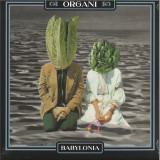
Well-versed in vintage vernaculars, Oakland-based producer/musician Mike Walti is about to return with his sophomore offering under the Organi moniker – as new album “Babylonia” follows 2020’s “Parlez-vous Français?,” a landmark in vibe acquisition ever since.
Wyldwood Studios is a portal. It’s a secret gateway to analog spheres. Cross the threshold and you’ll feel the difference: you can pick any ol’ time, any place, any tongue or vibe, in fact. Hit the dancefloor in 1967, feel that plushy loveseat in the early 70s. It’s a welcoming place where better, saner vibes are still within reach. Fueled, at least in part, by those long-classic 12”s on the walls – just imagine the sepia-tinted countenance of Melody Nelson alongside actual Birkin sans wig, right next to Shadow’s immortal crate diggers, forever blurred –, and channeled through ancient time travel devices such as the MCI 416B only to arrive on classic 2-inch tape (MM1000 aka Ol’ Bessy), it’s a haven for all things organic, for all things imbued with that warm élan. Built and run by Oakland’s own Mike Walti, countless artists from many different genres have felt that flair, creating sonic spheres and moving back and forth along the malleable axis that is space-time. Capturing magic.
Emerging from this unique portal back in 2020, Walti’s aka Organi’s first studio album was a stunning answer to its titular question – “Parlez-vous Français?” It was a soothing, somewhat psychedelic trip so magnétique and alluring that it immediately brought back those bits of Franglais you never knew you remembered. Whereas the debut LP indeed felt like a spontané voyage to the French Riviera ca. 1968, its follow-up “Babylonia” is so much more than linguistic confusion and ancient Akkadian Rhythms. Using that hidden portal near Alameda’s finest port to access all kinds of remote regions and sonic spheres, it’s super tight and feels, well, decent, even though, just like the ol’ Babylon, it’s full of surprising tongues and dreams, schemes and melodies.
“Where do we go from here?,” someone asks in opening “Organii-“ – all majestically cinematic boom bap, buoyant bass, sick strings. A fittingly massive opener that feels like cracking open a cold one after long weeks at work (that ecstatic “ahhhh”), it perfectly sets the tone for another half hour of pure time traveling, globe-spanning bliss. Whereas that certain prédilection pour all things French makes “La Rockette” so tempting and tantalizing (think MalMalNonBien), the sophomore album’s Berlin-based guest singer Nana Lacrima soon takes us elsewhere: title track “Babylonia” spins ever so softly, like a magic lantern, with images of dreamier Stones Throw funksters or Savath y Savalas looming over the steady flow of an arrangement that washes you clean like an ancient, unpolluted River Euphrates or Brazil’s actual Amazon. A sexy Portuguese-flavored anthem, occasional guest singer Alix Koliha also enters the scene to add yet another layer of French chic to this Brazilian landscape. Next, we’re back at the Riviera, but the “Italiano” version of it, splendido sunsets and bell towers in the distance, the ragazze laughing and shaking it up, perhaps even some Portofino Gin so you can really feel that “me ne batto il belin,” as your fingers align form some half-serious “ma che vuoi?”
Tim Maia-penned “Padre Cicero” (1970) deals with the stunning transformation of the titular hero – “De reverendo a lutador,” and what a soaring, sensual hook –, and Organi’s take on Elephant Memory’s “Old Man Willow” (now an “Old Man Waltz”) perfectly underlines what Walti’s Wyldwood endeavor is all about: Easy-Going Experimental Dream Pop, fueled by Gainsbourg, Broadcast, Stereolab, etc.
Later on, even though something seems to be tres complique in “Remembering Anna,” it all sounds carefree like a spontaneous Friday afternoon with a bottle of fine wine. Right before the outro, key album guest Yea-Ming Chen (of Yea-Ming & The Rumors) returns to the mic, adding her dark and dusky trademark timbre to melancholy anthem “Pictures Of Your Face”. Reminiscent of Nico and Trish (rip & rip), it’s a track that’s both dark and strangely propelling, hypnotic and hip-shaking.
A third generation Bay Area native, Mike Walti aka Organi has been running Wyldwood Studios in Oakland CA for some 15+ years (recording artists like Tommy Guerrero, Spelling, Why?, Latyrx, Del, Dan The Automator, and Big Freedia, to name but a few). A multi-instrumentalist who’s obviously in love with the 60s/70s, he loves to work with analog equipment (“We just love us some analog!” “Just listen to those relays purr…”). Recorded and mixed by Mike Walti at Wyldwood, “Babylonia” will be released on vinyl/digital by Alien Transistor.
out of Stock
Last delivered 22 months ago available to reorder, subject to availability
RIYL: Portishead, Thom Yorke, BEAK>, SUUNS, TR/ST, Radiohead. Solo project of Robert Toher who was the creator of ERAAS. Covered by Quietus,Pitchfork, NME, Stereogum, Earmilk, The 405, Clash, BBC Radio, Clash and more.... Public Memory is a mixture of damaged and dubbed-out percussion, unfurling synths and sparse sampling - all strung together by producer Robert Toher's spectral tenor. The project's sophomore LP, Demolition follows 2017's Veil of Counsel EP and 2016's Wuthering Drum LP with cinematic fortitude. While Public Memory's prominent krautrock and trip-hop rhythms are represented here, Demolition explores a greater range of tempos and an expanse of alien emotions with layers of electronic drums, live drums, Korg synths and samples from nature. Themes of rebirth and reflection imbue the album's atmosphere, rich in tape delay, spring reverb, and textures that conjure a sci fi and supernatural narrative. Opener "The Line" sets the album in motion with a driving energy and introspective unease, as if estranged from the world it was created in. A meditation on impending collapse, "Red Rainbow" begins with an arpeggiated melody that hints at a sense of dread. Like the darkness of night descends, the track unfolds with haunting atmospherics and howling synths, finishing with an unexpected climax that ominously builds until at last it falls apart, quickly, softly, without incident. The slowtempoed "Aegis" reflects on the banal reality of love lost, with shuffling rhythms, lingering inflections and a growling synth at its core. Toher's adept use of space and tension articulates the world of Demolition as eerie, emotive, and above all, narcotic. Each track is an existential procession. "Turning out the lights on your illusion," Toher sings to close the album, accepting that change is an inescapable condition of being.
Waxwork Records is proud to present BARBIE Score From The Original Motion Picture Soundtrack composed by Mark Ronson and Andrew Wyatt! The score is featured in the juggernaut film Barbie, directed by Greta Gerwig and starring Margot Robbie and Ryan Gosling as Barbie and Ken.
On composing the score, Ronson says, “Greta’s Barbie overflows with emotion in a way that inspires us to no end, not just with harmony and melody but also textures, sonics and rhythms. Sometimes Greta wanted us to elicit tears, sometimes she wanted it to feel like a disco. Sometimes she loved the warmth of vintage analogue synthesizers, sometimes she wanted the richness of the orchestra. Often, she wanted both.
“The late nights and crazy hours we put into Barbie were all worth it to us, because we were so in love with this film. And we truly hope listening to our score from beginning to end will give others the same emotional, whimsical experience they had watching this magical film.”
The highly anticipated film score vividly brings Gerwig’s vision to life and adds the perfect layer to the film that immerses fans into the Barbie Universe.
Tracklist:Creation of Barbie , Pink ("Barbie" Opening Theme) *Lizzo Cover , Beach Off , Ken Thinks , Stairway to Weird Barbie , Thoughts of Death , Send Me Through the Portal , Ken Makes a Discovery , Bus Stop Billie *Billie Eilish Cover , Mattel , Meeting Ruth *Billie Eilish Cover , You Failed Me! , Alan vs Kens , Deprogramming , Warmth of Your Gaze , An Ending , I Don't Have an Ending , What Was I Made For? (Epilogue) *Billie Eilish Cover
out of Stock
Last delivered 22 months ago available to reorder, subject to availability
The second offering from Mud Trax, a division of MixCult Records is a compilation to remember.
With Dub Tech laid out in all its many forms and moods by a dynamic assortment of rhythms, it is nothing less than exquisitely fresh pop manipulative.The album features contributions from Kirill Matveev, Ataneus, Genning and Etzu Mahkayah. With an electrifying mix of dub's sprawling scope and acid's driving rhythm, even a record that pushes sound the way this one does can come off totally funky.
Kirill Matveev & Wiklauri's Ioli (Kirill's Version) makes for a promising opening, melding into deep dub its ethos of acid, a psychedelic blend that touches the nerves of those who love to dance. Ataneus takes it further on A2 with Napolitaner, a track that is like nothing else: dense, dub-coloured layers of sound, which create a steadily seductive momentum able to steal listeners away into temporal plunge.
On the other side, B1's Red Lights by Genning is at once a punchy piece and a dancefloor phalanx of sound. A work meticulously sculpted by the speakers, yet redolent with natural energy-Geistgemäss.
The journey is brought to a close by Etzu Mahkayah's Cs-137 on B2, hypnotic grooves offering equal parts reflectivity and pumping energy.
Taken together these tracks provide an experience that is euphoric yet absorbing, each not only embodying Dub Tech but also pushing it in new directions.
out of Stock
Last delivered 3 months ago available to reorder, subject to availability
The Invisible Road: Original Recordings, 1985–1990 compiles an unheard, previously unreleased body of recordings by Sussan Deyhim and Richard Horowitz, dissidents from diametric backgrounds who met during the heady days of Downtown New York in the 1980s. This collection reveals the creative and life partners’ radical shared vision of avant-garde pop in all of its boundary pushing freedom, combining Deyhim’s singular approach to vocalization, Horowitz’s invention of new musical languages, and touchstones of traditional music from around the world, creating a new music that ultimately retains a voice entirely its own. Despite their difference in backgrounds and respective journeys, at the time of their meeting in the early 1980s in New York City, Sussan Deyhim and Richard Horowitz were both products of the search for freedom and understanding (and resultant awakenings) that swept the globe and helped culturally define the late 1960s and 70s. Deyhim, born and raised in Tehran, spent her teens dancing with Iran’s Pars National Ballet company, performing weekly on Iranian national television, and travelling her home country studying with master folk musicians and dancers, before relocating to Belgium and joining Maurice Béjart’s prestigious Béjart Ballet of the 20th Century. Horowitz, born and raised in Buffalo, New York, had spent much of the decade before abroad, first departing for Paris under the shadows of the Vietnam War, where he studied piano, Eastern philosophy, and became entrenched the city’s free jazz scene, playing with the likes of Steve Lacy, Anthony Braxton, and Alan Silva, before embarking south to Morocco where his friendship with Paul Bowles helped cultivate a deep passion for the country’s musical traditions and a shift in his musical practice.
The pair met by chance sometime in 1981 at Noise New York, a small studio on West 34th Street founded by the musician and recording engineer, Frank Eaton, as a utopian creative laboratory that beckoned artists and bands like Arthur Russell, Christian Marclay, Liquid Liquid and Butthole Surfers into its orbit. Both artists had recently relocated to the city, Horowitz having recently released his debut album, Oblique Sequences (Solo Nai Improvisations), on the legendary Paris based imprint Shandar, and fallen in with members of New York avant-garde like La Monte Young, Jon Hassell, David Byrne, and Brian Eno, and Deyhim having begun to more actively incorporate singing into her practice, notably recording a vocal score for choreography she was doing at La MaMa Experimental Theatre.
Initially bonding over a cassette tape of field recordings made by Paul Bowles that had been given to mutual friend and writer Brian Cullman (seeking answers for Ornette Coleman’s question “what is the sound of sound”), their earliest collaboration was documented on Horowitz’s 1981 album, Eros In Arabia, with Deyhim contributing vocals to the track “Queen Of Saba.” Over the coming years, their deep connection would routinely gravitate them into the studio, culminating in the body of recordings that would appear on their 1986 album for Crammed Discs, Desert Equations: Azax Attra. Unknown to nearly all but the artists, laying in wait over the decades on numerous multi-track and stereo reels, DAT tapes, and reference cassettes, were a vast array of recordings made by Deyhim and Horowitz bookending Desert Equations. The 13 pieces represented on The Invisible Road: Original Recordings, 1985–1990 were recorded largely between Noise New York and Daylight Studio in Brussels, during a period that Deyhim describes the partnership between herself and Horowitz’s as seeking a music “free of any specific cultural reference, with a personal musical signature,” blossoming into a body of sonority that embraced the energy of contemporary boundary pushing pop and the avant garde, filtered through their mutual love and study of various musical traditions from across the globe and deep engagement with the ideas and tactics of experimental music.
Undeniably rooted in Horowitz’s study of the North Africa ney and the music of the Berber and Gnawa cultures during his time in Morocco, Deyhim’s deep engagement with the folk traditions of Iran, and the couple’s immersion in the interconnected Downtown underground music scenes, each piece on The Invisible Road offers its own vision creative and cultural hybridity. Deyhim sings in both English and Farsi, as well as a composite tongue that she developed by drawing upon numerous indigenous vocal techniques from around the world, intuitively responding to Horowitz’s simultaneous sound syntax forming and combining a wide range synthetic and acoustic instrumentation, and experimental tape techniques, within a visionary series of free-standing expressions.
out of Stock
Last delivered 19 months ago available to reorder, subject to availability
A Universe of Pop: Fleetwood Mac’s Tango in the Night Features Meticulous Production, Includes the Hits “Big Love,” “Everywhere,” “Seven Wonders,” and “Little Lies”
Experience the 1987 Album in Audiophile Sound for the First Time:
Mobile Fidelity’s Numbered-Edition 180g 45RPM 2LP Set Captures the Perfectionist Details
1/2" / 30 IPS analogue master to DSD 256 to analogue console to lathe
The perfectionism involved in crafting Fleetwood Mac’s Tango in the Night reached a level of intensity experienced by few artists before or since. Commercially and creatively, the painstaking efforts paid off. Recorded over the span of 18 months, the triple-platinum album spawned four hit singles and put Fleetwood Mac back at the center of mainstream conversation. Its demands also ultimately forced its primary architect, guitarist-singer Lindsey Buckingham, to leave the group shortly after its completion. Was it all worth it? A thousand times “yes.”
Sourced from the original master tapes, pressed at Fidelity Record Pressing, and housed in a Stoughton jacket, Mobile Fidelity’s numbered-edition 180g 45RPM 2LP set of Tango in the Night presents the 1987 record in audiophile sound for the first time. Everything co-producers Buckingham and Richard Dashut sought to instill in the music — the exacting tones, gauzy textures, plush atmospherics, shifted harmonics, unique pitches, pristine acoustics, biting rhythms — can now be heard with elevated accuracy, range, depth, and detail.
Made under challenging circumstances, Tango in the Night is as much a universe of sound as it is an album. This reissue conveys that sonic spectrum in exhaustive manners that go beyond prior editions by playing with a combination of transparency, imaging, openness, and dynamics that provides uncanny insight into the meticulously layered vocal and instrumental tracks. Equally important, it also amplifies your connection to the elaborate melodies, contagious hooks, and airy highs that account for the album’s ageless pop brilliance.
As for the wondrous array of percussive accents, synthesizer elements, interlaced guitars, and lush choruses — all seemingly occupying the exact right place amid the soundstages and taking on shapes and forms that lend them a living, breathing quality? If your audio system is up to the task, the realism, presence, and warmth of Mobile Fidelity’s collectible edition will have you considering Tango in the Night from a new perspective — one that puts its lavish, gorgeous creations on a par with those from Rumours and Tusk.
Unlike those records, Tango in the Night began from a more individualistic perspective in that it sprang from what originally was intended to become a Buckingham solo effort. Instead, it remains the final album credited to the peak Fleetwood Mac lineup involving Buckingham, Stevie Nicks, Christine McVie, Mick Fleetwood, and John McVie. Though the participation of all the members varies from track to track, the cohesive arrangements and alchemic production on Tango in the Night suggest a unity that remains on a par with the band’s other landmark works.
Largely constructed from laborious methods that involved recording at half speed to achieve the desired sonics and tonal nuances, piecing together verses and choruses to attain seamless synchronicity, and Buckingham using a Fairlight CMI synthesizer/workstation in visionary ways, the songs pair electronic and acoustic elements to radiant effect. Tango in the Night also possesses light dance structures that resulted in several tunes being recast as dance mixes on extended-play singles. Above all, however, this is music that appears to float and cast dreamy spells.
Surrender to the frisky interplay of the opening “Big Love,” big pop punctuated with Buckingham’s back-and-forth “oh-ah” sighs that ping the Top 5 smash with innocuous sensuality and toe-tapping momentum. Delight amid the shimmering lights of “Seven Wonders,” whose shades and shadows shift amid Nicks’ raspy vocals and a large group chorus. Wrap yourself in the warmth of the weightless “Everywhere,” a flawless slice of hummable pop that topped with Adult Contemporary charts for three weeks and towers as an ode to the love everyone desires. Stare into the mysterious landscape of the title track (and dig the synthesized harp) just before it explodes, briefly ceding to a terse riff and locked-in grooves.
Tango in the Night teems with delightful surprises and well-honed specifics, especially when Buckingham and Christine McVie team together. In addition to the aforementioned “Everywhere,” the singer born Christine Anne Perfect plays a major role on four more cuts — all highlights — from the breathy, head-over-heels emotionalism of “Mystified” to the sweet, sweeping escapism of “Little Lies,” a cover-up of romantic despair aided by Nicks’ irreplaceable background vocals.
“If I see you again/Will it be the same,” asks Buckingham on “When I See You Again,” finishing up a song a longing-sounding Nicks had started while voicing words that many likely knew would resonate far beyond the confines of the heartfelt song — a goodbye wearing a faint disguise. Though Fleetwood Mac would never again reach the heights maintained throughout Tango in the Night, and members would go their own way, the album towers as a paean to what’s possible in the fields of pop, rock, and studio wizardry.
'a masterclass in hardcore dancefloor and bittersweet feeling...Alex Crossan is both acclaimed and not feted enough' **** The Observer
Available on his own Pond Recordings, Curve 1 is a love-letter to club spaces, and the music and people who fill them.
Mura Masa’s forth album is a full-circle moment. Departing from the pop-leaning narrative and who’s-who guestlist of his most recent records, Curve 1 heads back down the rabbit-hole of club music that’s alternately euphoric, introspective, nostalgic and future-facing. Full of tension and release, ambiguity and playfulness, the significance of Curve 1 is left up to the individual: whether enjoyed solo or in the sweat of a packed room, here is music as enigmatic and layered as its author.
Mura Masa himself introduces Curve 1 as 'a manifestation of an attitude I’ve been cultivating in my personal life; ignore everything. All the content, all of the attention economy, all of it. In doing that, the really meaningful and vital parts of what’s around you make themselves known and unignorable, demanding your energy. It’s my first offering as an independent artist through my own record label, and as such I wanted it to be as free and anti-narrative as possible. Impressionistic. Music as entertainment has in many cases, to me, become very advertorial and excessively sentimental in terms of creating narrative around albums and artists. I wanted to strip this away as much as possible to leave room for the music to create its own meaning in the lives of people who form connections with it. It's hard for me not to explain away the intricacies and ideas contained within these records after having theorised and tolled and executed them over the course of nearly three years, but I think it’s far more fitting of the album’s intent to say simply: listen to it in the dark.'
Curve 1 pulls Mura Masa into focus as one of this generation’s most influential figures. Aptly reflecting his rare standing at the heart of youth culture, Mura Masa recently co-wrote long standing collaborator PinkPantheress’ single ‘Turn It Up’, as well as creating a series of remixes for Troye Sivan’s ‘Honey’. From producing global hits like ‘Boy’s a liar Pt.2’ to seminal records like Shygirl’s Mercury-nominated Nymph, it’s a juncture that has also seen Mura Masa embark on a new chapter of his own. He has set up his label and a creative hub and arts space - The Pond - in Peckham as a base for emerging artists and likeminded creatives, which will launch officially next year. Across his three critically-acclaimed solo albums, Mura Masa has built an audience who will follow wherever his genre-defying work goes next; with 2 billion streams, headline festival sets around the world, and live shows ranging from Alexandra Palace to Warehouse Project.
Curve 1 marks a back-to-your-roots approach whilst also highlighting the trailblazing young star’s recurring theme: to capture ‘that’ curvature in pop culture, to make it Mura Masa’s own, and to push things forward.
'Curve 1 has a club focus, no f—ks attitude and production that’s mature, lush — simply put, it’s just cool.' billboard
'a scintillating love letter to club culture and sounds' Wonderland
'the Grammy-winning producer throws a total curveball. Ditching his usual dreamy pop, Mura goes full hardcore dance. From techno to vintage rave' **** The Mirror
'Get sweaty as Mura makes it messy' **** The Sunday Express
'a total curveball...intense but full of hooks' **** The Daily Star
'Mura Masa has always been ahead of the creative curve, but with his new album, the tenured producer is consciously forging a path inspired by his newfound independence.'
'a grab-bag of sounds from a brilliantly restless mind' Rolling Stone
out of Stock
Last delivered 12 months ago available to reorder, subject to availability
In the galaxy of popular music, Elvis Presley can lay claim to
his very own constellation. It is not just the global record sales
he has accumulated, or the No.1 hits from all over the world -
nor even the songs made familiar by the 30-plus films he
made… It is simply that it is now impossible to imagine the
world of music without Elvis Presley. Nearly fifty years on from
that untimely death, the enduring legacy of Elvis leaves no
doubt as to who still reigns as The King…
Aesthetically, Ed Schrader’s Music Beat hates to tread water. At the same time, the Baltimore-based two-piece of vocalist Ed Schrader and bassist Devlin Rice won’t force their songs to fit a preconceived style. “The next album’s always gotta be different from the last one. We’re different people from record to record. So, writing authentically to ourselves will always bring our work to a place that we haven’t been to yet,” Rice said. Schrader added, “We’re terrified of turning into AC/DC. We never want to be married to one scene or time or sound. We want to be the Boba Fett of bands! Constantly altering the way in which we make records has been pretty key in that process.”
For Orchestra Hits, the band’s latest, that alteration was welcoming longtime musical comrade Dylan Going into the fold as a co-writer and co-producer. A songwriter in his own right, a guitar sideman for ESMB on their last two tours, and a collaborator with Rice in the noise riffage band Mandate, Going had both a unique vision and an intimate familiarity with the ESMB vibe.
“Dylan came to every show we’ve ever played in New York—no matter how weird it was,” Schrader said. “He’d be standing there ready to move an amp or feed us barbecued cactus after the gig and toss on some Golden Girls so we could decompress. It felt like family as soon as we began working, but I honestly had no idea how damn good he was at tossing out these hooks.”
According to Schrader, the songs “just poured out of us” over the course of a highly caffeinated three-day weekend in a tiny room in Devlin’s house while his cat, Sandy Goose, screamed continually. “It was like three kids hiding from the world to get into some lovely mischief,” they said. The lack of external pressure in the process gives Orchestra Hits an almost paradoxical vibe. For all of the album’s layers, that mix live and sequenced instruments, it never loses the raw energy of a small handful of friends in the same room plugging in, cranking up, and playing until they pass out.
Lyrically, the album finds Schrader, now 45, meditating on experiences in their youth to make sense of the present moment. “We are not into the garden,” Schrader wails on the relentless “Roman Candle,” a song about the sad debacle of Woodstock ’99, and a direct response to Joni Mitchell’s “Woodstock,” a utopian ode to hippie idealism. A 19-year-old Schrader, having snuck into Woodstock ’99 through a hole in the fence, was there the night members of the crowd used candles intended for a vigil for victims of the Columbine High School massacre to set fires all over the grounds. Even before the fires, Schrader remembered feeling disconnected from the music, the nostalgic cash grab, and the meatheads in the crowd. After watching a press tower collapse, they boarded a random shuttle bus and were dropped off near a Denny’s. “It was a far cry from the Garden of Eden,” Schrader said. “That experience defined what I didn’t want to be a part of, and yet America is more like Woodstock ’99 than ever.”
With percolating synthesizer arpeggios, and climbing bass grooves, “IDKS” is the album’s dance-floor slapper. “’IDKS’ is a funny one,” Schrader said. “We already had a pretty satisfying suite of songs when Dylan was packing up to head back to New York, but he missed the train because of a freak snowstorm. Realizing he’d be stuck in town another day, he says to me, ‘Here’s this other weird thing I have.’ It was ‘IDKS.’ The hooks were so good I felt like Homer Simpson at a free donut convention. I just dove right in, and we cranked that baby out in like 20 minutes.”
Lyrically, “IDKS” is a letter from the true self to public-facing self. “It’s an angry song,” Schrader said. “Because the public-facing self is always looking for an easy escape, but it forces the true self into a cage. I honestly thought my lyrics were corny and was about to change them, but Dylan was digging it just the way it was. So that’s what you hear.”
With the soaring “Daylight Commander,” the band went against all of their musty-basement-bred instincts. “I went full High School Musical with the vocals,” Schrader said. “At first it felt almost embarrassing, but I remember reading somewhere that Bowie recommended always floating a little bit above your comfort zone, and that’s what we did here.” The song is part exercise in absurdity and part pop Trojan horse. “If ever we had a ‘Shiny Happy People’ moment, I guess this is it,” Schrader said.
Limited Edition of 1000 Opaque Pink 180 Gram Vinyl LP. Kiss Each Other Clean, Iron & Wine's fourth full length record was originally released in 2011 and came three years after his biggest selling record up to that point, The Shepherd's Dog. The bands two earlier albums had been sparse, intimate solo affairs that offered no hint of the direction he would take with records three and four. Like The Shepherd's Dog, Kiss Each Other Clean is layered with textures, poly-rhythmic sounds and a more is more approach. His lyrics sprung to life in ways initially unimaginable to early fans and critics helping each song tell its story and build to climaxes thru various sounds and editing techniques. However what remained at the core of KEOC, and what fans of the band had come to love, was the song writing and singing of principle songwriter Sam Beam. Beam's ability to invite you in with his hushed singing tone and knack for a melody remained front and center even in his drive to replicate something in the vein of Waits' Swordfishtormbones Principle recording for KEOC was at home in Dripping Springs, Texas where Beam resided at the time. After laying down the bulk of the record Beam moved recording to Chicago to work with Brian Deck. A cast of musicians helped Beam find his sound and see his vision for KEOC including Joe Adamik (Califone), Jim Becker (Califone), Thomas Bartlett (Doveman), Stuart Bogie (Antibalas), Rob Burger (Tin Hat Trio), Benny Massarella (Red Red Meat/Califone), Chad Taylor (Chicago Underground Duo) and Matt Lux (Isotope 217). With KEOC Beam and company brought in soft rock smoothness, dub reggae textures, and instruments that hadn't been featured on previous records. The vintage synths on 'Monkeys Uptown', the Stevie Wonder funk on 'Big Burned Hand,', the strum and drang of 'Walking Far From Home' all give the otherwise very organic-sounding arrangements a welcome cheesy kick. The record also produced the biggest radio single of the bands career with the vintage AM friendly vibes of 'Tree by the River.' It was an adventurous period in the career in Iron & Wine and one in which Beam was defying categorization.
Every Trick in the Book' is the new single from Bristol-based beat makers, The Allergies. True to form, they've whipped up a sun-kissed groove that'll add a splash of colour to your day, whatever the weather. This A-side takes a vintage vocal sample from the 'Queen of Rock n Roll' herself – none other than Tina Turner! Yeah, you know 'Private Dancer', 'What's Love Got To Do With It', 'We Don't Need Another hero' etc. That Tina Turner! Jeez Louise!
Well the guys have supplemented her pipes with loops from a long-forgotten Latin boogie 12", and layers of live horns, cuts, drums, and FX, to give us a joyous mid-tempo groove that you'll be humming for weeks. While the flipside takes it back to '91, as long-time Allergies collaborator, Andy Cooper, reworks his hero Big Daddy Kane's classic 'Nuff Respect'.
This cover version takes the fast raps of the original, tweaks them, and fires them back over an explosive backdrop of scratches and b-boy beats.
out of Stock
Last delivered 2 years ago available to reorder, subject to availability
Introducing "Faith in Another EP” by Christian Kroupa – a captivating blend of raw, hypnotic, big room ready techno. Presented by Bardo Records, a boutique record label from Ljubljana, this vinyl EP marks their very first physical release, showcasing the talent and ambition of the music producer behind it.
With this release, Christian Kroupa who is known for his innovative and insatiable drive, returns to his roots of techno with a refreshing approach. Embracing a non-mainstream sound, he dives deep into the essence of this genre, redefining its boundaries with each track.
"Faith in Another" takes listeners on an immersive journey, showcasing Kroupa's ability to create intricate layers of pulsating beats and electrifying melodies. Each track is carefully crafted to evoke a medley of emotions, inviting all listeners to explore its uncharted sonic territories.
With a dedication to preserving the richness of techno's inviting sound, Faith in Another promises to captivate a broad audience of music lovers. Loose yourself in the pulsating beats and allow the hypnotic melodies to transcend.
out of Stock
Last delivered 18 months ago available to reorder, subject to availability
The way you're saying it, "prolific" isn't the right word for The Bug Club. You've got to say it with the trademark Welsh lilt and pay due homage to this inimitable band's origins in the renowned hit factory of Caldicot, South Wales. Do that, and you're about right with how to summarize a group who've released ten singles, two albums, two EPs, three things nobody knew how to describe, and an album under a different band's name, all since 2021, and while playing 200+ gigs a year. Initially comprising the songwriting core of Sam Willmett (vocals/guitar) and Tilly Harris (vocals/bass) with Dan Matthew (drums), The Bug Club started plying their trade in 2016. They were signed by UK label Bingo Records in Autumn of 2020. BBC 6 Music's Marc Riley was an early champion, hammering the single, booking the band in for a session as soon as it was allowed, and rightfully praising songwriters capable of singing the whole alphabet in a two-minute song and making it work. Third LP On The Intricate Inner Workings Of The System - their first for Sub Pop - sees the band serve up a beefy slab of their speciality Modern-Lovers-meets-Nuggets garage rock. There's B-52's call-and-response fun mixed with AC/DC power chord grunt. Leaning towards fast-paced punk, opening double salvo "War Movies" and "Quality Pints" sets out the stall: duel vocal piss-taking, surreal takes on everyday topics that go full circle and become profound, riffs all day long and then all the next day too. "Quality Pints" deals with the pressing concerns of any conscientious touring outfit, taking to heart the rule of the three R's as penned by renowned fellow pints fan Mark E. Smith of The Fall. Repetition, repetition, repetition. If it's that important, which it is, it's worth saying again. "War Movies" dresses distorted chugging with a comprehensive 'best of' list for the genre, with Sam Willmett offering a solo casually chucked out in a way that will make your dad promptly give up any resurgent guitar playing ambitions. And "A Bit Like James Bond" tackles the UK's sleaziest undercover export at the same time as the embarrassing ego problem that besets much of its population - but it's only heavy(ish) in the fun, loads-of-riffs sense. So, that's what they've been finishing up during their massive month-long break from gigs. In a bid to avoid being branded layabouts, The Bug Club will support their upcoming Sub Pop release with a springtime tour of the UK and Europe beginning May 10, before heading out to the US in September.
Mystery colored vinyl (a unique and kooky mix-up from an exotic palette) and including an insert with a unique drink recipe by Martin Cate and more. Limited edition of 600 copies only!
Lush and exciting, rich and vibrant, the modern masters of exotica - Ixtahuele's 2nd album is finally available again. Guiding your mind's eye over oceans and mountains, through jungle and desert, teasing and enticing your ears with layered soundscapes and catchy melodies, you'll find yourself whistling along on a winding mountain road, stalking through the rainforest, or humming lazily on a tropical beach. Building on their previous releases, both musically and thematically, the group flirts with jazz, mambo, and space age pop, all the while retaining their classic acoustic exotica sound and a high level of musicianship. This is music to lounge by the pool to, to armchair travel, to share a cocktail with a lover or a friend or to imbibe sacred libation in the rumpus room or Tiki bar. Sophisticated and savage, it's exotica for the modern age!.
The year 2020 sure wasn't the most ideal time to form a band, especially for a group of musicians who never played together before. But for New York rock quintet GIFT, this strangest of periods was the auspicious backdrop for a bold new sound - a dizzying blend of early shoegaze, classic `90s alternative rock and even modern pop. Indeed, that GIFT emerged somewhat fully formed on their 2022 debut album Momentary Presence was a testament to the creative possibilities laying deep within. Now, Illuminator, their Aug. 23 debut album for revered New York independent label Captured Tracks, is the long-awaited payoff of GIFT's ever-growing musical and human chemistry. And while nods are apparent to label forerunners such as Beach Fossils, DIIV and Wild Nothing, GIFT are shepherding those elements into wondrous new vessels for the present moment - sleek, often danceable and frequently mesmerizing. GIFT - vocalist/guitarist TJ Freda, multi-instrumentalists Jessica Gurewitz and Justin Hrabovsky, drummer Gabe Camarano and bassist Kallan Campbell - are firmly enmeshed in the New York scene as talent buyers, photographers, DJs, audio engineers, art directors and, in the case of Campbell, an owner of the beloved Brooklyn DIY venue Alphaville. GIFT introduced Illuminator with "Wish Me Away," their first new song in the 18 months since the debut. With its earworm guitar lines, propulsive rhythms, riveting vocals and mind-expanding aural flourishes, "Wish Me Away" is the perfect sonic springboard from Momentary Presence to where GIFT are going next. It's also a potent reminder that you can still preserve that twinkle in your eye even when you feel like everything's slipping away. On songs such as "Light Runner", "Going In Circles" and "Destination Illumination," Freda demonstrates a newfound confidence and versatility, embracing pop music as a vehicle. The relentless, often painful dance of love has never sounded as exhilarating as on "Going in Circles," while the strident tone poem "Water in My Lungs" conjures the unreal feeling of watching a romantic partner both figuratively and literally fade from view. "This album has a lot of themes of going fast, time passing and things changing," Freda says. Throughout, Freda and company thankfully do much of the hard work for us: falling in love, heartbreak. Watching events and moments go by like cars on the highway. People you once knew coming in and out. Grieving the loss of different phases. Watching everything happen simultaneously. For these and many other reasons, Illuminator, friends, will be the soundtrack to the throughline of your life.
After the success of her breakout EP, 'Water-Based Lullabies', a playful, Zodiac-inspired odyssey through life and love, Mancunian fan favourite Abbie Ozard is back with a bang. The last release hinted at an evolution in sound, and in the soon-to-drop album 'Everything Still Worries Me', we see all that potential realised as Ozard's musical and personal growth is laid bare.
Growing pains and the overwhelm of those first steps into adulthood of stand out as overarching themes in this more serious, introspective body of work, in which Ozard explores beyond her bedroom-pop origins and lays bare the vulnerabilities that will resonate with so many young women becoming adults in a complex, confusing and ever-changing world. Even without the transcendent vocals that could belong to no one else, Ozard is present in every second of this album - from musical performances from close friends to samples of old family videos, she is enshrined in this spellbinding debut that could not be more authentic to its creator.
Baby Blue & Halloween Orange Vinyl. In their decade-plus together, the four-piece_Julia Shapiro (guitar, vocals), Lydia Lund (guitar, vocals), Gretchen Grimm (drums, vocals), and Annie Truscott (bass, vocals)_have created a resonant body of work. Live Laugh Love is a natural continuation. Against the bizarre backdrop of the past few years, Chastity Belt remained a supportive space for the members to grow and experiment, drawing on the ingredients most essential to their process since the beginning: authenticity and levity. Recorded over three sessions in as many years (January 2020, November 2021 and 2022), the focus became more about enjoying their time together in the studio than making it feel like work. Their ease and familiarity with engineer Samur Khouja in LA, who also recorded their last album, made for a particularly enjoyable process. Once completed, they returned to renowned engineer Heba Kadry who mastered the album.Album opener "Hollow" sets the tone with a gently driving rhythm while guitar layers stream like sun rays through an open car window. A warmth radiates through Shapiro's voice, even while grappling with feeling lost and stuck. "The older I get," Shapiro says of the lyrics, "the more I realize that I might just always feel this way, and it's more about sitting with the feeling and accepting it, rather than trying to fight it." That wisdom seems to anchor Live Laugh Love. Chastity Belt has never shied from navigating the spectrum of difficult emotions, and an existential thread weaves throughout the subject matter. And yet the songs feel more grounded than ever; there's a sense of quiet confidence and self-assurance that comes with being less numb and more present. Facing discomfort takes more fortitude, after all.Live Laugh Love finds the members in their prime as musicians. Their parts trace intricate patterns over one another, but there's room to breathe between the layers. Everyone contributes to the writing, sometimes switching instruments, and for the first time, all four members sing a song. It's never been more apparent that they are creative siblings, cut from the same belt. "We've been playing music with each other for over a decade," says Shapiro, "so it really does feel like we're all fluent in the same language, and a lot of it just happens naturally.""Laugh" seeks in the balm of friendship, aware of the anticipatory nostalgia that hits during a good time that you're already missing before it's gone; the heavier guitar tones on "Chemtrails" streak ominous chord progressions over Grimm's precision timekeeping, lamenting memories that won't fade easily. During a transitional time, Truscott came across a note in their phone that read, "it's not hard all day, just sometimes," which inspired a poignant line in the chorus of "Kool-Aid," their first song as lead vocalist on a Chastity Belt recording. Another standout, "I-90 Bridge" shines with a silvery melody that soars as Lund belts one of the most resounding moments on the album: "Tell your girlfriend she's got nothing to fear/I'm set in my head/My body's a different story." The track "Blue" saunters nonchalantly with a wink; you can almost hear Shapiro's smile as she sings "Faking it big time/So I can hit my stride/Man, it feels good to be alive," channeling early Chastity Belt channeling early '90s before channeling the late Elliott Smith in a spiral of distortion and insight: "Don't get upset about it/It's gonna pass/Tell all your friends about it/They're gonna laugh.""We have such a strong sense of each other's musical inclinations" says Lund. "I think this allows for a lot of playfulness_we can kinda surprise each other, like a good punchline would."
"In the wake of SQUID PISSER’s “Vaporize A Neighbor” EP and Comic Book Set and “Vaporize A Tadpole” Collection comes “Dreams of Puke”, the band’s second full length album. Weighing in at a meaty 12 songs and cut at a lean 45 revolutions per minute, “Dreams of Puke” refuses to let up or let down - emitting climax after scintillating climax - a bounteous bouquet of dayglow viscera and tumor-filled sonic snot.
“Dreams of Puke” is the face ripping, dolphin-loving, anthropomorphized mountain of nuclear sludge intravenously injected with methamphetamines that listeners have been clamoring for. Tommy Meehan's use of effects pedals and sonic textures create a dense soundscape of intestinal debris, mortared with a grout of pus, goo, gummy candy and pure, unadulterated insanity. Meanwhile, Seth Carolina's all out, rage-fueled and categorically pummeling approach to slamming the beats down lays out a visceral scene of absolute intensity - a great white shark attack on The Mall of America.
Tommy explains “The writing sessions for this album resulted in about 100 songs... Demos, seedlings, and scraps were strewn about everywhere. Then Seth and I assembled them into a viable and tangible fruition. I tracked all of the guitars, bass, and vocals myself at Los Angeles’ Castle Barf Studios. The drums we did at Sea Horse Sound downtown”.
“Dreams Of Puke” is an aural DMT trip that will leave brains boggled. Its atonal anthems of slime are a kaleidoscope of brilliant, bespeckled rage that, in the end, will scalp the world & mutate the throne.
Glass Mastered Compact Disc includes Mystery Matrix Message and comes packaged in a Six Panel Tri-Fold Jacket with corresponding Fold-Over Lyric Insert. LP and CD formats each sport unique, subliminally different cover art by painter Gregory Jacobsen of the band Lovely Little Girls. Parental Advisory: Explicit content"
Hello! Tim here. My band is called Strand of Oaks. This is my eighth record and it's called Miracle Focus. I spent over three years building Miracle Focus. In the midst of writing, I became a painter and spent two seasons acting on a television show (Mayans MC). The dichotomy of painting for days in my garage and then flying out to LA to play a villainous biker on TV was one of the most thrilling experiences of my life. The idea of Miracle Focus was born out of one simple concept: to make people feel good. Throw in a healthy mix of Ram Dass, yoga, Freddie Mercury, Alice Coltrane, and Beastie Boys, plus over a year of writing and building the extremely dense architecture of the songs, and Miracle Focus was born. The result is FUN, wild, rhythmic music filled with synth layering and mantra-like lyrics intended to uplifting and hopefully bring some light to whoever listens. In many ways, this record is a love letter to bliss. Through meditation, I found a way to connect with something greater, a positive force that allowed me to write music as a manual towards a more love-focused life. And the miracles I refer to aren't asking the universe for anything; it's just acknowledging and celebrating this complex beautiful moment that we all get to share. It will be gone, it will re-emerge as something new, that will be gone, repeat....repeat... repeat - this eternal cycle. My most sincere hope is that whoever listens might through sonic osmosis experience a similar joy. Sending peace and love. Thank you for your time. - Tim
Hello! Tim here. My band is called Strand of Oaks. This is my eighth record and it's called Miracle Focus. I spent over three years building Miracle Focus. In the midst of writing, I became a painter and spent two seasons acting on a television show (Mayans MC). The dichotomy of painting for days in my garage and then flying out to LA to play a villainous biker on TV was one of the most thrilling experiences of my life. The idea of Miracle Focus was born out of one simple concept: to make people feel good. Throw in a healthy mix of Ram Dass, yoga, Freddie Mercury, Alice Coltrane, and Beastie Boys, plus over a year of writing and building the extremely dense architecture of the songs, and Miracle Focus was born. The result is FUN, wild, rhythmic music filled with synth layering and mantra-like lyrics intended to uplifting and hopefully bring some light to whoever listens. In many ways, this record is a love letter to bliss. Through meditation, I found a way to connect with something greater, a positive force that allowed me to write music as a manual towards a more love-focused life. And the miracles I refer to aren't asking the universe for anything; it's just acknowledging and celebrating this complex beautiful moment that we all get to share. It will be gone, it will re-emerge as something new, that will be gone, repeat....repeat... repeat - this eternal cycle. My most sincere hope is that whoever listens might through sonic osmosis experience a similar joy. Sending peace and love. Thank you for your time. - Tim
In one sense, it’s easy for artists—songwriters, specifically—to express their feelings in their work. After all, that’s what the lyrics are for! But it’s much harder to convey emotional energy in how you play, slash at the guitar, and the structure of the music itself. That’s precisely why Girl and Girl’s Sub Pop debut, Call A Doctor, feels like such a vital, electrifying shock to the senses. Not since the early work of Car Seat Headrest or Conor Oberst’s widescreen emotional brutality as Bright Eyes has indie rock managed to come across as this intimate and grandiose, as the Australian quartet led by Kai James lay a lifetime’s worth of woes—mental health, the human race’s planned obsolescence if you’ve been living on this cursed rock you know what we’re getting at—across a canvas of indie rock that feels both timeless and in-the-moment.
An audacious and aggressively tuneful blast of a record, Call A Doctor is an unforgettable first bow from Girl and Girl, whose origins lie in James and guitarist Jayden Williams jamming in his mother’s garage in the afternoon after school. One afternoon, James’ Aunty Liss headed down to their practice space after walking her dog and asked if she could sit in on drums. “It sounded really great,” James recalls. “We begged her to stay, and she said, ‘I’ll stay until you find another drummer.’ We wore her down, and she eventually became a permanent member.”
After bassist Fraser Bell joined to round things out, Girl and Girl hit the road and began to make a name for themselves beyond the Australian bush, eventually signing to Sub Pop off the strength of word of mouth. Call A Doctor came together quickly soon after, largely recorded in marathon sessions in a two-story industrial complex over the course of two weeks. “That added to the intensity of the album,” James says about the frenzied creative process overseen by producer Burke Reid. “I can hear the stress in the record, which is good because that’s what it’s about—being tense, tied up, and in your own head.”
Call A Doctor’s eleven songs—spanning sweeping guitar epics and wry acoustic shuffles to spiky punk maneuvers and the type of raw, adoringly unvarnished indie-pop associated with legendary PacNW label K Records—are literally plucked from James’ personal history, as he reworked older recordings with newer lyrics reflecting his past struggles as well as new anxieties that emerged prior to the album’s recording. “I’ve struggled with mental health for a lot of my life,” he explains, “and I went through a particularly difficult patch when we were making the album; the band had started to get some attention, and I felt an enormous amount of pressure to live up to it.”
Far from the sound of collapsing under pressure, Call A Doctor finds James and Co. stepping up with their entire collective chest. This is a record that’s so out-and-out alive that you nearly feel like you’re in the same room with Girl and Girl as you listen to it; lead single “Hello” practically bursts through the speakers, amplified by Aunty Liss’ unbelievable stickhandling duties. “‘Hello’ is all about romanticizing your own misery. Letting those deep, dark, dirty thoughts take over. Understanding that even if you could pull yourself out, you wouldn’t because the constant stress and worry is far too familiar and comfortable.”
“Mother” pogos on a spiky groove that’s reminiscent of the geographically close New Zealanders who make up the legendary Flying Nun label, while “Oh Boy” draws from the Shins’ own jangly sound, injected with James’ wonderfully nervy vocals. Then there’s Call A Doctor’s sorta-centerpiece “Maple Jean and the Anthropocene,” a five-minute epic offering a new perspective on climate change and the notion of what it means, in a personal sense, to suffer: “I live in the bushland, and I was driving home one night and hit and killed a wallaby with my car,” James recalls while discussing the song’s lyrical inspiration. “My first thought was, ‘What is the universe trying to tell me?’ No remorse, no guilt, just total self-centeredness. Which was like, Woah, you fucking psychopath! This wallaby wasn’t put on this earth to send you a message. That’s what the song is about, our egocentric species - thinking you’re the main character and that everything that happens is somehow about you.”
“This record is about an individual who’s too far in their head, trying to get out,” James continues while discussing Call A Doctor’s overall outlook—specifically the snapshot it offers of its creator. But even though this record deals with uneasy topics we all know well from within ourselves, it’s important to emphasize how teeming with life Girl and Girl’s music is. There’s a brazen, bold sense of humor to this stuff, an undeniable brightness to the darkness that makes it impossible not to be drawn in as a listener. Feeling down never sounded so goddamn good.
In one sense, it's easy for artists-songwriters, specifically-to express their feelings in their work. After all, that's what the lyrics are for! But it's much harder to convey emotional energy in how you play, slash at the guitar, and the structure of the music itself. That's precisely why Girl and Girl's Sub Pop debut, Call A Doctor, feels like such a vital, electrifying shock to the senses. Not since the early work of Car Seat Headrest or Conor Oberst's widescreen emotional brutality as Bright Eyes has indie rock managed to come across as this intimate and grandiose, as the Australian quartet led by Kai James lay a lifetime's worth of woes-mental health, the human race's planned obsolescence if you've been living on this cursed rock you know what we're getting at-across a canvas of indie rock that feels both timeless and in-the-moment. An audacious and aggressively tuneful blast of a record, Call A Doctor is an unforgettable first bow from Girl and Girl, whose origins lie in James and guitarist Jayden Williams jamming in his mother's garage in the afternoon after school. One afternoon, James' Aunty Liss headed down to their practice space after walking her dog and asked if she could sit in on drums. "It sounded really great," James recalls. "We begged her to stay, and she said, 'I'll stay until you find another drummer.' We wore her down, and she eventually became a permanent member." After bassist Fraser Bell joined to round things out, Girl and Girl hit the road and began to make a name for themselves beyond the Australian bush, eventually signing to Sub Pop off the strength of word of mouth. Call A Doctor came together quickly soon after, largely recorded in marathon sessions in a two-story industrial complex over the course of two weeks. "That added to the intensity of the album," James says about the frenzied creative process overseen by producer Burke Reid. "I can hear the stress in the record, which is good because that's what it's about-being tense, tied up, and in your own head." Call A Doctor's eleven songs-spanning sweeping guitar epics and wry acoustic shuffles to spiky punk maneuvers and the type of raw, adoringly unvarnished indie-pop associated with legendary PacNW label K Records-are literally plucked from James' personal history, as he reworked older recordings with newer lyrics reflecting his past struggles as well as new anxieties that emerged prior to the album's recording. "I've struggled with mental health for a lot of my life," he explains, "and I went through a particularly difficult patch when we were making the album; the band had started to get some attention, and I felt an enormous amount of pressure to live up to it." "This record is about an individual who's too far in their head, trying to get out," James continues while discussing Call A Doctor's overall outlook-specifically the snapshot it offers of its creator. But even though this record deals with uneasy topics we all know well from within ourselves, it's important to emphasize how teeming with life Girl and Girl's music is. There's a brazen, bold sense of humor to this stuff, an undeniable brightness to the darkness that makes it impossible not to be drawn in as a listener. Feeling down never sounded so goddamn good.