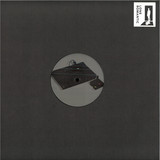
Norwegian techno label PLOINK returns with ‘Kambodsja Work’ EP from co-founder Thomas Urv.
With over two decades of experience running techno events in Norway, Thomas Urv and Miss Mostly’s PLOINK set up as a label in 2014 and has since acted as a platform for an array of talent hailing from Scandinavia. Artists like Prins Thomas, Mental Overdrive, KSMISK, Christian Tilt, +plattform, and more have all made contributions to the imprint, which releases mind-bending techno out of its base in the idyllic city of Bergen.
Erratic subs, floating pads and unearthly vocals form ‘Trump Is Cartman’, leading into the pumping kick and metallic FX of ‘Sockets Below’. Next up, ‘Cambodian Chipher’ reveals industrial drums and electric piano before moving into the shuffling beat, rolling bass and rhythmic drones of ‘Ustaoset2019’.
out of Stock
Last delivered 2 years ago available to reorder, subject to availability
The sensitive mountain » (la montagne sensible) is the nickname Alain Bashung came up with for Arnaud Rebotini. At the height of his fame, after the success of Fantaisie Militaire in 1998, Bashung readily agreed to create an album with Rebotini. The two men didn’t know each other; their record label had introduced them. Bashung brought in “Mortel Battement” and “Nocturne,” two poems by Jean Tardieu, which he recited in a voice simultaneously warm and flat, and Arnaud produced an impressionist soundscape that ended with an apocalypse of metal. Bashung was so proud of their collaboration that he offered to give several interviews to promote the record. Today, listening back to this moving Léo Ferré influenced "talking singing" exercise, it’s hard not to hear the template for L'Imprudence, the album that Bashung went on to record with Rebotini two years later. In a similar way, the album Organique sparked a productive partnership between Rebotini and filmmaker Robin Campillo, which resulted in their being awarded a César for Best Original Music in 2018. The director, who trusted Rebotini to create the soundtracks for his films Eastern Boys and 120 Beats per Minute, never kept his love for the 2000 record a secret.
Yet it’s an understatement to say that when it was released, Organique was not in the spirit of times. That year was all about the French touch. The funky samples of Modjo’s “Lady” and Superfunk’s “Lucky Star” ruled the sweaty dancefloors. Although Rebotini was familiar with the electronic scene, he had something else in mind when he set about creating Organique. Under his own name or under the pseudonyms Aleph, Avalanche, Black Strobe, Maison Laffitte, and of course Zend Avesta, he had already released several quite bizarre and experimental techno, house, or jungle maxi singles on pioneering labels like P.O.F., Source, and Artefact, run by his friend Jérôme Mestre’s, whom he had met back when both were working as record salesmen at Rough Trade’s ephemeral Parisian store. It was at Artefact, still financed at the time by Barclay and Universal, that he naturally proposed this record project, which was a bit "different." It was his first real album.
Arnaud Rebotini has never hidden his love-hate relationship with the electronic scene. He’s a fan of rave music, Rex, and later Pulp, but he listens mostly to metal and contemporary music, mainly American minimalists such as Terry Riley, Philip Glass, Steve Reich. He wanted to mix this genre with a more French aesthetic inspired by Debussy, whose unconventionality fascinates him. From the first suspended guitar note of Organique, you can pick up another influence, possibly poppier. In the style of Mark Hollis, the erratic leader of Talk Talk, whose only solo album’s silences and dissonances left their mark two years earlier, we hear the fingers touching the keys of the clarinet on “Ondine.” The instruments have presence, character. Nothing is smooth. Everything is organic.
Although it’s sometimes labeled as electronica because of Rebotini’s career, there’s nothing digital about Organique. No "pro tools" editing or samples, only programmed drums and some synth layering. And his guest vocalists. Playing the role of electro producer, he invited Bashung, of course, to join him on the album, but also Roya Arab, who Rebotini first spotted while she was playing in Archive, and her sister Leila, Gus Gus alum Hafdis Huld, Kat Onoma’s Philippe Poirier on the “Samuel Hall” inspired track “Qu’est ce qui m’a pris,” and former KaS Product member Mona Soyoc.
The frustration of a tour where he had "little to do on stage," the desire to sing himself, and the creation of the Black Strobe project, a haunting mix of blues and rock, stopped Zend Avesta from putting out another album. Eighteen years later, the Organique we rediscover today has lost nothing of its strangeness, nor beauty. When it came out, Bashung said, "What is interesting for a musician is to feel that you have a piece of wasteland in front of you, something to clear.” That remains true today.
out of Stock
Last delivered 7 years ago available to reorder, subject to availability
This outstanding UK film score by Mr Roy Budd has been a treasure amongst music collectors for as long as I've known. Now, for the first time, Dynamite Cuts is making a 2x7' 45 collection of the musical gems form the 'Get Carter' Film using the original first pressing sleeve which was Japan only mega rare. His masterful chords and textures are a joy to listen to alongside killer bass and drum grooves that make for a cinematic musical heaven. Amongst my personal favourite Roy Budd compositions, 'Getting nowhere in a hurry,' is an easy listening gem with killer harpsichord lead lines and 'Hallucinations' (I love the deep groove in this song!) features his trade mark lush vocal production. Both cuts are sure to become favourites of yours too!
The music was play by the same following member of Roy's trusted crew.
GET CARTER Musicians
Roy Budd - Harpsichord, Piano, EMS AKS
Jeff Clyne - Electric Bass & Double bass
Chris Karan - Drums, percussion and Tabla
Brain Daly & Judd Proctor - Guitar
Lesley Cline, Johnny Turnbull & Mickey Gallagher Vocals on
'Hallucinations' & 'Getting nowhere in a hurry'
Lesley Cline - Lead Vocal on 'Love is a four letter word'
Recorded at the Olympic studios
Jack fishman - Producer
Roy Budd - Arranger
Keith Grant - Engineered
out of Stock
Last delivered 7 years ago available to reorder, subject to availability
Remix extravaganza ahead! What started as an attempt to transport Feater's brillant outsider pop 'Time Millionaire' (taken from the Socialo Blanco album) onto a dance floor with one or two remixes, ended up as a feast served on three different platters with some heavy hitters. First up, Pépé Bradock and Ricardo Villalobos are crossing their beams. Spread over two 12s, the masters of idiosyncrasies and splendid aural design, Bradock and Villalobos treat the voice of Vilja Larjosto with love and care and bring it into their respective universe during peak time: vocals, dubs, acapellas and bonus bits included. Expertly, tricky and inventive. Remix EP no. 3 merges different trajectories of UK dance music traditions (or Ireland for that matter). Man of the moment Krystal Klear takes the material down to love town: the sound of 1980s Island records meets NYC boogie and UK street soul sounds. Hessle Audio's Pangaea follows the other path: uptempo bass fun with a driving dub and an instrumental pass. Last but not least, Feater & Sam Irl themselves deliver a blissed out dub of the original. Oh, and if you have enough time, flip over to the 10 with an Aba Shanti-I approved UK reggae and lovers rock take on it by Blood Shanti.
out of Stock
Last delivered 2 years ago available to reorder, subject to availability
Lifted From Hubbard's Lauded 1979 Lp 'the Love Connection', This Sublime Piece Of Melodic, Deep, Soul/Jazz Will Have Ears And Minds Open With It's Instantly Recognisable Opening String Sequence.
Used To Devastating Effect On Pepe Bradock's All-time 1999 Deep-house Classic 'deep Burnt', Those Sweeping Strings Capture Us And Lead Us Into A Epic Journey With The Wondrous Vocal Stylings Of The Legendary Singer Al Jarreau.
This Is Prime Early Morning Music, Pushing All The Right Buttons & Spreading Light Wherever It Is Played, A Beautiful Beautiful Record Indeed! What Is Essentially An Extended And Rearranged Version Of Hubbard's 1967 Original, The '79 Version Of 'little Sunflower' Boasts A Sumptuous Arrangement & Production From The Mighty Claus Ogerman (Ben E King, Mel Torme, Bill Evans, Antonio Carlos Jobim & More).
A Truly Wondrous Piece Of Music, Reissued On A Single Side In It's Full 12" Length Of 9+ Minutes From The Source Archive Audio. Fully Legit, Licensed And Reissued With Love By Above Board Distribution And Columbia Records/Sony Bmg For Record Store Day, 2019.
out of Stock
Last delivered 5 years ago available to reorder, subject to availability
Napolitan Techno DJ and heavyweight producer Davide Carbone releases on the French Rave Or Die Records for the very first time! Multiplying records and collaborations just like Mike Tyson was multiplying uppercuts, the co-owner of Repitch Recordings, Cosmo Rhythmatic and 3TH Records and owner of Carbone Records starts with "Dive Or Die" on the A-side: a speedy yet straight to the dancefloor tune based upon trancey acid lines a la Steve Stoll or Leo Anibaldi and aerial melodies. Combined with dark effects, this nostalgic song Made in Italy appears as an authentic Rave anthem from back in the glorious days!
On the flip side, ROD mastermind and dancefloor veteran Umwelt (Voitax, Return To Disorder) delivers a shaking, hefty and tremendous cut. Named with suitability "Tremblements", the jam signs a fascinating ode to smoking warehouses and illegal parties. Metallic pads over no mercy beats fused into industrialized synths and screaming atmospheres characterize this this dark as hell cut interspersed with counter breaks a la The Mover.
Dark, groovy and noisy at the same, two massive absolute bangers with old school roots on ROD twelve release! By the way, if you wonder the significance of the signs on the Rave Or Die logo in the labels, they are taken from the Hobo Code and mean "Keep away, Cops Active, Unsafe Area". You'll be warned.
out of Stock
Last delivered 4 years ago available to reorder, subject to availability
Mark Is Releasing A New Ep Called Integriert Euch Nicht. It Features Two Tracks Taken From His Berghain Debut And A Freshly-composed Drum & Bass Missile. 'fucking Sick Of Myself Since Day One (hot Desk Mix)' And 'hats Off To Herr. F' Were First Performed At Mark's 2018 Berghain Live Set During Ostgut Ton Nacht. The Former Is A Breakcore-adjacent Call To Arms For The Self-loathing, The Latter An Antarctic Shiver Of Predator- Mode Idm-illektro. 'integriert Euch Nicht (commercial Jump Up Mix)' Features Singing From Blackest Ever Black Alum Silvia Kastel. Mark Wrote The Vocal Parts With Sine Waves Before Kastel Recorded Each Tone Individually, Creating Microtonal Clusters In The Vein Of Luigi Nono. The Sax-like Sounds Are Wilted Woman Playing The Aerophone, An Electronic Woodwind Instrument. Otherwise, It's Mark's Most Deliberately Straight Ahead Drum & Bass Track To Date, Trading The Beat Science Of Former Releases For A Stubbornly Boneheaded Approach In Line With The Title's Message. Integriert Euch Nicht Is Something Of A Spiritual Successor To Last Year's Tech/gentrification/real- Estate-investment Themed Integrier Dich Du Yuppie And A Ruffer, More Floor-focussed Elaboration Of The Techniques Tested On His Unterton Debut The Least Likely Event Will Occur In The Long Run. Under His Klon Dump Alias, Mark Has Also Previously Released A Psych-mnml Double Ep Called Klon Dump Vs. The Open Air On A Colourful Storm And Two Rooms, A Tape Of Sound Art Improv And Knackered Pop-strumentals On Bristol-based Imprint Nocorner. When Not Playing Solo, Mark Also Accompanies Blackest Ever Black's Carla Dal Forno On Live Electronics.
out of Stock
Last delivered 7 years ago available to reorder, subject to availability
Wehbba collaborates with ghetto tech legend DJ Deeon, to deliver another superlative EP on Drumcode.
Since his debut on Drumcode in 2017, Brazil's Wehbba has become one of the most dependable and impressive artists on the roster. Last year saw two standout EP's 'Eclipse' and 'Catarse' drop on the imprint, alongside 'Just', his strong contribution to A-Sides Vol.7. He also made his mark playing Drumcode events at OFF Week, Resistance Ibiza and the much talked about double header in Manchester and Bristol when DC took over Warehouse Project and Motion respectively.
A true master craftsman in the studio, his first contribution for 2019 is typically impressive. A huge inspiration to Wehbba since his nascent raver days, ghetto tech icon DJ Deeon contributes a fierce vocal to 'We Have Bass', after a serendipitous hook up in São Paulo. A peak career moment collaborating with one of his original heroes and the artist responsible for the classic 'Freak Like Me', the resulting percussive-heavy cut kicks like a rodeo bull. 'Third Wave' is coffee geek Wehbba's homage to his favourite brew, constructing the production to mirror the experience of a caffeine fix, as a loopy trance-inducing groove leads to powerful synth stabs that are heavy on impact. 'Steamroller' is a stripped back slice of techno driven by the Brazilian's Korg MS-20 and found form after it initially begun as a studio jam inspired by Richie Hawtin's 'Minus Orange'.
A Jean-Michel Jarre fan stretching back to his childhood, 'Another Mistake' was conceived after Wehbba saw the French legend in concert last year and was subsequently able to meet him backstage through a mutual friend. While creating the track, the producer imagined Jarre playing the main layers of the hook on his famous Laser-harp, eliciting an almost celestial quality with the melody. This is a stirring slice of techno fit for stadiums. The EP ends with 'Purge', the artist's stream-of-consciousness expression recorded in one-take and a beautiful beat-less way to conclude the work.
out of Stock
Last delivered 13 months ago available to reorder, subject to availability
London's Release/Sustain imprint returns this April with a four-track package featuring material from Eduardo De La Calle, XDB, Joey Anderson Moody Waters feat. Carolina Damas.
The Release/Sustain imprint has gone from strength to strength over the years, welcoming the likes of Alton Miller, DJ Aakmael, Benjamin Brunn, Losoul, Norm Talley and many more respected names in underground house and techno over its past twenty nine releases.
Here we see this continue with some more welcome additions, first up is Eduardo De La Calle with 'The Protosoul' and as always the Spanish artist offers up a perfectly crafter slice of hazy, groove-driven Techno, led by bleepy arps, winding stabs and robust analogue rhythms. XDB then offers up heady, subtly blooming leads, pulsing subs and shuffled drums with 'Another Night' next.
Opening the flip is New York's Joey Anderson with 'Drum Play' which as the name suggest sees the percussive aspects dynamically evolve throughout amongst choppy bass hits, stutter arpeggio blips and warm string melodies. Moody Waters then teams up with Carolina Damas, vocalist on anthemic house cut 'Sueno Latino' for 'Acid Lovin'', edging into deeper territory with ethereal pads, crunchy drums and squelching 303 licks while Damas' soft, spoken-word Latin vocals wander within.
out of Stock
Last delivered 89 days ago available to reorder, subject to availability
Véronique Sanson is one of the most famous French pop oriented female
singer, songwriter, and composer of the 80s. She began her career in the 70s,
and was the girlfriend of genius composer Michel Berger. Her world turnt
upside down when she met Stephen Stills of Crossby Stills & Nash. One Day,
during a recording session in Paris, she left the studio pretending to go buy
cigarettes, but never came back... She flew overnight to the USA, where she
married Stephen Stills. In LA, she records new music with superstar
composers such as Ray Parker JR and Harvey Mason. "On m'attend là-bas",
produced in 1974, was one of the single of the album Le Maudit.
Funky French League is an intergenerational collective (based in Paris)
formed by Young Pulse (Gamm) , Dabeull (Roche Musique), Arthur Chaps,
Woody Braun (Malka Family), Mr Willy, DJ Asko et Uncle T (Groove
Deluxe). All coming from different universe from hip-hop, to electronic music,
but united by their love for the groove and the funk.
out of Stock
Last delivered 7 years ago available to reorder, subject to availability
Christy Essien was one of the leading female recording artists of her time in Nigeria. She was born in Akwa Ibom State in 1960 and enjoyed an accomplished career as a musician and an actress. Having conquered the music and TV worlds Christy moved on to feature in some of the early Hollywood films such as "Flesh and Blood" and "Scars of Womanhood", both of which addressed issues of child abuse and female circumcision. With a desire to make life better for Nigerian artists. She is also credited as having initiated the first meeting that brought about the formation of the Performing Musicians Association of Nigeria in 1981.
Dubbed Nigeria's "First Lady Of Song", Christy produced a respectable 9 studio albums across a number of labels. Her fifth album "Give Me A Chance" was released in 1980 by Afrodisia, and is being officially reissued again by the prolific Nigerian label.
"Give Me A Chance" showcases an impressive move on from her last album with a nice amount of variety. Her classic funky disco sound is most evident in what is her most notable song on the album "Rumours". This much sought after disco number is joined by a couple more disco grooves such as "Nobody Can Stop You" and "Onwu". "Ife" meaning love inflicts a little bit of reggae into the mix while the remaining tracks ("Saboteurs", "Don't Let Me Down", "Ikan Idomo" and title track "Give Me A Chance") take more of a traditional afrobeat - meets ballad approach.
Christy died after a brief illness in 2011. Close to the time of her death, she was involved in numerous successful businesses, organization and running the non-governmental organisation Essential Child Care Foundation involved in child welfare. Christy's achievements and awards are numerous. Too numerous to mention. Perhaps her greatest achievement however is her contribution to building a peaceful and tolerant Nigeria - which, alongside moral uprightness, remain constant themes of her songs.
out of Stock
Last delivered 4 years ago available to reorder, subject to availability
Since Danielle Mana's 2017 debut EP for Hyperdub, 'Creature', which was a taut, evocative suite of beatless, almost neo-classical electronics, we now find his music has caught an alien virus and started hallucinating. On 'Seven Steps Behind', the borders between reality and the weird have collapsed on each other, and with each listen through its zigzagging course, you're rewarded by its strange twists and turns. 'Seven Steps Behind' is an electronic album that doesn't always sound electronic; a great deal of the record has been created to sound like prepared pianos, harpsichords, cellos and flutes. At other times, sampled acoustic instruments and specially recorded sessions have been processed through software and careful editing. It's this sophisticated layering of contrasting versions of the same sources that help give this record its uncanny balance. The album also plays with your sense of time in its mostly drum-free hall of mirrors, pulling from minimalism, chamber music, dark jazz, and synthesiser experiments. Mana's singing voice also makes it's debut here, albeit adorned by abrasive FXs. His lyrics are encrypted in noise, in fitting with the music's chimeric character, casting images for the listener to decipher. His heavily manipulated voice enters on second track 'Myopia For The Future', sounding something like a singing motorbike pitched over bouncing ostinatos, or on 'No Body's inhuman, word-less range, where it's impossible to tell where the human finishes and the machine starts. Or in the case of 'Leverage For Survival' it's animal and machine. Here, as with the album's eponymous final track, a sensory assault subsides to reveal a heart-wrenching melancholy that anchors the record. Listening to 'Seven Steps Behind' is like stepping into a dream, with all the curious emotions and buried meaning that involves. Yet for all its restless, shifting energy it manages to hold both dissonance and melody in sweet proportion.
out of Stock
Last delivered 7 years ago available to reorder, subject to availability
Next up on First Word Records, we welcome the return of Don Leisure, with an EP of beats that see his two alter-egos go head-to-head, 'Shaboo vs Halal Cool J'.
Probably best known as 50% of Darkhouse Family, along with Melange label boss Earl Jeffers, they released their acclaimed debut album 'The Offering' in 2017 and subsequent remix project last year, featuring DJ Spinna, Kaidi Tatham and more. The duo are coolly establishing themselves as Cardiff's very own Mizell Brothers, recently producing Kamaal William's latest work, featuring on Kutmah's recent Izwid compilation, and collaborating on the Chicago x London project 'Where We Come From', featuring Makaya McCraven, Joe Armon-Jones, Nubiya Garcia, Theon Cross and First Word label-mate Quiet Dawn, amongst others.
'Halal Cool J' appeared originally in early 2017 with 'An Ottoman Excursion' on our sister-label, Excursions. A series of edits born out of a decade-long love of Turkish music, and some record-digging expeditions in Istanbul, something Don Leisure did the very day after 'The Offering' release party, prompting another series of beats. Ahead of an all-new full-length Halal Cool J album, here we have two tracks to give you a taste, 'Kazakh Honey' and 'Kaymak'.
'Shaboo Strikes Back' on the flip-side, with a track of the same name, and 'Mango Season'. 'Shaboo' was the name of a beat album that came out on First Word in 2017, inspired largely by Don's Bollywood actor Uncle, Nasser 'Shaboo' Bharwani, and by memories of journey's with headphones hurling out Hip Hop, fused with the sonics of his Mum's interruptions, and her favourite Asian radio station. 'Shaboo' featured in several end-of-year album lists, with Piccadilly Records calling it "the best album of it's kind since Dilla's 'Donuts'. Unmissable."
Both prior projects got love from DJs and selectors far & wide, including Tom Ravenscroft, Lefto, Huey Morgan, Rob Da Bank, Om Unit, Simbad & Mr Thing. A truly global affair, the beat battle of 'Shaboo vs Halal Cool J' takes us on several short, sweet hikes across a variety of Eastern climes.
Join in the journey once again on 7" vinyl and digital on April 5th.
Connaisseur posthumously releases Daso's self-titled long player to create a final memento for his musical legacy.
We first came in touch with Daso when we saw him performing live at the
Dachkantine in Zurich around 2006. He really had this stage talent which
fascinated us straight from the beginning. At this party we agreed on the first release on Connaisseur, the "Adventure EP" including the strong "Sam n Max", which was a great presentiment of the many releases to come.
Daso was a unique character with a lovely sense of humour, and surprising quirks which could be like marvels to us. One moment, we would be worried just seeing him crossing a busy street and in the next, he would be rocking the stage with major self-confdence and the attitude of a real rock star.
In our history of Connaisseur, he defnitely was one of our most important
artists, and some of his best music was released with us. He played many label nights, and together we enjoyed uncountable laughs, discovered cities and countries while touring and collected invaluable memories.
It is the way of the world that we as a label eventually focussed on new artists, and Daso, too, embarked in new directions. We still stayed in touch, even though the gaps between our contacts became bigger with time. The frst time we realized that Daso was ill was in the frst quarter of 2016. We had invited him to our 10th anniversary party in Berlin, but he didn't feel well enough to be able to come. Shortly after this, he went to the doctor and was diagnosed with cancer. We were shocked. Daso was always such a positive person, it simply didn't add up for us that someone like him could get sick.
Obviously an irrational and unjust thought, but it just felt so unfair.
When he started chemo therapy I spoke to him on the phone, and my label partner Martin, who lives in Berlin, gave him a frst hospital visit early in summer of that year. A bit later we visited him together, and yes, he was optimistic, still full of humour and also motivated to pick up his career again as soon as possible. This impression was of course only from a distance, but I was delighted to see how confdently he presented himself on socials after all his treatments, and how after recovery he started playing gigs again.
At some point I realized Daso hadn't been active on his socials for a while, which concerned me. This was in the frst quarter of 2018. His last post on Facebook had been made on November 30th and I knew this couldn't bode well. After contacting some common friends I was told his prospects were not good. I was about to go on an Easter holiday but planned to visit him on my next monthly trip to Berlin. I didn't have the chance. On Easter Monday, April the 2nd, 2018 Daso passed away.
At Daso's funeral, which was on a wonderfully sunny day in late spring, his father came up to me and asked if I might be interested in releasing this album, which Daso had been able to fnalise in the last months and weeks of his life. We didn't decide on doing so lightly, knowing that the release of a post-mortem album can bring up certain issues. However, in the end, we agreed to do it, as we sincerely strive to create a fnal memento for Daso's musical legacy.
The self-titled album Daso will be released on April 5th, three days after the first anniversary of Daso's obit.
moogmemory is the latest album from multi-award winning pianist and composer Matthew Bourne, who has turned his considerable talents to the world of analogue synthesizers.
Very much in demand as a collaborator and co-conspirator, Bourne has his fingerprints on a huge number of projects, having worked with artists as diverse as John Zorn, Annette Peacock, Nils Frahm, Nostalgia 77, Amon Tobin and Broadway Project.
Growing from spontaneous improvised live performances, the album took shape in the studio as Bourne explored and moulded the vast sonic possibilities of voltage-controlled oscillators, creating beautiful, brooding landscapes of thick impasto and translucent sunbursts.
The seed for this project was planted when Bourne acquired an uncooperative 1982 Memorymoog, having it painstakingly modified and upgraded by Rudi Linhard in Germany .
Created without the use of computers or sequencers,Moogmemory is the first album to be recorded using only the Lintronics Advanced Memorymoog.
Bourne will tour moogmemory in collaboration with brilliant visual artist Michael England, who has worked with Autechre, Bola, Leila, Demdike Stare and many more.
The album will be available on CD and as a limited edition LP (with CD) in an intricate embossed sleeve designed by England.
Album press release written by Bourne fan Graham Massey (808 State).
The album follows the critical success of Radioland: Radio-Activity Revisited, a visceral live audio/visual experience created to mark the 40th anniversary of Kraftwerk's seminal album, with Franck Vigroux and video artist Antoine Schmitt.
Bourne's first solo studio album, Montauk Variations (The Sunday Times' Leftfield Album of the Year in 2012), was celebrated for its sense of stillness and serenity, marking an important musical turning point in his career and the beginning of a new creative direction.
Tracks from Montauk Variations have appeared on compilations by Bonobo and Needwant.
serenitatem, the fifteenth installment of FRKWYS, RVNG Intl.'s collaboration series pairing intergenerational artists in creative conversation, joins Visible Cloaks with Yoshio Ojima and Satsuki Shibano, two trailblazers of the Japanese avantgarde music and visual arts scenes of the 1980s and 90s.
Yoshio Ojima began his career as a composer of environmental and ambient music, with a particular interest, and optimism, in the possibilities of generative software. His compositional pursuit of human synthesis with computerized forms was realized in its fullest potential alongside Satsuki Shibano, a pianist renowned for her interpretations of Erik Satie and Claude Debussy. Together, they were among a handful of influential Japanese artists whose innovations still resonate, if not more vibrantly than ever, well beyond the tightly-knit scene's original core. In the early 90s, Ojima was among the programmers of the influential satellite radio experiment St. Giga, a constantly-evolving sonic landscape that combined field recordings and sound collage with occasional readings of Japanese poetry. Satsuki was a regular reader for the station. This musical terrarium bloomed out of sight in a small Tokyo studio, a greenhouse of sound with no set start or finish time that audiences could tune into, absorb, and immerse.
The perpetual flow state of St. Giga — recordings of which Ojima shared with Visible Cloaks — would be highly influential to serenitatem's constitution. As Visible Cloaks, the Portland, Oregon duo of Spencer Doran and Ryan Carlile have developed their own set of creative strategies that form an aesthetic fuse point between human intention, aleatoric composition, and improvisation.
These are notions most recently reflected in 2017's Reassemblage and Lex, a respective album and EP in which the duo combined generative software and virtual representations of global instruments into lacy, interlocking patterns. Long time admirers of Ojima's work on albums like 1988's Une Collection Des Chainons, Doran and Carlile discovered after an online introduction that they shared with Yoshio and Satsuki an abiding interest in pre-classical composers, the Lovely Music, Ltd. label, and the British avant-garde, as well as a mutual respect for one another's techniques and processes.
The four musicians met in Tokyo, Japan at Sounduno Studios in December 2017, at the tail end of Visible Cloaks' first Japanese tour, to commence work on serenitatem. Leading up to the studio sessions, Doran and Carlile sent Ojima processed sound sketches recorded while on a European tour, which Yoshio would add to and return. Visible Cloaks would then fold Yoshio's edits back into the original compositions, which Doran and Carlile brought to the exploratory recording session. During that week together in Tokyo, the quartet made use of a number of creative strategies — 'echoing sound together,' as Yoshio puts it. Among the strategies, MIDI randomization gave the quartet melodic lines and what Doran calls 'randomized clouds,' or 'tightly grouped notes that become smeared tonal clusters functioning more like chords in themselves.' Carlile would also feed Ojima and Satsuki's text into Wotja, a generative music software which produced a MIDI language around which the quartet expanded their compositions.
'The aim,' Doran says of serenitatem, 'was to make a work that was not specifically ambient (or environmental), but something more multi-hued, weaving these deconstructive concepts into an album that has a deeper architecture underpinning it.' Accordingly, serenitatem is a marvelously sharp record, its sutures between human and machine virtually impossible to find but suggested everywhere you turn. The collaboration among Ojima, Satsuki, and Visible Cloaks is both musically and conceptually inseparable from the technology that made it possible. Throughout the album, Shibano's playing resonates like Satie's, her rhythms cascading like drops from leaves an hour after the rain. Overtones are stretched and warped like modeling clay, then spun around and shown off from multiple angles.
A single soaring note might seem to be suddenly plunged underwater, its richness of sound made shallow and its sharp edges blunted. Pittering chimes and rapidly warping vocal samples hang in the luxuriously glossy space, water trickles from ear-toear, familiar melodies rise from nothing and dissolve before they can be traced. With the depth of its emotional charge, serenitatem burns away the easy cynicism of the day, presenting itself as the kind of delocalized work of art the internet promised us decades ago — a synthesis of artistic visions, technological sophistication, futurist ambition, and, occasionally, ancient polyphony. Listening to it can feel a bit like tuning in to a 21st Century version of St. Giga: It's a place where the future still grows.
Visible Cloaks, Yoshio Ojima, and Satsuki Shibano's serenitatem, FRKWYS Vol. 15, will be available across LP, CD, and digital formats on April 5, 2019. The quartet will perform select live shows throughout 2019.
out of Stock
Last delivered 7 years ago available to reorder, subject to availability
Available on vinyl for the first time in 40 years, Outernational Sounds is proud to present a masterpiece from the Los Angeles jazz underground - Horace Tapscott's burning, spiritualised 1978 set, The Call.
One of the unsung giants of jazz music, the composer, bandleader, arranger, pianist and community activist Horace Tapscott was the undisputed keystone in the grassroots Los Angeles jazz scene. Throughout the 1960s and 1970s, his radical community arts and music formations the UGMA (Underground Musicians Association, later changed to UGMAA - Union of God's Musicians and Artists Ascension), and his protean big band, the Pan Afrikan Peoples Arkestra, were at the epicentre of music, culture and politics in the Los Angeles area.
From their 1960s base at the Watt's Happening Coffee House on 103rd St, to their decade-plus- long 1970s residency at the Immanuel United Church of Christ on 85thE St and Holmes Ave, Tapscott's groups were the beating heart of underground music in LA. Hundreds of musicians passed through and played their part. Major figures in LA jazz such as Arthur Blythe, Azar Lawrence, Jimmy Woods, John Carter, Bobby Bradford, Sonny Criss, Ndugu Chancler and dozens of others all paid dues or just got down with Tapscott, not to mention the core Arkestra regulars who have since become celebrated names - Nate Morgan, Jesse Sharps, Adele Sebastian, Dadisi Komolafe, Gary Bias, to mention only a few.
Tapscott and the Arkestra were down on the ground - playing fundraisers in park and street, organising teach-ins and workshops for young and old, mixing it with radical theatre groups, firebrand poets, political radicals, Black separatists, community groups and churches. They lived communally, and built an ark for the Black arts in the heart of the city. But as a result of this grassroots community focus and Tapscott's antipathy to the music industry, the Arkestra didn't record for nearly two decades. That only changed when long-time jazz fan Tom Albach started Nimbus Records. The label was initiated specifically in order to document Tapscott and his circle, and the first three records showcased Horace and the Arkestra.
The Call was put together from two studio sessions in April 1978, one at Hollywood Sage and Sound, one at United Western - the latter session had the addition of a string section, who can be heard on the moody Cal Massey composition 'Nakatini Suite' and Jesse Sharps' swinging modal trip, 'Peyote Song No. III', with its swirling soprano solo. In keeping with the communal nature of the Arkestra, the other two compositions, 'The Call' and 'Quagmire Manor at Five A.M.' are also by Arkestra members. But at the centre of the music is the builder of the Ark, the visionary whose original call to action started a movement whose legacy continues to this day - Horace Tapscott.
Heed The Call!
Transversales Disques presents KSHATRYA, (The Eye Of The Bird), never released before
recording by french avant-garde electronic composer Igor Wakhevitch, who composed a bunch of
major experimental albums in the 70's such as Logos, Docteur Faust, Hathor, Les Fous d'Or,
Nagual and Let's Start.
During this 10 years period, Wakhevitch was close to Jean-Michel Jarre, the Pink Floyd, the Soft
Machine, and legendary choreographer Maurice Bejart having with him many conversations around
dance and music, human body and soul, spiritual path, collective life, new society, human evolution.
As a composer Igor Wakhevitch collaborated with Salvador Dali, Carolyn Carlson, and Terry Riley to
name a few. He's considered as one of the first French composer using synthesizers like Synthi
AKS, ARP2600 or Moog modular systems.
After spending almost 30 years in India, Igor Wakhevitch dug in his archives this unreleased work
recorded in 1999 on his 'Mysterious Island 88' system. Esotheric, sacred and cosmic, KSHATRYA,
(The Eye Of The Bird) is the logical follow up of Igor's early works and a monumental piece of
electronic music. A must!
out of Stock
Last delivered 4 years ago available to reorder, subject to availability
For its 2nd release, Nanga boko Records is very proud to present you Ye Mot Ai Kare Mot,
the official 40 years anniversary reissue of the first album of the Cameroonian musician
Atangana Pascal 'Quelqu'un'.
7 raw Bikutsi & Soukous tracks (+ one exclusive bonus track !), recorded after midnight in a
single recording session in a nightclub of Yaoundé.
Deluxe hand-numbered edition, limited to 300, includes a bonus track never released on vinyl
before!
Each record comes with an insert that includes exclusive pictures and very detailed biographies
in both English and French languages, an HQ Digital Download Card and a A2 format (40 x
60cm) poster!
Approved by the artist himself, 100 % legit, all 8 tracks are under exclusive license of Nanga
Boko Records.
out of Stock
Last delivered 7 years ago available to reorder, subject to availability
Bobby Sparks II ist vielen ein Begriff. Sei es als Keyboarder bei Snarky Puppy, Marcus Miller, Prince oder Liz Wright, Bobby hat überall markante musikalische Spuren hinterlassen. Und nun ist es endlich soweit: Mit "Schizophrenia - The Yang Project" steht Bobby Sparks Debutalbum (2CD Set) zur Veröffentlichung bei LEOPARD an. Es hat gedauert, um diese außergewöhnliche Sammlung unterschiedlichster Songs zu produziern. Aber es hat sich mehr als gelohnt: zeigt sich darin doch das breite musikalische Vokabular und der schier unerschöpfliche Schaffensdrang des Keyboarders. Vom slammenden Funk bis zu langsamen, groovigen Soul-Balladen und Streifzügen in die Genres Straight-ahead-Jazz, Fusion, Orchester- und Weltmusik: das sehr passend betitelte Album "Schizophrenia - The Yang Project" vereinigt eine Vielzahl verschiedener Musikstile in sich, ohne dabei das Gesamtbild aus den Augen zu lassen. Mit an Bord auf dieser außergewöhnlichen musikalischen Reise sind eine Reihe seiner alten Freunde aus Dallas, sowie viele Stars des Genres - etwa die Bassisten Marcus Miller, Pino Palladino, MonoNeon und Hadrien Feraud, der Trompeter Roy Hargrove, die Sänger Frank McComb und James - J. Rob' Robinson, Snarky Puppys Michael League und Jason - JT' Thomas, die Gitarristen Lucky Peterson und Eric Gales sowie die Drummer Mark Simmons, Brannen Temple und John - Li'l John' Roberts.
After a brief wander 'round the garden, Chilean-born Ricardo Tobar returns to the ESP Institute bearing earthly delights. With 2017's Liturgia, he introduced his creative point-of-view—instantly substantiating a sense of rhythm that was deliberately complex yet slightly rough around the edges, while touching upon his musical origins from the guitar-driven corners of psychedelia— however with his debut 2xLP Continuidad, he leaves us gobsmacked and seeking shelter as he leaps from dancefloor comforts and descends into absolute chaos (in more ways than one). Emotionally, the artist has crossed all previously self-imposed and subconscious thresholds, putting his true imagination on display and exposing an unwavering attraction to all things loud, orgasmic and transcendent. He's not subtly hinting at a fetish, but opening his arms wide with conviction, abandoning genre taboos and personally inviting everyone to join his enchanted caravan. Sonically, his appetite for intensity is clear throughout—epic chord changes, ascending peaks in arrangement, accumulating layers of grit that build into impenetrable blankets of distortion and feedback—a kind of aural hedonism that translates visually into the potent video abstractions our Mario Hugo has summoned for the album's packaging. This follow-up single surrounding the Continuidad album boasts the dirty little secret Bailemix of album track Recife—we wont go as far as uttering the 'T' word, but this is unbridled merciless tops-off festival gear for the massive. The flipside is another exclusive non-album cut Cuatro Meses De Verano, a rhythmic build-up that breaks into a low-slung funky stomper, Tobar's idea of a warm-up weapon.
Although Itta (Vocals, Harmonium) and Marqido (Analog Synthesizers) have been regular fixtures in Seoul's experimental music community for years, the vinyl release of Spiritual reflects the growing international recognition of their singular sound, described by The Wire as 'meditative synthesized vistas.' Spiritual certainly embodies the meditative element of their music, layering hypnotic modular synth with Indian harmonium drone and Itta's transcendental vocals. This is more than functional music for the metaphysically curious, however. Perhaps more than any of their previous releases, Spiritual offers an open accessibility, owing at least partly to the channeling of krautrock-influenced rhythms. Tracks like 'Luft' and 'Morgen Tempel' wouldn't sound out of place in any DJ set with kraut or psychedelic leanings, while 'Barabonda' and 'Dodeuri' dig deep into a more meditative place, serving as perfect expressions of the album's title and intent. Fans of Neu!, Kraftwerk, Laraaji or Klaus Schulze might find themselves in a comfortable yet unexplored place.
Spiritual was originally released in 2017 as a limited-edition cassette of 250 copies, produced in collaboration with Seendosi, an arts enterprise in Seoul Euljiro district, the city's heart of printing, packaging and electronics manufacturing. The cassette sold out within a year of its production, prompting Extra Noir, who had previously released Tengger's 'Breathe In, Breathe Out' on their Extra Noir Vol. 1 compilation, to propose reissuing Spiritual on vinyl. Working with Seendosi once again, the result is a beautifully produced piece of work. Closely attentive to the band's vision, the gatefold sleeve features rich landscape motifs that evoke Tengger's commitment to earthly travel and the less accessible places beyond. Pressed onto clear vinyl, the design of Spiritual has been carefully constructed to reflect the entirely unique music within: heavy ephemerality, dense transcendence and grounded wanderlust.
* Second Album From La Stampa, The Six-piece Band From Berlin, Hamburg & Geneva.
* Includes A Bespoke, Full Colour, Fold-out Poster
* Artwork By The Acclaimed Artist, Shirana Shahbazi.
* Design By Manuel Krebs From Norm.
* Edition Of 500
Closely Working With Legendary Producer Tobias Levin From Hamburg, The Band Have Developed And Recorded The Ten Songs Over The Course Of Two Years. Picture Northern Creatures Sweating Out Their Melancholy In The Southern Sun. As The Wind Carries The Beats From The Beach Disco Across The Bay, Chopin, Vodka Shot In Hand, Imagines Writing Music Based On The Build Of Crystals. To The Side Of The Composer, The Rhythm Section Gets Restless. The Thrum Of Eastern European Electronics Pulsates In Their Brains. 'don't Work Yourselves To Death', One Of Them Shouts, 'it's Not Our Fate. Let's Go Dancing, Everything Must Change', Adds Another, And 'sun Screen's On The House!' This Is A Glimpse Of The World Bonjour
Taken from band's second full album "Reggaelation Rock" - Black Dragon River is the exotic instumental fusion by Japanese 9piece Afro/Caribbean band Reggaelation IndependAnce and legendary Tonkori, invented by Ainu people from Hokkaido, performer Oki.
"Departing from Tokyo, going to the World via Jamaica"
The five-track EP by Leonid Nevermind has everything you want for your body and mind. Picturesque electronics with deep funky, jazzy and mellow Electro moods. Musically rich with a blend of attractive drifts between breezy and melodious Detroit House, dark and smooth 90s indie-house, jazzy piano flourishes, clunky broken beat, and sticky Lo-Fi House.
In 1959 Michel Giacometti moved to Portugal and dedicated the following thirty years of his life recording traditional music all over the country. In the present decade Portuguese music has been thriving and finally travelling abroad, long gone are the days those hidden gems were kept in secret in this distant corner of Europe. The discovery of current Portuguese music sparked an interest to Portuguese music, past and present.
With both of those ideas in mind, Giacometti and the interest in Portuguese music, 'Antologia de Música Atípica Portuguesa' creates an anthology of current sounds to the future. You can see it as history being made or a broad catalog of sounds that live and breathe the experimental and electronic that is happening in Portugal. The first step happened two years ago with the releasing of the first volume on this anthology, 'O Trabalho' ('The Labour') and we now move onto Vol. 2, 'Regiões' ('Regions'), with each track connecting with a different province from Portugal.
Some names return to this volume, like Live Low with the beautifully haunting 'Montemor' or Gonzo (our own Gonçalo F. Cardoso), affirming his path in building detailed and processed field recordings music. More than a list of names, or songs, this second volume of 'Antologia de Música Atípica Portuguesa' recreates a passage throughout different landscapes of Portugal, constantly leaving a trail of past, present and future. The trail doesn't limit itself to the music, but to the traditions contained in the sounds and the stories spelled by the words.
The beautifully slowed haunting-waltz 'Por Riba', by Síria (Diana Combo), sets everything in motion and builds the way to Random Gods' upbeat march 'Gazulo à Estronca da Santosa'. 'Malta Inquieta' (Ondness) embraces the most modern/contemporary side of this volume, proving that 'Regiões' goes beyond the idea of catalog or even its own concept of 'anthology' and provides music that's hard to categorize or even judge by modern standards. We are not afraid to say it: 'Malta Inquieta' is an experimental jazz-electronic modern gem.
It's followed by the guitar of Rui Carvalho, aka Filho da Mãe, with 'Manta', closing the A side with one of his enchantments. B side strikes with the aforementioned 'Montemor', setting the tone for a different trip, building up on more abstract and freeform music by Banha da Cobra ('Asylo'), Fantama ('Lamento das Beiras') and the track by Gonzo. 'Regiões' finishes with the right tone, fields recordings worked by Luís Antero, that tie the connection between Giacometti and the now - with the now still happening and building up on the story of the future 'Antologia de Música Atípica Portuguesa'.
Bordello A Parigi presents a compilation of demo tracks from the legendary Italo Disco icon: Federico di Bonaventura, better known as Fred Ventura. These demo tracks were supposed to remain secret until Fred started to digitalize them from tape a few years ago. Most of these tracks were part of the transitional period between the exit from his early 80's band State Of Art and start of his first solo project Actor's Studio and career as Fred Ventura. A versatile treasure of lost music recorded from 1982 until 1984 in Milan, Italy.
Comes with double front sleeve and printed inner sleeve.
As part of their 20th Anniversary celebrations, Strut present the first new volume in their pioneering 'Nigeria 70' series for over 8 years, bringing together rare highlife, Afro-funk and juju from the '70s and early '80s. Compiled by collector and DJ Duncan Brooker, this new selection of tracks is receiving its first international release outside of Nigeria.
The compilation returns to a fertile heyday in Nigerian music when established styles like highlife and juju became infused with elements of Western jazz, soul and funk and musicians brought a proud new message post-independence. Brooker places the spotlight particularly on some of the incredible Ukwuani musicians from the Delta State region as guitarist Rogana Ottah and Steady Arobby's International Brothers Band forged their own fluid brand of highlife and soulman Don Bruce drew on the US R&B greats for a series of great albums and explosive stage shows at his residency at Hilton Hotel in Abuja.
Elsewhere, the album explores the close connection between Nigeria and Benin's music, most famously through Sir Victor Uwaifo, appearing here with a killer mid'80s ekassa jam, as well as highlife hitmaker Osayamore Joseph on 'Obonogbozu' (Joseph made headlines in Nigeria for very different reasons in 2017, surviving a one month kidnapping ordeal).
Other tracks include 'Sickness' a 1979 lament on how all countries share troubles by Prince Nico Mbarga, the Nigerian / Camerounian star behind the smash hit 'Sweet Mother'; reggae singer Felixson Ngasia switches to funk and disco for a heavy workout with potent lyrics around black identity; another major highlife great Etubom Rex Williams unleashes a punchy psych funk gem with 'Psychedelic Shoes' and Africa 70 member Pax Nicholas vocals a simmering Afrobeat groove from Jacob Lee's Saxon Lee & The Shadows International Band.
'Nigeria 70: No Wahala' iis released on 29th March 2019 on CD, 2LP and digital. All tracks have been restored by See Why Audio and mastered by The Carvery. The package features comprehensive sleeve notes including exclusive interviews with some of the original artists.
Cardinal Fuzz and Eiderdown Records are pleased to bring forth Prana Crafter and 'MindStreamBlessing' An electric mantra from the deep heart of the Pacific Northwest woods, "MindStreamBlessing" beckons you to relax and crack open your mind for a little while. Prana Crafter is Will Sol, practitioner of fine guitar spell-casting and audio fortune telling. A heady brew of guitar, drums, and organ that traces its majestic lineage from both the wayward strains of a cosmic Americana blues and the rustling sunshine daydreams of a future primitive past. The tunes contained herein drift and sway through the windmills of your mind, leaving the sweet aftertaste of pine and ocean mist. Accept this MindStreamBlessing as a balm for these troubled times.
After a brief wander 'round the garden, Chilean-born Ricardo Tobar returns to the ESP Institute bearing earthly delights. With 2017's Liturgia, he introduced his creative point-of-view—instantly substantiating a sense of rhythm that was deliberately complex yet slightly rough around the edges, while touching upon his musical origins from the guitar-driven corners of psychedelia— however with his debut 2xLP Continuidad, he leaves us gobsmacked and seeking shelter as he leaps from dancefloor comforts and descends into absolute chaos (in more ways than one). Emotionally, the artist has crossed all previously self-imposed and subconscious thresholds, putting his true imagination on display and exposing an unwavering attraction to all things loud, orgasmic and transcendent. He's not subtly hinting at a fetish, but opening his arms wide with conviction, abandoning genre taboos and personally inviting everyone to join his enchanted caravan. Sonically, his appetite for intensity is clear throughout—epic chord changes, ascending peaks in arrangement, accumulating layers of grit that build into impenetrable blankets of distortion and feedback—a kind of aural hedonism that translates visually into the potent video abstractions our Mario Hugo has summoned for the album's packaging. This might all sound like a warning for Hurricane Ricardo, but fear not, listeners will still find some security in the album's rhythmic underpinnings, and although this foray into primitive, ritualistic bang-the-drum percussion is significantly more dangerous than his previous programming, its the imperfection in his passionate studio performances that imbue Continuidad with something remarkably human.
Combo Lulo returns to Names You Can Trust for their sophomore single, digging deeper into the diversified sounds of the Caribbean that helped define their debut. While the first single took a Jamaican foundation south into the neighboring continent, fusing the sensibilities of rock steady with those of classic Afro-Latin orchestras, this single goes far east. Inspired by the heady and sublime sounds of foundational ska mixed with East African influences, (think Buster's Islam, Don D's Addis Ababa or Further East), The Sieve & The Sand is a brand new composition within this natural order, albeit with the fortune of different reggae eras and studio styles to draw from. Divided into two parts (but also available seamlessly as it was played in the studio), Combo Lulo's talented players move effortlessly from the galloping shuffle of ska into a deep and dark, Roots Radics-styled instrumental. It's a lovely ode to the original styles of reggae, but also another impressive accomplishment that will surely leave listeners and new fans in anticipation of the shape of things to come for Combo Lulo.
Big John K began singing in church at age five and taught himself to play piano. His performing career actually began in Dayton, Ohio around 1957 where he played with Ray Charles and several members of Count Basie's band. In the late 1950s he recorded around twenty different songs but only six singles were released. He then changed his name to Johnny K. and was signed to Epic Records in 1969. He played shows with Jerry Lee Lewis, Charlie Rich, B.J. Thomas and opened for Jimi Hendrix but left Epic Records in 1971. "Poor Souls" and "Marching Home" were both released on tiny indie labels and remained unknown even in collector circles to this day. The Tramp crew is extremely happy to finally re-release these two cuts - 110% rhythm & blues dynamite!
A third of Italian production act Agents Of Time, Sharp Felon loops out of the trio's orbit to land his debut solo EP on Maceo Plex's Lone Romantic, 'Let The Game Begin' - featuring three stunt-driving cosmonautical bangers that aim to abolish all sense of gravity in the club and beyond. Breaking in at fierce speed, 'Devil Trail' attacks pedal to the metal and leaves prismatic wisps of vapor in its wake. A proper electro-magnetic dasher, the track alternates steady shooting sequences of 303-marinated bass with eloquent kosmische-indebted synth maneuvers and laser-precise breaks, all joining forces to have your feet shuffling and mind drifting up into higher spheres of consciousness in one potent backhanded caress.
A more straightforward affair, B-side opener 'Telework Titan' lifts its listener off to a further compelling state of meditative balance through a nonetheless muscular groove and epic-sized sub-bass moves. Cruising in the upper layers of the stratosphere, Sharp Felon's stamps on the accelerator of his shark-mouthed spaceship and hedgehops across craggy alien reliefs with personal hands-on skills. Intergalactic transmissions announce an imminent extra-terrestrial invasion, it's time to tune out and enter the melee. Laser guns blazing and acid stabs smoking, 'Cyber Fex' nose-dives in an enemy-occupied territory and washes over the ground brawl like a hi-tech tsunami. Purebred Donald-ian face-melter in sheer Dopplereffekt meets Arpanet fashion, this one lacks no oomph.
out of Stock
Last delivered 5 years ago available to reorder, subject to availability
Véronique Sanson is one of the most famous French pop oriented female singer, songwriter, and composer of the 80s. She began her career in the 70s, and was the girlfriend of genius composer Michel Berger. Her world turnt upside down when she met Stephen Stills of Crossby Stills & Nash. One Day, during a recording session in Paris, she left the studio pretending to go buy
cigarettes, but never came back... She flew overnight to the USA, where she married Stephen Stills. In LA, she records new music with superstar composers such as Ray Parker JR and Harvey Mason. "Bernard's Song", produced in 1976, was the first single of the double gold album Hollywood.Funky French League is an intergenerational collective (based in Paris) formed by Young Pulse (Gamm) , Dabeull (Roche Musique), Arthur Chaps,
Woody Braun (Malka Family), Mr Willy, DJ Asko et Uncle T (Groove Deluxe). All coming from different universe from hip-hop, to electronic music, but united by their love for the groove and the funk
Lakker Return To R&s With Their Stunning New Album, Época. Following 2016's Conceptual 8 Track Maxi-ep struggle And Emerge' (using Field Recordings Of Tv And Radio Broadcasts From The Dutch National Av Archive) Época Is A Bracing Return To Form, Combining Caustic Electronics With Fresh Inspiration From The Prepared Piano Of John Cage, Plaintive Folk Melodies, The Explorative Label Sublime Frequencies And The Raw Rhythms Of Kampala's Nyege Nyege Tapes.
Following A Restorative Creative Break To Pursue Their Own Solo Projects (as Arad And Eomac Respectively) The Duo Finally Returned To The Studio, Finding Themselves Working More Closely Than Ever Before. "we Wrote This Record Together, In The Studio As A Duo." Ian Explains "previous Records Involved A Lot Of Time Working On Tracks Individually, But Época Was Written Almost Entirely Together In The Studio - It Felt Much More Fun, More Organic And Democratic." We Allowed It To Happen Rather Than Push Or Pressure It" Dara Adds.
The Natural Evolution Of The Tracks And Their Rougher, Looser Production Sound Parallels The Duo's Interest In Two Separate Ideas: Ambient And Natural Sound, Especially The Background Noise - A Sense Of Time And Place - That Is Inherent In Old Recordings Of Folk And Classical Music, And An Interest In Herd Dynamics And Flock Patterns / Murmurations, Both In The Natural World And In Human Society. The Movements Which Affect The World At Large Through Cultural And Political Shifts. "like The First Starling That Causes A Wave In A Murmuration," Ian Explains "we Are Really Interested In How This Is Also Reflected In Human Society - A New Idea Appears And Then Reaches Critical Mass And Resonates Through Society As A Whole, And Change Happens (positive Or Negative)."
The Rich And Deep Work Of Época Finds The Duo Reinvigorated From Their Hiatus, Using Their Own Voices Extensively For The First Time, Alongsides Regular Vocal Collaborator Eileen Carpio. As Dara Explains "we Had Been Experimenting With Our Own Voices In Our Solo Music, So It Felt Like This Was The Moment To Step Out From Behind The Curtain And Put Our Own Vocals Front And Centre In A More Natural Way". This Leads To An At Times More Melodic And Poppier Feeling, Balanced Out By The Off Kilter Rhythms And Blasts Of Feedback And Weathered Reverbs That Intertwine Throughout The Record.
Once Again The Duo Look To The Outside World For Sonic Inspiration. Alongside The Use Of Physical Modelling Synths The Album Contains Recordings And Samples Of Violin, Guitar And Bodhrán, The Stringboard Of A Piano At Ems Stockholm, Phone Recordings Of Family Gatherings In Dublin And 1970's Dance Music From Jaipur.
'época' Is A Rich, Challenging Album Of Diverse And Intense Soundscapes That Expands On The Scope Of Lakker's Already Multifaceted Music That Finds Them At The Peak Of Their Artistic Powers.
'we Are Living Through Volatile Times, And As Musicians It Is Impossible To Avoid That Being Reflected In Our Work. Época Is A Our Personal Response To The Atmosphere Of These Times And The External Political And Cultural Events That Are Shaping Our World. Some Positive And Hopeful, Some Despondent And Angry, And Some Reflective And Introspective.'
Ted Scotto began his musical life as a trumpet player, but got his foot in the door of production soundtracks when he composed the theme for the 1968 French animated series 'Les Shadoks'. Soon taking on the pseudonym Yan Tregger (chosen for its nonspecific, English-sounding connotations), Scotto wrote and recorded more than thirty library records, ranging from funk and R&B tunes to deep dives into the then-prevalent Italo-Disco sound.
He also continued to record commercial music (including two albums with his disco act M.B.T. Soul and the under- water trumpet novelty hit 'Bubble Bubble'), and work on film
scores.
In 2018, Mark Grusane adapted the track 'Riff On' from Catchy LP for BBE Records, which later decided to reissue Catchy and Duck & Drakes on vinyl. For this new 12inch release,
Yan Tregger has done us the honor of reworking two unpublished tracks from the M.B.T project. You will have a bliss listening to two originals tracks, slightly transformed, and two
reworks that will make you travel through Balearic and Dub atmospheres, preserving to the maximum the soul of the original grooves.
This release announces a turning point in the production. Parisian Soul converges on an exclusive and unique dimension with a live sampler concept on stage to remix their Maxi vinyl in real time. Surrounded by pianist Alexandre Destrez (St Germain, Dimitri from Paris and Dj Yass), and percussionist Edmundo Carneiro (St. Germain, Bob Sinclar, De La Soul).
out of Stock
Last delivered 2 years ago available to reorder, subject to availability
" I used to live in rue de Clignancourt, and remember as a kid going to the 14th of July West Indian ball organized by my father rue André Del Sartre in Montmartre every year. There I would meet, among others, saxophonist Robert Mavounzy. Sticking to the area, my older brother had a band and often played at the famous venue La Cigale, where even Henri Salvador joined him for a jam from time to time."Since childhood Serge Fabriano bathed in music, to-ing and fro-ing between his native Guadeloupe and Paris where he grew up. He attended the music conservatory, learnt how to play bass, met and played with many musicians and was ultimately angling for a career as a music teacher. But Serge had wanderlust; he lived to meet new people and was passionate about travel.Thus, it was in a squat located rue de Flandres in the 19th district of Paris that Serge Fabriano met by chance zarb player Djamchid Chemirami, one of Iran's greatest percussionists, who invited him to the Arts Festival of Shiraz-Persepolis. After a month-long motorcycle journey, he and his guitar teacher, Roger Bénichou, arrived in Tehran. Sadly their guitars didn't survive the journey. It was there that he met, among others, Woody Shaw, Max Roach and his wife Abbey Lincoln. Serge also formed a friendship with saxophonist Gary Bartz and stayed on a month playing with the cream of the musicians who'd attended to the Festival.During the mid-70's, he alternated between teaching classes and live gigs, and performed in Germany with a funk band comprised of ex-GIs from the US Army. He also met the members of Chick Corea's group, Return to Forever, and especially Stanley Clarke who became a great source of inspiration to him.From 1978 onwards, Serge Fabriano put aside teaching and devoted more time to music. He became a musician's musician, doing studio recordings with rock bands. He also played with members of the Caribbean diaspora, which included the great drummer Marcel Lollia (known as Velo), Patrick Jean-Marie, Guy Conquette, Winston Berkley, Mino CineluDuring the "Ayatollah Comédie" musical comedy tour organized by the Journal Liberation, Serge met actor Pierre Clémenti (Il Gattopardo, Belle De Jour, The Conformist). This was a game-changer : "I was trying to record my first record. Clémenti suggested the Studio Beaubourg in Paris. "The group Fabriano Fuzion - Fabriano Unit Zion - was born.The band brought together some of the Caribbean's most inspired musicians: Martinican-born Mario Canonge on the piano (his first appearance on an album), Alain-Jean Marie on the synthesizer, Edouard and Pierre Labor on saxophones, Claude Vamur (Kassav ') on the drums, singer/percussionists Marie-Reine Lamoureux and Marie-Céline Lafontaine, percussionists Roger Raspail, Sully Cally and Hector Ficadière (Tumblack, Vent Levé) on Ka percussions.It is precisely the Gwo Ka - this ancestral 'root' music deeply embedded in the heart of the Guadeloupe musician - which constitutes the rhythmic backbone of this first opus. The Gwo Ka, the jazz, the poetry and the spiritual vibe are gathered here to form a splendid album; one of the true masterpieces to emerge from the French West Indies.Rarely will a band have borne its name so well than Fabriano Fuzion - its music is a multiple and collective work in which each element brings its identity and its richness, conferring to this major work a truly fusional dimension.