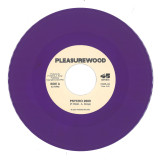
Initially born in 2016 with a number of warehouse and DIY events, the Leeds based collective set sights on their label vision during 2017-2020 after opening a studio within the infamous Mabgate Mills.
The debut EP captures the tales of many hours of expression spent within Mabgate via four artists closely connected to the project.
Rising producer and Perspective boss Kepler brings a dreamy-tinged vision to the A-side, alongside the talented Midge Thompson bringing that lively Leeds energy. Residents Nikol and Keefy G mark their debut release on the flip side with two vibrant jams concluding this versatile EP.
Cerca:le car
- A1: The Time We Faced Doom (Skit)
- A2: Doomsday
- A3: Rhymes Like Dimes (Feat Dj Cucumber Slice)
- A4: The Finest (Feat Tommy Gunn)
- A5: Back In The Days (Skit)
- B1: Go With The Flow
- B2: Tick, Tick (Feat Mf Grimm)
- B3: Red & Gold (Feat King Ghidra)
- B4: The Hands Of Doom (Skit)
- B5: Who You Think I Am? (Feat X-Ray, Rodan, Megalon, Kd, King Ghidra & Kong)
- C1: Doom, Are You Awake? (Skit)
- C2: Hey!
- C3: Operation Greenbacks (Feat Megalon)
- C4: The Mic
- C5: The Mystery Of Doom (Skit)
- D1: Dead Bent
- D2: Gas Drawls
- D3: ? (Feat Kurious)
- D4: Hero Vs Villain (Epilogue - Feat E Mason)
Underneath his mysterious metal mask, MF DOOM hides the cachet underground legends are made of. After his first group KMD’s sophomore album Black Bastards was shelved by Elektra in 1994, and his blood brother Subroc — one half of the sibling rap duo — passed away, surviving frontman Zev Love X slowly mutated into the supervillain MC known as MF DOOM, and the rap world is better for it.
The 1999 release of Operation: Doomsday marked MF DOOM’s official debut, reintroducing a mysterious figure who would soon become one of underground rap’s greatest voices. Within its 19 tracks, Operation: Doomsday reveals the confluence of DOOM’s tragic past, personal interests and daring creativity. His clever rhymes and remarkable schemes stood out against the landscape, and every sound he touched — from cartoon theme songs, to ‘80s soul, to rap classics and more — got reinterpreted into something brand new and surreal.
Decades later, MF DOOM is still celebrated for all facets of his work and influence. In the face of tragedy, DOOM re-infiltrated the rap game on his own terms, and crafted an instant cult classic. Operation: Doomsday stands as a testament to the power of betting on yourself against all odds.
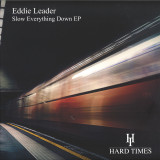
Its been some years since HARD TIMES dropped new music in our laps, but having kick started a new wave with March’s release of Steve ’Silk’ Hurley’s stunning ‘All I Need’, featuring Sara Garvey on vocal duty, the label follows up swiftly with more precision groovemanship.. this time from Hudd Traxx label boss and core HARD TIMES family member, Eddie Leader.
As a DJ, producer, promoter and label boss Eddie has, over a twenty five year career, become a standard bearer for UK House Music. His own productions have graced seminal labels including Classic, Robsoul, Plastic City, Morris Audio and Balance Alliance, while his own Hudd Traxx imprint has become a go-to for many a discerning disc jockey. Its roster boasts releases that feature Matthew Herbert, Rolando, Jovonn, Rick Wade, Agnés and More.
Fresh from remixing Hurley’s ‘All I Need’, Leader now looks to ’Slow Everything Down’ with four fresh jams of his own that all stay true to the Hard Times ethos of quality, deep underground sounds.
Preaching from the front is ’Stand Up’, with its warm groove, piercing piano chords and soulful sermon. So come on… Stand up, to get down. On ‘Gratitude Power’ a seismic kick drum and bass combo pave the way, garnished with keys, synth stabs, bongos and a sprinkling of vocal as the track winds things on smoothly.
‘Slow Everything Down’ is where its at. A calmer, warmer groove, built from raw beats, spoken word and glistening piano. Coolness personified. This is where we're at. Leader slows and closes with final cut ’To Me To You’, icing the EP to perfection with its drowsy and hypnotising keys.
HARD TIMES continue to deliver the good times.
Red Vinyl
The Cinematic Orchestra haben anlässlich des 20-jährigen Jubiläums die erste Reissue ihres Klassikers, „Every Day“, angekündigt. Auf 3 LPs auf transparentem rotem Vinyl finden sich die Bonustracks „Oregon“ und „Horizon“ (feat. Niara Scarlett) sowie die beiden bisher unveröffentlichten Tracks „Semblance“ und „Flite“ (Original Version). Die Veröffentlichung enthält ein neues Artwork vom Designer des ursprünglichen Artworks von „Every Day“, Openmind, und eine Klapphülle mit Gilles Petersons Original-Linernotes. Außerdem wird eine Auswahl von bisher unveröffentlichten Fotos auf einer 12“-Karte präsentiert, darunter die Band im Rivoli Ballroom in London (fotografiert von Carl Fox) und J. Swinscoe mit Fontella Bass in der Nähe des Genfer Sees in der Schweiz (von Peter Williams).
In den zwei Jahrzehnten seit der bahnbrechenden Veröffentlichung des Albums ist der Einfluss der Band unüberhörbar geworden; Jazz ist überall um uns herum, mit gefeierten Künstler:innen, von Kamasi Washington über Tau5 und Koma Saxo bis hin zu Sons of Kemet und unzähligen mehr, London, Berlin und L.A. haben in letzter Zeit eine Szene hervorgebracht, die produktiver ist, als irgendjemand erwartet hätte. BADBADNOTGOOD haben Jazz-Soundtracks zu großen Modeschauen geliefert, und Kendrick Lamar hat - über den Rap-Umweg - das Genre an die Spitze der Charts gebracht. Die Art und Weise, wie sich The Cinematic Orchestra über ihre anfänglichen Jazz-Einflüsse hinaus zu einer Art transzendentaler Orchestrierung entwickelt hat, kombiniert mit der zeitgenössischen eleganten Elektronik, die heute von Künstler:innen wie Ólafur Arnalds und Floating Points verwendet wird - Künstler:innen, denen sie geholfen haben, den Weg zu ebnen - begann mit der Veröffentlichung von „Every Day“ wirklich Früchte zu tragen. Auf den sieben makellosen, schwebenden Tracks nimmt die Gruppe (angeführt von Gründungsmitglied J. Swinscoe und seinem langjährigen musikalischen Mitarbeiter Dominic Smith) die Hörer mit auf eine Reise durch klassischen Soul, Jazz, Chorsätze, versinkenden Horn-Riffs, pochenden Harfen-Linien, Minimalismus und vieles mehr - mit einer Seele, die tiefer als der Ozean ist. Und mit Gästen vom Kaliber eines Fontella Bass (Autor und Interpret des 60er-Jahre-Soul-Meisterwerks, „Rescue Me“ und Mitglied der Free-Jazz-Abtrünnigen, Art Ensemble of Chicago) und der britischen Rap-Legende Roots Manuva (dessen hochfliegender, philosophischer Beitrag zu „All Things To All Men“ ein absoluter Fan-Favorit ist) weiß man, dass man sich auf etwas Besonderes freuen darf. Pitchfork stimmte dem seinerzeit zu und bewertete das Album bei Veröffentlichung mit 8,6 von möglichen 10 Punkten.
Format: Limitierte rot-transparente Vinyl im Gatefold Sleeve mit vier Bonus Tracks von welchen einige bisher nicht auf Vinyl erhältlich waren inklusive 12” Fotokarte und Downloadcode
Hawkins wurde für ihr Platin-ausgezeichnetes Debütalbum ”Tongues and Tails” und dessen kultige Leadsingle ”Damn I Wish I Was Your Lover” für einen Grammy nominiert. Ihr Erfolgshit ”As I Lay Me Down”
brach alle Rekorde der amerikanischen Musikgeschichte als am längsten gelistete Hit-Single in den BillboardCharts. Sophies siebtes Album ”Free Myself” ist geprägt von Hawkins’ rauen und doch poetischen Texten und ihrer unverwechselbaren, fesselnden Stimme.
Chloé Robinson & DJ ADHD still aren’t short on fuel. In fact, they seem to only be boosted further by their own supply. With such a weighty momentum driving forward their newly established identities, only one big question sits adjacent in the saddle: what’s next? It seems that Chloé and Alex already have the answer for today’s daily summon, and for the next Pretty Weird release, it’s a 4-track techno record reiterating the trusted adage of less being more. With an emphasis on space and silence placed intuitively, the first single from the ‘Steamin’ EP finally gets its much anticipated drop - including a killer remix from close friend Four Tet stamped on in classic, inimitable style.
‘Steamin’ is all serrated kicks, 909 drums and tenacious vocals that yell without inhibition, invoking the looseness of a party spiralling unphased into its collective apex.. ‘Redbull’ scales up on the pyrotechnics and rowdy behaviour, taking the sensation of several shots of caffeine and packaging it into a mean, raucous pick-me-up.
For ‘Pax’, Chloé and Alex continue on the stripped back disorder with white-hot conviction through rhythm and textures that find their power through no-frills, unpretentious simplicity. Kieran Hebden steps up for the remix, nodding back in appreciation to the past through the nestling of a sharply redefined ‘Pulse X’ sample alongside his addictive, punchy production all too suited to those can’t-go-home-just-yet stints.
Early support from artists including Four Tet, Peggy Gou, Jamie XX, Floating Points, Ben UFO, Caribou, Skrillex, Mary Anne Hobbs, Bradley Zero, Bonobo, Saoirse, Zenker Brothers, TSHA, HAAi, I. Jordan, Logic1000 and Pearson Sound.
Kristian Matsson has never remained in one place for very long. Having spent much of the last decade touring around the world as The Tallest Man on Earth, Matsson has captivated audiences using, as The New York Times describes, “every inch of his long guitar cord to
roam the stage: darting around, crouching, stretching, hip-twitching, perching briefly and jittering away…Mr. Matsson is a guitar-slinger rooted in folk, and his songs are troubadour ballads at heart.”
Now, Matsson returns as The Tallest Man on Earth with Henry St., his sixth studio album following 2012’s There’s No Leaving Now, full of “vivid imagery, clever turns-of-phrase, and devastating, world-weary observations” (Under The Radar) and 2015’s Dark Bird Is A
Home, his “most personal record… surreal and dreamlike” (Pitchfork). Henry St. notably marks the first time he recorded an album in a band setting. “My entire career I’ve been a DIY person––mostly fueled by the feeling that I didn’t know what I was doing, so I’d just do everything myself.”
But now, longing for the energy that’s only released when creating
together with others, Matsson invited his friends to come and play.
Nick Sanborn (of Sylvan Esso) produced Henry St., which includes contributions from Ryan Gustafson (of The Dead Tongues) on guitar, lap steel and ukulele, TJ Maiani on drums, CJ Camerieri (of Bon Iver) on trumpet and French horn, Phil Cook on piano and organ, Rob
Moose (of Bon Iver, yMusic) on strings and Adam Schatz on saxophone.
- A1: The Black Plot
- A2: Carcosa
- A3: The Sunless Years
- B1: Slave The Hive
- B2: The Falconist
- B3: The Dark Side Of The Compass
- C1: The Cave
- C2: Luminiferous
- C3: The Lethal Chamber
- D1: The Black Plot
- D2: Carcosa
- D3: The Sunless Years
- D4: Slave The Hive
- D5: The Falconist
- D6: The Dark Side Of The Compass
- D7: The Cave
- D8: Luminiferous
- D9: The Lethal Chamber
Like many debut solo albums from musicians in bands, Jared Mattson’s Peanut didn’t originally come from a need to break away. As a composer for the Mattson 2, Jared Mattson was working up a batch of new songs through the winter of 2019-2020, looking ahead to the next album he and brother Jonathan Mattson, the blitzkrieging drummer, would record. As the pandemic hit stateside, Jared holed up in his home studio and kept developing the new music. And during that process it became increasingly clear to them that this wasn’t shaping up to be the next Mattson 2 album. This was a Mattson 1 album.
Jared had been absorbing the guitar work on records by reggae stalwarts Aswad and Burning Spear, and also the Police’s Andy Summer and the ways he gives songs space. And Jared wanted a prominent bass sound, too, where the guitar itself sometimes settles into the passenger seat so that the bass can drive. Lyrically, the album taps into our rattled world, where anxiety, loss, violence, and regret are sometimes pierced by the promise of love. The time spent working on the album was a profoundly introspective time as he reflected on past relationships while living through and writing during the pandemic, he also never lost sight of this truth about himself: Life is great with music.
One of the album’s standout highlights is “Burn Down Babylon,” which is propelled by the bass’s funk-you-say groove. You don’t often encounter many pop songs with so blunt an opening line as, “I got punched in the face last night by a neo-Nazi,”—a true experience that was delivered many years ago in a bar brawl in Carlsbad, California. But to hear the music that goes along with this tale manages a vibe that is less melee and more backyard jubilee.
When “Please Come Here,” with an intro that slinks along like a Cadillac on a Sunday morning drive, kicks in, it’s typical of the album’s melodic pop flourishes, but the twist here is that the vocals are in Japanese (The Mattson 2 have toured Japan 20 times and covered many Japanese pop songs on 2018’s Vaults of Eternity: Japan). Ween’s “She Wanted to Leave” is the lone cover, but the way Jared reimagines the song makes it fits seamlessly within the album’s sonic template. The song’s inclusion was also a personal way to honor one of Jared’s best friends, who died from cancer two years ago. The two had always bonded over the song and marveled at its inherent beauty. Ultimately, Mattson’s solo debut unfolds like a string of fascinating clouds: These are not songs in a hurry; they shift around as they float by, and, most notably, they carry their unique kind of electric charge.
Tape
A Wednesday song is a quilt. A short story collection, a half-memory, a patchwork of portraits of the American south, disparate moments that somehow make sense as a whole. Karly Hartzman, the songwriter/ vocalist/guitarist at the helm of the project, is a story collector as much as she is a storyteller: a scholar of people and one-liners. Rat Saw God, the Asheville quintet's new and best record, is ekphrastic but autobiographical and above all, deeply empathetic. Across the album's ten tracks Hartzman, guitarist MJ Lenderman, bassist Margo Shultz, drummer Alan Miller, and lap/pedal steel player Xandy Chelmis build a shrine to minutiae. Half-funny, half-tragic dispatches from North Carolina unfurling somewhere between the wailing skuzz of Nineties shoegaze and classic country twang, that distorted lap steel and Hartzman's voice slicing through the din. Rat Saw God is an album about riding a bike down a suburban stretch in Greensboro while listening to My Bloody Valentine for the first time on an iPod Nano, past a creek that runs through the neighborhood riddled with broken glass bottles and condoms, a front yard filled with broken and rusted car parts, a lonely and dilapidated house reclaimed by kudzu. Four Lokos and rodeo clowns and a kid who burns down a corn field. Roadside monuments, church marquees, poppers and vodka in a plastic water bottle, the shit you get away with at Jewish summer camp, strange sentimental family heirlooms at the thrift stores. The way the South hums alive all night in the summers and into fall, the sound of high school football games, the halo effect from the lights polluting the darkness. It's not really bright enough to see in front of you, but in that stretch of inky void - somehow - you see everything. The songs on Rat Saw God don't recount epics, just the everyday. They're true, they're real life, blurry and chaotic and strange - which is in-line with Hartzman's own ethos: "Everyone's story is worthy," she says, plainly. "Literally every life story is worth writing down, because people are so fascinating." But the thing about Rat Saw God - and about any Wednesday song, really - is you don't necessarily even need all the references to get it, the weirdly specific elation of a song that really hits. Yeah, it's all in the details - how fucked up you got or get, how you break a heart, how you fall in love, how you make yourself and others feel seen - but it's mostly the way those tiny moments add up into a song or album or a person.
On Labyrinth, Heather Woods Broderick serves as our reflective host, subverting expectations of conventional songcraft with impressionistic language and quietly relentless explorations of the human experience that's at once light and dark, more circular and less linear. "Many of us yearn for stillness and peace, as an escape from the movement all around us," she explains when asked about the themes of the album. "Yet movement is perpetual, happening all the time on some level. It's as wild as the wind, yet eternally predictable in its inevitability. It is linear in part, but infinite in its circuitry. Our lives just punctuate it." Broderick began crafting Labyrinth in March 2020, when most forms of move- ment were brought to a screeching halt. The Maine-born, Los Angeles-based songwriter _ who, in addition to her work as a solo musician, built a life playing and touring with acts such as Sharon Van Etten, Beth Orton, Damien Jurado, and Efterklang _ was suddenly forced off the road for the first time in her career. She used this disruption as an opportunity to pare down her creation process and construct the scaffolding for Labyrinth in her apartment. Employing only the most crucial tools at her disposal, Broderick found herself opening different artistic doors as she focused on sharpening her recording skills, capturing the majority of the album on her own before finishing the remainder with co-producer D. James Goodwin. For all of Broderick's sage lyricism and vocal authority, Labyrinth never provides the listener with any easy answers. If the image of the labyrinth represents the enormity of modern life and the difficulty of navigating it, Heather Woods Broder- ick provides a guide to its endless kinetic wonders _ of being present, aware, and connected despite its disconnects. She describes the texture of its walls, its indifferent rhythms, and the inherent poeticism of feeling lost amid the dead-ends and unexpected turns. At this point in our history, perhaps that's all we need to keep moving.
Grey Vinyl
On Labyrinth, Heather Woods Broderick serves as our reflective host, subverting expectations of conventional songcraft with impressionistic language and quietly relentless explorations of the human experience that's at once light and dark, more circular and less linear. "Many of us yearn for stillness and peace, as an escape from the movement all around us," she explains when asked about the themes of the album. "Yet movement is perpetual, happening all the time on some level. It's as wild as the wind, yet eternally predictable in its inevitability. It is linear in part, but infinite in its circuitry. Our lives just punctuate it." Broderick began crafting Labyrinth in March 2020, when most forms of move- ment were brought to a screeching halt. The Maine-born, Los Angeles-based songwriter _ who, in addition to her work as a solo musician, built a life playing and touring with acts such as Sharon Van Etten, Beth Orton, Damien Jurado, and Efterklang _ was suddenly forced off the road for the first time in her career. She used this disruption as an opportunity to pare down her creation process and construct the scaffolding for Labyrinth in her apartment. Employing only the most crucial tools at her disposal, Broderick found herself opening different artistic doors as she focused on sharpening her recording skills, capturing the majority of the album on her own before finishing the remainder with co-producer D. James Goodwin. For all of Broderick's sage lyricism and vocal authority, Labyrinth never provides the listener with any easy answers. If the image of the labyrinth represents the enormity of modern life and the difficulty of navigating it, Heather Woods Broder- ick provides a guide to its endless kinetic wonders _ of being present, aware, and connected despite its disconnects. She describes the texture of its walls, its indifferent rhythms, and the inherent poeticism of feeling lost amid the dead-ends and unexpected turns. At this point in our history, perhaps that's all we need to keep moving.
- 180 GRAM AUDI OPHILE VINYL
- GATEFOLD SLEEVE
- PVC PROTECTIVE SLEEVE
- INCLUDES 2 PRINTED INNER SLEEVES WITH LYRICS AND PICTURES
The Soldier's Tale is a theatrical work 'to be read, played, and danced' by three actors (the soldier, the devil, and a narrator) and dancers, accompanied by a septet of instruments. The libretto relates the parable of a soldier who trades his fiddle to the devil in return for unlimited economic gain. The music is scored for a septet of violin, double bass, clarinet, bassoon, cornet or trumpet), trombone, and percussion. The libretto is adapted by Roger Waters from the translation by Michael Flanders and Kitty Black, based on the original text by Charles-Ferdinand Ramus.
As the work opens, Joseph, a Russian soldier, marches toward his hometown on leave, pack in tow. ('Marche du soldat'/'The Soldier's March') He rests by a stream and rummages through his pack. First he takes out his lucky St. Joseph medallion, then a mirror, then a photograph of his girlfriend. Finally, he finds what he was searching for: his fiddle. He begins to play. ('Petit airs au bord du ruisseau'/'Airs by a Stream') The devil appears disguised as an old man carrying a butterfly net, but Joseph does not notice him and continues to play. The devil sneaks up on Joseph from behind and startles him.
The Soldier's Tale package includes 2 printed inner sleeves with lyrics and pictures.
UK Hip Hop regulars Lasagna Baghdad (Luca Brazi), Paolo Pumpernickel (Benny Diction) and
Bald Daniels (MNSR Frites) combine forces as their alter-egos for an introspective take on getting
older in rap and an appreciation for the finer things. Expect tales of borderline mid-life crises told
over a background of fast cars and seafood
Pressing Info: 180g translucent pink vinyl, limited to 250 copies, download card included. Five years on from their 2018 debut album 'Great Vowel Shift', Lviv, Ukraine-based krautrock outfit Sherpa The Tiger are now returning with their second album, 'Ithkuil, via Fuzz Club Records - with 100% of the profits from the release going to the band to help support them during the war. Where their previous work was centred around vintage synths, minimal ambient and neon-lit kraut-disco grooves, 'Ithkuil' sees Sherpa The Tiger explore more expansive and layered structures and compositions - incorporating intricate guitars, flute, arpeggiators and jazzy piano references, alongside an array of other elements that originate from a broad spectrum of past and present music genres. "This album bears the name of 'Ithkuil' for a reason", the band state: "Like the language we borrowed the title from, the sound of the record has a lot of levels, layers, and orchestral nuances. We consider this album and its pieces a single journey. Every track of the LP works as a mandatory stop for contemplation and reflection that happens on the route of the listener." Sherpa The Tiger began working on the new material in 2019 during their EU live shows in support of 'Great Vowel Shift' and chalk the more textured and cinematic results down to a more collaborative approach. "We wanted to rethink the Krautrock heritage explored on our last album and made a clear stylistic shift that was determined by a totally different approach to our music-making. The tunes on 'Great Vowel Shift' were cooked in a sort of live-looping mode with two musicians jamming. This time, with 'Ithkuil', the process of creation was shared among 4 musicians, and that approach had a great impact on the final result." Several years in the making and now released against a backdrop of war and invasion in their home country, 'Sherpa The Tiger' say that 'Ithkuil' acts as a snapshot of pre-war times: "Since the war caught us in the middle of planning the release as opposed to creating the music itself, the album can be perceived as a wistful reminder of the pre-war life that doesn't seem to be coming back. The life we actually experienced but lost any recollection of and which we are desperately trying to bring back through the music created by the other us now dwelling in an absolutely different reality."
Released in the UK in January 1967 by Decca Records and February by London Records in the US – Between The Buttons was the Stones’ fifth British and seventh US studio album. Released as the follow-up to Aftermath, this album marked a high point in the band’s career, continuing their ventures into psychedelia and baroque pop balladry, it is among the band’s most musically eclectic works. Brian Jones sidelined his guitar on much of the album, instead playing a wide variety of other instruments including organ, marimba, vibraphone, and kazoo. Piano contributions came from two session players: former Rolling Stones member Ian Stewart and frequent contributor and studio legend Jack Nitzsche. It was the last album produced by Andrew Loog Oldham, the band’s manager and producer of all of their albums to this point.
The album has one of the most striking sleeves of the period, featuring a classic Gered Mankowitz image on the cover. The photo shoot took place at 5:30 in the morning following an all-night recording session at Olympic Studios. Using a home-made camera filter constructed of black card, glass and Vaseline, Mankowitz created the effect of the Stones dissolving into their surroundings – according to Mankowitz… ""to capture the ethereal, druggy feel of the time; that feeling at the end of the night when dawn was breaking and they’d been up all night making music, stoned.”
The songs continued Aftermath’s lyrics of acute social observation and savage insight, their earlier raw, rootsy power enhanced by other influences of the period – notably The Beatles, The Kinks, and again Dylan. It is one of their strongest, most varied LPs, with many great songs that remain unknown to all but Stones devotees.
The inventive arrangements and innovative instrumentation on brooding near-classics like All Sold Out, My Obsession and Yesterday’s Papers brought a new dimension to the music. She Smiled Sweetly shows their hidden romantic side at its best, Connection is one of the record’s few pieces of more conventional driving rock and album closer Something Happened To Me Yesterday includes Keith’s first solo vocal.
The US version includes contemporaneous hits – the two songs that gave the group a double-sided number one in early 1967: the shameless and controversial Let’s Spend The Night Together and the beautiful, melancholy Ruby Tuesday.
Released in the UK in January 1967 by Decca Records and February by London Records in the US – Between The Buttons was the Stones’ fifth British and seventh US studio album. Released as the follow-up to Aftermath, this album marked a high point in the band’s career, continuing their ventures into psychedelia and baroque pop balladry, it is among the band’s most musically eclectic works. Brian Jones sidelined his guitar on much of the album, instead playing a wide variety of other instruments including organ, marimba, vibraphone, and kazoo. Piano contributions came from two session players: former Rolling Stones member Ian Stewart and frequent contributor and studio legend Jack Nitzsche. It was the last album produced by Andrew Loog Oldham, the band’s manager and producer of all of their albums to this point.
The album has one of the most striking sleeves of the period, featuring a classic Gered Mankowitz image on the cover. The photo shoot took place at 5:30 in the morning following an all-night recording session at Olympic Studios. Using a home-made camera filter constructed of black card, glass and Vaseline, Mankowitz created the effect of the Stones dissolving into their surroundings – according to Mankowitz… ""to capture the ethereal, druggy feel of the time; that feeling at the end of the night when dawn was breaking and they’d been up all night making music, stoned.”
The songs continued Aftermath’s lyrics of acute social observation and savage insight, their earlier raw, rootsy power enhanced by other influences of the period – notably The Beatles, The Kinks, and again Dylan. It is one of their strongest, most varied LPs, with many great songs that remain unknown to all but Stones devotees.
The inventive arrangements and innovative instrumentation on brooding near-classics like All Sold Out, My Obsession and Yesterday’s Papers brought a new dimension to the music. She Smiled Sweetly shows their hidden romantic side at its best, Connection is one of the record’s few pieces of more conventional driving rock and album closer Something Happened To Me Yesterday includes Keith’s first solo vocal.
The US version includes contemporaneous hits – the two songs that gave the group a double-sided number one in early 1967: the shameless and controversial Let’s Spend The Night Together and the beautiful, melancholy Ruby Tuesday.
First solo LP by the talented Peruvian artist Betico Salas, lead trumpet player of the great Sonora de Lucho Macedo, one of the best ensembles playing Cuban repertoires in the early '60s. This 1966 album features Alfredo Linares on piano and sonero vocals by Benny del Solar, and combines a mix of guarachas, guanguancó and even cumbias. Betico Salas would later release two more albums and become a legendary trumpet player in Peruvian musical history. First time reissue.- DETAILS: Alfredo Linares on piano and sonero vocals by Benny del Solar stand out on this album. Benny del Solar sings lead vocals on the cumbia of Argentine origin 'Nos vamos a casar'; the Colombian 'Lo que pasa es que la banda está borracha', a continental hit since the early sixties; the guaracha 'A los muchachos de Belén', by Puerto Rican musician Tito Rodríguez; the guaracha 'Ritmo del amor'; the elegant Cuban guaguancó 'Así namá', also well known for Tito Rodríguez's rendition; and the cumbia 'Qué le digo a mi mujer'. Singer, César Gonzales, who would have an extensive career in Peruvian tropical music, sang lead vocals in the guaguancó by the Sonora Matancera 'Lindo Omelenko' and the bolero 'El árbol', a hit for the singer Roberto Ledesma, also recorded that same year by Peruvians Carmita Jiménez, Anamelba, Raul del Mar and Lucho Macedo himself, who decided to sing for his new record label. The mythical singer Johnny Arce, years later known as Mr. Macondo, also appears on the album on the two guarachas: 'La renga', a composition by Esther Forero, known as La novia de Barranquilla; and 'Yo soy candela', a composition by the Colombian Ray Rodríguez. Finally, 'La chola' is a cumbia by Peruvian composer Tomás Benítez; and 'Mambo Jazz' is a version of the descarga 'Yayi's instant mambo', an innovative instrumental track performed by Puerto Rican Willie Rosario, who recorded it in the United States at the start of 1966 with his own orchestra. Betico Salas would later release two more albums and become a legendary trumpet player in Peruvian musical history.
- A1: Panna
- A2: All Of The Little Things (Feat. Ramirez)
- A3: There’s Only One (Feat. Genesis Owusu)
- A4: Maybe I’m In Love With You (Feat. Talib Kweli)
- A5: Tape 25’
- A6: All I’m Saying (Feat. Kimbra)
- A7: 0421 (Feat. Melodownz)
- B1: Love You To Bits (Feat. Devin The Dude)
- B2: I Want You (To Be My Woman) (Feat. Dope Lemon)
- B3: Complicated (Feat. Young Franco)
- B4: Photos Of You (Feat. Swsh)
- B5: Tape 45’
- B6: Of Another Kind (Feat. Milan Ring & Jerome Farah)
- B7: I Could Play The Part (Feat. Pricie)
- B8: Cotta
ARIA double-platinum six-piece act, Winston Surfshirt, are releasing their third full-length album, Panna Cotta .
A recipe of collaborative dreams, Panna Cotta sees Winston Surfshirt work with a wish-list of his favourite artists, seeing career-defining partnerships produce 15 tracks of accomplished and star-studded material. As Winston sings and swoons to ideas of love and life, a stand-out lineup of players and musicians step into the Winston universe, including Talib Kweli, Kimbra, Genesis Owusu, Dope Lemon, Young Franco, Ramirez, Devin the Dude, Milan Ring, and more, sending the signature Surfshirt sound into uncharted realms.
Winston says on the forthcoming album: “Panna Cotta is the last dessert on the table, something for everyone to try, a bunch of different ingredients mixed together. I’d say it is my dream album that I wanted to hear Winston Surfshirt make.”
Bogota born and raised DJ and producer Nicolas Duque has been lighting up the scene following a string of VA contributions and his perfect pop-tinged UKG debut EP on Breaks 'N' Pieces. Since then Duque has gone on to release music that flirts with nostalgia and contemporary electronics on Dansu Discs, Magic Carpet and Limousine Dream sublabel Nug-Net, merging house with various UK flavours.
Now he makes his debut on Situ-888 with a futuristic four track EP demonstrating his fluidity between genres, this time opting for 4/4 kick drums and pleasure-seeking bleeps.
The sound of swinging hi-hats and classic bass notes churn as the record starts to spin, before distant electronics and crowd roaring grooves take hold in opening track 'Ritmos Contundentes'. 'The Unforbidden Track' is the perfect follow up, this time introducing acidic leads and festival ready chords brimming with warmth and light.
The Aptly titled 'Ting-a-ling' opens the B-side in a playful mood, with optimistic melodies racing at full steam ahead. The record comes to a close with 'Midnight Library' encompassing everything that makes this record great; the combination of mischievous, yet light-hearted grooves built perfectly around an interchanging melody.
Emotional Rescue is delighted to debut a first. Rather than a straight reissue of an (obscure) classic or a collection of music by an artist or label, here presented is a compilation of various artists centered around a sound and movement reggae-tinged music and how it influenced and spread from the Caribbean and diaspora.
Drawn from the off kilter digging of archivist, DJ and collector Bruno (perfectliv.es), Nowhere Like Here is not a follow up, but a sideways accompaniment, to his recent and already cult like 'Perfect Motion' collection of left field pop and new wave, recently self-released with Flo Dill (NTS).
This is a special release to celebrate the label's 10th year and beyond, offering a treasure trove of lo-fi and often pop inspired reggae cuts, mixing heartfelt Lovers Rocks style paeans and quirky private press oddities, all guaranteed to 'make-a-move and tap', these are, in the main ridiculously rare or impossible to find alternative bombs, that are just as sound system rocking and massive bass line quaking showcases of the enduring legacy of this Jamaican music phenomenon.
As with much of the early 80s period, the music community was in the throes of a Do-It-Yourself cultural renaissance as small labels, where crazy limited, one off White Labels Onlys came and went. Songs like Avalanche 's 'Your Love is Such a Good Thing 'or Warp Speed's 'Take It To The Night' were part of the claiming the means of production in to their own hands, pressing up the records and self-distributing. This raw, naive exuberance can be heard in the songs themselves. This is not reggae or Lovers as known, but something more expressive. Musical, simply produced, but with intelligible and uplifting optimism that is just superlatively catchy.
While Paul Thompson's 'Can I Take You Home' and Ras Ibuna's 'Black Beauty' are more straight-ahead Lover's style cuts, there is the parallel dance pop private pressing vibrations of the two Keith Robinson songs and Majority's 'Caroline' included all part of a thread; a joining the dots that Nowhere Like Here is at its most basic, a warmth the whole album exudes.
This is not a Lovers Rock Hits of some, but a left-of-center versioning, spread across Double Pack and cut loud for DJ play, fitting the ethos of Emotional Rescue by presenting something most will not have heard before and all the better for it.
A Wednesday song is a quilt. A short story collection, a half-memory, a patchwork of portraits of the American south, disparate moments that somehow make sense as a whole. Karly Hartzman, the songwriter/ vocalist/guitarist at the helm of the project, is a story collector as much as she is a storyteller: a scholar of people and one-liners. Rat Saw God, the Asheville quintet's new and best record, is ekphrastic but autobiographical and above all, deeply empathetic. Across the album's ten tracks Hartzman, guitarist MJ Lenderman, bassist Margo Shultz, drummer Alan Miller, and lap/pedal steel player Xandy Chelmis build a shrine to minutiae. Half-funny, half-tragic dispatches from North Carolina unfurling somewhere between the wailing skuzz of Nineties shoegaze and classic country twang, that distorted lap steel and Hartzman's voice slicing through the din. Rat Saw God is an album about riding a bike down a suburban stretch in Greensboro while listening to My Bloody Valentine for the first time on an iPod Nano, past a creek that runs through the neighborhood riddled with broken glass bottles and condoms, a front yard filled with broken and rusted car parts, a lonely and dilapidated house reclaimed by kudzu. Four Lokos and rodeo clowns and a kid who burns down a corn field. Roadside monuments, church marquees, poppers and vodka in a plastic water bottle, the shit you get away with at Jewish summer camp, strange sentimental family heirlooms at the thrift stores. The way the South hums alive all night in the summers and into fall, the sound of high school football games, the halo effect from the lights polluting the darkness. It's not really bright enough to see in front of you, but in that stretch of inky void - somehow - you see everything. The songs on Rat Saw God don't recount epics, just the everyday. They're true, they're real life, blurry and chaotic and strange - which is in-line with Hartzman's own ethos: "Everyone's story is worthy," she says, plainly. "Literally every life story is worth writing down, because people are so fascinating." But the thing about Rat Saw God - and about any Wednesday song, really - is you don't necessarily even need all the references to get it, the weirdly specific elation of a song that really hits. Yeah, it's all in the details - how fucked up you got or get, how you break a heart, how you fall in love, how you make yourself and others feel seen - but it's mostly the way those tiny moments add up into a song or album or a person.
The compilation "Get Together" enters a new round and gathers four artists to take a journey into electronic music together again. Maxie König opens the gathering with warm basses and sparkling
chords in her track "TenTen".
The unmistakable groove immediately carries us away and drives us straight onto the dance floor, where the no less deep track "Dezest" by Dip resounds through the speakers. Here we float on the smooth strings of the recurring sound waves, which one can hardly resist. Ana Antonova takes up this beautiful flow in her fascinating track "Naked Neighbour" and adds jazzy melodic elements that are interwoven with original sounds to create a fabulous, versatile sound story.
Finally, Cie picks up the bass and groove again and reflects the wonderful atmosphere of this gathering with the harmonic strings in "Haus Im Turm", making you want to put this record on „again“ and „again“.
For the fourth iteration of the label catalog, Michal Wolski delivers two original tracks in his signature style and leads the label sound towards a more straightforward territory. For the A-Side, Leipzig-based producer, Vanta provided a deep remix. Milena Glowacka took care of the B-Side by creating a hard-hitting remix of Energy Storm.
- A1: Solah - Everything Is Possible (Dj Marky & Makoto Remix)
- A2: Logistics - Belonging
- A3: Netsky & Hybrid Minds - Let Me Hold You (Grafix Remix)
- B1: Whiney X Doktor X Subten X Coco - Start This
- B2: Bop X Subwave - Rave I Didn't Know Was The Last (Enei Remix)
- B3: Flava D - Red Pill
- C1: Unglued, Lens & Whiney - Lazy Hardcore
- C2: Fred V - Freefall (Feat Hamzaa)
- C3: Anais X Sudley X Champion Di - Live By The Sword
- D1: Winslow - Spaced Out
- D2: Spy - Night Moves
- D3: Voltage - Natty Love (Feat Sweetie Irie - Serum Vip)
- E1: Urbandawn X Alibi - Caramel
- E2: London Elektricity - Vasquez
- E3: Degs - Still Messed Up (Whiney Remix)
- F1: Iyre - Want No Drama (Feat T Man)
- F2: Hugh Hardie X Stay C - Impala
- F3: Kanobie - Upside Down (Feat Tominthechamber)
- G1: Makato - Love Is Complicated
- G2: Missing - U Ok G?
- G3: Rohaan X Mrsa - Osho
- H1: Btk - Found
- H2: Askel - Thoughts About Home
UK Garage legends Groove Chronicles (Noodles & Dubchild) are back with the 'Soul 'N Mind' 12" featuring their highly sought after Brokenstep edits.
These have been on heavy rotation by the likes of Gilles Peterson, Charlie Dark, Bradley Zero, IG Culture and more. Limited hand-stamped and stickered copies, be quick!
Groove Chronicles have releases dating back to 1997 and are legendary in the world of UKG. Founded by Noodles, who is now working with longtime associate, Dubchild. Noodles has been working in the music game for three decades, from spinning at raves in Paris when he was 17, to serving it up behind the record shop counter, to running his own label, DPR. Responsible for bonafide classics like 'Stone Cold', 'Myron' & 'Poor Man's Break', his work serves as a blueprint for many sounds across the UK bass spectrum.
Leicester legend, Dubchild, stems from a musical background of reggae, hip hop, house, garage & jungle. He's released an array of dubstep & instrumental grime records through various labels since the early noughties, including Caspa's Storming Productions & Heavy Artillery, amongst others.
The duo also combine under the moniker Nu-Agenda with their own hybrid house style, and have had collective support over the years from stations such as 1Xtra, NTS, Kiss, Reprezent & Rinse, DJs such as Annie Mac, Zane Lowe, Mary Anne Hobbs & Ras Kwame, IG culture, Charlie Dark, Gilles Peterson, Bradley Zero, Marcia Carr, Afronaught and publications like iD, Fact, DJ Mag & Crack Magazine, to name a few.
J. Alberts “config” EP for Couldn’t Care More is one more step into his very own microcosm of electronic music wizadry: There is the flickering groove of “Armor”, myriads of cut-up sonic pieces morphed into a glorious track somewhere next to Techno and House and there’s the distorted quiet beauty of slowly breathing “config4”, ambientesque but filled with tension like Huerco S does it. There are the holographic breakbeats of “config5”, with voice samples and synth stabs melted in New Yorks fiercest heat and there’s the sped-up ambient groove of ghostly “config2”. The last track “Court” sums it up, a breathless groove mutation topped by spheric keyboard sounds. J. Albert gets it all together and he does it with a quite uncanny certainty. A different level.
METALLIC SILVER VINYL[31,72 €]
- 2023 Edition - Pressed on Clear Red Wax - LP housed in an expanded Stoughton tip-on gatefold jacket - Includes fold-out poster, sticker and insert, along with a download card for full album, non-album single B-side "The Cowboy Song" and an unedited October 1978 BBC audio interview with John Lydon // Reissue of the pioneering group's debut album First Issue. In 1976 Johnny Rotten and the Sex Pistols set the agenda for punk's year zero with 'Anarchy In The UK', a song that summed up the spirit, sound and attitude of the band in one shocking package. Two years later, the Sex Pistols were in tatters, but Rotten was as unsentimental as you'd hope. He reverted to his real name - John Lydon - and set about forming a band whose very identity kicked against press and media manipulation. Featuring bassist Jah Wobble, drummer Jim Walker and guitarist Keith Levene, his new group were Public Image Limited. The public image would be limited. PiL were a very distinct prospect from the Pistols, founded with a greater thought for rhythm, and with a sound that turned the page from snarling punk to a more experimental sound fusing rock, dance, folk, ballet, pop and dub. But that's not to say Lydon's new outfit lacked vitriol. 'Public Image' hits out against the notorious British tabloid press, who never gave Lydon an easy ride, and against his own Sex Pistols public image - "You only saw me for the clothes I wore". The debut single (and the album that followed) operated as a theme song and a manifesto: "_my entrance/My own creation/My grand finale/My goodbye," as the lyrics had it. It is, essentially, the sound of four people letting loose in a studio - and not caring what anyone else thought. The album was never officially released in the USA back in the day, its sound considered too un-commercial by major-labels for an American release. First Issue has been lovingly reproduced from the original UK 1978 release and this special reissue also comes with a clutch of post-punk era treasures. The 2023 LP edition includes an expanded gatefold jacket, an archive replica fold-out poster, a PiL sticker, insert, and Download Card for the album, the archival BBC interview, and "The Cowboy Song." All of which were approved and coordinated with John Lydon and his personal management.
- 1: Intro (Ghetto Kumbé Remix)
- 2: Sola (Les Enfants Sauvages Remix)
- 3: Vamo A Dale Duro (Uproot Andy Remix)
- 4: Djabe (Monte Remix)
- 5: Pila Pila (Trooko Remix)
- 6: Cara A Cara (Dj Firmeza Remix
- 7: Tambo (Nickodemus Remix)
- 8: Esta' Pillao (Studio Bros Remix)
- 9: Pide Mas (Montoya Remix)
- 10: Lengua Ri Suto (Cero39 Remix
- 11: Bomba Feat. Walshy Fire (Sky Monroe Remix)
There's no denying the power of the drum. It's primal, it cuts across borders and most importantly, it makes you want to move. Ghetto Kumbé don't just understand that_they celebrate it, and it's why the tambor was at the heart of the Bogotá-based trio's 2020 self-titled debut album. Rooted in mysticism and the Afro-Caribbean rhythms they'd grown up with all their lives, the critically acclaimed LP thrillingly updated the traditional Latin template, folding in elements of modern hip-hop, house and bass music while also delivering a transportive Afro-futurist vision. On Clubbing Remixes, that vision has been further amplified, as Ghetto Kumbé_who were already one of Colombia's most prominent alternative acts_have now gone fully global; enlisting an all-star roster of artists from four different continents, they've put together a fresh version of their debut album that's been specifically geared to the world's diverse slate of dancefloors. As the title implies, the new LP is meant for the club, which is why Ghetto Kumbé have turned to Latin music heavyweights like Trooko_a multiple Grammy winner whose resume includes work with Lin-Manuel Miranda and Residente_and Monte (a.k.a. Bomba Estéreo founder Simón Mejía), along with top-shelf DJs like Nickodemus and Uproot Andy, two NYC artists who've spent decades championing Afro-Latin rhythms. True to the LP's global spirit, the record also includes reworks from batida maestro DJ Firmeza, fellow Afro-Portuguese outfit Studio Bros and Parisian house groovers Les Enfants Sauvages, plus genre-blurring remixes from sonically adventurous Colombians Montoya (himself another ZZK artist) and Cero39. Even the artwork on Clubbing Remixes is a remix, as Ghetto Kumbé have tapped Uganda's Denzel Muhumuza to transform the cover of their debut album into a new, explicitly Afro-futuristic illustration. Depicting a strong Black face and glowing neon fauna beneath a sparkling moonlit sky, the fantastical image speaks to both the ritual magic and Afro-indebted heritage of Ghetto Kumbé's music, and thanks to Clubbing Remixes, the group's passionate, drum-fueled sounds will soon be blasting out of sound systems around the globe.
- A1: Laissez-Nous Rentrer Dans Vos Coeurs
- A2: Tina
- A3: L'homme Au Grand Chapeau
- A4: Une Vie Moderne
- B1: French Kiss
- B2: Telstar
- B3: Zazou Sur La Piste
- B4: La Ballade Des Cardiaques
- C1: La Noosphere, La Noosphere
- C2: Rue Merlan
- C3: Le Retour De L'homme Au Grand Chapeau
- C4: Anyhow For The Tennis
- C5: En Hommage A Pop Corn
- C6: Les Ergs N°1, 2, 3 Et 4
- C7: Outpop
- C8: Drone E. M
- D1: Tina Blues
- D2: Telstar Jungle
- D3: Zazou Sur La Piste
- D4: Sequences S.i.r
- D5: Night Tonight
- D6: Love In Loops
- D7: Some Never Fired
- D8: The Gause Mask Serves A Purpose
After the experience of Camizole, Dominique Grimaud began a new (and different) adventure in 1979 with Monique Alba. Alongside Gilbert Artman (Urban Sax), Guigou Chenevier (Etron Fou Leloublan), Jean-Pierre Grasset (Verto) and Cyril Lefebvre (Maajun), Vidéo-Aventures is composed of instrumentals capable of reconciliating Captain Beefheart, Henry Cow, Suicide and... John Barry. All with the backing of Rock In Opposition, which enabled this Musiques pour garçons et filles to become known worldwide.
“Let us enter your hearts”: is the request made by Vidéo-Aventures, and how can we refuse? Especially as Musiques pour garçons et filles, recorded by Dominique Grimaud and Monique Alba fifty years ago along with handpicked colleagues, is as fresh as ever.
1979: having improvised a huge amount (and how!) with Camizole, Grimaud tried his hand at composition and studio recording with Alba. Their first instrument was the AKS synthetiser, with which the duo recorded the instrumental tracks that were then offered to their comrades Guigou Chenevier (Etron Fou Leloublan), Gilbert Artman (Lard Free, Urban Sax), Jean-Pierre Grasset (Verto) and Cyril Lefebvre (Maajun).
At the end of the year, they all came into the studio for a week to record the eight tracks of this mini- album that Chris Cutler would issue a few months later on his label, Recommended. In France it was the beginning of the agitation around Rock In Opposition, to such a point that Musiques pour Garçons et Filles would rise to second place in the NME independent Charts. And this is hardly surprising...
For these instrumental miniatures (here with the bonus of rare archives, some of which are previously unpublished) are uncontrollable: electronics augmented by lap-steel guitar (“Tina”), cunning pop (“Zazou sur la piste”), mechanic sound (“Une vie modern”), street piano (« French Kiss »), disturbing atmospheres (“La ballade des cardiaques”) or something like a TV theme tune capable of adjusting all the colours (“Telstar”)... With such promising ingredients, why stop Vidéo-Aventures from entering?
Rootz Lions Band share the love for conscious roots reggae music & are dreadicated to taking the music forward in these times.
Bassplayer Carlos Silva is the founding member of the band. In 2016 he gathered some of the Dutch reggae scene's most experienced musicians, each of them having previously played with top local and international artists - most recently the band have performed with Army, Prince Jamo, Donovan Kingjay, Black Omolo, Iyiapo Tafari, Chezidek and more.
MLK is a singer from Sierra Leone, based in the Netherlands. He performs regularly live with bands and in 2018 released the acclaimed LP 'The World Is In Trouble' with The Breadwinners on the Bionic Dread label.
King Cooper (AKA King Kooper in the Jazz world) from Amsterdam has a long & fascinating career, playing reggae, jazz, funk & soul with the likes of Doe Maar, Sister Sledge, Coopertest & many, many more... proving himself as one the world's top saxophonists.
Hornsman Coyote from Belgrade, Serbia is one of the leading Trombonists in the modern reggae scene and works regularly with top producers & labels internationally, such as, Lee Perry, House Of Riddim, Rolling Lion, Jah Works, Earth Works, Jerry Lions to name but a few. His career started as the front-man for Belgrade Hard-Rock-reggae crossover band, Eyesburn & is a singer songwriter in his own right with a huge catalogue from over 20 years of continued performance & recording.
Plunder was recorded and mixed at Earth Works Studio, Amsterdam
The undisputed kings of garage rock are back! It’s been 22 years since the last Headcoats album, but now Billy, Bruce, and Johnny return with a brand-new studio album!
Recorded last year at Ranscombe Studios in Rochester. Billy, Bruce, and Johnny kindly answered some pertinent questions…You got back together recently as Thee Headcoats Sect to make the ‘Tribute to Don Craine’ EP. What was it like working with each other again after all this time? BILLY: It was 'fab' and 'gear.' BRUCE: The weirdest thing for me was how weird it wasn't.
It was like time compressed, but to the 'good old days', early on. I was wary that it 'wouldn't be like Thee Headcoats', but it was. JOHNNY: I'm with Bruce and Billy on that one. I think we were all surprised how it all just worked. If I remember correctly, we kicked off role playing like we detested each other. Then we got started and well, you can hear the result.
What were the first songs you ran through when you got in the studio? BILLY: That’s a very good question. No idea. BRUCE: I can't remember. They all sound the same to me. JOHNNY: Bill had stuff on his phone that went “KSSHHCCCKSSHHHH”! So, we did that first. You’ve also paid tribute to Don with a track on the Irregularis album – ‘Oh Leader We Do Dig Thee’.
He was, along with the other members of Downliners Sect, a big inspiration to Thee Headcoats. When did you first become aware of his music and what was he like to work with? BRUCE: We were given (or possibly lent) a reissue of the Sect's first LP around 1977, marketed as 'Punk From The Vaults', which certainly floated our boats and definitely popped our corks, due to the somewhat aggressive yet carefree nature of the tunes and sound in general. Ollie, our old bassist, found an ad in a trade magazine for them with a contact number for a Michael O'Donnell, which I excitedly called almost immediately.
T'was none other than Don his'self and we managed to convince him into venturing down to Rochester to record some tunes with us which became the first Headcoat Sect EP. We were fairly starstruck and presented him with a brand new 'dearstalker' (or 'Headcoat', as they were now known). He was very accommodating and a great laugh and spent the evening with us, regaling us with tales of yore. I recorded a lot of it on cassette, which I may still have somewhere. Gawd bless Don
- A1: Sam And Delilah
- A2: But Not For Me
- A3: My One And Only
- A4: Let's Call The Whole Thing Off
- A5: (I've Got) Beginner's Luck
- B1: Oh, Lady Be Good!
- B2: Nice Work If You Can Get It
- B3: Things Are
- B4: Just Another Rhumba
- B5: How Long Has This Been Going On?
- C1: S'wonderful
- C2: The Man I Love
- C3: That Certain Feeling
- C4: By Strauss
- C5: Someone To Watch Over Me
- C6: The Real American Folk Song
- D1: Who Cares?
- D2: Looking For A Boy
- D3: They All Laughed
- D4: My Cousin In Milwaukee
- D5: Somebody From Somewhere
- E1: A Foggy Day
- E2: Clap Yo' Hands
- E3: For You, For Me, For Evermore
- E4: Stiff Upper Lip
- E5: Boy Wanted
- E6: Strike Up The Band
- F1: Soon
- F2: I've Got A Crush On You
- F3: Bidin' My Time
- F4: Aren't You Kind Of Glad We Did?
- F5: Of Thee I Sing (Baby)
- G1: The Half Of It, Dearie" Blues
- G2: I Was Doing All Right
- G3: He Loves And She Loves
- G4: Love Is Sweeping The Country
- G5: Treat Me Rough
- H1: Love Is Here To Stay
- H2: Slap That Bass
- H3: Isn't It A Pity?
- H4: Shall We Dance
- H5: Love Walked In
- H6: You've Got What Gets Me
- I1: They Can't Take That Away From Me
- I2: Embraceable You
- I3: I Can't Be Bothered Now
- I4: Boy! What Love Has Done To Me!
- I5: Fascinatin' Rhythm
- J1: Funny Face
- J2: Lorelei
- J3: Oh, So Nice
- J4: Let's Kiss And Make Up
- J5: I Got Rhythm
When Ella Fitzgerald began recording her series of albums devoted to the work of
America’s greatest song writers, she elevated the art of Jazz singing into a new
dimension while celebrating a unique musical heritage bequeathed to the world of
popular music. Norman Granz encouraged the bold decision to record five albums all
featuring the extraordinary output of songs composed by the brothers George and Ira
Gershwin during the Golden Age of popular song. Gershwin show tunes had long been
a staple diet for bandleaders, pop-vocalists and star-instrumentalists eager to perform
such exhilarating material as Strike Up The Band, Oh, Lady Be Good!, S’Wonderful and
I Got Rhythm. But there was also a gamut of ballads and romantic dance themes
needing to be interpreted with greater sensitivity. Ella was more than capable of
focusing on lyrics and caressing melodies of songs like Someone To Watch Over Me, A
Foggy Day and Embraceable You. They are among the 53 Gershwin classics she
recorded over an eight month period in 1959 and now featured in this superb collection.
Critically-acclaimed, criminally-overachieving Glasgow-based singer and guitarist Alasdair Roberts is known as a superlative original songwriter as well as an interpreter of traditional songs from Scotland and beyond. For the past twenty years, his recordings have alternated between these two complimentary poles, with "pop" records such as The Amber Gatherers and A Wonder Working Stone nestling in his expansive back catalogue alongside "folk" albums such as No Earthly Man and What News (with Amble Skuse and David McGuinness). Additionally, all of these records possess a further dimension, derived from their collation of songs together into one album-length statement. This is part of Alasdair"s great achievement in his career - for him, this thing of music and song hasn"t come the eons it"s travelled to simply entertain. These impulses fully present and well honed, Alasdair returns to his roots with Grief in the Kitchen and Mirth in the Hall, his fifth full-length collection of traditional song. Recorded live in the studio, it is an entirely solo collection of twelve traditional ballads and songs sparsely arranged for acoustic guitar, piano and voice. The majority of the songs originate in Alasdair"s homeland of Scotland, with a couple from Ireland and one from Prince Edward Island on Canada"s eastern seaboard too. The record takes its title from a line in the final verse of one of its songs, "The Baron o" Brackley" - a ballad of feuding clans and matrimonial betrayal from the north-east of Scotland. Grief in the Kitchen and Mirth in the Hall: it"s a title which goes some way towards encapsulating many of the record"s themes. Collectively the songs treat of various conflicts and tensions - those of gender; of class, status and position; and of geography and tribal belonging - and the roles and responsibilities expected at the various intersections of these constructs. That we should never forget! As with many of Alasdair"s recordings, Grief in the Kitchen and Mirth in the Hall contains ballads aplenty: tragic ("Bob Norris"), supernatural ("The Holland Handkerchief") and dramatic ("Eppie Morrie"). There are love songs ("The Lichtbob"s Lassie") and anti-love songs ("Kilbogie"). There are rare, seldom-heard pieces ("Young Airly") and much more well-known ones ("Mary Mild," a version of "The Queen"s Four Maries"). Woven through all of this - a thread of levity, perhaps - is a triptych of zoological allegories - a panegyric to a mystical steed ("The Wonderful Grey Horse"), a lament for a lost cow ("Drimindown") and a paean to a regal waterbird ("The Bonny Moorhen"), which serves to highlight the intersection of the mythic, the eternal and the mundane at which we all find ourselves in every day of our life on Earth. Grief In the Kitchen and Mirth in the Hall was masterfully recorded by Sam Smith at Green Door Studios, Glasgow over an economical two days, and mixed in one day. Its brevity on all levels is an aspect of its expression. Alasdair"s renowned acoustic fingerstyle guitar is understated yet questing, ever in service to the needs of the song, underpinning his soulful tenor voice. Three songs eschew his habitual acoustic guitar in favour of simple piano arrangements. The spare setting and Alasdair"s deeply committed performance gently reminds of the meanings and melodies of these old songs, chosen instinctively and with care, for all to hear and sing in 2023, and the world beyond that is ever coming.
Limitierte Neuauflage im Originalcover von 1979! Aufgenommen im Channel One Studio und abgemischt im King Tubbys Studio von Prince Jammy & Scientist. Weitere Credits: Backing Band: Roots Radics, Bass: Errol "Flabba" Holt, Drums: Carlton "Santa" Davis, Guitar: Earl "Chinna" Smith, Bo-Pee Bowen, Keyboards: Gladstone Anderson, Percussion: Sky Juice, Producer: Henry "Junjo" Lawes.
- In Lesser Light Pollution - Live With Metropole Orkest
- Throw Stones - Live With Metropole Orkest
- I Want To Change - Live With Metropole Orkest
- The Resolution - Live With Metropole Orkest
- Love And Death - Live At Concertgebouw With Alma Quartet And Arifa
- No Room - Live At Rotown
- Dooa - Live At Rotown
- Cardboard Castle - Live At Ekko, 2021
- National Song - Live At Ekko, 2021
Understated, yet dramatic, Nana Adjoa combines storytelling, poetry and instrumental musicality for Bloomer Records’ fourth release. Songs are flecked with alternative sound designs but always ride atop rich acoustic foundations. The A-side presents orchestral and jazz fusion interpretations whereas the B-side recordings have a more grounded edge, completed with Nana's 5-piece tour band. As a multi-instrumentalist and powerful vocalist, she gives substance to the term modern-day musician.a few driving and noticeably danceable numbers, offering glimpse of familiarity amidst emotive and inquisitive soundscapes.
The first thing that grabs you about Altin Gün"s new album is the energy. With Ask, the Amsterdam-based sextet turn away from the electronic, synth-drenched sound of their 2021 albums, Alem and Yol. While those two, created at home during the pandemic, paid homage to the electronic pop of the 80s and early 90s, Ask, marks an exuberant return to the 70s Anatolian folk-rock sound that characterised Altin Gün"s first two albums, On (2018) and Gece (2019). But there"s development here too. Ask is the closest the band have come so far to capturing the infectious energy of their live performances. "It"s definitely connecting more with a live sound - almost like a live album," says bassist Jasper Verhulst. "We, as a band, just going into a rehearsal space together and creating music together instead of demoing at home." "We didn"t record it like we did the last album," agrees vocalist Merve Dasdemir. "We basically produced that one at home because of the pandemic. Now we"ve gone back to recording live on tape." How many more worlds do Altin Gün visit in this joyful expedition? "Rakiya Su Katamam" is glowering space rock as though Gong had taken a stopover on the Bosphorus. "Canim Oy" is a psychedelic freak-beat stomper from a world where Istanbul"s Kadiköy district was the Carnaby Street of the east. "Güzelligin On Para Etmez" is a dreamy acid-folk anthem. And the finale, "Doktor Civanim," is an irresistible slice of sci-fi disco camp with lava-lamp synth squiggles that wouldn"t sound out of place next to Baris Manço"s "Ben Bilirim." Fresh yet timeless. Rooted in antiquity yet yearning for heavenly futures. Ask wants to take you places. All you have to do is strap yourself in
The new album! One of reggae's emerging masters of Reggae / Dancehall & Dubwise production, Alborosie has honed his craft through the creaton of six studio albums (five for Greensleeves). Along the way, he has become the biggest selling European roots reggae artist. His latest album, "Freedom & Fyah" demonstrates his production skill and depth of feel with strong contemporary and authentic reggae jams. All tracks are produced by Alborosie, with most of the songs mixed by the high renown James "Bonzai" Caruso. Featured guests include Ky-Mani Marley on the ballad and first single/video "Life To Me" and Protoje, who have been just voted as best international artist by the Riddim magazine readers, on the track "Strolling" and reggae legends, the Roots Radics band with Flabba Holt on the track "Everything" feat. Pupa Avril. Stand out tracks include "Poser" (which has chalked up already over 1 million YouTube views) and "Rocky Road" which is up to 500K views. "Freedom & Fyah" is availlable as CD-digipak with additional 12-page booklet with printed lyrics and also as LP-vinyl edition.
Als "Mr. Isaacs" 1977 erstmals als LP-Vinyl erschien, war der Grundstein für die internationale Karriere zum Superstar des Reggae gelegt. Unter der Federführung von Produzent Ossie Hibbert und seinen Musikerkollegen von den Revolutionaries wurde der Interpret Gregory Isaacs zum Markenzeichen im Albumformat! - Mit einigen seiner größten Songs wie "Set The Captives Free", "Slave Master" (im Kultfilm "Rockers" prominent vertreten), "Storm" (der Riddim kommt in über 75 Versionen zum Einsatz), "Smile", "Get Ready" (Reggae-Cover des Rare Earth Hits), kommt der Longplayer dieser Tage als Kevin Metcalfe Remaster als 9-Track Originalalbum in einer Fan-Edition mit Sleeve Notes und bedruckter Innenhülle inklusive großformatiger Fotos.
Among the most important full-length album works from one of reggae’s greatest singers, "Mr. Isaacs" shows the great Gregory Isaacs in the prime of his career in 1976/1977. Better known for his love songs, Isaacs was equally adept at cultural themes. The tracks "Set The Captives Free" and "Slave Master" are among the most popular in his catalogue, the latter immortalized on film in the movie 'Rockers'. The track "Storm" became an early favourite in the dancehall, its rhythm track (aka the Storm riddim) is re-imagined no fewer than 75 times over the last 40 years. Gregory Isaacs love of Rocksteady shines in his cover of the Silvertones’ "Smile", and his soulful side comes through on a cover of The Temptations’ "Get Ready". The breadth of material on "Mr. Isaacs" is the hallmark of a reggae classic!
Further facts and collector's info:
- The album was one of the first titles ever distributed by VP Records, "Mr. Isaacs" reissue coincides with the label’s 40th anniversary celebrations.
- This pressing features the earliest known cover art and producer Ossie Hibbert’s original Earthquake labels, as found on the pre-release edition.
- "Mr. Isaacs (Remastered)" comes with a printed inner sleeve featuring extended liner notes by Harry Hawke plus a great artist photo on the other side
- A1: See You Tonite 3:08
- A2: Believe 4:27
- A3: How Many Times 2:48
- A4: I Don't Know Why I Love (But I Do) 3:40
- B1: Stop Making Love 3:49
- B2: I Don't Want To See You Crying 3:34
- B3: Wonderful Life 4:56
- B4: World's Fair 3:11
- B5: Coming In From The Cold 4:36
- C1: Gimme A Little Sign 3:44
- C2: Tell Me 4:21
- C3: Let Him Try 3:22
- C4: Desperate Lover 3:47
- D1: There's A Reward 3:22
- D2: Shot In The Dark 3:55
- D3: Never Never Never
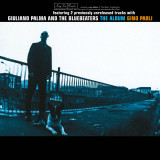
The Bluebeaters landmark debut album from 1999 receives a first-ever vinyl release. Featuring band's hits like Cher's "Believe" or Black's "Wonderful Life" all cooked in a strictly mid 60s Jamaican Blue Beat & Rock Steady style. Gatefold 2LP clear vinyl with printed inserts, limited to 500 copies, instant collector's item.
Record Kicks in collaboration with Universal Music Italy presents the release of The Bluebeaters seminal debut LP "The Album" for the first time ever on wax on a limited edition clear vinyl double LP on March 31. Way before the vinyl comeback of the 2010s, "The Album" was released in 1999 on CD and on two limited edition promo 12"s that are now very in-demand in the scene on V2 Records. "The Album" marked a generation of Soul, Rock Steady and Reggae fans in Italy selling over 40.000 physical copies and now 24 years after its original release, it gets published on full vinyl.
Fronted by "The King" Giuliano Palma on vocals backed with members of cult Italian bands of the 90s such as "Casino Royale", "Africa Unite" and "Fratelli di Soledad", The Bluebeaters' analog recordings finally find the vinyl format they deserve. On the album's track list you can find Jamaican music classics such as "World's Fair" from the Skatalites, Joe Higgs' "There's a Reward" or Bob Marley's "Coming In From The Cold" mixed with hits such as Cher's "Believe", Black's "Wonderful Life" or even 1978 "See You Tonite" by Gene Simmons from The Kiss that perfectly sound as if they were recorded by Clement "Coxsone" Dodd at Studio1 in Kingston in 1966.
The Bluebeaters are not newcomers on Record Kicks, the Milan label released their "Everybody Knows" album in 2015. Top Italian musicians in love with vintage Jamaican ska and reggae and blessed by Ken Booth, during the last 25 years of their career they headlined festivals like Rototom Sunsplash and International Ska Fest in London. Among their fans, they count the likes of Gaz Mayall, David Rodigan and the legendary late lamented Lloyd Knibb (The Skatalites).
The reissue of The BB's "The Album" is part of Record Kicks' 2023 initiatives to celebrate its 20th anniversary. Side by side with similar imprints like Daptone, Big Crown, Colemine or Timmion Records, under its motto "The explosive sound from Today's scene", Milan-based record label and music publishing Record Kicks, has been pitching the contemporary funk & soul scene since 2003. With over 250 physical releases under the belt, the label has released bands from all over the globe and earned support of VIP fans such as rap superstars Jay-Z, Tyler The Creator and Dr. Dre, who sampled the label's catalogue.
Public Image Ltd. (PiL) will release Hawaii on 7” limited edition vinyl on 31st March. The release follows an incredibly brave and well received performance on The Late Late Show Eurovision Special on Friday 3rd February, in which John Lydon’s heartfelt emotions were visibly on show.
The track is the most personal piece of songwriting and accompanying artwork that Lydon has ever shared. The song is a love letter to John's wife of nearly 5 decades, Nora, who is living with Alzheimer’s. A pensive, personal yet universal love song that will resonate with many, the song sees John reflecting on their lifetime well spent and in particular one of their happiest moments together in Hawaii. The powerfully emotional ballad is as close as John will ever come to bearing his soul. “It is dedicated to everyone going through tough times on the journey of life, with the person they care for the most,” John says. “It’s also a message of hope that ultimately love conquers all.” Celebrating their 40-year anniversary in 2018, Public Image Ltd. haven’t been going quite as long as John and Nora, however, the band is widely regarded as one of the most innovative and influential bands of all time.
PiL’s music and vision has earned them 5 UK Top 20 singles and 5 UK Top 20 albums. With a shifting line-up and unique sound - fusing rock, dance, folk, pop and dub – Lydon guided the band from their debut album First Issue in 1978 through to 1992’s That What Is Not, before a 17 year hiatus. Lydon reactivated PiL in 2009, touring extensively worldwide and releasing two critically acclaimed albums This is PiL in 2012 followed by their 10th studio album What The World Needs Now… in 2015, which peaked at number 29 in the official UK album charts and picked up fantastic acclaim from both press and public. (The album also peaked at number 3 in the official UK indie charts and number 4 in the official UK vinyl charts). What The World Needs Now… was self-funded by PiL and released on their own label ‘PiL Official’ via Cargo UK Distribution. John Lydon, Lu Edmonds, Scott Firth and Bruce Smith continue as PiL. They are the longest stable line-up in the band's history and continue to challenge and thrive. PiL will be releasing their new album ‘End Of World’ this year. Details to be announced soon…
“Uncharacteristically soul-bearing” - Pitchfork
“a swooning, poignant ballad awash with memories of happier times… He’s remarkably tender as he croons: “Don’t fly too soon / No need to cry, in pain / You are loved.” It’s the vulnerability that is most striking. Lydon’s love for his wife shines through like sunrays breaking through clouds, casting everything in a golden light: “I remember you,” he reassures her. He’s backed by harmonising chants of “aloha”, the Hawaiin term that is both a greeting and a farewell. It’s a message from the heart, overflowing with spirit and compassion. What better word for what Lydon is trying to convey here?” - The Independent
“a beautiful and rueful ballad written by 66-year-old Lydon to his wife Nora, who suffers from Alzheimer’s. It’s a peach of a track: both pensive and personal, it reflects on one of their happiest times together in Hawaii. “Remember me/ I remember you… You are loved,” not-so-Rotten sings over a lush soundscape of gently twanging guitars vaguely reminiscent of Fleetwood Mac’s Albatross.” - Telegraph
Red Vinyl[30,21 €]
Fans von Porcupine Tree, Haken, Green Carnation und Muse werden sich beim Sound von Empyre zu Hause fühlen, denn die Band setzt auf Kontraste und Tiefe. Das Quartett verbindet seine gewaltigen Riffs mit sehr persönlichen Texten, die vom leidenschaftlichen Gesang von Frontmann Henrik Steenholdt geprägt werden.
Eine Welt der dunklen Introspektion und Perspektive, die einen nach innen gerichteten und gefühlsbetonten Standpunkt feiert. Gemischt von Chris Clancy (Massive Wagons/Those Damn Crows).
— Als CD oder schwarzes Vinyl erhältlich
— Das zweite Album der angesagten britischen Rockband,
und das erste für Kscope
— „Empyres Musik klingt kolossal“ (Planet Rock)
— „Atmosphärischer, aber druckvoller moderner Rock“
(Classic Rock UK)
Melanie Martinez is set to release her new album ‘Portals on March 31st, with the first track off the album, ‘DEATH’ set to release alongside the official music video on March 17th.
Melanie Martinez's creative drive and talents have always distinguished her from other musicians. Her compelling music and visual art have created a rabid global fanbase with over 8.4 million followers on Instagram, 11.4 million subscribers on YouTube, 6.3 billion global streams, and 2.4 billion official YouTube views. After releasing her platinum-certified 2015 debut album, Cry Baby—which reached No. 1 on Billboard's alternative albums chart and has amassed over 3.5 billion streams worldwide —she conceived and directed a video for each song on the album. These mini-movies traced the traumas and insecurities experienced by the album's character, Cry Baby. As of 2020, every song on Cry Baby is RIAA certified Gold or higher, including the 2X Platinum “Dollhouse” and the Platinum “Pity Party,” “Carousel,” “Mad Hatter,” and “Soap.”
Melanie’s sophomore album and film, K-12, is another ambitious triumph with debuts at #3 on the Billboard 200 Chart, #1 on the Billboard Alternative Album Chart, #1 on the Billboard Soundtrack Chart, and a nomination for “Top Soundtrack” at the 2020 Billboard Music Awards. K-12's music is a vibrant and singular melting pot of low-key hip-hop, soulful pop and indie-leaning electro. K-12's universe is an expansion of the one introduced in Cry Baby. Using lyrics rich with metaphor, songs address the struggle to find a place to belong—including within friendships, the physical world and romantically—even when fitting into society feels like an uphill battle. Since releasing her K-12 album last September, Melanie has released 13 new music videos from the project which have now garnered over 100 million views collectively.
Standard Black Vinyl LP w/ Foil stamped jacket, printed inner sleeves + DL card. Legendary Tacoma, Washington mathcore/hardcore/metal band Botch's debut full-length American Nervoso was originally recorded in 1998, eventually becoming one of the most ground-breaking records during a pivotal shift in heavy music. Now, the band's debut album is set to be re-issued on Sargent House 25 years after its original release. The album features white-hot guitar action, scathing vocals, sweet bass moves, and torrential drums, smashing existing precepts of hardcore and redefining both the word and the music for a generation of kids and grizzled vets alike. Bassist Brian Cook, guitarist David Knudson, drummer Tim Latona, and vocalist Dave Verellen formed Botch in 1993, eventually becoming one of the most significant bands of their time. Their final show was June 15, 2002, the same day as the release of their final EP, An Anthology of Dead Ends. The members would go on to play in These Arms Are Snakes, Minus the Bear, and Russian Circles, among others, with acclaim for the band coming mostly post-breakup. Over 20 years since they played their final show, Botch are reuniting for select dates in the Pacific Northwest in February 2023. 25th anniversary re-issue of Botch's critically lauded debut album. Botch have their first live performances in over 20 years for early 2023. Botch have been included on "Most Influential lists" by outlets like Decibel, Rock Sound, Alternative Press, A.V. club + more
- A1: Time? One Of The Most Complex Expressions?
- A2: Ian Fish U.k. Heir (Moonage Daydream Mix 1)
- A3: Hallo Spaceboy (Remix Moonage Daydream Edit)
- A4: Medley: Wild Eyed Boy From Freecloud
- A5: All The Young Dudes
- A6: Oh! You Pretty Things (Live)
- A7: Life On Mars? (2016 Mix - Moonage Daydream Edit)
- A8: Moonage Daydream (Live)
- B1: Medley: The Jean Genie / Love Me Do / The Jean Genie (Featuring Jeff Beck)
- B2: The Light (Excerpt)
- B3: Warszawa (Live Moonage Daydream Edit)
- B4: Quicksand (2021 Mix - Early Version)
- B5: Medley: Future Legend / Diamonds Dogs Intro / Cracked Actor
- C1: Rock ?N' Roll With Me (Live)
- C2: Aladdin Sane (Moonage Daydream Edit)
- C3: Subterraneans
- C4: Space Oddity (Moonage Daydream Mix)
- C5: V-2 Schneider
- D1: Sound And Vision (Moonage Daydream Mix)
- D2: A New Career In A New Town (Moonage Daydream Mix)
- D3: Word On A Wing (Moonage Daydream Excerpt)
- D4: Heroes? (Live Moonage Daydream Edit)
- D5: J. (Moonage Daydream Mix)
- D6: Ashes To Ashes (Moonage Daydream Mix)
- E1: Cygnet Committee/Lazarus (Moonage Daydream Mix)
- E2: Memory Of A Free Festival (Harmonium Edit)
- E3: Modern Love (Moonage Daydream Mix)
- E4: Let's Dance (Live Moonage Daydream Edit)
- E5: The Mysteries (Moonage Daydream Mix)
- E6: Rock ?N' Roll Suicide (Live Moonage Daydream Edit)
- E7: Ian Fish U.k. Heir (Moonage Daydream Mix 2)
- F1: Word On A Wing (Moonage Daydream Mix)
- F2: Hallo Spaceboy (Live Moonage Daydream Mix)
- F3: I Have Not Been To Oxford Town (Moonage Daydream A Cappella Mix Edit)
- F4: Heroes": Iv. Sons Of The Silent Age (Excerpt)
- F5: ? (Moonage Daydream Mix Edit)
- F6: Ian Fish U.k. Heir (Moonage Daydream Mix Excerpt)
- F7: Memory Of A Free Festival (Moonage Daydream Mix Edit)
- F8: Starman
- F9: You're Aware Of A Deeper Existence?
- F10: Changes
- F11: Let Me Tell You One Thing?
- F12: Well You Know What This Has Been An Incredible Pleasure?
- D7: Move On (Moonage Daydream A Cappella Mix Edit)
- D8: Moss Garden (Moonage Daydream Edit)
Nach der Veröffentlichung der 2CD-Version des Albums Moonage Daydream im letzten Jahr, wird der Soundtrack nun am 31. März als 3LP Vinyl veröffentlicht.
"Moonage Daydream" beleuchtet das Leben und Genie von David Bowie, einem der produktivsten und einflussreichsten Künstler der jüngeren Musikgeschichte.
Auf Spielfilmlänge nimmt uns Brett Morgen mit in die Welt Bowies, erforscht anhand von großartigem, vielfältigem und nie zuvor gesehenem Filmmaterial, Live-Auftritten und Musik (Morgen sichtete vier Jahre die Archive des David Bowie Estates) seine kreative, musikalische und spirituelle Reise.
Durch den Film führt uns dabei die Erzählerstimme von David Bowie selbst.
Das Begleitalbum zu "Moonage Dream" enthält Songs aus Bowies gesamter Karriere, darunter bisher ungehörtes Material, speziell für den Film und dieses Album angefertigte Mixe und Gesprächspassagen Bowies.
Zu den Highlights des Tracklistings zählen ein bisher unveröffentlichtes Live-Medley von "The Jean Genie / Love Me Do / The Jean Genie", aufgenommen beim berühmt-berüchtigten letzten Ziggy-Stardust-Konzert im Londoner Hammersmith Odeon 1973 und mit Jeff Beck an der Gitarre. Weitere Raritäten sind eine frühe Version
des Hunky-Dory-Favoriten "Quicksand" und eine bisher unveröffentlichte Live-Version von "Rock 'n' Roll With Me", mitgeschnitten bei der legendären "Soul Tour" 1974.
On the heels of his already critically acclaimed (yes, already!) retrospective, World Spirituality Classics 3: The Muslim Highlife of Alhaji Waziri Oshomah, Alhaji Waziri Oshomah — the Oyoyo King, the Godfather of Afemai Music, the Etsako Super Star, Mr. Please Please Please, Mr. Dynamite — returns with Vol. 2.
Along with the other four volumes of the series, Vol. 2 is now available—for the very first time!—as part of a complete set (in a box): Vol 1 - 5 (1978 - 1985) (November 4, 2022).
Waziri hails from a small part of Edo State in southern Nigeria called Afemailand, known for being a harmonious region where Muslims and Christians live—and dance—together. And there, as a devout Muslim and an exemplar of religious piety in his community, Waziri’s music fuses Etsako/Afemai folk styles with pan-Nigerian highlife and pop to create a sublime vehicle for his Islamic philosophy that gets everyone—Muslims, Christians, whoever—on the dancefloor.
Vol. 2 focuses on Waziri’s illustrious mid-career output—the music he created during the years leading up to and after he performed his first hajj. Every song here (one of which you might recognize from The Muslim Highlife) strikes his signature balance of traditional music, highlife, and funk, as he entreats you to stay on the straight and narrow, though there’s nothing straight about his beat.
On and off the record…
This is the second of the five-part Volume Series, which was recently compiled for the first time in the limited-edition box set, Vol. 1 - 5 (1978 - 1984) (November 4, 2022).
This release follows World Spirituality Classics 3: The Muslim Highlife of Alhaji Waziri Oshomah (September 23, 2022).
The Muslim Highlife of Alhaji Waziri Oshomah, received an 8/10 from Uncut, ★★★★ from MOJO, and has been called “therapy, worship, ecstasy” by Pitchfork (7.2).
Release supported by archival and new video content.
Alhaji Waziri Oshomah will play select shows—along with his wife and musical collaborator Madam Hassanah Waziri—in the U.S. and Europe throughout 2023. l He can perform sets as long as 3-4 hours! (Depending on the financial strength of the village).
Sings in English and local languages and is regarded as #1 Singer in all of Edo State.
The rock supergroup Beck, Bogert & Appice was formed in
1972 by Jeff Beck, evolving from the Jeff Beck Group. In addition to Beck, the trio consisted of bassist Tim Bogert and drummer Carmine Appice, who had previously played together in Vanilla Fudge and Cactus. They only released one studio album, Beck, Bogert & Appice, which came out in 1973 and features a mix of (hard) rock, blues and funk. The album contains Beck’s version of “Superstition”, written by Stevie Wonder. It was produced by Don Nix, who is one of the more obscure figures in Southern soul and rock and has worked with Freddie King and Furry Lewis amongst others.
To celebrate its 50th anniversary, Beck, Bogert & Appice is available as a limited edition of 1500 individually numbered copies on translucent red coloured vinyl.
- A1: I Feel The Earth Move
- A2: So Far Away
- A3: It’s Too Late
- A4: Home Again
- A5: Beautiful
- A6: Way Over Yonder
- B1: Way Over Yonder
- B2: You’ve Got A Friend
- B3: Where You Lead
- B4: Will You Love Me Tomorrow?
- B5: Smackwater Jack
- C1: Tapestry
- C2: (You Make Me Feel Like) A Natural Woman
- C3: Goffin/King Medley
- C4: Hey Girl
- D1: Jazzman
- D2: Up On The Roof
- D3: Locomotion
- D4: I Feel The Earth Move (Reprise)
- D5: You’ve Got A Friend (Reprise)
'Angstkrig' handelt vom unmenschlichen Druck der modernen Welt auf den Menschen und den psychischen Folgen. Die Songs thematisieren Situationen bis zum Nervenzusammenbruch. Das riffbetonte, zweite Album der dänischen Black-Metaller hüllt den Hörer ein in eine großartige Dunkelheit aus norwegischem Schwarz, schwedischer Melodie, dänischem Groove und isländischer Melancholie. Produziert von Frederik Brandt Jakobsen (Disillusionist, Sharon Stone, DÓTTIR) im Hikikomori Studio. Mit Gastauftritten des Gitarristen Mendel (Aborted), Nils Courbaron (Sirenia), Carl Mörner Ringström und des dänischen Rappers Jøden.
- A1: India
- A2: Child Of Nature
- A3: Anna Was Mine (Demo Version)
- A4: Nature Boy (Mantovani Orchestra)
- A5: Land Of Love (Come My Love And Live With Me)
- A6: Hey Jacque (Hey Jacque)
- A7: Palm Springs (The Ray Anthony Orchestra)
- A8: Umgowah
- B1: Wild Boy ( With Mort Wise & The Wisemen And Rocky Holman)
- B2: Surfer John (Nature Boy & Friends)
- B3: Eden’s Island (Arthur Lyman)
- B4: Monterey (With John Harris And Paul Horn)
- B5: Overcomers Of The World (With John Harris)
- B6: The Clam Man
- B7: Nature Boy (The Talbot Brothers)
Colour Vinyl[31,89 €]
“Wild Boy …” is a reissue of the well-known 2016 release curated by Brian Chidester, renowned researcher and biographer of Eden Ahbez. Especially for this album, Brian wrote an interesting text about Abi’s life, which definitely became the decoration of the release.
With the new 2020 re-release, we went a little further and kept what is commonly referred to as studio cuts. It’s a few more minutes in the studio with ahbez himself, full of emotion and life. In addition, to the delight of fans, the edition includes an additional composition Nature Boy (Mantovani Orchestra).
Especially, it is worth noting the outstanding mastering prepared from practically decomposed tapes by the Grammy-nominated Jessica Thompson, which guarantees the deepest and warmth possible sound. Jessica a huge ahbez fan and we’re highly appreciated for what she has done to save his music for the future.
Eden Ahbez is definitely at the origin of psychedelic music and this release can be taken as further proof. Over the past twenty years, the iconic figure of the world’s first hippie Eden ahbez has become famous primarily for his 1948 song “Nature Boy”, praising universal love, and his amazingly solo album from the 1960s called “Eden’s Island” – one from the first concept albums in the history of music and probably the first psychedelic music album. “Wild Boy: The Lost Songs Of Eden Ahbez” deepens understanding of the origins of the psychedelic movement in the 1950s.
The disc contains a musical selection of works by Eden ahbez himself, written by him in the period after Nature Boy. The inclusion of songs such as “Palm Springs” – Ray Anthony Orchestra and “Hey Jacques” by Erta Kitt gives the listener the chance to discover for the first time the little-known recordings of world-famous artists composed by Eden ahbez. Through “Wild Boy” and “Surfer John” you can hear the author’s handling of absurd rock and exotic experimentation, as well as sweet psychedelic pop like Monterey (with Paul Horn on flute). Overall, Wild Boy: The Lost Songs Of Eden Ahbez offers an overview of the lost works of 1949-1971 with seven unpublished recordings and eight rare singles.
If in 2020 you are missing the hallucinogenic content in Eden Ahbez, it amazingly makes up for that deficiency with simple chords, expansive arrangements, and lyrics about travel, relaxation, free love, and spirituality. Thus creating the standard of psychedelic music. Eden Ahbez’s songs weren’t only fantasy and his personal philosophy was the real thing that he lived.
reviews:
“This carefully and extensively researched compilation culls covers by top notch mainstream artists juxtaposed with unreleased Eden recordings. What might sound like a mixed bag is actually more like a chronological, musical non-fiction novel about Eden Ahbez. While Eden was writing hundreds of songs and performing live and making recordings in various styles, his songs were also being picked up by popular artists like Nat King Cole and Eartha Kitt who recorded with a more polished mainstream style. There are also some early rock n roll style recordings here. Eden’s professionally recordings often end up as Novelty Pop records such as “Child of Nature” and “The Clam Man” but if you read between the lines and listen to the lyrics it is pretty eye-opening that he is singing about Eastern-religion-style and pre-hippie philosophies about being at one with the planet Earth.
All of this is explained in the lengthy liner notes inside the lp along with a few choice photos that establish Eden as a founding father of Southern California mystic/psychedelic music.” – Tiki_News
“Eden Ahbez’s life philosophy was summed up in the lyrics of his most famous song, “Nature Boy,” a 1948 hit for Nat King Cole: the song describes a “strange enchanted boy” who wanders the world in search of truth. “The greatest thing you’ll ever learn,” he concludes, “is to love and be loved in return.” Ahbez was a pre-cursor of California’s beatniks and hippies, and an exalted icon of ex-otica via his rare 1960 album Eden’s Island. Beyond “Nature Boy” and Eden’s Island, though, there were nu-merous lesser-known Ahbez record-ings. Ahbez biographer Brian Chidester has been doing an exemplary job of archiving and documenting that catalog of work. The Exotic World of Eden Ahbez (reviewed in UT#38) appeared a few years ago, gathering together 14 Ahbez-related rarities” – Ugly Things
The endlessly prolific and unpredictable Richard Youngs returns to Black Truffle with Modern Sorrow. As any Youngs fan knows, one of the great pleasures of following his career comes from not being able to predict what the next entry in his inexhaustible string of releases will bring: Unaccompanied voice? Country songs? Shakuhachi? Guitar pieces played with his feet? Shredding fuzz bass over the top of hyper-speed distorted drum machine beats? Continuing in the grand Youngs tradition of exploring new techniques, instrumentation and approaches while bringing to all of them his idiosyncratic touch, Modern Sorrow serves up two sides of twistedly elegiac, radically stark takes on contemporary pop production. The side-long title track is built from a piano sample, synthetic bass notes and organ swells, and an iterative blurt that seems to have wandered out of a 90s jungle track. Eventually joined by a shuffling drum machine, the track moves very slowly through a series of chords, each delayed long enough that its arrival comes as a major event. Over the top, Youngs’ heavily pitch-corrected voice is heard. The processing paints his signature wandering melodic improvisations with shades of contemporary R&B; at the same time, it cuts the natural swoops and glides of Youngs’ melodies into rapid microtonal trills, giving his voice a quavering, middle eastern feel. Unfolding languorously over more than 17 minutes, the piece’s final minutes make room for an extended drumless coda, returning to the stark palette of its opening moments. On the second side, the two parts of ‘Benevolence’ push this minimalism ever further, its first half consisting of nothing more than a remarkably slow drum machine hit, bass-heavy chords and pitch-corrected voice, here so heavily processed that it starts to resemble a shawn solo. In its second part, the harmonic foundation drops out from under the piece while two more voices join; at some moments the voices pause, leaving nothing more than isolated, metronomic drum hits. Though Youngs has explored the sound worlds associated with dance music and contemporary pop in previous work, here these elements are radically reduced, foregrounding a meditative bed of silence with a boldness equal to any more academically inclined contemporary composer. Embracing the accessible digital tools of contemporary music production just as at another moment he would pick up a kazoo, like much of Youngs’ work Modern Sorrow uses simple DIY tools to generous ends, producing formally radical music that remains both free from pretension and deeply moving.
”How Many Dreams?” ist das mit Spannung erwartete vierte Studioalbum des australischen Dreiergespanns DMA’S. Mit den Singles ”I Don’t Need To Hide” und ”Everybody’s Saying Thursday’s The Weekend” ist das Album ein weiterer Schritt nach vorne für eine Band, die sich auf einem steilen Weg nach oben befindet.
Über die Single ”Everybody’s Saying Thursday’s The Weekend” sagt Gitarrist Johnny Took: ”In diesem Song geht es darum, die Dinge loszulassen, die uns bedrücken, und mit einem Gefühl von Optimismus in die Zukunft zu schauen.” – ein Grundgedanke, der sich durch das gesamte Album zieht.
Teilweise in Großbritannien mit Rich Costey (Sigur Ros, Muse, Foster the People) und Stuart Price (Dua Lipa, The Killers, Madonna) aufgenommen, bevor es in ihrer Heimatstadt Sydney mit Konstantin Kersting (Mallrat, The Jungle Giants) fertiggestellt wurde, ist ”How Many Dreams?” ein ambitioniertes Album mit einer klanglich weiten Landschaft; es gibt Songs zum Raven und Songs zum Weinen.
DMA’S tauchten 2014 mit ihrer Debütsingle ”Delete” auf der Bildfläche auf.
Seitdem hat die Band drei hochgelobte Alben veröffentlicht, wobei ihr letztes Album ”THE GLOW” (veröffentlicht im März 2020) auf Platz 4 in Großbritannien, Platz 1 in Schottland und Platz 2 in Australien in die Charts einstieg.
”How Many Dreams?” ist das mit Spannung erwartete vierte Studioalbum des australischen Dreiergespanns DMA’S. Mit den Singles ”I Don’t Need To Hide” und ”Everybody’s Saying Thursday’s The Weekend” ist das Album ein weiterer Schritt nach vorne für eine Band, die sich auf einem steilen Weg nach oben befindet.
Über die Single ”Everybody’s Saying Thursday’s The Weekend” sagt Gitarrist Johnny Took: ”In diesem Song geht es darum, die Dinge loszulassen, die uns bedrücken, und mit einem Gefühl von Optimismus in die Zukunft zu schauen.” – ein Grundgedanke, der sich durch das gesamte Album zieht.
Teilweise in Großbritannien mit Rich Costey (Sigur Ros, Muse, Foster the People) und Stuart Price (Dua Lipa, The Killers, Madonna) aufgenommen, bevor es in ihrer Heimatstadt Sydney mit Konstantin Kersting (Mallrat, The Jungle Giants) fertiggestellt wurde, ist ”How Many Dreams?” ein ambitioniertes Album mit einer klanglich weiten Landschaft; es gibt Songs zum Raven und Songs zum Weinen.
DMA’S tauchten 2014 mit ihrer Debütsingle ”Delete” auf der Bildfläche auf.
Seitdem hat die Band drei hochgelobte Alben veröffentlicht, wobei ihr letztes Album ”THE GLOW” (veröffentlicht im März 2020) auf Platz 4 in Großbritannien, Platz 1 in Schottland und Platz 2 in Australien in die Charts einstieg.
- A1: Jj's Powerhouse ? Running For The Line
- A2: Storm Queen ? Raising The Roof
- A3: Jameson Raid ? It?S A Crime
- A4: A.r.c. ? Homemade Wine
- A5: Metropolis ? The Raven
- B1: Prowler ? Temporary Insanity
- B2: Christian Steel ? Need Your Love
- B3: Black Rose ? Sidewinder
- B4: Dark Age ? Star Trippin?
- B5: Sorcery - Whales
If you were smart enough to get your grubby paws on the first Scrap Metal compilation, you probably have a pretty good idea of what you’re in for with our second installment. Featuring long-lost gems from ultra-rare 45s and private press singles—plus one previously unreleased banger—Scrap Metal 2 maintains a steady NWOBHM course. Packed with infectious outliers and supremely talented one-and-done metal warriors from the crucial British movement of the late ’70s and early ’80s (and some killer American obscurities inspired by them), this collection delivers all the fist-pumping, riff-mongering and flashy solos of heavy metal’s golden age. As always, every track has been officially licensed and every artist gets paid. As a late entry into the NWOBHM sweepstakes, JJ’s Powerhouse was formed in Merseyside, England, by guitarist Jon “J.J.” Cox with members of his previous band, Quad. Much like the opener to the original Scrap Metal comp, you can hear early Metallica coursing through this legendary ripper. Coincidentally, this ultra-rare 45 was released in ’83, the same year as Kill ’Em All. Taking their name from a 1978 sci-fi novel by Marion Zimmer Bradley, Welsh super troopers Storm Queen reveled in animal-print clothing and flying Vs. The Motörhead-meets-Priest anthem “Raising the Roof” is the flipside to their only single, which the band self-released in 1982. Led by guitarist Dave Morse, Storm Queen’s earliest lineup included bassist Bryn Merrick (RIP), who would go on to join The Damned. Roaring out of Birmingham, England, in 1975, Jameson Raid palled around with fellow Brummies Black Sabbath and named themselves after a failed 19th century attack that helped kick off South Africa’s Second Boer War. Their three-song 1979 debut featured the infectious “It’s a Crime,” which comes across like a deadly hard-glam version of Budgie. Still fronted by vocalist Terry Dark, they’re going strong as of 2022. A.R.C., a punky proto-metal group from the UK, released the boozy single “Home Made Wine” b/w “The Chase” in 1979 and—as far as we know—were never heard from again. They’re not to be confused with a gang of Tolkien enthusiasts also called A.R.C., who released two NWOBHM singles in the early ’80s and actually were heard from again. Nonetheless, the A.R.C. we have here was led by a thirsty lad named Klaus Brunnenkant, who liked to rock n’ roll all night and party every day. Both sides of Metropolis’ sole single bear the legend, “Unauthorized duplication shall result in getting your ass beat.” This San Jose metal squad released their only single in 1986 and dedicated it to Metallica bassist Cliff Burton, who had recently been killed in a bus accident. “The Raven” is the serpentine NWOBHM- and Edgar Allan Poe-influenced flipside to “Time Heals Everything,” and yeah, you can hear the guitars going out of tune on the solo, but that’s part of the charm. Of the two dozen or so metal bands that have called themselves Prowler over the years, we’re pretty sure this particular Prowler is the only one from San Diego. These dudes take a thrashier approach than most of the bands here on Scrap Metal 2: “Temporary Insanity” strikes a deft balance between early Anthrax and early Testament, with just enough hard rock swing to keep it from getting overly staccato. Self-released in ’86 as the band’s only single, the song is the flip to “I Love It.” Not much is known about Christian Steel beyond this: They put out their only single in 1983, which boasted “Need Your Love” as the flip to “I Don’t Want To.” The former, included here, sounds kinda like a dizzy, more metallic version of ’70s Jersey rockers Starz, who famously influenced the likes of Mötley Crüe, Poison and Twisted Sister. Ohio guitarist/vocalist Marty Soski’s career dates back to at least 1969 with the Inside Experience track “Be On My Way,” which we unearthed for our own Brown Acid: The Third Trip. This time, we’ve got a monster Soski cut that he recorded under the name Black Rose. Released in 1982, the absolutely smokin’ “Sidewinder” was the A-side on the band’s sole single. The main riff isn’t far off from Y&T’s major-label banger “Mean Streak,” which was released the following year. When Dark Age titled their 1987 album The Youngest Metal Band in the World, they weren’t even sort of kidding. Legend has it that “Star Trippin’,” which was released as a single a year earlier, was written by guitarist CJ Rininger when he was just 12 years old. His brother Dave, the vocalist, was two years younger. Old photos of the band—complete with pineapple haircuts—seem to bear this story out. Either way, the song is pure flash metal, conjuring Sunset Strip sleaze all the way from Ohio. By now, all you heads know Los Angeles magic men Sorcery from their storied appearance in—and soundtrack for—the death-defying Ozploitation flick Stunt Rock. What we have here in “Whales” is a previously unreleased track from the same 1978 recording sessions. It’s a little bit Zeppelin, a little bit prog, and a whole lotta thundering riffage. Why this languished in the vaults for so long is anyone’s guess. Better late than never!
- A1: Jj's Powerhouse ? Running For The Line
- A2: Storm Queen ? Raising The Roof
- A3: Jameson Raid ? It?S A Crime
- A4: A.r.c. ? Homemade Wine
- A5: Metropolis ? The Raven
- B1: Prowler ? Temporary Insanity
- B2: Christian Steel ? Need Your Love
- B3: Black Rose ? Sidewinder
- B4: Dark Age ? Star Trippin?
- B5: Sorcery - Whales
If you were smart enough to get your grubby paws on the first Scrap Metal compilation, you probably have a pretty good idea of what you’re in for with our second installment. Featuring long-lost gems from ultra-rare 45s and private press singles—plus one previously unreleased banger—Scrap Metal 2 maintains a steady NWOBHM course. Packed with infectious outliers and supremely talented one-and-done metal warriors from the crucial British movement of the late ’70s and early ’80s (and some killer American obscurities inspired by them), this collection delivers all the fist-pumping, riff-mongering and flashy solos of heavy metal’s golden age. As always, every track has been officially licensed and every artist gets paid. As a late entry into the NWOBHM sweepstakes, JJ’s Powerhouse was formed in Merseyside, England, by guitarist Jon “J.J.” Cox with members of his previous band, Quad. Much like the opener to the original Scrap Metal comp, you can hear early Metallica coursing through this legendary ripper. Coincidentally, this ultra-rare 45 was released in ’83, the same year as Kill ’Em All. Taking their name from a 1978 sci-fi novel by Marion Zimmer Bradley, Welsh super troopers Storm Queen reveled in animal-print clothing and flying Vs. The Motörhead-meets-Priest anthem “Raising the Roof” is the flipside to their only single, which the band self-released in 1982. Led by guitarist Dave Morse, Storm Queen’s earliest lineup included bassist Bryn Merrick (RIP), who would go on to join The Damned. Roaring out of Birmingham, England, in 1975, Jameson Raid palled around with fellow Brummies Black Sabbath and named themselves after a failed 19th century attack that helped kick off South Africa’s Second Boer War. Their three-song 1979 debut featured the infectious “It’s a Crime,” which comes across like a deadly hard-glam version of Budgie. Still fronted by vocalist Terry Dark, they’re going strong as of 2022. A.R.C., a punky proto-metal group from the UK, released the boozy single “Home Made Wine” b/w “The Chase” in 1979 and—as far as we know—were never heard from again. They’re not to be confused with a gang of Tolkien enthusiasts also called A.R.C., who released two NWOBHM singles in the early ’80s and actually were heard from again. Nonetheless, the A.R.C. we have here was led by a thirsty lad named Klaus Brunnenkant, who liked to rock n’ roll all night and party every day. Both sides of Metropolis’ sole single bear the legend, “Unauthorized duplication shall result in getting your ass beat.” This San Jose metal squad released their only single in 1986 and dedicated it to Metallica bassist Cliff Burton, who had recently been killed in a bus accident. “The Raven” is the serpentine NWOBHM- and Edgar Allan Poe-influenced flipside to “Time Heals Everything,” and yeah, you can hear the guitars going out of tune on the solo, but that’s part of the charm. Of the two dozen or so metal bands that have called themselves Prowler over the years, we’re pretty sure this particular Prowler is the only one from San Diego. These dudes take a thrashier approach than most of the bands here on Scrap Metal 2: “Temporary Insanity” strikes a deft balance between early Anthrax and early Testament, with just enough hard rock swing to keep it from getting overly staccato. Self-released in ’86 as the band’s only single, the song is the flip to “I Love It.” Not much is known about Christian Steel beyond this: They put out their only single in 1983, which boasted “Need Your Love” as the flip to “I Don’t Want To.” The former, included here, sounds kinda like a dizzy, more metallic version of ’70s Jersey rockers Starz, who famously influenced the likes of Mötley Crüe, Poison and Twisted Sister. Ohio guitarist/vocalist Marty Soski’s career dates back to at least 1969 with the Inside Experience track “Be On My Way,” which we unearthed for our own Brown Acid: The Third Trip. This time, we’ve got a monster Soski cut that he recorded under the name Black Rose. Released in 1982, the absolutely smokin’ “Sidewinder” was the A-side on the band’s sole single. The main riff isn’t far off from Y&T’s major-label banger “Mean Streak,” which was released the following year. When Dark Age titled their 1987 album The Youngest Metal Band in the World, they weren’t even sort of kidding. Legend has it that “Star Trippin’,” which was released as a single a year earlier, was written by guitarist CJ Rininger when he was just 12 years old. His brother Dave, the vocalist, was two years younger. Old photos of the band—complete with pineapple haircuts—seem to bear this story out. Either way, the song is pure flash metal, conjuring Sunset Strip sleaze all the way from Ohio. By now, all you heads know Los Angeles magic men Sorcery from their storied appearance in—and soundtrack for—the death-defying Ozploitation flick Stunt Rock. What we have here in “Whales” is a previously unreleased track from the same 1978 recording sessions. It’s a little bit Zeppelin, a little bit prog, and a whole lotta thundering riffage. Why this languished in the vaults for so long is anyone’s guess. Better late than never!
"Juliette’s new album. This disc displays an ability to mix the anecdotal and the tragic, objects and people. Laughter and tears. Sun and shadows. In this disc everyday life is transformed, there is life in all its paradoxes, dogs, squeakers, bells, a cello, hearts beating and refusing to give up, forgotten cars, the Devil and many other things. Each song is a new act of a play, a new curtain that opens. A universe that takes shape. Faithful, this album was produced with his accomplice Renaud Letang.
Reviews: R2, London Macadam, le Petit Journal Ads: R2, London Macadam"
'Angstkrig' handelt vom unmenschlichen Druck der modernen Welt auf den Menschen und den psychischen Folgen. Die Songs thematisieren Situationen bis zum Nervenzusammenbruch. Das riffbetonte, zweite Album der dänischen Black-Metaller hüllt den Hörer ein in eine großartige Dunkelheit aus norwegischem Schwarz, schwedischer Melodie, dänischem Groove und isländischer Melancholie. Produziert von Frederik Brandt Jakobsen (Disillusionist, Sharon Stone, DÓTTIR) im Hikikomori Studio. Mit Gastauftritten des Gitarristen Mendel (Aborted), Nils Courbaron (Sirenia), Carl Mörner Ringström und des dänischen Rappers Jøden.
Black Vinyl[27,52 €]
Fans von Porcupine Tree, Haken, Green Carnation und Muse werden sich beim Sound von Empyre zu Hause fühlen, denn die Band setzt auf Kontraste und Tiefe. Das Quartett verbindet seine gewaltigen Riffs mit sehr persönlichen Texten, die vom leidenschaftlichen Gesang von Frontmann Henrik Steenholdt geprägt werden.
Eine Welt der dunklen Introspektion und Perspektive, die einen nach innen gerichteten und gefühlsbetonten Standpunkt feiert. Gemischt von Chris Clancy (Massive Wagons/Those Damn Crows).
All of us carry a piece of where we’re from with us, but these parcels of fallow land often in a uniquely mysterious way become the prey that nourishes our aspirations. Agnès Gayraud a refined thinker by day that transforms into la Féline at night left Tarbes many years ago in search of greener pastures. After making a name for herself with Adieu l’Enfance (2014), Triomphe (2017), and Vie Future (2019), the author and musician has evolved once again. Her latest release Tarbes reinvents the circle of life and challenges our preconceived notions. She welcomes us to her hometown with sweet and clear melodies over the backdrop of an electronic hum, reminiscent of Mark Twain classic Tom Sawyer. Tarbes is no more than a listen away. Physically prevented from returning to her hometown by the viral threat we all know all too well, Agnès found her way back with a small Electone home organ. The constraints of off-peak hours that called for some DIY savvy, slowly but surely, roused her spirit. With a drum machine, a bass and a guitar, she succeeded in making the young girl inside her smile again. With 13 songs and just as many adventures Tarbes is a concept album that tells the story of a young woman’s formative years, as spent in her hometown. The returning hymn doesn’t only imprint nostalgia, it paints the full emotional portrait of a town. Because for Agnès, Tarbes is not just her theater, but her whole world, showing how fiercely protective she is of her hometown in the song Solazur. Under a magnifying glass of emotion, and with the sentimental testimony that is La Panthère des Pyrénées, the artiste shows us the skeletons in our own closets. Tarbes, more than a brief stopover in a rail journey to the coast, broaches issues that touch on abandonment, desertification, aging and redevelopment that many French towns and cities face today. Alexandre Guirkinger’s photographs serve as album art that illustrates this strangely unique singularity. While fine-tuning this collection of stories, in an oh-so-intimate album where solitude rips away the mask of confidence, Agnès found solace in uniting with other spirits. For 3 songs Tarbes, Jeanne d’Albret and Fum, inspired by an Occitan poem of Louisa Paulin (1888-1944), she invited the young voices of Conservatoire Henri Duparc a building she knows intimately, despite never feeling allowed to enter as a child to breathe the energy of their adolescence into this record. She also collaborated with Lyon’s own François Virot to imbue his delicate rhythms into her work, as well as Belgian guitarist Mocke Depret. Lastly, La Féline entrusted the last production stages to her eternal partner in music, Xavier Thiry, with Stéphane “Alf” Briat on the mixing board. The final piece has a complex tranquility, surrounded by non-verbality, with Jeanne d’Albret, Louisa Paulin and the Pyrénées safeguarding Agnes’ secrets. With the calm reassurance of her metamorphoses, La Féline delivers a slice of silence to her town, serving as both her cradle and theater. Tarbes’ Théâtre des Nouveautés is where Agnès Gayraud, La Féline, has decided to present Tarbes to its residents on October 14, 2022. While “nouveautés” evokes newness, this theater is reminiscent of a future which is already outdated, where modernity is only vague and fictional, carrying reminders of French haute-kitsch accordionist Yvette Horner, whose parents were the caretakers of what was then called the Cani Eldorado a bastion of virtue through the 30s, with its lineup of Catholic films. However, by the 60s, it would have become a temple of pornographic cinema. Tarbes, “Les Nouveautés”, end card. In the mid 90s, then 16 years old, Agnès discovered the volatile dust and the ghosts of the past that were hidden in this apostate theater. This phantom bequeathed song the teenager with the gift of her undeniable talent at her first appearance on stage a high school performance of a guitar-laden ballad sung in Spanish, a language her Andalusian mother has infused her with. On October 14, 2022, Agnès returns to the stage, bass in hand and joined by François Virot (drums), Mocke Depret (guitar), Léa Moreau (keyboard) and the Conservatoire de Tarbes singers to perform the album in its entirety
Originally put together by a couple of Belgian Joy Division experts to celebrate the 25th anniversary of the sadly missed Ian Curtis-and the year that the Ian Curtis Movie began to be made. Now the movie is out to much critical acclaim. This album contains extremely rare audio interviews with all members of Joy Division - some of which have never seen the light of day before plus spoken word contribution on one number from Martin Hannett and a rare Martin Hannett interview. The interview sections are interspersed with superb live performances from various venues through the career of the band including rarities from Dutch and Belgian concert performances and a couple of rare alternative studio outtakes. The gatefold sleeve contains lots of Joy Division images and a detailed biographical article on the band.
Growing up in South Korea was difficult for the young Sun-Mi Hong, intent on a musical path but experiencing restrictions and negativity. Drumming became a refuge, a place to escape to. It took over her life and became an obsession for her. The sound and energy was a huge inspiration and helped channel the emotions she was feeling. Surrounded by negativity, criticism of her chosen path and pressure to follow a more secure, traditional career, her persistence and resilience prevailed and she made the move, a little over 10 years ago, to study in Amsterdam, an undertaking full of risk, facing a new culture with barriers in spoken and musical language. Step forward a decade and Sun-Mi has built a formidable reputation in her city, in the Netherlands and beyond, and is fast cementing her position as one of the leading up-and-coming talents on the European scene. Sun-Mi’s new record with her long-running quintet, balances meticulously crafted compositions with investigations into the great unknown of improvised music. Each record she’s released with the quintet up until this point, (First, Second and now Third Page: Resonance), chronicles her life as an artist and her unique path to her goal. Drifting between expressions of warmth and appreciation contrasted with moments of pure passion and catharsis, this is an album that cannot be ignored – it demands your attention and your focussed listening unlike anything else you are likely to hear.
Liverpool-born drummer Aynsley Dunbar was one of the most respected musicians on the international rock scene of the late ‘60s. His work with trailblazers such as John Mayall, David Bowie, Lou Reed and Frank Zappa, with whom he had a lengthy association, have assured his place in history. But Dunbar also laid down a marker as a bandleader in his own right. His debut album, Doctor Dunbar’s Prescription was a confident set of electric blues that was full of snappy tunes and high energy riffing. Recorded in 1971, Blue Whale is considerably more experimental, though. It is really a case of Dunbar drifting towards a hybrid of progressive rock and pyschedelia not far removed from Zappa’s surreally comic, bitingly sardonic world. And indeed the cover of his seminal ‘Willie The Pimp’ is one of the highlights of the set. Accompanied by excellent rhythm section players and soloists such as guitarists Ivan Zagni and Roger Sutton, bassist Peter Friedberg, pianist-organist Tommy Eyre, and vocalist Paul Williams, Dunbar hit a creative peak here that is emphatically maintained elsewhere on the album, which has mostly long pieces full of notable light and shade. This newly re-mastered version of Blue Whale puts one of the highpoints of Aynsley Dunbar’s illustrious career back under the spotlight. He was rightly inducted into the Rock & Roll Hall Of Fame in 2017 and there could be no more fitting example of his achievement than an album that sounds impressively fresh 50 years after it was made.
- A1: Garbage Day #3
- A2: Get-U-Now
- A3: What A N*Gga Know?
- B1: Sweet Premium Wine
- B2: Plumskinzz (Loose Hoe, God & Cupid)
- B3: Smokin’ That S*#%
- C1: Contact Blitt
- C2: Gimme
- C3: Black Bastards!
- D1: It Sounded Like A Roc
- D2: Plumskinzz (Oh No I Don’t Believe It!)
- D3: Constipated Monkey
- D4: F*#@ Wit’ Ya Head
- D5: Suspended Animation
Red Coloured Vinyl[41,60 €]
Before MF DOOM donned his mask and became one of the most prolific MC-producers of modern Hip-Hop, he was a member of KMD, an early ‘90s rap group whose work still goes criminally under-appreciated to this day.
Following their 1991 debut album, Mr. Hood, the former trio shed one member leaving only two remaining – Subroc and his brother, Zev Love X (better known today as MF DOOM). Originally scheduled for release in 1994, their sophomore album Black Bastards showed clear progression from their debut. It was a truly amazing record, both sonically and lyrically, full of youthful creativity and tinged with the stresses of growing up as Black men in urban America. Songs like the lead single “What A N*gga Know”, the slippery, bass-driven “Get U Now”, and the album’s title track explore Black consciousness viewed through young-but-experienced eyes. Musically alternating between bouncy and raw – many times both, concurrently – the tracks gave the MC’s the springboard they needed to express themselves clearly.
Sadly, Subroc would face a sudden and untimely death in 1993, just as the duo were finishing the album. Grief-stricken, his brother Zev Love X – now the sole remaining member of the group – was determined to carry the legacy of KMD onward, but Elektra Records unceremoniously shelved the project in the eleventh hour, due to controversy surrounding the album’s provocative cover art. Following the fallout with Elektra, Zev tried for years to release the album on other labels, but he was continually met with dead ends. Struggling through the pain of losing his brother, coupled with the inability to release their final project together, a discouraged Zev Love X quietly withdrew from the scene and began quietly plotting his revenge on an industry that had broken him spiritually. Thus, in order to understand the true origin story of the super-villain, MF DOOM, one must recognize and appreciate the evolution of his former group, KMD, and the backstory of their pivotal album, Black Bastards.
Club culture in France would have been different if not for Micky Milan (real name Milan Zdravkovic). He is one of the true trailblazers of what is known today as French Boogie.
It all started when he was the in-house DJ of the highly popular club L'échappatoire in the Parisian suburb of Clichy sous Bois. In those days, he was well connected with Champs Disques, back then, the hippest record shop located on the Champs Élysées and had privileged access to the best imported U.S. 12" thus making his club the undisputed stronghold of disco funk.
A significant fact is that he is one of the very few French artists signed on the legendary U.S. Salsoul record label with the song "Quand tu danses". Teaming up with funkateer and close friend François Feldman, the track was recorded with Feldman on keyboards along with the Gibson Brothers on percussions, drums and keyboards, a French group, originally hailing from Martinique and Kamil Rustam who later went on to work to the who&who of soul and funk music adding his powerful licks of funky guitar. The influence of Lamont Dozier of "Going back to my roots", fame is that of a tutelary god all over these tracks. The goal behind this EP is to highlight Micky Milan’s multifaceted musical talents, from disco funk to jazz and synth pop. The record contains two tracks never previously released on vinyl, the groovesque “Paris amour” built on guitar riffs carrying the sexy voice of Alexandra and the instrumental version of "Quand tu danses"; epitomizing the essence of funk and the power of a sound on par with the American productions of the time. Hail to the pioneer.
- A1: The Leaders - Wait A Minute
- A2: Archie Shepp - Song For Mozambique
- A3: Oliver Lake Quartet - Tap Dancer
- A4: Karl Berger And Friends - Guitar Vibes
- B1: Sun Ra Arkestra - Mayan Temples
- B2: Muhal Richard Abrams Octet – Laja
- B3: Andrew Cyrille & Maono - Metamusicians’ Stomp
- C1: The John Carter Octet - Ode To The Flower Maiden
- C2: Diedre Murray, Fred Hopkins - Zebra Walk
- C3: Joseph Jarman, Don Moye Feat Johnny Dyani - Mama Marimba
- D1: Sun Ra Arkestra - Love On A Far Away Planet
- D2: The Don Pullen Quartet - The Sixth Sense
- D3: World Saxophone Quartet
Woke rhythms and high-spirited grooves from the vaults of two seminal Italian jazz labels, between the 70s and 80s. Intensely curated by Khalab.
Hyperituals is a philological investigation that deeply delves into the possibilities of sound, rhythm, remix, and endless sampling. Inspiring listening, interpretation, and reinterpretation.
This volume is dedicated to the catalogue of the Italian Black Saint. Thanks to a constant, cutting-edge, and meticulous commitment, Black Saint & Soul Note established themself as two of the most important imprints for international jazz. They always placed the artists, their visions, and their music at the centre, giving them total freedom of creative expression. By combining jazz tradition with the political vanguard sentiment of the time, the two labels were able to press and produce more than five hundred records, many of which are by some of the brightest names in creative jazz or the ‘avant-garde’ of the era.
Curated by Khalab, the selection - focused on rhythms, grooves, and Afrocentric traditions - blends moments in which the rhythmic aspect is powerfully explicit, with others in which the kinetic aspect dialogues on different levels with African American cultural contexts.
Relentless raver and emerging artist from the Rinse France roster of captivating talent, RONI launches her imprint Nehza Records with a five-track EP titled ‘Slowing’ by Bordeaux-based Neida . Marking the debut release on the label, Neida is the first producer to bring RONI’s fantasy-led vision to life.
‘Slowing’ is a cross-pollination of breaks, acid, jungle and bass which nods to the sound of the underground UK rave scene circa 1990. An era that RONI closely aligns with in terms of sound, art and the sense of liberation synonymous with 90s club culture, Neida nails this aesthetic throughout the EP. ‘Bull’ sets a powerful tone as the opening track, packed with punchy drums layered below an orchestral-like vocal before ‘DSO’ burbles through with squelchy synthwork over a 4/4 beat — a clear hint of that UK rave sound simmering under the surface. Garnering his appreciation for reggae and Rasta dialect, Neida’s rework of a vocal derived from reggae artist Don Carlos is masterfully blended into this 6-minute churner.
Over on the B-side, ‘Guess Who’ burns slowly with downtempo breaks and mesmerising chords; you can almost smell an imaginary forest as the track unravels, creating an image of tripping in nature. ‘WHT’ rumbles through with a mellow introduction before going full-whack into barreling drums and clap-heavy percussion, illustrating Neida’s ability to dip into experimental textures that nod to complex rhythm patterns rather than club-cut melodies. ‘For All The Time Sake’ closes the EP with an acid bassline and bright, crisp percussion ending the EP on a significantly vibrant note to mark the first stepping stone of RONI’s record label. ‘Slowing’ is a spiralling myriad of bright atmospheres and escapism, likely to be one of many sonic trademarks on Nehza Records.
After the ambitious A Distant (Dark) Source (2018) and the subsequent artistic triumph of its live recording in 2021, French avant-garde metal outfit HYPNO5E return with their sixth studio album. Once more, these four visionary musicians and cinematographers take us back to the lost shores of the palaeolithic Lake Tauca, where we dive deeper into its dark source to fnd vibrant visions of a memory both distant and hazy as well as warm and evocative. Sheol shows HYPNO5E at the top of their game, revealing the epitome of their idiosyncratic sound while also exploring new and exciting aspects of their artistic identity. Since 2006 HYPNO5E have been taking grand strides in honing their brand of cinematographic metal, with each of their albums developing elements that would become essential building blocks to their sound. Their 2007 debut album Des Deux l'Une Est l'Autre harnessed a raw, chaotic energy, while the following Acid Mist Tomorrow (2012) saw them apply a hazy filter to their ferocious sound. On Shores of the Abstract Line (2015) HYPNO5E already transformed into the true modern metal grandmasters they are today, while the special soundtrack album Alba - Les Ombres Errantes explored a more subdued acoustic side of the band. Sheol sees the band sounding warmer and brighter than anywhere else in their storied discography, and the arrival of new drummer Pierre Rettien and bass player Charles Villanueva adds a fresh touch the classic HYPNO5E sound. The sweeping finales of «Lands of Haze» and «The Dreamer and His Dream» as well as the pastoral qualities of the quiet finger-picked parts on «Bone Dust» and «Lava From The Sky» hearken back to the old prog rock records of the seventies, albeit with an updated sonic palette and modern production parameters. Besides, these eight tracks also see the band carefully exploring new patterns, shapes, and forms within their own musical universe: from the alternating use of ritardando and accelerando on the aforementioned rim-clicks to the increased employment of string sections and vocal harmonies. With the addition of a whole new palette of warmer and brighter tones, HYPNO5E superbly bridge the sounds of the modern progressive metal and retro prog-movements creating an evocative sonic experience. FOR FANS OF Gojira, Opeth, Periphery, Uneven Structure, Steven Wilson Limited (100 copies ww) Single Colour (Gold Vinyl) Edition!
As a solo artist and as a member of the duo Perrey and Kingsley, Jean-Jacques Perrey was one of the leading innovators of earlyelectronic music, and a trailblazer of the Moog synthesizer. Alongside composers like Wendy Carlos, Bruce Haack, and frequent collaborator Gershon Kingsley, Perrey was among the first to introduce the world to the synthesizer as a compositional instrument,via notable tracks such as "Musique de L'infini", "Gossipo Perpetuo", and "Baroque Hoedown", famously used as the theme music to Disneyland's Main Street Electrical Parade. Along with many of his contemporaries it was inevitable that such an influential instrumental composer would eventually be sampled into hip-hop tracks. His 1970 Moog composition "E.V.A." was especially popular among producers, making its way into tracks by Gang Starr, Dr. Octagon, Lord Finesse, Pete Rock, and innumerable others. To pay tribute to this prominent composition, Kay-Dee Records is proud to present this loving tribute to "E.V.A." on a 7" single, courtesy of French producer DJ Paikan, who also played sitar, guitar, kobol synth, and monopoly synth on the track & Mixed by Kenny Dope !
Traxmen, legendary Chicago label created by the very own Robert Armani presents an exclusive capsule collection on vinyl of the artist greatest hits honoring his 30th Anniversary in the music industry.Robert Armani is a living legend and he is loved from Chicago to Belgium. It’s the ultime collection and an unique opportunity to celebrate the artist’s outstanding career.
Early in his career as a child star during the late 1960s, reggae singing legend Dennis Emmanuel Brown, received the nickname of "boy wonder of Jamaican music." In 1981, reggae fans unanimously ordained Brown with a new title, "Emmanuel, the Crown Prince of Reggae" and the undisputed heir apparent, following the death of reggae "king" Bob Marley. Brown, with his extremely powerful tenor and distinctive singing voice, established himself easily as one of the most impressive reggae artists of the twentieth century. A happy and friendly man, Brown amassed a loving and loyal following throughout his career, and upon his death at the early age of 42, he was widely eulogized for his outgoing personality. He recorded more than 100 records, including over 50 albums, from the time he was in his teens. The world of reggae music lost a "towering talent," noted Billboard magazine, when Brown passed away on July 1, 1999.
Dear Friends, it's 2023 and the future of Leftfield Bass, Trap, and Hybrid Grime is here... RATIONAL SOUL's debut EP, "SELF TITLED", is going to define a new era on the dance floor, reimagining 140 beats that typically are stereotyped into narrow catagories. "SELF TITLED" will become the worldwide definition of a style never heard before, sought after and inevitably copycatted by those inspired.
With no surprise, 2023 is set off to a paramount start for the German SATURATE! label, with an EP that “is the future of Leftfield Bass, Trap, and Hybrid Grime” and “it’s going to define a new era on the dance floor, reimagining 140 beats that typically are stereotyped into narrow categories.” The mastermind behind such a project, called SELF TITLED, is RATIONAL SOUL a Virginia-based, veteran electronic music producer. The EP is coming out in full on January 13, digitally and on vinyl, and it features six originals and four remixes. What sounds like a disorienting emptiness at the beginning, makes perfect sense when read as part of the overall narrative of the composition. “One moment you’re living happy-go-lucky, almost like it’s the script of a Disney movie, the next moment you’re questioning why you exist- how is it you’ve become a slave to the 9 to 5? Phone by your side as digital anti-anxiety medication, entertaining yourself with something nostalgic to remind yourself of better times…war against yourself, to reset your identity.” The fight against this subconscious condition was RATIONAL SOUL’s starting point while writing SELF TITLED. The artist’s attempt to light a lighter to ignite a spark in our consciousness and thus reveal the void in which we are immersed. “Wake up” he seems to want to tell us. Don’t be a pawn, be a player of your life. Let’s riot against this status quo and, quoting RATIONAL SOUL himself, “Let’s be gangsta and fuck shit up because we are mad at why our world is falling apart: twerk on a cop car with a fine cigar in your mouth type beat.” He then concludes by spilling one, big truth, “what better genre of music could describe these feelings than bass music?” How could we not agree?
Terra Magica Rec. first 7’’ release „Chiqui Tan“ by the label heads Hektisch Sprengen DJs will be limited to 250 copies. The A-side hits the listener with some 1980s early Electronic-Downtempo-Cumbia-Colombian-Venezuelan-Tablemountain-Dub-Grooves. This reminiscence is leading to an extra full blown up 21st century Bass-Queen alert. And these HSDJ dials hit you into a stripped naked sample of Nigerian-Swedish DJ-dentist-mainstream-star Dr. Alban and his Eurotrash-90s-Pophouse-anthem “No Hash Hash, No Cocaine”. This is for sure no “Ottonormal”-90s-revival thing!
On the flip side Hektisch’s haptic wood razzle move covers the classic 1994-Liquid-Deep-Netherlands-Trance-House-Track “Paper Moon” by 51 Days which back then sampled the rare 1972-MPB-Funk-Cover-Version of Carol Kings “Corazón”. Guess what! It drops like a late 1990s-Ed-DMX-London-classic gone Electroboogie-Miamibass-Break with a SH101-baseline and Sprengen’s take on Spanish-90s-Trance-Vocals. Watch out 4 TERRAMs “Asi me gusta” title caps series as well! Trigger warning: That hidden Sequential Circuit Sixtrack loves you like a windy horse on Acid. Loads to experience on this little innocent wax disc!
Sintering or frittage is the process of compacting and forming a solid mass of material by heat or pressure without melting it to the point of liquefaction. The material produced by sintering is called sinter. The word sinter comes from the Middle High German sinter, a cognate of English cinder.
Born in the mid-60s, German musician and sound designer Uwe Zahn came on the scene of electronic music with his debut full-length album for DIN, titled “Atol Scrap.” In the very same year of 2000, the influential City Centre Offices label has signed Arovane for his majestic “Tides,” which has withstood the test of time for over two decades now. Back then, electronic music was split between the dance floors and the bedroom listening, with the latter carrying the now-famous acronym for Intelligent Dance Music. And Zahn’s compositions were indeed just that – more than a gimmicky, knob-twisting, stuttering randomization of experimental rhythms and tone, Arovane’s music evoked real emotion which has assembled his followers from around the globe. But his arrival on the scene was more than a predictable trajectory. Zahn’s sound began to take shape in the late 80s when the cut-up hip-hop beats were layered with synthesizer pads and looped samples. This experimentation progressed into what the 90s coined as breakbeat and glitch.
As the 2000s rolled over, and the monumental imprints, such as Skam and Warp, honed their staple repertoire defining the future of electronic music, City Centre Offices had a staple of their own. Often referenced alongside Boards of Canada and Autechre, Arovane’s sound quickly gained a discerning audience, tuning into his melancholic melodies, advanced textures, and complex polyrhythms. The pinnacle of his production was released in 2004, when suddenly, on “Lilies,” Zahn signed off with the final track, which he has titled “Good Bye Forever.” And then there was silence. For nearly nine years, the scene and yours truly mourned the loss of Arovane, assuming that he’s given up. That is until, in 2013, Zahn came out with a brand new album, “Ve Palor,” on the surviving post-IDM imprint, n5MD.
While on hiatus, Uwe spent his time researching, reconnecting, and reflecting on all he’s built. The sound experiments went on, and so did the music scene, morphing, dissolving, re-shaping itself into a new form for new followers. During that time, Zahn spent some time with sound design, creating patches for Access Virus TI, as well as sample packs for various sound developers. After “Ve Palor,” Zahn began collaborating with various musicians from around the world, exploring, directing, and fusing their distinguished sound with his own. On his subsequent releases, he shared credits with ambient artists Porya Hatami, Hior Chronik, Darren McClure, and even yours truly. During our collaboration, Zahn often described the process of building a new vocabulary for our very own defined language, with which my piano spoke through sound.
With nearly two dozen studio releases under his belt, numerous EPs and singles, and just as many appearances on various compilations, Zahn continues to split his time between his fascination with sound design, sonic programming, and musical composition, which sees the light via his ongoing projects, releases, and contributions towards audio plug-ins, software synths, and sound sets for advanced hardware. It’s effortless to slot Zahn’s sound between the genres, scenes, and names, but very difficult to peel apart, define, and then express the essence using words. However, what is simple and essential for the ones who understand, is recognizing, admiring, and subsequently falling in love with all that is encompassing of Arovane. (by Mike Lazarev)
- A1: Derrick L Carter - End Of The Line (Got Change For A $20)
- A2: Monolith - Something Wonderful (Club Mix)
- B1: Smoke City - Mr. Gorgeous (And Miss Curvaceous) (Mood Ii Swing Vocal Mix)
- B2: Armando - The Future (Cajmere's Vision)
- C1: Anneli Drecker - Sexy Love (Röyksopp Romantiske Sløyd)
- C2: A Man Called Adam - The Calling (Stay With Me - Vocal Mix)
- D1: Ten City - That's The Way Love Is (Underground Mix, Extended Version)
- D2: Freaks - Flywithme (Part 1)
Part 1[29,20 €]
A tribute to the late Kenny Hawkes, London's dark lord of house music. Lovingly selected and curated by Luke Solomon, Jonny Rock and Leon Oakey.
Running from 1995 to 2002, 'Space' was a Wednesday night founded by Kenny Hawkes and Luke Solomon. It inhabited the underground world of Bar Rumba right in the heart of London's West End and took place each and every week. Kenny and Luke had both been regular fixtures on infamous London Pirate Radio station 'Girls FM', and were seeking a suitable place to play the kind of music they supported on their respective radio shows. They were presented with a weekly opportunity at Bar Rumba and snapped it up.
'Space' was THE place for 7 solid years, hosting local and international guests from the house music community week in week out, to 200+ hardcore and dedicated followers. Regular guest bookings read like a 'who's who' of the music scene with sets from Derrick Carter, Andrew Weatherall, DJ Harvey, Tom Middleton, A Man Called Adam, Ralph Lawson and Huggy, Harri and Domenic, Francois Kevorkian, Salt City Orchestra, Carl Cox, Chez Damier and Ron Trent.... the list goes on and on and on! Music from seminal record labels such as Classic, Prescription, Cajual, Paper, Relief was played on rotation amongst a killer mix of Disco classics, alternative 80s music, left-field B-sides and techno. The night undeniably became a cauldron of amazing music and midweek hedonistic chaos.
As Soho changed beyond recognition and clubbing moved Eastwards, Kenny and Luke decided to call it a day. Sadly, Kenny Hawkes died in 2011, leaving a huge hole in the dance music community. Kenny was a legendary figure with an unmistakable sound and DJ style, he had a warped sense of humour and a huge personality and he continues to be dearly missed by all to this day.
As a tribute to Kenny, his musical partner in crime Luke Solomon alongside 'Space' regular and DJ / Editor supreme Jonny Rock, and former Classic Records label boss Leon Oakey have joined forces to celebrate his life through music. 3 years of tweaking, pooling music and clearing tracks have culminated in 2 very special double albums and a digital compilation. A collection of 'Space' classics, underground jams and the tracks that shook the Shaftesbury Avenue dance floor, shaping one of London's most revered midweek sessions.
All profits from the compilation will be donated to the British Liver Trust.
Fan favorite dark dance outfit Boy Harsher have contributed a sumptuously eerie track for the David Gordon Green directed finale to the iconic Halloween franchise. Sacred Bones and Nude Club (Boy Harsher's imprint) are joining forces and releasing a proper 12" maxi single containing four versions of the track "Burn it Down," to be released in tandem with the original score provided by John Carpenter, Cody Carpenter, and Daniel Davies. Boy Harsher said of the experience: "During an extremely brief period of rest between tours, we got this call from the music supervisor of Halloween. The director, David Gordon Green, had listened to our music and wanted to use something for the final installment in the trilogy - Halloween Ends. We flew to New York the next day to meet the team and discuss the possibilities. It was totally surreal. Obviously we're huge fans of Carpenter and the franchise is a fav, but to work with Gordon Green was also so special, his early films (George Washington, Undertow, Snow Angels) were heavy influences on our work. The real kicker is that Halloween Ends was shot in Savannah, GA - the birthplace of Boy Harsher and where we met. Unbelievable. It all felt too synchronous, and we knew we had to make something work although we were about to leave for a multi-month tour that week. We flew home to Massachusetts, dug through old demos, and found "Burn It Down". In the end it was the perfect energy for the bittersweet love affair between Allyson and Corey, so during a couple days off - we cleaned it up and made it come alive."
- A1: Welcome To Brexit Britain
- A2: Meanwhile In Wuhan
- A3: Astrazeneca
- A4: Herd Immunity
- A5: Care Homes Catastrophe
- A6: Why? Why? Why?
- A7: Why Are They Not Testing?
- A8: A Very Different Britain
- A9: 15,000 Discharged From Care Homes
- B1: No Morality
- B2: National Health Service
- B3: Test! Test! Test!
- B4: Another Break At Chequers
- B5: Jobs For The Boys
- B6: Forget About The Floods
- B7: Human Too Human
- B8: Failure Of Leadership
David Holmes' (Out of Sight, Oceans 11 trilogy, 71, Hunger, Killing Eve, Good Vibrations) new soundtrack to Sky limited series ‘This England’ is released via Stranger Than Paradise Records.
The show is co-written and directed by Michael Winterbottom (A Mighty Heart, The Road to Guantanamo) and stars Kenneth Branagh as Boris Johnson and Ophelia Lovibond as Carrie Symonds. The 6-part drama is based on Boris Johnson’s tumultuous first months as Prime Minister and traces the impact on the country of the first wave of the Coronavirus pandemic.
Sometimes, a change of view can transform a person’s world. On ‘Don’t Come Down’, the artist formerly known as Matt Pond PA can be found with his “shoulder on the concrete” of a pavement, scoping out the world anew. This granular realignment of perspective serves as an open door to the debut album from The Natural Lines. At once clearly Pond’s work yet a huge leap forward in its measured songcraft, melodic immediacy, collaborative detail and wryly questioning lyrics, the result is a gorgeous album of intimate reflections from a relocated, renamed, revivified talent.
Recorded with close collaborators and friends over a period that saw Pond make vital adjustments to his life, its stealth emergence reflects his desire to set a fresh pace for himself and come from somewhere new, somewhere more open.
Now based in Kingston, New York, with his partner and wild dog Willa, Matt explains the album’s gestation thus. “It was something different from the start. I wanted to write as purely as I could. Instead of getting stuck in the ‘tour, write an album, release an album, tour’ cycle, which is not a natural way of writing or living, I wanted to write an album and when it was done I wanted to make sure it was done. I didn’t want this feeling of, ‘Oh, we didn’t have time’, or, ‘I don’t know whether I believe in the songs but it’s coming out anyway.’ I used to be always racing to the finish line, but I’m not anymore.”
For Matt, the call to ring the changes came with the recognition of “a certain nihilism or narcissism” involved in making music. “In some ways, you have to get in your own head and I think I went too far with that, with drinking and shutting people out. In something that I believe is collaborative, it’s not helpful.”
“I quit lying,” he adds. “I checked my harsher tones. I cut my drinking down. I went to therapy and figured out how to stop shouting at cars.”
Car troubles inspire ‘No More Tragedies’, the album’s standout second track, where he wryly details his desire to dampen his twinned impulses to take pictures of license plates blocking his parking space or take bricks to said car windshields. Warming melodies and harmonies soothe his rage, a balance maintained elsewhere on the album.
A need for connection underpins the lilting ‘Alex Bell’, where Matt’s lyrics playfully reference the inventor of the telephone over a plaintive cello and bubbling keyboards – evidence of the album’s carefully nurtured arrangements. With nimble sequencing, ‘My Answer’ follows with a question: do artists really need to get messed-up to create? Matt may not have the answer, he admits, but he articulates the question beautifully, channelling the influence of Blue Öyster Cult’s ‘Don’t Fear The Reaper’ into a song of fleet, melodic electric-folk drive.
Featuring 17-year-old MJ Murphy on misty backing vocals, the softly insistent ‘Don’t Come Down’ is an album centrepiece, detailing a need to see things anew. Like The Flaming Lips writing a classicist piano ballad, the twinkling ‘Artificial Moonlight’ finds Matt writing late at night, illuminated by the lights from streetlamps. Finally, ‘Mahwah’ closes the album on a note of arrival. While Matt Pond PA’s albums emerged from the disconnection of touring and living in vans, Pond is now happily – cruel winters aside – ensconced in Kingston. “I have found a place I love. Mercury Rev lives near here. It is a cool place to be, an artistic, mountainous, wild place to live. So – maybe this is it.”
In the case of The Natural Lines, a sense of arrival suggests itself. For Matt, the album follows two decades’ worth of Matt Pond PA records and soundtrack works. In a career he once described as “a series of benign mistakes,” Matt travelled far, moving from his band’s starting point in Philadelphia to Florida, Oakland and beyond while releasing 14 well-received albums. In 2017, he declared his intent to retire the Matt Pond PA name, though it lived on briefly in the reissue of The State Of Gold and EPs such as Free Fall, a tribute to Philadelphia.
Now, the name change honours his collaborators. Among a revolving cast, one constant presence in his work has been Chris Hansen, who plays guitar, bass, keys, saxophone and vocals on The Natural Lines’ debut. Matt’s partner, Anya Marina, contributes vocals. Other band members number Hilary James (cello/vocals), Kyle Kelly-Yahner (drums), Louie Lino (keys), Sarah Hansen (horns), Sean Hansen (drums/bass), Kat Murphy (vocals) and, also on vocals, MJ Murphy, for whom Matt brims with praise: “She can do anything she wants to musically.”
A heartening rebirth for Pond and his friends, the result also pays warming, witty, reflective and infectious testimony to the value of reconfiguring one’s outlook. “Once I took control of my mind, I could see what I wanted to say more clearly,” says Matt. “Instead of random floods of mania and panic, I felt like I was composed and composing. It has become as simple as reading the words of a sentence in the right order. As small as the pause before I hit ‘send’.” A development, you might say, conducted along the most natural of lines.
Balearic believers rejoice! Japanese tropical-fusioneers Coastlines are back with the worldwide vinyl release of Coastlines 2. The follow-up to their classic debut, this is the sound of Coastlines's global influences. If the dedication to intricate sonic details is particularly Japanese, the overarching feel captures the sprawling grandeur of the international balearic community. As they put it, Coastlines 2 presents "a more precise and beautifully polished magic hour." If that isn't Balearic, we don't know what is.
Takumi Kaneko and Masanori Ikeda don’t radically alter their sumptuous template with this second LP; and we wouldn't want them to. Yet with a more focused flow from first track to last, both Coastlines and Be With feel this is an even stronger album than their first. One thing that hasn't changed is the use of instrumentals instead of words to express their themes; namely, "the emotional expression of being soaked."
Opener "Tenderly" is appropriately titled, a gentle Latin shuffle easing you back into the Coastlines sound. An organ-heavy synthy exotica that's in step with Lovelock's contemporaneous "Washington Park". Their über-horizontal take on Hawkshaw & Bennett's "Mile High Swinger" (from Synthesiser And Percussion, reissued by Be With!) evokes cocktails-by-the-pool as the sun slowly sets. The blunted deep jazz-funk swing of "Alicia" is a rearranged reimagining of the Gabor Szabo song from his classic Jazz Raga LP. This here sounds like an outtake from The Chronic.
As the sun goes down, "Combustione Lenta" soundtracks the relaxing slow burn of an idyllic bonfire on an isolated beach. Displaying a beautiful new side of Coastlines, we're treated to Moments In Love vibes and melancholic guitar arcs. The piano-laden early morning wonder of "Night Cruise" started life as a completely different song, but the duo found a particularly good loop from the initial sketch and reconstructed it into this sophisticated 80s instrumental soul groove. "Waves And Rays" is all undulating acid waves and lighthouse light. A chopped and screwed steel drum G-Funk with soaring synths and nods toward the squelchy machine soul of Mtume and Jam & Lewis. Yes, *that* good.
The bouncy futureboogie cosmic chug of "Sky Island" represents the beginning of the sunrise, casting images of 80s Japanese fusion and definitely one to play out early doors to get the crowd stepping. "Area Code 868" is the strutting staccato sound of Joe Sample waking up in the Caribbean to craft his piano funk drenched in sunshine. Accordingly, the tentative, naive melodies of "Sand Steps" represent that vivid feeling first thing in the morning, as you step on to the sandy beach in the sunshine and take a deep breath. The world is yours.
The emotional, organ-piano-steel drum-driven "Song For My Mother" is a slo-mo show of sincere gratitude to all the great mothers. "Yasmin's Theme" is Coastlines's Brazilian homage, recalling for them that early summer feeling. It's propelled laconically by the carnival beat of batucada`s big bass surdo drum and complimented by sweeps of warm keys and radiant vocal harmonies. Blissful beatless closer "Asafuji" conjures a scene from a wonderful morning spent with the people of Shizuoka, the symbolic mountain of Japan, Mt Fuji and its inhabitants. It sounds like Dâm-FunK jamming with Sabres Of Paradise.
Coastlines 2 was painstakingly crafted, across the pandemic, at Masanori's rented place in Tokyo and then brought back to his home studio and worked on slowly and repeatedly. With limited time to see each other, the duo became more united in their "consciousness with natural progress."
Mastered by Simon Francis and cut by Cicely Balston at Air Studios, this magnificent double LP has been pressed by the good people at Record Industry.
- A1: Arkansas Coal (Suite)
- A2: Big Red Balloon
- A3: Friendship Train
- A4: Paris Summer
- A5: Congratulations
- A6: Down From Dover
- B1: Did You Ever?
- B2: Tippy Toes
- B3: Back On The Road
- B4: Got It Together
- B5: Machine Gun Kelly (Bonus Track, First Time On Vinyl)
- B6: Think I'm Coming Down (Bonus Track, Previously Unreleased)
Big Red Balloon Swirl Edition! Light in the Attic Records is proud to present the next installment of the Nancy Sinatra Archival Series with the first ever reissue of the classic 1972 album Nancy & Lee Again. Recorded during a 1972 reunion between Nancy and the enigmatic Hazlewood, the album contains some of the pair's most enduring and ambitious duets including the epic "Arkansas Coal (Suite)," the sensual "Paris Summer" and the incredibly powerful Dolly Parton-penned "Down From Dover." Equal parts daring, psychedelic, cinematic, and sweet, Nancy & Lee Again reveals with each track a timeless, natural chemistry between two artists who would remain influential for generations to come. Nancy & Lee Again is available in a variety of formats, including vinyl and CD. The vinyl LP is presented in an expanded gatefold jacket and is accompanied by a 20-page booklet, featuring an array of photos from the legendary singer, actress, and activist's personal collection, as well as in-depth Q&A with Nancy Sinatra, conducted by the reissue's GRAMMYr-nominated co-producer, Hunter Lea (also available in the CD package). All formats have been beautifully designed by Darryl Norsen of D. Norsen Design, and include two bonus tracks, "Machine Gun Kelly" (first time on vinyl) and the previously unreleased "Think I'm Coming Down." Nancy, the eldest daughter of Frank Sinatra, had been working with the Oklahoma-born songwriter since 1965, when she topped the pop charts with "These Boots Are Made For Walkin'." Over the next five years, the two artists forged a prolific relationship in the studio, with Hazlewood writing and producing many of Nancy's solo hits. Soon, the duo found success with a series of duets, including "Sand," "Summer Wine," and "Some Velvet Morning" - all of which appeared on their highly-influential 1968 debut. Not long after the critical acclaim and chart success of Nancy & Lee died down, however, Hazlewood unexpectedly relocated to Sweden, leaving his musical partner in the proverbial dust. America, meanwhile, was in the midst of a cultural shift, as the Vietnam War waged on. By the turn of the decade, the musical landscape had changed significantly. "Trivial music and not profound music became unimportant," recalls Nancy, speaking to Hunter Lea. "It was a tough time." And yet, despite the circumstances, the stars somehow aligned for the duo to record some of their most magnificent music together. Returning to Los Angeles for the project, Hazlewood - who reprised his role as producer - chose to take a new direction with the duo's sophomore album. Nancy recalls, "It was more dramatic; it was more fun to do, more challenging to do_. It was more grandiose." Nancy & Lee Again remains a creative high point in the careers of Sinatra and Hazlewood and, upon its release, garnered rave reviews from Billboard, Record World, and Cash Box, among others. Yet, Nancy & Lee Again never received the spotlight it so utterly deserved. "We didn't have label support at all in those days," recalls Nancy. "Without the strength of a label, records die. We were old. We were old-fashioned. We were just not what was happening. It's a very ageist kind of business." Nevertheless, she adds, "I think it's a very good album. I think it's timeless." Now, after years of being a sought-after rarity, this gem in the Sinatra-Hazlewood canon can finally get its due.
Third Pressing of Gilroy Mere's Adlestrop on blue vinyl with a blue cover.
Adlestrop is inspired by the remains of the rural railway stations, that were closed in the wake of the 1963 Beeching Report.
“This record started with Edward Thomas’s poem Adlestrop and a chance visit to the village that it takes its title from. I wanted to see the station, but found it was no longer there, all that remains is the old platform sign Adlestrop, now part of a local bus shelter. However as I walked around the village I was struck that; “all the birds of Oxfordshire and Gloucestershire” were still singing away - like ghosts from Thomas’ verse.
Visiting Adlestrop spurred me to get hold of a copy of the Beeching Report which, in Appendix 2, lists all the services and stations recommended for closure in the 1960s. The names read like an epic British poem, from halts to branch-line stops and stations and singular terminals for public schools, mines, ferries and even an asylum. There’s Ravenscar where a resort was planned but got no further in its construction than the station, and a hotel - the grid marked out for the roads never laid. Bethesda, a short branch line from Bangor up towards Snowdonia, was used for slate and passengers and is now just a quiet green valley, Christ’s Hospital on the old Cranleigh Line, opened with seven platforms to cope with the daily flood of pupils attending the famous school nearby which never came as it was a boarding school. Many of the stations have vanished, with just fields and car parks left in their place, some are repurposed as houses, or shops, or abandoned as artefacts of a lone-gone industrial past.
Armed with a digital recorder, and with a copy of Beechings Report as my guidebook I made notes and recordings on my travels around the country, and used them as the starting point for a set of pieces that try to capture the fading layers of history, in the areas where the stations had once stood making sure each track retains something of the real place within them. Back in my studio I reacted, improvised, and crafted musical responses to each station, trying to capture the ghosts and former lives of the stations and their imprint on the present.”
Gilroy Mere is Oliver Cherer who trading as Dollboy, Rhododendron, and Australian Testing Labs as well as his own name has meandered his way through the backwaters of left of centre English folk, ambient and electronic music, issuing numerous albums of original music to much critical acclaim via highly regarded boutique labels such as Static Caravan, Second Language, Deep Distance, Polytechnic Youth, and Awkward Formats.
2023 Repress
Altamira caves, Santander 34.000 B.C. One of the oldest archeological sites on planet earth, just 30 mins away by car was born and raised P.E.A.R.L. Following the primitivism of those who preceded him, Poor Lord is an act of pure Neanderthal techno, stomping, explosive and classic hardcore flavor, can't wait to elevate Herrensauna peak time pressure with this.
And as if this was Rotterdam records. Dimi forgives that front left 2-step raver facing down with, a small break and a sublime kitsch hardcore line, expertly driving by the solo project of one half of AnD.
After the massive remix for Peder on KAOS04 OnScreenActor comes back with his first solo production. I talk to him via an intermediate and I still have no clue who is the responsible of this music, although I do not care. For me TACHI is the greatest production ever released in KAOS. Finest murky hyperdisko.
u.r.trax was born in this millenium, met her when she was working as artist care of Possession last year, not sure even she had the legal age to go in but her classy and freaky bangers should be definitely sounding in the mighty Paris rave. Folge Mir is just a small showcase of her big talent. Follow her.
This may be the toughest KAOS till date, take it or not. Fear enough.
The 6th album from the Ohio band finds them adding a member and polishing the jagged edges off their lo-fi pop anthems ever so slightly, letting the album's twelve tracks dance and shimmer like sun glinting off the waters of the Scioto river, perfectly capturing the undeniably midwestern attitude of melancholic joy. For fans of: Sebadoh, Guided By Voices, Car Seat Headrest, The Men, Mike Krol, The Replacements, The Stevens.
Tape
The 6th album from the Ohio band finds them adding a member and polishing the jagged edges off their lo-fi pop anthems ever so slightly, letting the album's twelve tracks dance and shimmer like sun glinting off the waters of the Scioto river, perfectly capturing the undeniably midwestern attitude of melancholic joy. For fans of: Sebadoh, Guided By Voices, Car Seat Headrest, The Men, Mike Krol, The Replacements, The Stevens.
MONO have long drawn equal inspiration from the light and dark of life, spawning more than two decades of musical turbulence and melodic transcendence. Heaven Vol. 1 marks the beginning of a new annual tradition from MONO: A new EP released on Christmas Day each year, leaning into the light at precisely the time when we need it the most - surrounded by loved ones and hopeful for what the turn of the calendar may bring us. Recorded by Takaakira `Taka' Goto at his home studio in Japan (with drums recorded by Amak Golden at Golden Hive Studio in Prague) - and mixed by Rafael Anton Irisarri and Jeremy deVine at Black Knoll Studio in New York - Heaven Vol. 1 finds MONO at their most hopeful and cinematic. Of each of Heaven Vol. 1's three tracks, MONO offers these words: Lucia: "This song was written when our beloved longtime partner Jeremy (the owner of our American label Temporary Residence Ltd.) welcomed his second child. The song is constructed with two parts; the first part celebrates the birth of a new life and the second part heads towards dreams and hope. We wrote this song with the feeling of Santa Claus riding a sleigh through the snowstorm, smiling, jumping into the swirl of pure white light and carrying many dreams." Smile: "We drew upon the snowy scenery of Christmas that we experienced when we were young. Your exhaled breath is white. Your heart is dancing in the endless silvery white world, and when you are about to grab the snow with your hands and turn around, your parents look back at you with a smile. We wrote this song whilst remembering moments like this." Silent Embrace: "Time passed and we became adults. Life is like climbing and descending many steep mountains, but the reason we're still able to continue walking is because of our loved ones, colleagues, friends and family who quietly stand by us and giving us courage and strength. We wanted to express our gratitude with this song." Limited (220 copies ww) Single Colour (Purple Vinyl) Edition!
180 g, Side D etched, matte UV Poster, Trifold Jacket, red foil debossed "D"&"M", Poster
"Memento Mori" stellt Depeche Modes insgesamt 15. Studioalbum dar, während Gahan und Gore nach dem tragischen Tod von Bandmitgründer Andrew "Fletch" Fletcher im Jahr 2022 den ersten Longplayer in zweiköpfiger Besetzung vorlegen. Produziert von James Ford mit Unterstützung von Marta Salogni reifte "Memento Mori" während der Frühphase der weltweiten Covid-Pandemie heran; eine Periode, die auch einen thematischen Einfluss auf die Songs hatte. Die 12 Albumtracks schlagen die Brücke zwischen einer Vielzahl von Stimmungen und musikalischen Texturen - angefangen beim bedrohlichen Opener bis zur Auflösung am Schluss spannt sich das Gefühlsspektrum von Paranoia und Besessenheit bis hin zu psychischer Befreiung und Freude sowie zahllosen emotionalen Zwischentönen. Mit der Single "Ghosts Again" geht der Albumveröffentlichung von "Memento Mori" ein eindrucksvoller Vorbote voraus. Der Song stellt schon jetzt nicht weniger als einen lupenreinen Depeche Mode-Klassiker dar: Dave Gahans bilderstarke Lyrics wie "wasted feelings, broken meanings... a place to hide the tears we cry" verbinden sich über einem erhebenden, optimistischen Groove mit einer hypnotischen Gitarrenfigur von Martin Gore. "Für mich fängt `Ghosts Again` das perfekte Gleichgewicht zwischen Melancholie und Freude ein", so Gahan. "Es kommt nicht allzu oft vor, dass wir einen Song aufnehmen, den ich mir nicht nur immer und immer wieder anhören kann - ich freue mich auch riesig, ihn mit der Welt teilen zu dürfen", ergänzt Gore.
The rawness of The Veils' Nux Vomica can be enjoyed to a degree never heard before, with Ba Da Bing's limited edition pressing of the records with the original mixes by Nick Rainey left intact.
Originally released in 2006, The Veils sophomore album Nux Vomica was praised for its “Herculean intensity” by The Guardian, and called “a heady blast of gothic psychodrama” by The Observer, while Pitchfork praised leader Finn Andrews’ “magnetic, outsize persona.” Long out of print, the vinyl version was resuscitated by Music on Vinyl in 2017 and quickly sold out. Now, The Veils present the definitive version of their most heralded album to date, which dusts off the original mixes by legendary producer Nick Launay (Public Image Limited, The Birthday Party, INXS and Midnight Oil) and offers them to fans here for the first time. Taken from the original two-inch analog tape reels, each song was carefully remastered by Alex Wharton at Abbey Road Studios in London.
Nux Vomica was the first of many creative reinventions for Andrews, who at 22 had already released an album on Rough Trade, moved from New Zealand to London to form a band, then back to New Zealand where he once again started the band anew. The creative progression is clear in Andrews’ incisive lyricism and knack for hell-fire dramatics. From the positively mirthful “Advice for Young Mothers to Be” to the simmering ominousness of “Nux Vomica,” from the ornate spectacle of “Calliope!” to the Grand Guignol of “Jesus for the Jugular”, Nux Vomica is a remarkably accomplished album for a musician so young who was facing the pressures of British musical stardom.
All intentions to release this dark and raw set of recordings were dashed upon submission to Rough Trade for approval, who didn't like the results. They hired mixing engineer Bill Price to adjust the sound and add additional instrumentation. Launey’s mixes were shelved and forgotten about, while the album nonetheless went on to be a critical highpoint for the band and is much loved to this day.
To celebrate the release of The Veils’ massive new double album, …And Out Of The Void Came Love, Ba Da Bing is issuing a limited-to-1200-LPs simultaneous run of Nux Vomica in a form you have never heard it before. The brilliance of Andrews’ talents come through all the more clear in this version, which strips his songs to the core and allows the holes to show. Here’s where the seeds of a lifelong artistic talent really began to first take root.
The incongruous, yet glorious, creative partnership between Nancy Sinatra and Lee Hazlewood was well underway when the two singular artists reunited to record 1972’s Nancy & Lee Again, a follow-up to their bestselling duet debut, Nancy & Lee. Nancy, the eldest daughter of Frank Sinatra, had been working with the Oklahoma-born songwriter since 1965, when she topped the pop charts with “These Boots Are Made For Walkin’.” Over the next five years, the two artists forged a prolific relationship in the studio, with Hazlewood writing and producing many of Nancy’s solo hits. Soon, the duo found success with a series of duets, including “Sand,” “Summer Wine,” and “Some Velvet Morning” – all of which appeared on their highly-influential 1968 debut.
Not long after the critical acclaim and chart success of Nancy & Lee died down, however, Hazlewood unexpectedly relocated to Sweden, leaving his musical partner in the proverbial dust. America, meanwhile, was in the midst of a cultural shift, as the Vietnam War waged on. By the turn of the decade, the musical landscape had changed significantly. “Trivial music and not profound music became unimportant,” recalls Nancy, speaking to Hunter Lea. “It was a tough time.” And yet, despite the circumstances, the stars somehow aligned for the duo to record some of their most magnificent music together.
Returning to Los Angeles for the project, Hazlewood – who reprised his role as producer – chose to take a new direction with the duo’s sophomore album. Nancy recalls, “It was more dramatic; it was more fun to do, more challenging to do…. It was more grandiose.” For the lush, orchestral arrangements, they collaborated with Larry Muhoberac (an original member of Elvis Presley’s TCB band, whose early ‘70s credits also included Barbra Streisand, Neil Diamond, and Lalo Schifrin) and Clark Gassman, who had worked on Hazlewood’s 1970 LP, Cowboy in Sweden. Backing vocals from brothers John and Tom Bahler, who remain two of the most recorded singers in history, added additional texture to several songs.
The big sound that Nancy describes above is exemplified in the album’s cinematic opener, “Arkansas Coal (Suite).” Clocking in at nearly six minutes long, the dynamic overture tells the tale of an ill-fated coal miner (sung by Hazlewood), while Nancy adjusts her vocals to sing as both the miner’s daughter and his wife. Hazlewood’s knack for vivid, nuanced storytelling shines throughout Nancy & Lee Again, particularly in “Paris Summer,” which details the conflict that a married woman faces, as she engages in a passionate affair. Another highlight is the country-inspired hit, “Did You Ever,” which was released as the album’s lead single. After it landed at No.2 on the U.K. pop charts, the song served as an alternate title track in several countries, including LP pressings in the U.K., Germany, and Canada.
One of the most emotionally-charged moments on Nancy & Lee Again is a cover of Dolly Parton’s “Down From Dover.” The heartbreaking tune tells the tale of a pregnant teenager, who has been abandoned by her lover and her family and ultimately gives birth to a stillborn baby. While Parton’s 1970 version was sung from the teenager’s point of view, Hazlewood and Sinatra transformed the country song into a duet. Hazlewood, who offers the man’s side of the story, sings in a notably deeper octave than his signature baritone.
Another poignant selection is “Congratulations,” which describes a soldier coming home from Vietnam. “His face has grown old and his eyes have grown cold/And they tell you of where he has been/Congratulations, you sure made a man out of him,” Hazlewood sings, pointedly. Nancy, who performs as the vet’s wife, argues that the song had a deeper meaning for her duet partner. “Lee started out a hawk, he was an army guy, so he was all for the war in the beginning. We didn’t talk about it, but at some point, he changed radically. ‘Congratulations’ was almost like an apology from him. I don’t want to put words in his mouth, but it was as though he was saying ‘I’m really sorry.’”
The song “Friendship Train” could also be interpreted as an apology of sorts – this time to Nancy. “You’ve been hurt and I’ve been hurt/Now we’re living pain,” the tune opens. When Hazlewood moved to Sweden without telling his longtime musical partner, Sinatra was understandably upset. “I felt pretty betrayed. I mean, who does that? Who just up and disappears like that? I’ll never understand it,” she reveals. But the uplifting duet – a slice of ‘70s pop perfection – offers reaffirming words of love between friends. “Lee felt things very deeply and tended to express his feelings in song instead of in real life,” explains Nancy.
The 10-track album closes with the stripped-down “Got It Together.” Backed by an acoustic guitar, the song is equal parts playful and candid, as the duo has an impromptu, spoken-word conversation about their lives. “I wish that we’d quit getting so old,” laments Nancy, who later shares her wish to have children (she would do so in the next few years). Hazlewood, meanwhile, attempts to remedy his past wrongdoings – this time asking his partner, “Can I go back to Sweden?” With that, Nancy gives her blessing.
This definitive reissue of Nancy & Lee Again also includes two bonus tracks. Both are stylistic departures for the duo – but fit right in with the psychedelic pop of the era. The first one, “Think I’m Coming Down,” is a harmony-filled reflection on a toxic relationship. “I think that was one of [Lee’s] drug things. I don’t mean that he used drugs; I mean that he was trying to be part of that culture. Trying to be hip,” explains Nancy, who delivers an emotive vocal performance on the solo track. Also included is “Machine Gun Kelly,” penned by a staple of the 70s singer-songwriter movement, Danny Kortchmar (James Taylor, Carole King, Linda Ronstadt). Recorded several months after the release of the album, the song found Nancy reuniting with Billy Strange, who arranged many of her solo albums, as well as Nancy & Lee. Sinatra and Hazlewood first performed “Machine Gun Kelly” during their residency at Las Vegas’ Riviera Hotel in February 1972 (later released as a concert documentary on Swedish television). While the recording has long remained a career favorite of Nancy’s, it would be decades before it was officially released.
Nancy & Lee Again remains a creative high point in the careers of Sinatra and Hazlewood and, upon its release, garnered rave reviews from Billboard, Record World, and Cash Box, among others. Yet, Nancy & Lee Again never received the spotlight it so utterly deserved. “We didn’t have label support at all in those days,” recalls Nancy. “Without the strength of a label, records die. We were old. We were old-fashioned. We were just not what was happening. It’s a very ageist kind of business.” Nevertheless, she adds, “I think it’s a very good album. I think it’s timeless.” Now, after years of being a sought-after rarity, this gem in the Sinatra-Hazlewood canon can finally get its due.
Five decades later, Nancy’s legacy only continues to grow, as new generations discover her impressive catalog (which boasts nearly 20 studio albums – her duets with Hazlewood among them – and dozens of charting singles, including the theme song to the 1967 James Bond film, You Only Live Twice). In 2020, Sinatra was recognized by her peers when “These Boots Are Made For Walkin’” was inducted into the GRAMMY® Hall of Fame. That same year, Sinatra partnered with Light in the Attic for Nancy Sinatra: Start Walkin’ 1965-1976, a definitive survey of her most prolific period. LITA has also reissued Sinatra’s classic debut, Boots, and her iconic, 1968 album with Lee Hazlewood, Nancy & Lee. The label looks forward to celebrating Nancy over the coming years with a variety of special releases, exclusive merchandise, and more.
The incongruous, yet glorious, creative partnership between Nancy Sinatra and Lee Hazlewood was well underway when the two singular artists reunited to record 1972’s Nancy & Lee Again, a follow-up to their bestselling duet debut, Nancy & Lee. Nancy, the eldest daughter of Frank Sinatra, had been working with the Oklahoma-born songwriter since 1965, when she topped the pop charts with “These Boots Are Made For Walkin’.” Over the next five years, the two artists forged a prolific relationship in the studio, with Hazlewood writing and producing many of Nancy’s solo hits. Soon, the duo found success with a series of duets, including “Sand,” “Summer Wine,” and “Some Velvet Morning” – all of which appeared on their highly-influential 1968 debut.
Not long after the critical acclaim and chart success of Nancy & Lee died down, however, Hazlewood unexpectedly relocated to Sweden, leaving his musical partner in the proverbial dust. America, meanwhile, was in the midst of a cultural shift, as the Vietnam War waged on. By the turn of the decade, the musical landscape had changed significantly. “Trivial music and not profound music became unimportant,” recalls Nancy, speaking to Hunter Lea. “It was a tough time.” And yet, despite the circumstances, the stars somehow aligned for the duo to record some of their most magnificent music together.
Returning to Los Angeles for the project, Hazlewood – who reprised his role as producer – chose to take a new direction with the duo’s sophomore album. Nancy recalls, “It was more dramatic; it was more fun to do, more challenging to do…. It was more grandiose.” For the lush, orchestral arrangements, they collaborated with Larry Muhoberac (an original member of Elvis Presley’s TCB band, whose early ‘70s credits also included Barbra Streisand, Neil Diamond, and Lalo Schifrin) and Clark Gassman, who had worked on Hazlewood’s 1970 LP, Cowboy in Sweden. Backing vocals from brothers John and Tom Bahler, who remain two of the most recorded singers in history, added additional texture to several songs.
The big sound that Nancy describes above is exemplified in the album’s cinematic opener, “Arkansas Coal (Suite).” Clocking in at nearly six minutes long, the dynamic overture tells the tale of an ill-fated coal miner (sung by Hazlewood), while Nancy adjusts her vocals to sing as both the miner’s daughter and his wife. Hazlewood’s knack for vivid, nuanced storytelling shines throughout Nancy & Lee Again, particularly in “Paris Summer,” which details the conflict that a married woman faces, as she engages in a passionate affair. Another highlight is the country-inspired hit, “Did You Ever,” which was released as the album’s lead single. After it landed at No.2 on the U.K. pop charts, the song served as an alternate title track in several countries, including LP pressings in the U.K., Germany, and Canada.
One of the most emotionally-charged moments on Nancy & Lee Again is a cover of Dolly Parton’s “Down From Dover.” The heartbreaking tune tells the tale of a pregnant teenager, who has been abandoned by her lover and her family and ultimately gives birth to a stillborn baby. While Parton’s 1970 version was sung from the teenager’s point of view, Hazlewood and Sinatra transformed the country song into a duet. Hazlewood, who offers the man’s side of the story, sings in a notably deeper octave than his signature baritone.
Another poignant selection is “Congratulations,” which describes a soldier coming home from Vietnam. “His face has grown old and his eyes have grown cold/And they tell you of where he has been/Congratulations, you sure made a man out of him,” Hazlewood sings, pointedly. Nancy, who performs as the vet’s wife, argues that the song had a deeper meaning for her duet partner. “Lee started out a hawk, he was an army guy, so he was all for the war in the beginning. We didn’t talk about it, but at some point, he changed radically. ‘Congratulations’ was almost like an apology from him. I don’t want to put words in his mouth, but it was as though he was saying ‘I’m really sorry.’”
The song “Friendship Train” could also be interpreted as an apology of sorts – this time to Nancy. “You’ve been hurt and I’ve been hurt/Now we’re living pain,” the tune opens. When Hazlewood moved to Sweden without telling his longtime musical partner, Sinatra was understandably upset. “I felt pretty betrayed. I mean, who does that? Who just up and disappears like that? I’ll never understand it,” she reveals. But the uplifting duet – a slice of ‘70s pop perfection – offers reaffirming words of love between friends. “Lee felt things very deeply and tended to express his feelings in song instead of in real life,” explains Nancy.
The 10-track album closes with the stripped-down “Got It Together.” Backed by an acoustic guitar, the song is equal parts playful and candid, as the duo has an impromptu, spoken-word conversation about their lives. “I wish that we’d quit getting so old,” laments Nancy, who later shares her wish to have children (she would do so in the next few years). Hazlewood, meanwhile, attempts to remedy his past wrongdoings – this time asking his partner, “Can I go back to Sweden?” With that, Nancy gives her blessing.
This definitive reissue of Nancy & Lee Again also includes two bonus tracks. Both are stylistic departures for the duo – but fit right in with the psychedelic pop of the era. The first one, “Think I’m Coming Down,” is a harmony-filled reflection on a toxic relationship. “I think that was one of Lee’s drug things. I don’t mean that he used drugs; I mean that he was trying to be part of that culture. Trying to be hip,” explains Nancy, who delivers an emotive vocal performance on the solo track. Also included is “Machine Gun Kelly,” penned by a staple of the 70s singer-songwriter movement, Danny Kortchmar (James Taylor, Carole King, Linda Ronstadt). Recorded several months after the release of the album, the song found Nancy reuniting with Billy Strange, who arranged many of her solo albums, as well as Nancy & Lee. Sinatra and Hazlewood first performed “Machine Gun Kelly” during their residency at Las Vegas’ Riviera Hotel in February 1972 (later released as a concert documentary on Swedish television). While the recording has long remained a career favorite of Nancy’s, it would be decades before it was officially released.
Nancy & Lee Again remains a creative high point in the careers of Sinatra and Hazlewood and, upon its release, garnered rave reviews from Billboard, Record World, and Cash Box, among others. Yet, Nancy & Lee Again never received the spotlight it so utterly deserved. “We didn’t have label support at all in those days,” recalls Nancy. “Without the strength of a label, records die. We were old. We were old-fashioned. We were just not what was happening. It’s a very ageist kind of business.” Nevertheless, she adds, “I think it’s a very good album. I think it’s timeless.” Now, after years of being a sought-after rarity, this gem in the Sinatra-Hazlewood canon can finally get its due.
Five decades later, Nancy’s legacy only continues to grow, as new generations discover her impressive catalog (which boasts nearly 20 studio albums – her duets with Hazlewood among them – and dozens of charting singles, including the theme song to the 1967 James Bond film, You Only Live Twice). In 2020, Sinatra was recognized by her peers when “These Boots Are Made For Walkin’” was inducted into the GRAMMY® Hall of Fame. That same year, Sinatra partnered with Light in the Attic for Nancy Sinatra: Start Walkin’ 1965-1976, a definitive survey of her most prolific period. LITA has also reissued Sinatra’s classic debut, Boots, and her iconic, 1968 album with Lee Hazlewood, Nancy & Lee. The label looks forward to celebrating Nancy over the coming years with a variety of special releases, exclusive merchandise, and more.
The soundtrack to the 2006 film Casino Royale was composed by David Arnold and is Arnold's fourth soundtrack for the popular James Bond movie series. Frequent collaborator Nicholas Dodd orchestrated and conducted the score. The traditional James Bond Theme builds throughout the film before appearing in its full form over the end credits as track 25, “The Name's Bond... James Bond”.
Casino Royale takes place at the beginning of Bond's career as Agent 007, as he is earning his license to kill. The plot has Bond on an assignment to bankrupt terrorist financier Le Chiffre in a high-stakes poker game at the Casino Royale in Montenegro; Bond falls in love with femme fatale Vesper Lynd, a treasury employee assigned to provide the money he needs for the game. The film begins a story arc that continues in the 2008 film, Quantum of Solace.
Casino Royale is available as a limited edition of 1500 individually numbered copies on gold coloured vinyl. The vinyl package includes 2 printed innersleeve, a large movie poster and features secret inscriptions in the run-out groove.
Steve Gunn has always had one foot in indie rock and the other in an expansive improvisational scene. His songwriter albums alternate with freewheeling jams, most notably in his Gunn-Truscinski Duo, but are not confined to that. So when Gunn decided to revisit Other You, it made sense that he brought in some guests from the far side of the commercial/experimental spectrum to reimagine his songs. Nakama presents five tracks from that last album, reshaped by artists that Gunn admires. The process loosens the songs up considerably.
To start, he calls in Mdou Moctar’s backing band (the American bassist Mikey Coltun and the other guitarist Ahmoudou Madassane) for “Protection.” The song already had a bit of blues-y swagger to it, with sharper-edged guitar rhythms also heard on the ultra-smooth Other You, but here the heat has an otherworldly desert sheen. Its caravan-traveling rhythm sways from side to side, digging in to to the upbeats in a way that is both kinetic and also hypnotically still. There’s some crowd noise in the background, the knot of people that regularly forms when Mdou and his compatriots plug in from Agadez, and a few mournful afro-blues licks arcing off the vamp. But mostly it’s a cut that reminds you how much African guitar music Gunn has absorbed (listen to “Tommy’s Congo” from Way Out Weather for proof), and how well it fits with what he does.
Gunn also brings in Circuit Des Yeux’s Haley Fohr to reconfigure “Ever Feel That Way,” and she sets the song’s drifting melancholy amid pensive minor-key piano chords. She strips back the ambient whoosh that surrounds the original, slows down the pace and presents the song in startling, unadorned clarity. Her version removes some of the sticky, over-prettiness that I found so distracting in Other You. The melody is better, purer and more focused without the frills. There is also an electronic remake of “Reflection” from David Moore’s ambient ensemble Bing and Ruth, which traps Gunn’s fragile vocals in a shivering palace of synthetic tones. It’s enjoyable in its way, but the two sensibilities never quite meld together.
The best part comes when Gunn joins forces with Joshua Abrams’ Natural Information Society in remakes of “Good Wind” and “On the Way.” The former is a matter of subtle differences: the gentle pitch and roll under Gunn’s voice, the intermittent liquid runs of bass between widely spaced phrases. Abrams and his crew open up the jazz-leaning, reiterative possibilities under Gunn’s song, but they don’t change it fundamentally. “On the Way” is even stronger, a glowing drone and a pattern of hand drums enveloping the melody. It makes the music seem more spiritual, more resonant, more deep and full of mysteries. It was striking enough that I had to go back to Other You to hear again an album that had left me cold. This new version of “On the Way” didn’t change that chill, but it gave me an idea of how strong the songs might have sounded in another setting. (by Jennifer Kelly)
High Roller Records, black vinyl, ltd 250, 4 page insert, A5 photo card, All audio restored and mastered from vinyl and tape sources by Patrick W. Engel at TEMPLE OF DISHARMONY in October 2021. In den frühen achtziger Jahren war das Londoner East End eine der wichtigsten Keimzellen der glorreichen New Wave Of British Heavy Metal – man denke nur an Acts wie Iron Maiden oder Angel Witch. Das Ruskin Arms spielte für die Evolution der Bewegung eine nicht unwesentliche Rolle, waren es doch die legendären Probeauftritte jeden Donnerstagabend, die den hoffnungsvollsten Bands eine regelmäßige Anstellung im Ruskin sichern konnten. Teil dieser Szene waren auch Dragonfly, eine Gruppe von jungen Musikern, ohne Geld und ohne selbst auferlegte Grenzen, dafür aber mit unbändigem Enthusiasmus. Es dauerte nicht lange, bis die Band anfing, eigene Stücke zu schreiben und sich weit übers Ruskin hinaus einen Namen zu erspielen. Die Frage nach einem eigenen Vinyl wurde in der Folge immer dringlicher. Dieses wurde dann in Form der »Dragonfly E.P.« umgesetzt, eine Auswahl eigener Kompositionen, aufgenommen im Keller einer Zoohandlung ganz in der Nähe des Ruskin Arms. Die in Eigenregie gefertigte EP wurde in einer Auflage von 500 Stück gepresst, die Cover eigenhändig gefaltet sowie zusammengeklebt, und erschien im Jahre 1980. Die Qualität des Materials und das spielerische Können der Musiker machte die »Dragonfly E.P.« zu einer der substanzielleren Veröffentlichungen der NWOBHM, später wiederzuerkennen bei Bands wie Sapphire, Trilogy oder Terraplane. Das wieder erwachte Interesse an der NWOBHM trieb den Preis einer originalen Ausgabe der »Dragonfly E.P.« fortan in schwindelerregende Regionen und fachte zugleich das Interesse nach unveröffentlichtem Material des ausnahmslos in Originalbesetzung agierenden Quartetts an. Das vorliegende Album präsentiert alternative (ältere) Aufnahmen des Songmaterials der »Dragonfly E.P.« und sorgt dafür, dass Dragonfly endlich das breitere Publikum bekommen, das sie von Anfang an verdient gehabt hätten. Cleveres Songwriting, melodische Vocals und messerscharfe Gitarren sind die Schlüsselelemente ihres Sounds.
You reach a point in life where the question of how to stay at the top of your game looms; the only real solution being, you change the game. Our Love, the new album from Caribou, is the sound of Dan Snaith doing just that. Our Love is due October 6th on City Slang and is the sixth studio album from Caribou. The album features collaborations with Jessy Lanza and Owen Pallett. It was mixed by David Wrench and features artwork by Jason Evans/ Matthew Cooper.
Our Love is formed around a mixture of digital pop production, hip hop inspired beats, muted house basslines and a love of shuffling garage that can be traced all the way back to the time of Start Breaking My Heart which are, of course, all filtered through Dan's own unique perspective. The warm analogue sounds of classic soul should not be overlooked either, for they weave themselves most intensely into the records DNA. In fact, Our Love is probably Caribou's most soulful record to date, chock-full of heartfelt lyrics and organic nature which cuts through bubbling synths and blissful euphoria of their synthetic constructions. It's not all downbeat of course, whilst some thoughts linger on mortality, loss and letting go, there is always an element of celebration.
Having followed up his Polaris Prize winning 2007 record Andorra with the universally adored Swim in 2010 (selling nearly 175, 000 copies worldwide and being named 'Album of the Year' by Rough Trade, Mixmag and Resident Advisor whilst also hitting The Guardian, Pitchfork, Spin and Mojo's Top 20), Dan has spent the intervening four years not only touring the world, bringing not only the sounds of Caribou to the stage but proving his immeasurable worth as a DJ with epic 7.5 hour long sets. In 2012 Caribou were personally invited to join Radiohead on the road whilst Dan released his first album under the guise of his dance floor loving pseudonym, Daphni, to widespread critical acclaim. Following the shape shifting sounds of JIAOLONG and the brightly textured, fluid constructions of Swim - both inward looking records in their own way - Dan withdrew to the basement once more to work on Caribou's next opus. Only he didn't: Our Love isn't the sound of isolated creation but the sound of Dan at his most connected - with love for his listeners, his collaborators and those closest to him.
First time vinyl reissue of this awesome 1978 Latin jazz-funk gem by Venezuelan guitarist Alex Rodríguez, featuring top musicians like Jorge Dalto, Nené Quintero and George Benson’s band members Dennis Davis and Stanley Banks, among many others. Originally self-released and distributed in tiny quantities, “Búsqueda” has reached grail status among collectors worldwide. The album contains quite a few heaters for the dance floor, like ‘El Mercado’, and tight, keys and guitar punctuated fusion jams! (just check the groovy opener ‘Cumana’.) Rodríguez is a classical and jazz trained guitarist who in the early days of his career joined some of the best orchestras in Venezuela, including Aldemaro Romero’s Onda Nueva. He put together a brief project, La Retreta Mayor, in 1976 which only released one album and would later move to New York where he had the opportunity to record his own songs with renowned musicians of the city at
that time, like Víctor Paz, Charlie Camalliari, Sam Burtis, Mario Bauza, Guillermo Edgil, Bernard Purdie, Jorge Dalto, among others. It took him a little more than a year writing the songs and preparing the material for “Busqueda” but in 1978 Alex Rodríguez would return to New York City. Jorge Dalto had spoken with Dennis Davis (drums), Stanley Banks (bass) who played together with George Benson, and Víctor Paz contacted Alex with Ronnie Cuber (saxes), an excellent saxophonist, who later recorded ‘Cumana’ on his own album “The Eleventh Day Of Aquarius”. Before going to the recording studio they did a rehearsal to review the music, and the next day Dalto, Banks, Davis, Cuber and Alex Rodríguez were recording in the CBS studio on 52nd street in Manhattan. The production and mixing of the album were finished in Caracas, at Sono 2000 studios, with the participation of excellent Venezuelan musicians such as Nené Quintero, Lucio Caminiti, Edgar Saume, Carlos Acosta, Alberto Naranjo, Rolando Briceño, Leo and Frank Quintero, among others. The resulting album contains quite a few heaters for the dance floor, like ‘El Mercado’, and tight, keys and guitar punctuated fusion jams!“Búsqueda” was then self-released and distributed in tiny quantities, becoming over the years a very sought-after collectors item, probably one of the most obscure albums from Venezuela. It now gets reissued on vinyl for the first time, including notes by Alex Rodríguez. 180g vinyl.
- A1: Teno Afrika & Diego Don - Ambassadors (Feat Stylo Musiq & Flame Darula)
- A2: Teno Afrika & Diego Don - Storytellers
- A3: Teno Afrika & Diego Don - 8 Ubers
- A4: Teno Afrika & Silvadropz - Conka (Feat Stylo Musiq & Flame Darula)
- B1: Teno Afrika & Silvadropz - Smooth Criminal (Main Mix)
- B2: Lerato La Bass
- B3: Trip To Vlakas (Main Mix)
- B4: Chants Of Africa
South Africa's reputation for expanding dance music again with Amapiano.
The past five years have seen amapiano, South Africa’s electronic music movement born in the townships of the country’s Gauteng province, evolve from an underground sound to a nationwide mainstream staple. Even with its commercial success though, amapiano’s DIY ethos has continued to disrupt music creation and distribution in the country. Most amapiano commercial successes today began their careers on cracked versions of production software like FL Studio, distributed their work through file sharing platforms like datafilehost and marketed it using social media pages they controlled and influenced. Amapiano Selections, the debut album by DJ and producer Teno Afrika, gives listeners outside the movement’s online release economy an insight into the high-burn nature of amapiano that has spawned a distinct typology under its larger umbrella. Twenty-one-year-old Lutendo Raduvha has spent the bulk of his life moving between different townships on the outskirts of Johannesburg and Pretoria in the Gauteng province. The palette of amapiano styles on the album reflect these influences.
But at first, South Africa’s youngest electronic music movement lived underground with a small, loyal following. “Amapiano is a genre that I chose because I have a passion for it,” says Teno “I started following amapiano in 2016 because I wanted to explore how it’s produced. It was not taken seriously in our country.” Interestingly, Teno Africa only gives vocals prominence on the closing track “Chants of Africa.” As a way of making their music recognizable and relatable for broadcast, amapiano producers have sometimes overly relied on vocals in the form of singing, catch-phrases and party refrains for the purpose. “It was my decision not to use vocals on this project,” says Teno “The reason is I wanted people to feel my instrumentals and style because this is my first album.” On his closing track the young producer gives a glimpse of the considered approach to music which buoys anticipation for greater things from his future releases.
A lot can happen in ten years.
Rewind back to Gateshead in 2008 - the producer Smoove is round his friend and keyboard player - Mike Porter's house. Together they are working on tracks for his project and all of a sudden they hear a heavenly voice from the neighbour. Transfixed by the vocals that are caressing their ears they go and investigate to find a youthful John Turrell doing his thing at a practice with a local band he played with when he wasn't teaching carpentry at the local college. Together they woo him with their Geordie charms and the initial line up of 'Smoove & Turrell' is born. The group instantly gel and soon after have penned the killer track 'I Can't Give You Up'...
Flash forward to 2019 and the carpentry community looks on with jealousy as the group has gone from strength to strength. Signed to the independent label Jalapeno Records they are now five albums deep and they have achieved multiple radio-playlisted singles, won awards, toured with the likes of Chic, gained sync success across the world and continue to wow venues in all continents with their thrilling live shows on the regular.
All of this in an age where attention spans are shorter than ever and there is more access to music than ever. This is certainly an achievement worth celebrating. Doubly so in fact as not only is it their ten year anniversary collection but also it is the 300th official release on Jalapeno Records so it only seems right that the occasion gets commemorated properly - a double gatefold LP with brass coloured vinyl somehow seems appropriate...
Comprising of 18 tracks taken from all five of their studio albums as well as two new barnstorming tunes exclusive to this release - it's a veritable feast of northern funk gems from start to finish. Favourites from their deep catalogue including 'Slow Down', 'Beggarman', 'In Deep', 'Have Love' and 'You Could've Been A Lady' are all present and correct, lining up next to the two newbies which also hold their own.
"But what about the new tracks!" we hear you cry - well Smoove's solo rework of The Spencer Davis Group - I'm A Man is the stuff of legend with physical copies changing hands for huge sums (if you are lucky enough to be able to locate one in the first place!). The track has long been a staple of S&T live sets but they've never laid it down in a studio recording... That is until now. It's a monster of a tune and the perfect way to kick proceedings off on this record.
That's not all though, as the lads also serve up the aptly reflective 'Give it Back'. It's signature Smoove & Turrell stuff - full of soul with deep and heartfelt lyricism. Turrell's chorus refrain "We love the ones who give it back" is typically honest and true of a band that prides themselves on community. Proper canny that. Proper canny.
“Pour les gens supercool.” This slick tagline caused a commotion among Belgian electronic music fans in 1985 as a jingle in Liaisons Dangereuses, the infamous radio show on local station S.I.S. Antwerpen. Hosted by Paul Ward and DJ Sven Van Hees and playing an exhilarating mix of EBM, house, new beat, acid house, Detroit techno, synthpop and more, the transmit was without a doubt trendsetting, presenting music on the radio that before was only to be witnessed in dark clubs or underground record stores. Listeners needed to make an effort though, since the S.I.S. waves only reached about 10km out of the city center. But a network of copied tape recordings and a fast growing bunch of fans - some of which even driving their cars to parking lots inside the broadcast area to hear the show - created a buzz that would easily exceed the limits of the transmission signal.
In 1989 Ward and Van Hees formed their own band named after the radio show, but to avoid confusion with the eponymous German new wave band, they signed their records with Liaison D or Liaisons D. Assisted by Jan Van Den Bergh (Mappa Mundi, Kumulus, Buzz), Marcos Salon (Outlander), Frank De Wulf (B-Sides, World Party II) and J.P. Ruelle, Liaisons D released a solid string of EP’s and the album “Submerged In Sound” on USA Import Records between 1989 and 1992. We are extremely proud to present four tracks from the album here as a brand new EP, a must-have for fans of their unapologetically rough and ravy sound, testimony of a unique era in Belgium’s electronic music history.
Dino Lenny returns to Crosstown Rebels with his latest single ‘I’ve Learned That’, accompanied by remixes from Shadow Child and Jonathan Kaspar - plus his own take with Fed Conti.
A regular on labels including Afterlife, Ellum, Innervisions, and Diynamic, London-based Italian-born DJ/producer and Fine Human Records boss Dino Lenny’s solo and collaborative catalogue continues to grow as he features as one of the most consistent names within the worlds of house and techno. Having released his first EP on the label in 2019, he now returns to Damian Lazarus’ Crosstown Rebels for a second outing with the release of his touching new single ‘I’ve Learned That’ - which is one of a collection of records dedicated to his daughter - with remixes from Shadow Child, Jonathan Kaspar, and his own interpretation alongside Fed Conti.
Shaped by emotive piano keys, blooming strings and refined drums, ‘I’ve Learned’ showcases a rich and heartwarming production taking cues from dance music and beyond as the track’s uplifting and inspiring vocals carry the production across nine minutes of delight.
Beginning the transition towards more traditional electronic spheres, his remix alongside Fed Conti utilises vibrant guitar licks and a luminous bassline to head into a late-night discovery of disco influences. Next, Shadow Child’s ‘Classic Mix’ is a skippy house gem as bumping low-ends work amongst hazy chords, with Jonathan Kaspar’s remix moving deeper via surging synths for a hypnotic and thrilling ride to close.
- A1: Migas 2000
- A2: I'm Dead
- A3: Je Ne Suis Pas Tres Drogue
- A4: Down Underground
- A5: Je Suis Une Go-Go Girl
- A6: La Fille De La Ligne 15
- B1: Je M'en Vais
- B2: Salvation
- B3: Votre Cote Yeye M'emmerde
- B4: Cold Was The Ground
- B5: My Black Sabbath
- B6: Carnival Of Souls
- C1: El Beach
- C2: Prisunic
- C3: Dahlia Rouge
- C4: Garden Of Love
- C5: Istanbul Is Sleepy
- C6: The Gift
- D1: Shadow People
- D2: Dimanche
- D3: One Blood Circle
- D4: Calentita
- D5: Saul
- E1: Usa Motorbike (Feat David Menke)
- E2: La Musique (Feat Areski Belkacem)
- E3: Les Hommes Et Les Ombres
- E4: Domino (Feat Golden Bug)
- E5: Pulsing (Feat David Menke)
- F1: Hey I'm Going Down
- F2: She's On My Track
- F3: A Dream That Slips
- F4: Electrified
- F5: You Got My Soul
- F6: Drown
- F7: Belladelic
Black Vinyl[28,36 €]
Orange Vinyl
The garage -psychedelic French duo The Liminanas straddles since 2009 the boundary between psychedelic ,shoegaze,garage & French yé-yé up to cool vocals . Quintessentially French but first known at the start in the US before hitting homeland France. 7 studio albums so far, 2 rare tracks compilations, many Eps,some OST, collabs such as L’Epée with Anton Newcombe & Emmanuelle Seigner : time for a first time Best of, and actually more than a Best of : Double Cd , Ltd Triple Vinyl& Digital editions offer 12 exclusive bonus tracks -new songs + rare songs when they called themselves les Bellas, before The Liminanas-.
“Electrified” also includes 23 classics songs , with featurings such as Peter Hook, Anton Newcombe and French pionners Laurent Garnier, Etienne Daho & Pascal Comelade.
Features liner notes written by Iggy Pop, Peter Hook & Keith Streng (Fleshtones) : because it’s only rock’n’roll.
Psycho 2000 - A dark but funky theme that begins with an occulting Italian echo-oscillator drone that is soon followed by pulsating bass and breakbeat drums, leads to tremolo guitars, an ostinato on electric mandolas, strings climbing eloquent ladders, otherworldly electronics, and a cinematic finale.
An evocation of a parade of wooden nutcracker soldiers elaborately dressed in gold-trimmed black uniforms down a wide avenue decorated with mardi gras beads and animal skulls upon golden cobblestones toward a tornado spiralling out purple-hued glissandos and curlicues of elephant smoke.
White Spiritual - Head nod action, the twinkling of a late 60’s Vox Continental II with sickly transistors, the noodling matrix of an intergalactic telephone exchange carried on a bed of bouncy bass with a firm backbeat.
The Johnny Guitar Watson-esque bite and sting of a ‘67 Teisco guitar preludes slabs of unison dark brown moog and organ giving way to the dance of fingers over the black naturals and white sharps of the Continental II.
Avid Habibi Funk listeners may be familiar with Libyan composer / producer Najib Alhoush, who’s track “Ya Aen Daly” - the Bee Gee’s “Stayin Alive” cover - was included in our second compilation. While the original track never excited us, Najib’s version managed to strip it from its pop approach that had taken over disco during the genre`s peak. At that time, disco tracks mostly were aiming to appeal to the widest audience possible. Najib had turned the original track into something different and very unique. Upon further research we found that Najib was actually the singer and founder of The Free Music band alongside Fakhreddin, Salim Jibreel, Abdulrazzak ‘Kit-Kat’, Mukhtar Wanis and Mohameed Al Rakibi.
Initially, we only licensed Najib Alhoush’s “Ya Aen Daly” from Yousef Alhoush, Najib’s son, who was pleased to hear that there was interest in his father’s music form someone abroad. In the process of exchanging and learning about Najib’s music and career, our understanding was that The Free Music only recorded the one album. This couldn’t be further from the truth, in fact, there were ten albums produced by the group, all impressively coherent with a clear influence from disco, soul, funk and reggae.
The Free Music album was probably the longest it ever took us to gather information, photos and musical source material in a good enough quality to be reissued. This is largely due to the complicated political situation in Libya, compounded by the fact that Libya is still largely cut off from international payment systems, so getting an advance payment to the right person can be a process that takes weeks. The same goes for getting master tapes to a studio abroad and afterwards back to Libya.
When we look for music that works under the umbrella of Habibi Funk, we often come across albums where bands experimented with influences from Soul, Jazz, Funk, Disco and more, usually on a single track or two but then they often go down to a different path for the rest of the album. This was not the case for The Free Music. All their albums are fully dedicated to their unique blend of Disco, Reggae and Funk and it feels that when we made the selection for this album, we could have chosen a completely different number of tracks and the album would be been equally strong.
The lead-off single is the stupendously groovy “Ana Qalbi Ehtar” out February 3rd along with LP pre-order to capitalize on Bandcamp Friday. From the outset, the rhythmic strumming of the funkified guitars give way to the galloping drums and bass, opening up to anthemic vocals and rounding out with a blistering guitar solo, a certified disco-funk classic through-andthrough.
Second single, out February 17th is the disco slammer “Hawelt Nensa Ghalaak.” Guitars, harmonized horns, synths and bouncing bass and drums collide w/ spaced out vox to make the track a dancefloor sureshot for any party.
Third single is “Mathasebnish,” out March 3rd, a pure disco-funk slammer if there ever was one – with stabbing horns, funky bass riffs, a riding rhythm guitar and anthemic vocals, rounded out with stunning flute and guitar solos – the track will surely be on repeat along with the arrival of warmer weather.
Album focus track “Men Awel Marra” is another standout disco-infused tune, showcasing the immense creativity out of Najib and The Free Music. This past summer we finally had the opportunity to get together with Yousef face-to-face at a coffee shop in Istanbul’s central Istiklal road together with our friend Anas El Horani. Yousef told us the whole story of how his father got into music, the start of the band and his father’s continued conflicts with the Gaddafi regime that probably kept his career from becoming even bigger. As always, both vinyl and CD come with an extensive booklet featuring background on The Free Music and Najib Alhoush, including words from Najib’s son, Yousef, as well as unseen photos, cassettes and more.
A diabolical marriage of metal and Nordic folk, Finntroll sound like nobody else in metal. The band's career was nearly cut short in 2003 when the vocalist left and guitar player Somnium died accidentally. Eventually the others decided to carry on with the band and released Nattfödd ("Nightborn") in 2004 on Spinefarm. The album is in many ways the ultimate Finntroll record, a definite high point in their 20-year career: an eccentric, catchy and relentless barrage of folkish metal. Nattfödd has not been available on vinyl since the limited original pressing. Lipposen Levy ja Kasetti are proud to release an official reissue, mastered for vinyl by Mika Jussila of Finnvox, who was also responsible for the original pressing.
- A1: Quasimodo - Esmeralda
- A2: Cortex - Pourquoi
- A3: Janko Nilovic - Pop Impressions
- A4: Philippe Sarde - L'appartement (O S.t. "Deux Hommes Dan
- A5: Daniel Janin - Red Mood
- A6: Jack Arel - Tracking (O S.t "Aux Frontières Du Possible
- B1: Claude Thomain - Un Soir De Banco
- B2: Jean-Claude Petit - Turn Around
- B3: Daniel Janin - Rolly Pollyb
- B4: C C.p.p. - Clavinet Shit
- B5: Jean Vasca - Moi Je Suis De La Nuit
- B6: Godchild - Pas Un Brin De Vent
- C1: Edition Spéciale - Tu Naîtras Demain
- C2: Claude Denjean & Synthesizer - Kiss This
- C3: Tony Barthele - Running Bass
- C4: Francis Lai - Somewhere In The Night (O S.t. "Madly")
- C5: Cliff Cardwin - Funky Music
- D6: Serge Gainsbourg - Fugue (O S.t. "Les Loups Dans La Ber
- D1: Cortex - A Winning Team
- D2: Bernard Estardy - Ala Mia Thra
- D3: Bruno Leys - Maintenant Je Suis Un Voyou
- D4: Gilles Pellegrini - Caravan
- D5: Karl-Heinz Schäfer - La Victime (O S.t. "Les Gants Blan
With French Connection, discover rare tracks of Funk, Soul and Jazz made in France. 23 avant-garde nuggets from the 60"s and 70"s gathered in a nice double vinyl! With: Cortex, Janko Nilovic, Godchild, Francis Lai, Bernard Estardy, Philippe Sarde, Edition Spéciale, Bruno Leys, Jean-Claude Petit, Serge Gainsbourg...
Sniffany & The Nits are a deranged, genuinely troubling punk band
from London featuring members of Joanna Gruesome, Ex-Void and
The Tubs. Their debut album, ‘The Unscratchable Itch’, is released
via PRAH Recordings.
Drawing a through line between the British post-punk of The Fall and
the new wave of insolent hardcore typified by bands like Lumpy &
The Dumpers, The Nits have developed a knack for writing unhinged
punk earworms.
But it’s Sister Sniffany, and her singular lyrical and performance style,
who elevates the band beyond the sum of their influences. Her lyrics
inhabit the same world as her “macabre, visceral” (It’s Nice That)
cartoons - a world of hidden humiliations, girl abjection, crumpled
lager cans, clam chowder and lumpy, over-stuffed dollies.
Over the course of ‘The Unscratchable Itch’, Sniffany ventriloquises a
cast of pathetic, unbalanced characters: A secretarial administer tails
her Casanova husband to a suburban swingers party: “I can smell
him from here: a mix of Vaseline, foot cream and Stella beer.” A poor
old grandmother’s glasses fog up as she chastises her
granddaughter: “You self-entitled selfish little twat! / Left me to die in a popcorn-walled flat! / Spotty little smelly little prick! / Making your poor grandmother sick!”
But these characters aren’t detached, impersonal creations. As
Sniffany explains: “In Sniffany & The Nits I like to exorcise and exhibit
the deeply shameful parts of myself that I see as the toxic aspects of
my own femininity.” These are confessional songs about love
addiction, jealousy, possession, self-loathing and “egg smashingfury.” Though occasionally they are literally just about Sex & The City, red-pilled incels or grandmothers. O Williams (drums), Max ‘Wozza’ Warren (bass) and Matt Green
(guitar) have been entrenched in the UK DIY scene for years, having
played in the aforementio ned bands, as well as countless others.
Warren also runs the influential left-field label Gob Nation - a home
for ‘egg punks’ across the country. As such, the band veer between
atonal no-wave guitar assault, straight-up hardcore, goth/anarcho or
whatever takes their fancy, while remaining identifiably Nit-like.
Always grounded by a pounding, pogo-ing rhythm section, The Nits
provide the perfect backdrop for Sister Sniffany’s wild, relentless live
performances.
2023 Repress
Sasha continues to make this year his own as he drops his debut EP on Watergate, 'GameOvr'. The EP features two original tracks, including the long-awaited 'Trigonometry', and first class remixes from Cassy and La Fleur. After his recent critically acclaimed sell-out live shows at the Barbican and his 'Out Of Time' EP on Kompakt, not to mention gearing up for his RESISTANCE residency with John Digweed in Ibiza, Sasha officially confirms his debut release on Watergate Records. 'Trigonometry' has been a highlight in Sasha's sets in recent months and has sparked many a heated debate online, from excited pleas for a Track ID, to urgent demands for a release date. The track is as ethereal as it is compelling, constantly building up to the sublime break down and those iconic chords that have left ravers spellbound worldwide. Swedish born Berlin-based La Fleur puts her stamp on the remix, keeping the riff but adding gravitas with a rhythmic bassline. She's fast become a key player on the house and techno circuit, with a string of releases on the likes of Cocoon, Watergate, and Sasha's own Last Night On Earth imprint. 'GameOvr' shows the producer's tougher side; a strong techno track in keeping with Sasha's constant focus on the future, always exploring new directions, though his signature groove is still on board. Revered Panorama Bar resident Cassy, whose stunning album 'Donna' was one of 2016's outstanding releases, turns her hand to remixing the title track, delivering a harder edged driving cut with a heavier kick drum, echoing chords and hypnotic percussion. This EP marks yet another creative landmark in this, one of the most fruitful and exciting phases in Sasha's distinguished career.
"In the closed circuit screen glow with the hand scripting the events of two people staring from a long distance for a matter of moments that seemed endless, vast, the pen takes to paper and senses apprehension in the author. Leaving things out from the self, the self knows the truth is well-guarded, security and a large key ring with one thumb-drive filled with secrets carefully placed beneath a granite prism, buried in brain cells and matter. Everything left unsaid is sacred and that sacrament is gold-leafed and stoic, crackling voicemail recording leaves out details, nearly telegrammed, a post-it's worth of vital information. We keep secrets to ourselves so tightly that we hide the secret from the self. Speak the truth, the closed circuit surveillance will manage the details."
CVC (oder Church Village Collective in vollem Wortlaut) stammt aus einem verschlafenen Dorf 10 Meilen nördlich von Cardiff, das auf einem Hügel in den walisischen Tälern liegt. CVC besteht aus Sänger Francesco Orsi, Bassist Ben Thorne, Schlagzeuger Tom Fry, Keyboarder Daniel `Nanial' Jones und den singenden Gitarristen David Bassey und Elliott Bradfield. Es ist erwähnenswert, dass die beiden Letztgenannten, obwohl sie sich nie begegnet sind, mit der walisischen Ikone Dame Shirley Bassey und James Dean Bradfield (Manic Street Preachers) verwandt sind. Vielleicht liegt es an den Genen, wenn Bassey sagt: "I don't think I'd be able to not do this, I don't actively choose to, I'm just drawn to it". Ihre üppigen dreistimmigen Harmonien spiegeln die Musik wider, mit der sie aufgewachsen sind - die Bausteine des zeitgenössischen Pop: die Beatles, Neil Young und die Beach Boys - reiche, melodische und unverfälschte Musik, die in der Rockgeschichte verwurzelt ist. Get Real, das 11-Track-Debütalbum von CVC, bringt einen Hauch von Laurel Canyon in die Täler. In vier sonnenverwöhnten Wochen (als die Zeit abgelaufen war, mischte Ross Orton (Arctic Monkeys) das fertige Produkt) haben sie es in Bradfields Wohnzimmer aufgenommen!
Yellow Vinyl
CVC (oder Church Village Collective in vollem Wortlaut) stammt aus einem verschlafenen Dorf 10 Meilen nördlich von Cardiff, das auf einem Hügel in den walisischen Tälern liegt. CVC besteht aus Sänger Francesco Orsi, Bassist Ben Thorne, Schlagzeuger Tom Fry, Keyboarder Daniel `Nanial' Jones und den singenden Gitarristen David Bassey und Elliott Bradfield. Es ist erwähnenswert, dass die beiden Letztgenannten, obwohl sie sich nie begegnet sind, mit der walisischen Ikone Dame Shirley Bassey und James Dean Bradfield (Manic Street Preachers) verwandt sind. Vielleicht liegt es an den Genen, wenn Bassey sagt: "I don't think I'd be able to not do this, I don't actively choose to, I'm just drawn to it". Ihre üppigen dreistimmigen Harmonien spiegeln die Musik wider, mit der sie aufgewachsen sind - die Bausteine des zeitgenössischen Pop: die Beatles, Neil Young und die Beach Boys - reiche, melodische und unverfälschte Musik, die in der Rockgeschichte verwurzelt ist. Get Real, das 11-Track-Debütalbum von CVC, bringt einen Hauch von Laurel Canyon in die Täler. In vier sonnenverwöhnten Wochen (als die Zeit abgelaufen war, mischte Ross Orton (Arctic Monkeys) das fertige Produkt) haben sie es in Bradfields Wohnzimmer aufgenommen!
Ware began as an experimental electronic duo back in the 1980s, when you had to know what you were doing. Comprising Sacha Galvagna, who went on to play with acts as diverse as Rosa Mota, Horsepower, Charles Atlas, Crown Estate, The Last King of England and Carta, and Andrew Wilson a producers’ producer, noise machine maker and DJ, who found underground acclaim for his Crossed Wires output, the band reconnected earlier this decade when they found themselves with some unexpected time on their hands. From across continents the pair took advantage of 21st century technology to resurrect a sketchpad of aural experimentation that would become the foundation of Star Catalogue, Ware’s long overdue long player set for release through Absent Music.
Setting out with the spectral cha-cha of title track Star Catalogue, Ware chart their passage through diaphanous arrangements that veer off mid-song into unexpected new spaces, melting into liminal vibrations that render large parts of the album as continuous pieces inherently connected by overtones and sentiment. Threading its gossamer sounds into a surprisingly unyielding whole, the album takes in the phantasmal glam of Nerve Agency, Sable Bay’s prismatic ache, the infinitesimal disquiet of Eigen State, and the nylon strung desire of New Model. As the pair impart the unhurried entreaties of The Splintered Woods, which gives way to the cabin fever of My Life as a Ghost and its switch up into ebullient arousal, the unexpected focus-pull of Frame, the shadowy elegy of Nepenthe, and the apparitional house of The Apprentice Pillar, Ware artfully draw the listener into a heady intimacy that is a striking contrast to the cookie cutter soul-bearing histrionics of modern pop music.
In an era in which the thrill of anticipation has been extinguished by the attention-free instant gratification of streaming’s ‘what you want when you want it’ model, Ware have delivered a piece of work that is greater than the sum of its exemplary parts. Painted in exquisitely fragile figures that lead inexorably onward through its 11 tracks, Star Catalogue won’t be so vulgar as to demand your attention, but it unquestionably deserves it.
Creating an introverted version of restrained electronic music Berlin-based artist Constantijn Lange releases his second album 'Liquide' on Heimlich Musik. The album is based on sketches created in isolation during the second pandemic year. The compositions are characterized by self-reflection and an attempt to translate the abstract experience of listening to oneself into a concrete form. The sound of personal isolation, the necessary withdrawal from the world and the restriction of all social contacts is, therefore, less club oriented and focused on functionality than an expressive concept of ideas, rather oriented on Trip Hop, Breakbeat, Ambient and Jazz. The collective rediscovery of shared experience results in arrangements of melancholic but optimistic melodies recorded with vintage synthesizers, supported by complex drum patterns and diverse percussions that create a signature sound as a new liquid amalgam.
Constantijn Lange is an electronic music composer originally from Ostfriesland now based in Berlin. Besides several releases on Laut & Luise since the early days, his productions appear on labels like Get Physical, Traum Schallplatten, Sinnbus, Platon Records, Egoplanet
and many more.
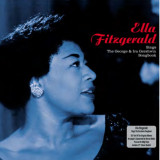
His passion for thick layered synth melodies, jazzy and kraut – like vibes, atmosphere recordings, deep basslines and selfmade percussion designs give his music a recognizable vibe which can be heard on nearly every production he was involved in so far. He spends a lot of time in his studio in Berlin, working on new music, remixing other artists and also engineering for other sound projects in the art scene. On top of that, he performs as a liveact in clubs and on festivals all over the planet where his music can be described as very emotional and personal. Repeatedly this amazed people in countries like Germany, Russia, Poland, Switzerland, South Africa, Austria, Belgium, Mexico and
many more.
Constantijn’s ambition as an artist is to constantly evolve his productions and create music
which carries emotions and energies into the clubs, to festivals and living rooms alike.
- A1: Maggie's Theme 1
- A2: Juke Box Source
- A3: Evelyn Story
- A4: Beetle Search*
- A5: Rosehaven Motel
- A6: Trip To La
- A7: Maggie's Theme 2
- A8: Stressed Out/Choked Up
- A9: Janet's Mazurka
- A10: Maggie Retraced
- A11: Factory Vibe
- A12: A Wet Nothing
- A13: Suspense*/Wills' Trance Pt. 1
- A14: Bell Signals
- A15: Taken Away
- A16: Radio Source
- B1: Fm Groove
- B2: Forest Finale
- B3: Penultima Trance
- B4: Parking Lot Shuffle
- B5: Dialatone
- B6: Wills’ Trance Pt. 2/Wills’ Trance Pt. 3
- B8: Gratitude
- B9: Empty Torch/Mailman/Phone Voice
- B10: On The Move
- B11: Wills' Last Trance
- B12: End Credits
- B13: Radio Source Rhythm
- B14: Juke Box Source
By the time Lalo Schifrin composed the soundtrack for Frank Perry's psychological thriller in 1974, starring Cliff Robertson and Joel Gray (who'd just won an Oscar for his role in Bob Fosse's Cabaret) he was Hollywood royalty having worked on such iconic films as Bullitt and Dirty Harry. Perry on his side, had caused a stir with The Swimmer in 1968 starring Burt Lancaster (although he would dismiss the film after being fired from the production) and followed up with a string of great cult movies including ‘Last Summer’ (1969), Diary of a Mad Housewife (1970) starring Carrie Snodgress - whom Neil Young famously fell in love with upon seeing the film and "Play It as It lays" in 1972, adapted from Joan Didion's eponymous novel.
Breaking from the social dramas from of his previous films, Perry decided to shoot a thriller based on journalist William Arthur Clark's book "The Girl on The Volkswagen Floor." The film follows a police officer investigating a murder with the help of a strange ambiguous clairvoyant played by Gray. For the score Perry went to Lalo Schifrin who'd just come out of a bad experience on The Exorcist working with William Friedkin who'd rejected his music in favour of Tubular Bells by Mike Oldfield! The score was recorded in LA with the Wrecking Crew and, although the full line up is not known, it included Emil Richards, Howard Roberts, Bud Shank and of course Schifrin on piano.
'Man on a Swing' is pure undiluted Schifrin from the early 70s. The score plays like a long suite alternating Bossa Nova ("Juke Box Source"), Lounge Jazz ("Trip to LA") and groove ("FM Groove") with superb "suspense” soundscapes like "Rosehaven Hotel". The label has gone back to the Paramount 3-track tape transfers and come up with an updated tracklist (a CD version briefly appeared in the 2010s) - re-sequenced and augmented with a handful of bonus tracks and alternate takes. A highlight is certainly "Radio Source Rhythm" which, losing the guitar and organ, reveal a jaw dropping funk breakbeat that is in the league of Dirty Harry and Enter the Dragon. This and the whole soundtrack, will ravish all the funk diggers and Lalo Schifrin fans around the world.
Created between Palm Springs, California and Hilo, Hawai'i, V is the first double album from the Hawaiian-New Zealand singer-songwriter, multi-instrumentalist and producer Ruban Nielson's Unknown Mortal Orchestra band. Designed to play as one continuous movement and road-tested on dry California freeways, V is the definitive Unknown Mortal Orchestra car record. It's also the fifth full-length album Ruban has released in twelve years. Across fourteen sunbleached songs - written solo or with his brother Kody - Ruban draws from the rich traditions of West Coast AOR, yacht rock, weirdo pop and Hawaiian Hapa-haole music. Over a laidback blend of singalong anthems and cinematic instrumentals, he evokes blue skies, afternoons spent lounging by hotel swimming pools and the alluring darkness that lurks below perfect, pristine surfaces. It's a duality expressed in the dilapidated sunset blues and the saltcorroded soul Ruban explores through tracks like `Layla' and `Nadja. ' During the pandemic's early days, Ruban reunited with Kody at a cousin's wedding in Hawai'i. With assistance from their father, Chris Nielson (saxophone/flute) and longstanding Unknown Mortal Orchestra member Jake Portrait, they brought everything Ruban had been thinking about together. The result was V, due for release on March 3, 2023, through Jagjaguwar. When they talked about records that moved them in that spine-shivering manner, Ruban started thinking about the 70s AM radio rock and 80s pop songs that had lurked on the edge of his subconscious mind for most of his life. He wanted to write his version of records like that, leading to the two glorious uptempo singles Unknown Mortal Orchestra released in 2021, `Weekend Run' and `That Life'. However, the golden good times never last forever. Not long after, health issues began to plague his extended family.Putting his recordings aside, he helped his mother and his uncle move home from New Zealand and Portland to Hawai'i, and began dividing his time between Hawai'i and Palm Springs. During this period he reconnected with his relatives, reassessed his past, and started to look at things with fresh eyes. Hawai'i brought back memories of the darker side of his parents' lifestyle as entertainers. On those trips, he heard those classic AM radio rock records everywhere. They were inextricably intertwined with the palm trees, swimming pools, and glamorized hedonism he'd internalized from his childhood. There's a type of music in Hawai'i called Hapa-haole (Half white). You can hear it expressed in signature Unknown Mortal Orchestra style through the humid guitar-led atmosphere of V's penultimate song, `I Killed Captain Cook'. Although the songs are presented in a traditional Hawaiian manner, they're mostly sung in English. Having been influenced by Hawaiian music since Unknown Mortal Orchestra's first album, Ruban saw a space for himself within the tradition. When he reflected on his success, he realised he had the responsibility and platform to represent Hapa-haole music on the global stage.
Yellow Vinyl
Created between Palm Springs, California and Hilo, Hawai'i, V is the first double album from the Hawaiian-New Zealand singer-songwriter, multi-instrumentalist and producer Ruban Nielson's Unknown Mortal Orchestra band. Designed to play as one continuous movement and road-tested on dry California freeways, V is the definitive Unknown Mortal Orchestra car record. It's also the fifth full-length album Ruban has released in twelve years. Across fourteen sunbleached songs - written solo or with his brother Kody - Ruban draws from the rich traditions of West Coast AOR, yacht rock, weirdo pop and Hawaiian Hapa-haole music. Over a laidback blend of singalong anthems and cinematic instrumentals, he evokes blue skies, afternoons spent lounging by hotel swimming pools and the alluring darkness that lurks below perfect, pristine surfaces. It's a duality expressed in the dilapidated sunset blues and the saltcorroded soul Ruban explores through tracks like `Layla' and `Nadja. ' During the pandemic's early days, Ruban reunited with Kody at a cousin's wedding in Hawai'i. With assistance from their father, Chris Nielson (saxophone/flute) and longstanding Unknown Mortal Orchestra member Jake Portrait, they brought everything Ruban had been thinking about together. The result was V, due for release on March 3, 2023, through Jagjaguwar. When they talked about records that moved them in that spine-shivering manner, Ruban started thinking about the 70s AM radio rock and 80s pop songs that had lurked on the edge of his subconscious mind for most of his life. He wanted to write his version of records like that, leading to the two glorious uptempo singles Unknown Mortal Orchestra released in 2021, `Weekend Run' and `That Life'. However, the golden good times never last forever. Not long after, health issues began to plague his extended family.Putting his recordings aside, he helped his mother and his uncle move home from New Zealand and Portland to Hawai'i, and began dividing his time between Hawai'i and Palm Springs. During this period he reconnected with his relatives, reassessed his past, and started to look at things with fresh eyes. Hawai'i brought back memories of the darker side of his parents' lifestyle as entertainers. On those trips, he heard those classic AM radio rock records everywhere. They were inextricably intertwined with the palm trees, swimming pools, and glamorized hedonism he'd internalized from his childhood. There's a type of music in Hawai'i called Hapa-haole (Half white). You can hear it expressed in signature Unknown Mortal Orchestra style through the humid guitar-led atmosphere of V's penultimate song, `I Killed Captain Cook'. Although the songs are presented in a traditional Hawaiian manner, they're mostly sung in English. Having been influenced by Hawaiian music since Unknown Mortal Orchestra's first album, Ruban saw a space for himself within the tradition. When he reflected on his success, he realised he had the responsibility and platform to represent Hapa-haole music on the global stage.
This unique and unconventional set combines a 7“ single with two yet unreleased songs by NON BAND and a photo magazine, both of which provide essential evidence of the tsunami-like tidal wave of the Japanese post punk movement.
The two featured songs VIBRATION ARMY and SILENCE-HIGH-SPEED perfectly capture the charismatic formative years of NON BAND, with their sound emerging as an entirely unique mix of driving punk veering from No Wave and Folk into raw post punk mutations.
Both songs were committed to tape in 1981 at the legendary facilities of Mod Studio, Tokyo, by engineer Yasushi Konichi when the band recorded their eponymous debut album which was issued via Tokyo‘s Telegraph Records back in 1982. Although both songs were miraculously omitted from the final album. Like all of Non Band recordings they have withstood the test of time thanks to their mix of direct, experimental yet disciplined rawness and studio magick.
The magazine features a text and a careful selection of photos from the vast archives of photographer Yuichi Jibiki, who was also the man behind the label Telegraph Records. Since 1978 Yuichi Jibiki was intimately involved with the early Japanese punk scene as their photographer, manager and organizer. He could be found very much in the midst of all NON BAND live shows between 79-82 as well as pulling the strings behind the scenes.
After the reissue edition of NON BAND‘s debut album via Stefan Schneider‘ TAL imprint in 2017 the label is excited to be able to offer another key release showcasing the creative peak of Japanese Post Punk.
Music by Non Band. Recorded by Yasushi Konishi in 1981 at Mod Studio, Tokyo.
Mastering by Detlef Funder at Paraschall, Düsseldorf 2022
Photographs by Yuchi Jibiki 1979-82
- A1: Keep The Circle Around
- A2: Butterfly
- A3: Joe
- A4: Find Out Why
- A4: Move
- A5: This Is How It Feels
- A6: She Comes In The Fall
- B1: Biggest Mountain
- B2: Weakness
- B3: Caravan
- B4: Please Be Cruel
- B5: Dragging Me Down
- C1: Two Worlds Collide (7" Edit
- C2: Generations
- C3: Bitches Brew
- C4: How It Should Be
- C5: Saturn 5
- C6: I Want You (Ft Mark E Smit
- D1: Uniform
- D2: Come Back Tomorrow
- D3: You're So Good For Me
- D4: Fix Your Smile
- D5: Spitfire
- D6: Let You Down (Edit)
Die 1980 in Oldham gegründete Band, Inspiral Carpets, erlangte Ende der 80er/Anfang der 90er Jahre als Teil der Madchester-Szene neben Bands wie The Stone Roses, The Charlatans und The Happy Mondays große Bekanntheit.
Sie haben fünf Studioalben veröffentlicht:
"Life" (1990), "The Beast Inside" (1991), "Revenge of the Goldfish" (1992), "Devil Hopping" (1994) und "Inspiral Carpets" (2014), mit denen sie vier UK Top 20 Alben und UK Top 20 Singles erreichten. Zu ihren erfolgreichsten Singles gehören "This Is How It Feels", "She Comes In The Fall", "Saturn 5", "I Want You" und "Dragging Me
Down".
Zum ersten Mal seit ihrer 2003er Compilation "Cool As" erscheint jetzt eine neue Singles-Kollektion: "The Complete Singles" enthält alle ihre größten Hits, sowie Kollaborationen mit Mark E. Smith & John Cooper Clarke.
Die 2LP enthält 24 Songs auf schwarzem heavyweight Vinyl im
Widespine Sleeve.
The roots of JuJu started in San Francisco after Plunky had met his musical mentor, Zulu musician Ndikho Xaba, helping to form his band Ndikho and The Natives. Three members of The Natives (Plunky, bassist Ken Shabala and vibes / flute player Lon Moshe) then joined Marvin X’s theatrical production The Resurrection Of The Dead, joining local musicians Al-Hammel Rasul (keyboards), Babatunde Lea (percussion) and Jalango Ngoma (timbales).
When the production ended, the six musicians formed Juju. “We had high-energy rehearsals that lasted for hours and, as a band, we became powerful and began gigging around the Bay Area,” remembers Plunky. Although orientated towards Black Nationalism, the
band fed off the Bay Area’s culturally diverse communities as Plunky shaped an inclusive worldview based on collective political, social and artistic activities. During this time, the Soledad Brothers case and Angela Davis were prominent and the band supported Professor Davis and the cause. Juju’s music matched the fire of their activism. “As a band, we blew, pounded and stroked our instruments like there was no tomorrow, like our life’s work was wrapped up in each session. We approached our performances like religious rites and the music mesmerised, informed and awakened people.” The band’s first album, a Message from Mozambique, was intentionally political. While the anti-war movement focused on Vietnam, Juju looked towards wars being waged in South Africa, Angola and Mozambique over issues of white supremacy and control of natural resources. A second album, ‘Chapter Two: Nia’ would follow before the birth of Oneness Of Juju during the mid-‘70s. This definitive reissue is fully remastered by The Carvery from the original tapes and features original artwork and a new interview with Juju bandleader James “Plunky” Branch.
Ground Groove, the third full-length release from the LA-based, Iranian-American producer and DJ, Maral, begins with an invocation: the sprawling, achingly heavy Feedback Jam opens the floodgates of history. Conventional (linear) spacetime collapses, crushed beneath the track’s lumbering 4/4 heartbeat and successive waves of distortion. As each wave recedes, samples trickle forward in the mix — seeking, perhaps, to fill the void. Voices and instruments rise and fall in uncanny reverse. Overlapping, implied melodies flicker into focus, then flit away. Feedback Jam is at once an initiation ritual, and a thesis statement for the record that follows.
Drawing upon a vast personal archive of Iranian folk, classical, and pop recordings (some sourced from mixtapes made by her parents in the eighties/nineties), Maral presents, on Ground Groove, a further refinement of the signature “folk club” sound she developed as a live DJ— a sound she would later codify on Mahur Club (2019) and Push (2020). By collecting, dissecting, and re/presenting sonic fragments from Iran, Maral practices a kind of dance-floor ethnomusicology. The subject of her inquiry: Iranian
culture and contexts, throughout history and in the present. But, crucially, this inquiry is instantiated within and throughout the body of the listener, whether this listener is dancing in the club, or riding the train, nodding along with headphones on.
Maral speaks of being in collaboration with her samples, treating each as a distinct bandmate, often consulting with an artist’s catalog (or even a single recording) as one would a trusted creative partner. In so-doing, Maral claims to seek to transcend the self. In this regard, her output neatly triangulates contemporary dance and heavy music with much of the traditional religious music that she samples. Broadly speaking, each of these idioms addresses a desire —shared by audience and performer alike—to transcend the self through volume, repetition, and movement.
Having, in her youth, studied the Setar under Nader Majd (the founder of Virginia’s Center for Persian Classical Music), Maral cycled through various genres (ex: punk, emo, dub) in her adolescence and early twenties, all the while expanding her knowledge of, and appreciation for, Iran’s diverse musical traditions during regular summer trips to Tehran. In college, Maral taught herself to make beats with a ripped copy of Ableton (which remains her DAW of choice), eventually transitioning to playing and hosting various club nights. Forever abiding by an autodidactic, DIY impulse to create art and foster community, Maral relocated to Los Angeles in 2013, where she quickly immersed herself in the city’s numerous overlapping music scenes.
Collaboration (beyond sampling) has proven an important component of her process, with notable spoken word contributions from the likes of Lee Scratch Perry and Penny Rimbaud, as well as a 2021 Panda Bear collab track (On Your Way), which the Animal Collective founder co-produced. Maral is equally attentive to the visual components of her records (album art, music videos, etc.), drawing upon the work of peers and friends for inspiration.
Indeed, the genesis of Ground Groove can be traced back to an audio-visual collaboration between Maral and the artist Brenna Murphy, originally commissioned for the 2021 Rewire Festival — a project that would eventually serve as the album’s foundation. Tracks eight through eleven on Ground Groove comprise Maral’s half of this installation, with tracks one through seven composed afterwards, inspired by the fruits of Maral and Murphy’s collaboration. Murphy’s visuals will be released alongside Ground Groove as a visual accompaniment. Additionally, Murphy designed the album’s art, directed the video for the lead single (the aforementioned Feedback Jam), and is featured on track six, Shy Night.
Composed largely on Ableton, Ground Groove features more frequent and more prominent live recordings from Maral (guitar, bass, and vocals) than either Push or Mahar Club. The cult favorite Roland MC-909 groovebox rears its head on Mari’s Groove. Mixed by Trayer Tryon (Hundred Waters) and mastered by Daddy Kev, the attention to sonic quality on Ground Groove constitutes another significant step in Maral’s development as a studio artist.
Ground Groove’s eleven tracks are “grooves” in the obvious sense, in that they are each driven by a persistent, propulsive rhythm, but the album’s title may just as well suggest the glacial passage of time—the scope of human history, in which individual voices, like streams, carve paths (impossibly) through earth and stone, winding their way to the vast sea of the present.
Homage to Tarab is a journey between cultures, times, places and of course sounds that were molded within the middle eastern orient that had shaped The Hallways' musical perception. All out of tremendous respect to their legacies. Described in one short sentence, Experimental Arabic Drone Music. Picture dark synths, alianted rare drum machines meet ancient organ lamentations, beats the bubble from deep within and such that floats around spaces in circles while constantly changing. Ones that feel like flying on top of a magic carpet ride over deserts, mosques, ancient prayer books while in the background the dimming lights of a mysterious asphalt and concrete covered city.
The Well & The Gentle, two of the major works of Pauline Oliveros, are presented here in a first time reissue on double vinyl in a gatefold sleeve with extensive liner notes.
If Oliveros had followed a more conventional path she may have, all social obstacles aside, been considered among the major composers of her time. However, Oliveros approached composition in a more egalitarian manner. She wrote music for musicians to interact with or, in the composers words, she wished to create "an inclusive and interdependent and unfolding world of relationships."
Oliveros' propensity towards inclusion is part of what makes this work so remarkably distinctive. The Well & The Gentle is carefully crafted, allowing performers to participate in the creation of the work. Players are asked to collaborate, focus, react and make imaginative choices. Only then can the performers "pass through stages of awakening to the possibilities inherent in making music, working together, leading to the essence of what can shape musical impulses and individual freedom simultaneously."
Unlike most major composers of the era, Oliveros' work focuses on collaboration and improvisation. For Oliveros, the processes involved in making music are as fundamental as the music itself. Oliveros creates, as Arthur Sabatini put it so eloquently in the liner notes, "A world in which sound and the practices entailed in making music merge; become, at once, source and atmosphere, energy and essence, presence and dynamic."
Pauline Oliveros was an electronic music pioneer, accordionist, composer and educator who resided in Kingston, New York. Her instrument was tuned in Just Intonation and she often included it in her meditative improvisational music. Her music is not meditative in the sense that it is intended for listening to while meditating, rather each piece is a form of meditation, such as her aptly titled Sonic Meditations.
A central figure in post-war electronic art music, Oliveros is one of the original members of the San Francisco Tape Music Center (along with Morton Subotnick, Ramon Sender, Terry Riley, Steve Reich and Anthony Martin), which was the resource on the U.S. West coast for electronic music during the 1960s. The Center later moved to Mills College, where she was its first director, and is now called the Center for Contemporary Music. Oliveros often improvised with the Expanded Instrument System, an electronic signal processing system she designed, in her performances and recordings.
Oriental Beat by Hanoi Rocks gets the redux treatment, officially mixed and revived from the original sessions, and released on March 17th on deluxe vinyl, CD and digital formats. The CD and vinyl come with the song lyrics, checked and approved by Michael Monroe. Dubbed the “re(al) mix”, this 40th anniversary edition was mixed by Petri Majuri at E-Studios in Finland in collaboration with the band. Vocalist Michael Monroe calls this release “the longest and slowest album project ever,” stating that “40 years in the making, it's not just a remix, but the REAL MIX supervised and approved by Hanoi Rocks”. Recorded in London, UK in 1981, for 200 pounds a day, Oriental Beat was made during the height of the British punk + New Wave movement, when the band was hanging out with everyone from Phil Lynott to the Damned. Hanoi Rocks’ original drummer Gyp Casino says of Oriental Beat that: “Back in the days we gave heart, soul and a bit of pain to make this record something else” but the sound of the album, originally released in 1982, did not match their efforts at the time. Bassist Sami Yaffa called it “the worst sounding album of our career” and Michael Monroe said that “the producer of the album didn’t have a clue what the band was about and his mix of the album was horribly wrong”. Oriental Beat’s original engineer Peter Wooliscroft, was not a rock producer, and according to Hanoi Rocks’ manager Richard Bishop he “tried to mix the album to sound like Spandau Ballet”. Released before the band could remix or rerecord it, as the label had run out of money, and the master tapes had gone missing, the band has always considered the original mix of Oriental Beat to be a “disaster”. With the tapes mysteriously showing up in the Universal vault recently, the band was finally able to mix and resequence the album the way they wanted it to sound. Oriental Beat is a defining masterpiece made when Hanoi Rocks was about to explode onto the world scene and written at the absolute peak of lead guitarist Andy McCoy’s creativity as a songwriter. Rhythm guitarist Nasty Suicide says “only now, with stripping it down to the bare essentials and tweaking it to bring out what was really laid down it became our dream come true! THIS is what it's all about” as this definitive edition of Oriental Beat now fully displays the ultimate arrogance and attitude which defined the band.
- A1: The Kinslayer
- A2: She Is My Sin
- A3: Deep Silent Complete
- A4: The Pharaoh Sails To Orion
- B1: Come Cover Me
- B2: Wanderlust
- B3: Crimson Tide / Deep Blue Sea
- C1: Swanheart
- C2: Elvenpath
- C3: Fantasmic (Part 3)
- C4: Dead Boy's Poem
- D1: Sacrament Of Wilderness
- D2: Walking In The Air
- D3: Beauty & The Beast
- D4: Wishmaster
The live album From Wishes To Eternity offers a a glimpse into an early point in the long career of Finland's symphonic metal masters Nightwish when, three albums under their belts and already a household name in their native Finland, the world was just about to be laid before their feet. Recorded at Christmas in 2000 in Tampere, Finland in front of a packed house, Nightwish released this a year after the smash hit record Wishmaster. Unlike some CD pressings in circulation, this version contains the entire 80-minute uncut show. Never before available on vinyl, Lipposen Levy ja Kasetti presents this missing piece in the Nightwish puzzle on CD and gatefold double vinyl, remastered at Finnvox by Mika Jussila, who also mastered the original release in 2001.
There’s something almost magical about a great
collaboration. When two artists are able to
synchronize on an infinitesimal level, where each
note and breath and strum aligns to create a
perfect whole. The Colorist Orchestra know how to
do this - in fact, they’ve made it their speciality. Since 2013, the Belgian duo (comprised of multiinstrumentalists and long-time friends Aarich Jespers and Kobe Proesmans) have made a
career out of reimagining the discographies of a wide array of artists, using their background in
pop, electronic, and world music to transform the songs. Recently, they have reconnected with acclaimed
Icelandic singer-songwriter Emilíana Torrini, with whom they first collaborated in 2018, on the album, ‘The Colorist Orchestra & Emilíana Torrini’. This time, however, the project exceeded even
their own expectations. In 2023, The Colorist Orchestra and Emilíana
release ‘Racing The Storm’, a joint record tha takes both artists to towering new heights. An album of all original material, it melds The Colorist Orchestra’s classical chamber pop roots with the
power and fragility of Emilíana’s understated
songwriting. LP pressed on 140g white vinyl in 350gsm spined
sleeve on silver foil board with 200gsm reverse
board inner sleeve
Portland is a project born of instant connection, yet it’s also one
that has survived some of the darkest life can throw at them.
Dreamy songwriting bathed in beauty, the Belgian two-piece
thrive on pure expression, infusing their beatific, ethereal work
with incredible honesty. New album, ‘Departures’, pushes them
to the brink, forcing them to open up as never before, and in the
process discover themselves all over again.
The story starts almost a decade ago. Sarah Pepels was new in
town, a music student attempting to make some roots. Hearing
music coming from down the corridor in her student home, she
knocked, and met Jente Pironet for the first time. One
conversation led to the next, and within hours they were writing
together, playing each other their ideas and sharing some
profound secrets. “We shared the same passions,” she reflects.
“We became best friends, soul mates… and the band emerged
from that.”
The two won the prestigious De Nieuwe Lichting prize - one of
Belgium’s top honours for young songwriters - before releasing
their precocious debut album ‘Your Colours Will Stain’ in 2019.
Word quickly spread on their hazy dream pop - reminiscent of
Beach House or School Of Seven Bells - but the pandemic
pulled the shutters down on their burgeoning careers. As Jente
puts it: “We went through some difficult times, I guess. The
pandemic was very isolating for us both, and as a result the
music took on board those emotions.”
‘Departures’ was born of this. Put simply, it’s magnificent - all
the promise of their earlier work realized, it drifts between the
grace of Slowdive and a sense of classic songwriting that
recalls everyone from Fleetwood Mac, say, to Angus and Julia
Stone. Sonically beautifully and emotionally gripping, it’s a
profound song cycle, the work of musicians digging deeper than
ever before.
For fans of Beach House, Angus & Julia Stone, Mazzy Star,
Ben Howard.
Portland is a project born of instant connection, yet it’s also one
that has survived some of the darkest life can throw at them.
Dreamy songwriting bathed in beauty, the Belgian two-piece
thrive on pure expression, infusing their beatific, ethereal work
with incredible honesty. New album, ‘Departures’, pushes them
to the brink, forcing them to open up as never before, and in the
process discover themselves all over again.
The story starts almost a decade ago. Sarah Pepels was new in
town, a music student attempting to make some roots. Hearing
music coming from down the corridor in her student home, she
knocked, and met Jente Pironet for the first time. One
conversation led to the next, and within hours they were writing
together, playing each other their ideas and sharing some
profound secrets. “We shared the same passions,” she reflects.
“We became best friends, soul mates… and the band emerged
from that.”
The two won the prestigious De Nieuwe Lichting prize - one of
Belgium’s top honours for young songwriters - before releasing
their precocious debut album ‘Your Colours Will Stain’ in 2019.
Word quickly spread on their hazy dream pop - reminiscent of
Beach House or School Of Seven Bells - but the pandemic
pulled the shutters down on their burgeoning careers. As Jente
puts it: “We went through some difficult times, I guess. The
pandemic was very isolating for us both, and as a result the
music took on board those emotions.”
‘Departures’ was born of this. Put simply, it’s magnificent - all
the promise of their earlier work realized, it drifts between the
grace of Slowdive and a sense of classic songwriting that
recalls everyone from Fleetwood Mac, say, to Angus and Julia
Stone. Sonically beautifully and emotionally gripping, it’s a
profound song cycle, the work of musicians digging deeper than
ever before.
For fans of Beach House, Angus & Julia Stone, Mazzy Star,
Ben Howard.
- A1: Fuchsia Swing Song
- A2: Downstairs Blues Upstairs
- A3: Cyclic Episode
- B1: Luminous Monolith
- B2: Beatrice
- B3: Ellipsis
BLUE NOTE CLASSIC VINYL EDITION: Stereo, komplett analog von Kevin Gray von den Originalbändern gemastert, Optimal-Pressung (180 g), wattierte Innenhülle.
“Empyrean Isles” war 1964 Herbie Hancocks viertes Soloalbum für Blue Note. Obwohl der Pianist mit “Watermelon Man” von seinem Debütalbum “Takin’ Off” bereits einen echten Hit gelandet hatte, etablierte er sich erst mit “Empyrean Isles” endgültig als eigenständiger Künstler. Wie auf den vorangegangenen Alben
stellte Hancock ausschließlich eigene Kompositionen vor, aus denen vor allem der zeitlose Hit “Cantaloupe Island” hervorstach.
Dem Pianisten zur Seite stehen hier mit Bassist Ron Carter und Schlagzeuger Tony Williams zwei Musiker, mit denen er damals parallel auch im zweiten großen Quintett von Miles Davis
zusammenarbeitete. Zu ihnen gesellte sich außerdem der Trompeter Freddie Hubbard.
Der Saxofonist Sam Rivers hatte sich schon sehr früh in seiner Karriere durch bemerkenswerte Originalität ausgezeichnet. Nach einem kurzen Intermezzo im zweiten großen Quintett von Miles Davis, spielte Rivers im Dezember 1964 für Blue Note sein Debütalbum “Fuchsia Swing Song” ein. Das Repertoire bestand aus sechs Kompositionen von Rivers, die zwar fest im Post-Bop und Blues wurzelten, aber die avantgardistischen Tendenzen des Saxofonisten auch nicht leugnen konnten. Das Highlight des Albums ist
die atemberaubende Ballade “Beatrice”, die später sogar von den Tenor-Giganten Joe Henderson und Stan Getz aufgegriffen und interpretiert wurde.
Clear Vinyl
Queens Of The Circulating Library stands alongside Time Machines and Nurse With Wound's Soliloquy For Lilith as a post-industrial pinnacle of sensory-warping long-form drone. Crafted by the distilled duo of Thighpaulsandra and John Balance, the 49-minute piece unfurls in swirling, cyclical waves, tidal as much as textural, channeling the spirit of levitational minimalism pioneered by La Monte Young. Touted as the first part in "a continually mutating series of circulating musickal compositions" upon its initial release in 2000, the album remains a compelling case study in Coil's exceptional capacity for mutation and extremes. The theatrical introductory monologue delivered by Thighpaulsandra's mother - a career opera singer, in her 80's at the time of recording - sets the stage for a grandiose ascension. Written by Balance, the text is declamatory but dreamlike, refracted through megaphone echo: "Return the book of knowledge / Return the marble index / File under "Paradox" / The forest is a college, each tree a university." As her voice fades, the lulling synthetic infinity deepens, congealing into transient crests of volume and haze, like slow-motion surf misting in moonlight. Thighpaulsandra describes their aesthetic intention as a "bliss out," static but shape-shifting, an amniotic drift towards an eternal vanishing point. A supreme sonic embodiment of the slogan on the sleeve of Time Machines, two years prior: "Persistence is all.
Nach dem Xul Zolar sich Ende letzten Jahres mit dem Song "Protocol" aus einem längeren Hiatus zurückmeldeten, kündigen sie nun mit ihrer neuen Single "Underwater" ihr neues Album an, das den Namen "Heidelbach" trägt und am 17.03.2023 auf Asmara Records/Rough Trade erscheinen wird. Der sphärisch-pulsierende Track wurde wie auch das gesamte Album in Zusammenarbeit mit dem Kölner Produzenten-Duo COMA, bestehend aus Marius Bubat und Georg Conrad, aufgenommen und produziert. Musikalisch setzt die Band den verspielten Synthpop ihres Debutalbums fort, wobei "Underwater" verstärkt auf elektronische Elemente setzt. Für das dazugehörige Musikvideo zum Track zeichnet sich der Berliner Medienkünstler Philipp Carbotta verantwortlich.
High Roller Records, black vinyl, extensive 24 page booklet, Gemeinhin wurde Epic Doom Metal in der Vergangenheit überwiegend als Hoheitsgebiet amerikanischer (Warlord) oder schwedischer (Sorcerer) Formationen angesehen. Durch den Erfolg von Atlantean Kodex ist allerdings auch Deutschland in letzter Zeit auf der Landkarte erschienen. Nicht zuletzt dank Hoffnungsträgern wie den 2014 in Landstuhl, Rheinland-Pfalz, entstandenen Lord Vigo. Nach »Under Carpathian Sun« (2015), »Blackborne Souls« (2017), »Six Must Die« (2018) sowie »Danse De Noir« (2020), erscheint jetzt das neue Meisterwerk namens »We Shall Overcome«.
An elusive Soul/Funk masterpiece from mid-70s Lakeland, Florida. The Riley siblings; Carrie, Horace & James laid the foundation for the two songs they would bring to Auburndale's custom recording studio, Central Sound to be released on the Nashville/Florida label, 'Music City'. Jerome McNeil, William Freeman, Bruce Bolden & Sam Graham would complete the outfit and be collectively known as 'Carrie Riley & The Soul Fascinations'
It's been 15 years since Now Again & Jazzman showcased the Deep Funk rarity 'Super Cool' on their Florida Funk compilation, however it's James Riley's group harmony B-side, 'Living In A Lonesome House With You' that has remained at large, unknown, collectively showcasing the talent encapsulated by The Fascinations.
'During the early 70’s The Riley family members who formed the Fascinations (originally the Soul Fascinations), James, Horace and Carrie along with a few friends, were destined to develop and perform musically as music flowed through our veins. Our father was a musician who played piano and sang the blues. As children we gathered around an old upright piano after dinner to hear our father play and sang. By the time I was 14 and my brothers, James and Horace were 16 and 17, we had all learned to plan an instrument. My focus was on vocals with many role models to learn from in the music industry such as; Dianna Ross, Chaka Khan, Gladys Knight and Mable Staple. My brothers loved the Commodores, Kool and the Gang, Rick James and Earth Wind and Fire. The Isleys’s were a favorite of ours also. James was the driver of our success in recording as he made sure we practiced for hours on end. Sometimes we would practice popular songs until 2 in the morning. James began to write songs and develop melodies that he would share with Horace and I. We would make suggestions for revisions such as arrangements and melodies. Before long we traveled to Miami where we recorded, Super Cool which was our title song, 'Living in A Lonesome House' and a few other tracks. 'Super Cool' is a song that is personal to me. It is a song about relationships and trust, while the Lonesome house song was about love affairs and breakups. So much great music came out of the 70’s. I am grateful that our music contributed to the industry during a time when great music was about love and relationships.
Lovingly
Carrie'
BLUE NOTE CLASSIC VINYL EDITION: Stereo, komplett analog von Kevin Gray von den Originalbändern gemastert, Optimal-Pressung (180 g), wattierte Innenhülle.
“Empyrean Isles” war 1964 Herbie Hancocks viertes Soloalbum für Blue Note. Obwohl der Pianist mit “Watermelon Man” von seinem Debütalbum “Takin’ Off” bereits einen echten Hit gelandet hatte, etablierte er sich erst mit “Empyrean Isles” endgültig als eigenständiger Künstler. Wie auf den vorangegangenen Alben
stellte Hancock ausschließlich eigene Kompositionen vor, aus denen vor allem der zeitlose Hit “Cantaloupe Island” hervorstach.
Dem Pianisten zur Seite stehen hier mit Bassist Ron Carter und Schlagzeuger Tony Williams zwei Musiker, mit denen er damals parallel auch im zweiten großen Quintett von Miles Davis
zusammenarbeitete. Zu ihnen gesellte sich außerdem der Trompeter Freddie Hubbard.
Der Saxofonist Sam Rivers hatte sich schon sehr früh in seiner Karriere durch bemerkenswerte Originalität ausgezeichnet. Nach einem kurzen Intermezzo im zweiten großen Quintett von Miles Davis, spielte Rivers im Dezember 1964 für Blue Note sein Debütalbum “Fuchsia Swing Song” ein. Das Repertoire bestand aus sechs Kompositionen von Rivers, die zwar fest im Post-Bop und Blues wurzelten, aber die avantgardistischen Tendenzen des Saxofonisten auch nicht leugnen konnten. Das Highlight des Albums ist
die atemberaubende Ballade “Beatrice”, die später sogar von den Tenor-Giganten Joe Henderson und Stan Getz aufgegriffen und interpretiert wurde
For a quarter of an hour, Zürich was the navel of the world. Let's look back: at New York's CBGB's, pre-punks were shredding away, Malcolm McLaren, as a man with a fine-tuned taste for the hip, imported the sound to London, where his sweetheart Vivienne Westwood dressed the test-tube band The Sex Pistols. A few pop magazines later (we are in an analog world!) punk bands sprouted everywhere, like shiny pimples on poorly fed teenagers. Contrary to legend, even back then, it was often those with a musical background who were the most successful. One such example, Henrich "Wüste" Zwahlen, who had learned the violin, attended a jazz school and went into prog-rock before joining the Nasal Boys, one of the first punk bands in Zürich. The scene included the female band Kleenex (cover: Fischli of art heroes Fischli/Weiss), whose minimalism was praised by the London music press, while the world's most important rock theorist, Greil Marcus, wrote an ode highlighting Zürich's role as the birthplace of Dadaism. A fertile ground for the militant youth movement that exploded in 1980 and stirred up the city of banks, protestantism and boredom with raw wit and expressive violence. Gathering at concerts of local bands and fueled by endogenous and artificial substances - they paid homage to exuberance and self-indulgence.
The mantra of "everything-is-possible" was driven forward on the musical front by progress in terms of means of production: analog electronic instruments were no longer reserved for hippie nerds, who sat in front of large plug-in boards like autistic-psychedelic switchboard operators connecting cables for their sound carpets. Now snazzy stage personnel elicited fast-paced sounds from handy devices often made in Japan. Kraftwerk was fashionable, the Zurich duo Yello experimented with new synthetic sounds, and the groundbreaking album "Alles Ist Gut" by the Düsseldorf based duo D.A.F. (Deutsch Amerikanische Freundschaft) was released, which chanted its program of provocation times danceability with lines such as "Tanz den Jesus Christus, tanz the Mussolini, tanz the Adolf Hitler." In England meanwhile, electronically backed New Romantic bands were replacing New Wave. The Human League, Heaven 17, Duran Duran, OMD, Depeche Mode or Visage stormed the charts.
In Zürich's underground, the duo Aboriginal Voices caused a stir at that time. A couple, good-looking, styled, looking cool into the cold neon light, with a danceable beat and sequenced electro sounds, to which Micheline gave a very unique touch when she sang in French and English. Micheline had a classical piano education, had left home early, worked as a lighting technician in a strip joint and at Booster, the hottest boutique in town (one of the relicts that still exists). Voilà: a musician who was as stylish as she was tough. She was already playing with Wüste in the band "Doobie Doos", a band where everyone played an instrument they didn't master. In 1980 the Aboriginal Voices were formed, initially with vocalist Magda Vogel (of later UnknownmiX fame), who was trained as a classical singer.
Frustrated by organizational friction and constant hassles with band lineups, Wüste and Misch decided to do everything as a twosome: self-mixed, self-styled, self-produced. With the top-of-the-line Linn drum machine clocking the beat, Wüste's guitar and Micheline on the Yamaha synthesizer created a unique sound of danceable electronic music. Whereby the Aboriginal Voices acted as a kind of proto-influencer, receiving the latest equipment to try out, especially since they made it a point not to work with tapes, but to design everything for live shows. They had an interface built for the legendary Roland MC-4B, who sequenced the modular Roland System 100M but where one output controlled a light show synchronized with the sound. A pioneering act that fit well into the DIY spirit of punk, with its self-distributed tapes and fuck-you attitude towards the cretins of the music industry. Consequently only two cassettes and an EP were released. There was something futuristic about the sound, the vestiary style and the electronics, while the attitude remained rebellious. Of course something so deeped in the Zeitgeist wasn't meant to last. Wüste moved to New York, Micheline stayed in Zurich, both still active in the music scene to this day.
Sven Regener, head of the band Element of Crime and one of Germany's most successful pop writer said a few years ago when asked if he knew of any Swiss music: "Of course! In 1983, a Swiss band called Aboriginal Voices played with us at a festival in Zurich. Great, avant-garde electro-pop. That was my first encounter."
If you ever saw them live, you never forgot them, and so over the years you belonged to a teeny-tiny circle of insiders, happy to be joined after all these years by new aficionados who appreciate the sound of that quarter-hour, when Zurich was ravishing, creative and exciting.
- Thomas Haemmerli
It is with a singular pleasure that we welcome Marc Romboy to the ever growing stable of live artists at ASW!
Marc Romboy is an artist renowned within the electronic scene for his eclectic, boundary-pushing approach and decades worth of experience working both behind the scenes and behind the decks.
In recent years he has embraced performing live as another creative outlet and, indeed, creative challenge. As an artist and performer, Marc has always pushed the boundaries of his creativity and this, Marc’s first studio album in 6 years is a true masterwork of techno from one of the masters of the genre.
Growing up in the West of Germany close to the borders of both The Netherlands and Belgium, Marc was always instinctively drawn to music. He would attend the acid house parties prevalent in the area, with an epiphany of sorts on the dancefloor of Front club in Hamburg in 1987. An avid record collector, he would listen to Krautrock, breaks, Italo disco, Chicago house and more, and experienced some of the first all house and techno clubs in Europe; the legendary Roxy club in Amsterdam and Dorian Grey in Frankfurt. Learning to DJ, and later on produce, was a natural step.
He founded the ’Le Petit Prince’ imprint in 1993 as a platform for the music of friends he was playing out, which went on to be named Label Of The Year by various German electronic music publications the following year. Its reputation led Marc into collaborating with other DJs to manage their labels too.
Meanwhile, Marc went on to notch up an impressive discography of EPs, tracks and collaborations, carving his own sound; emotive, versatile, and featuring distinctive basslines.
2004 was a landmark year for the artist, with the beginning of his own, completely self-run label Systematic. Since It's birth, the label has provided a home for productions from the likes of Robert Hood, Kenny Larkin, Omar-S, Terrence Parker, Timo Maas, kINK and many more. It also provided the platform for Marc’s first album, ‘Gemini’ in 2005, followed by four further LPs; 2008’s ‘Contrast’, 2009’s ‘6 Monde’ with Stephan Bodzin (which birthed the pair’s now-legendary track ‘Atlas’), 2013’s ‘Taiyo’ with Ken Ishii, and 2014’s three-disc retrospective compilation ‘Shades’. And his collaborative orchestral LP ‘Voyage de la Planète’, Marc’s forward-thinking last album. Pushing the boundaries between classical and electronic music, it makes for a moving , atmospheric outing for the producer - “I feel like there are still a couple of beautiful sounds to create”.
Marc’s output has been exemplary and with his inspiration rising for performing live he now brings us the wonderful “Music Made for Aliens”. A work of true electronic inspiration. Marc will be performing live at ASW events coming up soon.
Stratus were a cross-genre rock band formed around 1974 in Rhinelander, Wisconsin, led by Robert Ackley. Originally recorded in 1976 at Wildwood Recording Studios, an embellished description of a basement in Rhinelander, Wisconsin. This release was funded by a local dentist and promoted by ‘Cathy’, Ackley’s muse and inspiration for the release and the track ‘Girl’ in particular. Only 1000 copies were ever pressed, the majority of which were subsequently distributed by the band at shows as pseudo-business cards, with many pristine original copies as a result becoming lost to time. The tracks have since resurfaced in Europe many years later, much to the surprise and joy of Ackley himself. Remastered from one of the last remaining mint condition original presses, this release is a must for all collectors of blue eyed soul and AOR rarities. This reissue marks the first release in 7” format since its 1976 debut.
- A1: Cerebro, Orgasmo, Envidia & Sofía
- A2: Ante La Duda Todo
- A3: Lavapies (Jesus Is My Coach)
- A4: Trivial Polonio
- A5: Chupame La Mente Cable
- A6: El Toscano Del Papa
- B1: Lovin' You
- B2: Vagabundo
- B3: El Evangelio Según Mi Jardinero
- B4: Presiento Que Esta Noche Soy Un Lirio
- B5: Ocelote Alondra
- B6: Viajar Contigo Es Como Escuchar La Vida Secreta De Las Plantas
- B7: Budismo Tropical
- B8: Sin Título
Landmark albums deserve to be released on Glorious Vinyl, and that's why Lovemonk is presenting the first ever vinyl edition of Martín Buscaglia's 2006 corker, El Evangelio Según Mi Jardinero.
"Brain, brain, thanks for being in my head and not in my knee, if not, I wouldn't be able to kneel down to pray or keep that promise I cannot reveal". Those are the first words (translated from Spanish) of 'Cerebro, Orgasmo, Envidia y Sofía', the song that kicks off El Evangelio Según Mi Jardinero, the fourth album by Uruguayan pop genius Martín Buscaglia and his second on Lovemonk.
El Evangelio is a wonderful collection of deliciously cheeky and brutally honest songs composed by a man who was lucky enough to grow up in a home where several of his home country's cultural greats (Eduardo Mateo, Urbano Moraes, Rubén Rada, all three of legendary candombe innovators El Kinto, and Hugo Fattoruso, of Opa) would drop by to chat, write and hang out. They, and other heroes like Marvin Gaye, Tom Waits, Stevie Wonder, and Jorge Ben, have had a lasting influence on Martín's music, and it's no different on El Evangelio. Martín wrote most of the songs and plays all kinds of instruments, conventional and not so conventional (the ravanahatha - an ancient bowed, stringed instrument used in South Asia, different toys such as the Simon device and a carousel), and there are cameos by the likes of Arnaldo Antunes, Nicolás Ibarburu and Juana Molina.
El Evangelio Según Mi Jardinero is a dazzling piece of work that will make you dance your ass of and take you to place you haven't visited since childhood. Even 12 years on, the at times complex songs actually sound deceptively simple and stunningly fresh.
- A1: Rashoumon (Feat The Blue Jeans)
- A2: Sado Okesa (Feat The Bunnys)
- A3: Tsugaru Goze (Feat The Blue Jeans)
- A4: Tsugaru Jongara Bushi (Feat The Blue Jeans)
- A5: Abashiri Bangaichi (Feat The Blue Jeans)
- B1: Dannoura (Feat The Blue Jeans)
- B2: Tsugaru Hanagasa (Feat The Blue Jeans)
- B3: Taiyou Ni Sakebou (Feat The Blue Jeans & Rui Takahashi)
- B4: Komoro Oiwake (Feat The Bunnys)
- B5: Amefuru Machikado (Feat The Blue Jeans)
Japan's guitar hero Takeshi Terauchi reworks traditional songs and lets everything go wild with his magnificent and frenzied guitar sound. Enter the electrifying world of Eleki!
Gatefold 180g heavy vinyl LP, reverse board print. Comes with extensive liner notes by Japanese pop culture writer Julien Seveon (Cinexploitation)
All tracks licensed by King Record Co., Ltd., Tokyo, Japan.
Mastering and lacquer cut by Jukka Sarapää at Timmion Cutting Lab, Helsinki, Finland.
Artwork by Nker
The aftermath of World War II gave rise to a global phenomenon that saw new generations of young people rise up determined to forge new paths from their elders – culturally, politically, and musically. Japan was no exception and the recent past made the local youth angrier, hungrier and even more determined to fully experience something different from their parents. The country caught on to the early rock & roll craze almost in tandem as it was happening in the States. Teenager Chiemi Eri singing "Rock Around The Clock" and Kazuya Kosaka with "Heartbreak Hotel" were among the first to make what would soon be called Rokabiri accessible to a large audience. Teacher and parent associations showed concern regarding this new music when teenagers started missing school to attend afternoon shows – one of which most notably being the Nichigeki Western Carnival where all the top names of Rokabiri played to sold out audiences. But by the end of the 1950s, the youth of Japan had moved on to something else entirely: Eleki.
The 50s and 60s were a time of rapid change that saw trends come and go. Japan, like all other industrial countries, saw its youth move from one musical sensation to the next. And in the early 60s, there was one band in particular that created a distinct new flavor: The Ventures. Leaving behind vocals and focusing strictly on the impact of the sound of the electric guitar, The Ventures drove kids crazy all over the world. Other bands followed, most notably The Shadows, but in Japan, no other instrumental rock band managed to leave such an impact. The sound of The Ventures helped boost guitar sales in Japan and soon hundreds of cover bands were popping up all over the country. The Eleki Bumu (electric boom) was now in full effect with Takeshi Terauchi emerging as its first and greatest guitar hero.
Terauchi was born January 1939 in the prefecture of Tochigi, north of Tokyo. His mother taught music and played the shamisen – a traditional Japanese stringed instrument – while his father ran, among other things, an electronics shop. Their respective professions were to be decisive in the path that Terauchi would later take. Serendipitously, at the age of five, Takeshi was given his first instrument – a guitar. His destiny sealed, he quickly began experimenting with different tools from his father's shop to give his instrument a stronger sound. The technological approach came from his father, the technique from his mother. Terauchi's signature playing style owes a lot to his mother's instrument of choice, as he attacks the notes on his guitar as one plucks the strings of a shamisen.
This exceptional compilation you are holding in your hands explores some of the best works by Takeshi Terauchi, recorded between 1966 and 1974, where the guitar hero looks inwards to Japan for inspiration. A meeting between traditional folk songs and the unique way Terauchi and his band play: the content is explosive, inspired, and highly addictive! The 60s and 70s were undoubtedly Terauchi's finest hours, and in the late 60s, one Japanese critic said that Terauchi was not only the best guitarist in Japan, but also in the world. You can now find out why.
"El Pasaje del Aumento" is a collection of syncopated rhythms for hypnotic slow dance. An accident of oppressive atmospheres with a humorous sense of rhythm and composition, which moves between downtempo, African rhythms and dub. With a certain oriental softness, it introduces you into a state of enchantment, spell... a hypnotic and mysterious restlessness, almost uncomfortable. Sentuhlà squeezes his Yamaha Rm1x on this second album, creating rhythms that you would never believe possible with a single synthesizer. He spins, twists and strangles it to the limit, til getting the last drop of frequency and oscillation.
Without too obvious references, it recalls the rhythms of Toulouse Low Trax or Wolf Müller, the experimentation of Muslimgauze, the repetition of Huerco S... But if you ask Sentuhlà himself, he will also mention Fela Kuti, Sun Ra, Can, Cabaret Voltaire, Tom Zé or Lee Scratch Perry...
Sentuhlà is one of the many aliases of musical jack of all trades José Guerrero, a long-standing figure in the already rich underground scene of Valencia. In this solo excursion, he explores the vast possibilities of mechanical repetition, the machine funk of dirtbag rhythms, and proper boogie DIY synth music, sculpting a syncopated sound that is both modern and atavistic. Coming from a deep knowledge and ability to communicate very diverse sounds, slow jams unfold into dance music for clear-eyed lounge lizards for whom sleaze comes not dizzy but focused. Whitened African rhythms beat up no-wave disco pleasure points, managing the hard task of being very cool and nonchalant, but also hot and dedicated.
Freestyle serve up a slept-on piece of music history with the first ever reissue of Chartz "Girls World" - a prime 1983 boogie-funk groover from out of Wolverhampton, and the first ever release from a songwriting and production partnership that would go on to hit the pop music big time!
----------------
Chartz were a short-lived Wolverhampton-based covers band who also performed original material written by founder members Bernadette (Berny) Cosgrove and Kevin Clark. During its short lifetime Chartz was a springboard for lead singer/guitarist Berny and keyboard player Kevin to showcase and develop their songs, following their originally working together to write and produce jingles. They wrote, arranged and produced this 12" Girls World in 1983 with lyrics "celebrating female strength and independence whilst loving and respecting their partner", says Kevin & Berny. Shortly after this they went on to win a Sony Songwriters of the Year award and moved to London to co-form Hard Times Productions, with the 1986 self-titled Hard Times LP leading to the single "Never Give Into Love" the year after for Supreme Records - and then came the exciting offer of a songwriting contract with Motown's publishing company in New York!
A 10-year spell in the Big Apple saw Berny's solo artist debuts on movie soundtracks "True Love" and Lonely In America", and, after increasingly lucrative publishing deals with the likes of Sony, EMI & Warner Chappell, she and Kevin were commissioned for songwriting projects with an exhaustive list of pop stars spanning from Matt Goss, Rick Astley and Des O'Connor to Gary Barlow, Sheena Easton, Gloria Gaynor, Jimmy Sommerville and countless others. Berny & Kevin also wrote and produced two platinum selling US number 1 albums with boy-band Dream Street, and their biggest song to date is the internatinal hit "Crush" by Jennifer Paige which has sold in excess of 12 million copies worldwide.
Berny & Kevin's illustrious career definitively went from "Chartz" to CHARTS, and here you are able to go back to where it started as we serve up the first ever vinyl reissue of "Girls World" (original copies of which change hands for over £100) with the extended instrumental and radio mix on the flip.
Future Jazzers, notorious experimentalists and outfield eccentrics stumble onto the dancefloor. In the 90s. In the UK.
From an electronic music perspective, the period 1992 to 1996 in the UK that this compilation celebrates, was one of dizzying sonic diversification.
It was also a particularly turbulent time in the UK, not only politically and economically, but also culturally too. Economic catastrophe in ‘92 was followed by widespread poverty, a cost of living crisis and countless political scandals. Meanwhile, John Major’s Tory government pandered to its political base via unpleasant, authoritarian legislation that seemingly sought to crush rave culture, alternative lifestyles, and traveller communities. The UK was not so much a ‘Happy Land’ – to quote the name of this compilation – as an angry and divided one. Sounds familiar, doesn’t it?
Throughout, the music created by producers based across these Isles remained uniquely British, speeding up a process begun in the late 1980s through the emergence of street soul, bleep & bass and breakbeat hardcore – musical styles whose roots in multicultural inner-city communities made them distinctly different from the Black American sounds that had inspired their creators. It was here, rather than in the indie pubs of Camden, that real musical revolutions were taking place.
This deep diving selection brings together some truly adventurous and original electronic music from this period, much of it very hard to find. Major label outings connect with white label oddities with ease. Perhaps it could even be argued that many of these unearthed gems fit more easily into DJ sets in 2023 than they ever did at the time. The off-kilter swing of Richard D James’ obscure and highly sought after Strider B outing, ‘Bradley’s Robot’ is joined by further rare cuts from Cabaret Voltaire and the Black Dog, and artists as diverse as Ultramarine, Herbert, Fretless AZM, and Radioactive Lamb, amongst others.
This collection has been lovingly selected, compiled and mastered for maximum sonic playback. This very special release boasts sublime pastoral themed artwork, as well as informative and passionate liner notes by celebrated music scribe Matt Anniss (‘Join The Future’).
Freestyle puts out another reissue 12" in their drive to unearth rare and classic UK funk, soul & boogie records - this time a much needed pressing of the late Candy McKenzie's heavy boogie-funk cover of Patrice Rushen's classic Remind Me. Produced by Candy's late cousin, and seasoned session bass player, John McKenzie (and licensed from the family estate) this was originally released in 1983 - and comes with an excellent dubbed-out 'Different Style' instrumental version on the flip.
-----------------------
Candy McKenzie (1953-2003) was a North West London-based vocalist from a Guyanese family heavily steeped in musicianship . She began learning the piano at a young age, picking up vocal harmony from her father, a jazz bass player. Her brothers Bunny & Binky, were also celebrated bassists. Candy would marry young in 1970 at the age of 17, though just one year later her brother Binky (who played with the likes of Cream, Alexis Korner & John Mclaughlin in the late 60s) tragically killed her mother and father, along with Candy's husband in an attack at the family home to which Candy was present. Candy was also injured but escaped with her life.
In the years that followed the tragedy Candy, regularly accompanied by her brother Bunny, would find reggae vocal session work - often at the Chalk Farm Studios frequented by many key producers & acts. She found her way onto Aswad's first album and Keith Hudson's legendary Flesh Of My Skin Blood Of My Blood LP - and a little while later on a couple of sessions with Bob Marley for Island, under the supervision of Lee Perry.
The latter two parties took a keen interest in Candy, with Island wisking her away to Jamaica in 1977 to record an album at the legendary Black Ark. Her vocals found their way onto The Congos seminal Heart of the Congos LP, but the album she recorded with Perry was shelved - with just the Black Art holy grail 12" Disco Fits / Breakfast in Bed finding it's way to release at the time.
Back in London, Candy spent the early to mid 80s recording various lovers and funk/soul 12"s, including this fantastic cover of Patrice Rushen's Remind Me, produced by her cousin John. She went on to record singles for labels like Elite & Cooltempo throughout the '80s and early '90s, and appeared as backing vocalist with the likes of Leonard Cohen, Whitney Houston, Elton John and Diana Ross. She passed away in 2003, with her one and only album recorded at the Black Ark finally seeing release on Trojan in 2011.
Candy's cousin John McKenzie got his starts in the music industry in the mid 70s as part of prog group Man and communal festival rockers Global Village Trucking Co., as well as playing with the likes of Annette Peacock and Steve Hillage. His father Mike McKenzie was also a key Carribbean jazz figure in the UK throughout the early 1950s, through to the '60s and '70s. John would become a heavily in-demand session musician - playing with everyone from the Eurhythmics to Bob Dylan - while also finding time to produce this record, alongside a couple of excellent 12"s with Mel Gaynor as Finesse, between 1982 and '83. He would regularly tour the world as a live musician for a huge array of headline acts, appearing on multiple chart hits, and in his later years was a member of the excellent group Ibibio Sound Machine. He lost his battle with cancer in 2020.
This reissue is dedicated to the memory of both John & Candy McKenzie.
In the late 1980s, the renowned American jazz pianist, composer, and arranger John Hicks formed one of the most influential ensembles consisting of musicians that had played music at the highest level all their lives and gained their status as both stand-alone artists and important sidemen. Each of them had participated in many of jazz’s great moments and all shared the ability, documented on many albums, to inspire their fellow musicians to even greater heights. The ‘John Hicks Trio’ had several line-up changes over the years that included greats such as Clifford Barbaro (Strata East, Blue Note, Sun Ra Arkestra, Charles Tolliver), Clint Houston (Prestige, Nina Simone, Roy Ayers, Azar Lawrence), Ray Drummond (Freddie Hubbard, Art Blakey, Lalo Schifrin), Marcus McLaurine (Muse, Verve, Weldon Irvine, Kool & The Gang) and Victor Lewis (Steve Grossman, Stan Getz, Charles Mingus, Cedar Walton, Chet Baker).
On the album we are presenting you today (I’ll Give You Something To Remember Me By from 1988) the trio consists out of some of the biggest and best players in the jazz, funk and soul scenes:
On piano we have the Atlanta based trio’s bandleader JOHN HICKS (1941-2006). He served as a leader on more than 30 albums and played as a sideman on more than 300 other recordings. After being taught piano by his mother, Hicks went on to study at Lincoln University of Missouri, Berklee College of Music, and the Juilliard School. After playing with a number of different artists during the early ’60s (including Oliver Nelson and being part of Pharoah Sanders’s first band) he joined Art Blakey & The Jazz Messengers in 1964. In the early ’70s he taught jazz history and improvisation at Southern Illinois University before resuming his career as a recording artist. Next to his many solo recordings for labels such as Strata East and Concord, Hicks would collaborate with all the big names in the scene, including Archie Shepp, Mingus and Alvin Queen. In 2014 & 2015, J Dilla paid homage to John Hicks by sampling two of his songs.
On drums we have the legendary IDRIS MUHAMMAD (1939-2014) who to this day is still considered as one of the most influential drummers covering a multitude of genre-transcending styles. Born in New Orleans, he showed early talent as a percussionist and began his professional career while still a teenager, playing on Fats Domino’s ‘Blueberry Hill’. He then toured with Sam Cooke and would later go on to work with Curtis Mayfield. Next to his landmark solo recordings for Prestige Records, Idris would collaborate with iconic musicians and acts from the likes of Manu Dibango, Ahmad Jamal, Melvin Sparks, Charles Earland, Walter Bishop, Ceasar Frazier, Roberta Flack, Gato Barbieri, Nathan Davis, Sonny Rollins, Lou Donaldson, Galt MacDermot, Lonnie Smith…and countless others. Idris Muhammad’s work was sampled by renowned performers such as Drake, Beastie Boys and Fatboy Slim.
On bass we have CURTIS LUNDY (born 1955) who originates from Florida. Lundy is a well-respected bass player (and a master of his instrument), choir director, arranger, composer and producer who was part of performances and recordings of renowned acts and artists such as Pharoah Sanders, Frank Morgan, Cole Porter, Chico Freeman, Khan Jamal… and many others!
On I’ll Give You Something To Remember Me By (recorded at the legendary Dutch Studio 44 in March 1987 and released on Limetree Records in 1988) the listener is treated to eight majestic tracks of the highest caliber (including an excellent Thelonious Monk cover-tune) and features a remarkable outing of advanced musicianship by three jazz-giants in their prime, delivering an inspirational gem of an album.
These recordings sound as successful, young and vibrant as ever! Expect supercharged ragtime Post Bop with striking notes, no-holds-barred musicianship, high swinging solos, screaming choruses and plenty of solid virtuosity to spare. The up tempo none stop Latin beat is complimented by the terrific drum solos of Idris Muhammad and the rhythmic bass strokes of Curtis Lundy. This electrifying set of tracks makes this release a bonafide hit and a must have for any self-respecting jazz fan or collector.
- A1: Whispering Grass (Don't Tell The Trees) (Don't Tell The Trees)
- A2: To Each His Own
- A3: If I Didn't Care
- A4: Prisoner Of Love
- A5: I'm Beginning To See The Light
- A6: Address Unknown
- A7: You Were Only Fooling (While I Was Falling In Love) (While I Was Falling In Love)
- A8: We Three (My Echo, My Shadow & Me) (My Echo, My Shadow & Me)
- B1: Into Each Life Some Rain Must Fall (With Ella Fitzgerald)
- B2: The Gypsy
- B3: My Prayer
- B4: You're Breaking My Heart
- B5: I Don't Want To Set The World On Fire
- B6: Stop Pretending (So Hep You See) (So Hep You See)
- B7: Maybe
- B8: Don't Get Around Much Anymore
Along with The Mills Brothers, the Ink Spots blazed the way for
black music groups, creating a path for many to follow. They
proved tremendously influential, with Bill Kenny's lead tenor
inspiring such as Sonny Til (The Orioles), Curtis Mayfield (The
Impressions), Frankie Lymon (The Teenagers) and scores of
others, while Hoppy Jones's trademark talking bass role inspired
an equal number of followers.
"And we"re coming out of dreams / And we"re coming back to dreams" is the first thing you hear Bill say as you remake your acquaintance on YTILAER. Right out the gate, he"s standing in two places at once: meeting up with old friends behind the scenes and encountering them on the record, finding himself coming round the bend and then again as someone else on down the line. Like the character actor he played on Gold Record, writing stories about other people, telling jokes about everyone, and in singing them, becoming the songs. "You do what you"ve got to do / To see the picture" Bill"s got a full band sound going on this one, with him and Matt Kinsey on guitars, Emmett Kelly on bass and backing vocals, Sarah Ann Phillips on B3, piano and backing vocals and Jim White on drums. Jim and Matt sing on one song, too, and some other singers come in, too. Bill plays some synth here and there, and Carl Smith drifts in and out of the picture with his contra alto clarinet, as do Mike St. Clair and Derek Phelps on brass. Somehow in between them all, you might think you hear the distant sound of a steel guitar. And you might - but you might not, too. In this company, Bill continues his journey, tunneling underneath the weathered exterior of what seems to be and into the more nuanced life everything takes on in the dark. With Bill"s voice making the extraordinary leaps and bounds that measure the lives of the songs, the band follow him through passages that seem to invent themselves; other times playing with deeply soulful grooves and/or desperate intensity, as these moments come and go. There"s nothing they can"t do. "I wrote this song in five and forever / I"m writing it right now" Bill sings on "Natural Information" - an admission of the everyday alchemy he"s forever trafficking in. Time passes, triangulating the encounters that went into any one record with two out of any three others, all of it made flesh, new constitution, in our stereo speakers. If every album is its own life, it stands to reason that they"re invariably passing in the night. Cascading images flowing from the stream of consciousness. Turning like pages from the journal, unspeakably personal, then suddenly become tall tales, like a book pulled off the shelf, completely unbound. Headlines flow through. Mirror images, mirthful ones. Bill"s lyrics strain at the lines on the page, not content to separate the printing of the fact from the myth or be confined to ink on paper. They want to fly free. And they do. "I realize now that dreams are real" On YTILAER"s inner sleeve, alongside his lyrics, Bill celebrates the "exhilaration and dread" of cover artist Paul Ryan"s paintings. Paul"s another one met up with again down the road, his indelible cover imagery on Apocalypse and Dream River now an axis of meaning in the Callahanian world - and in the bright colors found in these new images, a parallel to Bill"s recognitions here. "A breath of exquisite air as we come up from drowning", sounds like the desired hope for those hearing the songs of YTILAER.
High Roller Records, reissue 2021, black vinyl, ltd 250, 425gsm heavy cardboard cover, 4 page insert printed on uncoated paper, special sized poster, new mastering by Patrick W. Engel at Temple of Disharmony, new cutting
Marroon coloured vinyl.
1st pressing on Maroon coloured vinyl. Manzanita is the common name for a kind of small evergreen tree endemic to California which has strong medicinal properties. It's also the name of the brand new full length by visual artist, writer, songwriter, and musician Shana Cleveland. Subtle, powerful, and unafraid. We can't actually tell you how much we love this record because you'd never believe us, so we'll just say that it is her strongest and most personal album to date. These songs are as strong as the bricks in the Brill building, and seem destined to be covered by others in years to come. Where her previous record, 2019's Night of the Worm Moon (Hardly Art) functions as a collection of speculative fictions equally inspired by Afro-futurist pioneers Herman "Sun Ra" Blount and Octavia Butler, Manzanita concerns the love that loves to love. "This is a supernatural love album set in the California wilderness," Cleveland explains. The combinations of words and song structure are so strong throughout that one hardly notices Cleveland's nimble fingerpicking on first listen, or how much is packed into the arrangements. The lyrics are satisfyingly direct, with the buoyantly whimsical descriptions typical of the 1960s New York School of poetry. It's peppered with the kind of unexpected turns that make the words more modern, and in their spookiness they are more West Coast, as in "Mystic Mine," with its "Mystic Mine Lane, cars rotting away/ I feel so relieved to be/ Back in the country." So much of the pop music we love is propelled by those first blushes of infatuation and lust, but Manzanita concerns the kind of love that one can only experience with time, work, and devotion. Cleveland says: "The songs were all written while I was pregnant (side A) or shortly after my son's birth in that weird everything-has-quietly-but-monumentally-shifted state (side B)," she says. Moving to the country, starting a family, laughing for real at the same joke the thirteenth time you've heard it, surviving heavy shit (this is the first release since Cleveland's successful treatment for a diagnosis of breast cancer at the start of 2022). This is a love album that's somehow populated with the insect world, ghosts, and evil spirits. Sonically, Manzanita sits in a meadow similar to her previous solo records, set back and away from the genre-recombinant garage pop of her band La Luz. This is part due to the fact that there's a different sonic palette in use here. While Cleveland continues to play guitar and vocals; Johnny Goss, who has recorded all of Shana's solo material and early La Luz recordings, and Abbey Blackwell (Alvvays, La Luz) play the bass; Olie Eshleman is on pedal steel; and Will Sprott plays the keyboards, dulcimer, glockenspiel, and harpsichord-little of which would have been out of place on her previous two solo records-Sprott also adds layers of synthesizer infused with the sounds of the natural world.
Tape
1st pressing on Maroon coloured vinyl. Manzanita is the common name for a kind of small evergreen tree endemic to California which has strong medicinal properties. It's also the name of the brand new full length by visual artist, writer, songwriter, and musician Shana Cleveland. Subtle, powerful, and unafraid. We can't actually tell you how much we love this record because you'd never believe us, so we'll just say that it is her strongest and most personal album to date. These songs are as strong as the bricks in the Brill building, and seem destined to be covered by others in years to come. Where her previous record, 2019's Night of the Worm Moon (Hardly Art) functions as a collection of speculative fictions equally inspired by Afro-futurist pioneers Herman "Sun Ra" Blount and Octavia Butler, Manzanita concerns the love that loves to love. "This is a supernatural love album set in the California wilderness," Cleveland explains. The combinations of words and song structure are so strong throughout that one hardly notices Cleveland's nimble fingerpicking on first listen, or how much is packed into the arrangements. The lyrics are satisfyingly direct, with the buoyantly whimsical descriptions typical of the 1960s New York School of poetry. It's peppered with the kind of unexpected turns that make the words more modern, and in their spookiness they are more West Coast, as in "Mystic Mine," with its "Mystic Mine Lane, cars rotting away/ I feel so relieved to be/ Back in the country." So much of the pop music we love is propelled by those first blushes of infatuation and lust, but Manzanita concerns the kind of love that one can only experience with time, work, and devotion. Cleveland says: "The songs were all written while I was pregnant (side A) or shortly after my son's birth in that weird everything-has-quietly-but-monumentally-shifted state (side B)," she says. Moving to the country, starting a family, laughing for real at the same joke the thirteenth time you've heard it, surviving heavy shit (this is the first release since Cleveland's successful treatment for a diagnosis of breast cancer at the start of 2022). This is a love album that's somehow populated with the insect world, ghosts, and evil spirits. Sonically, Manzanita sits in a meadow similar to her previous solo records, set back and away from the genre-recombinant garage pop of her band La Luz. This is part due to the fact that there's a different sonic palette in use here. While Cleveland continues to play guitar and vocals; Johnny Goss, who has recorded all of Shana's solo material and early La Luz recordings, and Abbey Blackwell (Alvvays, La Luz) play the bass; Olie Eshleman is on pedal steel; and Will Sprott plays the keyboards, dulcimer, glockenspiel, and harpsichord-little of which would have been out of place on her previous two solo records-Sprott also adds layers of synthesizer infused with the sounds of the natural world.
This project tells an ambivalent story. Lightness on the one hand - a letting go around friendship and love, a rejuvenation in the line of his first EP - and more intense on the other around fatherhood at the end of adolescence which is told, sung like a precocious adult life. Married at 21, then a parent at 24, his twenties are normally synonymous with lightness, carefree living mixed with student life, but he has reversed the space-time curve of his adult life. He started out as a young father. Now he has just separated and is in some ways returning to that adolescence. He explains: "My daughter bridges the gap between all this, musically she inspires me too. She listens to LCD Soundsystem, but also Damso. She's an anchor for me that keeps me from growing old.
This album is a marker of all that. Each song is a step. An album he considers to be a gentle therapy. He started it while he was still in a relationship and finished it when the relationship ended. "It's like I could feel things happening while writing this album". This album and the whole process of creating it is therefore a sometimes dark and often bright path, which Clément likes to call "life".
Released on RCA Records - new album from singer/songwriter/actress/US superstar. This collection is Miley’s eighth studio album and the follow up to 2020’s 'Plastic Hearts'. 2023 finds Miley the strongest and most confident she’s ever been, with the music and imagery of 'Endless Summer Vacation' serving as a reflection of that. Recorded in Los Angeles and produced with Kid Harpoon/Greg Kurstin/Mike WiLL Made-It/Tyler Johnson, Miley describes the album as her love letter to LA. The full tracklisting has not yet been revealed, but does of course include the massive #1 single 'Flowers'. Extensive promo/marketing activity across all media outlets. Upcoming UK promo trip plus nationwide TV ad campaign. Formats are standard black vinyl LP and standard CD.
Jeugdbrand is the voice (Dennis Tyfus) and the beat (Jeroen Stevens) of Antwerp. They perform a sparkling drama, a theatrical tragedy, marinated in our classic Antwerp anarchic sense of humor. Recorded at Joris Caluwaerts’ Finster Studios - a landmark in Belgian music.
Inside the multiverse that is Dennis Tyfus’ oeuvre there exists this body of detailed pencil drawings of various sizes. In these drawings the artist puts himself in many tragic situations. Like vomiting on his way home after a long night at the bar. Boiling right wing idiots. Telling sweet little lies on your Tinder profile. Or, you know, taking out the garbage on a Sunday evening. The horror. These seemingly hermetic pencil drawings show a deceivingly simple world. But you’re often stuck with a bitter aftertaste when you understand a bit more what is actually happening behind the colorful masque.
When it comes to his music - and in contrast to aforementioned drawings - Dennis pencils a more piecemeal picture. His recordings and performances often feel like spliced excerpts. Strange sentences and funny remarks waiver by and interconnect. Musical symbols are casually thrown on the table. Instead of a clear picture, we now have the feeling of looking at a bunch of different doodles. Like… sometimes I have the feeling compared to how focussed Dennis works on his drawings, how unfocussed and sketchy he treats his music. We are simply thrown from emotion to emotion. From laughter to tears. It’s a bumpy ride.
I’d like to imagine that Dennis constantly notates all the shards of conversation he picks up during his regular walks in the centre of Antwerp - a wormhole congested with characters, the one more tragic than the other. In a kind of R. Murray Schafer way, Dennis takes in every sentence very un-arbitrary… and that’s the soundscape. Dramatic, normal, boasted, silly, urgent…
Enter Jeroen Stevens. Antwerp’s number one percussionist. If I would have to list all the bands he performs in this text, well, we would be truly wasting data and printers. Jeroen is the grand gift of the wellschooled session musician. But thank the heavens of white improv, he is also sweet and creative. Jeugdbrand is his second entry in the Edições CN catalogue, after taking care of some of the percussive fragments on the “KAGIROI" LP with Sugai Ken (2021). Recently Jeroen has been performing very lengthy - thus correct - performances of Satie’s Vexations for midi instrumentation; Christmas music; and his famed De Stoeltjes project, where he covers Stooges songs on a camping chair. Apparently much to the confusion of Iggy himself. This might all feel like a big joke to you, but when you dare to listen, you will have to admit that Steven’s adventurous music is very rewarding. Special stuff.
The music of Jeugdbrand reminds me a bit of the music of the late Ghédalia Tazartès - especially when it comes to reinterpreting and combining musical idioms - but trying to put a direct reference on this album does it a bit short. Most important, this is music how it could be: incomprehensible, hilarious, serious, ludicrous, well crafted, sloppy, non-genre. With a strong sense of personality. You know, a fragmented beam for your own overstimulated temple. To shake things up a little … “They told us, they told her. I told everybody.”The albums comes with a drawing by German artist Albert Oehlen and with a text by Angela Sawyer of Weirdo Records, Boston.
»Love As Projection« is the new album by Frankie Rose, her fifth studio LP and second for Night School following the reissue of her interpretation of The Cure’s »Seventeen Seconds«. Frankie Rose has forged an enviable musical legacy, from playing with bands like Crystal Stilts and The Vivian Girls but on »Love As Projection« she takes a bold step into electronic pop production. A sumptuous recorded statement, it dances in ecstasy and broods on the tumult of the western world’s decay in equal proportion. At the heart of the album is glowing, confident songwriting, resplendent in hooks and choruses but still touched with an optimism undimmed.
After spending nearly two decades establishing herself across New York and Los Angeles independent music circles, Rose re-emerges after six years with a fresh form, aesthetic, and ethos. Celebrated over the years for her expansive approach to songwriting, lush atmospherics, and transcendent vocal melodies and harmonies, »Love As Projection« is a reintroduction of her established style through the lens of contemporary electronic pop. Recorded with producer Brandt Gassman and mixed with long-term collaborator Jorge Elbrecht this is the album Frankie Rose has been building up to her entire career.
More than a rebirth, a refinement, a resurgence, »Love As Projection« boasts a widescreen scope: a long- form project heavily considered for half of a decade, culminating in the most personal and accessible collection of art-pop that Frankie has ever written. When Rose aims for the pop jugular as in first lead track »Anything«, the result is unstoppable. A majestic pop song built for radio, it erupts into an irresistible chorus that marries classic epic 80s American pop with the cult effervescence of Strawberry Switchblade »It’s like a prom scene in a John Hughes movie. It’s a hopeful song about abandoning fear even if the world is quite literally on fire.. In the end, at least we have each other,« says Rose. »Sixteen Ways« further boasts a propulsive, massive chorus, though tempered by a cynicism built in global post-truth, global malaise. »It’s about getting your hopes up, but simultaneously making lists in your head about how it will never work out in your favour.«
The big anthems don’t let up there. On »DOA« some massive, rolling drums lathered in big mid-80s gated reverb dovetail with a syncopated baseline for the ages as Rose’s vocal sails effortlessly above. The effect isn’t unlike ethereal vocalists Clannad circa Howard’s Way or Enya jamming with Simple Minds in their stadium-conquering heyday. Rose tempers the adrenalin with heart-tugging bittersweet tones and there are plenty of them. »Sleeping Night And Day« takes its time with an off-the-cuff chorus, swirling around in harmony and chorus-bass. »Saltwater Girl« picks up the balladeering baton with another nod to album track-mode Switchblade, deep space opening up in the mid-tempo drum track and soupy, digital atmospherics. Album closer »Song For A Horse«, reimagines modern Pop production a-la-PC Music but shorn of the meta-atmosphere. Pianos, swelling synths, minor keys cut through with major. These moments, also seen in Feel Light offer ballast to the soaring pop choruses. Moments like these are big oceans of emotion to fall into before being led out by Rose into a bright new day.
»Love As Projection« is released in the USA by Slumberland.
First time reissue of a legendary and undeservedly obscure salsa collector’s album from 1969. Led by rebel accordionist Alfredo Gutiérrez and featuring singer Lucho Pérez of Sonora Dinamita fame, “Así es… Con salsa!” is just that: raw, heavy duty NYC salsa performed through a Colombian “Costeño” tropical filter, with trombone, accordion and deep bass. Contains three hot bonus tracks in the same style and insert with liner notes. “¡Así es… Con salsa!”, by Colombia’s Alfredo Gutiérrez y Los Caporales del Magdalena, is a legendary collector’s album, yet still undeservedly obscure (and perhaps sonically surprising) for the uninitiated. It’s an experimental mash-up of seemingly disparate genres from different origins that on paper would seem to be at cross purposes. Yet at the same time the release is a masterpiece of raw pan-Latin fusion from the dawn of Colombian salsa that holds its own as a bonafide heavy duty pioneering record of the genre, despite its outsider status. Probably the most shocking musical element is Alfredo Gutiérrez’s fiery accordion, an unexpected instrument in the idiom of salsa, as it’s usually associated with the tropical music of Gutiérrez’s Caribbean home region of Sucre. Gutiérrez has always been a provocateur, never shying away from the controversial or outlandish, which has earned him the richly deserved sobriquet, “El Rebelde Del Acordeón” (The Rebel of The Accordion). Gutiérrez started Los Caporales in 1968 as a rival to Discos Fuentes supergroup Los Corraleros de Majagual, and the band had made three popular albums prior to “¡Así es… Con salsa!”, yet most of the repertoire on those records consisted of typical Colombian tropical and coastal rhythms and genres, none were purposely devoted to the newly minted genre of salsa. From the start, Gutiérrez lays down a salsa manifesto when the album kicks off with ‘Guadelupe no va’, a four-minute workout with pile-driving force that demonstrates the uncompromising power of this 14 piece orchestra. The listener is instantly hooked by the rawness of the sound, the bouncy energy, heavy brass and piano arrangements and the looseness of the improvisational sections. Gutiérrez was given the green light by Codiscos A&R head Humberto Moreno to dedicate an album to New York style salsa, giving more prominence to the voice and compositions of Lucho Pérez, an already proven expert in Cuban genres who previously had been only one among many vocalists in the band. Several tunes on the record are remakes of older compositions by Lucho Pérez from his early tenure with Discos Fuentes group La Sonora Dinamita, the new versions are much more raw and menacing, as if put through a Bronx filter. The band was made up of Codiscos’ regular stable of ace studio musicians from Medellín for the recording date. The album was both a success and also not abnormal in its mixing of salsa and costeño Colombian sounds, as there were several other similar hybrid records by other artists at the time. Both the desperation of the lyrics (about not being able to afford anything) and Lucho Pérez’ forceful delivery leave an indelible impression of street wise authenticity, which is backed up by the fact that both band members grew up poor
With his new album, Gecko Turner confirms that he is a standout artist in the global groove scene, a must for the outernational sounds aficionados.
Somebody From Badajoz is the fifth studio album in his much lauded discography and his first in seven years, eagerly anticipated by both his fans and himself: "this business of dedicating yourself to music and making songs... it's a long game."
With the release of his first two, remarkable, albums, Guapapasea! (2003) and Chandalismo Ilustrado (2006), Gecko started cultivating what one astute journalist defined as Afro-maduran soul—the "maduran" bit referencing Extremadura, a region in central-western Spain.
Badajoz, Gecko's birthplace, is the biggest city in the area, on the border with Portugal, by the Guadiana River. It is a place that oozes history, where there is constant movement at the border, and people's character is friendly and open-minded with foreign habits.
Gecko's Afro-maduran soul isbuilt on Afro-American music and drenched in Brazilian, African, Latin American and Jamaican sounds. There are also echoes of a youth marked in equal parts by our man's admiration for the Beatles and the flamenco that could be heard everywhere in Badajoz in the seventies. It makes for a singular sound and a musical language of its own—spicy, succulent, full of nuances, but with a very personal flavour.
The album opens with the Nigerian talking drums of Twenty-twenty Vision, (neo) soul in a magical falsetto, carried by a sumptuous orchestral arrangement with a cinematic flavour: "I'd been thinking about doing something called 'Twenty-twenty Vision' for some time, making a play on words with the vision we have of the world after the year 2020 and the medical expression, which, in ophthalmological terms, means 'normal or complete vision.' Beyond that particular song, I think that's the mood of the album: a look at society in the twenties of the 21st century and the feelings and demons it produces."
It's followed by De Balde, a very special song born from a posthumously discovered lyric by the great writer Carlos Lencero, a regular collaborator of Camarón, Pata Negra, and Remedios Amaya, and also from Badajoz. While conceived as a fandango, Gecko has moulded it into his sound in such a seamless way it now seems as if the words could only have been written to be embraced by the percussion, brass, and backing vocals heard on the album. It's the only lyric on Somebody From Badajoz not written by Turner, still it sits rather comfortably with the rest, sharing the same emotivity and sensitivity, as well as the trademark humour and irony.
Other tracks see more protagonism for the rhythm.The beat-driven Ain't No Fun Preachin' to the Choir features Gecko's vocals walking the thin line between singing and talking over a phenomenal afro-disco-funk-infused trailblazer. In Am I Sad? it's impossible to not bob your head to the queen of Papatosina's mongrel rhythm, as close to the banks of the Guadiana river as it is to the shores of the Mississippi. Qué Siesta Tan Buena, He Babeao Y To! is an ode to the snooze in true Afro-Maduran fashion. And in Come And Try, the Caribbean influence is evident—lovers' rock that invites you to dance in good company.
In these songs, and throughout the album, for that matter, the musicians accompanying Gecko, who himself plays many of the instruments as well, shine brightly. All hailing from Extremadura, Javi Mojave (percussion), Álvaro Fdez 'Dr. Robelto' (bass), and Rafa Prieto (guitar) have been carrying him with delicate forcefulness since he started out as a solo artist. At the same time, the wonderful and essential voices of Deborah Ayo, Astrid Jones, Fani Ela Nsue, and Miriam Solís give the album a sunny variety of colours. And there are many more—a sensational group of musicians contributes dazzling harmonic bursts to many of the songs. The palette of sounds is very diverse and rich in textures and nuances, including, for example, the ngoni, bells, and various repurposed kitchen utensils.
The groove is always around, moving between the magical border sound of Everybody Knows Somebody From Badajoz and Little Dose, the silky soul of The Sibariteo Appreciation Society, and the exultant celebration of End Of The World (which surprisingly sees Gecko turning to the occasional use of autotune), a piece that could be used for the final credits of a Monty Python film and, in fact, closes the album.
Gecko Turner has done it again with Somebody From Badajoz, looking to the future without losing sight of the roots. In times of upheaval all over the globe, when people are looking for purity, he delivers a formidable piece of work: risky, optimistic in spite of everything, and with a decidedly bastard sound. Let's rejoice.