
Reservar23.04.2016
debe ser publicado en 23.04.2016
9,66 €
debe ser publicado en 23.04.2016

DJ support comes from Ferreck Dawn, ACRAZE, Nicky Romero, Oliver Heldens, Danny Howard, David Penn, Nicky Romero, Claptone, Steve Angello, Sonny Fodera, Martin Garrix, Fedde Le Grand, Adam Beyer, Oliver Heldens, Gorgon City, Claptone, CID, Swanky Tunes & more.
Toolroom Trax’s next Sampler showcases 4 big releases from CID, Dances, Audiojack, Low Steppa and Alaia & Gallo.
debe ser publicado en 02.10.2026

Selva Discos is proud to present its latest release: the EP by the band Discoteca Tropicana. This record features 4 original tracks that celebrate the rhythms that have influenced Brazilian disco music, showcasing the best of this fusion: the swing and tropical flavour that bring sunshine to any dance floor.
The project is the result of a collaboration between Kiko Costato, the enfant terrible of the Brazilian music scene, and Zé Nigro, a producer and multi-instrumentalist who has won two Grammy Awards and has worked with major names in Brazilian and international music such as João Donato, Antonio Carlos & Jocafi and Natasha Diggs.
This EP is based on 4 different themes. For each one, Kiko and Zé Nigro recruited some of Brazil’s finest studio musicians – people who work with Seu Jorge, Céu, Criolo, Metá Metá, Cidadão Instigado and Tulipa Ruiz – as well as pioneering artists from the Brazilian Black music scene, such as the backing vocalists who work with the legendary Gilberto Gil.
“Corpos Celestes” is a more classic “disco diva” track, featuring string arrangements and a grand piano, as if it were the start of the evening, a magical moment straight from the heyday of disco in the United States; “Corpo Treme” is the sweat, the vuco-vuco, a song for that moment when you’ve already let yourself go, a sprint to the frenetic rhythm of the carimbó; “Tobina” is the meeting of Brazil and Africa, from which Brazilian swing is born, an original chant straight from the Congo, with a characteristic African guitar, adapted to Brazilian rhythms, just like the afoxé. Finally, the dancefloor hit “Não Pode Acabar”, a more urban disco track, which works just as well for kicking off a party with the right vibe as for closing a set with the highest energy.
debe ser publicado en 16.10.2026

DJ Support: Claptone, Adam Beyer, Joris Voorn, Kaskade, Martin Solveig, Bob Sinclar, Deeper Purpose, Malaa, CID, Valentino Khan, Claptone, Malaa, Danny Howard, Fatboy Slim, Bob Sinclar, James Hype, Tita Lau, Format:B, Fedde Le Grand, Mark Knight & more.
Toolroom Trax Sampler Vol. 5 delivers another heavyweight selection of cutting-edge House and Tech House grooves, curated straight from the heart of the underground.
En el almacen y preparando para el envío

DJ Support: Claptone, Adam Beyer, Joris Voorn, Kaskade, Martin Solveig, Bob Sinclar, Deeper Purpose, Malaa, CID, Valentino Khan, Claptone, Malaa, Danny Howard, Fatboy Slim, Bob Sinclar, James Hype, Tita Lau, Format:B, Fedde Le Grand, Mark Knight & more.
Toolroom Trax’s next Sampler showcases 4 big releases from Shiba San, CID, Nausica, ALL U NEED, Twolate, NIINE, Dario Nunez, Alex Now (ES), Gloria IT & Danny Rhys.
En el almacen y preparando para el envío

Maria Rita is a musical pioneer that was ahead of her time. On first hearing her song, 'Cântico Brasileiro No.3 (Kamaiurá)’, we thought it sounded like a contemporary remix that an artist such as Carl Craig could have produced. In fact, it came out in 1988 and was taken from Maria's 'Brasileira' album, released on the Brazilian, independent Acorde imprint. The song would go on to gain cult status with its inclusion on John Gomez's superb 'Outro Tempo' compilation, released on the Music From Memory label in 2017.
The album fuses new-age electronics with indigenous vocals and Amazonian rhythms. It is beautiful and unique and takes you on a journey through different moods, textures and ethereal planes. Through the sounds Maria created, you join her on a timeless voyage gazing into the future whilst embracing her powerful roots.
Maria Rita Stumpf was born in the southern inland of Brazil, in the mountains of Aparados da Serra. She started writing music at the age of 14, and through participation in festivals and song contests, she developed her material and sound. A move to Rio de Janeiro in 1985 furthered her career and led to the release of the 'Brasileira' album. The record features the legendary pianist Luiz Eça, alongside the group Uaktí and Ricardo Bordini.
1993 saw the release of 'Mapa das Nuvens (Map of the Clouds)' on CD via the Leblon label, but soon after, Maria would have a hiatus from the music industry, dedicating herself to her cultural and arts agency, Acorde. She left the stage and recordings behind, but quality always shines through and years after its original release, international diggers, producers and DJs rediscovered the greatness of Maria's music. This would lead to a re-issue of the ‘Brasileira’ LP, and later Optimo Music/Selva Discos released a 12” EP of ‘Brasileira’ remixes by Selvagem, Carrot Green and Joakim. Maria also spoke at the Red Bull Music Academy Festival in São Paulo, performed at both the Kino Beat Festival and the Brazilian leg of the Dutch festival, Dekmantel. Her two latest albums received critical acclaim, ’Inkiri Om’ in 2020 and ‘Ver Tente’ in 2022. At last, Maria has got the credit and kudos she deserves, inspiring new and future generations of producers and music lovers.
Though previously re-issued, it was after a conversation with Maria that we learned that she wanted to keep this sublime record in press, and this was something that we couldn’t wait to put into action. So here it is, the Mr Bongo pressing of ‘Brasileira’, housed in a gatefold cover.
En el almacen y preparando para el envío

Juan Manuel Cidrón, hailing from Almeria (Andalusia), is a legendary Spanish synthesist who embarked on his musical journey in 1976. A veteran of analog electronic sounds, his early influences come from the Berlin School of the seventies (Tangerine Dream, Klaus Schulze, etc.) and American Minimal music.
Cidrón has independently released 16 albums on his label, Extrarradio, with very limited distribution. ‘Juan Manuel Cidrón has always been immersed in music. As a child, he fell in love with a radio adorned with flashing lights – radio is now one of his professions. He was equally captivated by the music that enveloped him. With whatever little money he had as a child and during his youth, he would spend all his money on records and analog machines. Music is everything to him, and that’s why we understand his compositions as a celebration of life. The vastness that his electronic keyboards offer us is akin to the immensity of the desert, snow, and wind. Albums like ‘Tau’ or ‘Sonido Para Acciones’ belong to the realm of Spanish electronic music and are cherished by enthusiasts of sonic poetry. This vinyl edition holds a special place as it marks a return to analog, a medium Cidrón reveres and continues to embrace. In this way, it becomes a classic, a testament to his unwavering commitment to the quality that arises from the harmonious blend of natural and artificial rhythms. The result is always him: a tangible presence that brings us closer to dreams and the unadorned face of the world.’ (F. Labordeta Blanco)
‘SLG3’ is a long-awaited double album with four lengthy tracks (one per side), available in a limited edition of 300 copies. It’s the first release exclusively on vinyl in over a decade (since ‘Patagón’ on Geometrik in 2012), considering that Cidrón has mainly released his recent works on CD.’The tracks S, L, and G evoke the personal perceptions that I could imagine for each of the three elements comprising our planet in all its forms, manifestations, and presences. The track ‘3’ evokes my unique interpretation of how an imaginary being from another world might perceive Earth – its discovery, journey to it, exploration filled with admiration, bewilderment, hope, and respect. However, all of this is open to free interpretation and imagination for those who listen.’ (Juan Manuel Cidrón, 2023)
All tracks were written, produced, and mixed by J.M. Cidrón between 2017-2019 at the Extrarradio Studio in Almeria.
En el almacen y preparando para el envío

"Portuguesa" enthält 14 Songs und wurde von Carminho
produziert. Der Fado-Star aus Portugal steuerte neben
weiteren Songwriter:innen auch einen Teil der Texte und
traditionellen Fado-Kompositionen bei. Über die Arbeit an
dem Album sagt sie: " Portuguesa ist das Resultat zehn
konzentrierter Tage in den Namouche Studios im März
2022, genauso flossen jedoch die beiden vorherigen
Jahre darin ein. Ich bin immer auf der Suche nach
diesem ganz speziellen Schwindelgefühl, bei dem ich mit
neuen Kombinationen derselben Grundzutaten meine
Identität finden kann. Das hier ist meine Geschichte,
meine Ursprünge, meine Einflüsse und die Musik, in der
ich mich wiederfinde."
Der Fado ist Carminhos Leben, und kaum eine andere
Sängerin verleiht dieser portugiesischen Form des Liedes
so viel Kraft, Leidenschaft und Tiefe wie sie. Indem sie
sich ganz diesem tiefsinnigen Traditionsgenre widmet,
erschafft sie neue traditionelle Fados, denen sie ihren
eigenen Stempel einprägt. In ihren tiefen Reflexionen über
das Wesen des Fado erkundet Carminho unterschiedliche
Kombinationen innerhalb des Kanons, überdenkt die Form
und bewegt sich in dem vertrauten Element so sicher wie
ein Fisch im Wasser.
Haga su pedido ahora y le encargaremos el artículo en nuestro proveedor.

After Diogo’s hit record, we are following it up with another set of swinging dance floor detonators! Arriving directly from Brasil, Sérgio presents itself as another moniker from one of the greatest creative minds in all South America, Gabriel Guerra. With dozens of releases scattered over Future Times, Superconscious Records, LAMA, Got Tun, Balaclava Records, or his own 40% Foda/Maneiríssimo, he lands on our lap with a couple of highly effective, UK infused, and slightly nostalgic dance tracks. We’ve allways neutered a profound sense admiration for everything that Guerrinha was releasing under his 40% Foda/Maneiríssimo label, and had the feeling that his vibe was definitely one that we could relate to. Happy, a little wacky, and truly unpretentious dance floor madness! From acknowledging that, to reaching out was just a step. He was super available to work with us, and after the first talks he promptly provided us with a google drive folder with more of 100 unreleased tracks… Yes! You heard it! More than 100 gems of pure creativity ranging from all kinds of genres and across a fucking multiverse of alias and alter egos! So yes, that’s the kind of creative genius we are talking about… Moving from this “garagy” universe, Guerrinha presents us with a set of super fun tracks, which both leans over this infamous side of dance music, as well as it keeps an eye open for the most blatant forms of pop culture. Pure and simple dance floor tracks, to be enjoyed with a smile on your face.
"Is this the sound Sérgio?" or "Is this Sergio's sound?". The question of the questions seems silly, but it was postulated in 2019 to answer Guerrinha a new sound idea: A super appealing garage sound, so that any kind of doubt about the fact that Guerrinha's sets being fun, and that he himself would be able to mix swinging rhythms, would be eliminated. Sérgio is Guerrinha’s pseudonym for this, and since its first release in 2019 with the album “Utensílios” it has strangely become his most played alias, with a few small hits in the small Brazilian scene. After the pandemic drama, he returned in 2022 with the album "Mais Utensílios" and the single "Fantabobi / Riquititas", two releases that again grew the good problem of other djs constantly asking Guerrinha for these tracks. Now he releases the 12'' "Pelo da Churreia" via Discos Extendes, made in 2020 and containing small garage hits from that time. All this information raises the initial questions, since Sérgio is not just a pseudonym, but the curse that grew inside Guerrinha himself, sometimes it's in the appeal that “the bug catches on”.
Haga su pedido ahora y le encargaremos el artículo en nuestro proveedor.

Souldynamic celebrates the 10th year anniversary of their all time classic “Equatoriale” with two special re-edited and re-mastered versions, including an instrumental mix and released on vinyl format only on Excedo Records.
“Equatoriale” became Souldynamic's biggest track after the release of the legendary video showing Lil Louis playing it at Concrete in Paris with the acapella of Chuck Roberts - My House.
The 12 inch record also includes two more fresh new tracks which make this record perfect for the summer heat.
Haga su pedido ahora y le encargaremos el artículo en nuestro proveedor.

Black Vinyl LP with insert (including the story behind the album and lyrics with English translation)
After their first LP, in 1987, Pedro gathered his usual band, Carlos Sousa on keyboard, Bulimundo on drums, Nuno Santos and Zézé on lead and rhythm guitars, Augusto Rasta on bass, Daló on sax and finally Dalú on percussions, for yet another project, one that carried both their names: Jacinta Sanches - Pedro Ramos. Eight days, no more, that’s all Pedro Ramos and Jacinta Sanches needed inside the Estúdios Musicorde. The process was natural, as with all their music, memories recollected and arranged by Pedro on café napkins, rehearsed and perfected at home with Jacinta. Together they imagined music where Cape Verdean saudade could dance together with Kingston’s skank, two island hearts beating inside European concrete.
His name is Pedro Correia Ramos Varela, born in Praia, Santiago, Cabo Verde on April 6th 1954; her name is Jacinta Lopes Veiga Varela, born in Cidade Velha, Santiago, Cabo Verde on January 22nd 1959. The two met in Praia, where a few exchanged words turned into long evening conversations; conversations into friendship; friendship into love; and love into six wonderful children. After the independence of Cabo Verde, they got married in 1978 and moved to Portugal, where Pedro started working as a welder for Lisnave and playing the guitar in a band in Ramada. Trading shipyard sparks by day for the after-hours pulse of Cova da Moura, his love for music proved harder than steel. And in 1982, after seeing Bob Marley and Peter Tosh in Rotterdam, he opened his own Dancing Bar just below their house, a pioneering space for the promotion of reggae music in Portugal.
Their Dancing Bar kept its doors open from 1982 to 1994, seeing the release of two albums and more singles. To this day, Pedro and Jacinta are still making music, one the inspiration of the other. They define themselves as simple people, living happy without prejudice, friends with the world.
debe ser publicado en 29.08.2025

The upcoming EP ‘Seriously Love, Go Home’, represents a cathartic turning point in Charlotte OC’s journey. Rooted in grief, emotional reckoning, and eventual self-renewal, the EP is an unflinching snapshot of a woman processing the chaos and rediscovering her strength.
“Seriously Love, Go Home is the sound of me finally facing myself. It’s the aftermath of grief, self-sabotage, love gone wrong, and crawling back to the one place I never thought I’d return to. It’s hope and helplessness. It’s exactly what I needed to make to get myself through that time.” – Charlotte OC
Haga su pedido ahora y le encargaremos el artículo en nuestro proveedor.

A true embodiment of Brazilian Boogie, this is the first official reissue of Brylho's album, founded in Rio de Janeiro in 1978 as Brylho da Cidade. The group was influenced by the Black Rio movement of Tim Maia, Cassiano, and others. Members included Arnaldo Brandão (vocals/bass), Paulo Roquette (guitar), Cláudio Zoli (guitar/vocals), Robério Rafael (drums), Bolão (percussion), and Ricardo Cristaldi (keyboard). Claudio Zoli stands out as an important funk artist of the 1980s, during a time when Pop Rock bands dominated the Brazilian music scene. This album features one of the biggest hits of 1983: the soulful reggae groove "Noite do Prazer." Often described as Rio de Janeiro's answer to George Benson's "Give Me the Night," it's a timeless classic that bridges funk, soul, and Brazilian grooves. On "Se Você For a Salvador," a sun-soaked, feel-good boogie track, younger generations have embraced a new term to describe the sound: Brazilian City Pop. The record also delivers dancefloor heat like the stomping "Jóia Rara," the vibrant soul-reggae fusion "Destrava Maria," the ahead-of-its- time rap-funk hybrid "Cheque Sem Fundo," and the electrifying samba-reggae "Pé de Guerra," rich with Bahian rhythms and energy. Closing out the album are two under-the-radar jazz-funk gems: "Meditando" and "171." Though often lumped into the boogie category, these tracks lean more toward the sleek 1980s jazz-funk sound, reminiscent of UK acts like Level 42.
Haga su pedido ahora y le encargaremos el artículo en nuestro proveedor.

Troopcafe, witch has been leading as a club scene in Kobe, Japan for over 20 years, has released the first EP.
As a Masafumi Onishi has been on the move for years now, all the while maintaining his roots in the Kobe club scene.
This is a just dance music for anybody who is go to the floor. There is a future there.
Haga su pedido ahora y le encargaremos el artículo en nuestro proveedor.
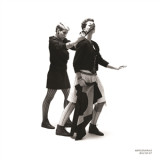
Mercenárias is an iconic band in the history of Brazilian punk and post-punk. They gained global recognition after being included in several compilations outside Brazil. Born in the vibrant alternative scene of 1980s Sao Paulo, Mercenárias is an iconic band in the history of Brazilian punk and post-punk. Formed in 1982 by Sandra Coutinho (bass and vocals), Rosália Munhoz (vocals), Ana Machado (guitar), and Edgard Scandurra (drums), the group stood out for their rebellious attitude, incisive lyrics, and raw sound that blended punk, post-punk, no wave and experimental elements. Their debut album, "Cadê as Armas?" (1986), is considered one of the most important records in Brazilian music history. Recommended for fans of The Slits, DNA, Malaria!, Kleenex, and Minutemen, the group stood out for their rebellious attitude, incisive lyrics, and raw sound that blended punk, post-punk, no wave and experimental elements. This is a compilation of rare tracks from 1983 to 1987. On the A side, there are 10 amazing songs that didn't make it onto their two albums. On the B side, there is a great live recording at the legendary Sesc Pompéia during their early days, as well as a "lost" studio session featuring some of their classic songs recorded for the cult film Vera. It has been remastered from the original tapes and includes an insert with previously unseen photos and a short text by Edgard Scandurra. .
debe ser publicado en 25.04.2025

Long time in the vaults, soon out in pop heaven: Andrea & Alexander, a handsomely nostalgic pop project by Andrea Noce aka Eva Geist and Alexander Arpeggio. Originally launched in 2014, revitalized in 2023, the project originated as a live set-up consisting of synthesizers, ePects pedals, and analogue drum machines. From there it slowly metamorphosed into a crew of songs with raw minimal-wave grooves and romantically haunting English and German pop lyrics, loosely evoking the aura of Siouxsie Sioux, Gudrun Gut or Nadine Bal. After becoming a live mainstay in the Berlin based underground club Sameheads, they went on a tour through Lithuania and soon after several unfortunate troubles led to the break-up of the band, prompting both Andrea and Alexander to focus on their solo careers. Andrea became Eva Geist and released for various international labels, played live and formed the female duo As Longitude. Alexander founded his own label Eine Welt, took over the management of the renowned underground festival Camp Cosmic and created two musical projects with Cid Hohne, Otto and Aufgang B. Now, years later, almost becoming a Soundcloud corpse some Andrea & Alexander recordings caught the attention of the R.i.O. folks and just seconds later they offer six freshly recorded cuts of Andrea & Alexander tunes that stood the test of time as authentic, soulful pop music. “What are we going to wear for tonight’s party?” Andrea Noce asks in their song “Tiney Party”. The answer is “Loved Up” a musical celebration outfit of six sincere recorded, emotionally accorded songs, who make the dance, give verve a chance, to be there, in that moment of all moments. An album for the listener that likes to dance. In his head, on the local carpet. “Loved Up” humming Andrea & Alexander tunes.
Haga su pedido ahora y le encargaremos el artículo en nuestro proveedor.

“On August 5th 1962, after 300 years of British rule, which had soaked the earth of the island in blood, Jamaica was finally independent. The country that the British left behind was certainly a place of widespread poverty and deep inequality, but there seems to have been a real burst of confidence that came with independence. Newsreels of the day show well-dressed crowds reacting with enthusiasm and excitement, and the era found its perfect soundtrack in the boldness and exuberance of ska music, which was erupting all over the island.
This optimistic mood found probably its greatest artistic expression in the music of the Skatalites, who formed in June 1964 as a kind of Jamaican supergroup. Philip “Justin” Yap was a young, upcoming producer who had used members of the Skatalites for his first tunes, recorded either at RJR (Radio Jamaica and Redifussion) or at Federal studios. As Steve Barrow documented in the sleevenotes for Pressure Sounds’ reissue of the classic “Ska-Boo-Da-Ba” album, Justin had also befriended Clement “Coxsone” Dodd, and when Coxsone opened his own Studio One facility in December 1963, Justin immediately switched most of his production work to this new recording room. Studio One opened just in time to catch the formation of the Skatalites, and is where Justin recorded most of his classic Skatalites sides. He also recorded lots of excellent instrumentals with a smaller brass section, still mainly using members of the Skatalites, but crediting instead the composer or arranger of the tune. Combined with Coxsone’s own recordings, these productions for Justin’s Top Deck and Tuneico labels really captured the members of the Skatalites at their magnificent best in the unique atmosphere of Studio One.”
debe ser publicado en 28.06.2024

Das Album CINEMA wird 20 Jahre alt und erscheint nun in einer limitierten Sonderausgabe auf CD und Doppel-LP - ein Meilenstein in Rodrigo Leãos Karriere und in der Geschichte der portugiesischen Musik. Sie enthält zwei bisher unveröffentlichte Titel, "Luzes da Cidade" und "Quarto 501", sowie Remixe von "Deep Blue" und "Rosa".
debe ser publicado en 21.06.2024

"Der aus Belém do Para im Norden des Landes stammende Ary Lobo war bereit, seinen Wahlkampf im Süden des Landes zu beginnen und machte sich im Oktober 1955 auf den Weg nach Rio de Janeiro. Dort stieß er auf die üblichen Vorurteile des Südens gegenüber Sängern aus dem Norden, und erst nachdem er Gadé, einen angesehenen Pianisten, kennen gelernt hatte, konnte er sich ein Vorsingen bei Rádio Mauá sichern. Doch diese Chance hätte sich beinahe in eine Katastrophe verwandelt, da er in einem so schwachen Zustand zu dieser Sitzung erschien, dass er nicht auftreten konnte. Die unzureichende und unregelmäßige Ernährung hatte seine Atmung beeinträchtigt, so dass es unmöglich war, seiner Stimme die nötige Kraft zu verleihen. Glücklicherweise wurde das Vorsingen verschoben, und bei seinem zweiten Versuch konnte er sich einen Fünfmonatsvertrag mit dem Sender sichern, wo er als Samba-Sänger bekannt wurde. Als sein Ruf wuchs, wurde er bei RCA unter Vertrag genommen im Juni 1956." Die Musikszene in Rio wurde auf den Newcomer aufmerksam, der die Persönlichkeit eines nordöstlichen Sängers mit tiefen Wurzeln im afro-brasilianischen Erbe pflegte. Er begann das neue Jahrzehnt mit dem Album "Aqui mora o ritmo" (Hier lebt der Rhythmus), das 1960 veröffentlicht wurde und von vielen als sein bestes Werk bezeichnet wird. Wie so viele Genres erlebte auch der Forró seine Blütezeit, aber Ende der 1960er Jahre begann seine Popularität zu schwinden, und Ary Lobo war gezwungen, auf der Suche nach Arbeitsmöglichkeiten von einer Stadt in die andere zu ziehen. Schließlich kam er nach Fortaleza, wo er bis zu seinem Tod im Jahr 1980 lebte. Unter den Sängern und Songschreibern, die in den 1950er Jahren aus Pará hervorgingen, erlangte Ary Lobo einen für seine Zeit einzigartigen nationalen Ruhm.
Haga su pedido ahora y le encargaremos el artículo en nuestro proveedor.

This two-time Grammy nominee’s career has taken Cidny from singing back-up on tour with Elton John, working with Bob Dylan, Rod Stewart, and singing three lead vocals on the “Grease” movie
soundtrack to having nine critically acclaimed solo albums, including the award winning Somewhere Between Heaven and Earth. Cid’s friends on the albums include friends Bonnie Raitt, Lucinda
Williams, Steve Earle, Bryan Adams, Emmylou Harris, Delbert McClinton, and Sir Elton John himself.
Cidny has also co-written many Country songs in Nashville, including Radney Foster’s hit “Hammer and Nails”. Since 2007, Cidny has been one-third of “super-group”, The Refugees with Wendy Waldman and Deborah Holland. In 2011, Cidny made the difficult and daunting decision to start transitioning from female to male, from Cindy to Cidny. He has written and has been performing his one-person theatrical show Somewhere Between: Not An Ordinary Life all over the U.S. An award-winning documentary short about his life called The Gender Line screened at major film festivals around the world from 2019-2022. Cid will be releasing his first album as “Cidny Bullens” Little Pieces in the fall of 2023. Cid’s memoir, TransElectric: My Life as a Cosmic Rock Star, with foreword by Sir Elton John was released on June 6, 2023, and is now available for purchase at all major bookstore sites.
debe ser publicado en 27.10.2023

High-octane tour-de-force by legendary post-punk group, INU. Widely considered in Japan to be one of the all-time greatest punk records, 1981's Don’t Eat Food! remains shockingly unknown to the rest of the world. Led by literate but unhinged Machida Machizo, a magnetic stage presence who sang in a thick Osaka dialect that sounded like nothing else at the time, INU took Japan by storm in the late '70s with their powerful and often belligerent live show. Their membership changed frequently but INU's final lineup -- the group that recorded Don't Eat Food! -- was sharp as a knife, and the band's airtight debut still wows forty years later.
It's hard to describe INU's unique sound in comparison to other bands, but maybe imagine a more fidgety Richard Hell & The Voidoids jamming with PiL? Better yet, just listen for yourself.
This first-ever fully-licensed edition has been remastered from the original tapes and cut by Kevin Gray and includes an 8-page booklet with never-before-seen photos, lyrics in English and Japanese, and liner notes by Syojiro Ishibashi in English and Japanese.
Haga su pedido ahora y le encargaremos el artículo en nuestro proveedor.

Das neue Album "The Sound of Movies" von Klassik-Superstar Jonas Kaufmann erscheint am 15. September 2023 bei Sony Classical. Großartige Songs aus klassischen Filmen waren schon immer eine Leidenschaft von Jonas Kaufmann, und sein neues Album feiert dies mit unvergesslichen Filmsongs aus fast einem Jahrhundert - Musik, die weltweit das Publikum begeistert hat."The Sound of Movies" enthält Hits aus großen Filmklassikern wie West Side Story, Gladiator, Cinema Paradiso, The Sound of Music, Les Misérables, The Mission, The Great Caruso, Singin' in the Rain, Once upon a Time in America, Breakfast at Tiffany's und vielen mehr! Das Album wurde mit dem auf Filmmusik spezialisierten Czech National Symphony Orchester und Chor unter der Leitung von Jochen Rieder aufgenommen, ein spekatuläres Sounderlebnis ist garantiert. Bei drei Titeln wird Jonas Kaufmann vom bekannten Gitarristen Miloš Karadaglić begleitet. Auch eine Weltpremiere ist auf dem Album zu hören, das Thema aus dem Film "The Cider House Rules" der Oscar®-gekrönten Komponistin Rachel Portman. "Für ein paar Stunden in diese Welt einzutauchen und alles um sich herum zu vergessen, ist unglaublich faszinierend - ähnlich wie im Theater oder in der Oper", sagt Kaufmann über klassische Filmmusik. "Ich bin über viele Jahre viel gereist, oft allein für Wochen und Monate in fremden Städten am anderen Ende der Welt. Neben den Museen war es das Kino - diese großartige Möglichkeit, sich zu unterhalten, wenn man allein ist - das meine Fantasie beflügelte.""The Sound of Movies" erscheint als CD, Vinyl und digital.Die limitierte 2-LP-Gatefold-Edition auf 180 Gramm Vinyl enthält eine persönliche Einführung von Jonas Kaufmann und ein ausführliches Booklet.Das Standard-Jewelcase enthält eine persönliche Einführung von Jonas Kaufmann und ein ausführliches Booklet in Englisch, Deutsch und Französisch.
debe ser publicado en 15.09.2023

debe ser publicado en 13.06.2023

Haga su pedido ahora y le encargaremos el artículo en nuestro proveedor.

Haga su pedido ahora y le encargaremos el artículo en nuestro proveedor.

Joshwa heads to Hot Creations for his label debut, unveiling his two-track ‘Bass Go Boom’ 12”.
After surging into the spotlight in 2022 via a series of high-profile collaborations alongside Lee Foss, CID, and Martin Ikin, UK-based DJ/producer Joshwa is looking to keep things moving for 2023 as an artist at the top end of Beatport’s top-selling tech house charts. Up next, late March brings a milestone release as he steps out on Hot Creations for the first time, delivering a pair of heavily requested and lively productions across his ‘Bass Go Boom’ EP.
A boisterous and low-end heavy production loaded with vocal samples and spiralling synths, ‘Bass Go Boom’ is a tined for peak time use, while ‘Supersonic’ offers by rolling drums, and vibrant glitches and pops.
Haga su pedido ahora y le encargaremos el artículo en nuestro proveedor.

Auf ihrem Sony Classical Debüt Album "Beyond the Screen" gewährt die Filmkomponistin Rachel Portman einen persönlichen und emotionalen Einblick in ihre wegweisende Karriere. Dafür hat sie einige ihrer beliebtesten Filmmusiken neu am Klavier aufgenommen, darunter ihr Oscar-prämierter Soundtrack "Emma", "Gotteswerk und Teufels Beitrag" und "Chocolat". Insgesamt 20 Piano Arrangements verbindet Rachel Portman zu einer emotionalen musikalischen Reise. Vom Arrangement bis zur Performance: Bei der Produktion von "Beyond The Screen" hat Rachel Portman künstlerisch alles selbst verantwortet: "Es musste eine sehr direkte Verbindung zwischen mir als Autorin und dem Interpretieren bestehen. Für mich hat sowieso alles seinen Ursprung am Klavier, weil ich am Klavier schreibe. Ich verbringe den ganzen Tag am Piano. Wahrscheinlich bin ich in meiner Seele Pianistin. Es fühlt sich also sehr befriedigend an, die Stücke am Klavier gespielt zu haben. In gewisser Weise hat sich damit der Kreis geschlossen." Rachel Portman hat in knapp 40 Jahren über 100 Scores für Film- und Fernseh-Produktionen komponiert und ist bekannt für ihre lyrischen Melodien und ihre reinen, transparenten Orchestrierungen. Darüber hinaus hat sie auch Musik für Opern (Le Petit Prince) und Theaterstücke und ein Oratorium komponiert. 1996 gewann sie als erste Frau einen Academy Award in der Kategorie Best Musical or Comedy Score für "Emma" und 2015 als erste Frau einen Primetime Emmy Award für "Outstanding Music Composition for a Mini Series, Movie or a Special" für "Bessie". Weitere Nominierungen erhielt sie u.a. für "Oliver Twist", "The Cider House Rules" und "Chocolat"."Jeder Film ist mit einer persönlichen Geschichte verbunden. Um diese Geschichten geht es in 'Beyond The Screen'" erklärt Rachel Portman.
debe ser publicado en 03.03.2023

„One day I was on a visit sitting in his kitchen and when we decided to change to the sofa in the music room, his girlfriend proposed to listen to these old recordings, as maybe I would be weird enough to like them. „Recorded in my homestudio, low budget style with a cheap microphone, a sampler, drum machines, vinyl and a few borrowed synths. … A commitment to the funk, a raw analogue sound and also a dedication to black music and its architects.“ the artist comments on it.
I immediately dug the rather short demos a lot. As I had to swallow the information that there never were real plans to release them, I later decided on the bus home, I just had to puke out a „label“. Soon I asked him to extend some of the songs and let me do some mixing and here is the album.“ Cid Hohner
An entire long-player on hair, representing the complete Illwig catalogue. Beautifully raw electronic funk. Obscure, bouncy and atmospheric. Right. This is F.B.Illwig with the first official release on Moonwalk X Records after a singlesided promo 12“ sporting the extended version of „Why Do My Hair“.
Haga su pedido ahora y le encargaremos el artículo en nuestro proveedor.

Brilliantly unclassifiable ambient midi-jazz salvo from Brazil’s Gabriel Guerra aka Guerrinha - member of PAN/Future Times' Lifted ensemble and lynchpin of the Rio De Janeiro underground. Very highly recommended noir sleaze x fantasy lounge music somewhere on the spectrum between Gigi Masin, Spencer Clark, 0PN, Flanger and Koji Kondo’s iconic video game soundtracks.
Deployed as the third release on the expertly curated confuso editions, ‘Cidade Grande’ sees Guerra unfurl an immersive and deeply enveloping variant of lounge jazz noir intersecting Japanese city pop, classic video game soundtracks and future-primitive kosmische signatures in a way that defies easy categorisation. Guerrinha colours outside the lines in swirling, exquisitely trippy designs that are as easy on the ears are they are hard to fully fathom over a single sitting.
Mirroring a strain of jazz music’s evolution from sophisticate lounge soundtrack to more psychedelic lustre when musicians found acid and Brazilian styles in the ‘60s, Guerrinha slants the paradigm thru the prism of late ‘80s midi with a c.21st suss that coolly echoes hauntological takes from Spencer Clark & James Ferraro to Leyland Kirby, and Eli Keszler’s electro-acoustic jazz proprioceptions, as much as emotive Kenji Kawai soundtracks. There's a complete lack of cynicism in his approach, and dense, hypnotic tracks like 'Venda Casada Village' and the moving 'Kafta Hoje' sound so completely straight-faced it's impossible not to respect the flex.
It’s a hugely trippy listen, at once calming and eerily evocative, with a wipe-clean palette of deft midi orchestrations that conjure flashbacks to soundtracks for everything from Twin Peaks to Sharky & George or Patlabor, but with more opalescent depth, dancing around motifs in holographic designs that mark the uncanny valley of perception.
debe ser publicado en 11.11.2022

Sometimes the best things take time to come into fruition, and here we are, ready to finally unleash Brazil45 number 88 - the missing 7"! Featuring two Mr Bongo favourites that we have been longing to share with the world.
First up is a lesser-known Brazilian Boys track titled 'Super Herois’. This slightly trippy and quirky funk-rock groove is taken off an obscure 7" on CID records and was originally released in 1975. 'Super Herois' is super catchy, addictive and a guaranteed complete earworm. It’s a muti genre, crossover nugget that will branch scenes and tick all sorts of boxes.
On the flip is the driving, jazz-rock-samba dancefloor joint 'Tudo Ai’, a cut taken from Rubinho E Mauro Assumpção's highly sought after 1972 album 'Perfeitamente, Justamente Quando Cheguei’. Originally released on Tapecar Records, this short in stature track packs a real punch!
Haga su pedido ahora y le encargaremos el artículo en nuestro proveedor.

Joining the dots between Brazilian musical culture and the sonic melting pot that is New York City, Saidera are a trio on the rise. They’ve already released a pair of critically acclaimed, carnival-ready singles on Brooklyn’s Let’s Play House label and are now ready to make their debut on Leng Records.
The band’s roots can be traced back to a trip that Lemonade band member Alex Pasternak made to Brazil in 2014. While DJing at a house party in the bohemian Rio de Janeiro neighbourhood of Sta Teresa, Pasternak was left gobsmacked when a mysterious local singer/sambista Vadinho Freire, grabbed the mic and started freestyling lyrics and melodies over his set. Realising their instinctive musical connection, Pasternak and Freire decided to work together on some music, with New Yorker Le Chev joining them to complete the Saidera trio.
Now based in Rio and California, the group’s sun-soaked sound – which they describe as “samba disco-Afro melody” – is a cross-cultural stew in which infectious Brazilian percussion, colourful synth sounds, glistening guitars and celebratory vocals combine to create magical, life-affirming musical moments.
‘Luzes Da Cidade’, their first outing on Leng, encapsulates all that’s good about the Saidera sound and the trio’s approach to music. The song is about identity and connection and in its original form is languid, loved-up and joyous, with acoustic and electric guitars, Portuguese vocals and Korey Riker’s gently breezy flute solos rising above a squelchy synth bassline and energetic, sweat-soaked samba drums.
The song’s main mix comes accompanied by a wonderful instrumental pass featuring more extensive solos by Riker, and Saidera’s own remix of ‘Luzes Da Cidade’ – an extra-percussive, breakbeat-tinged fusion of hazy deep house, energetic samba and sunset-ready synth-disco that will delight DJs and dancers alike.
To round off the EP, Saidera has delivered a brand new “Uprockin Dub” of debut single ‘Deixa Tudo Fluir’, this time with female vocals from Irina Bertolucci taking the lead. Brilliantly kaleidoscopic sonically, with dub delay-laden vocals, guitars and flutes, it’s a superb, life-affirming Balearic reggae interpretation of a now familiar favourite. If you’re not singing along with the chorus after your first listen, we’d be very surprised.
Haga su pedido ahora y le encargaremos el artículo en nuestro proveedor.

Joe Rainey is a Pow Wow singer. On his debut album Niineta he demonstrates his command of the Pow Wow style, descending from Indigenous singing that's been heard across the waters of what is now called Minnesota for centuries. Depending on the song, his voice can celebrate or console, welcome or intimidate, wake you up or lull your babies to sleep. Each note conveys a clear message, no matter the inflection: We're still here. We were here before you were, and we never left. On Niineta, Rainey finds himself in between cultures, collaborating with producer Andrew Broder, who brought his turntablist sensibility to the project. The two of them met backstage at Justin Vernon's hometown Eaux Claires music festival before crossing paths more through the 37d03d collective, and both contributed to the last Bon Iver album before partnering up. "At first I didn't know what I could add," Broder says. "I came to understand everything is rooted in the drum-even the songs on our record that have no drum." Each song started with Broder's beats, the two of them experimenting with various sounds and tempos before orchestrating and recontextualizing the ancient sounds in strange, new in-between places, also pulling from Rainey's vast sample folder of pow wow recordings, layering in slices of his life. Niineta is a short version of the Ojibwe term meaning, "just me," and Rainey is using the term only in the sense that he's taking sole responsibility for the music. He is protective of Pow Wow culture-once outlawed by the US government and maintained in secret-while trying to figure out where he fits and how he can be creative with it. "These are my creations, but they're pow wow songs, and our language is sacred," he says. Rainey suggests conceptualizing the album as him working the door at a Pow Wow after party. "If I'm answering that door, I want to say, hey, yeah, come on in. But there's fucking tons of us in here. It ain't just me."
debe ser publicado en 08.07.2022

This special Record Store Day 5 x 45s collection comes packaged in a limited-edition Brazil 45 clamshell collector’s box.
The long-running relationship between Masters At Work and Mr Bongo has been a fruitful affair. Beginning in the 90s, it has included releases such as their seminal 'Brazilian Beat' 12" featuring Liliana, their magnificent rework of Atmosphere’s ‘Dancing In Outer Space’, and their recent hit Surprise Chef remixes 12". The influences of Brazilian music is evident in their DJ sets and productions, take the poly-rhythms of the 'Nervous Track’ as a prime example. We couldn't think of anyone more fitting to curate the third volume in our "Brazil 45 Boxset Curated by" series than one half of the MAW duo, the mighty Kenny Dope.
For his volume of the series, Kenny selected 10 knockout tracks from the golden era of Brazilian music. As you would expect from such a legend, he surpassed the brief of simply compiling the tracks, as he re-edited and remixed a number of his favourites especially for this boxset. Amongst these exclusives is a blazing, heavy psych-funk remix of Antonio Carlos & Jocafi's 'Quem Vem Lá’, and a hip-hop breakbeat bounce woven into Luli Lucinha E O Bando's folky-MPB beauty 'Flor Lilás’. Di Melo and Miguel De Deus are also given the Dopeman remix and edit treatment.
Kenny's selections pull out some forgotten classics and recently overlooked gems, many of which were once top of the want-lists for collectors in the 90s. These include Milton Banana Trio and the irresistible version of 'Berimbao' by Jayme Marques. Along with the Brazilian funk and jazzy-bossa dancefloor-oriented tracks, Kenny has also chosen the leftfield, deeper, trippy psychedelic folk sounds of Papete.
As with previous volumes, the selections are very personal and represent the individual sound and taste of the selector digging from the rich tapestry of Brazilian music. Its unique palate and stamp are exactly what you would expect from a Master At Work.
Haga su pedido ahora y le encargaremos el artículo en nuestro proveedor.

Tape
The occult and folk music have been friends for a while. In the 21st century, hauntology and the resurface of some cult soundtracks from the 1970s and 1980s helped to create a new sense of folk, not associated with the typical acoustic feeling, but more relatable with library, krautrock/kosmische and industrial music. João Kyron and Tony Watts, long time collaborators since the late 1990s with their band Hipnótica, and more recently with Beautify Junkyards (Ghost Box) are well acquainted with this friendship. Hidden Horse is their new project as a duo and “Opala” their first release.
With eight tracks and almost thirty minutes, their first release explores dense and greyish urban utopias. The song titles explore ideas that mix sci-fi, horror, science, space and urban phobia, and the music Kyron and Watts create delivers, using electronics and drums with great relish. Their relationship as musicians, which spans more than two decades, can be felt in the way their music flows with a continuous dialogue.
“Opala” is always keen to take you to another dimension. It lives in its own twilight zone, where the obscure entangles the most obvious senses of reality. It sounds like Jacques Tati “Playtime” with a hauntology soundtrack: it kind of feels that this imaginary world is real, but it’s not. And it sucks you in to be a part of it and enjoy it: close your eyes and let yourself go while listening to “Levitação Magnética” or “Fantasmas do Planeta”. You will feel like a foreigner in a new city.
debe ser publicado en 18.02.2022

Tetrabass factory double LP compliation of praised unreleasqed tunes on vinyl !
Massive dancefloor weapon !
Haga su pedido ahora y le encargaremos el artículo en nuestro proveedor.

IKOQWE (pronounced ee-kok-weh) is a new project by Batida (aka Pedro Coquen o, the Angola-born, Lisbon-raised artist who ranks among the leading exponents of the new wave of African electronic music), and Luaty Beir o, aka Ikonoklasta, the Angolan rapper turned iconic activist.
IKOQWE’s inspiration comes from old school Hip Hop as much as from traditional Angolan music. The album (entitled ‘The Beginning, the Medium, the End and the Infinite’) includes drum machines, vocals in Angolan slang, Umbundu, Portuguese & English, discussions about neocolonialism, iniquities and falsified history, radio sounds, utopian solutions, and much more.
The album will be preceded by a 3-track digital single, ‘Pele’ (‘Skin’), containing the album version, and remixes by afro house legend Bodhi Sattva and by UK ‘disco noir’ band MADMADMAD. Also check out the music video for ‘Pele’, including some footage from IKOQWE’s first live performance.
Haga su pedido ahora y le encargaremos el artículo en nuestro proveedor.

A very welcome reissue of this amazing LP. Beautiful deep Brazilian music that soothes the soul.. Tip!!
The self-titled debut by the duo Jaime & Nair is a revelation of all sorts. Released in 1974 on CID under the influence of albums like "Clube Da Esquina" it is an expressive album full of charm through a gesture of swing. It shows an overall dreamy lullaby vibe with subtle touches of Brazilian folk and features well-known artists such as Wilson Das Neves, Orlandivo or José Roberto Bertrami as studio musicians. The outstanding and largely hailed song 'Sob O Mar' brings us back to a pure Brazilian soft-bossanova-beat adorned by luscious orchestral arrangements. It became a popular DJ tune for those in the know after being comped in the fantastic "High Jazz" series in the early 2000s, gaining this album grail status among collectors worldwide. An essential addition to any serious Brazilian music collection.
Haga su pedido ahora y le encargaremos el artículo en nuestro proveedor.

Legend has it that Brian Eno’s concept of ambient music came to him while laid up in a hospital bed after an automobile ac-cident in the 70's. A friend brought him some records, playing them too low to be properly heard, and Eno couldn’t get out of bed to adjust the volume. While the record spun softly, Eno’s idea for music you could ignore as easily as you could give it your full attention, like a sort of sonic wallpaper, was born. It’s in that spirit of quiet isolation that Ghostly International, in associ-ation with Adult Swim, shares Ghostly Swim 2, our way of giving listeners a space to get away from the manic holiday bustle.
For those keeping track at home, Ghostly is wrapping up its 15th anniversary as an Ann Arbor/Brooklyn-based indie. 2014 has seen the company soundtracking video games (Playstation’s Hohokum), collaborating with awesome companies like Warby Parker and VOID watches, and clearing 300 releases of for-ward-thinking music with records from Tycho, Com Truise, and HTRK. What better way to end this banner year than to revisit one of our favorite partnerships from the past decade and a half?
Released in 2008, Ghostly Swim was praised for its adventurous survey of exploratory dance and pop music. Our curatorial focus has shifted this time around, moving further inward (spiritually) and outward (as far as our roster goes) to reflect the electron-ic underground in all of its hazy and vibrant experimentalism. Ghostly Swim 2 is a document of textured ambient zone-outs and woozy, granular house and techno that will help you find some downtime away from The Most Wonderful Time of the Year. So sit back, lower the volume, and enjoy our selections.
Haga su pedido ahora y le encargaremos el artículo en nuestro proveedor.

“Following on from Homenagem, Lugar Alto’s first critically acclaimed project, the São Paulo label's new endeavour is the reissue of another neglected masterpiece. This time, it’s “Poema da Gota Serena” turn by Zé Eduardo Nazário from 1982. This unique work gathers elements of free jazz, Brazilian Northeastern rhythms, Asian percussive instruments and electronics.
Zé Eduardo is a virtuoso drummer and percussionist with a prolific career as a musician and teacher. He was introduced to music in his youth and started playing professionally at the age of thirteen. In the late 60’s he was a regular at the famous Totem night club in São Paulo, where he performed alongside the pianist Tenório Jr. and other exceptional instrumentalists. It was there that he met Guilherme Franco, and together they formed the Grupo Experimental de Percussão. This period defined Nazário’s interest in different sonorities involving percussion, and he broke away from the more traditional genres, such as bossa nova and jazz. Over time, this distinctiveness in sound and playing allowed him to create his own path which culminated in an extensive number of remarkable works, including the colorful and psychedelic “M andala”, which examines Indian and hippie themes. He also played with Hermeto Pascoal’s group and joined him and Jaques Morelenbaum for the recording of the cult classic “Imyra, Tayra, Ypy” by Taiguara. For Egberto Gismonti’s “Nó Caipira”, Nazário performed with the khene, a mouth organ from Laos, a present from Gismonti himself.
But it is Nazário’s work with the 1976 collective Grupo Um which is his most well-known, who, during their 6-year legacy recorded, amongst movie and ballet soundtracks, 3 albums: “Marcha Sobre a Cidade”, “Reflexões Sobre a Crise do Desejo” and “Flor de Plástico Incinerada”. The combo is considered one of the most innovative formations of its time, unusually combining electro-acoustic elements, jazz and Brazilian traditional music.
Poema da Gota Serena was Zé Eduardo's first solo project and it was financed by the legendary Lira Instrumental, a collaboration between the ground-breaking venue, label and publisher for the São Paulo avant-garde, Lira Paulistana, along with the always interesting Continental Records, home to such luminaries as Tom Zé. The album was offered as a package deal simultaneously with the production of “Flor de Plástico Incinerada”, ensuring 2 studio sessions at JV studios in October 1982.
Each side of the album explores different duets which, with its suite formated tracks, give the album the feel of a cohesive whole. The first half of the A side, “Energia dos Três Mundos”, is shared with the improvised saxophone of Cacau. Nazário delves into free jazz rhythms and plays his drums with a rolling and tumbling swing, using the kit in full, demonstrating the power of Brazilian jazz fusion. The second half of the suite takes us into a more tranquil mode. “Só Prá Ouvir”, demonstrates Zé’s mastery on the glockenspiel, and Indian percussion instruments, such as the tabla and mridangam. Cacau, on his side, switches his saxophone for more delicate dancing flute driven passages, equal parts northeastern rhythms and deep Amazonian indigenous influences. The B side, with “Prá Pensar / Prá Sentir e Prá Contar”, contrasts heavily with the A side’s more organic and natural feel. In Prá Pensar Lelo Nazários’s synth clusters and electronic blasts strangely interact with the exploring, wandering percussion. This track leads into the sublime “Prá Sentir e Prá Contar” where South Indian inspired vocals, performed by Zé Eduardo, accompany the graceful synth chords and fluttering percussion. The result is a hypnotic, otherworldly feel to the music that is infectious and takes the listener on an extraordinary journey.
With Poema da Gota Serena, it is possible to hear music that extrapolates the lines of the avant-garde and popular music. It is an album the demonstrates that Brazilian jazz fusion can be both spiritual and challenging at the same time.
All the tracks were expertly remastered by Lelo Nazário, directly from the original tapes, maintaining the high quality of production that Lugar Alto are becoming renowned for. All the artwork was reinterpreted by the São Paulo design studio Sometimes Always, including an exclusive insert and unpublished images.
It seems that Lugar Alto have managed to excavate yet another gem from the seemingly bottomless Brazilian mines. Long may they continue to do what they do so well.”
Haga su pedido ahora y le encargaremos el artículo en nuestro proveedor.

Andy Rantzen, Sydney, Australia.
This one is a special for us as we love dub and lo-fi music and also love the experiments of Andy Rantzen like "Rain in the Morning, Sun in the Afternoon / Dark Sea".
The more interesting part of the story is, that both tunes are written and recorded nearly 20 years ago by Andy - 1999-2000. But definitely still hot and vibing our sweet and sour DIY motto. We like!!!
A must in your collection!
Haga su pedido ahora y le encargaremos el artículo en nuestro proveedor.
