A true surprise success for Paharas Musica, originally written during the end of the pandemic, 'White Isle Memories' captured the loss of not being able to visit the white isle of Ibiza and combines the producer talents of Ridney & Inner Spirit (aka Richard Earnshaw).
A production aimed at the beach bar culture of the island the production duo are joined by multiinstrumentalist, vocalist and loop pedal extraordinaire Michael Sebastian. In it’s original guise the track has racked up well over 1.3 million streams and in that gained the attention of German producer SOMMA (1.7 million monthly listeners), who was keen to grab the stems and deliver a special 2023 remix.
Adding to the package Ridney’s sunset reprise from his Café Mambo Ibiza DJ sets and Inner Sprits own incredible 2023 remix.
DJ Support:
Mark Knight (support on Kiss FM), Purple Disco Machine, Mousse T, Ken Fan (Café Del Mar), Ryan McDermott (Café Mambo Resident), Hector Romero, Des Mitchell (Radio One Mallorca), Mr V, Lenny Fontana, Loeca, Jazzy M, Dario D’Attis, Danny Rampling, Chad Jackson, Brandon Block, Booker T, Black Legend, David Dunne, Graham Sahara, Lizzie Curious, Martyn the Hat.5
Search:le disco
repress!
NIGHT COMMUNICATION was a production team composed by Andrea Gemolotto and Leo Marras.
They both were very active in the early italo house scene, Gemolotto was famous for his technical skills, in fact in 1989 he won the italian DMC Championship as Cutmaster-G. Leo Marras aka Leo Mas, is one of of the most underground italian djs, he started his career playing in the late 80's alongside Alfredo at Amnesia Ibiza, and he was one of the first djs bringing Ibiza atmosphere into the early house italian club scene. Night Communication EP' was originally released in 1992 and it's now officially repressed from Groovin Recordings. All the tracks come from the original tapes and have also been remastered.
- 1: Come Dancing
- 2: Losing A Whole Year
- 3: Lithium
- 4: Saturday Night's Alright (For Fighting)
- 5: Do You Still Hate Me?
- 6: You Get What You Give
- 7: Bizarre Love Triangle
- 8: Cute Without The E
- 9: Lying From You
- 10: Get This
- 11: Hanging By A Moment
- 12: Look What Happened
- 13: Drive
- 14: Sink To The Bottom
- 15: In The Dark
Pure Noise Records and Pabst Blue Ribbon have teamed up again to present ‘Dead Formats Volume 2’, a 15-track compilation featuring the Pure Noise Records roster sharing their takes on classic songs from Elton John, New Radicals, The Kinks and scene favourites Taking Back Sunday and more. The concept with Volume 1 was originally curated as a way for fans to discover new, like-minded bands, the same way legendary comps like Atticus’ Dragging The Lake, Punk O Rama, or the Vans Warped Tour Compilations did in the 90’s and 2000’s. Volume 2 will open up a wealth of artists from across the years.
An aura of mystery hangs over Jacky Giordano, a studio musician who has mostly worked for library music.He is the one behind the amazing label Freesound (Schifter, Philopsis, Challenger), but as well on Montparnasse 2000 with Pop in Devil's Train (reissued on Le Tres Groove Club), on Timing (Timing N?1 and Timing N?5, under the nickname Jacky Nodaro), on Musax with Boucles Rythmiques (under the nickname Joachim Sherylee, reissued as well on Le Tres Groove Club) or Black Devil Disco Club whose paternity for this record is still disputed between him and Bernard Fevre. Jacky Giordano wasn't an altar boy, far from it, and will have sadly been more known for his troubles with justice than for his music.This is his work for the label l'Illustration Musicale (IM) which can now be rediscovered thanks to this new reissue on Le Tres Groove Club.Organ Plus (IM26) is the sequel to Organ (IM 24), also reissued by Le Tres Groove Club. The title is misleading here, an organ not being preponderant part of the record which honours the Fender Rhodes, string machine, bass synth and clavinet. 'Be Careful', 'Riffologic', 'Twillight' : Jacky Giordano offers slow tempo jazz-funk, without losing his melancholy and low-fi groove that make his tracks immediately recognisable regardless the record label or nickname.
At the end of the 60s and early 70s Brazil was a dream. It was fashionable everywhere in Europe and therefore in France too. One thinks of 'Samba Saravah' from the Un homme et une femme OST, Françoise Hardy and her record produced by Tuca, Isabelle Aubret and her 'Casa Forte' or France Gall with 'Zozoi'. Three Brazilian musicians exiled in France, Edson Lobo (bass), Fernando Martins (piano) and Nelson Serra (drums) form the Trio Camara. They met a group of friends who loved Brazilian music, all professional musicians, but who wanted to remain anonymous, hence the name of the band : Les Masques (The Masks)…
Claude Germain (Les double six), José Bartel, Marie Vassiliu, Pierre Vassiliu … Indeed the singers forming Les Masques are from being unknown. In 1969 they entered Studio Davout with le Trio Camara to record "Brasilian Sound". Composed of 11 tracks, it is a superb album, masterfully produced and recorded, a gripping record to listen in one go and transports us in atmospheres both dreamy and naïve which belong to that period. Produced in 500 copies on CBS, 'Brazilian Sound' was not, unfortunately, a success and it is today impossible to find the original French pressing (which sounds much better than the Canadian pressing released at the same time). This reissue on Le Très Groove Club is welcome, so that 50 years after its release, a larger audience can discover this beautiful record, echo of a once and for all past era.
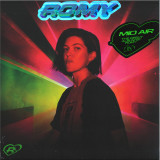
"Mid Air" ist ein Album über das Feiern, die Zuflucht und die Erlösung auf der Tanzfläche. Es ist ein Album, das sich mit Liebe, Trauer, Beziehungen, Identität und Sexualität beschäftigt. Es ist Romys Liebesbrief an die queeren Clubs, in denen sie Gemeinschaft und Anschluss gefunden hat. Die Entstehung des Albums, ihres ersten Soloprojekts, war ein Prozess, bei dem sie sich selbst außerhalb von The xx kennengelernt hat und in dem sie auch noch die Zeit hatte, sich zu verlieben. Es gibt einen Moment, ein Zwischenspiel, ein paar Tracks in "Mid Air", als Romys Stimme leise den Text "it hit me in mid air" singt. Diese Erkenntnis führt uns direkt in den Song "Enjoy Your Life", die zweite Single des Albums, die wie eine Offenbarung klingt. "Meine Mutter sagte zu mir "genieße dein Leben"", singt Musiker Beverly Glenn-Copeland im Refrain - ein Sample aus seiner Platte "La Vita". Als Romy den Satz zum ersten Mal hörte, hat er sie umgehauen - eine Erinnerung in den Tiefen der Trauer, dass das Leben kurz ist und man es in vollen Zügen genießen sollte. Freude, Verbundenheit, Liebe zu suchen. Während die Strophen die härteste Zeit nach dem Verlust ihrer Eltern zum Ausdruck bringen, ist der Refrain eine Art feierliche Ruhe. Schmerz und Freude tanzen zusammen. Die Art von Liedern, die Romy am liebsten mag - das, was sie "emotionale Musik zum Tanzen" nennt - Lieder wie "Smalltown Boy" von Bronski Beat oder "Dancing On My Own" von Robyn. Das ist die Art von Musik, die "Mid Air" inspiriert hat, die Art von Musik, die Menschen in Clubs zusammenbringt, insbesondere in queeren Clubs. Romy begann als Teenager in Londoner Queer-Clubs aufzulegen und sieht "Mid Air" als eine Rückkehr in diese Zeit, ein Pop-Dance-Album, das die Orte beschwört, an denen sie sich zum ersten Mal in das Genre und seine Kraft, Menschen zu bewegen, verliebt hat. Die Tatsache, dass das Album größtenteils unter Ausschluss der Öffentlichkeit entstand, als Romy die Clubs vermisste, machte diesen Impuls, ein Album zu schaffen, das in einem Club ein Zuhause finden könnte, umso wichtiger. Die Zusammenarbeit mit Fred Again.. und Stuart Price (der eines von Romys Lieblingsalben, Madonnas "Confessions on a Dancefloor", produziert hat) sowie mit Jamie xx, einem ganz engen Freund, Mitglied von The xx und Kollaborateur des Tracks "Enjoy Your Life", sorgte für die perfekte Balance zwischen Emotion und Tanzbarkeit. Auch wenn Romy nicht damit gerechnet hätte, dass ein solches Album jemals zustande kommen würde, als sie 2018 begann, mit Fred zu schreiben "Mid Air" führt uns durch die Höhen und Tiefen - einer Nacht, einer Beziehung, von Trauer und Heilung - und endet schließlich an einem Ort des Optimismus. Der letzte Track "She"s on My Mind" ist eine bewusste Anspielung auf den Disco-Song, der am Ende der Nacht in angesagten Queer-Clubs wie der Paradise Garage gespielt wurde und bei dem die getrennt tanzenden Körper zueinander fanden. Es ist das Ende eines Albums, das die besonderen, aber flüchtigen Momente der Ekstase feiert, die man nur in der Tanzmusik finden kann. Oder wie Romy es ausdrückt: "Das Gefühl der Gemeinschaft in den Clubs ermöglicht eine Flucht vor der Realität der Welt. Ich bin vielleicht nicht das Leben und die Seele einer Party, aber in der Atmosphäre eines Clubs zu sein, zu beobachten und sich zu verbinden - dadurch fühle ich mich weniger allein und lebendiger"
ENG Jay-Jay Johanson released an EP around his new single « Amen » The song is a piano voice piece which turns out to sound like a classic that could come from the «Great american songbook ». Jay Jay talks about all the cultural exchanges that shapes & rhythm a love story, to be more accurate : a failed love story. In addition to the «Addictive Youth remix » of the song, 2 others remixes are featured on the EP produced by the french singer/composer Léonard Lasry . On « Romeo » we can hear his piano touch and his background vocals mixed with the presence of a funky guitar, rare in Jay Jay's discography. On « Why Wait until tomorrow » he has invited Amina for a great vocal featuring.
- A1: Madrigal - Leo Blomov
- A2: Billy Joel - Lord$
- A3: Plus Vite - Charles Dollé
- A4: Dream - Comateens
- A5: Pôve Tièsse - Guy Cabay
- A6: Fallen Snow - Louis Philppe
- A7: La Mémoire Des Pierres - Catastrophe
- B1: Das Macht Dich Heiss - Ingrid Caven
- B2: Sweet Jesus !!! - Chassol
- B3: J'n'ai Pas Bougé D'ici - Stéphane Salvi & Kumisolo
- B4: Tee Shirt Finisher - A S Dragon
- B5: The Girl Of September - Bertrand Burgalat
- B6: Montées Infinies - Karol Beffa
On the occasion of its exceptional evening at the Cabaret Sauvage, Tricatel is releasing a superb vinyl compilation of thirteen tracks, including several previously unreleased ones. It's a collector's item for long-time fans and for those who want to discover the label.
The Tricatel Machine compilation pays tribute to this unique evening, including each artist present at the party. But not only that! Of the thirteen tracks, many are new or unreleased on vinyl.
The Nag's Head was a warts-and-all vessel for the sonic meanderings of Brighton artist Stephen Maskell - taking in richly textural techno, corrupted pop and ASMR drone sculptures. His four releases on Kit Records documented the ecstatic mundanity of life in broken Britain, compositions welded together with snippets of pirate radio, ear-tickling art installations, altercations in terrible pubs, and other end-of-pier hallucinations.
Honky Tonk Cheeseballs is perhaps Maskell's final release, and represents the culmination of his digital dream diary approach. Gone is the Nag's Head moniker (pub burnt down in a possible insurance job?). In the embers we find Basil Neptune: a kind of sentient Airbnb profile, seeking out the smelliest, strangest sonic vestiges of Albion. Expect richly harmonic ambience, ghostly spoken word, and a few trademark booty shakers. All shot through the lens of... Scooby Doo? Zoinks.
Japanese jazz is sadly one of best-kept secret. But, it would be stupid to not discover "Green Caterpillar" by Masaru Imada trio + 2. Led by Masaru Imada and his Fender Rhodes, the record opens with " A Green Caterpillar", a 11 minutes piece whose the groove is somewhat reminiscent of Marc Moulin and his Placebo band. "A Straight Flash" continues along this line, while on "Blue Impulse" and "Spanish Flower" Masaru Imada uses the piano in a much more modal style.
Before he was old enough to legally drink, there were "Best Of," rarities compilations, and .zip files floating through the ether.
Whenever industry prospectors earmarked him as the next big thing, he disappeared back underground, only to reemerge sharper, leaner, weirder.
Though only 26, the St. Louis- born rapper and producer has seen enough for several lifetimes--and raps as if he's tapped into many more. But after a few years of highs, lows, and traumatic odysseys, he was able to stare straight into the abyss and conquer it. This regained confidence is exhibited on fish don't climb trees, the largely self-produced new album that reaffirms him as one of rap's great auteurs.
While working on "fish", he vowed to be more true to the emotions and experiences he'd endured. Being true to those fractured, discordant feelings requires a prismatic approach. And so you get fish's exhilarating hairpin turns: from downtempo dub ("bora bora") to 808s rattling through a haunted house ("tourniquet"), beats that sound as if they're molting into new shapes in real time (the two- song suite of "daze" and "grey theory") to ones that that plunge to the
bottom of a pocket ("spirits").
The album's title comes from the maybe-apocryphal Einstein quote, about how a fish judged by its ability to climb trees will "spend its whole life believing it is stupid." For Watson, this meant embracing the cheery first half of the quote ("Everybody is a genius"), but also being cognizant of the dark undercurrents that flow just beneath seemingly innocent misjudgments and mis-categorizations.
Belgian jazz veterans W.E.R.F. records and JazzLab are celebrating their 30th anniversary together with three unique creation projects for which they are joining forces. One of them is with percussionist Chris Joris, a veteran of Belgian jazz who is releasing a haunting new project.
Until the Darkness Fades' immediately says something about Chris Joris' career path, in which the musical and the personal invariably overlap. This percussionist has written one of the most colorful chapters of Belgian jazz. For many years he was active within various genres, but is now mostly praised as the percussionist who constantly demolished boundaries. Not only between all those oppressive genre boxes - pop, experiment, theater, world music, jazz - but also between complete worlds.
Chris Joris was playing "world jazz" long before there was that term, and he signed on for some hot-blooded jazz classics, with "Out Of The Night" perhaps the best-known example. That album was originally released in 2003, was then unavailable for years, but is back on shelves in 2023 and on vinyl for the first time. And rightfully so. Joris also eagerly seized the prospect of a new tour and a brand new album for a musical self-portrait. With "Until the Darkness Fades," he highlights different aspects of his musical identity, both expected and unexpected.
Joris composed new material, but also keeps a prominent place for free improvisation. It will be a tantalizing dichotomy full of hybrid sounds, with familiar and less familiar sounds, between romanticism and uninhibited adventure. He explores these in the presence of notable associates on violin and cello. In this way, he combines earthy percussion with the freedom of jazz and the elegance of chamber music. Discover this story of a Belgian master who is far from finished.
- I Love This Song
- Lifeline
- What About Never
- Gravitation
- Run
- Let's Go Home
- Starting Over
- Dragonfly
- Lovebomb
- Hitting The Wall
- Oh Boi
- No No No
Formed in Berlin, via an instagram notice board "We Formed A Band" set up by the band Gurr, LOBSTERBOMB had no idea at the time it would lead to them signing to the label that discovered Gurr, Duchess Box Records.
The Trio Nico Rosch, Vik Chi and Crayon Jones all immigrated to Berlin looking for the same escape and lust from the places they had left behind. After connecting with eachother during the pandemic of 2020 they started writing songs drawing on their environment, fears and frustrations of the time but had an desire for seizing the moment and making the world their own, a feeling they still have today..
"I have a bit of an obsession with a band from Germany called LOBSTERBOMB, I think they are magnificent" says legendary Duran Duran frontman Simon Le Bon on his American radio show on Sirius XM.
- 1: Hello
- 2: A Love From Outer Space
- 3: Crack Up
- 4: Timewind
- 5: What's All This Then?
- 6: Snow Joke
- 7: Off Into Space
- 8: And I Say
- 9: Yeti
- 10: Conundrum
- 11: Honeysuckleswallow
- 12: Long Body
- 13: In A Circle
- 14: Fast Ka
- 15: Miles Apart
- 16: Pop
- 17: Mars
- 18: Spook
- 19: Sugarwings
- 20: Back Home
- 21: Down
- 22: Supervixens
- 23: Insect Love
- 24: Sorry
- 25: Catch My Drift
- 26: Challenge
A.R. Kive collates the three most astonishing works from that most miraculous of duos - A.R. Kane - comprising the ‘Up Home’ EP from 1988 that signified the band’s dawning realisation of their own powers and possibilities, their legendary debut LP ‘sixty nine’ (1988) and its kaleidoscopic, prophetic double-LP follow up ‘i’ (1989).
In founder-member Rudy Tambala’s new remastering, the music on these pivotal transmissions from the birth of dream pop, have been reinvigorated and re-infused with a new power, a new depth and intimacy, a new height and immensity. Vivid, timeless and yet always timely whenever they’re recalled, these records still force any listener to realise that despite the habits of retrospective myth-making and the
safe neutering effects of ‘genre’, thirty years have in no way dimmed how resistant and dissident to critical habits of categorisation A.R. Kane always were. Never quite ‘avant-pop’ or ‘shoegaze’ or ‘post-rock’ or any of those sobriquets designed to file and categorise, A.R. Kive is a reminder that those genres had to be coined, had to be invented precisely to contain the astonishing sound of A.R. Kane, because
previous formulations couldn’t come close to their sui generis sound and suggestiveness. This is music that pointed towards futures which a whole generation of artists and sonic explorers would map out. Now beautifully repackaged, remastered and fleshed out with extensive sleeve notes and accompanying materials, ‘A.R. Kive’ reveals that 35 years on it’s still a struggle to defuse the revolutionary and inspirational possibility of A.R. Kane’s music.
A.R. Kane were formed in 1986 by Rudy Tambala and Alex Ayuli, two second-generation immigrants who grew up together in Stratford, East London. From the off the pair were outsiders in the culturally mixed (cockney/Irish/West Indian/Asian) milieu of the East End, with Alex and Rudy’s folks first generation immigrants from Nigeria and Malawi, respectively. The two of them quickly developed and fostered an innate and near-telepathic mutual understanding forged in musical, literary and artistic exploration. Like a lot of second-generation immigrants, they were ferocious autodidacts in all kinds of areas, especially around music and literature. Diving deep into the music of afro-futurist luminaries such as Sun Ra, Miles Davis, Lee Perry and
Hendrix, as well as devouring the explorations of lysergic noise and feedback from contemporaries like Sonic Youth and Butthole Surfers, they also thoroughly immersed themselves in the alternate literary realities of sci-fi and ancient history (the fascination with the arcane that gave the band their name), all to feed their voracious cultural thirsts and intellectual curiosity.
It was seeing the Cocteau Twins performing on Channel 4 show the Tube that spurred A.R. Kane into being - “They had no drummer. They used tapes and technology and Liz Fraser looked completely otherworldly with those big eyes. And the noise coming out of Robin’s guitar! That was the ‘Fuck! We could do that! We could express ourselves like that!’ moment”, recalls Tambala - and through a mix of
confidence, chutzpah, ad hoc almost-mythical live shows and sheer innocent will the duo debuted with the astonishing ‘When You’re Sad’ single for One Little Indian in 1986. Immediately dubbed a ‘black Jesus & Mary Chain’ by a press unsure of WHERE to put a black band clearly immersed in feedback and noise, what was immediately apparent for listeners was just how much more was going on here - a
tapping of dub’s stealth and guile, a resonant umbilicus back to fusion and jazz, the music less a conjuration of past highs than a re-summoning of lost spirits.
The run of singles and EPs that followed picked up increasingly rapt reviews in the press, but it was the ‘Up Home EP’ released in 1988 on their new home, Rough Trade that really suggested something immense was about to break. Simon Reynolds noted the EP was: Their most concentrated slab of iridescent awesomeness and a true pinnacle of an era that abounded with astounding landmarks of guitar-reinvention, A.R. Kane at their most elixir-like.
If anything, the remastered ‘Up Home’ that forms the first part of ‘A.R. Kive’ is even more dazzling, even more startling than it was when it first emerged, and listening now you again wonder not just about how many bands christened ‘shoegaze’ tried to emulate it, but how all of them fell so far short of its lambent, pellucid wonder. This remains intrinsically experimental music but with none of the frowning orthodoxy those words imply. A.R. Kane, thanks to that second generation auto-didacticism were always supremely aware about the interstices of music and magic, but at the same time gloriously free in the way they explored that connection within their own sound, fascinated always with the creation of ‘perfect mistakes’ and the possibilities inherent in informed play.
‘sixty nine’ the group’s debut LP that emerged in 1988 had
critics and listeners struggling to fit language around A.R. Kane’s sound. As a title it was telling - the year of ‘Bitches Brew’, the year of ‘In A Silent Way’, the erotic möbius between two lovers - and as originally coined by the band themselves, ‘dream pop’ (before it became a free-floating signifier of vague import) was entirely apposite for the music A.R. Kane were making. Crafted in a dark small basement studio in which Tambala recalls the duo had “complete freedom - We wanted to go as far out as we could, and in doing so we discovered the point where it stops being music”. There was an irresistibly dreamy, somnambulant, sensual and almost surreal flow to ‘sixty nine’s sound, but also real darkness/dankness, the ruptures of the primordial and the reverberations of the subconscious, within the grooves of remarkable songs like ‘Dizzy’ and ‘Crazy Blue’. Alex’s plangent vocals floated and surged amidst exquisite peals of refracted feedback but crucially there was BASS here, lugubrious and funky and full of dread, sonic pleasure and sonic disturbance crushed together to make music with a center so deep it felt subcutaneous, music constructed from both the accidental and the deliberate, generous enough to dance with both serendipity and chaos. ‘sixty nine’ remains - especially in this remastered iteration - ravishing, revolutionary.
The final part of this ‘A.R. Kive’ contains 1989’s astonishing double-LP ‘i’ which followed up on ‘sixty nine’s promise and saw the duo fully unleash their experimental pop sensibilities over 26 tracks, plunging the A.R. Kane sound into a dazzlingly kaleidoscopic vision of pop experiment and play. Suffused with new digital technologies and combining searingly sweet and danceable pop with perhaps the duo’s strangest and boundary-pushing compositions, the album did exactly what a great double-set should do - indulge the artists sprawling pursuit of their own imaginations but always with a concision and an ear for those moments where pop both transcends and toys with the listeners expectations. Jason Ankeny has noted that “In retrospect, ‘i’ now seems like a crystal ball prophesying virtually every major musical development of the 1990s; from the shimmering techno of ‘A Love from Outer Space’ to the liquid dub of ‘What’s All This Then?’, from the alien drone-pop of ‘Conundrum’ to the sinister shoegazer miasma of ‘Supervixens’ — it’s all here, an underground road map for countless bands to follow.” Perhaps the most overwhelmingly all-encompassing transmission from A.R. Kane, ‘i’ bookended a three year period in which the duo had made some of the most prophetic and revelatory music of the entire decade.
After ‘i’ the duo’s output became more sporadic with Tambala and Ayuli moving in different directions both geographically and musically, with only 1994’s ‘New Clear Child’ a crystalline re-fraction of future and past echoes of jazz, folk and soul, before the duo went their separate ways. Since then, A.R. Kane’s music has endured, not thanks to the usual sepia’d false memories that seem to maintain interest in so much of the musical past, but because those who hear A.R. Kane music and are changed irrevocably, have to share that universe which A.R. Kane opened up, with anyone else who will listen. Far more than other lauded documents of the late 80s it still sounds astonishingly fresh, astonishingly livid and vivid and necessary and NOW.
Setting out to create a future Balearic anthem while doffing a cap to street soul and synth-heavy Italo-disco B-sides of the early 1980s, Orbs of Light’s debut single, ‘Billion Days’ lands on Leng after a tip-off from Mind Fair duo Dean Meredith and Ben Shenton, who booked the duo to play live at their Rotation festival last summer.
Orbs of Light’s Baz Bradley and A Girl Called Kate have been friends for decades and have collaborated musically in the past, though it was only a couple of years ago that they dreamed up this project. It was first trialled via a 2021 remix for Andres y Xavi on Hollis Recordings (‘Perfect Timing’) on which Kate added new vocals to Bradley’s interpretation of the track. Since then, regular recording sessions have taken place, with the duo first crafting tight instrumental tracks before – in Bradley’s words – “dream up the best songs we can” with “melodies that will hopefully stay in your head all day”.
It would be fair to say that they’ve achieved that goal on ‘Billion Days’, a hooky and addictive affair whose vocal hooks and strong chorus could well inspire Balearic sing-alongs in the months ahead. Their original mix (B1 on the vinyl version of the EP, track 2 on the digital EP) is joyous, cheery and kaleidoscopic, with steel pan style melodies, bouncy synth stabs, jaunty lead lines and Kate’s wonderful lead vocal riding a shuffling, post street soul beat and a bubbly bassline.
The accompanying remix package is naturally very strong too. San Francisco crew 40 Thieves, fresh from dropping a killer single of their own on Leng (‘The Gift’, with disco legends Gary Davis and Cinnamon Jones), step up first with a take that stretches out and builds on Orbs of Light’s original mix – think wobbly nu-disco synth bass, fresh flute sounds, dubbed-out vocal snippets and a locked-in groove that’s just perfect for sun-soaked alfresco dancing.
Fittingly, the second and final revision comes from Mind Fair, whose email to Leng HQ about Orbs of Light got the ball rolling. Opting for a rubbery, body-popping beat inspired by vintage electro, they deliver a joyful, effects-laden Balearic dancefloor ‘Dub Mix’ that somehow makes a genuinely life-affirming record even more loved-up and saucer-eyed – despite the presence of only a fraction of Kate’s addictive lead vocal.
Disco re-edit master Moplen sprinkles his magic on the golden grooves of Jackie Moore’s classic, ‘Holding Back’ for the third release on A’s and Bees backed with the original Breakdown and Chin-Mental mixes from the mighty John Morales and Sergio Munzabai (M&M).
Continuing their run of heavyweight pressings that marry remastered originals with new interpretations of those prized cuts, A’s and Bees look to ’83 with this sensuous slice of disco heat, blending beefy slap bass with a soaring string section and Jackie’s soulful vocal tones. A cover of David Simmons’ 1979 classic ‘Holdin' Back’ penned by Gregg Diamond and Steve Love, Moore’s interpretation is a high energy disco hit from across the Atlantic.
Opening up the release, re-work whiz Moplen was graced with the stems to the original recording, tweaking, finessing and squeezing out all the best bits of the original building the tension across 7 sublime minutes, that balances deftness with full frontal power. Taking the A2, the original vocal mix in all its glory, produced and arranged by MFSB’s Bobby Eli.
On the B side two masterful M&M mixes from the legendary duo of John Morales and Sergio Munzabai in the form of the Breakdown and Chin-Mental versions.
50% of the profits from this release will be donated towards the British Beekeepers Association.
New Zealand disco-boogie outfit Flamingo Pier plant some Brooklyn roots with their fresh new ‘Beneath the Neon EP’ on Razor-N-Tape. Known for parties in East London and their massive hometown festival, as well as previous releases on Soundway, the Kiwi collective deliver a trio of new songs that solidify and expand their signature danceable blue-eyed indie-soul sound.
Lead off single 'How 2 Feel' shows a clubbier side of the band, with a pulsating house rhythm track and layers of angular synth stabs, vibey horn lines, and vocal chants. 'Beneath the Neon' and 'Remedy' are more familiar Flamingo Pier territory, upbeat indie disco anthems that boast incendiary vocal hooks, funky guitar work, and crisp production by Luke Walker.
Rounding out the EP are remixes by Chicago house legend Glenn Underground, and RNT co-head JKriv, whose mix features a guest appearance by Afro-boogie royalty Steve Monite.
Oozing with hazy sun, Beneath the Neon is the perfect soundtrack to soak up the dog days of summer.