
6
interface 68 & friends - best of 4rth volume.
From The Hallucidite...
A Big archive pleasure.
pre-order now30 Apr
expected to be published on 30 Apr
26,26 €
interface 68 & friends - best of 4rth volume.
From The Hallucidite...
A Big archive pleasure.
expected to be published on 30 Apr
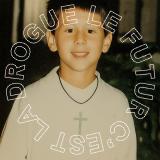
Le Futur c’est la drogue, which should here be translated as The Future Is the Drug, is not to be read as a promise, but as a statement of fact. The present is no longer an experience, but pure consumption. Life itself has taken the form of a dependency.
With this sixth album, Christophe Clébard goes straight to the point, driven by a free and repetitive form of writing, stripped of any syntactic rigidity. Words strike like balls against a wall, revealing darker zones of his mind where guilt, fear, and existential anxiety coexist.
The sound composition, equally minimal, sustains a dense and obsessive mental space, a vortex in which trance appears as the only escape. Driving drum machines, relentlessly hammered electronic loops, and a battered synthesizer, his music unfolds within a physical, strangely hypnotic synth-punk aesthetic that hits viscerally.
The Future Is the Drug is his sixth album.
Last delivered 5 months ago
available to reorder, subject to availability

"Throughout her life, my mother wrote ghost songs. Songs without melodies, without music, written on loose sheets of paper and stored away in folders. Why did my mother, who isn’t a musician, choose this form of expression? And why do I, her son, devote my life to producing music without words?
Le disque de ma mère, an album composed from these texts, the oldest dating back to 1984 and the most recent to 2018, seeks to translate the poetry of this situation."
With the collaboration of Blandine Rinkel, who gives voice to these texts, Superpoze creates a powerful album of songs that speaks to us about transmission, imagination, and secrecy.
expected to be published on 24 Apr

Concert at Prades-le-Lez marks the origins of the Intercommunal Free Dance Music Orchestra. In 1974, François Tusques and his companions (Michel Marre, Jo Maka, Adolf Winkler and Guem), in the spirit of Don Cherry or Chris McGregor, playfully dismantle all borders and all styles of creative music.
On this second volume, the Intercommunal builds unprecedented soundscapes around a song of revolt, a dance tune, or a burst of dissonance. The journey is unforgettable, no question about it. On repeat listening, it even becomes… lunar!
“The music that we make is primarily meant to be listened to live,” warned a leaflet from the Intercommunal Free Dance Music Orchestra. This is precisely why the (restored!) reissue of the two volumes of Concert at Prades-le-Lez, recorded on January 25 and 26, 1974 by François Tusques and his comrades, is such an important event.
In 1971, after recording a series of albums that would leave a lasting mark on French jazz (Free Jazz, of course, with Michel Portal, François Jeanneau, Bernard Vitet, Beb Guérin and Charles Saudrais, but also Le Nouveau Jazz with Barney Wilen, or the solo Piano Dazibao), François Tusques founded the Intercommunal—a grouping whose very name called for the fraternization of the various communities making up the country: Our music will help, we hope, to resolve the contradictions that exist between workers be longing to different communities, by breaking down various forms of national chauvinism, and more particularly the chauvinism of certain French people toward the cultures of Third World countries… Long live the friendship between the peoples of the whole world!
Among the great records made by the Intercommunal Free Dance Music Orchestra, the two volumes of Concert at Prades-le-Lez come first, before L’Inter Communal, Vol. 4, Le Musichien, and Après la marée noire (four titles already reissued by Souffle Continu). François Tusques and his companions (Michel Marre and Jo Maka on saxophones, Adolf Winkler on trombone, and Guem on percussion) performed on January 25 and 26, 1974 at the Moulin de Prades-le-Lez, a few kilometers from Montpellier. It was thus in the southern region of Occitanie that the first echoes of this musical vision of a borderless brotherhood were recorded.
“We’re not among the Colonels,” the Intercommunal reassures us right away, performing a stride piano tune carried by African winds that the audience cannot resist for long. The energy is already striking and it never lets up throughout these two recordings, from start to finish: jazz, blues, traditional music, minimalism, even funk… The musicians of the Intercommunal have heard a lot of great music and now delight in reinventing it by mixing it all together.
“We want the song form to take its place as a weapon in the struggle against capitalist exploitation and all those who oppress us morally and materially,” declared an Intercommunal leaflet, quoting Jean-Baptiste Clément, author of the lyrics to “Le Temps des cerises.” The struggle was therefore serious—but it did not prevent François Tusques and his group from waging it in a festive spirit: each piece on Concert at Prades-le- Lez sends out a call for love and fraternity. Fifty years later, the message remains as relevant as ever—and once again, it is François Tusques who makes it heard.
expected to be published on 17 Apr

2[23,95 €]
Concert at Prades-le-Lez marks the origins of the Intercommunal Free Dance Music Orchestra. In 1974, François Tusques and his companions (Michel Marre, Jo Maka, Adolf Winkler and Guem), in the spirit of Don Cherry or Chris McGregor, playfully dismantle all borders and all styles of creative music.
On this first volume, the Intercommunal takes its audience from New Orleans to Brittany and on to North Africa. The journey was bold, without a doubt—and its memory remains unforgettable.
“The music that we make is primarily meant to be listened to live,” warned a leaflet from the Intercommunal Free Dance Music Orchestra. This is precisely why the (restored!) reissue of the two volumes of Concert at Prades-le-Lez, recorded on January 25 and 26, 1974 by François Tusques and his comrades, is such an important event.
In 1971, after recording a series of albums that would leave a lasting mark on French jazz (Free Jazz, of course, with Michel Portal, François Jeanneau, Bernard Vitet, Beb Guérin and Charles Saudrais, but also Le Nouveau Jazz with Barney Wilen, or the solo Piano Dazibao), François Tusques founded the Intercommunal—a grouping whose very name called for the fraternization of the various communities making up the country: Our music will help, we hope, to resolve the contradictions that exist between workers be longing to different communities, by breaking down various forms of national chauvinism, and more particularly the chauvinism of certain French people toward the cultures of Third World countries… Long live the friendship between the peoples of the whole world!
Among the great records made by the Intercommunal Free Dance Music Orchestra, the two volumes of Concert at Prades-le-Lez come first, before L’Inter Communal, Vol. 4, Le Musichien, and Après la marée noire (four titles already reissued by Souffle Continu). François Tusques and his companions (Michel Marre and Jo Maka on saxophones, Adolf Winkler on trombone, and Guem on percussion) performed on January 25 and 26, 1974 at the Moulin de Prades-le-Lez, a few kilometers from Montpellier. It was thus in the southern region of Occitanie that the first echoes of this musical vision of a borderless brotherhood were recorded.
“We’re not among the Colonels,” the Intercommunal reassures us right away, performing a stride piano tune carried by African winds that the audience cannot resist for long. The energy is already striking and it never lets up throughout these two recordings, from start to finish: jazz, blues, traditional music, minimalism, even funk… The musicians of the Intercommunal have heard a lot of great music and now delight in reinventing it by mixing it all together.
“We want the song form to take its place as a weapon in the struggle against capitalist exploitation and all those who oppress us morally and materially,” declared an Intercommunal leaflet, quoting Jean-Baptiste Clément, author of the lyrics to “Le Temps des cerises.” The struggle was therefore serious—but it did not prevent François Tusques and his group from waging it in a festive spirit: each piece on Concert at Prades-le- Lez sends out a call for love and fraternity. Fifty years later, the message remains as relevant as ever—and once again, it is François Tusques who makes it heard.
expected to be published on 17 Apr

expected to be published on 17 Apr

4 Remixes from 4 tunes of Le Diable Au Corps !
! LIMITED 300 copies !
A1 - is a remix of La Vache Folle Guerit De Tout 2 by Sparks !
A2 is a remix of Dark Rabbit 14 by UZi !
B1 is a remix of La Vache Folle Guerit De Tout 8 by Protokick
B2 is a remix of BIONIK 09 (from Harry Potar) by Binary Asymetrix.
Enjoy !!
Last delivered 35 days ago
available to reorder, subject to availability

A1 is a remix of La Vache Folle 13 by the Sickest Squad.
A2 is a remix of HARDFLOOR 02 by Braindrillerz
B1 is a remix of Le Diable Au Corps HS 01 by Radium.
And b2 is a remix of Neurotoxic 54 by Mydriazz
LTD 300 !
enjoy !
expected to be published on 30 Mar

The Billy The Kick (Sweet Home 02) and Es-tu Un Dieu (La Vache Folle 05) from Harry Potar (AKA Roms) and the Toxic (LDAC HS 01) remix from Rolan Kulé and Angel (La Vache Folle 08) remix by Anticeptik
expected to be published on 30 Mar

Two remixes of the Overture To The Sun (Perestroika 03) & Wesh Cowboy (Bionik 08) for Frenchcore & Hardfloor versions ! 45 RPM cut and printed sleeve, Mastered by Trypod and cut by Simon Davey
expected to be published on 30 Mar

Ange (lit. 'Angel') is a French progressive rock band formed in September 1969 by the Décamps brothers, Francis (keyboards) and Christian (vocals, accordion, acoustic guitar and keyboards).
Since its inception the band's music has been inspired by medieval texts, fantasy and the music of Procol Harum and King Crimson. Their music was quite theatrical and poetic.
expected to be published on 27 Mar

Mark IJzerman’s debut album Flounder Maps sounds like wandering through a world that's both familiar and strange. Forests humming with electricity, machines that breathe. Warm synths drift into chaos, calm moments crack open into something urgent. It's about things growing, falling apart, becoming something else. Inspired by eco-fiction and near-future imaginings, it pulls you through landscapes that feel alive and uncertain. The album takes its name from navigating uncertain ground. Music for a world in flux.
expected to be published on 27 Mar

Russell Paine (Super Disco Edits).
These four tracks simply blew me away when I heard them. Its raw disco funk cosmic energy that you just can't replicate. Sometimes when you get a long disco track that's eight or ten minutes long, mundane thoughts and loss of interest can start to kick in once the dums and bongo's have faded.
This isn't the case with Magique. You just keep joining the rocket ride to the stars.
From the social message disco funk of "Inch By Inch" which is still relevant to today's social problems. "Dancin" and "Disco Nights" epitomise why we love disco.
And finally "Disco Cowboy" has a sound that harks back to those Plainfield NJ P-Funk roots. I think if any of the Dj pioneers from the 1970's stumbled across these they would have been etched in Disco Folklore!
Last delivered 42 days ago
available to reorder, subject to availability

A limited offer for this Pack of tha 5 vinyls of the last Le Diable Au Corps Remixes !
BANGERZ !!!
This pack countains :
LDAC Remix 05 06 07 09 and 11
Last delivered 6 months ago
available to reorder, subject to availability

The Billy The Kick (Sweet Home 02) and Es-tu Un Dieu (La Vache Folle 05) from Harry Potar (AKA Roms) and the Toxic (LDAC HS 01) remix from Rolan Kulé and Angel (La Vache Folle 08) remix by Anticeptik
Last delivered 6 months ago
available to reorder, subject to availability

interface 68 - best of 3rd volume.
From The Hallucidite Big archive pleasure.
expected to be published on 28 Feb

Five years after her bossa nova single "Tes petites fesses" and a notable appearance at the Colors studio in 2023, singer LYNN releases her debut album: La vie me va si bien. Comprising eleven tracks, it blends French neo-soul, smooth R&B, and minimalist pop, with a confident and sincere approach. For LYNN, each song explores the fragility of moments when tenderness shifts into doubt, expressing the fatigue of loving, the fear of losing oneself, and the beauty of longing. Her writing, precise and nuanced, focuses on detail and restraint. Accompanied by guitars, pianos, and layered voices, she tells stories between childhood and lucidity, in an organic and harmonious soundscape. The album exudes a controlled sincerity, meant to be listened to in calm, establishing LYNN as a distinctive voice, ready to mix gentleness with truth in a hurried world.
expected to be published on 16 Jan
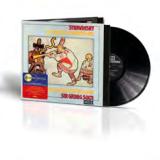
Als Sir Georg Solti im Herbst 1969 sein Amt als Musikdirektor antrat, verglich er die Stadt Chicago und
ihr berühmtes Orchester einmal mit dem „Dornröschen“-Schlaf. Doch fünf Jahre später war es ein anderes
Ballett – Strawinskys „Le Sacre du Printemps“ –, das zeigte, wie explosiv diese neue Beziehung geworden
war, in einer Aufnahme, die auch ein halbes Jahrhundert nach ihrer Entstehung noch immer aus den Lautsprechern dröhnt. „Glamourös und kraftvoll.“ – Gramophone
Deccas vollständig analoge Vinyl-Serie DECCA PURE ANALOGUE punktet mit einigen der legendärsten
Aufnahmen aus den Archiven von Decca und Philips. Die Serie wurde von Rainer Maillard gemastert und
von Sidney C. Meyer in den renommierten Emil Berliner Studios geschnitten, bei Pallas auf 180-gr.-Vinyl
gepresst und in luxuriösen Gatefolds in handnummerierten, limitierten Auflagen präsentiert.
Es werden ausschließlich originale analoge Quellen verwendet – in diesem Fall 2-Track Stereo-Bänder–
und es kommen keine zusätzlichen Geräte im Signalweg zum Einsatz, d. h. es findet keinerlei digitale
Klangbearbeitung statt.
Die LP wurde für 45RPM gemastert, um einen besseren Hochtonbereich zu erzielen und die ganze „Wucht
und Klarheit“ der Originalaufnahme wiederzugeben.
Jedes Album enthält das Original-Artwork und Original-Liner Notes, Archivfotos und Faksimiles der OriginalAufnahmeprotokolle sowie neu verfasste Anmerkungen, die die Geschichte der Aufnahme, den technischen
Hintergrund und den Mastering-Prozess beschreiben.
expected to be published on 16 Jan

expected to be published on 30 Nov 2025

Le Corbeau, the brainchild of Oystein Sandsdalen (Serena Maneesh), has become a formidable collective. here with a trilogy of albums spanning eight years. Why such a productive group choses to release twenty-seven songs simultaneously may be a greater reflection on the myopic nature of record labels -The mystic deities of noir have returned. "The band"s sound bows to the vestiges of V.U., Sonic Youth, and Lynchian glamour- but each of the three albums show ambition to go beyond, by player freedom and improv, exploring textural layers, and nuancing each groove. Many songs remind us what we loved in 2009`s Evening Chill / Montreal of the Mind - surrealistic, seductive, draped in velvet. Some circle to the familiar with punk fuzz and playful themes, like "1000 eyed behemoth": about leaving Oslo"s night life behind. Other times, they are creators of their own classics. Opening track to VI: Sun Creeps Up the Wall, "Blossom with an Evil Light" recorded between 2017-2018, illuminates a a new path of change. The long anticipation is over- come enter the murky and magical waters of Le Corbeau." -Ann Sung-an Lee
expected to be published on 28 Nov 2025