Mow Records proudly presents L’enfants De Kita, the third album from a series of five, all produced by label owner Mowgan. Each album features vocalists and performers with African heritage, channeling Mowgan’s passion for the continent’s diverse sounds into vibrant, highly emotive productions. On L’enfants De Kita he teams up with Fanta Sayon Sissoko, a female performer from West African nation Mali. Based in Toulouse, where the album was recorded, Fanta’s musical roots go deep - her father played guitar and ngoni for Baaba Maal and her grandmother is Kandia Kouyaté, one of Mali’s best-known griot singers.
Mowgan always dreamed of working with a female singer from Mali, enchanted by their vocal style. After moving back to France a few years ago he bumped into Eric Diaouré, an old friend who he worked with in his teens. Eric is also a musician and just so happens to be from Mali. Mowgan revealed his ambitions to Eric and a meeting with Fanta was arranged - within a few days they were in the studio together.
Like the other albums in this series, L’enfants De Kita is a fusion of Mowgan’s love for African music and his penchant for electronic sounds. Fanta’s raw, affecting vocals are complemented by Mowgan’s considered production throughout with additional instrumentation from a range of performers, including a group of schoolchildren on ‘Tubani’. Featured artists include Solo Sanou (whose album ‘Soya’ was the second release on Mow Records) playing percussion, Mamadou ‘Madou’ Dembele, a multi-instrumentalist who plays ngoni, Yohan Hernandez on guitar and bass plus Madani Touré aka Chanana (a famous Malian rapper from the nineties) contributing to lead vocals on the album’s title track, with Tim Xavier handling mastering.
Mowgan’s approach to creating albums is to get a vibe going with the singer, produce a batch of songs and then select the best seven for each LP. It’s a pressure-free attitude that has led to some truly heartfelt productions, which encapsulate the purity of the creative process when it’s liberated from rigid constraints. You can hear this freedom of expression throughout L’enfants De Kita, Fanta in her element as she sings with passion and grace across all seven tracks.
The album begins with the title song ‘L’enfants De Kita’, which pays homage to Fanta’s hometown, Kita, in Mali. It is the centre of griotism, the local style of passing on knowledge from one generation to the next via spoken-word storytelling. Chanana joins Fanta on this one, which is the most ‘western’ sounding cut on the LP, Mowgan’s deft touch taking us to the dance floor, while Chanana adds extra depth with his rapid-fire vocal refrain. The glorious ‘Tubani’ tells the story of Djene Tubani, a girl who thought she was a bird. She disobeys her parents and neglects her friends, but eventually learns the error of her ways. Fanta’s vocals are amplified by the voices of a group of schoolchildren, including her own daughter.
‘Mobaya’ is a reminder that we can possess wisdom and deep knowing, but we can also enjoy ourselves; dance, sing and party. This is a club-focused production with 4x4 beats and a traditional house feel, which provide a wonderful accompaniment to Fanta’s uplifting vocals. Next up is ‘Dakan’, a cut which is all about destiny: Everyone has been put on Earth for a reason and by working together we can all achieve our destiny. Layers of percussion skip over the warm low end, with a lively trumpet appearing in the second half.
‘Dounouya’ explores the notion that we live in a world where everyone faces negative criticism. Fanta encourages us to take responsibility and move forward no matter what others think of us with this inspiring guitar-led cut. ‘Djonya’ highlights the fact that slavery still exists in today’s world - modern slavery, hidden from public view but still very much alive. “Our Africa is going to be okay if we all hold hands, if we are all together, all united,” she says. Finally,‘Badeya’, a great outtro which focuses on unity. We are all one family on this planet and this song speaks of people coming together but also respecting ourselves above everything else. The pace is slow and the instrumentation perfectly balanced to allow Fanta’s vocals to flourish.
Search:le sound express
- A1: Crystal Drift (03:56)
- A2: Rainbow Ripples (04:08)
- A3: And Breathe (02:10)
- A4: Lost Oceans (01:34)
- A5: New Infinity (05:03)
- A6: White Mirror (02:54)
- B1: Peace Bells (02:40)
- B2: Revolving Evolving (03:34)
- B3: Mountain Dreaming (02:03)
- B4: Forest Motion (03:16)
- B5: Sleep Golden (03:16)
- B6: The Long Path (03:29)
Ocean Moon is a solo project from Jon Tye of Seahawks. A long time explorer of the sounds of spaciousness, having released the ambient classic LP iO in 1994 as MLO, Crystal Harmonics is a document of Jon’s latest discoveries. An ambient/new age/modern classical library suite for KPM, this is inter-dimensional music for mind, body and spirit.
Island Visions, the recent collection of music from Seahawks for KPM, touched on the deeper, more spatial side of music and led to Jon exploring this territory in greater depth, again for KPM, under his Ocean Moon alter ego. This time he brought along some of today’s most visionary musicians: Jon Brooks (The Advisory Circle / Ghostbox) for his intuitive melodic mastery, Seaming To (Graham Massey’s Toolshed) for her extraordinary vocal talents, Steve Moore (Zombi) for his sophisticated and inventive rhythmic sensibility and Richard Norris (The Grid) for his sensitive and deeply resonant ambience. The initial recordings were made at The Centre Of Sound in Cornwall, with the collaborators various contributions coming from London, Derbyshire and the US.
The supremely serene electronic flute and bells of “Crystal Drift” ease us into our journey and we take our next steps with “Rainbow Ripples” as it gently folds space with arpeggiated synth swells and delicate machine beats. Light vocal tones, bells and breath FX on “And Breathe” keep us going, accompanied by synth drones and billows of electric piano.
We travel through the synth-space-surf haze of “Lost Oceans”, with soft bass and warm ambience, to reach the “New Infinity” of revolving melody, spacious pads and light electronic beats. The celestial tone floats of “White Mirror” close out the first side.
Temple bells ring out to running water flowing together with deep resonant vocal tones as the second side opens with “Peace Bells”. “Revolving and Evolving” follows, a tranquil electronic meadow of lush pastoral synth tones where we rest for a while for “Mountain Dreaming”, a light rhythmic dance of zither and birdsong.
The undulating “Forest Motion” ripples with synth arpeggios, dreamy Solina strings and percussive modular electronics before allowing the crackling ambience and Cantonese whispers of “Sleep Golden” to wash over us. Finally we find ourselves on “The Long Path”, its warm temple ambience of drones and chants guiding us home.
Crystal Harmonics is inspired by four particular albums from KPM’s catalogue. There’s The Electronic Light Orchestra by Adrian Wagner from 1975 and then Temple Of The Stars, Breath Of Life and finally Keith Mansfield’s Circles, these last three coming from KPM’s mid-1980s run of modern classical/New Age gems. For Jon, “making library music can be very liberating. I really enjoyed the additional focus it brought to the music working on different facets of composition with each collaborator”.
But Crystal Harmonics is no mere exercise in vulger pastiche. As the past, present and future sound of paradise, this fresh exploration of mid-90s ambient and original New Age sounds exists outside of our linear experience of time.
The cover started as a collage Jon made a couple of years ago, a different expression of the same impulses that guided the music. As a nod to the records that provided seeds of inspiration, the collage was framed by KPM’s house style of the 1980s for the finished sleeve by Richard Robinson.
Mastered for vinyl by Be With’s sonic shaman Simon Francis, cut by the legendary Pete Norman and pressed in the Netherlands by Record Industry, Ocean Moon’s Crystal Harmonics is the tranquil balm for these turbulent times.
After releases on Distinkkt, Blue Park, Woob.le Recordings
and a stream of free downloads and self releases Ali
Whitticase joins Motoring with an ear catching approach to
stripped back house music. The Birmingham based artist
has carved a distinctive sound pairing in§uences from
Europe’s minimalist expressions along with bold basslines
heard shaking Midlands dance §oors. Detective Sandy kicks
off the EP with crisp percussion, and a signature Whitticase
low end. Elements trail off into endless directions, subtly
teasing a hypnotic listen with a multitude of quirky sounds
held together by a seriously grooving bassline. Birmingham’s
Jordan Masters joins that side with a stripped back remix of
the title track, nimble hi-hats, shimmering percussive work
and §avours of minimal garage can be heard throughout, a
bouncing bassline delivers a rapid groove for a great balance
between ear engrosser and dance §oor mover. Jos of
EYA/Lonewolf records delivers his twist on Detective Sandy
for B1, a 90s inspired synth reigns through the entire
composition, sultry vocals, a darker rolling bassline and
sharp percussive elements all build into a suspenseful break,
where the listener is dropped back into the hypnotic twists
and commanding low end. (Premiered on Halycon Wax
08/10/2020) Saucy Thoughts rounds this EP off a Warm
and familiar atmosphere is paired with sublime skipping hi
hats which draw the ear. While Saucy Thoughts is more
chilled affair it still hits in all the right places, another bold
bassline builds throughout the track with deep accents
providing a bouncing groove before the track splits boldly
back into the §oating atmosphere. (Premiered on Rayzeh
02/10/2020)
Slick jungle, low-slung broken beat and even a deep house banger, 'Interlocked' assembles 8 tracks of some of the purest old-school vibes by a veteran of the scene under a brand new alias for a frustrated and precarious (post)-lockdown summer. Tapping the drama and energy of the largely pre-generic party days of '91-94 - a halcyon time of transition in which Drumskull himself, as a life-long skater otherwise stoked on the the raw energy of 80s skate video soundtracks - to Black Flag, JFA, Minor Threat, Stupids et al, to Primus, Gang Starr and Meat Beat Manifesto, made the passage into syncopated machine funk, to sub bass, time-stretched breaks and automated beat production.
Physically drumming in a couple of skate punk bands in the early 90s, exposure to hardcore and early jungle tapes in '93 by DJ Dimension and DJ Rob (Leeds Orbit, UK), amongst countless others, inspired an archetypal move to sell his drum kit so as to land a set of Technics 1210s. Spinning techno and jungle on the local free party scene and clubs as part of a DJ collective from '94-96, crafting early tunes on Amiga ProTracker software, and shortly after running club nights in mid-90s London with Mo' Wax and Ninja Tune artists, Drumskull expresses the eclecticism of the era across 8 big tracks of previously unreleased material. Evoking all the energy and excitement of being involved in those early years of dance culture, 'Interlocked' powerfully yet playfully connects then to now, reveling in a sense of timelessness, mutation and hybridity.
Album photography by Amir Zaki from his book with legendary Skateboarder Tony Hawk and author Peter Zellner 'California Concrete: A Landscape of Skateparks (2019). Graffiti lettering by original UK stylemaster and beatmaker REQ TDK.
It's been four years since Sweatbox Dynasty, the fourth solo LP from Pennsylvanian experimentalist TOBACCO. In that time, Tom Fec's project has toured with Nine Inch Nails, provided the theme song to HBO series Silicon Valley, and teamed with Aesop Rock for a collaborative album as Malibu Ken. He now returns to Ghostly International for Hot Wet & Sassy, a full-length album oozing with his most playful and approachable songs to date, which, conversely, express notions of antilove, self-hate, and disappointment in others. Pop impulses have always surged beneath the surface of his sound - blown-out bass, analog synths, drum machines, and Fec's unmistakable analog gurgle and hiss - here they've bubbled to the top. "I feel like it's the most I've been able to refine what I'm doing," says Fec. "For the past decade I've had this motherfxcker on my shoulder that makes me pick away at structure and melody. Purposely covering up moments because I can. That really came to a peak on Sweatbox. So I wanted the opposite this time. Write the songs without ripping them in half. I went from 'what would the Butthole Surfers do?' to 'what would Cyndi Lauper do?'" And what would Trent Reznor do? Fec found his answer straight from the source. Their collaborative track, "Babysitter," fuses their voices into one deranged presence: "I'm the new babysitter," they alert, before pivoting into a menacingly saccharine bridge. The track tumbles on a tom fill, then a punishing synth line rips into a cacophony of drums and feedback like a lawnmower gnawing through the living room carpet. "This was new for me, but I wanted to write a song that was everything I am and have been, and then like one notch further. Trent was the notch further," adds Fec. The collaboration is a work of alchemy seamlessly blending TOBACCO's trademarks with Reznor's industrial rust and sonic gore. Downcast, sincere, woozy, "Jinmenken" might be the closest Fec has come to a ballad. "Maybe you can find me down the line," his vocoded delivery bounces along the beat. "It's me trying to write a Jets song," says Fec. Album opener "Centaur Skin" presents the stylistic concoction that has been the TOBACCO MO from the beginning, crossing dreamy melodic shimmer with the sinister tones and slime. This has become easier to digest, but also far more potent. A motorik beat steadies the track's galloping arpeggio, acting as a springboard for Fec's dark ruminations as well as an uncharacteristically crystalline synth solo. "It's my feel good self hate anthem. Don't worry, I'm good. It was fun to write." TOBACCO hasn't been reinvented, but it has been refined and distilled. Brighter, sharper, and far more dangerous because of it. Hot Wet & Sassy is practically staring at the sun without shades and feeling those corneas roast. Everything looks good as your vision fades. The pop-forward structures exert their undeniable hooks with baneful precision, pulling listeners into their clutches; once there, sugary melody rewards submission.
After two years since her debut full-length release, Grand River presents her second album “Blink A Few Times To Clear Your Eyes” on Editions Mego. The 8 track LP shows an evolution towards a more experimental side of the Dutch-Italian composer which is here superbly combined with her ability of creating melodies previously heard on her 2xLP “Pineapple”, released on Spazio Disponibile in 2018.
“Blink A Few Times To Clear Your Eyes” expresses how acoustic instruments can be perfectly merged with electronic and analog synthesizers to become one new organic whole. The composer, whose birth-name is Aimée Portioli, brings the listener along on her personal explorational journey of expressions within a certain genre. The title of the album indicates the desire to explore what is new and see what is around us from different perspectives.
The album opens with the track “Side Lengths”, a complex and dreamy sequence made with one of her favorite synthesizers, the Yamaha DX-7. From there we are brought from extended panoramic sound design and cinematic ambiences, back and forth to synthetic melodies, field recordings, strings and for the first time ever, Aimée’s own modified voice in the closing track “All There Now”.
Recorded primarily at her home base in Berlin, Grand River’s music is pure, magnificent and elegant which documents a solemn atemporal story where her experiences are translated into another language.
Reissue of this long lost funky Afrobeat/Reggae classic from 1978
For fans of Fela Kuti, Peter Tosh, Bob Marley, Segun Bucknor
The year is 1978 and one hot thing from the musical underground is Reggae music from Jamaica, the USA or the UK, where most of the acts had musicians of Caribbean descent. Reggae had the groove, the rebel spirit, and the relaxed attitude all in one, to enchant a big part of the world’s inhabitants. And while at least Jamaica as a relatively poor and so-called "Third World“ country proved to spawn Reggae acts of the highest quality, literally nobody dared to look further and dig deeper into the underground except of a few maniacs who were not satisfied with spinning Marley over and over again. And maybe they stumbled over the 1970s Afro Beat sound from countries like Zambia or Nigeria and then got interested. What did they find in the simmering metropolises of this still mysterious continent? Somewhere in Nigeria, they would have certainly caught a glimpse of mind-blowing performances of The Sea Lions, a six-piece group mixing the then hip Reggae and Afro Beat styles to generate fresh and furious music with a hypnotizing atmosphere.
Polyrhythmic beat patterns build the foundation, the utterly fruitful soil for the heartwarming melodies wailed out by the guitars and the commanding vocals with their conjuring charm. Great organ work builds the link between the groove section and the melody instruments. You can imagine what a pleasant experience this band might have been live back in 1978 when their sole album "Free The People“ got released. And this album, of which copies in only good conditions already fetch prices of $450, while nice clean pieces might go up to $1200, lives up to the expectations one might have from watching a live show by the Sea Lions. The sound is vivid, transparent, powerful, and clean enough to make the music a real pleasure listening to, but earthy enough to present nothing but the band going wild here. The songs all have a similar pace, not too fast, but swinging and pulsating to spread their energy to and among the listeners. The melodies are simple but come from the depth of the heart. This feels typical for African 70s music and despite being kind of reduced, these melodies keep haunting you still even hours after the record been taken off the turntable and put back into its sleeve. They bring images of an ever pulsating city by night, warm climate, palm trees, people at the bar, a witches cauldron of sounds, smells, voice, and pictures. And you feel the magic floating through the air while this groove will not let you go so easily.
You can either dance your soul out to this ultimate reissue or you can sit down, listen and let the music tell you a story of the dark corners of the big city, the narrow alleys that lead you into a boiling labyrinth of mystical dreams. And in songs like "You Can Make It If You Try“ you will find the whole magic of the African world, a world so fascinating for us Europeans but still so unapproachable in some ways and dangerous for the weak. Do not try to resist, this is your pleasure. Grab a copy and the Sea Lions will carry you off to their place. I haven’t heard such a killer Afro Beat and Reggae album with songs this exciting and wild in a long time. If you equally love Peter Tosh, Bob Marley, Segun Bucknor, and Fela Kuti, look no further. Here is the spiritual essence of all these great artists merged into one giant act.
The 7” is arguably one of the 20th century’s greatest art forms (I’m prepared to argue it anyway). What should have been a disposable format, either as the herald for the altogether more serious LP or the truncated version of the extended 12”, ended up a the perfect expression of modern music - tightened up, fat free and to the point.
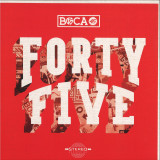
At some point during a DJ career that’s lasted pretty much the entirety of his adult life, Boca 45 (aka Bristolian Scott Hendy) eschewed all other formats to choose the 7” as his weapon of choice. Embracing and celebrating the limitations of the format (both in terms of record length and the type of music showcased on discs of that size), Hendy set out on a truly singular path for soundtracking parties the world over. In 2015 Banksy personally requested him to DJ with his 45s at the opening night at his Dismal Land Show, now, in his forty fifth year on Planet Earth, he’s made an album that reflects a life well spent flipping through the racks the world over.
On this album he has collaborated with lots of the people that he has previously worked with over the past 20 plus years recording music.
Vocal collaborations come courtesy of Louis Baker (Soul On Top / Move A Mountain) Emskee (Energy Boost / The Roxy) Sergio Pizzorno from Kasabian (White, Blue & Red) & Gee Ealey who i worked with on Malachai (Lonely)
‘Evolve’ is the first full length album from composer, music producer and violinist Vito Gatto, a concept album that guides the listener on a one-way journey through the various phases of an imaginary evolutionary process. Gatto graduated in Violin from the Milan Conservatory of Music, his research starts from the unconventional application of a classical background into both making music in the studio, and live performances. For this work, Vito decided to put himself in a restricted composing and technical environment; all the arpeggiated sounds on the album are made from one single violin note that Vito sampled. He transforms the same note throughout the entire album, using the different treatment of this micro sample and the arpeggiator programming as the construction of a mutating and evolving structure. The album is Instinctively executed, almost improvised, and elements like distorted bass lines, hardcore inspired percussions, whistles and alienating string melodies represent unexpected alterations. Vito decided to keep these instinctive additions clean from excessive control as a representation of the beauty of the unpredictable. The album track list is an expression of evolutionary phases. From the minimalistic piano piece ‘Decomposition’ to ‘Quiete’ which expresses the state of calm after a shift has occurred, ‘Nostalgia’ and ‘Stasi’ represent a hazy trance like state. Vito challenges the listener to ask questions like ’am I in the right place? Is this who I set out to become? Do I have to keep evolving, or should I try to regress?’ ‘Evolve’ creates continuous connections between traditional and experimental music, creating dialogue between classical instruments and industrial techno, ambient, noise and de-constructed sounds. The Album will be released in both digital and vinyl formats via NeMu, a fresh new label founded by Vito Gatto himself. The label will focus on experimental projects based on the exchange between acoustic, concrete and electronic sources. The Artwork is part of ‘Jewels’, a series of ceramic sculptures by Benni Bosetto, courtesy of the artist and ADA Project, Rome
"Cy Timmons, born in 1941, is “The World’s Greatest Unknown” singer-songwriter from Atlanta, Georgia.
His style may be called batida Americana: unusual bossa nova technique marked by the art of guitar percussion and turning his voice into a variety of instruments such as flute, trombone, synthesizer and more. But basically, it is difficult to specify the genre where his music belongs because it has been developed individually and heavily colored by his love of American music such as cool jazz, traditional pop, early R&B and many years of entertaining in various musical venues including Café Erewhon (“Nowhere” spelled backwards) which he ran in Atlanta. Rather than an imitation of bossa nova, Cy applied the bossa concept of expressing samba alone through classical guitar and vocals to expressing good old American popular music alone and so developed a new “traditional” American sound, a sound that was honed in part through an encounter with Judy Davis of Oakland, California, the stars’ vocal coach whose students included Frank Sinatra, Judy Garland, Mary Martin and Barbra Streisand.
He himself produced three albums of his music. On the first: “Cy Timmons” (1972) he was backed by a small orchestra, but the second, “The World’s Greatest Unknown” (1974), and the third “Heaven’s Gate” (1998), were Cy alone and show the true worth of his music that also has something in common with João Gilberto’s “White Album” and “Voz E Violão”."
Mastered and half-speed cut at Abbey Road, pressed at RTI, each release comes in a custom G-FLute cardboard mailer. 001 has a satin fabric heart sticker and 002 gold foil-stamped quotations from Cy. Both have extensive liner notes, including a full length interview.
West coast composer, artist, and producer Kaitlyn Aurelia Smith has chartered a pioneering career with multiple critically-acclaimed albums since 2015. Following the release of The Kid in 2017, Smith focused her energy in several directions. She founded Touchtheplants, a multidisciplinary creative environment for projects including the first volumes in her instrumental Electronic Series and pocket-sized poetry books on the practice of listening within. She's continued to explore the endless possibilities of electronic instruments as well as the shapes, movements, and expressions found in the physical body's relationship to sound and color. It is this life-guiding interest that forms the foundational frequencies of her most recent full-length, The Mosaic of Transformation, a bright, sensorial glide through unbound wave phenomena and the radiant power discovered within oneself. "I guess in one sentence, this album is my expression of love and appreciation for electricity," says Smith. While writing and recording, she embraced a daily practice of physical movement, passing electricity through her body and into motion, in ways reflecting her audio practice, which sends currents through modular synthesizers and into the air through speakers. Not a dancer by any traditional definition, she taught herself improvisatory movement realizing flexibility, strength, and unexpectedly, a "visual language" stemming from the human body and comprised of vibrational shapes. Understood as cymatics, as Smith says, "as a reference for how frequencies can be visualized," much like a mosaic. Smith describes her first encounters with this mosaic; "the inspiration came to me in a sudden bubble of joy. It was accompanied by a multitude of shapes that were moving seamlessly from one into the other...My movement practice has been a constant transformation piece by piece. I made this album in the same way. Every day I would transform what I did yesterday...into something else. This album has gone through about 12 different versions of itself." As it has arrived, in a completed state, The Mosaic of Transformation is a holistic manifestation of embodied motions. Smith's signature textural curiosity that fans have grown to adore pivots naturally into a proprioceptive study of melody and timbre. Airy organ and voice interweave with burbling Buchla-spawned harmonic bubbles. "The Steady Heart" quivers to life, peppering blasts of wooden organ between winding vocal affirmations. As with a body, moving one portion requires a balance and counterbalance; here, subtle tonal twitchy signals fire in conjunction with coiling arias to create a mesmeric core. When the beat arrives at the midway mark, a swooping and jittery waltz, a sense of stasis in motion, a flow state, is sonically achieved. As soon as it syncs, it disappears back into the swirling ebbs of electric force. Other tracks stray into more ruminative physical realms. "Carrying Gravity" is built around string-like pads that expand and contract like a solar plexus, becoming taught and then loose. If the record could be summarized in a single movement, it is the 10-minute closing suite, a rapturous collage called "Expanding Electricity." Symphonic phrases establish the piece before washes of glittering electric peals and synthesized vibraphone helix into focus. Soon, Smith's voice grounds it all with an intuitive vocal hook, harmonized and augmented by concentric spirals of harp-and-horn-like sounds. Smith's music doesn't capture a specific emotion as much as it captures the joys of possessing a body, and the ability to, with devotion and a steady open heart, maneuver that vessel in space by way of electricity to euphoric degrees.
2024 Repress
KMRU is the moniker of Joseph Kamaru, a sound artist, and producer based in Nairobi. One of the leading exponents of the burgeoning experimental music scene in Nairobi and beyond he was listed by Resident Advisor as one of '15 East African Artists You Need To Hear' in 2018 and is a regular performer at the fabled Nyegenyege Festival having also presented live performances at CTM festival and Gamma Festival. Peel is KMRU's first release for Editions Mego. exquisite mix of field recordings and electronics unravelling at a repetitive and leisurely pace to expose a rich tapestry of sound that has been revered for it's ability to cross bordear with the sheer undertow of emotional content. The subtle calming atmosphere within Peel belies the compositional prowess as layers of delicate sounds wrap around each other creating a hybrid new form ambient musics both captivating through it's textural depth and kaleidoscopic patterns. The track titles lend themselves to the themes and mood set within: Why are you here, Well, Solace, Klang, Insubstantial and the title track. This is a deep heartfelt journey with a new strong voice being expressed through the means of organically presented electronic ambient sounds, one which reveals further layers on repeat listens.
We Release Jazz is delighted to announce the official reissue of Ryo Fukui’s final album, the very personal contemporary jazz offering, A Letter from Slowboat, sourced from the original masters and available on limited edition 180 gram vinyl mastered at half speed for full audiophile sound, as well as on digipack CD.
Known for his miraculous albums Scenery (1976) and Mellow Dream (1977), legendary Hokkaido pianist Ryo Fukui, with the help of his wife Yasuko, opened his very own jazz club in Sapporo in 1995, Slowboat. This is where Ryo Fukui spent the latter half of his career, playing again and again, welcoming peers for unforgettable sessions, and perfecting the craft he lived for: jazz.
A Letter from Slowboat is a poetic, soulful, and honest love letter to Hokkaido, to Fukui’s jazz club, and to endless hours of practicing artistry in a place called home. Backed by longtime collaborators Takumi Awaya on bass, and Ittetsu Takemura on drums, Ryo Fukui flows through classics and originals with natural class, fluidity and absolute precision, expressing a smooth balance between skills and heart. Slowboat, full of breathtaking solos and exquisite moments of clarity, is another crucial piece in the career of one of the most fascinating jazzmen to ever grace the piano. It was released in 2016, sadly the year Ryo Fukui passed away, leaving behind a legacy of works that is sure to captivate jazz lovers for generations to come, and Slowboat, where the magic still happens to this day.
This is reissued in conjunction with Ryo Fukui’s Ryo Fukui in New York (1999), also available via We Release Jazz.
New album of one of the biggest Reggae/Dub french soundsystem starring MacGyver, Rooty Step & Pupajim (who worked with Alpha Steppa, Biga Ranx, High Tone, Mungo's Hi-Fi ...).
Available as super limited edition including 60x60cm Poster !
Since their inception at start of the 2000s, Stand High Patrol have rocked sound systems to their own riddim, assimilating and re-purposing the codes of the genre in their own unique style. From tiny bars in Brittany to huge festival stages, on independent radio or across national airwaves, the crew have quietly trod their own path, never compromising their core value of independence. Connoisseurs have long recognised Stand High’s credentials both as a dub group and a leading sound system, but they stand out from the crowd because of their ability to deliver the unexpected, whether live or on record. Their ability to draw such a diverse audience is testament to this atypical approach to making music.
In 2020, almost 20 years since their humble beginnings, the collective presents their fifth album, “Our Own Way”. As with their first two albums “Midnight Walkers” and “Matter Of Scale”, now considered as classics in their genre, this new opus asserts itself as the latest representation of the crew’s versatile approach to crafting sound. Their music, a blend of its own known as “Dubadub”, has always borrowed influences from multiple sources, and over the course of their career their roots in dub and reggae have intertwined with hip-hop, jazz, new wave, trip-hop and numerous other genres. The ‘Dubadub Musketeers’ have never ceased experimenting, forever seeking to increase the sonic territory they cover, day after day. Both live and recorded, they’ve made it a point of honour to never offer up the same thing twice. Any resemblance that “Our Own Way” might bear to those first two albums is a consequence of this obvious creative continuity, rather than of going “back to basics”.
In contrast to the last two Stand High Patrol records, the hip-hop inspired “The Shift”, or the Bristol indebted “Summer On Mars”, “Our Own Way” doesn’t have a unifying concept or theme. Rather than being limited to a single aesthetic, the LP pays respect to the entire canon of Jamaican music, all unified under Stand High’s inimitable production values. With the wealth of experience gained during the recording of their last two records, the collective decided to aim for a freer project, letting themselves be guided by their own music and their own instincts. The end result is a musical portrait of what Stand High Patrol is in the present moment.
The tracks that make up the new LP burst out of the studio, each born out of unbridled, impulsive creativity. Previously unheard compositions and specially re-tooled dub plates have been assembled into a tracklist that shifts and moves like a classic Dubadub Musketeer live set. Each step of the process has been refined by years of practice : composition, effects, and the final mix. Throughout “On Our Way”, the brutal dub stepper, though still a favourite for sound system sessions, is noticeable by its absence. Instead, it’s the full weight of the crew’s reggae heritage that’s expressed in the mix. It's not just the depth and weight of each tune that strikes the listener, but also the spaces heard between the notes that grab and hold their attention.. The sense of a trip, whether musical, internal or geographic, is omnipresent throughout the LP, linking each track to those before and after. “Our Own Way” finds Stand High Patrol exploring as usual, yet also narrating their journey as they’ve rarely done before
Will Saul, DJ/Producer and Aus Music label head primes the 150th release for the longstanding British label with a stellar cover of the 1990 seminal techno record of the same name by Yolanda on seminal label Underground Resistance.
With the original record being one of Saul's all time favorites and UR being a constant source of inspiration it was beyond a dream to get his version fully approved by Mike Banks to celebrate the landmark anniversary. Saul then worked with Berlin based vocalist Gilli.jpg - who has recently worked with Cinthie - to re-vocal Yolanda’s song.
As a former intern at Skint in the late 90s heyday, this up-streamed anthem feels extra special finally landing digitally on the label where Saul began learning his trade over twenty years ago. The vinyl will be released on Aus. There is also a version expected later this year which see's Saul collaborate with Paul Woolford and additional remixes by Move D and Space Dimension Controller that will land shortly. The release features artwork by Trevor Jackson, the man behind the Output label, who’s releases launched careers for huge artists like Four Tet and LCD Soundsystem to name just a few. His iconic, pop art influenced work has been seen on releases including the undisputable 80’s dance classic, Raze ‘Break 4 Love’ and S'Express 'Theme from S'Express'.
In recent years, the Turkish drone-pop composer Ekin Fil (born Ekin Üzeltüzenci) has been refining her talents in the realm of the film score. Since her first recordings that were published by Root Strata and Students of Decay, she has always exhibited a preternatural ability to express the saddest of emotions through sound. Once channeled through the lens of a gauzy shoegazing smear of guitars and voice, she has peeling away layers of her ephemeral songs to reveal their emotional core. That compositional process that works so well for her award winning film scores informs the soft-focus tenebrous pieces of her 2020 album Coda.
It’s true that any number of these pieces on this album could announce the finale to an emotionally draining movie, but Ekin sculpts the entire album as a whole, dissolving one perfectly tempered piano motif, an impressionist ambient plume or a sibilant vocal melody into another. Just at the threshold of perception, she occasionally invokes cascades of distant noise that easily can be interpreted as the ominous premonitions for natural disasters - incoming storms, earthquakes, or tidal waves. This subtle disquiet amidst the introspective melancholy furthers the emotional weightiness of Coda.
Her somber, blissful compositions have considerable gravity of their own in the constellation of Grouper, Felicia Atkinson, and Harold Budd. Mastered by James Plotkin.
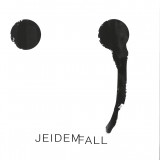
The man in the crowd is a wonderer with relaxed habits. In him the course of things and movement of the city is reproduced. The Düsseldorfer Detlef Weinrich is such a man in the crows. Some one who is constantly listening to future winds through rushes of the past. He loves the night for its free will. And his music tells stories about it. You might know him as a member of the band Kreidler. As a solo artist he goes under the name Tolouse Low Trax. And he's already got three Eps and two albums under his belt. His first solo album „Mask Talk“ thrives on a feathery beat frequency and cool new-wave-strength. His recently released piece „Corridor Plateau“, which appeared as a limited edition to accompany the exhibition „Corridor Plateau“ contains percussive electronics and Industrial sounding like its from the second industrial revolution. His third album „Jeidem Fall“, is also not from here. It sounds like music brought down to earth from the heavens. But its a dark cosmos in which there are only fleeting glimpses of light. All eight tracks were composed in a short space of time over the period of just a few months and fit together perfectly atmospherically. With a musical expressiveness that undoubtedly twists your emotions, „Jeidem Fall“ attacks the subconscious and clouds the mind. The drums have more movement that on „Mask Talk“. Along with the constant tapping of drumsticks goes melodical arpeggios dancing dark and dirty. At times longing vocals drift abstractly through the room, as on „Sa Seline“ or „Geo Scan“, without telling any obvious story.
To sound like stylistic cross references from the present and past is all just speculation for nothing on „Jeidem Fall“ really sounds like anything that has gone before. You could compare the dark minimal timbre of the drum computer aesthetic with Craig Leon's first reductive album „Nommos“. There is also a hint of the minimallist industrial of the Spanish band Esplendor Geometrico in the bubbly textures. But Tolouse Low Trax is still looking from the present into the future and filter and filters all his personal preferences through his MPC and his small synth setup to make them come alive here and now in a new way. Again Tolouse Low Trax has created a truly mysteriously vibrating drum computer music which offers hypnotic magic for the shadowy dance floor. Only a little light should illuminate the whole thing and the bodies that move above them should have no fear from threatening percussion which are displaced into a misty trance. A dark swaying shadowy mass, ideal for a journey at the end of the night and all those non-places where longing sleeps and the last romantics dance while getting drunk.
Names You Can Trust is proud to present a special collaboration with Barbès Records and the legendary godfathers of cumbia amazónica, Los Wembler's de Iquitos. Featuring two songs mixed expressly for 7-inch directly from the reels of their 2019 album, VISIÓN DEL AYAHUASCA, it's the latest entry in the group's historic canon of a particular brand of bonafide psychedelia, a worthy addition to a catalog of recordings that have made their way around the world to fans, DJs and sound systems since the group's beginnings in the late '60s.
The band's 50 year-old origin story begins when electric instruments started showing up at the port city of Iquitos, Peru. This seminal moment of international trade at the gateway to the Amazon inspired a shoemaker named Solomon Sanchez to start a band with his five sons. Los Wembler's were the first band in the capital of the Peruvian Amazon to play popular local rhythms with electric guitars. Their revolutionary sound, fuzzy lysergic guitar helixes wrapped around melancholic melodies, would go on to have an enormous impact on the whole of South American popular music, echoing throughout the continent and further, into the States and eventually across the world.
The past few years have seen a new wave of interest in the band's music. Los Wembler's, the sons, now fathers and grandfathers themselves, have brought their trademark sound on recent tours to Mexico, Europe and North America, where it has been embraced by a new generation of musicians and listeners.
As Los Wembler's prepared for a lengthy tour in 2020 to coincide with this new 7-inch issue, the world abruptly changed course. The COVID-19 outbreak has had particularly devastating consequences in the Peruvian Amazon. With an urban density of around a million people, Iquitos is the largest isolated city in the world, reachable only by boat or plane and surrounded by the vastness of the rainforest. A buzzing multicultural city, Iquitos was catapulted into modernity during the late 19th century's rubber fever. It is home to not only the members of Los Wembler's, but several legendary and influential musicians who helped lay the groundwork for the roots of chicha, the distinctively Peruvian brand of cumbia.
This is the 4th ep that continues a volume of a 5 ep project. Its own kind of album type edition so to speak. Destination celebrates the drum and bass genre with its own style reminiscent of Aphex Twin and Squarepusher. type programming. It fuse’s eclectic beats with a more common flow of bass licks that cruise throughout the track. With a more psychedelic presence this track offers a complexity of rich sounds that will encapsulate any avid lover of electronic music from the headphones to the dance floor. Bouncy and fun yet with deep exploration of ‘Abstract sounds’ bringing a serious edge, Destination is equipped for any explorer seeking any type of Destination. Then comes Arrival. Not an ordinary piece of music, with the artist expressing themselves from past musical influences, to curve their own piece of storytelling art, through audio sonic means. An inner world reflective explanation can be as follows - An epic piece revealing the adventures of seeking depth, from ones dense conscious reality, tribal like mannerisms, traveling to a higher frequency of light and wonder, breaking through to the heart centre of ones own unique truth. By doing so, welding together the whole aspects of being, Arriving at ones own true balance of self. Reuniting with the dense tribal like self yet with a complete transformative understanding of life and self in relation to life as a whole. Ones outer world of reflective explanation can be this - starting from earth, leaving the tribal terrains of earth based reality, exploring out into the cosmic wilderness, looking back from a distance, witnessing Earths magnificence and enigmatic beauty. Continuing to swim out to the depths of the galaxy to ‘Arrive” at an unexpected splendour unknown to the human consciousness ,to a cosmic giant….. giant what? This remains to be unseen! It’s left to the imaginators discretion of wonder within the experience of the audio sonic delights presented in,….. ‘Arrival’.
The second volume of Nothing Is Real’s self-titled compilation builds on their towering reputation as leading lights within the global electronic music community. As the label’s first release distributed by the respected Dutch record label and store Bordello A Parigi, the collection is set to further establish their international presence and spread their eclectic sound far and wide.
Bringing together diverse influences from across the spectrum of electronica and into new wave and ambient music, Nothing Is Real stand at the forefront of modern dance music as sonic innovators that continue to push boundaries with each offering.
Curated by Alberto Iovine and Alessandro Fumagalli, also known under the stage name Modular Project, this four-track collection takes listeners on a journey through the outer atmosphere of techno, expanding and evolving the genre into new forms along the way.
Cantor’s opening track kicks things off with a hypnotic, driving groove built on acidic synths before Niv Ast & Roe Deers bring a human touch to the proceedings with a vocal-led heater that recalls classic ‘80s sounds. Dharma pairs shuffling rhythms with extraterrestrial soundscapes that recall Squarepusher and Aphex Twin, before Argia closes the record with force and momentum, surrounding voltaic synthesizers and tribal drums with expressive atmospherics.