The Girl With The Gun for the first time on Ltd 7" Vinyl
Another dream come true! The first 7" ever to contain the three grooviest and most danceable tracks from the legendary soundtrack to La ragazza con la pistola, Mario Monicelli's 1968 cult film depicting the mod subculture of 60s Swinging London and starring Monica Vitti in one of her most iconic roles. (In the mid-90s two of the tracks were compiled in the seminal compilation Easy Tempo Vol. 2.)
Starting the party is Girl With The Gun, a mod-generation classic featuring a psych-funk rhythm section and an exotic-sounding theme played by a sitar. Next on Side A we find the danceable lushness of Shake Balera, a shake number clearly influenced by the London moods portrayed a couple of years earlier by Michelangelo Antonioni in Blow Up, with Antonello Vannucchi on Hammond and Carlo Pes on guitar (the piece was later covered by Calibro35 in their first album). Last but not least, on the flip is the super intriguing Rapimento in Sicilia, which opens with a spy-movie vibe before switching to a hectic dance of sitar, electric bass and wild percussion.
All tracks were written by Peppino De Luca and performed by his trusted and recurring musicians, the legendary super-group of Italian session players I Marc 4, who bring in their signature psycho-beat sound.
Highly recommended for diggers and DJs.
Suche:le van
- A1: Bustin'stronghodes
- A2: Trickmonks
- A3: Swallowing The Water You Walk On
- A4: Can Shadows Praise You?
- A5: The Netherworld Squints At The Sight Of You
- A6: Trick Leash
- A7: Anamnesis
- A8: Asking For Fish
- A9: I'm The Weakest Link
- A10: Under Your Breath
- B1: Handles
- B2: What's Illumined Becomes Visible
- B3: Someone You Can Use
- B4: About Face
- B5: Periodically Yours
- B6: We Won't Survive This
- B7: Project Yourself Alive Onto My Corpse
- B8: We Belong To You, But How Now Is Soon?
The (seventh) new Half-handed Cloud album, ‘Flutterama’, is
a record of 18 jubilant indie-pop songs by John Ringhofer
that investigate spiritual incompetence with lively
arrangements and radiant melodies that skilfully dissolve into
deterioration using herky-jerky tape manipulation, analogue
wow-and-flutter, and an animated orchestra of homerecorded sound effects.
Ringhofer’s work on ‘Flutterama’ was inspired by Frances
Mary Hunter Gordon’s adolescent liturgies (recorded at
Abbey Road during The Beatles era), turbid sights and
sounds in Guy Maddin films, audaciously bold forms in Sister
Corita Kent’s devotional printmaking, the exquisite brittleness
of Elizabeth Cotten’s voice, Alberto Burri’s stitched wound
burlap assemblages, Alvar Aalto church design, Andrea
Büttner’s poverty-informed artwork, Lou Barlow/Dinosaur Jr’s
lo-fi ‘Poledo’ sound collage (which namechecks Jesus), Julie
Canlis book ‘A Theology of the Ordinary’, Wallace Berman’s
visual collage, and The Raincoats’ magnificently shaky DIY
aesthetic.
The album’s tape-fiddled tunes - recorded on the very same
16-track recorder last serviced by a sound technician who
also worked with The Beach Boys in their home studio -
employ surprisingly little synthesizer (“it felt like cheating,”
says Ringhofer) - he preferred to craft most of the album’s
effects the long way, frequently going behind the back of rock
instrumentation by hand-feeding ½” magnetic reel recordings
of chord organs, deflating balloons, some guitars, piano
(occasionally tracked with a baby on his lap), brass,
tablecloth swipes, and a quickly-cranked half-speed music
box. He was assisted by long-time Half-handed Cloud
contributor Brandon Buckner on drums, and single song
backing vocals from Anacortes, WA songsmith John Van
Deusen.
LP pressed on Opaque Brown vinyl
- A1: Jazz T Intro
- A2: Tomorrow People
- A3: Weldon Hi-Score
- A4: Axel Foley Is Tchaikovsky
- A5: Steve Davis Vs Tom Browne Feat. Deeflux
- A6: Mark B Feat. Mcm & Lewis Parker - A Certain Special Skill Remix
- A7: King Kashmere - Man In A Suitcase (Exclusive Unreleased)
- A8: Nobody Beats The Beats
- A9: Jazz T Feat Ramson Badbonez - Legends Of The Decks (Original Cut)
- A10: Oh No Rip Doom
- A11: Mr Barnes
- A12: Micall Parknsun Feat. Jehst - Movements (Jazz T Remix)
- A13: You’re Ugly Beat Juggle
- A14: Fuck 45S?
- A15: The Cantina
- A16: Talking Loud And Saying Fuck All
- A17: Tim Dog - Bronx N*!?A (Dj Shame Remix)
- A18: Tim Dog - Run Run Run B!*?H
- B1: Pianos From Hell
- B2: The Greatest Dj
- B3: First Man In The Moon
- B4: Peaceful Planet
- B5: The Earth Rotates
- B6: Block Party Feat Kool Herc
- B9: Pure Innocence
- B10: Resident Van Man
- B11: Break One
- B12: Bak To Skool Feat Joker Starr
- B13: Now That’s Fusion
- B14: Piercings
- B15: Mink Corporation
- B16: Ralphy Sleeze
- B17: Mel Jones
- B18: Planted
- B19: Fresh Mess
- B20: The Birth Of Dumile
- B21: Finest Herb
- B22: Are You Gonna Take The Weight?
- B23: Floating Galleons
- B24: Memories
- B7: Put Your Hands Together Fool
- B8: Y Chromosome Feat Micall Parknsun
Certain Sound Records and DJ Jazz T announce the second in a series of DJ mixtapes from the World-Famous Steel Devils Turntablist Crew.
When he is not touring the world with Jehst or High Focus Records artists or running his own legendary label Boot Records. You will find Jazz T laying down cuts or mastering some of the UK’s finest hip hop releases. So, it was an honour that he wanted to drop a brand-new mixtape for us. Spurred on by his counterparts in the Steel Devil’s crew, Jazz put together this outstanding collection of rarely or never heard beats and collaborations and distilled it into 60 mins of mixtape glory. The track listing says it all.
Vanuit het niets, ontsproten uit hetzelfde ecosysteem dat ons eerder al zegende met namen als NTREK en Brihang, was daar plots olsan. olsan - geen hoofdletter vereist - is het geesteskind van rapper D. Meeuws en producer DJ SNS, twee artiesten die de kilometers op hun teller allang niet meer hoeven te tellen. Om het hoofd te bieden aan de chaotische tijd waarin we leven, werkten zij in de afgelopen jaren elke maandag aan nieuw materiaal. Zonder vastomlijnd doel op voorhand, tot de urgentie het overnam. Het losse project dat ze hadden aangevat, bleek voor beide mannen al snel cruciaal om grip te blijven behouden op alles wat ze om zich heen zagen gebeuren. De vraag was niet langer of dit tot een plaat zou leiden, de vraag werd hoe snel dit zou gaan gebeuren.
Nog geen jaar later is daar dan dat debuutalbum 'millimeter', wederom zonder hoofdletter, en het is een bijzonder solide plaat geworden. De heerlijk tijdloze producties van DJ SNS vormen het ideale achtergronddecor voor D. Meeuws om de balans op te maken van z'n ervaringen in zijn eerste dertig levensjaren. De pieken, de dalen en zowat alles daar tussenin, ongefilterd. Singles 'millimeter' en 'asjeblief' (ft. Brihang) lichtten al een tipje op van de sluier, maar de andere nummers van deze plaat doen daar allesbehalve voor onder. De plaat werd gemixt door Tobie Speleman en gemasterd door Jeffrey De Gans.
De vinyl, ontworpen door Fabrice Parent, is een erg mooie uitgave op 300 exemplaren, die zich qua afwerking onderscheidt door het reliëf en de papieren feel van de outer sleeve, maar ook door het strategisch verstopte gedicht aan de binnenkant. De fysieke release staat gepland op vrijdag 10 juni. 'millimeter' is uitgegeven door Fake Records en geproduceerd en gedistribueerd door News Distribution Benelux.
BLEEP was the hype par excellence at the beginning of the techno movement in 1990/91. BLEEP – inspired by the beeping sound of small toy robots – stood for a phase of good mood and sounds that had never existed before. LFO with their groundbreaking track of the same name and Tricky Disco were two protagonists of those happy days.
More than 30 years later, Jürgen Laarmann (editor of the legendary Frontpage Magazine 89-97, promoter of Love Parade and Mayday 91-97, Bash Rec. 91-94) had the thought that nothing is missing in current electronic dance music as much as bleep.
The idea came about when discussing how to create a soundtrack for the art and techno hype of the day and the crypto art moving currenting stirring up the art market. The comeback of bleeps in a new guise is surely a tried and true remedy: the Bleep Gigaverse makes the blockchain shake.
With his old friend and Bash Records buddy Mijk van Dijk, Laarmann developed the NFT anthem with the striking Fazer bullet intro and a fat 2022 bleep that has been extensively tested on post-Corona dancefloors. Club legend Justus Köhncke (Whirlpool Productions among others) himself a big Bleep fan and Laarmann’s neighbor, contributed a house mix. Most recently, they managed to bring the great Michael Wells – the Godfather of Bleep into the Bleep Gigaverse. He contributes as Tricky Disco with all new bleeps and also with a Hardstyle mix, so the EP offers a spectrum with really different mixes.
May it bleep forever now!
By Mijk van Dijk & Jürgen Laarmann
BLEEP war für wenige Monate zum Beginn des Technomovements in 1990/91 der Hype schlechthin. BLEEP – angelehnt an das fiependen Sound von kleinen Spielzeugrobotern – stand für eine Phase guter Laune und Klängen, die es nie zuvor gegeben hatte. LFO mit ihrem bahnbrechenden gleichnamigen Track und Tricky Disco waren zwei Protagonisten jener glücklichen Tage.
Mehr als 30 Jahre später hatte Jürgen Laarmann (Editor des legendären Frontpage Magazins 89-97, Veranstalter von Love Parade und Mayday 91-97, Bash Rec. 91-94) den Gedanken, dass nichts der aktuellen elektronischen Dance Musik so sehr fehlt wie der Bleep.
Die Idee entstand, als man darüber diskutierte, wie man einen Soundtrack für den Kunst- und Technohype dieser Tage erschaffen könnte, jene Kryptokunst, die den Kunstmarkt aufwirbelte. Das Comeback der Bleeps in neuem Gewand ist das probate Mittel: das Bleep Gigaverse lässt die Blockchain erbeben.
Mit seinem alten Freund und Bash Records Kumpel Mijk van Dijk entwickelte Laarmann die NFT Hymne mit dem markanten Fazer-Geschoss Intro und einem fetten 2022er Bleep, der auf den Post-Corona Dancefloors ausgiebig getestet wurde. Club Legende Justus Köhncke (u.a. Whirlpool Productions), selbst großer Bleep Fan und Laarmann‘s Nachbar, steuerte einen housigen Mix bei. Zuletzt gelang es ihnen, mit dem großen Michael Wells den Godfather of Bleep ins Bleep Gigaverse zu holen. Er steuert einen NFT Tricky Disco mit ganz neuen Bleeps und einen Hardstyle Mix bei, so dass die EP ein Spektrum mit wirklich unterschiedlichen Mixen bietet.
May it bleep forever now!
By Mijk van Dijk & Jürgen Laarmann
140g Black vinyl LP – Printed inner sleeve - Sealed plastic sleeve
In Trux We Pux is an editorial project organized by the Porto based label and collective Favela Discos. Focusing on the city’s thriving experimental and improvised music scene, it sets out to portrait in a series of four volumes some of the characteristic sounds and collaborative practices that have been in development in Porto during the last few years.
In Trux We Pux 01, the first record of the collection, is focused on the electronic side of the eclectic but characteristic experimental and improvised scene in Porto, and contains a selection of 23 musicians that have been developing their own take on whatever niche genre they dwell in. Among the list of musicians are Filipe Silva (HHY & The Macumbas), Crónica Electrónica’s heads @c, ocp, coletivo vandalismo and several others that populate a thriving scene that spans a wide gamut of sounds, from delicate to abrasive.
As the tracks themselves, the different approaches to composition and production add to this compilation’s schizophrenia. The first side of the record offers us a spacious and abstract scenery, starting with a collage of field recordings, banjos, and fans, narrated by google translate’s voice. The following two tracks flow along the granular tide of ambient spaces and atmospheres slowing down a bit before the second side turns around 180º and heads towards more rhythmic fields.
Coletivo vandalismo & querido lider present us with their exploration of half balearic, half german-synth-music pulsing away at the beat of broken down dancehallish drums and reggae breaks. Challenger & Lorr No’s track is a trainwreck heading down a break driven jungle that lead us to the album’s closing arguments: MOSCXS’ sludged beat goth-step exploration around the poem “Poema Agreste” by Glória de Sant’Anna.
Who controls the mind controls the body. After three years of experimentation in isolation, Dopplereffekt have emerged with Neurotelepathy, an oracular narrative of cerebral entanglement and advancement. The sleek mathematical models of 2017’s Cellular Automata have evolved into these synaptic interpretations, transferences and modifications, rejecting binary expectations to meditate on the possibilities and pitfalls of what’s to come. With their second LP and fifth release in total on Leisure System, the duo of Rudolf Klorzeiger and To-Nhan have themselves achieved a near-telepathic capacity for collaborative thought and mechanical construction. They continue to use live appearances to present experimental trials of theoretical models, and that effort is heard in the sizzle and swing of the percussive highlights here, programmed with a serious depth and wriggle that reflect both an extension of and return to form. Considerations of the machine-human interface, neurological realities and physical probabilities dominate. But these tracks are economical and precise, glittering with emotional depth and cinematic effects. The album's core, a three-act movement of symphonic uncertainty and revelation, marks one of the pair's most evocative compositions in a career full of them. Territory is monitored, traced and scanned, resulting in unexpected modulations. Underlying systems are questioned, competing mindsets animated and mutated: brain-to-brain, brain-to-machine and beyond. Neurotelepathy processes these transformative mental, psychological and transgenerational states both traumatic and triumphant.
Rarely do two types of music meet on a level where they threaten to cancel each other out - let alone create something even more meaningful in their mutual vanishing. But the music created within the seminal Murder Ballads (Drift) by Martyn Bates (Eyeless in Gaza, & parallel solo career) and Mick Harris (Napalm Death, Lull, Painkiller, Scorn) creates just such a world. Murder Ballads (Drift) evolves Martyn Bates vocalisations / storytelling song-voices, by turns expressed as labyrinthine layers, calls and responses, muted and distant echoes, sung whispers and counter-melodies, ultimately resulting in a mesmeric conversation of musical inferences and correspondences. Murder Ballads (Drift) created the post-isolationist frame of reference, innovating and extemporising into a truly original dazzlingly unique form.
Mick Harris traffics in the isolationist ambience of Lull, while Martyn Bates is the emotive voice of literate cult-pop duo Eyeless in Gaza. The unlikely pair - one given to terminally frigid drone, the other to impassioned, bittersweet voicings - finds common ground in folk music's most macabre tradition, the murder ballad. These ghoulish parables are awash in blood and tears, the strands of love, hate, birth, death, sin, and salvation entwined within like the roots of an ancient tree. Mothers callously kill their children; suitors slay their maidens without remorse; and fate exacts its cruel price from all.
The archaic murder ballads that leak from Bates' vocal cords are intensely sad and carnal. They tend to leap off cliffs of hollow effects or drone darkly, offering neither a robust delivery nor an element of irony to take the edge off. The archetypal characters that live and die in them give life's full tragedy back to Harris' electronically numbed "post-isolationist" dreaming.
Drift (originally released in 1994) plays out an unbreakable and timeless cycle of bloody folklore (people) and hypnotic soundscapes (the god who watches). The effect is chilling yet engrossing. Where most ambient music has barely enough courage to ring the doorbell and run, Murder Ballads slips through the cracks of the unconscious and does its work with remarkable ease.
All the more reason to listen thoughtfully.
In 2021 - re-emerging nearly twenty years after its initial inception, and first time on vinyl - somewhat surprisingly, Murder Ballads (Drift) still remains/exists in an area overlooked by other artists, an area that truly still remains the sole province of M.J. Harris / Martyn Bates.
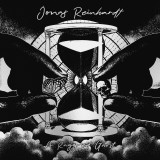
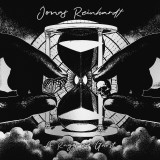
"A Ragged Ghost" is the eighth full-length album from electronic producer Jonas Reinhardt. Following albums on Kranky, Not Not Fun, Constellation Tatsu, and more, his debut release for Trouble In Mind brings together 11 new pieces that explore themes of life & death, netherworlds, and the liminal spaces in between. Taken together as a single narrative, the album offers a stirring exploration of mortality and immortality in what Reinhardt describes as 'a dance of religious syncretism, navigating spaces between the living and the dead'. "A Ragged Ghost" finds him synthesizing influences organically from familiar teutonic strains to the intense austerity of early 21st century electronic pioneers such as Biosphere and Susumu Yokota. A whisper of the Italo-disco-esque romps of Jonas' 2012's "Foam Fangs" EP & 2013's "Mask of The Maker" LP merge with his more kosmische leanings into a sinister, slightly funky, but also studious suite that at times feels like a lost sound library record from the KPM archives. Openers "Ape & The Universal Axis" and "In Lotto Commodore" decidedly sound like a selection from a lost film score while others like the bubbling "Sly Tomb" recall the works of Roedelius or Vangelis' serene soundscapes. Meanwhile, fans of the electro-ambience of Manuel Göttsching's strobe-light, proto-house (on his seminal "E2-E4") or the pulsing insistence of John Carpenter's visceral non-horror scores (i.e. "Escape From New York" or "Assault on Precinct 13") will find a lot to love about songs like "Tumb Tumb" and "Wretched Orchestra of Armistice".
Fuchs is a band that never was. It vanished as quickly as it appeared in the picture, much like the animal that can be seen on this album and after whom it was named. In 2005, Kante singer and guitarist Peter Thiessen travelled to Weilheim to visit Markus and Micha Acher in their studio, where they were joined, among others, by Notwist-affiliated musicians like Cico Beck, Robert Klinger, Carl Oesterhelt and Stefan Schreiber. Spirits were high, but schedules were full: after a week of improvised sessions, everyone went their own way. The recordings gathered dust until Markus Acher found them again in 2021 while cleaning out his studio. After carefully re-evaluating the rough mixes, the musicians decided to finally release them. The resulting album comprises six tracks that musically draw on jazz, aesthetically lean on dub techniques and ideologically pick up on krautrock: there’s no solos to be heard on this record, just a few equally skilled and open-minded musicians listening to each other carefully, providing each other with space in which to unfold. »Fuchs« is a document of egos dissolving in a collective spirit.
Thiessen and the Acher brothers met in the 1990s and bonded not only over their shared background in hardcore music and the DIY ethos in which it was rooted, but also over their love for jazz. »If you look at those two things combined, you will eventually become convinced that you don’t have to be formally trained to make music that at least resembles jazz«, says Thiessen today. He invited Micha Acher to join his band Kante on flügelhorn in 2004 for a tour that saw the expanded group play unusual encores after the official concert was over. »Micha had taught us some dixie pieces, so night after night we would play a freestyle dixieland ska set in front of the remaining audience!« Naturally, the Acher brothers didn’t have to ask twice when they invited him for a visit in Weilheim to further explore their mutual interests in a studio setting. »I got on my way immediately and took two or three loose ideas, a tape echo and a guitar on whose headplate you could create fantastic sounds with me«, says Thiessen.
Between immersing themselves in books by the photographer Leonore Mau, cooking together and drinking the occasional fruit schnapps, the trio went into the studio. Says Thiessen, »Micha brought his flügelhorn and some wonderful ideas with him, Markus an Indian harmonium and a plan, Carl Oesterhelt came with a glockenspiel and a Chinese zither and a bunch of amazing jazz musicians joined in, too.« He considers the resulting recording sessions to be a kind of attempt at musically translating their conversations during those days. They discussed different approaches to jazz, whether sampling and musical miscitations can unlock ecstatic potentials and the possible parallels between syncretistic religions and pop music. »There’s traces of glossolalia, it's like a blurry séance«, adds Thiessen in regard to the sessions.
It is especially this spirit that managed to live on even though the recordings themselves were abandoned. »What we all liked most when listening back to the recordings is probably their marginal and fragmentary character, the empty spaces—the moments in which the virtuoso solo never comes, in which the centre remains empty.« The six pieces on »Fuchs« are chock-full of exactly these moments. When at one instant, the players seem to disperse and improvise freely, they always meet again on common ground a short time later, continuing on their way together. There are no conventions or even previous agreements that guide them, just a shared will to explore a vast range of curious sounds and unusual rhythms together as a truly unified constellation of very different musicians. Fuchs is a band that never was. Its ideas still reverberate vividly even 17 years later.
Im zwanzigsten Jahr ihres Bestehens freuen sich The Tangent, ihr 12. Studioalbum 'Songs From The Hard Shoulder' vorzustellen. Auf diesem Album konzentrieren sich The Tangent fast ausschließlich auf ihre langformatigen Songs oder 'Epen', wobei nur ein Song weniger als 16 Minuten lang ist. Das Album klingt sehr ausgereift, und die Band hat sich hörbar auf die kompositorische Struktur dieses Albums konzentriert, die im Falle der drei langen Stücke auch sehr komplex und 'durchdacht' ist. Von einem üppigen und erhebenden Song über die Einsamkeit in Covid Lockdown über ein 17-minütiges Jazz/Prog/Canterbury-Fusion-Instrumental bis hin zu einer düster-elektronischen Geschichte über eine obdachlose Frau, in der Nuancen von Nine Inch Nails, Po90, Japan und Van Der Graaf lauern. Das letzte Stück des Albums ist der 4-minütige, schwungvolle Motown-Song 'Wasted Soul', in dem die Band einen wunderbaren Tag in der Zukunft vorwegnimmt, an dem die Pandemie für immer vorbei ist. Die CD-Erstpressung und die Vinyl-Edition enthalten den Bonustrack 'In The Dead Of Night', der natürlich eine Coverversion des Klassikers von UK ist. Die Bandbesetzung bleibt von den letzten beiden Alben: Andy Tillison (Gesang/Keyboards), Jonas Reingold (Bass), Luke Machin (Gitarre/Gesang), Steve Roberts (Schlagzeug) und Theo Travis (Saxophon & Flöte).
Rarely do two types of music meet on a level where they threaten to cancel each other out - let alone create something even more meaningful in their mutual vanishing. But the music created within the seminal Murder Ballads (Drift) by Martyn Bates (Eyeless in Gaza, & parallel solo career) and Mick Harris (Napalm Death, Lull, Painkiller, Scorn) creates just such a world. Murder Ballads (Drift) evolves Martyn Bates vocalisations / storytelling song-voices, by turns expressed as labyrinthine layers, calls and responses, muted and distant echoes, sung whispers and counter-melodies, ultimately resulting in a mesmeric conversation of musical inferences and correspondences. Murder Ballads (Drift) created the post-isolationist frame of reference, innovating and extemporising into a truly original dazzlingly unique form.
Mick Harris traffics in the isolationist ambience of Lull, while Martyn Bates is the emotive voice of literate cult-pop duo Eyeless in Gaza. The unlikely pair - one given to terminally frigid drone, the other to impassioned, bittersweet voicings - finds common ground in folk music's most macabre tradition, the murder ballad. These ghoulish parables are awash in blood and tears, the strands of love, hate, birth, death, sin, and salvation entwined within like the roots of an ancient tree. Mothers callously kill their children; suitors slay their maidens without remorse; and fate exacts its cruel price from all.
The archaic murder ballads that leak from Bates' vocal cords are intensely sad and carnal. They tend to leap off cliffs of hollow effects or drone darkly, offering neither a robust delivery nor an element of irony to take the edge off. The archetypal characters that live and die in them give life's full tragedy back to Harris' electronically numbed "post-isolationist" dreaming.
Passages (originally released in 1997) plays out an unbreakable and timeless cycle of bloody folklore (people) and hypnotic soundscapes (the god who watches). The effect is chilling yet engrossing. Where most ambient music has barely enough courage to ring the doorbell and run, Murder Ballads slips through the cracks of the unconscious and does its work with remarkable ease.
HIGHLIGHTS! Acting as an artistic ambassador for Cuba, the Orquesta Revé made several tours abroad, traveling to Peru in 1971. This extremely scarce LP was recorded for MAG in Lima and comprises mostly Cuban songs -like the outstanding Vicente Rojas' original 'Mi Son Combinado'- and also a rare cover of Jorge Ben's 'Domingas'. Quite an invisible record even for hardcore collectors, and almost impossible to find in any condition, "De Habana a Lima" is now reissued for the first time. More: In 1956, the percussionist and composer from Guantanamo, Elio Revé, founded the orchestra popularly known as La Revé, which in the space of a few years became the Cuban music group par excellence for foreign audiences. Elio, dubbed the father of changüí for his seminal work on this genre, is also considered one of the forerunners of salsa music and his orchestra included musicians of the stature of vocalist Ibrahim Ferrer; pianists Chucho Valdés, César Pedroso and Juan Carlos Alfonso; and bass guitarist Juan Formell, who left the group in 1969 to form Los Van Van. Acting as an artistic ambassador for Cuba, the Orquesta Revé made several tours abroad in the seventies, traveling to countries such as Spain, Belgium and the People's Republic of Angola, and these journeys are well documented on the internet. However, little is known about their trip to Peru in 1971_ The local record label MAG quickly signed the Cuban groups that arrived in the Peruvian capital and that the head of the label, Manuel Guerrero, agreed to record. The La Revé LP was followed by a Los Compadres album the following year. "De Habana a Lima..." comprises a dozen songs labeled changüis, mostly written by Cuban composers, the exception being the closing track: 'Domingas', an original song by Brazilian artist Jorge Ben. In contrast, the album opens with the distinctly Cuban song 'Guajira guantanamera'.
- A1: Vanilla - Backwards
- A2: C Y G N - Midnight Pleasure
- A3: Phoniks - Flora
- A4: Samuw, Mendeville & Lazlow - Fantasy Funk
- A5: Flughand - Nuts (Feat Steichi)
- A6: Burrito Eats - Solitary Manhattan At 4Pm
- B1: Emapea - Eastern Wind
- B2: Okvsho - Scho Guet
- B3: Handbook - Vermillion
- B4: Sleepdealer - All Blurry
- B5: Shuko - Mo Better Soul
- B6: Figub Brazlevic - 1922
- C1: Tesk - Moss
- C2: Oksami - Trippy
- C3: Sweatson Klank - Need To Be
- C4: Wun Two - Arapaziada
- C5: Konteks - Sunny Soul
- C6: Tom Doolie - You & Me
- D1: Ozelot - Old Tram
- D2: Dwyer - Artefakt
- D3: Hm Surf - Purple Theory (Feat Kristoffer Eikrem & Dokkemand)
- D4: Saib - Fallen Leaf
- D5: Chief - No One's Awake
- D6: Tohaj - Transfer
- D7: Inky & Summermind - Temperament (Feat Imagiro)
This year we have the chance to have onboard some of our favorite new talent from the scene with the like of Burrito Eats, Emapea, Oksami, Flughand and Wun Two. We also have the chance to have standard bearers like Okvsho, Saib, Handbook, Phonics, SamuW, Shuko and Vanilla.
We want to thank so much all the artists who took part in this project and that were as enthusiastic as we are in its realization. It’s been such a thrill since this venture started and this is just the beginning. Much love to all of you guys listening and supporting wherever you are.
PEACE.
Hip Dozer Fam.
- A1: 1900’S Theme
- A2: The Legend Of The Pianist
- A3: The Crisis
- A4: The Crave
- A5: A Goodbye To Friends
- A6: Study For Three Hands
- A7: Playing Love
- A8: A Mozart Reincarnated
- A9: Child
- A10: 1900’S Madness #1
- B1: Danny’s Blues
- B2: Second Crisis
- B3: Peacherine Rag
- B4: Nocturne With No Moon
- B5: Before The End
- B6: Playing Love
- B7: I Can And Then
- B8: 1900’S Madness #2
- B9: Silent Goodbye
- B10: Ships And Snow
- B11: Lost Boys Calling (Feat Roger Waters & Eddie Van Halen)
Black/Gold Vinyl[34,41 €]
Ennio Morricone composed and arranged scores for more than 500 film and television productions, making him one of the most influential and best-selling film composers since the late 50s. The Legend of 1900 (Italian: La leggenda del pianista sull’oceano).
The Legend of 1900 is a 1998 Italian drama film directed by Giuseppe Tornatore and starring Tim Roth, Pruitt Taylor Vince, and Mélanie Thierry. The film is inspired by Novecento, a monologue by Alessandro Baricco. The Legend Of 1900 was nominated for a variety of international award, winning several for its soundtrack, including a Golden Globe for Best Original Score - Motion Picture. This release includes the song “Lost Boys Calling” featuring Roger Waters & Eddie van Halen.
Throughout his career, Morricone received an unprecedented amount of awards, including Grammys, Golden Globes, and BAFTAs. Ennio Morricone has influenced many artists including Danger Mouse, Dire Straits, Muse, Metallica, Radiohead, Hans Zimmer, and many more.
The Legend of 1900 is available limited edition of 5000 numbered copies on smoke coloured vinyl. The package includes an insert.
The glacial distillation of Pan•American aka Mark Nelson’s “romantic minimalism” achieves unique fruition on his latest Kranky collection, The Patience Fader.
A suite of solo guitar instrumentals accented with lap steel, harmonica, and twilit atmospherics, the strings smear and sparkle in elegant, windswept swells, a guitar mode once described by Brian Eno as “Duane Eddy playing Erik Satie.” These are elegies as much as songs, lulling and lilting in private currents of beauty and bereavement. Nelson speaks of the notion of “lighthouse music,” radiance cast from a stable vantage point, sending “a signal to help others through rocks and dangerous currents.”
Composed during the highly isolated summer of 2020, the pieces took shape as meditations on “roots and mourning, trying to connect with those deep hidden rivers that lead to a greater communality.” There’s something ageless, scarred, and American about this music, both displaced and devotional, the ghost of rust belts and dust bowls looming in a horizon of deepening dusk.
Gondwana Records sign LA bassist and composer Seth Ford-Young's Phi-Psonics project and announce a remastered deluxe-edition of The Cradle featuring bonus material
Phi-Psonics is a meditative, immersive instrumental group from Los Angeles, led by bassist Seth Ford-Young and featuring Sylvain Carton on woodwinds, Mitchell Yoshida on electric piano, and Josh Collazo on drums. Their deeply soulfulmusic draws on jazz and classical influences together with Ford-Young's own musical experiences, relationships, and his introduction to spirituality, yoga and philosophy at a young age, to create something uniquely its own. Phi-Psonics' name and ultimate aim is to find 'Phi' – the golden mean – in art, nature and self. Ford-Young explains:
"It's a bit of a cliché, but music saved my life many times and instilled in me a belief in the great power of healing through art. It is my hope and intention that this music provides healing to someone somewhere."
Originally from Washington DC area, Ford-Young moved to California in the early 90s and fell in love with the deep sounds of the upright bass and the music of Charles Mingus, John and Alice Coltrane, and Duke Ellington along with Bach, Chopin, Pärt, and Satie. He immersed himself deeply in music and keen to learn combinedintense personal study with collaborations, tours, and recordings with artists such as Tom Waits, Beats Antique, and John Vanderslice. In 2010 he moved from the San-Francisco Bay area to the Los Angeles hills and continued his explorations. But great music is rarely just about music and Ford-Young's meditative, soulful music draws on more than just the twin wellsprings of jazz and classical music:
"My mother was a yoga teacher from the early 70's until recently and taught me yoga and meditation at an early age, my stepfather is an Aikido instructor and student of the teachings of Gurdjieff. Those were all early areas of study that I came back to many times throughout my life. Phi-Psonics has been a project that unapologetically synthesizes some of these ideas into our music".
It's this mixture of influences, musical and extramusical, that gives the music of Phi-Psonics it's immersive quality and quiet power. Revealingly the music that would becomeThe Cradle, wasn't written specifically for an album, originally Ford-Young was just writing down what was coming through. As time went by and the album began to take shape, the world situation seemed to be getting darker and his compositions aim to offer hope as a response to the negative influences that abound today. Remarkably for such a beautiful sounding record, it was recorded at the composer's home, rather than in a studio, but the relaxed nature of this process gives the music an airy lightness that propels the music to some magical spaces.
Originally self-released on vinyl in a limited run just as the world went into lockdown, The Cradle reached Matthew Halsall (founder of Gondwana Records) when he aws looking for music for his Worldwide FM show and he was blown away, hearing a kindred spirit at work. Halsall explains:
"Phi-Psonics make beautiful, humble and honest music, it's not showy, but it has a deep vibe that will elevate your mind and soul if you let it. When we heard The Cradle we reached out and are really super delighted to welcome Seth and his band to our label". Whereas for Ford Young: "Connecting with Matthew and the Gondwana records family has been a light in the darkness of the last years - to have my music make connections even as we are more isolated."
Ford-Young is currently putting the finishing touches to the second Phi-Psonics record, but aware that only a select few had heard The Cradle, let alone had the chance to buy a copy, and entranced by its deceptive simplicity and elevating energy, Halsall suggested that Gondwana present the album as a remastered 'deluxe edition' with an extended running time featuring extra tracks and new artwork from Daniel Halsall.
The Cradle starts with First Step, perfectly setting the tone for the whole album, it is a beautiful, soulful slice of musical calm gently propelled by Ford-Young's resonant bass and elevated by sublime flute and Wurlitzer electric piano solos. The seductive title track The Cradle was written way back in 2011 during a time of great personal change that led the composer to a feeling of newness and nurture. The magical, winsome Desert Ride is inspired by many rides through the grandly cinematic Mojave Desert. You can experience how incredibly full of life it's harsh landscape is if you slow down to its tempo. The gentle, sublime Mama is a tribute to mothers of all kinds, beautiful and heroic. Drum Talk was largely improvised, Ford-Young and the band agreed on a topic and recorded their conversation. Choosing their notes based on how Josh's drums were tuned. Like Glass is named for the special properties of Glass. Like some music, glass is delicate, yet has structure. The first of the two bonus tracks Still Dancing was written during the early days of 2020 in response to the challenges we all were facing then. It's a reminder that the figurative dance continues and that real dancing is essential. And the second, The Searcher, also written as a response to 2020, is a gently hypnotic song about the introspection and growth that can spring from a difficult situation.
This then is The Cradle, a quiet self-contained masterpiece, life-affirming and elevating in equal measure and the first offering from a wonderful new voice in spiritual jazz and the latest members of the global Gondwana Records family.
After composing for cinema, theater, multi-platinum French rap singles and French Chanson albums, Gabriel Legeleux, aka Superpoze, continues his journey with electronic and instrumental music.
He expands his intimate and singular work with a third dense and extensive album, where strings, flutes and choirs join his trusty synthesizers, pianos and percussions.
" Nova Cardinale is an album conceived as a world rather than a story. A place made of sounds in which one can find a path, get lost or stay still and observe the surroundings. An album in which the tracks live on a grand scale, ranging from intimacy to emphasis. An album with perspective and vanishing points. It was an intimate and sensitive writing work, and also a real technical work of sound and production. Listening to the album, these two aspects seem to me indissociable today." Superpoze
Black Truffle is pleased to announce World in World, the latest solo offering from prolific Berlin-based guitarist-composer Julia Reidy. Where the recent trilogy of LP releases – brace, brace (Slip, 2019), In Real Life (Black Truffle, 2019), and Vanish (Editions Mego, 2020) – focussed on increasingly lush electronic settings for Reidy’s propulsive fingerpicking and auto-tuned vocals, arranged into wide-ranging side-long epics, World in World finds Reidy refocusing on the core elements of their approach while simultaneously pushing into challenging new areas. Comprising nine pieces ranging between two and seven minutes in length, the album’s opening title track promptly introduces the distinctive palette of just-intoned electric guitars, subtle electronic processing, and voice that is rigorously explored throughout. Where much of Reidy’s guitar work on previous recordings explored rapidly pulsed cycling figures, here notes often hang in the air in a more spacious, lyrical fashion. The elasticity of rhythm and non-linear repetition of pitches initially suggests improvisation until the listener becomes aware of the precise arrangements of spatialised lines. At times, World in World suggests classic bedroom electric guitar works of the 1990s such as Loren Connors’ Airs or Roy Montgomery’s Scenes from the South Island; like those works, Reidy’s possesses a wonderfully live ambience, with frequent pedal clicks adding to the music’s powerful sense of intimacy. In Reidy’s case, however, the yearning, melancholic mood of Connors or Montgomery is tempered by the unorthodox guitar tuning, which at points produces a unique and uncomfortable effect somewhere between the hyper-precision of Harry Partch or Lou Harrison and Jandek’s slack-stringed descent into the void. While World in World plots out its terrain with a bold single-mindedness that allows some pieces to appear almost as variations on a common theme, subtle changes in emphasis distinguish each track. Tactile percussive interjections skitter across the tremolo tones of ‘Paradise in Unrecognisable Colours’, while ‘Ajar’ ramps up the role played by the electronics, with glitching pitch-shifted and back-masked textures threaded through the guitars and thickly harmonised vocal layers. Ranging from autotuned melodic lines to buried murmurs, Reidy’s voice is a frequent presence throughout these nine pieces, at times creating the impression that a more conventional series of songs lurks underneath the chiming microtonal guitars. On the stunning ‘Poised’, whispers and distant, ghostly wails surround the layers of guitars, at times suggesting the foggiest outer reaches of Liz Harris’ Grouper. Both rigorously experimental and emotive, World in World is undoubtedly Julia Reidy’s finest work yet.


![Mick Harris / Martyn Bates - Murder Ballads [Drift] 2x12"](https://www.deejay.de/images/l/3/1/978331.jpg)


![Mick Harris / Martyn Bates: - Murder Ballads [Passages]](https://www.deejay.de/images/l/0/0/999100.jpg)


