Tensal returns for a third release on Kynant Records, 'Industrialsociety'. He explores brokenbeat and atmospheric techno over four diverse tracks: the off-kilter rhythm of 'Intermixture', two straighter, driving cuts and the melodic, IDM-leaning 'Truebano'.
Vinyl Only - LTD 200 copies - 125 BPM Techno, deep and dancefloor... Superb machinery, produced by Mik Izif (Physicial, Alternative) and Dolby D (Dolma, FT Sound...)... 2 very good producer and at least a fat press cut at Shane The Cutter's place... Tunes are just crazy with one Bass Techno on the A and one broken techno turning 4/4 after the first break and returning break after the second brak... Too Good !!! LIMITED 200 COPIES !
Sometimes Magic Happens. Sometimes, Emotions Enwrap You In A Way You've Rarely Experienced Before. Sometimes, It's Just A Matter Of Freedom: The Freedom To Create, Improvise, Process, And Re-process, Without Specific References, Deadlines, Or Obligations To Please Whatever Markets Or Audiences With Clear-cut Styles And Sound Signatures.
Actually, This Tomat Petrella Affair Is Quite Unexpected. It's A Game Of Two: Turin-based Davide Tomat, Who Has Over Twenty Years Experience As A Multi-instrumentalist, Band Leader, And Sound Designer In Several Italian Projects (niagara, N.a.m.b., And Founder Of The Superbudda Collective); And Musician Gianluca Petrella, Hailing From Southern Italy But In Fact A Citizen Of The World And - More Importantly - One Of The Most Revered And Inventive Jazz Trombone Players In The World From The Last Decade Or So (as Stated On Several Down Beat Critics' Polls And Proven On His Blue Note And Ecm Releases).
'kepler', Their Collaborative Effort, Is A Beast Of A Different Nature. It Has So Many Textures, Intuitions, And Complexities That You Can Hardly List This Simply As A 'jazz-meetselectronica' Project.
So Much Cheesy, Well-educated, Nicely Predictable Music Has Been Produced Under That Moniker, But So Far None Of Them Have Had 'it'.
Life is simple. Sometimes you have some big idea, then you produce good music staff and this process needs no cooperation at all. It happens especially if your name is Jacek Sienkiewicz. Then You just make your very own EP with you original mixes only. Thi s is it, so simple.
What can you expect this time
You know, as usual on IDO label, carefully crafted, superior sound quality and music that every techno junkie can't miss.
How can we describe the music Is it this time a deep space journey or just long travel to land of ice and rocks Well. Maybe we'll leave all synesthetic experiences to you...
Some things, however, can be predicted. If you're familiar with Jacek's creations, listening the tracks from this EP will make on you at lest two impressions. First of all, you'll be charmed because you'll find the music here for which you love Jacek so much. Then another tracks and the second impression that will make you say out loud "Wow this is really Jacek's music". So, boys ang girls, isn't it a double win situation And for the end of this story we have a short advice related to experiencing this EP. Just play whole EP once and then... do it again.
Following the recent 'Aset Forever EP' by label bosses Dusky, 17 Steps announces its next release in the form of the 'Off Peak EP' by innovative Russian duo Formally Unknown.
The three broken beat originals will be familiar to anyone who has seen label owners' Dusky DJ recently.
Lead track 'Off Peak' offsets a breakdown of deep, Detroit-nodding chords with thunderous bass, modular bleeps and broken percussion that will test the outer limits of any sound system.
On the remix, Warehouse Music's Mella Dee flips the original with 4x4 kicks, spacey pads and layered percussion that glides in and out seamlessly, providing the EP with a hazy, dubbed out techno gem.
Industrial broken beat jam 'Burnin' again blends atmospheric chords with chopped samples to create a carefully crafted leftfield trip that feels like the perfect soundtrack to an industrial How It's Made video.
Closing things off 'Arp Three' brings things to a darker, stripped back close in a panic alarm buzz of broken bass and twisted FX - with distant rave divas crackling through the mix.
Invigorating, skewered electronica and bristling, off-kilter techno drive the first release in 15 years by Dublin electronic duo Ambulance (Sunken Foal & Dave Nuremburg), delivering the first EP on the Open Ear label, the latest adventure in sound from the eponymously-titled Irish music festival.
Previously of Planet Mu and Front End Synthetics, the Ambulance project had been put on hold in any capacity this decade until 2017 when they were invited to close out the 2nd edition of the Open Ear festival, Ireland's leading experimental & alternative electronic music festival. Inspired by this performance, the pair returned to the studio and the first fruits of this labour make up the Combover EP. This also marks the first release by Open Ear on it's label which, like the festival, will serve as a platform for experimental dance floor & avant-garde music from the Irish underground.
Kickstarting with the sprawling, ever-evolving, glitched funk of "Caitríona Chéile", the tense, paranoid techno of "Douche Noir" then takes over with the following "Luxury Crackers" keeping the unsettling atmosphere pitched up before it opens up to reveal aslightlygentler side. The EP closes with the *Greasy* title track, a collage of shimmering synthesisers, jittery, free-wheeling drums and oddball sampling, all reaching for air at the same time.
Following a first vinyl appearance on You And Your Hippie Friends' 'A Very Nice Combinado Volume Dos' (YAYHF 03) earlier this year, Mexican producer PAULOR aka Paulo Rodriguez gets ready for his first solo outing with Hippie Dance's sister label.
Curated by Rebolledo, the imprint has established an impressive talent pool within only three releases, including both veteran and upcoming talent such as Sebastien Bouchet, El Güero, Zombies In Miami, Beyou, Roman Flügel and more. It's a testament to the label's chiselled vision that an idiosyncratic and diverse group such as this is able to sustain individual approaches to electronic music while weaving a coherent sonic tapestry from all its ingredients, the whole quite organically being more than the sum of its parts.
Now, it's up to PAULOR to flesh out his own sound cosmos on You And Your Hippie Dance's latest 12' drop, presenting a concoction of salt-caked beats, riffing guitars and flexing bass that evokes a sense for space and untouched, psychedelic landscapes not unlike Rebolledo's very own desert funk vignettes. After 'La Race' (his contribution to 'A Very Nice Combinado Volume Dos') and the 'Discótico Desértico' remix for Rebolledo's 'Mondo Re-Alterado' (HIPPIE DANCE 10 LP) started making the rounds in tastemaker DJ sets, PAULOR caught a major moment of inspiration while performing at Monterrey's TOPAZDeluxe - which lead to the husky, hypnotic cut PAULOR'S BLUES, pièce de résistance and headstone in one, as it set the scene and also birthed enough follow-up tracks to naturally grow into a cohesive, full-blown EP.
From echo-drenched, beatless opener NEBLINA to the percussion-infused intrigue of DELIRIO EN CARRETERA, the athletic pop minimalism of AMIGOS or the slow burn of brooding mystery shuffle LUCES CALLING, PAULOR creates a unique, atmospheric sound panorama that excites minds and bodies alike. Adorned with a starry night sky, the record's cover artwork couldn't be more fitting - it's a dominant musical vista in PAULOR's work, whose vantage point is not necessarily a specific place (although all tracks were recorded in Xalapa), but a feeling of exquisite duality: the feeling of being lost between the stars, lonely and connected at the same time, a speck of dust and the center of the universe.
FANTASTIC TWINS, the solo artist formerly known as The Twins, has always carried an air of transmutability - not only in a name creating its own hall of mirrors, but also in a constantly fluctuating sound, from the first spoken word interludes recorded as The Truly Fantastic Dessagne Twins From Saint-Etienne (for the Pachanga Boys' infamous 'We Are Really Sorry' album) to myth-building solo releases on Hippie Dance and Optimo Music, as well as style-bending remixes for La Mverte Vs Capablanca, Moscoman and - most recently - fellow Hippie Dancer Rebolledo.
Following the echo-drenched 'Holiday' on 'A Very Nice Combinado Volume Dos', the project from Julienne Dessagne has embarked on yet another transforming journey, leading to the latest outing with the well-suited title THE NEW YOU. Its four tracks prove Dessagne's ongoing commitment to an open sound aesthetic that works the techno blueprint from the inside out, mutating from foreboding, post-industrial landscape to dazed interzone opera in a heartbeat.
Uncanny rave polaroids from last night's ill-memorized peak floor flash up on opener SHAKE IT's mental screen, while follow-up HEY tries to herd its nervously rushing percussion to no - albeit banging - avail. The title track slowly implodes in reverse, pitting Dessagne's obsessing, molting vocals against a stubbornly no-wave-ish synth bassline and octave-hopping freeform keyboards blown to gaseous smithereens. Post-punk closer TIME SCIENCE kicks into motion with a confused diary entry turned subconscious commentary - while the psych guitar gently weeps all over the neatly arranged furniture. Welcome back, newcomers!
DFA release Crooked Man's new album, 'Crooked House'.
Speaking about the album's lead track, 'Take It All Away',
Crooked Man says: 'It's about not being suffocated under the
mountains of useless crap that Mammon shits into every
crevice of modern life... quite possibly the world's only anti
consumerist disco song.'
The elusive Crooked Man returns to DFA with 'Crooked House'
LP, a maximalist take on electronic and house music that picks
up where 2016's self-titled album left off. Teaming up again
with Michael Somerset Ward (Clock DVA) and David Lewin
(Bleep & Booster) in the studio, Richard Barratt crafts a
comprehensive journey of hi-fi house belters with more sinister
electro-pop mixed in for good measure.
The album is influenced by two historic epicentres of electronic
music: Sheffield UK, where Richard has had an illustrious
career in a mix of legendary groups like Funky Worm, Sweet
Exorcist and The All Seeing I; and the NYC Loft-era disco
sound, where extended grooves were layered with peaktime
choruses.
Richard's diverse collaborations and intensely prolific
discography have now led him to records as lush and
sophisticated as 'Crooked House'. Considering the rarity of a
live Crooked Man performance or DJ set, it's a testament to his
hyper-creativity that these tracks are able to reach new heights
in a club setting. With support from disco historian Bill Brewster
and NTS resident Ross Allen, it's clear that 'Crooked House'
brings a timeless vitality to the current landscape of dance
music and continues an exciting new chapter in Crooked Man's
career.
LP format includes digital download code.
The artwork recreates the cover of the band's 1977 debut album with modern fashion icons Duckie Thot and Jazzelle Zanaughtti
'I've had the great privilege of producing some of the greatest artists in the world so when it came time to collaborating for my own record the barometer was shall we say pretty high' explains Nile. 'Nao, Mura Masa and Cosha were important to me and to be able to debut the songs we wrote live with them on Later . . . With Jools before we've even put out recorded versions makes it even more special.'
Nao shares: 'We all grew up on CHIC! No matter who you are or where you're from, they're one of those bands that have sound tracked at least one part of your life. So to now be part of that story and playing in the band - albeit temporarily - is just wild. We've had such great fun making records and playing together, it's been a joy. I'm so glad they're back, the world - especially right now - needs more CHIC!'
'BOOGIE ALL NIGHT' ft Nao is lifted from the long anticipated 10th studio album 'It's About Time'.
Coming this September though Virgin EMI, it's the group's first album in 25 years!!
Inspired by talent, multiple Grammy-winning composer, producer, arranger and guitarist Nile Rodgers is always collaborating, working with musical superstars and breaking artists alike. He amplifies his legacy by constantly traversing new musical terrain and successfully expanding the boundaries of popular music. The new record sees the UK's Nao, Mura Masa, Stefflon Don, Cosha and Craig David share in the journey alongside the likes of California's Anderson .Paak and Chicagoan Vic Mensa, with many more exciting collaborations to be announced.
The album's cover revisits a strong sense of conceptual aesthetics that have run through the bands career since the very start. The artwork of their debut self-titled album (inspired partly by Roxy Music album covers such as 'Stranded' and 'Country Life') featured Valentine Monnier and Alva Chinn, and personified the band's unique style and intent. The 'It's About Time' cover features models Duckie Thot and Jazzelle Zanaughtti. Shot by Britt Lloyd and directed by Greg Foley, co-founder of V Magazine, Duckie and Jazzelle are not only modern fashion icons, but also activists making huge strides for women of colour in fashion.
'When I first came up with the concept for the first CHIC album cover more than 40 years ago it was a deliberate statement that we could all be abundant, we could all be with the beautiful people, we could all be included, we could all have good times. Looking at the world today for the release of 'It's About Time' I felt that it was important to make those statements again for a new generation' Nile explains.
As the co-founder of CHIC, Rodgers pioneered a new musical language with chart-topping hits like 'Le Freak,' (the biggest selling single in the history of Atlantic Records!) and 'Everybody Dance', even sparking the advent of hip-hop with 'Good Times'.
His work in CHIC and his production work for artists like David Bowie, Diana Ross, and Madonna have sold over 500 million albums and 75 million singles worldwide while his innovative, trendsetting collaborations with Daft Punk, Avicii, Sigala, Disclosure, and Sam Smith have kept him in the vanguard of contemporary music.
Nile Rodgers & CHIC have already confirmed several festival performances across the UK this summer, including Isle of Wight and Wilderness, full list of dates below.
Rodgers transcends all styles of music with a catalogue of work that's garnered him plaudits from the Rock & Roll Hall of Fame (2017) and the Songwriters Hall of Fame (2016). More recently, he was appointed as the first ever Chief Creative Advisor for Abbey Road Studios to cap off a year that included 'festival best' performances at both Glastonbury and Coachella and a BBC Music Awards nomination as 'Best Live Performance Of 2017'.
Raw formed during the summer of 1990 in Athens, Greece when keyboardist Giannis Papaioannou and percussionist Makis Faros started composing music for imaginary waiting rooms. They combined the traditional cut-up technique of tape-loops, the industrial timbres of musique concrète with the harmonics of world music, all filtered through digital sampling and computer programming. Their first recordings generated an 8 track demo, which was freely distributed among friends and the local underground press. After 6 months of work and several sessions with guest musicians on acoustic and electric instruments, Raw self-released their first album 'Land' in December 1991 on Elfish Records. In 1992 they recruited the band's sound engineer, Coti K., as a third member, both on stage and studio sessions. 'City' was their second album fully inspired by the mechanisms of their home town. Presenting a different electronic face of Raw, manipulating rhythms with analogue synthesizers and harsh sampling to evoke the atmosphere of Athens. 'City' was released on CD only by Elfish Records in 1994. 'Fragments' is a collection of 4 songs from 'City' presented on vinyl for the first time plus bonus track recorded during the 'City' sessions previously released on a compilation in 1992. All songs have been remastered by George Horn at Fantasy Studios in Berkeley. Each copy includes a double sided postcard with photos and notes.
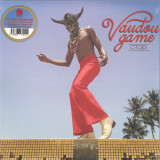
No one had been through those doors in years. Unchanged, seemingly untouched, just a Guard watching over it, one wondered whether the place would ever see the light of day again. Built in the 70s by Scotch, there were only twenty such places in the entire world. Twenty studios, all identical. Most had undergone a digital makeover in the 80s, but not this one; situated in Lomé, this studio had stayed true to its original form. Silent and uninhabited but waiting for one thing, and one thing only: for the sacred fire to be lit once again. That of the Togolese Recording Office, is studio OTODI for those in the know. Through thick layers of dust, the console was vibrating still, impatient to be turned on and spurt out the sound so unique to analog. That sound is what Peter Solo and his band Vaudou Game came to seek out.
The original vibrations of Lomé's sound, resonating within the studio space, an undercurrent pulsing within the walls, the floor, and the entire atmosphere. A presence at once electrical and mystical sourced through the amps that had never really gone cold, despite the deep sleep that they had been forced into. In taking over the studio's 3000 square feet, enough to house a full orchestra, Vaudou Game had the space necessary to conjure the spirits of voodoo, those very spirits who watch over men and nature, and with whom Peter converses every day.
For the most authentic of frequencies to fully imbibe this third album, Peter Solo entrusted the rhythmic section to a Togolese bass and drum duo, putting the groove in the expert hands of those versed in feeling and a type of musicianship that you can't learn in any school. This was also a way to put OTODI on the path of a more heavily hued funk sound, the backbone of which maintains flexibility and agility when moving over to highlife, straightens out when enhanced with frequent guest Roger Damawuzan's James Brown type screams, and softens when making the way for strings. Snaking and undulating when a chorus of Togolese women takes over, guiding it towards a slow, hypnotic trance. Up until now, Vaudou Game had maintained their connection to Togo from their base in France. This time, recording the entire album in Lomé at OTODI with local musicians, Peter Solo drew the voodoo fluid directly from the source, once again using only Togolese scales to make his guitar sing, his strings acting as channels between listeners and deities...
out of Stock
Last delivered 12 months ago available to reorder, subject to availability
Return of the UK producer Allen Saei aka Aubrey on the mighty Barba label is another bold statement in the discography of this well-versed artist. Building on the relationship with the Burek/Barba/Pomalo family established through remixes of Information Ghetto's "Inspiration" track (Burek 2013), DJ Stingray's "Communication System" (Barba 2015) and his solo "Clock Funk EP" (Barba 2017), for this record Aubrey presents us with a continuation of his previous Barba release, simplistically titled "Clock Funk 2" EP. As is to be expected from a guy who's been spending time in the studio for better part of the last three decades, this 12" is pure techno, in the best sense of the word. As mature and consistent as the previous record of the series, we have Aubrey building on that ground and expanding the range into more abrasive and rough on one side, and even more subtle and humane on the other. A1, titled "Clock Funk 2" is among the subtle ones. Beautiful cascading keys, glitchy synth bleeps and lead lines intertwine into a gorgeous composition grounded by a driving bassline and counterpinted with distorted ride cymbals. Uniquely sounding track which draws influences from many corners of the planet. A2, titled "Sel Moulo" sets a point for the other side of the spectrum. The heaviest and roughest, it locks the frame in which this EP works. Direct, abstract and firmly aimed towards the dancefloor, this cut is for the peak moment of the night when its combination of jacking beats and trippy leads will just push the craziness off the edge. B1, the most humane and gentle track on the EP, "Triads" is a perfect match for the A1 cut, although slower and calmer. Again, the similar approach is used, where the perfectly tuned combination of small synth and keys elements form a complex image which will stay ingrained into anyone's mind once you play it in the right moment. Again, it's hard not to reach for the word "beautiful" when describing this one. B2, Ghost Mist, is on the other hand a match for the heavy A2, but also not as intense. A repetitive affair, with abstract synth lines and disharmonic pads serving as an emotion injection just when they're needed. Common thread moving through all four cuts is an infectious groove intertwined with synth lines that would not be misplaced amongst the best examples of space-influenced techno music firmly grounded on the floor. All that, pressed onto a heavy duty 180 gram vinyl and beautifully packaged in an original artwork by local artist EmaEmaEma.
Deep Nigerian ''Igbo highlife'', here combining Highlife with the more traditional Igbo music - guitar-based music, with rare characteristic blend of horns and vocal rhythms..
.
The 1970s and 80s saw the rise of the Ukwuani style in Nigerian highlife. A funky fusion of the laidback, mellifluous guitar lines characteristic of Igbo highlife with the rugged, animated rhythm section of Edo dance music, the sound was a sensation that made stars of musicians like Rogana Ottah, Steady Arobby, King Love A.U., Bob Fred and Chief John Okpor. One of the most consistent players in this field, though, was General Franco Lee Ezute, leader of the Harmony Kings International Band.
Bongo Joe presents this deluxe reissue of Onye Kata Obia, one of the Harmony Kings' most underrated albums. Full of electrifying guitar work and intoxicating rhythms, it is sure to keep the crowd dancing!
Following his previous releases on respected imprints such as Optimo Trax and last year's remix of Romanthony's 'Give U Up' on Glasgow Underground, Jasper introduces his own label with two of his most ID'd weapons over the last few months, 'Crypto' and 'These Are The Beats'.
The lead track 'Crypto' is a hypnotic builder showcasing a new, musical maturity expertly applied to his own productions. Digging deeper into the house and techno sounds he has been playing around the world since his early twenties, his heads down production sound is inspired by deeper moments on the dancefloor, whilst retaining the energy his own DJ sets are internationally renowned for.
On the flip 'These Are The Beats' rolls out more hypnotic lead lines and drum machine rolls to further the themes established by Crypto, plunging the dancer into a deeper state of consciousness without forgetting the dancefloor energy needed to hold your attention in the early hours of the morning.
The sound of Jasper's recent productions are the result of years of musical development; birthed in the basements of Subclub and refined the world over. Mitchell Street Records is a reflection of his own musical tastes, an outlet to showcase the music he loves to play.
A collabo you couldn't make up. Ice-T & Charlie Funk team up with Hamburg's Mighty Mocambos for a funked up version of their single "Bounce That Ass", blending old school west coast vibes with raw funk recorded live to tape, guaranteed to get every dancefloor busy.
Ice-T & Afrika Islam aka Charlie Funk wrote history together. They made countless platinum LPs, won grammys and oscars and shaped rap music as we know it today with albums like "Rhyme Pays" and "Power". Here they reunite for the fun(k) of it, celebrating the motion of hips like only they could and the Mighty Mocambos once again leave no doubt about their status as absolute funk heavyweights and 45 champions.
After a break of 6 years, Atlanta based electronic musician, producer and sound designer Richard Devine returns with a new album 'SortLave' on Venetian Snares' Timesig imprint. Recorded between 2016 and 2017 using Richard's custom built Eurorack modular system and two Nord G2 Modular units, SortLave features 12 tracks of intricate electronica that ranges from abrasive percussive experiments such as 'Revsic' to 'Astra's dazzling juxtaposition of sounds and onto the radiant ambience of the album's closer 'Takara'.
Talking about the album's genesis Devine explains 'I've been using modular synthesizers since I was 17, but have never written complete tracks using these newer systems. This was my first experiment to see if it would be possible and I probably spent about 5 years building up the systems that I used on this album.' 'I wanted the record to sound very different to my previous works which had been more cold, digital, clinical even, and had all been made using computers. The aim here was the complete opposite, to create something that felt very organic, detailed, spacious, big and warm and just as importantly, a record that you could put on and play all the way through that flowed in a seamless way.' This new approach was to prove fruitful and enabled Devine to create music in an entirely new way. 'I really wanted to break free from timeline-based music creation and do things with my hands on the fly,' he explains. 'So the tracks are more like captured snapshot performances where I could experiment and play around with the idea of probability-based sequencing for every patch, string multiple sequencers together that would feed other sequencers to come up with interesting rhythms and melodies. It was really fun coming up with new sounds this way too, I felt like I created several I haven't heard before with this album. Some of the tracks on the album were complete accidents and evolved from something that happened spontaneously. In the end I feel this is one of the best records I have released to date, so I'm very excited to share it with the world.'
Making his debut in 1995, Devine's releases for labels including Schematic, Warp Records and Detroit Underground have established him as one of the leading figures within the electronica community. In addition to his musical productions, Devine has enjoyed a lengthy and successful career in sound design, developing patches for many of the world's leading music technology businesses and working with companies such as Google and Nike.
In just a year of existence, Chloé's Lumière Noire has brought emerging artists and promising newcomers together - and this first compilation of 13 brand new tracks expands the roster, exposing the label's eclectic vision in full daylight. When Chloé talks about her label, she puts forward the fundamental values that informed her own musical journey, her trust in her own musical taste - and, of course, the predominance of human relationships: 'I followed
my bliss and only commissioned tracks from artists that I respect and whose music I love. That to me is Lumière Noire's musical palette.' With this 13- track, unmixed compilation, Chloé makes a case for a label aesthetic that is based in open-mindedness. Familiar, elemental Lumière Noire artists are represented, as are new faces, producing a kind of group photo presaging what's next for the fledgling label. Lyon's Markus Gibb leads the track listing with Kuru with a deep chiaroscuro matching the label's ethos, followed by other mainstays Il Est Vilaine's Farenheit 451, which evokes Ray Bradbury's retro-dystopic angst with the
band's usual electro-pop elegance. Sutja Gutierrez, who released in debut EP, The Legend of Time on Lumière Noire in April, pursues his electro Shamanism with the ceremonial Allodoxaphobia, while Iñigo Vontier (whose EP Aluxes came out on the label in late 2017) brings his C O N T R A project
online with track Taurus, a further development in voodoo house. Elsewhere, Suuns lead singer Ben Shemie, who lent his fascinating art-rock croon to Recall, a single from Chloé's Endless Revisions LP, contributes A Million Kinds, a synthy, psych-pop debut that is as brilliant as it is surprising. On to the freshman class: Dutch producer Drvg Cvltvre (who gets personal kudos
from Chloé with each new 12') brings the uncompromising dark electro of his hypnotic and claustrophobic Last Rites. Jonathan Fitoussi's airy, minimalistic Cercles Polaires brings the respite of his recent Versatile Espaces Timbrés LP (a collaboration with Clemens Hourrières): 'I met him at Xavier Veilhan's
Studio Venezia at the Venice Biennale. He's a great guy, and his universe is unique,' says Chloé. Benedikt Frey's deep techno track Iaon, is on par with his smash 2017 album, Artificial, out on ESP Institute. First-timers are also part of the recruits: Bajram Bili with the ten cerebral minutes of Restart, Théo Muller with the ultra-deep Douce Transe, and Lumi, a Basque band that fuses
electronic sounds with acoustic instruments, brings the ompilation to a close with a track commissioned by Chloé. These audacious choices are anchored down with the likes of Permanent Vacation pioneer Lauer's hooky, 80s-infused Pythor ('Just like him, I was a resident of the Robert Johnson, and he was a guest of mine at one of my Lumière Noire nights at the Rex. He is one of these people whose music I highly appreciate'); Aergeworc & Franck Agrario, half of English duo Swayzak David Brown's project, weaves an ethno* mood into Grace's techno. Bringing together different generations, genres, and styles That may not necessarily be Chloé's MO. She invokes a more arbitrary, personal logic: 'I like to mix of-the-moment tracks and more timeless one, but the rule is above all 'do I love this or not'. That was my ethos when I started Lumière Noire.' In that way, the label is definitely in keeping with its time
Cosmin TRG is back on his white label operation, Sportiv. Brixtonstrasse explores an imaginary buffer zone between the urban angst of London's pirate transmissions and the warehouse logic of Berlin's post-Iron Curtain freedom and energy explosion. In line with the label's semiotics, Gloria is named after the rather unsuccessful 3rd League football club from Cosmin's home town. It's a high octane tribal workout with fuzzy chords, in the vein of 90s luminaries like Sterac, bringing back hints of the era's unbridled energy and enthusiasm.
With her debut album Self Fulfilling Prophecy, released by InFiné last June, the French producer closed the loop on the first sequence of her life. A sequence filled with transformations, encounters and collaborations: her successive moves to Montréal and Berlin (where she was closely involved with feminist activism), and her foundational residency at Detroit's Underground Resistance, among others, informed her authentic, global-minded techno aesthetic. The aptly-named Self Fulfilling Prophecy is thus the honest expression of a artist who has found herself at the center of techno activism, an eloquent testimonial to 'how today's electronic is made.' With the necessary hindsight and application, La Fraicheur has created an opus that blends raging techno with more atmospheric moments. An opus that is now being reviewed in light of the electronic scene's main pillar: the dancefloor. 'Self Fulfilling Prophecy remixes' recasts in vinyl version the Techno esprit of La Fraicheur´s original album with four reworks, which condition the dancers to unstoppable footwork as much as they open the listeners 'minds up. On the A-side, an activist of the Polish scene, VTSS is a leading figure in the protest against conservatism, racism and ambient homophobia and one of the founders of the Brutaz parties in Warsaw. She rocks 'Eau Troubles' in an 'industrial' soundscape, as disturbing as fascinating
Serbia's Soul Print Recordings returns after a year away, this time with Englishman Mark Hand at the helm. Four pieces of beautiful and emotive deep house from Mark, fresh from his Cobwebs EP on Uzuri earlier this year. The record kicks off with Midnight, a beautiful track with it's floaty pads and gently rippling bass tones, coupled with the great soulful voice of Greg Blackman. False Leads is a percussive number, drenched in machine soul, with on the flip, Sio's voice sits effortlessly above a downtempo beat, while Mark adds his late father's saxophone to the mix on the final jazz enfused Mountains. Complementing the wonderful music is the design, with the label art handled once again by the talented Bratislav Milenkovic, and vinyl coming in a beautiful light pink colour, making a Soul Print Recordings release both an aural and visual thing of beauty.
Emotional Rescue returns to the music of Elaine Kibaro with a special 7" single to accompany the Pour L'Amour album collection (ERC066). Here then are two bonus versions of songs from the LP with a unique Arabic recording of her "hit" Aurore and also, the previously unreleased on vinyl instrumental version of her balearic / boogie jam, Ne Doute Pas.
Having moved from Tunisia to France at the age of 13, Kibaro's duel sensibility has long been apparent in her music and performance. The early success of her debut 7" De L'autre Cote Du Miroir in 1977, was soon followed by her most 'successful' song in Aurore, first released as a 7" in 1978, before appearing again as 9 minute extended version on the 1979 Miroirs LP.
In the same year she recorded a special 7" single on the little known World Music label. Singing the lyrics in Arabic - renamed here to its true translation - much else remained the same. The music of the original, the spoken intro soon gives way to what is essentially a leftfield disco groove, with building strings, funky bass and some late archetypal 70s Euro drumming. Atop this the vocals are delivered in Kibaro's ubiquitous chanson delivery, her heartfelt singing, the congos breakdown and then chorus, as the songs builds, all lead to head-nodding smiles all round.
With this is Ne Doute Pas. A stand out from Pour L'Amour, the vocal version appeared in 1989 as a single and on the now sought after, Kiroel album. This instrumental simply let's the music shine. A Linn rise and fall bassline, soft, layered keys and mode horns are run and rerun in a catchy, incessant flow like a PWL demo. The 10 years between the 2 tracks is apparent in the instrumentation but the link between the two - Kibaro herself - is clear and worth enjoying for that.
In the sweltering North-Eastern Brazilian state of Pernambuco lies the coastal city of Recife, where Amaro Freitas is pioneering the new sound of Brazilian jazz. For the prodigious young pianist, the spirit of his hometown runs deep. From the Afro-Brazilian maracatu born on the sugar plantations of slavery, to the high intensity carnival rhythms of frevo and baião, Amaro's heavily percussive approach to jazz is as indebted to these Pernambuco traditions as it is to Coltrane, Parker and Monk.
As with many of the greats before him, Amaro began playing piano in church aged 12, under the instruction of his father, leader of the church band. As his natural talents became obvious, the young prodigy quickly outgrew his father's instruction. He won a place at the prestigious Conservatório Pernambucano de Música but had to drop out as his family could not spare the money for the bus fare. Undeterred, Amaro gigged in bands at weddings and worked in a call centre to fund his tuition. The transformative moment came at age 15 when Amaro stumbled across a DVD of Chick Corea concert, 'he completely blew my mind, I'd never seen anything like it but I knew that's what I wanted to do with a piano'.
Despite not actually owning a piano, Amaro devoted himself to studying day and night - he would practice on imaginary keys in his bedroom, until eventually striking a deal with a local restaurant to practice before opening hours. By the age of 22 Amaro was one of the most sought-after musicians in Recife and resident pianist at the legendary jazz bar Mingus. It was during this time he met and begun collaborating with bassist Jean Elton and the pair went in search of a drummer. 'We kept hearing about this crazy kid who was playing in 7/8 or 6/4, we knew we had to meet him'. Hugo Medeiros joined, and the Amaro Freitas Trio was born.
'I want to show the simplicity of music, to break the stigma that the piano is for a particular social class. Yes, it's a difficult instrument, which many people do not have access to, but with it you can express everything.'
Following his critically acclaimed debut album Sangue Negro (black blood), the title of his sophomore release Rasif is a colloquial spelling of Amaro's home town. A love letter to his native northeast, Amaro explores its traditional rhythms through the jazz idiom, employing complex mathematical patterns reminiscent of some of the most challenging works by fellow Brazilian masters Hermeto Pascoal, Egberto Gismonti and Moacir Santos.
Preferring to see the piano as a though it were a drum with 88 unique tones, Amaro's intelligence and emotion intertwine on every track, from album opener 'Dona Eni': a scorching reconstruction of the baião rhythmic structure, played in seven measures instead of two, to the serene homage to the coastal reef and its ecosystems on the title track 'Rasif'. 'Aurora' is a suite of three parts, representing the sun's journey from the light and soft of the rise, to the aggressive dissonance at its midday zenith and descending chromatic cadences as the sun sets.
Due for an Autumn release on Far Out Recordings, Rasif sees Amaro Freitas take a deserved step onto the world stage. Having already made a name for himself in Brazil, Amaro and his phenomenal band will embark on their first European tour later this year.
Amaro Freitas - Piano
Hugo Medeiros - Drums & Percussion
Jean Elton - Double Bass
Henrique Albino - Baritone Sax, Flutes & Clarinet
All compositions by Amaro Freitas
Produced by Amaro Freitas
Recorded by Bruno Giorgi @ Carranca Studio, Recife, Brazil
Mixed and mastered by Bruno Giorgi @ Quarto Studio, Rio de Janeiro, Brazil
Nachdem die Münsteraner Indie- und Punkrockband im Februar 2018 eine Live-Reunion gefeiert und wenige Monate später eine - mittlerweile schon ausverkaufte! - Tour für 2019 angekündigt hat, muss man festhalten: Muff Potter sind zurück. Das Quartett veröffentlichte zwischen 1993 und 2009 sieben gemeinsame Alben, vier davon bringt das Label Grand Hotel van Cleef auf Vinyl noch einmal heraus. "Bordsteinkantengeschichten" erschien ursprünglich im Jahr 2000 als drittes Album der Band. Zu dieser Zeit mauserten sich Muff Potter gerade neben Gleichgesinnten wie den Boxhamsters oder Dackelblut vom Geheimtipp zur ernst zu nehmenden Szenegröße. "Bordsteinkantengeschichten" präsentierten Muff Potter einem wachsenden Publikum durch extensives Touren im Verbund mit den befreundeten Formationen Hot Water Music und Leatherface. Der Langspieler stand noch ganz im Zeichen des mitreißenden Hardcore Punk der Anfangstage, gleichzeitig ließ die Gruppe aber auch schon das Interesse an anderen Stilelementen durchklingen. Das führte später sogar soweit, dass die Jungs Streich- und Tasteninstrumente in ihr Soundbild einflochten.
'Breathe The Machine' is the first installment of Dojostudio and presents a musical world rich in harmonics, low frequency and melodic impact, yet with enough space in between to allow that perfect breathing room essential for powerful dance cuts. 'Breathe The Machine' portrays a world that initially feels robotic, yet instills an organic fluidity known only to come from humanoid beings, breathing life into a system littered with code and coldness. Billy Dalessandro presents 3 original cuts, plus a rendition of the title track by Mike Shannon.
Both for 'Breathe The Machine' and 'Tractor Beam' the Waldorf Microwave XT 2 and the Jomox 888 were the primary sound sources. For 'Breathe The Machine' the 888 was processed through a Jomox T-Resonator, which added harmonic distortion, and also spread the stereo spectrum out a bit offering the drums a more washed-out feel. The XT was layered track by track by performing patterns live into an editor until the desired ideas were properly recorded. Mike Shannon was brought on board to offer a contrasting expression of 'Breathe The Machine' and when asked how the process went he stated:
"I took the source sounds, edited them and processed them to work with a groove I had written for this remix. I mainly used the pad, lead synth and synth effects from the original. The rest of the gold I engineered."
On 'Tractor Beam', subtle use shows that ample space in between ideas make things seem larger than life. By allowing a more minimal approach in the production process the sounds can easily co-exist, allowing for that 'big room' sound without overwhelming the overall experience.
The digital exclusive 'Deliverance' was created using NI's Maschine for the drums, and FM8 and Reaktor were the sources of the synths. Drum patterns were created in Maschine and then recorded in realtime back into the DAW as it played, with real-time tweaking of the hi-hat to create the desired impact, especially at the break. The synth and pad patterns were recorded as MIDI into the editor, and then automation of the synths' VCF rounded out the expression needed to complete the emotional process.
All in all, DOJ001 is mostly an all-hardware showdown, with 'Deliverance' being the only 'virtual' attempt. Life is in nature, not in machines, yet the culmination of the two worlds can be beautiful, if only properly tamed and understood. Lest we beware! Stay tuned... and thanks for listening!
A girl stands at an arcade machine, her eyes fixed on the glowing screen with her back turned on the world. She seems to be alone, somehow lost and yet at one with herself. The cover art (by Carmen Alt-Chaplin) for Peter Zirbs' debut album as a solo artist conveys escapism - being totally immersed in another reality, in the virtual world. His equally futuristic and retro-futuristic aesthetic is permeated with melancholy. What if we really don't exist
Peter Zirbs himself also knows how to escape: how to hunker down in the studio, hide from the outside and lose himself in the music. He emphasizes that such an escape is healing, leading to the world of the romantic. The Viennese musician and producer has always felt most comfortable straddling genres, whether techno and rock in previous band projects, or now as a solo artist combining post-minimalist dramatic synth/piano ("Firmament") with modern wave pop ("Are You Reality") and poignant ballad-kitsch ("Dreamescape"). Here there are subtle changes in emphasis gracing otherwise repetitive harmonies; there a true appreciation of pop. Ten songs - five with lyrics, five without - some threatening, some heartbreaking, all stirring. They project a world - sometimes concrete, sometimes abstract - in which can be found beauty and disquiet, love and fear, failure and perseverance. A world one is happy to get lost in while the cinema in one's head tells its own stories. (by Manuel Fronhofer)
As part of the Viennese rave and techno scene of the 1990s, multi-instrumentalist and electronic producer Peter Zirbs has released music under several pseudonyms, produced and remixed various artists, and scored a range of experimental films. He has broken down genre boundaries over the years with the variety of his output. The circle closes now. In 2018 Peter Zirbs finally steps into the spotlight as a solo artist.
"What If We Do not Exist" by Peter Zirbs is released on 19th October 2018 by Fabrique Records. Guest vocalists include Monika Heidemann (Heidemann, The Phenomenal Handclap Band, The Juan MacLean / DFA Records), Tom Walkden (Wolventrix) and Gerard McNeice.
Yuri Méndez's 7th album is called W. W is a collection of finely crafted songs. The instruments are many and their intonations, variegated. W comes in the usual formats, only better, and full to the brim with sensitive lyrics for the man and woman of today.
On the other hand, presumably the left, Yuri's ageing well and intent all the while on writing more numbers in order to keep a steady flow of fresh material ready at any time.
These are good times in W land or, as the poet said, 'it hurts a bit, but the colours are admirable'.
Yuri Méndez is Pajaro Sunrise. Initially a duo, he's been working on his own ever since the release of the second album, 2008's Done/Undone. His previous albums received praise from such fine publications as Q, Uncut and Monocle, and his music can be heard in several international motion pictures and TV series such as The Missing Lynx, Castle, The Big C, Catalan hit series Cites and Benvinguts a la família, and ad campaigns by the likes of McDonalds and Vodafone.
Roman Flügel needs no introduction, so lets not hammer on about his lengthy history as a kingpin of contemporary German dance music, his essential contributions to the musical evolution of Darmstadt and Frankfurt, his achievements as a virtuosic multi-instrumentalist traversing genres with remarkable grace, his sense of dynamism and urgency in the construction of big-room anthems or the meticulously woven textures of melancholy found throughout his minimalist work, his ability to pay homage to pioneers of his musical heritage without diverting to pastiche, his fearless combination of familiar melody with synthesized aberration and imperfection, his approach to instrumentation as Haiku poetry where the ordinary is made profound through simple isolation, his rejection of stylistic pretense and acceptance of comforts found in the constructs of folk and pop, his contrast of cold efficiency with a warm naivete´, his yearning to return down previously-forged paths with a new accumulation of experience, the confidence to paint the room blue when it was meant to be black, his belief that a beautifully executed idea will always transcend the need for incessant polishing, the way in which he leads arrangements to the edge and only implies a resolve, his framing of musical narratives as sketches, outlines, or skeletons where the listener's perception compliments the whole, or his notion that sometimes stories might not need a clear articulation but might only come through in hints of mood, pace, and color, a language which doesn't rely on words to communicate but which paints for us in Themes. Yes, rather than hearing our attempt to elaborate on Roman's Flu¨gel's debut album with the ESP Institute, lets just simply listen.
New York producer and pianist Eric Maltz lives in Berlin. He produces and mixes his music in a simple, subtle and elegant way and puts his music out on his own label - Flower Myth.
In 2017, Eric Maltz released his first record on Levon Vincent's Novel Sound, including the splendid 'We Have Power', an ode to freedom and celebration of life, featuring the warm vocals of Peruvian Cristina Valentina.
On the brooding rhythmic dancefloor, Cristina's voice opens up and reminds of the power of a meaningful lyric, how a loving message can touch the heart ever so strongly.
Over the past year, 'We Have Power' has become a permanent fixture in the Possible Futures record bag. The two had to learn more about Eric and Cristina. 'Naked Broken' is the first engraving of this newly formed and inspiring musical friendship. A hot groover rooted in a rich NY House tradition, featuring di erent versions for the adventurous DJ.
Eric Maltz & Cristina Valentina played live in Berlin on September 2nd, for The Hot Run! - the annual Possible Futures open-air summer dance, along with Elena Colombi, Kassem Mosse, Sassy J and Tom Trago.
Re-mastering by: Ray Staff at Air Mastering, Lyndhurst Hall, London
Four-and-a-half decades after the event, saxophonist Charles Lloyd's Love-In, recorded live at San Francisco's Fillmore Auditorium in 1967, the counterculture's West Coast music hub, endures as much as an archaeological artifact as a musical document. From sleeve designer Stanislaw Zagorski's treatment of Rolling Stone photographer Jim Marshall's cover shot, through the album title and some of the track titles ("Tribal Dance," "Temple Bells"), and the inclusion of John Lennon and Paul McCartney's "Here There and Everywhere," Love-In's semiology reeks of the acid-drenched zeitgeist of the mid 1960s, a time when creative music flourished, and rock fans were prepared to embrace jazz, provided the musicians did not come on like their parents: juicers dressed in sharp suits exuding cynicism.
It is likely that more joints were rolled on Love-In's cover than that of any other jazz LP of the era, with the possible exception of saxophonists John Coltrane's A Love Supreme (Impulse!, 1965) and Pharoah Sanders's Tauhid (Impulse!, 1967). Chet Helms, a key mover and shaker in the West Coast counterculture, spoke for many when he hailed the Lloyd quartet as "the first psychedelic jazz group."
It is to Lloyd's credit that, at least in the early stages of his adoption by the counterculture, he resisted dumbing down his music. The adoption stemmed from Lloyd's espoused attitude to society, his media savvy, his sartorial style and his sheer nerve in playing jazz in the temples of rock culture. He took the quartet into the Fillmore West three years before trumpeter Miles Davis took his into the Fillmore East—as documented on Live at the Fillmore East, March 6 1970: It's About That Time (Columbia)—by which time his pianist, Keith Jarrett, and drummer, Jack DeJohnette, were members of Davis' band (although Jarrett didn't appear at the 1970 gig).
Nick Klein is an artist making electronic music born in southern Florida and based in Brooklyn, New York since 2012. Upon moving to New York the concentration of his works output has been to mine and investigate the troped qualities in various forms of electronic music, and then to realize singular directions in how to communicate these ideas himself. Alongside Miguel Alvarin~o he runs the music imprint Primitive Languages.
His latest offering since the January 2018 EP "Lowered Flaming Coffin" (Alter) is a continuation of his burnt dance music explorations with "The Bathroom Wall" on Bank Records. As a totem to reflect onto with text, to rest ones eyes in blur, or to physically hold ones self up in the throes of intoxication, the bathroom wall takes and gives numerous gestures of use. Klein uses the symbology of the bathroom wall to construct five disparate wall scrawlings and hazed meditations into the compositional grounds for four meaner mid-tempo, rhythmic purges. Tracks "The Worst Band In The World" and "American Gut" take on the pulsing build of an intoxicated night out. The record divides in on and itself in tone with "Rather Be Your Enemy", an homage in title to the legendary Lee Hazelwood song, wherein the synthesizer convulses slowly conjuring the bleaker qualities of tinnitus taking the lead over your senses. Side B of the record throbs quickly with the blown bass drums and hissing rhythms of "Pushing Your Luck" and comes to a drawn conclusion with the ten minute come-down at sun rise burner of "Poor Me Another".
The record was recorded using a modular synthesizer to tape by Nick Klein and mastered by Josh Bonati. Design work taken on by visual provocateur Chris Norris (Steak Mountain).
London duo Damian Daley & Danny Dixon aka OdD return to FUSE sister label Infuse to follow up their breakthrough Cold Fusion EP with a four-track EP titled 'Tones Of The 90s'.
Lead track 'Tones Of The 90's' brings together the core elements of the London underground scene. Snappy hi-hats combine with subtle tones and garage-like vocal samples and plenty of bass. A2 'Phone Home' starts with the famous ET sample. Once again it's the snappy hi-hats that take centre stage, working alongside a well-programmed loop that bubbles throughout underneath the surface.
On the flip, loopy drum patterns dominate B1 'Yes Yes' before the EP comes to an end with the pick of the bunch 'Pressure'. Low-end frequencies combine with a dreamy synth line, signing off the release in typical Infuse style.
out of Stock
Last delivered 6 years ago available to reorder, subject to availability
In a time when Jazz music is entering a contemporary renaissance and exciting the ears and minds of new audiences, Zombie Zombie's Étienne Jaumet offers us his unique, idiosyncratic take on the sound with the sprawling '8 Regards Obliques', his 3rd solo album with the Versatile label.
Jazz requires a certain freedom of technique, interpretation and improvisation that already matches Jaumet's own production style and sonic aesthetic as well as his playful approach towards music. The eight pieces that make up the new LP were very quickly recorded; Jaumet let himself be carried away by the atmosphere without focusing too much on fine details or the laborious aspects of the composition process. The finished article is a spontaneous collection that stands out, a true mirror image of the creative process adopted by the artist. Not surprisingly, spontaneity is one of the characteristics already present in his music, in both his recorded output and his live happenings, where he leaves much room for freedom and improvisation.
'8 Regards Obliques' was recorded at the Versatile studio in less than 3 weeks with quite a basic set up: TR 808, selected synthesizers, vocals and of course the saxophone, which is a constant presence also in his previous albums. For the mix Etienne has again appealed to the maestro I:Cube, a central figure of the Versatile story and a prdigious engineer and artist in his own right. He immediately understood that it was necessary to keep the spontaneous side alive and to not over-produce the pieces or over-edit them, being constantly mindful to retain the power in the sound and in the frequencies. From Sun Ra with 'Nuclear war', Miles Davis in 'Shhh / Peaceful' or 'Theme from a symphony' by Ornette Coleman to 'Caravan' (already quoted by many jazzmen), Etienne enjoyed revisiting classic masterpieces and paying tribute to his inspirations. He allowed himself only one personal and original composition, 'Ma révélation mystique'.
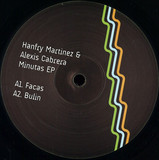
Moss Co., sister label to Archie Hamilton's Moscow imprint, returns with its 10th release, a four tracker from Hanfry Martinez & Alexis Cabrera that is both club ready and forward thinking in equal measure. A cross-continent collaboration, the 'Minutas' EP plays perfectly to the strengths of Tenerife's Hanfry and Argentina's Alexis, emanating the precise sound that Moss Co. loves to champion.
'Facas' leads the way with an unabashed breakbeat and zephyr-like hook, leaving space for playful midbass tones and experimental keys, behaving in a purposefully erratic manner. 'Buli´n' follows with driving, dissonant synths that maintain momentum as a weighty and funk-laden bassline enters the fray.
On the flip is title track 'Minutas', rich in sparkling frequencies, snappy percussive programming and the kind of lazy bass motif that is primed for the beaches of Mamaia. 'Copeti´n' closes the EP with a hazy bassline and gentle, rolling subs complimented via crystalline drum patterns and tripped out FX processing.
The Afro National Band Was Formed In Freetown, Sierra Leone In 1972. Their Inspirational Leader, Sulay Abu Bakarr Accompanied By His Wife Patricia And Ayo Roy Macauley Split From The Sabanoh Jazz Band To Form Their New Group. They Skillfully Merged Highlife And Jazz Sounds With A Deep Knowledge Of West African Sounds. Growing To Become One Of The Premiere Bands To Emerge From Sierra Leone They Not Only Defined The Sound Of The Country For A Generation But Also Crafted Some Of The Country's Most Popular And Memorable Songs (for Example Sonjo Which Is Included On This Collection).
The Band Toured Extensively Throughout Africa And Europe In The 70s (working With The Giant Of Sierra Leone Music Akie Deen In The Process). Towards The End Of The 70s The Band Departed Sierra Leone, Sulay And His Wife Moving To Maryland In The Us And Other Members Moving To London.
Our Collection Focuses On Possibly Not The Best Known Songs Of The Band But The Tracks Which Have The Rhythms To Move The Dance Floor. We Open With The Foot Tapping "jokenge" And Its Driving Shuffle Beat, Swirling Organ And Percussive Guitar Lines. "push Am Forward" Takes A Afro-psychadelic Turn With Its Hypnotic Rhythms And Driving Distorted Guitar. "mr Who You Be" Is A Cover Of The Fela Kuti Track, Doing It Fine Justice. "gowa" Highlights The Vocal Prowess Of The Band, As Dose The Ever Popular "sonjo" (the Version Featured Here Is A Rare Alternate Recording).
"money Palava" Opens Up Side Two With Its Infectious Highlife Beat And Hooky Vocals. "money Nor Bataya" Highlights The Bands First Use Of Synthesizers. "mother In Law" Sweeps Up Back To Free Town 1973 With Its Clever Vocal. "set My Soul On Fire" Is A Bonus Track Which Brings In The International Flavour Of The Band.
The Afro National Band Continues In Various Guises To This Day, With Sulay And Patricia Acting As The Proud And Talismanic Figures For A Whole Generation Of Sierra Leonean Music.
New collaborative album from two of the world's most revered sound artists. 'At its best, William Basinski's music inspires the sort of rapturous testimony usually reserved for peak experiences, cult leaders and the dead.' Pitchfork // 'Awe-inspiring: strange, elemental, and profound.' AllMusic // For over half a decade, William Basinski and Lawrence English have been in regular contact with one another. During that time their paths have crossed repeatedly in various cities; Zagreb, Los Angeles, Hobart and more, in a variety situations. It was from these chance encounters - and the strange familiar of lives lived in transit - that their first collaboration, Selva Oscura, was seeded. The phrase Selva Oscura draws its root from Dante's Inferno. Literally translated as 'twilight forest,' it metaphorically speaks to both those who find themselves on the unfamiliar path and more explicitly the nature of losing one's way in place and time. Each of the extended pieces on this record maps an acoustic topography that draws on the concept of drifting into the strange familiar. The works each dwell in an ever shifting, yet fundamentally constant state of unfolding. As one sound fades away, another is revealed in its place, creating a sense of an eternal reveal. Selva Oscura was recorded in Brisbane and Los Angeles simultaneously. The compositions were each created through a process of iteration and rearrangement that inverted the micro and macro characteristics of the raw sonic materials. Dynamics and density were chiselled with restraint and at other times intensely reductionist approaches to create a limitlessly deep, but open sound field - as rich as the suggested place from which its title is drawn.
- Beautiful 1 LP Edition 140g Vinyl, Heavy 350gsm Sleeve, Sticker WRWTFWW Records is extremely excited to present the official reissue of cult album Lingua Franca-1 (originally released in 1983) by groundbreaking Kyoto band EP-4, available on vinyl housed in heavy 350gsm sleeve and digipack CD. Straight from the delirious minds of unconventional geniuses Kaoru Sato (who had previously released an album as R.N.A. Organism on legendary Osaka label Vanity Records) and Yuji 'Banana' Kawashima, Lingua Franca-1 is a seamless voyage of spellbinding mutant funk grooves, joyful post-punk explorations, synth fantasies, sexy distortions, and fluid cool-no-sweat vocals. Constantly mutating in an almost biological way (similarly to Colored Music's self-titled album), always mysterious and seductive, sometimes reminiscing of a freaky cross between PiL, Liquid Liquid, Bowie and Yello, EP-4's debut is hard to label, although 'Debonair Wave' could be a legitimate way to describe this Japan's best-kept-secret of an album. Defying the rules wasn't limited to sonic experimentations for band leader Kaoru Sato. To promote Lingua Franca-1, he and his crew plastered gigantic (illegal) billboards all over Shibuya and Harajuku, announcing performances in four different cities on odd hours of the same day (May 5th 1983). Other of his notable antics included originally sub-titling the album Death to the Emperor Showa causing a controversy (which led to censorship and a title-change), trying to release two albums on the same day without the concerned labels being aware of the plan or, in the R.N.A. Organism days, fooling Vanity Records into believing the demo he sent them came from a foreign band (it worked). Unique personality, unique music!
After a long time in making music, Alexander returned to the stage in the role of iO (Mulen) and co-owner of Mulen Records. Despite on absolutely non-commercial music format, project is attracted attention almost from the first days of existence, as or..
After a long time in making music, Alexander returned to the stage in the role of iO (Mulen) and co-owner of Mulen Records. Despite on absolutely non-commercial music format, project is attracted attention almost from the first days of existence, as originality and professionalism. Leaving aside the trend peak-time sound, iO is explores a deep flows of house music. Jazz reefs and an abundance of syncopation, samples and unhurried rhythms, gives a tribute to the traditions of the classical sound, but at the same time don't without futurism. Due to the inventive production, iO have especially recognizable groove, and therefore deservedly valued of underground music lovers.
Standard Edition, Mastered at half speed, 140g vinyl, Sticker We Release Jazz (WRWTFWW Records' new sister-label) is thrilled to present the official reissue of criminally overlooked Japanese jazz gem Mellow Dream (1977) by Hokkaido pianist wunderkind Ryo Fukui, released in conjunction with the its legendary predecessor Scenery, sourced from the original masters and mastered at half speed. Firmly standing on the foundation he laid down with Scenery, Ryo Fukui continues his exploration of modal, bop and cool jazz sounds with meticulous grace and absolute mastery. As its title suggests, Mellow Dream ventures into slightly mellower, more soulful, and sometimes more contemplative territories (the Bill Evans-reminiscent 'Mellow Dream' and 'My Foolish Heart") while still packing the commanding punch Fukui's work is loved for, as heard on the amazingly bombastic 'Baron Potato Blues' or the gigantic McCoy Tyner/John Coltrane-influenced 'Horizon' which sees each member of the trio (Satoshi Denpo is on bass and Yoshinori Fukui is on drums) demonstrating their virtuosity for 9 exhilarating minutes. With his sophomore album, Ryo Fukui swings from melancholy to vibrant joy with ease, reminding us that jazz is best served with a pinch of blues, and displays an immensely rare combination of pure talent, unique personal approach and focused discipline. The man undeniably deserves a spot in the pantheon of all-time great jazz pianists. After releasing the outstanding Scenery and Mellow Dream back to back, Ryo Fukui worked on developing his live skills, often performing at Sapporo's Slowboat Jazz Club (which he co-founded with his wife Yasuko Fukui), and even releasing 2 live albums. He sadly passed away in March 2016, leaving behind a legacy of works that all jazz lovers should explore.