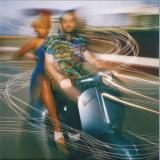
Bladee is a founding member of the music group and cultural phenomenon Drain Gang. Following Bladee’s first-ever run of physical titles at retail last year, which was a huge success (over 8000 units sold, #24 in the 40 Vinyl Albums Chart), YEAR0001 are now presenting the following collection of essential records from his catalogue. “rip bladee” is Bladee’s first compilation EP and a cult-classic amongst fans. Collecting a string of self-released singles, the EP includes features from Yung Lean and Bladee’s Drain Gang compatriot Thaiboy Digital. This is the first time ever this release is being pressed on vinyl.
Cerca:lean year
Luke's Anger (real name Luke Sanger) delivers his first outing on Love Love, Ceiling Walker. Sanger is a relentlessly interesting hero of the underground, probably best known as a techno and electro producer and an active player in the live experimental techno scene across Europe, notably including multiple appearances at Berghain/PanoramaBar. Based out of Norwich, UK, Luke has put out a plethora of banging records for two decades in styles from across the rave spectrum on some of our favourite record labels like Tigerbeat6, Don't and Sneaker Social Club, as well as an increasing amount of more ambient-leaning releases under his real name in recent years. Recognised as a true techno stalwart, Luke has received support from the likes of Surgeon, Dave Clarke, The Advent and Jerome Hill.
This EP fits firmly into the 'banging' camp - more than a nod to classic stateside sci-fi electro stylings as well as UK dance music's bleep techno bass foundations, this is popping, caustic, mechanical phunk expertly engineered to make you shake and wiggle. Particle Swarm kicks the EP off with strung-out synth chirps and plenty of latex squelch before moving onto the bounciest number, Threshold Rider, with buoyant bassline droplets poking through a solid 808 framework. On the flipside, title track Ceiling Walker utilises rushing crescendos and fluttering analogue rhythms to keep the dancefloor in rapture while closer, Silicon Boogie, achieves maximum levels of funk by aptly juxtaposing digi vocal snippets against square wave bass.
Kicking off the New Year with a release that truly stands out, Slamm! EP is a high-energy, retro-inspired journey through house and techno. This record is particularly special, featuring a remix by none other than Diego Krause—an artist whose work with the Beste Modus crew was instrumental in shaping my journey into music production. Having admired his craft for years, it’s a privilege to collaborate on this project, especially with both of us sharing roots in Berlin.
The title track, Slamm!, delivers a driving groove packed with punchy percussion and hypnotic synth work, setting the tone for the EP. Diego Krause’s remix refines the original, layering it with intricate textures and deep, rolling basslines that showcase his signature sound. Soul of Fantasy (House Mix) brings a touch of classic house warmth, blending soulful chords with a steady rhythm, while Euro Phase leans into a progressive flow, building tension through evolving layers. Closing out the EP, Landing Time (Digital Bonus) captures the deeper, late-night essence of house, rounding off a versatile and dynamic release.
Rooted in the uptempo energy of early ‘90s house and techno, Slamm! EP fuses past influences with a fresh, modern approach—making it a must-have for house music lovers.
Chris Ryan Williams (trumpet & electronics) and Lester St. Louis (cello & electronics) work together as HxH (H by H). Their skills have seen them move smoothly across various situations, constantly carving out new terrain and working in new configurations of musicians at a rapid pace. While worth reading, their biographies capture only a part of their complex rhizome.
HxH started about three years ago. The project is a direct response to all their activity with others and more importantly all their future leaning sonic desires. Their debut album STARK PHENOMENA is both their first studio recording and their first physical release. The album is appropriately set to be released by KMRU on his growing label OFNOT. It’s an ideal introduction to their sound world and their approach.
HxH describe their music as “electroacoustic,” but until recently the presence of Black musicians in this field has been greatly overlooked and largely ignored, making this phrase only partially appropriate. What HxH do really is to always be unpredictable. Every gig is a new soundscape. Sometimes you might hear echoes of Autechre or Robert Hood but then the sound-field will open up into a new terrain all their own. Chris and Lester bring together techniques from across the sound spectrum of electronic music and also draw on their deep backgrounds in Jazz, Improvisation, Classical and Noise scenes to create a sound that is true to them. After all, these two have worked with the likes of Bennie Maupin and the music of Black Fluxus artist Ben Patterson. Their rhizome is deep.
One of the ways that their unique approach manifests is in their merging of both acoustic instruments and electronic instruments in real time. This is something few have managed to do – but their spontaneous leanings work in both complex and accessible ways because of their deep understanding of landscape crafting. You can hear this clearly on the track “Pyrex Vision.” Their approach makes it tempting to compare their music to Sun Ra jamming with Laurel Halo – a comparison that would be only partly accurate.
Chris and Lester note that the sounds on STARK PHENOMENA are “imbued with such hopeful, gracious care; one that is far flung from obsessive carefulness or fuck the world carelessness, but more a caring embrace without the fuzziness of nostalgia.”
They note that when they began working together, they would “always come back to speaking on our concepts of an architecture of the expanse,” noting that their live sets often take on the joyfully noisy task of “dreaming big.” For HxH it was essential that STARK PHENOMENA have a quality that is “almost sculptural.” They consider the album “an object to be viewed from all sides.” This kind of thinking has resulted in them directly engaging with numerous sculptors and artists including Torkwase Dyson. Shape wise HxH’s sound fields work in a parallel to Dyson’s black architectural works.
They also note that the opening cut “BEACH” (the opening and longest track from the album) was “written weeks after our first gig in a studio session donated to us by our dear friend jaimie branch.” And that Pyrex Vision “was continually being edited months after sending our ‘final mixes’ to KMRU.” Their sound sources and samples come from studio sessions, live gigs, durational installations, 3am improvised downloads and more.
KMRU notes: "I think there is an in-between layer on this record. I was first caught by the Pyrex Vision track which organically flows between monologue, subtle field recording, and instrumentation. It's such a beautiful track, evoking deep emotion through simplicity. STARK PHENOMENA effortlessly glides in between imaginative mosaics of sounds — free yet complex — unlocking memories within its layers."
- A1: Montego Bay - Everything (Paradise Mix) 04 59
- A2: Atelier - Got To Live Together (Club Mix) 06 06
- A3: Golem - Music Sensations 04 56
- B1: The True Underground Sound Of Rome Feat. Stefano Di Carlo - Gladiators 05 26
- B2: Eagle Parade - I Believe 04 26
- C1: Dj Le Roi - Bocachica (Detroit Version) 05 28
- C2: Green Baize - Synthetic Rhythm 01 41
- C3: M.c.j. Feat. Sima - Sexitivity (Deep Mix) 05 30
- D1: Kwanzaa Posse Feat. Funk Master Sweat - Wicked Funk (Afro Ambient Mix) 06 31
- D2: Progetto Tribale - The Bird Of Paradise 06 29
- D3: Mbg - The Quite 06 59
Vol 1[28,99 €]
Googling “paradise house”, the first results to pop up are an endless list of European b&b’s with whitewashed lime façades, all of them promising “…an unmatched travel experience a few steps from the sea”. Next, a little further down, are the institutional websites of a few select semi-luxury retirement homes (no photos shown, but lots of stock images of smiling nurses with reassuring looks). To find the “paradise house” we’re after, we have to scroll even further down. Much further down.
It feels like yesterday, and at the same time it seems like a million years ago. The Eighties had just ended, and it was still unclear what to expect from the Nineties. Mobile phones that were not the size of a briefcase and did not cost as much as a car? A frightening economic crisis? The guitar-rock revival?! Certainly, the best place to observe that moment of transition was the dancefloor. Truly epochal transformations were happening there. From America, within a short distance one from the other, two revolutionary new musical styles had arrived: the first one sounded a bit like an “on a budget” version of the best Seventies disco-music – Philly sound made with a set of piano-bar keyboards! – the other was even more sparse, futuristic and extraterrestrial. It was a music with a quite distinct “physical” component, which at the same time, to be fully grasped, seemed to call for the knotty theories of certain French post-modern philosophers: Gilles Deleuze, Félix Guattari, Paul Virilio... Both those genres – we would learn shortly after – were born in the black communities of Chicago and Detroit, although listening to those vinyl 12” (often wrapped in generic white covers, and with little indication in the label) you could not easily guess whether behind them there was a black boy from somewhere in the Usa, or a girl from Berlin, or a pale kid from a Cornish coastal town.
Quickly, similar sounds began to show up from all corners of Europe. A thousand variations of the same intuition: leaner, less lean, happier, slightly less intoxicated, more broken, slower, faster, much faster... Boom! From the dancefloors – the London ones at least, whose chronicles we eagerly read every month in the pages of The Face and i-D – came tales of a new generation of clubbers who had completely stopped “dressing up” to go dancing; of hot tempered hooligans bursting into tears and hugging everyone under the strobe lights as the notes of Strings of Life rose up through the fumes of dry ice (certain “smiling” pills were also involved, sure). At this point, however, we must move on to Switzerland.
In Switzerland, in the quiet and diligent town of Lugano, between the 1980s and 1990s there was a club called “Morandi”. Its hot night was on Wednesdays, when the audience also came from Milan, Como, Varese and Zurich. Legend goes that, one night, none less than Prince and Sheila E were spotted hiding among the sofas, on a day-off of the Italian dates of the Nude Tour… The Wednesday resident and superstar was an Italian dj with an exotic name: Don Carlos. The soundtrack he devised was a mixture of Chicago, Detroit, the most progressive R&B and certain forgotten classics of old disco music: practically, what the Paradise Garage in New York might have sounded like had it not closed in 1987. In between, Don Carlos also managed to squeeze in some tracks he had worked on in his studio on Lago Maggiore. One in particular: a track that was rather slow compared to the BPM in fashion at the time, but which was a perfect bridge between house and R&B. The title was Alone: Don Carlos would explain years later that it had to be intended both in the English meaning of “by itself” and like the Italian word meaning “halo”. That wasn’t the only double entendre about the song, anyway. Its own very deep nature was, indeed, double. On the one hand, Alone was built around an angelic keyboard pattern and a romantic piano riff that took you straight to heaven; on the other, it showcased enough electronic squelches (plus a sax part that sounded like it had been dissolved by acid rain) to pigeonhole the tune into the “junk modernity” section, aka the hallmark of all the most innovative sounds of the time: music that sounded like it was hand-crafted from the scraps of glittering overground pop.
No one knows who was the first to call it “paradise house”, nor when it happened. Alternative definitions on the same topic one happened to hear included “ambient house”, “dream house”, “Mediterranean progressive”… but of course none were as good (and alluring) as “paradise house”. What is certain is that such inclination for sounds that were in equal measure angelic and neurotic, romantic and unaffective, quickly became the trademark of the second generation of Italian house. Music that seemed shyly equidistant from all the rhythmic and electronic revolutions that had happened up to that moment (“Music perfectly adept at going nowhere slowly” as noted by English journalist Craig McLean in a legendary field report for Blah Blah Blah magazine). Music that to a inattentive ear might have sounded as anonymous as a snapshot of a random group of passers-by at 10AM in the centre of any major city, but perfectly described the (slow) awakening in the real world after the universal love binge of the so-called Second Summer of Love.
For a brief but unforgettable season, in Italy “paradise house” was the official soundtrack of interminable weekends spent inside the car, darting from one club to another, cutting the peninsula from North to centre, from East to West coast in pursuit of the latest after-hours disco, trading kilometres per hour with beats per minute: practically, a new New Year’s Eve every Friday and Saturday night. This too was no small transformation, as well as a shock for an adult Italy that was encountering for the first time – thanks to its sons and daughters – the wild side of industrial modernity. The clubbers of the so-called “fuoriorario” scene were the balls gone mad in the pinball machine most feared by newspapers, magazines and TV pundits. What they did each and every weekend, apart from going crazy to the sound of the current white labels, was linking distant geographical points and non-places (thank you Marc Augé!) – old dance halls, farmhouses and business centres – transformed for one night into house music heaven. As Marco D’Eramo wrote in his 1995 essay on Chicago, Il maiale e il grattacielo: “Four-wheeled capitalism distorts our age-old image of the city, it allows the suburbs to be connected to each other, whereas before they were connected only by the centre (…) It makes possible a metropolitan area without a metropolis, without a city centre, without downtown. The periphery is no longer a periphery of any centre, but is self-centred”.
“Paradise house” perfectly understood all of this and turned it into a sort of cyber-blues that didn’t even need words, and unexpectedly brought back a drop of melancholic (post?)-humanity within a world that by then – as we would wholly realise in the decades to come – was fully inhuman and heartless. A world where we were all alone, and surrounded by a sinister yellowish halo, like a neon at the end of its life cycle. But, for one night at least, happy."
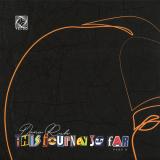
Dana Ruh offers up the aptly titled ‘This Journey So Far’ 2x12’’ project via Yecad here, comprised of eight original cuts.
As a long standing and widely respected figure in the world of underground house and techno through her releases on the likes of Slices Of Life, Ostgut Ton, Cocoon, Cave and of course her own Brouqade, Dana Ruh’s reputation stands tall as one of the finest purveyors of this sound. Amongst her releases, Dana maintains a heavy tour schedule taking her across the globe each year to many hotspots in key cities, here she marks another milestone in her career with a 2x12’’ release, entitled ‘This Journey So Far’, as a musical reflection on all that’s led to this point.
Across eight tracks Dana presents her distinctive style which often straddles the lines between house and techno, opening with the airy, swinging dub aesthetic of ‘Case Of V’, while diving into deeper, murkier realms on ‘Bruv’. The B1 ‘KMA54’ then shifts focus towards choppy breaks, textural tension and hypnotic voices before B2 ‘Babel’ lays down a true dub techno feel across ten minutes of crisp drums, spiralling echoes and expansive reverberations.
Kicking off the C-Side is ‘MF Now’, stripping things back to a shuffled, bumpy rhythm section, resonant synth chimes and billowing textures. ‘Grey With Some Light’ then leans into a more experimental glitch realm via twitchy oscillating percussion, unfurling atmospherics and drifting keys. ‘The Look’ leans back into House territory with raw stabs, sax lines, metallic chimes and vacillating low-end tones before ‘Song For The Lonely’ concludes the project, encapsulating the essence of deep house with ethereal pad swells, circling stab sequences, low-slung drums and cossetting subs.
Polish saxophonist, producer and composer Jerzy Mączyński fuses utopian electronics and organic improvisation on sci-fi jazz odyssey, DO 555ps. Building on his 2023 collaboration with Jamal Moss aka Hieroglyphic Being, DO 555ps is Mączyński’s first self-produced album – a tour de force of spacious, galactic sound design that leans into drone, minimalism and the rich history of sci-fi soundtracks for a 10-track suite of astral proportions.
Mączyński’s sound is both maximalist and restrained, sensitive to detail and atmosphere, defying categorisation and swirling in an orbit of its own making.
Set to be released on Eivind Vullum’s Vibrasjon label in Norway, DO 555ps follows the 2023’s TUNE IN, made under Mączyński and Hieroglyphic Being’s Universal Harmonies & Frequencies moniker.
Described by The Quietus as one of the most interesting records of the year (“as bold as it is massive”), TUNE IN laid the foundations for Mączyński to strike out alone on DO 555PS, inspired by Moss’s skewed production and arrangements to striking and unique effect. - Anton Spice
SPLIT#4 is the final release for the 10th anniversary year of the Pi project featuring Elements of Joy (a.k.a. UVB) and Stave both returning to the label after their earlier appearances with PI08 and PI07 respectively.
The vinyl release showcases six original tracks--three from each artist--with bonus tracks included in the digital release.
On the A-side Elements of Joy delivers 3 original tracks of New-Beat leaning techno including one song that features vocals by Zanias. The opening track "Prutaneousa (A1)" connects the dots between his previous entry on the label and this one with the use of retro 80s inspired vocal samples but this time on a rather driving beat sequence than an industrial/noise one. "A Master of Distress (A2)" dives deeper into a hypnotic mood while "Vampiric Habits (A3)" takes it even further to an ethereal atmosphere through the input of Australian vocalist Zanias.
On the B-side Chicago producer Stave presents his signature hypnotic broken-beat techno. The side opens with "Weingart (B1)" a characteristically Stave textured track. "900MPH (B2)" combines IDM elements with dynamic broken rhythms while "Capital, Selves (B3)" blends experimental with Grey Area influences.
The digital release includes two more bonus tracks: an energetic EBM techno piece by Elements of Joy and an atmospheric techno by Stave completing this diverse split release.
SPLIT#4 is a fitting close to the project's milestone year celebrating a decade of our Pi vision.
KEY Vinyls 47th release dives into a silver-plated, machine driven world crafted by Eduardo De La Calle: Kapila. Across four chapters, De La Calles veteran touch shaped by over 25 years of sonic innovation brings to the label a sleek yet abrasive metallic landscape.
The A side opens with Kardama, unfolding a funky yet metallic interplay with sharp bells and stinging rides slicing through a round, acidic bassline. The track proposes a wide spatial range of sounds, a continuous exchange and interplay of elements.
Khatvanga follows, soft yet needle-sharp a lullaby evoking complexity through simplicity. Deceptively minimalistic, its delicate construction disguises its robust power, marking a signature De La Calle moment: feeling held by a soft energy which is equally pungent. With Kankas, the tempo intensifies.
Rugged surfaces and strong high frequencies merge with a type of construction that leans heavily on rhythm, channeling the pulse of a machine in its element. And lastly, Kala mutates into a sci-fi fever dream.
Tense atmospheres build, the machines world grows fuller, and shimmering synths take on a life of their own. The result is a dense, captivating finale that mirrors the increasingly blurred line between man and
machine.
Nearly two decades after it was first released, Norken’s sleek cult classic album ‘Our Memories Of Winter’ is being reissued on vinyl via Hydrogen Dukebox on 6th December 2024.
With its unique sonic blueprint of early 2000s electronica, ‘Our Memories Of Winter’ is a record that is at once both deeply reminiscent of a particular era and place, yet remains a timeless invocation of Norken’s idiosyncratic palette of minimal, techno, house and British IDM.
This vinyl reissue presents all 12 tracks from the original release, with the inclusion of 'Df23' and 'Flirt' making this the first time that ‘Our Memories Of Winter’ is available on vinyl with the complete album tracklisting.
Norken is one of the many pseudonyms of Lee Norris, a producer who is considered by those in the know as one of the unsung heroes of UK electronica. With a slew of releases throughout the years as Man-Q-Neon, Nacht Plank, Norken, Tone Language and Metamatics, this reissue shines a light on his soulful, immersive output under the Norken name.
As Norris explains, “The release of ‘Our Memories Of Winter’ has a nostalgic, warm feeling for me. I made his album in a garden shed with a wood burner, an Atari computer and a few synths in the depths of an English winter. I still had the thought process of making emotional style techno that would warm any soul on a cold day.”
First released in 2005, ‘Our Memories Of Winter’ carries the echoes of electronic luminaries such as the Detroit ambient techno of John Beltran, through to the immersive atmospherics of Biosphere and the innovative IDM of fellow British outfits Autechre and The Black Dog. Yet as Norken, Norris retains a distinctive musical voice that has continued to deepen in stature over the years since the album’s initial release.
Opening with the brief intro cut ‘Fern 2’, the album slides into the dreamlike groove of ‘Memories’, where rich, resonant chords wrap around cool, galactic-sounding synths and a compelling bass undertow.
On ‘It Might Have Been Rain’, that signature bass texture again propels a luxuriant mid-tempo rhythm, while Norken layers in hypnotic washes of string-like synths, gentle electronic pulses and the brief murmur of a vocal, across seven-plus immersive minutes.
Vocal textures, often subtly looped and distorted, also add a distinctive depth and personality to tracks like ‘Eastern Soul’ and ‘Here’. Throughout the album, there’s a feeling of intricate microcosms unfurling, as Norken coaxes a myriad of contemplative moods and emotions from his machines.
Whether shaping the smooth, lulling ambient gauze of ‘Ty Canol’, or letting the kaleidoscopic, dancefloor-leaning drive of ‘Audic Strable’ loose like a coiled spring, ‘Our Memories Of Winter’ presents the singular voice of an artist whose innovative contribution to UK electronic music has only become heightened with the passing of time.
- A1: Bleu Nuit - Spanish Harlem
- A2: Sepia - Stress
- A3: Bleu Nuit - En Bas De Chez Toi (Live)
- A4: Les Espions - Casse-Tête Jungle
- A5: Avel Nevez - Naufrage (Partie 1)
- B1: Claude Robert Hit Orchestra - Dance The Disco Sound
- B2: Marie-Ange Cousin - Molle Ouate
- B3: Quai 21 - Music Man
- B4: Maderson - Tourne La Page
This compilation features tracks released between 1978 and 1988 in Western France.
Through this compilation, we strove to highlight a little-known regional scene, characteristic of the diverse and sometimes opposing music movements of the 80s. Through this musical journey across the Brittany, Normandy, and Pays-de-la-Loire regions, we sought to showcase a resolutely indie aesthetic, sometimes conceived in some of France’s most unusual studios, such as a bunker and a caravan.
We’ve found it difficult to make attribute an established, well-defined genre to some of the tracks featured on this compilation. They draw, each in their own way, from the rock scene that dominated the 80s in France, from countercultures, from American stars who shone on the country’s radio stations and in its record stores, and even from local folk music.
While one could hear an harmony across the tracks featured on Le Grand Ouest, channeling this manifold energy onto a record required extensive research through the Brittany, Normandy, and Pays de la Loire regions’ discographies. Over the three years since the release of Le Grand Sud-Est, we have meticulously researched the references of artists, musicians, studios, labels, and publishers from each region. We sought to trace each artist to identify and listen to all their works from that period, and, when possible, collect unreleased recordings, left as demo cassettes on the artists' dusty shelves.
The synthesis of this research, presented here under the title Le Grand Ouest, hopes to remind us of the timelessness of the indie scene in our country, through the lens of the 80s Western France’s scene. Whereas Le Grand Sud-Est exhibited the funkiest sides of the Provençale and Rhône-Alpes scene, Le Grand Ouest leans towards a more mellow, introverted music, an expression of groups of friends united by the joy of playing together.
The first 500 copies of the record come with an extensive booklet with unpublished photos, press clippings, and texts for each track.
This Summer The Florentian Cabaret showcases his sound once more as he explores new creative avenues with the launch of his own eponymous label. The label will give the thriving Italian talent a chance to showcase the full spectrum of his sound with no boundaries, sharing all of his refined tastes, and influences he has absorbed over the years. The “Space. Time. Gravity.” EP features four classy cuts, timeless trips inside the mind of The Florentian Cabaret.
Playful drum patterns lead the way in the title track, conversing in harmony with the nostalgic 80s synths, teasing you down an animated path of disco leaning house energy. Emotional textures crafted for the dance floor moments. “Stairs On Mars” is built upon an underground energy of time gone by, slick hi-hats drive the track in combination with a raw and rugged bass, nodding towards the heydays of rave. Distinct and progressive peak time movements steering the release into an alternative direction.
“Rocket’90 leads you down a pacey path of low end paradise, in combination with spaced infused acid tones. A transition track for when you want to switch things up, and steer the dance floor to new heights. Hypnotic as it moves, progressing into classy peak time action as the atmosphere continues to simmer. Next up we have the aptly named “Stars”, as this pulsating and driven track will take you exactly there. Nostalgic drums maintain a steady and transcending groove, conversing with the mechanical pads and synths which spiral around the heart of the track. Constructed for the rave, and the tastemakers of modern dance music!
DJ Support - Wehbba, Ilario Alicante, Marco Faraone, Paco Osuna, Cristian Varela, Mauro Picotto, Adam Beyer, Richie Hawtin, Luigi Madonna, Joseph Capriati, Eli Brown, Marco Carola and Charlotte de Witte.
Joseph & Indira's ‘Mantra’ is another testament to ARTCORE's ever-increasing weight in Techno and global electronic dance music and features a duo of racy cuts laden with signature sonics from both artists, kicking off with 'Ananda' and its potent classic Techno feel, with a prominent Capriati core of thumping kicks, crisp percussive drive and progressive energy shifts and playful twists, laced with Indira's hypnotic exotic vocal chops and gritty LFO shots.
'Mantra' rounds off the release with an inverted sound transition, leaning heavier into the 'Psy' sound that has seen Indira's notoriety skyrocket. Flooded with undulating low-end movement, creative off-beat flare, shifting rhythmic patterns and uplifting musicality, its immersive blend of darker sounds and spiritually utopian nuances makes for an undeniably unique statement track.
Whilst famed for his endless spree of unforgettable mainstage performances and international club shows, including standout residencies in Ibiza, Joseph Capriati's studio productions have been carefully selected and rare in recent years. With the emergence of their latest studio productions, Joseph and Indira's ‘Mantra’ release serves as a stamp of approval from one of Techno's most respected tastemakers and an insight into the potential of ARTCORE's indelible impact on global dance music.
Hailing from Spain, prolific producer Orion Agassi is known in certain circles as a house music authority. As he has been on our radar for many years we finally connected for a six track lp of straight up beat tracks for the club. Leaning heavily on the heyday of WBMX mixshows Agassi takes the razor to classic house breaks and acapellas with a specifically Latin feel turning them upside down. Total club gear for classic house enthusiasts and working djs. Not to be missed!
a1. 121 bpm
a2. 125 bpm
a3. 123 bpm
b1. 124 bpm
b2. 126 bpm
b3. 122 bpm
10 years later, his voice can be heard across the globe. Since emerging as a teenage outsider- artist, he has released 4 albums and 4 mixtapes, constantly building momentum with no sign of slowing down.
Creatively restless, Yung Leans influence spills out from him uncontrollably. He presents captivating abstractions of Scandinavian trance, 2010's trap and haunting piano ballads under a single moniker, collaborating with artists as diverse as FKA Twigs, Skrillex and Dean Blunt.
Frost God is Yung Lean's second mixtape. Produced by Gud, Whitearmor, Acea, Woesum and Shlohmo the mixtape features guest appearances from Adamn Killa, Luckaleann of Goth Money, Bladee and A$AP Ferg of A$AP Mob.
- A1: The Guiding Stars - Been Dipped In The Water
- A2: The Religious Five Quartet - Let Me Lean On You
- A3: The Butlerairs - He's So Good To Me
- A4: Eastern Star Chorale - Until You Try Jesus
- A5: The Sensational Bells Of Joy - Lord Take My Hand
- A6: Green Street Baptist Church Youth Choir - He's All Right
- A7: The Singing Son Of Zion - Steal Away
- B1: The Gospel Voices Of Soul - Woke Up This Morning
- B2: The Gospel Motivators - Trust Him
- B3: Joe Thomas - I Feel Like Pressing My Way
- B4: The Indiana Wonders - Thank You Jesus
- B5: The Webster Singers - Stay By Our Side
- B6: Rev Eddie James And Family - Jesus Will Fix It
- C1: The Solomonaires - Come Out Of The Wilderness
- C2: The Antioch Majestic Voices - Peace Until My Soul
- C3: Rev Thomas N. Pride - He Knows It All
- C4: The Ecclesiastics - He Made A Way For Me
- C5: The Gospel Descendents - Jesus Is All I Need To Get By
- C6: The Gospel Chanteurs - Lord Don't Leave Me
- C7: Newburg Radio Chorus - Calvary
- D1: Cleo K Joiner Iii And The Metropolitan Comm. Choir - Spirit Of The Living God
- D2: Jimmy Ellis And The Riverview Spiritual Singers - I've Come A Long, Long Way
- D3: Rev Charles E. Kirby - Lord You Been Good To Me
- D4: The Golden Crowns - We Are Trying
- D5: Indiana Community Choir - Lord Don't Move That Mountain
- D6: God's Girls - My Time Ain't Long
Hardcover Book which includes a 208-page book documenting Louisville's rich Black Gospel music legacy and access to a comprehensive digital archive.
In the mid-20th century, Louisville gospel music was occasionally recorded when members of the local gospel community pressed 45rpm records and LPs, and released them through grassroots record labels such as Sensational Sounds, Grace, Blessed, and D.J.S. Over the years, a substantial body of work was produced in our city, but those recordings are in danger of being lost forever.
The Louisville Story Program has been working with dozens of people in the local gospel music community to locate, digitize, and preserve hundreds of these recordings and to develop a book that documents and honors the legacies of the people and communities that produced them.
For decades, the passion, hard work, and support of countless people across dozens of Black church communities in Louisville have nurtured and sustained a rich gospel music ecosystem. This music has served as a central part of people's religious practice and as an expression of Black pride, joy, affirmation, love, dignity, determination, and hope. This legacy continues to this day.
With support from The Owsley Brown II Family Foundation and Owsley Brown III Philanthropic Foundation, LSP has partnered with members of the gospel community and a local advisory group of local gospel historians and luminaries:
To locate, clean, and digitize gospel records of local artists released by small local labels
To accompany the local Black gospel music community in developing a 4 CD box set that includes a 200+ page hardcover book with first-person documentation of their rich history
To create an accompanying double LP featuring 26 of those songs
To create and maintain a public-facing digital archive of 1,000 songs and 1,000 photographs
To celebrate the final release with a large concert at the Brown Theatre (September 28, 2024)
- A1: Flore
- B1: John Iii
- B2: Us
- C1: Just-Test
- D1: We The Blessed
- E1: Mother Africa
- F1: Sweet Evil Miss" Kisianga
- F2: Virginia
- G1: C Marianne Alicia
- G2: Dr Oliver W. Lancaster
- H1: Palm Sunday
- H2: Prima - Mr A.a
- I1: Keno - Exactement
- I2: Providence Baptiste Church
- J1: Just Test
- J2: Work And Pray
- J3: Rib Crib I
- K1: Rib Crib Ii
- K2: Loving Kindness
- K3: Dogtown
- L1: Love Always
Souffle Continu records presents Byard Lancaster – The Complete Palm Recordings 1973-1974, the definitive package of Philadelphia-born jazz wizard Byard Lancaster including his 4 legendary albums released on Jef Gilson’s Palm Records in the 1970s, Us, Mother Africa, Exactement and Funny Funky Rib Crib, along with the first ever standalone edition of Love Always, a fifteen minute modal jazz beauty plus a 20 page booklet with rare photos and in-depth article about Byard Lancaster’s Parisian years by Pierre Crépon.
At the beginning of the 1960s, at the Berklee College of Music, Byard Lancaster met some feisty friends: Sonny Sharrock, Dave Burrell and Ted Daniel. It is easy to see why he rapidly became involved in free jazz. Once he was settled in New York, he appeared on Sunny Murray Quintet, recorded under the leadership of the drum crazy colleague of Albert Ayler.
In 1968, the saxophonist and flutist recorded his first album under his own name: It’s Not Up To Us. The following year he came to Paris in the wake of... Sunny Murray. He would come back to France in 1971 (again with Murray) and in 1973 (without Murray for a change). This is when he met Jef Gilson, the pianist and producer who encouraged him to record under his own name again. On Palm Records (Gilson’s label), he would release four albums: Us, Mother Africa, Exactement and Funny Funky Rib Crib.
“Us”, the first of the four records was recorded on November 24th, 1973 with Sylvin Marc on electric bass (a Fender... Lancaster?) and the evergreen Steve McCall on drums.
On the album, the trio works from the John Coltrane model; free jazz shook up by the timely contributions of the bassist, followed by a mesmerizing atmospheric music. Then, Lancaster delivers a sinuous solo path, which is a reminder of his unique tone. On the album’s companion single, the trio launches into great black music of a different genre which would lead the clairvoyant François Tusques to claim that Byard Lancaster is an “authentic representative of soul/free jazz”, to sum up this is Great Black Music! A few months after recording “Us”, Lancaster recorded “Mother Africa” along with Clint Jackson III, a trumpeter, partner of Khan Jamal or Noah Howard on other recordings.
On march 8th, 1974, Lancaster and Jackson headed up a group composed of Jean-François Catoire (electric and double bass), Keno Speller (percussion) and Jonathan Dickinson (drums). Together, they create an immediate impression. From the first seconds of “We The Blessed”, they develop a free jazz which rapidly abandons any virulence under the effect of blues and soul based interventions. When Gilson’s composition “Mother Africa” begins, listeners are transported into the studio, listening to the musicians setting up: chatting and joking... Then comes the melody: a dozen or so notes of a repeated theme which is accelerated and deformed according to their whims... The jazz played by the association Byard Lancaster / Clint Jackson III is rare: creative AND recreational. “We the blessed”, is apt listening to this again today!
The recording of “Exactement” required two sessions in the studio: February 1st and May 18th 1974 – in between the two dates, Lancaster recorded, alongside Clint Jackson, the excellent Mother Africa.
Two names appear on the cover of “Exactement”: Lancaster (Byard) and Speller (Keno). Byard Lancaster wanted to be precise, moving regularly from one instrument to another: first on piano, which was the first instrument he learned. On “Sweet Evil Miss Kisianga”, his inspiration is first and foremost Coltrane (even if leaning more towards Alice than John), this announces the storm to follow.
It is Lancaster’s horn-playing which really stands out: on alto (the sound of which is transformed by an octavoice on one track, "Dr. Oliver W. Lancaster") or soprano saxophones, as well as on flute or bass clarinet, the musician walks a tightrope making the most of all the risks he takes. Using the full register of his instruments, he has fun with the possibilities.
Then, Lancaster invokes or evokes Ornette Coleman, Eric Dolphy and even Prokofiev, before going into a danse alongside Keno Speller on percussion. Above all, he has a unique sound. Byard Lancaster, on whatever instrument he plays and by continually seeking, always ends up hitting the right note... ends up by playing exactement the note he had to play.
“Funny Funky Rib Crib” is an unforgettable recording (made up of several sessions dating from the middle of 1974) of creative jazz overwhelmed by funk and soul. If Lancaster had already made successful albums in the same genre – notably New Horizons, under the name Sounds Of Liberation which he co-led with Khan Jamal –, this one is an homage to James Brown and Sammy Davis enjoying the company of a host of guests including François Tusques (electric piano), Clint Jackson III (trumpet), François Nyombo (guitar), Joseph Traindl (trombone)...
Funny Funky Rib Crib’s cover is a three-quarter profile portrait of the saxophonist (who can also be heard on flute, piano and even vocals), however, on the record, it is the whole group, inspired and frenetic, that tests the melodies of “Just Test”, “Dogtown” or “Rib Crib” – the two versions of which display leader Lancaster’s art of nuance. On both sides of the album, the group also moves into a calmer groove, infused by blues and soul, “Work And Pray” and “Loving Kindness” are meditative tracks where listeners can lay back and relax before asking for more: Funny Funky Rib Crib!
The magnificent “Love Always” was originally released on the fourth (and last) volume of the Jef Gilson Anthology series released in 1975.
Recorded on 8th March 1974, it is a beautiful 15-minute-long modal jazz piece. Four notes from the bass (the relentless Jean-François Catoire, who makes up the rhythm section alongside drummer Jonathan Dickinson and percussionist Keno Speller), and the group is up and running!
On piano, Gilson shows the subtle tact of a sideman, leaving the lions’ share of the place to the horns. This allows us to hear the trumpet of Clint Jackson III and the alto (which sometimes sounds almost flute-like) of Byard Lancaster each staking their claim in a long hallucinatory march which moves from moments of direct exaltation to profoundly sensitive collective playing. And if further proof was required of the confidence that Byard Lancaster and Jef Gilson inspire, “Love Always” provides it on this one sided release exclusive to the box set.
A sense of destiny hangs over Sentir Que No Sabes, Mabe Fratti’s fourth solo-credited album released in a five year span. Her work has always possessed a finely tuned sense of drama capable of expressing a range of emotional states, and across this new album, she conveys the struggle to process various relationships or situations–and the actions that come next. Sentir Que No Sabes is urgent and clear, poppy, generous and approachable, while showcasing a considerable emotional hinterland. It is also, as Fratti is quick to mention, “groovy.”
Written and recorded with her partner, multi-instrumentalist, and co-composer Héctor Tosta (I.La Católica, Titanic), Sentir Que No Sabes is the result of an intense, detail-oriented process. Fueled by a new confidence gained in their collaborative project, Titanic, and its critically acclaimed 2023 LP, Vidrio, the two hunkered down in the familiarity of their studio (aka Tinho Studios) to bash out the initial sonic coordinates of her new record. “We talked and talked, and discussed ways of playing and recording, until things became inevitable,” Fratti explains. “We recorded a bunch of demos at our home studio and that meant we had a lot of time to re-edit and experiment. We really dug in. We were super focused on detail.” Tosta also took up the controls as producer and arranger-in-chief for all additional instruments. The album was later completed at Willem Twee Studios in Den Bosch in the Netherlands, and Pedro y el Lobo Studios and Soy Sauce Studios, in Mexico City.
For the final studio recordings, the pair were joined by drummer Gibran Andrade and trumpetist Jacob Wick to fill out and expand on Tosta’s percussion and brass arrangements. This small group of friends were able to work quickly and openly, and without fear: a testament to the exhaustive groundwork put in at Tinho Studios. This can be heard in three short, intermediary tracks that also manage to be the most aggressive on the record: “Kitana” (a scratch-laden instrumental that acts as a strange prelude for the last track, “Angel nuevo”) and a pair of two-minute instrumental interludes, “Elastica” I and II. None are throwaway mood pieces; rather they act as emotional cue cards, and hint at the way Fratti and Tosta created the overall atmosphere of Sentir Que No Sabes.
A strong sense of rhythm irrigates the sound from the jump, as heard on the glorious opening track, “Kravitz.” Here, the brilliant plucked cello line acts as a bassline and props up the steady thump of the kick drum. The cello’s growl serves as a conduit for a set of slightly paranoid lyrics that tell us “Quizás haya oídos en el techo” (“maybe there are ears in the ceiling”), while the song also introduces another staple of the record: the clever brass stabs, whistles, parps, and other interjections that paint a canvas of traffic in a city. It’s a postmodern, widescreen sound that for some might recall The Blue Nile’s Hats.
Sentir Que No Sabes is a record full to the brim with a modern pop sensibility, invoked by the sort of magpie spirit that ensnares anything it can find, repositioning sounds for the here and now. The keys and melody on the melancholy “Pantalla azul” (“Blue screen error”) transport us back to the glossy mid-1980s. “Oídos” (“Ears”) is a beautiful slice of contemporary, hybrid pop, in which Fratti’s vocal lines delicately spin themselves around the lean structures erected by the brass and drums, and the descending “plink” of a set of piano chords. Then we have a gloriously strong ending with the swell of “Angel nuevo” (“New angel”), another cinematic track full of gentle, instrument-rich swells and eddies that manages to be almost endless in its range–and yet intensely personal, as Fratti’s voice is close, almost whispering in your ear. A much needed lullaby for our fractious times.
The lyrics, for their part, have a stop-start quality to them, and hint at the small, incremental emotional taxes we pay through just living our lives. They circle around the music like birds waiting to swoop. There is something of the spiritual in all of Fratti’s work that expresses itself in a form of yearning: she looks to new horizons while personal dramas find themselves internalized, contextualized, and then dealt with through metaphor. Here, she was keen to mention Tosta’s constant encouragement in her finding a path to best sing or phrase her words to impart their maximum effect. “Hector was super inquisitive about my lyrics and asked me questions about what I meant, which sometimes is something you don't wonder so much about in isolation,” Fratti explains. “Besides, he is a great poet, and you can see that in what he did on the Titanic record. This made me go deeper into my lyric writing and definitely transformed it into something that I feel super happy about now.”
Take “Enfrente” (“In Front”), a track that initially comes across as a languid, glossy number, with plucked cello strings standing in for a bass line and brittle synth parts. Soon we catch on to a brilliant minor chord switch, which mirrors the fear and doubt expressed in the lyrics as someone “trembles up to the podium” in a “search for meaning.” There’s also the startling introduction of a vocoder in “Quieras o no” (“Whether you want it or not”); it comes precisely at the point Fratti sings “Quieras o no es un desastre” (“Whether you want it or not, it's a disaster”). Moments like these leave room for interpretation and, over time, create a strong bond between the listener and the record.
In fact, across Sentir Que No Sabes, each phrase–whether instrumental or vocal–becomes at some level emblematic of acts and moods that impart deep emotional significance. We see this best on “Intento fallido” (“Failed attempt”), which could be the score to feeling trapped in self-doubt, only to suddenly be sprung free by the song’s gloriously upbeat ending. On “Márgen del índice” (“Index margin”), the quicksilver switch between initial disharmony and a beautiful melody is breathtaking, all augmented by evocative arrangements, textured production, and the slightly playful, gnomic lyrics. The track’s emotional ecosystem allows another brilliant ending, which uses the simple repeated phrase, “Cómo lo va a ver?” (“How are you going to see it?”).
So what to make of Sentir Que No Sabes? High gloss Pastoralism? The sound of a city-bound, post-post modern soulscape? No matter the emotions evoked, it's the work of an artist coming into their own, and creating a benchmark record.
A highly talented artist who has grown to make a notable impression amongst the scene’s most revered tastemakers, DJ/producer and label owner Jhobei is an individual who continues to blossom. His deep, expansive sound has already welcomed material on Up The Stuss, Limousine Dream, Mindhelmet and Picnic Records, amongst others, while featuring as a co-founder of London-based collective and label Bizarre Trax. In addition, his work as one-third of dynamic trio Felon5, coupled with his unique sound, has taken him from Albania’s ION Festival to Los Angeles, alongside making a handful of appearances for FUSE and its sister brands on home turf at fabric, The Cause and Village Underground - plus 2024’s Open Air event at Barking Park earlier this year. Building on that relationship, late September brings fresh music as Enzo Siragusa invites the exciting selector to make his label debut with an array of impressive productions across his ‘Age Of Virality’ EP. A-side opener ‘Swarming’ is all action and kicks things off with authority as a snaking bassline guides a garage-influenced trip through bumping low-ends and hooky vocal samples, while ‘Machine Language’ delivers a mix of playful tones amongst sweeping melodies while delivering a heavy dose of robot funk. On the flip, ‘Defusion Solution’ is a heady late-night excursion through skippy percussion and cosmic tones, with ‘Rising Sun’ stripping things back to deliver a classy, hazy journey as organic percussion grooves unravel effortlessly. Digital buyers are treated to a bonus cut in the form of ‘Kontrol Urload’, a sci-fi leaning cut merging glistening neon synth motifs with punchy kicks and zipping effects for maximum impact.
Repress!
The release of Crosstown Rebels’ SPIRITS compilation is always a bastion moment for the label. The first edition came to prominence in 2017 and we’ve been graced with an annual compilation ever since, showcasing a consistent habit to champion established artists and breakthrough ones alike. Now, Crosstown Rebels’ lauded SPIRITS series will see the light of day once more in June, with the release of SPIRITS V.
NYC-native Layla Benitez leads proceedings with Fides, a progressive-leaning, introspective number that retains an inherent danceability throughout. It kicks off the compilation with a driving energy, one that’s perfectly matched by Trabajar - the Crosstown Rebels debut of recent Hot Creations inductee Mr.Diamond.
A techy-inspired cut, punchy four-four drum patterns create a distinctive late-night feel, as UK-talent Denney soon arrives with Kill The Soundboy. Showcasing the groove-laced house sound with which he’s become best known, the near seven-minute piece is sure to light up many a club setting this year, paving the way for Talk To Me. It’s a collaborative venture between Munich-based artist ASK:ME and El Muerto, with Soulfoot featuring on vocals. Retaining a vintage Detroit style, the fast-paced tempo creates a natural excitement before Romanian-born mainstay GruuvElement’s gifts us the minimal-toned Boom Room.
Building with tribal-like percussion and salsa-inspired instrumentals, it’s a playful excursion into dance music’s outer realms, paving the way for young Peruvian producer Chinonegro with My Moment. Whether it be the pluck of a guitar string or a jazzy trumpet solo, there’s an inherent authenticity to the six-minute piece, as a mid-track breakdown gives way to whispering hats and a rhythmic underlying backbone.
The penultimate offering comes from French-born, London-based regular Maglia, who serves up the enchanting Rayiys. The chirping of birds resides atop an ever-changing bassline, leaving us open and ready for the VA’s closing saga: Thanks Moon, by Spain’s I AM JAS. A heady combination of beautiful lyrical contributions combines with softly moving electronic elements, to leave us in a state of calm, inward reflection. Rounding off proceedings on a note of quietude, it reminds us of the final moments in clubland, transporting our psyche to sunrise, fond memories and everything in between.
Over a period of nineteen years, Damian Lazarus’ Crosstown Rebels has evolved into a world-renowned institution, garnering global audiences thanks to a consistent schedule of quality releases. In years since it’s earliest beginnings, the likes of Maceo Plex, Art Department, Seth Troxler, Ali Love, Mathew Jonson, Pier Bucci, Acid Pauli, Dennis Kurtel, Francesca Lombardo, Glimpse, Aphrohead, Fur Coat and a plethora of other figureheads have all found their home on the label.
The roster is international, showcasing how Crosstown has shaped a truly global scene. Releases are born in different continents by artists who hail from different countries, resulting in a sound that resonates worldwide. Perhaps most pivotal to the label’s success is its musical output: no part is governed by boundary or genre. It’s underpinned by a truly eclectic sound, one that reflects the diversity of Damian’s love for music itself. An album from drum and bass icon DJ Krust here, a maiden LP from Audiojack there… traversing genres has been Damian’s forte for decades - and Crosstown epitomises that as a result.
2026 Repress
The incomparable Deepchord is back on Soma and drops the first single from forthcoming album, Auratones due in October. As is expected from the Detroit based sound designer, the Campfire EP is everything we have come to know and admire about his productions, from the spaced out, ambient sound fields to classic Dub Techno.
Perfumes Of A Spring Mist delicately opens this latest EP with entrancing, processed soundscapes, beautifully haunting melody and simple rhythmic elements than seem to evolve naturally allowing you to get lost in the sea of vibrations. Xpan leans on the more classic Dub Techno sound from Deepchord of years passed. Sub heavy beats and jagged yet tranquil synths sweep across the palette as Deepchord plays with constantly fluctuating chords, bringing the quintessential 90s Deep Techno into his more modern, processed sound. Title track Campfire brings ambience to the forefront to close out the EP. Melancholic synth elements drift across an expanse of refined and uniquely crafted field recordings, offering an insight into the areas from which Deepchord draws his inspiration.
Once again Deepchord proves to be one of the most visionary artists the electronic world has seen.
G Version III from Kyoto Japan arrives on Digital Sting via a correspondence going back a few years that grew out of mutual musical connections and a deep appreciation for the Jamaican soundsystem diaspora. G Version grew up with a love of Hip Hop, R&B, and Reggae and had a musical revelation at a Lake Biwako sound clash event as a teenager that was formative in spurring a deeper dive into Dancehall and soundsystem culture.
After some time spent studying in the UK and returning to Japan, working at Jet Set records along with meeting heavy weight producer Element the beginnings of her future musical output began to take shape. Downtime during the pandemic provided the time to concentrate on production. G Version's sound has a retro futuristic feel, equal parts Dancehall history and esoteric dub leanings, particularly in tune with the more experimental branches of 80's-90's UK Dub and Steppers. Influences being stated G Versions sound is thoroughly distinct and imaginative, not content to conform to any obvious genre tropes. Also included in this release are two dubs of G Version tracks by Digital Sting mainstays Feel Free Hi Fi.
G Version III- Scenery From Double Glazing DS008 Digital Sting Records
- A1: Bakeren (Feat Faye Houston)
- A2: O Mar E A Lua (Feat Olav Wöllo)
- A3: Bergen Sunrays (Feat Selim Mutic)
- A4: Belle Époque
- A5: Den Franske Gitaren (Feat Aich)
- B1: Don`t Fall Asleep (Feat Faye Houston)
- B2: Rory`s Sunrays
- B3: Nada Pode Me Calar (Feat Olav Wöllo)
- B4: La Psychosomnie
- B5: Den Franske Gitaren (Feat Martin Halla)
2023 sees the return of multi-talented Norwegian producer Espen Horne to Wah Wah 45s, after a 24 year hiatus. The man behind the label's very first release, the now seminal Magnetica, never lost his connection with the imprint and has remained very much part of the Wah Wah family, making a comeback this year with his first solo material under his own name since that club classic from 1999.
Back in the spring, the first single from the project, the gorgeous soul-jazz beauty Bakeren, featuring the stunning vocals of Resonators' Faye Houston, quickly found a home on Gilles Peterson's internationally renowned BBC Radio 6 show as well as that of Jazz FM legend Robbie Vincent, Bandcamp Weekly and the Fresh Finds Jazz Spotify playlist.
Following that, Bergen Sunrays, became a weekly fixture on the Craig Charles Funk & Soul Show on BBC 6 Music, with the limited 7-inch of both singles selling out within hours of release.
Next up was the wistful Den Franske Gitaren, a lugubrious soul-jazz piece with drum & bass leanings featuring Bergen based MC and vocalist Aich, which found favour with legends Laurent Garnier and Jazzanova as well as hot Japanese production outfit Dazzle Drums.
This was closely followed by the final single to be taken from the album, the stunning and outspoken vocal jazz waltzer Nada Pode Me Calar (which roughly translates to Nothing Can Shut Me Up!) featuring the sublime talent of Olav Wöllo on vocals and Juno - anotherr big one with Gilles Peterson on Worldwide FM and Deb Grant on BBC 6 Music.
And now the full album, entitled The Anatomy Of Serene Eloquence is available for your aural delectation. Recorded largely during lockdown, the LP is a sophisticated and composed piece of work that sees the Norwegian producer make connections with musicians from across Europe, and some closer to home, to collaborate on this sedate and peaceful collection of songs.
The aforementioned Faye Houston also appears on the soulful, dub flavoured Don't Fall Asleep, a piece of music that explores the feeling of being isolated whilst sharing a mutual love and drive to explore new sonic possibilities.
Elsewhere, Olav Wöllo pops up again too, this time on O Mar E A Lua and once again singing in Portuguese to give this track a certain Tropicalia feel, as Espen explains:
"Olav Wöllo is a close friend, an excellent musician and vocalist, and a capoeira professor here in Bergen. He has spent much of his life living in Brazil and speaks Portuguese fluently. He wrote the lyrics for this tune years ago and had just been waiting for the right collaboration to come along.
We went to his lovely studio out on this remote island, made a massive gyoza meal, had some serious good wine and stayed the whole night to record his vocal harmonies and outspoken lyrics."
The single Bergen Sunrays also appears on the album in instrumental form with featured keys courtesy of London based player Rory More - here entitled Rory's Sunrays. His Lowrey organ adds a more melancholic feel to the track, as it does on the stunning Belle Époque, alongside the ivory work of Eirik Blåsternes - an emotional, contemplative and atmospheric track that was tested and shaped in the eclipse of Covid.
As with Belle Époque, La Psychosomnie is a playful yet explorative cut that examines insomnia, paralysis and hypnosis courtesy of some enigmatic French spoken word spinning around a framework of drums, bass and swirling keys.
And finally, the album offers up an alternative version of the single Den Franske Gitaren, this time featuring Martin Halla, a vocalist out of the Bergen Grieg Jazz Academy and winner of the Norwegian version of The Voice back in 2012! The perfect flip to Aich's more mournful interpretation of this bass and drum future classic.
Early DJ Support: Marco Carola, Jamie Jones, Chris Stussy, Seth Troxler, Brawther, Raresh, Joseph Capriati, Laurent Garnier, Samuel Deep, Saoirse, Janeret, Richy Ahmed
UK talent ADMNTi makes his FUSE debut and opens the label’s 2024 schedule with ‘Vibrations’, featuring a remix from Vigenere boss Malin Genie. Whether serving up his take on minimal-leaning house across a wealth of the capital’s key venues, or front-left on the dancefloor himself, London’s ADMNTi has been shaping a sound and curating his ear for years to become one of the city’s most well respected emerging tastemakers. A regular at FUSE over the years, with his sound palette harnessing his roots within the city, his releases on Dansu Discs, Beeyou Records and Caposile Music have seen him rack up love from the likes of Petre Inspirescu, Raresh and Voigtmann alongside mentor Enzo Siragusa. And it’s Siragusa who now welcomes him to his iconic FUSE imprint for the very first time as he makes his longawaited label debut to open the 2024 schedule with four originals across his ‘Vibrations’ EP - with Mandar favourite Malin Genie also joining the package on remix duties. Skippy and armed with a menacing bassline at its core, ‘Vibrations’ brings the heat from the off as slinking percussion warps around hazy pads for a lively opener, while ‘Infinite Function’ brings a paired-back and tumbling groove full of squelchy interludes, bright electronics, resonant organ melodies and subtle chords. On the flip, B1 ‘Original Sin’ is a spacey and cosmic trip into acid-tinged soundscapes, before Malin Genie’s remix of the title cut brings a funk-fuelled and deep dive into the early morning hours as he crafts a slinking groove that captures the imagination instantly.
Chicago-based innovator and educator Isaiah Collier is opening up newdimensions in the jazzwise continuum. A saxophonist by trade whosemulti-instrumental talents and compositional prowess have stretched thelimits of the form, Parallel Universe represents a new chapter in Collier"smusical journey. Having already performed with a diverse range of musicians such asChance The Rapper, Waddada Leo Smith, Chicago jazz royalty AngelBat Dawid and his own band The Chosen Few, Collier"s latest work as abandleader explores the shared musical heritage of the African diasporawith a sense of grace and assurance that belies his years.
Fresh from their celebrated UK tour, featuring a stand-out performance at London Jazz Festival, Ishmael Ensemble return with ‘Reasons’ the lead single from their forthcoming EP ‘New Era’, a collaborative project with lyricist and MC Rider Shafique.
Ishmael Ensemble’s Pete Cunningham says: “I first came across Rider Shafique about 6 years ago after I heard his piece “I-Dentity” via Bristol’s Young Echo collective & was immediately struck by his powerful way with words. A true master of his craft.This record was an opportunity to lean into the more bass-heavy side of my music taste. I’ve always been a massive fan of dub in all its forms & producers like King Tubby, Adrian Sherwood & Pinch have been a constant source of inspiration over the years. This sound palette coupled with a voice like Rider’s is something I’ve always wanted to make so I’m super happy with what we’ve produced here.
Hustler Records announces THE DON as its debut release; a beast of a track, leaning more towards heavy breaks with a Ragga vocal and emotive strings. THE DON is all about remembering you are THE DON of your own life and you never walk alone.
THE RAGGA TWINS:
The Ragga Twins started out on London's Unity sound system, and are regarded as pioneer s of the scene. AllMusic called them "crucial cogs in the development of U.K. dance music.
LUSINDA:
One of the female DJ’s actively pushing boundaries and scenes forwards. Her eclectic taste in music overspills into her sets; ranging through anything bass heavy; House, old skool, Techno, Drum & Bass, UKG and Grime. She focuses on the raw end of the sound whilst still being both accessible and innovative. For more than 16 years DJ Lusinda has been djing around the globe; South America, Europe and USA.
- A1: Alice Smith - Love Endeavor (Maurice Fulton Remix)
- A2: Rick Wilhite - Ruby Nights (Gilb'r Solo Flight Remix)
- B1: The Detroit Experiment - Think Twice
- B2: Zomby - Tarantula
- C1: Langenberg - Times (Manuel Tur's Ground Glass Reflex)
- C2: Carl Craig - Sandstorms ( 2011 Version)
- D1: Lil Silva - Seasons
- D2: Dj Spen Presents Dj Technic - Gabryelle (D-Malice Re-Fix)
- D3: Kingdom - Stalker Ha
- E1: Mala - Lean Forward
- E2: Martyn - Vancouver
- F1: Joy Orbison - Hyph Mngo
- F2: Pearson Sound - Stifle
- G1: Baron Zen - Burn Rubber (Dâm-Funk Remix)
- G2: Wajeed - Tron
- G3: Flying Lotus - Melt!
- G4: 00Genesis - No Shoes Trampoline
- G5: Dorian Concept - The Fucking Formula
- H1: Azymuth - Morning (Manha)
- H2: K. Frimpong & His Cubano Fiestas - Kyenkyen Bi Adi M'awu
WAREHOUSE FIND
Deviation Classics celebrates the legacy of the legendary London club night and record label created by Benji B and Judah in 2007. Famously "one of London's most aurally audacious nights”, Benji B’s Deviation is a name synonymous with music and at the forefront of London’s culture scene and within music internationally.
The collector’s box will include four 12” vinyl including 20 carefully selected tracks, many of which have previously been unavailable on vinyl or hard to find and all capturing those key moments from the past 13 years. The compilation will also be accompanied by an exclusive mix curated by founder Benji B marking the end of this chapter for Deviation, the mix will be available to purchase on CD and streamed or downloaded on Bandcamp and all major digital platforms.
Spanning all genres of music, the compilation comprises tracks from Moodymann, James Blake, Joy Orbison and Flying Lotus and many more from across Deviation’s impressive roster of guests. Though several of the tracks went on to become hits, all of them became part of Deviation’s regular playlist and are now considered to be part of the Deviation DNA - a club night that has its own sound, its own hits and its own classics. The tracks highlight how the best club residencies can hone and shape their own identity, where reactions from the dance floor can influence which tracks make it into the resident sets to become future classics, and how a single tune can conjure the nostalgia of an era, venue, place and time.
Including regular staples from Benji B’s resident sets, the DJ comments: “This album showcases the tunes that got the biggest reactions month after month, drawn from my sets at Deviation over the years. They would not only be my choice, but also the choice of the Deviation regulars. Not all of these were necessarily big tunes outside of the club night – some would go on to be, but some could be 12-inch B-sides, album cuts or unreleased dubplates that went off when dropped for the very first time, and then became our own classics: all certified Deviation anthems in their own way”
I Talk To Water, the fifth album for Kompakt by Danish producer Kölsch, is the artist’s most personal statement yet. While all the trademarks that make his music so popular and powerful are still present – lush, melodic techno; swooping, trance-like figures; sensuous, shivery texturology – I Talk To Water is also a deep and intimate rapprochement with family and history, a beautiful, finely detailed document of loss and memory, and a tracing of the long, unbroken thread of grief that runs through our lives once we’ve lost those we loved.
The emotional core of I Talk To Water, then, is a cache of recordings by Kölsch’s father, Patrick Reilly, who passed away in 2003 from brain cancer. With time rendered elastic by the pandemic and its associated lockdowns, its sudden, alienating shifts in everyday living, Kölsch found himself reflecting on his father’s passing and ongoing spiritual presence, thinking about how best to memorialise such a significant figure in his own life. Those recordings opened a gateway, of sorts, for Kölsch to move through – a way to bring past and present together and entwine them in a sensitive, poetic manner.
Kölsch’s father was a musician – “touring in the sixties and seventies, in the Middle East especially, he was doing the whole hippy trail, playing guitar, and wrote some songs over the years,” he recalls. “But all in all, he decided to focus on family rather than pursue a musical career.” Reilly kept playing and writing music over the years, though Kölsch hadn’t listened to the material for some time: “I’d never had the guts to listen to it, because I just felt too fragile listening to his voice. It’s such a tough thing to go through.”
During the pandemic, though, Kölsch listened through the fragmented body of work that his father had produced over the years. “I decided I’m gonna finally release my dad’s music twenty years after his passing,” he reflects. “This whole album is about the process of loss, and for me it’s been one of my main driving forces in my musical life, the whole emotional aspect of whatever I’ve done has been based in that feeling that he’s not there anymore.”
Recordings of Reilly appear on three songs across I Talk To Water. His guitars drift pensively across “Grape”, offering a lush thread of melody that Kölsch wraps with clicking, driftwood rhythms and droning, melancholy bass. “Tell Me” is a lovely three-minute art song, a sadly beautiful reflection, minimally adorned with gentle keys and a muted pulse. And on the closing “It Ends Where It Began”, Kölsch lets his father’s acoustic guitar take centre stage for a lament that’s unexpectedly folksy, a guitar soli dream, which Reilly originally recorded in 1996. “He actually recorded it for my first album that never came out,” Kölsch reveals, “and I had it sitting around forever. That is purely him.”
These three imagined collaborations between father and son are poised and delicate. But their relationship also marks the gorgeous music Kölsch has made across the rest of I Talk To Water, from the itchy yet lush “Pet Sound” (titled in tribute to one of Reilly’s favourite albums), the flickering synths and yearning vocal samples that slide through “Khenpo”, the ecstatic shuddering that marks “Only Get Better”, or “Implant”’s slow-motion pans and subtle reveals.
There’s also the title song, where Kölsch is joined by guest Perry Farrell (Jane’s Addiction, Porno For Pyros), singing a mantra for internal reflection: “I talk to water / Searching for myself / Looking for answers / Oceans of you.” Farrell’s appearance brings another timbre, another spirit to the album, aligning neatly with his recent interest in electronic music. “He was completely taken by this idea of talking to water,” Kölsch says, thinking about the ways we collectively lean towards the natural world as a comfort and a listener, a guide through mourning, a way to map out the terrain of the heart. This mapping is something that Kölsch has proven remarkably adept at through the years; dance music for both body and mind, but also both for the here-and-now, and for the hereafter.
“I Talk To Water”, das fünfte Album des dänischen Produzenten Kölsch für Kompakt, ist zweifellos das persönlichste Statement des Künstlers bislang. Während alle Markenzeichen, die seine Musik so beliebt und kraftvoll machen, immer noch präsent sind – üppige, melodische Techno-Tracks; schwebende, tranceartige Elemente; sinnliche, fiebrige Texturen – ist “I Talk To Water” auch eine tiefe und intime Annäherung an Familie und Geschichte. Es ist ein wunderschönes, fein ausgearbeitetes Dokument des Verlusts und der Erinnerung, und es verfolgt den langen, ungebrochenen Faden der Trauer, der durch unser Leben läuft, sobald wir diejenigen verloren haben, die wir liebten.
Der emotionale Kern von “I Talk To Water” besteht aus Aufnahmen von Kölschs Vater, Patrick Reilly, der 2003 an Hirnkrebs verstarb. Durch die Pandemie und ihre damit verbundenen Lockdowns, die plötzlichen, entfremdenden Veränderungen im Alltag, fand Kölsch sich in Gedanken an den Tod seines Vaters und seine fortwährende spirituelle Präsenz wieder. Er überlegte, wie er eine so bedeutende Figur in seinem eigenen Leben am besten verewigen könnte. Diese Aufnahmen öffneten ihm sozusagen ein Portal, um Vergangenheit und Gegenwart miteinander zu verbinden und sie auf sensible und poetische Weise zu verweben.
Kölschs Vater war Musiker – “er tourte in den sechziger und siebziger Jahren, vor allem im Nahen Osten, auf dem Hippie Trail, spielte Gitarre und schrieb im Laufe der Jahre einige Songs”, erinnert sich Kölsch. “Aber alles in allem entschied er sich, sich auf die Familie zu konzentrieren, anstatt eine musikalische Karriere zu verfolgen.” Reilly spielte und schrieb jedoch im Laufe der Jahre weiterhin Musik, obwohl Kölsch das Material lange Zeit nicht angehört hatte: “Ich hatte nie den Mut, es anzuhören, weil ich mich einfach zu zerbrechlich fühlte, seine Stimme anzuhören. Es ist so schwer, das durchzustehen.”
Während der Pandemie hörte sich Kölsch jedoch durch das fragmentierte Werk, das sein Vater im Laufe der Jahre produziert hatte. “Ich beschloss, die Musik meines Vaters zwanzig Jahre nach seinem Tod endlich zu veröffentlichen”, reflektiert er. “Dieses ganze Album handelt von dem Verlustprozess, welcher für mich generell eine der Hauptantriebskräfte in meinem musikalischen Leben ist. Der ganze emotionale Aspekt von dem, was ich getan habe, basierte auf dem Gefühl, dass er nicht mehr da ist.”
Auf “I Talk To Water” sind Aufnahmen von Reilly in drei Songs zu hören. Seine Gitarren ziehen nachdenklich durch “Grape”, bieten einen üppigen Melodiefaden, den Kölsch mit klickenden, treibenden Rhythmen und dröhnendem, melancholischem Bass umwickelt. “Tell Me” ist ein schönes dreiminütiges Kunstlied, eine traurig-schöne Reflexion, minimal geschmückt mit sanften Tasten und einem gedämpften Puls. Und auf dem Abschlusstrack “It Ends Where It Began” lässt Kölsch die akustische Gitarre seines Vaters im Mittelpunkt stehen, ein überraschend folkiger Klagegesang, den Reilly ursprünglich 1996 aufgenommen hatte. “Er hat es tatsächlich für mein erstes Album aufgenommen, das nie veröffentlicht wurde”, enthüllt Kölsch, “und ich hatte es ewig liegen.”
Diese drei erdachten Kollaborationen zwischen Vater und Sohn sind ausgewogen und zart. Aber ihre Beziehung prägt auch die wunderschöne Musik, die Kölsch im Rest von “I Talk To Water” geschaffen hat, angefangen bei dem nervösen, aber üppigen “Pet Sound” (benannt als Hommage an eines von Reillys Lieblingsalben), den flimmernden Synthesizern und sehnsüchtigen Vocal-Samples in “Khenpo”, den ekstatischen Erschütterungen in “Only Get Better” oder den langsamen Schwenks und subtilen Enthüllungen in “Implant”.
Es gibt auch den Titelsong, in dem Kölsch von Gast Perry Farrell (Jane’s Addiction, Porno For Pyros) begleitet wird, der ein Mantra für die innere Reflexion singt: “I talk to water / Searching for myself / Looking for answers / Oceans of you.” Farrells Auftritt bringt eine weitere Klangfarbe, einen weiteren Geist in das Album, der gut zu seinem jüngsten Interesse an elektronischer Musik passt. “Er war völlig fasziniert von der Idee, mit Wasser zu sprechen”, sagt Kölsch und denkt darüber nach, wie wir kollektiv zur Natur als Trost, Zuhörer, Führer durch die Trauer neigen, um die Gelände des Herzens zu kartieren. Diese Kartierung ist etwas, in dem Kölsch im Laufe der Jahre erstaunlich geschickt war; Tanzmusik für Körper und Geist, sowohl für das Hier und Jetzt, als auch für das Leben danach.
Repressed! Jurassic 5 flexed serious old-to-the-new muscles in the ‘90s, beginning with their independently released single “Unified Rebelution” in 1994, and book-ending with their stellar debut full-length: 2000’s Quality Control. They walked a tightrope between underground and mainstream hip-hop, and toured alongside rap peers as well as punk rockers on the Vans Warped Tour. With double the pleasure of your average hip-hop group – two DJs and producers (Cut Chemist and DJ Nu-Mark); and four MCs (Chali 2na, Akil, Marc 7 and Zaakir aka Soup) – they brought the late 1970s “unison MC” style of pioneering groups like the Fantastic 5 and the Force MCs to a new generation. Even more surprisingly, they did so out of Los Angeles, whose hip-hop flavors generally leaned towards Gangsta, G-Funk or Electro lines. Musically inventive and lyrically forward-thinking, each song on Quality Control is a new adventure, exploring engaging territory, delivered via one of the best live hip-hop shows fans had seen in years. From singles like the strutting groove of the title track to the throwback doo-wop samples on “The Influence” and the catchy, keyboard groove-driven “World of Entertainment (WOE Is Me),” to deeper album tracks like the lyrical gymnastics of “Jurass Finish First” and the thought-provoking “Lausd,” Jurassic 5 consistently stepped to the plate and their fans responded in kind, nearly pushing the album to Gold status. Add the innovative DJ-and-sample workout which closes out the album, “Swing Set,” and you have one of the 2000s’ most unique and solid full-length platters.
As it celebrates its 50th anniversary, Bill Withers' Still Bill remains true to its title – and stands as the greatest male-fronted soul album not made by a singer named Marvin, Al, Sam, James, or Ray. Though the saying "keeping it real" did not exist in popular parlance when Withers released his sophomore effort on Sussex Records, no words better capture the music's approach, mindset, and value. Every facet of Still Bill radiates honesty, truth, and emotion.
These characteristics – along with Withers' strong singing, hybrid arrangements, and deceptively simple songwriting – have allowed the album to endure to the point where it sounds as fresh today as in 1972.
After rising into the Top 5 of the Billboard Album charts and attaining gold status within a year of release, Still Bill has long been evaluated not by sales – but according to its merit, spirit, and agelessness. Included by The Guardian on its "1,000 Albums to Hear Before You Die" list (2007) as well as in Tom Moon's 1,000 Recordings to Hear Before You Die book (2008), its contemporary standing as one of history's most venerated soul efforts eclipses the positive reception it enjoyed in the early ‘70s.
Still Bill walks the same hallowed ground as What's Going On, Call Me, Night Beat, and Genius + Soul = Jazz. Like those landmarks, Still Bill plays with a mix of consistency, effortlessness, and complexity that rewards repeat listening and transcends categorization.
In combining four of the era's predominant styles – Philly soul, sweaty funk, Southern-reared blues, acoustic-based folk – and melding them with standout production borrowed from both minimalist affairs and sophisticated singer-songwriter albums, Still Bill occupies a distinct universe.
Its rhythmic fare is equally laidback and invigorating; relaxing and rollicking; eloquent and muscular; soft and tough. Withers' calm, self-assured voice hovers above it all, doubling as a warm blanket that adds comfort and grace to lyrics steeped in maturity, perspective, and compassion.
Withers' balanced outlook on human desires, needs, and situations stem from his own existence as a former blue-collar employee who believed his time as a musician would soon end. That grounding forever separates Withers from other contemporary soul greats – and stamps Still Bill with a conversational nature and egoless approachability.
"I mean look, I'm really a factory worker," said Withers in 1972. "That's a real job." There's that word again: real. The songs on Still Bill are tethered to modesty and actuality, wedded to a belief in simplicity, and connected to universal truths that link us all – independent of our economic or social standing. No track better exemplifies those principles than "Lean on Me," a feel-good paean to brotherhood and community that hit No. 1 on the pop and R&B charts en route to becoming a mainstream staple.
Withers approaches the plainspoken insight on "Lonely Town, Lonely Street" and heartbreaking vulnerability of "I Don't Want You on My Mind" with similar sincerity and straightforwardness. His proclivity for authenticity extends to the record's other big hit: the sexual, funk-laden "Use Me," which reached No. 2 and reflects the singer's everyman persona. It's an identity couched in keeping it real, the very inclination that ultimately led Withers to retire in the mid-'80s rather than bend to industry pressures or risk credibility.
That commitment to truthfulness and realism helps make Still Bill feel as unaffected as the air we breathe. Looking back on "Lean on Me" years later, Withers said it seemed like "something that was there before I got here" – the kind of song that could be 100 or 10 years old, or one we encounter anew 10 years into the future. The same can be said for every note on Still Bill.
A new artist on the Citizen Records / Clivage Music roster, Vhinz is a musician based in Brussels. After taking his time to break onto the electronic scene, he’s now ready to share Belvédère, his debut, dreamlike album, confidently intense, sweeping between cinematic songs and soaring, epic electronic sounds.
Vincent Honca is Belgian, with Armenian roots and a love of keyboards: the mini synth he used to play as a child, the classical piano of his years of training at the Académie de Musique, the Yamaha synth of his teenage years... During the noughties of his adolescence, electronic music was omnipresent in his life as he listened to and admired Daft Punk, Moby, Vitalic, Air and The Chemical Brothers. He also went out dancing, a lot, in the nightclubs and parties of Brussels and the vicinity, and soon his love of computers, technology and synthesisers led to him producing his own music. “I wanted to create beautiful textures with synths,” he says. “I wanted to have fun and discover the possibilities. As part of the internet generation, I taught myself everything I know through reading magazines and checking the forums.”
Vincent went on to become a computer programmer and decided to make music in as much of his spare time as possible. His first productions came out in 2015, including “Drastical”, one of three deep house dancefloor-orientated tracks recorded with none other than Kris Menace. “At the time I was really searching for my musical identity,” explains Vincent, and progressively his music started to lean towards another of his passions – films and film music. “I’ve listened to soundtracks a lot since I was a teenager, and they’ve been a big influence, in particular the music for Heat by Elliot Goldenthal, Gladiator (Hans Zimmer), Saving Private Ryan (John Williams), The Last Temptation of Christ (Peter Gabriel), The Virgin Suicides (Air) and Leon (Eric Serra).” Coincidentally, Vincent has already worked on two independent Belgian films by director Christophe Karabache, UltravoKal and Vortex, both collaborations with Michel Duprez.
Now Vincent has chosen the name Vhinz, bringing together his expertise with machines and computers, his passion and enthusiasm for the electronic sounds of his adolescence and his adoration of cinema’s powerful, impactful soundtracks. Vhinz’s first track is thus called “Aether”, a track brimming with character and confidence, with sung-spoken vocals that sweeps the listener up in bewitching synthetic themes and drums like an off- kilter heartbeat. The track perfectly encapsulates the Vhinz sound, and Citizen Records – the only label he sent it to – immediately loved it and were ready to release a 12” with more. “Then Covid and the lockdown happened, and everything came to a complete halt,” remembers Vhinz. During those long two years without anything being released, the project continued its gestation and has now grown in a mini-album of eight coherent, fascinating tracks. “I really wanted a strong concept for everything, and so was born this album that I’ve called Belvédère. I imagined myself on a belvedere with a panoramic view of the world, channelling all the emotions it elicited in me into music.”
Belvédère is a dreamlike debut album, confidently intense, sweeping between cinematic songs and soaring, epic electronic sounds. It’s a place for Vhinz to showcase his dreams, talk, sing and invite others too: Margot Ferro sings on “Le Passage” and “Envole-moi”, and Michael Meers lends his vocals to “Evolution”. “My album tells a story, with the tracks in chronological order. There are both times of hope and darker periods of my life, with sadness and love,” meaning that listeners are invited to experience a suite of different emotions and be swept along by the author’s musical daydreams. Musically, the album falls somewhere between Moby, Vitalic, Air and Serge Gainsbourg, with a density and atmosphere that are completely Vhinz. “With Belvédère I was looking for beauty, but also something darker, dirtier, more organic. The album is the culmination of that.”
We're thrilled to release two exciting electro tracks by Art P, as well as the classic minimal synthwave tune 'Der böse Osten' by related band project Die Synthetische Republik on this limited split 12".
The single kicks off with 'Genscher Pull and Push', an incredible and previously unreleased electro/wave/proto-techno tune from the P.A.P. archives, recorded in October 1982 with a political background. The song was only available on a demo cassette for a radio show and had been forgotten since then. Genscher was a long-time Federal Minister for Foreign Affairs and Vice Chancellor of Germany, who played a key role in a coalition change in September/October 1982, leading his party, the FDP, to leave the Helmut Schmidt cabinet with the SPD and continue with the opposition, the CDU/CSU. As a result, the German lyrics of the song shout 'bitte geh nach links / bitte geh nach rechts' ('please go to the left' - meaning the left-leaning SPD, and 'please go to the right' - meaning the right-leaning CDU), and so on.
Unfortunately, this track was never released, as the topic of the coalition change quickly became uninteresting and outdated. If it had been issued on vinyl in late 1982, it would probably be considered one of the first proto-techno tracks ever. With its driving and heavily-punching 808 rhythms, and the bending synth bass leads played on the Jupiter 4 synthesizer, it gives you a groove that owes as much to Kraftwerk's 'Computerwelt' album as it may rhythmically pre-date the sound of Detroit's Juan Atkins. The energetic German vocals are giving the track a unique Neue Deutsche Welle touch. They are heavily left/right panned to fit the political topic.
Next up on the Art P side is a remix of 'Polaroid', originally found on the No Message LP that we re-released last year. The track was recorded in 1985, and at that time, the duo of Frank Grotelüschen and Jens-Markus Wegener had become bored with the sound of the Roland 808 drum machine, so they made the track with a DrumTraks by Sequential Circuits. However, for this remix, DJ Scientist, the curator of this 12", wanted to recreate the typical electro-funk sound of the era and added 808 bass drums and claps. The track was also shortened to a more DJ-friendly arrangement. The result is a dancefloor delight for all lovers of classic electro and SVC-350 vocoder sounds!
Die Synthetische Republik was a project by Wegener of Art P and Olav Neander. The track 'Der böse Osten' can originally be found on the cassette album 'Faktor D', recorded in just two weeks on a Tascam Portastudio 245. The original recording sessions were pure fun but also rushed. Hence, none of the tracks was perfectly mixed. With digital technologies, we remastered 'Der böse Osten' to achieve the best possible result and are pleased to release this serious synth wave gem on a loud 12" for the first time as an exclusive extended mix.
The split 12" is released in a picture sleeve with a unique artwork on each side. It is limited to 500 copies.
The next transmission from planet BRUK comes courtesy of Lårry, an enigmatic artist ploughing an individualist furrow through various fields of electronic expression, one hand tweaking the tiller and the other casually dismissing the rules of rave. You might have caught their sharply-pointed sound on Super Hexagon or Awkwardly Social, or perhaps stumbled across their fabled 2021 live performance from Fitzroy in Berlin, or even unconsciously swayed to something spun in a set any time over the past five years. Lårry's discography is modest but mighty, and How Was That For You builds into that idea with four
precise tools for forward-leaning soundsystem communion. From the fractalised barbs of electronica stepper 'In Water' to patiently dread-eyed wobbler 'Angela's Knife', 'Uniform Uninform's icy incisions to the snaking spiral staircase of 'Yargachin', this is brain fodder first and foremost, with bassweight impact threaded through as an added bonus. Keeping fine company amongst the other oddities inhabiting the Bruk mandate, Lårry continues to keep us on our toes, literally and figuratively.
FUSE welcomes back core family member Rich NxT as he partners with Childe for ‘Brakelights’.
One of the original FUSE residents and a cornerstone of the collective’s ever-evolving sound, Rich NxT remains one of the scene’s favourites as he continues to push his trademark low-end heavy sound and represent his home city on a global level. An ever-present name on the label, delivering a wealth of solo and collaborative EPs alongside artists such as East End Dubs, Seb Zito and head honcho Enzo Siragusa, he returns for his first outing on the label this year - joining with Childe for the hypnotic and heady sonics of ‘Brakelights’.
A trippy cut merging warping vocals with sweeping synths and snaking bass patterns, ‘Brakelight’ showcases a hazy after-hours production as the two artists take things deep into the night. The EP also comes loaded with two further interpretations, with the ‘Dub’ leaning deep into the music and emphasising the track’s wicked acid-flecked baseline, while the ‘Club Mix’ raises the energy levels to harness the hooky vocal snippets and journey to the heart of the dancefloor.
In the wake of a 2020 edition of Movement in the City's second album Black Teardrops (1981), Sharp-Flat Records returns with a prequel by way of a reissue of the band's self-titled debut from 1979.
As the 1970s were drawing to a close, the epic Black Disco studio project with its signature pairing of drum machine and organ had run it course. After delivering a killer trilogy of cosmic lounge outings dating back to 1975, the group yearned for funkier grooves and the core trio of composer Pops Mohamed on organ with Basil Coetzee on tenor sax and Sipho Gumede on bass decided to hire a drummer and rebrand as Movement in the City. In contrast with the New Age detachment of Black Disco, Movement in the City was conceptually grounded in the bleak social realism depicted on its photographic album covers and leaned into the vivid sensibilities of library music from the era. Blending Cape jazz with funk and soul, the group's output evokes a soundtrack for South African city life at the outset of the 1980s while nodding allegorically to the subterranean movements that were in the course of shaking the cage for political change.
With its cast of jazz fusion all-stars, Movement in the City is the manifesto of a band in transition - a bold and slick first offering that delivers a modern South African sound capable of both the funky exuberances of "Mister Lucky" as well as the down-home pathos of "Blue Sunday." Restored from its original tape masters and released in partnership with As-Shams Archive and Pops Mohamed, this rare artefact of South African jazz history is back in print for the very first time since its original 1979 release.
Pachinko and Rizzsound head honcho JJ Fortune returns for his sophomore release on his Rizzwax imprint. With his previous release doing the rounds around europe (with support from the likes of Dyed soundorom, and Alec Falconer), he's back with his first full ep in over a year. Leaning towards the darker side of dance music, JJ has crafted a mind melting 4 tracker, with the dance floor in mind. Music created with love for the witching hour.
- A1: Child Revolution (Feat Mr Mike)
- A2: Across The Universe (Feat Lolly)
- A3: Voice In Harmony (Feat Csilla - Jtv Remix 2022)
- A4: Children
- B1: Doctor House (Moreno Pezzolato Club Remix)
- B2: Paradise (Cassimm Remix)
- B3: Paradise (Federico Scavo Remix)
- B4: Put Your Hands Up Everybody (With Mr Mike - 2022 Remix)
- C1: Where Is The Man (Feat Eartha Kit - Angelo Ferreri Deep Vocal Remix)
- C2: House Disco Funky Beat (Feat Saturnino)
- C3: Paradise (Jtv Remix 2022)
- C4: Hyper Topaz
- D1: Boom Bigga (Feat Scott Foster & Silvano Delgado)
- D2: Harlem (Angelo Ferreri Remix)
- D3: Across The Universe (Feat Lolly - Reboq Remix Edi)
- D4: Yoga House
“God Is A DJ” is the new full-length by Joe T Vannelli, an album the DJ and producer has been working on for years, 13 to be exact, since his latest LP came out. The album features sixteen unreleased tracks and features huge names from all over the musical scene, both italian and international. God Is A DJ is already a cult musical project, that the house music lovers all around the world have been waiting for for years.
The two LPs take the listener through a musical journey mixing different sounds and styles: the first four tracks on Side A lean towards a melodic house sound, the very same genre that JTV took to the top of the game with his “Live On Tour” series of streaming – 62 streamed gigs from different places in Italy, from April 2020 throughout the pandemic. Fifteen million views with a valuable representation of the italian territory.
Amongst the tracks on Side A, the 2022 remix of “Voice In Harmony”, one of JTV's biggest hits, and the long-awaited new version of “Children”, by Robert Miles, which was taken to the top of the charts by the same Joe T Vannelli in 1996.
Side B features collaborative works with some italian producers fresh off the top of international house charts: Moreno Pezzolato for “Doctor House” and “Paradise” remixed by Federico Scavo e Cassimm, licensed worldwide by Happy Music and Kontor Records.
Side C opens with the Angelo Ferreri remix of “Where Is My Man”, #1 on Traxsource, then moves on to two big featured artists: the first one is Saturnino. His bass is perfect, on this 70s funky style piece which echoes the biggest and boldest productions of music history. The second one is the remix of “Paradise” by Mario Biondi, made by JTV
himself who gives the track a soul/funky mood and an international sound inspired by Alicia Myers, who already worked as a muse for “Thank You” by Busta Rhymes. A song like “Sacrifice” by The Weeknd works along the same lines.
Side D, instead, is pure, distilled Vannelli-sound: house music for house music lovers, led by the afro-house beat by Silvano del Gado for “Booma Beat” and followed by the “Harlem” remix by Angelo Ferreri, and “Across The Universe” reinvented by the young producer from Veneto Reboq. The album closes with “Shavasana”, a meditative yoga number inspiring total relaxation.
Kaluki Music head Pirate Copy makes a long-awaited debut on Hot Creations this November with the three-track You Need It. Collaborating with rising vocalist Hattie Snooks, the release includes two remixes courtesy of US legend Harry Romero and Spanish mainstay Miane.
The title track takes the form of a driving, 4x4 house cut, packed full of punchy percussion and resonant kick-hat pairings. Built for the dancefloor, Hattie Snooks’ enigmatic vocals whisper beneath a minimal-laced bassline, before Harry Romero’s remix arrives. The US stalwart serves up another no-nonsense offering, as a hard-edged bassline melds with flecks of acid throughout. Rounding off the release is Miane, whose tribal-leaning offering is sure to light up many a nightclub this year.
Manchester’s Pirate Copy is a leading artist in today’s electronic music sphere. His discography boasts releases on some of the scene’s most revered imprints, including Sola, Relief, Elrow and Moon Harbour to name a few, whilst his own label, Kaluki, has become a bastion for contemporary house since its inception fifteen years ago.
Harry Romero is a well-established figure on the worldwide music circuit, with recent productions landing on Crosstown Rebels, DIRTYBIRD and many more besides. Ibiza’s Miane is fast becoming a talked about talent in the industry, thanks to several appearances on major labels including Repopulate Mars, Toolroom and Moon Harbour.
The new batch from the bottomless edit archives of Danny Krivit is an uptempo, guitar-heavy excursion into two cuts of danceable rock from opposite sides of a decade.
“Marbles” originally came out late in 1970, the result of a collaboration between the fiery British guitarist John McLaughlin and drummer Buddy Miles. Miles was hot off his time with Jimi Hendrix, and producer Alan Douglas, who’d been instrumental in putting together the Band of Gypsys group, attempted another crossover combination with a brand new, blazing guitar god. Also on the date was Larry Young, an organ player best known for his expansive jazzy albums on Blue Note, and several veterans of Buddy Miles’ funk-rock combos. The resulting mixture produced in “Marbles” a powerful, driving rhythm anchoring an addictive riff that steamrolls through the cut in a fashion not unlike the motorik sound of Velvet Underground or Can. Mr. K’s edit leans heavily on the drums, naturally, with a long, tailor-made intro and a mesmerizing focus on the main riff, extending things well past the seven-minute mark.
Ten years later, the world of music was in an entirely different place but a good guitar riff coupled with a driving beat was still powerful currency on the dancefloor. This time, the group was Scottish new wave-punk group APB, whose single “Shoot You Down” had garnered unexpected peak time play in cutting edge NYC hotspots Danceteria, the Peppermint Lounge, the Ritz and the Mudd Club. “Shoot You Down” combines the urgency of the Clash with the free for all vibe that characterized the downtown scene (and throws in a chant borrowed from P-Funk for good measure). Mr. K has created a long instrumental opening that leads into the vocals, giving the tightly-wound 7-inch single a proper extended 12-inch treatment it deserved but never had before.
The sound is crisply remastered for club play, and stretched over the breadth of a 12-inch single. Both of these tracks are appearing on the long-format player for the first time.