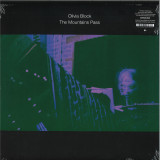
`La Camita’ is an incredible Latin funk nugget –recorded in Peru by Traffic Sound and later on by funk pioneers Black Sugar, comprising all the right ingredients to shake dance floors worldwide. Both takes on the song were released on records that today are extremely difficult to find in any condition. Latin party music in all its glory! Peru enjoyed a thriving and exciting music scene since the mid-1960s. Bands such as Los Saicos, Los Shain’s and Los York’s, to name just a few, released a number of brilliant records that drove young fans crazy and set an example for many to follow. The end of the decade brought about an evolution in sound and new music genres, as Peruvian bands kept an eye on the groundbreaking British and US artists. One of them was Traffic Sound, founded in Lima in 1967. Over a very short period of time the band managed to successfully develop their career. In 1971 Traffic Sound recorded ‘La Camita’ where their Latin influences overpowered the psychedelic prog vibe of their previous records. The song became a local hit and several versions were recorded by different Peruvian artists. On the other side of this single we find Black Sugar, a Peruvian band considered to be a pioneer group in Latin America in mixing funk influences with rock and Latin rhythms. In 1976, following their gig at Coliseo Amauta in Lima, opening the night for the legendary Spanish band Barrabás, they started to show a growing interest in disco music, resulting in some line up changes with members leaving the project due to their lack of interest in the new sound and new ones joining in. Their own take on ‘La Camita’ was released in 1978 and adds a modern twist to the original song, becoming decades later a winner spin at the most discerning dance floors worldwide. Latin party music in all its glory!
Buscar:leaving time
Berlin-based label Distant Gaze unveils their highly anticipated second EP, a Various Artist compilation crafted as a collaboration among Clouzer’s circle of friends. This collection features four cosmic tracks designed for full throttle dance-floor journey. Embracing analogue bass-lines and a captivating soundscape, this EP promises an unparalleled auditory adventure.
Highlights include the extraterrestrial Dark Disco piece, a collaboration by Clouzer and Radondo “Time Warp”, alongside the monumental dance-floor killer – EBM remix by E-bony. Notably, Clouzer’s remix of Kollmorgen’s “Escape,” originally from the renowned Kompakt Records, delivers an immersive 8-minute late-night experience – a powerful fusion of Dark Disco and Progressive spirit.
The EP concludes with Clouzer’s futuristic broken beat composition, “Goodbye,” leaving listeners in a cosmic nostalgic state.
- A1: Time Cow - Hey There Fat Fingers (3 32)
- A2: Guest - Heavy Knot (3 06)
- A3: Jonnine - As You Sleep By My Feet (3 45)
- A4: Static Cleaner Lost Reward - Sweet Paradise (2 06)
- A5: Teresa Winter - Juniper (3 32)
- A6: Hermeneia & Zaumne - In The Soil (3 27)
- A7: Guest & Birthmark - Freeze In The Aisle (3 10)
- B1: Yl Hooi - Glitch Clarry Ditty (2 33)
- B2: Silzedrek - Kristopher Kolumbo Inaction Ark (1 38)
- B3: Laughter Of Saints - Shards (3 25)
- B4: Laughter Of Saints - The Motif (4 15)
- B5: Vessel - Sleepless (3 55)
- B6: Vessel & Rakhi Singh - It Can't Be Helped (There Is Nothing In The Sky) (2 50)
ALWAYS + FOREVER is the first compilation to be released on Do You Have Peace? collecting unreleased tracks from both new and existing artists on the label. Featuring Time Cow, YL Hooi, Teresa Winter, Jonnine, Guest, Static Cleaner Lost Reward, Hermeneia, Zaumne, Birthmark, Silzedrek, Laughter of Saints, Vessel & Rakhi Singh. Originally imagined as a project to link together the dream pop related leanings of a disparate group of artists, as the project grew it became more amorphous but still kept a strange and half awake quality throughout. The pop leanings are still there, although often buried under slabs of reverb, but there are also less heavy lidded bedroom confessionals, as well as DIY chamber pieces and teary eyed instrumental passages. Most of the vocal-led tracks are in the first half of the album, leaving the second section to drift fully into hypnagogic sedative territory. Where vocals do come in they are more like half remembered fragments of dream speech than any kind of traditional narrative. The voices eventually leave us completely, drifting through 3 chamber pieces, reclaiming the classical arrangements of strings / piano / etc from the lofty heights of concert halls and scores to something more intimate and familiar, a box room in a flat, or a bedroom, a memory of lying awake staring at the ceiling and trying to go to sleep again.
As the BBE Music J Jazz Masterclass Series hits its 19th title, the milestone is suitably matched by a collaboration between two giants of jazz brought together to deliver an exceptional album, working with a band of the very best Japanese jazz musicians. ‘Reminicent Suite’ by American pianist Mal Waldron and Japanese trumpeter Terumasa Hino was originally released in 1973 on the famed Victor label and was one of several Japan-only albums recorded and released by Waldron over a thirty-year period, most of which have never been available outside Japan. ‘Reminicent Suite’ comprises two extended tracks, both taking up a side each. The title track on Side A is composed by Waldron, and is a dark, brooding heavy groove typical of his early 70s sound. ‘Black Forest’ on side B is written by Hino and is a vivid and energetic piece, layered and textured with dense percussion and Hino’s signature trumpet tone. Mal Waldron started out in the early 1950s working extensively on the Prestige label with notable figures such as Gene Ammons, Jackie McLean and Charles Mingus. Most famously, he worked with Billie Holiday before leaving the States in the mid-60s and relocating to Europe where he established himself as a major figure working across many countries including France, Italy, and Germany, where he made his home in Munich. In 1969, Waldron recorded the first releases for two major European jazz labels, ECM and Enja, before visiting Japan on tour for the first time in 1970. Waldron instantly fell in love with Japan and, over the next three decades, extensively toured and recorded there for numerous labels. Terumasa Hino is one of the towering figures of post-war modern jazz in Japan. Coming to prominence via the Hideto Shiraki and Sadao Watanabe bands in the mid-60s, Hino soon emerged as one of the prime movers in new jazz generation that changed the direction of jazz in Japan. He explored a more open, freer, and improvised sound, mixing psychedelic and rock elements with freeform and post-bop jazz. Hino recorded for many of the leading jazz labels of the era including Columbia, Three Blind Mice, and East Wind and would go on to relocate to the US in the mid-70s, immersing himself with the leading fusion players of the New York scene including Larry Corryell, Mtume, Al Foster, Dave Liebman and many more. In the early 80s, Hino’s jazz funk tracks were dancefloor smashes on the UK jazz dance scene. Joining Waldron and Hino on ‘Reminicient Suite’ is a band made up of the very best Japanese jazzman of their day: Takeo Uematsu on sax, Terumasa’s brother, Motohiko Hino, on drums, and the legendary bass master, Isao Suzuki. Together, they deliver one of the very best albums of the era, a richly articulated and dynamic session that exemplifies the very best that the Japanese jazz scene was doing in the early 1970s. ‘Reminicent Suite’ is pressed on 200g vinyl presented in a gatefold sleeve plus obi strip, with new photos by Tadayuki Naito; translated original sleeve notes; and a 7500-word essay including interview with Terumasa Hino from Tony Higgins, co-curator of the J Jazz Masterclass Series. This is the first time this album has been available outside of Japan
All true improvisation involves an element of chance: the coming together of a nexus of influences impulses and actions that result in spontaneous creation. Often in the world of jazz these creative sparks blaze briefly in performance, and then disappear as the sonic vibrations fade from the air, but sometimes chance intervenes again, and moments thought to be gone forever can resurface in unexpected ways. As master drummer Jeff Williams sorted through his archive of cassette tapes from his extensive international career, he had no idea that hidden within it would be a recording of a 1991 evening when he joined storied NYC legend David Liebman for a set of spontaneous performances. Reunited together fifteen years after the breakup of their seminal band Lookout Farm in 1976, the two players reaffirmed their deep musical bond with a set of free-flowing exploratory dialogues in front of a receptive audience. Believed lost for many years, these performances can now be experienced again, with all their fearless freshness and pure committed musicianship undimmed by the passage of time.
Jeff Williams has established a formidable reputation as a drummer, composer, educator and bandleader on both sides of the Atlantic. His relationship with Liebman was forged in the exciting, expansive atmosphere of the New York scene in the early 70s: the meeting of Williams, the laid back Midwesterner, and Liebman, the mercurial, quintessential New Yorker, was an inspired coming together of opposites that always made the creative sparks fly. Williams remembers the journey that led to the Bar Room 432 on that 1991 evening:
“Just as I was leaving my home town of Oberlin, Ohio to move to New York City in 1971, I was given David Liebman’s phone number by someone who told me that Dave had started an organisation for jazz musicians there. I knew of Dave, from Ten Wheel Drive and John McLaughin’s My Goals Beyond, but I couldn’t have imagined what a significant role he would play in my musical life. Shortly afterwards, Dave would leave Elvin Jones and Miles Davis to start his own band, with Richie Beirach, Frank Tusa, and myself, (later adding Badal Roy), naming it Lookout Farm. We released two albums on ECM and one on A&M to wide critical acclaim, and toured across Europe, Japan, India and the US.”
“Following the dissolution of Lookout Farm, Dave and I embarked on a short duo tour opening for Gary Burton. That would be the last time the two of us would play until the occasion of this recording, fifteen years later.”
“Fast forward to 1991 when I discovered an attractive bar located on the far West Side of 14th Street in Manhattan. Bar Room 432 would become a six night a week jazz club for a few years, providing me, and many others, with the opportunity to perform our music. Catching wind of this, Dave suggested we do a duo performance there.”
“Luckily, I recorded it.There was no preparation, no set music to be played - we simply improvised, picking up where we’d left off. David’s mastery of the soprano saxophone is in full bloom here, as well as his incredibly resourceful musical mind.”
The performances are revelatory, moving in pure improvisation from clear, songlike melody to furious density, from ambience to pulsing groove, from light into darkness and back again. Cleaned up and remastered by Alex Bonney, the sound of the tape captures the warm, wood-lined ambience of the room, allowing the full power and dynamics of William’s drums and the warmth and fullness of Liebmans’ soprano sax to sing out, engaging the contemporary listener just as it engaged the hip Manhattan crowd thirty three years ago.
Dutch dance troupe ISOTOOP inaugurates its label with a quaternity of sly rhythms to mystify and elevate. Adhering to ISOTOOP’s unstated yet practised mantra of many growing as one, the culprits behind the pieces are none other than core family members Shoal (Kenny Kneefel) and Vand (Viktor van der Riet), unifying for the first time under the name of Voal.
The longtime friends and compatriots in sound meld together to form a distinct entity; aligned as one, but audibly a product of their individual approaches. Across the four cuts, the two producers share a singular vision of club music, designed to initiate movement and shake the floor, while leaving essential space for thought and imagination.
From the low-down and dirty funk of ‘Carpet Crawler’ to ‘Take My Hand’s bleary and dazed downtempo, evaporating in its final moments into transcendent closing ambience, Voal journey through a wide landscape of club electronics with a fervent pulse. Pinned between the two slower joints are ‘Lucifer’, a consecutive tumble through iterated rolling percussion and minimal basslines, and the kinetic, high-tempo fiesta of ‘Saffron’, a sure-fire favourite for the ecstatic midnight.
Thick like warm tar, and airy as steam, Voal’s debut whets the appetite for more.
Written by Freddie Hudson
This is The Zeros' third single, a pioneer punk rock band formed in 1976 in Chula Vista, California. Comparisons with The Ramones are often made when describing the energetic and fierce guitar driven sound of the group. After a 2-year gap, following their two first singles on Greg Shaw's very own Bomp! Records, the band released this third 45 on Test Tube Records. 'They Say That (Everything's Alright)' is a fabulous song by Hector Peñalosa. "Getting Nowhere Fast" is another classic by Javier Escovedo. In spite of the excellence of these two tracks, The Zeros lost the momentum generated by the first two singles, leaving the third as an afterthought. Soon after, the band broke up. First time reissue! Incl. artwork replica on retro style record sleeves.
"I don't like rap music at all. I don't think it's music. It's just a beat and rapping."
Nina Simone
Straight off the streets, Hip-Hop burst onto the scene, leaving no one indifferent, igniting a cultural revolution that would shape generations to come. Now, in celebration of its 50-year anniversary, Art That Kills proudly presents HHCOMP01.
HHCOMP01 aims to capture the freshness and innocence of a genre in the midst of defining itself. As the world embraced this new phenomenon, it was a time of raw creativity and unbridled expression.
With a selection of seven fantastic tracks stepped out of the underground, HHCOMP01 is a window into the origins of a genre that has resonated with countless hearts and minds.
An autumnal treasure, East Village’s Drop Out has spent the past thirty years finding new ears to bewitch and new hearts to melt. The only album from this British four-piece, recorded and released in the early nineties, it’s long been considered one of the hidden jewels of its time, and is talked of with hushed reverence by people who know. Bob Stanley of Saint Etienne once called it “an elegy for a particular brand of eighties guitar music, sweet minor chords and Dylanesque lyrics”, which captures what makes it so special; in summarising its era, though, it also effortlessly transcends it.
Like all great guitar gangs, East Village fell together as a four-piece; having relocated from High Wycombe to London in mid ‘80s, brothers Martin and Paul Kelly on bass and guitar, set on forming a group together, were joined by John Wood (guitar) and Spencer Smith (drums). Wood and the Kellys shared writing and vocal duties; it was an ideal combination, and one of the many charms of East Village is their various song writing voices, a tip of the hat, seemingly, to the 60s folk-rock groups who influenced them.
Originally influenced by garage-rock and freakbeat, the band eventually came through via the same scene as groups like Felt, The Go-Betweens, The Weather Prophets, and Primal Scream. They’d formed as Episode Four, releasing an EP, Strike Up Matches, in 1986, which has gone on to become one of most sought after releases of the C86 era. Their first two singles as East Village, ‘Cubans In The Bluefields’ (1987) and ‘Back Between Places’ (1988), were released on Jeff Barrett’s Sub Aqua label.
When it came time to record Drop Out, East Village found a supporter in Bob Stanley, who bankrolled the album sessions until Barrett re-signed the band to his new imprint Heavenly Recordings in 1990. The album that took shape is dusky, heartfelt, lamplit, full of chiming minor chords, close harmonies, rattling organs, all buoyed by a rhythm section that moves as one, steady and elegant. There’s melancholy here, certainly, on songs like ‘What Kind Of Friend Is This’, but also pleasure and freedom, on ‘When I Wake Tomorrow’ and ‘Silver Train’. The group were obsessed with Dylan’s Eat The Document at the time, and the album’s rich with references to the film; Drop Out’s character is also somehow close to the thin wild mercury sound of Blonde On Blonde, and the lambent light of the Byrds’ Notorious Byrd Brothers.
In one of life’s gentler surprises, ‘Silver Train’ became an unexpected radio hit in Australia when released there as a single in 1993. The story of East Village seems marked by such unexpected turns and surprising events. None was more surprising for their fans at the time, though, than their onstage split in 1991, leaving an unreleased album in the can. Encouraged by Jeff Barrett the band revisited the tapes two years on and while mixing the album for its posthumous release in 1993 invited Debsey Wykes (Dolly Mixture, Coming Up Roses, Saint Etienne, Birdie) to sing the quietly devastating album closer, “Everybody Knows”, a perfect, sad-eyed sign-off.
Listening now to Drop Out, its timelessness is clear. It could have been recorded by young folk-pop hopefuls in the late sixties, taking their shot at the big time; but it could just as easily have been recorded yesterday, by a group that’s both reverent to music’s past, but forward looking in spirit and temperament. It’s that kind of album. Drop Out’s pop poetry is fully formed, with a singular charm that takes in wistfulness, romance, and good times, and a clutch of deeply moving songs that are overflowing with melody and gracefulness. It’s pretty much everything you’d want from a guitar pop record.
It's also an album that’s slowly accrued its own legend. From its stunning cover art, photographed by Juergen Teller originally for a Katherine Hammett campaign, to the ten perfectly formed songs within, Drop Out’s significance in the scheme of things is such that, a decade ago, it was given a rare 10/10 rating in Uncut magazine, who called the album “the lost classic of its era”. Drop Out comes round every decade or so, each edition introducing new fans to its understated beauty, and this latest reissue is its most elegant and deluxe yet.
The 30th anniversary edition of Drop Out lands in two formats: an LP with tip-on style jacket and four-page insert, designed to partner with the 2019 vinyl reissue of their singles and rarities compilation, Hot Rod Hotel; and a double CD, featuring an extra disc compiling the group’s early singles and alternative versions. This CD edition previously has only been available in Japan, though it now features a new, superior mix of their second single, ‘Back Between Places’. Both feature new, typically eloquent liner notes from writer Jon Savage.
The members of East Village have all gone on to do inspired things: Martin Kelly joined Jeff Barrett at Heavenly and has managed label mainstays Saint Etienne since 1993; Paul Kelly formed Birdie with Debsey Wykes, and is now a renowned film director and graphic designer; both Paul and Spencer Smith played in Saint Etienne’s live band; John Wood moved to China to teach, and released a lovely, understated folk album, Quiet Storm, in Japan in 2006. But with the hazy perfection of Drop Out, they’ve all already etched their names in the firmament.
A collaboration between two prestigious Italian bands, the wizards of dub and the masters of big-band ska-jazz, in perfect symbiosis. An album full of dub atmospheres mixed with orchestral patterns; compelling rhythms of the ska and reggae traditions together with dilated and hypnotic electronic sounds. A recording fruit of a challenge and a celebration of music, something that is undoubtedly reflected in the spectacular outcome. 22 musicians locked in a large studio to rediscover the beauty of sharing after months away from the stage due to the pandemic, without even being able to rehearse.
The decision to record a live album was instantaneous, it was just about enjoying the energy of the moment. All tracks were recorded strictly live in the studio, without overdubs, with the aim of apprehending something unrepeatable.
The electronics, the melodies of the wind section and the vocal power come together in this work, recorded live at Deep Studio in Treviso (Italy) and mastered by Ibon Larruzea (Bilbao), full of dub atmospheres mixed with orchestral patterns.
All this merges into a unique and explosive sound in which the strength of the big band meets the deep and hypnotic beats of dub music. The instrumental "Cascade Dub" opens the album with a rootsy, majestic brass-led track.
From there on, Michela Grena, Rosa Mussin and Freddy Frenzy jump into their vocal games, inducing a trance-like state from which you can't (don’t want to) get out. A succession of untamed riddims and expansive sounds in which, in many cases, the wind section remains crouched in the background leaving the creative element in the hands of the dubmaster unit. As small depth charges "You Can Fly", "Lion", "Moon", "Beating Heart", generate submission to the beat and texture. "Mama", the successful first collaboration between the two bands, celebrates the bright sounds and colours of mother earth, a glorious song to our home. In the face of inequality, the senselessness of war, injustice, it becomes necessary to "Shine a Light" that offers hope and, at the same time, to "Give Thanks" for what we are fortunate enough to enjoy. The power of the big band merges with the heavy and deep step of the dub.
A progression of organic, pressing cadences, as in the solidest of the ska and reggae traditions and, at the same time, electronic resonances, dilated and deep. "Sinking Sand" closes the album in a sort of sonorous fencing of styles that makes us guess (as well as the title of the album itself) that WDD and NESJO still have a lot to debate. WDD began their journey as a quartet in 2014 and prior to Studio Session #1 they had already released two albums and several singles. NESJO formed in 2012 and have previously released two albums (both available on Brixton Records) and are working on what will be the recording of their next full-length.
Northeast Italy is a border area and it's easy to connect with each other in those territories made of enchanted landscapes. That energy, that desire to experiment and get involved, have made possible this ambitious project in which a ska-jazz orchestra and a dub band, each with its own language, are assembled in an amazing sonority
A1 - Healing Properties
Opening his Spatial account with Healing Properties, Eusabia immediately throws down the gauntlet showcasing an inimitable versatility with breakbeats, permeated with a jungle flex so rarely captured in the atmospheric D&B landscape. Pivoting effortlessly as the track progresses from drumloop to thunderous drumloop with a simmering haunted atmosphere and deep, weighty basslines to yearning filtered vocal samples, this track has it all.
A2 - The Space Between
Smooth jungly synthwork seizes the foreground before crisp breaks begin to reveal our direction through The Space Between, jittery key stabs and familiar old school FX create a unique sci-fi style backdrop as the breaks drive the vibe forward, switching and weaving in style, constantly mixing it up to ram the point home that you cannot fully appreciate a Eusabia track until every second has been consumed - many times over, as The Space Between demands.
AA1 - Scope of Understanding
A more contemplative piece, Scope of Understanding strips things back with a synthwave-esque vibe tinged with intrigue and allure. Soon the breakbeats leap into gear and develop with an incredible level of refined detail, expertly edited, chopped and cut to a darkly undertone of sub bass and subtle micro melodies. Scope of Understanding will leave you in awe of the quickfire ideas Eusabia can conjure in the space of 6 minutes.
AA2 - Self Reflection
A smooth atmospheric introduction ushers in a thumping drum tools workout, somehow perfectly in sync with the calm harmonies dancing around in the composition. Certainly a track to enjoy both on the discerning dancefloor and while driving home with rain lashing at the windscreen at 2am, Self Reflection's synths and breaks conclude the EP in style leaving a long lasting memory of a Spatial debut you will not forget.
Words by Chris Hayes.
.- "Wishah" (meaning veil in Arabic) is a composition in five stages, written by Youmna Saba between 2021 and 2022, for voice, oud and electronics. Following her previous solo works "Njoum" (2014) and "Arb’een" (40) (2017), this album marks a significant turning point in Saba's journey. Created after leaving Beirut and settling in Paris, "Wishah" reveals a profound shift in her musical expression, informed by rigorous research in the sonic properties of sung Arabic phonemes and their role in shaping synthesised electronic sounds. The album employs a digital extension for the oud, a concept developed by Saba in her research project 'Taïma’. This device enhances the oud's sonic range, seamlessly integrating synthesised electronics. It also amplifies subtle, often overlooked sounds generated during playing, such as resonances and fingerboard friction. The composition is organized into five distinct stages, each contributing to a process of gradual revelation. As the tracks unfold, they strip away layers of constructed emotions and perceptions that have been intricately woven over time, to expose a space that no longer exists. Wishah is a farewell to home. Youmna Saba (born in Beirut, 1984) is a musician, composer and musicologist. Her current research focuses on instrument and space resonances in different sonic and musical contexts. With four albums to this date, she has collaborated with musicians of different musical expressions such as Kamilya Jubran, Floy Krouchi, Mike Cooper and the Neue Vocalsolisten ensemble, and has taken part in numerous artist residencies. She is the laureate of the first sound residency at Quai Branly Museum, Paris (2022-2023) with her research project and installation “La Réserve des Non-Dits”, now on view at the museum; and a laureate of the music residency program at the Cité Internationale des Arts, Paris (2020-2021).
Decision Paralysis is the first collaboration by Eva Sajanova and Dominik Suchy.
Their music is very minimalist, repetitive, still, the compositions // songs surprisingly evolve over time. The cold synths are beautifully augmented with raw or effected layers of Sajanova's vocal. Of striking prominence is the decision to forgo the use of any beats or percussive elements. The whole album revolves just around vocals, synths, and layers, and the richness they possess enough in themselves.
This goes in line with Suchy's previous work, one of his trademarks being working mostly with melody and harmony, defying a lot of what is going on in contemporary experimental music. In a way, it is a strive to return to classical or pop ????? in her deepest sense; experimental more in the use of sounds, approaches and forms, rather than defying the musical.
The lyrics are exclusively in Slovak, open to interpretation and perhaps leaving the listener unburdened by meaning, enabling them to focus on Sajanova's voice, phrasing, and vocal techniques. They span from child-like repetitive dadaist poems, to heavy existentialist statements on life's inherent beauty yet meaninglessness.
All of it is further supported by the album cover by the Slovak illustrator Martu, blurring the lines between the naive, the beautiful, the natural, synthetic, dark, and glowing. All at the same time.
- A1: Son Of A Preacher Man (Lp1 This Girls In Love With You)
- A2: Share Your Love With Me
- A3: Dark End Of The Street
- A4: Let It Be
- A5: Eleanor Rigby
- B1: This Girl's In Love With You
- B2: It Ain't Fair
- B3: The Weight
- B4: Call Me
- B5: Sit Down & Cry
- C1: Don't Play That Song (You Lied) (You Lied)
- C2: The Thrill Is Gone (From Yesterday's Kiss) (From Yesterday's Kiss)
- C3: Pullin
- C4: You & Me
- C5: Honest I Do
- C6: Spirit In The Dark
- D1: When The Battle Is Over
- D2: One Way Ticket
- D3: Try Matty's
- D4: That's All I Want From You
- D5: Oh No Not My Baby
- D6: Why I Sing The Blues
- E1: Oh Me Oh My (I'm A Fool For You Baby) (I'm A Fool For You Baby)
- E2: Day Dreaming
- E5: All The King's Horses
- E6: A Brand New Me
- F1: April Fools
- F2: I've Been Loving You Too Long
- F3: First Snow In Kokomo
- F4: The Long And Winding Road
- F5: Didn't I (Blow Your Mind This Time) (Blow Your Mind This Time)
- F6: Border Song (Holy Moses) (Holy Moses)
- G1: Hey Now Hey (The Other Side Of The Sky) (The Other Side Of The Sky)
- G2: Somewhere (Feat Anneke Van Giersbergen)
- G3: So Swell When You're Well
- G4: Angel
- G5: Sister From Texas
- H1: Mister Spain
- H2: That's The Way I Feel About Cha
- H3: Moody's Mood
- H4: Just Right Tonight
- I1: Let Me In Your Life (Lp5 Let Me In Your Life)
- I2: Every Natural Thing
- I3: Ain't Nothing Like The Real Thing
- I4: I'm In Love
- I5: Until You Come Back To Me
- I6: The Masquerade Is Over
- J1: With Pen In Hand
- J2: Oh Baby
- J3: Eight Days On The Road
- E3: Rock Steady
- J4: If You Don't Think
- J5: A Song For You
- K1: Pledging My Love/The Clock (Lp6 Pledging My Love - Session Tracks)
- K2: You're Taking Up Another Man's Place
- K3: Are You Leaving Me
- K4: You're All I Need To Get By (Take 2)
- K5: Spanish Harlem (Aretha 3, Rough Mix, Reel 12150)
- L1: Lean On Me
- L2: Sweetest Smile & The Funkiest Style
- L3: Do You Know
- L4: At Last
- L5: Master Of Eyes (The Deepness Of Your Eyes) (The Deepness Of Your Eyes)
- L6: Til It's Over
- E4: Young Gifted & Black
FIVE CLASSIC ARETHA ALBUMS PRESENTING AN EARLY-’70S PORTRAIT OF THE QUEEN!
Also Includes A SIXTH BONUS LP of Session Alternates, Outtakes & Demos!
Original Albums Remastered From the Analog Master Tapes by Grammy® Award-Winning Engineer, Chris Bellman at Bernie Grundman Mastering Produced by Grammy® Award-Winner Cheryl Pawelski with Liner Notes from Billboard’s Gail Mitchell & British Ambassador of Soul, David Nathan Includes the hit Young, Gifted, & Black, released in 1972, which hit #2 on Billboard’s R&B albums survey and #11 on the Billboard Top 200 as well as being certified GOLD.
Aretha won the 1972 Grammy Award for Best Female R&B Vocal Performance the album ranked at number 388 on Rolling Stone’s 500 Greatest Albums of All Time.
Also includes This Girl’s In Love With You which features the first commercial release of “Let It Be,” and came out 2 months ahead of The Beatles. Both this album and Spirit In The Dark feature the Muscle Shoals Rhythm section and an appearance by Duane Allman. Along with production on both from Jerry Wexler, Tom Dowd & Arif Mardin.
Fust’s first record "Evil Joy" was a bitter domestic drama obsessed with the kitchen-sink passage of time measured by moments of leaving and returning. With "Genevieve", we find a different kind of leaving: leaving behind, leaving one’s old ways, starting anew, a small life together, in “Family Country.” Thus, Genevieve: an historical name for both the saintly and the ordinary, the peasantry and the family, the community and the wife, extreme devotion and absolute forbearance. While sonically and instrumentally louder than Evil Joy, Genevieve is thematically more quiet about its pains—more settled in its ways. It is a collection of pathetic love stories written in dedication to “small life,” moving from gentle exceptions (“I can take the late hours if you’re with me”) to pitiful admissions (“I’m never going to change when I leave…”). What comes with a quiet life? The highest forms of beauty, but we also find here songs of unspeaking companions, the sublime dread of having children, the balance of humility and humiliation, playing the fool for the greater good, and… budget birthday parties. With these stories of possible growth, "Genevieve" can’t help but also feature tried and true examples of crisis and repression: seeking a bygone lifestyle in an old friend who hasn’t changed much over the years, pissing contests, search parties as the form of community for melancholics with no clue what they’ve lost, old flames you won't let go and dying flames you won’t admit. "Genevieve" was recorded throughout 2021-2022 (mostly) at Drop of Sun studio in Asheville NC by Alex Farrar. The painting by Sasha Popovici is exactly right: a domestic scene yet unfinished. Many friends helped to make it much better than it was without them—Xandy Chelmis, Michael Cormier-O’Leary, Indigo De Souza, MJ Lenderman, Courtney Werner.
Swim is super happy to welcome their first 12” record into the world, and Mark Lando is up for his second release! The first side is a body affair, with acid-tinged techno dominating both cuts. Formation is a fun, muscular take on the format, while Scope zones in on his industrial forays. The other side gives time to heady, joyous gear, sporting two tracks spreading far in style and tempo. The title track is nimble and fast on its feet, a rhythmic workout indebted to bass music as much as to new age experiments. Rounding things out, In This Light harks back to the heydays of atmospheric trance excursions, leaving in its wake a warm note of care.
- Most Likely You'll Go Your Way (And I'll Go Mine)
- Lay Lady Lay
- Rainy Day Women #12 & #35
- Knockin' On Heaven's Door
- It Ain't Me Babe
- Ballad Of A Thin Man
- Up On Cripple Creek
- I Shall Be Released
- Endless Highway
- The Night They Drove Old Dixie Down
- Stage Fright
- Don't Think Twice, It's All Right
- Just Like A Woman
- It's Alright, Ma (I'm Only Bleeding)
- The Shape I'm In
- When You Awake
- The Weight
- All Along The Watchtower
- Highway 61 Revisited
- Like A Rolling Stone
- Blowin' In The Wind
The live reunion of Bob Dylan and The Band during 1973-74 yielded one of the decade's most celebrated, dynamic, and astonishing tours. Captured on Before the Flood, the results portray the two artists' shared chemistry as well as Dylan's instinctive ability to challenge audiences, his group, and himself via inventive rearrangements of classics that simultaneously ward off nostalgia and renew with meaning. Said by noted critic Robert Christgau to be "at its best, the craziest and strongest rock and roll ever recorded," Before the Flood crackles with intensity, relevance, and unhinged performances.
Arriving at a crucial time for both Dylan and The Band, Before the Flood is the furthest thing possible from a nostalgia trip. It's where Dylan begins his now-trademark feat of turning songs upside-down, taking risks, challenging expectations, and leaving audiences riveted to the edge of their seats in anticipation of what might come next. He sings with unabated passion, the moods spanning bitterness to jubilation. And his willingness to play fast and loose with the music gives way to compelling shifts, under-the-surface textures, complementary intricacies, and a sense of newness and discovery on par with that of an adventurer embracing total freedom.
Before the Flood buries any notion of limits, safeguards, or borders. It is an open map, each song a route begging for exploration without need or concern for exactness or an appointed leader. Collaborative in every sense, it's a portrait of six inimitable musicians feeding off one another, trusting in their past history as they hurdle towards uncharted territory, using soulfulness as a compass and opportunity as their vehicle.
Wholly different than the live episodes heard on Bob Dylan Live 1966, The "Royal Albert Hall" Concert, Before the Flood is equally seminal and, from the perspective of witnessing an artist dare not only his audience but himself to break through to a new plane, even better. Utterly astounding.
Leatherette’s 2022 debut album Fiesta offered an intense, inspired and individualist take on post-punk, their caustic riffs, fevered saxophone blasts and impassioned vocals revealing the five-piece skilled purveyors of the form.
The group's second album Small Talk, however, is clearly the work of a group ready to take flight in a new direction all their own. As they toured Fiesta across Italy and Europe, Leatherette grew tired of the genre's constrictions and yearned to spread their wings. Small Talk transcends all the group have done before and coins a voice uniquely their own, driven by the same furies that propelled Fiesta, but finding fresh new forms for expression.
The album boasts some of Leatherette's most unabashed pop-songs to date – albeit pop that's deftly twisted, pointedly perverse and ready to explode when you least expect it.
It also contains some of the group's most challenging and uncompromising noise yet, the violent swinging back-and-forth between ugly din and nagging tunefulness a (molotov) cocktail that grows only more addictive with each listen. Where Fiesta saw the group enter the studio with a batch of anthems they'd honed on the road, their approach for Small Talk was very different, leaving the sessions open to moments of on-the-fly invention and sparks of mad genius. The interplay between the five musicians is so much stronger this time around, the group say, a result of the months of touring the band put in following the release of Fiesta.
Living out of rucksacks and spending hours on the motorway in a tour van might not be everyone's idea of a good time, but that's what Leatherette credit with sharpening their intra-group bond, their almost telepathic feel for the sounds that will complement what their bandmates are playing. “We were more free to play and to rearrange, because we knew each other better now,” says guitarist Andrea Gerardi, “and the interplay is more focused on this album as a result.” The sessions for Fiesta were frustrating, Andrea says, because “we were playing the same songs over and over”.
Their approach was radically different for Small Talk, however, which saw the group file into Bronson, a local club where they've often played before, and record the album on the premises. After the sessions, the album was mixed in Bristol by Chris Fullard (Idles) and mastered in Portland at the legendary Telegraph Audio Mastering by Adam Gonsalves. "We recorded live, all playing together at the same time, rather than overdubbing the instruments," says Michele. The process, he says, "made us more coherent, and the songs more spontaneous." "Our strength is live performance," adds Andrea, "so we tried to capture that interplay. Sometimes we made errors, but we didn't care, because it sounded great. This music is our lives - it doesn't need correction. We were free for the two weeks we recorded the album, and the ideas soared in the most amazing way." Indeed they did. The album's see-saw between angular noise and pop coherence is very much its strength, and very much the sonic identity of this singular group
Artists like Jalen Ngonda come around once in a lifetime, so it is our privilege and distinct pleasure to announce the release of his debut album Come Around and Love Me.
Anyone who has had the pleasure of seeing Jalen perform live knows that he is one of the most captivating performers on today's soul scene. His voice, equal parts raw feeling and elegance, exudes confidence and charm-disarming packed rooms of rowdy concert goers, leaving them silent as they hold fast to every syllable sung. Plans for the album were struck just months before the COVID 19 pandemic shut the world down. Notwithstanding, Jalen eventually made it to Hive Mind Studios in Brooklyn, NY where he began writing and recording with the help of producer/arrangers Mike Buckley and Vincent Chiarito (both members of Charles Bradley's Extraordinaires) and a crack team of a-list musicians from the Daptone family.
The team skillfully blends heavy arrangements and introspective lyrics with motown sophistication, leaving the listener in a blissful wash of wonderment. Jalen has been writing songs since he was 14, and his compositions are also very much of these times. He explains, "I love music from the 20th century- I listen to it all the time, but I?m in this world and the 21st century. ...to a stranger, I?d describe my music as modern soul and R&B, while trying to fit in the Beach Boys and the Beatles somewhere in between." Come Around and Love Me reveals how he creates a classic approach that is rooted in the sounds of revered pioneers, without falling into imitation-leaving no doubt that Jalen will continue to shine within the superlative, timeless musical tradition that is Daptone?s hallmark.
Now it's your turn to come around and love one of the finest soul albums of the decade.
Orange vinyl. Time is supposed to mellow us, but for Petrol Girls it has distilled their feminist politics into an ever more potent cocktail. Fitting, given that their logo from day one has been a flaming molotov. Since their formation in 2012, the band has been known for playing fast-paced, chaotic punk that takes aim at everything from sexual violence to immigration policy, but over the last few years their sound has evolved in a more nuanced direction. Their 2016 debut album Talk of Violence was a blast of pure political rage, while 2019's Cut & Stitch saw vocalist Ren Aldridge exploring familiar themes from a more personal perspective. Now their latest offering, Baby - to be released through the London-based independent label Hassle on June 24th - sees the band turn another new corner. This time, by embracing irreverence. "We wanted this album to be less epic and less preachy from day one," Aldridge says. "I hate sanctimoniousness. Like, really fucking hate it. But I also know that I have been mega preachy, and felt very pressured to be sanctimonious, because we've always played in a very political punk scene. I lost my fun side, and I really needed to come back to that." Recorded with Pete Miles at Middle Farm Studios in Devon, Baby embraces a more playful sound. A focus on groove and repetition - driven by guitarist Joe York, drummer Zock and bassist Robin Gatt - give the songs a Talking Heads feel, while retaining the band's formative post-punk energy. The lyrics, too, are a departure for Aldridge. While she continues to address heavy topics like burn out, femicide and police violence, the lyrics balance directed anger with tongue-in-cheek humour where appropriate. Angular opener "Preachers" puts the self-aggrandising nature of call-out culture on blast with lyrics like "feeling dead important in the comments", while lead single "Baby, I Had An Abortion" is intentionally puerile from title to finish. On the flip side, tracks like "Violent By Design" see the band kicking back against carceral feminism in the wake of a news cycle dominated by Black Lives Matter protests and PC Wayne Cousins' brutal murder of Sarah Everard. Similarly, "Fight For Our Lives" - a harsh, borderline industrial song - was lyrically co-written by activist and vocalist Janey Starling. Aldridge deliberately wrote the verses to sound like a manifesto, and the lyrics reference Starling's Dignity For Dead Women Campaign with Level Up, which successfully called for the UK media to change the way it reports on fatal incidents of domestic violence. Baby saw Petrol Girls working in new ways - scrapping entire songs rather than trying to force things that didn't feel right, recording to tape for the first time, and deliberately leaving in imperfections. It was a more carefree process, which Aldridge - having gone through a particularly bad period of mental ill-health at the start of 2021 - welcomed. "Our whole thing for a long time, and a big focus of the last record, was making political struggle sustainable," Aldridge says. "And I think having a good time where possible, and things being not totally serious all the time, is really essential."
Clear Marble Vinyl. Fairport Convention are an English folk rock band, formed in 1967 by guitarists Richard Thompson and Simon Nicol, bassist Ashley Hutchings and drummer Shaun Frater (with Frater replaced by Martin Lamble after their first gig.) Vocalists Judy Dyble and Iain Matthews joined them before the recording of their self-titled debut in 1968; afterwards, Dyble was replaced by Sandy Denny, with Matthews later leaving during the recording of their third album. Denny began steering the group towards traditional British music for their next two albums, What We Did on Our Holidays and Unhalfbricking (both 1969); the latter featured fiddler Dave Swarbrick. For Liege & Lief Swarbrick joined full time alongside drummer Dave Mattacks. Both Denny and Hutchings left before the year's end; the latter replaced by Dave Pegg, who has remained the group's sole consistent member to this day. This album is from their 1974 tour of the USA recorded live in Denver.
Before there was (Taylor's Version), there was (John's Version). "The Last Recordings," the last known studio recordings from John Denver, recorded in Nashville in 1997 shortly before the singer's untimely death, is a collection of Denver's greatest hits reimagined as the singer wished to present them and intended by Denver to take the place of masters recorded under his decades-long run with a major label. Previously released only in a limited CD pressing in Europe, Denver's Estate and Windstar Records are excited to present "The Last Recordings" for the first time worldwide, at digital retailers everywhere, and available on CD and blue seafoam wave vinyl.
FUMING MOUTH kehren triumphierend zurück, nachdem Leadsänger, Gitarrist und Gründer Mark Whelan erfolgreich gegen die akute myeloische Leukämie gekämpft hat. Was ursprünglich als fiktives Konzeptalbum begann, hat sich zu einem Konzept-Realitäts-Hybrid gewandelt, der weitgehend von Whelans erschütterndem Konflikt mit seiner Gesundheit und seinem nahen Tod beeinflusst wurde. Death Metal/Hardcore für den tiefgründigen Denker. Produziert von Kurt Ballou (Converge, Nails).
London based multidisciplinary artist and DAYTIMERS internal team member Zar (Arun) is returning once again in 2023, this time on The Tabula Rasa Record Company, to release his second EP: “Unfurl”.
It is the next expression of progression in sound for Zar, a movement further into, above and beyond the foundations laid down from his debut EP “Practice Makes Miracles” - which was listed on Bandcamps’ “Best Electronic Music of March 2023” and described by DJ Mag as “a striking solo debut that sets Zar out as an exciting prospect in the sphere of electronic composition.”
Sitting at that murky midpoint between UK Garage, Tech-House & Bass, the songs literally bloom outwardly, wrapping around the listener leaving trails of familiarity, and feature the tendrils of earworm worthy melodies that strike a balance between serene, uplifting, dense and thoughtful, all whilst resting upon deep thumping drums, clever vocal sampling and unconventional song structures. As a follow up to an already ambitious debut EP, Unfurl is an incredibly full-filling listen.
Yellow / black marbled vinyl. The Sensitives is a rough-haired mixed race dog of punk, rock'n'roll, SKA and folk! It's been touring around Europe, playing over 300 shows, spreading its musical wild oat resulting in a solid fanbase of people who, to their knockout punk, raises their middle finger to racism and sexism. The band have always kept the energy on a constant high, jumping between different styles and switching between the two singers Martin and Paulina, driven by the never resting Magnus behind the drums! The new album, Patch It Up and Go! is no different! The frustration from no touring during the pandemic and the emotional shock from a year of heavy touring as soon as the restrictions were lifted resulted in a worn out and damaged band coming home to lick their wounds. But they did what they've always done, turned their experiences and battles into songs, patched themselves up to go for it again! The result is the new album, Patch It Up and Go! and it covers topics like sex, mental health, animal rights and the importance of celebrating the good times we have while we have them! All of that in a high tempo with a positive vibe and high intensity, Patch It Up and Go! is the most personal and probably the best album from The Sensitives so far! Feet will be moving, hips will be shaking and throats will be singing!
Worthy re-issue of Robert Cotter's second late 70's soul album! Comprising five songs, with four of them being quite lengthy and well-structured for the dance floor, was entirely recorded in the United States by top-notch American musicians. "Timeless", a fresh and lively expression of late 70s soul music, was recorded at the Sundragon Studio in New York. This studio was home to legendary bands such as Talking Heads and Ramones, as well as a few 'disco studio groups' like Andrea True Connection, Tony Valor Sound Orchestra, and Camouflage, who recorded songs that later became considerable hits. For this reason, it's believed that the positive outcome of the album can be partially attributed to Ned Liben, an eclectic New York musician and co-founder of the studio in the Flatiron district of Manhattan, served as an exhaustive interlocutor for any artistic and technical needs. He was also the arranger of "Rock Me With Your Love", the most significant song on the album. Ned's successful mission was to capture the maximum timbral fidelity of Robert Cotter's voice using appropriate recording techniques, assisted by Michael George Ewing, a talented engineer who had previously worked on similar projects with well-known artists like Carol Williams, Maryann Farra & Satin Soul, Touch and Tony Valor. In fact, the piece features original and melodious lines, coupled with an excellent steady rhythm, spanning approximately 8 minutes and 30 seconds - in short, "a delightful sound for every beat." This ensured that the performance of the young singer-songwriter from New Jersey was faithfully reproduced without neglecting the overall musical landscape. The other four songs, arranged by Ben Lazzaroni with the same musicians as the first piece, are no exception. Best Record also delivered on the promise to Robert's older brother, Karl Potter, a powerful percussionist transplanted to Rome, for whom the roman label produced "Sweet & Salty Cha-Cha-Cha" (12", 1986). Robert Cotter, an artist about whom almost nothing has been written, is poised to gain recognition once word spreads about his album, which has been entirely remastered by Dom Scuteri and features a more congenial tracklist. This album is destined to be truly 'timeless', ready to captivate audiences around the world. Even the new cover artwork, created by Nerina Fernandez, pays homage to an artist who, despite expressing himself with elegance and simplicity, radiates energy and exudes love. "Timeless" is an inevitable revelation for anyone who missed it at the time, and for the next 40-plus years, it will remain an absolute must-listen for Robert Cotter's many fans, leaving them all in awe. In addition to the reissue on the classic glossy black vinyl, a strictly limited edition on red vinyl will be released exclusively by Clone Distribution.
Worthy re-issue of Robert Cotter's second late 70's soul album! Comprising five songs, with four of them being quite lengthy and well-structured for the dance floor, was entirely recorded in the United States by top-notch American musicians. "Timeless", a fresh and lively expression of late 70s soul music, was recorded at the Sundragon Studio in New York. This studio was home to legendary bands such as Talking Heads and Ramones, as well as a few 'disco studio groups' like Andrea True Connection, Tony Valor Sound Orchestra, and Camouflage, who recorded songs that later became considerable hits. For this reason, it's believed that the positive outcome of the album can be partially attributed to Ned Liben, an eclectic New York musician and co-founder of the studio in the Flatiron district of Manhattan, served as an exhaustive interlocutor for any artistic and technical needs. He was also the arranger of "Rock Me With Your Love", the most significant song on the album. Ned's successful mission was to capture the maximum timbral fidelity of Robert Cotter's voice using appropriate recording techniques, assisted by Michael George Ewing, a talented engineer who had previously worked on similar projects with well-known artists like Carol Williams, Maryann Farra & Satin Soul, Touch and Tony Valor. In fact, the piece features original and melodious lines, coupled with an excellent steady rhythm, spanning approximately 8 minutes and 30 seconds - in short, "a delightful sound for every beat." This ensured that the performance of the young singer-songwriter from New Jersey was faithfully reproduced without neglecting the overall musical landscape. The other four songs, arranged by Ben Lazzaroni with the same musicians as the first piece, are no exception. Best Record also delivered on the promise to Robert's older brother, Karl Potter, a powerful percussionist transplanted to Rome, for whom the roman label produced "Sweet & Salty Cha-Cha-Cha" (12", 1986). Robert Cotter, an artist about whom almost nothing has been written, is poised to gain recognition once word spreads about his album, which has been entirely remastered by Dom Scuteri and features a more congenial tracklist. This album is destined to be truly 'timeless', ready to captivate audiences around the world. Even the new cover artwork, created by Nerina Fernandez, pays homage to an artist who, despite expressing himself with elegance and simplicity, radiates energy and exudes love. "Timeless" is an inevitable revelation for anyone who missed it at the time, and for the next 40-plus years, it will remain an absolute must-listen for Robert Cotter's many fans, leaving them all in awe.
Prisoners Of Love And Hate' is an offering to community, to desires that imprison and liberate, to people in all their divinity and ugliness. Apostille - aka Night School Records’ captain Michael Kasparis - presents is third album with a bang, a bursting ball of NRG, empathy and bristling living.
Like its predecessor 'Choose Life', 'Prisoners…' was recorded at Full Ashram Celestial Garden in Glasgow with Lewis Cook (Free Love) through 2022. A nine song treatise on pop music, trauma, ecstasy and the mundanities between the extremes, Kasparis takes on classic 80s synth pop, 90s house music, 00s trance, wistful balladry, 70s power pop. The thread that runs through the album is a boundless energy, an openness to the moment, to living
the pains and joys equally, open armed.
This is a place of no judgement, of possibility, challenge and comfort. The nine songs on 'Prisoners…' can be read as separate ruminations on the feelings and desires that imprison our experience. Through it all the narrator struggles against them, transported and fooled by love and longing, peering through the bars of anguish, flailing in a cell of emotions. 'Saturday Night, Still Breathing' breaks the album open with an invigorating scream and pounds into the night with a nod to Whigfield, Kasparis’ punk roots and house music. Over a thumping 909 kick and bassline, Kasparis pens a love letter to being with people, the collective energy of hearts in a room, thrumming together, making it through together. Written as private ritual magic, manifesting community during a time of isolation, it’s as if the party is the most important thing in the world. 'Rely On Me' imagines 80s Mute synth pop, Erasure fronted by Bruce Springsteen, romance doomed and forever perfect in the mind. 'Spit Pit' completes the opening triptych of fast paced rollercoasters, an ode to childhood forged out of change and discomfort told with a bold, epic production by Lewis Cook, AFX breakbeats, 160BPM kicks and a commanding vocal performance.
On 'People Make This City', Kasparis eases off the gas, lets the mist blowing in from the Clyde River blow over his version of Glasgow. A wistful ballad about small town gossip and coming through anger to leaving it all behind, it provides some shadow to the bright light of the vibrancy of the album. 'Natural Angel' owes much to 70s and 80s power pop, guitar melodrama, Thin Lizzy and Rick Springfield through the prism of co-dependence in relationships. It’s a theme that’s picked up in slow burner 'Nothing But Perfect', a hazy synth soul-inflected song about building your own mythology, constructing a dream to hide in, to hold on to. The most surprising track of the album, 'Summer of ’03' re-imagines the trance music of early noughties Europe into a lament for an eternal summer or as a fan once put it, “Meat Loaf with a donk on it.” A recognition that all ecstasy has tragedy laced within it, it’s a theme that is sewn throughout the LP and continued on the final song 'Feel Good (You Can Make Me)'. Referencing Shalamar’s 1982 mega hit by way of N-Trance’s piano riffs, the epic closer is riddled with heartbreak, vulnerability and power. It’s a testament to the new confidence in Kasparis’s songwriting, sure, but also to the enduring power of people to come together in mutual dependence and love. If ecstasy is always laced with tragedy, then 'Prisoners of Love and Hate' can always reach out between the bars to meet in the middle, the eternal now.
‘Life And Death - The Five Chandeliers Of The Funereal Exorcisms’ pulls back the veil unto a nocturnal scene populated by shadows, embers burning coldly in the underworld. Marina Zispin is your guide, siren and protector both. Marina Zispin is the negative space between musicians Bianca Scout and Martyn Reid. Love And Death is the duo’s debut release, five chandeliers of melancholic, vibrant synth pop twinkling in the inky blackness. Both originally hailing from the North East of England and forming a musical partnership before lockdown, Bianca Scout and Martyn Reid initially worked remotely. Having relocated to South London and Newcastle respectively, Marina Zispin was born in earnest after the duo could begin writing and practising in the same space. Bianca Scout is a celebrated musician and dancer with a number of solo and collaborative works in her discographywhile Martyn Reid is a mainstay of the UK noise and power electronics scene, most recently with solo project Depletion. Marina Zispin largely eschews both Scout’s deconstructed approach to song and Reid’s focus on visceral, noise- based productions; the result is a new entity, the underground pop star that exists only in darkened dreams. Marina Zispin, then, is an avatar cajoled, nurtured and directed by Scout and Reid. Analogue electronics redolent of the early 80s Cold Wave and Synth Pop era form the base of the Zispin worldview, with Bianca Scout donning the Marina disguise, embodying the character over five songs of swooning drama, playful melodic interplays and tear-stained, doe-eyed sentiment. Flowers In The Sea opens with an austere 4/4 beat and hypnotic synth parts before Scout/Zispin floats in across the lagoon. Scout’s vocal tone is an instant winner, sweet like honey pouring down over the cold, robotic productions and stereo-panned synth work. We can almost see the petals drift into the horizon before being pulled under by the artist’s sadness. Ski Resort bursts out with a Jacno-inspired bassline and backing that could have been buried in a French disco in 1982 (think Stereo or Linear Movement) before Scout’s narrative details frivolousness and regret before a magical shift for the final coda into major key. Backworth Gold Club closes Side A, a mysterious rigid beat and minor chord synth arpeggios swimming in space, floating and obscure. On Side B, Hymn carries the tone on, church-like synths holding down the pattern for Zispin/Scout to float above in a flowing gown of reverb. The marriage of Reid’s cold musical backbone and Scout’s effortless vocal and co- production is in full flow here, the vocals at times rising to the rafters of this nocturnal place of worship, at other points they’re fuzzy samples cutting in and drifting out or sung with an extreme autotune, abstract and perfect in the moment. Surprise Party is the most straightforward pop bullet, Scout/Zispin’s vocal peering out more from the fog, perhaps revealing more than usual: vulnerability, maybe, the wandering muse of the artists behind the veil or just another layer of mystery behind the enigma? Marina Zispin’s Life & Death - The Five Chandeliers Of The Funereal Exorcisms ends as it began, scintillating in obscurity, leaving everything unanswered but open.
There is no stopping the mighty SORCERER and in the autumn of 2023 the band will release their highly anticipated fourth album entitled ‘Reign Of The Reaper’. Again not content with repeating themselves the album features some of the darkest, heaviest and most aggressive material the band has ever recorded, and at the same time some of the most lyrical and beautiful. The band holed up in their home studios and wrote music all through 2022 and then once again headed to SolnaSound Recording in Stockholm, the studio owned, run and operated by Simon Johansson (Wolf, Soilwork) with Mike Wead (King Diamond). SORCERER are also known for their long title tracks with catchy and highly memorable choruses, and the second single ‘Reign Of The Reaper’ is no exception. Taking the listener through the realms of death and dread, this doom-laden epic with it’s many twists and turns will crush souls, leaving metal fans begging for more darkness and despair.
In March of 2020, after learning that a dear friend’s life was coming to an end, Johansing sat down and in one sitting wrote the song “Daffodils”. An elegiac tribute to someone facing death with grace and curiosity, the lyrics confront Johansing’s own mortality by observing the brief lifespan of a Hlower. Only a week later when the world came to an abrupt standstill, she soon found herself processing this recent loss while trying to make sense of a new global reality. Across the ensuing months, Johansing found herself increasingly untethered by a world of isolation and political upheaval.
Having been a frequent touring member of bands like Hand Habits and Fruit Bats, and often being called into the studio to lend her harmonies and multi-instrumental talents to records, Johansing’s phone no longer rang. Living in Los Angeles she feared her musical community was vanishing, as friends and collaborators continually announced they were leaving the city. It was in returning to her piano nightly that she found the greatest solace, feverishly writing the songs that would be collected on her next album. Resulting from this new sense of time and focus was a deepening of her songwriting. As Johansing recalls, “I felt like a metamorphosis happened during that time. There was a lot of personal growth and healing.”
Throughout Year Away Johansing traverses uncharted emotional landscapes brought upon by the changes occurring all around her. The forced self-reflection of the moment is aptly captured by “Old Friend”, featuring an aching melody and swooning production that recalls the best of Harry Nilsson. The epic piano and saxophone-driven “Smile with My Eyes” addresses the loss of community as friends became distant and political divides between family grew. On “Smile” Johansing pushes her vocals further than ever, expanding her range and using her peerless voice as the singular instrument it is. Facing the loss of a family home due to environmental destruction, “Shifting Sands” is marked by soaring Hlutes, Hield recordings and glassy synthesizers that nod to Japanese New Age.
“Daffodils”, the stunning album centerpiece, is built from a pastiche of looping samples, swirling Mellotron and dazzling vibraphone. “Keep your heart open wide, you never know your time / Keep your heart wild, true Hlower child”, Johansing sings as she says goodbye to an elder, while the band reaches a grief-stricken crescendo of woodwinds and chiming bells. On the title track, Johansing takes listeners on an eerily meditative journey of collective experiences. “I wanted to keep the progression simple and repetitive so that musically we could add new elements little by little, while the emotional tone of the lyrics becomes increasingly more strained and expressive”. The song grows to a fever pitch as Johansing sings higher than she thought possible; the tension of the repeating chords Hinally resolving into a hopeful coda as multiple soloists weave around each other.
Amidst heavier themes, Johansing still leaves room for her love of irresistible pop melodies and lush production. The driving “Last Drop” and mid-tempo “Valley Green” are two of her catchiest songs to date. On the former Johansing sings the anthemic chorus, “As if it were the last drop, and nothing ever lasts forever / As if it were the last stop, too far out to come back ever”, longing for a love that she’ll never take for granted, while also admitting that she doesn’t always know how good she has it. “Valley Green” features shimmering layers of 12- string guitars, stacked horns and an impeccable solo by co-producer and multi- instrumentalist Tim Ramsey (Vetiver, Fruit Bats), hinting at a love for bands like NRBQ.
Having been eager to capture the initial spark of songwriting, Johansing booked time at Highland Park’s 64 Sound Studio the week that it reopened. Over the course of three days, she and her band gathered basic tracks for 10 songs, before returning home to Hinish the record with Ramsey. Setting forth to make an album that paid homage to the music that kept them company during the months spent alone together, the duo pulled inspiration from a wide net including Burt Bacharach, John Carroll Kirby & Haruomi Hosono. Ramsey’s newfound love of early digital synthesizers dovetailed effortlessly with Johansing’s fondness for classic 70’s horn and string arrangements, creating a sound that is distinctly modern yet warm and familiar.
Once again Johansing called upon some of the Hinest players of Northeast Los Angeles’ vibrant music community to lend a hand with the record. The 70s R&B-folk of “Watch It Like a Show” features an electric guitar solo from Hand Habits’ Meg Duffy, while album closer “Endless Sound” boasts backing vocals from electronic musician Kaitlyn Aurelia Smith and swooping Indian-inspired violins from Amir Yaghmai (HAIM, The Voidz). The record shines brightly thanks to an ace mix from veteran producer Rob Schnapf (Beck, Elliott Smith, Cat Power), woodwinds from Logan Hone (John Carroll Kirby, Eddie Chacon), and a featured rhythm section of drummer Josh Adams (Jenny Lewis, Bedouine) and bassist Todd Dahlhoff (Feist, Devendra Banhart). Recorded across multiple studios including LA’s famed Sunset Sound, the album remains steadfastly buoyed by the adept engineering of Tyler Karmen (MGMT, Alvvays).
Though born of turbulent times, Year Away is ultimately interested in moving forward. The album ends with “Endless Sound,” where Johansing laments seismic global changes, (“The water is hotter, the mighty thaw / The current’s reversing, the last are lost”) but vows to keep going (“No storm can take me down / Endless light, endless sound”). It’s Year Away’s resilience that shines through despite the darkness. It’s a sound all her own and Johansing’s most cohesive set of songs yet.
There is no stopping the mighty SORCERER and in the autumn of 2023 the band will release their highly anticipated fourth album entitled ‘Reign Of The Reaper’. Again not content with repeating themselves the album features some of the darkest, heaviest and most aggressive material the band has ever recorded, and at the same time some of the most lyrical and beautiful. The band holed up in their home studios and wrote music all through 2022 and then once again headed to SolnaSound Recording in Stockholm, the studio owned, run and operated by Simon Johansson (Wolf, Soilwork) with Mike Wead (King Diamond). SORCERER are also known for their long title tracks with catchy and highly memorable choruses, and the second single ‘Reign Of The Reaper’ is no exception. Taking the listener through the realms of death and dread, this doom-laden epic with it’s many twists and turns will crush souls, leaving metal fans begging for more darkness and despair.
After collaborating together for more than a decade, Jenny Hval and Håvard Volden released their first album under the Lost Girls moniker in 2021: Menneskekollektivet. The record received rave reviews, including a Best New Music mark at Pitchfork. On October 20th, 2023, the duo will release their second album Selvutsletter.
Like its predecessor, the album title is a made up Norwegian word, a word that almost exists. The band’s own translation of Selvutsletter is «self-effacer»: Someone who tries to erase themselves. Someone who is cleaning out themselves. Performing exorcism. Or perhaps just getting older, less interested in their own present self.
In 2022, Lost Girls were booked to perform a concert at Les Subsistances in Lyon, together with a few Norwegian performing arts groups performing their pieces. The band decided to use the opportunity to create all new material, and think of it as a coherent piece. Working in tandem, with Volden creating beats and wild sets of guitar chords and Hval restructuring the parts, creating melodies, words and adding more sounds, they started spiraling into unchartered territory of shorter, more concise and melodic songs than their debut LP Menneskekollektivet.
As the material developed, words already embedded in the chords, guitar sounds and rhythms began to dance around. Lyrics about cities after dark, music rituals and band practices of the 90s, and the early days of the internet began to take shape. These were Hval's own memories of her hometown and her obsession with creating music as a way of leaving it behind or even setting it on fire. Selvutsletter is, in that sense, about retracing Hval and Volden's steps back to how it felt to discover music, the intensely physical and communal experience of creating something. Certain tracks even go back further, to discover possible happenings in Norwegian towns and cities before any of us were born, using elements of faux folk singing.
Where Menneskekollektivet was about exploring club beats, and expanding and trying out structures, Selvutsletter is about disappearing in experiences. It combines the intuitive, late night feel of Lost Girls’ previous work with experimental rock music as its object. The result is more adventurous than nostalgic: A fiery, bilingual whirl of colors, words, vegetation and electricity.
From the grey-skied isles and horse farms of British Columbia comes the second volume of Crystal Dorval aka White Poppy’s “Paradise Gardens” trilogy: Sound Of Blue.
Originally conceived back in 2016, the album was then recorded, finessed, abandoned, resurrected, overdubbed, and finally mixed into nine refinements of daydream shoegaze and therapeutic pop, born from bedroom epiphanies and long winters of the heart.
From slowdive reverie (“Apathy,” “Melancholic Serenity”) and color wheel psychedelia (“Time”) to spiral chorale (“Happy”) and finger-picked drift (“Wiser”), Dorval’s songcraft moves between escape and acceptance, tracing delicate melodies from undercurrents of loss, light, and solitude. It’s music for memory gardens and pastel horizons, dreaming of bliss and distance, but bound to the here and now: “Thinking about leaving here forever / thinking about leaving here for good / but I keep holding on for something / hoping that it could get better than this / what’s one more night?”
"I imagine myself playing these songs in a small club that is slowly burning," says A. Savage of his second solo record, Several Songs about Fire. After more than a decade in New York, the co-frontman of Parquet Courts has left the city, marking his exit with a masterpiece of maturity and a worthy corollary to his first solo venture, 2017"s Thawing Dawn. "Fire is something you have to escape from. This album is a burning building, and these songs are things I"d leave behind to save myself." Produced by John Parish on a 1" 16-track in just ten days in Bristol and studded by the support of Cate Le Bon and Jack Cooper (Modern Nature, Ultimate Painting) as well as saxophonist Euan Hinshelwood (Cate Le Bon), drummer Dylan Hadley (Kamikaze Palm Tree, White Fence), and violinist Magdalena McLean (Caroline), Savage"s outsize gifts as a lyricist and observer - a quality Parish calls "an emotional openness guarded by a laconic wit" - shine. Worrying questions of wealth and poverty, self and other, Savage displays the poet"s gift of knowing when to narrate and when to vanish, leaving the listener to their own emotional privacy rather than instructing them how to feel. The end result is tantamount to psychic odyssey, with "Elvis in the Army" placing us in a subterranean venue where the livid, ratifying cymbal raises the room"s blood pressure and "Mountain Time", evoking an austere waltz playing in a desolate house, returning those listening to life. Influenced by Sybille Baier and Townes Van Zandt, Savage joins a canon of songwriters constantly dilating aperture and perspective. In rendering the signage of laundromats and threats of debt collectors as glistering and totemic as the scope of mountains, rivers, seas, and skies, Savage finds hopes and curses in equal measure.
2023 Repress
2001, the first year of the 21st century, but especially for many born in the 60's, 70's and 80's, the year that was surrounded with an aura of "the Future" and which became symbol of the new and unknown things that life has in store, the starting year of a new transgression period in both scientific, cultural and spiritual evolution. In that year Transllusion recorded music in the Dimensional Waves Productions studio of which till date two known productions saw a release: "The opening of the Cerebral Gate" and shortly after that the mysterious "L.I.F.E." album on Rephlex. More than 15 years later, an unknown wave resurfaced, washing up an incomparable emotional state of electronic depth. Music from the Future rooted in an underwater Afro-futurist realm and the grandiose cosmological truths. This time rushing over us in a much more personal, reflective and more introspective way, yet leaving behind sonic confusion. We now know who was responsible for all these futuristic recordings perfectly reflecting what the year 2001 stood for, James Stinson can be seen as one of the last few techno musicians from his generation that lived up to the high expectations of moving forward, finding the unknown and embracing the future without reliving the past. This recently discovered DAT-tape, using his Transllusion alias, is the 3rd outing of the project and, surrounded with an even brighter aureole than the previous recordings, confirms the status of its producers mastermind. No further details are known, except for the project name written on the tape, but these intimate moments in the studio tell us what the future sounds like according to James Stinson!
Ben Sterling joins Damian Lazarus’ renowned Crosstown Rebels imprint, partnering with Caitlyn Scarlett for ‘Don’t Truss’.
Building on the release of arguably one of the tracks of 2022 with his remix of Tiga’s iconic ‘Mind Dimension 2’, UK hotshot and Planet X boss Ben Sterling has made 2023 another year of raising the levels, with his debut on Solomon’s Diynamic becoming an instant summer anthem in the midst of his busiest summer to date. Adding yet another huge label debut to the mix, he continues to showcase his range across house music as Damian Lazarus invites him to Crosstown Rebels for the first time, partnering with singer/songwriter Caitlyn Scarlett for ‘Don’t Truss’ on the revered imprint.
A rolling and crisp production with Scarlett’s alluring and hooky vocals at its core, it’s easy to see why ‘Don’t Truss’ has become a stand-out track from Sterling’s own sets across the globe over the past 12 months. Fusing tightly programmed percussion, warped murmurs, and a slinking, snaking groove, it’s a track crafted for the dancefloor, moving crowds unison and leaving a lasting impact. On the flip, ‘Bring Me To The Surface’ is a groove-led and bubbling cut that keeps the energy levels with skittering drums, acid-dipped basslines, resonant synths and yet more vibrant vocals.
In February 1942, having fled persecution but lost all hope in the world,
the Jewish Austrian writer Stefan Zweig and his second wife Lotte took
their own lives in the Brazilian city Petropolis
There is a photo of both of them in bed, dead but still holding hands, that has
haunted Robert Rotifer for a long time.
This is Robert Rotifer's 11th record and his first new music since 2019. Having
since worked with Helen McCookerybook, Louis Philippe & The Night Mail, Andre
Heller, Fay Hallam, Swansea Sound and more alongside his day job as a journalist
and broadcaster, in the summer of 2022 Rotifer set to work on this new set of
songs, calling on friends and collaborators to contribute. Guests include,Ian
Button on drums, Fay Hallam on keys, Helen McCookerybook and Kenji Kitahama
on added backing vocals, plus contributions from Amelia Fletcher, and Austrian
musicians Ernst Molden and Paul Pfleger, uniting the two separate musical
worlds Rotifer has been moving in since leaving Vienna for the UK some 26 years
ago.