
Reservar26.09.2025
debe ser publicado en 26.09.2025
58,61 €
debe ser publicado en 26.09.2025

"Left Hand Black" aus Göteburg präsentieren ihr zweites Album "Lower than Satan" - Ein ziemlich blutiger Cocktail voller rough´n tough und dennoch sehr melodisch-hymnenhaften Horrorpunk-Abnormitäten. Melodisch schnell mit knarzigen Gitarren direkt aus der tiefsten Gruft untermalt mit unbarmherzigen Drums, passen die morbiden straigh forward-Songs perfekt zum Gesang von Shouter Hans und Berserker Johann . 14 morbide Liebeslieder, mit rabenschwarzem Humor versetzte Sicko´s und jede Menge Splatter-Fantasien für alle Gestalten der Nacht! Für Fans von Horrorpunk und Bands wie Misfits, Nim Vind bis hin zu Volbeat. Ein schaurig-rockiges Highlight! Ltd. LP mit Gatefolder, eingeklebtem Booklet und bloodred-marbled Vinyl
debe ser publicado en 22.07.2022
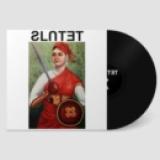
Crypt of the Wizard is proud to make available two legendary underground albums by Slutet on vinyl and digital formats.
Slutet originated in Uppsala well over a decade ago, first emerging as a loose idea around 2010. The original cluster of strangely like minded individuals - Dingir, Ryttersson, J.P., Sviatopolk, were equally set on starting a cult as they were a band, the former emerging as a loose collective known as The End Commune, while the latter eventually began rehearsing together as Slutet on September 1, 2013.
From this constellation three notorious demo tapes sprung which were self-released in very limited numbers, and only available by trading bodily fluids, blood, and/or hair for the cassettes. “A very loose guess but we made probably around 20-30 hand-drawn/custom demo tapes of the first three releases. We got blood and hair from many places, actually the very first offering was from INDONESIA. Slovakia, Germany, USA, Argentina, Norway, Canada, Finland followed.... if my memory serves..... hazy years indeed”
J.P. left early 2015. Later that year, after trying the band as a bass-drum-vocals outfit for a while, Fjalar joined on guitar. This is the classic constellation. Dingir, Ryttersson, Fjalar, Sviatopolk. The same troupe playing to this very day.
Following on from the compilation Slutet began work on their next offering entitled Jihad. While the departure of J.P. left them temporarily without a guitarist, a chance meeting with Fjalar at a rave ushered in a new era for the band. “I met the drummer and the bass player at a psytrance rave in the forest. I didn’t have any band and I wanted to play music and I saw this fucking weirdo with long dreads and a Hellhammer shirt and I just went up to talk to him”.
After Fjalar joined the rather chaotic fray, songwriting duties were spread out more broadly and Jihad was rehearsed and recorded in a haze. First released as a cassette by Manifest Of Hate Creations, and later on vinyl in an edition of 100 by Goatowarex the release quickly sold out and became as legendary, and as incredibly difficult to obtain as the previous releases. “It has got some psychedelic improvs, some very unorthodox and quite genius vocal work, some electronic undertones, some noisy ambience, a message of existentialism; all this wrapped up in some sloppy but very authentic and intense black metal-ish music.”
“After the vinyl compilation was out (early 2015) we felt probably a bit directionless, and, having parted ways with a befriended and talented guitar player, we felt maybe a bit morally weakened to continue. First, for a year almost, we toiled on without the 6-strings and rehearsed quite lengthy material for a proposed upcoming LP. However, that material never surfaced. Then we got a new guitar player (Fjalar) and created and recorded this mess”.
It is with great pride that we make these albums available to a general audience and in a wider pressing without need for bloodshed.
debe ser publicado en 18.05.2026
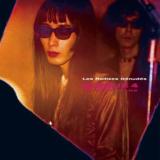
Les Rallizes Dénudés returns with Disque 4 -’76 Studio et Live-, the latest in the ongoing series of official archival releases from the celebrated Japanese underground band.
In 1991, Les Rallizes Dénudés released what would become the only official albums issued during the band’s lifetime: ’67-’69 STUDIO et LIVE, MIZUTANI / Les Rallizes Dénudés, and ’77 LIVE. What no one knew at the time was that Takashi Mizutani was already deep into preparing another record.
Disque 4 reconstructs the track list Mizutani had put together for that fourth album. This includes the single “White Awakening," recorded in 1976 at the studio in Takadanobaba BIG BOX as part of the sessions that would become known among collectors as the “Virgin Demos.” Production and mastering of this archival release were handled once again by Makoto Kubota, assembling the album from the masters left behind by Mizutani, utilizing newly discovered tapes as additional sources.
Prepared by Mizutani using a variety of formats, including U-Matic, open reel, and DAT, the tracks were originally labeled with working titles such as “Disque 4” and “Record No. 4,” indicating that Mizutani intended them for inclusion on a possible fourth album. The recordings were taken primarily from studio sessions that all seemed to have taken place around 1976, which aligns with the claim that Mizutani himself once made that “there exists an album of studio recordings made with the same members as ‘77 LIVE.” His notes also suggest an attempt to sequence the tracks as a vinyl LP, splitting them into A and B sides. It's not hard to imagine that in the era of CDs in the early 1990s, an album on analog LP would have been an extremely difficult sell. Thus, the “Fourth Album” had become another lost piece of the intricate Rallizes myth.
Les Rallizes Dénudés may be notorious for the colossal volume and extended song lengths in their live settings. But this work, centered around studio recordings and condensed onto a single LP record, transcends the common impression of the band’s aggressive flood of noise. Instead, the “lyricism” at its core emerges with striking clarity. And needless to say, this is precisely the charm of the Rallizes that continues to captivate fans worldwide today.
debe ser publicado en 05.06.2026
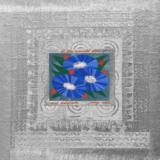
Melody As Truth and Future Days Radio present ‘At the Emerald Pool’, an album by Tomo Katsurada and Jonny Nash.
Netherlands-based artists Tomo Katsurada (Ex-Kikagaku Moyo / Future Days Radio) and Jonny Nash (Melody As Truth) combine forces for an exploration into the sonic potential of the guitar duo, rooted in their experiences performing together over the last 12 months.
Friends and admirers of each other’s work for a decade, their musical collaboration began in 2024 with Katsurada asking Nash to contribute guitar to his debut EP ‘Dream Of The Egg’. Sensing the need to explore this further, they spent the following year performing together in different configurations, with Nash joining Katsurada’s trio and Katsurada in turn playing with Nash as a duo, across a wide spectrum of spaces, from churches and temples to concert halls, theatres and outdoor festivals. With new ideas developing organically out of these performances, recording new material became the next logical step. A short period of three days was set aside with a clear goal: to capture the essence of their fluid, intertwining melodies and guitar playing in a way that felt as direct and unfiltered as possible. Working from a handful of pre-existing sketches, they left ample room for experimentation to unfold within the process.
The results are presented on ‘At The Emerald Pool’, a collection of ten pieces that offer the listener a full immersion into the pair’s sound. With guitar as the primary instrument for both artists, it is no surprise that the core of the album lies here, specifically in the fluid interplay between the two players. Layers of gentle, delay-soaked fingerpicking often make it almost impossible to distinguish where one player ends and the other begins. As soloists, both Katsurada and Nash have a gift for crafting melodic lines that feel open and ascending, expressive and hopeful without becoming saccharine. Longer, more abstract pieces are counterbalanced by a series of shorter songs, with five vocal tracks appearing across the album. The decision to share vocal duties lends the record a unique quality and a strong sense of variation, bringing a wide expressive range out of a deliberately focused musical framework.
‘At The Emerald Pool’ represents the first chapter in an ongoing musical dialogue, an attempt to capture a moment of connection, openness and discovery, laying the foundation for what continues to unfold.
debe ser publicado en 02.07.2026
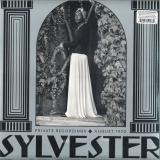
Disco legend Sylvester comes to Dark Entries with Private Recordings: August 1970, an intimate collection of vintage jazz, blues, and gospel. While Sylvester is best known for his chart-topping collaborations with producer Patrick Cowley, such as “You Make Me Feel (Mighty Real),” this release reveals his passion for the sounds of the 30s and 40s. In 1970 a 22-year-old Sylvester had moved to San Francisco and found himself involved with the Cockettes, the infamous psychedelic performance art troupe. Among this milieu was Peter Mintun, a pianist and record collector living in a commune devoted to retro culture. According to Mintun, “We were like hippies who lived in the twenties. We lived in a house that didn’t have anything modern in it. Nothing in it was made after World War II.” Mintun and Sylvester bonded over their love of Black singers of yore and were allotted a slot during Cockettes performances reviving the music of the Prohibition Era. One afternoon, Sylvester and Mintun recorded a number of their shared favorites using a high-end microphone a friend had acquired. Private Recordings features 9 songs from this session, including standards like “Stormy Weather,” “Happy Days Are Here Again,” and “God Bless the Child.” Sylvester’s unmistakable falsetto brings depth and a dash of camp to these familiar tunes. The recordings are casual and intimate, even capturing banter between Sylvester and Mintun; their brief rendition of “When My Dreamboat Comes Home” has the duo working out a melody in real time. In addition to their sonic explorations of decades past, Sylvester and Mintun also staged photographic shoots in vintage couture. Private Recordings comes with a 16-page booklet on firm cardstock featuring images from these never-before-seen shoots as well as liner notes from Mintun detailing his friendship with Sylvester and their experiences recording. All this is housed in a metallic silver sleeve designed by Eloise Leigh featuring a 1920’s Art Deco aesthetic. The record will be released on September 6th which would have been Sylvester’s 76th birthday, and all proceeds from Private Recordings will go to the two charities that Sylvester left his royalties after his death: Project Open Hand and PRC (formerly AIDS Emergency Fund). This essential release documents the earliest known recordings from one of disco’s greatest talents.
En el almacen y preparando para el envío
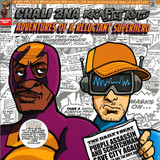
The time has come for hip-hop’s favourite superheroes to unleash their highly anticipated album. The industry’s most recognisable voice, Chali 2na, and turntable wizard Krafty Kuts have been not-so-secretly preparing this project since 2017 through over 150 live shows and countless studio sessions. The time has finally come to grab your capes, don a pair of tights and load up the turntable ready for the show to begin. This is ‘Adventures Of A Reluctant Super Hero’ – prepare for the Purple Assassin and the Scratchman as they come and save your city, the scene and hip-hop as we know it.
Featuring a who’s-who of collabs and guest appearances from hip-hop royalty, this 14-track record takes you to just about every corner of the genre, leaving no stone unturned. With Lyrics Born and Gift Of Gab joining on ‘Guard The Fort’ to deliver a serious statement of intent to open the LP, the rest of the record is an adventure through funk, breaks, rolling basslines, buckets of groove and everything in-between. Throw in a generous portion of expertly delivered bars and vocals from genre sidekicks like Harry Shotta, Skye (Morcheeba), Omar, Dynamite MC and more, and you’re left with a hip-hop record that not even the comic books could have conceived.
LP version comes with an exclusive 8-page comic-book by official Star Wars illustrator JAKe + full album download.
En el almacen y preparando para el envío
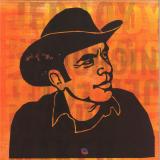
“The high priest of country cool” - Rolling Stone
“I like him very much. He’s very special. He’s singing with a voice I never heard before” - Townes Van Zandt
“A conscious, soulful brother” - Horace Andy
“He’s a brother to me - one of the best singer/songwriters I’ve ever met” - Adrian Sherwood
“Unearthed mine of gems from inner Wales - a songbook of ideas - that's Jeb!” - Gilles Peterson
Jeb Loy Nichols is a bonafide Country (Got) Soul legend. The Music Maker presents 21 incredibly deep, grooving and soulful songs from the cream of Jeb's catalogue; from its earliest days to his latest unreleased gems via countless rare and unbelievably good lost-classics. This 2LP set is presented in a gatefold sleeve complete with freshly commissioned artwork courtesy of Jeb himself.
In collecting these uncut, under-heard gems, we hope to do justice to Jeb's jaw-dropping artistic brilliance. A man who, in working with Adrian Sherwood, Dennis Bovell, Dan Penn, Larry Jon Wilson and countless other legendary characters, has crafted some of the most deeply affecting folk, country, soul, funk, blues, dub, reggae, gospel, rap and electronic music, ever heard.
The first music Jeb really felt a connection with was southern soul: "I used to listen to the radio at night and fell in love with Bobby Womack and Al Green, The Staple Singers and Joe Simon – that whole Nashville/Memphis/Muscle Shoals thing.” But Jeb was so much more than a soul boy, Indeed, he "went to bluegrass festivals with my dad and come home and listened to jazz records with my mother.” And, when he was fifteen, he heard his first punk record: "God Save The Queen" by The Sex Pistols. “That and The Ramones completely changed me.” In 1979 he got a scholarship to go to art school in New York: “A great time. Punk was over but hip-hop was starting and I got into that in an obsessive way.”
His first recording, in 1980, was an unreleased rap song called "I’m A Country Boy". If that isn't an insight enough into Jeb's kaleidoscopic path through music, in 1981 he visited friends in London and found himself living in a squat with Adrian Sherwood, Ari Up (from the Slits), and Neneh Cherry. “Adrian put me to work immediately, moving boxes of records all across London. It was Adrian that was and is my biggest influence – in his complete disregard for genre purity.” So, presumably you're getting the picture? A veritable musical magpie with a voracious appetite and unimpeachable taste.
"Mine has always been a meandering career. I've done what I've done, and made the music I've made, due to chance meetings. I'm not particularly ambitious; it's more important to me that I work with friends and like-minded people. I've been a big fan of Be With for years. Everything they release is essential. When they asked about rereleasing "Countrymusicdisco45" I was both pleased and flattered. We began talking about how we'd do it; two years and twenty-one tracks later, here we are. I've always thought of the music I make as Country Music. Music conceived in the country, written in the country, recorded in the country. I left London and moved back to the country so I could live among the trees, the grasses, the animals, those things that don't go to war and get greedy. This compilation is the story of that life. Hand made, lo-fi, ramshackle, stripped down, real deal music. Heartworn and funky. Music made in the kitchen, not in the studio. As the great Skip Mcdonald said, Perfect ain't perfect. It's great to see all these tracks gathered together. It feels like a family reunion. Some older members of the tribe, some newer arrivals."
Opener "countrymusicdisco45" is a song Jeb wrote about how his crew lives, tucked up blissfully in the hills: "House parties full of country folk dancing to disco, reggae, soul, country, hip-hop. All night. I recorded it at home under the influence of Stevie Wonder." It's one of the funkiest records you'll ever hear. "Sometimes Shooting Stars" was recorded in Nashville and mixed by the legendary Dennis Bovell. It's deep, dubby, majestic. A thing of fragile, melodic beauty. The party ramps back up again with the undeniable groove of "Short Cut Home" before the profoundly moving "Disappointment" arrives. One of many songs he's recorded with good buddy Benedic Lamdin (aka Nostalgia 77): "We were going for a Leon Thomas meets Richard Brautigan meets Alice Coltrane kind of thing". We think they nailed it. "Days Are Mighty", like a lot of the tracks on this collection, "started life as a demo, an attempt to get something down while it was fresh. No frills, nothing fancy, just feel." And what feels!
The irrepressibly funky "Don't Dance With Me Tonight" is a deeply moving, slow-mo organ-drenched head-nod-funky country-ballad. Next up, the breezy "You Got It Wrong" was recorded in Wales with some of Jeb's good friends and neighbours, The Westwood All Stars, featuring Clovis Phillips and Will Barnes. Skanking fiddle-flecked gem "Ring The Bells" was the first thing Jeb recorded when he moved to Wales. A combination of all his loves; country, reggae, soul. It's followed by "Let's Make It Up", a truly sumptuous string-drenched emotional groover. "When Did You Stop Loving Me" is another Nashville track, written and recorded during a time Jeb was spending a lot of time with the Muscle Shoals crew, Donnie Fritts, Spooner Oldham, George Soule and Dan Penn: "It shows, I'm sure, their influence." Oh, you bet it does!
The swaggering country-funk of "Just Beginning" should grace many groove-focused DJs' sets whilst "Wintering Of The Year", again made with Clovis, is pastoral, campfire soul. The glacial, gorgeous "Let It Rain" is from an unreleased record Jeb made with the great British jazz bass player Andy Hamill and "We Tell Each Other Who We Are" is freaky country-soul made by a man with a love for strutting, wonky hip-hop stylings. Rounding out the side, "Trip To You" is pure, uncut amphetamine-propelled drum-machine soul.
The spare, beautiful "Dirt" is from an EP Jeb made with Julian Moore in his house in South London: "All first takes, straight to tape." Swoon! "Heaven Right Here" was a very minor league hit in America: "It was produced by the brilliant and much missed Wayne Nunes. It was started in the countryside of Missouri, finished in the countryside of Wales, and recorded in the countryside of Sussex." Double swoon! "If Later Ever Comes" is electronica meets J.J. Cale business whilst "Remember The Season" is truly wonderful and breezy guitar soul. "A Little Love" was made with Wayne Nunes as well, after a night of listening to Studio One and Northern Soul. Bouncy dub closer "Weary Traveller" was written by Bill Monroe, the hero of Jeb's youth: "Monroe's music was heavily influenced by black southern churches; I've tried to keep some of that feral feel." This was the final recording by Jeb's 1990s Country-Dub band, Fellow Travellers.
The name of this compilation comes from a time when Jeb lived in Peckham, south London and he used to DJ and sometimes perform at a local bar: "The owner of the bar, a Jamaican named Count Percy, once asked me what I called my music. I told him I wasn't sure, I guess just pop music. He thought about it for a minute and then said, 'no, more like mom and pop music'. Rather than call me a country singer or a folk singer he always referred to me as The Music Maker."
With the long overdue deluxe overview of his beloved music, we hope to finally shine a light on the unheralded genius of Jeb Loy Nichols. RIYL Larry Jon Wilson, Townes Van Zandt, Bobby Charles, country got soul artists, dub, deep soul, disco, dancing, heartbreak. This deluxe collection, spellbinding from beginning to end, should hopefully go some way to ensuring Jeb reaches an ever bigger, ever more appreciative crowd of followers. Mastering for this special double vinyl edition was overseen by Be With regular Simon Francis and it was cut by the esteemed Cicely Balston at Abbey Road Studios to be pressed in the Netherlands by Record Industry. The artwork has been lovingly put together by The Music Maker, himself, Jeb Loy Nichols. "Be With is the perfect home for this mongrel music. I am forever in their debt." The pleasure is all ours, Jeb.
En el almacen y preparando para el envío
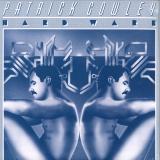
Cybernetic disco maestro Patrick Cowley graces Dark Entries once again with Hard Ware, an LP of far-out funk and synthpop celebrating what would have been Cowley’s 75th birthday. Best known for his chart-topping disco anthems, Cowley left us with an incredible body of work before his tragic death in 1982 due to AIDS-related illness. Since 2009, Dark Entries has been working with Cowley’s friends and family to uncover the singular artist’s lesser-known sides, including his soundtracks for gay pornographic films, which the label chronicled on compilation albums School Daze, Muscle Up, and Afternooners. Hard Ware presents the closing chapter in a trilogy of unreleased Cowley dancefloor bangers that began with 2022’s heavy-hitting Male Box and was continued with the soul and garage-inflected From Behind in 2024. The most expansive release in said trilogy, Hard Ware delivers ten tracks of pure, uncut Cowley: sultry, psychedelic, sarcastic, and just a bit sleazy. Cowley devotees will delight in “Tech-No,” a sparse instrumental demo version of his epically dystopian “Tech-No-Logical World.” You could soundtrack your next aerobics session with cheeky numbers like “Pajama Party Massacre” or “Shake It Up,” both of which feature Cowley himself on vocals. The frenetic “Big Ass in Motion” is built around samples from Rudy Ray Moore and The Madam’s infamous “Sensuous Black Woman,” an X-rated comedy record that would later feature in classic booty house records. Mid-tempo cosmic groovers are well-represented with jams like “Hellfire” and “Megablue,” which perfectly capture Cowley’s bathhouse-in-outerspace sensibilities. No collection of Cowley’s work would be complete without an interstellar floor-filler, and we’ve got quite a few here, like “Jungle Jump,” which pits whirling beats with dub-laced swirls of synth, or “Spellbinding Lover,” a Donna Summer-indebted melancholic boogie masterpiece that features Sylvester backup singer Jeanie Tracy. Hard Ware closes with the chilling synth-hymn ”Ice Age,” in which Loverde vocalist Peggy Gibbons sings of a coming frosty apocalypse. The story told in “Ice Age” mirrors the coming AIDS crisis and feels like a haunting premonition from Cowley. The record comes in a sleeve with a hand-airbrushed circuitboard-inspired design by Gwenaël Rattke, and includes lyrics as well as liner notes by Andrew Ryce and Peggy Gibbons. Hard Ware is another crucial document of a tremendous talent taken too soon.
En el almacen y preparando para el envío

Black vinyl LP. Following 2019's acclaimed self-titled debut album, Metal Preyers take the left hand path into a gloomy backwater filled with haunted creatures and fraught with peril. "Shadow Swamps" again finds London-based Jesse Hackett handling the music and Chicago's Mariano Chavez fashioning the album's visual identity, which this time includes a short film and book for a fully immersive experience. "Shadow Swamps" is the soundtrack to a pitch-black fairy tale about a father and daughter as they journey through a swamp avoiding gremlins, red swines and crater creatures. Musically, it pivots between the clattering Czech new wave experimentation of "Valerie and her Week of Wonders" composer Luboš Fišer, or the magical, eccentric lounge of Birmingham's Broadcast, and the grinding industrial grot of Italian pioneer Maurizio Bianchi. This time around, Hackett has roped in production assists from his six year-old-daughter wonder Nyasha hackett who used phone memos to record herself singing - veteran Metal Preyers collaborator Lord Tusk, and Manchester-based painter, DJ and producer Richard Harris, aka Sockethead. The crew inks an unsettling, richly textured sonic landscape, with claws of rhythmic smoke curling around chiming otherworldly xylophone, disembodied fiddle drones echoing over screwed 'n chopped beatbox dirt and half-heard magical vocals buried under clouds of white noise. Track listing: 1 Murking Shadows 2 Ecto Green Code 3 The Preyers Forest 4 Scream Dreamer 5 Red Swines 6 Crate Creature 7 Carpenters Cabin 8 Slime Things Accent 9 Wasp Faced Invasion 10 Metal Mans Revolt 11 On Her Way 12 Gremlin Gurgle 13 Shadow Swamps 14 Escape - The Sunrise
En el almacen y preparando para el envío
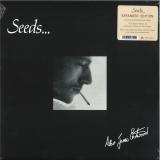
First time vinyl reissue, expanded and deluxe double gatefold 140g double vinyl, remastered audio with restored artwork and fresh liners written by Paul Hillery (Folk Funk & Trippy Troubadours)
Alan James Eastwood's glorious Seeds is a certified folk-funk lost-classic.
But who was Alan James Eastwood? He had never hit the big time and commercial success eluded him. By the mid-1970s, his musical career was pretty much over and he was almost unknown except among deep heads, amongst whom he would gain cult status.
Original copies of the 1971 vinyl release of Seeds exchange hands for high sums, if you can find one. This expanded 2LP contains an extra record, collecting 9 rare non-album singles and is presented in a gatefold sleeve complete with freshly commissioned liner notes courtesy of Paul Hillery (Folk Funk & Trippy Troubadours).
With the long overdue deluxe reissue of this prized artefact, we hope to finally shine a light on the unheralded genius of Alan James Eastwood. RIYL Nick Drake, Rodriguez, Richie Havens.
Alan James ‘Bugsy’ Eastwood was a renowned musician and singer who came to prominence in the late 1960s with The Exception, an unsung but excellent band from Birmingham. The Exception released many singles, the first featuring friend Robert Plant on tambourine, before an album, The Exceptional Exception. However, by this time, Bugsy was feeling constrained and restless; he left the band within weeks of the release.
Having vanished from the scene, he was honing a deeper, introspective edge to his songwriting. His demos found their way to the sound engineer and producer Mike Cooper at Pan Music Studios in Denmark Street. Loving what he heard, Eastwood soon entered a recording session with Cooper. The session was just Alan, his guitar and harmonica and - by all accounts - it was remarkable. With the songs, the voice and such an exceptional talent, it was hard to go wrong. Says Mike: "We had John Hawkins do the big string arrangements and Richard Hewson arranged the string quartet. We overdubbed the orchestrations on Alan's original session recordings, adding Chris Karan on tabla and various percussion. We considered re-recording the vocals but found that the magic on that original session was so exceptional overdubbing would not be as good as the atmospheric 'live' performance."
Mike and Alan viewed each track as a different entity, giving the album a diverse sonic palette. Assessing each song individually, they decided which would be suitable for each arranger. Top-flight session musicians were added to the roster to complete the sound, with Byron Lye Fook (father of musician Omar) on drums, bassist Mike Ward, Brian Pickles on marimba and jazz drummer Chris Karan on tabla and percussion. Recorded in a matter of days in Pan's small 8-track studio, they carefully added overdubs, rhythm sections and four string sessions arranged by Hawkins, with Hewson's arrangements recorded at Trident Studios.
Seeds was Alan James Eastwood's debut solo album – indeed, his only solo album - and was originally issued on President in 1971. It melded Eastwood’s impressive rock sensibilities with a folk thread to superb effect. His arresting voice - its deep, rough-hewn soulfulness - coupled with gorgeous string-drenched backing, make this a phenomenal listen. It really is a great 70s singer-songwriter record - with touches of acid-folk and folk-funk throughout.
It opens with "She's Getting Married In August", a mellow tune with Richard Hewson's strings arranged around Alan's straightforward guitar structure. Up next, the joyous, sun-dappled guitar and strings workout "Evenin' Rain" glides by before the fragile, accordion-enhanced "Les Papillons" breezes out of the speakers. The bluesy "Zeena" follows, featuring vocals and acoustic guitar and showcasing Eastwood's effortless harmonica. Starting out as a ballad, "Virgin Morn" builds with soaring strings and gospel-tinged backing vocals from Marilyn Powell and jazz singer Josephine Stahl. The A-side closes with the title track, "Seeds". With a chugging mid-tempo beat, soulful vocals and a beautiful Bacharach-esque string arrangement, it truly is stop-you-in-your-tracks spectacular.
Side B opens with "Crystal Blue", gilded by Lye Fook's marimba, lush gospel-esque backing vocals and handclaps. Eastwood's acoustic guitar begins "Lady Carole", which starts as a bluesy ballad and builds with more string arrangement, lifting the track to another height. A towering highlight of epic proportions, "Lotus Child" is a true masterpiece of arrangement. It opens with simple yet stunning do-do-dah vocal harmonies blended with John Hawkins's strings, bass lines and rhythmic beats, forming a vibe very much in conversation with the sounds coming from LA's Laurel Canyon. Next up, the heartwarming "Last Prayer", dedicated to Alan's first and last love, contains a melancholic vocal with a wistful string-drenched arrangement that would sit comfortably in a Federico Fellini score. Bringing the album to a close, "Hymn For Today" is a melodic raga with tabla, strings and a soft-psych feel. Eastwood's prophetic whisper - "I am real. At last, I am real" - profoundly hits home.
Kicking off the extra disc is the sparsely funky and country-tinged "Boston", released as the flip to the astonishing "Seeds". Next up are the two tracks that comprised Alan’s debut solo 7" single from 1968. The laconic, Bobby Charles-esque "Blackbird Charlie" evidences a real depth and charm in Eastwood's songwriting whilst the starkly brilliant flip, "My Sun", was a horizontal, atmospheric folk-tinged soundtracky precursor to his later work on Seeds.
In 1972, two further standalone singles followed. The first was the evergreen flute-driven folk-funk bomb, "Closer To The Truth", backed by the funky blues of "Strange News". The second, a deeply moving Havens-inspired "Moonchild" - rightly fawned over to this day - was flipped with "Red Shoe Truckin'", a groove-infused track. Eastwood also paired up with Marilyn Powell for a single produced by Powell's partner, Mike Cooper. Under the name Eastwood & Powell, they released their staggering rendition of "Beautiful", a rock-blues-pop song arranged by Ivor Raymonde and written by Carole King. Over on the flip, a funky Eastwood original "Opal Blue Sunday" lurked. This is not to be overlooked.
Over the years, Alan remained active on the music scene, but problems with alcohol and health complications from diabetes severely impacted his career. He spent his latter years living in London until his untimely death from heart failure on 25 October 2007, just one day before his 62nd birthday and without his music having received the real acclaim it so dearly deserved.
This deluxe reissue, spellbinding from beginning to end, should hopefully go some way to rectifying this tragic fact. Mastering for this special double vinyl edition was overseen by Be With regular Simon Francis and it was cut by the esteemed Cicely Balston at Abbey Road Studios to be pressed in the Netherlands by Record Industry. The original artwork has been lovingly brought back to life at Be With HQ, with the addition of passionately written liner notes specially for this landmark reissue by none other than Paul Hillery.
En el almacen y preparando para el envío

Love Raid is first in a series of cassette-only mixtapes with the cult WFMU show and blog Bodega Pop collecting assorted digs from across New York's bodegas and cell-phone stores. This first edition is focused on leftfield, novelty, and protest 45s from across the Arabic world recorded between 1960 & 1974.
"A series of random discoveries in the mid-1990s led me to abandon American and British pop and focus on non-English-language music, predominantly Arabic, for the next two decades.
Feeding my ears required biking down to Bay Ridge, Brooklyn, or hopping on the subway to Steinway Street in Queens, where I would pop into a handful of the local bodegas and immigrant-run cell-phone stores, some of which offered music from North Africa and the Middle East on cassettes and compact discs.
When CDs spiralled into obsolescence in the mid-2010s, I reluctantly made the switch to vinyl, concentrating on 45s and intentionally filling holes not well represented in the digital era – more artists than not hadn't made the transition from analog in the 1980s. This meant focusing on singles by a lot of artists I'd not heard of, and it quickly became evident just how much of the era – from approximately 1960 to 1974, when 7" records were all but abandoned in Egypt and Lebanon – had been forgotten.
What also became evident was the breadth of popular music issued by even hegemonic titan Sono Cairo. The consensus is that state radio and music publishing ignored traditional folk, shaabi, and other lowbrow pop in favor of the exalted art song we associate with Oum Kalthoum, Abdel Halim Hafez, and Farid al-Atrash.
While this active neglect of the broadest Arabic pop spectrum is mostly true, I accumulated a not inconsequential number of what I can only describe as "novelty" records by mostly one- and two-hit wonders. From catchy gimmicks like the "doktor, ya habibi" of Maha's "Doktor" and the "boom boom boom" of twins Thunai Badr's "Love Raid," to the Monty Python-level silliness of Sayed Mandoline's fake Italian crooning and maniacal laughter in "I Present to You the Mandolin," these were sounds I was genuinely surprised to hear.
Even more remarkable were the songs recorded in English: Karim Shukry's celebratory "Ramadan" and Motyaba & Nada's civil-rights plea "No Black No White" are two of my favorites, and thus included in the present collection.
The tracks compiled here are often as beautiful as they are beguiling, but while the intention was to absolutely put together a solid listen, it was also my hope to slightly expand our understanding of Arabic music of this period beyond not just the usual suspects, but also subjects – and treatment of same."
--Gary Sullivan.
En el almacen y preparando para el envío

Musician and Zoitrax record label owner ZOiD, also known as Daniel Jacobson, announces the release of his sixth album, ZOiD Vs Musicians Vol 2.
Featuring thirteen tracks digitally, seven of which will be released on a 12” purple marbled translucent vinyl album distributed by Rubadub, ZOiD Vs Musicians Vol 2 will be available in record shops and on all streaming services and Bandcamp starting Friday, 22 November 2024.
ZOiD Vs Musicians Vol 2 is an electronic music album showcasing ZOiD's global collaborations with jazz musicians, creating a unique form of electronic jazz. Notably, his work with jazz drummer and brother Matthew Jacobson shines on the first single “Fit In Tree” debuting on September 13. Building on this momentum, the second single, "Module Bone, " featuring jazz trombonist Colm O'Hara, will be released on September 27, followed by the third single, "ZVSW, " featuring saxophonist Steve Welsh, on October 11. A special REMIX EP by Kirk De Giorgio, Sunken Foal, Americhord, and TR-One will be out on October 25.
Expanding the album's diverse sound, ZOiD collaborated with Dublin vocalist, composer, and jazz improvisation specialist Jenna Harris on “ZVJH” and with Niwel Tsumbu, a Cork-based Congolese guitaristwho tours with Rhiannon Giddens on “ZVNT.”
ZOiD Vs Musicians Vol 2 is further enriched by the talents of Shane O’Donovan (H-Ci), who combines electronic and jazz elements, Australian saxophonist Daniel Rorke, US-based free improviser Catherine Sikora, Galwegian multi-instrumentalist Matthew Berrill, Dublin saxophonist Matthew Halpin (flute), and trumpeter Bill Blackmore, a key figure in Dublin's jazz scene.
ZOiD released his debut album, ZOiD Vs The Jazz Musicians of Ireland Vol. 1, in 2007. Production of ZOiD Vs Musicians Vol 2 began soon after, taking nearly 17 years. For Vol. 2, some musicians recorded their parts independently, while others recorded in Arad Studio with Les Keye and ZOiD's Dublin studio.
The album artwork is by New York-based artist Shane Ingersoll. The front cover displays black-and- white illustrations of Dublin in the year 2116, a city at war centred around a bold purple "ZOiD" logo, with the title "ZOiD Vs Musicians Vol 2" on the upper left. On the back cover is a 12-panel comic book story (originally written by ZOiD using stick figures) and a glowing robotic hand.
En el almacen y preparando para el envío

"Trauma and the shock effect of it - the leftover residue of harsh reality so impactful that it shapes the way you imagine, envision and calculate your position in regard to everything and everyone around you.
A new type of psychological radius evolves. Boundaries are reinforced. Relationships are recessed. A damaged brief system float aimlessly. Vulnerable to and for anything reminiscent of a worthy cause. The truth about facts became satirical monologue, dead end expressions that have no critical arrangement. We all know someone that either has been or will be"
- Jeff Mills
The Eyewitness reveals a habitual pattern in the way it symbolizes a mirror reflection of mankind in our most vulnerable moments. It is the forthcoming album of Jeff Mills and it is composed from the perspective of an unknowingly complicit bystander and it is at the very least, psychologically pathological in nature. What this release is essentially proposing is an admission to the diagnosis that no one is immune to shock and trauma. Not the accuser or the accused. And this abnormality s culturally and generally transmittable - handed down and passed over to one another disguised as righteous theatre.
As an artist, what Mills is notoriously known for is the perspectives and paths he chooses to approach hefty, complex, and sometimes, awkward subjects. The best way to recognize the narratives of his mostrecent album works such as "The Clairvoyant", an eerie transcending album that plays through like a Seance for creating a bridge to reach another dimension or "Mind Power Mind Control", a cautionary warning about the consequences of supporting deceit, mind control and mass mental persuasion is to start by first taking a moment to look at yourself in a mirror. He's suggesting sound as a reflection and what we might be able to see in ourselves. Proposing that we might be the problem and a solution. In the same vicinity of his recent solo albums, the direction, scope or target of The Eyewitness is first about us, then about it.
More than the few previous albums he's released lately, this one has a unique relationship in terms of imagery and visual treatments that represent the concept. The front cover shows Mills, neatly dressed in a black suit that appears to be caught in the act of doing something methodically as he cohorts to supportwith a bright white type of surgical light towards the viewer. Stark and in the act of.......something offensive - it could be some type of hypnotic machine at work. Other photos show him in darkened spaces. Remote and deep in thought.
Other clues are the titles of the tracks such as "Sacred Iridescent Mirror (The Pledge)": this refers to the act of installing value and credit to something ambiguous and "Menticide" which means the systematic effort to undermine and destroy a person's values and beliefs. In the opening track, "in A Traumatized World" we hear the narration spoken by Mills. In a language he specifically created for this album. It's a dialect that is designed to be undistinguishable, but spoken with a compassion that it could be sympathized with. In the latter part of the track, it reaches a climatic point. Meaning, "it" has happened. And the album is the evidence.
On extra note:
In this day and age,it's comforting to see a musician like Jeff Mills administer music conceptually without any conditions attached. The artistry and craft of using sound and rhythm to bring forth a concern, a warning or the result of a diagnosis to the listener.
En el almacen y preparando para el envío

To be released on Ransom Note Records and marking the debut album of Wave Arising project , "(The) Rooted Sky" is an invitation to an initiatory journey where intuitions are channeled into grooves and otherworldly sonic landscapes . A sound where intense rhythms meet circular expansions .
From various improvisations, the experienced & avant-garde musician Sebastian Vaughan decided to take a fresh look and avoid the use of sampling third parties by crafting compositions. An approach to music as a spiritual path driven all the way long by psychedelic dubby vibes , acidic frequencies & hypnotic repetitions coming from his sound-system culture heritage .
While the tracks "It Comes and Goes" , "Ronde Cinétique" , "Electric Shrine" and "Golden Black" draw contemporary almost cinematic ambiences with vibrant and spacious feelings , "Monin Yiri" , "Sound Loves Dance" & "Grow with the Flow" represent a series of energetic deconstructed leftfields , with the omnipresence of a singular tribalism that emphases the african side of Wave Arising .
On its own "Music without chains" is , as the title underlines , a joyful jam free from any boxes or attempts at confinement .
Finally "Subconscience" arrives like a probe , a dreamlike piece full of endless reverbs from Kynsie's voice ; generating mysterious environments and resonating directly with "Soul Whispers" .
Taking on the challenge of fusion , "(The) Rooted Sky" asks the listener to open up through a collection of progressive tracks reflecting the core of Wave Arising’s spirit : Music & Body as a portal . Through this consciously chosen wide range of dynamics , the producer shows his musical ability to create an unique sonic palette yet staying true to his own personality .
Regarding the cover, the outside is a minimalist yet symbolic photograph of the duo’s hands. As for the interior, Wave Arising is very grateful to welcome primitive artworks by the talented artist Rapoon , one of the founder members of the legendary group Zoviet*France . Continuing with this global vision of intertwined arts, the videos accompanying this record are created by Wave Arising .
Ultimately , the recurrent animistic vibes of "(The) Rooted Sky" give to the album a spiritual ethos directly driven by the book of Nature reminding us that, we are all connected to the Source .
Whatever the "Source" means for each one . . .
En el almacen y preparando para el envío
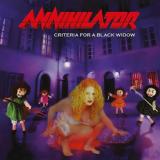
Criteria for a Black Widow was a love letter to old-school Annihilator fans. It hit record shops at the precise moment the delirium of the 90s cleared and metal was ready to get heavy again. From the pummeling attack of opener Bloodbath to the classic brawl of Back To The Palace and the album's searing title track – all festooned with Jeff's ability to fuse the finesse of six stringed virtuosity with the auditory effects of a hand grenade – this was more than a return to form; it was the sound of Annihilator coming full circle.
debe ser publicado en 17.04.2026

UILTY RAZORS, BONA FIDE PUNKS.
Writings on the topic that go off in all directions, mind-numbing lectures given by academics, and testimonies, most of them heavily doctored, from those who “lived through that era”: so many people today fantasize about the early days of punk in our country… This blessed moment when no one had yet thought of flaunting a ridiculous green mohawk, taking Sid Vicious as a hero, or – even worse – making the so-called alternative scene both festive and boorish. There was no such thing in 1976 or 1977, when it wasn’t easy to get hold of the first 45s by the Pistols or the Clash. Few people were aware of what was happening on the fringes of the fringes at the time. Malcolm McLaren was virtually unknown, and having short hair made you seem strange. Who knew then that rock music, which had taken a very bad turn since the early 1970s, would once again become an essential element of liberation? That, thanks to short and fast songs, it would once again rediscover that primitive, social side that was so hated by older generations? Who knew that, besides a few loners who read the music press (it was even better if they read it in English) and frequented the right record stores? Many of these formed bands, because it was impossible to do otherwise. We quickly went from listening to the Velvet Underground to trying to play the Stooges’ intros. It’s a somewhat collective story, even though there weren’t many people to start it.
The Guilty Razors were among those who took part in this initial upheaval in Paris. They were far from being the worst. They had something special and even released a single that was well above the national average. They also had enough songs to fill an album, the one you’re holding. In everyone’s opinion, they were definitely not among the punk impostors that followed in their wake. They were, at least, genuine and credible.
Guilty Razors, Parisian punk band (1975-1978). To understand something about their somewhat linear but very energetic sound, we might need to talk about the context in which it was born and, more broadly, recall the boredom (a theme that would become capital in punk songs) coupled with the desire to blow everything off, which were the basis for the formation of bands playing a rejuvenated rock music ; about the passion for a few records by the Kinks or the early Who, by the Stooges, by the Velvet mostly, which set you apart from the crowd.
And of course, we should remember this new wave, which was promoted by a few articles in the specialized press and some cutting-edge record stores, coming from New York or London, whose small but powerful influence could be felt in Paris and in a handful of isolated places in the provinces, lulled to sleep by so many appalling things, from Tangerine Dream to President Giscard d’Estaing...
In 1975-76, French music was, as almost always, in a sorry state ; it was still dominated by Johnny Hallyday and Sylvie Vartan. Local rock music was also rather bleak, apart from Bijou and Little Bob who tried to revive this small scene with poorly sound-engineered gigs played to almost no one.
In the working class suburbs at the time, it was mainly hard rock music played to 11 that helped people forget about their gruelling shifts at the factory. Here and there, on the outskirts of major cities, you still could find a few rockers with sideburns wearing black armbands since the death of Gene Vincent, but it wasn’t a proper mass movement, just a source of real danger to anyone they came across who wasn't like them. In August 1976, a festival unlike any other took place in Mont-de-Marsan – the First European Punk Festival as the poster said – with almost as many people on stage as in the audience. Yet, on that day, a quasi historical event happened, when, under the blazing afternoon sun, a band of unknowns called The Damned made an unprecedented noise in the arena, reminiscent of the chaotic Stooges in their early adolescence. They were the first genuine punk band to perform in our country: from then on, anything was possible, almost anything seemed permissible.
It makes sense that the four+1 members of Guilty Razors, who initially amplified acoustic guitars with crappy tape recorder microphones, would adopt punk music (pronounced paink in French) naturally and instinctively, since it combines liberating noise with speed of execution and – crucially – a very healthy sense of rebellion (the protesters of May 1968 proclaimed, and it was even a slogan, that they weren’t against old people, but against what had made them grow old. In the mid-1970s, it seemed normal and obvious that old people should now ALSO be targeted!!!).
At the time, the desire to fight back, and break down authority and apathy, was either red or black, often taking the form of leafleting, tumultuous general assemblies in the schoolyard, and massive or shabby demonstrations, most of the time overflowing with an exciting vitality that sometimes turned into fights with the riot police. Indeed, soon after the end of the Vietnam War and following Pinochet’s coup in Chile, all over France, Trotskyist and anarcho-libertarian fervour was firmly entrenched among parts of the educated youth population, who were equally rebellious and troublemakers whenever they had the chance. It should also be noted that when the single "Anarchy in the UK" was first heard, even though not many of us had access to it, both the title and its explosive sound immediately resonated with some of those troublemakers crying out for ANARCHY!!! Meanwhile, the left-wing majority still equated punks with reckless young neo-Nazis. Of course, the widely circulated photos in the mainstream press of Siouxsie Sioux with her swastikas didn’t necessarily help to win over the theorists of the Great Revolution. It took Joe Strummer to introduce The Clash as an anti-racist, anti-fascist and anti-ignorance band for the rejection of old-school revolutionaries to fade a little.
The Lycée Jean-Baptiste Say at Porte d’Auteuil, despite being located in the very posh and very exclusive 16th arrondissement of Paris, didn’t escape these "committed" upheavals, which doubled as the perfect outlet for the less timid members of this generation.
“Back then, politics were fun,” says Tristam Nada, who studied there and went on to become Guilty Razors’ frontman. “Jean-Baptiste was the leftist high-school in the neighbourhood. When the far right guys from the GUD came down there, the Communist League guys from elsewhere helped us fight them off.”
Anything that could challenge authority was fair game and of course, strikes for just about any reason would lead to increasingly frequent truancy (with a definitive farewell to education that would soon follow). Tristam Nada spent his 10th and 11th unfinished grades with José Perez, who had come from Spain, where his father, a janitor, had been sentenced to death by Franco. “José steered my tastes towards solid acts such as The Who. Like most teenagers, I had previously absorbed just about everything that came my way, from Yes to Led Zeppelin to Genesis. I was exploring… And then one day, he told me that he and his brother Carlos wanted to start a rock band.” The Perez brothers already played guitar. “Of course, they were Spanish!”, jokes their singer. “Then, somewhat reluctantly, José took up the bass and we were soon joined by Jano – who called himself Jano Homicid – who took up the rhythm guitar.” Several drummers would later join this core of not easily intimidated young guys who didn’t let adversity get the better of them.
The first rehearsals of the newly named Guilty Razors took place in the bedroom of a Perez aunt. There, the three rookies tried to cover a few standards, songs that often were an integral part of their lives. During a first, short gig, in front of a bewildered audience of tough old-school rockers, they launched into a clunky version of the Velvet Underground's “Heroin”. Challenge or recklessness? A bit of both, probably… And then, step by step, their limited repertoire expanded as they decided to write their own songs, sung in a not always very accurate or academic English, but who cared about proper grammar or the right vocabulary, since what truly mattered was to make the words sound as good as possible while playing very, very fast music? And spitting out those words in a language that left no doubt as to what it conveyed mattered as well.
Trying their hand a the kind of rock music disliked by most of the neighbourhood, making noise, being fiercely provocative: they still belonged to a tiny clique who, at this very moment, had chosen to impose this difference. And there were very few places in France or elsewhere, where one could witness the first stirrings of something that wasn’t a trend yet, let alone a movement.
In the provinces, in late 1976 or early 1977, there couldn’t be more than thirty record stores that were a bit more discerning than average, where you could hear this new kind of short-haired rock music called “punk”. The old clientele, who previously had no problem coming in to buy the latest McCartney or Aerosmith LP, now felt a little less comfortable there…
In Paris, these enlightened places were quite rare and often located nex to what would become the Forum des Halles, a big shopping mall. Between three aging sex workers, a couple of second-hand clothes shops, sellers of hippie paraphernalia and small fashion designers, the good word was loudly spread in two pioneering places – propagators of what was still only a new underground movement. Historically, the first one was the Open Market, a kind of poorly, but tastefully stocked cave. Speakers blasted out the sound of sixties garage bands from the Nuggets compilation (a crucial reference for José Perez) or the badly dressed English kids of Eddie and the Hot Rods. This black-painted den was opened a few years earlier by Marc Zermati, a character who wasn’t always in a sunny disposition, but always quite radical in his (good) choices and his opinions. He founded the independent label Skydog and was one of the promoters of the Mont-de-Marsan punk festivals. Not far from there was Harry Cover, another store more in tune with the new New York scene, which was amply covered in the house fanzine, Rock News (even though it was in it that the photos of the Sex Pistols were first published in France).
It was a favorite hang-out of the Perez brothers and Tristam Nada, as the latter explained. “It’s at Harry Cover’s that we first heard the Pistols and Clash’s 45s, and after that, we decided to start writing our first songs. If they could do it, so could we!”
The sonic shocks that were “Anarchy in the UK”, “White Riot” or the Buzzcocks’s EP, “Spiral Scratch” – which Guilty Razors' sound is reminiscent of – were soon to be amplified by an unparalleled visual shock. In April 1977, right after the release of their first LP, The Clash performed at the Palais des Glaces in Paris, during a punk night organised by Marc Zermati. For many who were there, it was the gig of a lifetime…
Of course, Guilty Razors and Tristam were in the audience: “That concert was fabulous… We Parisian punks were almost all dressed in black and white, with white shirts, skinny leather ties, bikers jackets or light jackets, etc. The Clash, on the other hand, wore colourful clothes. Well, the next day, at the Gibus, you’d spot everyone who had been at this concert, but they weren’t wearing anything black, they were all wearing colours.”
It makes sense to mention the Gibus club, as Guilty Razors often played there (sometimes in front of a hostile audience). It was also the only place in Paris that regularly scheduled new Parisian or Anglo-Saxon acts, such as Generation X, Siouxsie and the Banshees, the Slits, and Johnny Thunders who would become a kind of messed-up mascot for the venue. A little later, in 1978, the Rose Bonbon – formerly the Nashville – also attracted nightly owls in search of electric thrills… In 1977, the iconic but not necessarily excellent Asphalt Jungle often played at the Gibus, sometimes sharing the bill with Metal Urbain, the only band whose aura would later transcend the French borders (“I saw them as the French Sex Pistols,” said Geoff Travis, head of their British label Rough Trade). Already established in this small scene, Metal Urbain helped the young and restless Guilty Razors who had just arrived. Guitarist for Metal Urbain Hermann Schwartz remembers it: “They were younger than us, we were a bit like their mentors even if it’s too strong a word… At least they were credible. We thought they were good, and they had good songs which reminded of the Buzzcocks that I liked a lot. But at some point, they started hanging out with the Hells Angels. That’s when we stopped following them.”
The break-up was mutual, since, Guilty Razors, for their part, were shocked when they saw a fringe element of the audience at Metal Urbain concerts who repeatedly shouted “Sieg Heil” and gave Nazi salutes. These provocations, even still minor (the bulk of the skinhead crowd would later make their presence felt during concerts), weren’t really to the liking of the Perez brothers, whose anti-fascist convictions were firmly rooted. Some things are non-negotiable.
A few months earlier (in July 1978), Guilty Razors had nevertheless opened very successfully for Metal Urbain at the Bus Palladium, a more traditonally old-school rock night-club. But, as was sometimes the case back then, the night turned into a mass brawl when suburban rockers came to “beat up punks”.
Back then, Parisian nights weren’t always sweet and serene.
So, after opening as best as they could for The Jam (their sound having been ruined by the PA system), our local heroes were – once again – met outside by a horde of greasers out to get them. “Thankfully,” says Tristam, “we were with our roadies, motorless bikers who acted as a protective barrier. We were chased in the neighbouring streets and the whole thing ended in front of a bar, with the owner coming out with a rifle…”
Although Tristam and the Perez brothers narrowly escaped various, potentially bloody, incidents, they weren’t completely innocent of wrongdoing either. They still find amusing their mugging of two strangers in the street for example (“We were broke and we simply wanted to buy tickets for the Heartbreakers concert that night,” says Tristam). It so happened that their victims were two key figures in the rock business at the time: radio presenter Alain Manneval and music publisher Philippe Constantin. They filed a complaint and sought monetary compensation, but somehow the band’s manager, the skilful but very controversial Alexis, managed to get the complaint withdrawn and Guilty Razors ended up signing with Constantin with a substantial advance.
They also signed with Polydor and the label released in 1978 their only three-track 45, featuring “I Don't Wanna be A Rich”, “Hurts and Noises” and “Provocate” (songs that exuded perpetual rebellion and an unquenchable desire for “class” confrontation). It was a very good record, but due to a lack of promotion (radio stations didn’t play French artists singing in English), it didn’t sell very well. Only 800 copies were allegedly sold and the rest of the stock was pulped… Initially, the three tracks were to be included on a LP that never came to be, since they were dropped by Polydor (“Let’s say we sometimes caused a ruckus in their offices!” laughs Tristam.) In order to perfect the long-awaited LP, the band recorded demos of other tracks. There was a cover of Pink Floyd's “Lucifer Sam” from the Syd Barrett era – proof of an enduring love for the sixties’ greats –, “Wake Up” a hangover tale and “Bad Heart” about the Baader-Meinhof gang, whose actions had a profound impact on the era and on a generation seeking extreme dissent... On the album you’re now discovering, you can also hear five previously unreleased tracks recorded a bit later during an extended and freezing stay in Madrid, in a makeshift studio with the invaluable help of a drummer also acting as sound engineer. He was both an enthusiastic old hippie and a proper whizz at sound engineering. Here too, certain influences from the fifties and sixties (Link Wray, the Troggs) are more than obvious in the band’s music.
Shortly after a final stormy and rather barbaric (on the audience’s side) “Punk night” at the Olympia in June 1978, Tristam left the band ; his bandmates continued without him for a short while.
But like most pioneering punk bands of the era, Guilty Razors eventually split up for good after three years (besides once in Spain, they’d only played in Paris). The reason for ceasing business activities were more or less the same for everyone: there were no venues outside one’s small circuit to play this kind of rock music, which was still frightening, unknown, or of little interest to most people. The chances of recording an LP were virtually null, since major labels were only signing unoriginal but reassuring sub-Téléphone clones, and the smaller ones were only interested in progressive rock or French chanson for youth clubs. And what about self-production? No one in our small safety-pinned world had thought about it yet. There wasn’t enough money to embark on that sort of venture anyway.
So yes, the early days of punk in France were truly No Future!
Haga su pedido ahora y le encargaremos el artículo en nuestro proveedor.

debe ser publicado en 10.04.2026
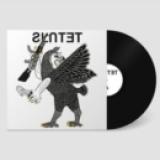
Crypt of the Wizard is proud to make available two legendary underground albums by Slutet on vinyl and digital formats. Here we present the debut self titled LP Slutet - Slutet
Slutet originated in Uppsala well over a decade ago, first emerging as a loose idea around 2010. The original cluster of strangely like minded individuals - Dingir, Ryttersson, J.P., Sviatopolk, were equally set on starting a cult as they were a band, the former emerging as a loose collective known as The End Commune, while the latter eventually began rehearsing together as Slutet on September 1, 2013.
From this constellation three notorious demo tapes sprung which were self-released in very limited numbers, and only available by trading bodily fluids, blood, and/or hair for the cassettes. “A very loose guess but we made probably around 20-30 hand-drawn/custom demo tapes of the first three releases. We got blood and hair from many places, actually the very first offering was from INDONESIA. Slovakia, Germany, USA, Argentina, Norway, Canada, Finland followed.... if my memory serves..... hazy years indeed”
J.P. left early 2015. Later that year, after trying the band as a bass-drum-vocals outfit for a while, Fjalar joined on guitar. This is the classic constellation. Dingir, Ryttersson, Fjalar, Sviatopolk. The same troupe playing to this very day.
While the difficulty of obtaining the demos certainly added to the band’s bottomless mystique, the subsequent release of the self-titled compilation / LP secured their reputation as one of the most interesting and unorthodox bands recording under the somewhat ill-fitting moniker of ‘underground black metal’.
First released as a cassette by Berlin label Teratology Sound & Vision, and later on vinyl in an edition of 100 by Goatowarex, the self-titled LP is the definitive document of the very early and very wild years of the band as they begin to take form, fulminating against whatever was on offer.
“Between September 2013 and September 2014 we rehearsed and recorded 3 very crude demo cassettes; although sub-par in many musical and performance-wise aspects, the passion seeping through those recordings were evidently very real.”
debe ser publicado en 10.04.2026

Picture Disc[29,62 €]
‘Warriors Of The Sea’ is the name of DORO Pesch's special release, with which the Metal Queen is shortening the wait for a new studio album for her numerous fans.
‘Warriors Of The Sea’ is now available as petrol with white and black marbled vinyl. The idea for this special release came about as a result of the two sold-out ‘Metal Queen Metal Cruises’, which were a huge hit with fans at the end of May/beginning of June and – in addition to a third cruise (06.06.26) – simply left them wanting more music.
The title track of the album was written by DORO especially as an anthem for the cruise and immediately became an absolute fan favourite at summer festivals worldwide.
The remaining nine tracks are a hand-picked selection by DORO on the themes of ‘Warriors’ and ‘Cruise’. All of them are rarities and for fans, collectors and metal pirates.
debe ser publicado en 03.04.2026

Undun is the story of a man, Redford Stevens, dying in reverse, rewinding from the moment he became a statistic and hitting the points in his life where he's at his most self-aware. That he's a criminal who got caught up in the familiar street-hustle trappings that the modern media's documented countless times is a pivotal detail-- it's hit at an angle that seems to emphasize the futile inevitability of it all. His life could be any number of misdirected narratives that ends with a toe tag, and what details listeners learn about him are hazy, buried under archetypal turns of fate and decisive struggles. That this protagonist is a fictionalized composite of a handful of real people, filtered through a matter-of-fact narrative that splits character ambivalence with journalistic impartiality, only makes his lack of direction and the failure of any real closure stand out even more. "Lotta niggas go to prison," Dice Raw states on "Tip the Scale", "how many come out Malcolm X?"
So the Roots' latest album isn't a sprawling, rise-and-fall crime story, not a condemnation or a veneration of a man living outside the law, not a bullet-riddled grand guignol heavy on explicit details of soldiers getting cut down. It's a character study of a man whose existential crisis ends only with his death-- a death gone largely unspecified, the glamor and tragedy washed over with a doomed resignation. That's a hard thing to pull off, even for a band as given to deep-thinking concepts as the Roots are. And when your main lyrical catalyst is Black Thought-- a man more given to allusions than direct statements-- it's likely that it'll take a while for the full scope of Undun to really sink in.
If and when it does, it might strike listeners as a bit skeletal: omit the mood-setting instrumental bookends, including a brief, four-part orchestral suite that builds off Sufjan Stevens' "Redford (For Yia-Yia and Pappou)", and you've got maybe a half hour's worth of material. By ?uestlove's accounts, writing Redford's story introduced the headaches and challenges that come with scriptwriting into their songwriting, and what's left on Undun is the end result of frequent revisions and rewrites that attempt to reconcile character, theme, and continuity. If it comes at the expense of nuance, it's not always obvious: There's an easy-to-trace narrative line from Redford's acceptance of his fate ("Sleep") to his acknowledgement of how close it's approaching ("Make My"), back through declarations of aggravated toughness ("One Time"), and celebratory fatalism ("Kool On"), along ups and downs that juxtapose motivation ("Stomp") and helplessness ("Lighthouse"). When the vocal portion of the album ends with two of the bleakest sets of verses in the Roots discography, peaking with the estrangement of "I Remember" and the desperation of "Tip the Scale", Undun reveals itself as a story where a man's actual death isn't quite as tragic as the circumstances that pushed him to it.
Haga su pedido ahora y le encargaremos el artículo en nuestro proveedor.

Die erste offzielle Vinyl-Neuauflage von American Recordings von Danzigs Debüt-Soloalbum seit seiner Erstveröffentlichung im Jahr 1988. Unter anderem aber allen voran mit den Hits ”Dirty Black Summer” and
”Left Hand Black”. Die 1LP kommt mit originalem Artwork in einer Gatefold-Hülle, bedruckten Einlagen
und auf schwarzem Vinyl.
debe ser publicado en 21.03.2026

Deluxe Box Set featuring 69 tracks over TWELVE 12" LP's! We're at it once again, going all out with 12 mind melting color pressings and deluxe packaging with extra goodies: RAINBOW FOIL NUMBERED BOX Hand numbered box, Rainbow Splatter Vinyl is Limited to 1000 copies DELUXE COLOR PRESSINGS Hypnotic Rainbow Splatter vinyl pressings with unique op art label for each 12" PHOTO SLEEVES Each 12" in a custom photo inner-sleeve, with 35mm photos by Bob Greco (@picturemanbob) DELUXE 24" x 24" POSTER With polaroid film photos from the festival by Bob Greco BONUS BOOTLEG STICKER Sourced from poster created by Ernie Houk (@leftiesmudges), originally made for Field of Visions 'Mirage City' MIXED & MASTERED Mixed from multi-track stems and mastered for vinyl by Craig Lawrence
debe ser publicado en 06.03.2026

End of Us, ist das 13 Tracks umfassende Debütalbum von TX2, mit Features von DeathbyRomy, Ekoh, Magnolia Park, Ice Nine Kills und Black Veil Brides. Die Wahrheit ist simpel: TX2 polarisiert. Es gibt Kräfte in dieser Welt, die versuchen, das zu zerstören, wofür gekämpft und was hart erkämpft wurde, und zu einer Zeit zurückzukehren, in der die Menschen ihr wahres Ich versteckten. Es gibt Künstler wie TX2 - den Anti-Ronald Radke -, die dir zeigen wollen, dass du in diesem Kampf gegen den Hass nicht allein bist. TX2 hat Politiker namentlich genannt, schwenkt auf der Bühne eine Trans-Flagge, thematisiert in seinen Songs Waffengewalt, Essstörungen, Trauer und Depressionen und verspottet die Gatekeeper, die offensichtlich noch nie einen Punk-Song gehört haben. Der Sänger ist bereit, mit seiner Musik ein wenig Chaos zu verursachen, wenn es nötig ist, um die Aufmerksamkeit auf wichtige gesellschaftliche Themen zu lenken. So hat TX2 unter seinen Fans eine Bewegung ins Leben gerufen, die als ,X Movement" bekannt ist und deren Ziel es ist, das Bewusstsein für psychische Gesundheit zu schärfen und einen sicheren Raum für diejenigen zu schaffen, die jemanden zum Reden brauchen. In den letzten 24 Monaten tourte TX2 um die Welt, trat mit Ice Nine Kills, Hail the Sun, Dark Divine, tiLLie, In This Moment, Magnolia Park, Warped Tour & Summer of Loud Tour auf, wurde auf SiriusXM Octane gespielt, erreichte über 1 Million monatliche Hörer, gab über 50.000 Autogramme und erhielt 42 Millionen Likes auf Tik Tok. End of US ist ein lauter, unverblümter Aufruf zum Handeln. Beherzigen Sie den Aufruf oder treten Sie beiseite.
debe ser publicado en 23.02.2026

Rancid is without question one of the most successful and influential punk bands ever, not to mention being among the most prolific. Their nonstop songwriting and marathon studio sessions often result in far too many songs to fit onto their albums. True Rancid fans know that in addition to their classic long players, many of their finest tracks have been released as single B-sides, bonus tracks, on compilations, or in some cases have remained in the band's vault. That is why B sides and C sides is no mere throwaway record, but an essential part of this classic band's catalog. The songs collected here represent a cross section of everything that has made this band so beloved worldwide, including their creative genre hopping from blazing punk rock to danceable ska, to reggae, rockabilly, and more, all executed with some of the most impressive playing in the history of underground music. The songs range from fan-favorites like "I Wanna Riot" to obscure hidden gems from rare or hard-to-find compilations, and a handful of studio recordings that were completely unreleased before this album, several coming from the fertile recording sessions for the band's sprawling 1998 masterpiece Life Won't Wait. Originally released on CD in 2007, most of the tracks range from the band's early days through their sixth album, Indestructible, although the 2012 track "Fuck You," from the Pirates Press Records compilation Oi! This is Streetpunk! Volume 2 was added to place a definitive final word on the collection when it was pressed on vinyl. With the album being out of print and hard to find in its own right for the past ten years, Pirates Press Records is thrilled to partner with our friends in Rancid to remedy that situation and make this essential piece of punk rock history available to their many fans across the globe - this time as an incredible double 12" with super deluxe coloured vinyl and matching sleeve art!
El artículo no se ha publicado. Tú puedes reservar ahora el artículo y después de ser pagado se te será enviado.

DK takes ‘em to church! The connections between Black Gospel traditions and dance music are strong and deep, and in this latest masterclass from the Mr. K Edits series Danny Krivit explores two under-the-radar but powerful examples. After the success of his disco-funk hit ‘This Feelin’, the Washington DC-based Frank Hooker turned from the club to the chapel, releasing a full-length album of worship music set to the early ’80s sound of post-disco boogie. ‘Rise and Shine’ is a clear precursor to piano house — full of energy and giving all the hands in the air vibes of the best gospel. Danny’s edit extends the too short original and adds a sneaky isolation of the chorus vocals for an extra theatrical touch. Also hailing from the DC area, Lafreda’s ‘Church Girl Church’ is a quirky 12-inch from 1983 that has remained largely undiscovered, just the sort of left-field pick you’d expect the deep digging Krivit to have lurking in his crates. Mr. K’s edit melds Lafreda’s impassioned vocals with the stomping dub version to create an unexpectedly powerful cut that is the very embodiment of fierce.
Haga su pedido ahora y le encargaremos el artículo en nuestro proveedor.

Die richtigen Songs, aneinandergereiht, geben eine belebte Vision unserer Umgebung, als ob frische Augen allein durch Rhythmus gewährt werden können, neue Formen für das verwitterte Drahtgerüst der Welt finden und die Schatten sehen, wie sie mit dem Licht des Tages tanzen. Animal Hospital, die neue LP der Chicagoer Art Punks Ganser, ist ein Monument der Beobachtung, ein Wälzer verirrter Gedanken, die aufgesammelt wurden, während sie sich durch eine Menschenmenge bewegten, die sich zu einer kollektiven Betrachtung der absurden Widersprüche von vorbeiziehenden Leben zusammenfügte. Animal Hospital ist das dynamischste Album von Ganser, das die Grenzen ihres Sounds in neue Bereiche ausdehnt und die elastischen Grenzen des Klangs testet. Der Kern der Band, Alicia Gaines, Sophie Sputnik und Brian Cundiff, bleiben unbeirrt treibenden Mustern treu; Schlagzeug, das mit exakten Beats auf das Herz schlägt, Puls, der von Bass und Gitarren beschleunigt wird, Synthies, die die Nerven beruhigen. Ein endloser Rhythmus unter Füßen, die sich im Takt auf einer Tanzfläche bewegen oder auf einem Bürgersteig. Was hier zusammengetragen wurde, ist eine Sammlung von Beobachtungen, Erinnerungen an die Minuten, die zu Tagen wurden, die damit verbracht wurden, zu beobachten, wie sich die Menschlichkeit in den Menschen verändert und in neue Richtungen dreht. Die Menschen haben ihre Streifen und Flecken gewechselt, oder vielleicht haben sie nur die Zeichen gezeigt, die sie schon immer hatten. Das Leben wurde auf Distanz gehalten. Die Masken wurden straff gezogen. Die Erforschung der surrealen Wahrheiten, die in unseren Herzen schlummern, hat etwas Tiefgründiges, dass das Traurige und Alltägliche so mühelos mit dem Absurden und dem Schönen spielen kann, um etwas Eindringliches, etwas Auffallendes zu schaffen, Lieder, die stechen und aufsteigen und gleichzeitig zum Tanzen auffordern. Aufgenommen in den Jamdek Studios von Doug Malone (mit zusätzliche Aufnahmen von Nick Broste bei Electrical Audio) und produziert in Partnerschaft mit dem langjährigen Verbündeten Angus Andrews (Liars) zwischen Januar und März 2025, ist Animal Hospital ein Meisterwerk von Gansers Handwerk. Songs, die ihr Leben als Notizen begannen, die bereits im Jahr 2020 gekritzelt wurden (mit Ausnahme von ,stripe", einem Demo, das 2021 überarbeitet wurde), wurden hier auf Band geschliffen und in Wachs gepresst. Ganser haben ihren Sound ausgebaut, Mauern errichtet, die sich zu neuen Höhen auftürmen, und Charlie Landsman und Dove Hollis haben sich auf dem Album zusammengetan, um das Fundament zu stützen. Die Zeit auf Tour mit Künstlern wie IDLES, Mclusky und Ted Leo, sowie Shows mit Amyl & The Sniffers, Bikini Kill, Viagra Boys und so vielen anderen haben das unauslöschliche Talent, das in allen Ecken von Gansers Arbeit lauert, nur noch mehr geschärft. Musik, die sich weigert zu glauben, dass irgendetwas wahr ist, dass stattdessen alle Dinge Kraft und Geheimnisse in ihren Schatten bergen, und dass wir nur dann die unausweichliche Schönheit aller widersprüchlichen Dinge verstehen können, wenn wir uns alle auf den Boden begeben und uns einen Sinn geben.
debe ser publicado en 29.08.2025

After over 50 events of Bristol's beloved Club Blanco, the city's anointed high priest of night, Chez de Milo, is crystallising his party's dimension-hopping hedonism into a label, calling on an extended family of esteemed producers and musicians to make it happen.
First up is Johnny Aux, aka Quinn Whalley (Paranoid London, Sworn Virgins, Decius), delivering two offerings accompanied by remixes from Jamie Paton and Chez de Milo himself.
Supersonic blends a hyperspace bassline with euphoric 90s synth elevation that delivers us to a blissful dance floor crescendo, where you've been dancing for hours—maybe days— when the sun appears over the horizon and pierces through the club's blacked-out windows. Chez de Milo's re-rub wraps you up vines of a living, breathing forest, where all your favourite flora and fauna summon you to the dappled light of a clearing, front left of the booth.
On The Train locks you into a rolling groove, and electro slaps and smacks. It feels covered in equal parts space dust and the dust of an old crate of records, where this forgotten banger has been buried deep for 25 years, waiting for the right hands to pull it out. Jamie Paton veers off down a stranger track, conducting a driving Italo beat with eerie soundscapes dissected by lasers and a brooding bassline.

The Scream, Siouxsie & the Banshees' first album, was released late enough in the punk era to bear some claim as the first post-punk album, with only a minor traces of 'punk' (one lingering early song, "Carcass" comes to mind) and enough hints of what had come even earlier, Andy MacKay-like saxophone flourishes - to feel utterly new. Not to mention the effort producer Steve Lillywhite must have put into the album, his first fully-credited major label production. Siouxsie was clearly the focus of the band, with her unique vocal style and lyrics, but the real star, we've always known, was John McKay, who wrote most of the album's music (as well as singles like "Hong Kong Garden"), creating a wholly new guitar sound - harsh and brittle, yet melodically intoxicating . . . best articulated by a somewhat confounded Steve Albini years later ". . . only now people are trying to copy it, and even now nobody understands how that guitar player got all that pointless noise to stick together as songs". McKay's influence lives on; many of the most influential guitarists of the past four decades credit him as a major influence - Geordie from Killing Joke, Jim Reid of The Jesus And Mary Chain, U2's The Edge, Thurston Moore, Johnny Marr and even the two guitarists - The Cure's Robert Smith and Magazine's John McGeoch - who followed him in The Banshees. McKay's burgeoning status as the anti-guitar hero was halted when he and Banshees drummer Kenny Morris - at odds with Siouxsie and bassist Steve Severin - fled the band just after the start of a tour supporting the group's second album, Join Hands. It was a weekly music paper scandal, later the subject of a BBC documentary, and Siouxsie's vitriol working its way into the lyrics of a later Banshees b-side, "Drop Dead / Celebration". Aside from a solitary single on Marc Riley's In Tape label nearly a decade later, no music was heard from McKay again. So it comes as a major surprise to learn of a pile of excellent recordings made in the years just after he left The Banshees, unheard by all but a very few, some of which feature drummer Kenny Morris, plus Mick Allen from Rema Rema, Matthew Seligman of the Soft Boys and longer-term collaborator Graham Dowdall and John's wife Linda . . . the latter three of whom now all sadly deceased. Sixes And Sevens is an historic lost album. Brazenly genius and bearing fair claim as the lost treasure of the post-punk era, the album collects eleven studio tracks, carefully mastered from original tapes. It's a masterpiece which best speaks for itself.
debe ser publicado en 09.05.2025

An exclusive 7" re-release of this psychedelic funk ballad from Tulsa's "Outback" Band. As featured on Now-Again's 'More Loving On The Flipside' compilation, "Strangers (In Our Homeland)" epitomises the expression of social & political change during an era of psychedlia infused music. In partnership with the two surviving members of Outback, both Symphonical & Now-Again are proud to showcase the voice of independent artists.
----------
The origin of "Outback" dates back to the late 50s, a five-piece blues outfit named "Little Lo and the Rest of Us" included music educator & bass guitarist Edward "Cha-Cha" Cherry, saxophonists Eugene "Buggy" Roach & James "Flab" Farley whom, alongside drummer Roscoe J. Dabney III "Roach", Ronnie Wilson on trumpet, guitarists Roy "Rochester" Walker & Michael Collins, would form The Magnificent Seven, the house band for Tulsa's 'Rose Room'.
Alumni of Booker T. Washington High School, The Magnificent Seven influenced & set the standard for the Tulsa sound, as demonstrated through their only single, recorded in 1966, the two part 'Pluck-A-Pluck'. 'The Sevenettes', the groups' female vocal trio, included the rotation of Lena Luckey Wilson, Gwendolyn French, Rose Brewer Lewis, Jeanetta Williams & Maxayn. The Magnificent Seven, led by "Cha-Cha", toured nationally throughout the 60s with their infectious, raw R&B sound, and were the platform for many of Tulsa's talent including Ronnie & Charlie Wilson who would later create the GAP Band.
Roscoe J. Dabney III, the first Black Panther to establish the Tulsa chapter in 1969 known as the NCCF (National Committee to Combat Fascism), proposed the name change to "Outback" in the early 70s. Their sound & formation was changing from R&B to Psychedelic, from the grit to the phase, epitomised by their unique line-up of having two bassists playing simultaneously, both Reggie Cherry & "Chilly" Willie Lewis, the musical foundation to their only recorded single, "Strangers (In Our Homeland)" & "Reggie's Thang".
Song writer & band affiliate, Maurice Pope, produced the lyrics to "Strangers (In Our Homeland)" and handed over the musical attributes to Willie Lewis & Outback to convey his message, as sung by Lena Luckey Wilson. Dabney recalls the song is based on religious scriptures, whilst highlighting the parallel of Black slavery in the U.S.
"Reggie's Thang", written by Dabney's cousin, bassist Reggie Cherry, provides a psychedelic instrumental, a sound which Lena recalls is what set apart Outback from other Tulsa groups. As well as playing clubs, the seated shows provided an environment for the group to showcase their musicianship to those who wanted to be immersed & listen.
Their single, released on Empathy, was recorded in 1972, and are the only known recordings by Outback. Recorded live onto 8-track at a studio located at on East Pine St in the heart of Tulsa's Black community, an independent & unknown studio located on a strip mall.
The Outback members who recorded are:
Lena Luckey Wilson - Vocals
Roscoe J. Dabney III "Roach" - Drums
"Chilly" Willie Lewis - Bass
Reggie Cherry - Bass
Edward "Cha-Cha" Cherry - Keys
Joyce Daws - Trumpet
Roy Walker "Rochester" - Guitar
Robert Luckey "Uncle Bobby"- Percussion
Fredy Berry "Freddy" - Tenor Sax
Band leader & group manager: Edward "Cha-Cha" Cherry
Booking Agent: Ernie Fields Sr.
In 1973 whilst performing in Ft. Worth, TX, Buck Ram approached Willie Lewis backstage and invited him to join The Platters, Lewis accepted. Supposedly, a recording deal was offered to Outback in exchange, which never happened.
The group continued in various formations after Lewis left, however as an integral member, the feeling never equalled their original form and soon after dissolved.
Leon Russell approached Lena Lucky Wilson in 1974 to go on tour with the GAP Band as their backing singer, upon returning Tulsa Lena moved to Los Angeles to pursue her musical career with Leon & Mary Russell amongst various others.
Dabney continued music and became a TV producer & director in 1976.
The only surviving members of Outback today are Lena Luckey Wilson & Roscoe J. Dabney III.
debe ser publicado en 11.04.2025

Celebrating 40th anniversary of Yves Deruyter's musical career with this 10 x 12" Vinyl Box Set. Including tracks from F.U.S.E. vs LFO, Tronikhouse, Robert Armani, L.S.G., Edge Of Motion, Plastikman, The Prodigy, Ecstasy Club, and the master himselfYves Deruyter.
Yves Deruyter - 40 Years at the Pinnacle of the Night
Forty years. A rollercoaster of a musical career, meandering through five decades, leaving timeless marks on the collective dancefloor memory. Yves Deruyter is the exception that proves the rule. An icon behind the decks, celebrated far beyond national borders for his legendary sets, impeccable musical choices, and the anthems released under his name. The result of collective effort, where Yves, with his vision and unique touch, consistently left his mark-transforming good tracks into inescapable bombs that still resonate through time.
If you've spent forty years living to the pulse of music, the night is in your DNA. Yves Deruyter, a DJ to the core-the real deal. The man who bent the night to his will, dragging weekend vibes into the workweek like a warrior, a true master behind the turntables who made his people dance. His beats: the oxygen that generations lived on.
Yves sharpened his musical weapons in the early '90s within the iconic afterparty scene of Barocci and The Globe-places that became sanctuaries in Belgium's endless night. Here, die-hard dancefloor warriors, cutting-edge music lovers, and night owls from the four corners of the globe gathered. They willingly followed Yves' masterful mixing and his razor-sharp set construction. Clubs with a more conventional timeframe were the next step, with the iconic Cherrymoon as his home base for years-alongside endless guest DJ spots and global gigs. From there, the underground pulsed through Yves' hands and crates, reaching ever-larger crowds-without ever compromising for commercial or crossover sounds. Yves stayed true to his choices, lifting his audience to euphoric heights like a craftsman, armed with his hits, hidden gems, and freshly unearthed nuggets.
From the pounding energy of Rave City to the flippy, epic flashes of Calling Earth-tracks that not only captured the spirit of the times but conquered dancefloors worldwide. This isn't just music; it's a time capsule-a connection between generations and a reminder of the energy from a golden era.
With musical partners like Roel Butzen, Frederico Santini, M.I.K.E. Push, and more recently, Insider, Yves forged a sound that etched its place into rave and dance history. From The Rebel to The House of House, parts of Yves' musical taste have become immortal pillars of dance music heritage. In the early rave days, he topped Belgium's DJ rankings year after year, elevating every club he played to the highest echelons of popularity. The same held true for the records where his name appeared like a badge of honor.
From The Globe to the globe itself-it seemed almost written in the stars. Yves, thestar DJ, became one of the instigators of the electronic music storm that put Belgium on the global map-a storm that never subsided. Festivals like Love Parade, Mayday, I Love Techno, Nature One, and Tomorrowland saw Yves as a trusted force, effortlessly commanding crowds and turning dancefloors inside out. Forty years later, that storm still ignites partygoers, vibrates through dancefloors, and keeps entire generations moving.
Even today, Yves still holds a steady residency with Yves Deruyter and Friends at Club Moustache, where his concept always sells out. Here, both fresh talent and seasoned DJs deliver a killer blend of modern electronic dance music and timeless classics, creating an atmosphere that hooks the crowd every single time.
Because partying doesn't need an excuse. But forty years? That deserves the spotlight-not as a mere milestone, but as a showcase of timelessness. Music mutates, reinvents itself for new generations, yet retains the same impact as that very first time. Yves proves that forty is just a number, and relevance isn't about trends-it's about vision, energy, and an unmistakable touch. His sets? Indestructible. His sound? A heartbeat echoing through time.
And Yves? He doesn't live in the past. Today, Yves distills those four decades into a compilation capturing the essence of his career. Belgian beats, interpreted and refined into a sound that powered raves around the world. Ten vinyls featuring not just a fiercely curated selection that contextualizes the magic of his early days, but also new versions of three unbeatable anthems-potent hits designed to turn dancefloors upside down in wonder, without losing a shred of their soul. Yves remains a beacon in the night, a searchlight for that one perfect beat-always relevant, always chasing that magical moment.
Yves Deruyter-a name spoken in the same breath as the greats of the scene. A ten-vinyl compilation is more than a celebration; it's a well-earned trophy. As unique, indestructible, and uncompromising as the man himself.
Haga su pedido ahora y le encargaremos el artículo en nuestro proveedor.
Ajay Saggar is BHAJAN BHOY. "With BHAJAN BHOY, Saggar synthesizes all of the stylistic approaches he’s explored over the years, swirling them into an intoxicating musical blend, with an earthy spirituality. Even the project’s name reflects the dual aspects of Saggar’s upbringing coming together in harmony. In Hindi, a “bhajan” is a devotional song, sung in the mandir, or temple, while “bhoy” is a Scottish and Irish derivation for a young man. There’s a searching quality to Bhajan Bhoy, as if Saggar is still hunting for transcendence with each track, whether through an expansive drone, an orchestral facility on the piano, or an electronics-augmented raga that threatens to dip into noise” (Erick Bradshaw / writer and WFMU DJ). This album presents a rich and varied set of compositions that showcase Saggar’s skills as an incredibly talented and accomplished composer and musician. With each and every Bhajan Bhoy LP, you are are carried to a higher place. With ‘Bhoy On The Wire’, the 35 minutes laid out unfolds like a cosmic tapestry, an extraordinary exploration that shimmers and reverberates with newfound vibrancy. The songs were broadcast as part of a session on Steve Barker’s “On The Wire” radio show in April 2024. They were a gift to Steve and his team for 40 years of broadcasting. “On The Wire” is simply the greatest radio show in the world. As Ajay explains in his own words : “In September 1984, I started a degree course at the University of Lancaster. On a wet and soggy Sunday afternoon towards the end of September, I sat in my room staring out at the grey Lancashire landscape, and decided to alleviate the boredom by seeing if there was anything to listen to on the radio. Most of the stations I tuned into were as dull as the weather outside. However, as I neared the end of the FM dial (and was about to give up hope), I chanced upon a station where I was taken by the music being played. That show was “On The Wire”, introduced by Steve Barker. From there on in, every Sunday, between 2-5pm, I tuned into Radio Lancashire to listen. Steve’s shows had an incredible and wide reaching selection of music and genres, that thrilled your ears and left you wanting more. Tied to that, his deep knowledge of the material he played helped the listener dig into the sounds even more, and also left you in admiration of this trait. In 1985, I started putting on DIY shows in Lancaster (inviting the likes of Bog-Shed, bIG fLAME, The Membranes, The Wedding Present, etc etc) and Steve was kind enough to mention the shows on-air, which helped in getting people from different parts of the county to come to the shows. At the tail-end of 1985, he invited me to the studio to come and hang out. When in 1988, the group I was in, Dandelion Adventure, released our first (demo) cassette, it was Steve, who not only played tracks off it, but invited the group to the studio for an interview. Now if you’re a young band, that is a massive thrill! And in 1990, when Dandelion Adventure did a John Peel session, I actually used “On The Wire” jingles (that Steve had put on a cassette and given to me a few years before) on the track “All the World’s A Lounge”. Since then, the show has been a mainstay for me, and so many others around the world, to get turned onto incredible sounds from around the world. And over the course of 40 years, Steve has always supported my music. These six tracks are a 40th birthday gift to the “On The Wire” team (Steve, Michael “Fenny” Fenton (an absolutely critical part of the show), and Jim Ingham (engineer who keeps the technical side of things going)) for sharing so much amazing music, and making the world a better place. They were originally broadcast as an exclusive session in April 2024 on “On The Wire", and are here for your listening pleasure. Music like shower”. Artwork by Jake Blanchard
debe ser publicado en 07.03.2025

Loyle Carner will release his highly anticipated sophomore record, 'Not Waving, But Drowning' on 19 April via AMF Records.
'Not Waving, But Drowning' follows Loyle's BRIT (Best Male, Best Newcomer) and Mercury Prize nominated, top 20 debut 'Yesterday's Gone'. The bedrock of honest and raw sentimentality that you heard on 'Yesterday's Gone' left an inextinguishable mark on music in general and UK Hip Hop in particular, standing out as an ageless, bulletproof debut.
'Not Waving, But Drowning', Loyle's new album, gives yet more evidence - as if it were needed - of his razor-sharp flow and his unique storytelling ability. Yes, he can rap, but he allies that with the sensitivity of a poet, the observational skills of a novelist, and warmth of your best friend. The album opens with 'Dear Jean', a letter to his mother in which he's telling her that he has found the love of his life, 'a woman from the skies', and he's moving out.
It goes without saying that Loyle's music is hard to categorise, but what is even more impressive is that for someone who grew up listening to Mos Def, Biggie Smalls, Roots Manuva, and Wu Tang Clan, he doesn't sound like any of them. Although he might from time to time give lyrical nods to them, he's no imitator.
Loyle loves cooking. There are two tracks on this album named after chefs. The British-Israeli chef Yotam Ottolenghi, and the now deceased Italian chef Antonio Carluccio. 'Ottolenghi' the first single from the album was featured on the BBC Radio 1 B-list, BBC 6 Music A-list and has already been streamed over 5 million times.
Loyle refers to real life for everything, the title of 'Yesterday's Gone' came from a song of his step father, the title of his new album 'Not Waving, But Drowning' comes from a poem by his grandfather, which in turn came from a Stevie Smith poem. What you hear on the track 'Krispy' is real. He is pouring his heart out to his best friend Rebel Kleff after their relationship went downhill, he invites him on the track to say his piece but he doesn't turn up, so we get a flugel solo instead.
Loyle also has his own personal black consciousness movement. When he refers to his 'fathers' in the track 'Looking Back' he really is referring to two fathers. His biological father, a black man who he knows, but knows very little of, and his step father, a poet and musician who happens to be a white man but died a sudden unexpected death from epilepsy (SUDEP). With no real emotional ties to his biological father, but a deep connection with a deceased step-father, where does a young child turn He succinctly captures many of the great, unspoken, cultural and historical paradoxes of multicultural Britain on 'Looking Back'.
An album like this is hard to find. It is for those who like their Hip Hop to have soul, and their soul to have spirit. This is because it works on so many levels, but it is reflecting the personality of its creator. There are a host of collaborators here, Jorja Smith, Rebel Kleff, Kiko Bun, Kwes, Jordan Rakei, Sampha, Tom Misch and more, but none are overpowering. They blend righteously into place.
Loyle is not bitter with people who have let him down, or a society that lets so many down, but the combination of anger and love he has gives his voice the perfect blend of strength and vulnerability. This might be a coming of age album, but it's also a coming of ageless album. Loyle's 2019 Spring tour - which includes London's Roundhouse - sold out within 20 minutes of being on sale.
Not Waving, But Drowning
A rapper that raps about family is hard to find. The boys in the 'hood' tend not to be that interested in how much a 'brother' loves his mother, or how much he misses his dad, or even how much he misses his best friend. The boys in the 'hood' tend to be obsessed with the size of their cars, girls, bank accounts, and other personal 'possessions'. Loyle Carner's Mercury and BRIT Prize nominated debut 'Yesterday's Gone' (Released 2017), made it clear that he wasn't that kind of rapper. In fact, every time I talk to him about his work we talk about the world, and we tended to confuse ourselves by calling his work rap, poems, or songs, sometimes in the same sentence. They are in truth all of these things.
Here's some poetry.
Honestly I need them.
I hate them but I grieve them
I think I've finally found the reason
Trust
Like the fire needs the air.
I won't burn unless you're there.
'Not Waving, But Drowning', Loyle's forthcoming new album, gives us yet more evidence, (if it were needed), that he still has what rappers call, flow, but he hasn't lost any of his story telling qualities. Yes, the boy can rap, but a rapper with the sensitivity of a true poet, the observational skills of a novelist, and warmth of your best friend. The album opens with 'Dear Jean', a letter to his mother in which he's telling her that he has found the love of his life, (a woman from the skies), and he's moving out. He really loves the woman from the skies, but he still loves his mum, and so he reassures her that there is no competition, and tells her that 'She's not behind me or behind you, but beside we and beside two', his words. Or to put it another way, moving out without moving out. My words.
It goes without saying that Loyle's music is hard to categorise, but what is even more impressive is that for someone who grew up listening to Mos Def, Biggie Smalls, Roots Manuva, and Wu Tang Clan, he doesn't sound like any of them. Although he might from time to time give lyrical nods to them, he's no imitator. He says finding his own voice was something he always found easy. Although young, (in terms of a musical career), he has confidence in his own words and his own voice, and has never been tempted to sound like he's been hanging out in the USA, or rolling in 'Grime' on the mean streets of East London. And so when it comes to the creative process he doesn't simply find a beat to jump on and ride. Beats are important, but they are tenderly layered with samples, keyboards, or live drums, all imaginatively assembled for the laying on of words. Some tracks start with the idea, some with poetry, and some with a verse from a singer or some other melodic inspiration, but there is no formula.
Here's some poetry.
Don't hold any memories of us
Rather hold you everyday until the memories are dust
Yo we only caught the train
Cos you know I hate the bus
A prolific reader, who has dyslexia is hard to find. Add ADHD (Attention deficit hyperactivity disorder) to that and life should become even more difficult. To deal with your difficulties you devise coping strategies, which can differ from person to person. Loyle loves cooking. There are two tracks on this album named after chefs. The British-Israeli chef Ottolenghi, and the now deceased Italian chef Antonio Carluccio. Loyle describes himself as 'weird' because he is happy to read a cookbook as if he was reading a novel or a book of poetry. He has opened a cookery school for young adults not just because he loves food and wants to make more of it, but because it is one of the few things that can focus the ADHD mind. And when it comes to his other love, football, his approach is the same. Focus. He wanted to be a striker he says, up front scoring goals, but found his best position was in midfield because he was able to focus, check options, and see passes ahead of time, providing passes for other players just when they needed them. He says, 'You don't grow out of ADHD, you grow into it.' Loyle is also working with Levi's® on their music project where he is mentoring young musicians over a six month period, culminating at Liverpool Sound City festival.
More poetry.
When the going is tough
I wait till it falls on deaf ears
Hearsay
Without the boundaries of love
He also said, 'Ask most people and they will say that they love their mothers, but most are not going to rap about her'. On his first album Loyle's mum Jean wrote about the 'scribble of a boy' that growing up would take things apart to see how they worked. On this album she speaks with pride about a man who has found his place in the world.
Yes, poetry.
I'm still looking for the answers
Trying to find the right questions
Still waiting for my fathers
But can't break them in to sections
This poetry is serious. Loyle has his own personal black consciousness movement. He told me that he always felt safe at home, and being the darkest one in the family never meant a thing, but then when he had to face the outside world he felt hostility. It shook him up. Now he had to start asking questions, but what were the questions. This is serious. When he refers to his 'fathers' in the verse above taken from the track 'Looking Back' he really is referring to two fathers. His biological father, a black man who he knows, but knows very little of, and his step father, a poet and musician who happens to be a white man but died a sudden unexpected death from epilepsy (SUDEP). So to whom would a young black (or mixed race) kid turn He succinctly captures many of the great, unspoken, cultural and historical paradoxes of multicultural Britain when he says, 'My great grandfather could of owned my other one.' We are a people descended from enslaved people on one hand, and enslavers on the other, something we are still struggling to come to terms with, and this can be apparent in one family. A big book could have told you that, but here we get it in one line on the track, Looking Back.
Loyle refers to real life for everything. The album is peppered with captured moments that he records on his phone. These moments can range from conversations with taxi drivers, to capturing the moment when England scores a goal in the world cup. The title of 'Yesterday's Gone' came from a song of his step father, the title of his new album 'Not Waving but Drowning' comes from a poem by his grandfather, which in turn came from a Stevie Smith poem. What you hear on the track 'Krispy' is real. He is pouring his heart out to his best friend after their relationship went downhill, he invites him on the track to say his piece but he doesn't turn up, so we get a flugel solo instead. Yes people, this is real.
An album like this is hard to find. It is for those who like their Hip Hop to have soul, and their soul to have spirit, this is an album for those who have, (I'm sorry, I'm going to say it), emotional intelligence. This is because it works on so many levels, but it is reflecting the personality of its creator. There are a host of collaborators here, Jorja Smith, Rebel Kleff, Kiko Bun, Jordan Rakei, Sampha, Tom Misch and more, but none are overpowering. They blend righteously into place. Loyle is not bitter with people who have let him down, or the society that has let him down, but the combination of anger and love he has gives his voice the perfect blend of strength and vulnerability. This might be a coming of age album, but it's also a coming of ageless album. His first album worked, and this second album is a continuation of that work. Not creating a form, but being formless, as someone like Bruce Lee once said.
And here's some poetry from mum.
We talked long in to the darkest hours
Until we saw the burnished sky
And our eyes stung
As our words blurred and became thoughts
As we were silenced by the dawn
We clung to each other like sailors in a storm
Haga su pedido ahora y le encargaremos el artículo en nuestro proveedor.

On the Mixbone EP, two tracks from Eric Copeland’s 2017 record Goofballs get reworked by five of leftfield electronic music’s heaviest hitters. The Goofballs LP finds the Black Dice founding member conducting hectic, dancefloor-oriented experiments; The Vinyl Factory called it a “mangled, spangled journey into the fringes of industrial disco and hallucinatory club tackle.” Mixbone capitalizes on this direction with remixes that recontextualize and reshape the propulsive energy of the original songs into wholly different forms.
New York techno powerhouse and Allergy Season boss Physical Therapy contributes two aptly named takes on “Mixer Shredder” – the “Tegel Mix” churns with industrial EBM low-end, and the breakbeat and wubby bassline make the “Gatwick Mix” unmistakably English. NHK yx Koyxen remixes Eric for the second time, with a jittery and woozy electro interpretation of “Neckbone.” Cooper Saver, best known for his Far Away parties in Los Angeles, turns in one of the most unexpected remixes, keeping it 4/4 and creating what sounds like Shep Pettibone making acid house.
Coming off of her 2017 EP on Technicolour/Ninja Tune, Machine Woman decided to remix both tracks. With “Neckbone,” she adds a barely-discernible robotic narrative vocal, allegedly about Ryan Gosling. “Mixer Shredder,” on the other hand, travels from hissy lo-fi techno into something quite tranquil and beautiful. And with previous releases on 1080p, Freakout Cult, and Wania, Vancouver’s LNS channels the melodic electro tones of classic Bleep-era Warp, like a lost track from LFO or Drexciya.
“Danceable” might not be the first word one thinks of when describing Eric Copeland’s solo releases. But in a manner not dissimilar to the way Black Dice shaped the parameters of experimental music, the remixes here expand the limits of what the club can and should look like.
Haga su pedido ahora y le encargaremos el artículo en nuestro proveedor.

The collective has completed many tours together, & its debut album Escape From New York comes across as a collection of high level cyphers from Joey Bada$$, Nyck Caution, Kirk Knight, CJ Fly, Flatbush Zombies & more. Not surprising as the Brooklyn natives, a lot of them friends since childhood, have never shied away from the lyrics-centered tradition of New York hip-hop. Their distinctive voices and skills on the mic, as well as NY-centric storytelling drive the album, & the chemistry is undeniable. The production is tight, but this is also where the supergroup shifts away from musically, perhaps what the title of the project is alluding to. Erick Arc Elliott, Power Pleasant, Sam Wish, and Tyler Dopps lay down slick, bouncy instrumentals as opposed to boom bap, & it's refreshing and fun to hear the group expand its sound. Check out "Distance," "Left Hand," "Snow In The Stadium," "Far Away," and "Coast/Clear." The RSD Black Friday edition features 2LPs on translucent orange color and a Beast Coast Sticker.
debe ser publicado en 20.12.2024

Irishman Dom Martin is a multi award winning artist from Belfast Northern Ireland.
The 34 year old's music is steeped in the atmospheric celtic hallways of the past with many likening his style and stage presence to the likes of the late greats Rory Gallagher and Belfast's own Gary Moore.
Equally at home with an acoustic guitar in hand tearing at the heartstrings of the audience, he's an inducted UK Blues Hall of Fame Artist as a result of three consecutive acoustic awards, and his trusty telecasters and Les Pauls that lead his power trio, delivering him two consecutive Instrumentalist of The Year Awards, Dom tours internationally on a regular basis and has built a reputation for his emotional and powerful legendary shows.
His latest album 'Buried In The Hail' garnered rave reviews and was voted Best UK Blues Album of 2024 at the UK Blues Awards.
Whilst touring the UK and Europe in 2023/2024, many tracks from 'Buried In The Hail' were recorded live along with several from his previous albums, 'Spain To Italy' and 'A Savage Life'.
The result is 'Buried Alive', a double live album by one of the most exciting artists to come out of Ireland in a very long time.
debe ser publicado en 13.12.2024

Ltd Silver Vinyl, DL card. From a long-forgotten trunk; two extended jams, twin slabs, circa 1989. Continuing Fire Records' series of classic remastered albums from Royal Trux, 'Hand Of Glory' is released on silver vinyl. This bad-ass black, white and blue magic is a kind of Burial Dub_ or so preached the sleeve of 'Hand Of Glory' on its original release in 2002. Legend has it, the two sides of this 40-minute gem were recorded between 1985 and 1989. The resultant mountain of creativity from where they hail were inevitably left under a scuzzy sofa as life and a career that ebbed and flowed over nine albums. Royal Trux became an inspirational tipping point for everyone from Pavement & Sonic Youth to the Black Keys, Kurt Cobain, The Avalanches & Hot Chip's Alexis Taylor. "I urge and encourage you to enter the harmolodic multiverse of their music." Alexis Taylor, Hot Chip. 'Hand Of Glory' is not like their other albums but then again none of their albums are alike, it's a two-faced masterpiece. Side one's 'Domo Des Burros'/'Two Sticks' is on par with Beefheart's sprawling 'Trout Mask Replica'. It plays out in 19 minutes, sounding like it was laid down on Warhol's sofa in The Factory; like Dylan's sprawling 'Desolation Row' with, background squalls, interruptions and both Neil Hagerty and Jennifer Herrema's overlayed stream of consciousness peeping through a multi-layered backdrop. It's just staggering. "Royal Trux were nothing if not fearless." Pitchfork. Side two's 'The Boxing Story', a loose homage to William Burroughs, moulds and morphs from tape to tape, a multi-speed soundtrack, while the dynamic duo press pause, guitars ring, occasional melodic lines arrive and evaporate. Lou Reed's pastoral 'Metal Machine Music' could perhaps be recognized as an older and perhaps less challenging sibling. A two-sided masterpiece featuring two wayward pieces of creative genius.
debe ser publicado en 08.11.2024
About this book
The growth of the Jamaican recording industry…
Records have played an integral part in the history of Jamaican music and the importance of making records, as opposed to making music, can never be overstated. These are the stories, told through first-hand accounts wherever possible, of the men and women… manufacturers, musicians, singers, deejays, arrangers and record producers… who made the records and who made the sound of reggae available worldwide.
“Clearly this series is set to become the standard reference work on Jamaican music, such is its dizzying depths of research and the vast amount of oral evidence it has compiled from many years of interviews alongside critical quotes from recognised existing literature.”
Steve Barker
The Wire
"In this third volume the authors skillfully weave interview material into its narrative. Among other histories, it examines the work of Lee ‘Scratch’ Perry, who transcended genre and became author of his own productions and, in the process, influenced the development of the major global artist Bob Marley. It examines the development of dub, the studio process that transformed the music, and in doing so exerted yet another influence on popular music on the world scale. It also examines the work of Lloyd 'King Jammy' James who utilised digital technological innovation to become a champion of sound system and record production and, thus, became the Eighties equivalent of the earlier innovator Clement ‘Coxsone’ Dodd.
All this, and much more, is told by many of the protagonists who created the phenomenon of reggae as a cultural force that has travelled far beyond the confines of Jamaica.”
Steve Barrow
Co-Author of “Reggae The Rough Guide”
“Noel Hawks’ & Jah Floyd’s third book on the history of the Jamaican recording business is another triumph. As with the first two volumes, they seamlessly weave quotes and recollections from the key players into the narrative, giving the reader a unique, and genuine, insight into the development of Jamaican music and the business of selling it. An essential read for anyone interested in ska or reggae and for all music lovers.”
Chris Lane
Fashion Records
“I can confidently say, without fear of contradiction, that the final part of Noel Hawks’ & Jah Floyd’s trilogy is every bit as meticulously researched and mentally stimulating as the first two volumes. It may be that no history of Jamaican music can ever be totally definitive given how many of reggae’s key singers, players and producers had already left Earth before anyone had the opportunity to get their takes on how it evolved. But, as of now, you will not find a more accomplished telling of the tale than that which is presented across the three volumes of ‘Jamaican Recordings’… an Order of Distinction-worthy accomplishment that should henceforth become an essential component of everyone’s reggae library.”
Tony Rounce
Ace Records Ltd
debe ser publicado en 18.10.2024

This is the first reissue of the “Piece Of The Action” LP since 1973, and the CD has bonus tracks with everything Bobby Hutton recorded between 1969 and 1974. Everything taken from the original master stapes and restored.
Bobby Hutton is from Detroit, Michigan and began his career after winning a talent show at the 20 Grand nightclub. In 1971 he performed on the very first nationally aired Soul Train TV programme. He cites Jackie Wilson as his biggest influence. He began writing under his real name Harold Hutton, then Billy Davis at Chess Records persuaded the change to Bobby Hutton. He had decided not to pursue a career at Motown, and after one single for Checker, then another at Blue Rock (a subsidiary of Mercury) he moved to the Philips label for the huge Northern Soul favourite, “Come See What's Left Of Me" which was first played at the Stafford All-Nighters back in1985, covered up as Casanova Brown. Talents that produced and arranged for Bobby during those Blue Rock/Philips sessions include Donny Hathaway and Joshie Jo Armstead, and in fact it was with Jo that Bobby co-wrote that Northern Soul classic.
The Philips tracks are all on the CD as bonus tracks to the Piece Of The Action” album for ABC Records in 1973.
Produced by Dee Ervin, there are several fine tracks to enjoy but surely none better than the Gary Wright-penned “Lend A Hand” which became one of the biggest 'modern' Northern Soul tracks of all-time after spins at venues like the Highland Room at the Blackpool Mecca and Wigan Casino. The track was first championed by DJ Colin Curtis in 1974.
The album is beautifully produced with vocal accompaniments from artists including Patti Hamilton of The Lovelites, Jean Plum, Mikki Farrow and Frankie Karl. It received great reviews at the time and that persuaded ABC to release a non-album follow-up 45 produced by the brilliant McKinley Jackson and Reginald Dozier credited “Loving You, Wanting You, Needing You, Wanting You”/'Watch Where You’re Going” which is an elusive, highly sought-after single by soul collectors worldwide (now an Expansion 7” reissue).
In 2007, Bobby was honoured as he was voted the best singer in Chicago, quite an achievement and something that Bobby is quite rightly very proud of
debe ser publicado en 06.09.2024

Few bands have as enduring a legacy in the acoustic/newgrass/jam band
scene as Colorado-based Leftover Salmon
Carrying the torch passed down by the progressive bluegrass pioneers, The
Seldom Scene and Newgrass Revival, Leftover Salmon are true architects of the
contemporary jam grass scene, inspiring the careers of a generation of artists
ncluding Billy Strings, Greensky Bluegrass and Yonder Mountain String Band.
On 'Grass Roots', Leftover Salmon reflect on its bluegrass and festival
campground origins with a set of songs that draws from the repertoires that The
Salmon Heads and The Left Hand String Band played when they first jammed in a
Telluride Bluegrass Festival campground. Collaborating with jam scene icons
Billy Strings, Oliver Wood, and Darol Anger, and with the recent addition of Jay
Starling on resophonic guitar, lap steel and keys to the band's official line, Leftover
Salmon have all the instrumental firepower needed to deliver hard driving
versions of bluegrass standards and grassed- up versions of songs from Bob
Dylan, David Bromberg, and The Grateful Dead. Now available on Limited Edition
Banana Yellow Vinyl
Now available on Limited Edition Banana Yellow Vinyl
debe ser publicado en 30.08.2024

When we were offered the most welcome opportunity of choosing another “virgin” (as in never released on vinyl before) volume from the Dick’s Picks catalog, we did our Dead diligence, combing through the many chat rooms online to see which one the fans really wanted to see come out on LP. It will come as no surprise that opinions were varied and vehement…but a consensus emerged that Dick’s Picks Vol. 12—Providence Civic Center 6/26/74 & Boston Garden 6/28/74 was the one. Which is interesting, because that Pick is a little different, combining the second sets of two different nights instead of offering a single show. But it’s the exception that proves the rule—the playing is so extraordinary, and the repertoire so unusual, that one can understand why Dick Latvala played more curator than archivist here. Side A picks up the second set from Providence three songs in, featuring a short jam that leads into what many have labeled the most extraordinary live version of “China Cat Sunflower” ever recorded, complete with a sublime transition (“Mud Love Buddy Jam” a.k.a. “Mind Left Body Jam”) into “I Know You Rider.” The revelatory moments continue throughout the Providence set, highlighted by a dazzling, 15-minute “Spanish Jam.” But the second set of the Boston show—which appears here complete, after a superb encore performance of “Eyes of the World” from Providence—is the one that has passed into legend among Dead fans (a performance of Phil Lesh and Ned Lagin’s electronic music piece “Seastones” provides an appropriately adventurous interlude). The set boasts one of the most renowned live jams of the band’s career, a flawless, 14-minute “Weather Report Suite: Prelude/Pt. 1/Pt. 2-Let It Grow” leading into a 27-minute “Jam” that is simply one of the most far- ranging, telepathic improvisations ever played by, well, anybody. That this set also includes a separation of the “Sunshine Daydream” section from “Sugar Magnolia” for only the second time ever is just gravy. This is, of course, a “Wall of Sound” concert, so we’re working with something of a special audio source to begin with. So, we enlisted Jeffrey Norman to master the release for vinyl from the original tapes (pictured on the enclosed insert), and enlisted Clint Holley and Dave Polster over at Well Made Music to cut the lacquers. Gotta Groove Records, our manufacturer of choice, has pressed the 6 LPs on to 180-gram black vinyl housed inside a two-piece hardshell box, and we have a little stencil surprise for ya on Side L. Limited edition of 3000 hand- numbered copies!
debe ser publicado en 09.08.2024

Continue As Amery is the debut album by Montreal-based artist Amery. Formerly recording under the moniker Alpen Glow, Continue As Amery sees the songwriter step out into a bold, colourful world full of pop hooks, snagging feelings of abandon and the mornings after. Amery Sandford began releasing as Alpen Glow in 2020 after years playing in punk groups in Newfoundland and as half of Montreal pop duo Born At Midnite (Arbutus). Recorded in Montreal by David Carriere (TOPS, Marci), Patrick Holland, and Kristian North, Continue As Amery is a blast of melodic joie de vivre. On her debut Sandford brings her punk and DIY credentials into sharp focus on 8 perfect pop odes to city living, making mistakes and figuring it out as you go along. Suffuse with powerful imagery and an almost uncanny talent at spinning out hooks brimming with humour and spirit, Amery’s soundworld is informed by friendship, experience and by her day job as a renowned illustrator and visual artist. Beginning Alpen Glow in a spirit of fun and now shedding the alias, Amery’s ready to hotwire the nite. Each song is rich with story. Mountain FM, named for the radio station in Sandford’s home town in the mountains of Alberta, launches into a tale of speeding, blasting the radio too loud, the giddy burning of rubber with no care in the world to slow you down. Featuring live band members Sarah Harris, Jack Bielli, and Frank Climenhage, the singer bristles to get out of her stifling hometown while lamenting the wide eyed adventurer who left for the big city. On Hotwire The Nite, Amery is out on the town, with imagery loaded with the night’s promise. Amery sings “Black candle / Dripping intel / Dagger hanging by an emerald handle / Holy roller that I just can’t have without my hand on an old flame,” diving in and out of fantasy and desire over a pulsating banger. Moments like these feel like a thesis on aural pleasure, with the production sleek and silky playfulness persisting throughout. Spirit Is Broken is a pep talk the artist is giving herself in the mirror. Only Amery could write something so joyous and harmonically glorious while singing about low ebbs. Every line shines with humour, the chorus starting with an exasperated “oh my god, alright” and the refrain nailing the bittersweet feeling of enjoying feeling down. It’s a mood continued on slow groover Ennui, a melter striking out at being stuck; same parties, same faces, daring to dream beyond. As an illustrator and visual artist, Sandford’s images detail dancing instrument-clad animals, party scenes that nod to historical image making heavy hitters like Hieronymus Bosch and Ludwig Bemelmans. On Miracles, Amery deals in bold pop production and her yearning to escape into fantasy, given wings by Korgs and drum machines. On Rocker Blues, originally by French artist FR David, Amery brings the heavy with synth-guitar and an undeniable chorus. C9 is in some ways the album’s centrepiece, a mid tempo funk jam and duet with Montreal stalwart Fireball Kid, it’s the party just out of reach on the horizon. The thing about Cloud 9 is that on the comedown you might get a hella lot of rain. The world Amery builds is intoxicating, rich and most importantly open for anyone to fall into. To be continued…
debe ser publicado en 19.07.2024

Glasgow septet The Joy Hotel are announcing their debut album Ceremony with the release of its lead single, the surging and rapturous 'Jeremiah'. It’s a song that grapples with the idea of approaching unknowns, and how conflicting attitudes illicit different responses to the same situation. More directly, it’s about staring death in the face and choosing how to come to terms with it.
Newly signed to SO Recordings and with a debut album proper in hand, The Joy Hotel have become a word-of-mouth success story in the Scottish DIY scene, and have since taken their live show across the UK and Europe, playing festivals including Hidden Door, Doune the Rabbit Hole, Connect, TRNSMT, Twisterella, Latitude, Sound City and The Great Escape.
The band spent eleven days at Rockfield, the legendary studio in Monmouth, Wales, recording live-to-tape. When they left, they had a sound. It is often contradictory, in that it combines the songwriting sensibilities of pop and country with arrangements reminiscent of the psychedelic scene of the 60s, six-part vocal harmonies with elements of noise rock, beautiful balladry with a sense of humour, and a cinematic quality. The result of those eleven days is debut album Ceremony, a record that searches for the profound in the seemingly routine, and reaches out with arms wide open to wring celebration out of each moment.
Ceremony will be accompanied by a short film documenting the creation of the album called ‘Come The Ringing Bell’.
debe ser publicado en 19.07.2024

2024 Repress
Innercity Griots, the second album from Freestyle Fellowship, is perhaps *the* essential West Coast left-field rap album of the early ’90s. Released in 1993 on 4th & Broadway, it’s a towering, progressive hip-hop masterpiece that expanded rap’s boundaries through lyrical elevation and production innovation. Their talent was ahead of everybody else by light years. This is pure b-boy jazz.
The original single vinyl LP is now hideously scarce, and of course the sound suffers from not being officially released as a double. This Be With re-issue fixes both problems, and for completeness also includes “Pure Thought” from the CD version of the album. This incredible display of imaginative hip-hop sounds better than ever.
Freestyle Fellowship were some of the earliest technically dazzling rappers to come out of California. Mikah 9, P.E.A.C.E., Aceyalone and Self Jupiter - along with DJ Kiilu - forged their famed lyrical dexterity in the ultra-competitive crucible of the Good Life Cafe. Founded in Leimert Park, South Central LA in December 1989, this earthy health-food store and cafe was where the city’s finest microphone fiends would gather to showcase their freestyle skills at the Thursday night open-mic.
Innercity Griots has been described as the Rosetta Stone for rap styles. The group’s dense, vibrant wordplay and enviable interplay quickly earned the attention and respect of the city’s hip-hop underground. Frenetically trading acrobatic rhymes with agility and grace, the Fellowship used their voices as instruments like true virtuosos, spraying improvised raps like a Coltrane sax solo.
With the bulk of the album’s production handled by The Earthquake Brothers, and Bambawar, Daddy-O, and Edman taking over for some of the tracks, Innercity Griots dances between organic and programmed music, largely forgoing sampling and instead built around live jazz jams. The likes of Freddie Hubbard’s “Red Clay” and Miles Davis’s “Black Comedy” were used more as templates for house band The Underground Railroad Band to spiral out from. As Pitchfork noted in their recent 9.0 review of this classic album, “Freestyle Fellowship embodied the style and spirit of jazz on a molecular level. They shared the effortless cool and tough countenance of the great bebop players from the ’50s without verging into jazz-rap parody. Their innate jazziness felt tangible and hard-earned”.
The unusual approach to the music was matched by the Fellowship’s lyrics. Eschewing the tired rap tropes of the time, this multifaceted album instead explores their ruminations on greed and homelessness, weed, sex, survival, insecurity and tribalism.
Remastered by Simon Francis for double vinyl and cut by Pete Norman, we hope this long-overdue re-issue of Innercity Griots satisfies the legions of fans that have since been bewitched by the majesty of this record. It should also introduce some new listeners to yet another overlooked classic.
Haga su pedido ahora y le encargaremos el artículo en nuestro proveedor.

Repress!
Formed in 1968, Jazz Sabbath was considered by many to be at the forefront of the new jazz movement coming out of England at the time. The eagerly awaited debut album, scheduled for release on Friday 13th February 1970, was cancelled when news broke that founding member and pianist Milton Keanes was hospitalised with a massive heart attack which left him fighting for his life.
The record company shelved the album and cancelled the scheduled release out of financial uncertainty of releasing a debut album from a band without its musical leader. When Milton was released from hospital in September 1970, he found out that a band from Birmingham, conveniently called ‘Black Sabbath’, had since released two albums containing metal versions of what he claims were his songs.
All recalled Jazz Sabbath albums had been destroyed when the warehouse burned down in June 1970; which turned out to be a case of insurance fraud by the label owner, leaving only a few bootleg tapes of Jazz Sabbath’s live performances as proof of existence.
The album masters were said to be lost in the fire, but were actually misplaced and gathered dust in the basement vaults of the recording studio. These tapes have now been remixed and, half a decade later, will finally be heard; proving that the heavy metal band worshipped by millions around the world are in fact nothing more than musical charlatans, thieving the music from a bedridden, hospitalised genius.
Haga su pedido ahora y le encargaremos el artículo en nuestro proveedor.

Drei Jahre nach "Symphonies of Horror" und der Split-EP "Greensleeves" mit "THE CRIMSON GHOSTS" im Jahr 2022, präsentieren sie ihr erstes Album im neuen Line-Up. Mehr düsterer, alternativer Rock'n'Horror! Bandgründer und Sänger Slaughter Lamb hat mit Bassist/Gitarrist Chris Cranium (ex-The Other / Sumerian Tombs), Drummer Fab McIan (ex-Schelmish) und Gitarrist Dr. Hoffmann eine stabile Band aufgebaut, die nun ihre Hymns Of The Dead präsentiert. Die vier liefern eine düstere Punk Rock Platte mit Einflüssen aus Gothic Rock und einer Prise Metal, die weit über die üblichen Genregrenzen des Horror Punk hinausgeht. Die zwölf neuen Songs sind schneller, härter und melodiöser als je zuvor. In Tracks wie "Take it all away", "The fiends in me" und "Seasons of my life" erweitern Synthies den Bandsound, während in der Wednesday Addams Verneigung "Her other side" ein Rock'n'Roll Piano zum Shuffle-Groove nicht fehlen darf und hier Szene-Größe NIM VIND Gast-Gesang und Gitarren beisteuert! Textlich ist die Band vielfältiger geworden, deckt neben Horror auch dunkle persönliche Themen und die Schrecken der aktuellen Realität ab. Aber auch die Party kommt wieder einmal nicht zu kurz und so feiern HELLGREASER in "Hymn of the Dead"- zusammen mit Hans von LEFT HAND BLACK - die Szene, die Musik, ihr Außenseiterdasein und sich selbst!
debe ser publicado en 14.06.2024

Limitierte Cargo-exklusive Farbe, 100 Stück weltweit.
Drei Jahre nach "Symphonies of Horror" und der Split-EP "Greensleeves" mit "THE CRIMSON GHOSTS" im Jahr 2022, präsentieren sie ihr erstes Album im neuen Line-Up. Mehr düsterer, alternativer Rock'n'Horror! Bandgründer und Sänger Slaughter Lamb hat mit Bassist/Gitarrist Chris Cranium (ex-The Other / Sumerian Tombs), Drummer Fab McIan (ex-Schelmish) und Gitarrist Dr. Hoffmann eine stabile Band aufgebaut, die nun ihre Hymns Of The Dead präsentiert. Die vier liefern eine düstere Punk Rock Platte mit Einflüssen aus Gothic Rock und einer Prise Metal, die weit über die üblichen Genregrenzen des Horror Punk hinausgeht. Die zwölf neuen Songs sind schneller, härter und melodiöser als je zuvor. In Tracks wie "Take it all away", "The fiends in me" und "Seasons of my life" erweitern Synthies den Bandsound, während in der Wednesday Addams Verneigung "Her other side" ein Rock'n'Roll Piano zum Shuffle-Groove nicht fehlen darf und hier Szene-Größe NIM VIND Gast-Gesang und Gitarren beisteuert! Textlich ist die Band vielfältiger geworden, deckt neben Horror auch dunkle persönliche Themen und die Schrecken der aktuellen Realität ab. Aber auch die Party kommt wieder einmal nicht zu kurz und so feiern HELLGREASER in "Hymn of the Dead"- zusammen mit Hans von LEFT HAND BLACK - die Szene, die Musik, ihr Außenseiterdasein und sich selbst!
debe ser publicado en 14.06.2024

Drei Jahre nach "Symphonies of Horror" und der Split-EP "Greensleeves" mit "THE CRIMSON GHOSTS" im Jahr 2022, präsentieren sie ihr erstes Album im neuen Line-Up. Mehr düsterer, alternativer Rock'n'Horror! Bandgründer und Sänger Slaughter Lamb hat mit Bassist/Gitarrist Chris Cranium (ex-The Other / Sumerian Tombs), Drummer Fab McIan (ex-Schelmish) und Gitarrist Dr. Hoffmann eine stabile Band aufgebaut, die nun ihre Hymns Of The Dead präsentiert. Die vier liefern eine düstere Punk Rock Platte mit Einflüssen aus Gothic Rock und einer Prise Metal, die weit über die üblichen Genregrenzen des Horror Punk hinausgeht. Die zwölf neuen Songs sind schneller, härter und melodiöser als je zuvor. In Tracks wie "Take it all away", "The fiends in me" und "Seasons of my life" erweitern Synthies den Bandsound, während in der Wednesday Addams Verneigung "Her other side" ein Rock'n'Roll Piano zum Shuffle-Groove nicht fehlen darf und hier Szene-Größe NIM VIND Gast-Gesang und Gitarren beisteuert! Textlich ist die Band vielfältiger geworden, deckt neben Horror auch dunkle persönliche Themen und die Schrecken der aktuellen Realität ab. Aber auch die Party kommt wieder einmal nicht zu kurz und so feiern HELLGREASER in "Hymn of the Dead"- zusammen mit Hans von LEFT HAND BLACK - die Szene, die Musik, ihr Außenseiterdasein und sich selbst!
debe ser publicado en 14.06.2024

Tunnel Blanket delivers the epic-in-scope soundscapes that followers of its makers' previous recordings are accustomed to, but presents them in new lights - where once the sun shone down bright upon immediate tropes and traits, now their work is better suited to distant starlight, casting changeable shadows across vistas of inspired, ambitious amplification. This is not an album to pick through in search of bold hooks and instant melodies. It is an ever-shifting, always moving work, which seems to evolve before the listener - spidery guitar lines feeling their way forth like vines scrambling up trunks in time-lapse photography.
debe ser publicado en 14.06.2024

Black Truffle is pleased to announce the first vinyl reissue of Trancedance, a wild slice of Swedish Afro-fusion from Christer Bothén, originally released in 1984. A major figure in Swedish jazz and improvised music since the 1970s, often heard on bass clarinet and tenor sax, Bothen studied doso n’koni (the large six-stringed ‘hunter’s harp’ of the Wasulu) in Mali in 1971-2 before turning to the guinbri (the three-stringed lute of the Gnawa/Gnauoua) in Marakesh later in the decade. In between, he performed extensively with Don Cherry during his Organic Music Society period and taught Cherry the doso n’koni. In the later 70s and 80s he worked with the most important figures in the distinctive Swedish jazz-rock-world fusion scene, joining Archimedes Badkar for their African-influenced Tre and participating in Bengt Berger’s legendary Bitter Funeral Beer Band. Many of the musicians who played on the Bitter Funeral Beer Band’s ECM LP (including Berger on drums, Anita Livstrand on voice and percussion and Tord Bengstsson on piano, violin and guitar) joined Bothén for one of the sessions that produced Trancedance, the first release under his own name, dedicated to his compositions. The other session introduced his seven-piece group Bolon Bata, heard on the second track of each side. The title track opens the album with the rubbery buzzing strings of the doso n’goni playing a hypnotic ten beat pattern, soon joined by bass and piano before the entire nine-piece group kicks in with a rollicking Afro-jazz workout, Berger’s drums driving an intricate, winding melodic line played by the horns with Mattias Helden’s cello throwing in pizzicato slides and smears. Bothén then takes centre stage on tenor sax, soloing with a wide, vibrating tone and moving seamlessly from soaring melodies to guttural stutters. After a return to the composed horn lines and a solo from Elsie Petrén on alto sax, the piece builds to an ecstatic conclusion of yelping voices and handclaps, gradually simmering down to return to the solo doso n’koni where it began.
The hypnotic sounds of the hunter’s harp carries over to ‘Mimouna’, where it is joined by Bothen’s overdubbed guinbri. The piece develops into a haunting whispered and sung invocation, gradually building momentum until the organic textures of strings, voices, and hand percussion are ruptured by Lennart Söderlund’s distorted guitar, which brings an unmistakable touch of 1984 to the otherwise timeless sound. Joined by chicken scratch guitar and increasingly dominated by the insistent clang of three of Bolon Bata’s members on karqab (a kind of cast-iron castanet), the grove develops frenetically.
The B side opens with the multi-part epic ‘9+10 Moving Pictures for the Ear’, at over 16 minutes the record’s longest piece. Though Bothen is heard only on horns on this piece, the hypnotic repeating bass line carries on the first side’s link to African musical traditions. Using an expanded 16-piece ensemble, the music balances untethered improvisation with carefully arranged passages of knotty ensemble playing that at points suggest Mingus, Moacir Santos or some of the ambitious post-free work being done in the same years by figures like David Murray or Henry Threadgill. The piece ends with a triumphant passage of looping unison melody reminiscent of the Scandinavian folk explorations of Arbete och Fritid (whose Kjell Westling is heard on bass clarinet and soprano sax here). The sound of Bjorn Lundqvist’s fretless bass introduces the odd left turn made by the record’s final track, a spaced-out expedition into bluesy horn lines and distant guitar atmospherics set to a semi-reggae beat, perfumed by the core Bolon Bata group and bearing the appropriate title of ‘The Horizon Stroller’. A must for fans of the Swedish scene around groups like Arbete och Fritid and Archimedes Badkar, as well as any listener who has been seduced by Louis Moholo’s Spirits Rejoice!, The Brotherhood of Breath, or, more recently, the guinbri grooves of Natural Information Society, Trancedance is a lost classic ripe for rediscovery.
Haga su pedido ahora y le encargaremos el artículo en nuestro proveedor.

Blue Vinyl[21,64 €]
180GM BLACK VINYL : 500 PRESSED WORLDWIDE.
Furthermore, Billy Mahonie now have their own label, Whistling Sam Projects, an almost sold-out London launch show at The Lexington on May 4th, and they are confirmed to play Portals Festival Saturday May 25th in East London. After nearly quarter of a century, Billy Mahonie are very much back.
Formed in the first wave of British post-rock alongside the likes of Mogwai in the late 90s, John Peel favourites Billy Mahonie are set to return with the first new music from their original line-up in some twenty-four years. Whilst their debut album ‘The Big Dig’, released in 1999 on Too Pure Records, is considered a classic of the post rock genre, Billy Mahonie always crafted their intricate music with memorable hooks and melodies and performed it with energy and gusto. Theirs was not an aimless, meandering sound, instead the songs and attitude were rooted in punk rock, and still are. Billy Mahonie put the rock into post-rock.
Set for release this coming May 24th via Whistling Sam Projects, ‘Field Of Heads’ sees the band returning with their classic original line-up of Gavin Baker (guitar), Howard Monk (drums), Hywell Dinsdale (bass and guitar) and Kevin Penney (bass and guitar). Whilst this line-up has been semi active for a few years, no new material came to fruition. After their last gig in 2017, however, the band decided it was time to get back into the studio, but with two members living abroad new challenges were faced, but ideas were shared, old ones were resurrected and finally in October of 2019, Billy Mahonie were back in the studio.
Recorded over two long weekends on either side of the Covid 19 lockdowns, the band tracked at The Church studios, owned by their former collaborator and front of house engineer Paul Epworth, with senior engineer Luke Pickering at the controls, allowing ‘Field Of Heads’ to quickly take shape.
New single ‘Kaiju’ gives the music world the first taste of ‘Field Of Heads’ and right from the off, it’s classic Billy Mahonie. Immediately bursting into life with the energy and melody that is so unique to their sound, Howard’s driving drums thrust the music ahead as the guitars and synths weave their way around them. Intricate and shifting, but never at the expense of a tune that sticks in your head.
“This one came from a chord progression myself and Gav first tried out jamming in 2010,” explains drummer Howard. “Needless to say, when Hywell and Kev got their hands on it, it became something no-one ever envisaged. Kev's great title is, of course, the Japanese name for the subgenre of monster-based science fiction. A frenetic riff opens the song and for a counter guitar part only two options remain, play in the minimal gaps or find an overarching theme. We chose both. Kaiju films influence the additional Synths, echoes of those early Japanese movie themes. Some people we have played this to in advance have suggested this track is one we should lead with, as it is kind of where we left off. We agree. It rocks pretty hard. And is a bit funky too. What’s not to like?!”
Furthermore, Billy Mahonie now have their own label, Whistling Sam Projects, set up for global distribution through SRD, an almost sold-out London launch show at The Lexington on May 4th, and they are confirmed to play Portals Festival Saturday May 25th in East London. After nearly quarter of a century, Billy Mahonie are very much back.
debe ser publicado en 24.05.2024

180GM BLACK VINYL : 500 PRESSED WORLDWIDE.
Furthermore, Billy Mahonie now have their own label, Whistling Sam Projects, an almost sold-out London launch show at The Lexington on May 4th, and they are confirmed to play Portals Festival Saturday May 25th in East London. After nearly quarter of a century, Billy Mahonie are very much back.
Formed in the first wave of British post-rock alongside the likes of Mogwai in the late 90s, John Peel favourites Billy Mahonie are set to return with the first new music from their original line-up in some twenty-four years. Whilst their debut album ‘The Big Dig’, released in 1999 on Too Pure Records, is considered a classic of the post rock genre, Billy Mahonie always crafted their intricate music with memorable hooks and melodies and performed it with energy and gusto. Theirs was not an aimless, meandering sound, instead the songs and attitude were rooted in punk rock, and still are. Billy Mahonie put the rock into post-rock.
Set for release this coming May 24th via Whistling Sam Projects, ‘Field Of Heads’ sees the band returning with their classic original line-up of Gavin Baker (guitar), Howard Monk (drums), Hywell Dinsdale (bass and guitar) and Kevin Penney (bass and guitar). Whilst this line-up has been semi active for a few years, no new material came to fruition. After their last gig in 2017, however, the band decided it was time to get back into the studio, but with two members living abroad new challenges were faced, but ideas were shared, old ones were resurrected and finally in October of 2019, Billy Mahonie were back in the studio.
Recorded over two long weekends on either side of the Covid 19 lockdowns, the band tracked at The Church studios, owned by their former collaborator and front of house engineer Paul Epworth, with senior engineer Luke Pickering at the controls, allowing ‘Field Of Heads’ to quickly take shape.
New single ‘Kaiju’ gives the music world the first taste of ‘Field Of Heads’ and right from the off, it’s classic Billy Mahonie. Immediately bursting into life with the energy and melody that is so unique to their sound, Howard’s driving drums thrust the music ahead as the guitars and synths weave their way around them. Intricate and shifting, but never at the expense of a tune that sticks in your head.
“This one came from a chord progression myself and Gav first tried out jamming in 2010,” explains drummer Howard. “Needless to say, when Hywell and Kev got their hands on it, it became something no-one ever envisaged. Kev's great title is, of course, the Japanese name for the subgenre of monster-based science fiction. A frenetic riff opens the song and for a counter guitar part only two options remain, play in the minimal gaps or find an overarching theme. We chose both. Kaiju films influence the additional Synths, echoes of those early Japanese movie themes. Some people we have played this to in advance have suggested this track is one we should lead with, as it is kind of where we left off. We agree. It rocks pretty hard. And is a bit funky too. What’s not to like?!”
Furthermore, Billy Mahonie now have their own label, Whistling Sam Projects, set up for global distribution through SRD, an almost sold-out London launch show at The Lexington on May 4th, and they are confirmed to play Portals Festival Saturday May 25th in East London. After nearly quarter of a century, Billy Mahonie are very much back.
Haga su pedido ahora y le encargaremos el artículo en nuestro proveedor.

Transcendental outernational funk and psychedelic jazz from mystery L.A.- based collective Sun Atlas
Little is known about Sun Atlas. The group members are hidden behind masks and costumes to keep their identities secret and to put the focus entirely on the music and oneness. A sense of community and universal spirit as an alternative to idolization and individualism is heavily reflected in their eclectic musical style.
The sound of Sun Atlas is mystical and cosmopolitan, combining afrobeat, cinematic soul, spiritual & ethio jazz with space sounds, hiphop-breaks and a garage funk vibe.
Their cryptic first 45 single "The Mystic Parade" b/w "Grand Theft" sold out immediately after release and has often been mistaken for either "lost" hiphop samples, 70s habibi funk or another project in disguise from the inner circles of the Mocambo, Big Crown or Daptonefamilies (which it is not).
Return To The Spirit picks up where Sun Atlas' first single leftoff, with everyone wondering where the journey might lead. With the door to a colourful universe opened, the full-length format gives time & space for further exploration.
The ltd.first vinyl edition comes in black vinyl in a deluxe handmade tip-on sleeve.
Haga su pedido ahora y le encargaremos el artículo en nuestro proveedor.
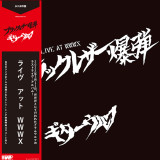
This live album is a recording of the last live performance by Drumwolf (Toru)'s with the band. The concert was held at W.W.W.X. in Shibuya on March 11th, 2023 and includes 13 of the songs that they played at this gig.
It is the last memorial live performance for Toru, the bedrock of Guitarwolf for many years and will be permanently etched on vinyl. This is a must record that fans need to get hold of, as it is the live recording of the band's latest performance featuring many of their classic songs.
Guitar Wolf have been expanding their horizons of their activities in recent years, including an appearance at the Shimane Jet festival, and they hope you can appreciate the pure joy of their universal rock 'n' roll vibes on vinyl that might be too hot for the whole world to handle!
And as a bonus item, you can stream the full live performance of this monumental concert of Guitarwolf in its entirety as well! It was directed by Tetsuro Takeuchi who has previously worked on Guitarwolf's music videos for many years.
This video of their live performance was edited full of tension and speed and it truly displays how much Guitarwolf deserves the title of Japan's number one rock 'n' roll band. This fact can also be relived by seeing this video included in this deluxe edition.
Guitarwolf
Members:
Seiji (Guitarwolf): Lead Vocals, Guitar
GOTZ (Basswolf): Bass, Vocals
Shingo (Drumwolf): Drum Note: Joined the band in 2022
Real-life rock 'n'roll super heroes that rock fans all over Japan continue to admire.
While creating numerous legendary myths in the 1990s, being unique beyond comparison, they continue to consistently blare out their spontaneity to the present day,
The band's unusually extreme and bombastic sound amplifies the embryonic impulses of rock 'n' roll, while Seiji's lyrics mix words that evoke the 'universe' and the 'Showa era' with his own unique sense of humor. In their relentless pursuit of a style that has remained unchanged since the band's formation, the music that the three members who don their entire bodies in black leather play, emits power that transcends time and space. While doing so, they continue to gain enthusiastic fans from all over the world.
Formed in 1987, the original members, Seiji and Billy (bass, vocals) and Toru who joined the band later, started their musical activities together and released their debut album "Wolf Rock" in 1993 from the Memphis-based Goner Records. Later, they signed to Matador Records, one of the leading indie labels in the USA. They also made their major label debut in 1997 with the album, "Wolf Planet" on Ki/oon Records/ Sony Music in Japan.
They have released 12 albums to date. The band has also continued to tour energetically around the world, not only in Japan but also in the US, EU countries, Australia and South America. Billy suddenly passed away in 2005. After having two mighty support casts, U.G. and Hikaru, GOTZ (Gotz) joined the band in 2018 as the new bass wolf. Also, Toru who had been with the band as drum wolf for many years left in 2022 and the band is now more energetically active with their new drum wolf, Shingo.
debe ser publicado en 10.05.2024

Ivan The Tolerable is the alter ego solo project of Middlesbrough based musical wizard Oli Heffernan. Aside from his solo work as ITT, Oli has played in numerous bands over the years including Year Of Birds, King Champion Sounds with members of the Ex, Detective Instinct, and Shrug, and has collaborated with icons like Mike Watts of the Minutemen, and J Mascis of Dinosaur Jr.
Ivan The Tolerable started by accident in 2013 when Heffernan recorded a bunch of songs for his band at the time (Year Of Birds). These were a bit too left-field for a speedy garage band, so Oli decided to put them out on tape himself, and hasn’t looked back since with releases on Up In Her Room, Stolen Body Records and Library of the Occult to name just a few.
We are delighted to bring you our next entry from the Ivan The Tolerable archive reissue series, 2019’s ‘Wild Nature!’ Originally released on CD by Ack Ack Ack Records back in 2019, the album has now been remastered and repackaged, and will be released on super ltd edition orange wax. Here’s a bit about the album in Oli’s own words.
‘Wild Nature was originally recorded sporadically during the first half of 2019. It started life in one house, then I moved and it was finished in another. I remember screenprinting the original CD artwork on the sly at my old job during my lunch breaks and hand-assembled a small run of about 50 that are all long gone. I also remember walking around Albert Park early one morning in thick fog with a field recorder to capture the sounds that were then processed to form 23 Minutes Over Albert Park (condensed to 4 mins for the reissue due to time constraints). I think this was also the last album I recorded vocals on and also the last one I recorded completely by myself - all instruments, recording, mixing, mastering and artwork done by me at home. I know the first and last tracks were recorded as a birthday present for someone but I cant remember much about the other songs i'm afraid - 4 years is a long time in my speedy world. I've been asked a bunch over the years about a vinyl edition of this one - so here it is. Enjoy - especially everything that went through the delay pedal, which is sadly no longer with us.’
debe ser publicado en 15.03.2024
First ever vinyl release of the album recorded in 1969/70 by UK prog-psych band Misty. Including their terrific mod-psych “Hot Cinnamon” 45.
A dazzling fusion of classically-inspired progressive rock and song-based psychedelic pop with an organ-based sound, in the vein of Procol Harum and The Nice.
“In October 1969, King Crimson released their debut, In The Court Of The Crimson King, Pink Floyd unleashed Ummagumma and Led Zeppelin put out their second LP. At the same time, Misty were in London’s Regent Sound Studios recording what turned out to be the only album of their career with producer, Adrian Ibbetson, who had cut his teeth as an engineer working with everyone from the Beatles to the Equals.
After only a handful of gigs, Misty signed a deal with Parlophone and began to gather momentum with the release of Hot Cinnamon. Although they received a lot of airplay, the single failed to chart and the band’s hopes of releasing their debut album were dashed. Reluctantly, Misty went their separate ways and the Here Again master tapes sat gathering dust on a shelf until Gelardi came across the original acetate and decided it was time for the album to finally see the light of day.
Bridging late psych and early prog, songs like Life Has Just Begun, Witness For The Resurrection and the title track were played with a perfect mix of high-flying experimentation and virtuosic musicianship. Blurring the fine lines between rock, jazz, classical and chamber pop, Here Again is a transcendent kaleidoscope of colour that is beyond definition.
Maybe you can tell an album is truly timeless when it takes half a century for it to be properly appreciated. Misty were a rare bird, a brilliant, truly original band who should have left an indelible mark instead of joining what now seems like the never-ending line of half-remembered and long-forgotten flotsam and jetsam of the psychedelic era.
Both the first and the final statement from a group who never really got their chance to be heard, Here Again is a slice of pristine psychedelic pop that so embodies the dizzying energy and the progressive spirit of the time, it’s astonishing that it stays afloat under the weight of its own intentions. But float it does, like mist in the air - a half-forgotten diaphanous dream slowly coming back to you after 50 years of silence.” – Jonathan Wingate
debe ser publicado en 01.03.2024

It’s a family affair. One formed almost thirty years ago, back in the mid-nineties, when the pair joined seminal French jazz combo Olympic Grammofon. For twenty-four years they have worked together as Bumcello, each complementing the other, echoing polar opposites. The Boom in Bumcello is none other than Cyril Atef, incisive drummer, relentlessly pushing beats towards new horizons. The Cello is Vincent Ségal, cellist without blinkers and extraordinary musical alchemist. Since 1999, these two die-hard music fans, coming together for mercurial results, have released one record after the other whilst conquering the hearts of their live audiences, old regulars as well as new recruits. We have all been seduced by the way their music leapfrogs categories - these two experts are much more interested in kindred spirits than pigeonholing, and this very spirit is celebrated on more than one track of this ninth record, whose concept is original to say the least.
Everything began with an idea by Cyril Atef - a soundtrack based upon drawings penned by Marin, Vincent’s son, architect and visual artist. The musicians involved then coached their reaction to these images on a score, and the pair were charged with collating and adjusting the results. These thirteen ink drawings, in a heroic fantasy vein, constituted a matrix which was then to serve as a guide, like a roadmap through a singular and multi-faceted labyrinth. The key to this sonic fresco is in Bumcello’s image – an eclectic aesthetic twinned with a great sense of contrast. Herein lies the trademark of this entity animated by the gift of musical ubiquity, gorged on scales and rhythms, capable of a slap as much as a gentle caress. From classical music to electronics, from improvised music to sophisti-pop, everything is allowed with no preconceived ideas. They can even reclaim the traditions of others, all the better to propel them towards new horizons - this is how the very history of music has always panned out.
If you listen between the lines and look at the details, more than one piece bears witness to the moments and individuals that have impacted the criss-crossing lives of Vincent and Cyril. The track Crash is the perfect excuse to create a Jamaican-style jam with New York inflections, and we can see, in capital letters, the name Hilaire Penda, playing alongside Bumcello at the Apollo Theater in the associated drawing. This bass player from Cameroon, who died on 5th November 2018, was more than just a friend for the two Frenchmen. He was one of the family. Similarly, they give a nod to another Cameroonian, and another departed friend - singer of rock band les Têtes brûlées, Zanzibar, through the vocals of fellow countryman Zanzi. The ghost of Rémi Kolpa Kopul, emblematic voice of Radio Nova, haunts the margins of Spark Av, in a vocal sample with a smattering of effects. As for I Remember Tim, it directly honours the memory of Timothy Jerome Parker, aka The Gift Of Gab, another friend who left us in 2021. Tim is depicted in a drawing with the docks of Oakland in the background, and it’s his alter ego within Blackalicious, Chief Xcel, who remotely added his signature to the track, notably by adding the words of Lateef The Truthspeaker to brass and woodwind sounds.
These are the only additions to Bumcello’s original nucleus, all the better to create a genuine musical concoction where Vincent Taurelle is in charge of production and mixing sessions recorded live and direct. He is also invited for a twinkle on the keys (piano, synths, Wurlitzer, organ), on a handful of tracks. Already at the commands of previous opus Monster Talk, always taking care over the slightest detail, the one that makes all the difference, this pianist is now also part of the family. “Everything he brings is perfect, whether added though slight touches or through very important choices”, say the two members of a combo which today, appears to us under the guise of a trio, adding an extra dimension to a far-reaching mix, in the image of the veiled or more explicit tributes making up the cornerstones of this release.
Booker, a drawing where we see the musicians enter a club, honours James Booker, great pianist from New Orleans who has always fascinated Vincent, in a genre that is off-beat and gender defying. Her Story was created by Cyril in support of the Iranian women’s movement. Aysyen Kampe evokes, even in the original drawing, a tradition that remains impactful for Bumcello – Haitian mysticism, and Ouï Khouïette Ouï conjures up the beats of the Allaoui, a war dance from Western Algeria, one they have taken part in in the past with the help of Cheikha Rabia. They deliver a metal version, original and surprising, especially as Marin Ségal’s drawing features the Nicholas Brothers, those iconic dancers of the 30s jazz scene!
Resolutely hard to pin down, Bumcello’s beats can initially take on the structure of disjointed house, though Sangre begins like a film soundtrack, “in a Mexican style” adds Vincent, who was at the origin of this track. A delicate alap on the cello can open up onto afrobeat rhythms, a well-pitched voice can enchant, like on the amazing The City Has Eyes which has everything of a hummable pop hit. Emblematic of this manner of encompassing all music without being exclusive, Le Grand Sommeil, a direct reference to the Howard Hawks movie inspired by Raymond Chandler, a precursor of David Lynch, begins nice and smooth but ends on a wild tempo, on a drum’n’bass tip, as in the good old days of Cithéa, when this Party story began in the other century.
debe ser publicado en 23.02.2024
Dazzle rolled deep. Very deep. In the 1980s, it wasn't unusual for the Milwaukee-based group to show up at various Midwest night clubs in a caravan of 30-40 cars and vans. Their live following was hard won over a career that spanned 20+ years, many line up changes, and a handful of project names. Friends, family, and fans made the journey with them weekend after weekend, a testimony to both the musical prowess of the group and the tight-knit community that they emerged from.
Donald Smith, band leader, was there the whole time - joined by many of his siblings and friends - first as founder of the Ghetto Players, a early 70's nine-piece which also included siblings Michael, Ronald, and Charles. They played hard funk in the style of early Kool and the Gang, and although they sadly left no recordings, the strength of their live act managed to catch the eye of local Milwaukee R&B music entrepreneur Cobie Joe Payne. Cobie had made a couple of records locally in the early/mid 70s as a singer, including the impossibly weird and amazing rare afro-blues-funk 45 "Sweet Thing", but had never enjoyed national success. When the Ghetto Players disbanded in the early-mid 70s, Donald soon put together a new group, C on the Funk (the 'C' referring to lead vocalist and sibling Charles), under Payne's tutelage. Sister Lorrie Smith came in as the drummer, the line-up being fleshed out by brothers David and Melvin Johnson, and friend Robert Mitchell. After a few years as a strictly live attraction, they drove to Chicago and produced a single, "In the Disco" / "A Place" for Payne's small record label Sweet Thang Records in 1980. Lacking the financial backing needed to supply the local R&B disk jockey's "promotional fees" , this single sadly languished in obscurity, gathering dust inside the local tavern jukeboxes and manilla promo envelopes that comprised Payne's DIY distribution network.
C on the Funk were traveling the Mid West extensively at this point, and making some important friends on the road. Ike Wiley Jr. of the Dazz Band/Kinsman Dazz took particular interest and the band was re-christened Dazzle, partially as a tie-in with Dazz, partially to embrace the new sounds that would distinguish the 70s disco scene from what record collectors and DJs would now refer to as the "Boogie" era. There no doubt was a stigma attached to the word "Disco" as the eighties began, and as we see in this collection C On the Funk's "In the Disco" is remixed and transformed into the psychedelic synth instrumental of Dazzle's "Disco's Out", a title which embodies both the next-step approach Smith and company were pushing for, and humorously comments on the state of black dance music in the early 1980s. The Dazzle recording, done in Chicago in 1982, updated the sound and featured an expanded line up, most notably a second synth player (Charles Washington), and a percussionist/second lead vocalist (Greg McDonald). The added synth textures and deep percussive grooves give the Dazzle recordings an elegant late night vibe that resonate just as well in a good pair of headphones as they do on the dance floor. The trance inducing cough syrup-warble of "Explain" may best exemplify this here. Sadly, a pressing flaw in the 12" halted production and promotion, and the EP and the songs within were lost to the ages. The group, having done a much better line in the live music business, followed that path instead all the way to the early 90s. --bio provided by andy noble
Haga su pedido ahora y le encargaremos el artículo en nuestro proveedor.

Milanese techno shaman MAIKE DEPAS travels from the dark to the dreamy side of the dance floor on his EP "Euphoria" (out 24 November on The Innovation Studio)
"Techno emissary Maike Depas storms back onto the scene with 'State of Techno', a bold fusion of past and present influences set to reshape dance floors in 2023." (Magnetic Mag)
"State of Techno is the Milanese producer's visionary work fusing 80's and 90's sounds through a modern lens creating an exhilarating release weaving through 30 years of underground club music." (The Brvtalist)
On the back of the breaky Grand Prix 2049 anthem "Midnight Ride", Milanese techno shaman MAIKE DEPAS (Michelangelo De Pasquale) travels from the dark ("We Move", "Inner Voices" and "Techno Appeal") to the dreamy side ("Midnight Ride" and "Green Hornet") of the dance floor on his EP "Euphoria", coming out on 24 November via The Innovation Studio. One foot in stoic Schranz techno of Chris Liebling"s CLR, the other one in eschatological goa trance of Dragonfly Records, never going under 134 BPM, Depas strikes the perfect balance between dystopia and utopia. "This is my idea of what the ravers want to listen inside the club's Depas reckons.
"Euphoria has two sonorities: the dark vibe, and the dreamy one. This is my idea of what the ravers want to listen inside the club's Maike Depas
With the complex arrangements of the past Depas-releases left out and the trusted workhorse a custom-made pitch black Roland TR-909 from 1983 responsible for doing the heavy lifting in the drum sections, "Euphoria" is a beat-heavy affair that draws its relentless drive and rhythmic richness from merging polyrhythmic patterns merged with streamlined melodies and nifty vocal samples such as the double entendre "quiero jugar una horas mas" (Engl. "I want to play one hour more") on the no-holds-barred hard trance number "Techno Appeal", and the riveting juxtaposition of mesmerizing female vocals and handclaps of roaring crowds in hypnotic "Inner Voices".
"These demoniac figures resemble human transformation and the idea of achieving euphoria through esotericism's Maike Depas
However, when it comes to Depas, there is always more to his music than merely being dead set on setting the dance floors on fire. The antler-wearing figures and witches" circles depicted in the artwork hint at Depas" invitation for the clubbers to let his music move them far beyond the physical world. "These demoniac figures resemble human transformation and the idea of achieving euphoria through esotericism's
Haga su pedido ahora y le encargaremos el artículo en nuestro proveedor.

Er hat es wieder getan! „The Mystery Of Time“ markiert quasi den Rücktritt vom Rücktritt, den Tobi Sammet nach der AVANTASIA-Show auf dem „Wacken Open Air“ 2011 verkündet hatte. Mag Sammet damit zwar auch gewissermaßen wortbrüchig geworden sein, so darf man sich in diesem Fall dennoch darüber freuen, denn mit „The Mystery Of Time“ liefert der quirlige Frontmann einen absoluten Geniestreich ab. Jetzt als Reprint im Ltd. 10 Jahre Anniversary Red /Gold Vinyl 2 LP !
debe ser publicado en 24.11.2023

Presenting the third volume of forward-thinking electronics and peerless Jungle / D&B expressionism from iconoclastic Bristol producer and DJ, Krust. An artist who has always been pushing the sonic envelope while keeping dancefloors fully locked.
Introducing 'Irrational Numbers,' a meticulously curated collection of five parts, available on both vinyl and digital formats. This compilation is a treasure trove of hand-picked records and archival gems from Krust's extensive discography, thoughtfully remastered and presented anew for both devoted fans and newcomers.
'Irrational Numbers' features a dizzying array of self-released 12" cuts, exclusive unreleased VIPs and dub-plates, alongside epic major label widescreen classics. It's an unmissable journey through the sonic output of one of the UK's most distinctive and forward-looking producers.
Volume 3 serves us a plethora of unmissable highlights from Krust's enviable back catalogue. From the raw jump-up chaos of 'Rukus', the early rolling business of 'The Resister' to the epic genre defying voyage that is 'Soul In Motion', no stone is left unturned on what is - once again - an essential purchase for any serious lover of electronic music.
For longtime Krust enthusiasts, this project serves as a fond reminder of the boundless creativity and originality that flourished during the early 1990s and beyond. For those new to his work, it presents an enthralling introduction to innovative electronic music that has comfortably set the tone for generations to come. Get ready to experience the evolution of sound and immerse yourself in the visionary artistry of Krust.
Haga su pedido ahora y le encargaremos el artículo en nuestro proveedor.

A central figure in Seattle’s fading disco scene, radio DJ, producer, engineer, writer and multi-instrumentalist…Tony Benton was the driving force behind the Seattle soul-funk sound during the late 70s & 80s. Starting off his career at the age of ten he learned how to play the piano and then finally got to take a music class in the 7th grade. Having access to an electric piano made him fall in love with the thought that he could make his own music. At the age of 16 Tony and his friends already formed their first band called ‘Crystal Clear’ and were making up songs in his basement.
Things would really start off when Tony Benton teamed up with his group to form the avant-boogie group Teleclere who went on to release their first single in 1982 (Fantasy Love / Ultra Groove). That’s when Tony started playing all of the other instruments and thus earning him the title ‘multi-instrumentalist’. Teleclere was all about creating and performing original music, there was no music scene in Seattle at that time for a black artist or group who played original compositions. Rap-music was also emerging and clubs slowly started to switch from live performances to deejays.
Through the success of their independent EP release, Teleclere followed up a year later with their Affection/Defection album which created a serious hype. This gave them the chance to regularly open at concerts for national artists in halls and clubs. They played at nightclubs, bars, festivals, private parties and did mini tours in the Washington State cities & Canada…including opening for Grammy-award winning soul-star Peabo Bryson (performing for a crowd of 3,000 in their hometown Seattle)
Sadly, radio would not play their music so folks never really had the chance to hear it unless they saw them perform live (they always won the crowd over). To add insult to injury, venues and the likes started to mainly book cover bands playing top 40 music. Disappointed by this Tony Benton became a radio personality but would continue to record and perform under the name ‘Teleclere’ with various players and vocalists for many years to come. Only a handful of his tracks recorded were released in the end.
Thankfully we are left with the unique audio-document that is the Affection/Defection LP. The album took the scene by storm in 1983 and sounds like a sci-fi space odyssey unfolding on an intergalactic dance floor…a chopped and slapped slice of 80ies electro-funk, sensual soulful serenades, pulses of Innervisions-worthy bass, top of the line vocals and a plethora of vocoder magic. Also included is the hit ‘Steal Your Love’ that was featured on the acclaimed 2014 Light In The Attic compilation ‘Wheedle’s Groove Volume II: Seattle Funk, Modern Soul And Boogie 1972-1987’.
Tidal Waves Music (in collaboration with the Numero Group) now proudly presents the first ever vinyl reissue of this fantastic private pressed Seattle electronic soul/funk album (originally released in 1983 on Telemusic Productions). This rare record (original copies tend to go for large amounts on the secondary market) is now finally back available as a limited 180g vinyl edition (500 copies) complete with the original artwork and obi strip.
debe ser publicado en 28.07.2023

Bonus 7' - Black Hat Daddy & The Silver Comb Gang by Child Support Instrumental
JEROME BRAILEY funk drummer and former member of George Clinton’s PARLIAMENT FUNKADELIC is most famous for co-writing PARLIAMENT’s 1976 gold hit single “Give Up The Funk (Tear The Roof Of The Sucker)". But thanks to poor management, in 1978 he and several other members mutinied and left the group.
That same year Jerome gathered his own crew, dubbed them MUTINY, and issued two classic funk albums on Columbia Records: “Mutiny On The Mamaship” (1979) and “Funk Plus The One” (1980). A third album entitled “Black Hat Daddy & The Silver Comb Gang” was scheduled for release on Jerome’s own label J.Romeo in 1981 but, due to unforeseen circumstances never saw an official release, although a handful of tracks were included on MUTINY’s 1983 album “A Night Out With The Boys”.
So now, Jerome Brailey & Regrooved Records proudly presents the original mixes and line-up for the true 3rd and unreleased MUTINY album “Black Hat Daddy & The Silver Comb Gang”.
Haga su pedido ahora y le encargaremos el artículo en nuestro proveedor.

Bonus 7' - Black Hat Daddy & The Silver Comb Gang by Child Support Instrumental
JEROME BRAILEY funk drummer and former member of George Clinton’s PARLIAMENT FUNKADELIC is most famous for co-writing PARLIAMENT’s 1976 gold hit single “Give Up The Funk (Tear The Roof Of The Sucker)". But thanks to poor management, in 1978 he and several other members mutinied and left the group.
That same year Jerome gathered his own crew, dubbed them MUTINY, and issued two classic funk albums on Columbia Records: “Mutiny On The Mamaship” (1979) and “Funk Plus The One” (1980). A third album entitled “Black Hat Daddy & The Silver Comb Gang” was scheduled for release on Jerome’s own label J.Romeo in 1981 but, due to unforeseen circumstances never saw an official release, although a handful of tracks were included on MUTINY’s 1983 album “A Night Out With The Boys”.
So now, Jerome Brailey & Regrooved Records proudly presents the original mixes and line-up for the true 3rd and unreleased MUTINY album “Black Hat Daddy & The Silver Comb Gang”.
Haga su pedido ahora y le encargaremos el artículo en nuestro proveedor.

JEROME BRAILEY funk drummer and former member of George Clinton’s PARLIAMENT FUNKADELIC is most famous for co-writing PARLIAMENT’s 1976 gold hit single “Give Up The Funk (Tear The Roof Of The Sucker)". But thanks to poor management, in 1978 he and several other members mutinied and left the group.
That same year Jerome gathered his own crew, dubbed them MUTINY, and issued two classic funk albums on Columbia Records: “Mutiny On The Mamaship” (1979) and “Funk Plus The One” (1980). A third album entitled “Black Hat Daddy & The Silver Comb Gang” was scheduled for release on Jerome’s own label J.Romeo in 1981 but, due to unforeseen circumstances never saw an official release, although a handful of tracks were included on MUTINY’s 1983 album “A Night Out With The Boys”.
So now, Jerome Brailey & Regrooved Records proudly presents the original mixes and line-up for the true 3rd and unreleased MUTINY album “Black Hat Daddy & The Silver Comb Gang”.
Haga su pedido ahora y le encargaremos el artículo en nuestro proveedor.
Jam Baxter returns with two new tracks 'The Stump' produced by Chemo X Last Japan & 'Red Hawaiian', produced by Zygote, the Strange U producer. These limited edition white double A side 7" vinyls are being released in conjunction with his newly released book 'Off Piste' - which sold out in under 12 hours. All records are hand numbered and come in a printed sleeve with 3mm spine & black paper inners. Limited to 500 copies (only 200 left), never to be repressed, get yours while stocks last.
debe ser publicado en 30.06.2023

Few bands have as enduring a legacy in the acoustic/newgrass/jam band
scene as Colorado-based Leftover Salmon
Carrying the torch passed down by the progressive bluegrass pioneers, The
Seldom Scene and Newgrass Revival, Leftover Salmon are true architects of the
contemporary jam grass scene, inspiring the careers of a generation of artists
including Billy Strings, Greensky Bluegrass and Yonder Mountain String Band.On
'Grass Roots', Leftover Salmon reflect on its bluegrass and festival campground
origins with a set of songs that draws from the repertoires that The Salmon
Heads and The Left Hand String Band played when they first jammed in a
Telluride Bluegrass Festival campground. Collaborating with jam scene icons Billy
Strings, Oliver Wood, and Darol Anger, and with the recent addition of Jay Starling
on resophonic guitar, lap steel and keys to the band's official line, Leftover Salmon
have all the instrumental firepower needed to deliver hard driving versions of
bluegrass standards and grassed- up versions of songs from Bob Dylan, David
Bromberg, and The Grateful Dead.
Featuring special guests BILLY STRINGS, OLIVER WOOD and DAROL ANGER
debe ser publicado en 09.06.2023

Inspired by the rawness and honesty of artists like Elliott Smith, Julien Baker, Adrianne Lenker & Sufjan Stevens, Callum Pitt imbues his indie-folk with grand, orchestral, chamber pop sensibility plus an alt-rock edge. Despite using music often as a canvas to openly discuss depression & anxiety, as well as political unrest, Callum still manages to imprint feelings of optimism and unity, alongside genuine warmth and honesty, throughout his songs.
This debut album In The Balance pinpoints back to one night in 2019, where Pitt was handed an earth-shaking reminder of how much hangs in the balance with each passing second. Minutes after he waved goodbye to his brother and parents as they left his house, a fire engine hit the back edge of their car. They were all unharmed. But if the car was in the engine’s path a fraction of a second later — if Pitt had said one more word at the doorstep — it would have ploughed directly into the drivers’ side.
28-year-old Pitt has been working on his craft for a decade, beginning in the Newcastle pub scene and gradually refining his thoughtful, poetic songwriting voice. He won the Alan Hull Award for songwriters in 2019, and the Fender Player Plus competition in 2021. Meanwhile, he’s studying a masters in Occupational Therapy, and has worked with children, young people and adults with disabilities through various outlets, including therapeutic music work. These are experiences that shaped In The Balance, his first true body of work, giving him a new perspective on the cathartic and unifying power of music.
debe ser publicado en 02.06.2023

Emotional Rescue is delighted to debut a first. Rather than a straight reissue of an (obscure) classic or a collection of music by an artist or label, here presented is a compilation of various artists centered around a sound and movement reggae-tinged music and how it influenced and spread from the Caribbean and diaspora.
Drawn from the off kilter digging of archivist, DJ and collector Bruno (perfectliv.es), Nowhere Like Here is not a follow up, but a sideways accompaniment, to his recent and already cult like 'Perfect Motion' collection of left field pop and new wave, recently self-released with Flo Dill (NTS).
This is a special release to celebrate the label's 10th year and beyond, offering a treasure trove of lo-fi and often pop inspired reggae cuts, mixing heartfelt Lovers Rocks style paeans and quirky private press oddities, all guaranteed to 'make-a-move and tap', these are, in the main ridiculously rare or impossible to find alternative bombs, that are just as sound system rocking and massive bass line quaking showcases of the enduring legacy of this Jamaican music phenomenon.
As with much of the early 80s period, the music community was in the throes of a Do-It-Yourself cultural renaissance as small labels, where crazy limited, one off White Labels Onlys came and went. Songs like Avalanche 's 'Your Love is Such a Good Thing 'or Warp Speed's 'Take It To The Night' were part of the claiming the means of production in to their own hands, pressing up the records and self-distributing. This raw, naive exuberance can be heard in the songs themselves. This is not reggae or Lovers as known, but something more expressive. Musical, simply produced, but with intelligible and uplifting optimism that is just superlatively catchy.
While Paul Thompson's 'Can I Take You Home' and Ras Ibuna's 'Black Beauty' are more straight-ahead Lover's style cuts, there is the parallel dance pop private pressing vibrations of the two Keith Robinson songs and Majority's 'Caroline' included all part of a thread; a joining the dots that Nowhere Like Here is at its most basic, a warmth the whole album exudes.
This is not a Lovers Rock Hits of some, but a left-of-center versioning, spread across Double Pack and cut loud for DJ play, fitting the ethos of Emotional Rescue by presenting something most will not have heard before and all the better for it.
Haga su pedido ahora y le encargaremos el artículo en nuestro proveedor.

Repress!
Silver Sleeve 2012 Version
This special edition 2LP package comes housed in an a silver jacket featuring DOOM’s infamous metal mask icon embossed on it.
Each record is pressed on black vinyl. An absolute must have for the DOOM completist. The long awaited reissue of DOOM's first solo gem, Operation: Doomsday. Remastered from the original Fondle 'Em 1999 issue. Side A is listed as "Side Zero". Side B is "Side One". And so forth. Underneath his mysterious metal mask, MF DOOM hides the cachet underground legends are made of. After KMD (his first group)’s 1994 sophomore album Bl_ck B_st_rds was shelved by Elektra in 1994 and his blood brother Subroc (one half of the sibling rap duo) passed away, surviving frontman Zev Love X mutated into the MC Avenger known as MF DOOM and the Rap world is better for it. This 19-cut deep album is ridiculously dope, in a bizarro Ol’ Dirty Bastard kind of way. Doom sounds either high or drunk on most of the tracks, his self-produced beats are gritty, and his rhyme styles are almost indecipherable. On arguably the best track, “Rhymes Like Dimes,” Doom weaves some pointed lyrics through his abstract wordplay, spitting ‘only in America could you find a way to earn a healthy buck / And still keep your attitude on self-destruct.’ Who You Think I Am? features DOOM‘s crew M.onster I.sland C.zars, while on “?” he trades hot verses with former Columbia artist Kurious Jorge. Doom’s avant-garde ghetto-rhyme philosophies take even more intentionally weird twists on “Tick, Tick...” where he and guest MC MF Grimm’s flows warble over a rhythm track whose tempo speeds up and slows down continually. The comic-book themed skits, will help take you deep into the mind of an MC who is as otherworldly as they come. And in today’s bland commercial Rap universe, Operation Doomsday’s left-of-center beats and rhymes are the perfect remedy.
Haga su pedido ahora y le encargaremos el artículo en nuestro proveedor.

Dooley-O commands you to STICK YOURSELF! But not before stocking his new 45 please. Bankrupt Europeans (who have previously produced for RA The rugged Man, Roc Marciano, Chill Rob G, Chubb Rock, AG, Phill Most Chill, Rise and MC Juice) started a back&forth with 90s legend and Stezo cohort Dooley-O a few years ago, even recorded a couple of demos but it wasn't until 2021 that we all had a chance to do this properly! Hands down two of the hardest and snappiest Bankrupt Europeans beats to complement Dooley-O's incredible punchlines and murderous flow. Dooley-O shows that not only has he not lost a step since the days of releases on Stones Throw and Lewis Recordings, but if anything his skills have sharpened over the years!
The A-Side is Stick Yourself and sees Bankrupt Europeans bring this absolute head nodder of a beat, heavy but very funky and laced with modular synth sounds and cuts from DJ Grazzhoppa throughout. Dooley-O’s tongue-in-cheek rap style is sharper than Rambo’s knife as he proceeds to encourage you to Stick Yourself or risk being taken out by himself. There is this comedic bravado here that has Dooley-O displaying just how good his rap style is, while between the lines he saying ‘I’m that good, I shouldn’t have to take you out, that’s your job But, If I have to do it, it ain’t gonna be pretty.’ Flipping it to the B-Side for track 2 we have Death Blow that hits hard with a brooding intro before the heavy bass and eastern sounds inject more adrenaline into your veins! Dooley-O continues the lyrical assault he began in Stick Yourself. Here he delivers a cold and calculated volley of witty punchlines with ease. His plan here is plain and simple, which is to deliver a brutal Death Blow to all those suckers left walking and talking
Available in black wax in 250 hand numbered copies in a company sleeve with a sticker.
debe ser publicado en 10.03.2023

LIMITED EDITION DREAD BLACK VINYL LP, WITH THREE DOUBLE SIDED A4 INSERTS AND DOWNLOAD CODE. HOUSED IN PRINTED OUTER SLEEVE WITH POILYLINED INNER, AND HYPE STICKER. NON-RETURNABLE.
Bruxa Maria are G. Dread: Guitar, Vocals-Dave Cochrane : Bass (Head of David, God, Terminal Cheesecake) - Paul Antony: Drums (Ghold, Test Dept) - Robbie Judkins: Synth noise (Left Hand Cuts off The Right)
Bruxa Maria are back on their third full length; be grateful. “Build Yourself A Shrine And Pray” is 45 minutes of pummelling, punishing fury as unrelenting and all-consuming as your anger at coming up short for the rent.
The new record finds the band just as enraged as their 2016 debut, while continuing to evolve artistically. Bruxa Maria’s huge bass and guitar, frantic drums, and banshee shrieking vocals build tension with few moments of release, the frenzy sometimes dissolving into feedback, static, and synth drones.
Often the riffs have a swagger that makes you want to dance, and in a few places there are flashes of some genuinely pretty melodies and hooks. Those moments all shine through for just an instant before being shredded by the noise and wrath, torn apart flower petals under a line of razor wire.
This is dark music about and against a darkening world, where anger and art are crucial to how we keep on keeping on. You can call it now, this is going to be the best record of 2023.'
(Nate Holdren)
debe ser publicado en 27.01.2023

Vandermeer spielen Shoegaze mit Rock-Einflu?ssen. Während der Coronapandemie schrieben sie ihr drittes Album "Grand Bruit" statt zu touren. Die Songs handeln von persönlichen Rückschlägen, politischen Entwicklungen (die Corona-Leugner-Problematik), Verlustängsten, einer intimen Auseinandersetzung mit Social Distancing und dem Alleinsein, während man mit den meisten Maßnahmen konform ist. Die Fassungslosigkeit gegenüber den Egoismen, den Demonstrationen der Corona-Leugner, dem Zuwachs der Neuen Rechten. Eine Wut, eine Fassungslosigkeit, ein Aufstehen, ein Dagegenhalten - das ist "Grand Bruit".
debe ser publicado en 09.12.2022
Created and conducted by Sam McLoughlin (N.Racker, Sam and the plants) & David Chatton Barker (Folklore Tapes), Environmental Meditation Music (EMM) is a collaborative project with the natural world, where handmade instruments are placed in the environment and are played by the wind, rain, grass, snow and rivers. The instruments capture and channel the innate rhythms and frequencies of the elements, converting them into a fluid and detailed blend of modulating drones, birdsong, dripping water and the sounds of distant polyrhythmic drumming, overtone flutes and ringing chimes. The instruments include River Harps, Water Gongs, Clock Chimes and Aeolian Flutes, and are made using a variety of materials ranging from guitar strings, rubber bands, saw blades and jars, many of which are amplified using contact microphones. Since 2017 the duo have collected many hours of recorded material, which has been hewn into a long form digital edition and this two-sided 46min long playing record. For the record sleeves, a paintbrush was suspended on a branch using string. The sleeve was cut and placed upon a table with string passed around four bamboo canes in order to keep the brush contained above the card. Windy days were chosen to animate the brush. The brush was dipped into black drawing ink and begun at the middle of the card. Lastly the sleeve was left under rain drops. In total 305x card sleeves were created using this process and so each edition of the record is unique.
debe ser publicado en 25.11.2022

Clear Vinyl
New Nordic jazz duo Svaneborg Kardyb sign to Gondwana Records and announce NPR Tiny Desk session and captivating third album Over Tage
Svaneborg Kardyb are Nikolaj Svaneborg - Wurlitzer, Juno, piano and Jonas Kardyb - drums, percussion a multi award winning duo from Denmark, where they won two "grammys" at the Danish Music Awards Jazz 2019: New artist of the year and Composer of the year. ?Drawing on Danish folk music and Scandinavian jazz influences, including Nils Frahm, Esbjörn Svennson and Jan Johansson's landmark recording Jazz På Svenska, their music is an exquisite and joyful melding of beautiful melodies, delicate minimalism, catchy grooves, subtle electronica vibes, Nordic atmospheres and organic interplay, all underwritten by the sheer joy of playing together. "We started in the earliest of mornings over the blackest of coffee, sometimes even without talking, just music.
Immediately we felt a connection between our personal style of playing and the compositions emerged like out of nowhere. The vibe from these early sessions is still the backbone of our little band".
Svaneborg Kardyb hail from Aalborg, in Jutland, in the north of Denmark where they first met in 2013 and discussed the possibility of creating a duo over late night talks. Six years went by as they both explored other projects before they eventually realised the idea of making music together. Like their new label mates, Vega Trails, Svaneborg Kardyb are a duo, a format that gives them a lot of space to occupy - or leave blank. "We enjoy the simplicity and focus it gives to the interplay. We come from very different musical backgrounds; Nikolaj from Scandinavian jazz, and Jonas from Roots, blues and folk, so the music is a sum of our personal contributions and doesn't thrive to be anything else than that. It's quite unique for us to have this shared musical tongue and friendship".
Their music is intentionally simple at first glance, but evolves and unfolds through listening over time, with plenty of room for exploration, reflection and improvisation. Their aim is to create music that is as honest and intimate as possible "with melodies and rhythms so strong that we are left as only the messengers". And their fast-developing music chemistry allowed them to give little thought to what their musical influences were. Giving their music a captivating charm. "We explored whatever sounds and musical structures our duality gave birth to and through long jam-sessions we found small seeds of ideas that turned into tunes. Danish traditional songs, community singing and hymns are a big inspiration too. Both the tonal language, the lyrical melodies and the way generations can gather around the music, is something that is close to our hearts".
Over Tage (over roofs) is their third album, following Knob (2019) and Haven (2020) and marks their debut for Gondwana Records a label noted for working with artists such as Mammal Hands, Portico Quartet and GoGo Penguin whose music, like that of Svaneborg Kardyb delights in exploring the fertile spaces between genres. For the duo it is their most serious and thoughtful record to date. "It may be our strongest and most honest record so far. Doubts and uncertainty were kind of the foundation for the sounds of the album but there is also hope and lots of uplifting moments and we're very pleased with how it came out." And it is that mixture of elevation and thoughtfulness, honesty and intimacy that makes the music of Svaneborg Kardyb so special and Over Tage such a joy to listen to. The world awaits.
Haga su pedido ahora y le encargaremos el artículo en nuestro proveedor.

Aggressive Blackened Death Metal with hooks and technical finesse that invokes the Ancient Gods! Aurora Borealis has been around for years (going back to as far as 1994! and it has mostly self-released their albums. Underground fanatics might remember the band reaching out to promote its music on forums back in the day and tracking its progress, each album was a large improvement over the earlier ones. And through time Aurora Borealis had great drummers ranked in its line-ups: Tony Laureano, Derek Roddy and Tim Yeung, which indicates the quality and level we talk about here. Aurora Borealis plays Black/Death Metal, remaining gritty not unlike Angelcorpse, but being more dynamic comparatively. It has got unique themes and the album artworks represent that. As the band name suggests, they are indicative of the Aurora Borealis phenomenon although the band has progressed to involve sci-fi imagery not far removed from Nocturnus, where artworks are concerned. Musically, the band remains true to its original Black/Death sound but it’s doing it with far more potential and competency than the others. The band’s definitely got a solid US death metal sense, it is not flirting too much with the European style of melody-infused death metal as it may appear. One will be surprised to find it so hard-hitting and gravelly and yet be rife with some of the most driven and enthusiastic activity. It is not solely focused on being technical (which in a way it is) but it is varied and it is catchy. Floridian Death Metal bands have much in common with the way Aurora Borealis structures its songs and there is the ever-present Morbid Angel influence, infected with some early Malevolent Creation rabidity. This is what makes death metal so good, few could contest with that. It’s got Death Metal in its genes, but Aurora Borealis takes the vitriol from Black Metal especially in the vocal department and gives the music an edge that is hard to miss. Here there is that special spice, that sizzling quality that comes from the rasps, adding a certain Thrashiness to it as well. The hooks make this album special, because writing good songs can be safely left in the hands of founding member Ron Vento.
debe ser publicado en 04.11.2022

Vinyl LP[23,49 €]
As the sun sets on a quaint East Nashville house, a young man bares a piece of his soul. Facing the camera, sporting a silky suit jacket/shirt/slacks/fingerless gloves ensemble that announces "singer" before he's even opened his mouth, Lee Tracy Johnson settles onto his stage, the front yard. He sways to the dirge-like drum machine pulse of a synth-soaked slow jam, extends his arms as if gaining his balance, and croons in affecting, fragile earnest, "I need your love… oh baby…"
Dogs in the yard next door begin barking. A mysterious cardboard robot figure, beamed in from galaxies unknown and affixed to a tree, is less vocal. Lee doesn't acknowledge either's presence. He's busy feeling it, arms and hands gesticulating. His voice rises in falsetto over the now-quiet dogs, over the ambient noise from the street that seeps into the handheld camcorder's microphone, over the recording of his own voice played back from a boombox off-camera. After six minutes the single, continuous shot ends. In this intimate creative universe there are no re-takes. There are many more music videos to shoot, and as Lee later puts it, "The first time you do it is actually the best. Because you can never get that again. You expressing yourself from within."
"I Need Your Love" dates from a lost heyday. From some time in the '80s or early '90s, when Lee Tracy (as he was known in performance) and his music partner/producer/manager Isaac Manning committed hours upon hours of their sonic and visual ideas to tape. Embracing drum machines and synthesizers – electronics that made their personal futurism palpable – they recorded exclusively at home, live in a room into a simple cassette deck. Soul, funk, electro and new wave informed their songs, yet Lee and Isaac eschewed the confinement of conventional categories and genres, preferring to let experimentation guide them.
"Anytime somebody put out a new record they had the same instruments or the same sound," explains Isaac. "So I basically wanted to find something that's really gonna stand out away from all of the rest of 'em." Their ethos meant that every idea they came up with was at least worth trying: echoed out half-rapped exhortations over frantic techno-style beats, gospel synth soul, modal electro-funk, oddball pop reinterpretations, emo AOR balladry, nods to Prince and the Fat Boys, or arrangements that might collapse mid-song into a mess of arcade game-ish blips before rallying to reach the finish line. All of it conjoined by consistent tape hiss, and most vitally, Lee's chameleonic voice, which managed to wildly shape shift and still evoke something sincere – whether toggling between falsetto and tenor exalting Jesus's return, or punctuating a melismatic romantic adlib with a succinct, "We all know how it feels to be alone."
"People think we went to a studio," says Isaac derisively. "We never went to no studio. We didn't have the money to go to no studio! We did this stuff at home. I shot videos in my front yard with whatever we could to get things together." Sometimes Isaac would just put on an instrumental record, be it "Planet Rock" or "Don't Cry For Me Argentina" (from Evita), press "record," and let Lee improvise over it, yielding peculiar love songs, would-be patriotic anthems, or Elvis Presley or Marilyn Monroe tributes. Technical limitations and a lack of professional polish never dissuaded them. They believed they were onto something.
"That struggle," Isaac says, "made that sound sound good to me."
In the parlance of modern music criticism Lee and Isaac's dizzying DIY efforts would inevitably be described as "outsider." But "outsider" carries the burden of untold additional layers of meaning if you're Black and from the South, creating on a budget, and trying to get someone, anyone within the country music capital of the world to take your vision seriously. "What category should we put it in?" Isaac asks rhetorically. "I don't know. All I know is feeling. I ain't gonna name it nothing. It's music. If it grabs your soul and touch your heart that's what it basically is supposed to do."
=
Born in 1963, the baby boy of nine siblings, Lee Tracy spent his earliest years living amidst the shotgun houses on Nashville's south side. "We was poor, man!" he says, recalling the outhouse his family used for a bathroom and the blocks of ice they kept in the kitchen to chill perishables. "But I actually don't think I really realized I was in poverty until I got grown and started thinking about it." Lee's mom worked at the Holiday Inn; his dad did whatever he had to do, from selling fruit from a horse drawn cart to bootlegging. "We didn't have much," Lee continues, "but my mother and my father got us the things we needed, the clothes on our back." By the end of the decade with the city's urban renewal programs razing entire neighborhoods to accommodate construction of the Interstate, the family moved to Edgehill Projects. Lee remembers music and art as a constant source of inspiration for he and his brothers and sisters – especially after seeing the Jackson 5 perform on Ed Sullivan. "As a small child I just knew that was what I wanted to do."
His older brother Don began musically mentoring him, introducing Lee to a variety of instruments and sounds. "He would never play one particular type of music, like R&B," says Lee. "I was surrounded by jazz, hard rock and roll, easy listening, gospel, reggae, country music; I mean I was a sponge absorbing all of that." Lee taught himself to play drums by beating on cardboard boxes, gaining a rep around the way for his timekeeping, and his singing voice. Emulating his favorites, Earth Wind & Fire and Cameo, he formed groups with other kids with era-evocative band names like Concept and TNT Connection, and emerged as the leader of disciplined rehearsals. "I made them practice," says Lee. "We practiced and practiced and practiced. Because I wanted that perfection." By high school the most accomplished of these bands would take top prize in a prominent local talent show. It was a big moment for Lee, and he felt ready to take things to the next level. But his band-mates had other ideas.
"I don't know what happened," he says, still miffed at the memory. "It must have blew they mind after we won and people started showing notice, because it's like everybody quit! I was like, where the hell did everybody go?" Lee had always made a point of interrogating prospective musicians about their intentions before joining his groups: were they really serious or just looking for a way to pick up girls? Now he understood even more the importance of finding a collaborator just as committed to the music as he was.
=
Isaac Manning had spent much of his life immersed in music and the arts – singing in the church choir with his family on Nashville's north side, writing, painting, dancing, and working various gigs within the entertainment industry. After serving in the armed forces, in the early '70s he ran The Teenage Place, a music and performance venue that catered to the local youth. But he was forced out of town when word of one of his recreational routines created a stir beyond the safe haven of his bohemian circles.
"I was growing marijuana," Isaac explains. "It wasn't no business, I was smoking it myself… I would put marijuana in scrambled eggs, cornbread and stuff." His weed use originated as a form of self-medication to combat severe tooth pain. But when he began sharing it with some of the other young people he hung out with, some of who just so happened to be the kids of Nashville politicians, the cops came calling. "When I got busted," he remembers, "they were talking about how they were gonna get rid of me because they didn't want me saying nothing about they children because of the politics and stuff. So I got my family, took two raggedy cars, and left Nashville and went to Vegas."
Out in the desert, Isaac happened to meet Chubby Checker of "The Twist" fame while the singer was gigging at The Flamingo. Impressed by Isaac's zeal, Checker invited him to go on the road with him as his tour manager/roadie/valet. The experience gave Isaac a window into a part of the entertainment world he'd never encountered – a glimpse of what a true pop act's audience looked like. "Chubby Checker, none of his shows were played for Black folks," he remembers. "All his gigs were done at high-class white people areas." Returning home after a few years with Chubby, Isaac was properly motivated to make it in Music City. He began writing songs and scouting around Nashville for local talent anywhere he could find it with an expressed goal: "Find someone who can deliver your songs the way you want 'em delivered and make people feel what you want them to feel."
One day while walking through Edgehill Projects Isaac heard someone playing the drums in a way that made him stop and take notice. "The music was so tight, just the drums made me feel like, oh I'm-a find this person," he recalls. "So I circled through the projects until I found who it was.
"That's how I met him – Lee Tracy. When I found him and he started singing and stuff, I said, ohhh, this is somebody different."
=
Theirs was a true complementary partnership: young Lee possessed the raw talent, the older Isaac the belief. "He's really the only one besides my brother and my family that really seen the potential in me," says Lee. "He made me see that I could do it."
Isaac long being a night owl, his house also made for a fertile collaborative environment – a space where there always seemed to be a new piece of his visual art on display: paintings, illustrations, and dolls and figures (including an enigmatic cardboard robot). Lee and Issac would hang out together and talk, listen to music, conjure ideas, and smoke the herb Isaac had resumed growing in his yard. "It got to where I could trust him, he could trust me," Isaac says of their bond. They also worked together for hours on drawings, spreading larges rolls of paper on the walls and sketching faces with abstract patterns and imagery: alien-like beings, tri-horned horse heads, inverted Janus-like characters where one visage blurred into the other.
Soon it became apparent that they didn't need other collaborators; self-sufficiency was the natural way forward. At Isaac's behest Lee, already fed up with dealing with band musicians, began playing around with a poly-sonic Yamaha keyboard at the local music store. "It had everything on it – trumpet, bass, drums, organ," remembers Lee. "And that's when I started recording my own stuff."
The technology afforded Lee the flexibility and independence he craved, setting him on a path other bedroom musicians and producers around the world were simultaneously following through the '80s into the early '90s. Saving up money from day jobs, he eventually supplemented the Yamaha Isaac had gotten him with Roland and Casio drum machines and a Moog. Lee was living in an apartment in Hillside at that point caring for his dad, who'd been partially paralyzed since early in life. In the evenings up in his second floor room, the music put him in a zone where he could tune out everything and lose himself in his ideas.
"Oh I loved it," he recalls. "I would really experiment with the instruments and use a lot of different sound effects. I was looking for something nobody else had. I wanted something totally different. And once I found the sound I was looking for, I would just smoke me a good joint and just let it go, hit the record button." More potent a creative stimulant than even Isaac's weed was the holistic flow and spontaneity of recording. Between sessions at Isaac's place and Lee's apartment, their volume of output quickly ballooned.
"We was always recording," says Lee. "That's why we have so much music. Even when I went to Isaac's and we start creating, I get home, my mind is racing, I gotta start creating, creating, creating. I remember there were times when I took a 90-minute tape from front to back and just filled it up."
"We never practiced," says Isaac. "See, that was just so odd about the whole thing. I could relate to him, and tell him about the songs I had ideas for and everything and stuff. And then he would bring it back or whatever, and we'd get together and put it down." Once the taskmaster hell bent on rehearsing, Lee had flipped a full 180. Perfection was no longer an aspiration, but the enemy of inspiration.
"I seen where practicing and practicing got me," says Lee. "A lot of musicians you get to playing and they gotta stop, they have to analyze the music. But while you analyzing you losing a lot of the greatness of what you creating. Stop analyzing what you play, just play! And it'll all take shape."
=
"I hope you understood the beginning of the record because this was invented from a dream I had today… (You tell me, I'll tell you, we'll figure it out together)" – Lee Tracy and Isaac Manning, "Hope You Understand"
Lee lets loose a maniacal cackle when he acknowledges that the material that he and Isaac recorded was by anyone's estimation pretty out there. It's the same laugh that commences "Hope You Understand" – a chaotic transmission that encapsulates the duality at the heart of their music: a stated desire to reach people and a compulsion to go as leftfield as they saw fit.
"We just did it," says Lee. "We cut the music on and cut loose. I don't sit around and write. I do it by listening, get a feeling, play the music, and the lyrics and stuff just come out of me."
The approach proved adaptable to interpreting other artists' material. While recording a cover of Whitney Houston's pop ballad "Saving All My Love For You," Lee played Whitney's version in his headphones as he laid down his own vocals – partially following the lyrics, partially using them as a departure point. The end result is barely recognizable compared with the original, Lee and Isaac having switched up the time signature and reinvented the melody along the way towards morphing a slick mainstream radio standard into something that sounds solely their own.
"I really used that song to get me started," says Lee. "Then I said, well I need something else, something is missing. Something just came over me. That's when I came up with 'Is It What You Want.'"
The song would become the centerpiece of Lee and Isaac's repertoire. Pushed along by a percolating metronomic Rhythm King style beat somewhere between a military march and a samba, "Is It What You Want" finds Lee pleading the sincerity of his commitment to a potential love interest embellished by vocal tics and hiccups subtlely reminiscent of his childhood hero MJ. Absent chord changes, only synth riffs gliding in and out like apparitions, the song achieves a lingering lo-fi power that leaves you feeling like it's still playing, somewhere, even after the fade out.
"I don't know, it's like a real spiritual song," Lee reflects. "But it's not just spiritual. To me the more I listen to it it's like about everything that you do in your everyday life, period. Is it what you want? Do you want a car or you don't want a car? Do you want Jesus or do you want the Devil? It's basically asking you the question. Can't nobody answer the question but you yourself."
In 1989 Lee won a lawsuit stemming from injuries sustained from a fight he'd gotten into. He took part of the settlement money and with Isaac pressed up "Saving All My Love For You" b/w "Is It What You Want" as a 45 single. Isaac christened the label One Chance Records. "Because that's all we wanted," he says with a laugh, "one chance."
Isaac sent the record out to radio stations and major labels, hoping for it to make enough noise to get picked up nationally. But the response he and Lee were hoping for never materialized. According to Isaac the closest the single got to getting played on the radio is when a disk jock from a local station made a highly unusual announcement on air: "The dude said on the radio, 107.5 – 'We are not gonna play 'Is It What You Want.' We cracked up! Wow, that's deep.
"It was a whole racist thing that was going on," he reflects. "So we just looked over and kept on going. That was it. That was about the way it goes… If you were Black and you were living in Nashville and stuff, that's the way you got treated." Isaac already knew as much from all the times he'd brought he and Lee's tapes (even their cache of country music tunes) over to Music Row to try to drum up interest to no avail.
"Isaac, he really worked his ass off," says Lee. "He probably been to every record place down on Music Row." Nashville's famed recording and music business corridor wasn't but a few blocks from where Lee grew up. Close enough, he remembers, for him to ride his bike along its back alleys and stumble upon the occasional random treasure, like a discarded box of harmonicas. Getting in through the front door, however, still felt a world away.
"I just don't think at the time our music fell into a category for them," he concedes. "It was before its time."
=
Lee stopped making music some time in the latter part of the '90s, around the time his mom passed away and life became increasingly tough to manage. "When my mother died I had a nervous breakdown," he says, "So I shut down for a long time. I was in such a sadness frame of mind. That's why nobody seen me. I had just disappeared off the map." He fell out of touch with Isaac, and in an indication of just how bad things had gotten for him, lost track of all the recordings they'd made together. Music became a distant memory.
Fortunately, Isaac kept the faith. In a self-published collection of his poetry – paeans to some of his favorite entertainment and public figures entitled Friends and Dick Clark – he'd written that he believed "music has a life of its own." But his prescience and presence of mind were truly manifested in the fact that he kept an archive of he and Lee's work. As perfectly imperfect as "Is It What You Want" now sounds in a post-Personal Space world, Lee and Isaac's lone official release was in fact just a taste. The bulk of the Is It What You Want album is culled from the pair's essentially unheard home recordings – complete songs, half-realized experiments, Isaac's blue monologues and pronouncements et al – compiled, mixed and programmed in the loose and impulsive creative spirit of their regular get-togethers from decades ago. The rest of us, it seems, may have finally caught up to them.
On the prospect of at long last reaching a wider audience, Isaac says simply, "I been trying for a long time, it feels good." Ever the survivor, he adds, "The only way I know how to make it to the top is to keep climbing. If one leg break on the ladder, hey, you gotta fix it and keep on going… That's where I be at. I'll kill death to make it out there."
For Lee it all feels akin to a personal resurrection: "It's like I was in a tomb and the tomb was opened and I'm back… Man, it feels so great. I feel like I'm gonna jump out of my skin." Success at this stage of his life, he realizes, probably means something different than what it did back when he was singing and dancing in Isaac's front yard. "What I really mean by 'making it,'" he explains isn't just the music being heard but, "the story being told."
Occasionally Lee will pull up "Is It What You Want" on YouTube on his phone, put on his headphones, and listen. He remembers the first time he heard his recorded voice. How surreal it was, how he thought to himself, "Is that really me?" What would he say to that younger version of himself now?
"I would probably tell myself, hang in there, don't give up. Keep striving for the goal. And everything will work out."
Despite what's printed on the record label, sometimes you do get more than one chance.
Haga su pedido ahora y le encargaremos el artículo en nuestro proveedor.

Mohair Blue Vinyl[46,18 €]
The second installment of gems and nuggets straight from the infamous jukebox at Malcolm and Vivienne's King's Road SEX boutique.
Compiled again by Marco Pirroni (Adam and The Ants, Siouxsie and the Banshees) another collection of carefully curated tracks that were played on rotation at 430 kings road Chelsea, throughout 1974-1976.
Years in the making, this follow up to Marco’s 2004 “SEX: Too Fast To Live Too Young To Die” continues to complete the jukebox playlist with tracks contributed from those friends who frequented the shop - Jordan Mooney (RIP), Paul Cook, Steve Jones and Sam Bully amongst others – remembering those all-important songs that soundtracked the shop and left lasting impressions on them over 47 years ago.
Another wild ride and a kaleidoscope of jukebox bangers from The Animals to Max Bigraves, Nico to Burundi Black, these tracks undoubtedly played a heavy influence on SEX’s customer’s young ears many who would go on and change the musical world forever - Sex Pistols, The Clash, Chrissie Hynde, Siouxsie Sioux to name just a few.
Artwork supplied by Personality Crisis with unpublished photographs from Jane England, a student at the time but already understood the cultural significance and beauty of both the shop and Jordan Mooney who the compilation is dedicated to.
debe ser publicado en 14.10.2022

Black Vinyl[44,50 €]
The second installment of gems and nuggets straight from the infamous jukebox at Malcolm and Vivienne's King's Road SEX boutique.
Compiled again by Marco Pirroni (Adam and The Ants, Siouxsie and the Banshees) another collection of carefully curated tracks that were played on rotation at 430 kings road Chelsea, throughout 1974-1976.
Years in the making, this follow up to Marco’s 2004 “SEX: Too Fast To Live Too Young To Die” continues to complete the jukebox playlist with tracks contributed from those friends who frequented the shop - Jordan Mooney (RIP), Paul Cook, Steve Jones and Sam Bully amongst others – remembering those all-important songs that soundtracked the shop and left lasting impressions on them over 47 years ago.
Another wild ride and a kaleidoscope of jukebox bangers from The Animals to Max Bigraves, Nico to Burundi Black, these tracks undoubtedly played a heavy influence on SEX’s customer’s young ears many who would go on and change the musical world forever - Sex Pistols, The Clash, Chrissie Hynde, Siouxsie Sioux to name just a few.
Artwork supplied by Personality Crisis with unpublished photographs from Jane England, a student at the time but already understood the cultural significance and beauty of both the shop and Jordan Mooney who the compilation is dedicated to.
debe ser publicado en 14.10.2022

If someone would have told me years ago, when I started the label, that one day I would be releasing music by Ernesto Djédjé, the king of Ziglibithy himself, I would have personally driven them to the closest psychiatric institute such is the magnitude of the artist and his iconic tune “Zighlibitiens”.
The star of Ernesto Djédjé started rising in the late 60s, when he became the guitar player and leader of Ivoiro Star, founded by Amédée Pierre, star of Dopé, the leading musical style at the time. Annoyed by the “congolisation” of the Ivorian music that was taking place within the band, Ernesto left the group and emigrated to Paris in 1968 to record his first few singles arranged by Manu Dibango and influenced by Soul, Rhythm & Blues and Jerk. Those recordings reflect the musical mood at that time which was dictated by two musical trends within the Ivoirian scene: Traditional music, embodied amongst others by Amédée Pierre on one hand and imported music from the States, Cameroon and Zaïre on the other. And while the first trend was generally neglected, the youth fully embraced the second and as a result bands such as „Les Black Devils“, „Djinn-Music“, „Bozambo”, “Jimmy Hyacinthe”, shot to stardom overnight by recording mainly funk and disco music. It is within this context that Ernesto would draw the inspiration for a future formula.
Returning to Côte d‘Ivoire in 1974 Ernesto began looking for like minded musicians to form the mighty “Ziglibithiens”. Diabo Steck (drums), Bamba Yang (keyboards & Guitar), Léon Sina (Guitar) and Assalé Best (chef d´orchestre and Saxophon) would become the core of the group and together with Ernesto they began thinking of ways of combining the rhythms and chants of the Bété people and fuse them with Makossa, Funk and Disco and create a musical style that was both Ivorian and International. He called his experiment Ziglibithy and his first two albums, immortalised at the EMI studios in 1977 in Lagos and released on the Badmos label, took West Africa by storm turning Ernesto Djédjé into an icon overnight and one of the legends of African music.
Ernesto Djédjé died in mysterious circumstances on June 9th, 1983 - at the age of 35 - shocking the whole Ivorian nation. And although the end came abruptly, it didn’t come soon enough, and Ernesto had time - within 5 albums - to cement his legacy as one of the most innovative artists the Ivory Coast ever produced.
The song Zighlibitiens, brought to Colombia by an aeronautical mechanic in the early 1980, would become a huge hit on the Caribbean Coast. Renamed “El Tigre” by locals soundsystem operators - certainly due to the Badmos logo - that particular song would reach legendary status in Barranquilla and Cartagena. Setting fire to uncountable local parties, it has become one of the most sought-after Album in that part of the world. And so, while Ziglibithy has mostly disappeared from the airwaves of its country of birth, on the other side of the Atlantic, its fire continues to shine bright.
debe ser publicado en 07.10.2022

Cassette[11,72 €]
As the sun sets on a quaint East Nashville house, a young man bares a piece of his soul. Facing the camera, sporting a silky suit jacket/shirt/slacks/fingerless gloves ensemble that announces "singer" before he's even opened his mouth, Lee Tracy Johnson settles onto his stage, the front yard. He sways to the dirge-like drum machine pulse of a synth-soaked slow jam, extends his arms as if gaining his balance, and croons in affecting, fragile earnest, "I need your love… oh baby…"
Dogs in the yard next door begin barking. A mysterious cardboard robot figure, beamed in from galaxies unknown and affixed to a tree, is less vocal. Lee doesn't acknowledge either's presence. He's busy feeling it, arms and hands gesticulating. His voice rises in falsetto over the now-quiet dogs, over the ambient noise from the street that seeps into the handheld camcorder's microphone, over the recording of his own voice played back from a boombox off-camera. After six minutes the single, continuous shot ends. In this intimate creative universe there are no re-takes. There are many more music videos to shoot, and as Lee later puts it, "The first time you do it is actually the best. Because you can never get that again. You expressing yourself from within."
"I Need Your Love" dates from a lost heyday. From some time in the '80s or early '90s, when Lee Tracy (as he was known in performance) and his music partner/producer/manager Isaac Manning committed hours upon hours of their sonic and visual ideas to tape. Embracing drum machines and synthesizers – electronics that made their personal futurism palpable – they recorded exclusively at home, live in a room into a simple cassette deck. Soul, funk, electro and new wave informed their songs, yet Lee and Isaac eschewed the confinement of conventional categories and genres, preferring to let experimentation guide them.
"Anytime somebody put out a new record they had the same instruments or the same sound," explains Isaac. "So I basically wanted to find something that's really gonna stand out away from all of the rest of 'em." Their ethos meant that every idea they came up with was at least worth trying: echoed out half-rapped exhortations over frantic techno-style beats, gospel synth soul, modal electro-funk, oddball pop reinterpretations, emo AOR balladry, nods to Prince and the Fat Boys, or arrangements that might collapse mid-song into a mess of arcade game-ish blips before rallying to reach the finish line. All of it conjoined by consistent tape hiss, and most vitally, Lee's chameleonic voice, which managed to wildly shape shift and still evoke something sincere – whether toggling between falsetto and tenor exalting Jesus's return, or punctuating a melismatic romantic adlib with a succinct, "We all know how it feels to be alone."
"People think we went to a studio," says Isaac derisively. "We never went to no studio. We didn't have the money to go to no studio! We did this stuff at home. I shot videos in my front yard with whatever we could to get things together." Sometimes Isaac would just put on an instrumental record, be it "Planet Rock" or "Don't Cry For Me Argentina" (from Evita), press "record," and let Lee improvise over it, yielding peculiar love songs, would-be patriotic anthems, or Elvis Presley or Marilyn Monroe tributes. Technical limitations and a lack of professional polish never dissuaded them. They believed they were onto something.
"That struggle," Isaac says, "made that sound sound good to me."
In the parlance of modern music criticism Lee and Isaac's dizzying DIY efforts would inevitably be described as "outsider." But "outsider" carries the burden of untold additional layers of meaning if you're Black and from the South, creating on a budget, and trying to get someone, anyone within the country music capital of the world to take your vision seriously. "What category should we put it in?" Isaac asks rhetorically. "I don't know. All I know is feeling. I ain't gonna name it nothing. It's music. If it grabs your soul and touch your heart that's what it basically is supposed to do."
=
Born in 1963, the baby boy of nine siblings, Lee Tracy spent his earliest years living amidst the shotgun houses on Nashville's south side. "We was poor, man!" he says, recalling the outhouse his family used for a bathroom and the blocks of ice they kept in the kitchen to chill perishables. "But I actually don't think I really realized I was in poverty until I got grown and started thinking about it." Lee's mom worked at the Holiday Inn; his dad did whatever he had to do, from selling fruit from a horse drawn cart to bootlegging. "We didn't have much," Lee continues, "but my mother and my father got us the things we needed, the clothes on our back." By the end of the decade with the city's urban renewal programs razing entire neighborhoods to accommodate construction of the Interstate, the family moved to Edgehill Projects. Lee remembers music and art as a constant source of inspiration for he and his brothers and sisters – especially after seeing the Jackson 5 perform on Ed Sullivan. "As a small child I just knew that was what I wanted to do."
His older brother Don began musically mentoring him, introducing Lee to a variety of instruments and sounds. "He would never play one particular type of music, like R&B," says Lee. "I was surrounded by jazz, hard rock and roll, easy listening, gospel, reggae, country music; I mean I was a sponge absorbing all of that." Lee taught himself to play drums by beating on cardboard boxes, gaining a rep around the way for his timekeeping, and his singing voice. Emulating his favorites, Earth Wind & Fire and Cameo, he formed groups with other kids with era-evocative band names like Concept and TNT Connection, and emerged as the leader of disciplined rehearsals. "I made them practice," says Lee. "We practiced and practiced and practiced. Because I wanted that perfection." By high school the most accomplished of these bands would take top prize in a prominent local talent show. It was a big moment for Lee, and he felt ready to take things to the next level. But his band-mates had other ideas.
"I don't know what happened," he says, still miffed at the memory. "It must have blew they mind after we won and people started showing notice, because it's like everybody quit! I was like, where the hell did everybody go?" Lee had always made a point of interrogating prospective musicians about their intentions before joining his groups: were they really serious or just looking for a way to pick up girls? Now he understood even more the importance of finding a collaborator just as committed to the music as he was.
=
Isaac Manning had spent much of his life immersed in music and the arts – singing in the church choir with his family on Nashville's north side, writing, painting, dancing, and working various gigs within the entertainment industry. After serving in the armed forces, in the early '70s he ran The Teenage Place, a music and performance venue that catered to the local youth. But he was forced out of town when word of one of his recreational routines created a stir beyond the safe haven of his bohemian circles.
"I was growing marijuana," Isaac explains. "It wasn't no business, I was smoking it myself… I would put marijuana in scrambled eggs, cornbread and stuff." His weed use originated as a form of self-medication to combat severe tooth pain. But when he began sharing it with some of the other young people he hung out with, some of who just so happened to be the kids of Nashville politicians, the cops came calling. "When I got busted," he remembers, "they were talking about how they were gonna get rid of me because they didn't want me saying nothing about they children because of the politics and stuff. So I got my family, took two raggedy cars, and left Nashville and went to Vegas."
Out in the desert, Isaac happened to meet Chubby Checker of "The Twist" fame while the singer was gigging at The Flamingo. Impressed by Isaac's zeal, Checker invited him to go on the road with him as his tour manager/roadie/valet. The experience gave Isaac a window into a part of the entertainment world he'd never encountered – a glimpse of what a true pop act's audience looked like. "Chubby Checker, none of his shows were played for Black folks," he remembers. "All his gigs were done at high-class white people areas." Returning home after a few years with Chubby, Isaac was properly motivated to make it in Music City. He began writing songs and scouting around Nashville for local talent anywhere he could find it with an expressed goal: "Find someone who can deliver your songs the way you want 'em delivered and make people feel what you want them to feel."
One day while walking through Edgehill Projects Isaac heard someone playing the drums in a way that made him stop and take notice. "The music was so tight, just the drums made me feel like, oh I'm-a find this person," he recalls. "So I circled through the projects until I found who it was.
"That's how I met him – Lee Tracy. When I found him and he started singing and stuff, I said, ohhh, this is somebody different."
=
Theirs was a true complementary partnership: young Lee possessed the raw talent, the older Isaac the belief. "He's really the only one besides my brother and my family that really seen the potential in me," says Lee. "He made me see that I could do it."
Isaac long being a night owl, his house also made for a fertile collaborative environment – a space where there always seemed to be a new piece of his visual art on display: paintings, illustrations, and dolls and figures (including an enigmatic cardboard robot). Lee and Issac would hang out together and talk, listen to music, conjure ideas, and smoke the herb Isaac had resumed growing in his yard. "It got to where I could trust him, he could trust me," Isaac says of their bond. They also worked together for hours on drawings, spreading larges rolls of paper on the walls and sketching faces with abstract patterns and imagery: alien-like beings, tri-horned horse heads, inverted Janus-like characters where one visage blurred into the other.
Soon it became apparent that they didn't need other collaborators; self-sufficiency was the natural way forward. At Isaac's behest Lee, already fed up with dealing with band musicians, began playing around with a poly-sonic Yamaha keyboard at the local music store. "It had everything on it – trumpet, bass, drums, organ," remembers Lee. "And that's when I started recording my own stuff."
The technology afforded Lee the flexibility and independence he craved, setting him on a path other bedroom musicians and producers around the world were simultaneously following through the '80s into the early '90s. Saving up money from day jobs, he eventually supplemented the Yamaha Isaac had gotten him with Roland and Casio drum machines and a Moog. Lee was living in an apartment in Hillside at that point caring for his dad, who'd been partially paralyzed since early in life. In the evenings up in his second floor room, the music put him in a zone where he could tune out everything and lose himself in his ideas.
"Oh I loved it," he recalls. "I would really experiment with the instruments and use a lot of different sound effects. I was looking for something nobody else had. I wanted something totally different. And once I found the sound I was looking for, I would just smoke me a good joint and just let it go, hit the record button." More potent a creative stimulant than even Isaac's weed was the holistic flow and spontaneity of recording. Between sessions at Isaac's place and Lee's apartment, their volume of output quickly ballooned.
"We was always recording," says Lee. "That's why we have so much music. Even when I went to Isaac's and we start creating, I get home, my mind is racing, I gotta start creating, creating, creating. I remember there were times when I took a 90-minute tape from front to back and just filled it up."
"We never practiced," says Isaac. "See, that was just so odd about the whole thing. I could relate to him, and tell him about the songs I had ideas for and everything and stuff. And then he would bring it back or whatever, and we'd get together and put it down." Once the taskmaster hell bent on rehearsing, Lee had flipped a full 180. Perfection was no longer an aspiration, but the enemy of inspiration.
"I seen where practicing and practicing got me," says Lee. "A lot of musicians you get to playing and they gotta stop, they have to analyze the music. But while you analyzing you losing a lot of the greatness of what you creating. Stop analyzing what you play, just play! And it'll all take shape."
=
"I hope you understood the beginning of the record because this was invented from a dream I had today… (You tell me, I'll tell you, we'll figure it out together)" – Lee Tracy and Isaac Manning, "Hope You Understand"
Lee lets loose a maniacal cackle when he acknowledges that the material that he and Isaac recorded was by anyone's estimation pretty out there. It's the same laugh that commences "Hope You Understand" – a chaotic transmission that encapsulates the duality at the heart of their music: a stated desire to reach people and a compulsion to go as leftfield as they saw fit.
"We just did it," says Lee. "We cut the music on and cut loose. I don't sit around and write. I do it by listening, get a feeling, play the music, and the lyrics and stuff just come out of me."
The approach proved adaptable to interpreting other artists' material. While recording a cover of Whitney Houston's pop ballad "Saving All My Love For You," Lee played Whitney's version in his headphones as he laid down his own vocals – partially following the lyrics, partially using them as a departure point. The end result is barely recognizable compared with the original, Lee and Isaac having switched up the time signature and reinvented the melody along the way towards morphing a slick mainstream radio standard into something that sounds solely their own.
"I really used that song to get me started," says Lee. "Then I said, well I need something else, something is missing. Something just came over me. That's when I came up with 'Is It What You Want.'"
The song would become the centerpiece of Lee and Isaac's repertoire. Pushed along by a percolating metronomic Rhythm King style beat somewhere between a military march and a samba, "Is It What You Want" finds Lee pleading the sincerity of his commitment to a potential love interest embellished by vocal tics and hiccups subtlely reminiscent of his childhood hero MJ. Absent chord changes, only synth riffs gliding in and out like apparitions, the song achieves a lingering lo-fi power that leaves you feeling like it's still playing, somewhere, even after the fade out.
"I don't know, it's like a real spiritual song," Lee reflects. "But it's not just spiritual. To me the more I listen to it it's like about everything that you do in your everyday life, period. Is it what you want? Do you want a car or you don't want a car? Do you want Jesus or do you want the Devil? It's basically asking you the question. Can't nobody answer the question but you yourself."
In 1989 Lee won a lawsuit stemming from injuries sustained from a fight he'd gotten into. He took part of the settlement money and with Isaac pressed up "Saving All My Love For You" b/w "Is It What You Want" as a 45 single. Isaac christened the label One Chance Records. "Because that's all we wanted," he says with a laugh, "one chance."
Isaac sent the record out to radio stations and major labels, hoping for it to make enough noise to get picked up nationally. But the response he and Lee were hoping for never materialized. According to Isaac the closest the single got to getting played on the radio is when a disk jock from a local station made a highly unusual announcement on air: "The dude said on the radio, 107.5 – 'We are not gonna play 'Is It What You Want.' We cracked up! Wow, that's deep.
"It was a whole racist thing that was going on," he reflects. "So we just looked over and kept on going. That was it. That was about the way it goes… If you were Black and you were living in Nashville and stuff, that's the way you got treated." Isaac already knew as much from all the times he'd brought he and Lee's tapes (even their cache of country music tunes) over to Music Row to try to drum up interest to no avail.
"Isaac, he really worked his ass off," says Lee. "He probably been to every record place down on Music Row." Nashville's famed recording and music business corridor wasn't but a few blocks from where Lee grew up. Close enough, he remembers, for him to ride his bike along its back alleys and stumble upon the occasional random treasure, like a discarded box of harmonicas. Getting in through the front door, however, still felt a world away.
"I just don't think at the time our music fell into a category for them," he concedes. "It was before its time."
=
Lee stopped making music some time in the latter part of the '90s, around the time his mom passed away and life became increasingly tough to manage. "When my mother died I had a nervous breakdown," he says, "So I shut down for a long time. I was in such a sadness frame of mind. That's why nobody seen me. I had just disappeared off the map." He fell out of touch with Isaac, and in an indication of just how bad things had gotten for him, lost track of all the recordings they'd made together. Music became a distant memory.
Fortunately, Isaac kept the faith. In a self-published collection of his poetry – paeans to some of his favorite entertainment and public figures entitled Friends and Dick Clark – he'd written that he believed "music has a life of its own." But his prescience and presence of mind were truly manifested in the fact that he kept an archive of he and Lee's work. As perfectly imperfect as "Is It What You Want" now sounds in a post-Personal Space world, Lee and Isaac's lone official release was in fact just a taste. The bulk of the Is It What You Want album is culled from the pair's essentially unheard home recordings – complete songs, half-realized experiments, Isaac's blue monologues and pronouncements et al – compiled, mixed and programmed in the loose and impulsive creative spirit of their regular get-togethers from decades ago. The rest of us, it seems, may have finally caught up to them.
On the prospect of at long last reaching a wider audience, Isaac says simply, "I been trying for a long time, it feels good." Ever the survivor, he adds, "The only way I know how to make it to the top is to keep climbing. If one leg break on the ladder, hey, you gotta fix it and keep on going… That's where I be at. I'll kill death to make it out there."
For Lee it all feels akin to a personal resurrection: "It's like I was in a tomb and the tomb was opened and I'm back… Man, it feels so great. I feel like I'm gonna jump out of my skin." Success at this stage of his life, he realizes, probably means something different than what it did back when he was singing and dancing in Isaac's front yard. "What I really mean by 'making it,'" he explains isn't just the music being heard but, "the story being told."
Occasionally Lee will pull up "Is It What You Want" on YouTube on his phone, put on his headphones, and listen. He remembers the first time he heard his recorded voice. How surreal it was, how he thought to himself, "Is that really me?" What would he say to that younger version of himself now?
"I would probably tell myself, hang in there, don't give up. Keep striving for the goal. And everything will work out."
Despite what's printed on the record label, sometimes you do get more than one chance.
Haga su pedido ahora y le encargaremos el artículo en nuestro proveedor.

Black Truffle is pleased to announce a major archival discovery from the wildest outer fringes of the FMP universe, the Bergisch-Brandenburgisches Quartett’s Live ’82. The Bergisch-Brandenburgisches Quartett (BBQ) was formed in 1980 in Rostock, East Germany, when three of the most radical and riotous members of the West German free music scene—reedist/accordionist Rüdiger Carl, percussionist Sven-Åke Johansson and Hans Reichel on violin and his modified ‘strange guitars’ — first played as a quartet with East German saxophonist Ernst-Ludwig Petrowsky. A rare example of a working band with members from both sides of the wall, during its lifetime the BBQ left only one recorded document, a studio LP on Amiga, the pop and jazz sublabel of the GDR state-run Deutsche Schallplatten Berlin. Neither pure fire music nor orthodox free improvisation, the four members of the BBQ shared an all-embracing aesthetic where quotes and jokes sat comfortably alongside radical extended techniques and sonic experiments. Beautifully recorded at the 1982 Moers festival, the music presented here is a kaleidoscopic demonstration of what Johansson has called the BBQ’s ‘free postmodernism’. Beginning with a fractured landscape of clarinet flourishes from Petrowsky, Johansson’s spacious drums accents, banjo-esque plucks from Reichel’s handmade guitar and the groans and squawks of Carl on cuica, the music lurches between flowing melodicism and stunted locked grooves, settling after a few minutes into a lyrical clarinet and bass clarinet duet accompanied by shimmering guitar chords and some inexplicable percussive rotations. When Petrowksy starts to unfurl long, flowing flute lines accompanied by hand percussion, the music suddenly recalls Don Cherry’s global fusions, but this turn to the folkish quickly takes on a more European character when Carl and Johansson pick up accordions for the first of several comical but oddly moving duets. The more frantic second half of the set takes in a raucous digression into honking R&B, an Ayler-meets-Schlager romp with almost rockish chordal accompaniment from Reichel and an outrageous free jazz blowout with Carl on accordion, not to mention episodes of Johansson’s signature improvised Sprachgesang and antics with his expanded percussion set up, including items such as shoe stretchers and the Berlin yellow pages, which more than once cause the audience to burst into laughter. Arriving in a beautifully designed sleeve with copious archival photographs and flyers from Johansson’s collection and extensive new liner notes from Francis Plagne, Live ’82 is a major historical document that remains both musically challenging and immensely entertaining forty years on.
Haga su pedido ahora y le encargaremos el artículo en nuestro proveedor.

LIMITED BLACK VINYL
The very first solo album from Greg Anderson aka The Lord (Engine Kid, sunn O))), Goatsnake and Southern Lord Recordings curator) is an 8 song collection of dark heavy cinematic inspired darkness.
Taking cues from legendary film composers: Bernard Herrmann & John Carpenter and injecting lethal doses of early 90s Scandinavian Death Metal.
Very special guest vocalist: Attila Csihar (Mayhem, sunn O))), Tormentor) lends putrid vocals to the track: Triumph of the Oak.
debe ser publicado en 29.07.2022

Pressing Info: 180g black vinyl, standard sleeve, printed inner sleeve. In dark, troubling times, maybe the most instantly gratifying solace one can seek is a wittily barbed diagnosis of the situation. “The fox has his den. The bee has his hive. The stoat … his stoat-hole,” Stewart Lee once remarked: “But only man chooses to make his nest in an investment opportunity.” Caustic retorts like this are what fuel the debut EP by dance-punk outfit Regressive Left, ‘On The Wrong Side of History’. For pervading through their dynamic and glitching music is a duty to report unflinchingly society’s ills. They are a staunchly political group, but far from your average po-faced by-numbers punk band. There is a gristly social commentary at the band’s core, but the songs themselves are characterised by a need to have fun, to find some kind of solace and escapism from the inevitable rapture. Recorded over an intense 5-day spell with in-demand producer Ross Orton (Arctic Monkeys, MIA, Amyl and The Sniffers) in Sheffield, Regressive Left’s debut EP ‘On The Wrong Side of History’ was immortalised over a handful of 11am-1am sessions in his studio. In many ways it is a time capsule of the maelstrom of ideas that got the group to this point in the first place – the infuriating, bleak political climate, and the urge to find escapism from it – consigned to vinyl in one herculean effort. Taking influence from the booming post-punk, funk and disco scenes of New York, Regressive Left’s sound is stark and danceable. Angular guitar scratches meet dirty synth basslines, whilst Simon Tyrie’s Edwyn Collins croon is chased around by effervescent drums. The banal horror of life in Tory Britain expressed with sharp and dry wit, and then set to truly barnstorming and infectious dance music Due out July 15th on Bad Vibrations Records, the new EP arrives following a trio of acclaimed singles (‘Eternal Returns’, ‘Take the Hit’, ‘Cream Militia’), tours with the likes of Bodega and Folly Group, festival appearances at End of the Road, Latitude, Great Escape and Wide Awake, and a sold out headline at The Windmill.
debe ser publicado en 15.07.2022

Ehrlicher, epischer Doom der Marke Candlemass, Solitude Aeturnus und Trouble aus Deutschland steht als kommender Release der italienischen Metal-Schmiede Cruz Del Sur an.
Echte Drums und echte Gitarren; keine "Plug-Ins" oder "Schummeleien", die Band wollte den Geist der Auftritte einfangen, ohne sich auf Technik zu verlassen. Aufgrund der weltweiten Pandemie wurde das Album in verschiedenen Sessions von Herbst 2019 bis Sommer 2020 aufgenommen und landete schließlich in den Händen von Dennis Koehne für Mixing und Mastering. Koehne hatte mit WHEEL bereits an ihrer Coverversion von Roky Erickson's 'Night Of The Vampire' gearbeitet, die auf ihrem selbstbetitelten Debütalbum von 2010 zu finden war. Die neuen Songs konzentrieren sich mehr auf eine gute Struktur und eingängige Refrains. Der Sound ist viel härter und druckvoller als noch beim Vorgänger 'Icarus'.
'Preserved In Time' erscheint wahlweise als CD im Jewelcase oder LP (Black Vinyl).
Haga su pedido ahora y le encargaremos el artículo en nuestro proveedor.

REMASTERED
Grönland Records announce a revised, remastered reissue of “Sleepwalkers” by DAVID SYLVIAN. Available as a gatefold 2LP with exclusive art print and as a gatefold digipack CD, this new edition also features the previously unreleased track “Modern Interiors”.
in the 00s, DAVID SYLVIAN produced two of his strongest and most solitary statements, BLEMISH and MANAFON. but those records don’t tell the whole story. during that the same period, SYLVIAN created an alternate body of work: a series of collaborations and side projects with leading talents of pop and improv, electronic and contemporary classical music. the best of these recordings are gathered here on SLEEPWALKERS, meticulously sequenced and remixed: the fruits of one-off meetings and lifelong partnerships, they jump from bliss to intrigue, romance to sensuality, as arch experiments lead into the lushest pop.
the single ‘world citizen – i won’t be disappointed,’ written with RYUICHI SAKAMOTO, is a sublime example, with an impeccable melody and lyric warmed by SYLVIAN’S gorgeous tenor. SYLVIAN has worked with SAKAMOTO for close to three decades. by contrast, on ‘pure genius,’ a collaboration with CHRIS VRENNA aka tweaker, he sounds like he’s walked into a heist flick, singing the part of a delusional, dangerous bedroom genius. as sylvian explains, tracks like this ‘give me a chance to write in a way that’s completely non-personal, playful. it’s an exercise of some kind, working within the parameters of a given assignment.’
intrigue of a different kind drives ‘sugarfuel,’ with music by JEAN-PHILIPPE VERDIN, aka READYMADE FC. the lyrics offered ‘an opportunity to grapple with a more overt sexual theme than anything i’d previously attempted, as suggested by a vocal sample in the original track provided, a threateningly insistent ‘i’m on your side.’ so i took that as my point of entry and ran with it. i would love to write more on this subject should i find the right context. you’re always aware of walking a thin line exploring sexuality with language alone. the failings of the great and the good are strewn all around.’
NINE HORSES’ ‘wonderful world’ strolls in on a black tie bassline and the echoing coos of swedish chanteuse STINA NORDENSTAM, whose high chirps brush hands with SYLVIAN’S lead; there’s the blistering ‘money for all’ by FRIEDMAN and SYLVIAN, an oblique response to the fallout of 9/11 and the war on iraq. this is followed by the last known recording of SYLVIAN’S singing voice in over a decade, ‘do you know me now?’, a live studio recording later augmented by JAN BANG, EIVIND AARSET and ERIK HONORÉ. it’s certainly a title that’s become more relevant over time as SYLVIAN, in the latter stages of his career, repeatedly comes face to face with a new generation of admirers fixated on the life and times of the band formed by his younger self. SYLVIAN is one of only a handful of musicians to have successfully moved on from overt pop beginnings into a domain all his own but is consistently plagued by the misguided desires or expectations of some unfamiliar with his evolution to do a u-turn, pick up where he left off in the late 90s. although this compilation, as well as his writing for NINE HORSES, adequately shows SYLVIAN’S traditional love of melody is
intact, that it’s consistently remained part of his output, there’s no denying his focus has shifted, evolved.
the refusal to embrace complacency, the need to cover new ground ‘as older generations of popular musicians have a moral duty to explore despite, or because of, the greater possibility of failure’ will, i believe, lead to a reassessment of his later work that embraces a sightly more complex relationship with what we’re referring to as ‘melodic’, accompanied by an exploration of improvisation without dogma or beholden to any ‘givens’ for which he’s not infrequently been castigated. for SYLVIAN, there are no such boundaries. it’s obvious that different facets of his work co-exist without conflict but not necessarily for the majority of his audience. again, this places SYLVIAN in the odd, rare, unenviable(?) position of moving forwards leaving many in his devoted audience behind as, should he decide to return to music, it’s unlikely he’ll be aiming to placate an audience in love with work that preceded the 00s. in fact we’ve no idea where new work, should it surface, may lead.
SLEEPWALKERS also spotlights the innovators who contributed to MANAFON and BLEMISH. CHRISTIAN FENNESZ hangs a crackling, shimmering curtain behind the vocal on ‘transit,’ matching his signature mass of sui generis sounds to sylvian’s stately performance. and the title track began with an instrumental handed to SYLVIAN by MARTIN BRANDLMAYR of POLWECHSEL, soon after the first recording session for MANAFON. spite crackles in the gaps between the percussion, and onkyo artists TOSHIMARU NAKAMURA and SACHIKO M set the stage for the scathing lyrics in the chorus.
it cuts close to the bone and so do the two spoken word cuts, ‘angel’ and ‘thermal,’ produced by SAMADHISOUND recording artists JAN BANG and ERIK HONORÉ (and featuring ARVE HENRIKSEN on trumpet). SYLVIAN describes the latter work as a ‘love poem’ to his daughter. ‘‘thermal’ reflects on a period when our time in sonoma, ca was coming to an end. we’d stayed in temporary accommodation which had lulled us into a false sense of security. we had pear, apple, lemon, and figs trees growing in the yard. a small but exotic paradise. a cocoon. but the cracks were beginning to show in the relationship between ex-wife INGRID CHAVEZ and i which is where i think this underlying sense of anxiety, which runs throughout the poem, is derived from, coupled with the need to provide physical and spiritual stability to the children, the youngest of whom was just under two at the time. the poem is addressed to her. our world was dissipating, coming apart at the seams, but we were an island unto ourselves.’
‘five lines’ marked the start of a new partnership with acclaimed young composer DAI FUJIKURA, who at the time of recording was also working on remixes of MANAFON for what became DIED IN THE WOOL. the string quartet was performed by the celebrated ICE ENSEMBLE and written for SYLVIAN, who FUJIKURA cites as an early influence. says SYLVIAN, ‘the composition moves through numerous changes in time signature but as i had no knowledge of what these were i just relied on my gut instinct, and responded, as i always do, with what felt right to me, composing an entirely new melody in the process. some months later i was working in a studio in london and dai dropped by. i rather tentatively asked if he’d like to hear a rough mix of the song as it stood, painfully aware that my contribution might make no sense to him at all but, to my relief he loved the result.’
there’s one further new addition to this collection, the first official release of a track composed in response to the tsunami in fukushma, ‘modern interiors’, featuring SYLVIAN once again in collaboration with BANG and AARSET.
like 2000s EVERYTHING AND NOTHING, SLEEPWALKERS is a retrospective of a particular decade when SYLVIAN was free of major label interference and could follow his own instincts without having to explaining himself – but it’s also an eye-opening complement to his solo releases. as SYLVIAN explains, ‘some collaborations seem to be a one-off exchange but you can never be too certain of that fact. others have been long term. in this respect, RYUICHI comes to mind. there’s others with whom you hope to continue working as you feel you’ve barely scratched the surface. other times offers come out of the blue, welcome, inspired. regardless, it’s wonderfully explorative to have so many possibilities to juggle with. each collaboration seems timely. it’s as if there’s a rightness to the exchange at a given moment in time.’
in the meantime, we hope you enjoy the work presented here, personally selected, remixed and sequenced and entirely remastered. these are the orphans, abused, estranged, exotic, migrating from diverse corners of the globe, brought together under one roof which they're learning to share despite their differences.
‘as many of you will already be aware, despite relatively continuous work on solo albums, i’ve maintained strong ties with a number of musicians throughout my life in one context or another. on this new collection, let’s call it SLEEPWALKERS 2.0, a selection of collaborative work produced over the period encompassing blemish through to manafon, i’ve included compositions by nine horses as well as more fleeting flirtations and one-offs. neglected offspring. represented also is long term friend and writing partner, RYUICHI SAKAMOTO, as well as more recent but potentially equally productive partnerships such as CHRISTIAN FENNESZ, ARVE HENRIKSEN and contemporary classical composer DAI FUJIKURA.
i hope you enjoy the work presented here, personally selected, remixed and sequenced and entirely remastered. these are the orphans, abused, estranged, exotic, migrating from diverse corners of the globe, brought together under one roof which they're learning to share despite their differences.
we contain multitudes. we’re nothing if not contradictory.’
DAVID SYLVIAN, 2010
(consistency is contrary to nature, contrary to life: aldous huxley)
Haga su pedido ahora y le encargaremos el artículo en nuestro proveedor.

Ferocious JP / US free jazz bomb. A rare meeting between the NYC free jazz scene and the Japanese free music scene. Old-style Gatefold LP, with rare photographs & liner notes by Alan Cummings.
Following hot on the heels of the first, mid-sixties generation of Japanese free jazz players like Kaoru Abe, Masayuki Takayanagi, Yōsuke Yamashita, Motoharu Yoshizawa, etc., an exciting second wave of younger players began to emerge in the seventies. Two of its leading members were the saxophonist Kazutoki Umezu and multi-instrumentalist Yoriyuki Harada. Both were post-war babies and immigrants to the city, Umezu from Sendai in the north and Harada from Shimane in the west. They first met as students in the clarinet department at the Kunitachi College of Music, a well-known conservatory in western Tokyo. Harada was already securing sideman gigs on bass with professional jazz groups and was active in student politics, making good use of his connections to set up jazz concerts on campus. It was around this time that the two began to play together in an improvised duo, with Umezu on clarinet and bass clarinet and Harada on piano. They also experimented with graphic scores and prepared piano.
These experiments eventually led to the creation of a trio, with a high-school student called Tetsuya Morimura on drums, that they decided to name Seikatsu Kōjyō Iinkai (Lifestyle Improvement Committee) in joking reference to the Marxist discourse of the student radicals of the time. Around 1973, Umezu and Harada decided to call it a day and go their separate ways. Umezu began playing with the Toshinori Kondo Unit and Harada with the Tadashi Yoshida Quintet. In 1974 Harada formed his own trio and began to play at jazz coffeehouses across Japan.
Then, in September 1974 Umezu travelled alone to New York, where he set about building connections with the loft jazz scene in the city. It was a fortuitous moment to arrive in New York. Rents were cheap in the Lower East Side, possibilities for squatting existed, so many musicians and artists had moved to the area. Umezu soon became known on the scene as Kappo and he started to make connections with some of the young musicians like David Murray, Arthur Blythe, and Oliver Lake. He recalls making the rounds of the lofts every evening, checking out the performances, and getting the chance to sit in with many groups including Juma Sultan’s Aboriginal Music Society and trumpeter Ted Daniel’s orchestra.
Things were going so well that Umezu wrote to Harada and invited him to come to New York. He accepted and arrived in the city in July 1975. Harada and Umezu took the opportunity to resume their artistic collaboration. Their first concert together in over two years took place on July 20th at another loft, Sunrise Studios at 122 2nd Avenue. Umezu remembers Sunrise as an unusually sunny loft with the rarest of things, a grand piano. He invited along Ahmed Abdullah, a trumpeter he had got to know while playing with Ted Daniel. Abdullah led his own group and was a long-term Sun Ra sideman. William Parker, one of the key figures in the loft jazz scene of the period, was on bass. Abdullah also brought along Rashid Sinan on drums. Sinan drummed in Abdullah’s units throughout the seventies, but he had also played on Frank Lowe’s immortal Black Beings album and collaborated with Arthur Doyle, playing on Doyle’s Alabama Feeling album. By all accounts the evening was a huge success, with speed and dynamism of Harada’s piano playing gaining him lots of support.
Since they had managed to save some money from their day jobs, Umezu and Harada decided to set up a recording session with the same line-up on August 11 at Studio We, where there was a well-equipped studio on the third floor. Umezu recalls the session as follows, Of course, we recorded our performances in one take, with zero retakes as far as I remember. On all the tracks we recorded, we moved as one unit, sharp and fast. That was the nature of Lifestyle Improvement Committee, New York Branch.
Umezu and Harada would later become known for the elements of parody and entertainment that they brought to their music, a freewheeling blend of pastiche, humour and on-stage performativity that paralleled the approaches of the Art Ensemble, Sun Ra, and Holland’s ICP. But here, on their first recordings, the humour element is not yet present. Instead, there is a febrile sense of joy in creation and connection. On the Umezu-penned “Kim”, for example, Harada opens the piece with a speedy exploration of the full-range of the keyboard, hitting hard on the bass keys to create a rhythmic bed out of which patterns begin to emerge. Umezu enters at a much slower pace, longer held notes that at first float weightlessly over the urgency of the piano before they begin in splinter and accelerate. When Parker and Sinan kick in, it’s a rollicking tempo with Parker plucking deep and hard and the left-handed Sinan skittering hard across the topside of his kit. Abdullah kicks in a glorious solo twelve minutes in, bright and breathy at once. The piece slows and grows more spacious towards the end, giving Parker a chance to showcase some arco work that shades beautifully into the air against Abdullah’s trumpet.
debe ser publicado en 06.05.2022

The progressive metal band Queensrÿche broke into the mainstream with their acclaimed 1988 album Operation: Mindcrime. The album featured the first charting hits of the band, “Eyes of a Stranger” and “I Don’t Believe in Love”. Operation: Mindcrime was certified Platinum by the RIAA not long after its release. The album follows the story of Nikki, a drug addict who becomes disillusioned with the corrupt society of his time and reluctantly becomes involved with a revolutionary group as an assassin of political leaders.
Its sequel, Operation: Mindcrime II was released in 2006 and contained the singles “I’m American” and “The Hands”. It picked up the story where the original left off, with Nikki out of prison and seeking revenge for the killing of his beloved former prostitute turned nun, Sister Mary.
In support of the album, the band went on tour and performed the two albums in their entirety for three consecutive nights in October 2006 at The Moore Theatre in Seattle.
For the very first time, the live album Mindcrime At The Moore is now available on vinyl. The 4LP set is available as a limited edition of 3500 individually numbered copies on translucent red, solid white & black marbled vinyl and contains an insert.
debe ser publicado en 04.04.2022

During 1978 to 1980, Fashion released one album and a handful of indie club hit singles mixing Punk & Reggae vibes. They toured the US extensively supporting The Police in 1979. Limited Edition of 800 copies 2LP set with printed inner bags. All tracks completely remastered. Contains every studio recording of the first lineup of Fashion including US singles. Includes unreleased tracks. Liner notes from lead singer & Guitarist Luke Sky. Fashion went through several line-up overhauls during its initial existence between 1978 and 1984. John Mulligan (synthesiser, bass) and Dik Davis' (drums) were constants, but the band's frontman changed with each of the band's three albums. Post-punk years: Fàshiön Music Fashion was formed originally as Fàshiön Music, in Birmingham, England, in 1978, and consisted of John Mulligan (bass, synthesizer), Dik Davis (drums), and Al James (vocals, guitar). James became known as Luke Sky, or simply Luke or Lûke (short for "Luke Skyscraper" - a reference to the Star Wars character Luke Skywalker and the fact that James was tall and thin), while John Mulligan was known simply as Mulligan and Dik Davis simply as Dïk (or "Dik Mamba" on their debut single). In 1978, they also founded their own Fàshiön Music label; from this point forward, the band was generally (though not completely consistently) identified as Fashion, as distinct from the name of their self-owned label. Fashion released their first two singles ("Steady Eddie Steady" and "Citinite") as independent issues on the UK in November 1978 and June 1979 respectively. The group was quickly picked up by I.R.S., who put out a third single in the US in September 1979, "The Innocent". Their sound was varied, playing punk, post-punk and indie repertoire, although Mulligan at that time also had a synthesizer which later characterized the future synthpop years of the band. Still signed to I.R.S., in 1979 they recorded and released their first album, Product Perfect. All three members were credited as having written the songs collectively. Between 1978 and 1980, Fashion played shows with performers such as Toyah Willcox, UB40, Hazel O'Connor, & Billy Idol, who later became well known. A then-recently formed Duran Duran opened their shows; they toured the UK with U2, both the UK and US with The Police, and opened for The B-52's on their first British tour. In March 1980, no longer associated with I.R.S., Fashion released their "Silver Blades" single, again on their own Fàshiön Music label. Later in 1980 they also released one more song, "Let Go", on a Birmingham bands compilation called Bouncing in the Red (EMI). In June 1980, after a last gig in London with U2, Luke James left the band, and later moved to the United States.
debe ser publicado en 01.04.2022

Take cover: there’s a storm coming !
With its lyrical thunderbolts, lightning-flash fretwork and ground-shaking grooves, Black Wind Howlin’ is a record to blow your roof off – and Samantha Fish is stood at the eye of the hurricane. Released on September 20th through Ruf Records, Black Wind Howlin’ flips a finger at the cliché of the ‘difficult second album’, firing off 12 classic tracks that chart Samantha’s evolution as songwriter, gunslinger
and lyricist. While lesser artists work to a template or settle into a pigeonhole, Samantha shifts her shape across the Black Wind Howlin’ tracklisting. She can be brutally rocking on cuts like the tourbus snapshot of Miles To Go (“Twelve hours to Reno/ten hours til the next show”), the swaggering Sucker Born (“Vegas left me weary, LA bled me dry/skating on fumes as I crossed the Nevada line…”) and the
venomous Go To Hell (“Oh, this ain’t my first rodeo/You hit yourself a dead end/ Your voodoo eyes, ain’t gonna cast a spell/ So you can go to hell!”). And yet, elsewhere, backed by the versatile production of Royal Southern Brotherhood guitarist and longtime collaborator Mike Zito, you’ll find Samantha shifting gears to the aching slide- guitar balladry of Over You (“Echoing words, said I’d never make it on my own…”) and the redemptive country strum Last September (“Don’t
remember the curves of my face/Can’t feel the warmth in my embrace/Well I’m here to remind you…”). She might stop off for a gritty cover of Howlin’ Wolf’s.
Who’s Been Talkin’, and co- wrote Go To Hell with Zito, but all other tracks are Samantha’s self-penned originals, and it’s a mix to keep listeners on their toes. “I wanted this record to have a modern rocking sound,” she explains of the lightfooted vibe. “I also wanted it to have elements of Americana, country and roots.”
Therefore she had support from a first- call band that included Royal Southern Brotherhood rhythm section Yonrico Scott (drums) and Charlie Wooton (bass), back- up guitar and vocals from Zito, plus guest appearances from Johnny Sansone (harmonica), Bo Thomas (fiddle on Last September) and Paul Thorn (vocals on Go To Hell). So here it is. Harder, darker, bolder and better than even its revered predecessor (Runaway), this is the sound of an artist on the brink of the huge-time with both hands on the wheel.
debe ser publicado en 25.03.2022

clear w/ black smoke vinyl
It would be easy to say that Molly Nilsson needs no introduction, but These Things Take Time is an introduction. Originally self-released in 2008 on a limited CDR run with hand-folded sleeve, Nilsson's debut album has slowly taken over the hearts of many. In 2014 this modern classic of autonomous, DIY pop and punk-as-you-like attitude is presented on vinyl for the first time in a beautiful edition featuring unreleased bonus tracks across two discs, an exclusive screen printed A2 poster and new sleeve notes from the artist.
Molly Nilsson's first recordings under her own name have grown in stature to occupy a prominent positioning in the global pop underground despite initially only being available on CDr. Though Nilsson's songwriting prowess and commandeering of other genres has grown since 2008, her unique voice is seen in raw form on These Things Take Time. Many of the themes she would develop later were inked first here: the romance of loneliness on The Lonely,' Whisky Sour,' Hey Moon!', the folly and intoxication of youth seen in Joyride,' Poisoned Candy' and dogged self-reliance as on The Diamond Song' or Wounds Itch When They Heal.' Also included here are unreleased recordings from the same period that were left off the original release, a further window into a turbulent, exciting time for an artist just discovering her power to touch and communicate with the listener.
Haga su pedido ahora y le encargaremos el artículo en nuestro proveedor.

debe ser publicado en 21.01.2022

Since its beginnings in Jamaica in 1959, the story of the pioneering Island Records label has been inextricably linked to the story of its founder, Chris Blackwell. Now, Blackwell has curated a series of compilation LPs featuring his hand-picked tracks that correspond with his and Island's legendary history. On October 29, Island Records / UMC will release the third volume of The Vinyl Series, an 18-track double LP compiling some of the label's key releases of the late 1960s and early '70s. Volume One included pivotal songs from 1962 to 1969, and Volume Two, released over the summer, covered the years 1969 to 1973. Taken together, the sets explore the wide-ranging highlights from Island's remarkable and extensive catalog. This volume of The Vinyl Series includes material which remained rooted in the folk and acoustic-based styles that were crucial to Island's foundation. That side of the label's history is represented by Nick Drake's "Way to Blue" (from his first album, Five Leaves Left) and "Late November" by Sandy Denny, which first appeared on a 1971 label sampler. But it was Cat Stevens who was identified most commonly with Island in the U.K.—he "continued to be Island's biggest seller," notes Blackwell—and this album contains his 1971 global smash "Morning Has Broken," an adaptation of a Christian hymn.
debe ser publicado en 29.10.2021

Ubiquity Records presents a limited repressing of "Awakeining" by the legendary Pharaohs which is highly sought after and has been out of print for several years. Awakening was originally released in 1971 and re-issued by Luv n’Haight in 1996 and quickly became a must-have for collectors of spiritual, deep, Afro-centric Jazz. "The legend of The Pharaohs starts at Crane Junior College on the West side of Chicago. Under the tutelage of James Mack a student band is formed- The Jazzmen- which in 1962 wins the best band category at Chicago's annual Harvest Moon Festival which translated into the early members finding success at Chess Records as studio musicians. After a while these musicians moved over to the South Side to the fledgling Affro Arts Theater where they joined the Artistic Heritage Ensemble, under the leadership of Phil Cohran and where they eventually merged after Cohran left to teach at Malcolm X Junior College. It was this version of the band: Louis Satterfield, Charles Handy, “Big” Willie Woods (Trombone), Oye Bisi (African drums), Shango Njoko Adefumi (African Drums), Black Herman Waterford (Quinto drum, alto sax), Don Myrick (saxes), Yehudah Ben Israel (guitar, vocals), Alious Watkins (trap drums, tuba), Derf Reklaw Raheem (percussion, flute), Aaron Dodd (Tuba); that in 197I recorded “The Awakening”. By 1972 when “In The Basement” was recorded the unit had expanded to include Derrick Morris (trap drums), Warren Bingham (guitar), Rahm Lee (trumpet) and Sue Conway (Vocal).
Haga su pedido ahora y le encargaremos el artículo en nuestro proveedor.

Blackaby - aka London songwriter and multi-instrumentalist William Blackaby - offers-up his first two EPs - 'What's On The TV?' and 'Everything's Delicious' - on limited edition, random coloured recycled 12" vinyl, out 21st May 2021. Blackaby’s 2020 debut EP ‘What’s On The TV?’, released via Hand In Hive, served as a look back at the songwriter’s childhood, recounting hazy playground memories and his messy, formative teenage years. His second collection, ‘Everything’s Delicious’, is described by Blackaby as “another brief flirt with memory lane - not walking down it as much as peering from a safe distance”. In a poem written to accompany the new EP, William writes: “All grown up and what now? Let Time-Out decide. Is that a thin patch? Another day done and dinner’s on. What have I done? Left a mark or a stain?”
debe ser publicado en 21.05.2021

It has been almost 30 years since Mantris shared music with the world. Together with his good friend Christoph Waelkens, the producer was the driving force behind pioneering house outfits The Black Sun and Brown Hardware Inc. Their creative connection led to three consecutive releases in 1992 on cult label Elektron, a short-term sublabel of USA Import Records. A productive music career was forecasted, but Mantris vanished into thin air and no more music was ever heard of him.
Until early 2020, when Brussels based Kong DJ got his hands on a mysterious playlist. Sent from Bombay in India, little information was annexed apart from a reference to the above mentioned records Mantris produced - favorites in Kong’s record bag for many years. Blown away by what he heard, the DJ decided to launch a new record label and invited good friends Hill Men to join forces. Borrowing the original playlist’s title ‘Souvenirs From Imaginary Cities’ as label name, their first release is what you hold in front of you.
mantris, real name Dirk Eggermont, prefers to stay under the radar. In his small apartment in Bombay he hasn’t stopped making music ever since he left Belgium twenty years ago. He composes instinctively, far away from hypes and contemporary scenes, creating intriguing and timeless jams. Utterly cinematic, his story-telling is rich and phantasy provoking. Each of the 10 tracks pencils a singular atmosphere, yet the 40 minutes entirety comes as a coherent whole full of surprising sounds and meandering dreams. Close your eyes for a unique musical vision here offered as a 12” album, reminiscing of the finests UK leftfield experiments, Detroit future sounds of jazz and sophisticated house not house.
Haga su pedido ahora y le encargaremos el artículo en nuestro proveedor.

DRUMIRA features four heavyweight tracks by Stefan Schneider, ghanaian drummer Nicholas Addo Nettey and percussionist Sven Kacirek (Hamburg).
Nicholas Addo-Nettey was a former percussionist with Fela Kuti and his famous Africa 70 band during the most legendary years of his career. He has left band in 1979 in Berlin where he has been living ever since. His early solo album PAX NICHOLAS from 1971 has gained fame through a reissue in 2009.
It is interesting to note that DRUMIRA was first released anonymously in 2011 in a minuscule private pressing edition which only had a Spiegelmotiv hand stamp on the sleeve. Due to legal issues in 2009 with some of the mapstation releases, Stefan Schneider decided to put his project on hold until things got cleared. After nine years the record finally finds a place in the mapstation catalogue and gives full credit to all musicians involved. The EP comes with a luxurious hand assembled sleeve in a small edition.
Music-wise this EP is most distinguished by the combination of slow paced dark electronics and inimitable percussion patterns by Nicholas Addo-Nettey.
Nicholas Addo-Nettey: Percussion
Stefan Schneider: Electronics
Sven Kacirek: additional percussion
Haga su pedido ahora y le encargaremos el artículo en nuestro proveedor.

Gigantic producer/DJ from Scotland, Creep Woland, lands back on the Astral Black heli-pad with his 'Chamberlain' EP. Four blistering breaks-led, club ready, jungle tracks intended as an ode to the rolling bass and rainy days that raised him. Picking up near enough where his Close Reading debut left off, Chamberlain sees a more refined and honed execution of the hard hitting electronica Woland has become known for.
Informed by the experience of playing to dance-floors, as well as educational journeys down to London for radio sets, these new tracks are fine tuned and bass heavy - perfect for existential club experiences or the driving of sports vehicles. The subdued intrigue of EP opener 'Imposter Syndrome' sets the mystical and reflective tone of the record, while down the line junglist anthems 'Medieval Draw' and '0800-Falkirk Triangle' call for slow motion gun finger. Written at a time of personal hardship and mastery of oneself, the hopeful promise of closer 'Lord Chamberlain' acts as a sonic representation of the proverbial light at the end of the tunnel of this particular time in Woland's life.
Recently, Chamberlain EP's 'Imposter Syndrome' has been receiving early radio support from Rinse FM's Jossy Mitsu & Impey on NTS, whilst his debut release Close Reading received radio support from the likes of Josey Rebelle (in her award-winning Essential Mix), Om-Unit and JD. Reid as well as critical acclaim from FACT, CLASH & Hyponik. In addition to its various accolades, Close Reading also lead to Woland being handpicked by Lanark Artefax as the opening act for his 'Enter The Gateway' performance, and has since performed alongside the likes of Om-Unit, Proc Fiskal, DJ Storm and more.
Haga su pedido ahora y le encargaremos el artículo en nuestro proveedor.

Nina Simone was an exceptional artist. She was gifted with a precocious talent and she played music at home and in church. Nina originally counted on becoming the first black female classical pianist ; her plans were thwarted and that frustration no doubt permeated almost her entire career. Yet she became a diva capable of combining the jazz world with those of the classics and soul, and among other titles she recorded are some of the most vibrant and moving performances of Wild is the Wind or You Can Have Him, I don’t Want Him.
She was one of the greatest artists of her time, and her fervour and rigorous demands concerning the quality of her music took her to the highest summits, whether in her compositions or in her vocal and piano performances. For all that, she never forgot her condition as a black woman in the America of the Sixties, and her active commitment to defending the rights of the black minority was exemplary - and at times even excessive, for which she was often reproached.
She has left us some of the most beautiful chapters in jazz and soul music, among them the 23 titles that appear in this album.
Haga su pedido ahora y le encargaremos el artículo en nuestro proveedor.

The compilation "Celestial Birds" reveals and focuses on the widely unkown electronic compositions of the AACM founder and jazz pianist MUHAL RICHARD ABRAMS. #5 in the Perihel Series, curated by zeitkratzer director REINHOLD FRIEDL.
Anybody interested in jazz knows that Chicago has always been an impressive hot spot for new talents – and still is. One essential landmark in the history and development of jazz was the founding of the AACM (Association for the Advancement of Creative Musicians) in May 1965. This non-profit organization was a melting pot (and starting point) for artists like ANTHONY BRAXTON, ROSCOE MITCHELL, GEORGE LEWIS or LESTER BOWIE and his ART ENSEMBLE OF CHICAGO but one of its actual founding members is known only to the deep connaisseurs: MUHAL RICHARD ABRAMS (1930 – 2017).
The autodidact pianist and composer left music school and university, deciding to learn music by himself.
From 1961 on, the EXPERIMENTAL BAND was his first ensemble, but it soon turned out that ABRAMS' interests went beyond jazz and that he was open to the avant-garde and new music and most of all: electronic music. Which led to a double problem: On the one hand, black musicians had almost no access to the rare electronic music studios located in and funded by universities or broadcasting corporations. On the other hand, there were strong reservations regarding electronic music in the black music community.
In his important book "A Power Stranger Than Itself – The AACM and American Experimental Music" GEORGE LEWIS writes that "the use of electronics … proved controversial and widely misunderstood in a world of jazz in which acoustic instruments became conflated with musical, and eventually, cultural and even racial authenticity." ABRAMS' response was to actually "hide" his electronic pieces on the B-sides of his albums, and this compilation focuses on some of his best electronic experiments: the 22-minute long epic "The Bird Song" from 1968 in its original version incl. the reverb that was removed on the later CD reissue on DELMARK, the synthesizer compositions "Conversations With The Three Of Me" (1989) and "Think All, Focus One"1995) plus " Spihumonesty" (1980) with a 2nd synthesizer played by GEORGE LEWIS and YOUSEF YANCEY on theremin.
"Celestial Birds" casts a new light on the underrated experimenter MUHAL RICHARD ABRAMS, his innovative approach to composition and pieces that lay dormant for way too long!
Haga su pedido ahora y le encargaremos el artículo en nuestro proveedor.

The vitality you hear on Antique Blacks is a testament to the unique energy of the community around The Foxhole Cafe in Philadelphia, as Ra honed his unique brand of Afro-Futurism through the late 60';s and 70's. Cosmic theatre, spiritual chants, and experimental electronics make this record an essential document that was ahead of its time. Ancient to future! BIG TIP !
The 1970s saw change in Sun Ra's recorded output, and as far as we can tell, the content of his live performances. By the middle of the decade, Sun Ra's music no longer seemed comprehensible as part of the jazz New Thing – quirkier, more idiosyncratic elements were more to the fore.
At this time, 1974, every Sun Ra record still surprised, and seemed radically different from everything else he had released up to then. The musical universe proposed by free jazz had never circumscribed Sun Ra. He had been part of the movement, but was able to use the possibilities it suggested without being limited by its conventions.
The Antique Blacks illustrates this well. Recorded as a radio broadcast in Philadelphia, according to Dale Williams, it has a well defined but oddball structure. Sun Ra was a master architect, very concerned to use the unfolding of an album, a broadcast or a live performance to create a satisfying structure.
Song No 1 starts on an upbeat note, it's a lively, tonal introduction, featuring John Gilmre on tenor saxophone, Sun Ra on roksichord, Dale Williams, then aged 15, on guitar, and Akh Tal Ebah on trumpet.
Sun Ra's poetry is featured on There Is Change In The Air, a track which has on occasion been used for the album title: in its original incarnation as a Saturn LP, there was no dedicated sleeve artwork, and this record appeared under many names. Ra's poetry is allusive, elusive and paradoxical, and this was its first major appearance on a record. During instrumental passages, Dale Williams' guitar is heard, along with the saxophones of Marshall Allen and Danny Davis.
The Antique Blacks is a similar setting for a Sun Ra poem, which encompasses "spiritual men", and Lucifer as a dark angel. The Arkestra is heard in conducted improvisational ensembles, in between the sections of the poem.
This Song Is Dedicated To Nature's God has Arkestral vocals, with John Gilmore's voice in th foreground. Williams' guitar is once again prominent in the instrumental passages.
Sun Ra's poetic declamations provide the structire for The Ridiculous I and The Cosmos Me, which also has a fine unaccompanied tenor solo by John Gilmore, keyboard improvisations by Sun Ra, and closes with bass clarient from Eloe Omoe.
Sun Ra's keyboards are heard with minimal Arkestra support on Would I For All That Were – a fine synthesiser improvisation, with electric piano left hand accompaniment.
Tension is resolved by Space Is The Place, which rounds the album out in an upbeat mood, with Akh Tal Ebah, James Jacson and Sun Ra prominent among the vocalists. The closing section includes the chant Sun Ra And His Band From Outer Space, often used at the close of live performances. This isn't strictly live, though: in one line the vocal is played backwards on tape!
Haga su pedido ahora y le encargaremos el artículo en nuestro proveedor.

Due to overwhelming demand for our 5LP boxset which sold out on the day of release, here are the first ever official individual re-issues of all five of the iconic Lansdowne recording sessions by the legendary UK jazz combo, the Don Rendell/Ian Carr Quintet.
The five albums; Shades Of Blues (1965), Dusk Fire (1966), Phase III (1968), Change Is (1969) and Live (1969), have reached almost mythical status in the collector's world. Regarded as holy grail artefacts for even the seasoned aficionado, the collective second hand market value comes to an astonishing £6000.
The complete Don Rendell & Ian Carr Lansdowne recording sessions are now available as individual LPs. We located and acquired the original analogue master tapes from the Universal vaults and created masters at Abbey Road Studios to produce audiophile quality 180g pressings replete with replica artwork - shape, design, and even paper stock. No stone has been left unturned to deliver this absolute labour of love to the highest possible standard! Inside is a link to a printable online pdf which contains never before seen photographs, interviews with the remaining living band members and liner notes from BBC Radio 3 presenter and award-winning jazz writer Alyn Shipton.
The band played together for seven years and during this fruitful time they made a plethora of deeply melodic, post-bop British jazz compositions that later on took influences from Indo and more spiritually guided jazz. Produced by the influential Denis Preston and recorded at his Lansdowne Studios in London, the band was primarily made up of saxophonist Don Rendell, trumpeter/composer Ian Carr, and pianist/composer Michael Garrick. This is UK jazz at its absolute finest and is a treasure not to be missed.
Haga su pedido ahora y le encargaremos el artículo en nuestro proveedor.

Due to overwhelming demand for our 5LP boxset which sold out on the day of release, here are the first ever official individual re-issues of all five of the iconic Lansdowne recording sessions by the legendary UK jazz combo, the Don Rendell/Ian Carr Quintet.
The five albums; Shades Of Blues (1965), Dusk Fire (1966), Phase III (1968), Change Is (1969) and Live (1969), have reached almost mythical status in the collector's world. Regarded as holy grail artefacts for even the seasoned aficionado, the collective second hand market value comes to an astonishing £6000.
The complete Don Rendell & Ian Carr Lansdowne recording sessions are now available as individual LPs. We located and acquired the original analogue master tapes from the Universal vaults and created masters at Abbey Road Studios to produce audiophile quality 180g pressings replete with replica artwork - shape, design, and even paper stock. No stone has been left unturned to deliver this absolute labour of love to the highest possible standard! Inside is a link to a printable online pdf which contains never before seen photographs, interviews with the remaining living band members and liner notes from BBC Radio 3 presenter and award-winning jazz writer Alyn Shipton.
The band played together for seven years and during this fruitful time they made a plethora of deeply melodic, post-bop British jazz compositions that later on took influences from Indo and more spiritually guided jazz. Produced by the influential Denis Preston and recorded at his Lansdowne Studios in London, the band was primarily made up of saxophonist Don Rendell, trumpeter/composer Ian Carr, and pianist/composer Michael Garrick. This is UK jazz at its absolute finest and is a treasure not to be missed.
Haga su pedido ahora y le encargaremos el artículo en nuestro proveedor.

Domestic Exile are proud to present the devastatingly deplorable and malevolent recordings (that are sure to corrode yet electrify your ears) by Glasgow's very own KLEFT.
KLEFT aka Vickie McDonald is rooted in and has actively propagated the underground DIY radical queer punk and feminist movement here in Glasgow. Their projects have included the skull crushing sludge doom of Cartilage, the unflinching and infamous multi- membered hard core stars that were DIVORCE and the sacrificial, druid drone glitch of MOURN. Alongside these projects they have uncompromisingly disrupted, motivated and facilitated collective endeavors to take down the capital power structure of the dominant system of patriarchal club venues and abhorrent fuckers in this town.
For this record 'H+ Sexualis', KLEFT explores the neo-modern space where flesh is left behind. Negotiating, analyzing and tearing to shreds the relationship and balance between flesh and technology. KLEFT's expansive and palpable sonic offerings delve into themes of transhumanism and body hacking and seep into our collective skin begging the question; can flesh ever be created digitally. Does a lack of physicality alienate human experience in a post transhumanism society Are we all destined to be skinless yet digitally connected Will the body become superfluous Toward "the utopian dream of the hope for a monstrous world without gender," as stated on Donna Haraway's essay ''A Cyborg Manifesto.'
From the opening track 'Ossein' the listener grasps a foreboding lethargic build up, lurking out of the spatial ritualistic shadows into a sea of suffocating nothingness. A void where there is no gravity. Skeletal and brittle shattering rhythms which echo DMZ / Skull Disco dubstep alongside the more frozen, glacial ominous explorations of grime are often felt proving KLEFT is an artist whose inspirations run deep and wide and generally exist in the darkest recesses of our subconscious. These fearful, disjointed rhythms are set against weightless atmospheric oscillated synths, as if roaming through bleakly opaque, claustrophobic narrow corridors on a first person survival horror video game such as Resident Evil.
Moving through to 'CMBR', KLEFT's dissonant, degrading soundscape ferociously ascends. The resilient kick drum is propulsive and pulverizing akin to 'ardcore tekno - or intense gabba if you have the guts to adjust the tempo up to +8 - aesthetics that overwhelm and agitate finally revealing it's grotesque biological / amorphous bio structure. Elevating the repetitive 4/4 kick to a destructive, distorted banger of a track as layers of converging atonal noise and sound design simultaneously further enhances the sense of imminent radioactive contamination.
Next is 'Writhe, Squirm, Broken' continuing the convulsive, nauseating permutations of the prior track but reconfigured like a mangled, gruesome Cronenberg-esque parasite that has infiltrated an open wound, excruciatingly feeding off of the inner anatomy of it's hosts body from within. Repulsively reformulating the shape and dimension. The intro is akin to a panic stricken bouncy ball contracting and expanding, the spring reverb building momentum and traveling further away in distance and speed.
'Hackfleisch Deluxe' is a muuurrderous stomper and is one of the more grime / bass orientated tracks that deconstructs and disrupts the tempo familiar to sub-low producers on Black Ops / Jon E Cash / DJ Dread D. The crawling, plummeting frequency of the synth is a nauseating rush of coagulating blood to the heed; a deep throbbing sensory depravation in sharp, paradoxical contrast with the driving harmony layered on top which proves to be infectiously addictive. Furthermore are splintering programmed vocal samples that gives a sense of artificial disorientation, mind over matter, a possible hint at our evolving sentient cognition within a nightmarish simulated, augmented reality
Second to last we have 'Keratin' which is filled with the near fatal dissolving thud of Djax-Up acid that gives the impression that you're a biologist peering through a microscope into a petrie dish and witnessing the rapid and furious genetic cellular replication of bacterial and viral organisms.
Culminating in 'Bruised and Bleeding Hands' where the squashed density of a deflated and depressurized helium filled balloon and elastic umbilical cords, barbed wire and copper wires grind n' coil around the lens of a zooming camera. Taking no prisoners, this is a punishing grime weapon. A phat, surgical kick drum bulldozes its way thru causing carnage, syncopated punching snares after every rave stab and dizzying third beat. It won't be long until ye hear this on Silver Drizzle's youtube channel in the near future.
This record transports us to the hyperkinetic mutation scene on the cult cyberpunk film Tetsuo The Iron Man where the organic flesh / mechanical rust of the Iron Man metamorphoses with the Metal Fetishist during the rebirth sequence and we say 'LONG LIVE THE NEW FLESH!''.
Haga su pedido ahora y le encargaremos el artículo en nuestro proveedor.

Dark Entries is honored to release a 4-track EP by Swiss musician Carlos Perón, founding member of Yello. Carlos was born in 1952 in Zurich and began collecting music at a young age. Inspired after attending a concert of Karlheinz Stockhausen in the 1960s, he began to compose Musique Concrete pieces using a 4-track reel to reel and found sounds. In 1979 Perón founded the trio Yello with musician Boris Blank and vocalist Dieter Meier. Yello released their first album in 1980 and the following year Carlos released his first solo album 'Impersonator'. In 1983 Carlos left Yello in order to pursue a solo career and released the soundtrack to Die Schwarze Spinne" and 1984 his second solo album Nothing Is True, Everything Is Permitted'. In 1988, Belgian label LD Records released a 4-song EP of instrumental tracks from 1984 that predated, influenced and became staples in the New Beat scene.
Dirty Songs' is a collection of songs from Carlos Perón recorded between 1980 and 1986. The recordings were made with the core set up of an ARP 2600, Roland's Drumatix, TB-303 and TR-808. Nothing Is True, Everything Is Permitted (Instrumental)' recorded in 1984 is a slow burner with dark, gloomy atmospherics, presented here in an extended version with a bonus intro. The song was inspired by William S. Borroughs' Naked Lunch' and paints a bleak futuristic landscape. Breaking In (Instrumental)', from 1984, is a crossover of electronic body music and pitched down Chicago acid house featuring overplayed snares by hand though an Ovomaltine Box. Originally featured on the soundtrack for Die Schwarze Spinne', the song is about breaking into a large pharmaceutical company to steal drugs. On the B-side is A Dirty Song (Instrumental)', originally recorded in 1986 and released by Play It Again Sam in 1988. The song uses one of the earliest Roland SH synthesizers, the SH-1 A, as a solo instrument and is strikingly aggressive with percussive rhythms. Et' was recorded in 1980 on a 4-track and later and remixed to 8-tracks in 1984 for the Frigorex' EP, which is where this extended version comes from. Featuring eerie, cut up vocals and Dadaist lyrics by Isa Nogara atop a proto-Techno beat.
All songs have been remastered for vinyl by George Horn at Fantasy Studios in Berkeley. The jacket features a never before seen black and white photo of Carlos taken in 1988. Each album includes an double-sided postcard featuring the cover art from the Frigorex' EP. Prepare to make your own movie to the Swiss John Carpenter soundtrack vibes of Carlos Perón.
Haga su pedido ahora y le encargaremos el artículo en nuestro proveedor.

The fifth issue of Blacksilk sees the return of label head Marc Ash. Following the debut of his one-project moniker Plovdiv in 2016, a tape EP on Clan Destine and appearances on labels such Helena Hauff's 'Return to Disorder', he now comes forth with a work that reveals a deeper side of his obscure and multifaceted vision of electronic music.
Rejecting any fixed musical categorization, the listener is left free to decide how to deal with these compositions, each one exploring different areas of Marc's approach to existence through seductively articulated synth lines.
A work of self-reflection and a stark celebration of controversial times of uncertainty and doubt.
Deadpan vocals extracted from Godard films, eerie Teutonic fairytales and Marc's own deconstructed voice take the listener by the hand on a rollercoaster of anxiety and active resignation to the absurd post-everything age in which we live.
Silent Servant's reinterpretation of 'Take your Judgments' crowns the EP with a shadowy march built on repetitive sequences, abruptly waking us up from the sinister dream and leaving a sweet yet sour taste in our mouths.
Haga su pedido ahora y le encargaremos el artículo en nuestro proveedor.

Django Reinhardt devised an astonishing new technique of playing guitar built around the two fingers on his left hand that were left with full mobility after a devastating fire and, together with Stéphane Grapelli, he was responsible for defining the gypsy jazz genre. A nomadic spirit whose life became a never-ending quest to journey to wherever his precious talent would take him, Django Reinhardt will forever be revered as one of the most unique, gifted and influential musicians of the 20th century.
Haga su pedido ahora y le encargaremos el artículo en nuestro proveedor.

- special Thanks To My Family, Friends, And All Those Who've Inspired Me To Keep Making Music. These Compositions Are A Reflection Of My Musical Journey, Reminding Me There's Always More Room To Grow. - Like (pac Div) gabriel Brings The Funk And The Soul, Fresh Drum Patterns With The Right Swing And Most Importantly, The Diversity Of Every Single Track Makes This Record Never Boring.' - Lefto (worldwidefm, Brussels) gabriel Is Fusion Cuisine At Its Finest. Like Combines Ingredients That Shouldn't Work Together, But Do, Because He's A Ill Chef Like That.' - Ivan Ave (mutual Intentions, Jakarta Records)
Haga su pedido ahora y le encargaremos el artículo en nuestro proveedor.

Prairie is the project of multi-instrumentalist and producer Marc Jacobs, hailing from Brussels with roots in The Netherlands. He previously released an EP (I'm so in love I almost forgot I survived a Disaster - 2013) and an LP (Like a Pack of Hounds - 2015) on the Berlin imprint Shitkatapult. On stage, Prairie plays with two or three musicians and together they re-create a free association of musical ideas and atmospheres. Prairie has played in selected venues and festivals across Europe and toured with Apparat in 2016.If the apocalypse was painted in several layers of pastel gouache, its soundtrack might be PRAIRIE's Flash Flood. Listening to the album, we drift through a series of frozen landscapes that gesture at a post-apocalyptic ambience. This is a kind of blackened music that has been left to sediment, excavated from traces in ice core samples. Flash Flood showcases a deep sensitivity to narrative and rich cinematic textures as Marc Jacobs returns with palimpsestic sonic layers. It has been three years since PRAIRIE's last release—the 2015 Cormac McCarthy-inspired Like a Pack of Hounds—and it is clear that it has been several years of pensive reflection. Now, PRAIRIE takes the sentiment of his 2012 debut, I'm So In Love I Almost Forgot I Survived A Disaster, several steps further: it is after the apocalypse, and no one has survived. And yet with Flash Flood, we can hear the hum of this impossible future.
'After the Flash Flood' introduces the sonic ruins of distorted guitars, field recordings, drum programming and synths that create the textures of the entire album. The melancholic and subdued black metal churn of 'Raindeath' becomes the cold backdrop for unnerving, paranoiac speech. The third track, 'Sisters', foregrounds this coldness while slowly moving away toward alternate vistas where the acoustic timbres of the saz-driven 'A Permanent War Economy' take over. 'Underwater Body Hunting' and 'Rabid Ibrahim' are hard hitting beat-oriented tracks that insist on burning slow. There is a patience with PRAIRIE's FLASH FLOOD that is difficult to deny. The lamentation of 'Elephants Will Rise Again' perhaps signals that it is not only the human that is lost after catastrophe. The album closes with 'Hard Water: Cracked Ice' and 'Hayashi Clock'. The former is a beautiful coalescence of clean harmonious tones and softly overdriven drums, while the latter brings us back to a meditative state, drifting through the final pastel tapestry.
"... his cosmos is located somewhere between Bohren & der Club of Gore and Sunn O))), ambient is as familiar to him as brachial sounds, and he is as much acquainted with guitars as with synths and modern technology" (GROOVE)
"... Like Ben Frost, (Prairie) exudes a certain harshness while tempering his work with moments of sublime beauty. This isn't club material, it's music for the hammer in one's hand, the confrontation of the demon, the soul-shattering revelation." (A Closer Listen)
Haga su pedido ahora y le encargaremos el artículo en nuestro proveedor.

On The 50th Anniversary Of The Band's Inception At An Event In Harlem, Ny To Commemorate Malcolm X's Birthday On 19 May 1968, Influential Spoken Word Artists, Poets And Commentators The Last Poets Are Set To Make A Glorious And Relevant Return With Their First Album In Over 20 Years, 'understand What Black Is'.
Produced By Ben Lamdin (nostaglia 77) And Brighton Legend Prince Fatty, Whose Speciality Is Traditional Reggae And Dub Production's, 'understand What Black Is' Is A Ten-track Album Which Speaks Of A Revolutionary Struggle Defined By Both Race And Identity, That Has Never Sounded More Relevant. Released On Studio Rockers, There Will Also Be An Accompanying Single Featuring Remixes Of The Title Track "understand What Black Is" By Mala (south London Collective Digital Mystikz) And Uk Dance Music Innovators Dego And Kaidi.
Since The Initial Line-up Of Dahveed Nelson, Gylan Kain And Felipe Luciano Formed In East Harlem's Marcus Garvey Park, The Last Poets Have Produced Under Various Guises Over The Subsequent Years. However, It Was Their Seminal Output, Namely 1970's 'the Last Poets' Under Both Umar Bin Hassan And Abiodun Oyewole That Secured Their Legacy, Becoming One Of The Most Important Influences In Early Hip Hop.
Throughout The Last 20 Years, The Band Have Remained Largely On Hiatus. But Their Influence Could Still Be Felt With Their Tracks Being Sampled By The Notorious B.i.g, Nwa, A Tribe Called Quest, Dr.dre And Snoop Dogg. Umar Has Recorded Various Solo Albums And Featured On Common And Kanye West's Grammy Nominated 'the Corner'. Abiodun Appeared On The Red Hot Organization's Album, Stolen Moments Which Was Named "album Of The Year" By Time. He Also Conducts Weekly Open House Poetry Readings, Where He Constructively Critiques Upcoming Poets, Helping To Nurture Them. He Has Also Conducted Classes At Columbia University, Where He Teaches Creative Writing.
The Inauguration Of Donald Trump As Us President In 2016 Inspired Hassan And Oyewole To Resurrect The Group To Create A Brand New Record, Modern And Edgy, And Deeply Relevant And Reflective Of Our Times.
Tracks On 'understand What Black Is' Include 'how Many Bullets', Which Bridles With Defiance As Oyewole Works Through A Litany Of Injustices Suffered By Black People In The Us: " You've Tried
To Blow My Brains Out With Bigotry, Chopped Off My Wings, So I Couldn't Fly Free, And Dared Me To Be Me, Took My Drum, Broke My Hands, Yanked My Roots Right Up Out Of The Land, And Riddled My Soul With Jesus" 'what I Want To See' Describes A Utopia - A Refuge From Hurt And Those Who'd Make "our Vision Blurred, And Our Faith Obscure", Whilst The Title Track 'understand What Black Is' Aims To Transcend Ethnicity: "understand What Black Is....it's The Source From Which All Things Come...black Is A Hero, Not A Villain."
The Album Even Takes Reference From Prince's 2003 Album Of Instrumentals, 'news', Which Hassan Drew Comparisons From With His Own Childhood Experiences: "that Poem Took Me About A Year To Write....i Just Kept Writing And Writing But Not Getting Too Far And Then I Heard That Album And The Musicianship Was Amazing. I Was Left Wondering If It Was Jazz, Classical, Rock Or Maybe Something New But All Those Images That I Write About Came To Me From Listening To That Album. I Loved Prince In That Movie Purple Rain Because My Father Was A Talented Musician But He Was Into Brutalising Mama At Times And In The Movie There's A Jerome And My Name Is Jerome, So It Was Like He Was Telling My Life Story As Well."
The Album Acts As A Body Of Work Between Individual Members Each Speaking Of Their Own Personal Journeys, But Feeding Into The Much Larger Narrative Of Struggle And Oppression, Alongside A Fervent Hunger For Social Change. These Are Struggles And Tests Of Personal Resolve That Have Directly Shaped And Moulded The Bands' Unique Sound Over The Course Of An Impressive 50 Years, And Their Powerful And Influential Commentary Remains As Relevant As Ever.
Haga su pedido ahora y le encargaremos el artículo en nuestro proveedor.

Part of the current crop of artists spearheading the UK acid revival, Posthuman's output has evolved over the years, encompassing many genres & styles from their early electronica releases, to their later acid & slow-mo techno.
Their debut release in 2000 was a series of hand made CDs simply called "Posthuman" (though better known by the colour of the card inserts - grey, black, blue and brown). The duo then went on to host a number of parties in an abandoned underground train station in London between 2001 and 2004, and founded their own label Seed Records (2) with which they released 3 albums and several other releases of their own and other artists material. They also were the first act on Manchester based imprint Skam's SMAK sublabel.
Doherty left Seed Records to help relaunch UK techno imprint B12 Records in 2006, and started a new label Balkan Vinyl in 2010.
In 2007, Doherty founded London-based acid house retrospective clubnight "I Love Acid", where Posthuman are monthly resident DJs. In 2014 the clubnight launched a vinyl-only label of the same name. He also performs as AGT Rave Cru and as one half of Altern 8 live shows since 2015.
Haga su pedido ahora y le encargaremos el artículo en nuestro proveedor.

* Includes a DIN A2long poster inside the 12" sleeve with edition number and music download code
* Rogue Style 1 EP is an international homage to b-boy culture, where the worlds of breakbeat music and breakdance collide. Sinistarr (USA), Kiat (Singapore), Kabuki (Germany) and HomeSick (Canada) are connected in many ways, now they lay bare their hip-hop roots and give something back with a fresh take through the eyes of drum & bass and juke/footwork. Here is what they have to say:
Sinistarr: "As a teenager I grew up as a b-boy, dancing anywhere I could: schools, parks, festivals, you name it, my crew was there with cardboard and a speaker. I eventually got deeper into DJing and making music and learned to bring a sound that's not just for the crowds and the purists, but also for all the dancers!"
Kiat: "Hip Hop has taught me to keep evolving, to explore new forms in all my art. Progression is the key to evolution. -- I met Sinistarr online thru myspace and we had a musical connection which led to our first collaboration 'Black Diamonds' which is still one of my personal favourite tunes I've been fortunate to be part of it's creation. With Kabuki, i've always been a fan of his work since his 'Makai' alias on No U-Turn, despite meeting him only recently thru the label.I've always known him to be constantly progressing his ideas in his music which I respect alot."
Kabuki: "B-boy culture has always been a strong influence on how I pursued my art, mainly because of its DIY ethos and attitude of perfecting your craft. Incidentally these were also the aspects that drew me to Jungle when I first discovered it in the nineties. -- I'm happy to rub shoulders with Kiat, Sinistarr and HomeSick on this release, as I'm a fan of their music foremost, but also because we became friends through the music."
HomeSick: "I was only a child in the 90s and as a result I feel like my understanding of b-boy culture was experienced second hand thanks to 90s/early 2000s hip hop music. I appreciate the parallels I can see with footwork culture, particularly the similarities to the community mentality of break dancing. -- I know Sinistarr through booking him for our local party night in Alberta, Canada called Percolate. Our city must have left an impression on him because a year later he made the move here from Detroit. Had the pleasure of hosting him as a room mate for a little over half a year, the home was a very potent creative space during this time. Kabuki hit me up a few years ago and we very quickly got to sharing tracks and collaborating together. Mans a master of production and a super important part of the global scene."
The idea for a reminiscence of b-boy culture stem from label owner Booga:
"Why am I interested in this so much I grew up in East Germany and as the movie "Beat Street" premiered in 1985 over here I was age 13 and blown away by the energy, the music, the wit, the style - everything in this movie was better than everyday life in Leipzig. So I started saving for a cassette recorder and taped music shows from West German radio and prepared tapes for school disco gigs to the hope somebody would do the "robot" to Arthur Baker "Breaker's Revenge". Unfortunately that never worked out hahaha. But I was hooked since then and as the wall came down in 1989 I travelled to West Berlin just to buy the Beats, Breaks and Scratches 1-4 vinyl box by Simon Harris. The fascination for breakbeats never stopped and before I discovered Jungle around '94 I was down with the British cut up house thing from the likes of Marrs, Krush and Coldcut as another form of breakbeat music. The "do it yourself" spirit from hip hop culture inspired me to start a local website called breaks.org in 2000 to locally promote the drum and bass scene with emerging producers, djs and mcs for a wider audience and I threw in some interviews with Storm, Kabuki, Rob Playford, Klute and John B. That turnt into a multi author blog called itsyours.info in 2004 which still exists - that is where I had the pleasure to introduce Kiat and Ash in 2007. All these years I was listening and playing drum and bass tunes when the occasional "bboy tune" came up, some were obvious like Alex Reece "B-Boy Flavour", Lemon D "B Boyz", Commix "Change" and some were not so much self-explanatory like Digital & Spirits "Phantom Force" and the remixes by T-Power & Codeine or Fracture's Astrophonica Edit - but I felt the hidden force of breakdancing nevertheless. With the Rogue Style series I have the first class opportunity to ask established and new Defrostatica artists to present a current interpretation of b-boy culture. This is a dream coming true."
Haga su pedido ahora y le encargaremos el artículo en nuestro proveedor.

O.D.D., Modini and Casio Royale team up to wreck clubs across the galaxy! I glanced at the wrinkles on my hands as they worked the controls on landing pod. I'd aged considerably since we left Earth to track the alien. Taking an extremely dangerous short cut via the rim of a black hole allowed me to get to the outer regions of the universe before I turned geriatric and was too decrepit to navigate the ship. Now, as we approached Planet Simila, excitement burned within me. It wasn't just about meeting an extra-terrestrial, I was lonely. It had been many years since I'd spoken to anyone other than the ship's computer and here I was about to meet the first known life form outside our planet. I bumped the pod down on the terra firma as gracefully as I could. Intel confirmed Simila had an almost identical atmosphere to earth and that I'd be able to breathe on it unaided. However, precautious as always, I put the large dome shaped breathing apparatus over my head and pulled on the silver safety suit. I took my first step out of a spaceship in 14 years and there it was only yards away from me; a small green creature with large white goggle eyes on the end of two spindly antennas. If you'd asked a 5-year-old earthling to draw a spaceman it would have looked exactly like the thing stood before me. I had no idea whether it could comprehend English or not but nerves made me blurt out: 'Greetings from Planet Earth, I have travelled many light years to meet you, I...
'Here, never mind that pish, ya space helmet, you got the new DABJ Allstars Vol 3 on ya, it's got new stoaters fae O.D.D, Modini and Casio Royale. I've heard it's oot o' this world.'
Haga su pedido ahora y le encargaremos el artículo en nuestro proveedor.
