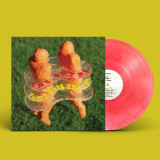
After an international tour of over 100 dates, French 79 is ready to unveil his third album entitled TEENAGERS. This opus gives us such unique and strong sensations, partly because the synths were recorded at Jean-Michel Jarre's studio in Paris and the tracks were mixed and mastered by Damien Quintard a Miraval studios.
TEENAGERS alternates between signature songs like the masterful opening song, as well as unsuspected romantic and nostalgic songs, epic and flamboyant
tracks, tracks with liberating harmonies, sensational electronic swirls, pop gems ("You Always Say" feat. Prudence, the singer of The Dø) and sumptuous introspective tracks ("Walking on Mars"). Not only does this opus reflect his wide range of talents as a songwriter and producer, but also it definitely takes us on a very powerful sensorial and introspective journey.
Suche:life on mars
- A1: 1916 (1:11)
- A2: Elastic Rock (4:05)
- A3: Striation (2:14)
- A4: Taranaki (1:38)
- A5: Twisted Track (5:19)
- A6: Crude Blues (Part 1) (0:54)
- A7: Crude Blues (Part 2) (2:38)
- A8: 1916 (The Battle Of Boogaloo) (2:58)
- B1: Torrid Zone (8:41)
- B2: Stonescape (2:39)
- B3: Earth Mother (5:15)
- B4: Speaking For Myself, Personally, In My Own Opinion, I Think… (1:31)
- B5: Persephone’s Jive (2:14)
Nucleus's Elastic Rock is undisputedly a milestone in Jazz-Rock. A beautiful and vital debut album, it was first released on Vertigo in 1970. Original copies are now very tricky to score and, like all the Nucleus records, it’s aged ridiculously well. This Be With re-issue, re-mastered from the original analogue tapes, shows off just why this deserves to be back in press.
Genius trumpeter and visionary composer Ian Carr was one of the most respected British musicians of his era. He was a true pioneer and saw the potential in fusing the worlds of jazz with rock, just as Miles Davis and The Tony Williams Lifetime did in the US. In late 1969, following the demise of the Rendell-Carr quintet, and tiring of British jazz, Carr assembled the legendary Nucleus. Regarding music as a continuous process, Nucleus refused to “recognise rigid boundaries” and worked on delivering what they saw as a “total musical experience”. We can get behind that.
Under bandleader Carr, Nucleus existed as a fluid line-up of inventive, skilled musicians. This constant evolution and revolution was all part of the continuous musical exploration and discovery that took jazz to new levels. And the music has kept relevant. To steal a line from a review of our re-issue of Roots, when it comes to anything Nucleus “it’s basically already hip-hop”.
The very title Elastic Rock could be regarded as the group's MO, describing a melting point between their rock and jazz impulses. Indeed, housed in a memorable gatefold jacket designed by Roger Dean, the die cut molten teardrop shape on the front sleeve opens to reveal a fiery volcanic crater. On the back, Dean's drawing has Carr with saxophonist Brian Smith, guitarist Chris Spedding, drummer John Marshall, bassist Jeff Clyne and sax, oboe and pianist Karl Jenkins in a circle, the central core of a movement and the basis for its activity.
Recorded over four days in January 1970, Elastic Rock didn't sound like any other British jazz album. Exploding out the gate, "1916" opens with Marshall's frantic pounding before melancholic horns enter. The smooth title track, "Elastic Rock" is just a gorgeous electric blues track. Light drums, gentle melodic horns, piano and a solid bassline serve as the perfect bed for Spedding's graceful bluesy guitar melodies. The serene "Striation", a Clyne and Spedding collaboration, is led by bowed bass and is the epitome of calm before the late night laid back vibe of "Taranaki" breezes along sweetly and smoothly with great trumpet and tenor.
The truly emotional "Twisted Track" is elegant with horns, while guitar is gently played with drums and bass. Initially deeply soothing, it gradually builds with various solos and duets. "Crude Blues (Part 1)" features an excellent oboe part by Jenkins with laconic guitar helping out. "Part 2" is livelier, with a heavy backbeat and great wind parts. "1916 (Battle Of Boogaloo)" features a steady bassline and great call and response parts from the horn section.
The highly-charged centrepiece of the record, the mesmeric epic "Torrid Zone" features an hypnotic bassline and hi-hat with some of the ensemble's best soloing. Brilliantly encapsulating the jazz fusion aesthetic so desired by the group, the rhythm section is rock-influenced but magically retains a laid-back jazz vibe. Just perfection. Spacey jazz in the style of In a Silent Way, the semi-ambient "Stonescape" features smooth, muted brass, warm, smokey keys and a barely-there rhythm section. Heavenly.
The bubbling, fragile restraint of "Earth Mother" partially utilises the "Torrid Zone" bassline but takes the energy in a different direction with Marshall's frenetic drumming and Spedding's unpredictable riffing. Next comes the very idiosyncratic drum solo track by Marshall in the appropriately-titled "Speaking for Myself, Personally, in My Own Opinion, I Think." The album closes with the raucous "Persephones Jive", a track that ends the album frantically, riotously, just as it began.
This Be With edition of Elastic Rock has been re-mastered from the original Vertigo master tapes, Simon Francis’ mastering working together with Cicely Balston's cut at AIR Studios to weave their usual magic with these wonderful recordings. The stunning die-cut gatefold sleeve has been restored in all its molten glory.
Their masterpiece? With breaks for dayyyyyys and an almost ambient, heavy jazz atmosphere throughout, *this* is the apex of British jazz-rock fusion. We'll Talk About It Later was first released on Vertigo in 1971 and original copies are now very tricky to score. Like all the Nucleus records, it’s aged ridiculously well and this Be With re-issue, re-mastered from the original analogue tapes, shows off just why this deserves to be back in press.
Genius trumpeter and visionary composer Ian Carr was one of the most respected British musicians of his era. He was a true pioneer and saw the potential in fusing the worlds of jazz with rock, just as Miles Davis and The Tony Williams Lifetime did in the US. In late 1969, following the demise of the Rendell-Carr quintet, and tiring of British jazz, Carr assembled the legendary Nucleus. Regarding music as a continuous process, Nucleus refused to “recognise rigid boundaries” and worked on delivering what they saw as a “total musical experience”. We can get behind that.
Under bandleader Carr, Nucleus existed as a fluid line-up of inventive, skilled musicians. This constant evolution and revolution was all part of the continuous musical exploration and discovery that took jazz to new levels. And the music has kept relevant. To steal a line from a review of our re-issue of Roots, when it comes to anything Nucleus “it’s basically already hip-hop”.
We'll Talk About It Later is arguably Nucleus's best album. Not only that, it's in the top 5 of all fusion albums. By the time Nucleus entered Trident Studios in September 1970 to record Elastic Rock's successor, they had already won a best group award at the Montreux Jazz Festival. Once again presented in a Roger Dean designed die-cut gatefold sleeve it continued to demonstrate the chemistry and interplay that worked so brilliantly on Elastic Rock; Carr's sumptuous trumpet and flügelhorn lines, Karl Jenkins's funk-filled electric keyboards, Chris Spedding's wah-wah guitar, Brian Smith's sax and the rhythmic foundation of drummer John Marshall and bassist Jeff Clyne.
The group work and insane musicianship Nucleus were famed for is in evidence from the off. The intensely funky "Song for the Bearded Lady" is absolute FIRE, blasting out the speakers to leave listeners floored. Counterpoint riffing segues into a spacious groove and a Carr trumpet solo demonstrating the influence of electric Miles from the period. The stop-start funk of "Sun Child" would appeal to Soft Machine devotees whilst the genuinely touching "Lullaby for a Lonely Child" is a lovely downtempo ballad. Featuring an understated, reflective horn line from Carr and Smith and atmospheric, shimmering bouzouki from Spedding, there's an exotic flavour which contributes to the bliss. The ominous, sleazy title track retains a swaggering menace and is not the only track to lend a sort of heavy stoner rock atmosphere. The guitars and bass are deep and low throughout, conjuring heavy psych moments to go with the actual jazz and even funk. To say this album was in conversation with Bitches Brew would not be overstating the sheer brain-frying brilliance.
The Weather Report-adjacent "Oasis" opens Side B, a colossal track featuring nearly 10 minutes of steadily building melodic horns, keys and choppy guitar riffs. So ace, it could easily go on for another 10. Mesmeric. Spedding adds unique vocals to the undeniable groove of "Ballad of Joe Pimp" whilst saxophonist Smith's duet with drummer Marshall at the conclusion of "Easter 1916" - inspired by the Yeats poem about the Irish nationalist uprising in Dublin - adopts the wildness of the most incendiary free jazz.
This Be With edition of We'll Talk About It Later has been re-mastered from the original Vertigo master tapes, Simon Francis’ mastering working together with Cicely Balston's cut at AIR Studios to weave their usual magic with these wonderful recordings. The stunning die-cut sleeve has been restored with the original gatefold window pane depicting the Irish uprising in 1916. Incredible, timeless, guaranteed spine-chills.
‘Where is Agartha? What is the specific region in which it lies? Along what road, through what civilizations, must one walk in order to reach it?.’ Saint-Yves d’Alveydre in 1886
Agartha, the debut full-length album by Japanese producer Wata Igarashi, is a mysterious, divine thing. Named for the mythical secret kingdom, understood as a complex maze of underground tunnels, perhaps designed by Martians who colonised the Earth tens of thousands of years ago, it’s a similarly mystical, perhaps even cosmic trip – but this time, exploring an inner, deeply personal cosmos. Beautifully detailed and bustling with rich incident, it takes Igarashi’s music to new places, which still retaining his unique sonic imprimatur; in this respect, it’s perfectly at home with Kompakt, a label that’s always encouraged artists to make the visionary music they need to create, to take risks and make sideways steps into uncharted territory.
An eloquent producer and DJ, Igarashi has been releasing techno for eleven years now, appearing on such imprints as The Bunker NY, Delsin, Midgar, and Time To Express; he has also self-released his productions via his WIP net label. Throughout, Igarashi has consistently explored his unique approach to techno and electronic music, one that’s eloquent and poised, even when it shifts into more psychedelic terrain; he’s a master at balancing the sensual and the functional, and he has an unerring ear for the right texture, the right tone, at the right time. He brings all of this into Agartha, his most thorough-going expression of self to date.
For Agartha, Igarashi had a strong concept he wanted to explore. Visualising specific scenes from an imaginary film based on the titular secret kingdom, he created soundtracks for those scenes, spending time during the pandemic in his studio, working away carefully at the ten tracks here. Given his background in creating music for television and advertisements, Igarashi is well-placed to explore the marriage of the sonic and the visual in such intimate ways, but freed from commercial concerns, he let his imagination run riot. He also drew on a rich palette of musical influences – techno is in there, of course, but you can also hear the smoky, improvised jazz of the likes of Miles Davis (to whom the album’s title is an indirect nod), and the minimalism and systems music of Steve Reich.
The latter is particularly pronounced on the gorgeous, beatless drift of “Floating Against Time”, where an arpeggiated sequence lingers, lovingly, around your ears for nine blissful minutes, coasting across swooning drones and waves of ambient noise. “Ceremony Of The Dead”, originally composed as part of a Sony 360 Reality Audio spatial sound concert, is a deep pass into systems composition, with various patterns overlaid and interlocking, before a wordless vocal rises from the depths, a gorgeous counterpoint to the swarming textures that gather across the track. On the other hand, tracks like “Burning” and “Subterranean Life” nudge toward Fourth World territory, painting deluxe dreamscapes of uncertain provenance; the title cut is an abstract drift-world, Igarashi painting an alien tableau dotted by shape-shifting creatures.
Agartha’s conceptual framework means that everything on the album sits perfectly together; listening to it in one sitting is a dizzying, lush experience. Its imaginings of inner landscapes recall, in some respects, the nautical, aqueous mythologies of the Drexciyan universe, though from different perspectives. But the result is Igarashi’s own creation, a deluxe, enchanting trip through the visionary Agartha of this unique producer’s cinematic mind’s-eye.
Wo liegt Agartha? In welcher spezifischen Region liegt es? Auf welchem Weg, durch welche Zivilisationen muss man gehen, um dorthin zu gelangen?'
Saint-Yves d'Alveydre im Jahr 1886
Agartha, das Debütalbum des japanischen Produzenten Wata Igarashi, ist ein geheimnisvolles, göttliches Ding. Benannt nach dem mythischen, geheimen Königreich, das als ein komplexes Labyrinth unterirdischer Tunnel verstanden wird, die vielleicht von Marsmenschen angelegt wurden, die vor Zehntausenden von Jahren die Erde kolonisierten, ist es eine ähnlich mystische, vielleicht sogar kosmische Reise - aber dieses Mal erforscht es einen inneren, zutiefst persönlichen Kosmos. Wunderschön detailliert und voller reichhaltiger Begebenheiten, führt es Igarashis Musik an neue Orte, die dennoch seine einzigartige klangliche Handschrift bewahren. In dieser Hinsicht hat es bei Kompakt ein perfektes Zuhause gefunden - einem Label, das Künstler immer ermutigt hat, jene visionäre Musik zu machen, Risiken einzugehen und seitwärts Schritte in unbekanntes Terrain zu tun.
Der eloquente Produzent und DJ Igarashi veröffentlicht seit elf Jahren Techno auf Labels wie The Bunker NY, Delsin, Figure und Time To Express; außerdem hat er einige Produktionen über sein Label WIP net selbst veröffentlicht. Dabei hat Igarashi stets seinen einzigartigen Ansatz für Techno und elektronische Musik verfolgt, der kontrolliert und ausgeglichen ist, selbst wenn er sich in psychedelisches Terrain begibt; er ist ein Meister der Balance zwischen dem Sinnlichen und dem Funktionalen und hat ein untrügliches Gespür für die richtige Textur, den richtigen Ton zur richtigen Zeit. All das bringt er in Agartha ein, dem bisher umfangreichsten Ausdruck seiner selbst.
Für Agartha hatte Igarashi ein starkes Konzept, das er erforschen wollte. Er stellte sich bestimmte Szenen eines imaginären Films vor, der auf dem titelgebenden geheimen Königreich basiert, und schuf Soundtracks für diese Szenen. Während der Pandemie verbrachte er Zeit in seinem Studio und arbeitete sorgfältig an den zehn Tracks. Mit seinem Hintergrund als Komponist von Fernseh- und Werbemusik ist Igarashi prädestiniert dafür, die Verbindung von Klang und Bild auf solch intime Weise zu erforschen, aber frei von kommerziellem Dünkel ließ er seiner Fantasie freien Lauf. Er schöpfte auch aus einer reichen Palette musikalischer Einflüsse - Techno ist natürlich dabei, aber man hört auch den rauchigen, improvisierten Jazz von Miles Davis (an den der Titel des Albums eine indirekte Anspielung ist) und den Minimalismus und die Systemmusik von Steve Reich.
Letzteres ist besonders ausgeprägt in dem wunderschönen, beatlosen "Floating Against Time", wo eine arpeggierte Sequenz neun Minuten lang liebevoll um die Ohren fliegt und über schwelende Drones und Wellen von Umgebungsgeräuschen gleitet. "Ceremony Of The Dead", ursprünglich als Teil eines Sony 360 Reality Audio-Raumklangkonzerts komponiert, ist ein tiefes Eintauchen in eine Systemkomposition, bei der sich verschiedene Muster überlagern und ineinander greifen, bevor sich ein wortloser Gesang aus der Tiefe erhebt, ein wunderschöner Kontrapunkt zu den wimmelnden Texturen, die sich über den Track legen. Andererseits bewegen sich Tracks wie "Burning" und "Subterranean Life" in Richtung der Vierten Welt und malen luxuriöse Traumlandschaften ungewisser Herkunft; der Titeltrack ist eine abstrakte Scheinwelt, in der Igarashi ein außerirdisches Tableau malt, das von formwandelnden Kreaturen übersät ist.
Der konzeptionelle Rahmen von Agartha ermöglicht, dass alles auf dem Album perfekt zusammenpasst; es in einem Zug durchzuhören ist eine schwindelerregende, opulente Erfahrung. Wata's Vorstellungen von inneren Landschaften erinnern in gewisser Hinsicht an die nautischen, wässrigen Mythologien des drexciyanischen Universums, wenn auch aus einer anderen Perspektiven betrachtet. Aber das Ergebnis ist Igarashis ureigene Schöpfung, ein luxuriöser, bezaubernder Trip durch das visionäre Agartha dieses einzigartigen Produzenten mit seinem cineastischen Blick.
What a record! The outstanding Solar Plexus, the much-loved third album from Ian Carr and Nucleus, was first released on Vertigo in 1971. Inevitably, original copies are now very tricky to score and, like all the Nucleus records, it’s aged ridiculously well. This Be With re-issue, re-mastered from the original analogue tapes, shows off just why this deserves to be back in press.
Genius trumpeter and visionary composer Ian Carr was one of the most respected British musicians of his era. He was a true pioneer and saw the potential in fusing the worlds of jazz with rock, just as Miles Davis and The Tony Williams Lifetime did in the US. In late 1969, following the demise of the Rendell-Carr quintet, and tiring of British jazz, Carr assembled the legendary Nucleus. Regarding music as a continuous process, Nucleus refused to “recognise rigid boundaries” and worked on delivering what they saw as a “total musical experience”. We can get behind that.
Under bandleader Carr, Nucleus existed as a fluid line-up of inventive, skilled musicians. This constant evolution and revolution was all part of the continuous musical exploration and discovery that took jazz to new levels. And the music has kept relevant. To steal a line from a review of our re-issue of Roots, when it comes to anything Nucleus “it’s basically already hip-hop”.
We'll let Ian describe this one: "I wrote Solar Plexus' last year with the help of an Arts Council grant. It is based on two short themes which are stated at the beginning (Elements I & I1). The first theme is angular and has a slow, crab-like movement: the second theme is direct, simple and diatonic. CHANGING TIME and SPIRIT LEVEL explore the first theme and BEDROCK DEADLOCK and TORSO explore the second one. SNAKEHIPS DREAM tries to fuse both themes. (The title is a reference to the famous dancer 'Snakehips' Johnson)."
Solar Plexus features the same lineup as Elastic Rock and We'll Talk About It Later, but they're augmented by six guests, three of which play brass. Carr himself had almost full control of the writing and it does feel very different to the previous albums. It's more of a jazz record loosely based on a rock foundation rather than jazz fusion jamming.
The haunting synth-and-bass soundscape "Elements I and II" opens the album in dramatic, experimental fashion. It gives way to the bright, funky feel-good jazz of "Changing Times". An elegant onslaught of horns, courtesy of guests Kenny Wheeler and Harry Beckett, ride a solid groove for the duration. How the brass refrains have eluded samplers is beyond us. The melancholic "Bedrock Deadlock" features the brooding majesty of Jenkins' oboe and Clyne's mournful, skittering double bass. Wah wah guitar, drums and funky percussion then take over before the horns ride us out over frenetic beats. The dark, angular "Spirit Level" is a real highlight, by turns harmonic and beautiful then dissonant and wayward. Wonky jazz with no apparent structure or melodic bones. Regardless, it represents a great showcase for each virtuoso performer.
The breezy soul of "Torso" feels like a breath of fresh air, skipping along in the uptempo style with guitar, horns, drums and bass. A track which truly sounds scintillating, featuring sax solos, fantastic propulsive interplay from all the group around the halfway stage before Marshall gets his chance to really shine in closing out with a polyrhythmic drum solo. Final track "Snakehips' Dream" stretches cooly out over 15 minutes to round out a spellbinding album. An epic, suave groove, it's a relaxing piece with warm electric keys, laconic guitar and languorous horns. Truly sophisticated soulful jazz. An absolute masterclass. We could easily listen to this all day long.
This Be With edition of Solar Plexus has been re-mastered from the original Vertigo master tapes, Simon Francis’ mastering working together with Cicely Balston's cut at AIR Studios to weave their usual magic with these wonderful recordings. The stunning gatefold sleeve has been restored to complete this sensational package.
- A1: Beyond The Rising Sun (Il Faut Trouver Son Coin De Ciel) - Sylvie Vartan
- A2: Third Degree - Andy Ellison & Boz Boorer (Exclusive)
- A3: Pictures Of Purple People - Automatic Shoes
- A4: Stacey Grove - Marsha Hunt
- A5: Chateau In Virginia Waters - Swervedriver
- A6: Child Star - Witchwood
- B1: Cosmic Dancer - Mair (Exclusive)
- B2: Wind Cheetah - Catherine Lambert
- B3: Elemental Child - The Charms
- B4: Visit - Tarwater
- B5: Cat Black (The Wizard’s Hat) - Chris Connelly & The Liquid Gang
- C1: Children Of The Revolution - Burn It To The Ground
- C2: Lofty Skies - Automatic Shoes
- C3: Ballrooms Of Mars - Kelly Reilly
- C4: Spaceball Ricochet – Speedtwinn
- C5: Jeepster - The Polecats
- C6: Soul Of My Suit - Chris Braide
- D1: Calling All Destroyers - Rachel Stamp
- D2: Menthol Dan (Dan The Sniff) - Andy Ellison & Boz Boorer
- D3: Raw Ramp - Black Bombers
- D4: Life’s A Gas - Mexican Dogs
- D5: Life Is Strange - Illa Falazynski
- D6: Visions Of Domino - Schwefel
• A globe spanning (France, Italy, Germany, USA, Belarus, Sweden, Russia, Australia, Canada) covers album of the late great Marc Bolan songs starting with the earliest cover in 1965 • Covering a huge range of genres and styles • A response to the U.S Hit album Angel Headed Hipster which opened up the songs of Bolan to a new American audience by using big names and TV advertising…this concentrates on quality recordings by lesser known artists • Presented in deluxe gatefold sleeve. • Reviews in Record Collector, Vive le rock R2, Shindig, Classic Rock.
- A1: Pneuma
- A2: Blue (Feat Leo Wood)
- A3: Reminiscent
- A4: Touch The Sky (Feat Simon Doty)
- B1: Fragments (Feat Jodie Knight)
- B2: Hymn
- B3: All Night Long
- B4: Fall To Pieces (Feat Leo Wood)
- C1: Forgiveness (Feat Wassu & Mariel Beausejour)
- C2: Sleep (Feat Jodie Knight)
- C3: Endless
- D1: Touch The Sky (Feat Simon Doty - Extended Mix)
- D2: Reminiscent (Extended Mix)
- D3: All Night Long (Extended Mix)
Few artists exude as much passion for, and dedication to, their craft as Tom Marshall (AKA Marsh). Since he first emerged on the electronic music scene in the mid-2010s, Marsh has sculpted a uniquely soulful sound that has captivated his listeners and earned him a fast-growing and intensely devoted fanbase. Marsh's forthcoming album 'Endless' follows two previous bodies of work; his 2017 debut 'Life On The Shore', and his critically-acclaimed Anjunadeep debut LP, 'Lailonie', the latter of which has accumulated over 20 million streams to date. Marsh also has an array of widely-supported anthems in his discography. 'Come Together' (with Nox Vahn), 'Little Darling' and the Beatport chart-topping 'Lost In You' are some of his best-loved tracks, all streaming well into the millions and winning support from electronic music's biggest artists, including Joris Voorn, Pete Tong, Diplo, and RÜFÜS DU SOL. The two years since Marsh released his previous album 'Lailonie' have seen Tom moving around the States and touring the globe in a world rapidly opening up post-pandemic. This whirlwind, semi-nomadic lifestyle has inspired his third artist album 'Endless', and caused him to take stock of his values. In his own words, "I've written this entire album on the move, writing from so many different homes. On a deeper, more spiritual level, this has led me to question, what is truly home, and will we experience home after this life?" 'Endless' comprises twelve memorable tracks, including collaborations with vocalists Jodie Knight, Leo Wood, and Mariel Beausejour. Drawing on influences as diverse as the rich trance sounds of the 2000s that soundtracked his teenage years, and the musicality of crossover drum & bass acts like Pendulum, Tom's next offering is perhaps his most expansive in scope. Opening with the subtle first track 'Pneuma', the album moves from the emotive and lyrical, on lyrical, emotive tracks like 'Sleep' and 'Forgiveness', to piano house melodies on 'Reminiscent' and smooth broken beats on 'Blue', all united by Marsh's innate warm musicality.
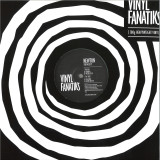
Chalke aka Life On Mars aka Forces Of Nature is a bit of a mystical legend in the drum & bass circles. An old school friend of LTJ Bukem, the two of them grew up together in North London and it is down to him that Bukem started to DJ, with Chalke as his original MC!
This is the second release Chalke has done with Vinyl Fanatiks – his first was VFS002 which has long since sold out and already a collectable repress on Discogs.
Chalke was so far ahead of the curve in his production and ability to create tracks that surprisingly these two tunes were written in 1993 and 1994 and pre-date the whole ‘intelligent’ drum and bass movement that took over the globe in the mid-90s!
Both tracks were never released and have sat on DAT for 30 years… until now. ‘Moonbase Alpha’ is a cult track in the drum and bass world as it was played by Bukem during the mid-90s, both in his sets and on his Kiss show. Deep, rolling and beautifully progressive for the era. ‘Quosh Up’ is equally as stunning, musical and rolling… like one of Bukem’s DJ sets during the Good Looking era.
Limited pressing on 180g heavyweight black vinyl, presented in a black inner sleeve with a Vinyl Fanatiks 3mm spined housebag.
repressed !
A lot can happen in 15 years. Few things manage to thrive for a decade and a half, especially in music. But a scrappy, left of center, Bay Area house music label, Dirtybird, has managed to do just that. Claude VonStroke, Dirtybird’s founder, is marking this 15-year milestone the only way he knows how… working. This year, VonStroke will throw two dozen-plus parties, three festivals (including the famous Dirtybird Campout), host his traveling Dirtybird BBQ series in major cities across the US, publish a coffee table book, release a seasonal clothing line, stage art shows, produce a fly on the wall docu series...and kick it all off by releasing a new album, out February 21st.
What began as a free party, turned basement record label, has morphed into a truly thriving community whose familial, fun and welcoming vibe has won over hearts and minds across the world. And while Dirtybird has grown and evolved, VonStroke’s core focus on music remains unwavering. The new album ‘Freaks & Beaks’ is a celebration of quirky innovation and a relentless pursuit of something new and fresh, while hearkening back to the freewheeling spirit that inspired the launch of his label. This is a project that draws upon the inspirations of family, old friends, new fans and proper dancefloors.
Claude will let his flock wet their beaks while they wait in anticipation of the new album with two new singles demonstrating the breadth of the dance music landscape explored on the record. Youngblood touches on the deeper sides of Claude VonStroke, a throwback to the label’s early days, featuring local LA music house talent Wyatt Marshall, while All My People in the House is a dancefloor heater that is sure to unite new and old Dirtybird fans together.
Today, Claude also delivers fans part one of an intimate video series, shot by his sister Emily (an accomplished filmmaker), documenting the creation of ‘Freaks and Beaks’, celebrating this historic milestone and taking a deeper dive into the day to day life of Claude VonStroke on the road.
‘Freaks and Beaks’ is the fourth artist album and sixth full-length project from Claude VonStroke. He approached the album with a new process, including committing to daily creative time, experimenting with a lot of new hardware and having fun creating a huge amount of sketches. He made music on many levels of gear all the way from complex modular synths to simple drum apps on his iPad. Keeping it all DIY, he sampled his own voice and his two children on several tracks as well. He allowed himself to breathe while creating over 130 ideas, which were whittled down to the finished 11 album tracks.
Freaks & Beaks nods at the inspirations that underpin VonStroke’s world, inside jokes between him and Justin Martin (FlubbleBuddy), unused experimental live sessions (Session A), playful noodling on synths (Alpine Arpline), obscure French producers (Frankie Goes To Bollywood), championing new talent (Youngblood), irreverent self-aware humor (Birthday Messages) and genre inspirations that range from ghetto tech and drum n bass to hip-hop and breaks. This is VonStroke’s love letter to the vibrancy and genre diversity that have made Dirtybird such a singular label.
Veteran artist Sebra Cruz releases his debut album ‘Don't Worry Psy Happy’ on DJ Tennis’ revered Life & Death imprint. The daring eleven track LP is as experimental as it is definitive and encapsulates the Italian spirit in perfect style.
The LP follows two previously teased singles; ‘Margaret’, an ode to Cruz’ girlfriend which is a deeply passionate and expressive melodic house offering and album title ‘Don’t Worry Psy Happy’ a hedonistic, tripped out soundscape.
The lead track ‘Sunfish’ is a melange of powerful synths overlaid with sporadic vocals and a swinging breakbeat which make the record the perfect soundtrack for early morning dancefloor euphoria.
The album continues its genreless motif and is hard to pin down. It broaches a variety of styles including cinematic and ambient leaning sonics such as ‘Optimist’ and ‘Poliziesco’, the latter which includes Gabriele Fabbri’s atmospheric guitar riff throughout.
‘The Siebel Road To Mars’ is a similarly powerful yet emotive record which samples current Italian President Sergio Mattarella between the piano and the extraterrestrial sound palette. Continuing with the more abstract tracks ‘Flying Junior’, which was named after Cruz’ own sailboat, emulates the peacefulness and tranquillity of the sea. It’s yet another reflection of Sebra Cruz’ artistic personality.
Juxtaposing the calm and serene records from the album, ‘AltreCose’, inspired by the energy of the Neapolitan people during Sebra’s DJing residency in the 90s, is a more high energy disco-infused record. Similarly ‘When Life Was Slow’, released on Life & Death back in 2020, is another upbeat dance interpretation and a tribute to Cruz’ passion for Italian composers from the 60s and 70s.
Speaking about the album Sebra says: “What emerges is in my opinion an album with predominantly Italian spirit, disco, house with both edgy and gentle influences. I never decide what to do first, I simply follow my spur of the moment instinct. Releasing an album for Life & Death is cool because I've always had huge respect for Manfredi.”
Sebra Cruz and DJ Tennis have a long lasting and trusting collaborative relationship exhibited by the former's numerous releases on Tennis’ Life and Death label. DJ Tennis’ encyclopaedic musical brain and shared passion for Italian composers perfectly complements Sebra’s stylings.
Striking an impeccable balance between abstract and obscure sonics and more methodical and conventional melodies, 'Don't Worry Psy Happy’ is a body of work that exquisitely expresses Sebra Cruz’ personality via different worlds and mediums.
- A1: Jazz Is Merely The Negroes Cry Of Joy & Suffering
- A2: Introit- Joy N’ Suff’rin
- A3: Jazz Is The Musical Expression Of The Triumph Of The Negroes Spirit
- A4: Kyrie Eleison- Lawd Hav’ Merci
- B1: This Endless Repetition Is Like A Chain Around The Spirit. And Is A Reflection Of The Denial Of A Future To The Negro In The American Way Of Life
- B2: Dias Ire- Chain Around The Spirit
- B3: Another Restraining Factor In Jazz Are The Changes
- B4: Tuba Mirum- The Changes
- C1: The Negro Experiences The Endless Daily Humiliation Of American Life Which Bequeaths Him A Futureless Future
- C2: Rex Tremendae –Futureless Future
- C3: The Negro Transforms America’s Image Of Him Into A Transport Of Joy!
- C4: Recordare-Recall The Joy 02:06
- C5: Jazz Reflects The Improvised Life Thrust Upon The Negro
- C6: Confutatis-Repression
- C7: Through Spirituals, Through The Blues, Then Through Jazz We Made A Memory Of Our Past And A Promise Of All To Come
- C8: Lacrimosa- Weeping Our Lady Of Sorrow
- D1: Because Jazz Is The One Element In American Life Where Whites Must Be Humble To The Negro
- D2: Offerturium-Hostias-Humility
- D3: Only When Whites Have Paid The Price In Suffering To Be The Negroes Equal
- D4: Sanctus- Holy, Holy, Holy
- D5: The Jazz Body Is Dead But The Spirit Of Jazz Is Alive
- D6: Agnus Dei-Jazz Is Dead!
- D7: Lux Aeterna – Eternal Light (Angel Bat Dawid) / My Rhapsody (Severson-Leist) Feat. Marshall Allen & Knoel Scott
- D8: Long Tone For Rayna Golding (A Binti Zawadi Our Future)
Requiem for Jazz is a 12-movement suite composed and arranged by Angel Bat Dawid, inspired in part by dialogue from Edward O. Bland’s 1959 film “The Cry of Jazz.”
The original form of the music was premiered at the 2019 edition of the Hyde Park Jazz Festival in Chicago, where Angel conducted a multigenerational fifteen-piece instrumental ensemble (all Black musicians from Chicago’s creative music community) alongside a four- person choir (featuring singers from Black Monument Ensemble), dancers, and visual artists in performance.
Angel mixed and post-produced recordings from the performance – adding interludes, vocals and additional sounds, as well as transcribing a piece from “The Cry of Jazz” film. The final movement of Requiem for Jazz features Marshall Allen and Knoel Scott of the Sun Ra Arkestra. Their contributions were recorded remotely at the historic Arkestral Institute of Sun Ra in Philadelphia in late 2020.
The final Requiem for Jazz work in album form is an immersive 24-track, double LP experience. The physical package is a deluxe, heavyweight gatefold jacket with liner notes by South African writer Nombuso Mathibela, artwork by Damon Locks, and a large fold out poster designed by Jeremiah Chiu, featuring poetry written by Angel Bat Dawid in dedication to all of her collaborators on the project. Additionally, there is a limited Thy Kingdom Come purple color vinyl edition of Requiem for Jazz available for the first pressing only.
- A1: Time? One Of The Most Complex Expressions?
- A2: Ian Fish U.k. Heir (Moonage Daydream Mix 1)
- A3: Hallo Spaceboy (Remix Moonage Daydream Edit)
- A4: Medley: Wild Eyed Boy From Freecloud
- A5: All The Young Dudes
- A6: Oh! You Pretty Things (Live)
- A7: Life On Mars? (2016 Mix - Moonage Daydream Edit)
- A8: Moonage Daydream (Live)
- B1: Medley: The Jean Genie / Love Me Do / The Jean Genie (Featuring Jeff Beck)
- B2: The Light (Excerpt)
- B3: Warszawa (Live Moonage Daydream Edit)
- B4: Quicksand (2021 Mix - Early Version)
- B5: Medley: Future Legend / Diamonds Dogs Intro / Cracked Actor
- C1: Rock ?N' Roll With Me (Live)
- C2: Aladdin Sane (Moonage Daydream Edit)
- C3: Subterraneans
- C4: Space Oddity (Moonage Daydream Mix)
- C5: V-2 Schneider
- D1: Sound And Vision (Moonage Daydream Mix)
- D2: A New Career In A New Town (Moonage Daydream Mix)
- D3: Word On A Wing (Moonage Daydream Excerpt)
- D4: Heroes? (Live Moonage Daydream Edit)
- D5: J. (Moonage Daydream Mix)
- D6: Ashes To Ashes (Moonage Daydream Mix)
- E1: Cygnet Committee/Lazarus (Moonage Daydream Mix)
- E2: Memory Of A Free Festival (Harmonium Edit)
- E3: Modern Love (Moonage Daydream Mix)
- E4: Let's Dance (Live Moonage Daydream Edit)
- E5: The Mysteries (Moonage Daydream Mix)
- E6: Rock ?N' Roll Suicide (Live Moonage Daydream Edit)
- E7: Ian Fish U.k. Heir (Moonage Daydream Mix 2)
- F1: Word On A Wing (Moonage Daydream Mix)
- F2: Hallo Spaceboy (Live Moonage Daydream Mix)
- F3: I Have Not Been To Oxford Town (Moonage Daydream A Cappella Mix Edit)
- F4: Heroes": Iv. Sons Of The Silent Age (Excerpt)
- F5: ? (Moonage Daydream Mix Edit)
- F6: Ian Fish U.k. Heir (Moonage Daydream Mix Excerpt)
- F7: Memory Of A Free Festival (Moonage Daydream Mix Edit)
- F8: Starman
- F9: You're Aware Of A Deeper Existence?
- F10: Changes
- F11: Let Me Tell You One Thing?
- F12: Well You Know What This Has Been An Incredible Pleasure?
- D7: Move On (Moonage Daydream A Cappella Mix Edit)
- D8: Moss Garden (Moonage Daydream Edit)
Nach der Veröffentlichung der 2CD-Version des Albums Moonage Daydream im letzten Jahr, wird der Soundtrack nun am 31. März als 3LP Vinyl veröffentlicht.
"Moonage Daydream" beleuchtet das Leben und Genie von David Bowie, einem der produktivsten und einflussreichsten Künstler der jüngeren Musikgeschichte.
Auf Spielfilmlänge nimmt uns Brett Morgen mit in die Welt Bowies, erforscht anhand von großartigem, vielfältigem und nie zuvor gesehenem Filmmaterial, Live-Auftritten und Musik (Morgen sichtete vier Jahre die Archive des David Bowie Estates) seine kreative, musikalische und spirituelle Reise.
Durch den Film führt uns dabei die Erzählerstimme von David Bowie selbst.
Das Begleitalbum zu "Moonage Dream" enthält Songs aus Bowies gesamter Karriere, darunter bisher ungehörtes Material, speziell für den Film und dieses Album angefertigte Mixe und Gesprächspassagen Bowies.
Zu den Highlights des Tracklistings zählen ein bisher unveröffentlichtes Live-Medley von "The Jean Genie / Love Me Do / The Jean Genie", aufgenommen beim berühmt-berüchtigten letzten Ziggy-Stardust-Konzert im Londoner Hammersmith Odeon 1973 und mit Jeff Beck an der Gitarre. Weitere Raritäten sind eine frühe Version
des Hunky-Dory-Favoriten "Quicksand" und eine bisher unveröffentlichte Live-Version von "Rock 'n' Roll With Me", mitgeschnitten bei der legendären "Soul Tour" 1974.
You reach a point in life where the question of how to stay at the top of your game looms; the only real solution being, you change the game. Our Love, the new album from Caribou, is the sound of Dan Snaith doing just that. Our Love is due October 6th on City Slang and is the sixth studio album from Caribou. The album features collaborations with Jessy Lanza and Owen Pallett. It was mixed by David Wrench and features artwork by Jason Evans/ Matthew Cooper.
Our Love is formed around a mixture of digital pop production, hip hop inspired beats, muted house basslines and a love of shuffling garage that can be traced all the way back to the time of Start Breaking My Heart which are, of course, all filtered through Dan's own unique perspective. The warm analogue sounds of classic soul should not be overlooked either, for they weave themselves most intensely into the records DNA. In fact, Our Love is probably Caribou's most soulful record to date, chock-full of heartfelt lyrics and organic nature which cuts through bubbling synths and blissful euphoria of their synthetic constructions. It's not all downbeat of course, whilst some thoughts linger on mortality, loss and letting go, there is always an element of celebration.
Having followed up his Polaris Prize winning 2007 record Andorra with the universally adored Swim in 2010 (selling nearly 175, 000 copies worldwide and being named 'Album of the Year' by Rough Trade, Mixmag and Resident Advisor whilst also hitting The Guardian, Pitchfork, Spin and Mojo's Top 20), Dan has spent the intervening four years not only touring the world, bringing not only the sounds of Caribou to the stage but proving his immeasurable worth as a DJ with epic 7.5 hour long sets. In 2012 Caribou were personally invited to join Radiohead on the road whilst Dan released his first album under the guise of his dance floor loving pseudonym, Daphni, to widespread critical acclaim. Following the shape shifting sounds of JIAOLONG and the brightly textured, fluid constructions of Swim - both inward looking records in their own way - Dan withdrew to the basement once more to work on Caribou's next opus. Only he didn't: Our Love isn't the sound of isolated creation but the sound of Dan at his most connected - with love for his listeners, his collaborators and those closest to him.
- A1: Intro
- A2: The Magic Number
- A3: Change In Speak
- A4: Cool Breeze On The Rocks (The Melted Version)
- A5: Can U Keep A Secret
- A6: Jenifa Taught Me (Derwin's Revenge) (Derwin's Revenge)
- A7: Ghetto Thang
- B1: Transmitting Live From Mars
- B2: Eye Know
- B3: Take It Off
- B4: A Little Bit Of Soap
- B5: Tread Water
- B6: Potholes In My Lawn
- C1: Say No Go
- C2: Do As De La Does
- C3: Plug Tunin' (Last Chance To Comprehend) (Last Chance To Comprehend)
- C4: De La Orgee
- C5: Buddy (With Jungle Brothers & Q-Tip From A Tribe Called Quest)
- D1: Description
- D2: Me Myself & I
- D3: This Is A Recording 4 Living In A Full Time Era (Life) (Life)
- D4: I Can Do Anything (Delacratic) (Delacratic)
- D5: Daisy Age
Blue Version[18,28 €]
Orange Version[18,28 €]
Yellow VINYL[35,50 €]
Magenta version[35,50 €]
3 Feet High and Rising is the debut studio album by hip hop trio De La Soul and was released on March 3, 1989
It marked the first of three full- length collaborations with producer Prince Paul, which would become the critical and commercial peak of both parties. Critically, as well as commercially, the album was a success. It contains the singles, "Me Myself and I", "The Magic Number", "Buddy", and "Eye Know".
The album title came from the Johnny Cash song "Five Feet High and Rising". It is listed on Rolling Stone's 200 Essential Rock Records and The Source's 100 Best Rap Albums. When Village Voice held its annual Pazz & Jop Critics Poll for 1989, 3 Feet High and Rising was ranked #1. It was also listed on the Rolling Stone's
The 500 Greatest Albums of All Time. Released amid the 1989 boom in gangsta rap, which gravitated towards hardcore, confrontational, violent lyrics, De La Soul's uniquely positive style made them an oddity beginning with the first single, "Me, Myself and I". Their positivity meant many observers labeled them a 'hippie' group, based on their declaration of the 'D.A.I.S.Y. Age' (Da. Inner. Soul. Yall).
Sampling artists as diverse as Hall & Oates, Steely Dan and The Turtles, 3 Feet High and Rising is often viewed as the stylistic beginning of 1990s alternative hip hop (and especially jazz rap).
- A1: Intro
- A2: The Magic Number
- A3: Change In Speak
- A4: Cool Breeze On The Rocks (The Melted Version)
- A5: Can U Keep A Secret
- A6: Jenifa Taught Me (Derwin's Revenge) (Derwin's Revenge)
- A7: Ghetto Thang
- B1: Transmitting Live From Mars
- B2: Eye Know
- B3: Take It Off
- B4: A Little Bit Of Soap
- B5: Tread Water
- B6: Potholes In My Lawn
- C1: Say No Go
- C2: Do As De La Does
- C3: Plug Tunin' (Last Chance To Comprehend) (Last Chance To Comprehend)
- C4: De La Orgee
- C5: Buddy (With Jungle Brothers & Q-Tip From A Tribe Called Quest)
- D1: Description
- D2: Me Myself & I
- D3: This Is A Recording 4 Living In A Full Time Era (Life) (Life)
- D4: I Can Do Anything (Delacratic) (Delacratic)
- D5: Daisy Age
3 Feet High and Rising is the debut studio album by hip hop trio De La Soul and was released on March 3, 1989
It marked the first of three full- length collaborations with producer Prince Paul, which would become the critical and commercial peak of both parties. Critically, as well as commercially, the album was a success. It contains the singles, "Me Myself and I", "The Magic Number", "Buddy", and "Eye Know".
The album title came from the Johnny Cash song "Five Feet High and Rising". It is listed on Rolling Stone's 200 Essential Rock Records and The Source's 100 Best Rap Albums. When Village Voice held its annual Pazz & Jop Critics Poll for 1989, 3 Feet High and Rising was ranked #1. It was also listed on the Rolling Stone's
The 500 Greatest Albums of All Time. Released amid the 1989 boom in gangsta rap, which gravitated towards hardcore, confrontational, violent lyrics, De La Soul's uniquely positive style made them an oddity beginning with the first single, "Me, Myself and I". Their positivity meant many observers labeled them a 'hippie' group, based on their declaration of the 'D.A.I.S.Y. Age' (Da. Inner. Soul. Yall).
Sampling artists as diverse as Hall & Oates, Steely Dan and The Turtles, 3 Feet High and Rising is often viewed as the stylistic beginning of 1990s alternative hip hop (and especially jazz rap).
- 1: Changes (202 Alternative Mix) (3.38)
- 2: Oh! You Pretty Things (Bowpromo Mix) (3.1)
- 3: Eight Line Poem (Bowpromo Mix) (2.52)
- 4: Life On Mars? (Original Ending Version) (.01)
- 5: Kooks (Bowpromo Mix) (2.3)
- 6: Quicksand (2021 Mix – Early Version) (5.01)
- 7: Fill Your Heart (2021 Alternative Mix) (3.12)
- 8: Bombers (2021 Alternative Mix) (2.42)
- 9: Andy Warhol (Original Mix)
- 10: Song For Bob Dylan (2021 Alternative Mix) (4.22)
- 11: Queen Bitch (Bowpromo Mix) (3.16)
- 12: The Bewlay Brothers (2021 Alternative Mix) (5.26)
Parlophone Records proudly announces DAVID BOWIE, A DIVINE SYMMETRY, the vinyl companion to the 4CD/1 Blu-Ray box set, released in November 2022.
This 1LP brings together early mixes of HUNKY DORY tracks originally featured on the BOWPROMO album in 1971 along with new alternative Ken Scott mixes to create an alternative version of the Hunky Dory album, also featuring the session outtake ‘Bombers’.
1971 was a pivotal year for Bowie. He signed a record deal with RCA, he met Andy Warhol, Lou Reed, and Iggy Pop while in New York, became a father and penned the song ‘KOOKS’ as a show of paternal pride, played live for the first time that June with Mick Ronson, Woody Woodmansey and Trevor Bolder, the band that would later be christened the Spiders From Mars and recorded the classic album HUNKY DORY.
Minimal Wave present Kintsugi, Martin Dupont’s first album in 35 years. The album features lush re-works of their old songs, originally released on their highly sought after 1980s albums. The French band is known for making beautiful, heady electronic, with striking, poetic vocals. A hard-to-classify group from Marseille with a cult following and some mainstream success, Martin Dupont has inspired some of the luminaries of the contemporary music scene crossing many genres from trip-hop to electro to techno. Kintsugi reassembles their old spirt that is colorful, enthusiastic, and delicate, yet also melancholy and mysterious. A mixture of hot and cold, light and dark. Martin Dupont’s music is considered electronic though they incorporate guitars and clarinets as well. They are described by many as New Wave, though their music truly transcends genres. Listen to Kintsugi, a collection of Martin Dupont’s emotive songs that have now been reinvigorated with a larger than life presence. Record manufactured in France and organized via Meidosem.
YUNGBLUD ist zurück und vielfältiger denn je, so ließ der Upcoming-Superstar sich zur Ankündigung seines neuen Albums „YUNGBLUD“ sein Manifesto auf die Rippen tätowieren. Selbst-betitelt, nahezu
schmerzhaft, voller Ehrlichkeit und heiß erwartet: „YUNGBLUD“ erscheint endlich am 2. September!
Mit seinen gerade ein mal 25 Jahren ist der talentierte Brite bereits unbestreitbar zum Rock’n’RollAushängeschild der Generation Z geworden ist. Auch seine gänzlich ausverkaufte LIFE ON MARS Tournee durch gesamt Europa und weltweit über 500 Millionen Streams auf seinen Songs sprechen wortlos für ihn und seinen Erfolg. YUNGBLUD hat inzwischen eine treue Fangemeinde auf der ganzen Welt, die zu seinen imposanten Shows strömen und jedes Wort seiner Songs mitschreien, als hinge ihr Leben davon ab.
Über sein neues Album sagt YUNGBLUD: “I have thought and felt this record so deeply. I went to a part of myself that I didn’t know was there.”. Er widmete seinem neusten Werk vollste Aufmerksamkeit und begab sich auf die Suche nach seinen tiefsten Emotionen: “ I studied it, I bathed in the emotion, tried to solve the equation and come up with an answer (at least for now) from love to pain, adoration to abandonment, laughter to betrayal.”
Das Album erschein als Standard CD und 12” Vinyl.
RED APPLE MARBLE VINYL REPRESS.
Everything changed for The Beths when they released their debut album, Future Me Hates Me, in 2018. The indie rock band had long been nurtured within Auckland, New Zealand’s tight-knit music scene, working full-time during the day and playing music with friends after hours. Full of uptempo pop rock songs with bright, indelible hooks, the LP garnered them critical acclaim from outlets like Pitchfork and Rolling Stone, and they set out for their first string of shows overseas. They quit their jobs, said goodbye to their home town, and devoted themselves entirely to performing across North America and Europe. They found themselves playing to crowds of devoted fans and opening for acts like Pixies and Death Cab for Cutie. Almost instantly, The Beths turned from a passion project into a full-time career in music.
Songwriter and lead vocalist Elizabeth Stokes worked on what would become The Beths’ second LP, Jump Rope Gazers, in between these intense periods of touring. Like the group’s earlier music, the album tackles themes of anxiety and self-doubt with effervescent power pop choruses and rousing backup vocals, zeroing in on the communality and catharsis that can come from sharing stressful situations with some of your best friends. Stokes’s writing on Jump Rope Gazers grapples with the uneasy proposition of leaving everything and everyone you know behind on another continent, chasing your dreams while struggling to stay close with loved ones back home.
"If you're at a certain age, all your friends scatter to the four winds,” Stokes says. “We did the same thing. When you're home, you miss everybody, and when you're away, you miss everybody. We were just missing people all the time.”
With songs like the rambunctious “Dying To Believe” and the tender, shoegazey “Out of Sight,” The Beths reckon with the distance that life necessarily drives between people over time. People who love each other inevitably fail each other. “I’m sorry for the way that I can’t hold conversations/They’re such a fragile thing to try to support the weight of,” Stokes sings on “Dying to Believe.” The best way to repair that failure, in The Beths’ view, is with abundant and unconditional love, no matter how far it has to travel. On “Out of Sight,” she pledges devotion to a dearly missed friend: “If your world collapses/I’ll be down in the rubble/I’d build you another,” she sings.
“It was a rough year in general, and I found myself saying the words, 'wish you were here, wish I was there,’ over and over again,” she says of the time period in which the album was written. Touring far from home, The Beths committed themselves to taking care of each other as they were trying at the same time to take care of friends living thousands of miles away. They encouraged each other to communicate whenever things got hard, and to pay forward acts of kindness whenever they could. That care and attention shines through on Jump Rope Gazers, where the quartet sounds more locked in than ever. Their most emotive and heartfelt work to date, Jump Rope Gazers stares down all the hard parts of living in communion with other people, even at a distance, while celebrating the ferocious joy that makes it all worth it -- a sentiment we need now more than ever.