Klein's offbeat singular vision continues to defy classification. Her acclaimed, self-released records – Lagata, Only and CC – along with Tommy for Hyperdub and her theatre musical Care, have allowed glimpses into Klein's uniquely spirally perspective on vocal abstraction, disarming experimentalism and pop culture wonderment. Yet these chapters have also served as masks to conceal the artist's own personal crises of self-belief, misrepresentation and belonging.
An 18-month writing process led to her new album Lifetime. It's an unexpectedly literal body of work which Klein compares to "giving someone your diary." Lifetime embraces the inevitable cycles of existence, phasing through moments of brutality, vulnerability, estrangement and unexpected fortitude. Lifetime embraces the inevitable cycles of existence, phasing through moments of brutality, vulnerability, estrangement and unexpected fortitude. Every sound in Lifetime is intentional, every influence—from 'King of Gospel Music' composer James Cleveland, to early 18th century tonalities in the b side, the work of 'race film' pioneer Spencer Williams, the residue of the religious experience is deeply personal. The 12 songs of the album are pieced together like a puzzle; seamless transitions connect each of its compositions in a reverse chronology, while every chord from every song is echoed someplace else.
What's been hinted at in Klein's live performances is now realised in full for Lifetime. Less vocal work allows her to be even more expressive, and in eschewing a tendency towards brief, truncated sketches, each song serves as its own long conversational piece, committed to realities of a lived experience. The artist who once grappled with self-doubt has set about breaking the cycle of insecurity for others like her, while mindfully chipping away at the conventions of classical music.
Like its artwork, Lifetime addresses intersecting life cycles: the inner and outer selves, hypermodernity versus history, living nightmares and dream states, while seeking the light and darkness in both. Part 1 opens with unmistakable Klein flourishes on the title track. Gusty pads, anxious, frayed-edge static arcs, and craters of deep negative space, all of which melt down to the clean slate of "Claim It," which is a tribute to embracing one's own blessings. "Listen And See As They Take" and "Silent" form their own microcosm, as the sound of crackling kindling burns backwards into imposing structures of distorted strings and disembodied marching drums, before returning to heat and ash again. "For What Worth", in collaboration with sound artist and saxophonist Matana Roberts, explores the kinship between two artists whose shared exploration of lineage leads them both toward uncharacteristically sweet clarity.
Part 2 is further steeped in black expressive styles of the past. "Enough is enough" links the Lifetime narrative to the broader diasporic black experience, inhabiting every chamber of a harmonica with ghostly notes of the present and past, as fragmented gospel chords reflect spiritual bonds between self and the divine. "We Are Almost There" begins the journey with nothing but the looped structures of multitude of voices. The drums and dischord of "Never Will I Disobey" wordlessly create the conditions for "Honour," a near 10-minute composition where crossed boundaries and crossed wires are exposed in real time, and sharp expressions of hurtfulness, accountability and corrupted expectations are rendered beautiful in representational form, via sustained synth tones which hum, jab and flit in natural disharmony. The interlude "Camelot Is Coming" draws on the choir tradition to prelude the spoken word recounts the cycles of trauma and death that form "99." Lifetime closes with the dystopian swirl of "Protect My Blood" a composition which details an excruciating rift, before blooming into serenity as it draws to a close.
Klein's Lifetime is laid bare, from the end to the beginning, and cycled over again. From her place within her family, to their place within her, to viewing the fragility of culture through the lens of memory. It's a lifetime, an embodiment of young livelihood, and an end as much it is a beginning.
quête:light sound dark
After 10 vinyl releases exploring the leftfield side of electronic music, No Suit Records enters a new era with a new serie of Split EPs. Two artists per EP, offering a wider color palette, stretching styles and genres.
Cabasa is back on No Suit Records after the launch of a successful live act and many appearances in festivals and high profile clubs around Europe. On this release Cabasa navigates between luscious atmosphere, broken beats and polyrythmic patterns.
Crystal Clear is made of soft melodies and tickling bass —it is a reminiscence of the 00’s downtempo apogee and an invitation to accept your inner melancholy. More Than a Second is a slow awakening, a groggy musical move, a muffled request for a brighter future. Catching Fire Slowly is a contemplating ode, a call to take a deep breath and prepare yourself for the upcoming run.
Lost souls or flowers of hope, lurking into light and darkness, no one knows who Scaarlet are. The only certitude is that they always play with boundaries and enact performances between syncopated melodies, cut up sounds, wavy basslines and deep atmospheric sounds. They are back on No Suit Records and continue to develop their own intricate style, merging Drum’n’Bass and Techno influences into a politically and socially engaged music.
My Man translates the raw energy of riots and rebellion, powering a fusion of Drum’n’Bass and Techno. The River resumes some of the Yakusa women tattoos symbolism into a romantic pulsating 170ish bpm vibe. Advertising is an open critic of the fast fashion world and the supremacy of commercial communication, mixing polyrythm with a straight DnB kickdrum.
All tracks mastered by Pole at Scape Mastering in Berlin.
French wielder of exotic machine music Epsilove debuts a full EP of sensuous, melodic electro on Dekmantel. Formerly one-half of Syracuse, Isabelle Maitre depicts a vision of daring, yet euphoric vocal-led, dreamy electro that oscillates with sturdier, warehouse sounds full of heaving 808s, and experimental qualities.
‘Time is the longest distance’ preaches the qualities that brought Antinote’s Epsilove to the distinguished status she has today. It is the sound of chic dancers, shuffling-together leisurely under neon lights, pressing against each other along to nostalgic acid basslines, interstellar synths, and dreamy, cinematic vocals. Rich with harmony, emotion, and cold-wave sensuality. ’Sea Snakes’ pulses faster under a Drexciyan dream-state, painting kaleidoscopic motifs, as the 808 rattles out multi-paced tempos, driving levels of uncompromising Detroit velocities, through to Lynchian-mirror-world listlessness. It’s an acid-acid test of colourful, pulsing electro.
On the remixes are fellow Parisian’s Ali Bobo (Bruits De La Passion) and Shelter (Bigwax Records), who rework ‘Time is the longest distance’ into something more sinister, reflecting the dystopic IDM aesthetics of early Rephlex Records with playful, darkened electronics. The more elusive pairing of French producer HAJJ (Dawn Records) and Lastrack (BFDM) meanwhile, team up to turn ‘Sea Snakes’ into something that harkens towards the world of Warp-like experimental and progressive contemporary post-trap, and breakbeats.
"À dix mètres sous moi, l'eau invisible. Entre l'eau et la brume, pas de frontière, la brume aussi lourde que l'eau, l'eau aussi irréelle que la brume. Passage dans un autre monde, transition par une osmose où toute forme ancienne est désagrégée et dissoute.” Raymond Abellio, Heureux les Pacifiques (1946)
Carla dal Forno announces her second full-length album, Look Up Sharp , on her own Kallista records.
Dal Forno beckons a bold new era in her peerless output pushing her dub-damaged DIY dispatches to the limits of flawless dream-pop. In a transformative move towards crystal clear vocals and sharpened production, Look Up Sharp is an evolutionary leap from the thick fog and pastoral stillness of her Blackest Ever Black missives, You Know What It’s Like (2016) and The Garden EP (2017). Three years since her plain-speaking debut album, the Melbourne-via-Berlin artist finds herself absorbed in London’s sprawling mess. The small-town dreams and inertia that preoccupied dal Forno’s first album have dissolved into the chaotic city, its shifting identities, far-flung surroundings and blank faces. Look Up Sharp is the story of this life in flux, longing for intimacy, falling short and embracing the unfamiliar. Dal Forno connects with kindred spirits and finds refuge in darkened alleys, secret gardens and wherever else she dares to look.
In her own territory between plaintive pop, folk and post-punk dal Forno conjures the ghosts of AC Marias, Virginia Astley and Broadcast through her brushwork of art-damaged fx and spectral atmospheres. The first half of the record is filled with dubbed-out humid bass lines, which tether stoned hazes of psychedelic synth work as on ‘Took A Long Time’ and ‘No Trace.’ These are contrasted with songs like ‘I’m Conscious and ‘So Much better’ that channel the lilting power of YMG and are clear sequels-in-waiting to dead-eyed classics like ‘Fast Moving Cars.’
The B-side begins with the feverish bass and meandering melody of ‘Don’t Follow Me,’ which takes The Cure’s ‘A Forest’ as its conceptual springboard. It’s the clearest lyrical example since ‘The Garden’ of dal Forno’s unmatched ability to unpick the masculine void of post-punk and new wave nostalgia to reflect contemporary nuance. Look Up Sharp reaches its satisfying conclusion with ‘Push On’ - dal Forno’s most explicit foray into an undiscovered trip hop universe between Massive Attack and Tracey Thorn. The album’s last gasp finds personal validation in fragility: ‘I push on / I’m the Place I’m Going,’ a self discovery lifted by reverberant broken beats and glass-blown vocals.
Adding further depth to Look Up Sharp are the instrumentals, which flow seamlessly between the vocal-led pieces. ‘Hype Sleep’ and ‘Heart of Hearts’ drink from the same stream as The Flying Lizard’s dubbed-out madness and the vivid purple sunsets of Eno’s Another Green World. While ‘Creep Out of Bed’ and ‘Leaving for Japan’ funnel the fourth-world psychedelia of Cyclobe’s industrial-folk into the vortex of Nico’s The Marble Index.
Conceived as a whole, Look Up Sharp is a singular prism in which light, sound and concept bend at all angles. A deeply personal but infinitely relatable album its many surfaces are complex but authentic, enduring but imperfect, hard-edged but delicate. A diamond. Look up sharp or you’ll miss it.
Most recently Jacek Sienkiewicz had been mainly preoccupied with with experimental music - his explorations of outer limits of sound resulted in 3 albums released already in 2019, with two more to follow by the end of the year. So, It was good and perhaps refreshing to hear his surprising return to the dancefloor with "Lightin", an unexpected Summer afterparty anthem released digitally in June. By popular demand, it's now released on vinyl in its full, 11+ minutes glory. Lightweight, gentle and tuneful, propelled by a syncopated rhythm, it rolls like a steam engine taking you to your favourite holiday destination. Side B brings us another new track - "Tracker" is definitely built for clubs and designed for peak time moments, be it in a cramped, dark basement or a big room at a festival. This EP is Jacek's first new club-oriented record on his Recognition label since 2016's "Hideland" - and a teaser for an all-new album, due next year.
Casino Times? aka Nicholas Church and Joseph Spencer
from London have been betting against the house for
close to 10 years already, winning big with releases on
Wolf Music, Needwant, Omena and their own Casino
Edits label. The pair also hosts the radio Show “What’s
My Derivative?” on Bloop Radio.
Since Mireia Record’s big cheeses RSS Disco have been keen to gamble with the Time’s
music, routinely lighting up dancefloors with it, a loose connection and mutual admiration
formed over the years and eventually lead to this fine record here.
RUSH & KAWAI
Casino Times demonstrate their cunning yet natural and flowing sound with two originals:
“Rush” and “Kawai”. Both tracks are a proper trip of its own, psychedelic pinball machines
that’ll catapult you to the further edges of the known sphere.
An arpeggiated melody line leads the “Rush”, while a rock solid foundation of hard hitting
drums keep you steady. The melody filters into acidic fringes and a strange voice guides the
traveler to the core of this outer-body experience.
By intertwining a pulsating E-Bass with sharp percussions and a brazen guitar chords,
“Kawai” steers the travels even further out of world’s reach. A whole ensemble of sirens and
vocal fragments warn of imminent rapture. After this, it’ll be hard to return to the mundane.New Release Information
KAWAI (Conga Fever’s Belgian Fries Remix)
Leading the string of three remixes is Mireia’s Conga Fever. Known by now for impeccable
and inspired productions he might just have outdone himself again with this interpretation
of “Kawai”.
Taking cues from Belgian New Beat while sounding unconditionally modern at the same
time, Conga Fever has crafted a bona fide festival anthem. After confidently building up
tension and taking his time in the breakdown, the remix manages to release an incredible
amount of energy. We’ve seen people out of their minds and literally stage dive to this one.
KAWAI (Rigopolar Remix)
A new face and dream cast to the label: Rigopolar aka Menio Brown. The Brooklyn-based
producer and DJ has been on our radar for some years with a string of captivating releases
for Tom Tom Disco, Nazca Records and an upcoming EP on Duro. Especially “Sun Of
Lemuria’s” hypnotic brittleness turned our heads.
Adding a new high point to his repertoire, Rigopolar’s take on “Kawai” is an expansive, dark
journey into the void. Powerful lasers and strobe lights appear to lead the way, emergency
broadcast voices beckon the dancers to the floor. The clobbering bassline and twitching
melody help to reach previously unseen heights.
RUSH (Filburt Remix)
Working his signature slow-burn magic on his remix of “Rush” is Filburt. More than happy to
welcome him back to the label. The O*RS label head, DJ and producer is responsible for
some of our favorite material in the past and does not disappoint with this remix either.
Lush pad sounds oppose salient drumming, slowly tightening the atmosphere while a robotic
voice evokes a melancholic mood. The whole night’s rooted on this fervid bassline and it’ll
carry you into next Monday
- Nothing Is Safe
- He Dead (Feat. Ed Balloon)
- La Mala Ordina (With The Rita) (Feat. Elcamino & Benny The Butcher)
- Club Down (With Sarah Bernat)
- Run For Your Life (Feat. La Chat)
- The Show
- All In Your Head (Feat. Counterfeit Madison & Robyn Hood)
- Blood Of The Fang
- Story 7
- Attunement (With Pedestrian Deposit)
- Piano Burning
There Existed An Addiction To Blood" ist das insgesamt vierte Album von Clipping und ihr drittes für Sub Pop. Es ist der Nachfolger des von Kritikern und Publikum gleichermaßen gefeiertes Album ,Splendor And Misery" aus dem Jahr 2016. ,There Existed An Addiction To Blood" enthält die Singles ,Nothing Is Safe", ,Blood Of The Fang" und ,La Mala Ordina" (Feat. Benny The Butcher, Elcamino, The Rita), die von Clipping produziert, von Steve Kaplan gemischt und von Dave Cooley bei Elysium Masters in Los Angeles gemastert wurden. Das Album enthält auch Gastbeiträge von Ed Balloon, La Chat, Counterfeit Madison und Pedestrian Deposit. ,There Existed An Addiction To Blood" ist Clippings Interpretation eines neuen Rap-Splitter-Genres unter Zuhilfenahme ihrer einzigartigen Lupe. Clipping wenden sich auf dem neuen Werk intensiv dem Horrorcore zu, eines bewusst absurden und kreativ bedeutsamen Subgenres, das Mitte der 90er Jahre blühte. Einige der bemerkenswertesten Pioniere hießen Brotha Lynch Hung und Gravediggaz, aber es umfasst auch bahnbrechende Werke der Geto Boys, Bone Thugs-N-Harmony und die nahezu vollständigen Veröffentlichungen des klassischen ,Memphis cassette tape rap". Der wahrscheinlich subversivste und experimentellste Rap hat sich oft als ,Alternative" zu konventionellen Sounds präsentiert, aber Clipping verzerren das Ganze respektvoll in neue Konstellationen. ,There Existed An Addiction To Blood" absorbiert die hyper-gewaltigen Horror-Symboliken der Murder Dog-Ära, stellt sie aber in einem neuen Licht dar: immer noch dunkel getönt und düster, aber in einem seltsameren und lebendigeren Farbton. Wenn der traditionelle Horrorcore mit ,Blacula", dem populären Blaxploitationsfilm-Klassiker aus den frühen 70er Jahren, verwandt war, so ist das neue Output von Clipping analog zu ,Ganja & Hess", dem blutrünstigen Kultklassiker von 1973, der als unbesungenes Wahrzeichen des schwarzen Independent-Kinos gilt, dessen Score von Sam Waymon, Clipping als Inspiration zum Titel des Albums diente und auch Samples auf dem Track ,Blood Of The Fang" lieferte.ENG The science-fiction visionary Octavia Butler once declared that "there is nothing new under the sun, but there are new suns." The aphorism could apply to any art form where the basic contours are fixed, but the appetite for innovation remains infinite. Enter Clipping, flash fiction genre masters in a hip-hop world firmly rooted in memoir. If first person confessionals historically reign, the mid-city Los Angeles trio of rapper Daveed Diggs and producers William Hutson and Jonathan Snipes have spent the last half-decade terraforming their own patch of soil, replete with conceptual labyrinths and industrial chaos. They have conjured a mutant emanation of the future, built at odd angles atop the hallowed foundation of the past. Their third album for Sub Pop, There Existed an Addiction to Blood, finds them interpreting another rap splinter sect through their singular lens. This is Clipping's transmutation of horrorcore, a purposefully absurdist sub-genre that flourished in the mid-90s. If some of its most notable pioneers included Brotha Lynch Hung and Gravediggaz, it also encompasses seminal works from the Geto Boys, Bone Thugs-N-Harmony, and the near-entirety of classic Memphis cassette tape rap. The most subversive and experimental rap has often presented itself as an "alternative" to conventional sounds, but Clipping respectfully warp them into new constellations. There Existed an Addiction to Blood absorbs the hyper-violent horror tropes of the Murder Dog era, but re-imagines them in a new light: still darkly-tinted and somber, but in a weirder and more vivid hue. The album contains interludes with hissing recordings of demonic invasions, and guest appearances from Griselda Gang's Benny the Butcher and Hypnotize Minds horror queen La Chat. Other tracks feature contributions from noise music legends The Rita and Pedestrian Deposit. It all ends with "Piano Burning," a performance of a piece written by the avant-garde composer Annea Lockwood. Yes, it is the sound of a piano burning. There Existed an Addiction to Blood fits neatly into the broader scope of the band's career, which has seen them expand from insular experimentalists into globally recognized artists. Since the release of their first album in 2013, Diggs has won a Tony and a Grammy (both for his acting/rapping work as Thomas Jefferson and Marquis de Lafayette in Hamilton), as well as co-written and starred in 2018's critically hailed Blindspotting, while Snipes and Hutson have scored numerous films and television shows. Clipping's last album, the 2016 afro-futurist dystopian space opus Splendor & Misery was recently named one of Pitchfork's Best Industrial Albums of All-Time. Commissioned for an episode of This American Life, their 2017 single "The Deep" became the inspiration for a novel of the same name, written by Rivers Solomon and published by Saga Press. But their latest masterwork embodies what the band had been building towards - a work that finds them without peer. This is experimental hip-hop built to bang in a post-apocalyptic club bursting with radiation. It's horrorcore that soaks up past blood and replants it into a different organism, undead but dangerously alive. It is a new sun, blindingly bright and built to burn your retinas.
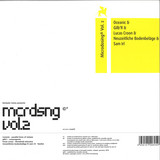
Microdosing is a series of compilation 12”s selected by Julienne Dessagne aka Fantastic Twins, and designed in collaboration with French visual artist Geff Pellet. Microdosing is a collective experiment aimed at helping you fighting back your modern obsession with happiness. You may deserve a nice day but the day does not need a nice you, nothing should be forced, everything is permitted. Microdosing will provide you with sonic healing weapons on regular basis and at irregular dosage. Those doses will favour psychedelic social techniques against self help tyranny, creation over soma, provoking over numbing, our outer-selves over our inner-selves. Microdosing refuses the fatality of the pleasure principle. Life is a struggle, time to embrace it. —— "My battery is low and it’s getting dark” We at Microdosing will make Opportunity’s famous last words fully ours. Some would see these as an epitaph on a black screen, we embrace them as a reclaimed fragility. Are we grains of sand wandering in space, hoping for a goal? No. We are the cosmos, the cosmos is us, unafraid of the end, unafraid of the void. Before the rise of the infinite silence, Microdosing brings you new guiding lights, white sun or black hole being a simple permutation of the kinetic rainbow. Oceanic’s “Parallel Lines Of Stripes” is a meandering mantra, an synthesised Moebius ring, a mission to your heart, that furthest star in the sky. Gilb’R’s “Cosmogonie” simply reminds us of the profound relation between spatial systems and the holy act of birth (cosmo, world and gon, conceive). The universe is a body, your body is your universe. Lucas Croon’s “Threshold Stimulus” is the soundtrack of a never ending voyage, the man is on a trip to the core sanctum. Imagine Space as a reverberation room cladded with bakelite. Losing yourself in delay repeats sometimes is the shortest way. Neuzeitliche Bodenbeläge & Sam Irl’s “Faeden” is another hymn to the umbilical chords joining us to the outer world, a black monolith of kraut acid, a pagan dance as portal to a destination only you can choose. Microdosing will be back soon with more enablers, helping to turn your petty struggles into a search for a meaning of life. The Quest lives on.
Jatinder Singh Durhailay and David Edren released Tea Notes as a cassette back in April of 2018. London-based Jatinder Singh Durhailay is a painter and student of Indian Classical music. He has trained in both the sitar and the Hindi singing technique, Dhrupad. He also plays two traditional Sikh instruments; the bowed, stringed Dilruba and Taus. Poetic Pastel Press issued his solo debut, The Last Ballad Of Mardana, in 2017. David Edren`s expertise lies with machines and modular synthesis. His Kosmische and New Age-Inspired electronics have featured on numerous cassettes, and compilations, produced for imprints from the current Belgian underground, such as Jj Funhouse, Social Harmony, and Ultra Eczema. These recordings appearing, since the turn of the millennium, either under his own name, or the moniker DSR Lines. Jatinder and David’s collaboration, Tea Notes, is a celebration, a meditation, on both the beverage, and the communal time shared imbibing. The coming together to partake in its ritual. Each of the six tracks represents a different infusion. The opening piece is a tribute to semi-oxidised Oolong, from China`s Wuyi Mountains, with hammered dulcimer-like glissando. Gongs shimmering, gently crashing, as if signaling a change in the weather. A calm of thin, stretched synths and Ai angels introduces Tulsi from India. The Holy Basil of Hinduism, used in the worship of Vishnu, Krishna, and Rama. A traditional herb of Ayurveda and Siddha medicine. Automated arpeggiated sequences raising a vibrating wall of hallucinatory sound. Pairing swooning strings with a racing robot heart. Ceylon is a modern twist on the classical raga. Serving to tell the story of a tea smuggled into Sri Lanka in the 19th century. Plants stolen from South West China, where the brew had been enjoyed since the days of the Shang Dynasty (1766 to 1122 BC). The contraband founding fresh industry in its new home when the indigenous coffee crops failed. Muted organ and sleepy, treated sine wave microtones describe Kava, the Polynesian fireweed root, whose extract serves as both sedative and euphoriant.Shincha are the first young leaves of the season. Picked in Southern Japan and steamed to prevent oxidization, retain their flavour and green / gold colour. Their musical counterpart finds Edren establishing an ecclesiastical drone, while Durhailay`s strings chart an ancient romantic ache. Sonic stars shine. Singing out to the infinite, the universe, before dissolving into knots of Radiophonic Workshop noise.Melodies treated with subtle sustain and delay denote Pu-Ehr, from the Yunnan province. The only truly fermented black tea - made distinctive by the action of bacteria, moulds, and yeasts. Its musical themes hovering in the vapour trails, the atmospheres, they themselves create. Spiraling, soaring, reaching for the heavens, while pretty music box glitches - tiny chimes turned in on themselves. Catching, reflecting, like light at play on fresh running water. (words: Robert Harris)
Razen celebrate their 10 yr anniversary with “Ayîk Adhîsta Adhîsta Ayîk”, an album that takes a paragraph from CG Jung’s Memories, Dreams, Reflections as a reference point to set off a journey that goes from light to dark, from day to night, from life to death, and back.
As much a reflection of primal imagery and rituals of knowledge as a way of coming to terms with anxieties about the chaos of the night, the album concerns itself with the question: who - or what - are we in the moments before (re-)birth, before waking up, in the state inbetween darkness and light?
On “Ayîk Adhîsta Adhîsta Ayîk”, the wind instruments and organ stabs of band leaders Kim Delcour and Brecht Ameel are expanded with Pieter Lenaerts’ five string double bass and sarangi, Jean-Philippe Poncin’s bass clarinet and chalumeau, and Paul Garriau’s hurdy gurdy.
The album sees the group explore new straight-to-the-gut emotional territory, while simultaneously showcasing Razen’s intuitive, continuous investigation of the acoustic properties and resonant possibilities of churches and chapels in the countryside around Brussels; after “Remote Hologram” (2014) and “ The Xvoto Reels” (2017), this time the St Agatha Church (St.-Agatha-Berchem) functions as the conduit for Razen’s acoustic sound jolts.
With the past ten years entirely devoted to the search for archetypical timbres and connotations by improvising on Early Music instruments, it’s no wonder that the world of Razen would one day collide with the world of CG Jung and take his writing as an inspiration.
A sonic hex tour de force from this unique ensemble, “Ayîk Adhîsta Adhîsta Ayîk” is a present-day, nocturnal emitter of the Coleridge quote that opens Jung’s Memories:
‘He looked at his own soul with a Telescope. What seemed all irregular he saw and shewed to be beautiful Constellations and he added to the Consciousness hidden worlds within worlds’.
Deliquent Delivery’s third EP titled U comes from Dublin based label head Stephen Mahoney, who contributed two tracks to the label’s last split EP.
Mahoney’s vision for Delinquent Delivery is visible on this release, showcasing his talents which range beyond A&R and delving into production. U features five untitled tracks, contrasting thumping dancefloor driven techno with spacey atmospheric ambient tones. With over twenty years experience as a DJ, Mahoney’s ear for precise, engaging rhythms and melancholic tones can be heard throughout U.
A1 sets the tone of U. A thumping kick lays the foundation for the track, with gritty, cutting melodies juxtaposed with polished, pensive tones. Rhythmic structure is a large component of Mahoney’s signature sound, with cleverly placed hats and snares audible on A1. A strong link to the sounds of Detroit sounds of the ’90s is audible here, synonymous with Zenker Brothers et. all.
A2 continues down the path previously set out, with another dance floor directed track. More subtle than previously heard, Mahoney drives the track with a glossy lead, only to break the track up and juxtapose it with a gritty, murky underlying melody. A2 also focuses heavily on rhythmic structure, with well-placed spacing allowing energy to be retracted and reintegrated with more tenacity.
A3 takes U to a different space with an ambient excursion. Mahoney here showcases that he is capable of creating lush, captivating soundscapes which transport the listener to a place of tranquillity. Dark, harrowing undertones are balanced with ethereal swells, maintaining the aura of the record established.
B1 moves back to the dancefloor, with a thumping kick and jagged, piercing tones. Mahoney’s versatility as a producer is evident here, as B1 moves in the same vein as the A-side of U but is completely different in style. Prime-time dance-floor material, this track drives forward with ferocity and grace, cleverly being broken up with sparkling synth tones only to hit back harder than before.
B2 closes out U. A bouncy kick drum sets the tone, with atmospheric, dark swells creating an engaging sonic tapestry. Sparse, delicately placed lustrous tones take the lead, with airy swells contributing to form a wonderful balance of light and darkness. Mahoney’s focus on precision within rhythmic structure is again noticeable here, with rhythmic elements forming their own melodies throughout B2.
U is Stephen Mahoney’s first full release on Delinquent Delivery and captivates the essence of his vision as a producer entirely. Versatile, engaging and polished, U contains five tracks which all compliment one another wonderfully. U is a record which is as useful in a DJ’s record bag as it is for home listening.
Dark may light through cold nights. Do you hear the sound
echoing from the distant tower? It leads you to the sound of
desire. The dazed mind dissolves into pulsating waves and
disturbing tones. Z.O.R.G. is calling and won't let you go. The
cover is limited to 200 editions with a handcrafted silkscreen
artwork - The vinyl package includes two bonus digital tracks
and the whole EP via Bandcamp download code.
The UK's future Art Rock Stars build on recent successes with new album 'Dissolution'. The highly anticipated second record to feature the King Crimson / Porcupine Tree drummer Gavin Harrison
The CD edition of 'Dissolution' is presented in Sleevepac packaging complete with a 24-page booklet, while the single LP edition of 'Dissolution' is pressed to audiophile 180g vinyl and features a 4-page booklet. The blu-ray edition of
'Dissolution' includes a 16-page booklet of additional artwork and features the album plus bonus music in a 24/96 DTS-HD MA 5.1 surround sound mix and 24/96 hi-res stereo audio. It is presented in Amaray packaging.
'Dissolution' is the highly anticipated follow-up album to 2016's 'Your Wilderness' and is the band's second album to feature King Crimson and Porcupine Tree drummer Gavin Harrison, spurring The Pineapple Thief on as leaders of Europe's
experimental rock domain. Their efforts on 'Your Wilderness' produced 4m+ album streams, a #7 in the UK Independent Charts and two extensive headline European tours culminating at London's Islington Assembly Hall where the
concert was recorded for the live release 'Where We Stood'. The new material establishes The Pineapple Thief's intent to elevate themselves to new heights, with a desire to develop their songwriting and technical
capabilities, and with artwork created by iconic design agency Stylorouge, whose previous work includes Pink Floyd, David Bowie, Blur and British film Trainspotting. The album concept tells of the often dark consequences of living in
a society in which everything is played out on a public stage, a theme paralleled in the cover art, which was created by 'glitching' the original photographs. Songwriter Bruce Soord explains 'In a time when we are supposed to be bound
closer together than ever, I have never felt so apart from the world. We are living through a revolution and right now I am not sure it's a good one. Lyrically this is the most vivid I have been.'
The band recorded Dissolution independently across the UK, including at Gavin's 'Bourne Place' studio in London and Bruce's 'Soord Studios' in Somerset, sharing their ideas via instant messaging. The mixing was handled by Soord and
Harrison, and mastering by the band's keyboardist Steve Kitch. The penultimate song 'White Mist' also features experimental guitarist David Torn (David Bowie) providing a bedding of abstract, off-kilter sounds.
What is the Inner Dance? A musically assisted trip through thought-movement. It is not a show, it is a party. The participation of a room full of individuals having their own personal experience. Like looking closer at the ground to see there is movement within, focus acutely and see the life within life.
Gene Tellem launches her own label Bienvenue Records, welcoming you to a world of sounds for all the extroverted introverts out there. With headquarters at La Rama in Montreal, we plan on assisting your journey through local & international sounds.
For this first EP Gene lays down the foundation for what is to come. Journey agent tracks for all looking to experience the music, an extended groove, more than just a drop & repeat. ‘Groove PM’ sets the scene, we play in the sun during the day and at night we smooth out the rigid edges of the hustle. ’N’ You’ is here to get you in touch with your natural swing, ride on the simplicity of moderate changes and witness just how much we have. ‘Tender As A Rhodes’ is an ode to that thing that changed it all, the universal jazz sound, dub it out, stretch it out, and watch the whole room come together. As the morning comes we get ‘Chipped’, dance ’til the next day comes and hit the streets with a little pep in your step. Crossing paths with your neighbours on the way home, they might not know but all who witnessed do, we who dance the night are the warriors that keep the light on in the darkness.
Thanks for joining us and please do stay tuned for more.
-La Rama
Hamburg-based Mireia Records is ecstatic toannounce their thirteenth release: Julian Stetter’s “Sensual EP”.
You’ve probably crossed paths with Julian in thelast couple of years. Not only because he’s the tallest guy in Cologne, but the producer and DJ has been actively shaping modern dance music
with his flourishing, melancholic sound. He’s been releasing music with Permanent Vacation, Kompakt, Correspondent and hometown labels Ancient Future Now and PNN.
It’s also not his first time on Mireia Records. Remember the beautiful “Porto” on “We’ll Sea
Pt.1?” Here, Julian presents two original tracks which are reinterpreted by SONNS and Matt
Karmil.
The title track “ Sensual ” manages to erase the mundane, the world’s vanishing around you.
It’s pitched shaker and airy bells evoke introspective tones. The bassline on the other hand
keep you steady - the dancefloor is still visible through the clouds!
“ Rumors ” picks up the pace. Kick drum and syncopated hi-hats set the stage for a serious
bassline, interwoven with fleeting melodies.
Bright and euphoric brushstrokes from Julian’s synth elevate the pace and catapult the track
towards a crescendo. Booming snares signal the peak.
New Release Information
Strobe lights, sweat and ecstasy.
SONNS opens up the B side with the first remix by whispering “ Rumors ” in your ear. A
brooding bass line takes you on a trip to the dark corners of the city. Hypnotically chugging
toms highlight the sights. Let’s get lost tonight!
With his releases on Kompakt and strong DJ Sets SONNS’ been a long time favored entrant
into Mireia Record’s catalogue.
Matt Karmil’s version of 'Sensual', although on B2 of the vinyl, doesn’t hide its assets.
Kicking off with frantic high hats and a distorted glitch, he pushes the track forwards
intriguingly. Arpeggiated melodies layered supremely over the percussion drive the track
forwards, the simplicity of the track and sharp cuts and drops create an interesting dynamic
to the single creating a perfect juxtapose to the other tracks on the release.
Matt’s also been on Mireia’s radar for a long time. His atmospheric adventures for Studio
Barnhus, Smalltown Supersound or Beats in Space always convey a spirit of living, breathing
leeway.
Called out by The Irish Times as “Ireland’s best new rock band” and named as an one of NME's “100 Essential New Artists for 2019," When I Have Fears is the debut album from Dublin, Ireland's The Murder Capital.
Produced by Flood (PJ Harvey, New Order, Foals) the album features both singles from the band so far, "Feeling Fades" and "Green & Blue", as well as the first studio recording of breakthrough track "More Is Less".
An exercise in both darkness and light, “When I Have Fears” only serves to highlight the early ambition in the band's sound. From the post-rock build and breakdowns of the two-part "Slowdance", to the tender, bruised confessional of "On Twisted Ground" and industrial pulse of closer "Love, Love, Love", there's a consistent intensity throughout that marks out The Murder Capital as a band arriving fully formed on their debut album.
Following sell-out shows on their April tour, the group have also announced a new string of UK & European headline dates for October and November 2019 - see below.
Birthed from Arizona’s regaled Ascetic House collective, Body of Light is a dark synth-pop outfit comprised of young brothers Andrew and Alexander Jarson. What began as a vehicle for their exploration of noise and sound during their early teens has evolved into an established production over the last decade, as Body of Light continues to carve out their own style of complex, structured, and moving dancefloor electronics.
Their music is not only individually personal, but drawn from experiences shared between the two brothers – and calls on elements of new wave, freestyle, goth, and techno to create timeless and singular tracks without fear of trend or passing fashion.
On their third album Time to Kill, Body of Light refines their brand of cold and driving synth pop with a bold pallet of sounds and a focus on uncharted technique and purpose. Like the pale digital stare of the modern devices surrounding our daily lives, the album weaves stories of love and obsession in an era of technical bondage and fleeting exhilaration. Written over a period of intense and profound change, Time to Kill stands as a startling reminder of how important our existence truly is. Haunting keys, swelling pads, and punching rhythms score their work as Alex Jarson presents an alluring and romantic dialogue with confident projection. The title single “Time to Kill” kicks off the album with a merciless signature beat, complimented by distorted sample patterns against an infectious, moving bass groove
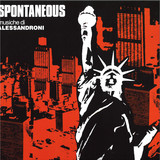
Maybe the best Alessandroni's album ever. A true holy-grail for any collector and worldwide music lover, which we can consider nowadays as the most sought-after record of the whole legendary RCA SP 10000 series, and as the rarest album from the king of Italian libraries.
Jazz, mellow-funk, downtempo breaks, and incredible rock blends, make this record a refined portrait of the 70's American way of life, viewed through the fully Italian lens of Alessandroni's sensitivity.
The magic around Spontaneous is that this album is not only beautiful and astonishing, but is certainly on of those amazing records to which time gives new life and freshness, making it sounds unbelievably contemporary.
After five years of exhausting research, finally Four Flies can give a light to this obscure and fascinating mystery, rescuing it from the darkness. It's not just another piece of Alessandroni's legacy that is finally put back in the right place. This should be considered as the definitive act to re-estabilsh Alessandroni's leadership into the library music scene, and beyond.
Available again from July 19, coming in 180gr black vinyl, housed in a hard tip-on sleeve cover.
Limited Edition 500 copies, don't sleep!
- 1: Umbral
- 2: Lumina
- 3: Io
- 4: Emesis
- 5: Puerta De Sal
- 6: Tejidos
- 7: Ultimo Aliento
- 8: Uno
- 9: Religar
- 10: Lucero
- 11: Astro
Mateo Kingman conceives of his second album Astro as a cure for the healthy. It’s a journey across the constellation of the snake, a journey at once earthly and cosmic. The poetic text expressed with a multiplicity of vocal timbres drives the musical journey, starting with the decision to face up to our demons, passing through a deep sense of vertigo and sacred healings, to return us to ourselves, reconciled and grateful.
Musically, Astro expresses an intense investigation, tying together different threads: contemporary urban song (trap, hip hop, and elements of electronic music), traditional Latin American melodies influenced by shamanic icaro chants, and the emphasis on synthesizers, resulting in a new, hypnotic kind of sound.
In a world in which we increasingly need more stimuli and approval from the outside, Astro invites us to take a look inside and explore all the aspects of the self, from the darkest to the lightest. On this record, Mateo Kingman shows a strong point of view as the author, although he moves away from the sounds and themes with which he made his name, daring to mix current trends, urban rhythms and vocal experiments, forming a constellation through which we can all travel, showing a clear personal and musical evolution.
‘Autonomy’ is a fiercely independent album and serves as a testimony to the united couple’s instinctive DIY attitude; for 10 years now, everything The Golden Filter has done from, producing, mixing, releasing, to shooting videos and press shots is a sovereign endeavour. Here, the duo finds themselves at a point of fearless positivity and an unbreakable creative synchronicity. This is undoubtedly one of their most focused and ambitious releases so far.
Born out of their own self-contained studio in Peckham, free from external influence, Penelope and Stephen set about on a mission of self-searching and solipsism drawing influence from their love and unity that sternly defies the damage caused by the ever-growing daily trauma of capitalism and politics. Staunchly feminist and optimistically reflecting on the growing human disconnect from reality, ‘Autonomy’ pulls subtly from the gloomier sides of British life and culture, The Golden Filter’s home now for the last four years.
‘Autonomy’ mines dark and experimental electronic tones; simultaneously conjuring dystopian synthscapes, EBM, post-punk, motoric electro and minimal wave. ‘Coercion’ is a mournful new wave cut that places Penelope’s recent brand of “inky dream pop” underpinned by Stephen’s pulsating synths as the perfect soundtrack to the rapture.
Tracks like ‘Autonomy’ and ‘Infinity’ find The Golden Filter in more familiar territory, thrusting post-punk electronics that straddle the gap between Panorama Bar staples and wayward, thought provoking art-pop. ‘Electric Light’ is an updated homage to old-school sounds of Siouxsie and New Order that take on the duo’s message of finding light in the dark and remaining open minded to each other as humans. Album closer ‘All The Queens’ is the most front-facing example of the duo’s political inspirations; imagining a new world, reborn under the rule of divine femininity.