Composed, performed and produced by Cosey Fanni Tutti, the 9-track album moves between propulsive beat constructions and expansive electronic explorations, continuing themes from 2019’s acclaimed album TUTTI. It is a personal reflection; a sonic realisation of her life, drawing on her powerful inner resolve and expressing it through music. The album finds Cosey making sense of some very tough years, dealing with personal bereavements alongside swingeing world events that have impacted us all. Centring on her own strength and self will, the album’s two distinct sides – one rhythmic, one more meditative – are connected by an overwhelmingly positive mood.
She explains, “My overtone chanting on the track ‘Stound’ was part of that, tapping into the inner self, to the core of your being, emotionally, physically, allowing the sounds to permeate and soothe as well as create a sense of power, resistance and resilience to what we face.” Even in the more melancholic moments, there’s a lightness that she explains is an “acknowledgement that it’s alright to be sad, that’s part of life, but there is so much joy too in our memories of people we lose and in the moments we share with each other. Joy is our resistance.”
There are also threads from her most recent projects running through 2t2. Her latest book RE-SISTERS and the score she wrote for Caroline Catz’s film Delia Derbyshire: The Myths and Legendary Tapes are acknowledged, most directly on ‘Threnody’ which is dedicated to Delia Derbyshire and Andy Christian, an artist friend of Delia’s. He sent Cosey an abstract drawing of the same name, created one night from an improvised evening where he drew while Derbyshire intoned and sang softly as she looked at the drawings, as if reading a score expressing how they made her feel. Cosey’s process and the different strands that make up her work form a totality of vision.
She goes on to say, “Once you get creating and listening, weaving, collaging sound it’s a wonderfully fulfilling feeling that takes you both out of yourself at the same time as essentially deep within.” The artwork reflects this idea that the album is a “sound cameo”, reflecting the light within the music, and the buzz of life that exists within all of Cosey’s work. Musician, artist and author Cosey Fanni Tutti has continually challenged boundaries and conventions through her work. As a founding member of the hugely influential avant-garde band Throbbing Gristle, one half of electronic pioneers Chris and Cosey, and as an artist channelling her experience in pornographic modelling and striptease, her work on the margins has reshaped the mainstream. Her first solo album, Time To Tell (1983) was followed by 2019’s Tutti and 2022’s Delia Derbyshire: The Myths and the Legendary Tapes. Her debut book, the Penderyn Music Book Prize shortlisted Art Sex Music, was published in 2017, followed by RE-SISTERS in 2022 (both Faber), which will soon get a Spanish edition.
Поиск:light year
Все
- A1: Supersonic (Remastered)
- A2: Roll With It (Remastered)
- A3: Live Forever (Remastered)
- A4: Wonderwall (Remastered)
- B1: Stop Crying Your Heart Out (Remastered)
- B2: Cigarettes & Alcohol (Remastered)
- B3: Songbird (Remastered)
- B4: Don't Look Back In Anger (Remastered)
- C1: The Hindu Times (Remastered)
- C2: Stand By Me (Remastered)
- C3: Lord Don't Slow Me Down (Remastered)
- C4: Shakermaker (Remastered)
- D1: All Around The World (Remastered)
- D2: Some Might Say (Remastered)
- D3: The Importance Of Being Idle (Remastered)
- E1: D'you Know What I Mean? (Remastered)
- E2: Lyla(Remastered)
- E3: Let There Be Love (Remastered)
- F1: Go Let It Out (Remastered)
- F2: Who Feels Love? (Remastered)
- F3: Little By Little (Remastered)
- G1: The Shock Of The Lightning (Remastered)
- G2: She Is Love (Remastered)
- G3: Whatever (Remastered)
- H1: I'm Outta Time (Remastered)
- H2: Falling Down (Remastered)
‘Time Flies… 1994 – 2009’ is Oasis’ complete singles collection.
Now available with remastered audio, this quadruple vinyl deluxe box set is released to celebrate its 15th anniversary and ahead of the band’s eagerly anticipated Oasis Live ’25 tour, and includes a limited edition print. Released on Big Brother Recordings, the tracklisting spans fifteen years across Oasis’ staggering seven consecutive number one albums. 1994’s ‘Definitely Maybe’, 1995’s ‘(What’s The Story) Morning Glory?’, 1997’s ‘Be Here Now’, 2000’s ‘Standing On The Shoulder Of Giants’, 2002’s ‘Heathen Chemistry’, 2005’s ‘Don’t Believe The Truth’ and ‘Dig Out Your Soul’ from 2008. Starting with their irresistible debut, ‘Supersonic’ and finishing with their last release ‘Falling Down’, this compilation features all 26 singles - including ‘Whatever’ and ‘Lord Don't Slow Me Down’, which have previously never appeared on an Oasis studio album.
2025 Repress
Growing up on the north Atlantic island of Iceland bestows one with an unusual and often intense relationship with light and colour: Summers come with endless days, Winters with scant sunlight yet increased sightings of the Aurora Borealis; the mysterious and awe-inspiring glow across the sky. Channelling these energies, Exos
comes to Tresor with his Green Light EP, a five-track collection of the sort of spectrally rich techno synonymous with the Northman’s 27-year career.
Across the EP, the five tracks fizz and pulsate driving ever forward, making the release’s title a three-way play on words referencing the continuous travelling of photons, the verdant warping of the Northern Lights, and the universal colour for Go, for forward propulsion. Smart wordplay can also be found in titles like Grátt Silfur, a term in Íslenska (literally “grey sliver”) which signifies a tension between two parties, further extending the colour metaphor and dark/light dichotomy found elsewhere.
The digital release comes with three extra tracks that continue the dynamic energy, pushed along by the same shifting, mutating force where the music often feels like voices calling out from the darkness or the shimmer of light as the sun rises across the horizon.
Green Light EP continues this year’s blazing return from an artist who, similar to his output, is never stagnant: ever changing form yet ever moving forward.
The German band Schatterau returns to Hands in the Dark with their latest release, »Übers Jahr« (»Throughout the Year«), which follows their acclaimed debut album from last year.
This sophomore effort, as its title implies, delves into the cyclical nature of time and the duality of the transient and the eternal unfolding of events. The album comprises 17 vignettes that reflect on the seasons, capturing their unique light and sounds, the passage of time, and the interplay of movement and stillness, as well as the perpetual transformation that leads to new beginnings.
Continuing the approach of their inaugural album, the compositions are constructed around endless cassette loops, allowing the band to explore intricate textures and weave them into a surreal, dreamlike tapestry. In this release, the warmth and melancholy of the compositions have developed into a more intricate existence, showcasing a wider array of textures and sounds, while the songwriting exhibits greater maturity, inviting listeners into a more immersive and cohesive experience.
»Übers Jahr« transcends being a simple collection of auditory moods; it serves as an intimate portrayal of the seasons that cyclically unfold, embodying a mystery that surpasses both memory and time.
- A1: East Coast Love Affair - Xylocopa Violate
- A2: Helen Sharpe - Got 2 Have Your Love (Jazz Rave Mix)
- A3: Len Lewis - Joy
- B1: Percy X & Mark Broom - Lady Killer
- B2: Sound Of The Suburbs - All You Need
- B3: Amtraxx - Funky
- C1: Eden Burns - Big Bark Manifesto
- C2: Karizma - Kellah
- C3: Ivan-I & Starchild - All Things Dub
- C4: Lightning Head - Me & Me Princess (Version 2)
- D1: Selective Perception - Dij-Ya-Do-One
- D2: 82J6 - Exercise Life
- D3: Quest - Smooth Skin
HUGE CONGRATULATIONS TO MOXIE AND THE LOVE INTERNATIONAL X TEST PRESSING TEAM FOR WINNING THE BEST COMPILATION IN THE DJ MAG BEST OF BRITISH AWARDS 2025
“I feel really chuffed as a lot of work went into building this compilation,” beams Moxie, when we congratulate her on the award. “I also worked alongside a great team, including Dave Harvey, Ellie Stokes, Chez de Milo and everyone at Prime Distribution. I’d been manifesting working on a project like this for years, so when it all came together I was so happy with it. But to have recognition from the DJ Mag public vote is the cherry on the cake.”
Few artists have shaped their local scene quite like Alice Moxom under her celebrated Moxie alias. A born-and-bred Londoner, Moxie is a dance music powerhouse whose influence runs deep—from the grassroots to global stages. Her trajectory spans early teenage years digging for garage records, to dubstep sets at legendary club nights, to running her long-standing and beloved NTS Radio residency. For over a decade, she’s been a midweek staple on NTS, championing deep house, Detroit techno, and all things dubby, groovy, and percussive, while regularly platforming artists through guest mixes and interviews with icons like Jeff Mills, Four Tet, and Or:la.
Her latest endeavor, the Love International compilation, brings that wealth of experience to life. 'I’d secretly been manifesting this for a while,' Moxie admits. 'Love International has such a specific energy, and I wanted the compilation to reflect that—dubby, fun, euphoric, deep. It’s all the styles of music I love, pulled together in harmony. Being at Love International always feels like coming home. Whether it’s dancing in Barbarellas or sharing a smile with a stranger on the dancefloor, there’s this sense of unity that’s hard to describe. That’s why I chose ‘U Skladu’ for the sleeve—because that’s what it feels like: in harmony.'
- Puccio Roelens E La Sua Grande Orchestra Tv - Caravan
- Gegè Munari Percussion Modern - Police Man
- Don Marino Barreto Junior- Napolitano D'o Brazil
- Tony Esposito - Pagaia
- Naco - Volando Con Milton
- Rosario Jermano - Grand Oceano
- Tullio De Piscopo - Temptation
- Tony Cercola - Lumumba
- Gabriele Poso – Ritmo Italiano
- Agostino Marangolo - Certi Giorni Mi Sento Bene, Certi Giorni Mi Sento Male
- Tony Cercola - Lumumba (Clap! Clap! Version)
- Vico Anthony And His Percussion
Black[25,17 €]
Mr Bongo proudly presents Ritmo Italiano ‘Unspoken Sounds of Italian Tamburo’ a captivating compilation of percussive-driven, Italian gems curated by Sardinian multi-instrumentalist, percussionist and producer, Gabriele Poso. A journey into the heart of Italian musical history, it celebrates Italy’s rich rhythmic traditions, showcasing a selection of genre-traversing, Italian treasures from the ‘60s to the early ‘90s. Honouring the timeless rhythms of Italian percussion masters, alongside a brand-new exclusive composition by Gabriele, ‘Ritmo Italiano’ shines a light on the universal, primal language of the drum.
A connection sparked from an early age; percussion has always deeply resonated with Gabriele. It led to years of studying percussion traditions across Cuba, Puerto Rico, and Brazil, crafting his own songwriting skills in the process. An acclaimed producer and compiler, his releases on Yoruba Records, BBE and Soundway Records have garnered global support. Yet a growing need to rediscover the essence of his country’s cultural heritage laid the foundations for this new compilation.
In Gabriele’s own words, “Italy has always been a crossroads of civilizations, with influences from the Mediterranean, North Africa, the Middle East, and Europe converging over centuries. Ports like Naples, Genoa, and Venice played a crucial role as gateways for musical exchange, a melting pot of sounds and cultures brought by sailors, merchants and travellers. These influences blended with Italy’s own folk and religious traditions, creating Italy’s unique and emotionally resonant rhythms.”
Across the 12 absorbing tracks, there’s jazz influences, Italian library music aesthetics and experimental beats mixing with Afro-Cuban and Mediterranean rhythms. It’s a broad selection anchored by the drums. The synth-heavy, ‘80s jazz funk flavours of Gegè Munari's ‘Police Man’, sit side-by-side with the samba-infused ‘Napulitano D' 'O Brasil’ by Don Marino Barreto Jr. Tribal, earthly energy radiates from Naco’s ‘Volando Con Milton’, with Tullio De Piscopo serving up cosmic disco brilliance, and blistering jazz funk mastery coming courtesy of Agostino Marangolo. Taking the name of the compilation, a new original track by Gabriele, ‘Ritmo Italiano’, blends traditional rhythms with contemporary energy, Afro-Latin influences with Italian jazz essence. Recorded live in one take, it captures a raw, unfiltered vibe.
“Each track tells a story, connecting the past with the present, and highlighting the deep-rooted traditions that shape Italy’s rhythms. The collection also offers a glimpse into the diversity of Italian music with a variety of styles from the organic, earthy beats to the more experimental and modern takes on traditional rhythms. It’s a reflection of how these rhythms have not only shaped Italian culture but also influenced global music.”
“Recorded at BBC Broadcasting House and partially aired on BBC Radio 3’s Late Junction, the first studio encounter between London-based duo Exotic Sin and Swiss percussionist Julian Sartorius is now published in full on this album from Sagome.
Winding through six distinct and interconnected paths, the trio effortlessly create a shared language in this expansive improvised session.
Listening back two years later — the session was recorded on March 24, 2023 — it’s evident how they build at a relaxed pace, offering space for the listener to enter into their evolving sound. Anchored by piano, delicate wood, metal, and air instruments, a fluid system of interactions develops: repeating, deepening, but not fixating. The direction of travel is not cyclical or linear and the pace insists on forward confidently, avoiding the trap or comfort of recurring motifs.
Percussion is not a timekeeper, but a key element, introducing new textures that even on the final track Path 6, trace out a horizon that feels more like a blurred beginning than a definitive end.
In Session, Exotic Sin moves into a lighter, perhaps more playful language for improvisation than on their debut album Customer’s Copy. This could be influenced by Sartorius’ tactile approach to sonic materials or the more stripped-back nature of the improvised session, with less emphasis on synthesised and electric sounds. While the emotional imprint from their debut album—murkier and insistent—remains, it has been aired out to dry. In Session, their sound-world is broad and moves with levity.”
Andrea Zarza Canova – April 2025
Music by
Kenichi Iwasa (electric and acoustic percussion, trumpet, horns, thumb piano, effects).
Naima Nefertari (piano, Yamaha keyboard, flute, bells, percussion).
Julian Sartorius (drums, percussion).
Recorded and mixed live for Late Junction at BBC Broadcasting House, London, on the 24th of March 2023 by Joe Yon and John Boland.
Mastered by Giuseppe Ielasi.
Produced by Silvia Malnati at Reduced Listening for BBC Radio 3.
Extracts from the session were played on Late Junction on the 14th of April 2023.
Artwork by Josef William Back.
Graphic design by Nicola Tirabasso.
- Wild Wild World
- We Are, We Are
- Electrify Me
- An Irish Goodbye (Featuring Paul Brady)
- The Great Yellow Light
- Tryin' To Make A Livin' In The U.s.a
- Fall On Me
- What Color Is Love
- Wake Up America (Featuring Steve Earle)
- Washington's Day
Willie Nile"s "The Great Yellow Light" is the 21st full length release from veteran New York-based rocker that the New Yorker has called "One of the most brilliant singer-songwriters of the past thirty years". The album title is a reference to Vincent Van Gogh"s letters to his brother, Theo, and the light that inspired him in Arles, France where he lived from February 1888 to May 1889. The album was recorded at Hobo Sound, Weehawken, NJ produced by Nile and his long-time producer, Grammy-winner Stewart Lerman (Elvis Costello, Patti Smith, Sharon Van Etten, etc.). Features special guests Steve Earle, Paul Brady, Waddy Wachtel, David Mansfield, and members of Black 47 and The Hooters.
For many all-time-great rock bands in the ascendant, the fourth album is often the point where youthful years of febrile creativity and progressive momentum culminate in a masterwork for the ages, setting the seal on an early signature sound while opening it up to future possibilities. From enchanting 2016 debut Prelude, through 2018's assured II: Sojourn, to 2020's wizardly III: Pentecost, each Wytch Hazel album has embodied that old-fashioned notion of unstoppable progress, and the glittering treasure chest that is IV: Sacrament proves eminently worthy of rising to the toughest challenge. Not just the Lancashire quartet's most classically beautiful production, but their strongest yet front-to-back collection of affecting hooks and ageless melodies.
VERY LIMITED 2025 REPRESS ON BEAM OF LIGHT VINYL .
Everything changed for The Beths when they released their debut album, Future Me Hates Me, in 2018. The indie rock band had long been nurtured within Auckland, New Zealand’s tight-knit music scene, working full-time during the day and playing music with friends after hours. Full of uptempo pop rock songs with bright, indelible hooks, the LP garnered them critical acclaim from outlets like Pitchfork and Rolling Stone, and they set out for their first string of shows overseas. They quit their jobs, said goodbye to their home town, and devoted themselves entirely to performing across North America and Europe. They found themselves playing to crowds of devoted fans and opening for acts like Pixies and Death Cab for Cutie. Almost instantly, The Beths turned from a passion project into a full-time career in music.
Songwriter and lead vocalist Elizabeth Stokes worked on what would become The Beths’ second LP, Jump Rope Gazers, in between these intense periods of touring. Like the group’s earlier music, the album tackles themes of anxiety and self-doubt with effervescent power pop choruses and rousing backup vocals, zeroing in on the communality and catharsis that can come from sharing stressful situations with some of your best friends. Stokes’s writing on Jump Rope Gazers grapples with the uneasy proposition of leaving everything and everyone you know behind on another continent, chasing your dreams while struggling to stay close with loved ones back home.
"If you're at a certain age, all your friends scatter to the four winds,” Stokes says. “We did the same thing. When you're home, you miss everybody, and when you're away, you miss everybody. We were just missing people all the time.”
With songs like the rambunctious “Dying To Believe” and the tender, shoegazey “Out of Sight,” The Beths reckon with the distance that life necessarily drives between people over time. People who love each other inevitably fail each other. “I’m sorry for the way that I can’t hold conversations/They’re such a fragile thing to try to support the weight of,” Stokes sings on “Dying to Believe.” The best way to repair that failure, in The Beths’ view, is with abundant and unconditional love, no matter how far it has to travel. On “Out of Sight,” she pledges devotion to a dearly missed friend: “If your world collapses/I’ll be down in the rubble/I’d build you another,” she sings.
“It was a rough year in general, and I found myself saying the words, 'wish you were here, wish I was there,’ over and over again,” she says of the time period in which the album was written. Touring far from home, The Beths committed themselves to taking care of each other as they were trying at the same time to take care of friends living thousands of miles away. They encouraged each other to communicate whenever things got hard, and to pay forward acts of kindness whenever they could. That care and attention shines through on Jump Rope Gazers, where the quartet sounds more locked in than ever. Their most emotive and heartfelt work to date, Jump Rope Gazers stares down all the hard parts of living in communion with other people, even at a distance, while celebrating the ferocious joy that makes it all worth it -- a sentiment we need now more than ever.
- A1: Pharoah Jones
- A2: Ghost Gospel
- A3: Ill Feeling
- A4: Capital Punishment
- A5: Do Not Adjust
- A6: Cool Green Trees
- A7: Chill Scratch
- A8: Poisonous Fumes
- A9: Welcome Aboard The Starship
- B1: Keep On Runnin
- B2: Sounds Impossible
- B3: Painted Faces
- B4: The Knew Style
- B5: Chicken Wing Blues Sauce
- B6: Kool Breeze
- B7: Sexx Bullets
- B8: Soul Child
- B9: Take Off Runnin
- B10: Centurian
- B11: Bozack
- B12: Church
- B13: Splash One
- B14: Hank
- B15: 73 Goatee
"Chasing the funky symphonies that filled my head and my dreams..."
December 25th, 2023 - an Instagram post. Stimulator Jones shared half a dozen FIRE tracks from his beat tape archive. We were immediately drawn to the rough hewn boom bap.
"I'd release that", Rob commented.
Hours of material was shared and the result is this: Cool Green Trees (1999-2005). A collection of beats and loops Stimulator Jones created between the ages of 14-20 at home in his basement, bedroom and computer room in Roanoke, Virginia.
You will not believe the profound soulful genius contained within these naive schoolboy melodies.
December 25th, 1998 - 25 years ago to the day and his much-coveted Yamaha SU10 sampler was finally bestowed upon young Stimmy AKA Sam Lunsford: "I immediately hooked up a CD Walkman to the input jack and looped the beginning two bars of Grover Washington Jr.'s "Mercy Mercy Me". I don't know what exactly was so thrilling about hearing two measures of music repeating over and over but it was so infectious and hypnotizing and enthralling to me. I'll never forget that ecstatic rush of making my first loop - an uncontrollable, gleeful smile plastered all over my face." When you hear the pocket breakbeat symphonies featured here on Cool Green Trees, you'll feel the same sense of frisson.
In the wake of his Stones Throw breakthrough - Exotic Worlds & Master Treasures - Stimulator Jones was pegged by many as a 90s throwback artist. However, he literally IS a 90s artist. He's been recording music most of his life and he's now 40. He created the bulk of Cool Green Trees as a teenager. Everything before 2004 was recorded when Sam was still in school. He was in 8th grade when he made the 1999 tracks - he didn't even have his learner's permit. This album is a snapshot of a young man in a simpler time. Things were still mysterious back then and he was flying blind, relying on his ears and having to figure things out for himself: "I had no road map for becoming a beatmaker. I have been collecting music since I was a kid, I am a lifelong digger and seeker of cool and interesting sounds. I was there in the golden age of Hip Hop, and while I may have been a suburban white kid in Roanoke, Virginia, I was tuned in and I bought so many classic albums when they came out. I was attracted to Hip Hop because of the musical and poetic quality. I was hypnotized by the rhythms, partially because I was a drummer. I didn't brag about collecting my breakbeat records or making beats - it was something I did in isolation. It wasn't something I generally wanted to bring attention to and it didn't really score me any cool points. I certainly wasn't flexing on social media about it."
Hell, he can do that now!
Opener "Pharoah Jones" was inspired by Yesterday's New Quintet and Madlib's ability to capture that classic 70s sound whilst playing all the instruments. Sam created this one stoned afternoon by laying down a 2 bar loop and a shaker loop on his Yamaha SU700 sampler. He hung a microphone from the ceiling and played his Yamaha Stage Custom drum kit over the top before adding ender Rhodes and playing his dad's Selmer tenor sax through an Electro Harmonix Memory Man echo pedal. Yes! Up next, "Ghost Gospel" utilises a dope loop from a gospel record and adds some soul-funk drums overtop, whilst working that filter knob. Says Sam: "The loop reminded me of something Ghostface would rap over. The sample was in 3/4 waltz time but I flipped it for a 4/4 groove, a technique I picked up from RZA. "Ill Feeling" uses sped-up pieces from a dusty old funk record and putting them over a classic NOLA drum loop; gain chopping up a slow, bluesy 3/4 time signature and bending it to a 4/4 groove. Classy shit. "Capital Punishment" features drums tapped in live, inspired by MF Doom's Special Herbs series. "Do Not Adjust" consists loops found on a compilation of 70s French music at Happy's Flea Market, a classic Roanoke digging spot.
The sublime, evocative title track, "Cool Green Trees" was created when Sam was still living at home. He dumped samples off his SU10 into the family desktop and arranged them in a demo version of Pro Tools: "This track was sort of my ode to the DJ Shadow style of sample based production. Super spacey, slow, and moody. The heavily filtered drums were inspired by Alec Empire's 'Low on Ice' album. I later added some scratches and sounds from a Spider Man storybook record." "Chill Scratch" snags the final bit of a bossanova record and pairs it with a drum loop before adding experimental scratching run through an Electro Harmonix Memory Man echo pedal. "Poisonous Fumes" was made using a sampler, mixer and a turntable; a kind of mixtape beat collage with added scratches and sounds from various records. Using dialogue from superhero records was a nod to Madlib. "Welcome Aboard The Starship" is dark, downtempo trip-hop with a spooky bent. Sam paired a slow, hard drum loop with a guitar sample grabbed off a psychedelic rock record. To finish, he added various backwards sounds and weird atmospheric effects and a little scratching. Swoon.
Side B opens with "Keep On Runnin", made on a borrowed Roland SP202 sampler. Having always loved the sound of the Lo-Fi filter on those machines, reminiscent of the Emu SP1200, Sam always imagined Del or another of the Hieroglyphics crew rapping over this beat. You can certainly hear why. "Sounds Impossible" sees Sam experimenting with layering multiple kick samples at different volumes to create patterns similar to those heard by Showbiz and Lord Finesse during their God-level 1995 period. "Painted Faces" was made by chopping up a REDACTED record which he had gotten from Happy's Flea Market and paired it with a REDACTED drum loop. By the time Sam recorded "The Knew Style", he had acquired a shitty old 1960s portable turntable off eBay. It didn't function properly when he bought it but his brother opened it up, cleaned it out and got it working: "I remember he told me that there was a bunch of sand inside of it when he opened it up, as if its previous owner had taken it to the beach. I would take that turntable on my Happy's Flea Market digs so I could preview records...that's how I found this loop."
"Chicken Wing Blues Sauce" loops up a classic blues joint and pairs it with some REDACTED drums. A bit of filtering and arranging et voilà! "Kool Breeze", from 1999, is one of Sam's oldest surviving beats, as is "Sexx Bullets". The Roots sampled the same record, leaving Sam frustrated yet vindicated. "Soul Child" was an early SU10 creation, looping a dusty old Soul Children 45 and pairing it with 70s rock drum loops to great effect. "Take Off Runnin" was another loop found digging with a portable turntable. Paired with some boom bap drums it makes for a hypnotic head-nod groove. "Centurian" was intended to be a little beat interlude a la Pete Rock. The sample is from a sun-dappled soft-psych record and it's paired with a Robin Trower drum loop that just happens to fit perfectly. Sometimes you slap things together kind of haphazardly and magic happens. "Bozack" was the first beat Sam made using Pro Tools, his first foray into using chopped sounds instead of loops, an exciting new world. "Church" is beat interlude using a Phil Upchurch loop with the "Long Red" drums - a favourite break of Dilla et al. Sam was really on a tear in late 2004, probably because he was unemployed and phoneless and able to just make beats all day. He made "Splash One" on a borrowed Yamaha SU700 and again was experimenting with tapping the drums in live with his fingers, instead of using a loop or sequenced pattern. Channeling 9th Wonder, Sam used a water splash sound effect from a Batman record as a percussive element, hence the title (also a 13th Floor Elevators reference). The main loop is a backwards portion of one of his favourite Roy Ayers songs.
"Hank" is another fun little beat interlude thing, created on a borrowed Roland SP202 sampler with the fantastic Lo-Fi effect that resembled the Emu SP1200 at a fraction of the price. "73 goatee", from 99, is another of his oldest surviving beats, created in his bedroom with his Yamaha SU10 and his brother's Vestax MR-300 4-track recorder: "This one will always feel special. I can remember having a feeling all the way back then on the night that I created it that this was a solid beat with a catchy loop. There was something in the Fender Rhodes melody that resonated with me emotionally, and I had never heard a producer sample that portion before. I felt like I had found my own unique sound, my own unique loop. It came from an Ahmad Jamal '73. I actually even recorded myself rapping and scratching over this beat way back then, I still have that version in all its imperfect sloppy glory."
Sam explains just how much these tracks mean to him: "They all have immense historical and sentimental value and I'm proud of them. These beats come from an innocent, simple time when I was just figuring out how to craft these sounds. They're something very personal to me. They are the initial part of a journey that I really was taking *alone*. There was no YouTube. I couldn't Google shit. I didn't even know any other beatmakers, producers or DJs in my town that could teach me anything. It was always just me, alone, in a room with some equipment - chasing the funky symphonies that filled my head and my dreams. What I was doing wasn't cool. Most of my peers thought I was a weirdo and couldn't care less. Creating these sounds was an anti-social endeavour. In a sense, I felt like it was me against the world, and all I had to instruct and assist me were the recordings produced by my heroes - RZA, DJ Premier, Erick Sermon, Beatminerz, Showbiz, Diamond D, Beatnuts, Prince Paul, The Bomb Squad, Pete Rock, Q-Tip, E-Swift, Mista Lawnge, DJ Shadow, Cut Chemist, Peanut Butter Wolf, El-P and so many more...I dedicate this collection to them, and to my older brother Joe who has always been a musical and technical guiding light for me.
This was a time before every kid was a self-described producer and beatmaker, before everyone had a DAW, before Kanye and "chipmunk soul", before Red Bull beat battles, before there was any social media beyond chat rooms and AOL Instant Messenger, before Soundcloud, before SP-404 mania, before lo-fi beats to study to, before Splice, before targeted ads for MIDI chord packs, etc. In 99 when I told people that I had a sampler and made beats I was mostly met with bewildered confusion and indifference. Kids and adults alike would wonder why I got this weird machine for Christmas instead of something worthwhile like a Playstation or a mountain bike or even a guitar for that matter because at least that could be used to make "real music". Back then, sampling was still not widely respected as an art form - it was seen as lazy, talentless and unoriginal at best and outright criminal theft at worst. I had gotten respect for playing drums and guitar and things of that nature but this was a step in the wrong direction in the eyes of many."
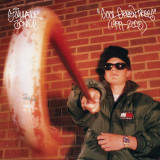
The cover photo is a picture of Sam standing on his back porch in the latter part of 1998, just before he got his first sampler. He was 13 years old, in 8th grade. His dad took the picture with his 35mm film camera: "I actually wanted to be pointing my dad's .22 pistol at the camera lens but he wouldn't let me. He gave me an old walking cane to use instead. The Tommy Hilfiger puffer jacket came from the lost and found at William Fleming High School where my mom worked as a secretary. I was thrilled when she brought it home because we never spent money on expensive name brand clothing like that - we were for the most part strictly a sale rack, bargain bin, thrift store, yard sale, flea market kind of family when it came to clothes. My watch is some cheap off-brand fake gold department store watch." Mastering for this vinyl edition was overseen by Be With regular Simon Francis and it was cut by the esteemed Cicely Balston at Abbey Road Studios to be pressed in the Netherlands by Record Industry.
Unreleased electronic / jazz / madness from two titans of jazz and experimentation: JOHN SURMAN and KARIN KROG.
I could now write a load of blown up puffery about how amazing this is, but everyone does that, and a lot of the time it’s all a load of bollocks. But basically this was sent to me by Karin / John when I asked if they had anything hanging about that had not been released. This came through and blew my tiny mind. Like something from prime Annette Peacock “Pony” period. Here is what John Surman said…
John Surman writes:
Back in 2012/13 there had been some talk about a big futuristic open air urban dance/theatre production for about 80/100 actors/dancers with lasers and all kinds of lighting effects on different stages. I was invited to get involved and, together with Ben and Karin, we eventually decided to get to work on some ideas. I think that the original plan was that in performance there would be a mixture of live music and electronica.
Not altogether surprisingly, bearing in mind the complexity of the project, it never moved forward and developed into anything more than an interesting idea. It was probably over ambitious & I guess the funding never came through.
The only information I that I can find relating to the production refers to two silent movies made in 1927/1928 by the filmmaker Eugene Deslaw, entitled `La Marche Des Machines´ and `Les Nuits Électriques.These were clearly intended to act as inspiration for the project.
After months turned into years it became obvious that the project was going nowhere, and so the recorded music laid around gathering dust until Johnny Trunk asked Karin if she had any interesting music that he might be interested in releasing. One thing led to another and so, finally, Electric Element found a home!
For anyone interested in the equipment used this will have to be an approximation since the memory might be playing tricks. Karin was probably using a Yamaha Rex50 f/x unit, a Roland VT-3 Voice Transformer and an Oberheim Ring Modulator. I was playing Bass Clarinet and Contrabass Clarinet through various f/x units together with a Yamaha WX5 wind synth. All the instruments and voice were also processed through Ben´s equipment. After writing this I asked Ben for his recollections and he came up with the following:
John, Karin and I created this music in 2 or 3 days in the winter of 2013 at their studio in Oslo, Norway. I followed up with another 2 or 3 days of mixing, editing and post-processing . We kept a collaborative, improvisational and free-form approach to the sessions. I grew up immersed in music such as Cloudline Blue, the 1979 duo album of Krog/Surman, and this felt like a similar approach. I have mixed sound for many of their live duo concerts and I would use effects and electronics as an
accompaniment and counterpoint to the performed music. The relation of organic and artificial sound sources in music has always fascinated. In this case, I used some contemporary digital signal processing to introduce my own aesthetic into the conversation, in particular using granular synthesis to recombine small 'clouds' of sound into alternate forms. Some of the software tools I used included Ableton Live, Max/MSP and Reaktor.
Civilistjävel! x Mayssa Jallad’s ‘Marjaa: The Battle of the Hotels (Versions)’ is a radical response to Mayssa Jallad’s 2023 original LP, a lyrical account of epochal events in Beirut at the dawn of Lebanon's civil war. ‘…(Versions)’ sees Civilistjävel! (aka Swedish producer Tomas Bodén) apply a stripped, dub methodology to Mayssa's rich stems, refracting the Arabic source through the hazy prism of Northern European electronica. Retaining ‘Marjaa…’s deep spatial framing and vaporous, shifting nature, traces are lifted and set down in a new landscape: a ghost of a ghost. Informed by Tomas' singular strand of ambient, minimalist, dub techno, ‘… (Versions)’ recalls the reductive, shimmering pulse of pioneering Berlin-based practitioners Basic Channel/Chain Reaction, but with the parameters stretched into the ether. Where versions typically focus on a rhythm, here the anchor is the tone and texture of Mayssa’s voice, around which a new world has been constructed. Disembodied and liminal, it conjures an eerie panorama that feels like a postscript to the original, further emphasizing the geopolitical events that have had such devastating effect in Mayssa’s homeland of Lebanon since that record’s release. ‘Marjaa…’ (tr. ‘reference’) combined Mayssa Jallad’s two main vocations: music and urban research/architectural history. The album was co-written with Fadi Tabbal and based on Mayssa's Historic Preservation master's thesis (‘Beirut’s Civil War Hotel District: Preserving the World’s First High-Rise Urban Battlefield’). The thesis examined a 5-month conflict that took place within Beirut's skyscraper-laden luxury hotel district of Minet El Husn near the start of the Lebanese Civil War. Addressing a post-war generation who have never been taught this difficult history, ‘Marjaa…’ was an attempt to process trauma, and “a call to protest for the renewal, rather than the recycling of the political class that once destroyed the country and holds us, to this day, hostage of its violence.” Often perceived as a mysterious, shadowy presence, Civilistjävel! has come increasingly to the fore in recent years through a consistently dazzling stream of records, released both anonymously and via Fergus Jones’ FELT imprint, often appearing with scant information and tracks for the most part untitled. Having featured tracks from ‘Marjaa…’ on mixes, and included the album in his picks of 2023, in early 2024 Tomas asked Mayssa to provide vocals for a track on his album ‘Brödföda’. Mayssa remembers, “Tomas asked me to choose one of the tracks he was working on. I was in Boston at the time, so I took a walk and chose a track. I wrote the lyrics at the public park, wondering if I was the only one around that was losing sleep over the genocide in Palestine and the war in South Lebanon. I went back to the apartment and recorded the vocals on my phone, while listening to the track on headphones. Tomas reworked it with the voice and sent it back. I liked it immediately.” Despite the geographical distance from Beirut to Uppsala, Sweden, where Tomas resides, Mayssa’s contribution sounds very much at home in Civilistjävel!’s atmospheric, contemplative sound-world. Tomas’ request was reciprocated by Mayssa soon after, resulting in the spectral, glassy ambience of ‘Etel, Kharita (Version)’. This was followed by an invitation to work on more tracks, which Tomas immediately embraced, intensively jamming out versions live to two-track tape in downtime between travelling. If not entirely dissimilar to his regular working practice, the immediacy of it was unusual. Much was improvised live with just a keyboard (not tethered to a grid), and a restricted set-up that largely forbade later edits - only the rhythm tracks are programmed. A sharp conceptual thinker and composer, Tomas takes creative liberties with Mayssa’s songs in a way that is deeply felt and sympathetically aligned, whilst unashamedly outside of the original context of the record. The voice is leaned into as an instrument, without the clear, specific details of language, and this axis provides an uncertain, amorphous footing - structure is often suggested or hinted at, before disappearing or collapsing into fog, and folding back into the message within the song. A somewhat unprecedented source for an album of versions, even those familiar with ‘Marjaa: The Battle of the Hotels’ may at points struggle to hear the songs these versions are rebuilt from, despite the vocal narratives remaining virtually intact. The light has shifted; eroded buildings are foregrounded; fragments of memories appear in chiaroscuro. Signs and signifiers have been replaced. Shorn of the original's warm guitar, ‘Baynana (Version)’ feels like an ominous visitation, the sun no longer visible. ‘Holiday Inn (March 21 to 29) (Version)’ is a molten, clattering invocation. The beat-less tracks nod towards the cold, otherworldly sound-scaping of late '90s isolationism. More propulsive and embodied, ‘Holiday Inn (January to March) (Version)’ and ‘Kharita (Dub)’ are strobing, iridescent techno - lithe, shifting and mutating with almost implausible finesse. A stunning addition to Civilistjävel!’s growing catalogue, ‘…(Versions)’ is a luminous counterpoint to ‘Marjaa…’, and a welcome reminder of how incredible that record remains.
- A1: My Life Started Today
- A2: Rosebud
- A3: All That We Ever Have
- A4: Sound And The Fury
- A5: The Only Ones
- B1: Funny The Things
- B2: Sincerely
- B3: Shadow Dancer
- B4: To Be Loved
- B5: Dancing Shadow
Demon Music Group are delighted to confirm the signing of ‘Night Mirror’ – the fourth solo album from electronic music legend, Claudia Brücken. • Written and recorded in London between 2023-2025 with longtime collaborator John Williams, ‘Night Mirror’ is a stunning collection of 10 brand new songs, suffused with optimism, loosely bound by themes of reflection and rebirth. •
Having first come to notice as the lead singer of Düsseldorf electronic music pioneers Propaganda, one of the first signings to the celebrated ZTT Records (Frankie Goes To Hollywood, Art Of Noise, 808 State), Claudia’s striking image and distinctive vocals made her one the most influential and inspiring female musicians of her generation. Propaganda enjoyed chart success with hit singles like ‘Dr Mabuse’ and ‘Duel’ and their 1985 album ‘A Secret Wish’ is frequently cited as one of the landmark electronic pop albums of all time. • In subsequent years, along with collaborations with the likes of Wolfgang Flür (Kraftwerk), Martin Gore (Depeche Mode), ACT, Andrew Poppy, Andy Bell (Erasure), and Peter Hook (New Order). Claudia was most recently in the limelight fronting the reimagined xPropaganda whose 2022 album ‘The Heart Is Strange’ garnered ecstatic reviews and reached No. 11 in the UK album chart. •
On ‘Night Mirror’ Claudia is reunited with musical partner John Williams, whose work as a producer, writer, engineer, and record label head has seen him work with such luminaries as The Housemartins, Alison Moyet, Blancmange, Simple Minds and The Proclaimers. Contributing to the album are an accomplished series of musicians, whose credits include The Lighthouse Family, Cathy Dennis, Orlando Weeks (The Maccabees), and Kaiser Chiefs. • This LP release is presented on Dark Cherry vinyl. • This is a priority release for Demon, and we will be supporting with full retail, press, radio and online campaigns.
- Sauna Motif I
- Päiväkahvit
- Afternoon Springs
- Go North
- They Came In Through The Front Door (Fadi Tabbal Rework)
- Tropic Movements (Amulets Rework)
- Bottles + Birds
- Sauna Motif Ii
- The Vala River (Чудья Жени – Post-Dukes Rework)
- Badminton On The Shore
- Miten Aloittaa
- A Pale View Of Dem Hills (Jeremy Young Rework)
- Veden Yli
When the trio of Sontag Shogun gathered at Laura Naukkarinen's home on the Finnish island of Kimitoön in the summer of 2019, they had not the slightest inkling that the world was about to change irretrievably with the onset of a long-predicted pandemic the following year. By the time their collaborative album, Valo Siroutuu ("The Light Scatters"), was released nearly two years later, the intimate and reflective nature of the work they had created together had taken on new meaning, resonating powerfully (and quietly) with a world in which the proverbial cracks in the wall only seem to be widening.
Päiväkahvit completes the story that began with Valo Siroutuu, featuring 9 songs from the original sessions as well as 4 interpretive reworks courtesy of Amulets, Fadi Tabbal, Post-Dukes, and Jeremy Young. Available digitally and in a one-time vinyl pressing of 300 copies, the album flows seamlessly from beginning to end, incorporating field recordings, tape, sublime vocal melodies, and a host of acoustic and electronic instruments. Richly textured and immersive, Päiväkahvit positively crackles with warmth and a sense of creative embrace.
"We invite the listener into the sauna, out to the garden and onto the trampoline, to sit by the water’s edge and to take a coffee in the waning afternoon light, and to stay as long as they like." – Jesse Perlstein
Lau Nau, aka Laura Naukkarinen, is a Finnish composer whose music is imbued with an idiosyncratic, finely honed sound world. Her palette consists of acoustic instruments, singing voice, modular synthesisers, reel-to-reel tape recorders and field recordings. To date Lau Nau has released ten albums on record labels in Europe, the USA and Japan and a large number of collaborative releases. Lau Nau is known for her music to films and multi channel sound installations. She was awarded the Finnish State Prize for the Performing Arts 2021 as a sound designer. She has toured abroad for over 20 years, playing in venues such as Super Deluxe in Tokyo, the Lab & Castro Theatre in San Francisco and Blank Forms & Issue Project Room in New York.
Sontag Shogun is a collaborative trio that makes use of analog sound treatments and nostalgic solo piano compositions in harmony to depict abstract places in our memory. Textures built from organic materials such as sand, slate, boiling water, brush and dried leaves, both produced live in performance and recorded to weathered 1/4" tape warm up the space between lush piano themes. All of which is abstracted coolly in the reflective digital space of treated vocals and a live-processed feed from the piano. Bringing us back, like a faded passing scent or any natural emotive trigger, but to where? The wordless journey there will inevitably be more revealing than the destination itself.
It has been almost seven years since the release of Alpestres, the impressive debut by Matthias Puech on Hands in the Dark. While that first experience took us on a mystical journey through fascinating fictional landscapes, 'Cabanes' lets its narrative unfold in a confined space: eight pieces each resembling small structures or makeshift shelters that, while enveloping and isolating the listener, remain open to their surroundings. These are not merely interiors; they are handcrafted spaces through which we gain insights into the world. Yet they allow the light from the outside to seep in, reminding us of reality.
According to Puech, each composition has a distinctive two-part story that are both clear and intriguingly interconnected. The first one often revolves around the anecdotal and tangible aspects of instrumental "play," showcasing a technical exploration with his tools, the discovery of sounds in a library, and the serendipitous encounters that inspired them. The second part, however, delves into the more elusive yet profound state of existence that the French artist experienced while engaging with these sounds, reflecting on the moments he listened and re-listened to them, ultimately deeming them worthy life companions. These two narratives, perhaps reshaped over time like distant memories, interact in ways that can either clash or complement each other, creating a lasting impact on the listening experience.
A significant aspect of the compositional process involves distancing oneself from these connections to creation, allowing for the rediscovery of a state of listening that is free from prior emotional influences—what one might call "pure" listening. This method enables the transformation of a sequence of events into a narrative that is independent of its original intent, resulting in a universal object. After spending considerable time with the attached pieces and attempting to induce a form of amnesia to reconstruct an artificial narrative, Matthias Puech has ultimately chosen to relinquish this pursuit. Thus, the album is aptly termed “Cabanes” (“Huts”): fragile structures whose design clearly reflects the intention behind their creation, showcasing all the signs of considerate craftsmanship.
- A1: Only Fair
- A2: Night And Day
- A3: Happy Person
- A4: Ants
- A5: Lost In A Daze
- A6: Always
- B1: Brighter Side Of Blue
- B2: How The Time Is Tickin
- B3: Ghost
- B4: Nothin' Left To Burn
- B5: Fade Away
'This exclusive re-issue of “Brighter Side of Blue” is limited to only 300 copies on baby blue heavyweight vinyl, with an individually-numbered obi strip, and bespoke essay from Amy Campbell.
This was one of our albums of 2023 (Double J agreed, too making #16 in their Album Of The Year Countdown). Released in mid-January, it soundtracked our late Australian summer. It’s not a record that’s easily pigeon-holed. Is it alt-country, with a nod to Gillian Welch? Is it classic rock, mined from a similar vein that Chrissie Hynde has drawn from? Is it indie-folk, a lighter, brighter Jen Choler? You tell us.
‘Brighter Side of Blue’ was recorded in Bellambi in the Illawara throughout 2022. Featuring Cecil Coleman from Body Type on drums, and Russell Fitzgibbon (who also released Skeleten’s ‘Under Utopia’) on bass and co-production, it’s a beautiful shiny record that glistens like the sea in that part of Australia, a place where the waves meet ancient escarpment.
After the explosive Comme à la radio, infused with the free jazz energy of the Art Ensemble of Chicago, Brigitte Fontaine and Areski Belkacem released six albums together or separately between 1972 and 1977. Their music, often stripped down to voice, guitar, and percussion-or performed a cappella-stood in stark contrast to the orchestrated French pop of the time. This minimalist and spontaneous approach highlighted the poetic power of the lyrics and the intimacy of the melodies, earning them recognition in the counterculture and underground scenes. By the end of the 1970s, Fontaine sought to make her work more visible without losing its originality. The Baraka album marked this transitional moment, initially recorded in a home studio without external musicians. Its title (meaning "blessing" in Arabic) hinted at a desire for success. Mixing introspection, absurd humor, and bold stylistic choices, the album was technically ambitious, featuring stereo duets and layered vocals, and lyrically rich, tackling everything from metaphysical themes to playful nonsense. However, the project ultimately veered off course. After moving the recordings to the massive Studio Davout and bringing in producer and guitarist Martial "Mimi" Lorenzini, the album lost its original intimacy. Overproduced arrangements clashed with the simplicity of Fontaine and Belkacem's initial intent, resulting in an album-renamed Les églantines sont peut-être formidables-that the artists later disowned, refusing to allow its commercial release. Recently rediscovered demo tapes, stripped of their bombastic layers, reveal the raw, emotional core of the songs-showcasing the duo's voices with a rare authenticity. These recordings bridge a missing link in their discography, between their experimental lo-fi years and their later, more accessible work. Decades on, Fontaine and Belkacem remain defiant originals, never settling into a formula, always evolving, and continuing to shake the foundations of French chanson.