In 1964, Big City Blues dropped, and John Hammond delivered the goods. With his raspy voice and guitar, he gave a fresh spin to classics by legends like Robert Johnson and Willie Dixon. No big band needed—just him and his raw feeling to capture the soul of Delta blues. But he added an urban edge that fit perfectly with the times. Simple, powerful, and incredibly authentic. This record is pure blues that hits hard and sticks with you.
The Poison Touch delves deeper into atmosphere while maintaining the gritty undertone that defines us. From start to finish, the listener is blasted with in-your-face raw energy while simultaneously feeling like a hauntingly beautiful experience. This record captures the essence of our live sound while exploring new realms, serving as both a continuation and evolution of our style.
The Poison Touch delves deeper into atmosphere while maintaining the gritty undertone that defines us. From start to finish, the listener is blasted with in-your-face raw energy while simultaneously feeling like a hauntingly beautiful experience. This record captures the essence of our live sound while exploring new realms, serving as both a continuation and evolution of our style.
The 2003 debut album and a collection of early rarities from the genuine treasure of the UK underground. Remastered and available on vinyl for the first time in over two decades. “Legendary angular rock…Edgar Allen Poe meets The Fall” (The Guardian 2003) “Jarvis Cocker fronting Fugazi” (Melody Maker 1994) Joeyfat, from Tunbridge Wells in Kent, are the daddy of all the Sprechgesang bands out there. We searched on Wikipedia; they're not even mentioned. Maybe not such a bad thing. There are young scamps climbing up festival line-ups all over the world with more than a passing sonic and aesthetic resemblance. Influence can be picked up in diluted ways, maybe the true source of the river has been forgotten. Foals heard the source, they were there. So were Everything Everything. Ask them. Black Midi heard it third hand. Life Without Buildings heard it. So did Yard Act. You can see the pattern. From the early '90s Joeyfat, led by Matt Cole and Jason Dormon, have been perfecting and re-perfecting the sound. They toured with Green Day in 1994. They released music on the Fierce Panda label. They recorded BBC Sessions for John Peel and Marc Riley and released four albums and countless singles. They flirted with being known and they didn't like what they saw so they kept it local, building a community by setting up the Tunbridge Wells Forum, one of the great UK small venues. Debut album The House Of The Fat is a masterpiece, the musical precision recalls The Sound or B52s. The spot-on attack of the vocal and lyrics makes us think of Fugazi or Zounds. The Unwilling Astronaut compiles early singles and compilation tracks. Going all the way back to 1993 it shows how close to a DC-inspired hardcore band they were, it's a thrilling listen. Joeyfat shouldn’t need a re-introduction but they’re going to get one. The source of the river. The top of the family tree. This is where the resemblance comes from
Drumsauw returns to DCLTD for the second time this year with 4 new tracks off his new EP 'Empire.' The title track 'Empire' is a thrumming blend of high speed percussion keeps up techno pressure, counterpointed by a soulful female vocal intoning with Middle Eastern sounds giving a melodic element. Followed by 'Cycles,' a demanding percussion like hammer blows races along, while spacey horns with doppler FX and dark, plangent synth tremolo arps bring an otherworldly, sinister vibe in a huge breakdown/drop. Next comes 'Collision,' rampant, bounding beats, loud rattling backbeat, with a robotic spoken female vocal riff changing pace, slowing in breakdowns before the racing tempo reasserts itself. And lastly 'Comet' that has the fast layered percussion, interspersed with pizzicato melody, varies pitch, becoming frantic, distorted, in the breakdowns. The vocal riff running through adds to the drama; nervy, hyper, disturbing.
Jesse Hackett returns with another unclassifiable co-mingling of genres, this time made in collaboration with Durban-based gqom trio Phelimuncasi. The group met up in Nyege Nyege's Kampala studio last year, spending three days engineering a sequence of tracks that turned the acts' respective sounds inside out, stretching urgent vocals over mutating backdrops of time stretched electronic drums, saturated noise and unstable synths.We last heard from Hackett on last year's chilling 'Shadow Swamps', a chilly, surrealist blast of disembodied folk and vintage electronics that added a cinematic twist to industrial music. Phelimuncasi meanwhile followed their acclaimed debut with the enormous 'Ama Gogela', asserting their dominance with tight, dancefloor-fwd, hook-led jams produced by some of the scene's most important beatmakers. In collaboration, both Metal Preyers and Phelimuncasi materialized a few worlds outside their comfort zones, with the Durban trio's words frothing from Hackett's marshy productions like echoes from another universe.Opening track 'Gidigidi ka Makhelwane' erupts in a fizz of beatbox percussion that loops noisily alongside Makan Nana, Khera and Malathon's stirring vocals, delivered in their local isiZulu tongue. Hackett's process is relatively restrained, offering Phelimuncasi the space to work their rousing magic unimpeded and adding punctuation where necessary. But when he takes more of a destructive role, it's just as impressive: on 'Gqom slowgen Chant', he corrupts his rhythm into a ritualistic pulse, letting the trio's words melt into metallic clicks and nauseous atmospheres.Elsewhere on 'Mgiligi wableka', Phelimuncasi's words create a rousing rhythm against a low-n-slow gqom thud from Hackett, and on 'Coffin Roller' he brings to mind '80s video nasty soundtracks, toying with analog synth sequences against Makan Nana, Khera and Malathon's distant chants. 'Like A Corpse' might be the album's most hollowed-out banger, turning the beat into a chopped 'n screwed drag that scrapes clamorously against Phelimuncasi's gurgling raps. Needless to say, there's nothing else like this.Jesse Hackett returns with another unclassifiable co-mingling of genres, this time made in collaboration with Durban-based gqom trio Phelimuncasi. The group met up in Nyege Nyege's Kampala studio last year, spending three days engineering a sequence of tracks that turned the acts' respective sounds inside out, stretching urgent vocals over mutating backdrops of time stretched electronic drums, saturated noise and unstable synths.We last heard from Hackett on last year's chilling 'Shadow Swamps', a chilly, surrealist blast of disembodied folk and vintage electronics that added a cinematic twist to industrial music. Phelimuncasi meanwhile followed their acclaimed debut with the enormous 'Ama Gogela', asserting their dominance with tight, dancefloor-fwd, hook-led jams produced by some of the scene's most important beatmakers. In collaboration, both Metal Preyers and Phelimuncasi materialized a few worlds outside their comfort zones, with the Durban trio's words frothing from Hackett's marshy productions like echoes from another universe.Opening track 'Gidigidi ka Makhelwane' erupts in a fizz of beatbox percussion that loops noisily alongside Makan Nana, Khera and Malathon's stirring vocals, delivered in their local isiZulu tongue. Hackett's process is relatively restrained, offering Phelimuncasi the space to work their rousing magic unimpeded and adding punctuation where necessary. But when he takes more of a destructive role, it's just as impressive: on 'Gqom slowgen Chant', he corrupts his rhythm into a ritualistic pulse, letting the trio's words melt into metallic clicks and nauseous atmospheres.Elsewhere on 'Mgiligi wableka', Phelimuncasi's words create a rousing rhythm against a low-n-slow gqom thud from Hackett, and on 'Coffin Roller' he brings to mind '80s video nasty soundtracks, toying with analog synth sequences against Makan Nana, Khera and Malathon's distant chants. 'Like A Corpse' might be the album's most hollowed-out banger, turning the beat into a chopped 'n screwed drag that scrapes clamorously against Phelimuncasi's gurgling raps. Needless to say, there's nothing else like this.
out of Stock
Last delivered 17 months ago available to reorder, subject to availability
As Jess Sylvester finished his Hardly Art debut as Marinero in the fall of 2020, he realized it was time for a change. Sylvester grew up in Marin County, on the doorstep of San Francisco. It was a nurturing community for a high-school punk with a pompadour and, later, for a sober songwriter with a proclivity for moody psychedelia. But he wanted to be challenged and inspired by a new setting and scenario around strangers who prompted him to approach his music in unexpected ways. So in September 2020, as the world continued to reel in lockdown, Sylvester headed several hours south to Los Angeles, a city that, despite the relative proximity, the film buff knew largely from classic and cult films situated there. When he arrived, he kept digging into that cinematic past-Robert Altman's The Long Goodbye, with John Williams' classic theme, or classic 90s movies about East LA, many featuring Edward James Olmos. They shaped his understanding of his new town just as it began to open. This is one pillar of the multivalent and endlessly lush La La La, Marinero's new album about sobriety, identity, and fantasy that is playfully named both for the city that helped shape it and the sophisticated pop it contains. Sylvester wrote about characters outside of himself, whether considering the heroine reckoning with her own version of keeping clean or the screenwriters whose work was deemed communist simply as a political convenience. He linked those songs with motivational anthems about self-acceptance and playful numbers about flirting through food, shaping a 12-song set rich with humor, empathy, and encouragement. Sure, La La La is a continuation of the slippery genre play Sylvester started with 2021's Hella Love, 2019's Trópico de Cáncer, or even before that. But it also feels like a fresh beginning for Marinero, as Sylvester realizes how boundless this project can be. He began to think about the music of his childhood, how his mother is from San Francisco with Mexican roots, and how he'd heard so much salsa growing up as an impetuous teenager. So he wrote "Taquero," a red-hot salsa tune that uses tacos and their trappings as a source of endless metaphors for come-ons. And then there was the Ray Barreto or Santana-inspired "Pocha Pachanga," with organ gliding and percussion pulsing beneath his yearning vocals, warped as if by desert winds. In Los Angeles, he found a wealth of players who spoke this music like language itself (including Chicano Batman's Eduardo Arenas), all ready to play with and push these familiar forms. Sylvester has also been sober for 21 years, since a cross-country sojourn to attend college in Boston ended in a chemical haze. Today, he sees friends facing the same decisions he made two decades ago, and he brings bits of that experience to bear in songs that feel like self-help anthems. Recorded with a musical hero (and labelmate) of his, Chris Cohen, "Sea Changes" feels like sunshine breaking through dark clouds, as Sylvester acknowledges the newfound confidence and clarity in a friend who has stepped away from destructive habits. In the past, Sylvester has been intractably linked to his identity as a Mexican-American, born to parents from Mexico and Irish- American descent who settled in San Francisco. That can be limiting, of course, tying him to notions of sound and style that aren't always correct. On La La La, he simultaneously steps into and out of those preconceptions, singing tracks above salsa in joyous Spanish or pondering the dynamics of the Hollywood Ten and blacklists above mysterious lap steel and teasing trumpet. His identity, then, should now be clear: He is a Californian, making music shaped by the diversity of encounters and experiences that are a central part of that state's fabric. Never before has he presented himself so fully and unabashedly on tape as with La La La, an album Sylvester built with new inspirations to deliver new charms.
Hardanger is a collaboration by Mariska Baars (aka Soccer Committee), Niki Jansen, and Rutger Zuydervelt (aka Machinefabriek). The title refers to the instrument played by Jansen, the Hardanger fiddle. It’s a fresh addition to the established musical chemistry from regular collaborators Baars and Zuydervelt.
The music on Hardanger started with improvisations by Niki Jansen, guided by Mariska Baars, who responded with vocal and guitar recordings. Rutger Zuydervelt used this material as the building blocks for the two long-form pieces found on the album. These tracks are like two sides of the same coin, one a collage-like electro-acoustic piece, the other more drawn-out and contemplative.
--
Mariska Baars is probably better known as soccer Committee, creating an experimental blend of ambient rooted in folk music, with minimal arrangements. She has been releasing albums since 2005. In addition to her solo output she is part of improvisation ensemble Piiptsjilling and Fean (Laaps, 2020) and has worked on several duo albums with Rutger Zuydervelt. On other occasions she collaborated with a.o. Annelies Monseré, Wouter van Veldhoven, Peter Broderick and Greg Haines.
Niki Jansen is a violinist who plays both the regular and a hardanger fiddle.She specializes in folk music, especially old Dutch folk music. She plays in various ensembles like Twee violen en een bas (with Jos Koning and Willem Raadsveld), and country quartet Daisy Chain. In addition to music, she also works as a sustainability advisor for governments and institutions and manages a food forest in a cooperative.
Rutger Zuydervelt is perhaps better known as Machinefabriek, the alias under which he releases music since 2004. The stream of releases since is vast, many of them collaborations (with Peter Broderick, Gareth Davis, Chantal Acda, Dirk Serries, and many many more). He regularly works with Mariska Baars, with whom he also plays in Piiptsjilling and Fean (Laaps, 2020). Zuydervelt is an avid composer of scores for film and dance performances, and also works as a graphic designer.
out of Stock
Last delivered 20 months ago available to reorder, subject to availability
In Todmorden, the oddly-named market border town in West Yorkshire with a habit for embracing the weird and wonderful, a burst of sunshine is a precious thing. Through the thick of Winter, through every season in fact, the town’s folk are used to the wind and rain, fog and mist. As much a part of the town as the trademark deep valley it sits in, here the lay of the land invites the weather in, just as it does the many musicians, artists, and unique characters that have come to call the place home over the centuries.
Bridget Hayden is one such soul who found a home among these hills. The experimental musician, who invites the ghosts in for the classic folk songs that make up her stunning new album, knows only too well about such weather, how rare and treasured the breaks from it are. Her favourite thing to do in the valley, she says, is “to make the most of every tiny minute of sunshine.”
Such aspirations nearly derailed the recording of Cold Blows the Rain, her new eight-song collection released via the Todmorden- based label Basin Rock. Having hired the town’s Oddfellow’s Hall to record these new songs in the late summer of 2022, Hayden says the weather was so good she ended up basking in every second of it, only moving inside to begin recording when the sun was setting, working deep into the night to make up the time.
There’s a good chance, however, that it had to be this way. The songs that make up Cold Blows the Rain are not made for the sunlight. They come, instead, wrapped in mist and coated with drizzle, those elements shaping the album as much as the voice and the instruments held within, as real but ambiguous as the ghosts that linger in the shadows. The sound of the dark valley floor.
Mostly centred around meditative and experimental improvisation, Bridget’s work to-date has seen her spend more than two decades recording and performing on the underground music scene. She’s also toured internationally both as a solo artist and as part of bands such as Schisms and The Telescopes, while working on various side-projects with the likes of Folklore Tapes.
For all of this sonic exploration, so much of her work has been formed around elements of traditional folk aesthetics and, over time, she began to piece together a collection of reinterpreted traditional songs that she absorbed as a child from her mother: through The Dubliners and Muddy Waters, to Bessie Smith and The Leadbelly Songbook. Harvesting her love for Nina Simone, Karen Dalton, Margaret Barry, and more, Bridget takes these traditional songs and transforms them into something uniquely evocative
"It goes back to the womb,” Bridget says of that connection. “I would not call it a memory as it is so deep within my blood and bones. My mum was the source, she sang all the time, as part of life. So it was a very lulling and natural introduction. It seemed common to hear her singing – unbeknownst to her – in time with a raindrop dripping at the window,” Bridget continues. “I’ve always wanted to do a folk record as I love these songs so much. It comes much more naturally to me to sing other people’s words, especially when they’re as beautiful as these old verses.”
Underpinned by waves of analogue reverb, and led by Bridget’s stirring and weather-beaten voice, the songs on Cold Blows the Rain drift and crawl like low heavy clouds on flat-top hills, shaped by the land. The backdrop is equally as arresting, all subtle gloom cast in shadow, a gentle but pronounced swirling of textures, crafted from harmonium and violin courtesy of The Apparitions (Sam Mcloughlin and Dan Bridgewood-Hill).
“The weather speaks the most eloquently about human loss,” Bridget says, articulating such sentiments. “It’s good to feel enveloped by something so much vaster than ourselves. The rain and the tears all become one.”
out of Stock
Last delivered 20 months ago available to reorder, subject to availability
The influence of the UK’s Steel City on electronic music is well documented and undisputed and continues to push the envelope with key figures such as Winston Hazel (Forgemasters, The Step), DJ Parrot/Crooked Man, Richard Benson (RAC, SWAG, Altern 8), Chris Duckenfield (RAC, Popular Peoples Front, SWAG, All Ears Distribution), a thriving underground club scene and the likes of Synaptic Voyager reinforcing the city’s rich musical legacy.
Matt White and Paul Baines have been making off-kilter, emotive, late night electronic jams since meeting in the early 90’s and while life took them on different paths for a while, they have recently blown the thick layer of dust from their synths and drum machines and got busy in the studio to create some amazing new music which draws influence from that classic UK techno sound which played such an important part in the development of dance music culture around the world. With recent releases on Frame Of Mind, Acquit and Telomere Plastic the duo are clearly on a roll, wearing the heritage of their city on their sleeve and delivering what can only be described as heartfelt, authentic machine music made with love and soul.
From the opening beats of lead track Dawn Till Dusk we are drawn in to another place which feels comfortably familiar yet organic, fluid and loose in a way that tugs on the heartstrings. A million miles from cookie-cutter tech house, this is two guys in a bedroom studio, digging deep on hardware machines to create a sound to get completely lost in. Lonely Promontory takes things deeper still with immersive pads, taught electro beats and blissed-out melodic lines which give just hint of optimism and recall those beloved sounds of B12, Redcell and Likemind.
Flipping over we have Stellar Engine which goes a littler heavier on the beats and bass whilst still retaining a floating quality, once again highlighting the hardware jam workflow that Synaptic Voyager utilise in their studio. Once Exposed takes us back to those heady days of the early 90’s when techno, house and ambient electronics combined to create a heady blend of deep atmospherics and driving beats which could work on both dance floors and car stereos alike. Rounding off the EP we have Cognitive Network which goes for a straighter four on the floor techno groove and a killer bassline to lose yourself in. These recordings were delivered to the label in unedited long form (some tracks totalling 15 minutes or more in length!) which Jimpster lovingly edited into the versions which you hear on this release.
out of Stock
Last delivered 19 months ago available to reorder, subject to availability
Volume 1 of this expertly curated project of 90s Italian House - put together by Don Carlos.
If Paradise was half as nice… by Fabio De Luca.
Googling “paradise house”, the first results to pop up are an endless list of European b&b’s with whitewashed lime façades, all of them promising “…an unmatched travel experience a few steps from the sea”. Next, a little further down, are the institutional websites of a few select semi-luxury retirement homes (no photos shown, but lots of stock images of smiling nurses with reassuring looks). To find the “paradise house” we’re after, we have to scroll even further down. Much further down.
It feels like yesterday, and at the same time it seems like a million years ago. The Eighties had just ended, and it was still unclear what to expect from the Nineties. Mobile phones that were not the size of a briefcase and did not cost as much as a car? A frightening economic crisis? The guitar-rock revival?! Certainly, the best place to observe that moment of transition was the dancefloor. Truly epochal transformations were happening there. From America, within a short distance one from the other, two revolutionary new musical styles had arrived: the first one sounded a bit like an “on a budget” version of the best Seventies disco-music – Philly sound made with a set of piano-bar keyboards! – the other was even more sparse, futuristic and extraterrestrial. It was a music with a quite distinct “physical” component, which at the same time, to be fully grasped, seemed to call for the knotty theories of certain French post-modern philosophers: Gilles Deleuze, Félix Guattari, Paul Virilio... Both those genres – we would learn shortly after – were born in the black communities of Chicago and Detroit, although listening to those vinyl 12” (often wrapped in generic white covers, and with little indication in the label) you could not easily guess whether behind them there was a black boy from somewhere in the Usa, or a girl from Berlin, or a pale kid from a Cornish coastal town.
Quickly, similar sounds began to show up from all corners of Europe. A thousand variations of the same intuition: leaner, less lean, happier, slightly less intoxicated, more broken, slower, faster, much faster... Boom! From the dancefloors – the London ones at least, whose chronicles we eagerly read every month in the pages of The Face and i-D – came tales of a new generation of clubbers who had completely stopped “dressing up” to go dancing; of hot tempered hooligans bursting into tears and hugging everyone under the strobe lights as the notes of Strings of Life rose up through the fumes of dry ice (certain “smiling” pills were also involved, sure). At this point, however, we must move on to Switzerland.
In Switzerland, in the quiet and diligent town of Lugano, between the 1980s and 1990s there was a club called “Morandi”. Its hot night was on Wednesdays, when the audience also came from Milan, Como, Varese and Zurich. Legend goes that, one night, none less than Prince and Sheila E were spotted hiding among the sofas, on a day-off of the Italian dates of the Nude Tour… The Wednesday resident and superstar was an Italian dj with an exotic name: Don Carlos. The soundtrack he devised was a mixture of Chicago, Detroit, the most progressive R&B and certain forgotten classics of old disco music: practically, what the Paradise Garage in New York might have sounded like had it not closed in 1987. In between, Don Carlos also managed to squeeze in some tracks he had worked on in his studio on Lago Maggiore. One in particular: a track that was rather slow compared to the BPM in fashion at the time, but which was a perfect bridge between house and R&B. The title was Alone: Don Carlos would explain years later that it had to be intended both in the English meaning of “by itself” and like the Italian word meaning “halo”. That wasn’t the only double entendre about the song, anyway. Its own very deep nature was, indeed, double. On the one hand, Alone was built around an angelic keyboard pattern and a romantic piano riff that took you straight to heaven; on the other, it showcased enough electronic squelches (plus a sax part that sounded like it had been dissolved by acid rain) to pigeonhole the tune into the “junk modernity” section, aka the hallmark of all the most innovative sounds of the time: music that sounded like it was hand-crafted from the scraps of glittering overground pop.
No one knows who was the first to call it “paradise house”, nor when it happened. Alternative definitions on the same topic one happened to hear included “ambient house”, “dream house”, “Mediterranean progressive”… but of course none were as good (and alluring) as “paradise house”. What is certain is that such inclination for sounds that were in equal measure angelic and neurotic, romantic and unaffective, quickly became the trademark of the second generation of Italian house. Music that seemed shyly equidistant from all the rhythmic and electronic revolutions that had happened up to that moment (“Music perfectly adept at going nowhere slowly” as noted by English journalist Craig McLean in a legendary field report for Blah Blah Blah magazine). Music that to a inattentive ear might have sounded as anonymous as a snapshot of a random group of passers-by at 10AM in the centre of any major city, but perfectly described the (slow) awakening in the real world after the universal love binge of the so-called Second Summer of Love.
For a brief but unforgettable season, in Italy “paradise house” was the official soundtrack of interminable weekends spent inside the car, darting from one club to another, cutting the peninsula from North to centre, from East to West coast in pursuit of the latest after-hours disco, trading kilometres per hour with beats per minute: practically, a new New Year’s Eve every Friday and Saturday night. This too was no small transformation, as well as a shock for an adult Italy that was encountering for the first time – thanks to its sons and daughters – the wild side of industrial modernity. The clubbers of the so-called “fuoriorario” scene were the balls gone mad in the pinball machine most feared by newspapers, magazines and TV pundits. What they did each and every weekend, apart from going crazy to the sound of the current white labels, was linking distant geographical points and non-places (thank you Marc Augé!) – old dance halls, farmhouses and business centres – transformed for one night into house music heaven. As Marco D’Eramo wrote in his 1995 essay on Chicago, Il maiale e il grattacielo: “Four-wheeled capitalism distorts our age-old image of the city, it allows the suburbs to be connected to each other, whereas before they were connected only by the centre (…) It makes possible a metropolitan area without a metropolis, without a city centre, without downtown. The periphery is no longer a periphery of any centre, but is self-centred”.
“Paradise house” perfectly understood all of this and turned it into a sort of cyber-blues that didn’t even need words, and unexpectedly brought back a drop of melancholic (post?)-humanity within a world that by then – as we would wholly realise in the decades to come – was fully inhuman and heartless. A world where we were all alone, and surrounded by a sinister yellowish halo, like a neon at the end of its life cycle. But, for one night at least, happy.
out of Stock
Last delivered 85 days ago available to reorder, subject to availability
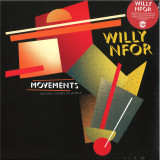
This compilation is more than a selection of songs from Willy Nfor’s solo career in Nigeria—it’s the story of a man’s determination to live his dreams. Known as Willy Ngeh Nfor, he was a founding member of the Mighty Flames. One morning, Willy and his bandmates packed their instruments, grabbed a few clothes, and headed from Cameroon to Nigeria. Crossing the border on foot, they made their way to Onitsha.
“We left Cameroon with no contacts in Nigeria—it was an adventure. We’d heard about the FESTAC Arts Festival and felt we had to be part of it. Our first band in Nigeria was Pentagon Funk Band, sponsored by the 5th Brigade in Port Harcourt. Later, we moved to Onitsha and signed with Right Time Stores, recording Sweet Love (RTLPS 011) as The Mighty Flames. The sessions were at Decca Studios in Lagos, with a 16-track analog system. It was intense—no room for mistakes. We rehearsed endlessly before recording each take.” (Vincent Ekedi, Drummer, Mighty Flames)
Willy’s journey was shaped by his resilience and talent. Losing his mother early and facing family struggles, music became his escape. Inspired by funk and jazz-rock greats like Bootsy Collins, Jaco Pastorius, and Stanley Clarke, he honed his skills on bass and composition, playing with local bands alongside musicians like Vincent Ekedi. Together, they refined their grooves, dreaming of brighter futures.
After his time in Nigeria, Willy moved to Paris, becoming a session bassist for legends such as Manu Dibango, Mory Kanté, Tony Allen, Akendengue, Ray Lema, Jean-Luc Ponty, and Kanté Manfila. Touring extensively, he lived the “Star Life” (Star Life, Cornerstone Records, Feel So Fine, 1981), playing funk grooves with giants in grand venues, fulfilling his dream of the spotlight.
Back in stock due to popular demand, the 23rd release in our signature Brazil 45’s series served up a double header of classics from Sonia Santos and João Donato.
First up, 'Poema Ritmico Do Malandro (Balanço Do Crioulo)' is a beautiful track from the instantly recognisable Sonia Santos. A song that drifts from classic to psychedelic samba, laden with strings, horns and crowd noise. First released on 7” by Copacabana in 1971, but never on an album, originals fetch up to £100 per copy. A different version of this song also appears on the truly excellent Zito Righi Alucinolandia LP.
On the B side, 'Cala Boca Menino' is taken from João Donato’s much sought after and requested Quem É Quem LP. Quirky percussion, bubbling keys, horns and a hypnotic vocal. Donato is a hugely prolific force in Brazilian music and worked with the likes of including Tom Jobim, Astrud Gilberto, Cal Tjader, Dom Um Romao and Gilberto Gil amongst others. ‘Cala Boca Menino’ was released on a 7” in 1973 in Brazil, but is very difficult to find at a reasonable price and in good condition these days.
out of Stock
Last delivered 17 months ago available to reorder, subject to availability
Recorded in 1997, Mountain Top features the commanding vocals of Tony Roots, backed by the legendary Firehouse Crew and produced by the visionary Fada Waz (Clifton Carnegie). This record’s release was driven by the people, evidenced and encouraged by the countless wheel-ups and sing-alongs during King Original’s international tour dates over the last three years whenever this seminal recording was dropped in the set.
Tony Roots, known for his cultural and spiritual themes, delivers a powerful vocal performance, reminding us that life’s most important journey is overcoming obstacles to find ‘Jah Love on the Mountain Top.’ This message is as relevant in today’s fast-paced, easy-come-easy-go consumer culture as it was when recorded three decades ago.
The Firehouse Crew renowned for their work with iconic acts like Luciano and Sizzla—shine brightly on this riddim, with the MPC drum machine-centered sound of 90s Jamaican roots reggae. An up-tempo 4/4 steppers beat layered with rich analogue textures and soulful instrumentation defines this timeless recording.
The first of many collaborations between Studio 55, Before Zero Records, and Footsie, the King Original legacy continues into the future, honouring the enduring contributions of Fada Waz and his collaborators.
Clifton Carnegie aka Ras Wazair aka Fada Waz - Clifton Carnegie, known as Ras Wazair, founded King Original Sound System in 1973, establishing it as East London’s foremost reggae sound. Operating under his Studio 55 moniker, he collaborated with legends like Johnny Osbourne, Barry Brown, Michael Prophet, Cornell Campbell, and Frankie Paul through imprints such as Original Sounds, Studio 55, and Original International. A mentor to many of the UK’s top sound systems and a key figure in London’s RasTafari community, Ras Wazair’s connections with prominent Jamaican artists, bands, and producers like Fattis Burrell ensured that Jamaican music remained an influential force in the UK sound system scene.
King Original Founded in 1973 by Fada Waz, King Original Sound System shaped East London’s reggae scene for over two decades. Fada Waz and his son Footsie—a UK Grime pioneer who in later years expanded the legacy through his KO LP series and sold-out King Original mixed-genre events at London’s top venues—worked together until Footsie assumed full control following Fada Waz’s passing in 2021. Having worked with artists such as Dizzee Rascal, Arctic Monkeys, The Prodigy, D-Double E, Wiley, and Skepta, Footsie’s dedication to King Original has reinvigorated the legacy that underpins all UK bass music—the reggae sound system. Joining Footsie is his brother, Wazair’s last born Ras D also Jah Model, and long-time collaborator Sir Spyro, producer of two UK number-one hits with Stormzy and son of UK reggae stalwart Nerious Joseph. Armed with cutting-edge QSS sound system technology, King Original continues to set trends, shaping the future of UK bass music.
Tony Roots Hailing from Manchester, Jamaica, in the 1980s, Tony Roots emerged alongside iconic figures like Garnet Silk and Tony Rebel. While his peers remained in Jamaica, Tony moved to the UK, where he went on to release ten albums and numerous singles, including hits like Grow Your Natty Dread Locks and Hola Zion. A steadfast champion of Rastafari, Tony has collaborated with legends such as the Firehouse Crew, earning worldwide respect and a devoted following within both the reggae community and the UK sound system scene.
The Firehouse Crew Formed in 1986, The Firehouse Crew became a cornerstone of the 1990s roots-reggae revival. Initially associated with King Tubby’s Firehouse label before establishing their own, the band rose to prominence through collaborations with producer Philip “Fattis” Burrell at Xterminator Records. Their contributions to timeless albums like Luciano’s Where There is Life highlight their extraordinary musicianship. Over the years, The Firehouse Crew has backed iconic artists such as Sizzla, Buju Banton, and Beres Hammond, cementing their legacy as masters of roots reggae.
out of Stock
Last delivered 18 months ago available to reorder, subject to availability
Midnight In Tokyo 2, the second installment to the compilation series that rounds up hidden gems by Japanese artists that's perfect for listening at night in Tokyo, is here. This time the collection brings together some tasty electric jazz fusion from the '80s , compiled by Dubby, the man behind the online record store Ondas.
The compilation begins with "Hikobae," a dark and slow cosmic jazz by saxophonist Genji Sawai, followed by "Danza Lucumi," an odd Caribbean-style jam by Today's Latin Project, a band fronted by Tadaaki Misago of Tokyo Cuban Boys, with arrangements by Yasuaki Shimizu. "On The Coast" is a soulful and mellow vocal track arranged by Ryuichi Sakamoto, from guitarist Shigeru Suzuki's album White Heat, and fusion boogie cut "In The Hot City" is by Mr. Theodore, which was a one-off project by a mysterious artist.
The melancholic soul jazz number "So Long America" is the title track from the album Yasunori Soryo released in '82, following a stint in America with the band Brown Rice. "Twisty" is a tropical reggae tune from the album Samba Kathy, an underrated classic by Jugando which was released on Trash, a sublabel of one of Japan's finest jazz labels, Trio. "Samarkand" is an electric Latin jazz jam that sounds like something Miles Davis and Santana could have played on, performed by a Latin funk band from Fussa. "Imagery" is a primal African fusion track by Katsutoshi Morizono, a member of the prog rock band Yoninbayashi.
"Windmill" is the most acoustic sounding tune on this compilation, a breezy Brazilian affair with a Hermeto Pascoal feel. "Mystery Of Asian Port" is by the band Parachute, which consisted of Japa-nese fusion giants like Akira Inoue, Tatsuo Hayashi and Masaki Matsubara. The cosmic jazz record sounds like something Daniele Baldelli would play in his sets. "Bay Sky Provincetown 1977" is a classic Japanese fusion tune by guitarist Yuji Toriyama.
The set also features the mellow but danceable "Heatwave" by keyboardist Keiichi Oku, featuring a female vocalist (which some have identified as Rie Ida), and last but not least, closing out the 13 track compilation is "Day Dream At The Bob's Beach," a wonderful urban fusion with a beautiful vibraphone melody, from the Japanese fusion classic album that was a one-off project by studio musicians
Limited Indies “white split vinyl variant while supplies last. RIYL: Unwound, MBV, The Jesus Lizard, SUUNS, Preoccupations, METZ, Les Rallizes Denudes, The Dead C, Echo & The Bunnymen, Liars, This Heat, PIL. Sixth studio album from the Chicago trio. Features newly-rejoined original member Jonathan Van Herik. Recorded at Electrical Audio May 6 & 7, 2024 - final album recorded by Steve Albini. The duality of “man” is a subject that has been explored in art for centuries, from writings of the Bible to Descartes, all the way up to filmmakers like Lynch, Cronenberg, & Carpenter. Who is your “true self” & what do they want? With their sixth studio album “Wish Defense” (again for longtime home Trouble In Mind Records), Chicago trio FACS take a good, long look in the mirror to face themselves. The return of original member Jonathan Van Herik - who stepped away from the group just before their debut album “Negative Houses” was released in 2018 - replacing longtime bassist Alianna Kalaba brings renewed vigor & a marked angularity from the band’s more recent output. The songs still hit hard, but the approach is sideways - the roles have changed since Van Herik’s original tenure & his previous time with Case & powerhouse drummer Noah Leger in Disappears; now on bass, Van Herik was originally the group’s guitar player and features on the debut, while current guitarist Brian Case played bass. This role reversal has helped the band’s dynamic, offering up a different musical perspective than before, now revisiting the trio’s long-going collaboration with some distance and time. Case notes that the lyrics on “Wish Defense” revolve around doppelgängers or "doubles”, tackling the idea of facing yourself and observing your ideas and motivations. Look no further than the album’s title track; “Enter the mirror / Double walker / An intimate / Wish defense / Is it real? / You beside me / The detail / Terrifying / Abject self / Your grief / A public / Performance”. Case lays out the entire album’s theme in one stanza; Are your actions & emotions your true self? Or are they a performative aspect of that “other” person you put forward? Case says that ultimately the sentiment is “...don’t let the bastards get you down, there’s something beyond this moment, like hope - but not in the naive belief that ultimately people are good”. “Wish Defense”s artwork is also a subtle reference to “Negative Houses”’ art, returning to that album’s black & white starkness & minimalism. The album’s checkerboards everywhere are offset reflections of themselves, mirrored with the album’s lyrics printed front & center on the cover. Everything is out in the open. A final note; “Wish Defense” is the last album engineered by Steve Albini. Two days were recorded at Electrical Audio in early May of 2024 before Steve’s untimely passing, with renowned engineer & friend Sanford Parker stepping in to finish the session 24 hours later, tracking the last bits of vocals and overdubs. Longtime collaborator John Congleton mixed the album as Albini would have; in Electrical Audio’s A room, off the tape, using Albini’s notes about the session.
Limited Indies “white split vinyl variant while supplies last. RIYL: Unwound, MBV, The Jesus Lizard, SUUNS, Preoccupations, METZ, Les Rallizes Denudes, The Dead C, Echo & The Bunnymen, Liars, This Heat, PIL. Sixth studio album from the Chicago trio. Features newly-rejoined original member Jonathan Van Herik. Recorded at Electrical Audio May 6 & 7, 2024 - final album recorded by Steve Albini. The duality of “man” is a subject that has been explored in art for centuries, from writings of the Bible to Descartes, all the way up to filmmakers like Lynch, Cronenberg, & Carpenter. Who is your “true self” & what do they want? With their sixth studio album “Wish Defense” (again for longtime home Trouble In Mind Records), Chicago trio FACS take a good, long look in the mirror to face themselves. The return of original member Jonathan Van Herik - who stepped away from the group just before their debut album “Negative Houses” was released in 2018 - replacing longtime bassist Alianna Kalaba brings renewed vigor & a marked angularity from the band’s more recent output. The songs still hit hard, but the approach is sideways - the roles have changed since Van Herik’s original tenure & his previous time with Case & powerhouse drummer Noah Leger in Disappears; now on bass, Van Herik was originally the group’s guitar player and features on the debut, while current guitarist Brian Case played bass. This role reversal has helped the band’s dynamic, offering up a different musical perspective than before, now revisiting the trio’s long-going collaboration with some distance and time. Case notes that the lyrics on “Wish Defense” revolve around doppelgängers or "doubles”, tackling the idea of facing yourself and observing your ideas and motivations. Look no further than the album’s title track; “Enter the mirror / Double walker / An intimate / Wish defense / Is it real? / You beside me / The detail / Terrifying / Abject self / Your grief / A public / Performance”. Case lays out the entire album’s theme in one stanza; Are your actions & emotions your true self? Or are they a performative aspect of that “other” person you put forward? Case says that ultimately the sentiment is “...don’t let the bastards get you down, there’s something beyond this moment, like hope - but not in the naive belief that ultimately people are good”. “Wish Defense”s artwork is also a subtle reference to “Negative Houses”’ art, returning to that album’s black & white starkness & minimalism. The album’s checkerboards everywhere are offset reflections of themselves, mirrored with the album’s lyrics printed front & center on the cover. Everything is out in the open. A final note; “Wish Defense” is the last album engineered by Steve Albini. Two days were recorded at Electrical Audio in early May of 2024 before Steve’s untimely passing, with renowned engineer & friend Sanford Parker stepping in to finish the session 24 hours later, tracking the last bits of vocals and overdubs. Longtime collaborator John Congleton mixed the album as Albini would have; in Electrical Audio’s A room, off the tape, using Albini’s notes about the session.
Limited Indies “white split vinyl variant while supplies last. RIYL: Unwound, MBV, The Jesus Lizard, SUUNS, Preoccupations, METZ, Les Rallizes Denudes, The Dead C, Echo & The Bunnymen, Liars, This Heat, PIL. Sixth studio album from the Chicago trio. Features newly-rejoined original member Jonathan Van Herik. Recorded at Electrical Audio May 6 & 7, 2024 - final album recorded by Steve Albini. The duality of “man” is a subject that has been explored in art for centuries, from writings of the Bible to Descartes, all the way up to filmmakers like Lynch, Cronenberg, & Carpenter. Who is your “true self” & what do they want? With their sixth studio album “Wish Defense” (again for longtime home Trouble In Mind Records), Chicago trio FACS take a good, long look in the mirror to face themselves. The return of original member Jonathan Van Herik - who stepped away from the group just before their debut album “Negative Houses” was released in 2018 - replacing longtime bassist Alianna Kalaba brings renewed vigor & a marked angularity from the band’s more recent output. The songs still hit hard, but the approach is sideways - the roles have changed since Van Herik’s original tenure & his previous time with Case & powerhouse drummer Noah Leger in Disappears; now on bass, Van Herik was originally the group’s guitar player and features on the debut, while current guitarist Brian Case played bass. This role reversal has helped the band’s dynamic, offering up a different musical perspective than before, now revisiting the trio’s long-going collaboration with some distance and time. Case notes that the lyrics on “Wish Defense” revolve around doppelgängers or "doubles”, tackling the idea of facing yourself and observing your ideas and motivations. Look no further than the album’s title track; “Enter the mirror / Double walker / An intimate / Wish defense / Is it real? / You beside me / The detail / Terrifying / Abject self / Your grief / A public / Performance”. Case lays out the entire album’s theme in one stanza; Are your actions & emotions your true self? Or are they a performative aspect of that “other” person you put forward? Case says that ultimately the sentiment is “...don’t let the bastards get you down, there’s something beyond this moment, like hope - but not in the naive belief that ultimately people are good”. “Wish Defense”s artwork is also a subtle reference to “Negative Houses”’ art, returning to that album’s black & white starkness & minimalism. The album’s checkerboards everywhere are offset reflections of themselves, mirrored with the album’s lyrics printed front & center on the cover. Everything is out in the open. A final note; “Wish Defense” is the last album engineered by Steve Albini. Two days were recorded at Electrical Audio in early May of 2024 before Steve’s untimely passing, with renowned engineer & friend Sanford Parker stepping in to finish the session 24 hours later, tracking the last bits of vocals and overdubs. Longtime collaborator John Congleton mixed the album as Albini would have; in Electrical Audio’s A room, off the tape, using Albini’s notes about the session.
Elkan's self titled debut LP is in a way a lifelong album in the making, it contains all the growing pains, internet isolation, losing one's self and finding it again, flourishing and finally releasing. Most of all it's like finding a little portal out of our universe into a new one. It was a bit of an excavation process to make this music available, some don't give themselves away so easily. Elkan's music is humble, quiet at times, but therein lies its power, it's a journey you don't quite come back from, at least not like how you once were. We are very happy to finally be able to share this music, and we hope it will resonate with you.
out of Stock
Last delivered 20 months ago available to reorder, subject to availability
From the off, Sharon Van Etten & The Attachment Theory is sonically different from Van Etten's previous work. Writing and recording in total collaboration with her band for the first time, Van Etten finds the freedom that comes by letting go. The result of that liberation is an exhilarating new dimension of sound and songwriting. The themes are timeless, classic Sharon - life and living, love and being loved - but the sounds are new, wholly realized and sharp as glass. Reflecting on this new artistic frame of mind, Van Etten muses, "Sometimes it's exciting, sometimes it's scary, sometimes you feel stuck. It's like every day feels a little different - just being at peace with whatever you're feeling and whoever you are and how you relate to people in that moment. If I can just keep a sense of openness while knowing that my feelings change every day, that is all I can do right now. That and try to be the best person I can be while letting other people be who they are and not taking it personally and just being. I'm not there, but I'm trying to be there every day." Sharon Van Etten & The Attachment Theory is a quantum leap in that direction. - Lol Tolhurst
Awareness Edition: Amber Galaxy Vinyl. From the off, Sharon Van Etten & The Attachment Theory is sonically different from Van Etten's previous work. Writing and recording in total collaboration with her band for the first time, Van Etten finds the freedom that comes by letting go. The result of that liberation is an exhilarating new dimension of sound and songwriting. The themes are timeless, classic Sharon - life and living, love and being loved - but the sounds are new, wholly realized and sharp as glass. Reflecting on this new artistic frame of mind, Van Etten muses, "Sometimes it's exciting, sometimes it's scary, sometimes you feel stuck. It's like every day feels a little different - just being at peace with whatever you're feeling and whoever you are and how you relate to people in that moment. If I can just keep a sense of openness while knowing that my feelings change every day, that is all I can do right now. That and try to be the best person I can be while letting other people be who they are and not taking it personally and just being. I'm not there, but I'm trying to be there every day." Sharon Van Etten & The Attachment Theory is a quantum leap in that direction. - Lol Tolhurst
Awareness Edition: Amber Galaxy Vinyl + Laptop Sticker. From the off, Sharon Van Etten & The Attachment Theory is sonically different from Van Etten's previous work. Writing and recording in total collaboration with her band for the first time, Van Etten finds the freedom that comes by letting go. The result of that liberation is an exhilarating new dimension of sound and songwriting. The themes are timeless, classic Sharon - life and living, love and being loved - but the sounds are new, wholly realized and sharp as glass. Reflecting on this new artistic frame of mind, Van Etten muses, "Sometimes it's exciting, sometimes it's scary, sometimes you feel stuck. It's like every day feels a little different - just being at peace with whatever you're feeling and whoever you are and how you relate to people in that moment. If I can just keep a sense of openness while knowing that my feelings change every day, that is all I can do right now. That and try to be the best person I can be while letting other people be who they are and not taking it personally and just being. I'm not there, but I'm trying to be there every day." Sharon Van Etten & The Attachment Theory is a quantum leap in that direction. - Lol Tolhurst
out of Stock
Last delivered 20 months ago available to reorder, subject to availability
The duality of "man" is a subject that has been explored in art for centuries, from writings of the Bible to Descartes, all the way up to filmmakers like Lynch, Cronenberg, & Carpenter. Who is your "true self" & what do they want? With their sixth studio album "Wish Defense" (again for longtime home Trouble In Mind Records), Chicago trio FACS take a good, long look in the mirror to face themselves. The return of original member Jonathan Van Herik - who stepped away from the group just before their debut album "Negative Houses" was released in 2018 - replacing longtime bassist Alianna Kalaba brings renewed vigor & a marked angularity from the band's more recent output. The songs still hit hard, but the approach is sideways - the roles have changed since Van Herik's original tenure & his previous time with Case & powerhouse drummer Noah Leger in Disappears; now on bass, Van Herik was originally the group's guitar player and features on the debut, while current guitarist Brian Case played bass. This role reversal has helped the band's dynamic, offering up a different musical perspective than before, now revisiting the trio's long-going collaboration with some distance and time. Case notes that the lyrics on "Wish Defense" revolve around doppelgängers or "doubles", tackling the idea of facing yourself and observing your ideas and motivations. Look no further than the album's title track; "Enter the mirror / Double walker / An intimate / Wish defense / Is it real? / You beside me / The detail / Terrifying / Abject self / Your grief / A public / Performance". Case lays out the entire album's theme in one stanza; Are your actions & emotions your true self? Or are they a performative aspect of that "other" person you put forward? Case says that ultimately the sentiment is "_don't let the bastards get you down, there's something beyond this moment, like hope - but not in the naive belief that ultimately people are good". "Wish Defense"s artwork is also a subtle reference to "Negative Houses"' art, returning to that album's black & white starkness & minimalism. The album's checkerboards everywhere are offset reflections of themselves, mirrored with the album's lyrics printed front & center on the cover. Everything is out in the open. A final note; "Wish Defense" is the last album engineered by Steve Albini. Two days were recorded at Electrical Audio in early May of 2024 before Steve's untimely passing, with renowned engineer & friend Sanford Parker stepping in to finish the session 24 hours later, tracking the last bits of vocals and overdubs. Longtime collaborator John Congleton mixed the album as Albini would have; in Electrical Audio's A room, off the tape, using Albini's notes about the session.
The duality of "man" is a subject that has been explored in art for centuries, from writings of the Bible to Descartes, all the way up to filmmakers like Lynch, Cronenberg, & Carpenter. Who is your "true self" & what do they want? With their sixth studio album "Wish Defense" (again for longtime home Trouble In Mind Records), Chicago trio FACS take a good, long look in the mirror to face themselves. The return of original member Jonathan Van Herik - who stepped away from the group just before their debut album "Negative Houses" was released in 2018 - replacing longtime bassist Alianna Kalaba brings renewed vigor & a marked angularity from the band's more recent output. The songs still hit hard, but the approach is sideways - the roles have changed since Van Herik's original tenure & his previous time with Case & powerhouse drummer Noah Leger in Disappears; now on bass, Van Herik was originally the group's guitar player and features on the debut, while current guitarist Brian Case played bass. This role reversal has helped the band's dynamic, offering up a different musical perspective than before, now revisiting the trio's long-going collaboration with some distance and time. Case notes that the lyrics on "Wish Defense" revolve around doppelgängers or "doubles", tackling the idea of facing yourself and observing your ideas and motivations. Look no further than the album's title track; "Enter the mirror / Double walker / An intimate / Wish defense / Is it real? / You beside me / The detail / Terrifying / Abject self / Your grief / A public / Performance". Case lays out the entire album's theme in one stanza; Are your actions & emotions your true self? Or are they a performative aspect of that "other" person you put forward? Case says that ultimately the sentiment is "_don't let the bastards get you down, there's something beyond this moment, like hope - but not in the naive belief that ultimately people are good". "Wish Defense"s artwork is also a subtle reference to "Negative Houses"' art, returning to that album's black & white starkness & minimalism. The album's checkerboards everywhere are offset reflections of themselves, mirrored with the album's lyrics printed front & center on the cover. Everything is out in the open. A final note; "Wish Defense" is the last album engineered by Steve Albini. Two days were recorded at Electrical Audio in early May of 2024 before Steve's untimely passing, with renowned engineer & friend Sanford Parker stepping in to finish the session 24 hours later, tracking the last bits of vocals and overdubs. Longtime collaborator John Congleton mixed the album as Albini would have; in Electrical Audio's A room, off the tape, using Albini's notes about the session.
The duality of "man" is a subject that has been explored in art for centuries, from writings of the Bible to Descartes, all the way up to filmmakers like Lynch, Cronenberg, & Carpenter. Who is your "true self" & what do they want? With their sixth studio album "Wish Defense" (again for longtime home Trouble In Mind Records), Chicago trio FACS take a good, long look in the mirror to face themselves. The return of original member Jonathan Van Herik - who stepped away from the group just before their debut album "Negative Houses" was released in 2018 - replacing longtime bassist Alianna Kalaba brings renewed vigor & a marked angularity from the band's more recent output. The songs still hit hard, but the approach is sideways - the roles have changed since Van Herik's original tenure & his previous time with Case & powerhouse drummer Noah Leger in Disappears; now on bass, Van Herik was originally the group's guitar player and features on the debut, while current guitarist Brian Case played bass. This role reversal has helped the band's dynamic, offering up a different musical perspective than before, now revisiting the trio's long-going collaboration with some distance and time. Case notes that the lyrics on "Wish Defense" revolve around doppelgängers or "doubles", tackling the idea of facing yourself and observing your ideas and motivations. Look no further than the album's title track; "Enter the mirror / Double walker / An intimate / Wish defense / Is it real? / You beside me / The detail / Terrifying / Abject self / Your grief / A public / Performance". Case lays out the entire album's theme in one stanza; Are your actions & emotions your true self? Or are they a performative aspect of that "other" person you put forward? Case says that ultimately the sentiment is "_don't let the bastards get you down, there's something beyond this moment, like hope - but not in the naive belief that ultimately people are good". "Wish Defense"s artwork is also a subtle reference to "Negative Houses"' art, returning to that album's black & white starkness & minimalism. The album's checkerboards everywhere are offset reflections of themselves, mirrored with the album's lyrics printed front & center on the cover. Everything is out in the open. A final note; "Wish Defense" is the last album engineered by Steve Albini. Two days were recorded at Electrical Audio in early May of 2024 before Steve's untimely passing, with renowned engineer & friend Sanford Parker stepping in to finish the session 24 hours later, tracking the last bits of vocals and overdubs. Longtime collaborator John Congleton mixed the album as Albini would have; in Electrical Audio's A room, off the tape, using Albini's notes about the session.
Rauelsson's third solo album for Sonic Pieces focuses on simplicity and minimalism. It recalibrates his love for ambient with an austere approach that conjures an atmosphere of silence and solitude. On Niu, the artist has traded his craft for shimmering layers of sound clusters and electronic editing in favor of a predominantly raw and acoustic recording.
Recorded primarily in Sofia and Berlin and mixed at Saal 3 of Funkhaus Berlin, Niu presents a 9-song journey that includes orchestral compositions, delicate synth miniatures, and sparse brass and woodwind drones with room for spoken word and a hint of psychedelic noir fable. The result is an album that, despite the eclectic choice of instrumentation, paints a landscape of spiritual clarity; an album that without being typically classical, still feels like a classical album. Three themes vary across the 9 pieces, starting with the purely orchestral "Prelude No. 7" before moving on to airy synth bass arpeggio and pedal steel. With more changing instruments, Raúl next takes us into a fairytale flute composition with guest flutist Heather Woods Broderick and brass vibrations by the trio Zinc & Copper. Finally, Katrine Grarup Elbo recites a poem by Raúl, ending the piece on a somber but beautiful note. The rest of the album continues in this vein, creating a unique sound that surprises the listener at every turn. Niu is a real departure from the artist's previous works in both scope and musicality. Everything was recorded without overdubs and with only minimal editing, trying to preserve the feeling of music coming from a room where musicians play live. Overall, this is music that finds comfort in movement as much as in pause and silence; music in which tenderness and tension exist in the same gesture.
The album also follows a certain mysticism with its poetic interludes, alternate track lists and titles like "Podium Of Riddles", "A Keyhole-Shaped Island" and "Ceramic Swallows, Set Of 3". Perhaps, given enough time, a hidden meaning or a new perception will be revealed. Niu is also set to be expanded into an art book, containing poems and photographs by Raúl, as well as an exhibition. Perhaps the key lies somewhere in there.
From the off, Sharon Van Etten & The Attachment Theory is sonically different from Van Etten’s previous work. Writing and recording in total collaboration with her band for the first time, Van Etten finds the freedom that comes by letting go. The result of that liberation is an exhilarating new dimension of sound and songwriting. The themes are timeless, classic Sharon – life and living, love and being loved – but the sounds are new, wholly realized and sharp as glass. Reflecting on this new artistic frame of mind, Van Etten muses, “Sometimes it's exciting, sometimes it's scary, sometimes you feel stuck. It's like every day feels a little different – just being at peace with whatever you're feeling and whoever you are and how you relate to people in that moment. If I can just keep a sense of openness while knowing that my feelings change every day, that is all I can do right now. That and try to be the best person I can be while letting other people be who they are and not taking it personally and just being. I'm not there, but I'm trying to be there every day.” Sharon Van Etten & The Attachment Theory is a quantum leap in that direction.- Lol Tolhurst ● Sharon Van Etten returns with a new, self-titled moniker and expansive new sound ● Recorded at The Church Studios in London; produced by Marta Sologni (Bjork, Bon Iver, Animal Collective, Mica Levi, Black Midi + more) ● Extensive press + radio history includes a Sunday Times Culture profile, BBC News interview, Uncut AOTM and extensive 6 Music support. ● Extensive worldwide touring planned throughout 2025. SVE has previously played BBC Proms & Brixton Academy in London.● First vinyl pressing on limited edition “Amber Galaxy” vinyl
From the off, Sharon Van Etten & The Attachment Theory is sonically different from Van Etten’s previous work. Writing and recording in total collaboration with her band for the first time, Van Etten finds the freedom that comes by letting go. The result of that liberation is an exhilarating new dimension of sound and songwriting. The themes are timeless, classic Sharon – life and living, love and being loved – but the sounds are new, wholly realized and sharp as glass. Reflecting on this new artistic frame of mind, Van Etten muses, “Sometimes it's exciting, sometimes it's scary, sometimes you feel stuck. It's like every day feels a little different – just being at peace with whatever you're feeling and whoever you are and how you relate to people in that moment. If I can just keep a sense of openness while knowing that my feelings change every day, that is all I can do right now. That and try to be the best person I can be while letting other people be who they are and not taking it personally and just being. I'm not there, but I'm trying to be there every day.” Sharon Van Etten & The Attachment Theory is a quantum leap in that direction.- Lol Tolhurst ● Sharon Van Etten returns with a new, self-titled moniker and expansive new sound ● Recorded at The Church Studios in London; produced by Marta Sologni (Bjork, Bon Iver, Animal Collective, Mica Levi, Black Midi + more) ● Extensive press + radio history includes a Sunday Times Culture profile, BBC News interview, Uncut AOTM and extensive 6 Music support. ● Extensive worldwide touring planned throughout 2025. SVE has previously played BBC Proms & Brixton Academy in London.● First vinyl pressing on limited edition “Amber Galaxy” vinyl
From the off, Sharon Van Etten & The Attachment Theory is sonically different from Van Etten’s previous work. Writing and recording in total collaboration with her band for the first time, Van Etten finds the freedom that comes by letting go. The result of that liberation is an exhilarating new dimension of sound and songwriting. The themes are timeless, classic Sharon – life and living, love and being loved – but the sounds are new, wholly realized and sharp as glass. Reflecting on this new artistic frame of mind, Van Etten muses, “Sometimes it's exciting, sometimes it's scary, sometimes you feel stuck. It's like every day feels a little different – just being at peace with whatever you're feeling and whoever you are and how you relate to people in that moment. If I can just keep a sense of openness while knowing that my feelings change every day, that is all I can do right now. That and try to be the best person I can be while letting other people be who they are and not taking it personally and just being. I'm not there, but I'm trying to be there every day.” Sharon Van Etten & The Attachment Theory is a quantum leap in that direction.- Lol Tolhurst ● Sharon Van Etten returns with a new, self-titled moniker and expansive new sound ● Recorded at The Church Studios in London; produced by Marta Sologni (Bjork, Bon Iver, Animal Collective, Mica Levi, Black Midi + more) ● Extensive press + radio history includes a Sunday Times Culture profile, BBC News interview, Uncut AOTM and extensive 6 Music support. ● Extensive worldwide touring planned throughout 2025. SVE has previously played BBC Proms & Brixton Academy in London.● First vinyl pressing on limited edition “Amber Galaxy” vinyl
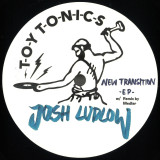
Here comes a first EP by Josh Ludlow for Toy Tonics. Mastermind of Make a Dance aka M.A.D. records. London’s best kept secret (or not so secret anymore) of new underground dance weapons that are played by everybody who counts in the scene.
Josh delivers a hot 4 -tracker that will move people on dance-floors worldwide. Combining 1990es filterhouse influences, 2000’s indie dance and some of the edgy contemporary funk moods that are lighting up clubs these days. The post - techno generation likes it funky and Josh delivers. Fitting perfectly with the vibe of Toy Tonics this EP will find a lot of friends. In fact Josh knows how things work.
Josh Ludlow has been steadily honing his craft over the past 15 years. Starting out releasing Drum & Bass under the ‘Squash!’ moniker in the late 2000’s whilst also playing drums in bands. The former gave way to live touring and it was only in 2020 when Josh resurfaced with some new electronic music.
The impetus for releasing this new material was when Josh Ludlow & Ben Lewis formed there beloved project ‘Make A Dance’ (which then went on to establish the imprint) M.A.D. Records during the pandemic.
Since then M.A.D have made a big impact on the underground scene, become regulars at places such as Fabric, Heidegluhen, Gottwood and gained DJ support of propel such as Laurent Garnier, Optimo, Palms Trax and Peggy Gou and across BBC Radio1 and regularly Cover show’s on NTS for Long Running Host’s Moxie and Apiento.
This is just the beginning.
out of Stock
Last delivered 6 months ago available to reorder, subject to availability
Ginnels never let up. Though it has been, staggeringly, eight long years since the last irresistible jangle pop transmission under the Ginnels moniker, nothing much has changed in Mark Chester's approach when it comes to the practice of music making, even if much everything else for Chester has seen considerable flux – he's now a father of two, and most shockingly of all for an indie popster of his ilk, gainfully employed. "It definitely started the same way all Ginnels stuff starts," Chester explains, "which is just me looking through five years of phone demos and going 'that's a decent song' and 'that's a decent song', and if you keep that up then you have a full album."
The man himself might be coyly committed to making his process sound as pedestrian as possible, but from the moment the delicate chiming introduction of album opener 'The Body Was Gone' goes widescreen – revealing an expanded sonic palette richer in timbre and exponentially wider in scope than anything Chester has let out into the world thus far – it is apparent that "The Picturesque" is poised to be less than parochial in its sonic purview.
From here, "The Picturesque" plays like a gauzy road trip Super 8 footage cutting between scenes of sunset at Monument Valley and B-roll from around middle-Ireland, entirely soundtracked by some enchanted mixtape of heretofore unheard B sides from REM, XTC and The Go-Betweens, unexpected guest appearances from the surprisingly together-sounding ghost of Johnny Thunders and snippets from your coolest friends' unreleased instrumental experiments. All liberally rippled with Chester's unique ear for melody and appetite for the unexpected when it comes to crafting guitar parts. And this, by design, feels like a Guitar Record, above all else.
For all its effortlessly sticky lyrical and melodic twists, "The Picturesque" separates itself within the mighty Ginnels catalogue in both the dexterity in playing and diversity in tone on show across these 12 tracks. And 12, of course as we know, being the optimum number of tracks for any LP to have, so bonus points for that too.
Like so many bands that cut their teeth playing basements, rental halls, and teen centers around the Puget Sound in the early '90s, the Olympia trio Lync may have had similar roots to the local rock heroes of the era but were conscientiously averse to the trappings of mainstream success. Lync kept the grit, the shouted vocals, and the rough-hewn choruses, but eschewed the machismo and metal swagger. Their song 'Cue Cards' is a perfect encapsulation of their overall approach-heartfelt melodies, bashed drums, hoarse throats, gritty bass lines, and fractured guitars. Lync's legacy was interwoven with fellow PNW artists like Modest Mouse, 764-Hero, and Red Stars Theory-bands that were crucial to the foundation of Suicide Squeeze Records. It only made sense for Suicide Squeeze to reissue Lync's lone LP, These Are Not Fall Colors back in 2023. And in conjunction with the reissue, Suicide Squeeze is proud to announce the second single featuring a choice cut from Fall Colors paired with a current artist's reinterpretation of the song. On their latest 7", Lync's original version of 'Cue Cards' is paired with a cover by Julia & The Squeezettes-a Suicide Squeeze-centric all-star line-up featuring Julia Kugel of The Coathangers and Julia, Julia, Staz Lindes of The Paranoyds, Bonnie Bloomgarden and Rikki Styxx of Death Valley Girls. On their rendition, Julia & The Squeezettes excise the half-time distorted bombast of the original in favor of up-tempo minimalist pop. Guitars are reduced to a few choice phrases, putting the song's luring vocals and lyrical charms at the forefront. Paired with the tasteful yet propulsive rhythm section, this new approach to 'Cue Cards' demonstrates the timeless songwriting of Lync while simultaneously showcasing the creative vision, timbral aptitude, and resourceful production savvy of four contemporary artists in the ongoing lineage of American indie rock. Suicide Squeeze is proud to release these two versions of 'Cue Cards' to the world on a pressing of 500 Ocean Blue-colored vinyl 7" singles.
In 1971, film producer David Gil and his business partners Robert S Sinn and Paul Frankenberg launched a film company called GSF. Over the next few years, it would be involved in a small number of productions. But, in 1971 the movie business was kind of old-hat, music was where it was at, and so GSF Records, a well-funded label, headed by Larry Newton was formed. Today Newton is largely remembered for his attempts to prevent Louis Armstrong from recording 'What A Wonderful World' but that didn’t stop him from growing ABC from a second division company to an industry leader. As he approached his 52nd birthday he was unveiled as GSF Records’ president a full-service music company, involved in records and publishing across all genres. Through a joint venture with drummer Bernard Purdie the label targeted the R&B charts and soul & funk dominated GSF's release schedule.
Black music ruled and this was reinforced by the hiring of Lloyd Price as head of A&R (veteran R&B star), and producers George Kerr (All-Platinum), Mickey Stevenson (Motown) and Jerry 'Swamp Dogg’ Williams. No wonder then, unintentional as it was, that GSF left behind such an extraordinary legacy of rare soul treasures.
NEW YORK’S BEST KEPT SOUL SECRET Features legendary Northern Soul classics courtesy of Anderson Brothers, Skull Snaps and Connie Laverne Produced by hit makers George Kerr and Motown veteran Mickey Stevenson Starring the Whatnauts and Eddie “Hey There Lonely Girl” Holman
Imaginary friends Akka & BeepBeep share the third release on their label: Floral Ancestors by Raduns. The 12” offers blooming ambient rooted in dub, lush drone and hand-picked cosmic that’s all grown deep in Detroit.
Spacious sonic arrangements vividly swell yet keep grounded within a sculptural rhythmic core. Raduns sows synth basslines and wispy pads next to harmonious guitars and muted field recordings. Grooving propulsion drives throughout. Rhythms appear, in negative space, like outlines between leaves. Recorded with machines direct to SD card, the compositions represent ephemeral blessings of experience. As if strolling into a verdant conservatory, the layered and diverse sensations blend into one cohesive revelatory experience.
On their first record, Raduns draws an ancestral line in Detroit as inspiration. A time when you could ride a streetcar from Dexter-Linwood to Belle Isle. A time before freeway expansion demolished vibrant Black neighborhoods. A time before the rebellion, motown and white flight. A time when Raduns’ great-grandparents were florists in the city, serving the community in times of celebration and times of grief. This melancholic circle shapes the project in which Raduns summons these Floral Ancestors, stretching upward from the darkness of the earth into the light of the world back down once more.
AKKA’s Side: “Grass Boulevard” exhales a luscious soundscape that develops through wave-crashing synths and circulated guitars to a transplanted acid lead. “Spread” lays out a decoration of blended sample and hold synth with kosmische styled guitar licks. Tracked as a single take in a Detroit community studio, the tune intuitively reseeds the symbiotic sprout between krautrock and Detroit techno.
BEEP’s Side: “Metrograde Bouquet” submerges you into the bulb of a handcrafted vase. Dub techno roots grow out into murky water with energy that is subtle yet profound. “Oldest of Arrangements” textures breaths of misty air cascading ventilating in on itself. The track’s time seems to stretch and disappear within a dark and deep undercurrent. A harmonic and reverberant resonance closes the record in a flowering of beauty and peace.
“You’re a flower child. Put this music out.” - Someone Important in Detroit
Limited edition classic black vinyl mini-album of cathartic slowcore by The Declining Winter, the new vehicle of Richard Adams, formerly of Domino Records post-rockers, Hood. The next release on the acclaimed boutique English independent label, Second Language Music, will be ‘Last April,’ the new mini-album by The Declining Winter, a raw, deeply emotional monument of loss, grief and heartbreak that treads in the footsteps of Red House Painters’ ‘Down Colorful Hill,’ Low’s ‘I Could Live In Hope’ and Songs: Ohia’s ‘Didn’t It Rain.’ This is not a heart-on-your-sleeve record. It does away with the sleeve and goes straight for carving a heart on the arm. Recordings which emerged out of a period of shock, grief and trauma, these six songs were all written on the same night and form a stately tribute to a loved one lost. The Declining Winter strip things back to just Richard Adams’ plaintive voice and acoustic guitar, alongside the beautiful, irrefutably melancholy string arrangements/playing of Sarah Kemp (Brave Timbers). There’s been no attempt to plane off any rough edges – here and there, the creak of a chair, a guitar note missed, a voice almost cracking with emotion – these recordings are like cathartic scrawls in a diary. Only this one has been left out for anyone to read. As with his previous band, Hood, Adams has a way of evoking a particularly pastoral, English melancholy, of lonely morning hikes in inclement weathers, of rain on slate in the West Yorkshire streets where he was raised and still lives.
Pink Vinyl. Enter Now Brightness feels different for Nadia. It is an album, she says, of departure and questioning, that has reminded her how songwriting can be "the most useful thing to do with pain and joy and thoughts and feelings and anger." That through music we can find great change. "I'm so much better off now that it exists,"she says. "Now feels like a new time." On this record, Reid moves ever further from her earlier folk inclinations, establishing a sound that is distinctly her own. Enter Now Brightness is a record of poise and great beauty, the sound of a cellular shift, of pain giving way to tenderness and joy. It takes its title from a passage in a book Reid was reading from a line that seemed to call out to her from the page: `Brightness entered the study.' "It was the image of opening the curtain, or turning the light on, or of standing in the wings of a theatre and waiting to go on stage. It's the idea of life beginning now."
Balancing mystic pop, psychedelic ambiance, and pulsating electronica, her debut LP weaves a divine, harmonic universe
Ghent-based singer-songwriter and composer Nele De Gussem (Uma Chine) has today announced her debut solo album The Loom Of Longing, out February 7 2025 on Viernulvier Records.
De Gussem has delivered a sensational album of mystic pop, psychedelic ambiance and pulsating electronica. To shape her divine harmonic universe, she has a preoccupation with soundscaping that involves using her sensual voice and electronic/analog instruments as a sort of palette of rich textures where she’s the auteur, as opposed to the cog in a bigger machine as she’s been with her band, Uma Chine.
“This album celebrates having found desire as a compass in my life and as a medicine to quell fear, holding back and keeping silent.”
— NELE DE GUSSEM
The cracking first single from the album - ‘Wonder’ comes with an eye-popping music video by Belgian visual artist Victor Verhelst (STROOM). Verhelst crafts a unique collage of 90s computer game-inspired motion graphics, which has an otherworldly appeal and highly symbiotic relationship with the music. Rarely do the marriage of visual and musical arts come together so invitingly.
Of the single’s feel, Nele De Gussem says: “‘Wonder’ is about the paradoxical situation of being at a party and finding stillness within. Introspection amid exuberance; tranquillity amid joy. It’s like being swept away by a rush of light - feeling our head in the clouds - but feeling equal magic in the corporeal self.”
“Richard Davies is one of the last great songwriters on planet Earth. Every song on Composition Book is up there with his finest and so it's no small feat that after 35 years of making beautiful records, this one is his best.” – Robert Pollard / Guided By Voices Australian mad scientist Richard Davies has long flown under the popular radar with his groups The Moles and Cardinal, but his 10 albums are loved and championed by indie rock royalty. The Flaming Lips, for example, have recorded a Davies song and backed him up on a Moles tour in 1995. A scholar of the songwriting of The Beatles, The Beach Boys, Dylan et al., Davies spins off subtle, catchy indie rock melodies, sometimes reassembled in bizarre Frankenstein arrangements and deconstructed sonic derangements. On Composition Book, The Moles have evolved with emphasis on acoustic guitar and divine female voices. Davies’ lyrical non sequiturs and caustic wit sting, surprise and delight. “The Australian-bred, New England-based Richard Davies has long been a secret-handshake artist for indie diehards; his songs suggest self-contained pop hits from a crooked dimension.” – The New Yorker “The greatest differentiator between the work of the Moles and that of their contemporaries, though, is Davies himself. As a presence, there is something deeply and beguilingly inscrutable about him, a purposeful blankness that betrays an enormous amount of weight and depth behind it, and oozes both vulnerability and vitriol when it breaks and cracks.” – Pitchfork
Ploughing lesser-used breaks and finding finesse in the ruffest and tuffest rave emissions, Jason Warlock is back with more of that untouchable clout he rolls out as Hooverian Blur. Team Sneaker have been proud to platform the project plenty in the past, and so it goes on this latest four-strong salvo of blunted samples and head-threading synth hooks.
In terms of pace and sheer sonic breadth Hooverian Blur aligns with the embryonic days of hardcore, before breakbeat dogma had set in. Rather than opting for tear-out intensity, the likes of 'Hypnotizer' and 'Wacky Robot' roll with a lean-on that feels like the sweet spot between rave and rap. It's trippy, ready to take a left turn and tweak your nervous system with a plethora of zaps and pings, and it's got more than enough bassweight and mid-range snap to get bodies twisting, but edgy hysteria has been replaced by a cool and deadly demeanour which makes these joints all the more addictive.
'Project One' still slaps with a crafty one-two between rolling drum licks and machine-powered thrust, and 'Double Depths' digs deep down in the crusty edits, but yet again Warlock demonstrates an assured poise in his Hooverian Blur guise which can only come from serious skin in the game.
out of Stock
Last delivered 20 months ago available to reorder, subject to availability
Rats on Rafts descend further into the brooding wasteland on their new album ‘Deep Below’, a darker, slower, eroded sound from the Rotterdam band. Highlighting different shades within the monochrome landscape compared to their previous, more colourful albums: they dive deeper into their psyche, questioning our relationships with nature, religion and each other. Echoes of The Cure, Cocteau Twins and Slowdive seem present yet so many different influences make up an album that only they could create. It sees Rats on Rafts coming of age whilst raising their heads from the underground. Forever drifting into new territory, ‘Deep Below’ is certainly their darkest and most cohesive work to date. True to their analogue recording process, the tape machines, reverbs, echoes and vital new ingredients: the Soundcraft 1s mixing desk (Used by Lee Perry) and the eerie sounding Eminent String Ensemble synth all amplify the authentic sounds of the 1980’s without sounding like a relic. ‘Japanese Medicine’ is a haunting minor chord piece driven by debris of icy chiming guitars, galloping drums and waves of lush synths. lyrically it gathers memories of teenage friendship, littered with cigarettes, life-changing records, punctuated with the dark thoughts and the demons they summon up. Though the band have kept the songs relatively slow-paced and sparse, deeper ruminations of mortality and alienation creep through the cracks. ‘Nature Breaks’, the most propulsive song on the record, thematically locks into this notion, as Fagan meditates on human impulse in the face of abject survival, and how those situations often unlock one's true self. You may conclude Rotterdam’s Rats on Rafts relationship with the past is complicated. ‘The Moon Is Big’ (2011) ‘Tape Hiss’ (2015) and ‘Excerpts From Chapter 3’ (2021) are truly gripping analog timestamps of a band refusing to give in to the supposed ‘progress of the world’ instead forging their own way each time. ‘Deep Below’ is Rats on Rafts’ most minimalist work since their 2011 debut. Where the latter album was fuelled by a brash bravado, these recordings meditate on sentiments of doubt, loss, and ageing. “One of the great contemporary European rock bands” Louder Than War