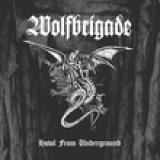
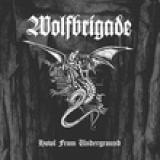
With the amps still warm from 2024's coruscating comeback Life Knife Death, veteran Swedish punk-metal masters Wolfbrigade strike back like a wounded cobra with their loudest, fullest, thickest-sounding record yet. And that's no happy accident. On their twelfth LP (the first three released under the Wolfpack monicker, 1996–99), the quintet concertedly resolved to shake up their habitual processes and interrogate their customary methodology. "As the songs started to fall into place, we decided to do something we hadn't done in many years," explains the band. "For the last decade we've recorded, produced and mixed our albums ourselves. This time we wanted to work with someone from outside the band whose work we respect and who we felt would understand what Wolfbrigade is about."
With the amps still warm from 2024's coruscating comeback Life Knife Death, veteran Swedish punk-metal masters Wolfbrigade strike back like a wounded cobra with their loudest, fullest, thickest-sounding record yet. And that's no happy accident. On their twelfth LP (the first three released under the Wolfpack monicker, 1996–99), the quintet concertedly resolved to shake up their habitual processes and interrogate their customary methodology. "As the songs started to fall into place, we decided to do something we hadn't done in many years," explains the band. "For the last decade we've recorded, produced and mixed our albums ourselves. This time we wanted to work with someone from outside the band whose work we respect and who we felt would understand what Wolfbrigade is about."
"Born from frontman Alex Biro's journey through addiction, loss, and recovery, Receptivity is the most honest record Selfish Things has ever made. After years of touring with the likes of Jimmy Eat World, Simple Plan, and Don Broco, a 2020 hiatus gave way to a personal unravelling - and eventually, to the songs that would become this album. Written alongside longtime collaborator Michael Ticar and producer Mike Tompa (Silverstein, The Devil Wears Prada) in the early months of Biro's sobriety, Receptivity is a record about facing the wreckage without flinching. It's about accountability, community, and the quiet work of putting yourself back together."
Pierre Mariétan (1935–2025) was a prolific Swiss composer, sound artist, and pioneer in acoustic ecology who spent most of his life working in France. Over his long career, he composed more than 300 instrumental, orchestral, vocal, and electronic pieces. Mariétan studied under avant-garde legends like Pierre Boulez, Karlheinz Stockhausen, and Bernd Alois Zimmermann. In 1966, he founded GERM (Groupe d’Étude et de Réalisation Musicales), a music collective that blurred the lines between strict composition and free improvisation. In 1969 the French BYG label released a GERM album and the same year GERM played at the legendary 5-day Festival in Amougies, Belgium, sharing stage with Pink Floyd, The Soft Machine, Frank Zappa, Don Cherry,…
In 1979 Mariétan founded the Laboratoire d'Acoustique Urbaine (Urban Acoustics Laboratory) to bridge environmental sounds, urban architecture, and musical composition. Mariétan was also a professor at the University of Paris where he taught the relationship between sound and space. Later in life, he remained active as a director for the Movement of Environmental Sound and continued developing permanent, immersive sound installations across the globe. His album Musique d’été was originally released on cassette back in 1983 by Éditions Salabert and Costin Miereanu’s Poly-Art International, and it has been slightly tweaked for this LP reissue. The record splits his vision of "Summer Music" into two different vibes. Side A is a deep dive into an electronic, synthesizer-driven landscape, while Side B features raw acoustic field recordings of forests and traditional Swiss alphorns.
Adjust the intensity of the sound at the same level, if not just above the background noise specific to the place of diffusion.
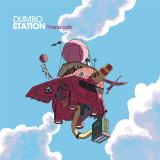
Here at Tuff Kong Records we really like to push our boundaries and explore different sounds, we're passionate with music at 360° and so are these guys we have decided to bring to your attention. Dumbo Station is a nu-jazz ensemble out of Roma, Italy that we've met during a live jam with legendary MC Danno of historical roman hip-hop group Colle Der Fomento. They immediately caught our attention and after listening to this masterpiece we decided to collaborate with them and Roman jazz imprint AlfaMusic to release their debut full-length "Tirana Cafè" on limited edition vinyl. The 11 songs featured on their first studio effort will take you on a trip through different soundscapes with the quartet as your guide, joined by Italian talents the such as vocalist Davide Shorty as well as Maurizio Giammarco's sax and Elvio Ghigliordini's flute. These young fellas have managed to merge nu-jazz with soul, funk and modern sounds creating a true masterpiece.
Individually, Justo the MC & maticulous have impressive resumes in the underground hip hop circuit. Justo, who came up under the Gang Starr Foundation, has worked with Lord Finesse, Rockwilder, Marco Polo and DJ Skizz, releasing numerous projects, most recently “Black Ops,” produced entirely by Showbiz of DITC.
maticulous, who came up under Fat Beats NY, has delivered several producer albums and instrumental projects having produced for the likes of MF Doom, Masta Ace, Your Old Droog, Fame Of MOP, Blu, RA the Rugged Man and many more.
After a chance meeting at SiriusXM studios, the duo started to craft what would become “Mind Of A Man.” This album showcases the feeling of Brooklyn hip hop that stands firm on tradition, giving you true school flavor you’ve been missing. Featuring guest appearances by Kev Brown, Rasheed Chappell, DJ Eclipse and Davenport Grimes.
Limited edition of 300 hand-numbered copies, with the first 100 pressed on black / grey A-side B-side vinyl, the remaining 200 pressed on black vinyl.
Their music draws from old folk sources, but it sounds vibrantly alive. On The Holy Coming of the Storm, their debut from 2010, the duo crafts original songwriting and seasoned acoustic musicianship into a timeless blend of old-time, bluegrass, folk and Americana traditions. Now, more than a decade later, these beloved recordings are finally being pressed on vinyl for the very first time in special limited-edition releases. Together, Cahalen and Eli tap the root of the old country and bluegrass duets. As the sparse landscapes of Cahalen's vocals reflect the warm glow of Eli's voice, it's clear that this duo was made to sing together
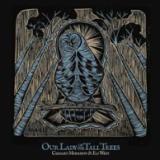
Their music draws from old folk sources, but it sounds vibrantly alive. On Our Lady of the Tall Trees , their sophomore release, the duo builds on the sensitive folk of their debut and shows why they are some of the finest roots songwriting of their generation. Now, more than a decade later, these beloved recordings are finally being pressed on vinyl for the very first time in special limited- edition releases. Together, Cahalen and Eli tap the root of the old country and bluegrass duets. As the sparse landscapes of Cahalen's vocals reflect the warm glow of Eli's voice, it's clear that this duo was made to sing together.
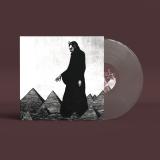
On the one hand, In Spades is as quintessentially Afghan Whigs as anything the group has ever done – fulfilling its original mandate to explore the missing link between howling Midwestern punk like Die Kreuzen and Hüsker Dü, The Temptations’ psychedelic soul symphonies, and the expansive hard-rock tapestries of Led Zeppelin and Lynyrd Skynyrd. At the same time, this record continues to push beyond anything in the Whigs’ previous repertoire – another trademark, along with the explosive group dynamic captured on the recording.
Much like a teacher, Meryl Streek imparts his knowledge and lived experiences to all who are willing to listen. His third album, ‘Stories They Don’t Teach You At School’, serves as an alternative form of education, delivered through a visceral blend of factual soundbites and raw emotion, loops and samples, guitars and bass. The lyrics resonate with core values of compassion, resilience, and community—themes rarely explored within a classroom setting or seen in today's fragmented society. By prioritising conviction over commercial success, the Dublin artist's outspokenness may invite controversy. Yet beneath the fervor lies a profound desire for positive social change at home in Ireland, and beyond.
Meryl Streek returned to Darkland Studios in Dublin to fine-tune the recordings previously made in a shed at the back of his ma's garden. Here he continued the genre-blurring nature of his earlier work, enticing listeners toward dissonant landscapes and hypnotic rhythms. Gentle piano tones collide with abrasive synths, creating a striking tension between beauty and noise. Streek tempers his rage when appropriate, integrating atmospheric textures and pop sensibilities into his ever-expanding sonic collage.
As is tradition with any Meryl Streek record, ‘Stories They Don’t Teach You At School’ unearths many uncomfortable truths. ‘Rotten Fruit’ examines media manipulation and the numbing proliferation of misinformation, all soundtracked by synth-punk. With gliding keys and a crunchy bassline, ‘Council Estates’ critiques systemic government failures affecting the working class. ‘Kelly’ is a slice of electronica that details an ongoing criminal investigation, currently classified as a “Contested Cause of Death”. The indie pop of 'The Chancer' brings much-needed attention to landlord politicians. As the album progresses, the mission remains absolute: to provide a voice for the voiceless.
To amplify these narratives, Meryl Streek handpicked a diverse group of collaborators for the project. ‘Rotten Fruit’ features Steve Ignorant of anarcho-punk collective CRASS. ‘Depression’ opens with a touching recording of the late Liam Norton, close friend and former touring companion, while Pete Holidai of The Radiators From Space contributes guitars on the song. Comedian Phill Jupitus provides the spoken outro for ‘The Chancer'. ‘Housing For All’ incorporates audio from Derelict Ireland campaigners Frank O’Connor and Jude Sherry. Venn Records owner and Gallows guitarist Laurent ‘Lags’ Barnard joins forces with Adebisi Shank bassist Vinny McCreith on the aggressive ‘Bullet,’ while Sophie Porter of Other Half provides bass guitar for ‘Life is Not a Rehearsal’. The album concludes with a three-minute spoken word piece by Frankie McNamara, the viral creator behind ‘Meditations for the Anxious Mind’.
In her 1990 protest anthem “Black Boys on Mopeds,” the late Sinead O’Connor warned, “To say what you feel is to dig your own grave”. With this release, Meryl Streek firmly holds the shovel.
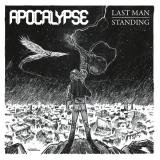
Die Londoner Band Apocalypse sollte kaum einer Einführung bedürfen. Sie erlangten unter Fans der New Wave Of British Heavy Metal durch ihre Single »Storm Child« von 1982 Ruhm, der drei Jahre später das vielbeachtete Album »The Prophet« folgen sollte, obwohl die Band zu diesem Zeitpunkt bereits eine Namensänderung durchlaufen hatte und nun als Omega bekannt war.
Spulen wir über vierzig Jahre vor. Apocalypse sind mit einem neuen Album zurück, »Last Man Standing«. Das aktuelle Werk knüpft nahtlos an »Abandon Hope an«, das 2010 von High Roller Records veröffentlicht wurde. Mittlerweile hat Gitarrist und Sänger Steve Grainger, der nach dem Tod sowohl seines Bruders Marc (ehemaliger Schlagzeuger der Band) und des Bassisten Dave Robertson tatsächlich als „letzter Mann übriggeblieben ist“, die Gruppe in Apocalypse NWOBHM umbenannt.
»Last Man Standing« kombiniert neues Material, das Steve geschrieben hat, mit älteren Songs, die in ihrer ursprünglichen Form aus der Vorgängerband Phaze stammen (die er und sein Bruder betrieben). Die Atmosphäre und der Drive von Apocalypse sind geblieben. Mit Beiträgen von Marc und Dave sowie textlichen Anspielungen auf einige frühere Stücke der Band ist »Last Man Standing« der neueste Teil der Apocalypse-Saga und in dieser Form definitiv eine würdige Ergänzung des Bandkatalogs.
HRR 1084LP, Einband aus schwerem Karton (425 gsm), 4-seitiges Booklet. Erste Auflage limitiert auf 500 Stück.
Mr Bongo reissue Bobby Williams’ coveted deep funk rarity Funky Super Fly from 1974. Rich in raw, gritty, from-the-heart grooves, the influence of James Brown is strong, yet the tracks are distinctly Bobby. Oozing style and substance, the album is full of fiery horn sections, strutting guitars and infectious basslines tracked by plenty of prime breakbeats. Front to back stacked with highlights, cuts from the album have been famously sampled by DJ Shadow, Coldcut, and more.
For years Funky Super Fly has been a funk aficionado favourite. It’s a sensational set of recordings from vocalist and bandleader Bobby Williams, with plenty of cherished raw-funk heaters in the mix. ‘Funky Superfly’, ‘Soul Brother Party’, and ‘Let’s Jam’, are three standouts that have all the ingredients to ignite even the most subdued of dancefloors. The unprocessed natural energy in these songs speaks to your very soul – Bobby grooving over his captivating funk-fuelled band with dynamism and class. Both ‘Funky Superfly’ and ‘Soul Brother Party’ appear on the album as one continuous track, whereas on the 7” versions they were cut into parts 1 & 2.
Alongside the uptempo dancers on the album, Bobby goes deep on the soul ballad ‘Morning Of Love’, which simmers with intensity and heartache. The album's closing instrumental track, ‘Fair Trade,’ has a wah-wah guitar-driven Blaxploitation film soundtrack sensibility, and is a slept-on gem off the album nestled amongst the big hitters.
The use of Bobby’s music has been sampled decades later, immortalising him for a new audience of record collectors and sample hunters. The pulsating title track ‘Funky Superfly’ was used as a sample source for DJ Shadow’s ‘The Number Song’ off his iconic Endtroducing..... album in 1996. In addition, ‘Soul Brother Party’ was used a year later on Coldcut’s fantastic ‘More Beats & Pieces’ album. This turned a whole new audience onto the magnetism of Bobby Williams' music and added to the frenzy of hungry DJs in the ‘90s looking to unearth obscure funk 45s.
Funky Super Fly is for those who like their funk and soul at its purest. It’s no-nonsense, electrifying and one of the jewels of ‘70s funk, perfect for fans of James Brown and Charles Bradley.
out of Stock
Last delivered 8 days ago available to reorder, subject to availability
On her first Harmony Index album, multi-instrumentalist and producer Nico Leibman spotlights the feelings that are most difficult to express, bringing out the friction between her dreamy hooks and harsher sonics. Written almost like a DJ set, the album shifts intentionally between piano-led trip-hop, lounge, dream pop, 2-step and breakbeat house, not languishing in nostalgia but defining a language that's rooted in desire, surrender and forward motion.
Until now, Leibman has been best known as a touring musician, working alongside artists like Jessica Pratt and Ana Roxanne, while slowly putting together new solo material in-between frequent tours. The album was written in bursts over the course of five long years and provided Leibman with a much-needed outlet - a chance for her to lock into her personal musical preoccupations, like Janet Jackson's 'The Velvet Rope', Everything but the Girl's 'Walking Wounded' and Prefab Sprout's 'Jordan: The Comeback'.
It's this era of pop - when nascent technology collided at force with skillful, soulful songwriting - that provides the album's backbone, fleshed out by Leibman's potent meditations on a spectrum of experiences in Los Angeles. And as the record was evolving, Leibman let long night drives crack her creative world open. Embracing the city's notoriously cinematic romantic side, she used the car as a "little chamber of limerence," in her own words, enabling her fantasies and acting as a test system for each song. "If it wasn't hitting in the car," she says. "It wasn't going to be on the record, period."
This sense of motion is evident almost immediately on 'Recognize', when Leibman's breathy words are carried into the night by choppy, uptempo breaks and resonant pads. So even when she simply coos over chugging guitars and bass on the first half of 'Enough', the drop into a low-slung breakbeat is implied. "Another digression, a break in this tension," she sings. "Was I foolish to believe that this was never your intention?" Leibman's tales of disillusionment are imbued with power, buoyed by her pitch-perfect production, with additional help from co-producer Cesar Maria.
On 'Don't Pretend', she sings softly and soulfully over decelerated Timbaland-inspired beats and a dubwise bassline, aided by additional production from Purelink. And 'If' marks the point where she lets go, infusing her euphoria with melancholy as her voice soars alongside the album's most infectious piano riff. Fittingly, the album concludes with 'Trust', a song about surrendering to the possibilities of love that works as a potent metaphor for the album's evolution. Over the course of five years, Leibman learned to let people in, finally trusting the process. "It's also a fantasy of what it would feel like to finally be in love again," she laughs, accepting that it's still just a fantasy. But it's this hope in unfulfilled longing that gives the album its unique character, defining a bold, unguarded voice in LA's experimental pop landscape.
Next on global swing sublabel, Healing Channel, garrett david taps Ron Obvious to present “More Than This”
It’s Obvious You Won’t Survive by Your Wits Alone.
You’re deep, just like a chasm, You’ve no enthusiam. You’re tired and uninspired, you’re __.
Your day is one of leisure. In which you search for pleasure. You’re bored when you’re adored.
You’re __! While searching for the moon and stars up in the sky, The simple things of normal life just simply pass you by. You sleep, the sun is shining, you wake, it’s time for dining.
There’s nothing new for you to do… you’re __.
Have Isaac Carter & Callum Asa made the most tasteful tech house EP of recent memory? The short answer is
yes....
Isaac and Callum, known for their respective club nights: OCHI and Planet People have been quietly chipping away at the coalface of underground dance music for quite some time now.
Isaac - perhaps known more widely as a regular at Circoloco & Phonox has shared bills with the likes of Moodyman, DJ Bone, Kai Alce, Laurent Garnier and Marcellus Pittmann whilst being championed by Joy Orbison, Ben UFO, Moxie, Seth Troxler, Raresh and Floating Points to name but a few. With such an impressive CV and wide ranging support, it’s wild to note that the first EP released on his own label, OCHI only came out in 2023. His star is clearly ascending with rapidity - so when we throw long term collaborator Callum Asa into the mix, things start to get really interesting. Calum has been running Planet People for the last couple of years, welcoming incredible names such as Shed, Surgeon, Willow, Ploy, Cooly G, Rroxymore and so many more. Steel sharpens steel and having been surrounded by such esteemed talent, it’s clearly rubbed off on the pair who present 4 polished, meticulously constructed, club ready masterpieces, each with their own distinct feel and an insatiable groove.
‘Feel Me’ sets the scene with a descending baseline that would eek a wiggle out of the most reluctant spectator. The twisted dub eeks out even more groove, locking in a more sinister bounce for the heads. By The time ‘Understand’ get’s into full swing, we’re already under the spell of Carter & Asa, this is the kind of roller that could go on forever and ever. The synth embellishments and washes of analog synth pull us deeper and deeper in, prepping us for the finale , ’Try You’ which simmers with deep, brooding intensity.
The magic of the dup’s appeal is that this EP will find its way into the bags of the deepest diggers and also appeal to a new generation of house fans. Elements of it are accessible , but in the right hands - the EP will open a portal to new worlds.
Long overdue reissue of classic Scottish ambient techno banger ‘Mindweeds’, originally released in 1993 on the Pure-affiliated T&B Vinyl label run by Keith McIvor (JD Twitch) and Andy Watson (Brainstorm). With a Discogs demand ratio at about 300 have : 2000 want, and used prices peaking at over £100, now seems to be the right time for a re-release.
State of Flux were Roger Elliott and Dave Clark (aka Sparky, LUMA, Truffle Club and main man behind Kübler-Ross). They first met at Glasgow’s Strathclyde University in 1990, bonding over a shared love of weasel racing, German sausages and “man-duos” like The KLF and The Shamen. Dave was fully pubescent and already had a synth and drum machine, while Roger – a late developer – bought “another cheap synth, a Commodore Amiga for sequencing and a tiny mixer with no EQ”. For two long years they concentrated hard on “churning out unlistenable pish”, admittedly clueless about what they were trying to do.
Then – out of nowhere in the summer of 1992 – a flatmate’s Jello Biafra spoken word CD (‘I Blow Minds For A Living’) provided the inspiration to unlock the spark of dynamite that set the raving world on fire. Sampled using a Walkman* cassette** tape*** on playback (a decision the pair soon came to regret every time the track was subsequently performed live), Jello’s pilfered rant would soon become the crucial glue that held together the burgeoning kaleidoscopic helicopter spliff that is ‘Mindweeds’, loaded as it was – and indeed still is – with a veritably seething morass of cheeky electronic blims, nasal filter cheese and gay Caledonian spunk.
* a vintage portable listening device roughly the size of 4 iPhones stacked on top of one another and weighing the same as a small tub of yoghurt
** a plastic cartridge enclosing 2 miniature spools of magnetically coated, polyester-type plastic film (magnetic tape), notoriously convenient for pirating copyright material and secreting in one’s underpants for transporting between illicit market trader stalls
*** thin ribbon coated with ferromagnetic particles, usually ferric oxide but also chromium dioxide, "pseudochrome" ferricobalt or iron-cobalt-nickel “metal” formulations – with the latter types sounding marginally less crap
Playing demos of the track to friends, one thing led to another and a copy arrived with Twitch. Meeting the legends behind Pure in late 1992, a release was scheduled for summer 1993… but not before a promotional live gig in February of that year, supporting their heroes The Black Dog. Confessing that they “didn’t have a clue how to play live”, the duo played it safe, “went to a studio near Edinburgh airport to record the ‘live’ show” and then “mimed it off a DAT” at the gig, “standing in front of unplugged synths”. Soon after this, they recorded the full EP at Finitribe’s ‘Finiflex’ studio in Leith, Edinburgh and the record came out as planned that summer – the same week as Underworld’s ‘Rez’.
The record received high praise, appeared in many big-name DJ charts, sold out very quickly and was repressed within a few weeks, selling several thousand copies by the end of 1993 – no mean feat in an era when people had to use landline phones ****, faxes ***** or good old-fashioned carrier pigeons ****** to ascertain literally anything about the outside world, what was cool, where to buy the cool shit, or how to meet people and have fun.
**** a fixed communication device that connects to a telephone network using physical wires, cables, or a stationary base unit tied to a specific geographic address, using a handset incorporating a mouthpiece featuring a small metal disk and carbon grains, converting sound pressure from the human voice into a flow of electrical waves caused by these grains being squeezed together, before the variable signal is transmitted down DC voltage-powered copper wire and rerouted by a central exchange to arrive at the earpiece magnet of the target receiver’s handset, moving a small speaker cone accordingly so the message is intelligible WITHOUT THE PERSON SPEAKING ACTUALLY BEING PRESENT
***** as above, but for the d/Deaf
****** flying vermin riddled with diseases and capable of surviving nuclear armageddon
Soon Roger and Dave became sick of the Walkman being the only instrument played live in their set: with their new found fame and riches, they invested in a case for their Amiga to transport it around Scotland, while also putting in the hours on how to pretend to play live better with a sequencer and synths that were FINALLY plugged in. Following the release of ‘The Mercury EP' in April 1994, they embarked on a full tour of the UK and even managed to part ways and end the band by June that year.
This reissue includes the two original mixes of ‘Mindweeds’ recorded at Finiflex (‘Original’ and engineer ‘Fred's Fancy’), the original cassette demo (mastered directly from the actual recording sent to Twitch & Brainstorm in 1992) and a live version recorded at the Birmingham club night 'Oscillate' in April 1994.
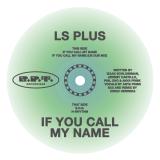
Are you into sophisticated pop music, Music from Memory, Dark Entries, and/or the general concept of a rock supergroup? Then the fifth release from Bar Part Time, LS Plus - If You Call My Name is one you'll probably want to pick up. The 2026 California Balearic equivalent of the Traveling Wilburies, LS Plus is made up of:
- Izaak and Anya from Loveshadow
- Phil Cho of Puli and SY3
- B.P.T. label boss Jeremy Castillo
- Diego Herrera of No You and Melody As Truth
The combination makes for the breeziest release you're likely to hear this year. It also features a US Dub Mix by Herrera himself for all you nighttime music listeners. Essential listening for people who are into Mood Hut, PPU, or drinking wine outside on a perfect summer night.
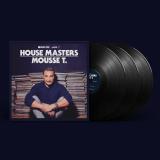
Grammy-nominated German producer and DJ, Mousse T is set to headline the next installment of Defected's celebrated House Masters vinyl series with a sprawling three-LP retrospective of his remix career. Spanning six sides of wax, the collection pulls together two decades of dancefloor alchemy, tracing his signature style from disco- inflected house to breakbeat- tinged funk and back again. Including four brand new "Shizzle" and "Re-Rub" productions that are exclusive to this compilation and one remix that has previously never been released on vinyl before, makes this a particularly essential release, offering vinyl access to mixes that may otherwise circulate only in DJ pools or digital crates. House Masters Mousse T. features classic and fresh takes on the likes of Dennis Ferrer, Martin Solveig, Moloko, Camelphat, Spiller, Shakedown and many more, cementing Mousse's reputation as one of house music's most versatile and prolific talents.
Long before Spotify algorithmically ruined discovery, Joshua Burkett was wandering the New England underground with nothing but a guitar and enough patience to make tar smells feel like deja vu. This compilation LP is your time machine back to when "knew someone who knew someone" was the only distribution network you needed. Free Folk for the eternally lost & happily found.
This release closes the current run of much‑needed raids on the Digi Dub archives. Label boss Berwick emerged from the DIY ferment of Camberwell's squat era , blending reggae and rave influences into a stream of boundary‑pushing music and events under a tangle of ever‑shifting aliases. Nodding to the Far East stylings of Augustus Pablo, South‑Eastern Style finds Berwick, working under his Mudskipper alias, refracting Pablo’s melodic meditations through a mutoid bass filter, delivering six cuts of idiosyncratic, genre- agnostic electronics.
Some of Berwick’s Mudskipper material was partially exhumed for digital release in 2021, but the alias was only one of several he deployed during Digi Dub’s most fertile years and during the 90s Mudskipper material was released sparingly. It feels fitting, then, that this project finally gets its due in the form of a full vinyl release.
Beware Dub is the only track here to have seen daylight before, with a version originally appearing on the 1996 four‑track EP 4 Golems. It makes a fine opener: an agile bassline rolling through tunnels of processed skank, rocking in a haze of centrifugal breakbeat. Ambrosial Dub mounts an imperious, guitar‑laced groove onto a solid steppers march, while Pillars Dub drives another vigorous, sub‑heavy bassline forward in the mix alongside a mechanised rhythm track, shards of noirish piano and bursts of twinkling synth.
The second side opens with the cosmic skank of Stand It Dub, followed by the mutated one‑drop drift of Where There’s Dub, suspended in a canopy of gentle keys. Wasted Dub closes the EP in fine style, Berwick applying widescreen dubwise pressure: a robust low end topped with the distinctive twin twangs of jaw harp and slide guitar, coming on like Jah Shaka meeting Ry Cooder.
out of Stock
Last delivered 10 days ago available to reorder, subject to availability
"Prior to the vinyl release of the debut work “Vapor Curve”, which suffered a one-year delay due to manufacturing errors, the release of the mini-album “grainy film” has been confirmed."
Following the artist's previous release, this album completely eschews the use of computer-based DAW (Digital Audio Workstation) software. By relying exclusively on a strictly limited setup of hardware—synthesizers, samplers, and delay units—the artist pursues a meticulously woven, highly original take on minimal harmony.
At the core of this record lie exquisite ambient textures and beautifully shimmering synthesizer arpeggios. These are layered with the organic warmth of the sampler, vividly sketching out the contemporary "sound of Tokyo." As the album title suggests, the gritty, Lo-Fi texture of the sampler evokes the imagery of a vintage, low-fidelity film reel in the listener's mind. Pushing further than the predecessor, this approach embraces a more abstract, dubby, and deep soundscape aesthetic, elevating the album's artistry to new depths.
Describing this stoically refined electronic music, Maruyama reveals that it is "music for a cigar." It is not an assertive sound that demands to be the center of attention in the room. Instead, the moment the needle drops, it possesses an overwhelming power to transform the very particles of the room's air. The nostalgic and melancholic melodies, much like the shifting and fading trails of cigar smoke, embody the aesthetic of shogyo mujo (the impermanence of all things). Amidst a constantly changing world, it offers a desire to simply drift away in the slumber of sound—a supreme deep-listening experience guaranteed to transport you.
Between 1989 and 1992, Sea Horses released three albums that percolated through England’s DIY underground before fading into the pre-Web ether. For a small community of listeners, however, their ornate gothic romance endured as an unusual sensibility within the broader post-punk coalition.
Hailing from towns on the outskirts of Manchester—Congleton, Scholar Green, and Macclesfield—Sea Horses forged a distinctively Northern English sound. Their dark, dreamy folk carried affinities with other groups of the time, but songwriter Richard Veal’s idyllic medievalism also took unlikely influence from madrigals and liturgical music. The exalted soprano of Clare Williams and twin sisters Jo and Liz Bromley reinforces this devotional quality, hanging in nave-like ambience (the band played several shows in local churches).
For this reason, and for the subtle psychedelia of their longer-than-average compositions, critics aligned Sea Horses with England’s New Age contingent—an association that the band could not quite understand. But Sea Horses did share certain predilections with their Aquarian counterparts. The band’s pastoralism carried pagan overtones, with songs like chapters in a Saxon epic, or odes to copses, moors, and headlands.
Sea Horses: 1989–1992 collects recordings from across the band’s output, which includes two short-run albums on Mandala Recordings—Listen (1991) and Dream into Being (1992)—and a little-known self-released cassette, The Shining Net (1991), which, until now, was only known among friends and family.
The latest release from Rainbow Disco Club’s label imprint, Beyond Space And Time, is the debut compilation from The Melting Hours, a live project by Wata Igarashi and Kuniyuki. WataIgarashi continues to make his mark on the history of techno, whilst Kuniyuki has long been revered as one of Sapporo’s greatest treasures. The two artists, who have long held mutual respect for one another, met whilst performing at the Draaimolen Festival 2025, and this encounter gave rise to The Melting Hours.
‘Blue Sun’ is imbued with a freshness reminiscent of the ambient jazz masterpieces released by prestigious labels such as ECM and Windham Hill. ‘Liquid Dunes’ sees the organic tones of the flute and percussion melt into over ten minutes of abstract sound textures, whilst the breathtaking ‘Cloud Touch’ awakens amidst a swirling vortex of pulsating downbeats and arpeggios. It is said that ‘Blue Sun’ was created by reconstructing studio rehearsal recordings, whilst ‘Liquid Dunes’ and ‘Cloud Touch’ were crafted from live recordings at Draaimolen 2025. The essence of these works—and indeed of the project The Melting Hours itself—lies at the heart of their improvisational nature.
It brings to mind the Rainbow Disco Club event back in 2026, where they wove their sounds amidst fresh greenery and surrounded by listeners under a clear blue sky. It felt as though the pulsating energy was spreading across the dance floor, guided by a session from The Melting Hours that seemed almost like a living creature. The organic breath one senses in this work not only evokes precisely that scene but also allows us to feel the unique, ephemeral nature inherent in this project—and, consequently, the boundless possibilities that stem from it.
Rainbow Disco Club のレーベル・ライン'Beyond Space And Time'から放たれる最新作は、Wata IgarashiとKuniyukiによるライブ・プロジェクト、The Melting Hoursによる初の音源集だ。テクノ史に残る実績を現在進行形で刻み続けているWata Igarashi、長きに渡り札幌の至宝として尊敬を集めてきたKuniyuki。兼ねてよりリスペクトを送り合ってきた両名がDraaimolen Festival 2025への出演を契機に邂逅し、始動したプロジェクトがThe Melting Hoursである。
快晴の元で新緑とリスナーに囲まれ音を紡いでいった、去る2026年のRainbow Disco Clubを思い出す。まるで、生き物のようなThe Melting Hoursによるセッションに導かれ、脈動するエネルギーがフロアに伝播していたようだった。この作品から感じられる有機的な息遣いは、まさにそんな情景を思い起こすものであると同時に...このプロジェクトが宿すその場/その時限りの唯一無二性と、それ故に広がっていく限りない可能性をも感じさせてくれる。
out of Stock
Last delivered 4 days ago available to reorder, subject to availability
Trumpeter Don Cherry, an Ornette Coleman soulmate and a world musician decades ago, became one of jazz's many early losses 10 years back. But saxophonist Pharoah Sanders, who joins him on this fizzing 1966 set, has since ascended to cult status, and he is still around to admire . In the 1960s, he knew no melodic fear at all, in which respect he was aptly partnered with Cherry. This is a quartet set, strongly influenced by the melodic approach of Coleman, but with a fierce abstraction of tone quite different from Coleman's playful lyricism.
Moreover, the rhythm team of Ed Blackwell on drums and Henry Grimes on bass provides a scintillating underpinning for the music that is worth listening to all on its own. Sanders' mix of Coltrane's yearning long notes, Ayler's ghostly, fluttering wail, Coleman's fast, bumpy phrasing and his own manic bagpipe screams certainly separates the faint-hearted from the stayers on the opening Awake Nu. But the conversation between Sanders and Cherry is light, lyrical and engaging on The Thing, and the saxophonist even gets into a stubborn, Sonny Rollins-like repeating Latin vamp on There Is the Bomb. An unflinchingly quirky classic. (THE GUARDIAN)
R.M.F.C. sound like? Let’s stay with the overused descriptors – I think R.M.F.C. is rock music band, more specifically a post-punk band. Indulge me. If you could say anything about post punk it means post-Wire, who were past punk before punk had an opportunity to codify and become everything brilliant and stupid that we’ve spent 40 years unpacking. Wire’s opening Pink Flag jab – Chairs Missing straight – and 154 hook knockout has haunted the mixing desks of ambitious post-punk bands since, and every major city in the western world has at least one Pink Flag band, one Chairs Missing band, one 154 band. Few bands manage to sound like all 3 records, but R.M.F.C. are a Rock Music Fan Club...
Anyone paying attention to underground Australian guitar overdose would relate: the R.M.F.C. Club Hits LP has been the culmination of five years of work, patience and discipline. If you’ve heard these songs live at any of their shows over the past couple of years you’ll understand – the wait is over and the result is exhilarating.
‘Bands like Devo, The Fall, and The Birthday Party have set the way for this type of post-punk rock (all in their own way). Surely, also, the rock scenes of the past fifteen years in Australia have also been influential. Thinking of bands like Royal Headache, Dick Diver, and Eddy Current Suppression Ring, there’s even been a fairly recent tradition of expanding styles of rock and roll (let alone the bigger, famous rock-centered acts). The Sydney based R.M.F.C., and the scene (or friend circle) from which it’s emerging, is carrying a torch of rock music which has the potential of a wider appeal.’ - POST-TRASH
'Quiet Pieces' initiates Abul Mogard’s personal imprint Soft Echoes with a definitive self-portrait of calm, contemplative, and discreet inner landscapes made audible. It is the first solo album on vinyl in four years. RIYL Alessandro Cortini, William Basinski, The Caretaker.
While sifting through archived material left idle from earlier projects, a chance encounter with a late uncle’s trove of beloved 78rpm classical and opera records prompted the reworking and completion of what would eventually become the album. Spinning dusty records at 33 and 45rpm, Abul Mogard recombined their enduring spectres with unfinished sketches from his archive. The resulting soundscape blurs distinctions between his memories and those of another, exquisitely short-circuiting the senses with its waking, dream-like lucidity.
This was a process I hadn’t explored in my earlier works. I began sampling brief moments from these records, altering them with studio effects and playing them at slower speeds. In many cases, I wasn’t entirely sure how the original music sounded. These fragments, once further processed, became a source of inspiration for my new compositions. Over time, I realised that the old pieces from the archive and the new material derived from the samples naturally complemented each other.”
The resulting pieces hover over a threshold, a liminal space that harmonises the old and older material. Voluminous waves of quiet and loud undulate between consonance and dissonance, conjuring imagery of a decaying grandeur that humanity’s decadence has surrendered to the elements. Abul Mogard’s seemingly abandoned yet vast landscapes are nevertheless intimate with timbral frissons of red-lined distortion. Elusive, yet as tangible as sea spray or smog, they affect the olfactory senses with a rarified, synesthetic quality that modestly engages one’s emotional register – a hypnotic, distinguishing feature long hailed as one of the hallmarks of his work. A fidelity to memory and dream recall is sensitively probed in the journey from the stately symphonic stasis of 'Following a dream' to the almost industrial, untethered brutality evoked by a looming silhouette that’s never fully visible in 'Constantly slipping away', culminating in the foreboding coda of 'Like a bird'. Those pieces appear to shield the album’s sentimental core, where the tempestuous play of light and shadow of 'In a studded procession' escalates to breathtaking, panoramic climax, while 'Through whispers' evokes an out-of-body-like experience encountered with visceral poignancy.
Looking back, Mogard notes an unexpected influence: “I realise being inspired by Phill Niblock, whose work I had barely known at the time but explored after his passing in 2024. His album 'Boston Tenor Index' changed the way I approached dissonance. It encouraged me to push my sound further, to the edge of a space where I began to feel uncomfortable.”
The album artwork, created by longtime collaborator Marja de Sanctis, features a photograph taken at the Temple of Jupiter Anxur, an archaeological site overlooking the Mediterranean Sea. Captured with an iPhone, the image traces the residual presence of construction techniques and architectural forms of the Romans, where material history is transcribed through contemporary tools. The convergence of ancient and modern technology aims to reverberate the site’s lasting spiritual presence – an echo persisting in what is now perceived as a quiet, emptied space. The spiral gestures towards infinity and light. Past and present dissolve into one another, reflecting 'Quiet Pieces' meditation on sound, memory, and time.
RIYL Alessandro Cortini, William Basinski, The Caretaker
out of Stock
Last delivered 9 months ago available to reorder, subject to availability
GoldFord’s soul music is rooted in truth. His raw, unvarnished songs are a balance of introspection and catharsis, grappling with heartbreak, healing, and the quiet revelations that come with growth. After spending a decade in corporate America, the St. Louis native (now based in Los Angeles) turned to music as a means of survival following a devastating personal loss. “I was more afraid of dying with regret than I was of failing,” he says of his decision to finally choose the path at 30, a choice that set his entire trajectory in motion.
That initial fearlessness has since fuelled extraordinary momentum. With over 4 million monthly listeners on Spotify, GoldFord has rapidly become one of the most compelling emerging voices in contemporary music. His breakout EP, Orange Blossoms (Oct 2024), has surpassed 100M streams, and his latest project, Space of the Heart (Sept 2025), has already generated 90.8M streams, 2.7M saves, and over 153,000 pieces of user-generated content across TikTok and Instagram. The standout track “Easy Does It” has reached 43.5M streams and continues to accelerate with more than 250K new weekly discoveries on Spotify.
GoldFord’s touring trajectory has followed the music's rapid ascent. He began in intimate rooms like Los Angeles’ Moroccan Lounge and New York’s Baby’s All Right before embarking on a debut North American tour that sold over 25,000 tickets. This momentum carried over to his first UK and European run, which required multiple venue upgrades in cities like London and Manchester. The international momentum continued with an Australian debut in March 2026, alongside key festival appearances at Austin City Limits and Noah Kahan’s Out of the Blue. He is currently headlining 1,000+ capacity venues on the Space of the Heart North American tour, including sold out shows in historic rooms like The Fonda and Webster Hall, with upcoming festival slots at Shaky Knees and Oceans Calling.
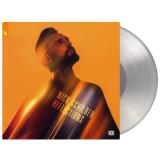
Coming off his first two years as a solo artist, Nick Schilder paused for a moment of contemplation. How do you keep growing as an artist, and continue making music without falling into routine? Returning to his artistic foundation—guitar on his lap, hours behind the piano—the Dutch singer-songwriter let intuition guide him, leading to his brand-new EP, Reflections.
After a summer jam-packed with festivals, Reflections provides contrast—the tracks harness a more organic sound, hitting closer to the heart, drawing from folk and pop while leaving space for the echoes of his foray into electronic music to resonate. From ‘Made For You’ to focus track ‘Die For You’ and ‘A Little More Like Me’ marking the turning point, this EP offers a sonic snapshot that bridges two seasons, a creative reset born of reflection.
Reflections is available as a limited edition on transparent vinyl. The package contains an insert with lyrics.
Marking their first new material of 2026, Alien Chicks are back with a glorious new EP 'Toys Taken At Birth' - available on CD as well as gloriously limited glow in the dark vinyl (strictly limited to 500 copies ever in this version), with recent standout Live EP 'Live At The Windmill' included on the B Side 'Toys Taken at Birth' is about the injustice that leaves some people with everything and some with nothing. Power doesn't present itself cleanly; it leaks through spectacle and symbolism - flags appearing overnight on high streets, headlines flipping within hours, slogans that feel less like belief and more like control tactics nobody agreed to. Even everyday life starts to feel slightly repurposed, like familiar things have been quietly reassigned for a different agenda.
Following one of 2025’s standout EPs, the CEO of the National Centre for Mark Fell Studies fires from the hip in brilliant, club-troubling motion. In step with 30 years of prism-pushing work — and particularly the »Nite Closures« EP, which signalled a concerted return to the dancefloor — Fell pulls aspects of hypermodern dance and electronic music from Chicago, Tanzania, and Japan into his own peculiar agenda.
The hugely distinctive results pull the body into thrillingly unusual, typically ascetic arrangements, activating every pointillist drum hit with attack and decay in a soberly ludic play of rhythmelodic tension and release, executed to delirious ends; 40 minutes of computer music.
As an artist who witnessed first-hand the explosion of electronic music in early ’80s Sheffield, and its interplay with house and rave as it refracted into wild new styles during the ’90s, Mark Fell is uniquely positioned to pursue his passion for the dynamics of electronic dance music to the nth degree. »Servitude In Context« continues to develop ideas around music for movement in the mid-2020s, placing decades of keen observation — from the macro and historical to the niche and hypermodern — at the service of flexing bodies in new directions.
Long-held notions of multistability manifest in what feels like two machines playing chess on the dancefloor, attempting to adapt to each other’s playing styles and patterns in real time, anticipating and zigzagging around the next move. The result is a plethora of options for limber dancers and those who only bust a move inside their heads.
The slow-fast play of accelerating and decelerating strikes, alongside monotonic chatter in »Actuations #1 (Extended)«, acclimatises the body to a uniquely sensual physics. This develops into the rudely screwed, asymmetric angularity of »Time-Slur« and the shatterproof elasticity of »Taut Manifold«, which feels like an LLM trained on Autechre.
»Low Energy Mantra« offers the EP’s closest resemblance to melodic structure, like gamelan and footwork refracted through lab-grown diamonds. Then »Anode« flashes its teeth with a rudeness recalling the latter stages of Fell’s Pat Thomas jams, before »3 Lost Contours (Pts 1–5)« tilts into 12 minutes of proper quicksilver madness, balancing the sexiness of his Sensate Focus work with an updated, clean-hoofed step and parry.
Twenty-five years after his debut album I’m Serious permanently altered the DNA of Southern hip-hop, Tip "T.I." Harris is officially closing this chapter with KILL THE KING, his twelfth and final studio album. For a man who has spent over two decades as the self proclaimed “King," the project’s title speaks volumes. This is not a surrender of the crown to a rival, but rather a symbolic death of the ego. T.I. is choosing to dismantle the moniker on his own terms, trading the battlefield for peace, legacy, and the freedom to step out of the booth and into the next phase of his life as an actor and family man.
Rather than leaning on pure nostalgia, KILL THE KING proves T.I. is walking away while his pen is still razor-sharp. The project is anchored by the certified gold lead single "LET 'EM KNOW," produced by long-time collaborator Pharrell Williams, which sets an immediate tone of veteran-level precision and polished bravado. Across the 18-track album, T.I. pulls together a masterclass of multi-generational talent that bridges the gap between his trap origins and modern dominance. The album boasts heavy-hitting Southern anthems like "DOPE BOYS ACADEMY” featuring 2 Chainz, Jeezy, and T-Pain, alongside soulful reflections from the Dr. Dre produced track "WHERE I’M FROM" with Anderson .Paak, Atlanta eloquence with Usher on "GORGEOUS," and moody, atmospheric cuts featuring Summer Walker and YoungBoy Never Broke Again.
Ultimately, KILL THE KING is designed to leave nothing unsaid, directly addressing the trials, tribulations, triumphs, and the undeniable imprint he’s left on global hip-hop culture. To mark the end of this historic era, T.I. isn't just letting the music speak for itself; he will be taking his final bow on the road with The King Succession Tour, bringing his sons Domani and King along to officially pass the musical torch. With this final statement, T.I. ensures that the trap music foundation he helped lay the framework for what will endure long after he sets down the mic. The King is dead; long live the legacy.
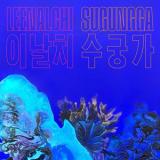
This is the first full-length release from South Korea"s beloved pansori psych-pop band available worldwide. The release follows an extremely successful and eventful year for LEENALCHI. They had their first-ever North American tour, opening for Japanese Breakfast at Stern Grove, sessions at KCRW and (rumor has it) KEXP, and in the fall, they"ll be on the East Coast, including opening for Geese at Forest Hills on the very same date this record comes out. LEENALCHI is led by the great composer Jang Young-Gyu, who has undoubtedly scored all your favorite Korean horror movies, including The Wailing, Train To Busan, and the Good, The Bad, The Weird. Sugungga sounds like animals talking to each other over tripped-out bass lines. It gets its name from the old Korean folk tale about a clever and loyal turtle who tries to lure a rabbit underwater and into the lair of a Dragon King who has come down with an illness that can only be cured by the rabbit"s liver. What is the fate of the rabbit? This fall, you will find out.
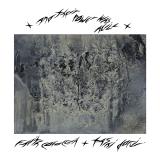
And Their Power Is Alive is a collaborative record between the Vashon Island based artist Faith Coloccia and Ashville based guitarist Tashi Dorji out September on Whited Sepulchre Records. Coloccia and Dorji’s longstanding collaborative relationship and friendship bolsters this massive conceptual weight –– the music is as stirring as it is gorgeous, as exploratory as it is surefooted. And Their Power Was Alive manifests and rises up as a profound iteration of the interrelatedness of the personal and the political, poetically. Coloccia’s plaintive voice, as always, is clear and stirring, intimate, close, and notably here recorded without reverb. She is steady and her lyrics echo dream phrases which visited her during major life shifts: a drive through the arid desert, explaining the concept of private property to the next generation, intergenerational knowledge and caregiving. All of this establishes a melancholia of reflections on land, history, scale. The first words sung on this record are: “Cosmic Horror! I am nothing, I am no-one” and even here, Coloccia is steady. Dorji’s glacial layers of distorted howling guitar create a rise and crest and fall –– symphonies of noise, roaring but distant like fire in the hills, interwoven with piano, organ, and tubular bells.
New super-groovy one-off pressing purple double-vinyl very limited edition of Miami Sound 2 housed in gatefold sleeve, complete with two full-colour inner sleeves containing extensive text and exclusive photography from TK Records in-house photographer Larry Warmoth. Soul Jazz Records’ Miami Sound 2 is a superlative collection of 70s soul, funk, disco and boogie featuring tracks from legendary artists such as Betty Wright, Timmy Thomas, Gwen McRae, Milton Wright, T-Connection and many more, all released on the mighty TK Records musical empire based in Miami, Florida.
Throughout the 1970s founder Henry Stone’s TK Records rose up to be one of the most important forces in black music, successfully pioneering the evolution in musical fashions from the early gritty funk and soul at the start of the decade to the arrival of disco in the mid-70s. This album is a rollercoaster journey across soul, funk, disco and boogie, a party-rocking dancefloor-filling collection of monster tracks that includes million-selling hits such as Betty Wright’s classic ‘Clean Up Woman’, Timmy Thomas’s ‘Why Can’t We Live Together’, T-Connection’s ‘Do What You Wanna Do’, anthemic rare groove club hits including Gwen McCrae’s massive ‘All This Love I’m Giving’ and Milton Wright’s ‘Keep It Up’, plus a host of hard-to-find gems and rarities from the likes of Raw Soul Express, Chocolate Clay, Beginning of the End, Robert Moore, Clarence Reid, Little Beaver, Paulette Reeves and many more. TK Records functioned more like a close-knit family than a typical record company. Based in the industrial Hialeah district of Miami, music man Henry Stone surrounded himself with a host of creative artists, musicians, songwriters and producers who created an immediately identifiable TK sound as well as making musical stars out of many of its artists
Belgian artist Jennifur announces MAZDA, an album inspired by long car rides, emotional transitions, and the strange beauty of existing between places, people, and versions of yourself.
Musically, MAZDA moves fluidly between genres and emotional textures, blending electronic love songs, indie rock structures, UK bass influences, cinematic electronica, and flashes of classical composition.
The project began when Jennifur's brother sent him a playlist called MAZDA, filled with songs their father used to play in the car. What started as a nostalgia gesture quickly became the emotional blueprint for the album.
While writing MAZDA, Jennifur realized he was unknowingly creating the soundtrack to a fictional romcom film that existed only in his imagination. Rather than avoiding clichés like love, heartbreak, growing older, or transition, he chose to embrace them wholeheartedly.
"In a car, you exist in a kind of in-between space," Jennifur explains. "You've left something behind, but you haven't arrived yet. That feeling became the entire record."
The album opener, From A to B, sets the emotional framework for the entire project. Its extended introduction mirrors the exact moment you pull out of your street and realisethat something new has begun.
Highlights include "I Need You To Hold On", written for Jennifur's brother as a message of encouragement. The song "I Once Had a Dream Where I Could Fly" originated from a conversation with his father about recurring dreams of flying. Meanwhile, "From The Sideline" confronts a quieter existential fear, becoming a coming-of-age anthem for anyone who suddenly realizes they have become more of a spectator than an active participant in their own life.
Tracks like "In The Sun" bring a softer, almost cinematic intimacy to the album. Written around the image of spending one final Sunday at the seaside with someone who is seriously ill, the song captures the beauty and fragility of fleeting moments. The closing track "The Dialogue Before We Left" serves as the emotional final scene of the album.
"For me, it's the moment after a long drive when you turn off the engine but stay seated for a minute," Jennifur explains. "You realise something happened. You listened to my story, and we travelled from A to B together."
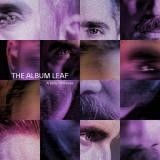
The single is the latest collaboration from the pioneering electronic artist and follows “Intertwine,” which featured TT, aka Theresa Wayman of Warpaint. Other collaborations on A Body Of Voices include “Turns,” featuring the ethereal vocals of Nicole Miglis (Hundred Waters), and “True Love, Don’t Be Afraid” featuring Stephen McBean (Black Mountain & Pink Mountaintops), “Fight or Flight” ft. Aisha Badru, “Falling” ft. Maiah Manser and multi-instrumentalist Aaron Shaw, “Floating” ft. multi-instrumentalist and composer Spencer Zahn, and the unreleased track, “Take Me” ft. Raphaelle Standell-Preston (Braids, Blue Hawaii). A Body of Voices delivers the most collective and melodically driven project of his acclaimed quarter-century. Having spent decades mastering his natural instincts for space, tempo, and timing, LaValle set a deliberate goal to break beyond his usual parameters by inviting an expansive community of vocalists and marquee indie players into his realm. The resulting record pushes his sonic map entirely, seamlessly blending his signature, textural synthesis with a vibrant tapestry of voices spanning dream-pop, alternative, and R&B. Nearly thirty years into the project, A Body of Voices proves that while The Album Leaf remains unmistakably his, it is a pioneering musical universe he is never afraid to redefine.
This songwriting-focused approach on A Body of Voices marks a natural evolution for an artist who has been steadily making his mark as a soft-spoken innovator since 1999. Now based in Los Angeles, LaValle started out in the San Diego music scene, creating vivid, rhythmic, soaring instrumentals centered around the Rhodes piano. Over more than two decades of acclaimed releases on seminal labels like Sub Pop, City Slang, and others, he has become a definitive touchstone for meditative electro-organic music. While earlier milestones like 2023’s Future Falling and 2024's Blast EP found him increasingly renewed by outside perspectives, A Body of Voices brings that collaborative spirit to its full, unbridled potential.
On Chuck Strangers’ latest opus, Glory Of The King’s Hand, he raps, “I still rap from the perspective of my government name…” The stage name “Chuck Strangers” is, of course, an alias but it’s not necessarily an alter ego. For the man born Che Jessamy, his rap moniker isn’t some over-the-top rock star persona contrived for public consumption, it’s just a name. What you hear on his records is really who he is - a heavy-tongued griot from East Flatbush, Brooklyn with a gift for vivid stream-of-consciousness storytelling. His bars are imbued with the wisdom he’s gained in his lifetime - especially in the 14 years since he first made his debut with the Pro Era collective.
The elaborate title of his new album, Glory Of The King’s Hand, speaks to his gratitude for the hand that life’s dealt him, which is a pretty good one. At age 34, he does what he loves professionally and does it on his own terms. That’s something to be thankful for.
Glory Of The King’s Hand, not only represents Chuck’s matured attiGlory attitude but also his matured sound. Key to this refined approach was tude collaboration. Chuck is a proficient beatmaker in his own right as evidenced by his production for himself and artists like Joey Baevidenced Badass, and Boldy James. But this time around Chuck chose to be a dass, producer in the Quincy Jones sense of the word, bringing together vocalists, producers, and musicians instead of handling all of the beats and rhymes himself. d Up Reprise
The list of contributing producers is a who’s who of underground sound scientists including The Alchemist, Animoss, Theravada, Kensound Kenny Segal, Preservation, Child Actor, and Morriarchi.
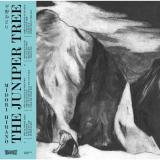
While composing the music for The Juniper Tree, Hirano drew on her own memories of touring Iceland, which included a stop at a waterfall featured in the film and rendered in sound on “Mother’s Path.” Folktales, like the origins of The Juniper Tree, are often attempts to contend with humans’ place in the natural world, with all its mysteries and intricacies, and both the film and Hirano’s soundtrack draw their sense of breathless wonder in part from the sensation of being engulfed by one’s environment. Margit, played by Björk, possesses a sublime sensitivity to her environment that allows her to receive messages from her mother, who was murdered for their shared inheritance of witchcraft. Hirano captures the relationship between the transcendental awe that is felt as supernatural and the private feelings of being immersed in that experience, creating a musical dialogue between the self and what lies beyond.
In the final sentences of her liner notes describing the film’s philosophical and feminist throughlines, Anna Bogutskaya says, “what we call Margit’s witchcraft is maybe just her willingness to listen.” This is the magic of music, and Hirano composes with an alchemist’s pen. Just as Keene seems to break down barriers between binary poles, Hirano uses both electronic and acoustic means to communicate the film’s emotive cues, uniting approaches she has explored under her own name and the alias MimiCof. There is an understanding that stillness can be understood as peaceful or foreboding, that dissonance and consonance are contextual, that efforts to protect one’s own kin can lead to tragic ends. At the film’s end we see Margit enthralled with birdsong, understanding it as something deeper, a connection to those she has lost. Through sound, we understand what lies beyond sight, beyond convention, and with this new soundtrack we hear the story anew.
For ten years Spike Fuck has existed more as a messy myth than an art- ist; sporadic works forever poised on the precipice of triumph, rumours of death or insanity and so on. Spike’s mission is to distill the sacred and profane, balancing the melancholy and humour of life; “to be alive is to be traumatised.” Luckily, the devotion to his music persevered, some- what bolstered by his inconsistency and inaccessibility. This inexplicable goodwill towards his artistry is perhaps partly due to Spike’s timeless, pained and confessional lyricism, though more pointedly, the fragility of a life mired in addiction. His being or works does not question the virtue of life, but simply addresses the numb, pragmatic and far more immediate matter of surviving another day, an almost ineffable senti- ment only justified by his distinct, poetic audaciousness. Free from his arresting thoughts, evidence, the long anticipated debut album, is a bra- zen proof of life statement. Convicted by the outlandish idea of evidenc- ing a ‘you had to be there’ mentality, the record honours the presence in body, a record to be felt, never to be rationalized.
The material on evidence touches on elements of new wave, glam, soul and doo-wop, citing Pere Ubu, New York Dolls, The Temptations and Bettye Swan as key influences. Melodically it emits the energy of a down- and-out CBGBs band who cashes in by recording a lucrative Christmas album.
Spike frequently uses sonic and lyrical juxtapositions to perform comic twists of sincerity, a reflection of society's obsession with ‘getting a rise’. On “Bored to Death,” a scuzzy, laidback and soulful tune, paired with morbid ragebait lyrics that payoff as a stand up joke “when I look up at the sun it makes me so happy cause I know one day it’s gonna kill me, and it’ll kill you too!” Lead single “All By Myself” carries on in this fashion; with feelgood, family-friendly punk doo-wop production, Spike is misleading on if his joy comes from the pride in solitude, or from lone- liness and a ‘give me everything’ mentality in the act of shooting heroin. The vocal performances oscillate between being blasé, vulnerable and manic; “Sweet Release” meets power-ballad criteria solely due to Spike’s deteriorating cries into the void, the jittery delivery on “Getting Sober” embodies religious fanaticism while sounding like a pop song written by Suicide for a David Lynch film.
evidence is an album that lives outside the limits of discourse; its purpose is eponymous and self-evident. It is what it is, and is subject to interpretation. There is no point in interrogating attachments, virtue or value. The only rightful way to live is to be.
a 01. CAN'T GET IT UP 4:38
b 02. HAD YOUR WAY 4:04
[c] 03. SWEET RELEASE [3:27]
[d] 04. BORED TO DEATH [3:31]
[e] 05. ALL BY MYSELF [2:38]
[f] 06. GETTING SOBER [3:33]
[g] 07. BLUELIGHT[4:35]
[h] 08. HATE ME [7:44]
[a] 01. CAN'T GET IT UP [4:38]
[b] 02. HAD YOUR WAY [4:04]
[c] 03. SWEET RELEASE [3:27]
[d] 04. BORED TO DEATH [3:31]
[e] 05. ALL BY MYSELF [2:38]
[f] 06. GETTING SOBER [3:33]
[g] 07. BLUELIGHT[4:35]
[h] 08. HATE ME [7:44]
[a] 01. CAN'T GET IT UP [4:38]
[b] 02. HAD YOUR WAY [4:04]
[c] 03. SWEET RELEASE [3:27]
[d] 04. BORED TO DEATH [3:31]
[e] 05. ALL BY MYSELF [2:38]
[f] 06. GETTING SOBER [3:33]
[g] 07. BLUELIGHT[4:35]
[h] 08. HATE ME [7:44]
[a] 01. CAN'T GET IT UP [4:38]
[b] 02. HAD YOUR WAY [4:04]
[c] 03. SWEET RELEASE [3:27]
[d] 04. BORED TO DEATH [3:31]
[e] 05. ALL BY MYSELF [2:38]
[f] 06. GETTING SOBER [3:33]
[g] 07. BLUELIGHT[4:35]
[h] 08. HATE ME [7:44]
[a] 01. CAN'T GET IT UP [4:38]
[b] 02. HAD YOUR WAY [4:04]
[c] 03. SWEET RELEASE [3:27]
[d] 04. BORED TO DEATH [3:31]
[e] 05. ALL BY MYSELF [2:38]
[f] 06. GETTING SOBER [3:33]
[g] 07. BLUELIGHT[4:35]
[h] 08. HATE ME [7:44]