Be As One boss Shlomi Aber returns to Chris Liebing's CLR with the 'Schema' EP, arriving 24th April 2026 alongside a remix from James Ruskin. Active since 1994, Aber has been a cornerstone of underground techno for over three decades, with his focused, hypnotic approach in both the studio and DJ booth leading to releases on some of the scene's most respected labels, including Cocoon, Ovum, Nonplus, and Figure. With the 'Schema' EP, he follows his recent 'Retrospective' EP for Ben Klock's Klockworks, as well as previous CLR outings such as the 'Limelight' EP (2025), and the 'Remote 101' EP (2023), which both kept a spot in the Beatport Techno chart for over two years after release, while winning support from the likes of Carl Cox, Alienata, Dave Clarke, and many more.
Shlomi Aber's 'Schema' EP opens with the title track and heads straight into subterranean territory, pairing weighty low-end pressure with tightly controlled tension. Rattling bass foundations are o?set by sharp hi-hats and static-laced textures that flicker through the mix, keeping the groove locked and the atmosphere charged.
On remix duties, James Ruskin, founder of the seminal Blueprint, delivers a shadowy, atmospheric rework. Eerie pads hang in the background as swampy bass anchors the rhythm, with haunted melodic elements slowly unfolding to create a deep, immersive take built for late hours and dark rooms.
Closing track 'Gasolina' sees Aber shifting into broken-beat territory, where warm, glitchy rhythms loop with hypnotic precision. Ghostly synth motifs drift in and out of focus, giving the track a cinematic, heady quality that rounds out the release with understated intensity.
Founded by influential techno lynchpin Chris Liebing in 1999 and reemerging in 2021 after a five-year hiatus, Create Learn Repeat (CLR) has hosted a range of artists like Dubfire, Flug, Bjarki, DJ Dextro, and more while also focusing on developing newer acts in the scene, such as Risa Taniguchi, The Southern, and Klint.
Поиск:lime blue
Все
- A1: Sepehr - Twilight Calls
- A2: Sissy Fuss - No Restraint Instrumental Def
- A3: God Is God - Na Gore More Dub Edit
- A4: Alex Loveless - Voicenote
- A5: Suemori - Kisou
- A6: Mari Herzer - Limbal Ring
- A7: Elena Colombi Feat Juno Roche - Lost In A City
- A8: Loma Doom - Sisterresister
- A9: Decha - Mujeres
- B1: Pose Dia - Lovers Rock
- B2: Low End Activist - Need To Know Blue Room Version
- B3: Decha Wir Sind Da
- B4: Mayurashka - Libra Man
- B5: Nar John Silvestre - Ensel Ham
- B6: E-Bony - Slow Machines
- B7: Riva Ft Tommy Khosla - Resurfacing
- B8: Anenon - Length-Of-Night Improvisation
Following on from the celebrated first instalment, the second part of The Male Body Will Be Next compiles an entourage of daring sonic experiments, composed in response to bell hooks’ landmark book The Will to Change. Prompting artists and musicians to envision cross-gender solidarity, Osàre! Editions founder Elena Colombi presents an enrapturing, narrative album, conceptualised around collective transformation.
Resonating with hooks’ challenge to men to reclaim the sensitivity that patriarchy denies them, the name of the record arises from a photograph by Peter de Potter and Rebecca Salvadori’s film of the same title. In these depictions, naked flesh is exposed, made vulnerable and trembles with emotion as the fragility of masculine bodies are examined through the queer and female oppositional gaze. Transforming this visual language into musical expression, The Male Body Will Be Next swirls with punk vitriol, electrified noise, acid, electro and free-wheeling encounters charged by love, lust and limerence.
Gently plunking chords signal Pose Diva’s reimagining of lover’s rock before Sissy Fuss smashes in with a heavy-weight instrumental version of their erotic anthem ‘No Restraint’.
Made up of Turkish musician Etkin Çekin and Belarussian songstress Galina Ozeran, God is God delivers a gentle lullaby, while Low End Activist flirts with dark and brooding bass, shattering penetrating frequencies into luminous fragments. Riffing off the 2020 documentary about female early electronica pioneers, Loma Doom crafts a slowly oscillating drone zenith, the ultimate climax. In line with the conceptual underpinning, there are plenty of collaborations – Daytripper’s Riva and Sitar player Tommy Khosla, Lebanonese experimentalist N R and Swiss-French producer John Silvestre (AKA Typhon), as well as Colombi herself and trans author/activist Juno Roche. Within these partnerships, new modalities come alive as mediums, practices and perspectives are ignited and pushed in otherworldly, metamorphic directions.
1. Watermelon Man
This track version actually came from an improvisation that Allesandro IIona (Keys) made on a live show at RonnieScott's at the start of the year. I think we were were having some issues with one of the monitors on stage and it juststarted making this beeping sound. Then I remember Alleh just came in with that piano riffat the start and the rest was history. This one of thefirst tracks we recorded for the EP and I'm super pleased with how this one turned out. Afterseeing Herbie Hancock live for thefirst time the year before, this felt like the perfect tribute to him!
2. Mandible
The majority of the writing on this album was done at my studio space in Hither Green, where I am every tuesday! I usethis space to record but mainly a space to develop my art. So this EP all came from a few sessions there. We all haveour own creative things going on so it was really great to collaborate as a band and trash out some ideas we had.Mandible is one of my favourite tracks on the EP. It's very simple but leaves us a lot of space to explore some more freeimprovisation. I think in some of my previous recorded music I was more focused on creating well crafted music withgreat melodies and harmony. Whereas here there's a bit more focus on playing as a group and being more explorative inimprovisation. We also didn't have a melody for this track until a week before the recording! Sometimes it just takes awhile tofind that melody or it might just pop into your head one day.
3. Slum
This is a tune that was actually written by myself in 2017/18. Round about that time, I had been playing at a jam night ata warehouse unit in Limehouse called Unit 31. The night was ran by Pianist Raffy Bushman and Drummer Sam Michnikand was focused on hiphop and Jazz fusion. We would usually play a set of instrumental music before it opened up forvocalists and other instrumentalists to come and jam. It was a great place to try out new ideas, so I wrote this tune for itbut we never recorded it. It was really nice to revisit this tune and get it recorded properly at 'That SoundStudios' (Seven Sisters). This track is all about dynamics and a slow build throughout. Descending to more chaos at theend!
4. Red Pistachio
For thefirst two sessions we wrote with a different bass player to Edmondo Cicchetti who is on the recordings. A greatbass player and friend of mine Tom Driessler. This track started kinda exactly how it starts on the record, with that basshook. I'm very influenced by Christian Scott Atunde Adjuah and his melodic writing. Particularly on his album 'StretchMusic'. So this felt really inspired by that album. The chords don't really move around too much until the solo sectionwhere it becomes more like a blues. Then Allesandro get's a bit more loose at the end with the descending sequence.
5. Jerome arrived Late
Quite simply we started writing this tune before Jerome (Drums) arrived late. In the recording session we were a bitundecided about what to do in the solo section. We tried out a few different options before we eventually landed onfeaturing Gabriele Pribetti on Sax. I'm really into his solo on this as it's rhythmically and dynamically really exciting. As Imixed the record it was also a great solo to mess with and run through lots of different plug-ins. There's some weirddelays and phasing going on that and I added some octaves too in places.
- A1: Killer Line (Opening Titles) Feat Adam Evald
- A2: Put Love Into Your Heart Feat Adam Evald & Jimi Tenor
- A3: The Sound Of Love Feat Hard Ton
- A4: Love Myself But I Can’t Make It Love
- B1: Footsteps Feat Alina Royz
- B2: In The Countryside Feat Lena Tronina
- B3: I Can Make My Happiest Life Feat Celebrine & Mutafrukt
- B4: Vacation Song
- B5: Reka Feat Moral Kiosk
- C1: Blue Plastic Bag In The Sea Of Green Feat Mutafrukt
- C2: Wasted Feat Mutafrukt
- C3: Before Music Dies Feat Hard Ton & Mutafrukt
- C4: Absent Ascent Feat Lovvlovver
- D1: Sleeping With Tv On
- D2: Over The Rainbow Feat Celebrine
- D3: Shorespotting Feat Adam Evald
- D4: Lovers (End Credits) Feat Kito Jempere Band
yellow vinyl 180g[23,95 €]
From a club-friendly chrysalid onto deploying his wings as a full fledged pop artist in recent years, Saint Petersburgs Kito Jempere has enjoyed a journey unlike any other and his newest album, Part Time Chaos Part Time Calmness live-documents the chameleonic changes / game-changing paradox experienced this year between his life both as a musician and as a family man.
Better known for his work as a house producer which has earned him accolades from prominent dance music outlets throughout well over a decade of intense work both into and outwith the limelights, Kito has for all that never been focussed on writing solely discoid material, throwing as much effort over the years into multi-faceted parallel ventures, far and apart from strictly dance floor-oriented functionality. Yet, from this partition between various projects and mindsets, this is through a radical shift towards downtempo pop and out of the 4x4 loop that Kito got to fully assert himself as a musician, embracing the rejoicing variety of tone and mood of his tender loves, secret and not. The movie Ive never made but have the soundtrack for, Part Time Chaos Part Time Calmness is the fruit of change as much as change itself. A return to the simple means of his young self, his old trusty guitar from his late teens serving as the backbone to Killer Line and Love Myself But I Cant Make It Love, and the natural development to last years Green Monster, which
initiated these deep tectonic movements in Kitos approach to his art, PTCPTC is an intimate trip down the kaleidoscope of his present life. Joined up by an impressive cast of artists, including Jimi Tenor, Adam Evald and Hard Ton, Kito didnt just bin his old persona, he took it back to where it belongs. From the low-slung emotional folk of the opener, Killer Line, to the eerie flamenco-jazz hybrid Before Music Dies. via the broken soulfulness of Put Love Into Your Heart and anthemic 80s balearic breaks meets coastal synthwave vibe of Sounds of Love, the album pulsates with a refreshingly genre-unbound vision. To the naive, laid-back sonic bokeh of Footsteps,
succeeds the left-of-centre cinematic narrative of In The Countryside, which includes some fun nods to fictional brands taken from Tarantinos imaginarium (Red Apple cigarettes) or other movies like High Fidelity, after Nick Hornbys eponymous novel.
Freed from gridlocked programming and impersonal tropes, PTCPTC showcases a wide array of songs, beats, grooves old and new, some dating back to 2018 and improvised sessions with his 9-people Kito Jempere Band, all of which were finished within the same timeframe and with this all-inclusive momentum in mind. Through the epic synths of Absent Ascent. in revamping the universal classic Over The Rainbow with Celebrine, on the appeasing ballad Shorespotting feat. Evald or in the waves-ready closing cut Lovers, Jempere tells a tale of hard-earned emancipation and life-affirming freedom.
NECK DEEP's second full lenght proper, originally from 2015, reissued in deluxe packaging for its 10 YR anniversary! The simple truth is "Life's Not Out to Get You" is the best Pop-Punk album ever released. December has become the (un)official Pop-Punk Christmas anthem. If it wasn't for this essential album - Blink 182 wouldn't have reunited. Featuring fan favorite songs "December," "Can't Kick Up the Roots," & "Serpents" - DIY wrote the "full-length feels both quintessential and refreshing, a modern classic_The hooks are glorious, the bounce is addictive and it's a little rough around the edges for good measure." In the the years since Neck Deep formed in the Barlow brothers' spare room in Wrexham, Wales, a lot has changed. From the scrappy, naively hopeful beginnings that define the starting of so many teenage bands, the pop-punks have gone on to be one of British Rock music's most successful global exports in recent memory: top 5 records in both the US and UK, global touring, viral hits and over a billion plays, just some of the fruits of ten years spent mastering their craft. - For fans of Blink-182, Green Day & State Champs - Blue coloured vinyl LP in embossed gatefold sleeve w/ cut out O-Card slipcase!
- 1: Jungle River Boat
- 2: Harbor Lights
- 3: Manila
- 4: Mama Iti E Papa E
- 5: Bamboo Lullaby
- 6: Ringo Oiwake
- 7: Moon Of Manakoora
- 8: Limehouse Blues
- 9: Beautiful Kahana
- 10: Caravan
- 11: Congo Train
- 12: Hello Young Lovers
Martin Denny returns with his loyal crew of multi-instrumentalists that had previously performed on
Forbidden Island, Primitiva, Hypnotique & Quiet Village: stand up bass player Harvey Ragsdale, vibe player Julius Wechter (also a member of the legendary recording unit The Wrecking Crew) and percussionist Augie Colon who was called the “Grandfather of Hawaii Percussion”. And of course, the famous cover girl on Martin Denny’s albums, Sandy Warner, otherwise known as “The Exotica Girl”, returns as well. Although Denny was recording his output at an astonishingly brisk rate, there’s something about Exotica Vol. III, which makes it one of his best and most sought-after with collectors and listeners. Of course, the brilliance of the lead-off track of Les Baxter’s “Jungle River Boat”, with its tight vibe-and-percussion workout intertwined with Colon’s iconic bird calls and other worldly sounds, only makes the sweet, lazy water sounds of the following track “Harbor Lights” all the more delightfully mysterious. So pour your drink of choice, dim the lights, open the windows, and let Exotica Vol. III roll across you.
“His last volume is a no-brainer. The material is simply too good to avoid.” – AMBIENT EXOTICA
Incredibly deep and beautiful release! Fans of Omakase or Berg Audio watch out!
For our Arepas001, we are plating up some heat - straight from South America.
Erwin serving some tasty Arepas with Infinite Fries on the side. Heavy, soulful, and made to move you.
Cool it down with a swirl of blueberry cream - Yummy! Finish strong: Aguardiente with lime, your liquid encore. No skips, no fillers. Just pure flavor. Beats & Treats.
- Cannock - In A Discord
- One Day In June
- So Please
- Blank Thoughts
- Cycle Stealing
- Love Devotion Ballad
- Melancholy Evening
- Subway Smell
- Waiting For The Night
- Japan (Bonus Track)
- Digitalgefühle Im Synthetikland (Bonus Track)
- Requiem - On This Earth (Introduction)
- On This Earth (Hunters)
- Angel
- Crystal Ball
- Bottom Line
- Steven
- Listen Boy
- It‘s Hard To Imagine
Die frühen Achtzigerjahre waren für den härteren Rock aus Deutschland eine ganz besondere Zeit. Der ausufernde Progressive Rock und der sogenannte Krautrock waren am Ausklingen, der Punk musste dem New Wave weichen und der Heavy Metal begann Fahrt aufzunehmen.
Einige Bands saßen zwischen 1980 und 1983 zwischen den Stühlen und können gar als „das fehlende Glied“ bezeichnet werden. In diesem Boxset
befinden sich gleich drei Schmuckstücke und Geheimtipps, die heute sogar aufregender klingen als damals. REQUIEM kamen aus Stuttgart
und lieferten auf ihrer einzigen LP einen Mix aus Hardrock, Pomprock und Progressive Rock. Gitarrist Tommy Clauss wurde später mit Bands wie ZAR
berühmt, bei denen auch ex-Uriah Heep Sänger John Lawton dabei war.
SPHINX ist eine andere Geschichte, denn hier haben ein paar italienische Gastarbeitersöhne im Raum Stuttgart eine Band gegründet. So wurde
das Debüt „Here We Are“ vom Label als „Made In Italy“ verkauft, was natürlich nur eine Verkaufsstrategie war. SPHINX nehmen das voraus,
was uns Jahre später unter Anderem Dream Theater lieferten. Eine frühe Version des Prog Metal, oder ein Vorläufer davon. Das gleiche Album wurde
von einem anderen Label 1985 als „Burning Lights“ erneut ins Rennen geschickt; dieses Mal mit einem Heavy Metal-tauglichem Coverartwork.
LIMERICK aus Saarbrücken haben als Schülerband 1980 eine heute sehr rare Single aufgenommen. Das einzige Album erschien dann 1983 – mit
deutschen Texten! Regional war der kräftige Rock mit Dialekt im Gesang sehr erfolgreich und spielte Shows mit Kim Wilde und Climax Blues Band.
Die Gruppe ist heute wieder aktiv und wurde kürzlich im Magazin Rock Hard gefeatured
- A1: Suzanne - Greg Bowman
- A2: Livin’ In The Middle - Rick Steffen
- A3: A Place In Your Heart - Charmer
- A4: Warmth - Bluejays
- A5: Oh Realle - Saffire
- A6: Love Be Kind - Greg Boehme
- B1: Gypsy Wind - Allan Mackey
- B2: Small Talk - David Ireland
- B3: Back In My Arms - Dan Strimer
- B4: Let It Flow - David Hollen
- B5: Paradise Island - Gasper & Dukes
A warm breeze drifts through the open cabin of the boat, carrying the scent of salt and sunwarmed teak as it stirs the linen curtains. The man moves easily, bare feet against the wooden floor, the slow rhythm of the harbor rocking beneath him. He flips through his records with a knowing touch, pulling out a favorite—something smooth and mellow, with buttery vocals and melodies that drift like a sailboat on calm waters. The needle drops, and honeyed guitar riffs spill into the air, effortless and sunlit. He reaches for the bottle of rum, the ice in his glass chiming softly as he pours, then adds a squeeze of lime, a lazy stir. Outside, the water glows in the last light of day, golden ripples stretching toward the horizon. He leans back against the cushioned bench, drink in hand, the music swirling around him like the evening breeze—unhurried, weightless, exactly where he wants to be.
Small Talk brings together a carefully curated selection of long-forgotten, yet remarkably smooth and captivating soft rock and AOR tracks from the ‘70s and ‘80s, compiled by Brandon McMahon. These lesser-known songs are drenched in lush harmonies, dreamy guitar riffs, and mellow rhythms, capturing the essence of an era without the mainstream recognition. For those with an ear for the obscure and a taste for the subtle, Small Talk offers a fresh perspective on an era’s most overlooked gems.
- A1: Montego Bay - Everything (Paradise Mix) 04 59
- A2: Atelier - Got To Live Together (Club Mix) 06 06
- A3: Golem - Music Sensations 04 56
- B1: The True Underground Sound Of Rome Feat. Stefano Di Carlo - Gladiators 05 26
- B2: Eagle Parade - I Believe 04 26
- C1: Dj Le Roi - Bocachica (Detroit Version) 05 28
- C2: Green Baize - Synthetic Rhythm 01 41
- C3: M.c.j. Feat. Sima - Sexitivity (Deep Mix) 05 30
- D1: Kwanzaa Posse Feat. Funk Master Sweat - Wicked Funk (Afro Ambient Mix) 06 31
- D2: Progetto Tribale - The Bird Of Paradise 06 29
- D3: Mbg - The Quite 06 59
Vol 1[28,99 €]
Googling “paradise house”, the first results to pop up are an endless list of European b&b’s with whitewashed lime façades, all of them promising “…an unmatched travel experience a few steps from the sea”. Next, a little further down, are the institutional websites of a few select semi-luxury retirement homes (no photos shown, but lots of stock images of smiling nurses with reassuring looks). To find the “paradise house” we’re after, we have to scroll even further down. Much further down.
It feels like yesterday, and at the same time it seems like a million years ago. The Eighties had just ended, and it was still unclear what to expect from the Nineties. Mobile phones that were not the size of a briefcase and did not cost as much as a car? A frightening economic crisis? The guitar-rock revival?! Certainly, the best place to observe that moment of transition was the dancefloor. Truly epochal transformations were happening there. From America, within a short distance one from the other, two revolutionary new musical styles had arrived: the first one sounded a bit like an “on a budget” version of the best Seventies disco-music – Philly sound made with a set of piano-bar keyboards! – the other was even more sparse, futuristic and extraterrestrial. It was a music with a quite distinct “physical” component, which at the same time, to be fully grasped, seemed to call for the knotty theories of certain French post-modern philosophers: Gilles Deleuze, Félix Guattari, Paul Virilio... Both those genres – we would learn shortly after – were born in the black communities of Chicago and Detroit, although listening to those vinyl 12” (often wrapped in generic white covers, and with little indication in the label) you could not easily guess whether behind them there was a black boy from somewhere in the Usa, or a girl from Berlin, or a pale kid from a Cornish coastal town.
Quickly, similar sounds began to show up from all corners of Europe. A thousand variations of the same intuition: leaner, less lean, happier, slightly less intoxicated, more broken, slower, faster, much faster... Boom! From the dancefloors – the London ones at least, whose chronicles we eagerly read every month in the pages of The Face and i-D – came tales of a new generation of clubbers who had completely stopped “dressing up” to go dancing; of hot tempered hooligans bursting into tears and hugging everyone under the strobe lights as the notes of Strings of Life rose up through the fumes of dry ice (certain “smiling” pills were also involved, sure). At this point, however, we must move on to Switzerland.
In Switzerland, in the quiet and diligent town of Lugano, between the 1980s and 1990s there was a club called “Morandi”. Its hot night was on Wednesdays, when the audience also came from Milan, Como, Varese and Zurich. Legend goes that, one night, none less than Prince and Sheila E were spotted hiding among the sofas, on a day-off of the Italian dates of the Nude Tour… The Wednesday resident and superstar was an Italian dj with an exotic name: Don Carlos. The soundtrack he devised was a mixture of Chicago, Detroit, the most progressive R&B and certain forgotten classics of old disco music: practically, what the Paradise Garage in New York might have sounded like had it not closed in 1987. In between, Don Carlos also managed to squeeze in some tracks he had worked on in his studio on Lago Maggiore. One in particular: a track that was rather slow compared to the BPM in fashion at the time, but which was a perfect bridge between house and R&B. The title was Alone: Don Carlos would explain years later that it had to be intended both in the English meaning of “by itself” and like the Italian word meaning “halo”. That wasn’t the only double entendre about the song, anyway. Its own very deep nature was, indeed, double. On the one hand, Alone was built around an angelic keyboard pattern and a romantic piano riff that took you straight to heaven; on the other, it showcased enough electronic squelches (plus a sax part that sounded like it had been dissolved by acid rain) to pigeonhole the tune into the “junk modernity” section, aka the hallmark of all the most innovative sounds of the time: music that sounded like it was hand-crafted from the scraps of glittering overground pop.
No one knows who was the first to call it “paradise house”, nor when it happened. Alternative definitions on the same topic one happened to hear included “ambient house”, “dream house”, “Mediterranean progressive”… but of course none were as good (and alluring) as “paradise house”. What is certain is that such inclination for sounds that were in equal measure angelic and neurotic, romantic and unaffective, quickly became the trademark of the second generation of Italian house. Music that seemed shyly equidistant from all the rhythmic and electronic revolutions that had happened up to that moment (“Music perfectly adept at going nowhere slowly” as noted by English journalist Craig McLean in a legendary field report for Blah Blah Blah magazine). Music that to a inattentive ear might have sounded as anonymous as a snapshot of a random group of passers-by at 10AM in the centre of any major city, but perfectly described the (slow) awakening in the real world after the universal love binge of the so-called Second Summer of Love.
For a brief but unforgettable season, in Italy “paradise house” was the official soundtrack of interminable weekends spent inside the car, darting from one club to another, cutting the peninsula from North to centre, from East to West coast in pursuit of the latest after-hours disco, trading kilometres per hour with beats per minute: practically, a new New Year’s Eve every Friday and Saturday night. This too was no small transformation, as well as a shock for an adult Italy that was encountering for the first time – thanks to its sons and daughters – the wild side of industrial modernity. The clubbers of the so-called “fuoriorario” scene were the balls gone mad in the pinball machine most feared by newspapers, magazines and TV pundits. What they did each and every weekend, apart from going crazy to the sound of the current white labels, was linking distant geographical points and non-places (thank you Marc Augé!) – old dance halls, farmhouses and business centres – transformed for one night into house music heaven. As Marco D’Eramo wrote in his 1995 essay on Chicago, Il maiale e il grattacielo: “Four-wheeled capitalism distorts our age-old image of the city, it allows the suburbs to be connected to each other, whereas before they were connected only by the centre (…) It makes possible a metropolitan area without a metropolis, without a city centre, without downtown. The periphery is no longer a periphery of any centre, but is self-centred”.
“Paradise house” perfectly understood all of this and turned it into a sort of cyber-blues that didn’t even need words, and unexpectedly brought back a drop of melancholic (post?)-humanity within a world that by then – as we would wholly realise in the decades to come – was fully inhuman and heartless. A world where we were all alone, and surrounded by a sinister yellowish halo, like a neon at the end of its life cycle. But, for one night at least, happy."
- A1: Progetto Tribale - The Sweep
- A2: Onirico - Echo Giomini
- A3: Open Spaces - Artist In Wonderland
- B1: Alex Neri – The Wizard (Hot Funky Version)
- B2: M C.j. Feat. Sima - To Yourself Be Free - Instrumental Mix Energy Prod
- B3: Mato Grosso - Titanic Expande
- C1: Dreamatic - I Can Feel It (Part 1)
- C2: Carol Bailey - Understand Me Free Your Mind (Dream Piano Remix)
- C3: The True Underground Sound Of Rome - Secret Doctrine
- D1: Don Carlos - Boy
- D2: Lazy Bird – Jazzy Doll (Odyssey Dub)
Vol 2[28,99 €]
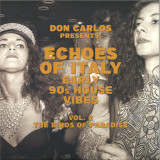
Volume 1 of this expertly curated project of 90s Italian House - put together by Don Carlos.
If Paradise was half as nice… by Fabio De Luca.
Googling “paradise house”, the first results to pop up are an endless list of European b&b’s with whitewashed lime façades, all of them promising “…an unmatched travel experience a few steps from the sea”. Next, a little further down, are the institutional websites of a few select semi-luxury retirement homes (no photos shown, but lots of stock images of smiling nurses with reassuring looks). To find the “paradise house” we’re after, we have to scroll even further down. Much further down.
It feels like yesterday, and at the same time it seems like a million years ago. The Eighties had just ended, and it was still unclear what to expect from the Nineties. Mobile phones that were not the size of a briefcase and did not cost as much as a car? A frightening economic crisis? The guitar-rock revival?! Certainly, the best place to observe that moment of transition was the dancefloor. Truly epochal transformations were happening there. From America, within a short distance one from the other, two revolutionary new musical styles had arrived: the first one sounded a bit like an “on a budget” version of the best Seventies disco-music – Philly sound made with a set of piano-bar keyboards! – the other was even more sparse, futuristic and extraterrestrial. It was a music with a quite distinct “physical” component, which at the same time, to be fully grasped, seemed to call for the knotty theories of certain French post-modern philosophers: Gilles Deleuze, Félix Guattari, Paul Virilio... Both those genres – we would learn shortly after – were born in the black communities of Chicago and Detroit, although listening to those vinyl 12” (often wrapped in generic white covers, and with little indication in the label) you could not easily guess whether behind them there was a black boy from somewhere in the Usa, or a girl from Berlin, or a pale kid from a Cornish coastal town.
Quickly, similar sounds began to show up from all corners of Europe. A thousand variations of the same intuition: leaner, less lean, happier, slightly less intoxicated, more broken, slower, faster, much faster... Boom! From the dancefloors – the London ones at least, whose chronicles we eagerly read every month in the pages of The Face and i-D – came tales of a new generation of clubbers who had completely stopped “dressing up” to go dancing; of hot tempered hooligans bursting into tears and hugging everyone under the strobe lights as the notes of Strings of Life rose up through the fumes of dry ice (certain “smiling” pills were also involved, sure). At this point, however, we must move on to Switzerland.
In Switzerland, in the quiet and diligent town of Lugano, between the 1980s and 1990s there was a club called “Morandi”. Its hot night was on Wednesdays, when the audience also came from Milan, Como, Varese and Zurich. Legend goes that, one night, none less than Prince and Sheila E were spotted hiding among the sofas, on a day-off of the Italian dates of the Nude Tour… The Wednesday resident and superstar was an Italian dj with an exotic name: Don Carlos. The soundtrack he devised was a mixture of Chicago, Detroit, the most progressive R&B and certain forgotten classics of old disco music: practically, what the Paradise Garage in New York might have sounded like had it not closed in 1987. In between, Don Carlos also managed to squeeze in some tracks he had worked on in his studio on Lago Maggiore. One in particular: a track that was rather slow compared to the BPM in fashion at the time, but which was a perfect bridge between house and R&B. The title was Alone: Don Carlos would explain years later that it had to be intended both in the English meaning of “by itself” and like the Italian word meaning “halo”. That wasn’t the only double entendre about the song, anyway. Its own very deep nature was, indeed, double. On the one hand, Alone was built around an angelic keyboard pattern and a romantic piano riff that took you straight to heaven; on the other, it showcased enough electronic squelches (plus a sax part that sounded like it had been dissolved by acid rain) to pigeonhole the tune into the “junk modernity” section, aka the hallmark of all the most innovative sounds of the time: music that sounded like it was hand-crafted from the scraps of glittering overground pop.
No one knows who was the first to call it “paradise house”, nor when it happened. Alternative definitions on the same topic one happened to hear included “ambient house”, “dream house”, “Mediterranean progressive”… but of course none were as good (and alluring) as “paradise house”. What is certain is that such inclination for sounds that were in equal measure angelic and neurotic, romantic and unaffective, quickly became the trademark of the second generation of Italian house. Music that seemed shyly equidistant from all the rhythmic and electronic revolutions that had happened up to that moment (“Music perfectly adept at going nowhere slowly” as noted by English journalist Craig McLean in a legendary field report for Blah Blah Blah magazine). Music that to a inattentive ear might have sounded as anonymous as a snapshot of a random group of passers-by at 10AM in the centre of any major city, but perfectly described the (slow) awakening in the real world after the universal love binge of the so-called Second Summer of Love.
For a brief but unforgettable season, in Italy “paradise house” was the official soundtrack of interminable weekends spent inside the car, darting from one club to another, cutting the peninsula from North to centre, from East to West coast in pursuit of the latest after-hours disco, trading kilometres per hour with beats per minute: practically, a new New Year’s Eve every Friday and Saturday night. This too was no small transformation, as well as a shock for an adult Italy that was encountering for the first time – thanks to its sons and daughters – the wild side of industrial modernity. The clubbers of the so-called “fuoriorario” scene were the balls gone mad in the pinball machine most feared by newspapers, magazines and TV pundits. What they did each and every weekend, apart from going crazy to the sound of the current white labels, was linking distant geographical points and non-places (thank you Marc Augé!) – old dance halls, farmhouses and business centres – transformed for one night into house music heaven. As Marco D’Eramo wrote in his 1995 essay on Chicago, Il maiale e il grattacielo: “Four-wheeled capitalism distorts our age-old image of the city, it allows the suburbs to be connected to each other, whereas before they were connected only by the centre (…) It makes possible a metropolitan area without a metropolis, without a city centre, without downtown. The periphery is no longer a periphery of any centre, but is self-centred”.
“Paradise house” perfectly understood all of this and turned it into a sort of cyber-blues that didn’t even need words, and unexpectedly brought back a drop of melancholic (post?)-humanity within a world that by then – as we would wholly realise in the decades to come – was fully inhuman and heartless. A world where we were all alone, and surrounded by a sinister yellowish halo, like a neon at the end of its life cycle. But, for one night at least, happy.
- A1: Eyes On Mine
- A2: Last April
- A3: Lime Tree House
- B1: Mother's Son
- B2: My Greatest Friend
- B3: August Blue
Limited edition classic black vinyl mini-album of cathartic slowcore by The Declining Winter, the new vehicle of Richard Adams, formerly of Domino Records post-rockers, Hood. The next release on the acclaimed boutique English independent label, Second Language Music, will be ‘Last April,’ the new mini-album by The Declining Winter, a raw, deeply emotional monument of loss, grief and heartbreak that treads in the footsteps of Red House Painters’ ‘Down Colorful Hill,’ Low’s ‘I Could Live In Hope’ and Songs: Ohia’s ‘Didn’t It Rain.’ This is not a heart-on-your-sleeve record. It does away with the sleeve and goes straight for carving a heart on the arm. Recordings which emerged out of a period of shock, grief and trauma, these six songs were all written on the same night and form a stately tribute to a loved one lost. The Declining Winter strip things back to just Richard Adams’ plaintive voice and acoustic guitar, alongside the beautiful, irrefutably melancholy string arrangements/playing of Sarah Kemp (Brave Timbers). There’s been no attempt to plane off any rough edges – here and there, the creak of a chair, a guitar note missed, a voice almost cracking with emotion – these recordings are like cathartic scrawls in a diary. Only this one has been left out for anyone to read. As with his previous band, Hood, Adams has a way of evoking a particularly pastoral, English melancholy, of lonely morning hikes in inclement weathers, of rain on slate in the West Yorkshire streets where he was raised and still lives.
- Limehouse Blues
- Stars Fell On Alabama
- Wabash
- Grand Central
- You're A Weaver Of Dreams
- The Sleeper
Cannonball Adderley Quintet in Chicago is revered among jazz aficionados as an essential document of late 1950s hard bop
It captures two of the greatest saxophonists in jazz, Adderley and Coltrane, at a time when they were both at a creative peak. The album is a vital recording from a golden era in jazz, featuring a rare and electric partnership between two saxophone giants. Its hard bop foundation, infused with hints of modal jazz, places it among the most important recordings of its time. The album was recorded the February 3, 1959 during a time when Adderley was playing as part of Miles Davis' group, and it captures the quintet during a pivotal moment in jazz history. On Cannonball Adderley Quintet in Chicago, you can hear Coltrane at a transitional stage, balancing between his earlier bebop style and the modal, more avant-garde approaches he would later pursue. His interaction with Adderley is fascinating because it blends his dense harmonic language with Adderley's more traditional, bluesy approach.Cannonball Adderley had been recruited by Miles Davis in 1957, joining what would become one of the most influential jazz groups of all time. Adderley's style was deeply rooted in the blues, and he brought a strong sense of soulfulness and swing to the Davis group. While Davis' style was often cool and restrained, Adderley's alto saxophone was the opposite: robust, fiery, and emotional. Adderley's command of the instrument was remarkable, and his ability to balance technical prowess with a highly accessible, bluesy feel is on full display throughout Cannonball Adderley Quintet in Chicago . His solos are expressive and lyrical, often imbued with a sense of joy and exuberance. This makes for a perfect contrast to Coltrane's playing, which at this point was becoming more dense and harmonically complex
- A1: Kito Jempere Feat. Adam Evald - Killer Line (Opening Titles)
- A2: Kito Jempere Feat. Adam Evald & Jimi Tenor - Put Love Into Your Heart
- A3: Kito Jempere Feat. Hard Ton - The Sound Of Love
- A4: Kito Jempere - Love Myself But I Can’t Make It Love
- B1: Kito Jempere Feat. Alina Royz - Footsteps
- B2: Kito Jempere Feat. Lena Tronina - In The Countryside
- B3: Kito Jempere Feat. Celebrine & Mutafrukt - I Can Make My Happiest Life
- B4: Kito Jempere - Vacation Song
- B5: Kito Jempere Feat. Moral Kiosk - Reka
- C1: Kito Jempere Feat. Mutafrukt - Blue Plastic Bag In The Sea Of Green
- C2: Kito Jempere Feat. Mutafrukt - Wasted
- C3: Kito Jempere Feat. Hard Ton & Mutafrukt - Before Music Dies
- C4: Kito Jempere Feat. Lovvlovver - Absent Ascent
- D1: Kito Jempere - Sleeping With Tv On
- D2: Kito Jempere Feat. Celebrine - Over The Rainbow
- D3: Kito Jempere Feat. Adam Evald - Shorespotting
- D4: Kito Jempere Feat. Kito Jempere Band - Lovers (End Credits)
180g Black Vinyl[23,95 €]
From a club-friendly chrysalid onto deploying his wings as a full fledged pop artist in recent years, Saint Petersburgs Kito Jempere has enjoyed a journey unlike any other and his newest album, Part Time Chaos Part Time Calmness live-documents the chameleonic changes / game-changing paradox experienced this year between his life both as a musician and as a family man.
Better known for his work as a house producer which has earned him accolades from prominent dance music outlets throughout well over a decade of intense work both into and outwith the limelights, Kito has for all that never been focussed on writing solely discoid material, throwing as much effort over the years into multi-faceted parallel ventures, far and apart from strictly dance floor-oriented functionality. Yet, from this partition between various projects and mindsets, this is through a radical shift towards downtempo pop and out of the 4x4 loop that Kito got to fully assert himself as a musician, embracing the rejoicing variety of tone and mood of his tender loves, secret and not. The movie Ive never made but have the soundtrack for, Part Time Chaos Part Time Calmness is the fruit of change as much as change itself. A return to the simple means of his young self, his old trusty guitar from his late teens serving as the backbone to Killer Line and Love Myself But I Cant Make It Love, and the natural development to last years Green Monster, which
initiated these deep tectonic movements in Kitos approach to his art, PTCPTC is an intimate trip down the kaleidoscope of his present life. Joined up by an impressive cast of artists, including Jimi Tenor, Adam Evald and Hard Ton, Kito didnt just bin his old persona, he took it back to where it belongs. From the low-slung emotional folk of the opener, Killer Line, to the eerie flamenco-jazz hybrid Before Music Dies. via the broken soulfulness of Put Love Into Your Heart and anthemic 80s balearic breaks meets coastal synthwave vibe of Sounds of Love, the album pulsates with a refreshingly genre-unbound vision. To the naive, laid-back sonic bokeh of Footsteps,
succeeds the left-of-centre cinematic narrative of In The Countryside, which includes some fun nods to fictional brands taken from Tarantinos imaginarium (Red Apple cigarettes) or other movies like High Fidelity, after Nick Hornbys eponymous novel.
Freed from gridlocked programming and impersonal tropes, PTCPTC showcases a wide array of songs, beats, grooves old and new, some dating back to 2018 and improvised sessions with his 9-people Kito Jempere Band, all of which were finished within the same timeframe and with this all-inclusive momentum in mind. Through the epic synths of Absent Ascent. in revamping the universal classic Over The Rainbow with Celebrine, on the appeasing ballad Shorespotting feat. Evald or in the waves-ready closing cut Lovers, Jempere tells a tale of hard-earned emancipation and life-affirming freedom.
- Sweet Georgia Brown
- Vagabond Shoes
- Oh! You Beautiful Doll
- Hard Hearted Hannah
- All By Myself
- Coastin
- Mama Goes Where Papa Goes
- Let's Fall In Love
- What'll I Do
- Limehouse Blues
- Sugar Town
- Button Up Your Overcoat
- My Buddy
- In Our Time (Bonus Track)
- Leave My Dog Alone (Bonus Track)
Pink Vinyl[32,35 €]
Sugar war das vierte Album, das Nancy Sinatra 1966 aufnahm - eine unheimliche Leistung, wenn man bedenkt, dass die Beatles zu dieser Zeit etwa zwei Alben pro Jahr aufnahmen. Das kultige Ron Joy-Coverfoto von Nancy im rosa Bikini (der erste auf einem Albumcover!) war 1967 ein gewagter Schachzug, der dazu beitrug, Sugar auf Platz 18 der Charts zu katapultieren (Nancys zweithöchstes Chartalbum nach Boots). Es ist ein seltsames Album, das einen von Nancys bekanntesten Songs, Sugar Town, mit Kompositionen aus den 1920er Jahren kombiniert, die in einem zeitgenössischen Dixieland-Jazz-Pop-Fusion-Stil aufgenommen wurden, der so nur von Produzent Lee Hazlewood stammen konnte. Nancy Sinatra war ihrer Zeit lange Zeit voraus - sowohl in ihren Entscheidungen als Künstlerin als auch als Geschäftsfrau - und zwar gleichermaßen stark, schwül und versiert. Unbeirrt schlug sie schon früh ihren eigenen Weg ein und ebnete den Weg für jahrzehntelang nachfolgende Künstlerinnen - und behielt dabei stets die Kontrolle über ihre Karriere, ihr Image und ihre Musik. Im Jahr 1965 veränderte Nancy Sinatra das Gesicht der Musik, der Mode und der Kultur. Die endgültige Vinyl-Neuauflage von Nancys legendärem Album von 1967 kommt alswunderschön verpackte und erweiterte Gatefold-LP mit 20-seitigem Booklet, enthält die Hits "Sugar Town", "In Our Time", und "Coastin'", wurde neu gemastert von den analogen Originalbändern vom GRAMMYr-nominierten Toningenieur John Baldwin und enthält zwei Bonustracks: die Non-Album-Singles "In Our Time" und "Leave My Dog Alone".
Diving deeper into the story of Japanese reggae pop, Tokyo Riddim Vol. 2 explores an electronic, new wave and often experimental sound unlike anything Japan or Jamaica had ever heard before.
The first time Ryuichi Sakamoto left Japan, he did not go to the United States or Europe - he went to Jamaica. It was 1978, YMO were about to release their debut album, but Sakamoto was in Kingston, invited to play synths for Japanese idol singer Teresa Noda at Dynamic Sound Studios in a band alongside Neville Hinds and none other than Rita Marley. It’s not a story many know, but one which would spark Sakamoto’s fascination with dub and mark a new chapter in the ongoing Japanese love affair with reggae.
The Teresa Noda tracks they cut - ‘Tropical Love’ and ‘Yellow Moon’ - bookend this second volume of Time Capsule’s Tokyo Riddim compilation, which tells the wider story of how a fascination with Jamrock swept Japan, adding a dash of lime to that sweet city pop sound, embracing a globalised musical palette and creating a whole new genre in the process.
For some, like Sakamoto, a diversion into reggae was part of broader fascination with new sounds and styles, tipped into the global disco of homage and appropriation that made Japanese music of the late ‘70s and early ‘80s some of the most creative and undefinable in the world.
You had iconic shape-shifter Yosui Inoue, who toyed with reggae, afro-beat and electro-Balearic, (and whose For Life Records released several tracks on this comp), and Kay Ishiguro, who enlisted J-reggae originator Pecker on the ambitious Stevie Wonder-esque ‘Red Drip’.
Then there were the Compass Point devotees - producers and musicians alike who were enthralled by the sound of the Bahamas studio and drew on the detached cool of Grace Jones - as heard in the music of Juicy Fruits, and the disco noir of Casablanca-signed femme fatale Yuki Nakayamate. Sometimes, as was the case with Risa Minami, the J-reggae influence said more about Japan than it did about Jamaica.
But where Tokyo Riddim Vol. 1 focused on the city pop sound, this compilation goes further, digging out the more experimental collaborations and hybrids exemplified by Tomoko Aran, who in working with Yusuaki Shimizu and Mariah emphasised just how far reggae had travelled to be recast into something entirely new on the other side of the world.
Perhaps more than anything, in connecting the dots between Tokyo and Kingston, between Jamaica and Japan, the Japanese reggae was building a musical language that existed outside of the paradigms of US and European cultural hegemony - an encounter shaped by commerce, capital and creativity that is now being recognised more broadly for the first time.
Guitarist Django Reinhardt and violinist Stephane Grappelli hold unique places in the history of jazz music. As the mainstays of the Quintet of the Hot Club of France, they are the first European musicians to directly influence what was until their heyday, a totally American-based genre. The pair could hardly have been more different, yet it was this contrast that apparently fired up their partnership. Even though they collaborated with many famous figures, their work with the Quintet of the Hot Club of France
remains the most celebrated of their careers. Celebrate their collaboration with eighteen specially selected pieces, which includes works penned by the pair; Swing Guitars, Djangology, My Sweet, Daphne, Swing '39, Nocturne, Hungaria, H.C.Q. Strut and Swing From Paris
Mit der Urbesetzung seines populären Trios The Three Sounds hatte Pianist Gene Harris zwischen 1958
und 1965 rund zwanzig Alben mit blueslastigem Hardbop für die Labels Blue Note, Verve, Mercury und
Limelight eingespielt. Ab 1968 fand Harris mit neuen Spielpartnern zunächst zu einem souligeren Sound,
der dann - wie auf diesem Live-Album von 1970 zu hören - immer funkiger und rauer wurde.