Life might be a predominantly linear affair, but when lived right, it’s nevertheless a turbulent experience. It’s a system of trial and error, ebb and flow, order and chaos, action and reaction. And paradoxically, this system somehow still feels balanced amid all this turmoil. In fact, the same can be said about Keope’s second longplayer for Bigamo. Easily.
Keope might be a duo consisting of Marcus Rossknecht and Toni Bruna, but they actually sound like a collective of rather nomadic - and heavily gifted - musicians on their ever-present quest to reach different musical spheres. Everything is in motion, everything is in constant flux. Everything, everywhere, all at once. Their previous record “Triangulo“ already provided the audience an idea of their elaborate rhythmic vocabulary, but it’s the cryptically titled “Flikka Flokka“, which sees their multilayered compositions bloom into a fully-formed, new musical Esperanto.
You can immediately sense that Keope must be a phenomenal live act because the twelve tracks on “Flikka Flokka“ sound as if they were born from endless jam sessions fueled by a whole variety of influences. As a result, the work of Rossknecht and Bruna presents itself as a prime example of sound in motion that responds solely to its very own pulse by taking the aforementioned influences and making them completely their own. Now, let’s dance!
Carved out from between the cracks of life over a 2 year period, Low Flung presents his eighth full length album ‘The Wheel’. Together, the 11 tracks provide a space to process and sit with difficult change. This takes the form of microscopic minimalist landscapes. Presented in both audio and physical form as micro grooves on a 12” vinyl.
At times the sound wanders and walks, other times it remains still, clear and precise. The omni-present artifacts found in ‘The Wheel’ are left to breathe a different life during each listen. Drones act like familiar trails losing their path as space transforms like a breeze over a table of sand. Hyper focused spores evolve around blurred waves of time. Electronic tones are captured flowing to the rhythm of a decaying natural world.
‘The Wheel’ is a patchwork of sonic experiments made using modular synthesis, fixed architecture synthesis, Buchla Music Easel (replica), outboard effects, cassette manipulation techniques, samplers and field recordings taken along the texturally rich and historically questionable eastern coastline of Australia.
The tracks have been composed with a materiality that embraces the acoustics of different listening environments. Much like mood, this means each listening experience is unique due to the natural acoustics of your listening space. The sounds on this album embrace this phenomena, creating a rich, visceral listening experience that slowly scratches away at discrete moments of time
Rather than attempting to traverse new sonic fields of experimentation in ‘The Wheel’, the album touches on the various spaces Danny has explored over the past ten years as an Audio Visual artist. Although technically eighth, it would be more fitting to say this album draws a clear line from ‘Blow Waves (2018)’ to ‘Outside The Circle (2020)’ to become the third and final chapter in the expanded non linear, unintentional landscape series. Serendipitous that each was conceived over 2 year periods of time.
While the key focus is sitting with difficult change, this album is also a celebration of any moment you might find yourself in. Good, bad, easy or hard, this album is an attempt to help with feeling content wherever you are along your path. With each cycle a new context.
*MILKY CLEAR VINYL - 300 COPIES ONLY FOR WORLD!!* Technology + Teamwork’s fizzling synths, interweaving textures and punchy rhythms are beguiling on their long-awaited debut album We Used To Be Friends. However, at the heart of it all it’s the connection between the group’s two members, Anthony Silvester and Sarah Jones, the friendship the much-travelled duo have managed to maintain for nearly 15 years and a showcase of the slow-burning construction of the electronic world that they’ve surrounded themselves with. We Used To Be Friends is ultimately the tale of two storied artists in their own right, holding onto each other through personal and career twists and turns, relocations and broader movements through respective phases of their lives. Silvester and Jones first met and then collaborated as part of biting post-punk five-piece XX Teens in 2008, eventually breaking off to forge their own path together even as the latter’s demand as a drummer grew. Performing with everyone from Hot Chip, Harry Styles and Bloc Party among many others, Jones has been a constant percussive presence across the sphere of alternative UK pop music – she’s also found time for her own solo project Pillow Person and played on records by the likes of Puscifer and Kurt Vile. Silvester meanwhile has performed in art galleries across Europe including: Fridericianum in Kassel, Kölnischer Kunstverein in Cologne, and Vleeshal in Middelburg, as well as providing sound design and composing work for several art films. Technology + Teamwork is the constant throughout all of that though. “Technology + Teamwork's name perfectly describes how we work” Silvester explains. “Sometimes the teamwork is between each other and sometimes it’s between us and the technology.” Although going by the name Technology + Teamwork as far back as 2014, two events conspired that pulled the project into focus for the pair of them: firstly, Silvester spent a year constructing a soundproof studio shed on the border of London and Essex where he lives. Secondly, inevitably, the pandemic brought the globe-trotting Jones back home to just seven miles away from her long-time collaborator and friend. “We probably hung out more than we had for a few years” says Silvester. “Also, after all her Pillow Person releases Sarah had gotten really good with recording vocals and knowing what did and didn’t work and had a really good home studio set up. We still worked separately though, exchanging ideas via email and WhatsApp.” As with many artists through 2020 and early 2021, working separately was a new necessity that they were forced to adapt to. However, it became clear that there were creative benefits to it. “It really changed our sound and our sounds became a lot more focused as a result” Jones says. “I wanted to use the same ideas of improvisation that I might use while playing the drums for myself and apply that to melodies and lyrics.” The album bristles with hyperpop modernity. You can hear it in the manipulated vocals most prominently on Big Blue’s disco strut and on Moving Too’s heady mix of pitched up voice and burrowing sub bass. However, the pair also looked to San Francisco and the West Coast synthesis movement of the 60s, Silvester inspired by the likes of Suzanne Ciani and Don Buchla. The plaintive lo-fi and melancholy of Amsterdam incorporates Mutable Instrument’s Marbles by Émilie Gillet which – inspired by Buchla’s own synthesis work – outputs random voltages to give the track an air of unpredictability. It’s something that occurs throughout the album, the duo revelling in the happy accidents that disrupt the flow of their hook-laden pop. “The ‘Buchlian’ ideas of music having randomness and uncertainty, completely freed us up” Silvester explains. “It felt a bit like having more members in the band, machines that didn't do what you expected or intended.” Perhaps more subtly, is the influence of 17th and 18th century Baroque music, with Silvester drawing a line between it and the 90’s R’n’B he and Jones both love – exemplified perhaps best on K+B’s percussive claps and sultry grooves. The portentous juddering synthpop of the title track, meanwhile, alludes specifically to Handel’s Sarabande. It’s typical of an album that only needs a scratch of its seemingly glossy surface to unearth a myriad of contorted touchstones and reference points that’ve fermented beneath it. Thematically there’s an anxious sense to the record, with tracks often balancing above a quiet sense of unerring tension even at their most bombastic. Moving Too is the result of an existential doubt that hit Silvester while out cycling, with the outro refrain "it's not enough to die you also have to be forgotten" a take on something Samuel Beckett once said. These worries are echoed on the album’s closing track What A Year, which borrows a lot of lines from the late drag performer and fashion designer Dorian Corey including the grimly defiant "you're gonna leave your mark somewhere in this world just by getting through it”. Those clouds offer a counter point to We Used To Be Friends, but then isn’t that what great pop albums do? Technology + Teamwork undoubtedly love the craft of the hook and the song, but they always position themselves left of centre, prepared to scuff things up, pull something out of shape or manipulate something to leave it sounding warped. Much like their friendship, nothing here is particularly linear – and it’s all the better for it. Bio: Anthony Silvester & Sarah Jones first collaborated as part of biting post-punk five piece XX Teens in 2008, eventually breaking off to forge their own path together even as the latter's demand as a drummer grew. Performing with everyone from Hot Chip, Bat for Lashes, Harry Styles and Bloc Party (among many others), Jones has been a constant percussive presence across the sphere of alternative UK pop music - she's also found time for her own solo project Pillow Person and played on records by the likes of Puscifer and Kurt Vile. Silvester meanwhile has performed in art galleries across Europe including Fridericianum in Kassel, Kölnischer Kunstverein in Cologne, and Wleeshal in Middelburg, as well as providing sound design and composing work for several art films. Technology & Teamwork is the constant throughout all of that though. "We Used To Be Friends" proves that Technology & Teamwork undoubtedly love the craft of the hook and the song, but they always position themselves left of centre, prepared to scuff things up, pull something out of shape or manipulate something to leave it sounding warped. Much like their friendship, nothing hear is particularly linear - and it's all the better for it.
Kharkiv label Trance Pandemic did not have to wait long for the announcement of the next release and already in september plans to release a new work Komponente and Kurilo, known for their love of trance and acid. The album "Lord Of Destruction", consisting of four dashing tracks, justifies the name with its energy, which quickly brings to consciousness from summer drowsiness.
"Lord Of Destruction", which opens the pawn - the real master of
destruction, an extraordinary track, which is designed to conquer the
dance floor with its non-linear bass lines and smooth pedal
arrangements, including the singing of Elina Elian and the voice of
Kurilo. "Magnifico" is a mysterious trance xenomorph. The multifaceted "Etat" starts from a state of ecstatic joy, and then carries to the depths of the subconscious. "Oblivion" is an acid forgetting of this record, a message in which vocal samples and acid stuffing, seasoned with good bleep techno are intertwined.
Lobster Theremin ambient sub-label Lobster Sleep Sequence announce their double LP + 7” album from Dutch producer nthng - featuring a limited run of copies on deep green vinyl. Themed around events in the artist's life, Unfinished is a deeply personal journey, yet there’s something very relatable to the world he has conjured. Lockdown has forced us to look inward, explore realities within ourselves and the fragility of our forgotten world. The album is a series of peaks and troughs - hopeful words, ominous tones and other-worldly soundscapes, giving way to a journey in no way linear - but a true reflection of our times. The title track sets the scene perfectly, while Son features deep bass notes, dreamy keys and spoken word - creating a visceral and unsettling scene. Subnautica resides in the fringes of ambient and techno - as tribalistic drums are suspended in our new rendered reality.
The marching bass and howling synths of Wrath of the Demon lull conspicuously in a vacuum, while the hauntingly beautiful vocals featured on Disappeared But Not Forgotten evoke a poignant, powerful reaction across the record’s B-side - “Everything stopped, you just disappeared...”
At its most tranquil Our Time offers a sense of rest - a space to appreciate, as we leave the window open, peer outside and feel the gentle breeze brush across our face. Saafe continues this theme, and feels like a warm embrace - “She saved my life in a matter of speaking, when she gave me back the power to believe.”
Ending Theme is beautifully organic as you hear the sound of the piano pedal touch the floor, tones are introspective and vulnerable - while the looming presence of uncertainty subtly takes form in thinly layered pads.
The album also sees the release of a digi only bonus track Only a Flash of Light and invites you outside while the stars are at their brightest.
You Can Can is an echoed affirmation, an album which traces song forms around silence, field recordings, and degraded analog memories. This is folk music transmogrified and mutated, as if recorded and reconstructed in Pierre Schaffer’s GRM studio.
Not your typical Mariposa folk duo, the group is comprised of Toronto avant-music scene stalwarts, vocalist Felicity Williams (Bernice, Bahamas) and bricolage artist and synthesist Andrew Zukerman (Fleshtone Aura, Badge Epoch). The album feels like a somnambulant conversation, fragmented and half-remembered with Williams’ vocals traveling through a landscape of field recordings and Zukerman’s saturated concrète topographies. It is an electro-acoustic assemblage, both analog and digital, comprised of air, electricity, minerals, wood, and water. Although the album nods towards traditional forms of folk and musique concrète (if at this point it can be called a traditional form), it is outwardly and inwardly contemporary; non-linear, citational, opaque, and sui generis. In a way it feels like a sonic index of the narrative experiments found on the infamous Language school-related publisher The Figures, in the work of Lyn Hejinian, Clark Coolidge, and Lydia Davis. In the musical continuum, the album picks up where Linda Perhacs left off in the early 70’s—explored by Gastr Del Sol in the ‘90s—a convergence of rural acoustic idioms and urban avant-electronics. This is country music for the discerning cosmopolitan citizen of the 21st Century.
RIYL: Luc Ferrari, Brannten Schnüre, William Basinski, Oval, Eric Chenaux, Emmanuelle Parrenin About Everything In Time and Failure Figures, Felicity Williams says:
Everything In Time is indebted to the language of Brazilian author Clarice Lispector (as translated by Alison Entrekin). Drawing on insights from psychoanalysis, we trace the roots of melancholy to render them available to consciousness; words from the ghostly realm of the transpersonal filter through dreams and shine a beam of light onto a lone trillium in a forest at night. Other influences include the experience of not knowing, of being subject to a gestation outside of one’s control. This is an ode to the power of naming to obliterate, to set free.
Failure Figures is a meditation on the radical contingency of reality and the vicissitudes of the will. With Slavoj Zizek as my guide (think: “Hegel for dummies” - I’m the dummy in this scenario), I wander through the valley of the shadow of death, and take heart. The last verse refers to an experience I had recording at a studio in Brussels. I was singing in French, with which I have some fluency, and the producer was complaining to the artist whose song it was that my delivery was not convincing. Thinking I was out of ear shot, he said in French, “c’est comme elle n'est pas là”; I was pronouncing the words correctly, but I failed to express anything. So what or whom is responsible for conveying meaning, if not the form of the word itself? And if the connection between meaning and form is broken, how do we fix it?
Gratitude to Thom Gill (guitar) and Daniel Fortin (bass) who joined us on the recording of Failure Figures. Thanks as well to my old roommate Christopher Willes, who unwittingly left behind his hand bells deep in the hall closet. We unearthed them by accident, and the bells became an important sound element. Thanks to other past roomies Robin Dann and Claire Harvie, whose childhood piano and guitar respectively still reside with us, and were used in the recording. Field recordings were made in Toronto, Canada and Celestún, Mexico in 2020.
Charlotte de Witte, without doubt one of Belgium's fastest rising talents in the techno circuit, and known from two strong EP's on Tiga's Turbo label, makes her debut on OFF.
The EP starts off with 'Trip', aptly name due to its cinematic sound design and arrangement. Charlotte's trademark use of vocals ooze character, and haunting synths complemented by a laidback but steady drum-foundation are the ingredients of this track.
Sweden's Techno-legend Cari Lekebusch delivers the first remix, a functional and linear interpretation, which is sure to be heard on festival dancefloors during the late summer.
TWR72 of Amsterdam, themselves very much what you would call a 'current breakthrough act', are responsible for remix number two, a contemporary interpretation based on syncopated rhythms.
The EP is completed with 'Repeat', a reduced drum-tool built around a repetitive vocal hook.
Altogether a strong statement of a promising young artist and another proof of the ongoing evolution of OFF Recordings.
14 years since it was originally released on Rephlex Records, Dopplereffekt's Calabi Yau Space (2007) finally gets a reissue on vinyl thanks to WeMe Records (following on their amazing reissue of Linear Accelerator). This album sees Dopplereffekt move even further out into their very own exploratory realm, where music and quantum physics meet. Eight tracks that when first released seemed challenging but with repeated exposure a strange almost supernatural event occurred as these new sounds and patterns gradually revealed a beauty and even simplicity about them. This is a brave album, epic in vision. An essential record for all fans of Techno in the sense that the term was originally intended.
Vargmal Records is an independent record label and multidisciplinary platform founded by Gent Gjonbalaj. Operating from Prishtina, Kosovo, the imprint publishes hypnotic compositions of various forms, exploring the realms of electronic music and beyond. The label's debut release marks the birth of an initiative started several years ago, reflecting on a process of growth, research and refinement.
Conceived as a foundation record, the 'Classics' EP demonstrates Vargmal's concept and overall spirit. The Italian pioneer Leo Anibaldi inaugurates the label featuring two cuts on the A-side, originally produced in the early 1990s--'Muta 5' and an as yet unheard version of 'Endurance 4'--replete with Anibaldi's signature sound programming and high-octane output. On the flip, the torch is passed to another Italian master, Donato Dozzy, who takes them to another level with his peculiar and precise remix treatment. Where Anibaldi paves the way for a possible future, Dozzy applies a modern touch to the same fundamental approach--a balancing act that shows a spectrum within the conceptual framework from two different points in the continuum, transcending any individual style or place in time.
Selected by their ability to extract the full potentiality of the sound, the tracks on this release reflect a minimalist approach that is inherently resourceful and discerning, whilst maximizing effect and impact. The efficiency of the sound can be heard in the stripped-back elements, practical arrangement and execution of the creative idea. 'Muta 5' opens the EP, a throbbing mass of pressure cooker action, continuously building tension with rippling percussion lines and syncopated beats. Ahead of its time in 1993, 'Muta 5' has a raw, driving energy and commanding authority. Dozzy reworks it into a tighter, linear forma--whilst retaining the angst of the original, he applies new synth motifs and notches the speed down for extra poise. 'Endurance 4' (Version II) is a tribal workout with hallmarks of the classic Italian deep techno sound. With arching drones, chugging rhythms and dramatic narratives, 'Endurance 4' presents an idiosyncratic style and emotive character which later became the model for this sound. Dozzy's hypnotic faculty shines through on the remix, a polished re-run that elaborates on the ominous melodic theme, and lifts the sound majestically to a gliding altitude--marking the end of this record and the beginning of Vargmal's journey.
25 years of KOMPAKT is no reason to get hysterical. Then again, it's a nice occasion to have a laid back look at the situation in electronic music today. Minimal techno in all it's varieties is now established as the worlds best dance music, as you may know. So far, so good. What's next Nothing. Dance on!
I've gain two essential insights with the passage of time. First off, that music which over the years only knew 'faster, better, stronger' and 'forwards ever - backwards never' can constantly repeat, quote and loop itself without killing itself. A music that suspends the meaning of time and eventually can set a parallel, better universe of fantasy against the twisted grimaces of reality. Again and again.
And secondly, that getting older living in/with this music is a quite relative term to which ideally a serenity of age can ring a bell. This shows that 25 years after 1993 so many protagonists, enthusiasts, DJs, musicians, relentlessly rave fighters - with all personal advancement - are still there and still celebrate, play or produce this/theirs music; and compete themselves and their music just with that.
Two such heroes of the neat and tidy bass drum culture are with no doubt T.RAUMSCHMIERE aka MARCO HAAS and REINHARD VOIGT. From day one, those two figureheads have given live-techno the glam of stage-diving rock 'n' roll, long before vodka and beer prevailed as alternative lube for ecstatic dancefloors.
Even better they both now raise the glass at the longest techno-bar in the world named KOMPAKT EXTRA/SPEICHER. With DREI MILLIONEN KO¨LSCH, Reinhard Voigt continues to establish his savvy 'way into sound', which he's pursued for a few years now on his many releases. He's turning genre cliche´s into a very personal take with his defiant mix of the deepness of a lonesome cowboy and his implicit faith in the dancefloor and gives the music a very personal touch of ennnoblement of the faith in itself. Technos dignity shall be inviolable.
For me, AUGEN ZU by T.RAUMSCHMIERE is one of the most beautiful masterpieces of bass-heavy 'Umta Umta' techno. A few strikingly brilliant vocal lines from the master himself, put through the machines and combined with a relentlessly sequencer that says it all. This cheers my heart and we will always need such tracks to remind us of ourselves. And to forget about ourselves. Smash hits of unreason! Or the prettiest declaration of love to a music which gets its magical moments from what's happening between the bass drum-beats. But only by this when the bassdrum remains linear and will do so forever. Both Marco Haas and Reinhard Voigt know that. Because after techno comes always techno.
Wolfgang Voigt - May, 2018 Wolfgang Voigt - May, 2018
25 Jahre KOMPAKT sind kein Grund sich aufzuregen. Aber dennoch ein schöner Anlass, einen gelassenen Blick auf die Lage der elektronischen Musik zu werfen. Denn der globale Minimal-Techno, in seinen unterschiedlichen Spielarten, hat sich bekanntlich längst als beste Tanzmusik der Welt etabliert. Recht so. Was nun Gar nichts. Weitertanzen.
Zwei essentielle Erkenntnisse haben sich bei mir im Laufe der Zeit durchgesetzt: Erstens - dass eine Musik, die über Jahre nur ein »Höher, Schneller, Weiter« oder ein »Forwards Ever - Backwards Never« kannte, sich ständig wiederholen, selbst zitieren und loopen kann, ohne daran zu ersticken. Die Bedeutung von Zeit und Vergänglichkeit im besten Sinne außer Kraft setzen und der hässlichen Fratze der Realität eine parallele, bessere Welt der Fantasie entgegensetzen kann. Immer wieder.
Und zweitens: dass »Altern in/mit dieser Musik« ein sehr relativer Begriff ist, dem bestenfalls Altersgelassenheit etwas sagt, Alter. Das zeigt sich immer wieder im schönsten Sinne, wenn 25 Jahre nach 1993 so viele Akteure, Enthusiasten, DJs, Musikanten, unkaputtbare Kampfraver, bei aller persönlichen Weiterentwicklung, immer noch da sind und immer noch diese/ihre Musik abfeiern, auflegen oder eben produzieren und sich und ihr Tun auch nur daran messen lassen müssen.
Zwei solche Recken der gepflegten Bassdrumkultur sind zweifelsohne T.RAUMSCHMIERE aka MARCO HAAS und REINHARD VOIGT. Zwei Rampensäue der ersten Stunde, die Live-Techno den Glam des Rock'n'Roll Stagedivings gegeben haben, lange bevor Vodka und Bier sich als alternative Gleitmittel eines ektatischen Dancefloors in der Breite durchgesetzt hatten.
Umso schöner, dass sich eben diese Beiden mal wieder an der längsten Techno-Theke der Welt, genannt KOMPAKT EXTRA/SPEICHER über die beiden Seiten einer Schallplatte hinweg musikalisch zuprosten. Mit dem Track DREI MILLIONEN KÖLSCH setzt REINHARD VOIGT seinen smarten »way into sound« fort, den er schon seit ein paar Jahren auf diversen Veröffentlichungen konsequent verfolgt. Mit einer trotzigen Mischung aus lonesome cowboyhafter Deepness und dem unbedingten Bekenntnis zum Dancefloor schafft er es, den Klischees des Techno eine sehr persönliche Note der Veredelung des Glaubens an sich selbst zu geben. Die Würde des Techno ist unantastbar.
Der Track AUGEN ZU von T.RAUMSCHMIERE ist für mich eines der schönsten Meisterstücke in der Tradition des oktavbassgeschwängerten Umta-Umta Techno. Einige wenige markant brilliante Textzeilen, vom Meister selbst in deutscher Sprache durch die Maschinen geschickt, gepaart mit einem Sequenzer der keine Gefangenen macht, lassen keine Fragen offen. Da geht mir Herz und Rucksack auf. Solche Tracks werden wir immer brauchen, um uns an uns selbst zu erinnern. Um uns immer wieder selbst zu vergessen. Smash-Hits der Unvernunft! Oder die schönste Liebeserklärung an eine Musik, die ihre magischsten Momente immer aus dem gezogen hat, was zwischen den Bassdrumschlägen passiert. Das funktioniert aber nur, wenn die Bassdrum gerade ist und es für immer bleibt. Und Marco Haas und Reinhard Voigt wissen das. Denn nach Techno kommt immer noch Techno.
Piano, synthesizer enthusiast, composer, and arranger, Eric Borders aka Captain Supernova, makes first release under new moniker, E. Lundquist. Pushing the boundaries of funk fusion, it’s as much 70s library music, as it is Pink Floyd and The Flaming Lips at times. It often feels as if the planet is going to unfold.
Borders, born and raised on the westside of Los Angeles, is known for his cinematic and cosmic compositions that push jazz into a different time and space. ‘Multiple Images’, the debut release as E. Lundquist, is the composer's first attempt at making a Library Style record. A genre that lends itself well to the Sci-Fi and Jazz Fusion vibes that Borders has been known for in the past. The music often plays as if it is the soundtrack to something happening both simultaneously in and out of this universe.
“As we finished the record it sort of evolved from a library piece into a full fledged album with a mix of different inspirations from blaxploitation, 70s funk, soundtrack, themes, cinematic, and contemporary jazz-funk. It only felt right to break away from the fictional character and give this music a composer name as if you read it on the back of a KPM record. Then E. Lundquist was born.”
The new name pays homage to old family bloodlines, and is the last name of his biological grandfather. While Eric Borders was his given name, Borders has no actual blood relation to his family, it was the name his father had adopted from his Step-grandfather. The name of the album “Multiple Images” is an ode to one of Lundquist’s favorite Library tracks by Brian Bennett “Images”.
The second installment of Synkroniq meticulously crafted by Vlad Caia, presents us with two distinct cuts. On the A side we find "Linear Movement", a rolling track with a deep bassline and a tech housey vibe. "Source of Certainty" builds nicely on the B side with its calming introduction and flavorful build-up, completing this well rounded release.
In these turbulent times we have managed to release six pieces of wax to date.This is something to be proud of, and of course we are.
For this sixth slice of plastic we have Kalter Ende on board and it’s a real pleasure. From his bunker hidden somewhere in the middle of the peninsula, he runs his label Concerns Music and his mastering studio Reborn.
On the production side he has lately gone into modular, and you can clearly feel the machines in his productions and in his amazing live act.
For this release he has cooked up five cuts of modern and complex techno, carefully crafted, nothing easy or predictable. Mujo, the opening track, is a clear example.
Jōshahissui follows slow paced grooves, crispy analogue percussion, linear hypnotic sequences and a wise and dynamic arrangement. You can feel the circuits singing in this one.
Sengoku introduces distortion and harshness, a diffused kick drum and processed synth lines running together from the beginning until flanged sequences come on top, a weird marriage of overdrive and deepness.
Closing the release, Senran explores the profound side of techno, clear synthetic drums, liquid synths, elastic bleeps, again on a complex and wise arrangement.
As digital bonus we include the track Ran, again a precise electronic workout made of continuous synth lines and sharp rhythms.
Five timeless pieces of danceable electronic music, away from trends, far from the easiness, done by professionals for professionals. Touchable, collectable and physical as every piece of vinyl is.
We bring Patrik Carrera to our team, starting our relationship with this "Inevitable Decay EP". The Australian born, Berlin based producer, offers four slices of modern techno, balancing aggression with hypnosis along four cuts.
"Standing Fog" uses a mega distorted kick and resonant hypnotic bleeps on top, reminding the old X 102 feeling. No remorse in this track, straight to the point madness.
"Altered Form" relies on a complex groove, with asymmetrical components and is heavily texturized, the main synth line goes on forever while different elements go back and forth. The rhythm grows in intensity on the final moments, adding distortion and dirtiness.
"Liquid Toil" goes hyperspace, abstract sinusoidal sequences float over an opaque groove that is soon filled with shuffled 909 hats and sci-fi textures. Jeff Mills will love this one.
"Influx" puts the eye in old Birmingham tools, with a reverberated repetitive sequence over a shuffled beat, things move just a bit, keeping the pace linear and obsessive making a superb mixing tool.
A diverse EP with a personal approach to intelligent dance territories, music that could be from 10 years after today, from the future.
Four years on since the landing of his immersive debut full-length "Marianne Brandt", Noorden main operator Alex Ketzer returns with his second studio album, "OTC"!
Perpetuating the non-linear narrative arc initiated by its forerunner, all the while establishing further club-functional bridges over the course of its eleven tracks, "OTC" weaves a fine tissue of lushly textured electronica, downtempo elegies and spacious tech-mospheres and old-school rave motifs through intricate combinations of sorts, marrying the entrancing primal power of the beat with a pastel-coloured palette of Rephlex-nostalgic electronics.
True to his genre-busting, non-formulaic standards of composition, Ketzer once again opted for the fragmentary rather than the straightforward, putting on a collection of variedly contemplative, dark, energetic and motion-inducing cuts in exploded-view.
Mannequin's 100th - a comp looking forward featuring an international and serious cast... BIG TIP!
The modern synthwave scene would be significantly poorer without the keen ear and tireless efforts of the Mannequin label run by Alessandro Adriani. Geographically situated within the nerve centers of Rome and Berlin, yet with a musical spirit that easily transcends these boundary lines, Mannequin's back catalog has been an important component in the modular assemblage that makes up electronics-based independent music in the 21st century, and an important reference point for those who need to defend against the lazy accusations that this such is purely retro' in its form and content. Recent accolades and accomplishments - being named Resident Advisor's label of the month' for May of this year, starting the 'Death of the Machines' 12' series, and being given the 'green light' for bi-monthly parties at the Säule room in Berghain - have been earned through Mannequin's unflagging commitment to sonic diversity and Adriani's own realization that the anxious and sharp-edged sounds associated with, say, the Cold War of the 1980s can convey a completely different message today. Adriani says it best when claiming that there is no such thing as 'old' or 'new' music...only the music of now'. With this cogent statement of intent, Mannequin continues to go on exploratory missions to find the best and most relevant aspects of genres like acid, industrial, EBM, post-punk, coldwave and still more.
Which brings us to Mannequin's newest project and 100th release overall: the Waves of the Future double LP compilation, which itself is not a conventional retrospective collection. Case in point - none of the artists appearing on this collection have put out their own releases on Mannequin yet, despite acting as Mannequin's unofficial ambassadors (via DJ sets and other means). This makes the set even more compelling rather than less so, since it shows how Mannequin fits into a larger picture that includes other scene leaders and label owners including Beau Wanzer, Willie Burns (WT Records), Silent Servant (Jealous God) and Ron Morelli (L.I.E.S.). Of equal importance is how Waves of the Future projects a sense of aesthetic resilience and continuity, showcasing just how well the current artists allied with Mannequin employ and re-interpret the sonic lexicon that appears on that label's reissues of 'classic' acts such as Nocturnal Emissions, Bourbonese Qualk, Din A Testbild and Doris Norton.
However, none of this would matter as much if the music itself didn't have strong potential for lighting a blaze in the dark corners of the human imagination, and of course for forcing bodies into motion. Each track here pivots around a couple of key sound elements that seem to set the stage for the next track to come: see the sputtering / chopped ghost voices on Morelli's Charges Won't Stick,' which easily informs the slicing drone and authoritarian beat of Shawn O' Sullivan's Ill Fit,' which then lays down the emotional foundation for the sequencer-powered With You' from An-I & Adriani or the glassy landscape of Illum Sphere's Exhaustion'. Elsewhere, the wired mischief of Not Waving intersects easily with the spherical electro-funk and coded commands of Beau Wanzer. When all the disparate parts of Waves of the Future are soldered together, it perfectly illustrates Mannequin's non-linear philosophy and Adriani's suggestion that Mannequin listeners directly engage with the music rather than trying too hard to analyze or dissect it.
Compiled onto one vinyl album for the first time, Landlocked (Numbers, 2026) presents Hallucinator’s 1999 debut album originally released under Mark Ernestus and Moritz von Oswald’s label Chain Reaction. Writing much surrounding the culture of what would be later considered ‘Dub Techno’ and its’ primary distribution center, Hard Wax, leads one down roads of shifting primary sources and decades old overheard smoke break recollections. Maybe brevity primes the listener to the paralinguistic to approach the sound on its terms; focusing on how things are uttered and not what.
This theory will remain unconfirmed. Hallucinator original press release left us with three or so gestures to consider over the years since:
“A new act on CHAIN REACTION”s distinct productional thesis. HALLUCINATOR are 3 people from he UK/London and this their first release ever- that’s all what the artists want to let us know…. This record is dedidacted to the memory of Stephen Lawrence!”
The first gesture is one of personnel. Since ’99, we’ve gotten to learn a bit more about the artists behind the Hallucinator project. All London-based, all writers, composers, and sound-designers— Anna Piva, Edward George, Trevor Mathison. These three seem to flow between parameters as aesthetic tactic and tacit structure to the work itself. For example, other collaborative shapes have come from this lineup including Flow Motion (Piva, George and Mathison) as well as the now defunct Black Audio Film Collective of which George and Mathison are founding members.
The second gesture is in the second line of the previous press release, “distinct productional thesis.” Much of Landlocked’s affect and sequencing seems to suggest an emotional study of entropy at the level of sediment. Rhythms play with space and capacity through polyvalence. The production chose subtractive vertigo, often switching and bringing back in elements that vanished from the track 6 minutes ago. Dubbing out so much of a track, one begins to associate sound akin to memories held in the experience of running your hand across a concrete block as a child. Felt (re)memberance in lieu of narrative tale. Using textures that flicker between colour and percussion, Hallucinator’s 12-tracker of loudspeaker perception music might be a mediation on the psychic wake of the Cold War. Intermittent strata of ambience and groove convects an active margin rifting event underneath a scorched geology of power in Western Europe. Again, this is all grapevine hearsay.
But it’s silence that voices the third gesture. The album’s sparse application of the written word touches on the ennui paradox of being landlocked on an island. Stuck. Trapped in the psychosis of occidental hypercentricism. A looping silence of Black British tragedy: “to the memory of Stephen Lawrence”. 18 year-old Lawrence was stabbed to death at a bus stop in southeast London by six white men in 1993. The rift of grief and implicit reiteration of modern subordination left by this hate act went legally silent for almost two decades until Lawrence’s killers were ultimately sentenced to virtually life in jail in 2012. Only six years removed at the time of Hallucinator’s initial invocation of rememory, the mind-numbing accretion of what Black Studies Professor Denise Ferreira da Silva might call “unpayable debt”, finds demonic ground across Landlocked, forming an aural sense of what continues to be refused.
The album ventures through spaces of overactive non-happenings: ‘Red Angel’’s factory floor dub flashes between smokestack and jungle visions, or the halfway mark’s stilted breath of ‘Dusk’ lending its mood to the sort of sedated dreams built from daily life under colony rule for instance. That linked rhythm links us back to our linked fates across Black and Brown folk is real, thus the syncopated signals through this work behave on the level of transnational radiotelegraphy, sounding out its windswept tension of a body negotiating a meat-grinder schema of linear production and wage for others to know that unspeakable thing can be broadcast in every drum tongue.
As the silence continues to reverb, we return to the sort of meaning-making that cannot be told but felt. Soothing to some, disturbing to others. Landlocked, a Rorschach test for a crumbled empire.
out of Stock
Last delivered 34 days ago available to reorder, subject to availability
Jude Brothers sails toward a new shore with Dogwood Maiden Voyage. Created in living rooms, recording studios, and train tunnels between Tennessee and Arkansas, it's an adventurous album that's every bit as eclectic as its world-traveling creator. Here, Jude's vision of freethinking folk music — a multicultural sound that truly knows no borders, inspired by a vast array of global folk, sacred music, and pop songs— is given a lush update with string arrangements and vocal harmonies, shining new light on an artist who's always evolving.
Jude's songs are rarely linear. Instead, they explode outward in unexpected directions, exploring left-hand turns and detours before returning to their original paths. Caught halfway between the free-form, the freak-folk, and the finely-crafted, they tell stories about the complicated paths we take toward self-discovery, the push-and-pull between the desire to belong and the perpetual feeling of otherness, and the growth that emerges during times of barrenness. "You can sit with an old southerner on the porch and they’ll be telling you a story, and there are 17 different tangents," Jude says. "That's how I make music. I take all different plot lines and weave them together."
Throughout Dogwood Maiden Voyage, Jude indulges in childlike fantasy as an adult, encouraging fractured pieces of identity to communicate with one another. Much of that fantasy takes place in the woods, surrounded by trees, protected by the natural world that Jude's music so wistfully evokes. There's grief and darkness here, but there's light, too, like a forested landscape that's beginning to embrace spring after a long winter. Dogwood Maiden Voyage makes room for both sides of that divide. It's an album of multitudes — a record for all seasons.
,Memoria", das neueste Album von Carmen Villain auf Smalltown Supersound, beginnt wie ein geöffnetes Ventil; ausatmende Flötenakkorde füllen langsam eine weite Klanglandschaft und laden den Zuhörer dazu ein, das Tempo zu drosseln und in einen Zustand des tiefen Zuhörens einzutreten. Es ist eine Einleitung, die gekonnt in ein Album aus verlangsamten, spektralen Dub-Klängen führt, die schimmern, knurren und über die narrativ geordneten sieben Titel hinweg ausklingen. In dieser Hinsicht knüpft ,Memoria" dort an, wo Villain mit ihrem 2022 erschienenen Album ,Only Love from Now On" aufgehört hatte, auch wenn der Schwerpunkt des aktuellen Albums auf Klang als Erinnerung liegt - und auf Erinnerungen als sich wandelnde, nicht statische Unvollkommenheiten. Wiederholung fungiert als neu erzählte Erinnerung; die Bearbeitung zersetzt und formt den Klang neu, und Abstraktion ermöglicht eine Art Freiheit von Linearität. Inspiriert von Pauline Oliveros' Schriften über innerlich abrufbare Klänge, die für andere unhörbar sind, sowie von Apichatpong Weerasethakuls Film ,Memoria" aus dem Jahr 2021, betrachtet Villain die Erinnerung sowohl als kognitive Fähigkeit als auch als Form der Komposition und formt Samples aus ihrem eigenen Archiv zu einer kosmischen Selbstbeobachtung - wenn auch zu einer, die das Gegenteil von Solipsismus ist. Der nach innen gerichtete Blick des Albums lässt sich vom tiefen Zuhören als Form der Empathie inspirieren, das uns gleichzeitig mit uns selbst und unserer Umgebung verbindet. Die Arbeit der letzten Jahre an Kompositionen für zeitgenössischen Tanz und Installationen - darunter Kooperationen mit der Choreografin Eszter Salamon und ein Aufenthalt am IRCAM, bei dem sie erstmals ambisonische Räumlichmachung erforschte - prägt ebenfalls die verstärkte Aufmerksamkeit, die ,Memoria" dem Klang als physischem Raum und immersiver Umgebung widmet. Ein Großteil von ,Memoria" basiert auf einer Kombination aus neuen Aufnahmen und älterem Archivmaterial: Aufnahmesessions mit der häufigen Mitwirkenden Johanna Orellana (Flöten) sowie Eivind Lonning (Trompete) werden neben Villains eigenen Klarinettenaufnahmen zerlegt und zu einer dichten, aber luftigen Sample-Bank neu zusammengesetzt. Die viszerale menschliche Präsenz (Atem, Wind, die Körperlichkeit der Luft, die durch Instrumente strömt) und harmonische Stränge des Free Jazz treten durch mehrere Bearbeitungsschichten hindurch zutage, als hörte man sie aus der Ferne - oder durch die Zeit hindurch. Rhythmen und Texturen lösen sich auf. Der Klang erodiert. Erinnerungen werden neu gestaltet. Und Melodien sind, anders als auf Villains früheren Veröffentlichungen, weniger deutlich und weichen anderen musikalischen Leitmotiven. Es lässt sich eine Tradition zurückverfolgen, die zu Rhythm & Sound, Clicks-and-Cuts, Pharoah Sanders, Jon Hassell, Actress und Ricardo Villalobos führt - wenn auch oft in abstrakten Formen: Kleine Klänge werden groß, während große in einen feinkörnigen Rhythmus zurücktreten. Minimalismus ist der Schlüssel, um die Details wahrzunehmen: knisternde Elektronik, Einatmen und Seufzer hallen in weiten Räumen nach und ruhen auf einem Fundament aus Rhythmus. Diese Zurückhaltung unterstreicht Villains Neigung, Klänge und ihre geisterhaften Klanggedächtnis-Doppelgänger nach Frequenzen chirurgisch voneinander zu trennen. Paradoxerweise lässt sich jedes Artefakt als Annäherung an eine Erinnerung mit äußerster Präzision hören. Für Villain scheint die Erinnerung im Klang bequem hinter dem Mischpult eines Dub-Labors Platz zu nehmen und dort gekonnt und unvorhersehbar Lautstärken, Texturen, Filter und alle anderen Parameter - bekannte wie unbekannte - in einer sich ständig wandelnden Erinnerung zu steuern.
out of Stock
Last delivered 19 days ago available to reorder, subject to availability
2026. Die Welt fährt aus der Haut - und FLUTEN schreiben Songs zwischen dunkler Wucht, lyrischer Schärfe und verletzlicher Hoffnung. Seit 2007 entwickelt die Band aus Hamburg ihren eigenen Sound aus krachigen Gitarren, elektronischen Loops, Popfragmenten und melancholischer Poesie. Wo andere Eindeutigkeit suchen, finden FLUTEN ihre Spannung in den Zwischenräumen: zwischen Noise und Groove, Melodie und Lärm, Entfremdung und Sehnsucht. Im Herbst erscheint ihr neues Album "Kalter Stern". Es ist düsterer, dichter und dringlicher geworden als der Vorgänger "Splitter". Die Songs erzählen vom Leben in einer beschädigten Gegenwart und sind zugleich politisch und persönlich. Sie handeln von Sicherheiten, die zerfallen, und Gewissheiten, die nicht mehr tragen - und gleichzeitig von Momenten des Widerstands und Ausbrüchen ins Offene. Zwischen militanten Gedichten und Phantasieuniformen, zwischen offenem Meer und kalten Sternen, entsteht eine Sprache, die keine Parolen braucht, um Widerspruch zu üben. Keine Nostalgie, um zu berühren. FLUTEN klingen wie ein Film, der nicht linear erzählt ist. Wie ein Gefühl, das auf der Haut bleibt. Wie eine Stimme, die sagt: Es wird nicht einfach. Aber wir sind jetzt hier.
»Cosmogonical Ears« is Amosphère's first album for Hallow Ground. Following her contribution to the Swiss label’s »Epiphanies« compilation and her 2021 full-length debut »More Die of Heartbreak« on 33-33, it features three expansive pieces. The Paris-based composer and multidisciplinary artist delves deeper into themes of time, space, cosmology, human perception, and psycho-physical effects, crafting profound sonic meditations. Drawing on a minimalist approach while blending electronic and acoustic elements, Amosphère’s long-form compositions are living, breathing entities whose sonic richness and evocative power unfold gradually over time, putting »Cosmogonical Ears« in direct kinship with previous Hallow Ground releases by artists such as Kali Malone and FUJI|||||||||||TA.
The album opens with its longest piece, »Land of eternal delight,« composed for the Buddha10 exhibition at the Museo d'Arte Orientale in Turin. Written during three years of isolation—a period in which Amosphère explored meditation practices and diverse belief systems—it merges mythology with personal transcendental experiences, reflecting on a challenging time for humanity. »By blending Buddhist philosophy and sculpture with my own meditation practices, I sought to explore a way for people to transcend the boundaries of space and time—not as a believer, but as an observer,« she explains. Featuring handmade ceramic instruments and recorded by Thomas Lefevre, the piece combines Amosphère’s electronic organ with Marc Lochner’s flute contributions, creating a sound that is simultaneously minimalist and expansive.
The concept of teleportation and how it challenges traditional notions of time and space serves as the foundation for the second piece. »Recent advances in quantum physics suggest that teleportation might be possible through quantum entanglement,« Amosphère notes. »What if science fiction is becoming reality—or has already existed in ancient times?« Drawing inspiration from theories proposed by physicists such as Roger Penrose, Amosphère again worked together with flutist Lochner, this time using her VCS 3 synthesizer. »Teleportation« weaves single notes into intricate, non-linear patterns that defy conventional logic, creating a complex auditory tapestry. The last piece »Black hole in, white hole out« was recorded on Corsica and features Miao Zhao’s bass clarinet drones alongside Amosphère’s church organ. It imagines the possible sound of crossing a black hole while also suggesting the study of its theoretical exit and its potential applications for large-scale time and space travel.
The questions posed by »Cosmogonical Ears« do not yield straightforward answers. Instead, Amosphère’s restrained yet intricately layered compositions require full immersion and concentration from the listener. As expressed by the album’s title—which envisions the birth of a new universe through listening—»Cosmogonical Ears« offers an experimental approach to auditory perception as a tool for seeking truth, freedom, and harmony between the outer world and the inner self.
Portugal's Dextro returns for second EP of stylish deep techno on Mutual Rytm with ‘Planets And Stars’. Dextro’s tunes have long been a staple of Mutual Rytm label head SHDW's sets, with the esteemed veteran previously landing on the label with his ‘Covil Dos Abutres’ EP last year. His return with ‘Planets And Stars’ features a selection of his most requested IDs from recent times, with the Portuguese DJ/producers featuring as a longstanding favourite within the European underground since the 90s through his stripped-back, economical sound that is rooted in masterful design and intuitive grooves. He is a true studio craftsman, whether going deep or more destructive, and that range is on show here as he makes a splash for his sophomore outing. SHDW notes, “‘Planets And Stars’ feels like his most refined and focused work to date. It also further strengthens our relationship, rooted in a shared vision and values around music and how it should be presented.” The EP kicks off with the heavyweight ‘1000 Places’, a track that will rattle walls as eerie synth whispers and sonar blips snake through the mix. ‘Industria Acéfala’ is just as hypnotic with a deep blend of rolling bass and rooted kicks, while unsettling tension comes in the one-note synth loops and scratchy texture. ‘Planets and Stars’ provides an intergalactic trip with cosmic dust, conscious spoken words and an infinite horizon that has you gazing off into the distance. The all-consuming ‘Perpendicular’ is shadowy with impish motifs darting about the mix as watery droplets fall into cavernous kicks. ‘Winter Letter’ is the final 12”cut and is perfectly deep, linear techno with gorgeous ambient details that turn your thoughts inwards. Three digital bonuses expand the trip: ‘Torresmos com Pão’ is unsettling and sparse, ‘Historia da Vida’ ramps up the tension with oversized hi-hats and rising synth turbulence and finally ‘Ghost Particles’ has shimmering bell sounds evoking a spooky moon-lit church in the dead of night.
out of Stock
Last delivered 13 days ago available to reorder, subject to availability
Berlin’s Phil Berg, one of techno’s most distinctive rising names, debuts on Mutual Rytm with his ‘Dārin’ EP. First invited as the debut guest DJ for Mutual Rytm’s inaugural label night back in 2022, Berlin’s Phil Berg has maintained a close relationship with the imprint ever since. Known for his shadowy, immersive sound, Berg has carved out a singular position within the scene - equally respected for his high-impact DJ sets, his improvisational live performances, and a production style defined by clarity, tension, and a deeply recognisable sonic identity. While his live shows remain a vital part of his artistic DNA, often shaping the raw ideas that later evolve in the studio, his work extends far beyond the club floor, marking him out as a fully formed and increasingly essential voice in contemporary techno. That connection between stage and studio is fully realised on ‘Dārin’, where Berg delivers a darker, more driving statement for his Mutual Rytm debut, with the title track already becoming a standout in the sets of label founder SHDW. The title cut opens the EP with great urgency, as flaming drums and machine-gun synths are fired across the night sky, with sensuous whispers and sonar pulses adding the pull of the groove. Next, ‘Tempest’ brings big, banging hits, nailing down the kicks while rising tension appears through the backlit synths and distant bass rumbles. ‘Tanoo’ releases the pressure with a more luminous synth line that locks you in a trance as linear drums race on, while ‘Mephisto’ keeps you on edge with twitchy motifs and a burrowing bassline that drills down deep into a moody underworld. The EP closes with ‘Destiny Bond’, which rises with undulating, tactile lines, sleek synth smears, and a cosmic sense of travel. As digital bonus cuts, ‘Seiko’ and ‘Nyx’ bring anxiety and foreboding to the fore with two more muscular and physical deep techno hitters crafted for maximum impact.
out of Stock
Last delivered 19 days ago available to reorder, subject to availability
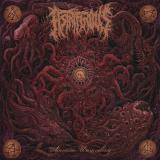
Continuing the primordial descent that kicked off in earnest with their 2023 debut album, Pulsations From the Black Orb, ASTRIFEROUS return with their second full-length, Atavistic Unraveling. Much like that celebrated debut, the Costa Ricans’ sophomore album is perfectly titled: truly, the sensations one finds spread across this dread landscape are an Atavistic Unraveling. Thankfully, ASTRIFEROUS’ foundation has changed little – the swarming morbidity of early ’90s Finnish death metal fused with classic South American madness – but there are (dread) developments that prove the band are just now hitting their stride.
Despite its title, Atavistic Unraveling shows ASTRIFEROUS at their tightest and sharpest, with chops and execution meeting at a nexus of impossibly horrific proportions. Duly armed, the quartet take their songwriting to strange, skronking lengths, rendering their angularity both an unsettling and utterly attacking thing. Likewise, the slight cleaning-up of production has paid dividends, allowing these malformed ruminations to fully seep into the listener’s psyche – mangling the mind, wracking the body – whilst emerging with just enough linear propulsion to land the record on the right side of art rather than riff salad.
Collectively, these changes have made ASTRIFEROUS even more world-eating than before, further cementing their homeland’s death metal scene as one of the most potent around. Atavistic Unraveling awaits those who dare…
Glasgow techno institution Soma Records celebrate 35 years with specially-curated SOMA35 EP remix series Celebrating a truly vital and enduring presence in the global techno landscape, Soma Records’ 35 Year anniversary project will be brought to life through a series of specially-curated remix EPs. Co-founded in 1991 by the iconic electronic music duo Slam, Dave Clarke, and Glenn Gibbons, the Glasgow-based Soma label is a techno institution. With a long-standing reputation for quality and longevity, the imprint has played a foundational role in the development of techno both in the UK and worldwide, and in the discovery and support of exceptional musical talent. Showcasing the breath of Soma’s reach across the techno scene past and present, the SOMA35 EP project brings together a selection of the biggest names in techno that Slam and Soma have worked with over the years, alongside new artists whose sound naturally aligns with the label’s distinct sonic identity. It’s only fitting that label heads Slam kick off this landmark project, marking a colossal milestone - the label’s 700th release - with ‘SOMA 35.1’. This specially-curated release features powerful reinterpretations of Slam’s seminal track “Vapour” by Mark Broom and FJAAK, alongside fresh remixes of the classic “Program” by Vril and Linear Phase.
SML is a Los Angeles based quintet featuring Anna Butterss, Jeremiah Chiu, Josh Johnson, Booker Stardrum, and Gregory Uhlmann. Spontaneous Music Live contains two side-length pieces of unedited improvisation, recorded live at Los Angeles venue Zebulon during SML"s December 2025 three-night residency, just weeks after the release of the band"s second album HOW YOU BEEN. It was recorded and mixed live to stereo tape by Bryce Gonzales (the same engineer/wizard known for his gorgeous live captures/mixes of Jeff Parker"s ETA IVtet). Between HOW YOU BEEN and their 2024 debut SMALL MEDIUM LARGE (both of which were heavily edited, shaped and post-produced) the band has developed a reputation for records that are heavily fused, polished, and punchy. The medium is on full post-modern display on those LPs, and the band"s post-production knife can be responsible for much of the perspective - the tastiest morsels collected, arranged, and rearranged just so. But the source material from both those albums were live recordings. Longform, unwieldy, ebbing and flowing. On top of that, every performance the band has ever done has been fully improvised in that spirit. So in the sphere of live performance the band"s esteem has grown down a different path - one of linear, hypnotic, expansion. It"s a perceived split persona shared by some of SML"s most inspiring conceptual bedfellows: compare the extended madness of Can"s Live in Paris 1973 to the relative tight form of Future Days from the same year; the speed-funk chaos of Miles Davis" Dark Magus to the heavily deconstructed On The Corner or Big Fun. Spontaneous Music Live removes the curatorial perspective and pulls the curtain back on that search-pluck-reconstruct editing process. What we"re left with is the psychedelic realism of the band in situ, in their home town, collectively improvising, fully in-the-moment, mining for that moment of discovery. We hear, in macro, each nugget of sound which could be the basis for a future SML album track, spattered amongst the collective chaos-and-control like stars in the night sky.
out of Stock
Last delivered 43 days ago available to reorder, subject to availability
Mit Conal veröffentlichte Conrad Schnitzler 1981 eines der faszinierendsten Werke seiner produktiven Schaffensphase - ein Album, das seinen stetigen künstlerischen Aufbruch eindrucksvoll dokumentiert. Bestehend aus zwei rund 21-minütigen Tracks, entfaltet sich Conal wie ein vielschichtiges Klangpanorama: keine lineare Erzählung, sondern ein offenes Geflecht aus elektronischen Strukturen, Schichtungen und Übergängen. Schnitzler verdichtet hier unterschiedliche musikalische Ideen zu einer Art Momentaufnahme seiner kreativen Entwicklung - roh, präzise und kompromisslos. Die außergewöhnliche Klangqualität und komplexe Gestaltung lassen den Einfluss des Paragon Studios erahnen, das ihm ideale Bedingungen für seine visionäre Arbeit bot. Conal steht exemplarisch für Schnitzlers rastlosen Innovationsdrang - ein Schlüsselwerk elektronischer Musik, das bis heute nichts von seiner Faszination verloren hat.
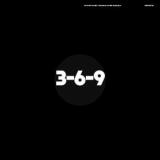
One of the true, undisputed pioneers of Dutch techno, Steve Rachmad appears on Dekmantel for an EP of peerless machine music. On the 3-6-9 EP, the artist also known as Sterac, Parallel 9 and many other names plies a powerful trade in funked up, gritty and soulful techno made the proper way.
The connection between Rachmad and Dekmantel reaches back many years via his frequent appearances at the Dekmantel Festival — he has two performances at the 2026 edition as well as sets at Dekmantel Selectors lined up later in the summer. The 3-6-9 EP lands ahead of an album and world tour that marks 45 years in service to electronic music, nodding to Rachmad's earliest roots in electro funk through to his day-one embrace of house and techno as it made its way across the Atlantic from Chicago and Detroit.
There's a rowdy, rave-spirited energy to the synth hook bucking its way through the centre of '3 Creation Energy', coming on in brassy tones laced with artful distortion while the drums dutifully jack the way they ought to. There's a more linear, pressure cooker quality to the tidal filter work guiding '6 Physical Manifestation' to its own energetic peaks, while '9 Completion and Delivery' surfs on coursing waves of arpeggiated lead lines before breaking through to the oceanic calm of grandiose pad tones.
There's no mystery to unpick here — this is quite simply techno perfection made with the instinct and experience of a master of the form, whose life is synonymous with every inch of the culture.
out of Stock
Last delivered 50 days ago available to reorder, subject to availability
As long as she can remember, Jane Remover has practiced her own autonomy as much as possible. The nineteen year old songwriter is an omnivorous listener that produces everything herself. She has been lauded by fans and writers alike, for accidentally creating entire genres in the wake of her prolific two-year run.
The new album is more conceptually abstract than its predecessor as Jane sheds linear narrative writing. However, it takes place beginning at sundown and through the night, up until the next morningʼs earliest crack of dawn. Its winding songs are obtuse but carefully composed, and intimately follow Jane's train of thought.
Dynamic production is at the forefront. Noisy highs gleam, and are juxtaposed by dusky Post-Rock lullabies within the same songʼs runtime. Census Designated is a staggering display of maturation in every aspect when compared to her previous presentation, to a degree that makes it few and far between in the world of albums.
Despite the darker palette, Jane steps into a technicolor clarity for the first time. The album was made in both studios and at home—with recordings from Studio North (Kensington in Philadelphia), mixes from Kayla Reagan and mastered by Hector Vega.
A photo of her standing bareback while facing away towards the high plains, serves as the cover art for an album where she manages to simultaneously divulge her most confessional moments yet, and captivate the listener with unanswerable questions.
There are records that follow the rules, and others that rewrite them in real time. With O R G A S M A N I A, Byron The Aquarius returns to Skylax with a deeper, freer and more unpredictable statement — where jazz instinct meets raw machine funk, and structure dissolves into pure feeling. Rooted in the lineage of Detroit yet never confined by it, Byron operates in that rare zone where house music becomes expression rather than format. His sound doesn’t chase functionality — it breathes, it stretches, it resists. The EP opens with Back 2 Zion (Tomorrow), a spiritual and meditative journey built on loose drums and luminous chords, carrying a sense of elevation — early morning music where the dancefloor begins to think again. Enter the Co$mos (Fool) pushes further into abstraction, with drifting synths and broken rhythms unfolding in a non-linear structure, navigating between Sun Ra’s cosmic language and Detroit futurism. On the flip, Mr. Captain Crunchhh brings a raw, playful energy — crunchy textures, off-grid swing and an almost improvised groove, alive and unpredictable, a leftfield tool designed to disrupt expectations. Finally, O R G A S M A N I A stands as the centerpiece — hypnotic, sensual and immersive, locking into a deep repetitive groove while evolving in subtle layers, a late-night body experience guided by a sharp musical mind. Across four tracks, Byron The Aquarius confirms his unique position between jazz musician, house producer and sonic storyteller, with a trajectory spanning Sound Signature, Axis, Eglo, Apron and Shall Not Fade, continuing to resonate from Detroit to Berlin and beyond. Artwork by H5 — the iconic studio behind Daft Punk, Air and Vitalic — reinforces Skylax’s timeless and art-driven identity. This is not fast music, this is not algorithm music — this is music for those who still listen. Strictly for the heads. Vinyl only. No repress. Skylax Records.
As the so-called “Latin boom” becomes a new anchor for hard-swung club sounds, it is crucial to recognize that the region’s musical culture extends far beyond dembow edits and the pop-trap hybrids that have edged into the mainstream. Monterrey-born, New York City-based producer and DJ Delia Beatriz, aka Debit, returns to NAAFI with Potpourri, a generous and kinetic collection of dancefloor-oriented tracks filled with percussive flourishes, squelching 303 basslines, and rhythmic mutations that actively challenge the status quo. Rather than rebuilding “Latin sounds” as a fixed category, the album rethinks their internal logic, tracing the evolution of techno and house in cities like Detroit, Chicago, and New York alongside parallel innovations emerging in Mexico, Colombia, and across the wider Latin world. Positioned on the bridge between Mexico and the US, Potpourri does not seek synthesis as a gesture of smooth fusion, but as a site of disruption.
The album can be heard as a loose follow-up to System (2018), Debit’s NAAFI-released EP that expanded the sonic potential of tribal guarachero through triplet-driven rhythms, industrial pressure, and noisy reconstruction. Potpourri retains guaracha as a structural backbone while drawing further influence from veteran DJ and producer Javier Estrada—who also appeared on System—and particularly from his fast-paced, nonlinear style of mixing. That approach becomes a formal principle here: canonical structures are dismantled, repetition is avoided, and tracks evolve without sacrificing propulsion. Coming after the introspective temporal inquiry of Desaceleradas and the speculative historical acoustics of The Long Count, Potpourri arrives as a deliberate surge of energy. As Beatriz explains: “It’s a manifesto for rethinking form and sound in dance music. By stepping outside traditional structures and embracing the potpourri approach, I’m creating new meaning with familiar rhythms. I’ve also been applying this to my DJ sets, using it as a tool to break free from established norms and explore new narrative possibilities.”
Years in the making, Potpourri imagines an alternate timeline in which the psychedelic squelch of acid—echoing pioneers such as DJ Pierre and Mr. Fingers—and the dub-inflected atmospheres of Basic Channel entered into direct and sustained contact with Latin American club mutations. Those references are legible, but never merely quoted. Instead, they are folded into syncopated hi-hats, overdriven kicks, and unstable arrangements that absorb both the intensity of the parties Beatriz remembers from Monterrey and the abrasive edge she sharpened at DIY noise shows in New England. The result is unmistakably a dancefloor record—heard in tracks as forceful as “Pero like” and the peak-time pressure of “tuvesuerte”—but one saturated with grotesque, psychedelic atmospheres, where sounds dissolve into hoarse croaks, acidic smears, and anxiety-inducing growls. Here, the rave becomes not simply a site of release, but a platform for navigating identity, hybridity, and artistic formation across borders. Moving through peaks and ruptures, Potpourri reveals a party narrative that is not linear but multidimensional.
By folding together the fluidity of DJ culture, the experimental charge of acid, and the rhythmic vitality of guaracha, Potpourri proposes a space of formal and political innovation within Latin America’s rapidly expanding electronic music landscape. It is a record that refuses containment, pushing against the templates through which Latin electronic music is often consumed, and insisting instead on friction, instability, and transformation as generative conditions for the dancefloor.
out of Stock
Last delivered 27 days ago available to reorder, subject to availability
One year on from his first Samurai release, Vardae returns to plunge even deeper into his mesmerising strain of hyper-mobile drum mantras and textural intrigue. Cédric Arnous' prolific run over the past few years has rapidly positioned him at the forefront of a scene between scenes where the rhythmic intrigue of drum & bass collides with modern techno's hypnotic linearity. On The Energy Of Presence he relishes the flexibility afforded by this intersection to deliver four distinct, high-impact workouts made with his ever-evolving live set in mind. 'Grounded Attachment' leads with the sonar strafe and broken beat pulse readily associated with the Vardae sound, threading twitchy percussion and steely brushstrokes around the bedrock of low-end pressure. It's the slowly emerging drone sweeps that round out the character of the track, betraying a warmth encased within the metallic overtones that deepens the emotional weight immeasurably. By contrast, 'Magnetic Flux' swerves towards a more direct thrust with its high-tempo 4/4 undercarriage and a limber, acidic lead line that helps join the dots between Vardae's modernist sheen and the roughneck days of free party tekno. This is still charged, atmospheric dance music, but it has no problem showing its teeth, too. 'Electric Feelings' is similarly sprightly in its tempo, but as ever Vardae runs a tight game with the weight of his drums, finding lightness and dexterity even at 170BPM while the transcendental wormhole opens up around the rhythmic force at the centre. Ensuring there's no space for predictability on this release, 'The Energy Of Presence' plies its own trade in sumptuous dub techno chords and angular groove designed to make you move on a different kind of downbeat. The consummate title track, it's the most roundly melodic offering on the record, served as a crescendo to the whole listening experience comfortably nestled on the B2 of the physical edition. Capitalising on the hypnotic codes etched into the dub techno sound, Vardae dials up the delay feedback for a psychedelic release at the end of a record that covers a lot of ground without losing focus.
out of Stock
Last delivered 40 days ago available to reorder, subject to availability
Masterful composer- improviser DoYeon Kim is an unparalleled practitioner of the Korean gayageum (a silk-string zither), and is also in possession of a purposeful vocal intensity. This is her debut album as a bandleader, featuring fellow master musicians Tyshawn Sorey (drums), Mat Maneri (viola), Henry Fraser (bass). Armed with an unlikely traditional instrument, flanked by three extraordinary improvisers, radiating a brash, acoustic strategy that simultaneously invokes folk universalism and a No Wave battle- stance, the Brooklyn- based virtuoso will drop a volcanic sonic statement with grand humanist goals on May 1. Kim mingles Korean lullabies, fervent interactions between drums and strings, and pure instrumental expressions of musical self. At times, she sounds like she can halt armies. Wellspring is a call for society to come together.
How the Seoul, South Korea- born 34- year- old came to be the centuries- old zither's leading (only?) practitioner of contemporary improvised music, reflects an expansive embrace of her own culture, her place in modern society, and her ascending recognition of music's liberatory power. DoYeon Kim 's teachers at Seoul National University recognized that her roving musical mind - less interested in ancient repertoire than in speaking to the modern world - needed challenges. America beckoned, with the New England Conservatory offering a non- ethnomusicological pathway via its Contemporary Improvisation department. It set off a process of analysing, absorbing, digesting, and, most of all, listening. Under the guidance of NEC instructor and legendary guitarist Joe Morris, in came the methodologies of Ornette, Braxton and Derek Bailey, to name a few.
Saxophonist, producer and composer Brian Allen Simon explores darker hues, transposing waking and altered states under his studio veil Anenon. On the deeply evocative new album 'Dream Temperature', he shifts electronic processing to the foreground, introducing digitized wind instruments and unworldly atmospherics, not heard since his innovating mid-late 2010s output.
A longtime Los Angeles resident, born and raised, Brian Allen Simon has expressively operated under the moniker Anenon, releasing the highly revered 'Petrol' (2016), 'Tongue' (2018) and the viscerally beautiful 'Moons Melt Milk Light' (2023), in a line of unwavering musical dialogues. While the penultimate album was a deliberate, reductive, entirely acoustic detour that was born out of a want to unplug, 'Dream Temperature' sees Brian primed with a newly discovered wind synthesizer as his central compositional tool, alongside acoustic piano and tenor saxophone. The entirety of the album's electronics are triggered by Brian's lungs, generating otherworldly synths modulated by expressive breath control, channelled through the laptop as the core processing chamber for added textural components and field recordings.
A free floating and heavy emotional resonance marks 'Dream Temperature' from beginning to end, invoking the feeling of waking up, still heavy from a night of half-remembered dreams, and continuing one's day in this state. Simon maps out the album's spatial voice early on the statement title track, a deep, yet compact cut, generated from digital saxophone rasps that whistle by in close proximity, along with haze filled textures and sub bass. There is a sonic oscillation of urban grit and pastoral drift throughout as tracks pass by like introspective thoughts, fueling both a tense and ethereal quality that underpins the album. Interluding solo and part-solo piano improvisations 'Last Sun 1' and '2' are positioned adjacent to the buffering digital soundscapes. Their softer, still processed timbres pierce the melancholic exterior, offering a contrasting tenderness that could echo the grace of Ry?ichi Sakamoto, the spiritualist rigor of ECM's Keith Jarrett and a touch akin to Aphex Twin's piano miniatures. 'Nulle Part 1+2' signals the first appearance of an acoustic wind instrument, as tenor saxophone flourishes are juxtaposed against noisy drones, all shouting at the void, with notes resurfacing like lost digital data.
The album was recorded at home during either sunset or nocturnal hours between September of 2024 and October of 2025, a period in which Brian found himself craving more lengthy and intimate studio time as he searched for more pronounced textural qualities amidst his new sonic ambitions. 'When The Light Appears, Boy' shows further evidence of this deeper universe, revealing a grittier edge as the album's essential blueprint is sonically inked. A sprawling expanse of wind synths rhythmically encircle the listener before a dreamy, ghostly ambience blankets 'Toyama'. The sound is evocative of the productions of post dubstep era luminaries such as Burial or the productions of HTRK's Nigel Yang. More isolating and enveloping than the previous all acoustic record, this is music both disorienting and yet warmly inviting all at once. A sonic diarist at heart, personal field recordings were also taken from Sardinia, Japan, Big Sur and LA which intersect at unexpected moments throughout the album's 31-minute play time.
'Dream Temperature' is a vital coalescence of both Simon's electronic and acoustic practices with repositioned electronics akin to earlier works, both haunting and elegant, yet still profoundly personal. Simon continuously resonates as an experimental outlier treading an enthralling, non-linear musical path. This music resolutely glows with an unknowing aura, like an untapped energy source waiting to be discharged.
Cathartic avant-rock, literate DIY folk & experimental composition exploring displacement, love, climate change, belonging & the places we call home - RIYL Jim O’Rourke, Richard Youngs, This Heat, Richard Dawson, Flying Nun. ‘Real Home’ is the new album by the Manchester-born, London-based artist Kiran Leonard. His sixth album proper (not including innumerable tour-only CD-Rs and short-run cassettes), since his precocious debut in 2013, ‘Real Home’ finds Leonard invigorated by inspiration and experience, making passionate, literate, and mercurial music that explores displacement, love, memory, climate change, connections to home and more. Encompassing songs recorded after moving to South London, ‘Real Home’ reflects on ideas of belonging and domesticity through folkloric, stream-of-consciousness songwriting. Across nine tracks, Leonard traces lived impressions of the household and the city, expressing sentiments of dislocation, alienation and stasis, but contentment too. Infusing the avant-rock effervescence, terraced dynamics and visionary lyricism of his music with what he defines as a greater sense of openness, Leonard is as versatile, fervent and imaginative as ever on ‘Real Home’, yet his music is somehow more intimate, affecting, and acutely expressive. Shaped by dual considerations of simplicity and formalism, ‘Real Home’ is by turns beautiful, allusive, and ruminative, an album on which Leonard considers what his songs have resembled in the past and what they mean now. In recent years, Leonard has crafted eloquent chamber music inspired by the likes of James Joyce and Clarice Lispector (‘Derevaun Seraun’), responded to contemporary politics and communication breakdown in the digital age (‘Western Culture’), and compiled solo works and ensemble recordings for a longform ode to Jonas Mekas and to one of Leonard’s enduring themes; home (‘Trespass On Foot’). On ‘Real Home’, Leonard reiterates this abiding thematic focus yet ascends to new, different heights, in music of cathartic delicacy and dissonance where all the myriad dimensions of his work to date seem to crystallize. There are sinuous songs about struggle and defying the pace of city life through drift and diversion (‘Pass Between Houses’), stirring songs of intense feeling and crescendo, described as a form of speculative detective fiction (‘Theatre for Change’). There are touching solo piano ballads (the title track), symbolic contentions with carbon capture and climate change (‘Utopia of Bog’), modes of experimental minimalism (‘Void Attentive’), and other profuse feats of compositional range, embroidered with wild tendrils of narrative and lyrical depth. A record to pore over, and get lost in. Exemplifying the vast aesthetic scope of Leonard’s music, lead single ‘My Love, Let’s Take The Stage Tonight’ is inspired by country lodestar Hank Williams, Russian poetry and a late period love poem by William Carlos Williams. Yet for Leonard, the song signals a sense of accessible materiality, and is the product of a more linear approach to writing songs: “My imitation of the great Hank Williams, in spirit if not in substance…This is one of the best efforts on Real Home at a song-as-object. Looking at it now I realise I was trying to write a song that made itself known as a song to the listener, and I wonder whether that’s crucial if you want a song to transcend its context. And that this is either accomplished through a total openness – by being inviting, by laying the tricks of the song out plain to see, as Williams and his many ghostwriters did so well – or by adopting a knowing aloofness, positioning oneself against the listener but letting it be known that that’s what it’s doing. In this song I try both, but mostly the former: as in, I wanted to write a song where every line follows on from the next.” Imbuing the endlessly elaborate and inventive qualities of his music with a newfound streak of candid, clear-cut melodicism, Leonard has reached a special place in his artistry, on a record that feels familial, and expresses closeness. Assembled with affiliates including Lauren Auder, Otto Willberg, Jasper Llewellyn (caroline), Tom Hardwick-Allan (Shovel Dance Collective), Magda McLean (caroline, The Umlauts), Alex Mckenzie (caroline, Shovel Dance Collective), Isabelle Thorn (Dear Laika) & more, the recording process had a significant influence on the subject matter of ‘Real Home’, in sessions defined by close-knit camaraderie and artistic eccentricity: “The theme of the home obviously recurs throughout the record; the album was mostly recorded in domestic spaces with friends, and the name of the album is Real Home. I like the qualifier ‘real’, like you’re getting past the cloak of the word and towards the thing-itself…also nearly all the percussion in this record was recorded on items from my dad’s shed (jam jars, sandpaper, blocks of wood, etc). Real home record!” ‘Real Home’, like anything by Kiran Leonard, is a record of dazzling multiplicity. Yet it’s a companionable prospect with a central premise; a collection of songs where listeners old and new can find a home. An album led by a scene; of Leonard standing at the threshold, ready to welcome you inside. “Exceptional songs that linger” - The Guardian // “An autodidact of amazing talent & energy” – Pitchfork // “A ridiculous amount of talent…confrontational, celebratory, provocative or perverse – he manages all of these emotions & more” - The Quietus /
Writings on the topic that go off in all directions, mind-numbing lectures given by academics, and testimonies, most of them heavily doctored, from those who “lived through that era”: so many people today fantasize about the early days of punk in our country… This blessed moment when no one had yet thought of flaunting a ridiculous green mohawk, taking Sid Vicious as a hero, or – even worse – making the so-called alternative scene both festive and boorish. There was no such thing in 1976 or 1977, when it wasn’t easy to get hold of the first 45s by the Pistols or the Clash. Few people were aware of what was happening on the fringes of the fringes at the time. Malcolm McLaren was virtually unknown, and having short hair made you seem strange. Who knew then that rock music, which had taken a very bad turn since the early 1970s, would once again become an essential element of liberation? That, thanks to short and fast songs, it would once again rediscover that primitive, social side that was so hated by older generations? Who knew that, besides a few loners who read the music press (it was even better if they read it in English) and frequented the right record stores? Many of these formed bands, because it was impossible to do otherwise. We quickly went from listening to the Velvet Underground to trying to play the Stooges’ intros. It’s a somewhat collective story, even though there weren’t many people to start it.
The Guilty Razors were among those who took part in this initial upheaval in Paris. They were far from being the worst. They had something special and even released a single that was well above the national average. They also had enough songs to fill an album, the one you’re holding. In everyone’s opinion, they were definitely not among the punk impostors that followed in their wake. They were, at least, genuine and credible.
Guilty Razors, Parisian punk band (1975-1978). To understand something about their somewhat linear but very energetic sound, we might need to talk about the context in which it was born and, more broadly, recall the boredom (a theme that would become capital in punk songs) coupled with the desire to blow everything off, which were the basis for the formation of bands playing a rejuvenated rock music ; about the passion for a few records by the Kinks or the early Who, by the Stooges, by the Velvet mostly, which set you apart from the crowd.
And of course, we should remember this new wave, which was promoted by a few articles in the specialized press and some cutting-edge record stores, coming from New York or London, whose small but powerful influence could be felt in Paris and in a handful of isolated places in the provinces, lulled to sleep by so many appalling things, from Tangerine Dream to President Giscard d’Estaing...
In 1975-76, French music was, as almost always, in a sorry state ; it was still dominated by Johnny Hallyday and Sylvie Vartan. Local rock music was also rather bleak, apart from Bijou and Little Bob who tried to revive this small scene with poorly sound-engineered gigs played to almost no one.
In the working class suburbs at the time, it was mainly hard rock music played to 11 that helped people forget about their gruelling shifts at the factory. Here and there, on the outskirts of major cities, you still could find a few rockers with sideburns wearing black armbands since the death of Gene Vincent, but it wasn’t a proper mass movement, just a source of real danger to anyone they came across who wasn't like them. In August 1976, a festival unlike any other took place in Mont-de-Marsan – the First European Punk Festival as the poster said – with almost as many people on stage as in the audience. Yet, on that day, a quasi historical event happened, when, under the blazing afternoon sun, a band of unknowns called The Damned made an unprecedented noise in the arena, reminiscent of the chaotic Stooges in their early adolescence. They were the first genuine punk band to perform in our country: from then on, anything was possible, almost anything seemed permissible.
It makes sense that the four+1 members of Guilty Razors, who initially amplified acoustic guitars with crappy tape recorder microphones, would adopt punk music (pronounced paink in French) naturally and instinctively, since it combines liberating noise with speed of execution and – crucially – a very healthy sense of rebellion (the protesters of May 1968 proclaimed, and it was even a slogan, that they weren’t against old people, but against what had made them grow old. In the mid-1970s, it seemed normal and obvious that old people should now ALSO be targeted!!!).
At the time, the desire to fight back, and break down authority and apathy, was either red or black, often taking the form of leafleting, tumultuous general assemblies in the schoolyard, and massive or shabby demonstrations, most of the time overflowing with an exciting vitality that sometimes turned into fights with the riot police. Indeed, soon after the end of the Vietnam War and following Pinochet’s coup in Chile, all over France, Trotskyist and anarcho-libertarian fervour was firmly entrenched among parts of the educated youth population, who were equally rebellious and troublemakers whenever they had the chance. It should also be noted that when the single "Anarchy in the UK" was first heard, even though not many of us had access to it, both the title and its explosive sound immediately resonated with some of those troublemakers crying out for ANARCHY!!! Meanwhile, the left-wing majority still equated punks with reckless young neo-Nazis. Of course, the widely circulated photos in the mainstream press of Siouxsie Sioux with her swastikas didn’t necessarily help to win over the theorists of the Great Revolution. It took Joe Strummer to introduce The Clash as an anti-racist, anti-fascist and anti-ignorance band for the rejection of old-school revolutionaries to fade a little.
The Lycée Jean-Baptiste Say at Porte d’Auteuil, despite being located in the very posh and very exclusive 16th arrondissement of Paris, didn’t escape these "committed" upheavals, which doubled as the perfect outlet for the less timid members of this generation.
“Back then, politics were fun,” says Tristam Nada, who studied there and went on to become Guilty Razors’ frontman. “Jean-Baptiste was the leftist high-school in the neighbourhood. When the far right guys from the GUD came down there, the Communist League guys from elsewhere helped us fight them off.”
Anything that could challenge authority was fair game and of course, strikes for just about any reason would lead to increasingly frequent truancy (with a definitive farewell to education that would soon follow). Tristam Nada spent his 10th and 11th unfinished grades with José Perez, who had come from Spain, where his father, a janitor, had been sentenced to death by Franco. “José steered my tastes towards solid acts such as The Who. Like most teenagers, I had previously absorbed just about everything that came my way, from Yes to Led Zeppelin to Genesis. I was exploring… And then one day, he told me that he and his brother Carlos wanted to start a rock band.” The Perez brothers already played guitar. “Of course, they were Spanish!”, jokes their singer. “Then, somewhat reluctantly, José took up the bass and we were soon joined by Jano – who called himself Jano Homicid – who took up the rhythm guitar.” Several drummers would later join this core of not easily intimidated young guys who didn’t let adversity get the better of them.
The first rehearsals of the newly named Guilty Razors took place in the bedroom of a Perez aunt. There, the three rookies tried to cover a few standards, songs that often were an integral part of their lives. During a first, short gig, in front of a bewildered audience of tough old-school rockers, they launched into a clunky version of the Velvet Underground's “Heroin”. Challenge or recklessness? A bit of both, probably… And then, step by step, their limited repertoire expanded as they decided to write their own songs, sung in a not always very accurate or academic English, but who cared about proper grammar or the right vocabulary, since what truly mattered was to make the words sound as good as possible while playing very, very fast music? And spitting out those words in a language that left no doubt as to what it conveyed mattered as well.
Trying their hand a the kind of rock music disliked by most of the neighbourhood, making noise, being fiercely provocative: they still belonged to a tiny clique who, at this very moment, had chosen to impose this difference. And there were very few places in France or elsewhere, where one could witness the first stirrings of something that wasn’t a trend yet, let alone a movement.
In the provinces, in late 1976 or early 1977, there couldn’t be more than thirty record stores that were a bit more discerning than average, where you could hear this new kind of short-haired rock music called “punk”. The old clientele, who previously had no problem coming in to buy the latest McCartney or Aerosmith LP, now felt a little less comfortable there…
In Paris, these enlightened places were quite rare and often located nex to what would become the Forum des Halles, a big shopping mall. Between three aging sex workers, a couple of second-hand clothes shops, sellers of hippie paraphernalia and small fashion designers, the good word was loudly spread in two pioneering places – propagators of what was still only a new underground movement. Historically, the first one was the Open Market, a kind of poorly, but tastefully stocked cave. Speakers blasted out the sound of sixties garage bands from the Nuggets compilation (a crucial reference for José Perez) or the badly dressed English kids of Eddie and the Hot Rods. This black-painted den was opened a few years earlier by Marc Zermati, a character who wasn’t always in a sunny disposition, but always quite radical in his (good) choices and his opinions. He founded the independent label Skydog and was one of the promoters of the Mont-de-Marsan punk festivals. Not far from there was Harry Cover, another store more in tune with the new New York scene, which was amply covered in the house fanzine, Rock News (even though it was in it that the photos of the Sex Pistols were first published in France).
It was a favorite hang-out of the Perez brothers and Tristam Nada, as the latter explained. “It’s at Harry Cover’s that we first heard the Pistols and Clash’s 45s, and after that, we decided to start writing our first songs. If they could do it, so could we!”
The sonic shocks that were “Anarchy in the UK”, “White Riot” or the Buzzcocks’s EP, “Spiral Scratch” – which Guilty Razors' sound is reminiscent of – were soon to be amplified by an unparalleled visual shock. In April 1977, right after the release of their first LP, The Clash performed at the Palais des Glaces in Paris, during a punk night organised by Marc Zermati. For many who were there, it was the gig of a lifetime…
Of course, Guilty Razors and Tristam were in the audience: “That concert was fabulous… We Parisian punks were almost all dressed in black and white, with white shirts, skinny leather ties, bikers jackets or light jackets, etc. The Clash, on the other hand, wore colourful clothes. Well, the next day, at the Gibus, you’d spot everyone who had been at this concert, but they weren’t wearing anything black, they were all wearing colours.”
It makes sense to mention the Gibus club, as Guilty Razors often played there (sometimes in front of a hostile audience). It was also the only place in Paris that regularly scheduled new Parisian or Anglo-Saxon acts, such as Generation X, Siouxsie and the Banshees, the Slits, and Johnny Thunders who would become a kind of messed-up mascot for the venue. A little later, in 1978, the Rose Bonbon – formerly the Nashville – also attracted nightly owls in search of electric thrills… In 1977, the iconic but not necessarily excellent Asphalt Jungle often played at the Gibus, sometimes sharing the bill with Metal Urbain, the only band whose aura would later transcend the French borders (“I saw them as the French Sex Pistols,” said Geoff Travis, head of their British label Rough Trade). Already established in this small scene, Metal Urbain helped the young and restless Guilty Razors who had just arrived. Guitarist for Metal Urbain Hermann Schwartz remembers it: “They were younger than us, we were a bit like their mentors even if it’s too strong a word… At least they were credible. We thought they were good, and they had good songs which reminded of the Buzzcocks that I liked a lot. But at some point, they started hanging out with the Hells Angels. That’s when we stopped following them.”
The break-up was mutual, since, Guilty Razors, for their part, were shocked when they saw a fringe element of the audience at Metal Urbain concerts who repeatedly shouted “Sieg Heil” and gave Nazi salutes. These provocations, even still minor (the bulk of the skinhead crowd would later make their presence felt during concerts), weren’t really to the liking of the Perez brothers, whose anti-fascist convictions were firmly rooted. Some things are non-negotiable.
A few months earlier (in July 1978), Guilty Razors had nevertheless opened very successfully for Metal Urbain at the Bus Palladium, a more traditonally old-school rock night-club. But, as was sometimes the case back then, the night turned into a mass brawl when suburban rockers came to “beat up punks”.
Back then, Parisian nights weren’t always sweet and serene.
So, after opening as best as they could for The Jam (their sound having been ruined by the PA system), our local heroes were – once again – met outside by a horde of greasers out to get them. “Thankfully,” says Tristam, “we were with our roadies, motorless bikers who acted as a protective barrier. We were chased in the neighbouring streets and the whole thing ended in front of a bar, with the owner coming out with a rifle…”
Although Tristam and the Perez brothers narrowly escaped various, potentially bloody, incidents, they weren’t completely innocent of wrongdoing either. They still find amusing their mugging of two strangers in the street for example (“We were broke and we simply wanted to buy tickets for the Heartbreakers concert that night,” says Tristam). It so happened that their victims were two key figures in the rock business at the time: radio presenter Alain Manneval and music publisher Philippe Constantin. They filed a complaint and sought monetary compensation, but somehow the band’s manager, the skilful but very controversial Alexis, managed to get the complaint withdrawn and Guilty Razors ended up signing with Constantin with a substantial advance.
They also signed with Polydor and the label released in 1978 their only three-track 45, featuring “I Don't Wanna be A Rich”, “Hurts and Noises” and “Provocate” (songs that exuded perpetual rebellion and an unquenchable desire for “class” confrontation). It was a very good record, but due to a lack of promotion (radio stations didn’t play French artists singing in English), it didn’t sell very well. Only 800 copies were allegedly sold and the rest of the stock was pulped… Initially, the three tracks were to be included on a LP that never came to be, since they were dropped by Polydor (“Let’s say we sometimes caused a ruckus in their offices!” laughs Tristam.) In order to perfect the long-awaited LP, the band recorded demos of other tracks. There was a cover of Pink Floyd's “Lucifer Sam” from the Syd Barrett era – proof of an enduring love for the sixties’ greats –, “Wake Up” a hangover tale and “Bad Heart” about the Baader-Meinhof gang, whose actions had a profound impact on the era and on a generation seeking extreme dissent... On the album you’re now discovering, you can also hear five previously unreleased tracks recorded a bit later during an extended and freezing stay in Madrid, in a makeshift studio with the invaluable help of a drummer also acting as sound engineer. He was both an enthusiastic old hippie and a proper whizz at sound engineering. Here too, certain influences from the fifties and sixties (Link Wray, the Troggs) are more than obvious in the band’s music.
Shortly after a final stormy and rather barbaric (on the audience’s side) “Punk night” at the Olympia in June 1978, Tristam left the band ; his bandmates continued without him for a short while.
But like most pioneering punk bands of the era, Guilty Razors eventually split up for good after three years (besides once in Spain, they’d only played in Paris). The reason for ceasing business activities were more or less the same for everyone: there were no venues outside one’s small circuit to play this kind of rock music, which was still frightening, unknown, or of little interest to most people. The chances of recording an LP were virtually null, since major labels were only signing unoriginal but reassuring sub-Téléphone clones, and the smaller ones were only interested in progressive rock or French chanson for youth clubs. And what about self-production? No one in our small safety-pinned world had thought about it yet. There wasn’t enough money to embark on that sort of venture anyway.
So yes, the early days of punk in France were truly No Future!
out of Stock
Last delivered 6 months ago available to reorder, subject to availability
Geoglyph is the new duo project by Alohn and Khey Mysterio, a convergence of two deeply singular practices into a single subterranean signal. Their debut album arrives as the eighth reference on Organic Signs, not as a collection of tracks but as a carved artifact: six inscriptions pressed into vinyl, mapping a sonic territory where time, rhythm and texture are no longer linear, but layered like geological memory.
Through Geoglyph, Alohn and Khey Mysterio convey a message from below, or beyond. A pulse engraved from forgotten times in the basement of reality, reactivated by abyssal basses, vibrating layers and fractured textures. Exhumed from the subterranean strata where psychedelic dub, mineral techno and fractal dubstep fuse into raw energy, their music becomes a point of contact: every beat, every silence, every oscillation acting as a coordinate toward another perception. What unfolds is not simply sound design, but an invocation, rhythms as sigils, timbre as gnosis, signals that seem to arrive already charged with intention.
Across the album, Alohn’s guitar notes fall like cascades through the mix, dissolving at times into controlled feedback and crystallizing into melodic fragments that hover between tension and release. These organic gestures are interwoven with Khey Mysterio’s dense low-end architectures and rhythmic frameworks, creating a constantly shifting terrain: from weightless transmissions and ritualistic voices to moments of overwhelming propulsion where the music suddenly breaks open with tectonic force. The record moves fluidly between meditative suspension and explosive motion, never settling into a single state for long.
A strong undercurrent of what has come to be known as “druidstep” runs through the album, a term coined within the 95 Open Tabs universe to describe a form of dubstep untethered from genre convention, rooted instead in bass as ritual, in groove as invocation. Here it meets dub-techno pulse, psychedelic echoes and high-velocity 4×4 pressure, drawing subtle influence from underground bass cultures without ever becoming referential. The result is a body of work that feels both ancient and forward-leaning, cyclical rather than linear: a living geoglyph that reveals different meanings depending on how (and where) it is read.
As the final movement accelerates into its closing phase, the album releases its energy outward, with frequencies stretched toward their limits, leaving behind the trace of a completed ceremony. In this sense, Geoglyph’s debut stands as a defining moment within the Organic Signs continuum: a record that unfolds rather than explains, offering an experience to be entered, absorbed, and carried. With this release, the label continues to explore new sonic spaces, evolving and expanding while giving deeper meaning to its own essence. A message from beneath the surface, waiting for those willing to tune in.
Más de este género
out of Stock
Last delivered 6 months ago available to reorder, subject to availability
Formed in Taipei in 2013, Scattered Purgatory (破地獄) has occupied a liminal space between drone, ambient, psychedelic folk and ritualistic kosmiche experimentation. Their early work, including ‘Lost Ethnography of the Miscanthus Ocean’ (2014) and ‘God of Silver Grass’ (2016), blended dense instrumental drones, improvisational guitar, and ambient textures rooted in the heat, humidity, and urban pulse of Taiwan. Over the years, the duo-turned-band has drawn on Krautrock, minimalist electronic music, and heavy drone traditions while remaining firmly grounded in Taiwanese geography and culture.
‘Post Purgatory’ emerges after a three-year hiatus following the pandemic, a period the band describes as pivotal to the album’s conception. “The feeling of loss and uncertainty has later become the inspiration of this record, and ‘time’ is the main theme – it can heal or it can destroy,” they explain. Musically and lyrically, the record traverses Taiwanese, traditional Chinese, and English, reflecting the multilingual fabric of Taipei life. While there isn’t a linear storyline, metaphor and poetry imbue the lyrics with reflections on love, loss, and the human experience, interlaced with influences of Hokkien and Mando pop and traces of trip-hop.
Recorded half in their home and half at the studio where they composed their first album, ‘Post Purgatory' integrates precision, clarity, and digital production techniques. Guest contributions—from White Wu’s dynamic drumming to Minyen Hsieh’s tenor saxophone and dotzio’s sci-fi-infused vocals—expand the band’s sonic palette, creating a doom metal record shaped by electronic sensibilities.
‘Post Purgatory’ is a statement of loss and re-empowerment, a bridge between their past and present. Through it, Scattered Purgatory reclaim their distinctive voice, presenting a sound that is at once rooted in Taiwan, informed by global musical traditions, and unflinchingly forward-looking.
credits
»Low Tide, Hi Grypus!« is the new live-iteration of JC Leisure as JC Leisure Group. Documenting an encounter and a communication between human improvisers and atlantic grey seals. The record presents responsive improvisation as a form of cross-species collaboration.
The project began on Porthdinllaen, Wales, where Leisure recorded seal vocalisations from a local colony at low tide. Back in their Liverpool studio, Leisure developed a performance system that translates human musical gestures – pitch, timbre, rhythm, density, presence - into triggers for these seal expressions. The resulting system is dual-active, as in it simultaneously acts and is acted upon in the horizontal instance. It creates a new-music non-linear threshold that cannot be replicated.
»Low Tide, Hi Grypus!« was recorded live at 1210 Berlin and captures one instance of this concept. Local improvisers were invited to encounter the performance system. Recorded in one take, pedal-steel, woodwinds, strings, piano, organ, and electronics gradually learn to listen and respond to the marine voices. This interspecific group moves from intimate duets (that's human, seal) into full ensemble works (humans, seals) over the course of one night.
Rather than treating field recordings as static material, the extensive seal archive functions as an active collaborator: shaping form, pacing, and interaction in real-time. Now that’s marine biology meets human communication!
JC Leisure has previously released work on Sun Ark, Warm Winters Ltd, Not Not Fun and collaboratively with Dialect as Raft of Trash. He has composed a radio play commissioned and broadcast by BBC Radio.
Für Chantal Michelle ist das Komponieren von Musik wie eine Art Choreografie. In surrealen Klangwelten verbinden sich verschiedene Töne miteinander - sie bewegen sich zusammen und entfernen sich dann wieder voneinander - in einem Prozess, der sich ständig im Hörfeld wiederholt. Diese sich ständig verändernde Konstellation zeigt, wie zerbrechlich und veränderlich Wahrnehmung sein kann, ein Thema, das in Michelles Arbeit immer wieder auftaucht. Michelle, die schon früh eine Tanzausbildung absolvierte, bringt eine ausgeprägte räumliche Sensibilität in ihre Arbeit ein: ein intuitives Verständnis dafür, wie Formen koexistieren und sich durch drei Dimensionen bewegen, sowie eine Wertschätzung für die Schönheit, die sich in ungewöhnlichen Gegenüberstellungen von Materialien und Ideen findet. Seit sie 2021 ihre Solokarriere gestartet hat, hat sie internationale Anerkennung für ihre geduldigen, akribischen Aufnahmen bekommen, die oft zusammen mit Installationen, Mehrkanalkompositionen und Klangskulpturen entstehen. Innerhalb dieser subtil verwirrenden Klangarchitekturen können neue Beziehungen entstehen, neue Grenzen gezogen werden, und die Zuhörer werden zu einer Erfahrung von Zeit eingeladen, die sich der Linearität widersetzt. All Things Might Spill, Michelles erstes Album für Shelter Press, ist eine Auseinandersetzung mit anhaltender Spannung und der mysteriösen Erfahrung der Zeitdehnung in den Momenten kurz vor einem Bruch oder Zusammenbruch. Die Musik bewegt sich in einem Raum der Instabilität, und obwohl sie durchgehende Töne und definierte melodische Phrasen verwendet, herrscht eine Atmosphäre der Unentschlossenheit - wie ein Moment der Unruhe, der auf unbestimmte Zeit in der Schwebe bleibt. Ein Großteil des Albums wurde in den Wintermonaten 2024 in Berlin aufgenommen, wobei viele frühe Morgenstunden in einem Raum subtiler Unruhe verbracht wurden. Man sagt, dass Licht in die Dunkelheit eindringt, und diese Übergangszeit, die von Erwartungen geprägt ist, ist in der Musik zu hören. In ,Presence of Border" winden und verflechten sich nebulöse Stimmen, während sie über mehrdeutigen Harmonien schweben, die sich in unendliche Ferne zu erstrecken scheinen. Die beiden kurzen Stücke ,Magnetic Field I" und ,Magnetic Field II" enthalten bearbeitete Aufnahmen einer Tromba Marina, gespielt von der argentinischen Klangkünstlerin Alma Laprida. Die Gegenüberstellung von kratzigen Tönen und hauchzarten Obertönen erzeugt tamburaähnliche Drones, die den Zuhörer in einen schwer fassbaren Mittelpunkt ziehen. Später auf dem Album gibt es in ,Drying of Frozen Soils" modale Klarinettenlinien von Severin Black, die anfangs in dem nebligen, synthetischen Hintergrund fast nicht zu hören sind, bevor sie sich zu einem gespenstischen Kontrapunkt entwickeln. Eine ähnliche Struktur aus Unklarheit und Klarheit prägt den Titeltrack, in dem wortlose Gesänge eine laute Feldaufnahme durchdringen, die auf einer Fähre aufgenommen wurde, die den East River von Brooklyn nach Manhattan überquert. Das ist Musik mit einem weitläufigen Terrain und einer dichten Atmosphäre. Veränderungen sind langsam, aber dramatisch, jede Verschiebung ist sorgfältig geplant, um Gefühle des Staunens und der Vorfreude zu wecken und gleichzeitig eine erhabene Sensibilität dafür zu bewahren, wie einzelne Klänge mit der Bewegung ihrer Umgebung in Beziehung stehen. Michelle verzichtet meisterhaft auf Narrative und komponiert in drei Dimensionen. Wir bleiben mit der Mehrdeutigkeit des Wortes ,might" zurück - der anhaltenden Möglichkeit des energetischen Ansturms des Bruchs, des Ausbrechens, mal am Horizont, mal unmittelbar bevorstehend, irgendwie beides gleichzeitig.
out of Stock
Last delivered 7 months ago available to reorder, subject to availability