Melbourne/Naarm-based musician and curator Rama Parwata, known for being the backbone drummer in bands such as Kilat, Whitehorse and Rinuwat, releases his second major solo album titled ‘Ceases’ on Cassauna/Important Records.
Parwata's gripping new electro-acoustic work is a sonic exploration within the realms of post-free-jazz and experimental electronics. At its core, ‘Ceases’ navigates the liminal spaces between rhythm and noise, structure and chaos. The album traverses a vast emotional and conceptual landscape, touching upon themes of impermanence, transformation, and the cyclical nature of existence.
At the forefront of the album is Parwata's emotive compositional and performative approach, which serves as both anchor and catalyst for the album's journey. The percussion performance is cymbal heavy accompanied by deeply meditative drones and slow moving melodies. The wash of sound touches on a spiritualism akin to Coltrane’s “A Love Supreme Part 4: Psalm”, albeit with a modern electronic vision á la Tim Hecker. With a keen sense of textural intricacy Parwata favours the emotional expression of electro-acoustic composition, weaving complex poly-textures that ebb and flow with hypnotic, prayer-like intensity. Each performative gesture creates a visceral immediacy that draws the listener deeper into the celestial, otherworldly sonic framework.
The diverse array of electronic elements, meticulously crafted and seamlessly integrated into the fabric of the album are a testament of Parwata’s capacity for acousmatic composition. From pulsating synthesizers to glitched-out samples, the electronic timbres in "Ceases" serve as both sonic embellishments and structural foundations, blurring the boundaries between organic and synthetic, acoustic and digital. Honing in on the electronics, a listener could be convinced they were hearing anything from spiritual-jazz, 90s rave, dungeon synth or doom. Through judicious composition, Parwata imbues each sound with a sense of transcendental allure and paints a soundworld that has a distinct ‘outerness’. At times the narrative is pointedly bleak but over a few passages the sonic language often bends toward rejuvenation; finding respite in cadence. The title itself suggests a sense of cessation, of endings and beginnings intertwined—a motif that reverberates throughout the album.
Iconic death thrash metal band PENTAGRAM (Chile) was formed in Santiago, Chile in 1985. At the time, the country was roiling from political upheaval, but that didn't stop Anton Reisenegger, Juan Pablo Uribe, and (former drummer) Eduardo Topelberg from ingesting and eventually emulating the brutalist, evilest forms of metal from around the world. PENTAGRAM (Chile) now unleash their new album ' Eternal Life of Madness’ and is comprised of guitarist/vocalist Anton Reisenegger, guitarist Juan Pablo Uribe, drummer Juan Pablo Donoso, and bassist Juan Francisco Cueto. PENTAGRAM (Chile) marched forward from their debut 'The Malefice' (2013) while preserving the savage DNA that informed Darkthrone, At the Gates, Dismember, Napalm Death, and many others. The band ’s new album 'Eternal Life of Madness’ feature the crushing heft of "Possessor," "El Imbunche," "The Portal," and "Deus Est Machina, » which is a far-off salute to the group's classic "Spell of the Pentagram" from their 1987 first Demo. PENTAGRAM (Chile) doesn't exist merely for nostalgia reasons—though supporting Slayer in Santiago in 2019 was a highlight of past accomplishments. Their timely resurrection is unadulterated metallic passion. "When the pandemic hit, and I was in lockdown at home in Spain, I started writing riffs for a new LOCK UP album," says Reisenegger, who plays guitar in grind legends BRUJERIA and Chilean groove-thrash masters CRIMINAL. "I realized some of the stuff I wrote had the original Pentagram (Chile) feeling, so I put those ideas aside. They started piling up, so when the LOCK UP ’The Dregs of Hades' record was done, I began arranging them and working remotely with our drummer, Juan Pablo Donoso. I didn't even realize I had all that material in me, but it was somehow untapped. We had a 'false start' a few years before when original guitarist JP Uribe, JP Donoso, and I got together and started jamming on some new riffs. 'The Portal' came out of those sessions. » Though never explicitly political lyrically, PENTAGRAM (Chile) have issued angst-ridden proclamations throughout their 39-year existence.
You get older, you have a family, and you start to slow down-that's how things are supposed to go, right? Not for Montreal band Corridor, who have returned on their fourth album, Mimi, with a sound and style that's more widescreen and expansive than anything that's preceded it. The follow-up to 2019's Junior is a huge step forward for the band, as the members themselves have undergone the type of personal changes that accompany the passage of time; even as these eight songs reflect a newfound and contemplative maturity, however, Corridor are branching out more than ever with richly detailed music, resulting in a record that feels like a fresh break for a band that's already established themselves as forward-thinkers. Mimi immediately recalls the best of the best when it comes to indie rock-Deerhunter's silvery atmospherics immediately come to mind, as well as the spiky effervescence of classic post-punk-but despite these easy comparisons, Corridor remain impossible to pin down from song to song, which makes Mimi all the more thrilling as a listen. "The goal was to work differently, which is the goal we have every time we work on a new album-to build something in a new way," Robert explains. "This time, we took our time." And so in the summer of 2020, Corridor's members-Robert, vocalist/bassist Dominic Berthiaume, drummer Julien Bakvis, and multi-instrumentalist Samuel Gougoux-holed away in a cottage to engage in the sort of creative experimentation that would lead to Mimi's ultimate creation. Corridor tinkered with the songs' raw parts digitally and remotely over the next few years, with co-producer Joojoo Ashworth (Dummy, Automatic) lending their own specific talents in the theoretical booth. The process was a byproduct of not having access to their rehearsal space due to the COVID-19 pandemic, but also a result of the four-piece leaning harder into incorporating electronic textures than on previous records. "For a long time, we identified as a guitar-oriented band, and the goal of making this whole record was trying to get away from that," Berthiaume states. Berthiaume also describes Mimi as a record about "getting older" and "figuring out new parts of life"-but despite any claims of transitional growing pains from the band, Mimi is a record bursting with new energy and life, a vibrance that's owed in no small part to Gougoux joining the band full-time after pitching in on live performances in the past. "I come more from a background of electronic music, so it was nice to involve that with the band more," he explains, and Mimi contains a distinct rhythmic pulse reminiscent of classic era-post-punk's own melding of dance and rock textures. Over bright, chiming guitars and ascending synths, Robert addresses his looming mortality on "Mourir Demain": "I wrote it when my girlfriend and I were shopping for life insurance," he laughs. With our little daughter growing up, we also considered making our will. I said to myself, 'Oh shit, from now on I'm slowly starting to plan my death." Don't mistake this as music about dead ends, though, as Mimi embraces and champions unfettered creativity while paving a way for Corridor's own bright future. "We just focused on making a record that sounded the way we wanted," Gougoux exclaims while discussing the band's aims. "There were no limitations when it came to what was possible."
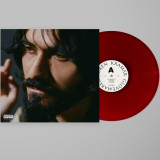
If the Chateau Marmont could sing. This would be it. Loren Kramar's voice vibrates with the shameless hum of a room after a celebrity exits Ecstatic aspiration. Doubt. Proximity. Desire. The album "Glovemaker" is about the skins we craft to be seen by the world, and Loren reminds us that we are all in drag. All exposed. No matter what gloves we slip on. "I'm a slut for all my dreams", Loren Kramar sings with Patti Smith brashness, "I'm a whore for them, I've got more of them". Loren's lyrics move like tinsel, shimmering bravely, then just as quickly, curling, fragile under the spotlight. Loren has always been obsessed with fame. Not with famous people, but with the electricity that perverts attention - the crushing desire to be truly seen. And all of Loren, and this obsession, is in this album. He grew up in the Valley, forced to hide his Barbies from his father, so the closet was a gorgeous Spanish ranch house on a gilded cul-de-sac crawling with celebrities. Naturally this gay boy wanted to be a child star so his mother secretly shuttled him to tap and jazz and figure skating lessons. "I've got hands and feet to put in the concrete", Loren croons, in "Hollywood Blvd", a song which clangs with brawny bravado. But "Gay Angels" reminds us that Loren's infatuation with stardom is inextricably linked with his queerness and his own desire to live outside of fear. To be famous is to be out. To be known. To be himself. "Glovemaker has become a kind of code for art making itself. A glove as a covering or mask that follows the contours of the life beneath it. As a song and a symbol, this is an album about studying and tracing a life - and then sharing what's there," Loren says. And his desire to share truth feels urgent. To listen to Loren is to understand there is no choice; the songs must tear through the air right now. This very second. "I see myself tearing and splitting and becoming a trampoline", he belts in "No Man," breaking our hearts right alongside his. Part poet, part theatrical diva, Loren loops together the tragedy of breathing on this planet, because like Eartha Kitt or Cat Stevens, Loren is at his core - an incredible story teller. This whole album is a shrine, a mantle atop a blazing fire of life, spread with the memorabilia of Loren; all of the pain and lust dazzling on unabashed view. This is a songwriter's album. Loren's lyrics are all his, and you feel it with every bright, Maraschino-cherry-like word that falls from his lips. "Like a lover, You scream and I shatter, I hit like a hammer" Loren sings. And we get to feel what Loren feels We live in his brain, riding his genre bending emotions, on a wave of modern pop. And the songs lift, they are anthems of belief, "Hollywood Blvd", "I'm a Slut", "Euphemism", "Gay Angels", are all odes to triumphing over the corroding powers of fear and doubt. And on this ride, Loren's voice is the guard rail, ever eager to stretch and transform, belting, talk-singing, multiplying, keeping us safe. "Glovemaker" slaps and soars. The album is an ecstatic overture to love and loneliness, to dreams and promises, to everything Los Angeles dangles. Buckle up. Loren knows how to craft space, how to move us through darkened bars, strobing arenas, beige carpeted bungalows and yellow lit highways. "How do you like LA?" Loren asks. I hope you love it.
If the Chateau Marmont could sing. This would be it. Loren Kramar's voice vibrates with the shameless hum of a room after a celebrity exits Ecstatic aspiration. Doubt. Proximity. Desire. The album "Glovemaker" is about the skins we craft to be seen by the world, and Loren reminds us that we are all in drag. All exposed. No matter what gloves we slip on. "I'm a slut for all my dreams", Loren Kramar sings with Patti Smith brashness, "I'm a whore for them, I've got more of them". Loren's lyrics move like tinsel, shimmering bravely, then just as quickly, curling, fragile under the spotlight. Loren has always been obsessed with fame. Not with famous people, but with the electricity that perverts attention - the crushing desire to be truly seen. And all of Loren, and this obsession, is in this album. He grew up in the Valley, forced to hide his Barbies from his father, so the closet was a gorgeous Spanish ranch house on a gilded cul-de-sac crawling with celebrities. Naturally this gay boy wanted to be a child star so his mother secretly shuttled him to tap and jazz and figure skating lessons. "I've got hands and feet to put in the concrete", Loren croons, in "Hollywood Blvd", a song which clangs with brawny bravado. But "Gay Angels" reminds us that Loren's infatuation with stardom is inextricably linked with his queerness and his own desire to live outside of fear. To be famous is to be out. To be known. To be himself. "Glovemaker has become a kind of code for art making itself. A glove as a covering or mask that follows the contours of the life beneath it. As a song and a symbol, this is an album about studying and tracing a life - and then sharing what's there," Loren says. And his desire to share truth feels urgent. To listen to Loren is to understand there is no choice; the songs must tear through the air right now. This very second. "I see myself tearing and splitting and becoming a trampoline", he belts in "No Man," breaking our hearts right alongside his. Part poet, part theatrical diva, Loren loops together the tragedy of breathing on this planet, because like Eartha Kitt or Cat Stevens, Loren is at his core - an incredible story teller. This whole album is a shrine, a mantle atop a blazing fire of life, spread with the memorabilia of Loren; all of the pain and lust dazzling on unabashed view. This is a songwriter's album. Loren's lyrics are all his, and you feel it with every bright, Maraschino-cherry-like word that falls from his lips. "Like a lover, You scream and I shatter, I hit like a hammer" Loren sings. And we get to feel what Loren feels We live in his brain, riding his genre bending emotions, on a wave of modern pop. And the songs lift, they are anthems of belief, "Hollywood Blvd", "I'm a Slut", "Euphemism", "Gay Angels", are all odes to triumphing over the corroding powers of fear and doubt. And on this ride, Loren's voice is the guard rail, ever eager to stretch and transform, belting, talk-singing, multiplying, keeping us safe. "Glovemaker" slaps and soars. The album is an ecstatic overture to love and loneliness, to dreams and promises, to everything Los Angeles dangles. Buckle up. Loren knows how to craft space, how to move us through darkened bars, strobing arenas, beige carpeted bungalows and yellow lit highways. "How do you like LA?" Loren asks. I hope you love it.
In many ways, the music of Writhing Squares could have only originated in Philadelphia; the city itself a microcosm of creatives, go-getters, freaks & weirdos that have coalesced into a supportive & boundary-pushing crew. Former Purling Hiss bassist Daniel Provenzano & Ecstatic Vision sax-player & vocalist Kevin Nickles' first musical missive was shot forth in 2013 (the self-released CDR "Live In Space") & various singles, split releases, albums (and a double-album) later we arrive at the duo's fourth full-length "Mythology", their third for Chicago-based Trouble In Mind Records. "Mythology" picks up the pieces left shattered by their previous double-album "Chart For The Solution" and reconnects the broken shards together like Kintsugi, the ancient Japanese technique for mending broken ceramics, infusing the breaks with powdered gold. The Squares themselves are like mad-scientists, taking the ruined detritus populating junk shops & surplus outlets & constructing their own sonic laboratories in their New Jersey basements to record, mix & tweak "Mythology"s eight tracks. Their new location allowed the band to regroup, reassess & reconstruct their sound from the ground up, shearing away the cosmic excess of 2021's "Chart For The Solution" to a sharper point. Tracks like `Barbarians' & `LEM' are classic Squares; brutal, aggressive, unwavering assault of Motorhead/Stooges-inflected sci-fi punk scree, while others like `Chromatophage's mutant funk & `Cerberus's techno-slink owe a serious debt to electric-era Miles Davis or Herbie Hancock & show that the group has more to offer than bludgeoning you with sonic force. Provenzano's bass & electronics are like a tank rolling across the terrain - a gnarly construct of Hawkwind-ian headiness & `Vincebus Eruptum's snarl - uncaring of what gets in the way. Nickles' brass vacillates between Stooges-influenced sleaze, jazzy no-wave stabs, & cacophonous sonic storms, strafing the listener into oblivion. The duo are joined on "Mythology" by drummer John Schoemaker - who contributed drums to "Chart For The Solution"s epic closing track `Epilogue' - whose percussive pulse adds an organic swing to The Square's sonics, particularly on album closer "The Damned Thing"s cosmic strut. "Mythology" tackles a multitude of themes, from fantastical tales of hellhound `Cerberus' or the comic-inspired "Eternity " to `Chromatophage's colorful/evil yarn about animals that eat colors (or a Magic: The Gathering card) to the true-life influenced `Acid Rain' that deals with the uncertainty of consuming drinking water after a chemical spill in the Delaware River. Elsewhere, `Ferrell' is an homage to the late, great Ferrell "Pharaoh" Sanders & `The Damned Thing' by a short horror story penned by Ambrose Bierce about an animal whose coloring is invisible to the naked eye. Writhing Squares are in a transitional phase, mapping out a new sonic mythology for themselves after crossing the event horizon into unknown space. "Mythology" is streaming on most DSPs & released on black vinyl & limited fluorescent green vinyl (while supplies last) on April 26th, 2024.
In many ways, the music of Writhing Squares could have only originated in Philadelphia; the city itself a microcosm of creatives, go-getters, freaks & weirdos that have coalesced into a supportive & boundary-pushing crew. Former Purling Hiss bassist Daniel Provenzano & Ecstatic Vision sax-player & vocalist Kevin Nickles' first musical missive was shot forth in 2013 (the self-released CDR "Live In Space") & various singles, split releases, albums (and a double-album) later we arrive at the duo's fourth full-length "Mythology", their third for Chicago-based Trouble In Mind Records. "Mythology" picks up the pieces left shattered by their previous double-album "Chart For The Solution" and reconnects the broken shards together like Kintsugi, the ancient Japanese technique for mending broken ceramics, infusing the breaks with powdered gold. The Squares themselves are like mad-scientists, taking the ruined detritus populating junk shops & surplus outlets & constructing their own sonic laboratories in their New Jersey basements to record, mix & tweak "Mythology"s eight tracks. Their new location allowed the band to regroup, reassess & reconstruct their sound from the ground up, shearing away the cosmic excess of 2021's "Chart For The Solution" to a sharper point. Tracks like `Barbarians' & `LEM' are classic Squares; brutal, aggressive, unwavering assault of Motorhead/Stooges-inflected sci-fi punk scree, while others like `Chromatophage's mutant funk & `Cerberus's techno-slink owe a serious debt to electric-era Miles Davis or Herbie Hancock & show that the group has more to offer than bludgeoning you with sonic force. Provenzano's bass & electronics are like a tank rolling across the terrain - a gnarly construct of Hawkwind-ian headiness & `Vincebus Eruptum's snarl - uncaring of what gets in the way. Nickles' brass vacillates between Stooges-influenced sleaze, jazzy no-wave stabs, & cacophonous sonic storms, strafing the listener into oblivion. The duo are joined on "Mythology" by drummer John Schoemaker - who contributed drums to "Chart For The Solution"s epic closing track `Epilogue' - whose percussive pulse adds an organic swing to The Square's sonics, particularly on album closer "The Damned Thing"s cosmic strut. "Mythology" tackles a multitude of themes, from fantastical tales of hellhound `Cerberus' or the comic-inspired "Eternity " to `Chromatophage's colorful/evil yarn about animals that eat colors (or a Magic: The Gathering card) to the true-life influenced `Acid Rain' that deals with the uncertainty of consuming drinking water after a chemical spill in the Delaware River. Elsewhere, `Ferrell' is an homage to the late, great Ferrell "Pharaoh" Sanders & `The Damned Thing' by a short horror story penned by Ambrose Bierce about an animal whose coloring is invisible to the naked eye. Writhing Squares are in a transitional phase, mapping out a new sonic mythology for themselves after crossing the event horizon into unknown space. "Mythology" is streaming on most DSPs & released on black vinyl & limited fluorescent green vinyl (while supplies last) on April 26th, 2024.
We Release JAZZ is very happy to announce an exciting new body of work by Joseph Deenmamode aka Mo Kolours. The singular musical spirit’s new 21-track album Original Flow is available as a double LP housed in a heavy 350gsm sleeve with original artwork by Mo Kolours himself and the classic WRJ obi strip, as well as in digipack CD and digital formats.
A catalog of critically acclaimed records, including his self-titled debut (2014), ‘Texture Like Like Sun’ (2015), 2018 album ‘Inner Symbols’ and three companion EPs, established Deenmamode as a prodigious musician and vocalist. Pitchfork extolled his “hypnotic, tribal-infused dance grooves”, DJ Mag appreciated the “colourful celebration of soundsystem culture”, and Resident Advisor advocated that “no one sounds quite like Mo Kolours”. Musical analogies were drawn by The Guardian as “The best album Curtis Mayfield never made with A Tribe Called Quest and Lee Perry” and Mojo as “like Marvin Gaye produced by J Dilla”.
Five years ago, Deenmamode moved to the Japanese countryside. Far away from familiarity, he contemplated his place and further questioned his identity. “I had none of my ‘own’ people around. I had time to really find what makes me tick musically. Japan has helped me go back to those subconscious leanings, really go deep, and reflect the aspects that make up my story”.
The tracks on ‘Original Flow’ have been constructed from sessions, improvisations and soundbites captured around the world during this time; collecting contributions from musicians including Deenamode’s brothers Reginald Omas Mamode and Jeen Bassa plus Andrew Ashong, Charles Bullen, Dwaye Kilvington, Eddie Hick, Stefan Asanovic, Myele Manzanza, Ross Hughes, and Tom Dreissler. Deenamode says “I’m proud of this album’s creative process. Coming from a tradition of scouring through hours of records, I wanted to create my own samples, to find that perfect loop that no other producer could put their hands on. I decided to invite a group of friends and acquaintances, who also happen to be incredible musicians, to a studio in Crystal Palace to improvise based on some loose ideas I had. We spent all day, and recorded everything”.
‘Original Flow’ is an album of UK street-soul nouveau, future indigenous jazz fusion, Rasta Segga, Nyahbinghi jazz, Malagasy Hebrew hip hop. While retaining a spirit of exploration and improvisation, it sees Deenmamode grow and flex beyond beat tape brevity, expanding composition and stretching his musical muscle to play live with other musicians. Themes of empowerment, overcoming adversity, and mental liberation coexist with notes from ancient history, futurism, and science, as well as musings on family and togetherness.
‘Magik Momentum’ springs from a discussion that features at the start of the song, an inspiring mentor answering a question from Deenmamode about improvisation and what role it plays in life when planning and manifesting the future. ‘Rockets to Mars’ questions the lack of care for the billions of people with nothing, while governments plan to explore space. “This sparked a comparison in my mind to a Sonny Okuson song that I would reference when performing. Okuson’s song talked of the lack of resources in many communities in the world, while governments go to the moon”.
He says the music behind ‘The News These Days’ is “possibly my favourite on the album”. Looped like he would a late sixty jazz-fusion sample, there was nothing added and the track was complete within a matter of minutes. “It was the first and best moment from the entire Crystal Palace session”, he adds. The album’s contrasting title track with minimal instrumentation played solo by Deenamode. While frustratingly searching for gems in past recordings, he thought in a burst of ego, “I don’t need no-one else to make a dope beat!” picked up his ravanne, (the traditional frame drum of his fathers home-land of Mauritius), pressed record, and started to play. He says, “In my thoughts were the rhythms of the Nubians in Upper-Egypt and Sudan, the swing of the huge drums played by Mauritanian women, of-course the Sega beat of Mauritius, and the ever inspiring beat of James Yancey”.
Driven by UK broken beat, Cuban congas, Nigerian and Mauritian inflections, ‘Love Vibration’ follows the concept that all emotions carry a vibratory frequency and pays homage to the frequency of creation and the power of love. The two part ‘Tatamaka’ tells of the history of Deenmamode’s ancestors, the maroons of Mauritius. “We are people who managed to run from our oppressors and find refuge in a corner of the island called ‘Le Morne’ where they could not reach us. One bloody day they came in numbers to re-capture, to revenge. Many of us chose to jump to our deaths, rather than be taken back into subjugation. The poem by Creole Richard Sedley Assonne says; “there were hundreds of them, but my people, the maroons chose the kiss of death over the chains of slavery”. Tatamaka was the name of a famed maroon leader who was murdered for claiming his, and our people’s freedom. The song is the imagined journey of escape and freedom by an ancestor of the maroons of Le Morne”.
Born in the west midlands and raised on the traditional sega music of his father’s Indian Ocean homeland of Mauritius alongside records by the likes of Jimi Hendrix, Santana and Michael Jackson; his influences expanded with late 90s jungle and drum and bass nights in Bristol, experiments at art college in Camberwell, and the rich culture of Peckham, “at the time we called it the Afro Quarters of London” says Deenmamode, adding hip hop, dub, soul and soundsystem styles to his individual sound.
He explains, “I love drum music, from hand-drums to 808s. I love music from the ancient past, heritage music, indigenous music, traditional music passed down from the beginning of time. Music from the body, hand claps, grunts and foot stomps. Music with audible depth, busy, bustling, highly charged. Music from the soul, the music from beyond. I love music from the islands and the mountains. The music of the streets, hustle music, alleyway beats. Club music”.
He describes the creative process as thinking in images. “The visual world and the world of sound seem to intermingle in my thought process. When I play the drum with my eyes closed, a world of imagery dances and moves with beat. Improvised drumming feels like I am listening to what I want to hear, rather than trying to play what I want to hear. Following the rhythm and finding new pathways to walk within the patterns is what I experience. In this way I often feel I am just a listener, instead of the player”.
Original Flow is pressed on biovinyl, a sustainable alternative to traditional vinyl. Biovinyl replaces petroleum in S-PVC by recycling used cooking oil or industrial waste gases, resulting in 100% CO2 savings in bio-based S-PVC production. Furthermore, it is 100% recyclable and reusable, embracing the circular economy ideology.
out of Stock
Last delivered 2 years ago available to reorder, subject to availability
Stuck in the depths of a dark alley, blocked by yet another breeze, hitting a stone wall, road sign ahead: Dead End.
Impasse. "Cul-de-sac".
Hip‐hop. The original, some would say, official music of the late 20th Century Bronx.
Some say it has endured it's fair share of distractions, detractors and defectors. Some say it has murdered itself, having been abandoned by its so‐called best men, those who have gone off in other directions, or who have, simply, just beat‐retired. Yet, there are plenty of Soldier Monks still out there, prepared to sweat it out in the Temple of Machinery and Mics.
Low Cut honored this cause four years ago, with his MPC crafted minimalist version of NY Minute and he's back to ring the bells and unsheathe the samples!
The starting point of Dead End's production remains the 90's boom-bap, but the will to carry it even further brings it to its destination. By decorating it with rich samples flushed out after digging through vinyls pressed several decades ago, it is guided by a compass pointing deposits to the East. With sound quality inherited from a fastidious composition and mix works, using inspiration rather than just being a copycat, Dead End celebrates it without setting it up as a museum piece.
Picturing the beatmaker stuck in the depths of a dark alley, ended with a brick wall, is easy. But far from isolated in his Parisian basement, Low Cut has rung phones in New York, Baltimore and Detroit, rounding up the faithful. He magnetized the hidden but sharp forces, and gained attendance of legends. The casting of Dead End : Ruste Juxx & Nutso, Dirt Platoon, Guilty Simpson, Torae, Rasheed Chappell and the stainless Masta Ace, among other beat crushers. Also starring DJ Duke, Nix'on, Topic and Ordoeuvre with their DMC titles crates, for a deep beatfight on bars scarified of scratches.
Heavy atmosphere, martial beats and street soul, Dead End is also the final episode of the projects initiated by Low Cut, based on the model of a producer inviting various MCs.
He will then replace his turntable needles, refresh his sample banks, and settle the BPMs of his productions on more abstract frequencies.
CLEARxCUT is out there to spread the message of total liberation. (Former) Members of HEAVEN SHALL BURN, IMPLORE, and KING APATHY/THRÄNENKIND started this collective, because they are dedicated to the vegan straight edge (XVX) and want to confront listeners with inconvenient thruths and todays harsh reality. The German band addresses their songs and convictions to all people who are prepared to stand up for a better, fairer future - but especially to all anarchists, anti-fascists, feminists, primitivists and indigenous peoples of the world. Or to put it brief: to all defenders of our earth. The stylistic choice of means falls on metallic hardcore, which is rooted in a strong DIY ethic. Having released their first two albums "For The Wild At Heart Kept In Cages" (2019) and "Songs of Desire Armed" (2022) for Catalyst X Records (Gather, Nueva Ethica, Abnegation, Birthright, Maroon, Point Of No Return, Forward To Eden), "Age Of Grief" now marks CLEARxCUTs debut for LIFEFORCE RECORDS. Started in the mid-1990ies as label with mainly vegan and straight edge bands, the German Label has an impressive history with XVX bands such as ARKANGEL, DAY OF SUFFERING, RANCOR, UNCONQUERED, UNBORN, FAULT, or DEADLOCK. Being a collective that is outspoken in its message and keeps the vegan straight edge banner high, CLEARxCUT continue this tradition. Also besides having switched their label, "Age Of Grief" marks a fresh start for CLEARxCUT. After a big shift in their ranks, before the global pandemic hit, the band moved from two (female) vocalists to one (male) frontman. This is accompanyed by a change of sound. On their third full lenght album, the German band is diving into the realms of metallic hardcore, leaving behind their early hardcore punk influences. Noone should be surprised by this move, as CLEARxCUT was conceived as a collective where members, names, or styles wouldn’t matter, but one and only the final goal of spreading a positive message in defense of animal rights and sober living. "Age Of Grief", in this respect, is extremely consistent.
"At the time I'd have been fairly upfront about wanting to release tracks that were faster than most and in a style that wasn't straight electro. Some of these tracks fell into a weird middle ground for me, so they got put aside. It had been 20 years since I'd heard any of them and on listening back I reckoned that time had been kind to them so I started remastering them and uploading to Soundcloud alongside some classic 12" releases from my label Trama Industries.
For me, it was interesting to hear sounds and techniques emerging on some later tracks that would form the basis of my later projects like Legion Of Two and Of One. I'd kinda forgotten about that. Huge thanks to Eddie and Intrinsic Rhythm for suggesting a release and believing in the project"
out of Stock
Last delivered 22 months ago available to reorder, subject to availability
2x7"
Not so long ago Marlena Shaw was a forgotten figure. The talented vocalist had made several LPs for respected labels such as Cadet and Blue Note, and she'd performed regularly throughout the '60s and '70s. But she hardly had what you might call diva status. Falling into the unfortunate category that slips uneasily between soul and jazz, she was accepted - but not especially admired - by aficionados of either genre. Then came the '90s, and an open-minded enthusiasm for soul and jazz - and more importantly - everything in between - soon changed that. Marlena Shaw became an icon, and the diva status soon blossomed amongst her new-found soul-jazz fans.
Respect is a word that means much to any singer. The artist who stands up in the bright lights before an audience that has handed over their hard-earned cash has only their physical presence and naked voice to rely on. There is no hiding when you're on stage, you're the focus of attention and everybody is gawping at you. The singer yearns to communicate and entertain, and in return not only asks for appreciation and acceptance, but respect. To this end Marlena Shaw has endured decades of singing in the shadows, and she has only recently finally found her niche.
On Disc One we have 'California Soul', probably the most enduring and well-known of her many songs, but just a few seconds listening will tell you that it is much more than that. It's already a classic amongst those who have already seen the light and have danced and swayed to its timeless swing. Upon hearing it all lovers of soul, jazz – or any other kind of good music - will feel an aural glow as warm as the Californian sun. The song 'Liberation Conversation' on the flip was only ever available on her highly revered 1969 LP 'The Spice of Life'. This is where the 'Blues ain't nothing but a good woman gone bad' launches into an irresistible, relentless uptempo funk groove.
Disc Two showcases 'Wade in the Water', an ancient song rumoured to have been developed and popularised by slaves in the American south. The message is to pass on the notion that by fleeing in a bid for freedom through streams and rivers, the scent that bloodhounds use to follow their victims will be obscured. Marlena's version has long been a favourite dancefloor filler since its 45-only release back in 1966.
'Woman of the Ghetto' is one of her best-known songs and ends the set on the other side. The opening number from 'The Spice of Life', it's since been recognised for the classic it is, and as such has been afforded anthemic status. We release the original 45 version here, as used to promote the LP back in the day.
This special 2x7" product from Jazzman is dedicated to the memory of Marlena Shaw, b. 22 September 1939, d. 19 January 2024.
out of Stock
Last delivered 4 months ago available to reorder, subject to availability
About 20 years ago, Carlos Giffoni quickly made a name for himself both as a noise guitarist and a laptop noisician upon arriving in New York (via Florida and Venezuela). His expertly curated annual No Fun Festival, as well as his No Fun label, further solidified him as a key figure in the international noise scene. The festival's success proved the formula for experimental and improvised music fests could work with the noise underground as well, but it also capitalized on the faster rate of connections being made between geographically disparate artists as a result of the (still relatively nascent) internet. Back then Carlos would play his laptop like a pinball machine, in contrast to the static stage presence of most laptop performers, and his solo music, like many others' at that time, expressed a less dark and dour vision of the implications of harsh noise. By the close of the 2000s, he had stopped doing the festival, switched gears musically to playing the lighter No Fun Acid sets, and moved to LA. Now he has re-emerged in a big way with Dream Walker, his first full-length since 2018's Vain (and only his second since 2010). Inspired by the masterful performances and diffusions he heard at the February 2023 GRM electronic music festival in Paris, particularly sets by old friends Lasse Marhaug, Jim O'Rourke, and Eiko Ishibashi, he began conceptualizing new music of his own in response, turning to synthesizers and other hardware to produce a work more firmly in the tradition of European electronic music than anything else he's done. Intended as a late night listen that evokes the edge of consciousness, with Carlos getting as close as possible to a trance state during the actual recording and mixing, each of the eleven tracks transition into one another rather than being standalone discrete pieces, forming two side-long suites that proceed like stages of a dream. Unabashedly tonal and repetitive, the glistening opener "Now Dream," the droning "Sleep Walker," and the closing triptych of "Lost in Descanso," "Sunrise," and "The Hidden Path" occupy a power electronics-ambient nexus that feels spiritually close to the Mego label. Elsewhere, "Ticking Clock" is reminiscent of Stereolab's non-easy listening vintage electronic side, while the two-part arpeggiated "Euphoria" recalls early Oneohtrix Point Never (which Carlos released on No Fun). The contrast between "One Breath"'s crackling opening and its remarkably fluid and soaring sustained synthesized chords is a distillation of the album's lingering tension between electronics' ability to project mechanical rupture as well as the organic and the infinite _or "walking between dreams," as Carlos himself puts it. Produced by Lasse Marhaug (who also mastered Carlos' first solo album, Welcome Home, back in 2005), released by Stephen O'Malley (who I remember DJing at the No Fun fest), with cover art and photos by personal friends, Carlos considers the album a family affair. But Dream Walker most of all heralds a maturation of the artist, and stands as a record that exists out of pure desire, rather than obligation or force of habit; a statement of reconnecting with music not by merely revisiting it, but by building on what's come before, both in his own work and in the music he loves. -Alan Licht, New York, December 2023
Christina Kubisch’s Stromsänger finds this legendary sound artist at the top of her game mixing electromagnetic wave recordings with a score for six voices, creating powerful results. Stromsänger is based on a collaboration with the Norwegian vocal ensemble Trondheim Voices and on a special experience while researching and recording electromagnetic waves in the city of Trondheim.
“The general theme of the composition is the idea of sounds which travel. During a tram ride from the city up to the hills with an old tram I discovered not only stunning views of the surrounding landscape but as well a special soundscape. Wearing a custom made induction headphones, I could hear the normally hidden electromagnetic fields of the tram, which were so impressive and musical to me that I immediately decided to base my piece for Trondheim Voices on this discovery.
As a start, a series of pure vocal recordings were produced by Trondheim Voices while listening to a choice of electromagnetic tram sounds and following score instructions. This material was mixed in my Berlin studio and afterward was played back through a multi-loudspeaker setup into the room of the Elisabeth Church in Berlin and was instantaneously recorded. The emerged recording was played back and recorded again. The process of playing back the previous recording was repeated numerous times, generating numerous “re-recordings”, until the voices sounded aethereal and abstract. The last one of these recordings became the very beginning of the Stromsänger piece.
Part A is based on the electromagnetic sounds of the waiting tram and previously recorded voices. The singers come on stage and start to sing together with their recorded part which slowly fades out while the live singing takes over: a kind of choral for electrical tram waves and voices.
Part B is based on the actual tram ride with strong and intense electromagnetic sounds. The single recordings were treated electronically and were divided into six channels. Each singer has chosen one of these files and improvises with the magnetic sounds as a soloist or in duos or trios.
Part C is based on the itinerary of the tram ride to Lian, where a pilgrim's path starts. The names of the single stops, which have very beautiful and poetic names, are performed together as a kind of "sound poetry". The singers walk around on stage and/or can choose special positions for their performance. The recording of the word "Lian", the final stop, was recorded beforehand and played back and re-recorded several times in the open Norwegian landscape near the final tram stop. The voices slowly disappear and fade out.”
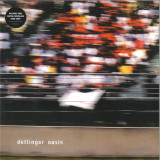
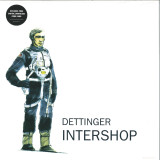
Dettinger’s Intershop and Oasis have long been held, by many fans of ambient and electronic music, to be some of the finest albums in their field. Produced by the mysterious Olaf Dettinger, about whom not much is publicly known, they were some of the earliest full-lengths released by the then-nascent Kompakt, and in many ways, they both articulated and defined the sound that would come to be known as Pop Ambient, while also existing, somehow, to the leftfield of any clearly recognisable genre.
Beautiful, sui generis works, it is a rare pleasure to see them being reissued on vinyl for a new generation of listeners to embrace. Originally released on CD only in 1999, Intershop was Kompakt’s first artist full-length. The music here simmers and broods, with opulent banks of tone marking out territory for rhythms that seem to be built from the clacking detritus of technology – hisses, thunks, knocks. Bass is deployed carefully, each drop a dubbed-out depth charge; drones spin and spiral, warping and weaving between the beats.
Oasis, released in 2000, refined the palette that Dettinger had explored on its predecessor. A blurred crusade of ambient texturology, its unassuming patterns, and subtle, incremental dynamics, admit to real beauty, and a kind of abstract sensuality that you don’t often experience with music that is, perhaps, similarly tooled, but not as poetic. Through seemingly simple gestures – whether lushly expansive repetitions, hyper-acute tremolo tones, or ear-tickling rhythms – it builds complex emotional resonance. It’s no surprise to discover Oasis is held in high esteem by artists like Panda Bear of Animal Collective, who once said of Dettinger, “For us, he was the dude.”
There is, of course, other music to know Dettinger by, too – his three excellent EPs for Kompakt, Blond (1998), Puma and Totentanz (1999), the latter of which, Michael Mayer once argued, “invented dubstep.” There is also a small, yet graceful run of compilation contributions, many of which can be found on Kompakt’s Total and Pop Ambient series. All this music has plenty to recommend it, sharing a clarity of purpose, and a rare, human warmth and depth. But Intershop and Oasis are the releases that distil Dettinger’s singular vision, and allow him, should he wish, to claim his place as a modern master of ambient and electronic music.
Dettingers Intershop und Oasis werden von vielen Fans von Ambient und elektronischer Musik seit langem als einige der besten Alben in diesem Bereich angesehen. Produziert von dem mysteriösen Olaf Dettinger, über den nicht viel bekannt ist, gehörten sie zu den ersten Alben, die von der damals aufstrebenden Plattenfirma Kompakt veröffentlicht wurden. In vielerlei Hinsicht formulierten und definierten sie den Sound, der später als Pop-Ambient bekannt werden sollte, während sie gleichzeitig irgendwie links von jedem klar erkennbaren Genre existierten.
Es ist eine seltene Freude zu sehen, dass diese wunderschönen Werke auf Vinyl wiederveröffentlicht werden, um sie einer neuen Generation von Hörern zugänglich zu machen. Ursprünglich wurde Intershop 1999 nur auf CD veröffentlicht und war Kompakts erstes komplettes Künstleralbum. Die Musik hier brodelt und brütet, mit opulenten Klangbänken, die das Territorium für Rhythmen abstecken, die aus dem klappernden Gerümpel der Technik gebaut zu sein scheinen – Zischen, Klopfen, Schaben. Der Bass wird sorgfältig eingesetzt, jeder Drop ist eine synchronisierte Tiefenladung; Drones drehen und winden sich spiralförmig und verflechten sich zwischen den Beats.
Oasis, das im Jahr 2000 erschien, verfeinerte die Palette, die Dettinger auf seinem Vorgänger erkundet hatte. Ein verschwommener Kreuzzug der Ambient-Texturologie, dessen unaufdringliche Muster und subtile, schrittweise Dynamik echte Schönheit und eine Art abstrakter Sinnlichkeit zulassen, die man nicht oft bei Musik erlebt, die vielleicht ähnlich ausgestattet, aber nicht so poetisch ist. Durch scheinbar einfache Gesten – seien es üppig ausladende Wiederholungen, hyperakute Tremolotöne oder ohrenbetäubende Rhythmen – baut sie eine komplexe emotionale Resonanz auf. Es ist keine Überraschung, dass Oasis von Künstlern wie Panda Bear von Animal Collective hoch geschätzt wird, der einmal über Dettinger sagte: “Für uns war er DER Typ”.
Es gibt natürlich auch noch andere Musik, die Dettinger bekannt macht – seine drei ausgezeichneten EPs für Kompakt, Blond (1998), Puma und Totentanz (1999), von denen letztere, wie Michael Mayer einmal kühn behauptete, “den Dubstep erfand”. Es gibt auch eine kleine, aber feine Reihe von Compilation-Beiträgen, von denen viele auf Kompakts Total- und Pop-Ambient-Serien zu finden sind. All diese Musik ist sehr empfehlenswert und zeichnet sich durch eine klare Zielsetzung und eine seltene, menschliche Wärme und Tiefe aus. Aber Intershop und Oasis sind die Veröffentlichungen, die Dettingers einzigartige Vision destillieren und es ihm ermöglichen, seinen Platz als moderner Meister der Ambient- und elektronischen Musik zu behaupten, sollte er dies wünschen.
out of Stock
Last delivered 19 months ago available to reorder, subject to availability
Dettinger’s Intershop and Oasis have long been held, by many fans of ambient and electronic music, to be some of the finest albums in their field. Produced by the mysterious Olaf Dettinger, about whom not much is publicly known, they were some of the earliest full-lengths released by the then-nascent Kompakt, and in many ways, they both articulated and defined the sound that would come to be known as Pop Ambient, while also existing, somehow, to the leftfield of any clearly recognisable genre.
Beautiful, sui generis works, it is a rare pleasure to see them being reissued on vinyl for a new generation of listeners to embrace. Originally released on CD only in 1999, Intershop was Kompakt’s first artist full-length. The music here simmers and broods, with opulent banks of tone marking out territory for rhythms that seem to be built from the clacking detritus of technology – hisses, thunks, knocks. Bass is deployed carefully, each drop a dubbed-out depth charge; drones spin and spiral, warping and weaving between the beats.
Oasis, released in 2000, refined the palette that Dettinger had explored on its predecessor. A blurred crusade of ambient texturology, its unassuming patterns, and subtle, incremental dynamics, admit to real beauty, and a kind of abstract sensuality that you don’t often experience with music that is, perhaps, similarly tooled, but not as poetic. Through seemingly simple gestures – whether lushly expansive repetitions, hyper-acute tremolo tones, or ear-tickling rhythms – it builds complex emotional resonance. It’s no surprise to discover Oasis is held in high esteem by artists like Panda Bear of Animal Collective, who once said of Dettinger, “For us, he was the dude.”
There is, of course, other music to know Dettinger by, too – his three excellent EPs for Kompakt, Blond (1998), Puma and Totentanz (1999), the latter of which, Michael Mayer once argued, “invented dubstep.” There is also a small, yet graceful run of compilation contributions, many of which can be found on Kompakt’s Total and Pop Ambient series. All this music has plenty to recommend it, sharing a clarity of purpose, and a rare, human warmth and depth. But Intershop and Oasis are the releases that distil Dettinger’s singular vision, and allow him, should he wish, to claim his place as a modern master of ambient and electronic music.
Dettingers Intershop und Oasis werden von vielen Fans von Ambient und elektronischer Musik seit langem als einige der besten Alben in diesem Bereich angesehen. Produziert von dem mysteriösen Olaf Dettinger, über den nicht viel bekannt ist, gehörten sie zu den ersten Alben, die von der damals aufstrebenden Plattenfirma Kompakt veröffentlicht wurden. In vielerlei Hinsicht formulierten und definierten sie den Sound, der später als Pop-Ambient bekannt werden sollte, während sie gleichzeitig irgendwie links von jedem klar erkennbaren Genre existierten.
Es ist eine seltene Freude zu sehen, dass diese wunderschönen Werke auf Vinyl wiederveröffentlicht werden, um sie einer neuen Generation von Hörern zugänglich zu machen. Ursprünglich wurde Intershop 1999 nur auf CD veröffentlicht und war Kompakts erstes komplettes Künstleralbum. Die Musik hier brodelt und brütet, mit opulenten Klangbänken, die das Territorium für Rhythmen abstecken, die aus dem klappernden Gerümpel der Technik gebaut zu sein scheinen – Zischen, Klopfen, Schaben. Der Bass wird sorgfältig eingesetzt, jeder Drop ist eine synchronisierte Tiefenladung; Drones drehen und winden sich spiralförmig und verflechten sich zwischen den Beats.
Oasis, das im Jahr 2000 erschien, verfeinerte die Palette, die Dettinger auf seinem Vorgänger erkundet hatte. Ein verschwommener Kreuzzug der Ambient-Texturologie, dessen unaufdringliche Muster und subtile, schrittweise Dynamik echte Schönheit und eine Art abstrakter Sinnlichkeit zulassen, die man nicht oft bei Musik erlebt, die vielleicht ähnlich ausgestattet, aber nicht so poetisch ist. Durch scheinbar einfache Gesten – seien es üppig ausladende Wiederholungen, hyperakute Tremolotöne oder ohrenbetäubende Rhythmen – baut sie eine komplexe emotionale Resonanz auf. Es ist keine Überraschung, dass Oasis von Künstlern wie Panda Bear von Animal Collective hoch geschätzt wird, der einmal über Dettinger sagte: “Für uns war er DER Typ”.
Es gibt natürlich auch noch andere Musik, die Dettinger bekannt macht – seine drei ausgezeichneten EPs für Kompakt, Blond (1998), Puma und Totentanz (1999), von denen letztere, wie Michael Mayer einmal kühn behauptete, “den Dubstep erfand”. Es gibt auch eine kleine, aber feine Reihe von Compilation-Beiträgen, von denen viele auf Kompakts Total- und Pop-Ambient-Serien zu finden sind. All diese Musik ist sehr empfehlenswert und zeichnet sich durch eine klare Zielsetzung und eine seltene, menschliche Wärme und Tiefe aus. Aber Intershop und Oasis sind die Veröffentlichungen, die Dettingers einzigartige Vision destillieren und es ihm ermöglichen, seinen Platz als moderner Meister der Ambient- und elektronischen Musik zu behaupten, sollte er dies wünschen.
out of Stock
Last delivered 2 years ago available to reorder, subject to availability
Full of Hell Coagulated Bliss bio Full of Hell burst forth with incredible force from the small, dagger-shaped city of Ocean City, Maryland, 15 years ago. Over five full-lengths, five collaborative full-lengths, and countless splits, EPs, singles, and noise compilations, they’ve evolved at extraordinary speed, their music becoming more complicated and technical without ever slowing down or losing its soul. Everything on a Full of Hell album feels like a blur: smears of guitar, harsh noise shaken like gravel in a bag, singer Dylan Walker’s snarl and bite carrying him into outer space or into the core of the earth. They’re coiled, interlocking, impossible to penetrate, and they move with alarming speed. They have now reached terminal velocity. Having created their own context, they’re now able to walk around within it, to survey its terrain, to visit far corners and see who’s nearby. Coagulated Bliss sounds like Full of Hell, but it’s nothing like any Full of Hell record that’s come before it. These songs are trimmer, less freighted with anxiety, more interested in opening up than speeding away. Its bile is sometimes funneled into traditional song structures. It never shies away from the extreme harsh noise, unrelenting spirit, and pitch-black sadness of previous Full of Hell records; if anything, the leanness of these songs makes them feel even heavier. Nevertheless, there are tracks here you might find yourself whistling hours after listening. It’s an extraordinary and unexpected evolution in sound for a band who made their name on rapid metamorphosis, and it’s the logical endpoint of everything Full of Hell has covered so far..
From the outset this ad hoc quartet hit the gas, launching into a frenzied, high-octane set with alto saxophonist Rasmussen engaging in a furious tightrope-walk of upper register screams while O'Rourke unspools some of the most gnarly guitar noise this side of Masayuki Takayanagi. Of course, with such flinty, seasoned improvisers there are thrilling peaks-and-valleys, such as the extended hydroplaning guitar O'Rourke sculpts mid-way through the first extended piece, with the rest of the group taking a much-deserved pause. The pause sets the stage of a thrilling recalibration, with Corsano first diving in with an epic improvisation only to recede for one of Sakata's singular vocal improvisations, a throaty incantation as dynamic and visceral as his alto playing. Rasmussen returns, with Sakata picking up his clarinet, and suddenly the twinned reed blast that started the whole performance toggles into more spacious interplay, tapping into jazz orthodoxy without being held captive by it. - The entire recording is a testament to refined listening. Even at the most scorching peaks each player is deftly attuned to one another's sonic projections. Bridging generations, continents, and individual aesthetics, Rasmussen, Corsano, Sakata, and O'Rourke find common cause, convening for an evening of galvanic sound that's simultaneously exhilarating and spiritual. - Akira Sakata - saxophone, voice - Jim O'Rourke - guitar - Mette Rasmussen - saxophone - Chris Corsano - drums Coloured marble vinyl LP!
Moisk aka Pletnev & Fourmi Rouz delve into the depths of psychedelia soundscapes with their latest release “Tetris Life’’ on Terra Magica Rec. The duo skillfully balances modular sounds and shimmers through acid synthesizers with a wide range of psychedelic soundscapes from uptempo half-beat to raw, energetic techno trance, inviting you into a mesmerizing sci-fi universe.
The EP features tracks like “Tetris Life” and “A Glass of Coke with Ice”, that explore underground ambient deserts and immersive jungle improvisations. This is followed by dark and slow breakbeat cuts that transition into faster-paced, floating atmospheric IDM tunes. The 12’’ contains many choppy old-school loops and uptempo trance breakdowns, as in “Orange Button’’ and “Wrong Stability”. Featuring two weird dub/IDM/breaks remixes by Anatolian Weapons and HSDJs X Listensport to round off the wax. Don’t sleep on it!
out of Stock
Last delivered 17 months ago available to reorder, subject to availability
Keplar presents the first-ever vinyl edition of the 2003 album »From Tokyo to Naiagara« by Tujiko Noriko. This reissue with new artwork by Joji Koyama is an abridged version of the album as Tomlab label owner Tom Steinle and producer Aki Onda had originally intended to publish it alongside the original CD version. Written by the France-based Tujiko while she still lived in Japan, »From Tokyo to Naiagara« followed up on her two seminal Mego albums and marked a turning point in both the artist’s career and personal life: While she was preparing to leave Japan behind, she succinctly connected the dots between her experiments in pop music and her interest for more abstract sounds. Tujiko worked primarily with a Yamaha synthesizer and an MPC sampler while also incorporating contributions by other musicians such as Onda, Riow Arai and Sakana Hosomi into the pieces. Sometimes approaching an IDM and clicks’n’cuts-style production or working with trip-hop and hip-hop beats while using conventional song structures in the most unconventional of ways, the album showcases her multifaceted influences and skills as a singer and musician to full effect.
Tujiko fondly remembers the time when she made the album. »I had a lot of time for myself back then and I didn’t even feel like I was very busy,« she says today. She describes producing it in close collaboration with Onda, who would relocate to New York City shortly after, as »quite Tokyo and very local.« They explored parts of the city that they hadn’t yet been to for a photography project (finding, among other things, a coin laundry called Naiagara—a transliteration of Niagara). This left its mark on a record that mixes melancholia with joy. The driving opener »Narita Made,« named after one of Tokyo’s airports, already makes this clear: Tujiko’s wistful vocals and lyrics like »I miss you terribly« emphasises the sense of bittersweetness that forms the common thread for a sonically diverse and stylistically open-ended album—this music is looking back while moving forward. It is probably no surprise that its reissue too evokes tender memories of Onda and Steinle in Tujiko, while also reminding her of what lies ahead. »I have so much more to do and not enough time for that,« she muses, before quickly adding: »But I also feel less alone having that album again.«
Influenced in equal parts by the experience of strolling through previously unknown Tokyoite back alleys and thinking about the paths not (yet) taken, »From Tokyo to Naiagara« is precisely that: the perfect travel companion for a journey that leads its listeners from past to future.
out of Stock
Last delivered 14 months ago available to reorder, subject to availability
My Proud Mountain is proud to announce third volume of the series "Songs of Townes Van Zandt", that was started in 2012 and features various artists covering Townes Van Zandt songs. Songs of Townes Van Zandt Vol. III featuring Amenra, Cave In & Marissa Nadler and will be released on April 22, 2022. Steve Brodsky of Cave In about being part of the record: "In the winter of 2010, I did a solo tour with Scott Kelly of Neurosis and Bob Wayne. It was the 3 of us and Ansgar Glade traveling in Bob's "green machine" van around the UK and Ireland. At every show, Scott played the song "Caroline" and each time I heard it, I found myself enraptured. This was my introduction to Townes Van Zandt. Pretty cool that 10 years later, Ansgar has given me and Cave In this great opportunity to show our love for TVZ's music." Lennart Bossu of Amenra says: "Being Belgians, the very American folk and country of Townes Van Zandt is not exactly the music we grew up listening to, but upon discovering his songs in our early twenties, they immediately struck a chord with us. Even people who do not understand the lyrics can probably tell that they are listening to someone who has lived and suffered, and, oddly enough, at the same time find deep comfort in his soothing voice. It is the kind of comfort that often defines great music or art in general, and it made the prospect of trying our own hand at a few of his songs no less daunting. Nonetheless, when we were asked to be part of this collection of Townes Van Zandt cover songs, we felt excited and compelled to be part of it, as, in a way, it offered us a chance to do something in return for the great songs he has given us, and also be a part of a series of albums that are almost exclusively comprised of artists we deeply respect." Marissa Nadler about Townes Van Zandt: "I've been a fan of Townes Van Zandt's music for nearly as long as I've been writing songs. When I was starting out, a friend introduced me to Townes's music and I pretty much instantly fell in love with both the rawness of his songs as well as the intense sense of longing expressed within them. His lyrics are haunting and evocative and have inspired me endlessly. These melodies will linger with you, year after year, and hopefully keep you company along the way." Ltd red vinyl LP!
Bite Down, the Merge Records debut of Rosali, finds acclaimed songwriter and guitarist Rosali Middleman in the midst of transition. Written after moving to North Carolina from her longtime home of Philadelphia, Bite Down is a searching, hungry record by an artist who is resolved to bite down on life, in all its horror and joy. She is joined here by Mowed Sound_David Nance (bass, guitar), James Schroeder (guitar, synth), Kevin Donahue (drums, percussion)_and in studio by Destroyer collaborator Ted Bois (keys). Bite Down is Rosali's second album working with Mowed Sound, and there is urgency and ambition in their collaboration_a band pushing each other not just to expand on what they've already done together, but to break through into altogether new territory. Among those joining Rosali and her band there is Dan Bejar of Destroyer, who waxes poetically on where she's been, where she's going, and how thrilling Bite Down is to experience: It's hard to talk about Rosali's music. Songs that reach outward like this, but then constantly disarm with their intimacy. What do you call such inner searching that is hellbent on rollicking? Songs that long for a sense of peace and songs that want romance, all on equal footing in the same plot of earth? Performed wild, but always centered around the incredible lyrical calm that is Rosali's voice. Bite Down makes me think about singers and bands that throw themselves hard into the storm, the way the Rosali quartet does. (Jim captures the tone of this perfectly, again!) The calm of her voice over top of the band's raging_it is the emblem of songs that live to put themselves in harm's way. But it's not harm. It's just that you have to play hard to get at these goods. The calm of Rosali's voice, the straight talk of her inner search vs. the wildness of the band, the sonic storm she rides in on. That's their sound. The Mowed Sound. It's hard to talk about these last couple Rosali albums without talking about them. They play free and wild and relentlessly melodious. They rip and create space and fill it up with what seems like reckless abandon, but listen carefully or listen for a while and you'll find them paying real close attention to each other and exactly what the song demands. Maybe Fairport did this, maybe VU. It's a strange telepathic brew. Breezier songs like "On Tonight" and "Rewind" sound like they've fought their way to get to that sense of ease. Maybe that's the Mowed Sound "sound"_hard-won ease. Then add to that Ted Bois' patented Rhodes sleaze (see sinuous title track "Bite Down") steering the record into late-night corners; the incredible "Hills on Fire" (maybe the centerpiece of the album), the guitar-ripping and the singing taking turns in reaching new levels of intimacy. It feels listened-in on, exposed and invented on the spot. It is also simply a staggeringly beautiful song. There are a few of those on the album. In contrast, "My Kind" is a raucous, hand-delivered classic; the band throws tables over. For the most part, this is a moodier record than No Medium. It has the same sound of "I've traveled through fire to deliver you these songs," but it is also quieter, more nocturnal. The quiet dread of staring down an open road, and the excitement of that. By the final track, "May It Be on Offer," it is the prayer uttered as you hand yourself over to the world.
Ponyland are a psychedelic punk, force of nature, a multi-limbed monster of scuzzed-out riffs and thunderous ritualistic grooves. Combining the grinding onslaught of Lightning Bolt, the ecstatic spectacle of Sun Ra and the irreverent spirit of System of a Down, this unhinged, masked menagerie have to be seen to be believed. Intoxicating rhythms meet hook driven waves of riffage, with ecstatic energy that will make your legs rattle uncontrollably.
Following on from their debut album Mora Mora, this new full length LP HARE BRAINS sees Ponyland embrace a new edge to their visionary sound world. Keeping the trademark, pulverising double drum kit engine and fuzz-drenched psychedelic soundscapes, the band have supercharged their songwriting with focused riff-based hooks and driving punk-edged vigour. Prominent female vocals channel Bikini Kill and Warpaint, whilst gritty, melted electronics flow around a classic thrashing guitar sound. Hare Brains is a celebration of dysfunction, a call to arms against human apathy, a psychotropic odyssey of eroded power structures, post-apocalyptic landscapes and mutant pigeons.
The anarchic pagan ecology of Ponyland’s vision grabs the listener and catapults them into a visceral NOW, full of defiant life, movement, and human connection.
out of Stock
Last delivered 2 years ago available to reorder, subject to availability
We are delighted to bring you the first in the Ivan The Tolerable Archive Reissue Series, Autodidact!
Originally released on a 10” lathe cut by Ack Ack Ack Records in February 2018, this has now been remastered and repackaged, and will now be available on ltd edition khaki vinyl, with only 250 copies pressed. Here’s a bit about the record in Oli Heffernan’s aka Ivan The Tolerable own words-
“I recorded the bulk of this record over a weekend in January 2018, in the midst of a very minor breakdown that was to last for pretty much the entire year. I was living in a big house all on my own, smoking too much and not really seeing any people. Happy days indeed.
It was tracked in the back room of 97 Hambledon Road, Middlesbrough using two questionable microphones, a broken HH 100 amp, my friends drums and a Tascam DP08 (that wasn’t to see the year out, RIP 2009-2018) When I was done, Robbie came round and recorded a ton of violin drones through my amp and i remember feeling like I’d gone into a trance a few times, then Ben recorded his parts at home and sent them over. Mixed and mastered the same night - I released it myself a month later as a lathe cut 10”and then promptly moved on. I listened to the album for the first time in years to write this sleeve note and I think it is possibly the closest I’ve ever got to capturing the sound I hear in my head - I love how grubby and cavernous it sounds, claustrophobic and swirling - the track Autodidact I have recorded 4 more times since this version and I’ve never got that sound back. I’II keep trying.’’
“Oli Heffernan, June 2023’’
out of Stock
Last delivered 2 years ago available to reorder, subject to availability
Pinegrove’s Everything So Far is exactly what its title suggests - an anthology of all of Pinegrove’s output up to the point of their breakout Run For Cover Records full-length, Cardinal. The collection encapsulates their debut LP Meridian, a number of EPs and even some singles like the captivating track Angelina and Cardinal favorite New Friends. Originally available only on cassette with a shorter tracklist. Listening to Everything So Far is a rewarding experience for new and old fans, as the time capsule of a tracklist shows Pinegrove developing a signature sound, maturing and learning with each song.
How do you follow up a work described in the Independent on Sunday as “the best debut album since Marquee Moon”? That’s the question facing singer-songwriter John Canning Yates, twenty years on from the critically acclaimed ‘The First Album’ by his band Ella Guru.
‘The Quiet Portraits’ will appeal to anyone who loves the beautiful melodic soundscapes woven by Brian Wilson, Burt Bacharach, and Tom Waits, while Yates’s unique vocals evoke the emotional fragility and compelling narrative of Neil Young, Paul Buchanan, Mark Linkous and Elliott Smith.
Mastered by Jason Mitchell (PJ Harvey, Robert Forster), and featuring guest contributions from pedal steel maestro BJ Cole and friend and multi-instrumentalist Andy Frizell (Kevin Ayers, Wizards of Twiddly), those dedicated followers of Ella Guru who stayed the path will find their patience very well rewarded. ‘The Quiet Portraits’ is a remarkable achievement from an unassuming, yet hugely talented artist.
It’s a welcome relief amid the rapidly changing musical landscape to find that all that has changed in John’s world is the number of musicians around him. The beautiful storytelling, the art of finding those magical musical moments that will remain with you for years to come: all of that has survived the passing of time intact.
Happiest with headphones on, working alone in the small hours from his Liverpool home, Yates has created another masterpiece.
He explains: “In the wee small hours, with loved ones safely asleep and the busy day done, there comes a hush. Within it, you can breathe and listen. Listen for the infinite possibilities. From those possibilities emerged these portraits. I have sought to find those precious moments: of love and peace in turbulent times, of truth and hope for calmer days ahead. I hope you find them too.”
Entitled ‘The Quiet Portraits,’ the new solo album from John Canning Yates tells tales of people and places, of time, family, history, belonging, forgetting and remembering.
Delphine Dora is a prolific composer, improviser and musician who has released on a plethora of labels including Recital, Morc, Sloow Tapes, Feeding Tube, Okraïna and more, and ‘Le Grand Passage’ is her Modern Love debut, a stunning set of songs for piano and voice, recorded in one take without overdubs or edits.
In an act of pure expression, Delphine Dora recorded the 8 songs of ‘The Great Passage’ in a single take, succumbing to a whirlwind of inspiration that transported her beyond the material world. Baroque paradigms bleed into fragile, introspective mantras, expressed through a made up language of existential yearning and channeled through piano and voice. It’s music that caresses the sublime, made without any premeditation.
Delphine was nearing the end of a three-day prepared piano residency when an technician stepped in to tune her grand piano for her final performance. He removed the objects from the strings and fixed the pitch, leaving Dora with a freshly tuned instrument. Mesmerised by its new sound, she proceeded to switch on her recorder and pour out her soul, channeling, in her own words, "something greater than myself".
The result is some of the most unusual but elevated material the prolific composer, improviser and multi-instrumentalist has ever recorded, rooted in a deep understanding of European musical history but willing to push at its boundaries, questioning the earthly logic of life and death, asceticism and impiety. Glistening imperfections lash 'The Great Passage' to the physical world, but Dora - seemingly possessed as she quivers in a fictional dialect - lets her fantasies intensify her spirit, lifting the music towards the heavens. It's not sacred music, per se, but it is unashamedly mystical.
On the luxurious, languid opening, Dora dissolves eerily familiar romantic piano motifs into an attentive ceremony, singing with charged emotion. Her words aren't really decipherable, but their resonance vibrates beyond language; it's striking to hear how confident she is in vulnerability. She lets the piano wrap into her voice, connecting us directly to a unique mode of emotional expression by urging us - the listener - to project our own meaning onto her abstracted words.
Dora refers to the act of improvisation itself as a way to indicate "the fragility of being”, and as her words blur in and out of focus, dipping from a hoarse croak to a choking wail, she places herself at the very edge of musical formality, questioning strictures put in place to suffocate self-expression. Her music has often been labeled "outsider", but here she sounds intimate and interconnected, more self-consciously candid than anything traditional might have allowed. She conjures affecting, plainspoken poetry, like a bedside diary written in a hypnagogic, delirious state: a stream-of-unconsciousness, channelling the beyond.
The album title connects to a book dedicated to French philosopher and activist Simone Weil, who famously pored over global religions to ascertain spiritual truths. To Weil, meditation was a passage to access mystical experience, or a bridge between humanity and divinity. In Dora's hands, this idea is a corridor between herself and the listener, a liminal place where she's able to address feelings without making anything explicit. The title, of course, also refers to life, its impermanence, finitude, and fragility, presenting the complex, multi-dimensionality of being through one of the most undiluted, unbridled set of songs imaginable.
Big Crown Records is proud to present Brainstory’s sophomore full-length album Sounds Good.
Based in L.A. but hailing from the Inland Empire's own Rialto, California, two-thirds of Brainstory, Kevin and Tony Martin are brothers by blood, while Eric Hagstrom is a brother through their music and long term friendship. Since they started the band they have constantly faced situations that forced them to rise to the occasion. They got signed to Big Crown Records, they stepped up their game. COVID happened, they learned to record themselves. They started touring a ton sharing the stage with the likes of Lady Wray and they got their live show super tight. All of this time spent grinding and growing has certainly paid off. The path to take their art to the next level is clearer than ever, and once again, they are here for it. If there is one thing that is abundantly clear on Sounds Good, it’s that Brainstory has leveled up.
Part of this evolution is undoubtedly attributed to having access to and working constantly in their own studio in Long Beach. Another major factor is that their brotherhood has expanded. "I've been playing music with my brother all my life and now with Eric for a long time," Tony tells us. "Leon, though, is like another brother I've just met."
Leon Michels, Big Crown's co-owner, produced this record and applied his unmistakable golden touch in crucial ways. The other member of the extended Brainstory brotherhood whose contributions were essential to the album, is studio engineer legend Jens Jungkurth who controls the tones and textures of the music. "That's what you're hearing, our connection, the fun moments, the little details," Kevin describes. "This record isn't half what it is without them—and it made us want to match that effort," and match that effort they did. Album opener "Nobody But You" is an uplifting, dance oor burner, that shows off a new side of Brainstory's range. Drummer Eric Hagstrom’s crushing back beat lays the foundation for an inspirational feel good banger that manages to take the uncomfortable truth that “nobody will save you but you” and turn it into pure blissful motivation. "Peach Optimo" is a laid back half time tune that blends the bounce of Down South Hip-Hop with California G funk and Jazz. They once again show off their B said ballad talents with "Gift Of Life" but this time taking the genre to a new place with lyrics about existentialism and a track that is drop dead gorgeous, haunting, and profound all at once. "NyNy" is an homage to Kev and Tony's recently deceased grandfather while "Too Yung" is a show stopping, deeply personal, stripped down number about being introduced to
alcohol at a young age. They put another hit on the boards with "Hanging On," a Latin / Psychedelic Soul inspired banger featuring Claire Cottrill on background vocals while "XFaded” addresses the all too common vicious cycle of smoking and drinking too much over a trippy shufe.
"It's been four years since our last full length record, and with everything that's happened since, it's like we've been catching up to ourselves." That's one way to describe change: catching up to oneself. Each member of Brainstory has gone through shifts, both personally and musically, and all of that threads through Sounds Good. It's easy to say that the music industry can be short on lasting, genuine relationships. However, for Brainstory, from day one it's been about standing by each other, for each other. Their friendship started the group. Track listing:
Advitam Aeternamour, Cléa Vincent's third album, will be released on 29 March 2024 by Midnight Special.
If the 90s gave us “French touch,” then the 2010s ushered in “French pop,” and it was in the midst of this revival that Cléa began her artistic journey. As early as the music video for
“Achète-le-moi” from her debut LP Retiens mon désir (2016), we witness the singer striking selfie-like poses with her French pop comrades (La Femme, Bertrand Burgalat), appearing pell-mell on screen in the form of their vinyl records. Since then, whether singing with Philippe Katerine or co-producing (and composing) Jeanne Balibar's D'ici là tout l'été (2023), Cléa Vincent has effortlessly carved out a niche for herself in the French pop scene. The advantage of being a “jack-of-all-trades” — Cléa is a writer, composer, and producer — is that her music casts a wide net. Both highly acclaimed in the indie circuit and “as seen on TV” (on Quotidien, among others), she has also enjoyed a stint as the host for web-TV show Sooo Pop, for which she regularly interviewed a plethora of French artists. Beyond France, the singer tours extensively. After a run of concerts in Europe, Asia, North and South America, it was her visit to Latin and Central America that inspired Tropi-cléa (2017-2020-2022). The three EPs bathed in a tropicalist glow do more than just dip their toes in the water; they mark a deep desire to escape in a post-lockdown world.
In between these projects emerged Cléa’s LP Nuits sans sommeil (2019). The album quickly became an instant classic and lives up to its name, since Clea never seems to stop — writing, composing, singing, or dancing. Mixed by Stephane ALF Briat, who has lent his magic touch to records by Phoenix, Bonnie Banane, Air, and Flavien Berger, Cléa Vincent's third LP Advitam Aeternamour proves once again that her music is in perpetual renewal. The artist takes risks both in her pursuit for innovative sounds and in the themes she tackles: coming out, incest, grief...and of course, she will always be a true romantic at heart; there’s no need to be ashamed of loving love. Cléa’s songs are full of “explicit lyrics,” but not in the typical sense: rather than ringing harsh and raw, her words are tinged with sweetness and melancholy, at the risk of shocking less sentimental listeners.
Written hand-in-hand with Raphaël Léger, her creative soulmate for the last ten years who also recorded and produced the album, Advitam Aeternamour features lyrics charged with Epinal and equinox imagery. On the poignantly sober title track, sudden flashes of light are padded by tinkling synthesizers swathed in the voices of an angelic choir, as also heard on “Nuit de Yalda.” Cléa offers a modern take on 90s house music (“C'est Ok”) and 2-step garage (“Free Demain”). Particularly influenced by The Beloved, she is not above dipping pop songs into the electronic melting pot to get them through the club door (“État Second,” where we “turn up the BPM”). And whether on “Shut down ma tête,” or “Douce Chavirée,” Cléa pushes the champagne cork down even further so that the party never stops. The bass gets louder, the rhythm intensifies — the melodies of these eternal hits are an invitation onto the dance floor, lit up by her smile.
As depicted in the soothing embrace that appears on the album artwork, the bright psychedelic hues are the perfect complement to her therapeutically inclined synthetic pop. Even if they tackle themes such as breakups, Cléa's songs, which are vitamin-packed and deep on the surface, are intended to heal and repair. “Se laisser partir,” with its light vocoder echoes, emulating the vocal shadow of a loved one, is an optimistic breakup song. Advitam Æternamour gives us life, from birth to grief — and in the middle, wild, beating passion. If her songs resonate with us, it's because Cléa speaks to us in her songs, as heard on the girl power anthem “Free demain,” where she addresses the listener as a friend (“put the pedal to the metal and you’ll take off for the stars”). When she shares the microphone with Jacques on “État Second,” enveloped by the sounds of unidentified musical objects, the complementary nature of the two artists is evident. The album is as much a tribute to the healing virtues of music as it is a self-portrait of Cléa inhabited by her art. Ad vitam æternam and with love.
Sounds Good ist ein Album, das, vereinfacht ausgedrückt, seinem Namen alle Ehre macht. Die aktuelle Single Hanging On folgt auf den Bombast-Track Nobody But You und Gift of Life mit Kevins Delfonics-artigem Gesang, der die Bandbreite der menschlichen Erfahrung thematisiert. Kevin und Tony Martin sind Brüder, Eric ist ihr Bruderund langjähriger Freund durch die Musik. Während die anfängliche Verbindung der Band auf der berauschenden Mischung aus Jazz-Performance-fokussierter Musikschule und der Plackerei lokaler Auftritte gründet, wurde ihre Bindung durch unzählige Stunden auf Tour und die Produktion von zwei Studioalben gestärkt – 2019 das Debütalbum Buck und 2021 die EP Ripe. "Being on the road, doing our own tours, and backing incredible people like Lady Wray, has sharpened our skills and really revved us up for this record", sagt Kevin."It's been four years since our last full length record, and with everything that's happened since, it's like we've been catching up to ourselves." Das ist eine Möglichkeit, Veränderungen zu beschreiben: sich selbst einzuholen. Jedes Mitglied von Brainstory hat Veränderungen durchgemacht, sowohl persönlich als auch musikalisch, und all das zieht sich durch diese Platte. Der Weg zur Weiterentwicklung ihrer Musik ist klarer denn je zuvor. Wenn es eine Sache gibt, die auf diesem Album überdeutlich wird, dann ist es, dass Brainstory sich entwickelt haben. Ein Teil ihrer Entwicklung ist zweifellos darauf zurückzuführen, dass sie ihr eigenes Studio in Long Beach haben und dort ständig arbeiten. Ein weiterer wichtiger Faktor ist, dass sich ihre Gemeinschaft erweitert hat. "I've been playing music with my brother all my life and now with Eric for a long time", erzählt uns Tony. "Leon, though, is like another brother I've just met." Aus der Freundschaft ist die Band entstanden, und jetzt trägt die erweiterte Gemeinschaft dazu bei, sie weiter voranzutreiben. Die Sterne stehen günstig, dass sie mit diesem neuen Album einen großen und wohlverdienten Schritt machen, und das hört man ihrer Musik an – music that just Sounds Good.
Hello and welcome to Cult Value, the new album from Manchester-based band Oort Clod, released by Safe Suburban Home in the UK and Repeating Cloud in the US this April. We are very excited to introduce this mercurial and unique collection of songs. The album includes garage stompers such as “#7”, off-kilter indie whining like the title track “Cult Value”, perfect indie pop songs like ‘Car Talk’ and much more. Featuring members of Unpaid Intern, the Hipshakes, Jeuce and the Early Mornings, Oort Clod was originally conceived by songwriter Patrick Glen as a fluid project with shifting members. Over the course of pandemic-era practices above the empty Peer Hat pub (the epicentre of DIY music making in Manchester) the current line-up solidified. In 2021 Oort Clod released a split E.P. with fellow Manchester band Priceless Bodies, pursuing a darker and more experimental sound. The EP received international airplay including BBC6 Music and KSFX. After playing gigs with bands like Porridge Radio, Jeffrey Lewis, and Garden Centre and even more practices above the Peer Hat, Oort Clod have mounted up once more to make Cult Value. The album’s sound is hard to pin down but it is Oort Clod’s most accessible and complete work so far. The band finds common ground in the alternative rock bands of the 1980s and 1990s, the post-punk and indie bands on Flying Nun Records and trashy compilations of post-British Invasion 60s garage gems like Nuggets. All of which come through, warped by Oort Clod’s particular sensibility, on this record made at Delicious Clam studios in Sheffield under the watchful eye of Ed Crisp. You’ll even get their cover of ? &the Mysterians “96 Tears”—rated the best ever cover of the song by the Blanketing Covers podcast, beating Jonathan Richman, Aretha Franklin, the Stranglers and Suicide (this actually exists, honestly). So there you have it the short and sweet lowdown on the new album Cult Value by Oort Clod. We hope you enjoy listening to it as much as they did making it and spread the good word as you see fit. Good luck in your endeavours and take care.
Sounds Good ist ein Album, das, vereinfacht ausgedrückt, seinem Namen alle Ehre macht. Die aktuelle Single Hanging On folgt auf den Bombast-Track Nobody But You und Gift of Life mit Kevins Delfonics-artigem Gesang, der die Bandbreite der menschlichen Erfahrung thematisiert. Kevin und Tony Martin sind Brüder, Eric ist ihr Bruderund langjähriger Freund durch die Musik. Während die anfängliche Verbindung der Band auf der berauschenden Mischung aus Jazz-Performance-fokussierter Musikschule und der Plackerei lokaler Auftritte gründet, wurde ihre Bindung durch unzählige Stunden auf Tour und die Produktion von zwei Studioalben gestärkt – 2019 das Debütalbum Buck und 2021 die EP Ripe. "Being on the road, doing our own tours, and backing incredible people like Lady Wray, has sharpened our skills and really revved us up for this record", sagt Kevin."It's been four years since our last full length record, and with everything that's happened since, it's like we've been catching up to ourselves." Das ist eine Möglichkeit, Veränderungen zu beschreiben: sich selbst einzuholen. Jedes Mitglied von Brainstory hat Veränderungen durchgemacht, sowohl persönlich als auch musikalisch, und all das zieht sich durch diese Platte. Der Weg zur Weiterentwicklung ihrer Musik ist klarer denn je zuvor. Wenn es eine Sache gibt, die auf diesem Album überdeutlich wird, dann ist es, dass Brainstory sich entwickelt haben. Ein Teil ihrer Entwicklung ist zweifellos darauf zurückzuführen, dass sie ihr eigenes Studio in Long Beach haben und dort ständig arbeiten. Ein weiterer wichtiger Faktor ist, dass sich ihre Gemeinschaft erweitert hat. "I've been playing music with my brother all my life and now with Eric for a long time", erzählt uns Tony. "Leon, though, is like another brother I've just met." Aus der Freundschaft ist die Band entstanden, und jetzt trägt die erweiterte Gemeinschaft dazu bei, sie weiter voranzutreiben. Die Sterne stehen günstig, dass sie mit diesem neuen Album einen großen und wohlverdienten Schritt machen, und das hört man ihrer Musik an – music that just Sounds Good.
Quantum´s upcoming album, "Down the Mountainside", contains eight very elaborate and intense compositions, spanning 45 minutes of music that shimmers in acoustic soundscapes one minute to explode into spastic grooves in the next. The lyrical themes deal with humans alter egos - or masks - that people in our society rely on in order to get by with their everyday lives, and how these affect them psychologically and eventually lead them towards a breaking point. There is also commentary on how this behavior affects the general attitude in the society we live in. Overall, with "Down the Mountainside", Quantum has created a timeless progressive rock album, which feels both fresh and innovative, which will appeal to old prog diggers as well as listeners of the more modern school.
The album features guitar solos from the brilliant Richard Henshall and Tom MacLean from the band Haken.
Quantum´s upcoming album, "Down the Mountainside", contains eight very elaborate and intense compositions, spanning 45 minutes of music that shimmers in acoustic soundscapes one minute to explode into spastic grooves in the next. The lyrical themes deal with humans alter egos - or masks - that people in our society rely on in order to get by with their everyday lives, and how these affect them psychologically and eventually lead them towards a breaking point. There is also commentary on how this behavior affects the general attitude in the society we live in. Overall, with "Down the Mountainside", Quantum has created a timeless progressive rock album, which feels both fresh and innovative, which will appeal to old prog diggers as well as listeners of the more modern school.
The album features guitar solos from the brilliant Richard Henshall and Tom MacLean from the band Haken.
out of Stock
Last delivered 2 years ago available to reorder, subject to availability
sentiment is a meditation of the poignant emotional terrains of loneliness, nostalgia, sentimentality, guilt, and sex. The album"s narrative arc is guided by delicate musical gestures and artistic vulnerability, audaciously synthesizing disparate and unexpected influences. claire rousay is a singular artist, known for challenging conventions in experimental and ambient music forms. rousay masterfully incorporates textural found sounds, sumptuous drones and candid field recordings into music that celebrates the beauty in life"s banalities. Her music is curatorial and granular in detail, deftly shaped into emotionally affecting pieces. rousay"s vocals and guitar take center stage on sentiment. Her intimate, diaristic lyrics contrast with her mechanical-inflected vocal effects, emphasizing a powerful desire for connection, a deep yearning and a lingering sense of separation. The spare guitar playing and laconic tempo both drive the songs and exude a sense of resignation. Her delicate mastery of nuance draws on her explorative musical past that she, with sincerity and admiration, seamlessly interweaves into her adventurous textures and distinctive compositions. "I want to belong to the worlds and communities I look up to. Same as someone using a Fender guitar or dressing like Kurt Cobain. Emulate your heroes," says rousay. The album balances the poetic soul of her influences with a documentarian heart, rousay capturing moments of her life while living alone in houses across the country, learning to play guitar, and reconnecting with pop music. Her innate ability to conjure pure feeling from sound derives from her delightful embrace of pop forms, the vulnerability found in field recordings, minimalistic arrangements and innovative sound choices. sentiment is blissfully, achingly melancholic, and an undeniably sensual listening experience.
Bruno Berle, the young songwriter and poet originally hailing from Maceió, the capital of Brazil’s Alagoas state, crafts songs that are simple, direct, and full of tender nuance. With his first album No Reino Dos Afetos (which translates to "In the Realm of Affections” and was released in 2022), Berle firmly established himself as a unique and important voice in the burgeoning scene of new Brazilian artists making a global impact, including peers like Ana Frango Elétrico, Tim Bernardes, Bala Desejo, Sessa and more. Now back with his second album, No Reino Dos Afetos 2, he stretches that further.
Bruno Berle’s music lives between two worlds – a traditional Brazilian folk talent steeped in history, and a contemporary, dreamy electronic pop; the result is songwriting that’s genre-bending, intentional, iconoclastic and consuming, spacious and sinewy and singular, a striking reflection of its composer while leaving space for the listener to settle in. The album follows Bruno’s relocation to São Paulo, and the songs are a reflection of his past and present. A rebuke of former categorizations of his work in Brazilian music scenes, and an idea of where his music can move, unfettered.
Berle’s music is purposeful in being a true portrait of himself, and a reflection of the music, art, and fashion scenes he personally moves through. Berle aims to provide an entrypoint for Black queer joy in his music, in his storytelling, in his presence and vision as a creative. For him, it feels subversive to be playing MPB laced with dubstep and lo-fi, a sort of intentional sacrilege, capturing a dialogue of modernity in traditional music.
Berle wrote most of the arrangements and co-produced his new album, Reino Dos Afetos 2 with longtime friend and musical partner Batata Boy, who is also from Maceió; the album was recorded in Rio de Janeiro, Maceió, and São Paulo, his new home, and picks up the conversation begun in 2022 on Berle’s debut album No Reino dos Afetos. Both records are the result of a nonlinear but coherent seven-year music creation process culminating in these albums, holding hands across space and time.
“Tirolirole,” the first single from the record, was released at the end of 2023; sun-soaked rhythms and soft voice coat the song, the lilting refrain of “Tirolirole” throughout – hushed, gentle, but somehow almost tactile, a golden-hour moment unlocked in the mind. “Tirolirole” is a triumphant future classic about the temporality of a blossoming love, with Bruno’s stunning vocal soaring over melodies which ebb and flow like the waters on the Atlantic shore. Of the track, Berle explains: “Despite ‘Tirolirole’ being an expression that evokes my childhood, just like the light words about nature, the harmony, and the poetry are epic, carrying a great hope for love.”
In fact, the guiding theme of No Reino dos Afetos 2 is a relationship, unfolding in the arc of a weekend. It traverses the innocence of an early young love, how that can be formative, can stretch on to take new shapes, or shape you. The album happens at the genesis of meeting someone and falling for them, before the relationship is thrown into overdrive – set in a big city, against a backdrop of major life changes, rising energy, the sound of São Paulo.
Something transcendental emerges in “Dizer Adeus,” with an arrangement that echoes a gospel atmosphere (evangelical and Catholic environments were pivotal to Berle’s upbringing). On “É Só Você Chegar,” piano and flute gracefully intertwine, a dance, while “Quando Penso” skews sparser, the voice-and-guitar minimalism somehow cultivating an entirely different shape – somehow both cozy and melancholy, with the background sound of a rainy day. Coupled with the lo-fi aspects that shape much of the album’s personality in the vocals and the production, No Reino Dos Afetos 2 is meticulously elaborated by Berle’s sonic alchemy, like on the mid-album instrumental “Sonho,” which feels like floating. “It’s the apex. It’s when lovers are sleeping together,” Berle explains of the feeling he wanted to encapsulate in the song.
On “Love Comes Back” Berle interprets Arthur Russell, the late Iowa musician who only reached greater visibility after he died in 1992. “His way of making music is similar to mine,” Berle explains. “He sings in a more fragile way, has more of an experimental way of recording, letting ‘chance’ appear in the final work.”
Even so, Berle doesn’t want his music to be buried in sentimentality – and the purposefulness of his craft serves as a sort of north star. The production, the arrangements, his restraint and intentionality in crafting his songs feel just as vital as their emotional cores. His songwriting is amorphous, fluid, an encompassing genre-bending movement in-and-of-itself, quietly daring. The songs are often in conversation with other works – drinking in fountains as diverse as the filmmaking of Ingmar Bergman, the poetry of Walt Whitman, the rhythm of Djavan, and the painting of Maxwell Alexandre. Musically he weaves together a rich tapestry of Brazilian folk, UK 2-step garage/dub, trip hop and sun soaked west coast songwriters; something akin to the worlds of Milton Nascimento, Arthur Russell, James Blake, Feist, and Sade colliding into one. But even then No Reino Dos Afetos 2 floats separately, a romanticism driven by a simplicity and intimacy, an open-ended possibility, Berle’s singularity as an artist at the helm of the ship.
out of Stock
Last delivered 2 years ago available to reorder, subject to availability
Factor City kicks off its third decade in full swing, led by Undo solo and accompanied by its usual partners Casiowaves and Vicknoise.
It all began in 2003 when Undo & Vicknoise laid the foundation for the label with "Noctámbula," and over the years, they continued to collaborate closely, managing the label and producing "hits" such as "Orca" or "Happy Monday." From 2011 onward, following an amicable parting, Undo began to run the label solo while maintaining the same spirit and distinctive sound of the Barcelona-based label, always at the forefront of dance music produced in Spain.
Now, in 2024, in a "digital” world where fewer and fewer things can be touched with our fingers and where 100,000 songs are uploaded to Spotify every day, Factor City is charting a different course and starts a new decade on the dance floors by returning to vinyl releases and persisting in their low key and relaxed approach, releasing few and carefully curated records from their artists each year.
“Ciudad Futura” opens with "Good Times," a track by Undo that radiates joy and positivity. An euphoric ride through landscapes of analog synthesizers and drum machines. The second track on side A is signed by Undo & Vicknoise, who hadn't produced together in 15 years. And we hope they won't take as long to get back in the studio together after hearing the fantastic track "Electric Rainbow." A delightful slice of electro-disco. The B side is signed by the recent combo of Undo and Casiowaves. The first track, "Secret Worlds," follows in the wake of their recent releases on Factor City and Melodize with that winning combination of retro 80s and 90s synths with vocoders and a more contemporary production. Closing out the record is "Astralia," a vibrant "power synth pop" anthem adorned with FM synths and acid-tinged melodies. Thanks for listening!
out of Stock
Last delivered 2 years ago available to reorder, subject to availability
sentiment is a meditation of the poignant emotional terrains of loneliness, nostalgia, sentimentality, guilt, and sex. The album"s narrative arc is guided by delicate musical gestures and artistic vulnerability, audaciously synthesizing disparate and unexpected influences. claire rousay is a singular artist, known for challenging conventions in experimental and ambient music forms. rousay masterfully incorporates textural found sounds, sumptuous drones and candid field recordings into music that celebrates the beauty in life"s banalities. Her music is curatorial and granular in detail, deftly shaped into emotionally affecting pieces. rousay"s vocals and guitar take center stage on sentiment. Her intimate, diaristic lyrics contrast with her mechanical-inflected vocal effects, emphasizing a powerful desire for connection, a deep yearning and a lingering sense of separation. The spare guitar playing and laconic tempo both drive the songs and exude a sense of resignation. Her delicate mastery of nuance draws on her explorative musical past that she, with sincerity and admiration, seamlessly interweaves into her adventurous textures and distinctive compositions. "I want to belong to the worlds and communities I look up to. Same as someone using a Fender guitar or dressing like Kurt Cobain. Emulate your heroes," says rousay. The album balances the poetic soul of her influences with a documentarian heart, rousay capturing moments of her life while living alone in houses across the country, learning to play guitar, and reconnecting with pop music. Her innate ability to conjure pure feeling from sound derives from her delightful embrace of pop forms, the vulnerability found in field recordings, minimalistic arrangements and innovative sound choices. sentiment is blissfully, achingly melancholic, and an undeniably sensual listening experience.
Drummer Kendrick Scott and bassist Alexander Claffy join rising-star Danish pianist RasmusSorensen for the release of a special trio project - BalancingAct- recorded in true jazz spirit in the heart of New York City. Timeless repertoire and intricate originals combine in a piano trio session which captures thetradition of years gone by: three players meeting in a studio to produce music which somehow sounds as if they spent a lifetime together. Sorensenrelocated to New York City in 2018 to pursue his studies at the Manhattan School ofMusic on a full-tuition scholarship and within five years had proved himself as a compellingcreative force, playing alongside some of the scene"s most reputable musicians and performing his original compositions in some of the world"s mostrevered jazz clubs. In line with New York"s fast paced spirit, the session with Claffy and Scott was set up, planned and recorded within a matter of days, with the musicians meeting on the day and spending just three hours together in the studio. It"s something of a rite of passage for pianists to showcase their treatment of classic jazz repertoire;Sorensen choses a selection of Great American Songbook classics and a lesser-knownColtrane number for this, his sophomore album. Alongside a handful of originals, the recording with two veteransof New York"s prestigious scene is a masterclass in energetic, spontaneous, playful and exciting piano trio playing. Effortless groove, rich contemporaryharmony, virtuosic improvisations, dextrous rhythmiccomplexity and intricate arrangements make for an adventurous and thrilling listen; the first meeting of three fearless and experienced masters of their craft. Jazz is no stranger to the concept of passing the baton from one generation to the next, not through loud exclamations and accolades, but by who the greats choose to work with. With Balancing Act, Sorensenhas not only produced a beautiful trio album, but staked his claim - with the help of Scott and Claffy - as one of the ones-to-watch from the new generation of pianists.
As a professional sound engineer by day, Colin Dunkerley aka Lapsed Pacifist, spends much of his time traveling and rarely gets to focus on producing his own music. Despite high praise from those who have become familiar with his work over the years, Colin’s previous productions have mainly consisted of shares with friends and DJs in smaller circles through his ‘Negative Neutron’ alias.
Colin envisaged a more pronounced and darker ambient style to emerge one day, but struggled to dedicate the time. ‘Hypatia’ came to life over an extended and fragmented period, with field recordings and loops of audio created on the go, later processed through his modular setup. In the autumn of 2022, Colin spent time collating and listening to these many fragments and field recordings, making notes in a book as he wandered around cold, unfamiliar places with headphones on, trying to shape disparate starting points into something thematically connected.
The title of Lapsed Pacifist’s debut album, ‘Hypatia’ is a reference to one of the many fantastical descriptions of imaginary places by Marco Polo in the book, Invisible Cities. Written as a dialogue between Mongol emperor Kublai Khan and Marco Polo, the book became the inspiration and a clear parallel for how Hypatia came to be and what it means to Colin today.
Attaching music to a place and time can become a very powerful and long-lasting memory. Across its eight tracks, Hypatia depicts fragmented glimpses of color and textures –a scrapbook of senses– traversing the optimistic first steps; the first smell of cold air; cityscapes burnt into your head; and the many emotions from exploring new places that stick with you longer than any photograph ever could.
“The experience of moving between places so frequently can be fascinating but also dislocating and often quite lonely. I have so many small stories about places I’ve been, but I often think they aren’t necessarily real reflections of anywhere, no more real than anything Invisible Cities author Calvino dreamt up”. - Lapsed Pacifist.
Hypatia is available on Transparent Copper smoke 12” + digital, mastered by Rafael Anton Irisarri and featuring artwork by Noah M / Keep Adding.
out of Stock
Last delivered 2 years ago available to reorder, subject to availability