A pioneer of the home recording movement, Linda Smith released several collections of delicate, bewitching solo music on cassette in the 1980s and 90s. The 2021 release of Till Another Time: 1988-1996, Captured Tracks' compilation of Smith's work, has helped bestow rightful critical acclaim to the ahead-of-her-time artist. Now, Captured Tracks dives deeper into Smith's catalog with the release of two full-length companion albums, Nothing Else Matters and I So Liked Spring, available for the first time on vinyl & streaming formats. Recorded at Smith's home in Baltimore in 1995, Nothing Else Matters chronicles the tension between the mundanity of daily life and the creative impulse: Traffic noises on the charmingly boisterous "Little To Be Won" showcase this levity, as does the addition of playful hand claps and a laugh track to her striking cover of Young Marble Giants' "Salad Days." I So Liked Spring, recorded the following year, saw Smith experimenting with the unique challenge of putting another artist's words to music. She'd come across a biography of the English poet Charlotte Mew and found her wistful poetry rife for musical interpretation. The songs on I So Liked Spring are delightfully unpredictable, full of upbeat melodies and spellbinding vocal harmonies. This is perhaps best showcased on the title track, one of Smith's most popular songs to date, a lovelorn anthem that recalls the airy melodies of early dream pop. Both of these albums showcase the mesmerizing charm of Smith's songwriting, often compared to the likes of the Velvet Underground and Laurie Anderson. Home recording technology has come a long way since Smith first began recording demos on her tape machine, but her influence reverberates through the work of today's bedroom artists. The release of these two essential albums seeks to further illuminate this connection, welcoming a new generation of listeners to the work of this trailblazing artist.
A pioneer of the home recording movement, Linda Smith released several collections of delicate, bewitching solo music on cassette in the 1980s and 90s. The 2021 release of Till Another Time: 1988-1996, Captured Tracks' compilation of Smith's work, has helped bestow rightful critical acclaim to the ahead-of-her-time artist. Now, Captured Tracks dives deeper into Smith's catalog with the release of two full-length companion albums, Nothing Else Matters and I So Liked Spring, available for the first time on vinyl & streaming formats. Recorded at Smith's home in Baltimore in 1995, Nothing Else Matters chronicles the tension between the mundanity of daily life and the creative impulse: Traffic noises on the charmingly boisterous "Little To Be Won" showcase this levity, as does the addition of playful hand claps and a laugh track to her striking cover of Young Marble Giants' "Salad Days." I So Liked Spring, recorded the following year, saw Smith experimenting with the unique challenge of putting another artist's words to music. She'd come across a biography of the English poet Charlotte Mew and found her wistful poetry rife for musical interpretation. The songs on I So Liked Spring are delightfully unpredictable, full of upbeat melodies and spellbinding vocal harmonies. This is perhaps best showcased on the title track, one of Smith's most popular songs to date, a lovelorn anthem that recalls the airy melodies of early dream pop. Both of these albums showcase the mesmerizing charm of Smith's songwriting, often compared to the likes of the Velvet Underground and Laurie Anderson. Home recording technology has come a long way since Smith first began recording demos on her tape machine, but her influence reverberates through the work of today's bedroom artists. The release of these two essential albums seeks to further illuminate this connection, welcoming a new generation of listeners to the work of this trailblazing artist.
Blending sounds of early 70s Funk & Soul, Latin-Jazz, and Afrobeat, Mestizo Beat kicks the year off with a heavy dose of new material. First up is “She’s A Rose b/w Lotsapapa,” their next 45, offering two sides of masterful instrumental soul music written & produced by The Magaña Brothers out of their hillside studio, Spc 166 in Topanga, CA. Side A’s “She’s A Rose” takes us back to the golden years of the Blaxploitation film genre and the soundtracks we have grown to love. This song was inspired by the compositional and orchestral arrangements from the greats, such as Curtis Mayfield’s “Superbad,” Johnnie Pate’s “Shaft in Africa,” and Bobby Womack’s “Across 110 Street.” Featuring Tim Felten of Surefire Soul Ensemble on keys, with horns written and arranged by Jesse Audelo, Mestizo Beat takes the listener on an evolving journey, exploring the mood and cinematic elements of flute, saxophone, and wha’d-out guitar, topped off with a funky drum and percussion break. On the flip, “Lotsapapa” rounds out the B-Side, blending the musical styles of Latin and Nigerian disco-funk into a track that’s perfect for the dancefloor and those late nights out. Written about Bernard “Lotsapapa” Crowe, a notorious drug dealer who survived an attempted murder by Charles Manson, this side is sure to get the body moving with the afro-disco rhythms and chant vocals, dubbed out around a tightly arranged horn section written and arranged by Jesse Audelo and Jason Cressey. “Lotsapapa” features guests Steve Haney from Jungle Fire on Percussion and Cressey of the True Loves on trombone.
With each side highlighting the various talents of the ensemble, Mestizo Beat always stays true to their sound and recording techniques. Both tracks are mixed by Sergio Rios at Killion Sound and are featured on the forthcoming LP, Jaraguá, coming mid-2024.
Witch Trials will release his anticipated new EP CANNIBAL CULTURE on his own label, MYRYRS. The upcoming EP spans genres and journeys between contemporary dance, electronic, house, and breakbeat - showcasing the progression and expansion of a stand out artist continuing to evolve and reinvent his craft.
The new EP from Witch Trials delivers a time-traveling thrust of rave culture, melodic riffs and atmospheric beats that would work the dancefloor as hard as a solitary listener at home– experiencing the tracks in confinement.
“CANNIBAL CULTURE… it’s the voices in your head that guide you, the demons in the night or day I overcome, the time I close curtains to obscure the light. It's the carnivorous force that kills, it’s the kindness of the crowd on the dancefloor, it’s also the power to continue to create. After the madness, anxiety, and constrictions within or outside of my mind, life goeson.” - WITCH TRIALS
London-based, American-born, and Irish-raised artist Witch Trials releases the visual for his new EP CANNIBAL CULTURE. Confusing the lines that bound or bind art and music, the visual captures the fusion of trauma, light after dark, and a chthonic realm of solitude. The photographic concept and the sound world push distinct interpretations of the mediums and work alone or in harmony.
Record label boss, producer / DJ, and revered collector Marc Davis returns to his Chi-Talo series with the much-anticipated second volume. A concept of a split EP, taking one ultra-rare Chicago gem and the other a scarce Italian disco record and re-interpreting them for the modern dancefloor aesthetic.
With the first volume, released on Marc’s own Black Pegasus label, now trading hands for considerable amounts of money, round two sees him impart another double dose of digging sorcery for this Mr Bongo 12”.
Marc began his illustrious career in the Windy City in the ‘80s and was one of the first out of Chicago to be recognised for his eclectic approach to DJing. Presenting a global sound palette that took in choice cuts from Brazil, Africa, jazz fusion, house, soul and disco, whilst mixing it together Chicago style. Decades of knowledge and experience that is now distilled down into the Chi-Talo series.
The Italo selection came via a tip from Marc's Swedish friend, Julian Wareing. Hearing the track led Marc down the rabbit hole to secure a copy of this Italo-Disco, album cut oddity by the New Sound Quartet from 1979. The original of 'Bass Construction', measures in at four and a half minutes and is already a feverish funk groover. But Marc saw an opportunity to extend and re-edit the track, keeping in the vein of the original but giving it space to breathe. Tweaking out every last ounce of goodness, Marc locks you into a hypnotic groove for maximum dancefloor deliverance.
The Chicago side is as rare, as the rarest of hens-teeth, only ever existing as a one-off acetate by the band The Saucer Planes. One of the members of the group was the sadly passed-away older brother of Marc’s DJ mentor, Jahmal Anderson. From the very first listen, Marc knew he’d been hooked up with an undiscovered boogie gem. A long-lost track that the world needed to hear. But the project has remained dormant until now, not least due to the fact that the original recording of this low-fi vocal boogie groove is housed on an ever-deteriorating solo acetate. Rescued, restored and given a brand-new lease of life, Marc has turned the track into a low-slung, psychedelic instrumental boogie bounce. Raw, rough and mesmerising, it’s a refreshed relic that is a testament to Chicago’s club sound and swagger.
Whichever side you draw for, this is guaranteed to move bodies as much as it wins over hearts.
out of Stock
Last delivered 2 years ago available to reorder, subject to availability
1975 was a banner year for superstar Alice Cooper with the release of the groundbreaking concept album Welcome To My Nightmare. This album showcases Cooper's theatricality, storytelling prowess, and ability to create an immersive world of horror and fantasy.
From the opening notes of the title track, "Welcome to My Nightmare," listeners are transported into a dark and twisted dreamscape. Cooper's signature blend of rock, glam, and theatricality shines throughout the album. His gritty yet melodic vocals, combined with a richly layered musical backdrop, create an atmosphere of eerie enchantment. The album's production incorporates haunting orchestral arrangements, catchy hooks, and powerful guitar riffs, crafting a sonically diverse and captivating listening experience.
Teaming up again with his longtime producer Bob Ezrin, the duo assembled some of the greatest music to go along with the David Winter-produced TV special, and in doing so, created some of his best known songs like the huge hit single "Only Women Bleed." This Top 5 single carried Welcome To My Nightmare into multiple platinum territory and forever etched the word superstar to the name of Alice Cooper.
All the hallmarks of a top-notch Analogue Productions reissue are here for you to savor: Mastered directly from the original master tape by Chris Bellman at Bernie Grundman Mastering and cut at 45 RPM. Pressed on 180-gram vinyl at Quality Record Pressings and RTI, and housed in tip-on old style gatefold double pocket jackets with film lamination by Stoughton Printing.
Straddling the elusive boundary between the corporeal and the transcendent, Montreal-based psych-pop band Elephant Stone has cemented its reputation as a band deeply invested in probing the contours of dreams and consciousness. Over a 14-year odyssey, their sonic tapestry has evolved into a rich and intricate form of art, capable of capturing the boundless terrain of human emotion and cognition. Set for release on February 23rd 2024, their upcoming album, ‘Back Into the Dream’, serves as the ultimate culmination of this musical evolution, offering listeners an entrancing passage through realms of introspection and wonder. The band's driving force, Rishi Dhir, has an innate ability to bare his soul through music, plumbing the depths of his vulnerabilities and musings. "I'm often caught in the web of intense, recurring dreams, which I think reflect my ongoing quest for identity and a sense of belonging," Rishi divulges. Centred on the enigma of dreams—whether they're subconscious murmurings or portals to parallel universes—’Back Into the Dream’ encapsulates the eternal cycle of waking and dreaming. “We're perpetually oscillating between two realms, trying to comprehend each," says Rishi. "If our music can serve as a bridge between these worlds, then we've accomplished our mission
Chicago hip-hop outfit Angry Blackmen made up of Quentin Branch & Brian Warren (ABM) have been stretching their arms and tapping into different sounds since they smashed onto the scene with their debut single “OK!” in 2017. A prime introduction starring two emcees showing they deserve to wield the microphone and do so with good cause. Then barely a month later ABM released sophomore single ‘Riot!’ a complete shift in sound that still housed the foundation set in ‘OK!’ A few years later the duo would drop their debut project ‘Talkshit!’ which saw them amass the following they have today.
‘The Legend of ABM’ immediately smacks the listener in the eardrum leaving no second wasted and jumping straight to the point. The 11-track adventure truly presents an expression of hip-hop that we haven’t seen before, infusing multiple sounds with the 50-year old genre. To go even deeper, Quentin Branch & Brian Warren are teaching a masterclass in top-notch poetic lyricism, creating both accessible and mind-bending music. “Stanley Kubrick” has both heroes shattering the beat with their braggadocio for what is just the appetizer to prepare the listener for what’s to come in the next ten tracks. ‘Sabotage’ tells the story of two Black men hustling through the trenches of capitalism and the effect that this journey has on them. While the album exudes catchy wordplay and spine-splitting production, if you lift up the hood, ABM is spinning a tale of depression, existentialism and self-reflection that isn’t always pretty. “Dead Men Tell No Lies” is another mutation in sound for the duo, where the industrial sounds clash, violently yet perfectly together with a blistering hook harkening to the end of time. Warren & Branch’s raw poetry educates the listener of the pre-apocalyptic world we’re already living in throughout this project. ‘The Legend of ABM’ is not an excursion for the weak, the production is meant to snap your spine in half, the lyrics from Quentin & Brian are pathos-infused and relatable to anyone simply trying to survive.
Felix Machtelinckx is a singer, composer, producer and lyricist from Belgium. Featuring an array of film scores, dance soundtracks, pop, folk and electronic music, Felix's music resonates with a familiar, almost nostalgic patina, applied with a distinctly crooked touch. Through artistic collaboration, coaching and production, Felix has cut a dash in the pop and indie cult scenes of Belgium, especially with his band Tin Fingers, who are feted as one of the most promising indie acts of the moment. Night Scenes, Felix’s solo debut is, in contrast to his other work, more humble and less traditional, roughly hewn from a series of ambient soundscapes, earthy textures and playful structures. Felix’s voice, normally the flagship of his music, becomes more of a distant memory, an indistinct emotion feathered throughout the music. Many lyrics are improvised, sometimes unintelligible, conjuring haunted, uncertain undertones. Similarly, the album is innately peripatetic to the core, being created, written and recorded in Lithuania, Belgium, France, mastered in the US, and finally released in the UK. In the first instance, some of the tracks were created for the contemporary dance piece Doggy Rugburn by Brandon Lagaert of Kaiho and Peeping Tom; others were created enigmatically for a film that never surfaced; while the remainder are the product of more personal work and research. As Felix began to collect and review these disparate parts, the concept of a unified album began to evolve. With 'night' featuring as a suitably dark leitmotif, or backdrop to a series of emotionally fraught 'scenes', each track depicts a form of trauma, locked within the confines of the mind. Felix observes: "Imagine yourself in a dusty old room unable to sleep. Emotions, fears and other demons haunt your mind. This in-between state makes your mind reach for other worlds. This is Night Scenes." For the most part, Night Scenes was created using a variety of old, and rare, analogue equipment. With almost no digital editing, the record was primarily mixed through a vintage cassette desk, giving it a nostalgic character with a noisy undertone. Felix fully embraced the synergy of his emotional themes and retrograde gear, enthusing: "A lot of textures were created on an old Soviet synthesizer that causes a blackout when you hit the lowest note on the keyboard. The dysfunctionality of the synths was often used to create rhythm and texture." This unnerving ability Night Scenes has to comfort and confound the listener is summed up by Jordan Hudson, House Of Media producer, and music podcaster, when he concludes: "Some songs on the album have this sort of fleeting comfort and tonality, which dissolves into a subtle rhythmic/structural or modulated disarray the moment I settle into them - this really fits with my experience of the night .. This record is a winner, and will be something I'll listen to a lot from here on
From out of nowhere - if nowhere is the febrile, warped and twilit imagination of Julia McFarlane - comes Whoopee, the second album by J.McFarlane’s Reality Guest. Whoopee is an esoteric, kaleidoscopic movie in music form directed by Julia McFarlane and co-conspirator Thomas Kernot. Full of life, breakbeats and smokey vignettes on the fragile nature of interpersonal relationships, Whoopee is a stylistic evolution from everything McFarlane has done before. Surreal, beautiful in parts and replete with the aching wisdom McFarlane’s songwriting has always promised, this Reality Guest pulls back the curtain on a whole scene of naked truth. Recorded in Melbourne in bursts since the release of 2019’s Ta Da, Whoopee features a new sound palette and band member in Kernot. The duo dive deep into electronic pop tropes, mining digital synths, samples, breakbeats and deep bass grooves, largely dispensing with live instrumentation. If Ta Da took twists and turns with your expectations, offering a Dada-ist, monochromatic take on pop music, Whoopee is McFarlane’s subterranean love-sick pinks, reds, greens, purples and blues. Becoming something of a tradition, the album starts with an instrumental intro pilfered from a 90s’ spy film or cinema intro music, puffing up the listener for the heart-squeezing bathos of Full Stops. Over a bleary backdrop of walking bass lines, jazz- inflected keys and smoked-out atmosphere, McFarlane’s poetry narrates the fragile state of a relationship: “You put a full stop where I thought there’d be a comma, I want the story to continue even with all the drama.” Over a palpable pain, the narrator is revelling in the drama of a relationship, addicted to tumult and heightened emotion. On Sensory, a space age bachelor lounge pad ballad, the converse state of the previous song is explored, here the narrator is battling the numbness of being out of the drama, stuck in a sensory-deprivation tank, anaesthesized and battling to emerge from the fog. Wrong Planet explores an otherworldly pop music, hewing a bright hook out of a sense of confusion. A bona-fide, sing-along chorus bursts out of the narrator musing on the absurdity of existing in this reality. It speaks of one of Julia McFarlane’s main talents, her knack of inspecting human relationships and states with a clear perspective, like an alien visiting Earth and realising everything we are is really, really strange. Whoopee is both more accessible than previous Reality Guest work and somehow more obfuscated. Where the production on Ta Da was dry, sharp and strange, this Reality Guest is blurred, almost smeared with the effluvium of 90s+00s culture and existence. Through it all, it’s hard to deny the undeniable pull of the songs. Precious Boy carries on the lounge theme with a whole sampler of cut up sounds fading in and out of the haze as McFarlane’s voice is right up to the speaker cooing and free- associating, maybe in love or maybe in confusion... maybe they’re the same thing? Sometimes the listener is invited to just bathe in the tone of the vocal, as on Apocalypse, where the texture and timbre of the vocal is luxurious, bathing in piano tinkles and double bass throb. On lead single Slinky, a cut up beat reminiscent of Washingtonian Go-Go drum patterns leads, the song slipping through your fingers, elusive and presenting sound as pure pleasure. Closer Caviar jumps back into the broken breakbeats of a surreal funk, fuelled by the sensory pleasure of the music, a hedonistic whirl in rapture, the narrator now living life to the fullest in all its giddy heights and deep troughs. This is the album’s main character fully-actualised and in the terrible, beautiful moment.
out of Stock
Last delivered 2 years ago available to reorder, subject to availability
Escape Music is pleased to announce the release date for the much-anticipated album D’Luna title “Monster” Featuring on lead vocals Jeff Scott Soto (W.E.T/Yngwie Malmsteen/Journey/Axel Rudi Pell/Talisman/Sons Of Apollo), and with special guest dUg Pinnick (King’s X/The Mob). The Vinyl will be limited edition of 300 copies only! “Cool Blue” colour, all will be numbered 1-300, 180g Audiophile Vinyl. The band is: Jeff Scott Soto - Vocals (W.E.T/Yngwie Malmsteen/Axel Rudi Pell/Talisman/Sons Of Apollo) / special guest dUg Pinnick (King’s X/The Mob) on “Monster” / Philip Bynoe - Bass (Steve Vai/Ring Of Fire/Warlord) / Dan Meyers – Keyboards / Oren Halmut – Drums / Dave De Luna – Guitars / Produced by Dave De Luna / Mixed and Mastered by Rich Mouser (Dream Theatre/Spock’s Beard/Roxanne). D’luna is an entity instituting the music and songwriting of its founder, namely guitarist David De luna. David and his songs are a very personal individual journey that represents incredible strong guitar riffs, a true Texas groove and a high level of energy. The opening track ‘Monster’ lives up to its name and has a very strong King’s X influence which is hardly a surprise as it features dUg Pinnick of that very band. An explosive start to the album. ’Monster’ as an album is a superb slice of rock / metal and with David’s guidance and themes the whole thing has developed into a great working relationship between himself and vocalist Jeff Scott Soto. Jeff, of course, has worked with so many big names in the past, such as Malmsteen, Journey, Talisman and Sons of Apollo, he is a much-loved vocalist in the world of rock music. Philip Bynoe (Steve Vai) is on bass along with Dan Meyers on keyboards and Oren Halmut on drums. The line-up is now complete and with engineer Rich Mouser (Spock’s Beard / Roxanne) at the helm the mixes are brought to perfection and “Monster” is complete. D’Luna’s Monster greets the listener with a gravity strong enough that even light cannot escape it. The audience will be drawn into the unique sound, heaviness and level of virtuosity with undeniable hooks and melodies
Following on from their contribution to theButter SessionsCome Togethercompilation released in March this year, Melbourne'sPolitodeliver their debut EPUltraparallel.Politois the collaboration between musicians Robert Downie and Finnian Langham and dancers Arabella Frahn-Starkieand Hillary Goldsmith. The ensemble integrates improvised techno and contemporary dance to form well-considered and captivating performances. The spirit of these performances are masterfully captured on the 12" record. On the transition between mediums, the group states; "we always aim to capture the unpredictability and liveliness of our improvised performances when we record, and try to sculpt the feeling of continuous movement which is so intrinsically tied to Polito's identity."
Ultraparallelconsists of four tracks that were extracted from studio sessions, emerging organically whilst jamming. The EP's introductionHornet's Webwields mutilated samples of vocals and spoken word, paired with abrupt rhythms to forge anomalous techno. The eponymous trackUltraparallel, recorded in 2018, is a dark and brooding arrangement with a murmuring melody and an infectious recurring bassline. Polito reflects; "this track is from the first batch of studio sessions we had as Polito where our intention was to create more discrete 'tracks' which could be played by DJs, rather than the longform compositions more similar to the live performances which we had recorded up to that point."
Turning the record over,Seventh Limbembodies the music for dance nuance by infusing dub with sounds from outer-space. Polito reveals; "we wanted to explore creating something more in line with the mood of our live performances, which are typically slower and have a rather meditative atmosphere. The more relaxed tempo allows the dancers to move at a sustainable pace and gives the musicians more space to prepare and manipulate the various musical elements in real-time. The result is our first formal exploration of 'the chugger.'"Ultraparallel'sfinaleSublunaryis a playful sequence mingling electronics with an airy clarinet and saxophone.
Attuned to their audience,Politoimagines how their music will be consumed throughout the creative process. They comment "while making music in the studio, we try to transport ourselves mentally to hypothetical dancefloors the music we're making could be played on, adding moments and sounds which would excite, energise, disorient, or have some other desired somatic effect. We're also considering not just how the music sounds, but how it would 'feel' when played on large sound systems."Ultraparallelultimatelypresents a refreshing visual take on literal dance music; a considered and holistic approach to enhancing the experience of listening and moving.
out of Stock
Last delivered 8 months ago available to reorder, subject to availability
It’s a family affair. One formed almost thirty years ago, back in the mid-nineties, when the pair joined seminal French jazz combo Olympic Grammofon. For twenty-four years they have worked together as Bumcello, each complementing the other, echoing polar opposites. The Boom in Bumcello is none other than Cyril Atef, incisive drummer, relentlessly pushing beats towards new horizons. The Cello is Vincent Ségal, cellist without blinkers and extraordinary musical alchemist. Since 1999, these two die-hard music fans, coming together for mercurial results, have released one record after the other whilst conquering the hearts of their live audiences, old regulars as well as new recruits. We have all been seduced by the way their music leapfrogs categories - these two experts are much more interested in kindred spirits than pigeonholing, and this very spirit is celebrated on more than one track of this ninth record, whose concept is original to say the least.
Everything began with an idea by Cyril Atef - a soundtrack based upon drawings penned by Marin, Vincent’s son, architect and visual artist. The musicians involved then coached their reaction to these images on a score, and the pair were charged with collating and adjusting the results. These thirteen ink drawings, in a heroic fantasy vein, constituted a matrix which was then to serve as a guide, like a roadmap through a singular and multi-faceted labyrinth. The key to this sonic fresco is in Bumcello’s image – an eclectic aesthetic twinned with a great sense of contrast. Herein lies the trademark of this entity animated by the gift of musical ubiquity, gorged on scales and rhythms, capable of a slap as much as a gentle caress. From classical music to electronics, from improvised music to sophisti-pop, everything is allowed with no preconceived ideas. They can even reclaim the traditions of others, all the better to propel them towards new horizons - this is how the very history of music has always panned out.
If you listen between the lines and look at the details, more than one piece bears witness to the moments and individuals that have impacted the criss-crossing lives of Vincent and Cyril. The track Crash is the perfect excuse to create a Jamaican-style jam with New York inflections, and we can see, in capital letters, the name Hilaire Penda, playing alongside Bumcello at the Apollo Theater in the associated drawing. This bass player from Cameroon, who died on 5th November 2018, was more than just a friend for the two Frenchmen. He was one of the family. Similarly, they give a nod to another Cameroonian, and another departed friend - singer of rock band les Têtes brûlées, Zanzibar, through the vocals of fellow countryman Zanzi. The ghost of Rémi Kolpa Kopul, emblematic voice of Radio Nova, haunts the margins of Spark Av, in a vocal sample with a smattering of effects. As for I Remember Tim, it directly honours the memory of Timothy Jerome Parker, aka The Gift Of Gab, another friend who left us in 2021. Tim is depicted in a drawing with the docks of Oakland in the background, and it’s his alter ego within Blackalicious, Chief Xcel, who remotely added his signature to the track, notably by adding the words of Lateef The Truthspeaker to brass and woodwind sounds.
These are the only additions to Bumcello’s original nucleus, all the better to create a genuine musical concoction where Vincent Taurelle is in charge of production and mixing sessions recorded live and direct. He is also invited for a twinkle on the keys (piano, synths, Wurlitzer, organ), on a handful of tracks. Already at the commands of previous opus Monster Talk, always taking care over the slightest detail, the one that makes all the difference, this pianist is now also part of the family. “Everything he brings is perfect, whether added though slight touches or through very important choices”, say the two members of a combo which today, appears to us under the guise of a trio, adding an extra dimension to a far-reaching mix, in the image of the veiled or more explicit tributes making up the cornerstones of this release.
Booker, a drawing where we see the musicians enter a club, honours James Booker, great pianist from New Orleans who has always fascinated Vincent, in a genre that is off-beat and gender defying. Her Story was created by Cyril in support of the Iranian women’s movement. Aysyen Kampe evokes, even in the original drawing, a tradition that remains impactful for Bumcello – Haitian mysticism, and Ouï Khouïette Ouï conjures up the beats of the Allaoui, a war dance from Western Algeria, one they have taken part in in the past with the help of Cheikha Rabia. They deliver a metal version, original and surprising, especially as Marin Ségal’s drawing features the Nicholas Brothers, those iconic dancers of the 30s jazz scene!
Resolutely hard to pin down, Bumcello’s beats can initially take on the structure of disjointed house, though Sangre begins like a film soundtrack, “in a Mexican style” adds Vincent, who was at the origin of this track. A delicate alap on the cello can open up onto afrobeat rhythms, a well-pitched voice can enchant, like on the amazing The City Has Eyes which has everything of a hummable pop hit. Emblematic of this manner of encompassing all music without being exclusive, Le Grand Sommeil, a direct reference to the Howard Hawks movie inspired by Raymond Chandler, a precursor of David Lynch, begins nice and smooth but ends on a wild tempo, on a drum’n’bass tip, as in the good old days of Cithéa, when this Party story began in the other century.
This vinyl re-pressing of Martin Carthy's Debut album is released to commemorate Topic's 85th anniversary in 2024 - Limited edition of 1000 copies - Black vinyl, standard weight with black, polylined inner sleeves. In the early 1960s, the approach Martin Carthy took to folk music was nothing short of revolutionary, albeit a relatively quiet revolution befitting of his humble nature. You wouldn't find Carthy's music clambering up the singles charts; his was not a face adorning the teen magazines. Instead, his influence was felt at a grass-roots level. He plied his trade in the folk clubs, which is where the likes of Bob Dylan and Paul Simon sought him out, enamoured of his traditional repertoire and keen to learn songs like 'Scarborough Fair' and 'Lord Franklin' directly from him before adapting them for their own purposes.
His debut eponymous album, re-released here, on vinyl by Topic Records as part of their ongoing Topic Treasures series, is a snapshot of the work he was doing at the time.
Originally finding its way into the world in 1965, courtesy of Fontana Records, Martin Carthy pulled together 14 songs from his burgeoning repertoire. Produced by Terry at the Philips Recording Studios in Marble Arch, the album was a must-learn checklist for budding guitarists and folk club orgas, and, to this day, remains an essential listen for anyone attempting to find their way into traditional English folk music. Most people turn up for 'Scarborough Fair', very few leave without getting hooked on 'High Germany', 'Sovay' and 'Ye Mariners All'.
The album also introduces Carthy's earliest collaborations with Dave Swarbrick, an enduring and much-copied partnership that lasted, off and on, until Swarbs death in 2016, and became a blueprint for how guitar and fiddle duos ought to sound. While Carthy had been building up his solo repertoire over the previous five or six years, several of the duo arrangements on this album ('Lovely Joan', 'A Begging I Will Go', 'Broomfield Hill') were thrown together in the studio, adding a fizz and freshness to the recordings. This became the pair's standard way of working. "We used to rehearse on stage, in front of the audience," he explains today.
In the years since, Martin Carthy has become the veteran of over 40 studio albums and a veritable beacon for musicians and music lovers seeking "the real stuff." Pressed to name his favourite, he needs no time to think it over. "I always stand by the first album," he says of his 1965 debut. "I love it. There are some things on it I think I couldn't have done better. There was a clarity of purpose."
And, with this re-release, we can be sure that newcomers get to hear that sense of purpose in the best possible quality, as clearly as Bob Dylan, Paul Simon and a generation of folk lovers did six decades ago.
For more than 30 years, singer-songwriter and guitar hero Mary Timony has cut a distinctive path through the world of independent music, most recently as vocalist and guitarist of acclaimed garage-pop power trio Ex Hex (Merge) but also as a member of seminal postpunk band Autoclave (Dischord), celebrated leader of the deeply influential Helium (Matador), multifaceted solo artist (Matador, Lookout!, Kill Rock Stars), and a co-founder of supergroup Wild Flag (Merge). Described by Sleater-Kinney's Carrie Brownstein as "Mary Shelley with a guitar" and dubbed "a trailblazer and an innovator" by Lindsey Jordan a.k.a. Snail Mail, Timony has distinguished herself as one of her generation's most influential. Although she has remained a cult hero and critical favorite since the early '90s, Timony's many triumphs have long been counterbalanced by crippling doubt and self-nullification. Her fifth solo album, Untame the Tiger, approaches these emotions head on. Her first solo release in 15 years is a startling document of an artist fully coming into her own power during the fourth decade of her career. It is the product of lessons learned during life-altering struggle. The mystical, acoustic-driven Untame the Tiger emerged after the dissolution of a long-term relationship and was bookended by the deaths of Timony's father and mother. The album was recorded during a two-year period during which she was the primary caregiver for her ailing parents. The tectonic psychic shift Mary experienced due to this loss informs many of her lyrics. Standout track "No Thirds" "is a song about losing everything and having to keep on going," says Timony. "I wanted the verses to sound like a wide-open barren space, like driving across a desert, because that is what the song is about - losing people and the feeling that your future is a giant, wide-open blank space." The stripped-back acoustic instrumentation of "The Guest" conjures Sweetheart-era Byrds. Timony describes it as a song sung directly to loneliness: "I was imagining loneliness as a house guest who keeps knocking on your door. I thought it would be funny to say loneliness is the only one who always comes back." Untame the Tiger does not eschew Timony's guitar hero reputation; in fact, "Summer" relishes in it, a straight-up banger that you'd be half tempted to call "no frills" until its initial garage rock stomp breaks into the unexpected bliss of a twin guitar solo conclusion. "I wanted the recording to have the energy of the Kinks, early Dio and Elf, or Rory Gallagher," she explains. "I was also listening to a lot of Gerry Rafferty's first solo album and was inspired to have two simultaneous guitar solos." Untame the Tiger picks up the thread woven through Timony's freak-folk-anticipating solo albums of the early '00s. Basic tracks were recorded at Studio 606 in Los Angeles, with Timony backed by Dave Mattacks, drummer of legendary British folk-rock band Fairport Convention. "Mattacks is a hero of mine and one of my favorite musicians of all time. He is a true legend. I never in a million years thought he'd agree to play on my record," says Timony. "Before the session, I had a panic attack and had to go sit alone in the parking lot_ Once we started playing together, it felt so great that the fear subsided and turned into excitement. His playing felt instantly familiar, which makes sense because it's the foundation of many of my favorite records." Untame the Tiger was produced by Mary Timony, Joe Wong, and Dennis Kane. The album was recorded over the course of two years at Studio 606, Magpie Cage, 38North, and in Mary's basement Additional engineering by J. Robbins (Jawbox, Burning Airlines). Musicians include Chad Molter (Faraquet, Medications), David Christian (Karen O, Hospitality), and Brian Betancourt (Cass McCombs, Devendra Banhart, Hospitality). The album was mixed by Dave Fridmann (MGMT, The Flaming Lips, Mercury Rev), Dennis Kane, and John Agnello (Dinosaur Jr., Kurt Vile, Waxahatchee).
For more than 30 years, singer-songwriter and guitar hero Mary Timony has cut a distinctive path through the world of independent music, most recently as vocalist and guitarist of acclaimed garage-pop power trio Ex Hex (Merge) but also as a member of seminal postpunk band Autoclave (Dischord), celebrated leader of the deeply influential Helium (Matador), multifaceted solo artist (Matador, Lookout!, Kill Rock Stars), and a co-founder of supergroup Wild Flag (Merge). Described by Sleater-Kinney's Carrie Brownstein as "Mary Shelley with a guitar" and dubbed "a trailblazer and an innovator" by Lindsey Jordan a.k.a. Snail Mail, Timony has distinguished herself as one of her generation's most influential. Although she has remained a cult hero and critical favorite since the early '90s, Timony's many triumphs have long been counterbalanced by crippling doubt and self-nullification. Her fifth solo album, Untame the Tiger, approaches these emotions head on. Her first solo release in 15 years is a startling document of an artist fully coming into her own power during the fourth decade of her career. It is the product of lessons learned during life-altering struggle. The mystical, acoustic-driven Untame the Tiger emerged after the dissolution of a long-term relationship and was bookended by the deaths of Timony's father and mother. The album was recorded during a two-year period during which she was the primary caregiver for her ailing parents. The tectonic psychic shift Mary experienced due to this loss informs many of her lyrics. Standout track "No Thirds" "is a song about losing everything and having to keep on going," says Timony. "I wanted the verses to sound like a wide-open barren space, like driving across a desert, because that is what the song is about - losing people and the feeling that your future is a giant, wide-open blank space." The stripped-back acoustic instrumentation of "The Guest" conjures Sweetheart-era Byrds. Timony describes it as a song sung directly to loneliness: "I was imagining loneliness as a house guest who keeps knocking on your door. I thought it would be funny to say loneliness is the only one who always comes back." Untame the Tiger does not eschew Timony's guitar hero reputation; in fact, "Summer" relishes in it, a straight-up banger that you'd be half tempted to call "no frills" until its initial garage rock stomp breaks into the unexpected bliss of a twin guitar solo conclusion. "I wanted the recording to have the energy of the Kinks, early Dio and Elf, or Rory Gallagher," she explains. "I was also listening to a lot of Gerry Rafferty's first solo album and was inspired to have two simultaneous guitar solos." Untame the Tiger picks up the thread woven through Timony's freak-folk-anticipating solo albums of the early '00s. Basic tracks were recorded at Studio 606 in Los Angeles, with Timony backed by Dave Mattacks, drummer of legendary British folk-rock band Fairport Convention. "Mattacks is a hero of mine and one of my favorite musicians of all time. He is a true legend. I never in a million years thought he'd agree to play on my record," says Timony. "Before the session, I had a panic attack and had to go sit alone in the parking lot_ Once we started playing together, it felt so great that the fear subsided and turned into excitement. His playing felt instantly familiar, which makes sense because it's the foundation of many of my favorite records." Untame the Tiger was produced by Mary Timony, Joe Wong, and Dennis Kane. The album was recorded over the course of two years at Studio 606, Magpie Cage, 38North, and in Mary's basement Additional engineering by J. Robbins (Jawbox, Burning Airlines). Musicians include Chad Molter (Faraquet, Medications), David Christian (Karen O, Hospitality), and Brian Betancourt (Cass McCombs, Devendra Banhart, Hospitality). The album was mixed by Dave Fridmann (MGMT, The Flaming Lips, Mercury Rev), Dennis Kane, and John Agnello (Dinosaur Jr., Kurt Vile, Waxahatchee).
A1 - Phases Of Reality
Easing into the proceedings in subtle yet impactful style, Phases of Reality offers an eerie, soothing aura of sound with bells and horns and a progressive, powerful bassline hook. The melancholic atmosphere grips the listener throughout, intensely wrapping itself around the classic old school breakbeats to create a collage of audio fit for both the dancefloor and that late night contemplative drive home in the rain.
A2 - Impressions
Instant double snare breaks with a hint of apache set the tone for an energetic, thrusting track as ASC flexes his creative spark with Impressions. Rhythmically dashing through a dreamily complex assortment of wispy, thoughtful synths and stretched vocal samples, in lieu of a breakdown the drums suddenly switch pattern for the second half, dialing up the considered intensity which is carried through to a suitably abrupt filtered conclusion.
AA1 - Solyaris
An enchanted female vocal sample opens and punctuates Solyaris, a deep, absorbing track which fuses the heft of ASC's classic analogue amen breaks with inquisitive melodies and suspenseful synth work to construct a breathtaking cosmic amen mover for the dancefloor. Sci-fi FX add to the interstellar vives in the respite of the breakdown, before the headline breaks resume their aural assault on the senses.
AA2 - Oblivion
Mixing up the vibe for an eclectic conclusion, Oblivion utilises a uniquely scattershot hot pants break pattern, with stark clusters of hi hats and sharp snares playfully juddering around a patchwork of echoed mini melodies and a soothing overarching tune. Deep sub bass accentuates the track, occasionally flecked
with delicate samples resulting in a great DJ tool and a quirky
energy to savour.
out of Stock
Last delivered 24 days ago available to reorder, subject to availability
'Reet' is a lost treasure of late 1960s folk/psych-folk. The only album she ever put to tape, with clear pure voice and guitar. luckily recorded by Andres Raudsepp in 1969.
Reet will be loved in the same breath as ;Sibylle Baier, Vashti Bunyan, Molly Drake, Bridget st John, Reet Hendrikson deserves wider listening and recognition.
Reet Hendrikson was born in Estonia only months before the "great escape" into exile in 1944. Brought up and educated in Sweden, she went to study in the US in 1967 on a Fulbright scholarship, before she made her mark as an Estonian musician in Canada. While her arrangements of Estonian folksongs on the guitar reflected the styles of the sixties, her voice and choice of material sounded authentic and made a connection with ages past.
When Hendrikson arrived in Canada in 1968 via the US, her Estonian was native-like because of the high quality of Estonian schools in Sweden. She was thus able to characterise the identity of young ex-patriate Estonians – especially those born in exile from Soviet occupation – in a new and meaningful way. A formal musical background allowed her to create the arrangements that accompanied her simple but pure singing voice. Having heard her under northern Muskoka pines at an Estonian summer seminar, it didn't takeAndres Raudsepp ( of raindeer records)long to bring her to a recording studio. "Reet – Estonian folksongs" appeared in 1969.
Hendrikson soon found her way to the scholarly atmosphere of Boston where, as a multi-instrumentalist, she joined a group of musicians who favoured traditional folk music. Back in Sweden in the 1980ies, she was invited to join a scholarly society of Estonian young women, which she led during musical sessions. She visited Estonia as frequently as possible, trying in particular to be helpful to Estonian musicians by providing sheet music and much-needed repertoire from the Swedish National Radio Archives, where she worked for a while..
Reet Hendrikson died in Stockholm in the autumn of 2000.
1961, Port Richmond, Staten Island, NYC: Five kids stumble into a community center, sent by their parents to keep them off the streets and out of trouble. A lifelong friendship is formed over their shared love of doo-wop. The kids start learning harmony and the next thing they know they're cutting records. The group begins to gain steam as they take their act to the packed clubs around New York City. But history has other plans for the boys. First, The Beatles invade America, making doo-wop yesterday's news. Then, the United States invades Vietnam and two of the five boys are sent off to the jungle. Reintroducing: The Splendids. 61 years after their initial formation, the group has reconvened to cut two truly breathtaking records. With three of the five surviving original members weaving together heartfelt harmonies, the group has regenerated themselves and enlisted the help of multi-platinum soul singer Eamon to sing lead. Eamon is no stranger to doo-wop, as he got his start in the music business touring the Northeast as a young boy with a group his father Walter formed in the 90's. With this father and son reunion on these two tracks, the listener is taken back to a time when walking down the street you might come across a gang of youth singing their hearts out on a street corner, serenading the city with their souls. The Splendids hired Los Angeles based producer and multi-instrumentalist Dan Ubick to produce the records and conjure up the retro rhythm and blues sounds of the 1960's. Frequent Eamon collaborator the Oklahoman Benj Heard was then brought on to mix and produce the vocals. Both Ubick and Heard's sonic fingerprints add texture and groove to the groups legacy on 'Cry Baby Cry' and 'Blame My Heart'. Generations have come together from coast-to-coast to take back what history took from them. Enjoy the sweet, sweet sounds of true soul. Enjoy The Splendids.
Introducing Atoll: Unleashing the Unrelenting Power of extreme Metal... Prepare for an auditory assault like never before as extreme metal band Atoll is set to unleash their bone-shattering new double Album "Human Extract/Inhuman Implants." With brutal grooves, guttural vocals, and a relentless onslaught of sonic chaos, Atoll continues to redefine the boundaries of the death metal genre. "Human Extract/Inhuman Implants" is a merciless dive into the darkest depths of the human psyche. Drawing inspiration from the macabre and the unknown, Atoll's latest offering takes listeners on a spine- chilling journey. With hauntingly atmospheric lyrics, the band delves deep into the horrors of this otherworldly experience, creating a musical narrative that will leave fans on the edge of their seats. True to their signature style, Atoll unleashes a sonic tempest upon the listener, combining relentless blast beats, blistering guitars, and soul-crushing basslines. The guttural vocals pierce through the dense wall of sound, delivering a sinister intensity that adds a chilling layer of malevolence to the composition. "Human Extract" showcases the band's exceptional musicianship and their unwavering commitment to pushing the boundaries of extreme metal. Atoll has amassed a loyal following through their relentless live performances and uncompromising dedication to their craft. Their ability to conjure an electrifying atmosphere that grips audiences, coupled with their unmatched stage presence, has earned them a reputation as one of the most formidable forces in the metal scene. With "Human Extract," Atoll proves once again why they are at the forefront of the Extreme metal movement. "We wanted to create a sonic experience that would engulf listeners in an eerie atmosphere, where the boundaries between reality and the unknown blur," says Wade Taylor the band's vocalist. "With 'Human Extract,/Inhuman Implants' we aimed to capture the essence of fear and vulnerability, delivering a musical journey that mirrors the horrors of alien abduction and the horrors of earth and man. It's an intense, cathartic exploration of the human condition." -Atollbone-shattering new Album "Human Extract." With brutal grooves, guttural vocals, and a relentless
onslaught of sonic chaos, Atoll continues to redefine the boundaries of the death metal genre. Beautiful
bloodwork petri dish colored vinyl in gatefold sleeve.
Disastroid's latest outing, Garden Creatures, is a record about the darkness in the hidden corners of suburban landscapes - sinister overgrown gardens, secret collections kept in basements, the crime just beneath the surface, the pervasive loneliness under a veneer of normalcy. Accordingly, it's a dark and atmospheric record, trading the stripped-down approach of 2020's Mortal Fools for a thicker, heavier, and more layered sound. Legendary producer Billy Anderson (Sleep, Melvins, Neurosis) builds mixes that range from dark and dreamy to a thick, sludgy crunch, slowly puling the listener through a range of sounds and textures, making sure things stay interesting. Singer/guitarist Enver Koneya's vocals are soulful and sometimes haunting, drifting above Disastroid's characteristically off-kilter, grunge-influenced riffs.
Disastroid's latest outing, Garden Creatures, is a record about the darkness in the hidden corners of suburban landscapes - sinister overgrown gardens, secret collections kept in basements, the crime just beneath the surface, the pervasive loneliness under a veneer of normalcy. Accordingly, it's a dark and atmospheric record, trading the stripped-down approach of 2020's Mortal Fools for a thicker, heavier, and more layered sound. Legendary producer Billy Anderson (Sleep, Melvins, Neurosis) builds mixes that range from dark and dreamy to a thick, sludgy crunch, slowly puling the listener through a range of sounds and textures, making sure things stay interesting. Singer/guitarist Enver Koneya's vocals are soulful and sometimes haunting, drifting above Disastroid's characteristically off-kilter, grunge-influenced riffs.
A1 - The Construct
Opening the EP in style with a slew of darkly FX, The Construct sets a suspenseful tone before a thorough atmospheric amen on slaught takes center stage - solid, weighted breaks are chopped and edited to the standards fans have come to expect from ASC with a morose, anxious energy to the vocal samples and synthy backdrops punctuating the track in style. A banger for the club as well as the phones.
A2 - Tidal Lock
Distinctive thumping quadruple kicks thunder like a furious heartbeat as Tidal Lock mixes up the vibe and experiments with off-key tones and delivers a neurotic energy to the breaks. Rapid hats and snares accelerate the mix with deep undertone sub bass, as ASC crafts a cacophony of detail and delirium to a track that somehow fuses both calm and a tenacious ferocity in one. Unique, stylish and a joy to listen to.
AA1 - Centurion
A DJ-friendly intro opens Centurion with initially simple breaks which are soon joined with detail and a forceful finesse. Curious, inquisitive FX and melodies bristle melancholically as a stunning deep bassline seizes the attention and the atmosphere elevates. Familiar classic atmospheric signatures add to the complexity later in the track, with all layers continuing to breathe throughout.
AA2 - Nexus
ASC concludes the EP with a deep, rapid fire workout in Nexus -a track which quickly exudes a moody, tense vibe driven by a nervous vigor - inviting you to explore its immersive tapestry of quality modern atmospheric breaks. Persistent hi-hats and snares dominate the mix with vocal samples and otherworldly
effects, and parallel high horn notes complement the composition perfectly.
out of Stock
Last delivered 2 years ago available to reorder, subject to availability
"Nadine Shah announce her fifth album Filthy Underneath will be released on 23 February as the inaugural release on EMI North. The follow up to 2020's critically acclaimed Kitchen Sink and 2017's Mercury Prize nominated Holiday Destination, the announcement comes alongside lead single 'Topless Mother' which was just premiered by Steve Lamacq on BBC 6 Music.
Filthy Underneath chronicles a period of unprecedented turbulence in Nadine Shah’s life. And yet, the experience of listening to it is oddly life-affirming – a parade of ghosts spanning the entirety of Nadine’s thirty-seven years, moving with balletic beauty to the music that Nadine and long-time co-writer and producer Ben Hillier have created around them, with renewed emphasis on placing melody and movement front and centre."
I am thrilled to share with you the upcoming release of Live Life and Tell Stories, the new album by Figub Brazlevic & John Robinson set to release in the spring of 2023. This album is a celebration of John Robinson's love for storytelling, which has been evident since he was a young child, and his passion for hearing epic storytelling from many of his favorite emcees of the golden era of hip hop.
The connection between Figub Brazlevic and John Robinson is far from a fly-by-night or simply another international internet collaboration. The two met in 2009 during Robinson’s first time touring in Germany, and shortly after, Figub remixed J.R.’s group Scienz Of Life’s Leviathan album for the love and respect of the music. The remixes, which have yet to be released, impressed J.R. and his SOL crew, and he knew he would work together in the future with Figub. That time has come, and the message is clear: Live Life and Tell Stories is a seamless blend of Robinson’s thought-provoking narratives and Brazlevic’s abstract jazzy boombap soundscapes.
This album promises to take listeners on a sonic journey of dope grooves and ill storytelling, where Robinson's unique storytelling abilities are masterfully interwoven with Brazlevic's jazzy, boombap beats. From start to finish, Live Life and Tell Stories is sure to captivate audiences and keep them grooving to its infectious beats.
In an era where the music industry is dominated by short-lived trends, it is refreshing to see two seasoned artists come together to create music that is both timeless and meaningful. This album is a perfect example of what can happen when artists come together to create something truly unique, and I can't wait for its release in the spring of 2023.
So mark your calendars, because Live Life and Tell Stories is set to release in the spring of 2023. This is an album you won't want to miss, so be sure to push play and let Figub Brazlevic & John Robinson take you on a sonic journey of dope grooves and ill storytelling. Let's go!
Black vinyl, DL card. Bardo Pond's extensive archive recordings series opens up once again with 'Volume 9', an incisive journey into their hypnotic sound. Recorded in the early 2000's it's a heady mix of acoustic ambience and menacing distortion. Infamous purveyors of longform stoner rock, Bardo Pond embrace their sludgestorms with graceful nods to Hawkwind, Earth and my bloody valentine. For anyone uninitiated with the band's tranquilizing sound, Volume 9 leans into their mesmeric practise with reckless abandon. Featuring two tracks recorded with ace percussionist Michael Zanghi (Kurt Vile/The War On Drugs) and the seminal two parter 'War Is Over', a lilting Floydian strum that's invaded - quite literally - by unreconstructed noise. The Zanghi collaboration is an Eastern-facing mantra with percussive flurries and distorted modal shifts - like listening on the other side of feedback. "Effortlessly combining psychedelic inspirations from Pink Floyd's original explorations to the more modern reachings into the beyond" AllMusic
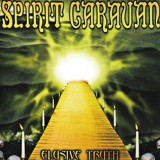
‘Elusive Truth’ was the second full-length record by D.C.-area doom rock Spirit Caravan led by the all time heavy lifer Scott ‘Wino’ Weinrich (The Obsessed, St. Vitus, Shrinebuilder, Probot). Originally released in 2001 and now remastered. “On this, Spirit Caravan's second foray into the long-player format, the band has collectively slowed down the tempo, and dropped the mood into even more contemplative territory. As the grandfather of modern stoner rock, Wino has certainly dipped his guitar picks in LSD this time around. Even though the engineering and production is bone dry and bottom heavy, Wino's psychedelic guitar work -- especially his stinging, busy leads -- has been ratcheted up a few clicks, even if the overall aesthetic is darker, and the superb musicianship from the trio simplified. The listener may be reminded of Hawkwind powered by an enormous diesel engine. As a title, Elusive Truth may indicate Wino's searching nature as a musician, and his attempt to continue down the sonic path through darkness, and through light. With this album, the listener is most certainly in darker territory.”
Sublime Christian folk jazz from 1970s Norway. In the '60s and '70s churches throughout Europe had serious competition for the attention of its younger members. The ecclesiastical establishment was shocked to hear teenagers expressing 'Sympathy for the Devil' rather than sympathy for Christ and his teachings. In Norway at this time the same situation was prevalent as was happening across Europe; teenagers were turning their back on the church and embracing the temptations and pleasures of the flourishing new pop culture. Priest Olaf Hillestad was all to aware of what was going on, and instead of relying on the floundering traditional methods of rounding up his flock, he embraced the musical aspirations of his younger followers. In so doing he founded the Forum Experimentale in Oslo, an organisation that promised in its statutes to "boldly work for a renewal in service life, church music and church art". It was here in the late '60s where That's Why founder members Jan Simonsen and Per Arne Løvold became responsible for the jazz masses at Forum Experimentale's chapel. Together with some top-notch musicians from other Christian music centres around the Oslo district, they recorded two albums in 1970 and 1971 under the moniker That's Why. That's Why blended deep acoustic and electric jazz with elements of Norwegian folklore and Christianity. They also included interpretations of young and old transcendental Norwegian poets such as Sidsel Mørck Krogdahl, Alfred Hauge and Aslaug Vaa, as well as introducing English and Swedish songwriters such as Åke Rosenstrøm and Charles Wesley and even William Blake's "Children of the Future Age" into the mix. This highly original fusion of secular rhythmic music, jazz improvisation and a distinguished selection of transcendental lyrics is one of the standout qualities of That's Why, separating them from more programme-orientated Christian music. The unique mix leads the listener to think they are hearing among the record grooves the tightness of grey, sober Protestantism along with the ecstasy of a lay preacher. This listener, for one, has never heard anything quite like it.
WRWTFWW Records is happy to announce the first-ever physical release of Louisiana-based composer and producer Jammin’ Sam Miller’s full HD re-creation/restoration of the beloved Super Metroid video game soundtrack. The limited biovinyl double LP is packed with 27 tracks and features an exclusive artwork by French illustrator Pierre Thyss, as well as an obi strip.
Composed by Kenji Yamamoto and Minako Hamano, the soundtrack for 1994 SNES exploration / action-adventure / sci-fi / alien video game Super Metroid has always been a fan-favorite. A true masterclass in music storytelling, it beautifully evokes the epic and eerie adventure of the game’s protagonist Samus Aran with superb use of atmospheric sounds, space-operatic arrangements, rumbling bass, oppressive techno-futurist moods, tribal drums, and airy synth themes, admirably balancing the ominous feel of a dark menace and contemplative, even soothing, ambient soundscapes.
Jammin' Sam Miller assiduously recreated the soundtrack note by note, by finding the original equipment used to create it, translating the MIDI into a modern studio context, adding in keyboard samples, and re-mixing and re-mastering the whole score. He explains: "This was made possible by locating the original instrument samples from workstation keyboards and drum machines before they were put into the game and rebuilding the soundtrack from the ground up, applying some modern mixing techniques along the way to lift the veil of 16bit compression and create an updated listening experience."
Super Metroid is pressed on biovinyl, a sustainable alternative to traditional vinyl. Biovinyl replaces petroleum in S-PVC by recycling used cooking oil or industrial waste gases, resulting in 100% CO2 savings in bio-based S-PVC production. Furthermore, it is 100% recyclable and reusable, embracing the circular economy ideology.
out of Stock
Last delivered 9 months ago available to reorder, subject to availability
German melodic extreme metal act FAR BEYOND mark their return with their third studio album, The End of My Road, on February 16 via their new label home Prosthetic Records. FAR BEYONDüs latest full-length is an ambitious and fastidiously curated amalgam of melodeath, symphonic and power metal, covering themes of courage and heart in the face of depression and hardship. Formed in the early 2000s, FAR BEYOND is the solo project of Eugen Dodenhoeft. Based in the Franconian Switzerland region of Germany, FAR BEYONDüs history to this point has been one of slow and steady artistic progression with 2005's An Angel's Requiem and 2016's A Frozen Flame Of Ice albums showcasing Dodenhoeftüs penchant for seamlessly alternating dynamics of gothic and death metal symphonia. Lusciously complex by design, FAR BEYOND's latest album shines in its songwriting structure. Across the eight tracks, Eugen compiled up to 30 layers of vocals, synthesisers and orchestral textures. Whilst a solo endeavour at its core, The End of My Road sees collaborative guitar solos from Nathram's Lukas Grasslin as well as additional synthesiser embellishments from Ari Ahrendt on Tempus Fugit and the title track. The End of My Road was then placed in the hands of Patrick Staudle of Glaswald Studios in The Black Forest, Germany. Furthering their quest to understand the complexities of the unknown and transcend beyond the unknown, The End of My Roadüs contemplative atmospherics and concentrated sonic extremities merge seamlessly with a deft poetic touch. With Eugen adding: üThe End of My Road is my invitation to get lost in the sonic realms of FAR BEYOND and find a moment of peace and inspiration. I look forward to sharing this album with the world and hope that it touches the hearts of listeners, providing them with an unforgettable soundtrack for their own journey.
Two years after recording an EP on a guitar he didn't know how to play, Ujko releases a piano album without knowing how to play the piano. To add to that, Hudba k filmu is a soundtrack to a movie that doesn't exist.
If Ujko previously played with the clumsiness and exposed intimacy of outsider music, on Hudba k filmu he instead focuses on the emotional and dramaturgical possibilities of a film score. The movie may be hypothetical, but this album still imposes a narrative of melancholy and hopelessness, even more penetrating in the guise of a supposedly background music. It's also mostly instrumental, adding to ambiguity and potential projection // Hudba k filmu sneaks up on the listener and encumbers them with the weight of their own world.
Ujko thereby manages to mediate his despair without being as presumptuously overbearing as most film composers. Even the lack of instrumental skill is barely noticeable, enough so that Hudba k filmu doesn't fall for its own concept, but is instead an accomplished and complete work of film music, lacking nothing.
A musical project with roots in the work of cult underground collective Noize Konspiracy, Ujko is an alias of Mišo Ormos. Hudba k filmu is his second release on the world-weary label Weltschmerzen.
"Webster explores themes of different relationships through her broody tunes, tackling the notion of writing only sad songs by writing her "saddest song" yet. In a way, the record feels like a comingof-age for the singer-songwriter into her own perfectly curated moment, which surely will lead to bigger and better things." - NYLON // "Faye Webster is filled with lush bluegrass sounds, featuring plenty of slide guitar and the occasional trill of a fiddle, which Webster's fragile voice flits through like that of a younger Natalie Prass." - W Magazine // "_a soulful offering heavily inspired by the country and western music she grew up listening to." - Pitchfork "Her self-titled record will win fans across the musical spectrum for its left-of-center approach to folk. Webster is a lifelong student of country-western songwriting and Americana sound (...) But she punctuates her own tunes with subtle flourishes of funk. Her voice hits a sweet spot somewhere between bluegrass powerhouse Alison Krauss, Natalie Prass, and Tennis's Alaina Moore, whose light vocals glide across any melody." - VICE // #8 album of 2017 - Gorilla vs. Bear
Egil Kalman has levelled up on this one; we were stunned by his last solo opus, and on ‘Forest of Tines’, the bassist/synthesist has traded the EMS Synthi 100 for the Buchla Series 200, recording at Stockholm’s illustrious Elektronmusikstudion (EMS). Here, he builds on themes he explored on his debut with a generous 20 track double album that marks firmer lines between Scandinavian folk music and contemporary electro- acoustic minimalism.
Using woody, synthesised tones that gradually open into sawing wails, Kalman suggests harmonies that lie between the 17th century polska and earlier, pre-Renaissance sounds, mimicking the tonal and textural fluctuations of strings with advanced tuning and sequencing techniques. There are plenty of artists delving into the past to unravel their identity, but Kalman’s approach is refreshingly unadulterated. He recorded the entire set on the fly, using just spring reverb to add extra texture, without overdubs or modern DAW-style layering, the Buchla 200 played almost like an acoustic instrument.
There’s a glimmer of vintage acid on the lithe ‘Dub One’, a complex, rhythmic experiment that lashes its pulses together with willowy portamento slides. And on ‘Klystron’, he absorbs warehouse techno’s architectural oomph, splaying psychedelic, reverberating ascending sequences over jagged kicks; listen carefully, and there’s something else going on in the background too, as Kalman meets his stabs with flute-like echoes. It’s a peculiar cocktail of ideas and provocations: ‘Mbira’ finds the composer shaping his synth into dusty, fluttering hits that resemble the titular Zimbabwean finger harp, and on ‘Drums’, he pipes pre-recorded percussion through the system, triggering its oscillators and helping shape its rhythmic patterns. He’s most comfortable when he’s mines a hazier past, ‘Autumn Leaves’ is a mystickal, just intoned droner that harmonises with Mattias Petersson’s awesome ‘Triangular Progressions’, and ‘Subtines’ sounds as if Kalman has deployed his instrument in a subterranean crevice, resonating his rumbles around synthetic water droplets.
If it’s uncanny court music you’re particularly interested in, there’s plenty of that too. ‘Polska’ is another sublimely hauntological Swedish folk interpolation, while closing track ‘Ocquet’ appears to blur Kalman’s ideas more thoroughly, melting folk phrasing and peaceful, uneasy drones to draw us to a neat conclusion. Soft-hearted but animated, it’s modern electronic music that isn’t afraid of employing vintage techniques to suggest new directions.
Michal Vaľko, aka Line Gate makes a return to mappa with his third cassette for the label. Once again the material is deeply minimalist, but shows marked evolutions in the Slovak, Prague-based artist’s unique trajectory. This time comprising two relatively short pieces (compared to the 40- and 60-minute works previously published on mappa), 'Trap' is perhaps Line Gate’s darkest yet.
Whereas previously his works focused on psychoacoustic phenomena, or highlighted the sacredness and timelessness of “the drone”, ‘Trap’ is a personal reflection of the artist’s innermost feelings, and perhaps a mirror that is held up to each listener: disillusionment, hopelessness and apathy have become an ever-present features of the society around us. ‘Trap’ very directly expresses the feelings of being lost, of despair, of wandering and not seeing the end. Vaľko utilises drones and repetitive vocal/instrumental phrases to express the endlessness of these feelings, and his own captivity within them.
The pieces draw once again on the hurdy-gurdy, but also on Vaľko’s processed, sometimes transposed voice. On “Maze I” layers of humming voices and meandering sung melodies form an impenetrable wall of sound, as the voices’ timbres intertwine and overlap, giving rise to fascinating overtones and singular resonances. On “Maze II” Vaľko returns to the earthy sound of the hurdy-gurdy alongside some deep, crooning voices (transposed an octave lower) and embellishes its drones with a performance on glass cups. More than ever, Line Gate's music resonates not just in sonic terms, but also in its deep humanity and social relevance.
out of Stock
Last delivered 7 months ago available to reorder, subject to availability
When Paul Murphy released his critically acclaimed debut solo album, Claremont 56, in 2006, many thought it would be the first of many. In a way, it was, as in the years since he’s released a string of collaborative sets alongside Benjamin J Smith (as Smith & Mudd), and as part of underground ‘supergroups’ Paqua, Bison and Hillside. But that second solo album? Well, it just had to wait. In early 2023, Murphy finally decided to scratch that itch, roping in some of his most trusted collaborators (keyboardist and bassist Michele Chiavarini, percussionist Patrick Dawes, guitarist Dave Noble and HF International’s Kashif included) to lay down a sumptuous set of tracks that not only showcases his now familiar (bit hard to pigeonhole) neo-Balearic sound, but also proves how much he has matured as a writer and producer since 2006.
In The Garden of Mindfulness is richly musically detailed, expertly arranged and full to bursting with fluid instrumental solos, with Murphy and his collaborators serving up tracks that brilliantly blur the boundaries between languid jazz-funk, downtempo, vintage synth-laden krautrock, dubby grooves and sun-splashed soundscapes. It simply sparkles from the moment that opener ‘Eighty Three’ slowly rises like the morning sun, with gentle, undulating synth sounds ushering in a slow-motion jazz-funk excursion rich in twinkling electronics, spacey pads and warming bass. Recent single ‘Katanaboy’, a lusciously layered dub disco-infused dancefloor excursion in Murphy’s familiar style, raises the temperature a touch, before ‘Bonne Anse’ and the sublime ‘Unka Paw’ (whose combination of evocative fretless bass, extended electric piano solos, Clavinet licks and acoustic guitars is genuinely spellbinding) invite a combination of wavy shuffling and flat-on-the-back, eyes-closed appreciation.
And so it continues, with gorgeous title track ‘In The Garden of Mindfulness’ making way for the boogie-influenced, Japanese-British brilliance of ‘Hangsang’ (check the jaunty pianos, yearning breakdown and exotic melodies). Murphy’s long held love of warm, weighty bass, hypnotic disco grooves, colourful analogue synth sounds and jazzy guitars once again comes to the fore on ‘Way Of The Hollow’ before the album reaches a fittingly triumphant conclusion with ‘Late In March’.
A neat sonic summary of all that makes the set such a rewarding and entertaining experience, repeat listens reveals a wealth of musical details, from off-kilter triple-time drums and surprise bass guitar solos, to impeccable piano solos (provided by the immensely talented Chiavarini), fizzing jazz-funk synth doodles and stirring synth-strings. It’s a breathlessly brilliant way to end an album that was genuinely worth waiting for.
out of Stock
Last delivered 11 months ago available to reorder, subject to availability
Alara Music is releasing the new album of OXY, the new stunning electronic project by Ivan Pavlov (COH) and Sasha Galianov (Shortparis).
OXY is a transient project combining talents of Ivan Pavlov, major electronic artist better known as CoH who has collaborated with Coil, and Sasha Galianov, the main force behind the electronic sound of the avant-garde performance collective Shortparis. The two once met at a festival where they performed a semi-improvised live set. The first performance sparked mutual interest in continuing joint experimentation, which, after a series of concerts, eventually led to this studio recording.
The name of the album is constructed of the two titles presented each on one side of the LP. The first side, AETHER, delivers a powerfully charged contemplative exploration, in which the two seem to carefully study the sound of each other's instruments. The search for balance between the analogue and the digital reveals a murky terrain of focused sonic pressure interwoven with potent silence filled with echoes. Towards the end, AETHER, amorphous in the beginning, gains structure and rhythm, as if preparing the listener to its more agitated sequel, GUST.
Side two, starting with trademark minimalistic patterns of CoH quickly picks up in intensity and wanders into the domains of digital heavy-metal, in which Sasha's menacing guitar riffs are meticulously disjointed in favour of power focus. Then GUST takes the listener through a minor apocalypse, past a few relieving joyful moments of temporal enlightenment, and towards a strange peace found in a disorienting, synth-framed collage of acoustic guitar sounds.
AETHER GUST is a record that requires listener's full attention, offering in return a captivating journey though peculiar landscapes at the intersection of the worlds of two adventurous music explorers, exchanging their sonic beliefs and passions. An intense journey through a landscape of contrasts, between the warmth of analogue sounds and the aridity of demanding electro, both minimalist and abundant. This journey, these intersections, but also this permanent encounter between analogue and digital, are magnified by the physical version of AETHER GUST: it comes as a bundle of both Vinyl + CD versions of the album, all in a 12" vinyl sleeve then nestled in a thick crafted carboard black embossed sheath.
Rock juggernaut Futurebirds’ newest release – a 22-track live compilation titled …Thanks Y’all – is a benchmark that not only celebrates 14 years together, it’s also a testament to the sheer iron will of a group of musicians hungry for the fruits of its labor.
The Athens, Georgia-based group once again teamed up with storied My Morning Jacket guitarist/producer Carl Broemel for the latest chapter of a seamless, bountiful partnership that initially came to fruition with the 2021 EP, Bloomin’, and was followed up with the 2022 EP, Bloomin’ Too.
Recorded over 9 shows in February of 2023, the live compilation finds the “Carlbirds” firing on all cylinders, with the best highlights captured for posterity on …Thanks Y’all. The album delivers the sound and energy of the live concert experience, as though the listener were standing dead center in the raucous crowd.
Singer/guitarist Daniel Womack says, “We're long overdue for a live release and feel super lucky to have one of our mentors quarterbacking the project. Carl takes us to another level and I think the stoke translates well in these versions""
One of his best albums from the mid-Sixties, Yusef Lateef's 1984 is a truly experimental work. With bassist Reggie Workman, pianist Mike Nock, and drummer James Black, it goes from the eight-minute title track that opens the album to the two-minute, angular modal ballad "Try Love." Reviewer Thom Jurek gave it four out of five stars in AllMusic, stating that "1984 certainly seems to be shaping up into one weird record.
The title is an experimental, noodling improv with Lateef moaning as if in mourning. But then with 'Soul Sister,' featuring Lateef's deep, bluesy, tenor blowing around a gorgeous lyric figure, and Mike Nock's stunningly beautiful soloing on 'Love Waltz,' the entire album moves in another direction, even if it isn't terribly focused. In all, a complex yet emotionally and musically rewarding effort by a master.”
When we established Balmat in 2021, neither of us could have imagined that within two years, we’d be putting out an album by one of our musical heroes: Mike Paradinas, aka µ-Ziq. The British producer has been an inspiration to label co-founders Albert Salinas and Philip Sherburne since the 1990s. In fact, his album-length remix project The Auteurs Vs µ-Ziq was one of the very first pieces of electronic music that Philip bought, way back in 1994. To have the opportunity to release his music now feels like a real full-circle moment.
Paradinas, of course, needs no introduction. Under a slew of aliases, chief among them µ-Ziq, the British artist revolutionized leftfield electronic music in the 1990s—coincidentally, this year marks the 30th anniversary of his debut album, Tango N’ Vectif, for his friend and sometime collaborator Aphex Twin’s Rephlex label—and his label Planet Mu has built up a formidable catalog of visionary, forwardlooking records, mapping virtually every corner of the electronic spectrum. With 1977, he turns the clock backward in a sense, and not just with the album’s title: Rooted in classic ambient and electronic sounds, these 15 tracks evoke the anything-goes spirit of the early ’90s, before the tools and tropes had calcified into cut-and-dried styles.
There’s no shortage of familiar sounds on 1977. There are echoes of raves and chillout rooms and transmissions from the fringes of techno; there are detuned synths and glistening reverb tails and, above all, gauzy vox pads, the eerie glue that holds it all together. The title, he says, is meant to invoke a general sense of nostalgia, bookmarking a year in his boyhood when he became more selfaware. More than anything, 1977 sounds like µ-Ziq distilled: Stripped of his signature breakbeats and customary chaos, Paradinas’ first-ever strictly (well, mostly) ambient album presents the essence of his music in a whole new light.
Along the way Paradinas touches on dark-ambient drones (“Marmite”), horror-film themes (“Belt & Carpet”), jungle breaks (“Mesolithic Jungle”), and even house music (“Houzz 13”), which marks the first bona fide dance-floor moment on Balmat to date). Yet the album never—to our ears, anyway— feels expressly retro. Rather, Paradinas plucks timeless sounds out of the ether and gives them a gentle tap, spinning them into unexpected new orbits. At times, 1977 feels like an experience of extended déjà vu: When we first listened to it, we had the sense that we already knew this music. It was as though we had heard it years ago, perhaps on a battered cassette tape lent to us by a friend, and been searching for it ever since. We hope you feel the same.
out of Stock
Last delivered 2 years ago available to reorder, subject to availability
Making a remarkable step onto the CEP booth, Blame The Mono introduces their debut with a magnetic collection of two game changing original tracks. This release not only displays the duo's creative capabilities but also features melting remixes from Hermeth and the label head riko.
The release kicks off with the 'Kneebreaker Mix', showcasing a top-tier interplay of reese bass. The pushing bassline and dynamic vocals provide the track with its living strength. In addition to the effects, the midsection break-beat mirrors the timeless sound of Blame The Mono, showering the listener with unmistakable recognition value. Coming up next is likely the standout piece from the release. The 'Industrial Mix' manifests as a 117 BPM break, highlighting an remarkable synergy of hitting kicks, spicy drums, and leading vocals. This track radiates a rock and metal-inspired vibe, making it truly one-of-a-kind. Opening the B-Side is riko’s trance-infused remix, featuring consistent vocal shots from the original and a galloping bassline. In addition to the dub chords, the monotonous melody assumes control during the significant break in the middle, contributing a hypnotic quality to the track. Wrapping up the release, Hermeth introduces a techno-infused remix, characterized by powerful classic chords and a driving bass that sets the tone on the dancefloor. The original vocal and lead elements illuminate the track, firing it up with a distinctive flavor.
'London Accent' by Blame The Mono drops via CEP Records on 15th January 2024.
out of Stock
Last delivered 2 years ago available to reorder, subject to availability