The story of Gold Panda's journey from an acclaimed debut record to now, as he releases his third full length album, is an entirely circular one. Hailing from Chelmsford Essex in the UK, in the six years since the release of his genre-defining debut album 'Lucky Shiner', the electronic artist most comfortable with the moniker Derwin Panda spent the subsequent years splitting the majority of his time between London, Berlin and countless excursions to Japan. As he created his third album ''Good Luck And Do Your Best' he ultimately found himself back where he began, in the East of England. Whereas his second album 'Half Of Where You Live' was occasionally taut, perhaps harder and more piecing, the 11 songs that comprise 'Good Luck And Do Your Best' have a distinctly warmer palate, one that echoes 'Lucky Shiner' a little more, albeit with a clearer range of sounds, and also, to Derwin's mind, one where 'the tracks aren't popping out against each other. It's a complete record.'
Felix Laband’s The Soft White Hand is the masterwork of an artist who expresses himself through musical and artistic collage acting together to reinterpret his sources and to express significant elements of his own personal story.
Released by Munich-based Compost Records, the 14-track album is Laband’s first full-length offering since the critically acclaimed Deaf Safari in 2015. It is heralded by the single “Derek and Me”, and is being pressed on vinyl for distribution globally.
In The Soft White Hand Laband works with source materials that will be familiar to those who know his previous four records – Thin Shoes in June (2001), 4/4 Down the Stairs (2002), Dark Days Exit (2005) and especially Deaf Safari which reached deep into the South Africa scene and its political culture to inspire its vocal and music sampling. However, the disengagement he felt from his homeland during his latest album’s creation – an abiding sense of untethered-ness to place and space, exquisitely rendered in tracks like “Death of a Migrant” – is perceptible in Laband’s desire to illuminate instead aspects of his own life.
“For this album, my source material became almost autobiographical as opposed to African statements I’ve worked with previously,” says the artist. “I have sampled a lot from documentaries from the 80s crack epidemic in impoverished African American communities and believe my work speaks unapologetically for the lost and marginalised, for those who are the forgotten casualties of the war on drugs. In the past, I have had my issues with substance abuse, and I know first-hand about the nightmares and fears, what it feels like to be isolated and abandoned.”
Few artists have managed to air these intimate aspects of their life so luminously as Laband does in tracks like “5 Seconds Ago”, “They Call Me Shorty” and in the strange and meditative “Dreams of Loneliness”. “I’ve been building this weird, autobiographical story using other people talking. It’s kind of humorous but it is also sad and beautiful,” says Laband.
Yet, as in all of Laband’s recorded output, the delineations between emotions are never starkly drawn and The Soft White Hand is also shot through with beauty. Nature appears in recordings made in his garden in the intimate early morning hours, whether as in the calls of the Hadada Ibis and other birdsong in “Prelude” or of the vertical-tail-cocking bird in “Derek and Me”. The last is a wonderful track with Derek Gripper, the South African experimental classical guitarist of international renown, whose 2020 song “Fanta and Felix” imagines a meeting between Fanta Sacko and Laband.
Laband’s eloquence in reinterpreting classical composers such as Beethoven in “We Know Major Tom’s a Junkie” is another thrilling aspect of the new record. “I’ve been properly exploring classical music on this album,” explains Laband, “taking melodies from classical compositions and reinterpreting them”. A fresh quality comes to his work through this sonic adventuring: the tender manipulation of the mundaneness of the computer’s AI voice to reimagine and reinvent iconic lyrics and melodies in strange and unexpected configurations.
The Soft White Hand is Laband’s most cohesive body of work to date. Yet it remains, in its sheer artistic scope, impossible to describe fully. Darkness abuts the gossamer light. A song that summons the sunrise and all the hope of a new day could also be about the final dipping down of the sun that portends a troubled night ahead. Interludes are invitations to expand outwards or shift inwards. Mistakes and “weird fuckups” in the sound are cherished as convincing statements against what Laband calls the “grossness” of perfect sound in modern music.
For this world-leading electronic artist, the boundaries are unfixed. He is inspired by the German Dada artist, Hannah Höch, who memorably declared: “I wish to blur the firm boundaries which we self-certain people tend to delineate around all we can achieve.” His music consequently reflects a primal artistic impulse that is also visible in Laband’s considerable visual art output as seen recently in several solo exhibitions such as that held in the No End Gallery in Johannesburg in 2019 and in the works he produced during his 2018 Nirox Foundation Artists Residency. “My music is always about collage, as is my art,’’ he affirms. “Everything I do is collage. It is a medium I find very interesting because you are taking history and distorting it and changing its meaning and turning it upside down and back to front.” In her book Recollections of My Non-Existence, Rebecca Solnit calls collage “literally a border art”; it is “an art of what happens when two things confront each other or spill onto each other”.
With The Soft White Hand, Laband is confirming his singular ability to achieve this in both art and music, melting the divisions between the two creative disciplines until they become one. He is also affirming his belief that an album of music should be more than a collection of unrelated tracks, but should unfold a fully integrated, cohesive story as in the song cycles of the great classical composers. In doing so, he claims his position as one of the most significant artists working today.
Artist Statement – Felix Laband – August 2022
When the Khmer Rouge took their captives for processing, they identified their class enemies by looking at their hands. If they were sunburned, rough and calloused, they were those of a peasant, a proletarian to be spared. But if they were soft and white, then they were those of a city-dweller, an intellectual or bourgeois, an adversary to be liquidated.
In calling this album The Soft White Hand, I was reflecting on the Cambodian genocide and how it resonates in contemporary South Africa. The apartheid era is over, and gone with it is white political domination. Yet economic and social privilege is still held in soft white hands. But those who grasp it know just how tenuous is their hold, how it singles them out, and my music reflects their subconscious fears, the stress and guilt of clinging on to what others envy and desire.
The soft white hand of the title suggests to me a further image, one that relates to all of postcolonial Africa. In my mind’s eye, I see the soft, duplicitous handshake of the smooth representatives of the superpowers making deals and promising gifts that benefit only them, and not their African dupes.
Yet, soaring above the wailing of sirens sampled from the first day of the invasion of Ukraine, my music is also about love gained and passion lost. It is about the tender caress of a soft white hand that conducts you into a place of dreams to be enfolded by nocturnal melodies.
out of Stock
Last delivered 3 years ago available to reorder, subject to availability
"Most of this record was created in the shadow of COVID and deep in the maw of Melbourne’s 2020 long winter lockdown. It is a meditation on the nature of connection.
Restricted to a 5km zone, one of the only people I saw outside my family during this time was my old friend and teacher, Ania Walwicz. We met in the overlap between our zones on the waterfront near Docklands to walk and talk on bright, cool winter afternoons. Those conversations became large in my thoughts when Ania suddenly passed away in September. Her voice was in my head as I worked on this music, trawling through threads of ideas, recordings made on my phone, and thoughts jotted down in notebooks.
Ania’s practice as a writer relied on ‘automatic’ processes. Her work was informed by everything she had read (a lot) but it was created in the manner of dreams. In a state where the subconscious might bubble up and the words arrange themselves into meaning bearing forms that resonate more than represent. I thought a lot about that as I made this music. I recorded everyday using the trumpet, my old Revox reel-to-reel, a couple of synths, a harmonium I lent from a friend, and whatever else was around. I worked mostly on just diving a little deeper each time I sat down to it.
Through the simple process of exhalation, I explored my relationship with the trumpet, which has been through so many twists and turns. I let the tones produced by my breath unfurl on long tape loops and degrade beyond recognition through pedal and plugin chains, until the only imprint of the initial gesture remained.
My process also involved long bike rides during which I’d listen to the work of previous days on ear buds, gliding through familiar streets made slightly strange by the absence of people and movement. Often my rides took me along Footscray Rd next to the port, and as I washed down towards Docklands past the old boat moorings I stopped pedalling to coast. The sounds from my darkened studio mingled with the low rush of air past my helmet, the click and whirr of my bike gears, a squalling bird, a whooshing car. And I remembered my last conversation with Ania. Sitting in the late afternoon sun, squinting against the light that raked across the water, she was telling me about all the different words for they have for blue in Polish and Russian, and how words don’t just change our perception of things, but also actually change the thing being perceived.
As I rode home that afternoon, I felt like anything was possible. "
On August 26th Gwilym Gold releases his third album, Blue Garden, on SA Recordings. Alongside the record we are pitching the beautiful Blue Garden. Gwilym began playing improvised music as a pianist and may be fondly remembered as the singer and keyboardist in psychedelic pop trio Golden Silvers but has since worked widely as a soloist. 2012 saw the release of his high-concept solo piece Tender Metal which was composed and released using Bronze; a new music technology which Gold created with producer Lexxx alongside Mick Grierson. Using Bronze, a song is enabled to rebuild itself on each playback from the musical seeds and ground sown by the writer. Music composed with Bronze is not restricted to just one playback possibility, it is a dynamic, ever-transforming representation of itself where the artist builds a new model as part of each song’s writing process. Gwilym has since collaborated with artists such as Arca, Jai Paul, Philippe Parreno and Nicolas Becker, introducing them to this new technology. One of the hopes for Bronze is that it brings some of the characteristics of performance back into previously inert musical documents, and alongside his work with Bronze, Gwilym has maintained a wide performance practice. Performing recently alongside musicians such as Dave Okumu, Tom Skinner and Lucinda Chua and collaborating with artists Eddie Peake and Holly Blakey. His two recent collections of songs, A Paradise and Sky Blue Room, stem from this, the second being recorded almost entirely live in three days alongside Okumu and drummer Dan See. Blue Garden is Gwilym’s first collection written and recorded entirely in solitude and he hoped to unburden the process of anything beyond the most primary elements. Setting up a sort of hybrid harp in a small isolated room, the aim was to let the songs flow out unadorned and record them as they were. The only addition to the album is the accompanying sound of rivers and birdsong by sound recordist and founding member of Cabaret Voltaire, Chris Watson. Gwilym started to play the new album alongside Watson’s recording ‘The Drinking Boy’ which led him to reach out to Watson. Gwilym explains “I played it to a friend once I had recorded it with Chris’ field recordings, they said it almost sounded like the quarantine birds, there was a feeling of it being a little sanctuary”. The songs on Blue Garden were written during a bittersweet time, where Gold was experiencing moments of love, loss and rebirth. The album is a loose and abstract exploration of love in all its forms, how familial, platonic and romantic love are all intertwined.
Storyville Records is proud to present Michel Petrucciani – Solo in
Denmark
This album features French piano prodigy Michel Petrucciani in a solo recording
from Silkeborg Church, 1990. MP was one of the most popular pianists in the
1990’s due to his extraordinary technique, his astounding musical outlook and
extremely dynamic playing style. His music is simply timeless and magical,
seemingly coming straight from his soul. As he is often quoted: “I’m not playing
to your head, but to your soul. When I play, I’m like a bird flying over the landscape,
and I can land anywhere.” Recorded on June 23, 1990 at the Riverboat Jazz
Festival in Silkeborg, Denmark, this album is a tour de force that leads the listener
through a series of the most iconic motifs in jazz, all of which are deconstructed
and transformed by an outstanding craftsman and embellished along the way by
a true master. And he also allows himself to insert unexpected twists and turns
that are guaranteed to make the listener smile. Pay special attention to his small
rhythmic and melodic tags, little hints for the well- trained ear. They reveal a
musician who never grows complacent or takes himself too seriously. Here, the
totality of MP’s talents are exhibited in an intimate setting, where he stuns the
crowd with his inventive and blindingly rapid playing. The music emanating from
the man simply grabs everybody’s attention. Arrangements by jazz legends like
Duke Ellington, Thelonious Monk and Miles Davis gets the cheeky Petrucciani
treatment with his rather audacious approach to ‘established’ jazz standards. MP
had the ability to effortlessly travel through the history of jazz on his piano,
fascinating his audience in the process. This church concert clearly displays why
MP quickly developed into a truly exceptional member of the international jazz
scene. For MP, joyful playing with the music was a necessity of life. He lived and
breathed for the opportunity to show it his love and respect. And all we have to do
is open our ears, mind and soul and accept the gems from a musical individualist,
who has made an indelible impression on millions of jazz listeners around the
world. Solo in Denmark is simply another chapter in the remarkable story of a
man, who perceived himself as a servant of the music. BIOGRAPHY Michel
Petrucciani was a highly charismatic and high- spirited character, despite being
hindered by a genetic disease called osteogenesis imperfecta or brittle bone
disease. He was extremely short, standing at three feet. Luckily, his hands were
perfectly normal, but he had special modifications to reach the piano’s pedals. He
started playing in the family band with his guitarist father and bassist brother. At
the age of 15, he had the opportunity to play with Kenny Clarke and Clark Terry,
and at 17 he made his first recording. MP moved to the US in 1982, where he
convinced Charles Lloyd to get out on the road again, and tour with his quartet.
Behind the grand piano, MP was a giant with h
The latest album from Randy Randall, guitarist and multi-instrumentalist
of tireless Los Angeles experimental punk duo No Age, Sound Field Vol
2020, continues the iconoclastic weirdo ripper's series of audiovisual
urban excursions in a contemplative set of ambient compositions
exploring the abandoned expanse of pandemic-era Los Angeles
"Vol. 2020 is named as such (and not 'Vol. 2') because of the massive psychic
shift that occurred at the beginning of the global pandemic and subsequent
lockdown," says Randall. The project took root in the earliest days of lockdown, as
the absence of perennial, man- made din revealed the secret lives and hidden
contours of the world without us: The cacophony of birds on empty boulevards;
the rhythmic click cycles of unmanned escalators; PA announcements
reverberating back into themselves across abandoned transportation terminals;
nocturnal choruses of wildlife reverberating across hillsides under a planeless
sky.We listened inwards, too, recontextualizing ourselves as we reckoned with an
abrupt and collective halt never thought possible in our lifetime, as if someone
had pressed mute on the world. Little did we know what would come. With no
choice but to confront the present, we gave ourselves over to a brief moment of
fear mixed with wonderment, alone, together.
Demon are proud to release “Eddie Piller Presents British Mod Sounds Of the 1960s”, the follow up the “The Mod Revival”. This 2LP set serves an introduction to 'British Mod Sounds of the '60s’ and features 34 tracks.
Curated by Acid Jazz Records and Modcast founder Eddie Piller, this collection features the stapes of the British Mod scene including Small Faces, The High Numbers, The Action, The Fleur De Lys, The Kinks, Spencer Davis Group, The Creation, Rod Stewart, The Yardbirds, and The Love Affair.
"Be in with the In Crowd once more."
Every great youth cult deserves a great soundtrack, and when the '60s Mods adopted classic American R&B, with a side order of hip Jazz, they undoubtedly found the right music for their exuberant and stylish way of life. And yet, buying expensive imports, hoping for a local release or praying for a rare visit from overseas talent was never going to be enough to satisfy British youth with a thirst for the latest sounds. Certainly not those on the dancefloor and definitely not those with their own musical ambitions.
It was a music scene that began with imitation, before skill and imagination lead curious minds to innovation, a scene that evolved from average (at best) copies of releases on the Chess, Motown and Stax labels, to become something more sophisticated,something quite unique, something very British.
out of Stock
Last delivered 4 years ago available to reorder, subject to availability
In January 1959, Lester Young was in Paris for a series of concerts at the famous Blue Note Club. He plays with Rene Urtreger on piano, Kenny Clarke on drums, Jimmy Gourley on guitar and Jamil Nasser on bass. On March the 4th, 1959, Eddie Barclay decides to record Lester at Studio Barclay, which will be his last album.
This legendary recording session is poignant and moving in line with the from Coleman Hawkins ‘Sirius’ and the last recording of Billie Holiday. Lester Young is reduced but the grace and genius are still there! Some days later, March 15, 1959, Lester succumb at the Alvin hotel, a few hours after arriving in New York. A heart attack had just one defeat all musicians nicknamed ‘Prez’, The President.
• 180 GRAM AUDIOPHILE VINYL
• INCLUDING INSERT
• FEATURING THE BRODSKY QUARTET
• LIMITED EDITION OF 2500
INDIVIDUALLY NUMBERED COPIES ON PURPLE COLOURED VINYL
The Juliet Letters is the 14th studio album by singer and songwriter Elvis Costello. Originally released in 1993, the critically acclaimed album peaked at No. 18 on the UK album chart. The entire instrumental backing for The Juliet Letters is provided by The Brodsky Quartet. Costello had become interested in classical music around the time of Spike and began attending classical concerts. One of the ensembles he enjoyed most was the Brodsky Quartet. Once Costello and the Quartet got to know each other, they were keen on working together, eventually resulting in a full length album.
Costello described The Juliet Letters as “a song sequence for string quartet and voice and it has a title. It’s a little bit different. It’s not a rock opera. It’s a new thing.”
The album is available as a limited edition of 2500 individually numbered copies on purple coloured vinyl and includes an insert.
John Moreland doesn’t have the answers, and he’s not sure anyone does. But he’s still curious, basking in the comfort of a question, and along the way, those of us listening feel moved to ask our own. “I don’t ever want to sound like I have answers, because I don’t,” he says. “These songs are all questions. Everything I write is just trying to figure stuff out.” Moreland is discussing his new album Birds in the Ceiling, a nine-song collection that offers the most comprehensive insight into the thoughts and sounds swimming around in his head to date. A compelling blend of acoustic folk and avant-garde pop playfulness, Birds in the Ceiling lives confidently in a space of its own, enriched by tradition but never encumbered by it. The songwriting that has stunned fans and critics alike since 2015’s High on Tulsa Heat remains potent, while the sonic evolution that unfolds on the record feels like a natural expansion of 2020’s acclaimed LP5. The New Yorker, Pitchfork, Fresh Air, Paste, GQ, and others have embraced Moreland’s meditative songs, while performances on The Late Show with Stephen Colbert, CBS This Morning, NPR Tiny Desk Concert, and more have introduced Moreland to millions. And yet, while the Tulsa-based Moreland is grateful for the respect and musical conversation he’s now having with people around the world, he is also more focused on the idea of just talking to one person––or even himself. “Through the years, I’ve felt like I’m increasingly talking to myself in my songs, more and more,” he says. “Maybe in the past, I wasn’t aware of it, but now, I am. I think doing that has helped me be less hard on myself, which makes you more generous and compassionate in general.” That helps explain why even if Moreland is reaching out to someone else, there is no judgment. “I’m in the same boat with whoever I’m talking to,” Moreland says. Moreland’s songs do feel intimate––like overheard conversations or solitary meditations. “I want to talk one-on-one to someone in a song,” he says. “I don’t want to address a group, really, because I think that’s when it’s easy to start pontificating––and it gets less honest.” Letting things just be what they are is a powerful guiding force for Moreland, determining not just how he interacts with others, but how he treats himself. “When you remove boundaries and instead of holding back parts of yourself––when you say, ‘Okay, I’m going to put all of me into this,’” Moreland says, "You end up making music that nobody else could make.”
The Decades Collected compilations are part of the new Collected compilation series, which is a collaboration between Universal Music and Music On Vinyl. The compilations bring together the biggest names of each decade, combined with forgotten hits and less discovered gems, giving the listener an experience of listening to their favorite tunes while uncovering new musical grounds at the same time.
Various Artists - Zeroes Collected features Nelly Furtado “I’m Like A Bird”, The Script “Breakeven”, The Black Eyed Peas “I Gotta Feeling”, Alphabeat “Fascination”, T.A.T.U. “All The Things She Said” and Mika “Grace Kelly” amongst others.
Wie bringt man eines der populärsten Reggae Alben in ein bayerisches Wirtshaus? Wie klingt eigentlich die perfekte Symbiose von Hopfen und Hanf? Eine Antwort bieten "Kapelle So&So" und "Captain Yossarian" auf ihrem Album "BOB". Sie haben sich der klassischen Bob Marley Hit Sammlung "Legend" verschrieben und huldigen dem wohl populärsten Reggae Album aller Zeiten in einer für jamaikanische Verhältnisse eher ungewöhnlichen Besetzung: Den Bass übernimmt die Tuba, anstatt von E-Gitarre, Orgel und Clavinet erklingen Schrammel Gitarre, Ziach (diatonische Harmonika) und Tenorhorn. Den klassischen dreistimmigen Chor der "I-Threes" bedienen Basstrompete, Flügelhorn und Trompete und Manuel da Coll alias Captain Yossarian sitzt am Schlagzeug (bestehend aus einem alten Lederkoffer). Die Stimme Bob Marley ¦üs übernimmt dabei Song für Song ein anderer illustrer Solist. Zu hören sind u.v.a. Stofferl Well (ex Biermösl Blosn), Thomas Gansch (Mnozil Brass), Stefan Dettl (LaBrassBanda) und Florian Ritt (Folkshilfe).
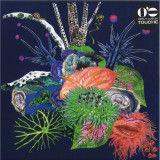
O’o share many of the musical characteristics of their ornithological namesake. The Kaua’i O’O produced the most exquisite birdsong before its extinction in Hawaii in the late 1980s. The beauty and character of its voice was delicate and mysterious, tuneful and surprising. You can experience it with just a cursory websearch, a haunting cri de coeur from the last century. If the poor O’O is consigned to history, then life is just beginning for this French duo, based in Spain, who’ve won plaudits and awards already in their short musical lifespan.
O’o are about to release their sublime debut album Touche. This is not an endling, it’s just the beginning: “I found the name on a website of weird English language words, and I loved the way the letters were arranged like a pair of glasses,” says O’o singer Victoria Suter. “Afterwards, I went onto YouTube and started listening to the last bird of its species, calling for a mate that would never come. I thought: ‘Oh my God, that’s so sad’. Then we talked about the name and we thought it could be a nice thing to honour it and keep it alive in some way.”
Suter met her musical partner Mathieu Daubigné at college in Agen, South West France, when the pair were studying music theory in their teens. Victoria moved to Barcelona in 2010; Mathieu followed six years later. Their debut EP, Spells, appeared in 2018 a beautifully crafted patchwork of vocals and samples that is redolent of the uncanny vocalese of Laurie Anderson. The bird makes an appearance at the beginning of the EP: “Sweet tooth beak. Soft melody peak / Oh O’o, go round and round in circles / Looking for a honeydrop, til you vanish, til you drop”.
That sense of profound longing for something lost is carried over to Touche, as well as the same heightened sensory awareness of the world around them. What has developed in spades is the creative process. O’o have blossomed organically, augmenting their pop sensibilities. Avant-garde techniques have been brought to heel as the pair create off-kilter pop music that warms the heart and nourishes the brain. The catalyst that enabled this bold pop transformation came with the song ‘Touche’ itself, a saucy chanson at the heart of the album. Suter’s wry narrative about a botanical femme fatale is inserted into a lithe and skittish song with reggaeton beats and an inviting, balmy atmosphere.
“The song is about a flower which attracts male insects, producing the very same smell as the female of the species,” explains Victoria. “The poor male is fooled by the sex-appeal of this botanical trap, and gets so excited that he exhausts himself and wastes all his other chances of ulterior mating and having any offspring. The flower entices the insect in in mermaid-like fashion, to come nearer and touch her. It’s the hot track!”
‘Touche’ reaches into hitherto unexplored areas of pop, while the rest of the album is accessible in the way that James Blake, Radiohead or Kate Bush are accessible, and it always challenges, in a way that pop isn’t supposed to. Suter writes playful, poignant, observational songs that tell stories as well as tell us something about ourselves. Songs like ‘Dorica Castra’ are built upon the voice as an instrument, centrifugal and layered from its core.
Complimentary to this method is Daubigné, who brings startling innovation with found sounds, samples and clever vocal manipulations—creating unique, otherworldly sonic flourishes. A guitar whirs like a musical spinning top on ‘Spin’, created in Ableton; an Ondes Martenot appears to make a guest appearance on the title track, though it’s the ingenuity of the Prophet 8 synthesiser. “I’ll often say to Mathieu, ‘what’s that?’” says Suter, He’ll reply, ‘that’s your voice’.”
O’o found their own voice when they won a competition held by the legendary festival organisers Primavera Sound. Victoria entered the band into a competition she saw on Instagram, sending off rough demos on the final day of entry, thinking little more about it other than the fact Mathieu might be annoyed. Soon they would have to build a live set from scratch and figure out how to present their music for the first time. At stake was seventy hours of recording time at Aclam studios, used by Rosalía and Kendrick Lamar, and for the winner a coveted spot at the festival. A pool of 350 acts were whittled down, and then O’o triumphed at a Battle of the Band style face off.
The O’O might be extinct, but O’o the band have learned how to fly. Just watch them go.
out of Stock
Last delivered 4 years ago available to reorder, subject to availability
Solo bedroom-pop project of Michael Ramos (Flowertown, April Magazine, Hectorine). Mostly recorded between last Christmas and New Year's during a window of isolation at home, “Hey There Flower” preserves Tony Jay’s prowess at making beautifully eerie lo-fi pop; like a hazy memory where your favorite Sixties girl-group melody is perpetually slowed down. Without a band to practice with, Tony Jay recorded the music alone, but recruited a slew of friends to remotely record backing vocals: Karina Gill (Cindy), Griffin Jones (Galore), Kati Mashikian (Mister Baby), Alexis Harper (Al Harper), & Hannah Lew (Cold Beat). "Hey There Flower", the most recent release from the prolific and mysterious Tony Jay delivers real melodies -- both lacey with vocal harmonies and dusty with layered guitars -- as fans have come to expect. This release also carries forward and elaborates on Tony Jay's tradition of songs that express a kind of naked honesty about things we all know -- love and loneliness and all that -- while communicating at the same time a wry edge of skepticism, so that the songs are like coins spinning on edge before landing heads, tails, or lost under the couch. Tony Jay brings us into a nostalgia where we recognize moods from music of the past -- Marc Boland definitely comes to mind, as well as Velvet Underground of the Nico era, and Tony Jay even covers Francoise Hardy on this collection -- but the songs create a three dimensional space with what feels like a thousand layers so that instead of being thrown back in time, it's like stepping into a little world with its own laws of nature, of which the listener gets just a few hints. - Karina Gill, Cindy/Flowertown. “Hey There Flower” is introduced by thudding snare beats eliciting reverb-stained tattered noisy guitar scrapes, to weave abrasive shimmery emotive vibrations, imbued with shattered nostalgic dreams, lit by brittle yet dazzling forsaken keyboard flows, over submerged and distorted male vocal’s whispery deluge of obsessive longing, lonely melancholy, and dark desire to exude a hazy gritty concoction of awkward sadness and brooding unrest.” White Light // White Heat // “What Tony sketches are concise commentaries on love, loneliness and a few things in between. His mode of expression is sparse, intense, and captivating. The arrangements are invariably lo-fi and slow tempo, blanketed with a fuzzy hiss. And it only took one listen to decide that it is a very special album. It has a '60s feel, albeit washed in an eerie slowcore machine. An ace example is "September Skies", which could be the 1965 'last dance' at the prom for the introverted students.” - When You Motor Away
The groundbreaking 2015 PlayStation® 4 game Everybody’s Gone to the Rapture tells the story of the inhabitants of a remote English valley who are caught up in world-shattering events beyond their control or understanding. Made by The Chinese Room - the studio responsible for the hauntingly beautiful Dear Esther - this tale of how people respond in the face of grave adversity is a non-linear, open-world experience that pushes innovative interactive storytelling to the next level. This story begins with the end of the world. The game has already won GameSpot’s Best of E3 and was nominated for Best in Show and Best PS4 game by IGN.
The soundtrack features the music by Jessica Curry, who is also joint Studio Head of the developer The Chinese Room. The music was recorded at the famedAIR Studios in London and features solo vocal performances by renowned Welsh soprano Elin Manahan Thomas, ethereal choir, and a tragically beautiful orchestral accompaniment. With her compelling soundtrack, Curry took home the BAFTA Games Award for Best Music.
Everybody’s Gone To The Rapture is available as a 2LP limited edition of 500 individually numbered copies on translucent red coloured vinyl and includes a
4-page booklet.
Consequence and more. Emma Ruth Rundle's second instalment in her Electric Guitar series, EG2: Dowsing Voice, is almost like the soundtrack to a film that hasn't been made. The mostly instrumental record follows her on a trip to the Welsh coast and down a magical well into the waters of nature, myth and the Old Golds - by way of her improvised music. The 40 plus minute album was sewn together from recordings channeled during her month-long solo journey in the early days of 2020 and completed before 2021's critically lauded album Engine of Hell was even written. Unlike Electric Guitar One, EG2: Dowsing Voice features vocal improvisation, unconventional singing and extended vocal techniques free from lyrics - like the throat singing on "In the Cave_" which is meant to be the voices of crones gathering in a rhythmic and physical ritual. Rundle was led to these voices by unseen forces along with the immense impact of the Welsh water: ocean, rivers springs and wells that gave the album its extended title Dowsing Voice. While there is some focus on vocal and story here, her textural and even bombastic guitar improvisations are featured throughout the album. For Rundle, the Electric Guitar series will always be about inspired, unplanned moments like this at its core.
Funny to think there was a time not so long ago when Stiff Richards was a name that required explanation - but not to you, of course, o punk connoisseur. This is your territory, after all. Music is your oxygen and the sound of the underground is your clarion call. You can explain the distinction between ‘Know Your Product’ and ‘No, You’re Product’. Hey, you’re probably pretty good-looking too. You know your shit, either way. So no wonder you’re drawn to this relative holy grail of modern garage rock - the 2017 self-titled debut album by the aforementioned Stiff Richards. Originally released on their own Stiff Records (and again by Legless in 2020), it lays down all the elements that made last year’s mighty ‘State of Mind’ LP such an instant classic. OK, we’ve established you know the drill, but let’s recap: scintillating Aus-punk that recalls the heroic high-speed riffs of their countrymen The Saints and Radio Birdman. It sounds like Royal Headache covering Motörhead, or maybe the other way around. It’s a full-on riot in 30 minutes - the rawest of rock’n’roll bleeding into the grimiest of power chords with hooks for days. You already know you’re gonna love it. Whether going full-throttle and aiming straight for the nerve receptors that get your head a-nodding and your toes a-tapping - like on sub-three-minute highlight ‘Strung Out’ - or sludgin’ their way through groovier cuts like ‘Bustin’ Out’, they’re never less than a treat that’s guaranteed to get your serotonin flowing and your speakers up to 11 (or beyond). As a certain similarly-named record label once said, if it ain’t Stiff, it ain’t worth a fuck. Frightfully rude, but that’s rock music for you, I suppose. Get it in your ears.
This album doesn't blurt it out: There is no loud "Ta-Dah!", no exclamation mark. "The ghost that carried us away" flatters in a rather unobtrusive way. However, it has encircled you after the third song at the latest. Fragile hymns of nonchalant casualness, created by the 24-year-old Sindri Már Sigfússon. Guitars, piano, his almost bashful and yet so present voice. "Nature, mortality, love", these are the topics of his debut album. Even the one who listens only briefly, is able to make them out within the sounds. "Do you remember how the things look when you were young."
Reykjavik again. Iceland, the musical heartland. On top of that, there is a violinist with her voice in the clouds: Gudbjörg Hlin Gudmundsdóttir (violine, vocals, harmonica). There further are musicians Sindri shared his hometown and his passion: Orn (guitar, lapsteel) who forms together with Sindri and Gudbjörg the inner triangle of Seabear. Or Eiki, Orvar, Gudni and Dóri. One plays the flugelhorn, the slide-guitar or upright-bass. One belong to the live line-up of Sigur Rós (Eiki). Another is part of the sensational múm (Orvar). Some are stage members of Benni Hemm Hemm's Band - the other Icelandic artist on morr music. Sindri Már Sigfusson has invited them into his small studio, placed them in front of the only microphone, let them think about his musical thoughts. He likes the notion and the feeling of LoFi, Sindri says. Only for the recording of the drums three microphones were used. The result is reminiscent of the reduced stereo recordings of the 1960ies.
Libraries is the most direct promise that pop music is able to make. Tiny and gigantic, unobtrusive and exciting at the same time. A song like a blink into the most beautiful sunrise. A tumbling piano, swinging drums. Melodies, melancholy: "My little bird flew away from me". Or "hands remember", the singing being close to one's ear. "The voice of an old friend", a murmur, two violins. There is later "summer bird diamond", birds twitter to the accords of an old banjo, a glockenspiel. It is almost a radio play, chamber folk. And "seashell" at last, a pocket symphony, arranged around jumping drums. Sufjan Stevens would have done it in a very similar way.
Piquant three-part harmonies, cumbersome guitar woven tightly with
organ flourishes, all poured over hot rhythm grooves! Recorded
1970-1972 under the watchful eyes and ears of Ron and Howard Albert, aka Fat Albert Productions (Wishbone Ash, Procol Harum, CSN) at the legendary Criteria Studios in Miami, this powerhouse album finally sees the light of day, pressed on orange color vinyl!
FLAPAAaaam!!! the first snare roll leaves no doubt: this is a dub album, reminiscing the pioneers of the genre like King Tubby, Lee "Scratch" Perry and Scientist and of course, it's a tribute to the revolutionary music of Bob Marley and the Wailers. The original record from which these dubs derive - "Bob" by Kapelle So&So feat. Cpt. Yossarian - was recorded in 2020, the year of Bob Marley's 75th birthday. Due to the strict lockdown all the tracks were recorded separately - which perfectly qualifies them for a dub rework. The musicians involved took great care to dig deeply into the original music, absorbing every note of the Wailers' recordings and translating it to their own instrument. But at this point we leave common paths, because what would be Aston Barrett's electric bass turns out to be a tuba and his brother Carly's distinguished bassdrum sound resurges on an old leather suitcase. We are talking of a traditional bavarian folk band (trumpet, cornet, tuba, accordion, guitar, drums) playing Bob Marley's sacred music. Simultaneously seriously sticking to the original score and adding color to the music by the masterful use of their rather uncommon instruments. What sounds like an impossible -almost blasphemous- endeavour actually sounds pretty neat and leads to the next big venture: A dub album paying tribute to the music of Bob Marley and the Wailers. The dub versions naturally lead on the abstract that was introduced by the uncommon orchestration by muting or emphasizing single instruments and sending them into the sonic orbit. The melody itself is almost completely left out. Nevertheless one never loses one's orientation since the defining elements of the songs alternate skillfully, vanishing in clouds of reverb, losing themselves in echo feedbacks and then popping up again, guiding us through the song. Despite being focused mainly on bass and drums you will catch yourself singing along Marley's part more than once thereby proving the profound impact of this divine music on our souls and our common musical knowledge. Bob Marley in Dub is the abstract of an abstract and still manages to transport the heart and soul inherent of the music. With all due respect to the original, Cpt. Yossarian manages to illuminate nuances of the material yet unheard and takes us on a trip through his conception of this otherwise well known material. Following the tradition of the before mentioned mentors of dub music he uses his mixing desk, a couple of studio effects and whatever odd sounding kids toys to present us with his approach to a musical genre that defined so many styles of music that followed.
out of Stock
Last delivered 4 years ago available to reorder, subject to availability
Second release of the new "Live At Fabrik Hamburg" series on Jazzline in
cooperation with the legendary venue and NDR Kultur - is this previously
unreleased concert from jazz great Gil Evans with a 16-strong all-star
cast from 1986
It will be released as a double CD in a three-piece digipak and as a triple LP in a
triple gatefold cover that includes detailed liner notes by Michael Laages. By the
1980s, the Gil Evans Orchestra's repertoire had developed into a distinctive blend
of Jimi Hendrix melodies, the band members' own compositions and occasional
references to Gil's older recordings. This concert in Hamburg contained four
songs by Hendrix, with only one ("Up From The Skies") being part of an original
studio album. The regular performances in Europe meant that the audience of the
band was getting younger and was also well acquainted with rock music.
A year and a half after this performance, Gil Evans passed away. He will rightly be
remembered forever for the brilliant albums he recorded with Miles Davis and
under his own name. In reality, however, he lived three quite contrasting musical
lives. As was the case with his Monday evening concerts in New York's Sweet
Basil, this Hamburg performance is a reminder of the lively late phase of Gil
Evans. Here a great all- star ensemble played an outstanding concert of eight
pieces in over two hours.
With ‘Love on My Mind’ - the six-song mini-album, mixed by Claudius
Mittendorfer (Tennis, Parquet Courts, Johnny Marr) - Bambara condense all the energy and darkness that have made them so compelling and rearrange it into something defiantly new.
Opening track, ‘Slither in the Rain’, all hissing high-hat and spectral
synthlines, is a true statement of intent. It’s minimal and atmospheric,
foregrounding Bateh’s raw vocals as he introduces one of ‘Love on My Mind’s main characters years after the events of the album are over, a lonely man who throws bottles at airplanes and dances a two-step in the pattern of a figure-8. While Bateh has always been adept at character sketches, tracks like ‘Slither’ introduce a newfound vulnerability that runs true through the entire album and cause the songs to hit on a more human level.
Similarly, ‘Point And Shoot’ - in which each stanza describes the louche, lawless scenes of “rooftop girls / standing shoulder-to-shoulder, naked figures with their hips / cocked,” busted up jaws, and couches full of burnholes captured by the snapshots of ‘Love on My Mind’s female lead - displays an autobiographical intimacy that is not as apparent in Bambara’s previous releases. This tenderness is echoed on ‘Birds’, a rare love song (from which the EP’s title is derived), and album closer ‘Little Wars’, a gripping finale of loneliness and isolation.
But while these songs may display a softer side of Bambara, it’s important to note that they haven’t lost the thrill of what attracted so many people to them in the first place. ‘Mythic Love’ (featuring vocals from Bria Salmena), with its driving bassline and ricocheting guitar lines, brings to mind past rave-ups like ‘Serafina’ and ‘Sunbleached Skulls’ but obliterates them in the process, while ‘Feelin’ Like A Funeral’ - a dangerously oscillating tale of a city knifing - is probably the most thrillingly anthemic song the band have ever recorded.
Taken together, ‘Love on My Mind’ amounts to another massive step forward for Bambara - the boldest thing they’ve ever done - and the sound of yet another breakthrough.
“Engrossing, dark and irresistible… an adventurous group, who just keep getting better all the time.” - CLASH
“Never anything less than captivating.” - Upset
“What Athens, Georgia bunch Bambara do, they do very well… the trio’s commitment to the dark side is never in question.” - DIY
“Bambara are ice cold and sharp as a knife’s edge.” - Loud & Quiet
“Brooklyn based doom-mongers delight… the trio go further than most in their quest to rattle.” - Q (4/5)
For fans of Daughters, Protomartyr, IDLES, King Krule, Ice Age.
Reissue of The White Stripes second album (originally released in June 2000), which found the band recording in the comfortable confines of Jack White's Third Man Studios, then housed on the ground floor of his house in Southwest Detroit. The on point covers of Son House and Blind Willie McTell pair wonderfully with both the minimal downtempo somber numbers and the maximum energy explosions of unadulterated power. A 13 track album pressed on 180gm black vinyl and housed in a tip on sleeve. Both releases will have promo/marketing activity.
Richard Thompson’s 1976 album of (at the time) career spanning retrospective unreleased recordings - ‘(Guitar, Vocal) A Collection Of Unreleased and Rare Material 1967-1976’ - is to be reissued on double 180g vinyl on March 25th through UMC. ‘(Guitar, Vocal) A Collection Of Unreleased and Rare Material 1967-1976’ was originally released in 1976 after Richard and his wife Linda announced their retirement from the music business. As the album's title suggests, this is a collection of unreleased recordings made over an eight year period which spans Richard’s early years recording with the Fairport Convention as well as the time he spent performing and recording as a duo with wife Linda. Thankfully, this did not transpire to be Richard’s final piece of recorded work, but did become an essential record to fans of Richard’s work giving an alternate perspective on his early career. Following an almost two year hiatus, Richard and Linda returned and released ‘First Light (Richard and Linda Thompson album)’ in 1978 and Richard has remained a prolific songwriter and one of the most respected British folk artists of all time releasing, to date, 22 studio albums and 14 live albums.
Over twelve tracks performed across three sessions from 2012, 2013 & 2014 the undeniable song writing brilliance of David Gedge is clearly evident. From the bounding, propulsive recklessness of ‘Back A Bit... Stop’ (Valentina) to the harsh edges and sudden tempo changes of ‘Heather’ (Seamonsters), The Wedding Present’s bass-driven, muscular riffs are a constant theme throughout. Gedge’s bittersweet lyrics and honest take on love are highlighted in such tracks as ‘The Girl From The DDR’ (Valentina) and ‘Little Silver’ (Going, Going...). Other memorable moments include a frenzied cover of The Monkees' ‘Pleasant Valley Sunday’ and a rapturous performance of ‘Flying Saucer’ [both taken from the Hit Parade series of singles] along with a rousing ‘It’s A Gas’ and a heartfelt ‘Spangle’ - complete with an apologetic Gedge clearing his throat mid-verse - from the Watusi album. Tracklisting: Tracks 1-4 Recorded 19/11/12 Back A Bit… Stop (Valentina 2012) Heather (Seamonsters 1991) You Should Always Keep In Touch With Your Friends (Tommy 1987) The Girl From The DDR (Valentina 2012) Tracks 5-8 Recorded 21/10/13 Flying Saucer (Hit Parade 2 1993)
Two Bridges (Going, Going… 2016) Pleasant Valley Sunday (Hit Parade 1 1991) Montreal (Saturnalia 1996) Tracks 9-12 Recorded 3/11/14 It’s A Gas (Watusi 1994) Spangle (Watusi 1994) Birdsnest (Going, Going… 2016) Little Silver (Going, Going… 2016)
Jack Francis is a singer-songwriter from the deep south – of England - A troubadour straight out of Southampton, Jack is one of the exciting new breed of UK Americana acts that includes rising stars such as Jade Bird, Ferris & Sylvester and Yola.
The heartfelt songs on his self titled debut album are rooted in the finest musical traditions of America, while staying true to his own geographical heritage.Having previously been employed by a major label to write pop hits for other acts, Jack left to concentrate on his own songs - each single being championed by BBC Introducing.
Lady Bird's brand new debut album 'WE' is finally aboard..
Embodying, as it does, the collective creativity and spark of the band, heralding a
celebration of survival and life, and the emotions induced during a tumultuous
album recording process that strengthened their brotherhood and friendship to
no end. Available on very limited Black and Red 'Lady Bird' edition (we had to
right?) each version comes with a luxuriant 24 page lyric booklet included and
download code.
The Decades Collected compilations are part of the new Collected compilation series, which is a collaboration between Universal Music and Music On Vinyl. The compilations bring together the biggest names of each decade, combined with forgotten hits and less discovered gems, giving the listener an experience of listening to their favorite tunes while uncovering new musical grounds at the same time.
Various Artists - Zeroes Collected features Nelly Furtado “I’m Like A Bird”, The Script “Breakeven”, The Black Eyed Peas “I Gotta Feeling”, Alphabeat “Fascination”, T.A.T.U. “All The Things She Said” and Mika “Grace Kelly” amongst others.
out of Stock
Last delivered 4 years ago available to reorder, subject to availability
Pressed on 140g Black Vinyl Including a signed print from Eddie Piller, limited to 750.
Demon are proud to release “Eddie Piller Presents British Mod Sounds Of the 1960s”, the follow up the “The
Mod Revival”. Featuring 100 original tracks across 6LPs, its a deep dive into the Mod scene in '60s Britain.
Including a selection of classic and rare tracks, tracing the scene from its R&B rootsto a soulful finale
Curated by Acid Jazz Records and Modcast founder Eddie Piller, and featuring new sleeve notes from
respected author and broadcaster Paul 'Smiler' Anderson.
As Eddie Piller points out in the forward to the extensive sleeve notes that accompany this collection, he
chose the word 'Sounds' carefully, reflecting the variety of talent contained here, from uncool session
musicians without an ounce of style in them, acts who saw an opportunity to jump on the Mod bandwagon
and bands who whole heartedly embraced Mod way of life.
And so this new collection mixes the Mod mainstays (Small Faces, The High Numbers The Action, The Fleur
De Lys), with a generous selection of future superstars (David Bowie, Rod Stewart, Elton John, Marc Bolan,
Jeff Beck and Graham Gouldman of 10cc are all represented here), and a few artists so obscure, so rare, that
they never got to release a record in the '60s, but Eddie has tracked down the tapes nonetheless.
"Be in with the In Crowd once more."
Every great youth cult deserves a great soundtrack, and when the '60s Mods adopted classic American R&B,
with a side order of hip Jazz, they undoubtedly found the right music for their exuberant and stylish way of
life. And yet, buying expensive imports, hoping for a local release or praying for a rare visit from overseas
talent was never going to be enough to satisfy British youth with a thirst for the latest sounds. Certainly not
those on the dancefloor and definitely not those with their own musical ambitions.
It was a music scene that began with imitation, before skill and imagination lead curious minds to innovation,
a scene that evolved from average (at best) copies of releases on the Chess, Motown and Stax labels, to
become something more sophisticated,something quite unique, something very British.
All formats are stylishly packaged (of course) and include new sleeve notes by Paul 'Smiler' Anderson, author
of the best-selling and highly regarded books'Mods: The New Religion' and 'Mod Art'.
The Slow Show release their fourth studio album, their first for three years, entitled ‘Still Life’,
via PIAS. The four-piece, who first formed in Manchester, will support the release with a
European tour in February and March 2022, culminating in an already sold-out hometown show
at Manchester’s Hallé St Peters on 4th March.
Lead track ‘Blinking’ is a perfect taster to the new direction ‘Still Life’ offers. Same but different
again. “An ode to love and loyalty. The song is a defiant pledge to never giving up on the
people you love. Musically we wanted the song to have impact, a directness and powerful
punch that we’d previously shied away from.” - Robert Goodwin (vocals)
The making of ‘Still Life’ has been quite the ride. Following their breakthrough album, ‘White
Water’, it was clear The Slow Show were not just ‘another band from Manchester’. The legacy
of The Smiths, Joy Division and all those other great predecessors is not something to be trifled
with, but The Slow Show didn't need to wear their address on their sleeve: this was something
else, fully formed, with a mesmerising sound, rich in atmosphere and melody.
With the band’s desire to push each other outside of their respective comfort zones during the
recording process, ‘Still Life’ subsequently offers a more diverse, rich and interesting sound
than previous albums.
“We did develop our sound,” says Rob Goodwin. “We had to try something else. We felt we
owed that to ourselves, and to the people that come and enjoy the music. We explored a lot of
stuff: different sounds, different feelings, different ideas, different processes as well. Some of
them didn’t work at all, but some did. It was difficult and challenging, but it felt good in the end.”
This experimental side to the creative process allowed the band to introduce new elements to
their work. “Some new approaches and sounds crept in,” keyboardist Frederik ‘T Kindt admits.
“Some were far from our older work. For instance: after some initial encouragement from me,
Rob was keen to sing a bit higher on this record. Chris was encouraged to make his drums a
bit more present; some things almost sound like a breakbeat to my ears.”
Recorded remotely over the course of the past year, with Goodwin recording vocals from
Dusseldorf in Germany and the rest of band recording in the UK, ‘Still Life’, as a concept, takes
inspiration from the experiences of lockdown: “Before the virus arrived, I had a busy life;
spending two weeks in Germany with my girlfriend, and then flying to Manchester to work with
Fred or to a gig.” Goodwin remarks: “And then all of a sudden, life came to a halt. It took a little
getting used to, but I actually had a really nice realisation during that time. I understood that the
slower life got, the more I saw. I spent a lot of time in nature, seeing things in a different
perspective. And that's what you need when you're trying to create. You have to really look,
and then you see things happening everywhere.”
The tracks themselves are brimming with emotion and reverence towards the significant
relationships we encounter in life. Stand-out anthem ‘Blinking’ is a defiant pledge to never
giving up on the people you love. Musically the band wanted the song to have impact, a
directness and powerful punch that they’d previously shied away from. Whilst ‘Woven Blue’
deals with the aftermath of uncoupling. The idea that meaningful relationships are very often
woven and complex, making resolve difficult.
These very personal tracks are counterbalanced with the more topical, ‘Breathe’, which
documents some of the unjust and heart-breaking scenes of 2020 with spoken word references
to John Boyega’s emotional rallying cry in support of Black Lives Matter movement in London’s
Hyde Park.
In all, Still Life marks another evolution of a band that have never tried to fit in any particular
box but have inhabited their own unique universe.
LP pressed on white viny
24 Songs. A new project from The Wedding Present. A new 7” single every month throughout 2022. 24 Songs sees David Gedge writing with legendary Sleeper guitarist Jon Stewart for the first time, and a more perfect union could not have been predicted. The first release includes a gorgeous duet featuring David and Louise Wener also from Sleeper on ‘We Should Be Together’, and it’s coupled with a rousing new track called ‘Don’t Give Up Without A Fight’ which combines classic Wedding Present feistiness with a Krautrock finale. The notion of a monthly 7” single is not new to The Wedding Present, but 24 Songs shows us that even classic concepts can be reinvented. The series also continues the band’s association with photographer Jessica McMillan, who has created stunning images and films as a visual accompaniment to the recordings.‘We Should Be Together’ will be available to listen to at The Wedding Present’s official YouTube channel from Tuesday 19 October at 12 noon. Subscription details with an early bird incentive can be found at 24songs.scopitones Individual singles and a collector’s box can be ordered from the same site or via all participating record shops. Explaining 24 Songs, David Gedge said: “In 1991, The Wedding Present were rehearsing in a studio in Yorkshire when we hit upon an idea that immediately thrilled us all. Our bass player Keith Gregory had been a member of the ‘Sub Pop Singles Club’ - a service that allowed subscribers to receive 7”s released by that Seattle label on a monthly basis. Keith wondered if we, as a band, could attempt a similar thing. In that instant, The Wedding Present’s Hit Parade series was born and, during 1992, we managed to release a brand new 7” single each and every month. “The Hit Parade went on to become something of a significant milestone in the history of the band and it’s a project about which I’m often asked. As its thirtieth anniversary approached, I began to wonder if we should celebrate it in some way. A ‘Hit Parade Part 2’ didn’t feel quite right, though. Then, someone said to me: “Other bands have released music in similar ways but there has been nothing like the Hit Parade.” And they were right! A 7” single a month seems, somehow, very ‘Wedding Present’. So, inspired by that little idea from three decades ago, we’ve embarked on this new project, 24 Songs. “Even though The Wedding Present have never been known for taking the easy route, the idea of recording 24 tracks and releasing them in this way could seem daunting to any band. However, I’ve been inspired by the music that has been written since Jon and Melanie joined the group. The thought of celebrating this exciting new line-up with an exciting new series has motivated us all… and I suppose we also didn’t want any of these songs to be hidden away in the middle of an album!”
To start the year 2014, Stroboscopic Artefacts bring you SA021 - a remixes selection of tracks from Lucy's forthcoming LP Churches Schools and Guns. In presenting four of the album cuts in altered impressions, SA021 helps the label keep on re-examining the timbres, tones and textures of techno.
First up is the unsettled edit of 'Catch Twenty Two' by the young Italian producer Shapednoise. The infamous Heller novel of the same name (though in numerals rather than letters) was a satirical rampage through the futility and tragedy of conflict; this is also a rampage, littered with opaque utterances of sonic thrust, stood stoutly on an unpredictable and emotional structure of aural dissonance. Following this is the Italian maestro Donato Dozzy and his presentation of 'The Illusion of Choice'. The track bounds along like a train through the jungle, powered by a distant rumble and purring synths. Skittering and melodic percussion sounds a little like birds; the drums are made of rawhide, strong, insistent, controlled. Third in line is the remix of 'Laws and Habits' by Milton Bradley. This cut is hypnosis with little regard - not an accident, but effortless. Metallic distortion buzzes like bees across your head, zipping across the top of delicate hi-hats and an elastic groove. This is a walk through the 4am night, appreciative of the glimmering streetlamps, and fearful of nothing. Last is Eomac's rework of 'The Self As Another', bringing the record to a resonant conclusion. One half of label favourite Lakker, the Irish producer begins with a melody line cut from razor-sharp cloth. The pulsating beat is dressed in metallic shimmer, confidently pursuing a dangerous course. And yet there is a pause amid this brief insistence, a moment of perspective, perspicacity. The record considers its place, and asks for contemplation.
With a selection this strong, and of such ideas and identities, this contemplation is surely a worthy vice. This may be a prelude to the full record, but it is a cut made of vehement conviction.
Grace Cummings is an actor and musician from Melbourne, Australia. Grace
learned piano as a child and took up the guitar as a young adult, but only
began to write and perform music in 2018. She went from a debut gig at
Melbourne’s Old Bar to a breakthrough performance at Boogie Festival in the
space of six months, picking up support slots with J Mascis and Evan Dando
along the way.
With buzz building around her powerhouse live show, Grace grabbed the
attention of Flightless Records (King Gizzard and The Lizard Wizard), who
released her debut album, ‘Refuge Cove’, in late 2019. Refuge Cove won
praise from publications around the world, including Pitchfork and All Music,
and Grace was tapped for support slots with Weyes Blood, Cash Savage,
Teskey Brothers and Allah-Lahs.
In 2020, Grace recorded the single ‘Sweet Matilda’ for Mexican Summer’s
‘Through the Looking Glass’ series before landing a worldwide deal with
indie powerhouse ATO Records (Alabama Shakes, My Morning Jacket, King
Gizzard and the Lizard Wizard). Her sophomore album, ‘Storm Queen’, is
now set for release.
Available on CD and opaque white vinyl. (Once the coloured vinyl format has
sold out, a standard vinyl format - ATO0589LP - will be made available.)
A graduate of the drama program at the Victorian College of the Arts, Grace
appeared in Elbow Room’s award-winning production ‘Prehistoric’, which
played to packed houses and widespread critical acclaim at the 2018
Edinburgh Fringe. In 2021, she made her debut with the Melbourne Theatre
Company in 2021, in Joanna Murray-Smith’s ‘Berlin’.
“Cummings isn’t content to merely sing along to her melodies. She tears her
low, surging voice to shreds, braying like she’s beckoning you from the
opposite end of a crowded room. It adds an eerie, intense quality to her
music - a desperation behind the calm of her arrangements.” - Pitchfork
“One of Melbourne’s hottest new talents... filled with raw power.” - Beat
Magazine
“Cummings has a voice that demands to be heard, while her lyrics cut
through to the heart, leaving listeners gasping for air.” - Folk Radio UK
“Like a combination of Sandy Denny, Odetta, Tom Waits, Leonard Cohen
and Marianne Faithfull... as the last piano chord ends, you are left wanting
more.” - Your Music Radar
“There’s a striking androgyny in her tone, it brings the power needed for
these songs to make you stop and listen...Her wit is very sharp and it bites
back with cunning rhetoric.” - Stomp and Stammer
“Take notice of Cummings as a fresh new Australian talent.” - X-Press Mag
Former Orange Juice member David McClymont may have been less
noticeable than some of his former band mates over the years but that
doesn't mean he hasn't been busy - He has self-released a number of
albums and eps from his new home in Melbourne
Some months ago Stephen (The Pastels) and Ian (LNFG) were discussing how
good it would be to pull the music together on vinyl and we are delighted to
announce that David agreed. He has been working closely with Stephen to curate
a double album's worth of music and Past Night From Glasgow will be releasing
this album in early 2022.
'My first deep exposure to LEONARD COHEN was the "Bird on a Wire" documentary by Tony Palmer, which was, against the odds, broadcast on public television in New Zealand around 1974 or 1975. At age 15 or 16 I thought it was too dark. A few years later, in the late '70s, I wanted things darker. The first Cohen LP was very clever but a little too "up." The second was too public and political for me. Songs of Love and Hate seemed more honest, more about personal failure. I liked it, although Cohen tended to disown it, especially 'Dress Rehearsal Rag' and 'Last Year's Man', neither of which he performed live later on. I like 'Last Year's Man' for the same reason I like Nick Drake's 'Poor Boy'. It wallows and parodies at the same time. I came across the Suzuki OMNICHORD OM-27 because it was mentioned in relation to another Canadian, Joni Mitchell. It looked like a mystery box of potentially very good or very bad sounds, like a Bontempi chord organ customized for space travel in a Stanley Kubrick film. Irresistible... I was fortunate to meet JESSICA MOSS because of the 12 hour Drone event at Le Guess Who Festival in Utrecht in November 2017. I thought it would be cool to jam with some of the other people scheduled to play their own pieces so I asked the organisers, Bob Helleur and Jacob Hagelaars, to sound out the other droners a few weeks before the festival. Jessica replied, I sent a sample piece, and we talked, more than rehearsed, a day before the performance. We did our piece live and then some months later I sent her a recorded piece to which she added her magical playing.'
Gatefold double LP. Black Vinyl. No DL Code is out in January, 1000 copies available. Since 2006 Maybeshewill have released four full-length albums of towering, cinematic instrumental music. After a decade long career that saw them tour across four continents they bowed out in 2016 with a sold out show at London’s Koko. Having reformed briefly in 2018 at the request of The Cure’s Robert Smith for a show at Meltdown Festival, 2021 sees the band return with their first new material since 2014’s Fair Youth. Having worked on ideas separately in the intervening years, it was the sketches of music that would become ‘No Feeling is Final’ that pulled the band back together. Building on the songs that they felt needed to be heard, together. ‘No Feeling is Final’ was born from a place of weary exasperation. From the knowledge that we’re living in a world hurtling towards self-destruction. We watch as forests burn and seas rise. As the worst tendencies of humanity are championed by those in power; rage, fear, greed and apathy. We see every injustice, every conflict, every catastrophe flash up on our screens. We stay complacent and consume to forget our complicity in the structures and systems that sustain that behaviour. As the world teeters on the edge of disaster, we sigh and keep scrolling, the uneasy feeling in our stomachs eating away at us a little more each day. However easy it would be to switch off and pretend all is lost, there’s no choice but to remain engaged. To set that feeling of hopelessness aside and use the fear and frustration as fuel to make something positive. ‘No Feeling is Final’ is a message of hope and solidarity. It’s a story of growing grassroots movements across the world that are rejecting the doomed futures being sold to us, and imagining new realities based on equality and sustainability. It’s a reckoning with the demons in our histories and a promise to right the wrongs of the past. It’s a plea to take action in shaping the world we leave for future generations. It’s a simple gesture of reassurance to anyone else struggling in these troubled times: “Just keep going. No feeling is final.” Continuing and building on the self-sufficient, do-it-yourself ethos that has been core to their existence, ‘No Feeling is Final’ was once again recorded and produced by bassist Jamie Ward, and released on the bands own Robot Needs Home Collective Label, in collaboration with close friends Wax Bodega (North America), New Noise (Asia) and Birds Robe (Australasia).