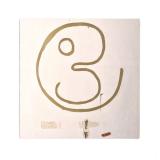
Finally, Marlena Shaw's timeless cover of Diana Ross' 'Touch Me In The Morning' gets the official, remastered, reissue treatment alongside the downtempo, slow jam - 'Shaw Biz / Suddenly It's How I Like To Feel'.
'Touch Me In The Morning' is as iconic a track as you'll ever hear, becoming a huge anthem of discotheques the world over. A tale of lost love, capturing the emotions and exposed honesty of a separation, contrasted with those intrinsically uplifting string and horn sections. It is a truly epic embodiment of strength and courage that Shaw's vocals summon from your very soul.
Hunee melted hearts by dropping 'Touch Me In The Morning' to close out the main stage of Dekmantel 2017 - a spine-tingling moment of inclusion, hope and emotional outpouring, bringing a whole festival that little bit closer together. This is a 7-and-a-half-minute journey to completely lose yourself in and few have done it better than Marlena Shaw.
On the B side is 'Shaw Biz/Suddenly (Its How I Like To Feel)' - Marlena's cautionary account of the emptiness and loneliness that can come with success and material possessions, before finding true love just when it was needed. It's slow, sultry and passionate, much to do with Shaw's voice bringing a pure outpouring of the soul that she duly became famous for.
Search:little by little
Too Rough 4 Radio debuts their vinyl compilation with an electric assortment of soundscapes comprising of Florian's glittery disco tune with a tangy twist on 'Keep On', Littlelake's lush transient deep house number on 'Lionel', Clocked Devices scattered drone zooming across the cosmos on 'Intergalactic' and all rounded by Lootbeg & Blinds crunchy heady-topper on 'FuzzyLogic' .
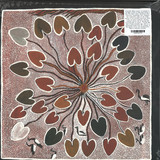
Efficient Space is honoured to share the little-heard recordings of three Yolngu songmen from Northeast Arnhem Land - Bobby Bunnungurr, Jimmy Djamunba and Peter Milaynga (d. 2007) - working in collaboration with Victorian musician Peter Mumme. Yolngu are the indigenous peoples of Arnhem Land in Northern Territory, Australia; their clans are the Marangu and Malabirr, the languages Djinang and Gannalbingu. Their songs are of instruction, story and ceremony.
A connection first initiated by Yolngu actor David Gulpilil, Waak Waak Djungi's mid-90s recordings were preceded by years of respectful sharing of culture. Mumme explains that 'the aim was to produce something that is new, not in the sense of a breakthrough, but what emerges from the combining of existing ideas'. What developed was sonically unique - sprawling vocal/electronic soundscapes and field recordings that reimagine the traditional songs of black crows and white cockatoos, sharing, creation spirits and of leaving and returning home to country. Spacious and patiently durational, the songs resound in a big land with a big story to tell.
On the 1997 Waak Waak Djungi album Crow Fire Music, these interpretations were assembled with traditional recordings and additional material from Sebastian Jörgensen and Sally Grice. Falling short of generating public interest, it became well known in the Yolngu homeland. Nearly two decades later, a CD copy filed away in the 3RRR FM library would prompt a three year investigation to meet the people behind the music.
Waak Waak ga Min Min (Black Crow, White Cockatoo) combines the previously unreleased Gandi Bawong with five contemporary versions from the original album, with a new cover painting by Bobby Bunnungurr. Tracing 1997 back to many millennia ago, this is a captivating window into the richness of Aboriginal culture and collaboration.
Otis Stacks, three syllables. A name and a first name that recall a mythical singer as much as the Memphis music label that got him to it's days of glory. A name that evokes him in particular and soul music in general. Behind a name that sounds familiar are Elias Wallace and Justmike, two men united to become one: Otis Stacks. In truth, the optimized version of a work started long ago, when Justmike was producing the Danish hip-hop sound of Dafuniks and decided to get in touch with Elias after hearing his voice on a friend's tune. He first wanted him to lay his voice on a
chorus, then a verse, and ended letting him take over the lyrics of 'All I Want', the song that would later bring Dafuniks on air and around Europe. After traveling miles and miles across the ocean and the seas separating California from Denmark, Elias undeniably became a member of the group. As gigs went on, stages after stages, Justmike got inspired by Elias's voice and presence. Thus, the idea of a duo collaboration between the two men geminated and grew in his mind. As the evidence of their getting along, 'Fashion Drunk' became the first tune to
infiltrate Nova and FIP radio playlists, as its music video reached 8 million views. This now obvious complicity as extended in the form of an album, also called Fashion Drunk, released by Underdogs Records. With this French stopover, the line between California and Denmark is now completed. The result is an artistic fusion in which Justmike has plugged his instruments to the machines he uses to compose, letting Elias in charge of the
lyrics and singing. Here, the soul music is printed as a guideline in an organic and digital composite matter. In an ethereal and aerial production that perches its arrangements in the air of the mix or buries them in its bases, letting electro music spread on a groove punched with black and white keys. Each element intervenes with discretion to let Elias stories be related with elegance. Frustrated, disappointed or aborted love stories.
The Viennese label forTunea finishes 2017 with another rendition of their forTunea Cookies recipe. The ingridients on the A-side were added by Klaus Benedek and the newest member of the forTunea bunch, Lukas Poellauer. - Splattered is another typical melancholic KB trip. A chopped hookline, heavy reverbed synths and a vocoder are the signature features in this track. Lukas delivers us on the other hand his interpretation of - Underground house music with Chicago and UK influences. The B-side gets a little spicier. Jakobin & Peletronic serve with - Morning Glory some funky seeds on the plate. Last but not least the Schampus Ghost teams up with Anemona to the baking session. What they are adding to the cookies What they are adding to the cookies Well, it is certanly not sugar. ;-) It is for the better not to unveil the secret ingridient. But lets just say, their tune has some cool disco-techy vibes innit. All in all an enjoyable treat
Already support by Iron Curtis, Blueshift, Dubble D, Paul Cut, Rainer Trüby, Manuel Sahagun, Roman Rauch, Franksen, Claudio Ricci. Tyree Cooper, Sarah Wild, Bart Ricardo, Janefondas, The Soulbrozerz, Eric Davenport, BTO Spider, Jaymz Nylon, Snooba
Much may have changed over a two-decade period, but Drumcode's commitment to releasing the scene's most cutting-edge and refined techno remains resolute. 2017 has already seen releases from Adam Beyer Vs Pig&Dan, Alan Fitzpatrick, Ilario Alicante, Julian Jeweil, as well as a debut album from Layton Giordani. The label continues push forwards; bringing fail-safe, club-ready music to the techno community.
Perennial pushers of the techno envelope, Dense & Pika are renowned for their standout studio output that seems to constantly conjure up a particularly unique take on their distinct sound, D&P have rather outdone themselves in 2017.
Kicking off the year with a selection of back catalogue remixes from the likes of Danny Daze, Scuba, Slam and Yotam Avni that illustrated the high esteem in which D&P are held by their peers right across the spectrum; From heritage acts to current headliners and cutting edge talent, the duo have gone on to drop bomb after bomb after bomb.
Their universally lauded remix of Tiga's 'Louder Than A Bomb' was the first of a run of chart topping cuts; With a remix of ME & her's 'Wild Rage' on Jamie Jones' Hottrax imprint and their own 'Casino' single both challenging the norm of what techno sounds like in the here and now.
Cooked up with a more melodic vibe and fusing elements of house and techno, Dense & Pika's latest outing on Drumcode offers something different compared to their previous work.
There is still that vintage feel to each of the tracks with analogue sounds and arrangements born and developed from experimental studio jams. Indeed, 'Suki' heavily utilizes the distinct harmonic tones of the Dave Smith Prophet 8 keyboard. While 'Little Sun' - A staple of D&P performances over the last three months - delivers a more classic Drumcode sound. 'Lanky' closes out the release with an infectious slab of wonderfully wonked-out raw funk.
Office Recordings continues to surprise us. After Baaz' Techno-/Ambient-hybrid on Office 011 the label from Berlin comes up with a stunning new and anonymous project called 'One Day' featuring four also unnamed tracks. The A-side of the record starts off with a with a superb Deep Techno track which tempts us with very emotional pads and a strong kick and bass fundament - an irresistible combination. A2 goes in the same direction but feels like the slightly mellower and softer brother of its predecessor - a little bit moody but still straightforward at the same time. The flip side is dedicated to two freestyle electronic tracks standing in the tradition of the best Warp offerings from their heyday in the 90s. We're talking charming melodies and sparse but elaborate rhythmic patterns. The record comes in a hand stamped and with a lovely artwork also hand made by Office art director Super Quiet. All tracks have been mastered and cut by sound engineering proficient Pole at Scape Mastering.
Mana is producer and composer Daniele Mana from Torino in Italy. His debut EP for Hyperdub, 'Creature', is also the first under his own surname. It's one of his most vivid, personal and confident releases to date. Since 2010, he has been releasing under the moniker Vaghe Stelle, with EPs and two full length albums on labels such as Gang of Ducks, Aisha Devi's Danse Noire, Astro:Dynamics and most recently, Nicolas Jaar's Other People records. He is also a member of One Circle with Lorenzo Senni and soundtracks composer Francesco Fantini. On 'Creature', over eight tracks, he ingests Shostakovitch, Drexciya, Darkthrone, Frank Ocean and Paul Lansky, and refashions them into an almost operatic record - a rich, melodrama of dark tension and excitable in-your-face synth melodies. In using his own name for the first time, he says he is confronting the unfiltered, brutal truth' of his self, compressing tension and anxiety' into a claustrophobic sense of emotional vacuum.' From the skulking clockwork of 'Crystaline,' the rich drifting ambience of 'Sei Nove', to the panicky, rushy rave stabs meets horror theme of 'Running Man', it's lucid, dynamic synth music which uses drums sparingly, but occasionally swirls into little sublime vortices of arpeggiated hyperrhythm. The melodies are bright and pitch bent, swollen by euphoric voltage surges and stuttering, soaring strings in 'Rabbia', plucking wide-screen, heart strings on 'Uno e Solo' and lulling down into the delicate, shimmering prisms of 'Wetlife' and 'Consolations'. While in its own lane, 'Creature' feels totally at home on Hyperdub.
Jos & Eli might seem unknown to many electronic music lovers but they have been releasing great music since 2013. They have been sending me music for a long time and I think we have spend about a year developing this first release on Noir Music, making sure it represented their debut on the label perfectly. When you hear the Adrenaline Hunt release you will notice that the 2 guys from Tel-Aviv have developed into a great production team over the years and these 3 tracks included here are not only cleverly crafted for the deeper dancefloors but can also be enjoyed on home stereo's. Opener 'Obscured Mind' features immense vocal-work by Jinadu and the song is wrapped in delicious and constantly intensified deephouse flavours whereas 'Initiation' has a more tribal, dubby and africanism edge to it. On the title track 'Adrenaline Hunt' which we build the EP aound things get a little more tech, darker and closer to what you would typically expect from Noir Music. Not only am I always excited to have new artists and talents on the label but I feel Jos & Eli bring a new dimension to Noir Music as well.
Sheffield's thatmanmonkz is quite the sonic force to be reckoned with. With an impressive discography across the board, dropping his most recent album "Columbusing" on Delusions of Grandeur in 2016 and running his own successful imprint "Shadeleaf", we're very happy to welcome him to Dirt Crew and present his latest EP "Shade Throw". Kicking things off rough and ready in true Detroit "Hight Tech Jazz" style, "Manna for Poppa" is a Saxed up dance floor bomb ready for the taking. "Intrinsic Divine", a sonically soaring breakbeat outing lightens the mood a little, think classic trip hop meets modern deep house. The cinematic string arrangement is accompanied by freestyle piano and licks of ad-libbed sax over a steady kit. "Space Jam 2017" sees thatmanmonkz team up with New York City's Clyde Phalanx to create a pure psyched up space house outing. We can picture this one over a sun-drenched Balearic scenery or deep in a dark and smokey basement somewhere. Jazzy freestyle drums underpin a live guitar improvisation that gets truly nasty on this interplanetary journey. Slow and sexy is the tempo for the closing track. "Evolver" is a soulful disco burner reminiscent of Idjut Boys, grooving along with smooth RnB vocals and salacious keys while intoxicating strings lift the energy to pure cosmic goodness.
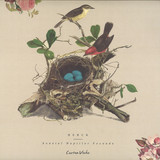
Curtea Veche are proud to present the Exclusive debut album from one of Romania's finest talents Herck.
The Vinyl Only LP will come over 2 parts, Part 1 showcasing Herck's Musical side, 6 beautifully produced tracks over 2 records.
Part 2 coming a little later with 4 huge club tracks on a single 12"
that will finish off the LP.
Already getting played by some of the biggest names in the industry like Raresh, Sepp, Cap, Nu Zau & Archie Hamilton amongst others. 300 limited press
Part 2[8,36 €]
limited repress!
Curtea Veche are proud to present the Exclusive debut album from one of Romania's finest talents Herck.
The Vinyl Only LP will come over 2 parts, Part 1 showcasing Herck's Musical side, 6 beautifully produced tracks over 2 records.
Part 2 coming a little later with 4 huge club tracks on a single 12" that will finish off the LP.
Already getting played by some of the biggest names in the industry like Raresh, Sepp, Cap, Nu Zau & Archie Hamilton amongst others. 300 limited press
- A1: Les Masques - Il Faut Tenir (1969)
- A2: Isabelle Aubret - Casa Forte (1971)
- A3: Christianne Legrand - Hlm Et Ciné Roman (1972)
- A4: Jean Constantin - Pas Tant D'chichi Ponpon (1972)
- A5: Billy Nencioli & Baden Powell - Si Rien Ne Va (1969)
- B1-: Marpessa Dawn - Le Petit Cuica (1963)
- B2: Jean-Pierre Sabar - Vai Vai (1974)
- B3: Sophia Loren - De Jour En Jour (1963)
- B4: Isabelle - Jusqu’à La Tombée Du Jour (1969)
- B5: Sylvia Fels - Corto Maltesse (1974)
- C1: Frank Gérard - Comme Une Samba (1972)
- C2: Ann Sorel - La Poupée Des Favellas (1971)
- C3: Charles Level - Un Enfant Café Au Lait (1971)
- C4: Andrea Parisy - Les Mains Qui Font Du Bien (1970)
- C5: Audrey Arno - Quand Jean-Paul Rentrera (1969)
- C6: Aldo Frank - T’as Vu Ce Printemps (1970)
- D1: Christianne Legrand - Cent Mille Poissons Dans Ton Filet (1972)
- D2: Clarinha - Lemenja (1970)
- D3: Hit Parade Des Enfants - Aquarela (1976)
- D4: Jean-Pierre Lang - Tendresse (1965)
- D5: Magalie Noël - Une Énorme Samba (1970)
- D6: Françoise Legrand - La Lune
Ever since the late 1950s bossa-nova revolution, Brazil’s influence on French music has been undeniable. Pierre Barouh, Georges Moustaki and a vast array of lesser known artists, all made the Musica Popular Brasileira (MPB) an axis of promotion at the service of a cool and metaphysical, modern and mixed Brazilian lifestyle. Some were seduced by the poetic languors of the bossa, some were looking for fun, and others just loved the American hybridization of jazz-bossa, jazz-samba.
What is bossa nova? One of its creators, Joao Gilberto said: "Its style, cadence, everything is samba. At the very start, we didn't call it bossa nova, we sang a little samba made up of a single note - Samba de uma nota so .... The discussion around the origins of bossa nova is therefore useless”. It is nevertheless useful to remember that these magnificent Brazilian songs, which the guitarist describes as samba, were shifted and balanced around improbable chords. "I like things that lean, the in-betweens that limp with grace," said Pierre Barrouh, quoting Jean Cocteau.
With emotion, arrangements for violin and supple guitar licks, bossa nova rapidly changed. A transformation that can be heard in the Tchic, tchic, French Bossa Nova 1963-1974 compilation, the result of a cultural reappropriation, which traveled through the United States and supplemented itself in France.
A musical revolution that has remained significant, bossa nova was born in Rio. From 1956 to 1961, Brazil lived through its golden years. In five years, the country had invented its modernist style. Elected president in 1956, Juscelino Kubitschek de Oliveira, an elegant man with a broad forehead, brandished a promising slogan: "Fifty years of progress in five years". He quickly got to work. Not worried about increasing debt, he launched the project for a new federal capital, Brasilia, designed by the communist architect Oscar Niemeyer. Volkswagen opened state-of-the-art factories and created the “fusquinha”, the Beetle. In Rio, the Vespa made its first appearance. The Arpoador Surf Club crew run into the “girl” from Ipanema, Helô Pinheiro - the tanned garota ("chick"), between a flower and mermaid, who at 17 walked by the Veloso bar, where the fiery author and composer, Tom Jobim and Vinicius de Moraes, were getting drunk on whiskey. From then on, bossa symbolized cool.
In 1958, Joao Gilberto recorded Chega de Saudade, which the directors of Philips denied, calling it "music for fagots". The marketing director, who believed in it, secretly pressed 3000 78-inch vinyls and distributed them at schools around Rio, creating a tidal wave.
American jazzmen then took over. In particular, trumpeter Dizzy Gillespie and guitarist Charlie Byrd. In November 1962, the Brazilian Ministry of Foreign Affairs funded a "Bossa-Nova" concert at Carnegie Hall in New York, inviting the genre’s pioneers. Unprepared, the show soon turned to disaster. But the troupe was invited to the White House by Jackie Kennedy. The first lady loved "the new beat" and in particular Maria Ninguem, a song by Carlos Lyra, later covered by Brigitte Bardot.
In Brazil, the 1964 military coup quickly ended this euphoria. The destructive atmosphere that ensued pushed many Brazilian musicians to leave, if not to exile. Thus, Tom Jobim, Sergio Mendes and Joao Gilberto arrived to the United States. In New York, Joao Gilberto met saxophonist Stan Getz. At the time, he was married to the Bahianese Astrud Weinert Gilberto, who had a German father. She had never sung before, but she knew how to speak English. Getz therefore asked her to replace her husband on The Girl From Ipanema. The Getz/Gilberto record with Tom Jobim on piano, was released in March 1964. Phil Ramone, the "pope of pop" was in charge of sound.
Bossa nova arrived in Paris through the classic “guitar-voice” channel (Pierre Barouh, Baden Powell, Moustaki…) But France loved jazz and Paris had already welcomed its American contributors. All these good people were to pass through Saint-Germain-des-Prés. The cabaret l'Escale became the Mecca of Latin American sound where one could find Pierre Barrouh and his friends, such as the Camara Trio, samba-jazz aces, whose only record was published by the Saravah label. With a band strangely called Les Masques (a band that included Nicole Croisille and Pierre Vassiliu, among others), the Camara Trio recorded an interesting Brazilian Sound, including the track Il faut tenir which is present on this tasty compilation of rarities.
Other enlightened musicians can also be found on the compilation, such as Jean-Pierre Sabar (songwriter for Hardy, Auffray, Leforestier ...) and the French pop rock organist Balthazar. In 1975, Sabar recorded Aurinkoinen Musiikkimatka on a Finnish label, which featured the crazy Vai, Vai, included on this record. We are now following the footsteps of Brazilian electronic musicians such as Sergio Mendes, Eumir Deodato or Marcos Valle who created funk and disco sounds on their keyboards and synthesizers. A style that influenced Véronique Sanson when she wrote Jusqu’à la Tombée de la nuit in 1969 for Isabelle de Funès, the niece of Louis and a great friend of Michel Berger - Sanson did end up singing this track on her 1992 Sans Regret record.
The pinnacle of exoticism and travel, Sylvia Fels’ Corto Maltese includes bongos, sea mist and ocean sounds. The title was taken from Jacky Chalard’s concept album written in 1974, Je suis vivant, mais j’ai peur (I am alive, but I am scared), based on Gilbert Deflez’s science fiction novel.
However, bossa nova extended the scope of popularity. "In the 1970s, I was a fan of Sergio Mendes, Getz / Gilberto. I fell in love with this music that I knew because I had been an orchestral singer, " explained Isabelle Aubret, who in 1971 delivered a composite record of covers by the very funky Jorge Ben, Orfeu Negro, Tom Jobim, Vinicius de Morais and Jean Ferrat. "I recorded this album for Meys Records in Paris, far from Brazil, with wonderful musicians, François Raubert, Roland Vincent, Alain Goraguer...". The latter wrote the arrangements for Casa Forte, a very percussive title borrowed from Edu Lobo, one of the initiators of the bossa who spent time in California. "Jazz and bossa came together and produced very rhythmic music. I love singing, it allows me to dream, to have fun, to feel a high on stage, and these songs brought me joy, made me swing, my singing felt like a dance.”
The world tours of French singers and their desire for the tropics, often brought them to Rio with its hills, forests, caipirinhas and tanned bodies. There are surprises though, like this Iemenja (Iemenja is the goddess of the sea in the Afro-Brazilian candomblé religion). Not unlike the composer and musician Jean-Pierre Lang, based in Sao Paulo, Claire Chevalier taught Brazil to Brazil. In 1970, the singer and painter published a 45-inch vinyl, Mon mari et mes amants (My husband and my lovers), under the improbable pseudonym of Clarinha (little Claire). She was then living in Rio, with her husband, Joël Leibovitz, who founded a band called Azimuth, and who owned a record label specialized in "sambas enredos" songs for samba school parades.
For its B side, she asked Pierre Perret to come up with lyrics for a song composed by Carlos Imperial: "Oh goddess of the sea, o goddess Iemenja, I bring a white rose to adorn your long hair ..." . "Perret came to see us, and we had fun, remembers Joël Leibovitz. We wrote Lemenja for fun, we recorded it at the Havaí studio, behind the Central do Brasil the central station. Erlon Chaves, the arranger who worked with Elis Regina, joined us" adding his share of Afro-Brazilian percussions and funky brass to the mix.
There is a common misunderstanding in Franco-Brazilian history: that bossa, admittedly hedonistic, is perceived as funny, even though the poets who wrote the texts are often philosophizing on the human condition. Its French interpreters pull it towards a carnival inspired universe, far removed from its fundamental essence. Thus, Jean Constantin covered the famous Samba da minha terra, an ode to the art of samba written by the classic Bahian composer Dorival Caymmi, renaming it with the enticing title of Pas tant de tchi tchi pompon: "On your pier there is no tchi tchi / when you arch your back, you know everything is alright ”(lyrics by Gérard Calvi). This expedited bossa aims for the absurd, but retains a certain elegance.
Indeed, Jean Constantin was not an idiot, the rather large man had a huge mustache and liked fantasy, (Les pantoufles à papa, Le pacha, inspired by cha-cha-cha-cha, salsa and jazz) but he was also the lyricist of Mon manège à moi interpreted by Edith Piaf, the composer of Mon Truc en plume by Zizi Jeanmaire and the soundtrack of François Truffaut’s 400 Blows. Le Poulpe, published in 1970, from which this bossa is extract, was arranged by Jean-Claude Vannier, an accomplice of Serge Gainsbourg’s Melody Nelson. In short: "There is enough of samba / By looking at the parasol / Because my poor cabeza / Is going to die in the sun".
Even the American actress Marpessa Down, who was at the heart of the bossa nova revolution with her role as Euridyce in Marcel Camus’ film Orfeu Negro, winner of the 1959 Cannes Palme d'or, fed the clichée with Je voudrais parler au petit cuica - "Tell me how you manage to always make people want to dance / It's true, I must admit that I cannot resist your magic" - in consequence, once can hear the cuica, a little drum inherited from the Bantu.
But bossa nova had many angles. Societal, of course, pushing actresses who were symbols of women's liberation like Brigitte Bardot, Jeanne Moreau, or Sophia Loren to engage in the exercise of accelerated bossa. In February of 1963, Sophia Loren made a record in French in Rome, Je ne t'aime plus, featuring the song De jour en jour, a bossa written by two Italians, Armando Trovajoli and Tino Fornai, which was released a little later by Barclay. Bossa accompanied the 1960s, a decade of moral liberation. Ann Sorel, who interpreted La Poupée des favellas, caused a sensation with L’amour à plusieurs, a provocative song written by Frédéric Bottom and Jean-Claude Vannier. As for the actress Andrea Parisy, she displayed her bourgeois cheekiness in Marcel Carné's Les Tricheurs before interpreting Les mains qui font du bien. And Magalie Noël, the friend of Boris Vian, who sung Johnny fais-moi mal, was hired to sing Une énorme Samba, composed by Alain Goraguer (arranger to Gainsbourg, Bobby Lapointe and Jean Ferrat) with lyrics by Frédéric Botton.
But in the end, of what wood is bossa nova made of? The answer is given by Christianne Legrand, daughter of Raymond the conductor, and sister to Michel the composer: "With me, with jà" - jà means "immediately" in Portuguese. In 1972, the singer, an expert in vocal jazz and a member of the Double Six, published Le Brésil de Christianne Legrand. Two songs included on the Tchic Tchic compilation that demonstrate how bossa, jazz, funk, rock, etc. work like a swiss army knife: the music is used to denounce broken systems, or miracles, HLM et ciné roman, Cent mille poissons dans ton filet, two songs from the O Cafona soundtrack, a successful telenovela broadcast, at the time in black and white, on TV Globo. The first was adapted in French by the fighter and friend of the Legrand tribe, Agnès Varda. The second is content with a play on words, jostling them into a summer fun.
Véronique Mortaigne

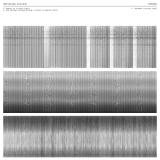
Faitiche welcomes a new artist: Christina Kubisch belongs to the first generation of sound artists. Her practice ranges from performances, concerts, to works with video and visual art, but she is best known for her sound installations and electro-acoustic compositions.
TUNING brings together three pieces by Christina Kubisch from different periods of her oeuvre. What they have in common is the way they transform sound phenomena originally considered “non-music” into compositions.
Jan Jelinek: Gaming in Silence (2024) is the most recent work on this compilation. It’s a collage of electromagnetic waves, voice, and abstract sound textures. How did this combination come about?
Christina Kubisch: Gaming was commissioned as a fixed-media composition for the Sound Dome at ZKM Karlsruhe. Since Resonances: The Electromagnetic Bodies Project (2005), I’ve been making recordings in the old and new server rooms at the ZKM and in their permanent collection of historical computer games. Computer games like Asteroids (Atari, 1979) and Poly-Play (VEB Polytechnik, 1986) have specially generated analogue electromagnetic waves that interest me in particular on account of their density, rhythms and textures. I originally studied painting and to me the work of composition often feels like painting an abstract picture. I alter my source material as little as possible, layering and overlapping until a distinctive sound space emerges. In recent pieces, I sometimes combine magnetic waves with field recordings or live instruments. In Gaming it’s my recording of a Chinese song about silence.
JJ: Two persons walking through a street in Madrid (2004) is a recording from your Electrical Walks series. Here we should give a brief explanation of one of your best known works: participants in an Electrical Walk move through public spaces wearing prepared headphones that allow them to receive electromagnetic waves from their surroundings – for example from security gates, ATMs or neon signs. They discover a situation that normally is inaudible to the human ear and they can actively shape it by choreographing their movements. I really admire this piece, not least because there’s no clear dividing line between participants and artist. What exactly do we hear in Two persons walking through a street in Madrid (2004)?
CK: With this early work, I wanted to understand what is heard by people participating in an Electrical Walk in the same place but moving in different ways. The Spanish composer Miguel Alvarez-Fernàndez and I set off from opposite ends of a major shopping street in Madrid, met briefly in the middle, and then continued to the end. We both recorded our walks and I then layered them over one another. You might call it a work of electromagnetic conceptualism.
JJ: Diapason (2009 version) is an installation that plays a composition based on sounds from fifteen tuning forks. This setting is audible in the recording: there’s no dramatic arc, no beginning or end – instead, it recalls a piece of aleatoric music focussing on the decay phase. How did you come to make this work and could you tell us something about your compositional method?
CK: Diapason is part of a series of three pieces that deal with “non-instruments” or instruments that no longer exist: electrical mine bells used to send signals to the workers underground; a historical glass harmonica originally used for medicinal purposes; and tuning forks that were used by doctors to test people’s hearing. All of these methods are no longer in use. The sound of the tuning forks, audible only if held close to the ear, was recorded at the electronic studio at Berlin’s Technical University in such a way that even their decay remained audible. The frequencies range between 64 and 2048 Hertz and they can be adjusted at micro-intervals using small movable weights. The sequence and the duration of the pauses are dictated by chance and were not defined in advance. The 2009 version was created for an installation in the historic Holy Cross Church (Korskirken) in Bergen. Visitors could enter and leave the space at any time, deciding for themselves where and for how long they wished to listen to the sounds played back over an array of small loudspeakers placed on the floor of the apse.
Credits:
Gaming in Silence: commission of the ZKM/Hertzlab, Karlsruhe 2023
elektronic sound processing: Tom Thiel
sound engineering and mixing: Eckehard Güther
Diapason: produced at Elektronisches Studio of TU Berlin
rearrangement: Eckehard Güther
Christina Kubisch, published by Edition Christina Kubisch / Random Musick Publishing
image front: Transitionen 2021 by C. Kubisch, sonagrams of electronic waves (courtesy: Galerie Mazzoli Berlin)
image back: Diapason Tuning Fork, property of Folkmar Hein, Photo: Archiv Christina Kubisch
design by Tim Tetzner
mastered by Giuseppe Ielasi
Thanks to Miguel Álvarez-Fernández, Folkmar Hein, Dominik Kautz and Mario Mazzoli
- 1: It Is What It Isn't
- 2: Varied Superstitions
- 3: Living Backwards
- 4: Precious Little
- 5: Sorry Wounds
- 6: Jolly Melancholy
- 7: Faze
- 8: No I Shouldn't
- 9: Some People Will Believe
- 10: Your Clothes, Sir
- 11: In This Town
- 12: Pretending
It is with some degree of surpriseand delight that we were contacted by John Andrew Fredrick, the founder and omnipresent member of Santa Barbara’s the black watch to see if Blue Matter would be interested in putting out their newest album. Of course we were. One listen was more than enough to convince us that it would fit perfectly on to the label. Perhaps a little more indie than other albums we’ve released, but sowhat? ‘Varied Superstitions’ is an intriguing collision of Cure-style indie and trippy psych which had us buzzing right away. the black watch (lower case intentional) wasformed in 1987 by John Andrew Fredrick in Santa Barbara, California, and he has been (and still is) it’s guiding light. They have released 25 albums over the last 38 years and show no sign of ageing. With a fantastic band behind him, John has presented us with a wonderful batch of songs ranging from mesmeric psych to indie/punk. In late 2025 John paid a brief visit to the UK to see friends and also to do a couple of live acoustic performances. The Bevis Frond was lucky enough to share the bill with John at London’s Betsey Trotwood for a wonderful evening of acoustic revelry. Not only is he a hugely talented musician/songsmith, but a thoroughly decent fellow. It’s a true privilege to be able to put out ‘Varied Superstitions’ on our label.
The recordings on Volume II were captured in Copenhagen, Denmark on January 18, 2020. Guided as much by human instinct as by musical intention, the ensemble moved through the evening with a shared sensitivity…listening, responding, and trusting the moment as it unfolded. Though Morten McCoy admits to having felt quite ill that evening, nothing in the music suggests restraint. Instead, what remains is a vivid, playful exchange, where McCoy and Johannes Wamberg carry both Part I and Part II as a flowing conversation, speaking through sound rather than words.
Part I begins abruptly, almost throwing the listener back in time to the exact moment the improvisation was born. Jonathan Bremer steps to the forefront, providing a solid, melodic bassline as Kristoffer and Eliel, perfectly in sync, lay down a steady foundation for whichever voice chooses to rise above the rhythm.
This is also one of the few I Am An Instrument recordings to feature two guitarists. Johannes Wamberg leads the way, shaping the harmonic direction, while Steven Jess Borth II adds subtle rhythmic textures through muted palm work, deepening the groove without ever stepping into the foreground.
Part II unfolds with Morten McCoy on his Moog One, delivering a beautiful, expansive solo. Using a carefully chosen patch, the sound pulses through the rhythm, moving with the groove rather than above it, riding the beat like a wave through the ocean.
Shaped by trust, presence, and collective improvisation, Volume II captures a group deeply attuned to one another, allowing intuition and momentum to guide the unfolding form.
——
Volume III was recorded in Copenhagen on March 5, 2020. Little did anyone know that only days later, the world would be placed on pause for years. Captured just before that moment of global stillness, this session carries a heightened sense of presence, a final gathering before silence reshaped everything. Recorded in a space more commonly associated with a club atmosphere, the music draws on a different kind of energy and immediacy. With Eliel Lazo unable to attend, the group invited Victor Dybbroe of Girls In Airports to join on percussion, subtly reshaping the ensemble while preserving its core spirit. Part I opens with Steven Jess Borth II calling out on tenor saxophone, answered by Morten McCoy on Wurlitzer electric piano. The piece gradually unfolds into a meditative groove, patient and expansive, carrying the listener through an eight-minute journey of layered rhythm and restraint.
Part II begins with Jonathan Bremer on stand up bass, slowly joined by the rest of the ensemble as each voice enters with intention. Midway through, an unexpected vocal melody from Borth emerges, drenched in reverb and delay, later reappearing as a melodic line on the tenor saxophone.
Part III is led by Morten McCoy on Wurlitzer electric piano. His signature melodic language sets the direction, guiding the ensemble while leaving ample space for the music to breathe and evolve through collective improvisation. Reprise returns to the closing moments of Part II, its title reflecting its origin. The familiar groove reappears, transformed into a distinctly Jamaican-influenced rhythm, over which Borth delivers a final tenor saxophone solo, bringing the conversation to rest.
Any questions about any of these products feel free to get in touch and we'll help you out!
[a] a1. Part I [Vol.2]
[b] a2. Part II [Vol.2]
[c] a3. Part I [Vol.3]
[d] b1. Part II [Vol.3]
[e] b2. Part III [Vol.3]
[f] b3. Reprise [Vol.3]
Delsin is pleased to announce an extensive compilation series combing through the catalogue of landmark Dutch techno label Djax-Up-Beats. The series, curated by Rush Hour co-founder Christiaan Macdonald, launches with a look at the label's legacy in the development of acid music through the 90s. In total, this first entry in the Djax-Up-Beats 1990-2005 series comprises 20 tracks, presented as a main triple-vinyl album plus two additional 12" EPs. This second additional EP brings two fourteen (!) minutes long journies by Acid Junkies feat. The Doctor and by Purple Plejade, an early outing by Thomas P. Heckmann and Holger Wick. Crucially, every track featured on the series has been carefully mastered by Johanz Westerman, bringing the best out of tracks that often had very little post-production treatment before they were originally pressed to wax. With five more, equally extensive, volumes to come in this series, Djax-Up-Beats 1990-2005 is a thorough exploration of a true totem of techno culture - a renegade label that operated on its own terms and carried surprises and slammers in equal measure.
Very Limited 7” EP with printed lyric inner sleeve
Purely Physical Teeny Tapes continue to sink their teeth into the fleshy nethers of the contemporary oz
underground, plucking the self-titled ep of vivisected bedroom folk by naarm/melbourne trio Who Cares?
from the recesses of net anonymity for the greatest of good.
Upon appearing out of nowhere back in ‘24, the quartet’s debut registered (feverishly) somewhere
between immediacy & beguilement, the intervening year & change doing little to dull its aura, the
mystique only heightened by their suitably gorgeous appearance in wonderful company on a colourful
storm’s recent ‘going back to sleep…’ compilation-extravaganza. The conceit of these four tracks here is
disarmingly minimal - repetitious loner guitar strummage, oblique vox poetics as lullaby, intermittent
sunken percussion, bass the subtle melodic lugger - all recurring/revolving in delicious pirouette freefall,
un-rinseable within the mind, wayward melodies stuck like heat-warped treacle.
As with the firmest of its diy domestica ilk, there’s something ever so slightly off here, the carnivalesque
nature of this thing being the ‘what?’ that keeps pulling you in. parched ennui drip, fully zonked bacchanal
(anti-)energetics, listlessness rendered bedsit anthem, cooees in the hallway. depending on how your
head is screwed, ‘correct’ or otherwise, one might hear a charmed take on a vein of folk song fallen well
by the wayside/behind the mantle, others a seance for the spirits in the kettle, others more attuned to the
myriad wraiths swirling within the outer reaches of these songs, flights of whimsy foiled by a sticky, gluey
something or other. choose, or rather submit to your own adventure. Miaow miaow miaow.
- 01: Moth
- 02: Butterfly
- 03: Warpaint
- 04: Walking Backwards
- 05: Lost Map
- 06: Zero Gravity
- 07: Little Axe
- 08: Paper Ships
- 09: White Noise
- 10: Five Eight
Black Salt is the second album from Kiiōtō (Mercury Music Prize nominated singer/songwriter Lou Rhodes, former lead vocalist and co-founder of Lamb and award-winning songwriter and pianist Rohan Heath). Their debut album, As Dust We Rise, was released in 2024 to critical acclaim.
Stylistically Black Salt leans further into Jazz, broken beat and soul textures than the debut,with references as diverse as Carole King, Khruangbin and Alice Coltrane. The resulting album is impossible to define by genre, but is fused by the unique interplay of Heath's melodic sensibilities and Rhodes inimitable voice.
Written primarily in Kiiōtō's home studio in North London, Black Salt features guest appearances from a melting pot of musicians, notably guitarist Hawi Gondwe (Amy Winehouse), double-bassist Andy Hamill (4 Hero, Carleen Anderson), drummer Mykey Wilson (Corrine Bailey Rae), and even some impromptu guitar by the one and only David Arnold.
BLACK SALT is out April 2026.
- 01: Taste This Sound
- 02: Make Me Dance
- 03: Go Let Your Freedom Grow
- 04: Fight!
- 05: Tic Toc
- 06: No More
- 07: Once Again
- 08: Feel It
- 09: Aria
- 10: Falling Down
Until We Are Free is the debut album from fabric, a collective of musicians from diverse backgrounds united by a shared goal: to fuse irresistible rhythms and grooves with a direct, socially conscious message that draws vital attention to the contradictions of modern life. The project's name itself evokes the idea of a living, dynamic ensemble—a creative intertwining of different threads, from musical genres to founding musicians and guest collaborators, all actively woven into the social fabric.
The record blends funk, soul, and Afrobeat with a sharp, contemporary urban attitude, resulting in a sound that functions simultaneously as sonic resistance and an invitation to the dancefloor.
It finds its place in a lineage that runs from Fela Kuti and ESG to The Comet Is Coming, Sault and Jungle.
At its core is the conviction that music and civic engagement can coexist seamlessly without being didactic. While the lyrics—entirely in English—tackle themes of rights, equality, and freedom, the groove remains the heartbeat: constant, pulsing, and relentless.
Mixed by Tom Campbell (whose credits include Sault, Little Simz, Adele, Michael Kiwanuka, and Jungle) and featuring art direction by Raissa Pardini, Until We Are Free is a soundtrack for complex times. It is an invitation to refuse neutrality and isolation, and to imagine—together—new possibilities for movement, resistance, and the future.
fabric's singles "Taste This Sound" and "Fight!" have been featured in FIP's Spotify Playlists "FIP Radio (en live)" and KEXP's "New This Week" and "KEXP Rotation".