Get ready to sail into the vibrant rhythms of Romperayo with their new single, "La canoa del soldado," now available on Little Beat More!.
Romperayo brings a fresh take on Colombian tropical music by blending traditional coastal sounds with essential electronic elements and mixing nostalgic tropical vibes with modern beats.
The single also features a remix by Captain Planet with his fusion of global roots music adding a unique danceable twist to the original track.
Let’s paddle on Romperayo’s eclectic sounds and get your hands on the limited 7-inch vinyl that will carry you through sun-drenched landscapes and the bursting stream of millennial water flows.
Pedro Ojeda: Drums, percusion, composition, mixing.
Ivan Medellín: Accordion
Marco Fajardo: Clarinet
Nicolas Eckardt: Bass
Juan Manuel Toro: Synth
Recorded by Daniel Michel at MamboNegro Studios, Bogotá, 2023
Remix produced and mixed by Captain Planet
Master by Simone Squillario
Artwork by Michael Boulton
Search:little by little
Obscure & outstanding free jazz album reissued for the first time since it’s original release in 1969. Old-style gatefold sleeve LP, with liner notes by Ed Hazell.
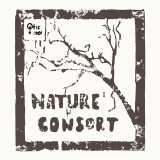
In the late 1960s, young jazz musician Bobby Naughton, a keyboardist and vibraphonist, faced significant challenges as he sought to record his first album. With major record labels and jazz clubs catering only to big names, Naughton and other creative musicians of his generation found themselves sidelined by the mainstream music industry. They turned to self-reliance and self-production, becoming part of a movement of independent musicians. Naughton’s debut album, Nature’s Consort, was a DIY effort in every sense—recorded on home equipment and featuring a hand-printed woodblock cover. The album was distributed independently at concerts and by mail, receiving little attention initially, but over the years it gained a reputation as a rare, sought-after artifact of the period.
Though recorded during an outdoor concert in Connecticut, Nature's Consort reflected the "loft jazz" scene in New York City. This avant-garde jazz movement centered around musicians who lived and played in loft spaces in lower Manhattan. Naughton commuted from his home in Southbury, Connecticut, to play with his bandmates Mark Whitecage, Mario Pavone, and Laurence Cook in New York's lofts. These musicians regularly performed at venues like Studio We, a key gathering spot for free-form jazz, where musicians could experiment and develop their sound, often with no audience present.
Naughton’s journey into jazz was a winding one. Originally from Boston, he played rockabilly and blues-rock before transitioning into free jazz. Inspired by avant-garde artists like Carla Bley and Paul Bley, Naughton sought to explore new forms of music that went beyond traditional jazz structures. His bandmates, Mark Whitecage and Mario Pavone, were both deeply affected by the death of John Coltrane in 1967, which prompted them to quit their day jobs, attend Coltrane’s funeral, and move to New York to pursue jazz full-time.
Nature’s Consort was a collective project, with band members sharing equally in any profits. However, Naughton was the driving force behind the group’s creative direction. He composed much of the original material and selected pieces by Ornette Coleman and Carla Bley for the band’s repertoire. Jazz critic Nat Hentoff praised the album for its “high-risk improvisation” and the musicians' ability to anticipate each other’s moves. Though Nature’s Consort received little press at the time, it has since been recognized as a significant early document of the loft jazz era, representing Naughton’s disciplined, improvisational approach to music.
- 1: New Snow
- 2: Crash Course Christmas
- 3: Magnetic Field
- 4: I Do
- 5: First Winter
- 6: Back In Town
- 7: Turtle Neck
- 8: Colibri Heart
- 9: The Day Before The Day
- 10: This Christmas / Next Christmas
The Norwegian indie-pop super-group with members from Making Marks, The Little Hands of Asphalt, Mildfire, Flight Mode and Elva return with a third album of original Christmas songs.
Get into that alternative, Nordic Christmas spirit! Christmas III at its heart is an alt-Christmas album: the songs are firmly rooted in December’s festivities, albeit not usually relying on the season’s traditional reference points. The songs hone in on the more ambivalent sides of Christmas - family, customs and the passing of time - with a keen eye towards the holidays’ most obvious function in countries close to the Artic circle: getting through the cold and dark times to celebrate the winter solstice and the turning of the sun. Drawing from Sufjan Stevens’ epic indie Christmas compendium and Phil Spector’s wall of sound classic A Christmas Gift From You, Christmas III is built on shimmering guitars, snow filled piano lines, gentle strings, springy vocals and dynamic drums - all steadily conducted by Sunturns’ own Sjur Lyseid (Flight Mode, The Little Hands of Asphalt) in the producer’s seat at his Globus studio in Oslo. With 3 songwriters (Ola Innset, Einar Stray & Sjur Lyseid) contributing to Christmas III, there’s an ever shifting sense of reflections. Parenthood and the struggles of the dark Norwegian winter is behind Ola’s track First Winter. “Sometimes I feel bad about bringing children into such a difficult world. Not so much with respect to daylight and the seasons, they’re just going to have to learn how to live with it, but with many other things – like war, poverty, climate change and even just death.” Back In Town might have been inspired by a discussion over whether Thin Lizzy’s “The Boys Are Back In Town” is a Christmas song or not, but it’s written about his youngest daughter Klara, to his elder daughter, about taking holidays with your family in a town you once lived. Einar pulls in Phoenix and Mew by the way of Jesus and Mary Chain on Crash Course Christmas, resulting in a seasick wave of a pop tune. “It’s a song about the guilt of not prioritizing your relationships. It’s been year of rainchecks and Christmas finally gives you some time to reflect. You’ve experienced so much and changed so much as a person that you almost forget your origins. Coming home for Christmas can then be a ritual of finding your way back to what you left behind." Drawing on the knitwear from the film Love, Actually, Turtle Neck, taps into the Backstreet Boys by way of Mac Demarco, with a sneaky reference to the legendary Norwegian Christmas hit En Stjerne Skinner I Natt. Album closer This Christmas / Next Christmas leans in on the hook for the Norwegian Christmas TV show Jul i Blåfjell, a multi-generational seasonal staple (essentially a daily children’s advent calendar kids show). “The song is about your parents ageing and needing your help – possibly really far away - while at the same time having your own children to take care of”. The cover artwork is a homage to Christmas dress codes for Norwegian men. Suits and shirts are a rarity in day to day life, but there are a handful of occasions that require some form of formal attempt at a suit: New Year’s Eve, National Day, weddings & funerals, and Christmas Eve: resulting in various degrees of sartorial elegance on the day (and on this instance, a hot summer’s day stifling the Christmas vibes, with ambiguous apparel instructions ahead of the photoshoot!).
Merry Christmas! Sunturns are Ola Innset – vocals, guitars, banjo. Sjur Lyseid – vocals, guitars. Einar Stray – vocals, keyboards, guitars. Eivind Almhjell – guitars, bass. Simen Herning – guitar. Jørgen Nordby – drums.
- 1: Peach Blossom Paradise
- 2: Demon Cicadas In The Night
- 3: The Cold Curve
- 4: Saying Yes To Everything
- 5: Lighthouse
- 6: Revisionist Mystery
- 7: The Meander
- 8: The Wheel Of Persuasion
- 9: Another Tomorrow
- 10: Common Exotic
Prairiewolf make easy listening music for an age of fracture. They almost do it in spite of themselves. No one can seriously question the head music bona fides of the members of this Colorado-based trio.
Guitarist Stefan Beck has already assembled a formidable discography of jewel-toned guitar zone-outs under his Golden Brown moniker. And keyboardist and guitarist Jeremy Erwin and bassist Tyler Wilcox have both made their reputations as chroniclers of the vast world of out-music. Erwin helms the indispensable Heat Warps blog, a performance-by-performance archive of Miles Davis’s labyrinthine electric period. And Wilcox has been covering the ragged edges of psychedelia and experimental rock at Aquarium Drunkard and other publications, not to mention his own virtual basement for heads, the great bootleg blog Doom and Gloom from the Tomb.
These guys come by it honestly. And yet, given their backgrounds, Prairiewolf’s self-titled debut last spring was remarkably free of face-melters, brown acid blowouts, and ascendant spiritual jazz odysseys. Instead, they dropped a record of beautiful, elegant, low-key cosmic groovers that sounded like the piped-in background music to a resort hotel on Jupiter. It was an unlikely psychedelia, brocaded with mid-twentieth century sonic threading from the hi-fi era: vintage synthesizers, smears of spaghetti western, luxe tropical details, the faint schmaltz of space age pop. Imagine something like a Harmonia residency in the airport lounge. And yet somehow it all worked brilliantly. Prairiewolf became last summer’s cool-down standard. After a year woodshedding around Colorado’s Front Range region, the Prairiewolf boys have fired up their trusty Korg SR-120 drum machine for another outstanding collection of suborbital exotica. The appropriately titled Deep Time operates in its own chronology, unspooling at its unhurried pace. All its incongruous period and stylistic references—the new age pulses, Hawaiian steel, shaggy hippie rambles, lysergic guitar spirals, and orchestral synthesizer flourishes—float atop the album’s own singular temporality. Deep Time makes its own time.
From the moment Beck folds his slide guitar, origami-like, into a sound resembling the call of gulls on the tranquil album opener, “Peach Blossom Paradise,” there is a sense of departure from everyday life. The shimmering “Lighthouse” has a similar sunbaked nonchalance, like an afternoon passed day-drinking in a seaside bar. That they named their lush, kaleidoscopic downtempo track “The Meander” pretty much says it all. The ranging, propulsive “Saying Yes to Everything” seems like a nod in the direction of Rose City Band’s brand of wookie krautrock. And the motorik noir of “Demon Cicadas in the Night” also goes hard. Beck and Erwin’s intertwined guitar jam on the eerie album standout “The Cold Curve” evolves into something that sounds like primitive computer music. A genteel bassline from Wilcox on another album highlight, “Revisionist Mystery,” sets the stage for a loopy space jazz turn from guest clarinettist Matt Loewen of Rayonism. The title of post-rock cowboy tune “Another Tomorrow” might refer to the alternative future that so many critics heard in the music of Prairiewolf’s first album. Or it might simply refer to the persistence of time, however deep. Either way,
I’m thankful for the way Prairiewolf make each of their tunes a little oasis or sanctuary, each subsisting according to its own crystalline little logic for a few minutes. It is no simple task to filter out the omnipresent anger and anxiety of everyday life these days. But Prairiewolf are out here making it seem easy.
Brent S. Sirota
- 1: Don't Let Me Down
- 2: I'm Looking Through You
- 3: Can't Buy Me Love
- 4: Rain
- 5: While My Guitar Gently Weeps
- 6: Let It Be
- 7: Yer Blues
- 8: I've Got A Feeling
- 9: I'm So Tired
- 10: Something
- 11: With A Little Help From My Friends
- 12: The Long And Winding Road
'Lucinda Williams Sings The Beatles From Abbey Road' features 12 Beatles songs that include classic hits such as “Can’t Buy Me Love”, “With A Little Help From My Friends” and “Something”. Williams and her band also take on beloved deeper tracks such as “I’m So Tired”, “I’ve Got A Feeling," and “Yer Blues”. Being raised on the blues in the South, the latter is a song Williams was clearly meant to sing. Recorded at The Beatles' legendary studio in London, the new collection serves as Vol. 7 of her celebrated 'Lu’s Jukebox' series and is the first new volume in almost four years. While many great artists have recorded in the hallowed Abbey Road Studios, as it turns out, Williams is the first major artist to actually record Beatles’ songs there aside from the Fab Four themselves. As an acclaimed, award-winning singer/songwriter for more than four decades, Williams’ music has been highly influential and covered by a multitude of artists. Williams is also an extraordinary interpreter who, like all great interpreters, has the ability to inhabit a song and make it her own. She does just that throughout this selection of Beatles tracks, as she has done on each 'Lu’s Jukebox' volume.
- When Did I Lay Down And Die
- Cherryade
- Little Piggies
- Let It Burn
- This Is Forever
- Don't Be A Can't (All Your Life)
- A Simple Song
- It's A Scream
- Bad Energy
- Boxes Squares Etc
- Dear Universe
- I'm Alright (Dear Universe Reprise)
- Bad Scenes At The Eyelid Cinema
- Remedy
- Inaction Man
- Man You've Got To Help Yourself
"_Syd Barrett fronting Queens Of The Stone Age- surefooted, inventive and buzzing with surprises." - The Guardian "A refreshingly bold alt-rock sound." Alfitude NJ White - aka WHITEY - explodes out of the shadows with the announcement of his highly anticipated double LP MENTAL RADIO, out on 3rd October 2024. Pulling in influences from across decades of sound and putting it through the Whitey blender to create something musically fresh, MENTAL RADIO is an album that in turn is furious, raw, amused, politically razor sharp and poignant... a satirical take on 21st Century life, a musical pop art collage. As an individual, Whitey prefers to speak via his work, and has eluded all interviews for well over a decade - leading one journalist to describe him as 'the musical equivalent of Bigfoot'. Despite this elusive stance, his music continues to rack up many millions of plays and draw fans from all ages across the globe. Across a string of acclaimed albums, Whitey's music has made its mark, from rock'n'roll clubs to electronic dance floors, fashion catwalks to movie soundtracks, television to computer games, from Breaking Bad and the Sopranos to Grand Theft Auto. Whitey has built a strange home in the shadows between mainstream entertainment and the vanishing underground, an outsider who celebrates his outsider ethos in his work- and yet whose music is embraced by both popular and alternative culture. Whitey is a prominent spokesperson for independent music - his viral letter about 'fair fees for artists' was shared 500,000+ times; and made Newsweek, The Times, BBC Worldwide and the front editorial of Music Week. Whitey's back catalogue has previously received praise from the likes of The Independent, The Guardian, Record Collector, Uncut and Rock Sound to name a few. Available as a Double Vinyl LP, CD and cassette through NO! LABEL, published globally by Mute Song and repped for live by William Morris Entertainment- this is set to be a benchmark album of 2024. Housed in a Gatefold Sleeve (Gloss Finish plus Silver Foil Trim) Including two Printed Inner Sleeves (Gloss Finish).
- Anthem Of The Trinity
- Celestial Valley
- Across The Lake Of The Ancient Word
- Desert Of Ice
In C and Rainbow in Curved Air get all the ink (inc?), but its own somewhat subtle way, 1980’s Shri Camel, the last of the three brilliant albums Terry Riley recorded for CBS, is every bit as groundbreaking as its hallowed predecessors. Not content to rest on his laurels as a minimalist master, Riley studied with Hindustani classical singer Pandit Pran Nath during the ‘70s; by blending that Eastern influence with his own experiments in just intonation (where tuning is dictated by equal mathematical intervals rather than the “tempered” tuning familiar to Western music), Riley made an album whose shimmering textures (played through a specially modified Yamaha organ) seem to change with one’s own breath or thought, like the reflection of rippling water on rock. And while Shri Camel is far more demanding and ultimately rewarding than any “New Age” recording, one definitely gets the sense that its ever-evolving, ecstatically hypnotic rhythmic and harmonic patterns are massaging the brain’s neural circuitry, leaving one refreshed, relaxed, and, yes, maybe even a little smarter than before listening. First LP reissue and long overdue!
- A1: On The Move!
- A2: Don't Need You
- A3: The Other Black Dog
- A4: Drown
- A5: Gold Chains
- B1: Centrefold
- B2: Waitin' On Ya
- B3: Smiling With No Teeth
- C1: I Don't See Colour
- C2: A Song About Fishing
- C3: No Looking Back
- C4: Black Dogs!
- D1: Whip Cracker
- D2: Bye Bye
- D3: Easy
Smiling with No Teeth is the full length debut studio album by Ghanaian Australian artist Genesis Owusu.
The record channels Owusu's experiences with racism and depression into a gloriously chaotic collage of mutant rap, digital dub, electro-punk and psychedelic funk, heralding the arrival of Australia’s most unpredictable auteur.
Smiling with No Teeth was incredibly well received by fans and critics alike, winning 4 x ARIAS at the 2021 awards including album of the year.
The record was featured on multiple end of year best of lists including NME, Paste and triple j. Spin Magazine called it - "Equal parts musical shape-shifter, limitless creative beast, badass, humorous and undefined, Genesis Owusu is a little bit of everything and everyone. This Daybreaker has come onto the scene with a monstrously diverse and impactful project, "Smiling With No Teeth", which has quickly positioned him as an ambitious artist with mass potential to be a true pioneer in today's music scene."
- The Year I Lived In Richmond
- The Tooth Fairy
- Big Chris Electric
- How You Got Your Picture On The Wall
- Rene Goodnight
- The One About The Rabbit In The Snow
- Brian's Golden Hour
- Little Sable Point Lighthouse
- Andrew & Meagan
- Premonition
- Richmond
Horrible Occurrences is the title of the new Advance Base album, and there is truth in advertising. In these songs_all centered around a fictional town called Richmond and featuring an interlinked cast of characters_you will hear stories of death and disappearance, climactic confrontations and unsolved mysteries. "Richmond is just this place where all the bad memories live," Owen Ashworth explains, and nearly 30 years into his songwriting career, none of his records have packed quite the emotional intensity of this one. And yet something alchemical happens in the telling of these tales. Like a masterful short story collection, Horrible Occurrences is inspiring and alive, idiosyncratic and electric, pulling you closer with each word. In the six years since his last full-length collection of originals, 2018's Animal Companionship, Ashworth gathered ideas from performing live and traveling around the country, returning to cities that he once called home and revisiting old ghosts, memories, and fragments of unfinished ideas. Blending truth and fiction into a dreamlike composite, the songs convey the winding path our memory takes as the years go by, giving voice to a subconscious that is still unpacking old memories for new wisdom. Drawing inspiration from the otherworldly loneliness depicted on '80s masterpieces like Arthur Russell's World of Echo and Bruce Springsteen's Nebraska, the music never crowds Ashworth's detailed storytelling but it also never feels auxiliary. These are beautiful songs, but they stick with you for their ability to strike dissonant, unforgettable emotional chords. It is this pervasive empathy in Ashworth's songwriting_along with his writerly gift for clear settings and complex characters_that has made him a guiding light for so many independent artists. The things that happen throughout Horrible Occurrences are what we tend to call "unspeakable"_events that draw gut-level responses just from acknowledging that they could happen. But part of the triumph of the record is how simply and generously Ashworth finds the language to share them. For the characters in these songs who make it out okay, these are the types of memories they will be tossing and turning their whole lives, waiting for quiet moments to confide them among the people they trust. For the rest of us, they are signs of life along the highway on a dark, snowy night: reminders that, as isolated as we may feel, we are not alone on the road.
Jabu return with ‘A Soft and Gatherable Star’, an LP that sees the Bristol-based trio evolve from a uniquely spectral take on trip hop to proffer a singular vision between cloudy, downered dream-pop, off-kilter ambient, and the warm, low-end throb of sound system culture. This development is aligned with contemporaries like HTRK, Dean Blunt, Tarquin Manek, YL Hooi and Rat Heart Ensemble, whilst also harkening back to the likes of AR Kane (with whom they are set to play shows and release a collaborative single), the languorous drift of 'Victorialand' era Cocteau Twins or The Cure circa ‘Disintegration’. Comprising Jasmine Butt (vocals, guitar), Alex Rendall (vocals, keys) and Amos Childs (production, bass guitar), the trio’s method may have shifted but the feel remains consistent - slow, spatial, sensuous and gently melancholic. With a career arc unlike almost any other current guitar outfit, Jabu sit within a strong lineage of off-centre Bristolian music, and a very British strain of home-spun DIY bands. Self-recorded between Jas and Amos’ home in South Bristol and Amos’ mum’s house in rural North Somerset, the album came together via a process of trial and error - learning to play on borrowed instruments, using the equipment “wrong”, staying up late recording and slipping into strange, semi-conscious sleep deprived/inebriated headspaces. Having captured over 50 tracks, they honed in on those they liked most, shaping them further, whilst carving out space to allow input from people they love and admire - Daniela Dyson’s voice and Will Memotone's clarinet on ‘Ashes Over Shute Shelve’, Birthmark's synth on ‘Gently Fade’ and ‘Sea Mills’, Rakhi Singh (Manchester Collective) and Sebastian Gainsborough (Vessel)’s strings and arrangements on ‘All Night’, Josh Horsley’s cello on ‘If I Asked You, You'd Tell Me’, and Lorenzo Prati’s sax, again on ‘Sea Mills’. The album was mastered by Amir Shoat (HTRK, ML Buch, Dean Blunt, Carla Dal Forno). Influence-wise, the guitar-based material recalls the bands Amos listened to when younger, and Jas’ more folk-leaning inspirations. Deep-lying dub, hip hop and soul influences are also evident in both the way the LP was mixed, and the space ingrained in their subconscious. Tinged with melancholy, the songs cohere as a set of soliloquies and ruminations on love and tenderness. The album’s title comes from a poem by Amos’ late father which hangs on his wall and seeped into the record. ‘Ashes Over Shute Shelve’ is formed of lines from another poem of his. Recited by longtime collaborator Daniela Dyson and with Will Yates (Memotone) playing his mother’s clarinet, the track was imagined as a conversation between his parents. Geography and location also play a big part in the record, with several significant places name-checked in songs. Shute Shelve itself is a hill near Amos’ mum’s house, who explains “There’s a tree at the top with a 360° view of the Mendips, where my dad’s ashes were scattered. We used to go up there when we could first buy booze from the petrol station down the road, get drunk, light a fire, listen to music from my little battery powered CD player and sleep out without tents.” Titled after a Bristol suburb near where Amos’ grandparents lived and where Jas would spend time as a teenager, ‘Sea Mills’ references her being abandoned by friends on the Downs while high on mushrooms, stranded and missing the bus back. ‘Kosiše Flower’ references the city in Slovakia where Amos and Jas holidayed shortly after getting together and a flower he gave her, which she pressed in a book after an argument. ‘Oceanside Spider House’ is a location in Nintendo 64 game The Legend of Zelda: Majora’s Mask, where someone seeks shelter from the falling moon. Genre: Electronic / Ambient / Dream-pop
- A1: How Long
- A2: Tempted
- A3: Don't Shed A Tear
- A4: The Living Years
- A5: Love Will Keep Us Alive
- A6: When You Walk In The Room
- B1: Over My Shoulder
- B2: When My Little Girl Is Smiling
- B3: Satisfy My Soul
- B4: Eyes Of Blue
- B5: The Way I M Feeling Tonight
- B6: A Time And Place
- B7: Everybody Gets A Second Chance
- C1: Dedicated
- C2: Silent Running
- C3: I Need You
- C4: I Live On A Battlefield
- C5: Now That You've Gone
- C6: I Don't Want To Hear Anymore
- C7: One Good Reason
- D1: Another Cup Of Coffee
- D2: Whenever I Stop
- D3: Don't Dream It's Over
- D4: Too Late
- D7: Can't Find My Way Home
- D5: Beggar On A Beach Of Gold
- D6: Ride On
Paul Carrack is known for his role in the bands Ace, Squeeze (replacing Jools Holland on piano), and Mike & The Mechanics (a side project by Mike Rutherford of Genesis). Next to this collaborations, Carrack has forged a successful solo career in the process. All the songs from his impressive career are now bundled under the Collected series.
Dubbed by the BBC as the "The Man with the Golden Voice" Carrack sang some of the most important songs from bands like Ace (“How Long”), Squeeze (“Tempted”), Mike + The Mechanics ("The Living Years" and "Over My Shoulder") . As a solo musician he recorded hits such as "Don't Shed a Tear", "When You Walk in the Room" and "Don't Dream It's Over". He has served as a session and/or touring musician for the likes of music greats like Elton John, Eric Clapton, B.B. King and The Smiths.
Collected by Paul Carrack, released 8 March 2024, includes the following tracks: "Don't Shed A Tear ", "Love Will Keep Us Alive", "Over My Shoulder ", "Satisfy My Soul " and more.
This version of Collected comes as a 2xLP. This release comes with (a) Insert(s).
Eevo Lute originator Wladimir M. shares another chapter of his precious techno poetry. "When I was nine years old, I heard 'Funkytown' on the radio of the pool attendant over and over again. I still go to that pool. In the mid-eighties, everyone at my high school knew 'Don't Go'. And I turned sixteen, or seventeen. And was blown away by the bass line of Los 'Ninos Del Parque'. I heard it for the first time in the dark, one of the first times in that discotheque. The bass line was so atypical that I kept losing it, there in that stuffy classroom where a teacher was telling us about 'economics'. And where Peter, who was sitting next to me, was talking about 'Computer World'. And further away there was Chicago House, little did we know. I was born for it." Wladimir M. (1968), 2024
- A1: Heaven, Or Paradise; And Hell (Ft Adrien Soleiman)
- A2: Our Dead Can’t Rest (Old Jugha Flute Dance)
- A3: Miracle
- A4: The Crane Has Lost Its Way Across The Heaven
- A5: Unraveling (Interlude)
- B1: Zephyr
- B2: Far From The Eye, Far From The Heart
- B3: What Solace Can I Give (Ft Adrien Soleiman)
- B4: …Nothing Matters More Than Touching You Although I Haven’t Touched You Yet
Lara Sarkissian’s long-awaited debut full-length, ‘Remnants’ is an ornate patchwork of ancient and modern sonic shapes that uses the vernacular of electronic music to reformulate Armenian traditions and memories. Taking digitally modeled instruments (such as the kanun, a large zither, and the duduk, an ancient double reed woodwind instrument), vocals, davul and dhol drums, tenor saxophone (from acclaimed Paris-based player Adrien Soleiman) and myriad electronic elements and techniques, Sarkissian tangles the old and the new, creating an immersive, narrative-driven experience that’s powered by history, mythology and her own familial connection to the West Asian landscape. It’s an album that’s best absorbed like a film; only multiple encounters can reveal its layered themes and references to industrial music, noise, various club styles, ambient and traditional folk.
Born and raised in San Francisco and currently based in Los Angeles, Sarkissian has developed her unique approach to composition over years of relentless experimentation across various disciplines. Her interest in music production initially stemmed from her filmmaking and video editing work, when she began to sculpt her own sound collages and scores to accompany the visuals. Since then, she’s constantly blurred the boundary between dance and experimental music, DJing around the world, producing AV installations and scoring film and video projects that have been exhibited in Berlin’s Gropius Bau, Montréal’s Musée d’art contemporain, the Music Center Los Angeles and other prestigious institutions, and releasing music with labels such as Tresor, Knekelhuis, All Centre, Silva Electronics and CLUB CHAI, the label and event series she co-founded. In recent years, she’s also been able to advance the theory behind her art, publishing a conversation with ethnomusicologist Sylvia Alajaji in the Journal of the Society of Armenian Studies in 2021, and unveiling her methodology in Norient’s ‘This Track Contains Politics – The Culture of Sampling in Experimental Electronica’ a year later.
‘Remnants’ is a new stage in Sarkissian’s evolution as an artist; not only is it her first proper album, but it’s the inaugural release on her new platform btwn Earth+Sky. She sees the label as a place to encourage collaborations between musicians and producers and prioritize sound in visual arts realms, and ‘Remnants’ is the ideal proof of concept. It opens with ‘Heaven, or Paradise; and Hell’, a track that’s inspired by the layout of the Armenian sharakan (or hymn) ‘Aravot Luso’. Sarkissian imagines the original piece’s harmonies and melodies as parts of a dreamy electronic opera, using digital kanun sounds to punctuate her woozy, evocative synths. Soleimen joins on tenor sax in the third act, while Sarkissian repeats the chant and Jace Akira adds ghostly traces of electric guitar and bass. And on the rousing ‘Our Dead Can’t Rest (Old Jugha Flute Dance)’, Sarkissian chops urgent davul and dhol drum rhythms with spine-chilling shvi woodwind sounds lifted from a documentary about Old Jugha. The title is a reference to the moving of graves by Armenian families; the area initially housed over 10,000 elaborately carved khachkars (cross stones), one of which is pictured on the album’s cover, provided by historian Argam Aivazian’s archive.
On ‘Miracle’, Sarkissian samples atmospheres from the post-Soviet Armenian comedy film ‘Կիսանդրի’ (Kisandri). She takes this opportunity to lighten the mood a little, powdering her smudged samples with tightly edited breaks and bass thumps. It’s not until the album’s middle section that the duduk, perhaps Armenia’s best-known instrument, makes its appearance. Its familiar reedy tones, popularized by Djivan Gasparyan on his many Hollywood soundtrack appearances, emerge on ‘Unraveling (Interlude)’, weaving through the acidic ‘Zephyr’ and ‘Far from the eye far from the Heart’, a post-punk inspired stomper. Sarkissian mutates the instrument almost beyond recognition, pitching and layering it into a voice-like wail that creeps between her woody, dancefloor-primed percussion on the former, and turning it into a gentle, ghostly moan on the latter. And she brings ‘Remnants’ to a close with two of her most cryptic tracks, marrying digital kanun strings with Soleiman’s resonant tenor hums on ‘What Solace Can I Give’, and looping the same saxophone sounds until they dissolve into the air on the beatless closer ‘…nothing matters more than touching you although i haven’t touched you yet’.
It’s an album that ties up Sarkissian’s various interests and experiences, finding a romantic, poetic glimmer of light in history’s darkness. But most of all, ‘Remnants’ is about the optimism of starting anew, and rebuilding a life from the pieces of everything that’s been left behind.
When dub and dope beats entered into an open relationship in the mid-nineties and created a casual hybrid with trip hop, Jean-Yves Prieur aka Kid Loco was one of the first French people to be there. With singles like "She"s My Lover" and "Love Me Sweet" and the album A Grand Love Story, the producer proved himself to be a loverman indeed, with a knack for bedroom moods, charming little melodies and a comforting balance between minimalism and lush arrangements . As a keyboard all-rounder, Guillaume Méténier aka Soul Sugar has been featured on numerous Kid Loco productions for more than twenty years. From the synthesizer to the clavinet, from the Fender Rhodes to the Leslie organ, the "Funky Frenchman" is no stranger to any keyboard instrument. The Hamburg label Echo Beach, which has already issued dub commissions for a number of pop and new wave classics, thought it was time to change that. Dub masters such as Rob Smith, Noiseshaper, Dubmatix, Paolo Baldini and many others remixed for the label. Songs by Martha & The Muffins, The Police, David Bowie, Grace Jones and Robert Palmer, among others. In order to honor the music of Florian Schneider, Ralf Hütter and their respective fellow Kraftwerkers with a dub set, they turned to Kid Loco, who has now established himself as a musical all-rounder, and who immediately invited his long-time accomplice Soul Sugar brought on board. The calculation really worked out.
Welcome to the second in the Knite Force Crew series. This is a series of limited edition triple albums from the very best and dedicated of the Kniteforce artists.
This triple pack vinyl album contains 10 superb tracks from Sunny & Deck Hussy, plus two remixes from rave legends Luna-C, and from Jimmy J. The beautiful old skool rave styled artwork was hand drawn by the original Kniteforce Records artist, Rebecca Try.
It will never be repressed and is limited in number!
Pat Kelly possesses one of the great soul voices to come out of Jamaica. Influenced by the fantastic American singer Sam Cook, Pat Kelly could ride over any tune that came his way and with his outstanding falsetto voice always added a little magic to each recording.
Pat Kelly (born 1949,Kingston, Jamaica) began his singing career in 1967 when he replaced Slim Smith as lead singer of the Techniques, his voice working so well with the impeccable harmonies of Winston Riley and Bruce Ruffin. Their first hit for the mighty Duke Reid stable was a version of Curtis Mayfield's tune 'You'll Want Me Back' retitled 'You Don't Care' which held the Number 1 position in Jamaica for six weeks. Their next hit was another Curtis Mayfield cover of the Impressions 'Minstrel and Queen' again retitled for the Jamaican market as 'Queen Minstrel'. Further hits followed with such cuts as 'My Girl' and 'Love is Not a Gamble' before in 1968 Kelly decided to become a solo artist and hooked up with producer Bunny Lee. Bunny decided not to break the tried and tested formula and put Kelly on another Curtis Mayfield track 'Little Boy Blue' a style that
suited his voice so well. This paid dividends and was followed with 'How Long' (will I love you)' which gave them the biggest selling Jamaican hit of 1969. A track which broke the mould in that often used tradition where Jamaican tracks are sweetened
for the foreign markets by adding string arrangements. This was reversed on this occasion as the tune had already been released in the UK and dubbed over with strings so came back to the Jamaican shores and released there.
Another string to Pat Kelly's bow was his engineering skills. Having already spent a year in America studying electronics he put this to good use and became little known to many
one of the chief engineers at Channel 1 studios in the late 1970's and early 1980's.
For this release we have focused on the fabulous singing skills of Mr Kelly and have compiled some of his finest recording moments for your listening pleasure. The aforementioned timeless cuts to 'How Long ( Will I Love You )', 'Little Boy Blue'
alongside some other killer lost classics, as our set opener 'It's a Good Day', 'Somebodys Baby', 'Give Love a Try' and 'I'm In the Mood for Love'. His version of 'Twelfth Of Never' in a Rocksteady Style sounds as good now as it did then. We have
also included his interpretation of the James Carr soul hit 'Dark End of the Street' which has Pat Kelly working over the same rhythm as 'How Long' but giving it a different slant
with these fresh lyrics. A fine set from one of the Islands finest, Jamaican Soul indeed... hope you enjoy the set.
The last couple of years have seen a renaissance for West Coast singer-songwriters. LA-based youngsters such as Drugdealer and Sylvie have attracted considerable attention releasing warm and mellow records tonally reminiscent of the early 70s. Most fans of this new/old sound are unaware of Bart Davenport's early explorations in the same sonic territory. His now 20-year-old "Game Preserve"album should gain an appreciative new audience with its first ever vinyl release.
In the year 2000, Bay Area troubadour Bart Davenport and several other musicians were recruited by a major tech corporation in Seattle to work on an algorithm-based music matching/search engine. It was what looked like the beginning of a promising career. After a year, however, the project was shelved. Bart and his colleagues were laid off with a healthy severance package... on the 12th of September, 2001. Not only had the musician's life changed, so had the world. Rather than blow the money on a holiday or new car, Bart knew he had to make a record. A proper album that meant something.
Back in Oakland, he entered Wally Sound Studios with former Kinetics bandmate Jon Erickson at the controls, and a swathe of talented local musicians. "With Game Preserve," Bart explains, "Jon and I really wanted to knock it out of the park. I wanted to utilize people from my old bands like Loved Ones drummer John Kent. I also invited my newer indie-pop friends from Call & Response, and a young Nedelle Torrisi. Harmony singing by The Moore Brothers was an essential ingredient on Game Preserve as well."
Both Erickson and Davenport fondly recall growing up in households where the music of The Carpenters, Joni Mitchell and The Eagles soundtracked their young lives. By the early 00s they were ready to reconnect with what is often referred to as the "Laurel Canyon" sound. "I'd buy used tapes at garage sales and play them in the car. "Ladies Of The Canyon" by Joni and Jackson Browne's first album were both in heavy rotation. Jon Erickson was getting deeper into the Steely-Mac-Doobie yacht-rock sound in earnest. A certain amount of childhood nostalgia led a lot of us back to that part of the 70s. I'd flirted with classic soft-rock on my first album, but that record was pretty scattered esthetically. I wanted my next one to be more focused. Jon and I made some ground rules: no electric guitars (except on 'Bar-Code Trees'). No synths. Most importantly, all the songs have an air-tight, super dead, close mic'd drum sound. Putting these sorts of limitations on the sessions will give your record a specific quality. In the case of "Game Preserve"it's mostly about tight drums, acoustic instruments and analog production. We used a 24-track, two-inch tape machine for tracking, then ran the mixes through an analog board straight to a 1/4 inch master tape."
While the album's sonic palette may be firmly planted in 1970, Davenport's songwriting covers a sizable landscape of moods and reflections. From the quasi-flamenco intro of 'Sweetest Game' to the somber Wurlitzer of 'Nowhere Left To Go', to the 12-string shimmer of 'Intertwine', "Game Preserve" tells a story of young love, lost innocence and redemption, crossing borders and oceans along the way.
Released in 2003 on family-run Oakland label Antenna Farm, the ultra-analog sounding "Game Preserve" was only made available on digital formats, including CD. Copies were later pressed by labels in Germany and Spain; the latter being one country the album actually did well in, establishing Bart Davenport with a small but loyal fanbase he still enjoys today. Two European tours as support for Kings of Convenience also helped gain a foothold on the continent. Back in the US, however, Davenport and his sophomore album remained quite obscure.
Limited promotion meant it did little, but for the music lovers that heard it, the album undoubtedly remains a classic of the era, deserving far more. Twenty years on, it now finally receives its vinyl debut. "I personally think it holds up well," says Bart of the album two decades later. "The idea was to make something that could be an homage to late 60s/early 70s West Coast pop but hopefully timeless as well. Years on, I hear it as just that. It was a colorful and brief period of my life that felt at times like it could last forever. I discovered the joy of working in a proper studio with a perfect cast of characters. I'm still very close with all these people and still play music with many of them."
- A1: Just One More Day
- A2: It's Growing
- A3: Cigarettes And Coffee
- A4: Chain Gang
- A5: Nobody Knows You ( When You're Down And Out )
- A6: Fa-Fa-Fa-Fa_Fa (Sad Song)
- A7: Try A Little Tenderness
- A8: My Lover`s Prayer
- B1: Good To Me
- B2: Scratch My Back
- B3: Treat Her Right
- B4: Everybody Makes A Mistake
- B5: Any Ole Way
- B6: Sweet Lorene
The Soul Album is the fourth studio album by American soul singer-songwriter Otis Redding, released in 1966. It features Redding performing songs that he co-wrote, as well as covers of songs by such musicians as Sam Cooke, Eddie Floyd, Roy Head, and Smokey Robinson. Guitarist Steve Cropper contributed guitar on the album and is also credited as the co-author of three tracks. The Soul Album shows Otis Redding moving from strength to strength in a string of high-energy, sweaty soul performances, interspersing his own songs with work by Sam Cooke ("Chain Gang"), Roy Head ("Treat Her Right"), Eddie Floyd ("Everybody Makes a Mistake"), and Smokey Robinson ("It's Growing") and recasting them in his own style, so that they're not "covers" so much as reinterpretations.
You could call Wishy's story a lucky one. After prior monikers and iterations, Wishy was born as a kaleidoscope of alternative music's semi-recent history, with traces of shoegaze, grunge and power-pop swirling together. On Triple Seven, Indiana songwriters Kevin Krauter and Nina Pitchkites' musical synergy proves itself to be a rare one-the kind that sounds like someone striking gold. Part sly wink and part warm gratitude, it's only fitting their much anticipated full length debut is titled Triple Seven, where Wishy's penchant for indelible hooks is couched equally in pillowy atmospherics and scathing distortion. By day Krauter works as a music teacher, giving drum and guitar lessons to students, while Pitchkites is a seamstress by trade and often makes embroidered merch for the band. Coming up in a scene defined by hardcore and emo, Krauter and Pitchkites instead found themselves writing melodies in their heads while driving to work, pulling music from the air and arriving at a blearier, more ethereal interpretation of Midwest expanse. Initially, their music oscillated between hazy dream-pop and heavier alt-rock. The subject of their songs create a loose web of vignettes and snapshots, capturing Krauter and Pitchkites in a whirlwind couple of years _ exiting the pandemic, embarking on an embryonic project, making sense of their musical pasts while forging a musical future alongside one another, each of them on a journey of self-acceptance and self-understanding. Sometimes gorgeous, sometimes festering, and always cathartic, Triple Seven is a vibrant and exhilarating document of self-discovery with the scope and heft of the bygone big-budget rock albums that inspired it.
Indulge in the smooth vibes of Luke Beats' latest album, 'Cream', dropping now on Little Beat More.
Inspired by the Italian saying 'ci sta una crema' ('as good as cream'), which indicates the utmost satisfaction, this work is the perfect dessert for your musical gluttony, kneaded by the skilful hands of Luke Beats for all hip hop lovers. In a world where the saying 'Cash rules everything around me' (once again: C.R.E.A.M!) still resonates loudly from the days when Method Man and the Wu-Tang rapped it, the love and passion for music can continue to shine.
With nods to sounds that have defined this genre in its origins, especially in the melodic and synthesiser parts, 'Cream' blends tradition and novelty, love for the classic and curiosity for the contemporary, creating a dreamy, mellow atmosphere that takes listeners on a creamy journey.
The 18-track album features the collaboration of drummer Federico Romeo on '404 Fun 4 Days' and guitarist Danny Bronzini on 'JamDilla', while Luke Beats himself played bass parts on 'P.T.H', 'JamDilla', 'Cookin' and 'The D'.
Once again, Matteo Baracco's artwork adorns the EP, with a closed but squashed tube of tempera, which perfectly complements the nostalgic yet fresh sounds within, telling of an approach to production and beatmaking still anchored in the “old school” sound craft principles in which getting one's hands dirty is the prerogative needed to shape a sound that is personal and respectful of its history.
A further tribute to the golden era of hip hop is provided by the format of the release, in an iconic timeless audio cassette to dust off your ghettoblaster!