With Bhelize Don't Cry, Uzi Freyja unveils her childhood alter ego, Bhelize—a name known only to her family, now released as a daring new identity. This album, crafted as a letter to her “inner child,” is an honest dialogue between the adult she has become and the little girl she once was.
Over 12 tracks, Uzi Freyja takes us on a visceral journey, navigating between vulnerability and strength. She recounts her trials and triumphs, affirming an unbreakable resilience and a unique, uncompromising identity. Each track captures a key moment, an intense emotion, a facet of her striking universe.
An intimate, uncompromising story: Uzi Freyja delivers more than just an album; this is a blazing confession that transcends the personal to strike a universal chord, resonating deeply with listeners.
Stage energy translated to the studio: With over 100 performances since 2021, Uzi Freyja brings her on-stage intensity to this album. Bhelize Don't Cry is designed to be both felt and danced to, inviting everyone to let go and “shake that Bunda” with no reservations!
A raw balance between gentleness and power: Moving between delicate confessions and pulsating beats, Uzi Freyja crafts a world where each track oscillates between pure emotion and raw energy, captivating the listener from start to finish.
Buscar:little dee
Larkin Poe"s new album "Bloom" sees the dynamic sister duo venturing further along on their evolving musical journey with a collection of songs that resonate with introspection, authenticity, and a profound connection to their roots in American music. Produced and largely co-written by Megan, Rebecca, and Tyler Bryant, the album marks a significant evolution for Larkin Poe, reflecting a synergy that extends beyond mere musical partnership. Already hailed for the sincerity of their songcraft, the Lovell sisters now place an even greater spotlight on their gift for storytelling, delving deep into personal narratives with universal themes of self-acceptance and individuality against a backdrop of contemporary blues and rock influences. With their distinctive blend of masterful instrumentation and soulful harmonies, each track unfolds like a chapter, with lyrics that wind deeper and deeper towards the heart of Larkin Poe.
- A1: Bad Parts Are My Favourite
- A2: Scumbag
- A3: Hurricane - Feat. Leilah
- A4: You Snooze You Lose (Interlude) - Feat Chassol
- A5: Alone Tonight
- A6: Every Dog
- A7: Saint Or Sinner - Feat. Sainté
- B1: Deers In The Road
- B2: Love Songs
- B3: Disaster - Feat. Elijah Waters
- B4: Stuck On Loop - Feat. Leilah
- B5: Disconnect! - Feat. Fredwave, Louis Culture, J.caesar
- B6: Called Me Insane - Feat. Elijah Waters
- B7: Over You
Back in December 2016, Jeshi fell asleep whilst driving home from a party at 5am, and he crashed into a park car, only to be woken up by the airbag exploding in his face. This is the inspiration for album two. The new album is a statement of waking up and levelling up from the last period of his life. This is a new era, and full of energy.
SHORT BIOG
Jeshi doesn't run away from fire; he runs with it. The East London artist is on a quest to feel alive in every sense. To him, feeling alive means being present in each experience, no matter how challenging. For Jeshi - who has spent the last few years establishing himself as one of the most exciting voices of his generation - this is what life and art are all about. Chaos, then, is not something to shy away from, but where great ideas are born.
Jeshi's electrifying second album, AIRBAG WOKE ME UP is a collection of moment-capturing songs built to ignite reactions and start conversations. His scene-stealing jaunts to stages worldwide clearly influence its live-wire sound, as Jeshi and his cohorts smash through moods and tempos like kids let loose on funfair dodgems. "I want to make things that have intent and feel like statements," Jeshi declares. His versatile voice is the conductive thread that pulls everything together. "On Universal Credit, my voice was used in one way, whereas on this it's used in ten ways," he notes.
AIRBAG WOKE ME UP is an exploration into what happens when you emerge from tough times, and how they encourage you to view the world a little differently. It's bolder in ambition and built from renewed energy. Chaotic, but in the very best way. "In my head, this is the real arrival chapter," states Jeshi. "The 'I am here, I've arrived' moment."
Bluish Green was 15 + years in the making, passively percolating bi-coastly in the background of three family members' lives, waiting for the perfect opportunity to present itself. That moment came in January 2024 when Ball Sisters & N1_Sound settled into the Spiritual World home base of Studio Z in Toronto, Canada. What started as three casually blissful days, resulted in a debut album, combining a unique blend of dub, neo soul, ambient & downtempo. Bluish Green sits halfway between a low-key dance floor and late night back room.
The album was almost entirely created live in the studio with very little discussion, conversation or conscious direction. There were no goals or future plans, just mutual appreciation for the moment. Repeat takes were few and far between, with the group moving fluidly from one track to the next. This preservation of emotion and human touch is deeply embedded into the music, allowing the listener to share in the raw moments that were experienced while Bluish Green was organically taking shape.
Sonic themes of the natural world run throughout the five song, 30 minute album. “R U 4 Real” welcomes the listener into T3AL’s unique ecosystem with intimate cicade-esque shakers. A reverberous güiro frog (acquired on a family trip one year ago) and synthesized ocean waves create an ambient wetland on the album's 8 minute instrument track “Frog Legacy ''. Bluish Green comes to a shimmering close on “Flip That Switch” with dubbed out crystalline slide-flute melodies resembling ocean birds that fade into an iridescent horizon.
Digital drum patterns skip & stride around contemplative circular lyrical themes on four of the five album tracks, while spatial flute melodies simultaneously spin just under the surface. The bass guitar on Bluish Green is a continuous harmonic support system, repeating on a different tectonic rotation, much slower and deeper, offering familiar footing that stops the listener from drifting out in the rippling undertow of analogue delay feedback.
“R U 4 Real”?... A question that T3AL revisits frequently when thinking of the surreal weekend that resulted in the trio’s debut album, Bluish Green
Repress!
Code 718 aka iconic NYC DJ Danny Tenaglia dropped this 'E2-E4' riffing classic back in the mists of 1992. Manuel Göttsching's original track would have been a staple of NYC clubs back then and would have featured in the warm up sets of jocks like Tenaglia who favoured the longer, deeper sets as well as on the play-lists of institutional night-spots such as the Loft and the Garage. The track's influence on a whole era of DJ's and producers that followed is immeasurable and across 3 sublime mixes Tenaglia distills the magic of the original into something totally NYC and club-friendly without losing any of the Göttsching magic, even managing to sprinkle a little Grace Jones in the mix with her fabulous 'I floated on a cloud' vocal sample liberally applied. 'Equinox' takes us on a trip that is emotive, uplifting and warm. This is how House music is meant to sound, respectfully steeped in what preceded it yet moving forward in a fresh direction. Another example of how on the money Strictly Rhythm were in their early days, classic after classic rolled out of the labels' offices and us, the record buying legions, were / are better off for it! This one's a tasty 2017 reissue and remaster, featuring all 3 mixes, unedited, as per the original release way back when. Do not sleep.
- A1: Tycho - Spectre (Bibio Remix)
- A2: Casino Versus Japan - It's Very Sunny
- A3: Lancaster - Last Sunset
- A4: Nate Mercereau - Of Course That's Happening
- A5: Craft Spells - Our Park By Night
- B1: Panama - Destroyer
- B2: Muddy Monk - Divine
- B3: Schneider Tm - Frogtoise
- B4: Luke Abbott - Modern Driveway
- C1: Little Dragon - Little Man (Tycho Remix)
- C2: Weval - You Made It (Part Ii)
- C3: Tourist - Elixir
- C4: Octo Octa - Beam Me Up (Please Take Me Away Mix)
- D1: Tycho - Local
- D2: Ulrich Schnauss - In All The Wrong Places
- D3: Tycho - Pbs (Live Edit)
- D4: Slowdive - Sugar For The Pill (Radio Edit)
Tropical Pearl Vinyl[31,05 €]
It has been twenty years since the first Back To Mine release but still the series is going strong. These personal after-hours soundtracks have never sounded more relevant than now, and next up is GRAMMYr Award-nominated, San Francisco-based artist Tycho. It finds him going deeper than one of his famous Burning Man sets as he heads into otherworldly, cinematic headphone territory with tunes from Lancaster, Little Dragon, Octo Octa, Ulrich Schnauss and many more across four fantastic sides of vinyl.
Building on the promise of his standout Vacuum EP, Brendon Moeller returns to Samurai Music to dial his expert dub techno up to 170 for a full-length trip. Moeller is celebrated as a versatile operator applying cavernous sound design and decades-deep machine soul to a broad sweep of tempos and styles, and his pivot to D&B territory is as natural as it is original. It's a perfect fit on Samurai, where palettes, pressure and rhythms are continually yielding fresh results in this highly fertile zone of modern club music.
It's no secret Moeller is a prolific producer, and following his initial connection with Samurai he offered up a vast folder of tracks created in this latest furrow of his production. The label has since sifted through and puzzled out a sonic narrative, first realised on the Vacuum EP in June 2024 and now extended with Further. For anyone keyed into the deep, techno-informed innovations taking place at 170, there is a logical connection to Moeller's take on the sound, but at the same time these tracks stand apart from anything else out there right now. In the particular textures, the unfolding arrangements and monolithic reverbs Moeller threads together with hypnotic poise, his accomplished legacy shines through.
Whether it's the snarl of a delay feedback pushed a little further, a soaring synth swell sculpted into artful noise or a particular shuffle applied to a particular drum rack, Moeller's tracks unfold with a masterful poise, hitting the sweet spot between club-spirited physicality for the deepest of dance floors and introspective headphone trips. Teeming with detail, swathed in soul and engineered to perfection, the inspiration driving Moeller is palpable across the LP, and it's resulted in some of his finest work in a career studded with highlights.
- Why This Record Intro
- Tonya Harding
- Wreckless Boy
- Haterade
- A Real Honey
- Shut The Fuck Up
- Parking Lot
- Buckhead Betty
- Don't Touch My Shit!
- Roll Dem Dice
- Parcheezi
- Fatty Pad
- Nestle In My Boobies
- Bloody Shirt
- The Missing Letter
- Wife Eyes (Bonus Track)
- Never Wanted You (Bonus Track)
- Larger Success Outro
+ REPRESS OF THE LONG OUT OF PRINT DEBUT ALBUM BY THE COATHANGERS + LIMITED EDITION FOURTH LP PRESSING ON NEON BUTTERFLY VINYL + REMASTERED WITH TWO BONUS TRACKS + EXPANDED ARTWORK BY BRADFORD COX (DEERHUNTER, ATLAS SOUND) + HOUSED IN A GATEFOLD JACKET + DL COUPON // Eighteen years ago, four young Atlanta women picked up instruments without any prior musical experience or lofty aspirations and decided that they were going to start a band so that they could play a friend's party. The house-show begat more shows around town, and the feisty and fiery live sets begat an album. Recorded during a single graveyard shift at a local studio and mixed the following night, the self-titled debut album by The Coathangers was a raw, rowdy, and revelrous affair. What it lacked in polish it made up for in its undeniable energy and charisma. "We didn't think anyone was going to listen to it," says vocalist/guitarist Julia Kugel. "We knew our friends in Atlanta would get it, but we didn't think it was going to go anywhere. We were just excited to make a record." Little did Kugel or her bandmates_vocalist/drummer Stephanie Luke, bassist/vocalist Meredith Franco, and keyboardist Candice Jones_know that their scrappy house show-anthems would catch on, prompting years of international tours, a slew of excellent LPs and singles, and, eventually, a deluxe version of their boisterous debut, The Coathangers. The eponymous debut album by The Coathangers is a whirlwind ride of a band at the most frenzied, celebratory, and free moment of their existence. As a standalone record, it's a brash and bawdy rocker sure to please anyone who likes their rock n' roll sweaty and messy. As a piece in the band's legacy, it's an exhilarating reminder of the band's youthful care-free beginnings. The deluxe remastered version of The Coathangers includes the bonus tracks "Wife Eyes" from the Hard Candy EP and the title track from the Never Wanted You EP. The Coathangers on vinyl features expanded artwork by Bradford Cox (Deerhunter, Atlas Sound) in a gatefold jacket.
Three standout tracks from Dave Lee's 2023 album Metamorphosis - which he dropped under his AC Soul Symphony alias - now get pulled apart and reworked by the one and only Dub-disco king Ray Mang. First comes 'It's Got To Be Love' with its super funky and bubbly bass and lush string elegance, then he flips 'Tradewinds' into a deeper, still lush and lavish instrumental disco gem that is seductive and warm for the winter months. Last but not least, 'K-Jee' brings an infectious groove to the dance floor with a little more percussive energy and upbeat bounce - but again swooning strings are the icing on the cake. All three of these are classy and sophisticated reworks from the one and only Mang.
- A1: Freedom Blues
- A2: Greenwood, Mississippi
- A3: Two-Time Loser
- A4: Dew Drop Inn
- A5: Somebody Saw You
- A6: Spreadin’ Natta, What’s The Matter?
- B1: The Rill Thing
- B2: Lovesick Blues
- B3: I Saw Her Standing There
Rock and Roll Hall of Fame Member Little Richard is a musical institution. The Architect Of Rock ’n’ Roll’s 1970 return. Pressed on opaque pink vinyl. Mastered by Grammy®-winning engineer Michael Graves. Lacquers cut by Jeff Powell at Take Out Vinyl/Sam Phillips Recording Service in Memphis. Packaging contains liner notes from Bill Dahl. Some successful recording artists are lucky to enjoy a lengthy career and perhaps one successful comeback after their popularity wanes over time. Rock ’n’ roll pioneer and absolute legend, Little Richard, achieved several. In the ’50s he racked up a non-stop string of smashes for Specialty Records with producer Bumps Blackwell like the blistering cuts, “Tutti Frutti,” “Long Tall Sally,” and “Rip It Up.” The Georgia Peach was deemed too uninhibited and unpredictable for TV variety shows to present to the nation, but the records were undeniable hits. He was clearly, an artist far ahead of the culture and times. Little Richard returned in 1970 with The Rill Thing and instead of sticking around his adopted home of Los Angeles, Richard set out for Rick Hall’s FAME Recording Studios in Muscle Shoals, Alabama to record the album for Reprise, joined by Bumps, who was now his manager. The opening track, “Freedom Blues,” was released in April of 1970 and hit #28 on the charts. The second cut, “Greenwood Mississippi,” was also released as a single in August and also made a Billboard appearance. The marathon title track (running a whopping 10 minutes and 20 seconds) was an intense funk jam that was captured in one take. The album also featured covers of tunes by The Beatles and Hank Williams—it was a different sound by far than the savagely rocking attack he’d ridden to fame like a rocket at Specialty close to a decade and- a-half earlier, but it was every bit as effective. The Rill Thing bore the slogan “The Little Richard Sound” on its labels. “He was at his peak with his vocals on there,” says guitarist Travis Wammack admiringly. “He was just singing his booty off!” The Rill Thing is back as a 12" long player, and pressed on opaque pink vinyl with a printed inner sleeve that includes liner notes by Bill Dahl.
- Boot Licking, Boots Kickin
- Bubble Butt Trouble
- Frozen Nose, Melting Toes
- Spill The Beans And Tell The Truth
- Ride The Bar
- Chicken Shit Bingo
- Strain My Taters
- Ye Gods And Little Fishes
Peter Brötzmann: tarogato, contra-alto clarinet, bass saxophone Paal Nilssen-Love: drums, gongs, percussion 2nd Volume of the perfect pairing Brötzmann & Nilssen-Love, recorded at Zuiderpershuis in Antwerp, August 2015. The music is less frenzied and aggressive than we're used to, as the musicians shared their exploration of new tools with a more contemplative approach. To be sure, both Brötzmann and Nilssen-Love summon the usual energy here and there, but it's a genuine revelation to hear them feel out new sounds in real-time, whether it's the former caressing the rheumy nasality of the contra-alto clarinet, or the latter reveling in the sustained resonance of his new gongs. Still, even if they were trying out new tools, their rapport and level of engagement was just as strong and deep as ever. Colliding schedules prevented them from ever wrapping up the production on the album, but they began planningfor it during the pandemic. Sadly, it fell to Nilssen-Love to shepherd the project at home, but it was worth the wait. This duo album represents a major statement from both musicians. Artwork by Brötzmann, design by Lasse Marhaug. Liner notes-transcription of an interview with Peter Brötzmann.
- A1: Music Not Numbers (Feat London Contemporary Orchestra & Chris Maddock)
- A2: Balance (Feat London Contemporary Orchestra & James Beckwith)
- A3: I`ll Take My Chances (Feat London Contemporary Orchestra, Ria Moran & Binker Golding)
- A4: Believe (Feat London Contemporary Orchestra)
- B1: Just A Little Bit (Feat London Contemporary Orchestra)
- B2: In Search For Goldilocks (Feat London Contemporary Orchestra & James Beckwith)
- B3: You Know (Feat London Contemporary Orchestra, Zola Marcelle & Nubya Garcia)
Jazz re:freshed are proud to present the third studio album by bassist and composer Daniel Casimir.'Balance'encapsulates 'Big Band Energy', with his signature combination of Classical, Jazz and cinematic sounds.
The albumpays homage to the traditions of big band composition and historical significance whilst illustrating contemporary sensibilities.
This ambitious project explores the balance between two large and full sounds of a big band and a string section and is inspired by icon Wayne Shorter's album'Emanon'which made a deep impression on Casimir during the process of creating the album.
An organic development of Casimir's last critically acclaimed album'Boxed In'which featured a jazz quintet alongside a mini chamber Orchestra and was comprised of a woodwind, brass, with a string quartet,'Balance'is a self produced album that takes his musical vision to the next level in his most ambitious body of work to date, leading 26 musicians.
Recorded in November 2022 at Livingston Studios, in a very conscientious recording process which saw piano, bass, and drums recorded together first, followed by trumpet, trombone, saxophone, and the string section and an all star band that consists of figures from the UK Jazz scene, Cassie Kinoshi, Binker, Nubya Garcia, Rosie Turton, Sheila Maurice-Grey and Jay Phelps to name a few alongside a stunning string section performed by the London Contemporary Orchestra.
The final day of recording enlisted the powerful vocal prowess' of Zola Marcelle and Ria Moran to finesse the masterpiece. The track'Music Not Numbers'is an encouraging call to all musicians to not allow streaming culture to affect their creative process and to continue expanding the intrinsic nature of music. Whereas track,'Search for Goldilocks'explores the second meaning behind the album title 'Balance', which is to seek balance within and discover the qualities in life that are "just right".
- 1: Peach Blossom Paradise
- 2: Demon Cicadas In The Night
- 3: The Cold Curve
- 4: Saying Yes To Everything
- 5: Lighthouse
- 6: Revisionist Mystery
- 7: The Meander
- 8: The Wheel Of Persuasion
- 9: Another Tomorrow
- 10: Common Exotic
Prairiewolf make easy listening music for an age of fracture. They almost do it in spite of themselves. No one can seriously question the head music bona fides of the members of this Colorado-based trio.
Guitarist Stefan Beck has already assembled a formidable discography of jewel-toned guitar zone-outs under his Golden Brown moniker. And keyboardist and guitarist Jeremy Erwin and bassist Tyler Wilcox have both made their reputations as chroniclers of the vast world of out-music. Erwin helms the indispensable Heat Warps blog, a performance-by-performance archive of Miles Davis’s labyrinthine electric period. And Wilcox has been covering the ragged edges of psychedelia and experimental rock at Aquarium Drunkard and other publications, not to mention his own virtual basement for heads, the great bootleg blog Doom and Gloom from the Tomb.
These guys come by it honestly. And yet, given their backgrounds, Prairiewolf’s self-titled debut last spring was remarkably free of face-melters, brown acid blowouts, and ascendant spiritual jazz odysseys. Instead, they dropped a record of beautiful, elegant, low-key cosmic groovers that sounded like the piped-in background music to a resort hotel on Jupiter. It was an unlikely psychedelia, brocaded with mid-twentieth century sonic threading from the hi-fi era: vintage synthesizers, smears of spaghetti western, luxe tropical details, the faint schmaltz of space age pop. Imagine something like a Harmonia residency in the airport lounge. And yet somehow it all worked brilliantly. Prairiewolf became last summer’s cool-down standard. After a year woodshedding around Colorado’s Front Range region, the Prairiewolf boys have fired up their trusty Korg SR-120 drum machine for another outstanding collection of suborbital exotica. The appropriately titled Deep Time operates in its own chronology, unspooling at its unhurried pace. All its incongruous period and stylistic references—the new age pulses, Hawaiian steel, shaggy hippie rambles, lysergic guitar spirals, and orchestral synthesizer flourishes—float atop the album’s own singular temporality. Deep Time makes its own time.
From the moment Beck folds his slide guitar, origami-like, into a sound resembling the call of gulls on the tranquil album opener, “Peach Blossom Paradise,” there is a sense of departure from everyday life. The shimmering “Lighthouse” has a similar sunbaked nonchalance, like an afternoon passed day-drinking in a seaside bar. That they named their lush, kaleidoscopic downtempo track “The Meander” pretty much says it all. The ranging, propulsive “Saying Yes to Everything” seems like a nod in the direction of Rose City Band’s brand of wookie krautrock. And the motorik noir of “Demon Cicadas in the Night” also goes hard. Beck and Erwin’s intertwined guitar jam on the eerie album standout “The Cold Curve” evolves into something that sounds like primitive computer music. A genteel bassline from Wilcox on another album highlight, “Revisionist Mystery,” sets the stage for a loopy space jazz turn from guest clarinettist Matt Loewen of Rayonism. The title of post-rock cowboy tune “Another Tomorrow” might refer to the alternative future that so many critics heard in the music of Prairiewolf’s first album. Or it might simply refer to the persistence of time, however deep. Either way,
I’m thankful for the way Prairiewolf make each of their tunes a little oasis or sanctuary, each subsisting according to its own crystalline little logic for a few minutes. It is no simple task to filter out the omnipresent anger and anxiety of everyday life these days. But Prairiewolf are out here making it seem easy.
Brent S. Sirota
"This is the time that we, who have benefitted from the Last Poets shouldbe able to say, 'it's the Last Poets. It's them we should be honouring, because we did not honour them for so many years_"
KRS One wasn't just addressing the hip hop fraternity when he uttered
those words by way of introducing the video for Invocation - a poem
written thirty years ago, around the time of the Last Poets' last significant comeback. He was speaking to everyone who's been affected by the word, sound and power issuing from the most revolutionary poetry ever witnessed, and that the Last Poets had introduced to the world outside of Harlem at the dawn of the seventies.
In 2018 the two remaining Last Poets, Abiodun Oyewole and Umar Bin
Hassan, embarked on another memorable return with an album -
Understand What Black Is - that earned favourable comparison with theirseminal works of the past, whilst showcasing their undimmed passion andlyrical brilliance in an entirely new setting - that of reggae music. Trackslike Rain Of Terror ("America is a terrorist") and How Many Bullets demonstrated that they'd lost none of their fire or anger, and their essential raison d'etre remained the same.
"The Last Poets' mission was to pull the people out of the rubble o f their lives," wrote their biographer Kim Green. "They knew, deep down that poetry could save the people - that if black people could see and hear themselves and their struggles through the spoken word, they would be moved to change."
Several years later and the follow-up is now with us. The project started when Tony Allen, the Nigerian master drummer whose unique polyrhythms had driven much of Fela Kuti's best work, dropped by Prince Fatty's Brighton studio and laid down a selection of drum patterns to die for. That was back in 2019, but then the pandemic struck. Once it had passed, the label booked a studio in Brooklyn, where the two Poets voiced four tracks apiece and breathed fresh energy, fire and outrage into some of the most enduring landmarks of their career. Abiodun, who was one of the original Last Poets who'd gathered in East Harlem's Mount Morris Park to celebrate Malcolm X's birthday in May 1968, chose four poems that first appeared on the group's 1970 debut album, called simply The Last Poets. He'd written When The Revolution Comes aged twenty, whilst living in Jamaica, Queens. "We were getting ready for a revolution," he told Green. "There wasn't any question about whether there was going to be one or not. The truth was many of us still saw ourselves as "niggers" and slaves. This was a mindset that had to change if there was ever to be Black Power." He and writer Amiri Baraka were deep in conversation one day when Baraka became distracted by a pretty girl walking by. "You're a gash man," Abiodun told him. The poem inspired by that incident, Gash Man, is revisited on the new album, and exposes the heartless nature of sexual acts shorn of intimacy or affection. "Instead of the vagina being the entrance to heaven," he says, "it too often becomes a gash, an injury, a wound_" Two Little Boys meanwhile, was inspired after seeing two young boys aged around 11 or 12 "stuffing chicken and cornbread down their tasteless mouths, trying to revive shrinking lungs and a wasted mind." They'd walked into Sylvia's soul food restaurant in Harlem, ordered big meals, then bolted them down and run out the door. No one chased after them, knowing that they probably hadn't eaten in days. Fifty years later and children are still going hungry in major cities across America and elsewhere. Abiodun's poem hasn't lost any relevance at all, and neither has New York, New York, The Big Apple. "Although this was written in 1968, New York hasn't changed a bit," he admits, except "today, people just mistake her sickness for fashion." Umar is originally from Akron, Ohio, but had arrived in Harlem in early 1969 after seeing Abiodun and the other Last Poets at a Black Arts Festival in Cleveland. That's where he first witnessed what Amiri Baraka once called "the rhythmic animation of word, poem, image as word- music" - a creative force that redefined the concept of performance poetry and stripped it bare until it became a howl of rage, hurt and anger, saved from destruction by mockery and love for humanity. When Umar's father, who was a musician, was jailed for armed robbery he took to the streets from an early age where he shined shoes and raised whatever money he could to help feed his eight brothers and sisters. By the time he saw the Last Poets he'd joined the Black United Front and was ready to join the struggle. Once in Harlem, Abiodun asked him what he'd learnt in the few weeks since he'd got there. "Niggers are scared of revolution," Umar replied. "Write it down" urged Abiodun. That poem still gives off searing heat more than fifty years later. In Umar's own words, "it became a prayer, a call to arms, a spiritual pond to bathe and cleanse in because niggers are not just vile and disgusting and shiftless. Niggers are human beings lost in someone else's system of values and morals." And there you have it. It's not just race or religion that hold us back, but an economic system that keeps millions in poverty and living in fear - a system born from political choice and that's now become so entrenched, so bloated on its own success that it's put mankind in mortal danger. It was many black people's acceptance of the status quo that inspired Just Because, which like Niggers Are Scared Of Revolution, was included on that seminal first album. Along with their revolutionary rhetoric, it was the Last Poets' use of the "n word" that proved so shocking, but it would be wrong to suggest that they reclaimed it, since it never belonged to black people in the first place. There's never any hiding place when it comes to the Last Poets. They use words like weapons, and that force all who listen to decide who they are and where they stand. Umar's two remaining tracks find him revisiting poems first unleashed on the Poets' second album This Is Madness! Abiodun had left for North Carolina by then where he became more deeply enmeshed in revolutionary activities and spent almost four years in jail for armed robbery after attempting to seize funds related to the Klu Klux Klan. Meanwhile, the 21 year old Umar was squatting in Brooklyn and had developed close ties with the Dar-ul Islam Movement. A longing for purity and time-honoured spiritual values underpins Related to What, whilst This Is Madness is a call for freedom "by any means necessary," and that paints a feverish landscape peopled by prominent black leaders but that quickly descends into chaos. "All my dreams have been turned into psychedelic nightmares," he wails, over a groove now powered by Tony Allen's ferocious drumming. Those sessions lasted just two days, and we can only imagine the atmosphere in that room as the hip hop godfathers exchanged the conga drums of Harlem for the explosive sounds of authentic Afrobeat. Once they'd finished, the recordings and momentum returned to Prince Fatty's studio, since relocated from Brighton to SE London. This was stage three of the project, and who better to fill out the rhythm tracks than two key musicians from Seun Anikulapo Kuti's band Egypt 80? Enter guitarist Akinola Adio Oyebola and bassist Kunle Justice, who upon hearing Allen's trademark grooves exclaimed, "oh, the Father_ we are home!" Such joy and enthusiasm resulted in the perfect fusion of Nigerian Afrobeat and revolutionary poetry, but the vision for the album wasn't yet complete. He wanted to create a new kind of soundscape - one that reunited the Poets with the progressive jazz movement they'd once shared with musicians like Sun Ra and Pharoah Sanders. It was at that point they recruited exciting jazz talents based in the UK like Joe Armon Jones from Mercury Prize winners Ezra Collective, also widely acclaimed producer/remixer and keyboard player Kaidi Tatham, who's been likened to Herbie Hancock, and British jazz legend Courtney Pine, whose genius on the saxophone and influence on the UK's now vibrant jazz scene is beyond question. The instrumental tracks on Africanism are in many ways as revelatory and exciting as the Last Poets' own. It's important to remember that the kaleidoscope of styles and influences we're presented with here aren't the result of sampling but were played "live" by musicians responding to sounds made by other musicians. That's where the magic comes from, aided by Prince Fatty's peerless mixing which allows us to hear everything with such clarity. Music fans today have grown accustomed to listening to all kinds of different genres. Their tastes have never been so broad or all- encompassing, and so the music on this new Last Poets' album is as groundbreaking as their lyrics, and perfectly suited to the era that we're now living in. John Masouri
Na de comeback plaat van 2021 'Is er iets?', is Madou terug met de EP, 'Engel', net op het moment dat Vera Coomans 75 jaar wordt.
De afgelopen 3 jaar speelde Madou op vele mooie plekken en is de band ook uitgebreid: Mattijs Vanderleen (Marble Sounds, Tommigun) op drums en Marc De Maeseneer (Lady Linn etc...) maken nu ook deel uit van de band.
Hoogtepunten waren Dranouter in 2022 en de uitverkochte AB 'Rewind' show in september 2022 met de re-release na 40 jaar van de eerste Madou plaat op vinyl.
Al die concerten gaven goesting en Vera begon Wiet en Thomas naar nieuwe songs te vragen.
Die nieuwe melodieën leidden tot nieuwe verhalen die nieuwe liedjes werden. Een beetje zoals Randy Newman deed op 'Little Criminals'. Filmische verhalen, muzikale kortfilms, als je wil, een beetje zoals Randy Newman deed op 'Little Criminals'. Maar hier heeft elke song een verhaal met een vrouw als hoofdpersonage.
In november 2023 kreeg Vera telefoon van Gorik van Oudheusden, aka Zwangere Guy.
Hij was op zoek naar muziek voor de TV-serie, 'Putain' waaraan hij werkte, en hij vroeg ons of hij wat nieuw materiaal kon horen. Vera en Thomas speelden in de ICP studio in Brussel een akoestische versie van 'Engel' voor Zwangere Guy en Chuki Beats en die reageerden meteen enthousiast. 'Engel' staat ook op de soundtrack van 'Putain' in een prachtig strijkersarrangement van Wiet Van De Leest.
In mei 2024 trok Madou een paar dagen naar de Jet studio in Brussel en namen ze de EP 'Engel' op onder leiding van Peter Van Laerhoven.
De EP:
Engel:
Gaat over de onvermijdelijkheid van de dood. Vera Coomans:' Als je 75 bent, dan probeer je je in verloren uren wel eens 'de overkant' voor te stellen en wie je op een dag zal komen halen. Of je hem zal herkennen ook. En of het spannend wordt.
Waar het beter was:
Een vrouw wordt wakker uit een nachtmerrie in een nog bangelijkere realiteit.
Koude Voeten:
Waar maanziek zijn toe leiden kan, of hoe je verloren kunt lopen in je eigen hoofd.
Myanmar:
Hoe troostend en het kan zijn om verloren te lopen in je eigen hoofd.
Mooie Dag:
Een mooie dag maar met weerhaken.
Gebroken Glas:
Wat eerst 'Bovary' als titel had, werd uiteindelijk 'Gebroken Glas'.
Madou:
Vera Coomans: zang
Wiet Van De Leest: piano, viool, altviool
Thomas Devos: gitaar, bas, zang
Louis Van De Leest: keyboards, synths, beats
Mattijs Vanderleen: drums, percussie, beats
Marc De Maeseneer: saxofoon
Madou speelt ook live:
- 1: Don't Let Me Down
- 2: I'm Looking Through You
- 3: Can't Buy Me Love
- 4: Rain
- 5: While My Guitar Gently Weeps
- 6: Let It Be
- 7: Yer Blues
- 8: I've Got A Feeling
- 9: I'm So Tired
- 10: Something
- 11: With A Little Help From My Friends
- 12: The Long And Winding Road
'Lucinda Williams Sings The Beatles From Abbey Road' features 12 Beatles songs that include classic hits such as “Can’t Buy Me Love”, “With A Little Help From My Friends” and “Something”. Williams and her band also take on beloved deeper tracks such as “I’m So Tired”, “I’ve Got A Feeling," and “Yer Blues”. Being raised on the blues in the South, the latter is a song Williams was clearly meant to sing. Recorded at The Beatles' legendary studio in London, the new collection serves as Vol. 7 of her celebrated 'Lu’s Jukebox' series and is the first new volume in almost four years. While many great artists have recorded in the hallowed Abbey Road Studios, as it turns out, Williams is the first major artist to actually record Beatles’ songs there aside from the Fab Four themselves. As an acclaimed, award-winning singer/songwriter for more than four decades, Williams’ music has been highly influential and covered by a multitude of artists. Williams is also an extraordinary interpreter who, like all great interpreters, has the ability to inhabit a song and make it her own. She does just that throughout this selection of Beatles tracks, as she has done on each 'Lu’s Jukebox' volume.
Obscure & outstanding free jazz album reissued for the first time since it’s original release in 1969. Old-style gatefold sleeve LP, with liner notes by Ed Hazell.
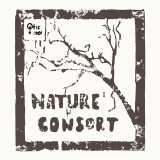
In the late 1960s, young jazz musician Bobby Naughton, a keyboardist and vibraphonist, faced significant challenges as he sought to record his first album. With major record labels and jazz clubs catering only to big names, Naughton and other creative musicians of his generation found themselves sidelined by the mainstream music industry. They turned to self-reliance and self-production, becoming part of a movement of independent musicians. Naughton’s debut album, Nature’s Consort, was a DIY effort in every sense—recorded on home equipment and featuring a hand-printed woodblock cover. The album was distributed independently at concerts and by mail, receiving little attention initially, but over the years it gained a reputation as a rare, sought-after artifact of the period.
Though recorded during an outdoor concert in Connecticut, Nature's Consort reflected the "loft jazz" scene in New York City. This avant-garde jazz movement centered around musicians who lived and played in loft spaces in lower Manhattan. Naughton commuted from his home in Southbury, Connecticut, to play with his bandmates Mark Whitecage, Mario Pavone, and Laurence Cook in New York's lofts. These musicians regularly performed at venues like Studio We, a key gathering spot for free-form jazz, where musicians could experiment and develop their sound, often with no audience present.
Naughton’s journey into jazz was a winding one. Originally from Boston, he played rockabilly and blues-rock before transitioning into free jazz. Inspired by avant-garde artists like Carla Bley and Paul Bley, Naughton sought to explore new forms of music that went beyond traditional jazz structures. His bandmates, Mark Whitecage and Mario Pavone, were both deeply affected by the death of John Coltrane in 1967, which prompted them to quit their day jobs, attend Coltrane’s funeral, and move to New York to pursue jazz full-time.
Nature’s Consort was a collective project, with band members sharing equally in any profits. However, Naughton was the driving force behind the group’s creative direction. He composed much of the original material and selected pieces by Ornette Coleman and Carla Bley for the band’s repertoire. Jazz critic Nat Hentoff praised the album for its “high-risk improvisation” and the musicians' ability to anticipate each other’s moves. Though Nature’s Consort received little press at the time, it has since been recognized as a significant early document of the loft jazz era, representing Naughton’s disciplined, improvisational approach to music.
Jabu return with ‘A Soft and Gatherable Star’, an LP that sees the Bristol-based trio evolve from a uniquely spectral take on trip hop to proffer a singular vision between cloudy, downered dream-pop, off-kilter ambient, and the warm, low-end throb of sound system culture. This development is aligned with contemporaries like HTRK, Dean Blunt, Tarquin Manek, YL Hooi and Rat Heart Ensemble, whilst also harkening back to the likes of AR Kane (with whom they are set to play shows and release a collaborative single), the languorous drift of 'Victorialand' era Cocteau Twins or The Cure circa ‘Disintegration’. Comprising Jasmine Butt (vocals, guitar), Alex Rendall (vocals, keys) and Amos Childs (production, bass guitar), the trio’s method may have shifted but the feel remains consistent - slow, spatial, sensuous and gently melancholic. With a career arc unlike almost any other current guitar outfit, Jabu sit within a strong lineage of off-centre Bristolian music, and a very British strain of home-spun DIY bands. Self-recorded between Jas and Amos’ home in South Bristol and Amos’ mum’s house in rural North Somerset, the album came together via a process of trial and error - learning to play on borrowed instruments, using the equipment “wrong”, staying up late recording and slipping into strange, semi-conscious sleep deprived/inebriated headspaces. Having captured over 50 tracks, they honed in on those they liked most, shaping them further, whilst carving out space to allow input from people they love and admire - Daniela Dyson’s voice and Will Memotone's clarinet on ‘Ashes Over Shute Shelve’, Birthmark's synth on ‘Gently Fade’ and ‘Sea Mills’, Rakhi Singh (Manchester Collective) and Sebastian Gainsborough (Vessel)’s strings and arrangements on ‘All Night’, Josh Horsley’s cello on ‘If I Asked You, You'd Tell Me’, and Lorenzo Prati’s sax, again on ‘Sea Mills’. The album was mastered by Amir Shoat (HTRK, ML Buch, Dean Blunt, Carla Dal Forno). Influence-wise, the guitar-based material recalls the bands Amos listened to when younger, and Jas’ more folk-leaning inspirations. Deep-lying dub, hip hop and soul influences are also evident in both the way the LP was mixed, and the space ingrained in their subconscious. Tinged with melancholy, the songs cohere as a set of soliloquies and ruminations on love and tenderness. The album’s title comes from a poem by Amos’ late father which hangs on his wall and seeped into the record. ‘Ashes Over Shute Shelve’ is formed of lines from another poem of his. Recited by longtime collaborator Daniela Dyson and with Will Yates (Memotone) playing his mother’s clarinet, the track was imagined as a conversation between his parents. Geography and location also play a big part in the record, with several significant places name-checked in songs. Shute Shelve itself is a hill near Amos’ mum’s house, who explains “There’s a tree at the top with a 360° view of the Mendips, where my dad’s ashes were scattered. We used to go up there when we could first buy booze from the petrol station down the road, get drunk, light a fire, listen to music from my little battery powered CD player and sleep out without tents.” Titled after a Bristol suburb near where Amos’ grandparents lived and where Jas would spend time as a teenager, ‘Sea Mills’ references her being abandoned by friends on the Downs while high on mushrooms, stranded and missing the bus back. ‘Kosiše Flower’ references the city in Slovakia where Amos and Jas holidayed shortly after getting together and a flower he gave her, which she pressed in a book after an argument. ‘Oceanside Spider House’ is a location in Nintendo 64 game The Legend of Zelda: Majora’s Mask, where someone seeks shelter from the falling moon. Genre: Electronic / Ambient / Dream-pop