For their eagerly awaited third album, the Parisian trio Howlin' Jaws have teamed up with Swedish producer Kalle Gustafsson Jerneholm (bassist with The Soundtrack Of Our Lives and producer for Foals, The Hives, Jose Gonzalez and Junip) and have taken a major step forward, affirmingthe universal appeal of their explosive yet elegant psych-rock. This new album, Living The Dream, crystallises just about everything we'd ever dreamt of hearing from Howlin' Jaws. Here, more than ever, their dreams take the form of unifying choruses, transforming grief ("Troubled Mind") or separation ("Do What You Gonna Do", "So Sorry") into genuine bursts of hope. Rich in texture (with the Omnichord and Mellotron featuring on the spellbinding "Miss You" and the twilight-tinged "Up On The Roof" respectively) and in wit (led by the biting "Living The Dream"), the eleven-track album is equally diverse in its range of influences. Disco looms large on "Terminal Buzz", country creeps in on "Sunset Laundromat", whilst the fiery "Maximum Speed" is a joyful reminder of King Gizzard & The Lizard Wizard's trippy flights of fancy. The trio are stunning when they're in full swing, but just as impressive when they slow the tempo down. Behind its layers of cosmic keyboards, "Time Has Come" immediately sets the scene and subtly invites introspection. Like an echo at the end of the journey, "That Kind of Pain" rubs shoulders with the stars of the French Touch (the Air school), letting the strings of the Stockholm Philharmonic Orchestra burst forth amidst its melancholic swells. All in all, whether he simmers his albums like an omelette or a beef bourguignon, Howlin' Jaws proves he's never short of imagination.
For their eagerly awaited third album, the Parisian trio Howlin' Jaws have teamed up with Swedish producer Kalle Gustafsson Jerneholm (bassist with The Soundtrack Of Our Lives and producer for Foals, The Hives, Jose Gonzalez and Junip) and have taken a major step forward, affirmingthe universal appeal of their explosive yet elegant psych-rock. This new album, Living The Dream, crystallises just about everything we'd ever dreamt of hearing from Howlin' Jaws. Here, more than ever, their dreams take the form of unifying choruses, transforming grief ("Troubled Mind") or separation ("Do What You Gonna Do", "So Sorry") into genuine bursts of hope. Rich in texture (with the Omnichord and Mellotron featuring on the spellbinding "Miss You" and the twilight-tinged "Up On The Roof" respectively) and in wit (led by the biting "Living The Dream"), the eleven-track album is equally diverse in its range of influences. Disco looms large on "Terminal Buzz", country creeps in on "Sunset Laundromat", whilst the fiery "Maximum Speed" is a joyful reminder of King Gizzard & The Lizard Wizard's trippy flights of fancy. The trio are stunning when they're in full swing, but just as impressive when they slow the tempo down. Behind its layers of cosmic keyboards, "Time Has Come" immediately sets the scene and subtly invites introspection. Like an echo at the end of the journey, "That Kind of Pain" rubs shoulders with the stars of the French Touch (the Air school), letting the strings of the Stockholm Philharmonic Orchestra burst forth amidst its melancholic swells. All in all, whether he simmers his albums like an omelette or a beef bourguignon, Howlin' Jaws proves he's never short of imagination.
Biz returns to his Subjekt label for it’s fourth instalment, continuing a long-standing connection with the deeper, more cerebral side of techno. With previous releases on Detroit institution Transmat, Laurent Garnier’s COD3QR, Xistence, We’re Going Deep, Acquit Records and other respected underground labels, the lineage is firmly established.
Here, Biz digs deep into the Detroit blueprint — machine rhythms, hypnotic sequences, melancholy, soul and futuristic tension — balancing introspection with raw dance floor vibes.
For the remix, Osaka techno veteran DJ Compufunk steps up with a stripped-back interpretation, locking into the groove and pushing the track further into raw machine funk territory.
Detroit spirit, Japanese precision and Australian underground techno vibes — another essential Biz release!
Forty years of cassette releases, pressed for the first time on vinyl
First of two instalments exploring the previously unreleased sonic archives of one of Poland’s most enigmatic
living artists - with its first volume focused on his deep listening practice and spiritual reverie (recorded 1990–2013)
The last time Andrzej Dudek-Dürer took a banknote bearing the face of the Polish anarchist Jarosław Dąbrowski from his pocket to trade it for a pair of shoes was in 1969. He bought them for 120zł - the equivalent of 100€ today - and never replaced them since then. Only rebuilt them, year after year, drawing a needle and thread through the leather each time it split, closing one wound before the next one opened. It became a ritual of precision, stitching a record of another year into their soles.
That same year, in Wrocław, he arrived at a conclusion that would recalibrate everything that followed. Convinced he was the reincarnation of Albrecht Dürer, he adopted the surname Dudek-Dürer, stopped cutting his hair and began wearing the same garments every day. It was the first ritual of many, though he wouldn't have called it that yet. Look closely enough, over the decades, and it is always the same gesture, returning in different material: hair growing in a single unbroken strand, a needle drawing thread through leather, sitar strings pulled taut across a neck he built with his own hands and magnetic tape spooling forward inside the cassette boxes stacked against his walls.
None of this began in a vacuum. Dudek-Dürer emerged from the Wrocław neo-avant-garde, in a Polish art world where an exhibition could be cancelled overnight by the stroke of a censor's pen. In 1973, his exhibition Auto-crucifixion was shut down by the state, and for a time he found himself blocked from exhibiting his own art at all - the one force in his life that ever came close to cutting the thread.
He seemed to experience it differently. In 1974, after long, patient research into sitar craftsmanship, he built his first prototype with his brother, a knowledgeable luthier. In 1978, in a smoked-out jazz club, he took his first steps into sound recording with the unreleased album Jazz From Underground with his first band. By 1979, recognition started to travel further than he could.
Turning toward Far-Eastern philosophy, meditation and the idea of reincarnation was another language of freedom for him. It was a way of claiming an inner territory the state could not reach, a border it could not close. Mail Art served a parallel function, reaching further out: in a country that restricted travel and expression, sending and receiving art through the postal system became an act of quiet rebellion.
The body, in his understanding, is only an envelope readied for constant transformation. From this came Metaphysical Telepathy: during the years he could not leave Poland, he treated that confinement as a rehearsal room, sending his mind out ahead on the same thread his body would later follow. Living Sculpture grew from the same root with performances of stillness beside static art objects, until the boundary between the object and the man beside it simply dissolved. Camera Meditation extended the same instinct into photography: a shutter click flattening three dimensions into two so that a single instant could be held forever. Inspired by the pioneers of self-portrait photography like Robert Cornelius, he used it to document time itself, and kept explaining to me: "You know. This is not about vanity. This is about observing time passing.”
The isolation did not end suddenly. It ended the way his own philosophy had already predicted it would, from the inside first. Mail Art quietly solved the problem politics couldn't. Correspondence built during years of confinement slowly worked its way through doors the state itself had kept locked. Contacts made through folded paper and stamps became invitations. Ultimately, invitations became passports.
In 1983 he made his first trip outside Poland, to Germany, in search of the audio technology he couldn’t get his hands on before. In 1985, he was invited by the Indian embassy in Poland to give a sitar concert on an instrument he had spent a decade patiently stringing together - half sitar, half tanpura, built from patience and determination. After the collapse of the People's Republic of Poland, the travels kept unspooling: South Korea, then Mexico, then Australia, Canada, New Zealand, Singapore, Japan and the United States - each stop leaving behind its own small knot of tape, tied off and carried home.
In the decades since, recognition arrived at the same unhurried pace: he conducted workshops at UC Berkeley, served as vice-president for artistic affairs of the Union of Polish Art Photographers and the Union of Polish Visual Artists between 2010 and 2014 and received the Bronze Medal for Merit to Culture - Gloria Artis. His visual work gradually entered collections including the National Museums of Warsaw, the Stedelijk Museum, Tate Modern, MoMA and the Venice Biennale. His musical practice, by contrast, never found that kind of room - left to circulate quietly, sharing his cassette tapes directly, waiting for someone willing to follow it further.
It took months before I could find a way to reach Andrzej Dudek-Dürer - his presence online is very close to nonexistent. Surprisingly, LinkedIn turned out to be the only door still open, a faintly absurd irony given everything else about him. I packed the strict minimum for a three-day trip and an empty notebook and made my way to Wrocław. His headquarters sits in the neighbourhood of Grabyszyn: a two-storey pre-war house that has belonged to his family for generations. The man who opened the door was long-haired, long-bearded, in his trademark leather shoes and patched jeans. We sat in his living room, in front of a computer where decades of recordings sat organised in cryptically named files, surrounded by books and objects that had arrived one layer at a time, leaving room for only two chairs in the middle. His shoes sat by the door, rebuilt so many times they had become their own quiet sculpture. Cassette tapes filled boxes against the walls, almost unlabelled, each one a spool of thread holding decades of sound that had never once been asked for, until now.
I listened for hours: meditating in front of strangers on the porch of a Seoul temple until the tourists stopped taking photos and simply waited with him; a stand-off with border guards at the US–Mexico crossing over an instrument they couldn't identify and didn't trust; a session with the Stockhausen family that he still, decades later, describes like it happened last week. All of it interrupted, occasionally, by the smell of soup boiling and fresh bread warming on the ceramic stove. After two days, it felt like being handed the end of a very long thread and asked, gently, to keep following it. I left with a USB drive holding his full discography, signed with his unmistakable signature.
Astral Meditations From A Living Statue is a length of that thread, drawn out from the boxes stacked against his walls - recordings gathered from different rooms, different countries, different decades. This first record breathes slowly: incense-thick, meditative, built for stillness. A cutting-edge séance in outer space where machines learn how to dream.
It begins with the neo-classical improvisations of Andrzej, space-delayed, recorded at Klub Muzyki i Literatury in Wrocław in 2002. 'When..So' opens the curtains with a deep-rooted meditation accompanied by slow-decaying piano figures illuminated by a candle-lit spirit gathering.
Los Angeles, 1990: a dormant villa, a grand piano, the voice of Bonnie Barnett. 'Exception' is captured in a single room, in a single afternoon - voice and keys circling each other, neither one leading, until the silence between the notes starts to feel like the instrument.
'The Meta...' and 'Tired Of...', recorded at Studio Morandi in Ponte Nossa, Italy, in 1992, settle into a sitar drone built entirely from patience - overtones stacking and beating against each other, strung by a man who never once set foot in India. 'Mastery Of...' follows, recorded the same year at Studio Suski in Łomianki, pushing that same hum further still, until pitch dissolves into a spectral reverie. 'Transcendental Sound', from 2000, closes the first record in a slow bath of celestial frequency - better heard beside the shores of the Odra river.
More than fifty years after deciding that a life could become an artwork, Andrzej Dudek-Dürer continues to inhabit that decision. His shoes keep wearing thin against the earth's crust. His hair keeps growing, one strand at a time. His cassette tapes keep spooling in the dark of their boxes.
Now the thread finds its last shape: a single unbroken groove, spiralling inward from the outer edge to the label at the centre. Never cut - the way nothing else in his life ever was. Drop the needle and it will find that groove and follow it, the same way a needle once followed leather, once followed a border it couldn't cross, once followed string into an instrument that didn't exist until he built it. This record is the other end of a thread that has been travelling for fifty years. For the length of both sides, it rests here, in your hands. This is a timeless proof that the Lord of the New Age was never lost."
Video Age kreieren beschwingte und zeitlose Songs, die so unwiderstehlich sind, dass sie nur das Ergebnis einer jahrzehntelangen Freundschaft und Songwriting-Partnerschaft sein können. Auf vier Alben haben Ross Farbe und Ray Micarelli ihre Einflüsse freudig offen zur Schau gestellt und einladende Melodien geschrieben, die Anklänge an Sounds von Disco über Pop bis hin zu Indie-Rock enthalten. In diesem Jahr feiert die Band das 10-jährige Jubiläum ihres Debütalbums ,Living Alone" mit einer limitierten Vinyl-Neuauflage ihres Heimatlabels Winspear. ,Living Alone" erlebt endlich seine lang erwartete Rückkehr auf Vinyl - ein aufregender Moment sowohl für langjährige Fans als auch für Neulinge, da das Album seit über einem halben Jahrzehnt vergriffen war, nachdem die ursprüngliche Auflage von 2016 ausverkauft war.
Making his debut on Depth.Request, Duellist delivers Intensive Living - a fierce three-track statement inspired by the restless energy and chaos of modern city life. Reinforced by remixes from industrial heavyweights Orphx, Statiqbloom, and label co-founder G.xist, the EP captures the tension between control and collapse - where rhythm becomes ritual and distortion takes on a human pulse.
'Burn Your Way Out' opens with offbeat crunch and abrasive energy, setting a volatile tone. The title track 'Intensive Living' moves with rhythmic swagger and pounding drums, its momentum unwavering. 'Ritual Component' closes the originals with throbbing low-end pressure and hypnotic drive - the sound of machinery breathing.
On remix duty, Statiqbloom transforms 'Intensive Living' into a desolate, melodic descent, Orphx expand its framework into a widescreen rework charged with cinematic tension, and G.xist pushes 'Burn Your Way Out' into industrial hypnosis, fusing intensity and groove in equal measure.
Intensive Living stands as a hard-edged introduction to Duellist's world - precise, forceful, and fully alive in its urban grit.
Singaporean label Darker Than Wax brings us to Texas with a fresh 12” from Houston-born producer Oye Manny. Following his release on Salon Recordings, Oye Manny has carved out a lane defined by deep rhythms, Latin roots, and pure authenticity, an ethos he continues to distill into sound on his new record Living Water. Drawing on his Colombian roots and keenly focused on what makes dancers move, Manny puts percussion at the forefront on Living Water – from the chord driven house stompers ‘Malta Sip’ and ‘Palmira’ on the A side, to the darker club tones of ‘Visaje’ and the slick musicality of ‘Youthful Expression ‘ on the flip, drums play a starring role. Completing the package is a remix from Singapore-based producer and Darker Than Wax core member Dexter Colt, providing a deeper, Chicago-inspired take on ‘Malta Sip’.
As The Matrix ushered in the new millennium, voices of apocalypse and optimism alike wrestled for the narrative high ground over what the future held in store. Ever more inclined toward skepticism than hope, we have since grown prone to withdrawing in exhaustion when confronted by such gargantuan expectations — “lost in the Matrix,” if you will.
Less’s new album opens by building a bridge back to his previous album “Stranger” (released on the “Freude am Tanzen” label and conceived as an imaginary Blade Runner soundtrack). In the intro, breathy references from vocalist Alice immediately set the tone for the journey ahead: Electro, High Energy, Acid, Chicago, Italo Disco.
A full-fledged club album quickly unfolds—one that invites the listener to dance and switch off, while at the same time, if you allow it, provoking reflection through its lyrics. Now a Berlin-based artist with Thuringian roots, Less draws on deacades of DJ experience and channels it deftly into ten tracks. Less (real name Stefan Leßner) isn’t afraid to go “old school.” Classic touches like vocoder effects are as integral here as Alice’s irresistibly
cool spoken-word vocals—delivered in English (“I Care”, “Mirror, Mirror”) and German (“Alles was du willst”). This retro spirit even extends to his remix of the French-language Underground Cottage track “Canada (2003 Less Remix)” which surfaced in DJ Hell’s setlists last year—bringing things full circle.
“Living in the Matrix” on Lebensfreude Records is not merely a nostalgic reference to times past, but also counters exhaustion with a sense of trust in the future. It is, in essence, a call — an appeal — not to lose oneself in any kind of ‘Matrix.’ Accordingly, the album will be released both digitally and analog. The latter will come as a 180g double vinyl with a high-quality, thematically appropriate gatefold cover.
Andrea's third album "Living Room" is a delicate blend of spacious and reflective sounds, unfolding a sonic trip from familiar corners to distant skies.
Andrea's third album "Living Room" is a delicate blend of spacious and reflective sounds, unfolding a sonic trip from familiar corners to distant skies.
As Hudd Traxx approach their 15th anniversary year, Iron Curtis steps up for a mini album split in 2 parts. As a long-time label collaborator and friend, it’s no surprise that Curtis delivers his 5th and 6th EP for the label. Total Art Of Living contains straight up house jams, hints of techno, nods to broken beat, references to Detroit and a few interludes for good measure. These new cuts are further proof that Iron Curtis music has always celebrated the deepest foundations of house and all its varieties, whilst resolutely refusing to get nostalgic. Curtis’ previous 4 Hudd EPs have gone on to be classics, Total Art Of Living has all the ingredients to become a future classic too.
Cover versions of international songs have long thrived in South Africa’s music industry. Often unable to license the original tracks (until the early 90s the result of an international boycott of the country) labels instead hired producers and session artists to re-record them for the local market. Early house music in SA was no different.
When Ron ‘Robot’ Friedman, former bass player for local rockers Rabbitt, was winding down his label On Records in the early 90s, he reached out for new inspiration as the popularity of ‘bubblegum’ disco waned. For one of the label’s final releases he hired young DJ/producer Quentin Foster, obsessed with the new soulful house sound coming out of the US, to take the reins on a studio project dubbed Citi Express.
On Robot’s insistence it included a cover of Stevie Wonder’s ‘Living for the City’ (from 1973’s Innervisions) as the title track. Foster set to work in his home studio, dubbed Tone Def, selecting and re-working other US and UK tracks — ‘It’s Too Late’ (originally released in 1989 by Kelli Sae), ‘Love is the Message’ (influenced by the 70s soul anthem and credited to Gamble & Huff but bearing a closer resemblance to Better Days’ 1990 release written by Steve Proctor), ‘People of The World’ (recorded by Sorell Johnson in the UK in 1990) and ‘Victim of Your Love’ (released in 1990 by Gary Vonqwest as ‘Victim of Love’) — adding some signature South African touches in the process that foreshadow the imminent rise of kwaito. One original composition was added for good measure, ‘Open Invitation’.
The result offers a glimpse into those early days of house, a uniquely South African take on a global sound that still resonates today — reissued for the first time on Afrosynth Records.
Funk and soul at its finest. Two Chicago classics from the Gene Chandler vault get an official remastered, reissue exactly as they deserve to be.
On the A side, 'I'll Make The Living If You Make The Loving Worthwhile' combines heavenly orchestral flair with Chandler's sweeter than sweet vocals. That early 80's influence weaves it's way throughout with a healthy dose of slap bass bringing a flavour of funk to the fore.
Take to the B side and Chandler offers up a more disco focused track, complete with a killer boogie tinged bassline, sensuous keys and strings of stratospheric proportions. Those silky-smooth trademark Gene Chandler tones keep the iconic soul running deeply through the veins of this 1980 number.
Any self-respecting music lover deserves this remastered version nestled in their collection.
In Living Color proudly presents Wasi Wasi EP, the debut label release from
Kenyan-born, Berlin-based artist Emo Rugene.
A striking first statement from one of the most exciting emerging voices in African electronic music, Wasi Wasi introduces Rugene's distinctive sound while reflecting the bold, forward-thinking vision at the heart of Living Color. Blending deep cultural roots with contemporary electronic production, the EP marks the arrival of an artist helping shape the future of the genre.
Deeply rooted in African rhythm and musical heritage, Wasi Wasi is a body of work that embraces the past while looking confidently toward the future. Blending hypnotic grooves, organic percussion, and contemporary electronic production, the EP reflects a new generation of artists drawing inspiration from their roots while carving out their own unique artistic identity.
The release features two compelling vocal collaborations that enrich its storytelling. “Wasi Wasi (Vocal Mix)” features Alai K, whose deep ancestral vocal brings a powerful spiritual presence to the title track. “Sahara Dena” features Soukou, whose soulful vocal performance adds warmth, emotion, and depth, creating a beautiful dialogue between tradition and contemporary sound.
With Wasi Wasi EP, Emo Rugene stands among a new generation of African electronic music artists redefining the future on their own terms. His music is deeply connected to where it comes from, yet unafraid to explore new ideas, proving that heritage is not something to preserve behind glass, but something to carry forward with imagination and purpose.
More than a collection of tracks, Wasi Wasi EP is a celebration of movement, identity, and possibility, a record that honours the voices of those who came before while contributing to the sound of tomorrow.
All-enveloping superbly alternative third take on 1988’s ‘Charmed Life’ album featuring previously unissued versions and a half dozen previously unreleased songs. Includes liner notes and an interview with Jad and David Fair.
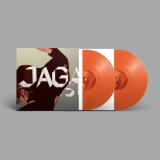
We are celebrating 25 years since the release of Jaga Jazzists “A Livingroom Hush” with a reissue in 140g orange vinyl as a 2LP!
Originally released in Norway in 2001, with Ninja Tune coming on board to release it internationally the following year, Jaga Jazzist are a true musical one off.
Formed in the mid-Nineties around the nucleus of percussionist Martin Horntveth, his multi-instrumentalist brother Lars (who was 14 at the time), tuba-playing sister Line and an expanding coterie of musicians, they were determined to make a big, joyful sound that knew no boundaries of genre. 'We wanted to have a big, big band, but not one playing big band jazz,' as Lars Horntveth once put it.
Comparisons reached for by the press at the time were as broad - from Talk Talk, Soft Machine, Eric Satie, John Coltrane and Don Cherry to acts like Aphex Twin, Stereolab, Squarepusher and Tortoise. This range summed up the breadth and originality of the group's sound. Combining trumpets, trombone, electric guitar, bass, tuba, two bass clarinets, fender rhodes and vibraphone, and it is the mixture of these instruments with an electronic edge that really made it stand out.
The album is a journey that manages to sound both classic and contemporary and an oasis to anyone interested in music which combines iconoclasm with beauty, melody with avant gardism and, in general, a complete lack of interest in anything other than good music.
Product Specs:
Limited edition 2xLP on 140g orange vinyl in gatefold sleeve.
No en stock
Última entrega hace 4 días disponible para reposición sin garantía
Living Weapon returns with Death In The Family, a full-length that confronts mortality, meaninglessness, and the aftermath of existence. The release broken down over 23 minutes toward an unresolved end — life examined at its start and its finish, with the universe indifferent to either. Recorded, produced, and engineered by Jeremy Martin over fall 2025 into spring 2026 — the band's first time tracking a full album internally. Mixing handled by Taylor Young of The Pit Recording Studio and Mastering by Nick Townsend. The album is introduced with "The Leaving Process” laying out the album's core idea: life as connection, not permanence — matter created and destroyed, briefly aware of itself in between.
Better Living Through Chemistry wasn’t just Fatboy Slim’s breakthrough - it helped redefine what electronic music could be in the mainstream. Released in 1996, the album arrived at a pivotal moment in UK club culture, fusing big beat, acid house energy and sample-heavy experimentation into something irreverent, accessible and unmistakably British. Tracks like “Everybody Needs a 303,” “Going Out of My Head,” and “The Weekend Starts Here” captured the anarchic spirit of the era while laying the foundation for a sound that would dominate late-’90s pop culture.
To celebrate the 30th Anniversary of Norman Cook’s career as Fatboy Slim, BMG will reissue his debut album ‘Better Living Through Chemistry’, also turning 30 in September.
The 2LP will be remastered at half speed, following previous Fatboy Slim classic album remastered reissues and feature new liner notes from journalist Alexis Petridis.
The 2CD will include a bonus disc, b-sides with a brand-new remix with inclusion of the Alexis Petridis liner notes.
No en stock
Última entrega hace 15 días disponible para reposición sin garantía
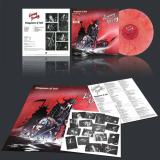
When asked about the founding fathers of German thrash metal, band names such as Kreator, Sodom, and Destruction come to mind. Perhaps even Tankard. The name Living Death is usually not among them. There is a simple reason for this. Similar to the Swiss band Hellhammer, Living Death from Velbert were simply a tad too extreme for most fans and the press. Thorsten “Toto” Bergmann's truly shrill vocals and the poor production of the first two (legendary) albums did not make it easy for the public to adequately assess the band's musical significance. Living Death was founded in 1981 by the two Kelch brothers, Reiner on guitar and Dieter on bass. In the early days, guest drummer Eric sat behind the drums. The line-up was completed by Frank Fricke on second guitar and the aforementioned singer Thorsten “Toto” Bergmann. Living Death recorded their first demo with three tracks in 1981, which earned them a deal with the Belgian label Mausoleum Records. A year later, their debut album “Vengeance of Hell” was released, which actually suffered from its very thin (and treble-heavy) production (in 1985, the record was re-released as a remix – with slightly improved results). However, the below-average production should not obscure the fact that “Vengeance of Hell” offers a few timeless thrash metal classics with “My Victim,” “Heavy Metal Hurricane,” “Hellpike,” and the title track “Vengeance of Hell.” The raw, unpolished sound of Living Death sounds more contemporary than ever today, 30 years after its initial release. This only proves that it took the music world three decades to catch up with Living Death.
In the vibrant, post-millennial landscape of independent hip-hop, few collective names commanded as much respect as the Living Legends. A monumental alliance of some of the West Coast's most respected solo artists—including Murs, The Grouch, Eligh, Aesop, Bicasso, Luckyiam, Sunspot Jonz, and Arata—the crew's 2008 album, The Gathering, served as a powerful declaration of their unity and enduring relevance.
The Gathering was a snapshot of a legendary crew working at the peak of their collaborative power. The project masterfully weaves together the diverse styles of its eight members, moving effortlessly from the conscious storytelling of Murs to the soulful, introspective flow of The Grouch and Eligh, and the abstract lyrical dexterity of Aesop. The production, handled largely within the collective, provides a lush, sample-heavy, and distinctly West Coast soundscape that perfectly complements the lyrical fireworks. Tracks like the anthemic title track "The Gathering" and the legendary posse cut "After Hours" showcase the organic chemistry that made the Living Legends a seminal force in underground music.
For the first time ever, this pivotal album is being officially pressed on vinyl. This highly anticipated Record Store Day 2026 release finally delivers The Gathering to the format its rich, soulful production has always deserved. This limited edition pressing is presented on striking Coke Bottle Clear Vinyl, a perfect visual complement to the album's crisp, refreshing sound.
A crucial artifact of independent hip-hop history, The Gathering on vinyl is an essential addition for fans who have supported the Living Legends for decades and a must-have for vinyl collectors looking to own a tangible piece of the era's best crew collaborations. Don't miss the chance to own this definitive, first-ever vinyl pressing of a true underground classic.
180 GR Records is proud to present a new release by N-Zino, reimagining two tracks previously released by Four Flies Records: Mo... and Living Disco Club, offering two distinct yet complementary interpretations. Mo... (180 GR Disco Mix) takes its cue from the original Banda Maje version, itself a contemporary homage to Peppino Di Capri, already given a club reinterpretation. N-Zino elevates the track with a nu disco approach, emphasizing its elegant groove and sunnier, funkier side, blending disco influences with pulsing basslines, shimmering percussion, and warm synth textures, all infused with contemporary sensibilities while keeping the original melody alive. The result is a bright, danceable reinterpretation designed for both listening and the dancefloor. In a different yet perfectly complementary direction, Living Disco Club (Don Ciccio Tribute Mix) explores a deep house dimension, turning Banda Maje's disco-inspired original into a hypnotic, late-night groove. Deep bass, soft drum machines, essential rhythms, and atmospheric pads create a rich, warm, immersive vibe, ideal for after-hours or more refined, introspective club moments. Together, these remixes highlight N-Zino and 180 GR Records' vision: celebrating strong musical roots, connecting Italy's musical past with contemporary club culture, offering tracks that honor the tradition and the originals released by Four Flies, while speaking directly to modern dancefloors.
No en stock
Última entrega hace 5 meses disponible para reposición sin garantía
In 1991, Chris Whitley made his debut with the beautiful album Living with the Law, which immediately showcased his brilliant songwriting and unique guitar playing. Blending blues, roots and folk, the debut was positively received by critics and aficionados of these more traditional genres. Growing up, Whitley listened to Southern radio, which played artists such as Muddy Waters, Howlin' Wolf, Bob Dylan and Jimi Hendrix. His career started by playing with artists like Arto Lindsay and Michael Beinhorn. Interestingly, Whitley lived in Belgium for a short time in the 1980s, where he started his career playing guitar for 2 Belgen and Nacht und Nebel. In the 1990s, he started his solo career at Kingsway Studio in New Orleans, owned by none other than Daniel Lanois. The result was an album characterized by the use of traditional instruments such as the slide guitar and banjo. All of this is accompanied by his splendidly timbred voice and honest lyrics exploring themes such as freedom, desire and human struggle. Sadly Chris Whitley passed away in 2005, but his influence on contemporary songwriters and blues artists remains strong. a_Living with the Law is available as a 35th anniversary edition of 1000 individually numbered copies on gold coloured vinyl and includes an insert.