D'Cruze, the legendary DnB producer synonymous with some of Suburban Base's biggest tracks such as 'Lonely' and 'Watch Out' now sees some of his unreleased productions finally getting a much sought-after release.
The Hidden Trax EP's theme comes from concept that the D'Cruze limited US only edition album contained tracks that were only discovered if you allowed that album to play on beyond what was supposed to be the last song, after a gap of silence no track ID and not listed on the track titles. This is where you’d find 'Bittersweet' pt 2 as a hidden track on the CD. This was Bittersweet’s only ever appearance having never been released in the UK and never released on vinyl or digitally worldwide.
The lush rolling workout of ‘Hardstep' is probably our most requested track that has never had a vinyl release having only briefly appeared on the very limited CD only ‘Subbase Sampler’, demand for a vinyl pressing of this has been called for since 1996.
Another beautiful hidden gem 'Sublime State' from 1995 wouldn’t be known to our UK audience as it’s an exclusive tune to the US only CD release that has never seen a UK or vinyl release.
Rounded off with the incredibly beautiful 'Meus Precious Filius', an unheard unreleased D’Cruze track that was considered a 'lost DAT' until recently surfaced. We are now able to bring this to the world as an epic slice of fresh music from D’Cruze.
The EP is presented on blue and black splattered vinyl making every single piece uniquely different. Original custom sleeve artwork is provided by Suburban Base legendary artist Dave Nodz in his iconic graffiti influenced style.
These are already high demand tracks all brought together for a fantastic value 4 track EP, so grab yourself a piece of future history now whilst we have these available for a limited time.
out of Stock
Last delivered 3 years ago available to reorder, subject to availability
The Boogie Times label is back with 4 cuts from a very elusive artist.
There has been much speculation over the years as to the identity behind the Disciples Of The Watch moniker. Sharp eared listeners have attributed the sound of the breakbeats to one artist, while others are as convinced their deductions from the sound of a bassline can attribute the production to someone else.
Perhaps it’s who they think? Maybe it’s not? Possibly it’s a collective of artists?
All we can say is that Disciples Of The Watch make great music!
Back in 1992 the Dance In Peace EP received an incredibly limited white label run and was only available from a handful of specialist record shops. The scarcity of this release means that it has now reached near mythical status and has seen it selling for as much as £200 on the second-hand vinyl market.
This EP is now getting the very long overdue full release that it deserves, with all tracks expertly remastered & cut to heavyweight black vinyl.
With very limited stock being pressed we’d urge anyone wanting to own the amazing musical journey by the elusive Disciples Of The Watch to get orders in as soon as it goes on sale!!
out of Stock
Last delivered 4 years ago available to reorder, subject to availability
"To kick off the yearlong celebration and provide the perfect summer soundtrack, Capitol Records and UMe will release a newly remastered and expanded edition of The Beach Boys career-spanning greatest hits collection, Sounds Of Summer: The Very Best Of The Beach Boys, on June 17. Originally released in 2003, the album soared to no. 16 in the US and stayed on the chart for 104 weeks. Now certified 4x platinum for sales of nearly four and a half million albums, the collection has been updated in both number of songs and audio quality, expanding the original 30-track best of with 50 more of the band’s most beloved songs for a total of 80 tracks that span their earliest hits to deeper fan-favorite cuts and from their 1962 debut album, Surfin’ Safari through to 1989’s Still Cruisin’.
Assembled by Mark Linett and Alan Boyd, the team behind 2013's GRAMMY® Award-winning SMiLE Sessions and last year’s acclaimed boxed set, Feel Flows – The Sunflower and Surf's Up Sessions 1969-1971, Sounds Of Summer features nearly every US Top 40 hit of The Beach Boys’ incredible career, including “California Girls,” “I Get Around,” “Surfer Girl,” “Surfin’ U.S.A.,” “Fun, Fun, Fun,” “God Only Knows,” “Good Vibrations,” “Be True To Your School,” “Wouldn’t It Be Nice,” “Kokomo,” “Barbara Ann,” “Help Me, Rhonda,” “In My Room,” and many others. Fifty additional tracks showcase a broad mix of songs from across their wide-ranging catalog with some of the many highlights including “All Summer Long,” “Disney Girls,” “Forever,” “Feel Flows,” “Friends,” “Roll Plymouth Rock,” “Sail on Sailor,” “Surf’s Up,” and “Wind Chimes.”
The collection boasts 24 new mixes including two first-time stereo mixes, plus 22 new-and-improved stereo mixes, which in some cases feature the latest in digital stereo extraction technology, allowing for the team to separate the original mono backing tracks for the first time.
The expanded edition of Sounds Of Summer will be available in a variety of formats, including a 3CD softpack, and as a Super Deluxe Edition 6LP vinyl boxed set on 180-gram black vinyl in two options – a standard set or a numbered, limited edition version featuring a rainbow foil slipcase and four collectible lithographs. Both versions will feature color printed sleeves that replicate the original “Capitol Catalog” sleeves that highlight the entire Beach Boys discography, and all formats will include a booklet with new liner notes and updated photos. The original 30-track version will also be available in its newly remastered and upgraded form on single CD or double gatefold LP on standard weight vinyl or as a higher-end limited edition numbered version pressed on 180-gram vinyl with a tip-on jacket and a lithograph. "
Indie-pop singer-songwriter, composer and producer Australia’s Ben Lee releases his 14th solo studio album “I’m Fun!”. The new album features guests Zooey Deschanel, Christian Lee Hutson, Money Mark, Megan Washington, Georgia Maq, Eric D Johnson.
On the album, Ben Lee says “This album, this moment in my career, is all about balancing some hard-earned wisdom from a 30-year long career with the vigor and energy of youth. That’s why it was as important to me to collab with artists like Jon Brion and Money Mark who I’ve both known for over 2 decades, as much as people like Shamir and Georgia Maq who are young and lit up with creative adrenaline. I like being a generational bridge between freaky artists. They are my tribe!”
Even before the launch of his solo career, Ben attracted attention in his teens as a member of the Sydney band Noise Addict. Following the band’s demise in the mid-90s, he began issuing a string of acclaimed solo albums while taking part in several side projects, including The Bens (Ben Folds, Ben Kweller, Ben Lee).
In his 30-year music career, Ben Lee has been gloriously prolific and unpredictable. The 4x ARIA award winning artist boasts an enviable catalogue including ‘Grandpa Would’ 1995, ‘Something To Remember Me By’ [1997], ‘Breathing Tornados’[1998], 2x ARIA Platinum album ‘Awake In New Sleep’[2005], ‘Ripe’ [2007], ‘The Rebirth of Venus’[2009], ‘Deeper Into Dream’ [2011] which have collectively spawned a multitude of chart hits, including “Cigarettes Will Kill You”, “Gamble Everything For Love”, “We're All in This Together” and “Catch My Disease”
Das Trio "Girls In Synthesis" wurde treffend als "eher eine Terrorzelle als eine Rockgruppe" beschrieben. Textlich befassen sie sich mit den Erfahrungen der Arbeiterklasse in Bezug auf fragile geistige Gesundheit, soziale Unbeweglichkeit, Gefühle der Machtlosigkeit, Unsicherheit, Angst und die zersetzenden Auswirkungen einer feindseligen Gesellschaft. John Linger bringt es auf den Punkt, wenn er "I've seen a glimpse of the future" in sein Mikrofon bellt. Das Londoner Trio "Girls In Synthesis" ist eine Band, die sich einer Kategorisierung entzieht. Seit ihrer Gründung hat die Band Anarcho-Punk, Noise-Rock, Post-Punk und elektronische Einflüsse aufgenommen, ohne in einem dieser Genres zu verweilen. Der definitive GIS-Sound ist mehr als die Summe dieser Teile. Die Band ist eher ein Kollektiv als eine traditionelle Musikgruppe, da alles (Aufnahmen, Artwork, Fotos und Videos) intern mit den Mitgliedern der Band und ihren Verbündeten kreiert wird. Mit einer unvergleichlichen Live-Show hat sich die Band durch ihre kultige Hingabe an ihre Kunst eine treue Fangemeinde in Großbritannien erspielt, von denen viele die Band auf ihren Tourneen durch das ganze Land begleiten. Ihre neue Veröffentlichung "Konsumrausch", ein exklusives, eigenständiges Mini-Album für das deutsche Label Hound Gawd!, erkundet verschiedene klangliche Territorien und erweitert die bisherigen Veröffentlichungen der Gruppe um weitere Experimente.
Second Sub Pop album by acclaimed UK act TV Priest finds them building on the
post-punk of their early material and maturing into a powerhouse of tense, politically
caustic, and thoughtful rock music.
Without a brutal evaluation of their own becoming, TV Priest might have never made
their second album. Heralded as the next big thing in post-punk, they were
established as a bolshy, sharp-witted outfit, the kind that starts movements with their
political ire. There was of course truth in that, but it was a suit that quickly felt heavy
on its wearer’s shoulders, leaving little room for true vulnerability. “A lot of it did feel
like I was being really careful and a bit at arm's length,” says vocalist Charlie
Drinkwater. “I think maybe I was not fully aware of the role I was taking. I had to take
a step back and realize that what we were presenting was quite far away from the
opinion of myself that I had. Now, I just want to be honest.”
Having made music together since their teenage years, the London four-piece piqued
press attention in late 2019 with their first gig as a newly solidified group, a raucous
outing in the warehouse district of Hackney Wick. Debut single ‘House of York’
followed with a blistering critique of monarchist patriotism, and they were signed to
Sub Pop for their debut album. When ‘Uppers’ arrived in the height of a global
pandemic, it reaped praise from critics and fans alike for its “dystopian doublespeak,”
but the band - Drinkwater, guitarist Alex Sprogis, producer, bass and keys player Nic
Bueth and drummer Ed Kelland - were at home like the rest of us, drinking cups of
tea and marking time via government-sanctioned daily exercise. As such, the
personal and professional landmark of its release felt “both colossal and minuscule”
dampened by the inability to share it live. “It was a real gratification and really
cathartic, but on the other hand, it was really strange, and not great for my mental
health,” admits Drinkwater. “I wasn’t prepared, and I hadn’t necessarily expected it to
reach as many people as it did.”
As such, ‘My Other People’ maintains a strong sense of earth-rooted emotion, taking
advantage of the opportunity to physically connect. Using ‘Saintless’ (the closing
song from ‘Uppers’) as something of a starting point, Drinkwater set about crafting
lyrics that allowed him to articulate a deeper sense of personal truth, using music as
a vessel to communicate with his bandmates about his depleting mental health.
“Speaking very candidly, it was written at a time and a place where I was not, I would
say, particularly well,” he says. “There was a lot of things that had happened to
myself and my family that were quite troubling moments. Despite that I do think the
record has our most hopeful moments too; a lot of me trying to set myself reminders
for living, just everyday sentiments to try and get myself out of the space I was in.”
“It was a bit of a moment for all of us where we realised that we can make something
that, to us at least, feels truly beautiful,” agrees Bueth. “Brutality and frustration are
only a part of that puzzle, and despite a lot of us feeling quite disconnected at the
time, overwhelmingly beautiful things were also still happening.”
This tension between existential fear born from the constant uncertainties of life, and
an affirmative, cathartic urge to seize the moment, is central to ‘My Other People’, a
record that heals by providing space for recognition, a ground zero in which you’re
welcome to stay awhile but which ultimately only leads up and out. For TV Priest, it is
a follow-up that feels truly, properly them; free of bravado, unnecessary bluster or
any audience pressure to commit solely to their original sound.
"“The New Backwards” was conceived by Peter “Sleazy” Christopherson in 2007, revisiting stray tracks which hadn’t seemed to gel with the material he had chosen for the more somber “Ape of Naples” from 2005, COIL’s initial posthumous release, a sort of requiem and a kiss-goodbye to his then recently deceased partner John Balance.
Significantly different to its sister release, this album collects the brilliantly chaotic and outrageously rhythmic material from the original sessions for the album that was begun as early as 1993 and had originally been conceptualised as the follow-up to “Love’s Secret Domain”. These songs are as diverse and wild as the places they originated from, partly infamously spawned in Sharon Tate’s former home in the Hollywood Hills, the Nine Inch Nails home base in New Orleans and London’s Swanyard, remixed and restructured with the help of long-term friend Danny Hyde in Thailand, this collection has its own unique flow and an atmosphere not found on any other COIL release.
Both “AYOR” and “Backwards” had by the time the album was first released already become favourites in COIL’s manic live performances. Some of the other tracks had only leaked in demo versions and are here presented updated and polished as Christopherson and Hyde intended them to be heard. It is interesting to consider Balance’s vocal contributions, too. Whilst on the albums COIL did release at the time this material was first put aside (“Black Light District” and “ElpH”) his voice is all but absent, his vocal performances and his lyric writing here are arguably more closely indebted to the previous “Love’s Secret Domain” era, especially the epic “Copacaballa” is noteworthy in that respect.
The New Backwards” effectively became the final official COIL studio release of all new material whilst Peter was still alive and is here presented for the first time fully supervised by Danny Hyde, its co-creator.
The stunning cover uses a detail from artist Ian Johnstone’s “Cubic Raven” painting, licensed from the estate of IJ..
It is high time to rediscover this timeless album now!
Recorded at Swanyard, London and at Nothing Studios, New Orleans, 1996.
Thanks to everyone there, especially Trent Reznor who made it all possible.
Written & Produced by Coil & Danny Hyde.
Remixed by Peter Christopherson & Danny Hyde, Bangkok 2007.
For that session Coil were: Peter Christopherson, Jhonn Balance & Drew McDowall.
Mastered by Jessica Thompson.
Front artwork by Ian Johnstone.
Artwork licensed from The Estate of Ian Johnstone.
Layout Cold Graves and Oleg Galay."
The Smile veröffentlichen ihr mit großer Spannung erwartetes Debütalbum "A Light For Attracting Attention" am 13. Mai 2022 digital auf XL Recordings. Die Vinyl- und CD-Veröffentlichung folgt am 17.06. Die 13 Tracks des Albums wurden von Nigel Godrich produziert sowie gemischt und von Bob Ludwig abschließend gemastert. Die Songs werden von Streichern des London Contemporary Orchestra und einer kompletten Bläsersektion zeitgenössischer britischer Jazzmusiker wie Byron Wallen, Theon und Nathaniel Cross, Chelsea Carmichael, Robert Stillman und Jason Yarde begleitet. Die Band, bestehend aus Thom Yorke und Jonny Greenwood von Radiohead und Tom Skinner von Sons of Kemet, hat bereits die Singles "You Will Never Work in Television Again", "The Smoke" und "Skrting On The Surface" veröffentlicht. "The Smoke" wurde außerdem als Dub-Remix des legendären Reggae-Produzenten Dennis Bovell veröffentlicht. Die letzte Single "Pana-vision" von The Smile wurde bereits am 3. April veröffentlicht und lief im Finale der BBC-Serie "Peaky Blinders". Das animierte Video zu Pana-vision zeigt Artworks des Radiohead-Künstlers Stanley Donwood sowie Thom Yorke. Die brandneue Single "Free In The Knowledge" erscheint heute parallel zur Albumankündigung. Das Video zum Song entstand unter Regie von Leo Leigh. Der Song wurde erstmals im Dezember 2021 von Thom Yorke im Rahmen der "Letters Live"-Veranstaltung in der Londoner Royal Albert Hall aufgeführt - dem ersten Auftritt von Thom Yorke seit Beginn der Pandemie. Bei der Vorstellung des Songs widmete er ihn allen britischen Musikerkollegen. Im Januar spielten The Smile drei aufeinanderfolgende ausverkaufte Liveshows innerhalb von 24 Stunden in London. Diese Shows wurden gleichzeitig per Livestream an ein weltweites Publikum übertragen. Die Band beginnt ihre Europatournee Mitte Mai 2022 und wird am 20.05 in Berlin im Tempodrom spielen.
out of Stock
Last delivered 2 years ago available to reorder, subject to availability
Propulsive tabla percussion and meditative drones collide in deep instrumental conversation on Shruti Dances, the debut collaborative album between UK heavyweights Auntie Flo and Sarathy Korwar, forthcoming on the newly relaunched, Make Music imprint.
Across six exchanges of dynamic electronic production and richly layered Indian classical percussion, Shruti Dances discovers two architects of rhythm and movement on an explorative journey through South Asian tonality and diasporic identity.
One an elemental force on drums, the other on the decks, London-based, Indian-raised drummer/composer, Sarathy Korwar and Scottish-Goan producer/DJ, Auntie Flo first connected back in 2019, unaware both were navigating opposite ends of the beat equilibrium. Where Auntie Flo (aka Brian D’Souza) was new to Korwar’s reimagining of jazz, Indian classical music, electronics and spoken word, Korwar was already a big admirer of Auntie Flo’s intl-facing club output, having first discovered D’Souza’s Rainfall On Red Earth off his Soniferous Garden 12” and 2019 SAY award-winning (Scottish Album of The Year), Radio Highlife. Once properly acquainted, Korwar invited Auntie Flo to remix a track off his landmark 2019 album, More Arriving, described by The Guardian as “a stylistic leap from jazz to hip-hop to spoken word…a protest record encompassing the breadth of immigrant experiences”.
The seeds of an unlikely yet powerful musical bond had been sown and when mutual friend, co-founder of Mixcloud, and Make Music label organiser, Nikhil Shah, asked the duo to inaugurate the label’s new live/electronic direction (previously home to Leon Vynehall, U and George Fitzgerald), Korwar and D’Souza hit the studio. Expanding on early conversations around traditional Indian instrumentation, practicing meditation and improvisation, Shruti Dances (a riff on free dance movement, Ecstatic Dance) was born. Meaning 'that which is heard' in Sanskrit, shruti refers to a note in musical terms, but in this case also references the album’s most prominent influence and instrument, the shruti box.
“The shruti box formed the basis of the sound of the project. It’s a drone instrument, similar to a harmonium, and it makes an amazing sound. I’ve spent the last two years studying sound therapy, and immersing myself in ambient and drone through the Ambient Flo project, and am particularly interested in how they can induce meditative states of consciousness. I was really excited to hear what the Shruti box could do with this EP.” Auntie Flo
Across six tracks, (each named after 6 of the 7 main musical notes in the Indian solfege system), Shruti Dances draws on a celestial mix of traditional percussion and processed digital effects. On opening track Dha, Korwar’s sparse tabla rhythms hop across D’Souza’s scattered, arpeggiated synths, where as on Pa, a Balearic shuffle channels Moroccan Gnawa music and Senegalese sabar meets Mark Ernestus’s Ndagga Rhythm Force. Harmonic speed tabla and roaming drones provide a sense of the ethereal and fourth-worldly on Ma, a track that’s resplendent, curious atmosphere would fit snug into the deep listening-focused programming of Auntie Flo’s Ambient Flo online radio station, a curatorial platform and avenue exploring his interest/promotion of mental health, launched over the UK’s first lockdown. Ni sees Korwar pick up the sticks, thrashing toms in a spirited frenzy, whilst downtempo album closer Sa offers some room for reflection, its slow, swirling chords cloud our focus, leaving us with all but the distant sound of birdsong.
out of Stock
Last delivered 21 months ago available to reorder, subject to availability
In his tenth year with Acid Jazz, the ever-prolific Matt Berry
has crafted a psych masterpiece. Once again proving that
his artistic progression and ambition knows no bounds.
Following the acclaim of last year’s Top 30 album
‘Phantom Birds’ (★★★★ The Times), Acid Jazz release
‘Blue Elephant’, Matt Berry’s sixth studio album with the
ground breaking label.
Recorded during the summer of 2020, ‘Blue Elephant’ is
testament to Matt’s exceptional musicianship, production
skills and songwriting prowess with every instrument
played by Matt - including guitars, bass, a variety of
keyboards and synthesizers (piano, Wurlitzer, mellotron,
Moog, Hammond, Vox and Farfisa organs) - with the
exception of drums (supplied by Craig Blundell), on
arguably his best album to date.
This music soundtracks an album that explores themes
surrounding today’s close scrutiny in all its bewildering,
objectifying and unnerving experiences. Very much a
conceptual and, therefore, continuous long-player, the
album’s infectious grooves come to the fore on standout
tracks ‘Summer Sun’, heavy-psych instrumental ‘Invisible’
and the three-part ‘Blues Inside Me’, which encompasses
a psych journey through a late ‘60s and early glam filter,
mixed with the propulsive ‘Like Stone’.
‘Blue Elephant’ is available on digipack CD, blue vinyl,
black vinyl and audio cassette.
Rolling Blackouts Coastal Fever return in 2022 with Endless Rooms, the Melbourne quintet's third album proper. Described by the band - comprised of Fran Keaney, Joe White, Marcel Tussie and brothers Tom Russo and Joe Russo - as them "Doing what we do best: chasing down songs in a room together", Endless Rooms stands as a testament to the collaborative spirit and live power of RBCF. While initial ideas were traded online during long spells spent separated by lockdowns, the album was truly born during small windows of freedom in which the band would decamp to a mud-brick house in the bush around 2hrs north of Melbourne built by the extended Russo family in the 1970s. There, its 12 tracks took shape, informed to such an extent by the acoustics and ambience of the rambling lakeside house that they decided to record the album there. The house also features on the album cover. For the first time, the band self-produced the record (alongside engineer, collaborator and old friend, Matt Duffy), creating their most naturalistic and expansive document yet. The result is a collection of songs permeated by the spirit of the place; punctuated by field recordings of rain, fire, birds, and wind. "It's almost an anti-concept album," say the band. "The 'endless rooms' of the title reflects our love of creating worlds in our songs. We treat each of them as a bare room to be built up with infinite possibilities."
out of Stock
Last delivered 3 years ago available to reorder, subject to availability
On his latest album, 'The Sun is Shining Down', Blues legend John Mayall
teams up with a stellar cast to deliver a funky soulful affair punctuated by
brass, violins, harmonica and electric ukulele
Special guests include, The Heartbreakers' Mike Campbell, fast rising roots rocker
Marcus King, Americana icon Buddy Miller, Scarlet Rivera of Bob Dylan's Rolling
Thunder Review, Chicago blues guitar mainstay Melvin Taylor and Hawaiian
ukulele star Jake Shimabukuro. Also on hand are Mayall's longtime dynamic
Chicago rhythm section of Greg Rzab on bass guitar and Jay Davenport on drums
with Austin's multi-talented and charismatic Carolyn Wonderland on guitar.
Recorded at Robby Krieger's (The Doors) Horse Latitudes studio with Grammy
nominated Producer Eric Corne, 'The Sun is Shining Down' is Mayall's 5th studio
album for Forty Below Records, a fruitful partnership that began with 2014's A
Special Life.
"I couldn't be happier with the new record," exclaims Mayall. "I can't wait to share
it with my fans. Each one of these special guests brings something unique to the
album and our team works so well together. I think you can hear that chemistry in
the music," raves Mayall.
The album explores a range of styles and eclectic instruments with guests
Scarlet Rivera's violin, Jake Shimabukaro's electric ukulele and Mike Campbell,
Marcus King, Buddy Miller and Melvin Taylor on guitars. As significant as each of
these guest turns is, however, they can't overshadow Mayall's own spirited vocals,
iconic harmonica and lyrical keyboard work.
Alex the Fairy is an artist based in Berlin producing music with an emphasis on electronic and concrete methods. Alex the Fairy is also part of the 3Ddancer trio, a live act focusing on improvisation and expression using electronics.
Alex The Fairy writes: "I had sent The Tapeworm tracks before, but I was being difficult so was asked to send a new bunch, with a deadline. I sent the new bunch, a fairly odd collection expecting perhaps some of them to be combined with the older stuff but not seeing any coherence in them. I figured The Tapeworm would find at least something. To my surprise the suggestion that came back was exclusively the tracks I had sent the second time, and, re-listening through the tracks in this new order after returning from a Christmas dinner lying on the floor of my nephews bedroom gave them a completely new context. Despite them being quite varied in terms of age (one had been flung together a few days earlier on the train while another was approaching Schulreife) they seemed to meld together in such a way that I hardly recognised them…
Last year my grandmother died. My last grandparent. I had put off seeing her during corona, as I thought it best not to put her at risk and had almost left to visit her days before her death but had delayed my departure because of a medical appointment. My failure to her weighs heavy on my mind - fates grimacing grin: too little, too late. The approaching march of death, one generation closer was a confrontation I wasn't prepared for.
While clearing out her flat in the following weeks I had kept some of my grandfathers cassettes, live recordings of jazz greats, Pink Floyd, Sade and some classical among them, none originals, several presumably from the radio e.g. a church organ rendition of Bach. At the time I wasn't sure why I was hanging on to them, other than the urge to hoard, and that it felt wrong not at least to keep some. Half a year later, half way through mixing this cassette, suffering from my first bout of COVID, I had the insatiable urge to hook up the cassette player I had received from my grandfather after his death around nineteen years earlier and had been dragging along with me since. I stuck a cassette in only to immediately return to the safety of my covers. I began to work my way into what I had saved, hearing the fruits of my grandfathers labour decades before. It felt like quite an intimate interaction with someone I had long lost contact to/was long gone. Quite a wonderful thing, these time traveling cassettes.
I returned to the tracks to mix them shortly before my corona/cassette experience, with a new mixing console at hand. I had been looking for one for several years, but nothing had ever clicked, until I found this old broadcast desk 30 minutes from my place (it also coincided with a payment from a job the sum of which matched the price identically… fates return). Installing became a massive hassle and I doubted my decision continuously, but the further it was implemented the more it made sense. The first track I recorded with the mixer is on this cassette. Shortly before the mixing I was introduced to an Effektgerät by a friend, Rapha. Another good friend Art lent me their one, and I ended up using copious amounts of it throughout mixing, alongside my usual space creators. All the tracks on this release were mixed again on this mixer and are in a sense all a bit of a dub of the originals. I wouldn't have worked this way without the mixer, and the effect gave me a dimension I hadn't had before, so, from a technical perspective, the mixer and this effect define this release, giving it a coherence, at least for me. Emotionally of course the chaos and turbulence of the preceding year and my newfound appreciation for the medium give it a meaning I will struggle to formulate." – Alex The Fairy, Berlin, 9 May 2022
out of Stock
Last delivered 4 years ago available to reorder, subject to availability
"Don’t be afraid, old son, it’s only me,
though not as I’ve appeared before,
on the battlements of your signature,
or margin of a book you can’t throw out"
~ Michael Donaghy
Whytwo is a young, enigmatic artist from Scotland, UK. A talented multi-instrumentalist and performer with an extraordinarily broad range.
First coming to Blu Mar Ten's attention after entering their 2017 remix competition, Whytwo created a wildly different take on their track 'Titans', bending it into a skittering, menacing groove while somehow maintaining a playful edge.
Fast-forward a little and we've now arrived at Whytwo's debut LP, 'Ghost', an exhilarating and elasticated take on Drum & Bass that exists in the hinterland between elation, melancholy and longing.
Mirroring Whytwo's music, the album's title, 'Ghost', is richly layered word, meaning, in different places and at different times; a memory of something or someone; to disappear without communication; to move quietly and quickly; to secretly do work for another; and, of course, a being caught between worlds.
From the old English, 'Gast', meaning 'breath' or 'spirit', the word eventually transformed into 'Ghost' coming to describe "a slight suggestion, mere shadow or semblance". All of these definitions relate, in some way, to the album now before us.
In conversations with Whytwo, he describes how his Jazz musician Grandfather was the person responsible for first giving him music-making software, and whose clarinet features on some of the album tracks. At the same time that 'Ghost' was being created, Whytwo was looking after a young child and some of the drums on 'Ghost' are recordings of the child hitting things. Whytwo describes the feeling of existing between these two extreme states, young & old, naive & experienced, primitive & advanced, and taking the role of a medium 'caught between worlds' whose task was to stitch together this generational fabric.
The result is nothing less than spectacular. Despite having its roots in Drum & Bass, the rules and conventions of the style are ruthlessly disobeyed resulting in glittering cascades of melody, harmony and rhythm that somehow burst with both sadness and joy, hope & loss, memory and anticipation. The music swoops and dips, briefly casting shadows before blasting them away with sunlight, evoking memories both personal and collective. This is 'Lost Soul Music' that manages to speak to all of us.
Despite being deceptively listenable, Whytwo insists this is not relaxing background music. Listeners should fully engage with the music beyond its attractive surface and absorb it at the same deep human level where it was created. 'Ghost's production levels are astoundingly high but focussing on those would be a mistake. They only serve to carry the spiritual content of the music across to the audience and unlock the valves of feeling. The beauty here is not the machine, but the ghost in the machine.
out of Stock
Last delivered 3 years ago available to reorder, subject to availability
New album by the Berlin-based musician, composer and producer MIDORI HIRANO aka MIMICOF, entirely recorded using the EMS SYNTHI100 at Electronic Studio Radio Belgrade during an artist residency: contemporary electronic music / ambient for the advanced listener.
Midori Hirano is a Japanese musician, composer and producer based in Berlin. She started learning the piano as a child and later studied classical piano at university. Therefore the music she releases under her own name is based on the use of piano, but yet experimental and an eclectic mixture of modern digital sounds with subtle electronic processing and field recordings. So far, Hirano released 7 solo albums under her civilian name on labels such as Sonic Pieces and DAUW.
Under the moniker MimiCof she explores the realm of more experimental music and detailed rhythmic patterns, combined with an idea of drawing melodic shapes and harmonies. As MimiCof she performed at prestigious festivals and events such as CTM, Heroines of Sound Festival, Boiler Room Berlin and L.E.V. Festival, and was selected by Frank Bretschneider for the first volume of the "Sichten" compilation series on his raster label.
Besides producing her own works, Hirano has composed music for dance performances, video installations and films which have been screened at Berlin International Film Festival, Krakow Film Festival, SXSW Film Festival and HongKong International Film Festival (among others) and remixed tracks by artists including Rival Consoles, Foam And Sand aka Robot Koch, Liars and Pascal Schumacher.
While the last MimiCof album "Moon Synch" (2017, Alien Transistor) was recorded on the Buchla analogue modular Synthesizer at EMS Elektronmusikstudion in Stockholm, her latest effort "Distant Symphony" (the 4th as MimiCof) was created on a different synthesizer: the EMS SYNTHI 100 Synthesizer at Radio Belgrade. All sounds from this instrument were recorded as single sound samples at first, then mixed and modified into three long pieces of music, so that the audience can experience the machine's uniqueness and versatility of sound. Hirano understands this work as a gesture of respect for the SYNTHI 100's character: though a vintage instrument, it has never lost the beauty of its modern sound.
out of Stock
Last delivered 4 years ago available to reorder, subject to availability
Lazarus Recordings makes its long awaited return with the head honchos new EP, DJ Deluxe – Alive By Default. This EP is full of his fast paced breakbeat goodness that has become synonymous with DJ Deluxe’s production style. He takes that ‘93/’94 breakbeat hardcore sound, adds some 1998/1999 breakbeat style and then amps it up with modern production techniques. You will find all that made the early breakbeat hardcore sound so good but all the dials have been turned up to 12! The only thing that can top Deluxe’s insanity is that of DJ Beeno, and here he really lets lose and unleashes his love of fast paced techno for his remix of Get On Your Knees. This EP isn’t just one thing, it's not old skool, it's not new skool, but it is both and so much more.
Club / DJ Support
Jay Cunning, Billy Bunter, the Fat Controller, Liquid, Hyper On Experience, Glowkid, Slipmatt, Dj Jedi, Dj Luna-C, Dj Brisk, Paul Bradley, Jimni Cricket, Bustin, Jimmy J, Doughboy, Lowercase, Dave Skywalker, Ponder and many others
out of Stock
Last delivered 3 years ago available to reorder, subject to availability
Having initially met more than a decade ago at a local community radio station, sometimes doing guest slots on each other’s live, improvised noise shows, Cormac Culkeen and Dave Grenon knew they had a mutual interest in working with sonic textures. They listened to each other’s bands for a handful of years, and in 2017, “made good on a threat” that they’d been making for quite a long time: to start a band. At Cormac’s gentle but clear urging—declaring that they’d gone ahead and booked a space in which to record a video—the two wrote their first song, “Sebaldus,” an ambitious 12-minute trip, which also serves as the fireworks finale to their self-titled debut album. With surges of pathos that smooth out into something more soothing in turn, Cormac goes: “The hunter, you’ve seen him / The archer, his arrows are strong / And hunger, you’ve known her / I know the winter is long.” The track is as much about enduring a Canadian winter as it is about the eponymous 8th century hermit, shot through with sublimated desire. As Cormac put it, Joyful Joyful’s songs are “a little bit outside of time.” But while the lyrics beg close, oblique reading unto themselves, there’s also a distinct sense that they’re only one of many more ways that the duo shapes sound. Cormac, whose voice is like a sea with irregular tides, lights up about an idea in traditional sean-nós Irish music that songs already exist and are out there; it’s up to the singer to become the conduit. This belief in music as something to be channelled, and something more than sound, resonates with the singer’s fundamentalist religious past. To paraphrase: lots of group singing, harmonies, no instrumentation, totally unmediated, no priest, congregational—not choral, not a performance, not about talent, the spirit moves through people. “Of course that informs how I think about singing,” Cormac says. So, when they were exiled from the church because of their queerness, they took the music with them, dislocating it from its dogmatic bounds but not from its transcendent potential. This record might be thought of, then, as a kind of queering of sacred, devotional traditions—or at the very least, a space where all of these things can be held at once. Perhaps perceivable by some as contradictions, these intersecting influences create the conditions for an incredibly singular sound. Dave is steady and exploratory in his handling of this multiplicity, arranging sounds as they’re revealed, corralling them, coaxing them into form. “Because Dave is there,” Cormac says, “I get to sing three times higher, and three times lower, and faster, and backwards, and all of these sounds! That are there. They’re all there.” When asked about early musical memories, Cormac recalled an immediate fascination with harmony: from demanding that the first person they ever heard singing it explain what they were doing, to always (still, to this day) singing in harmony with their twin sister around the house, to being part of a children’s choir that sang soprano in Handel’s Messiah—not realizing until they entered the room with all the other ranges that their learned melody was but one part of the whole. Just as tellingly, Dave reflects on his early attraction to “abstraction and becoming abstract,” describing childhood afternoons messing with microphone and speaker feedback loops, producing long, enduring sounds with almost undetectable variations. In a way unique to the coalescing of these two listeners, notions of harmony are central to their output. Dave samples field recordings, old keyboards and synths, and vocal drones, running the live singing through four or five parallel effects chains, sampling and treating everything again in the moment. “Another way to put it is that Cormac’s voice comes into the board and then comes back out shifted, delayed, and shattered; Cormac and I hear it, live with it, and respond,” Dave says. This work is contingent not only on a deep intuition (neither of them read sheet music) of polyphony and due proportion (something St Thomas Aquinas famously listed as an attribute of beauty) but also on their connection to each other and ability to read subtle cues. Dave says they’d hold each other’s hands while performing if it was more convenient to do so, riffing on something else Cormac mentioned about traditional Irish singing: that someone would always hold the singer’s hand, for fear that without a tether to the ground they might find themselves utterly lost, unsure how to return. Joyful Joyful doesn’t shy away from offering such experiences of departure; they’re willing to unsettle their audiences because they themselves are unsettled. Their shared penchant for spooky, heavy music, and self-described “omnivorous” listening practices equip them with an array of sonic concepts that support this effort; Diamanda Galás, The Rankin Family, Pan Sonic, Pauline Oliveros, Keith Fullerton Whitman, Yma Sumac, and Catholic hymnody were just a few that came up. Observing their audience gives them insight about the effect of each song—something they considered while arranging the album. Its arc is marked by soft, sometimes sudden oscillations between cacophony and euphony, day and night (listen for insects), and from sexual, visceral entanglements to more ephemeral, celestial ones. Front to back, it arouses expansion, unraveling. Of lightning, Vicki Kirby writes: “quite curious initiation rites precede these electrical encounters. An intriguing communication, a sort of stuttering chatter between the ground and the sky, appears to anticipate the actual stroke.” By all accounts, something similar seems to happen at Joyful Joyful shows, between those on the stage and those off it, between what’s earthly and what’s beyond. “A lightning bolt is not a straightforward resolution of the buildup of a charge difference between the earth and a cloud … there is, as it were, some kind of nonlocal communication effected between the two,” writes Karen Barad, extrapolating on Kirby’s thought. Cormac acknowledges that while they and Dave play a role in this mysterious charge that comes about, they’re not solely responsible. However ineffable it may be, it’s undoubtedly a form of communion—and a sensuously shocking one at that
Mieko Shimizu is a London based Japanese singer, songwriter, composer and producer. Mieko first erupted onto the UK electronic scene as Apache 61; her searing alter ego, fusing layers of cross-woven breaks and battling shards of sub-bass within stateless melodies drawn from the fringes of the avant-garde. Garnering plays by John Peel she quickly build herself a name across the underground scene. Originally trained in Jazz, she cites the multidisciplinary performance artist Meredith Monk and composer Terry Riley as early influences, but also draws inspiration from many genres.
Phenomena of the mind is a re-mastered EP of selected tracks from the album of the same title released in 2006, the year after the London Terror attacks. Something dispirited and unexplainable lay heavy in the air of this immense city that we lived and breathed. In the title song “ Phenomena of the mind” Mieko’s intense Japanese rap echoed the din of the chaotic streets we walk.‘Visualise’, she says, try to imagine a way to fight our way our way out of this ominous struggle.
In the track “Signal Found”, the theme continues to shattered Dance Hall beats that reverberate to the “Twisted Sound” of “Broken down” “London Town”. “Have you lost a plot? Are you ok?” she asks?
In the track ‘Black Salt” a dark melancholic theme floats over fragmented, glitchy beats compounded by the repetition of the word “black” which hammers the constant bombardment of racism prescient of the call for freedom that “Black Lives Matter.”
Wonderland Magazine has described Mieko’s music as “beautiful poetic verses and stunning musical arrangements and Mark Taylor describes Mieko in Record Collector as “An avant-garden artist pushing boundaries”
• Re-mastered EP of selected tracks from the album of the same title released in 2006
• Premiering the re-release at Twenty One in Southend on 21st April
• Mark Taylor describes Mieko in Record Collector as “An avant-garden artist pushing boundaries”
Batsaykhan is the rebirth of the first project to ever release on Favela Discos, only a few hours after the label’s blogspot was put online back in 2013. Formerly known as Batsaykhantuul, Batsaykhan is not only one of Nuno Oliveira’s alter-egos but also something between a science fiction character and an ancestral spirit doomed to wander the earth in an apparently human physical manifestation.
The first album, Maestro Ir Noras, is a small and simple collection of tracks featuring only guitars and other stringed instruments, the second, being even smaller (only a single track) already seemed to lead us on through the psychedelic desert that would define the sound of the project.
After a long hiatus, Batsaykhan finally emerged from the drawer, or maybe it was from the desert, only to reveal that he had shape-shifted, now taking the form of a trio. With the help of André Azevedo and Tito Silva, Nuno started working on old demos of unpublished compositions and adapting them to the new formation. The trio started the process of refining the songs and the sound of the record, using only a strict selection of synths, percussions, bass and guitar.
They ended up settling down on a terrain of moving sands for those who feel the need to define their sound, between a forest of psychedelia, a river of ambient and the obvious desert that has buried the guitars under its “western” sand.
Batsaykhan’s self-titled release, and the project’s first long play will finally unveil itself on the last day of February, digitally and on 12’’ vinyl, with design and artwork by Rita Laranja.
Music became an escape for Greta during lockdown, and her new songs tell us about the feelings of love and longing that became an essential part of the pandemic for the German, Copenhagen based singer-songwriter. The songs follow last year’s successful debut album ‘Ardent Spring’ and together they make up her new album ‘Forever We’ll Be Dancing’, which will be released on February 4th 2022
Like so many of us, Greta spent most of last year trapped inside her apartment. While some have been making puzzles or knitting sweaters Greta has been writing songs about love, euphoria and longing; longing for the clubs of Berlin, longing for social contact and trying to find a way out of an emotional darkness.
During the Corona lockdown, Greta found herself in a romantic symbiosis with her husband and though the isolation brought them closer, it was also a challenging time where Greta’s husband struggled with depression.
»Music became my escape and if I needed to take a break and connect with myself, I could disappear into my computer and write a lot of songs. That was a good thing. Difficult, but good. It’s extremely hard to be close to someone who’s in pain when you have to carry them because they’re not able to carry themselves. In that sense, lockdown has been a good thing. My husband needed me and because of the lockdown I didn’t have to worry about missing out on anything. I feel that I’ve reached a deeper understanding of his feelings because we’ve had time to talk about them«, Greta says.
»Zwei Herzen«
The bubble of love and depression became a source of strength and personal growth, but it also caused Greta to miss the world outside and her family in the small German town Husum. Because of this, Greta wanted to fulfill a wish she had kept for a long time – she wanted to write songs in her native tongue, German. This is why multiple of her songs carry titles such as ‘Nicht Allein’, ‘Genug’ and ‘Drei’.
»I’ve been crazy homesick and that has definitely inspired the album. I have not written in German before, so for me this was a way of connecting with my roots. I can listen to German with Danish ears now, because I’ve lived here for so long now, and it allowed me to use the language differently and more rhythmically«.
Heart Attack's upcoming album "Negative Sun" is the perfect amalgamation of roaring modern thrash metal and epic melodies to be released worldwide via Atomic Fire Records on June 10th, 2022. Heart Attack is a four-piece army and an unpredictable groovy blend of modern thrash metal, consisting of Kevin Geyer (rhythm guitars, vocals), Chriss Cesari (lead guitars, keyboards), Will Ribeiro (bass guitar, vocals), and Christophe Icard (drums). The band played prestigious Hellfest, shared the stage with Trivium and Opeth, or opened for Megadeth in Lyon. Heart Attack is for Gojira, Machine Head, and early Metallica fans searching for the definite riff that will help them drive for a long ride under the sun. Long live the famed modern metal scene rising up from France - remember where you heard it first!
Mastered by Bernie Grundman from the Original Analog Master Tapes & Pressed at Gotta Groove!
Numbered Deluxe Laminated Gatefold Jackets!
Only 2500 Numbered Limited Edition Copies Worldwide!
John Coltrane returns to his roots using the Blues to explore the boundaries of Jazz! Features McCoy Tyner, Steve Davis and Elvin Jones! Recorded in 1960 during the My Favorite Things sessions, Coltrane Plays The Blues features "Blues To Bechet," "Blues To Elvin" and "Blues To You" in addition to three other tracks.
"Coltrane's sessions for Atlantic in late October 1960 were prolific, yielding the material for My Favorite Things, Coltrane Plays the Blues, and Coltrane's Sound. My Favorite Things was destined to be the most remembered and influential of these, and while Coltrane Plays the Blues is not as renowned or daring in material, it is still a powerful session. As for the phrase "plays the blues" in the title, that's not an indicator that the tunes are conventional blues (they aren't). It's more indicative of a bluesy sensibility, whether he is playing muscular saxophone or, on "Blues to Bechet" and "Mr. Syms," the more unusual sounding (at the time) soprano sax. Elvin Jones, who hadn't been in Coltrane's band long, really busts out on the quicker numbers, such as "Blues to You" and "Mr. Day." - Richie Unterberger
"The Coltrane Quartet, three-fourths complete at the time of this recording, had begun its historic rise and had also turned the corner in Coltrane's music, transitioning from the expressive verticality of Giant Steps to the more elongated, long-limbed lyricism that would define his role in the avant-garde. It can come as no surprise that to do so, he engaged the material he'd known longest and best - the blues." - Neil Tesser, author of The Playboy Guide To Jazz
Solo bedroom-pop project of Michael Ramos (Flowertown, April Magazine, Hectorine). Mostly recorded between last Christmas and New Year's during a window of isolation at home, “Hey There Flower” preserves Tony Jay’s prowess at making beautifully eerie lo-fi pop; like a hazy memory where your favorite Sixties girl-group melody is perpetually slowed down. Without a band to practice with, Tony Jay recorded the music alone, but recruited a slew of friends to remotely record backing vocals: Karina Gill (Cindy), Griffin Jones (Galore), Kati Mashikian (Mister Baby), Alexis Harper (Al Harper), & Hannah Lew (Cold Beat). "Hey There Flower", the most recent release from the prolific and mysterious Tony Jay delivers real melodies -- both lacey with vocal harmonies and dusty with layered guitars -- as fans have come to expect. This release also carries forward and elaborates on Tony Jay's tradition of songs that express a kind of naked honesty about things we all know -- love and loneliness and all that -- while communicating at the same time a wry edge of skepticism, so that the songs are like coins spinning on edge before landing heads, tails, or lost under the couch. Tony Jay brings us into a nostalgia where we recognize moods from music of the past -- Marc Boland definitely comes to mind, as well as Velvet Underground of the Nico era, and Tony Jay even covers Francoise Hardy on this collection -- but the songs create a three dimensional space with what feels like a thousand layers so that instead of being thrown back in time, it's like stepping into a little world with its own laws of nature, of which the listener gets just a few hints. - Karina Gill, Cindy/Flowertown. “Hey There Flower” is introduced by thudding snare beats eliciting reverb-stained tattered noisy guitar scrapes, to weave abrasive shimmery emotive vibrations, imbued with shattered nostalgic dreams, lit by brittle yet dazzling forsaken keyboard flows, over submerged and distorted male vocal’s whispery deluge of obsessive longing, lonely melancholy, and dark desire to exude a hazy gritty concoction of awkward sadness and brooding unrest.” White Light // White Heat // “What Tony sketches are concise commentaries on love, loneliness and a few things in between. His mode of expression is sparse, intense, and captivating. The arrangements are invariably lo-fi and slow tempo, blanketed with a fuzzy hiss. And it only took one listen to decide that it is a very special album. It has a '60s feel, albeit washed in an eerie slowcore machine. An ace example is "September Skies", which could be the 1965 'last dance' at the prom for the introverted students.” - When You Motor Away
Rarely do two types of music meet on a level where they threaten to cancel each other out - let alone create something even more meaningful in their mutual vanishing. But the music created within the seminal Murder Ballads (Drift) by Martyn Bates (Eyeless in Gaza, & parallel solo career) and Mick Harris (Napalm Death, Lull, Painkiller, Scorn) creates just such a world. Murder Ballads (Drift) evolves Martyn Bates vocalisations / storytelling song-voices, by turns expressed as labyrinthine layers, calls and responses, muted and distant echoes, sung whispers and counter-melodies, ultimately resulting in a mesmeric conversation of musical inferences and correspondences. Murder Ballads (Drift) created the post-isolationist frame of reference, innovating and extemporising into a truly original dazzlingly unique form.
Mick Harris traffics in the isolationist ambience of Lull, while Martyn Bates is the emotive voice of literate cult-pop duo Eyeless in Gaza. The unlikely pair - one given to terminally frigid drone, the other to impassioned, bittersweet voicings - finds common ground in folk music's most macabre tradition, the murder ballad. These ghoulish parables are awash in blood and tears, the strands of love, hate, birth, death, sin, and salvation entwined within like the roots of an ancient tree. Mothers callously kill their children; suitors slay their maidens without remorse; and fate exacts its cruel price from all.
The archaic murder ballads that leak from Bates' vocal cords are intensely sad and carnal. They tend to leap off cliffs of hollow effects or drone darkly, offering neither a robust delivery nor an element of irony to take the edge off. The archetypal characters that live and die in them give life's full tragedy back to Harris' electronically numbed "post-isolationist" dreaming.
Drift (originally released in 1994) plays out an unbreakable and timeless cycle of bloody folklore (people) and hypnotic soundscapes (the god who watches). The effect is chilling yet engrossing. Where most ambient music has barely enough courage to ring the doorbell and run, Murder Ballads slips through the cracks of the unconscious and does its work with remarkable ease.
All the more reason to listen thoughtfully.
In 2021 - re-emerging nearly twenty years after its initial inception, and first time on vinyl - somewhat surprisingly, Murder Ballads (Drift) still remains/exists in an area overlooked by other artists, an area that truly still remains the sole province of M.J. Harris / Martyn Bates.
"It takes time and lace, to make a French Mademoiselles" the adventure of this chic and sexy duo begins with these words!
THE FRENCH MADEMOISELLES, an artistic collectif run by two females singing :Miss K.T (for Katia, french native) & Miss L (for Lexie, American native). It is an interactive musical journey and quest that allows all women to understand how French women have created this spontaneous elegance and balance of life that allows them to maintain their professional and private lives simultaneously. Pop and Groovy 12 titles album... Bubble gum pop made in Paris ! Always with this cynical 60's vintage French movie atmosphere with a taste of Jacqueline Taïeb « 7 :AM » which cult singer brings their name… Recorded in Paris and mixed in London... This first album has been produced by renowned sound engineer of Elvis Costello, Shirley Bassey or The Pretenders. Already seduced 200.000
fans on internet with their digital singles and sexy and funny videos… Enjoy some "fresh air" from France with The French Mademoiselles.
BRIT Award-winning, multi-platinum selling musician George Ezra today announces his hugely anticipated new album Gold Rush Kid, due for release on 10th June via Columbia Records.
“The Gold Rush Kid? That’s me,” says George, reflecting on the title of his third record – a 12-strong suite of marvellous, transporting, elevational songs, that more than anything “sound like me. That’s what ties them together.”
After two blockbuster albums – Wanted On Voyage (2014) and Staying At Tamara’s (2018), both of which reached number 1 in the UK and sold millions around the world, and the latter of which earned him his first number 1 single in ‘Shotgun’ and won him the 2019 Brit Award for British Male Solo Artist – it was time to return to heart and hearth, with an album written and produced entirely in London with longstanding collaborator Joel Pott.
The other well known 7” from STARFIRE, titled “Almost Insane”, was initially meant to be the “flagship” single for the Long Player “Get Off With Us” released in 1976 on the Dynamic Artists label. Almost no one was aware of the existence of this ultra rare biscuit, once simply thought to be just an LP track. Soon after being unearthed, the luxurious Funk infused seventies soul arrangement and high audio fidelity of “Make The Most of It” backed by the insanely good “Out of The Ghetto” made it one of the most sought after 45 in the rare soul community soon becoming a firm play of a handful spinners to include Dave Ripolles and Yours Truly. Hard work to track the guys down, all well in their seventies, all in the name of spreading the love. Enjoy and support the venture, and if you like the Spice of Ice too, please bundle up and spare something. One in every home!
out of Stock
Last delivered 3 years ago available to reorder, subject to availability
In Trux We Pux is an editorial project organized by the Porto based label and collective Favela Discos. Focusing on the city’s thriving experimental and improvised music scene, it sets out to portrait in a series of four volumes some of the characteristic sounds and collaborative practices that have been in development in Porto during the last few years.
In Trux We Pux 02 contains the first of Favela Discos’ collective pieces to be published, and it was chosen to represent a long series of site-specic pieces developed by the collective since its formation. Most of the time these pieces remain lost in time or in the label’s archives.
Desilusão Óptica is an audiovisual piece developed for the festival Serralves em Festa 2017 and was recorded between the concert and rehearsals. The piece is influenced by the book Musicophilia by Oliver Sacks, and tries to explore the notion of auditory hallucination, in this case based on the idea of a phantom sound unconnected to its object.
Starting quietly with a single flute note, Desilusão Óptica slowly grows fuller but more uncomfortable as the pitch rises gradually in a hypnotic effect. The sound we hear is a mix of the sound produced live, its manipulation and repetition, thus the piece exists between the time when it happens, its immediate repetition and ghosts of past sounds.
The flute, delayed and sampled, embodies both the sounds it produces and memories of past sounds, creating a confusion between objecto and sound. The sound is produced by an object but is at the same time separated from it, like in Mulholland Drive when we watch a singer emotionally dedicated to a performance and whose voice keeps on singing even when her body collapses.
Like in Dub Music, the musicians are divided into two groups: those who play, in this case divided by winds, percussion and electric guitars, and the dub master / sound manipulators who launch samples of previous recordings and manipulate the sound that is produced live, through loopers and delay pedals.
Grönland Records announce a revised, remastered reissue of “Sleepwalkers” by DAVID SYLVIAN. Available as a gatefold 2LP with exclusive art print and as a gatefold digipack CD, this new edition also features the previously unreleased track “Modern Interiors”.
in the 00s, DAVID SYLVIAN produced two of his strongest and most solitary statements, BLEMISH and MANAFON. but those records don’t tell the whole story. during that the same period, SYLVIAN created an alternate body of work: a series of collaborations and side projects with leading talents of pop and improv, electronic and contemporary classical music. the best of these recordings are gathered here on SLEEPWALKERS, meticulously sequenced and remixed: the fruits of one-off meetings and lifelong partnerships, they jump from bliss to intrigue, romance to sensuality, as arch experiments lead into the lushest pop.
the single ‘world citizen – i won’t be disappointed,’ written with RYUICHI SAKAMOTO, is a sublime example, with an impeccable melody and lyric warmed by SYLVIAN’S gorgeous tenor. SYLVIAN has worked with SAKAMOTO for close to three decades. by contrast, on ‘pure genius,’ a collaboration with CHRIS VRENNA aka tweaker, he sounds like he’s walked into a heist flick, singing the part of a delusional, dangerous bedroom genius. as sylvian explains, tracks like this ‘give me a chance to write in a way that’s completely non-personal, playful. it’s an exercise of some kind, working within the parameters of a given assignment.’
intrigue of a different kind drives ‘sugarfuel,’ with music by JEAN-PHILIPPE VERDIN, aka READYMADE FC. the lyrics offered ‘an opportunity to grapple with a more overt sexual theme than anything i’d previously attempted, as suggested by a vocal sample in the original track provided, a threateningly insistent ‘i’m on your side.’ so i took that as my point of entry and ran with it. i would love to write more on this subject should i find the right context. you’re always aware of walking a thin line exploring sexuality with language alone. the failings of the great and the good are strewn all around.’
NINE HORSES’ ‘wonderful world’ strolls in on a black tie bassline and the echoing coos of swedish chanteuse STINA NORDENSTAM, whose high chirps brush hands with SYLVIAN’S lead; there’s the blistering ‘money for all’ by FRIEDMAN and SYLVIAN, an oblique response to the fallout of 9/11 and the war on iraq. this is followed by the last known recording of SYLVIAN’S singing voice in over a decade, ‘do you know me now?’, a live studio recording later augmented by JAN BANG, EIVIND AARSET and ERIK HONORÉ. it’s certainly a title that’s become more relevant over time as SYLVIAN, in the latter stages of his career, repeatedly comes face to face with a new generation of admirers fixated on the life and times of the band formed by his younger self. SYLVIAN is one of only a handful of musicians to have successfully moved on from overt pop beginnings into a domain all his own but is consistently plagued by the misguided desires or expectations of some unfamiliar with his evolution to do a u-turn, pick up where he left off in the late 90s. although this compilation, as well as his writing for NINE HORSES, adequately shows SYLVIAN’S traditional love of melody is
intact, that it’s consistently remained part of his output, there’s no denying his focus has shifted, evolved.
the refusal to embrace complacency, the need to cover new ground ‘as older generations of popular musicians have a moral duty to explore despite, or because of, the greater possibility of failure’ will, i believe, lead to a reassessment of his later work that embraces a sightly more complex relationship with what we’re referring to as ‘melodic’, accompanied by an exploration of improvisation without dogma or beholden to any ‘givens’ for which he’s not infrequently been castigated. for SYLVIAN, there are no such boundaries. it’s obvious that different facets of his work co-exist without conflict but not necessarily for the majority of his audience. again, this places SYLVIAN in the odd, rare, unenviable(?) position of moving forwards leaving many in his devoted audience behind as, should he decide to return to music, it’s unlikely he’ll be aiming to placate an audience in love with work that preceded the 00s. in fact we’ve no idea where new work, should it surface, may lead.
SLEEPWALKERS also spotlights the innovators who contributed to MANAFON and BLEMISH. CHRISTIAN FENNESZ hangs a crackling, shimmering curtain behind the vocal on ‘transit,’ matching his signature mass of sui generis sounds to sylvian’s stately performance. and the title track began with an instrumental handed to SYLVIAN by MARTIN BRANDLMAYR of POLWECHSEL, soon after the first recording session for MANAFON. spite crackles in the gaps between the percussion, and onkyo artists TOSHIMARU NAKAMURA and SACHIKO M set the stage for the scathing lyrics in the chorus.
it cuts close to the bone and so do the two spoken word cuts, ‘angel’ and ‘thermal,’ produced by SAMADHISOUND recording artists JAN BANG and ERIK HONORÉ (and featuring ARVE HENRIKSEN on trumpet). SYLVIAN describes the latter work as a ‘love poem’ to his daughter. ‘‘thermal’ reflects on a period when our time in sonoma, ca was coming to an end. we’d stayed in temporary accommodation which had lulled us into a false sense of security. we had pear, apple, lemon, and figs trees growing in the yard. a small but exotic paradise. a cocoon. but the cracks were beginning to show in the relationship between ex-wife INGRID CHAVEZ and i which is where i think this underlying sense of anxiety, which runs throughout the poem, is derived from, coupled with the need to provide physical and spiritual stability to the children, the youngest of whom was just under two at the time. the poem is addressed to her. our world was dissipating, coming apart at the seams, but we were an island unto ourselves.’
‘five lines’ marked the start of a new partnership with acclaimed young composer DAI FUJIKURA, who at the time of recording was also working on remixes of MANAFON for what became DIED IN THE WOOL. the string quartet was performed by the celebrated ICE ENSEMBLE and written for SYLVIAN, who FUJIKURA cites as an early influence. says SYLVIAN, ‘the composition moves through numerous changes in time signature but as i had no knowledge of what these were i just relied on my gut instinct, and responded, as i always do, with what felt right to me, composing an entirely new melody in the process. some months later i was working in a studio in london and dai dropped by. i rather tentatively asked if he’d like to hear a rough mix of the song as it stood, painfully aware that my contribution might make no sense to him at all but, to my relief he loved the result.’
there’s one further new addition to this collection, the first official release of a track composed in response to the tsunami in fukushma, ‘modern interiors’, featuring SYLVIAN once again in collaboration with BANG and AARSET.
like 2000s EVERYTHING AND NOTHING, SLEEPWALKERS is a retrospective of a particular decade when SYLVIAN was free of major label interference and could follow his own instincts without having to explaining himself – but it’s also an eye-opening complement to his solo releases. as SYLVIAN explains, ‘some collaborations seem to be a one-off exchange but you can never be too certain of that fact. others have been long term. in this respect, RYUICHI comes to mind. there’s others with whom you hope to continue working as you feel you’ve barely scratched the surface. other times offers come out of the blue, welcome, inspired. regardless, it’s wonderfully explorative to have so many possibilities to juggle with. each collaboration seems timely. it’s as if there’s a rightness to the exchange at a given moment in time.’
in the meantime, we hope you enjoy the work presented here, personally selected, remixed and sequenced and entirely remastered. these are the orphans, abused, estranged, exotic, migrating from diverse corners of the globe, brought together under one roof which they're learning to share despite their differences.
‘as many of you will already be aware, despite relatively continuous work on solo albums, i’ve maintained strong ties with a number of musicians throughout my life in one context or another. on this new collection, let’s call it SLEEPWALKERS 2.0, a selection of collaborative work produced over the period encompassing blemish through to manafon, i’ve included compositions by nine horses as well as more fleeting flirtations and one-offs. neglected offspring. represented also is long term friend and writing partner, RYUICHI SAKAMOTO, as well as more recent but potentially equally productive partnerships such as CHRISTIAN FENNESZ, ARVE HENRIKSEN and contemporary classical composer DAI FUJIKURA.
i hope you enjoy the work presented here, personally selected, remixed and sequenced and entirely remastered. these are the orphans, abused, estranged, exotic, migrating from diverse corners of the globe, brought together under one roof which they're learning to share despite their differences.
we contain multitudes. we’re nothing if not contradictory.’
DAVID SYLVIAN, 2010
(consistency is contrary to nature, contrary to life: aldous huxley)
out of Stock
Last delivered 4 years ago available to reorder, subject to availability
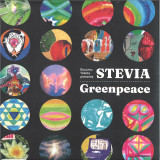
In 1997 and 1998, the late great Japanese composer, producer, and DJ Susumu Yokota released two of the most eclectic albums of his decades-long career, Fruits of The Room and Greenpeace. Recorded under his Stevia alias for Tokyo Techno pioneer DJ Miku’s Newstage Records/NS-COM, they were Yokota-san’s homage to the foundational days of club music in Japan.
This year, Glossy Mistakes are proud to present the first official vinyl editions of Fruits of The Room and Greenpeace, originally released on CD during the golden days of the format. Packaged in reimagined cover artwork created by the celebrated Japanese visual artist Masaho Anotani, these two albums perfectly capture the diversity at the heart of Yokota-san’s oeuvre. Across Greenpeace sees Yokota-san conjuring up a heady concoction of dusty loops, sampledelic breaks, kraut-rock and psychedelic downbeat. A remarkable listening experience based on the inspired era of a genius.
When Yokota-san wrote and produced the music on Fruits of The Room and Greenpeace in 1997, he was reflecting on the broader culture that surrounded dance music in Japan in the early to mid-nineties. It was an era when the psychedelic culture of late sixties America, the afterglow of UK acid house/rave, the new age movement and cyberpunk dovetailed together. Within DJ Miku and Yokota-san’s social circles, the thinking of Timothy Leary, Ram Dass, Allen Ginsberg, Jack Kerouac and William S. Burroughs electrified the air.
By 1996, the moment, brilliant and blinding as it was, was over. “We all felt that the rave scene fizzled out,” DJ Miku says. As he puts it, there was a collective feeling around him that it had all become too much. From the calm that followed, DJ Miku, Yokota-san and their open-eared peers made the decision to switch tracks and start from scratch. DJ Miku believes that with his Stevia releases, Fruits of The Room and Greenpeace, Yokota-san wanted to express the sweet and sour nature of the passing of those wild early days and his wish for true peace. “At the time, we saw eye-to-eye, with an implicit understanding of each other,” he explains. “Even now, twenty-five years later, I am confident it was like that.”
out of Stock
Last delivered 3 years ago available to reorder, subject to availability
Wick Records is proud to present Michael Rault, the eponymous new album from one of the most talented songwriters in the game. A remarkable re-imagination of '70s pop perfection, the album began to take shape during a time of endings. Michael, on the cusp of turning 30 and freshly off the road promoting 2018's A New Day Tonight, had just ended a romantic relationship, and cut ties with his management and touring band. Returning home to Montreal where his van was already buried in six feet of snow, he hunkered down in his bedroom studio and began writing. Over the span of five months he penned most of the album. From the drug-fueled, dance floor slow-stepper, "Neither Love Nor Money", to the introspective "Inside Your Heart", to the tongue-in-cheek playfulness of "Champagne", the body of work he created in this epoch of uncertainty is proof of just how crucial that time of endings really was. Bruised but certainly not beaten, Michael delivers a lush, timeless collection of songs - continuing his increasingly profound exploration into the worlds of progressive pop, psych folk, yacht rock and beyond. Trust us...you're gonna love it!
Key Selling Points
• Sophomore album on Wick Records.
• Indie Only Blue Galaxy vinyl Covered by Paste, Pitchfork, Stereogum and many others.
• “Hook after hook after hook” - PASTE
Belgian / New York supergroup Fievel Is Glauque comprises of jazz keyboard auteur Zach Phillips, angel-voiced singer / rapper Ma Clément, and whichever other virtuosic noodlers happen to be slumped about the place.
Their cult tape "God's Trashmen Sent to Right the Mess" is a sprawling epic of pop, hip-hop and country inspired jazz arrangements. 20 tracks that form a jenga tower of expertly placed jazz chords, interlocking, sliding and collapsing with a short and sharp punk sensibility - all recorded live to tape.
Recommended if you like Arthur Russell's heart-on-sleeve wonky horn arrangements, or the infectious home-made jazz-hop of Louis Cole. We've pressed 300 copies of "Trashmen" to vinyl, and we don't expect them to stick around for long.
SCHANDMAUL, die unangefochtene Speerspitze des deutschen Mittelalter Folk Rocks, enthüllen ihren neuesten Geniestreich und lassen wahrlich den Knüppel aus dem Sack. Das elfte Album der deutschen Ausnahmekünstler erscheint am 10. Juni 2022 via Napalm Records. Seit ihrem 1999 veröffentlichten Debütalbum, Wahre Helden, sind die Münchner ein Garant für hochkarätigen und niveauvollen Folk-Rock voller spannender, fesselnder Erzählungen, dargeboten durch genretypische Instrumente wie Dudelsäcke, Drehleier
und Folk-Flöten und gekrönt von der unverwechselbaren Sangeskunst von Vocalist Thomas Lindner. Mit sechs #10 Alben in den deutschen Charts (darunter das #1 Werk Leuchtfeuer, 2016, und zuletzt Artus auf #2, 2019), zwei Nominierungen für den Echo Award, Gold-Status für Traumtänzer (2011) und Unendlich (2014), erfolgreichen Touren und zahlreichen Festivals, wie etwa dem Wave Gotik Treffen, M’era Luna und dem legendären Wacken Open Air, sowie Millionen Streams auf digitalen Plattformen haben SCHANDMAUL sich an die Spitze der Folk Rock Szene vorgearbeitet. 2022 beweisen SCHANDMAUL erneut, dass sie diesen Standpunkt erobert haben, um dort zu verweilen!
SCHANDMAUL demonstrieren mit ihrem stimmungsvollen Folk Rock und dem neuesten Ausrufezeichen, Knüppel aus dem Sack, einmal mehr instrumentale Klasse voller wohltuender Unbeschwingtheit und zaubern einen weiteren Meilenstein in ihrer fast 25-jährigen Bandgeschichte!
Am 28. April kündigt Neneh Cherry ein neues Projekt mit dem Titel „The Versions“ an, dass am 10. Juni erscheint. Dabei handelt es sich um ein gemeinsames Album mit Coverversionen aus ihrem umfangreichen Katalog, die von einigen der aufregendsten und angesehensten Künstlerinnen unserer Zeit eingespielt wurden. „The Versions” ist ein 10-Track-Album, auf dem Neneh Cherrys Hits von Künstlern zu hören sind, die eine persönliche Verbindung zu der Künstlerin und ihrer Musik haben. Sia drückt ihre Liebe zu Neneh
und ihrer Familie aus, indem sie sagt: ”Neneh war meine Lieblingskünstlerin, als sie auf der Bildfläche erschien.“ Neben SIA beteiligten sich auch Künstler wie Robyn, Peng und ANOHNI. Alle teilnehmenden KünstlerInnen sind nicht nur untereinander befreundet, sondern auch echte Neneh-Fans. Die Londoner
Rapperin Greentea Peng hat den Song „Buddy X“ als Garage Nummer interpretiert, Jamila Woods gibt „Kootchi“ einen souligen Touch. Jede Artist fügt ihre ganz persönliche Note zu “The Version“ hinzu. Das
Album erscheint am 10. Juni auf CD und Vinyl.
Landscape Tantrums Lost for two decades, the recent rediscovery of Landscape Tantrums the first attempt at recording the music that would become The Mars Volta’s De-Loused In The Comatorium revealed an important and hitherto missing chapter in the group’s evolution. Selfrecorded by Omar (assisted by Jon DeBaun) at Burbank’s Mad Dog Studios within a head spinning four days, Landscape Tantrums captures De-Loused in somewhat embryonic form, though much of what would make The Mars Volta’s debut album such an electrifying, sublime experience was already in place: the fearless invention, the fusion of futurist rock elements and traditions from outside of the rock orthodoxy, the sense of virtuosity working in service of emotional effect. From a distance, The Mars Volta must have seemed as if they were on a high when they walked into the studio to record what they expected to be their debut album (“I didn’t think of it as demos or a dry run,” Omar says). The group had recently played the Coachella festival to rave reviews, a vindication of the quixotic risk Omar and Cedric had taken, quitting At The Drive In to lead such an uncompromising musical proposition.
Their debut EP, Tremulant, had similarly signalled their singular vision, and been rewarded with similarly positive feedback. But the truth was that The Mars Volta entered Mad Dog in tatters, scarcely believing anything other than failure lay within their reach. They’d recently lost their bassist, Eva Gardner, and parted ways with keyboard play Ikey Owens. Tensions were brewing with drummer Jon Theodore, too himself a replacement for founding drummer Blake Fleming Omar questioning Theodore’s commitment to the group. And sound manipulator Jeremy Michael Ward’s drug problem had gotten so far out of hand that he’d been sent to rehab, and wouldn’t return until two days into the Landscape Tantrums. The pressure upon Omar was intense, and it began to manifest in the form of physical and emotional breakdowns. His art was his life, but now he began to wonder if it was actually going to kill him. Under such heavy manners, miracles occurred at Mad Dog. Surely that’s the only way to describe the music contained on Landscape Tantrums, as Omar fashioned early versions of Inertiatic ESP, Drunkship Of Lanterns and Eriatarka that rivalled the Rick Rubin produced versions that ended up on De- Loused for intensity, precision and immediacy, as Cedric delivered a powerfully intimate reading of Televators, and as a bare bones version of the group sketched out the peaks of what would become their debut masterpiece in barely half a week, on a shoestring, and believing they wouldn’t last long enough to see it hit the shelves. Listening to Landscape Tantrums now, with the benefit of hindsight and the knowledge of what these songs will become, one notices Cedric has yet to fully find the voice that will lend The Mars Volta their devastating authority, that Eriatarka will evolve even further under Rick Rubin’s watch, and that the lyrics to De-Loused’s climactic chapter, Take The Veil Cerpin Taxt, have yet to be penned. But one also notices how lithe the group sound here, how hungry, and one appreciates the raw edge that Rubin would later polish to a venomous sharpness. More than mere historical curiosity, Landscape Tantrums is an essential text for the dedicated Mars Volta aficionado, and a breathtaking album in its own right.
[a] a1. Roulette Dares (The Haunt Of) [Unfinished Original Recordings Of De-Loused In The Comatorium]