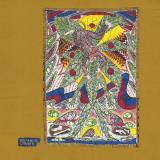
‘Their ability to harmonize together is stunning, their reedy voices coming together and pulling apart amid delicate fingerstyle guitar and concertina deployed in just intonation, which imparts a deeply resonant, almost glowing harmonic presence. It’s all quite subtle, and if you only listen to the way the voices of Cater and Rasten blend you might even miss it—but the full sonic spectrum is what distinguishes and, in certain ways, connects it to traditional practice… Although the album is pure balladry, unfolding with exquisite patience, each song contains nifty little flourishes or instrumental elements that set them apart, such as the slide guitar and wheezy bass harmonica on For the Ear That is No More, or the slow peal of trumpet on Death and the Lady, courtesy of Rasten’s partner in Pip and Oker, Torstein Lavik Larsen. (Peter Margasak, Nowhere Street).
‘All done with such grace and elegance, without a note wasted or any required. Wonderful… faultless and deeply considered’ (Glenn Kimpton, KLOF).
Three high English and Scottish ballads, and three original settings of European folk tales.
Matt gatefold cover; gloss spot varnish.
Check it out!
quête:lōn
'We Fell In Turn' is the solo debut from Brooklyn-based trombonist, composer, and quartet leader Kalia Vandever. Vandever, who plays with Harry Styles and Japanese Breakfast, “sculpts her trombone’s golden tones into dazzling compositions” (Pitchfork), writing music that tends to “dip you into a feeling or a pattern or a breathing speed, and keep you there” (The New York Times). In 2022, Vandever released Regrowth, an album that “features the ecstatic, brilliant melodies that have become Vandever’s signature sound” (Bandcamp). This spring, Vandever brings contemplative reflection to We Fell in Turn, a brave and understated work from an ascending voice in American jazz.
Recorded over three days in upstate New York, 'We Fell In Turn' is improvisational — a stark palate of solo trombone, voice, effects, and little more. “My solo process has always been heavily rooted in improvisation,” says Vandever. “I wanted the process to feel similar to the way I perform. Lee Meadvin, who engineered and produced the album, had a heavy hand in the creative process as well. He would dictate prompts before I started improvising and those pieces ended up shaping a lot of the imagery that comes up throughout the record.”
Connecting the dots between Jeff Parker’s 'Forfolks', and early releases from Grouper, 'We Fell In Turn' is a study of space and patience, embracing vulnerability in its sparse adornment. At times, the album is reminiscent of Patrick Shiroishi’s 'Hidemi', both in its familial inspiration and solo instrument study, while sharing the ineffable feel of William Basinski’s 'The Disintegration Loops' — the traces of her trombone folding in on themselves in an organic loop. Emotionally generous throughout, Vandever acts as a torchbearer for jazz’s historical yearning for connection.
On 'We Fell in Turn' Vandever draws inspiration from childhood memories — events that shaped her approach to love, community, and partnership, and her maternal homeland of Hawaii. “We were exploring childhood memories, earliest experiences with disappointment and pain, and my Hawaiian roots,” says Vandever. “We Fell In Turn came after I titled the track "We Wept In Turn". Both come from the intangible feeling of waking up from vivid dreams, particularly the experience of falling right before waking up or waking up in tears.”
Through this exploration into her heritage, Vandever also found guidance. “In Hawaiian mythology, ‘aumākua are known as ancestral spiritual guides that manifest in different forms, whether physical or intangible,” says Vandever. “My ‘aumākua visits me in my dreams, usually with a reassuring hug or a reminder of my past. Memories and early experiences seem to escape me, but find their way back in dreams.” And now they’ve found their way into 'We Fell in Turn', Kalia Vandever’s stunning solo debut.
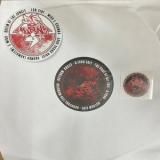
Another massive offering from the one and only Mick Harris, continuing on in his Culvert Dubs Sessions experimentations with a new 2xlp. Once again Mick delves deep into the shadow realm of slow beat, psychedelic heavily textured, grinding dub techno. Eight tracks of absolute industrialized, delay swept, full pressure, sound system shaking murk ridden, dark water dubs. Top form work when Mick lets loose in this wild style, just the right balance of beauty, restraint and brutality. Total heavy weight music!
**Vinyl Only**
For their first step into the wax game, Genau Experience land with a strictly vinyl statement straight out of Udine. (Italy)Active since 2018, Genau Exp. have been quietly cultivating parties and pushing underground culture in their corner of the map. Now it translates into grooves. No rush, no noise: just the right moment to press this record.
Leading the charge is resident and long-time digger Stefano Conte. A vinyl collector with a deep-rooted connection to house, techno and electro, Stefano’s sound carries echoes of the ‘80s, ‘90s and early 2000s | raw drum work, hypnotic sequences, stripped tension and subtlemachine funk. These four original cuts, written between 2025 and 2026, feel focused and functional. Club-minded but not obvious. Built for heads who listen.
On remix duties, taking the reins on The Landing, we find Shkedul – selector and producer who hardly needs an introduction. He draws us deeper into his signature style: decisive basslines, dark rhythms, and evolving sound design that flows and morphs across the full length of the track.
A versatile weapon with enough character to work across different floors and moods.
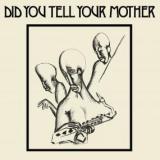
Released in 1979, Tete Mbambisa's Did You Tell Your Mother delivers the ultimate blend of African groove with American modal grace, making it one of the all-time classic albums of South African jazz. With Mbambisa presenting original compositions at the piano alongside Basil "Mannenberg" Coetzee on tenor sax and flute, the acoustic quartet featured here is rounded out by Zulu Bidi from the band Batsumi on bass locking in with Dollar Brand drummer Monty Weber. This 2026 reissue presents a flat transfer of the master tapes with album artwork restored using illustrator Hargreaves Ntukwana's original ink drawing.
A self-taught musician, it was as leader of the vocal group The Four Yanks in the early 1960s that Tete Mbambisa’s music career took off. With encouragement from Abdullah Ibrahim, he dedicated himself to the piano and went on to record with The Soul Jazzmen in 1969. Mbambisa's solo recordings from the 1970s, produced by Rashid Vally for the independent As-Shams/The Sun record label, document his creative peak as a recording artist and have contributed to earning him an honorary doctorate and a place among the figureheads of South African jazz history.
“Estonian cultural theoretic Tõnis Kahu once said that Black Metal is men seeking for masculinity while their bodies lack the capacity to catch up and are lagging behind. In the age of microplastics and low-testosterone, Tapetud Rott is asking for ancestral guidance from George Michael. Each day with the growing pains of maturity they can only dream about living somewhere so happy-go-lucky and tranquill as the city that once provided the suitable breeding ground for giving birth to such an agressive and theatrical expression that could mark its cadaverous polar opposite. The mask they now so falsely wear is one seeking for Vitamin D inside the heart of a deceased Rat.”
Limited Black 7-inch Vinyl
Music by Robert Nikolajev & Mikk Madisson
Recorded in Tallinn
Mastered By The Bastard
The first album ever to release on Jahtari vinyl, back in circulation for the first time since it’s original release in 2009.
Twelve meticulously crafted lofi Dub oddities by disrupt, off-the-grid riddims with lots of SciFi samples, cheap synths and effects from another world, all soaked in gnarly but deeply cosmic textures and with expert low end mastering by peak time CGB1 at D&M in Berlin.
This new album version includes all-time classics like “SEGA Beats”, a killer chiphop dub cut of Misora Hibari’s “Ringo Oiwake”, as well as “Berzerk Dub” and “Echobombing” (the instrumental to Kiki Hitomi‘s “Nighwalkers“), which only have been released on CD or limited 7″ before.
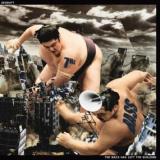
“The Bass Has Left The Building” comes with iconic cover art by Jimmy Cauty (KLF) – and an inlay poster with an exploding sound system…
"K8A a.k.a. Kaethe Hostetter is a New York–based violinist. composer, and bandleader, whose work grew out of eleven years living and collaborating in Ethiopia. As a founding member of Debo Band and QWANQWA, Hostetter has been performing Ethiopian music for over two decades, and her solo debut, Woradj Alle, builds on this legacy by reimagining Ethiopian songs through live-looped violin and electronics.
"The album unfolds as a hypnotic, ritual-like performance that expands the instrument into an immersive sonic landscape, that refracts Ethiopian classics through dub, psych rock, and avant improvisation. It is not fusion, but transmission - music that blurs memory, place, and time.
"This collection of musical vignettes is based on my time in Ethiopia, the place I called home for 11 years", Kaethe explains. "The phrase 'Woradj Alle' is one of the first colloquial expressions I learned upon arriving in Addis Ababa, used on public transportation, simply meaning 'let me off right around here'. In choosing this name, I invite you to join me on the rickety minibus journey through my time in Ethiopia, and step off 'the bus' into scenarios, atmospheres, and soundscapes that describe moments I experienced, people I met, and other lasting impressions, striking and mundane."
"What if, alongside the mainstream history of music, with careers and discographies spanning ten or fifty years from album to album, there was an underground, minority history, that of artists and projects with only one record? A flash, a burst of brilliance, a gem, but no follow-up, no repetitions, no decline.
"This will most likely be the case for this album by Amarante-Cerisier, a duo formed by Mauricio Amarante (RadikalSatan, Équipage, travelling companion of Canan Domurcakli and Austin Townsend) and Marine Debilly Cerisier (dancer, performer, writer, co-founder of alternative cultural venues in Marseille and Brussels), with these eight poetic songs in French having more in common with the visionary essence of certain songs from the early 1970s (Brigitte Fontaine-Areski, for example) than with the post-modernism of the ‘nouvelle chanson française’ of the1990s and 2000s.
"But – and this is undoubtedly no coincidence – this is also the case for two unique albums, which had no immediate follow-ups but which, 50 and 20 years after their release, inspired Mauricio and Marine's album and discreetly found their way into it:
"At the very end of the 1960s, Tchékov Minosa (Marine's grandfather) embarked on a journey to the East with his partner Brigitte de Saint-Preux, during which they were married ten times, in ten different traditions (in Kurdistan, among the Kuchi people of northern Afghanistan, among the Kalash people of north-eastern Pakistan, in Rajasthan,etc.). This three-year journey was documented in numerous articles in the European press, in documentaries, in a book... and on a double LP of traditional music recordings released in 1973 by Le Chant du Monde. And sampled today by Mauricio Amarante at the end of the track ‘Parfois’.
"In the early 2000s, Austin Townsend, a tall, bony figure, washed up on the banks of the Garonne River near Bordeaux, arriving from New Zealand. With a voice that was sometimes very Bob Dylan-esque, at other times buried in the gravelly depths of the low frequencies, he strung together contemporary blues songs on his only album, Introvenus (Potagers natures, 2007), beautifully accompanied in subtle tones on banjo and double bass by Mauricio and Cesar Amarante (alias Radikal Satan). Beyond this unique record, Mauricio played extensively with Austin in concert. And when his friend died in the spring of 2024, he received his guitar, used the instrument for some of the tracks on the upcoming Okraïna record, and decided to dedicate the album to him.
"In our conception of music, fleeting appearances, unexpected reunions, and timeless records outside the dictates of current musical trends thrill us more than overly well-planned career paths."
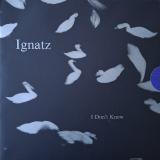
"In 1910, the illustrator George Herriman created the Krazy Kat comic strip. Ignatz, a vicious mouse, was Krazy Kat’s arch enemy, and his favourite pastime was to throw bricks at Krazy Kat’s head (who misinterpreted the mouse’s actions as declarations of love)
"Ignatz is the alter-ego of Belgian musician Bram Devens. Since 2005, he has released around 20 albums accompanied by guitar, in LP, CD or cassette formats, on labels such as (K-RAA-K)³, Ultra Eczema, Fonal, Mortaux vaches, Okraïna, among others. Ignatz has toured all over the world: Belgium, Germany, the Netherlands, France, Great Britain, Italy, Finland, Greece, Switzerland, Portugal, Lithuania, the United States, Japan, etc.
"Since the beginning of his journey as a singer-songwriter, Ignatz has played wonderfully and mysteriously with the combination of the similar and the unfamiliar, between the repetition and permanent reinvention with slight shift in accents... Now For two decades, when discovering his new songs, whether on record or in concert, his expressive and sonic universe can be recognized in seconds, and at the same time, he surprises every time. This is clearly also the case with ‘I Don't Know’, an album for which (after the cassette ‘Coffee, No Cigarettes’, Taping Policies 2017) he trades his guitar for the piano.
"In the mid-2010s, Ignatz inherited the family piano. As a self-taught musician, he explored the instrument and gave a piano concert in the small Flemish town of Geel, which was filmed by Jef Mertens (who also released the aforementioned cassette) and attended by Beata Szparagowska and Philippe Delvosalle from the label By the Bluest of Seas. After some years, it was in his home in Landen that Bram Devens recorded this haunted piano album, which is unlike any other piano record."
Frizzell & Duque's A Sorrow Unrequited moves with suspended patience, each LP piece built from simple melodic figures, each of which eventually thicken out to quiet overwhelm. Working outside their Zake/City of Dawn aliases, the pair realise a more diaristic exposure here, drawing their inspiration and track titles from Julia Frizzell's poems of the same name. 'We Once Believed We Owned The Sky' tone-sets the vibe with long, tidal swells of strings and synth, dissonances sparing but weighted, while 'Closer, Always Closer' moves in similarly tidal cycles, with momentary swellings and torn cellos fissuring through the overall sadness.
For the fifth volume of the Disco Goodies series, Sundries continues its tradition of delivering carefully hand-picked selections designed to satisfy every vinyl enthusiast, presenting a wide ranging collection of disco oriented cuts. From vocal-heavy disco edits like DJ Laurel’s “Rock The World” and Save The Robots’ “Warm Injections,” to classic disco-house fusions such as the irresistibly catchy, eyes-closed groover “Keep Me Loving U” by Gigi Croccante, and “Like A Fool” by Berlin based producer Shabi driven by Chic-style clipped guitar sample ,delivers pure dancefloor energy with character and warmth. Flipping to the B side, you’ll find the slow-mo disco jam “Keep It Coming,” a proto disco soul rework by producer Ben Jamin. GMGN closes the compilation in style, teasing out a hypnotic cut-up loop and layering it over a hazy, late-night atmosphere elevated by lush sax sections.
Vessel Recordings line up US producer Jason Merle for the fourth instalment in his Vessel Recordings Group series, where across four tracks - including the nearly ten-minute opener 'I'll Be Gone', 'Sumthin Bout', 'The Nature of Love', and 'Actin Like' - we've deep, atmospheric textures and propulsive house momenta. Merle's signature approach to layered electronic production shines brightly here; B-sider 'The Nature Of Love' opts for deeply echoic, tunnelling sonic tribalisms, countering the A-side's shinier 4x4 allure.
- A1: Let The Dream Come True
- A2: Everybody
- A3: Somebody Dance With Me
- A4: Love Is All Around
- A5: There Is A Party
- B1: Freedom
- B2: Respect Yourself
- B3: What A Feeling
- B4: La Vida Es
- B5: It's My Life
- C1: Keep On Dancing
- C2: Secrets Of Love
- C3: Together
- C4: Chihuahua
- C5: The Great Adventure
- D1: Together We Fly
- D2: Take Control
- D3: Superstar
- D4: Pray
- D5: Shadows Of The Night
A fresh reinterpretation project from 20/20 Vision’s Ralph Lawson and Carl Finlow that revisits their own classic Blaze remixes for 2026.
Originally remixing ‘Lovelee Dae’ back in 1997 for German label Playhouse and ‘Wishing You Were Here’ in 1999 for Slip ‘n’ Slide, these new takes deliver stripped-back dub versions and refined edits crafted for the dancefloor.
The collection blends classic Blaze soul with deeper, groove-driven house textures—highlighting the timeless songwriting of Blaze while giving it a fresh underground perspective
Following the first chapter of Connessioni, Danza Tribale unveils Connessioni II, the final movement in Tamburi Neri’s two-part sonic exploration of connection, vibration, and ritual.
If the first EP traced the invisible threads between body, city, and earth, Connessioni II is where those threads tighten and transform. It is no longer the search-it is the meeting point. Nature, metropolis, and digital spirituality no longer call to one another from afar; they converge..