Exploring the unknown can be both exciting and intimidating, and that's exactly what electronic music producer Oleka, captures in his new underground industrial techno EP, "Xenisation” on Snork Enterprises.
This four-track release follows a traveler as he ventures into unfamiliar territory, where every step is a new discovery. From pulsing beats to metallic soundscapes, the EP takes listeners on a journey through the highs and lows of traveling to a new place. "Xenisation" sets the stage with its accentuated beat and crisp synths, evoking the feeling of a long journey ahead. "Fjord" takes the listener on a journey to the furthest reaches with its driving futuristic rhythms. "Sudor" ratchets up the intensity with its pounding drums conveying the sense of excitement and anxiety that comes with exploring new worlds. Finally, “Point Nemo” brings the journey to a close.
"Xenisation" is a must-listen for fans of underground industrial techno. Oleka's signature sound is on full display in this snorky crafted release, making it another thrilling addition to a decent techno collection.
'The album is composed by Cerys Matthews with Hidden Orchestra and features 10 UK poets: MA.MOYO, Raymond Antrobus, Lemn Sissay, Liz Berry, Anthony Anaxagorou, Adam Horovitz, Cia Mangat, Imtiaz Dharker, Kim Moore and Kayo Chingonyi “We are living in extraordinary times, I wanted to respond but had the urge to offer more than one voice, more than one perspective. Not an echo chamber” – Cerys Matthews. In February 2020 Abbey Road studios welcomed each of the 10 poets to record pieces from their collections. Then lock down hit…. But remotely and with the additional help of field recordists and musicians around the world, Cerys and Joe Acheson (Hidden Orchestra) created a sound journey for these poems with the theme of: Genesis: Birth, heritage, a journey about to begin.
In the mid-70s, Bob Shad’s cult New York Jazz label Mainstream Records turned to the burgeoning underground Disco scene and released a handful of great singles produced by the likes of Tommy Stewart, Jimmy Roach or Bert DeCoteaux. Featuring artists from the early Disco hotbed including South Side Coalition, Chocolate Syrup and Three Ounces of Love, these singles, proving Shad's great flair, accompanied the rise of the New York club and block party culture that was going to revolutionise the musical landscape a few years later. Most of the singles are officially reissued here on vinyl for the first time, with Three Ounces of Love's "Disco Man" full mix previously unissued on vinyl. Remastered by Colorsound Studio in Paris, with liner notes by Charles Waring and artwork by Thomas C. Bradley
Funk and Soul in the early 70s were mutating to a new sound spearheaded by such labels as Philadelphia International Records (PIR), Scepter and Salsoul: Early Disco was taking off and Its sound was earthier and more urban, mixing the nascent Disco beat with strong funk and soul elements. New York was at the epicentre of the phenomenon, thanks to its thriving club scene and also to a new wave of DJs from the Bronx who started playing the music at block parties along with James Brown and Mandrill. bubbling under was a cohort of small independent labels that released some great music on 7" singles to meet the growing demand. Industry veteran Bob Shad and his label Mainstream Records started investigating this new scene and asked his circle of independent producers to bring him their latest production for release. For the occasion, he set up two sub labels, IX Chains and Brown Dog.
Among the producers who'd heard Shad's call were Tommy Stewart who came up with The South Side Coalition's funky '(Don't You Wanna) Get Down Get Down' in 1975 and Prophecy's 'What Ever's Your Sign' a year later. Seasoned arranger/producer Bert DeCoteaux (Patti Austin, Maxine Brown, The Main Ingredient) brought Lenny Welch's soulful 'A Hundred Pounds of Pain' and the superb mid-tempo instrumental 'Nothing Between Us' by The Electric Ladies. Arranger Jimmy Roach came with his latest single with The Dramatics ('No Rebate on Love') whom he'd worked with at Volt and with Three Ounces of Love on their aptly titled single 'Disco Man,' whose unissued long version merging Side 1 and 2 is released here on vinyl for the first time. The sister group would go on to sign with Motown in 1978 and release their sole album self-titled 'Three Ounces of Love.'
Other highlights on 'Mainstream Disco Funk' include The Grand Jury's 'Music is Fun To Me' with its languid funky rhythm arranged by Ted Bodnar, a producer and studio engineer who'd work with Sir Joe Quarterman, Blair and Al Johnson. Also featured on the set is Crystal Image's superb 'Gonna Have a Good Time (part 1 & 2) which typifies the blend of urban funk, glitzy strings and metronomic beat that were signature elements of early Disco.
The style would keep getting more commercial over the years and reach overkill in the late 70s but the block party scene which more than embraced this breakbeat-filled genre would soon morph into hip hop in the second half of the 70s with the help of a few key industry figures such as Sylvia Robinson (Sugar Hill Records). By that time, Bob Shad had ceased releasing records and relocated in Los Angeles but he left behind a small treasure trove of superb obscure singles which are now making their LP debut on 'Mainstream Disco Funk' for the delight of all funk and disco lovers.
Get ready to embark on an ethereal journey with Jannis Carbotta's long-awaited debut solo EP. Jannis' artistic focus on the tension between analog and digital spaces is evident throughout the entire release, as he employs classic band instrumentation as well as processed field recordings and electronic experimentation to craft a unique and captivating sound. "A Magic Spin" was co-produced and mixed by the drumming wizard Jan Philipp, with whom Jannis also collaborates in the experimental indie band Infant Finches and forms the duo Aeol. This fusion of ambient, electronica, alt pop, and shoegaze effortlessly creates a soundscape that is both otherworldly and intimately personal. The record features 5 original tracks plus an exclusive bonus track, an exclusive reinterpretation of Slowdives ”Rutti", which will only be available digitally via Bandcamp. Mark your calendars, as "A Magic Spin" will be released via Kame House Records in February 2023.
Three choice cuts from the back catalogue of Isomise, oscillating between house and techno with a deeply psychedelic edge.
Originally released on separate EPs throughout 1995 via the short lived but influential London based Flagbearer Records. The A side Intersection blends UK rave with a nascent tech house groove and hypnotic vocal while the B side is reserved for two expansive acid techno trips.
From samba and bossa nova through to baile funk, with carioca expressions of jazz, rock and hip hop in between, the sound of Rio de Janeiro, while continually evolving, has always held an unnameable quality which reflects the magic and mystique of the city itself. Multi-instrumentalist and arranger Antonio Neves is the city’s newest trailblazer: the enfant-terrible of Rio’s music scene, leading a vital and diverse constellation of both emerging and well-known artists advancing the city’s musical legacy.
“It all started one sleepless night, after watching a Quincy Jones documentary”. Inspired by the legendary music magnate, Neves began writing a list of artists residing in Rio de Janeiro “people that I admire, that I consider geniuses of their instruments, who share with me affinities, anxieties and projects.” The list included some of Brazil’s most revered living musicians who Neves has worked with in recent years: Hamilton de Holanda, Leo Gandelman and Dorival Caymmi. Neves also called on some of Brazil's most exciting emerging talents including Alice Cayymii and Ana Frango Eletrico.
A Pegada Agora É Essa (The Sway Now) is Neves’ second album: a vibrant portrait of the current Brazilian music scene. From the regional to universal, popular to erudite, samba to rap, Latin rhythms to jazz, MPB and pop to good old rock'n'roll, Neves walks with fluency and mastery amongst all the musical genres that Brazil has to offer.
“My offer to the musicians was complete freedom to express themselves through the songs I proposed – classics like “Summertime”, “Luz Negra” and “Noite de Temporal”, and compositions of my own – creating a space of authorship for the band and the guests. A space for inventions, purges, delusions, laughter. The idea was to bring the freedom of jazz crossed by Brazilian rhythms, such as the traditionals Partido Alto (A Pegada Agora É Essa) and Jongo (Jongo no Feudo and Luz Negra); rhythms of African-Brazilian religions like Candomblé (Noite de Temporal) and Umbanda (Forte Apache); and a tribute to newest Rio de Janeiro’s contribution to Brazilian music, the Funk Carioca (Simba)”.
Coming from a musical family, Antonio’s father, Eduardo Neves, was a renowned conductor and a professor at Juilliard School of Music and the California Jazz Conservatory. In the bohemian neighbourhood of Lapa, aged 14, Antonio began his career as a drummer, before experimenting with brass. He would soon become a skilled trombonist and arranger achieving the recognition of his teachers and peers. It wasn’t long before he would be playing with some of the biggest names in Brazilian music, such as Hamilton de Holanda, Leo Gandelman, Moreno Veloso, Kassin and Elza Soares.
His debut album as a trombonist was PA7 (2017, Rock It), released at the same time he was travelling the world playing with artists like Moreno Veloso, Kassin and Leo Gandelman, and recording the albums Jobim, Orquestra e Convidados (2017, Biscoito Fino), with Mário Adnet and Paulo Jobim; and Elza Soares Canta e Chora Lupi (2017, Coqueiro Verde Records). More recently, Neves was the arranger for the acclaimed Little Electric Chicken Heart album, by Ana Frango Elétrico, which has been nominated for a Latin Grammy and voted 2019’s ‘Brazilian Music Revelation’ by The Art Critics Association of São Paulo.
New London imprint Deep Water Culture offer their first outing from label co owner Jamie Fairley, entitled ‘A Jazz Loving Adventurer’. He delivers 3 after-hours minimal cuts with a stripped back remix from the master of weird & wonderful and good friend of the label, Paul K.
In 1975, under the oppressive air of military dictatorship in Brazil, brothers Lelo and Zé Eduardo Nazario invited bassist Zeca Assumpção to join their musical experiments in a basement under Sao Paulo’s Teodoro Sampaio Street. As teenagers, the trio had already been playing together in Hermeto Pascoal’s Grupo, alongside guitarist Toninho Horta and saxophonist Nivaldo Ornelas, and it was while working together under Hermeto’s direction that the Paulista rhythm section (as they were then known) began to realise their own potential.
With many nightclubs and venues closed in the mid-70s and government censors dictating the output of radio, TV and art galleries, many Brazilian artists fled during the years of dictatorship. But underground, Grupo Um were fusing avant garde ideals with contemporary jazz and Afro Brazilian rhythm; making phenomenally free and expressive music - in stark contrast to the sterile, conservative conditions being imposed above ground.
Just like Hermeto Pascoal’s Viajando Com O Som from the following year, Starting Point was recorded over two days at Vice-Versa Studios, by revered engineer Renato Viola. The studio was one of the best in Sao Paulo and musicians communicated with engineers through cameras and a monitor, allowing the group complete immersion in the process. They also made use of the studio’s hemispherical tiled room, which served as an acoustic reverberation chamber.
The album begins with Zé Eduardo Nazario’s thunderous drum solo on “Porão da Teodoro”, before clearing the clouds with the lone Berimbau which opens “Onze Por Oito”. Built around a hypnotic electric bass line, heady Fender Rhodes improvisations, and more rip-roaring drums, it’s a rapturous, electrifying freak-jam in 11/8.
Like some invertebrate deep-sea curiosity, the free-form “Organica” is made up of Lelo Nazario’s playfully eerie prepared piano, with Zé Eduardo’s percussion flurries darting around Assumpçao’s double bass. The equally non-conformist, percussion-only piece “Jardim Candida” features many of Zé Eduardo’s home-made instruments, including a long saw blade played with vibraphone sticks and violin bow. While working with Hermeto, Zé Eduardo famously built his own all-in-one percussion set-up known as the “Barraca de Percussão” (Percussion Tent) - the first of its kind in Brazil, which he would also use on Hermeto Pascoal’s Viajando Com O Som and throughout his career.
“Suite Orquidea Negra'' (Black Orchid Suite) was written by Lelo Nazario as the score for an imaginary movie - the story of a rare, black orchid which produced a substance meant to cure all diseases, but which had mysteriously disappeared from the laboratory… “As a screenplay it’s not very good” reflects Lelo in jest, “but the music ended up being very interesting, the way its parts are chained to one another carries a little of the mystery I imagined for the movie.”
The album closes with the triumphant “Cortejo dos Reis Negros” (Procession of Black Kings) - a groovy variation on the Maracatu rhythm, with a two-note bassline underpinning piano improvisations, exultant wordless vocals, cuicas, slide-whistles and a very special guest appearance from Zé’s dog Bolinha.
Starting Point was to mark the inception of one of Brazil’s most daring instrumental groups. Their debut now sits in the lofty echelon of otherworldly 70s Brazilian music, alongside the likes of Marcos Resende & Index’s self-titled debut, Cesar Mariano & Cia’s Sao Paulo Brasil, Azymuth’s debut and indeed Hermeto Pascoal’s Viajando Com O Som. But just like all of those titles, which were either shelved or largely ignored at the time, Grupo Um - so radically ahead of their time - struggled to find a label to release their debut album. So Lelo kept the tapes safe in his archives, which is where they sat for almost half a century. Finally, almost fifty years later, this mesmerising piece of history is here, and it was only the beginning...
Grupo Um’s Starting Point will be released by Far Out Recordings, on vinyl LP, with an insert featuring unseen photos and liner notes by the Nazario brothers, as well as a CD on 17th February 2023.
You Can Can is an echoed affirmation, an album which traces song forms around silence, field recordings, and degraded analog memories. This is folk music transmogrified and mutated, as if recorded and reconstructed in Pierre Schaffer’s GRM studio.
Not your typical Mariposa folk duo, the group is comprised of Toronto avant-music scene stalwarts, vocalist Felicity Williams (Bernice, Bahamas) and bricolage artist and synthesist Andrew Zukerman (Fleshtone Aura, Badge Epoch). The album feels like a somnambulant conversation, fragmented and half-remembered with Williams’ vocals traveling through a landscape of field recordings and Zukerman’s saturated concrète topographies. It is an electro-acoustic assemblage, both analog and digital, comprised of air, electricity, minerals, wood, and water. Although the album nods towards traditional forms of folk and musique concrète (if at this point it can be called a traditional form), it is outwardly and inwardly contemporary; non-linear, citational, opaque, and sui generis. In a way it feels like a sonic index of the narrative experiments found on the infamous Language school-related publisher The Figures, in the work of Lyn Hejinian, Clark Coolidge, and Lydia Davis. In the musical continuum, the album picks up where Linda Perhacs left off in the early 70’s—explored by Gastr Del Sol in the ‘90s—a convergence of rural acoustic idioms and urban avant-electronics. This is country music for the discerning cosmopolitan citizen of the 21st Century.
RIYL: Luc Ferrari, Brannten Schnüre, William Basinski, Oval, Eric Chenaux, Emmanuelle Parrenin About Everything In Time and Failure Figures, Felicity Williams says:
Everything In Time is indebted to the language of Brazilian author Clarice Lispector (as translated by Alison Entrekin). Drawing on insights from psychoanalysis, we trace the roots of melancholy to render them available to consciousness; words from the ghostly realm of the transpersonal filter through dreams and shine a beam of light onto a lone trillium in a forest at night. Other influences include the experience of not knowing, of being subject to a gestation outside of one’s control. This is an ode to the power of naming to obliterate, to set free.
Failure Figures is a meditation on the radical contingency of reality and the vicissitudes of the will. With Slavoj Zizek as my guide (think: “Hegel for dummies” - I’m the dummy in this scenario), I wander through the valley of the shadow of death, and take heart. The last verse refers to an experience I had recording at a studio in Brussels. I was singing in French, with which I have some fluency, and the producer was complaining to the artist whose song it was that my delivery was not convincing. Thinking I was out of ear shot, he said in French, “c’est comme elle n'est pas là”; I was pronouncing the words correctly, but I failed to express anything. So what or whom is responsible for conveying meaning, if not the form of the word itself? And if the connection between meaning and form is broken, how do we fix it?
Gratitude to Thom Gill (guitar) and Daniel Fortin (bass) who joined us on the recording of Failure Figures. Thanks as well to my old roommate Christopher Willes, who unwittingly left behind his hand bells deep in the hall closet. We unearthed them by accident, and the bells became an important sound element. Thanks to other past roomies Robin Dann and Claire Harvie, whose childhood piano and guitar respectively still reside with us, and were used in the recording. Field recordings were made in Toronto, Canada and Celestún, Mexico in 2020.
Alvars Orkester was formed in 1987 in Johannishus, a small village in the south-east of Sweden by a group of young boys interested in the mysteries of psychic sickness, mental institutions, industrial music culture and the power of sound. For the first very creative years, Alvars was very active within the independent cassette culture scene releasing their stuff (that quite soon drifted from the industrialism inspired by Test Dept, TG, SPK and z'ev to an atmospheric, psychedelic and quite ambient version of noise) on small labels in Italy, Portugal, USA etc.
Joachim Nordwall writes: "1990-1991. In the middle of all teen confusion going on, me and Zwarre had a long creative time together. Recording every weekend, connecting with like-minded (or at least we thought so) people around the world and trading tapes with whoever. Our world was analogue synths, Party Zone late Friday nights on MTV, zines and out-there experimental music. By then, we had a few tapes out and had "Nobody Finds Nothing" being released on the Italian super-label (in our opinion) Biotope Art Organization. We were in the midst of something and recorded "Nuthull" for another Italian top level label called Old Europa Café. However, they did not like it and the tape was abandoned and forgotten. Then years and years later, close to present time, Zwarre was in touch with OEC for some reason and had the master returned." - Joachim Nordwall, Gothenburg, 21 February 2023
Recorded in late 2021 and early 2022, Cryptic Lexis features two long-form pieces connected by field recordings made in The Shetland Islands in 2019.
The wind through a gate on a Bressay hillside is mixed with cascading guitars and minimal electronic percussion on "Confetti for the Flames" and recordings of Bains Beach form the backdrop of "Out on the Coast the Spirits Are". Paris based artist Graziella Torrigiani contributes words and voice to the latter, her text a direct response to the instrumental track.
Eric Clapton’s eponymous first solo album, originally released in August 1970, represents one of rock history’s most successful reinventions. After emerging as one of the seminal guitar heroes of the ’60s, the English superstar decisively re-established his musical priorities with Eric Clapton. The album marked Clapton’s transition from flashy instrumental icon to well-rounded recording artist, downplaying sonic pyrotechnics in favour of a song-focused ensemble approach that would lay the groundwork for his massively successful solo career. For the occasion, he surrounded himself with a new cast of American musicians, tapping into a rootsy musical foundation that provided an inspired framework for his talents. This Anniversary Deluxe Edition presents Eric Clapton – Eric Clapton in three separate mixes –
The Eric Clapton Mix, The Delany Bramlett Mix and The Tom Dowd Mix (The UK Version). The Eric Clapton mix is being released in full for the first time. This anniversary collection also includes some singles, alternate versions and session outtakes.
It's always a huge pleasure to have him back. Lewis Fautzi's astronomic ascension is well known and we are delighted that he decided to 'play home' one more time.
Although the years are passing by, Lewis is faithful to his principles. His personal style is almost a trademark and impossible not to recognize. Techno scene has evolved and he has evolved with it but always in a straight line, adapting himself perfectly to the new tendencies and keeping his touch and his vision.
This new ep is full of trippy pads and powerful bass lines. Mesmerizeng techno as its finest and with a small cherry on top of the cake: a remix by Rødhåd. His first time with us and there is no greater feeling, specially knowing the huge artist he is. Established nowadays as a techno force, the german producer combines the hypnotic with different theatrical approaches and came a long way demonstranting the uncontainable nature of his brand of shadowy dance creations, as someone once described his work. We couldn't be happier with the result.
In summary, the first ep by Lewis Fautzi on his own imprint with a remix by Rødhåd.
Lewis, welcome back home!! And thank you for bringing such an illustrious guest.
From New Jersey via The Netherlands: longstanding US craftsman Joey Anderson makes his debut on Deeptrax with his inspiring new album… ‘Exotic Sequence’
His fourth LP to date, ‘Exotic Sequence’ is a fully instrumental deep dive into both Joey’s machines and mindset, as he explains himself… “The title ‘Exotic Sequence’ stood out to me because throughout the LP I tended to use a sequencer for the main melody of most of the tracks. Almost every time I approach a track with techno intentions it eventually ends up being deep / housey,” states the artist who broke through 15 years ago on Qu’s Strength Music and has worked closely with the likes of Dekmantel and, more recently, Avenue 66.
Now at home on the relatively new and positively thriving label arm of Dutch record store institution Deeptrax, Joey tells us where he’s at with a body of work that poignantly reminds us that it’s not the destination that counts; it’s the journey we endure to get there.
In this sense, ‘Exotic Sequence’ is the sound of Joey letting his instruments guide, inform and inspire him. Cuts like the constantly rising and hopeful ‘Sky Children’, the deep 808 bubbles and dreamy reflections of ‘Behind The Valley’ and the emotionally rich ‘Stop’ are just a handful of examples of Joey being lost in deep flow, channeling the creative energy in his studio.
It lands exactly three years after his last album ‘Rainbow Doll’, neatly bookending the strangest and most surreal start to any decade we’ve lived through since house and techno culture took root in the 80s. A timeless document that looks forward and back and remains unhurried, thoughtful and crafted with longevity, ‘Exotic Sequence’ is arguably the most honest and frank side to Joey Anderson we’ve heard in his extensive career so far.
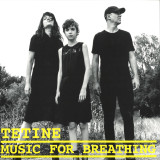
We've been writing new material as a trio since the first lockdown in the spring of 2020. An organic and electro-acoustic impulse that translates both mine and Eliete's need of self-archiving, re-inventing and auto-cannibalising Tetine's past, present and
future in order to explore other aural landscapes and modes of composing intuitively, while at the same time, re-experiencing moments of our trajectory as a hybrid organism.
Music For Breathing was born as a respiratory, meditative, and improvisatory piece of DIY tropical-mutant-punk "chamber music" written for cello, voice, piano, organ and electronics. The work responds to the suspended acts of breathing and vertigos experienced in contemporary polluted environments in political, social and philosophical transitions, whilst investigating the secret ontologies of inanimate objects and architectures, as well as the echoes and ethics of modes of operating things.
Recorded during the intense period of heatwaves that hit London between July and August 2022, in a small studio set up in our flat's kitchen - so that we could capture the acoustic instrumentation (in particular, for the recording of cellos) without much
noise interference from the street - this vinyl version of the album comprises of 5 distinct yet complementary reflective movements.
Musically and lyrically, it explores the atmospherics and syntaxes of time and space, voice, rhythm, as well as themes such as hearing loss, menopause, pollution and respiration. It builds an expanded suite of unexpected electro-acoustic textures through repetition, minimalistic motives, simple melodies, chromatic developments, free counterpoint and atonalism. Conceived as an ode to the poetics of slowness, the sounds you hear give continuity to the music we composed for the performance-film The Ether - Prelude No.1 over the first lockdown in 2020 as it simultaneously explores the warmth, melodiousness and power of the cello in conjunction with electronics. Music For Breathing evokes this transitory moment: a place and time where language runs out, communication and information lose their functions, sound and meaning do not correspond. Facts do not correspond to contexts. Spaced Out in Paradise. The last degree of the structure, the loss of memory. The lost voice.
The album also features our 12-year-old daughter Yoko Afi on cello and vocals. It reflects a period of free sound experimentation influenced both by romantic composers of the late 19th / early 20th centuries and contemporary electronic music. The pieces you hear were composed, arranged, and recorded with the joy and melancholy of "those who do not know". In other words, "with the arrogance of a second childhood" as Derek Jarman once put it. 'Agile and candid as a child'(1).
1) Manifesto da Poesia Pau-Brasil, Oswald de Andrade, Correio da Manhã, 18 de Março de 1924.
NYC’s Jkriv delivers a package of proto and golden era house re-edits for longtime pals Pleasure of Love.
The Razor N Tape label co-founder has reliably delivered dancefloor ready cuts on Z Records, Glitterbox, Barefoot Beats, Rocksteady Disco as well as his own imprint. On his first Pleasure of Love release Jkriv explores house in all its NYC glory; extending the energy on mid-late 80s proto (Got a Thing, Don’t Take Your Love Away) and masterfully looping and building tension with underappreciated early 90s house (G.D., Feel It). Expert level re-rubs by one of NYC’s finest producers.
King of Town (KoT), originally from Johannesburg but now in the UK, is back after a nearly a decade hiatus from his mutant disco-inflected remixes.
Prior to his long break, King of Town remixed the likes of Franz Ferdinand, Slow Club, Alice Russell, the Detachments and the Phenomenal Handclap Band.
His remix of Desmond and the Tutus' 'Kiss You on the Cheek', released on Tigersushi in 2009, has become a regular feature of Spotify playlists and has racked up a few million listens across various streaming platforms.
For this release KoT serves up four exclusive re-edits.
Lord Have Mercy is a retouch of Willie West's slow-burn R&B lament of his own elegiac defiance, where KoT underpins West's groove with a 303 acid bassline and synth flourishes.
Swimming in Your Eyes is a beefing up of Pasteur Lappe's 1979 Rhodes-heavy space disco groove.
Troubles of this World takes OV Wrights ridiculously soulful take on a gospel classic and transforms it into a retro-futurist track aimed firmly at the dancefloor.
And with Khomo Tsaka Deile Kae KoT nods towards his roots and inserts drive and snap into fellow South African Marumo's 1982 kwela-touched stomper.
As always the artwork has been completed by the very talented Pedro Carvalho de Almeida.
Gated kick off 2023 with a corker of a remix package, featuring an epic electro workout from Radioactive Man and lo-fi deep house from Max Wheeler of Anushka fame.
Marcela Dias Sindaco’s breathy Portuguese vocals always lent themselves to remixes and these five cuts use them to great effect.
Keith Tenniswood’s storming version of Missao Controle kicks off the EP, with a near-8-minute bass-heavy acid monster that retains the original’s funky elements but pushes them way into the future.
German upstarts not even noticed take Extincao nice and deep for those loved-up dancefloor moments, again bringing in melodic elements from the original, but twisting them just enough to flow into a dreamy acidic breakdown.
Flip to the B and Anushka’s Max Wheeler goes it alone, with a deep and crackly analogue house version of Dois Lados. Injected with just a smidgeon of jazz, this is definitely one for the heads.
Next up, longtime Gated collaborator Dip Shim, whose debut album only just dropped, brings a straight-up electro jam version of Pro Meu Bem, with haunting pads and insistent arpeggios.
Rounding off the EP is Perseus Traxx’s deeper than deep take on Missao Controle, a tripped out reverby journey laden with his signature hardware sound.
Paul Hammock es el artista por todos conocido como Cignol, sin lugar a dudas uno de los genuinos revolucionarios dentro del sonido electro de la última década y media. Sus trabajos llevan surcando nuestros Technics desde 2008 a través de los sellos de vanguardia electrónica del nuevo milenio.
En su decimocuarta referencia en vinilo, el sello Valenciano HC Records, tras una imparable y ecléctica línea editorial, publica el nuevo trabajo del genio de Dublín titulado Binary Choices. Un maxi en el que nos domina un profundo sentimiento de melancolía cósmica a través de cuatro cortes que nos sumergen en una odisea espacial.
Adentrarse en cada corte del vinilo es como viajar hasta diferentes cuerpos celestes y dejarse sorprender por su atmósfera ensoñadora, y es que solo es necesario que transcurran 58 segundos de Binary Choices, primer corte de la cara A, para sentirnos arropados por un sentimiento de suma nostalgia, alegría y futurismo. Una inteligente combinación de pads, sintes y brillantes percusiones que nos adentran en un astro inexplorado repleto de extrañas vegetaciones, increíbles seres multicolores y horizontes infinitos que activan nuestra sinestesia.
Un emocionante, decidido y contundente ritmo 4x4 a baja velocidad nos traspasa el alma al surcar la superficie de Broken Circle. Un recuerdo olvidado en forma de aterciopelado sonido se crea frente a nuestros ojos en la consecución del compendio de melodías intimistas que componen sus 4:14 minutos, en los que encuentra sosiego nuestra mente y bálsamo nuestro alma.
La cara B del vinilo regresa al cristalino, eléctrico y veloz ritmo roto con Momentum Gateway, track en el que sus dominantes y ácidas cadenas de bajos se enrollan y juegan en sincronía perfecta con sus diferentes capas de teclados y su vibrante e iridiscente pad.
En el último planeta al que nos transporta Cignol, suena en cada uno de sus parajes Validity Movement, track con el que nos dejamos guiar por su grueso y áspero bajo principal, que contrasta con los delicados sintes y atmósferas que lo rodean. Una experiencia sónica tan delicada, íntima y eficiente que podría servir tanto como banda sonora en la creación de un nuevo universo como en la contemplación de su ocaso final.
Finalmente, por un lado, el trabajo de master del lanzamiento ha sido llevado a cabo por Steve Voidloss en Black Monolith Studios en Londres y, por otro, Dani Requeni completa esta obra con la dirección del arte gráfico de la misma.
ENARCHY is the debut album by Leipzig-based producer and singer Maria die Ruhe. It is the result of a deep and thorough look the
artist took into both her own inner workings and the world around her. In 14 tracks, she explores different types of energy,
oscillating between head and heart. Final destination of this sometimes painful process of self- exploration is the embodiment of
her own power and creativity; the realization, that she manifests her role as catalyst, healer, and fighter for freedom and equality
by reporting on her experiences. These songs are about nothing less than that. And you can also dance to them.
In a musical sense, Maria surpasses herself compared to previous releases. She is bolder, more explorative and dissolves genre
boundaries. Acoustic instruments like the cello and the piano unite playfully with electronic beats. Her expressive voice speaks and
sings from the lowest lows to the loftiest heights. Her self-disclosing lyrics communicate the deepest messages of the soul. One can
tell right away: something is at stake here, this is about a real human living through something real, and now reporting from the
front lines of the human experience.
With lines like „Things are changing all the fucking time“ (ENARCHY) she posts a reminder for the current zeitgeist and the resulting
global uncertainty. „Some things need to be destroyed before they can heal“ is a demand for openness towards change, even if it is
challenging, requires energy, and leaves behind some scars.
In ART IS THE ONLY REAL TRANSLATION OF LIVING FOR ME, Maria uses sentences like „I’ve been trying to please you, I got headaches
and I still don’t fit“ to express her desperation with existing structures of injustice and the lack of livability of the artist lifestyle.
„Ah, you’re an artist - and what do you do professionally?“ Everyone loves music and art! When, o when, will the understanding
follow that there need to be people who make this art as a central part of their lives?
Frustration takes turns with hope and a growing acceptance of the self. In EQUALISTA, Maria discusses antiquated conditions like the
inequality between the sexes in a kind of manifesto, with a simple proposal for solution: „Let’s both be selfish and raise our
energies, to create a whole world with all the things we need.“
In WE BELONG TO NEVER, Maria sings about the everyday horror of toxic relationships. Lines like „Disengagement and rage, I’ve become such a slave.“ express the despair of the emptiness that results from a lack of affection. She also describes treacherous
narcissistic manipulation: „You cut me small just to feel tall.“
In SKIN, she confesses: „I’m not as enough as everyone else.“ and describes the long and painful way from rejecting her own body
to loving herself unconditionally. „I hate what I feel, while I pretend to be free“ means she doesn’t want to be reduced down to
her body, doesn’t want to be seen as an instagrammable, thoroughly designed product; she wants to be acknowledged as an
individual.
In LOST, she poses a question that many are currently forced to ask themselves: „What do we do with all this solitude?“ Maybe
making use of the reclusion by exploring the shadow self. „Can you cope with the truth?“
The conclusion: energy is being freed up through the means of self-experience and living through the personal darkness -
ENARCHY. The realization: every human being is self-determined and should simply do what they feel. It is everyone’s right to
choose their own life’s path. Here, intuition serves as a signpost. This is both feminine and strong.
ENARCHY celebrates an embodied anarchy by working through the personal shadow and the genuine, healthy integration of the
struggle survived - not as a destructive rebellion, but as a testament of shameless, joyful self-empowerment.
„In the end, I want to be alive, because in reality, I’m free.“
Greyscale is extremely proud to bring Martin Schulte to its long growing and talented roster.
Not only is this a double-single but each track is supported with a remix from a top-tier artist in Vril and our very own grad_u! Dancing Street & Skyscraper Street is special in many ways!
On 'Dancing Street', Martin gives your equilibrium a real test with its off-axis beat structure and fantastic chord definition. As the track releases the pressure nearing the end is nothing short of genius. This is not for the faint of heart! 'Skyscraper Street' is the ideal counterpoint to 'Dancing Street'. A perfectly tempoed tech masterpiece, it soars over a city soundscape riding a confident beat. For the B side, grad_u on the remix gives us a wall-shaker! A serious
main floor sound and the only relief from the intense bass is the beautiful chord work. The word epic comes to mind from our label leader! There is a handful of names that are buy on site when you see them and VRIL is no doubt one. This remix of 'Skyscraper Street' is drenched in layer upon layer of shimmering and fractured melodies. This experimental and almost dreamlike state of consciousness is auditory sensory overload of the highest order! Martin Schulte, VRIL and grad_u on the same EP!
Mastered at the legendary Dubplates & Mastering in Berlin on white 180 gram vinyl. The depth of these should not be understated!
Analogue photography by Rima Prusakova
Cremation Lily’s »Dreams Drenched in Static« exists at the horizon of consciousness and heavy experimental music. Through the use of frenetic vocal melodies, tape degradation, and guitar noise, the album documents the liminal moments at the edge of sleep, and the distressing thoughts that often accompany late-night R.E.M. disturbances. The lyrics were largely written at three in the morning and serve to evoke the depression and meditations on death that seem to haunt these early hours.
Based in London, England, Cremation Lily is the project of Zen Zsigo. Like many Flenser artists, the work of Cremation Lily is difficult to classify. The project began in 2009 as sample-based ambient music, but has evolved to incorporate more rock-oriented guitar instrumentation and influence from a wide range of genres such industrial, shoegaze, tape loops, noise, and power electronics.
Although rooted in electronic music, Cremation Lily shares similarities with Flenser artists like Planning For Burial and Have a Nice Life, as well as black metal. »Dreams Drenched in Static« is the first Cremation Lily album to rely primarily on guitar and vocal-based contributions, and is the project’s most intentional and developed work to date.
Featuring music from a lost tape of devotional keyboard jams, field recordings of migrating birds, mysterious bells, meditative noise and crooked new beat/EBM, made god-knows-when and subsequently discovered in a Thessaloniki charity shop years later. It now somehow finds its way to vinyl, newly mastered by Rashad Becker, and sounding like a lost Hype Williams x Muslimgauze madness.
Originally discovered in a musty charity shop by Live Adult Entertainment, and issued in minuscule numbers on CD in ’21, Christian Love Forum’s raverential debut ‘Naked Light’ documents the fraternal post-church jams of siblings, Scott, Kiro and N•X, plus their mate Steve, who would regularly channel the light and pain of Sunday mass sermons into their ecclesiastic crud.
As previously heard on their blink ’n miss ‘Unconditional Love’ tape, the trio express their higher purpose thru ribboning microtonal keyboard jams that sound like Gurdjieff with a Casio and a knackered drum machine after too much sacramental wine. They hit the strangest, most affective seam of religious cinematic epic soundtracks, gnarled noise and clandestine Belgian new beat that seriously pushes our buttons, sounding quite unlike anything in the contemporary sphere, but eerily also echoing sentiments explored on record by James Leyland Kirby or Bryn Jones.
Now reshuffled and clad in custom artwork, ‘Naked Light’ is unveiled to believers and skeptics as a definitive article of faith. The lord works in mysterious ways within, manifest in stages of sun-bleached post-church field recordings, whirligig melodies, blown-out bouzouki and choral tape howls and a Béla Tarr soundtrack-like campanology on the A-side, before letting their passions flow in ‘Wicked City (Parts I-IV)’; a spellbinding side-long collage of slurred synths, neo-noir hardbeat rhythms and speaking-in-tongues vox recalling V/Vm’s new beat apocrypha as much as bits from Hype Williams’ hypnagogic ‘One Nation’, thee dustiest gooches of Dirk Desaever’s archive, or even aspects of Rat Heart at his cruddiest.
‘Naked Light’ rarely fails to induce uncontrolled eye movement in susceptible skulls, destined to become an occult hit with lapsed churchgoers, new beat fiends and anyone missing the enigma and ineffable flavour of ‘00s underground noise tapes in this auspicious year of AD2023.
Italian DJ and producer Francis De Simone debuts on Lee Foss and Jamie Jones' label Hot Creations with London Bass. Having built a solid back catalogue in recent years, his first Hot Creations release embodies the dynamic sound of the Palermo-born artist, channelling chunky tech house and disco-flavoured melodies.
De Simone explains his creative thinking behind the EP. "These tracks fully express my devotion to music. I ranged a lot, trying to remember an 80's sound up to a more raw and synthetic groove with Latin vocals to embrace the different ethnic groups." Reflecting his thoughts to a tee, the title track rumbles with a massive bassline and chopped-up vocals that add an instant burst of energy. Things get weird on Saludos A Todos, as thumping kickdrums collide with a trippy melody and even trippier vocals, creating a wavey atmosphere. The ideal club curveball. On Off White, De Simone delivers a pacey number packed with burbling beats and clicky percussion, complemented by dreamy vocals. The hint is in the name on closing track, This Is Undergound. A big room delight, De Simone drops a stripped-back banger, where the lyrics do the talking in tandem with a driving bassline. An excellent addition to the Hot Creations discography.
Based in Palermo, Italy, Francis De Simone stems from a family of musicians. Having played the drums from age two, the versatile artist can make anything from rock, pop and jazz, but these days, De Simone pens electronic music. His father worked as a bouncer for various local discos and exposed De Simone to dance music from a young age, later inspiring him to produce house and techno with an uplifting tint. Releases on Glasgow Underground, LW Recordings and REALM Records have helped shape the profile of this flourishing artist, with plenty more to come further down the line.
SPF 50, real name Stephan Kimbel Olson, has graced New York’s finest sound systems with his deep, rolling club sets. In his numerous roles – DJ, engineer, party promoter, label head, producer and dancer – Stephan has become an essential contributor to New York’s nightlife culture, a fixture in the city’s extended sonic community.
On Social Life, his first release with NY label Bliss Point, Stephan has channeled two booming club workouts, each with modular synthesis evoking the organic: an unruly bassline snakes through the aural fauna of “Body Concept”, while breaks and acid fly by on “Liquid USB”, an intricate sonic constellation propelling through space, culminating in the release of classic house chords midway.
On the B side, Stephan takes us deeper into the unknown. “Grove Map” is world-building club ambiance aptly named after The Grove, a stage deep in the woods at New York’s Sustain-Release festival, where portals have long been known to be opened. “Iris (Bad Water Version)”, rounds out the offering, a drippy dub that time seems to slip off of, perfect for a melted warm up or come down.
International Chrome continues its Data Planet cassette series with a cinematic long-player by The Thousand Order, a collective comprising Detroit's Francois Dillinger with British producers Cyphon and Obzerv.
A darker offering than standard International Chrome releases, The Thousand Order follows classic sci-fi themes of assimilation and networked hive minds across ten tracks of upfront electro.
Fastforward 2023, back on the highway with four twisted tracks from Rupert Marnie. The Hamburg based producer with a weakness for spicy japanese food and science fiction novels is part of The Press Group label and Remoto Recordshop, which both has been close to the LV musical mind and hearts – delivers the stuff we want to play with. Fail we may, sail we must.
After previous releases by Todd Modes, the mysterious K-6000 and long-time Urban Tribe member Kemetrix, 100 Limousines from Detroit presents this new album by DUNN.
A wonderful and deep sound exploration, ranging from peaceful meditative states to echoing sounds from outer space and even some warm Detroit house vibes in between.
In other words, a perfect release to expand 100 Limousines’ off-the-beaten-track catalogue. Bending genres and not sticking to any rules... Just as we like it.
Available to pre-order now! Also some very limited quantities left of 100LIM001 and 100LIM002…
The first release of 2023 on SHERELLE and NAINA’s Hooversound imprint comes from London based DJ, producer and AV artist, Drumskull.
Drumskull is the moniker of Joel Harrison, started during lockdown in 2020. His debut album, ‘Interlocked’ garnered support from the likes of Addison Groove, Ahadadream, Doc Scott as well as receiving radio support from Tom Ravenscroft on BBC Radio 6 and Avalon Emerson on her BBC Radio 1 Residency.
In joining the Hooversound family, he again showcases his style of meshing jungle, footwork with deep house and breaks across two tracks. 'Muscle Memory’ also features two huge remixes from Nottingham’s Lone and LMajor - both making debuts on the label.
The EP wraps up a busy year for Hooversound who also put out releases by RAVETRX, Prayer, Thugwidow and Bruised Skies as well as remixes from Response and Denham Audio. Since launching in 2020, Hooversound has become a go to label that pushes the bass continuum, being championed globally by Resident Advisor, Crack Magazine, FACT, Groove, Mixmag and more.
Most Excellent Unlimited teams up with Giant Step Records for this special release of a U.K. jazz-dance classic's Twentieth Anniversary.
Voted Track of the Year at Gilles Peterson’s 2003 Worldwide awards, RSL’s “Wesley Music” was an instant anthem on its release, combining a jazzy sensibility with heavy percussion, catchy brass riffs, and a building, hands-in-the-air chorus hook. The Manchester, UK-based band first released the single on their own label, but as the tune took off it was quickly released in the U.S. by Giant Step Records, long a pipeline for the freshest British new music. Most Excellent Unlimited has collaborated with Giant Step Records for this exclusive re-release to celebrate the twentieth anniversary of the original record. The A side swaps out the original mix with a never-released Danny Krivit “Part 1” mix, a slightly more extended and direct to-the-point punch of Latin percussion and chants. The B side features Krivit’s “Part 2” mix that lets the tune unfold in all its building-anticipation glory, gradually elevating to a thunderous pinnacle of an almost spiritual nature.
With RSL recently finding favor in the sets of Chicago deep disco don Rahaan and NYC’s globetrotting Ge-Ology, remaster & pressed on an attention to quality vinyl, ideal to celebrate the twentieth anniversary of this timeless iconic track.
SHIFTING - The brandnew album by FRANK POPP ENSEMBLE, the first since 2005! It has been quiet during the last years, apart from an album as „Frank Popp“ called „Receiver“ in 2009 on his own label TV Eye Records. Frank Popp was always busy tho, working as a producer for other bands (Odd Couple, Sun And The Wolf, etc), designing hundreds of posters and booking top notch concerts in Berlin (The Jesus And Mary Chain, Billy Childish or 60s legends The Pretty Things, just to name a few. Once a month Mr. Popp runs several dance partys since many years. Now he is back at his desk for his own musical project FRANK POPP ENSEMBLE! And again he got help from many wonderful special guests lending this project their voices, such as Jesper Munk, Aydo Abay, Lucy Kruger, Kat Ott from 24/7 Diva Heaven, Anna Glahn and classic FPE singer Sam Leigh-Brown. Mr. Popp wrote, recorded, produced and mixed „Shifting" in Spain between january and march 2021, accompanied by Jascha Kreft (Odd Couple) for the songwriting sessions. The 16-song heavyweight takes us on a colourful journey through vintage soul scorchers, psychedelic soundtrack scapes, spector-esque sound walls, bootboy glamrock and even a riviera space-disco tune can be found on the new longplayer. Of course lotsa things changed in that many years. Many lyrics are written by Popp himself, out for trouble in impertinent phrasing here and there. The music has become mature and deeper and his voice can be heard on two songs, the first time ever. It sure is a remarkable piece of high quality music, that’s been delivered here. Watch out, world!
London's Lilas Records has been going from strength to strength following the recent sell out of Swoy’s Essence EP. This time they welcome German based Daniel Broeseck to Lilas who showcases two sides to his personality with a pair of straight up dance floor killers sitting comfortably alongside two hypnotic breakbeat groovers. The release has seen early support from the likes of Nu Zau, Cristi Cons, Miroloja and Techu to name just a few.
British musician, multi-instrumentalist, producer and DJ cktrl returns with the release of his new EP ‘Yield’. Born from a desire to change the narrative around contemporary Black British music, the boundary-pushing musician aims with this project to prioritise the art of bonafide musicianship. A stark departure from cktrl’s previous work, ‘Yield’ is a celestial and palpably more inward body of work that harkens back to the pre-electric age of modal jazz while simultaneously pulling in elements from the disciplines of classical and baroque music. Speaking on the project’s sonic identity, cktrl says: “I want to be able to show that you can make things from scratch again that have that feeling and beauty without having to sample an old record. Even though that’s an art-form within itself, I want to show raw orchestration and instrumentation can be the sole source” The origins of the title came from a period where cktrl was looking to find solace in himself after an introspective period of grief and heartbreak. As an intentionally instrumental project with minimal vocals, cktrl wants prospective listeners to see these new songs as guided meditations where they can wholly insert themselves in it. Eliciting and reaping whatever feelings come to the fore. Speaking on what ‘Yield’ means to him as a concept, cktrl explains: “Some people who I've asked to define the word ‘yield’ have looked at it from a harvest point of view, whereas others have seen it as something to submit to, to render, like you're giving up yourself. I see it as a barometer for how you feel - no matter if you're at your lowest or your highest vibration, you still need to show up for yourself. You still have to be present. It’s about getting the best from yourself no matter where you are in life” The new project is the follow up to last year’s ‘Zero’ which featured collaborations with esteemed contemporaries like the GRAMMY-nominated Mereba and anaiis. Upon the project’s release, it was met with a plethora of critical acclaim from highly regarded publications and platform such as British Vogue, Dazed, CRACK Magazine, Resident Advisor, NOTION, Harper's Bazaar and ES Magazine for its sprawling and experimental scope, spanning avant-garde jazz, classical music, alternative R&B and electronica. cktrl has a tune for every occasion: as content making beats by himself at home in Lewisham as he is amongst this generation’s fashion and cultural vanguards. Music has been a part of his life for as long as he can remember: from clarinet lessons throughout his school life to fond memories from his NTS days. Moulded by a unique blend of his West Indian heritage, years of classical training in both the clarinet and saxophone, cktrl strives to do what hasn’t been done before. His approach to creation is decidedly wide-ranging and broad. In fact, where sonic descriptions might fail to encompass the breadth of cktrl’s scope, three words surface when he unpacks his musical aims: freedom, range and feeling. Elsewhere, throughout his career, cktrl has been recognised and heralded by fashion and film VIPs as he firmly embeds himself within the black cultural renaissance emerging here in Britain. Acquiring a global network of creatives that include the late Virgil Abloh, Bianca Saunders, Tremaine Emory, Saul Nash, Maximilian Davis, Ahluwalia, Stephen Isaac Wilson, Sean Frank, Campbell Addy, Ib Kamara and Jenn Nkiru who secured him a cameo in Beyoncé’s ground-breaking film ‘Black Is King’.
Ava Max is ready to take her already extraordinary rise to the pinnacle of pop success to even greater heights with her first new single of 2022, “Maybe You’re The Problem,” and her upcoming album DIAMONDS AND DANCEFLOORS. With over 11B worldwide streams, an array of smash collaborations, and multiple RIAA gold and platinum certifications in the US alone, the first-generation Albanian American artist has fast proven a true pop superstar, hailed for her seismic voice, idiosyncratic high fashion mindset, and undeniable knack for cinematic, theatrical popcraft. 2018 saw Max make her explosive arrival with the blockbuster success of the RIAA 3x-platinum certified hit, “Sweet but Psycho.” Currently boasting more than 3.5B global streams, the track took the world by storm, spending three weeks in the top 10 on Billboard’s “Hot 100” while reaching #1 in more than 20 countries around the world and earning diamond certification in Brazil, France, Poland, as well as multi-platinum certification in Australia (5x), Austria (3x), Belgium (2x), Canada (6x), Denmark (3x), Germany (2x), Italy (3x), the Netherlands (2x), New Zealand, Norway (9x), Portugal (2x), Spain, Switzerland (4x), and the United Kingdom (3x). Joined by an official video that has now garnered over 770M views, “Sweet But Psycho” further earned Max a long string of international honors, including the 2019 MTV Europe Music Awards’ coveted “Best Push Artist” award, “Best New Artist” nominations at both the 2019 MTV Video Music Awards and the 2019 MTV Europe Music Awards, and an iHeartRadio Titanium Award marking over 1B spins in 2020 alone.
Max kept up the pace with a series of smash singles, including the RIAA gold certified “So Am I,” “Salt,” and “My Head & My Heart,” as well as the platinum certified title track to her acclaimed full-length debut, Heaven & Hell. The RIAA gold certified album made spectacular chart debuts around the globe, earning over 11B worldwide streams and gold, platinum, and multi-platinum certifications in over a dozen countries. 2021 saw Max unveil “EveryTime I Cry,” declared by PAPER as “an undeniably uplifting banger.” What’s more, Tiësto & Ava Max’s worldwide hit anthem, “The Motto,” has proven an undeniable international blockbuster since its November 2021 release, reaching the top 5 on Billboard’s “Dance/Electronic Songs” chart while earning close to 500M worldwide streams thus far.
Named to Forbes’ prestigious “30 Under 30” list in 2021, Ava has been feted with a wide range of media attention from such high profile outlets as VOGUE, Rolling Stone, Vanity Fair, Billboard, PAPER, to name but a few, while also delivering a long run of show-stopping performances on CBS’s The Late Late Show with James Corden, NBC’s TODAY, ABC’s Jimmy Kimmel Live!, Good Morning America, and Dick Clark’s New Year’s Rockin’ Eve with Ryan Seacrest 2020, the MTV Europe Video Music Awards, and more. A truly international artist, Max has teamed up with a stunning assortment of diverse musicians around the world, spanning Norwegian DJ/producer Alan Walker and Spanish superstar Pablo Alborán to David Guetta, Jason Derulo, AJ Mitchell (for the RIAA gold certified “Slow Dance”), and country stars Thomas Rhett & Kane Brown (the RIAA gold certified “On Me”). Now, on “Maybe You’re The Problem” – and more exhilarating new music to come – Ava Max is poised to push pop even further, setting a direct course toward the top and beyond with her newly announced upcoming album DIAMONDS AND DANCEFLOORS, out January 27th2023.
Workaday Strangeness: Gyrating Death Throes From a Void Axiom' is the new LP from Glasgow-based music originator Wormhook. The music therein, we understand, emerged for highly personal therapeutic reasons; nevertheless to describe it as ‘idiosyncratic’ would do a disservice both to Wormhook and to the concept of idiosyncrasy. While the record is certainly a profoundly unique, irreplicable creation, its music is nevertheless based on a visceral, breathing human rhythm which is common to all living bodies. It represents a celebration of the act of creation as a means of processing psychic and spiritual conflict, unconscious thought leading to spontaneous musical discovery.
Through something approaching the musical equivalent of automatic writing, Wormhook gives birth to fluid, home-woven spectral incantations and an untutored, backward-masked concrète hymnody. Brittle-as-glass guitar and grainy, hand-processed electronics underpin cantorial, intuitively modal vocals delivering a kind of raw, revelatory yet anti-prophetic ur-poetry, bridging the centuries between Hildegard von Bingen and Lonnie Holley and fixing the solitary star of Wormhook within the hermetic constellation which these visionaries inhabit.
For this uniquely personal retrospective spread over twelve vinyl discs, Sven Väth takes us back to the early days of his DJ career. On What I Used To Play we meet great pioneers of electronic music, gifted percussionists, obscure wave bands, and innovative producers of a bygone 'new electronic' era. Rough beats and irresistible grooves from the identification stage of house, techno, and acid remind us not just how far electronic music has evolved over the past four decades, but how great it was to dance to EBM, techno, and house for the very first time.
If there is one protagonist of the electronic music scene who has remained curious, innovative and at the very cutting edge of music for over four decades, it's Sven Väth. His multi-layered artist albums and Sound of the Season mix compilations have been defining the genre for over two decades, and even today, he is constantly on the lookout for the next top tune to add to the highlights of his next set. At least, that's the case when he's not producing them himself as an artist or remixer. "Actually, it's always been part of my DNA to think ahead," and nothing had been further from his mind than looking back at his past, but when in spring of 2020 the international DJ circuit had to be scaled down to virtually zero, the 'restless traveler' suddenly had time. Time to stop and reflect on "how it actually was back then, at the very beginning of my career..."
"It was a great trip and with every track, beautiful memories came flooding back".
In the London apartment, he had just moved into, Sven has set up a "little music room", where he cocooned himself for several days, "to look way back for the first time and review my musical journey through the eighties, so to speak."
The interim result was six thematically oriented playlists with a grand total of 120 tracks from 'early 80s' to 'Balearic late 80s', together with excursions into afrobeat, European new wave, and EBM sounds and a few epochal techno/house tracks from the USA in between. From these 'Best of Sven Väth's favorites', the project What I Used To Play crystallized. Sven remembers how the Cocoon team reacted to his proposal: "They found the idea of making a compilation out of it MEGA from the beginning and everyone said 'Sven, go for it', but then, of course, the work really started, namely, to clear the rights and to get clean sounding masters of the up to 40-year-old tracks. There was also disappointment, of course. We couldn't clear certain titles because the rights holders in the USA had fallen out with each other or simply disappeared from the scene. In short, it wasn't easy, but now I can safely say we got the most important tracks."
Finally, after two years of research, curation, design, and administrative fine-tuning, the "little retrospective" from 1981 to 1990 is available. The exquisitely packaged, and three-kilo heavy box set is not only physically impressive, WIUTP is also the definitive record of Sven Väth's musical development. On each of the twenty-four sides of vinyl, you can trace track by track, what influenced him during which phase, and how he took off as a DJ from his parents' Queen's Pub straight into the spotlight at Dorian Gray. There and at Vogue (later OMEN), Sven became the style-defining player in the DJ booth that he still is today.
1981 - 1990: Future Sounds of Now
In the early eighties, the crowd in clubs like Vogue and Dorian Gray danced to what nowadays we call 'dance classics' - mainly disco, funk, soul, and chart pop. It was up to a new generation of DJs, including Sven Väth, the youngest protagonist in the Rhine-Main area at the time, to create their own club-ready music mix. Good new tracks and potential floor-fillers were rarities that had to be sought out and found, in order to prove oneself worthy.
Without MP3s, internet streaming, or other digital download possibilities, music didn't just gravitate to the DJ, instead, it had to be tracked down. In well-stocked record stores in Frankfurt and Wiesbaden or even in Amsterdam, London, or New York, Sven and friends sourced the material for countless magical nights. On WIUTP we can follow Sven's very personal journey through this wild, innovative era in which synth-pop, funk, hip-hop, and disco were successively replaced as 'club music' by house, techno, acid, and breakbeat. By the end of the decade, it was clear to see that these once exotic 'fringe' phenomena would soon become 'mass' phenomena.
Early 80s
Dirty Talk by the Italian-American duo Klein & M.B.O. represents the most innovative phase of the Italo-disco genre in the early eighties like no other track. Mario Boncaldo (I) and Tony Carrasco relied entirely on the original synthetic drum and percussion sounds of the Roland TR-808, coupled with the raunchy vocals of Rossana Casale and guitar accents of Davide Piatto. Of course, other tracks from this period were also influential in style, most notably Unit by Logic System, which worked as the perfect soundtrack to the laser lighting system at the legendary Dorian Gray club. With stomping beats and robotic rap interludes, Bostich by Yello also belongs on Sven's eternal playlist - after all, it caught the attention of Afrikaa Bambaataa, who invited the Swiss duo to perform at the Roxy in New York in 1983.
EBM Wave - Mid 80s
From today's point of view, the almost ten-minute-long, downtempo track Giant by Matt Johnson's band project The The, would probably not be considered an obvious club classic. However, a closer (re)listen reveals the rhythmic intricacies of the percussion overdubs by JG Thirlwell (aka Foetus) on Johnson's composition, and it becomes clear why this exceptional piece of music is one of Sven's absolute favorites. Other classics from this phase include Kaw-Liga by the mysterious The Residents, the hypnotic-synthetic Our Darkness by Anne Clark (and David Harrow), and last but not least, the somber, monotonous anthem Where Are You? by 16Bit, one of Sven Väth's projects together with Michael Münzing, Luca Anzilotti from 1986.
US House - Late 80s
You certainly can't talk about Chicago house without mentioning Frankie Knuckles. The resident DJ at the Warehouse not only gave the name to an entire genre, but also produced epochal floor fillers on the Trax label like the timeless Your Love, sung (and moaned) by Jamie Principle. Acid house protagonists Phuture also hail from Chicago, and on We Are Phuture (also released on Trax) we hear the chirping acid sounds of the legendary Roland TB-303 in full effect. Another featured classic is No UFO's by Detroit's Model 500 aka Juan Atkins, who is rightly considered the 'Godfather of Techno' even if the genre-defining track from 1985 still breathes with the spirit of hip-hop and electro from the first breakdance era.
Afrobeat
Le Serpent, by Algerian-born Abdelmadjid Guemguem, is a track that sounds completely different from everything else on WIUTP. Made in 1978, it's a monumental, rousing groove created without bass or synths, just with five congas! Even though Guem sadly passed away in 2021, his immortal, acoustic beats are understood all over the world and will continue to enrich many thousands of DJ sets for years to come. Another classic that not only Sven appreciates beyond measure is Hugh Masekela's Don't Go Lose it, Baby. In addition to being one of the most important jazz pioneers, the trumpeter and freedom fighter from Johannesburg was very experimental, integrating electronic sounds into his music in later years, in a similar vein to Miles Davis and Herbie Hancock. Dutch jazz pianist Jasper van't Hof's afrobeat project Pili Pili has also aged well. The trance-like, almost sixteen-minute-long track of the same name, manages to fill a whole side on the seventh of twelve vinyl discs in the WIUTP box.
UK-US-Euro - Late 80s
Time for a change of scene, in the truest sense of the word, and from a musical perspective, this section is like landing on another planet. First up is Andrew Weatherall's classic remix of Primal Scream's Loaded, featuring the iconic Peter Fonda sample (lifted from the 1966 biker film Wild Angels) that came to personify the mood triggered by the British Second Summer of Love in the late eighties: "We wanna be free to do what we wanna do, and we wanna get loaded...". This period also saw the emergence of M/A/R/R/S whose only single, 1987's Pump Up The Volume, became a club classic with support from DJ legend CJ Mackintosh. In this most eclectic of sections, we also encounter New York house and reggae producer Bobby Konders and his seminal Nervous Acid.
Balearic - Late 80s
Those who know him, know that Sven had already lost his heart to the 'magic island' of Ibiza as a teenager, so with that in mind, the WIUTP project couldn't end without a Balearic chapter. Inspired by Manuel Göttsching's E2-E4, the immortal, eponymously titled Sueño Latino belongs in there without question. Equally popular on the island was, and still is Break 4 Love by Raze, which thinking about it, would also fit perfectly into the house chapter. Last, but not least, there's an overdue reunion with Sven Väth himself, in his role as frontman of the successful Frankfurt trio OFF. Together with Michael Münzing and Luca Anzilotti (later of Snap!) this 'Organization For Fun' created the off-the-wall club hit Electric Salsa in 1986 which incidentally turned into an international chart smash, putting Sven in the enviable position of having to decide between pop stardom and a DJ career. Well, we all know how that decision turned out and the rest, as they say, is history. A not insignificant part of his story is What I Used To Play. Enjoy!