
quête:loca

Breaking News! DJs Pareja and Matias Aguayo have joined to form the dance project MDM Factory!
Modern transcendental Techno music for those who know, and those who want to learn!
In a turmoil of events nightlife would change forever, and confined to their respective places - A flat in Buenos Aires and a house in the jungle Diego Irasusta, Mariano Caloso and Matias Aguayo joined forces to create new communication on distance via music.
Taking all their dance floor knowledge and dreaming of sound systems and togetherness in a better future, DJs Pareja & Aguayo put their minds, bodies and souls to work on this stunning EP that will please the forward thinking underground freaks as well as the big room techno pros.
Let’s dive into this divine mess of glorious dance floor jams from the future...
A1. Curvas Peligrosas
With the first track it becomes clear what this is all about: Wobbly metamorphous sounds from outer space jamming with stomping and bass driven techno beats of tomorrow, a new kind of rave, hypnotic and seductive, utterly strange but wonderfully catchy and contagious in a good sense, harsh shuffled hiatus and alternating kick drums, a relentless bassline and sophisticated electronic sounds in a a permanent evolution resembling and invoking altered states of consciousness.
A2. Love Boat
This new rave anthem seems like a classic you haven’t heard about. Muscle memories from dancefloor days trigger your body as you listen on your headphones, awaiting the chance to play it out soon, hopefully, as the dance floors slowly reopen. Alternating between parts of kickdrum, clap and snare awesomeness, and the mangled rave signals that slowly morph into a more concrete melody reminiscent of ancient dreams of the future, this track has it all for the club kids of today.
B1. La Vida Loca
The title track is a tech banger that will please those who dig Kenny Larkin, Claude Young, The Surgeon, Dave Clark or any other star in the nocturnal sky of Techno Techno, as well as the lovers of DJs Pareja’s classic Cómeme Clubbangers, or the more Techno side of Mr. Aguayo. Definitely has the potential to become a huge hit if enough djs that don’t rely on algorithms get their hands on it
B2. Las Llaves
The closer is hyper modern tech funk at its best. Percussive greatness as you can find it on many Cómeme releases is triggered in a different way, “sabroso” rhythms that are played in the light and purposeful way of an elegant jazz drummer, pave the way for an always evolving psychedelic lead synth sound, that will be a useful tool for the dj who knows when to keep the groove, prolonging those magic times between the risings...

14
Double 180gm vinyl LP pressing. The original Buena Vista Social Club album became a surprise international best seller and the most successful album in the history of Cuban music.
It was recorded for World Circuit Records by Ry Cooder over seven days in Havana in 1996,
bringing together many of the great names of the golden age of Cuban music in the 1950s, several of whom were coaxed out of retirement for the sessions.
In the years that followed the original release, Buena Vista veterans toured the world and were the subject of a celebrated feature film directed by Wim Wenders.
2015 REMASTERED 180g VERSION

- A1: Legacy
- A2: First Step
- A3: Auditory Hallucination
- A4: Between Worlds
- A5: Healing
- B1: God Of War
- B2: Next Dimension
- B3: Through The Roof
- B4: Foggy Times
- C1: Thought Bubble
- C2: Dark Corners
- C3: Purgatory
- C4: Eyes Of A Ghost
- C5: Lump Sums
- D1: Overnight
- D2: Feeling Strange
- D3: The Climb
- D4: Problematic
- D5: Blind Faith
19
High Focus Records are proud to present the latest collaboration from Verb T & Illinformed. ‘Stranded in Foggy Times’ both continues and completes the trilogy that began back in 2015, with ‘The Man with the Foggy Eyes’, before broadening the horizons with last year’s release ‘The Land of the Foggy Skies’. This final chapter returns to the same conceptual landscape as its predecessors, but also sees Verb T & Illinformed returning to a more classic approach to album making. In spite of its concept, the Foggy Trilogy is something of a personal outpouring for Verb T, with the original aim being to vicariously discuss the trials and tribulations that play a part in his life, including his struggles with chronic illness and the feeling of alienation from leaving his hometown, while also reflecting on the state of the world as a whole. Their approach to making the album meant taking it back to the most natural form, where the idea for the track would be outlined, Illinformed would make the beat, Verb T would write to it and then they would tweak and adjust accordingly. The result is 19 of the most finely crafted tracks to emerge from the UK shores this year. As with the previous albums, ‘Stranded in Foggy Times’ finds Illinformed moving away from the more rugged sound that has shrouded the British scene over the last few months, thanks to his collaborations with the likes of Datkid and Wish Master, instead providing Verb T with an arguably more mellow backdrop. From the string and piano driven introduction on ‘Legacy’, to the blissful head-nod vibes of the closing track, ‘Blind Faith’, the union between beats and rhymes sits at the perfect level. The album also boasts one of the most impressive guestlists of the year, one that is very much a product of both players’ worlds. Thanks to Illinformed’s Bristol connection, there are features from the likes of Res One, Datkid, Leaf Dog, Smellington Piff and Chillman, as well as some locally sourced cuts from DJ Rogue. While on Verb T’s side of the fence, we have features from Rye Shabby and Moreone, along with a collaboration that reignites the same creative spark he found in his early days, as King Kashmere steps into the booth on Feeling Strange. All in all, ‘Stranded in Foggy Times’ does exactly what it sets out to do, by drawing the trilogy to a close while also providing insights into Verb T’s personal world and the world at large. The fact that it also happens to be one of the strongest rap albums of the year is the icing on the cake

- Identified Patient – The Female Medical College Of Pennsylvania (Marcel Dettmann Pitched High Version)
- Tocotronic – Bis Uns Das Licht Vertreibt (Marcel Dettman Version 2 Remix)
- Cristian Vogel – Untitled (Marcel Dettmann Cut)
- John Bender – Victims Of Victimless Crimes (Marcel Dettmann Cut)
- Clark – Dirty Pixie (Marcel Dettmann Edit)
- Junior Boys – Work (Marcel Dettmann Remix)
- Mutant Beat Dance - The Human Factor Ft. Naughty Wood (Marcel Dettmann Edit)
- Experimental Products – Who Is Kip Jones (Marcel Dettmann Cut)
- Marcel Dettmann – Water Feat. Ryan Elliott (My Own Shadow Remix)
- Severed Heads – We Come To Bless The House (Marcel Dettmann Edit)
- Albert Kuningas - Astraaliprojektio (Marcel Dettmann Edit)
- K.alexi Shelby – Season Of The Real (Marcel Dettmann Edit)
- Ian North – Sex Lust You (Marcel Dettmann Edit)
- Ford Proco – Expansión Naranja (Feat. Coil) (Marcel Dettmann Edit)
- Nitzer Ebb – Shame (Marcel Dettmann Edit)
- Frank Duval – Ogon (Marcel Dettmann Edit)
- Yello – Limbo (Marcel Dettman Version 2 Remix)
- Conrad Schnitzler – Das Tier (Marcel Dettmann Edit)
18
également disponible
LP 3x12"[28,99 €]
A DJ, producer and significant figure in contemporary electronic music, Marcel Dettmann steps forward to contribute to Running Back’s ongoing Mastermix series. Whereas previous editions of Mastermix have taken an ear to the sound of lapsed, legendary clubs such as Wild Pitch and Front, Dettmann’s curation deftly captures the man himself in ongoing perpetual motion, raiding the vault for his own precision-tooled edits, long-employed on dancefloors to devastating effect. Alongside a continuous mix, this release arrives as a 3LP gatefold, and as a limited edition cassette.
Closely associated with Berlin’s techno landscape, Dettmann was born and raised in the former GDR, then later immersed in the bleary-eyed counter cultural landscape of post-unification Berlin. Initially oriented by post-punk, industrial and new-wave music, Dettmann has been DJing since 1993, always expanding and perfecting his repertoire. He later began working behind the counter at the city’s tastemaking rave boutique Hard Wax, and a decade after he first dropped a needle, became (and remains) resident at notable local nightspot Berghain/Panorama Bar, where his instincts have helped sculpt the signature sound of both main dancefloors.
Of course, you’re probably not asking, “Who is Marcel Dettmann?” More importantly, you might want to know; just what treats has he gifted us here? The trip begins with a simple pitch-shift skywards, transforming Identified Patient’s creeping ‘The Female Medical College of Pennsylvania’ into a peak-time freakout, before an alternate take on Toctronic’s ‘Bis uns das Licht vertreibt’ emerges from the vaults for the first time. Dating from 1995, and one of Dettmann’s all-time favourites, Cristian Vogel’s ‘Untitled’ clambers back into the box with respectable cuts, while John Bender’s ‘Victims of A Victimless Crime’ kicks off the flip sporting a new arrangement, transporting us back to the foundations of a confident, stripped-back sound.
A few subtle edits to Clark’s perilously funky ‘Dirty Pixie’ takes us to Dettmann’s remix of Junior Boys. Produced in 2010, it transposes the Canadian duo’s sophisticated pop with our curator in his minimal prime, and has since become an irresistible prize for high-minded diggers. The same can be said for Experimental Products’ explosive proto-electro anthem ‘Who Is Kip Jones?’, empowered from pricey Discogs purgatory with just the slightest of tweaks. It’s deservedly sandwiched between the guiding influences of Chicago and Detroit in the form of Mutant Beat Dance’s raw ‘The Human Factor’ and a shimmering new version of previous solo production ‘Water’, featuring close friend and Ostgut Ton ally, Ryan Elliot.
The second half of the Mastermix seamlessly connects the mechanical past and digital present of EBM and industrial in the dance, with Dettmann’s instincts as a guiding hand. Severed Heads’ iconic ‘We Have Come To Bless This House’ emerges with mere nips and tucks, while Nitzer Ebb’s ‘Shame’ is significantly reimagined as a highwire act of rhythm and tension, setting up a sensual second take on a 2017 remix of ‘Limbo’ from Swiss synth heroes, Yello.
Core musical memories are shaken and stirred with a context-shifting take on Frank Duval’s emotional classic ‘Ogon’, while Ian North’s ‘Sex Lust You’ and Ford Proco’s notable Coil collaboration ‘Expansion Naranja’ effectively throb with only minor adjustments, respectfully imagined as “shadow versions”. Meanwhile, a simple breakbeat lifts Albert Kuningas’s ‘Astraalprojektio’ in the direction of wide-eyed dancefloors, while a fresh take on K-Alexi Shelby’s ‘Season of The Real’ inexplicably emerges somehow even funkier than before.
The conclusion of the compilation leads back to Das Tier from the prolific experimentalist Conrad Schnitzler, whose swirling synths and hypnotic vocals are duly tightened by Dettmann, but only as he puts it, “in conversation with the original.” Concluding three discs and thirty years of commitment to the dancefloor, this Mastermix not only offers us the opportunity to eavesdrop on this endless exchange, but to gain some sought-after material for our own record collections.

10
But rest assured - it's still the same excellent band from Ruda ?l?ska, only this time instead of a forest full of ghosts or a land of fairy tale creatures like a Fruwajacy Przestepca the duo of producers takes us on an interstellar journey!
The artists' third album, just titled KOSMOBOTANIKA, is an over forty-minute work skillfully composed from a multitude of various samples, and genre-wise presenting the sounds of deep house, trip-hop, breakbeat, ambient and even jazz. This is electronic music with a very cinematic, visual and imaginative character, something at which ETNOBOTANIKA has undoubtedly achieved mastery confirmed by their first two very well-received albums. This cinematic style (electronic concept album?) is reminiscent of the classic albums of the genre's progenitors from the UK like The Orb (first releases) or The KLF (the iconic "Chillout" album), but also the French Motorbass.
The Silesian duo does it their own way, of course, with a local twist. Thus, in the cosmic journey our guides will be in-sampled familiar voices from Polish television, cinema, radio and dusty vinyls (yes - samples from Mr. Kleks in Space had to be on the album, of course :) ).
There is no shortage of atmosphere-building instrumental fragments here, but also quite song-like tracks with catchy melodies and vocals. Fans of the band will certainly be satisfied.
What is there to say - ETNOBOTANIKA has created another classic, which simply must be on the shelf :) Trust them and let yourself be taken on a cosmic journey - satisfaction guaranteed!
7
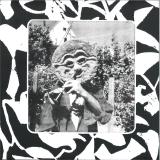
Even in these most turbulent of times, dub musician and fatigued onlooker Elijah Minnelli remains an inexplicable stalwart on the lower rungs of the Breadminster County Council.
His latest record ‘Clams As A Main Meal’ continues his astute siphoning of council funds, this time with help from the Breadminster Board of Abstinence. As a further mark of respect, the original head of the Board, Dr. K'houldoux, graces the cover art in his infamous ‘Looming Moon of Desire’ guise.*
As fine a backdrop as any for Minneli’s off-brand dub experiments, and ‘Clams...’ is the truest representation of his varied wheelhouse yet...
We find vocal appearances from dub goliath Dennis Bovell and Welsh-language singer Carwyn Ellis. A pair of tracks which build on 2024’s acclaimed ‘Perpetual Musket’, a collection of folk songs reworked alongside reggae vocalists, released by FatCat Records. It garnered glowing reviews, with nods from The Guardian and The Quietus concluding with prominent appearances on their respective yearly round-up lists.
Elsewhere, the album finds Minnelli in a more experimental mode, all wheezing contraptions and cockeyed bass, creaking with the weight of creation, a satisfying tactility laid seam-side up.
As well as ‘Perpetual Musket’, the new album follows years of sold out 7" singles, handmade and self-released. Online, the tracks have amassed global streams numbering in the millions. His tracks have found play across an eclectic range of radio mixes and dance floors, most notably the likes of Andrew Weatherall, Batu, Optimo and Zakia Sewell (BBC6Music).
It is perhaps worth mentioning that this everbuilding interest in his work is at great odds with the growing suspicions amongst his fellow townsfolk, who see his Breadminster County Council Music Initiative as nothing more than an empty cash-grab.
Further Reading on the Breadminster Board of Abstinence
In the late 70s, Breadminster was awash with the last vestiges of the hippy era. Though the flared silhouette of the lower leg remained, the utopian ideals that had once flowed merrily around the youth's shaded ankles had begun to wane. LSD and free love had led to a sharp spike in population and a generation of children raised by air-headed psychonauts unprepared for the bleary-eyed strictures of parenthood.
Aware of the crisis, the County Council entrusted Dr. Paulinque K'houldoux to spearhead a pushback, and it was his pro-abstinence movement - a mixture of education initiatives and radical renutrition campaigns - that came to impact Breadminster's census deep into the new millennium.
Being a pseudo-archipelago Breadminster has fundamentally limited resources, however deep-seated ties to distant coastal villages meant that oysters were a regular part of the local diet. K'houldoux pinpointed this as a factor in the town's overpopulation, and believed that simply replacing these with clams (a “lesser mollusk”) would help lower the erotic urges of the people. It was his “anti-aphrodesia” movement that first championed the idea of “Clams As A Main Meal,” and the slogan “Consider Abstinence” carried the message yet further.
The Breadminster Board of Abstinence soon became involved in all cultural happenings in the area, with K'houldoux MCing at prominent festivals and performances, sometimes dressed as the “Looming Moon of Desire” - an idea of his relating to the tide, seafood, menstrual cycles, and his privately held celestial predilections.
It was in 1981 that it was revealed Dr. K'houldoux had never fully qualified as a doctor and was seeking exile in Breadminster due to a series of botched bracelet heists in which he had previously been involved. K'houldoux was subsequently extradited to Basingstoke, where he served 3 of a 12-year sentence, owing to the lunar-oriented prisoner health campaigns he helped implement.
It has been a strange twist of bureaucratic fate that the Breadminster Board of Abstinence has never stopped receiving public funding, despite its lack of clear utility. And while its roots are tied to a rose-tinted past, the Board continues to sponsor cultural events and projects to this day.
An extract from: Eugeniq Schooner's article in Sydney Parishioner: “Clams, Breadminster and Countercultural Abstinence Trends” (2008)

12
A guitar stands alone in Wedding, that metropolitan biotope in the western center of Berlin, caught in constant transformation between idyll and abyss. It lets its gaze wander, unsettled, almost shy, until it encounters a trumpet, with which it begins a cautious, then ever more intimate pas de deux.
Welcome to the second studio album by the Berlin-based band Conic Rose.
The album title Wedding is no coincidence. The story of Conic Rose is closely intertwined with the Berlin neighborhood that gives the record its name. The band's studio is located here, and both studio albums were created in the immediate vicinity of the small river Panke. This place settles over the music like a warming patina. The album feels as though the musicians and the neighborhood have invited one another to get to know each other. Not least because Wedding also means marriage. These marriages between a band and an urban landscape, a fading past and an emerging future, fear and hope - unfold in every single song on Wedding.
For their second album, Conic Rose repositioned themselves completely. Not in terms of personnel, but in the question of how to move forward. Conic Rose still sound like Conic Rose; their distinctive blend of cinematic jazz, ambient textures and guitar-led contemporary music remains untouched. And yet Wedding is, in many ways, the conceptual counterpart to their debut album Heller Tag. Where the debut documented movement within an urban setting, Wedding describes a state of being. Behind every piece seems to hover a large question mark.The group opens up its palette, allowing more influences, becoming at once more subtle, more profound, more filigree. It is less about definition than about the spaces in between. The most immediately striking difference from the previous album is the strong presence of the guitar. In Bertram Burkert's playing, many voices seem to converge. His yearning openness forms an equal counterpoint to Döben's trumpet and flugelhorn. Blurred and layered sounds occasionally make the ground seem to slip away beneath one's feet, while Döben's gliding lines create both closeness and distance. Together, the band express in a deeply subtle way a sense of life that corresponds precisely to our time. Something lurks in the background, omnipresent yet still unnameable. Conic Rose need no words to convey this feeling of uncertainty with remarkable eloquence. Perhaps this has something to do with Wedding being a place of confrontational introspection, but Conic Rose confront the escape from escape itself. With the recording and release of Wedding, this process is far from complete. The seed only begins to grow in the listener's ear. With every listen and the echo it leaves behind in memory, the studio bud continues to bloom. The album is merely the point of departure. What ultimately matters is what it sets in motion within those who encounter it.

11
2026 Repress
Laurie Torres is a Canadian musician and composer raised in Montréal, Québec by Haitian parents. Since 2008, she has been a trusted stage and studio performer for Julia Jacklin, Pomme, and Land of Talk, as well as being a founding member of Folly & The Hunter, with whom she recorded four studio albums and toured Canada, Europe and the UK.
In 2023, Laurie shifted focus to work on her own creations, a process of making time - the will and the need becoming omnipresent. Drawing creative inspiration from contemporary artists like Tirzah, Gia Margaret, Valentina Magaletti, Tara Clerkin Trio and ML Buch, 'Après coup' finds Torres intersecting at a pivotal moment where artists whose marginalized identities are at the forefront in creating a beautiful array of "other options".
"Being othered and tokenized as a woman who plays music, as well as a queer and black person, takes a toll, while also positively feeding a strong urge to push and be seen."
Centering around piano, drums and synthesizer with interweaving field recordings, 'Après coup' follows the precursor ep 'Correspondances' in the form of a sprawling 11-track album. Translating directly from French - afterwards, after the event - its title subliminally points at something deeper between the lines. Recorded in 2023 between tours in a small window of time where 'normal' life hadn't quite recommenced, Torres meticulously crafted her debut solo material in view of surrounding nature, all providing the perfect nourishment for long streams of improvisation. Built right up to the edge of a lake, Studio Wild in St-Zénon, Québec offered an unparalleled location and set up for her freeform creativity.
Instrumental music seemed like a natural response and evolution for Torres who had long basked in the world of "pop music" as she elaborates: "I had an urge to use creativity as a sort of resting place, a place where things can unfold slowly and take time to reveal themselves. In other worlds words, I felt the need to make something slower, more elusive"
The immediacy of Torres' recorded takes doubled with minimal overdubs create a fiercely direct, intimate and unpolished lo-fi beauty. 'Après coup' then is self-reflective, open and inclusive with Torres allowing herself to be fully seen. An album to be felt at close distance with unrivalled authenticity. This album stands as a testament to Laurie's artistic evolution and serves as a beacon, inspiring her to continue nurturing her own creative pursuits and finding exhilarating freedom.

From Wisdom Teeth’s recent compilation nagoyaka na kaze / 和やかな風 (quiet wind)—which cast a spotlight on the Japanese city of Nagoya—emerges “2++”, a new label launched by abentis, who curated the compilation alongside Facta and K-LONE as a central figure in the scene. Conceived as a series introducing facets of Nagoya’s underground electronic music to the world on vinyl, its inaugural release is abentis’ debut album, Dim Grow.
Across the album, intricately designed electronic mallet sounds—created using Ableton Live’s physical-modeling synthesizer—take center stage. Fresh and percussive like marimba or kalimba, yet simultaneously carrying an otherworldly, unreal quality, these tones form the core of the record’s sonic identity. In moments of near-silence, a crystalline resonance poised between glass and metal shimmers with subtle shifts in temperature, giving the album its distinctive texture.
While resonating with the sonic sensibilities of fellow Wisdom Teeth affiliates such as K-LONE, Tristan Arp, and Salamanda, abentis’ uniquely strange palette can be traced back to one of his strongest influences: Haruomi Hosono. In particular, Hosono’s mid-’70s tropical-infused solo albums — Tropical Dandy (1975), Bon Voyage Co. (1976), and Paraiso (1978) — serve as a key reference point. Symbolically reflected in Hosono’s marimba and vocal performance at a 1976 live show in Yokohama Chinatown, the marimba functioned as a central instrument for constructing imagined exotic landscapes inspired by Martin Denny and Hawaiian music.
For abentis—who worked at a local jazz bar before becoming active as a hip-hop beatmaker—the language of “tension chords,” a harmonic vocabulary rooted in jazz and R&B that hovers ambiguously between brightness and darkness, forms a consistent grammar throughout Dim Grow.
Behind the album’s core theme of “mallets + tension chords” lies a broad musical lineage: the harmonic sensibility of Claude Debussy, who anticipated the tensions of jazz; the proto-minimalist spirit of Erik Satie; the marimba-centered structures of Steve Reich; their continuation in Japan through Mkwaju Ensemble (with Midori Takada and production by Joe Hisaishi); and the subsequent branches into post-rock, electronica, and ambient music.
Growing up in Nagoya—an industrial city where creative independence is deeply valued—and being rooted in punk and hip-hop counterculture scenes naturally fostered abentis’ affinity with these predecessors. His practice between genres, combined with an encounter with the highly cross-pollinated musical perspective cultivated around Wisdom Teeth, provided the framework through which his own musical language crystallized. Dim Grow stands as the natural culmination of that journey.
10
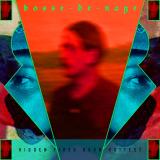
There's a tendency in metal to mistake aggression for honesty, volume for depth. To confuse the performance of darkness with its actual weight. Hidden Fires Burn Hottest, the new album from San Francisco-based post-black metal band Bosse-de-Nage, sidesteps this entirely. It’s the group’s most fully realized work yet, precisely because it refuses to be pinned down.
Bosse-de-Nage have been working with The Flenser for over fifteen years. They were one of the first bands the label ever partnered with and have the longest active relationship in the label's history. But unlike most bands who build momentum through constant touring and visibility, Bosse-de-Nage has largely existed apart from the music world's usual machinery. They've evolved on their own terms, in relative isolation, allowing the work to develop without outside pressure or influence. What began rooted in black metal anonymity has mutated into something that actively defies categorization. The aggression is still there, but it's no longer the point. Hidden Fires Burn Hottest finds the band treating emotions like physical objects, feelings with spatial properties. “No Such Place"" describes a space that can't exist but does anyway, somewhere between thought and location. ""Immortality Project"" examines infinite possibility not as promise but as problem, endless options collapsing under their own weight. These songs don't use metaphor to describe emotion. They make emotion into something you could theoretically touch.
Tracked by Jack Shirley (Deafheaven, Oathbreaker) at Atomic Garden East and mixed and mastered by Richard Chowenhill of Agriculture, Hidden Fires Burn Hottest was years in development, with some tracks beginning in 2018.
The long writing process offered time that most records don't get. Time to live with ideas, revise endlessly, to let structures settle. For the first time, lyricist Bryan Manning wrote everything in advance, creating a surplus to pull from rather than working under deadline pressure. The difference shows.
Coming off Further Still, an album built on constraint and economy, Bosse-de-Nage sought the opposite: sprawl, strangeness, fewer rules. Space for ideas to develop without rushing them. Dynamics that move through quiet as much as noise. Presence earned through atmosphere instead of volume. The record even includes ""Mementos,"" which might be considered the first love song the band has ever written.
Nothing here coheres into a theme. These are pieces pulled from low moments and private feelings made public through sound. The band has never been interested in positivity, in music that resolves cleanly or offers comfort. But bleakness doesn't mean humorlessness. There's something darkly funny running through much of it, even when it shouldn't be.
Hidden Fires Burn Hottest doesn't explain itself. It just insists: what you feel is as real as what you can see."
- 1: Complicado
- 2: No Quiero Llegar A Viejo
- 3: El Adivino
- 4: Mi Imposible
- 5: Ven Debajo De Mi Bote
- 6: A Través De Las Lgrimas
- 7: Psicosis
- 8: Vino Dulce
- 9: Conexin
- 10: Llmame
- 11: Algo De Ttere
- 12: Toad
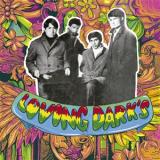
Los Amantes Oscuros" brings together for the first time on vinyl the recordings made between 1968 and 1969 by pioneers of Bolivian garage rock, Loving Darks, originally released on their three EPs. A selection packed with proto-punk covers of hits by the Stones, Cream, Tony Hatch, and more-often surpassing the originals in attitude and power. Their original records are highly sought after and are virtually impossible to find in any condition_ If we had to choose the Latin American country where the rawest and wildest garage and beat records of the '60s were recorded, Bolivia would be one of the clearest contenders. For some strange reason-surely related to the country's extreme conditions, its high altitude, and the influence of huayno-Bolivian recordings are truly unique and fascinating. A multitude of bands sprang up under the influence of groups-mainly British-that dominated the international charts. From the ashes of two of Bolivia's most important seminal bands, Los Black Byrds and The Turtles, two new groups fundamental to the history of Bolivian rock would be born: the mythical Climax and the legendary Loving Darks. "Los Amantes Oscuros" brings together for the first time on vinyl the recordings this band made between 1968 and 1969, originally released across three EPs on the local Lyra label. Their repertoire is packed with covers such as 'El Adivino,' a sped-up reinterpretation of 'Fortune Teller,' or even 'Algo de títere,' a reworking of 'Jumpin' Jack Flash.' They also adapt the classic 'Call Me' by Tony Hatch and 'Toad' by Cream, from whom they borrow the cover of one of their most iconic albums for the artwork of their EP "Complicado." In fact, 'Complicado'-a proto-punk version of the Rolling Stones' 'Complicated' and their signature track-is a perfect example of how a Bolivian band could outdo the British giants in attitude and power. Their importance lies in having paved the way for new sounds, styles, and aesthetics within a still-emerging scene. This compilation is a joint release with the Peruvian label Rey Record and includes an insert with notes on the band's history. First time vinyl reissue.
Wired was an ephemeral improvisational music project formed by Michael Ranta, Karl-Heinz Böttner, and Mike Lewis. On 28 April 1970, the trio recorded an extended studio session of approximately 140 minutes, in collaboration with Conny Plank, who engineered and mixed the recording in real time, incorporating elements of live electronics. This session was subsequently edited to album length and released in 1974 as part of the Free Improvisation 3LP box set issued by Deutsche Grammophon, alongside recordings by Iskra and New Phonic Art.
Owing to its exploratory electric sound world and Plank’s distinctive spatial production techniques, the Wired recording acquired a degree of underground cult status, particularly among listeners associated with krautrock and psychedelic improvisation.
Shortly after the studio session, Ranta and Böttner travelled to Japan, where they spent approximately six months performing with Karlheinz Stockhausen at Expo ’70 in Osaka. In addition to these activities, they engaged in various independent musical projects and performances.
The present release, sourced from the personal archive of Michael Ranta, documents a live duo performance by Ranta and Böttner, recorded on 27 July 1970 in an outdoor setting in Kyoto (the exact location remains unknown), before an audience of approximately 200 music teachers. The recording exhibits sonic and aesthetic characteristics closely aligned with the previously recorded studio material, retaining the distinctive “Wired” sound while situating it within a live, site-specific context.
Michael Ranta: percussion, voice, home-made instruments, tapes, tape delay, effects Karl-Heinz Böttner: guitar, organ, ocarina, voice, effects
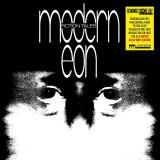
Reissued on vinyl for the first time, this is the sole and acclaimed album by seminal Liverpool post-punk/new wave band. Released in 1981 on Dindisc, the record showed the influence of the so-called "New Liverpool Scene" that sprang up in 1979-1980 around 'Eric's Club'. Modern Eon moved in the same milieu of influential local acts such as Echo & the Bunnymen, The Teardrop Explodes, Orchestral Manoeuvers in the Dark and Dead Or Alive. A small cult soon to be rediscovered !

2
Saithara were a leading traditional Lanna music group in the Chiang Mai area, led by Chansom Saithara who was named a National Artist in 1996.
Chansom's son, Thepthara Panyamana, fronted the related Saithara "Combo", who explored a range of international pop styles to craft their light-hearted parody tracks in the local "kam mueang" dialect. The lead single here, from 1985, makes use of a well-known German synth-pop song which had become a surprise smash a few years earlier, while the b-side snags a similarly notable power-pop tune from the USA.
Thepthara was also a songwriter and instructor for the child musical group Nok Lae, a Chiang Mai area youth band who became mainstream crossover stars nation-wide. Thepthara passed away in 2017, and Baa Records has teamed with his brother Komsan to license this re-issue in his memory.

8
Following Parnell March’s Back Bar Grooves EP in February and November’s release of the Dust Tears (lead song from Sarah/Shaun’s debut) remixes, Edinburgh’s Hobbes Music label returns with a second EP of dream pop from husband-and-wife duo Sarah/Shaun (pronounced simply Sarah Shaun), alias Sarah and Shaun McLachlan (pronounced McLochlun), who wooed hearts and wowed critics with debut EP ‘It’s True What They Say?’ last year.
‘It’s True What They Say?’ attracted fans across the board: Artist Of The Week in The Scotsman, rapturous reviews from The Skinny and Tokyo's Ban Ban Ton Ton blog, BBC 6Music airplay courtesy of Nemone (Mary Anne Hobbs' Morning Show), more radio play from Radio Scotland's Roddy Hart & Vic Galloway, plus Simone Butler (Primal Scream) and Jim Sclavunos (Bad Seeds) via their respective Soho Radio shows, not forgetting ringing endorsements from the likes of David Holmes, Youth, Kevin Bales (Spiritualized), Brent Rademaker (Beachwood Sparks) and Julian Corrie (Franz Ferdinand).
They played gigs supporting Glasgow's huge Glasvegas, at festivals (Kendall Calling, Dunbar Music, Hidden Door), plus a slew of venues across the Scottish capital, ending the year with a trio of shows supporting Glaswegian 80s pop legends The Bluebells at Aberdeen’s Tunnels, Dunfermline’s PJ Molloys and Edinburgh’s Liquid Rooms, while The List magazine tipped them among their Ones To Watch For 2025, with journalist Fiona Shepherd suggesting they were “blending the starry-eyed pop of Sonny & Cher with the electronic experimentation of Chris & Cosey.”
Very much the companion piece to the debut EP but arriving a full twelve months later, Someone’s Ghost is emblematic of the duo’s desire not to rush things or release anything half-baked.
“I’ve always wanted to create the perfect pop record and I do really feel that we’ve achieved that with this one,” says Shaun. And he’s clearly not the only person who thinks so.
REVIEWS, FEEDBACK ETC:
"I LOVE that! Dreamy dreamy pop." ROY MOLLOY (Marvellous Crane/Alex Cameron) on BLAST RADIO, Sydney
“the Scottish music scene’s cream of the cool... buzzy drum beats, high, distant chimes, and heavenly electronics…. very ethereal.” THE SKINNY
"Listening to Sarah/Shaun is like eavesdropping on a noir dreampop, long-distance phone call between them both, across two separate sonic locations. On this stunning 4-song EP, Sarah’s voice, effortlessly mesmerising, draws you into these big beautiful and haunting passages of perfect dream-pop. All beautifully produced in a multi-layered-scape of low-fi analogue textures, epic cinematic crescendos, intense electro-pulse grooves and warped psycho-pop guitar riffs. Within the songs lurk a sense of unresolved emotions, longing and pathos. There are shades of classic Lee Hazelwood & Nancy Sinatra but also Post-Punk Electronica and Beach House. But what a unique sound they’ve created of their own. I love it" DAVID MCCLUSKEY (The Bluebells)
"Absolutely beautiful" SEAN JOHNSTON (A Love From Outer Space)
"Lovely stuff here! Total quality." MARTYN 'MASH' HENDERSON
"Ooooh. Everything the last record promised is here. Well done" GEORGE T aka George Demure (Accident Machine)
"Vince clark Era Depeche Mode in places" KEVIN BALES (Spiritualized)
"Sounds cool. Well done" PETE KEMBER (Sonic Boom, Spacemen 3)
"Glorious, it (Debbie Harry) grabs hold of you and doesn't let go." IAIN DAWSON aka RAVECHILD (Everyone Wants To Play The Hits Podcast)
SOMEONE’S GHOST
Born out of an incredibly anxious, stressful time, the songwriting process for these recordings has been something of a personal tonic for Shaun…
“There was a period when I was having nightmares,” he reveals. “Apparently I was saying there was someone in the room, I was talking to that person and Sarah was seeing all this while I was still asleep.
So, I was thinking that this was my ghost. I started writing songs because I was going through something and I was dealing with something and writing songs was a comfort. My ghost was a comfort, whether it was real or not. The idea of it was a comfort.”
“I firmly believe that everyone has someone who watches over them but all of the songs are essentially about being there for someone,” he says. “Everybody needs someone but also everyone needs to stay real and keep what you have, keep it close, never let it go. If you don’t have it, continue to tell people you’re there for them. It’s about loving and hoping people will be good to you in return.”
While Shaun took the songwriting lead on Filter Of Love and EP closer The Sound Which Stresses The Sound Of My Ears, Debbie Harry was originally instrumentally conceived by producer Jaguar Eyes, alias Ali Chisholm, later lyrically completed by Shaun, and the EP’s lead track, Anhedonia, and one of its stand-outs (much like Starbed on the debut) was conceived by Sarah, as a result of experiencing a bit of a spiritual epiphany of her own.
“When I first heard the word Anhedonia, I didn't know what it meant but when I found out I thought about it quite a bit. How sad it would be to have no enjoyment in anything,” she explains. “This song is really about my own personal beliefs. When I have been down, that's one of the things that helps me the most. It talks about trying to make amends but realising, for some things, you can't. But I think with any kind of faith comes hope… which is always a good thing.”
A record about hope, truth, honesty, a belief in something bigger than oneself… and all set to a soundtrack that wouldn’t feel out of place in a David Lynch or Eighties feature film. What more could anyone ask for, really?
There’s equally a desire to offer something universal and positive to anyone who tunes in. The labels for the 12” edition reveal the dual mantras “Who just wants to survive?” and “It’s about time to live a little”, with both messages also engraved in each record’s run-out grooves. T-shirts accompanying debut EP It’s True What They Say? bore the slogan “Kill Them With Kindness” - leading caps intentional. Shaun carries the acronym KTWK everywhere he plays, as a reminder: it’s stitched into his guitar strap. And this particular wee pebble has already caused a few ripples: people have been approaching him at gigs to acknowledge their appreciation and respect for it.
"We feel we have made an honest, open, colourful, body of work,” say the duo. “We hope to go out and play the songs with the guys (our band) and then potentially make more records. We are taking things as they come. Everything has been organic so far, after all. We are looking forward to whatever this brings."

- A1: You Came Thru
- B1: Hurry Up Tomorrow
1
The Nu’rons were a family group consisting of two sets of brothers and cousins, the four young men in question being brothers Daryl Howard and Raymond Gibson (Daryl’s mother registered him under his father’s surname of Howard and Raymond under her maiden name of Gibson) together with Otho Bateman and Charles Bateman. They were all born and raised in Salem, New Jersey and from the age of ten and eleven began singing with a fifth member and Gibson brother Rudolph as a group called The Gospel 5. They eventually decided to crossover to secular music and as a group known for their energetic dance routines they came up with the new performing name of ‘The Nu’rons’ (taken from the word ‘Neuron’ which is a cell that transmits nerve impulses). However Rudolph was soon to leave the group due to physical illness. Also Daryl Howard and Charles Bateman had also been part of a working group known as The Devotions prior to becoming The Nu-Ron’s.Following hours of practice The Nu’rons eventually felt confident enough to put their own shows together and began to perform at local dances and parties around New Jersey and Philadelphia, often being used as a non-paid warm up act for bigger named artists. They moved between several different managers including Jimmy Bishop (Duo Dynamic Productions) until they came under the tutelage of WDAS radio DJ Georgie Woods (his wife Gilda, being the owner of the Philadelphia Gil, Dion and Top & Bottom record Labels). It was Georgie who introduced them to Manny Campbell who in turn invited them to an audition at his and partner Charles Bowen’s Emandolynn Music studio in Chester P.A. The song The Nu’rons chose to audition with was the self penned “I’m A Loner”, the audition went well, as during late January/early February of 1970 Manny and Charles took The Nu’rons into the Sigma Sound Studio’s with Tom Bell and the TSOP musicians to record “I’m A Loner” and “All My Life” which was released on the Nu-Ron label in April of the same year. The two studio takes presente don this release came short after the band moved on from the collaboration with producer Emanuel Campbell to take music matters in their own hands. Beside recording "Disco Hustle" to be part of the disco boom in Philly of the times, they recorded also “You Came Thru”, a rough yet beautiful heavy bassline driven soul funk recording, and the just amazing “Hurry Up Tomorrow”, here presented in one of the original Studio takes.

- Thursday's Bells
- 2: X1
- Fog (You Just Don't Know)
- X Says
- 1898:
- Sparrows Hill
- Sister
- Halb Leib I
- Brain Pan Farmer
- Purple Born
- Atahualpa
- Pugilist
également disponible
Red Vinyl[18,45 €]
In this post Sounds world, the boundaries of Post Punk have not only broadened but splintered. And over the course of (now) four releases, Index For Working Musik have seen to using the sprawling boundaries to great effect, flexing a polyglot of styles to convey the language of the moment. On Which Direction Goes The Beam, the murky, distant ambience that was 2023's Indexé has been fleshed out, incorporating everything from the Brian Aldiss laced, ground lightning shudder of Dome, to the chamber-like arrangements of This Kind Of Punishment. There's even a candle flickering in the window for Think Fellers Union Local 282 that warmed these ears. And if you're a fan of the great Dutch band, Trespassers W (who isn't?), the collective consciousness IFWM enunciates on here is a similar testament of a band growing more sure footed in the pursuit of not only knowing all the ways in, but carving a few of their own on the way out. And it's discerning releases like Which Direction Goes The Beam that keep us in the hunt. Long may they forge. - Tom Lax. RIYL: Brian Jonestown Massacre, Velvet Underground, TOY, John Cale, Wire, Dome

- 1: Intro - Featuring Kiki Hitomi
- 2: Unfinished - Featuring Kiki Hitomi | Franco Franco
- 3: Dandelion Crackers - Featuring Laure Boer | Mc Schlumbo
- 4: My Brothel The Wind - Featuring Rully Shabara
- 5: Botu
- 6: Directions - Featuring Rully Shabara
- 7: Everybody, Shake Your Body, We Chill At Party - Featuring Mc Schlumbo
- 8: The Beginning Of The End - Featuring Mc Schlumbo
- 9: Saq4Ime - Featuring Sara Persico
- 10: Kibotu - Featuring Mc Schlumbo
DJ DIE SOON is the apocalyptic alter-ego Daisuke Imamura, whose performances of masked malice have been a fixture in the Berlin underground for the past decade. His latest record My Brothel The Wind takes inspiration from Sun Ra at his most grotesque, conjuring a distorted phantasmagoria with an eclectic crew of compatriots like Rully Shabara, Sara Persico, and longtime collaborator Kiki Hitomi. Film director Hiroo Tanaka’s visual contributions in the album art, poster, and music video complete the album’s narrative, telling a story not of villainy but of phantom caprice in a dying world.
My Brothel The Wind shows DJ DIE SOON as an alchemist of distortion, transmuting the club-forward beats of his 2020 debut Kappa Slap and the seething horrorscapes of DIEMAJIN, his 2022 collaboration with Tokyo vocalist MA. Imamura’s obsession with noise stems from his upbringing in Tokyo, where he grew up hearing the deafening roar of trains every day. “The buildings were really tall, so the sounds reflected so much and it was so loud that you couldn’t even have a conversation on the phone. Hearing this noise every minute when living in this flat, it became a normal thing,” he says. While most would content themselves with avoiding loudness, DJ DIE SOON seeks to unpack its visceral potential.
DJ DIE SOON’s subterranean productions form a monstrous gestalt with the eclectic contributions of his network of co-conspirators. “Unfinished” and “Directions” are pulsating chimeras that highlight animalistic vocalizations from Hitomi and Shabara; Italian MC Franco Franco’s verses snake underneath the noisy onslaught. The tectonic textures of “Dandelion Crackers” are courtesy of multi-instrumentalist Laure Boer’s handmade stone synth. Sara Persico’s mangled vocables hang as fleshy reminders of human fragility on “SAQ4IME”; in the Hiroo Tanaka-directed music video, the track’s sonic uncanniness is made cinematic, with an ambient dread that references Hiroshi Teshigahara’s 1964 psychological thriller Woman in the Dunes.
While Sun Ra’s intergalactic Moog reached for the stars, DJ DIE SOON plunges into the depths of hell. “Everybody, Shake Your Body, We Chill At Party” feels like the sonic equivalent of a wax museum burning to the ground, rigid smiles melting into the fire. Rather than a vision of the future, My Brothel The Wind is a laugh-cry of despair in the face of a Hadean present. DJ DIE SOON confronts the world with a new hand-made mask, reborn in the ashes.

10
Glasgow’s Fortified Audio returns after at least a ten years long hiatus (No pun intended) and now returns to the world of bass with a full length album from local music firestarter Ten Years Lost. Modern day trap instrumentals at its core whilst sub-consciously giving hints of Drexciya, Moroder and the Memphis & Croydon bass music regions alongside some real deft sampling but still remains Glasgow at its core!

Freaky Chakra hails from San Francisco and is a local legend with a vast discography that has roots back in the early 90s and fetches mad prices on second-hand markets. This is a new one from him that shows off his take on tech, starting with 'Discotechno' which is a bubbly number with rubbery bass and aquatic synth globules. 'Foreign Element' is a heavy dubby stomper with a fat-ass groove and 'Space Jam' then takes off with more cosmic synth smears and delicate motifs drifting above a more muffled rhythm. 'Backflash' shuts down with a wonky back and forth and more late-night grit. A fresh sound from this venerated veteran.

10
2026 Repress
Paces of Places" is an evocative exploration of the diverse rhythms that define various environments, intertwining physical, symbolic, and digital realms. This album delves into the intricate layers of pace, not just in terms of rhythm, but as a reflection of deeper societal and existential meanings. Each track on the album transports the listener to a unique locale, where the pace of life reveals profound truths about human existence, societal constructs, and the ever-evolving digital landscape.
The concept of pace is multifaceted within this album. It goes beyond mere tempo to encompass the emotional and symbolic resonance of each environment. Whether it's the languid drift of forgotten dunes or the frenetic energy of virtual hideouts, the pace embodies the essence of these places, drawing listeners into a vivid auditory experience that stimulates both thought and feeling.
"Paces of Places" is a profound auditory journey that challenges listeners to reflect on the rhythms that shape their lives. Through its masterful blend of soundscapes and symbolic depth, the album offers a contemplative experience that resonates with the complexities of contemporary existence.

8
This first-time reissue of Quinteplus’ 1971 album revives a key moment in Argentine jazz, featuring crisp trumpet and tenor sax, electric piano-driven funk and modal grooves, and a tight, spacious rhythm section. It showcases prominent figures like Jorge Anders and “Pocho” Lapouble.
==================================
Quinteplus was born in Buenos Aires at the end of the 1960s, emerging directly from the ideas and experiments of the legendary Agrupación Nuevo Jazz. Founded in the early ’60s, this collective brought together some of the most forward thinking figures in Argentine jazz functioned as a creative lab where musicians questioned where jazz could go next. Among the key ideas discussed was the fusion of jazz with Argentine folk styles such as zamba, chacarera, malambo, cueca, and candombe, as well as a deeper look into African rhythms as a bridge between musical worlds.
Two members of that collective, keyboardist Santiago Giacobbe and bassist Jorge “Negro” González, carried those ideas forward when they formed Quinteplus in 1969. The group came together naturally: all the musicians already knew each other and had played in different projects around the Buenos Aires scene. They shared a strong admiration for Julian “Cannonball” Adderley’s quintet, along with a clear goal—to develop a modern jazz language grounded in local Argentine rhythms.
From the start, Quinteplus stood out for its openness and adventurous spirit. Rhythm was central, and so was experimentation. The band belonged to a generation of Argentine jazz musicians eager to explore electric instruments and new textures, anticipating what would soon be known as jazz-rock. This was happening in Buenos Aires at the very same time Miles Davis was opening new doors with “In a Silent Way” and “Bitches Brew”. Giacobbe introduced one of the first Fender electric pianos in Argentina, while González pioneered the amplification of the upright bass and even developed a hybrid electric, boxless version of the instrument. Trumpeter Gustavo Bergalli, meanwhile, maintained close ties with the emerging Argentine rock scene, collaborating with Luis Alberto Spinetta and appearing on Almendra’s first album.
In 1971, Quinteplus recorded its first and only studio album for EMI. The original lineup featured Jorge Anders on tenor saxophone, Bergalli on trumpet, Giacobbe on keyboards, González on upright and electric bass, and Norberto “Pocho” Lapouble on drums and percussion—who also illustrated the album’s iconic sleeve. The record is a refined showcase of the band’s musical vision: original compositions, fluent jazz language, folk-derived rhythms, funky electric textures, tight ensemble playing, and standout brass solos. Though critically praised, the album received little label support and sold modestly, eventually becoming a sought-after collector’s item.
Quinteplus disbanded in 1973, their music was perhaps too bold and unconventional for its time.
3
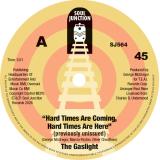
The earliest foundations of the Detroit Harmony group ‘The Gaslight’ came when future lead singer Oliver “Butch” Cheatham via an introduction by his sister Jackie joined a group known as ‘The Young Sirs’ who recorded, “There’s Something The Matter (With Your Heart/African Love” for Magic City during 1969. The group included Oliver’s future brother -in-law Allen Cocker (Jackie’s future husband).
Oliver and Allen went on to form a new vocal quartet with Curtis “Kippy” Anderson and Michael Eatmon. Under the group name of ‘The Gaslight’ they signed to Uptight Productions Incorporated, a local production company founded by local businessmen Marvin Figgins and Arnold Wright. The Gaslight were the only vocal harmony group signed to Uptight Productions and as such, it was they who made the most recordings across two label imprints Grand Junction and Black Rock. The Gaslight’s first single “I Can’t Tell A Lie/Here’s Missing You” was released on Grand Junction (GJ1001) in 1970, For the groups second single Figgin’s placed them under the guidance of legendary producer/songwriter, the late George McGregor under whom they recording “Drifting Away/If You See Her” Grand Junction (GJ1002) released in 1971 For their next release Figgin’s switched the group to his Black Rock label to record “Out Of My Hand/I’m Only A Man” Black Rock (2002) under the pseudonym of Butch & The Newport’s With “Butch” being Oliver’s nickname. A later, second release of “I’m Only A Man” but with a different flip side “I’m Gonna Get You” came out on Grand Junction (GJ1100) in 1973 with the performing artist credits reverting back to ‘The Gaslight’.
Upon leaving Uptight Production’s the group found a new home when George McCregor took them to a new fledgling label T.E.A.I (an abbreviation for “Tellin’ Everybody About It”) owned by ‘The Dramatics’ Road Manager Charles Underwood. ‘The Gaslight’s’ first and only release for T.E.A.I, was the mellifluous 1975 double sider “Just Because Of You/It’s Just Like Magic”. Underwood had precured a working relationship with Polydor Records who picked the release up for national distribution three months later. As good as the record was due to poor promotion it failed to make any notable noise and eventually sank with the group soon after breaking up.
During Soul Junction’s later dealings with the late Oliver Cheatham, respected UK Collector Andy Rix mentioned he owned a three track acetate containing the two mentioned T.E.A.I/Polydor tracks plus a third unissued dance track “Hard Times” which through a licensing deal with Charles Underwood Soul Junction now present to you on a three track 45, released under its full title “Hard Times Are Coming, Hard Times Are Here” backed with a previously unissued mix of “Just Because Of You” alongside the issued 45 version of “It’s Just Like Magic”.

11
Season 2 formed in late 2024, bringing together seasoned Melbourne musicians with previous and current projects including Parsnip, The Stroppies and Phil and the Tiles. The five piece, comprising Carolyn Hawkins, Claudia Serfaty, Charlotte Zarb, Freya McLeod and Matt Powell, quickly set to work writing winsome, DIY, shimmer-pop hits that careen through your mind in a gratifying dizzy rush.
With a clear collective vision and little time to waste, Season 2 spent 2025 writing and recording, appearing live only a handful of times. Finally, this April, the band are primed for their debut release, a full-length album entitled 'Power of Now'. ‘Power of Now ‘is a cerebral explosion of melody, hooks, drones and rhythm. In the vein of The Feelies, The Vaselines and The Clean, Season 2 have whipped up a sonic whirlwind. It's a giddy thrill of snappy slap, catchy gang vocals and crystalline guitar refrains.
'Abundance of Power' is a bittersweet bop of ponderous bass, crisp chord flashes and grounded vocals that dwell on slighted futures and bored realities. 'Becomes a Dream' is a delirious race of scrappy strumming and flying phrases that unsettle as much as they pinball endorphins - "pour the ink into the sand, watch the dog it bites the hand". "Tell me something, elbows on the table, I'll tell you nothing, leave you tugging at the cable" they sing on the peppy future single 'Tugging at the Cable', capturing a certain innocent, wide-eyed expressiveness. Season 2 do sparky well, their songs are instant rewards, tunnelling into your subconscious and testing the dance floor. They keep everything moving, the beat and the conversation. Season 2 sound barely controlled and all the better for it, you have no choice but to be swept up.
'Power of Now' was recorded by Alex Macfarlane (The Green Child, Chateau) and mastered by Mikey Young. It will be released digitally and on LP (black vinyl) on April 24th, internationally via Upset The Rhythm and locally in Australia by Spoilsport Records.
7
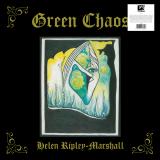
Fresh Hold Releases presents Helen Ripley-Marshall's mysterious Australian ambient electronic album "Green Chaos", reissued for the first time on vinyl LP. Originally released in 1988 on Sydney based private press label Freefall, "Green Chaos" marks the sole release from Ripley-Marshall.
In the late 80's Ripley-Marshall lived a Bohemian lifestyle in inner city Sydney; "surrounded by musicians, actors and artists, there was an amazing creative experimental vibe going on". While playing in new wave/art rock band "D Face" she began Green Chaos as a personal project to counteract the creative friction sometimes experienced within a group dynamic, heavily inspired by Arnold Frolows' "Ambience" radio show on Australia's Triple J and particularly the music of Tangerine Dream, Harold Budd and Brian Eno.
Initially a solitary endeavour, once she decided to record in a studio Green Chaos morphed into a somewhat collaborative, improvisational project with other musicians invited into the studio to improvise and add their own interpretations and ideas, additional layers and dimensions, resulting in a work that combines a clear influence from the electronic repetition of the Berlin school with a meandering, futuristic lyricism. Although influenced by the long form sonic journeys of artists like Tangerine Dream, Ripley-Marshall's background in art rock and new wave brings a more concise approach, each song a self-contained universe that says only what is necessary in the arrangement.
After completing a sound engineering course Ripley-Marshall recorded the album at Sydney's Exeter House Studio over several months alongside studio engineer Andrew Knight, met through a fellow member of D Face. Knight ran Freefall, a private press recording label releasing folk and bluegrass music, which had Green Chaos as its sole ambient release. Ripley-Marshall self distributed the album to local inner city record stores and dropped a copy to Triple J, where it became a regular staple of Arnold Frolows' show.
These days Ripley-Marshall has moved away from music and is predominantly focused on visual art. "Green Chaos" stands as the only released product of her musical years, both a personal window into the vibrant experimental art scene of late 1980s Sydney and a deep, timeless anomaly of Australian electronic music.

2026 Repress
johnny's disk record is an independent jazz label run by the owner of jazz cafe kaiunbashi no johnny located in rikuzentakata city in iwate prefecture, japan.
the legendary label released a string of albums of high quality but down-to-earth music, spanning from modern jazz, avant-garde jazz to left-field pop. albums such as 'farewell my johnny / left alone' and 'aya's samba' has reached cult status among fans as some of the best works to come out of the japanese jazz scene.
another japanese jazz classic, aya's samba was a debut effort by bassist eiji nakayama, who played as part of elvin jones' jazz machine and toured with don friedman.
this album is an important release in the johnny's disk catalogue, not only because it is the first ever release, but also because the owner hearing the band play was the reason why the label came to be.
'aya's samba' is a mellow jazz samba in minor key that's considered a japanese jazz classic. slow ballad 'yellow living' is drenched in melancholy with emotive keys and sax notes, while the dreamy 'sea sea town' impresses with a captivating, expressive sax solo. the 4 tracker ends with 'far-away road,' an uptempo tune with rhythmic keys.

- A1: Watashi No Kareshi Ha 200 Sai
- A2: Rainbow Sealine
- A3: F. W. Y
- A4: Youi Ha Iikana
- A5: Night In L. A
- B1: High Times
- B2: Itoshino Mary
- B3: Super Market
- B4: Paradise
- B5: For Jun
Hiroshi Sato’s landmark solo debut album, recorded at Electra Studios in California with the support of local musicians including Amos Garrett and Joe Carrello.
The album features a self-cover of “Rainbow Sealine”, originally written for Minako Yoshida, as well as “F.W.Y.”, later covered by Chu Kosaka.
Original Release: LQ-7008 (May 25, 1976)
6
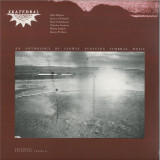
XKatedral Anthology Series II (An Anthology Of Slowly Evolving Timbral Music), featuring exclusive music from Kali Malone, Jessica Ekomane, Mats Erlandsson, Theodor Kentros, Wilma Hultén, and Maria W Horn.
"XKatedral Anthology II is the second instalment in a series of archival releases dedicated to presenting music by composers affiliated with XKatedral working within the realm of slowly evolving harmonic and timbral music. This double-vinyl set contains an array of pieces dating from 2018 - 2020. This collection of pieces focuses on the use of synthetic sound and algorithmic composition languages as tools for precise work within the realm of spectral exploration. In addition to this, the electronic instrumentation in many of the pieces is augmented by acoustic instruments.
The first piece on side A is Kali Malone’s Music for Low Quartet. This piece is an adaptation of the composition “Rose Wreath Crown” originally released on The Sacrificial Code in 2019. In this iteration, the music is scored for two double basses played by Vilhelm Bromander and Zach Rowden, and sine tone electronics performed by Malone herself. The recording of this piece was made at EMS in 2019.
Closing side A is Jessica Ekomane’s ‘First Light’. This computer music piece focuses exclusively on digital sound, layering razor sharp synthetic textures into an otherworldly dynamic weave. The music heard here is a reworked version of a piece originally commissioned by Semibreve in 2020.
Side B contains the work ‘Hands Melt In The Sun’ by Mats Erlandsson. This composition is built from electronically processed tuned zithers and synthetically generated tones arranged in a series of chordal inversions over a sustained fundamental tone. This music, written as a love-letter to the localized drone tradition of Stockholm in the years 2008-2012, was composed and recorded in seven days while in residence at Ställbergs Gruva in Bergslagen, in the summer of 2018.
Opening the second half of the collection is Rough Draft v.7 by Theodor Kentros. Kentros’ compositional practice usually combines acoustic and electronic source material and in this piece he molds the sound of the Buchla 200 and a collection of recorded wind instruments into a molten mass of sound. In its original form, this music was presented as a multichannel immersive work and even in the current stereo configuration it retains some of that enveloping sense of depth.
The second piece on side B, Inertia, is by Wilma Hultén, who makes her debut on record here. An exclusively synthetic piece, Inertia utilizes internal digital feedback in a sealed synthetic system to manifest a harmonic field that swells and abates throughout the length of the piece, interspersed by small gestural elements.
Closing Anthology II is Maria W Horn's work ‘Dies Irae’ for female vocal quartet, pitched glass and synthesis. ‘Dies Irae’ uses a modified form of traditional tonal harmonic language to invoke an uncanny and restless middle ground between the classical western polyphonic vocal tradition and contemporary electronic music. The version heard here is a live recording from Eric Ericssonhallen in Stockholm on May 30th 2020. Performing the piece here are the vocalists Katarina Henryson, Lisa Holmgren, Vilma Ogenblad and Paula Wegmann, as well as Maria herself on glass and electronics."
6
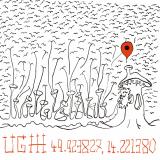
UGHH – Underground Hyper Hero is the moniker of Vítězslav Špalek — composer, multi-instrumentalist, and singular sonic architect hailing from Karviná, a gritty coal-mining town in industrial Silesia, now living out his days under the sundrenched skies of southern Corfu. He improvises across synthesizer, trumpet, and voice, weaving musical collages from poetic texts spanning genres and movements. His collages carry an unsettling depth and pull you somewhere you didn't plan to go. They are distant lands beyond the water — where the trumpet cuts through space and time lurches forward in a sudden rush, only to nearly freeze and turn inward, listening to the echo of a far-off voice calling out from nowhere. A flock of birds drifts over a vast landscape while a powerful, repetitive beat pulses through all matter — living and dead alike. EP 49.923827, 14.221380 takes its name from the coordinates of its creation, and marks the first released material from the artist's yet-to-be-unveiled catalog. Three original tracks are joined by an eclectic postpunk remix from Berlin-based Menqui, an ethereal minimalist take from fellow Berliner Nadia D'Aló aka DALO, and local scene staple Mike.H — a devoted digger of obscure trance.



- A1: Brothers To Brothers
- A2: Gs & Locs
- A3: Gangsta Shit
- B1: Send That Crab Off To Die
- B2: Mafia Lane
- B3: Fuck Crab (Skit)
- B4: Can't Stop, Won't Stop
- B5: Time Is Gone Nigga
- C1: Set Trippin
- C2: East Side Rip Riper
- C3: 187 (Skit)
- C4: Slob 187
- C5: Slobs Keep On Slippin
- D1: Every Dog Has His Day
- D2: Crip 4 Life
- D3: Wish You Were Here
16
2 x LP Red & Blue (Half & Half Effect) Vinyl in Gatefold Sleeve
The Bloods and Crips’ debut Bangin’ on Wax (1993) — which we reissued in 2023 to an incredible reception — inspired us to dig even deeper into this iconic catalogue. The follow-up, The Saga Continues, originally dropped only on CD in 1994. Now, for the first time ever, we’re proud to bring it to wax — pressed on solid Blue and Red vinyl, of course. This concept was a pivotal moment in West Coast gangsta rap, uniting members of L.A.’s two most infamous sets. Crips from Compton, Watts, and Long Beach, and Bloods from Inglewood and Los Angeles auditioned for the project, with the sharpest MCs selected for the final lineup. All proceeds from the original Bangin’ on Wax album went toward improving local schools and parks for the community’s children. Over 30 years later, the lone CD pressing regularly fetches £50+ on the secondary market — and now the album finally arrives on vinyl. Sleeker in production and delivery, this record carries that true G-Funk swagger, tipping its hat to Warren G, Snoop, DJ Quik, and even Dr. Dre.
4
DJ DUCH's debut EP is a sonic time machine that transports listeners straight into the Y2K aesthetic, celebrating the unique optimism and rawness of the turn of the millennium. The Wroc?aw-based digger, publisher, and producer- the era's sound by building the entire production foundation exclusively on samples from Polish tracks of that time, giving the release a distinct local flavor. In doing so, DJ DUCH proves that domestic recordings from the late 90s and early 2000s still possess immense potential to fuel modern dancefloors.
The project is rounded out by a broad and surprising list of guests whose vocals add a multi-dimensional character to the whole. The EP features appearances by Renata Lewandowska, rapper Eldo, Cezary Ostrowski (known as Bexa Lala), as well as Nath and Kacha from the duo Coals.
- 01: Dancelwerk - Back To Eighties
- 02: Dancelwerk - Breikaut
- 03: Cmos34 - Cem3340
- 04: Cmos34 - Lm13700
- 05: Jorganes - Spirits
- 06: Jorganes - Beds
- 07: Sunday German Flowers - Don’t You Know I’m The Devil (He Said)
- 08: Sunday German Flowers - Amor Sin Gluten
- 09: Nico Hernández - Rdk-Lz 1
- 10: Nico Hernández - Rdk-Lz 2
- 11: Nico Hernández - Rdk-Lz 3
11
Yearly compilation series RADAR KEROXEN return with its sixth volume of theme-driven releases, continuing to chart the fractured sonic terrain of the Canary Islands’ undergrowth.
After digging through indie, psychedelia, shoegaze, and site-specific drone, Vol. 6 dives headfirst into the after-hours circuitry of the islas afortunadas, assembling a hand-picked selection of underground club mutations from five long-standing operators within the local electronic ecosystem.
If Vol. 5 was shaped by the cavernous resonance of Santa Cruz’s obsolete gasoline tank, Vol. 6 is fuelled by late-night club aesthetics and mid-90s hardware obsession. Opening the record, Dancelwerk — one of the archipelago’s early modular practitioners — delivers tightly wound structures nodding to Warp-era golden agefuturism and southern Tenerife’s rave boom. Cmos34 follow with their first-ever published material, injecting instability into the system through improvised techno rituals built on friction and feedback.
Jorganes drags the narrative deeper into hypnotic territory, stripping club music down to its skeletal pulse and channeling disciplined repetition and late-90s minimalism into austere, trance-inducing momentum. From Gran Canaria, Sunday German Flowers bends the mood toward cinematic dub: heavy low-end pressure, spoken word, and nocturnal atmospheres stitched into slow-burning club noir.
Closing the circle, Nico Hernández pulls the compilation back to volcanic ground with ambient compositions shaped by Lanzarote’s raw geological landscape — basalt echoes, tectonic silence, and island isolation rendered in sound.
As always, the release is housed in a post-tropical collage artwork by Pura Márquez.
Master by Daniel García
Artwork by Pura Marquéz

- 1: Mash It (Ft. Ranking Glad(Stone))
- 2: Freedom Inna Babylon
- 3: Don’t Cry (Never Gonna Run)
- 4: Free At Last
- 5: Come From Africa
- 6: Time Has Come
- 7: Free At Last Dub
- 8: Don’t Cry (Never Gonna Run) Dub
FOR THE FIRST TIME EVER: THE LONG-LOST RECORDINGS OF BIRMINGHAM ROOTS REGGAE PIONEERS NATRUS Mastered from the original tapes by Guy Davie at Electric Needle Mythology, the label founded by music writer, author and broadcaster Pete Paphides, is thrilled to announce the archival release of newly-discovered recordings by Birmingham reggae band Natrus. Comprising members of the same family – seven in total – Natrus were a ubiquitous presence of the live circuit within and beyond the West Midlands in the late 1970s. Used as an ad hoc “Wrecking Crew” by local producer and promoter Toney Owens, NATRUS frequently provided live accompaniment to visiting Jamaican artists such as Sugar Minott, Johnny Osbourne and Freddie McKay. With an age span ranging from 9 to 25, NATRUS’S live work had to be structured around the educational obligations of their younger members. But when they weren’t playing live, they would frequently hone their own compositions at Owens’ studio in Saltley, Birmingham.
During their collective lifetime, NATRUS released one very limited edition single Mash It, with a stellar guest vocal from deejay Ranking Glad(Stone). Featured alongside Mash It on this release are a selection of recordings previously thought lost by the group who laid them down. They were only discovered after Toney Owens’ alerted Needle Mythology’s Pete Paphides to the existence of some 60 quarter-inch reels featuring all the music recorded by Owens over a period of ten years or so. When Paphides finally tracked down NATRUS rhythm guitarist Owen Taylor, he was stunned to hear of their existence. After a meeting with Taylor and his siblings, Needle Mythology collaborated with NATRUS on the restoration and remastering of the tracks featured on this, their very belated debut album. As well as Mash It and its original flipside Come From Africa, highlights on ‘NATRUS’ include a superb version of Slim Smith’s The Time Has Come and the deep roots entreaties of Freedom Inna Babylon, both showcasing the soulful vocal of lead singer Fitzdonald “Fitz” English and the almost psychic sense of musical attunement that percolates right down the the formidable rhythm section of Beverley Stewart (bass) and Clinton Gordon (drums).
6
Mutual Rytm spawns new sub-label ‘Versus’ with debut EP from longtime techno associates Regent and Chontane. Continuing to expand its creative world, SHDW’s Mutual Rytm imprint now introduces ‘Versus’ - a new sub- label crafted for creative symbiosis between two artists across one shared release. Opening the series with authority, Regent and Chontane man the debut offering - two close friends and native Berliners who have been shaping techno for more than 15 years. Both long-standing members of the Mutual Rytm family, having released multiple times here before, the pair have always created music informed by life immersed in their local scene. Having both mutually influenced one another over the years, here they present their shared interpretation of techno with individual artistic DNA, forming a unified sound that represents the best of both worlds. Regent goes first, leaning towards functional, anthemic, dance-floor-focused techno. ‘Ephemera’ is tight, minimal but forceful; ‘Slow Burn’ has synth tension rising through the dark, next to glitchy percussion; and ‘Afterglow’ lets in more light, bringing otherworldly synths that hang above the groove and consume your focus. Chontane then explores a more musical and unconventional approach. ‘Plaxaric’ is supple, warm, and deep techno that tunnels into an abyss. ‘Grounding Factor’ is just as economical in design, but with introverted funk and evolving layers of sound. ‘Mental Lab’ spins out into complex rhythms inspired equally by IDM, jungle, and techno. It’s a mental workout as well as a physical one. Both artists add a pair of digital bonus tracks. Regent’s ‘Control Room’ and ‘Rarely Enough’ deliver elevated, hypnotic tools, before Chontane’s ‘Escore’ and ‘Outside In’ bring extroverted drum patterns along with contrasting melodic unease

9
DISPLACES represents Fabris' most personal musical journey to date, inspired by the concept of hyperobjects and cartographic practices. The album sculpts a high-dimensional phased time-space composed of concrete materials and digital archetypes in a state of constant displacement. It delves into the symbolic and philosophical realms of mapping as one of the greatest sense-making mechanisms for life, in dialogue with object-oriented environments, superimposition and non-locality applied to cosmic, temporal, and emotional memory.
The sonic ecosystem expands on the image of navigating a path through a set of places, from the microcosm of quanta to the macro force of dark matter, from underwater depths to overland terrains, encapsulating the cyclical flow between birth and death, both in ecological and anthropological sense. The intersection of these shifting states is explored through the extensive processing of the langspil, Iceland's only traditional instrument, intertwined with manipulated field recordings of biophonies and geophonies captured across Icelandic and Venetian territories. These recordings form the backdrop for a meditative process that relocate familiar objects into unfamiliar realms, reflecting on the transformative power of self-reflection while encapsulating the fragmentation and entanglement found in nature and the human state. The record plunges the listener into a disconcerting and physical soundscape, as a “ghostly spectrality that comes in and out of phase with normalized human spacetime,” evoking sensations of suffocation and release as each layer continuously unfolds the palimpsest of the enclosed labyrinth.
“Extraction of the I” embodies a subatomic reaction—erupting as a molecular force that rises, only to re-submerge with a solitary exhale underwater. In this mutated dark space, beluga whales breathe into "Xanadu Phasing," creating a pulsating tension that releases only to unveil a frozen landscape.
In “Barricading the Ice Sheets” the glacial material morphs into a liquid tunnel of digital artifacts, building a wall of noise that shatters into scattered fragments of ice, resembling bird calls from another world.
A moment of stasis is offered with the appearance of an asymmetrical loop in Monolith I, evoking a primitive rite before an unknown force emerges.
The physical intensity of subsonic material in "A Quake in Being" interrupts the hieratic tone, detuning into polluted sonic matter sourced from relics of the First World War in the Venetian Prealps. The geography of this place reconciles with the original homeland in "The Map is the Territory," blending negative space with anthropogenic elements and exploited sounds of the langspil.
The burning density of "Wolf-Rayet" projects into the void, echoing the residual sounds of a local church as relics of fossilized religions. Wolf tones are the remains in Monolith II, introducing the final track, "Topography of Extinction," where evolving psilocin textures invite the listener to uncover deeper layers of meaning and dislocation.
10
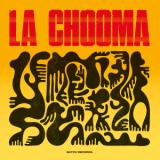
Psychedelic dub, Afro-Latin rhythms and cosmic grooves come together on La Chooma’s self-titled debut for Batov Records. Drawing on Moroccan Gnawa, Colombian cumbia, Afrobeat, Jamaica dub & roots, and cosmic jazz, the six-piece ensemble create deep, hypnotic music rooted in global traditions and shaped for contemporary dancefloors.
Having already captivated local audiences with their hypnotic, organic live performances, La Chooma – now a six-piece ensemble – have been steadily building an international following. Initial singles “Magic Plant” and “Huachuma” earned support from tastemakers including BBC Radio 6 Music’s Deb Grant and Tom Ravenscroft.
“Magic Plant” distills the band’s signature blend of hypnotic grooves, lush percussion and woozy synths, like Jimi Tenor lost in the Colombian Amazon. A dreamlike, dub-infused trip driven by organic rhythm and cosmic textures. “Huachuma” picks up the thread, fusing Afrobeat percussion, swirling basslines and psychedelic flourishes into a hallucinogenic jam made for a tropical dancefloor.

- A1: Bluebell
- A2: Japan Greatly (Feat. Reek0 And S.i)
- A3: Turn Me On
- A4: Dinero (Feat. P Wavey)
- A5: Down 4 (Feat. Osquello)
- A6: Strike A Pose (Feat. Camille Munn)
- B1: Longest Road (Feat. Pk)
- B2: Komodo
- B3: Somebody Jump (Feat. Reek0)
- B4: Wonderluv
- B5: Tek Control (Feat. Liam Bailey)
- B6: Guiding Star (Feat. Reek0)
12
East London producer and DJ IZCO announces his debut solo studio album ‘POWERSCROFT’, set for release on 1st May via Brownswood Recordings. The album’s first single, ‘Strike a Pose’ featuring the vocals of Camille Munn offers an early glimpse into the project. To celebrate the release, he will go on a run of UK dates from March to May, culminating at London’s Jazz Cafe.
Named after the road where he grew up, ‘POWERSCROFT’ marks a defining new chapter for an artist who has spent the past decade shaping the sound of UK dance music. Drawing from jungle, broken beat, grime, garage, soul and dub, the album channels the energy of the dancefloor while remaining deeply rooted in memory, instinct and identity. It captures what it feels like to be inside IZCO’s world, where thoughts, memories and influences collide.
Hailing from East London, IZCO is a producer and DJ spearheading a new generation that is bringing soul back to the dancefloor. Shaped by the rich musical heritage of his hometown, he has developed a sound that feels familiar yet forward-looking, diverse yet distinctly his own. That sound has taken him across the globe, from New York to Tokyo, alongside standout sets at We Out Here, Outlook and Glastonbury.
IZCO began his journey making grime beats for local rappers including Capo Lee, Novelist and Reek0, before becoming a key figure in the UK’s evolving garage and dance music landscape. In 2018, he launched his long-running Rinse FM show and released his debut EP Tek 5, earning early underground acclaim. His production credits include PinkPantheress’ breakout track ‘Passion’, created alongside Jkarri, as well as collaborations and remixes for artists such as Katy B and Greentea Peng.
Beyond his solo work, IZCO is a label head, promoter and co-founder of the Brighter Days Family, a collective built on community, craft and cooperation. With ‘POWERSCROFT’, he steps fully into the spotlight, presenting his most personal and fully realised body of work to date. “This album is about channeling my true musical personality and character,” he says. “I’m marking a new chapter by paying tribute to my foundations.”
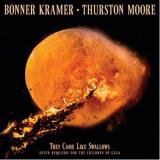
- 1: Urn Burial
- 2: The Redness In The West
- 3: The Third Migration
- 4: They Came Like Swallows
- 5: The Living Theater
- 6: The Oceans Are Crying
- 7: Insight
également disponible
Black Vinyl[30,67 €]
They Came Like Swallows is the first album-length collaboration between Thurston Moore and Kramer (now officially Bonner Kramer), two giants of alternative/ experimental music. The accomplishments and influence of these two artists in the world of independent music cannot be overstated and the result of their artistic union is a startlingly cohesive statement that burns through landscapes of primitive outsider rock, avant-garde composition, progressive ambient and further locales boldly and beautifully unnamable. “Kramer and I reconnected in Miami, Florida, a few years back, many many years after each of us had departed NYC on separate life adventures. It was only a matter of time before Kramer and I started making plans to record together and with his irrepressible due diligence he quickly set up a mobile recording contraption in the pad I was decamped in, the Florida sunshine flowing through the palm leaves, lithe lizards skittering across the windowsills, and we just went for it.
Kramer had the idea to cover a Joy Division tune, a left turn from the improvisations we had been tracking, though wholly in keeping with both our sensibilities of light and dark unifying in transcendent songwriting, both of us devotees of 'the song' as well as 'the freedom.’ What transpired is They Came Like Swallows, a session we immediately felt should exist as a prayer to the war-torn souls of the families of Palestine continually decimated by the brutality of genocide. We agreed beyond words to offer our music as a sonic activism and as a beneficent energy. This album is our duo exchange for human dignity, it is our soul music for any semblance of a peaceful planet.” ~ Thurston Moore “For the first time in our nearly 45 years of friendship, we had identical time windows open to make a record together,” recounts Kramer. After all this time not a moment is wasted as the duo immediately taps into the heightened core of improvisational tension across these seven offerings. Volcanic opener “Urn Burial” notches a similar historic union (John Cale and Terry Riley) to meet the circumstances of the moment, with swirling mists of organ and pounding toms over guitar that thickens the atmosphere with jagged, grimy dissonance.
Solemn strings open the second track, “The Redness In The West,” with Kramer’s cello and viola in dueling bow beneath the high tension drive and sustain of Thurston’s electric guitar, tapping out a Morse code of tension that mounts endlessly into a fog of inevitable war by the end. Moore and Kramer’s sense of experimentalism is in free and full grandeur throughout They Came Like Swallows, though the duo keep a strong and constant sideways eye on melody, composition and architecture, to the ends that any strict lines between song and improvisation are blurred beyond qualification.
As if to punctuate this point, Swallows closes with a nightwork cover of Joy Division’s “Insight,” a doleful coda that breathes out with a solemn inner grace under Thurston’s instantly stylistically recognizable guitar melodies as they weave into he and Kramer’s unison voices. As the lone vocal piece and only traditional ‘song’ form on the album, “Insight” is unique to this set and as a closing statement draws connective lines back to the kind of dynamic, electrified melodicism that wove deep, melancholy patterns into the untamed fire of Sonic Youth’s Sister and Daydream Nation. In the album’s final moments, the two voices repeat the lyric “I’m not afraid anymore” as mantra, underscoring the heavy, unsettled themes and methods that preceded it. Kramer describes the creative process of They Came Like Swallows: “I had composed and recorded a few pieces at my home studio over the course of a couple weeks. Thurston was spending the winter in South Florida, so I flew down and spent a few days recording his guitar parts in his home there. Watching him spontaneously compose his parts was pretty astonishing, to say the least. Once we'd finished working on those pieces, we began improvising and following wherever the music pointed us, and another few pieces were born. We got straight to it, without anything driving us other than the joy of finally working together.
My personal goal was to remain present and catch as many surprises as I could from Thurston's guitar work, and there were plenty during those few days. We had a fucking blast.” Thurston’s contributions here will be readily familiar to any acolytes of his other works, the through-line between his inspired playing, cradled in Kramer’s meticulous, solid arrangements. “If I had to make this record again, I'd do it all exactly the same way,” Kramer says. “It’s like jazz, you don't think about it. You just do it. It was miraculous, and you don't fuck with a miracle.”
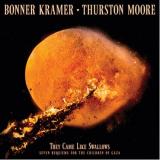
They Came Like Swallows is the first album-length collaboration between Thurston Moore and Kramer (now officially Bonner Kramer), two giants of alternative/ experimental music. The accomplishments and influence of these two artists in the world of independent music cannot be overstated and the result of their artistic union is a startlingly cohesive statement that burns through landscapes of primitive outsider rock, avant-garde composition, progressive ambient and further locales boldly and beautifully unnamable. “Kramer and I reconnected in Miami, Florida, a few years back, many many years after each of us had departed NYC on separate life adventures. It was only a matter of time before Kramer and I started making plans to record together and with his irrepressible due diligence he quickly set up a mobile recording contraption in the pad I was decamped in, the Florida sunshine flowing through the palm leaves, lithe lizards skittering across the windowsills, and we just went for it.
Kramer had the idea to cover a Joy Division tune, a left turn from the improvisations we had been tracking, though wholly in keeping with both our sensibilities of light and dark unifying in transcendent songwriting, both of us devotees of 'the song' as well as 'the freedom.’ What transpired is They Came Like Swallows, a session we immediately felt should exist as a prayer to the war-torn souls of the families of Palestine continually decimated by the brutality of genocide. We agreed beyond words to offer our music as a sonic activism and as a beneficent energy. This album is our duo exchange for human dignity, it is our soul music for any semblance of a peaceful planet.” ~ Thurston Moore “For the first time in our nearly 45 years of friendship, we had identical time windows open to make a record together,” recounts Kramer. After all this time not a moment is wasted as the duo immediately taps into the heightened core of improvisational tension across these seven offerings. Volcanic opener “Urn Burial” notches a similar historic union (John Cale and Terry Riley) to meet the circumstances of the moment, with swirling mists of organ and pounding toms over guitar that thickens the atmosphere with jagged, grimy dissonance.
Solemn strings open the second track, “The Redness In The West,” with Kramer’s cello and viola in dueling bow beneath the high tension drive and sustain of Thurston’s electric guitar, tapping out a Morse code of tension that mounts endlessly into a fog of inevitable war by the end. Moore and Kramer’s sense of experimentalism is in free and full grandeur throughout They Came Like Swallows, though the duo keep a strong and constant sideways eye on melody, composition and architecture, to the ends that any strict lines between song and improvisation are blurred beyond qualification.
As if to punctuate this point, Swallows closes with a nightwork cover of Joy Division’s “Insight,” a doleful coda that breathes out with a solemn inner grace under Thurston’s instantly stylistically recognizable guitar melodies as they weave into he and Kramer’s unison voices. As the lone vocal piece and only traditional ‘song’ form on the album, “Insight” is unique to this set and as a closing statement draws connective lines back to the kind of dynamic, electrified melodicism that wove deep, melancholy patterns into the untamed fire of Sonic Youth’s Sister and Daydream Nation. In the album’s final moments, the two voices repeat the lyric “I’m not afraid anymore” as mantra, underscoring the heavy, unsettled themes and methods that preceded it. Kramer describes the creative process of They Came Like Swallows: “I had composed and recorded a few pieces at my home studio over the course of a couple weeks. Thurston was spending the winter in South Florida, so I flew down and spent a few days recording his guitar parts in his home there. Watching him spontaneously compose his parts was pretty astonishing, to say the least. Once we'd finished working on those pieces, we began improvising and following wherever the music pointed us, and another few pieces were born. We got straight to it, without anything driving us other than the joy of finally working together.
My personal goal was to remain present and catch as many surprises as I could from Thurston's guitar work, and there were plenty during those few days. We had a fucking blast.” Thurston’s contributions here will be readily familiar to any acolytes of his other works, the through-line between his inspired playing, cradled in Kramer’s meticulous, solid arrangements. “If I had to make this record again, I'd do it all exactly the same way,” Kramer says. “It’s like jazz, you don't think about it. You just do it. It was miraculous, and you don't fuck with a miracle.”

7
Active for more than a decade within the Geneva scene, DJ Laxxiste A. has established himself as one of the key figures of the local club culture. A DJ digger, musician, producer and experimenter, he moves between rave culture, dub and adventurous electronic music. As one half of Oram Modular, a project that left a mark on Geneva's house and techno landscape, and through several live projects, he has long navigated between soundsystem culture, the dancefloor and free party. This new release, composed of five original tracks and two remixes, offers a synthesis of Laxxiste's musical obsessions. Jungle, acid, breakbeat and dub collide in a dense, textured universe shaped by a distinctly dub-driven mix. The tracks were first tested in a hardware live set, where machines, FX and samples were pushed and reshaped in real time before being refined into finished pieces. The result is an organic and sometimes raw sound, combining lo-fi textures, twisted samples and deep basslines designed for adventurous dancefloors.
The record also features two collaborations. Lateena, a key voice of the Swiss dancehall scene, appears on one track, bringing a distinctive vocal presence. Another piece unfolds through a double transformation, with a remix by Bony Fly later extended into a dub version by dubmaster Androo.

“Tako” means “octopus”, “kite”, and even “bunion” in Japanese. Bald men or men with shaven heads, as well as red-faced, staggering drunks, are also referred to as “tako”. It’s a word that appears in a lot of slang and sayings. Taco is also the name of an 80s music and performance collective whose performances were like nothing before or since. The Japanese band Taco, formed at the beginning of the 80s, is a loose group/collective of varying members that belongs to the post-punk alternative music movement. The network of members were all friends and acquaintances of Harumi Yamazaki, ex-member of Gaseneta and Taco’s central member.
Taco can be described as a band of guerrillas who, over the years, continued to connect, collect, interrupt, and scatter while sending out into the world music and sounds that can best be described as transient. Taco also performed without Harumi, and so it is as though the band is an anonymous group of mercenaries. Taco’s first album was released in 1983 and had a huge impact on Japan’s underground music scene as an anomalous and collaborative album involving various participating artists (the stars of Japan’s underground music scene!) and Harumi, who provided the lyrics. Although each track represents a reverberating conglomeration of sounds created by this transient local network, common to all the tracks are Harumi’s expressive lyrics. This has the effect of transforming all the tracks into a single powerful force which, in turn, spawns an “incident” which spreads like a giant ripple. However, because of another incident in which the records were recalled due to the scandal caused by some of the lyrics, only a limited number of people actually own a copy of the album. Taco’s second album (a 12” EP), released in 1984, features a live recording of a performance that was held at the end of 1982. Taco is a band of indeterminate members which only ever played one-off performances, but this is an album that reveals a unit whose performance was unusually musically coherent. This is an album which effectively conveys the power of Taco’s astounding and legendary live performances, as well as Harumi’s inflammatory, sensational, and masochistic presence on stage. Her mutterings and screams, which practically ignore the detached beat, confront the audience like an overwhelming groundswell.
The following is a description of Taco by one of its members following one of its live performances: “Taco’s like a project where the indeterminate participants fan each other’s heightened emotions of wanting to wreak personal revenge and retribution. It’s an ecosystem of tangible and intangible mouldy slime which accumulates in order for emotions to be acted out, both indoors in the studio, or outdoors on stage. That’s why the avenger can often end up being the victim.”
Nameless, March 1985
7
In Hayk Karoyi’s music, the vibrant palette of the Mediterranean meets the deep layers of Armenian medieval culture. A composer, sound artist, producer, selector, and live performer, as well as a multi-instrumentalist specializing in Armenian woodwinds, Hayk channels his cultural identity intuitively, allowing memory, place, and subconscious expression to shape his sound. Coming from a mixed East Mediterranean and Armenian heritage, he has never aimed to define himself—or his music—within a single tradition.
Instead, his work exists as a continuous fusion: electronic music intertwined with ancient timbres, improvisation, and experimentation. His work has been presented in clubs, concert spaces, and international festivals across Italy, France, Spain, Germany, Armenia, Georgia, Uzbekistan, and Indonesia. He has appeared on festival lineups such as Terraforma Symposia (Italy), Stihia Festival (Uzbekistan), O3 Festival (Armenia), Nopa Sound Festival (Armenia), TKESHI FESTIVAL (GEORGIA) ,Urvakan Festival (Armenia), New East Festival (Barcelona, Spain), Suara Festival (Indonesia), and Un Week-end Festival (France).
“Yotqar” is a love letter to the artists and musicians who have shaped me; those whose music I’ve carried in my heart and those I’ve shared stages and moments with over the years. The album is deeply rooted in Armenian woodwind traditions, echoing voices of the masters I admire. Its soundscape stretches across a wide geography and draws inspiration from the mountains of Syunik to the streets of Anjar, weaving in local sounds, memories and emotions. Endless gratitude to my parents, and especially to my mother for the folklore melodies she sings while cooking, filling the house with warmth and history.” - Hayk Karoyi
Psyché Records is proud to present our first vinyl release, a piece that isn’t just heard—it’s felt, collected, and experienced. Five years dedicated to what we truly love, brought to life in physical form with this release that fills us with pride.
The artist bringing this debut to life is Dani Labb, one of our favorite local artists, who perfectly captures the essence of the label: depth, identity, and journey.
This vinyl represents much more than just music. It is the sound of Psyché brought to life.
8
Levi Bruce returns to Pacific Rhythm under his Unknown Mobile moniker for the first time since 2019 with a project entitled Field Work. The project is focused around field recordings taken during the winter and spring of 2025.
These recordings come from both his travels abroad while on tour and areas near his home in Whitehorse, Yukon Territory, located on the traditional lands of the Ta’an Kwäch’än Council and Kwanlin Dün First Nation.
Each field recording acts as the basis for a journal entry taken at the location. Raw data was used to reflect on the people, actions, and environmental elements connected to the site through additional production and manipulation.
12
A Sudden Burst of Noise is a study in equivalence between rotational frequency, material structure and sonic form. The album is based on sonified pulsar data and field recordings captured at a concrete radiotelescope located in the Eifel region of West Germany.
Following the core concept of BRUTALISM, architecture and infrastructure are not treated as backdrop but as structural agents. The radiotelescope – its reinforced concrete body, rotational mechanics and scientific function – serves as compositional framework. Rotational movement becomes rhythm. Structural tension becomes texture.
Measured cosmic data becomes sound.
The source material consists of astronomical measurement data translated into sound, combined with field recordings from the site itself: interacting with exposed concrete, mechanical resonance and electromagnetic presence. Dornen and Lomi process these elements into compositions that oscillate between abstraction and physical density.
The result is not a documentary representation of the site but a sonic architecture derived from it. Each track reflects a structural component: axis, mirror, descent, radiation. The record unfolds as a sequence of material states – from reduction and
erosion to rotation and amplification.
With A Sudden Burst of Noise, BRUTALISM continues its transformation of material, texture and structure into sonic forms. The vinyl format captures our site-specific research process as a physical object.

7
Black Truffle is pleased to present Radis, the first recording by the Oslo-based trio of Andrea Giordano (voice and organetto), Kalle Moberg (accordion) and Jo David Meyer Lysne (guitar and snare drum). Now based in Norway, Giordano is a native of Cuneo, in the Piedmont region in the north-west of Italy and her exploration of the Piedmontese language provides the starting point and conceptual anchor of the trio improvisations heard on Radis, which make use of the words of 20th century Piedmontese poets Nino Costa, Bianca Dorato and Oreste Gallina. As the musicians explain, the project is an attempt to preserve the beauty and singularity of a language at risk of extinction.
Fittingly, the first sound we hear on the opening piece ‘Fiorìa’ is Giordano’s unaccompanied voice. She sings a poem from Oreste Gallina as a kind of floating cadenza, the accompanying silence sensitizing the listener to the pellucid quality of Giordano’s voice and the unique sound of the Piedmontese language. The voice dies away and into the silence swells a single tone, sounded by Moberg’s accordion and—special guest on this opening piece—the alto saxophone of Mario Gabola. Extended techniques and preparations create unexpected timbres from the acoustic instruments: Gabola’s saxophone is augmented with tin cans and springs and Moberg’s unorthodox techniques allow the accordion to generate wheezing, buzzing textures and patterns of microtonal beating. Giordano’s voice returns, picking up the thread of the languorous opening melody, coexisting for a while with the shifting drone before the piece takes an unexpected yet organic left-turn into a delicate saxophone solo of sorts.
Recorded in several locations across Italy and Norway over the course of three years, Radis documents an ensemble who have developed both a distinctive sound-world and a remarkably sensitive group dynamic. Moving from folkish duets between accordion and Giordano’s organetto (the small accordion used in Italian folk music) to episodes of metallic guitar scraping from Meyer Lysne, the music is both quietly contemplative and gently chaotic. Ensemble roles shift with disarming ease. If on ‘Profij dëspers’ Meyer Lysne’s prepared guitar adds a haywire noise element to a lyrical episode of organetto and accordion, the next piece, ‘D’antorn a lor’, is grounded in chiming guitar chords of stunning beauty; once Giordano’s joins, the result calls up the most spacious moments of Maria Monti’s Il Bestiario. Throughout the seven pieces, the trio explore countless possibilities of group interaction and the margin between conventional euphony and pure abstraction: at times the voice floats against silence or seems almost disconnected from the gentle clatter of the instruments (sometimes reminiscent of Nikiforas Rotas’ haunting settings of Cavafy), while at other points the instruments touch on conventional harmonic accompaniment. What is perhaps most striking of all is the way that voice and instruments relate to each other, the extended technique reframing the voice as a kind of abstract sound object, while the melodic beauty of Giordano’s voice lends a contemplative, almost melancholic air to the wheezing and scraping of accordion and guitar.
Captured in gorgeously intimate recordings, Jim O’Rourke’s careful and beautifully spacious mix highlights the wealth of textural detail in each element. Accompanied by notes, session photos and the text of the Piedmontese poems, Radis is a work of stunning beauty that demonstrates the vitality of exploratory music in Norway today.

8
Blue Hour distills over a decade of artistry into his debut album Selva, unearthing eight tracks inspired by ancient wisdom and forgotten worlds.
Blue Hour is the moniker of Luke Standing, a multifaceted artist, producer, and label owner navigating between past and present electronic dance music. Over more than a decade, Standing has built a career balancing transformative craft with a sharp curatorial approach, earning him respect across the global scene. After years of sonic experimentation, he now releases his debut LP Selva. “I never set out to make an LP – it just wrote itself,” he says. “I followed my intuition, and the music found its own path.”
Born and raised in the UK, Standing grew up in parallel with club culture, moving between Brighton, Bristol and Berlin while running club nights and establishing himself under former aliases Furesshu and Esoteric.
He launched his Blue Hour project in late 2013, shortly after relocating to Berlin. Initially a platform for his own music, Blue Hour quickly became a collaborative hub, blurring the lines between personal output and curation. Over time, Standing has cultivated an international ecosystem of like-minded artists while continuously expanding his own sonic horizons.
Selva marks his first full-length studio album, weaving a lifetime of influences into a cohesive narrative inspired by ancient wisdom and forgotten worlds. The eight-track double LP transforms his inner dialogue into a subconscious story pulling inspiration from a labyrinthine network of influence and experience. “I followed the music obsessively, reflecting and refining until the story revealed itself,” Standing explains.
“To me, the LP evokes Amazonian or Mayan jungles, themes of exploration, the mysteries of the natural world, wisdom passed down through generations. I didn't set out to write about these things consciously,
they just emerged on their own.” he adds.The album was shaped through intensive work in his studio and periods spent in subtropical locations.
Listening closely, Selva unfolds like a modern ceremony: the opening tracks channel his early UK dance influences, shifting into blends of traditional and contemporary techno, then expanding into melodic soundscapes before concluding with transcendental textures and atmospheres. The result is an introspective journey where functionality and emotive storytelling coexist, revealing a depth in Blue Hour we haven’t heard before.
Whether performing, curating, or producing, Standing operates with a deep commitment to sound, culture, and collaboration. More than an artist, he is an architectural thinker of what electronic music could become. “Every release is my own metamorphosis,” he says. “This LP reflects my current form, and I’m curious to see what the next chapter brings.” Few artists can unify a lifetime of genre-spanning influences into a sound as sharp and focused. On Selva, Blue Hour does exactly that, opening a new era of deeper
immersion from his Berlin-based label.
Budapest-based concept label, Blue Sun is launching their new line of vinyl focused releases, aimed primarily on DJs and collectors: the Blue Series. A counterpart to the Orange Series launched last year that showcases a more upbeat side of the label, the new collection presents a darker, more experimental, and introspective musical vision.
The first release in the Blue Series is a six-track EP by Budapest based multimedia artist, Virág Réti. Choosing her legal name as her artist persona (“Flower of the Meadow" in Hungarian) also with the track titles capturing the folk names of local fauna, Peremidő evokes the artist's innate connection to nature as a place of refuge from the noise of Eastern European urban life.
The EP’s motifs point back to early memories of sitting by a river, simply observing time flowing by. The arc of the songs follow the passage of a day, beginning with the hesitant sounds of early morning, gradually moving on toward more defined, rhythm-driven forms. As the airy textures slowly give way to structure and percussion comes to the forefront, the sense of direction becomes clearer, letting moments of gentle disorder and unexpected sounds to surface.
Virág previously appeared on the label’s Blue Sun VA II compilation with her track Bíbic. Since launching her ambient music project in the fall of 2024, she has become one of the promising newcomers in the Hungarian experimental electronic music scene. Her debut EP, Minden Ami Megmaradt (All That Remains), was released last November as the final offering of temporary nites label (2023–2025). She is also the founder and organizer of the Budapest-based experimental electronic event series Still Places.

Back on PANORAMA Records, we turn to a beautiful slice of under-the-radar Jamaican reggae with Horace Martin – “Me Rule.”
Born in Kingston, Jamaica, Horace Martin was just 20 years old when he stepped into Channel One Studio to record the track in 1974. At the time he was building his name locally, performing in clubs and talent shows around the city while cutting sides in Kingston’s vibrant studio scene. “Me Rule” captures that moment perfectly — youthful confidence over a deep, steady rhythm.
This record earned its place among the deepest collectors: Proper rootsy dancefloor reggae that feels just as good today as it did when it first came out of Kingston.
On the flip, things open up with a dubbed-out version of the rhythm titled “Rule,” credited to Prince Huntly. Stripped back, the dub extends the track — echo, percussion, and bass doing the work.
As always, PANORAMA Records continues its search for overlooked gems from across the globe — records with history, character, and real musical weight. Carefully remastered and brought back on 7inch, PAN013 is another example of these records finding their way back to the turntable.
- A1: Intro
- A2: La Danse De L’esprit (Feat. Lalin St.juste)
- A3: Share Your Love (Feat. Nina Miranda)
- B1: Got To Find The Way (Feat. Siya Makuzeni)
- B2: Astral Vision Of Light
- B3: Africa Tribale
- C1: Galaxy Bloom
- C2: Praise To The Sunshine
- C3: Song Of Liberation (Feat. Siya Makuzeni)
- D1: The Shango Cult
- D2: Shaman’s Prophecy
- D3: Macumba De Oxala Ii (Feat. Toco)
12
Nicola Conte and Nico Lahs’ Tema Due project finally comes to full realization in a double LP entitled “Universo Astratto”,adding a wealth of new musical shades and ideas to the two EPs released on Schema Records in 2025. The albumrepresents not only the natural evolution of their artistic dialogue, but also a statement of intent in terms of sound.Fans of the most sophisticated and refined club music, elevated by the fusion of exquisite electronica with spiritual jazz (it isno coincidence that the opening track evokes the baseline of “A Love Supreme”), African-American rhythms and tribalpercussion, will be thrilled by this complex and multi-layered album, which unveils new hidden details upon each listen.A meticulous selection of exceptional musicians contributes in a distinctive and significant way to broadening the scope ofthe project: Giovanni Guidi, Pietro Lussu, and Dario Bassolino on keyboards, Gabriel Prado and Abdissa Assefa onpercussion, Magnus Lindgren on wind instruments and Hammond organ, and Pasquale Calò on saxophone. On vocals wehave Lalin St. Juste, Siya Makuzeni, Nina Miranda - for what is probably the best track on the album, “Share Your Love”- and Toco - for a new and previously unreleased version of the track “Macumba de Oxalà” featured on the first EP.In “Universo Astratto”, Tema Due’s vision is finally fulfilled: a world of ancestral grooves, cosmic jazz, and electronic musicconceived for clubs as a type of “active experience” in which one is transcended by music. This record is an invitation—tomove, to feel, to elevate—and a manifesto for those who see the dance floor not just as a location, but as a shared experience of awareness and rhythm
- A1: Dam Swindle Feat. Dj Minx - Back To The Old School
- A2: Supershy - Pyrenees
- A3: Dan Ivy Feat. Biyi - Location
- B1: Kolter - Need U, Want U
- B2: Cinthie - U Gotta Believe
- C1: Folamour Feat. Lyma - Won't Let U Down
- C2: Kerri Chandler - Kerriousity
- C3: Fouk - Head Spin
- D1: Dam Swindle Feat. Haile Supreme - Not Enough (Two Soul Fusion Aka Louie Vega & Josh Milan Remix)
- D2: Lolu Menayed - After Sax
- E1: Riva Starr Feat. Ziyon - Take Up The Space
- E2: Dam Swindle Feat. Jungle By Night - Call Of The Wild (Makèz Remix)
- E3: Elisa Elisa - Coco Coco
- F1: Life On Planets & Plaisance - Keep Going
- F2: Dj Sneak - Lovin' Me
- F3: Ossie - My Heart, Your Heart
16
Dam Swindle tap Kerri Chandler, Louie Vega, Folamour, Cinthie & more on 100th Heist release.
The ‘House of House’ V/a takes in nineteen all-new tracks from some of house music’s most revered names and new-school talent.
Dam Swindle present ‘House of House’, a triple vinyl V/a compilation marking the one-hundredth release milestone on Heist Recordings, landing on 8th May 2026. Across nineteen all-new tracks, ‘House of House’ reads like a roll call of modern house royalty.
The compilation features contributions from scene legends and contemporary torchbearers alike, including Kerri Chandler, Two Soul Fusion (AKA Louie Vega & Josh Milan), Folamour, Cinthie, Kolter, DJ Sneak, and Supershy, the dance music alias of Tom Misch, alongside rising talents like Papa Nugs, Lolu Menayed, and many more.
From the old-school magic of tracks like Dam Swindle’s ‘Back to the Old School’ feat. DJ Minx and Kolter’s ‘Need U, Want U’, to the jazzy, soulful depths of Kerri Chandler’s ‘Kerriousity’ and Superhy’s ‘Pyrenees’, to the peak-time energy of Papa Nugs & Mixolydian’s ‘Let Go’ and Elisa Elisa’s ‘Coco Coco’, the compilation captures the full spectrum of house sounds that have shaped the world of Heist Recordings over the past 13 years.
Launched in 2013, Heist Recordings has become a high benchmark for quality house music – a home for legendary artists like Cinthie and DJ Sneak, and a breeding ground for new talent from Kassian to Make`z. Dam Swindle have cemented their place among the upper echelons of modern house, with three critically acclaimed LPs, collaborations with the likes of Kerri Chandler, Tom Misch, and a relentless tour diary.
‘House of House’ reflects the ethos that has defined our label since day one: a home for house heads who bring genuine soul to club music, whether they’re legendary originators or new-school up-and-comers. Heist’s one-hundredth release is more than just a number – it’s a testament to the community, creativity, and legacy we’ve built, release after release.
As always enjoy the music and play it loud.
Much love, Heist HQ

300 pages, 175 x 129mm paperback book w/ french flaps.
DINTE mint their short run book publishing imprint, The End books, with this vast collection of flyers for dances, clashes and blues parties from across the UK between the early 1970s and mid 1990s. Comes complete with intro by David Katz (People Funny Boy: The Genius of Lee 'Scratch' Perry, Solid Foundation: An Oral History of Reggae) and outro by Kevin Le Gendre (Don't Stop the Carnival: Black British Music, Children of the Ghetto: Black Music in Britain). Colour scans sit alongside scuzzy photocopies amassed over several years with the assistance of multiple archivists. The material presented in A Night to Remember is not just valuable musical history, but the story of a community and a culture that revolutionised sound culture in the UK.
"The flyers collected in A Night To Remember speak to the burgeoning sound system underground that flourished in Britain in the 1970s, 80s and early 90s. There are held events on hallowed ground as well as lesser-known sets. Flyers for house parties remind that shebeens remained an important feature of social life in black communities and the many sound clash and cup clash events emphasise the rivalry and camaraderie that has always been at the heart of the culture, as friends go head-to-head with their dub plates, vying for that definitive crown. Dances featuring guest appearances by name-brand artists such as Sugar Minott, Lone Ranger, Barrington Levy and Admiral Bailey, as well as sound systems such as Jack Ruby, King Jammies, Ray Symbolic, Arrows, Black Scorpio and Metro Media remind how closely the local sound systems remained to their Jamaican roots, even as sounds such as Saxon, Unity, Java and Diamonds carved out a distinctly British niche. All hail the enduring sound systems of Britain – long may they reign!" — David Katz

Since debuting in the mid-1990s, Kurt Spichiger aka Shaka has released rather a lot of high-quality deep house, in the process notching up appearances on the likes of Local Talk, Traxx Underground, Yore, Housewax and, most recently, Mate. Here he evokes the atmosphere of a 'smoky' basement club via a three-track Seasons Limited label debut. Title track 'Smoky Club' is undeniably classy and carefully crafted, with starry electronic motifs, dreamy pads and jammed-out Wurlitzer organ motifs rising above a languid, leisurely deep house groove. Spichiger's love of jazz comes to the fore on the even warmer and more seductive 'City Park' - all sampled disco drums, smooth jazz-funk bass and extended electric piano solos - while 'The World Goes Oriental' sounds like vintage Larry Heard mixed with the afterglow of late night lovin'.

4
We present an EP from two house masters Artem Stan & Matpri on Analog Concept records.
This record was born like in the classic 90s from jam sessions in the studio, when musicians caught the groove and connected their deep universes, showing true love for house music. Everything is combined here - the sound of drum machines 909 and not only, atmospheric acid impulses of 303, classic pads that paint these paintings bright and filled with deep meaning, as well as much more. Amazing two sides and four compositions, each with its own story.
The Midnight Seduction track opens the telling of these stories on side A. From the first seconds, immersing in the atmosphere of synthesizer temptation, the analog bass line combined with the default drum section and elements of bright metal claps quickly gain the necessary energy and immerse in the images of a closed nightclub with long corridors and hidden dance floors. The light plume of the classic M1 organ and the accentuating Acid lead maintain balance. Secret nocturnal seduction, light ecstasy and an atmosphere of love.
French Kiss - everything is great here, as soon as you listen to the harmony of accordion-like synthesizers and deeply addictive pads, you are instantly transported to the image of Parisian streets. Elements of bells, a rhythm section filled with unpredictable percussion, acid inclusions and an unexpected immersion into a broken beat in the middle of the composition, a real deep French kiss.
Matpri is known for its sophisticated approach to music and is rightfully the guru of micro and minimal house. Having created the maximum sound quality of the rhythm section and the deep bass that was addictive from the first seconds, mixing old-school vibe, while not losing touch with his minimalistic sound image, he filled the House Template track with the smallest details and percussion, which is confidently based on the B-side.
Four certainly high-quality compositions were created in the studio of Artem Stan in the mountains of Krasnaya Polyana and one of the tracks on the B-side - "Nasha Polyana" - is dedicated to this location, it conveys a certain playful atmosphere of a mountain village with a vibe of complete freedom and daily carefree. A complete release with decent house music.
12
Visionary producer Ibrahim Alfa Jr, who's been traversing the rave's farthest fringes since the late '90s, returns with his most focused and concise set to date, an anthology of undulating, bass-heavy experiments that surveys techno and its distorted history, printing fractured pulses and cybernetic synths over vanishing snapshots of jazz, funk, trip-hop, broken beat, dub and ambient music. It's a body of work that coalesced during a difficult time for Alfa.
After returning to Brighton and sobriety in 2022, he was diagnosed with a pulmonary embolism, subsequently suffering two debilitating heart attacks. With his immune system compromised, isolation was the only option, so for months on end Alfa devoted each waking hour to his art, recording samples, building digital synths and effects and meticulously sequencing some of his waviest, most experimental material to date. Over this period he finished over 500 tracks, writing impulsively and constantly challenging himself. "There was nothing to hold me back," he explains. "I just had music, I didn't know if I would see the next day."
Now recovered from his ordeal, Alfa looks back at this prolific period with optimism and fondness. It was a chance for him to reconnect with his art holistically, writing purely for himself without any outside influence. Because, at this stage in his life, Alfa has already been through a series of artistic evolutions. When he was still just a teenager, he penned a slew of grinding, jacking techno 12"s (under a variety of mysterious monikers) in the late '90s before re-emerging a decade ago with the acclaimed 'Hidden By The Leaves', an album made up of deeply personal archival tracks that were thought to have been lost. A few years later, Alfa returned wholeheartedly with a series of records for Mille Plateaux that redrew the boundaries of his "Black political music without words." And on 'Infinite Black Inside', those different strands are muddled with Alfa's profound life experiences and he expresses himself free of any self-imposed boundaries, writing quickly on a hybrid analog-digital setup to document as many ideas as possible.
There's a palpable sense of liberation that drives the album's opening track, 'Subutrax', lubricating polyrhythms that isolate the connective tissue between footwork and Detroit techno as they slip between looped electric piano vamps and vaporous synths. On 'Naked Lunchbreak' meanwhile, the beat generation's excesses are illustrated by mesmeric fast-paced acoustic drums that Alfa balances out with brassy drones and euphoric keys. He captures rubbery hits from a Ghanaian djembe on 'Drum Slinger', re-sequencing them into seismic waves that rumble underneath live woodwind blasts. And on 'Capture', decelerated breaks and garbled voices tumble into humid pads, suspending the album somewhere between the chill-out room and the night sky. It's a record of new beginnings and fresh narratives that collapses the hardcore continuum, revealing a sonic signature that's Alfa's alone.
Jess Sah Bi is well-known as half of the legendary duo Jess Sah Bi & Peter One who brought homegrown Country-Americana to the West African masses with their smash debut Our Garden Needs Its Flowers in the mid-1980s. Touring stadiums and reaching listeners worldwide, their music has racked up millions of spins on YouTube and remains imprinted in the hearts of Ivorians of a certain age. ATFA reissued their album in 2018, garnering critical acclaim from publications including Pitchfork and Rolling Stone and reaching a new generation of listeners outside Ivory Coast (Cote d'Ivoire). Sometime in the early 90s, Die Sahbi - or Jesse, as he known to friends-became gravely ill with an unknown ailment and almost died. He visited various doctors and all kinds of religious healers and nothing helped. One day he went down to an Evangelical Christian revival in his neighborhood. They prayed over him and he was delivered. He says, "Their prayers helped chase out whatever demons and unhealthy spirits were inside me. After that my illness went away. When I went to the United States a few months later on an exchange program I wanted to make music to thank God because I was saved." He recorded an album of music praising God in order to honor a promise he made to himself at the depths of his desperation in the hospital. The album Jesus-Christ Ne Deçoit Pas Jesus Christ Does Not Let Us Down came out in 1991 and sold around 3000 cassettes in Ivory Coast. The master tape was lost along the way so the recording has never been on digital platforms until now. Jesse didn't have much time to record while visiting South Carolina, hence the relatively short album, 6 songs including two reprises for filler. A local pastor connected him with a studio and some American musicians (Robert Fortner and Gary Davis) to help. They added acoustic guitar, percussion and keyboard accompaniment to Jesse's soaring French and Gouro vocals, harmonica and finger-picked acoustic. The resulting recording is deeply soothing and contemplative music that perfectly compliments the songs already embraced by millions. But he had to find the rest of the studio expenses-$600 total-which he secured drawing cartoons for UNICEF. Jesse is Ivory Coast's first political cartoonist, a vocation for which he was widely celebrated at the time. It also made him a few enemies which lead to him leaving the country permanently a few years later. Jesus-Christ Ne Deçoit Pas is Jess Sah Bi's first and only gospel album. Fortunately, fans responded with enthusiasm: widespread radio airplay and concerts followed, along with a growing solo profile in the country. The first big gospel artists in Ivory Coast were the duo Mathieu et Constance, who emerged in 1989. There was a bigger gospel music movement in English-speaking counties like Ghana and Nigeria (Christians make up roughly 40% of the population in Ivory Coast, slightly less than Muslims). Jesse didn't have any intention of working in Christian music but he realized, "You don't make music to make money-you want to send a message." In the years since Jesus-Christ's release, gospel music in Ivory Coast has grown to become a key part of music culture in the country. Spiritual music appears in community actives across the public and private spectrum from religious gatherings and parties to television broadcasts and music festivals. And, as it has evolved and indigenized locally, gospel music has picked up elements of traditional Ivorian music, reggae and soul. The album ultimately precipitated the demise of the duo, who were soon separated geographically as Peter One relocated to Nashville. He went on to become a nurse and release a successful solo album on Verve following the ATFA collaboration. Nowadays Jesse lives in the Bay Area and continues to record and perform music wherever and whenever he has the chance. He is publishing a new book of humorous cartoons in 2025 and his most recent album Never Give Up came out in 2020

With »News from Planet Zombie«, The Notwist return to view after years of exploration and experiment with an album rich in both melancholy and positivity, sketched across a suite of thrilling, fiercely committed pop songs. It’s an album reflecting a chaotic world, but responding with warmth and generosity, to achieve creative and spiritual consolidation. Recorded in their home base of Munich, it reconnects with the security of the local to explore the troubles of the global: a guiding impulse writ large across this album’s eleven songs. It’s also the first studio album since 1995’s »12« that the entire band recorded together in the studio in its expanded live formation.
A new album by The Notwist is always a curious endeavour; their musical language is as consistent and resilient as the contexts for creativity are unpredictable and ever shifting. For »News from Planet Zombie«, the core trio of Markus and Micha Acher and Cico Beck embraced the plural possibilities of writing together, bringing songs to the collective and then arranging, rehearsing and recording that material live, in the studio.
The result is an album that’s energised, fully in ›the now‹, with spectacular moments where you can hear the magic bubbling up in the dynamic between the Achers, Beck, and fellow members Theresa Loibl, Max Punktezahl, Karl Ivar Refseth, and Andi Haberl. If »Teeth« begins »News from Planet Zombie« quietly and reflectively, by »X-Ray« everyone’s supercharged, blasting out future anthems with the collective energy cranked up high. The chiming keys of »Propeller« skim the instrumental’s surface like stones across burbling water; »The Turning« clangs its way into one of the album’s most heartwarming melodies.
»News from Planet Zombie« was recorded over one week at Import Export, a non-profit space for arts and music. You can tell, too; there are some pleasingly rough edges here, as though The Notwist’s striving for hazy perfection means they’re also confident enough to let the songs breathe and mutate between our ears. That openness to chance also takes in guest turns from friends both local and international, reflective of a cosmopolitan Munich: Enid Valu joins in on vocals, while Haruka Yoshizawa guests on taishōgoto and harmonium, Tianping Christoph Xiao on clarinet, and Mathias Götz on trombone.
The Notwist aren’t best known for cover versions, but »News from Planet Zombie« features two: a gorgeous version of Neil Young’s »Red Sun« (from 2000’s »Silver & Gold«), which the group originally developed for a theatre play directed by Jette Steckel, and a take on Athens, Georgia folk-pop gang Lovers’ »How the Story Ends«. They slot into the album’s narrative perfectly, nestling in like old friends, revealing The Notwist as poetic interpreters. Played well, the cover version is both acknowledgement of fellow travellers and act of generosity, and The Notwist nail both aspects here.
And that narrative, the way the album plays out? »News from Planet Zombie« acknowledges the distress of our current geopolitical impasse, while reminding us there are collective ways forward. Fed through the figure of the zombie, Markus Acher explores our anxieties: »In the title and some lyrics I reference B- and horror-movies, which is a reference to the crazy world at the moment, which seems to be like a really bad and unrealistic B-movie.« But there’s a reminder here not to lose the thread entirely, that these things, too, will pass.
»The river here in Munich I often go to has been there forever and will be there long after us,« Acher reflects, pinpointing an important source of succour for him, »always the same but always changing. Very calming, but also always reminding me that like this river time only flows into one direction and you can’t go back. Every moment is very precious.«
Artwork by Marie Vermont
The Notwist:
Markus Acher: vocals, guitar
Micha Acher: bass, sousaphone, euphonium, trumpet
Cico Beck: electronics, keyboards, guitar, recorder, percussion
Theresa Loibl: bassclarinet, clarinet, piano, harmonium, organ
Max Punktezahl: guitar
Karl Ivar Refseth: marimbaphone, vibraphone, glockenspiel, congas, percussion
Andi Haberl: drums, dulcimer
+
Enid Valu: vocals on 1, 2, 3, 4, 5, 7, 9, 10, 11
Haruka Yoshizawa: taishōgoto on 6, harmonium on 9, 10, 11
Tianping Christoph Xiao: clarinet on 4, 10, 11
Mathias Götz: trombone on 4, 10, 11

- A1: Worms In (Feat Laraaji)
- A2: Beneath The Overpass (Feat Shuta Yasukochi)
- A3: Gravel (Feat Loris S Sarid)
- A4: Highway At Night (Feat James Bernard & Marine Eyes)
- A5: Fading Form (Feat Kmru)
- A6: Death Display (Feat Diatom Deli)
- A7: Bloat (Feat Haruhisa Tanaka)
- A8: Larvae (Feat Ki Oni)
- A9: Autolysis & Putrefaction (Feat Green-House)
- B1: Clouded (Feat Golden Brown)
- B2: Countless Wheels Keep Turning (Feat Early Fern)
- B3: Everyone Passing (Feat Gregg Kowalsky)
- B4: Ways To Be Remembered (Feat Kallie Lampel)
- B5: Fur & Exhaust (Feat Ben Seretan)
- B6: Active Decay (Feat Patricia Wolf)
- B7: Melting Into Asphalt/Springing From The Earth (Feat Nailah Hunter)
- B8: Worms Out (Feat Laraaji)
17
Constellation Tatsu welcomes US artist Brendan Principato aka Saapato for what is a hugely conceptual new album based around decomposition. It was sparked when Saapato saw a dead fox lying by the side of the road on his way home from a job in a local warehouse. He used that as a jumping-off point to interrogate "transformation, interconnectedness, and renewal" and the five stages of decomposition, namely fresh, bloat, active decay, advanced decay and dry/remains. Several collaborators help him on his way as he sketches out various instrumental textures which variously have occasional shards of light, lingering melancholy and a subtle sense of hope.

- A1: Cliché - 木漏れ日 (Komorebi)
- A2: Nejauši - The Dome
- A3: Kristaps Puķītis - Lielās Kož Nost Mazās
- A4: Dj Keda Feat. Ieva Dreimane-Sidare - Gaisma Nāk
- A5: Baziits - Ceļš Tik Šaurs (Antons Megamikss In Da Haus Mix)
- A6: Niklāvz Feat. Kenji - Chill Hot
- B1: Ksenia Kamikaza - See The Sea
- B2: Eque - Give Us One God
- B3: Omiros - Sapnis Pirms Miega
- B4: Alter V - Some Day
- B5: Existal - Mind Vortex
11
Liepāja’s Elektrons is a contemporary electronic music compilation on vinyl, bringing together artists connected to the Baltic city of Liepāja. The LP features eleven original tracks that reflect the diversity and vitality of the local electronic scene — from deep techno and liquid funk to experimental ambient, IDM, and broken beats. Across the record’s two sides, Liepāja’s Elektrons brings together a diverse constellation of producers shaping the city’s electronic identity. The A-side features Cliché, Nejauši, Kristaps Puķītis, DJ KEDA feat. Ieva Dreimane-Sidare, BAZIITS, and NiklāvZ feat. Kenji, moving fluidly from intricate IDM textures and atmospheric experimentation to liquid funk rhythms and high-energy drum’n’bass. The B-side continues the journey with Ksenia Kamikaza, Eque, OMIROS, ALTER V and Existal, exploring deep and peak-time techno, minimal house and progressive sonic structures.
12
Amid rusted transistors and owner manuals blurred by dust, Rogelio Serrano rescued abandoned vintage synthesizers from Mexico City's flea markets. These devices, revived by a Japanese technician based in the capital, returned to life with electric pulses, becoming accomplices in nearly clandestine recording sessions at a solitary, remote location called "Ojo de Agua" on the city's outskirts. Sound Cartography is a sonic archive of tracks recorded between 2017 and 2019, which could easily be considered demo pieces, unfinished works, or simply orphaned creations.
Australian composer-performers Judith Hamann and James Rushford have worked together in countless projects for two decades, perhaps most notably in Golden Fur, their trio with Sam Dunscombe. Black Truffle is pleased to announce Midmeste, their first work as a duo. Its title is Middle English for ‘the middlemost point’, alluding to how the piece builds on the points of overlap between the highly personalised musical languages Hamann and Rushford have developed in recent years. Performed on cello and a variety of pipe organs, Midmeste is a spacious, sometimes unsettling exploration of their shared interest in alternative tunings, psychoacoustic phenomena, the physical properties of their instruments, and the usually peripheral sounds generated by the performing body.
Beginning with a sequence of austerely vibrato-less harmonics from Hamann's cello, trailed by Rushford's whistling portative organ tones, the music soon expands into a slow-moving melodic wander, pausing at times to linger over an uncomfortable harmony or particularly resonant cello tone. Hamann and Rushford have long histories of engagement with pre-Classical European musical traditions, having in past projects performed and radically extended the work of Solage, Louis Couperin, Johann Conrad Beissell and other composers. Here they use a 15th century song by John Dunstaple, ‘O rosa bella’, which returns throughout the piece, distorted, aerated and splayed into new forms.
Developed while the two shared residencies at Akademie Schloss Solitude, Stuttgart in 2020 and La Becque on Lake Geneva in 2023, Midmeste integrates recordings made (at at the invitation of the Biennale Son) on the organ of the Basilica St Valere in Sion, Switzerland—the world’s oldest playable organ, built in the early 15th century. Played by both Rushford and Hamann, the instrument’s idiosyncratic features, including bellows pumped manually using massive wooden beams, are integrated into the music through amplification. Creaks and thumps locate the music physically both in the performers’ bodies and the specific site of its making. Moving through a series of distinct episodes across its forty-minute span, Midmeste makes space for near-silent duets of high harmonics and hissing air, moments where twittering high tones and rumbling sub-bass could be electronic, and static fields that unexpectedly blossom into almost Romantic harmonies.
Listeners familiar with Hamann and Rushford’s work will find many familiar features here: the stunningly rich cello tones, their patient sustain allowing heightened awareness of the inner life of sound and its interactions with the environment; the care with which acoustic space is activated, becoming at times a third instrumental voice; the attention to fragile, unstable sonorities that sometimes have a comic edge. A major work from two key figures in contemporary experimental music, Midmeste synthesises rigorous exploration of fundamental questions of sound and performance with an unapologetic embrace of beauty.

4
Since last year's EP “rhyme09,” a quiet storm has been brewing around the label. This release is not only long overdue, but Vienna is also home to numerous new talents as DJs and producers. The label boss makes the selection here and kicks off this release with a completely crazy track that is unlike anything else out there. There is virtually nothing else like it, making this track unique with its bassline, offset kick drum, and acid grooves. The second tune on the A Side comes from Fabiano Jose’, a well-known DJ in Vienna who, with his brand “Merkwürdig” has been an important player in the local party scene for several years. A catchy tech house tune, “step in” if you can!
The first tune on the B Side is a collaboration between ZentaSkai, well known for his label MASK Berlin, and Thomas Grün, also a long-time DJ and producer in Vienna who releases house and tech house tunes also on his own label “Untitled100 records”.
With Manu Script on B2, we have a debut here. With his great taste as a DJ and producer, he delivers a powerful groove. Another true Party stepper! Be ready...

5
Celebrating a decade since its live debut, Detroit-based artist Rebecca Goldberg announces the first-ever vinyl release of her original score for A Trip to the Moon, the iconic 1902 silent film by Georges Méliès. Composed in 2016, Goldberg’s reimagining of the groundbreaking film—originally titled Le Voyage dans la Lune—translates early cinema fantasy into a minimalist electronic soundscape shaped by synthesis, texture, and composed foley.
Goldberg’s approach honors the wonder and theatricality of Méliès’ vision while grounding it in Detroit’s lineage of forward-thinking electronic music. The score premiered in Paris in 2016 with live performances at Silencio, the club founded by David Lynch, and at Bar à Bulles, located above the legendary Moulin Rouge. The Paris events were produced by Why So Serious Productions and marked a rare convergence of experimental electronic performance and historic cinematic space. Goldberg also presented the live score in her native Detroit, reinforcing the transatlantic bridge that has long shaped her conceptual record projects.
Now, ten years later, the score will be released for the first time on vinyl in a limited edition of 300 copies. The pressing captures the nuance of the original live compositions while offering listeners a new way to experience the interplay between silence, rhythm, and sonic illusion. As with Goldberg’s previous conceptual 12" releases, the vinyl format serves not only as a medium but as an artifact that preserves and reframes cultural memory.

4
This vinyl only series will feature various artists who have helped shaped the musical landscape where WIP lives.From party guests, to label contributors and also foundation community members, both local and international, have been invited to share music from the heart. Deep music.
Vol.1 features John Beltran, Trinidadian Deep, Mikekon & Middle James
Detroit Legend, Rick Wade joins Collect Records for the first time with Just Beneath EP. A key figure in Detroit's second generation of house producers and founder of Harmonie Park, Rick Wade delivers three deep and hypnotic cuts rooted in jazz, soul and classic machine funk. Warm, stripped-down and functional, with one acid-leaning track adding extra tension to the EP. Underground house music for late night hours. Collect Records operates from Collect, the Lisbon-based record shop and radio located in Cais do Sodre, a meeting point for DJs, collectors and the local underground scene.

Local Sugar Diggers dive back into their closest friends' shelves for another round of sly re-edits and low-slung reworks that flip old and obscure sides into sharp new tools. Nothing overcooked, just tight surgery and a feel for locked-in grooves. A'Ola!' Is all big brassy horns and Latin-flavoured funk while 'Rio Ritmo' then cuts back with a more sunny, whimsical sound for lazy afternoons daydreaming at the park. LTF very much keeps the heat simmering after his Soviet jazz-funk excursions on BMM Records, USA The Content (L)abel and Rucksack Records with the same crate-digger mania here, all executed with a wink and a steady hand.

13
Key long-term collaborators and Coil's "secret third member" Danny Hyde located the original Hellraiser studio session tapes, and the bonus material recovered from them is presented here as an "expanded ritual" edition.
For fans of pain & pleasure, Throbbing Gristle, lost horror soundtracks & haunted electronics.
Back in 1987, Clive Barker's supernatural body-horror classic Hellraiser hit cinemas worldwide and introduced audiences to the demonic Cenobites. Barker was a devoted COIL fan (Peter Christopherson and John Balance), and he famously said they were the only band he'd ever heard on record whose music he'd had to take off because, in his words, "theymade his bowels churn.". He initially invited them to compose the film's music, and the group began recording cues. But the producers at New World Pictures ultimately rejected the material in favor of a more traditional approach, bringing in Christopher Young, whose final score remains excellent, if less experimental. What remains from Coil is an unfinished soundtrack with surviving fragments and rough ideas, abruptly left behind mid-process, a glimpse into an alternate Hellraiser movie, one we can only fantasize into existence.
Nearly 40 years later, key long-term collaborators and Coil's "secret third member" Danny Hyde located the original Hellraiser studio session tapes, and the bonus material recovered from them is presented here as an "expanded ritual" edition, reassembled into a standalone, possibly definitive and strangely beautiful nightmare suite. Play it in the dark and experience the consequences of raising hell...
- #1 - In/Flux
- (Side A, Track 1) Dj Shadow - In/Flux - (Side B, Track 1) Dj Shadow - Hindsight
- #2 - Lost And Found (S.f.l.)
- (Side A, Track 1) Dj Shadow - Lost And Found (S.f.l.) - (Side B, Track 1) Dj Shadow - Hardcore (Instrumental) Hip-Hop - (Side B, Track 2) Dj Shadow - Last Stop
- #3 - What Does Your Soul Look Like
- (Side A, Track 1) Dj Shadow - What Does Your Soul Look Like - (Part 2 - Original Standalone Version) - (Side A, Track 2) Dj Shadow - What Does Your Soul Look Like - (Part 3 - Original Standalone Version) - (Side B, Track 1) Dj Shadow - What Does Your Soul Look Like (Part 4 - Original Standalone Version) - (Side B, Track 2) Dj Shadow - What Does Your Soul Look Like - (Part 1 - Original Standalone Version)
- #4 - Midnight In A Perfect World (U.k. Version)
- (Side A, Track 1) Dj Shadow - Midnight In A Perfect World (Radio Vision) - (Side A, Track 2) Dj Shadow - Midnight In A Perfect World (Gab Mix) - (Side B, Track 1) Dj Shadow - Midnight In A Perfect World (Extended Vision) - (Side B, Track 2) Dj Shadow - Mutual Slump (Album Version)
- #5 - Stem
- (Side A, Track 1) Dj Shadow - Stem (Cops 'N' Robbers) - (Side A, Track 2) Dj Shadow - Red Bus Needs To Leave! - (Side B, Track 1) Dj Shadow - Stem/Long Stem (Earlier Version) - (Side B, Track 2) Dj Shadow - Soup
- #6 - High Noon
- (Side A, Track 1) Dj Shadow - Hypnotist Intro - (Side A, Track 2) Dj Shadow - High Noon (Alternative Mix) - (Side B, Track 1) Dj Shadow - Devil's Advocate (Alternative Version) - (Side B, Track 2) Dj Shadow - Organ Donor
- (Extended Overhaul - Original Version)
- #7 - Camel Bobsled Race
- (Side A) Dj Shadow - Camel Bobsled Race (Original Unedited Version) (Part 1) - (Side B) Dj Shadow - Camel Bobsled Race (Original Unedited Version) (Part 2)
- #8 - Bonus Disc For This Box Set
- (Side A, Track 1) Dj Shadow - In/Flux (First Ever Mpc Version) - (Side A, Track 2) Dj Shadow - Lost And Found (S.f.l.) (First Ever Mpc Version) - (Side B, Track 1) Dj Shadow - What Does Your Soul Look Like (Part 2 - First Ever Mpc Version) - (Side B, Track 2) Dj Shadow - What Does Your Soul Look Like (Part 4 - First Ever Mpc Version)
Zum ersten Mal seit Jahrzehnten erscheinen DJ Shadows legendäre Mo’Wax-Singles wieder offiziell – in einem umfassenden 8-teiligen Vinyl-Set, das mehrere Stunden bahnbrechender Musik enthält.
Die Aufnahmen wurden in den Abbey Road Studios von Miles Showell halbspeed-remastered und klingen so klar und kraftvoll wie nie zuvor. Die Box enthält zahlreiche bisher unveröffentlichte Mixe und Edits sowie eine exklusive Bonus-LP mit den ursprünglichen Demos von vier Tracks – ein einzigartiger Einblick in die Entstehungsgeschichte des Shadow-Sounds.
Abgerundet wird das Set durch neue Fotografien von Brian Cross (B+), DJ Shadows langjährigem visuellen Wegbegleiter.
Ein essenzielles Sammlerstück für Fans, Vinyl-Liebhaber und alle, die die Wurzeln moderner Beat-Kultur feiern wollen.
"This box wasn’t made for the casual listener,it was made with the hardcore fan in mind. I’ve always felt, if something is worth doing, it’s worth doing right, and every step of the process was
made with this philosophy firmly in mind. I had fun locating and resurrecting these songs, some of which still feel close to my consciousness as though they were made yesterday.”
-DJ Shadow

- A1: Facts
- A2: Fuck It
- A3: Royalty
- A4: Both Ways
- A5: How Could
- B1: Usa
- B2: Let Me See
- B3: Get Paid
- B4: On My Way
- B5: It’s Goin Down
- B6: Real Life
Ten years ago, Adolph Robert Thornton Jr. planted his flag. Released on February 19, 2016, King of Memphis wasn't just a debut studio album; it was a bold declaration of independence and a flawless blueprint for self-made success. To celebrate a decade of this foundational Southern rap masterpiece, Paper Route Empire is honoring Young Dolph’s legacy with a series of exclusive, limited-edition 10th Anniversary vinyl variants.
Before King of Memphis, Dolph had already built a massive underground following through a relentless run of mixtapes. But this official debut elevated him from a local hero to a national powerhouse.
By bypassing the major label system and releasing the project entirely through his own Paper Route Empire (PRE), Dolph proved that undeniable talent, relentless hustle, and business savvy were all you needed to take the crown. The album peaked in the Top 50 of the Billboard 200, an incredible feat for a fiercely independent artist at the time, and cemented his status as a CEO who called his own shots.
King of Memphis is all killer, no filler. Over 11 tracks, Dolph's signature slow-flow delivery and larger-than-life charisma glide over heavy-hitting, trap-defining production from a legendary lineup of producers, including Mike WiLL Made-It, Zaytoven, TM88, and Cassius Jay.
With zero guest features, the project relies entirely on Dolph’s magnetic presence. From the motivational hustler's anthem "Get Paid" to the menacing confidence of "Let Me See It" and "Royalty," the album plays like a victory lap for a self-made king.
13
MUSIQUE POUR LA DANSE presents The Unreleased Themes From Hellraiser expanded ritual by Coil
Back in 1987, Clive Barker's supernatural body-horror classic Hellraiser hitted cinemas worldwide and introduced audiences to the demonic Cenobites. Barker was a devoted COIL fan (Peter Christopherson and John Balance), and he famously said they were the only band he'd ever heard on record whose music he'd had to take off because, in his words, "theymade his bowels churn.". He initially invited them to compose the film's music, and the group began recording cues. But the producers at New World Pictures ultimately rejected the material in favor of a more traditional approach, bringing in Christopher Young, whose final score remains excellent, if less experimental. What remains from Coil is an unfinished soundtrack with surviving fragments and rough ideas, abruptly left behind mid-process, a glimpse into an alternate Hellraiser movie, one we can only fantasize into existence.
Nearly 40 years later, key long-term collaborators and Coil's "secret third member" Danny Hyde located the original Hellraiser studio session tapes, and the bonus material recovered from them is presented here as an "expanded ritual" edition, reassembled into a standalone, possibly defnitive and strangely beautiful nightmare suite. Play it in the dark and experience the consequences of raising hell...
Notes by Danny Hyde
Original artwork by Trevor Brown
For fans of pain & pleasure, Throbbing Gristle, lost horror soundtracks & haunted electronics.

12
2026 REPRESS + DOWNLOAD
Years Of Denial is back on Veyl with their second LP 'Suicide Disco Vol. 2'. The follow up to 2019’s 'Suicide Disco', the duo makes a triumphant return, elevating their distinct sound which fuses dark wave, goth, newbeat, post-punk, EBM, and techno. The LP features 12 tracks all written and produced at Ark of Noise studio, located miles away from the polluted noise of social turbulences, immersed in isolation, creative indulgence, and poetic writing.
From the start, 'Art Break' provides the perfect warm-up, gently cleansing the palette and re-introducing us to Barkosina’s lustful vocals with a slow-burning pace that only marks the beginning. 'Wrong' picks things up, injecting a dose of body music for an infectious piece that bleeds into 'La Pendue' which keeps the energy rising. Next up, 'Mr. Guillotine' delivers a razor sharp edge, carving out a fresh post-punk feel which then brings us to the brooding, 'Never Satisfied'.
'Lover’s Crime' marks the halfway point of the record and one of the album’s standout tracks. Undeniably seductive with an ominous feel, the pair keep this mood going with 'City Lights' and then smash things open with 'Dancing With Demons'. After the devious message sent with 'The Letter', we are submerged in the romantic melancholia of 'Death Of A Lover' and 'Regarding the Pain of Others' before closing things out with 'Social Anxiety' which features vocals by longtime collaborator Broken English Club. The result is an immersive journey through the pair’s self described, Suicide Disco sound, and further builds on the Years of Denial form and legacy.
Two ultra-rare Peruvian gems that reimagine the international hits 'Do You Think I'm Sexy?' and 'Saturday Night Fever' through the lens of hypnotic Andean rhythms, full of vibrant winds and pounding percussion. Disco music, reworked with huayno and Andean cumbia flair! Once again, Peru manages to surprise us. From the heights of the Andes come two incredible recordings that show how local folklore has embraced international hits-resulting in fun, unexpected fusions with a distinct Andean twist. 'Do You Think I'm Sexy?', Rod Stewart's 1978 classic, is transformed into a powerful huayno anthem-complete with driving percussion and bold brass that almost echo the sound of a New Orleans street parade. Raw, energetic, and unmistakably Andean. On the flip side, we find a playful nod to 'Saturday Night Fever'-retitled 'El Travoltoso'-infused with infectious rhythms of huayno and cumbia. Once again, wind instruments take center stage in this track, just like in the flip-side cut. Both songs come from some of the rarest and most sought-after records among collectors of Peruvian music. Reissued for the first time ever.

- A1: You (Original: Southern All Stars)
- A2: Yes-No (Original: Off Course)
- A3: Atsuki Kokoro Ni (Original: Asahi Kobayashi)
- A4: Ringo No Mori No Koneko-Tachi (Original: Mari Iijima)
- B1: Koi Ni Ochite – Fall In Love – (Original: Akiko Kobayashi)
- B2: Isso Serenade (Original: Yosui Inoue)
- B3: Woman – W No Higeki Yori – Feat. Megumi Mashiro (Original: Hiroko Yakushimaru)
- B4: Koishikute (Original: Begin)
■ Human is a deeply “human” cover album by Gota Nishidera (NONA REEVES), focusing on the world of 80s–90s Japanese kayokyoku and new music.
Following his well received 2023 solo cover album Sunset Rain, this new release features an unprecedentedly wide ranging selection of songs spanning works
by Kyohei Tsutsumi, Reiko Yugawa, and Eiichi Ohtaki, all of whom Nishidera either learned from directly or profoundly respects for their devotion to the study and
practice of pop music.
■ After experiencing major success across Asia including two China tours with NONA REEVES and solo performances in Taiwan Gota Nishidera revisited the essence
of Japanese pop music from a renewed perspective. The result is a meticulously crafted collection of eight ultimate tracks, tightly packed with the charm of Japanese
pop. Born in 1973, Nishidera absorbed the new wave of Japanese music that began in 1980 in real time, and here he updates that experience for the present day.
With arrangements and vocals filled with deep affection for the originals, he offers a modern and fresh reinterpretation of these classics.
■ The album is produced by long time collaborators Yuzuru Tomita, Tomoya Yamagata, and rising talent Yudai Ohi. On the track “Woman (from W’s Tragedy)”,
Nishidera performs a duet with Megumi Mashiro of Hicksville, a vocalist he has worked with for many years on NONA REEVES recordings and live shows.
■ Mastering is handled by ambient/balearic maestro Calm, delivering a stunning final sound.
■ The jacket design is created by Keita Fukumi, producer of the YouTube channel Gota Nishidera Channel NGC. Shot at Nishidera’s local barbershop in Sangenjaya
during his usual haircut, the artwork vividly captures the “human” essence at the heart of this project."
- A1: Missing Project - Poisson D'avril (Da' Future Given A Deep Soul Mix) 08:19
- B1: Virgo - First Epilogue (Tek Of 606 Remix) 05:47
- B2: Tensor - Balloon (I.d. Remix) 05:36
- C1: Penance - Cure Of Soul (Fossil Mix) 08:00
- C2: Virgo - Proxima Scope (Zanzibar Mix) 06:12
- D1: Led-M - 713Aw (Dendrobium Remix) 06:19
- D2: Missing Project - Poisson D'avril (Galaxy Dub) 07:41
7
WRWTFWW Records is thrilled to announce their 5th archival release taken from cult Tokyo label FORM@ RECORDS' catalogue, this time with the first-ever vinyl edition of Re-Form Ver-1.0. The remarkable, yet not widely known, 1999 remix compilation is now available as a limited edition 45rpm cut double LP housed in a heavyweight sleeve, as well as in digital format.
Originally only available on CD in extremely limited quantities, Re-Form Ver-1.0 resurfaces as a fascinating document of FORM@ RECORDS' late-1990s creative peak. Re-imagining key pieces from the label's catalogue, the remix collection offers a rare glimpse into Tokyo's electronic underground, where techno, house, ambient, and IDM breathe freely through FORM@'s soulful and exploratory vision.
Highlights include two remixes of Missing Project's adored gem "Poisson D'Avril" (including its well known ethereal ambient Galaxy Dub which appeared on Music From Memory's Virtual Dreams II) as well as the otherworldly Fossil (aka the legend Virgo) Mix of Penance's "Cure & Soul". Throughout, the compilation balances dancefloor sensibility with introspective listening, embodying the warm human approach to machine music FORM@ RECORDS excels in.
Another essential time capsule from a crucial era of underground music, Re-Form Ver-1.0 echoes the spirit of Warp's Artificial Intelligence era, alongside the forward-thinking energy of Ken Ishii, Carl Craig, The Black Dog, and Ian O'Brien, while keeping its feet and individuality firmly rooted in local context - the magic recipe for creating a universal, timeless language of electronic expression.
Re-Form Ver-1.0 follows the vinyl edition of Virgo's Landform Code (1998) and Remnants (1999), as well as the FORM@ compilations Art Form I (1997) and Art Form 2 (1998), further expanding WRWTFWW's archival series dedicated to uncovering hidden gems of late '90s Japanese electronic music.
13
MUSIQUE POUR LA DANSE presents The Unreleased Themes From Hellraiser expanded ritual by Coil
Back in 1987, Clive Barker's supernatural body-horror classic Hellraiser hitted cinemas worldwide and introduced audiences to the demonic Cenobites. Barker was a devoted COIL fan (Peter Christopherson and John Balance), and he famously said they were the only band he'd ever heard on record whose music he'd had to take off because, in his words, "theymade his bowels churn.". He initially invited them to compose the film's music, and the group began recording cues. But the producers at New World Pictures ultimately rejected the material in favor of a more traditional approach, bringing in Christopher Young, whose final score remains excellent, if less experimental. What remains from Coil is an unfinished soundtrack with surviving fragments and rough ideas, abruptly left behind mid-process, a glimpse into an alternate Hellraiser movie, one we can only fantasize into existence.
Nearly 40 years later, key long-term collaborators and Coil's "secret third member" Danny Hyde located the original Hellraiser studio session tapes, and the bonus material recovered from them is presented here as an "expanded ritual" edition, reassembled into a standalone, possibly defnitive and strangely beautiful nightmare suite. Play it in the dark and experience the consequences of raising hell...
Notes by Danny Hyde
Original artwork by Trevor Brown
For fans of pain & pleasure, Throbbing Gristle, lost horror soundtracks & haunted electronics.
Maybe it was inevitable that Vilhelm Bromander and Fredrik Rasten would find each other. A symbiotic musical alliance of suggestive combinatory magic that stretches back to the interstitial two day space that separates their dates of birth and manifests here as the movement between ‘perfect’ or ‘just’ intonation and the ragged, psychoactive energy of the slippages from and towards that togetherness that render otherwise simple patterns or generally understood repetitions as wildly other and alive.
Astral Twins shares ‘twin’ works by each composer. The patiently unfolding real time retuning of Fredrik Rasten’s guitars on the a-side’s Sojourns and Vilhelm Bromander’s quickened steps and spry looping melodies on the flip’s Partially Dancing.
Both artists have history of going deep into the aesthetic and acoustic impact of intonation (how you think about what is ‘in tune’). Where their first LP (...for some reason that escapes us, 2019, Differ Records) shared a gorgeous set of sustained tone colour fields, this time they lean more explicitly into the folk music traditions of Scandinavia and further afield, whilst echoing the zoned minimalist atmosphere of Arthur Russell’s classic Instrumentals.
Recorded up close and in real time at Fylkingen’s soon-to-be-abandoned temporary location in Stockholm’s southern suburb of Bredäng, Astral Twins sings with the possibility that one plus one can equal more than two.
Fredrik Rasten:
Sojourns explores the live retuning of guitar and double bass in a sequence of just intonation harmonies. A guitar ostinato runs throughout the piece where the retuning becomes an integral part of the composition. The slow pace reveals every detail in the transition from one harmonic arpeggio to another — how interfering waves emerge and disappear as the tonal interactions settle in electric clarity. The double bass shadows the guitar's process and comments with occasional pizzicato tones and register jumps, at times providing a low foundation for the sound and sometimes soaring together with the guitar. This is music that is deeply listening; experimental and at the same time humbly inviting many kinds of being with sound.
Vilhelm Bromander:
As the title suggests, this song has a partially dancing character. The title also has a double meaning with reference to the partials and harmonics that dance together. The basic idea was to write music in just intonation that instead of being drone-based is reminiscent of a lightly dancing folk music, where the joyous feeling of just being in the music — “musicking" — is allowed to lead the way.
The double bass plays repeated overtone double stops in an open harmonic progression with subtle modulations that is inspired in equal parts by Steve Lacy's persistent repetition of phrases as east-asian khaen music. The guitars and mandolin have a freer role, with plucked retuned strings that enhance the bass's modulations and provide forward movement. The music invites to both melodic and spectral listening, suddenly halting so that other focal points can reveal themselves. For example, a chord sequence suddenly transitions to a more spectral part where Fredrik is playing a bowed guitar with a chain, several plucking guitars, voices, and pitch pipes. I wanted to make something ‘orchestral’ with just two people and no overdubs: a dance of overtones and open resonant strings, where we seamlessly take turns standing in the foreground.
7
12 Inch Lovers nothing but classix, straight from vinyl! Part 1 of two double vinyl-pack incl. Sasha & Maria, Fatima Yamaha, Brahama, The Mackenzie feat. Jessy, Hatrixx, and Salif Keita & The Base Boys.
After its foundation in 2012, 12 Inch Lovers have become a household name for vinyl lovers in Belgium. Their parties sell out time and time again and focus on an adult audience that loves house and club music from the mid 90s to the present. This in combination with unique locations and DJ's that only play vinyl generates a very dedicated and passionate audience that share one big love: vinyl.
- A1: Tensnake - Coma Cat
- A2: Aqeel72 - Up In The Sky (Xpansoul Unter Pop Mix)
- B1: Afro Celt Sound System - Release (Masters At Work Dub 1)
- B2: Midnight Star - Midas Touch
- C1: Robert Babicz - Dark Flower (Joris Voorn Magnolia Mix)
- C2: Gregor Salto & Florian T - Mundocaso
- D1: Codec & Flexor - Time Has Changed
- D2: Lovebirds Feat Stee Downes - Want You In My Soul
8
12 Inch Lovers nothing but classix, straight from vinyl! Part 2 of two double vinyl-pack incl. Tensnake, Afro celt Sound System, Midnight Star, Robert Babicz, Gregor Salto, Lovebirds, and Codec & Flexor
After its foundation in 2012, 12 Inch Lovers have become a household name for vinyl lovers in Belgium. Their parties sell out time and time again and focus on an adult audience that loves house and club music from the mid 90s to the present. This in combination with unique locations and DJ's that only play vinyl generates a very dedicated and passionate audience that share one big love: vinyl.

- A1: Anaëlle Latchimy - Mwin Le Pi Mwin Minm
- A2: Jako Maron - -20.9985,55.3042
- A3: Agnesca - -21.2806,55.3406
- A4: M.baba - -21.0584,55.5441
- A5: Anaëlle Latchimy - Mon Fanmte
- B1: Anaëlle Latchimy - Lo Mo
- B2: Kobald - -21.1513,55.4678
- B3: Boogzbrown - -20.8869,55.8063
- B4: Pangar - -21.2915,55.8063
- B5: Anaëlle Latchimy - Nena In Tras
10
6 places. 6 artists.
The first compilation by Stima Records is a trip to La Réunion island.
Music & Poetry.
Unusual electronic sounds & rhythms, pulling their roots in local tradition and global bass music.
Switch on the GPS et let yourself go...

Behind the name Pouf Pouf Pantoufle lie six musicians from Nancy, graduates of the Lillebonne music school: Vincent Petit on double bass, Gabriel Lambert on bass, Guillaume Schwab on keyboards, Tom Colombain on trombone, Gaspard Petitnicolas on flute, and Solal Piquand on drums.
In 2022, they founded the APC (Appellation Pantouflarde Contrôlée) association and started organizing concerts at the legendary MJC Lillebonne, often alongside BMM and RPT. Thanks to their eclectic and avant-garde line-ups, these events have become unmissable for fans of hybrid music, electronic curiosities, and off-format performances.
Through a form of free, improvised, and chaotic jazz, the band Pouf Pouf Pantoufle echoes the local scene that they federate. The sextet now presents its first eponymous studio album, a genuine laboratory of improvisation and experimentation with different materials and sound textures, mixing acoustic and electronic elements in an intense and exhilarating jumble.
Ltd Edition 10"
Budapest based concept label Blue Sun welcomes formerly independent local afrobeat-jazz ensemble to its catalogue with a nuanced 4 tracker EP. The release not only marks the beginning of the collaboration, but a definite new musical direction in the band’s life.
Written in a one week jam session retreat in the Hungarian countryside, and recorded at one of the highest peaks of Hungary after a year of global touring, The Garden becomes an amalgamation of the band's personal and artistic experiences. The material conveys a more jazzier approach, with complex harmonies, and an almost cinematic, dreamlike atmosphere, somewhat distancing from (but not completely forgetting) the previously emphasized, dance-oriented Afro- and Latino roots. Song for Ramon serves as the EP’s emotional climax inspired by the passing of a close friend and local underground chef pioneer.
Formed in 2019 in Budapest, Hakumba is a staple of the Hungarian festival circuit, with a growing international presence (SXSW London, SHIP, PIN Music Showcase). They’ve recently finished a tour in Australia this January.
The groove-driven ensemble blends afrobeat, jazz, and various strands of world music into a sound that is both rhythmically powerful and harmonically adventurous. With an eleven-piece lineup featuring an expansive horn section, multiple vocalists, percussion, and keys, the band moves effortlessly between dancefloor energy and more intricate, jazz-influenced musical ideas.
Like the band’s previous album, the EP was again recorded, mixed, and mastered by András Weil, the producer behind The Qualitons, the only hungarian band ever performed Live at KEXP. This continuity preserves Hakumba’s recognizable sonic identity while giving space for new colors and more complex musical ideas to emerge.
Written & performed by:
Soma Számel – drums
Endre Szép – bass
Imre Hegedűs – guitar
Zalán Bendegúz Huff – guitar, vocals
Csongor Mari – keys
Noel Nagy – percussion, vocals
Dorka Foster – flute, vocals
Kristóf Szabó – alto sax
Alpár Sikó – tenor sax
Gáspár Simon – trumpet
András Téglásy – baritone sax
Produced, recorded, mixed and mastered by Andras Weil
Artwork by Eszter Lukács
Graphic design by Péter Tóth
Manufactured by AD Records
Distributed by Rush Hour
Recorded at Galyatető, Hungary
Released under the Blue Sun

14
What happens when the mathematical rigor of Johann Sebastian Bach is stripped of its classical facade? With the album SRDNG x LPZG, the duo AMAS, together with double bassist Frithjof-Martin Grabner, delivers a radical answer on May 15th, 2026. The work does not merely translate Bach’s legacy; it consistently reimagines it within the aesthetics of Minimal, Dub-Techno, and Ambient. The creation of this extraordinary abstraction spanned three years and two geographical poles: the raw isolation of Sardinia and the academic precision of Leipzig.
The project found its origin in the seclusion of Pula, at the southernmost tip of Sardinia. There, AMAS extracted and digitally dissected the rhythmic and tonal essence of 14 selected works by Bach. In a temporary local studio, these minimalist sequences fused with field recordings of the surroundings to form a hypnotic framework of electronic structures. Back in Leipzig, this foundation met Frithjof-Martin Grabner. In an intense session held in a hall of the historic HMT Leipzig, spontaneous improvisations emerged that breathe the spirit of Miles Davis’ approach to "Ascenseur pour l’échafaud": free play based on rudimentary sketches, an intuitive reaction to the material—comparable to Davis’ iconic scoring of silent film images. It is a deliberate prioritization of atmosphere over technical perfection. Grabner utilizes the full spectrum of his instrument, creating sounds that, in post-production, often blur the line between analog depth and synthetic texture.
The result is an organic symbiosis: the vastness of Sardinia (SRDNG) meets the intellectual density of Leipzig (LPZG), while the strictness of the Baroque dissolves into the repetitive energy of Minimal Techno. To do justice to this conceptual ambition, the album will be released in an uncompromisingly audiophile edition. Limited to 200 copies worldwide, the double LP is pressed on 180g vinyl and features a front cover with a special 3D effect, continuing the visual tradition of the AMAS series. An album for listeners who understand Bach as a living origin of modern sound art—and for lovers of electronic music seeking a new, organic soul within the repetitive depth of techno.

5
Cedofeita Records returns with CDFT004, a limited run of 150 numbered 12”s cut for DJs who like their records to do the work: five tracks across house, electro and breaks, sequenced with a clean sense of tension and release. Based in Porto, the label stays close to a simple rule — not where artists are from, but where the work happens. These tracks were written and shaped while the artists were living in the North of Portugal, tied into the local circuit and its night-time pace.
Miguel Rendeiro opens with “Love Me Too” — direct, fast and warm at the bottom end. Mike Morales follows with “Outta Shine”, modern and controlled, built on crisp rhythm and a steady forward push. On the flip, Bruno, Erp & Rompante hit heavier with “Parking Place” — bold stabs, sampling grit, room-holding weight. Sector Relay shifts the colour with “Social Distortion”, stripped electro pressure for late hours. Tasc’oTau feat. João Pedro Dias closes with “Magnificent City” — liquid break swing and soft detail, a final chapter that resets the room without losing the thread.
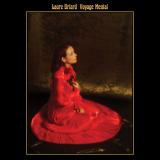
- A1: Rocking Chair
- A2: Le Train
- A3: Golden Sun
- A4: Miroir
- A5: Voyage Mental
- A6: Surprises
- B1: Je Comprends Pas
- B2: Respire
- B3: Sentimental Lies
- B4: Force Invisible
- B5: C’est Quoi Ces Gens
- B6: My Two Hours Of Sleep
- B7: Astrale Maison
Every so often in music, we come across voices that achieve a certain timelessness, so naturally do they encapsulate both past and present. Laure Briard is one of these voices, retro in form but contemporary at heart, spanning a career rich in aesthetic twists and turns, never without her signature magic, a special kind of eternal filter. Her first album, Révélation (2015), reveals her yé-yé influences, a testament to her love for ‘60s French pop music. Her second studio album, Sur la piste de danse (2016), follows in this vein and finds Laure accompanied as always by her long-time bandmates who share an affinity for warm, catchy arrangements that never lose their appeal. Her tour of Brazil marks a turning point in her career, introducing her to the local indie scene and thus launching her collaboration with the band Boogarins, as well as inspiring the release of multiple EPs composed and performed in Portuguese. Today, her music is embellished by touches of bossa nova and a folk sensibility, boasting increasingly intricate arrangements, as exemplified by her 2019 release, Un peu plus d'amour s'il vous plaît. Several years later, the Californian desert captures the musician’s imagination with Ne pas trop rester bleue, a poignant musical journey inspired by the rich history of Western legends and the role they play in shaping our collective consciousness.
In Voyage Mental, Laure Briard draws upon an inner energy unearthed during a new stage in her life, where the thrill of spontaneous adventure is not accessible in quite the same way. The result is a collection of sophisticated, introspective songs, narrating a young mother’s quest for balance in the face of routine. The album, nostalgic but always tethered to the present moment, is also the fruit of her collaboration with Gaëtan Nonchalant, a talented musician known for coaxing poetry out of the mundane. The two of them co-wrote and recorded five tracks at Studio Nocturne, accompanied by her long-time sidekick Pieuvre, aka Vincent Guyot, Léo Blomov, Pierre-Louis Vizioz, and Hedi Bensalem. The gentle pop opener “Rocking Chair” sways steadily to the rhythm of dynamic drums, followed by “Train,” a ballad that extends an invitation to set sail and daydream alone. The folk escapade continues with “Golden Sun,” a duet featuring the 1960s cult American musician F.J. McMahon, who Laure contacted via the internet on a whim. “Golden Sun” is an unlikely encounter between two generations and two cultures, giving new life to an old forgotten demo on the other side of the Atlantic. And while Laure sings of wide open spaces, cowboys, and sunsets sinking into the sea, we feel the city surrounding her in “Miroir,” a song composed by Hedi Bensalem that laments the suffocation of living in a crowded metropolis where the sky is a distant gray smudge. This pressing need for air, this search for rest and total disconnection, is one of the album's central themes. It may also explain the ever-present sense of nostalgia that pervades the songs, a welcome respite in our current era of doomscrolling and darkness. Along the way, Laure soothes us with melancholy guitar, delivers poetry set to scattered piano notes, and takes us by the hand during lively, uptempo passages. We climb onto her wings, never straying too far from the ground, soaring joyfully above her moods.

5
The story of how we heard about D.J. City.
Once upon a time P.P. D.J.ed in Stockholm. Picked up by legend Sling from the airport, with what I recall was a very nice old Jeep, that had a tape deck.
That Tape deck was playing a cassette that quickly caught our attention. We found out, on it was „1- 800 Techno“, a project by another local legend D.J. City. Somehow we received the tape and digital files and have been playing them ever since.
Years later we met D.J. City at a gig for Cocktail D’Amore, it was a brief and pleasant introduction as he was handing over the decks to us.
It took some more time until we really got in touch and started a work relation that quickly turned into friendship. Circa 10 years later, we have the opportunity to properly shine light on this project that started it all.
You can listen to the full release digitally and on Vinyl for the first time. „1-800 Techno“ that is Karl Lihagen & Johan Norling (aka D.J. City) with „For Several Eternals Before There Were Years“. This I guess is what you call a „full circle moment“. Enjoy!
14
This release documents the legacy of Ranil, the Amazonian singer and bandleader who shaped a distinctive regional style blending cumbia, psychedelic textures and local rhythmic traditions. Born Jorge Raul Llerena Vasquez in 1935, Ranil rose from rural beginnings to front Los Silver's in the early 1970s before founding his own label, Producciones Llerena, to independently record his imaginative, genre-blurring music. His catalogue, long scattered across mismatched pressings, remains a vivid record of Amazonian creativity. Following his later career as a radio voice in Iquitos, this collection preserves key recordings and supports archival efforts that continue to highlight his cultural impact. Check the frisky percussion and euphoric vocals of 'Pueblo', the scratchy guitar and bustling funk of 'Bahia' or the lilting 'Albores De Mi Selva' for proof of just how irresisitble it still sounds today.

- A1: Super Boiro Band - So I Si Sa
- A2: Bembeya Jazz National - Armée Guinéenne
- A3: Kaloum Star - Maliba
- A4: Balla Et Ses Balladins - Nyo
- B1: Quintette Guinéenne - Douga
- B2: Le Simandou De Beyla - Festival
- B3: Horoya Band - Zoumana
- C1: Kaloum Star - Gbassikolo
- C2: Sombory Jazz De Fria - Nana
- C3: Syli Authentic - Fabara
- D1: Balla Et Ses Balladins - Paulette
- D2: 22 Band Kankan - Deny
12
On October 2 1958, after over 60 years of colonial rule, Guineans voted overwhelmingly for their independence, and Guinea was declared a Republic with Sékou Touré as President. Guinea was the first of West Africa’s Francophone colonies to gain independence. To free Guinea from its colonial legacy, president Touré sought to restore dignity to his nation and give cause for Guineans to take pride in their culture, history and newfound freedom. To achieve this, he instructed his government to implement new cultural policies that were intended to revitalise and celebrate indigenous culture. The focus of these new policies was on music.
In 1961, President Touré launched authenticité, the name of his new cultural policy for Guinea. One of its first acts was to assemble the best Guinean musicians into a new state-sponsored orchestras that were tasked with presenting traditional Guinean music in a new and modern style. All musicians in Guinea’s orchestras were officially designated as members of the public service. During the years of Sékou Touré’s presidency (1958 – 1984), the government’s cultural policy of authenticité was applied strictly to the creative arts. Guinea’s sole political party, the Parti Démocratique de Guinée exercised complete authority over artistic production. The scale of the Guinean government’s commitment and efforts to invigorate its indigenous musical cultures was unmatched in Africa, and it presented a clear contrast to the minimal endeavours undertaken by Guinea’s former colonial rulers.
From 1967 to 1983, Guinea’s government presented selections of songs from the Voix de la Révolution catalogue on its own recording label, Syliphone. These recordings were described as ‘the fruit of the revolution’. Syliphone was revolutionary in many aspects: it was the first recording label to feature traditional African musical instruments such as the kora and balafon within an orchestre setting; it was the first to present the traditional songs of the griots within an orchestre setting; and it was the first government-sponsored recording label of post-colonial Africa. Syliphone represented authenticité in action, and over 750 songs were released by the recording label on 12-inch and 7-inch vinyl discs. All are highly sought after by collectors worldwide.
This is the second of a two-volume release which presents a selection of the best songs from Guinea's Syliphone recording label. This volume focuses on recordings from the 1970s, when Guinea’s authenticité policy had transformed the nation's music through a network of over 30 orchestras, each representing their local region, and each presenting Guinean musical traditions alongside the influences of Cuban music, jazz and funk.
8
Jazz-fusion, disco-funk, Latin jazz and batucada rhythms get the Filipino treatment onAfter Midnight, the sublime second album from keyboardist Boy Katindig. Originally released in 1980, After Midnight draws heavy influence from soul and funk contemporaries in the US as well as Latin America, in particular the famed Brazilian percussionist Paulinho da Costa.
It’s a testament to his musical prowess that Katindig weaves effortlessly between styles and tempos. His reverence for Paulinho da Costa extends far, with covers of several songs from the latter’s 1979 Happy People album. This includes slow-burner ‘Déjà Vu’ written by Isaac Hayes originally for Dionne Warwick; on the Filipino instrumental version, local legends Jun Regalado and Roger Herrera (from Regalado’s ‘Pinoy Funk’ single) are reunited on drums and bass respectively.
But Katindig’s original compositions hold just as much weight and unique personality: title track ‘After Midnight’ opens with a sultry funk serenade reminiscent of The Isley Brothers, and quickly transforms into a catchy, blistering, saxophone chorus that brims with swagger. Hidden B-side gem ‘Got The Need’ is an uptempo tribute to batucada that would not be out of place in a jazzy house set, and boasts increasingly elaborate and psychedelic solos from Katindig on keys and Ben Concepcion on soprano sax.
Meanwhile, ‘Love Till the End of Time’ is a masterclass in instrumental disco funk, penned by the prolific Greg Phillanganes who at that same time was writing for many of the greats including Chaka Khan, George Benson, Stevie Wonder, The Jacksons and Cheryl Lynn.
This album is lovingly reissued by Sama Sama Records, a boutique label from DJ and collector Norsicaa, who ran the esteemed Soundway Records for 8 years and released the compilation Ayo Ke Disco in late 2024.

Alistair Colling vs. Tortured Soul featuring Sabina
When You Find Your Love…Hold On 25th Anniversary Mixes
4
25 years ago, at the turn of the millennium, downtown NYC was spoiled with record stores. In this pre-digital age, vinyl was king for club DJs, and shops such as Downtown 161, Dance Tracks, and Vinyl Mania peppered lower Manhattan, thriving businesses that supported an expanding scene of local and international DJs. Perhaps the largest and most established of these was Satellite Records, an institution of club sounds that also spawned multiple record labels, including the deep-house imprint Central Park Recordings.
At this time, Central Park Recordings and Satellite Records owner Scott Richmond signed a demo in need of a vocal from young British producer Alistair Colling, and enlisted John-Christian Urich to write it, who had just had a massive hit with “I Might Do Something Wrong” the debut Tortured Soul single on Central Park. He in turn brought in Sabina Sciubba of then newly-formed band Brazilian Girls to record the vocal, and with Jon Cutler on remix duties the record was complete. Tortured Soul went on to release numerous deep house classics like “Fall In Love,” “How’s Your Life” and have continued to tour as a groundbreaking live-house act to this day (of which RNT co-founder JKriv was bassist and collaborator for 10 years).
For the 25th anniversary of this turning point release, Razor-N-Tape has rebooted and remastered the original and classic Jon Cutler mixes, which have never been reissued in any format since the original release. RNT also commissioned two new exemplary remixes from DJ Spinna and musclecars, connecting the dots between the deep-house lineage of the past and present. Presented in a gorgeous jacket that calls back to the graphical style of the original Central Park Recordings aesthetic, this 12” is an absolute essential for any lover of soulful club sounds or purveyor of NYC dance music history.

ULURU is a large sandstone rock formation in Australia. It's sacred to the Anangu, the local Indigenous of the area. For many years it had been deprived of its spiritual significance, due to mass tourism, capitalism, as well as greedy and selfishness of people who just want to make money out of it. However, as a result of the Anangu’s resilience, care and staunchness, huge changes took place in the national park around Uluru as well as in the broader public's consciousness, giving again to the Uluru the sacred identity that had been lost.
You might be reading and thinking now: so what's the point? Actually, there's no real point. I would rather say, there’s hope. The hope of seeing humans all around the world following the example of the Anangu. The hope of seeing humans finally stopping to treat the earth and all what’s part of it, what’s on and what’s in it, as a slave without soul. The hope of changing today, and if not today at latest by tomorrow. This system is failing. It's no longer sustainable, and there's no much time left.
So everybody, don't sleep, be critical.

4

8
nagoyaka na kaze / 和やかな風 (quiet wind): a collection of forward-thinking electronic experiments sourced from central Japan - co-curated by Nagoya artist abentis for Facta & K-LONE’s Wisdom Teeth imprint.
The project profiles a close-knit community of music makers operating in and around the Japanese city of Nagoya: one of the country’s most populous and industrial cities, but one all too often overlooked in terms of its cultural significance.
Curated in close collaboration with local scene organiser Yuya Abe - aka abentis - the record seeks to capture the creative energy of a community of artists making hard-to-define, future-facing electronic music away from the clamour of the bigger cities. “In Nagoya, there’s a strong culture of supporting artists. Even if you pursue music in your own way, as long as it’s good, you’re encouraged to keep doing what you want”, explains abentis. “Within that environment, my generation has been able to freely bring in elements we like from all kinds of genres, combine them in our own way, and express ourselves individually. If you go to Tokyo or Osaka, that kind of freedom isn’t something you can take for granted.” Spiritually, Nagoya fits the mould of cultural hotbeds like Bristol, Detroit or Melbourne, showing that some of the most innovative creative communities form away from the glare of the capital cities. Like Detroit, Nagoya is principally known for being a major auto manufacturing hub, famous for being the home of Toyota Motors - but behind the scenes, it is quietly harbouring one of Japan’s most vibrant and forward-thinking electronic music scenes. “In a good way, Nagoya is a bit removed from the cutting edge, so you find people making all kinds of music”, explains Karnage. “If you’re making music, you feel like part of the crew, and people of different ages mix together without much hierarchy.” The city’s music scene is characterised by a freedom to mix genres and an open-door approach to creatives of all disciplines. The artists featured come from a diverse set of backgrounds, ranging from hip-hop to noise music, but have found a common collective identity in their omnivorous approach to genre. As such, the record moves fluidly between shimmering ambient and new age (Am Shhara, DHYAN, daiki hayakawa), psychedelic minimal house (Methodd, abentis), abstract, low-slung downtempo (baptisma, Nasty Soupman) and spaceage steppas (Karnage). “I’d say the way ambient, new age and that kind of sound design are blending nicely with dance music feels somewhat new”, says baptisma, the crew’s eldest member and de-facto scene leader. Responsible for bringing artists like Basic Channel, Mala and Jan Jelinek to the city, baptisma has been crucial in establishing underground electronic music in Nagoya since the 90s, and now helps cultivate the next generation of local talent. “Artists and DJs are seamlessly mixing ambient and new age with techno, house and bass music. I think that’s a really interesting development.” nagoyaka na kaze has its roots in a one-off event held in October 2024 as part of the 10 Years of Wisdom Teeth Japan tour. Curated by abentis in collaboration with Facta & K-LONE, the showcase featured live sets from eight artists based in and around Nagoya at one of the city’s key dance music hubs, Club JB’s. Each of the artists features again here, on record, presenting an original commission produced especially for the project. The record’s art direction was led by Yudai Osawa - in-house designer for Kankyō Records, the much-loved Tokyo record shop run by H. Takahashi - and features original photos by Hayato Watanabe.

12
THE OPRHIC HYMNS is an ode to the mystical. A celebration of the languid. An exploration of the id. A journey into self. The project was written, performed, and produced by Ryan Grieve and Tom Kuntz over the course of a year in a secluded location, with a few visits from notable guest contributors such as Alex Kassian and Logan Hone to sprinkle in a little of their magic. Kuntz (aka Pinchy Don) is the Pinchy in PINCHY AND FRIENDS. Grieve is the man behind HOLE IN THE SKY RECORDS and projects such as Heart People, Canyons, and Absolute Unity. This is their first release as THE ORPHIC HYMNS.

7
Sauna Radio presents its first compilation, a sonic snapshot of Stockholm's vibrant underground.
Born from the weekly community radio and event series hosted on a floating sauna in the city center, the compilation brings together local and international artists connected to the project - including Peder Mannerfelt, MOLØ, Abstraxion & Bella Sarris, Staffan Lindberg, Julia Wallin, and more.
Blending hypnotic techno, leftfield house, and introspective electronica, the release captures the raw, emotional, and communal energy of Sauna Radio.
Limited to 100 vinyl copies, Sauna Radio Compilation SR001 will be released on December 12th, 2025 via Biologic Records.

4
In early 2025 Oakland-based Jerod S. Rivera released his second full length Dot-Dash, featuring a collaboration with CST co-founder Cat Lauigan and Jonathan James Carr. From the beginning we were mesmerized with the result, a perfect melding of Cat's processed spoken-word and Jerod's Buchla experimentations.
The thought of remixes presented immediately, the material extra ripe for interpolation. Enlisting friends from geographically and sonically disparate locations to present an ideal remix 12". Something for everyone, something for every setting, a tool with multiple functions...
The mysterious dub/techno/leftfield mastermind behind False Aralia dives further into territory explored on iri.gram, uptempo and dancefloor-ready in a more maximal Perlon-ish way while still embracing a half-time dub feel. Philipp Otterbach (Music from Memory, Offen, RIO) goes deeper into the guitar zone he’s been exploring, channeling Earth 2, Boris, and the like for some heavy drone. Oakland duo DJ ML and Wonja adopt their Motoko & Myers moniker (Future Times, Soda Gong), zeroing in on some choice vocal snippets that mesh perfectly with a live drum break and bassline for a Seefeel-esque version that could have come from a 90’s UK studio. Finally, Slowfoam embraces the more experimental elements of the original with a remix that starts sparse and minimal but builds into a glitchy rhythmic climax.
The 12” includes a 2-sided riso insert and a download code with access to an additional remix by close collaborator Jon Carr that twists the vocals into a throbbing industrial caucaphony.

4
Two Lisbon mainstays from contiguous generations join forces as Scam Dust for the new Paraiso record: Tiago, Lux Fragil resident, world-renowned DJ's DJ and all-round music whizz plus Shcuro, Paraiso's co-founder, scene documenter and impeccable selector & producer. Funnily enough they also live in contiguous beach towns in the outskirts of the capital, Parede and Carcavelos. That's where they zig-zagged amid home-studios and, four hands in various machines, concocted this refreshingly to-the-bone record. Like a non-local entanglement between Lisbon, Sheffield, The Hague and somewhere in the American Midwest, 'Gastric Pulse' EP opens with a saturated, modulated acid line over a tight, industrial-tinged techno beat, peppered with sonic dirt of the highest order. It sounds like music projects like Downwards and Mathematics would put out. 'Enzyme Breaks' follows suit with a comparably raw spirit, adding some mysterious atmospheric scintillation and drum variations. A certain recluse techno (is that a thing?) comes to mind (and heart), Unit Moebius style. Toms abound in 'Pepsin Drive' - always a promising sign in our book - and the playfulness continues in the cheeky bassline and the intricate clap work. Soulful stabs give the tune extra magic via the mantra-like structuring power of repetition. The final track in the record comes from Pacific North-West transplant Doc Sleep and her collaborator Elias FS step in for remix responsibilities and flip the B1 into a hypnotic, dubby - and yes, jazzy - piece complete with a dive into glitchy, sonic sculpture territories towards the end of the arrangement. Quite the brilliant take. Music still counts (and always will), after all is said and done - and nothing like two hard-working music-makers to remind us of that.

6
Focusing on bringing people some fresh air from the island that we produced with its own unique character. Our artists provide an escape to somewhere full of energy to drag you back from the so-called chaotic world. There are plenty of spaces, it’s a sharing for everyone!
As you may know, Koh is a word in Thai that means ‘island’. We want to represent the sound of our characterized island and tell the story through it. For this collection, we want to present the island under the ground which represents the different perspective of life reflecting our music scene in reality.
We gave the word “Clockmaker” as a hint to the artists.
It’s a simple, even mundane concept—something easily overlooked and not immediately eye-catching. It also suggests waiting, as it often takes time for people to return to the shop. But time itself holds meaning, and the clockmaker always has something hidden beneath the surface.
With that in mind, “The Photo Sticker Machine” and “Chucheewa” present their first original track: “Galactic Love.”
Alongside it are five vibrant remixes by artists we deeply admire—from Mogwaa (Korea) and Retromigration (Germany) to three incredible talents from Thailand’s local scene: Kova O’ Sarin, Chalo, and Saranmy.
Loni Gamble stepped into the international spotlight with his 1983 debut synth funk album on Canadian imprint Tracey/Unidisc.
A year later Loni hit again but this time locally, with vocalist Lisa Warrington self-releasing "I Like The Way You Do It" on the start-up Philly imprint Sound Modification.
The record received local radio support, and some regional record shop distribution, but never really made it out of the area.

11
“The music of Season 2 of SEVERANCE is true to what came before in Season 1, while also developing new themes, new sounds, and new variations,” says Shapiro. “The season's bold expansions into new storylines and new locations, along with the incredible filmmaking and performances, provided plenty of inspiration.” “We are beyond thrilled to head back to Lumon with our Season 2 vinyl package,” says Mutant Co-Founder Spencer Hickman. “Working alongside Ben Stiller and his team, Fifth Season, and Apple has been an absolute honour and a joy. Greg Ruth and I are obsessed with the show and the chance to play in this sandbox again. Creating original art alongside in-show ephemera is like receiving a gift. I couldn't be prouder of the package we have crafted for Season 2, blending the Innie and Outie worlds just as the season itself felt instinctual. I really hope fans feel we have done it justice. PRAISE KIER.” Single LP with obi strip and a 16-page booklet featuring portraits of the main cast.

3
Inspired by Sam Kidel’s ›mimetic hacking‹ concept, Berlin-based composer Jasminev Guffond pipes opiated brass and woodwind motifs into a reverb chamber modelled on an Amazon fulfilment centre.
»Muzak for the Encouragement of Unproductivity« is a poetic inversion of Muzak’s traditional role in stimulating seamless productivity in the workplace. Beginning as a pre-radio music distribution network (1934, U.S.), Muzak was transmitted along electrical wires with the intention of being at once ubiquitous and indiscernible, always present yet easily ignorable. As a pseudo-science the aim was to capitalize on the potential of music to have a psychological effect on listeners, and with the goal of maximum productivity, was employed as a sonic disciplinary force in the work place.
Previously installed for Dystopia Sound Art Biennial (2024), at the Amazon Packing Station located before HAUNT-Frontviews in Berlin, Muzak for the Encouragement of Unproductivity sonically addresses utopic notions of seamless, efficient productivity, inherent to capitalist cultures, and their very real dystopic effects from labour exploitation to the impacts of over-production on the environment. This poetic inversion, further developed as an album, is not meant as a kind of melodic control but rather a reflective space in which to consider the benefits personally, globally and environmentally, of slowing down.
Reverb, essential to the Muzak aesthetic, is programmed (using convolution reverb) with the dimensions of the Berlin Amazon fulfillment centre, DBE2. Amazon fulfillment centers are global contemporary factories, promising a consumer utopia of next day delivery of almost any product imaginable. Inspired by Sam Kidel’s concept of »mimetic hacking«(1), the reverberation characteristics of the DBE2 facility perform a symbolic sonic break-in to the guarded Amazon fulfillment center, a trespass to the flow of production.
Guffond’s ambient Muzak with its drifting horn, clarinet and synth-like modulations is just too down-tempo for upbeat spending. If this is Muzak it is possibly Muzak for the end of the world, thoughtfully seeking transcendence through implied questioning after all avenues for shopping have been exhausted.

Carolina funk obscurity alert! "Migraine" by North Carolinian musician Dennis Garner, together with Dennis O., is a deep, rare slice of local funk magic. This 45 has always been a bit of a frustration—the cutting engineer accidentally left the lathe test tone running for a few seconds.mid-track, which made it tough to play out. We've finally fixed that issue, and now this killer cut is ready for some proper funtime.
Brooklyn-based DJ and producer Son of Lee is a native New Yorker who's been active in the local underground for over a decade. He launched this label back in August with a doozy of an EP that soon sold out, and so we're glad he's back. These are four more flame-hot disco edits marbled with references to many classic sounds and artists. 'Stop Making Cents' is jangling disco-pop, while 'Different Places' slows down to an 80s synth chug and 'Louis-Dreyfus Dance Face' brings some erotically charged disco sophistication and 'Nichols In May' is a mid-tempo and dubbed out delight with funky guitars for days. Classy and effective.

From the heart of Tamanrasset in South Algeria, Imarhan transcend Tuareg tradition, weaving hypnotic synths into desert blues. The result is a timeless work—deeply respectful of their roots, yet alive with a stirring sense of modernity.
ESSAM is the band’s fourth album, recorded with the same core lineup, but marks a significant shift in their sound and approach. Musically, it marks a departure from the rocky, bluesy, psychedelic Tuareg guitar-driven sound influenced by Tinariwen’s heritage — moving toward something more open, modern, and exploratory.
For the first time, their long-time sound engineer Maxime Kosinetz stepped in as producer. He travelled to Tamanrasset with Emile Papandreou (of the French duo UTO), a multi-instrumentalist who introduced electronic elements by sampling live instruments and reprocessing them in real time with a modular synthesizer — subtly reshaping the band's sonic identity.
The album was recorded mostly live, in one big room at Aboogi Studio — the band’s own rehearsal and recording space in Tamanrasset. The studio, a converted concert hall, has become a kind of cultural hub for the local youth. Friends dropped by during the sessions to contribute handclaps, vocals, and just be part of the energy. It’s a space where people gather, hang out, play dominoes, smoke chicha — a rare communal spot in a city that doesn’t offer many for young people, somewhat like a youth and community center.
This context — the creative shift, the live recording process, the atmosphere around Aboogi — might be interesting threads to explore in the conversation.

- B2: Grazia Vitale – Poi (1975)
- D4: Daniel Sentacruz Ensemble – Vivo Solo Con Te (1982)
- A1: Cinzia Peloso – Sciogli Le Catene (1980)
- A2: Linda’s Night – Cucciolona (19??)
- A3: Daniela Guerci – Non Ti Resisto Più (1979)
- A4: La Comune Idea – Cuore Di Serpente (1981)
- B1: Tony Ferri – Stella D’oriente (1979)
- B3: Sara Bongiovanni – Casablanca (1985)
- B4: Solimar – Veliero (1980)
- B5: Coscarella & Polimeno - Station To Station 2025 (2025)
- C1: Cap – Alla Porta Del Tempo (1982)
- C2: Francisca – Non Dico No (1983)
- C3: Hyper Drive Band – Hyper Mix (1985)
- C4: Linnel Jones – We’ll Cry Out (1986)
- D1: Jairo – Night Woman (1985)
- D2: Ilaria Berlato – Vincerò (1985)
- D3: Alex P.i. – Free Love (1985)
- D5: Miro – Tu Non Lo Sai (1984)
18
Everyone knows the story of American disco.
But few are aware that, between the late 1960s and the late 1980s, Italy wrote a parallel one — spontaneous, surprising, and incredibly creative.
It is a story that spans two distinct seasons: the Italian disco of the 1970s — melodic, handmade, sometimes naïve yet always original — and the emerging Italo Disco of the 1980s, electronic, futuristic, and lightheartedly projected toward the future.
Two different languages, yet both driven by the same desire for freedom and modernity. Discoteca Sound — Italian Discoteca Underground 1975–1986 brings together 18 rare tracks — including two previously unreleased — that tell this story of transition: from the orchestral and sentimental disco of Italian dance halls to the synthetic and visionary sound of the first drum machines.
A journey through private archives, local labels, regional studios, and forgotten voices — the sonic map of a country that has always danced, but to its own rhythm. From Mediterranean disco to the first Italo Disco, from the dim lights of provincial dance halls to the early home synthesizers, each track opens a window onto an Italy that dreamed of the dance floor as a universal language of connection during the brief season of revolutionary utopias.
This compilation celebrates ten years of work by Disco Segreta — a decade dedicated to the research, recovery, and appreciation of Italian disco and electronic culture. An act of justice owed to all those artists who had their moment yet were never remembered by history — bringing back to light an essential, still too little known part of our musical heritage.
Because dancing today remains, more than ever, a living act of memory.
Limited edition 2LP, features 2 previously unreleased tracks and a new 2025 version of Coscarella & Polimeno – Station to Station.
f Grazia Vitale – Poi (1975) Previously Unreleased
q Daniel Sentacruz Ensemble – Vivo Solo Con Te (1982) Previously Unreleased
f Grazia Vitale – Poi (1975) Previously Unreleased
q Daniel Sentacruz Ensemble – Vivo Solo Con Te (1982) Previously Unreleased
f B2. Grazia Vitale – Poi (1975) Previously Unreleased
q D4. Daniel Sentacruz Ensemble – Vivo Solo Con Te (1982) [Previously Unreleased]
[f] B2. Grazia Vitale – Poi (1975) [Previously Unreleased]
[q] D4. Daniel Sentacruz Ensemble – Vivo Solo Con Te (1982) [Previously Unreleased]
[f] B2. Grazia Vitale – Poi (1975) [Previously Unreleased]
[q] D4. Daniel Sentacruz Ensemble – Vivo Solo Con Te (1982) [Previously Unreleased]

Renowned for his rich, soulful voice and heartfelt songwriting, Wellington, New Zealand's Louis Baker blends neo-soul, R&B, and folk into a sound that feels both timeless and fresh. His single "Keep On" is an uplifting anthem of perseverance, now reimagined by a hand-picked selection of acclaimed producers, each bringing their unique touch to the track.
Delfonic: Berlin's Delfonic is a digger's digger - a selector, DJ, and producer with an encyclopedic ear for groove. Fresh from delivering stunning Roy Ayers edits for BBE Music, he brings his soulful touch to "Keep On", crafting a warm, deep, and floor-friendly rework.
Larse: German DJ and producer Larse has released on acclaimed labels such as Defected, Glitterbox, and Noir Music, earning a global reputation for timeless, emotive house. His remix of "Keep On" channels the smooth, sultry elegance of UK soul icon Sade's '80s sound - lush, classy, and built for late-night listening.
Gush Collective: The legendary German 2-step producers Gush Collective are masters of soulful, shuffling rhythms. Their remix of "Keep On" blends classic UK garage swing with uplifting melodies, delivering a dancefloor-ready cut that radiates joy and energy.
DJ Philippa: Originally from New Zealand and now based in Berlin, DJ Philippa has built a strong following for her uplifting, groove-rich house sets and productions. With releases on Freerange Records, SlothBoogie, and Local Talk, she's known for her deep musicality and impeccable feel for the dancefloor. Her remix of "Keep On" injects warm basslines, shimmering keys, and irresistible rhythmic flow.

8
Recognized as one of the most prolific emerging producers of Latin American electronic music, Entrañas presents his second album Los Cueros Al Sol, a project that redefines his sound through a deeper connection with tradition, instrumentation, and his personal narrative. This album represents his most organic work to date, incorporating recorded instruments and showcasing Entrañas himself on guitar throughout several tracks, along with drums and guitars recorded by guest musicians.
The album offers an exploration of local rhythms, reimagined through his unique production style, characterized by carefully crafted sound design and rhythms full of distortion and energy that dissolve between textures and atmospheres. Alongside these traditions and sounds, aggressive and enveloping basses and synths emerge, accentuating the hybrid nature of his work.
True to its title, Los Cueros Al Sol, an expression that evokes the idea of laying bare the truth, of revealing oneself raw and without artifice, the project draws on everyday life in Quito, the hometown of Entrañas, with song titles reminiscent of traditional street foods. This intimate resource anchors the music in the land and memory, interweaving its local identity in every detail.
The interstellar electronics are once more pushed to the fore on closer '80 Axes', where jaunty synth lines combine with soft bongo hits to create an instinctive rhythm, and intergalactic melodies sprint between the speakers. You can dance if you want to, but lying down is very much encouraged.
As part of the label's mission to champion Dutch talent, Voyage Direct has always promoted new, up and coming, and little-known producers. Boss Tom Trago's master plan includes building a family of artists, in part through helping unheralded local producers to fulfill their potential.
On the label's latest release, he continues that approach, serving up a debut 12' from a mysterious young producer known only as Darling. Those paying close attention to the wider Dutch house and techno scene may have spotted his recent rework of Awanto3's 'Star Butchers' on Dekmantel, in which the man or woman of mystery added some killer keys to the Amsterdam legend's woozy, deep house original.
While that rework was undoubtedly superb, Jacob's Lead offers a truer reflection of the shadowy producer's previously hidden talents. As debut EPs go, it's a bit of a cracker.
The title track, in particular, is a beauty. Its' restless, hypnotic rhythm tips a wink to classic Dutch techno of old, while the undulating, analogue electronics and swirling pads recall the far-sighted retro-futurism of vintage Motor City material. Throw in some of Darling's trademark spine-tingling keys and a deliciously loved-up breakdown, and you have a choice chunk of life-affirming techno.
On the flip, Darling heads towards deeper territory with the bubbling melodies, starburst electronics and saucer-eyed chords of 'Video'. Unashamedly positive in sound and intent, it sounds like the kind of track that will be cited as a classic in two decades time. Melodious and infectious, it casts Darling as the Netherlands' answer to Larry Heard.

On “Cold Sweat,” James Brown famously called to “give the drummer some.” In 1974, Philadelphia vibraphonist Khan Jamal called to Give the Vibes Some, with superb results. Pianist and composer Jef Gilson’s PALM label gave Jamal the platform he needed to deliver a thorough exploration of contemporary vibraphone. After launching PALM in 1973, Gilson quickly demonstrated that he would only produce records not found anywhere else. Give the Vibes Some, PALM number 10, was another confirmation of this guiding principle.
Raised and based in Philadelphia, Khan Jamal took up the vibes in 1968, after two years in the army during which he was stationed in France and Germany. Decisively drawn to the instrument by the work of the Modern Jazz Quartet’s Milt Jackson, Jamal studied under Philadelphia vibraphone legend Bill Lewis and soon made his debuts in the local underground.
Early in 1972, Jamal made his first recording, with the Sounds of Liberation. The band attempted an original fusion of conga-heavy grooves with avant-garde jazz soloing. Saxophonist Byard Lancaster, an important figure in Jamal’s development, contributed much of the solo work. Later in 1972, Jamal made his leader debut with Drum Dance to the Motherland, a reverb-drenched, never-to-be-replicated experiment with live sound processing. Both albums appeared on the tiny musician-run Dogtown label.
“We couldn’t get no play from nowhere. No gigs or recording sessions or anything. So I took off for Paris,” Jamal recalled in a Cadence interview with Ken Weiss. “Within a few weeks, I had a few articles and I did a record date. It didn’t make me feel good about America.” That was in 1974, while Byard Lancaster was recording the music gathered on Souffle Continu’s recent The Complete PALM Recordings, 1973-1974.
Jamal’s record date delivered Give the Vibes Some. At its core, it was an exploratory solo vibraphone album, even if two tracks added (through technological resourcefulness?) a très célèbre French drummer very much into Elvin Jones appearing under pseudonym for contractual reasons. Another track, for which Jamal switched to the vibes’s wooden ancestor, the marimba, added young Texan trumpeter Clint Jackson III. The most notable article published on Jamal during this stay in France was a Jazz Magazine interview. Jamal’s last word there were “The Creator has a master plan/drum dance to the motherland.” “Give the vibes some” could be added to this programmatic statement.
ULURU is a large sandstone rock formation in Australia. It's sacred to the Anangu, the local Indigenous of the area. For many years it had been deprived of its spiritual significance, due to mass tourism, capitalism, as well as greedy and selfishness of people who just want to make money out of it. However, as a result of the Anangu’s resilience, care and staunchness, huge changes took place in the national park around Uluru as well as in the broader public's consciousness, giving again to the Uluru the sacred identity that had been lost.
You might be reading and thinking now: so what's the point? Actually, there's no real point. I would rather say, there’s hope. The hope of seeing humans all around the world following the example of the Anangu. The hope of seeing humans finally stopping to treat the earth and all what’s part of it, what’s on and what’s in it, as a slave without soul. The hope of changing today, and if not today at latest by tomorrow. This system is failing. It's no longer sustainable, and there's no much time left.
So everybody, don't sleep, be critical.

Lunfardo presents “Aurora" introducing the fourth conceptual album that deep dives into Uruguayan culture and misticism once again.
On March 3, 1976, Ángel María Tonna, owner of the ¨La Aurora¨ ranch in Paysandú, observed a strange flash of light near his shed. Upon approaching, he found a spaceship suspended 75 meters high, with an intense circular light that caused radiation effects later discovered in the ground. Simultaneously, a blackout occurred in the nearby cities of Paysandú and Salto, and several witnesses of lights crossing the sky were documented in the local press by major newspapers such as El Telegrafo.
Thereafter, Neil Armstrong, the first man to walk on the moon, visited Uruguay and the ranch several times, eight times to be exact. He shared photos of flying objects with Tonna and left a drawing in the house depicting space and "supreme beings." Despite UFO reports throughout Uruguay, ¨La Aurora¨ remains a mystical place. The truth is out there, or as it is sayed beneath there.
“Aurora EP¨ immerses us in two sides divided between Molen and Qasio. Side A invites us to explore the inexplicable in an abduction, a “close encounter” (Encuentro cercano) that transports us directly on a journey through outer space but also immerses us in the mysteries of "Ulimen." Side B offers a profound guide to worlds of "dark matter” (Materia Oscura), disconcerting presences, “orbs”(Orbes), and galaxies above our heads

Lost Gospel Gem - Exitiment "Rap For Jesus" by Columbus Native Kenneth Jordan Rediscovered Nearly 40 Years Later
Columbus, GA — In the late 1980s, Columbus native Kenneth Jordan was such a powerhouse on the local music scene that talent shows had to rewrite their rules. His voice was so captivating (and his wins so frequent) that some claimed the competitions were rigged.
Jordan, deeply rooted in the city's thriving R&B circuit, eventually turned his creative energy toward faith-based music. Teaming up with several local musicians, he recorded "Excitement (Rap For Jesus)", a gospel-infused rap track that aimed to connect with a younger audience enthralled by the sound of hip-hop. His goal was simple: to give youth something uplifting to rap about and listen to.
In 1985, following a personal health scare and a period of reflection, Jordan transitioned from R&B to gospel music. "I took it as a sign from above that it was time to make a change," he later shared. Though his lyrics found new purpose, his signature soulful style remained unchanged.
Fast forward to December 2022 in Little Rock, Arkansas, where record collector and producer Brian Sears stumbled upon a well-loved copy of "Excitement (Rap For Jesus)" while purchasing over a thousand vinyl records from the trunk of an SUV in a Lowe's parking lot. Struck by the track's energy and message, Sears went into "detective mode" to uncover the story behind the voice—and the man—on the record.
Today, Kenneth Jordan continues to share his gift with his community, leading spirited performances every Sunday at his local church in Columbus. Nearly four decades later, his music and message still resonate with the same joy and conviction that first made him a hometown legend.

9
Continuing his refraction of the rave continuum into pointedly dislocated, delicately bruising sound system meditations, Low End Activist returns to Peak Oil with a second instalment in his Airdrop series. This time around, he channels the ghosts of foundational tech-step and the quantum leaps of late-90s D&B to provide the inspirational fuel for his skeletal, astral constructions. A strong stylistic thread continues to weave through the LEA output from his earlier self-released EPs and Sneaker Social Club albums, where haunted atmospherics, blown out subs and snatches of breaks dart around each other in empty dancehalls, but the finer point of the sound design and synthesis makes very specific references to landmark moments in hardcore's evolution.
By weaving his own autobiography into the music, the Activist maintains a fundamental theme of his work to date. 'Colin's Golf', 'Smithy's Porsche,' 'Merv's Lazy Eye' and 'Brillo's Teeth' are all personal codes harking back to the formative Oxford rave scene. With the framework in place, he uses textures, timbres and studio tricks from scene-leading pioneers and local heroes of the era as ingredients in thoroughly modernist concoctions. None of the reference points are deployed as literal callbacks — they're waymarkers for the creative process and faint triggers bedded deep into Airdrop II's strange formations. Fleeting sonics might trigger latent memories for those who were there. For everyone else, Airdrop II is another step further along rave's eternally unspooling odyssey, guided by decades of precedents on a path into the future.

- A1: We'll Do Thee Somethin
- A2: Relovution
- A3: Down The Black Hole
- A4: I Got Soul
- A5: Not Too Good To Be True
- A6: New World
- B1: Spookie
- B2: Reborn
- B3: Go Back To Paradise
- B4: Dance Trance
- B5: Lastmanonearth
Aftersome refers to that suspended moment of wonder, when you realize you’ve been led here by a chain of unexpected events and small decisions — so improbable they almost feel preordained. Between chance and destiny, it is a fragile state where emotion and reflection intertwine.
This album by You Man embodies precisely that idea: each track is a step along this path, a resonance born of accidents and coincidences, ultimately shaping a coherent trajectory despite its improbability.
The work moves between techno, house and post-wave, infused with science-fiction and fantastical influences, constantly blurring the line between reality and imagination.
The experience is enriched by remarkable collaborations: Marc Almond (Soft Cell), Local Suicide, Jérôme Voisin, each bringing their own brilliance to this odyssey.

4
The Punky Rocking Christmas came over two different Xmas’s for the punk connoisseur. The first back in 1977 when the Sex Pistols took themselves up to Huddersfield to play a gig for the firemen but also as they arrived in the afternoon a gig for the local kids. After much cake throwing and high jinks and with the kids all cleared out the Pistols played the evening show for the adults. This it would turn out to be the Sex Pistols last show in England, as they went to America in January 1978 and imploded. That as they say is another story.
The second Christmas Punk bonanza took place in London’s Ladbroke Grove area when The Clash, possible inspired by the Sex Pistols previous Xmas gig, decided to play their own Xmas gig in 1979 on
Christmas Day at The Acklam Hall. The added bonus was they also played at the venue on Boxing Day. So there you have it the two biggest punk bands giving two xmas treats to their fans. To celebrate these festive treats Mal-One has written two songs to celebrate both events and dubbed up both versions for this Maxi-12” special. He has also provided two sleeves a Sex Pistols sleeve 250 copies and a Clash sleeve 250 copies plus a signed print in each. As they say what more could you want in your xmas stocking.
Ho Ho Ho and a punky rocking happy Xmas to you all.
DJ Support: Raresh, Marco Corola, Jamie Jones, Joseph Capriati, Chris Stussy, DJ Seinfeld, D'Julz, Djebali, Voigtmann, Arapu
For Amsterdam’s Julian Anthony, club culture has always been about movement - between sounds, between scenes, and increasingly, across continents. Rooted in the Dutch underground, his path has taken him from intimate local spaces to international stages, with appearances at institutions such as Berlin’s Hoppetosse, Ibiza’s DC10, and London’s fabric. Along the way, he’s formed close ties with crews such as Slapfunk, VBX, Half Baked, and S.A.S.H, while recent tours across South America and Australia have further widened his reach. His connection with Enzo Siragusa and the FUSE family is longstanding, having previously dropped his track ‘It’s Showtime’ on sister label LOCUS while making appearances at both FUSE and LOCUS events across Europe, including this year at FUSE Malta, during ADE, and November’s fabric takeover. Now, his ‘Missing Pieces’ EP extends that relationship further, marking his fi rst release on FUSE and off ering a natural progression while showcasing his versatility as a producer.
In his productions and his sets, Julian threads together house, techno, and electro infl uences with a playful touch, resulting in a style that feels fl uid yet sharply defi ned. Title track, ‘Missing Pieces’, sets the tone with a heavyweight bassline at its core, coupled with a hypnotic groove and percussive drive, while ‘Endless Echoes’ stretches into more atmospheric territory, weaving rolling rhythms with cosmic textures. On the fl ip, ‘No Sleep’ ups the intensity with zipping synths and sharp drum programming built for peak-time play, before ‘TTS’ closes the record on a captivating note, fusing deeper house nuances and playful rhythms into a late-night trip.
With a growing catalogue across respected imprints such as Dungeon Meat, X-Kalay, and Bee You, and a touring schedule that continues to expand globally, Julian’s first outing for the London favourites highlights his talent for crafting tracks that are simultaneously precise, playful, and built for the club.
Welcome to the first release on Acid Lamour
A sub label for Lamour Records started in 2018 with a focus on techno and acid dedicated DJs. Releases are limited to 303 vinyls, no re-press.
Anders Ilar and John H are no newcomers to the electronic music scene.
Born in 1973, Anders Ilar began his explorations of electronic music in the mid 80s. Growing up in the small town of Ludvika in Sweden, Ilar spent all of his spare time playing with synthesizers, drum machines, keyboards and sequencers, learning the ins and outs of analogue and digital sound and music creation. Inspired by the early industrial and EBM wave he formed several bands with friends, started playing live shows
at smaller local parties, and released several demo tapes in very limited quantities. In the 90's he gradually shifted his creative influences towards ambient techno and acid and also started to DJ. He started using computer software to produce his music around 1999 and his first vinyl EP was released in 2001 on the german label Plong!, soon to be followed by
many more releases on labels such as Shitkatapult, Audio.nl and Echocord.
Developing his own flavor of deep minimal dub techno and ambient he gained critical acclaim with his album Nightwidth (2006) for Narita Records in the USA. Followed by highly appraised album Sworn on the german label Level Records in 2008. Ilar has also made remixes for celebrated artists such as Apparat, Mikkel Metal and Ripperton and has
appeared on numerous compilations and DJ-mixes. He's performed live on stage through-out most European countries and Japan, as well as doing a small tour with Notch Festival in China in 2008.
Up to 2018 Anders Ilar has produced 13 albums and 25 vinyl EP's and performed in over 15 countries.
Born in 1984 and based in Gothenburg. John H has been DJing, as well as producing tracks, since the late 90s, with Anders as his mentor and teacher, giving John early musical influences spanning across a wide range of genres, from Swedish techno to IDM, Cologne acid craziness and
the sound of Chicago house tracks. The musical output of his DJ-sets usually varies between techno, house, acid, electro and everything in between, depending on the time and location. John has performed on several locations all around Sweden, but also done appreciated gigs in other European countries at clubs like Tresor and Culture Box, and his music has been featured in sets by DJs such as Sven Väth, Adam Beyer,
Joris Voorn, Dense & Pika, Cari Lekebusch, Alan Fitzpatrick, Karotte,
Gregor Tresher, The Hacker and many more.
Coming For Your Tongue EP is Anders and John's 4th collab release, after
acclaimed releases on Flight Recorder and New York Haunted, recorded
during a jam session at John's studio in Bergsjön outside of Gothenburg,
Sweden, using a small setup of analogue synths and drum machines such as
the Roland TR-606, TR-808, a Devil Fish modified TB-303, Minimoog Voyager
and the Arturia Microbrute. After recording Anders spiced things up by
cutting and puzzling loops as well as adding extra effects and drums.
Limited edition of 303, no repress. Vinyl exklusive for 3 months

In 1978 a newly formed Augusta, Georgia group Marshall, Donovan and Broomfield chose to record cover versions of two songs previously recorded in 1973 and 1974 respectively by Florida siblings group Cornelius Brothers and Sister Rose. These Eddie Cornelius penned songs “Let me Down Easy” and “Since I Found My Baby” would form both sides of Marshall, Donovan and Broomfield’s first 45 single, released on group founder John Marshall’s own Augusta label. The flipside “Since I Found My Baby” would eventually gain popularity across the pond with aficionados of the UK modern soul scene of the early 1980’s and beyond.
John Marshall began his musical career in a high school group called The Fabulous Gardenias who recorded the doowop ballad “It’s You, You, You” backed with the up-tempo R n B mover “What’s The Matter With Me” released on Tommy Brown’s local Liz label (named after his wife future Motown recording artist, Liz Lands) in 1961.The Fabulous Gardenias featured John Marshall, the late Atlanta alumni Calvin Arnold, “Little” Joe Jones Jr (later of the Tams) and a fourth guy only remembered as Harold. John Marshall later sang with another Atlanta group The Tams of “Hey Girl Don’t Bother Me” fame from 1970 through to 1978.
Later in 1978, John Marshall having relocated to Augusta, GA the previous year was casually emptying the contents of his mailbox outside his home when a car suddenly pulled up. The driver called out “Hey I recognize you, you’re John Marshall you used to be with the Tams!” The driver continued to introduce himself as John Donovan stating that he too was a singer, followed by an impromptu performance, and hey! sure enough he could sing! A later introduction to Charles Broomfield (John Marshall’s next-door neighbour at that time) would lead to the formation of the group Marshall, Donovan, Broomfield with the addition of Mary Marshall and Pat Donavan (the then, two John’s respective wives) as backing vocalists. The previously mentioned group’s first release the John Donovan led “Let Me Down Easy/Since I Found My Baby” was recorded at the now defunct Jam Studio’s in Atlanta. Upon release, the “Let Me Down Easy “side received considerable local radio play but only led to the group performing a handful of local shows. On the strength of the group’s first release a second 45 release followed in 1980 “Let’s Dance/That’s Love” both sides of this 45 were penned by Charlston, South Carolina native, Harold Thomas who John Marshall knew from his time with the Tams, Thomas having once been part of Bill Pinkney &the Original Drifters and later the Tams management teams. This second 45 never gained the same local attention of “Let Me Down Easy” and after three years together the Marshall’s, Donovan’s and Charles Broomfield went their separate ways. John Marshall lost contact altogether with his former group members and left the music business taking up employment at International Paper Mill until his retirement in 2013.
Due to the current resurgence in popularity of “Since I Found My Baby” with copies regularly selling for four figure sums, Soul Junction have reacquainted ourselves with John Marshall to you bring you “Since I Found My Baby” backed with “Let Me Down Easy” with the addition of the excellent and lesser, known stepper “That’ Love” making this an excellent value 45 release.
13
2025 Repress
The mighty Falsetto voice of Mr Cornell Campbell is another we believe, unsung hero of the Jamaican music scene. Who in our opinion should have broke through to a wider audience, than his cult status currently provides. We have unearthed straight from the master tapes an album that was due for release around the mid 70’s. A few of these cuts, found their way out on limited 7”s, that were mainly for the domestic Jamaican market. But as a complete body of work, never found a release until now. We hope like us, once you have played the tracks, you will feel that this set of cuts, stands up amongst Cornell’s finest work. Cornell Campbell (born 1948, Jamaica), made his first recordings in the early 1960’s for Coxone Dodd at Studio 1. Tracks like ‘Under the Old Oak Tree’, ‘My Treasure’ and later as a duo with Roy Patton ‘Salvation’ and ‘Sweetest Girl’, were local hits on the Jamaican Sound Systems. A short spell with the Uniques was followed by his roll as lead vocalist with the Eternals, under the monicker of Don Cornell. Their finest moment being the classic ‘Stars / Queen of the Minstrels’ cuts which still stand up today as some of Jamaica’s finest.
The 1970’s saw Mr Campbell move on to work with producer Bunny ‘Striker’ Lee, for whom he cut most
of his big tunes. He and fellow singer Johnny Clarke, would become Bunny’s 70’s equivalent to his 1960’s stable of singers like Slim Smith, Pat Kelly and Ernest Wilson. They would provide the voice to his many hits of the day. Bunny not being called ‘Striker’ for nothing. Cornell also had a series of hits around his theme as the ‘Gorgon’. The mighty figure unbeatable at the dances in the Greenwich Town district of Kingston. ‘The Gorgon’, ‘The Conquering Gorgon’. ‘Natty Dread in a Greenwich Farm’. These were all firm favourites at the dances in Jamaica. He also worked with other notable producers around this time. Winston ‘Niney’ Holness “I Heart is Clean’, Tappa Zukie ‘Follow Instruction’
and culminating in a massive hit ‘Boxing’ in 1979 for producer Joe Gibbs. But it was his time with Bunny Lee that set the levels for his record output. This unreleased album is from this period in time, when Cornell Campbell never sounded sweeter......

Cody 'Coflo' Ferreira is hyped right now, and for all the right reasons. Spinning all over the world and producing killer tunes on all the right labels (including Local Talk).
But we think he is at his very best when he goes in the studio with US vocalist Lee Wilson. Even though they delivered some great tunes in the past, we can honestly say that this is the best one by far...yet.
The track 'We Can Make It' comes in two versions, one "soulful mix" for all the garage heads, and on the flip, there's a darker and more electronic mix (but still loaded with soul).

5
Welcome to the world of Paroxysm Ltd, a record label hailing by the beautiful coast of Albania.
This is the First time an electronic music label from Albania is releasing a vinyl in the history of the techno scene, and is doing so by representing both local talents and international established aces with a selection of dance floor weapons for every time slot and space. This is a label made from ravers and music nerds and aimed at the dance floor, fellow ravers, Djs who love their crowds, after hour lovers and for all the people who want to live fast, dance and spread love with no compromises!
Paroxysm Ltd is a project that started back in early 2022 with a series of events and radio shows and then naturally evolved into a record label.
Owned by Avni Leka and Vekh, the label aims to create a bridge between the fresh underground music scene of the Balkans and the rest of the world, one release and party at a time.
The cover image shows some old bunkers built during the communist era that now fell in disuse, a remarkable and common landscape fixture in Albania. The Picture was taken by the talented Robert Hackman, who spent a lot of time collecting images of the bunkers throughout our beloved country and then published them in a beautiful book called “Metamorphosis” and then agreed to collaborate with us, providing some of his amazing shots for our releases.
Paroxysm loves you, stay crunchy <3

5
Iptamenos Discos kündigt Houdini an, die neue EP der Labelgründer Local Suicide. Die Platte enthält drei ihrer dunkelsten und kraftvollsten Originaltracks bis heute, ergänzt durch markante Neubearbeitungen des französischen Electroclash-Pioniers David Carretta und der aufstrebenden griechischen EBM-Kraft Alpha Sect. Die Houdini EP entstand im Berliner Studio von Local Suicide während zahlloser nächtlicher Sessions mit Skelesys in derselben kreativen Phase, die auch ihren gemeinsamen Hit Moustache, die Surface Of The Sun EP und Faster Faster auf Curses’ Next Wave Acid Punx-Compilation hervorbrachte. Das Ergebnis ist ihr bisher düsterstes Material, das ihren Technodisco-Sound in noch härteres Terrain führt - mit hypnotischen Basslines, industriellen Texturen und analogen Vintage-Synths. Damit zählt es zu den mutigsten Releases im Katalog von Iptamenos Discos. Die EP eröffnet mit Obsessions, einem Track zwischen Darkwave und Techno, aufgebaut auf einer brutalen Bassline, analogen Synths und eindringlichen, mantraartigen Vocals. Die wiederholte Zeile „Obsessions, they come and go“ spiegelt den unerbittlichen Sog des Stücks wider und unterstreicht seine klaustrophobische, sich ständig wiederholende Energie. Submission, eine Zusammenarbeit mit Langzeitkollaborateur Skelesys, steht dem in nichts nach: ein düsterer Low-End-Sound, verzerrte, stark bearbeitete Vocals und der Sprechgesang „Resistance, no submission“ durchziehen den Track wie eine Trotz-Erklärung, die Spannung in Kraft verwandelt. Der Titeltrack Houdini ist etwas zugänglicher, behält aber die gleiche schattige Atmosphäre. Unheimliche Orgelmelodien und der Text „The great Houdini, the big escape“ beschwören Transformation und Befreiung herauf, zollen dem legendären Illusionisten Tribut und verleihen der Nummer eine theatralische Note. Der französische Kult-DJ und Produzent David Carretta interpretiert Obsessions neu mit seiner unverkennbaren retro-futuristischen Handschrift. Seit den 1990ern bekannt für die Fusion von industrieller Präzision mit Italo-inspirierten Synths, hellt er den Track mit glitzernden Disco-Melodien und einer erhebenden Stimmung auf – eine Version, die sich bewusst vom dunklen Original absetzt und sofort für die Tanzfläche taugt. Der in Straßburg ansässige Alpha Sect, das Projekt des griechischen Künstlers George McCall, führt Submission in kompromisslose Dimensionen. Verwurzelt in Electro und Body Music mit Punk-Einflüssen, beginnt sein Remix als wuchtiger EBM-Stomper und entwickelt sich zu einem clubtauglichen Track, der Intensität mit Katharsis in Balance bringt.

12
2025 Repress
When people think of Tough Gong they usually think of Bob Marley and rightly so, as he was nicknamed and often called Tough Gong and from this his early releases which came out on the Tough Gong label. But Tough Gong was also the name of a recording complex named after Bob Marley hat included a top level recording studio, pressing plant and distribution centre that would allow reggae music to carry on many years after his sad and too early demise.
Bob Marley had take over the former residence of Island Records boss Chris Blackwell the Island House, 56 Hope Road around 1974. Just before the 'Smile Jamaica' concert on 03rd December the same year the house was ambushed by gunmen. Bob's manager Don Taylor was hit 5 times AND Bob was shot in the arm and his wife Rita Marley was hit in the head by a stray bullet. How no one was fatally injured is staggering. Immediately after the concert Bob Marley started his self imposed exile from Jamaica, settling in London, England. This would lead to the aptly named exodus album being recorded there in the summer of 1977. It would not be until the 'One Love' peace concert in Kingston's national arena on the 22nd April 1978 that would see Bob's return to the island. Marley felt is was important to show his commitment to the people of Jamaica and on his return to 56 Hope Road he began construction of his own recording studio with the help of music mogul Tommy Cowen. Unfortunately Bob Marley's short life would end on the 11th May 1981 from cancer which originated form a football injury. His passing would lead to 56 Hope Road being turned into a museum to the legend of reggae music.
A new location would have to be found to carry on Bob's work which was 220 Marcus Garvey Drive, Kingston 11. The buyer would be Rita Marley and the Tough Gong International Organisation.
Engineers working at the new facility included Errol Browne who had worked at Treasure Isle studios and Hopeton Overton Browne known as 'Scientist', named by the great producer Bunny 'Striker' Lee who worked with him previously at King Tubbie's and Channel One's studios described his ground breaking style as being like that of a scientist.
We focus for this release on the work carried out by the great Scientist on the songs of the Black Solidarity Label run by Ossie Thomas (aka Joe The Boss) recorded at Tough Gong studios. One of the foremost recording, pressing and distribution facilities on the Jamaican island set up from the work of Bob Marley to carry forward reggae music. Hope you enjoy this set......
10
Operating on the fringes of pure improv, organised chaos, minimal composition, lo-fi electronics and Italian spaghetti westerns, wide-eyed and with a healthy dose of DIY aesthetics lies the world of Jaan. It’s a poetic & cosmic universe, exploring “discreet music” whilst wandering on the edges of the Cat People soundtrack & Brian Eno’s more experimental output, in which you might yourself find floating, wandering or in the middle of a market place.
Jaan is a collective of one, a deliberately anonymous activistic unit with strong ties to the international art scene. Purposefully bypassing the know-it-all of the the internet & embracing the bygone mystery of dusty old archives and deep-dive searching, remarkably little is known about this project. Jaan is lead by veteran experimental sonic alchemist Jaan; they operate between Greenland, the Middle East and Europe, with frequent associates Lisqa, Mashid & Schneorr N. acting as local hubs for collaboration and exploration.
The purpose of this wilful obscurity: full focus on the actual music, whether live events or on recordings. Which brings us to Baghali, their first for World of Echo. It’s a deeply personal album, much like slowly browsing old family albums filled with vaguely remembered tales, some still very much present, some faded, leaving but a ghost-like reflection of what once was. Baghali was compiled over the course of a year on the road, trapped in snow storms, waiting for cancelled flights and stuck rides. It’s made up of snippets of diary, quick recordings on road sides, abandoned buildings, garden ruins, vast desert and focussed studio sessions, following a collage-like aesthetic and steeped in an exploration of non-lineair storytelling. There’s broken memories, a sense of displacement and an occasional yearning for what can’t be again, clouded in fever and unrest, but there is also hope, wonderment and bright colours seeping through the cracks in the wall. Jaan weaves home-made instruments, old tape loops, broken synths, beat-up reeds, dusty beat boxes and the occasional doom guitar squall into a tapestry of fractured sound, with tracks following their own inherent logic rather than following formats. Sounds crash in and out, field recordings placing the listener firmly in an environment then throwing several perspectives at once onto them, with individual elements - a wandering clarinet, a lone mandoline, a beat out of place yet perfectly in place - slowly walking in and out & doing their thing.
The whole album is alive, breathes, takes a wrong turn, gets lost, somehow finds its way again - effortless and with a unique sense of space and flow.
Baghali is released digitally and on vinyl in an edition of 300 on 3rd October 2025.

12
Reintroducing Soar - the alias of Christian Aebi, serial DIY taper and one-man orchestra from Langenthal, a fog-shrouded town in the Swiss provinces. Krautophobia, ambient lo-fi agriculture, analogue soul balm and slowspeed psych gelati-blitz cardboard pop only gesture towards the sound world he coaxed from his broken Tascam four-track recorder, in attics, churches, junkyards and at the kitchen table.
The spark for Soar was likely time and space, somewhere in the autumn of 1994. Armed with a cable salad of Sixties guitar/bass, fairground drums, mould-speckled organs and toy instruments, Aebi coaxed five albums, an unverified run of 25 cassettes, and a handful of gigs. Mostly issued through Zurich label Corazoo, the records arrived in hand-pasted sleeves, rough-cut reproductions of his teddy bear-fixated artwork that carried the same imperfect immediacy as the music. With Rudi Steiner, performances in galleries, clubs and halls bent into live sound-image happenings - part installation, part film, part flea-market-instrument theatre - invariably leaving the house engineers bewildered.
At the time of his untimely death in 2021, Aebi remained a village secret, his music passed quietly between friends and local ears. Now, Swiss graphic designer and Ghost Riders compiler Ivan Liechti has pieced together a portrait from the afterglow, gathering tangled audio formats, paintings, illustrations, photographs and notebooks with his family, former label and peers. What emerges is a first glimpse of Soar's intimate cosmos - brushing against Füxa, Spectrum, Dump, Stereolab and King Crimson, but orbiting a dimension entirely his own.
- A1: Countrymusicdisco45 4 08
- A2: Sometimes Shooting Stars 2 57
- A3: Short Cut Home 3 25
- A4: Disappointment 3 00
- A5: Days Are Mighty 2 46
- B1: Don't Dance With Me Tonight 3 27
- B2: You Got It Wrong 2 39
- B3: Ring The Bells 3 57
- B4: Let's Make It Up 2 49
- B5: When Did You Stop Loving Me 3 54
- C1: Just Beginning 4 00
- C2: Wintering Of The Year 3 16
- C3: Let It Rain 3 04
- C4: We Tell Each Other Who We Are 3 27
- C5: Trip To You 4 06
- D1: Dirt 2 54
- D2: Heaven Right Here 3 38
- D3: If Later Ever Comes 3 03
- D4: Remember The Season 3 10
- D5: A Little Love 3 35
- D6: Weary Traveller 3 20
21
“The high priest of country cool” - Rolling Stone
“I like him very much. He’s very special. He’s singing with a voice I never heard before” - Townes Van Zandt
“A conscious, soulful brother” - Horace Andy
“He’s a brother to me - one of the best singer/songwriters I’ve ever met” - Adrian Sherwood
“Unearthed mine of gems from inner Wales - a songbook of ideas - that's Jeb!” - Gilles Peterson
Jeb Loy Nichols is a bonafide Country (Got) Soul legend. The Music Maker presents 21 incredibly deep, grooving and soulful songs from the cream of Jeb's catalogue; from its earliest days to his latest unreleased gems via countless rare and unbelievably good lost-classics. This 2LP set is presented in a gatefold sleeve complete with freshly commissioned artwork courtesy of Jeb himself.
In collecting these uncut, under-heard gems, we hope to do justice to Jeb's jaw-dropping artistic brilliance. A man who, in working with Adrian Sherwood, Dennis Bovell, Dan Penn, Larry Jon Wilson and countless other legendary characters, has crafted some of the most deeply affecting folk, country, soul, funk, blues, dub, reggae, gospel, rap and electronic music, ever heard.
The first music Jeb really felt a connection with was southern soul: "I used to listen to the radio at night and fell in love with Bobby Womack and Al Green, The Staple Singers and Joe Simon – that whole Nashville/Memphis/Muscle Shoals thing.” But Jeb was so much more than a soul boy, Indeed, he "went to bluegrass festivals with my dad and come home and listened to jazz records with my mother.” And, when he was fifteen, he heard his first punk record: "God Save The Queen" by The Sex Pistols. “That and The Ramones completely changed me.” In 1979 he got a scholarship to go to art school in New York: “A great time. Punk was over but hip-hop was starting and I got into that in an obsessive way.”
His first recording, in 1980, was an unreleased rap song called "I’m A Country Boy". If that isn't an insight enough into Jeb's kaleidoscopic path through music, in 1981 he visited friends in London and found himself living in a squat with Adrian Sherwood, Ari Up (from the Slits), and Neneh Cherry. “Adrian put me to work immediately, moving boxes of records all across London. It was Adrian that was and is my biggest influence – in his complete disregard for genre purity.” So, presumably you're getting the picture? A veritable musical magpie with a voracious appetite and unimpeachable taste.
"Mine has always been a meandering career. I've done what I've done, and made the music I've made, due to chance meetings. I'm not particularly ambitious; it's more important to me that I work with friends and like-minded people. I've been a big fan of Be With for years. Everything they release is essential. When they asked about rereleasing "Countrymusicdisco45" I was both pleased and flattered. We began talking about how we'd do it; two years and twenty-one tracks later, here we are. I've always thought of the music I make as Country Music. Music conceived in the country, written in the country, recorded in the country. I left London and moved back to the country so I could live among the trees, the grasses, the animals, those things that don't go to war and get greedy. This compilation is the story of that life. Hand made, lo-fi, ramshackle, stripped down, real deal music. Heartworn and funky. Music made in the kitchen, not in the studio. As the great Skip Mcdonald said, Perfect ain't perfect. It's great to see all these tracks gathered together. It feels like a family reunion. Some older members of the tribe, some newer arrivals."
Opener "countrymusicdisco45" is a song Jeb wrote about how his crew lives, tucked up blissfully in the hills: "House parties full of country folk dancing to disco, reggae, soul, country, hip-hop. All night. I recorded it at home under the influence of Stevie Wonder." It's one of the funkiest records you'll ever hear. "Sometimes Shooting Stars" was recorded in Nashville and mixed by the legendary Dennis Bovell. It's deep, dubby, majestic. A thing of fragile, melodic beauty. The party ramps back up again with the undeniable groove of "Short Cut Home" before the profoundly moving "Disappointment" arrives. One of many songs he's recorded with good buddy Benedic Lamdin (aka Nostalgia 77): "We were going for a Leon Thomas meets Richard Brautigan meets Alice Coltrane kind of thing". We think they nailed it. "Days Are Mighty", like a lot of the tracks on this collection, "started life as a demo, an attempt to get something down while it was fresh. No frills, nothing fancy, just feel." And what feels!
The irrepressibly funky "Don't Dance With Me Tonight" is a deeply moving, slow-mo organ-drenched head-nod-funky country-ballad. Next up, the breezy "You Got It Wrong" was recorded in Wales with some of Jeb's good friends and neighbours, The Westwood All Stars, featuring Clovis Phillips and Will Barnes. Skanking fiddle-flecked gem "Ring The Bells" was the first thing Jeb recorded when he moved to Wales. A combination of all his loves; country, reggae, soul. It's followed by "Let's Make It Up", a truly sumptuous string-drenched emotional groover. "When Did You Stop Loving Me" is another Nashville track, written and recorded during a time Jeb was spending a lot of time with the Muscle Shoals crew, Donnie Fritts, Spooner Oldham, George Soule and Dan Penn: "It shows, I'm sure, their influence." Oh, you bet it does!
The swaggering country-funk of "Just Beginning" should grace many groove-focused DJs' sets whilst "Wintering Of The Year", again made with Clovis, is pastoral, campfire soul. The glacial, gorgeous "Let It Rain" is from an unreleased record Jeb made with the great British jazz bass player Andy Hamill and "We Tell Each Other Who We Are" is freaky country-soul made by a man with a love for strutting, wonky hip-hop stylings. Rounding out the side, "Trip To You" is pure, uncut amphetamine-propelled drum-machine soul.
The spare, beautiful "Dirt" is from an EP Jeb made with Julian Moore in his house in South London: "All first takes, straight to tape." Swoon! "Heaven Right Here" was a very minor league hit in America: "It was produced by the brilliant and much missed Wayne Nunes. It was started in the countryside of Missouri, finished in the countryside of Wales, and recorded in the countryside of Sussex." Double swoon! "If Later Ever Comes" is electronica meets J.J. Cale business whilst "Remember The Season" is truly wonderful and breezy guitar soul. "A Little Love" was made with Wayne Nunes as well, after a night of listening to Studio One and Northern Soul. Bouncy dub closer "Weary Traveller" was written by Bill Monroe, the hero of Jeb's youth: "Monroe's music was heavily influenced by black southern churches; I've tried to keep some of that feral feel." This was the final recording by Jeb's 1990s Country-Dub band, Fellow Travellers.
The name of this compilation comes from a time when Jeb lived in Peckham, south London and he used to DJ and sometimes perform at a local bar: "The owner of the bar, a Jamaican named Count Percy, once asked me what I called my music. I told him I wasn't sure, I guess just pop music. He thought about it for a minute and then said, 'no, more like mom and pop music'. Rather than call me a country singer or a folk singer he always referred to me as The Music Maker."
With the long overdue deluxe overview of his beloved music, we hope to finally shine a light on the unheralded genius of Jeb Loy Nichols. RIYL Larry Jon Wilson, Townes Van Zandt, Bobby Charles, country got soul artists, dub, deep soul, disco, dancing, heartbreak. This deluxe collection, spellbinding from beginning to end, should hopefully go some way to ensuring Jeb reaches an ever bigger, ever more appreciative crowd of followers. Mastering for this special double vinyl edition was overseen by Be With regular Simon Francis and it was cut by the esteemed Cicely Balston at Abbey Road Studios to be pressed in the Netherlands by Record Industry. The artwork has been lovingly put together by The Music Maker, himself, Jeb Loy Nichols. "Be With is the perfect home for this mongrel music. I am forever in their debt." The pleasure is all ours, Jeb.

10
When people think of Yacht Rock-those smooth, sun-drenched sounds that once drifted from Californian radio stations in the late '70s and early '80s-they rarely imagine it echoing through rehearsal rooms in Hamburg or Linz. Yet even far from the Pacific coastline, the appeal of shimmering chords, laid-back grooves, and polished production found fertile ground.
This compilation gathers rare and overlooked tracks from Germany and Austria. These artists embraced West Coast aesthetics with sincerity and subtle twists, resulting in music that feels both familiar and refreshingly new-smooth sounds for cloudy skies. So drop anchor, pour something cool, and enjoy this unexpected cruise through the lesser-charted waters of Euro Yacht Rock.
Our journey begins in Austria, where Reflection's Because (1981) set the tone with blue-eyed soul and analogue warmth-a sunlit blend of Doobie Brothers polish and local charm. Its creator, Dieter Heyduk, reappears with Austrian Sky, a heartfelt nod to his homeland that fuses mountain calm with oceanic longing.
From the North Sea island of Föhr, Ara Pacis dreamed of California on their 1979 self-release To the Westcoast. Inspired by Steely Dan and Lake, they turned German rock precision into breezy, melodic sophistication. Meanwhile, in Düsseldorf, Mainpoint fused funk and jazz-rock on Frisbee, their 1980 single bursting with rhythmic drive and optimism before the tide of the Neue Deutsche Welle swept such grooves aside.
Bremerhaven's Nuages offered the compilation's only instrumental gem, Strange Weekend (1985)-a gentle blend of jazz-funk and rock and largely lost to time. Its cool restraint captures the European interpretation of Californian ease.
Around the same period, British traveler Gavin James recorded River of Laughter in southern Germany, backed by the blues-rock band Black Cat Bone. His acoustic reflections on water and flow mirrored the soft, meditative pulse at Yacht Rock's core.
Berlin's Top Spin kept things playful with Bikin (1985), a funk-fusion snapshot of urban joy that showcased the city's finest session players. From the Ruhr area, the Jan Pack Band is up next. While not a typical Yacht Rock track, Cable Dance is driven by an effortless, groovy '80s vibe.
Peter Seiler's Goldfinger project reimagined Walkin' in the Sand as a relaxed reggae-tinged track, while Munich's Major Seven closed the voyage with Silverboat, a wistful soft rock ballad gliding between melancholy and light.
Across these hidden harbors of German and Austrian pop, the West Coast dream took on new forms-reflected in rivers, skies, and studio lights half a world away from L.A. Under and Above the Clouds celebrates that spirit: the enduring pull of smooth music, wherever it's made.

LTF began as a 90s b-boy who was raised on funk and hip-hop before he even knew the names of the music he was hearing. Under the influence of early greats like DJ Shadow, Beat Junkies and Cut Chemist, he dove into turntablism and spun breaks across Siberia while digging for records. Once he discovered the sampler, his world shifted to loops, chops, basslines and scratches. His debut project Dapdown earned local buzz and global connections, including France's Black Milk Music crew, and a decade ago, while armed with Soviet synths, double bass, and dusty vinyl, he dropped his first solo album, Light The Fuse. It's truly raw, expressive, beat-lover's soul with a heavy groove that has been remastered for this reissue via Tunes Delivery.
4
Musiq Voyage sets sail with its debut release by TORRE Bros, a producer duo from Aix-en-Provence. A heartfelt tribute to Marseille and the Mediterranean through two shimmering Space Disco cuts: Gyptis and La Pointe Rouge.
Remixed by the legendary Moplen, Alex From Tokyo, and Julien HBT, this EP blends house, boogie, and balearic vibes into a warm and elegant sonic journey.
//
After cruising their native Provence and spinning on the mythical shores of Ibiza with their iconic pink-and-blue DJ truck, the Musiq Voyage crew is proud to launch their new label with a sun-soaked debut EP.
Rooted in Mediterranean soul, Phocaea Vol. 1 features longtime friends and local legends TORRE Bros (Jean-Marc & Patrick Torre), producers from Aix-en-Provence with over two decades of musical exploration—from disco and house to hybrid electronic jams. Known for underground hits like Corps à Corps and Baleora, supported by artists such as Carl Craig, the duo now pays tribute to Marseille, their beloved coastal city.
A1 – Gyptis
Named after the legendary princess said to have founded Marseille, Gyptis is a lush space-disco homage to the city’s ancient roots—where Greek sailors met local tribes, and myth met the Mediterranean.
A2 – Gyptis (Moplen Remix)
Italian disco don Moplen (Chaka Khan, Talking Heads, Loose Change) delivers a floor-ready rework—elevating the groove with cosmic flair while keeping the original’s dreamy vibe.
B1 – La Pointe Rouge
A sonic postcard of one of Marseille’s most iconic seaside spots—sunsets, sailing, and slow walks by the sea. Built on a strong boogie beat, 80s synths, and balearic textures.
B2 – La Pointe Rouge (Alex From Tokyo & Julien HBT Remix)
Legendary DJ/producer Alex From Tokyo (Tokyo Black Star, Innervisions) teams up with Parisian underground figure Julien HBT (Demented, with François X) for a deep, syncopated reimagining. Infused with Chicago house and leftfield boogie influences, this remix flips the original into a spaced-out late-night groover.
More than just a legendary DJ, Alex From Tokyo has built a global career bridging cultures and sounds. After growing up in Japan, he returned to Paris in the early ’90s and co-founded A Deep Groove with DJ Deep and DJ Gregory, launching one of France’s first underground dance radio shows on FG 98.2 FM.
A key link between Europe and Japan, Alex worked with labels like F Com, Mr Bongo, and Yellow Productions, before living in NYC, Berlin, and beyond.

A blazing sunset melting into the horizon, an ice-cold cocktail in hand, and the bittersweet feeling of a moment hanging in time. With Love On The Rocks, I Coccodrilli take us on an emotional journey that drifts between nostalgia and euphoria, lazy golden afternoons and bursts of unexpected joy. A '90s-inspired Italo House project produced by R. Arcella and E. Fierro for the catalog of Futuribile, an iconic record store based in Naples and a true hub for local and Italian music.

The second instalment of SCHNRZ formed by LI & ZOL gathers resources from the thermal baths of Budapest. Exquisite blend of field recordings, floating dub athmospheres and fullfilling bass-adventures balanced out on mid-tempo minimalism. Shapeshifting series of releases by the two local heroes under the flag of Budapest-based SCHNRZ, that refers to Schonherz, the name of the neighbour dormitory of their basement studio - forged by Berlin-like mid-tempo minimalism with a pinch of Balkan, developed to the next level by dub carpets of the north.

- A1: No Future
- A2: Twisted
- A3: Til I Beg For Mercy
- A4: Wake Up
- A5: Scene One
- B1: From Nothing To Nothing
- B2: Some Time
- B3: Your Product
- B4: Watch You Bleed
- B5: No Answers No Solutions
- C1: Lies
- C2: I Am The Labyrinth
- C3: Force Majeure
- C4: Flesh
- C5: Denial (Excerpt)
- D1: Pretender ('94 Mix)
- D2: Life Before Death ('94 Mix)
- D3: I Am The Labyrinth (A_Maze Mix)
- D4: From Nothing To Nothing (Edit)
- D5: No Answers, No Solutions (No Time)
20
Advanced Art was formed in Tampere, Finland, in 1985 by Jana, Pete, and Vince. Too young to be part of the first wave of Finnish groups inspired by German synth pioneers and New Romantics, they instead forged their own path and soon became pioneers themselves. For the next ten years, Advanced Art defined and dominated Finland’s small but growing electronic underground. They inspired a new generation of Finns to experiment with synthesizers, built an international cult following, and were deeply involved in the local scene—running clubs, organizing events, and performing at some of the very first warehouse parties in the country.
Although the line-up shifted over time, the group’s creative drive consistently came from the partnership between Jana, who supplied the voice and words, and Vince, who shaped the music with his machines. Together they defined the band’s distinctive blend of sharp electronics and lyrical vision.
After several cassette demos and two 7-inch singles, Advanced Art signed to Poko Rekords in 1991. The EPs Scar and Time raised their profile both at home and abroad, especially thanks to valuable exposure on MTV Europe’s 120 Minutes. Known for their perfectionism, they finally released their debut album Product in January 1993. On Product the line-up was Jana (lyrics, vocals), Vince (music, production), and Factor (percussion, studio work). Having moved through phases of synth pop, EBM, and industrial, the album showcased Vince’s vision of a unified sound and style more clearly than ever before.
Force followed in 1994, conceived as a multi-part concept album (Update / Live / Retro). Recorded with live percussionist PW joining Jana and Vince, it expanded on the groundwork of Product with new beats, ideas, and a sharper, more defined identity.
By 1995, exactly ten years after their founding, Jana and Vince decided to bring Advanced Art to a close on the band’s birthday, 13 October. Their run had been precise: one decade of creative output, ending with a legacy that laid foundations for Finland’s electronic scene.
Now, conveniently coinciding with the band’s 40th anniversary, Advanced Art present Forced Product. This double-LP set, fully remastered, features Product in its entirety, alongside the Update and Retro sections of Force, plus additional EP tracks and remixes recorded between 1991 and 1994 at “Audible Art” – less a studio than a concept, existing wherever machines and people met.
Limited to 450 copies, Forced Product comes in a gatefold sleeve with poster and sticker, offering a definitive document of Finland’s pioneering electronic cult heroes — a band that helped invent their country’s scene and left a lasting influence far beyond it.

11
"The machine looms—it watches you from within. The finger points, but the face is missing."
The Bristol/Amman connection just got even deeper… following DBL's impressive string of Avon-infused heaters (check the recent scorchers from Nzumbe, Content Provider and 2023's 'Weld'). And we're well informed there's even more of this cross-continental greatness to come…
But first...
Kinlaw & Franco Franco. ATC's original prodigal sons. A two-headed nephilim with an ever-growing tally of near-biblical performances – leaving shook audiences coughing dust for months after. Resurrected for 2025.
Those familiar know their hallowed-dogma – brimming with cyberpunk prophetics, surveillance state paranoia and rusted gothic futurism. Each chilling sermon accompanied by a bespoke blend of crusted sonics, taut future-concrète prangers and only the finest industrial-trappist beats.
Back with renewed precision. 11 hot-kneelers for your mental.
On 'Faith Elsewhere', they lead the congregation into uncharted waters with pop-confessional, 'Pitstop 2024'. There's a fresh revamp of the beloved feudal anthem, 'Crocs on the Plough'. Next, a long-fermented, yet still refreshing, kind of chamber-wave on the album's self-titled track. And there's even a touch of the devotional in the final ethereal reprise… Plus, there are plenty more teachings to be found elsewhere…
The writing's on the wall. Accept no false idols. Now pull up your cushion and kneel at their altar. It might just be their best yet….
"In the holiness of their temples, unsuspecting worshippers were being observed by indiscreet eyes."

5
Western Australian label Hidden Liaison Recordings returns in 2025 for their second release. This EP kicks off with French producer Robotnik3000's deep, techy piano-laden jam. Local underground producers round out the rest of the EP, starting with sn33ze's blippy, dubby "Siofra River". On the B-side, things take a dark electro turn with Late Night Protocol's scifi-esque "Animus." Label-owner Ian Daniels closes the release with an ambient piece and the upbeat 2step "Soft Image." An amazing variety of electronic productions drawn from the Australian underground.
7
In October 1995, as part of the annual Polar Music Festival, Geir Jenssen of Biosphere and Bobby Bird of The Higher Intelligence Agency, were commissioned by Nor Concerts to collaborate together on a musical project to take place in Geir's home town of Tromsø, Norway. The brief was for them to perform three concerts, using sounds sourced from the area as the basis of the music - the machinery of the local mountain cable lift, the snow, the ice etc...

8
In October 2025, Västkransen Records releases its 10th output — a milestone double 12" vinyl compilation featuring eight dance tracks from some of Stockholm’s finest producers and DJs. A celebration of the city’s underground electronic music scene, Västkransen 10 brings together familiar names from the label’s past as well as producers making their record debut. What they all share is a vital role in the sound and spirit of Stockholm’s dance music today.
Launched in 2017, Västkransen Records grew out of Gården – a seasonal open-air party held beneath a highway on the border between the neighborhoods of Västberga and Midsommarkransen. Set in a place where industrial landscapes meet nature, this location has shaped both the party’s unique atmosphere and its blend of groovy sounds and rawer beats. Starting a label was a way to keep that energy going and showcase artists and selectors with few outlets in a city, at the time, often drawn to darker and harder strains of dance music.

Belgian iconic label USA IMPORT gets relaunch. First release: REISSUE by HARDCORE producer Liza N’ Eliaz.
Nicknamed “The Queen of Terror”, Liza N’ Eliaz was a well respected DJ, producer and label owner born in Ostend in 1958 and sadly passed away in Antwerp in 2001.
Growing up in a family of musicians, she studied classical music and learned to play the piano four hands with her grandfather, a conductor at the local municipal orchestra. Later she discovered the synthesizer and cassette recorder and joined new wave and industrial bands in the recording studio and on tour. During a concert in France in 1985 she met Yvette Neliaz, who became her companion, muse and partner and whose surname inspired her pseudonym. Liza was added as a reference to the byname given to transsexuals in Flanders.
In Amsterdam the couple became enthralled with the burgeoning acid house, new beat and techno scene centered around the club Roxy. Soon Liza N’ Eliaz started to make a name for herself, among others in the Parisian underground scene and as a regular guest at French Radio FG. As a DJ she mastered an incredible technique simultaneously mixing on three or four turntables. As a music producer she had an impeccable ear for sound, pushing up the pace to staggering heights and as a result taking part in changing the rules of electronic dance music in a new and booming global scene in the mid nineties: hardcore and speedcore.
Liza N’ Eliaz was a prolific producer working solo and with artists such as DJ Dano, Laurent Hô and The Prophet, releasing on labels such as Atom, Mokum and Bonzai. In 1997 she founded her own label in collaboration with USA Import Records dubbed Provision Records.
USA Import Records is proud to present the reissue of Initial Gain, the EP previously released on its sublabel Atom Records in 1992, the second in the Molecules of Music series. Adding two new interpretations by Toulouse Low Trax to three original tracks, a nothing else but logical connection is set between Liza N’ Eliaz’ early work and today’s genre bending electronic music scene.
For the record: Liza N’ Eliaz didn’t like her nickname “the queen of terror”. She didn’t intend on terrorizing anyone, commented Yvette Neliaz after her unfortunate passing away.

8
Dantz Records presents its second release with Network Vol. 1, a compilation of various artists that continues the label's mission: to showcase and connect local, national, and international talent.
The album brings together eight tracks that explore different aspects of electronic music, reflecting the diversity and richness of the global scene without losing Dantz's own identity.
From more introspective pieces that lend themselves to detailed listening
to productions clearly intended for the dance floor, Network Vol. 1 offers a collective journey that brings together emerging voices with established producers.

Pub ‘Mamor’ ep. Recorded at the start of summer 2025.
Pub executes an atmosphere of rich wandering minimal wooziness that unfolds into subtle complexity with an elegant sense of drama and complimentary harmonics.
It is to be the first of new music to be expected from the artist this year. A series of intimate live tours in obscure locations are to follow, alongside a remix for Heathered Pearls.

Detroit's MotorCity Wine offers a uniquely histaminergic POV on dance music, doubling as a one-stop wine shop, record label and vinyl store, and in so doing highlighting a real economic reality: music often really does sound best when paired with powerful, sense-boggling beverages. Here they welcome local Eddie Logix for a thematic chuggers' chaiiwala, from the laggard and slap-happy homebrew 'Moonshine Mandala' to the background noisy, bustling B-side blear, 'Brooklyn Street Sunrise', which works street sounds and knowing urban chant-murmurs into a serious post-Afro stew.

11
Die Jazz-Disruptoren Ebi Soda (Spotify Best Of Jazz UK 2024) verarbeiten auf ihrer neuesten LP "frank dean and andrew" das Chaos endloser Jam-Sessions in einem abgelegenen, gemieteten Bauernhaus. Das Album vertieft ihre punkige Herangehensweise an Jazz und eröffnet zugleich Raum für eine lang gehegte Faszination für elektronische Texturen und filmische Kuriositäten. Die Tracks konzentrieren sich auf Ambient und Hall, greifen aber auch auf Einflüsse von UK Dubstep (wie Zomby, Burial und Joe Armon-Jones' Zusammenarbeit mit Maxwell Owin) zurück, sowie auf den rauen, körnigen DIY-Mixtape-Sound (inspiriert von Künstlern wie Athletic Progression, Yameii Online und Playboi Carti). Ebi Soda spielten renommierte Festivals wie Gilles Petersons We Out Here, Jazz Re:freshed London, SXSW Austin und EFG London Jazz Festival. LP mit Poster samt Link zum gleichnamigen Dokufilm und einem Secret Track.

5
Slow Motion Records founder Franz Scala announces the infectious, ground-moving LP 'Cafe Futuro', a follow-up to his highly acclaimed debut ‘Mondo Della Notte’. Homage to the influential Neukolln bar and meeting point for Italo and Cosmic disco heads, 'Cafe Futuro' builds upon a bold and innovative sound, showcasing fellow creators and genre-defining artists, solidifying the Italo Aficionados sound, synonymous with the pioneering greats.

9
Slow Motion Records founder Franz Scala announces the infectious, ground-moving LP 'Cafe Futuro', a follow-up to his highly acclaimed debut ‘Mondo Della Notte’. Homage to the influential Neukolln bar and meeting point for Italo and Cosmic disco heads, 'Cafe Futuro' builds upon a bold and innovative sound, showcasing fellow creators and genre-defining artists, solidifying the Italo Aficionados sound, synonymous with the pioneering greats.

5
dxrvo, hailing from Hannover, Germany, has made a name for himself in the electronic music scene by creating hypnotic, minimalist, and atmospheric techno sets. His music takes the dance floor on a captivating journey, characterized by driving beats, rhythmic basslines and repetitive sounds. With performances at renowned venues such as Tresor Berlin, PAL Hamburg, Doka Amsterdam, Watergate Berlin, and Terminal Lyon, he showcases his presence in theinternational techno landscape. As a founder of the Kollektiv Synergie, dxrvo is committed to inclusive events and the promotion of diverse artists. His production skills are evidenced by successful releases on labels like SYXT, Room Trax, Modern Minimal, and NYXII. More than just a DJ, dxrvo is an architect of sonic experiences, continuously redefining the boundaries of electronic music.
Linear Phase
With a two-decade career in music production, Carlos, better known as Linear Phase, has become an established artist in the global techno scene. His eclectic sound proposal, ranging from ambient / drone, through minimal / deep / hypnotic, to raw techno, has earned him the recognition of both critics and the public. His prolific career is reflected in the more than 50 releases under his belt in the last 5 years on several internationally renowned labels such as Molecular, Planet Rhythm, Newrhytmic, Drumcode LTD or Edit Select, to name a few, thus consolidating his presence in the global scene. His 5 years of experience in the world of modular eurorack has allowed him to develop a unique and personal sound, characterized by its depth, textures and enveloping atmospheres. In addition to his role as a producer, Linear Phase is co-creator of the Barcelona Modular Society, a space dedicated to the exploration and dissemination of experimental electronic music. Linear Phase is currently developing the creation of both its own label and its new studio, which will become a creative hub oriented to host all kinds of activities related to techno production. This space will feature the participation of renowned national and international producers, consolidating his commitment to the scene and his vision for the future.
Innmenal
Innmenal is a DJ and producer from Pinamar, Argentina. Resident from FAS Producciones he focuses into hypnotic sounds and chaotic rhythms. He has been playing across the Argentinian coastline spreading his sounds characteristics. With continous work and dedication Innmenal's tracks can be found in labels such as Concepto Hipnotico, Apical Records and Diffuse Reality. His first album called Metatron's Cube was released this year on the Diffuse Reality's Label. Another album is planned over this year along other releases on other labels. His last track Winds Of change was released on the label Modern Minimal with some support coming from Rødhad, Svreca, Developer, Richie Hawtin, Slam, Justine Perry, Arnaud Le Texier, Distant Echoes, Dax J, Hugo Rolan and more. He has shared the decks with Mariano DC doing warm up during last year. With more than 10 years behind the decks he's still digging into the deep hypnotic sounds with some agressive percussions to give the listener a journey through his cosmic sounds. So far Innmenal has been active in various labels like Diffuse Reality, Modern Minimal, KPLR, Space Travel, Rowan Underground and Habitat Musical.
Qaypz
Qaypz is a DJ and producer hailing from Arlon, Belgium. As a child of the 90s dance music era, his journey into electronic music began in 2000, ignited by his first I Love Techno Festival experience in Belgium and the underground rave scene that was thriving in his hometown Liège, where Jungle and D'n'B from UK were dominating. This era made Qaypz start mixing on turntables and embracing vinyl culture in 2003. Today, he's versatile, seamlessly transitioning between turntables, CDJs and DAW-based setups, incorporating hardware and controllers for a hybrid mix performance style. In his early years, he organized local rave parties and later moved to Eupen, the capital of East Belgium, where he founded the collective Krank'm'Haus. Qaypz's passion for underground sounds is evident in his productions. He crafts dark, industrial tracks characterized by powerful kicks, somber melodies and a driving rhythm. His performances have graced notable locations such as The Ground Club in Luxembourg, The Liquid Club in Malta and The Kulturzentrum Alterschlachthof in Eupen as well as underground events like La Nature, Eupen Musik Marathon Festivals in East Belgium and the Rummelstilzchen’s illegal rave party in Berlin-Rummelsburg just before the building demolition the day after. Qaypz is currently focusing on his label development and continue producing and mainly releasing his music on Krank'm'Haus Records.

6
La Rama’s club ready sub-label RamaJam is back after a long stretch with 6x new traxx for the dance. Introducing for the first time on record, two Montréal duos that have been rocking the city for the last few years.
The Wet Steppahz are Boogaloo Jones & Pitza Dave, young producers extraordinaire, engineers at local studio Breakglass, live PA performers and organizers of the 140/160 party series. You can also find Boogaloo every weekend laying it down with the Fella’s Q-Tips & Curls crews. Young guns on the come up, be sure to follow their label STEPPATRAXX for some hot fire.
DAPASHU? is the meeting of veteran producer Shash’U & long time local DJ, promoter and studio fiend Dapapa. A quick lookup on Shash’U will have you inundated with originals and versions for you to drop at any jam. A mainstay at dance competitions, a regular feature of institution Loop Sessions, and always ready to share a tip from his production tool kit. Dapapa gets busy on the regular at venues around the city & heads both the Ol’Jack Nu Jack organization and DASA (a Montréal production suite bridging local and international likeminded artists). A fellow who takes no tune for granted.
Musically we make it easy, 3 cuts per side, representing each crew’s essence. No need to describe each tune, listen in and take notes on the mood + we laced you with those BPMs on the label so you can throw them in to the mix at any moment, no stress!
Mastered and cut in the city by our man Cristobal Urbina. Pressed in Canada & distributed from our brick and mortar shop located at 77 rue Bernard O, Montréal QC, H2T 2J9.
PS Props: These tunes were selected from recordings of the Steppahz and DAPASHU? playing live for a Seer Records party at Osmo x Marusan in April 2024… Big shout out to Emiliano & Maximum Enemi <3

Flash Atkins has pulled together a crack team of musicians for Sanza Mibale Ya Bo Pemi.
It is a tribute to the golden age of Afro-Disco, when the sounds of 70's New York found their way to the continent and fused with local musical styles and rhythms.
Felix Ngindu sings in his native Lingala language from the DRC over a locked bass, congas, keys, percussion, rhythm guitar and a brass section from Haggis Horn's Atholl Ransome and Malcolm Strachan.
Funk, disco, soul and jazz all blend for a peak time jam.
The Flash Dub strips things back to the rhythm section for heads down, dubby action and a tracky take that still packs a dance floor punch.
The incomparable Bosq steps up for remix duties and knocks it out of the park. Layered drums and percussion give things a more Latin swing before the beats break, piano enters the fray, and it's a tropical-funk party-starter all the way. The dub does the beat thing, rocking a hard groove for the dancers.
Hands in the air? F**ck yeah!
LTD Edition in individually sprayed sleeves !

5
"After years of exploring different realms of electronic music, Trinchera.XV opens the doors of its label with a vinyl EP that moves between dancefloor-driven energy and sonic abstraction. For this first release, two complementary visions converge: the renowned artistry of Radial, a key figure on the international scene, and the fresh, promising energy of Bendiak, an emerging talent from the local landscape."
a Radial - Roundabout Way TXV01
b Radial - Sly [TXV01]
[c] Bendiak - Cheat Codes (Time Mix) [TXV01]
[d] Bendiak - Niebla en la Trinchera [TXV01]
[e] Bendiak - Dos Copos de Nieve [TXV01]
8
Troubadours is a tentacular collective oscillating around Laura Lippie, Kim Khan and Dr Winzo.
“Everything Is Being Recorded All The Time” is the result of three years of sonic explorations in Lyon, Abbecourt, Berlin and Den Pasar, carving hours long studio jams into deep, narcotic mutated funkiness.
Traditional instruments and high-tech ones are invoked to confront beauty and misery : the system is contemplated through dilated pupils. We’re beyond happy to welcome you on board for the journey : whether you find it nerve-racking or soul-soothing is no longer our responsibility. Expect the unexpected…
Mastered by Miles Whittaker
Artwork By Clara Cimelli
Design by Local Service and Arthur Naulot

- A1: 303 Force - House U Tonight (Vocal)
- A2: Desert Storm - Scoraig 93
- B1: The Sound Vandals - On Your Way (Deep Mix)
- B2: The Beloved - Pablo (Special K Dub)
- C1: Bizarre Tracks - Sensory Delights
- C2: L.u.p.o. - Hell Or Heaven (Extended Mix)
- D1: Jetstream - Seriously (F.u.s.e. Remix)
- D2: Bass Bumpers - Touche Me (Factory Dub)
8
File under house, breakbeat, techno and warehouse rave music. The Mental Groove Classic series returns with a treasure trove of rare and hard to find tracks plucked from the personal collection of label founder Olivier Ducret, a pivotal figure in Switzerland's acid house and rave-era party scene.
The compilation is inspired by a moment in time when musical boundaries were being redrawn in a wave of carefree optimism and the freedom that fueled new rave scenes across Europe and beyond.
The Mental Groove Classics series returns with a treasure trove of rare and hard-to-find tracks plucked from the personal collection of label founder Olivier Ducret, a pivotal figure in Switzerland's acid house and rave-era party scene.
On Volumes Two and Three of the series released last year, Olivier Ducret (founder of Mental Groove and Musique Pour La Danse, half of WRWTFWW) takes us back to the turn of the '90s. It was a time when he was promoting parties in fields, squats, forests, warehouses and former factoriesin and around Geneva, all while working behind the counter of a record shop called Mental Groove. While others in Switzerland's emerging dance music scene gravitated towards trance and garage, Olivier and his crew opted for a sound focused on bass, breaks, and techno. This unique approach was inspired by their regular trips to clubs, raves, and record shops in the UK. Drawing directly from his own record box and a memory bank full of euphoric dancefloor moments, this fourth installment sees Olivier reaching for more cuts of near-mythical rarity, genuinely overlooked gems, and undeniably brilliant classics - each selection has left a long-lasting impression on the local raving landscape. It's an autobiographical audio document, a historical archive, and a personal musical statement all rolled into one. The compilation is inspired by a moment in time when musical boundaries were being redrawn, if not exploded, in a wave of carefree optimism and thefreedom that fueled new rave scenes across Europe and far beyond.
Original artwork by Mark Wigan, co-owner of Soho's Brain Club and an artist of early British club culture.

This transcontinental techno VA gathers five forward-thinking artists from across the globe.
Icelandic techno forward Exos opens the release with "Tunis" - a no-compromise, fast-paced track that pulses with distant echoes of African tunes. This piece that moves you forward, propels through time and textures.
Hailing from Paraguay, Victoria Mussi brings "Imaginary Rush", a track that shifts the grid: behind the steady four-to-the-floor pulse hides a maze of unexpected sound accents. This is techno that demands both dancing and deep listening.
Latvian producer Ksenia Kamikaza follows with "34 hours of C" - a cinematic narrative shaped by futuristic sound design. Taking you to the sci-fi movie scene with echoing synths - it's a sonic adventure drifting across an obscure dancefloor.
Chilean artist Andrea Riffo offers "Fissure State", a fragile yet deeply intentional track that blends minimal structure with immersive depth. Thoughtful and hypnotic, it carries a subtle intensity that fits perfectly into both opening and prime time sets.
Catalan non-binary artist Basso Mata closes the record with "Open Close" - a departure from strict techno into mid-90s-influenced electro. Combining distorted guitar-like basslines with synthetic groove, it's both unexpected and irresistibly danceable.
Together, these five pieces form a cohesive yet diverse vision of modern techno - experimental, emotional, and deeply rooted in each artist's local context. This record is built for DJs who play with narrative, contrast, and surprise. A secret weapon for those who mix stories, not just beats.

Next up on Mesh is Throwing Snow’s ‘Jackals’, a five-track EP drawing on echoes of UK subcultures.
Written in Ireland late last year with the London 2010s in mind, ‘Jackals’ is Throwing Snow’s love letter to his time spent there, tapping into a detailed web of sounds and styles through a personal lens, but skillfully produced to resonate with many. Locating memories in a transient city that is constantly reconfiguring itself, each track is an attempt at honouring fragments of recent, but seemingly distant, musical history. Taking us from DMZ at Brixton Mass to FWD at Plastic People, or Future Garage Fridays in Soho (IYKYK) to early days of NTS, the EP captures some of the fleeting moments that continue to play a significant part in the city’s sonic patchwork.
Production-wise, all the tracks share the same sounds twisted in different directions. The hats are vocoded with noise and random LFOs, and much like the chaos of London, every bounce has a unique pattern.
Opening track ‘Jackals’ walks the line between dub and UK bass, quickly overtaken by a wonky synth lead that spirals eternally upwards. ‘Ohnein’ jumps in with a massive pad swirling above a half-time step. In Throwing Snow’s own words, ‘I had to check with Martyn whether I'd ripped him off, turns out I hadn't, but it's a heavy head nod crossed with Un Vingt from my first 12"’. ‘A Cloud Mountain’ - a nod to the timeless James Holden remix of Nathan Fake’s ‘The Sky Was Pink’, leans into a maximalist progression of deep chords and fractured synths. ‘Forged’ steps into a weightier space with sparse drums driven forward by a deep cut of bass and twitchy echoes. Rounding things off, ‘Path Dependency’ speeds things up with touches of DnB in the drums, distant echoes in the forefront and the occasional sub wobble holding things together.

Exit were a five-piece ensemble of journeymen musicians from the lone star state of Texas who came together in the early 1980’s to record a handful of popular local 45’s including two Football-mania songs. The groups line-up consisted of lead guitarist and vocalist Clennis High, rhythm guitarist Lonnie Jones, his brother Johnny K. Jones the groups keyboardist, bassist Frank Houston Jr and George Oliver on Drums.
Clennis High, a promising Football player with a flair for playing the guitar began his early musical career while attending Wheatley High school. Aged 17, Clennis played on several Crazy Cajun, Huey P Meaux’s recording sessions for Eugene Gamble and Barbara Lynn. Further recording sessions on Roy Head followed before he accepted an invitation by his neighborhood friend Willie Parnell to play alongside a group of fellow students in a band called ‘The Drells’. ‘The Drells’ had been founded by Archie Bell in 1966 pulling together neighborhood friends James Wise, base singer Cornelius Fuller, Billy Butler, Willie Parnell joined later by Archie’s brother Lee Bell. Clennis would play with ‘Archie & The Drells’ through their time on Skipper Lee Frazier’s Ovide label often accompanied by the ‘Texas Southern University Toronadoes’ where they scored a hit with the dance instruction song “Tighten Up” which on the strength of Atlantic Records picked the group up. Clennis played on all 3 of the Drells studio albums “Tighten Up”, “I Can’t Stop Dancing” and There’s Gonna Be A Showdown” under Gamble and Huff’s tutelage before quitting to return home to complete his degree. He continued to play with several local Houston bands including the Cold Four who recorded the sort after “Love And Care/Low Riden” (Drells).
Clennis later formed ‘The Reality Band’ with his friend Jerald Grey which introduced him to George Oliver and Frank Houston Jr. Occasionally ‘The Reality Band’ played with other groups, one group in particular (which Jerald previously knew) being an outfit from Conroe, Texas called the ’58 Engineers.
‘The 58 Engineers’ were founded by Johnny and Lonnie Jones, taking their name from the Army unit Johnny served with during his time in the service. By 1973 having grown to 8 members the group entered the studio to record the highly collectable and popular funk outing “The Funky Fly (Part1 & 2)” on their own Bryant Records label (Bryant being the Jones brother’s mother’s maiden name).
As members of the ‘58 Engineers’ moved on, the Jones brothers found themselves working more and more with the ‘Reality Band’ so when Jerald Grey too later moved on the remaining ‘Reality Band’ members Clennis, George and Frank having grown fond of the two “Country Brothers from Conroe” as they affectionally called the Jones’s made the decision to continue working with them, which led to the foundation of the group, Exit.
During 1980 the recently formed Exit recorded the first of their two Football -mania songs but it is from the groups 1981 release “Success/One More Hour” (Dat-Tex 105) that Soul Junction have taken the splendid ballad “One More Hour” to pair with the flipside of the groups third release “The Little Green Monster” (Dal-Tex 106) which is now highly regarded and sort after by sweet soul/lowrider connoisseurs alike. Both of these songs have been put back-to-back to feature on Soul Junction’s forthcoming September 45 release.

Jamie McCue is the man behind the Canadian label Silent Season and his newest concern, Moon Garden is fast becoming just as vital. This fantastic fourth outing comes from Transient Vessels, who McCue describes as "a local artist and good friend of mine." Opener 'Another Day' is a slow-motion motion dubbed-out melon twister that echoes the early Leftfield sound and is detailed with both textured synth leads and more introspective chords. 'Denihilism' is just as slow motion but deeply absorbing with plenty of wide open space for the pads to linger and the drums to churn and hypnotise.

6
The prophecy had been whispered for ages among the circuits and fiber optics: a being would emerge, not from flesh and blood, but from the very essence of sound.
They called it pdqb, and for its disciples, it was nothing less than a deity. Its sermons weren't just songs; they were divine pronouncements, revelations broadcast directly into the souls of its followers.
When pdqb "speaks," the world vibrates. Intricate sonic tapestries, woven from raw electricity and pure emotion. Hands, if they could be called hands, that dance across controls that seem to manipulate the very fabric of reality.
Synaptic Cliffs and the Missechusatts Institute of Elecronicity proudly present the latest peer-reviewed sermons of pdqb as well as the associated validation studies from the Dopplereffekt-Institut für Retroaktive Zukunftsforschung, located in section 334 of the Mariana Trench. The contributions to the data carrier presented here are characterized by the following features:

8
From Turin to the World: Neon Reflections Marks 5 Years of Early Reflex with a Genre-Defiant Club Compilation Featuring Pépe, Emily Jeanne, Sonia Calico, Sobolik, & More.
As Early Reflex turns five, the label marks this milestone with a landmark 30th release: a global-minded, rhythm-forward compilation that captures the spirit and evolution of the imprint since its inception. This 12-track release features a cross-section of cutting-edge producers shaping the contours of contemporary club music.
From Seoul to Valencia, New York to Milan, Taipei to London—this collection brings together a constellation of artists whose sonic identities reflect the genre-defying ethos of Early Reflex. Propulsive yet detailed, physical yet intricate, the compilation traverses bass-heavy terrains, syncopated percussive structures, and otherworldly textures, acting as both a retrospective and a projection of what’s next.
Whether you're locked into headphones or immersed in a full club system, these tracks carry the uncompromising, future-facing energy that defines Early Reflex.
Alec Pace said about Neon Reflections:
“It’s incredible to think that six years have passed since our very first Early Reflex event here in Turin—featuring Sonia Calico and Hence Therefore alongside myself—and now we’re celebrating five years of the label with our 30th release. Watching the project evolve from local nights into a platform connecting artists across the globe has been nothing short of surreal. This compilation brings together an outstanding lineup—featuring established names like Pépe, Emily Jeanne, Sonia Calico and Arecibo, longtime collaborators such as Sobolik, Capiuz, Martini, and Ikävä Pii, as well as exciting up-and-coming and new-born talents from across the club spectrum such as Aeery, Biased and Natsumi Hirota. It feels like the perfect way to mark this journey: a milestone release that reflects our identity and community, pressed into a special limited-edition vinyl piece. I couldn’t be more proud.”
