LIMITED TO 500 COPIES // HIGH-QUALITY TIP-ON COVER // INCL. DOWNLOAD CODE
OFFICIAL RE-ISSUE OF GÖTZ TANGERDING'S BHAKTI JAZZ DEBUT ALBUM !!!
Born in Donauwörth, a small town in Bavaria in 1951, Götz Tangerding studied piano to concert level at the Leopold Mozart Conservatory in Augsburg. In the 1970s he started to make a name for himself on the local Munich jazz scene and traveled through East Europe with drummer Rudi Roth. In 1976 he came to New England Conservatory of Music in Boston to study compositions with George Russell and Jaki Byard with whom he played in the New York Big Band in 1978.
In 1980 he returned to Munich, Germany and founded his formation Bhakti Jazz as well his own record label Bhakti Records. "First Step", recorded at the Loft in Munich on May 1st and 2nd that same year, was the debut album and showcases the huge talent of the young and gifted band leader.
The two best known tracks are probably "Glimpses of Truth" and "Eastern Moods" which have been re-released back to back on 45RPM single by another german reissue label in the late 2000s. However, these are just two out of nine outstanding compositions from the prolific pianist to be found on this album. Tangerding's tasty style of playing, combined with the psychedelic maze created by his fellow band members on flute (Alan Ett), sax (Alan Ett again!), drums (Rudi Roth), and bass (Urs Hämmerli) plus Lisa Dawson's exotic vocal harmonies are sure grab your ear for a mind-blowing experience.
Götz Tangerding, who died much too young early in 1991, left us with dozens of wonderful compositons. "First Step" does not contain a single weak track. It's a true masterpiece and definitely one of the finest independent german jazz albums from the 1980s.
This is the first OFFICIAL RE-ISSUE - limited to 500 (HAND-STAMPED!) COPIES. The record is housed in a HIGH QUALITY TIP-ON record jacket and comes with a FULL ALBUM DOWNLOAD CODE.
Buscar:local code
After more than two decades flexing his muscles on the local underground scene and gaining a legendary cult status on his Tenerife home turf, the island’s most famous postman, as he’s affectionately known by his consorts, Tomás de la Rosa aka Postman breaks radio silence to bulldoze his way through the canyons surrounding his hometown of Santa Cruz into an unknown and unsuspecting world. We present thus, Postman’s first ever album of original bangers, micro chopped two steppers and rage induced breakbeat anthems.
Constructed over the course of global confinement, Seeds of Light marks a return to creative activity from the man who regularly delivers your post (its not just a random artist name). Postman aka Tomás de la Rosa has taken his time, compiling sketches and unfinished songs, rummaging through the deep ends of his hardrive, stitching early production sketches with recent compositions, revising, reediting and rebuilding with a more mature and concise attitude, eventually completing, almost unintentionally, the perfect self referential retrospective album. Far from being just a compilation album, Tomás managed to create an explosive document, suspended in time, in which styles are intertwined regardless of fashions and fads – letting go of the ‘modern’ or ‘up to date’ burden - so common these days in electronic music.
It is not an easy album, like many of his previous work it demands extra attention to experience the full crystallization of his complex sound structures. We find ourselves in front of a truly surgically precise work of art whose result comes as a waterproof war machine, refined and incisive, resonating deep with soul and groove.
Postman develops his sound palette throughout the album from very basic sound snippets into a concrete dance world of synthetic sounds eventually creating a parallel reality where J. Dilla could be living in Chemnitz instead of Detroit and releasing records for a label called Raster-Throw. Glitch sampladelics!
Incursions into Grime are also abundant with nods to the ineffable East Man, reunions with his beloved Funkstörung or many other stimulating revisions of lifelong genres and breaks populate this multidimensional sound space, see soul, dancehall, breakbeat, two step and the UK hardcore continuum.
Special mention to the magnificent fluid artwork by the very talented Catalan visual artist Alba de Corral. A still photo from one of her kinetic AI systems programmed directly in code, which matches perfectly the essence of Postman's brutalist alien sound.
Vinyl limited to 200 copies
Matthew Halsall unveils new band and announces 'Salute to the Sun'
his new album on Gondwana Records
Limited edition Double Clear vinyl, printed on reverse board with Gold foil artwork plus double printed reverse board inner sleeves including download code. Cover Artwork by Daniel Halsall with design and layout by Ian Anderson of The Designers Republic.
Comes packaged in a resealable, re-usable Polypropylene anti-static, acid-free, crystal clear sleeve for maximum protection.
Composer, trumpeter, producer, DJ and founder of Gondwana Records, Matthew Halsall has always worn many hats. But at the heart of everything that he does Halsall is first and foremost an artist and a musician. A trumpeter whose unflashy, soulful playing radiates a thoughtful beauty and a composer and band-leader who has created his own rich sound world. A sound that draws on the heritage of British jazz, the spiritual jazz of Alice Coltrane and Pharoah Sanders, as well as world music and electronica influences, and even modern art and architecture, to create something uniquely his own. A music that is rooted in Northern England but draws on global inspirations.
Salute to the Sun is his first album as a leader since Into Forever (2015) and marks the debut of his new band. A hand-picked ensemble featuring some of Manchester's finest young musicians: Matt Cliffe flute & saxophone, Maddie Herbert harp, Liviu Gheorghe piano, Alan Taylor drums and Jack McCarthy percussion as well as long-time Halsall collaborator, bassist, Gavin Barras who has been at the heart of Halsall's bands for over a decade. For Matthew it was important to have a band based locally and able, pre-Covid, to meet and play each week, and who also performed a sold-out monthly basement session at Yes in Manchester. The album draws energy from these sessions and inspiration from themes and ideas that have inspired Halsall through the years (on albums such as Oneness, Fletcher Moss Park and When the World Was One) ideas of ecology, the environment and harmony with nature.
"I feel Salute to the Sun is a positive earthy album. I wanted to create something playful but also quite primitive, earthy and organic that connected to the sounds in nature. I was listening to lush ambient field recordings of tropical environments such as jungles and rainforests and found myself drawn to percussive atmospheric sounds which replicated what I was hearing (bells / shakers / chimes / rain sticks) and I started to experiment with more wooden percussive instruments such as kalimba and marimba".
Salute to the Sun features lush wholly improvised tunes inspired by ambient rainforest and jungle field recordings, deeply soulful tunes built around hypnotic harp and kalimba patterns, deep Strata-East inspired spiritual jazz grooves and some of Halsall's most beautiful playing and inspiring healing melodies yet recorded.
The album was recorded at the band's weekly sessions, using Halsall's own recording set-up, giving the recordings a relaxed vibe and unforced energy that really lets the music breath. The album is also very much a family affair as Halsall's brother Daniel Halsall, artistic director of Gondwana Records, was an important presence at the sessions and co-produced the album. It is also his memorable artwork that adorns the cover of Salute to the Sun, an album beautifully designed by legendary designer Ian Anderson of The Designers Republic, who also created the covers for the recent archival releases Oneness, Sending My Love and Colour Yes and is one of Halsall's favourite designers. Together Daniel Halsall and Ian Anderson have designed all of Matthew's seven albums to date, so it felt extra-special to bring them together for, Salute to the Sun, an album that Halsall was determined to present in the very best way possible. The album was mixed with another long-time collaborator, George Atkins at 80 Hertz in Manchester, who works tirelessly with Halsall to perfect the sound and was mastered by noted engineer Peter Beckmann who brings an added depth to the sound specially around the bass notes as well as Halsall's trumpet. The magnificent double vinyl was cut as a Half Speed master by Barry Grint at Alchemy Mastering for the best possible analogue experience.
The result is arguably Halsall's most beautiful and complete recording to date, playful, charming and imbued with the warmth of the sun and the energy of life.
White Marbled Vinyl
Georgian DJ and producer Vulkanski returns to BITE with his first full length album Skeptical Answers. Serving as a longtime resident at Tbilisi club KHIDI, he’s also known as one of the key figures pioneering the local electronic music scene. Achi Tabukashvili stands for rich, vibrant techno and grinding, metallic soundscapes that are elegantly arranged through his high fidelity productions and singular dj sets. Vulkanski’s Skeptical Answers traverses over 10 tracks the infinite ranges between tectonic club techno, to UK-inspired IDM and broken beat, while reaching to contemporary weightless and electro territories. Producer Tabukashvili describes and questions a period of a deeper esoteric search through the labyrinth of contemporary viewpoints on instrumental sonics and its unexpected answers. In addition, Vulkanksi is known as one half of duo Greenbeam & Leon who began DJing and performing throughout Georgia in 2002. They notably appeared on Boiler Room in response to the police raids at Bassiani and Cafe Gallery 5 years ago. With Vulkanski’s debut BITE EP Science Gardens in 2018, he illustrated his detailed vision of his own dense soundscape productions culminating in a memorable Berghain debut for label cofounder Phase Fatale’s Ostgut Ton album release party in 2020. Now, Skeptical Answers examines a wider spectrum of sonic possibilities, aimed towards the most daring of dancefloors existing between the liminal bounds of club music and its deconstructions. A dissection of his focused elements in heavy electronics. ALSO INCLUDES DOWNLOAD CODE….
Fractal City, the latest Cubenx album is a collection of terrestrial jams and arachnean ambient ballads that are particularly apt for urban listening. If its predecessors cracked the musical codes in force and shone by the versatility of their references, this new opus offers its listener an intense and symbolic sound environment.
The raw material of Fractal City was first conceived as a series of sound patches, designed to run in parallel with Canadian digital artist Maotik's installation. Broadcasted in real-time by generative patches reacting to various external and non-human data, those musical excerpts have been rendered in hundreds of nuances and extended over infinite durations. This unusual approach confers to the recording of the finished album's outstanding immersive strength.
Recorded live on a single track over a short period of a few weeks, the nine compositions of Fractal City capture the obsessions of its author for postmodern urban landscapes, and the revelation of new perspectives on the city of Paris.
The opening piece `Ssarg´ seems to hide the figure of the Mexican ambient producer Jorge Reyes. Cubenx built a cocoon of energetic layers, a new home of the mystical kind harmoniously integrated in a flourishing rainforest ecosystem.
`Transect ´refers to the urban development model of the same name, which is based on a division of the city into autonomous "fractal" zones. It also echoes the concept of "metro polarities" which considers the city as a mosaic of social groups. "By cycling in the evening with a friend, we could get away from the city centre to the suburbs of Paris. The contrasts are striking. You move from chic districts to bedroom communities, from industrial zones to improvised caravan camps. But there is a kind of energy in this heterogeneity that pushes you to always pedal further."
A few miles away, it would look like Art and urbanism have tried to level the cultural and social discrepancies of the outskirts of Paris. "Architectural sites like the Arcades of Bofill are splendid. There are completely extravagant projects, which seem to emerge from nowhere."
These buildings with ambitious aesthetics off the beaten tourist track, deteriorate over time and often remain far from the expectations of the local population. A feeling of nostalgic beauty is particularly perceptible on the slowest and most introspective ballads of the album as 'Urban Decay', 'Hagel' or 'Axe Majeur'. The producer leaves nonetheless no room for melancholic emptiness. "Every time, I have the impression that urban culture is taking its rights back and that young people appropriate the places in one way or another."
Just like `Transect', ` Quantified' and `Fractal City' present themselves as mirrors of a daily urban life in constant motion. All three are empowered by an overheated factory, which dispatches hypnotic beats and burst of analogue compressors with a clinical precision and direct them straight away to the reptilian areas of their listener's brains.
The sequencing leaves however space and time to take breath and makes way for aerial sonic excursions of spiritual and enlightened nature. On `Human Dilemma', Cubenx shows some concerns to opening the Pandora's box of transhumanist theories. While a long cosmic wave gives the listener a feeling of perfect fullness, a dizzying guitar distortion cast doubts on long term outlooks. `Smash Other' on the other way alternates gentle dissonances over an ocean of white noise and concludes the album on ethereal note.
With ´Fractal City", Cubenx eludes his irreconcilable love for shoegaze pop song and techno to concentrate exclusively on the production of mutant experimental materials. The result is an uncanny musical object, rich in image and sensation. Cubenx give us a guiding framework, enthralling enough to engage the listener to a tour of town. But he leaves it to the sole listeners to design their own projection of the city.
I met SUGAI KEN a few years ago in Tokyo, outside the Dommune radio studios. His personality and music, a very special brand, touched me. His music is a coded vision of a dream world. A trade that is progressive yet traditional - in the most positive sense of the word.
Recently out of the blue, Sugai San sent me a collection of personal field recordings he made of folklore groups and public performances in Tokyo, Toyama, Kanagawa, Kyoto, Tottori, … The close listener already knows that Sugai San’s aesthetics speak of a great knowledge of these performing arts.
An open invitation: “the traditional local performing arts in the 21st century intrinsically conceive “fragility” as they are vulnerable to extinction. The Japanese local performing arts that appear in this recording is no exception, endangered by the declining birth rate and aging population which are typical to the country. (SUGAI KEN)”
I bring the original recordings into conversation with new elements like a ‘monomane’ - tr. imitating – sound game. But when i throw these old and new figurines together on the podium, the objects immediately disappear in the cracks of the stage wood. Thus only the understament of the suggestion remains. And relentlessly the significance of every movement now becomes a question.
Furthermore, what’s in focus? The manipulation? Or the content? Or are we zooming in on the aspect of archiving ~ preserving? Dubious.
In KAGIROI – tr. heat haze - people coexist for a moment severely carved in time like a high contrast still of dancing flames. When you bring this composition home, it will never boil yet merely evaporate. And when you gaze at the clouds of condensed droplets inside your own darkness, on a soft volume, You complete our puzzle."
*** UNRELEASED AOR / YACHT ROCK FROM 1979 AS FEATURED ON PRAISE POEMS 7***
It is a rare occurrence, especially when you consider that we are writing this in the year 2020, that an unreleased AOR/Yacht Rock album surfaces after 40 years. The Tramp crew first heard about it while discussing Penn Central's inclusion of their song "Sometimes" on "Praise Poems Vol.7".
The band Penn Central was formed about 1978 by Gary Phelps and his younger brother Shawn Phelps. They had been playing together in a few different groups in the Erie, Pennsylvania area since Gary returned there from Penn State in 1974. In 1978 Shawn was going to college at Edinboro State University, just south of Erie, where he met Curt Salvador, a student from the Pittsburgh area. They began playing together in a local Edinboro group when Shawn introduced Curt to Gary. Gary, Shawn, and Curt began to collaborate and soon Gary brought in friend and former high school bandmate Allen Bennett who was an accomplished musician on trumpet and percussion. Shawn then found Dave Lindgren who was playing drums in various bands locally and Penn Central was formed.
The group began rehearsing and playing small venues together. Soon, they began to work on original songs that Gary and the band were writing. They decided in 1979 to record some of the original music at a small independent studio in Erie that was owned and operated in by Keith Veshecco and John Mazza. Soon after recording 7 songs there, a large FM radio station, WDVE, in Pittsburgh sponsored a contest for local bands for a compilation album of local groups. Because of Curt's roots in Pittsburgh, he entered the Penn Central song "Sometimes" in the contest and it earned a spot on the 10 track album that was released in 1980. The band subsequently played in the area for the next few years before drifting apart as the members left college, began new careers, and started raising families. Gary, his brother Shawn, and Curt continued playing together and with other group configurations and as solo artists off and on since that time. They remain friends and share musical ideas to this day.
Key selling points:
- previously unreleased album from 1979
- all songs taken from the original reel-to-reel master tapes
- including full album download code
Comes with download code. Limited 300. " "Où cela commence-t-il ?_x000B_Where does cultural appropriation end and procreational fusion begin?_x000B_The answer to that depends on the perceiver. For some, applying the structures of electronic music to folkloristic samples may seem de-contextualizing. Yet when considering the similarity between dancefloor compositions and the minimalism of Steve Reich and Terry Riley, the gap to traditional music begins to fade away. They remain distinct mostly by aesthetic characteristics of sound. Nicolas Sheikholeslami's premiere solo record as Çaykh is named after the French conjunction "Où" - meaning "where" - as this was the linking element during production. We witness an attempt to re-contextualize music that travelled from analog tapes - recorded in different localities along the Indian Ocean - to a hard-drive via 192kb youtube rips. The sample-based compositions were digitally arranged before regaining their warm sonic qualities in a vintage mixing studio This EP assembles three metamorphic 4th-world disco pulsations. Expect some heavily trancy and polyrhythmic analogue-fi jams. Nicolas Sheikholeslami aka Çaykh is a Hamburg-born and Berlin-based DJ and producer. He is active as drummer & percussionist for the projects Spiritczualic Enhancement Center and Circuit Diagram. Çaykh's three earlier sound-collage cassette releases have already earned him a certain fame in the 4th-world and outsider-disco realms. His collection of pre-war Somali music called "Au revoir, Mogadishu" paved the way for the Grammy-nominated "Sweet as Broken Dates" compilation, which he co-curated.
- A1: 33Emybw - Medical Fodder
- A2: Gooooose - We've All Been There
- A3: Lyzza - Rifle
- A4: Amazondotcom & Siete Catorce - Absent City
- A5: Aya - Dare U To Sour Lips With Me
- A6: Hyph11E - Owl Whispers
- A7: E Saggila - E-Saggila
- A8: Debit - Primal Use Of Wind
- A9: Core Self - Suspiria
- A10: Drvg - Funeral Flowers
- A11: Osheyack - Saf E
- A12: Deena Abdelwahed - Abbrejiyeytar
- A13: Lila Tirando A Violeta & Lighght - Ritual For Rusting Metals
- A14: Slikback - Shogai
- A15: Odete - Epilogue For A Banshee Cry
‘Alterity’ is compilation of fifteen warped, experimental and deconstructed club music tracks featuring artists from almost every continent. It pieces together shared sounds that connect disparate scenes across the globe. The music is fuelled by a desire to dissolve borders and transcend perceived norms to promote the existence of alternate viewpoints, lifestyles and identities.
The listener travels to a parallel plane through amorphous techno wormholes, caverns of industrial beat science and colossal panoramas of glistening hyper-stylised trance. Each creation espouses local sounds and adapts global musical styles creating a singular, holistic map of modern dancefloors that champion diversity and inclusivity.
The cover art of a manipulated city shows an ordinary urban landscape remodelled as another world. It hints at an endless, borderless macrocosm concealed within.
The gatefold double LP is pressed on yellow vinyl and comes with a digital download code and printed inner sleeves.
- A1: Haruna Ishola & His Apala Group - Ewure Ile Komoyi Ode
- A2: Adebukonla Ajao & Her Group - Aboyin Ile
- A3: Rapheal Ajide & His Apala Group - Adura Fun Osiwowo
- A4: Haruna Ishola & His Apala Group - Orin To Mo Gbon Wa
- A5: Ra Tikalosoro & His Group - Agilinti Lomu
- B1: Adebukonla Ajao & Her Group - Abd Alawiye
- B2: Haruna Ishola & His Apala Group - Asa Ko Gbodo Wole Gbeiyele
- B3: Adeleke Aremu & His Group - Egbe Arowolo
- B4: Haruna Ishola & His Apala Group - Rufai Baolgun
- B5: Ra Tikalosoro & His Group - Kiniun Kuro Leran Amu Sere
- C1: Haruna Ishola & His Apala Group - S Aka
- C2: Adebukonla Ajao & Her Group - Lekele Bale
- C3: Kasumu Adio & His Apala Group - Odale Ore
- C4: Ayisatu Alabi & Her Group - Oko Lolomo
- D1: Jimoh Agbejo Bo Ogun & His Group - Oriki Ibeji
- D2: Ayisatu Alabi & Her Group - Omo Olobi
- D3: Rapheal Ajide & His Apala Group - Orin Aje
- D4: Adebukonla Ajao & Her Group - Sunday Babayemi
Soul Jazz Records new ‘Apala: Apala Groups in Nigeria 1964-69’ is the first ever collection of Apala music ever to be released outside of Nigeria. The album focusses on a wide selection of recordings made in Nigeria in the 1960's, a time when Apala music was at the height of its popularity. Apala is a deeply rhythmical, hypnotic and powerful
musical style that combines the striking nasal-style vocals and traditions of Islamic music, the Agidigbo (thumb piano), and the equally powerful drumming and percussion rhythms and
techniques of the Yoruba of Nigeria.
The most significant figure in Apala music is undoubtedly Haruna Ishola who features throughout this album. Ishola holds an almost mythological status in his role as populariser of Apala music in
Nigeria. Ishola’s singing was believed to be so powerful that, without proper restraint, it could kill the recipient of his music.
Apala is a popular music that also functioned as a form of cultural resistance – Apala music involved no western instrumentation and is sung in the Yoruba language, its aesthetic an implicit cultural
rejection of the British Empire’s colonial rule over Nigeria which lasted from 1901 until independence in 1960. Apala music was popular and widely accepted in Nigeria due to its philosophical and profound
lyrical content alongside the complex rhythmic patterns of this heavily percussive style, which highlighted many of the percussion instruments of south-west Nigeria.
He's one of a number of popular urban styles of music that came out of Nigeria in the 20th century and sits alongside the more well-known (in the West) styles of Fuji, Highlife, Juju and Afrobeat. Of these modern forms Apala remains perhaps the most ‘roots’ style (sometimes described as ‘neo-traditional’) due to the authenticity of its sound. It has similar Islamic roots to other neo-traditional styles of Nigeria – including Waka and Sakara – examples of which are also
included on this collection contextualising the music of Apala.
These recordings were originally made and released locally by Decca and EMI Records as well as a variety of independent labels in Nigeria and have never been released outside of the country before. Soul Jazz Records are releasing this album as a deluxe double gatefold vinyl (download code), CD, slipcase and booklet, both containing full text and photography.
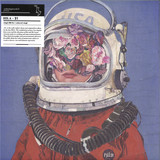
"21" is the well-crafted, sharp and original first album by the duo HILA, composed by American cellist Artyom Manukyan (who already worked with Kamasi Washington, Daedalus, Flying Lotus, Run DMC, Gretchen Parlato, Raphael Saadiq, Clive Lowe Mark...) and french producer Dawatile.
The combination of jazz, Los Angeles beat-scene and the vibrations of 80s and 90s Soviet Armenia make it a striking and unprecedented fusion. These kind of nostalgic and unconventional references forcefully shake the codes of mainstream culture to create a sincere, raw and intimate expression.
"HILA" was born from a spontaneous and intense creative impulse between Artyom Manukyan, a Los Angeles-based Armenian celloist and his partner in crime, David Kiledjian aka Dawatile, a French multi-instrumentist of Armenian descent. This project is proving to be a true master stroke given that it only took 21 days for the duo to make it a reality.
"HILA" was made in less a moon cycle but captivates and electrifies audiences upon its first outings. "H.I.L.A" colors the warmth of the Californian "High" with Armenian vibes. The artists chose this name for their creation since both have a close and valuable connection to these locales. This journey began in 2007, on the day Dawatile went to Yerevan, the capital of this small country in the Caucasus mountain to realize a first fusion project centered around local folkloric music genres.
There he was introduced to local musicians including the Armenian Navy Band, one of the country's foremost groups in which Artyom played the bass and cello. In this context, he also met many musicians such as Tigran Hamasyan and Norayr Kartashyan. This will be the beginning of connections between Lyon, Yerevan and Los Angeles. The following year, the two artists will be be seen performing next to Taylor Mc Ferrin at the Jazz à Vienne festival. More recently, they partnered up again when the cellist, who had freshly relocated in California, invited Dawatile to produce his album. As soon as the studio’s threshold was crossed, they decided to postpone this record and create a joint project: Hay (as the Armenians call themselves) / High In Los Angeles. HILA was born at the end of these 21 days of intense creation. The association of Artyom Manukyan and Dawatile is the combination of two visions, two versions of Armenia, two personalities, the reunion of the Eastern and Western blocs.
One grew up nurtured by the sounds of hip-hop and jazz in Europe and the other by art music and Russian-influenced 1980s Armenian folkloric music before moving to L. A., Ca. The cornerstone of it all, the glue that unites everything : Armenia and music. They generate a new identity synthesizing two perceptions, their complicity transcending these cultural discrepencies. To achieve this, they will scour through images of Artyom’s childhood, within the popular culture of Soviet Armenia. Together, they revisit this decidedly retro vibe, based on the work of Caucasian groups inspired by African American music. This background is rehashed and fused with ancestral Armenian sounds. The DNA of the album "21" is molded by these dear influences.
We can also hear the ancestral sounds of Armenia, a country at the edges of both Europe and Asia. The presence on two tracks of Armenian music Master Norayr Kartashyan, infuses the languor of past melodies and traditions. These purposeful anachronistic sounds offer a fantastic depth to this powerful opus. Listening to the album, one can appreciate the successful fusion of styles and influences. Those combinations, however, manage to preserve individual identities only to enhance the art through an adamant musical dialogue.
Being driven by the urge to transpose Armenian musical traditions into a unique universe, the daring artists, offer an innovative combination by blending, for the first time, these ancestral sounds with the world of Los Angeles beat-scene and jazz. An invention largely fueled by the magic strings of Artyom and maestro Miguel Atwood-Ferguson, a pillar of the genre in Los Angeles combined. These associations resonate with a triumphant equilibrium. HILA is musical uncharted territory in which Artyom's cello strings intertwine to ignite the harmonies of keyboards, the machines, the vocals and electronic layers Dawatile pieced together. HILA plays the soundtrack of an adventure set between Armenia around the end of the Soviet era and a mysterious near future.
Artyom Manukyan grew up in Armenia in the 90s. At the time, he studied Russian classical music while learning jazz with assistance by his father, a music journalist. Being an unconditional music lover, he went on to sharpen his skills at the prestigious Berkelee College of Music. Subsequently, he’s been lucky enough to travel the world touring with numerous acts and mainly with the Armenian Navy Band. The group has fostered alacritous success honored by a BBC Award as a crowning achievement. He moved on 10 years ago and made his way to L.A. with his cello on his back. In the City of Angels, he quickly became a popular figure of the jazz and hip-hop scenes thanks to his first album "Citizen". He’s accompanied prestigious musicians such as Kamasi Washington, Melody Gardot, Daedalus, Flying Lotus, Run DMC, Gretchen Parlato, Raphael Saadiq, Clive Lowe Mark, or Vulfpeck. He released his solo album on the cello, "Alone" in October 2019.
Dawatile is a bold producer and multi-instrumentist as well as a passionate and resolute musician molded by jazz. As a versatile artist, he handles and juggles the saxophone, the keys, the bass and composition. Simultaneously, Dawatile produces cross-over projects and soundtracks for the movie industry. He, as well, has had the opportunity to be a part of many tours, including with his electro hip-hop band, Fowatile and more recently with the "Future Kreyol" trio, Dowdelin. Being the ever workaholic, he has under his belt a string of prestigious collaborations with the likes of Talib Kweli, Foreign Beggars, Roy Ayers, Tigran Hamasyan, Mathieu Boogaerts, Voodoo Game and Piers Faccini. His taste for developing new musical recipes and his know-how in production make him a much sought-after album producer. In concert, the HILA duo offers a sober, precise and rhythmic performance. "21" is an aerial and lively album taking the audience on an at times joyous and sometimes melancholic dreamlike journey. The magic of "HILA" operates at the speed of light and positions it already as an avoidable group.
- A1: Geraldo Pino - Shake Hands
- A2: Sonny Okosunds Ozziddi - Dance Of The Elephants
- A3: The Wings - We'll Get Home
- A4: Alhaji (Chief) Prof. Kollington Ayinla - E Ye Ika Se
- B1: Colomach - Kassa Kpa Sama Kpa
- B2: Geraldo Pino - Heavy Heavy Heavy
- B3: Mfb - Beware
- B4: Tony Grey And The Ozimba Messengers - You Are The One
- C1: Sonny Okosuns - Oba Erediauwa I
- C2: The Wings - Single Boy
- C3: Geraldo Pino - Power To The People
- D1: Original Wings - Igba Alusi
- D2: Don Bruce And The Angels - Sugar Baby
- D3: Geraldo Pino - Africans Must Unite
Soul Jazz Records’ Nigeria Soul Power 70 album showcases the influence of funk, rock and disco on Nigerian music during the 1970s. Originally released as a now-long-out-of-print collectors’ 7” RSD box, this fully expanded album release now also includes extra tracks from Sonny Okosuns, Wings, Chief Kollington Ayinla and more. While for many people the fusion of funk and jazz music with Nigerian rhythms and aesthetics began with Fela Kuti and his afro-beat sound, in fact this can be traced further back to the phenomena of the 1960s Nigerian artists and house bands in nightclubs and hotels who interpreted US soul and pop music with a local flavour and none more so than Geraldo Pino, the ‘African James Brown’ who features heavily in this collection. Other similarly inspired Nigerian funk and soul artists featured here included Tony Grey and his Ozimba Messengers and Don Bruce and The Angels. Nigeria Soul Power 70 includes a number of tracks from the group Wings originally known as BAF (Biafran
Air Force) Wings, an army band formed during the Biafran civil war in Nigeria. The groups’ heavy mixture of funk, rock and African styles was popular among many Nigerian groups at the time.
Beneath the shadow of the few Nigerian artists who signed international recording deals in the 1970s – Fela Kuti, King Sunny Ade, Chief Ebenezer Obey – lies of vast wealth of largely undiscovered musical transmutation and cultural cross-pollination, and included here are heavy afro-funk/rock and disco tracks
from artists such as the legendary Sonny Okosuns as well as rare cuts from little-known outside of Nigeria - groups such as Colomach and MFB. Most of these obscure artists signed to major labels in Nigeria in the commercial slipstream that opened up as Philips, Decca and EMI tried to emulate the international
success of the big three international Nigerian artists. Finally featured here is Kollington Ayinla, one of the co-founders of Nigerian Fuji music, who gives us perhaps the heaviest of all tracks on this album. Ayinla is the great moderniser of the Fuji sound and in the late 1970s began adding Bata drums and synthesizers to his authentic music to create a powerful and heavy new fusion of traditional and modernist aesthetics, embracing both new technology and experimentation while rooted firmly in Nigerian historical lineage. Nigeria Soul Power 70 is released as a heavyweight gatefold double vinyl LP (+ free download code),
deluxe slipcase CD and digital album.
BX127 signs back in with Figure for an EP that is maybe his most intricate as to date.
Four groovy alien transmissions, sent in directly from his headquarters somewhere in the outer rims of Saturn. Seemingly effortless these creatures build their momentum, treating the theme of miniscule power to the maximum effect. The tracks have an elegant air to them, each moving gently at its own pace. Whether through ticks and bleeps, finely plucked 303s or swaying dub chords; all the sounds on display know how to work their magic for some stellar listening experience.
- A1: There's A Break In The Road
- A2: 12 Red Roses
- A3: Mean Man
- A4: I'm Gonna Git Ya
- B1: Ride Your Pony
- B2: Show It
- B3: I Don't Wanna Hear It
- B4: Bad Luck
- C1: Hook, Line 'N' Sinker
- C2: Lonely Hearts
- C3: What A Sad Feeling
- C4: What'd I Do Wrong
- D1: Trouble With My Lover
- D2: Sometime
- D3: I'm Evil Tonight
- D4: Nearer To You
- D5: All I Want Is You
Betty Harris' The Lost Queen of New Orleans Soul collects together the steady stream of amazing soul and funk singles issued by Betty Harris from 1964 to 1969, under the musical guidance of legendary composer, musician and producer extraordinaire Allen Toussaint, a collection which truly captures the heart and soul of the city of New Orleans during this era.
Betty Harris's powerful, fiery soulful vocals found a perfect accompaniment with the New Orleans' players that Toussaint put together to back her, which by the time of her funk classic 'There's A Break In The Road' were the legendary super-tight, super-funk New Orleans group The Meters.
With the extraordinary song-writing skills of Allen Toussaint alongside the powerful, soaring, confident and emotive singer and the groove of The Meters, you have an unbeatable combination. That Harris never in fact lived in New Orleans (she flew in from Florida for all her sessions with Toussaint's local in-house players) seems almost an irrelevance, a geographical aside to the defining New Orleans sound captured on the recordings featured here.
All of these singles featured here were released on Allen Toussaint and his business partner Marshal Sehorn's local New Orleans label Sansu, widely distributed in the southern city but in only limited quantities elsewhere. As a consequence, Betty Harris' music failed to achieve the commercial success of other New Orleans artists such as Lee Dorsey (who she recorded with) and The Meters (who backed her). And so at the end of the decade she stopped recording, retired from the music business to raise her family in Florida.
This is no reflection of the stunning musical quality of all these songs which encompass everything from southern soul, heavy funk, deep soul ballads and northern soul. Betty Harris has been a cornerstone of Soul Jazz Records' New Orleans Funk and New Orleans Soul compilations. Always soulful and always funky, Betty Harris' music contains the essence of New Orleans music. She is the Lost Soul Queen of New Orleans.
This collection is released on CD, heavyweight gatefold double LP vinyl (+ download code) and digital and comes complete with full biography, original label artwork.
Rumored to be one of the most intriguing collaborations of 2018, Rocketgirl presents Pieter Nooten's 4th solo album 'STEM' as Nooten teams up with legendary producer/ mixer/sound-artist Stephen W Tayler (Kate Bush, Underworld) at Peter Gabriel's Real World Studios. 'STEM' is probably Nooten's finest work since collaborating with Michael Brook 30 years ago, producing the timeless cult classic 'Sleeps With The Fishes'.Setting the tone in his 2012 double cd 'HAVEN', Nooten further explores the boundaries between the neoclassical and ambient genre, delivering an album of heartwrenching, profound melodic compositions that invites you to listen to 'STEM' over and over again.
Stem is 60 minutes long (The CD includes a bonus track)
The vinyl has been specially edited by Stephen and Pieter and comes with a postcard and a download code of the full version.
Press:'Moments in life so often slip by with only the rusted acquaintance of memory to recall them but with a masterpiece like Haven in your collection you won't ever walk alone. No matter the slips and pitfalls you encounter or the loves you recriminate yourself for squandering, Pieter Nooten's newest will allow you to dwell with your thoughts in private with dignity...''Haven is the kind of record that gives modern composition a good name. It will also give countless budding musicians the belief that they can create a valid piece of work with nothing but a laptop. This may not be a bad thing, but it will be a while before anything in the genre matches the maturity, warmth and technical ability displayed by Nooten...'
Nooten's musical career began in the late 1970s. Starting out as the drummer in a local symphonic rock band,2 he quickly changed to bass guitar and later keyboards, playing in different bands. At the height of house squatting culture and new wave, Nooten met Anka Wolbert and Ronny Moorings who had just formed Clan of Xymox together. During the mid-eighties Clan of Xymox recorded two highly acclaimed albums on 4AD.
* Includes a DIN A2long poster inside the 12" sleeve with edition number and music download code
* Rogue Style 1 EP is an international homage to b-boy culture, where the worlds of breakbeat music and breakdance collide. Sinistarr (USA), Kiat (Singapore), Kabuki (Germany) and HomeSick (Canada) are connected in many ways, now they lay bare their hip-hop roots and give something back with a fresh take through the eyes of drum & bass and juke/footwork. Here is what they have to say:
Sinistarr: "As a teenager I grew up as a b-boy, dancing anywhere I could: schools, parks, festivals, you name it, my crew was there with cardboard and a speaker. I eventually got deeper into DJing and making music and learned to bring a sound that's not just for the crowds and the purists, but also for all the dancers!"
Kiat: "Hip Hop has taught me to keep evolving, to explore new forms in all my art. Progression is the key to evolution. -- I met Sinistarr online thru myspace and we had a musical connection which led to our first collaboration 'Black Diamonds' which is still one of my personal favourite tunes I've been fortunate to be part of it's creation. With Kabuki, i've always been a fan of his work since his 'Makai' alias on No U-Turn, despite meeting him only recently thru the label.I've always known him to be constantly progressing his ideas in his music which I respect alot."
Kabuki: "B-boy culture has always been a strong influence on how I pursued my art, mainly because of its DIY ethos and attitude of perfecting your craft. Incidentally these were also the aspects that drew me to Jungle when I first discovered it in the nineties. -- I'm happy to rub shoulders with Kiat, Sinistarr and HomeSick on this release, as I'm a fan of their music foremost, but also because we became friends through the music."
HomeSick: "I was only a child in the 90s and as a result I feel like my understanding of b-boy culture was experienced second hand thanks to 90s/early 2000s hip hop music. I appreciate the parallels I can see with footwork culture, particularly the similarities to the community mentality of break dancing. -- I know Sinistarr through booking him for our local party night in Alberta, Canada called Percolate. Our city must have left an impression on him because a year later he made the move here from Detroit. Had the pleasure of hosting him as a room mate for a little over half a year, the home was a very potent creative space during this time. Kabuki hit me up a few years ago and we very quickly got to sharing tracks and collaborating together. Mans a master of production and a super important part of the global scene."
The idea for a reminiscence of b-boy culture stem from label owner Booga:
"Why am I interested in this so much I grew up in East Germany and as the movie "Beat Street" premiered in 1985 over here I was age 13 and blown away by the energy, the music, the wit, the style - everything in this movie was better than everyday life in Leipzig. So I started saving for a cassette recorder and taped music shows from West German radio and prepared tapes for school disco gigs to the hope somebody would do the "robot" to Arthur Baker "Breaker's Revenge". Unfortunately that never worked out hahaha. But I was hooked since then and as the wall came down in 1989 I travelled to West Berlin just to buy the Beats, Breaks and Scratches 1-4 vinyl box by Simon Harris. The fascination for breakbeats never stopped and before I discovered Jungle around '94 I was down with the British cut up house thing from the likes of Marrs, Krush and Coldcut as another form of breakbeat music. The "do it yourself" spirit from hip hop culture inspired me to start a local website called breaks.org in 2000 to locally promote the drum and bass scene with emerging producers, djs and mcs for a wider audience and I threw in some interviews with Storm, Kabuki, Rob Playford, Klute and John B. That turnt into a multi author blog called itsyours.info in 2004 which still exists - that is where I had the pleasure to introduce Kiat and Ash in 2007. All these years I was listening and playing drum and bass tunes when the occasional "bboy tune" came up, some were obvious like Alex Reece "B-Boy Flavour", Lemon D "B Boyz", Commix "Change" and some were not so much self-explanatory like Digital & Spirits "Phantom Force" and the remixes by T-Power & Codeine or Fracture's Astrophonica Edit - but I felt the hidden force of breakdancing nevertheless. With the Rogue Style series I have the first class opportunity to ask established and new Defrostatica artists to present a current interpretation of b-boy culture. This is a dream coming true."
All Tracks Written and Produced by S3A
Mastered by Kuniyuki Takahashi
This house project, based on the idea that electronic music is a blend of different cultures and music, started 15 years ago when Max began jamming on analog machines and samplers with different projects from techno (FriendShip Connection) to house (S3A).
It is through this project that he expresses, among other things, his taste for soul and House music. Such as his beloved artists MCDE, Floating Points... he uses the process of sampling as a basis to color his music with sounds of all his inspirations, he always add his own touch and groove to get his own vision of electronic music: dynamic, warm, emotional and dirty.
Although he discovered electronic music in 92 through UK hardcore with DJ as Tanith or Producer, his culture is based on a solid knowledge of house music, soul, funk, hip hop, making him one of the most promising house artists of the French scene since 2009.
He first came to Paris with Zadig to realize his childhood dream: building a studio and later collaboration, Frendship Connection (All is just a matter of time has actually been playlisted by Marcel Dettmann).
His residency at Concrete helped him to confirm his DJ position since the last 4 years adding as well releases on Lazare Hoche Records, Hold Youth, Concrete Music, Local Talk, Phonogramme and Faces. With these releases, his remix for Laurent Garnier on Music Large and his booking request from the French legend to play with him for his residency at Rex club and Concrete, gave him legitimacy and visibility in all over Europe.
In 2014 he decided to make his own label Sampling As An Art Records and focus on finding new-blooded artists and release his very personal music. A perfect definition between underground quality emotional house music and dancefloor efficiency!
In 2015, he released a collaborative EP on Uncanny Valley Label with Max Graef and Cuthead (whom released S3A RECORDS 03 the same year), made his first live representations and currently continue to spread his vision of music.