Michael Mayer albums don’t come round too often, which is one of many reasons why his fourth collection, The Floor Is Lava, is a genuine event. It’s been eight years since his last one, the collaborative & released on !K7; its predecessors, Mantasy (2012) and Touch (2004), took their sweet time, too. It’s no real surprise, given the many hats Mayer wears – globetrotting DJ, revered remixer, inveterate collaborator, and boss of both Kompakt and Imara – that his solo productions are relatively sparing. But this also speaks to their quality: Mayer’s name on a record sleeve is a sign of quality, of music that’s both looking to the future and calling back to the past, that balances the imperatives of the dancefloor and the loungeroom, that’s as exploratory as it is functional.
On The Floor Is Lava, Mayer seems to be taking the temperature of both the music that surrounds him (past and present), and the ides of the industry he works within. There’s that iconic album title, for a start. “The album’s mindset,” he says, reflecting on those four words together. For Mayer, it’s partly a critique of the way the industry boxes in both producer and listener, focuses them on genre, on market, on the next new thing: “Being a free minded spirit that transcends genres has become an uphill battle.” A battle worth fighting, though, and with The Floor Is Lava, the result is an album that’s varied, quixotic, idiosyncratic, charming, and deeply, addictively listenable.
Throughout, Mayer finds thrills in exploration and juxtaposition, allowing unexpected things to blossom and giving them their life, their platform, throwing the listener exciting curveballs: “It’s a DJ album by a DJ that’s easily bored.” Either easily bored, or endlessly curious, The Floor Is Lava is rich with ideas. It opens with “The Problem”, which looks back to look forward, embracing the rickety way early house productions threw samples together with gleeful abandon. Mayer mentions Pal Joey, and the scene around Rockers Hi-Fi and their Different Drummer imprint, as reference points, and you can hear that freewheeling spirit throughout.
It’s followed by “Vagus”, a slinky, sensual minimal house number that Mayer describes as his “musical catnip”. The flow of these two opening cuts defines the dynamic of The Floor Is Lava, defining the dialectical drive at its core: thesis and antithesis leads to synthesis, but with a welcome prickliness that means you’re always excited, always engaged. It’s also productive in the way it derives energy from rubbing genres and sounds against each other, in unexpected ways, for maximum musical frisson. There’s psychedelic techno on “Feuerstuhl”, more minimal techno with “Ardor” (Mayer mentions ‘Immer 1’ era 90s minimal as inspiration), slippery, Shepard-tone breakbeat through “Sycophant”, a lovely, lush vocal turn on the poppy “The Solution”.
The album closes with the melancholy “Süßer Schlaf”, where Mayer sets a poem by Goethe to one of his most haunted, moving pieces of music yet, in abstract tribute to a lost friend. It’s one of the most affecting moments on The Floor Is Lava. There’s also an update on 2020’s wild Brainwave Technology EP, with the surrealist glitter-stomp of “Brainwave 2.0” (check out those handclaps!),where Mayer’s thinking about the socio-political precipice of the now: “I’m reading with great interest about this whole complex of how humanity is about to cross so many lines and the implications that the resulting financial and educational inequality will bring.”
That’s The Floor Is Lava: then and now, brainwaves and nerve structures, problems and solutions, genres on fire; the real, the unreal, and the surreal. An album for the easily bored and the endlessly curious. Mayer has the last word, telling us all you need to know about the album’s spirit: “Burning for the cause, being zealous, being addicted to the heat of the night, the exuberant powers of music.”
Michael Mayer veröffentlicht nicht oft Alben, was einer von vielen Gründen ist, warum ‘The Floor Is Lava’ ein echtes Ereignis ist. Es sind acht Jahre vergangen seit seinem letzten Werk, dem Kollaborationsalbum &, das auf !K7 erschien; seine Vorgänger, Mantasy (2012) und Touch (2004), ließen ebenfalls auf sich warten. Es überrascht nicht wirklich, da Mayer viele Rollen gleichzeitig erfüllt – weltreisender DJ, vielbeschäftigter Remixer, unermüdlicher Kollaborateur und Chef von sowohl Kompakt als auch Imara – weshalb seine Solo-Produktionen eher sparsam ausfallen. Doch das spricht auch für deren Qualität: Ein Album mit Mayers Namen auf dem Cover steht für Qualität, für Musik, die sowohl in die Zukunft blickt als auch auf die Vergangenheit verweist, die das Gleichgewicht zwischen den Anforderungen des Dancefloors und des Wohnzimmers hält, die genauso erforschend wie funktional ist.
Auf The Floor Is Lava scheint Mayer sowohl die Musik um ihn herum (vergangen und gegenwärtig) als auch die Strömungen der Branche, in der er arbeitet, zu reflektieren. Da wäre zunächst der ikonische Albumtitel. „Die Grundhaltung des Albums“, sagt er, drückt sich in diesen vier Worte aus. Für Mayer ist es teilweise eine Kritik daran, wie die Industrie sowohl Produzenten als auch Hörer in Schubladen steckt, sie auf Genres, auf den Markt und auf das nächste große Ding fokussiert: „Ein freier Geist zu sein, der Genres überschreitet, ist zu einem steinigen Weg geworden.“ Ein Kampf, der sich jedoch lohnt, und mit The Floor Is Lava ist das Ergebnis ein Album, das vielfältig, eigenwillig, charmant und tiefsinnig, aber auch süchtig machend ist.
Im gesamten Album findet Mayer Freude an der Erforschung und Gegenüberstellung von Stilen, lässt unerwartete Dinge erblühen und gibt ihnen Raum, überrascht den Hörer mit spannenden Wendungen: „Es ist ein DJ-Album von einem DJ, der sich schnell langweilt.“ Entweder langweilt er sich schnell oder er ist unendlich neugierig – The Floor Is Lava ist reich an Ideen. Es beginnt mit „The Problem“, das in die Vergangenheit blickt, um nach vorne zu schauen, und die wilde Art, wie frühe House-Produktionen Samples mit fröhlicher Unbekümmertheit zusammenwarfen, aufgreift. Mayer nennt Pal Joey und die Szene um Rockers Hi-Fi und ihr Label Different Drummer als Referenzpunkte, und dieser freie Geist zieht sich durch das gesamte Album.
Es folgt „Vagus“, eine sinnliche Minimal-House-Nummer, die Mayer als seine „musikalische Katzenminze“ beschreibt. Der Fluss dieser beiden Eröffnungstracks definiert die Dynamik von The Floor Is Lava und den dialektischen Antrieb im Kern: These und Antithese führen zu einer Synthese, jedoch mit einer willkommenen Schärfe, die dafür sorgt, dass man immer aufgeregt und engagiert bleibt. Zudem gewinnt das Album Energie, indem es Genres und Klänge auf unerwartete Weise aneinanderreibt, um maximalen musikalischen Nervenkitzel zu erzeugen. Es gibt psychedelischen Techno in „Feuerstuhl“, mehr Minimal Techno mit „Ardor“ (Mayer erwähnt ‘Immer’ Ära Minimal als Bezugspunkt), gleitenden Shepard-Ton-Breakbeat in „Sycophant“ und einen lieblichen, üppigen Vocal-Auftritt im poppigen „The Solution“.
Das Album schließt mit dem melancholischen „Süßer Schlaf“, in dem Mayer ein Gedicht von Goethe vertont und eine seiner bisher eindringlichsten und bewegendsten musikalischen Kompositionen schafft, als abstrakten Tribut an eine verschiedene Freundin. Es ist einer der ergreifendsten Momente auf The Floor Is Lava. Ebenfalls gibt es ein Update der wilden Brainwave Technology-EP von 2020, mit dem surrealistischen Glitzer-Stampfer „Brainwave 2.0“ (hör dir diese Handclaps an!), in dem Mayer über den sozio-politischen Abgrund der Gegenwart nachdenkt: „Ich lese mit großem Interesse über diesen ganzen Komplex, wie die Menschheit dabei ist, so viele Grenzen zu überschreiten und welche Auswirkungen die daraus resultierende finanzielle und bildungstechnische Ungleichheit haben wird.“
Das ist The Floor Is Lava: Damals und heute, Gehirnwellen und Nervengeflechte, Probleme und Lösungen, brennende Genres; das Reale, das Unreale und das Surreale. Ein Album für die schnell Gelangweilten und die unendlich Neugierigen. Mayer hat das letzte Wort und sagt uns alles, was wir über den Geist des Albums wissen müssen: „Brennen für die Sache, leidenschaftlich sein, süchtig nach der Hitze der Nacht, den überschwänglichen Kräften der Musik.“
Search:look to the past
A sense of destiny hangs over Sentir Que No Sabes, Mabe Fratti’s fourth solo-credited album released in a five year span. Her work has always possessed a finely tuned sense of drama capable of expressing a range of emotional states, and across this new album, she conveys the struggle to process various relationships or situations–and the actions that come next. Sentir Que No Sabes is urgent and clear, poppy, generous and approachable, while showcasing a considerable emotional hinterland. It is also, as Fratti is quick to mention, “groovy.”
Written and recorded with her partner, multi-instrumentalist, and co-composer Héctor Tosta (I.La Católica, Titanic), Sentir Que No Sabes is the result of an intense, detail-oriented process. Fueled by a new confidence gained in their collaborative project, Titanic, and its critically acclaimed 2023 LP, Vidrio, the two hunkered down in the familiarity of their studio (aka Tinho Studios) to bash out the initial sonic coordinates of her new record. “We talked and talked, and discussed ways of playing and recording, until things became inevitable,” Fratti explains. “We recorded a bunch of demos at our home studio and that meant we had a lot of time to re-edit and experiment. We really dug in. We were super focused on detail.” Tosta also took up the controls as producer and arranger-in-chief for all additional instruments. The album was later completed at Willem Twee Studios in Den Bosch in the Netherlands, and Pedro y el Lobo Studios and Soy Sauce Studios, in Mexico City.
For the final studio recordings, the pair were joined by drummer Gibran Andrade and trumpetist Jacob Wick to fill out and expand on Tosta’s percussion and brass arrangements. This small group of friends were able to work quickly and openly, and without fear: a testament to the exhaustive groundwork put in at Tinho Studios. This can be heard in three short, intermediary tracks that also manage to be the most aggressive on the record: “Kitana” (a scratch-laden instrumental that acts as a strange prelude for the last track, “Angel nuevo”) and a pair of two-minute instrumental interludes, “Elastica” I and II. None are throwaway mood pieces; rather they act as emotional cue cards, and hint at the way Fratti and Tosta created the overall atmosphere of Sentir Que No Sabes.
A strong sense of rhythm irrigates the sound from the jump, as heard on the glorious opening track, “Kravitz.” Here, the brilliant plucked cello line acts as a bassline and props up the steady thump of the kick drum. The cello’s growl serves as a conduit for a set of slightly paranoid lyrics that tell us “Quizás haya oídos en el techo” (“maybe there are ears in the ceiling”), while the song also introduces another staple of the record: the clever brass stabs, whistles, parps, and other interjections that paint a canvas of traffic in a city. It’s a postmodern, widescreen sound that for some might recall The Blue Nile’s Hats.
Sentir Que No Sabes is a record full to the brim with a modern pop sensibility, invoked by the sort of magpie spirit that ensnares anything it can find, repositioning sounds for the here and now. The keys and melody on the melancholy “Pantalla azul” (“Blue screen error”) transport us back to the glossy mid-1980s. “Oídos” (“Ears”) is a beautiful slice of contemporary, hybrid pop, in which Fratti’s vocal lines delicately spin themselves around the lean structures erected by the brass and drums, and the descending “plink” of a set of piano chords. Then we have a gloriously strong ending with the swell of “Angel nuevo” (“New angel”), another cinematic track full of gentle, instrument-rich swells and eddies that manages to be almost endless in its range–and yet intensely personal, as Fratti’s voice is close, almost whispering in your ear. A much needed lullaby for our fractious times.
The lyrics, for their part, have a stop-start quality to them, and hint at the small, incremental emotional taxes we pay through just living our lives. They circle around the music like birds waiting to swoop. There is something of the spiritual in all of Fratti’s work that expresses itself in a form of yearning: she looks to new horizons while personal dramas find themselves internalized, contextualized, and then dealt with through metaphor. Here, she was keen to mention Tosta’s constant encouragement in her finding a path to best sing or phrase her words to impart their maximum effect. “Hector was super inquisitive about my lyrics and asked me questions about what I meant, which sometimes is something you don't wonder so much about in isolation,” Fratti explains. “Besides, he is a great poet, and you can see that in what he did on the Titanic record. This made me go deeper into my lyric writing and definitely transformed it into something that I feel super happy about now.”
Take “Enfrente” (“In Front”), a track that initially comes across as a languid, glossy number, with plucked cello strings standing in for a bass line and brittle synth parts. Soon we catch on to a brilliant minor chord switch, which mirrors the fear and doubt expressed in the lyrics as someone “trembles up to the podium” in a “search for meaning.” There’s also the startling introduction of a vocoder in “Quieras o no” (“Whether you want it or not”); it comes precisely at the point Fratti sings “Quieras o no es un desastre” (“Whether you want it or not, it's a disaster”). Moments like these leave room for interpretation and, over time, create a strong bond between the listener and the record.
In fact, across Sentir Que No Sabes, each phrase–whether instrumental or vocal–becomes at some level emblematic of acts and moods that impart deep emotional significance. We see this best on “Intento fallido” (“Failed attempt”), which could be the score to feeling trapped in self-doubt, only to suddenly be sprung free by the song’s gloriously upbeat ending. On “Márgen del índice” (“Index margin”), the quicksilver switch between initial disharmony and a beautiful melody is breathtaking, all augmented by evocative arrangements, textured production, and the slightly playful, gnomic lyrics. The track’s emotional ecosystem allows another brilliant ending, which uses the simple repeated phrase, “Cómo lo va a ver?” (“How are you going to see it?”).
So what to make of Sentir Que No Sabes? High gloss Pastoralism? The sound of a city-bound, post-post modern soulscape? No matter the emotions evoked, it's the work of an artist coming into their own, and creating a benchmark record.
Kolida Babo is the collaboration between two Greek woodwind musicians from separate regions - Socratis Votskos is from Pella, and Harris P. is from Athens. Their self-titled debut album was recorded in improvised live-take sessions beginning on the night of the “Kolida Babo” folk rituals of music and dance in northern Greece in winter 2013. They explore the ancient music of Armenia and the folk traditions of northern Greece’s Epirus and Thrace regions alongside abstract electronics and free jazz.
Their debut album was released by MIC Records (London) in 2019 to rave reviews. Other notable releases include the Jazzman Records jazz45 series and the soundtrack for the documentary ''Gospel of Michiel'' and "Loxy". Their music was supported by BBC 6Music, BBC Radio 3 - Late Junction, NTS, Soho Radio, WorldWide Fm as well as the Greek National Radio. Last but not least, they have performed in various places around Greece and Europe including festivals like CTM, Archipelago Festival and Vinterjazz Festival.
In their second full-length album Spirits of Mauronoros set to be released in 27/09/2024 by Veego Records, Kolida Babo revisit an old forgotten place in northern Epirus Greece, near the Greek-Albanian borders.
A spiritual music journey dedicated to the old village of Mauronoros (Black Mountain) and its people. This village is one of the many villages in Greece that is totally abandoned as a result of the economic crises and cultural changes that Greece faced in the last century. This profound depopulation of the area left behind ruins that echo its past trials and tribulations. However the traditional sounds of the village keep reappearing in urban centers like ghosts that haunt everyday life. This sonic dialogue between "modern" and "traditional", between "the peaceful countryside" and " turbulent urban centers" sometimes looks irrelevant and outdated but is of great consequence. It transports the listener in an unspecified time and place devoid of any cultural and geopolitical connotations and thus leaves them wondering for a freer and more authentic way of life.
ARR049 Brizman - Tomorrow Is A New Day Craving for that perfect serving of benchmark minimal house with a flavor of psy-chill and euromantic? The Kyiv based vinyl label Artreform Records is ready to treat you to a tasty new EP by the long-established chef Roy Brizman. His new release, Tomorrow Is A New Day, looks well-prepped for repeating the success of Midnight Tales, the previous Artreform offering by Brizman from 2021. Brizman is a star of the Israeli electronic scene. Roy is also known as Gel Abril in Tel Aviv and far beyond. He has been in great creative form lately, releasing many new tracks and remixes his latest twist on Depeche Modes Policy of Truth" is just one example. Roy offers three new tracks in one sitting this time-a triad united by an overarching mood and atmosphere. It's the perfect soundtrack for diving deep into your feelings and thoughts right on the dance floor. The producers signature micro-house groove is so clear and transparent that you can hear the distant echoes of past electronic music-from New Age to Balearic. The release concludes with the lead track remixed by the ro-minimal star Floog. This gifted producer is alternatively known as George G-a member of the Premiesku project, which also includes Livio and Roby.
Technics' SL-1200 turntable is back! This beautiful, matte black MK7 version is a direct-drive turntable with a 'coreless' motor that is lighter and more powerful than before. Thanks to its design, not only is it extremely reliable, but cogging issues should now be a thing of past. That means you can concentrate fully on doing what you do best.
SL-1210 MK7: Classic turntable with a modern look
Apart from its colour, the MK7 SL-1210 may look familiar, but it has a few new additions on board. This includes a microchip that comes from Blu-Ray technology and makes the turntable more accurate, also when scratching. It's possible to adjust the power as well as the braking time of the motor and, if you have a stylus that supports it, you can make use of 'reverse platter play'. Another change is the use of removable cables instead of fixed ones.
Die Technics 1200-Serie
Der originale SL-1200 wurde im Jahr 1972 als direktgetriebener Plattenspieler vorgestellt und erfreute sich sehr schnell einer außerordentlichen Beliebtheit. Er wurde weltweit ungefähr 3,5 Millionen Mal verkauft. Charakteristisch waren von Anfang an das hohe Antriebsmoment, die einfache Bedienung und die hohe Langlebigkeit. Er wurde sowohl von Audio-Enthusiasten als auch von DJs hochgeschätzt. Letztere verhalfen dem SL-1210 zum Kultstatus, gerade im Bereich der elektronischen Dance Music. Auch heute noch wird diese Modellreihe von DJs in aller Welt außerordentlich geschätzt.
Höchste Klangqualität getreu den Maßstäben der Technics Philosophie
Eisenkernloser Direktantriebsmotor für eine stabile Rotation und kräftiges Antriebsmoment
In einem direktangetriebenen Plattenspieler wird ein langsam rotierender Motor verwendet, der direkt mit dem Plattenteller verbunden ist und die Bewegung unmittelbar an diesen weitergibt. Das bringt zahlreiche Vorteile mit sich: Das Gerät erreicht eine beeindruckende Umdrehungspräzision, ein extrem kraftvolles Antriebsmoment, eine hohe Zuverlässigkeit über die gesamte Lebensdauer und ist wartungsfrei. Lange Zeit wurden dem Direktantrieb kleine Unregelmäßigkeiten in der Rotation durch das sogenannte Rastmoment nachgesagt. Für den neuen SL-1210MK7 wurde daher ein neuer Direktantriebsmotor entwickelt, der mit einem eisenkernlosen Stator arbeitet und damit die Ursache für das Rastmoment vollständig behebt. Gleichzeitig erreicht die Antriebskraft der Rotormagnete im SL-1210MK7 ihr Optimum. Der Spalt zwischen dem eisenkernlosen Stator und den Rotormagneten wurde so verbessert, dass es dem Drehmoment des früheren Modells SL-1200MK5 ähnelt. Das gleichmäßige Rotationsverhalten und kräftige Antriebsmoment ermöglichen eine präzise und originalgetreue Klangqualität bei allen Schallplatten.
Der empfindliche Tonarm sorgt für eine hochpräzise Abtastung des Schallplattensignals
Der Tonarm, der die in der Schallplattenrille enthaltenen Musikinformation ausliest, ist eine statisch ausbalancierte Konstruktion in S-Form – typisch für Technics Modelle. Das Tonarmrohr besteht aus leichtem, hochfestem Aluminium, während die Lagersektion der kardanischen Aufhängung über ein gefrästes Gehäuse sowie hochpräzise Lagerelemente verfügt. Dies sorgt für einen hervorragenden Abtastvorgang mit einem Minimum an unerwünschten Nadelbewegungen selbst unter rauen Bedingungen, wie z.B. beim Scratching.
Zweischichtiger Plattentelleraufbau mit verbesserter Vibrationsdämpfung
Der Plattenteller des SL-1210MK7 besteht aus einer zweischichtigen Konstruktion. Vibrationsabsorbierender Kautschuk überzieht die gesamte Unterseite des Tellers, der aus einem Aluminium-Spritzguss gefertigt ist. Diese Verbundkonstruktion verhindert unerwünschte Resonanzen und bietet hohe Stabilität bei überragender Vibrationsdämpfung, wodurch die Schallplatte vor schädlichen Vibrationen gestützt wird. Das Ergebnis ist ein ungestörter, authentischer Klang.
Hochstabiles Gehäuse und effektive Dämpfungsfüße für umfassenden Vibrationsschutz
Das Chassis des SL-1210MK7 besteht aus einem sehr stabilen, extrem vibrationsarmen Gehäuse. Das Aluminium-Spritzguss-Chassis ist fest an einer Konstruktion aus ABS(Acrylnitril-Butadien-Styrol-Copolymer)-Kunststoff befestigt, das mit Glasfasern verstärkt ist. Die somit erreichte Zweischichtkonstruktion bietet eine Festigkeit und Vibrationsdämpfung auf höchstem Niveau und garantiert somit eine originalgetreue, dynamische Soundreproduktion.
Für eine optimale Dämpfung sorgen die Dämpfungsfüße aus einer Feder-Gummi-Konstruktion. Der hohen vertikalen Dämpfung steht ein sehr steifes Verhalten in der horizontalen Bewegung gegenüber. Diese Kombination sorgt für eine unkomplizierte Handhabung besonders beim Scratchen und für eine sehr gute Störfestigkeit – auch bei sehr hohen Schallpegeln.
Abnehmbares Netz- und Signalkabel für höhere Flexibilität
Die Netz- und Phonokabel des SL-1210MK7 sind abnehmbar, sodass sie, z.B. im Falle eines Defektes, schnell ausgetauscht werden können. Die vergoldeten Phono-Anschlussbuchsen sichern dabei beste Klangqualität und Kontakteigenschaften.
Hoher Bedienkomfort trifft auf innovative Funktionen
Anpassung des Start-/Abbremsmoments
Der SL-1210MK7 überzeugt mit innovativen Motorregelungstechnologien, die vor allem bei der neuesten Generation von Blu-ray-Spielern eingesetzt und perfektioniert wurden. Durch einen Microcomputer hält der Regler sowohl dem normalen Abspielvorgang als auch anspruchsvolleren DJ-Anwendungen wie z.B. dem Scratching problemlos stand. Zudem kann der Nutzer das Startmoment und die Abbremsgeschwindigkeit an seine individuellen Vorlieben anpassen.
Pitch-Funktion für eine präzise und stabile Feinregulierung der Geschwindigkeit
Die Umdrehungsgeschwindigkeit des SL-1210MK7 kann auf 33-1/3, 45 oder 78 U/min eingestellt werden.* Der Pitch-Einstellbereich liegt bei ±8%/±16%. Dies ermöglicht eine hochpräzise und stabile Feinanpassung der Geschwindigkeit sowie das perfekte Matchen z.B. zweier SL-1210MK7 Einheiten im DJ-Betrieb.
* Die Verwendung von 78 U/min wird über den Haupt-Ein-/Ausschalter aktiviert.
„Reverse Play” für maximale Kreativität
Werden die Geschwindigkeitstaste und die Start-/Stop-Taste gleichzeitig gedrückt, dreht sich der Plattenteller in die Gegenrichtung. Die Reverse Play-Funktion wird über den Haupt-Ein-/Ausschalter aktiviert. Dies eröffnet dem DJ neue, kreative Möglichkeiten. Dafür muss das Tonabnehmersystem allerdings für den Scratch-Betrieb ausgelegt sein.
Traditionelles Design – perfekt für den DJ-Einsatz
Nadelbeleuchtung dank heller, langlebiger LED
Bei der Teleskop-Nadelbeleuchtung kommen ein neuer Druckmechanismus sowie eine helle, langlebige weiße LED zum Einsatz. Zudem wurden der Beleuchtungsbereich sowie die Belichtungsintensität angepasst. Verglichen mit den Vorgängermodellen ist somit eine bessere Sichtbarkeit der Nadel gewährleistet – selbst in sehr dunklen Umgebungen.
Durchgängig schwarzes Design
Die Bedienelemente sowie der Tonarm des SL-1210MK7 sind in Schwarz gehalten. Gleichzeitig wurde die Form der Bedienelemente der früheren Modelle beibehalten. In Kombination mit der matten Textur des schwarzen Gehäuses strahlt der Plattenspieler einen coolen Chic aus. Die LED-Tastenhinterleuchtung kann individuell in blau oder rot angepasst werden.
Technische Daten SL-1210MK7:
Technologie zur Umdrehungskonstanz
Eisenkernloser Direktantriebsmotor
Hochpräzise Motorregelung
Konstruktion zur Vibrationsentkopplung
Vibrationsdämpfender Plattenteller
Steife Gehäusekonstruktion
Dämpfungsfüße mit Feder-Gummi-Verbund
Hochwertige Bauteile
Tonarm hoher Empfindlichkeit
Vergoldete Anschlussbuchsen
Technics Definitive Design
Aus der SL-1200 Serie entwickelt
Plattenlaufwerks-Sektion
Typ: Direktgetriebener Plattenteller
Umdrehungsgeschwindigkeiten: 33 1/3, 45, 78 U/min
Pitchbereich: ±8%, ±16%
Anlauf-Drehmoment: 2.2 kg・cm
Anlaufzeit: 0.7 s. aus dem Stand auf 33 1/3 U/min
Gleichlaufschwankungen: 0.025% W.R.M.S.
Rumpeln: 78dB (IEC 98A-bewertet)
Plattenteller: Aluminium-Druckguss
Durchmesser:332mm
Gewicht:ca. 1,5 kg (inkl. Gummi-Auflagematte)
Tonarm-Sektion
Typ: Universell, statisch ausbalanciert
Effektive Länge: 230mm
Überhang: 15mm
Spurfehlwinkel:
Innerhalb 2° 32' (an der äußeren Rille einer Langspielplatte (30cm/12")
Innerhalb 0° 32' (an der inneren Rille einer Langspielplatte (30cm/12")
Kröpfungswinkel: 22°
Tonarm-Höhenverstellung: 0 - 6mm
Bereich der Auflagekraft: 0 - 4g (Direkte Abtastung)
Gewicht des Headshells: Ca. 7.6g
Tonabnehmer-Gewichtsbereich:
ohne Zusatzgewicht 5.6 - 12.0g (14.3 - 20.7g (einschließlich Headshell))
mit Zusatzgewicht 10.0 - 16.4g (18.7 - 25.1g (einschließlich Headshell))
Bohrungsabstand der Tonabnehmermontage: JIS 12.7mm
Headshell-Kabelanschlüsse: 1.2mmφ 4-Pin
Anschlüsse
PHONO (RCA) x 1, Erdungs-Schraubklemme x 1
Allgemein
Netzspannung: AC230 V, 50 Hz
Leistungsaufnahme: 11 W (Ca. 0.2W Standby)
Abmessungen (B x H x T): 453 x 173 x 372 mm
Gewicht: Ca. 11.2kg
Zubehör:
Plattenteller, Gummi-Auflagematte, Staubschutzhaube, Single-Adapter, Gegengewicht, Hilfsgewicht, Headshell, Überhangschablone, Schraubensatz f. Tonabnehmer-Befestigung, Phono-Anschlusskabel, Erdungskabel, Netzkabel, Bedienungsanleitung
The package, posted from Inglewood in California, dropped through my letter box…
I was looking forward to seeing this, the VHS of the then relatively ‘unknown’ but now legendary live show at the Saenger Theatre in New Orleans by Maze featuring Frankie Beverly. But when I fed it into my VHS player, I was disappointed. I could not quite figure out why. The band were tight, each musician sounded great, the product of being on the road, year after year, club after club in the States, sometimes playing five shows a night, all propped up by one of the best soulful voices we had ever heard, the maestro Frankie Beverly.
It took a second play of the VHS to realise what was missing. It was ‘too comfortable’ an atmosphere. A few wealthy customers sat around coffee tables quaffing champagne. It seemed to me that this audience, somehow, did not fit the band.
Paul Fenn at Asgard promotions received the contract from the band to appear live in London and Manchester. I became more and more convinced that his UK fans were going to be a lot more responsive than those from New Orleans.
We put the word out with just a couple of exclusive ‘shout outs’ by Robbie Vincent on his Radio London Soul programme. Those two plugs were enough to sell out all four shows at London’s premier music venue, the Hammersmith Odeon. The ticket office was rammed and the queue six deep, stretched halfway down Queen Caroline Street.
“I have never seen anything like it” expressed the manager of the theatre as he rolled down the shutters and turned on the “Sorry, SOLD OUT” notice above the theatre box office.
I was curious, so I went up and stood in the wings of the Hammersmith stage on that first show. Frankie, introduced to the stage by his sound engineer, Greg Blockman, sauntered past me, strumming his rhythm guitar, dressed in a casual dark green towelling suit, a brown leather visor and flip flops…and then five seconds later, he suddenly stopped. He seemed suddenly to be aware of the thunderous ’Welcome to London Maze’ roar, circling around the theatre about to engulf him. He slapped every black and white hand offered up to him that night, with a huge smile as he circled the edge of that stage. We wanted to get next to him, even if it meant climbing over rows of seats in front of us to do so.
That was the beginning of our love affair with Maze and Frankie Beverly. It certainly wasn’t New Orleans comfort; it was more like a crazy, but friendly, London riot.
Five albums on from the “Live in New Orleans” LP, Frankie sauntered into the California recording studio, probably with the same swagger as in London, to cut the delightful A-side here, “Somebody Else’s Arms”, from his aptly named ‘Silky Soul’ album. Along with the B-side, ‘Love is’ (from the “Back To Basics” CD, 1993) both are so delicious you might want to relax and pour yourself that London glass of champagne, 1983 vintage. Tell your mates your Maze/Hammersmith story too. You deserve it.
One of the most consistent new labels around, Cyphon Recordings, marks double figures with another standout release that gleans from the past, but faces the future. This time they look to the talents of Emotive Technology, a new alias from Chilean Massiande who provides a five-track EP of machine-wielding, soul-rousing techno from across the spectrum.
Although this may be the first release under his new moniker, Massiande has spent the last decade putting out productions with labels such as Housewax, Phonica, Freerange and Groovin. Firing on all cylinders from the get-go, ‘Rise’ kicks off the Walk Into The Light EP. A hyperspace melding of new beat, Italo and arp-operating techno that opens out into a slice of peak-time revelry.
The swirling textures of ‘It’s On’ follow, pushing you into the next dimension. A hypnotic, entrancing and arresting heads-down powerhouse. Crunchy and considered it's the kind of strobe-stuttering basement jam that turns heads inside out.
Two Detroit-leaning tracks ‘Your Zone’ and ‘Walk IntoThe Light’ are up next. The former is a heavyweight machine workout. Layered synth lines and crisp drum programming transfix, as that grooving low-end powers bodies into bedlam. The latter, a Motor-City-influenced tour de force. One that sees Massiande recode the circuitry to hit with a piano-laden stunner, balancing power and presence, with emotion and nuance.
Closing out proceedings, ‘The Swing’ sucks you in deeper. A resonating world of synth stabs, pulsating basslines and atmospheric electronics.
Doing the Emotive Technology namesake proud, Walk Into The Light is machine music hardwired with a heavy sense of soul.
A globally-renowned selector whose ‘Mastermix’ series and impactful, diverse DJ sets have garnered a cult following for the past decade, Numbers co-founder Jackmaster has seen his focus shifted towards his blossoming discography of late, releasing material via Seth Troxler’s Slacker 85, The Martinez Brothers’ Cuttin’ Headz and CircoLoco Records, plus his own TDSR imprint. Here, he continues to showcase his studio nouse with an impressive label debut on Damian Lazarus’ Crosstown Rebels, unveiling two new original productions across his latest EP, ‘Don’t You Want My Lovin’.
Vibrant, deep and jackin’, featuring resonant stabs, skippy drums and soulful vocals at its core, the bubbly ‘Don’t You Want My Lovin’ is a punchy slice of house crafted for bustling dancefloors, while the airy and trippy ‘Ode 2 U’ takes things into more paired back territories and journeys through vast textures to unveil a wormhole of a production.
Needing little introduction, Chicago’s finest and house music icon, Mike Dunn, steps up on remix duties as he makes his first outing on the renowned imprint. His aptly titled ‘Blackball 303’ interpretation is precisely that: a wicked, acid-laced trip harnessing the original’s infectious vocal while offering an instrumental for those looking to keep things darker.
Coral Morphologic and Nick León’s Projections of a Coral City marks a series of collisions between distant
worlds: the organic and the artificial, the Eocene and the Anthropocene, sea and cement—and even, perhaps, ambient music and activism.
Coral Morphologic are the Miami duo of marine biologist Colin Foord and musician J.D. McKay; since 2007, they have used a variety of multimedia projects to generate environmental awareness of marine biodiversity—most notably Coral City Camera, an underwater webcam streaming live from an urban reef ecosystem in PortMiami.
Their citymate Nick León is a linchpin of South Florida’s contemporary leftfield electronic scene, with releases for Tra Tra Trax, Future Times, and NAAFI, and credits on records by Rosalía, GAIKA, and Iceboy Violet, among others.
This collaborative project dates back to 2022, when Coral Morphologic mounted a monumental projection-
mapping installation on Biscayne Boulevard. For five nights in late November and early December, macroscopic films of corals played out across the exterior of Knight Concert Hall. The installation was, on the one hand, a glimpse into a possible future, imagining how the city’s skyline might appear if unchecked global warming and rising seas led coral reefs to colonize the built environment. But it also represented a look back into the deep past, a reminder that Miami is literally built from marine limestone mined from the Everglades. Its concrete foundations began life, eons ago, as a marine ecosystem—the same ecosystem that may one day reclaim them. As above, so below.
As an album, Projections of a Coral City is a suite of interconnected movements spread across two sides of vinyl. The tones are watery, the mood elegiac, the colors a washed-out pastel. Forms that appear static on the surface gradually open up to reveal hidden depths teeming with microscopic movement. You might detect resonances with other aquatically minded works—Jürgen Müller’s Science of the Sea, Harold Budd’s liquid piano compositions, even the slow-moving melancholy of Dr. Roger Payne’s Songs of the Humpback Whale. But ultimately Projections of a Coral City creates the impression of a world unto itself—a hauntingly beautiful space at the meeting point between sorrow and hope.
——-
Balmat is a label with a cloudy outline. Jointly shepherded by Albert Salinas and Philip Sherburne, two friends living in Cardedeu, Catalonia, and on the Balearic island of Menorca, Balmat grew out of Lapsus Radio, a weekly show born almost ten years ago. Balmat’s mission is simple: to foster new ideas, expand upon personal obsessions, and put enveloping sounds out into the world.
“Balmat” means “empty” or “void” in Catalan. But quite apart from any negative connotations, we prefer to think of it in terms of possibility: a space waiting to be filled.
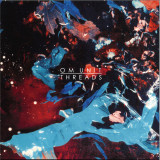
‘Threads’ was my 1st album as Om Unit and this 10-year re-mastered anniversary edition comes around at what feels like a similar time for me of experimentation and finding new ways to connect sounds. Something of a full circle of sorts but then again I am marking time with this re-issue at a time where I can look back and feel very proud of the work still sounding so convincing. Now even better thanks to Subvert Central’s Robert Macchiochi!
Reflecting on the past 10 years since this record came out, I can say it’s been an incredibly fruitful journey, with the most striking element of it all being the opportunity to travel and meet so many people from so many different backgrounds with different world views and stories. I found that ‘Threads’ for many was their first insight into my music, and for some people was something of a milestone in their journey of exploring music itself with tracks like ‘The silence’ and ‘Governor’s Bay’ having been mentioned over the years as amongst favourites alongside some of the work released on Cosmic Bridge and Civil
I want to take a moment to give my Love and gratitude to all the featured vocalists. Thanks to Simon Jinadu for his angelic voice on ‘The Silence’, to Charlie Dark MBE for his reflective words on ‘The Road’ and to Alex ‘Bogues’ Rendall aka MC Jabu (of Jabu) for his intense delivery on ‘Patients’ as well as Jneiro Jarel for his self-reflective narration on “just sayin’” All 4 are still outliers in their own field and upstanding creative forces to boot. I feel blessed to have been able to capture them on this project.
Threads was made in a bedroom of 2a Station Rise in Tulse Hill, a flat I shared with journalist and writer Laurent Fintoni, in a space that had such a great sound to it that I’ll always miss that room. I hope that you feel the warmth that I felt then whilst making it. It’s been an adventure since and whilst I’ve moved on from a lot of the tropes intrinsic to the album, it will always remain a body of work that is dear to my heart.
Enjoy!
<3
Seoul duo Salamanda arrive on Wisdom Teeth with their latest and most focused LP yet: 'In Parallel' - a vividly textural and immersive record that brings a new level of clarity to their typically psychedelic, expansive approach. Since arriving in 2019, the pair - comprised of friends Uman Therma (aka Sala) and Yetsuby (aka Manda) - have been fast at work mapping out their elaborate, dream-state sonic world - prolifically honing their sound across four albums and over a dozen singles to date. Across their already-extensive discography the pair have established a few key calling cards. Mallet instruments and tuned drums play out playful music-box melodies. Thick washes of gaseous ambience invoke otherworldly or ancient soundscapes. And buried fragments of found sound and manipulated vocal give their otherwise synthetic compositions a warm sense of first-person narrative. Ambient and Reich-school minimalism are the music’s most obvious sonic touchstones - yet the pulse of contemporary club and pop music have never been totally out of earshot. All of these themes come in to play here - but 'In Parallel' signals a step well beyond Salamanda’s work to date. Since 2022’s 'ashbalkum' (released on Wisdom Teeth alumni Tristan Arp’s label, Human Pitch), the duo have toured extensively: at classical institutions like London’s Kings Place as well as DIY club dens like Manchester’s White Hotel, all via a series of globally renowned festivals like Mutek, Nachti and Dekmantel. Their creative set-up has grown steadily alongside to incorporate a whole suite of new machines, processes and perspectives, taking their music in bold new directions in the process. The clearest development here is in the duo’s use of vocals - a shift that has been slowly taking place over their last few records, but that comes to a head on In Parallel. The album’s lead single 'Homemade Jam' is the closest the duo have come to writing an all-out pop track: its buoyant beat and autotuned vocals sounding like something SOPHIE and Charli XCX could have written after a particularly potent batch of mushroom tea. It’s a razor-sharp slice of alt-pop that offers a mouthwatering first look at what happens when Salamanda’s sprawling, unbridled creative energy is distilled right down into something concentrated and polished. At other points their sonic explorations lead them to embrace a more upfront approach to rhythm, skirting closer than ever before to the dancefloor in the process. The meandering drums and vocal chops on 'Paper Labyrinth' are underpinned by a firm 4x4 pulse, while the dembow groove of 'Tonal, Fluid' would feel right at home in a Nick León or DJ Plead set. 'In Parallel' is a record about connection, and the warmth and nostalgic simplicity of friendship is felt vividly throughout. Its title refers to the harmony the duo have found between them as friends and collaborators - and sonic parallels are traced throughout the record as testament to this. Motifs come and go before reappearing at later points: take, for example, the melody underpinning ‘Sun Tickles’, which returns in a different key and tempo on album closer ‘Mysterious Wedding’. Parallel lines are traced between each artist and through their music, linking back to their past and pointing ahead to the future. Only Salamanda know where these will take us next.
I Talk To Water, the fifth album for Kompakt by Danish producer Kölsch, is the artist’s most personal statement yet. While all the trademarks that make his music so popular and powerful are still present – lush, melodic techno; swooping, trance-like figures; sensuous, shivery texturology – I Talk To Water is also a deep and intimate rapprochement with family and history, a beautiful, finely detailed document of loss and memory, and a tracing of the long, unbroken thread of grief that runs through our lives once we’ve lost those we loved.
The emotional core of I Talk To Water, then, is a cache of recordings by Kölsch’s father, Patrick Reilly, who passed away in 2003 from brain cancer. With time rendered elastic by the pandemic and its associated lockdowns, its sudden, alienating shifts in everyday living, Kölsch found himself reflecting on his father’s passing and ongoing spiritual presence, thinking about how best to memorialise such a significant figure in his own life. Those recordings opened a gateway, of sorts, for Kölsch to move through – a way to bring past and present together and entwine them in a sensitive, poetic manner.
Kölsch’s father was a musician – “touring in the sixties and seventies, in the Middle East especially, he was doing the whole hippy trail, playing guitar, and wrote some songs over the years,” he recalls. “But all in all, he decided to focus on family rather than pursue a musical career.” Reilly kept playing and writing music over the years, though Kölsch hadn’t listened to the material for some time: “I’d never had the guts to listen to it, because I just felt too fragile listening to his voice. It’s such a tough thing to go through.”
During the pandemic, though, Kölsch listened through the fragmented body of work that his father had produced over the years. “I decided I’m gonna finally release my dad’s music twenty years after his passing,” he reflects. “This whole album is about the process of loss, and for me it’s been one of my main driving forces in my musical life, the whole emotional aspect of whatever I’ve done has been based in that feeling that he’s not there anymore.”
Recordings of Reilly appear on three songs across I Talk To Water. His guitars drift pensively across “Grape”, offering a lush thread of melody that Kölsch wraps with clicking, driftwood rhythms and droning, melancholy bass. “Tell Me” is a lovely three-minute art song, a sadly beautiful reflection, minimally adorned with gentle keys and a muted pulse. And on the closing “It Ends Where It Began”, Kölsch lets his father’s acoustic guitar take centre stage for a lament that’s unexpectedly folksy, a guitar soli dream, which Reilly originally recorded in 1996. “He actually recorded it for my first album that never came out,” Kölsch reveals, “and I had it sitting around forever. That is purely him.”
These three imagined collaborations between father and son are poised and delicate. But their relationship also marks the gorgeous music Kölsch has made across the rest of I Talk To Water, from the itchy yet lush “Pet Sound” (titled in tribute to one of Reilly’s favourite albums), the flickering synths and yearning vocal samples that slide through “Khenpo”, the ecstatic shuddering that marks “Only Get Better”, or “Implant”’s slow-motion pans and subtle reveals.
There’s also the title song, where Kölsch is joined by guest Perry Farrell (Jane’s Addiction, Porno For Pyros), singing a mantra for internal reflection: “I talk to water / Searching for myself / Looking for answers / Oceans of you.” Farrell’s appearance brings another timbre, another spirit to the album, aligning neatly with his recent interest in electronic music. “He was completely taken by this idea of talking to water,” Kölsch says, thinking about the ways we collectively lean towards the natural world as a comfort and a listener, a guide through mourning, a way to map out the terrain of the heart. This mapping is something that Kölsch has proven remarkably adept at through the years; dance music for both body and mind, but also both for the here-and-now, and for the hereafter.
“I Talk To Water”, das fünfte Album des dänischen Produzenten Kölsch für Kompakt, ist zweifellos das persönlichste Statement des Künstlers bislang. Während alle Markenzeichen, die seine Musik so beliebt und kraftvoll machen, immer noch präsent sind – üppige, melodische Techno-Tracks; schwebende, tranceartige Elemente; sinnliche, fiebrige Texturen – ist “I Talk To Water” auch eine tiefe und intime Annäherung an Familie und Geschichte. Es ist ein wunderschönes, fein ausgearbeitetes Dokument des Verlusts und der Erinnerung, und es verfolgt den langen, ungebrochenen Faden der Trauer, der durch unser Leben läuft, sobald wir diejenigen verloren haben, die wir liebten.
Der emotionale Kern von “I Talk To Water” besteht aus Aufnahmen von Kölschs Vater, Patrick Reilly, der 2003 an Hirnkrebs verstarb. Durch die Pandemie und ihre damit verbundenen Lockdowns, die plötzlichen, entfremdenden Veränderungen im Alltag, fand Kölsch sich in Gedanken an den Tod seines Vaters und seine fortwährende spirituelle Präsenz wieder. Er überlegte, wie er eine so bedeutende Figur in seinem eigenen Leben am besten verewigen könnte. Diese Aufnahmen öffneten ihm sozusagen ein Portal, um Vergangenheit und Gegenwart miteinander zu verbinden und sie auf sensible und poetische Weise zu verweben.
Kölschs Vater war Musiker – “er tourte in den sechziger und siebziger Jahren, vor allem im Nahen Osten, auf dem Hippie Trail, spielte Gitarre und schrieb im Laufe der Jahre einige Songs”, erinnert sich Kölsch. “Aber alles in allem entschied er sich, sich auf die Familie zu konzentrieren, anstatt eine musikalische Karriere zu verfolgen.” Reilly spielte und schrieb jedoch im Laufe der Jahre weiterhin Musik, obwohl Kölsch das Material lange Zeit nicht angehört hatte: “Ich hatte nie den Mut, es anzuhören, weil ich mich einfach zu zerbrechlich fühlte, seine Stimme anzuhören. Es ist so schwer, das durchzustehen.”
Während der Pandemie hörte sich Kölsch jedoch durch das fragmentierte Werk, das sein Vater im Laufe der Jahre produziert hatte. “Ich beschloss, die Musik meines Vaters zwanzig Jahre nach seinem Tod endlich zu veröffentlichen”, reflektiert er. “Dieses ganze Album handelt von dem Verlustprozess, welcher für mich generell eine der Hauptantriebskräfte in meinem musikalischen Leben ist. Der ganze emotionale Aspekt von dem, was ich getan habe, basierte auf dem Gefühl, dass er nicht mehr da ist.”
Auf “I Talk To Water” sind Aufnahmen von Reilly in drei Songs zu hören. Seine Gitarren ziehen nachdenklich durch “Grape”, bieten einen üppigen Melodiefaden, den Kölsch mit klickenden, treibenden Rhythmen und dröhnendem, melancholischem Bass umwickelt. “Tell Me” ist ein schönes dreiminütiges Kunstlied, eine traurig-schöne Reflexion, minimal geschmückt mit sanften Tasten und einem gedämpften Puls. Und auf dem Abschlusstrack “It Ends Where It Began” lässt Kölsch die akustische Gitarre seines Vaters im Mittelpunkt stehen, ein überraschend folkiger Klagegesang, den Reilly ursprünglich 1996 aufgenommen hatte. “Er hat es tatsächlich für mein erstes Album aufgenommen, das nie veröffentlicht wurde”, enthüllt Kölsch, “und ich hatte es ewig liegen.”
Diese drei erdachten Kollaborationen zwischen Vater und Sohn sind ausgewogen und zart. Aber ihre Beziehung prägt auch die wunderschöne Musik, die Kölsch im Rest von “I Talk To Water” geschaffen hat, angefangen bei dem nervösen, aber üppigen “Pet Sound” (benannt als Hommage an eines von Reillys Lieblingsalben), den flimmernden Synthesizern und sehnsüchtigen Vocal-Samples in “Khenpo”, den ekstatischen Erschütterungen in “Only Get Better” oder den langsamen Schwenks und subtilen Enthüllungen in “Implant”.
Es gibt auch den Titelsong, in dem Kölsch von Gast Perry Farrell (Jane’s Addiction, Porno For Pyros) begleitet wird, der ein Mantra für die innere Reflexion singt: “I talk to water / Searching for myself / Looking for answers / Oceans of you.” Farrells Auftritt bringt eine weitere Klangfarbe, einen weiteren Geist in das Album, der gut zu seinem jüngsten Interesse an elektronischer Musik passt. “Er war völlig fasziniert von der Idee, mit Wasser zu sprechen”, sagt Kölsch und denkt darüber nach, wie wir kollektiv zur Natur als Trost, Zuhörer, Führer durch die Trauer neigen, um die Gelände des Herzens zu kartieren. Diese Kartierung ist etwas, in dem Kölsch im Laufe der Jahre erstaunlich geschickt war; Tanzmusik für Körper und Geist, sowohl für das Hier und Jetzt, als auch für das Leben danach.
Blending ambient, drone, krautrock, psychedelic, house music elements into a unique sonic universe... that's what Cloudland Canyon is known for! This American experimental music project led by Kip Uhlhorn comes with the release of their new self-titled LP on the always trustworthy Medical Records! The band continues to explore the boundaries of sound and space, taking the listener on a journey through lush soundscapes and immersive textures. Formed in 2002, Cloudland Canyon has released several critically acclaimed albums, including "Fin Eaves," "Lie In Light," and "An Arabesque."
Their recent releases have been produced by Sonic Boom from Spacemen 3/Spectrum. With each release, Uhlhorn has pushed the envelope of experimental pop music, collaborating with various musicians and producers to create intricate and otherworldly compositions. This time around Uhlhorn collaborated primarily with AI to generate and create a compositions that sound like they are meant for an alternate realm where both beauty and suffering are both present, but not at odds with one another. AI has helped Uhlhorn take one step further into the transfigurative looking glass.
The new LP, marks a new chapter in Cloudland Canyon's journey, expanding their sonic palette to include elements of techno and electronic music while still retaining their signature dreamy atmospheres. The album is a journey through a sonic landscape that is at once futuristic and nostalgic, evoking the feeling of driving down an endless highway into the sunset. Past musical collaborators have included some of the most exciting musicians working today, including Sonic Boom from Spacemen 3, Wayne Coyne & Kliph Scurlock of Flaming Lips, David Scott Stone of the Melvins, Unwound,& LCD Soundsystem, Dean & Britta from Galaxie 500 & Luna, and Jody Stephens from Big Star to name a few. "S/T" is a testament to Cloudland Canyon's ability to collaborate and create music that is both innovative and accessible. Whether you are a longtime fan or a newcomer to Cloudland Canyon's music, "S/T" is a must-listen for anyone interested in the possibilities of experimental music in the 21st century. With its combination of analog and digital textures, hypnotic rhythms, and expansive soundscapes, it is a journey you won't soon forget.
“This device isn’t a spaceship, it’s a time machine. It goes backwards, and forwards… it takes us to a place where we ache to go again. It’s not called the wheel, it’s called the carousel. It lets us travel the way a child travels - around and around, and back home again, to a place where we know we are loved.”
(Don Draper)
Call Back Carousel is an audio time-travelogue, a slideshow of the mind’s eye - projecting Kodachrome memories directly into the listener’s mind by means of sound alone. It is a way of travelling without ever having to leave the home. A vicarious vacation for the imagination. Pure audio escapism.
Each episode is based on a found tape of a pre-recorded slideshow commentary. Most of these tapes were made by amateur tape recording enthusiasts and hobbyist photographers of the 60s and 70s. Their recorded commentaries would at one time have been used in conjunction with a sequence of 35mm slides but only the taped voices now remain. The recordings themselves come from Vernon's own archive of found reel-to-reel tapes that he has collected over the past twenty years.
Using these found slideshow commentaries as a framework, a series of musical soundscapes have been created to bring the absent images to life, activating the listeners’ imagination in the classic tradition of ‘cinema for the ears’. It’s a little like looking through a family photo album where only the hand written captions and mounting corners remain; the photographs themselves have all been removed. The evocative rattle and clack of the projector shuffles through different slides as the fragile voices of our tour guides accompany us on a sonic journey that fractures time - and through the cracks, the past bleeds through into our present.
Back in 2011 when I was tentatively looking for a second release for my fledging record label Clay Pipe Music, I stumbled upon a mysterious MySpace page by a group called ‘Tyneham House’, the page was decorated with artwork by Rena Gardiner (who was unknown to me at that time) and the music was an otherworldly mix of field recordings, Mellotron and acoustic guitar. It turned out that Tyneham was promised to Glen Johnson’s Second Language label, so I offered to do the artwork, and in January 2012 the two labels co-released it on tape and CD in a cardboard box with a handmade booklet of my illustrations.
In 2016 Clay Pipe reissued it on 10” vinyl, in an edition of just 300, which has since become sort after. The new 2023 pressing is on blue and transparent marbled vinyl, with a reverse board cover and inner sleeve, and the booklet of illustrations has been given a complete redesign. Frances Castle 2023
The pastoral, wistful yet ineffably disquieting music of Tyneham House is made by artists who wish to remain anonymous here, save for their eponymous title. The musicians are happy, however, to let it be known that these recordings have been around for some years (many of them complied from old cassettes) and that they take inspiration from the 1960s/’70s/’80s work of the Children’s Film Foundation – a body who really ought to have made a film about this mysterious West Country curio. At least now we have its endlessly poignant soundtrack.
The small village of Tyneham, on the beautiful Isle of Purbeck, in Dorset, was once a thriving little community – that is until the British Government requisitioned it for training manoeuvres and other ‘strategic purposes’ in the run up to WWII. This was supposed to be a temporary measure, but the area remained in military possession long after hostilities had ceased, causing distress among former inhabitants, many of whom were farmed out to prefabs in nearby Wareham and Swanage.
Tyneham was characterised by its red telephone box, a tiny parade of shops – Post Office Row – and a grand country pile which stood about half a mile away from the village: Tyneham House. The army removed the building’s oak panelling and ornate decorative details and promptly set about using it for target practice. So great was the shame expressed locally about the damage inflicted upon one of Dorset’s grandest houses that the powers that be decided to grow a copse around the remains of the structure to give the impression that it was no longer there. Despite this, a substantial part of the structure remains intact, including its Saxon hall.
Land access around Tyneham was opened up in the 1970s, but admission to the house remains strictly verboten. Those who’ve been found around the premises, especially anyone wielding a camera, have felt the full weight of military trespass law. Tyneham today is regarded as a nature reserve by some – as a national embarrassment by others. It’s still a political hot potato, in Dorset at least.
Two years after their previous effort, regular as clockwork, Swiss throbbing synth pop duo Veil Of Light is back with a new album and what can we say? These guys keep on getting better and better.
If you have followed the Zurich-based outfit over the past few years, you must have noticed the constant moving towards 80’s FM new wave and synthpop tones – without losing their electro/body music outline – that have marked the band’s parable, especially since their latest Landslide LP.
Sundancing is their sixth full-length and it stays the course, bringing what we’ve just said to the next step. Nine new dancy and bright tunes with emotional depth that blend lush instrumentation and robust rhythms, guided by funky and rubbery basslines. Syncopated rhythm sections match suburban cool synths in the lead single Apricot Kiss and Hypersleep, while Raindancing and Tonight summon a sinuosity long gone since the mid Eighties. The musical backdrop here serves as the fundament for emotional vocals delivering lyrics dealing with the fragility of love, joy and loneliness.
There’s some subtle addictiveness to these songs, one that will gently grab you by the collar of your coat and stick the refrains from Sundancing inside your head for good.
Veil Of Light might make it look easy to keep it neat without being minimalist, intimate without being depressing, romantic in the most true sense of the word, but we know that’s possibly the hardest thing to do.
Last year the Atlanta artist releaed her debut EP Swan, made with producer Marshall Vore who is known for his work with folk dynamo Phoebe Bridgers. The five song col¬lection found a supportive home with Royal Mountain Re¬cords, and drew remarkable acclaim for a debut EP, earning praise from outlets like NPR, FADER, Nylon, Paste, Under The Radar, Coup De Main and Line of Best Fit among many others.
When I’m Alone is the debut album from Girlpuppy. Across the record, Harvey weaves in several cinematic allusions: a Keanu Reeves look alike pops up in “Teenage Dream,” named for the alternate title of an ‘80s movie he stars in;
- A1: Mlo - Birds & Flutes
- A2: Pulusha - Isolation (Part Two)
- A3: Space Time Continuum - Fluresence
- B1: David Moufang - Sergio Leone's Wet Dream
- B2: La Synthesis - Frozen Tundra (Dub)
- C1: Richard H Kirk - Oneski
- C2: A Positive Life - The Calling (Loved'ub Mix)
- D1: Sideral - Mare Nostrum
- D2: Primitive Painter - Levitation
- D3: Sun Electric - Love 2 Love
- E1: Lfo - Helen
- E2: Dubtribe Sound System - Sunshine's Theme (Sunshine Remix)
- E3: Human Mesh Dance - 8 (Infinit) (Infinit)
- F1: Link - Arcadian (Global Communication Remix)
- F2: The Arc - Orphic Mysteries
- F3: Bedouin Ascent - Joyriding Iii
Music From Memory is delighted to be turning 50 with a special release: MFM050 - V/A - Virtual Dreams: Ambient Explorations In The House & Techno Age, 1993-1997 (3xLP/2xCD). The first in a series of compilations, alongside more in depth artist-focused releases, Virtual Dreams will delve into music produced during the 1990’s that redefined the boundaries of ‘Ambient’. This was music that explored the possibilities of Ambient music within a new setting, created often by House & Techno music producers for a world beyond dance floors but made very much with the pre and post-clubbing listener in mind.
When House and Techno exploded out of America in the mid 1980s a whole generation was redefined not only musically but also culturally and chemically speaking. Peaking, quite literally, with a second ‘Summer of Love’ in 1988, millions of young people across the world would experience the life-changing ups of a brave new world but with it of course came the downs; enter the concept of a ‘Chill-out’ room. Whilst early Chill-out rooms lacked a specific sound and were often soundtracked by music such as reggae and soul, slowly young Techno and House producers themselves would become increasingly interested in developing a futuristic ‘Ambient’ soundtrack to a world beyond the thud of the main room.
‘Ambient’ in this new age now though had sharper teeth than in Brian Eno's key text for ‘Music for Airports’, instead here the sounds were the mode of transport rather than the backdrop. While the melodies were pretty, the soundscape steered away from the pastoral, dreaming of outer-space and technology as opening up exciting new dimensions. Much like in the first Summer Of Love; the musicians were again exploring psychedelic, mind-altering and transcendental possibilities of music. And also much as in the first Summer Of Love, a psychedelic visual language would accompany the music. Though now the tracks could be accompanied by music videos, utilising early CGI techniques, they would look almost entirely to the future: envisioning technology, nature and humanity intertwined in a new Utopian future. Virtual Dreams of a better world.
From Ambient and early Chill-out classics, to lesser known one-off projects, as well as Ambient deviations by some of House and Techno’s leading producers, Volume One of Virtual Dreams features tracks by Bedouin Ascent, LA Synthesis, LFO, Marc Hollander, Mark Pritchard & Kirsty Hawkshaw, Richard H. Kirk and more.
To celebrate our 50th release the first 1000 copies include a holographic 'Virtual Dreams' sticker plus a special insert poster with artwork by Victoria Pacheco and design by Steele Bonus.
- A1: Approach 1' 52
- A2: Omaggio A Fellini 1' 50
- A3: Pipes 4' 05
- A4: Orgal 3' 38
- A5: Babbel 3' 54
- A6: Yaya 4' 21
- B1: Ba Loon 3' 17
- B2: Clocking 3' 37
- B3: Wail 8' 34
- B4: Bottom 3' 34
- B5: Feeder 1' 36
- C1: Spindrift 3' 35
- C2: Surfer 4' 00
- C3: Low Roller 3' 24
- C4: Still 4' 56
- C5: Beating 3' 51
- D1: Picolo 5' 41
- D2: Wire 2' 07
- D3: Knock 6' 21
- D4: Wah 3' 02
- D5: Aah 1' 40
Tod Dockstader's Aerial series, an electronic/drone masterpiece, is cherished among fans of the artist's work and this second volume is available in an audiophile quality double LP edition.
Tod Dockstader's Aerial series is sourced from his life long passion for shortwave radio. Dockstader collected over 90 hours of recordings, made at night, and comprised of cross signals and fragments plucked from the atmosphere.
Opening with airwave drones, Dockstader gradually allows elements to slowly come and go, summoning an ominous atmosphere of ethereal cloud clouds. Malignant placidity continues, giving the feeling of eavesdropping upon late-night audio activity not unlike discovering number stations while sweeping the dials. These sounds pull you in as their density and rhythms come and go.
Backward voices, deep echoing choruses of conversations flowing under the surface, ocean sounds, pulsing electro-rhythms, all seem to be created via the collaging of many hours of source recordings. A masterwork of collage and juxtaposition by an overlooked pioneer of American electronic music.
Artwork by John Brien (Imprec) is inspired by the propagation of shortwave radio signals throughout the earth's atmosphere.
"This return of Dockstader is something to cherish, not just because his output has been so limited and scarce but because what we do have is so intriguing, persuasive and cliche-free; the music of an inspired explorer who trails in nobody's slipstream." The Wire
"One of the great figures of musique concrete composition." Dusted
The Aerial project
I've written before of my interest in shortwave radio, in the notes to the Quatermass CD. Also, in the notes to the Omniphony CD (which has my first "Aerial" mix, "Past Prelude," in it), I mentioned "The Aerial Etudes," which was my working title for what became the three CDs you have. And, at the end of an interview with Chris Cutler (which can be found in the "Unofficial TD Website"), the piece I mentioned I was starting to work on at the time became Aerial.) When I was very young, people got most of their entertainment from radio. They called it "playing the radio," as if it were a musical instrument. That's what I've tried to do in this piece. About this time, a few people encouraged me to look into using a computer for this work.
I'd never used one, but I saw it would allow me to keep my mixes digital - no more transfer losses. So, at the end of 2001, I got a computer and an editing program for it, and spent what seemed a long time learning it. I began selecting mixes and loading them into the computer in late March, 2002. Out of the 580, I selected 90 "best" mixes - eventually reduced to 59, the ones on the CDs. Finally, in assembling the CDs, I followed David Myers' suggestion to allow each piece to flow into the next - making a continuous journey to the end. Tod Dockstader, 14 september 2003
About Tod Dockstader: Dockstader moved to New York in 1958 and became a self-taught sound engineer and sound effects specialist and apprenticed as a recording engineer at Gotham Recording Studios. It was around this time that he started to use his off-work hours to experiment with mixing and manipulating sounds on magnetic tape (musique concrète). By 1960 he had amassed enough material to assemble his first record Eight Electronic Pieces which was released on the Folkways label in 1961 (this would later be used in the soundtrack of Fellini’s Satyricon). The last of the eight pieces was later re-worked into his first stereo piece. In 1961 he applied to use the facilities at the Columbia-Princeton Electronic Music Center and was denied access by Vladimir Ussachevsky. Ussachevsky’s official reason was the “overstrained” scheduling of the studios, although many suspect that Dockstader’s lack of academic training was a factor in the decision. He continued to create music throughout the first half of the 60s, working principally with tape manipulation effects. His last piece at Gotham was Four Telemetry Tapes in 1965, after which he left to work as an audio-visual designer on the Air Canada Pavillion at Montreal’s Expo ‘67. It was around this time in 1966 that some of Dockstader’s pieces were released on three Owl L.P.s, and his work became known to a larger audience. He achieved modest recognition and radio play alongside the likes of Karlheinz Stockhausen, Edgard Varèse, and John Cage.
zzzahara (They/Them) is the solo moniker of Eyedress/Simps/US Velvet
guitarist Zahara Jaime
Plenty of people come to Los Angeles looking to make their California dreams a
reality. But zzzahara has always been here, turning reality into a dream.
Attwood: "A feverish indie rock song drowning in intimate emotion and frenetic
energy, zzzahara's "they don't know" is a vulnerable and raw outpouring from the
heart."
Dummy: "An infectious indie rock number overflowing with emotion and frantic
energy, zzzahara's 'they don't know' is a clear statement of intent from a solo
artist coming into their own."
Paste: "…this single feels like something special."
Guardian: "Cantering through the gloaming with a blend of coldwave and early
Cure, the Los Angeles guitarist and songwriter banishes summer, to cheers from
neo-goths everywhere."