Erstmals und endlich auf Vinyl erhältlich - das Solodebüt des Musikers und Produzenten Tobias Kuhn aka Monta aus dem Jahr 2004. Erscheint als weißes 180g Vinyl im Gatefold-Sleeve. "Wir unterteilen das Leben gerne in künstlich voneinander getrennte Kapitel, sprechen von "Neuerfindung" oder "zweiter Geburt", wenn jemand nun plötzlich etwas scheinbar ganz anderes macht als zuvor. Tatsächlich aber ist das Neue immer schon im Alten angelegt, die meisten Übergänge sind fließend. Nehmen wir zum Beispiel Tobias Kuhn: Natürlich ist Kuhn heute vor allem als einer der renommiertesten und besten deutschen Musikproduzenten bekannt. Kuhn hat mit Clueso, Udo Lindenberg und den Toten Hosen gearbeitet. Man kennt ihn als Produzenten und Co-Songwriter so unterschiedlicher Künstler wie Feine Sahne Fischfilet, Mark Forster, Alec Benjamin, Alice Merton, Noah Kahan, Lost Frequencies, Gurr und Milky Chance, er schrieb für den "Tatort" die Musik, man könnte die Liste endlos fortsetzen. Aber vor dieser Geschichte, vor der Geschichte des Top-Produzenten Tobias Kuhn gab es eben noch eine andere - und wenn man genauer hinguckt, gehören beide untrennbar zusammen. Begonnen hatte sie in Würzburg. Es sind die Neunzigerjahre, Familie Kuhn hatte in Cambridge und in Peking gewohnt und war nun ausgerechnet nach Unterfranken gezogen: Das malerisch gelegene, architektonisch reizvolle Würzburg mag bedeutende Universitäten haben, mit 130.000 Einwohnern knapp als Großstadt gelten und das sogenannte "Herz der Weinregion Franken" sein, als Popmetropole ist die Stadt eher nicht bekannt. Aber natürlich kommt der beste Pop traditionell ja genau aus solchen Orten, aus der Provinz, von den Hochschulen, aus den Fabriken. Eben dort, in Würzburg, gründet Tobias Kuhn mit 15, 16 Jahren die Band Miles gemeinsam mit Gilbert Hartsch zunächst als klassische Schülerband. Der Schlagzeuger Andreas Wecklein und René Hartmann (Bass) komplettieren das Line-up, letzterer wird später durch Nina Kränsel ersetzt. Wie gesagt, es sind die Neunzigerjahre: In den USA initiiert der Sänger und spätere Pop-Impressario Perry Farrell die erste Ausgabe der heute weltweit erfolgreichen Festivalreihe Lollapalooza als grellen Rock'n'Roll-Zirkus und Abschiedstournee seiner Band Jane's Addiction. Das gefällt Kuhn und seinen Freunden natürlich, also schmieden sie in der bayerischen Provinz den einigermaßen größenwahnsinnigen Plan, in Deutschland etwas ähnliches aufzuziehen. Spoiler: es gelingt. Auf diese Weise entstanden drei Alben, bis der Gitarrist ausstieg und irgendwie allen klar wurde: alles erlebt, alles erzählt, mehr geht nicht. Kuhn schrieb sich daraufhin für Medizin ein, doch die Musik ließ ihn nicht los. So begann das zweite musikalische Kapitel im Leben des Tobias Kuhn. Unter dem Namen Monta wendete er sich einem intimeren, Folk-grundierten Ansatz zu und nimmt so zwei Alben auf, deren Veröffentlichung er selbst übernimmt. Bald gab es ein weltweites Netzwerk kleiner Indie-Labels, die die Monta-Musik vertrieben und sogar die "Sunday Times" machte "Where Circles Begin" zum Album der Woche. Und so begann die dritte, bis heute andauernde musikalische Karriere von Tobias Kuhn: die des Produzenten und Songschreibers. Kuhn wäre nicht Kuhn, wenn nicht auch dieser Abschnitt wieder von einer Reihe scheinbarer Zufälle und Begegnungen befeuert worden wäre, die sich eben nahtlos aus allem, was davor war, ergaben." Torsten Groß
Cerca:lost in time
- A1: The Is No Motorways In Space
- A2: Rock'n'roll Baby
- A3: Last Sunset Ever
- A4: Nighthunter
- A5: Post Nine Days
- A6: Cyclop Ohne Puppe
- B1: The Dices
- B2: What's A Dj Anyways
- B3: Post Trauma
- B4: When Covid Gave Me Time
- B5: Earthpeople
- B6: The Blue Hole In The Sky
- B7: The Garden Of Uglyness
- B8: Unfollow Me Prayer
- B9: Calmin' More
- C1: The Cute Woman You Don't Want Reggae
- C2: Super Rainy Morning
- C3: Lost Love
- C4: Smoky Disco Test
- C5: Ambient Wet End
- C6: Funkypunk
- C7: Strawberries & Cheese
- C8: Lil Boi
- C9: Djing Killed Itself
- D5: Cosmic Egg
- D6: Morning Modytation
- D1: The Urge To No
- D2: Magic From The Gabin
- D3: Glitter Morning
- D4: Why So Serious
Fake Yourself is an act of revolt as much as it is a celebration of life and an expression of human alienation. As usual in most of his work, soFa here reflects contrasts and contradictions as our existence so often does. It’s about sadness and joy, ups and downs and the fine line which connects them to tell a story. Fake Yourself comes as a spontaneous output of an artist escaping a scene of which the constant superficiality is unavoidable. Mistakes and wrong production with a strong DIY flavor are a conscious choice to not lose the spontaneous feeling which defines these recordings. A pure and direct self, exploring a realm of sound with sharp curiosity, emotion and humour. Where simplicity and complexity marry. This album is a good example on how some of the most authentic musical explorations are the most personal ones. soFa leaves all boundaries behind and let many of his influences confluence. Unconsciously or not, traces of IDM, Disco, New Beat, Dub and mostly Krautrock cross heavenly paths, followed by ironic and confronted vocals and his hypnotic signature basslines. Everything seems to make sense, to fill the chapters of an adventurous short novel. What makes Fake Yourself remarkable is not the deep blend of genres, but the definition of one man shaping and finding his authentic sound. Killing boundaries to create this journey in his very own "style-no-style". All tunes were improvised, recorded and arranged within 10 days in a wooden cabin, isolated in the middle of the nature in Alentejo/Portugal in 2022. This album was not meant to happen and one can strongly feel its spontaneous soul. No overdubs.
'The double Oscar-nominated and multi-award-winning Icelandic composer Jóhann Jóhannsson (1969-2018), known for his film scores for "Arrival", "Sicario", or "The Theory of Everything", was renowned for his innovative and unique blend of classical and electronic elements. With his original, profound, and moving works for film and stage, he achieved worldwide fame and is considered one of the most celebrated film composers of the last decade.“Jóhannsson’s music gives the impression of having arrived in a time capsule from a distant planet that is a mirror image of our own. His own absence now adds further mystery and magic to his music’s unique sound world.” - Gramophone.The monumental orchestral work "A Prayer to the Dynamo," reminiscent of a lost symphony, was inspired by Jóhannsson's great fascination with technology. In particular, he drew inspiration from recordings of electrical installations and generators that he had made at the Elliðaár Power Station in Iceland, which are deeply intertwined with the orchestral sound. Furthermore, he was also captivated by the works of Edison, Tesla, and especially a chapter in the memoirs of American historian Henry Adams (1838-1918). In that chapter, Adams described his impressions of the 1900 Paris World Exhibition and the hidden power of the enormous machines he had seen there. Deutsche Grammophon now releases the world premiere recording of this outstanding orchestral work performed by the Icelandic Symphony Orchestra, conducted by Daníel Bjarnason. The album also includes two suites from Jóhannsson's soundtracks for "The Theory of Everything" and "Sicario", both of which were nominated for Oscars and various other awards, with the former winning the Golden Globe for Best Original Score.
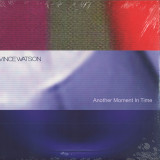
We’ve waited over 20 years and finally Vince Watson is releasing the follow up to his seminal ‘Moments In Time’ album released on Ibadan and Alola, entitled ‘Another Moment In Time’. Over the twenty years since the release of ‘Moments In Time’, Vince has put out more than ten LPs of various flavours. Here he returns to the vibe and feel of those early works. ‘Another Moment in Time’ wastes no time in exploring those rich, melancholic tones with his stunning piano chords and an essence of nostalgia that is both thought provoking and deeply satisfying. This album takes Vince Watson ever further into his original sound but with a pristine quality and finesse that his early work was yet to benefit from.
There are many highlights, from the opener with its rich acid deepness and subtle keys, to the energetic and deeply fulfilling ‘Flashback’ that gives a nod to Funk d’Void’s Diablo or KiNK. ‘Peace Of Mind’ features the incredible talents of the hallowed Underground Resistance ‘Timeline’ keyboard master Jon Dixon as co-writer, this combination of both musicians is an ear to behold; the piano and Rhodes playing is straight up high-tech jazz. ‘Lost In the Deep’ takes its cues from Detroit but hits different with twisting chords and grooves. ‘Whispers’ delivers the most melancholic deepness on the LP, whereas ‘Sunshine’ is pure out and out happiness with its twisting chords and a firm foundation in Detroit. Written on the first sunny day after the winter, you can hear the breath of relief within the track.
‘Rendezvous Finale’ is the 3rd and final version of a cut that’s had a long and satisfying journey. Originally released on Carl Craig’s Planet E in 2006, it was then formatted into Afro House for Osunlade’s Yoruba Records in 2018, and in ‘22 this new version was debuted for Carl Cox’s Birthday at DC10 in Ibiza for Vince’s live set. The reaction sealed the deal! ‘Forever’ and ‘Make A Wish’ are straight up club cuts that featured on a single also in ‘22. The album closes out with the peacefully beautiful ‘Sleep’ that rounds things off to sonic perfection.
20 years is a long time to wait, and it would do ‘Another Moment in Time’ no justice to simply say it was worth the wait. This feels like the next evolution in Vince Watson. The finesse, the musicality, musicianship, and the production levels are of the highest level. ‘Peace of Mind’ and ‘Flashback’ may well be two of the biggest tracks that Watson has released to date.
g D1 Rendezvous Finale
Ole Kirkeng is finally ready to drop his highly anticipated debut album. On Still Not Lost, the listener is treated to an artist bursting with talent and creativity. The young singer-songwriter impressed on the 2021 EP Rocking Chair – a release that landed him a deserved Spellemann award (the Norwegian “Grammy”) on his first try. So, this time around, the expectations are high. Not only for the songs that make up Kirkeng’s first album, but also for the artist he is becoming. Looking back at the searching musician who arrived back in Norway after years abroad, we now see an entirely different artist unfolding. The confidence he exudes on stage, the wittiness and wordings of his lyrics, and – last but definitely not least – the songs! If he isn’t already a star, he is fast becoming one. Still Not Lost was recorded and produced along with Norwegian guitar legend and studio wizard Geir Sundstøl, and the result is just top class craftsmanship in all areas. Ole Kirkeng is a songwriter of the old school, who can stand comparisons to names such as Nick Lowe, Randy Newman, Jackson Brown and Father John Misty. He puts a lot of time and effort into the songwriting trade, and that’s obvious when listening to this collection of tunes. From the immediately catchy “Stupid Questions” via the cute and humorous “I Fell in Love WIth You (at IKEA)” to the epic Dylanesque title track, Still Not Lost contains eight songs, flowing freely between americana, folk and indie – all killer, no filler. Still Not Lost is Ole Kirkeng’s debut album and is released on Die With Your Boots On Records on September 8, 2023. After touring both US and Eu with the likes of Courtney Marie Andrews and Molly Tuttle, he has a lot of experience as a touring musician, but as a solo artist this is still a new life for Ole Kirkeng. «Still Not Lost» is Ole's debut album, and will be released on September 8th. It's a beautiful collection of songs, which makes a perfect follow up to his first EP, «Rocking Chair».
- Old Tim Brooks
- A Home In Old Kentucky
- I'm Going 'Cross The Sea
- Pretty Little Miss Out In The Garden
- Little Joe
- Ruby, Are You Mad At Your Man?
- Dance All Night With A Bottle In Your Hand
- Lost John
- Bowling Green
- Cat's Got The Measles
- Mother's Grave
- Chilly Scenes Of Winter
- Graveyard
- Johnny Booker
- Scat Tom Kitty Puss
- Shortening Bread
Here John Cohen, Mike Seeger, and Tracy Schwartz provide backing for Cousin Emmy, the skilled banjo player, fiddler, and singer, whose legacy as a country music pioneer is cemented in the memories of those who heard her animated performances onstage and on the radio. This album contains some of her only recorded material, including several of her own compositions along with selections of old-time and bluegrass repertoire.
For their fourth album, »Bear In Town«, indie avant-pop supergroup Spirit Fest made a virtue of distance, with group members split across Europe, and recording sessions taking place after a brief 2021 tour of Europe. It’s an object lesson in perseverance and commitment, as the music here is some of Spirit Fest’s most moving yet. The six songs on this album illuminate different aspects of the transnational quintet’s character – lovely, heart-rending pop songs; melancholy chants; the joys of simple repetition – with the group’s guitar pop tended by gentle flourishes of piano and electronics.
Some of those flourishes were spirited onto »Bear In Town« across the waves, with Mat Fowler (Bons, Jam Money) contributing from Britain, while the body of the music was recorded in a small apartment studio in Munich by the other members of Spirit Fest: Saya and Ueno (Tenniscoats), Markus Acher (The Notwist) and Cico Beck (Joasinho, Aloa Input). »Bear In Town« is concise and powerful, the infectious joy of the spirit communicated, beautifully, by melodies that balance the heartfelt with the melancholy. Reflecting on those sessions, Acher says, »I think the album captures how well we played together at that time.« It’s all the more impressive given this material was put down live in the studio, with a few vocal overdubs. The depth of feeling at the core of Spirit Fest’s music is evident from the opening notes of »Bear In Town«.
»Kou-Kou Land«, the first song on the album, recalls several earlier Tenniscoats songs, like »Baibaba Bimba«, in the way the musicians weave gentle complexity around a simple, repeated chant; the stop-start structure of »Kou-Kou Land« builds anticipation, while Saya’s simple melody is lovely, delivered in an absent-minded hum that’s deeply affecting. »Lost & Found« revolves around a delightful descending chord change that breaks up the swaying, folksy verses, gorgeous electronic whirrs and purring winds floating through the song. The following »In Our House« possesses such sweet sadness, it’s one of Spirit Fest’s most moving songs yet.
»Like A Plane« repurposes a song that Markus Acher originally wrote and recorded for his solo EP of the same title, released on a 2022 10-inch single on Morr Music. The original was a gentle, introverted lament, but the version on »Bear In Town« has a widescreen tenderness, its melancholy framed by raindrop piano. The album concludes with two moments of playful splendour, the bossa-inflected »Hill Blo«, and the driving title track, both led by Saya, who is in stunning voice on this album; on »Bear In Town«, her awestruck wonder perfectly captures the sense of possibility in the song’s capacious chords. Like the rest of the album, it’s full of kindness, rich with psych-pop splendour… a balm for troubled times.
- 1: Hello
- 2: A Love From Outer Space
- 3: Crack Up
- 4: Timewind
- 5: What's All This Then?
- 6: Snow Joke
- 7: Off Into Space
- 8: And I Say
- 9: Yeti
- 10: Conundrum
- 11: Honeysuckleswallow
- 12: Long Body
- 13: In A Circle
- 14: Fast Ka
- 15: Miles Apart
- 16: Pop
- 17: Mars
- 18: Spook
- 19: Sugarwings
- 20: Back Home
- 21: Down
- 22: Supervixens
- 23: Insect Love
- 24: Sorry
- 25: Catch My Drift
- 26: Challenge
A.R. Kive collates the three most astonishing works from that most miraculous of duos - A.R. Kane - comprising the ‘Up Home’ EP from 1988 that signified the band’s dawning realisation of their own powers and possibilities, their legendary debut LP ‘sixty nine’ (1988) and its kaleidoscopic, prophetic double-LP follow up ‘i’ (1989).
In founder-member Rudy Tambala’s new remastering, the music on these pivotal transmissions from the birth of dream pop, have been reinvigorated and re-infused with a new power, a new depth and intimacy, a new height and immensity. Vivid, timeless and yet always timely whenever they’re recalled, these records still force any listener to realise that despite the habits of retrospective myth-making and the
safe neutering effects of ‘genre’, thirty years have in no way dimmed how resistant and dissident to critical habits of categorisation A.R. Kane always were. Never quite ‘avant-pop’ or ‘shoegaze’ or ‘post-rock’ or any of those sobriquets designed to file and categorise, A.R. Kive is a reminder that those genres had to be coined, had to be invented precisely to contain the astonishing sound of A.R. Kane, because
previous formulations couldn’t come close to their sui generis sound and suggestiveness. This is music that pointed towards futures which a whole generation of artists and sonic explorers would map out. Now beautifully repackaged, remastered and fleshed out with extensive sleeve notes and accompanying materials, ‘A.R. Kive’ reveals that 35 years on it’s still a struggle to defuse the revolutionary and inspirational possibility of A.R. Kane’s music.
A.R. Kane were formed in 1986 by Rudy Tambala and Alex Ayuli, two second-generation immigrants who grew up together in Stratford, East London. From the off the pair were outsiders in the culturally mixed (cockney/Irish/West Indian/Asian) milieu of the East End, with Alex and Rudy’s folks first generation immigrants from Nigeria and Malawi, respectively. The two of them quickly developed and fostered an innate and near-telepathic mutual understanding forged in musical, literary and artistic exploration. Like a lot of second-generation immigrants, they were ferocious autodidacts in all kinds of areas, especially around music and literature. Diving deep into the music of afro-futurist luminaries such as Sun Ra, Miles Davis, Lee Perry and
Hendrix, as well as devouring the explorations of lysergic noise and feedback from contemporaries like Sonic Youth and Butthole Surfers, they also thoroughly immersed themselves in the alternate literary realities of sci-fi and ancient history (the fascination with the arcane that gave the band their name), all to feed their voracious cultural thirsts and intellectual curiosity.
It was seeing the Cocteau Twins performing on Channel 4 show the Tube that spurred A.R. Kane into being - “They had no drummer. They used tapes and technology and Liz Fraser looked completely otherworldly with those big eyes. And the noise coming out of Robin’s guitar! That was the ‘Fuck! We could do that! We could express ourselves like that!’ moment”, recalls Tambala - and through a mix of
confidence, chutzpah, ad hoc almost-mythical live shows and sheer innocent will the duo debuted with the astonishing ‘When You’re Sad’ single for One Little Indian in 1986. Immediately dubbed a ‘black Jesus & Mary Chain’ by a press unsure of WHERE to put a black band clearly immersed in feedback and noise, what was immediately apparent for listeners was just how much more was going on here - a
tapping of dub’s stealth and guile, a resonant umbilicus back to fusion and jazz, the music less a conjuration of past highs than a re-summoning of lost spirits.
The run of singles and EPs that followed picked up increasingly rapt reviews in the press, but it was the ‘Up Home EP’ released in 1988 on their new home, Rough Trade that really suggested something immense was about to break. Simon Reynolds noted the EP was: Their most concentrated slab of iridescent awesomeness and a true pinnacle of an era that abounded with astounding landmarks of guitar-reinvention, A.R. Kane at their most elixir-like.
If anything, the remastered ‘Up Home’ that forms the first part of ‘A.R. Kive’ is even more dazzling, even more startling than it was when it first emerged, and listening now you again wonder not just about how many bands christened ‘shoegaze’ tried to emulate it, but how all of them fell so far short of its lambent, pellucid wonder. This remains intrinsically experimental music but with none of the frowning orthodoxy those words imply. A.R. Kane, thanks to that second generation auto-didacticism were always supremely aware about the interstices of music and magic, but at the same time gloriously free in the way they explored that connection within their own sound, fascinated always with the creation of ‘perfect mistakes’ and the possibilities inherent in informed play.
‘sixty nine’ the group’s debut LP that emerged in 1988 had
critics and listeners struggling to fit language around A.R. Kane’s sound. As a title it was telling - the year of ‘Bitches Brew’, the year of ‘In A Silent Way’, the erotic möbius between two lovers - and as originally coined by the band themselves, ‘dream pop’ (before it became a free-floating signifier of vague import) was entirely apposite for the music A.R. Kane were making. Crafted in a dark small basement studio in which Tambala recalls the duo had “complete freedom - We wanted to go as far out as we could, and in doing so we discovered the point where it stops being music”. There was an irresistibly dreamy, somnambulant, sensual and almost surreal flow to ‘sixty nine’s sound, but also real darkness/dankness, the ruptures of the primordial and the reverberations of the subconscious, within the grooves of remarkable songs like ‘Dizzy’ and ‘Crazy Blue’. Alex’s plangent vocals floated and surged amidst exquisite peals of refracted feedback but crucially there was BASS here, lugubrious and funky and full of dread, sonic pleasure and sonic disturbance crushed together to make music with a center so deep it felt subcutaneous, music constructed from both the accidental and the deliberate, generous enough to dance with both serendipity and chaos. ‘sixty nine’ remains - especially in this remastered iteration - ravishing, revolutionary.
The final part of this ‘A.R. Kive’ contains 1989’s astonishing double-LP ‘i’ which followed up on ‘sixty nine’s promise and saw the duo fully unleash their experimental pop sensibilities over 26 tracks, plunging the A.R. Kane sound into a dazzlingly kaleidoscopic vision of pop experiment and play. Suffused with new digital technologies and combining searingly sweet and danceable pop with perhaps the duo’s strangest and boundary-pushing compositions, the album did exactly what a great double-set should do - indulge the artists sprawling pursuit of their own imaginations but always with a concision and an ear for those moments where pop both transcends and toys with the listeners expectations. Jason Ankeny has noted that “In retrospect, ‘i’ now seems like a crystal ball prophesying virtually every major musical development of the 1990s; from the shimmering techno of ‘A Love from Outer Space’ to the liquid dub of ‘What’s All This Then?’, from the alien drone-pop of ‘Conundrum’ to the sinister shoegazer miasma of ‘Supervixens’ — it’s all here, an underground road map for countless bands to follow.” Perhaps the most overwhelmingly all-encompassing transmission from A.R. Kane, ‘i’ bookended a three year period in which the duo had made some of the most prophetic and revelatory music of the entire decade.
After ‘i’ the duo’s output became more sporadic with Tambala and Ayuli moving in different directions both geographically and musically, with only 1994’s ‘New Clear Child’ a crystalline re-fraction of future and past echoes of jazz, folk and soul, before the duo went their separate ways. Since then, A.R. Kane’s music has endured, not thanks to the usual sepia’d false memories that seem to maintain interest in so much of the musical past, but because those who hear A.R. Kane music and are changed irrevocably, have to share that universe which A.R. Kane opened up, with anyone else who will listen. Far more than other lauded documents of the late 80s it still sounds astonishingly fresh, astonishingly livid and vivid and necessary and NOW.
Following nearly 20 years of working together as a trio, and numerous cross-collaborations in different configuration between them, Ideologic Organ presents Placelessness, the debut full-length by Chris Abrahams, Oren Ambarchi, and Robbie Avenaim, comprising two long-form works at juncture of ambient music, minimalism, rigorous experimentalism and improvisation, and machine music. Having carved distinct pathways across a diverse number of musical idioms for decades, Chris Abrahams, Oren Ambarchi, and Robbie Avenaim are each, respectively, among the most noteworthy and groundbreaking figures to have emerged from Australia's thriving experimental music scene. Ambarchi and Avenaim first encountered Abrahams when seeing the Necks - the project that has served as the primary vehicle for his singular approach to the piano since its founding in 1987 - together during the late 1980s, not long after having met in Sydney's underground music community. The pair's collaborations date back more than 35 years, criss-crossing Ambarchi's pioneering solo and ensemble work for guitar and Avenaim's visionary efforts for SARPS (Semi Automated Robotic Percussion System), robotic and kinetic extensions to his drum kit. In 2004, fate brought the three together in a trio performance at the What Is Music? Festival, the annual touring showcase of experimental music founded and run by Ambarchi and Avenaim between 1994-2012. For the nearly two decades since, Abrahams, Ambarchi, and Avenaim have intermittently reformed in exclusively live contexts, in Australia and abroad, cultivating and refining the fertile ground first tilled in that early meeting. Placelessness is the first album to present this remarkable trio's efforts in recorded form. Placelessness is the joining of three highly individualised streams, working in perfect harmony; the point at which friendship, mutual respect, and decades of creative exploration produce a singular spectrum of sound. Featuring Abrahams on piano, Ambarchi on guitar, and Avenaim on drums, the album's two sides draw on each artist's enduring dedication to long-form composition. Its two pieces, Placelessness I and Placelessness II, initially began as a single, 40 minute work, before being divided and reworked into distinct, complimentary gestures for the corresponding sides of the LP. Beginning with restrained clusters of reverberant piano tones, Placelessness I progresses at an almost glacial pace, with Abrahams' interventions increasing met by sparse responses, darting within vast ambiences, on guitar and percussion by Ambarchi and Avenaim. Remarkably conversational within its convergences of tonal, rhythmic, and textural abstraction, over the work's duration a progressive sense of tension unfurls and contracts, refusing release, as each of the ensemble's members contribute to an increasingly tangled sense of density at its resolve. While an entirely autonomous work, Placelessness II rapidly realises a distillation of the energy hinted at across the length of its predecessor. Following a luring passage of harmonious calm, Abrahams' launches into shimmering lines of repeating arpeggios, complimented at each escalation of tempo by Avenaim's machine gun fire percussion work and Ambarchi's masterful delivery of tonality and texture, as the trio collectively generate dense sheets of pointillistic ambience within which individual identity is almost lost, before slowly unspooling into unexpected abstractions and dissonances that deftly intervene with the work's inner logic and calm. What could easily be termed a maximalist take on Minimalism, Placelessness is a masterstroke of contemporary, real time composition, that blurs the boundaries between ambient music, experimentalism, free improvisation, and machine music. Drawing on Chris Abrahams, Oren Ambarchi, and Robbie Avenaim's decades of respective solo and collaborative practice, and the culmination of nearly twenty years of working together as a trio, it's two durational pieces - Placelessness I and Placelessness II - take form with a startling sense of effortlessness and grace, neither shying away from explicit beauty or rigorously tension within their forms.
Vienna-based producer and 303 maestro Tin Man returns to Acid Test for his first solo EP for the label in over 5 years. It's another impeccable outing of romantic acid variations, especially tailored for unforgettable dancefloor revelations.
Tin Man has been setting the pace for forward-looking acid lovers for close to two decades now, and on his 15th Acid Test appearance he takes the vibe back to early and proto-house roots, stripping back the musical elements while layering in the euphoria with four perfectly crafted slices of feelgood 303.
Opening track Hidden Acid already sounds like a long lost classic, with strings draped over bouncy acid and motorik drums, stretching out over nearly nine minutes, and beautifully capturing the feel of house music circa 1991. Swaying Acid comes in all propulsive, toms and congas setting the foundation for melodic acid lines to weave through your heart strings.
On the B Side, Running Acid is fully optimized for the autobahn fast lane - a gradual, slow-filtered acid meltdown that builds and releases in tandem with driving hats and vaporous pads that hang over the track like early morning mists. Wrapped Up Acid brings the EP to a fitting close, slowing the tempo for a low-key easy dance excursion par excellence - smooth yet spikey 303 riffs punctuate the chords that drift through with a hint of Badalamenti in the progression.
With the Hidden Acid EP Tin Man might hark back to more vintage times, but the emotive power is as strong as ever. The naivety of the ‘90s is instead replaced with a conviction behind the musical choices that brings even more weight to the heartwarming vibes. This is acid in some of the best shape it's ever been, enhanced and upgraded specifically for the dance.
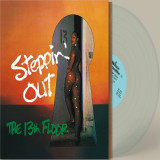
Originally released on Blue Candle Records in 1977, Steppin' Out by the 13th Floor is a true treasure that deserves a cherished place in the collection of every soul and funk connoisseur. This long-awaited reissue brings back the original magic, preserving the essence and impact it had on the music scene.
Its profound influence on bands like the Red Hot Chili Peppers is undeniable, solidifying its status as an essential gem in the annals of musical history. Now, with this reissue, you have the opportunity to experience the same captivating rhythms and infectious melodies that captivated audiences decades ago.
Are you ready to awaken your boogie spirit and infuse your living room with the long-lost spark of the mid-seventies? Brace yourself for an immersive experience as you surrender to the timeless grooves and soulful vibes that will transport you to a bygone era of musical
enchantment. Allow the music to ignite your soul, reigniting the vibrant energy of the past and instilling in you an irresistible urge to groove like never before.
Omformer is the collaborative project from Ute cornerstones Mikkel Rev and Oprofessionell. Mostly focusing on the live act they still have managed to build an impressive catalogue covering everything from one-hour long ambient tracks to loopy psychedelic peak time weapons.
And for their long overdue debut EP you can expect no less, presenting four summer ready trance excursions extracted straight from previous live sets and jam sessions.
Dive into their most maximalist, drama inducing and dancefloor-shattering project to date. Get lost in layered psychedelic trance endlessly looping arpeggios, mind bending squelching resonances and big melodies best consumed under the forest canopy.
This song, co- written and produced by Jamie Safir (Kylie, Birdy, Will Young) is from the brand-new collection 'Greek Street Friday' released later this year on all formats. With an ace band, which includes drummer Ian Thomas (George Michael, Van Morrison, Celine Dion) and guitarist David Preston (Melody Gardot, Curtis Stigers), this collection will also feature, on a beautiful new take of Rickie Lee Jones' 'Blinded By The Hunt', the world-renowned saxophonist Iain Ballamy (Everything But The Girl, Hermeto Pascoal, Loose Tubes). 'To Be Held' is a lullaby for our times. The title, inspired by a Truman Capote interview, with Dick Cavett, expands into a beautiful tribute to lost friends, the power of connections, imperfections and navigates the strangeness and beauty of being alive 'on this beaten-up planet of ours'.
Ian Shaw is back with force and with 'the quirks and character tics of every day living, . . . brought into euphoric focus Shaw tours his smart and soulful show' (The Guardian)
Nous'klaer Audio presents Martinou - Chiral, the follow full-length up to his 2021 album Rift. This time nine tracks across two vinyls. An album flowing 'in a way' like Rift, but it's different: More outspoken, heavier sound design and it peaks on a blissful note. ''Open up the blinds and take me there. We'll break the surface tension. We'll dive in. I'm locked in your devotion. You give an inclination to our demise. It will be our exit. To bliss, we'll be its guardian. Once there was love. Clear as glassy water. No ripples, no waves. I followed while you led. Our arrival was warm. Hot, even. Stunning to a startling degree. Hands intwined, frolicking towards the blue. Hours passed, and white heat cede to an orange hue. We cooled down. Red. We rallied. Black. It began. Into the deep darkness we ran. White sand, it has a tendency to get everywhere. Salt water will only dehydrate you more. Shriveled and dry. Scratchy and coarse. More. And then we were lost. Fingers once locked grew distant. Morning, dear. Where have you gone? We looked. A glimpse from afar. Red. We rallied. Shall we share a bottle of wine? Black, lost again. Afternoon, friend. Where were you? Red. Alone. Black. We rallied. Shall we try somewhere new? Sand and salt. Evening, sir. Reservation for one? Reservations a plenty, I say. Evening, miss. Dining alone? Aren't we all? Dining, miss, not dying. Oh, yes, alone. Black. Sand and salt. I found you. No. No. Wait, do I know you? You feel like a dream. Don't touch me. Move along, sir. Who are you? Leave. Who are you? Where did you go? Keep moving. I am, I will. Time to move on. I'm moving! Leave. Don't touch me. Leave. Why are you? Exit. Purple. Orange. Yellow. White. Blue. Morning, dear. Shall we have breakfast? I think I'll sleep some more. But it's our last day. I know. See you downstairs when you're ready. OK. I open up the blinds. A bird breaks the surface tension. Locked in. To Devotion? No. Demise. An inclination. Reverie. Take me there. Where? Exit (To Bliss) '' Text by Gregory Markus
The music heard on this album was originally the result of a commission to score the second half of the film Nico/Nico Crying made by Andy Warhol in 1966. The commission was made by Art Cinema OFFoff in collaboration with B.A.A.D.M for a screening of the film together with a live presentation of the score in September 2021 at Ancienne Belgique in Brussels. The recording presented here was made in the last week of that year and mixed soon after in January 2022. These recordings are essentially live-recordings performed by the composers together in the same room and recorded in a manner reminiscent of the record making process as it was in the late 1960s. The instrumentation used to make the sounds on this album consists of modular synthesis, zither, voice, contaminated field recordings and metal percussion.
Mats Erlandsson is a composer and musician part of the vibrantly re-emerging field of drone music in Stockholm, Sweden, and is associated with practices characterized by the extensive use of sustained sound. Erlandsson presents his work both as a solo artist and in collaborations, most notably together with Yair Elazar Glotman and Maria W Horn. Recent releases include Gyttjans Topografi on XKatedral, Minnesmärke on Hallow Ground and the collaboration Emanate made with Yair Elazar Glotman on the label 13070. In addition to his own artistic practice Erlandsson holds a position as studio technician and was temporarily, from October 2022 to September 2023, the acting studio director at Elektronmusikstudion in Stockholm.
The compositions of Maria W Horn implement synthetic sound, electroacoustic and acoustic instruments and audiovisual components, often devicing generative and algorithmic processes to control timbre, tuning and texture. She employs a varied instrumentation ranging from analog synthesizers to choir, string instruments, pipe organ and various chamber music formats. Acoustic instruments are often paired with digital synthesis techniques, in order to extend the instruments timbral capacities. Often based on minimalist structures, her music explores the inherent spectral properties of sound and their ability to transcend time and space, reality and dream.
Eddie Leader has had his most productive year since releasing his first record under the Slum Science alias in 2004. Leader has delivered music on labels like Jovonn’s Body n’ Deep, Doorly’s Reptile Dysfunction, the iconic Hard Times label and his own Hudd Traxx in the past 12 months, most recently collaborating with Chez Damier on ‘Pressure’. This record is by far the deepest of them all. ‘Lost in…’ kicks things off and takes you on a deep hypnotic journey along the house spectrum. ‘The Unknown’ has a raw and underground vibe with a heavy bass line and takes inspiration from both Chicago & Detroit. The Tribal Manifestation Mix of ‘The Unknown' picks up the tempo on the B side for a peak time dancefloor rework. Eddie closes out the EP with ‘You’, which is a smooth vocal infused early hours future classic. Hudd Traxx have also had a very productive year and there’s still more to come in 2023.
2023 Repress Blue Vinyl
- Eagerly anticipated follow up to 2014 debut - number 7 in Mojo's best albums of the year.
- LP jacket is gloss laminate with front & back folds on the outside.The back panel is uncoated/matt varnish - 300 gsm card and 180g vinyl. Digital Download included.
- EU tour coming in April with Summer festivals later in 2017.
Sometimes it can take years to find your calling. Not so, for wanderer Julie Byrne, whose power of lyrical expression and melodic nous seems inborn. But often, what comes naturally demonstrates against speed. Julie's second album Not Even Happiness has taken time to evolve, but as it spans recollections of bustling roadside diners, the stars over the high desert, the aching weariness of change, the wildflowers on the coast of California and the irresolvable mysteries of love. Her new album archives a vivid world that would've otherwise been lost to the road and in doing so, Byrne exhibits her extraordinarily innate musicality.
In fact, some of the album's songs took two years of fine tuning to get where they needed to be. And if you were to ask her why the follow up to 2014's Rooms With Walls And Windows has taken so long, you'd only be greeted with a bemused smile as though it's the strangest question she's ever been asked, Writing comes from a natural process of change and growth. It took me up to this point to have the capacity to express my experience of the time in my life that these songs came from.'
Having counted Buffalo, Pittsburgh, Pennsylvania, Northampton, Massachusetts, Chicago, Illinois, Seattle, New Orleans as her home in recent years. For now, Julie has settled in New York City where she moonlights as a seasonal urban park ranger in Manhattan. Whether witnessing the Pacific Northwest for the first time ('Melting Grid'), the morning sky in Colorado after staying up through the night at a house party in the mountains of Boulder ('Natural Blue'), recording the passage of freight trains on the outskirts of Buffalo, New York ('Interlude'), or a journey fragrant with rose water, reading Frank O'Hara aloud from the passengers seat during a drive through the desert of Utah into the rainforest of Washington State ('All The Land Glimmered Beneath'), Not Even Happiness is Julie's beguilingly ode to the fringes of life.
Self-taught on the guitar after picking it up when her father became ill and could no longer play the instrument himself, Julie readily admits she can't read music and doesn't even listen to it all that much - the first vinyl she owned was indeed, her own. Recorded with producer Eric Littmann (Phantom Posse), Julie laid down the new album in her childhood home in western New York state and offers an altogether bigger picture to its predecessor through a wider, yet subtle, exploration of instruments and atmospherics, Not Even Happiness reveals an artist who has grown in confidence over time.
Byrne's debut album was released back in January 2014 on Chicago based DIY label Orindal after initially being as two separate cassettes releases. Rooms With Walls and Windows went onto become a true modern-day word of mouth success story (it would have to be for an artist who shuns all forms of social media) and ended the year being voted number 7 in Mojo magazine's best albums of the year, with the Huffington Post calling it "2014's Great American Album". A collection of hushed intimate front porch psych-folk songs, that unknowingly recalled the greats, but felt very much for our time. It saw her travel to Europe over two summers playing the Green Man festival and End Of The Road, as well as lesser trodden tour paths around Europe.
Julie Byrne will take the songs from Not Even Happiness (the first release on a new record label Basin Rock, based in the Lancashire / Yorkshire border town of Todmorden) on the road throughout 2017.
- A1: Captain Parade 3 25
- A2: Mountain Echoes 4 09
- A3: Discowboy 2 42
- A4: Tombola Time 1 2 10
- A5: Tombola Time 2 2 08
- A6: Space Fiction 1 21
- A7: Mountain Trumpet 0 58
- A8: Tambours Parade 1 42
- B1: Deer Forest 4 32
- B2: Charly Guitare 3 01
- B3: Magic Lake 1 2 45
- B4: Magic Lake 2 2 45
- B5: Pop Fiction 1 43
- B6: Damnation Space 2 38
Pierre Dutour's infamous Top Fiction is the epitome of a 5-tracker. Coming to light in 1979 on Tele Music, its collection of environmental themes are *all astounding*. We're talking all-time heavy hitters, here. They come recommended as tracks you'd choose to elegantly elevate deep selector sets or mixes.
Skip the irritating whistle-laced marching-band funk of "Captain Parade" and head straight to the glistening synths and proud horns of beatless ambient wonder "Mountain Echoes". Arguably worth the price of admission alone. It's that good. The sci-fi atmospherics of "Space Fiction" are definitely sampleable whilst the proud horns of "Mountain Trumpet" definitely contain blasts that could be of creative use. "Tambours Parade" is more marching-band funk, only this time the drums go hard and there's a lot to like about this one.
Truly, it's all about the B-Side. A real B-Side for the ages, in fairness. It opens with the gorgeous "Deer Forest". It's one of the most beautiful songs you'll ever hear. Like something off Brian Bennett's Voyage, it rides dreamily melodic synths, and comes on, as one fan claimed "like something Angelo Badalamenti would have co-written with Final Fantasy composer, ???? Nobuo Uematsu". It's jaw-dropping. Be instantly beguiled by the deep eerie nostalgia and pretty delicate piano of "Magic Lake I" and the whistling-synth-augmented "Magic Lake II". The almost-title-track "Pop Fiction" is another hidden gem, containing dreamy, glistening arpeggios that are just begging to be sampled with a heavy knocking beat behind it. The set closes with "Damnation Space", 2 minutes of spooky Musique concrète.
So, 5 absolutely incredible tracks and 2-3 good ones. An excellent ratio for a library album, I think we can all agree. Trust us when we say that the heavy hitters are just absolute gold, rendering this one an essential, buy-on-sight purchase. Go listen and discover for yourselves...
The audio for Top Fiction has been remastered by Be With regular Simon Francis, ensuring this divisive release sounds better than ever. Cicely Balston's expert skills have made sure nothing is lost in the cut whilst the original space-age sleeve has been restored here at Be With HQ as the finishing touch to this long overdue re-issue.
teely Dan's gold-selling third studio album Pretzel Logic, charted at No. 8 on the Billboard 200 and restored the group's radio presence with the single "Rikki Don't Lose That Number," which became the biggest pop hit of their career and peaked at No. 4 on the Billboard Hot 100. The 1974 album was produced by Gary Katz and was written primarily by Walter Becker (bass) and bandleader Donald Fagen (vocals, keyboards). The album marked the beginning of Becker and Fagen's roles as Steely Dan's principal members.
They enlisted prominent Los Angeles-based studio musicians to record Pretzel Logic, but used them only for occasional overdubs, except for drums, where founding drummer Jim Hodder was reduced to a backing singer, replaced by Jim Gordon and Jeff Porcaro on the drum kit for all of the songs on the album. Steely Dan's Jeff "Skunk" Baxter played pedal steel guitar and hand drums.
Pretzel Logic has shorter songs and fewer instrumental jams than the group's 1973 album Countdown to Ecstasy. Steely Dan considered it the band's attempt at complete musical statements within the three-minute pop-song format. The album's music is characterized by harmonies, counter-melodies, and bop phrasing. It also relies often on straightforward pop influences. The syncopated piano line that opens "Rikki Don't Lose That Number" develops into a pop melody, and the title track transitions from a blues song to a jazzy chorus.
Other standout tracks include "Any Major Dude Will Tell You," a reflective ballad with lush harmonies, and "Parker's Band," a playful ode to the jazz great Charlie Parker.
Lyrically, the album explores themes of nostalgia, lost love, and the struggles of the creative process. In "Barrytown," the band reflects on their early days as struggling musicians, while in "Through with Buzz," they offer a biting critique of the music industry and the pressure to conform to commercial expectations.
One of the defining characteristics of Pretzel Logic is its use of unusual chord progressions and unexpected musical twists and turns. The band's intricate arrangements and skilled musicianship are on full display throughout the album.
Rolling Stone praised the album, calling Steely Dan the "most improbable hit-singles band to emerge in ages."
"When the band doesn't undulate to samba rhythms (as it did on 'Do It Again,' its first Top Ten single), it pushes itself to a full gallop (as it did on 'Reelin' in the Years,' its second). These two rhythmic preferences persist and sometimes intermingle, as on 'Rikki Don't Lose That Number,' which jumps in mid-chorus from 'Hernando's Hideaway' into 'Honky Tonk Women.' Great transition." — the review said.
AllMusic gave the album 5 stars, with reviewer Stephen Thomas Erlewine noting that "instead of relying on easy hooks, Walter Becker and Donald Fagen assembled their most complex and cynical set of songs to date." Dense with harmonics, countermelodies, and bop phrasing, Pretzel Logic is vibrant with unpredictable musical juxtapositions and snide, but very funny, wordplay.
The album's cover photo featuring a New York pretzel vendor was taken by Raeanne Rubenstein, a photographer of musicians and Hollywood celebrities. She shot the photo on the west side of Fifth Avenue and 79th Street, just above the 79th Street Transverse (the road through Central Park), at the park entrance called "Miners' Gate."
After a brief battle with esophageal cancer, Walter Becker died on September 3, 2017 at the age of 67. Steely Dan has sold more than 40 million albums worldwide and were inducted into the Rock and Roll Hall of Fame in March 2001. VH1 ranked Steely Dan at No. 82 on their list of the 100 Greatest Musical Artists of All Time. Rolling Stone ranked them No. 15 on its list of the 20 Greatest Duos of All Time.
This stereo UHQR reissue will be limited to 20,000 copies, with gold foil individually numbered jackets, housed in a premium slipcase with a wooden dowel spine.
Overall, Pretzel Logic is a standout album in Steely Dan's discography. The album's blend of catchy hooks, complex arrangements, and thoughtful lyrics has made it a favorite among fans of classic rock and pop music.
- A1: I Hang Suspended
- A2: Upon 9Th & Fairchild
- A3: Wish I Was Skinny
- A4: Leaves And Sand
- B1: Butterfly Mcqueen
- B2: Rodney King (Song For Lenny Bruce)
- B3: Thinking Of Ways
- B4: Barney (…And Me)
- C1: Spun Around
- C2: If You Want It, Take It
- C3: Best Lose The Fear
- C4: Take The Time Around
- C5: Lazurus
- D1: One Is For
- D2: Run My Way Runway
- D3: I've Lost The Reason
- D4: The White Noise Revisited
The Boo Radleys releasen eine remasterte 30-Jahre-Jubiläumsausgabe ihres genreübergreifenden Meisterwerks Giant Steps (Creation Records), dem 'NME #2 Album des Jahres 1993', das sich sowohl in den Top 25 von Pitchforks 'The 50 Best Shoegaze Albums Of All Time' als auch in deren 'The 50 Best Britpop Albums' befindet, sowie zu den '1001 Albums You Must Hear Before You Die' zählt. Inklusive des Singleklassikers Lazarus.