** Highly limited edition CLEAR VINYL VERSION**
Pt.1 of 2
Gigi Masin's sparkling sonic magic leads us to the light in “Implodendo in una accecante oscurità” (Imploding in a blinding darkness). The mirror reflects nothing but a faint, unfamiliar, mysteriously hostile face, but a glimmer survives, evoked by a painfully solemn romanticism that is salvific, glimmers of light bounce off broad synthetic volutes, a bewitching ambient, airy quiet, they spread, a few veins of darkness shine through, aesthetic beauty equates to clear spirituality, sax and female voices, the elegy that intertwines piano and vocal loops, that omnipresent melancholy, nostalgia, reassuring, which is openness to tomorrow. It is the moment of light, the powerful feeling that nothing is lost, that what awaits to be grasped is more than a remnant, perhaps an overcoming, light that “is not what it shows but what it reveals”, that light that becomes memory that does not need to illuminate to be perceived where it most needs to spread, where darkness has resided for too long
Buscar:lost loops
- 1
Pt.2 of 2
Gigi Masin's sparkling sonic magic leads us to the light in “Implodendo in una accecante oscurità” (Imploding in a blinding darkness). The mirror reflects nothing but a faint, unfamiliar, mysteriously hostile face, but a glimmer survives, evoked by a painfully solemn romanticism that is salvific, glimmers of light bounce off broad synthetic volutes, a bewitching ambient, airy quiet, they spread, a few veins of darkness shine through, aesthetic beauty equates to clear spirituality, sax and female voices, the elegy that intertwines piano and vocal loops, that omnipresent melancholy, nostalgia, reassuring, which is openness to tomorrow. It is the moment of light, the powerful feeling that nothing is lost, that what awaits to be grasped is more than a remnant, perhaps an overcoming, light that “is not what it shows but what it reveals”, that light that becomes memory that does not need to illuminate to be perceived where it most needs to spread, where darkness has resided for too long
Our journeys into uncharted lands of the Reducerverse continue.
Essential must-buy shit for all disciples of: The Rootsman x Muslimgauze, Love's Secret Domain era Coil, Chris & Cosey, Meat Beat Manifesto, early Reinforced Recs, Shut Up & Dance, He Dark Age, Zombies Under Stress, SPK.
If you've just joined us: Reducer ARE the greatest lost dub punks. Rumoured to have almost signed to On-U Sound but told Sherwood to stuff it when he wanted his hands on the desk. Fame never found them, cos they didn't want it anyway. Living in the obscure memories of the select squatters and weirdos lucky enough to have had their minds blown, their first recordings were scraped off the linings of the cosmic dustbin recently through a series of self-released 12"s, cassettes, USBs and strangest of all a 3D performance screened at the Cube (in association with pals Bokeh Versions).
In short: Reducer's the most thrilling fairytale resurrection these pages have been privy to, joining 23 Skidoo, Killing Joke, PiL, Slits, Terminal Cheescake etc on the Mount Olympus of the Punky Reggae Party.
This latest slice of karmic justice comes from The Human Aerial aka Reducer's guitarist and prime mover Hooly. And ohhhh what a justice it is. Drawing on 40 years of private solo recordings across 7 tracks from Abu Ama style dabke jaguar steppas punishment to thumping bass-led electro, peak Depth Charge dubby big beat to careening breakbeat hardcore, trashcan gamelan spirituals and Jamie Vex'd style maximalist beats blissouts,
Tying together this jaw-dropping range of styles and fashions is a relentless sampladelic bombardment. The Human Aerial's habitual pilfering of TV and radio for into lovingly spliced tape loops and samples showcases humanity at its best and absolute worst. Tele-evangelists rub shoulders with long dead chieftans: "there is no death, only change of worlds" "We're MAD AS HELL AND WERE NOT GONNA TAKE IT ANYMORE" "THe land is sacred, a cathedral of the spirit". These wisdoms and grave sins slip into us subliminal through the dance, the needle drops like a waking dream.
While the Reducer archives may be running low, we assure you the Human Aerial coffers are full. And long may our minds be blown by this ongoing renaissance.
Pt.1 of 2
Gigi Masin's sparkling sonic magic leads us to the light in “Implodendo in una accecante oscurità” (Imploding in a blinding darkness). The mirror reflects nothing but a faint, unfamiliar, mysteriously hostile face, but a glimmer survives, evoked by a painfully solemn romanticism that is salvific, glimmers of light bounce off broad synthetic volutes, a bewitching ambient, airy quiet, they spread, a few veins of darkness shine through, aesthetic beauty equates to clear spirituality, sax and female voices, the elegy that intertwines piano and vocal loops, that omnipresent melancholy, nostalgia, reassuring, which is openness to tomorrow. It is the moment of light, the powerful feeling that nothing is lost, that what awaits to be grasped is more than a remnant, perhaps an overcoming, light that “is not what it shows but what it reveals”, that light that becomes memory that does not need to illuminate to be perceived where it most needs to spread, where darkness has resided for too long
Pt.2 of 2
Gigi Masin's sparkling sonic magic leads us to the light in “Implodendo in una accecante oscurità” (Imploding in a blinding darkness). The mirror reflects nothing but a faint, unfamiliar, mysteriously hostile face, but a glimmer survives, evoked by a painfully solemn romanticism that is salvific, glimmers of light bounce off broad synthetic volutes, a bewitching ambient, airy quiet, they spread, a few veins of darkness shine through, aesthetic beauty equates to clear spirituality, sax and female voices, the elegy that intertwines piano and vocal loops, that omnipresent melancholy, nostalgia, reassuring, which is openness to tomorrow. It is the moment of light, the powerful feeling that nothing is lost, that what awaits to be grasped is more than a remnant, perhaps an overcoming, light that “is not what it shows but what it reveals”, that light that becomes memory that does not need to illuminate to be perceived where it most needs to spread, where darkness has resided for too long
Natasha Pirard returns with her most personal project yet, dedicated to her mother and late grandmother, whose care shaped her life. Fernande, Cecile is a photobook of songs, weaving voice, field recordings, synthesizer, and violin into an ode to her matrilineal line. Pirard lost her grandmother at seven, yet Fernande’s warmth stayed with her as a touchstone. Her mother, Cecile, has been a constant presence, guiding her through difficult years.
Alzheimer’s—her grandmother’s illness—and the fragility of memory permeate the work. A conversation with her mother sparked the album: over coffee, Cecile placed a hand on her heart and said, “If I ever develop this disease, don’t forget I’m still here (inside).” That moment became central to the compositions, which translate Pirard’s gratitude and love into music as tender as possible.
The music moves in fragments—notes, chords, loops—evoking gardens, sunlight, and childhood afternoons. Rhythms shift like life itself, carrying echoes of loss and the persistence of memory. Ambient textures brush against her voice and instruments, sometimes punctuated by her grandmother’s favorite bird.
The album unfolds in two parts: Fernande, capturing her grandmother’s warmth and fading recollections, and Cecile, honoring her mother’s care and resilience. Track titles trace memories while the music drifts through longing and gratitude, articulating what words cannot.
The album was written and recorded by Natasha Pirard, produced and mixed by David & Stephen Dewaele of Soulwax/2manydjs at DEEWEE.
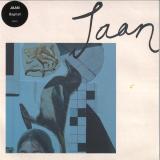
Operating on the fringes of pure improv, organised chaos, minimal composition, lo-fi electronics and Italian spaghetti westerns, wide-eyed and with a healthy dose of DIY aesthetics lies the world of Jaan. It’s a poetic & cosmic universe, exploring “discreet music” whilst wandering on the edges of the Cat People soundtrack & Brian Eno’s more experimental output, in which you might yourself find floating, wandering or in the middle of a market place.
Jaan is a collective of one, a deliberately anonymous activistic unit with strong ties to the international art scene. Purposefully bypassing the know-it-all of the the internet & embracing the bygone mystery of dusty old archives and deep-dive searching, remarkably little is known about this project. Jaan is lead by veteran experimental sonic alchemist Jaan; they operate between Greenland, the Middle East and Europe, with frequent associates Lisqa, Mashid & Schneorr N. acting as local hubs for collaboration and exploration.
The purpose of this wilful obscurity: full focus on the actual music, whether live events or on recordings. Which brings us to Baghali, their first for World of Echo. It’s a deeply personal album, much like slowly browsing old family albums filled with vaguely remembered tales, some still very much present, some faded, leaving but a ghost-like reflection of what once was. Baghali was compiled over the course of a year on the road, trapped in snow storms, waiting for cancelled flights and stuck rides. It’s made up of snippets of diary, quick recordings on road sides, abandoned buildings, garden ruins, vast desert and focussed studio sessions, following a collage-like aesthetic and steeped in an exploration of non-lineair storytelling. There’s broken memories, a sense of displacement and an occasional yearning for what can’t be again, clouded in fever and unrest, but there is also hope, wonderment and bright colours seeping through the cracks in the wall. Jaan weaves home-made instruments, old tape loops, broken synths, beat-up reeds, dusty beat boxes and the occasional doom guitar squall into a tapestry of fractured sound, with tracks following their own inherent logic rather than following formats. Sounds crash in and out, field recordings placing the listener firmly in an environment then throwing several perspectives at once onto them, with individual elements - a wandering clarinet, a lone mandoline, a beat out of place yet perfectly in place - slowly walking in and out & doing their thing.
The whole album is alive, breathes, takes a wrong turn, gets lost, somehow finds its way again - effortless and with a unique sense of space and flow.
Baghali is released digitally and on vinyl in an edition of 300 on 3rd October 2025.
A year on from Dawn Again's pubwave classic Every Dog's Hotel, the Australian producer returns to Hell Yeah with more dreamy, breaks-driven downtempo brilliance.
Melbourne-based Nick Verwey won plenty of new fans for the sunlit, lo-fi sounds of his last album. It came after years of making music for, and playing records to, people who like to get down anywhere from rooftops to beaches and living rooms. The prolific producer has released on the likes of Houseworx and Enjoyment Division before now, and this new EP is another wonderfully dreamy and carefree outing.
'A Day In The Life of Pond Algae' unfolds over a lazy, dubby groove that is gently brought to life with bulbous synth loops and shakers, sunny chords and little smears of sound that pass like clouds. 'Guided Meditation For Dancefloor Nirvana' picks things up with dusty broken beats and instructional spoken words that encourage you to breathe over painterly synth strokes and effortlessly cool grooves. 'Vanilla Sky' lays you out flat on the lawn, the beach or the lounger and has you gazing up to an azure blue sky as gentle drums and synths wash over you like a cooling breeze. Lastly 'Crying Outside the Stadium' captures the magic of later afternoon on a summer day with more blurry pads and vocals and hints of cosmic melody that lead you towards nightfall with a loving hand.
This is another superbly soothing soundtrack for a calming day of outdoor dancing.
12-inchers from Dublin disco messers Fatty Fatty only come along once in a while, but this summer they've got 2 biggies lined up for festival messing, sunset disco joy and eyes-down dirty basement feel...
Pablo and Shoey's 'Raw Human Emotion' EP features 3 tracks never before seen on vinyl and showcases the range of their productions neatly. First up you've got 'Raw Human Emotion Part 2', a track they provided for a Paper Disco compilation many moons ago. Chopping up sections of an old disco-soul stomper and getting deep inside the loops before rising to a joyous hands in the air climax, this is a peak-time winner that brings everyone together.
Flip over for two lost gems from the 'Do It Backwards' EP for Sprechen, which got lost in the chaos of the first Covid lockdown.
'Shoey's Acid Trip' is a peak time, hands aloft, laser reacher - acid preacher style slammer that builds like a bastard, while Pablo's 'Air Raid Dub' of the title track melds a wonky as heck bassline with a wicked boogie breakdown before slamming back in, rave sirens and all. Serious 3am tackle all round...And the likes of Justin Robertson and Severino of Horse Meat Disco agreed at the time, with the latter proclaiming 'Now this is something different...'. The whole EP fits that bill, and should do some serious damage around the place this summer...
- A1: Fading Dreams - Moonseed
- A2: Days Gone By - Luqęt X Strong.al&
- A3: Imperfections - Less Gravity
- A4: Light Roast - Levon Forever X Burbanksy
- A5: Oceanview - Juniorodeo X Levon Forever
- A6: Petrichor - Copacetik X Hoogway
- A7: Starlight - Andrew G
- A8: Stratego - Goson - Stratego
- B1: Golden Memories - Strong.al&
- B2: Time Flies - Otaam
- B3: To The Sea - Neele Harder
- B4: Rainy Day - Jazzyhan
- B5: I'll Miss You - Another Silent Weekend
- B6: Lakeside - Hoogway
- B7: Core Memory - Marsquake X Flowray
- B8: Don't Forget To Care - Mell-Ø X Ambulo
- C1: Oceans, Mountains - Morningtime
- C2: I Will Wait For You Just Like Last Year - Vimef X Copacetik
- C3: The Lovers - Your Magnolia
- C4: For The Flowers - Girl From Nowhere
- C5: Forgotten - Late Night Tones
- C6: Finding Hope - Dimension 32
- C7: Textures - Coils
- C8: Overpour - Burbanksy X Levon Forever
- D1: Wishes - Banks X Socrab
- D2: Beyond The Moon - Andrew G
- D3: Given A Chance - Banks X Tibeauthetraveler
- D4: Always Remember You - Mondo Loops
- D5: Waterlike - Team Astro
- D6: Quiet At Heart - Forever Dreaming X Zycix
- D7: True Story - Dimension 32
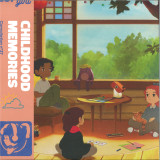
Embrace the golden tranquility of summer with Childhood Memories! Let yourself be enchanted by a compilation where each note softly whispers warmth, inviting the essence of summer to dance freely. Envision yourself nestled in a cozy treehouse, surrounded by lush greenery, basking in the warm sunlight as guitar melodies fill the air. Whether you're lost in a captivating book or sharing laughter with cherished friends, allow these laid-back tunes to become the soundtrack to your summer bliss.
Born out of a summer (and time) most sadly lost forever - this new release on Souvenirs From Imaginary Cities will break your skull open most tenderly, so it's fine particles of audio-dust can mingle with the last rays of sunshine and the bitter storm of this autumn. Track after track, this LP draws you in with a natural flow and a deep-felt pulse - reminiscent of classic slices of raw and sample- based ambient like Susumu Yakota's 'Sakura' and 'Everyone Alive Wants Answers' by Colleen. These tunes are heartfelt and channelling tons of real emotions and other melancholia.
It's a very personal and unique blend of almost nineties chill out zoning with a dubby undertone, rich textured loops, mixing a whole range of crazy acoustic and electronic flavours - stuff that shouldn't work together but are dancing all the way to heaven anyways - with slow burning dusty slabs of melody and yes those deep choral pads ( some Rachmaninov vesper magic in the air ), everything rough around the edges and low slung but so damn precise. A subtle mélange between abstract and more concrete sonic territories, but delivered in an upfront, improvised manner with great intuition and a quite ruff but poetic touch.
Name of this piece of swampy, chopped up but most nicely selected ambient work is La Ho, by Purpurny Dyadya aka Purple Uncle aka Sergey Demitriev, originally residing in St-Petersburg but living now for obvious reasons in Armenia. Sergey has been busy on labels like Echotourist, Hair Del, Nazlo and most recently with fellow traveler Nikita Chepurnoi as Amkarahoi on Patience/Impatience. Using a bunch of old tapes from his childhood times, filled with all kinds of sonic memories and Russian underground hip-hop as sample ground, he loaded up his MPC with magic dust and jammed out the basis of this LP during a summer fest near St-Petersburg before current hell broke loose.
It's the kind of a record that needs some time to really let loose his inherent power, give it some air, let it hop along a bit and those sounds will bloom wide open.
Tibi Dabo returns with ‘Overture’, a from his forthcoming Crosstown Rebels album, with remixes from Map.ache and Aline Umber.
A label favourite having dropped his ‘Isla’ EP on Crosstown Rebels back in 2022, ahead of his much-anticipated debut LP comes this third superb taster from it. The superb ‘Overture’ is an eight-minute gem with super smooth percussion and elastic grooves, with wispy sci-fi chords and gentle synth modulations. It’s full of future feels and catchy drum funk that is sophisticated and smartly detailed with chopped-up vocal fragments.
First to remix is Liepzig’s Map.ache, co-founder of Kann Records and half of Manamana. His take builds with fatter drums that are just as infectious, while rippling synth loops weave in and out as flashy basslines cut loose, and balmy pads add extra cosmic absence to a hypnotic mix of the heady and the physical.
Aline Umber, a collaborative live project from French composers, producers and DJs Aline Brooklyn and Aman Umber, are second to remix. They run the Airfunk label and are no stranger to playing cult spots like Rex Club in Paris. Their ‘23% Eventide’ mix is a blissed-out and synth-laced trip with subtle, smeared chords and starry-eyed keys that have you gazing off into the distance as you get lost in the warm drums.
Force Placement's AEROBICIDE EP is a killer workout of afterhours acid and galaxian breakbeat.
Four hypnotic bangers from Los Angeles with remix support from DJ Manny, D.I.E., and Martyn Bootyspoon
Los Angeles – Following releases on 100% Silk, Clave House, BANK NYC and Lost Soul Enterprises, FORCE PLACEMENT arrives on EVAR Records with four tracks of naughty squelching acid and breakbeat techno hypnotically calling you to the afterhours, backed by a trio of remixes from Martyn Bootyspoon, Detroit In Effect, and DJ Manny, representing North American excellence in techno, electro, and footwork, respectively.
A longtime friend of the EVAR crew from renegade breakcore parties in Santa Barbara to underground experimental electronics happenings in Los Angeles, Into the Woods and The Black Lodge resident Jason "Force Placement" James taps into his love of weird trippy atmospherics, rhythmic complexity and DIY punk/noise aesthetics to create this quartet of mystic, mysterious bangers, crafted with the MPC1000, Elektron's Octatrack sampler, the Korg minilogue, and Ableton.
The AEROBICIDE EP begins its killer workout with "Yeeks," a cabalistic ass-mover driven by a haunted female vocal sample floating atop locomotive bass and shakers – a factory's worth of industrial sounds and eerie accents move in and out of the mix, adding intrigue and interest.
Moving to the main room of the rave, "Balloon Animal" shoots you through an inflatable tube of squelchy acid techno as knives cut the air around you, while "Upsetter" adds a shuffling breakbeat rave bounce into the acid mix. "Quartered" chops it up with Clone-style dark analog electro that gets increasingly deconstructed by dirty, stretched percussion and rivulets of synth reverb raining down the walls.
Rounding out this occult aerobics class, some of North America's most compelling forces in dance music are called in for remix duty. Unsung electro hero Detroit In Effect aka D.I.E. – the man behind such classics as "RU Married" and "Get Up" – leans deep into the classic Motor City palette, pairing lush, spacey pads with that hard-swung Detroit bounce to create a mellow groover that will keep you going all night. Montreal's world-class party starter M. Bootyspoon recalls Substance Abuse-era Hawtin and mid-'90s Midwest techno on his "Balloon Animals" remix, with nasty claps and concentric loops of hard acid bleeps and squelches. And who better to tackle "Upsetter" than Southside Chicago's footwork futurist DJ Manny? The Teklife king eschews the romantic R&B tones of his recent Planet Mu album for a tough-as-nails rework that ups the tension and the tempo to create an otherworldly saga for the dance circle.
the tale of the mythic pentaki mountain has been engraved on a two-sided circular piece of wax. the north face of the peak is steep, abrasive, and has been the subject of many legends in the region. it is said that whoever would manage to climb it would find a plateau, leading to a place called "the single source of truth". considered as the ultimate goal by both psychedelic gurus and database optimization corporations, and as an ideal retirement destination for a couple of lost souls in search for coherence and objectivity, the source diffuses endless loops of haunted voices, apparently sampled from a discarded call center, running low on power, encouraging listeners to shorten cycles, deliver requests and improve user experience. it is also said that anyone climbing from the south side would never reach the summit or find his way to the plateau, and would always end up on a lower altitude than where he started. this topographical anomaly is probably the reason why the south face of the pentaki has always been favorited by locals, with its sunny weather and its luxurious vegetation flourishing along the soft downward slope, leading to a slow and peaceful end.
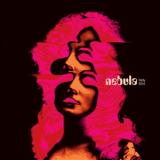
Nachauflage auf schwarzem Vinyl. 22 Jahre nach ihrer ersten Veröffentlichung und 10 Jahre nach ihrem letzten Album sind Nebula wieder da. Wenn du jetzt "Holy Shit!" denkst hast du es ziemlich genau getroffen. "Holy Shit" ist Nebulas erste LP seit "Heavy Psych" (2009), und beantwortet schnell die Frage die sich stellte, seitdem Gitarrist/Sänger Eddie Glass, Bassist Tom Davies und Schlagzeuger Michael Amster 2017 die Reformierung der Band angekündigt haben: Nebula sind immer noch Nebula. Seit den Tagen der 1998er Let it Burn EP und dem mittlerweile klassischen To the Center Debütalbum waren Nebula immer nur ein wenig gefährlicher. Nur etwas mehr aus den Angeln gehoben. Holy Shit zeigt diesen von vorne nach hinten für den wesentlichen Teil ihres Charakters, der er ist, und doch versucht er nicht, etwas zu sein, was sie schon einmal getan haben, sei es bei diesen frühen Ausflügen oder Heavy Psych or Charged (2001), Apollo (2003) oder Atomic Ritual (2005). Es ist ein sechstes Nebula-Album - etwas, worauf selbst die leidenschaftlichsten Fans kaum gehofft hätten. Die Grundtracks wurden in zwei Tagen aufgenommen, aufgenommen in den Mysterious Mammal Studios in L.A. mit Matt Lynch (ebenfalls von Snail) am Steuer. Leads und Loops und Feedback-Effekte wurden von Glass and Davies live aufgenommen, als sie die Basic-Tracks aufnahmen, genau so, wie sie es auf der Bühne tun würden, und Overdubs folgten bei Bedarf. Eine Fülle von Material wurde produziert und auf den Kern dessen, was man hier hört, reduziert. Ein sechstes Nebelalbum. Und wenn du es hörst, wirst du feststellen, dass du diesen Titel immer wieder sagst. Cover Art von ROBIN GNISTA
Nachauflage auf senfgelbem Vinyl. Limitiert auf 300 Exemplare. 22 Jahre nach ihrer ersten Veröffentlichung und 10 Jahre nach ihrem letzten Album sind Nebula wieder da. Wenn du jetzt "Holy Shit!" denkst hast du es ziemlich genau getroffen. "Holy Shit" ist Nebulas erste LP seit "Heavy Psych" (2009), und beantwortet schnell die Frage die sich stellte, seitdem Gitarrist/Sänger Eddie Glass, Bassist Tom Davies und Schlagzeuger Michael Amster 2017 die Reformierung der Band angekündigt haben: Nebula sind immer noch Nebula. Seit den Tagen der 1998er Let it Burn EP und dem mittlerweile klassischen To the Center Debütalbum waren Nebula immer nur ein wenig gefährlicher. Nur etwas mehr aus den Angeln gehoben. Holy Shit zeigt diesen von vorne nach hinten für den wesentlichen Teil ihres Charakters, der er ist, und doch versucht er nicht, etwas zu sein, was sie schon einmal getan haben, sei es bei diesen frühen Ausflügen oder Heavy Psych or Charged (2001), Apollo (2003) oder Atomic Ritual (2005). Es ist ein sechstes Nebula-Album - etwas, worauf selbst die leidenschaftlichsten Fans kaum gehofft hätten. Die Grundtracks wurden in zwei Tagen aufgenommen, aufgenommen in den Mysterious Mammal Studios in L.A. mit Matt Lynch (ebenfalls von Snail) am Steuer. Leads und Loops und Feedback-Effekte wurden von Glass and Davies live aufgenommen, als sie die Basic-Tracks aufnahmen, genau so, wie sie es auf der Bühne tun würden, und Overdubs folgten bei Bedarf. Eine Fülle von Material wurde produziert und auf den Kern dessen, was man hier hört, reduziert. Ein sechstes Nebelalbum. Und wenn du es hörst, wirst du feststellen, dass du diesen Titel immer wieder sagst. Cover Art von ROBIN GNISTA
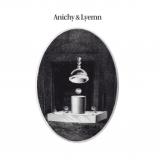
Shrouded in myth and working quietly at the edges of modern composition, the enigmatic Anichy & Lyemn announces the release of their newest recording on the esteemed Swiss imprint Fabrique d'Instruments—a new label championing radical, visionary sound.
This deeply affecting work unfurls as a meditation on impermanence, memory, and the slow unravelling of time. Across its extended movements, they create a sound world that is at once symphonic in scale and intimate in breath, echoing the aching resonance of William Basinski’s The Disintegration Loops, the spectral drift of The Caretaker, and the luminous stillness of Gavin Bryars.
Strings sigh, distant sounds dissolve, and tape-worn melodies return like half-remembered dreams. It is music that feels remembered more than heard—a fragile architecture built from erosion, decay, and the stubborn persistence of beauty.
Adding to its mystique, the record features previously unheard collaborations with a legendary British minimalist composer, whose identity remains deliberately withheld. These rare sessions—long thought lost to time—reveal the artist exploring harmonic minimalism with a disarming tenderness, the composer’s unmistakable signature woven delicately through Anichy & Lyemn’s drifting orchestral shadows.
At a moment when the world feels increasingly unmoored, this record arrives as a quiet monument to what slips away, and what remains.
Artist is available for very limited interviews.
- 1: Lost Future
- 2: Slow Deep Dive (Intro Version)
- 3: Lonely Choice
- 4: In Motion
- 5: Twisted Plans (Car Park Version)
- 6: Grief Process
- 7: Distorted Idea (Maxi In Prague Version)
- 8: Absent Mind
- 9: Acceptance
- 10: Event Flow
- 11: Slow Deep Dive (Alex Version)
- 12: Deep Dive (Jsk Version)
- 13: Twisted Plans (Red Club Version)
- 14: Strange Love
Political thriller Je Suis Karl, produced by German director Christian Schwochow, has a strong Czech connection. The soundtrack has been created by Czech musician and composer Tomáš Dvořák, a.k.a. Floex, who joined forces with British composer and pianist Tom Hodge. The soundtrack for Je Suis Karl will be released on September 16, 2021.
"In this project, Tom and I built on music that we wrote together three years ago for the album A Portrait Of John Doe. While this was the first feature film for me, Tom has extensive experience with composing music for movies and series," commented Dvořák.
Co-produced by the Czech company Negativ and filmed in part in the Czech Republic, the movie features characters played by Czech actresses Anna Fialová and Elizaveta Maximová. The picture makes use of the story of a young German girl, Maxi, and her family to draw attention to rising extremism among right-wing nationalists. Je Suis Karl was premiered during this year's Berlinale film festival in the Berlinale Special section.
At the director's initiative, music for Je Suis Karl was composed based on the script before the emergence of the COVID-19 pandemic. “Christian Schwochow asked for a demo, but when Tom and I set to work in Prague, we came up with a huge amount of inspired stuff within a short time, and the music became the foundation of the soundtrack. Because of the pandemic, the music itself was created on a long-distance basis. It was a game of ping pong of sorts," Dvořák added.
The soundtrack for Je Suis Karl features a unique timbre, far from the traditional symphonic sound. Instead, the sonic design relies on a fusion of dark, discordant, dirty sounds that present the symphony orchestra in a novel fashion.
Floex and Hodge created a database of loops, sounds, soundscapes, and sonic experiments with no specific compositional context. In composing music for individual scenes, they used this musical database, remixed themes and versions of compositions, and worked with vintage equipment, such as the Yamaha MT4X cassette player. Considering the large quantity of music recorded, the album contains 14 compositions from the movie itself, plus bonus tracks that did not make it into the film.
Tomáš Dvořák, a.k.a. Floex, is a Czech clarinetist, composer, producer, and multimedia artist, the recipient of multiple Anděl Music Awards. His discography includes two long-play records, Pocustone and Zorya, soundtracks for the games Samorost 2, Machinarium, Samorost 3, Pilgrims, and Papetura, remix albums, and extended-play records. In 2018, he joined forces with Tom Hodge to release the album A Portrait Of John Doe.
British composer, pianist, and clarinetist Tom Hodge challenges the boundaries of contemporary experimental music. He composes music for film, series, documentaries, advertising, and ballet. His most recent projects include the soundtrack for Je Suis Karl and music for the movie The Mauritanian filmed by director Kevin Macdonald. He has released several solo albums, including Piano Interrupted and Second Moon of Winter, and has pursued a long-term collaborative partnership with musician Max Cooper.
Hot Creations Autumn 2025 Vinyl Sampler featuring four of the Hottest recent release on Hot Creations.
When Jamie Jones and Nicole Moudaber first collaborated on Hot Creations in 2020 with ‘Pepper Shake’, five years on, the pair return with ‘Where All My People’, a powerful anthem that merges Jamie’s signature groove-led style with Nicole’s unmistakable drive and energy. The record is further elevated by the infectious vocals of London-based duo House Of Molly, ‘Where All My People’ is a celebration of rhythm, anchored by a rolling bassline and crisp percussion that form a tight, understated groove. House of Molly’s commanding vocal hook runs through the track like a thread of energy, adding a human touch that feels both intimate and anthemic. Marking his second outing on Hot Creations, OMRI. is back with ‘Release The Pressure’, a pulsating, groove-driven heater made for full-throttle moments featuring Benny Ola on vocals. Crisp percussion, hooky vocals, sharp synths, and low-end pressure come together in a track that simmers with controlled intensity.
On the flip Joshwa makes a much-anticipated return to Hot Creations with ‘Lost In Music’ which reimagines a timeless disco classic through a contemporary house lens, delivering textured percussion, sparkling funk-laced synths, and an infectious groove that captures the euphoria of sweat-drenched dancefloors.As Hot Creations celebrates its 15th anniversary in 2025, label co-founder Lee Foss makes a long-awaited return to the imprint for the first time in half a decade with a powerful new collaboration alongside Colorado based talent GS5. ‘In The Ghetto’ hits with low-slung swagger and vibrant vocal energy, channelling a bass-heavy strut and hypnotic vocal loops that nod to early Hot Creations flavours while pushing into contemporary terrain.
Letters Home is the debut full-length on ambient powerhouse Pas tInside The Present from Tennessee-based Slow Blink aka Amanda Haswell. And a fine one it is too with mesmerising routes through hazy soundscapes she calls "tape loop weather patterns." Across two half-hour pieces, bowed guitar, piano, bells, and toy synths dissolve into dreamy loops and create symphonies of colour and memory. Side one, 'The Heart's Docent', feels like a love-struck dance unraveling in slow motion, while 'Laughter at Cascade Park' evokes bittersweet nostalgia for long-lost joys. Handmade, analogue and alive with imperfections, Letters Home is an intimate meditation on memory, nature and impermanence.
Ostinato as resistance: Rafael Anton Irisarri’s landmark work reimagined. Marking the tenth anniversary of the American composer’s critically acclaimed album 'A Fragile Geography', this new edition arrives renewed, both sonically and visually.
First released in 2015 (Room40) during a period of personal upheaval and creative reinvention, it endures as a testament to resilience, transformation, and the connection we hold with the places that shape us.
Written in the aftermath of a devastating theft, A Fragile Geography was born out of loss. Just days before a cross-country move to New York, Irisarri’s entire Seattle-based studio was wiped out. Instruments. Recordings. Archives. Gone without a trace. He arrived on the East Coast to an empty room and the daunting task of starting over.
“This album wasn’t just a record; it was a lifeline,” Irisarri reflects. “It became a way to process the emotional chaos that followed: uprooting, instability, and ultimately, the slow, intuitive rebuilding of a life.”
Composed and recorded in the rural woods of the Hudson Valley, the album took shape in seclusion, surrounded by nature, and through a process guided by improvisation. Embracing limitations, Irisarri wove textural layers of field recordings with half-remembered melodies from his Seattle years, piecing them together like fragments of memory. Tracks like “Displacement,” “Hiatus,” and “Persistence” juxtaposed haunting stillness with restless momentum, mapping an inner terrain of grief, catharsis, and rebirth.
Among its defining sounds is “Empire Systems,” a monumental centerpiece built around a simple four-chord progression, organ textures, and guitar drones. Gradually, the track expands into layers of immersive loops and thick, enveloping distortion that wash over the listener like a rolling wave. Often cited as the album’s most majestic passage, it captures Irisarri at his most sonically ambitious. With a harmonically saturated structure crafted from restraint and repetition, it remains one of his most recognizable compositions: an exercise in the art of maximal minimalism.
From the outset, “Reprisal” received praise from BBC’s Mary Anne Hobbs, who championed the track on her radio show. Her support played a key role in introducing Irisarri’s work to wider audiences and solidifying his place within the lineage of electronic, drone, and experimental sound artists. A slow-burning elegy, the piece emerges from a haze of distortion and sub-bass, with dense, unrelenting drones carrying a sense of mounting tension. Just as it seems to collapse under its own weight, flickers of guitar emerge like distant light through fog. It’s a meditation on dissonance, resolve, and the elusive possibility of release.
The closing track, “Secretly Wishing for Rain,” is steeped in saudade: a longing for Seattle’s dour grey skies, lush green landscapes, and desaturated sunsets. Through it, Irisarri mourns a vanished chapter of life bound to the city, a time documented in scattered mementos and cherished collections, now permanently gone. A reflection on what could never be recovered: an era lost to time. Julia Kent’s looped cello motifs added a melancholic warmth to the track, marking the first collaboration between the two artists and sparking a musical dialogue that would keep growing in the years that followed.
More than a career highlight, A Fragile Geography has laid the foundation for Black Knoll studio, which Irisarri rebuilt from the ground up. The studio has since grown into a creative hub for countless projects, with Irisarri engineering records for iconic music figures like Terry Riley, Ryuichi Sakamoto, William Basinski, MONO, Devendra Banhart, Grouper, Emeralds, Steve Hauschildt, Julianna Barwick, and many others. Carried by its lasting influence, the album has quietly captured the ear of a younger generation, its sound and emotional arc finding new listeners in unexpected corners.
The album’s new visual language was reimagined in collaboration with Mexico City–based designer Daniel Castrejón. Irisarri captured ghostly images at Gaztelugatxeko Doniene, a historic coastal site in Bermeo, Euskal Herria. Castrejón then treated the photographs with distressed textures and spectral overlays. The final artwork channels the rugged, elemental forces that shaped both the music and Irisarri’s aesthetic, renewing his ties to ancestral ground inspired by the Basque homeland of his bloodline.
Mastered by Stephan Mathieu with exceptional attention to detail, this anniversary edition uncovers every nuance in the sound design, enhancing clarity and presence. With each listen, new elements emerge, inviting discovery and reconnection.
“I don’t experience this album as a document of grief anymore,” says Irisarri. “I hear adaptation and I'm reminded that when everything falls apart, something meaningful, maybe even beautiful, can emerge.”
Ostinato as resistance: Rafael Anton Irisarri’s landmark work reimagined. Marking the tenth anniversary of the American composer’s critically acclaimed album 'A Fragile Geography', this new edition arrives renewed, both sonically and visually.
First released in 2015 (Room40) during a period of personal upheaval and creative reinvention, it endures as a testament to resilience, transformation, and the connection we hold with the places that shape us.
Written in the aftermath of a devastating theft, A Fragile Geography was born out of loss. Just days before a cross-country move to New York, Irisarri’s entire Seattle-based studio was wiped out. Instruments. Recordings. Archives. Gone without a trace. He arrived on the East Coast to an empty room and the daunting task of starting over.
“This album wasn’t just a record; it was a lifeline,” Irisarri reflects. “It became a way to process the emotional chaos that followed: uprooting, instability, and ultimately, the slow, intuitive rebuilding of a life.”
Composed and recorded in the rural woods of the Hudson Valley, the album took shape in seclusion, surrounded by nature, and through a process guided by improvisation. Embracing limitations, Irisarri wove textural layers of field recordings with half-remembered melodies from his Seattle years, piecing them together like fragments of memory. Tracks like “Displacement,” “Hiatus,” and “Persistence” juxtaposed haunting stillness with restless momentum, mapping an inner terrain of grief, catharsis, and rebirth.
Among its defining sounds is “Empire Systems,” a monumental centerpiece built around a simple four-chord progression, organ textures, and guitar drones. Gradually, the track expands into layers of immersive loops and thick, enveloping distortion that wash over the listener like a rolling wave. Often cited as the album’s most majestic passage, it captures Irisarri at his most sonically ambitious. With a harmonically saturated structure crafted from restraint and repetition, it remains one of his most recognizable compositions: an exercise in the art of maximal minimalism.
From the outset, “Reprisal” received praise from BBC’s Mary Anne Hobbs, who championed the track on her radio show. Her support played a key role in introducing Irisarri’s work to wider audiences and solidifying his place within the lineage of electronic, drone, and experimental sound artists. A slow-burning elegy, the piece emerges from a haze of distortion and sub-bass, with dense, unrelenting drones carrying a sense of mounting tension. Just as it seems to collapse under its own weight, flickers of guitar emerge like distant light through fog. It’s a meditation on dissonance, resolve, and the elusive possibility of release.
The closing track, “Secretly Wishing for Rain,” is steeped in saudade: a longing for Seattle’s dour grey skies, lush green landscapes, and desaturated sunsets. Through it, Irisarri mourns a vanished chapter of life bound to the city, a time documented in scattered mementos and cherished collections, now permanently gone. A reflection on what could never be recovered: an era lost to time. Julia Kent’s looped cello motifs added a melancholic warmth to the track, marking the first collaboration between the two artists and sparking a musical dialogue that would keep growing in the years that followed.
More than a career highlight, A Fragile Geography has laid the foundation for Black Knoll studio, which Irisarri rebuilt from the ground up. The studio has since grown into a creative hub for countless projects, with Irisarri engineering records for iconic music figures like Terry Riley, Ryuichi Sakamoto, William Basinski, MONO, Devendra Banhart, Grouper, Emeralds, Steve Hauschildt, Julianna Barwick, and many others. Carried by its lasting influence, the album has quietly captured the ear of a younger generation, its sound and emotional arc finding new listeners in unexpected corners.
The album’s new visual language was reimagined in collaboration with Mexico City–based designer Daniel Castrejón. Irisarri captured ghostly images at Gaztelugatxeko Doniene, a historic coastal site in Bermeo, Euskal Herria. Castrejón then treated the photographs with distressed textures and spectral overlays. The final artwork channels the rugged, elemental forces that shaped both the music and Irisarri’s aesthetic, renewing his ties to ancestral ground inspired by the Basque homeland of his bloodline.
Mastered by Stephan Mathieu with exceptional attention to detail, this anniversary edition uncovers every nuance in the sound design, enhancing clarity and presence. With each listen, new elements emerge, inviting discovery and reconnection.
“I don’t experience this album as a document of grief anymore,” says Irisarri. “I hear adaptation and I'm reminded that when everything falls apart, something meaningful, maybe even beautiful, can emerge.”
Letters Home is the debut full-length on ambient powerhouse Pas tInside The Present from Tennessee-based Slow Blink aka Amanda Haswell. And a fine one it is too with mesmerising routes through hazy soundscapes she calls "tape loop weather patterns." Across two half-hour pieces, bowed guitar, piano, bells, and toy synths dissolve into dreamy loops and create symphonies of colour and memory. Side one, 'The Heart's Docent', feels like a love-struck dance unraveling in slow motion, while 'Laughter at Cascade Park' evokes bittersweet nostalgia for long-lost joys. Handmade, analogue and alive with imperfections, Letters Home is an intimate meditation on memory, nature and impermanence.
Ostinato as resistance: Rafael Anton Irisarri’s landmark work reimagined. Marking the tenth anniversary of the American composer’s critically acclaimed album 'A Fragile Geography', this new edition arrives renewed, both sonically and visually.
First released in 2015 (Room40) during a period of personal upheaval and creative reinvention, it endures as a testament to resilience, transformation, and the connection we hold with the places that shape us.
Written in the aftermath of a devastating theft, A Fragile Geography was born out of loss. Just days before a cross-country move to New York, Irisarri’s entire Seattle-based studio was wiped out. Instruments. Recordings. Archives. Gone without a trace. He arrived on the East Coast to an empty room and the daunting task of starting over.
“This album wasn’t just a record; it was a lifeline,” Irisarri reflects. “It became a way to process the emotional chaos that followed: uprooting, instability, and ultimately, the slow, intuitive rebuilding of a life.”
Composed and recorded in the rural woods of the Hudson Valley, the album took shape in seclusion, surrounded by nature, and through a process guided by improvisation. Embracing limitations, Irisarri wove textural layers of field recordings with half-remembered melodies from his Seattle years, piecing them together like fragments of memory. Tracks like “Displacement,” “Hiatus,” and “Persistence” juxtaposed haunting stillness with restless momentum, mapping an inner terrain of grief, catharsis, and rebirth.
Among its defining sounds is “Empire Systems,” a monumental centerpiece built around a simple four-chord progression, organ textures, and guitar drones. Gradually, the track expands into layers of immersive loops and thick, enveloping distortion that wash over the listener like a rolling wave. Often cited as the album’s most majestic passage, it captures Irisarri at his most sonically ambitious. With a harmonically saturated structure crafted from restraint and repetition, it remains one of his most recognizable compositions: an exercise in the art of maximal minimalism.
From the outset, “Reprisal” received praise from BBC’s Mary Anne Hobbs, who championed the track on her radio show. Her support played a key role in introducing Irisarri’s work to wider audiences and solidifying his place within the lineage of electronic, drone, and experimental sound artists. A slow-burning elegy, the piece emerges from a haze of distortion and sub-bass, with dense, unrelenting drones carrying a sense of mounting tension. Just as it seems to collapse under its own weight, flickers of guitar emerge like distant light through fog. It’s a meditation on dissonance, resolve, and the elusive possibility of release.
The closing track, “Secretly Wishing for Rain,” is steeped in saudade: a longing for Seattle’s dour grey skies, lush green landscapes, and desaturated sunsets. Through it, Irisarri mourns a vanished chapter of life bound to the city, a time documented in scattered mementos and cherished collections, now permanently gone. A reflection on what could never be recovered: an era lost to time. Julia Kent’s looped cello motifs added a melancholic warmth to the track, marking the first collaboration between the two artists and sparking a musical dialogue that would keep growing in the years that followed.
More than a career highlight, A Fragile Geography has laid the foundation for Black Knoll studio, which Irisarri rebuilt from the ground up. The studio has since grown into a creative hub for countless projects, with Irisarri engineering records for iconic music figures like Terry Riley, Ryuichi Sakamoto, William Basinski, MONO, Devendra Banhart, Grouper, Emeralds, Steve Hauschildt, Julianna Barwick, and many others. Carried by its lasting influence, the album has quietly captured the ear of a younger generation, its sound and emotional arc finding new listeners in unexpected corners.
The album’s new visual language was reimagined in collaboration with Mexico City–based designer Daniel Castrejón. Irisarri captured ghostly images at Gaztelugatxeko Doniene, a historic coastal site in Bermeo, Euskal Herria. Castrejón then treated the photographs with distressed textures and spectral overlays. The final artwork channels the rugged, elemental forces that shaped both the music and Irisarri’s aesthetic, renewing his ties to ancestral ground inspired by the Basque homeland of his bloodline.
Mastered by Stephan Mathieu with exceptional attention to detail, this anniversary edition uncovers every nuance in the sound design, enhancing clarity and presence. With each listen, new elements emerge, inviting discovery and reconnection.
“I don’t experience this album as a document of grief anymore,” says Irisarri. “I hear adaptation and I'm reminded that when everything falls apart, something meaningful, maybe even beautiful, can emerge.”
- A1: Pharoah Jones
- A2: Ghost Gospel
- A3: Ill Feeling
- A4: Capital Punishment
- A5: Do Not Adjust
- A6: Cool Green Trees
- A7: Chill Scratch
- A8: Poisonous Fumes
- A9: Welcome Aboard The Starship
- B1: Keep On Runnin
- B2: Sounds Impossible
- B3: Painted Faces
- B4: The Knew Style
- B5: Chicken Wing Blues Sauce
- B6: Kool Breeze
- B7: Sexx Bullets
- B8: Soul Child
- B9: Take Off Runnin
- B10: Centurian
- B11: Bozack
- B12: Church
- B13: Splash One
- B14: Hank
- B15: 73 Goatee
"Chasing the funky symphonies that filled my head and my dreams..."
December 25th, 2023 - an Instagram post. Stimulator Jones shared half a dozen FIRE tracks from his beat tape archive. We were immediately drawn to the rough hewn boom bap.
"I'd release that", Rob commented.
Hours of material was shared and the result is this: Cool Green Trees (1999-2005). A collection of beats and loops Stimulator Jones created between the ages of 14-20 at home in his basement, bedroom and computer room in Roanoke, Virginia.
You will not believe the profound soulful genius contained within these naive schoolboy melodies.
December 25th, 1998 - 25 years ago to the day and his much-coveted Yamaha SU10 sampler was finally bestowed upon young Stimmy AKA Sam Lunsford: "I immediately hooked up a CD Walkman to the input jack and looped the beginning two bars of Grover Washington Jr.'s "Mercy Mercy Me". I don't know what exactly was so thrilling about hearing two measures of music repeating over and over but it was so infectious and hypnotizing and enthralling to me. I'll never forget that ecstatic rush of making my first loop - an uncontrollable, gleeful smile plastered all over my face." When you hear the pocket breakbeat symphonies featured here on Cool Green Trees, you'll feel the same sense of frisson.
In the wake of his Stones Throw breakthrough - Exotic Worlds & Master Treasures - Stimulator Jones was pegged by many as a 90s throwback artist. However, he literally IS a 90s artist. He's been recording music most of his life and he's now 40. He created the bulk of Cool Green Trees as a teenager. Everything before 2004 was recorded when Sam was still in school. He was in 8th grade when he made the 1999 tracks - he didn't even have his learner's permit. This album is a snapshot of a young man in a simpler time. Things were still mysterious back then and he was flying blind, relying on his ears and having to figure things out for himself: "I had no road map for becoming a beatmaker. I have been collecting music since I was a kid, I am a lifelong digger and seeker of cool and interesting sounds. I was there in the golden age of Hip Hop, and while I may have been a suburban white kid in Roanoke, Virginia, I was tuned in and I bought so many classic albums when they came out. I was attracted to Hip Hop because of the musical and poetic quality. I was hypnotized by the rhythms, partially because I was a drummer. I didn't brag about collecting my breakbeat records or making beats - it was something I did in isolation. It wasn't something I generally wanted to bring attention to and it didn't really score me any cool points. I certainly wasn't flexing on social media about it."
Hell, he can do that now!
Opener "Pharoah Jones" was inspired by Yesterday's New Quintet and Madlib's ability to capture that classic 70s sound whilst playing all the instruments. Sam created this one stoned afternoon by laying down a 2 bar loop and a shaker loop on his Yamaha SU700 sampler. He hung a microphone from the ceiling and played his Yamaha Stage Custom drum kit over the top before adding ender Rhodes and playing his dad's Selmer tenor sax through an Electro Harmonix Memory Man echo pedal. Yes! Up next, "Ghost Gospel" utilises a dope loop from a gospel record and adds some soul-funk drums overtop, whilst working that filter knob. Says Sam: "The loop reminded me of something Ghostface would rap over. The sample was in 3/4 waltz time but I flipped it for a 4/4 groove, a technique I picked up from RZA. "Ill Feeling" uses sped-up pieces from a dusty old funk record and putting them over a classic NOLA drum loop; gain chopping up a slow, bluesy 3/4 time signature and bending it to a 4/4 groove. Classy shit. "Capital Punishment" features drums tapped in live, inspired by MF Doom's Special Herbs series. "Do Not Adjust" consists loops found on a compilation of 70s French music at Happy's Flea Market, a classic Roanoke digging spot.
The sublime, evocative title track, "Cool Green Trees" was created when Sam was still living at home. He dumped samples off his SU10 into the family desktop and arranged them in a demo version of Pro Tools: "This track was sort of my ode to the DJ Shadow style of sample based production. Super spacey, slow, and moody. The heavily filtered drums were inspired by Alec Empire's 'Low on Ice' album. I later added some scratches and sounds from a Spider Man storybook record." "Chill Scratch" snags the final bit of a bossanova record and pairs it with a drum loop before adding experimental scratching run through an Electro Harmonix Memory Man echo pedal. "Poisonous Fumes" was made using a sampler, mixer and a turntable; a kind of mixtape beat collage with added scratches and sounds from various records. Using dialogue from superhero records was a nod to Madlib. "Welcome Aboard The Starship" is dark, downtempo trip-hop with a spooky bent. Sam paired a slow, hard drum loop with a guitar sample grabbed off a psychedelic rock record. To finish, he added various backwards sounds and weird atmospheric effects and a little scratching. Swoon.
Side B opens with "Keep On Runnin", made on a borrowed Roland SP202 sampler. Having always loved the sound of the Lo-Fi filter on those machines, reminiscent of the Emu SP1200, Sam always imagined Del or another of the Hieroglyphics crew rapping over this beat. You can certainly hear why. "Sounds Impossible" sees Sam experimenting with layering multiple kick samples at different volumes to create patterns similar to those heard by Showbiz and Lord Finesse during their God-level 1995 period. "Painted Faces" was made by chopping up a REDACTED record which he had gotten from Happy's Flea Market and paired it with a REDACTED drum loop. By the time Sam recorded "The Knew Style", he had acquired a shitty old 1960s portable turntable off eBay. It didn't function properly when he bought it but his brother opened it up, cleaned it out and got it working: "I remember he told me that there was a bunch of sand inside of it when he opened it up, as if its previous owner had taken it to the beach. I would take that turntable on my Happy's Flea Market digs so I could preview records...that's how I found this loop."
"Chicken Wing Blues Sauce" loops up a classic blues joint and pairs it with some REDACTED drums. A bit of filtering and arranging et voilà! "Kool Breeze", from 1999, is one of Sam's oldest surviving beats, as is "Sexx Bullets". The Roots sampled the same record, leaving Sam frustrated yet vindicated. "Soul Child" was an early SU10 creation, looping a dusty old Soul Children 45 and pairing it with 70s rock drum loops to great effect. "Take Off Runnin" was another loop found digging with a portable turntable. Paired with some boom bap drums it makes for a hypnotic head-nod groove. "Centurian" was intended to be a little beat interlude a la Pete Rock. The sample is from a sun-dappled soft-psych record and it's paired with a Robin Trower drum loop that just happens to fit perfectly. Sometimes you slap things together kind of haphazardly and magic happens. "Bozack" was the first beat Sam made using Pro Tools, his first foray into using chopped sounds instead of loops, an exciting new world. "Church" is beat interlude using a Phil Upchurch loop with the "Long Red" drums - a favourite break of Dilla et al. Sam was really on a tear in late 2004, probably because he was unemployed and phoneless and able to just make beats all day. He made "Splash One" on a borrowed Yamaha SU700 and again was experimenting with tapping the drums in live with his fingers, instead of using a loop or sequenced pattern. Channeling 9th Wonder, Sam used a water splash sound effect from a Batman record as a percussive element, hence the title (also a 13th Floor Elevators reference). The main loop is a backwards portion of one of his favourite Roy Ayers songs.
"Hank" is another fun little beat interlude thing, created on a borrowed Roland SP202 sampler with the fantastic Lo-Fi effect that resembled the Emu SP1200 at a fraction of the price. "73 goatee", from 99, is another of his oldest surviving beats, created in his bedroom with his Yamaha SU10 and his brother's Vestax MR-300 4-track recorder: "This one will always feel special. I can remember having a feeling all the way back then on the night that I created it that this was a solid beat with a catchy loop. There was something in the Fender Rhodes melody that resonated with me emotionally, and I had never heard a producer sample that portion before. I felt like I had found my own unique sound, my own unique loop. It came from an Ahmad Jamal '73. I actually even recorded myself rapping and scratching over this beat way back then, I still have that version in all its imperfect sloppy glory."
Sam explains just how much these tracks mean to him: "They all have immense historical and sentimental value and I'm proud of them. These beats come from an innocent, simple time when I was just figuring out how to craft these sounds. They're something very personal to me. They are the initial part of a journey that I really was taking *alone*. There was no YouTube. I couldn't Google shit. I didn't even know any other beatmakers, producers or DJs in my town that could teach me anything. It was always just me, alone, in a room with some equipment - chasing the funky symphonies that filled my head and my dreams. What I was doing wasn't cool. Most of my peers thought I was a weirdo and couldn't care less. Creating these sounds was an anti-social endeavour. In a sense, I felt like it was me against the world, and all I had to instruct and assist me were the recordings produced by my heroes - RZA, DJ Premier, Erick Sermon, Beatminerz, Showbiz, Diamond D, Beatnuts, Prince Paul, The Bomb Squad, Pete Rock, Q-Tip, E-Swift, Mista Lawnge, DJ Shadow, Cut Chemist, Peanut Butter Wolf, El-P and so many more...I dedicate this collection to them, and to my older brother Joe who has always been a musical and technical guiding light for me.
This was a time before every kid was a self-described producer and beatmaker, before everyone had a DAW, before Kanye and "chipmunk soul", before Red Bull beat battles, before there was any social media beyond chat rooms and AOL Instant Messenger, before Soundcloud, before SP-404 mania, before lo-fi beats to study to, before Splice, before targeted ads for MIDI chord packs, etc. In 99 when I told people that I had a sampler and made beats I was mostly met with bewildered confusion and indifference. Kids and adults alike would wonder why I got this weird machine for Christmas instead of something worthwhile like a Playstation or a mountain bike or even a guitar for that matter because at least that could be used to make "real music". Back then, sampling was still not widely respected as an art form - it was seen as lazy, talentless and unoriginal at best and outright criminal theft at worst. I had gotten respect for playing drums and guitar and things of that nature but this was a step in the wrong direction in the eyes of many."
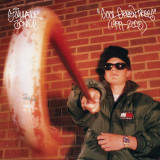
The cover photo is a picture of Sam standing on his back porch in the latter part of 1998, just before he got his first sampler. He was 13 years old, in 8th grade. His dad took the picture with his 35mm film camera: "I actually wanted to be pointing my dad's .22 pistol at the camera lens but he wouldn't let me. He gave me an old walking cane to use instead. The Tommy Hilfiger puffer jacket came from the lost and found at William Fleming High School where my mom worked as a secretary. I was thrilled when she brought it home because we never spent money on expensive name brand clothing like that - we were for the most part strictly a sale rack, bargain bin, thrift store, yard sale, flea market kind of family when it came to clothes. My watch is some cheap off-brand fake gold department store watch." Mastering for this vinyl edition was overseen by Be With regular Simon Francis and it was cut by the esteemed Cicely Balston at Abbey Road Studios to be pressed in the Netherlands by Record Industry.
"6-track house finesse from Amsterdam mainstay Beraber, topped off with a killer remix by Brazilian artist Zopelar. Expect six melodic tracks for the body & mind. Beraber returns to United Identities with Gentle Actions, setting the tone for long summer evenings and sun-soaked days. The Amsterdam based producer and DJ organically blends Chicago's classically-schooled keys and machine backdrops with subtle, atmospheric textures. This long-awaited record by Beraber (Baris Akardere) is a deeply personal collection of music, encapsulating a period of creative and personal growth. Rather than a concept record, it serves as a document of the past years, bundling some of most cherished productions into a cohesive and heartfelt gift to the audience. This EP marks the first time the producer has used his own vocals in his productions, next to vocal contributions from Barcelona-based artist Ivy Barkakati, whose lyrics perfectly resonate with the journey of the EP. Gentle Actions opens with Between Us, a calm builder, gracefully layered with meandering pads. Distant Language picks us up with its dubbed-out groove, guiding our feet on a journey through melodic landscapes. It flows into Responsibility, an introspective track with a powerful message about turning dreams into reality, before continuing with Lost in Loops, a loose and soulful house cut featuring his own vocals. The journey ends with the more upbeat, instrumental Good Company, topped off with a deep, nocturnal remix by Zopelar. Written and produced entirely in his Amsterdam studio -- housed in the same building that once held De School -- Beraber continues to rely on a deeply analog and outboard gear-heavy approach. The result is a record that stays true to his soulful and introspective signature, mirroring the sonic identity of his acclaimed radio show, Gentle Actions on Amsterdam's online radio station RRFM."
- A1: Space Drift
- A2: Memory Loss
- A3: Siren-Call
- A4: Harmonisers Of The Spheres
- A5: Telepathy Beyond Time
- A6: Older Than Time
- A7: Congestion Hoe-Down
- A8: Shadowland
- A9: Celandine & Columbine
- A10: The Dying Of The Light
- A11: Cloud
- A12: Darkness At Noon
- A13: Future Perfect
- A14: The Killing Skies
- B1: Into The Depths She Calls
- B2: Lazy Summer Afternoons
- B3: Insects Revolt
- B4: Blood Runs Cold
- B5: Post Apocalypse Fog
- B6: Fish Don’t Cry
- B7: Ghost In The Abbey
- B8: Insects Dance
- B9: Dreams Of Magic & Cornfields
- B10: Devil’s Lightening
- B11: Danger Hurts
- B12: Why Me?
First ever release of pioneering radiophonic / experimental / electronic / soundtrack composer you may never have heard of but really should have by now. 26 tracks in all.
As we began the mammoth task of whittling down material for this album Elizabeth recalled the time she met Delia Derbyshire. It was during a party for existing and former Radiophonic Workshop composers at BBC Maida Vale in the early 1980s. Delia introduced herself with typical energy and exuberance proclaiming "It's up to you now - I'm passing the baton. Show these men how we get things done". That must have been quite an honour and responsibility for a young, female composer establishing herself within the male-dominated environs at Delaware Road.
Looking back over a musical career spanning almost five decades, it's clear Elizabeth rose to the challenge and made her mark. She was consistently in demand with television and radio producers, composing for an array of ground-breaking, critically acclaimed and popular BBC projects. Whilst Delia's legacy has achieved mythical status with her position as an innovator and feminist icon secured, the majority of Elizabeth's recorded work remains unavailable so her contribution to the output of the Workshop and evolution of British electronic music is somewhat under-appreciated.
Perhaps this record will help start to remedy the situation. Included are early tape experiments, home demos and non-BBC commissions from the early 1970's to the late 2000s. Having listened to 260+ digital audio tapes from Elizabeth's personal archive we have barely scratched the surface but hope to provide an indication of the breadth of her compositional and sound design skills.
Classically trained in cello and piano, Elizabeth graduated from the University of East Anglia with a degree in Music in 1973. She was mentored by Tristram Cary who helped her to become UEA's first recipient of a Masters in Electronic Music and later awarded an Honorary Doctorate by Staffordshire University. Joining the BBC as a studio manager in 1975, Elizabeth transferred to the Radiophonic Workshop in 1978. One of her first tasks was to create special sound effects for Blake's 7 using tape loops, the EMS 100 and trusted VCS3.
Her celebrated score for The Living Planet in 1982 featured early use of the PPG synthesizer and earned an Emmy nomination. Over the following years studio technology evolved rapidly, but Elizabeth transitioned from analogue recording techniques to newer digital platforms with relative ease, using samplers, midi sequencing and computer controlled workstations.
With an incredible 1,400 commissions to her name, she created special sound for The Day Of The Triffids, Lord Of The Rings, countless radio dramas including Iris Murdoch's The Sea, The Sea, Harold Pinter's Moonlight, all of Howard Barker's plays, productions of King Lear, Wordsworth's Prelude and The Pallisers. The success of The Living Planet led to further work for the BBC Natural History Unit followed by numerous commissions for The Natural World. At one point in the late 1980's at least five of her signature tunes were being broadcast every week including Points Of View, Horizon, Doctors To Be and Everyman.
After the closure of the Workshop in 1996 Elizabeth became freelance, arranging Faure's Pavane for the BBC World Cup '98 coverage (reaching no. 9 in the UK singles chart). She wrote additional music for Monty Python's Holy Grail DVD, scored Michael Palin's Full Circle and Sahara TV series, The Lost Gardens Of Heligan and The Human Body with Robert Winston.
Retiring from the music industry in the late 2000's, Elizabeth recently returned to her East Anglian roots and now lives near the coast. She walks daily, listening to all kinds of music, new and old, on her beloved air-pods.
- A1: Peak Twilight & Lenny Loops - Shifting Realities
- A2: D0D - Teardrops
- A3: Lucid Keys - Haunted Dreams
- A4: Lenny Loops & Tonion & Peak Twilight - Illusions We Shared
- A5: Dimension 32 - Peau De Chagrin
- A6: Yasumu - In The Dark
- B1: Mondo Loops - In The End
- B2: Thaehan - Why Am I Here
- B3: Softy & Wishes & Dreams - Mystical Night
- B4: Amies - Distorted Memories
- B5: No Spirit - Driftwood
- B6: Raimu & Dontcry - What We’ve Lost
- C1: Prithvi & Sftspkn - Saudade
- C2: Bert - Deep In Your Eyes
- C3: Goson & Natasha Ghosh - Since You Left
- C4: Purrple Cat - Crying Sky
- C5: Stream_Error & H.1 - Suspended Emotions
- C6: Lenny Loops & Tonion - Everything We Were
- D1: Mondo Loops & Kanisan - Echoes Of The Past
- D2: Krynoze & Goson - Loveblind
- D3: Hoko & Lucie Cravero - Sorrow
- D4: Dimension 32 & Dinis & Cosmic Koala - Avalanche
- D5: Hoogway - Stellar
- D6: Xander & No Spirit - Letting Go
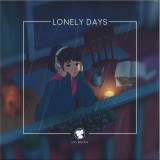
As the nights get colder and longer, we often lose touch with those around us. Nights when loneliness takes hold of us as our only dependable friend, and our imagination becomes the universe; forever questioning the existence of our own reality, while perpetually stuck in an emotional limbo.. Delve into your thoughts with ‘Lonely Days’, the latest Lofi Girl compilation featuring 31 artists worldwide. Soft beats, melancholic pianos, lulling guitars and a range of other instruments are knitted together like a warm blanket to bring ease and comfort for as long as you need. Focus on the ingressing dawn light, close your eyes, and breathe in - this feeling is only temporary, and better days are on their way.
- Pharaoh's Dance
- Bitches Brew
- Spanish Key
- John Mclaughlin
- Miles Runs The Voodoo Down
- Sanctuary
Listen to This.” As the original working title for Bitches Brew, the instruction and invitation remains to this day as the best way to approach a record that shattered conventions, altered music history, and, 55 years later, still sounds far ahead of its time. The template for jazz fusion, Bitches Brew is rightly ranked by virtually every significant outlet among the 100 greatest albums ever made. Sewn together with vibrant colors, voodoo textures, and ethereal moods, the 1970 landmark emerges with supreme detail and nonpareil feeling on Mobile Fidelity’s UltraDisc One-Step 180g 33RPM 2LP vinyl set.
Sourced from the original master tapes, strictly limited to 5,000 numbered copies, and pressed at Fidelity Record Pressing in California, this definitive-sounding 55th anniversary reissue enhances every element of a double album that established new possibilities for studio recording techniques. You’ll hear wide and deep soundstages, separation between instruments, and an extremely broad dynamic range. If ever a jazz album can be said to have gone to outer space and back, this is it.
Davis conceived Bitches Brew by having the musicians stand in a semi-circle. There, he pointed at them with vague directions for tempo, solos, and cues. The collective improvisation and interplay spawned a galaxy of melodies and grooves that were later spliced together by producer Ted Macero. Benefitting from the ultra-low noise floor and superb groove definition of this pressing, these distinct creations take shape with utmost realism. Compositions stretch across jet-black backgrounds and paint canvases laden with millions of colors and shades. Juxtaposed percussion, loose jams, and melodic segues explode with impressionistic verve.
Bitches Brew also boasts visionary artwork. By design, the lavish packaging and gorgeous presentation of the UD1S Bitches Brew set call attention to such matters. Housed in a deluxe slipcase, it features special foil-stamped jackets and faithful-to-the-original graphics that illuminate the splendor of the recording. It is made for discerning listeners who desire to fully immerse themselves in everything surrounding the album, from the images to the tones. And this is one effort where every last detail matters.
Gathering a Hall of Fame-worthy lineup of musicians and tweaking it according to his desires, Davis follows through on his idea to “put together the greatest rock and roll band you ever heard.” Central to his proposition is the presence of two (and sometimes three) drummers and two bassists, a tactical move that makes rhythms a central focus. Akin to the futuristic album cover art, the drum-driven suites head toward distant universes and uncharted territories. At once hypnotizing and grooving, they chart maverick adventures via quixotic rock, funk, and R&B elements.
A without-a-net experiment involving interchangeable double-quintet lineups, Bitches Brew explores the previously unimaginable with electrified instruments — Fender Rhodes piano, processed trumpet, dissonant guitars, and bass among them — and an emphasis on feeling over composition. Mesmerizing and soothing, jarring and smooth, overt and subtle: The music seemingly covers an entire map of emotions and sensations, and like no record before, ties together the groundbreaking creativity of the multiple disciplines that were changing popular culture at the end of the 1960s and dawn of a new decade.
Conceptually, Davis described Bitches Brew as “a novel without words” and “an incredible journey of pain, joy, sorrow, hate, passion, and love.” The vast psychedelic expanses of warped echoes, liquid reverb, and tape loops confirm such ambitious contrasts of light and dark, fear and hope. Yet the most absolute characteristic of the watershed effort lies in how it resists definitive interpretation and encourages free thought — the very principles Davis used to conceive Bitches Brew.
More About Mobile Fidelity UltraDisc One-Step and Why It Is Superior
Mobile Fidelity Sound Lab’s UltraDisc One-Step (UD1S) technique bypasses generational losses inherent to the traditional three-step plating process by removing two steps: the production of father and mother plates, which are created to yield numerous stampers from each lacquer that is cut. For UD1S plating, stampers (also called “converts”) are made directly from the lacquers. Since each lacquer yields only one stamper, multiple lacquers need to be cut. Mobile Fidelity's UD1S process produces a final LP with the lowest-possible noise floor. The removal of two steps of the plating process also reveals musical details and dynamics that would otherwise be lost due to the standard multi-step process. With UD1S, every aspect of vinyl production is optimized to produce the best-sounding vinyl album available today.
Cassette[15,08 €]
Lunchbox's legendary lost album "Evolver" is lost no more! Sparklingly remastered for the album’s twentieth (and a few!) anniversary and available on CD, cassette and (for the first time) vinyl, this psychedelic masterpiece fills a crucial hole in the band's discography. Recorded in the couple's 1990s Oakland basement between stays in Berlin, tour dates in London, and dreamy sojourns up the rugged Mendocino coastline, "Evolver" fuses jangle and jungle, ambient and dub into a striking pop statement.
Marrying refined songcraft to the serendipitous magic hidden in half-broken reel-to-reel tape decks and vintage synthesizers, the "Evolver" plants its pop flag on the terrain of magic and mystery. Dreamy jangle pop gems emerge seamlessly out of a sea of loops, drones, and dubbed-out horn fanfares, cascades of tape echo feedback and whispers from outer space providing a trance-inducing backdrop to the pop sensibility for which Lunchbox is well-known. Hook-filled and hypnotic, "Evolver" is a sublime slice of post-pop psychedelia that you won't want to miss.
For this special and long-overdue reissue we've raided the bands vaults for three previously unreleased tunes that add extra dimensions to the album's uniquely trippy flow. And for the vinyl heads we're pressing this as a double LP for maximum fidelity and playability, including a vinyl-only fourth side of beats, loops, interludes and puzzling aural ephemera, all taken directly from the original master tapes. Super cool!
2x12" Vinyl[32,98 €]
Lunchbox's legendary lost album "Evolver" is lost no more! Sparklingly remastered for the album’s twentieth (and a few!) anniversary and available on CD, cassette and (for the first time) vinyl, this psychedelic masterpiece fills a crucial hole in the band's discography. Recorded in the couple's 1990s Oakland basement between stays in Berlin, tour dates in London, and dreamy sojourns up the rugged Mendocino coastline, "Evolver" fuses jangle and jungle, ambient and dub into a striking pop statement.
Marrying refined songcraft to the serendipitous magic hidden in half-broken reel-to-reel tape decks and vintage synthesizers, the "Evolver" plants its pop flag on the terrain of magic and mystery. Dreamy jangle pop gems emerge seamlessly out of a sea of loops, drones, and dubbed-out horn fanfares, cascades of tape echo feedback and whispers from outer space providing a trance-inducing backdrop to the pop sensibility for which Lunchbox is well-known. Hook-filled and hypnotic, "Evolver" is a sublime slice of post-pop psychedelia that you won't want to miss.
For this special and long-overdue reissue we've raided the bands vaults for three previously unreleased tunes that add extra dimensions to the album's uniquely trippy flow. And for the vinyl heads we're pressing this as a double LP for maximum fidelity and playability, including a vinyl-only fourth side of beats, loops, interludes and puzzling aural ephemera, all taken directly from the original master tapes. Super cool!
All aboard! Ketiov’s Rhythm Trainx Vol. 6 pulls into the station, delivering another batch of rhythmic delights to keep DJs and dancers on track. This isn’t just a drum tool EP; it’s a rhythmic Swiss Army knife designed to break the monotony, shake the staleness disease, and maybe even help you discover that long-lost dance move from 2003.New Release Information True to form, Ketiov goes above and beyond the call of percussion. These tracks aren’t your average drum loops—they’re living, breathing organisms. With real drum sounds recorded live and sprinkled with a touch of his own playing, the result is an earthy, organic feel that’ll make any drum machine feel like it has some catching up to do.
Spanning tempos and moods, Rhythm Trainx Vol. 6 offers something for every moment, from warm-up whispers to mid-set movers and late-night wigglers. It’s the ultimate utility belt for DJs who like to mix it up and keep their crowd guessing. Bonus points: these tracks have been rail-tested harder than a new set of railway-wheels, ensuring maximum reliability when it counts.
Whether you’re layering textures or cruising through extended sets, Ketiov’s latest will keep any train rolling. Dance floors beware—this one’s got serious rhythm!
Joni Void, the artistic persona of Montréal-based French-British producer Jean Néant (he/them) returns to songcraft on their warmest and most welcoming record yet, where the acclaimed sampledelic sound collagist chills out with an emotionally resonant song cycle tinged by downtempo, lo-fi, avant-pop, and trip-hop. Guests include Haco, Ytamo, Sook-Yin Lee, Pink Navel and N NAO. Every Life Is A Light expands on Void's recent stylistic turn towards more languorous and mellow lo-fi production, foreshadowed by the drifting looseness and ambient bricolage of their preceding experimental sound-art record. This transitional sensibility now shapes more defined song structures and styles, with loops are given time and space to unspool, and rhythms shot through the softer-focus lens of trip-hop and dub. Every Life Is A Light swaps the twitchy insistence of Void's acclaimed early albums for a newfound lightness and suppleness, still imbued with all the restlessness, sonic detailing, and emotional resonance that made their name. The neurotic brokenmachine kinetics of earlier Void, summarized by Sasha Geffen as "drawing despair and wonder from within the vast unfeeling of digital communication" in an 8.0 Pitchfork review, may be chilling out, but Void is becoming an ever better conjurer of hauntological feeling. Every Life Is A Light summons this in a comparatively buoyant, benevolent, head-nodding journey more open to tenderness and modest joys. Perhaps it's the sound of Void at greater peace with themselves and the world, despite the bittersweet cost: even as it channels grief, memorializing comrades and companions recently deceased, this album wants light. Void's raw materials continue to draw heavily from samples (their own Walkman cassette fieldrecordings and songs by others) and from a wide community of musical guests. Vocalists Haco on "Time Zone" and Ytamo on "Cloud Level" help levitate what could be lost tracks from a mid-90s Too Pure Records compilation of skewed-lounge electronica. Canadian musician Sook-Yin Lee sings on lead single "Vertigo," a sinewy 80bpm tape-loop and bassline groove propelled by psychedelically-layered lyrics that eventually turn the song in on itself entirely, like Grace Jones' "Nightclubbing" covered by Animal Collective. One of Void's greatest hip-hop loves is the Ruby Yacht collective; charter member Pink Navel drops some brilliant verses on "Story Board." The album's two minimal tracks, an extended piano loop set to a slow beat and shimmering electronics on "Muffin-A Song For My Cat" and the languid sampled bass riff and breakbeat of "Event Flow," are perhaps most overtly `lofi chill.' Indeed the whole album could be said to sit adjacent to those viral (if not already AI-generated) genre trends, which maybe begs the question on a lot of our minds: can specificity and authenticity of musical materials still be heard, still meaningfully signify substance and difference, still matter? Perhaps a question that fades in comparison to the career break Void could catch by landing on generic streaming playlists. More likely, these tracks remain too off-kilter, too genuinely lo-fi and ineffable, and too disqualified by the status of its peasant rights-holders, to catch the algos. Context remains the poor cousin of content. Meanwhile Void marches on, as a tireless organizer of local music events, bouncing around and often living in DIY venue, depending on the latest apartment eviction. With an ubiquitous polaroid camera in tow, they also document each communal happening with a single shot (and often a blinding flash bulb): a memory and metaphor for lives illuminated preciously, singularly, `imperfectly' in the moment. Dozens of these polaroids adorn the album's back cover and inner sleeve art in grid-like montages, as a fitting analog for the careful construction, grainy intimate materiality, and ephemeral feeling of these songs. Every Life Is A Light is Joni Void's most coherent and congenial record while relinquishing none of their experimentalist acumen as a producer or emotional attunement as a composer. Instead these qualities flourish, on an album that lights a humble flame for the fragile promise of homespun creative collaboration as unalienated labour and therapeutic communion, making an enchantingly idiosyncratic contribution to downtempo sample music along the way. Thanks for listening.
- A1: Skeletons In My Closet - Fugee X Thaehan
- A2: Mystical Town - Dosi
- A3: Twistedbramble - Wys
- A4: Ghost In The Mall - Pbdr
- A5: The Bone Dance - Lock X Simber
- A6: A Pumpkins Farewell - Frances The Mute X Lenny B
- A7: Bag Of Bones - Jam'addict X Monocloud
- B1: Bloody Night - Swink
- B2: Souls Are Dancing - Kanisan
- B3: Ghost's Show - Softy X Lock
- B4: Frightful Foyer - Evenbluer X Odd Panda X Copacetik
- B5: Do Not Fear - Pierson Booth X Kyoshi
- B6: Ritual - Luqęt
- B7: Black Cat - Thaehan
- C1: Devil's Bane 6 Dosi
- C2: Mage's Lair - Tah. X Gatz2Gatz
- C3: Hall Of Masses - Towerz
- C4: Ghost Jam - Goson
- C5: Neverending Carrousel - Luqęt X Fugee
- C6: Creepy Cauldron - Pbdr
- D1: Hollow - Alto X Lenny Loops
- D2: The Haunted Manor - Lucid Keys
- D3: Zombie Walk - Tah. X Gatz2Gatz
- D4: Ghost & Stuff - Eevee X Fugee
- D5: Ghostly Whispers - Vimef X Solar Body X Jwxd
- D6: Bloody Mary - Myceliumbug
- E1: Ghost Waltz - Hokø X Fugee
- E2: Night At Hogsmeade - Sheath X Dark Winter
- E3: Ghosts And Ghouls - Solar Body
- E4: Crow's Nest - Luv Pug X Spaniel Mac
- E5: Phantom Force - Odd Panda X Fool Parsley
- E6: Lost Cemetery - Klemsis
- F1: Phantom Party - Pbdr
- F2: Pumpkin Dance - Bedroom Lofi
- F3: Hocus Pocus - Sheath X Solar Body
- F4: Graveyard Groove -Tibeauthetraveler
- F5: Ghost Of 1496 - Nadav Cohen X Nev Benjamin
- F6: Shadows Of The Night - No Spirit X Flâneur
For this special release, we’re excited to unveil something brand new: a triple vinyl, perfect for casting a spell on your Halloween night
Witches brew and cauldrons bubble, as Halloween stirs up an eerie trouble! Step into the world of spooky beats with Lofi Girl's 'Halloween 2024' compilation. Featuring talented artists from around the world, this potion of ghostly rhythms and haunting melodies sets the mood for a night of chills and thrills. Whether you're conjuring up potions or unwinding under the moonlit sky, let the witchy magic of these chilling beats take over your Halloween night!
Firework Shimmer Vinyl[28,15 €]
Like a passenger riding shotgun on a road trip, The Villagers Companion offers its own unique perspective and story to tell. Featuring tracks recorded alongside last year’s acclaimed villagers, TVC captures the miles between the start and destination—the faded gas station pit stops, the plastic saint statue stuck to the dashboard for safe travels or luck. It embodies the essence of the journey without the burden of driving—the experience of the ride itself.
The album takes us through the heart of Califone’s magic: reverb-drenched piano chords, electronic whirs, and layers of experimental noise. Guided by Tim Rutili’s abstract, fragmented lyrics—both strange and familiar—delivered through his warm, well-worn vocals, it creates an experience as evocative as it is haunting. Often passing through what seem to be the spaces between radio frequencies, the stations never meant to be heard. Crackles of static, feedback loops, and fleeting signals bloom into meditative moments, with each sound given space to breathe, unravel, and shimmer in slow decay. The result resonates deeply, transforming what might be noise into something profound, hypnotic, and totally immersive.
As with villagers, Rutili and company continue to explore what it means to get lost while surrounded by modern technology. Like a ghost in a machine or a whispered prayer stuck in a telephone line, Califone adds soul—be it damned or saved. And they do so with the kind of transformative magic granted perhaps only to artists a quarter of a century into their craft. The kind that turns a photograph into a tableau, or any darkened space with a microphone into a makeshift confessional. A song into a hymn, and a hymn into a soundtrack to a life.
Black Vinyl[29,62 €]
Like a passenger riding shotgun on a road trip, The Villagers Companion offers its own unique perspective and story to tell. Featuring tracks recorded alongside last year’s acclaimed villagers, TVC captures the miles between the start and destination—the faded gas station pit stops, the plastic saint statue stuck to the dashboard for safe travels or luck. It embodies the essence of the journey without the burden of driving—the experience of the ride itself.
The album takes us through the heart of Califone’s magic: reverb-drenched piano chords, electronic whirs, and layers of experimental noise. Guided by Tim Rutili’s abstract, fragmented lyrics—both strange and familiar—delivered through his warm, well-worn vocals, it creates an experience as evocative as it is haunting. Often passing through what seem to be the spaces between radio frequencies, the stations never meant to be heard. Crackles of static, feedback loops, and fleeting signals bloom into meditative moments, with each sound given space to breathe, unravel, and shimmer in slow decay. The result resonates deeply, transforming what might be noise into something profound, hypnotic, and totally immersive.
As with villagers, Rutili and company continue to explore what it means to get lost while surrounded by modern technology. Like a ghost in a machine or a whispered prayer stuck in a telephone line, Califone adds soul—be it damned or saved. And they do so with the kind of transformative magic granted perhaps only to artists a quarter of a century into their craft. The kind that turns a photograph into a tableau, or any darkened space with a microphone into a makeshift confessional. A song into a hymn, and a hymn into a soundtrack to a life.
The prolific, virtuosic original Bjarki Sigurðarson returns to the concept album format, with ‘A Guide To Hellthier Lifestyle’. It’s the first LP to be released on Differance.
‘A Guide To Hellthier Lifestyle’ explores the psychological landscape of contemporary social issues, offering a sideways rumination on lifestyle dilemmas and wellness obsessions, presenting itself as a response to the modern condition. It combines storytelling with innovative sound textures – encouraging listeners to pause and contemplate the absurdities of contemporary life. Neither a critique nor an endorsement, it represents an honest exploration of our world through Bjarki’s sonic lens, gleaming a heart of darkness, but eventually finding light.
The album utilises hyper-stereo techniques, soothing melodies, complex audio structures, AIgenerated voices and sampled vocals – influenced by Coil, Genesis P- Orridge, and Paul Lansky. Bjarki investigates how specific frequencies can impact consciousness, awareness, mood, and mental state, thereby influencing our perception of reality. His vaporous sound design provides a listening experience that bridges the physical and imaginative realms; sometimes placing the listener in contemplative sanctuary, and at others making them lost – somewhere strange, uneasy, disconnected.
Bjarki on his Guide To Hellthier Lifestyle
“This new album has been two years in the works. It’s sort of my take on all the social weirdness and wellness obsessions happening right now. It kicked off with a track I started in California – the story of a soul that got born into the wrong womb. During that time, I was noticing more and more of this whole ‘wellness religion’ everywhere – people trying to sell you ‘good vibes’ and random people offering you life coaching sessions on Instagram who maybe have less life experience than a houseplant. All these apps that track our every move; it’s like they’re repackaging control and calling it ‘self care’. Capitalism in yoga pants. Thats when I started putting ‘A Guide To Hellthier Lifestyle’ concept together. A never ending, self improvement rabbit hole. We are all being sold this idea that we are not quite enough and we need to buy our way out to being better.
At one point, I took a break from the album and started working on another album full of satirical speeches, AI generated voices, where I create my own voices and type in some ideas of speeches, taking the piss out of wellness gurus and life coaches. I messed a lot with these AI voice generators, creating these deep, faux serious monologues. Proper weird stuff, but it cracked me up. Reminded me of the early days, when I was 13, making tracks on Fruity Loops, mucking around with text-to- speech generators. After the break I came back to finish ‘The Guide’ on a much deeper level.
I moved part of my studio to Latvia and continued in the countryside for few months. I realised that I just wanted something beautiful. So, yeah, this album is all of that. It’s spiritual, bits and pieces from the past, all these weird cultural moments, and whatever strange places my head goes. It’s a reflection, a rebellion, a bit of a piss take. But mostly, it’s just me, doing what I do.” - Duncan Clark
The album will be released only in its entirety, December 13th digi, with no advance singles.
“I am OBSESSED with the 80s. I love the loud neon colours and fashion and the kinetic energy of the music. It’s uplifting and bittersweet with a ton of keyboards, what’s not to like?” reasons Morgane when asked what it is she likes about the decade. This exuberance is brightly reflected in the mirror ball synthpop of her third album released at the end of September. It is her second long player to appear on vinyl after the release of Between The Funk And The Fear debut on the Polytechnic Youth label.
Morgane was the keyboard player in Stereolab between 1995 and 2001 during which time they released Emperor Tomato Ketchup (her favourite) and Dots And Loops. As a teenager though she first played the drums, then guitar and bass. She only learnt the keyboards one month before joining the group. “They gave me 40 songs to learn, it was a baptism of fire”.
After leaving Stereolab, Morgane first moved to New York for nine years; she’d always planned to move to America having spent a lot of time there with her parents and of course those space-pop pioneers. The warmer weather of LA enticed her though and you can hear its pulse in Day-Glo Chaos. The album’s thumping heart is pumped by the city’s night sky and when asked she cites three particular albums as her favourites: the oddball analogue electro of Jacno’s 1979 debut; John Carpenter’s ‘Escape From New York’ and The B-52’s ‘Cosmic Thing’. There’s also a strong nod to the playful computerised harmonies of Yellow Magic Orchestra whilst she’s somewhat partial to the synth prog of Yes and Soft Machine. “I actually created a synth on Ableton Live named after Rick Wakeman’. I should create one after Mike Ratledge next!”
Throughout her work (but especially on this record) you can hear the influence of computer games. “I’m an avid gamer and have been one since I was a teenager and fell in love with my Commodore 64”. Though not a fan of Hotline Miami or the GTA series (“too violent”) she liked Hang On and loved Outrun which she used to play a lot on her Sega Master System. “I just got the soundtrack reissue from Data Disc and it is beautiful” she enthuses.
You’ll see and hear such influences on the lead single from the album ‘Midnite Rogue’ the video to which pays (im)perfect juddering homage to such arcade culture. Car tyres glued to sticky tarmac, French pop music lost in the air. The title was inspired by a Fighting Fantasy book which she adored as a kid. “I love the idea of this entity causing mischief during night time”, she beams. It’s not hard to see why.
Ever-evolving the mythologies and magic of Dialect's sonic sphere, Andrew PM Hunt returns with Atlas of Green, elegantly molding unexacting details of memory and mistranslation into the framework of the British musician and composer's creative pursuit. The album imagines a young musician named Green working in a future dawning era where lost signals and enduring impulses are unearthed from the sediments of technology and time. Across twelve compositions, Green becomes the compass in an epoch of transition; one shaded with pastoral patinas and studded with the fragments of allegorical ruin. As tattered as it is tender, Atlas of Green is a patchwork of scavenged relics and bygone hues, cast through the iridescent shimmers of a mid-future in flux. Growing up on the Wirral Peninsula in North West England, Hunt was surrounded by stone age landmarks and rock carvings that infused the landscape with legend. It was beside those carvings on a residency at Bidston Artistic Research Center where he began the journey of Atlas of Green, experimenting with tape loops and exploring the center's library of sci-fi. Here Hunt also encountered the work of Italian philosopher Federico Campagna, a writer who believes we're at the end of our current world. This encouraged Hunt's exploration of how the fabric and fantasies of our current era might endure into the future of Green, as they try to make sense of the riddles of the past, utilizing broken electronics and simple acoustic instruments to create new mythic forms. This question of endurance led Hunt to inscribe Atlas of Green with its own lucid markings - sometimes almost anthemic adornments - which unfurl through the album's melancholic air as possible new metaphors for how the human spirit might persist through dark days and regain lost wisdom. As Hunt reflects, "We're not just on an endless procession through constantly better worlds. Our lack of action (on climate and inequality) feels hopeless at times. I find some comfort in the idea that maybe the world needs a new song in order to tell a new story about itself". The image of Green as a journeying adolescent in-between eras developed out of a burgeoning interest in the fantasy writing of Ursula K. Le Guin and Gene Wolfe and occurred at a point in Hunt's life where the question of starting a family was looming. Green became a device for thinking about the future, or futures, putting someone in another world and granting access to a slightly longer timeframe than one's own life. What would this person, in this as-yet-unsung world do with something as powerful as music? As Hunt notes, "I imagined them doing what we've always done with music - using it to build a map of feeling, providing boundaries and tracing the edges of our emotions, defining a space of possibility and giving voice to our intuition. This is an alternative future to the one of endless growth but one which still holds space for hopes and dreams." Mapping new folds in the passage of time, Atlas of Green is traced with an aura of sonic urgency which arises through its process-led construction. Following a series of live shows in early 2023, the record was created with an assemblage of analogue electronics and acoustic instruments, including scratched records and a broken four track, collaging studio work with recorded live recordings featuring work in progress. Where the indeterminate energies of Under~Between (2021) appeared through digital processing, Atlas of Green embraces chance encounters within the malfunctions of physical media and glitching gear. Within these interwoven clusters of organic and blemished sound, Dialect reclaims the joyfulness of the inner amateur and creates a soft landing for new seeds of magical possibility - rooted in the bounds and abundance of realism. "As a planet of people we have to deal one way or another with our finite existence. We have to deal with that loss with hope still in our hearts - our capacity to love cannot be contingent on things lasting forever, and so this image of Green is not a vision of dystopia, nor utopia but an expression of trust and an acceptance of limits."
On their seventh long player The Breaks - their second for Joyful Noise Recordings - SUUNS are lost in limbo. For some artists, being caught in flux may result in songs that are either naive, out of touch or both, simply as a consequence of being cut off from human civilization. But for SUUNS, a band who have grown more than comfortable in the oblique and the intermediate, it actually had the opposite effect. The Breaks marks the Montreal experimental rock outfit's most emotionally resonant and tonally rich collection of music to date. The trio of Ben Shemie, Joseph Yarmush and Liam O' Neill leans more zealously than ever into their pop instincts. Yet remarkably enough, with that same dauntless abandon, SUUNS have mined a more extreme sonic palette this time around, one that stretches far beyond their core fundamentals as a band. The Breaks finds Shemie, O'Neill and Yarmush gleefully experimenting with loops, synths, samples and MIDI-instruments like a post-millennial Tangerine Dream messing with downtempo triphop beats. O' Neill took point in the producer's chair for The Breaks, arranging, structuring and editing many of Shemie and Yarmush's ideas from sporadic rehearsal sessions into Pro Tools, reimagining the songs over and over during a two-year time frame. Forged between countless plane rides, road trips, van tours and text threads, The Breaks became a product of endurance and a lot of trial-and-error. It's a record forged in tight fissions of freedom, where spells of whispered intimacy - like on the stunning ballad "Doreen" - are allowed to branch out into the vast glacial dreamscapes of the album's majestic title track. It captures SUUNS at their most panoramic, curious and exuberant: a constant relay of being adrift and enlightened anew, geared up to eleven. And guess what: the wheels keep on spinning.
- Ocean Motion Mildew Mind
- Yes Sir Ree
- I Can’t Stand It
- Country Time
- If I Were A Poet
- Torero Piece
- Peachy Keen-O
Carving an unlikely and elaborate niche in the stoney academic landscape
which she once shared with the likes of Phill Niblock, John Cage and Sorel
Hayes, the excitable proto-punk poèmes sonores of the linguistic loose
cannon known as Beth Anderson first rolled through New York in the mid-
1970s (from Kentucky via San Francisco) like a jumbled tumbleweed of lost
Letterism, face paint and threadbare drummy funk to astonish gallery floors,
lecture theatres and loft apartment stages.
One thousand leagues under the radar of the commercial music industry,
with a sense of humour that elevated way above her highbrow peer group,
the music of Beth Anderson has successfully evaded the pressing plant for
most of her creative career, and not unlike fellow New York gallery actionist
Suzanne Ciani, it has taken decades to successfully collect and contextualise
these early recordings - expanding her elusive discography beyond the rare
and mysterious solo single entry in the process.
When uttered amongst the type of vinyl vampires that haplessly gravitate
between both art school vintage vanity pressings and family funded plunder
funk, there’s an outside chance that the name Beth Anderson might muster
some vague recognition on account of her one and only solo wax sojourn
into the expansive DIY market. In 1980 the 45rpm single, ‘I Can’t Stand It’,
combusted into the consciousness of adventurous participants with its deep
rhythmic backbeat (courtesy of future Sonic Youth / Dinosaur Jr producer
Wharton Tiers, member of the new wave band Theoretical Girls), climaxing
with two colourful and commanding linguistic tantrums before disappearing in
a puff of smoke leaving would-be fans dumbstruck without so much as a
label name or distribution contact to explain what they had just heard.
For those who have spent the subsequent years on the edge of that same
seat, it might come as some comfort knowing that somewhere out there,
there is also a contrasting world of gallery patrons and experimental sound
poetry enthusiasts that similarly didn’t know that their regular performance
poet Beth Anderson even made the ambitious pop record. For the uninitiated,
the enigmatic Beth Anderson has straddled both sides of the art / rock fence
placed between two equally niche pastures.
Hopefully this first ever vinyl compendium will succeed in joining the dots,
loops, yelps, squeaks, beats and repeats. Let us follow Beth’s lineage, along
her magnetic tape highways crossing multiple boundaries in a hope to bridge
unlikely anti-genres like ‘yoga punk’, ‘ramble rap’, ‘combustion pop’ and
‘formroom funk’… all of which were officially neatly bracketed under the
curious Text-Sound movement where Beth garnered utmost respect as a key
practitioner.
Alliyah Enyo’s genius 2022 ‘Echo's Disintegration’ album infused William Basinski's "Disintegration Loops" with choral smoke, and she now returns with an even more immersive followup alongside ambient enigma and Kelela producer Florian T M Zeisig, making heady and translucent loop-finding vocal soundscapes.
In 2022, Enyo worked with the Edinburgh Sculpture Workshop on an epic two-hour composition made from tape loops inspired by selkies, mythical creatures in Celtic folklore. Contemplating memory, grief and time itself, Enyo devised a "sonorous myth" installation and performance that drowned her voice in the deep sea, using echo to help parallel the communication of humpback whales. It was powerful enough for her to net the award for Sonic Arts at the Scottish Awards for New Music last year, and it's this material that she revisits here, entering into a dialog with Berlin-based producer Florian T M Zeisig, here adopting a new avatar - Angel R.
On the A-side, Enyo distills two hours of the original composition into 11 haunted fragments that ooze in and out of each other like a dream. Reworked at Glasgow's Green Door studio, she sculpts her voice into weightless Radigue-style incantations, leaning into the tape loops' corroded inconsistencies. Enyo's voice becomes the selkie's song: wordless echoes that sound as if they're being dragged slowly towards the sea bed. There are remnants of folk forms in there; we hear traces of church music and Celtic ballads - but she obscures her influences with dubbed reverb, distortion and repetition. Phrases disappear and re-appear, time becomes a loop, best absorbed in a single sitting to properly perceive its graceful, sinking bliss. By the end of the side, Enyo’s vocals are completely waterlogged, dimmed against Robin Guthrie-like shimmers, all brassy, blurred incantations emanating from the depths of a floatation tank.
Florian T M Zeisig responds on the B-side with three flooded, longer-form pieces that will appeal to anyone who devoured his album of corroded Enya loops a couple of years ago. Enyo's voice is now reduced to a whisper, blistered and gauzy expressions that float over dense pads on 'Untitled I' before getting lost in the weeds completely on the muggy 'Untitled II'. On the closing 'Gates of Heaven', he sculpts Enyo's voice until it's just an illusory, hypnotic reflection, slow-fading into the aether.
"Oyster Cuts", das vierte Album und Merge Records-Debüt von Quivers, zeigt, dass die in Melbourne, Australien, ansässige Band in der Art von Emotionen schwimmt, in denen sich die meisten Menschen zu verlieren fürchten. Der überdimensionierte Gitarrenpop von Quivers schimmert wie die Oberfläche eines Ozeans, unter der ein Riff liegt, das abwechselnd schön und schmerzhaft ist, dessen Züge fremdartig und scharf genug sind, um zu verwunden. Angetrieben von Melodien, die manchmal an Galaxie 500 und The Pretenders erinnern, machen Quivers Musik, die zart und hart ist und den Hörer dazu zwingt, immer wieder einzutauchen, wobei jeder Song einen neuen Gefühls-Blickwinkel eröffnet. "Oyster Cuts" ist Sonnenschein-Pop mit Blut im Wasser. Die Verluste und Lieben, die Quivers' Musik seit ihren Anfängen geprägt haben - der plötzliche Verlust eines Bruders im gebrochenen Optimismus von "We'll Go Riding on the Hearses" (2018) und das Leben in und nach der Trauer von "Golden Doubt" (2021) - fließen in "Oyster Cuts" ein, das sich dem Weitermachen verschrieben hat, während es akzeptiert, dass einige Gefühle, wie Trauer, ein Kreislauf sind. Entscheidend ist, dass Quivers sich verpflichten, miteinander Vorwärts zu gehen. Ohne den Chor und die Streicher von "Golden Doubt" ist "Oyster Cuts" ein Beispiel dafür, was immer noch möglich ist, wenn vier Leute - Sam Nicholson (Gitarren), Bella Quinlan (Bass), Michael Panton (Gitarren) und Holly Thomas (Schlagzeug) - zusammen Musik machen. Durch die Verwendung von Tape Loops - die "Oyster Cuts" eröffnen und schließen und das Album wie Haie umkreisen - legen Quivers Wert auf Wiederholung, setzen gemusterte Riffs ein und navigieren durch kreisförmige Gedanken, bis sie an ihre Grenzen stoßen und schließlich zu einem neuen Song zusammenfinden. Ihr verträumter, sonnenverwaschener Jangle-Pop ist dadurch schlanker und muskulöser geworden, und ihre Sound-Palette wird durch Anklänge an The Cure, Echo & the Bunnymen und The Durutti Column verdunkelt. Innerhalb dieses Rahmens betreten Quivers als Band Neuland, indem sie ihrem charakteristischen Gruppengesang eine neue Dimension hinzufügen: Quinlan übernimmt bei vier Songs die Leadstimme, die ineinander verwobenen Gitarren von Nicholson und Panton werden in den Mittelpunkt gestellt und der zielgerichtete Groove von Quinlan und Thomas treibt das Ganze voran. Die Songs von Quivers fühlen sich wie lange Gespräche zwischen Freunden an, in dem Sinne, dass ein Gespräch sowohl ein Akt der Sprache als auch ein Raum ist, den Menschen füreinander einnehmen. Die ersten beiden Tracks auf "Oyster Cuts", "Never Be Lonely" und "Pink Smoke", nehmen diese privaten Universen, die aus gemeinsamer Sprache, Erinnerungen, Songfetzen und dem Licht eines Handybildschirms mitten im Doomscroll bestehen, und verwandeln sie in ein Leuchtfeuer, in suchende Texte, die von massiven Hooks entfacht werden. "All I ever wanted was a true friend / All I wanted was a friend with benefits / All I ever wanted was transcendence" singen Quinlan und Thomas zu Beginn des Albums, und von da an spult "Oyster Cuts" in den Horizont hinaus. Die vier Mitglieder von Quivers erforschen diesen Raum nicht nur, sondern füllen ihn auch so weit wie möglich mit sich selbst aus, indem sie sich aneinanderbinden, egal wie unklar und chaotisch Herzensangelegenheiten werden können. Jeder Moment der Katharsis, den Quivers aus dem Äther zaubern, ist eine Einladung, sich ihnen anzuschließen. Wenn man ihnen zuhört, wie sie dort aufsteigen, wo andere grübeln würden, ist es unmöglich, ihrer Einladung zu widerstehen.
- A1: Mr Righteous (Intro)0 35
- A2: You Need Knowledge 3 45
- A3: 88 Soul 3 12
- A4: Black Shakespeare 3 02
- B1: For My People ..It's Spiritual 2 55
- B2: Lonely At The Top 3 56
- B3: Just Listen 4 05
- B4: California Dreamin' 4 33
- C1: Purity 3 59
- C2: Kunta Kente 4 20
- C3: 1993 Shit 3 49
- D1: We Got Plots 3 38
- D2: Do Win-Dis 4 11
- D3: Hope She Remembers Me 3 15
A Gilles Peterson-approved deep jazz-rap classic.
2024 first time vinyl release, 140g double vinyl, remastered audio with restored artwork.
Limited and Non-Returnable.
Holy grail hip-hop alert! Superstar Quamallah's Invisible Man was never released on wax so, to celebrate the 15th anniversary of this astounding record, we present the first ever vinyl edition. A stunning record which gained accolades upon its initial release, such as a prominent feature on Gilles Peterson's renowned Best Of 2009 show, it's one of the most essential jazz rap albums of all time.
Deep jazz rap on that mellow-melodic tip, Invisible Man is an unforgettable album with nothing but dope beats and dope bars. There's a strong chance this album has passed you by but we truly believe it to be a lost hip-hop masterpiece. It supremely captures the essence of a golden age classic without being slavish to the past. No, this ain't some facile throwback rap. It's a fresh and deeply soulful, original album shot through straight from the heart. Perfect to chill to, Invisible Man is profoundly jazz-oriented and captures with simplicity and sincerity the essence of hip-hop circa 1983-1994. It sounds like vibing with your nearest, dearest and oldest friends on a long hot summer night as the tantalising thought that anything is possible fills the air. You know what, we can just call this "magic hour rap" and we think you'll know what we mean. It's just beautiful. Just Listen.
Brooklyn-born, California-based emcee, DJ, and producer Superstar Quamallah was active in the West Coast underground scene throughout the 90s and recorded extensively with such revered names as Defari and Tajai. His parents were some serious artistic heavyweights, too; his father was soul organist Big John Patton, a giant in the jazz world known for his releases on Blue Note whilst his mother was an active designer. However, he remains relatively unknown. Invisible Man, named ostensibly after the classic Ralph Ellison novel, could also refer to how he is viewed by the public at large. With close affiliations to the Hieroglyphics, Dilated Peoples and Likwit crew, his debut EP "Don't Call Me John" arrived in 1999 on ABB Records, after which he took a sabbatical from recording which included graduate school, travelling, teaching at Inglewood High and eventually a professorship of African Studies at Berkeley.
With a laidback flow and deep, relaxing presence on the mic, Superstar Quamallah is equal parts Big Daddy Kane, Rakim and Guru. Invisible Man is refined, soulful, feel-good hip-hop of the old school. Its wise, spiritual and literate sound, combined with the summertime vibes projected by the smooth beats and the nostalgia-inducing samples and vocal scratches, created jazzy boom-bap rap reminiscent of prime De La Soul, A Tribe Called Quest and Gang Starr.
Irresistibly bouncing opener "You Need Knowledge" loops sparkling pianos, horns and a nagging whistle refrain with scratched vocal refrains from Slick Rick, Mobb Deep and Guru. The super-smooth head-nod classic "88 Soul" also utilises a beautifully swelling piano line and dusty breaks whilst Quamé reminisces about his childhood in NYC. Deeply moving, the silky, sultry "Black Shakespeare" is built around an elegant piano loop and goes hard on the superman lover tip whilst "For My People...It's Spiritual" is transcendental rap in conversation with Rakim and older gods. The "Moment Of Truth"-sampling "Lonely At The Top" is striking for its undiluted boom-bap stylings and the staccato flute-hop of "Just Listen" is riddled with soulful refinement. The deeply-affecting, wistful-yet-triumphant bells and horn-drenched single "California Dreamin'" is top-tier rap of unimpeachable quality. What a flow!
Another highlight is the rich melodic piano-rap of "Purity", a beautiful ode to the foundations of rap and those keeping the culture authentically alive. Beautifully played instruments and spiritual jazz samples elevate the deep thinking present on "Kunta Kente" whilst the darker jazz-tinged battle-rap of "93 Shit" goes super hard both in a lyrical sense and with its no-holds drum punches. The breezy Rhodes and string loops that serve as the sonic backdrop to the slinky jazz rap of "We Got Plots" are just gorgeous as our hero evokes Common's "I Used To Love H.E.R." with a head-spinning tale of crime, deception and double crossing. And some twist! "Do Win-Dis" has a tense crime-funk backing and rolling beats which complement Quamé's flow perfectly before the record is rounded out by the tough yet jazzy brilliance of rap confessional "Hope She Remembers Me". Just sensational.
Upon its original release, Quamallah himself declared: "My favorite time period for Hip Hop music was definitely between 1983 and 1994 with 1988 and 1993 being two years that standout as extremely impressive years musically and culturally. The fashion, slang, movies, TV shows and vibe during those years was incredible. While totally submerged in the feelings and music of that entire time period, I went to work on Invisible Man and I am excited for people to hear the result! It is an album that I would want to hear from some of my favorite artists of the past and present today. This is not a RETRO trip for me; this is me at my best lyrically and spiritually using the accessories of the 80s and 90s to fuel me. I am a 88 soul as the song states!"
This album goes deep. It goes all in. When Invisible Man first came out it had a real hold on us here at Be With HQ. We couldn't stop listening to it. We'd venture to say it's one of the top 25 rap records of the 2000s. In the years since its release, it has remained a criminally underrated record, an increasingly hidden gem. We sincerely hope this first time double LP release will go some way to correct this.
It's been mastered for vinyl by Simon Francis, cut by Cicely Balston and pressed at Record Industry. Finally available on the format it should always have been on, it must never be rendered invisible again.
“Home” is not always a literal place. Sometimes, “home” represents inner peace and simply learning to hold space for yourself. This is where Vacations lead singer and guitarist Campbell Burns has arrived as he and bandmates Jake Johnson, Nate Delizzotti, and Joseph Van Lier release their third LP, No Place Like Home. “I had this loose concept of No Place Like Home being an Americana-influenced album,” Campbell says of the album’s sonic inspirations. “I wanted to incorporate more pianos, acoustic guitars, Nashville tuning, and country-inspired lap steel, but then also bringing in drum machines and synths and finding a mix between the two.” Produced by Campbell and John Velasquez (Zella Day, Broods), No Place Like Home comprises 10 shimmering tracks brimming with indie-pop hooks and just a touch of bittersweet sensitivity. The new project follows an intense period of transformation for Campbell, who was forced to cancel all touring commitments due to COVID restrictions and subsequently came down with a severe bout of writer’s block. After seeking therapy, he was eventually diagnosed with Pure OCD, a subtype of Obsessive Compulsive Disorder. “Pure OCD is more mental compulsions rather than physical compulsions,” Campbell explains. “If I have an intrusive thought, I'm giving that thought belief and power over myself.” As the world began to open up, so did Campbell’s vibrant creative spirit. Vacations hit the road for the first time in two years, selling out The Fonda in LA and playing Austin City Limits Festival in Austin, experiences that partially inform No Place Like Home. First single and album opener “Next Exit” sparkles with danceable synth riffs and Campbell’s aching falsetto, all while setting the overall tone for what’s to come. “‘Next Exit’ is about living in this monotonous cycle,” Campbell reveals. “You realize that you need an out. You need to — metaphorically and literally — take the next exit out in order to break out of that cycle.” The singer mines his Pure OCD diagnosis on the pondering “Over You,” which thematically picks up where “Next Exit” drops off. Campbell remarks on how “it almost has this ownership over my thoughts and actions to the point where I'm stuck in these loops and rituals that are a direct result of having OCD.” On the Americana-inspired “Midwest,” which seamlessly blends pop electronics, drum machine, and ‘80s synth with poignant lap steel tones, the song remarks on the comedic nature of repeatedly entering into romantic relationships prior to going on tour — only to have them fizzle out upon returning. As the band releases No Place Like Home, Campbell is ironically just fine with not putting down physical roots just yet having recently made the move to LA for exploration, expanding “I needed to get overseas if I wanted to keep progressing — from a career standpoint, but also on a personal level.” The greater priority lies within building that sense of comfort within himself. In the meantime, millions of fans around the world are making a permanent home with Vacations.
2024 reissue
Toothpick aka Swirl People step out with their newly entitled label Lost In The Swirls, which they have distilled to the more simple name L.I.T.S. Records. The Belgium-based project is an alias of Dimitri & Raoul and they bring fresh house sounds here even though this is a reissue of some classic 90s material. The title track has lush and bright summer pads over driving, tight kick drums. The opener 'May The Funk Be With You' has a classic UK flavour to it with woodpecker-like hits and dusty drum loops under some smart chord work. Last but not least is 'Naked Speedway' which has a warm bassline meandering below expansive chords that bring an early morning vibe. Good stuff.
Seit 2013 arbeitet Douglas Dare im Spannungsfeld zwischen Klassik und Chamber Pop, Folk und Avantgarde-Experimenten immer neue verblüffende Perspektiven heraus - und singt dazu mit einer Ausnahmestimme, die einen regelrecht umhauen kann. So hat er sich im zurückliegenden Jahrzehnt u.a. bereits die Bühne mit Größen wie Nils Frahm, Perfume Genius und Olafur Arnalds geteilt und wurde zudem von David Lynch und Robert Smith von The Cure für die von ihnen kuratierten Festivals nach Manchester (MIF) bzw. London (Meltdown) eingeladen. Mit seinem vierten Album Omni schlägt Douglas nun jedoch ein ganz neues Kapitel auf. Alles klingt nach Aufbruch, alles ist elektrisiert. Vor allem Robert Raths, der Gründer von Erased Tapes, ermutigte Douglas dazu, die angestammten Instrumente hinter sich zu lassen, alles Akustische auszuklammern. So löste er sich auch vom Klavier, mit dem er aufgewachsen war, und beschäftigte sich stattdessen intensiv mit Synthesizern und Drum Machines. Tatsächlich erinnern die neuen Aufnahmen vielfach an das Werk von Arca oder auch die Aufnahmen der verstorbenen SOPHIE - zwei Künstler:innen, für die der künstlerische Ausdruck vor allem ein Akt der Befreiung ist bzw. war. "Wir haben auch zusammen im Studio abgehangen", sagt Douglas über letztere. "Ihre ganze Herangehensweise als Musikerin hat mich extrem beeindruckt." Und doch ist auch Omni durchzogen von jenem intelligenten Storytelling, dem Schwung der Streicher, dem eleganten Kontrastreichtum und den fast schon märchenhaften Stimmungen, die man von Douglas kennt - und die seine künstlerische Handschrift so einzigartig machen. Passiert sonst ja nicht so oft, dass man einen massiven Electro-Banger hört, der auch aus dem Soho der Neunziger stammen könnte, und darüber Vocal-Loops, die von den experimentellen Sounds der US-Pionierin Meredith Monk inspiriert sind. Letzten Endes versucht Douglas mit Omni, all diese unterschiedlichen Facetten seiner Persönlichkeit - Songwriter, Raver, Beobachter, Lover - unter einen Hut zu bringen. Das Ergebnis klingt maximal queer: verführerisch und sexy, lüstern und vollkommen frei vom Korsett binärer Kategorien. "Selbst Matrosen begegnet man auf diesem Album!", sagt Douglas abschließend und muss lachen. "Noch queerer geht"s echt nicht."
Emotional Rescue dives back into one of its specialties, the formative years of Post Punk and Dub influenced music, presenting the, to date, unheralded Skinbat Scramble. The rarity of the unknown, the discovery of rich, lost music, it is a delight to release a compilation of the band's previously unreleased recordings. A snapshot of time, a journey that covers several decades of friendship but is concentrated here on the fertile 80's scene.
Forged around the friendship of Mark Eason and Fergus Crockford, but with ever changing line-ups, flowing in and out during misspent youths, self-taught playing, falling in and out of bands, travelling that well-worn journey from Home Counties boredom to the excitement of a rough edged London, taking in as music as possible, from Motown on to the The Velvet Underground, The Rolling Stones, Bowie, Pink Floyd, Gong and Fripp & Eno, before Dr Feelgood, Eddie & The Hotrods and a dose of John Peel led to discovering Dub and Punk and witnessing that short-lived burst of creativity at the Roxy Club, Marquee or Vortex and exploring back to early Rock'n'Roll, Rockabilly and old Surf'n'Soul, alongside the likes of Wire and Suicide.
As the Post-Punk sounds mixed simultaneously with Two-Tone, local Art College gave way to university and the early struggles of finding a way in the late 70s / early 80s of Thatcher's Britain. Music was central, Skinbat Scramble finally appearing, morphing from numerous teen bands, early studio excursions of tape loops and effects leading to the first recording sessions in 1981.
The slower tempos, introspection, open structures, and shimmering experimentation of Post Punk were pivotal. John Foxx's early Ultravox, Siouxsies' "Lord's Prayer" period and The Electric Chairs seminal "So Many Ways", influenced to a freer future. PIL, ACR, Section 25 and Pink Military let imaginations briefly roam.
'Far out and weird', those first recordings made at Leeds Uni's Fine Arts Dept utilized Revoxes, Tandberg, MiniMoog and even a borrowed drummer. This was followed up with completed sessions at Elephant Studios in London, forming the basis of this compilation.
The tight scattergun rhythms on opener Submit, in both Vocal and short Dub mix, bely an unreleased band. Taught and crisp, it's like a song you've heard propelling open-minded, leftfield dancefloors for years.
The writing, musicianship and studio mastery displayed on North By Northwest and Skiddadle should not be music unreleased for almost 40 years. In North Dub and closer, Pixie Boot Dub their understanding of the opportunities of dub Reggae are clearly apparent, ethereal music wormholes for late night smokers.
However, it is in Basement Voltaire that the band step out time. Recorded in 1986 this is a 9-minute proto-techno wonder that mixes all their psychedelic meets punk youth in a crescendo of crashing claps and rolling toms that is of a time and so far ahead of its time.
And that was that, after 6 gigs, including a couple at the infamous St Martins, to an audience total you can fit on one hand, the band's first incantation closed and the master tapes were stored for several decades, waiting for "The Psychedelic Pirates" to finally surface.
and the novelty goes on: mule musiq welcomes another fresh producer to its vast catalogue of music from all around. this time andro gogibedashvili aka saphileaum. he is coming from tbilisi, georgia and already released an impressive body of work, considering he just publishes music since 2016. countless eps and albums, digital, on tape, documenting his feverish creative urge on labels like not not fun records, good morning tapes, diffuse reality, or vodkast. they cover a comprehensive stylistic range from ambient and downtempo to tribal, house, and techno nuances. a deeper shade of soul, precisely fashioned, growing from different playgrounds of inspiration. he was born into a musical family. as a kid he studied georgian folk. in his school rock band, he sang, and the guitar was his love. then electronic music called the tune, and techno hit his heart. in the midst of it all the 26-year-old never lost contact with his spiritual home. “i find deep inspiration in georgian myths and legends, occultism and esoteric teachings, lost civilizations, earth, unity, truth, information, and the secrets of the universe. these things, to name a few, inspire me daily and help me create the music I make.” saphileaum reveals. “exploring together”, his debut album for mule, navigates all these elements through a merry-go-round of gentle driven rhythm zones. fourth-world spheres, balearic tropes, field recording zones, tropical downbeat, tribal percussions, trancing sounds, balafon hums, mallet airs, hooky house – it’s all there, circling the eavesdropper into a dreamland of melodic undercurrents. “my loops come from tribal and cosmic inspirations. tribal, as below, and cosmic as above. the combination of these two, is very interesting to me”, he clarifies, while joking “but, to put it super simply, loops are super handy for djing”. which brings us to the final promotion of “exploring together” - it’s playability. its vast. multifunctional. spiritual. made for gatherings, were all dance time away. lost in music actions, only touched by the hand of rhythm and sound. his ten tracks are created for such flashes, wide spreading a musical narration of illuminating durability. “cosmic, relaxing, fun, tribal, and mystic.”, as saphileaum declares.
- A1: Hot With Fleas
- A2: Nation
- A3: Unleash Your Sword
- A4: Jetlag
- A5: Contempt
- B1: Bad Mood Guy
- B2: Dressed In Air
- B3: Rabbi Nardoo Flagoon
- B4: Heaven Is What Heaven Eats
- B5: Mad Dad Mangles A Strad
- C1: Bad Mood Guy (Day 1)
- C2: Unleash Your Sword (Day 1)
- C3: Canine (Day 1)
- C4: Nature 10 (Terse)
- C5: Contempt (Day 1)
- C6: I've Always Hated Severed Heads (Live)
- D1: Hot With Fleas (12" Remix)
- D2: Nation (Nyc Mix)
- D3: Canine (12" Remix)
Futurismo present a deluxe vinyl package of the never before reissued 1987 avant industrial album: Bad Mood Guy by Severed Heads.
With an oeuvre of electronic experimentation that dates back to 1979, Australia’s Severed Heads rawly garnered everything from the sources around them: the sounds of the city, tape loops, old machines, distortion.
Although essentially one man, chief noisemaker Tom Ellard, he was joined here by film maker/homebrew video synthesizer operator Stephen Jones, and effects producer Robert Racic: who had worked with New Order. The result is a punishing view of pop, all crunching rhythms and electronic juxtapose. By incorporating popular tropes such as consistent rhythms, melodic vocal lines and drum machines this was perhaps as near to alittle “boogie-oogie-oogie” as Severed Heads were likely to get, but the outcome is a striking hybrid of the avant-garde, EBM and Synth-pop, an industrial vortex in which the sounds of the 20th century are sucked in and spat out around a monstrous dance beat.
Never pandering to expectations, Ellard saw dance music as a benchmark area where exploration was still possible. Big ideas and big sounds, notto mention big headaches when the original CBS mixes were left in a taxi cab. Whilst many of their contemporaries persisted without dignity, Bad Mood Guy’s cool melancholy assured a fanbase in America and dance floor loyalty with ‘Hot With Fleas’, which dares to sit alongside classics like ‘Dead Eyes Opened’. The unique inventiveness inherent in Severed Heads work makes this release essential for fans of Throbbing Gristle, Kraftwerk, Skinny Puppy and Cabaret Voltaire.
This remastered version of the original CD contains lost original versions and remixes and comes with a fold-out artzine booklet with liners by Ellard.
Bas Jan return with a polished and poignant collection of perfectly-crafted pop songs that retains their authentic indie edginess. 'Back To The Swamp' is a heady tussle between their incorrigible DIY ethics and new responsibilities. Serafina Steer, Charlotte Stock, Emma Smith and Rachel Horwood cast an examining eye over modern times, lost love, Tarot intuition and long days in an everyday swamp. Awash with lush chorale effects, orchestral hewn loops, pin sharp electronic beats and sublime harmonies. Back To The Swamp is filled with thought-provoking stories, it's a reflective worldview. It's a polished and poignant collection of perfectly-crafted pop songs that retains their authentic indie edginess. These new studio recordings feature more accomplished pop production; filled with cerebral one-liners that pluck at the senses. And, there's a nod to an eclectic mix of influences; The Pet Shop Boys, Lizzy Mercier Descloux, Kate Bush, Heaven 17 and Jon Hassell by way of Brian Eno. Witches, Tarot readings, road signs, Salt-N-Pepa namechecks and a river all cried out, welcome to the swamp_ "Beautifully fractured art-pop" MOJO
- A1: Indian Pop Bass 2 35
- A2: Prélude À Une Angoisse 2 20
- A3: Patio Bass 2 30
- A4: Tension Nerveuse 2 10
- A5: Amour, Délices Et Contrebasse 2 30
- A6: Percussion Bass 2 50
- A7: Obsession Diabolique 2 02
- B1: Les Copains De La Basse 2 32
- B2: Doucement La Basse 2 22
- B3: Bass Session 2 25
- B4: Bass After Love 2 06
- B5: Ballade Pour Une Basse 2 02
- B6: Cosmic Bass 2 55
Guy Pedersen, French jazz-soul-funk double-bass player extraordinaire, recorded Contrebasses in 1970 for Tele Music. It's one of the most outstanding - yet puzzlingly slept-on - releases in the library's catalogue. Forget library, this is basically a sublime, straight-up moody jazz record with monster breaks. It's brimming with sensational psychedelic/jazzy bass-heavy moments throughout; it's absolute gold.
"Indian Pop Bass" contains a deep, abstract breakbeat that intersects with a bassline that loops as if it sinks into the swaying, heavy, slow drums. The mysterious, deliberate "Prélude À Une Angoisse" is an eerie, magical number with ace effects whilst "Patio Bass" is a breezy deep jazz knockout with fantastic drums and a sashaying melody. "Tension Nerveuse" creates an atmosphere that's exactly as the title suggests, full of genuine suspense, rumbling percussion and deep drama jazz. "Amour, Délices Et Contrebasse" is a touch lightweight so you're advised to head to the much darker, peculiar funk of "Percussion Bass", bursting with imaginative sounds and effects. "Obsession Diabolique" closes out the A Side, with a funky walking bassline and sparkling percussion battling against droning strings to create a uniquely unsettling, beatless track.
Enlivening the B-Side immediately is the fantastic, propulsive funky-jazz of "Les Copains De La Basse". "Doucement La Basse" is largely forgettable but "Bass Session" is a blazing psych-jazz-rock burner. Absolutely thrilling. Equally, "Bass After Love" is devastatingly psychy, funky and unique. "Ballade Pour Une Basse" is a classic funky French jazz piece with an infectious bass melody that seems to anticipate "Before The Night Is Over", the Joe Simon track that Outkast sampled for "So Fresh, So Clean".
The audio for Contrebasses has been remastered by Be With regular Simon Francis, ensuring this release sounds better than ever. Cicely Balston's expert skills have made sure nothing is lost in the cut whilst the original, iconic Tele Music house sleeve has been restored here at Be With HQ as the finishing touch to this long overdue re-issue.
- A1: Mondial Scoop (Number Iii) 2 04
- A2: Phasing Percussions A 2 23
- A3: Phasing Percussions B 1 41
- A4: Phasing Percussions C 1 27
- A5: Phasing Percussions D 1 59
- A6: Phasing Leitmotive A 2 40
- A7: Phasing Leitmotive B 1 10
- A8: Phasing March 2 07
- B1: Devil Dance A 2 31
- B2: Devil Dance B 2 30
- B3: Flower Dance A 2 42
- B4: Flower Dance B 1 08
- B5: Happy Smith (Number Ii) 1 14
- B6: Phasing Cymbals 1 56
- B7: Phasing Winds 0 51
- B8: Phasing Suspense A 1 46
- B9: Phasing Suspense B 1 23
Volume 1[23,49 €]
Every once in a while, a library record's absurd level of perfection will be enough to throw up your hands and pack it all in. "How will I ever find this record in the wild?!", you may despair. And, yes, up until now, Michel Gonet's Phasing News Volume 2 was such a work of this ridiculous standard. Not just hyper-rare, but hyper-brilliant. Its high points transcend the "library" genre. This is a record that has always been so so hot on secondary markets. And it's easy to hear why! It's a big big French library classic with mad crazy demand.
Opening with "Mondial Scoop (Number III)", it continues on from where the dramatic tracks of Phasing News Volume 1 left off. The group of "Phasing Percussions" get under your skin, sample material for days here. "Phasing Leitmotive A" and "Phasing Leitmotive B" hypnotise with their analogue synth loops. Yet it's "Phasing March", closing out the side, that is absolutely sensational. Timpani drums merge with open breaks making for an irresistible neck-snapping tour de force.
Side B starts with "Devil Dance A", an unbelievably infectious bass instrumental whilst "Devil Dance B" adds more percussion and bass flourishes and is all the more funky for it.
And now for the main event. "Flower Dance A". What can we even say? An instantly captivating, sparkling keys loop and glittering percussion neatly arranged atop a very strong bassline and drums, all lean and potent. The melody was lifted wholesale by The Soulsavers for "Rumblefish" back in 2002 and you can't really blame them. "Flower Dance B" removes the bassline for a lighter feel but that loop still burrows inside your brain. It's perfect.
"Happy Smith (Number II)" was used by Madlib for Erykah's "My People" (!!!) whilst the set closes out with a group of tense, phased workouts.
The audio for Phasing News Volume 2 has been remastered by Be With regular Simon Francis, ensuring this release sounds better than ever. Cicely Balston's expert skills have made sure nothing is lost in the cut whilst the original, iconic Tele Music house sleeve has been restored here at Be With HQ as the finishing touch to this long overdue re-issue.
Label head DJ SUPERHERB debuts under this alias on Full Dose, in collaboration with fellow Glaswegian compatriot, TEN YEARS LOST. " Concrete City Merchandise " is a timely selection of iced out beats - a perfect companion to an unusually sweltering summer.
A surprising collision of minds has produced an album of near-horizontal belters. "Ocarina of Time", with its dusty vocal loops and shimmering high end induces a lazy euphoria like no other. The title's reference to Zelda aligns the pair with a long list of talented and game-obsessed beatmakers, matching the vibe of the track perfectly.
In an album clearly representing an evolution of the Full Dose sound, "Yeah"s dembow programming and stabby riff will be familiar to those who've been around since the beginning. Combine this with the clear G-funk influences found throughout, and you're on to a winner. "Pagan Golf" continues this amalgamation of styles, resulting in a sound that's perfectly Full Dose.
In a similar vein, "On the Rise" is as true to the West Coast sound as you're likely to find this side of the Atlantic. This hit sounds like the housier end of Stones Throw filtered through the mesh of the Glaswegian underground. Moogy synths carry loopy vocals, with the occasional fizzy and elongated riser to ensure you're not too deep in a trance.
Retaining these themes but slowing the pace right down is "Key Notez". Pulsating samples of running water sit low in the mix, providing a bed for the emotive pads and gently arpeggiated synth lines. The track somehow manages to combine elements of R&B with the more emotional end of electronic music, in a way that's rarely found."
- A1: We Crossed The Atlantic
- A2: The Love You Bring
- A3: When I Was Howard Hughes
- A4: Failed Adventure
- B1: Stars (Twilight Mix)
- B2: Grand Central
- B3: International Exiles
- B4: Merry-Go-Round
- B5: Radios Appear
- C1: City Terminus
- C2: Min Min Light
- C3: Oregon Snow
- C4: Cherry Lake
- C5: Blackout
- D1: Please Don’t Say Goodbye
- D2: Museum Station
- D3: Blue Train
- D4: You Were There
- D5: Something Better Beginning
Selected Songs 1997-2003 compiles some of the finest moments in the recording history of Hydroplane, the Melbourne-based indie-pop three-piece that operated alongside The Cat’s Miaow through the second half of the nineties. It’s the third release in what feels, now, like a loosely planned series by World Of Echo, documenting the music made by this group of friends in Melbourne sharehouses (The Cat’s Miaow’s Songs ’94-’98, 2022), or in the case of The Shapiros (Gone By Fall, 2023), while traversing the International Pop Underground.
Hydroplane would be familiar to anyone already following these breadcrumb trails – Andrew Withycombe, Bart Cummings and Kerrie Bolton were the group’s core, all members of The Cat’s Miaow. With Cat’s Miaow drummer Cameron Smith itinerant, having moved to London, the trio used this opportunity to expand their music. It’s a subtle, but important shift. If The Cat’s Miaow was about the perfect, minimalist, two-minute pop song, Hydroplane’s music was far more open-ended, embracing the loops and drones, sampled house-y shuffle beats, the burbling of a Roland Jupiter-4 synth, all of which the trio joined, effortlessly, to their endless capacity for moving, elegant melodicism.
They may have only planned to release one seven-inch single, but the sound Hydroplane created was so bewitching, so compelling, that the project’s lifespan ran for around half a decade, and they ended up releasing three albums, including a self-titled debut recently reissued by Efficient Space, and seven singles. There are all kinds of compelling things happening in the music compiled here – the hazy repetition of the gentler side of Krautrock is in here, somewhere, which also suggests Stereolab at their most intimate and disarmed; the gently drifting guitars, gauzy and oneiric, set the songs adrift and floating, each one lost in its own imagined, distracted world. Songs like “The Love You Bring” set indistinct tonal floats across dance rhythms, in a way not quite heard since My Bloody Valentine’s “Instrumental” – but with the added gift of Bolton’s gorgeous voice.
This loose coalition with dance music, and the quiet experimentalism at the heart of Hydroplane, also gestures towards peers like Hood, Acetate Zero and Other People’s Children, and releases on renegade labels like Wurlitzer Jukebox and Enraptured. Like those groups and labels, The Cat’s Miaow were reconciling independent pop music’s past – sweet melody and melancholy, chiming and droning guitars – with the futures promised by DIY electronics and nascent digitalia, the interface of indie and IDM that led to some of the underground’s most blissful, texturally swoonsome music. All that is here, but also, the poise of the melodies is pure Cat’s Miaow, though, with Bolton’s voice sailing, pacifically, over some of the most pared-down, gorgeous music made during their decade.
It was a time, too, when such music could make waves – “We Crossed The Atlantic”, one of their early singles, was picked up by John Peel, who played it repeatedly on his legendary radio show, the song reaching #13 on his 1997 Festive 50. That the song itself was a cover of a tune by 1960s Australian beatnik-pop-poet Pip Proud felt even more perfect – a group of outsiders paying tribute to another outsider, played on the radio one of the few broadcasters brave and human enough to take a chance on this music. But it was a time where everything was up for grabs, and genres were flowing into each other: folk songs went drone; indie re-discovered noise; ambient pop floated, again, out onto the dancefloor. And while they may have been sequestered away in Melbourne, Australia, Hydroplane felt core to that scene, a quietly driving force.
Compiling material from across their brief but mercurial career, this double album perfectly captures the magic and mystery of Hydroplane’s dreamlike, perfect pop songs.
- 1: Southern Rock
- 2: Inside The Majestic
- 3: Badhat Town
- 4: Intermission
- 5: Standing Water
- 6: Standing Sunday Morning
- 7: The Old Versailles
- 8: Dial Painters (Radium Girls)
- 9: The Tipping Point
- 10: High Seas (Won & Lost)
- 11: On The Move
- 12: Esplanade By Moonlight
- 13: They Come Free With Cornflakes
- 14: Zoom (Glittering In The Sun)
- 15: Drag Time
blue LP[27,10 €]
As Wreckless Eric he needs little introduction - he wrote and recorded the classic Whole Wide World and had a hit with it back in 1977. Since then it"s been a hit for countless other artists including The Monkees, Cage The Elephant and Billie Joe Armstrong of Green Day. Eric"s version featured in the 2022 Expedia / Superbowl / Ewan MacGregor travel ad, and the Cage The Elephant version is the new theme tune for the podcast Smartless. This new album, Leisureland, marks a return to his more ramshackle world of recording - guitars and temperamentally unpredictable analogue keyboards, beat-boxes and loops in conjunction with a real drummer, Sam Shepherd, who he met in a local coffee shop in Catskill, New York. He was delighted to find that Sam lived around the corner and could easily drop by to put drums on newly recorded tracks. The recording methodology may have been Contemporary American but the subject matter is almost entirely British. It also contains more instrumentals than any of his previous albums.
- 1: Southern Rock
- 2: Inside The Majestic
- 3: Badhat Town
- 4: Intermission
- 5: Standing Water
- 6: Standing Sunday Morning
- 7: The Old Versailles
- 8: Dial Painters (Radium Girls)
- 9: The Tipping Point
- 10: High Seas (Won & Lost)
- 11: On The Move
- 12: Esplanade By Moonlight
- 13: They Come Free With Cornflakes
- 14: Zoom (Glittering In The Sun)
- 15: Drag Time
black LP[26,01 €]
As Wreckless Eric he needs little introduction - he wrote and recorded the classic Whole Wide World and had a hit with it back in 1977. Since then it"s been a hit for countless other artists including The Monkees, Cage The Elephant and Billie Joe Armstrong of Green Day. Eric"s version featured in the 2022 Expedia / Superbowl / Ewan MacGregor travel ad, and the Cage The Elephant version is the new theme tune for the podcast Smartless. This new album, Leisureland, marks a return to his more ramshackle world of recording - guitars and temperamentally unpredictable analogue keyboards, beat-boxes and loops in conjunction with a real drummer, Sam Shepherd, who he met in a local coffee shop in Catskill, New York. He was delighted to find that Sam lived around the corner and could easily drop by to put drums on newly recorded tracks. The recording methodology may have been Contemporary American but the subject matter is almost entirely British. It also contains more instrumentals than any of his previous albums.
- An Anxious Host Is Described
- A Grift Is Detailed
- One Man's Trash Is Another Man's Garbage
- Skull Of Cortázar
- The Aftermath Of Post Office Arson Is Described
- The Sunken Cost Is Detailed
- Goes Reptile
- The Other Side Of The Coin Of The Confession Of The Medievalist
- Cart Dog
- Tired To The Bone
- Spanish House Is Described
Since the early 2010s, Josh Mason has slowly amassed an enchanting discography, publishing recordings on labels such as Florabelle, Dauw, Longform Editions, and his retired Sunshine Ltd. imprint. Whether focusing on electric guitar or modular synthesizer, Mason approaches his music with intentionality, tenderness, and a keen ear for detail, resulting in an exceptional and enduring oeuvre.
His workmanlike approach to craft and monomaniacal interest in circuit design culminated in 2021’s “Utility Music,” a daunting book/CD project that documents and unpacks a yearlong exploration of a Doepfer A-100 Eurorack system. The irony of such a project is that it might lead listeners to believe that academic technique and synthesis technology are the animating principles of his practice, but the reality is that this is only part of the story. Listening to Mason’s music one gets the sense that, like a good novelist, he truly cares about his characters, which take the forms of the textures and timbres of archaic wavetable oscillators, idiosyncratic filters, pulverized samples, and exotic noise sources.
“An Anxious Host” feels like a pivotal release in Mason’s catalog. It’s his first vinyl outing since 2019’s astounding “Coquina Dose,” and it may be the most succinct and potent album he’s made. The track titles function like stage directions in a play, intimating a hazy, filmic narrative populated by schemers, dreamers, and lost souls. As ever with Mason’s work, place is paramount, and this record is thoroughly shot through with the humidity, warmth, and “end of the line”-ness of the state of Florida. Seasick swells and sunken melodies; swampy, sputtering loops; sonic flotsam pooling together and flowing out, beckoning the listener to come have a soak.
This new album compiles several songs made in the years following Black To Comm's classic "Alphabet 1968" album. Originally released on the seminal Type label in 2009 (and to be reissued on Cellule 75 this year) "Alphabet 1968" combined the sound of vintage shellac and vinyl loops with broken electronics and field recordings, the press release mentioning disparate influences "ranging from Moondog to Basic Channel by way of Bernard Herrmann". In a beautiful one-page review in The Wire magazine (later reprinted in his book Ghosts Of My Life) Mark Fisher compared Richter's music to JF Sebastian’s miniature automata in Blade Runner ("with their bizarre mixture of the clockwork and the computerised, the antique and the ultramodern, the playful and the sinister"), ETA Hoffmann's inventor-magicians and Auguste Villiers de l'Isle-Adam's 1886 tale of Thomas Edison's (fictitious) construction of an artificial human.
Now titled "Coh Bâle" (inspired by a strange dream) these recordings were supposed to become a follow-up to said album but for reasons unknown it never materialized and the album seemed forever lost. At the time Richter started to dive deeper into several strains of (so-called) world music aka the folk music of Southeast Asia and Eastern Europe as well as liturgical and medieval music, the Kraut-Electronica of Harmonia and several certain Mediterranean experimentalists from the 1980's who started to merge their mostly electronic and field recording based compositions with traditional musics from all over the world by way of new sampling technology.
Many of the songs for the album were recorded while travelling and at various residencies around Europe: a detuned piano in a Thessaloniki basement (Richter played at a children's birthday party there), vintage synthesizers in the GRM studios in Paris, decaying acoustic instruments found in an old Black Forest mansion, childrens' voices at a workshop in Karlsruhe's ZKM Institute; then mixed on headphones in the ICE trains running between these places and his hometown Hamburg.
"Coh Bâle" is taking inspirations from old Nonesuch Explorer and Ocora LP's, Crammed Records, 80s Mediterranean Ambient (Nuno Canavarro, Roberto Musci) combined with the DIY spirit of Deux Filles and Flaming Tunes and the playfulness of Asa Chang & Junray. The songs are both mysterious and transparent, intricate and frugal, vibrant and patient. One of the album's unexpected climaxes is a gorgeous (artificial) berimbau version of the Welsh traditional "Iechyd o Gylch".
No two songs feature the same instrumentation and many acoustic sources (pianos, flutes, wood percussion, viola, tablas, autoharp) were disassembled and later coalesced into new configurations or used as virtual instruments; later combined with samples, field recordings, electronics and (on a few tracks) autotuned vocals reminding of recent works by the likes of Claire Rousay or More Eaze.
We had to wait for a worldwide pandemic for Richter to dig deep into the vaults and finally bring these recordings to light. This is the 2nd release from his archives after the "Diode, Triode" LP which presented Musique Concrète/Acousmatic recordings made at INA/GRM and ZKM. Another massive Double-CD (MM∞XX Vol. 1 & 2) was released last year featuring collaborations with 33 artists such as Andrew Pekler, Richard Youngs, Eric Chenaux, Maja Ratkje, Radwan Ghazi Moumneh of Jerusalem In my Heart, GRM boss François Bonnet (Kassel Jaeger), Felix Kubin, Timo van Luijk (In Camera, Af Ursin), Luke Fowler and many others, showing Richter's versatility and his willingness to reinvent himself for every new release.
Marc Richter is widely known under his Black To Comm moniker, having released (at least) 12 albums under this alias in the last 20 years. He is currently signed to the Thrill Jockey label. Richter composes soundtracks for film and has worked with visual artists such as Mike Kelley and Ho Tzu Nyen. He also records as Jemh Circs and Mouchoir Étanche for his own Cellule 75 label (named in tribute to the late Luc Ferrari).
Tim Brown and Donna McKean's legendary lost album "Evolver" is lost no
more! Out for the first time on vinyl, sparklingly remastered with bonus
session tracks, this Twentieth Anniversary edition of a psychedelic
masterpiece fills a crucial hole in the Lunchbox oeuvre
Recorded in the couple's 1990s Oakland basement between stays in Berlin, tour
dates in London, and dreamy sojourns up the rugged Mendocino coastline,
"Evolver" fuses jangle and jungle, ambient and dub into a striking pop statement.
Marrying refined songcraft to the serendipitous magic hidden in half-broken reelto- reel tape decks and vintage synthesizers, the LP plants its pop flag on the
terrain of magic and mystery. Dreamy jangle pop gems emerge seamlessly out of
a sea of loops, drones, and dubbed- out horn fanfares, cascades of tape echo
feedback and whispers from outer space providing a trance-inducing backdrop to
the pop sensibility for which Lunchbox is well- known. Hook- filled and hypnotic,
"Evolver" is a sublime slice of post-pop psychedelia that you won't want to miss.
Total Annihilation Beach is the latest collection from Caveman LSD, one of the handful of monikers of Special Guest DJ / uon / sometimes just shy. Their releases under this name have always had the character of sonic transmissions – crushed sine-waves hurtling out of a wormhole, remote pirate radio bandwidths, whale-song picked up on radar, and so on. Here, the signal seems to come from a place whose remoteness is not defined by distance, but adjacency: these are alternate reality bops.
What does it sound like? Kind of solarpunk, but dirty; not at all an artifact from a hopeless culture. Percussion at the forefront; warm timbres and tones – never have I heard this producer play with tabla and tambourine loops as they do in “Lost Hours,” the opening track of the EP. The buildup holds tension and dynamics tight, with a vocoder-smoothed moan – sampled from the caveman’s own voice, on the low – alternating between two notes; when the beat decompresses for the first time two and a half minutes in, one hears the amorphous and cavernous pads we know so well from shy. “Bottle Service Angels” picks up with another acoustic drum loop, and a clap entering 18 seconds in swings the rest of the track into your hips – there’s even an alternate percussion interlude
sandwiched in the middle. The drums are turned over by a distorted and delayed wave, almost like a cop siren, which finds an answer in the track’s final seconds: we hear them blaring, but distantly (the demo version of this track, from spring 2020, was called “ACAB Beat”).
The B side begins with a textured, heaving slab of ambience: “The Sun Will Sink Into the Ocean.” It is perhaps the sun one sees setting over “Total Annihilation Beach” – a phrase that came to shy while tripping on LSD in San Francisco, which felt to them like a post-apocalyptic haven for the rich. Seems on point. There is a machinic repetition to the track, but also sweeping curtains of sound that move like mist. But what comes at nightfall? Not cops, not raiders nor bottle service angels – nothing, actually. Just a void into which one lobs praise. “H6 Remix” adapts a Mesopotamian hymn to the divine wife of a moon deity, dated to 1400 BCE; the strings of the sampled oud playing it out are rich and trail beautifully with reverb. Caveman LSD’s gesture of remixing such a song reads sincere – the reality we inhabit is likely just as brutal as the one to which these transmissions belong; however, in both, honor exists. Love follows.
- 1: Intro (Looped Rolo)
- 2: Changer Loop
- 3: Sa-Loon Loop
- 4: Heavy Smoke
- 5: Lost In Loop
- 6: Mango Punch Loop
- 7: Loops Are Forever
- 8: Rare Gemz Loop
- 9: Hong Kong Loop
- 10: Bossa Loop
- 11: Boog Vs Synth Loop
- 12: Out Of Stylee Loop
- 13: Mind Alterd Loop
- 14: Birds And Trees Loop
- 15: Loner Loops
- 16: No Label Loop, Hi Voltage Loop
Head of the Lo-Fi movement with the SP-404
-In 2006 he dropped the first SP404 kung fu inspired beat tape under the alias 5 ELEMENT NINJA Beatjitzu vol 1. Since then he has garnered a cult following of SP404 kung fu inspired producers and sparked a genre. He is the forefather of said style and has numerous beat tapes under various aliases such as 5 Element Ninja, Lords of da LO FI, GODZ of WuTang, MAZINGA Z, JIM KELLY and of course Bruce Li. -He has worked with Killarmy featuring Cappadonna of the WU TANG CLAN and others. He has complete production credit on albums with LONE NINJA, Recognize Ali and Verbal Kent(Dueling Experts) and lastly CLEVER 1 of DA BUZE BRUVAZ. -Also he has appeared on albums with credits alongside Hop hop royalty RZA, True Master, 4th Disciple and legendary PETE ROCK. Lord Beatjitzu presents 420, a densely packed album that captures the same sense of euphoria and paranoia one can gain from an extensive and smoky 4/20 celebration. He has crafted a soundtrack with loops upon loops of smoked-out loops. Sort of like the smoke rings that used to emanate from Cheech and Chong having one of their notorious sessions. Adding on to his varied discography, this fits more in line with the varied sample chops of his celebrated Mazinga moniker. Intricately woven to provide the perfect soundtrack for 4/20 and any other day or night that you have a moment to kick back and enter another zone. Lord Beatjitzu is a beatmaker originally from Mexico City D.F. who stays studying and constantly honing his craft. Extremely reclusive and low key, he is known strictly through sparse collaborations and various beat tapes which he has put out starting in 2006. He has put out over 100 beat tapes and collaborations under an innumerable amount of known and unknown aliases.
French techno titan Madben unveils his much anticipated ‘Troisième Sens’ LP on Maceo Plex’s Ellum Audio.
Madben started absorbing the techno of Jeff Mills, Dave Clarke and Speedy J in the 90s, growing up in Lille in northern France. He retains a passion for DIY culture and warehouse parties thanks to youthful raving at Brussels' Fuse, Gent's Kozzmozz or in abandoned factories in Courtrai. All this has shone through in his music, including a debut album on Astropolis in 2018 that featured a collaboration with Laurent Garnier and a recent EP for Garnier and Scan X’s label.
Over the last decade, he has become a European club and festival favourite playing places like Berghain and Awakenings. His studio boasts a fine array of machines utilised to full effect on this latest opus. ‘Troisième Sens’ perfectly reflects what the artist has always loved, listened to and played, keeping one eye on the dance floor but never at the expense of musical narrative. It’s a genuinely progressive, multi-genre body of work that allows listeners to fully immerse themselves in the seemingly limitless depths of the Frenchman’s sonic capabilities.
He says, “Over the years, I learned to have more fun with the gear in my studio, and this has been the result. The album took three years to finish; I started in an underground basement studio in Paris before moving to Nantes. Therefore, it may surprise listeners with such a diverse selection of moods. It's dark in places but happy in others.”
'Departure' kicks off with uplifting synth work and broken techno beats that have a celebratory feel. 'Addicted' is a lithe cut with steamy vocals and a more fulsome combo of drums and bass, while 'Circuit Breaker' cuts loose in the cosmos. Acid wobbles, smeared synths and metallic percussion all make for a bouncy cut before 'Fade In Fade Out' continues the cosmic trip with vastly oversized synth patterns that will light up a dark space with overwhelming euphoria.
The brilliant 'It's 1 am In A Rave' is a dark, heads-down banger with 'Lost Memories' then layering up melancholic synths and Plastikman-style drum loops into something full of deep thought. There is no let up with the superb acid techno gymnastics of 'No fear', and 'The March' is a turbulent mix of sheet metal synths that whip about over steel-plated drums. 'You Dance Like A Robot' is end-of-the-world electro with a menacing robot vocal, and the electro tip continues with expert drum programming and menacing leads on 'Deep In The Jungle'. 'Meta' is a flailing rhythmic workout that sounds like the machines are in meltdown, and 'I Made A Dream During This Nightmare' is a serene techno soundscape for ruminating about the future of the human race.
Intelligent yet immediate, impactful but emotional, ‘Troisième Sens’ is another standout techno record from Madben.
LNS and DJ Sotofett return to Tresor Records with The Reformer EP. This new record moves forward with a crystal clear, direct and controlled output, leaving their debut album "Sputters" as an end-mark of a sonic era. Here they evolve into a topography full of contrasts, where harsh digital artefacts, scanner sounds, and vocoder voices cast melodic colors across cold landscapes of club-ready electro.
"Reform" plunges deep into an electro sound splintered by binary bits and submerged pads that beckon a serene melody, which echoes and loops to entangle with mutant voices, noises and buzzes. "Plexistorm" leads with synthesized strings and arpeggiated acidic bleeps until a thick bass emerges, sounding almost like a long-lost Analord record. Heavily shapeshifting with eects processing, it proves primitive movements in dubbing are the perfect counterpart to this precise electro sound.
With "Electric Terraforming", the duo uncover charged energy sources required for life on another planet, as broad synth pads
and memorable vocoder harmonies draw this earworm to a close. Mighty washes of dub rule on "909 The Controller" as a skipping beat invites a slow, rippling melody and percolating reverberated synths.
The vinyl record has significantly dierent sonics to the digital release, and, exclusively, each side ends in a locked groove produced by DJ Sotofett.
It's hard not to see the hype around BRUIT= as the next big thing in post-rock. While their 2018 EP Monolith provided a promising indication of their son- ic ambition, it was their debut LP The Machine is Burning and Now Everyone Knows It Could Happen Again which really set off the trig- ger. Receiving rave reviews around the globe and selling out the first vinyl pressing of 3.000 copies within less than a year, BRUIT= have no need to prove themselves beyond what they have already achieved so far. Consisting of three musical meditations, Apologie du Temps Perdu Eng. apology for time wasted sees BRUIT= cut down on their massive sound in favour of a more subtle contem- plation. In contrast with their recent streaming single «Parasite (The Boycott Manifesto)» with its direct message for Spotify CEO Daniel Ek and his listeners, the band have seemingly forgone their activist agenda paring back the grand thematic gestures and poignant spoken-word excerpts. Instead, BRUIT= let the music do the talking, reaching an activism which is more visceral, but all the more personal. "This ambient EP is conceived as a comma between our first album and the next one," explains bass player & violinist Cle'ment Libes about the purpose of this record. "It is an invitation to lose time, a parenthesis in the frantic race of our society." Existing somewhere between the grand genius of soundtrack composers like Hans Zim- mer and Ramin Djawadi, and the experimental prowess of fringe pop artists like Radio- head and Darkside, Apologie du Temps Perdu reveals the hidden power of film scores. We all know that moment in which we cease to be conscious of the musical accompani- ment and we become truly absorbed in the story. The music becomes part of scenery, and in this moment we lose track of time. Talking of his own work Ramin Djawadi (Game of Thrones, Westworld) notes: "If you were to turn the picture off, there is a story there and a connection to the characters and the plots." In the same way, through the sweeping strings of «La Sagesse de Nos Ai"eux», the ethereal tape loops of «Re^veur Lucide» and the undu- lating synths of «Les Temps Perdus», worlds are created to get lost in, and we experience the full power of music with our eyes and ears open. RIYL Hans Zimmer, Nils Frahm, Godspeed You! Black Emperor, Balmorhea, Max Richter, Olafur Arnalds, A Silver Mount Zion, Boards Of Canada
Dynamite cuts, releases another funk dancer this time from one of the New Orleans funk crew. Big vocals “Handa Wanda” is a true get down roots funk dancer (head down and get lost in the groove - move that body). On the flip is the Full ticket the super heavy “(somebody got) Soul Soul Soul” this has it all, superb funky vocals including chant! heavy bass groove wah wah guitar. Which when added together give you one of the most outstanding super loops. used by Cold cut in Beatn pieces way way back in the early day of hip hop and DJ tool.
- A1: The Dna Lounge - Lost In Translation
- A2: Height/Dismay – Girl From Ipanema
- A3: Will Kuiper – Diffusion
- A4: Drone – Music For Guitar + Piano
- B1: Tim Gruchy – Jungles
- B2: Tch – Moholy Nagy Takes A Holiday
- B3: Cameron Allan –Tango Bw
- B4: Electric Hand – Daintree
- C1: Buchanan Holbrook – Hunger
- C2: Colin Offord – Absolutely Wired
- C3: Roger Frampton's Intersection – Open, As The Sky
- C4: David Watson – The Key To A Code
- D1: Jane Stevenson – Soloaloha
- D2: Lime – Farmarimba Solo
- D3: Kiri Uu – Mis Sa Kavva Kodun Teid?
- D4: Clout – Two Can Too
- D5: Back To Back Zithers – Cicadas
Antipodean Anomalies 2 is Left Ear Records' most ambitious project to date, a compilation that took over 4 years to license and includes 17 artists across a double LP. AA2 picks up where the first iteration left off, with co-compilers Chris Bonato and& Bridget Small continuing to dig through the music of the geographically isolating and maverick landscapes of Australia and& New Zealand.
As with the first iteration, Left Ear continues its to excavation ofe the music from these vast micro-scenes that evolved out of a number of small community-focused domains, creating their own unique reinterpretation of musical influences from near and far, spanning the years 1980 – 1992.
The compilation scopes an overlooked epoch from Adelaide, presenting acts such as the DNA Lounge, TCH & Will Kuiper. A close-knit community of like-minded mates that made distinctive electronic music together throughout the 80’s, all of which remained unreleased until now. Holbrook Buchanan capture the ambiance of Perth’s heat prodded afternoon’s perfectly with their track Hunger, a breezy 9-minute minimal-jazz jam that includes kalimba, water samples & conga. Furthermore, artists like David Watson & Colin Offord use samplers and handmade instruments to offer a more abrasive and experimental aesthetic.
To round out the compilation, artists such as Jane Stevenson, discovered a 7” at an op-shop and found the needle stuck on the word, ‘Aloha’. Using tape loops, she chose to highlight imperfections rather than hide them and in unison managed to cross boundaries of time; the 60s (album voice) and the 80s (my voice), of location; Hawaii and Australia, and of language; “Aloha and Hi”. This ethos echoes the compilation's vision, to champion artists that implement impromptu creativity, and who have a desire to create regardless of their surroundings and resources. AA2 signs off with the Back to Back Zithers, drawing inspiration from the haiku poems of Basho. To illustrate this, Kari set a Kacapi improvisation to the backdrop of the cicada chorus of summertime in outer Melbourne.
(C45 cassette) Inspired by films he grew up watching and a passion for vintage recording equipment, Eyot Tapes has crafted ten pieces of music recording only to cassettes, using cassette loops, spring reverbs, tape delays and a modular synthesiser. Weaving in and out of different moods, with 'Edgar Rice Burroughs' stories never far from his mind, he takes you on a trip through an off world, tropical fantasy.
MILK GREY VINYL
100% GALCHER was by all accounts a game-changer when it landed in 2013 as an hour of original music from a relatively unknown producer ushered in by the beloved mix series Blowing Up The Workshop. Galcher Lustwerk's signature sound _ a smoky stream-of-consciousness baritone shadow-boxing with beats, informed by funk, rap, rhythm, and blues _ felt like an epiphany, impossibly hypnotic and complete. Resident Advisor writes, "100% GALCHER laid out a louche, lysergic and resolutely black take on deep house." Pitchfork remembers the music's immediate impact: "It's the sort of gem you felt inclined to pass around" _ and by year-end list time, word-of-mouth intensified. It was Resident Advisor and Juno's mix of the year, and earned a top-ten placement in FACT Magazine's albums list, as well as Philip Sherburne's personal rundown for Spin." Since then, select songs from 100% GALCHER have seen small-run pressings, while the album has lived primarily on SoundCloud and YouTube as a low-key cult legend. The gateway into Lustwerk's now well-established catalog, known for its reliability as a late-night listen and its prophetic vision for the near future of underground dance music. RA would later name it a mix of the decade, citing its influence and imagination: "Original in every sense _ unknown, unheard and unbelievably good." In late 2022, marking ten years since he first recorded the material, Lustwerk returns to Ghostly International to release 100% GALCHER as a remastered limited-edition double LP. Lustwerk is a product of the Midwest. Growing up in Cleveland, he'd tape over his parents' cassettes and spend hours at his family computer recording loops and designing artwork for the jewel cases of burned CDs. In high school, he turned to Ableton Live and absorbed every electronic music magazine he could find at the local Borders Books store. As a college student at RISD, he played in noise bands, plugged into Providence's DIY scene via Myspace, and started DJing weeknights at bars downtown. There he connected with Young Male and DJ Richard, who would go on to found White Material Records and offer their third release to Galcher Lustwerk, an alias realized via CAPTCHA test, a perfect artifact of its internet age. By 2012, Lustwerk had drifted to New York City and settled into a graphic design job, quickly growing disenfranchised by office culture. "Some days I felt like a token, other days I felt invisible." At night, he and his friends were carving out their own space, throwing parties in small basements, office buildings, and off-beat karaoke bars in Manhattan, influenced by series such as Mr. Sunday in Gowanus and The Bunker at Public Assembly. The lifestyle started to bleed into Lustwerk's musical vision. He remembers the night it clicked in Providence, partying and listening to tunes with Morgan Louis and Alvin Aronson. He went back to New York and pieced together his bedroom setup: a Dave Smith Tempest drum machine, a Waldorf Blofeld synthesizer, and a TEAC cassette recorder. Early snippets went straight to SoundCloud, where Lustwerk tested the crowd. Comments and messages offered instant feedback. One DM proved to be the greenlight: from Matthew Kent, an invitation to his burgeoning mix series Blowing Up The Workshop. 100% GALCHER traveled fast and far. A phenomenon he could only enjoy for a short period before discovering that nearly all the masters of the tracks got wiped by water damage to his computer. "The only copies were now on the 192kbs mp3 mix I sent Matt." Until now, after Lustwerk revived the lost tracks and handed them to Josh Bonati for remastering. "The original mix was never mastered so I hope older fans can find something new here." Hearing the enhanced set for the first time delineated by tracklist reveals this was a proper album all along. Sly synth interludes (all titled "Stem") clear the air for raspy house anthems like "Fifty" and "Parlay," the set's original breakout. Themes present across Lustwerk's catalog first materialize in this iconic run _ the link between the meditative state of Midwest driving and the solitary comedowns of nightlife. Lust- werk, the narrator, is an elusive character, a secret agent of the club, embodied by the hooks: "One minute I'm on / next minute I'm gone," he reminds us on cult-favor- ite "Put On." These narcotic, one-line refrains stick with you; look no further than the original YouTube upload of "Kaint" to know that fans can't let these phrases go. While recorded alone, 100% GALCHER was a collective moment. A decade later, Lustwerk sees the legacy as shared: "Making music can be an alienating experience, especially for DJs who travel a lot, it's all super isolating. It's easy to express lone- liness in the music itself, but when it comes down to getting things done, putting music out, you def should go on that journey w other people, friends, or maybe just a group of people online, build things with your friends then they can build to help you."
Los Angeles Free Music Society (LAFMS) formed in the mid-1970s as a loose-knit experimental music collective and multimedia publishing vehicle. Founded by teenage Le Forte Four members Chip Chapman, Joe Potts and Rick Potts and soon joined by Tom Recchion of Doo-Dooettes, LAFMS incorporated free improvisation, modular synthesizers, tape music, sampling, musique concrète, homemade instruments, noise, mail art and avant-rock in permissive and anarchic sessions at the Raymond Building and Poo-Bah Record Shop in old Pasadena. Inspired by The Residents, LAFMS self-released records and periodicals, organized performances and connected with fellow outsiders via post in the years before punk. Their uninhibited, egalitarian ideal of music-making and DIY distribution would influence generations of underground musicians.
Live At The Brand documents the second performance of newly formed LAFMS core groups Le Forte Four and Doo-Dooettes on July 8, 1976 at the recital hall of the Brand Library in Glendale. Le Forte Four (now joined by Tom Potts) did not actually perform live, but rather created 44 pyramid-shaped headphone helmets with internal quadraphonic speakers and countless wires in order to share their latest tape assemblages with showgoers deprived of sight. The recordings delivered in this Fluxus-inspired manner feature the Buchla synthesizer at nearby CalArts, radio interpolations, group improvisations, addled outbursts and splices from source material lost to time. Doo-Dooettes – Tom Recchion, Harold Schroeder, Juan Gomez, Dennis Duck and Fredrik Nilsen – performed a series of alternately droning and chaotic duets with guitar, percussion, piano, tape loops and synthesizer, all improvised around loosely structured compositions and culminating in a spontaneous group composition at the end of the program. Originally released in 1976, the double LP would be LAFMS' third release.
This first-time vinyl reissue is limited to 500 numbered copies. Comes with inserts.
Produced by Laurel Halo and released via Norway's respected Smalltown Supersound label, Anja Lauvdal's first solo release, From a Story Now Lost, is a gorgeous musical essay reflecting on time, its perception, and lost histories rediscovered. Finally exploring her own voice after more than a decade of collaborative improvisational playing - starting at her time in jazz conservatory in Trondheim - the album is a jewel of subtle beauty and innovative detail. A freeform musician on piano, synthesizers, and electronics, Lauvdal's discography stretches back to 2013 and includes her participation in a myriad of ensembles and collaborations exploring the limits of sound and music in many forms, including noise, jazz, and more. Following her move to Oslo after graduation, she became deeply embedded in the music community there, touring with Jenny Hval as well as playing on her records. When pandemic hit and isolation was the norm, Lauvdal began working on her own, recording her improvisations in an attempt to capture something new for herself. Connecting to Laurel Halo via Smalltown's founder Joakim Haugland, the acclaimed American artist agreed to work with Lauvdal in shaping her solo record, becoming integral to its creation through all of its stages. Lauvdal credits Halo as a deep listener and gentle "thought-provoker", who contributed ideas as well as helping to shape the finished versions (Halo also worked alongside Rashad Becker on the final mix of the album). Together, they found a method of recording Lauvdal's improvisations, making small loops from those, feeding them back into the synthesizers, and making synthesizers out of the improvisations, which Lauvdal would then re-improvise with. She describes the end result, "like seeing different pieces of time around in the universe." While the record is based on Lauvdal's improvisations, some tracks were inspired Agathe Backer Grondahl, a Norwegian classical pianist and composer from the latter half of the 19th century. Lauvdal notes that Grondahl is not widely known, although her best friend Edvard Grieg is still considered Norway's most famous composer. Yet now, partly through Lauvdal, her story resurfaces and persists. "From a Story Now Lost means the story is still there," Lauvdal explains. "It hasn't gone anywhere even though nobody heard it, or maybe you're hearing it for the first time. And actually it was told a long time ago - maybe you weren't ready to hear that story at the time." This hints at the limitless nature of her music, as well as its new emotional texture. Direct in its vulnerability, immediate in its tenderness, From a Story Now Lost is a sophisticated evocation over restrained artistry spilling over with meaning.
Low Company presents Yuta Matsumura’s Red Ribbon, a sequence of introspective, lavishly melodic dream-songs and amphibian atmospheres recorded in scattered periods over 2018-21. Having played in bands like Low Life, M.O.B. and Orion, and the duo Jay & Yuta (with Jay Cruikshank), Red Ribbon is Matsumura’s first solo outing, and represents a conscious effort to move away from guitar-based songwriting. He composed its nine tracks mostly on piano - layering vocals, bass, keyboards, flute (courtesy of Maeve Parker), violin/cello (Laurence Quinn) and clacking drumbox rhythms into dynamic, dubwise avant-pop structures which are supple and spacious but fizzing with detail and vivid inner life. The laconic 4/4 pulse, heat-warped synth-tones and haunting vaporous melodica of opener ‘Box Garden’ set the tone: its surreal psychedelic patternings barely concealing a deep sting of longing and regret. The cryptic lyrics suggest chance encounters, hidden logic, missed opportunities, fatalism, serendipity. A city submerged: everyone else paused mid-movement, while you’re allowed to swim free and fish-like through the streets, over the rooftops...‘Tangled Orchid’ is a tense night-drive through dry desert heat and into the unknown, running away from your old life, chased down by dust-devils of half-baked schemes and abandoned plans, while ‘Myth Machine’ drops the tempo and something mind-altering, guiding us on a tripped-out dub-disco scuba among alien flora and fauna, a world of impossible shapes and sensations. At which point, the mood of the album decisively shifts, firstly with ‘Sake No Otoh’, sung in Japanese by Haruka Sato: an instant-classic, breathtakingly intimate lover's lament that sounds like it got lost on its way to heaven and is now doomed to orbit the earth forever. The songs that follow continue in this more confessional, imploring mode. As if the travelling's done, the baggage has been cast off, and we’ve arrived at our destination, where the real process of rebirth and repair can begin. The music’s textures become less overtly dubby and electronic, with more of an organic, earthy, chamber-pop/avant-folk feel, at once sad and hopeful-sounding. Three songs in particular bear the influence of Eno’s 70s work (and its mutant bedsit offspring Lifetones, Flaming Tunes, etc): ‘‘E. Potential’, where baroquely chorused vocals - half-agonised, half-beatific - teeter on top of simple oscillating piano loops, and the stately, dawntreading ballads ‘Tabula Rasa’ and ‘No Sleep For Birds’. The bulk of the album was made prior to lockdowns and all of that; its themes of reset, self-examination, the need to f**k it all off and take spiritual stock, are timeless. Though they perhaps have a more bittersweet resonance now the world has returned pretty much to how it was, only worse. Track list: 1. Box Garden 2. Tangled Orchid 3. Myth Machine 4. Red Ribbon 5. Soko No Ato 6. Tabula Rasa 7. E. Potential 8. No Sleep For Birds 9. Zookeeper's Trial
repressed !
Wareika invite us to their „Harmonie Park“, a place created by the love of improvisation. At the park, poles have shifted already! Florian Schirmacher, Jakob Seidensticker and Henrik Raabe, all full-time musicians, tuned their instruments to introduce us to this parallel universe. It.s about the various possible perceptions of one single moment. Loops and sequences, subjected to virtual tempo changes, without leaving the Bpm scale. In the park, everything is always in the flow. Jazz / Techno / Funk / House, all elements that appear / dissapear throughout the composition. Wareika manage to bring all this together effortlessly, without even thinking in those categories. The deeper you get into the park, the more you get absorbed by the dynamics of interlaced, polyrhythmic modulations. Luckily the groove acts like the park ranger, showing you around while
taking care no one gets lost in hypnotic structures waiting on the way. At the end, this pulsating soundcluster leads into the great river named bassline, leaving us quite harmonized..... !! This release comes in a special format !! We made „Harmonie Park“ available in 4 parts on 2x12“ Vinyl
West Mineral return with a followup to Mister Water Wet’s 2019's subtropical ambient slow-burn debut ‘Bought the Farm’, expanding Iggy Romeu's horizons to contrast feverish Afro-Caribbean ambient jazz with jaunty illbient and atmospheric freakouts. Low-lit heat that’s highly recommended if yr into Nick León, Carlos Niño, Kelman Duran, Gonçalo F. Cardoso.
Mister Water Wet continues to excavate the tropical soundscapes that simmer the producer's Kansas City home with his Puerto Rican roots, on a new album of extended vignettes and mood pieces that cross a late 90’s Mo Wax instrumentals vibe with present day feelings of displacement and ennui.
LP opener ‘Bory’ tunes us into Water Wet’s weirdly fuzzed frequencies, where tremeloed strings and found sounds resemble what might have been a lost dean blunt x dean hurley sound design concept for Inland Empire, while ‘I Saw the Green Flash' opens a swirl of strings and traditional rhythms caught in a reflecting pool of canned classical orchestrals and 1950s theremin wails. 'Good Apple’, meanwhile, cranks up the mood with aged x looped piano paired with an undulating, bass-heavy shuffle that wouldn't sound out of place on a Kelman Duran x Martin Denny mixtape.
'When Kennybrook Burned to the Ground' leans into heady jazz vapours, spreading crackle over pitch-fucked horn samples, but it’s the producer's weird use of percussion that keeps us gripped: scattering his arrangements across the grid, mimicking an ensemble of players deployed in irregular formations. Romeu embraces trip-hop on 'Any Other Time', blending Afro-Caribbean percussion with a swung downtempo beat, while ‘Isthmus’ reminds us of the clatterbox plunder of Moonshake’s PJ Harvey hookup ‘Just a Working Girl’ - with all its asymmetric hooks.
The extended closing track 'Losing Blood' takes a leaf out of Fennesz's glitched rulebook, stretching and folding disintegrating loops through an 11 minute descent into the elegiac aether.
- A1: Sabu Martinez - Hotel Alyssa-Sousse, Tunisia (Danny Krivit Edit)
- B1: Nico Gomez And His Afro Percussion Inc – Lupita (Danny Krivit Edit)
How do you breathe new life into a treasured, classic track? Answer: let Danny Krivit loose on it!
Who better to inaugurate our Mr Bongo Edit Series than one of the bosses of the art of the edit. More than just simple re-touches or loops to make the track easier to mix, Danny works his magic by employing all those years of studying and working with music as a remixer, producer and DJ. He has been honing his craft since the art form began and he seems to have a natural intuition for what works on the dancefloor.
When we asked Danny if he would be interested in reworking some tracks from Mr Bongo's back catalogue we knew the edits would be special, but Danny has outdone himself with these beauties, and arguably they are more than just edits.
By sheer chance, Danny had already worked on a rough personal mix of Sabu Martinez's 'Hotel Alyssa-Sousse, Tunisia’, a track taken from the treasured 'Afro Temple' album originally released in 1973. Danny just needed to freshen and tighten it up to a standard he was happy with, and the result is pure Latin fire.
The Belgian / Dutch orchestra leader Nico Gomez's 'Lupita' from 1971 is an undisputed banger, this underground Latin-crossover favourite has been causing mayhem on dancefloors for years. Here Danny takes it into another sphere adding extra drama and build-ups, adding and overlaying fresh percussion which sounds like it could have been taken from lost outtakes. Even those who may have heard 'Lupita' countless times, are sure to be impressed by the new lease of life that Danny has breathed into it.
2 huge tracks and 2 killer edits from a master of the craft.
Gazelle Twin, Lali Puna, This Mortal Coil, Slow Walkers, Atlas Sound, Bowery Electric, Broadcast Press Release: Snakeskin is an album of visionary electronic dream pop, shapeshifting above ambient and industrial undercurrents. It is moody, unsettling, luminous – the culmination of a decade of collaboration and friendship between Lebanese producer/musician/ engineer Fadi Tabbal and singer-songwriter Julia Sabra from Beirut-based indie trio Postcards. The duo began working on Snakeskin in the aftermath of the August 2020 Beirut port explosion, which killed at least 218 people, injured 7,000, and left over 300,000 people homeless. Indeed, Julia's home was destroyed by the explosion and her partner and bandmate Pascal badly injured. The first song that they wrote together afterwards was 'Roots', which closes out the album and was composed for the Ruptured-curated series The Drone Sessions in the fall of 2020. Snakeskin utilizes tape loops, synthesizers, vocals, and drum machines, combining Julia’s pop-inspired melodies and choral roots (an echo from her religious upbringing) with Fadi’s affinity for minimalism and musique concrète. The album seamlessly incorporates the melancholy electro-pop of 'All The Birds', the quiet menace of 'In Our Garden' (long-lost treasures, ancient lies / another buried paradise), and the beat-driven 'Signs'. The title track sums up their frame of mind, beginning as a lullaby and evolving into a glittering tapestry of distortion and feedback. As the artists write, Snakeskin is a product of "the disappearance of life as we know it, and with it the decay of nature and living creatures. There is no rebirth, no renewal. It’s about what it means to feel at home in such a place." Some tracks were also inspired by events happening in the surrounding region, such as the invasion of Armenia by Azerbaijan and the Palestinian uprising of May 2021 in Sheikh Jarrah - both events shedding light on relationships to home and land across the wider region. That such compelling art can emerge from unceasing tragedy may be the ultimate testament to human resilience and the pursuit of freedom and justice. "The moon speaks in tongues we can't discern / A plastic dove hangs from a cypress branch / Haven't you heard? / Nothing grows here anymore / The air is burnt / Nothing grows..." Highlights: – This is the second volume in the Corrosion Series, a collaborative effort by Beacon Sound and Ruptured, and the sixth collaboration between the two labels. – Fadi used samples of Julia's voice on his fifth solo album Subject to Potential Errors and Distortions (2020, Beacon Sound/Ruptured) – The Tunefork Studios team, led by Fadi, administered the Beirut Musician's Fund after the port explosion, as covered by Pitchfork, NME, and the Financial Times. – Julia's band Postcards released their third full-length album After The Fire, Before The End on Berlin label T3 Records in 2021 and are currently touring Europe. Credits: All music composed, performed and produced by Julia Sabra and Fadi Tabbal between November 2020 and December 2022. Lyrics by Julia Sabra. Drum samples by Pascal Semerdjian. Recorded by Fadi Tabbal, mixed by Sary Moussa and Fadi Tabbal at Tunefork Studios, Beirut. Cover photo by Lujain Jo. Design by Josette 'ZOoz' Khalil. Mastered by Rashad Becker. Bios: Julia Sabra is a Lebanese musician, songwriter and composer. She co-founded acclaimed Lebanese dream-pop outfit Postcards in 2013 and is the band’s multi-instrumentalist, lead singer and lyricist. Postcards have released two EPs (2013, 2015) and three albums (2018, 2020, 2021) and have been regularly touring Europe and the Middle East since 2015. She has been the manager of Tunefork Studios since 2017. Lebanese musician, producer, and sound engineer Fadi Tabbal’s work consist of minimalist pieces ranging from ambient and electronic to drone and contemporary classical. He has released six solo albums and has collaborated with various musicians, artists and filmmakers through the years. Often referred to as “the hardest-working person in Lebanon’s alternative music scene”, Tabbal established Tunefork Studios, a collective of producers, engineers and musicians, which has helped shape Beirut's contemporary music scene since 2006.
Your Old Droog has been releasing music at a remarkable pace lately, and he isn't showing any signs of slowing down, as the prolific Brooklyn emcee is back with the new album “YOD Wave”.
Featuring appearances by Mach-Hommy and Tha God Fahim, the collection is pure hip-hop euphoria, with Droog’s sophisticated rhymes levitating over soulful loops. “YOD Wave” is entirely produced by famed Montreal artist Nicholas Craven, who has worked with the likes of Roc Marciano, Westside Gunn, Conway, Boldy James, Styles P, and more.
Hailing from Ancaster, Ontario, Carl Didur has been an enigmatic fixture of Toronto’s underground music community for close to two decades. Originally traversing the Golden Horseshoe with The Battleship, Ethel, a band which sprung from his first outfit CEDRUMATIC, Didur soon moved to Toronto. Throughout the mid-2000’s he could be spotted playing his trademark ace-tone organ as a member of No Dynamics and Rozasia in the city’s crammed rogue venues, such as The Bagel and the infamous and transient Extermination Music Night. During these years The Battleship, Ethel continued to tour, often performing as backup band for Damo Suzuki, while at other shows inviting Dave Byers (Simply Saucer) and Bob Bryden (Spirit Of Christmas) to perform alongside the band. Perhaps the most enduring legacy of "The Battleship, Ethel", which dissolved in 2009, is that it laid the creative foundation for Carl and bandmate Michael McLean's next project, the prolific, studio focused, Zacht Automaat. As Zacht Automaat released music at a frantic pace, Carl continued to collaborate with members of a tight-knit group of Toronto’s downtown scene including touring with U.S. Girls and Slim Twig, performing and recording with Colin Fisher as Fake Humans, guesting on Absolutely Free’s Currency EP and producing New Fries’ most recent album The Idea of Us. Throughout the last decade Didur’s purely solo output has served to document his unimpeachably singular approach to music making. I Cannot See You Too Well (2011), Nothing is the Secret to Anything (2014) and Is It Yesterday? (2020) all released on cassette were followed by a digital album of gentle minimalism called Natural Feelings Vol I (2020). His solo shows consist of multiple tape machines running loops through various analog devices (a Certified Electronics Technician Didur now spends his non-piano playing hours of the day repairing all manner of tape echoes and synthesizers) or solo Wurlitzer electric piano improvisations, his performances gracing both stage and gallery. With his latest release Maybe Next Time, Didur further establishes himself as a singular artist with a unique methodology honed from years of music-making and listening. The album’s compositions swing from lush Axelrod-ish affairs filled with Mellotron strings to the album’s spiritual jazz influenced centerpiece The River Meets The Sea. “I was inspired by Eno's Here Come the Warm Jets, Crazy Horse but only when they are sad, Alice Coltrane, Jessica Pratt, McDonald and Giles, and so many others…” states Didur. Infused with a melancholic tone throughout, tracks such as Close My Eyes and Autumn’s Here invoke cinematic memories with tape echo and reverb applying a softened focus to the proceedings. Carl explains the context for the tone and the setting for the record’s gestation: “Maybe Next Time is a record I made after the world lost a sweet person that many in our community loved. Unlike most of my albums this one never seeks to shock or surprise you. It is about sadness, confusion, dissolution, transformation and ultimately a deeply forgiving sense of love. It is a concept record about being a human being!”
In the old attic, among dust and dimness, I once found an old children's magazine, that opened itself on a photograph of three melancholic girls eating soup. A distant voice, quietly singing ravels of poems from the 19th century, all gone and forgotten long ago, is accompanied by monotonous loops, played on toy keyboards, or are they maybe a rustling and hissing of twigs on the roof? repeating gusts of wind, slightly moving curtains over a flaking window frame? the pace of moonlight on the carpet? Do you also hear a horn, every now and then sounding from a frayed and yellowed picture of a castle on flower dotted wallpaper? Kot Kot’s "i pni" ("and stumps") LP brings another glimpse into Lena Filatova’s sound gathering & recording process and her unique sensibilities. Feeling as though born from some kind of advent calendar hiding forgotten sounds, neglected moments and haunting sentiments, waiting there for those inclined to have a look. Lena is curiously opening doors individually and in new unisons to arrive at sound collages & compositions born from both accident and design (see the 5/4 odd time signature in „Ottepel“). Vocals that are fragile yet often laced with a feeling of determination and emotive persuasion. Lyrics pulled from old children’s books, juxtaposed with often dark and foreboding loops and samples that dance asynchronously around each other beneath Lena’s voice & piano/toy keyboards. Often recognising and embracing the magic in imperfection and choosing to keep early takes & improvisations, capturing and treasuring what others might have failed to recognise and hold dear. Lena is always demonstrating an innate ability to sew all of these things together in such a way as to cast a spell on the listener from inside a zoetrope of curiously collected & curated frames. „i pni“ is a big and serious poetic work about the most hidden, almost lost and perished, but forever wandering between sleep and waking in an eternal hauntological dream of an old attic.
Having initially met more than a decade ago at a local community radio station, sometimes doing guest slots on each other’s live, improvised noise shows, Cormac Culkeen and Dave Grenon knew they had a mutual interest in working with sonic textures. They listened to each other’s bands for a handful of years, and in 2017, “made good on a threat” that they’d been making for quite a long time: to start a band. At Cormac’s gentle but clear urging—declaring that they’d gone ahead and booked a space in which to record a video—the two wrote their first song, “Sebaldus,” an ambitious 12-minute trip, which also serves as the fireworks finale to their self-titled debut album. With surges of pathos that smooth out into something more soothing in turn, Cormac goes: “The hunter, you’ve seen him / The archer, his arrows are strong / And hunger, you’ve known her / I know the winter is long.” The track is as much about enduring a Canadian winter as it is about the eponymous 8th century hermit, shot through with sublimated desire. As Cormac put it, Joyful Joyful’s songs are “a little bit outside of time.” But while the lyrics beg close, oblique reading unto themselves, there’s also a distinct sense that they’re only one of many more ways that the duo shapes sound. Cormac, whose voice is like a sea with irregular tides, lights up about an idea in traditional sean-nós Irish music that songs already exist and are out there; it’s up to the singer to become the conduit. This belief in music as something to be channelled, and something more than sound, resonates with the singer’s fundamentalist religious past. To paraphrase: lots of group singing, harmonies, no instrumentation, totally unmediated, no priest, congregational—not choral, not a performance, not about talent, the spirit moves through people. “Of course that informs how I think about singing,” Cormac says. So, when they were exiled from the church because of their queerness, they took the music with them, dislocating it from its dogmatic bounds but not from its transcendent potential. This record might be thought of, then, as a kind of queering of sacred, devotional traditions—or at the very least, a space where all of these things can be held at once. Perhaps perceivable by some as contradictions, these intersecting influences create the conditions for an incredibly singular sound. Dave is steady and exploratory in his handling of this multiplicity, arranging sounds as they’re revealed, corralling them, coaxing them into form. “Because Dave is there,” Cormac says, “I get to sing three times higher, and three times lower, and faster, and backwards, and all of these sounds! That are there. They’re all there.” When asked about early musical memories, Cormac recalled an immediate fascination with harmony: from demanding that the first person they ever heard singing it explain what they were doing, to always (still, to this day) singing in harmony with their twin sister around the house, to being part of a children’s choir that sang soprano in Handel’s Messiah—not realizing until they entered the room with all the other ranges that their learned melody was but one part of the whole. Just as tellingly, Dave reflects on his early attraction to “abstraction and becoming abstract,” describing childhood afternoons messing with microphone and speaker feedback loops, producing long, enduring sounds with almost undetectable variations. In a way unique to the coalescing of these two listeners, notions of harmony are central to their output. Dave samples field recordings, old keyboards and synths, and vocal drones, running the live singing through four or five parallel effects chains, sampling and treating everything again in the moment. “Another way to put it is that Cormac’s voice comes into the board and then comes back out shifted, delayed, and shattered; Cormac and I hear it, live with it, and respond,” Dave says. This work is contingent not only on a deep intuition (neither of them read sheet music) of polyphony and due proportion (something St Thomas Aquinas famously listed as an attribute of beauty) but also on their connection to each other and ability to read subtle cues. Dave says they’d hold each other’s hands while performing if it was more convenient to do so, riffing on something else Cormac mentioned about traditional Irish singing: that someone would always hold the singer’s hand, for fear that without a tether to the ground they might find themselves utterly lost, unsure how to return. Joyful Joyful doesn’t shy away from offering such experiences of departure; they’re willing to unsettle their audiences because they themselves are unsettled. Their shared penchant for spooky, heavy music, and self-described “omnivorous” listening practices equip them with an array of sonic concepts that support this effort; Diamanda Galás, The Rankin Family, Pan Sonic, Pauline Oliveros, Keith Fullerton Whitman, Yma Sumac, and Catholic hymnody were just a few that came up. Observing their audience gives them insight about the effect of each song—something they considered while arranging the album. Its arc is marked by soft, sometimes sudden oscillations between cacophony and euphony, day and night (listen for insects), and from sexual, visceral entanglements to more ephemeral, celestial ones. Front to back, it arouses expansion, unraveling. Of lightning, Vicki Kirby writes: “quite curious initiation rites precede these electrical encounters. An intriguing communication, a sort of stuttering chatter between the ground and the sky, appears to anticipate the actual stroke.” By all accounts, something similar seems to happen at Joyful Joyful shows, between those on the stage and those off it, between what’s earthly and what’s beyond. “A lightning bolt is not a straightforward resolution of the buildup of a charge difference between the earth and a cloud … there is, as it were, some kind of nonlocal communication effected between the two,” writes Karen Barad, extrapolating on Kirby’s thought. Cormac acknowledges that while they and Dave play a role in this mysterious charge that comes about, they’re not solely responsible. However ineffable it may be, it’s undoubtedly a form of communion—and a sensuously shocking one at that
Prolific and singular Japanese producer Hoshina Anniversary presents Hyakunin Isshu, a two tracker of extended jaunts deeper into the mystery than he’s yet dared to venture. With a growing reputation for sizzling productions combining propulsive house rhythms with gyrating arpeggios and textured sound design punctured by jazz-inflected keys, Hyakunin Isshu further expands the limits.
On Hyakunin Isshu, Hoshina Anniversary paces it out over the course of two complimentary side-long runs. The A side Karakurenaini rides on a steady 4/4 as cycling percussion loops, squelchy acid basslines and angular piano chords float in and out of the mix. Deployed and rinsed to peak effect, it's relentless repetition evolves just enough to get completely lost in.
On side B Kirigirisu slows the pace down to a crawl, a lurching rhythm and haunting riff ascending almost to the point of vertigo toppling and giving way to a sci-fi drum break, a stirring prolonged break and triumphant culmination, it’s slow-mo future strut equally indebted to melodies of the past.
Hyakunin Isshu is named for Ogura Hyakunin Isshu, an anthology of delicate, reflective Japanese poetry comprised of works from the 12th and 13th centuries. Both tracks share their titles with different entries in the series.
Hoshina Anniversary is the alias of Yoshinobu Hoshina, a reverent reinterpreter of jazz, dance music and traditional Japanese instrumentation. The last couple of years have seen the producer from the Tokyo suburbs release a torrent of inimitable missives on esteemed maisons disques like ESP Institute, Osare Editions, Alien Jams and Youth. Also forthcoming in the summer of 2022 is an LP on Impatience.
Colorado-based RUMTUM (aka John Hastings), an acclaimed visual artist and up-and-coming producer returns to Bastard Jazz with his first full-length offering: "Isles In Indigo." Arriving after a slew of successful singles (many of which can be found on the album) and EPs, "Isles In Indigo" both stays true to his established sound, and expands on the artistic vision; a luscious combination of aquatic ambient, lo-fi hip-hop, and mellow, melodic electronic, the record traverses the depths of the ocean to the outer reaches of the cosmos.
New offerings on the album include "Lost My Heart In Space" - an ethereal, downtempo cut - "Half Set Valley," which explores instrumental lo-fi replete with distant, chopped and edited spoken word samples, "Coastal Ruins" with nods to breakbeat, "Mystic Symbols," a trippy minimal track, and the album closer, "Commit Way," which journeys from washed-out ambient to spacey hip-hop. Of course the LP also includes many RUMTUM mainstay singles, including "Shade Fader," "Tropic Air," and "Borealis."
Electronic producer and instrumental enthusiast RUMTUM has a unique approach to crafting his melodic melodies. May it be his love for native spirits, mystic symbols or even sea life, sampling the natural world plays the biggest part in the dynamics of his writing. Ambient loops and saturated synth lines set the tone while the bass and drums do most of the story telling.
"Isles In Indigo" is a stunning freshman release from a budding artist on the rise. Stay tuned for the physical LP arriving March 2022, complete with an original art insert.
New school techno pioneer Avision will release his debut album ‘In My Mind’ on Ellum Audio this winter.
Avision grew up around the rich club culture of New York City and is now part of a new wave of artists defining the contemporary techno landscape. In just a couple of years, the American has become an absolute mainstay on labels like Drumcode, Machine, and We Are The Brave. His hard-hitting productions have found their way into the record bags of tastemakers like Adam Beyer, Maceo Plex and Chris Liebing. At the same time, he has been featured everywhere, from The Brooklyn Mirage and Time Warp in New York to festivals like Elrow, The BPM Festival, Electric Daisy Carnival and Dockyards. Now he offers up ‘In My Mind’, a widescreen artistic statement across 13 immersive tracks.
Says the artist, “I’m truly proud to share ‘In My Mind’ with the world, as I feel like this is another side of music that people haven’t heard from me. This album touches on a little bit of everything, and I wanted it to represent where I’m from. 90% of the album was written during the time we couldn’t be ourselves and do what we love, but I turned that frustration and disbelief into an album with emotion and meaning. I couldn’t be happier with the final outcome, and I hope everyone enjoys it.”
The LP kicks off with ‘Real Talk’, wasting no time getting going on a lush wave of Detroit-style techno full of hi-tek soul. 'Cut The Rope' features Robert Owens, the legendary house vocalist who lights up the deep, driving house drums with a typically impassioned vocal. The energy levels stay high on 'No Disco' with its oversized hi-hats, nimble bassline and chattery claps, while 'Baby' traps you in metallic techno loops with a playful vocal sample. After the bright lights of lead single 'Contrast,' and grinding peak time weapon 'In My Mind' is ‘Ground Rule’, an atmospheric spoken word interlude about NYC.
The album’s second half kicks off with the far-sighted cosmic pads of 'I'll Take You' with Xander and has you lost in another world. There is angst in the tense synth loops of interplanetary techno cut 'Your Soul' and hands-in-the-air trance energy on 'Where I Want To Be.' The monstrous 'All Night' is another wall of rich synth sound over big drums, and 'Lost Symmetry' then releases the pressure with a more dreamy melodic vibe built on tumbling breakbeats. 'In Your World' closes in an uplifting fashion across eight minutes of cantering techno and epic synth work.
‘In My Mind’ is an accomplished and adventurous album that takes melodic techno in bold new directions.
Lake Havasu is a community of winding hillside roads, launched in the 1960s alongside a brick-for-brick rebuild of the original London Bridge. “It’s this very synthetic, gimmicky place set in this soulful, desolate landscape,” laughs Pedro the Lion’s David Bazan, who moved to the Arizona city for one year in seventh grade. Bazan collected his earliest childhood experiences for 2019’s Phoenix, the prolific artist’s celebrated return to the Pedro moniker and the first in a planned series of five records chronicling his past homes. To write its sequel, Bazan traveled to Havasu four times over several years, driving past his junior high campus, a magical skating rink, and other nostalgic locations that evoked feelings long suppressed. “An intersection I hadn’t remembered for 30 years would trigger a flood of hidden memories,” he says. “I was there to soak in it as much as possible.” Driving the inscrutable loops of Havasu’s lakeside, Bazan listened through an audiobook of Tom Petty’s biography, eventually dialoguing with Petty’s voice in his mind. A revelation from the book—that Petty subconsciously wrote the song “Wildflowers” as an act of kindness toward himself—inspired Bazan to approach his own work with radical generosity toward his young self. “I wanted to be there for that kid,” he offers. “That twelve year old still needs parenting, and still needs to process.” To revisit his past with openness, Bazan modified harmful work habits he’d accepted as necessary. That meant doing away with deadlines, and accumulating moments of play as he felt moved to—“Rather than squeezing stones every single time. I’m on a slow journey away from that,” he clarifies. As he worked through the music that became Havasu, flexibility and curiosity informed the arrangements. Bazan began writing on a simple synthesizer and drum machine setup. He detoured to a more elaborate assortment of analog electronic equipment, then woodshed his original two-handed keyboard arrangements on fingerpicked acoustic guitar. Concurrently relearning his catalog for a weekly series of livestream concerts also renewed his gratitude toward songwriting. “I was trying to evaluate what I have to show for 20 years of kicking my own ass,” Bazan quips about the strenuousness of full-time touring. “But the garden of my songs is what I’ve been building. It doesn’t have to be an ego test.”
- A1: Lean On You (Feat Dynamite Mc)
- A2: Love Somebody
- A3: Promised Land
- A4: New Thing
- A5: Utility Man (Feat Andy Cooper)
- A6: Move On Baby
- A7: Going To The Party (Feat Lyrics Born)
- B1: Are You Ready (Feat Andy Cooper &Amp; Marietta Smith)
- B2: Working On Me
- B3: Jumping Off
- B4: The Beat
- B5: Up Down Left Right (Feat Andy Cooper &Amp; Marietta Smith)
- B6: You
The Allergies are back with a new album – Rejoice! And the feel-good funk, hip-hop swagger, and dusty vintage loops, is everything you need right now.
Across the 13 tracks, producers Rackabeat and DJ Moneyshot dig deep into their souls, as well as their record collections, serving up a day-glo blast of super positive sampledelia that'll have you smiling from ear to ear.
Built from scratch during lockdown, each song offers up a world to lose yourself in, free from any and all dark clouds. It's their Promised Land, and everyone is welcome to bask in the sunshine.
Along for the ride is LA rap legend, Andy Cooper Ugly Duckling, soul sensation Marietta Smith, dance music heavyweight, Dynamite MC, and the unmistakable voice of hip-hop royalty, Lyrics Born.
Everyone got the memo, as career-best performances roll one after the other. And each singer, rapper, scratcher, and sampler, unites through the power of good good music.
Highlights on the LP include the swamp blues meets half-time hip-hop monster, 'Lean On You'. The Latin funk bomb, 'Move On Baby'. Soul rollers 'New Thing' and 'Are You Ready', and the show-stopping and stirring Moby-ish beat banger, 'Promised Land'.
Almost a concept album, the idea of fresh starts, strange new worlds, loss, solidarity, freedom, and the communities we find in clubs, festivals, and making and sharing music, began to come out, organically, through the song-writing process.
"In a weird way the album wrote itself," says DJ Moneyshot. "We'd be lost in our own little world of hypnotic loops as days passed, and samples jumped out of the shelves, and just started to make sense as they got chopped and layered into these tracks."
Early support for the singles, and response from fans across the globe, suggests that this, their fifth album, really could be something special. Come on in…
’Angelo lost his shit over it. Aaliyah’s 3rd favourite track of all time is on it. David Bowie rocked up with it to a TV interview, declaring it “the most exciting sound of contemporary soul music”.
In 1996, Lewis Taylor released his self-titled masterpiece. A true modern classic, it’s an album that was years ahead of its time. Forget 25 years ago, it could easily have been made in 2021. An effortless blend of neo-soul, sophisticated pop, smart grooves and laid-back white funk, it enjoyed rapturous reviews from critics and music legends alike. But the album never managed to make an impact and given what was likely a token vinyl release at the time, the original records have long since been near-impossible to find. Lewis Taylor’s Lewis Taylor remains a holy relic for some and criminally unknown to most.
Lewis Taylor’s impeccable influences created a dazzling sonic palette: the LP as a whole suggests the visionary brilliance of Prince; the vocal stylings evoke the yearning power of Marvin Gaye; the effortless guitar playing shares the virtuosity of Jimi Hendrix; the haunting tones conjure Tricky; the innovative production and engineering invite comparisons to studio mavericks like Todd Rundgren and Brian Eno; the multi-layered, complex harmonies flash on Pet Sounds-era Brian Wilson; the dark, drama is reminiscent of both Scott Walker and Stevie Wonder; the complex arrangements create textures and moods with the feel of Shuggie Otis on Inspiration Information; the bold experimentation is akin to progressive artists like Faust and Tangerine Dream; the atmosphere is in conversation with Jeff Buckley’s Grace… and we could go on. That might all sound like marketing hyperbole, but not as far as Be With is concerned. It is a genuine wonder how an album this good could’ve passed so many people by.
But despite all the reference points, the similarities are really only skin-deep because the album sounds truly original. It occupies its own distinct, strange universe that feels dark and brooding one moment, bright and joyous the next. Ultimately, Taylor sounds like Taylor.
Although you wouldn’t know it from the credits, the album wasn’t the work of Lewis alone. Sabina Smyth gets an executive producer credit on the original sleeve, but in fact she worked with Lewis on the production and arrangements, did a lot of the backing vocals and she co-wrote Track, Song, Lucky and Damn with Lewis.
Lewis clarified all this in a Soul Jones interview with Dan Dodds in 2016. He explains how not giving Sabina the credit she was due at the time was an unfortunate consequence of where his head was at and he’s now trying to set the record straight.
Together they created an exquisite and sensually-charged record, with a freshness to the writing that makes the songs catchy, melodic-yet-deep and sometimes even funky. The music is predominantly guitar-led and a mixture of organs and synths, live drum loops and electronic percussion make for a sort of modern soul backing orchestra.
On the surface the album is gorgeously laidback, but beneath the lush, sometimes slick, production there’s a murkiness in the seriously gritty funk/hip-hop instrumentation. Lewis Taylor can be a claustrophobic listen. Even its one-word, often seemingly throw-away track titles add to the sense of unease. In its most positive moments, there’s still a sense that things aren’t quite right. The magic comes from this compelling tension.
The languid, strutting “Lucky” is a sensational opening statement. Sinuous electric guitar winds around the shaking percussion with a killer bass line rattling your bones, and Lewis’s voice is sublime. Its six-and-a-half unhurried minutes manage to distill the work of Marvin, Al Green and Bobby Womack because yes, it’s *that* good. Up next is the tough, dusty drum and jazzy, unsettling psych-guitar workout of “Bittersweet”. Aaliyah described it the “perfect song”, which says it all. By turns loping and soaring, tightly coiled and blasting free, 25 years on its discordant, swaggering majesty still sounds like future R&B.
The swinging, blue-eyed funk of “Whoever” oozes sophisticated sunshine soul for hazy days before “Track” sweeps in. The music tries to lift us up, beyond the reach of the vocals trying to drag us back down as Taylor sings “my mood is black as the darkest cloud”. The spare, dubby electro-soul of “Song” closes out the first half of the album with barely contained dread as it creeps towards the lush, synth-heavy coda.
The smouldering “Betterlove” eases us into the second half, coming on like a languorous response to the call of “Brown Sugar”, before sliding into the shuffling, softly-rocking “How”. Somehow the remarkable “Right” manages to both warm things up and smooth things out even more. Taut yet luxurious, it’s definitely not wrong.
“Damn” was to have been the album’s title track and you might also be able to hear its influence on D’Angelo’s Voodoo, maybe most obviously in the chaotic closing moments of “Untitled (How Does It Feel)”. Building to a screeching wall of noise that suddenly cuts dead, “Damn” sounds like the natural end to the album, with the celestial a cappella “Spirit” serving as a heavenly reprise.
When it came to the sleeve, art director Cally Callomon heard Taylor’s music as “sideways off-camera glances at a plethora of influences he had” and wanted to interpret that visually: “I went off into night-time London to see if I could find his song titles in off-beam low-fidelity photographs. I even found a shop called Lewis Taylor”. With a slide for each of the album’s ten tracks, nine of them are on the inner sleeve and the slide for “Damn” makes the front cover. It should’ve been the album’s title, but concerns over distribution in the US scuppered this.
One of UK soul’s most fascinating artists, Andrew Lewis Taylor is an enigmatic figure and a hugely under-appreciated talent. A prodigious multi-instrumentalist who got his start touring with heavy blues/psych outfit the Edgar Broughton Band, he released two albums of psychedelic-rock as Sheriff Jack before Island signed him on the strength of a demo alone. But Taylor was destined to be one of those artists unable (or unwilling) to be pigeonholed and despite the best efforts of Island’s publicity department the music never sold in the quantities it needed to or deserved to. Island eventually let him go in the early 2000s and in June 2006, Lewis Taylor retired from music.
Typical for the mid-90s, this CD-length album was squeezed onto a single LP for its original vinyl release. Simon Francis’s fresh vinyl mastering now spreads out the ten tracks over a double LP so nothing is compromised. And as usual, the records have been cut by Pete Norman and pressed at Record Industry. The original artwork has been restored at Be With HQ and subtly re-worked to work as a double.
This sprawling psychedelic soul opus really is a forgotten should-be-classic. We know that there are those of you who know, and as for the rest of you, we’re a bit jealous that you’re getting to hear Lewis Taylor for the first time.
DJ Loser returns to Veyl with ‘Urban Survival Anthems’, a collection of indestructible high-speed rave workouts, acid hooks and his trademark self-awareness. Marking new territory for both the label and the Greek producer’s genre-spanning discography, these 7 tracks will make you feel like you’re simulating a 90s rave through VR in 2046
The limited edition cassette features photography by Tomaso Lisca.
For fans of AFX, the Blade club scene, The Matrix trilogy and The End of Evangelion.
Growing Bin switches back into reissue mode with an off-kilter obscurity from Austrian eccentrics Molto Brutto. Equal parts amateur funk, indie jangle, art rock and idiot pop, "2" is a real weird bastard with a whole lot of charm. As the Bin continues to grow in all directions, there's plenty of space for new sounds to take root. Alongside patches of Ambient, Balearic, Kosmische and Jazz, Hamburg's audio allotment now stretches to accommodate the strange waves of Molto Brutto.
Basso dug their first LP a decade back in Stuttgart's Second Hand Records, embracing their abrasive style of sandpaper sonics and experimental urges. Interest piqued, he made the journey through their DIY catalogue, capturing excellent collaborations under the Ganslinger alias before bumping into the second of their two LPs. Originally released on their Golfdish imprint in 1988, "2" walks into the pub with an air of accessibility, but quickly unravels into glorious chaos - pissing in the corner and passing out on the bar. Pop structures are suggested then subverted.
Pints of Paisley slosh out of a broken Glass, tape loops spool onto shabby Material, and indie janglers are just a couple of stamps short of a Postcard.
Turning you tipsy, this loveable rogue starts to tell you his life story, but you're going to have to fill in some blanks. They miss 'Blackie', but who is he - a dog? What happened on the 'Deadly Vacation'? Is that song really about a 'Goldfish', or did they find out the name of America's horse? Words repeat until they lose all meaning, awkward poetry masks a lost laureate and a drunken Wurlitzer sends the room into a spin.
The pubs are shut, so get happy drunk with Molto Brutto.
Patrick Ryder
White Vinyl
The record opens out with clamouring field recordings taken on Vernon's travels in Japan; the cacophony melts effortlessly into the muted beauty of "Amber Fade", its cold synths and sombre chords striking a perfect emotional balance. "Tilted" similarly plays with ambient elements, lush pads easing their way out of the sounds of a waterfall but the natural sounds are contrasted by a touch of acidic 303. This hint of the club is forefronted in "Late Nights", which dials up the energy with chunky big room drum loops, a stirring piano section showing Vernon can turn up the heat without losing the emotional side.
On the B-side, "This Moment (I Feel)" toys with a muzak sound palette and dazed poolside beats. "Disappear" lean heavily on an electro beat; but for a hazy elongated drop it's a heady dancefloor number, before easing off again into the closing track. "Start Again" is full of texture and character, cleverly arpeggiated synths cascading over a soft house jam.
Norwegian duo Lost Girls, artist and writer Jenny Hval and multi-instrumentalist Håvard Volden, release their first album after collaborating for more than ten years. Volden has been playing regularly in Hval's live band for more than a decade, and their duo project goes back to an acoustic collaborative album from 2012, using the moniker Nude on Sand. Instead of resurrecting the previous band, Hval and Volden opted for a fresh start for their 2018 EP Feeling, taking nomenclatural inspiration from the 2006 graphic novel by writer Alan Moore and comics artist Melinda Gebbie. For their first LP, Hval and Volden booked an actual studio (Ora studios, Trondheim, Norway), which they had never done before. Recording sessions took place in March 2020, even if they felt like the material wasn't really ready for recording. This left a lot to improvisation, and so Menneskekollektivet was created in-between set structures and the energy of collective exploration. Perhaps this is what makes Menneskekollektivet unique: The quality of trying something, to see if the structures fit. In a way this is a more physical version of what Hval has been exploring lyrically over the past decade in her solo work. The title is Norwegian and translates to human collective, which adds to the feeling of a recording made as part of a strange, improvised performance project. The music flickers; between club beats and improvised guitar textures; between spoken word and melodic vocal textures; between abstract and harmonic synth lines. Throughout the piece, Volden's guitar and Hval's voice come across as equals, wandering, wondering, meandering. Sharing the space. The writing process began with short, more concise forms, but then Volden brought in experiments with seasick synth loops and drum machines, and the work went off on a longer durational tangent, inspired by chance and intuition. This allowed for an unfinished, raw feel, and the song structures and words were expanded and improvised in the studio. Hval says: "There are lots of late night ideas at work, begun as half-asleep, slack vocal takes on top of something really strange Håvard has sent me. We both record before we know what we're actually doing."
- A1: Biphonic - Difficult People
- A2: Chuck Daniels - Feel You (Feat Shaun J Wright)
- B1: Majorettes - Never Sleep
- B2: Francois Dillinger - Lost Loops
- C1: Dj Holographic - Faith In My Cup (Feat Apropos - Detroit Love Mix)
- C2: Juliet Mendoza - That Thing (Feat Jesse Smith)
- D1: Shaun Alan - There We Go Again (Feat Javonntte)
- D2: Shiro Schwarz - Feel Your Body Move
Carl Craig has announced Detroit native and hotlytipped selector DJ Holographic is next in-line for his prestigious 'Detroit Love' mix compilation series dropping on Planet E Communications. Following in the footsteps of predecessors like Stacey Pullen and Wajeed, being invited to mix vol.05 of the series is testament to DJ Holographic being one of Detroit's most anticipated breakthrough DJ's. Born and raised in the Motor City's deep musical legacy, Ariel Corley aka DJ Holographic is an ambassador for Detroit through and through. Having cut her teeth as a DJ in the local scene over the past decade DJ Holographic is admired for her versatility, eclecticism, and impeccable taste. Ariel has firmly established herself as a staple of Detroit's modern underground scene, a core member of the city's LGBQT+ community and a devoted activist for local humanitarian causes - love for Detroit underpins every element of Ariel Corley's life. Released 16th April via Planet E and K7!, Detroit Love Vol. 05 is packed to the brim with exclusive tracks handpicked by DJ Holographic who takes the listener through a vibrant and flawlessly-mixed showcase of breakthrough artists, ones to watch, and longestablished artists Ariel has a personal affiliation to. The mix was curated by DJ Holographic at the artist creative hub below Submerge Records in Detroit - home to labels such as Underground Resistance, Transmat, Red Planet, and Distorted Soul.
“This is the time. And this is the record of the time.”
Laurie Anderson’s 1982 debut album, Big Science, will return to vinyl for the first time in 30 years with a new red vinyl edition on Nonesuch Records. The release includes the re-mastered original album first released on CD for the 25thanniversary in 2007.
In the early 1980s, Laurie Anderson was already respected as a conceptual artist and composer, adept at employing gear both high-tech and homemade in her often violin-based pieces, and she was a familiar figure in the cross-pollinating, Lower Manhattan music-visual art-performance circles from which Philip Glass and David Byrne also emerged. While working on her now-legendary seven-hour performance art/theater piece United States, Part I–IV, she cut the spare ‘O Superman (For Massenet)’, an electronic-age update of 19th century French operatic composer Jules Massenet’s aria ‘O Souverain’, for the tiny New York City indie label 110 Records. In the UK, DJ John Peel picked up a copy of this very limited-edition 33⅓ RPM 7” and spun the eight-minute-plus track on BBC Radio 1. The exposure resulted in an unlikely #2 hit, lots of attention in the press, and a worldwide deal with Warner Bros. Records.
’Cause when love is gone, there's always justice.
And when justice is gone, there's always force.
And when force is gone, there's always Mom. Hi Mom!
At the time of its original release, the NME wrote of Big Science, ‘There’s a dream-like, subconscious quality about her songs which helps them work at deeper, secret levels of the psyche.’ With instrumentation ranging from tape loops to found sounds to bag pipes, Big Science anticipated the tech-savvy beats, anything-goes instrumentation and sample-based nature of much contemporary electronic and dance music. On the album’s 25th anniversary, Uncut noted, ‘The broader themes of alienation and disconnection still resonate, while Anderson’s use of loops and traditional/synthesized instrumentation is prescient.’
“In the ’70s I travelled a lot,” Anderson recounts. “I worked on a tobacco farm in Kentucky, hitchhiked to the North Pole, lived in a yurt in Chiapas, and worked on a media commune. I had my own romantic vision of the road. My plan was to make a portrait of the country. Big Science, the first part of the puzzle, eventually became part two of United States I–IV (Transportation, Politics, Money, Love). My goal was to be not just the narrator but also the outsider, the stranger. Although I wasfascinated by the United States, this portrait was also about how the country looked from a distance. I was performing a lot in Europe, where American culture was simultaneously booed and cheered. But the portrait was also a picture of a culture inventing a digital world and learning to live in it. Big Science was about technology, size, industrialization,shifting attitudes toward authority, and individuality. It was sometimes alarmist, picturing the country as a burning building, a plane crash. Alongside the techno was the apocalyptic. The absurd. The everyday. It was also a series of short stories about odd characters – hatcheck clerks and pilots, preachers, drifters and strangers. There was something about Massenet’s aria ‘O Souverain’ – which inspired ‘O Superman’ – that almost stopped my heart. The pauses, the melody. “O souverain, ô juge, ô père” (O Lord, o judge, o father). A prayer about empire, ambition, and loss.”

Laurie Anderson is one of America's most renowned – and daring – creative pioneers. Her work, which encompasses music, visual art, poetry, film, and photography, has challenged and delighted audiences around the world for over 40 years. Anderson released her first album with Nonesuch Records in 2001, the critically lauded Life on a String. Her subsequent releases on the label include Live in New York (2002), Homeland (2010), the soundtrack to Anderson’s acclaimed film Heart of a Dog (2015), and her Grammy-winning collaboration with Kronos Quartet, Landfall (2018). Additionally, Anderson’s virtual-reality film La Camera Insabbiata, with Hsin-Chien Huang, won the 2017 Venice Film Festival Award for Best VR Experience, and, in 2018, Skira Rizzoli published her book All the Things I Lost in the Flood: Essays on Pictures, Language and Code, the most comprehensive collection of her artwork to date.
William Basinski's reputation as the foremost producer of profound meditations on death and decay has long been established, but on his new album, Lamentations, he transforms operatic tragedy into abyssal beauty. More than any other work since The Disintegration Loops, there is an ominous grief throughout the album, and that sense of loss lingers like an emotional vapor. Captured and constructed from tape loops and studies from Basinski's archives - dating back to 1979 - Lamentations is over forty years of mournful sighs meticulously crafted into songs. They are shaped by the inevitable passage of time and the indisputable collapsing of space - and their collective resonance is infinite and eternal.
Only 21 years of age when this was recorded, Olafur hails from the suburban Icelandic town, Mosfellsb?r, just a few kilometres outside Reykjav?k. He as immersed himself completely in the world of delicate symphonic compositions in a near weightless orchestral undertaking. Mixing strings and piano with loops, ambiance, electronics and beats, his music fits into the Erased Tapes catalogue like a piece of a jigsaw puzzle. Debut album 'Eulogy for Evolution' took the listener on a journey, representing different periods in life, from birth to death. The first pressing of the follow-up EP 'Variations of Static' sold out on his winter tour already and will now be available in stores. While keeping the classical foundations of his debut album, here Arnalds incorporates crackling electronics and the dead voice of a machine; like vague memories of tradition lost within the digital age we all live in. It comes with a voucher for a free digital copy of the 'Erased Tapes Collection I' compilation to celebrate the label's 1st anniversary. The 10" is a super limited clear vinyl issue, we are getting 100 copies only.
Fischgeist was recorded in a former water tank in Berlin-Prenzlauer Berg in August 2019. The nineteenth-century brick building consists of five layered circles, with a spiral staircase in the middle leading up to an exit to a hilltop. Inside, it’s humid and cold, the temperature always around 8–10 C°. The building’s acoustics produce a long reverberation that lasts up to 20 seconds.
‘One day between recording sessions, a man, a passerby, wanted to look inside the building. He told me that it used to be full of fish. For a second I imagined a huge round aquarium with loads of fish swimming around in circles. Then I realized that he meant dead fish were kept there, to be sold on markets during the GDR era. But the image of fish swimming in the space stayed with me.’
In conversation with the space of the water tank, Tomoko Sauvage searches beyond the limits of her self-invented ‘natural synthesizers’: porcelain and glass bowls, filled with water and amplified with hydrophones.
While she continues to develop some of the classic techniques heard on her previous album Musique Hydromantique (Shelter Press, 2017) – hydrophonic feedback (Kinetosis Study) and ‘fortune biscuits’ (porous pieces of terracotta that emit tiny singing bubbles) (Deluge) – here new elements are combined with delicate gestures to make curious noises: stroking bowls’ surfaces to imitate the voices of sea mammals (Metamorphosis), drawing dots and circles by rubbing stones against stones underwater (Exit) … The underwater amplification of quasi-inaudible sound is even more magnified in the air by the echo of the water tank. Not only tiny bubbles, but also micro-movements of the bones and veins of the hand holding the sonorous objects in the water, are intensely amplified – sounding like a tempest on the opening Deluge. Sauvage’s longtime research into hydrophonic feedback develops with her new obsession with natural harmonics and sympathetic resonance. In Flying Vessels, the percussive notes of struck bowls resonate and turn into feedback loops before decaying, fueled by electric signal gain. Kinetosis Study is a sonic etude on fluid dynamics – the flow velocity, pressure and density of manually shaped water waves directly controlling the aquatic synthesizer’s parameters.
August, when the mid-summer Ghost Festival is held, is traditionally known as the Ghost Month throughout East Asia. The spirits of the dead visit their living families, who welcome them with feasts, dancing and music. Miniature lantern-laden boats are released in rivers, to help lost ghosts find their way home.
Animated by formless matter – water, electricity, sound – Fischgeist celebrates a phantasmagoric journey, as the souls of aquatic lifeforms find their way out of the labyrinth of the water tank.
Credits
Composed, performed and mixed by Tomoko Sauvage
Recorded and produced by bohemian drips prior to ‘Speicher’ festival in Berlin, August 2019 (binaural recording with a KU-100 dummy head microphone)
Mastered by Andreas Kauffelt in Berlin
Cover drawings by Baien Mōri (1798-1851)
© Tomoko Sauvage and bohemian drips – all rights reserved
You have reached the Infolines. Tonight, we send you on a journey packin’ east to play in the magnificent halls where thespians and rock & roll once played. ‘The Theatre’ features a compilation of cuts that inspire those who listen to sweat in the soon to be humid weather of Detroit.
Bendersnatch is back again, this time with their funky groove ‘Vice Versa’, tooled as a call to the dance floor with a kick that cuts, and bleeps reminiscent of the second wave of techno. Remote Viewing Party brings us a break beat rhythm joined by instrumentalists Ezuch & Bcota with ‘Outpost’. The duo brings shows us their depth creating an atmosphere that will bring you chills, and tears that you will probably think is sweat running down your face. Newcomer Dev-Lish is joined by Maxlow with their head banger ‘Faith In The Machine, in a collaboration inspired by the Detroit birthed genre ‘sludge’. Evil grinding tones with huge bass and dark vocals will make you want to breath. Last, but not certainly least is Francois Dillinger. This artist has been churning out his art and making waves in the electro and techno communities. He brings to the table ‘Lost Loops’ with nothing short of huge bass, large spatial tones designed to hit all frequency ranges leaving room for the crowd to breath while being taken on a journey.
As always, keep an eye on this space and be sure to call in for the waypoint to the party.
Cogitate is the first release from NYC local Promoter and an invitation to gaze inward and sit with sound. Borne of hours lost in loops, Promoter calls forth deep, dubby bass rumble, off-kilter rhythms and murky atmospherics, relishing in repetition and evolving subliminally but surely. Disorienting, engaging and engulfing, Cogitate is the 4th release on NYC-based Patience, catching you off guard then inviting you in.
Cogitate offers two cuts from the same cloth - one locked into the grid, the other drifting far above it. Both begin with shards of static cascading over submerged synth stabs - on Cogitate 1.1 a bassline bubbles up from below before a kick drum sneaks in and drops anchor, driving forward a slice of sparse zero gravity dub techno for a zonked out dancefloor in a dream. Cogitate 2.0 offers a pared back version of 1.1, slowed down and stripped of the rhythm section. A gentle brain scrub or a cascade of mind tricks depending on your headspace. Is the sequence evolving or is your perspective on it shifting? Does this sound like something I know or nothing at all? Has this been going for 3 minutes or 3 hours? Is this climax sublime or simply creepy?
Whatever it is, Promoter presents an opportunity to let the mind wander, and offers proof that repetition invites participation. Both cuts simmer in ambiguous emotion, never spelling out what to feel but allowing the listener to be their own trip commander.
Promoter is a new project from a life-long NYC resident, most recently releasing a couple of 12”s under the Image Man moniker, who for the most part would prefer that the music is received on it’s own terms, with a mind wide open.
Cogitate 1.1 was mixed by Mood Hut mixologist CZ Wang. Both tracks were mastered by M. Geddes Gengras.
Following this release will be an extremely limited cassette of material recorded in the same time and (head)space. Keep an ear to the ground for that one.
Patience is an outlet for exploring further beyond the break than usual. Inspired by the music perpetually on rotation at HQ – with E2-E4 representing the format’s high tide mark – each release will be one artist’s deep dive down one inspirational wormhole spread across two sides of vinyl, or two side-long sojourns making full use of a round 12” piece of plastic. Set and forget, zone out to tune in.
Following January’s acclaimed vinyl debut from Exterior and summer’s much-loved Kota Motomura EP, Edinburgh’s Hobbes Music label ends 2019 with its first album release, also a debut, from GAMING, a fresh new braindance electronica project straight outta Glasgow, from producer and musician Alan Bryden.
GAMING is a new solo outing that brings together a lifelong love of music and technology and creating left field, rhythmic electronica. It’s the sound of IDM, nineties techno and mensch maschine computer music that is as spontaneous as it is programmed.
“Scenes From A Deserted City is a collection of tracks that started as a set of riffs, loops, rhythms and grooves and unfurled around a sense of growing unease about the future of the urban environment around me.
It’s an album that started out as sound…and ended up as a way of telling stories about the age of anxiety we live in, how our world is changing, and how we find a way through that.
This is DIY electronica from Glasgow – it was made on a growing collection of digital and analogue synths and FX units, including a bunch of modular racks, each with its own idiosyncrasies and character that belies the assumption of the binary.
The studio where it was recorded – an abandoned, and often very cold, school building reclaimed by the community some twenty years ago – offered up stories of resilience, even when all seems lost. (I’m not sure what the mice contributed but they definitely climbed in and out of some synths).
This album is ultimately about my changing relationship with Glasgow, a city I’ve lived in for more than 25 years. It’s about how I feel now about the increasing sense of urban decay and how the city can be a very isolating place. It’s about how I reflect on my younger creative self trying to find a direction but mainly feeling a sense of dislocation and not fitting in. And it’s about the questions I have about how that relationship is changing, how it will be forced to move forward.
The result is a soundtrack for walking home on your own, in that headphone bubble when it’s just you focusing on that music that makes sense to you alone. It’s for early in the morning, after the night before, or going to work with the memories of that slipping and sliding inside your head. It’s about how it feels to be both elated and lonely, to be lost in the familiar, despairingly hopeful.”
ALAN BRYDEN (Glasgow, August ‘19)
Tyyni is the third album by Finnish-born sound artist and musician Cucina Povera aka Maria Rossi. The second album recorded using a more studio-based scenario – as opposed to last year’s Zoom, a collection of in-situ, spontaneous recordings – Tyyni feels like a slowly unfurling mediation on the clash between nature and mechanical living, a rumination on the complexities of modern life that begin to unveil more about the inner landscape of the artist as it progresses. A Finnish word referring to still, serene weather, the title belies a new note of turmoil in Cucina Povera’s soundworld. Tyyni represents a more detailed focus on the sculpting of sounds that curl around Rossi’s hymnal vocal performances. It’s a more adventurous work than Rossi’s previous output that goes further into noise elements and vocal abstraction while maintaining the balance and ecclesiastical ecstasy of her debut Hilja.
While tension at the core of Cucina Povera is always prevalent, previously it was organic sounds that were used to counterpoint Rossi’s singing but on Tyyni these are often replaced with aggressive synths and distortion, profane clashes with the seemingly sacred hymns. Whether close mic’d and intoning in a loop or in full flight, Maria Rossi’s voice remains in the foreground, set here against a more synthetic backdrop. This development builds new worlds for Cucina Povera, a digital environment which brings in a sense of the alien for Rossi’s vocal to duel. The effect is often dazzling. On Salvia Salvatrix, an ode to the medicinal plant used to ward off evil spirits, Rossi’s invocation is encircled by a distorted synth sound tearing at the fabric of the composition. It’s an inspired juxtaposition, leaving the listener to appreciate both sounds as separate and as a duet. Anarkian kuvajainen embraces a sense of chaos, an accidental transmitting mobile phone’s pulse is swept up gently with looped synth swells as Rossi’s prayer-like vocal rhythmically teases the composition into loops that embrace and then drift apart. Teerenpeli flirts with a minimal beat rendered by sampler and processed, layered field recordings of capercaillies, while Side A ends with one of Rossi’s most beautiful, simple tracks yet recorded. Varjokuvatanssi is an a cappela recording built on top of a wordless glossolalia, a shadowy interplay which foregrounds the solo vocal.
Pölytön nurkka is the most melodic song yet recorded by Cucina Povera. While it still maintains an off-the-cuff performance style, the synthesized chimes and 4/4 beat are smothered by a distorted synthesizer which almost replicates the bravado of an electric guitar feedbacking into the night. Rossi’s subject matter talks of trying to start anew, getting rid of extraneous material, perhaps still feeling powerless to affect positive change. On Haaksirikkoutunut, the protagonist vocal is lost, a vessel rudderless on the ocean, buffeted by waves metaphorical or real, digital, atonal chords gurgling and splashing against the bow, a storm forever brewing on the horizon. Saniaiset recalls Coil in its eldritch, nocturnal tone and digital-bell like synth, Rossi’s half-spoken/half-sung voice attaining a creepy tone before flipping into flight. Album closer Jolkottelureitti uses an escalating, sequenced synth that splinters into both abrasive tones and harmonising chords creating a kosmische effect, reminding the listener of Kluster or synth-era Popol Vuh, all the while elevated by Rossi’s searching vocalising.
For an artist with such a singularly unique musical language, Cucina Povera is continually teasing new strands and emotive tones from an evolving palette. Most importantly, Tyyni appears to be pulling back the veil to uncover an artist finding a synergy between her own emotional inner world and practice. As such, on her third album, Maria Rossi has found a third way between abstraction and extraneous emotion, personal experience turned inside out to reveal more about the listener.
Amsterdam might be susceptible to grey skies and rain as any other, but cup your ear to the music flowing out of the Dutch capital, and another story emerges. The Mauskovic Dance Band are a prime example of an act who have been dialing up the sunshine over the river Amstel in recent years.On Shadance Hall, their first release of 2020, they concoct a tantalising brew of no-wave, psych rock, cumbia, power dub and numerous other colourful shades of global grooves.
No stranger to Dekmantel as one of half of electro-grouping Bruxas, Nicola Mauskovic leads his percussive troupe through a heavy, trippy, disco fiesta with this, their first debut on Dekmantel Records.
The Mauskovic Dance Band’s epic sonic journey on Shadance Hall began deep in the Welsh valleys. Partnering dusty drum machines alongside phat layers of congas, assorted bric-a-brac of percussive tools, and distortion-soaked guitars, Mauskovic’s ensemble suspend the tempo and turn up the grooves. on this soundsystem-inspired, post-punk odyssey. The resulting soundsystem-inspired concoctions are a mixture of 130bpmbeats (‘Ventura Phase’), Jah Wobble-influenced bass rhythms (‘Squeeze Dogs’) and Carnival-ready soca-jams (‘Theorie Amerikaan’).
Taken back to Amsterdam’s famed Electric Monkey Studio (a favourite for Ghanian great Ebo Taylor and Dutch youngbloods Jungle By Night alike, Mauskovic teamed up with engineer Kasper Frenkel to mix down the record. Here the two acted as Mad Professors, experimenting with the recordings and making multiple versions of each track by creating tape loops, bouncing the audio back and forth and layering the resulting recordings in waves of reverb and echo. In classic dub style, the band ended up with dub edits, rich in space echo, reverb, crush, and dub-goodness, completing the second half of Shadance Hall like a funky palindrome. It rounds off an expressive EP steeped in musical history, bursting with inventiveness, projected at the listener as a maze of influences to get lost within.
Dom (and his Roland s760 sampler) was once described by seminal magazine NME as the “Ridley Scott” of drum and bass. His epic early records helped form the blueprint of the scene today.
Originally releasing on No-U-Turn in 1994 and credited as one of architects of “Tech-step”. Dom was signed by the legendary Moving Shadow label in 1996 where he released 3 solo albums and a plethora of singles becoming their most prolific and influential artist in the history of the label.
Well known for his early alliances with school friends “Optical” and “Matrix”, Dom started his own label DRP (Dom & Roland Productions) in 2006 to collaborate with like-minded artists. Now 15 years in with an enviable roster from “Noisia” to “Amon Tobin” it is now the main home of Dom’s work.
Lost in the Moment is Doms 7th Album. In his own words “I wanted to make an album that gets back to the core of the elements I love about drum and bass. The timelessness of simple tracks! A sense of being lost in the subtlety of evolving soundscapes, rhythms and loops which hint at more complex detail and emotions. These are the things I find harder to find in this era of instant gratification and easily consumable music.”
Dom’s previous album Last refuge of a Scoundrel was signed to Metalheadz in 2016. It sold out on its first day. Mixmag gave it 10/10 and named it album of the year. It was runner up in DJ Magazines “Best of British” category across all genres.
Third time is a charm they say. But if the first 2 times were already so memorable, what more can you ask for?
Nebraska comes in with a bang for his third release on Heist after ‘Soften the Wireless’ EP in 2016 and ‘Metaphor to the floor’ in 2017. It’s hard to believe it has been 3 years since his last appearance on Heist, but with ‘Y’miss me baby?’, Nebraska takes back center stage with another releasefull of disco flavored electronics. Italian disco man-of-the-moment Giovanni Damico comes along for the ride and delivers a stunning 80’s flavoredremix.
It’s not to say that Nebraska (Alistair Gibbs) has been sitting still since 2017. He’s launched his own label ‘Friends & Relations’ where he explores his cut-and-paste style even more with some seriously cool disco dubs and other sonic adventures. Furthermore, he made a guest appearance on Aaron Dae and JKriv’s Razor ‘n tape Reserve. Apart from his regular musical explorations, he has also published a book (Surprise party every week) where we get a glimpse of how Gibbs sees the world.
His view is one of humor and positivity and one of creating new meaning through rearranging context. This is certainly true for his music and this new EP on Heist. The title track ‘Y’miss me baby?’ oozes funk with a clever combination of samples from different contexts put together to create something altogether new, yet familiar. The track has a real 80’s disco vibe to it and the vocoder adds even more to the ‘Zapp & Roger’ flavor of things. It’s a laidback track that feels like it was recorded on a gloomy Sunday evening with no pressure on anything and just room for fun.
The vibe takes a complete left-hand turn with ‘Dip and Flip’, a high energy house track that rattles, loops and bleeps into a full-on disco frenzy.
The b-side kicks off with Italian disco wizard Giovanni Damico remixing the title track. He’s had a great run recently with releases on Lumberjacks in Hell and more recently on Star Creature, where he’s found a home to explore his own view on modern day boogie. His ‘jam’ remix flips the track into a freeform arrangement where guitars, disco claps, delays and retro synth licks all work together for a great taste of Italian boogie.
The EP finishes off in true Nebraska style, with yet another curveball. ‘Xia long bao’ sounds like a lost Nick Holder track from the 90’s with its loopy island style Rhodes and lazy chanting. The choice of samples along with the catchy groove makes this a signature Nebraska track and a quality closer for this single.
We are super happy to have Nebraska back on Heist and with this amazing EP, you are certainly going to create smiles on your dancefloor of choice.
Yours Sincerely,
Lars & Maarten
Ô Paradis was created by Demian Nada in Barcelona during the 1990’s. Ever since then he has perfected his post-industrial minded free spirited folk-pop sound. The music of Ô Paradis is based on repetitive loops and samples on top of which instrumentation is added. The vocals and lyrics are very recognisable and are an important aspect of the melancholy songs and dark tunes.
Among his 20-something albums are some classics that have attracted an audience in the field of post-industrial music. “Cuando el Tiempo Sopla” is one of the classic albums by Ô Paradis …
Originally this record was released on compact disc in 2007 on the now defunct but legendary post-industrial label Punch Records.
This album represents the style and sound of Ô Paradis in a very striking way. After all those years it still sounds fresh and relevant
and has lost nothing of its power and charm … Also it features collaboration with like minded artists Jürgen Weber from Novy Svet and Tairy Ceron from Ait!/Punch Records.
Now “Cuando el Tiempo Sopla” is available for the first time on vinyl and serves both as a collector piece for the fans as well as an introduction to a new audience…
Following January’s acclaimed vinyl debut from Exterior and summer’s much-loved Kota Motomura EP, Edinburgh’s Hobbes Music label ends 2019 with its first album release, also a debut, from GAMING, a fresh new braindance electronica project straight outta Glasgow.
GAMING is a new solo outing that brings together a lifelong love of music and technology and creating left field, rhythmic electronica. It’s the sound of IDM, nineties techno and mensch maschine computer music that is as spontaneous as it is programmed. It's a bit of a grower and may take time to get under your skin....
“Scenes From A Deserted City is a collection of tracks that started as a set of riffs, loops, rhythms and grooves and unfurled around a sense of growing unease about the future of the urban environment around me.
It’s an album that started out as sound…and ended up as a way of telling stories about the age of anxiety we live in, how our world is changing, and how we find a way through that.
This is DIY electronica from Glasgow – it was made on a growing collection of digital and analogue synths and FX units, including a bunch of modular racks, each with its own idiosyncrasies and character that belies the assumption of the binary.
The studio where it was recorded – an abandoned, and often very cold, school building reclaimed by the community some twenty years ago – offered up stories of resilience, even when all seems lost. (I’m not sure what the mice contributed but they definitely climbed in and out of some synths).
This album is ultimately about my changing relationship with Glasgow, a city I’ve lived in for more than 25 years. It’s about how I feel now about the increasing sense of urban decay and how the city can be a very isolating place. It’s about how I reflect on my younger creative self trying to find a direction but mainly feeling a sense of dislocation and not fitting in. And it’s about the questions I have about how that relationship is changing, how it will be forced to move forward.
The result is a soundtrack for walking home on your own, in that headphone bubble when it’s just you focusing on that music that makes sense to you alone. It’s for early in the morning, after the night before, or going to work with the memories of that slipping and sliding inside your head. It’s about how it feels to be both elated and lonely, to be lost in the familiar, despairingly hopeful.”
All aboard the Beyond Paradise escape capsule, as they throw down with a four-track trip of cosmic chuggers from The Local Beatnik.
‘Mountain Walk’ opens up proceedings, a weighty chugfest that stomps through the undergrowth. Tripped out vocals, throbbing bass synths and mystic wobbles, all venturing out of the interstellar jungle. Turning the corner, psychedelic new wave guitars, entrancing drum loops and lustful French phrases meld together for ‘Eskase’, causing kaleidoscopic swirls as far as the eye can see.
Flip it to take a trip to the Far East for ‘Travel’, getting lost along the way and wandering into a parallel universe where sci-fi, synth wielding robots dominant the dancefloors, drum machines are fed acid and disorientated travellers are captured for their musical knowledge. Out of their grasp and heading to relative safety, you stumble across a delectable ‘Eastern Dish’. One fork full, then two, spiced just right and you’re hallucinating to the space-age synths and percussive treats that follow. Sitars flow with steelpans offering a suitably immersive closer for this standout E.P. from The Local Beatnik.
Reinhard Voigt returns to his own label KOMPAKT with another episode of satiric techno to enlighten today’s current trend of deadpan dance music. Since the 1990’s, Reinhard has brought an unparalleled spirit into the techno scene through outrageously energetic live shows and the many releases under alias such as SRI, Pentax plus of course his ongoing collaboration Voigt & Voigt together with esteemed brother, Wolfgang Voigt. Reinhard embraces all that wildlife has to offer with “Was wir spüren”. Starting things off with the future afterparty anthem, “Das singende, klingende Ding” the bass drum is there to guide the lost and found through a voracious bee storm as the rooster crows gloriously towards duck quacking oblivion. “Tausendmal zu viel” fits perfectly as the soundtrack for to the artwork created by Mareena von Cube – a tormented hymn loops its way to the warriors of the never world. “Der Mann, der nie nach Deutz kam” is classic Reinhard Voigt techno at peak-time point. A throttling bass drum is voraciously fuelled by the jungle twilight.
The English artist George Thompson aka Black Merlin, is the name behind our fifth release.
He debuts on the label with his 4-track EP in which he continues his ever-going musical research, mixing brooding dark techno bass-lines, spectral loops, different kinds of rhythmic structures, ambient elements and dry beats. The result is perfectly in line both with our spirit, sometime recalling 70's and 80's experiments by underground researchers in synth-based music, both with the lust for new sounds and soundscapes shown in the past by the artist.
edition of 300
2018 repress of the debut full length LP from Spencer Doran and Ryan Carlile's Visible Cloaks project. Initially recorded in 2013 and issued on cassette by Sun Ark in 2014 (as Cloaks), this first offering uses conceptual processes to weave many of the same threads as their later work; synthetic FM tones, tuned mallet percussion, and electronically modulated voice, all arranged in a gossamer web, spun with neon electronics. On this release the duo set off on the sonic journey they are still on today, refracting their influences through East West feedback loops, augmenting traditions with technology. Remastered 45rpm DMM version with additional surprises!
- A1: Band One - Stories / Cairo Wonk / Ballache Mansions
- A2: Band Two - Jazz Pact / Feelin Dank / Industrial Giant Colour
- A3: Band Three - Theme From The Tincleton Now / Man Next Door
- A4: Band Four - Now There's Pain / Art Slab
- B1: Band One - Teahead Of Time / Western Monk
- B2: Band Two - Carnaby St Caper / Gongs2Go / Turnintuit
- B3: Band Three - Bontempi Ventures / Speltre Flecks
- B4: Band Four - Kitten Kindred / Zvuk Poisk / Cimbolism
- B5: Band Five - Baked Tapes
Glyn Bigga Bush has been producing electronic and sample-based music since the early 90s when he formed Rockers Hi Fi, going on to release numerous albums. Since the turn of the century he has produced and DJ'd as BiggaBush as well as various side projects such as Lightning Head (Sonar Kollektiv), the Dandelion Set (Buried Treasure) and the Magic Drum Orchestral (Tru Thoughts).
Bigga's latest project 'Sunken Foal Stories' represents a departure from much of his other work in that it is not primarily based on beats. Instead, his working method was to go with fascinating samples, accidental juxtapositions and irregular loops - inspired by pioneers of sound such as Faust and the audio experiments of Julian House as well as early stereo test records, soundtracks and library music.
The 21 concise tracks of Sunken Foal Stories link into two 15 minute segments on the LP. Bush explores the random elements created by overlaying disparate samples, where chimes of baroque psychedelia clash with ascending classical strings, or a haunting Eastern European folk song is looped into an eternal cadence of longing. Various voices float over the speakers, lost poets, disturbing therapists, dreaming vampires, chuckling cabaret singers. Sourced almost entirely from charity shops and carboot sales, the source material speaks of a forgotten yet relatively recent period, when stereo was something new and exciting, when home entertainment first came into its own and suburban homes thrilled to the exotic sounds of home organs, primitive beatboxes, LPs bought in unusual holiday destinations and 'glamorous' soundtracks.
Taking advantage of his first Japan tour, Ortella is back with a strong EP rich in styles. Believe is mixing memories and fantasies, each track gives a deeper journey with a panel of emotions and feelings, keeping the french man own solid base with dance-floor oriented drums and enhancing them with some cosmic trippy loops, a very special romantic mood and a drop of acid : the perfect formula for evasion. Dancing is great, tripping is better!
Off the back of Rudeboyz follow up EP entitled Gqomwave, Goon Club Allstars are back with an EP from UK Funky producer KG. In 2007 Karen Nyame, otherwise known as KG, was at the Nottingham Trent University producing beats on Fruity Loops. Slightly isolated in Nottingham - away from the UK Funky scene's London epicentre - KG posted her tunes on popular UK Funky message boards and Facebook pages, but never had an opportunity to properly stake her claim as one of the scene's heavy hitters. 808 and Midnight (Flute Riddim) are two lost anthems from that era, although receiving support from the likes of Marcus Nasty and others, they were largely forgotten amongst the numerous stand out tracks of the era, appearing rarely in mixes of those lucky enough to have digital copies. 808 is the party anthem, it's joyous, quivering melodies ascend above the thumping kick drum, while relentless crashing snares and carnival whistles rain down - guaranteed to heat up the coldest of dancefloors. Midnight (Flute Riddim) on the flip side is the softer, slinkier bubbler. Built for smouldering club action and hot sunny days. BSNYEA is a new addition to Goon Club Allstars' burgeoning family of artists. Hailing from the Bronx he is a veteran of the Borough's Litefeet genre that soundtracks the performances of subway dancers cross New York City's transit system. On his remix of 808 he focusses on the whistles and gutter synth lines adding in booming bass drums and lock inducing chants. Hitmakerchinx comes fresh from his anthemic Night Slugs compilation. Bringing his signature FDM energy he drops the tempo and builds on the light, airiness, letting the flutes play out softly underneath the thumping drums.
The 12th installment in the Falling Ethics series is an adventurous piece of work.
Tensal and P.E.A.R.L. team up on this split EP to showcase their production styles which are mainly
built around crafty drum loops and buoyant synth experiments.
Tensal takes care of the A-side where he takes care of one flaming Techno cut for the dancefloor which is followed up by two adventurous pieces
of electronica. P.E.A.R.L. also took care of three cuts on the B-side. The opening track ''Joy Of Rapture''
is a straight forward demonstration of machine heavy Techno.
''Fall Before You'' is a deep and soul wrenching cut that showcases P.E.A.R.L's more delicate side. Red Flame is a piece of horror reminiscent ambient.
3xLP+CD Artbook
(en) - Nearly two decades after the last official GAS album release, Wolfgang Voigt returns to his iconic Ambient project with a brandnew full-length.
- NARKOPOP continues the classic GAS aesthetic of symphonic scope and subtle variation, taking the listener on an otherworldly journey to the depths of rapture and reverie.
- Available as luxurious hardcover CD incl. 24 pages booklet.
In the body of work of Cologne artist Wolfgang Voigt - who, like few others, has informed, shaped and influenced the world of electronic music with countless different projects since the early 1990s -, GAS stands out in particular as a saturnine sound cosmos based on heavily condensed classic sequences. Even after nearly 20 years, the sound of GAS doesn't seem to have lost any of its luster, as shown by the commanding success of Kompakt's fall 2016 re-release of the essential back catalogue as a 10xLP/4xCD box set.
The overwhelming feedback from a loyal international fan community and worldwide media outlets attests once again to the sheer timelessness of GAS. Which is why it will feel like hardly a day has passed since the release of the last official album 'Pop' nearly two decades ago, when Wolfgang Voigt resumes this specific creative path with the upcoming new full-length NARKOPOP.
Even in the here and now, the unmistakable vibe of GAS immediately hits home, taking the listener on an otherworldly journey with the very first sounds, drawing him or her into an impervious sonic thicket, down to the depths of rapture and reverie. From wafts of dense symphonic mist emerges a floating and whirling feeling of weightlessness, before the listener steps into an eerily beautiful forest of fantasy, pulled in by the allure of a narcotic bass drum.
While earlier GAS tracks were often based on the hypnotic effects of looping techniques, the 10 new pieces on NARKOPOP unfold their magic in a more entwined manner, sometimes with the sonic might of an entire philharmonic orchestra, sometimes as subtle and fragile as the most delicate branch of a tree with many. A main characteristic of Voigt's oeuvre, the coalescence of seemingly contradictory stylistic aspects such as harmonious and atonal, concrete and abstract, light and heavy, near and far is also a decisive feature of NARKOPOP.
In accordance with the transgressive spirit of his collective work, Voigt carries the aesthetic conceptions of his music over to the realm of the visual. Based on his abstract forest pictures, the GAS artwork addresses Voigt's artistic affinity to romanticism and the forest as a place of yearning. For the first time, a closer look at the cover of NARKOPOP reveals signs of architectural fragments which hint at another, maybe parallel world behind Voigt's forest. Truth is the prettiest illusion.
(de) - Fast zwei Jahrzehnte nach dem letzten offiziellen GAS-Albumrelease kehrt Wolfgang Voigt mit einem brandneuen Langspieler zu seinem legendären Ambientprojekt zurück.
- NARKOPOP setzt die klassische GAS-Ästhetik zwischen symphonischer Grösse und subtiler Variation fort, eine Reise zu den Untiefen von Rausch und Entrücktheit.
- Erhältlich als luxuriöse Hardcover CD- Erhältlich als luxuriöse Hardcover CD inkl. 24-seitigem Booklet.
Aus dem Gesamtwerk des Kölner Künstlers Wolfgang Voigt, der mit seinen unzähligen unterschiedlichen musikalischen Projekten seit den frühen 1990er Jahren wie kaum ein Zweiter die elektronische Musikwelt geprägt, gestaltet und beinflusst hat, ragt sein Projekt GAS, ein auf stark verdichteten Klassiksequenzen basierendes, düsteres Klangkunstwerk, in ganz besonderem Maße heraus. Dass der Sound von GAS auch nach fast 20 Jahren scheinbar nichts von seinem Zauber und seiner Kraft verloren hat, zeigte eindrucksvoll der große Erfolg des im Herbst 2016 als 10xVinyl/4xCD Box auf Kompakt wieder veröffentlichten Backkatalogs.
Die überwältigende Resonanz, sowohl seitens der treuen internationalen Fangemeinde als auch der weltweiten Presse, bezeugte einmal mehr die schiere Zeitlosigkeit von GAS. Daher fühlt es sich auch an, als sei kaum ein Tag vergangen, wenn Wolfgang Voigt nun mit NARKOPOP genau da den künstlerischen Faden wieder aufnimmt, wo das letzte offizielle Album »Pop« ihn vor fast zwei Jahrzehnten hat fallen lassen.
Auch hier und heute verfängt der unverwechselbare Geist von GAS unmittelbar und nimmt den Hörer bereits mit den ersten Tönen mit in eine andere Welt, zieht ihn hinein in ein undurchdringliches Dickicht aus Klang, hinunter in die Untiefen von Rausch und Entrücktheit.
Aus dichten sinfonischen Nebelschwaden entsteht ein Schweben und Taumeln, ein Gefühl der Schwerelosigkeit, bevor der Zuhörer von der Anziehungskraft einer narkotischen Bassdrum wieder hinunter in den schaurig-schönen Fantasie-Wald gelockt wird.
Während frühere GAS Tracks oft auf der hypnotischen Wirkung des Loops basierten, entfalten die 10 neuen Stücke auf NARKOPOP ihre Magie auf verschlungeneren Pfaden, mal mit der klanglichen Wucht eines ganzen Philharmonieorchesters, dann wieder so zart und zerbrechlich wie der feinste Ast eines weit verzweigten Baumes. Das für Voigts Arbeiten so typische Ineinanderfließen scheinbar widersprüchlicher stilistischer Aspekte wie harmonisch und atonal, konkret und abstrakt, leicht und schwer, nah und fern ist auch auf NARKOPOP essenziell.
Im Sinne seines grenzüberschreitenden Schaffens, überträgt Voigt die ästhetischen Konzeptionen seiner Musik auch auf die Ebene des Visuellen. Das auf seinen abstrakten Waldbildern basierende GAS Artwork thematisiert Voigts künstlerischen Nähe zur Romantik und dem Wald als Sehnsuchtsort. Wer einen genaueren Blick auf das Cover von NARKOPOP wirft, der wird erstmalig Andeutungen architektonischer Fragmente entdecken, die eine andere, vielleicht parallele Welt hinter dem voigt'schen Wald erahnen lassen. Wahrheit ist der schönste Schein.
DJ and producer, co-founder of the legendary London club night Lost, Steve Bicknell returns to the fray with a brilliant new 12", 'Modes of Thought'. Comprising three full tracks and six locked grooves, the record represents the debut release on Bicknell's brand new label, 6dimensions. Art by Harumasa Kono.
Throughout his career, Steve Bicknell has retained a true groundedness, with everything he's stood behind being indelibly marked by a progressive and uncompromising attitude. Sticking firm to ideals and principles, he has remained connected to the roots of techno, eschewing the mainstream to follow an unswerving, singular vision, guided by a deep and enduring devotion to the music that inspires him and a desire to present it in the purest way possible.
Stepping out here with new material and a new venture, Bicknell's trademark raw, minimal aesthetics and conceptual underpinning have clearly been retained. He describes new release 'modes of thought' as being founded upon "the awareness of thought processes, understanding the connection between the heart and the brain through vibrations that are created via the blood-stream." Essential floor gear, 'modes of thought' introduces three tracks of taught, lean minimal techno before handing creativity over to the DJ with the inclusion of six locked groove loops.
Lean and precise, with a beautifully controlled pallette, wide dynamics and rich level of sonic detail, the record flies out of the blocks with the pumping 'harmonious balance', described by its creator as a "reflection on hatred and furthering an understanding of hate and how acceptance induces balance". Continuing to unpack the work, 'the moment I stopped' is described as "a realisation of the importance of self-preservation to balance yourself in order to take care of others close to you"; whilst on the flip, 'messenger molecules' depicts "the flow of blood and how it feeds the brain of feelings through coded information".
It is certainly not a small feat to have an ambient compilation series running for over a decade and keep it fresh and interesting - especially when the core aesthetic idea is as well-defined as POP AMBIENT's. However, this didn't keep last year's instalment (KOMPAKT 315 CD 120) from finding a compelling balance between veteran contributors like JENS-UWE BEYER or LEANDRO FRESCO and new, idiosyncratic voices like MAX WÜRDEN or THORE PFEIFFER. They all return for POP AMBIENT 2016, joining a captivating cast that also includes heavy-weight soundsmiths, experimental composers and ambient confidants like THE ORB, ANTON KUBIKOV of SCSI-9 fame, MIKKEL METAL, GREGOR SCHWELLENBACH or STEPHAN MATHIEU.
Starting off with a surprise guest, POP AMBIENT 2016 presents electroacoustic composer and installation artist STEPHAN MATHIEU, whose highly textured opening drone APRIL IM OKTOBER bears all the hallmarks of a pop ambient classic, stealthily weaving in layers of sound and moving fluidly between territories. The man clearly knows what he's doing - after all, he has worked with luminaries like Taylor Dupree, Ekkehard Ehlers, Janek Schaefer or Sylvain Chauveau (see also Pop Ambient 2009). Meanwhile, THE ORB show off the full extent of their experience in the field and have their own little ambient collage opera going on in ALPINE DAWN - a slight detour from their beat-laden full-length MOONBUILDING 2703 AD (KOMPAKT 330 CD 124), but just on that same level of masterful sonic dexterity.
Moving forward, SCSI-9's ANTON KUBIKOV builds momentum with a sweet melody slowly evolving to the atmospheric backdrop of a light synth rain, while MAX WÜRDEN imagines a dreamy, yet twisted underwater world with lots of space to get lost in. He later returns for a collaboration with THORE PFEIFFER (not on vinyl), the other newcomer hero from Pop Ambient 2015, and the result is a fascinating amalgamation of both producer's distinct sonic sensibilities - the grittier, drone-based approach from Würden and Pfeiffer's penchant for roaming samples and skewed loops. Another dedicated collab comes from SICKER MAN & GREGOR SCHWELLENBACH who team up for string-infused, cinematic epic TURNS.
Longstanding Kompakt ally MIKKEL METAL presents the surging TITAN, followed by LEANDRO FRESCO's magistral rework of DAVE DK's VEIRA from his VAL MAIRA album (KOMPAKT 326 CD 121). A very special bonus adventure can be found in THORE PFEIFFER's "megamix" of WOLFGANG VOIGT's RÜCKVERZAUBERUNG (not on vinyl) - an entire concept series succesfully reimagined as one sweeping cut. JENS-UWE BEYER continues his expeditions into hypnotic, semi-acoustic soundscapes on THE BREMEN, transitioning into the windy mountaintops of LEANDRO FRESCO's mysterious, multi-layered CONFIGURACION DE ATAQUE (not on vinyl). THORE PFEIFFER has the honour to conclude POP AMBIENT 2016 with the appropriately titled IDYLL, a soothing, swirling synth study giving the listener ample opportunity to return to mundane reality at his own pace.
The Tenses is a duo comprised of Ju Suk Reet Meate and Jackie Oblivia, two veterans of the weirdo art collective that is known as the Los Angeles Free Music Society. They also form the core of legendary experimental juggernaut Smegma.
The LAFMS have been a singular force in DIY culture ever since the early seventies and encapsuled an endless string of projects and bands that married a sort of proto-punk with trashy guitars, avant-garde music, tape manipulations, free jazz, improv and absurd vocalizations into a hyper original and singular form of music. They're seen by many as the originators of noise music, and have been an immense influence on bands like Sun City Girls, Merzbow, Wolf Eyes, No Neck Blues Band, etc...
The Tenses is one of the latest vessels for Ju Suk and Jackie to explore the outer realms of sound and space. Compared to the mothership that is Smegma, it is a more compact and intimate project where turntables, tape collages, distorted surf guitar and coronet are used to create elaborate, haunted atmospheres.
After releases on Harbinger Sound and their own Pigface Records, The Tenses now add another chapter to their history with 'Howard', their new LP on Belgian imprint audioMER. 'Howard' is a mind expanding tour de force that scrambles spoken word deconstructions and spontaneous freak outs into a musical non-sequitur; a strange and disorienting trip.
Loops of voices from long lost instruction movies, shortwave radio dramas that get overrun with sirens, various non-instrumental sounds, and an bewildering stretch of Link Wray-like guitar riffs; 'Howard' is a record that oozes paranoia, the perfect soundtrack for making explosives in your basement.
Comes in a limited edition of 300 copies with artwork by Wouter Vandevoorde and design by Wouter Vanhaelemeesch and Jeroen Wille.
- 1