A.B. Crentsil is a heavyweight of Highlife music and the main vocalist of Sweet Talks, one of the most popular Ghanaian bands of the 1970’s. In 1992, musician Charles Amoah and producer Richie Osei Kuffour offered him the opportunity to explore a new popular sound: Bürger Highlife. Little did he know these studio sessions would give birth to the biggest song of his career.
Charles Amoah, who had released his Sweet Vibrations LP in 1984 to great acclaim, extensively toured in Europe with bands such as Black Earth and Saraba, was eager to bring a new sound to Crentsil, an artist he had admired for years. Throughout the 1980’s, Highlife had been changing pretty radically, following the same evolution as Congolese Soukous, Caribbean Zouk and most popular black music
genres of that era: Heavy use of drum machines, synths and digital technology was conveniently replacing big bands and expensive
analog studios and equipments. Mostly recorded, produced or mixed in Germany, this new breed of electric Highlife dubbed ‘Bürger Highlife’ could be defined as a fusion of Disco, Jazz, Funk and Pop with the popular Highlife beats, rhythms and lyrics.
According to A.B. Crentsil, the name was a reference to the ever present American cultural influence on Ghanaian musicians. Charles
Amoah has his own take: “I initially called this particular kind of Highlife ‘Ethno Pop’. Bürger is the German word for citizen, and that’s how Ghanaian musicians living and working in Germany were calling each other”.
The music for both “Obi Baa Wiase'' and “Sika Be Ba” was entirely composed and played by Charles Amoah, using minimal equipment: a
DX7 synth, a Korg M1, a Yamaha RX5 drum machine, and an Akai 1000 sampler. A.B. Crentsil provided the lyrics for both tunes on the spot. Obi Ba Wiase’s message is one of gratitude and faith: it says we should appreciate our life way more and follow the example of people who have a lot less but still praise God all day.
Charles remembers fondly Crentsil’s larger than life personality: "A.B. slept a lot, he really loved sleeping. His lack of punctuality was easily dismissed by his wonderful sense of humour and it wasn't uncommon to find musicians rolling with laughter on the studio floor."
Charles also remembers vividly the "Obi Baa Wiase" session: he could feel the magic in the air while working on the soon to be hit, and
knew something special was happening. A.B. asked for a break in the middle of the session, which Charles adamantly refused until the song was finished and the magic fully captured.
Success was not immediate, and Charles was first a little concerned by the lack of buzz following the immediate release of the Gyae Me
Life Ma Me album. But a few months down the line, the situation took a new turn. "Obi Baa Wiase" was making its way into radio playlists,
weddings and festive celebrations. It was covered by local bands, and soon most of Ghana and its European and American diasporas were hooked. It became A.B. Crentsil’s most requested song at live events for the following decades.
As producer Richie Moore wrote on the album back cover : "A perfect integration of two musical geniuses, the result of which are the
scintillating tracks of music on this record… so all you party fans go onto the floor and dance the body music"
Поиск:lot
Все
Because is proud to announce the signing of French artist Aime Simone.
Aime is a young singer and songwriter making flamboyant, epic and minimalistic pop songs. Previously based in Berlin, where he crafted his sound and found his voice, Aime is now based in Paris. Since he started making music a few years ago, he has been working fully self-produced and self-distributed, amassing over 10 M streams worldwide and getting a lot of attention from international fans. He released digitally only his debut album ‘Say Yes, Say No’ last summer which includes songs such as “Shining Light” & “In The Dark Time”.
Following the steps of artists such as Christine and The Queens & Feu! Chatterton, he was recently awarded with the prestigious Chorus new talent prize. Because Music now releasing the first time very physical edition of “Say yes Say Now” and working with him to develop his audience & live dates happening this summer in France. International tour dates expected after summer time. In the meantime Aime Simone is writing his new album .
Without a brutal evaluation of their own becoming, TV Priest might have never made their second album. Heralded as the next big thing in post-punk, they were established as a bolshy, sharp-witted outfit, the kind that starts movements with their political ire. There was of course truth in that, but it was a suit that quickly felt heavy on its wearer's shoulders, leaving little room for true vulnerability. "A lot of it did feel like I was being really careful and a bit at arm's length," says vocalist Charlie Drinkwater. "I think maybe I was not fully aware of the role I was taking. I had to take a step back and realize that what we were presenting was quite far away from the opinion of myself that I had. Now, I just want to be honest." Having made music together since their teenage years, the London four-piece piqued press attention in late 2019 with their first gig as a newly solidified group, a raucous outing in the warehouse district of Hackney Wick. Debut single "House of York" followed with a blistering critique of monarchist patriotism, and they were signed to Sub Pop for their debut album. When Uppers arrived in the height of a global pandemic, it reaped praise from critics and fans alike for its "dystopian doublespeak," but the band - Drinkwater, guitarist Alex Sprogis, producer, bass and keys player Nic Bueth and drummer Ed Kelland - were at home like the rest of us, drinking cups of tea and marking time via government-sanctioned daily exercise. As such, the personal and professional landmark of its release felt "both colossal and minuscule" dampened by the inability to share it live. "It was a real gratification and really cathartic, but on the other hand, it was really strange, and not great for my mental health" admits Drinkwater. "I wasn't prepared, and I hadn't necessarily expected it to reach as many people as it did." As such, My Other People maintains a strong sense of earth-rooted emotion, taking advantage of the opportunity to physically connect. Using "Saintless" (the closing song from Uppers) as something of a starting point, Drinkwater set about crafting lyrics that allowed him to articulate a deeper sense of personal truth, using music as a vessel to communicate with his bandmates about his depleting mental health. "Speaking very candidly, it was written at a time and a place where I was not, I would say, particularly well," he says. "There was a lot of things that had happened to myself and my family that were quite troubling moments.Despite that I do think the record has our most hopeful moments too; a lot of me trying to set myself reminders for living, just everyday sentiments to try and get myself out of the space I was in." "It was a bit of a moment for all of us where we realised that we can make something that, to us at least, feels truly beautiful," agrees Bueth. "Brutality and frustration are only a part of that puzzle, and despite a lot of us feeling quite disconnected at the time, overwhelmingly beautiful things were also still happening." This tension between existential fear born from the constant uncertainties of life, and an affirmative, cathartic urge to seize the moment, is central to My Other People, a record that heals by providing space for recognition, a ground zero in which you're welcome to stay awhile but which ultimately only leads up and out. For TV Priest, it is a follow-up that feels truly, properly them; free of bravado, unnecessary bluster or any audience pressure to commit solely to their original sound.
Second Sub Pop album by acclaimed UK act TV Priest finds them building on the
post-punk of their early material and maturing into a powerhouse of tense, politically
caustic, and thoughtful rock music.
Without a brutal evaluation of their own becoming, TV Priest might have never made
their second album. Heralded as the next big thing in post-punk, they were
established as a bolshy, sharp-witted outfit, the kind that starts movements with their
political ire. There was of course truth in that, but it was a suit that quickly felt heavy
on its wearer’s shoulders, leaving little room for true vulnerability. “A lot of it did feel
like I was being really careful and a bit at arm's length,” says vocalist Charlie
Drinkwater. “I think maybe I was not fully aware of the role I was taking. I had to take
a step back and realize that what we were presenting was quite far away from the
opinion of myself that I had. Now, I just want to be honest.”
Having made music together since their teenage years, the London four-piece piqued
press attention in late 2019 with their first gig as a newly solidified group, a raucous
outing in the warehouse district of Hackney Wick. Debut single ‘House of York’
followed with a blistering critique of monarchist patriotism, and they were signed to
Sub Pop for their debut album. When ‘Uppers’ arrived in the height of a global
pandemic, it reaped praise from critics and fans alike for its “dystopian doublespeak,”
but the band - Drinkwater, guitarist Alex Sprogis, producer, bass and keys player Nic
Bueth and drummer Ed Kelland - were at home like the rest of us, drinking cups of
tea and marking time via government-sanctioned daily exercise. As such, the
personal and professional landmark of its release felt “both colossal and minuscule”
dampened by the inability to share it live. “It was a real gratification and really
cathartic, but on the other hand, it was really strange, and not great for my mental
health,” admits Drinkwater. “I wasn’t prepared, and I hadn’t necessarily expected it to
reach as many people as it did.”
As such, ‘My Other People’ maintains a strong sense of earth-rooted emotion, taking
advantage of the opportunity to physically connect. Using ‘Saintless’ (the closing
song from ‘Uppers’) as something of a starting point, Drinkwater set about crafting
lyrics that allowed him to articulate a deeper sense of personal truth, using music as
a vessel to communicate with his bandmates about his depleting mental health.
“Speaking very candidly, it was written at a time and a place where I was not, I would
say, particularly well,” he says. “There was a lot of things that had happened to
myself and my family that were quite troubling moments. Despite that I do think the
record has our most hopeful moments too; a lot of me trying to set myself reminders
for living, just everyday sentiments to try and get myself out of the space I was in.”
“It was a bit of a moment for all of us where we realised that we can make something
that, to us at least, feels truly beautiful,” agrees Bueth. “Brutality and frustration are
only a part of that puzzle, and despite a lot of us feeling quite disconnected at the
time, overwhelmingly beautiful things were also still happening.”
This tension between existential fear born from the constant uncertainties of life, and
an affirmative, cathartic urge to seize the moment, is central to ‘My Other People’, a
record that heals by providing space for recognition, a ground zero in which you’re
welcome to stay awhile but which ultimately only leads up and out. For TV Priest, it is
a follow-up that feels truly, properly them; free of bravado, unnecessary bluster or
any audience pressure to commit solely to their original sound.
Stefan Schwanders Repeat Orchestra presents “Infamous Lost Tracks”, an album appearing out of the blue, coming from spheres where time, space and Zeitgeist are nothing more than words.
With the Repeat Orchestra Schwander (who of course also is Harmonious Thelonious, A Rocket In Dub, Antonelli and a lot more) found a unique way of channeling deep House Music, a minimalistic setup and an idea of creating enjoyable music into amazing tracks that sound so effortless and natural. From first track "Call And Response" on it’s obvious that the main thing that this album is about is the groove, sometimes euphoric, sometimes quite unobtrusive but always irresistible, build from massive basslines, complex rhythms and the masterfully performed interplay of repetition and modulation. Warm harmonies, multilayered (at times quite unusual ("Nightdubbing")) melodies and subtle arrangements complete these Infamous Lost Tracks and their very own formular between Düsseldorf, Chicago and Lagos. There’s nothing harsh in this music, no aggression, still it’s far from being tame or tranquil: The pumping energy of "A Means To An End" or the sublime liquid shuffle of "Less Sensational" show the swing and kick inside these works that are made for delight but not to please.
And “Monks In A Club” is the most brilliant example of dancefloor understatement that you’ll ever hear in your life. Reduction, elegance and the right kind of mania concentrated into some minutes of pure club heaven. Handclaps, nonchalance & madness. An essential singularity and the swan song to the Repeat Orchestra, there will be no more of it. Get It And Smile.
White Vinyl[24,16 €]
Helsinki quartet OK:KO releases their third album "Liesu" with We Jazz Records on 15 April. The band, led by drummer/composer Okko Saastamoinen and including saxophonist Jarno Tikka, pianist Toomas Keski-Säntti and bassist Mikael Saastamoinen (of Superpostion & Linda Fredriksson "Juniper") is a scene favourite in Finland and has recently garnered some international attention with their melodic, dynamic and original approach. The OK:KO sound is adventurous yet accessible, and contemporary yet rooted in the lineage of acoustic small group jazz.
When listening to OK:KO, you can feel that their influences also come from out of the musical realm. After all, isn't this just how it should be? Making music from your own life. Here, you can tell that the landscape of rural Finland, its poetic, at times even melancholy beauty, is ever present. It's folk song country. But don't be fooled, these guys form a real flesh and blood jazz band. That means that the music just starts when the first note hits, and onwards from there, we're in for a wild ride.
Whether punchy like on "Anima", solemn like on "Arvo", or just trekking out there a skiing lane of their own like on "Vanhatie", what you'll get is pure OK:KO. Melodic, interactive, honest and forward-reaching contemporary jazz music. That is something we appreciate – a lot!
Vinyl editions available on opaque white / black vinyl, with inside-out 3mm spine sleeve and a polylined black inner sleeve.
Rising star Amy Dabbs delivers us another huge house EP, dropping as the debut release on her brand new label Dabbs Traxx. The modern take on classic house that she's become renowned for in her recent
highly acclaimed releases permeates every track on Four Track Mind EP, serving up Amy's trademark pacey rhythmic percussion, emotive melodies, and fat subby basslines.
Ghosts kicks things off with ticking clocks and haunting melodies woven throughout, creating a deeply atmospheric track. It surrounds you with thick layers of pads and strings, underpinned with tear-jerking chords and vocals, sprinkled with touches of Amy’s beloved Juno 106. This track relays a moving tale of facing the ghosts of your past which, alongside Ghosts’ powerful percussive drops, is guaranteed to give the dancefloor goosebumps in more ways than one.
Til You See takes us in an uplifting direction, with a powerful bassline blazing against a backdrop of soaring pads and delicately placed arpeggiators, leading towards a spine-tingling yet subtle vocal as the track reaches its peak. Bringing Amy's desire to create music that moves you to life, this stunning track is brimming with jubilance and optimism from beginning to end.
Last but by no means least comes the EP's title track, Four Track Mind, its nostalgic organ sounds, bouncy percussive chops and big basslines ensuring it will be a huge dancefloor moment when played out. This energetic track takes you into the heavens with its relentlessly uplifting transitions throughout, Amy's intention clearly to place you firmly in the centre of the dancefloor with a massive smile on your face.
Having recently been named as one of BBC Radio 1's Future Stars 2022, and with a string of solo EPs coming out over the next 6 months, it's quickly becoming clear that Amy Dabbs is going to be a name we'll be hearing a lot more of this year
Vinyl now gone back to June. RIYL: Slowdive, DIIV, Electric Youth, The Cure, My Bloody Valentine. Solo project of Los Angeles based Matthew Doty (ex-Saxon Shore). For Matthew Doty, Deserta has always been about exploring a sonic universe that allows him to express a kaleidoscope of emotions, without having to say much at all. Through a patchwork of reverb-tinged textures – drone guitars, lingering synths and driving percussion – the Los Angeles-based singer/songwriter and multi-instrumentalist weaves together stories of care, frustration and catharsis that ultimately stretch to a gentle resolve. On new album Every Moment, Everything You Need, Doty chronicles the kind of year we all fear, full of uncertainty, tension and sustained pressure, and transforms it into a celebration of perseverance. It’s an essential reminder that we have the power to shape the stories we tell. The pandemic meant that Doty had to give up his studio and downsize a lot of his gear and instead, carve out a space in his two-bedroom apartment to craft the next chapter of Deserta. Sharing the space with his wife and son, Doty and his partner are also essential healthcare workers, which meant the couple would often have to tag-team childcare, along with 13-hour shifts in PPE and people constantly calling with questions about the ever changing guidelines and protocols. Once the blueprint for Every Moment, Everything You Need was set, Doty reached out to a number of collaborators to stitch together his vision for the sonic landscape. James McAlister (Sufjan Stevens, The National, Taylor Swift) came onboard to perform and record drums, while Caroline Lufkin (Mice Parade) wrote and performed vocals on the ethereal “Where Did You Go.” Elsewhere, the LP was mixed by Dave Fridmann (Tame Impala, Mogwai, Interpol), with Beach House and Slowdive producer Chris Coady engineering and co-producing, making this the first time Fridmann and Coady had worked together on a project. While the vocals are more prominent than Deserta’s previous albums, it’s their amalgamation with the instrumental aspects that secures Every Moment, Everything You Need as Deserta’s most confident and assured release to date. An affecting emotional candor teamed with persistent riffs and tenacious rhythms sees Doty unafraid to dive deeper; an unrestrained approach that ushers in a lustrous purging of agitation and anxiety. Showcasing those dark, exhaustive thoughts through crucial swells and looped, electronic soundscapes, it’s an LP that’s infinitely layered, with something new to discover with each and every enchanting listen.
Spacey Jane haben ein großes Jahr vor sich. Mitten in einer Reihe von internationalen Konzerten (im April auch in Deutschland), von denen einige US-Shows bereits Monate im Voraus ausverkauft sind, bereiten sich die vier Musiker auf die Veröffentlichung ihres am im Juni erscheinenden zweiten Albums vor.
“Here Comes Everybody” war der Arbeitstitel von Wilcos bahnbrechendem Album “Yankee Hotel Foxtrot” (eines der Lieblingsalben der Band). “Here Comes Everybody” wurde zu Beginn des ersten Lockdowns im Jahr 2020 zum Leben erweckt und enthält die bereits veröffentlichten Tracks "Lunchtime", der auf der aktuellen australischen Triple J Hottest 100 auf Platz 12 landete, und "Lots of Nothing", das den 3. Platz belegte.
Spacey Jane haben ein großes Jahr vor sich. Mitten in einer Reihe von internationalen Konzerten (im April auch in Deutschland), von denen einige US-Shows bereits Monate im Voraus ausverkauft sind, bereiten sich die vier Musiker auf die Veröffentlichung ihres am im Juni erscheinenden zweiten Albums vor.
“Here Comes Everybody” war der Arbeitstitel von Wilcos bahnbrechendem Album “Yankee Hotel Foxtrot” (eines der Lieblingsalben der Band). “Here Comes Everybody” wurde zu Beginn des ersten Lockdowns im Jahr 2020 zum Leben erweckt und enthält die bereits veröffentlichten Tracks "Lunchtime", der auf der aktuellen australischen Triple J Hottest 100 auf Platz 12 landete, und "Lots of Nothing", das den 3. Platz belegte.
International Feel founder and guru of the sunset soundtrack, Mark Barrott returns with a new EP entitled Travelling Music. After spending the last few years writing & producing for other people, Mark is focusing his creative efforts inwards & rediscovering his own musical compass, calling it ‘the best medicine and therapy there is’. It’s this energy he looks forward to sharing via a number of releases over the coming months, including a new La Torre compilation, a series of Bandcamp only releases (Bandcamp Editions), the soundtrack to a new Japanese documentary (??) and this new vinyl release, Travelling Music.
He refers to the title track as Balearic trance. Not in the overblown Dutch sense, but trance as a metaphor/mechanism for an altered state, through hypnotic unraveling synth lines and a dash of wonkiness thrown in for good measure . Elsewhere on the EP, Arcade Scene flexes its melodic Italo dance moves with a slight nod to New Order, but a version of the group that’s beamed in from an alternate reality, where The Haçienda was called Il Tesoro and relocated to Ancona via a Gerd Janson DJ set circa 1991.
Chillin’ 4 work channels Aphex Twin from his easy listening Gentle People remix era, with added Sketches from an Island / Ry Cooder-esque guitars and the reprise of Travelling Music already feels like a La Torre sunset classic, bouncing with sequenced polyrhythmic arpeggios, before gently evaporating into a Vangelis-meets-Edgar Froese heat haze.
As with most of his work, Barrott calls this folk music…the telling of stories from everyday life and being Ibizan in origin, there are always a lot of varied & crazy stories to tell, but this chapter in particular feels like a deep burnt therapeutic transmission straight from the heart.
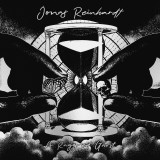
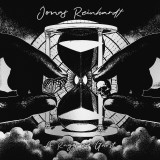
"A Ragged Ghost" is the eighth full-length album from electronic producer Jonas Reinhardt. Following albums on Kranky, Not Not Fun, Constellation Tatsu, and more, his debut release for Trouble In Mind brings together 11 new pieces that explore themes of life & death, netherworlds, and the liminal spaces in between. Taken together as a single narrative, the album offers a stirring exploration of mortality and immortality in what Reinhardt describes as 'a dance of religious syncretism, navigating spaces between the living and the dead'. "A Ragged Ghost" finds him synthesizing influences organically from familiar teutonic strains to the intense austerity of early 21st century electronic pioneers such as Biosphere and Susumu Yokota. A whisper of the Italo-disco-esque romps of Jonas' 2012's "Foam Fangs" EP & 2013's "Mask of The Maker" LP merge with his more kosmische leanings into a sinister, slightly funky, but also studious suite that at times feels like a lost sound library record from the KPM archives. Openers "Ape & The Universal Axis" and "In Lotto Commodore" decidedly sound like a selection from a lost film score while others like the bubbling "Sly Tomb" recall the works of Roedelius or Vangelis' serene soundscapes. Meanwhile, fans of the electro-ambience of Manuel Göttsching's strobe-light, proto-house (on his seminal "E2-E4") or the pulsing insistence of John Carpenter's visceral non-horror scores (i.e. "Escape From New York" or "Assault on Precinct 13") will find a lot to love about songs like "Tumb Tumb" and "Wretched Orchestra of Armistice".
Clear Vinyl
Music became an escape for Greta during lockdown, and her new songs tell us about the feelings of love and longing that became an essential part of the pandemic for the German, Copenhagen based singer-songwriter. The songs follow last year’s successful debut album ‘Ardent Spring’ and together they make up her new album ‘Forever We’ll Be Dancing’, which will be released on February 4th 2022
Like so many of us, Greta spent most of last year trapped inside her apartment. While some have been making puzzles or knitting sweaters Greta has been writing songs about love, euphoria and longing; longing for the clubs of Berlin, longing for social contact and trying to find a way out of an emotional darkness.
During the Corona lockdown, Greta found herself in a romantic symbiosis with her husband and though the isolation brought them closer, it was also a challenging time where Greta’s husband struggled with depression.
»Music became my escape and if I needed to take a break and connect with myself, I could disappear into my computer and write a lot of songs. That was a good thing. Difficult, but good. It’s extremely hard to be close to someone who’s in pain when you have to carry them because they’re not able to carry themselves. In that sense, lockdown has been a good thing. My husband needed me and because of the lockdown I didn’t have to worry about missing out on anything. I feel that I’ve reached a deeper understanding of his feelings because we’ve had time to talk about them«, Greta says.
»Zwei Herzen«
The bubble of love and depression became a source of strength and personal growth, but it also caused Greta to miss the world outside and her family in the small German town Husum. Because of this, Greta wanted to fulfill a wish she had kept for a long time – she wanted to write songs in her native tongue, German. This is why multiple of her songs carry titles such as ‘Nicht Allein’, ‘Genug’ and ‘Drei’.
»I’ve been crazy homesick and that has definitely inspired the album. I have not written in German before, so for me this was a way of connecting with my roots. I can listen to German with Danish ears now, because I’ve lived here for so long now, and it allowed me to use the language differently and more rhythmically«.
Mondo, in partnership with Back Lot Music Wright, are proud to present the premiere physical release of Steven Price's electrifying score to LAST NIGHT IN SOHO, the latest film by Edgar Wright.
Edgar Wright wanted a score to soundtrack the two eras of Last Night in Soho and tie together the stories of these two very different young women. To achieve this, Wright turned once again to his now-regular composer, Academy Award® winner Steven Price, who successfully scored both Baby Driver and The World’s End.
While Price’s influences for the score included contemporary film music by the likes of Ennio Morricone and John Barry, a “’60s session band” sound with echoing fragments of dialogue add a different and sometimes subliminally sinister edge to the score. The sounds of ‘60s Soho blend into the present-day London scenes as Eloise is sucked further into the past. “The idea is that Sandie’s voice becomes part of the film, so you hear her siren song from the ‘60s coming through, and Anya became an intrinsic part of it… I was pleased that the lead actress is also the lead singer in the film score; the whole thing knitted together.”
The album also features songs performed by Anya Taylor-Joy, including the lead single from the film "Downtown (Downtempo Version)"
Having initially met more than a decade ago at a local community radio station, sometimes doing guest slots on each other’s live, improvised noise shows, Cormac Culkeen and Dave Grenon knew they had a mutual interest in working with sonic textures. They listened to each other’s bands for a handful of years, and in 2017, “made good on a threat” that they’d been making for quite a long time: to start a band. At Cormac’s gentle but clear urging—declaring that they’d gone ahead and booked a space in which to record a video—the two wrote their first song, “Sebaldus,” an ambitious 12-minute trip, which also serves as the fireworks finale to their self-titled debut album. With surges of pathos that smooth out into something more soothing in turn, Cormac goes: “The hunter, you’ve seen him / The archer, his arrows are strong / And hunger, you’ve known her / I know the winter is long.” The track is as much about enduring a Canadian winter as it is about the eponymous 8th century hermit, shot through with sublimated desire. As Cormac put it, Joyful Joyful’s songs are “a little bit outside of time.” But while the lyrics beg close, oblique reading unto themselves, there’s also a distinct sense that they’re only one of many more ways that the duo shapes sound. Cormac, whose voice is like a sea with irregular tides, lights up about an idea in traditional sean-nós Irish music that songs already exist and are out there; it’s up to the singer to become the conduit. This belief in music as something to be channelled, and something more than sound, resonates with the singer’s fundamentalist religious past. To paraphrase: lots of group singing, harmonies, no instrumentation, totally unmediated, no priest, congregational—not choral, not a performance, not about talent, the spirit moves through people. “Of course that informs how I think about singing,” Cormac says. So, when they were exiled from the church because of their queerness, they took the music with them, dislocating it from its dogmatic bounds but not from its transcendent potential. This record might be thought of, then, as a kind of queering of sacred, devotional traditions—or at the very least, a space where all of these things can be held at once. Perhaps perceivable by some as contradictions, these intersecting influences create the conditions for an incredibly singular sound. Dave is steady and exploratory in his handling of this multiplicity, arranging sounds as they’re revealed, corralling them, coaxing them into form. “Because Dave is there,” Cormac says, “I get to sing three times higher, and three times lower, and faster, and backwards, and all of these sounds! That are there. They’re all there.” When asked about early musical memories, Cormac recalled an immediate fascination with harmony: from demanding that the first person they ever heard singing it explain what they were doing, to always (still, to this day) singing in harmony with their twin sister around the house, to being part of a children’s choir that sang soprano in Handel’s Messiah—not realizing until they entered the room with all the other ranges that their learned melody was but one part of the whole. Just as tellingly, Dave reflects on his early attraction to “abstraction and becoming abstract,” describing childhood afternoons messing with microphone and speaker feedback loops, producing long, enduring sounds with almost undetectable variations. In a way unique to the coalescing of these two listeners, notions of harmony are central to their output. Dave samples field recordings, old keyboards and synths, and vocal drones, running the live singing through four or five parallel effects chains, sampling and treating everything again in the moment. “Another way to put it is that Cormac’s voice comes into the board and then comes back out shifted, delayed, and shattered; Cormac and I hear it, live with it, and respond,” Dave says. This work is contingent not only on a deep intuition (neither of them read sheet music) of polyphony and due proportion (something St Thomas Aquinas famously listed as an attribute of beauty) but also on their connection to each other and ability to read subtle cues. Dave says they’d hold each other’s hands while performing if it was more convenient to do so, riffing on something else Cormac mentioned about traditional Irish singing: that someone would always hold the singer’s hand, for fear that without a tether to the ground they might find themselves utterly lost, unsure how to return. Joyful Joyful doesn’t shy away from offering such experiences of departure; they’re willing to unsettle their audiences because they themselves are unsettled. Their shared penchant for spooky, heavy music, and self-described “omnivorous” listening practices equip them with an array of sonic concepts that support this effort; Diamanda Galás, The Rankin Family, Pan Sonic, Pauline Oliveros, Keith Fullerton Whitman, Yma Sumac, and Catholic hymnody were just a few that came up. Observing their audience gives them insight about the effect of each song—something they considered while arranging the album. Its arc is marked by soft, sometimes sudden oscillations between cacophony and euphony, day and night (listen for insects), and from sexual, visceral entanglements to more ephemeral, celestial ones. Front to back, it arouses expansion, unraveling. Of lightning, Vicki Kirby writes: “quite curious initiation rites precede these electrical encounters. An intriguing communication, a sort of stuttering chatter between the ground and the sky, appears to anticipate the actual stroke.” By all accounts, something similar seems to happen at Joyful Joyful shows, between those on the stage and those off it, between what’s earthly and what’s beyond. “A lightning bolt is not a straightforward resolution of the buildup of a charge difference between the earth and a cloud … there is, as it were, some kind of nonlocal communication effected between the two,” writes Karen Barad, extrapolating on Kirby’s thought. Cormac acknowledges that while they and Dave play a role in this mysterious charge that comes about, they’re not solely responsible. However ineffable it may be, it’s undoubtedly a form of communion—and a sensuously shocking one at that
- A1: Fine Day For Sailing
- A2: I'm Still Crying
- A3: I Just Do
- A4: Bigger Than An Ocean
- A5: Long Distance
- A6: Windy
- A7: Blue Sky
- B1: Don't Go
- B2: Ray Of Sunshine
- B3: Together Forever In Love
- B4: Every Day
- B5: Silly
- B6: Last Year
- B7: The Boy Who Sailed Around The World
Go Sailor were a great, short-lived band from the mid-90s who represent
a key link in the US indie music chain
Featuring Rose Melberg (Tiger Trap, The Softies, Gaze, Brave Irene, Knife Pleats),
Linton (Henry's Dress, The Aislers Set) and Paul Curran (Take A Day fanzine,
Crimpshrine, Monsula), they released three great singles and a few compilation
tracks, and then went their separate ways. But what records they are! Basic and
lovely in their song- writing, they're perfect snapshots of where indie- pop was
during that last burst of pre- internet indie activity. Touching on time- honored
themes of friendship and love (lost and found), they resonate with honesty and
purity of intention. The trio reunited in the early 2010s to play to enraptured
crowds at the NYC and Athens Popfests, and their appearance at the Slumberland
20th Anniversary show was the stuff of legend. This album compiles all three of
their 7" singles (for Slumberland, Yoyo and Lookout!) and compilation tracks and
was first released on vinyl in 2011. Due to pressing plant issues it quickly went
out of print, so we are very happy to bring you this new edition, back on vinyl
where it belongs with a new insert featuring liner notes and lots of cool band
pictures and ephemera. Pressed on Watery Blue Color Vinyl.
- A1: Maybe Your Heart's Not In It No More
- A2: Roots & Wings
- A3: I Hear The Ocean (When I Wanna Hear Trains) (When I Wanna Hear Trains)
- A4: The Dive Bar In My Heart
- A5: Darlin' Hold On
- B1: Move The River
- B2: I'll Let You Down (But Will Not Give You Up) (But Will Not Give You Up)
- B3: Wrong End Of The Spear
- B4: Who's That Man Walking Round My Garden
- B5: The Daylight Between Us
Rock 'n' roll is often hard to define, or even to find, in these fractured
musical times - But to paraphrase an old saying, you know it when you
hear it - And you always hear it with The Wallflowers
Exit Wounds, which stays true to its title, is an album that is an ode to people -
individual and collective - that have, to put it mildly, been through some stuff. 'I
think everybody - no matter what side of the aisle you're on - wherever we're going
to next, we're all taking a lot of exit wounds with us,' says Jakob Dylan. 'Nobody is
the same as they were four years ago. That, to me, is what Exit Wounds signifies.'
To be sure, Exit Wounds is populated by scarred souls and the things they carry
with them. Those are your exit wounds. And right now, we're all swimming in
them. Pressed on Pink and Purple Splatter Color Vinyl.
Fresno is the highly anticipated 6th studio album by Joyce Manor
Produced by Rob Schnapf, this 9 song album is an honest, hard-hitting, post-emo,
power pop masterpiece packed with the elevated writing and earnest delivery
Joyce Manor is loved for.Joyce Manor is a band from Torrance, CA consisting of
Barry Johnson (vocals/ guitar), Chase Knobbe (guitar), Matt Ebert (bass), Neil
Hennessy (new drummer, from The Lawrence Arms). Johnson and Knobbe
started the band in 2008 in the Disneyland parking lot, named after an apartment
complex that Johnson would walk past every day. Joyce Manor made their debut
as an acoustic two-piece. Quickly they learned that playing loud was much more
fun and invited friends to join the lineup. The band has released five studio
albums; Joyce Manor (2011), Of All Things I Will Soon Grow Tired (2012), Never
Hungover Again (2014), Cody (2016), and Million Dollars to Kill Me (2018).
Joyce Manor has toured extensively and their live show has been the driver
behind the band's success. They have made festival appearances at FYF Fest,
Coachella, Riot Fest and since the release of their last studio album in 2018, the
band has headlined NYC Central Park SummerStage, sold out two nights at the
Palladium in LA, and sold out two matinee show at LA's historic Union Station.