Hot off the heels of a stack of fine singles, they found love with the likes of Nels Hylton, Amy Lame, John Kennedy, Visions, NTS, Bring The Noise, Upset, arts culture, Distorted Sound, The Punk Site and many more - building a buzzing community, touring with Don Broco and Weakened Friends, finding favour with scribes at the likes of Kerrang, Rock Sound and Clash and popping up on the BBC Radio 1, Radio X and BBC 6 Music airwaves with alarming regularity... Signed to Alcopop! (UK/ ROW) and Grand Hotel van Cleef (GAS) they drop fiery choruses, grungy riffs and catchy hollering britpop sensibilities. With these future anthems all wrapped around vocalist jim heffy's lyrics of angst, depression and medication, break- ups, drinking and problematic housemates, it's prescient to remember the most important message that resides in the beating heart of these songs - 'be kind and be free to express yourself, no matter who you are'.
Coming in hazy and heady, an end-of-summer cosmic jammer from Nick Mitchell Maiato, full of big choruses, blazing guitars, country honk, and deep grooves—replete with funky horn section. It’s been four years since Poolside, the last release by One Eleven Heavy (Mitchell Maiato’s sometimes-band with James “Wooden Wand” Toth), and that time has clearly been used for some serious woodshedding on the auteur’s part. On Náquera, named after the Spanish pueblo in which he resides, Mitchell Maiato’s songwriting, vocals, and guitar playing all come into sharp focus as he mans the wheel on an ocean drive of interwoven electric guitar dueling, funky multi-movement jams, bittersweet odes to uncomplicatedness, and rolling rockers. Featuring an effortlessly graceful preface by Macon, GA piano prodigy Gavin Rushing, “Riki Rachtman” is a cosmic americana ballad examining the state of heavy metal in contemporary pop culture from the perspective of a disgruntled first-person narrator. “Critical Mass” is a soaring, two-chord ode to dropping out, with an opening organ salvo by Grateful Dead midi-tech Bob Bralove, a monster, key-changing guitar duel at its core, and a fat, snaking bass groove by Otto Wilberg (Mitchell Maiato’s former colleague in Desmadrados Soldados De Ventura).“Flamebait” is one of the record’s big surprises with its almost Lennon-esque rock-and soul slab of technocracy bashing, its woozy, three-part horn section, and its improvised, sun-scorched guitar solo slap-dab in the middle.And, on “The Angle,” we get an homage to rock-and-roll pool hustler narratives framed within an expansive country-funk jam that nods to Mitchell-Maiato’s love of Parliament and Grateful Dead in equal measure.
Born at the turning point between apartheid and democratic South Africa, the Xitsonga bubblegum-disco duo Chibuku embodies the energy of a time of change,as Nelson Mandela was released from prison and kwaito began to emerge. Althoughthey did not achieve the fame of figures such as Paul Ndlovu or Penny Penny, their only album Maxambe (1992) is now considered a precious time capsule, a raw disco treasure rediscovered by lovers of forgotten music. Behind the project is Dr Joe Shirimani, a guitarist, singer, composer and producer of genius from Tzaneen and Soshanguve, recognised as one of the major architects of South African disco and bubblegum. Long overlooked, Maxambe nevertheless bears witnessto an era and a social perspective: migration ("Lekomfere"), debt and economics ("Xikweleti"), and family relationships ("Mhamazala"). The music is festive in appearance, but deeply rooted in the reality of its time. Released on Tusk/Diamond Music, an iconic label of the 1980s and 1990s bought out by Gallo Record Company, Chibuku is now emerging as a diamond rediscovered from the archives of South African disco. Its name, borrowed from a millet beer popular in several southern African countries, sums up the spirit of the group: popular, sincere and deeply rooted in local culture.
out of Stock
Last delivered 63 days ago available to reorder, subject to availability
Within the broad church of metal and its many offshoots – rock, doom, stoner and all the rest – it remains a minor thrill to stumble across a group who seem to exist at a slight tangent to everything else. Crumbling Ghost is one such anomaly. Crumbling Ghost are not newcomers. They've been operating for some time, releasing records sporadically, Four' is in fact their fourth release. Along the way they've accumulated a fervent coterie of followers, not to mention the occasional nod of approval from tastemakers such as Stuart Maconie, Stewart Lee and Tom Ravenscroft. And though they've appeared at Roadburn, shared stages with Hawkwind and even Damo Suzuki, they remain (possibly by design) curiously under the radar.
The group's core idea is deceptively simple: traditional folk material refracted through the haze and heft of heavy, fuzzy stoner rock with a chunk of psyche and a smattering of doom. But crucially, this is done without the costumery and theatrical tics that often accompany such collisions. No mock pagan pageantry, no graveyard cosplay, no cartoon Satanism.
What Crumbling Ghost latch onto is not folk as a museum piece, but as a lived experience, the dramas rooted in the culture, stories, and daily lives of ordinary people, the folklore, the tales of love and death, murder and adultery, freedom and oppression. Singer Katie Harnett says. "Doting mothers, possessive, violent partners, vulnerable women, seasonal workers and Royal scandals this album is our representation of the trials and tribulations of human existence and universal experiences that still feel relevant today.
Guitarist John adds. "Themes of murder, betrayal, loss, jealousy, and love are found across the record. In particular, the songs of Martin Carthy have been a particular source of inspiration".
The result is a set of murder ballads, supernatural reckonings and cautionary tales, all wrapped in slabs of heavy, thumping fuzz and atmospheric sonics. Harnett's voice sits at the centre: unmistakably folk rooted, but shorn of prettification, melodic yet capable of real bite.
The album opener 'Bows Of London' is a murder ballad of sisterly hatred and grim sibling rivalry, centred on a haunted fiddle fashioned from a dead sister's bones. The loping relentless, hypnotic backing chillingly and perfectly accompanies the narrative. Of course, the story doesn't end well. 'Bill Norrie' follows, a hooky melody propelled by an insistent bassline and a haunting psych tinged haze punctured with sheets of noise.. The story of young Bill Norrie who sends a token to a married woman, whose jealous husband beheads him, without knowing he was his wife's son from an earlier affair. An instrumental palate cleanser arrives in the shape of 'Valtz Efter Tor Lohne' a Norwegian traditional the band jokingly describe as a "banger".
Then we have 'Lovely Joan' which offers a rare note of sly triumph: a quick witted woman outmanoeuvres a predatory nobleman, escaping with his ring and his horse. Muscular riffs give this tale of empowerment a welcome sense of teeth. 'Gower Wassail' is a traditional Welsh folk tune that captures the raucous spirit of communal ritual, noise making and drink fuelled hope for a good harvest. Captured perfectly here by CG complete with wah wah guitar and a drunken groove catching the song's celebratory chaos. Then we have a little gem in 'Last Of All Sleep' , an original band composition and a genuine highlight: a heavy lidded, shoegaze tinged folk reverie, equal parts distortion and delicacy. It's a drop-dead gorgeous shoegaze-tastic psychedelic grunge mini epic. The album closer 'The Unquiet Grave' is a very apt place to finish. It's about a young man whose constant grief at the death of his true love disturbs her eternal sleep so she cannot rest. Even though the playout on this track, complete with a demonic repeated riff and feedback feels suitably bleak, even this song allows a glimmer of release ... we think.
And there we have it, 7 songs, 7 worlds, all honed to perfection by producer Wayne Adams (Green Lung/Big Lad) that will reward every repeated listen.
Folk and metal/heavy rock do have a connection of course, just look at Green Lung and their 'folk horror' infused musical universe, but Crumbling Ghost are a very different beast.
'Four' amply and beautifully demonstrates that when it comes to 'folk horror' there's nothing quite as horrible as folk ... Here, the horror such as it is, and it must be said, the moments of light, comes not from theatrics, but from the songs themselves – which, after all, is where it's always lived.
Crumbling Ghost are John Mosley – Guitar / Donny Hopkins – Guitar / Ruth O’Loughlin – Bass / Katie Harnett – Vocals / Matthew Atkins- Drums.
Fij makes a vibrant return with his new single "Don't Bring Me Sunshine," a bittersweet, high-speed ode to independence and renewal. Described by Fij as an "anti-love song," "Don't Bring Me Sunshine" flips the script on romance. Its sardonic, bah-humbug lyrics are set against a rush of euphoric energy - inspired by the simple thrill of driving fast with the windows down, music blaring, and summer stretching endlessly ahead. As Fij puts it: "Who needs love when you've got a full tank of petrol... and the whole of Summer lying ahead on the heat-hazed open road?" The track is the latest preview of his long- awaited debut solo album, due this September via Tip Top Records. It signals a clear shift in tone and tempo. After years marked by introspection - shaped by personal upheaval, frontline work during the pandemic, and his role as a funeral celebrant - Fij has hit reset.
Re- embracing the electric guitar, raising the BPMs, and rediscovering joy, his new material blends the fuzzed edges of dream-pop with elements of pop and electronica, all delivered with his signature wit and melodic finesse. Fij first emerged in the early 90s with Adorable, whose debut album Against Perfection (Creation Records) became a cult favourite, earning multiple NME accolades and topping the Indie charts. The band's legacy continues to resonate, with artists citing their influence and figures like Noel Gallagher famously calling their label's decision to drop them a major mistake. Following Adorable, Fij explored new sonic territory with Polak and later collaborated with Terry Bickers of The House of Love, producing critically acclaimed releases that reaffirmed his reputation as one of Britain's most distinctive voices. His baritone - often compared to Lee Hazlewood, Lou Reed, and Richard Hawley - remains as rich and compelling as ever, now carrying a renewed urgency.
Fourteen years after its original release, Dux Content returns with a newly remastered version of Lifestyle, the cult album by A. G. Cook and Danny L Harle.
Around its initial release, very little information existed about Dux Content beyond the description “audience entertainment specialists”. Lifestyle was initially self-released in 2012, before a limited reissue from PC Music in 2013 as a digital download, continuous mix, and video by Daniel Swan.
Lifestyle remains a remarkably singular and forward-thinking record, capturing a slice of Cook and Harle’s formative years. The album contains unmistakable traces of the musical sensibilities and maximalist production that would later define the pair as highly influential figures in contemporary and experimental pop.
A. G. Cook is an artist, producer and songwriter best known as the founder of influential record label PC Music and for his work as executive producer for Charli xcx on the albums BRAT, Charli, Pop 2, Number 1 Angel and the forthcoming Music, Fashion, Film. Other credits include work with Beyoncé, Hikaru Utada, Oklou and Turnstile.
Danny L Harle is a music producer and composer, and founding member of PC Music. His work includes executive producer credits for Caroline Polachek’s albums Pang and Desire, I Want to Turn Into You, as well as collaborations with Dua Lipa, Clairo, Carly Rae Jepsen and PinkPantheress. This year, he released his album Cerulean via XL.
Recorded April 17 and 18, 1993, at the Union Grove Baptist Church, Ozark, Alabama.
The Wiregrass Singers' Dewey Williams began learning the shape-note tradition in his childhood. He studied under Judge Jackson, who authored the landmark 1934 hymnbook The Colored Sacred Harp. In 1971, Williams formally organized The Wiregrass Sacred Harp Singers to preserve the music full-time. This unified troupe began touring nationally and leading workshops, which ultimately launched them onto stages at the Smithsonian and Newport folk festivals up until Williams' passing in 1995 when the group disbanded. The African-American Sacred Harp tradition in the Wiregrass region has steeply declined since the start of the 21st century, due to an aging generation of singers, and today it is largely sustained through archival preservation and occasional multi-book singing meetups.
This raw recording, made at the Union Grove Baptist Church, Ozark in mid-April 1993 finds the group singing from B. F. White’s The Sacred Harp (1844), which together with his brother-in-law William Walker’s Southern Harmony (1835) formed the musical backbone of generations of Southern music and Southern musical styles.
"On almost any Sunday between the months of March and October, the season most conducive to travel and outdoor dinner-on-the- grounds, Sacred Harp devotés join with fellow songsters at the County Line Church in Slocomb, or the Mount Sinai Church in Henry County, or the Union Grove Baptist Church in Dale County, or at any one of a dozen or so churches in the southeast Alabama counties of Barbour, Coffee, Dale, Geneva, Houston and Pike, to form the square and sing fa-sol-la. Approximately fifteen African-American Sacred Harp singings occur annually in the Wiregrass region of southeast Alabama. A singing tradition characteristically associated with white culture in the Deep South, southeast Alabama has enjoyed a vibrant African-American Sacred Harp tradition for well over a century.
On a day of a typical African-American Sacred Harp Singing, the participants arrive casually in the late morning, seat themselves in the square according to voice part, and begin to sing. A dinner break occurs in the early afternoon, and the singers enjoy a covered-dish "dinner-on-the-grounds" (or in the church basement) prepared by the women. The most intense and emotional singing typically occurs after the dinner break. Each singer takes a turn leading the song of his choice. He walks to the middle of the square, calls out the song's page number and waits for the designated tuner to key the song. Singers are discouraged by the other singers from repeating a song that has already been sung, or "used." This proscription is often dispensed with, however, if the singer is particularly young, particularly old, or if the song has special significance to the individual song leader (perhaps the favorite song of a recently deceased relative).
Every singer is given an opportunity to lead a song. Often, older or more infirm singers will request younger singers to lead their songs for them. The motions of the song leaders are highly stylistic and often emotional. Young children are taught in singing school to mark time with their right arm while holding the book in their left. Typically, a singer will stand in place at the center of the square while leading the singing of the notes. When he begins to lead the lyrics portion of the song, he will often begin to "walk time," rhythmically pacing from one side of the square to the other, being careful never to turn his back on the tenor section. This "walking time" is unique to the African-American tradition. As a singer grows more confident he develops his own distinctive leading style. During fuguing songs in particular, he may gesture to each section of the square as its part joins in. Skilled song leaders often elicit applause or other emotional responses from the group. Occasionally a singer may fall into a state of spiritual ecstasy and "get happy." The episode might include a personal testimonial followed by a repeat of the last verse or refrain from the previous song. The singings break up around 5 P.M."
—Henry Willett, 1997 credits
We’re delighted to be working with London based deep house label, To The Rocks
Presenting the Visions of love EP from Lucas Moinet, a Paris-born producer with his roots planted firmly in the soul of house music. Through projects like Keraw, Groove Boys Project and Projecture, he’s built a catalogue that doesn’t chase trends, it’s going straight back to the source. Chicago, Detroit, New York. Four tracks. Deep, soulful, deliberate. Made by someone who clearly loves and lives the culture.
out of Stock
Last delivered 24 days ago available to reorder, subject to availability
The legends of the golden era of Italian soundtracks and library music go by many names, but the backbone of that era’s definitive sonic identity is most often identified as I Marc 4 (also known as Marc 4 or I Marc Quattro). While the moniker might be less familiar to the uninitiated, it is a simple acronym derived from its founding members: Maurizio Majorana (bass), Antonello Vannucchi (organ), Roberto Podio (drums and percussion), and Carlo Pes (guitar). The number "4" serves to highlight the core synergy of these four master musicians. Their journey began in Rome’s vibrant jazz scene of the 1950s and early 1960s, where they honed their craft as members of the RAI national orchestra and collaborated with the most prominent jazz and pop icons of the day. However, it was their pivotal role in defining the Italian cinematic sound of the 1960s and 1970s that secured their legacy. Their unmistakable style was an eclectic fusion of beat, jazz, classical, and Latin influences—textured with early synthesizers, experimental sound effects, and a blend of electronic and baroque instrumentation. Consequently, their initials are etched into the credits of countless landmark recordings by legendary composers such as Nino Rota, Armando Trovajoli, Gianni Ferrio, Alessandro Alessandroni, Piero Umiliani, and Ennio Morricone.
Beyond their work as session luminaries, they produced a vast body of library music under their own name at the legendary Telecinesound Studios in Rome. These recordings were released through prestigious library labels like Sermi, Ricordi, and Fonit Cetra, as well as through their own imprints: Nelson Records, Silver Men, and Silver Music, spanning a definitive series of sixteen albums. Ten of these volumes were issued on Nelson Records during the 1970s, featuring the now-iconic military stencil design. Each release was color-coded: red (G.L.P. 1001), dark blue (G.L.P. 1002), gold (G.L.P. 1003), light green (G.L.P. 1004), brown (G.L.P. 1005), black (G.L.P.1006), light blue (G.L.P. 1007), yellow (G.L.P. 1008), orange (G.L.P.1009), and cool green (G.L.P. 1010). The series was completed by two elusive companion releases: S.M. 2001 on Silver Music and S.M. 2002 on Silver Men, both presented in the same distinctive brown sleeve. Rediscovered in the 1990s and 2000s, these Nelson releases have since achieved cult status among collectors, producers, and DJs worldwide. The final two installments, S.M. 2001 and S.M. 2002, remain the rarest and most enigmatic of the set.
Often overlooked, they contain some of the most profound "hidden gems" in the group’s catalog. The tracklist traverses a wide stylistic spectrum: from the rare groove and proto-hip hop energy of "Trama Nella Metropoli", "Beat Morbido", and "Candy", to the lush cinematic atmospheres featuring the ethereal vocals of Edda Dell'Orso on "Summer In Love", "On The Rain", and "Arcobaleno". The collection is rounded out by sophisticated jazz pieces like "Flauti Ensemble", "Passeggiata", and "Atmosfere Dolci”. Sonor Music Editions has meticulously curated the finest moments from these two rare albums for this first-ever dedicated reissue. Bringing together the best of Silver Music (S.M. 2001) and Silver Men (S.M. 2002), this release retains the iconic stencil artwork but introduces a striking silver finish. This design choice honors the original ten-album sequence while shedding new light on these outstanding recordings—works that remain, in every sense, golden.
out of Stock
Last delivered 70 days ago available to reorder, subject to availability
In a world currently defined by unrest, uncertainty, and cultural fracture, acclaimed saxophonist, composer, and bandleader Isaiah Collier returns with Joy, a 5-track EP that reframes one of humanity’s most nuanced emotions both as a devotional grounding and political act.
Collier’s deeply personal compositions present joy as an act that isn’t rooted in escapism or abstraction, but rather, as something hard-won rooted in lived experience, shaped by transformation, and sustained through connection. Throughout the album’s five compositions, Collier positions joy as a guiding light during challenging times, an expression of challenging yourself to utilize your gifts, an affirmation of love and discovery, and as an affirmative source of reassurance.
“We are in a paradoxical time, where so much is being revealed to us,” Collier shares. “Everything feels political from every scope… our collective hearts feel the heaviness in the air. Yet I say to you all—don’t despair. For right now, the most political thing we can do is share joy.”
That ethos is made clear in the opening title track and lead single “Joy.” A pulsing rhythmic motif anchors the melody with a sense of both searching and certainty. Collier conceived the piece around 3 years ago reflecting on a time where many people in his life were experiencing loss of family and friends and experiencing profound life transitions. “Everything just felt like it was falling apart with no aim in sight,” he reflects. “Yet, there is a light at the end of it all.”
As he played the chords with a sense of urgency, he could feel the vibration of yellow in the piece. That initial triplet motif serves as the guiding light on the piano and the only word Collier could hear was Joy. In addition to Collier at the helm singing and playing piano and tenor sax on the track, it features an expansive 11-piece ensemble with a full horn and string section allowing Collier’s propensity for composition and arrangement to shine with an eclectic sonic palette.
“Landscape of Dreams” finds Collier serendipitously leaning into utilizing his gifts as a multi-instrumentalist. While he had a sketch of the piece going into the studio, a traffic delay caused musicians to be late arriving at the studio. Never one to waste time in the studio environment, Collier stepped into new creative territory and took up the challenge of executing playing all instruments himself as an act of trust and experimentation. “I’ve never done this before, and so it was a leap of faith for me,” he asserts. “I always dream of doing stuff like this, and being part of the small percentage of people who can do it like Prince, Steve Lacy, Frank Zappa, and Stevie Wonder. The end result finds Collier immersed in a hypnotic soundscape playing layered flutes, drums, Metatron, Wurlitzer, and auxiliary percussion.
Another layer of joy is revealed in “Where I’m Loved” that serves as a love letter and leaning into the process of stepping into the willingness to explore life and love with a partner. On the intimate meditation of vulnerability and connection, Collier's vocal prowess is on full display, exerting effortless falsetto reminiscent of D’Angelo over soulful Wurlitzer and guitar as he crosses over into more R&B-inspired realms. “I believe everyone deserves this feeling or to honor the memories of it. Furthermore, I believe you should also go where you’re celebrated and not tolerated.”
“When the Dust Settles” captures the electricity of live collaboration and Collier further steps out of being confined to any specific genre. He had just gotten a microKORG keyboard from co-producer Sonny Daze and was exploring the vast array of sounds on the instrument. Collier plays synth bass on the microKORG joined by the electrifying improvisation of Cole Runge on guitar and the combustible rhythm of his brother Jeremiah Collier on drums with additional post-production work from Sonny Daze.
The album’s final track “God’s By Your Side” reflects on perseverance and artistic legacy, directly inspired from the passing of D’Angelo, whose life’s work was a huge part of Collier’s childhood growing up in the late 90s and early 00s. With gospel flavor and direct influence both from D’Angelo’s vocal and instrumental arrangements, the track speaks to resilience and persistence in the face of obstacles—an affirmation of source and reassurance. “And what’s better than having God by your side, right?” asserts Collier.
Joy is a through-and-through expression of the arc of joy in its truest form. Joy transcends fleeting happiness and is conscious gratitude shaped by taking chances, leaning into your gifts, fostering community, and lived experiences.
“Joy is partially happiness,” Collier explains. “But to me it means happily being grateful for family, friends, lovers, teachers, and good times. These are the things that anchor us.”
The release of Joy comes off the heels of significant momentum for Collier, whose work continues to garner accolades and resonate across cultural spheres. He was featured on the cover of DownBeat’s April 2025 issue, where he was named “The Next Sax Giant,” and profiled on NPR’s Jazz Night in America for his ambitious 13-movement interdisciplinary suite The Story of 400 Years, that traces 400 years of Black American History. He released two full-length albums in 2024 with The World Is on Fire highlighted in The New York Times’ Fall Arts Preview and The Almighty named among the publication’s Best Jazz Albums of the year.
Beyond performance and recoding, Collier’s influence is recognized in broader cultural and intellectual spaces as he was the recipient of the Jazz Journalists Association’s 2025 Up and Coming Artist of the Year Award, the 2024 Chicagoan of the Year in Jazz, and was named a Steve Jobs Archive Fellow joining an elite cohort of the next generation of artistic visionaries through a yearlong program.
In addition to the release of Joy, Collier is touring his “Collier Plays Coltrane” program throughout 2026 in honor of John Coltrane’s centennial. Rather than presenting Coltrane’s expansive catalog as repertory, Collier approaches this music as something living, reshaping it in real-time with a sense of space and improvisational dialog reflecting both reverence to the past and present times.
out of Stock
Last delivered 66 days ago available to reorder, subject to availability
Soul Music legend Candi Staton returns to her down-home Alabama roots on her 32nd album, Back to My Roots. The twelve-track Americana set features an array of Staton-penned originals and some well-chosen covers.
"These songs represent my roots," Staton adds as she reflects on her many trials and triumphs. "Even the new songs on some level represent something I've experienced and that's what real soul music is about." Back to My Roots was produced by Staton with her second eldest son, Marcus Williams, a professional drummer who has toured with the likes of Peabo Bryson, Isaac Hayes, and Tyler Perry. They brought in Mark Nevers of Lambchop fame, who produced three of Staton’s prior Americana albums for Honest Jon’s and Thirty Tigers, to sweeten certain tracks. “Some of the first songs I ever heard were songs like `Peace in the Valley’ and `It’s Gonna Rain,’” says Staton. “The new songs or cover songs are tracks that remind me of that era when I was growing up as a child and evolving as a young woman. That’s why I named the album Back to My Roots because I’m going back to the roots that made me who I am.”
Staton received the Americana Music Association UK’s highest honour, the International Lifetime Achievement Award, at the UK Americana Music Awards ceremony at Hackney Church in London last year for her southern soul work that stretches from her 1969 Muscle Shoals hits to her more recent collaborations with the likes of Americana kings Jason Isbell and John Paul White.
The album opens with a mid-tempo Bonnie Raitt-styled contemporary blues “I Missed the Target Again” that finds Harry Connick Jr.’s longtime guitarist Jonathan DuBose Jr. (aka the Prophesying Guitarist) showing off his skills that set the tone for the song and the album.
Staton’s older sister, Maggie Staton Peebles (who alongside Staton was a member of the Jewel Gospel Trio in the 1950s), joins her for two duets. The first, “It’s Gonna Rain,” features just a drum, steel guitar and vocals. “My mother used to sing that song to us all the time when I was a child,” Staton recalls. “It’s a really soulful kind of song I wanted to revisit.” They then take turns leading Thomas Dorsey 1939 gem “There Will Be Peace in the Valley” that Elvis Presley popularized in the 1950s.
“Hang on in There” is a new, mid-tempo song that has an old school gospel flavour and features vocals from veteran bluesman, Larry McCray.
While in Europe in 2023 for her farewell concert tour that took her to the Glastonbury Festival and Love Supreme, Staton and her British band, PUSH, went into a London studio to record a new version of The Rolling Stones’ 1972 gem, “Shine A Light.” “I love the way that came out,” Staton says. “We put a big choir on it and put our own twist on it.”
From there, Staton revives another Thomas Dorsey classic, “The Lord Will Make a Way Somehow,” with a bluesy vibe. When Al Green started recording gospel in the early 1980s, he re-introduced this song into the culture.
“God’s Gonna Use Me Anyway” is a new mid-tempo blues with subtle Caribbean influences.
The mood takes a turn on “1963.” It’s a poignant, spoken-word reflection on September 15, 1963, when four black girls were killed in the Birmingham Church bombing. “I was in the city that day and I remember the chaos and horror after the bombing,” Staton recalls. “Just thinking of how racism and hatred caused those men to kill those girls was so emotional for me that I could only do it in one take.”
It's a perfect segue into "Reach Down and Touch Heaven," a haunting, plea for divine intervention into the affairs of mankind. "That's straight Baptist," she says. "I used to be a church pianist back in the 1960s. I've never played piano on one of my records before so that's a unique song for me because I’m finally playing on one of my records. The message of that song is about the homeless. It came to me when a homeless person on the street asked me for $5. When God touches your heart to help somebody else that’s heaven to God’s hears. So, when we reach into our purse or wallet to help someone, we’re touching heaven."
Staton offers love as an antidote to hate on the bouncy, Motown-styled, “Love Breakthrough.”
Her publicist brought Aaron Frazer & the Flying Stars of Brooklyn NY’s 2017 cut “My God Has a Telephone” to Staton’s attention. She shifts the track from a retro 1960s groove to more of a 1980s Malaco Records arrangement, a subtle but distinct variation. Staton brought in her longtime friend and STAX Records legend, William Bell (“I Forgot to Be Your Lover” and “Trying to Love Two”), to add raspy seasoning to the track.
The album closes with the wistful, “In God’s Hands We Rest Untroubled,” that was originally written and recorded by the late country star, Lari White, who died in 2017 at the age of 52. “Lari sent me that song to consider at least ten years ago and I always loved it,” Staton says. “The record label didn’t want it on the album or something, so I just held it.”
Staton says, “I grew up hearing a lot of these old songs when they were new songs. I toured with the Jewel Gospel Trio in the 1950s and we got to know people like Mahalia Jackson, Sam Cooke and others who sang these types of songs. So, I’m sort of paying tribute to them and the influence they had on me by refreshing these songs and making new songs in the old style.”’
With their ever-mutating brand of jazz-and-country-laced punk, Opus Kink have always cut a singular figure in a saturated landscape. Making their name with incendiary, cult-like live shows, the band - formed in Brighton (UK) in 2017 — has developed a sound as elusive as it is recognisable. Underscored by a formidable horn section and ragged, sardonic delivery, the band bear passing resemblance to post-punk and no-wave acts like The Pop Group, Birthday Party and Lounge Lizards, but it’s the weaving of older, more traditional influences - choral, folk, country, Latin, Weimar cabaret, cruise-ship-crooning - into the fabric of their music that sets them apart. Their highly anticipated debut album 'The Sweet Goodbye' is set for release on 31st July 2026 via So Recordings and follows a series of EPs and singles which have earned acclaim from NME, DORK, DIY, CLASH, SO YOUNG, BBC Radio 1 and playlisting on BBC Radio 6 Music. The album is produced by Grammy award-winning producer and mixer Craig Silvey (Arcade Fire, Florence & The Machine, Baxter Dury, REM, Kronos Quartet, Sam Fender), with album track 'The Head Tree' featuring The New Eves (No.1 Independent album in 2025). Opus Kink brings their alluring live show to audiences around the UK and Europe later this year, including a headline show at London's 2,300-cap venue o2 Kentish Town Forum, while the Summer sees them supporting The Libertines at Rochester Castle, Kent. TRACKLISTING A1. Come Over, Do Me Wrong A2. Will It Come For You? A3. I'm A Pretty Showboy A4. The Sweet Goodbye A5. Peckham Nocturne B1. I Have To Shine My Sunday Shoes B2. The Head Tree (ft. The New Eves) B3. 448C (The Colour of Love) B4. Crucify! B5. Oh, Irony QUOTES - ?"Horn-fuelled filth-funk, where punk and jazz combine in grimy circumstances." - NME - "One of the UK’s most exciting new bands?...A raucous, intense blast of guitar pop...as equally anxiety-inducing as it is sublime." - C?LASH - "Barnstorming, infectious" - Steve Lamacq, BBC 6 Music - "One of the most enjoyable genre fusions I've ever seen." - Nels Hylton, BBC Radio 1 - "(Their) ferocious live performances have earned them a reputation as? one of the best live bands in the country?." - So Young
To mark its 10th Anniversary,
discover Awa Ly's Album "Five And A Feather" (Including one previously unreleased track) On Vinyl For The First Time !
One night, Awa had a dream.
The atmosphere was enchanted, almost mystical, enveloped in a setting that summoned the moon, the Earth, and the elements. An ancestral blend of Native American and African cultures, a shamanic being was there, speaking in an unknown language, narrating stories both real and imagined. She received these tales from others, made them her own, absorbed them, shared their joy, and soothed their harbored pain or sadness.
Upon waking, the shamanic narrator had vanished, but her presence was still palpable; Awa made her the storyteller of this new album: Five and a Feather.
Five, like all things counted by fives: the senses, the oceans, the lines of a musical staff, the fingers on a hand. And feather, the magical element that connects them-the very one Awa used to write and compose the ten tracks of this new album where, under the brush of SainaSix, she becomes the first Black woman immortalized in Mucha's Art Nouveau aesthetic.
Ballaké Sissoko's kora, Paco Sery's senza, Greg Cohen's double bass, Faada Freddy's vocals, the steel guitar, or the erhu (Chinese violin) are all elements that illuminate the shamanic storyteller's tales.
Produced alongside the duo Jean Lamoot and Pascal Danae (winners of the 2015 Victoires de la Musique in the World Music category with their band Rivière Noire), Five and a Feather faithfully captures the warm atmosphere of live-recorded sessions where instruments answer and interlock with one another, creating the perfect showcase for the album's principal instrument: Awa's voice.
Words that she delicately places or lets fall onto the notes like tears of joy or sadness, flowing from that source called love.
An album written, composed, and recorded like fine lace, starry with details that only reveal themselves to those who know how to seek them out.
With their ever-mutating brand of jazz-and-country-laced punk, Opus Kink have always cut a singular figure in a saturated landscape. Making their name with incendiary, cult-like live shows, the band - formed in Brighton (UK) in 2017 — has developed a sound as elusive as it is recognisable. Underscored by a formidable horn section and ragged, sardonic delivery, the band bear passing resemblance to post-punk and no-wave acts like The Pop Group, Birthday Party and Lounge Lizards, but it’s the weaving of older, more traditional influences - choral, folk, country, Latin, Weimar cabaret, cruise-ship-crooning - into the fabric of their music that sets them apart. Their highly anticipated debut album 'The Sweet Goodbye' is set for release on 31st July 2026 via So Recordings and follows a series of EPs and singles which have earned acclaim from NME, DORK, DIY, CLASH, SO YOUNG, BBC Radio 1 and playlisting on BBC Radio 6 Music. The album is produced by Grammy award-winning producer and mixer Craig Silvey (Arcade Fire, Florence & The Machine, Baxter Dury, REM, Kronos Quartet, Sam Fender), with album track 'The Head Tree' featuring The New Eves (No.1 Independent album in 2025). Opus Kink brings their alluring live show to audiences around the UK and Europe later this year, including a headline show at London's 2,300-cap venue o2 Kentish Town Forum, while the Summer sees them supporting The Libertines at Rochester Castle, Kent."Horn-fuelled filth-funk, where punk and jazz combine in grimy circumstances." - NME - "One of the UK’s most exciting new bands?...A raucous, intense blast of guitar pop...as equally anxiety-inducing as it is sublime." - C?LASH - "Barnstorming, infectious" - Steve Lamacq, BBC 6 Music - "One of the most enjoyable genre fusions I've ever seen." - Nels Hylton, BBC Radio 1 - "(Their) ferocious live performances have earned them a reputation as? one of the best live bands in the country?." - So Young
Hélas collects 15 songs from the repertoire of NEOBORIS, an infamous Bordeaux/Pau duo highly active in the late ‘90s and early ‘00s. Drawing on direct ounk, wave, rave culture and »Variété Française« influences, Hélas functions as a perfect time capsule of a very specific era and mood: a boy-and-girl duo celebrating their love for boys, in melancholy and beauty.
I met Boris in the early '90s. I was a hardcore raver and sang in various punk bands in Bordeaux. Boris was more romantic and had grown up with New Wave and Goth. He was a natural-born singer-songwriter. We shared a deep passion for Elli et Jacno, Taxi Girl, or Mathematiques Modernes. We started giving wild concerts across our region in the South West of France and gradually playing everywhere all the way to Paris. Boris' untimely death in 2008 was a shock. Today, I still perform Boris' songs everywhere I can because I just want to preserve his spirit. Singing with him then, now, and forever.
A &meless disco classic meets modern house energy as Hamilton Bohannon returns with a brand new
reimagining of “Let’s Start The Dance”, featuring the unmistakable touch of interna&onal house icon Joe T
Vannelli. This special release blends the original groove and soul of Bohannon’s legendary sound with
ontemporary club produc&on, delivering a powerful package for DJs and dancefloors worldwide. Alongside
the main Joe T Vannelli Remix, the release also includes a Classic Mix that stays closer to the spirit of the
original version and a New Corve7e old school mix. A perfect fusion of disco heritage and house music
culture, created for true lovers of groove, rhythm and &meless dance music.
K' Alexi Shelby is a prominent figure in electronic music with a career spanning decades. The cultivation of his massive music catalogue has overflowed into albums and the three labels he heads. It's also led to legendary collaborations with artists like The Pet Shop Boys, Robert Owens, Kenny Dixon, Roy Davis Jr., Joe Smooth, Steve Silke Hurley, Tyree Cooper, Ron Trent, Glenn Underground, Larry Heard, DJ Pierre, Carl Craig, Felix da Housecat, Marshall Jefferson and more. He makes a welcome return to COD3 QR with the jazzy house of opening track, "House Music de Chicago".
Voltaire has built his career through passion and a perfectionist approach to music, creating a richly emotional eclecticism, with inspiration from the pioneers of Detroit to the glorious electro decades of the 2000s and 2010s. Today he's a COD3 QR regular and released his debut album, "Echoes" on the label last year. He leans into the realms of house with a deep techy edge, for new track "Some House".
Finder is the alias of Radial (Jeroen Liebregts), originally from The Netherlands but today residing in Spain. He started mixing records around '98 and in 2002 teamed up with Bas Mooy to started the now legendary label, Audio Assault. He's also released on Token, Perc Trax, Mote-Evolver, Numb, Drumcode, Planet Rhythm, Mord, Will & Ink and MDR, alongside his label, Radial Records. As Finder he goes in a new direction with "Team Dream".
Benny Rodrigues a.k.a. ROD's other moniker, The Lost Souldancer has already seen him drop "No More Voices" and "Life and Death" for the label. In his own words, Benny says: "The Lost Souldancer is about coping with the loss of what once was. Finding comfort in the invisible rather than what can be seen. Disconnect to connect in order to be loved rather than liked." He returns with another emotional journey on "Magnolia".
Producer and manager of Slates Records, Squal G is a French artist who has been passionate about electronic music since the '90s. Initially a DJ, he soon turned to machines and computers. This enabled him to progress with his production and remixes. He never tries to stick to a single style, which, depending on his inspiration, can lead him to be more or less hard, while remaining in the spirit of techno. A popular COD3 QR regular, he's back with the intense techno of "Crackle".
French producer, DJ and live artist, Electric Rescue is world renowned. His productions have been signed on labels like Cocoon, Virgo, Arts, F Communications, COD3 QR, Soma, Sci + Tec, Boys Noize and his own Skrypto¨m. Ahead of his forthcoming artist album (to be released on COD3 QR in October) he closes the vinyl with the electro-tech and wonderfully wonky machine funk of "Internet Was an Illusion".
out of Stock
Last delivered 22 days ago available to reorder, subject to availability
Charting the history of punk and DIY scenes from the 1970s to the present day.
Combines the life of a musician and a music journalist who tapped into the cutting edge of alternative music.
Packed with stories of well-known figures from the rock music scene.
Robb's is a life of facing down outsider struggles, overcoming career disappointments
and the DIY spirit that carried him through.
REVIEWS
'A searcher and a true believer in the magic and power of music.' - Noel Gallagher, musician.
'John Robb writes about music and culture with the insight of someone who loves it from the outside and lives it from the inside.' - Johnny Marr, musician.
'A treasure trove of bands found and lost, wracked geniuses, greasy gigs, rumbles and fumbles and moments of bliss.' - Ian Rankin, novelist.
'John Robb. OG.' -Mary Anne Hobbs, DJ and journalist.
‘Clever, witty, eloquent and so weird – he's like the brother I never had.’ Chris Packham, broadcaster.
The irresistible story of a one-man cultural phenomenon. Minister for the Counterculture, Mancunian mainstay and alternative national treasure John Robb has lived a life in music. In this book he charts his adventures on the cultural frontline, chronicling the making of a DIY icon.
Robb’s quest began in his hometown of Blackpool – where punk was a battle against the odds – and went international when he toured the world with his band. The first person to interview Nirvana, he also discovered The Stone Roses for weekly newspaper Sounds and did early interviews with The Jesus and Mary Chain and The Manics, before moving on to legends such as Mark E. Smith, Nick Cave and Patti Smith.
Along the way, he became an on-screen commentator and author of bestselling books. Robb’s memoir tells of deep friendships with figures from Poly Styrene to Chris Packham.
Packed with riotous stories, it provides an alternative account of British musical and cultural history and a triumphant blueprint for a punk rock life.
Phonica unveil the second in a series of three 12" samplers featuring a selection of tracks from their new compilation 'Ten Years Of Phonica'.
Phonica favourite Lo Shea kicks off Sampler number 2 with the ominous 'Home', a bassline-heavy house cut that continues on from his streak of high quality and inventive 12" releases on Seaghdha. Medlar and Red Rack'em join forces for the submerged 'Morning Light'. It's deep house in its truest form and here's hoping they continue to collaborate, because on the basis of this, they're onto something very special.
Moiré is another producer Phonica have been hugely impressed with, his highly original 12"s for Werk Discs and Rush Hour blew us away and his contribution 'Solar Signs' doesn't disappoint. Cult producer STL rounds out the 12" with 'Freaky Fingers'. His distinctively twisted take on house and techno is in full effect on this one, whistles and all. As STL releases on labels other than Something or Smallville are a rarity, it's yet another coup for Phonica.
Phonica Records was established in September 2003 and set up shop in Soho, London, adding to the high concentration of independent records stores that inhabited the area. Founders; Simon Rigg, Heidi Vanden Amstel and Tom Relleen joined The Vinyl Factory with the aim of creating an exciting outlet for innovative dance music, traversing all sub-genres and cultures. Over the past decade the emporium has developed into a well-respected destination for DJs and enthusiasts, and has subsequently become a bustling hive of conversation and inspiration as part of a wider community of music lovers.
While trends and movements in music have grown and faded over these years, Phonica has always remained in a state of evolution. It is this openness to change alongside a commitment to it's original ethos and an enduring ardour for quality, cutting-edge sounds that has fuelled the shop's staying power.
To celebrate reaching this milestone, Phonica Records have invited some of their favourite artists to produce a track for an eclectic yet cohesive compilation, which will hopefully go some way towards sonically unfolding the 'Ten Years of Phonica.'
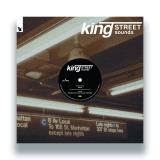
King Street Sounds Sampler Vol. 7 continues the long-running series from the legendary King Street Sounds catalogue, bringing together a selection of classic house cuts from some of the label’s most respected artists.
Featuring productions from Mood II Swing, Jovonn, Roy Davis Jr. and Osunlade, the release highlights the soulful, groove-led house sound that has defined King Street across decades of dancefloor culture.
Including standout tracks such as Mood II Swing’s Nafara and Osunlade’s The Fifth Dimension, the sampler brings together several proven records in one DJ-friendly vinyl package.
With warm grooves, musical depth and timeless club arrangements, these proven King Street records offer strong crossover appeal for both long-time house collectors and DJs looking for reliable dancefloor material.
As the seventh edition in the King Street sampler series, this release presents a selection of essential house cuts on one highly playable vinyl release.
A strong catalogue addition for stores serving soulful and deep house buyers.
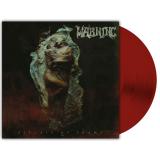
The name RUTHLESS in itself means “without mercy.” Since the early 1980’s, lead by vocalist Sammy DeJohn, the band has stayed true to its style of metal, from the classic first EP “Metal Without Mercy” (1984) and the debut cult album “Discipline Of Steel” (1986), to the later albums “They Rise” (2015)” and “Evil Within” (2019), they’ve never wavered on the power of bands like JUDAS PRIEST, ACCEPT and BLACK SABBATH, always staying true to their roots.
Their latest album “The Fallen” was released in January 2024 on their new label Fireflash Records (WOLF, HOLY MOSES a.o.), followed by a European tour as support act for their fellow believers JAG PANZER, cementing their reputation as a magnificent live band. Now, RUTHLESS are proud to announce the release of their next studio album “Curse Of The Beast”. The band has created an album full of power and passion, combined with the classic 80s metal sound, ready to become a future classic and a must-have for anyone who loves traditional heavy metal like METAL CHURCH, JUDAS PRIEST, EXCITER, and others. “Curse Of The Beast” was recorded along with producer Ron Sandoval (KERRY KING a.o.), who also did the final mix and mastering. The album will be released on July 17th, 2026. “We can't wait for you all to hear it. We have a couple of surprises on this one and it's going to destroy,” reveals vocalist Sammy. Immediately afterwards, the band will play selected shows in Europe, along with MINDWARS as well as THE TROOPS OF DOOM, including the legendary “Headbangers Open Air.”
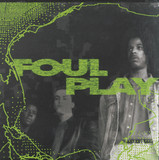
From the slamming science of “Ricochet,” through the jittery ghost-rave of “Survival” and the outer-space lover’s rock of “Dubbing You,” to the manic magic of “Finest Illusion,” this collection of early EPs by rave legends Foul Play tracks an astonishing evolution across barely more than a year. Some of the top tunes to come out of the hardcore > jungle > drum & bass journey? Yes, but also some of the most thrilling and gorgeous music of the entire ‘90s.
Simon Reynolds, author of Energy Flash: A Journey Through Rave Music and Dance Culture.
Re-mastered by Beau Thomas of Ten Eight Seven Mastering and re-issued for your aural pleasure. Don't sleep on this one!
out of Stock
Last delivered 76 days ago available to reorder, subject to availability
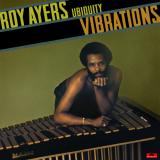
Step into the golden era of soul-jazz with the long-awaited vinyl reissue of “Vibrations” by Roy Ayers Ubiquity — a record that captures the unmistakable warmth, groove, and sophistication that defined Roy Ayers’ sound at its peak.
Originally released in 1976, “Vibrations” stands as a cornerstone in Ayers’ catalog, marking a moment where his signature blend of jazz, funk, and soul reached a refined, deeply cohesive form. Building on the foundations laid in earlier works, this album presents a tighter, more focused musical vision without sacrificing the lush textures and emotional depth that made his music resonate worldwide.
Roy Ayers was a pioneering vibraphonist, composer, and producer whose influence stretches far beyond jazz into R&B, neo-soul, and hip-hop. Often referred to as the “Godfather of Neo Soul,” Ayers crafted a sound that feels both timeless and forward-thinking, pairing silky vocals with hypnotic grooves and rich instrumental arrangements. His work throughout the 1970s helped shape the sonic DNA of modern Black music, and “Vibrations” is one of its purest expressions.
The album flows effortlessly between moods: from the jazz-inflected elegance of ‘Searching’ to the irresistible funk pulse of ‘The Memory,’ the dancefloor-ready ‘One Sweet Love to Remember,’ and the laid-back, atmospheric title track ‘Vibrations.’ Each track showcases a masterful balance between musicianship and groove, brought to life by a stellar ensemble of collaborators who elevate every moment.
Beyond its original impact, “Vibrations” has taken on a second life through hip-hop. Its grooves, breaks, and melodies have been extensively sampled by generations of producers and artists, becoming a foundational source for crate diggers and beatmakers alike. Tracks from the album have been reinterpreted and flipped by influential names such as A Tribe Called Quest, J Dilla, Dr. Dre, and Common, cementing its legacy as a vital bridge between 1970s soul-jazz and contemporary hip-hop culture.
After almost two decades out of print, we are pleased to present this much-needed vinyl reissue of an essential album in Roy Ayers’ career. Whether you’re discovering it for the first time or returning to a beloved classic, this album remains an essential piece of musical history. Pressed on 180g vinyl.
out of Stock
Last delivered 3 months ago available to reorder, subject to availability
Ever since the late 1950s bossa-nova revolution, Brazil’s influence on French music has been undeniable. Pierre Barouh, Georges Moustaki and a vast array of lesser known artists, all made the Musica Popular Brasileira (MPB) an axis of promotion at the service of a cool and metaphysical, modern and mixed Brazilian lifestyle. Some were seduced by the poetic languors of the bossa, some were looking for fun, and others just loved the American hybridization of jazz-bossa, jazz-samba.
What is bossa nova? One of its creators, Joao Gilberto said: "Its style, cadence, everything is samba. At the very start, we didn't call it bossa nova, we sang a little samba made up of a single note - Samba de uma nota so .... The discussion around the origins of bossa nova is therefore useless”. It is nevertheless useful to remember that these magnificent Brazilian songs, which the guitarist describes as samba, were shifted and balanced around improbable chords. "I like things that lean, the in-betweens that limp with grace," said Pierre Barrouh, quoting Jean Cocteau.
With emotion, arrangements for violin and supple guitar licks, bossa nova rapidly changed. A transformation that can be heard in the Tchic, tchic, French Bossa Nova 1963-1974 compilation, the result of a cultural reappropriation, which traveled through the United States and supplemented itself in France.
A musical revolution that has remained significant, bossa nova was born in Rio. From 1956 to 1961, Brazil lived through its golden years. In five years, the country had invented its modernist style. Elected president in 1956, Juscelino Kubitschek de Oliveira, an elegant man with a broad forehead, brandished a promising slogan: "Fifty years of progress in five years". He quickly got to work. Not worried about increasing debt, he launched the project for a new federal capital, Brasilia, designed by the communist architect Oscar Niemeyer. Volkswagen opened state-of-the-art factories and created the “fusquinha”, the Beetle. In Rio, the Vespa made its first appearance. The Arpoador Surf Club crew run into the “girl” from Ipanema, Helô Pinheiro - the tanned garota ("chick"), between a flower and mermaid, who at 17 walked by the Veloso bar, where the fiery author and composer, Tom Jobim and Vinicius de Moraes, were getting drunk on whiskey. From then on, bossa symbolized cool.
In 1958, Joao Gilberto recorded Chega de Saudade, which the directors of Philips denied, calling it "music for fagots". The marketing director, who believed in it, secretly pressed 3000 78-inch vinyls and distributed them at schools around Rio, creating a tidal wave.
American jazzmen then took over. In particular, trumpeter Dizzy Gillespie and guitarist Charlie Byrd. In November 1962, the Brazilian Ministry of Foreign Affairs funded a "Bossa-Nova" concert at Carnegie Hall in New York, inviting the genre’s pioneers. Unprepared, the show soon turned to disaster. But the troupe was invited to the White House by Jackie Kennedy. The first lady loved "the new beat" and in particular Maria Ninguem, a song by Carlos Lyra, later covered by Brigitte Bardot.
In Brazil, the 1964 military coup quickly ended this euphoria. The destructive atmosphere that ensued pushed many Brazilian musicians to leave, if not to exile. Thus, Tom Jobim, Sergio Mendes and Joao Gilberto arrived to the United States. In New York, Joao Gilberto met saxophonist Stan Getz. At the time, he was married to the Bahianese Astrud Weinert Gilberto, who had a German father. She had never sung before, but she knew how to speak English. Getz therefore asked her to replace her husband on The Girl From Ipanema. The Getz/Gilberto record with Tom Jobim on piano, was released in March 1964. Phil Ramone, the "pope of pop" was in charge of sound.
Bossa nova arrived in Paris through the classic “guitar-voice” channel (Pierre Barouh, Baden Powell, Moustaki…) But France loved jazz and Paris had already welcomed its American contributors. All these good people were to pass through Saint-Germain-des-Prés. The cabaret l'Escale became the Mecca of Latin American sound where one could find Pierre Barrouh and his friends, such as the Camara Trio, samba-jazz aces, whose only record was published by the Saravah label. With a band strangely called Les Masques (a band that included Nicole Croisille and Pierre Vassiliu, among others), the Camara Trio recorded an interesting Brazilian Sound, including the track Il faut tenir which is present on this tasty compilation of rarities.
Other enlightened musicians can also be found on the compilation, such as Jean-Pierre Sabar (songwriter for Hardy, Auffray, Leforestier ...) and the French pop rock organist Balthazar. In 1975, Sabar recorded Aurinkoinen Musiikkimatka on a Finnish label, which featured the crazy Vai, Vai, included on this record. We are now following the footsteps of Brazilian electronic musicians such as Sergio Mendes, Eumir Deodato or Marcos Valle who created funk and disco sounds on their keyboards and synthesizers. A style that influenced Véronique Sanson when she wrote Jusqu’à la Tombée de la nuit in 1969 for Isabelle de Funès, the niece of Louis and a great friend of Michel Berger - Sanson did end up singing this track on her 1992 Sans Regret record.
The pinnacle of exoticism and travel, Sylvia Fels’ Corto Maltese includes bongos, sea mist and ocean sounds. The title was taken from Jacky Chalard’s concept album written in 1974, Je suis vivant, mais j’ai peur (I am alive, but I am scared), based on Gilbert Deflez’s science fiction novel.
However, bossa nova extended the scope of popularity. "In the 1970s, I was a fan of Sergio Mendes, Getz / Gilberto. I fell in love with this music that I knew because I had been an orchestral singer, " explained Isabelle Aubret, who in 1971 delivered a composite record of covers by the very funky Jorge Ben, Orfeu Negro, Tom Jobim, Vinicius de Morais and Jean Ferrat. "I recorded this album for Meys Records in Paris, far from Brazil, with wonderful musicians, François Raubert, Roland Vincent, Alain Goraguer...". The latter wrote the arrangements for Casa Forte, a very percussive title borrowed from Edu Lobo, one of the initiators of the bossa who spent time in California. "Jazz and bossa came together and produced very rhythmic music. I love singing, it allows me to dream, to have fun, to feel a high on stage, and these songs brought me joy, made me swing, my singing felt like a dance.”
The world tours of French singers and their desire for the tropics, often brought them to Rio with its hills, forests, caipirinhas and tanned bodies. There are surprises though, like this Iemenja (Iemenja is the goddess of the sea in the Afro-Brazilian candomblé religion). Not unlike the composer and musician Jean-Pierre Lang, based in Sao Paulo, Claire Chevalier taught Brazil to Brazil. In 1970, the singer and painter published a 45-inch vinyl, Mon mari et mes amants (My husband and my lovers), under the improbable pseudonym of Clarinha (little Claire). She was then living in Rio, with her husband, Joël Leibovitz, who founded a band called Azimuth, and who owned a record label specialized in "sambas enredos" songs for samba school parades.
For its B side, she asked Pierre Perret to come up with lyrics for a song composed by Carlos Imperial: "Oh goddess of the sea, o goddess Iemenja, I bring a white rose to adorn your long hair ..." . "Perret came to see us, and we had fun, remembers Joël Leibovitz. We wrote Lemenja for fun, we recorded it at the Havaí studio, behind the Central do Brasil the central station. Erlon Chaves, the arranger who worked with Elis Regina, joined us" adding his share of Afro-Brazilian percussions and funky brass to the mix.
There is a common misunderstanding in Franco-Brazilian history: that bossa, admittedly hedonistic, is perceived as funny, even though the poets who wrote the texts are often philosophizing on the human condition. Its French interpreters pull it towards a carnival inspired universe, far removed from its fundamental essence. Thus, Jean Constantin covered the famous Samba da minha terra, an ode to the art of samba written by the classic Bahian composer Dorival Caymmi, renaming it with the enticing title of Pas tant de tchi tchi pompon: "On your pier there is no tchi tchi / when you arch your back, you know everything is alright ”(lyrics by Gérard Calvi). This expedited bossa aims for the absurd, but retains a certain elegance.
Indeed, Jean Constantin was not an idiot, the rather large man had a huge mustache and liked fantasy, (Les pantoufles à papa, Le pacha, inspired by cha-cha-cha-cha, salsa and jazz) but he was also the lyricist of Mon manège à moi interpreted by Edith Piaf, the composer of Mon Truc en plume by Zizi Jeanmaire and the soundtrack of François Truffaut’s 400 Blows. Le Poulpe, published in 1970, from which this bossa is extract, was arranged by Jean-Claude Vannier, an accomplice of Serge Gainsbourg’s Melody Nelson. In short: "There is enough of samba / By looking at the parasol / Because my poor cabeza / Is going to die in the sun".
Even the American actress Marpessa Down, who was at the heart of the bossa nova revolution with her role as Euridyce in Marcel Camus’ film Orfeu Negro, winner of the 1959 Cannes Palme d'or, fed the clichée with Je voudrais parler au petit cuica - "Tell me how you manage to always make people want to dance / It's true, I must admit that I cannot resist your magic" - in consequence, once can hear the cuica, a little drum inherited from the Bantu.
But bossa nova had many angles. Societal, of course, pushing actresses who were symbols of women's liberation like Brigitte Bardot, Jeanne Moreau, or Sophia Loren to engage in the exercise of accelerated bossa. In February of 1963, Sophia Loren made a record in French in Rome, Je ne t'aime plus, featuring the song De jour en jour, a bossa written by two Italians, Armando Trovajoli and Tino Fornai, which was released a little later by Barclay. Bossa accompanied the 1960s, a decade of moral liberation. Ann Sorel, who interpreted La Poupée des favellas, caused a sensation with L’amour à plusieurs, a provocative song written by Frédéric Bottom and Jean-Claude Vannier. As for the actress Andrea Parisy, she displayed her bourgeois cheekiness in Marcel Carné's Les Tricheurs before interpreting Les mains qui font du bien. And Magalie Noël, the friend of Boris Vian, who sung Johnny fais-moi mal, was hired to sing Une énorme Samba, composed by Alain Goraguer (arranger to Gainsbourg, Bobby Lapointe and Jean Ferrat) with lyrics by Frédéric Botton.
But in the end, of what wood is bossa nova made of? The answer is given by Christianne Legrand, daughter of Raymond the conductor, and sister to Michel the composer: "With me, with jà" - jà means "immediately" in Portuguese. In 1972, the singer, an expert in vocal jazz and a member of the Double Six, published Le Brésil de Christianne Legrand. Two songs included on the Tchic Tchic compilation that demonstrate how bossa, jazz, funk, rock, etc. work like a swiss army knife: the music is used to denounce broken systems, or miracles, HLM et ciné roman, Cent mille poissons dans ton filet, two songs from the O Cafona soundtrack, a successful telenovela broadcast, at the time in black and white, on TV Globo. The first was adapted in French by the fighter and friend of the Legrand tribe, Agnès Varda. The second is content with a play on words, jostling them into a summer fun.
Véronique Mortaigne
out of Stock
Last delivered 3 months ago available to reorder, subject to availability
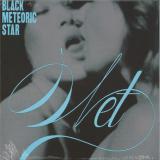
Wet is the fifth full length album by Black Meteoric Star and the 10th release. Black Meteoric Star is a project Rayna started in 2006 when she was living in Berlin that brought together her life long love of dance music culture with spiritual themes, drag, and her formative experiences of S/M culture Black Meteoric Star has always had an avenger quality in Rayna's life and creative work, and this iteration plays that role in response to the current political landscape. Wet celebrates the long standing shared history of electronic music and queer leather/SM culture and imagines a future where these two cultural expressions are re-connected.
Electronic music and leather/SM are both ways that queer people have historically built community, created and shared knowledge, and kept each other safe. The current administration demonizes and villainizes queer people on the basis of a false moral framework of respectability, and its a trick. No amount of acting "respectable" will humanize queer people in the eyes of this administration and get us the rights we deserve. Revitalizing the connection between electronic music and queer leather/SM is a way to affirm the cultural power of both during a time when it has never been clearer that we keep each other safe. Rayna, a transgender woman with a deep commitment to all of these cultural forms, has a strong message to deliver with this album. She has been a DJ and producer of electronic music for over thirty years and has been producing community cultural events for as long. She has also been involved in kink and bdsm for decades and is a well-known and respected DJ in the New York leatherdyke scene. Rayna made international headlines in 2017 when she came out as transgender while touring with LCD Soundsystem. In 2018 she left the Grammy winning band to pursue projects that were more connected with her queer experience, including founding Voluminous Arts a cultural organization that supports trans artists. Black Meteoric Star is a continuation of a thread in Rayna's work that runs through her Paper Eyes project and her role in Black Leotard Front. This thread has a comic book or x rated graphic novel component based around her experiences of being a sad lonely lesbian trans girl who got bullied a lot and found escape and the possibility of being avenged through X men comics and Dungeons and Dragons books.
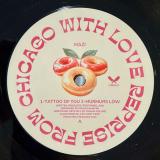
Fresh Meat Records is proud to present the vinyl re-release of From Chicago With Love, a record originally produced and released by Mazi Namvar (aka Audio Soul Project) in 2004. Though it may have flown under the radar upon its initial release, the record has recently gained a cult following, with prices on the secondhand market steadily climbing. A single copy now fetches as much as $170, with a recent test pressing selling for $100. Recognizing the demand, Fresh Meat Records has gone to work offering a beautiful repress of the record—one that truly does justice to the original while adding something special for long-time fans and newcomers alike.
From Chicago With Love Reprise is a celebration of a classic with a new dimension. The record includes a fresh fourth track, “Murmurs Low,” which features the saxophonist Jimmy Tripp and a spoken word performance by Mazi. Together, they add a soulful and atmospheric touch to the original, expanding the sonic palette while retaining the deep, intimate energy of the original release.
The tracklist remains faithful to the original with the standout “Tattoo Of You” leading the way on the A1 side, sounding better than ever thanks to an impeccable re-cut by Lawrie Dunster at Curve Pusher. The deep grooves of “Tattoo Of You” still deliver their deep and mesmerizing house vibes, setting the tone for the rest of the release. In the A2 position, “Murmurs Low” provides a captivating, subdued moment, with the saxophone adding a melodic layer to the evolving rhythm that makes this track truly memorable.
On the B-side, “Down” takes its rightful place as the first track, maintaining a dubby soulful drive and emotional call to action. Closing out the record is “Let Me Know,” a track that brings the journey full circle, providing the perfect outro for the reissue and reminding us why this record is still beloved.
In creating From Chicago With Love Reprise, Mazi Namvar has ensured that every detail is accounted for, from the masterful cutting by Lawrie Dunster to the selection of 8 different color sleeves, offering something for both collectors and music lovers alike. The reissue ensures that this classic can now be enjoyed at a reasonable price, far more accessible than the inflated prices on Discogs. This new pressing is a labor of love, showcasing not only the timelessness of the original tracks but also the care that has gone into its revival.
Whether you’ve been following Mazi Namvar’s work for years or are just discovering this release for the first time, From Chicago With Love Reprise is a powerful reminder of the depth and beauty of house music’s rich history, as well as the enduring passion that drives artists to continue creating for the dancefloor. Get ready to experience this iconic record in a whole new way—one that honors the past while looking forward.
Written, produced, performed, mixed, and arranged by Maziar Namvar.
Additional keys on A1 by Joshua Collins.
Saxophone on A2 by Jimmy Tripp.
Vocals on B1 by Lori Reigler.
Copyright Control
2025 Fresh Meat Records
out of Stock
Last delivered 41 days ago available to reorder, subject to availability
Super Stuff is the new album from Sweatson Klank, marking a milestone from a producer whose influence has been shaped by decades of dedication to his craft. Created with the intention of making a record he"d be excited to discover while digging through crates, Super Stuff stands as a love letter to vinyl culture and deep listening.
ALUNAH says: "Embers of Belief" features the first Alunah recordings with vocalist Daisy Savage and continues our long-standing relationship with Heavy Psych Sounds Records. We are both excited and proud to present our contribution to this split release - two brand new studio tracks that give a glimpse into where this new chemistry as a band is taking us creatively, alongside two live recordings which document and acknowledge the incredible job Daisy did in stepping up to tour and promote our previous full-length. This significant release is part of our "VINGT" celebrations, marking 20 years of Alunah with both new music and festival appearances, including Bloodstock Open Air and Desertfest London. To everyone who's stood by Birmingham, heavy rock, and doom through the years_this one's for you! SAMAVAYO says: Creativity _ it burns deep inside, demanding to be heard and when it wants out, ist has to get out. So here we are! Longing, recklessness and hope_three themes that couldn't be more human or more relevant right now. Samavayo present three exceptional tracks on their split release with Alunah: BAVAR is a crushing heavy piece built on the Fibonacci sequence, featuring Persian lyrics inspired by a poem from Siavash Kasraie. It stands as a defiant cry against grief and mortality_the narrator refuses to accept the death of loved ones, clinging instead to love, shared tears, and the breath of life as proof that loss can neither truly be believed nor surrendered to. Mottainai, the 2nd song takes aim at a reckless, consumption-driven mindset_the relentless pursuit of instant gratification and shortcuts. The song warns that this culture of excess and selfishness will ultimately leave a devastating legacy for future generations. California Sky is a psychedelic, acoustic ode to Samavayo's 2025 US tour, captures a paradoxical longing for the American desert landscape. It evokes a sense of spiritual belonging in the vast emptiness of Joshua Tree, while reflecting a deep yet helpless emotional connection to the United States and all its contradictions.
Transparent orange vinyl, limited to 300 copies. ALUNAH says: "Embers of Belief" features the first Alunah recordings with vocalist Daisy Savage and continues our long-standing relationship with Heavy Psych Sounds Records. We are both excited and proud to present our contribution to this split release - two brand new studio tracks that give a glimpse into where this new chemistry as a band is taking us creatively, alongside two live recordings which document and acknowledge the incredible job Daisy did in stepping up to tour and promote our previous full-length. This significant release is part of our "VINGT" celebrations, marking 20 years of Alunah with both new music and festival appearances, including Bloodstock Open Air and Desertfest London. To everyone who's stood by Birmingham, heavy rock, and doom through the years_this one's for you! SAMAVAYO says: Creativity _ it burns deep inside, demanding to be heard and when it wants out, ist has to get out. So here we are! Longing, recklessness and hope_three themes that couldn't be more human or more relevant right now. Samavayo present three exceptional tracks on their split release with Alunah: BAVAR is a crushing heavy piece built on the Fibonacci sequence, featuring Persian lyrics inspired by a poem from Siavash Kasraie. It stands as a defiant cry against grief and mortality_the narrator refuses to accept the death of loved ones, clinging instead to love, shared tears, and the breath of life as proof that loss can neither truly be believed nor surrendered to. Mottainai, the 2nd song takes aim at a reckless, consumption-driven mindset_the relentless pursuit of instant gratification and shortcuts. The song warns that this culture of excess and selfishness will ultimately leave a devastating legacy for future generations. California Sky is a psychedelic, acoustic ode to Samavayo's 2025 US tour, captures a paradoxical longing for the American desert landscape. It evokes a sense of spiritual belonging in the vast emptiness of Joshua Tree, while reflecting a deep yet helpless emotional connection to the United States and all its contradictions.
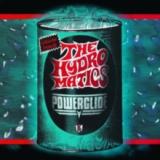
Bang! Records now brings Powerglide by The Hydromatics back to vinyl, giving this powerful and long-overdue album the format it deserves. A necessary reissue of a genuine cult favorite: wild, electric, and made by people who truly knew what this music was all about. In the early 2000s, The Hydromatics brought together three scenes, three cities, and one shared devotion to rock'n'roll: the fiery tradition of Detroit, the raw punch of Amsterdam, and the high-energy attitude of Scandinavia. Fronted by none other than Scott Morgan (Sonic's Rendezvous Band), one of the great voices of Detroit rock, and backed by Tony Slug (LOVESLUG) and a band built out of genuine love for the legacy of Sonic's Rendezvous Band, the result was Powerglide-a record that is tough, streetwise, soulful, elegant, and raw all at once. Originally released in 2001, Powerglide captures The Hydromatics in full flight. Original songs sit alongside explosive takes on material connected to the Sonic's Rendezvous universe, all delivered with nerve, conviction, and the kind of authority that simply cannot be faked. The guitars bite, the rhythm section drives relentlessly, and above all there is Scott Morgan's voice-capable of sounding fierce, wounded, and defiant within the very same line. Far from being a mere exercise in homage, Powerglide stands tall as a living, breathing record with a personality all its own: high-octane rock'n'roll fueled by rhythm & blues soul and steeped in the unmistakable spirit of Detroit. This is an album for those who understand that proto-punk, garage soul, and real rock'n'roll were never separated by any meaningful border in the first place.
For nearly four decades, since its founding during the mid 1980s, the Belgian imprint, Sub Rosa, has continuously plumbed the depths of numerous, radical creative histories, assembling a catalog of releases that has almost no equivalent, while remaining nearly impossible to nail down. That said, for most of its run, Sub Rosa has been primarily recognized for its rigorous explorations of the lesser explored shadows of experimental sound practice (sound-art, sound-poetry, early electronic and electroacoustic music, free-improvisation, etc.), delivering a remarkable body of artifacts that have collectively helped to rewrite history in their wake. While it's always been impossible to anticipate where the label might take us next, threading their catalog are plenty of releases that throw further wrenches in the cogs, expanding our understanding of what they pursue, as in the case of a handful of titles, appearing as early as the 1980s, dedicated to ethnographic field-recordings from various parts of the world. Among the most striking and celebrated of these was 2017's Ethiopian Urban And Tribal Music: Mindanoo Mistiru / Gold From Wax, comprising an astounding body of recordings made by Ragnar Johnson and Ralph Harrisson in Ethiopia during 1971, reissuing material originally released by Lyrichord the following year. Now, Sub Rosa returns to the incredible work embarked upon by the pair and captured on that same trip with Ethiopian Musics 1971, comprising the recordings originally released by Ocora shortly after their completion, expanded in this edition to include an entire disc of never before released music. Widely regarded as some of the most important field-recordings ever made of indigenous Ethiopian folk music (as captivating and intoxicating as they are revelatory: providing insights into the roots of the country's singular traditions of popular music and jazz that have come to be celebrated the world over), this incredible collection is issued by Sub Rosa in a beautifully produced 2LP edition, complemented by a four page insert providing detailed descriptions of each song, as well as notes by the ethnomusicologists and recordists, as well as a 2CD edition, with a twelve page booklet. Insanely good and absolutely essential for any fan of field-recording, ethnomusicology, the music of Ethiopia, or the label's mission at large. Once again, Sub Rosa has defied our expectations and delivered a remarkably important intervention in the history of recorded sound.
Located in the Horn of Africa region of East Africa, few cultures are distinctly singular, while being so diverse (containing 80 distinct ethnic groups who speak 70 languages and 200 dialects) as that of Ethiopia. The home to some of the oldest surviving sects of Judaism, Christianity, and Islam (each contributing important aspects of its collective cultural body), particularly the country's culinary and musical traditions have become celebrated the world over, and (generally speaking) feel entirely independent of those of its neighbors. Given this, it's unsurprising that, during the summer of 1971, the young ethnographer, Ragnar Johnson, accompanied by Ralph Harrisson, traveled to Ethiopia to begin his brief career as a field recording ethnomusicologist, capturing material on reels of magnetic tape that would be subsequently released across three LPs for Lyrichord and Ocora, respectively, coming to form a cornerstone of documentation and study of the country's many indigenous musical traditions, as well as providing wide, global access to them for the first time. While Johnson's recording career was relatively brief, ending toward the end of the decade when he began to focus more on teaching in UK universities, with a focus on the anthropology of art and social anthropology, his impact on the field was lasting. Between 1971 and 1979, in addition to those he made in Ethiopia, he made hugely significant recordings in Yemen (also issued by Lyrichord before being reissued by Sub Rosa) and Papua New Guinea, which were originally released by David Toop's Quartz Publications to wide celebration, before being revisited by Ideologic Organ in 2023.
While it's worth noting that commercial releases of ethnomusicological recordings by labels like Folkways, Lyrichord, and Ocora were still in their relatively early days when he entered the field, Johnson's recordings quickly stood apart for their vivid qualities and clarity of space, allowing them to stand the test of time. As he later stated: "I used a Uher Report L stereo tape recorder, BASF quarter inch tapes at a recording speed of seven and a half inches per second with two directional microphones mounted to record an isosceles triangle of stereo sound," he reveals. "The location of the microphones and musicians was critical. The musicians were fully informed of all aspects of the recording process."
Johnson's recordings are extremely vivid, there is a clear sense of space and the cries of the flutes exist across the entire stereo field. It's a reflection of Johnson's skill as a field recordist that his recordings continue to be reissued over forty years later. "I used a Uher Report L stereo tape recorder, BASF quarter inch tapes at a recording speed of seven and a half inches per second with two directional microphones mounted to record an isosceles triangle of stereo sound," he reveals. "The location of the microphones and musicians was critical. The musicians were fully informed of all aspects of the recording process… I used to enjoy being in the moment and hearing something wonderful despite the stress of the vigilance required to ensure that the recordings were accomplished according to plan. The responsibility is to record and document the music as effectively as possible so that it has been preserved for posterity. It is better to actually record music than to sit in a seminar room debating the ethics of recording music." It is this very ethos and sense of clarity that can be encountered across the length of Ethiopian Musics 1971.
For the sake of clarity, the two LPs of material that comprise Ethiopian Musics 1971 should be regarded as a single body of recordings alongside those made in Ethiopia by Ragnar Johnson and Ralph Harrisson during the summer of 1971 (previously issued by Lyrichord and reissued by Sub Rosa), and as two that have, until now, remained historically distinct. The first LP gathers that material released by Ocora during the early 1970s on Musiques Ethiopiennes, while the second comprises (as far as we can tell) twelve never before issued recordings, expanding the journey and making this the definitive edition of the release with its incredible total of 23 recordings of songs, allowing it ever greater scope to achieve the recordists' modus operandi of capturing the broadest and most diverse cross section of Ethiopia's many musical cultures, ranging from different forms of urban music captured in Addis Ababa, documenting largely orally transmitted idioms within which lyrical content is given greater emphasis than the instrumental components (played on masenko fiddles, craar and bagana lyres, washint flutes and kabaro drums), to folk idioms hailing from the Danakil desert and the border regions with Sudan and Kenya. There are songs sung and played in bars, divination chants, laments, dances, Christian songs, and Amharic sung poetry, to only begin to scratch the surface.
Ethiopian Musics 1971 is one of those rare albums where each musical moment is pure, intoxicating gold, while also being greater through the sum of its parts. There are the many songs, forming a rich tapestry of remarkable range across the respective two LPs/CDs (moments that wondrously flirt with sonic abstraction; hypnotic rhythms; pulsing chant; melodies that, in structural arrangement and tonal combination, help us reframe how such a thing might be understood, and a great deal more), each imbued with a remarkable directness and emotive sensibility, and there is the stunning quality of these recordings themselves, transporting each sound to our ears as though we intimately share its creator's space, while being imbued with the pure heart and remarkable spirit with which they were made. As we said before, it's little wonder, once heard, why these recordings and this music feels as fresh and relevant (enduring more than 50 years) today as when they were made. Once again, Sub Rosa has raised the bar with this essential addition to the incredible work that Ragnar Johnson and Ralph Harrisson did back in Ethiopia during 1971, radically expanding our access to the sounds that they captured with these stunning, beautifully produced 2LP and 2CD editions. Absolutely engrossing from the first sounding to the last, this one can't be missed.
Mannequin Records presents Electronic Corporation 1998–2006, a compilation bringing together rare and long unavailable recordings by the German electronic projects H.E.I.M. Elektronik and MAS 2008.
Active around the turn of the millennium, both projects share the involvement of producer Ive Müller while developing distinct collaborations and approaches to electronic music. H.E.I.M. Elektronik was founded in 1996 by Holger Erlenwein and Ive Müller (after the two artists split in 1999, Müller continued using the name), while MAS 2008 is the project of Ive Müller together with René Kirchner. Though separate entities, the two projects explored a similar sonic territory: stripped-down electro, minimal electronics and machine-driven body music shaped by analog hardware and a raw DIY production ethos.
The roots of Müller’s work go back to the final years of the DDR. As a teenager he worked as a licensed DJ — officially known as a “Schallplattenunterhalter” — operating a travelling disco across Saxony. With limited access to official Western releases, music circulated through cassette recordings taped from West German radio stations such as RIAS Berlin, NDR2 and Bayern3. Together with friends he travelled between youth clubs and discos around Leipzig with a “rolling discotheque”: a Russian Wolga pulling a trailer loaded with Electro-Voice sound systems sourced through the black market.
At the turn of the 2000s this background in underground electronic culture resurfaced in a series of recordings rooted in electro, EBM and minimal machine music. The tracks collected on Electronic Corporation 2000–2002 capture this moment: cold sequences, driving rhythms and stark synthetic textures produced with a direct and uncompromising approach.
Compiled and remastered by Rude 66 from the original sources, Electronic Corporation 2000–2002 documents a small but fascinating chapter of German underground electronics from the early digital era.
out of Stock
Last delivered 70 days ago available to reorder, subject to availability
Shiner, Pontiac Streator and Ben Bondy’s debut as shinetiac is a downtempo pleasure, now on vinyl.
All three members of Shinetiac are best known for their tenure in the neo-ambient weeds, gathering bounties for 3XL, Quiet Time, Motion Ward and of course Huerco S.’s West Mineral. Anyone familiar with their various side projects and solo deployments will have already clocked their obsessions with classic dreampop, trip- hop and cloud rap, and those influences are fully thrust into the foreground here, with the more trad ambient elements used as little more than decoration. ‘Star Frog Dilla’ opens the set and combs illusory Olive-like vocal harmonies over a jumble of choppy jazz samples and sirens, with a glitch-heavy beat that harks back to an earlier, simpler iteration of IDM. What makes it so inviting is that Shinetiac fashion a loveletter to pre-internet cultural collisions, pooling their empathetic energies in a lushly amorphous slant on ambient dance strung between classic Trip Hop, HD late ‘90s / early ‘00s electronic music x vaporous hypermodernism.
out of Stock
Last delivered 3 months ago available to reorder, subject to availability
Never Sleep charity tape series focuses on the North East's Valenican musical obsession with the man who started it all.
Trendsetter DJ Scott commands respect with a blend of Makina, Hardcore and Bounce. A trance laced session filled with the resonating compere styles from MC Stompin, MC Jet and MC Natz.
Bringing the energy, heart on the sleeve lyricism and maximal Mackem love for the late night surreptitiously crew. Lacing the backdrop with rapid fire crossfade technique, jump up tonal flair and high pace anthemic signals. Scott brings authenticity alongside the finest MC's in the land.
MC Stompin shows the naysayers who owns the night, MC Jet streamlines quality on the mic and MC Natz brings his own signature tones to the prestigious event.
Literally bringing the first ever Makina records back from Spain (8 of them) and starting Hangar13, this mix showcases an incredible time for the localised sonica and the rise of a cultural defining era in the North East.
DJ Scott is known for his huge cultural contribution, youth work and working class pioneership. A true UK legend and local hero.
All proceeds go to The Macmillan Cancer Support who help people across the UK and and provides specialist health care.
out of Stock
Last delivered 3 months ago available to reorder, subject to availability
Michael J. Sheehy has been making records for almost three decades, initially as founder and mouthpiece of mid-"90s cult band Dream City Film Club, then as a solo artist and frontman of rootsy garage rock act Miraculous Mule. He has toured with the likes of Kristin Hersh, Tindersticks, John Cale and Peter Murphy, while his songs have been utilised in films such as "Intimacy" and the TV show "Deadwood". Following a six-year hiatus, Sheehy has just "Don"t We Deserve Some Kind of Love?", his seventh solo album but first for Dimple Discs. "Don"t We Deserve Some Kind Of Love?" features contributions from Fiona Brice (violin), Sandy Mill (backing vocals), Ian Burns (drums) and Patrick McCarthy (guitar). It was recorded at home over a five-year period while Sheehy was a stay-at-home father and working evenings at a bar in Camden, north London.
As WARNING prepares to release Rituals of Shame - their first new music in twenty years,vocalist/guitarist Patrick Walker is self-effacing about what led to this moment. Over the last two decades he continued to write and release music, satisfied that he had achieved what he set out to do with WARNING. In those intervening years, interest in WARNING swelled, organically gathering an ardent fanbase. In particular, the 2006 album, Watching from a Distance, has gained a cult following. In response to a transformative period in his life, Walker turned towards writing new songs, and it soon became apparent that these belonged to WARNING. In early January 2025, he started with a completely blank canvas, and piece by piece, he started to fill it with ideas that evolved to become the songs that make up Rituals of Shame.
His immersion in the project became a full-time pursuit. After successfully demoing the five songs, Walker retreated to a remote house on a hill outside Florence, Italy, to refine the lyrics. Recording took place at The Arch Studio, a 140-year-old former church in Southport, UK. Chris Fullard (Idles, Sunn O))), Ulver) handled the recording and mixing. Walker's lifelong musical inspirations can be traced through Rituals of Shame. The ambitious structural arrangements harken to Marillion’s complex but soaring episodic songs. They retain a sparsity that is reminiscent of June Tabor’s economic arrangements; thick with melody but with a diaphanous air to them. Citing John Brenner of Revelation as an enduring inspiration, Patrick credits him with introducing the idea of how to infuse heavy music with significant emotional depth. Often reluctant to discuss the minutiae of his lyrics, Walker does acknowledge that making this album was a direct response to the immediate concerns of his current life period. Rituals of Shame also echoes the enduring themes and fixations that have marked most of his work: guilt, shame, personal failure, obsession, longing, and separation, but, most of all, he says, love. Short: WARNING return with Rituals of Shame - the pioneering Doom band's first new music in 20 years! FFO: My Dying Bride, Candlemass, YOB, Black Sabbath, 40 Watt Sun, Pallbearer, Pagan Altar
Mutant, in partnership with Milan Records, and Sony Pictures, are proud to present the premiere vinyl release of legendary composer Joe Hisaishi (Spirited Away, Princess Mononoke, Boy and the Heron) debut American film score, for Koganada's 2025 film A BIG BOLD BEAUTIFUL JOURNEY.
A criminally underseen, and misunderstood, future cult classic ;A Big Bold Beautiful Journey s a capital E Earnest, heart-on-its-sleeve swirling romance that demands re-evaluation. But until it finds its audience, we are here to celebrate one of its most significant contributions to cinema - the debut American film score by the legendary Joe Hisaishi.
For those cinephiles who have yet to journey into the world of Studio Ghibli's animated output, you have deprived yourself of the works of one of the world's greatest living film composers - Joe Hisaishi. Scratching an itch left by the brilliant Yann Tiersen's score Amelie, Hisaishi's score is nothing short of sublime.
If that wasn't enough, this album also features five song performances by Grammy®-Award winning performer and songwriter Laufey, as well as a cover of The Who's song "Let My Love Open The Door" by Mitski.
Kreng transports us through the swirling darkness and into the unknown with “Wormhole”, his first album in over a decade.
What does a trip towards another world sound like? We’re about to find out. The master of tension, melancholy, and the deranged is back after a long period working in the worlds of theatre and cinema. Last seen on Miasmah with the grief stricken The Summoner, Kreng now returns with Wormhole, following closer in the footsteps of the cult classics L’Autopsie Phénoménale de Dieu and Grimoire.
Starting with “You Are Here”, the listener travels through a vacuum of spacious minimalism and edge-of-your-seat tension. Within the journey, we are pulled and lured towards a mystic inner core and beyond, encountering drifting fragments of old-world nostalgia on the way: echoes of empty jazz bars sit alongside hellish, Hieronymus Bosch-like scenarios.
Surrendering to the album reveals a surprisingly reflective beauty beneath its darkness; it's a true home-listening gem that unfolds like a Lovecraftian cosmic horror-mystery in the way only Kreng could deliver. Forget everything you know and enter the secret door…
out of Stock
Last delivered 3 months ago available to reorder, subject to availability
LP + insert. A cosmically poetic duo playing Afro-Roots-Electro with a clear nod to spiritual jazz. Esinam Dogbatse (flute, synths, vocals, fx, percussion) | Sibusile Xaba (guitar, vocals, percussion).
ESINAM & Sibusile Xaba is a meeting of nomadic, wandering and kindred spirits in music. Both artists draw upon their ancestry: Belgian-Ghanaian(ESINAM) and Kwazulu Natal-South Africa (Sibusile Xaba) through a unique connection, a deep artistic and spiritual level, they use rhythms and grooves to translate stories to the audience. Their vocal chanting enhances trance to rhythmic patterns that grace us by melodies of the future and past.
On April 25th 2025, ESINAM & Sibsile Xaba will release their first joint album entitled 'Healing Voices'.
This album is a reflection of the kaleidoscopic multitude of musical inspirations running through the veins of two very talented solo artists. Both multi-instrumentalists, they provide many different layers to their music. Each track is a reflection of their cross-pollination. Musically inspired by Ghanaian Highlife and traditional songs from Zulu and Ewe culture, but with a distinct contemporary interpretation where their acoustic sound is enhanced by electronic gadgets.
As multi-instrumentalists, the two artists translate messages from their ancestors through rhythms and grooves. Their vocal chanting enhances trance to rhythmic patterns that grace us by melodies of the future and past.
Thanks to their Belgian-Ghanaian and South-African roots, they are unique in their being, strong in their union and connected on deep artistic and spiritual levels. The collaboration between ESINAM and Sibusile Xaba is bringing healing to body and soul.
In 2018 Esinam discovered Sibusile Xaba during his European (solo)tour. She was enchanted by his musical energy and craftsmanship and invited him as a vocal guest feature on the track 'Flowing River', from her debut album 'Shapes in Twilights of infinity'. When she was asked at the first edition of WOMAD Festival in South Africa if she wanted to collaborate with a 'local artist', she didn't have to think twice.
So in October 2022, Esinam and Sibusile seized this opportunity to dive into the rehearsal and recording studio, and discover and combine each other's musical universes to shape up new music together.
In May 2023 this collaboration continued with rehearsals, recordings and a first European tour with performances in Belgium, The Netherlands, France, Germany and Slovenia.
In March 2024 they released the first single 'Africa Wola' out of the fothcoming album. In November 2024, they released a remix of their first single by South-African DJ and producer DaCapo and played at Visa for Music in Morocco.
out of Stock
Last delivered 4 months ago available to reorder, subject to availability
Nicola Conte and Nico Lahs’ Tema Due project finally comes to full realization in a double LP entitled “Universo Astratto”,adding a wealth of new musical shades and ideas to the two EPs released on Schema Records in 2025. The albumrepresents not only the natural evolution of their artistic dialogue, but also a statement of intent in terms of sound.Fans of the most sophisticated and refined club music, elevated by the fusion of exquisite electronica with spiritual jazz (it isno coincidence that the opening track evokes the baseline of “A Love Supreme”), African-American rhythms and tribalpercussion, will be thrilled by this complex and multi-layered album, which unveils new hidden details upon each listen.A meticulous selection of exceptional musicians contributes in a distinctive and significant way to broadening the scope ofthe project: Giovanni Guidi, Pietro Lussu, and Dario Bassolino on keyboards, Gabriel Prado and Abdissa Assefa onpercussion, Magnus Lindgren on wind instruments and Hammond organ, and Pasquale Calò on saxophone. On vocals wehave Lalin St. Juste, Siya Makuzeni, Nina Miranda - for what is probably the best track on the album, “Share Your Love”- and Toco - for a new and previously unreleased version of the track “Macumba de Oxalà” featured on the first EP.In “Universo Astratto”, Tema Due’s vision is finally fulfilled: a world of ancestral grooves, cosmic jazz, and electronic musicconceived for clubs as a type of “active experience” in which one is transcended by music. This record is an invitation—tomove, to feel, to elevate—and a manifesto for those who see the dance floor not just as a location, but as a shared experience of awareness and rhythm
out of Stock
Last delivered 4 months ago available to reorder, subject to availability

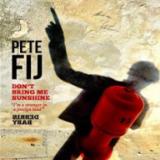

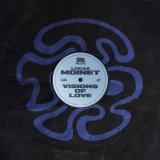



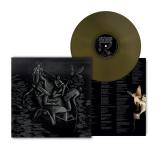
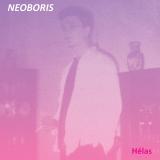
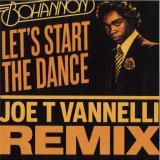
![Various - [QR]V.205.DTON.26](https://www.deejay.de/images/l/7/1/1248271.jpg)