Hüma Utku returns to Editions Mego with her new album. The title Dracones makes reference to the mediaeval latin term "Hic sunt dracones" (Here be dragons), marking the unexplored, dangerous places on world maps, expressing the fear of chaos, the unexpected and the unknown.
This new work by the Istanbul sound artist is a sonic journal of an expedition into uncharted territory, one which occupies self and domesticity. Inspired by Utku’s experience of matrescence, Dracones explores the themes of familial demonology, metamorphosis and homecoming as well as human relationship to the experience of love woven layers of euphoria, alienation and consumption.
Musically, Dracones traverses a wide array of sonic tools whereby industrial sounds are imbedded with certain psychological angles, this is an album where, all matter meshes into a sly snapshot of the human experience with a tension and release exposure occurring frequently with dark corners opening up to bright layers of electronic experimentation.
The haunting opening track ‘A World Between Worlds’ tackles pregnancy, of which Utku was experiencing when making this record. The emotional, physical, spiritual and mental experience of this journey is all documented here.. This track features the ‘Lyraei’, an electromagnetic string instrument and modern interpretation of the ancient lyre, that was built and played by Mihalis Shammas. ‘Comfort of The Shadows’ moves from within to without, what was once hidden is now exposed. Utku’s ability to conjure the visual in the sonic is at the forefront as howling electronics give a distinct impression of movement. ‘A Familial Curse’ presents a desire to break the cycle of generational trauma with a creeping sense of dread that rolls into an industrial rhythm prior to landing in a beautiful place represented with shimmering guitar tones. ‘Here be Dragons’ is a rich and dark evocation, a spooked surrender to the themes of the record whereby Utku’s wildly distorted voice beckons all manner of phantasmagoria over cello and recordings of her ultrasound. ‘Care in Consume’ engages in further sonic exploration as a means of conjuring ‘matriphagy’, with its unique psychic energy coursing through electronic veins. ‘A House within a House’ could also be read as a body within a body as the pulse of ultrasound audio rattle amongst a cage of thudding rhythms and swirling electronics, one also ending in optimism as an exquisite melody is born from the prior fire. The striking journey ends with the more soothing ‘Ayaz’a’, a track embracing love and all the hardships that a period of fundamental metamorphosis brings, this is a heartfelt dedication to her son and concludes an album draped in life, experience, joy and pain.
Dracones is a deeply visual journey through inner and outer worlds, a space where symbolic evocation is supreme and passive listening is not an option.
All tracks composed,performed and recorded by Hüma Utku
Buchla 100, vocals, cello, electric guitar performed by Hüma Utku
‘’A World Between Worlds’’ features the ‘Lyraei’ built, played and recorded by Mihalis Shammas
Buchla 100 recorded in EMS Stockholm 2022-2023
Mixed by Enyang Urbiks
Mastered by Heba Kadry, NYC
Cover Artwork by Marco Ciceri
Design by Tina Frank
out of Stock
Last delivered 18 months ago available to reorder, subject to availability
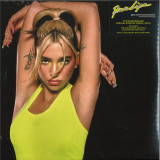
Dua Lipa veröffentlicht zum bevorstehenden 5-jährigen Jubiläum ihres mit einem GRAMMY Award ausgezeichneten und mit Platin zertifizierten zweiten Studioalbum Future Nostalgia eine 3LP Special-Edition.
Gepresst auf einer gelben Splatter-Vinyl und zwei schwarzen Vinyl, enthält das 3-LP-Set die 11 OriginalTracks des Albums sowie die Deluxe Moonlight Edition und das Remix-Album Club Future Nostalgia.
out of Stock
Last delivered 13 months ago available to reorder, subject to availability
Remember: Rod loves you! Es ist 1995. Die Welt ist schlecht aber alle lieben die ärzte. Also kniet nieder!
Denn nur nochmal für’s Protokoll: die ärzte sind aus Berlin (aus Berlin!) und sie sind zurück. Mit Hits, Hits … und noch ein paar Hits.
„Planet Punk“ ist das gewohnt großmäulige Statement der Besten Band der Welt und vier mal Onanieren und eine explodierte Freundin später ist klar: Dies ist eines der kurzweiligsten Alben, das die an Kurzweiligkeit nicht gerade darbenden die ärzte bis dato abliefern. Da fällt der teils brutal, schnell, laut in Szene gesetzte Metal-Sound zwischendrin fast gar nicht auf. Denn es gibt die gnadenlos abseitige Obskur-Avantgarde um Nasenkoteletts, den Rumba-Hüftschwung inklusive Querflöte und Flamenco-Gitarre, den schamfrei in Haudrauf-Manier hinballadierten Freud-Penis-Overkill mit passiv-aggressivem Schlafzimmer-Blick und die ebenso sozialrealistische wie hemmungslos zynische Loser-Hymne. die ärzte: Jetzt mit Friedrichstadtpalast und Friede, Freude, Eierkuchen. Sowie einem der schönsten hässlichen Band-T-Shirts der Popgeschichte, das sich noch Jahrzehnte später als Klassiker am MerchStand behaupten wird. Und „Schunder-Song“. „Planet Punk“ erscheint ausschließlich als Doppelvinylalbum (inklusive Downloadcode) am 7. Oktober
2022.
out of Stock
Last delivered 18 months ago available to reorder, subject to availability
Dev/Null is one of my earliest friends in music, having done radio with him (Blog To The Oldskool on Jungletrain) for a decade and previously working with him on TDD, which was on Meeting Of The Minds Vol. 1, as well as collaborations on Globex Corp, Lobster Theremin & other label releases.
I'm happy to be able to release his first solo EP of jungle tunes, as I've been a long time supporter of his music and I think that some of the tunes on this release are some of his best work yet :)
Many thanks to Dev/Null for the work put in for this release and to Dwarde & Sonar's Ghost for their remixes.
out of Stock
Last delivered 18 months ago available to reorder, subject to availability
Marking the fourteenth chapter in the Swinging Flavors series, Beat Machine Records proudly unveils a gripping release by Helsinki-based producer DJ Sofa. Packed with deep, nostalgic energy, this installment delves into the darker side of drum and bass, with a sound inspired by the genre’s golden era of the late 90s and early 2000s.
DJ Sofa, known for their emotive and intricate productions, brings a raw, jungle-infused energy to the forefront. Drawing inspiration from jungle and breakbeat hardcore, their sound reflects a deep connection to the classic UK rave era while maintaining a forward-thinking edge. Known for captivating listeners with rich atmospheres and complex breakbeats, DJ Sofa’s music resonates strongly with audiences far beyond their Finnish roots, particularly within the UK underground scene.
“Drums For The Lost,” the lead track on Swinging Flavors #14, exemplifies this blend. A menacing roller, it marches forward with unwavering determination, offering a guiding light through shadowy soundscapes. With its haunting basslines, intricate percussion, and mysterious atmosphere, the track is a testament to DJ Sofa’s ability to create immersive and emotionally charged music.
The journey doesn’t stop there. Swinging Flavors #14 also features a remix of “Drums For The Lost” by Siu Mata. The Parisian producer reinterprets the track with their signature style, adding pulsating rhythms and hypnotic layers that elevate it to a peak-time dancefloor weapon. Siu Mata’s remix infuses the original with a modern edge, creating a vibrant and dynamic sound that bridges the gap between tradition and innovation.
Swinging Flavors #14 is available in both digital format and as a limited edition 7” vinyl, ensuring it finds its way into the hands of collectors and music lovers alike. DJ Sofa and Siu Mata’s contributions to the Swinging Flavors series underscore Beat Machine Records’ commitment to showcasing the best of underground electronic music. With its bold exploration of drum and bass and an eye on the future, this release is set to captivate audiences worldwide.
out of Stock
Last delivered 17 months ago available to reorder, subject to availability
dreamcastmoe is the recording project of singer, songwriter, producer, and DJ Davon Bryant, a lifelong resident of Washington, DC. His music moves freely between moods and modes, hypnotic, romantic, traversing electronic, R&B, funk, soul, and hip-hop... Resident Advisor dubs it "soulful, cross-genre dance music." This ability to adapt and finesse, to twist in different directions while staying true and coherent in vision, can be traced to his home city and its complex cultural history. "Most Black kids in DC don't ever get to this point," he says. "This is what I am making this music for, in the DC tradition of soul and empathy and love that is rooted in this city. My music is for real people dealing with shit every day." A versatile, modern artist and collaborator, dreamcastmoe has thrived in the underground since his first uploads to Soundcloud and Bandcamp in 2017 and subsequent releases with labels like People's Potential Unlimited, Trading Places, and In Real Life Music. Bryant's laid-back personality, emotional honesty, and infectious energy shine through his work and how he talks about it, as Crack Magazine notes in their 2021 Rising feature: "a steady combination of confidence, creativity, and calmness." He grew up playing drums in church; he's worked dead-end jobs, had ups and downs, even sold off all his gear one time, but never stopped reinvesting in himself. He is quick to praise his co-producers, rattle off influences _ the visual feel of NBA 2K, the comedic timing of Bernie Mac, the savvy legacy of Duke Ellington, for starters _ and credit resourceful DC breakouts like Ankhlejohn that showed him the roadmap. His voice, a steady instrument, seemingly connects it all, capable of slow falsetto flow, swaggering talk-rap, and outright croon. His storytelling style is choppy yet fluid, like a mixtape, which is how Bryant sees Sound Is Like Water, his debut on Ghostly's International's freeform label, Spectral Sound. The two-part project culminates as a full-length LP release in November 2022. The first side, released as Part I, opens on the blurred beats of "El Dorado," which dreamcastmoe dedicates to his journey. It's a head-nodder, an off-kilter earworm co-produced by Max D (Future Times, RVNG Intl, etc.), with Bryant harmonizing hooks with synth jabs and a pitched-down presence. "Complicated" is the slow jam, delivered smoothly from a Saturday night crossroads. dreamcastmoe is contemplative and committed... gliding and locking ad-libs into skittering rhythms courtesy of co-producer Zackary Dawson _ but also willing to let something go, "acknowledging that everything in life IS NOT easy." "RU Ready" takes off from the jump as a tribute, challenge, and promise to his partner and his city ("The times you sat with me when I needed you the most / Told me the things that I needed to see / Young black man, really trying to be what I can be / And I'm really from DC). In its potent two-plus minutes, the sonics (co-produced by ZDBT) press the message, all cymbal crashes, breakbeats, and serrated synth lines. "Cloudy Weather, Wear Boots" is a blitzing dance-punk track made in collaboration with Jordan GCZ on Bryant's first trip to Amsterdam. The album's flipside opens on "Much More," the first of two synth-and-beat ballads co-produced by ZDBT. Later on "Long Songz," he claims, "I'm not writing love songs no more," prioritizing the vibe with "all my day ones." He calls it "a cry for more normal moments. Everything doesn't have to be a fantasy love story, more time spent getting to the money, growing, and making a way." He saves two of his most propulsive cuts for the finale, co-produced by Sami, co-founder of DC dance label 1432 R. As their titles suggest, "Take A Moment" and "Make Ya Mind" operate as anthems for movement, with Bryant free-flowing commands above wildly-styled percussion. Per Bryant, the latter is both "wake & bake jam" and a "dance floor bomb." His parting line: "Action / You got to show me action / Reaction." The world of dreamcastmoe straddles virtual reality and the realness of DC, images both imagined and lived-in. Bryant has a knack for unexpected melodies but what makes his music so exciting is his capacity to defy the expectations of genre and image. A fluid ingenuity and vulnerability bottled by Sound Is Like Water, and this is just the beginning.
out of Stock
Last delivered 18 months ago available to reorder, subject to availability
Manchester-based original soul collective The 7:45s release their debut single.
Named after 7-inch 45-rpm vinyl, The 7:45s write short and snappy soul singles. Their debut is a double A-side, giving you two bops for the price of one. Inspired by Charles Bradley, 'The Way that I Love You' is full of contrasts: the piano chimes and horns respond, a man calls and a woman answers. It's laidback then intense, major then minor, nostalgic then heartbroken. On the flip-side, 'Too Little Too Late' is an upbeat northern soul stomper, featuring an earworm of a vocal hook over an infectious bassline that's sure to ruffle tail feathers.
Recorded with vintage equipment at EVE Studios in Stockport, both songs feature the captivating vocals of collaborator Martin Connor. On 'The Way that I Love You', Connor's vocal rises from a crooning baritone to a fever pitch, culminating in spine-tingling ad libs. Magic moments like this are heightened by songwriter and bassist Sam Flynn's perfectionist arrangements, which feature dozens of musicians: spotlighting vocal harmonies, horns, and even strings on 'Too Little... more
credits
releases March 7, 2025
Been in UK soul chart and played on all the indie soul stations , Starpoint , solar etc
Too little Too Late was Played on BBC radio six Craig Charles Funk and soul show twice and the Way That I Love You was played on BBC radio six Craig Charles day time show
Track of the week on Simon Phillips Jazz FM
Featured in Blues and Soul and Echoes Mag
out of Stock
Last delivered 18 months ago available to reorder, subject to availability
Mit AVEC präsentiert die österreichische Singer-Songwriterin AVEC ein selbstbetiteltes Album, das die bittersüßen und zärtlichen Momente des
Lebens nahtlos miteinander verbindet. Diese Sammlung verkörpert ihre charakteristische Mischung aus sanften Melodien, introspektiven Texten und
cinematischen Klanglandschaften. Roh und intim taucht das Album in die Komplexität menschlicher Beziehungen und persönlicher Introspektion ein
und lädt die Hörer:innen in eine Welt ein, in der Verletzlichkeit auf Widerstandsfähigkeit trifft und Herzschmerz mit Hoffnung tanzt.
Seit 2015 AVECs erste EP “Heartbeats” erschienen ist, rüttelt die junge österreichische Musikerin gekonnt und gut am Bild dessen, was man über
zutiefst ehrliche Popmusik zu wissen geglaubt hat. Die erste, sehr erfolgreiche Single “Granny” hat den Weg zum jugendlich-melancholischen
Debütalbum “What If We Never Forget” geebnet. Es wurde mit mehreren Nominierungen bei den Austrian Amadeus Music Awards (unter anderem
“Künstlerin des Jahres” und “Best Sound”) belohnt: ein erstes, starkes Folkpop-Statement, reduziert, kraft- und eindrucksvoll. So eindrucksvoll, dass
AVEC in weiterer Folge unter anderem Support-Slots für Zucchero, Sting oder The Tallest Man On Earth gespielt hat.
out of Stock
Last delivered 18 months ago available to reorder, subject to availability
Bon Iver's debut full-length For Emma, Forever Ago has been making major waves in critics circles based on the strength of an early artist-pressed advance cd and a couple awe-inspiring sets at CMJ in October 2007. The New York Times called it "irresistible" and Pitchfork stamped its early review of the album with a Recommended tag. For those of you hiding away in a cabin of your own, it's time that you hear the story, and more importantly, the music. Bon Iver (pronounced: bohn eevair; French for "good winter" and spelled wrong on purpose) is a greeting, a celebration and a sentiment. It is a new statement of an artist moving on and establishing the groundwork for a lasting career. For Emma, Forever Ago is the debut of this lineage of songs. As a whole, the record is entirely cohesive throughout and remains centered around a particular aesthetic, prompted by the time and place for which it was recorded. Justin Vernon, the primary force behind Bon Iver, seems to have tested his boundaries to the maximum, and in doing so has managed to break free from any pre-cursing or finished forms. It wasn't planned. The goal was to hibernate. Vernon moved to a remote cabin in the woods of Northwestern Wisconsin at the onset of winter. He lived there alone for three months, filling his days with wood splitting and other chores around the land. This solitary time slowly began feeding a bold, uninhibited new musical focus. The days slowly evolved into nights filled with twelve-hour recording blocks, breaking only for trips on the tractor into the pines to saw and haul firewood, or for frozen sunrises high up a deer stand. All of his personal trouble, lack of perspective, heartache, longing, love, loss and guilt that had been stock piled over the course of the past six years, was suddenly purged into the form of song.
out of Stock
Last delivered 18 months ago available to reorder, subject to availability
ON THE ROCK is a cornerstone of the band formed by WISS, APPLE and SKELLY. Recorded and mixed at Leggo's Studio (Kingston / Jamaica) with the new version of the Roots Radics: Flabba Holt (bass), Dwight Pinkney on guitar, Carl Ayton on drums, Steve Golding on guitar and T-Bird Johnson on piano.
out of Stock
Last delivered 18 months ago available to reorder, subject to availability
On a creative roll of late, Linkwoods productions have branched out in many directions, a collaboration LP with jazz Genius Greg Foat, Another with Local Edinburgh Legend Other lands and a load more yet to surface. Linkwood now comes back to solo work with a hyper focused piece of electro goodness. Lo-fi but all the better for it, Mono comprises 14 deeply distilled tracks. After producing some more complex records it was time for a pure palate cleanser so we locked Nick in the Athens of the north studio for a week with his friends Moog and Oberheim to see what might happen. Somewhere between Electro, Early 80s Synth pop and techno the album is an extremely listenable piece as a whole, unpretentious and timeless. Sprinklings ofDave Stewart pop noodles, Newbuild, Early Era Nu Groove but very much Linkwood at the same time, I cant recommend this enough.
out of Stock
Last delivered 18 months ago available to reorder, subject to availability
ANORAX sticks to its’ #eatsleepcollect mantra with this limited edition 7” by UK Techno pioneers NEXUS 21. Both tracks were stuck in the NETWORK vaults (well a metal box full of DATS) since being recorded in 1991 before greeting the World on the NEXUS 21 MIND MACHINES LP released last December.
Both stood out on that album so much that issuing them on a 300 press run 7” single for collectors seems the obvious thing to do.
SELF HYPNOSIS has long been a signature anthem for early UK Techno but the version here is radically different from the original,and fascinatingly gives a glimpse of the Rave machinations that Mark and Chris would champion as they transformed into ALTERN 8.
The studio recording of SILICON was not released on any format until the recent album.
It was left on the shelf as both label and artist focused on ALTERN 8 instead of NEXUS 21. Part bleep and part clonk it’s a classic snapshot of the North Of London UK soundscape in 199.1. And that makes the fact that this version was recorded live at London’s much loved Brain club in April of that year somewhat ironic. It’s incredibly clear for a live record and incredibly good.
out of Stock
Last delivered 16 months ago available to reorder, subject to availability
Googling “paradise house”, the first results to pop up are an endless list of European b&b’s with whitewashed lime façades, all of them promising “…an unmatched travel experience a few steps from the sea”. Next, a little further down, are the institutional websites of a few select semi-luxury retirement homes (no photos shown, but lots of stock images of smiling nurses with reassuring looks). To find the “paradise house” we’re after, we have to scroll even further down. Much further down.
It feels like yesterday, and at the same time it seems like a million years ago. The Eighties had just ended, and it was still unclear what to expect from the Nineties. Mobile phones that were not the size of a briefcase and did not cost as much as a car? A frightening economic crisis? The guitar-rock revival?! Certainly, the best place to observe that moment of transition was the dancefloor. Truly epochal transformations were happening there. From America, within a short distance one from the other, two revolutionary new musical styles had arrived: the first one sounded a bit like an “on a budget” version of the best Seventies disco-music – Philly sound made with a set of piano-bar keyboards! – the other was even more sparse, futuristic and extraterrestrial. It was a music with a quite distinct “physical” component, which at the same time, to be fully grasped, seemed to call for the knotty theories of certain French post-modern philosophers: Gilles Deleuze, Félix Guattari, Paul Virilio... Both those genres – we would learn shortly after – were born in the black communities of Chicago and Detroit, although listening to those vinyl 12” (often wrapped in generic white covers, and with little indication in the label) you could not easily guess whether behind them there was a black boy from somewhere in the Usa, or a girl from Berlin, or a pale kid from a Cornish coastal town.
Quickly, similar sounds began to show up from all corners of Europe. A thousand variations of the same intuition: leaner, less lean, happier, slightly less intoxicated, more broken, slower, faster, much faster... Boom! From the dancefloors – the London ones at least, whose chronicles we eagerly read every month in the pages of The Face and i-D – came tales of a new generation of clubbers who had completely stopped “dressing up” to go dancing; of hot tempered hooligans bursting into tears and hugging everyone under the strobe lights as the notes of Strings of Life rose up through the fumes of dry ice (certain “smiling” pills were also involved, sure). At this point, however, we must move on to Switzerland.
In Switzerland, in the quiet and diligent town of Lugano, between the 1980s and 1990s there was a club called “Morandi”. Its hot night was on Wednesdays, when the audience also came from Milan, Como, Varese and Zurich. Legend goes that, one night, none less than Prince and Sheila E were spotted hiding among the sofas, on a day-off of the Italian dates of the Nude Tour… The Wednesday resident and superstar was an Italian dj with an exotic name: Don Carlos. The soundtrack he devised was a mixture of Chicago, Detroit, the most progressive R&B and certain forgotten classics of old disco music: practically, what the Paradise Garage in New York might have sounded like had it not closed in 1987. In between, Don Carlos also managed to squeeze in some tracks he had worked on in his studio on Lago Maggiore. One in particular: a track that was rather slow compared to the BPM in fashion at the time, but which was a perfect bridge between house and R&B. The title was Alone: Don Carlos would explain years later that it had to be intended both in the English meaning of “by itself” and like the Italian word meaning “halo”. That wasn’t the only double entendre about the song, anyway. Its own very deep nature was, indeed, double. On the one hand, Alone was built around an angelic keyboard pattern and a romantic piano riff that took you straight to heaven; on the other, it showcased enough electronic squelches (plus a sax part that sounded like it had been dissolved by acid rain) to pigeonhole the tune into the “junk modernity” section, aka the hallmark of all the most innovative sounds of the time: music that sounded like it was hand-crafted from the scraps of glittering overground pop.
No one knows who was the first to call it “paradise house”, nor when it happened. Alternative definitions on the same topic one happened to hear included “ambient house”, “dream house”, “Mediterranean progressive”… but of course none were as good (and alluring) as “paradise house”. What is certain is that such inclination for sounds that were in equal measure angelic and neurotic, romantic and unaffective, quickly became the trademark of the second generation of Italian house. Music that seemed shyly equidistant from all the rhythmic and electronic revolutions that had happened up to that moment (“Music perfectly adept at going nowhere slowly” as noted by English journalist Craig McLean in a legendary field report for Blah Blah Blah magazine). Music that to a inattentive ear might have sounded as anonymous as a snapshot of a random group of passers-by at 10AM in the centre of any major city, but perfectly described the (slow) awakening in the real world after the universal love binge of the so-called Second Summer of Love.
For a brief but unforgettable season, in Italy “paradise house” was the official soundtrack of interminable weekends spent inside the car, darting from one club to another, cutting the peninsula from North to centre, from East to West coast in pursuit of the latest after-hours disco, trading kilometres per hour with beats per minute: practically, a new New Year’s Eve every Friday and Saturday night. This too was no small transformation, as well as a shock for an adult Italy that was encountering for the first time – thanks to its sons and daughters – the wild side of industrial modernity. The clubbers of the so-called “fuoriorario” scene were the balls gone mad in the pinball machine most feared by newspapers, magazines and TV pundits. What they did each and every weekend, apart from going crazy to the sound of the current white labels, was linking distant geographical points and non-places (thank you Marc Augé!) – old dance halls, farmhouses and business centres – transformed for one night into house music heaven. As Marco D’Eramo wrote in his 1995 essay on Chicago, Il maiale e il grattacielo: “Four-wheeled capitalism distorts our age-old image of the city, it allows the suburbs to be connected to each other, whereas before they were connected only by the centre (…) It makes possible a metropolitan area without a metropolis, without a city centre, without downtown. The periphery is no longer a periphery of any centre, but is self-centred”.
“Paradise house” perfectly understood all of this and turned it into a sort of cyber-blues that didn’t even need words, and unexpectedly brought back a drop of melancholic (post?)-humanity within a world that by then – as we would wholly realise in the decades to come – was fully inhuman and heartless. A world where we were all alone, and surrounded by a sinister yellowish halo, like a neon at the end of its life cycle. But, for one night at least, happy."
out of Stock
Last delivered 3 months ago available to reorder, subject to availability
Because Sound Matters' meticulous One-Step process creates the definitive sounding audiophile version of k.d. lang Ingénue. This all-analog release comes from the original first-generation master tapes for the first time. Vinyl guru and editor Michael Fremer says, "This k.d. One-Step is insane – It's otherworldly great!"
This One-Step version is strictly limited to 3,000 copies. The album is housed inside a top-quality, foil-stamped, uniquely designed numbered slipcase. The enclosed gatefold jacket will feature an "old style" tip-on jacket with the original artwork.
Special care has been taken to faithfully preserve the original sound with exceptional clarity and depth, capturing the recording's nuances and subtleties at every step to create the best sounding record possible.
The One-Step process is highly regarded among audiophiles and collectors for its unparalleled sound fidelity and represents the pinnacle of vinyl manufacturing craftsmanship.
Ingénue was originally released March 17, 1992 and is k.d. lang's second solo album.
Upon release, the album charted at #18 in the US, #13 in Canada, #3 in the UK and Australia and #1 in New Zealand. Nominated for six Grammy® Awards with the breakout single "Constant Craving" winning a Grammy® Award for Best Female Pop Vocal Performance. "Miss Chatelaine" and "The Mind of Love" were follow-up singles.
k.d. received universal critical acclaim for the album from publications like Mojo, Pitchfork, Rolling Stone, Uncut and dozens more! Today, Ingénue is a true classic album and considered one of the great audiophile recordings of the modern era. This One-Step version certainly proves that!
Notes for This Release:
Ingénue was originally recorded and mixed on analogue tape and produced by Greg Penny, Ben Mink and k.d. lang. The original analogue master tapes were directly used as the audio source for this One-Step pressing! This is the first time the analogue tapes have been used as a vinyl source for this brilliant recording. The results are stunning.
Because Sound Matters used the Neotech VR900-D2 180g High-Performance vinyl compound, which is the same as what is known as Super Vinyl – the best in the world.
Chris Bellman at Bernie Grundman Mastering cut the lacquers with meticulous care! He also did the original mastering of the CD release in 1992.
Dorin Sauerbier at Record Technology, Inc (R.T.I.) has been plating records for decades and is considered the best in the world – he also has done more One-Step processing than anybody. This is a vital step in the process to ultimately delivering the absolute best sounding version of Ingénue ever.
Record Technology, Inc did the pressing – using the exact pressing machine used for so many other One-Step releases. The QC team is constantly monitoring each copy as it comes off the press.
Because Sound Matters' slipcases and gatefold "old style" tip on original art jackets were printed by world-renowned Stoughton Printing Company.
This new all-analogue edition will draw you into the music as never before—at least it did me. The sonic picture is rich, well-textured, harmonically saturated, spatially deep and all the rest of the audiophile buzzwords that no doubt the producers (who include lang) intended to give listeners but until now couldn't fully deliver. The musical flow will have you swooning in your seat. Before the opener 'Save Me' concludes you may already feel overwhelmed and in need of lifting the stylus to catch your emotional breath...What a treat!
-Michael Fremer, Tracking Angle, Music 11/10, Sound 11/10
If every significant artist has an underrated gem in its catalog, then Mirage is that album for Fleetwood Mac. An obvious return to relative simplicity after the dramatic tension of Rumours and experimental ambitions of Tusk, the 1982 album finds the band re-grouping after a brief hiatus and again climbing to the top of the charts. Extremely well-crafted, well-produced, and well-performed, the double-platinum effort distills the group’s hallmark strengths into a filler-free set that never runs short of addictive pop hooks or daft accents.
Sourced from the original analog master tapes, pressed at Fidelity Record Pressing in California, and housed in a Stoughton jacket, Mobile Fidelity’s numbered-edition 180g 45RPM 2LP set presents Mirage in reference sound for the first time. The efforts co-producers/engineers Ken Caillat and Richard Dashut went to capture the splintered albeit formidable band can be heard with stunning accuracy, range, depth, and detail.
Though Rumours understandably gets a permanent spot in the audiophile hall of fame, the smooth, clear, and dynamic sonics on Mirage confirm that the record that stood as Fleetwood Mac’s last effort for five years deserves a place in the same vaunted arena. The presence and imaging of Mick Fleetwood’s percussion alone on this reissue might have you wondering how this slice of soft-rock bliss has gone under-noticed for decades. Other prized aural aspects — separation, definition, impact, tonal balance — are also here in spades.
Like much surrounding Fleetwood Mac in the 1980s, arriving at Mirage was not easy. Caillat searched for studios located outside of Los Angeles on a mission to change up the vibe of the band’s prior recording sessions. Everyone settled on Le Chateau in France, where relations between some members remained icy — and cooperation with the producers strained. Battles with exhaustion, bitterness, and addiction further informed the proceedings at the 18th century complex in the French countryside, where even communal meals were allegedly eaten in silence.
Inevitably, the feelings that co-producer Lindsey Buckingham, Stevie Nicks, Christine McVie, and company harbored — as well as the situations in which they found themselves — drifted into the songwriting. In its rapid ascent to rock-star royalty status, Fleetwood Mac drifted apart, embarked on solo pursuits, and found it was lonely at the top. Emptiness, the illusion of dreams, the longing for love, the want to escape to bygone times of innocence and happiness: Such themes inform a majority of the narratives. Even if the lyrics regularly take a back seat to easygoing arrangements that allow Mirage to come on like a refreshing breeze on a sunny summer afternoon.
Home to three Top 25 singles in the U.S. and having occupied the pole position of the Top 200 album charts for five weeks, Mirage rightfully resonated with the mainstream and attracted listeners on both sides of the pond. And how, via a smart blend of sugary melodies, warm harmonies, interlaced notes, nimble rhythms, taut structures, and passionate vocals. Not to mention the presence of what arguably remains Nicks’ signature song, the biographical “Gypsy,” a meditation on the loss of her close friend Robin Anderson that teems with majesty, mystery, and mysticism — and which gets an assist from Buckingham’s shaded tack piano and richly strummed guitar chords.
Its ranking as an all-time classic aside, that No. 12 hit has plenty of company when it comes to brilliant pop turns on Mirage. On the subject of Nicks, the raspy singer gets a little bit country on “That’s Alright.” Its clip-clopping pace and two-stepping progression complement subtle vocal swells that emerge during the final verse of a tune that is ostensibly about leaving but still conveys forgiveness and grace. And what would a Fleetwood Mac record be without Nicks drawing on the tools of the supernatural — cards, dreams, wolves, and the like — on the twirling “Straight Back.”
Despite the potency of Nicks’ primary contributions, Mirage seemingly unfolds as a tight competition between Buckingham and McVie — and one that ultimately ends in a draw. Buckingham’s salvos include the contagious “Can’t Go Back,” a yearning to time-travel back to the past that’s complete with hall-of-mirrors backing vocals; “Oh Diane,” out-of- left-field ear candy sweetened with hiccupped vocals and salt-and-pepper-shaken grooves; the chiming “Eyes of the World”; and “Empire State,” a delightfully fluttering track whose high-range vocals, lap harp notes, and ringing xylophones hint at the galaxies of sound that would erupt on Tango in the Night.
Then there’s McVie. As elegant, understated, and coolheaded as she’s ever been on record, she pours her heart out on cuts that revolve around her inevitable split with Beach Boy Dennis Wilson. In the process, she punctuates Mirage with a characteristic not always associated with catchy pop music: emotional weight, and the sense of dreaded acceptance in the face of dreams deferred.
“I wish you were here/Holding me tight,” McVie sings over a delicate melody on the album-closing piano ballad “Wish You Were Here.” Though they hoped otherwise, for the members Fleetwood Mac, distance and separation were always close at hand. Believing otherwise, inviting nostalgia, and pretending everything was fine only amounts to a mirage.
“… it was dance music, it had lyrics, it had songs, it wasn’t all instrumental, it was basically uptempo soul music, to be exact.”*
This quote from Timmy Regisford already sums up everything you need to know about his remix of Basic Black’s “Don’t Make Me Fall In Love.” Signed to Motown during Regisford’s reign as vice president and A&R, their self-titled debut album from 1990 is a testament to the massive popularity of new jack swing at the time. In his remix, the co-founder, resident DJ, and key figure of Club Shelter reconfigures the song’s structure with the signature sounds of New York’s prime dance floor scene, while preserving the heartfelt storytelling of the lyrics and the group’s voices on top of an irresistible groove and a bassline to die for.
At the time, it was only available in the record crates of the Big Apple’s DJ elite and later on as a white label in specialist shops. This soulful, yet driving piece, however, never saw an official single release—until now. Lifted from a DAT tape in Tony Humphries’ archive and carefully and faithfully restored, it now even features a condensed, never-before-released instrumental version of the remix, as well as a bass-and-beats-only edit for mixing purposes by yours truly. New jack swing transformed into New York club music by a king. This remix is a testament to Timmy Regisford’s prowess in the studio, but also honors the roots of the music he loves and grew up on—serving as a perpetual piece of the city’s vast history in underground dance music.
Gerd Janson
out of Stock
Last delivered 13 months ago available to reorder, subject to availability
Soul music has always been in Paul Weller’s blood from early Jam covers of Martha & the Vandellas 1963 classic ‘Heatwave’. Along with other forms of music, soul found its way into Paul’s record collection, nourishing his ears and informing his own songwriting
We don’t need to recap a questing musical career from the Jam to the Style Council and then blossoming into one of the most productive and revered careers of any UK solo artist. Paul has written anthems, standards and a songbook that have always developed from his own feelings.
Whilst Paul has talked about his love of soul music he has, before now, simply been too busy to sit down and curate a collection of his favourite tracks and get it into the record racks.
Ace Records are honoured and delighted to finally release that Paul Weller curated collection which he has aptly titled, “That Sweet Sweet Music”.
This 2-LP set and CD open the curtains on 26 tracks that are some of Paul’s favourite soul records most of which nestle on vinyl in his own collection. He can still recall paying £70 for his copy of Jon Lucien’s 1971 ‘Search For The Inner Self’ 7” at a record shop in Leicester in the 90s. Some of these tracks are soul classics like James Carr’s 1966 ‘Pouring Water On A Drowning Man’ and Brother to Brother’s brilliant take on Gil Scott Heron and Brian Jackson’s ‘In The Bottle’ from 1974. Others are deliciously obscure wonderous gems like the A-side of Blackrock’s sole 1971 single ‘Blackrock “Yeah, Yeah”’, ‘Life Walked Out’ from the same year by the Mist or Syl Johnson’s ‘Black Balloons’ taken from his 1970 album “Is It Because I’m Black?”.
There are plenty of big vocal hitters such as Darrell Banks, Spinners, Joe Simon, O.C. Smith, the Dells and Betty Davis. Whilst the core is vocal soul the music does branch out with Paul selecting a wicked instrumental from the flipside of the Isley Brothers’ ‘Twist & Shout’ from 1962 and the funky jazz of the Headhunters ‘God Made Me Funky’, the A-side of their first 1975 seven-inch.
Released in early 1976, the title track of Bad Company's third album Run With The Pack is, what one critic described as, "a male-bonding type of song" that frontman Paul Rodgers was inspired to write about the group's non-stop touring adventures.
"Run With The Pack" is notable for its string arrangement, which Rodgers said he had in mind from the outset. "I wrote that song on the piano, and when I played it to the guys they fell right in. In my head, strings were always part of the song."
The album was recorded in France using the Rolling Stones Mobile Truck in September 1975 with engineer Ron Nevison, and mixed in Los Angeles by Eddie Kramer.
The Run With The Pack album reached No. 5 on the Billboard 200 and No. 4 on the U.K. chart. It was also Bad Company's third consecutive platinum-selling album.
Rolling Stone, in its review, calls Run With The Pack Bad Company's third and best album, reiterating the raw, rowdy style of their debut, Bad Company.
Cut at 45 RPM, pressed on 180-gram vinyl at Quality Record Pressings, and housed in a tip-on old style gatefold double pocket jacket by Stoughton Printing.
Each of the ten tracks on "mixtape suite" is likely to evoke such absurd associations in music lovers. The album authentically and unpredictably creates a feeling of total boundlessness with a global approach. Effortlessly uniting an entire record shop within itself. One time you think of Madlib or the Bee Gees, then of Joan Baez or Amon Düül, other times of Beck or Gorillaz. Between boom bap and Krautrock, disco styles, folk references and trip-hop vibes spread out organically. Analogue percussion blurs with 90s sampling sound aesthetics.
TIKHET sounds unplanned and anarchic, with a raw core and some well rounded patina on the outside.
1883 Magazin: "Keep an eye on this emerging act"
Mesmerized: "the project has all the elements needed for a powerful musical output..., an impressive debut for the visionary pair"
Indieshake: "Fucking love this"
out of Stock
Last delivered 18 months ago available to reorder, subject to availability
'It begins with a shoebox of mysterious provenance, full of recordings from the Vendée department on France’s western seaboard: songs of love and war, life and death, played out on land and sea. Songs passed down and sung by ordinary men and women, gracefully delivered with the poetic economy which unites the folk song of all peoples.
Next it takes a group of contemporary musicians to make selections from this treasure trove and sing these old songs anew; to sing them for their beauty, of course, and to reclaim the people’s tradition from those who would seek to exploit it for nefarious political ends. Who better for this task than Tartine de Clous, a singing trio from Vendée’s neighbouring department of Charente-Maritime, who burst into national and international consciousness with their debut album "Sans Folklore" in 2015? The result of their shoebox rummagings, the new album "Compter les dents", recorded in 2019 and finally seeing the light of day, is bound to delight old fans and win them many new ones.
Time makes many’s the alteration, and "Compter les dents" finds 'les garçons' - Geoffroy Dudouit, Thomas Georget and Guillaume Maupin - in a different state of being from their debut release. The trio, friends since youth, have certainly matured between albums, as one would expect; consequently the newer performances are more considered and poised, unfolding with a patient confidence. A relaxed domesticity prevails, something to do with the fact that the album was entirely recorded chez les amis, in contrast to the first album, which was mostly recorded at live performances in bars and night-spots across France.
Lending gravitas to the grain of their voices we mark a deepened richness, doubtless born of the various vicissitudes of daily existence which these gentlemen - and we too as citizens of this turmoiled globe - have weathered in the intervening years. Not too dissimilar, in fact,
from some of the vicissitudes detailed in those old Vendée songs. Plus 'ça change', right?
There’s a greater complexity and subtlety to their unique three-part harmonising, too. Their voices mesh in even stronger - almost telepathic - 'fraternité' than ever before: now commanding and mighty as a full-rigged counter-vessel, now gentle and lulling as a mother’s
cradle-croon, or as the whisper in a lover’s ear.
Three legendary figures of French traditional music, now sadly departed, preside as tutelary spirits over Compter les dents. They are: the late Claude Flagel, musician and ethnomusicologist; and the late Jean-Loup Baly of the well-known 1970s band Mélusine. Most of the album was recorded by Claude in the Brussels home he shared with his late wife Lou Flagel. The album is dedicated to the memory of Jean-Loup, Claude and Lou.
For the first time there are several guest instrumentalists working their magic to expand the Tartine de Clous sound. Jean-Loup plays a characterful accordéon on the song ‘La Veuve'. The other guests are: Maurice Artus (voice), Robert Thébaut (violin), Quentin Manfroy (piccolo, contrabassoon), Marceau Portron (cigar box guitar). Their contributions add even more conviviality to that which the trio of singers already share, a sensation which will doubtless be shared by those who happen to find a place in their lives for "Compter les dents".'
A2: Little Jr. Jesse & The Tear Drops – Give Your Love To Me
A3: Tonettes – I Gotta Know
A4: Doc & Sal – Can't Get You Offa My Mind
A5: Commands – I've Got Love For My Baby
A6: Willie Cooper & The Webs – You Don't Love Nobody
A7: Little Jr. Jesse & The Tear Drops – Ain't No Big Thing
B1: Commands – No Time For You
B2: Webs – Little Girl Blue
B3: Tonettes – My Heart Can Feel The Pain
B4: Doc & Sal – Cry & Wonder Why
B5: Commands – Don't Be Afraid To Love Me
B6: Willie Cooper & The Webs – I Can't Take No More
B7: Don & The Doves – Together
C1: Webs – Don't Ever Hurt Me
C2: Commands – Must Be Alright
C3: Bobby Blackmon & The Soul Express – She's Gotta Have Soul
C4: Doc & Sal – Laughing To Keep From Crying
C5: Webs – Try Loving Me
C6: Commands – Too Late To Cry
C7: Doc & Sal – My Dream
D1: Little Jr. Jesse & The Tear Drops – If You Don't Love Me
D2: Webs – Can't Let You Go
D3: Commands – A Way To Love Me
D4: Little Jr. Jesse & The Tear Drops – It Keeps Rainin
D5: Don & The Doves – I Need You
D6: Bobby Blackmon & The Soul Express – You'll Find Another
D7: Commands – Around The Go-Go
NUM043LPC2 Numero Group2x12inch28.03.202528.MAR.25
Whipped up in the dust of Rene & Rene’s Tejano tornado “Angelito,” the Dynamic label was just one among San Antonio record and real estate mogul Abe Epstein’s enterprises. Dynamic’s flagship outfit, the Commands, marched “No Time For You” up to the middle of the charts in 1966 with performance chops honed jet-sharp by the demanding Air Force Base circuit. That take off paved a runway for 20 more soulful Dynamic singles over an impressive 30-month campaign. Epstein’s open-door policy brought a diverse cross-section of Texas talent into convergence within his General McMullan Drive studio, as whites, blacks, and Latinos alike suited up for service in whichever new group the call of duty called for. Epstein’s Alamo City melting pot is ladled out here in 21 (28 on the 2LP) of Dynamic’s most intriguing dishes by the Tonettes, Little Jr. Jesse & the Tear Drops, Don & the Doves, Willie Cooper & the Webs, Bobby Blackmon & His Soul Express, and Doc & Sal. Lone Star pic sleeves, full-color dancehall photography, and rich ephemera plant a new flag for soul in soil that’s seen its share of hoisted banners.
The Crystal Hum is the debut vinyl release by Taiwan-based artist Yuching Huang and her first release for Night School.
A beguiling dreamscape of crackles, spluttering, love-struck Casios presided over by the the spectral vocal and guitar work of Huang, Yuching sings love songs at the end of this world and the beginning of the next. Recorded during a hiatus from her group Aemong (a duo with artist Henrique Uba) in Berlin, these songs elevate Huang’s unique vocal style and grasp of atmospherics. The Crystal Hum deconstructs balladry, Garage, guitar music and reforms it into a
unified ghostly otherworld version of these languages.
The Crystal Hum thrums with buried desire, trails of nocturnal reverb seeping out of apartment windows, diaristic vocal performances and deeply emotive, evocative Western-style strings. Formulated by Yuching Huang after periods of frustration and experimentation, the album is an exercise in minimalism and paring back, with some tracks like JohnJohn featuring little else than an elastic bass, spring reverb trails, an interjecting vocal and swelling, dislocated synths. The effect is spellbinding, the soundtrack to getting lost in the labyrinthine, closed streets of Venice, Taipei, Hong Kong, or mirror versions of them in the imagination.
On opener Fly! Little Black Thing, a subterranean funk bassline roots Huang’s singing, a rudimentary, unreliable beat floundering in whimsy underneath. Demure, dream Dance music, Huang references classic lo fi experimenters Suicide and Arthur Russell as well as Night School label mates The Space Lady and Ela Orleans. In fact, after the release of Aemong’s third album Crimson, Huang credits the direction of The Crystal Hum to being enchanted by The Space Lady’s Greatest Hits,
the landmark lo-fi recording made by Susan Dietrich Schneider in 1990. The new, minimalist approach to her sound world reveals and shrouds in equal measure. On the heart-melter Love, a sultry mid-tempo Casio + bass backing drops into the ether with Huang’s vocal swimming in preternatural void before emerging anew, in awe at the world. Every chord change heralds new perspectives, every guitar flurry swells and drips emotion, nothing is wasted and space billows out from between the grooves.
Huang never reveals more than necessary, making this an in-between love album: the right amount of mystery and darkened mirror shines wanely on The Crystal Hum while remaining fragile and vulnerable in the sweet spots. Turning over in pillowing smoke and night in the dark corners, Huang sings in both Mandarin and English. The songs speak of earthly matters seemingly at the edge of dissipating into nothing. Distorted, beguiling Sambas warble like sweating dancehalls in an imagined Lynchian 60s, as on Thoughts. Closer You, An Illusion warps a classic 60s Girlgroup bassline beloved of the likes of Les Rallizes
Denudes into a slight ballad on the edge of the void, held back by the teary-eyed, wistful and enveloping vocal cooed by Huang. Each song feels like a love song dedicated to the bits between worlds, between beats, the negative space between people where desires, feelings and loss hangs in the air, resolute and unresolved.
out of Stock
Last delivered 2 years ago available to reorder, subject to availability
In July 1983, the Hebrew Israelite vocalist and multi-instrumentalist Margeeah Aharon recorded her debut album "Looking For Love", a melange of devotional jazz, soul, funk and reggae. Reissued on Frederiksberg Records for the first time and a very much sought after soul / funk / reggae record.
out of Stock
Last delivered 17 months ago available to reorder, subject to availability
Mr. K with two slices of Philadelphia disco, from smooth and slinky on our A-side to all-out floor pounding disco madness on the B.
Janice McClain, rightly adored for her Garage classic “Smack Dab In The Middle” (feat. on MXMRK-2068) but her second single is a real under-the-radar treat. The comfortably laid back groove somewhere between a stepper and simmering midtempo disco, classy and danceable as the finest Philly soul. Originally on a small LA-based label in 1983 (and sounding like it could have come out a good five years earlier), written and produced by McClain’s uncle Milt Tennant and his writing partner Thom Page, the same team responsible for “Smack Dab” — all Philadelphia rooted, so the sound should come as no surprise. Add McClain’s heartfelt and uplifting vocal and we easily have a lost classic. Mr. K’s edit trims the rare 12-inch version down for maximum sonic fidelity for its first appearance in a 7-inch format.
The flip side vibe goes in a completely different direction, although once again has its roots in Philly. The disco remake of the standard “Brazil” was a massive hit for the Ritchie Family in 1975, topping Billboard’s dance charts and getting deep into the Top 20 on the Hot 100. The group itself was a studio concoction led by veteran producer Richie Rome, with legendary trio Sweethearts of Sigma handling vocals — you’ll recognize their trademark harmonies from other huge classics like “Ain’t No Stoppin’ Us Now” and “Love Is The Message", studious listeners will detect a lot of similarities in the vamp section of “Brazil” and “Love Is…” as the MFSB house band launches into their trademark groove. This vamp section is unfortunately truncated on the original 7-inch single, but the always-attentive ear of Mr. K picks this point to begin his edit, starting where the original single faded out and giving us a full four-plus minutes of galloping disco delight.
Two flavors, both as tasty as it gets, all on one compact piece of wax! Another essential addition to your collection.
out of Stock
Last delivered 14 months ago available to reorder, subject to availability
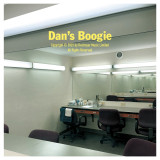
Was ist ein "Boogie"? In der Umgangssprache ist es ein Tanz oder eine Gelegenheit zum Tanzen. Da es sich hier um ein Destroyer-Album handelt und nicht um den allgemeinen Sprachgebrauch, sind die Implikationen eines Titels wie "Dan's Boogie" verführerischer und gefährlicher zugleich. "Ein Boogie ist ein Täuschungsmanöver, ein Betrug, der nicht ganz funktioniert, die Bewegungen, die wir machen, wenn wir damit konfrontiert werden", erklärt Dan Bejar. "Ich denke an Spionage, Doppelagenten, die mit einem offenen Auge schlafen und die Ausgänge im Auge behalten. Aber ich denke auch an kleine Siege und Niederlagen auf der Straße und an Improvisation". Um "Dan's Boogie" aufzunehmen, musste Bejar eine Reihe von gewollten und ungewollten Hindernissen überwinden, um die Songs zu schreiben. Die Monate nach der Fertigstellung von "LABYRINTHITIS" wurden zu einem Jahr und dann zu zwei Jahren, in denen Bejar sich selbst den Neujahrsvorsatz gab, jeden Tag eine Stunde lang Klavier zu spielen. Das hat ungefähr vier Tage gedauert, aber die Songs, die Bejar als Ergebnis dieses Vorsatzes bezeichnet - darunter "Cataract Time", "Hydroplaning Off the Edge of the World", "Bologna" und "Dan's Boogie" - sind allesamt Destroyer-Songs aus dem breiten Spektrum, das Bejar und seine Mitstreiter für sich selbst geschaffen haben: Spektakuläre Pop-Epen, persönliche Piano-Balladen und schwelende Stimmungsbilder, die die Grenzen zwischen Song, Roman und Kino verschwimmen lassen, jedes voll von der Dringlichkeit eines Staatsgeheimnisses im Kopf eines gequälten Spions. Die Leadsingle "Bologna" ist der radikalste Rahmen für diese Energie, denn es ist das erste Mal, dass Bejar einen Song schreibt, in dem er sich selbst als Nebenfigur vorstellt. In der Hauptrolle ist Simone Schmidt von Fiver zu hören, deren Stimme - hart und ausdrucksstark, durchdringend durch die Düsternis der Szene - ein Sirenengesang ist, der das ganze Album durchdringt. Die Schwere ihrer Stimme ordnet "Dan's Boogie" um ein Gefühl des drohenden Untergangs herum, so wie das Versprechen einer Fatale auf das Ungewöhnliche und Ekstatische die Hauptfigur eines erotischen Thrillers zum Verhängnis wird. "Hydroplaning Off the Edge of the World" ist ein köstlicher Widerspruch, ein schwungvoller Song, der aus der Verwüstung entstand, die Bejar absichtlich mit sich selbst anrichtete. "We are now entering a new phase", intoniert Bejar und führt Schichten von Gitarren und Synthesizern ein, die die Palette erheblich verdunkeln, während er zwischen Gesang und Sprache wechselt. Der Nebel, der Bejar umgibt, wird durch die Reibung zwischen konkurrierenden Wahrheiten und Geschmäckern erhellt, etwa wenn sein Interesse an jazzigen Balladen auf das Interesse des Produzenten und Bassisten John Collins an Bands wie Led Zeppelin und Scritti Politti trifft. Als Bejar Collins erzählte, dass er an Sammy Davis Jr. dachte, entstand der Titeltrack, in dem Bejar mit fast wahnhafter Freude einen Rat Pack-Swagger vor einer verträumten Klangkulisse aus schwebenden Gitarren, üppigen Bläsern, Jazz-Drumming, spacigen Synthesizern und - vielleicht am ehesten dem Selbstverständnis Bejars entsprechend - einem klimpernden Lounge-Piano annahm. Das Herzstück von "Dan's Boogie" ist vielleicht "Cataract Time", ein achtminütiges Epos, das zu den schwersten Texten gehört, die Bejar je geschrieben hat, und eine der musikalisch komplexesten Kompositionen von Destroyer ist. Getragen von einem lässigen Groove, sind Bejars Texte verklärt, ihre Melancholie schmeckt fast widersinnig nach Hoffnung. Es ist ein intimer Song, der Destroyers übliches urbanes Fabel-Milieu gegen eine erfrischende Innerlichkeit eintauscht, aber sein beschwingter Groove lässt eine Zukunft erahnen, der Bejar und seine Band entgegenfiebern. Wo frühere Destroyer-Alben mit der Welt kämpften, tanzt "Dan's Boogie" mit ihr, und seine neun Träumereien verschmelzen zu einem einzigen langen Treiben. Dan Bejar mag die Ausgänge im Auge haben, aber er wird nicht so bald abreisen.
"Daft Punk brought me here, he brought me Daft Punk"
Just knowing that this slice of hyper-rare disco dynamite was crafted by Thomas Bangalter's dad should be enough for you to buy this on sight, if only to understand a little bit more about Thomas and Daft Punk's background. But this is so much more than a Daft Punk family curio.
Born Bangalter in 1947, Daniel Vangarde is a French songwriter and producer. In 1975, Vangarde founded his label, Zagora Records, who we have worked closely with on this lovingly curated reissue. For years, Vangarde wrote and produced songs that remained underground, under several pseudonyms and for various artists. Dubbed "the secret father of French disco" this here groove-fulled firecracker - using his Who’s Who moniker - is for disco-funk, library music and cosmic beat lovers.
The intense, evocative opener "Palace Palace" positively throbs with raw energy and sounds, honestly, like something off Daft Punk's Discovery. The title refers to the fashionable Parisian club Le Palace, essentially the Parisian Studio 54. "I’d been to a nightclub in New York, a big ring where people were roller skating with a whistle. The atmosphere was great. The music was all disco. I made this song when I came back. A vocoder transformed my voice. Back then, it wasn’t used much." The track rides a killer groove and is deceptively complex, with layers of fantastic percussion and ace synth work going on all over it. Listed to on repeat, it's brilliance is simply undeniable.
The louche, slo-mo heater "Hypno Dance" is, in Be With's opinion, *the* deadly dancefloor track. A svelte slice of ace space disco again geared towards the roller skating dance mania of the day. So deep, so disco, so instrumental. An unreal track and, as the title hints at, totally hypnotic. The side closes with the somewhat throwaway "Popeden" - it's a jaunty number that you're probably best skipping, in all honesty. Have we ever steered you wrong?
The B-Side opens with the frankly enormous "Roll Jacky Roll" is another thrilling, high class roller-rink jam with beautiful melodies that's adored the world over. The wonky, abstract "Ad Libitum 80" is a super dope, swirling, staccato electro-funk bounce which sounds light years ahead of its time. This might be the real lowkey sleeper gem on this record. CHECK! This remarkable LP rounds out with the huge "Dancin' Machine". It's got sleek drums that emit an absolutely ace swagger and elements of Italo synth funk feels. A relaxed, slow rhythm throughout ensures you can't help but get your funk on when this crashes soundsystems. We'll leave the final word on this to Daniel: "It amuses me to think that my son Thomas was influenced by "Dancin’ Machine" for "Around The World", he says. Both songs being based on an hypnotic repetitive refrain. Both songs being, of course, timeless pieces of Euro genius.
Who's Who really is a fantastic late-70s-early 80s roller disco-funk essential. The audio has been carefully remastered by Be With regular Simon Francis, ensuring it sounds better than ever. Cicely Balston's expert skills have made sure nothing is lost in the cut whilst the records have been pressed to the highest possible standard at Record Industry in Holland.
When it came to the sleeve for this we were presented with an unusual problem: we usually have to rely on an original sleeve as the starting point for the restoration, but instead we were able to scan the original 35mm transparency of the front cover photo. The problem is that with a modern scanner the results were far sharper than when they made the original sleeve. We’ve played around with the exposure and the colour grading but we’re sorry to say that our version of the front cover still ended up looking too good! Don’t hate us.
out of Stock
Last delivered 18 months ago available to reorder, subject to availability
Was ist ein "Boogie"? In der Umgangssprache ist es ein Tanz oder eine Gelegenheit zum Tanzen. Da es sich hier um ein Destroyer-Album handelt und nicht um den allgemeinen Sprachgebrauch, sind die Implikationen eines Titels wie "Dan's Boogie" verführerischer und gefährlicher zugleich. "Ein Boogie ist ein Täuschungsmanöver, ein Betrug, der nicht ganz funktioniert, die Bewegungen, die wir machen, wenn wir damit konfrontiert werden", erklärt Dan Bejar. "Ich denke an Spionage, Doppelagenten, die mit einem offenen Auge schlafen und die Ausgänge im Auge behalten. Aber ich denke auch an kleine Siege und Niederlagen auf der Straße und an Improvisation". Um "Dan's Boogie" aufzunehmen, musste Bejar eine Reihe von gewollten und ungewollten Hindernissen überwinden, um die Songs zu schreiben. Die Monate nach der Fertigstellung von "LABYRINTHITIS" wurden zu einem Jahr und dann zu zwei Jahren, in denen Bejar sich selbst den Neujahrsvorsatz gab, jeden Tag eine Stunde lang Klavier zu spielen. Das hat ungefähr vier Tage gedauert, aber die Songs, die Bejar als Ergebnis dieses Vorsatzes bezeichnet - darunter "Cataract Time", "Hydroplaning Off the Edge of the World", "Bologna" und "Dan's Boogie" - sind allesamt Destroyer-Songs aus dem breiten Spektrum, das Bejar und seine Mitstreiter für sich selbst geschaffen haben: Spektakuläre Pop-Epen, persönliche Piano-Balladen und schwelende Stimmungsbilder, die die Grenzen zwischen Song, Roman und Kino verschwimmen lassen, jedes voll von der Dringlichkeit eines Staatsgeheimnisses im Kopf eines gequälten Spions. Die Leadsingle "Bologna" ist der radikalste Rahmen für diese Energie, denn es ist das erste Mal, dass Bejar einen Song schreibt, in dem er sich selbst als Nebenfigur vorstellt. In der Hauptrolle ist Simone Schmidt von Fiver zu hören, deren Stimme - hart und ausdrucksstark, durchdringend durch die Düsternis der Szene - ein Sirenengesang ist, der das ganze Album durchdringt. Die Schwere ihrer Stimme ordnet "Dan's Boogie" um ein Gefühl des drohenden Untergangs herum, so wie das Versprechen einer Fatale auf das Ungewöhnliche und Ekstatische die Hauptfigur eines erotischen Thrillers zum Verhängnis wird. "Hydroplaning Off the Edge of the World" ist ein köstlicher Widerspruch, ein schwungvoller Song, der aus der Verwüstung entstand, die Bejar absichtlich mit sich selbst anrichtete. "We are now entering a new phase", intoniert Bejar und führt Schichten von Gitarren und Synthesizern ein, die die Palette erheblich verdunkeln, während er zwischen Gesang und Sprache wechselt. Der Nebel, der Bejar umgibt, wird durch die Reibung zwischen konkurrierenden Wahrheiten und Geschmäckern erhellt, etwa wenn sein Interesse an jazzigen Balladen auf das Interesse des Produzenten und Bassisten John Collins an Bands wie Led Zeppelin und Scritti Politti trifft. Als Bejar Collins erzählte, dass er an Sammy Davis Jr. dachte, entstand der Titeltrack, in dem Bejar mit fast wahnhafter Freude einen Rat Pack-Swagger vor einer verträumten Klangkulisse aus schwebenden Gitarren, üppigen Bläsern, Jazz-Drumming, spacigen Synthesizern und - vielleicht am ehesten dem Selbstverständnis Bejars entsprechend - einem klimpernden Lounge-Piano annahm. Das Herzstück von "Dan's Boogie" ist vielleicht "Cataract Time", ein achtminütiges Epos, das zu den schwersten Texten gehört, die Bejar je geschrieben hat, und eine der musikalisch komplexesten Kompositionen von Destroyer ist. Getragen von einem lässigen Groove, sind Bejars Texte verklärt, ihre Melancholie schmeckt fast widersinnig nach Hoffnung. Es ist ein intimer Song, der Destroyers übliches urbanes Fabel-Milieu gegen eine erfrischende Innerlichkeit eintauscht, aber sein beschwingter Groove lässt eine Zukunft erahnen, der Bejar und seine Band entgegenfiebern. Wo frühere Destroyer-Alben mit der Welt kämpften, tanzt "Dan's Boogie" mit ihr, und seine neun Träumereien verschmelzen zu einem einzigen langen Treiben. Dan Bejar mag die Ausgänge im Auge haben, aber er wird nicht so bald abreisen.
That’s the Price of Loving Me marks Dean Wareham’s (Galaxie 500, Luna, Dean & Britta, ) evocative return, rekindling his partnership with producer Kramer for the first time since Galaxie 500's This Is Our Music in 1990.
Recorded in six days in Los Angeles, the album is steeped in lush, haunting soundscapes, driven by Wareham's signature reverb-soaked guitars and melancholic, dreamlike vocals. Britta Phillips joins on bass and harmonies, while Gabe Noel’s cello adds depth and tension. “Two takes yield more treasure than twenty,” notes longtime friend Matt Fishbeck, as Kramer's insistence on spontaneity infuses the project with raw immediacy.
Thematically, Wareham delves into the poetry of memory, set against a backdrop of wistful nostalgia and existential reflection. "Songs are in dialogue with other songs" Fishbeck writes. The lead single, “We’re Not Finished Yet,” is a playful, introspective meditation where Wareham drops his own name while relishing the tactile joy of the guitar. “You Were the Ones I Had to Betray” unfolds like a somber narrative, underpinned by Noel’s cello and crowned with a haunting bass harmonica by Kramer, encapsulating the emotional ambivalence of friendship and loyalty.
“That’s the Price of Loving Me” pulses with conga rhythms and Kramer’s vintage Moog, capturing Wareham’s musings on the life of a performer and the sacrifices it demands. Fishbeck describes “The Mystery Guest” as "an acrostic poem" and concludes by saying "We're not finished yet." 'Loving Me' also includes two covers, Mayo Thompson's 'Dear Betty Baby' and Nico's 'Reich der Träume.' The latter highlights his love for blending history and homage, sung entirely in German for a chillingly authentic touch.
Dean returns with his fourth solo album and his first album for Carpark Records. Inspired by the past yet resonant in its present-day relevance, the album’s sonic palette is reminiscent of Galaxie 500’s dream-pop roots, tempered with the matured introspection of Wareham’s later works. “Dean traffics in memory,” writes Fishbeck, reflecting on the record’s seamless blend of intimate recollections and catchy hooks. The result is a cohesive work encapsulating the duality of Wareham’s career: haunted by the past, yet steadfastly pushing forward. As Fishbeck poignantly puts it, “Imagination is nothing but the working over of what is remembered.”
Für ihr Debütalbum hat die Band einen Vertrag mit High Roller Records unterzeichnet. Neben dem Hitten-Sänger, der auch Rhythmus- und Leadgitarre bedient, komplettieren Mirko Negrino am Bass, Mattia Itala an der zweiten Gitarre sowie Marcello “Cell” Leocani hinterm Schlagzeug die Besetzung. “Dieses neue Projekt ist noch niemals zuvor in der Öffentlichkeit diskutiert worden”, erklärt der Sänger. “Vor einigen Jahren ist eine Demoversion von ‘Shadow Rider’ im Internet hochgeladen worden, doch danach ist die ganze Sache für einige Jahre wieder auf Eis gelegt worden. In der jüngeren Vergangenheit haben wir uns dann dazu entschlossen, die Arbeiten abzuschließen, weil das Material viel Potenzial hat. Die aktuelle Besetzung hat neuen Enthusiasmus in die Sache hereingebracht, was letztendlich zu einem vollständigen Release geführt hat.” Und was für ein Debütalbum Vigilhunter da gelungen ist! Kompositionen wie “Disconnected”, “Titan Glory” oder “Sacrifice” sind einige der besten Songs, die Queensryche nie geschrieben haben. Alexx Panza fühlt sich geschmeichelt: “Ich nehme das als ein großes Kompliment. Natürlich sind wir stark von Queensryche beeinflusst, aber wir könnten niemals zu 100% Songs schreiben, die sich anhören wie sie – so etwas ist ein Ding der Unmöglichkeit. Dieses Projekt zeichnet sich durch mannigfaltige Einflüsse aus, stilistisch lässt es sich nicht auf eine bestimmte Band herunter brechen. Es liegt uns fern, das Rad neu erfinden zu wollen, aber ich denke schon, dass wir als Band eine eigene Identität besitzen. Ich kann jedenfalls sagen, dass eine Menge Arbeit in die Platte eingeflossen ist und wir mit dem Endresultat äußerst zufrieden sind. Ich kann es kaum erwarten zu sehen, wie die Platte dort draußen ankommt. Ich denke allerdings, dass alle Anhänger des originalen US Power Metal viel Gefallen an dem Album finden werden.” Davon ist stark auszugehen, denn neben Queensryche schwingen bei Vigilhunter auch noch ein wenig Crimson Glory und frühe Fates Warning mit. Alexx Panza lacht: “Damit hast du die Referenzpunkte ziemlich genau erkannt. Das ist genau der Sound und die Atmosphäre, die wir einfangen möchten. Dazu noch ein Schuss Savatage und Vicious Rumors. Manchmal kommen allerdings auch Songideen aus Bereichen, mit denen man nicht gerechnet hätte.”
That’s the Price of Loving Me marks Dean Wareham’s (Galaxie 500, Luna, Dean & Britta, ) evocative return, rekindling his partnership with producer Kramer for the first time since Galaxie 500's This Is Our Music in 1990.
Recorded in six days in Los Angeles, the album is steeped in lush, haunting soundscapes, driven by Wareham's signature reverb-soaked guitars and melancholic, dreamlike vocals. Britta Phillips joins on bass and harmonies, while Gabe Noel’s cello adds depth and tension. “Two takes yield more treasure than twenty,” notes longtime friend Matt Fishbeck, as Kramer's insistence on spontaneity infuses the project with raw immediacy.
Thematically, Wareham delves into the poetry of memory, set against a backdrop of wistful nostalgia and existential reflection. "Songs are in dialogue with other songs" Fishbeck writes. The lead single, “We’re Not Finished Yet,” is a playful, introspective meditation where Wareham drops his own name while relishing the tactile joy of the guitar. “You Were the Ones I Had to Betray” unfolds like a somber narrative, underpinned by Noel’s cello and crowned with a haunting bass harmonica by Kramer, encapsulating the emotional ambivalence of friendship and loyalty.
“That’s the Price of Loving Me” pulses with conga rhythms and Kramer’s vintage Moog, capturing Wareham’s musings on the life of a performer and the sacrifices it demands. Fishbeck describes “The Mystery Guest” as "an acrostic poem" and concludes by saying "We're not finished yet." 'Loving Me' also includes two covers, Mayo Thompson's 'Dear Betty Baby' and Nico's 'Reich der Träume.' The latter highlights his love for blending history and homage, sung entirely in German for a chillingly authentic touch.
Dean returns with his fourth solo album and his first album for Carpark Records. Inspired by the past yet resonant in its present-day relevance, the album’s sonic palette is reminiscent of Galaxie 500’s dream-pop roots, tempered with the matured introspection of Wareham’s later works. “Dean traffics in memory,” writes Fishbeck, reflecting on the record’s seamless blend of intimate recollections and catchy hooks. The result is a cohesive work encapsulating the duality of Wareham’s career: haunted by the past, yet steadfastly pushing forward. As Fishbeck poignantly puts it, “Imagination is nothing but the working over of what is remembered.”
‘LIVE. SHIFT. DREAM.’ : three words for a first EP that invites you to embrace existence, shift gears when opportunities arise and keep your hopes and ambitions alive. That's what PAMELA is all about: electric energy, raw momentum, urgency. There's no time to get bogged down, it's all there in front of us, so let's make the most of it.
In this EP, each track is a facet of themselves, a distillation of their influences and raw energy. ‘Focused’ opens like an adrenalin rush, oscillating between desire and loss of control. ‘G.R.E.A.T.’ ? An explosive Britpop anthem, celebrating individuality with saturated synths and a heady riff. ‘IDNTKNWYT’ invites you to let go and dance without restraint. Then there's ‘Lover's Potion’, which reveals a softer, more intimate side, with a retro, hushed voice that's transporting.
And that's not all: ‘Full Sentimental’ is a powerful confession, where nostalgia becomes an outlet, while ‘Put out the Fire’ burns with urgency and sounds the alarm about the current climate situation.
Co-produced with Pierre Cheguillaume (who also produced Zaho de Sagazan), their tracks oscillate between LCD Soundsystem, The Cure, and Soulwax, blending into dance music tinged with indie rock and britpop. Showcasing their full power live, PAMELA will perform at La Maroquinerie (Paris) in March, after supporting Zaho de Sagazan on her Arena tour.
‘LIVE. SHIFT. DREAM.’ is more than just a start for PAMELA: it's an invitation to feel, to vibrate, and never stop.
Toy Tonics Music Berlin presents "Para Mytho Disco". The 2nd "Kapote" album of label founder and creative director Mathias Modica.
Keyboarder, DJ, producer, music nerd, graphic designer, multi-instrumentalist, sub-culture impressario and artist (formerly known as Munk of Gomma records.)
Kapote & Toy Tonics
In the last years Kapote was in the spotlight mainly for building the Toy Tonics label with his friends. Developing a platform for new positive quality dance music with a human touch. Toy Tonics is the opposite of the dark, druggy Techno and Trance sounds of the last years.
The warm inclusive music of Toy Tonics represents a new vibe that a young generation of diverse, stylish and culturally intersted generation of dancers loves now. Kapote's Toy Tonics became the key label for that vibe. (In 2024 Toy Tonics made 150 Toy Tonics events in 18 countries. With more than 150.000 people dancing. 90 millions streams on their music.)
Toy Tonics is more than a music label: It's a audio - visual universe. A community, almost a movement.
Based on a new positive attitude and aesthetic diversity. Mixing musicianship with DJ culture, analogue music with electronic, ideas from the past with sounds from now. To create something new. Connecting dance music with graphic design, art and underground fashion.
Kapote and his gang release vinyl, posters, shirts, art fanzines and make exhibitions and partys.
Toy Tonics started in Berlin as a underground niche project. But now became the key label of the new house, wild style disco and organic dance music scene.
Probably one of Berlin's biggest electronic music phenomena along with Keinemusik and Live from Earth.
It went fast: 2020 Kapote's crew started to make small parties in Berlin's off spaces. The "Toy Tonics Jams". The parties became "talk of the town", and Berlin clubs like Griesmühle and Panorama Bar invited the crew. Then international clubs and festival called. Toy Tonics were invited to SONAR (playing the mainstage with Kaytranada and DJ Tennis), KALA festival, Montreux Jazz festival.
Now TT has a residency at Panorama Bar Berlin and sold out events in Europe leading clubs like Phonox in London, Rex Club in Paris, Tunnel in Milan.
Toy Tonics now is the reference brand of a new generation of music loving dancers. Similar to Gomma records, Kapote's former label (2003 - 2015) that was one of the key labels of the "indie dance" scene of the Y2K years (along with DFA and Output Records).
Kapote created a multi-cultural movement with graphic designers, photographers, illustrators from the Berlin scene.
They publish the Toy Tonics Pocket Poster magazine, posters and design shirts. They organize the Toy Tonics Pop Up Galleries mixing music and art. In underground venues in Berlin and in new gallery spaces and museums around Europe.
Toy Tonics has been invited by Palais de Tokio museum in Paris, Triennale Museum Berlin, Design week Milano to create events.
The new Kapote album
The 12 tracks have a very own style. Based on dance music, but going much further. "Para Mytho Disco' is a futuristic mix of sounds. It's far away from the dark monotone techno and trance music from Kapote's hometown Berlin. Instead, he creates warm friendly atmospheres full of sonic colours and little musical surprises.
Kapote's knowlege of music history and his backround as a jazz piano student and son of classic music composer is clearly inside this music. Before turning into a DJ and electronic music producer he has been playing in bands since he was 13 years old.
The album is full of emotional chord progressions played by Kapote on various keyboards. Sometimes reminding music from the past, without being retro at all. The basslines and melodies are inspired by jazz fusion from the 1970ies. And he programmed syncopated grooves that come from afro-american dance music. There are influences from Japanese electronic music (Yellow Magic Orchestra), from 1980s Synthwave and from 1990s electronica (like Squarepusher and Luke Vibert).
Kapote plays keys, bass, flutes and percussions, he plays synth solos and sings on a few tracks. The complexity of the arrangements makes this music never boring. Lot of melodies and solos that catch the listener. Colourful soundscapes that make you want to listen or dance to this album more, and discover details also after you heard it several times.
Kapote background
Before starting Toy Tonics, Kapote used to run a label called Gomma. He produced four albums under the name Munk and music for other artists.
He produced music with Peaches, Franz Ferdinand founder Nick McCarthy, with New York street art legend The Rammellzee, Italian actress Asia Argento, the first three albums of WhoMadeWho and worked with LCD Soundsystem (listen to "Kick out the chairs", the Munk song with James Murphy )
In those "Gomma days" Kapote aka Munk was also one of the main DJs for VICE magazine parties and made music for art projects and fashion brands (Margiela, Prada, Colette).
In 2015 he stopped Munk and Gomma and started Toy Tonics. He found young producers and helped to develop their sound (Coeo, Cody Currie, Gee Lane, Barbara Boeing, Sam Ruffillo). Later he founded the sublabel Kryptox to release music by Berlin based bands that make new forms of jazz or neo classical sounds.
Under the name Kapote Mathias didnt release much:
Only his Kapote debut album "What it is" (2019) and an EP called "Electric Slide" (2022) and a collabo EP with Italian producer Sam Ruffillo ("Robot Salsa").
An although his Munk and Kapote music was an underground phenomena his music has always been a favourite of many great people from the scene.
Supported by DJs like Harvey, Chromeo, Moodymann, Jennifer Cardini, Gerd Janson, MYD, Andrew Weatherall to Blessed Madonna, Justice and Laurent Garnier… to name just a few.
out of Stock
Last delivered 14 months ago available to reorder, subject to availability
OHYUNG aka Lia Ouyang Rusli describes their new album as “my trans self and my former self in conversation, from both perspectives.” The record represents their lengthy, complicated, but crucial journey between lives, strewn with both doubt and excitement. It is an ecstatic, pop-oriented shift in direction from an artist primarily known for noise, experimental hip-hop, and ambient music, but carried with sleek confidence, maturity, and a silvery, hallucinogenic shimmer that reveals Rusli’s experimental background. It is, writes Rusli, “sometimes written from a dark place and other times from a place of happiness.” Throughout, darkness and light rise and fall in layers of phased strings, trip-hop drum production, and earworming vocal lines.
Also a film score composer, Rusli’s songwriting craft is meticulous and nuanced. You Are Always On My Mind was, perhaps surprisingly, formed primarily from processed “generic string loops” found in online sample packs - a strange and wilfully jarring reminder that what seems to be is not always what is. Recontextualised, these string loops enshadow the simplicity of their origins and reveal a grace and purposefulness perhaps not even imagined by their authors, subtly drawing out euphoria and tension in equal balance.
Rusli also writes of the influence of rave culture central to their transition, and of the record’s production and theme. “It’s a declaration of love for raves and the dark hazy rooms that helped me to be free and true with myself— seeing other people who are so free and beautiful and thinking that one day that can be me— that’s me in the future.” But there is also a fear and unease present. Key moment “no good” explores “the worst version of myself as a trans person, feeding doubt to my pre-transition self” with its core lyric anyone can see / I’m no good for you, delivered over a relentless beat, swooning strings, and glistening synthesis.
Later, “i swear that i could die rn” renders a Spectreish Motown beat lamenting and lush with breathy synths and knife-edge melodies that eventually yield a hazy, gliding string section, created again from mutated, spliced, and transitioned royalty-free sample packs. The track is about “seeing my beautiful friends at raves and feeling at home appreciating the harsh noises of hardcore techno and acid. Feeling that I could die at this moment and be happy.”
On Chrystia Cabral's fourth album as SPELLLING, the Bay Area artist transforms her acclaimed avant-pop project into a mirror. Cabral's lyrics for Portrait of My Heart tackle love, intimacy, anxiety, and alienation, trading the allegorical approach of much of her previous work for something pointed into her human heart. The album's thematic forthrightness is echoed in its arrangements, making it the sharpest, most direct SPELLLING album to date. From the dark minimalism of her earliest music to the lavishly orchestrated prog-pop of 2021's The Turning Wheel to this newly energetic expression of her creative spirit, Cabral has proved again and again that SPELLLING can be whatever she needs it to be. The title track, with its propulsive drum groove and anthemic chorus of "I don't belong here," is the most potent embodiment of the album's turn toward emotional directness. Once the main melody emerged, Cabral used the song as a tool to process her anxiety as a performer and opted for a tighter, more rock-oriented composition. This transformation mirrors the album's broader shift toward energy and immediacy, driven by the core band of Wyatt Overson (guitar), Patrick Shelley (drums), and Giulio Xavier Cetto (bass), whose collaboration uncovers new contours of the SPELLLING sound. Cabral still writes and demos in isolation, but presenting the songs for Portrait of My Heart to her bandmates helped her discover their eventual lively, organic forms. So did working with a trio of producers_The Turning Wheel mixing engineer Drew Vandenberg, SZA collaborator Rob Bisel, and Yves Tumor producer Psymun. Key guest contributions further shape the album. Chaz Bear (Toro y Moi) delivers SPELLLING's first duet on "Mount Analogue," Turnstile guitarist Pat McCrory turns Cabral's original piano demo for "Alibi" into the crunchy, riff-y version that appears on the record, while Zulu's Braxton Marcellous gives "Drain" its sludgy heft. These parts aren't just incorporated seamlessly into the album; they feel like an integral part of its universe. Ultimately, though, Portrait of My Heart is nobody's record but Cabral's. She fearlessly draws the curtain back on parts of herself that she's never included in SPELLLING before_her feelings of being an outsider, her overly guarded nature, the way she can throw herself recklessly into intimate relationships and then cool on them just as quickly. "It's very much an open diary of all those sensations," she says.
Patricia Kaas' 2008 album Kabaret is a tribute to the glamorous world of 1930s cabaret, blending elements of French chanson, jazz, and pop. The album features a mix of original songs and covers, all delivered with Kaas' signature smoky vocals and dramatic flair. Standout tracks like "Et s’il fallait le faire" and "Le jour se lève" showcase her emotional depth and ability to evoke nostalgia, while the arrangements bring a modern twist to classic sounds. Inspired by legendary performers like Marlene Dietrich, Kabaret reflects themes of love, passion, and melancholy, all set against a backdrop of sophisticated, retro-inspired melodies. With its cinematic atmosphere and elegant production, Kabaret is a must-listen for fans of Patricia Kaas and lovers of classic French music, offering a timeless journey into the cabaret era. Kabaret is available as a limited edition of 1500 individually numbered copies on turquoise coloured vinyl.
"Irma Thomas, born Irma Lee and widely celebrated as the Soul Queen of New Orleans, is a Grammy-nominated artist who recorded her first single in 1959. Her second solo album, released in 1966, features the song ""Anyone Who Knows What Love Is (Will Understand),"" co-written by Randy Newman and country music star Jeannie Seely. The single peaked at #52 at the Billboard Top 100 chart and this iconic track has been featured in multiple episodes of the acclaimed science fiction television series Black Mirror. "
By the close of the 1960's, Lloyd 'Charmers' Tyrell was firmly established as one of Jamaica's premier talents, having previously made his mark as a key member of leading vocal outfits, The Charmers and The Uniques. His move into record production in 1968 swiftly resulted in numerous Jamaican hits, with his success attracting the attention London-based reggae music giant, Trojan Records, with whom he swiftly signed a licensing deal in 1969. As the '60s drew to a close, Trojan released 'Reggae Is Tight', on which the multi-talented Charmers demonstrated his keyboard-playing talents over a dozen fast-passed rhythm tracks. This is from the golden age of boss reggae sounds. A must for all true fans of vintage Jamaican sounds. Reggae Is Tight is available as a limited numbered edition of 500 copies on orange coloured vinyl
'Through Today' is the sophomore album for rising Australian band Chimers. A husband / wife duo comprising life partners Padraic Skehan (vocals / guitar) and Binx (drums / vocals). Recorded by Jono Boulet (Party Dozen) over two days at Stranded Studios, Wollongong and mixed at Boulet’s Sydney home studio, produced by the band and veteran manager / promoter / producer Tim Pittman (Feel Presents), 'Through Today' features ten tracks of tightly-coiled intensity that barely lets up for all of its 34 mins. In enlisting Boulet, the band were confident that due to his own experience of being one half of Party Dozen, they had someone who understood the confines of working within the structure of a two-piece but also the possibilities that creates. Boulet, in turn, rewarding that trust by capturing a powerful bedrock of sound that allowed the band's taught rhythms to circle and permeate and yet give full breathing space for the melody within. For Pittman’s part, having a third ear on hand to devote serious listening time and critical commentary was an added bonus. It’s a major step forward from the band’s 2021 self-titled debut. A twelve track effort that snuck out during covid and only hinted at the power within. "Our debut felt more like just trying to capture the songs we had at the time, we weren’t sure if we’d even release it or if it would be our only album" "This time around we were intent on capturing the energy and intensity of our live show on the recording but with a more produced sound than self-titled. We worked more on song structure previous to the sessions. We rehearsed a lot playing quietly so we could actually talk to each other whilst playing the song and iron out any kinks.” “Jono turned the whole live room into a drum room, mics everywhere. The guitar amps were situated outside to prevent too much spill but still recorded live along with about half of the vocals. Second guitar and the rest of the vocals were recorded the next day. Jono was super quick and had the same work ethic and mindset, get in, get it done. If the first take was good enough, move on.” - Padraic Lyrically Chimers maintain the intensity as they tackle the themes of love, life, death and relationships, distance from home (Padraic is Irish, moving to Australia in 2001) and the current political climate providing enough drama to fuel a forest fire. Guest musicians on the album include saxophonist Kirsty Tickle - also of Party Dozen - and violinist Jordan Ireland of The Middle East. Both of whom were invited in on short notice adding their respective parts in just 1-2 takes each without any prior knowledge of the material. Binx too showing added versatility contributing lead vocals to An Echo and sharing lead across 3AM, Generator and others. “Singing is not something that comes naturally to me, and it was at the last minute before we went into the studio that Padraic suggested I sing the lead in An Echo. Having very minimal musical instruments within the band I think having the two different vocals adds a nice dynamic to the record.” - Binx 'Through Today' is a great album. Solid and confident from the get go. No waste. No unnecessary fat. Should it be Chimers last it would remain a defining statement of originality and intent. But it’s not the last, it’s just the beginning. And there’s plenty more where that came from. BIO Like many good bands Chimers are a band born of isolation, not geographically though, via the pandemic. Irish born Padraic Skehan and his life partner Binx, formed the band in their Wollongong backyard during the initial lockdown of 2020. Veterans and drummers both of the ‘Gong’s vibrant garage-scene – The Pink Fits, The Drop Offs, Evol and more – Chimers is an altogether different beast, Padraic taking a giant leap forward by removing himself from the back-seat and assuming the role of driver; singing, playing guitar and writing the songs that would eventually become their 2021 self-titled debut album. It’s a sound and album that draws heavily on Skehan’s time as a youth in Ireland and the post-hardcore sounds of Dischord Records, Husker Du, The Wipers and which has seen the band find friends and favour in like-minds The Mark Of Cain, Henry Rollins, Guy Picciotto and Mudhoney. This is no mere nostalgia though, the band instead landing at the vanguard of a new generation of Sydney and surrounds bands – Body Type, Second Idol, Dust, Private Wives, R.M.F.C – borrowing from the past in order to create a future.
As a founding member of Dublin experimental folk group Lankum, Ian Lynch explores submerged leylines of music and song. Forging a musical path that is all at once dark, mysterious and foreboding, but ultimately transcendental. His new solo project One Leg One Eye sees him taking a fresh approach to musical arrangement culminating in a sound that is more rooted in the raw aesthetics of second wave black metal than contemporary folk. The project was born across 2021, a period in which Lynch was able to enjoy the freedom of experimenting and exploring different paths of sound design without expectation or pressure. Seeking out interesting settings to record music and gather field recordings, there are several environments, external and interior, whose respective essence have seeped into the spirit of the music and come to represent Lynch’s artistic approach and development with this singular debut album, …And Take The Black Worm With Me. Rediscovered spaces in Dublin and the familiar enclave of his bedroom are intrinsic to the distinct and sometimes harrowing atmosphere conjured throughout the album’s five enveloping compositions. One particular location, an abandoned factory where his father worked when Ian was a child, provided a space of great inspiration and intrigue during this time. Lynch frequently visited the large abandoned warehouse and sang with his shruti box, contented in his solitude. ‘I’d Rather Be Tending My Sheep’, grew into existence from those initial sessions, eventually finding a home as an emotive centrepiece to the album. Reflecting on the overall recording of …And Take The Black Worm With Me, Lynch says, “Everything I was doing with these songs was all kind of new to me; experimenting with different sounds, textures and palettes and seeing what I could come up with by piecing it all together. I spent about a year making the album. I loved the whole process because it was basically just me in my bedroom recording everything. The experience of recording like this and having my own time to do it was amazing. I could focus on recording a specific element and happily spend all day working on that one part, doing it as many times as I wanted. At the end of the day if it didn’t feel right, I could just try it again the next day. When you’re on your own you can spend as much time as you want on particular parts until you feel that it’s absolutely perfect. I found that to be a really liberating experience. It was probably my favourite experience recording music.” The collection of songs (and their chronology) featured on …And Take The Black Worm With Me tell a story unique to Lynch’s experiences with anxiety and recognising his shadow self. Whilst the album became an outlet of personal expression for Lynch, the overarching themes and subsequent journey to confront one’s internal dichotomy of light and dark before accepting this inherent duality is universally shared. The eerie and often unsettling world contained within the album’s texturally dense opener ‘Glistening, She Emerges’, driven by the captivating drone of distorted uilleann pipes, immediately immerses the listener in this transportive work. It descends with a great heaviness, yet woven throughout the arrangement is a fascinating and indescribable entity that draws you further into this otherworldly dimension. This mood continues as the tracklist progresses and transitions into Lynch’s haunting realisation of ‘Bold and Undaunted Youth’ which further demonstrates a cinematic influence to Lynch’s compositional style. Sonically, Lynch effectively builds an impressively vast terrain with brilliantly murky lo-fi recording techniques and an unshakable curiosity to move beyond conventional structures and play with the timbre of the instruments available to him. From recording hurdy-gurdy or concertina to tape and experimenting with loops and effects pedals to stitching field recordings together, there’s an intimacy established between Lynch and his audience established through the simultaneously eerie and beautiful tones courting through …And Take The Black Worm With Me. This culminates in ‘Only the Diceys’, the extraordinary closing track in which we reach a place of resolution mapped into the album’s narrative structure. Mixed by longtime collaborator John ‘Spud’ Murphy in his Dublin-based Guerrilla Sounds Studio and mastered by Harvey Birrell …And Take The Black Worm With Me features contributions from Ruth Clinton (Landless) on church organ and vocals by Laurie Shanaman (Ails, Ludicra). Of Shanaman’s participation, in particular, which further illustrates the lo-fi and DIY ethos to the recording, Lynch says, “Laurie is my favourite black metal vocalist of all time and so I reached out to her hoping to have her involved in some way. She did, and she features on the opening track by providing some incredible screams. She recorded them into her phone and sent them over to me; what appears on the album is literally a phone recording of her screaming in her kitchen!” …And Take The Black Worm With Me continues Ian Lynch’s groundbreaking work with Lankum; recontextualising traditional forms and generating new spheres of music in his wake, confirming his status as one of the most interesting and innovative artists working in Ireland today.