Suche:love of life orchestra

Styles
Alle
Bèlènou - Emosyon Tambou-a

In the early eighties, Edmond Mondésir, professor of philosophy and Léon Bertide, trade unionist, founded the Bèlènou group. They were actors of the great agricultural strike of 1974, which resulted in the death of two workers (Ilmany and Marie-Louise) and left many wounded. Activists of the patriotic movement Asé Pléré An Nou Lité (Stop crying, Fight), they were part of the identity and the cultural affirmation la revendication identitaire et culturelle of the time. Like the Guadeloupean musician Gérard Lockel and his work on the Gwo Ka, they put the Bèlè, in its traditional form, back in the spotlight during Swaré Bèlè (Bèlè nights).Minimalist and spiritual, a true rural ancestral art from Martinique, the Bèlè combines dance and music from responsorial monodies, which is a choir that responds to the lead singer (Respondè / La vwa dèyè), on codified drum rhythms and ti-bwa (2 sticks that hit the back of the drum or a piece of bamboo). It comes in a series of collective choreographies, working up into the trance. The texts are simple, short and tell the story of everyday life and struggle. While preserving the emotion and the drum’s central place, the fundamental contribution of Bèlènou is to keep the traditional form of Bèlè while adding a modern instrumentation: bass, guitar, saxophone, drums...
Emosyon Tambou-a (Emotion of the Drum) was released in 1990. This third opus of the band expands the musical spectrum in harmonies, arrangements and influences to create a contemporary music anchored in the Bèlè matrix, while keeping the beat, the energy and ancestral roots of music. Bèlènou adapts some classic rhythms: Bélya, Gran Bèlè, Bèlè Pitjé or Ting-Bang rewritten here for an orchestra.With the appearance of long couplets and a complex harmonization of the choruses, Bèlènou's music brings a form of modernity, it opens notably to jazz territory as well as to other forms of music and grooves. Also, Bèlènou leaves the musicians with space for improvisation: not only on the saxophone or the guitar, but also with the drums (cleverly adaptating traditional rhythms to the drums).

The texts sung in Creole are of a social nature, appealing to the solidarity and self-denial of the people (Bélya pou péyi-a, Tout pèp-la sanblé), to the struggle for political emancipation towards a new democracy (Wi ny ké rivé, Ni dé jou, Démokrasi); land protection (Sové tè-a); finally, to the vitality of the Bèlè culture ... (Emosyon Tambou-a, Dansé Ting-Bang)...Culture participates, according to the expression of Aimé Césaire, as "Miraculous Weapons". Bèlènou sings a project of a new and united society. A precursor group, experimental in the its early years, Bèlènou reconciles with talent tradition, modernity and cultural identity.

Lovely crafted tip-on sleeve. Remastered. 700 copies

nicht am Lager

Bestelle jetzt und wir bestellen den Artikel für dich beim Lieferanten.

23,94

Last In: vor 2 Jahren
Myele Manzanza - A Love Requited

On 28th June 2019, drummer / producer / composer Myele Manzanza will release his eagerly anticipated third album 'A Love Requited' on First Word Records (winner of Worldwide Awards 'Label of the Year' 2019).

Produced with award winning Australian bassist & long time musical collaborator Ross McHenry and featuring a plethora of New Zealand and Australia's finest young instrumentalists, 'A Love Requited' is as much a musical journey as it is an attempt to process, work through and come to terms with the life around him.

"The music on this record was written often as a place of psychological refuge from the tensions of an ultimately failed relationship at home, as well as an attempt to come to grips with thought patterns and personal history that caused an often problematic relationship to music itself. Meditating on themes of love, fear, family, anger, death, ego and acceptance has helped create a narrative arc that grounds the album as well as a mode of therapy to begin working through these issues for myself.

'A Love Requited' is easily my most personal work to date and my hope is that beyond the music itself it may be of help to others, if only to say that your not alone in your struggle to make sense of the world".

This album also features the stellar talents of APRA award winning NYC based pianist Matthew Sheens (John Pattitucci, Cecil McBee, Ross McHenry Trio), alto saxophonist Jake Baxendale (Antipodes, The Jac), trumpeter Ben Harrison (Dave Douglas, Horns Of Leroy), trombonist James Macaulay (The Lagerphones, Epic Brass), multi-reedist Jason McMahon (The Shaolin Afronauts), flautist Adam Page (NZSO, John Psathas, Noel Gallagher), guitarist Django Rowe (Wizard Tone Records) as well as additional keyboard contributions by longtime collaborator Mark de Clive-Lowe (Ropeadope Records, Mashibeats), Brenton Foster and Jack Strempel.

Where Manzanza's debut album 'One' presented his ability as a producer / beatmaker, and his sophomore album 'OnePointOne' showcased his live performance and band leader prowess, 'A Love Requited' puts Manzanza's skills as a composer to the fore.

"Over the last few years I've really enjoyed the process of getting away from music software tools and just sitting at a piano with some manuscript paper and a cup of coffee and seeing what comes of it. I'm a very amateur pianist and my music theory knowledge is fairly limited, but in some ways that's an advantage as I'd be starting with a basic barometer of "does this sound good to me?", without too much consideration for formal rules and structure. From there, developing the arrangements to present to musicians forced me to get a better understanding of melody, harmony and orchestration and to really hone in on refining my ideas to a point where I now feel as much satisfaction and confidence putting myself out on the world stage as a composer as I do playing the drums."

'A Love Requited' will be available on vinyl & digital from the 28th June 2019.

nicht am Lager

Bestelle jetzt und wir bestellen den Artikel für dich beim Lieferanten.

14,16

Last In: vor 5 Jahren
Mode / IQ - Mind / Soul

Mode/Iq

Mind / Soul

12inchPLA035
Platform 23
06.06.2019

"A manner or style, a frame of mind, thought or existence" (Mode).
"Intelligence quotient, the use of perception or awareness." (IQ).

Mode I/Q, the self-proclaimed unknown band, was a richly textured, bold project starting life in 1979 out the embers of punk and new wave resulting in a hypnotic convergence of love, the future, life and art.

Lucian and Nicolas, two creative spirits who viewed the world through their own prism, augmented by a moving cast of friends and acolytes, were together compelled to make great music. This was a concept from the heart, with transformativelive performances, channelling spaces into art "Mode" events orchestrated to bring about a full integration of site and sound.

Psychedelic, punk overtones. A funky electronic hybrid, mixing Kraftwerk with black music. Guitars delayed and twisted through echo boxes and micro synths. Casio and Commodores delivering the machine funk. CBGBs, Max's Kansas City and Danceteria - Mode I/Q played and much, much more.

Just 3 releases deep, 1984's mini LP Mind/Soul captures the band at their best. 6 songs to immerse, dance and shake the mind.

nicht am Lager

Bestelle jetzt und wir bestellen den Artikel für dich beim Lieferanten.

12,90

Last In: vor 6 Jahren
Zdenek Liska - Ikarie-XB1

Liška, the Czechoslovakian word for fox. Beguiling in its beauty, cunning in it's charm. Said to be one of the most intelligent animals on the planet its global family consists of thirty-seven varieties; all of them recognised, respected and feared for their persuasive, creative, resourceful and elusive nature. The Liška we will talk about today is no exception to these hereditary rules and within the grooves of this record Finders Keepers present an 'elusive' musical artefact that best exemplifies every facet of this composer's animal namesake.

Had he not been born in the small Bohemian town of Smecno in the early 1920s the story of The Fantastic Mr. Liška might have well taken a different course. Alternatively, fettered by the hampers of communism, this lifelong resident of Czechoslovakia would never quite find his seat at the same table as the likes of John Barry, Ennio Morricone, Michael Nyman and Stanley Myers, nor drop enough phonographic breadcrumbs to track his legacy. But having waited patiently behind the borders of the wider landscapes of international cinema, Liška's musical brood, spanning multiple stylistic decades and generations, has now started to walk proudly amongst his would-be, latter-day compeers. In an era where music lovers have almost become immune to adjectives like 'lost', 'rare' and 'unreleased' in a climate where previously lesser-known off-kilter master composers such as Vannier, Kirchin and Axelrod have become widely revered, it is perhaps the perfect time for discerning listeners to advance above the feeding trough and seek out this truly pioneering and revolutionary Eastern European composer. Rivalled only by the likes of Krzysztof Komeda and Andrzej Korzynski in Poland, alongside Alexandr Gradsky in Russia, and often splitting workloads with fellow Czech composers like Luboš Fišer, Zdenek Liska's filmography of over almost 300 fully formed movie scores virtually eclipses the achievements of these socialist era luminaries. Respected unanimously in both Czech and Slovakian by studio bosses, producers, directors and actors alike Liška is widely known for his ability to take the existing energy in a reel of film and literally change the polarity to suit his own interpretation while maintaining the full support from his 'client' who would in-turn end up working under this composer's creative direction. Not only was Liška a genius of emotive orchestral and coral composition, his grasp on small group arrangements and intimate, minimal scores set him above the competition. By utilising primitive sample techniques by 'looping' a films existing ambient noise, or rearranging found sounds and dialog into subtle melodic arrangements, Liška would independently develop his own techniques which had simultaneously become known in Paris as musique concre`te. It is a direct extension of these experiments that saw Liška also draw parallels with Walter Branchi (Ennio Morricone's main electronic sidekick) in Italy as well as Daphne Oram in the UK, making Liška a relatively untravelled pioneer of early electronic composition and sound design due to his unlikely global environment. Imprisoned, preserved or reserved; time has been kind to Liška's music.

nicht am Lager

Bestelle jetzt und wir bestellen den Artikel für dich beim Lieferanten.

14,58

Last In: vor 7 Jahren
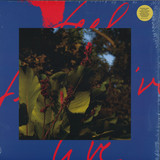
Massimiliano Pagliara - Feel Live 2x12"

The body never lies. Every dance is a graph of the heart. Nothing is more revealing than movement.

These are the words of Martha Graham, one of the greatest American dancers and choreographers of the 20th century. Massimiliano Pagliara might as well have them tattooed on his chest, close to his heart, being an accomplished dancer, too. He has studied contemporary dance in Milan and Berlin, and went on to dedicate his life to transforming experience into movement, be it musical, physical, or spiritual. Massimilano's message is clear: Don't stand still. Don't keep looking back. Know where you are coming from, but don't remain petrified by the past. Take a chance at Endless Change, instead. Move on! Just like Massimilano did.

Stemming from Lecce province, an area at the south-eastern-most tip of Italy, Massimilano has been based in Berlin for several years where he's been one of the main forces behind recombining the city's hardboiled techno scene with an often overlooked sensibility for the soft and the tender. Call it underground disco passion. Massimilano's last and sophomore album, With One Another, released in 2014, was about celebrating the joy of human encounters and in parts seemed like a big get-together with like-minded artists and friends (among them nd_baumecker, Lee Douglas, and Credit 00). The record quickly hit the number one spot in Groove magazine's album chart - and its creator hit the road.

Besides his busy DJ schedule and far from the usual club circuit routines, Massimilano dedicated himself to intense travelling and exploring the world anew. 'I felt like I have lived more than ever,' he states. 'Getting to discover all these beautiful places around the world and meeting so many lovely interesting people, has inspired me in many different ways. I feel enriched.'

The result of these experiences is Feel Live, Massimiliano's third full-length endeavour. It was recorded in several intimate, sometimes improvised studio settings between Los Angeles, Portland, and Massimiliano's homebase in Berlin as well as at airports and on intercontinental flights high up in the sky. Featuring vocals by Private Agenda, Peaking Lights, Kim Anh and instrumental contributions by Fort Romeau, Tim K, and Jules Etienne, Feel Live is Massimilano's most playful and imaginative work to date. It's as emotional as sensual, as vibrant as the first ray of light after a thunderstorm has cleared the air.

Is it awkward or odd to call this record jazzy Presumptuous to pinpoint its spacial, almost orchestral qualities Unfair on the ruling Cosmic powers to highlight its aspirations of founding a new land of Balearic Harmonia and getting down at a huge fertility rite with electro enthusiasts and house lovers Not one bit. Feel Live is pure grandeur and elegance. It feels like an eternal movement.

Martha Graham has dedicated her whole life to dancing. 'It's permitting life to use you in a very intense way,' she said. 'Sometimes it is not pleasant. Sometimes it is fearful. But nevertheless it is inevitable.' Massimilano couldn't agree more. His advice when facing the inevitable: 'Live what you are feeling, feel what you are experiencing, good or bad, it is an experience.'

nicht am Lager

Bestelle jetzt und wir bestellen den Artikel für dich beim Lieferanten.

22,31

Last In: vor 7 Jahren
Peter Gordon - Eighteen

Peter Gordon

Eighteen

12inchFM016 / 169401
FORRINER MUSIC
23.10.2018

The New York Downtown Producer/Composer Returns With His First New Album In 3 Years

EIGHTEEN: the year of release, 2018. EIGHTEEN: the age at which I first used a synthesizer.

In creating EIGHTEEN I worked independently in the studio, initially building up tracks with synthesizers and found sounds recorded in my daily comings and goings. After working with the tracks over a period of months,I shared them with a few musicians, who added their own instrumental layers. Though working independently, we all shared a similar working process: working in our personal recording spaces, as opposed to larger recording studios.

The musicians are: Gabe Gurnsey (drums) of Factory Floor, with whom I collaborated on the Beachcombing EP and performed live at London's ICA. I appear on Gabe's newly released album Physical;

Larry Saltzman (guitar) has played in my Love Of Life Orchestra since the 1970's. Well-known for his work with Arthur Russell ('Kiss Me Again', Flying Hearts), he is in high demand in NYC by acts such as Simon and Garfunkel;

Paul Nowinski, (bass) has played with LOLO since the 1980's. Paul has an impressive list of credits, including Les Paul, Keith Richards, Bernard Purdie and the Boston Pops; Matt Mottel, (electric piano), is the newest addition to the Love Of Life Orchestra. He is half the duo Talibam!, a leading act in the noise jazz scene; Lewin Barringer, (guitar), is a talented guitarist and producer in Philadelphia.

After mixing the final tracks, I brought the mixes to Berlin. There I worked with the brilliant mastering engineer Mike Grinser who helped to give the album a unified sound.

I think of this album as electronic music. It was created in my home studio, using analog and digital synthesizers, found sounds recorded on my phone, and instrumental parts contributed by friends. Finely crafted melodies and harmonies are set against subway noises, street construction, and distant foghorns. Sometimes there are sustained clusters, generated by my leaning against the keyboard. Deliberateness paired with randomness: this is what guided the artistic process.

This album is atypical for me as I am not playing saxophone. (I do play one reed instrument - a harmonica.) I grew up with the sax as my primary instrument. Yet my father was a radio journalist so the reel-to-reel tape recorder was a ubiquitous presence in the family home. From an early age,

I experimented with the tape machine: recording, overdubbing and splicing tape. I learned about Varese from Frank Zappa liner notes; I read John Cage's 'Silence.' Electronic music was on my radar.

My first exposure to an actual synthesizer came when I recorded my first single at the fabled Sound City Studio in Van Nuys, CA. The studio had a custom Neve board, but it also had a firstgeneration Moog modular synthesizer sitting unused in the maintenance room. I asked and they kindly let me experiment with it. Soon, I enrolled at the University of California - San Diego after I discovered they had separate studios for their Moog and Buchla systems. These large modular synthesizers were affordable then only by institutions and rock stars. But these would be soon eclipsed by smaller, cheaper synths in the 70's and early 80's. In the same way, recording studio technology became accessible in the 90's. . And thus the personal computer and digital audio allowed studio quality production in the home studio. Electronic music had become democratized.
Handmade music by way of digital technology: this is the music of EIGHTEEN

nicht am Lager

Bestelle jetzt und wir bestellen den Artikel für dich beim Lieferanten.

22,23

Last In: vor 7 Jahren
Clifford WHITE - Lifestream

The spiritual and uplifting music of Clifford White is highlighted with two of his most sought after songs, taken from his 1989 album The Lifespring, and presented here in a special extended 12" for the first time. Starting in music production at just 15, White could be described as a protegee, however his take is that they were part of a music journey that continues today. With a centre found in electronic music and spirituality, his progress, from simple home use 4-track stereo to working in professional 16-tracks studios was swift, but matched by a deeper appreciation, greater confidence and wider palette of music styles. Utilising his love of early samplers, his first use of the Akai S612 to accompany and expand his keyboard recordings saw continued development from his debut album at just 17 with Ascension (1985), to the follow up Spring Fantasy (1987) and on to The Lifespring (1989). A small review in the local paper literally led to a knock at the door and offer of a deal from the Start (State Of The Art ) label to record his next album. With a subsequent advance, professional studio equipment was hired and out of these sessions his sound expanded to include ambient, orchestral, synth pop and even ballads. From this both Lifestream and Rain Trek emerged. With a love of Jean Michel Jarre's Oxygene in mind, Lifestream's smooth beginning soon gives way to the pulse of an arpeggio driven groove. Aiming for "relaxation with an edge", the track has become a secret play for the more Balearic minded DJ in the decades since and now sees the LP trade for dizzying sums. However, the original is achingly brief, gracefully fading as part of the album's journey. Here though, with DJs and collectors in mind, White returns to the song to craft a specially extended version that completes the song and will be appreciated at sunsets across the globe. Seeking to take the music and listener to another place, Rain Trek took White's interest in Sci-Fi and the mystic powers of water to a rightful conclusion. The healing nature of his music is apparent, the mystery, yearning and travelling, all emotions evident, but with a kick that will grace the more enlightened dance.

nicht am Lager

Bestelle jetzt und wir bestellen den Artikel für dich beim Lieferanten.

11,56

Last In: vor 7 Jahren
Various - Two Niles to Sing a Melody: The Violins & Synths of Sudan
 
16

In Sudan, the political and cultural are inseparable. In 1989, a coup brought a hardline religious government to power. Music was violently condemned. Many musicians and artists were persecuted, tortured, forced to flee into exile — and even murdered, ending one of the most beloved music eras in all of Africa and largely denying Sudan's gifted instrumentalists, singers, and poets, from strutting their creative heritage on the global stage.

What came before in a special era that protected and promoted the arts was one of the richest music scenes anywhere in the world. Although Sudanese styles are endlessly diverse, this compilation celebrates the golden sound of the capital, Khartoum. Each chapter of the cosmopolitan city's tumultuous musical story is covered through 16 tracks: from the hypnotic violin and accordion-driven orchestral music of the 1970s that captured the ears and hearts of Africa and the Arabic-speaking world, to the synthesizer and drum machine music of the 1980s, and the music produced in exile in the 1990s. The deep kicks of tum tum and Nubian rhythms keep the sound infectious.

Sudan of old had music everywhere: roving sound systems and ubiquitous bands and orchestras kept Khartoum's sharply dressed youth on their feet. Live music was integral to cultural life, producing a catalog of concert recordings. In small arenas and large outdoor venues, musical royalty of the day built Khartoum's reputation as ground zero for innovation and technique that inspired a continent.

Musicians in Ethiopia and Somalia frequently point to Sudan's biggest golden era stars as idols. Mention Mohammed Wardi — a legendary Sudanese singer and activist akin to Fela Kuti in stature and impact in his music and politics — and they often look to the heavens. A popular story is of one man from Mali who walked for three months across the Sahel to Sudan because the father of the woman he wanted to marry would only allow it if he got him a signed cassette from Wardi himself. Saied Khalifa is said to be the one of the few singers to make Ethiopian emperor Haile Selassie smile.

Such is the stature of Sudanese singers and the reputation of Sudanese music, particularly in the "Sudanic Belt," a cultural zone that stretches from Djibouti all the way west to Mauritania, covering much of the Sahara and the Sahel, lands where Sudanese artists are household names and Sudanese poems are regularly used as lyrics until today to produce the latest hits. Sudanese cassettes often sold more in Cameroon and Nigeria than at home.

But years of anti-music sentiment have made recordings in Sudan difficult to source. Ostinato's team traveled to Ethiopia, Somalia, Djibouti, and Egypt in search of the timeless cultural artifacts that hold the story of one of Africa's most mesmerizing cultures. That these cassette tape and vinyl recordings were mainly found in Sudan's neighbors is a testament to Sudanese music's widespread appeal.

With our Sudanese partner and co-compiler Tamador Sheikh Eldin Gibreel, a once famous poet and actress in '70s Khartoum, Ostinato's fifth album, following our Grammy-nominated "Sweet As Broken Dates," revives the enchanting harmonies, haunting melodies, and relentless rhythms of Sudan's brightest years, fully restored, remastered and packaged luxuriously in a triple LP gatefold and double CD bookcase to match the regal repute of Sudanese music.
A 20,000-word liner note booklet gives voice to the singers silenced by an oppressive regime.

Take a sail down the Blue and White Nile as they pass through Khartoum, carrying with them an ancient history and a never-ending stream of poems and songs. It takes two Niles to sing a melody.

nicht am Lager

Bestelle jetzt und wir bestellen den Artikel für dich beim Lieferanten.

28,87

Last In: vor 5 Jahren
MARGO WILLIAMS - GOD SAVE AND PROTECT ALL THE CHILDREN

The wonderfully monikered Golden Flamingo was one of many labels operating alongside the now legendary P&P Records imprint in late 70's to early 80's NYC. Fans of deep Disco, raw gritty Soul and rare as hen's teeth Electro and early Rap know of the cult status of it's brief but influential output and in recent years the P&P label and it's associated entities have enjoyed further popularity through the exposure of it's music by some of the world's most respected DJ's and selectors, and rightfully so. An amazingly lo-fi, endearing and overtly underground aesthetic runs through all of the labels, from the label artwork down to the music itself. This style is evident on Margo Williams' epic 'God Save And Protect All The Children', a colossally rare 12" from back in 1980.
A huge, drifting soulful Gospel number, 'God Save...' has been an oft overlooked gem in the wider P&P related catalogue. Not much info is known about Williams other than she contributed backing vocals to some classic Disco records including Inner Life's 'Inner Life II' and The Salsoul Orchestra's christmas LP as well as appearing on other P&P projects. The production on this record was handled by the absolute powerhouse duo of Peter Brown and Patrick Adams so it oozes that amazing quality that these 2 legendary studio figures brought to all of their projects - the trademark P&P sound. It's all here in this beautiful stirring plea to the lord to look after all of us set to some incredible arrangement and production. It's obvious these self-made music industry legends were at the top of their game back then and one only has to explore the rich and diverse catalogue of amazing music they've given us over the decades. Absolutely essential repress action here.

This is a 100% legit reissue, made in conjunction with Above Board distribution and the Demon Music group, lovingly remastered with love by Optimum Mastering, Bristol UK. Housed in original 1980 release full sleeve artwork.

nicht am Lager

Bestelle jetzt und wir bestellen den Artikel für dich beim Lieferanten.

9,71

Last In: vor 6 Jahren
Video Age - Pop Therapy

Video Age

Pop Therapy

12inchINF021LP
Inflated Records
17.07.2018

On Video Age's forthcoming album Pop Therapy, out June 22nd via Inflated Records, longtime friends and songwriting partners Ross Farbe and Ray Micarelli conjure up a thrilling assortment of experimental pop songs. Using a palette of vintage synthesizers and the propulsion of a Sequential Circuits Drumtraks drum machine, the New Orleans-based group's buoyant synth-pop echoes from some imagined vision of the past, leaning on an invented nostalgia to soundtrack an ideal future that never arrived. Video Age brings that future fully to life on Pop Therapy. Emerging from New Orleans' DIY scene and label collectives, Farbe and Micarelli were intrigued by each other's songwriting among several curiously satisfying guitar pop bands. As a producer and prolific engineer, Farbe has helmed some of the most exciting releases from genre-pushing New Orleans artists, whose singular visions are made possible with his gifted ear and love of tape recording. Micarelli's talent for crafting simple, tangible melodies complements Farbe's studio world-building, letting ideas drift until they emerge into impressive arrangements. The pair's seemingly effortless gift for crafting earworm hooks was glimpsed on their 2016 debut Living Alone, a gorgeous collection of guitar-driven melancholy. On Pop Therapy, they're joined by Duncan Troast, Nick Corson and Jordan Odom, taking inspiration from the limitless possibility on sonic canvases of the late 1970s and early 1980s (Yellow Magic Orchestra, McCartney II, Donald Fagen's The Nightfly). Where Living Alone catalogued the solitude of reflecting on what was and could have been, the sentimental love songs on Pop Therapy gaze longingly at the likeliness of a brighter tomorrow.

nicht am Lager

Bestelle jetzt und wir bestellen den Artikel für dich beim Lieferanten.

17,52

Last In: vor 7 Jahren
Teleseen - The Emotional Life Of Savages

the producer, multi-instrumentalist, DJ and record collector Gabriel Cyr AKA Teleseen releases 5th album 'The Emotional Life of Savages' via French imprint Goldmin Music.

African rhythms, Latin heat and otherworldly electronics collide like neurons, processed through a New York state of mind. The pancontinental sounds are mirrored in his own life, which has oscillated back and forth between various countries.

A jazz background combined with a love for house and techno are ingrained in the grooves. Also key is the samba, baile funk and MPB that inspired him while living in Rio de Janeiro, plus the sounds he reabsorbed on returning to NYC's club scene.

This wide range of influences spanning the global underground coalesces into a rich, vital and coherent whole. Warm and soulful, but also evoking an intoxicating, heady atmosphere, the hypnotic and ultra-rhythmic tracks subtly shift and build to fever pitch, due primarily to deft polyrhythmic drums and percussion - both played and sequenced.

"Working on this record I finally found myself able to manifest a certain sound I'd been hearing in my head for years, combining the rhythmic intensity of afro-house and afro-Brazilian music with the more cosmic sounds of Detroit and deep house", explains Cyr on his musical vision.

The gentle sundowner glow of 'Myrtle Avenue' with its textured synth waves and wandering Parrish-esque keys acts as a precursor to the potent nocturnal adventure to follow: 'Espelhos' captures a similar essence to Black Science Orchestra's classic 'Save Us (The Jam)', before the heat goes up and heads go down for the eastern-tinged, autotune-laden fire of 'Khalil'.

The album then intensifies further still on the percussion-heavy, big bottomed cosmic throb of 'Jaguar', whilst Brazilian flavour meets tech house rush on 'Fundos', before the party reaches its feverish close on the wiggling batucada- meets-tribal-house of 'Temporada De Seca'.

Born in the north eastern United States, as an adult Cyr has always been nomadic. He has sought to live and immerse himself in other cultures and absorb their sounds, but eventually always succumbs to the Big Apple's magnetic pull. Back home, a key inspirational catalyst for the album was the Brooklyn-based party Africainoir, where he's a resident DJ.

Alongside cutting his teeth producing illbient/hip hop and working as an engineer, he ran his own studio for period, before starting his own label Percepts, on which to release his dub techno style debut. He has since released on 100% Silk, Boomarm Nation and Feel Up Records, and now 'The Emotional Life Of Savages' marks Teleseen's first album for Goldmin.

nicht am Lager

Bestelle jetzt und wir bestellen den Artikel für dich beim Lieferanten.

10,04

Last In: vor 7 Jahren
Joel Sarakula - Love Club

Joel Sarakula

Love Club

12inchLEGO138VL
LEGERE RECORDINGS
24.04.2018

Do you like Love songs After spending a lifetime spent avoiding this subject in song, Joel Sarakula finally admits that he does. On his new album "Love Club" Sarakula relives the golden age of Soulful and Romantic Pop music and connects it with a modern aesthetic. While a deeper message of love and peace flows through the record, Joel Sarakula is no old fashioned hippie: ",Love Club' is about connecting to reality and re-framing the idea of romantic love and loss in the present, loveless age ". Featuring eleven songs touching all genres from disco to blues, from soul to soft-rock, Joel Sarakula's "Love Club" is a profound pop statement.

Joel Sarakula has travelled the world in search of his muse, experiencing everything from being a victim of Caribbean carjackings to performing in the remote fishing villages of Norway, via the dive bars of Europe and the US. It was the hodge-podge musical tapestry of England's capital that finally drew him to a settling point, in the wake of seemingly never ending run of shows. With personal tastes that span from the more avant-garde to soul and pop greats like Sly Stone, Todd Rundgren and Hall & Oates, there are clear nods to contemporaries like Unkown Mortal Orchestra, Erlend Oye and Toro Y Moi in terms of ambition and style.

With his last two albums "The Golden Age" and "The Imposter" collecting strong radio plays at BBC Radio 2, BBC 6, BBC London, XFM Joel Sarakula has been play-listed nationally in Europe including Flux FM, WDR 5, Radioeins, Bayern 2, Deutschlandfunk and Deutschland Kultur Radio in Germany as well as in Benelux and Italy and Spain. He is a regular fixture on the live festival and club circuit in the UK, Europe and internationally including appearances at SXSW, Primavera Sound, Glastonbury, The Great Escape, Liverpool Sound City, Scala London, Tallinn Music Week, V-ROX (Vladivostok) and Reeperbahnfestival Hamburg.

"Love Club" is Sarakula's bold and unashamedly emotional next step. In essence the album is a homage to the soulful singer & songwriter artistry of the Seventies filtered through a darker contemporary lens - fitting for these uncertain times. "I always shied away from generic love songs," the Sydney, Australia born songwriter admits, "but on this record I embraced the subject wholeheartedly... and intellectually, looking at themes of love, lust, loneliness and everything in-between." Take the first single "In Trouble", co-written with Michele Stodart of The Magic Numbers, as the best example for Joel Sarakula's unique, and honest approach to making music. "We Used To Connect" questions the changing nature of relationships in our social-media addicted world: 'We used to connect in the real world too, now the touch of your hand is a digital cue'.

"Coldharbour Man", on the other hand, examines the identity of the song's narrator and the artist vs. fan dynamic all wrapped up in a disco love song: "There's a lot going on in this particular track. I feel my writing has grown emotionally...", explains Joel Sarakula. "Just best to listen yourself and make up your own interpretation!: 'We met in a song come to life like some fantasy cliché, though I'm known for my moves in the dark you flooded sunshine on my day'. Then there's "Baltic Jam", capturing romantic love and loss in authentic 70s confessional singer & songwriter style and of course "Dead Heat", a song about how there is struggle in the most perfect relationship pairings as the match is so even: "I recall an ex-girlfriend of mine... when we first met, we thought we hated each other but we eventually flipped that emotion and realised we had a deep passion and love for each other, there just was a lot of underlying sexual tension!" : 'It's a battle we could only win, if we lose. We'd be stronger if these lonely ones became two'.

More than a year in the making, Joel Sarakula recorded "Love Club" in various studios around London and Berlin capturing soulful performances from his many musical comrades on vintage analogue equipment. "This record has truly been a labour of love. Recording and privately sharing these performances amongst my collaborators started to feel like a bit like a club - I guess that lead to the album title! I was surprised how much I actually enjoyed the 'love-making process' and I look so much forward to playing these new songs on stage with my band." We can't wait, Joel Sarakula.

nicht am Lager

Bestelle jetzt und wir bestellen den Artikel für dich beim Lieferanten.

14,08

Last In: vor 5 Jahren
Once And Future Band - Once And Future Band

In the vapor trail of How Does It Make You Feel,' the first track on this self-titled full length, one can smell the burnt ozone of a seventies-full-orchestra-nebula-pop-odyssey, the flakes floating down and landing like snow, giving grave-chills ... the ash of a masterpiece pop song. Once And Future Band: this incredibly accomplished cabal of total prog wizards has circled the earth, but then, these are the accomplished gentlemen of many former pursuits (the formidable Drunk Horse among them) and all of them comets themselves.

The very mid-'70s vibe at work here surpasses pastiche, and crests that lovely anachronistic conceptual peak: a fully realized and meticulously arranged psych record, meant to be listened to from top to bottom, with the lights down low and in a comfy chair perhaps, or while gazing out the window of your life pod. The Dark Side of the Moon feel, with shades of early Yes's technicality, a dash of Steely Dan's vocal prowess and effortless sheen, and some seriously outsized hooks that call to mind the mighty ELO, Le Orme and, yes, even the unsinkable Queen powered on Brian May's tape echo jet fuel and sequined power cells.

This is a head record in the classic sense but utter fealty to The Dark One insures both being trapped and infected by the pop-parasite. That it is largely self-produced (with tracking / engineering on three of the songs by Phil Manley at El Studio) makes it all the more jaw dropping. Making prog cool again, again, and then slightly more complicatedly, again.

nicht am Lager

Bestelle jetzt und wir bestellen den Artikel für dich beim Lieferanten.

20,13

Last In: vor 8 Jahren
Penguin Cafe Orchestra - Union Cafe 2x12"

Union Cafe turned out to be the last collection of new material the original PCO recorded, originally released 1993.
This album retains the intimacy and charm of all previous works, featuring a recording of the electric Aeolian harp on Cadbury Hill, Somerset, and a piece dedicated to the memory of John Cage recorded at the Real World recording week in 1992.
Union Cafe is a vigorous re-statement of traditional Penguin musical values. The African inheritance was again rearranged in Kora Kora, Venezuelan cuatro strums infused Lifeboat, the sound of the deep South of America was subtly hinted at in Nothing Really Blue.

nicht am Lager

Bestelle jetzt und wir bestellen den Artikel für dich beim Lieferanten.

21,56

Last In: vor 8 Jahren
Petar Dundov - At The Turn Of Equilibrium LP 4x12" + CD

140-gram 4xLP, heavyweight package including CD. One time pressing of 500 copies worldwide. The follow-up to highly acclaimed Sailing Off The Grid album

"Expect the story of life as a self-reinforcing structure that never reaches the perfect balance. The concept behind the album is to bring awareness that the balance is an illusion and that's why it's called 'At The Turn Of Equilibrium'. Petar Dundov

Petar Dundov, a stalwart of the Croatian scene and a fine purveyor of sophisticated melodic techno, has been a prominent and respected name within underground dance music for over two decades. Throughout his career, the gifted Croatian has achieved much praise and recognition through releasing no less than four acclaimed artist albums ('Sculptures 1-3' in 2001, 'Escapements' in 2008, 'Ideas From The Pond' in 2012 and 'Sailing Off The Grid' in 2013) and performing at some of the world's best clubs and festivals such as, I Love Techno (BE), EXIT (RS), Awakenings (NL), Berghain (DE), Womb (JP), Air (NL), Fuse (BE) and Space Ibiza (ES).

The inspirational eight-tracker, 'At The Turn Of Equilibrium', is Dundov's fifth long-player and encompasses all of the inimitable production qualities of his previous albums whilst exploring a broader set of moods and themes, delivering what feels like his most accomplished work to date. Dundov explains, "This time, in addition to using more sound textures I introduced parts with classical instruments like piano and strings. As the album is about life and how it evolves, from purely a physical body to a thinking person, the songs are sequenced from faster, simple-rhythmic, cyclic, body moving tracks to slower, more complex layered, beatless mind tracks."

The album's impassioned opener, 'Then Life', commences the release by taking us on a captivating journey of complex melodies and soothing ambient textures. The album continues by showcasing a wealth of hypnotic masterpieces such as the dark and slow-burning 'The Lattice', the thought-provoking 'Before It All Ends' and the Kraftwerk-esque 'Midnight Orchestra'.

Other highlights include, the Vangelis-influenced up-tempo groover 'Mist', the lush ambient soundscape 'New Hope', the uplifting and emotional 'Missing You' and the hugely stimulating synth-driven melodic work-of-genius 'Everlasting Love' which concludes the album.

'At The Turn Of Equilibrium' is a very absorbing and imaginative album that's been driven by Dundov's eternal quest of translating sound into emotion. Developed like a well-constructed DJ set, the album has not only been designed to invoke personal insight for music to be the catalyst for understanding but also make sense as a listen, highlighting Dundov's unparalleled talent, depth and versatility as a DJ/producer.

nicht am Lager

Bestelle jetzt und wir bestellen den Artikel für dich beim Lieferanten.

29,37

Last In: vor 2 Jahren
Various - Amplificador - Novssima M¨sica Brasileira

Over the past few decades, there has been a seismic shift in Brazil's musical landscape. A plethora of varying musical undergrounds has developed across the nation. While Rio and São Paulo have been overwhelmed with networks of talented musicians for a long time, creative life is now bursting all over the country. Amplificador exists to document and propagate the wonderfully diverse music currently blossoming from Brazil's vivacious and geographically varied musical undergrounds. Presenting an up-to date insight into Brazilian music, this compilation draws together some of the components of 'Novíssima Música Brasileira' (brand new Brazilian music), ranging from afro-grooves to rock, to modern samba and MPB. The music reaches back across Brazil's incredibly rich musical and cultural traditions, while also taking in influence from other movements around the globe.


Having begun life in 2012 as a Brazilian music blog run by Marcelo Monteiro, Eduardo Rodrigues, Mateus Campos, and Ricardo Calazans, the aim of Amplificador is to document and propel to wider audiences, Brazilian music of the '00s and '10s generation. This is a task made more significant by obvious changes in the way music is consumed. 'People are no longer obliged to listen to what the radio and TV are presenting. There is a whole new generation that wants to listen to new bands and new sounds and we try to connect those bands with other bands, producers, fans and even the mainstream.' These changes in technology and the way music is discovered and shared have developed parallel to the proliferation of these emerging scenes. The ostensible decentralization of the music industry means the promoting and filtering work of journalists and blogs, like Amplificador, have become increasingly important, as people try to keep up with the tsunami of new music and media flooding the country on a daily basis.


Marcelo uses the example of the Mangue Beat movement to explain a trend in contemporary Brazilian music that looks both inwards, to Brazil's own musical traditions and outwards, to movements around the world to create a novel, localised identity: 'The 90's Pernambuco art-social movement was inspired by Coco, Maracatu and Forró all mixed with modern riffs and grooves. The mythical

revolutionary Chico Science, his Nação Zumbi, Mundo Livre, Siba, and many others do this blend perfectly. There are also the references to the older generations and masters - Gil, Caetano, Luiz Gonzaga, João Gilberto, Tim Maia, Jorge Benjor - as a constant inspiration for all bands.' This is very much the case for the Brazilian artists of today.


Music is unquestionably informed by place. Brazil has always been famed for its regional differences in this sense. Indeed there are still pronounced variations between the scenes of Rio, Sao Paulo, Natal, Goiânia, Belo Horizonte and Belém for example, there are also great divergences within cities and while technology has brought changes to the way musical influences are shared, there are cultural differences, rooted in folkloric traditions, that aren't going away. Expressing his appreciation for this fact, while highlighting the potential of Brazil's spread of musical flavours, Marcelo explains that 'what we have now is new ingredients to make an even better mixture.'

This compilation heavily features music from a scene in Brazil's current musical make-up, which draws inspiration from African music, particularly Afro-beat music. Abayomy Afrobeat Orchestra from Rio formed because of their shared love of the music of Fela Kuti, uniting initially in 2009 for a jam session in his honour. But what sets Abayomy apart from other groups of a similar nature, is the fact that their sound also brings with it the songs and rhythms of candomblé. In this sense, Abayomy was the first band of its kind. The thirteen members of the orchestra have a palpable current of Rio's musical heritage - its rhythms and culture - running through them. So while their sound is distinctly African, it is also inherently Brazilian. Similarly, Zebrabeat Afro-Amazônia Orquestra draw upon traditional guitarradas and carimbos from the state of Pará and fuse these with the poly-rhythms of Afrobeat to create another regional hybrid, which stays true to both its Amazonian and African roots, yet which results in a very fresh, Brazilian sound. From Belo Horizonte (capital of Minas Gerais), Iconilli are another key band on Brazil's Afro-groove scene. With influences as varied as funk, jazz and psychedelic rock, congado, mining harmonies, maracatu, coco, ijexá, carimbó, Iconilli somehow manage to balance all of these sounds in such a way that makes it impossible to pin them down. From the Northeastern city of Joao Pessao, Parayba, Burro Morto's pshychadelic afro sound leans more towards rock and funk influences, with hint of regional Brazilian rhythms such as frevo and forro. They add another flavour to the Brazilian afro-groove scene: just one of the many exciting facets of Novíssima Música Brasileira.


While African-inspired music features heavily on the compilation, it is just one of the many styles within. Ive Seixas has a fresh approach to MPB, based on traditional rhythms and instrumentation, punctuated by a pop sensibility, coupled with a powerful female vocal. As an artist she is a product of a 'Do It Yourself' outlook to creativity, taken from her love of rock growing up. In 2013 she embarked on a project of street performance: wandering, like a lonely troubadour with just her guitar. Ive and her project began to gain notoriety and shortly after, her first EP was recorded, featuring some important names of South Rio's underground scene. 'Cervejas Populares' taken from the EP, is a beautiful, sombre piece of modern Brazilian pop, with a traditional samba rhythm. Another artist of the new MPB scene is Fabricio, from the city of Vitoria, who's 'Feito Tamborim' melds rock and funk and is also clearly reminiscent of the old Brazilian masters. It's an appreciation for the national musical heritage, alongside a keen ear for melody and an acceptance of foreign influences that results in these promising new sounds of Brazilian MPB.

Sao Paulo's super group of the underground 'Passo Torto' have been at the helm of an emerging scene in the city: an innovative approach to samba which draws in and experiments with afro grooves, jazz melodies and rock structures. Their sound is naturally very Brazilian, but the nylon twang of Faira Lima Pra Ca, interspersed with ominous strings and light rolling percussion, seems reminiscent of Captain Beefheart or Tom Waits, as the band lament their frustrations with their native city through their music.


The Future of Novíssima Música Brasileira looks very bright. The main challenge (and purpose of this album) is to get the music beyond Brazil's underground and into view of international audiences. In the last 10 years this goal has become somewhat more attainable, as the Brazilian government has begun to see the internationalisation of the nation's culture as a strategic objective, with public projects gaining increased investment and backing. The continuing project of Amplificador is to reinforce this international bridge by writing, filtering and promoting the scene as a whole. There is a wealth of great music currently blooming in Brazil and using new media tools, Marcelo and the team, alongside many others, will passionately continue to get the voices of Brazil's underground heard.

nicht am Lager

Bestelle jetzt und wir bestellen den Artikel für dich beim Lieferanten.

20,80

Last In: vor 10 Jahren
Artikel pro Seite:
N/ABPM
Vinyl