Last volume of this compilation series, again a great one.., Holding amazing tunes from across the globe that you probably already have been looking for.... TIP!!
.
Over the last five years and as many volumes of their Beach Diggin' compilations, Guts and Mambo have explored the reefs of five continents, dredged the sea beds of countless seas and oceans, examined every single seashell with the aim of making sure that no vinyl pearl should escape their notice.
Tunisian reggae, Japanese disco, West Indian jazz-funk, the duo's aesthetic dribbling skills would stop the savviest Brazilian football player dead in his tracks, and it was with this in mind that they proceeded to select their discoveries. With a marked preference for meditative free-diving rather than tour package scuba diving, and isolated spots rather than massively overdeveloped beachfronts.
For this latest instalment of their adventures, Guts and Mambo have organised another expedition around the world, to salute the spots where for the last five years they have uncovered rare specimens, saving some of them from total extinction, while shining a light on others that amply deserved it.
Though each Beach Diggin' compilation can be listened to independently of the others, the five together now form a kind of navigational chart signalling with its green flags the places where, in Africa, Europe, Asia, America, and the South Pacific, they gambolled on sandy beaches, avoiding the well-trodden path, becoming more and more demanding with each passing year.
Beach diggin' is a state of mind...
out of Stock
Last delivered 12 months ago available to reorder, subject to availability
MFM's curious and utterly killer Afro/Belgian electronic project gets the re-whip by a bunch of current producers. The EP also includes the previously unreleased, Veronika V02 (a synth bass heavy version of the compilation track, Veronika 02).
out of Stock
Last delivered 2 years ago available to reorder, subject to availability
''Noir Jungle Part II'' finds the Italian producers 'Cardace & Perazzini' once again demonstrating originals and exciting modes of expression, not to mention the extraordinary level of detail in their music. It rounds the project off, with yet more unpredictable diversions of their immersive sound design to paint a vivid and unique landscape at its most dynamic framework. 'Swinging Plans' places the drums at the forefront of the mix, using incredible layers of brushed, rolling an expressive live recordings to create a truly thrilling experience that speaks to the deepest human instinct for rhythmic sound. 'Internal N.5', intensify the Techno-influenced energy as it races ahead on a tightly wound rhythm, adding a rich array of sounds into the mix to create a focused and detailed trip loaded with cinematic tension. 'George Is There', takes rich chords running through delay and reverb while maintaining a pronounced house groove with perfect and subtle touches of jazz into the track, invigorating sonic experience aimed at both, the mind and the dancefloor. 'Below the Earth', This is a perfect example of Cardace & Perazzini's exercise of restraint, keeping the mood simmering while still displaying their love for ear-snagging samples in between the folds of the track. 'Really Low Mind' sets a thrilling tone straight away with a rolling drum beat taking the lead and subtle tonal sweeps filling in the space around. It's a testament of skills when sequencing drums, not least when it peaks after a tantalizing breakdown. 'Night Train' sits easy on the ears but there is a deep level of production at work that reveals itself as the heavily processed samples of instrumentation starts to unfurl halfway through the track.
Ekoplekz returns with his fourth album for Planet Mu, in the shape of 10-tracker "Bioprodukt". The unique lo-fi, woozy sound of Bristol's Nick Edwards stays intact while he veers towards the nineties for inspiration: the bleep and bass sound of the north of England is one touchpoint and the acid gurgles of the 303 are another. While the murky lo-fi production levels and evocative melodies remain, they are now bolstered by a more muscular rhythmic chassis. Snappier kicks and snares mingle with dense layers of percussion and deep undulating sub-basslines adding a funkier edge, as typified by opening track "Elevation" where playful beats interlock with breezy keyboard flourishes to create something uncharacteristically upbeat. Similarly, the gentle, fluid motion of "Slipstream" and "Calypzoid" represent some of the most appealingly chilled grooves in the Ekoplekz canon to date. But the darker-edged material remains. "Expedition" has a pensive, percussion-heavy feel whilst "Acrid Acid" is a dirt-encrusted slow-mo techno meltdown. "Transcience" displays the Ekoplekz trademark dub-fx in full flight over a driving lo-end, before "Descent" leads down to the final section, where the beats fade out, replaced by rippling layers of spectral ferric ambience on the epic "Low-X Over", before finishing with the radiant looped stasis of "Denier Daze". The albums shifting, mperfect patterns and muted colours are visually mirrored in the beautifully realised sleeve by the Print Project.
5th Birthday comp featuring a host of artistst who've graced the label over the perioid.. Exclusives from Tolouse Lowtrax, Geena, Iueke, Domenique Dumont, . Inoue Shirabe, Raphael Top-Secret and more... Gatefold Sleeve. TIP!
.
Made of 14 sketches - each reflecting one of the many shades of the label's catalogue - Five years of Loving Notes features new names as well as those of artists who have been involved with the label since it's very beginning, like Geena or Iueke - responsible for the first 12' released on Antinote.
The music on this compilation covers a wide spectrum of moods and atmospheres, from the dark and raw excursions from Tolouse Low Trax or Iueke to the lush instrumental crafted by Nico Motte and Syracuse's Antoine Kogut; however as the listener gets deeper into the compilation, the whole of the tunes, sitting side by side on the records, start to make sense as they all seem to point towards the same direction. If one should try isolating a common trait from all these songs, one might come to the conclusion that it lies in the way they all speak directly to the listener's emotional receptors, unvarnished and without abusing of producer's 'tricks'.
We'll let the tricky question mentioned before in your hands once you will have been through this 63-minute long testimony of exclusive music by the artists who have been shaping Antinote's sound for five years; from the opening Latvian arabesques from Domenique Dumont to the Pink-Floyd-ian ending from the latest addition to the label, Alek Lee, via Leonardo Martelli's smoggy electro and Raphael Top Secret's ominous talk-over.
Here is the first musical highlight of Enough! Music in 2017. The label owners of Enough! Music will tell the next awesome story with their music project. The following releases are bind together with each other through the same tale. Each release gets you closer to the whole story.Enjoy listening to the invited third artist Basti Grub ( Hoehenregler,Desolat, Baile Musik). Four excellent and magnificent tracks from Danilo Schneider and Basti Grub. The different but affectionate selection is the secret of the whole EP. Enjoy our third journey !
We are proud to unveil our next vinyl release of 2017 on Dust Audio.
* Mikal takes his first bow for Dust Audio in the form of 'The Spirited EP'. The break and bass craftsman reigns down an assault of almighty weight for the imprint which holds no barred.
* Off the back of his critically acclaimed 'Wilderness' album on Metalheadz, Mikal continues to seek out the dance floor through his precision target and locks on for a serious assault of the senses.* The EP's title track 'Spirited' see's the sinister intro build up and transform into a bass laden drop. The stepping drums and jungle infused shuffles entwine with the ghost vocal, whilst the modulated bass will move even the harshest drum n bass skeptics. Unrelenting throughout.* The flip sees Mikal spread his considerable studio talent over two further tunes of constant surprise.
'Low Note' wastes no time in getting to the drop before you've had chance to take a breath. A thunderous one note bass underpins the mid ranged reece and stabs whilst the chunky drums compliment the tidy percussion nicely. A haunting vocal then sets off another 16 bars of unclouded rawness.* 'Linear' finishes the EP with aplomb. Synth chords open up into what you might expect to be a lovely liquid-esque style roller... think again! Mikal takes that premise and turns it upside down and inside out before bringing the dirty funk. Keeping in line with the 2 tunes before, this isn't for the faint hearted. Definitely one for the drum & bass purest, who may well be dancing, but will also be taking down mental notes!
* Mikal and Dust Audio continue 2017's release schedule in style...
After Leibniz focused on distorted grime and jungle influenced techno on his last records, he is now diving into deeper fields with his first EP for hundert. Over the time Leibniz has obsessively collected youtube videos that serve him as an audio sample library. Be it a review of a lawnmower or people singing to their pets, every track features bits and pieces of sound taken from these videos. By editing and cutting the original material the sounds get implemented into a new musical context.Pushing digital algorithms of music software to its limits and over the edge, Leibniz invokes digital artefacts that continue the motif of distortion.House and references to contemporary hip hop beats form the skeleton for four hazy out-of-the-ordinary cuts.
"Day Of My Death" by Pavel Milyakov, also known as Buttechno, is his 8th release coming out this year. It consists of 6 pieces which were composed for Gosha Rubchinskiy S/S 17 show and performed in a extraordinary place in Florence which is depicted on the front cover. Mostly ambient, overdriving noise soundscapes and spoken word collages referring to the dreamy mood of the show. This work is more serious and mature than Milyakov's previous releases, exploring deeper and sacred images of his world.
We want to present to your attention a compilation that consists of the Russian musicians' works. They're stylistically different, but in the same time they've got one energy and close affinity with classical sound. Musicians in this compilation represent a little-known stratum of a new Russian electronic scene. Their music embodies positive transformation of cultural values of our present and future. We'd like to thank all the musicians and those who support us. Peace!:)
out of Stock
Last delivered 10 years ago available to reorder, subject to availability
Hunting down the coolest sounds around the globe, the wewantsounds crew have curated another special mix for your Lazy Sundays. Dishing out a tasteful mix of new tracks from under the radar, this selection features a string of sunny pop, indie grooves, chilled electro and relaxed disco, the whole seasoned with a couple of leftfield cult classics and classy jazz tracks for good measure. Sunday Mixtape is the perfect sonic brew that will bring you back to life after a long night or hard partying. Many of the tracks in this selection have barely been heard outside of the underground circles and feature young artists who have just sprung out to life with the exception of UK soul diva ALA.Ni and the recent success of her melancholic jazzy album and L'Impératrice, the next disco big thing out of France, whose buzz is getting louder.
Here you'll find new French nouvelle vague singer Laure Briard, US groovy duet Bones & Beeker, minimal house producers Roscius and Shigeto as well as Domenique Dumont with a buzzing balearic beat.
Sunday Mixtape also features a few cult classics such as Mock & Toof's 'Farewell to Wendo', Louie Austen's 'Hoping' and Justine & The Victorian Punks' 'Still You', a sought after NY avant disco 1979 tune led by French expat fashionista Justine and saxophonist (and frequent Arthur Russell collaborator) Peter Gordon.
Trani has been representing the Detroit sound in Italy for some years now, with releases on Minimal Soul Recordings, as well as his own Pushmaster Discs (a label that has also hosted the likes of Ilario Alicante, Myles Sergé and Percyl). His latest outing will be his first full-length, an album inspired space travel, that continues to push Detroit sounds, as well as venturing into some jungle rhythms.
DJ FEEDBACK
early support from
Jeff Mills: I like the Alien Pattern Track!
Robert Hood: nice tracks from Mattia.
Dimi Angelis: Like this! Thanks!
Marcel Dettmann: Thanks.
Thomas Hessler / IMF: Nice one! Thank you!
Darko Esser aka Tripeo: Excellent album, right up my alley!
John Heckle: Thanks, some stuff I really like on here.
Marco Zenker: Sounds really dope! Thank you.
Jonas Kopp: Great stuff, will check carefully! Thanks.
Ben Sims: Plenty of great moments here, nice to hear some Detroit/real techno flavours on an album. Thanks!
Milton Bradley: Very nice tracks, 'Traffic 2 Traffic' is my fav.
Truncate: Downloading, thanks.
Donor: Really looking forward to giving this a good listen after download. Thanks.
Marcelus: Wow that's pretty... Very nice one, great tracks and the all thing makes sense, congratz!
Ben Gibson: Looking forward to having a proper listen to this.
Zadig: Really into electro stuff here, and 'Alien Pattern' is also great. Thanks.
Radio Slave: Great sounds here.
Die vierköpfige Band aus Ithaca (New York) X Ambassadors besteht aus Sänger und Gitarrist Sam Harris, seinem blinden Bruder Casey Harris am Keyboard, Gitarrist Noah Feldshuh und Schlagzeuger Adam Levin. Ihren bereits veröffentlichten EPs - Love Songs Drug Songs' (2013) und - The Reason' (2014) folgt nun ihr Debütalbum - VHS'. - Mir war wichtig, dass sich das Album insgesamt wie ein Film anfühlt', sagt Sam Harris. Wie in einem Film, geht es in den Songs um Bewegung, um Geschwindigkeit, um den Wunsch, irgendein Beziehungschaos und die Enge des Kleinstadtdaseins hinter sich zu lassen. Die erste Single - Renegades', ist bereits auf Hitkurs! Am Radio belegt die Single nur wenige Wochen nach Radiostart bereits #26 der Airplaycharts. In den USA chartete sie an die Spitze der Alternative Airplay Charts und der Triple A Radio Charts, sowie auf #8 der US Top 40 Radio Charts.
Die Single hat sich schon jetzt weltweit über eine Million Mal verkauft und verzeichnet über 45 Millionen Streams. In Kanada, USA und Italien wurde - Renegades' bereits mit Doppel-Platin ausgezeichnet. Die Band tourte mit Bands wie Imagine Dragons, The Lumineers und Panic! At The Disco und eröffnet im Januar 2016 acht US-Shows für Muse! Das Album erscheint als CD und Vinyl.l
Until December last year music was simply a hobby for Alex Crossan, aka Mura Masa. He may have had 7 million plays and 30,000 followers on Soundcloud but the 18 year old Channel Islander had never played his music live, DJ'd or even been to a gig himself. He had just started an English degree at Sussex University and was happy playing guitar and bass in function bands.
It was an email from Jakarta Records that changed everything. The Cologne-based label (previously home to Kaytranada, Iamnobodi and Sango) felt Mura Masa's mixtape 'Soundtrack To A Death' was too good to sit on Soundcloud and persuaded him to release it with them.
The following 3 months were a whirlwind, with 30 spins on Radio 1, a sold out debut show & a top 5 position on the itunes electronic chart in the UK and US. At one point Mura Masa had 4 tracks in the HypeMachine top 50 and remix requests from Ed Sheeran, Ellie Goulding, RL Grime and iLoveMakonnen in his inbox, whilst still juggling his degree.
So as Mura Masa prepares for his first official EP release the stakes are very different and he has upped his game accordingly. As well as the sampling for which he known, Mura Masa plays live piano, guitar, drums and even sings on Someday Somewhere. He is keen to show that he is a musician and songwriter as well as a beat-maker and has called on new friends Nao, Denai Moore and Jay Prince to feature on tracks.
Paul Epworth (Producer for Bloc Party, Adele, Santogold): 'That 18 year old is taking over the world right now and he's just delivering the most deeply textured music around, we have got such a talent on our hands in the form of Mura Masa and i think the UK has finally got our very own Kaytranada and it's not beyond him to overtake that, so good, ridiculous....
The second EP from Jack Dice sees a huge leap in ambition for the project, a 5 track session that's more addictive, direct and heady than its predecessor.
'Sip Paint' centres around 'Stash's Theme' featuring rapper and producer Stash Marina, a track that deploys crisp triplets and saturated production straddling mainstream signatures on the one hand and a world of analogue/deviant recording techniques on the other. It's an odd, hyper-addictive track - available here in both vocal and instrumental versions.
'Low Glo', 'Kerosene' and 'Radium Dial' are more subdued and immersive; you could draw lines straight through the material here to a number of different projects Twells has been involved with through the last decade, though he seems to benefit immeasurably from Chambliss' presence. The pair find a perfect balance between their respective disciplines, resulting in an EP that at different points throws stylistic references to everything from Prince's Black Album to The Art of Noise, Drake, Philip Jeck and Evian Christ's DUGA 3 sessions - without ever sounding overworked or too knowing, a feat in itself.
Driveline Records presents its first solo EP, welcoming Maltese producer Patient to the label. Across four tracks, Patient showcases his signature blend of deep low-end grooves, hypnotic atmospheres and driving rhythms, staying true to the label's vision of timeless, dancefloor-focused techno. The title track, "Genetic Mutation", opens the record with a powerful and atmospheric journey, combining hypnotic textures with a driving groove built for peak-time moments. On "Sphynx", rolling hi-hats, evolving percussion and subtle tension create a hypnotic, constantly moving groove that keeps the dancefloor locked from start to finish. Flipping to the B-side, "Drift" shifts the focus towards deep low-end frequencies. Rolling basslines, immersive atmospheres and subtle movement give the track a dynamic yet restrained energy. Closing the EP, "Not A Replica" delivers a classic syncopated groove, full of tension, punch and infectious swing. A functional dancefloor weapon that provides the perfect finale to the record. With DLR002, Patient delivers four distinctive cuts that balance atmosphere, groove and functionality, reinforcing Driveline Records' commitment to timeless, vinyl-focused techno.
What an unbelievable record. From the wild cover to the iconic breakbeats, Roots from Ian Carr’s Nucleus is one of the dopest albums we know. This is seriously thick, funky-prog jazz-rock heaven. Originally released on Vertigo in 1973, other than a couple of versions at the time for other territories, Roots was never re-pressed since so it’s gone on to become another one of those impossible to find records.
Maybe it was a little too out there for the time, but it’s aged very, very well indeed and this Be With re-issue, re-mastered from the original analogue tapes, shows off just why this deserves to be back in press.
Genius trumpeter and visionary composer Ian Carr was one of the most respected British musicians of his era. He was a true pioneer and saw the potential in fusing the worlds of jazz with rock, just as Miles Davis and The Tony Williams Lifetime did in the US. In late 1969, following the demise of the Rendell-Carr quintet, and tiring of British jazz, Carr assembled the legendary Nucleus. Regarding music as a continuous process, Nucleus refused to “recognise rigid boundaries” and worked on delivering what they saw as a “total musical experience”. We can get behind that.
Under bandleader Carr, Nucleus existed as a fluid line-up of inventive, skilled musicians. This constant evolution and revolution was all part of the continuous musical exploration and discovery that took jazz to new levels.
Working together with producer Fritz Fryer and engineer Roger Wake, the seven compositions by Carr, Brian Smith and Dave MacRae that make up Roots flirt with perfection, and Nucleus at that time made up of the cream of 1970s UK jazz with Brian Smith on tenor saxophones and flutes, Dave MacRae on piano and electric piano, Jocelyn Pitchen on guitar, Roger Sutton on bass, both Clive Thacker and Aureo De Souza on drums and percussion, Joy Yates delivering the vocals and of course Carr on trumpet.
The spellbinding title track immediately renders the album indispensable. Riding the illest of loping breakbeats, “Roots” is low-slung, doped-out heist-funk. An absolute monster. If it sounds familiar then that’s likely down to it being sampled by Madlib for Lootpack and Quasimoto’s “Loop Digga”, as well as by a whole host of beat manipulators. “Roots” conjures prime instrumental hip-hop / beat music, only 20 years ahead of its time. Truly, these are the roots. Through sinuous bass, twinkling keys and a hypnotic guitar riff, a smoky brass motif weaves its way into a gloriously deep haze around Carr’s solos. “Roots” is over 9 minutes long, but there’s not a single wasted second, not surprising given that this is a condensed version of an originally 40 minute long commissioned composition.
The soothing vocal fusion delight of “Images” follows. Meticulously constructed, with gorgeous flute work from Brian Smith, with Joy Yates’ silky vocals and Dave MacRae’s Rhodes never sounding better. The cool, driving “Caliban” closes out the first side. Originally the third movement in a four part commission to celebrate Shakespeare’s birthday it stands up on its own, all robust rhythms and blended brass. Keyboard colour and Carr’s trumpet are splashed across the funk drums and basslines (and there’s even some bamboo flute). This really is fusion: the elements of jazz and rock coming together in beautifully synthesis.
Side two opens in riotous fashion with the short, thrilling samba of “Wapatiti”. Next up, “Capricorn” forms a smoothed-out, jazzy constellation. Mellow and dreamy, its twinkling percussion and languid horns slowly build the vibe before head-nod drums and a killer bassline enter the fray. With a distinct heaviness that Black Sabbath would’ve envied, “Odokamona” is a venomous slice of riff-soaked jazz metal (yes, you read that right), elevated by Carr’s wah-wah horns.
The album closes with MacRae’s exceptionally cosmic “Southern Roots and Celebration”. Very much in conversation with Weather Report, it opens as a languorous, spiritual jazz of chiming keys and serene guitar that turns slowly, gorgeously into a mid-paced, brass-laced banger. It’s another sure-fire party starter and the sound of the band having a righteous blast, building an ecstatic chaos that ends with Yates screaming.
And of course we need to talk about Keith Davis’ cover for Roots. Perhaps the coolest record cover of all time? Certainly one of the most bonkers. Just your run-of-the-mill high-gloss, acid-tinged airbrush dystopian/utopian living-room party scene. Consider this your chemical flashback trigger warning.
Front-and-centre the hip-to-death green robot holds court with their giant ball of yellow barbwire wool, hooked up to… something(?) being teased out from under the stairs (probably best not to ask). A thoroughly zoned-out, long-legged Pop Art party-goer lounges half-plugged in to the painting behind her as a pair of legs flail into shot from the the top of the stairs opposite. We won’t even begin to guess what the chap’s up to in the middle, but the view out of the windows is rather nice, and someone’s already got the hoover out ready to tidy up. All of the Nucleus sleeves are something special, but this particular one? Crikey.
This Be With edition of Roots has been re-mastered from the original Vertigo master tapes, Simon Francis’ mastering working together with Pete Norman’s cut to weave their usual magic with these wonderful recordings. The crazy cover has been restored at Be With HQ as the finishing touch to this long overdue re-issue.
DJ Support: Glenn Underground, Leo Mas, Sean Johnston / ALFOS, Massimiliano Pagliara / Panorama Bar, Al Mackenzie / Field of Dreams, Shane Johnson / Fish Go Deep, Flash Atkins / Paper Recordings, Pete Gooding, Mark Broadbent, Max Essa and plenty more.
2026 has been a particularly busy year for Visions of Light, the Balearic/ambient/dub trio founded by Freebooter Records’ Simon Sheldon alongside Muzka and Dan Dub Lounge. Following the Dedications EP – their warmly received collection of Balearic dub reinterpretations of White Isle-friendly club classics – the trio return with ‘Mycelium Bloom’, the follow-up to their 2025 debut LP The Mandela Vortex. Mycelium Bloom sees Visions of Light expand their signature sound, blending downtempo dub grooves and sunbaked Balearic soundscapes with hallucinatory electronics and psychedelic touches. Layered guitars, deep bass, immersive textures and dreamlike melodies run throughout an album designed for both sunset listening and deeper late-night excursions.
Opener Split The Scene sets the tone with acidic electronics circling languid beats, heavy bass and spacious pads, while All The Best Thing taps into the spirit of early ’90s chill-out rooms, adding desert blues influences to its hazy, enveloping atmosphere. Holding Jupiter pushes further into psychedelic territory, built around low-tempo rhythmic drift, effects-laden guitars and expansive chords. Elsewhere, the trio reconnect with their rootsier dub foundations. B Town delivers a warm, summery skank, while Radiant Flux shifts towards Balearic dub dancefloor territory. Perfect You, featuring words written and performed by Richard Dormer alongside flute from Luis Vilca, is a gorgeous sunset-ready highlight, while Let Go closes in on pure Balearic bliss through gentle melodies and slow-burning atmosphere.
KYSH returns to wax with its third vinyl release — another milestone in the label’s steadily growing catalogue. More than a year and a half into the journey, KYSH feels more in its element than ever, bringing together five names that represent both the label’s own extended family and fresh acts joining the ranks. All well-established and highly respected figures in the modern techno landscape, they deliver a sharp selection of contemporary club weapons. Kashpitzky opens with “Blush”, a raw, boomy cut where rough-edged rhythmics meet crisp modern production, channeling the spirit of industrial techno at its best. “Tarmac” by Regent follows with a dense, restless groove, while Chontane’s “Gyuto” dives into hypnotic territory, layering rhythmic elements around subtle dissonant melodies. On the flipside, Temudo & Pierce join forces for the threatening, aggressively contemporary “Highest Clarity Grade”, balancing intricate sound design between rhythm and atmosphere. Closing comes GCOD with “Sleeper Agent” — dancing sub bass, a striking hook and a relentless hi-hat groove keeping the weight firmly down low. Another strong statement on wax, KYSH-003 confirms the label’s vinyl output as a mark of quality, with five floor-tested cuts drawing from a fresh, current take on the industrial influences that shaped techno a decade ago. A new lineup, a distinct direction, and five tracks ready to speak for themselves on a proper soundsystem.
Amazing house anthems! The debut release, FD001 quickly gained international attention for its lowslung, dirty house groove, catching the attention of Claude VonStroke and the Dirtybird camp, with the track selected for Claude’s Live @ Movement mix. Since launching the label, Freak Division has continued to build momentum with a growing catalogue of original releases while also maintaining a strong presence on respected house labels worldwide. Drawing inspiration from their US house influencers, the duo’s recent productions have evolved to incorporate the warmth, swing and character of classic 90s house. The new direction has also seen the emergence of their latest moniker, House Monsters, showcasing a deeper connection to timeless house music while pushing their sound into new territory.
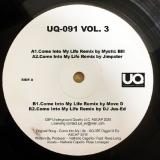
The third and final volume of remixes of 'Come Into My Life' by Nathalie Capello and Rose Lonegran is yet another doozy for lovers of emotive, meaningful deep house. Another bunch of heavyweights step up, starting with Mystic Bill who teases out a steamy-hot lead and builds a vibe around it. UK mainstay Jimpster plays with a dubby and bubbly low end, while Move D finds jazz-funk in the squelchy bass. Last of all, Underground Quality head DJ Jus-Ed steps up with his remix and explores more dusty textures, a slightly unsettling synth vibe and roomy, hypnotic grooves for late-night dancing.
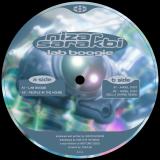
Radiant, spring-loaded and alive with movement, Lab Boogie sees Jupiter’s Depth go full dancefloor as Vienna-based Nizar Sarakbi makes his first appearance on the label.
The A-side cuts a brighter path through house, with rolling low-end, dubby flashes and percussion flickering from every angle. Across the B-side, the groove turns techier and the mood slightly darker, before Bella Sarris closes the record with a warped, off-centre take on “Angel Dust”.
Ukrainian-born and now based in Vienna, Nizar follows releases on Outdom and Naked Groove Records, including the recent *Truth Seekers* EP alongside COZi. The record is already picking up support from label favourites Julian Anthony, Christopher Ledger, Roza Terenzi, Eoin DJ and Jennifer Cardini.
For the label's latest, Oath is proud to present 'Honey Tangerine', the newest mini-album from producer extortionaire Olsvangèr, who serves up his signature blend of hyper-kinetic, ever-shifting dance music.
Olsvangèr's sound and musical journey are forever rooted in the liminal spaces that make up the broad-reaching and ever-shifting electronic music landscape, with his records consistently channeling that in-betweenness that imprints lasting impressions. A classically trained musician with a profound passion for house and techno, Olsvangèr's sonic palette is one of both broad and delicate brush strokes, applying an array of compelling motifs within amorphous arrangements that blend and blur perspectives. His records seek out the faraway fringes as much as focusing on the intensity found in the detail, creating cavernous soundscapes that are impeccably tuned and effortlessly free-flowing. Seemingly genreless, his records are anchored in all that is known and loved, yet due to the music's perspective situated at the intersectionality of electronica, a beautiful anticipation resides within every stanza of his tracks at what may come next. His musical language has found him releasing on the likes of Kalahari Oyster Cult, Hooj Choons and Craigie Knowes, and follows through within his imprint Tofistock, which has been pushing some of the most forward-thinking dance music of recent times.
'Honey Tangerine' touches upon the classic motifs of Olsvangèr's sound, and as always, the room for growth within the record's parameters remains truly endless. Over six tracks, Olsvangèr lays bare the directions of travel, with paths unravelling that feel well trodden yet with some that branch out towards new horizons. 'Source of Thought' opens up proceedings with a captivating ambience, where twinkling hues and lively tones paint the parameters of sound. The chuggy breaks that land deep within the mix drop in and out of view, allowing a deft balance between pure ambiance and rhythm to exchange dialogue between one another. 'In a Nutshell' shifts gears in atmosphere and energy, with all eyes placed upon the club. The shifting rhythm section lifts the acidic melodic features up above, with driving bass notes and a euphoric vocal like lead linking the depths to the heavens. 'Tulpa Nine' swings into heads-down territory, where the drums swing slow and the throbbing bass hits heavy. The auto-tune vocal line up above creates an atmosphere of hazy, smoke-filled rooms, where the party yearns for downtime in anticipation of the next shift in energy.
'Sunrise on the Lips' gives over further chill out room vibrations, where the lights remain low, and smiles reside all around. The enriching drums provide the basis for sitars and glossy keys to glide across the top ends, with the mind invited to dip deep within this enthralling ensemble. 'Zoom It Out' provides the release into the room, with the ante upped. A breaky house leaning number, this cut grooves through its chiming melodic section and groove-laden bass line, with the polyrhythmic drumming pattern doing much to keep the energy residing very high indeed. The record is wrapped up with 'Some Air', which gives over one final jaunt through the airy, slowed-down slipstreams. A wondrous beat is complemented by melodic elements that chime, absorb and quiver, glowing through the night with such charm and feel. An engrossing composition that demonstrates what Olsvangèr is all about - a crafter of sound, where adventure is sought and found, never wavering but curating new connections, feelings, and tones, with an eye on what might come next.
Whether softly undulating or boundlessly expressive, Olsvangèr's music remains a beautiful enigma that serves up both the glorious knowns and the captivating unknowns - 'Honey Tangerine' is yet another chapter in his glorious discography.
Label head Len Faki joins forces with Icelandic dub techno pioneer Exos for Infinity In Loop, a joint exploration into cavernous depths and shifting tonal landscapes.
Two versions of the title track fill the entire A-side, each unfolding with patient intent. Drifting across icy atmospheres and static hums, Infinity In Loop’s first incarnation slowly builds into a mesmerizing, minimalistic loop—punctuated by delicate percussion and a faint, comforting sprinkle of melodic warmth amidst the arctic chill. The second iteration leans more into a classic 90s dub techno framework, launching straight into a steady pulse anchored by echoing chord pairs and crisp, high-energy percussion.
On the B-side, the duo shifts towards raw, dancefloor-driven territory. Aurora delivers impressive tension with dry, jacking rhythms, snappy percussion, and haunting vocal fragments cut up to drive the groove forward. Closing out the EP, Circuit Flux pairs sub-heavy low-end with unpredictable rave energy. Nostalgic 90s vocal cues, pitched-up hooks, and fidgety FX swell and recede over staunch synths—creating a dynamic, deeply layered track that constantly shifts between space and peak-time momentum.
Toronto in the spotlight again, as three of the city's finest line up in the shape of Ali Black, Sean Roman and Toronto Hustle. This outing for Selections is sublime deep house with a subtle nod to the smoother end of the garage spectrum. 'Shelter Me' has the sort of vocals that get you curling your lip, such is their emotional pull, while the drums are cuddly and the pads balmy to make for a perfectly immersive and calming sound. The Toronto Hustle Late Night dub beefs up the low end and makes it even more comforting and all-consuming, while the vocals become wispy infusions that are layered carefully into the mix. Timeless sounds.
Across the past decade, KAS has established herself as a unique voice in experimental electronic music, a composer and synthesist whose work dissolves the boundaries between ambient electronica, contemporary classical, composition, and immersive sound design. Her new album “Ruin: It’s Not Just Music” arrives with a distinctive gravitational pull. The record moves with greater physical force, placing rhythm and impact at the centre of its architecture, revealing a more confrontational and embodied dimension of KAS’s musical language.
The first single “Ruin” arrives May 22nd, with the full album released October 2nd via SOMEONE SPECIAL the new label co-founded by KAS.
Where much of KAS’s earlier work explored harmonic environments, the forthcoming album is built around tension and release. Inspired by the sound of drum and bass, breakbeats fracture through dense fields of synthesis, percussive patterns and her signature melodic fragments – motions that feel closer to the kinetic language of club music than the meditative spaces often associated with her past catalogue. The result is a body of work that feels both recognisably hers and newly charged, music that moves through the body as insistently as it engages the mind.
For listeners who first encountered KAS through the glowing synthesis of “Ears” (2016) or the intricate experimental pop of “The Kid” (2017), this direction may feel initially surprising, yet the shift has been quietly unfolding across the past several years. KAS’s practice has steadily expanded beyond the expectations placed upon experimental electronic artists, moving between orchestral composition, audiovisual installations, film scoring, and large-scale commissions while retaining the unmistakable sonic signature that defines her work.
The 2022 albums “I Could Be Your Dog / I Could Be Your Moon” (2022) and “Let’s Turn It Into Sound” (2022) explored a deeply immersive approach to composition, expanded her reputation and instinct for constructing detailed sonic ecosystems while continuing to blur the lines between experimental electronics and contemporary pop structures. KAS’s most recent output has continued to widen that field including the rhythm oriented electronic album “Gush” (2025) and her return to more orchestral roots with “Thoughts on the Future” (2025). Together these releases underscored the breadth of her practice.
Her prolific collaborators and creative partners have ranged from Patti Smith and Suzanne Ciani to Danny Elfman, Tycho, Glass Beams, RY X, Caribou, Four Tet, Reggie Watts, and Max Richter, while her compositions have appeared in projects with Apple, Chanel, Meow Wolf, the BBC Orchestra, and major film and television productions.
On “Ruin: It’s Not Just Music”, that vocabulary becomes more kinetic than ever before. The record draws energy from jungle, drum and bass, and dance-floor focused electronic music while retaining the intricate synthesis and tonal curiosity that have defined KAS’s work from the beginning. The result is a record that feels equally at home within club culture, contemporary composition, and the experimental spaces that have long championed her artistry.
On May 27th KAS will present a major performance at London’s Barbican Centre alongside the London Contemporary Orchestra, marking the ten-year anniversary of her landmark album Ears. The evening will trace the arc of her creative evolution while also introducing material from the new album.
Holic Trax presents its 36th release, featuring Tuccillo.
On the A-side, “Eves Sky” returns, a track that was played on the terrace at DC10 Ibiza in the early 2010s. Now reissued on a full 12” cut,
the one-sided pressing allows the low-end bassline to be pushed to its maximum.
On the B-side, “Percussholic” and “Musicly” are included.
The former was previously vinyl-only, while the latter was released digitally.
Both tracks are now brought together on the same format for the first time.
A three-track house EP
December 2012 I showed up totally exhausted in Vancouver BC after touring stupidly and relentlessly for however many straight months and got a job at a call centre raising money for the Red Cross. It was a scent free office but one time this woman cooked a piece of fish in the microwave for 10 minutes on low and hot boxed the whole office - we got sent home early no pay. There was the other woman I named the Call Centre Coltrane because her pitch and routine usually involved improvised flights of fancy that went off in both directions at once somehow landing back down with a credit card number and a donation. I used to sleep under the desk. I was there a few months and at the time I reconnected with John Brennan who I had played with briefly in Montreal at the Mutek Festival. In Montreal John was running an experimental music night at a burrito shop downtown called Garbage Night. While in Vancouver I began connecting with the music scene there and would go hang out with the Shearing Pinx lads who I think lived with Sydney the bass player at the time. I knew Nic and Jer from an AIDS Wolf Tour and was so stoked to get to know them both better. I really fell in love with that era of Vancouver's music scene.
Fast Forward to today. 2024
Actually it was the dying days of 2023 but you get it and John asks if I'll sit in with Earth Ball and I keep thinking about Earth Balance, the vegan butter everyone eats here. I brought my aching bones and my ipads on the beautiful ferry named the Queen of Oak Bay and out to Nanaimo BC, home of the nanaimo bar (a dessert treat - special to this region - that seems to be more popularly found under the weird glass sneeze guards in office building deli's out east in Ontario.... anyhoops ). No one in Nanaimo wants to talk to me about the famous treat. I asked a couple of people. Silence. Nanaimo is like London, Ontario but more fried and by the sea. The town is filled with blown out old sea dawgs with tin coffee pots and loose leaf tobacco, then there's the usual streetfolk you find in this part of the Canadian Pacific Northwest and a bunch of bohemians who I guess have left Vancouver behind - that fine city having become uninhabitable for those not making over 100k a year. And then up the way are all the retirees.
Yup Nanaimo is a strange one. They mined the shit out of this region and Nanaimo is surely haunted by those buried in mining shafts or maimed by the heavy machinery or blown up by accident in the explosives store house. And when Earth Ball fire up the amps in Izzy and Jer's basement you can hear the voices of the ghosts hum through electrical lines and out the speakers, Kellen's hued feedback, Izy's sturdy basslines, Jer's paperbag guitar tone and rumble pack zaps, Liam's (aka the Kid) sheets of sound and Brennen's multidirectional drums.
You wouldn't guess Earth Ball was auto-composing and from what my rat brain can tell - the lyrics are improvised too...Improvising lyrics and singing them is the hardest thing to do in all of music.. Izzy and Jer are pros. And their attitudes are pro too.
The live show is scorched and without naming names they've been known to make headliners nervous. Lucky ones will get to see them live as they tour this beast of a record entitled ‘It’s Yours’ (out May 17th on Upset The Rhythm) and I hope I'm one of them.
But now you, fan of fun but totally fucked up music, have the opportunity to Ball with them thanks to Upset The Rhythm. Enjoy
-Alex Moskos, Montreal QC, Feb 2024
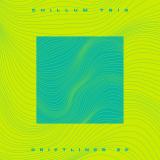
fter 25 years of exploring music from different angles, Chillum Trio lands on Faith In Truth with his third EP on vinyl. Driftlines is a cinematic, multicultural trip through the deeper and dubbier corners of house music, moving freely between hazy atmospheres, broken rhythms, acid lines and warm instrumentation. Across four tracks, eclectic influences blur together and settle into a club-oriented frame.
The EP opens with Dustfire, a deep night-drive cut that slowly draws its scenery around a low-slung beat. A cinematic breakdown gives way to a restless yet understated percussive acid groove, before a Rhodes hook emerges through the dust, carrying a touch of desert heat into the night.
Keeping things mellow and midtempo, Deepskin heads somewhere warmer: a humid tropical beach after midnight, all body heat and salt in the air. What begins loose and sensual gradually turns into ass-shaking garage house, surrounded by cosmic layers, drifting pads and spacious atmospheres.
On the flipside, the tempo picks up while the story continues with Thin Air. A long, lush, phase-soaked horn intro settles into a melancholic dream state, slowly pulling you under. The slow-burning build eventually breaks into a memorable piano line and fractured drums. After a trippy bridge, gentle acid lines lock into place and hold the dancefloor until the wistful finale.
Closing the record, Serotone slips back into downtempo territory with a jazzy, trip-hop-infused groove. Soft vocal fragments, piano and rising arpeggios keep the tension suspended through the middle, before the track mutates into something reminiscent of early-2000s dubby, acid-tinged future jazz and Latin fusion.
Like patterns drawn by wind across desert sand, Driftlines traces the points where different currents meet, overlap and interfere. Rhythms, places and memories crossing paths, briefly forming shapes before drifting somewhere else.